
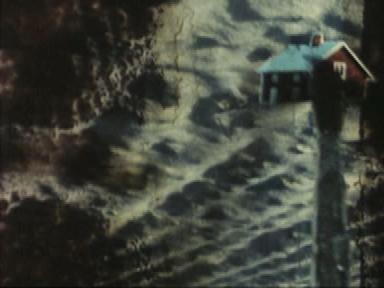
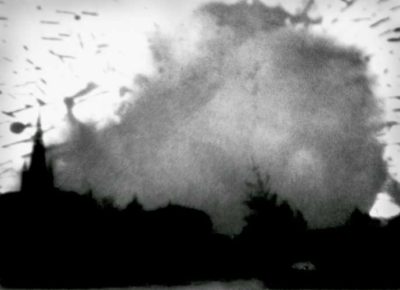
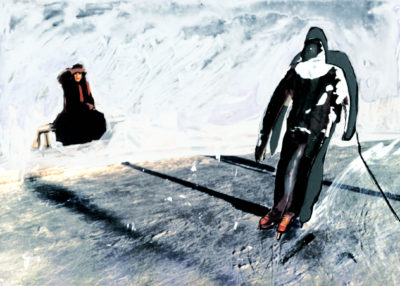
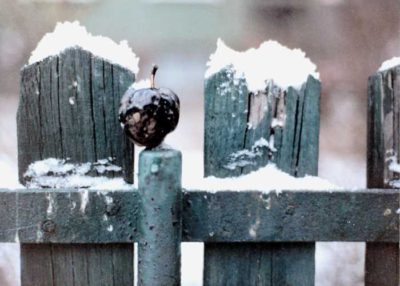
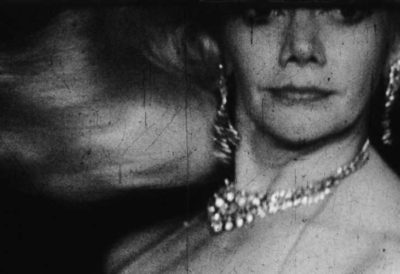
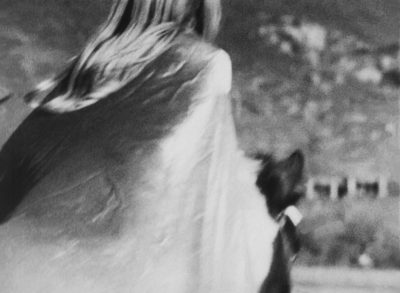
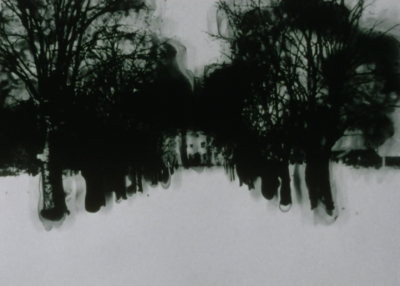
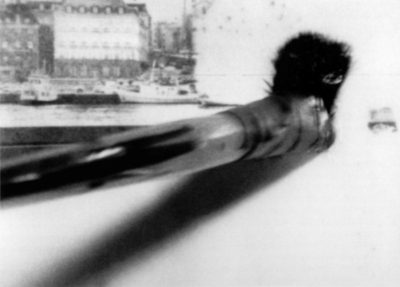
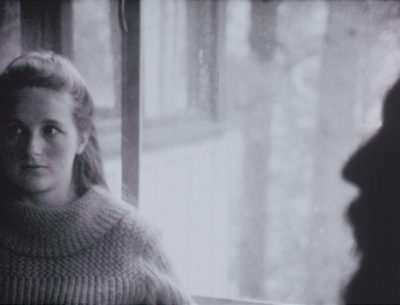
‘In the recent time-based art of Gunvor Nelson, we are witness to the act of creating right before our eyes. Her work, especially the Field Studies series including Natural Features, radiates with the excitement of immediacy that is more commonly felt when viewing art such as paintings. I consider her to be the model of a film Artist although she is an accomplished film maker too. By film Artist, I mean that her work possesses the qualities of urgency and necessity that derive from an artist’s sensibility, not that of a conventional moviemaker. She has mastered the art of “single-author films.”
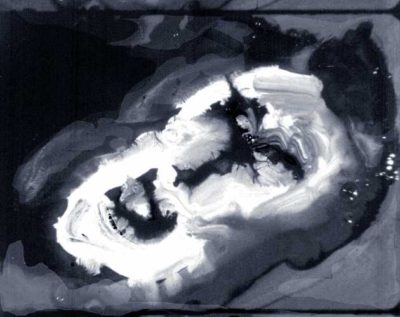
‘The physical and the tactile play important roles in creating the energy of immediacy I experience in Nelson’s work. These distinctive qualities also convince me of the decisiveness of her actions as an Artist as one image piles upon the next in a dense accumulation that carries the viewer deep into a prolonged instantaneous happening. She continues to work in print and paint and the physical traits of these media flow into her films and videos. Her love for the liquid quality of paint is evident in Natural Features and she does not flinch from showing us her joy and delight as she smears ink and paint around and mixes pigments with water. As a viewer of Natural Features I feel very present—rather like being near at hand while she is actually making the film. Photographs move around the frame and collages take form and are revised, altered, destroyed, and refreshed. I can intuit her moment-by-moment decisions and indecisions. I can sense her surprise of discovery when a visual accident becomes revelatory. This experience of witnessing her time-based work in the present tense is unfamiliar for a medium that normally tends to reference events that occurred in the past tense.
‘The film Art of Gunvor Nelson is both unflinching and continuously refreshing. Other artists demonstrate these qualities—Joyce Carol Oates’ writing reveals “unflinchingness” in a similar way as many of the hand-altered images in Nelson’s Natural Features display a rawness that undercuts a sensual beauty, which is also secreted there. Joe Gibbons’ 1976 film Punching Flowers shows the filmmaker beating up a rose as he purports to “put Nature in its place.” In True to Life, Nelson creates a different confrontation in her garden as her microphone audibly hits the plants. These sounds create a jarring counterpart to her exquisite investigation of unseen worlds through a close-up lens. The violent sounds underscore unexpected intrusions into her small fenced garden while simultaneously amplifying, through physical touch, an encounter between the lens and the subject.
‘Furthermore, Nelson’s films always strike me as being full of such unexpected visual and aural events. Shot after shot is so inventive that I am constantly finding myself startled. The visual elements in Nelson’s video True to Life are organized with a concern for colors and their subtle juxtaposition and inter-relationship rather than from a plot-driven approach. I don’t experience this work as an unfolding experience as I view literary films; there is no narrative arc. Instead Nelson seems to give each element equal weight. In doing so, she gives the impression of sharing with us, in real-time, her process of search and discovery in an unseen jungle.
‘Her re-working of her 1990 film Natural Features as the Natural Features times 3 triptych draws attention to her artistic process more emphatically. Sequences from the original film are isolated in digital wall frames and repeated in slower motion where more of her process is revealed. We see her arrange unlikely elements in playful and profound ways that “relentlessly refuse predictability,” to borrow Jytte Jensen’s words (Gunvor Nelson Retrospective, MoMA, 2006). Paradoxically, Gunvor Nelson has altered time and created an evolving present.
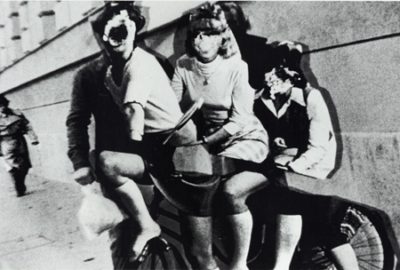
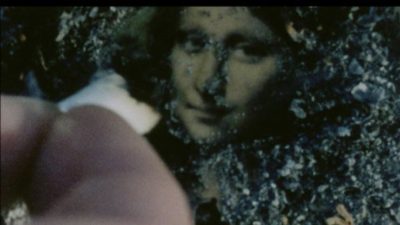
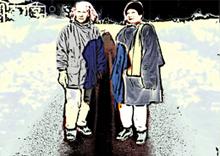
‘The inadequacy of comparable spoken or written language is apparent in one of the digital wall loops. There is no verbal equivalent to the complex and compelling moving images in which “defaced” people are encircled by a colorful toy car endlessly passing by. This sequence seems both menacing and farcical. In the act of removing people’s faces by ripping holes in the photograph, Nelson both forefronts the tactility of the ripped and scarred black-and-white photograph and undermines any illusion of filmic reality. Yet, Nelson mediates this aggressive disfigurement of the human faces with the incongruous actions and colors of the toy cars endlessly repeated.
‘Gunvor Nelson’s entire body of work is characterized by Ellen Dissanayake’s measure of art as “what is not accessible to verbal language, what cannot be said or deconstructed or erased, but nevertheless exists to be perceived by nonverbal, non-literate, pre-modern ways of knowing” (Homo Aestheticus: Where Art Comes From and Why, 1995). To come face to face with Nelson’s work is to be reminded that art is intrinsic to human life.’ — Alexandra Hidalgo
___
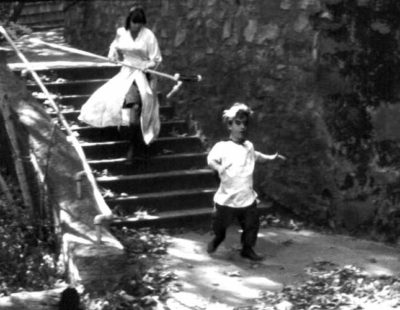
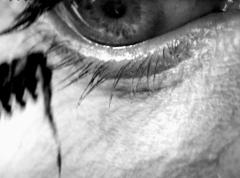
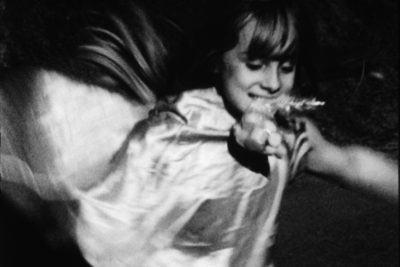
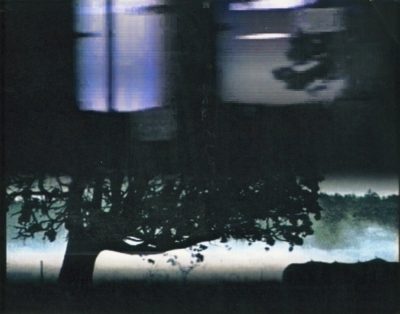
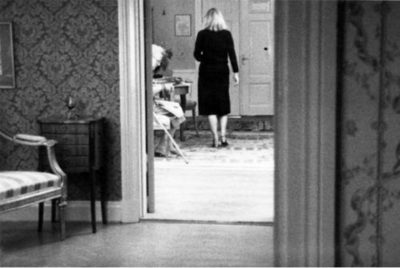
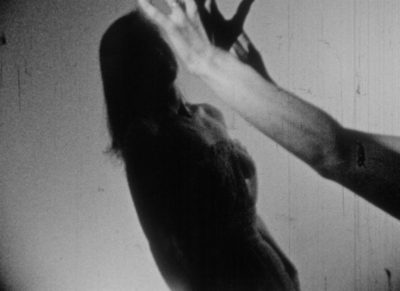
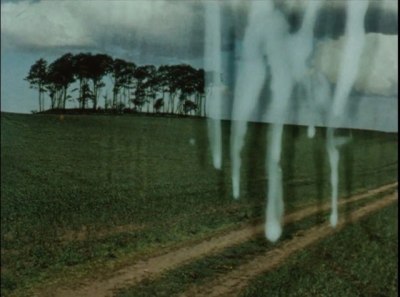
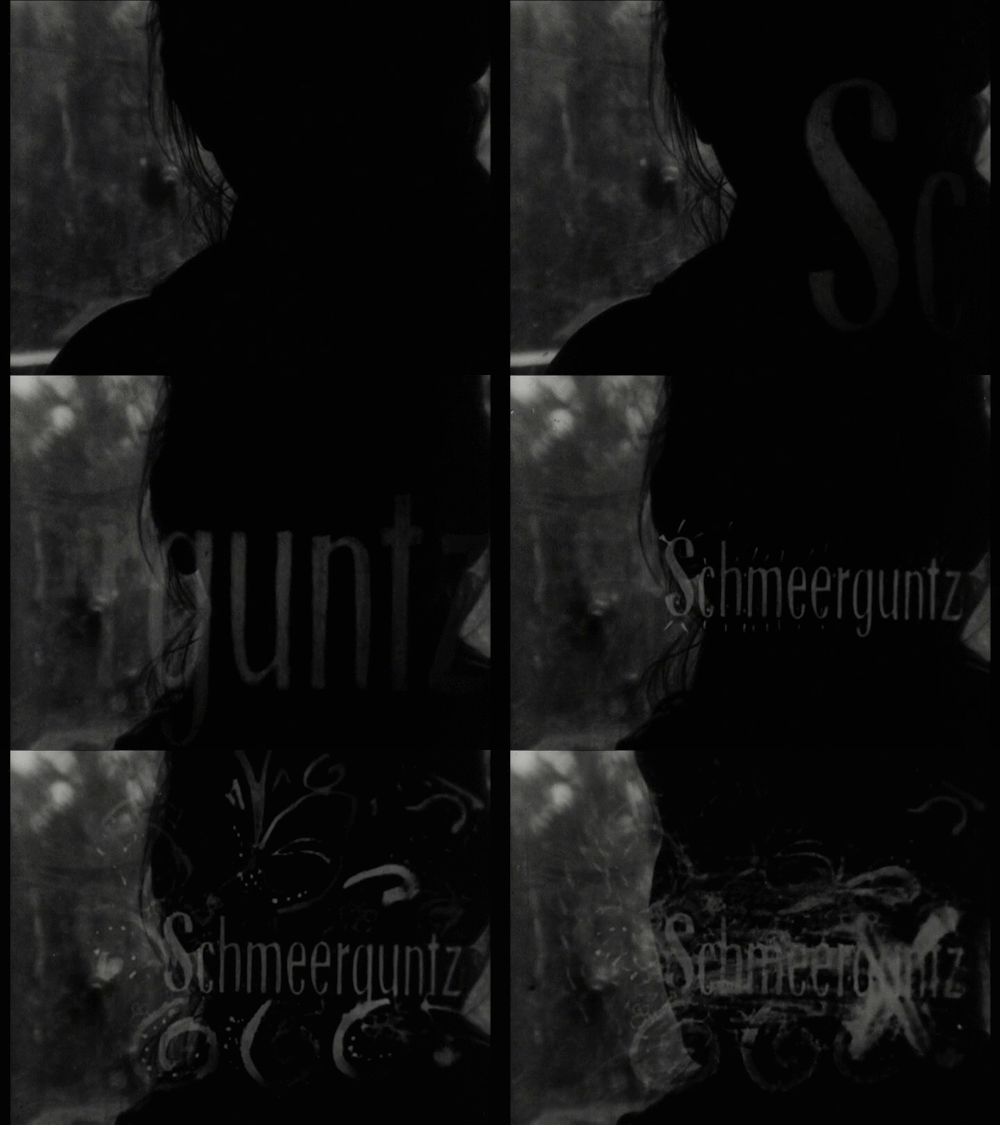
Stills
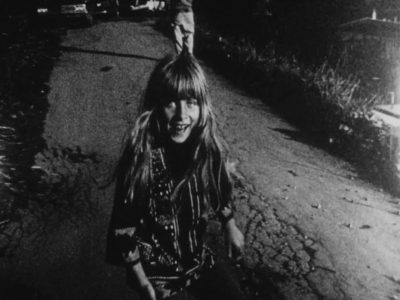
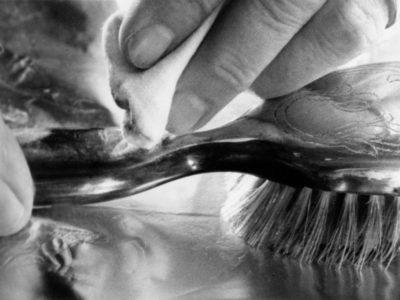
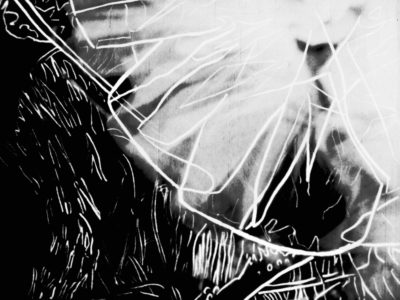
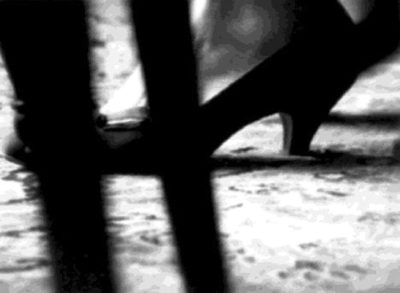
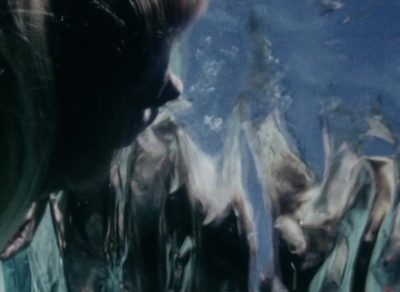
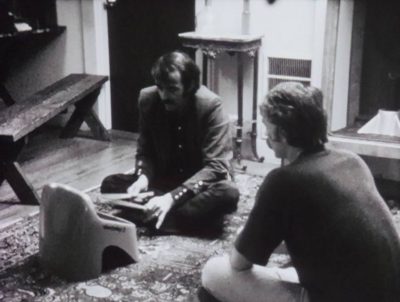
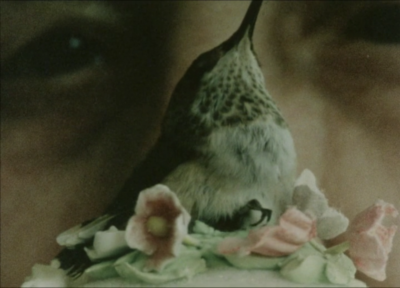

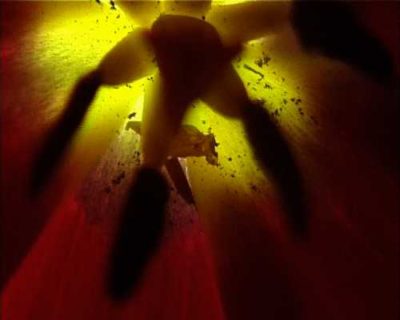
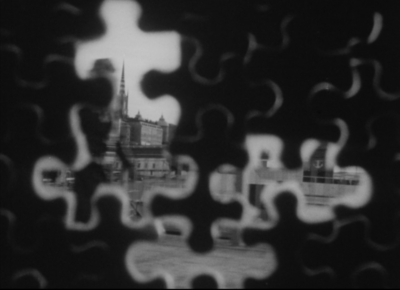
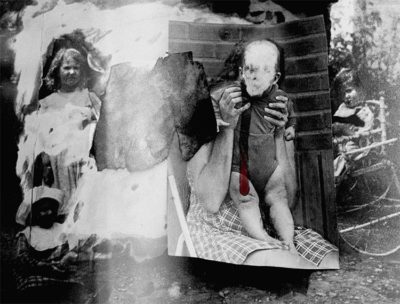
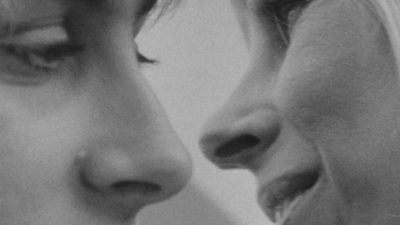
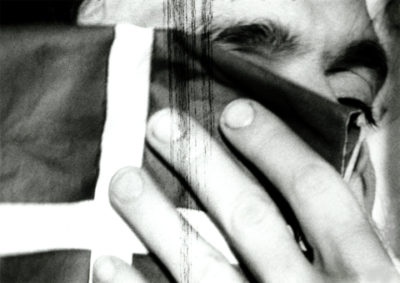
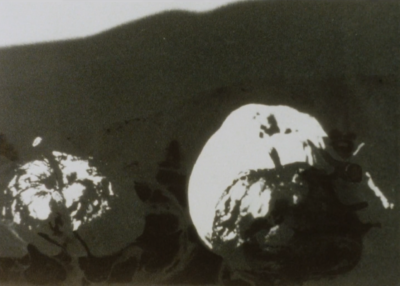


____
Further
Gunvor Nelson @ IMDb
Gunvor Nelson DVDs @ RE:VOIR
GN @ Light Cone
‘TIME AND LIGHT: Gunvor Nelsonʼs Vision of Editing’, by Lynne Sachs
GN @ MUBI
Fragment d’une œuvre : Gunvor Nelson
GN @ Experimental Cinema
Rêve et matière. Toucher-coller dans les films de Gunvor Nelson
The Films of Gunvor Nelson
DVD/Stream: Gunvor Nelson – Departures
Cineinfinito #73: Gunvor Nelson
Book: Gunvor Nelson and the Avant-Garde
Rêve et matière. Toucher-coller dans les films de Gunvor Nelson
The Material and the Mimetic: On Gunvor Nelson’s Personal Filmmaking
Signature, Translation and Resonance in Gunvor Nelson’s Films
“Not Evident When You First See the Object”: An Interview with Gunvor Nelson
THOUGHTS ON THE FILMS OF GUNVOR NELSON, by Lynne Sachs
GUNVOR NELSON: LA CINEASTA INESPERADA
____
Extras
Mrs Muddle’s Trip To The Mountains With Delia Derbyshire and Gunvor Nelson
The Boy – Αθήνα (ft. Δεσποινίς Τρίχρωμη)
_____
Interview
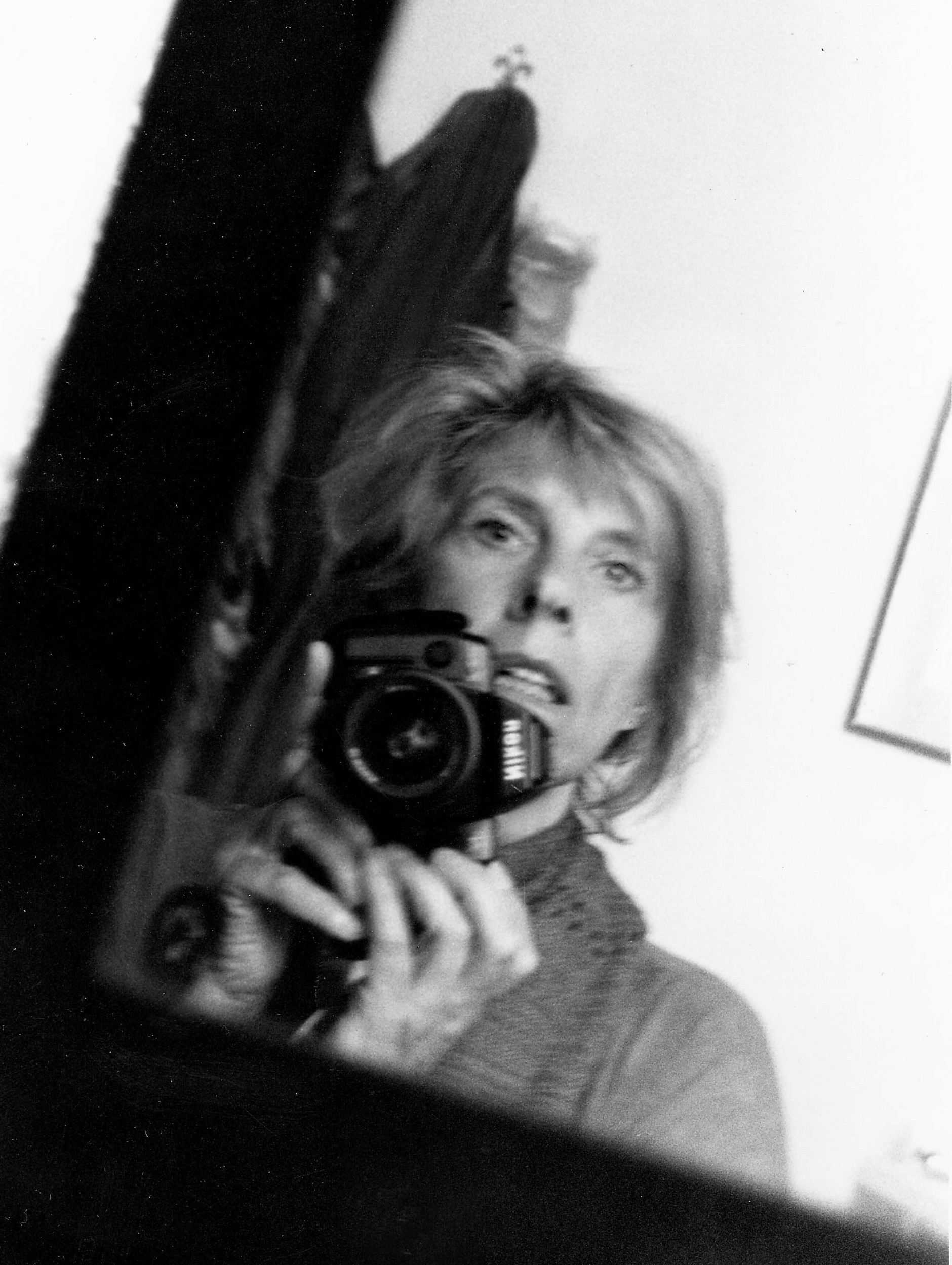
You moved to the USA in the 1950s to study painting, among other things, but eventually film became your primary medium of expression. What was it that attracted you to film?
– I see film as a kind of choreography, movement that takes place in a defined space and time, just like in music and dance. In this time frame, the film builds up its own vocabulary, and in that way creates its own character and its own memory.
In connection with your exhibition you have chosen to highlight American avant-garde film from the 1960s and 70s in the museum collection. On two evenings, all the films shown are by women filmmakers. How have artists like Maya Deren, Chick Strand and Yoko Ono influenced you? When I went through Moderna Museet’s catalogue of films, I realized that the women filmmakers from the 1960s were largely missing.
– When I went to the USA, I first encountered the influential male filmmakers, like Stan Brakhage and Bruce Baillie. It was only later that I discovered the women filmmakers. Maya Deren travelled around the USA early on, promoting film as a means of artistic expression beyond the Hollywood industry. Chick Strand was involved in starting up Canyon Cinema, which has been crucial to avant-garde film in the USA. It is vital to give visitors the chance to also see works by women filmmakers.
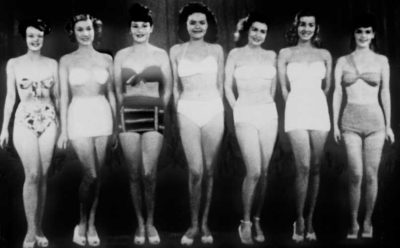
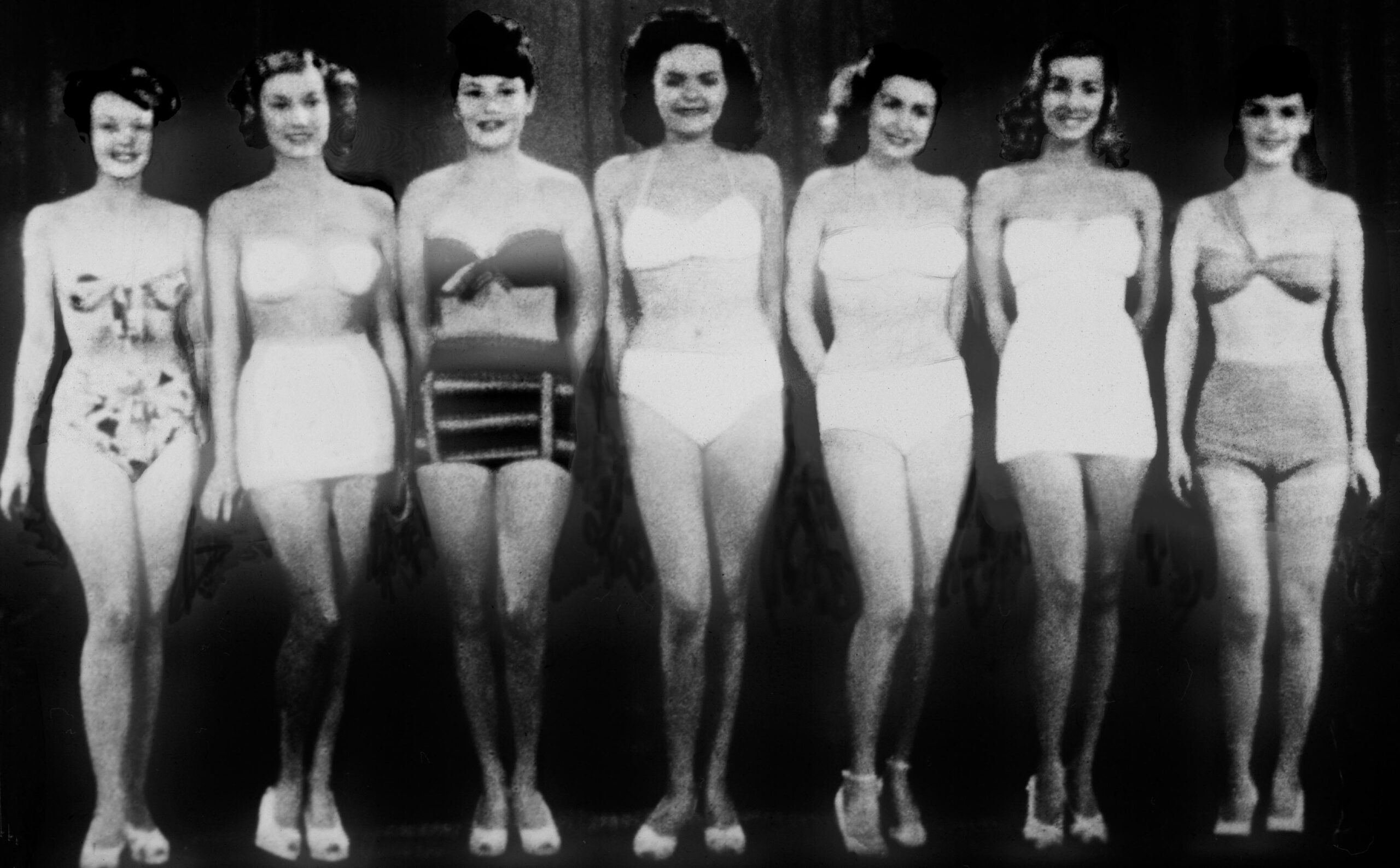
SCHMEERGUNTZ from 1966 is a milestone in American feminist film history. You mix scenes from beauty pageants with close-ups from a woman’s everyday life. Could you describe the attitude to women at the time when you and Dorothy Wiley planned your film?
– The idea behind this collage was to reveal the contrast between women’s everyday existence and the image that was broadcast on American TV. We were both mothers with small children at the time and had friends who were making a film with people like Steve Reich. It occurred to us that we could make a film too. Our film was a hit at the opening on New Year’s Eve 1965–66. People were doubled over in laughter. The absurdities of everyday life became one of Dorothy Wiley’s and my specialties. And the title SCHMEERGUNTZ is a nonsense word, another absurdity.
Let’s talk about sound. You came into contact with Steve Reich’s audio works at an early stage. In several of your films you use fractions of dialogue that are barely audible, as if we were in an adjacent room or hearing echoes of the past. Can you describe the relationship between image and sound?
– I collect sounds. When you combine a certain film sequence with a certain sound you achieve a third possible dimension. I try to develop different solutions for each new film, to achieve suspense and variation. I did the cutting of MY NAME IS OONA, for instance, after first finishing the soundtrack. It’s an art to avoid simply illustrating the image with a sound. It’s also an art to dare to exclude sound entirely, as in TIME BEING.
Some of your films – for instance TIME BEING – is only shown at specific times in our cinema. Can you describe how that film was created?
– TIME BEING is about my mother at the very end of her life. When I made the film she was no longer able to communicate. It’s a very sensitive subject that I want to be treated respectfully. I wanted to make a film with a simple format. Without sound. It’s a film about my mother, but here she also represents something more. She represents human fate.
In 1993, you moved back to Sweden and decided to abandon the 16 mm film format. You contacted the video lab CRAC and now work exclusively with video and digital editing. How did that change your approach?
– The transition to video has meant that I feel more freedom technically. But I have also started filming in a more intimate way. I film “smaller” worlds than I did with 16 mm film, which involves more complex technology because you need a film lab to perform certain stages.
TRUE TO LIFE – your latest film – has several similarities with MY NAME IS OONA (1969). You create evocative dream landscapes based on an apparently simple study of nature. How did you conceive TRUE TO LIFE?
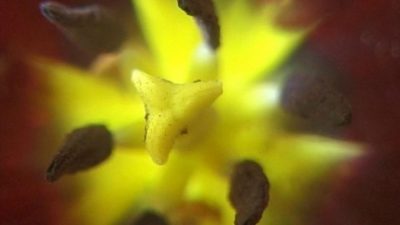
– TRUE TO LIFE was shot in my garden in Kristinehamn in Sweden. I had bought a few closeup lenses for my camera, and when I put them together I discovered another world and started filming it. Then I amplified the sound of the camera brushing against the vegetation. The title, TRUE TO LIFE, is a cliché, of course. As always, I was looking for a multifaceted title that could be interpreted in many different ways.
______________
16 of Gunvor Nelson’s 27 films
______________
w/ Dorothy Wiley Schmeerguntz (1965)
‘Best described by critic Ernest Callenbach as “one long raucous belch in the face of the American Home …”, Schmeerguntz, made with Dorothy Wiley, was Gunvor Nelson’s first film and instantly identified her as a compelling talent. Invented by Nelson’s father as an imaginary German word for sandwich, Schmeerguntz encapsulates the filmmaker’s overarching interest in undercutting surface layers to examine the ugly and the sublime underneath.’ — IFI
Excerpt
Excerpt
________________
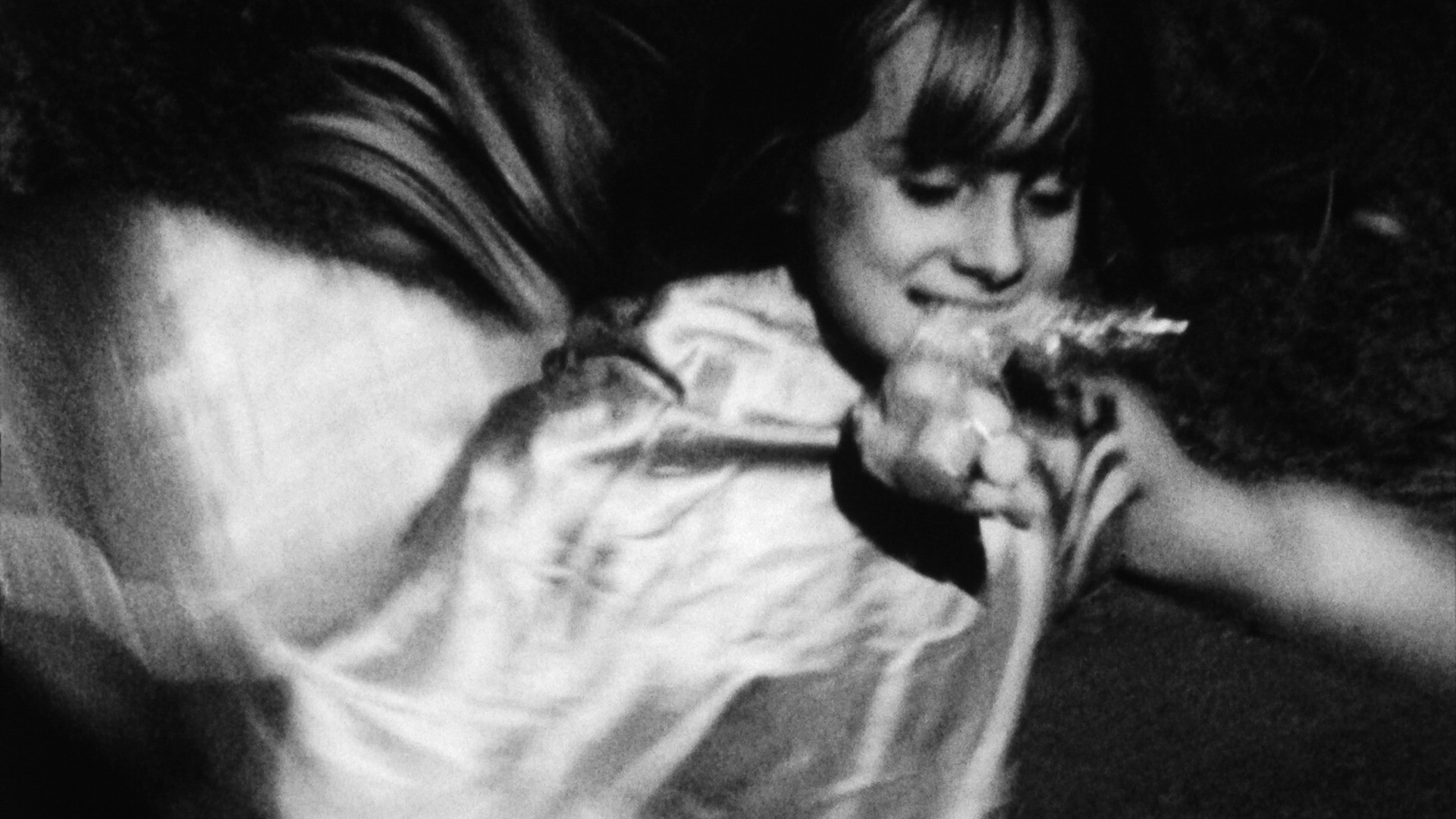
My Name Is Oona (1969)
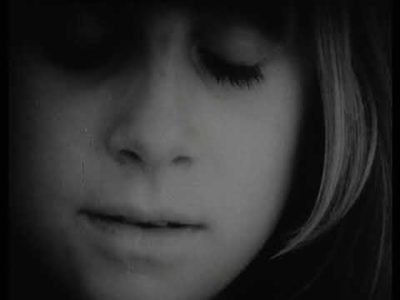
‘Gunvor Nelson’s entrancing study of her young daughter is not so much a portrait as an invocation. Quicksilver montage make it impossible to discern where one image ends and another begins, richly conveying a fluid sense of a being. As much a work of sound art as a visual poem, the incantatory soundtrack (co-designed by composer Steve Reich) repurposes the childhood game of repeating a word until it turns to nonsense to evoke the enduring mystery of one’s own name (the knife’s edge of word and world).’ — Max Goldberg
________________
Kirsa Nicholina (1969)
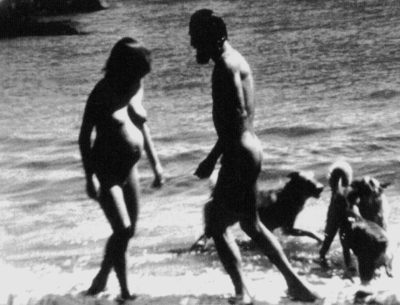
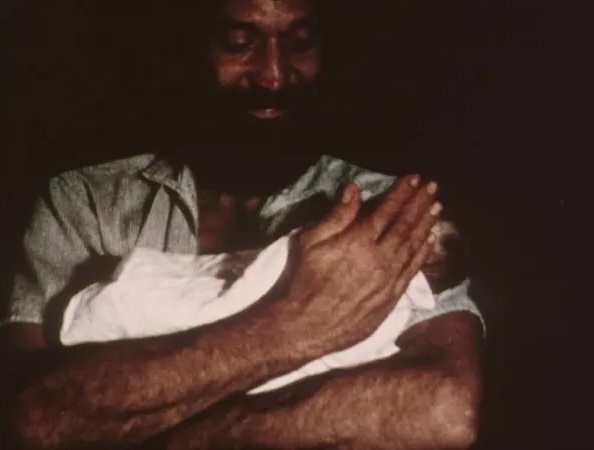
‘The film is a discovery of the eternal beauty and wonder of Nature. In extremely graphic detail, we watch the birth, becoming so involved, we’re feeling the heat and tension. KIRSA NICHOLINA is a simple, poetic statement that is fantastically involving and moving.’ — Danny Weiss
_______________
Five Artists: BillBobBillBillBob (1971)
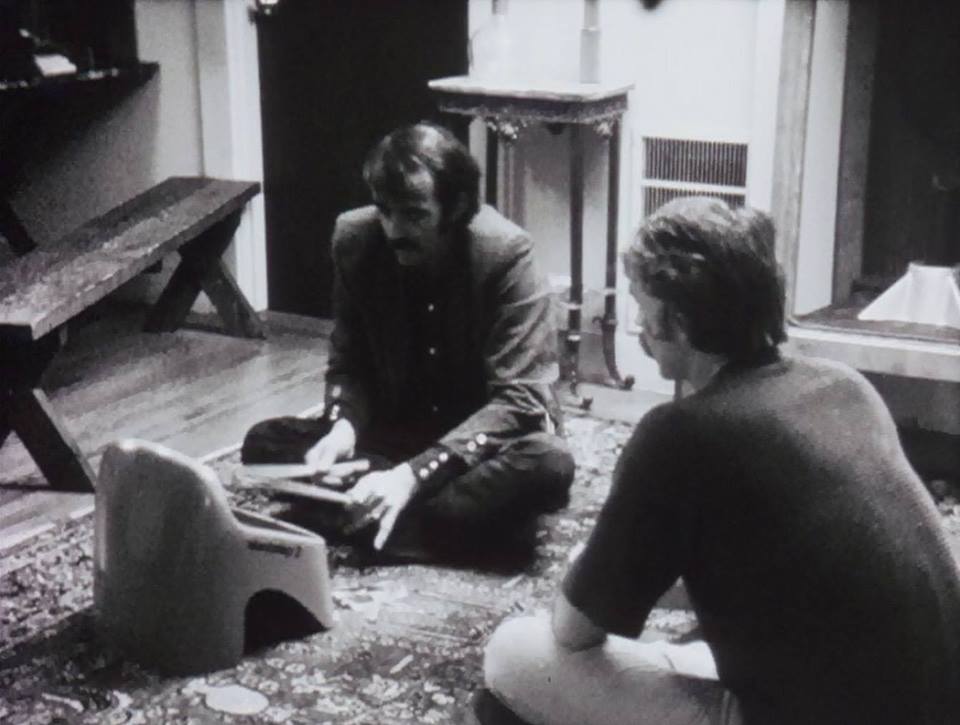
‘About five of the San Francisco-based artists and their families were close friends whose careers intertwined contributes to the rare intimacy of the portraits. In order of their appearance, those profiled are painter/sculptor/filmmaker William T. Wiley, filmmaker Robert Nelson, painter William George Allan, painter/sculptor William Geis, and painter/sculptor Robert H. Hudson.’ — Film Affinity
______________
Take Off (1972)
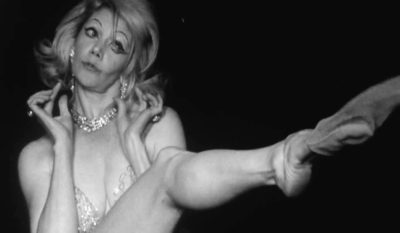
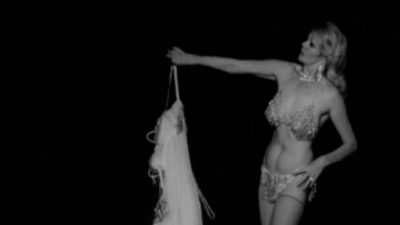
‘Freaky and not a little transcendent, TAKE OFF takes the strip tease well past its usual climax. By sprinkling a little Georges Melies magic over the peep show motif, Gunvor Nelson simultaneously revels in cinema’s earliest forms while exploding the medium’s customary reliance on (and objectification of) the female body.’ — Max Goldberg
Trailer
the entire film
______________
Moon’s Pool (1973)
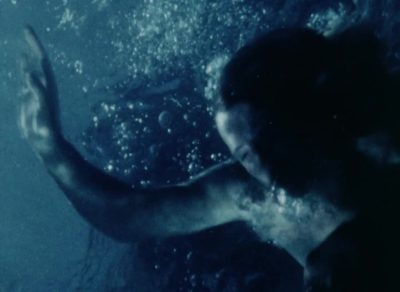
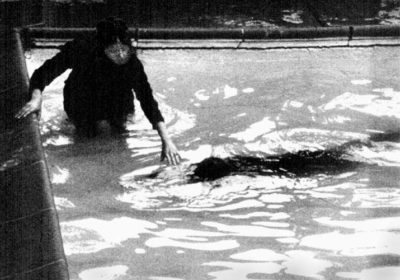
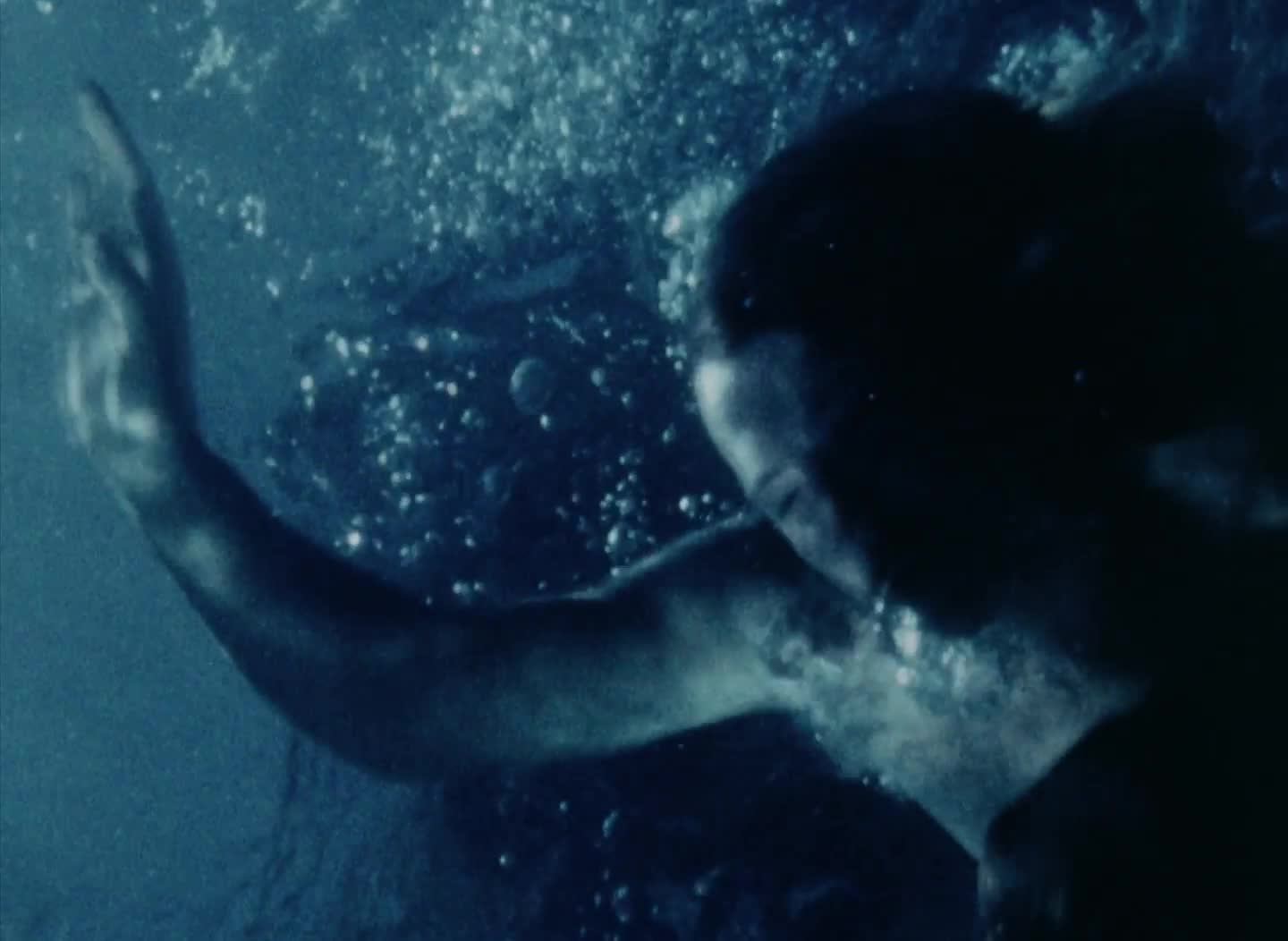
‘Gunvor Nelson’s oceanic lyric dissolves dualities of male and female, emotion and form, inside and outside, image and reflection. In the midst of a characteristically dense soundtrack, we hear the words: “Today, I see you see me in my body,” a cause for celebration in this literally immersive film. Utterly and pleasurably disorienting, MOON’S POOL follows the siren’s song of exploration and elation.’ — Max Goldberg
______________
Frame Line (1983)
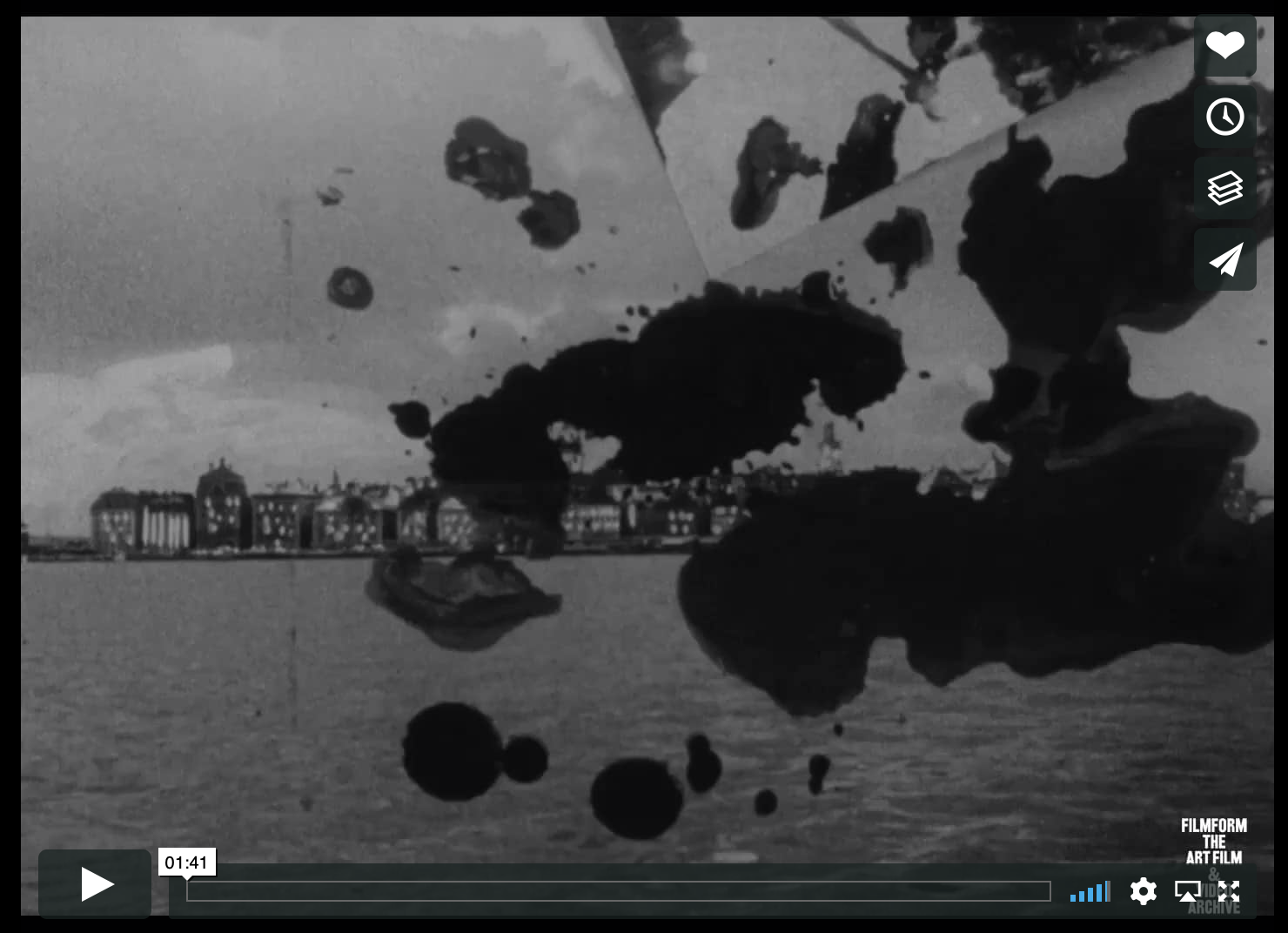
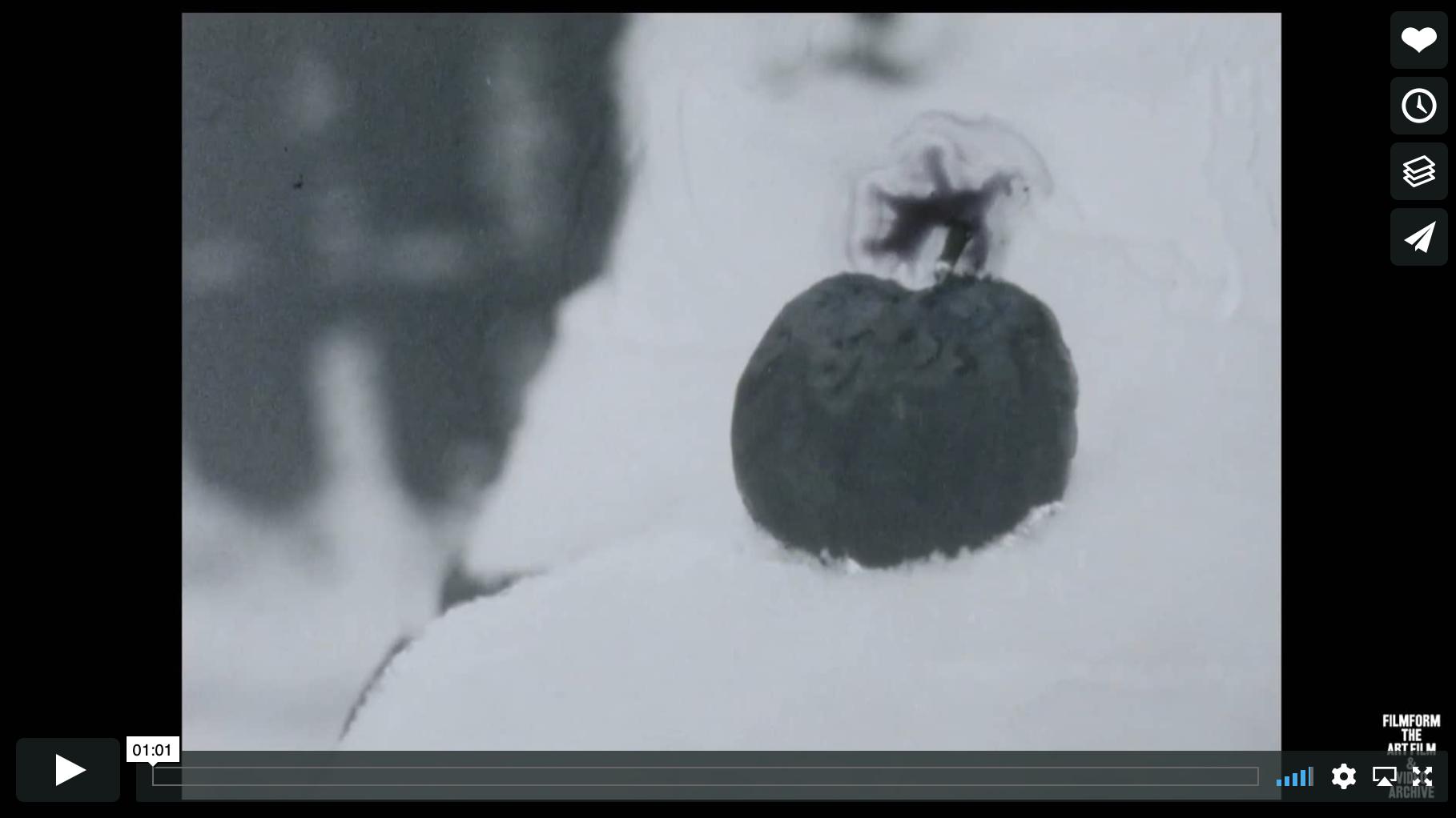
‘Frame Line is Nelson’s first collage film. The film that inaugurated her remarkable series of animated films, all made at the Filmworkshop in Stockholm. Frame Line is a reflection on Stockholm and Sweden, on Nelson’s return to her native country and a place that is both familiar and distant, both beautiful and ugly at the same time. Frame Line begins with images and glimpses of Stockholm that Nelson has collected, this audio-visual material develops into new image work in which animation becomes a way of discovering, alternating between randomness and structure.’ — Film Forum
______________
Red Shift (1984)
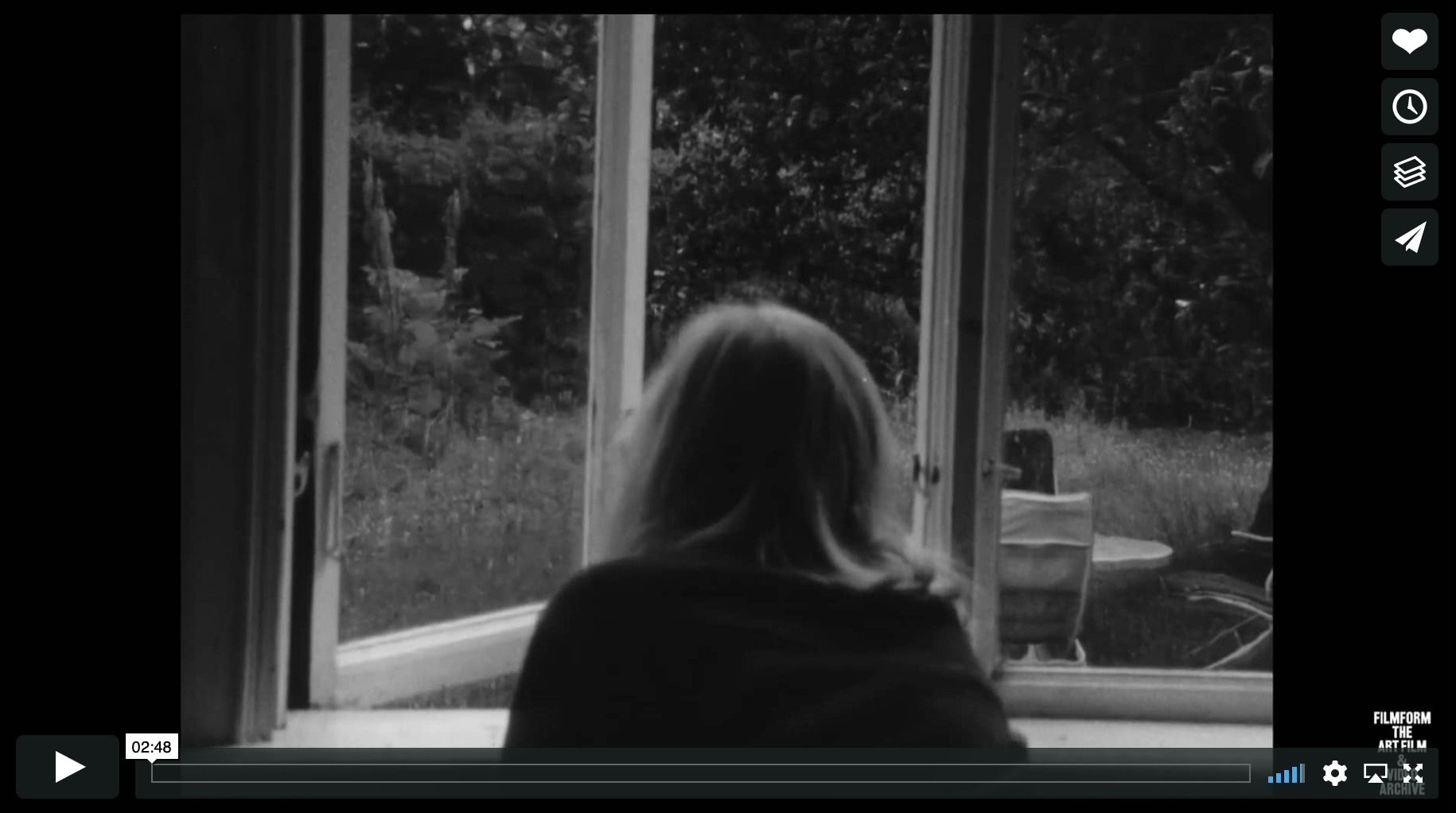
‘This magnus opus is a domestic symphony from a woman’s point of view, the portrait of a grandmother, mother and child and their home. The women and their personal objects are mostly seen alone or relating to one another (except for touching scenes of the grandmother and grandfather together). A key aspect of RED SHIFT is the reading of selections from Calamity Jane’s “Diaries”, the most narrative aspect of the film. The Diaries are read against activities seen through a window, life passing by (people walking in winter, a river flowing). They tell how Jane lost her daughter and had to survive by using her talents to act like a tough and physically competitive man…’ — MASS ART FILM SOCIETY
______________
Light Years Expanding (1988)
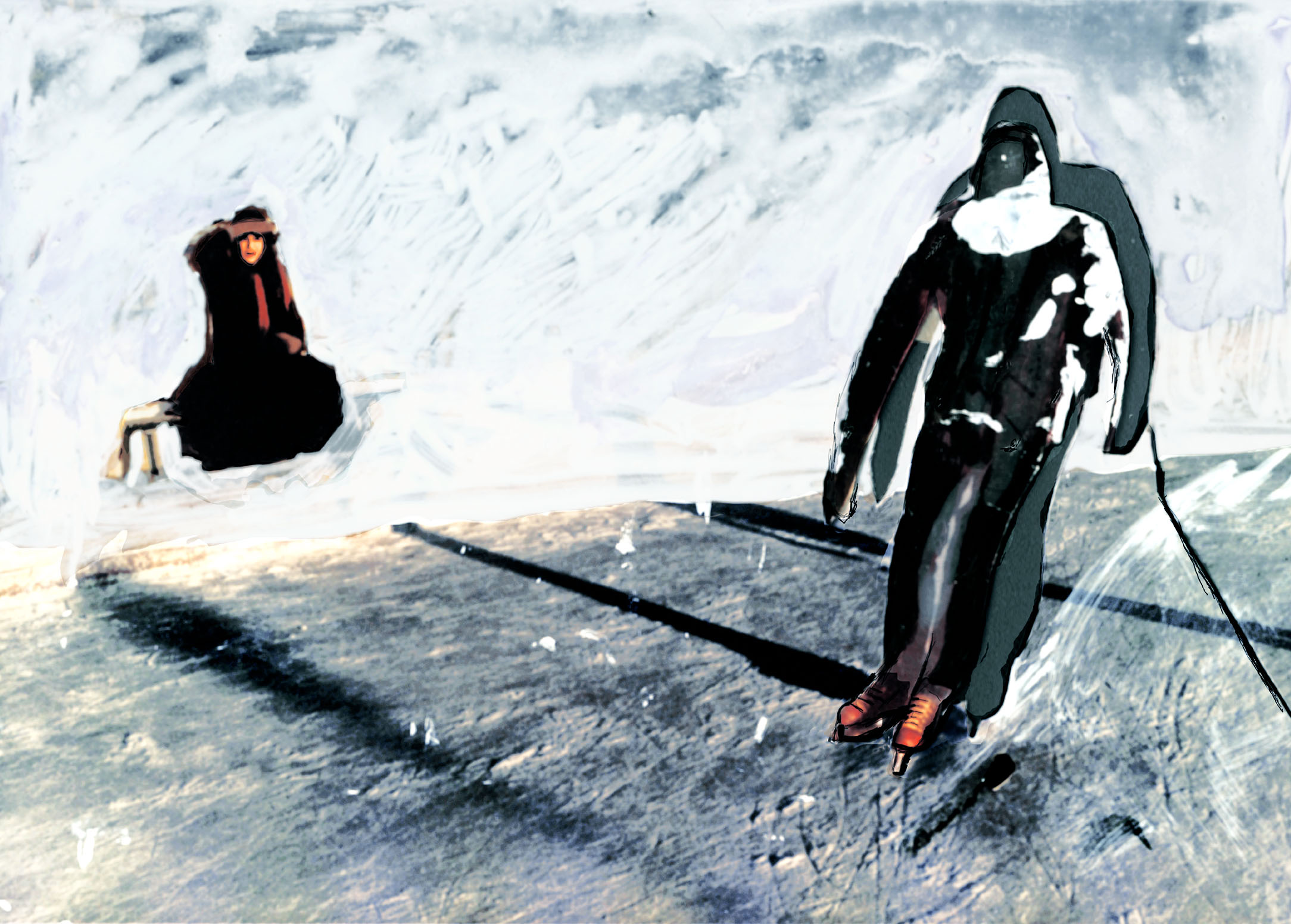
‘Light Years Expanding is the second film of Nelson’s remarkable series of collage films in which she is blending animation with live-action. Frame Line (1983) that was the first, evolved around Stockholm and Sweden, and with Light Years Nelson expanded into the Swedish countryside and landscape.’ — Film Forum
______________
Field Study #2 (1988)
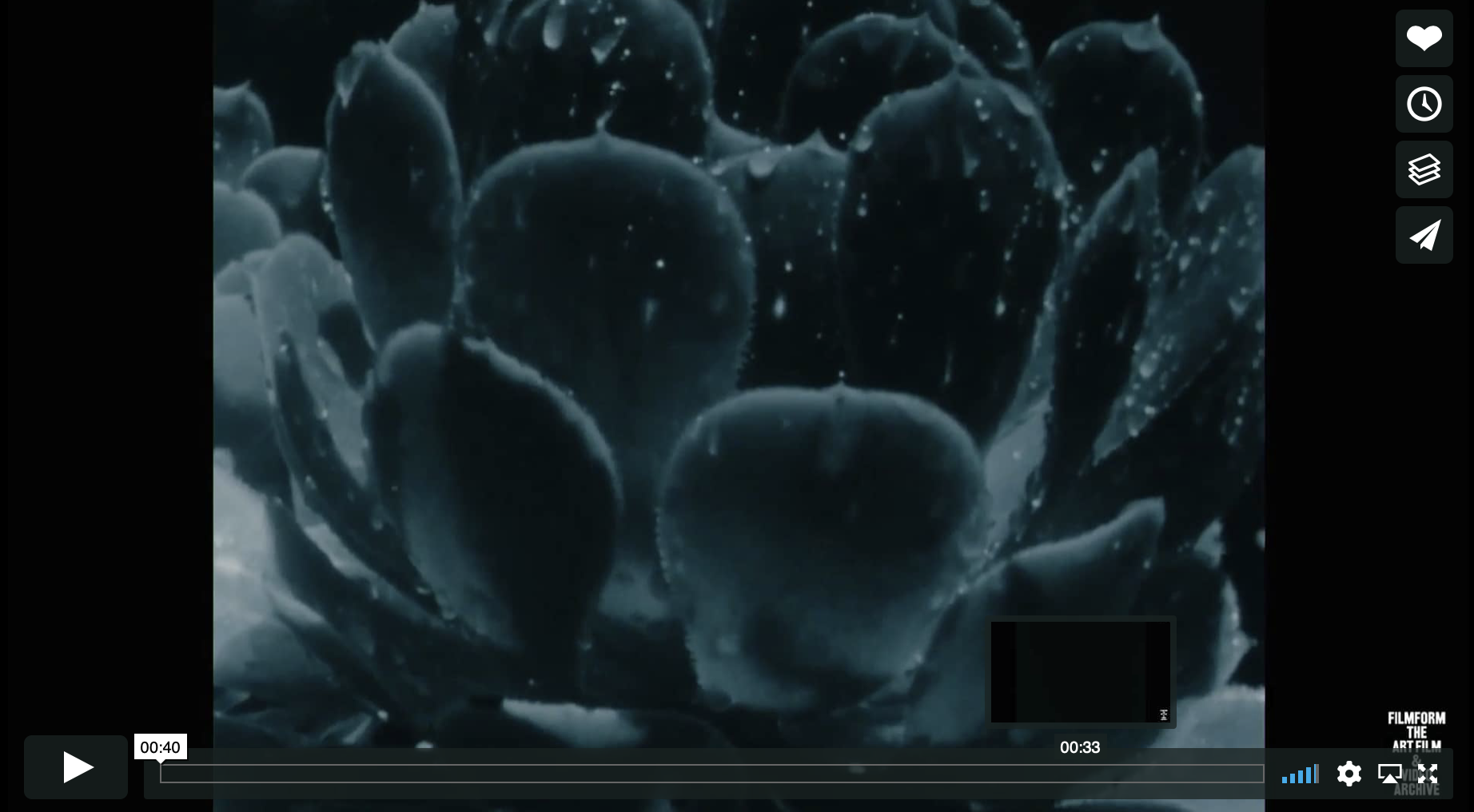
‘A collage film with sequences of live action with animation using cut-outs, found footage and pouring sands. A dark delicacy lingers. Superimpositions of dark pourings are perceived through the film. Suddenly a bright colour runs across the picture and delicate drawings flutter past. Grunts from animals are heard.’ — Film Forum
______________
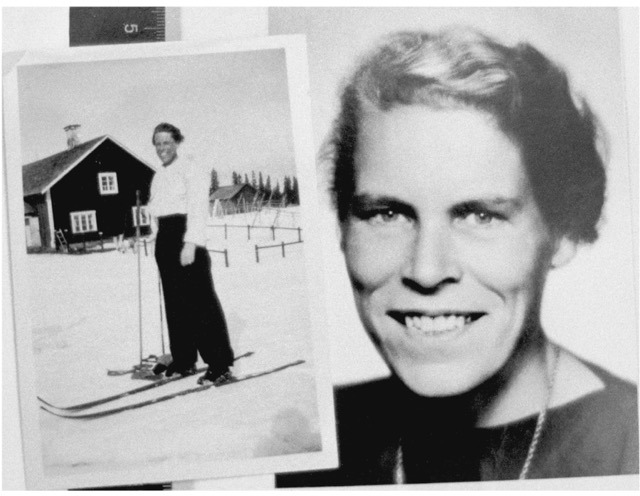
Time Being (1991)
‘Time Being is a commemoration in four sequences of Nelson’s mother. The film that starts and ends with lengthy black leader, is a brutal yet beautiful depiction of her mother dying and how the bond between them is cut off. After a prologue follows a series of three shots, each beginning in static takes of her mother lying in a bed at a hospital. For each shot the distance to the mother increases and the camera moves closer towards Nelson.’ — John Sundholm
______________
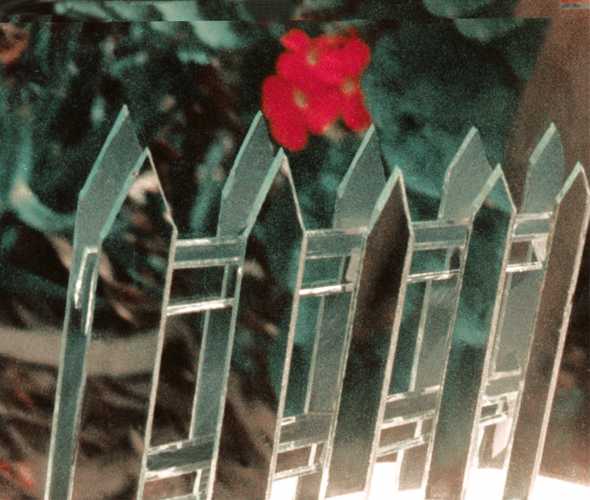
w/ Dorothy Wiley Before Need Redressed (1994)
‘After doing “Before Need”, Gunvor Nelson and Dorothy Wiley embarked on a new creative process. They revisited the film, reworked it and reassembled it creating a shorter new version, called “Before Need Redressed”. A way to express how the passing time, reflection and accumulating experiences can affect the form and vision of a film.’ — Ulf Kjell Gür
Trailer
_____________
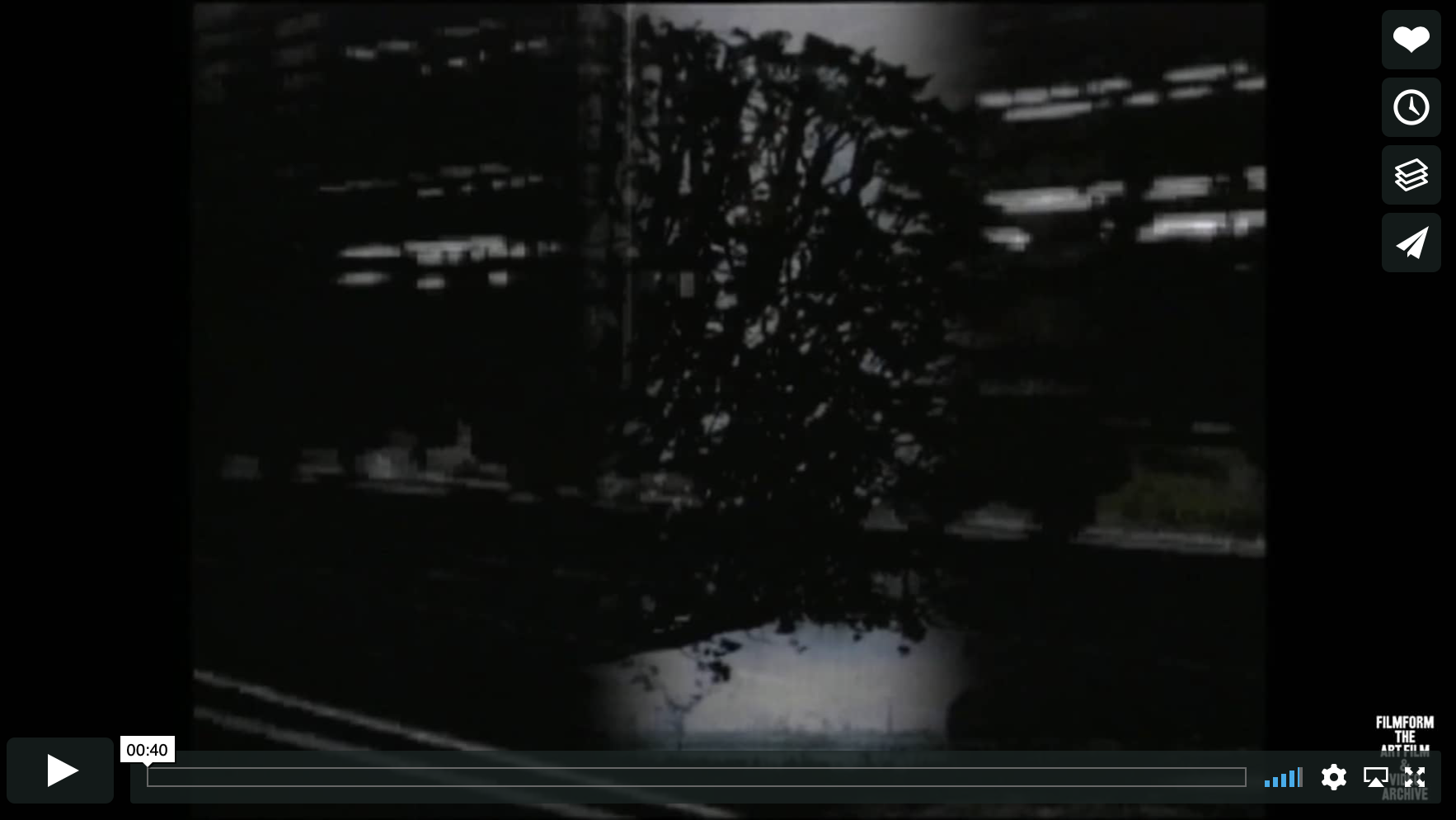
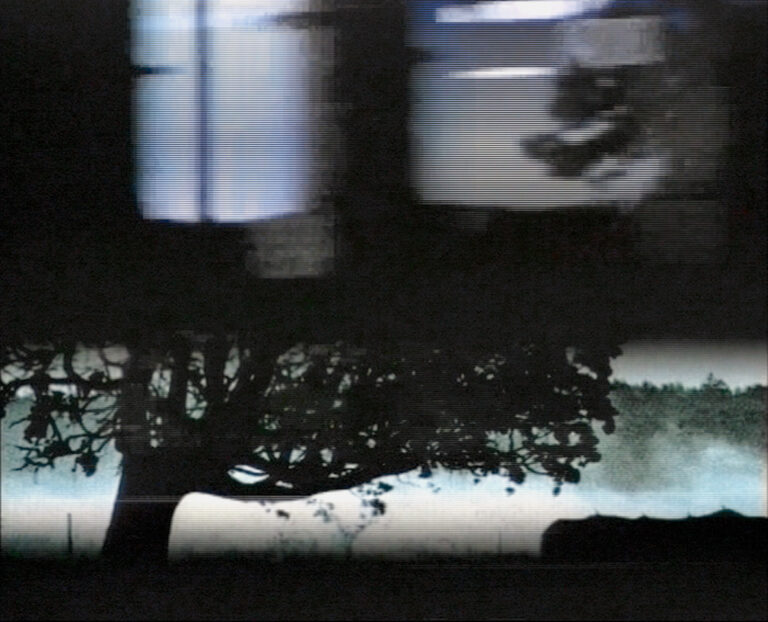
Tree-Line (1998)
‘Tree-Line is Nelson’s first video. It is based upon sound and image material that accompanied Premiere’s software at the time. Nelson simply began to play with the programme when learning how to work digitally. The starting point of the video is the soundscape and afterwards movement and the image of a tree appears. Tree-Line is a profound a reflection on the intersection of film and video, photographic (indexical) media vs. electronic media.’ — Film Forum
_____________
Trace Elements (2003)
‘Trace Elements is Nelson’s first video in which she returns to one of her prime characteristics, movement and the moving camera. Whereas both Tree-Line and Snowdrift dealt with the image as object the focus is now on the camera as a way of seeing and discovering the world. The video shows Nelson’s moving shadow on the floor of her studio, as if the camera was searching for its object, being occasionally interrupted by colourful close-ups of flowers and plants; shots that foreshadow True to Life.’ — Film Forum
_____________
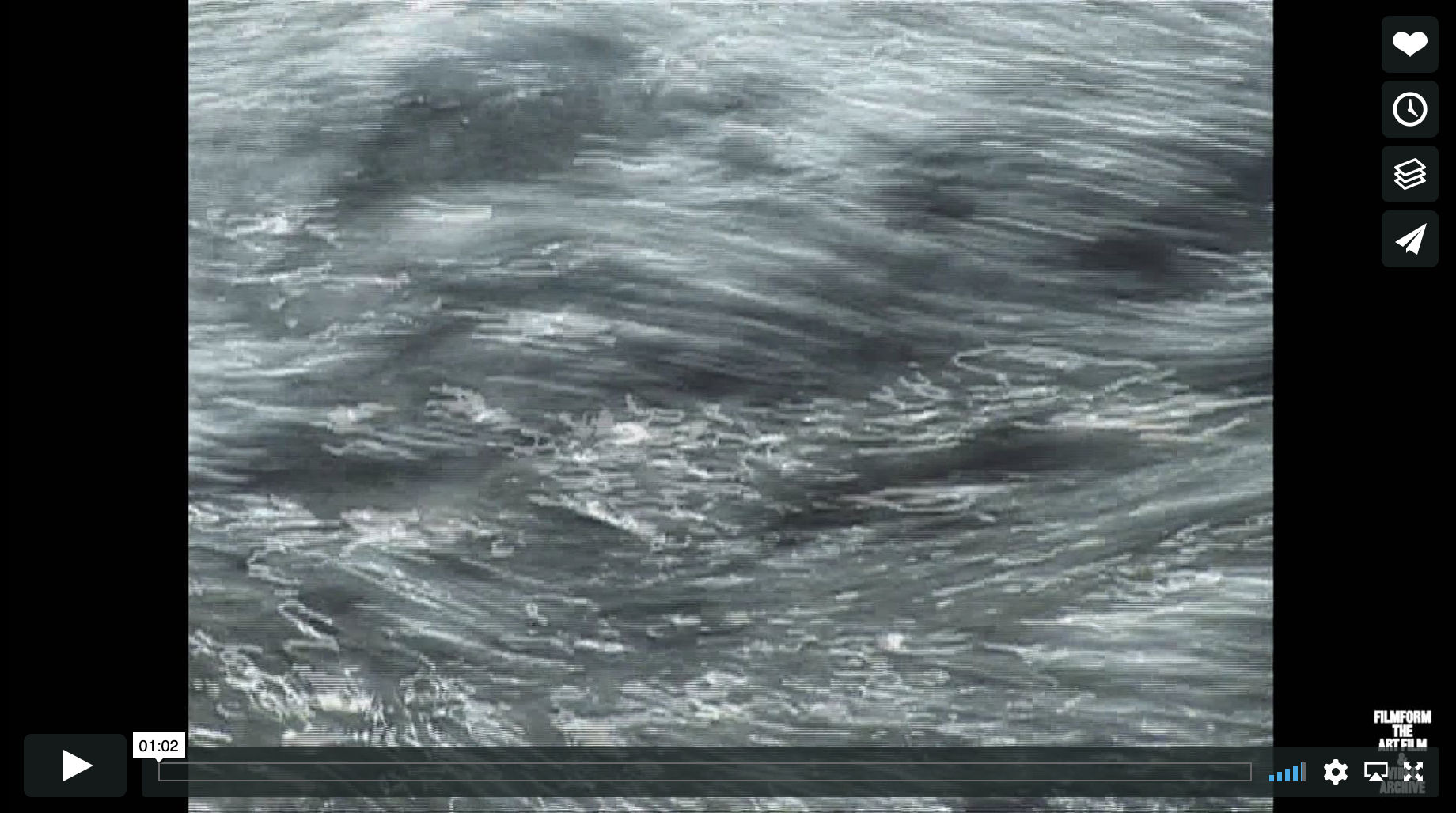
New Evidence (2006)
‘Shadows of people inhabit a wintry road, casting darkness over the tracks. What happens when this substance is washed away by fleeting reflections and blended into new matter, color and forms? And sound: feet tramping endlessly round, round like hands on a clock. This is happening now …’ — Sue Anne Moody
_____________
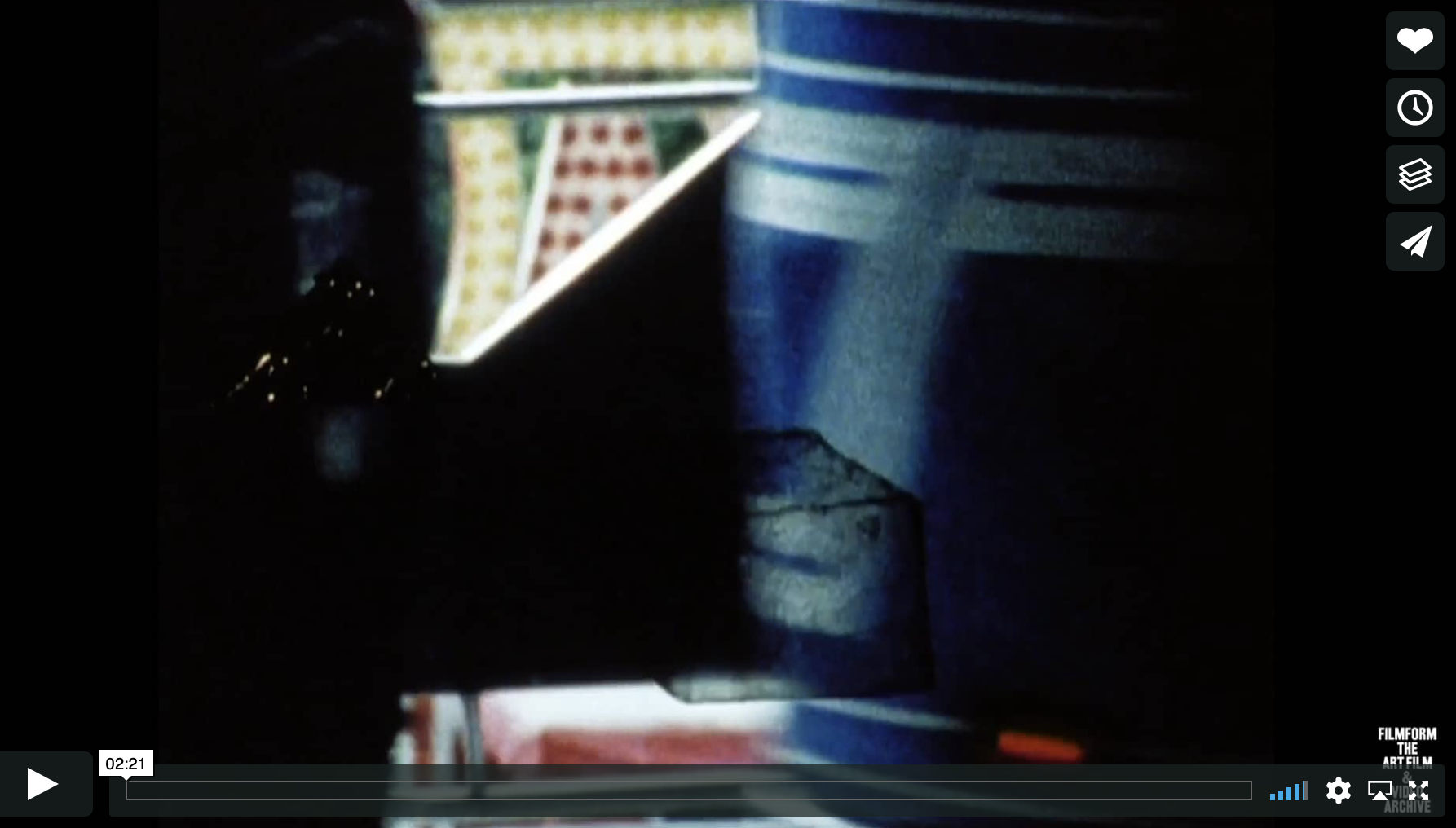
Kristina’s Harbor Revisited (2010)
‘Gunvor Nelson’s two-part film was recorded in Kristinehamn where she grew up and will return to live.’ — NF
*
p.s. Hey. ** _Black_Acrylic, Hi. Yes, I was going to tell you when everything is confirmed. It’s tentatively scheduled for July 31st. I’ll ask them about accessibility, but, yeah, I’d obviously love it if you can go. I was showing RT when PSG won. I guess as you probably know, the fans went crazy and rampaged through the tony part of Paris. The police are all up in arms about it, but I saw video and it looked fun. Yeah, so sucks that the current US has any part in the World Cup, but we’ll see if it can evade the monster’s control freak bullshit. ** Dominik, Hi!!! Amsterdam went really well, great screening, sold out, lots of cool people, very nice. Well, love’s pick of the leftovers isn’t too shabby either. Let me see if I can … Hello there! Welcome to the circus!!! I’m Lovesy the Clown!! A silly clown REALLY into sleeping boys!, G. ** jay, We arrived back in Paris to lovely mild temperatures, and my skin is still celebrating. How was your theater jaunt? Wow, you’re playing Chopin? Time for a recital? xo. ** Ted, Hi. Amsterdam went really well thanks. I know still images and cinematography are very different mediums, but we almost worked with a photographer as the cinematographer on RT because her photographs betray such a unique eye. It might be really interesting, that project with your friend, just to reorient your vision into thinking about the images’ duration and how they might evolve in motion? Or I don’t know. Congrats on getting the classes behind you? Did the weekend function as a fresh start? ** Laura, You gotta like a feisty slave. Well, at least when you’re not a master. The axe thing was when I was about 11, so I don’t remember. I don’t think the axe wound rebuilt my brain or anything, but how would I know, I guess? Eindhoven isn’t s exciting if I’m remembering correctly. We had no time for a rijfstafel or anything particularly Dutch, although I got some stroopwafels as a gift from a screening attendee. xo. ** Nicholas., I remember how dangerous Milk Duds were. I switched to Junior Mints pretty early on. I don’t think they’ll hurt you? But … Ouch. ** Adem Berbic, I don’t know much about the spiritual, but it does like it could be vengeful to its believers. You’re in Cannes now. I hope the heat died out there too. Dude, like I always say, let the caveman slop out the first volley and then go scientific later. You can try to suck the readers’ focus. There are tricks, but readers are also very slippery. But better to try than just write to make them generally accepting and passive. Get on Insta and launch some promo stuff. It won’t kill you, and it does help. Being in Amsterdam is weirdly powerful for me. My intense, lonely time there has given the place this heavy resonance and familiarity. I like it though. It subverts the blah. Your presumption of a Copenhagen-like Amsterdam vibe had absolutely no basis in reality based on my roughly 48 hours there. Cool, warm, smart people. ** Steve, Yes RIP Maggot Brain. I was very sorry to see that announcement on Mike’s social media. Kind of amazing that it existed in print at all and lasted for a fair amount of time. But, yeah, wonderful magazine, a real loss. I wasn’t in an area where stoned frat boys would normally hang, so I’m not sure. The Red Light District has been reduced to the size of handkerchief. That’s depressing. It was good there. Great screening. Like I said above, it’s weirdly emotional or psychologically or something-ly powerful being there for me. Since we managed to write the new script during the roll-out, I feel okay with how much it taxed our time. But now we’re basically at the end of the hosted screenings period, or at least in the US, so we can dive into the new film. It’s been okay. Ah! Everyone, Steve’s ‘latest “Radio Not Radio” episode is out. This show features Shino Yabuki, Seefeel, Nesa Azidkah, Bill Orcutt & Mabe Fratti, Elina Duni & Rob Luft, Magic Tuber Stringband, Benny Bleu, Marisa Anderson, Ted Lucas, Ed Askew, Broselmaschine, Jacqueline and Lindsay, SLIFT, Fauna, Edwin Starr, Goones, Linlin, Saint Just, Tayna, Günier Künier, Juana Rozas, Soft Cou, Charli XCX, Sonny Rollins and Cecil Taylor.’ Here. Edwin Starr -> Charli XCX -> Cecil Taylor … quite a line up. ** Paul Curran, Hi, P. Screening went great thanks. True, the proximity of ‘Closer’ and being there where writing it was my main preoccupation did create a weird, essentially good tonal overlay. You good? ** Bill, Hey. Amsterdam was good. I think by the 90s the serious weirdness and wildness up there in the 80s had pretty much been clamped down. I didn’t get around all that much, but it did seem even more populated by tourists than ever. The gay area I knew in the mid-80s on Spuistraat that once was home to 10 boy brothels and gay bars and gay bookstores and porn places and so on is completely erased now. ** Carsten, Hey. Yeah, it was fun up there and went really well. No, I’ve been back in Amsterdam a number of times since I lived there. Lots of memories there, yes. It felt very potent. Nice about the fascinating Maya article. That must have been a Carsten boon. I didn’t know that about decomposing bodies as fertiliser, but of course it makes utter sense. ** HaRpEr //, It went great, thanks. I’m about to give the new Iceage a spin, and my expectations are moderate, but that’s good to hear. I haven’t heard the Boards of Canada, but Zac is very disappointed by it. He said to him it’s such a throwback that almost feels like a self-parody. I’m going to try it. If anything, lean into your exuberance. That’ll make your work unique and give it its color and so on that will give it a long life. Uniqueness doesn’t necessarily play well in its initial life, but it’s what makes a work last. I guess obviously. ** laura w, Hi, laura. Amsterdam did everything I hoped it would do. And the heatwave is gone! Oh my god! I love ‘Thousand Year Door’. It’s one of my all-time favorite games, so I do nudge you in its direction in hopes it charms you too. No, games are really rich and instructive. I’ve learned a lot for my writing from them. ** Okay. How about we start with the week with the under known films of Gunvor Nelson and see what happens. See you tomorrow.


 Now available in North America
Dennisss !!! Hi, hope the Amsterdam screening and QA with Zack rocked hard. Did it? We missed you by a few days there. Yeah, we were bummed about missing Efteling (me especially). we travelled thru Switzerland next, then down to Milan where some lovely peeps (incl Chiara Moioli from Mousse magazine) produced a cool event with me in very cool Bene Bene bar. heading home today from London and looking forward to our Sunday hang! On Friday in L.A. I’m doing a gig with new CumPunk magazine. Deets soon…. xoxoxo Jack
Hi!!
Gunvor is such a great name.
I’m really happy to hear the Amsterdam trip/screening went well! Lovely!
Lovesy the Clown sounds creepy as fuck, haha. Love seldom horny and hot. if horny will very slutty, Od.
Gunvor Nelson is a new name for me so thank you for this introduction. Greatly enjoyed Moon’s Pool which was yes, an immersive experience. A pleasurable one too!
My friend Chris is based in London and he posted some film of the Arsenal post-PSG comedown and their Premier League victory open top bus parades. Thousnds on the streets in scenes of great jubilation. Seems to me that these football street parties are some of our few spontaneous moments of collective happiness of late.
Hiiii, so nice that the Amsterdam screening went so well. I love going there.
I swear I think of the park outside Stedelijk museum as an arrival point for me as appearing from nowhere, a cleanse spot from Greek stuff and transformation area. Point blank. These mentions of Amsterdam and its effect in today’s notes made me want to revisit your works written there, so maybe will pick up Wrong later. Closer written there but with the remains of your American hauntings and then Amsterdam remains haunting Frisk is haunting three times and more
Bye from Chania Crete and happy month and good summer etc
Going to go for walk and listen to Kim Petras new album for the 374th time!!!
And maybe new GbV and Iceage hope they deliver
Correct, we are Canned. In her infinite-plus-one generosity, Charlotte invited Tadhg and me to crash at her partner’s very airy and rather opulent pad. It’s around 26 here but the Mediterranean heat still makes its presence known. Tomorrow we might get the train to Monaco to see if there’s any there there. I mean, we’re not expecting much more than casinos and a beach, but maybe there’ll be something odd about it. It’s an odd place on paper.
You’re right, I’ll rip the plaster off and splurge some self-promo, although I reserve the right to not think about it for another 48-ish hours. Tadhg leaves on Thursday, I’m back Wednesday to catch a Merzbow gig that evening — it’s shaping up to be a sort of Woodstock for the London noise freak extended universe.
I guess I have this sense that there’s something very potent in how what holds an entire universe of emotion and association for one person, is less than nothing for another — but it’ll take me time and sweat to hit on some literary expression of that which sells it as any more than a statement of the obvious. And also some literary expression of the idea that you can brutally overcome that (not so much a piece which actually does so, if the distinction makes any sense). As in, I guess most bits of art require some kind of good faith engagement and attention from the imbiber, so I find it interesting to think about something which is somehow able to skip that particular queue.
Your relationship with Amsterdam is actually what I’ve been thinking about wanting to have with a place recently. I’ve been coming to value solitude a lot. The only place I travel to solo is Paris, and while I have a very deep relationship with it, it’s not a solitary one — if anything, the opposite. Perhaps I’ll splurge my microscopic amount of outstanding leave on a one-man Amsterdam visit, to dig down into my head and also applaud how Danish it isn’t. Or maybe I can rent some shack up in the greener part of England on the cheap.
My beach read is that Larsson book, ‘The Autists,’ and I’m liking it a lot. I’d very crudely describe it as like if you took Houellebecq, cut out the portentous fascist sociology, and asked Blanchot to rewrite what was left. I naively decided to try translating the little prologue but, well, translation is hard, if potentially also very useful for shaping how I see my own writing. I’ll paste the results below, but I found it hard to preserve the oxygen-sucked-out texture of the original (or at least whatever the French translator made of the Swedish original).
For a while I’ve wanted to try translating snippets of Guyotat, because I always thought the only English translation of ‘Tomb’ fell very wide of the mark, not that I could realistically do much better. Last year I thought about doing a little zine made up of unlicensed translations of stuff like that and bits of French philosophy or whatever. I always thought it’d be a lark to put out translations of some of Blanchot’s very early and weirdly right-wing magazine articles. Perhaps I’ll dip my toes back in that idea some time, but I can’t say most aspects of running a zine appeal to me very much.
“Beat the egg yolk with the sugar and almonds, boiled, peeled, and grated, and lose their form in the soft, plasticky mass. The translucent white coat joins the shells in the trash, between corks and scraps of paper. The act of cracking an egg has reminded me of the saying, ‘he who gapes for too much often loses the whole,’ ever since one of my first friends, a lover of bird eggs, having realised one day, perched high up a tree, that he couldn’t climb down with his bounty in hand, had decided to store them in his mouth. They broke before he’d even reached the ground. In the viscous gel, between fragments of shell appeared bones, tiny bird skeletons, oozing down, no cheeps or squawks, only the outlines of visions of future migrations. The contents of the mauve bowl suggest nothing of the original animal. The pastry assumes the correct form and texture, the cooked pears are soaked in wine, the Kirsch impregnates the cream, and the mixture cools slowly in the fridge. Its buzzing is weak and to the slow time of kitchens and living rooms. I open the fridge door, just a little, and just to see that the little green tart will need more patience yet.
Through the window, the city afternoon is suspended in daylight. Ugly sounds of sadness and boredom float up and through the double-glazing, slowly spiral out in the centre of the large, clear kitchen and its mess of objects: ladles, whisks, little bowls, frying pans, sticky, honeyed things left out for days and dried-out and smelling wrong, leftover pears, in an empty wine bottle a little spider. The tart still wobbles too much, if I hadn’t been careful the jelly would’ve gone over the side of the plate and past my fingertips, onto my shirt or my trousers or the floor. The recipe derives from the Italian court, is no doubt an invention of the master pâtissier Anastasio Bellini, was sampled and savoured by dames in corsets, scribbled onto paper, stored on bookshelves, preserved in the memories of select individuals — a composite refuge for a source of radiating pleasure, an enchanted, scholarly form, the apricot cream tasting just as much of eglantine or carnation, but offering all the same a sort of pressentiment of how angels must smell at their most intimate.
I made this for you. Just for you. To have spent a whole day preparing what you’ll only have in your mouth for a few seconds, so that, through that instant of sublime waste, I can know you, not just your tongue or your teeth but your throat as well, and swell up in your body and its tender firmness, and worsen your dental cavities, and fuse with your excrement, and between each of your cells my knowledge will spread and divide, and even those pores which I’ll never touch, I can draw into a subtle complicity.”
OH, I’ll definitely have to check out others of Gunvor’s films you provided!
You’ve certainly hooked me with this post! I immediately watched Trip to the Mountains as I saw the name Delia Derbyshire and im sure you know of my love for analog sounds, synthesizers, cassettes, and just the general history of music and modulations, production and sound in general.
I really like the visuals, very groovy and vibrant. I should make it a mission to watch those when im like, tripping or something. Last thing I saw on shrooms was the modulation documentary from the 90s which is where I was introduced to DJ Spooky and totally freaked out when I saw Alec Empire mentioned (Which is like duh, expected if they were mentioning 90s Berlin techno scene, but still I got giddy)
Been a minute, whew, been feeling not as tip top and productive and receptive a week ago but as of lately I have been feeling my invigoration and unremitting passion of learning and creating and comprehension/articulation skills coming back.
I ended up pulling out of my biology class so I can focus on my music class, peace of mind stuff, considering its a summer semester I figured it wasn’t worth the possibility of stressing myself into an mentally unstable/ creatively unproductive state, and I feel its better to wait till a less condensed semester.
Oh lately been into old -school djing. Its been a interest of mine before, watching videos of Vinyl turntable scratching competitions on YouTube, and ofc ive been wanting to dj for a bit so im saving on a more modern machine–but also still saving for my dawless setup, its just so cool learning about the stories especially in the 90s NY scene, I was recently learning about the “illbient” genre which spawned there, DJ Spooky one of the figures, and
Ooh wait! Would you possibly be open to me doing some sort of blog post contribution dedicated to that? Gives me my excuse to write an artice about it, hahah
Oh I saw the backrooms movie! Have you seen it yet? I think you’d like it, if most at least cinematographically and background decorating wise.
Im thinking of that post you did on the artist who utilized space and rooms as installations. Actually, you probably did a couple on those, my bad thats a vague description
–In a amphora’s cloud of bliss right now sponsored by experimental hip hop…trace of extraterrestrial debris, jazz fusion with celestial ambience—
my favorite scenes from the movie are the ones where each room’s layer is slowly deconstructed until the bare walls are what remains. Very heavy.
Oh so much more to say but for now ill leave it here.
I’ll tell you more about my “Jazz Diaspora” book about the migration of African American jazz musicians to France during the early 20th century. I will be doing some learning about Creuolian New Orleans jazz from there which is exciting.
Oh also…ok yes something to share about that crush..who’s shyness(not shyness…maybe reservedness..as we never really know what a human truly feels) makes me think its less of a crush and a very nuanced love. they asked to dance wit me at this show. I think there may be a love there, its a love I enjoy that doesnt indulge in the “You are very attractive” but from the I will include you in this excursion that I deeply care for, and your presence is enjoyed even if not vocalized.
Although im sure the asking to dance was an offering of love aswell as the way they looked at me when showing me how the guitar chords worked. Oh music is lovely lately.
Oh I like them very much, they are just like me it feels sometimes , how passionate they are about music, and theyre quietness/sense of inundation in hobbies while in public spaces. They let me wear their headphones and listen to a cd they were really passionate about the other day and I like someone who appreciates silence…even if somewhere in that serene fog im wishing…”talk to meee beautiful human with a sweet voice”
Although I dont want to be overbearingly passionate, and im good at that. I hope.
There will come a day when I want to send you the very enchanting photo of them, and it gives like Nick Drake 70s posing on the album cover vibes. This is probably fantasy overdescribing but him sitting with his band mates is like a Jefferson Airplane album cover.
Oh gosh, my apologies, I just know when I hit send this will be a long comment, hahaha.
Were you just in Amsterdam?
Dennis! I’ve been away too long. Graduation festivities, plus my perennially-failing grasp at a relationship have kept me busy, but I’m all recovered now. I don’t think I ever got the chance to thank you for the little call-out at the end of the Zoom. That was also coincidentally the very end of my last ever (undergraduate) class and was a beautiful cap on my college experience. Thank you for all the mentorship and encouragement, and thank you for your works, which have helped me so much.
With the sentimentality over (the word sentimental always reminds me of Shklovsky’s Sentimental Journey, the title of which he took from a Tristram Shandy spin-off), excited to explore Nelson’s work more. I have so much free time this summer. Might even go back to watching and reading the films/books on here same-day again.
I didn’t play Starr, Charli and Cecil back to back, but that would’ve been a terrific segue.
Mike McGonigal says he’s launching a new zine.
I saw BACKROOMS last night. Have you seen the YouTube channel? As with a lot of horror filmmakers making the jump from homemade shorts to feature length films with a decent budget, the story is rather clunky, although it’s very attractive visually. Kane Parsons has definitely played LSD DREAM SIMULATOR.
The Boards Of Canada album is pretty good, but it’s the most direct and pointed music they’ve ever made. They’ve returned to the occult references of GEOGADDI, amplifying the underlying point about society becoming more cultish. (Almost all the many spoken word samples are American.) The musique concrete “Vol. 4 – P Pipers – 177 Giraud’s Mirror,” a bonus track on the vinyl deluxe edition, genuinely made my skin crawl.
Hey Dennis. Cool day today, I know very little about experimental film outside of your blog, so it’s always nice to see what you have to say. The play was great, it was Equus so the weather being a bit hot and humid worked in it’s favour. Haha, that’s nice of you to say about a Chopin recital, I think I almost exclusively play for myself so I think that’s not really one of my goals. It’s a cool fantasy though, haha. Hope you’re well, adios!
good to know about thousand year door!! i’ve only played one paper mario game- origami king- but i loved it.
your posts about experimental filmmakers are so interesting to me. i’ve been attempting to get into film for the past, like, year, and have learned that the only movies that really interest me are films that, i don’t know, feel more like art than movies? the last movie i saw that really lit my brain on fire was, uh, lancelot du lac, which i watched recently and am still recovering from.
glad to hear about the amsterdam screening success!! one of these days i’ll make it over to amsterdam. i just need to conquer my phobia of planes…
Hey. I didn’t know Gunvor Nelson before today. I really loved ‘Take Off’, particularly the ending. I’ll dig deeper soon.
I normally don’t like ambient stuff that is so… I don’t know, clean sounding? Polished? but I’ve always found it impressive that BoC have used the constraints of ambient/downtempo to make these kinds of laid-back epics. Interesting that the just as ambitious/conceptual acts like The Future Sound of London didn’t have the same staying power, but they were more abrasive for sure.
I understand what Zac means, for sure. My main critique is similar. I feel as if they’ve realised that their fans love the spooky hidden messages and taken it to a point where it’s a bit on the nose, but I do honestly love that stuff. I’ll listen more before I make up my mind.
Exuberance honestly feels like the most ‘authentic’ way for me to write, probably due to a teenage diet of decadent writers. Then later discovering Firbank and James McCourt were really big events for me, and both writers are honestly pretty biting and not concerned with simply ‘writing pretty’. I’m more interested in the strangeness. The ornateness of things I write is not about beautifying something to make it palatable. Sort of the opposite, actually.
My past reluctance to lean into my exuberance comes out of some failed experiments I made. In truth, I think I currently have a good balance but back then I was really trying hard to be sort of baroque or something but it just seemed obnoxious or accidentally purple and trite, but due to my fascination with more stripped back kinds of writing, I really think I’m getting closer to what I’m looking for. I like the idea that there’s something extravagant trapped in the sentences which is screaming to get out.
But anyway, thanks for the encouragement! It means a lot.
Great images and ideas today!
Dennis, I’m good, thanks. Halfway through the uni semester here. Mainly teaching academic writing, which is kind of like Damien Karras clutching a battered copy of Strunk & White and entering the bedroom to battle Regan’s AI legions. I’m also playing around with a few ideas for a quick, shorter novel to work on over the summer. Are you working on anything film or bookwise?