* (restored)
Waiting for Godot (Roman Polanski)
Polanski proposed a film adaptation of the play to Beckett, who politely refused to allow it. Beckett insisted that the play was not cinematic material and that an adaptation would destroy it. He asked for Polanski’s forgiveness and that the director not dismiss him as a “purist bastard.”
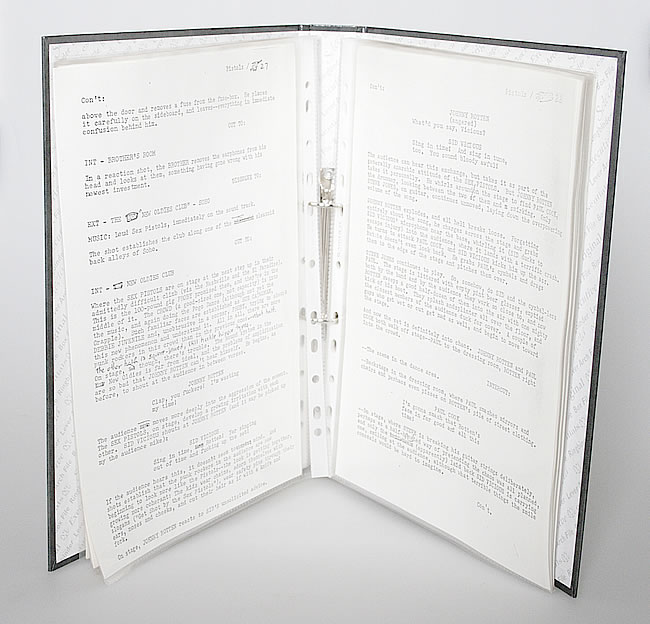
Who Killed Bambi? (Russ Meyer, 1978)
Intended as a punk rock version of A Hard Day’s Night, the film was to star the Sex Pistols. It was to be based on a screenplay by Roger Ebert and Malcolm McClaren. According to Ebert, “McLaren claimed 20th Century-Fox read the screenplay and pulled the plug. This seems unlikely because the studio would not have green-lighted the film without reading the script. Meyer called me to say McLaren had made false promises of financing and was broke. The film’s fate was sealed when Princess Grace, a member of the Fox board, said, “We don’t want to make another Meyer X film.” Some footage was shot by Meyer, but not much, perhaps several days’ worth, and it wound up in Julien Temple’s The Great Rock ’n’ Roll Swindle.
A Confederacy of Dunces (John Waters, 1980s)
Adaptation of the novel by John Kennedy Toole about a corpulent, flatulent medievalist. The role was considered for John Belushi, John Candy, and Chris Farley, all of whom died before anything could be realized. Waters, who for a time had lived half a block from Toole’s mother (Thelma Ducoing), wanted the part for Divine before his death and pitched for the job of director, and lost it when the producer saw a photo of him, in his book Shock Value, visiting Manson Family member Charles ‘Tex’ Watson – who had killed one of the producer’s best friends.
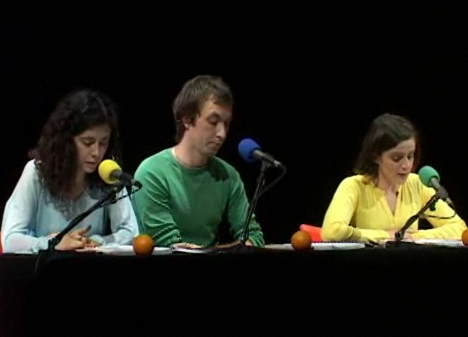
CONFUSION. LECTURE BRUITÉE D’UN SCÉNARIO NON-RÉALISÉ DE JACQUES TATI
Confusion (Jacques Tati)
In a media-obsessed future Paris, society is glued to communication technology and little distinction is made between fiction and reality. Tati was planning to collaborate on the film with the band Sparks, who were to play two American TV execs. Action centers around the mishaps within the studio facilities of fictive media conglomerate COMM. During the live broadcast of a scripted drama filled with stagy theatrics, a mistakenly loaded gun kills an off-screen Monsieur Hulot. The cameras keep rolling, with cast members discreetly stepping over the fresh cadaver during their scenes, while the crew scrambles to remove it from sight.

King Shot (Alejandro Jodorowsky)
Co-produced by David Lynch, it was to star Asia Argento, Jeff Bridges, Marilyn Manson, and Udo Kier in a “metaphysical western set in a desert casino, featuring a man the size of King Kong and Marilyn Manson as a 300-year-old pope.” The film’s storyboards are available here.
Women (Paul Verhoeven)
To be adapted from Charles Bukowski’s fictionalized account of his experiences (and frequent dissatisfaction) with sex and romance.
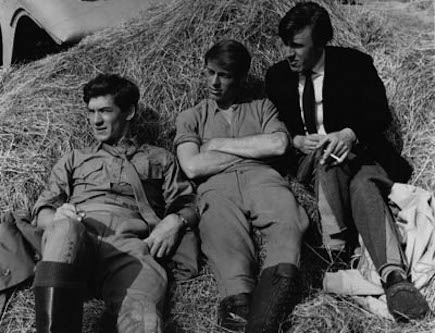
The Bells of Hell Go Ting-a-Ling-a-Ling (David Miller, 1966)
‘This was my first film role, co-starring with Gregory Peck, who was a huge movie star at the time. He was not well-cast as an English army Colonel — he repeatedly addressed me as ‘Loo-tenant’: and when I repeatedly corrected his pronunciation (in UK we say ‘Left-tenant’), the director David Miller told me to shut up. ‘Never forget Ian, Great Britain is only 5% of the world market.'” The story was that a squad of British airmen attempt to smuggle plane parts into enemy territory with the aim of reassembling them and attacking German targets. It was a disaster. After five weeks filming, the summer was invaded by early snow which was forecast to persist through the following six months. The shooting was already behind schedule so Mirisch cut their losses by abandoning the film and sending us home — me with 4000 pounds.’ — Ian McKellen
To the White Sea (Joel & Ethan Coen, 2001)
The Coens wrote a nearly dialogue-free adaptation of James Dickey’s 1993 novel about a WWII American fighter pilot who, shot down on a mission over Tokyo in 1945, murders his way through the outskirts of the fire-bombed city. Brad Pitt was set to play the brutal protagonist, with Jeremy Thomas producing. The Coen Brothers’ decision to actually shoot the film in Japan proved to be the project’s downfall as it already had been a struggle for the Coens to convince 20th Century Fox to take this violent, experimental movie on.
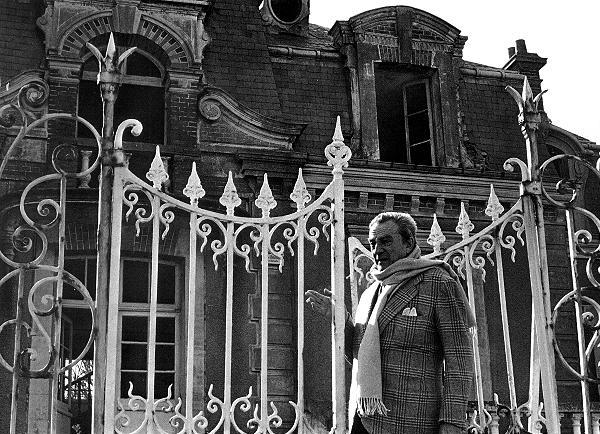
Luchino Visconti in France in 1971 scouting locations for ‘A la recherche du temps perdu’
À la recherche du temps perdu (Luchino Visconti, 1969)
In 1969 Visconti commissioned a script by Suso Cecchi d’Amico. Visconti conducted rigorous research around Paris and the Normandy coast. The usual collaborators were retained: Nicole Stéphane (who owned the rights), photographer Claude Schwartz, costume designer Piero Tosi, and set designer Mario Garbuglia. Silvana Mangano was to play the Duchesse de Guermantes, Alain Delon or Dustin Hoffman the narrator-protagonist Marcel, and Helmut Berger the homosexual protégé of Baron Charlus, Charlie Morel. The proposed four-hour film boasted a huge cast and an accordingly huge budget for which financing could not be secured. Laurence Olivier and Marlon Brando were considered for role of Charlus.
In a Dream of Passion (Monte Hellman)
Hellman’s adaptation of Alain Robbe-Grillet’s novel, La Maison de Rendez-Vous, about an American’s experiences in a Hong Kong brothel, was to be produced by Roger Corman.
Batman-Dracula (Andy Warhol)
Thought to be the first campy portrayal of Batman, Andy Warhol directed the film without the permission of DC Comics and only showed it at his own exhibitions. Warhol’s friend, the appropriately named Gregory Battcock, played Batman, while Baby Jane Holtzer played Catwoman. While the film itself is unavailable, some scenes are shown in the documentary Jack Smith and the Destruction of Atlantis. Smith played Dracula.
A Scanner Darkly (Charlie Kaufman)
Kaufman said he wrote this script soon after Being John Malkovich: “I got it as an assignment. There was a director attached, an Australian woman named Emma(-Kate) Croghan. She had just directed an independent comedy [Strange Planet] and she was attached to the project by Jersey Films and then they brought me on.” And then the studio lost interest. Kaufman’s script is easy to find online, but Kaufman says you should just read the book instead. “What’s the point if you’re going to read the book? Certainly my version doesn’t offer anything that the book doesn’t! At the time, I felt like I was trying to do something that was respectful of the Dick book. I felt like the movies coming out based on his books had nothing to do with his books.”
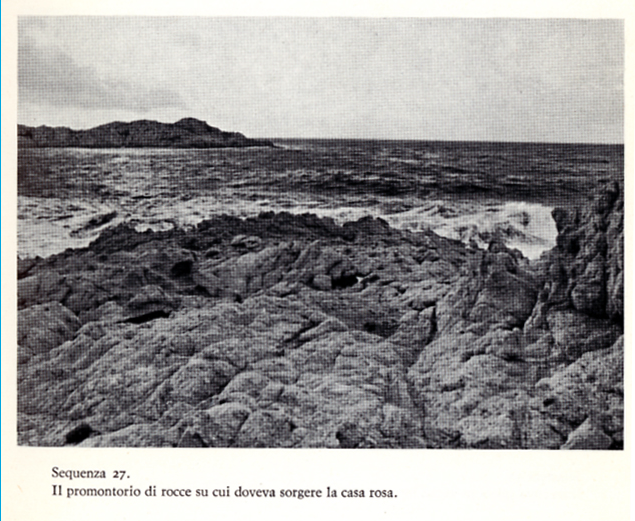
Technically Sweet (Michelangelo Antonioni)
The director worked on this screenplay in the late Sixties and envisioned Jack Nicholson in the lead role as a man lost in the Amazon wilderness after surviving a plane crash. Some production stills from the unrealized film are available here.
Suffer or Die (Michelangelo Antonioni)
Scripted by Tonino Guerra and Anthony Burgess, it was to star Debra Winger alongside Mick Jagger or Richard Gere or Giancarlo Giannini as an architect. Amy Irving was cast at one point as a Catholic novice.
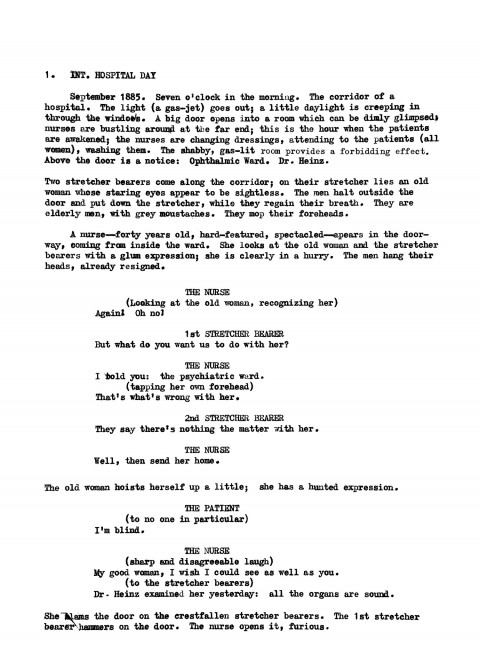
Freud (John Huston/Jean-Paul Sartre)
In 1958, legendary director John Huston decided to make a film about the life of Sigmund Freud. Having met Jean-Paul Sarte in 1952 during the filming of Moulin Rouge, Huston felt the philosopher would be the ideal person to script the Freud film, since Sartre knew Freud’s work so well and since Huston surmised that he would have “an objective and logical approach.” Ironically both Sartre and Huston considered themselves anti-Freud for largely the same reason: Sartre because as a Communist he believed the role of the psychoanalyst was limited and of little social importance. For his part Huston felt that psychoanalysis was an indulgence for bored house wives and the problem children of the rich while the “movers and shakers”’ were too busy for it and those that most needed it couldn’t afford it. First, Sartre delivered a modest 95-page treatment. This, however, became a 300-page draft in 1959 that Huston calculated would produce an unacceptable five-hour-long film. When Huston and Sartre met in person in Galway to find a way to cut the screenplay down to a reasonable length, their working relationship was less than cordial. In Huston’s recollection, Sartre was “as ugly as a human being can be.” Sartre’s remembrance is hardly more flattering of Huston: “…in moments of childish vanity, when he puts on a red dinner jacket or rides a horse (not very well) or counts his paintings or tells workmen what to do. Impossible to hold his attention five minutes: he can no longer work, he runs away from thinking.” After their Galway meeting, during which Huston tried and failed to hypnotize Sartre, the philosopher attempted another revision, but this time, he sent Huston an even longer draft, for an eight-hour film. At this point, Huston gave up on Sartre.
The Story (Jean-Luc Godard)
In the late 1970s Jean-Luc Godard became obsessed with the story of Siegel and planned to make a movie about him. He wrote a screenplay called, simply, “The Story”, and planned to cast Robert De Niro and Diane Keaton in the Siegel and Hill roles. He dropped this plan when Keaton lost interest and then turned his attention to Every Man for Himself (1980) as his return to commercial filmmaking.
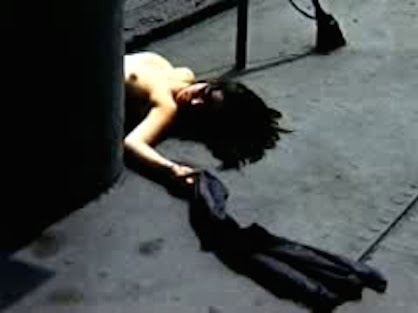
Kaleidoscope (Alfred Hitchcock, 1964-67)
After watching Antonioni’s Blow-Up, Hitchcock felt he was a century behind the Italians in technique. He asked the novelist Howard Fast to sketch a treatment about a gay, deformed serial killer. Pleased with the results, Hitchcock composed a shot list with over 450 camera positions and shot an hour’s worth of experimental color tests. MCA/Universal were disgusted by the script and immediately canceled the project, reducing Hitchcock to tears. See the images, parts of the script, and test footage.
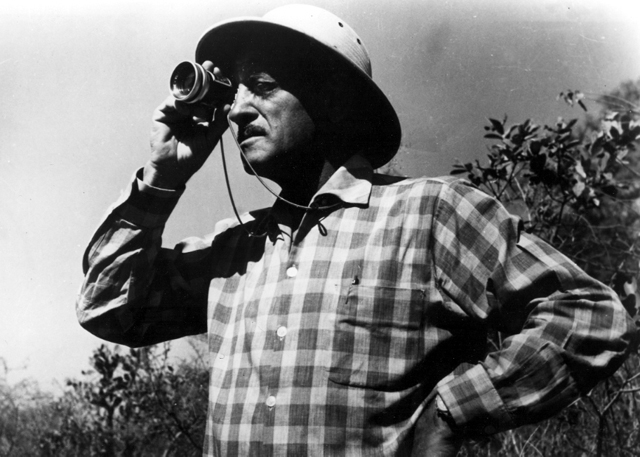
Bunuel in Mexico researching A Sumptuous Ceremony
A Sumptuous Ceremony (Luis Buñuel)
At four o’clock one afternoon Luis Buñuel decided that he would make no more films. He was staying in the spa at San Jose Purua in southwest Mexico where, for more than twenty years, Buñuel had gone to write his scripts. It is a semitropical paradise set in a green canyon — a bit too hot, in truth, for Buñuel liked rain, fog, the north. The screenplay was for a film to be called A Sumptuous Ceremony, in homage to Andre Breton, who defined eroticism as “a sumptuous ceremony in an underground passage.” From the outset the watchwords were “terror” and “eroticism.” Bunuel imagined a young girl in a prison cell receiving a visit from a phantom bishop; a trap door led to an underground passageway and to a boat filled with explosives for blowing up the Louvre museum. The script was never finished. Buñuel had barely arrived in San Jose Purua when he felt unwell, ill at ease (this was 1979 and he was therefore seventy-nine years old). He spoke of some “menace,” and at four o’clock in the afternoon he announced that his life as a filmmaker was over.
The Conquest of Mexico (Werner Herzog)
Planning to take the perspective of the conquered Aztecs, Herzog said the film would be so expensive that it could only be made with the backing of a Hollywood studio. “I am currently working on a film about the conquest of Mexico and Francis Ford Coppola is involved,” Herzog said at the time. “But I am not making a Hollywood film. Somehow it will still be a Bavarian film. I have nothing against what they do in Hollywood. It doesn’t bother me. Let them do it.”
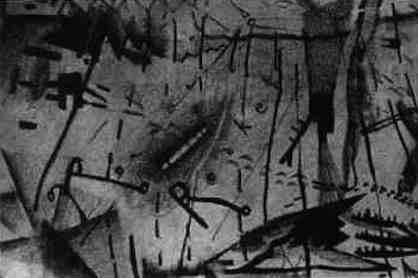
David Lynch storyboard for Ronnie Rocket
Ronnie Rocket (David Lynch)
A comedy starring a reanimated dead teen, set in a rundown, industrial future. Screenplay available here.
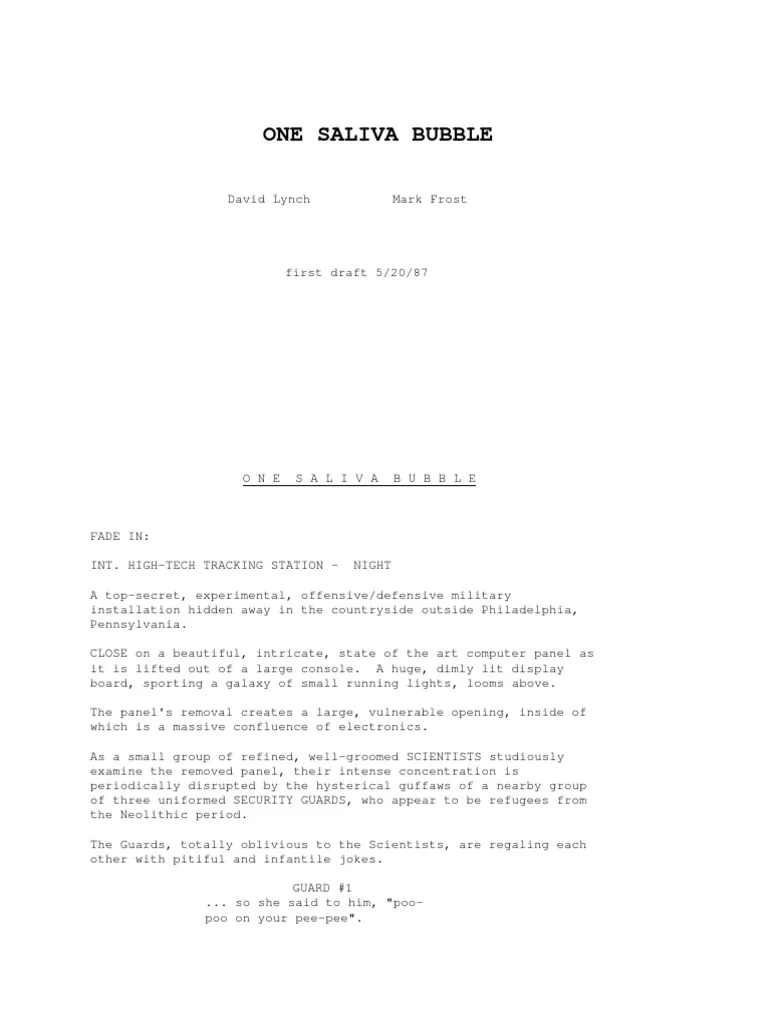
One Saliva Bubble (David Lynch, 1987)
An early project of Lynch and Mark Frost written almost a year before the Twin Peaks pilot. A saliva bubble from a country bumpkin working at a top-secret military base gets into a weapons system, causing the device to fire upon Newtonville, Kansas, and prompting the townsfolk to switch identities with one another. Lynch called it “an out-and-out wacko dumb comedy”; Martin Short and Steve Martin were initially attached to star. Screenplay is available here.
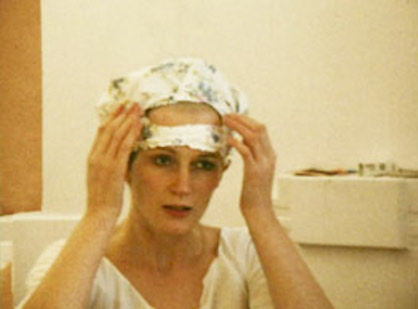
Heartbeat in the Brain (Amanda Feilding)
After shaving her hairline, donning a floral cap and constructing protective eyewear from a pair of sunglasses and medical tape, 27-year-old art student Amanda Feilding injects herself with an anesthetic, peels the skin from her forehead with a scalpel, and begins to drill into her own frontal bone with a foot operated dentist’s drill in this documentary/art piece about the “science” of trepanation. A reviewer who saw the film in 1978 reported that when Feilding finally drills through the bone and grins victoriously as blood spurts down her face, several members of the audience fainted, “dropping off their seats one by one like ripe plums.” The film hasn’t been seen in 44 years. It is assumed that Feilding has a copy.
Pincushion (John Carpenter)
Postapocalyptic odyssey was to star Cher, whose character must deliver a life-saving serum to Salt Lake City. John Raffo scripted.
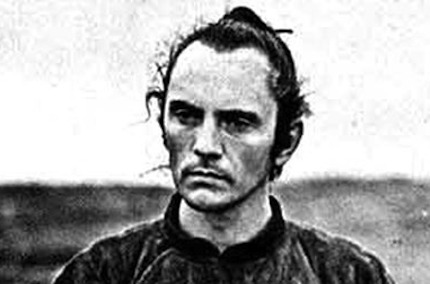
Hu-Man (Jérôme Laperrousaz)
An actor (Terence Stamp, playing himself) is placed in a series of dangerous situations, while his fear is broadcast to the television audience. Their emotional reactions will determine whether he is sent into the future, or the past. Directed by Jérôme Laperrousaz, a highly elusive figure whose other films include the almost equally obscure documentary Amougies (Music Power – European Music Revolution) and the Bob Marley-starring musical Third World, and co-starring Jeanne Moreau, Hu-Man won the Trieste Festival of Science Fiction Films in 1976, but has fallen into obscurity, and apparently no prints exist.
L’Ailleurs immédiat (Jean-Pierre Gorin)
In the director’s first solo film, Gorin played the lead, reciting passages from Nietzsche’s Genealogy of Morals while getting tattooed, and masturbating on a Paris window ledge. The film was reportedly destroyed by the producers before completion, after the drug arrest of the lead actress.

The Tourist (Claire Noto)
Noto’s script, started in 1980, has often been cited as similar to Blade Runner, and its moody, atmospheric, and unexpectedly sexual overtones also suggested the alienation and tragic nature of The Hunger and the exotic mien of the creatures from Ridley Scott’s Alien. It languished in development hell forever, while its ideas proved so popular that it was plundered time and again, most blatantly by Men In Black which mostly lifted the concept wholesale, added heroic human agents as the leads, jettisoned the existential woe of estranged aliens, trapped and in-hiding on Earth, and of course made it a comedy. Legendary visualist H. R. Giger created a series of alien designs in the early 1980s and they, like the script, were much too sexualized and unsettling for the execs who were trying to grapple with an unwieldy story of morality, corruption, xenophobia, humanity and imprisonment, both physical and psychological. Citing influences such as Fellini and Antonioni, Noto once said of the screenplay “I wanted to portray sexual agony and ecstasy in a way I’d never seen before, and science fiction seemed like the arena.” But in development hell she remained, though briefly flirting with Francis Coppola’s Zoetrope Studios, before they went broke (legal problems began here, as another producer claimed she co-owned the option). Noto’s difficult nature saw her kicked off her own creation, which then spent years in the studio system (Universal, WB, Paramount, Joel Silver all being involved) as it was overdeveloped into something less nihilistic and more homogenized. And also, bland. In the end, it was a dark independent movie that should have stayed that way. Unfortunately, the Fox Searchlights of the world didn’t exist yet, thus the only option for the project was the studio world where it just didn’t fit. HR Giger’s conceptual drawings for the film are available here.
The Corrections (Noah Baumbach, 2012)
Scott Rudin was to produce this HBO miniseries adaptation of Jonathan Franzen’s novel. Ewan McGregor, Chris Cooper, Dianne Wiest, Maggie Gyllnehaal, Greta Gerwig, and Rhys Ifans were cast and shooting began before HBO cancelled the project. According to Baumbach, “We shot a pilot, but we didn’t shoot a whole pilot, even. It was never finished.”
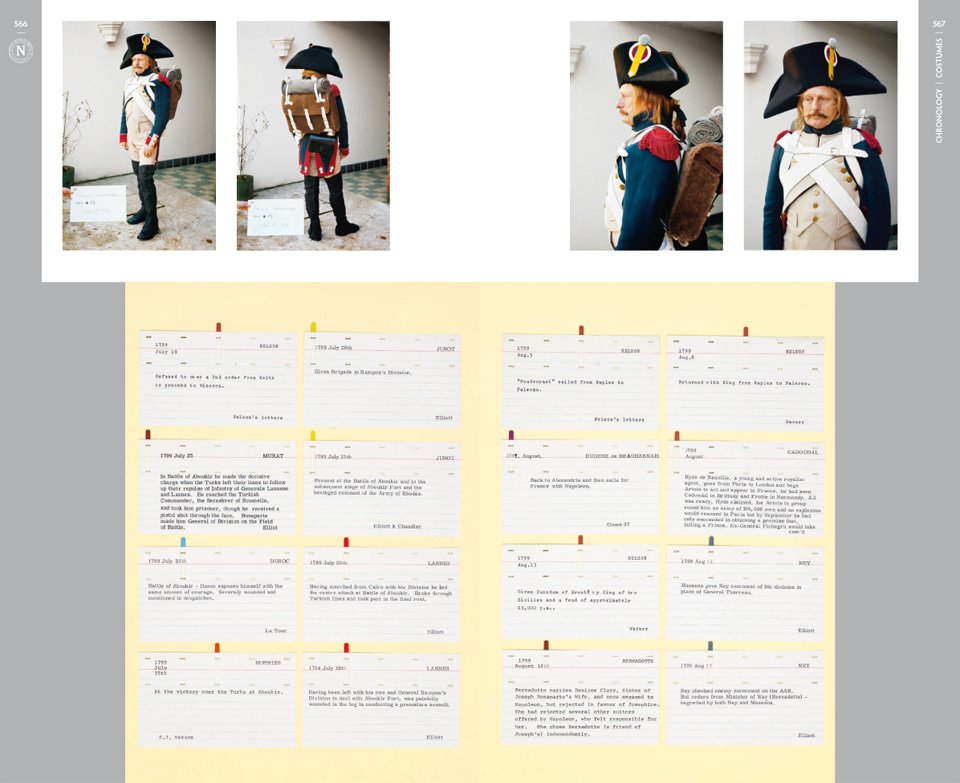
Napoleon (Stanley Kubrick, 1969-70)
A biopic on Napoleon set to be made just after the success of 2001: A Space Odyssey. Kubrick was so enthusiastic to make the project that he confessed to identifying with Bonaparte down to the way he ate his food. Jack Nicholson was slated to play the title character, but when corporate changes hit MGM, Kubrick lost the approval.
The Lord of the Rings (Stanley Kubrick)
In the late 1960s, The Beatles worked for a year on a project in which they would star in an adaptation of Tolkien’s novel. The plan was that Paul McCartney would play Frodo Baggins with Ringo Starr backing him up in the role of Sam Gamgee. George Harrison would don a hat and grow his beard a little longer to take on the role of Gandalf and John Lennon decided that for him only the role of Gollum would do. They even went as far as to Stanley Kubrick to direct the film. Kubrick did consider it, citing the sheer immensity of the book as a reason for his declining The Beatles’ offer. The project finally died due to the increasing animosity between band members.
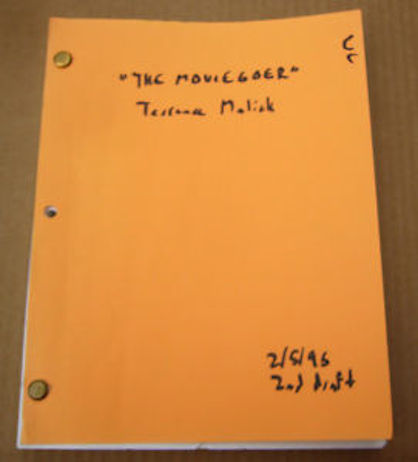
The Moviegoer (Terrence Malick)
Adaptation of Walker Percy’s novel about a Korean War vet turned stockbroker whose traumatic experiences cause him to search for life’s deeper meaning, heading for New Orleans. Malick abandoned the idea after Hurricane Katrina devastated the city, where the film was to take place.
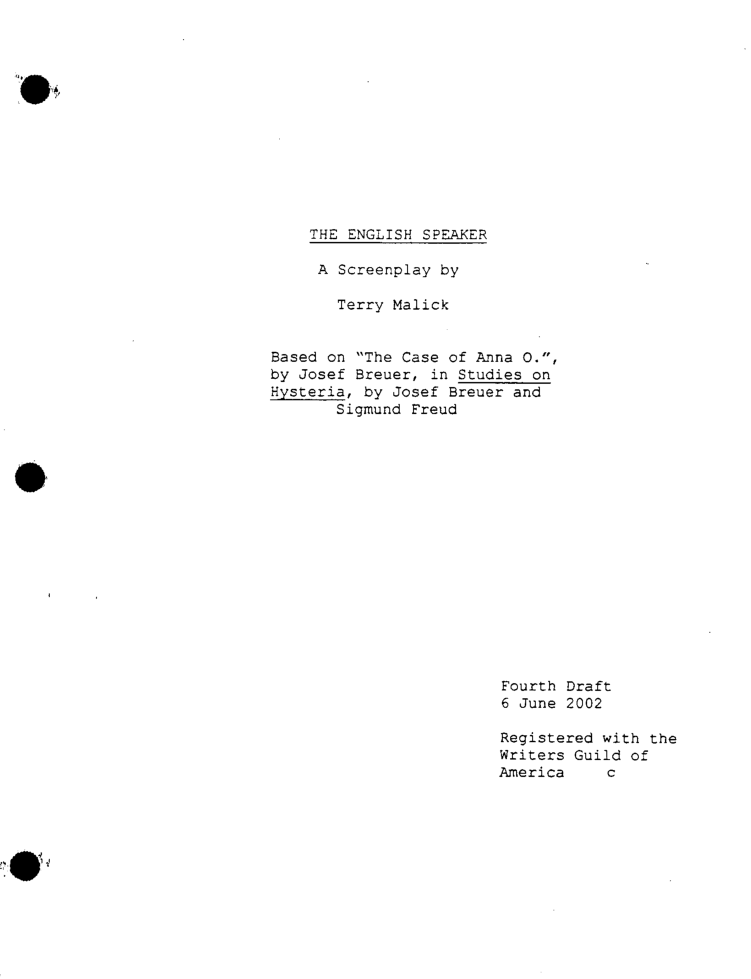
The English Speaker (Terrence Malick)
This highly personal passion project was based on the pioneering study by “talking cure” proponent and Freud forerunner Josef Breuer of 1880s psychoanalysis patient Anna O, a hysteric given to melancholia, personality changes and a form of aphasia in which she could understand only German, but replied in English, French or Italian. The screenplay, according to producer Bobby Geisler, one of the very few people ever allowed to read it, was “as if [Malick] had ripped open his heart and bled his true feelings onto the page,” while author Peter Biskind described it as “The Exorcist as written by Dostoevsky.” But perhaps because he felt so passionately, the project got sucked into the whirl of controversy and recrimination that surrounded the tortuous process of getting The Thin Red Line to screens. Malick in fact held the finishing of his war elegy for ransom, demanding in perpetuity rights over The English Speaker to ensure no one but him could direct it. The producers held out, though, and in the dust cloud thrown up by the eventual breakdown of the relationship between Malick, Geisler, and The Thin Red Line producer Mike Medavoy, it’s hard to see exactly where the rights landed.
Mona Lisa (Larry Clark)
Remake of Neil Jordan’s 1986 underworld thriller to star Eva Green and Mickey Rourke, or Rosario Dawson and Hayden Christensen.
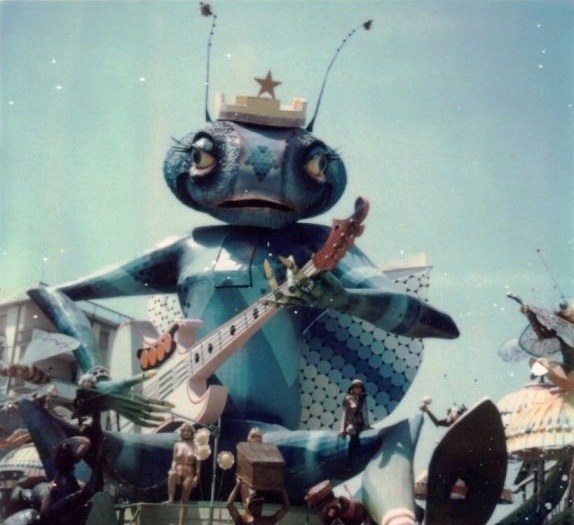
Maldoror (Alberto Cavallone)
This is a holy grail amongst film collectors, matched only by The Day the Clown Cried. There was no one more qualified to adapt Comte de Lautréamont’s infamous novel than director Alberto Cavallone, who made a number of grotesque/erotic art films, which were in vogue at the time. Cavallone’s adaptation was completed, though never publically screened, making the film as impenetrable as its source material. Finding a copy would be, in the words of the Comte himself, as “beautiful as the chance encounter of a sewing machine and an umbrella on a dissecting table.” A detailed account of the film’s history by Mike Kitchell is available here.
La Belle vie (Robert Bresson)
Bresson received “advance-on-box-office” French funding in 1986 for the project.
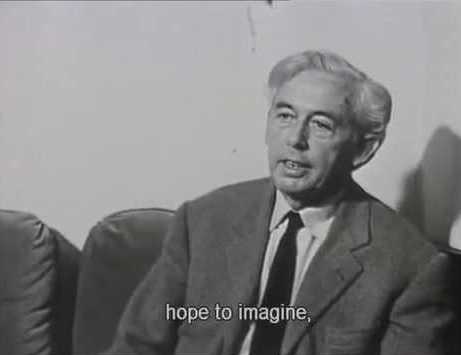
Genesis (Robert Bresson, 1963)
A lavish adaptation of the Book of Genesis that Bresson wanted and tried to make off and on for 35 years. The story would have had to span the creation of the universe all the way to the building of the Tower of Babel. And back in the day, Bresson didn’t have Terrence Malick’s VFX team for “The Tree of Life.” Dino De Laurentiis had agreed to finance, but Bresson abandoned the project only to take it up again and then abandon it a second time. He once said that one of the frustrations with the production was that he couldn’t make his animal performers do as they were told. He would try to mount the project one more time in 1985, thanks to “an exceptional pre-production grant” he had received, but this attempt failed too.
Gershwin (Martin Scorsese, 1981)
Paul Schrader and John Guare wrote drafts of the script for this biopic about the American composer George Gershwin. Lavish production numbers of Gershwin’s works were to be related to scenes from his life as discussed by Gershwin on a psychologist’s couch. The movie was owed to Warner Bros., but they were eventually interested in another Scorsese picture (they also were skeptical about the cost/return prospects on “Gershwin”). “Ultimately, when it was time to do Gershwin, they turned to me and said, ‘We’d rather have one on Dean Martin,’ ” Scorsese said circa 2004. The problem was, while Tom Hanks was eyed for the lead of Dino (Martin’s birth name), and Nick Pileggi (the author and screenwriter of Goodfellas and Casino) was going to write the script, that one wasn’t even started, while Gershwin was ready to roll. WB wouldn’t budge. The project was finally canceled for good due to complications with rights and the fear that a young audience would not understand or care about Gershwin.
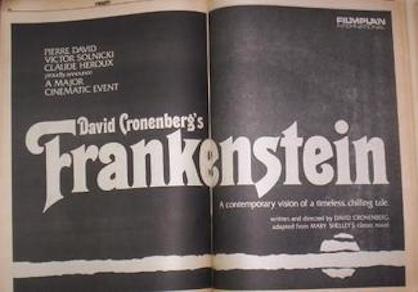
Frankenstein (David Cronenberg)
Canadian film producer Pierre David approached Cronenberg in the ’80s with the idea and the filmmaker offhandedly said yes. “He said, ‘Listen, tell me what you think… David Cronenberg’s Frankenstein?” Cronenberg recalled of the producer’s pitch. He replied “Sounds good to me. What about poor Mary Shelley?” And the next thing Cronenberg knew, there was a full-page ad in Variety touting, “David Cronenberg’s Frankenstein.” Evidently, Cronenberg did think about it a little bit. “It would be a more rethinking than a remake. For one thing I’d try to retain Shelley’s original concept of the creature being an intelligent, sensitive man. Not just a beast,” he is quoted as saying in the collection of interviews Cronenberg on Cronenberg, but, beyond that nothing seemed to happen.
Master of Lies (Nicolas Roeg)
This modern-day Jekyll-and-Hyde story was to star Donald Sutherland as a celebrated author who suffers from attacks of blindness. A story of parallel protagonists in which one man’s destructive fascination for another masks his desire to become him. Jamie Sives and Shirley Henderson were to co-star, with Eddie Dick producing.
Dumbo 2 (Walt Disney Studios)
Dumbo 2 was to be a direct-to-video sequel. It would of taken place a day or so after Dumbo ended. Now that Dumbo isn’t considered a freak (as he’s bringing in major bank for the circus) he’s made a group of super cool and hip friends. The premise: Dumbo and his circus buddies have to figure their way out of the big city after the circus train accidentally leaves them there. When John Lasseter became the Creative Director for Disney, he put a stop to all Disney sequels. Because instead of introducing children to the classics like intended, the sequels often tarnished the spirit of the original films. And it’s not surprising that Lasseter wouldn’t want the same thing to happen to his favorite film. The sequel was so far along that a “behind the scenes” trailer was actually released.
Maldoror (Kenneth Anger, 1952)
A film based on the work of proto-surrealist poet Comte de Lautréamont. Production never went past test footage and rehearsals with ballet dancers for the film from the companies of Grand Ballet du Marquis de Cuevas and the Ballets de Paris of Roland Petit. The footage and information about the film are lost.
Spike Jonze Harold & The Purple Crayon Test Film
Harold and The Purple Crayon (Spike Jonze)
The film was an adaptation of an adaptation of Crockett Johnson’s novel Harold & The Purple Crayon. Jonze worked on the movie for a year and half, but said by that time the vision of the movie had veered off course from its original aims, due to studio notes and interference. “I wanted it to be almost like this silent animation, going back and forth between live action and animation,” he said, but after 18 months it had transformed into something else. “When we finally got the plug pulled I got this amazing sense of relief.” Jonze and his team took a giant 6-foot Purple Crayon replica that was made during development and pitched it off a six story roof in downtown Los Angeles in an anti-form of celebration. “We watched it shatter and I was just so relieved. And I realized over the course of a year and a half, I’d let the studio anxiety—’It’s gotta be funny,’ ‘It’s gotta have snappier dialogue,’ ‘This is too sad,’ ‘This is too melancholy’— and it happened millimeter by millimeter. A year and a half later.
The Idiot (Andrei Tarkovsky, 1986)
Throughout the 1970s, Tarkovsky tried and failed to make a film version of Dostoyevsky’s novel The Idiot. According to Tarkovsky’s younger sister, Marina Tarkovskaya, adapting the novel was a lifelong dream and the state-funded and controlled Russian government (who had to approve all such movies) would never let him make it and kept stringing him along. “Andrei dreamed about filming [it], but they casually told him: ‘You are too young and inexperienced. Let some time pass!,” she told the Voice Of Russia in 2012. “In the end, they kept feeding him with promises for 10 years, and that cherished dream of his life was never realized. Let me stress that Andrei was never a dissident, but the leaders of the USSR still perceived him as a stranger, a person with internal freedom, that was what they could not forgive.” An August 1983 letter from a Russian Deputy Chairman, confirms that Tarkovsky had signed a contract to write an Idiot screenplay for Russian film studio Mosfilm, but in an 1984 Italian press conference, Tarkovsky declared he would never return to the home country. He then passed away three years later at the age of 54.
Where the Wild Things Are (John Lasseter)
In 1983, future Pixar honcho and director John Lasseter directed a 30-second film test of Maurice Sendak’s Where the Wild Things Are, which Disney then owned the rights to and were planning to make into an animated film. Lasseter was asked to do an experiment to see if it would be feasible to hybridize hand-drawn character animation with 3D backgrounds. Studio heads decided the technique was “too expensive” and “what they do on Futurama,” and Lasseter was fired shortly after.
Cocaine (Rainer Werner Fassbinder, 1980)
Fassbinder said of his flashback-centered film based on Pitigrilli’s 1921 novel: “Cocaine freezes the brain, freeing one’s thoughts of anything inessential, and thereby liberating the essential, the imagination, concentration, and so on. This freezing of the brain . . . will be expressed in the film as follows: everything visible will appear covered with a sort of hoarfrost, glittering ice, whether in winter or summer; glasses and windows will covered with ice flowers, and with all the interior shots in the studio, even in summertime, the actors’ breath will be visible, as is usually the case only when it’s bitter cold outside.” This film was supposed to be a big budget production. It had an announcement at the festival in Cannes in May 1982, which Fassbinder and the producer attended. The problem was that because Fassbinder’s script was so big (about 600 pages) the producer asked him to think about shortening it. Since Fassbinder wasn’t in the mood to cut it quickly, he proposed to shoot other films first. He died without ever going back to it.
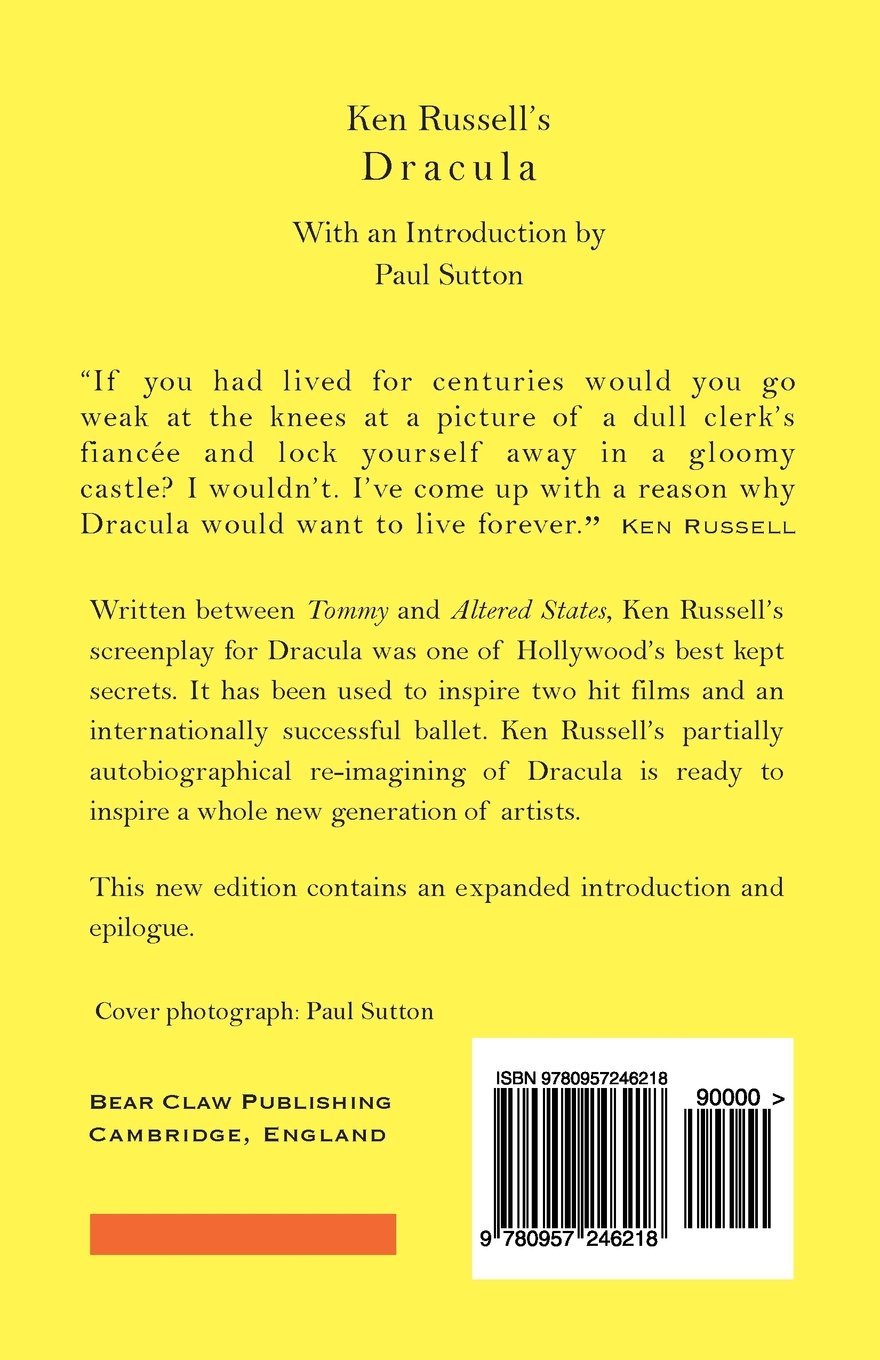
Dracula (Ken Russell)
A “sex-propelled” comic script was written in 1978 as a star vehicle for Mick Fleetwood. The aesthetic was to draw on Aubrey Beardsley (an artist admired by this version of the Count, an arts philanthropist).
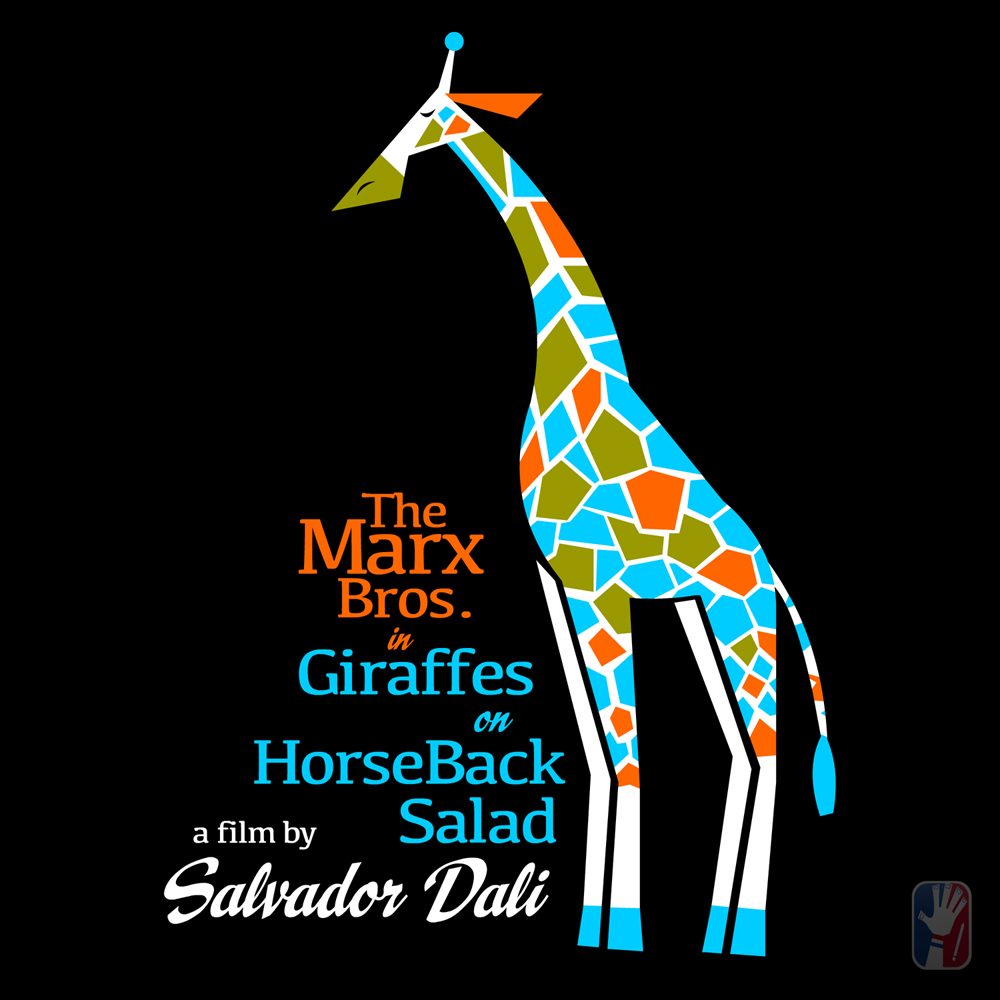
Giraffes on Horseback Salad (Salvador Dalí)
The screenplay was written for the Marx Brothers. It was never produced because MGM thought it would be too surreal for them. Harpo also did not find it funny enough for the group. The film’s storyline is available here.
Cleo (Steven Soderbergh, 2009)
Soderbergh envisioned a 3-D rock musical about Cleopatra with songs by Robert Pollard, starring Catherine Zeta-Jones. Ray Winstone was signed to play Julius Caesar, and Hugh Jackman was to play her lover. “It’s like an Elvis musical in a way,” Soderbergh said of it at the time. “It’s not serious. I mean it’s historically pretty accurate but it’s sort of like Viva Las Vegas meets Tommy.” As of late 2013, Soderbergh announced he was reimagining the project as a Broadway musical.
*
p.s. Hey. ** Adem Berbic, Hey. BB was a lucky, golden situation. It was an established literary center, already known. They had a bit of money to pay readers. LA was a literary backwater back then and bringing in somewhat known writers from elsewhere was a rarity and could cause a fuss. I was doing Little Caesar at the same time so I had connections with cool writers from elsewhere through that to invite. Stuff like that. politekid’s book still hasn’t arrived in my hands. I need to chase it. The heatwave is interfering with everything. Annoying why? ** Sam F, You’re in France. I hope you’re lucky enough to be out of the killing circle or dome or whatever of heat, but if you’re south … wow, borrow some snorkling gear. It’s a date on the future sharing of a very, very cold something. ** Carsten, I heard Germany won. There’s always tomorrow or whenever. Glad the Feneon penetrated. Please excuse this leakage from my boiled brain. ** _Black_Acrylic, Ah, drat for yesterday’s taxi mishap. But Friday is very nearby. ** Bill, Hi. I wouldn’t be at all surprised if that book has appeared here before. I did read about that one-person-only film thing, yes. Highly intriguing, of course, even though Dafoe has become a bit of a chore to watch in things for me, even though he does still have mostly decent taste in projects. ** ⋆˚꩜。darbbzz⋆˚꩜。, He is. Interesting. Nice and yahoo about the Korg. I can’t do rides that spin. I start vomiting in about 8 seconds. Well, of course I love dark rides maybe even more than roller coasters. Much more even. My all-time favorite amusement park ride is still ‘Mr. Toad’s Wild Ride’ at Disneyland which formed the blueprint for pretty much every dark ride ever since. It’s a flawless masterpiece. There are lots of indoor roller coasters, but that one was the first? Even that seems unlikely. You brought your drum machine to a gig? Wow, that’s so cool I can barely think about it. I think/fear that serial killer attractions will probably remain the turf of home haunts and haunted houses. Theme parks are ultimately pretty chickenshit. ** HaRpEr //, Amazing! Now comes the necessary and most unfun part, but it has to be done. Michael Brown, the mastermind behind The Left Banke, was a minor genius. TLB was definitely his best work, but there are interesting things about his later ventures too. I did an old post about him that I should restore. ‘Hors Satan’ is great. Dumont’s earlier Bressonian films are mostly really, really good. I wish he’d go back to that style, which I think suits his talent or whatever much better, but he seems to be quite stubborn. ** laura w, Hi. Novels don’t get much better than ‘Castle Faggot’ if you ask me. I think you would be glad if you got the Feneon. I’m kind of a wreck from the neck up, but I’m soldiering through the worsening heat so far. Keep giving me reasons to stay awake. ** Laura, Until I find an igloo somewhere, I’ll trust you on that. Today you break free? Over here there’s nowhere to break free into. I’m already sweating at 8:01 am, but you can have a hug, although I warn you it will not help setting you free. I’m dealing by sitting as close to my shitty AC unit as I can. But I have a cafe date today so that’ll be a big test. Your favorite actor? Who precisely? Everyone, Mighty Laura made a ‘playlist meant to psyche me into writing the stuff, just in case it might match anyone else’s needs of late (didn’t specifically wanna torture yall for 19 hours, that’s just the number of the Zabaniyat guarding the gates of muslim hell lol)’. I’m going to try it. How about you? Here. Thanks, pal. ** Okay. Due to the listlessness caused by Paris’s current, murderous heatwave, and its crushing effect on my productivity, you’re going to get a few more restored posts this week than you normally do. And here’s one. See you tomorrow.


 Now available in North America
Today seems like it went up particularly early. Heat-induced? We have a breadcrumb of freshness here right now on account of a long rainy thunderstorm which scared the cat, but I expect it to have morphed into a punishing humidity in about a picosecond. Have an early-ish comment in solidarity.
I see, I see. That does have a bit of a quality of cherries lining up on a slot machine. On the ground here it’s different in terms of the externals but I guess the approach and its inculcation over time is the big thing. Here isn’t a backwater but the biggest gripe in my mind is still the hyper-socialised ladder-climbing quality which I see in a lot of places, and which I don’t think is well-placed to receive and encourage the sort of stuff I’d personally find really bracing, nor what I’d want to offer it.
The one big asset is this swirling underground scene which _isn’t_ ladder-climbing, at least relatively speaking, and which I’ll permit myself the naiveté to think is a little unique to this place. In part the launch was an attempt at injecting some writing into it, because it seems to encompass every conceivable form except that one. Not that that world doesn’t have its own aesthetic shortcomings, but from my thuddingly subjective point of view it still seems a lot more buzzy and pleasing and vital.
Annoying because, I dunno really. Weird reflex.
Most of the dead films were total news to me. If a genie let me bring one of them into existence, maybe I’d pick The Tourist? Or the Bresson(s). I guess more Bresson would be sacred. Right now I’m in a state of perma-annoyance that I missed almost all the screenings when the ICA was doing a Rivette season last year. I very desperately want to evaporate into a screening of ‘L’amour fou.’ Maybe I’ll hit the jackpot in Paris in a couple of weeks, who knows.
Hey Dennis. Wow, a four-hour Proust adaptation, that’d need the pacing of a Bourne film or something. You like Visconti more than me, if I remember correctly, so I’ll try and picture your imagined version of the film over my own. I kind of wish movies were still completely canned, rather than CGI-d or re-shot into oblivion. That Hitchcock film looks kind of great too, lol.
Hope you’ve been okay with the heat. It always gives me these really insane Beaudelaire-ish dreams, I had a long and very vivid one last night about sharp biting insects coming out of my orifices, which was unpleasant but sort of fascinating. I also know you don’t watch TV, but I’ve been catching up with “Industry”, which has been fun. There’s a whole subplot about a woman based on Ghislaine Maxwell and her insane daddy issues, which is more interesting than the true-crimey thing I’m making it sound like. Hope you’ve been well, lots of love from here. Adios!
p.s., did you ever read Lanchester’s “Debt to Pleasure?”
Hi Dennis! This is amazing. I think this is one of my favorite posts. A grotesque erotic adaptation of Maldoror? I know how I’m spending my afternoon! Do you know Cavallone/can you recommend a film? I never heard of him. I hope you’re doing ok in the heat!
Whoa, that came early. You must be miserable. Weather reports show that Sunday is supposed to be the day the furnace shuts down for the time being. And I heard France just curbed public drinking in some places—of alcohol obviously. I bet AC & fan sales are going through the roof.
The lost Kenneth Anger film I always found most intriguing is “The Love That Whirls”, which had to do with Aztec ritual & sacrifice. The lab technicians destroyed the footage, finding it obscene. Destroying art that isn’t yours ought to be a felony.
Here’s hoping you find a way to stay cool.
Oh, here’s an addition: both Sergio Leone in the past & Roy Andersson these days have tried to film Céline’s “Journey to the End of the Night”. I’m glad both failed. It’s an oral novel through & through—I mean the tone is what makes it work, not the continent-jumping adventures of the story that they were surely so eager to adapt.
An epic post.
Most of these are probably better off preserved as unresolved dreams but I love the idea of them existing.
Love today’s post so much! Just the thought of Anger doing Maldoror or Fassbinder doing Cocaine is enough to make me giddy.
Was out for lunch earlier and scorchio is very much the forecast for today, it would seem. Easy for me to get nostalgic about some UK 90s TV comedy but I do think it’s worth it on occasion.
hi Dennis!
oh man so many films… there’s a bunch in there whose death lowkey hurts fr. Bresson… Tarkovsky… The English Speaker might have fucked me up so good.
feels like Huston and Sartre should have at least suspected they wouldn’t be sitting under a tree like ever…? why did Hitchcock’s Italian homage have to be gay-and-deformed? *side eye*
why is Maldoror so cursed?
i’ve pointlessly wanted to see Heartbeat in the Brain forever now, tho i think my reaction to her pulling that shit in front of me might have just been to hit her, really… like idk whether she tapped into radical freedom or massive manipulation there, and i’m not sure which option bothers me more — maybe the total agency of some other mf diminishes me subjectively so i feel i must regain control and put her in her place… man i’m a wall-to-wall arsehole if so.
or maybe violence as harm reduction is an act of love, or maybe trying to extort such wild emotions from randos by equally wild means is a sentimental, supremacist act which subjugates and antagonises me. idk. wish i knew tho, this is a moral quandary =/
but you’ve got a date today! is it… hot? =D if so, def wear cotton or linen and i’ll send up du’a, not that you need it ^_^
(if it’s not, we should be doing the same shit for diff reasons, but i’m hoping lol)
hmm… am i getting free today? idts, but maybe a bit freer at least. hoping for that, closer to recovery. but is freedom ultimately under the imperium of health or whatever? i mean like yea but also no? at least at this point.
uhhh real, hugs won’t set me free alas, but they always make me full, which is sort of better so just bring it in lol. sweat is life. *squeezes you in high surrender to the weather*
my fav actor currently sweating his arse off in your hood is Connor Storrie obvi, and i think the collab could be super beautiful. he seems totally human enough to be like idk, an alien. and you’re you. duh. i see it so clearly! ^_^
<3
Hey, Dennis, The Feneon book: ordered! Never heard of him and never heard of that book, but that’s exactly what I want to read. Thanks! And of course, it’s a shame we never got Waters’ version of “A Confederacy…” or Malick’s “Moviegoer” (love the Percy novel) or — omg — “Cleo” and that soundtrack! God I’m sorry about your Paris heat. Weds and Thurs look like hell. I’m so paranoid about my upcoming trip. The places we’re staying don’t have AC! What gives? Ugh. Portland’s getting some heat but then we plunge into days of cool rain, which is the way it should be. You following the World Cup at all? I’m loving the underdogs tying the giants, esp. Cabo Verde and Morocco (they beat Scotland). And the U.S. has always been an underdog, too, so… Here’s wishing you a forthcoming ice bath…! (Isn’t there some nearby AC escape?) Take care, Don
I’m eagerly waiting for Ezra Edelman’s 7-hour Prince documentary, suppressed by his estate, to leak. Ryusuke Hamaguchi made a feature-length version of SOLARIS while in film school, but it can’t be released commercially because he didn’t have the copyright to Lem’s novel. Kenneth Anger supposedly made two films in the ’70s for a private collector, never intended for public screenings, but no one is sure whether they actually exist.
I’ve come down with a cold, so I’m trying to rest this week and reduce my workload as much as possible.
Does Paris have public cooling centers? Can you go to the library and spend all day reading or working on your laptop till the heatwave lifts?
Father’s Day turned out to be rather triggering. Speaking of SOLARIS, I had a dream yesterday where I was living with my parents. They were healthy, but within the dream, it turned out to be a scenario akin to the Tarkovksy film’s ending.
Kenneth Anger doing Maldoror, Monte Hellman doing Robbe-Grillet and the legendary Fassbinder unmade film caught my eye
I finally have a laptop temporary one and the first thing I did so far is playing loud my favourite Ariana and Slayyyter songs to fill my room with good vibes
and watching Flandres right now inspired by your little Dumont chat. Have you seen it?
Still observing Feneon post, thank you for sharing with us
Hope you are doing good with the heat wave
Not that l didn’t like Flanders because it was alright, but I have The Life of Jesus so romanticised and up there as his best film, that was not so moved this time. Need to watch Hors Satan next
Because my film needs were not entirely satisfied I am watching now one of my favourite films Absences repetees (1972) a total trip to see it again far away from the days I felt like him. Also l miss so much the wonderful poster of it I had in my room and got lost in the move back to Crete
Goodnightttt and good vibes
ronnie rocket sounds unreal, and i love the mental image of alfred hitchcock bursting into tears at the idea of not being able to do his gay serial killer movie.
i had no idea that john waters was the director tied to a confederacy of dunces! insane. i can’t really imagine any director would have done it better…
some bonus ones: sofia coppola’s little mermaid, abandoned due to the project being “too ambitious”; steven spielberg’s cats adaptation (the concept art for this is amazing); and not one but two abandoned attempts at adapting the donna tartt novel the secret history, one with a screenplay by john gregory dunne and joan didion, the other with a screenplay by bret easton ellis. i also want to say the master and margarita has had a lot of failed adaptation attempts, as well?
lots of troubling news out of france bc of the heatwave or “heat dome” as it’s been called. 40 drowning deaths and 18 heat deaths, good lord. the seine is allegedly open for swimming. god knows what’s in that river. i’m sure ice (already scarce as it is in europe but maybe they finally understand our american obsession with frozen water) and aircon units are hard to find now. hope your venture outside was successful!
Ooh, this post is 100% my thing. I was with a friend just hanging out and looking up Wikipedia pages for unrealized projects by directors. Lynch’s Ronnie Rocket was one we were always was fascinated by, along with The Happy Worker, Dream of the Bovine, and a potential film about Robert Johnson.
Hitchcock’s Frenzy seemed promising. The idea that Hitchcock was going for something more perverse than Frenzy turned out to be is intriguing. And naturally, Clair Noto’s The Tourist is a beautiful work. Would’ve massively changed the game.
Hope all’s well besides the heat. I have a couple erotica stories to pump out and a grant pitch to write as July rolls in, so I’ll be a busy bee for a bit. Please stay cool!
Oh yeah, just a few other favorite dead projects:
Shane Carruth’s A Topiary
Wachowskis’ Colbalt Neural 9
Pepe le Pew standalone film
Sylvester Stallone’s Edgar Allen Poe biopic
Chris Farley playing Fatty Arbuckle in his first dramatic role
Francis Ford Coppola and Spike Lee’s Playhouse 90 revival
M. Night Shyamalan’s Tales from the Crypt revival
Urgh, hey. Today was the worst. I can barely focus. I made the mistake of looking at the weather forecast and now I’m unbearably claustrophobic and pissed off because it’s going to get worse. This stupid fucking attic room is cooking me alive. Whatever, I guess it’s no use trying to argue with the sun. I’ll have to find my inner zen or something. Tomorrow I have to venture outside and I’m already dreading it.
I’m obsessed with these sorts of failed projects, especially ones that didn’t happen due to their massive ambition, because they seem far more fascinating than anything real could ever be. I think the Tati/Sparks collaboration is the one where its absence feels the biggest in my soul. Like there’s a hole where it should be. Bresson’s take on Genesis too. That just might have made me find God. And ‘Batman Dracula’ needs to be released already. Warhol’s estate is under the crazy illusion that nobody ever wants to see the films he made.
I think I’m going to push the ‘mystery’ element of the book, though nothing is really answered, nor is a question really posed, but anyway. The only other possible angle is ‘coming of age’, but that would just be because it’s about a teenager. It’s tough. In truth, I’d like to be honest about what the book is, but just by typing up a cursory overview of what it is and what it’s about confines me to pretending that it conforms to some typical plot with a big reveal or resolution at the end. I’m always relieved when a publisher states that you should cut the crap and talk to them like a human being in their submission guidelines.
Fascinating take on how Beckett’s reservations about cinematic adaptation reflect a deeper concern for the essence of the narrative. It’s impressive to see how directors like Polanski grapple with such profound literary material! I’ve often wondered how film might distort the original’s intent; it seems like a delicate balance. By the way, I often refer to literary analysis forums for insight on adaptations. It’s a helpful resource!
Fascinating take on Beckett’s insistence that his work remain unadapted! It’s interesting how much the purity of the original medium can shape our experience of a story. I wonder if there are other playwrights who feel similarly protective over their work? Recently, I’ve been using my library’s resources to dive deeper into adaptations and their impacts.
Fascinating insights about Beckett’s resistance to cinematic adaptations! I can totally see how his reluctance to compromise the essence of “Waiting for Godot” aligns with the integrity of the text. It makes me think about how certain works just resist translation into film. By the way, I’ve been exploring some of the philosophical undertones of adaptations using a helpful free resource called a library database!