________________
Aliona van der Horst Boris Ryzhy (2009)
‘The Russian poet Boris Ryzhy was handsome, talented and famous. So why did he take his own life at the age of 26? A quest to find the answer takes the filmmaker to the criminal neighbourhood in the cold industrial city of Yekaterinenburg where Boris grew up. Through conversations with family and friends, she pieces together a picture of passionate and complex life of the poet. What emerges is a penetrating portrait of the perestroika generation, who lost all certainties, becoming a generation of criminals and bodyguards. Above all, it is a haunting film about Boris’love for life. Through his poems, pain is transformed into grace. Directed by Aliona van der Horst. Cinematography: Maasja Ooms. In co-production with VPRO.’ — VPRO
the film
_______________
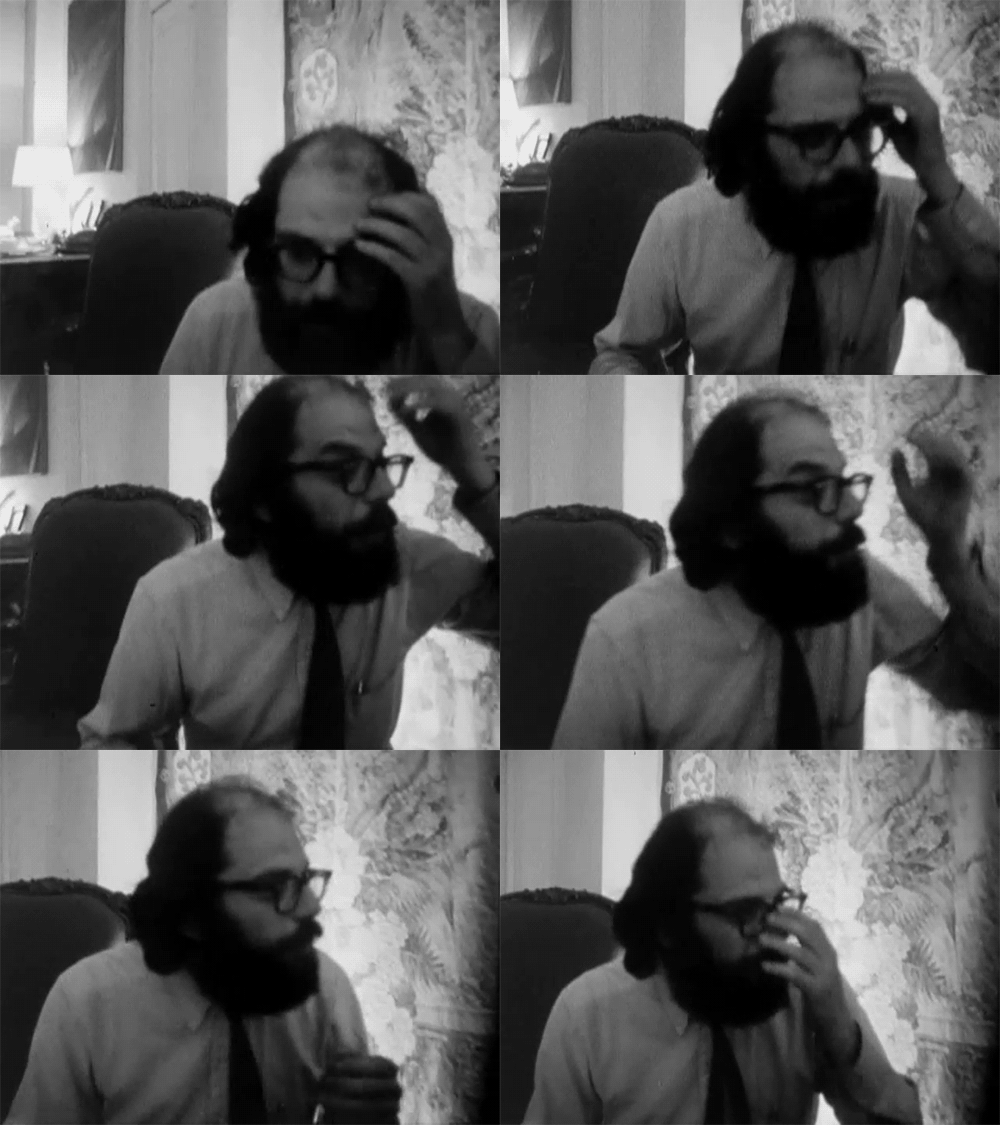
Jonas Mekas Scenes from Allen’s Last Three Days on Earth as a Spirit (1997)
‘This is a video record of the Buddhist wake ceremony at Allen Ginsberg’s apartment. You see Allen, now asleep forever, his close friends, and the Buddhist monks conducting the cere- mony, preparing Allen for the travel into the spirit world. You also see Allen being wrapped up and removed from the apartment to the Buddhist Temple. I talk to Peter Orlovsky about Allen’s last days. Later I tape the final farewell at the Buddhist Temple, 118 West 22nd Street, New York City, and many of Allen’s friends, Patti Smith, Gregory Corso, Peter Orlovsky, Le Roy Jones- Baraka, Hiro Yamagata, Anne Waldman, and many others who came to say last good-bye to Allen.’ — Jonas Mekas
Excerpt
_________________
Kate Crash Eruptions of Poetry: Anna Homler, LA Woman (2011)
‘Anna Homler is a poet and vocal, visual and performance artist who has been known to invent her own languages; she often plays her collection of antiques, toys and curios thru a variety of digital delays/FX. She is included in Kate Crash’s current interactive documentary created with EZTV’s Michael Masucci. The film, LA Woman, (2011) premiered as part of the Pacific Standard Time initiative sponsored by the Getty Research Institute.’ — collaged
Excerpt
____________________
James Brih Abee Full Blossom: The Life of Roberts Blossom (2000)
‘Despite his long legit career, the poet and actor Roberts Blossom is probably best known for his role as Old Man Marley in the Chris Columbus film Home Alone. He also appeared in Slaughterhouse-Five, The Great Gatsby, Escape From Alcatraz, Close Encounters of the Third Kind, The Quick and the Dead, Always and The Last Temptation of Christ. He also starred in a horror film, 1974’s Deranged, that was based on the life of serial killer Ed Gein. He was also a published poet, writing every day for 60 years. A documentary on his life, Full Blossom: The Life of Poet/Actor Roberts Blossom, was made in 2000 and featured Ed Asner, Peter Brook and director Robert Frank, as well as members of Blossom’s family.’ — Variety
Trailer
__________________
Aristede Craig Jr. Aristede the Poet Documentary (2013)
‘Aristede Craig Jr. uploaded a video.’
the film
_________________
John Dullaghan Bukowski: Born into This (2003)
‘Director John Dullaghan’s biographical documentary about infamous poet Charles Bukowski, Bukowski: Born Into This, is as much a touching portrait of the author as it is an exposé of his sordid lifestyle. Interspersed between ample vintage footage of Bukowski’s poetry readings are interviews with the poet’s fans including such legendary figures such as Lawrence Ferlinghetti, Joyce Fante (wife of John), Bono, and Harry Dean Stanton. Filmed in grainy black and white by Bukowski’s friend, Taylor Hackford, due to lack of funding, the old films edited into this movie paint Bukowski’s life of boozing and brawling romantically, securing Bukowski’s legendary status.’ — Top Documentary Films
the film
_________________
David Hoffman Michael Yetnikoff: Child Poet (1968)
‘This 30-minute documentary that reveals the life and poetry of a ten-year-old poet, Michael Yetnikoff. Michael says that he has been a poet since he could write. He shares his thoughts and his poems with veteran documentary filmmaker, David Hoffman. The result is a tale about a ten-year-old boy whose poetry contains way with words and intelligence way beyond his years. Michael reads his poems and offers insight into what created them. He even writes a poem about the documentary.’ — DH
Excerpt
___________________
Melanie La Rosa The Poetry Deal: A Film with Diane Di Prima (2012)
‘She remains the most famous women poet of the Beat Generation; her friend Allen Ginsberg calling her “heroic in life and poetics”. THE POETRY DEAL: A FILM WITH DIANE DI PRIMA is an impressionistic documentary about legendary poet Diane di Prima. The most well known female writer of the Beat Era, di Prima is fierce, funny, and philosophical, still actively writing in her late 70s in San Francisco, where she is poet laureate. She is a pioneer who broke boundaries of class and gender to publish her writing, and THE POETRY DEAL opens a window looking back through more than 50 years of poetry, activism, and cultural change, providing a unique women’s perspective of the Beat movement. THE POETRY DEAL puts di Prima’s life and work on screen in a unique, beautiful portrait using rare archival material, impressionistic scenes shot in Super8 and 16mm, stories told by friends and colleagues—and di Prima’s powerful writing.’ — WMMNYC
Trailer
_________________
Ron Mann Poetry in Motion (1982)
‘To say that Poetry in Motion, Ron Mann’s 1982 documentary, is the greatest poetry documentary of all time doesn’t really quite give the film its due. Thirty years on, the film still holds up as an anthology and time capsule, one that’s on a par with or even surpasses its print inspiration, Donald Allen’s New American Poetry: 1945-1960. It arrived in theaters and video stores at a time when poetry was reasserting itself as an oral and performance-based art, a synthesis of previous countercultural movements with free jazz, punk rock, and theater of cruelty cabaret. The 24 poet performers portrayed in the film read like a who’s who of late 20th-century American countercultural poetry: Helen Adam, Miguel Algarin, Amiri Baraka, Ted Berrigan, Charles Bukowski, William S. Burroughs, John Cage, Jim Carroll, Jayne Cortez, Robert Creeley, Christopher Dewdney, Diane Di Prima, Kenward Elmslie, Four Horsemen, Allen Gingsberg, John Giorno, Michael McClure, Ted Milton, Michael Ondaatje, Ed Sanders, Ntozake Shange, Gary Snyder, Tom Waits and Anne Waldman.’ — collaged
Excerpt
Excerpt
Excerpt
_________________
Matthew Furey Red Poet (2009)
‘The film was accepted into 8 film festivals including the Rome Independent Film Festival in Italy & the Bradford International Film Festival (hosted by the British National Media Museum). Film Maker Matthew Furey’s Red Poet paints a soulful picture of San Francisco’s own Jack Hirschman and brings to the silver screen the singular life of this troubadour for modern times. A modest Bronx childhood first gives way to a shooting star career in academia. Controversial teaching stints at Dartmouth and UCLA make him anathema to the academy; he is fired for his opposition to the Vietnam War. Soon Hirschman finds himself penniless and homeless on the streets of San Francisco. Through it all, Hirschman perseveres, continues to write his poems and publish over 100 books of poetry. Red Poet recounts a tale of a life lived on its own terms: against all odds, a unique poetic talent finds personal redemption through his art and his poetry.’ — MF
the film
________________
Sara Sackner Concrete! (2006)
‘Concrete! is documentary about the Sackner-Archive, in Miami, the largest private collection of concrete and visual poetry. Over sixty-thousand objects from around the world speak volumes about a compulsive and joyful life of collecting art, poetry, and artist books. Founded in 1979, this “archive of archives” initially focused on concrete and visual poetry—including rare manuscripts and published works by international luminaries such as Augusto and Haroldo de Campos, Oyvind Fahlström and Eugen Gomringer. The collection subsequently grew to encompass a broad array of historic and contemporary works that synthesize word and image. Rooted in the early to mid-20th-century European avant-garde, the collection provides a unique lens through which to examine the foundational movements of modernism, including Italian Futurism, Russian Constructivism, Bauhaus, De Stijl, Dada and Lettrisme, among others. The Sackners’ contemporary holdings are also expansive, with special strengths in artists’ books and “assemblings” (limited-edition groupings of materials by numerous contributors), as well as various subgenres such as typewriter art, performance poetry and micrography (abstract or representational designs comprised of minuscule lettering).’ — Ubuweb
Trailer
_________________
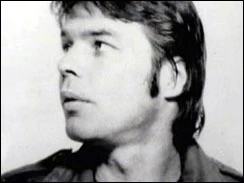
CrimeTV William Bradford: The Death Row Poet (2003)
‘William Richard “Bill” Bradford (1948–2008) was an American murderer who was incarcerated in San Quentin State Prison for the 1984 murders of his 15-year-old neighbor Tracey Campbell and barmaid Shari Miller. In July 2006, the Los Angeles County Sheriff’s Department released a compilation of photos found in Bradford’s apartment in the 1980s, depicting 54 different women in modelling poses. As Bradford had used the promise of a modelling career to lure his victims, and taken pictures of Miller before murdering her, police believe that Bradford was in fact a serial killer and that the photos depict Bradford’s other victims in the moments before their deaths. Bradford died at the Vacaville prison medical facility on March 10, 2008, of cancer. In 1998, Bradford dropped all of his appeals, claiming that life in San Quentin had become unbearable. Having had no legal representation for the past 10 years, Bradford hired a lawyer to help speed the process of his execution, and began writing poems about life in San Quentin. His poetry attracted attention from the press, who dubbed him “Death Row Poet”. Five days before his scheduled execution, Bradford said that he had changed his mind, professing his innocence and declaring that he wanted the execution process to be halted.’ — collaged
__________________
Gustave Reininger Corso: The Last Beat (2009)
‘Although hailed by Jack Kerouac, William Burroughs and Allen Ginsberg as an exceptionally gifted mind and poet, Gregory Corso is, by comparison, the unsung Beat, never achieving the same renown as the movement’s three most celebrated icons. But he probably was the most colorful of the bunch, and Gustave Reininger’s 10-years-in-the-making documentary, Corso: The Last Beat, finally brings him to the big screen. The film’s somewhat uneven style — at once an artistic documentary, home movie and sometimes overly conventional for such an unconventional subject — might hamper its chances for traditional television platforms. But Corso should be seen, not simply because Reininger’s respect and love for his subject obviously run deep, but because the film is a moving portrait of an artist of unwavering loyalty to his artistry.’ — Hollywood Reporter
Trailer
_________________
Bradley Gillespie Frick (2014)
‘Roughly a year ago, I had the opportunity to meet one of my idols, Steve Roggenbuck. Steve is an alt-lit poet that is actively embracing new techniques of spreading his awe-inspiring words across the globe. Gaining popularity through use of his quick, comedic videos via YouTube, Steve disorients you to a point where you’re not sure how to take his art, but regardless, leaves you with a deep feeling in your stomach to better yourself. My deepest apologies for taking so long on getting the video out. Thank you Steve for taking the time out to make this video, which turned out to be one of my favorite I’ve shot in my entire career as a director. Boost!’ — BG
the film
___________________
Richard O. Moore USA: POETRY, FRANK O’HARA (1966)
‘USA: Poetry was produced and directed by Richard O. Moore for National Education Television. The twelve part documentary series which was produced in 1965-66, showcased many poets including, Anne Sexton, John Wieners, Charles Olson, Robert Duncan, John Ashbery, William Everson, Allen Ginsberg, Robert Creeley, Lawrence Ferlinghetti, Gary Snyder, Kenneth Koch, Ed Sanders, Michael McClure, Philip Whalen, Richard Wilbur, Denise Levertov, and Louis Zukofsky. The program featuring Frank O’Hara was filmed on March 5, 1966 and originally aired on September 1, 1966.’ — poetry foundation.org
the film
________________
Barbara Hammer Welcome To This House (2015)
‘Welcome To This House (2015), a feature documentary film on the homes and loves of poet Elizabeth Bishop (1911-1979), about life in the shadows, and the anxiety of art making without full self-disclosure. Hammer filmed in Bishop’s ‘best loved homes’ in the U.S., Canada, and Brazil believing that buildings and landscapes bear cultural memories. Interviews with poets, friends, and scholars provide “missing documents” of numerous female lovers. Bishop’s intimate poetry is beautifully performed by Kathleen Chalfant and with the creative music composition by Joan La Barbara brings Bishop into our lives with new facts and unexpected details.’ — bh
Excerpt
______________
Robert Mugge Black Wax (1983)
‘The films of Robert Mugge engage crucially not only with the sounds but also the philosophies of the artists whose work they explore, and it is difficult to imagine two more philosophically engaged artists than the incendiary poet/songwriter/vocalist Gil Scott-Heron (1949-2011) and the exploratory keyboardist, composer and bandleader Sun Ra (1914-1993). In two classic documentaries, newly remastered for Blu-ray and DVD by MVD Visual, Mugge mounts the stages on which these ineffable creators plied their deeply felt trades. In 1982’s Black Wax, Mugge captures a Washington, D.C., performance featuring Scott-Heron and his Midnight Band (under the guidance of bassist and “Secretary of Entertainment” Robert Gordon), interspersed with casually graceful scenes of the vocalist guiding the viewer on a “tour” of the nation’s capital. Scott-Heron puts caustic verbal thumbscrews to iconic figures of the American past and, in poetic verse, excoriates the poverty thriving in the inner cities while “Whitey’s on the moon.” Scott-Heron is leftist in his views, but he declares himself merely a member of the “Common Sense Party,” his cultural role that of a “bluesologist.”’ — Jazz Times
the film
______________
Matt Wolf I Remember: A Film About Joe Brainard (2012)
‘This inventive biography of Joe Brainard gives an immediate and visceral sense of his humour, self-deprecating personality, and gentle demeanour. Brainard’s drawings, collages, assemblages and paintings, as well as his short essays and verbal-visual collaborations, were celebrated during his lifetime before he stopped making art in the mid-1980s. The film is an elliptical dialogue about friendship, nostalgia and the strange wonders of memory.’ — IFFR
Trailer
_______________
Mark Pellington The United States of Poetry (1995)
‘Originally aired in 1996 as a five part series on PBS, “The United States of Poetry” is an excellent presentation of twentieth century poetry. This two-part series includes a wide variety of poets, such as Czeslaw Milosz, Rita Dove, and Allen Ginsberg, alongside actors and musicians such as Johnny Depp (reading Jack Kerouac) and Lou Reed. Former President Jimmy Carter also makes an appearance, reading his own work. The series has been praised for its inventive and artistic camera work and its refusal to be boring: “USOP tosses aside the textbook approach to poetry and drags it, kicking and screaming… into this wired world… it’s poetry as you’ve never experienced it” (TV Guide).’ — poets.org
Excerpt
Excerpt
Excerpt
_____________
Ryan White Come See Me in the Good Light (2025)
‘In an intimate and joyful story of love in the face of loss, celebrated poets Andrea Gibson and Megan Falley find strength—and unexpected hilarity—in what might be their final year together.’ — Letterboxd
Trailer
Excerpt
*
p.s. Hey. Today a kind and investigative reader of this blog named Brian Willis has curated a lustrous program of short documentary films about poets both known and unknown. It’s a beaut of an array, so please give it your attention as you see fit, and, if you’re so inclined, give some kind of shout out in thanks to Brian, who may be a member of the blog’s silent majority audience but who will surely be looking in to see how his program came off. Thanks so much, Brian! ** Adem Berbic, Apologies for the blog’s starvation. Okay, the Stigs, I think I get it. Guessing the book hasn’t made it into English, but I trust you, obviously. Naïveté can assuredly be a virtue. Maybe the biggest. Interesting pet theory there that I of course will never be able to confirm. Hong Kong-like, interesting. When I was in Hong Kong, I simply could not get a bead on it, or I should not a very positive bead. Merzbow proved to be worth the truncation? The last time I saw him live it was a duo thing with Keiji Haino who characteristically hogged the stage reducing Merbow to doing essentially background drone washes. Very disappointing. The azure parts are all over the place in quality and levels of interest. ** jay, Oh, good, a fellow fan! Haha, see, I feel like filtering Proust through Guattari is more than sufficient, but, yes, I would think that, wouldn’t I? My memory of the ‘Equus’ movie is that it didn’t quite manage to be either a movie nor a document of the play. And, yeah, the ‘dreamy’ horse intercut footage spurts were pretty yawn. As I recall, mind you. Thank you, my pal! May your day unlock the next level. ** _Black_Acrylic, It’s no more difficult than, oh, Autechre, if you catch my drift. ‘Milk & Serial’: I’ll be googling that shortly. Thanks, B. ** Bill, It might still be playing in SF when you get home. It seems to be quite the hit. When I found that opening essay, said photo was the illustration, and I did take it be an author photo, but I have been prone to wishful thinking, goodness knows. I just saw an announcement of a gig you’re doing in SF in later June with Bob Ostertag and someone else. Sweet. Barge concert, nice, how was it? I think the only barge concert I’ve ever seen was Einsturzende Neurbauten in Amsterdam in the early 80s when they were still mind-blowing. In that case, the barge wasn’t docked. ** Dominik, Hi!!! Missed opportunity indeed! I hadn’t realised the mood/doom thing either until I pretended I was God for that moment. I should do that more often clearly. I think the answer to love’s question is that people who only or mostly watch multi-million dollar blockbuster movies are very easily amazed when they get a little quirky. Love pretending he’s a poet and being filmed by some random person on YouTube, G. ** Carsten, That does sound busy. But the guest apartment sounds pretty goddamned sweet. Score. Excellent about the Ariel Resnikoff blurb. People are good. Temperatures in Paris are so dessert-like they’re practically edible at the moment. Won’t last, but yum. No, I’m still waiting for Zac’s hopefully final notes on the script, and then we’ll start the dreaded producer hunt. Hopefully next week. Thanks for asking. ** CS, Hi, CS. Well, I’m very glad you leapt into the commenting arena because it’s very nice to meet you. ‘RT’ will start streaming and come out on BluRay in mid-summer, so there’s that, at least. Thanks for wanting to see it. I want you to. I like that you found ‘Assisted Living’ fun. Me too. Surreptitious high five. Thanks, it’s cool to talk with you. Don’t hesitate to reopen the door and step in whenever that option feels like an opportunity. Do say more about you and yours, if you want. I’m interested. ** HaRpEr //, It’s an excellent read, and not just because it has a stellar title. Thanks for the link! Everyone, HaRpEr // found two short essays by Guattari called ‘I Have Even Met Happy Trannies’ and ‘Woman Becoming’ and you can read them for free if you like. Poke this. I did not know that about Deleuze’s fingernails, wow, huh. Of course I will now do a google image search. How can John Waters be so relentlessly wise. It’s an inexplicable fact. ** Uday, Hi. I’ll listen to more PC Music and see if I see a connection there too. Cool. Semiotext(e) was such an instructor back when theory was the bulk of its metier. I found so much valuable stuff only thanks to it. What’s your grandfather like? ** Okay. You already know the drill re: what Brian has constructed for you today so have the loveliest time you can here, and I’ll see you tomorrow.


 Now available in North America
Hi!!
Brian, thank you for this wonderful post!
I watched Come See Me in the Good Light a few months ago, and it moved me deeply. It was the most personal documentary I’ve seen in years. Did you ever meet Andrea Gibson?
As for Project Hail Mary, you’re probably right. It really annoyed me how blatantly and predictably emotionally manipulative it was, even if that was something to expect from its genre.
I’d watch that video/documentary about love. Love throwing a birthday party for my brother, Od.
@ Brian, thank you for contributing this archive! Poetry always makes for a worthwhile gift and I will peruse its contents over the coming hours.
Took delivery of a present for my nephew’s 4th birthday today. He already has hundreds of toys and I did get him the requested one, but also contributed this book too. Not Now, Bernard is a story that kicked up a fuss on its 1980 release and some libraries “banned it for violence” as the monster eats the boy, but I do think this tale is an enjoyable one for all.
The book I bought was not a signed copy as the boy would be too young to appreciate such a thing.
Thanks to Brian for the indeed impressive array of docs. Anna Homler! She was supposed to play in SF a few weeks ago, but got sick (just a bad cold apparently) and cancelled.
The barge concert was very nice. The 2nd set was Liz Allbee playing trumpet in a trio with two daxophone players, including Kazuhisa Uchihashi whom you might have come across.
I’m preparing (or re-preparing) a piece for the late June gig. A little nervous about it, but I think I have time!
(First, perhaps.)
Bill
An excellent post today. I’ll spend quality time here, and I’m especially interested in the Jack Hirschman documentary – my favorite Communist poet! I knew Jack very well. I was lucky to sit at a table many times and hear him talk about poetics, poetry, politics, music, etc. There is an album ( vinyl) out in the world where my dad, Wallace Berman, was chit-chatting with Jack Hirschman at our house in Topanga Canyon. It’s shocking to hear Jack mention the Situationists and Boris Vian in this recorded conversation. I spent some serious years as a publisher putting out Vian and Guy Debord. The roots of my desire!
@Brian Willis: what a terrific idea & execution, bravo! This is quite a line-up, one I’ll sink my teeth into later today. And the Death Row Poet, fascinating! Thanks for this!
Allow me to add “The Bard of Encinitas”, a doc about my man Jerome Rothenberg: https://youtu.be/pmFq6RrIfTg?is=cIJOvaI27yHBxbKX
@DC: Yeah it’s been busy & a bit stressful, especially with the long-term house we need from September on. Looking for just myself is easy, but accommodating the wishes of a larger group is always dicey. Plus the rental market out here is a bitch. I get the feeling Spaniards do rentals somewhat last-minute, at least compared to Germans. Here you view a place & basically move in next week. Which, again, would suit me but not so much my family roommates who like to plan ahead, have a dog etc.
The weather here is quite tasty too. We had a brief hot spell which was tough but doesn’t bother my lizard-self as much as it would you, but now we’re back to an even, mild climate that is basically perfect: 25 to 27 Celsius (77-80 F)
I’m still thinking about popping over to Paris in July, but I obviously scrapped the idea of staying there all month since I now have the guest apartment. You’ll be around in July, no?
Hey there Dennis! Hope all has been well for you
Did some digging into the things we were talking about the last time we spoke. I mentioned a place called Sorely Tunnel Adventure, and I tried to look deeper into the place. Turns out my memory matches well with what this place used to be. It was just small buildings in the area used for soft play activities. The tunnel itself was used as a haunted trail of sorts – I’ve heard stories about kids being challenged to make their way from one end of the tunnel to the other. I have this vague memory of walking through it myself, and an important thing to mention is that there are no lights in the pathway. You can only rely on the outside light coming from the different ends. The attraction space closed down sometime in the early 2010s, with hardly anything to speak of when it comes to its closure. The land is on private property, including the tunnel itself, which was only built to be used during the Victorian era, but has ceased to have a function outside of that. Now it just sits idly within the area with very few people to visit. I saw someone mention that there may be an entrance fee to explore the tunnel itself, but I don’t know how accurate that is. Really, it’s been fascinating to find some closure with this little mystery of mine that’s followed me for so long.
Just a few days ago, I was getting lost in the documentation that exists of the original amusement parks on Coney Island. All 3 of them were burned down during separate events, so all that exists is this library of photos, films, and other sources of records depicting what the spaces were like. I’m especially pulled by the array of lights used to decorate those spaces. I understand that electric lights at the time were more of a rarity for locations like that, so it’s interesting to see how they experimented with their displays as if to create a social spectacle of their existence. There’s the Edwin S. Porter film Coney Island at Night, which I think is a great demonstration of the specific power that the light decors were aspiring towards. Also find there to be a fascinating irony in that the fire-based rides were the ones set on fire that destroyed 2 of the parks.
I’ve just been waiting for my new job to start. Two days ago, I received my rota from them, and I’ve been given slightly more hours than I thought. Right now, I’m balancing it with the other job I’ve had issues with. Working for both should hopefully provide a more fulfilling income for what I need. In the meantime, I’m also just waiting for my plans in the latter half of the month to come around. I’m really excited to see what Brussels will be like. Are there any particular places that you enjoy visiting in Belgium?
Take care! Hope the rest of the week is well for you :3
Also, this was a great post to read Brian! I will be keeping some of these entries in mind for future watching : 3
Good post. I truly appreciate when people do such things. Thanks, Brian.
@_Black_Acrylic
thanks for bringing this children’s book to my attention!
hi Dennis
There are documentaries about Klossowski/Bataille/others that are pretty okay on Youtube. I thought they were from the same series. Now I’m unsure.
I found something on the beach today and brought it home. It’s a sort of big, ravaged part of a dead tree that was washed white by the sun. I carried it through the woods to the car. It’s quite close to skeletal remains of a non-skeletal body.
Yes, I feel attracted to RT in particular for some reason. I’m pretty sure I’ll enjoy it. I’m glad I decided to talk here on a whim, I have a good feeling about it. Thanks for being so welcoming.
I’ll see you later
This is a fabulous list and resource! Some of them are on Kanopy so make sure you check there. Thank you.
Hi,
I was kind of looking for Fear of Poetry about the Beyond Baroque scene, mainly because I have only seen tiny clips from it and wanted to see it in full, hoping hehe. But also saw that it is a short documentary I wish it was long or really super gigantic like Nelson Sullivan videos so U can transport there more
Hi from Chania…
Congratulations about the Closer release, I did post about it on my IG story with Amateur Hour by Sparks as musical company as one does
Will read again the cycle so anticipate my thoughts
I hope the hunt for film producer goes as smoothly as possible
Hi from usual Cretan waters and the old port lighthouse and me reading The Notebook trilogy The Notebook, The Proof, The Third Lie
Hey, Dennis and Mr Willis. “Come See Me in the Good Light” really was amazing, I found it very powerful. William Bradford I know as well, although I didn’t know he wrote poetry.
“I feel like filtering Proust through Guattari is more than sufficient” – most definitely true! He has some great things to say about Swann in Love, even if he makes it sound way more like a Story of the Eye-type book than it really is. His analysis is great, and super different from the typical Proust analysis that just tries to map a biography onto the events of the novel (yawn). Thank you both for the day, see you tomorrow!
I must join in on the dog-pile of thanks building atop Brian — I’m hoping for his sake the effect is pleasing, like a weighted blanket or the cat who is currently sleeping on top of me with my laptop screen only just visible over top of him. And the care coming off the post makes me feel a kind of cynicism-proof warmth (whereas for whatever reason ‘warmth’ as word and sentiment is something I often struggle to apply to poetry), so thanks for that specifically.
To be fair, I’m comparing Monaco to my idea of a grungy Hong Kong of yore, as fantasised from out of photos and movies. Maybe the grunginess teases out an imposing spatial weirdness which doesn’t actually exist. What was your beef with it, or was it just a general lack of click-with-ing?
Dr Bow did rock the function, and my friend and I were stood right in front of him, which was cool. Someone was telling me about seeing Haino and Merzbow together, with Merz being on drum duties for that show, which I’d have liked to see. Last night’s set wasn’t very varied — much more a wall of noise with subtle variations than a grab-bag of sounds. And I ended up going mostly sans earplugs because they were slurping up the highest frequencies like I hope the blog doesn’t slurp my comment. Overall, a good-enough trade for an extra day of frolicking in the surf.
I think I realised something that hurts, or sort of acknowledged or articulated what I already knew but not in words to myself for the first time (and no, it’s nothing to do with the past), which came with some strange feelings that would sort of hop into my peripheral vision when I tried to stare at them, except make the metaphor about emotions, not visuals. Not sure what to make of that or do with it besides splurging like so.
@Brian-Thanks for putting this day together. If you’re reading this, were there any documentaries you searched for but couldn’t find? Anthology Film Archives just began an Allen Ginsberg retrospective.
I switched my Wi-Fi to Verizon today. It’s all good now, but it was much more complicated than I expected, taking four hours of work from the guy installing it.
I’m putting together a half-year albums top 10 list (plus runners-up) for Slant Magazine’s critics poll. I’m finalizing it next week.
Brian! This is a wonderful post as someone who is always hungry for docs about writers. Thank you! I’ve seen the Joe Brainard one before and I remember liking it a lot. The Jonas Mekas short is a surprise. I didn’t know that existed.
//
There’s an old joke that the greater the French philosopher, the more they look like a Bond villain. Philosophers would still dress like that if I was the fashion police.
I have officially put the novel aside for now, and will return to it when I feel sufficiently distant from it. Now I need something to work on in the time being. So much to do with this time away from the novel. Maybe I should consider becoming a productive member of the work force?
Today I actually came across this piece that I wrote a while ago and still like but forgot to send anywhere, so am going to now. I am going to finally try and crack Hobart, though I think Elizabeth Ellen is sick and tired of me so I should probably send it to a different editor haha, though I have no idea which one to try. There are a couple of editors there who are writers I really love and being rejected by them would be tantamount to accidentally tripping someone over in the street. I know Hobart is not the only place that exists, but I’ve read really good and diverse kinds of writing there and they’ve hyperbolically become my white whale. I sort of think the way most writers have to work their way up by publishing short things here and there can be a drag sometimes if you’re more taken to longform work, but it’s a great chance to workshop things anyhow.
great post brian! need to watch that brainard film when I get a chance… and the diane di parma one might finally kick me into reading spring and autumn annals, which i’ve had on my shelves forever.
for me, lancelot du lac is second to the devil, probably i think, but i also haven’t gotten too deep into bresson yet so my opinion really means nothing. green knight is an a24 film which immediately puts me on guard. i’m sure there’s some a24 gems, but their films always strike me as the cinematic equivalent of, like, booker prize lit fic. and there are some booker prize gems- the international booker is usually far more interesting than the real booker- but most are so clearly writing for the prize and it depresses me.
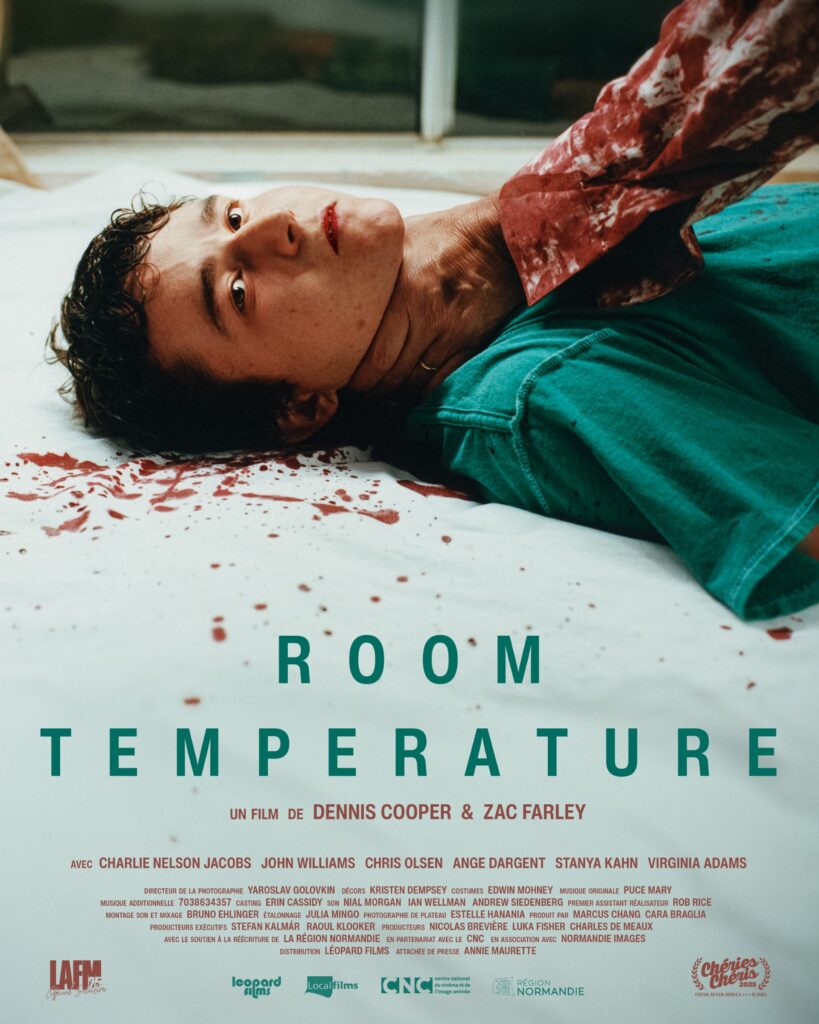
very excited to hear about room temperature coming to streaming! i finished swann’s way a few days ago and am now free to read other things. proust, if you ever find the urge, is best read in small doses with your morning tea/coffee. anything more and your mind starts to swirl.
glad to hear the temperature in paris has improved and happy (early) friday!
Thank you so much for this, Brian! I’m very particular about documentaries/biographies/autobiographies/memoirs and it’s always really helpful to have some sort of a curated list, and this one is very well put together. Right off the bat Poetry in Motion is very up my alley. Congrats on your (first post?)!
Dennis, I really like my grandfather. Between some difficulties at home and my late grandmother surviving cancer and having a bunch of complications from that/me being the youngest in the family and having the most free time I lived with my grandparents for long stretches, up to a third of the year once. My grandfather is really fond of me (would it be pushing it too far to say the fondest?) and generally tries to be laissez-faire, except when he feels like I’m either betraying my morals or treating somebody else unfairly/unkindly. He’s closing in on 90 now, so he’s not all there in the same way he’s been, but that’s ok. You can only be upset about it for so long before you realise that being upset changes how you behave around him and as a result make it worse, so I generally just feel cheery to interact with him, especially since I’m away for such long stretches and in-person time is a rarity.
Revisiting O’Hara and very moved by his poem on The Threepenny Opera.
I’m really intrigued by the story of Boris Ryzhy. It’s heartbreaking to think about the circumstances that led to such a talented life ending so early. Definitely adding this documentary to my watchlist! REPLY recommended