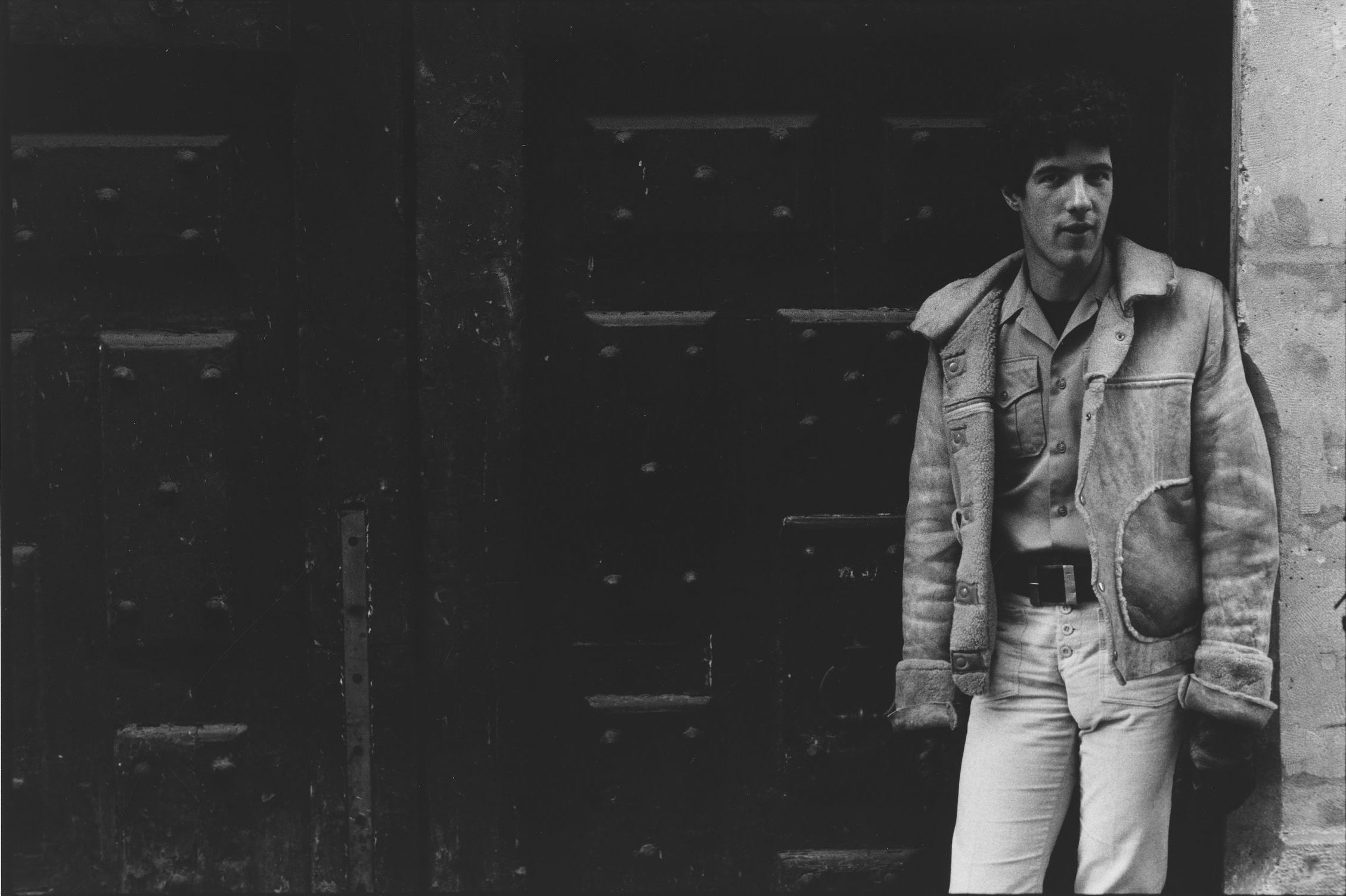
‘Warren Sonbert’s last 16mm film, Short Fuse (1992), was finished just three years before his death, of AIDS, at forty-seven. Like his other titles—such as The Bad and the Beautiful, Rude Awakening, Noblesse Oblige—this one evokes Hollywood action, gangster, and noir pictures. But the exact image it conjures—a bomb’s wick shedding sparks—is an apt icon for Sonbert’s explosive style.
‘Sonbert’s films consist of relentless montage. Scenes burst forth and quickly give way to the next. They inhabit the fringe of narrative, almost telling a story but never conveying character, conflict, or plot. Sonbert drew inspiration from his favorite Hollywood directors (Alfred Hitchcock and Douglas Sirk) and translated their languages of suspense and melodrama into the grammar of avant-garde American cinema. Four of his films were presented on January 13 at the Pacific Film Archive, Berkeley, in a program called “Hall of Mirrors.”
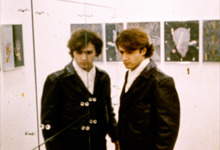
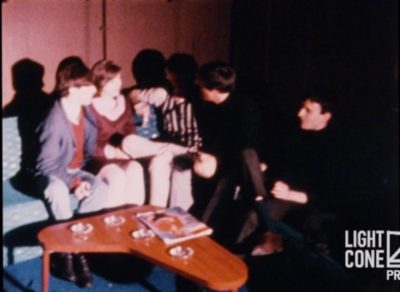
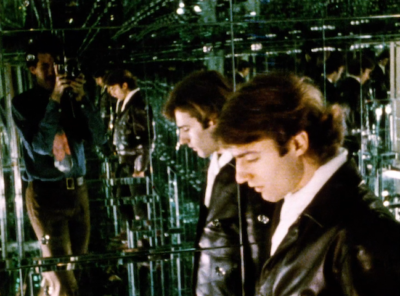
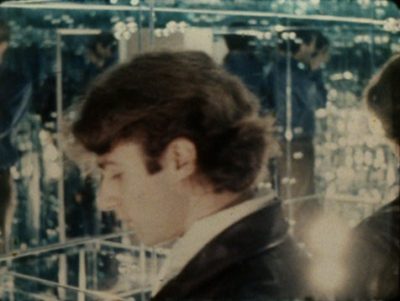
‘The afternoon began with Sonbert’s first film, also called Hall of Mirrors (1966). Made while Sonbert was still a teenager in New York City, the work is the result of his early preoccupation with editing. It begins with a meditative montage, using still photography from the set of Michael Gordon’s An Act of Murder (1948), in which the characters are trapped in a funhouse hall of mirrors. Sonbert’s ordering of the stills skips and repeats, expressing the carnival’s manufactured vertigo and the stuck state of the protagonists. The film suddenly segues to a sequence shot in Rene Ricard’s apartment, where the artist smokes cigarettes and makes maudlin gestures amid eclectic décor. The dreamy melody of The Left Banke’s “Walk Away Renee” (a witty echo of Ricard’s first name) offers an aural counterpoint to the angst conveyed by the artist’s facial expressions. The film’s final movement shows Warhol star Gerard Malanga contemplating his handsome visage in a series of reflective surfaces.
‘Hall of Mirrors feels like a complete, mature work. But it was only the beginning of Sonbert’s lifelong study of montage. In program notes for his best-known film, Carriage Trade (1971), Sonbert describes his distinct theory of montage as one “not strictly involved with plot or morality, but rather the language of film as regards time, composition, cutting, light, distance, tension of backgrounds to foregrounds, what you see and what you don’t, a jig-saw puzzle of postcards to produce various displace effects.” Whereas in Hollywood movies montage is used to condense time and move the plot forward, Sonbert makes the montage the whole story. His films are typically constructed of hundreds of discrete shots.
‘Between the films, the organizers played short audio excerpts of a talk Sonbert gave at the PFA in 1986, in which he uses the word “propulsion” to characterize his work. Indeed, these films move at outrageous speed. Yet Sonbert’s precise approach to each shot’s singularity, and the meanings that emerge in transitions, effectively slows everything down by insisting that viewers vigilantly attend to every frame. This contradictory feeling of time moving quickly and slowly at once seemed especially pronounced in the silent films on the program: Divided Loyalties (1978) and The Cup and the Lip (1986)
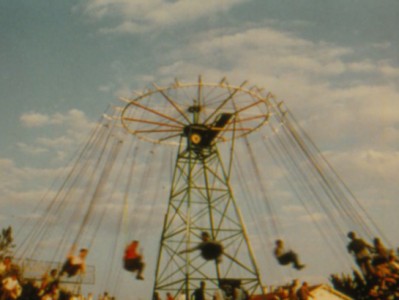
‘In another excerpt from his 1986 talk, Sonbert describes his process of sequencing shots by referring to Sergei Eisenstein’s technique of making meaning by juxtaposition. But while Eisenstein often combined images to build narrative tension or make a point about a figure’s ideological allegiances, Sonbert’s approach to montage is rarely so straightforward. Divided Loyalties and The Cup and the Lip accumulate imagery along certain thematic lines, signifying by aggregation. His “meanings” in each film are revealed slowly. Sonbert was infamous among his friends for carrying his camera everywhere. Much of the footage in Divided Loyalties was shot at amusement parks, circuses, parades; The Cup and the Lip also shows crowds, but from a more sinister perspective, with riots instead of thrilled circusgoers. Cats, playful in much of Sonbert’s work, are seen in attack mode in The Cup and the Lip. The film ends with a brief but awesome shot of the Hoover Dam, followed by a cat attacking a rubber eraser on a windowsill. The works, however intuitively coherent, are finally open to interpretation. Both films produce an atmosphere of frenetic public activity, reflected by the pace of Sonbert’s galvanic editing. They gesture toward the drama of mass spectacle, the terror and violent potential of the mob. His montage can also be funny, liberated from the pressure to appear ideologically or narratively pure. A shot of shirtless men drinking beer at a gay pride parade in The Cup and the Lip cuts abruptly into a shot of ducks playfully milling about on a placid pond. But there is no narrative resolution, just breathless movement at story’s frayed edges.
‘Sonbert’s resistance to plot structure dovetails with his interest in experimental writing, particularly that of the Bay Area Language poets, who concerned themselves with radical formalism, paratactic structures, and diffuse narratives. Lyn Hejinian, whose theoretical writings are key for the Language school, made a distinction between “closed” and “open” texts in her landmark essay “The Rejection of Closure,” and it seems particularly applicable to Sonbert’s output. The open method, Hejinian writes, is one in which “all the elements of the work are maximally excited,” resulting in a text that can never be limited to any one meaning. Bay Area poet Alan Bernheimer, also affiliated with the Language poets, introduced Sonbert’s films at PFA. Just as these Bay Area writers derived their language from a variety of sources—from overheard quotidian speech to formal Marxist theory and anything in between—Bernheimer emphasized Sonbert’s impressive range of formal sources.
‘As Short Fuse progresses, Sonbert’s imagery turns grim: burning trucks, armed soldiers racing out of buildings, hard-to-watch scenes of invasive medical procedures viewed from the bedside. There are a few shots of visitors at a Vietnam Veterans Memorial, followed by a gathering police force. We recognize them as San Francisco police, and the landscape as downtown San Francisco. The cops organize in a huge army, set up barricades, beat protestors. Finally, in a moment that feels more traditionally climactic than any other in these films, the protestors slough off their jackets to reveal ACT UP T-shirts and signs.
‘But such a scene, as devastating and unforgettable as it is, couldn’t be the culmination of Short Fuse or any other Sonbert film. Short Fuse shows the adjacency of the medical industry and state violence in a way that would have been clearly legible to AIDS activists in the 1990s—too pat for Sonbert, who railed against what he saw as the “simplicity” in Eisenstein’s montage. Instead, to the strains of Laura Branigan’s 1982 hit “Gloria,” we see a happy couple drinking champagne, among other delirious celebrations, as this painful film draws to its glorious, mortifying, ironic conclusion.
‘Waiting for the train home after the film, I ran into friends who had also attended the program. Each of us, I learned, had been brought to tears by the last minutes of Short Fuse. And yet it was difficult to really say what exactly prompted them. Sonbert’s cinema is witty, exhausting, sentimental, and full of rage. But it is never facile, and it never concedes to being any of these things all the time. To me, that seems to be its fundamental power.’ — Brandon Brown
____
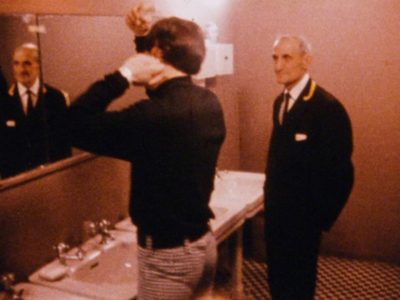
Stills




____
Further
‘The Tuxedo Theater: On filmmaker Warren Sonbert’, by David Ehrenstein
Warren Sonbert @ LIGHT CONE
WARREN SONBERT FILM COLLECTION
Warren Sonbert @ Canyon Cinema
WARREN SONBERT’S PROPULSIVE CINEMA
Charm Offensive: The Films of Warren Sonbert
Warren Sonbert @ MUBI
Warren Sonbert: A Remembrance
Book: ‘The Writings of Warren Sonbert’
WARREN SONBERT: TRUTH SERUM
The Worlds of Warren Sonbert
Warren Sonbert @ letterboxd
A Delicate Balance: Warren Sonbert’s Creative Legacy
Podcast: Howard Guttenplan and Warren Sonbert
WARREN SONBERT AND THE RELIEF OF ANTI-NARRATIVE
Brief Candles: The Films of Warren Sonbert
Filmmaker Warren Sonbert, 47
Postcards From Warren: The Cinematic Legacy of Warren Sonbert
___
Extras
The Warren Sonbert Collection Trailer
Warren Sonbert in a cafe in NYC writing in his schedule
postcards from Warren
Jonas Mekas on Jon Gartenberg’s preservation of Warren Sonbert’s estate
____
Brief Interview
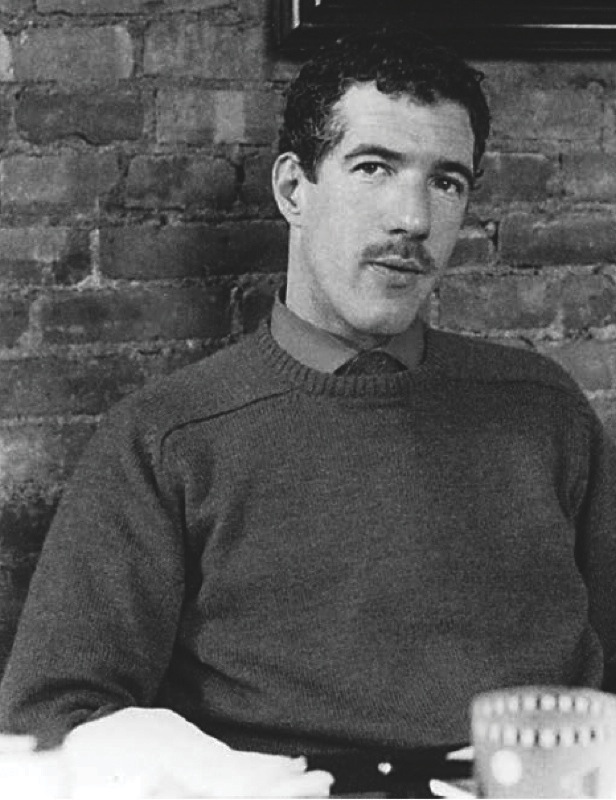
How do you decide on the length of your films?
My new film’s length was locked in aco. to the duration of the music tracks (like a Balanchine ballet) (though the longest seq. – 20 mine. – combines 2 diii performances of the same piece of music: a concert version with a Quiet ending and an operatic intro to Gluok’s Iphpgenie in Aulis Cv.). In any case the new wk is 31 mine – somewhat longer than my usual (of late) 20 mine. 20 to 30 mine. for a film is long enough. All films even the good ones – are way too long at the standard 90420 mine.
Certain images recur in your films such as flowers, animals, landscapes,water, etc. Msinly very beautiful images. Do you choose your objects because they are beautiful?
Definitely net. There’s always a double edge to the beauty. Or I try to show stuff that is both attractive and sinister/deadly. Or really there’s both an appreciation of and yet a critical attitude towards the same image. If an Image Is merely beautiful then I try to have it enecreen for the ehorteet possible duration – the editing, the yanking away is the critical elant.
Do you like Bruce Conner’s work? Do you think that you’ve been influenced by him?
I love Bruce’s work and always show his films to my students but he’s no more big an influence than Markopoulee or Brakhage or Sirk or Keaton or Hitchcock or Ophule….
Do you think that advertising (such as tv commercial) Is/can be a kind of poetry?
Of couree – I’m no snob. Kubelka hae made commercials you know. I love poetcarde which are filled with poetry.
What do you think of MW?
I never watch it (save the work of my ex-students).
If you are commissionedto do an MTV music video for a group, what kind of video do you think you’ll make?
I’d love to do it though I’d make sure that the group is NEVER, NEVER shown so I don’t know how happy they’d be about ldmt. I hate it when you eee people mouthing the same words you’re hearing. In any case check out my new film, FRIENDLY WITNESS, which opens with the 4 greatest rook videos ever made (songs from the `50e/early `60e – pre egghead rock) – people should be faDing out of their seats.
________________
13 of Warren Sonbert’s 17 films
_______________
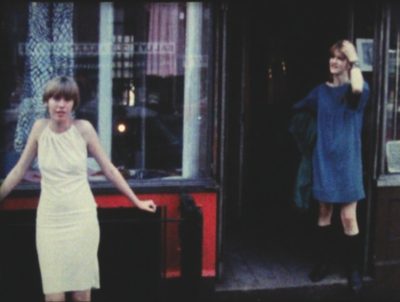
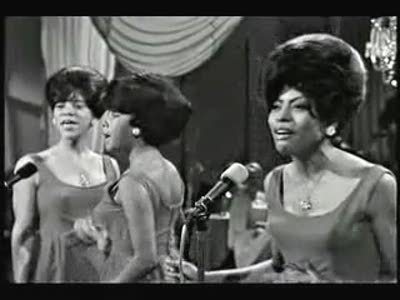
Where Did Our Love Go (1966)
‘Warhol Factory days… [Gerard] Malanga at work… girl rock groups and a disco opening… a romp through the Modern. My second film.’ — WS
the entirety
_______________
Hall of Mirrors (1966)
‘This film is an outgrowth of one of Sonbert’s film classes at NYU, in which he was given outtakes from a Hollywood film photographed by Hal Mohr to re-edit into a narrative sequence. Adding to this found footage, Sonbert filmed Warhol’s superstars Rene Ricard and Gerard Malanga in more private and reflective moments.’ — Jon Gartenberg
Excerpt
Excerpt
_______________
Amphetamine (1966)
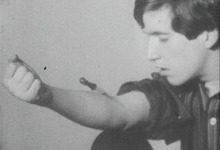
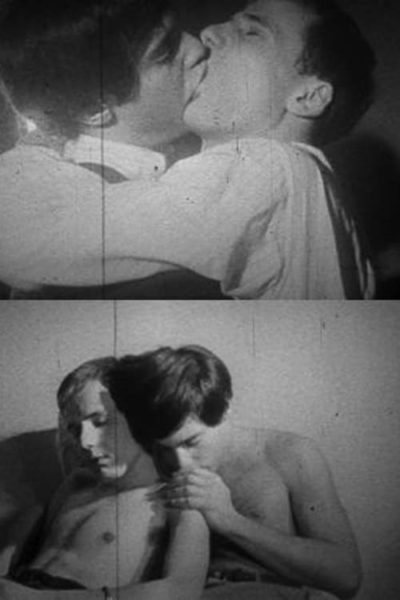
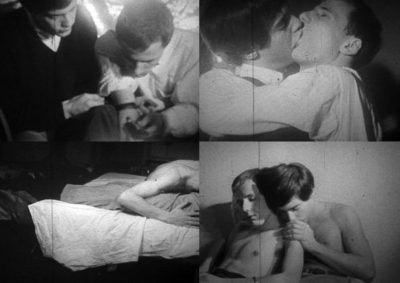
‘In both provocative and playful fashion, AMPHETAMINE depicts young men shooting amphetamines and making love in the era of sex, drugs and rock and roll.’ — Jon Gartenberg
the entirety
_______________
The Tenth Legion (1967)
‘In The Tenth Legion, Warren Sonbert presents his college age friends at work and play, wandering the streets of New York City, lounging, shopping, and posing for the camera. The film stylistically exemplifies Sonbert’s masterful use of a constantly moving hand-held camera as it trails the teenage protagonists in choreographed fashion, and of chiaroscuro lighting effects in interior scenes.
‘Sonbert was not only a noteworthy avant-garde filmmaker, but also a noted film critic, writing regularly for publications in the San Francisco Bay Area. His articles about commercial Hollywood films are among his most extraordinary, profound, and insightful creations. Sonbert was fascinated by the manner in which Hollywood directors ‘exposed and undermined the hollow cupidity and superficiality of idle-class ideals of the Eisenhower years in America.’ Sonbert’s The Tenth Legion (1967) and Nicholas Ray’s Rebel Without a Cause (1955) portray the idle wandering of middle-class youths; both films convey a sense of beautiful people lost on the cusp of adulthood.
‘As film critic James Stoller once wrote about The Tenth Legion, ‘I think part of [Sonbert’s] sensibility is related to a set of New York City hip values of appearance and lack of productivity. In other words, this is the age in Sonbert’s life, in his characters’ lives, that they are to live stylishly and not contently.’ In titling his film The Tenth Legion, Sonbert invariably refers to an elite army formed by Julius Caesar, which subdued the Jewish rebellion at Masada, just as the youth in Sonbert’s film have the burgeoning ambition of taking over the world-at-large (especially as they are seen working for such colorful art world figures as Henry Geldzhaler). Sonbert’s film ends with his young protagonists entering and exiting a movie theater with Frank Sinatra’s nostalgic song about passing youth, “Young at Heart,” playing on the soundtrack; for Ray, the film results in the tragic death of Sal Mineo’s character, a wake-up call to adulthood.’ — Film-makers Coop
Excerpt
_______________
The Bad and the Beautiful (1967)
‘Through elaborately choreographed camera movements, Sonbert dynamically captures each individual couple in unusually intimate, quotidian moments: reading and eating, playing music and dancing, cavorting and lovemaking, and whiling away the time.
‘Sonbert carefully chose the titles for his films, and no clearer reference to Hollywood is evident than with THE BAD AND THE BEAUTIFUL, Sonbert’s own take on Vincente Minnelli’s 1952 movie of the same name. As if to further underscore his homage, Sonbert’s main title and credit sequences flashes on the screen in a manner similar to the opening of Minnelli’s film.
‘The MGM trailer for Minnelli’s The Bad and the Beautiful promotes a view of ‘the private lives of the famous and notorious.’ Sonbert’s film, featuring Warhol’s superstar René Ricard and other beautiful people, takes place within the private world of New York City apartment buildings. In Minnelli’s movie, Jonathan Shields, the character played by Hollywood star Kirk Douglas, acts as an omnipotent Hollywood producer promising to fulfill the destiny of his fellow protagonists — a director, a screenwriter, and an actress. In Sonbert’s film, critic James Stoller observed that most of the couples had the feeling that ‘appearing in a Sonbert film was part of their manifest destiny and that something must have been lacking in their lives together until he came along to complete or sanctify their unions’ — Jon Gartenberg
Opening sequence
_______________
Carriage Trade (1972)
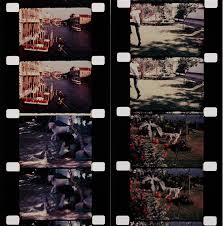
‘Carriage Trade was an evolving work-in-progress, and this 61-minute version is the definitive form in which Sonbert realized it, preserved intact from the camera original. With Carriage Trade, Sonbert began to challenge the theories espoused by the great Soviet filmmakers of the 1920’s; he particularly disliked the “knee-jerk’ reaction produced by Eisenstein’s montage. In both lectures and writings about his own style of editing, Sonbert described Carriage Trade as “a jig-saw puzzle of postcards to produce varied displaced effects.” This approach, according to Sonbert, ultimately affords the viewer multi-faceted readings of the connections between individual shots. This occurs through the spectator’s assimilation of “the changing relations of the movement of objects, the gestures of figures, familiar worldwide icons, rituals and reactions, rhythm, spacing and density of images.”’ — letterboxd
_______________
Divided Loyalties (1978)
‘Warren Sonbert described DIVIDED LOYALTIES as a film ‘about art vs. industry and their various crossovers.’ According to film critic Amy Taubin, ‘There is a clear analogy between the filmmaker and the dancers, acrobats and skilled workers who make up so much of his subject matter.’ — Jon Gartenberg
Listen to audio of Warren Sonbert introducing ‘Divided Loyalties’ here
______________
Noblesse Oblige (1981)
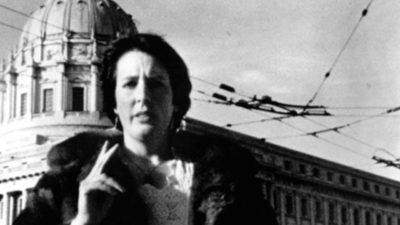
‘The style is relatively unchanged, but the images–press conferences, news events, disasters–convey his vision of the world in a new, direct, political fashion. Featuring startling footage of the City Hall riots after Councilman Dan White received a light prison sentence for slaying San Francisco Mayor George Moscone and Supervisor Harvey Milk, Noblesse Oblige opens a new chapter on Sonbert’s career.’ — David Ehrenstein
Excerpt
_______________
A Woman’s Touch (1983)
‘What is a Sonbert movie like? ”A Woman’s Touch” exemplifies his current style. It begins with celebratory images of women, intercut with fireworks in some of the most dazzling sequences he has ever devised. Men enter the picture later, more threatening in appearance, often wearing uniforms and distanced from the camera. Depicting many people and activities, the shots pass quickly across the screen – relating to one another in multiple ways, suggesting notions and emotions that careen off one another in kaleidoscopic patterns. No ”messages” are thrown at the viewer, since Sonbert likes an indirect, even ambiguous approach. The bulk of the film explores various relationships between the sexes; the ending hints at a new male-female rapport.’ — David Sterritt
_______________
The Cup and the Lip (1986)
‘THE CUP AND THE LIP is a complex and challenging picture that will stimulate adventurous filmmakers for years to come. … Although its imagery is too dense, varied and fast-moving to be thoroughly parsed after one viewing, the film appears to be a regretful and perhaps sardonic essay on human frailty – and on the effort to stave off chaos by means of political and religious institutions, which carry their own dangers of social control and mental manipulation.’ — David ‘Sterritt
______________
Honor and Obey (1988)
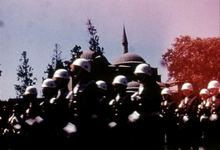
‘In Warren Sonbert’s HONOR AND OBEY soldiers march in formation, a tiger stalks through the snow, religious processions wind through the streets, and palm trees wave in a tropical breeze. As brightly colored images of authority figures blend into scenes of cocktail parties, this 21-minute silent film flows along with the grace of a musical score built on complex tensions hidden among the notes. “Whose authority will you obey?” the film seems to ask, as it deftly avoids simple-minded juxtapositions. Instead, we see a melange of images so full of geography (Notre Dame Cathedral, the Sydney Opera House, Fifth Avenue), that the work mocks the idea of any specific setting. Sooner or later, social and natural laws meet and probably clash, Mr. Sonbert suggests, but in this scenario of discrete images, all is apparent harmony.’ — Caryn James
Excerpt
______________
Friendly Witness (1989)
‘In FRIENDLY WITNESS, Sonbert returned, after 20 years, to sound. In the first section of the film, he deftly edits a swirling montage of images – suggestive of loves gained and love lost – to the tunes of four rock songs. “At times the words of the songs seem to relate directly to the images we see…; at other times words and images seem to be working almost at cross-purposes or relating only ironically. Similarly, at times the image rhythm and music rhythm appear to dance together, while at others they go their separate ways.” (Fred Camper)’ — Jon Gartenberg
Excerpt
______________
Short Fuse (1992)
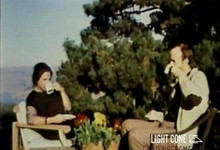
‘Sonbert was also a noted opera critic, and he frequently theorized about the relationship of film to other art forms, in particular, music. He analogized the notes, chords, and tone clusters of music to the progression of shots in film. The shot was the building block upon which Sonbert created the musical rhythms of his films. Sonbert published excerpts from his feature-film screenplay adaptation of Strauss’ Capriccio, his favorite opera, in 1986. Short Fuse, completed six years later, can be seen as a return to Capriccio’s themes, including ‘Nazism and eroticism, beauty and force, detail and structure.’ (William Graves) Underscoring a question raised by Capriccio–whether in opera the music or the libretto takes priority–Short Fuse is replete with a soundtrack that counterpoints the film’s visuals, prompting the viewer to ask whether the music or the imagery predominates.’ — Jon Gartenberg
Excerpt
Excerpt
Excerpt
*
p.s. Hey. ** Sarah Palmer, Hi. The Gainsbourg house tour is very strange and interesting. You’re accompanied by an audio tour by Charlotte Gainsbourg talking about growing up there, and it gets pretty dark. French musicians … not as many as I surely should know. I do know and like what I’ve heard of Alain Bashung, and I only know the name Danielle Darc. I’ll listen. I love Brigitte Fontaine like any sensible person does, I guess. The Bacher show was great, kind of a revelation. I wish it would travel to Paris, but doesn’t look like it will. Have a great weekend whatever that involves! ** _Black_Acrylic, The East Village Hotel is the one that completely blew my mind. Hard to believe that one isn’t a prank, but apparently it was in the works at one point. So weird. Dude, sweet about the money! And the Print Workshop sign up. I guess you’re glued to the season opening game(s) this weekend. Go Leeds! That episode you described is kind of what I feared about the series generally, but, yeah, I hope it’s a one-off for your sake. ** Tosh Berman, For some reason my social media feed decided that I’m fascinated by Las Vegas, so I’m beset with Vegas trivia, which is undoubtedly what inspired the post. Anyway, the ‘Vegas’ pages often post ‘videos’ of what early Vegas looked like, but of they’re all painfully AI. Although I suppose if there’s a place where AI is appropriate, it’s Vegas. ** Jeff J, Spectacle-wise, yeah, the Moon seems like the loss of that batch, I think. Sure, I’d be happy to host that Song Cave post. So, yes, great! Thanks to you and them. Friday 9/4 is good for me for Zooming. I guess write to me and we’ll nail the time down. Obviously the time needed for writing is pretty imperative. I can’t say too much about the producer meeting here right now, but it went very well. Thanks. ** Steeqhen, Hi. I’ve never liked Nolan’s films, and ‘Oppenheimer’ is one of the most boring films I’ve ever seen, and, based on my accumulated opinion that his films are hollow, expensive cardboard contraptions, I feel confident that ‘Odyssey’ would bore and piss me off, so I’m staying far away from it. But I’m glad you liked it. Pleasure is precious. Vegas isn’t spiritually dangerous, but I get why it gives off those vibes. It’s just a theme park with ridiculous buildings instead of rides. Its effect has no depth. ** Carsten, I can spend two days in Vegas and be totally delighted but not an hour more than that. I’m sure Eagle Rock and Highland Park have evolved to some degree, but, to me at least, they still feel mostly the same and look essentially the same. Well, the problem is that ‘difficult’ is used as a negative. If a film or novel or art or whatever isn’t difficult, I basically have no interest in it, or little and rarely. I’ll never understand why most people seem to want films to be familiar seeming enough to make them passive and absorbent. But they do. That’s beyond me. Like I said, I can’t say much about the producer meeting right now except to say it went very well. More detailing when I can. ** Thom, I like that phrase ‘don’t mind if I do’. It’s oddly stated. The blog gets a surprisingly very large amount of traffic, yeah. I hope you find the writing time, of course. ‘World’s Fair’ is my favorite by her too. I think the weekend has chill in its intentions. And not just weather-wise, although that is a serious plus. Ace yours. ** Adem Berbic, I want to be unoccasioned. I wonder if I would even know if I was. Vegas is a very short term pleasure when it is, I think. Plus it’s a billion degrees there a lot of the time. The US East Coast has trains. The West Coast not so much. LA and SF have okay subways, Only okay, but still. I think they’re putting in a train to Vegas, but I don’t know if there is one there. Save up to rent a chauffeur. Thanks for the producer meeting luck. It seems to have worked, fingers crossed. I’m seeing your publisher today. Expect your ears to burn at least a little. ** Aud, Hi, Aud! Welcome! Happy that you’re into Garielle Lutz. She’s an amazing prose maestro. We would love to have ‘Room Temperature’ shown in Austin! Zac and I are handling the booking and so on. I’ll write to you via email today and we can figure it out. Thank you a lot! That would be fantastic. Take care. ** politekid, Hi! I think Stephen King has really good ideas, but I cannot read his prose. It’s like the opposite of what I like to read. Yay if you can make the ‘RT’ screening! I’ll have more specifics before too long. 11hr shift, jeez, buddy. You’re tough. Says me who’s never had an actual job, so what do I know. Just seems excessive. There’s a new Lambchop album? I didn’t know they were still extant. Hm, I’ll do the audio equivalent of peeking in on that. Thanks about the meeting. It went good. We’re feeling psyched. Weekend should be pretty much just catching up on stuff and enjoying the seeming actual real arrival of fall. Wow. Do find plenty of time for you in yours. ** HaRpEr //, It’s pretty easy to avoid gambling in Vegas because it’s so stuffed with ridiculous distractions. I used to like the slot machines, but it was all about putting coins in them and getting lots of coins as a prize, and now you swipe them with your credit card and get a download code for your Venmo or whatever if you win, and it seems like what’s the point!? The Korine novel its pretty good, pretty cool, pretty experimental. You have to like his sensibility, that’s all. Right, the John Waters novel, of course. I forgot that one. No, I didn’t know about that Jack Smith book, and, wow, I really have to find that. Thank you, pal! ** Okay. This weekend I invite and encourage you to investigate the works of Warren Sonbert, who, like so many important experimental filmmakers, is vastly under known outside the experimental film world, and whose films are quite difficult to get to watch. I managed to find a bunch of viewable excerpts, and, in a few cases, full films of his for you to watch if you want. That’s the story. See you on Monday.


 Now available in North America
Cool spotlight on a figure I’ve never heard of before.
Which reminds me, have you ever seen “Stranded in Canton” by William Eggleston? Yes the photographer. This is a film he made in the 70s about a bunch of his misfit buddies in Memphis & New Orleans. I just read about it & am dying to see it, but it’s nowhere to be found, including the usual sites for rarities.
Two days seems just about right for Vegas, I agree. It’s also a good spot to get married in. Which I did. How the hell did I neglect to mention that in my comment yesterday? Seems noteworthy, haha. I guess it reflects how little importance I attach to weddings. The relationship & its duration is what matters, not the act that makes it official. But yeah, the ex & I did it there precisely to avoid the usual, expected ceremony. That gave us an excuse not to invite any family, just some of our closest friends, & guess what, it was a blast.
Re. most folks wanting their art as familiar & digestible as possible: that has mystified me too my entire life. The excuse I hear most often is that people are too beat after work to watch/read/etc. something challenging, they just “want to relax”. Which I don’t buy either. I’ve worked some exhausting jobs in my life & never have I come home thinking that a superhero movie is just what I need to “unwind”. My whole life I’ve found nothing more thrilling than to be surprised, challenged & amazed, which the familiar won’t give you. And I’ve never understood why the majority isn’t wired that way too. Fear? Ignorance? Who knows…
Glad to hear the producer meeting went well. Have a good weekend my friend.
Hello Carsten, one can get a DVD of Stranded in Canton” by William Eggleston through Amazon, but the DVD is in the book, which contains film stills from the film. A great book, and the film is fantastic as well. The book (and DVD) is out-of-print, so I suggest the Amazon route. At least if you live in America.
Hey Tosh, thanks for the tip, but I don’t have anything to play DVDs on, so I guess unless some kind soul uploads the film I’m shit out of luck.
Hi Mr. Cooper!
I read that you are deeply interested in Japanese cinema. I saw your blog on Sion Sono! Have you watched the works of Yoshihiro Nishimura? I love his operatic, over-the-top style of cinema. I think he is truly fascinating, though it’s sad that he has now passed away.
I’d love to hear from you.
NOAH
I remember David saying great things about Warren Sonbert. Did Sonbert write “scripts” for Warhol? Perhaps he wrote “Vinyl,” the Warhol film based on “A Clockwork Orange? I’m doing this all from memory, and I’m still waking up. So I can be wrong.
Hi Dennis,
Sonberts seems cool, weirdly I have some kind of aversion to older films, but this kind of 60s/70s short with the camera trailing over pretty things seems like a lovely thing to watch before sleep.
I just spent a few days in Stockholm which I quite enjoyed, there was a nice Brassaï exhibition at the Moderna Museet, and I found a lot to like in their three current exhibitions pulling from their collection, especially the one on surrealism of cooourse, they had a bunch of Toyen stuff too which is always fun
Also have been catching up on Bonello films lately, didn’t love Tiresia, but I have high hopes for Nocturama.
hi Dennis!
look what the cat dragged in, and mean both ‘what’ and ‘dragged’ lol like fr am i even human rn
super shitty day today so i thought i might as well finish off my nervous system for the night on here, i really do miss you!
man i saw Carriage Trade a long time ago and under dodgy circumstances but it really stuck w me. i can def see the LANGUAGE poets thing, and Bruce Conner too for sure. anyway! that formalist structuralism was p beautiful and it did open up meaning, idt i’d seen editing like that doing *that* before. that his stuff somehow remains an emotional watch is super cool. brains are so weird =D
someone should get me a scriptwriting for morons type book bc i do need to write one soon, it will for sure live in the novel first and then we’ll see what it does.
oh! had to tell you, i’m rereading My Loose Thread which def contributes to less shitty days over here— is it possibly your funnysaddest? i think it might be. hm…
regardless, i always get hung up on this bit in the beginning, ‘Maybe it’s like how the boy gets off more on a pattern of lights than on what’s actually lit up.’
ughhh Dennis! i want my face in that line’s entire arse. ^_^
so gorgeous, sigh.
on the topic of arses, The Dead Boy’s Not Arse But Ass has been going through a funk to funky phase which i think might be a bit too cruel idk, it’s just too easy to sort of latinise Dorian 4. so i’ll keep experimenting till i think i’m done, and then it’ll go to you. ^_^ just not sure how much Cossack flavour will remain by then, i’m going for weirdness vs party flavor and i may yet break into G m which sort of feels like cheating but sometimes you just gotta.
this would all be way easier w an attention span and w a sense of generalised fracas which would now and then stfu =))
say smth about you now! i want the good stuff lol
<33
I finally looked into ordering “Predator Pee” to scare off mice. It’s quite expensive and the FAQ says it’s pretty stinky. (But mountain lion urine smells “rich and pleasant.”)
On my latest “Radio Not Radio” show, take off to library music, field recordings, dub, prog and more! The show features John Cameron, Ichiko Aoba, John Cage, Phoebe Bridgers, Robert Wyatt, Ysa C, Mad Professor, Kofi, Dawn Richard, Ayra Starr, Moving Gelatine Plates, Roy Montgomery & Martha Skye Murphy, Dis Fig, Original Koffee, Kinact, Saul Williams, The B-52’s, L’Rain, Sam Kidel, Kate Carr, Arca, Waakya, Kinact & Team Work. Here’s the link: https://www.mixcloud.com/callinamagician/8222026-radio-not-radio/
Is there much to Vegas beyond the casinos?
Tomorrow, I’ll be checking out the East German-made Western APACHES, set during the 19th century Mexican-American war.
Congratulations on the producer’s good omens. I’m investing a whole lot of my hope into TH-B being a much smoother production than RT. Although I guess that’s a little like saying I hope it’s a smoother production than ‘Apocalypse Now’ was. Howdy, James. I have a mental image of you two sat at a terrasse poring over giant diagrams and treasure maps to work through the ending of ‘God Jr.’
Apropos of the recent Schoenbrun discussion, I just saw ‘Camp Miasma’ – I hadn’t seen any of their other movies before. I mean, I’m glad that it exists and that they managed to get a relatively (?) wide release for it, but I mostly just came out of it feeling frustrated. Mild thematic spoilers ahead, I guess – my personal read was that it was trying to do something about queerness and taboo pleasure, but the whole thing was so formally un-taboo, despite staking itself on being otherwise, that it fell a little flat for me. The word that kept popping into my head was ‘safe,’ like, it felt like it didn’t have the teeth to really jar or place my relationship as viewer with it into doubt. And it kept leaning into one of my biggest pet peeves, which is doing pedestrian stuff, but then adding loads of on-the-nose meta dialogue acknowledging the fact that it’s doing that stuff, as if that complicates or excuses its being done. I feel like I ought to seek out Castration Movie as a palate cleaner – you or someone else here said it was pretty serviceable, right?
Oh yes, I just watched the first 4 hours of Castration. It took a few tries to commit, but once I did I was all in. Guaranteed to obliterate your palate. You can find the first 4 hours on Criterion and the second installation on Kanopy.
Hi!!
A bit later than planned, but I’m back! We extended our visit a little so we could see my brother play live with one of his current bands. As for tenable differences in Hungary now that the new regime is in place—the first thing we noticed was that they’d gotten rid of all politics-related posters throughout Budapest. The whole city used to be full of Fidesz-sponsored posters about war and corruption and all sorts of fake statistics and news, and they’re all gone. It doesn’t sound like much, but it’s incredibly noticeable. And the overall mood seemed to be somehow lighter as well. Everything’s still just as dysfunctional as ever on a day-to-day, practical level, but the general mood isn’t as resigned. Or at least that was our experience in our own circles.
How have you been? What’s been happening in your pocket of the world? Does Paris enjoy more humane weather than a few weeks back? We’ve been under 30°C for a couple of days now, and it’s so lovely.
Is Kongeparken still a plan? If so, I do hope it’s still mostly manned by emo and goth teens. That sounds like a double dream!
Love reading the new Irvine Welsh book (Can Nothing Save Us?), Od.
Interesting that WS is an opera critic. I do know that Wayne Koestenbaumb has a thing for this form also. Not something that I have any predilection for myself but I do admire anyone with that kind of expertise. Kind of like Electro DJs, just have to admire those guys doing what they do.
Leeds kicked off the season yesterday with a late win, in what’s known in footballing parlance as a “smash and grab.” We’d spent £32 million on a defender and £40 million on a keeper, so conceding zero goals would indicate that was money well spent.
not to talk more about vegas, but i missed friday’s post so: i feel like vegas is one of those cities that has gotten a lot less whimsical in recent years- the themed hotels falling and the proliferation of sportsbooks, etc. but at the same time, it’s a very fun city, especially for a long weekend. it embraces its own tackiness. i feel like las vegas, atlantic city, and new orleans are all belong in the same category of city. except i could spend longer than a long weekend in new orleans whereas i couldn’t with either vegas or atlantic city.
i managed to get my hands on that rohmer book and i also found the past and the present on haithi trust so there will be a lot of reading in my near future. right now i’m on black sun by julia kristeva and really enjoying it- i’ve been meaning to read the powers of horror ever since i think i saw it name-dropped by dodie bellamy in one of her essay collections but for whatever reason started black sun instead. it’s nice that it seems like things have cooled off and are turning around over there, and that the producer meeting went well! i will have to check out this warren sonbert, he seems like someone who exists in a world that interests me.
also a quickish question: do you think that the relentless categorization of your work as “queer” has helped or hurt it in the long run? like, there’s a lot of articles and things that talk about your work in the grand scheme of the queer lit canon or whatever, but you also have a fairly sizable audience of straight men and women who are ignored when your work gets put into that box. but on the other hand, “queer” is kind of a big buzzword now and a lot of people are actively seeking out queer novels etc and likely find your work that way. maybe you’re tired of answering questions like this though, so feel free to ignore lol.
Hey! I’m always taken aback by how many interesting experimental filmmakers of this generation there were, just on the periphery of the major scene or figures. I’d be lost without these spotlights, so thank you!
I saw the Ana Mendieta at the Tate this weekend which was quite good. I didn’t know her video art, and those were my favourite parts, particularly the later films. There was not a single mention of Carl Andre and his absence was booming. I guess the Tate has a conflict of interests there. Right as you leave there’s a quote of hers ‘I feel suspended between sky and earth…’ on the wall by the exit, and I was thinking, God, is that supposed to be hinting at the way she died? Weird.
That was my weekend, as well as a typical emotional break with the novel today, but I don’t think it’s masochism if it’s something I feel I need to do. I have a feeling it’ll get easier by the time I end the first draft, anyway. I always write with a playful undercurrent, even in difficult moments, but it’s very slow. I’m trying to make myself trust whatever the process is because I luckily know I’m in one.
Wait wish there were more GIFs in this that I could download. Do you have another GIF day coming at some point? I adored the last one. Nice weekend, if a bit hectic. Met two interesting people today, or rather uninteresting people who were interesting as phenomena. One was an 18 year old trans woman whose dream in life is apparently to make robot soldiers. On a better note, there’s an undergrad here who looks exactly like Antoine Monnier, down to the haircut. I was so startled when I turned the corner. Thankfully he took my rushed attempts to show him what I meant on my phone in his stride. Thought you’d want to know.
Hey Dennis! Yeah I’ve found a bit of writing time so far… working on toying with conspiracy theory stuff, but not actually from any political or social angle, but purely aesthetic, like… conspiracy-brained people always say that weird violent/shocking imagery we see online or the news is staged to control us, so im saying what if it actually is staged, but the guys doing it are just artists who care about the aesthetic value of their creations… like anoyed about the politics of it all, and they are just like Tom Savini or Screaming Mad George but for the news… its hard to explain haha, not sure if I can nail this one, I usually dont go for satire or zeitgeisty stuff, but its always good to be writing and getting the reps in so to speak. Im always trying poetry too, but im not sure I have a poets heart… I love prose because of the way you can build structures with language, and im just in love with spoken language and dialects and all that. Gonna keep trying to wrap my mind and pen around poetry, but its mostly duds from me haha.
Lets see, I ordered that book Fragile July, so I’m psyched on that. Gonna watch Lord of the Flies from the 60s soon too, funny how you said that kinda maybe “set you on the path” haha… Also playin a lil fest with that (improvised) piece based around Robbe-Grillett’s Jealousy on Friday, hope that piece works out well, we’re opening with it…
Also, did your copy of the Holobiosis zine ever make it?
Hope it was a cool weekend and its been staying cool temp wise? God knows a manageable temp makes it easier to make good use of our time! Bye!!