* (restored)

‘Japanese cinematic and artistic experiments gained an international recognization during the 1950s. The excitement and attention was noticed in Europe and especially in France through articles and critics published in “les Cahiers du cinema”. The future characters of the “Nouvelle Vague” were already praising the potentials of the content and the form of those Japanese images. As a consequence, the number of films produced, and the cinema audience reached a peak in the 1960s and emerged as long as the Japanese new wave movement, major avant garde filmmakers and fine artist such as Takahiko iimura: and Toshio Matsumoto moving from documentary into fiction film, to experimental videos.
‘Japanese psychedelic film developed out of the drug experiences of the early sixties, exploding the familiar categories of thought and questioning the constants of perception. Emerging in the mid-sixties, structural film stood in the same tradition and treated intensively cinematic perception, the confrontation of object and image, and reproductions of reality. It was predominantly concerned with formal problems rather than with narrative content; in order to focus on the medium of film as such, it was necessary to reduce the narrative element as far as possible. The methods of structural film include cut frequencies of one frame, films consisting of only a single camera movement, 50-fold print-outs of an original image and other formal experiments.
‘In the sixties and seventies a diverse group of artists from Japan formed round the term “Fluxus”, coined by the Lithuanian-born American artist George Macunias. Like the Dadaism of the twenties and Marcel Duchamp, who attacked (and thereby extended) the bourgeois concept of art with ready-mades, mixed media and conceptual art, the Fluxus artists wanted to point to the imbalance in social structures with radically conceived and humorous concerts, happenings, exhibitions and films.
‘While the feature film, within its own specific dramaturgy, follows a psychologically motivated linear plot, the experimental film seeks to tap dimensions beyond the usual narrative structures. It strives to render both social and cinematic conventions visible by changing their rules and patterns – for example, by cutting away, adding, distancing, reversing or re-shuffling. This method of working with foreign, found material is called “found footage film”. Japanese video artists in particular found, and still find, an inexhaustible fund of material in television. By waiving narrative structures, making the medium itself the subject and using techniques of distancing, this method makes the viewer aware of the illusory effect of narrative film. The film material itself becomes the subject of the film, or is used to reveal inner states.’ — collaged
___
Stills


____________
Takahiko Iimura

‘Takahiko Iimura is an international artist and experimental filmmaker, who has been working with time-based media since the 1960. Throughout his career his work has investigated the structures of language and the differences and relationships between Eastern and Western ideas about time and space. At the same time he has been fascinated by the semiotics of film and video: their narrative stuctures and the way we ‘read’ both individual still images and moving audio-visual sequences.
‘Iimura came to New York in 1966, and became involved in the of avant garde movement there, which included artists Yoko Ono and Nam June Paik. Much of his work seeks to disrupt the ways we view film and video, often by paring it down to its essential, frame by frame elements in order that the audience become aware of its construction as much as its content. In this way he is also attempting to understand why we view moving images the way we do, whether that is projected on a cinema screen, through a TV monitor, or now on computers.’ — iniva.org
_______
Kuzu (Junks), 1962
‘Iimura films the cadavers of daily objects (junk) and animals without heads, cats, dogs or birds. While boats float calmly in the distance and children run along the beach, all kinds of larvae and insects move from old tatamis to old bottles under a “rain” of scratches caused by the numerous projections that the original film underwent. The object is thus rediscovered thanks to the images. It is not a question of showing “mono” (things), but rather “jibun no karada” (your own body) (Iimura) and the way in which you position yourself in relation to these things. Takehisa Kosugi: Music’ — collaged
_______
Ai (Love), 1963
‘LOVE, an Iimura film, 8mm and 16mm B/W 10minutes, using lenses of extremely short focal length and with magnifying lenses so that pubic hair and genitalia take on new and often unrecognizable aspects. Music is by Yoko Ono. Cast is anonymous. I have seen a number of Japanese avantgarde films at the Brussels international Experimental Film Festival, at Cannes, and at other places. Of all those films, Iimura’s LOVE stands out in its beauty and originality, a film poem, with no usual pseudo-surrealist imagery. Closest comparison would be Brakhage’s LOVING or Jack Smith’s FLAMING CREATURES. LOVE is a poetic and sensuous exploration of the body … fluid, direct, beautiful’. — Jonas Mekas
______
On Eye Rape, 1962
‘Educational film discovered in a bin became raw material for On Eye Rape, where a hole-puncher was applied to individual frames in a bold statement against censorship. “The original images are ‘hidden’ by large areas of light appearing so violently that he calls this work On Eye Rape” (Christophe Charles). A pioneering work of junk art and found footage filmmaking from Japan, the film is a unique collaboration with artist Natsuyuki Nakanishi (Hi Red Centre).’ — eyeful.nl
___________
Tetsuji Takechi

‘Tetsuji Takechi was a Japanese theatrical and film director, critic and author. First coming to prominence for his theatrical criticism, in the 1940s and 1950s he produced influential and popular experimental kabuki plays. Beginning in the mid-1950s, he continued his innovative theatrical work in noh, kyōgen and modern theater. In late 1956 and early 1957 he hosted a popular TV program, The Tetsuji Takechi Hour, which featured his reinterpretations of Japanese stage classics.
‘In the 1960s, Takechi entered the film industry by producing controversial soft-core theatrical pornography. His 1964 film Daydream was the first big-budget, mainstream pink film released in Japan. After the release of his 1965 film Black Snow, the government arrested him on indecency charges. The trial became a public battle over censorship between Japan’s intellectuals and the government. Takechi won the lawsuit, enabling the wave of softcore pink films which dominated Japan’s domestic cinema during the 1960s and 1970s. In the later 1960s, Takechi produced three more pink films.’ — collaged
______
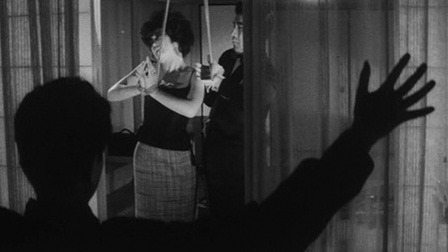
Dream of the Red Chamber, 1964
‘A great piece of surrealist and erotic filmmaking, Takechi’s third film, The Dream of the Red Chamber or Crimson Dream (Kokeimu, 1964), was released less than two months after Daydream. The film depicts the lurid and violently erotic dreams of a writer, his wife and his sister, after having spent a night out drinking and visiting sex shows. The Dream of the Red Chamber underwent extensive censorship before the government would allow it to be released. About 20% of the film’s original content was cut by Eirin, rendering the film virtually incoherent, and this footage is now considered lost.’ — collaged
______
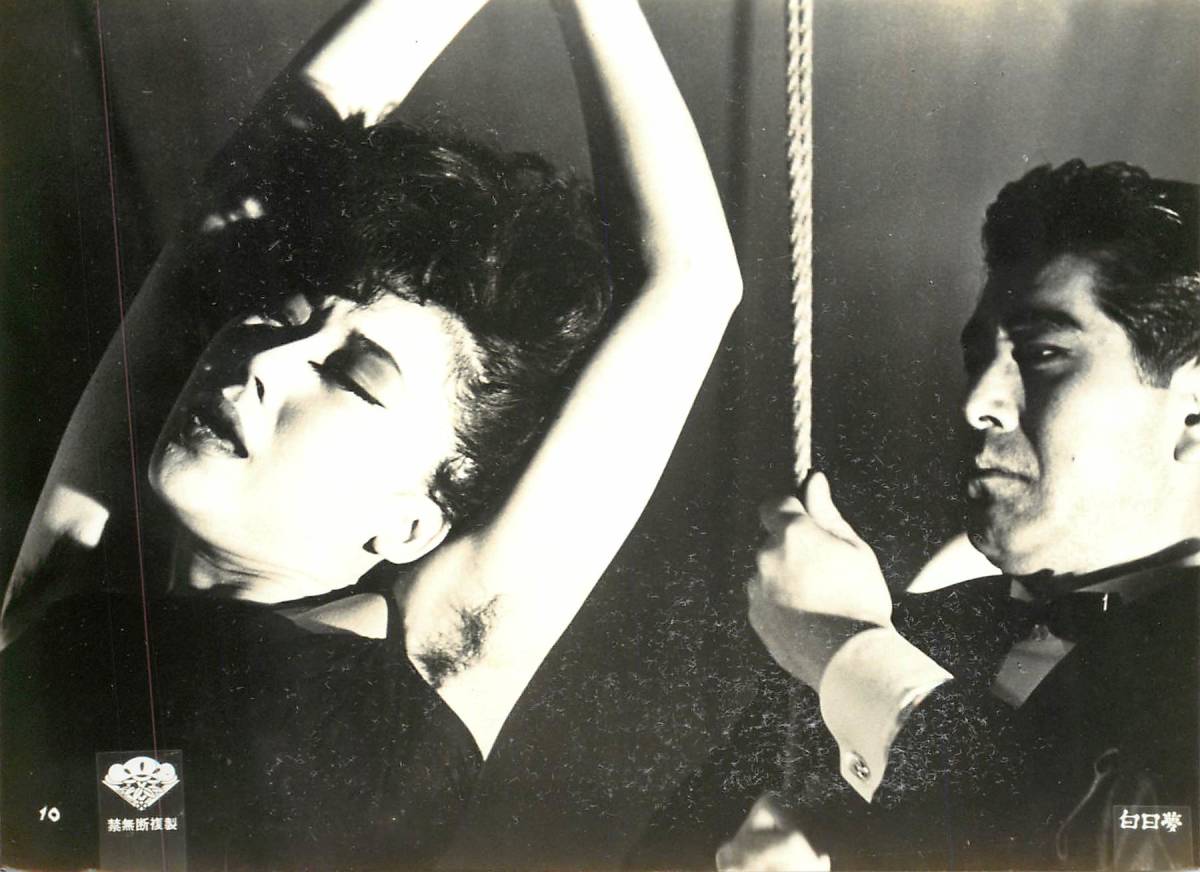
Day-Dream, 1964
‘Takechi produced his first significant work, Daydream (Hakujitsumu, 1964), an almost structureless succession of sexy set pieces revolving around a series of fantasies in a dentist’s waiting room, loosely based on a short story by Junichiro Tanizaki that had appeared in the September 1926 issue of the magazine Chuo Koron. It was when this independently produced work was picked up for distribution by Shochiku along with a number of similarly salacious titles that nudity began to become a legitimate subject for onscreen portrayal in its own right. A commercial success in Japan, it was released in the US the same year and later reissued there in 1966 with additional footage shot by its distributor Joseph Green, director of the 1962 cult bad film The Brain That Wouldn’t Die.’ — Midnight Eye
_______
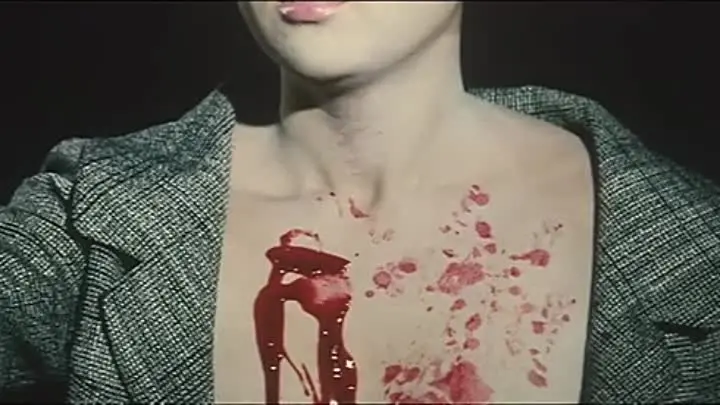
Hakujitsumu, 1981
‘While under sedation in a dentist’s office, a young art student has sex fantasies about naked women, vampires and a beautiful patient he saw in the office.’ — filmaffinity
______________
Toshio Matsumoto

‘One of the great pioneers of Sixties counter-cinema, Japanese director, video artist and critic Toshio Matsumoto (b. 1932) rose to prominence as a daring stylist and fearless provocateur whose radically experimental films shattered social and aesthetic taboos with inspired precision and energy. Matsumoto began as a documentary filmmaker, directing a series of abstract and subtly political shorts that applied a mode of poetic anthropology to postwar society and culture. Among Matsumoto’s earliest works were two important collaborations with fellow member of the Jikken-Kobo artist collective, the legendary composer Toru Takemitsu who contributed some of his earliest scores to Matsumoto’s lyrical documentaries Ginrin and Song of the Stone.
‘An influential critic and theorist, Matsumoto increasingly embraced formal experimentation, culminating in his dazzling three projector film, For My Crushed Right Eye and his incendiary feature film debut, Funeral Parade of Roses, one of the most important films produced by the remarkable independent distribution and production company Art Theater Guild. Making prominent use of music and mandala-like formal structures, Matsumoto’s deeply immersive and frequently psychedelic avant-garde films are trance inducing and quietly intense adventures in perception.’ — Harvard Film Archive
_______________
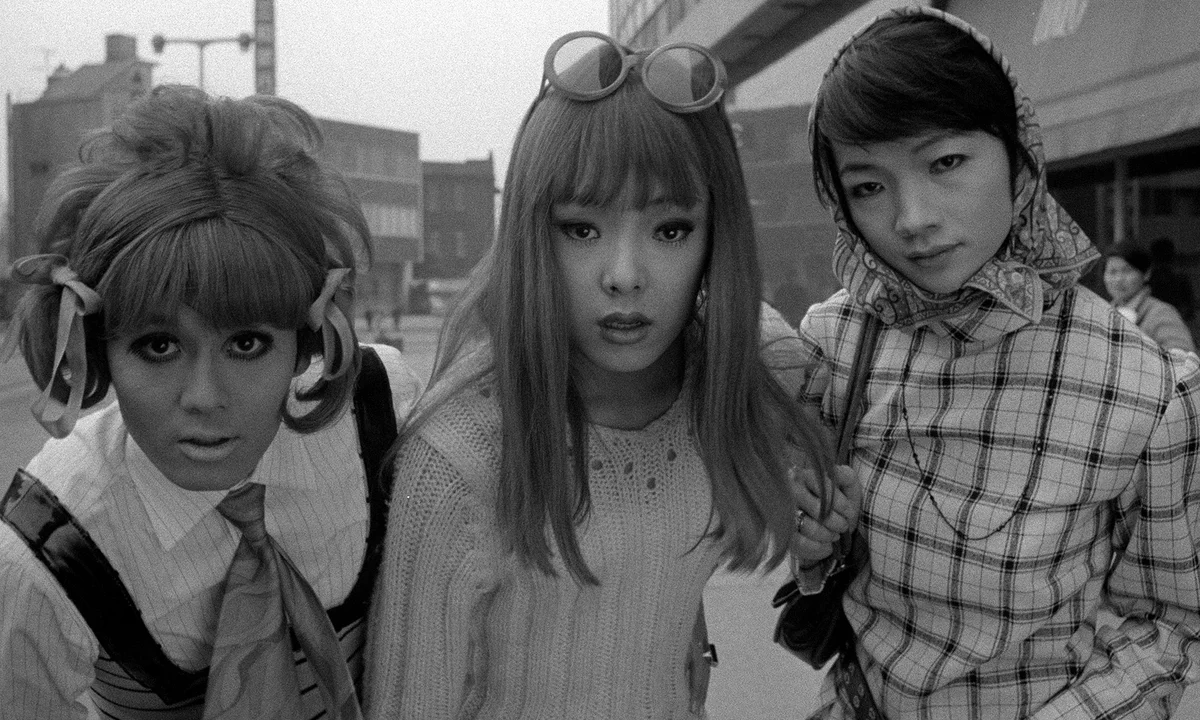
Funeral Parade of Roses, 1969
‘Trying to explain the pleasures of such a scrambled impressionistic piece as Funeral Parade of Roses in plot terms is a pretty fruitless exercise, although the disjointed narrative does reach fever pitch in the latter moments, with developments inspired by the ancient legend of Oedipus Rex. The story really remains only a ruse for a work that is best seen as a fascinating reflection of a long-vanished place and time, caught in a cross-current of international pop-cultural styles and influences and not dissimilar to what was going on in similar circles in other far-flung parts of the world. The colourful underground milieu, populated by a rag-tag collection of cross-dressers, bohemians, druggies and drop-outs, bares easy comparisons with the environment fostered by Andy Warhol and his disciples at his Factory studio in New York. Although its focus on experimental filmmaking technique is very much in keeping many of the other films produced by the Art Theatre Guild – typically those of Nagisa Oshima, Shohei Imamura, Masahiro Shinoda, Susumu Hani and Kiju Yoshida – Matsumoto’s film never quite seems like the dry meta-textual exercise in formalism of some of his contemporaries.’ — Midnight Eye
_________
Metastasis, 1971
‘Writes Matsumoto, “I used the Erekutoro Karapurosesu (Electro Color Processor), which is mainly used in the field of medicine and engineering, to create moving image textures Metastasis, I was interested in layering images of a simple object and its electronically processed abstraction. The electronic abstract image is manipulated in a certain rhythm, depicting an organic process.”‘ — Electronic Arts Intermix
________
Phantom, 1975
‘Toshio Matsumoto depicts an unreal world created by piecing together fragments of fantasies and delusions seen by a single woman. The mysterious color tones, which are far removed from the actual sense of color, are due to the use of color infrared film.’ — Light Cone
___________
Masao Adachi

‘Born in 1939 in Kita Kyushu, Adachi emerged from the Nihon University Film Study Club, better known as Nichidai Eiken, alongside filmmakers like Motoharu Jonouchi and Isao Okishima, to become one of the leading figures in the underground experimental scene of the 60s, with films like Sain (1963) and Galaxy (1967). However, it is for his later associations with Nagisa Oshima, in whose Death by Hanging (1968) he appears in the role of the security officer, and more famously with Koji Wakamatsu, scripting dozens of his most famous titles including The Embryo Hunts in Secret, Go Go Second Time Virgin, Sex Jack, and Ecstasy of Angels, that he is best known.
‘Through Wakamatsu Productions, Adachi also contributed the pink genre’s most energetic and revolutionary titles, films such as Sex Play and High School Guerrilla. He furthermore became known as one of the country’s most progressive film theorists and critics due to his instrumental involvement with the journal Eiga Hihyo during its second phase from 1969 to 1973. And then he disappeared from Japan, apparently disillusioned with the direction along which the country’s commercial cinema was heading, leaving for Beirut where in 1974 he joined the Japanese Red Army in lending its assistance to the Popular Front for the Liberation of Palestine and their quest to fight for the liberation of the Israeli-occupied territories.’ — Midnight Eye
_______________
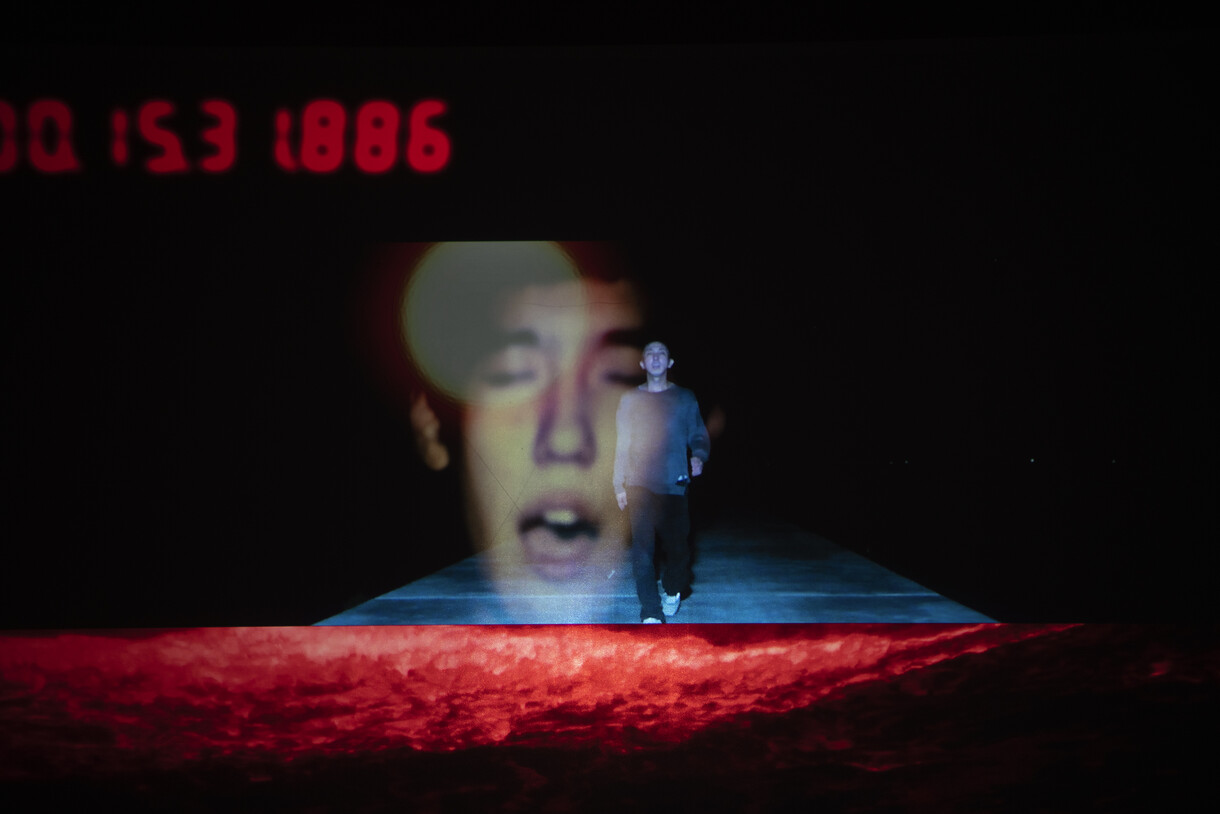
A.K.A. Serial Killer, 1969
‘The Japanese director, screenwriter and activist Masao Adachi is one. Active both in Japan’s avant-garde film scene of the 1960s and in the student-led protests against Tokyo’s controversial security treaty with Washington, Mr. Adachi wrote screenplays; directed movies like Female Student Guerrillas (1969), which infused the sexploitation genre with revolutionary politics; and developed a “theory of landscape,” which hypothesized that systems of power could best be revealed through filming not people but places. He put that theory into practice in the collectively directed AKA Serial Killer (1969), which recounts the killing spree of a 19-year-old man through images of the anonymous landscapes he traversed.’ — NYT
____________
Tokyo / Lebanon, 1971
‘Masao Adachi & Kôji Wakamatsu, both having ties to the Japanese Red Army, stopped in Lebanon on their way home from the Cannes festival. There they caught up with notorious JRA ex-pats Fusako Shigenobu and Mieko Toyama in training camps to create a newsreel-style agit-prop film based off of the “landscape theory” (fûkeiron) that Adachi and Wakamatsu had developed. Few artists have shifted from revolutionary imagination to revolutionary action like Masao Adachi.’ — collaged
_________
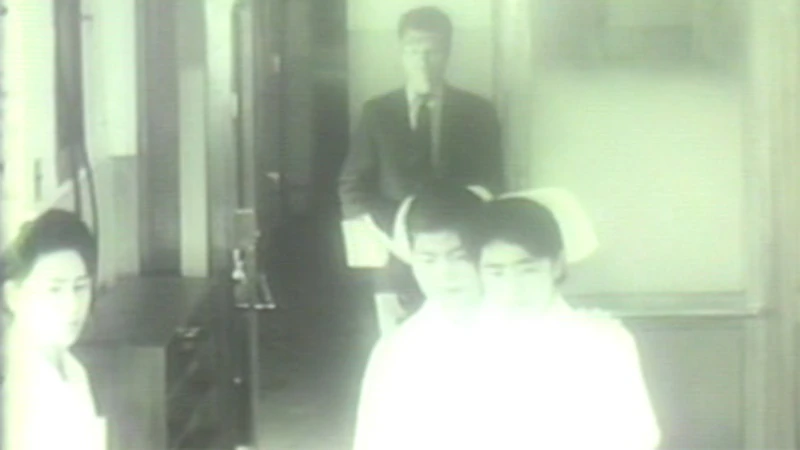
The Closed Vagina, 1963
‘In medical terminology, absence of genitalia in females is referred to as “gynatresia”. In other words, an extreme defect that goes beyond a mere illness” Adachi’s follow-up to Bowl using the figure of a woman suffering from an unusual sexual aliment has often been taken as a controversial allegory for the political stalemate of the Leftist student movement after their impressive wave of massive fiery protests failed to defeat the neo-imperialist Japan-US Security Treaty. The ritualistic solemnity of the charged sexual scenes contribute to the oneiric qualities of Closed Vagina which Adachi would later insist was an open work, not meant to deliver any kind of deliberate political message.’ — Harvard Film Archive
_______
Takashi Ito

‘The films of Takashi Ito straddle the genres of animation and experimental film. Most of Ito’s films are animation in its fundamental sense of creating the illusion of movement through the rapid display of a sequence of images. Ito’s best works strip cinema down to its bare bones of being a series of photographs projected on a screen in rapid succession. In an article published in the Holland Animation Film Festival 2002 programme, Takashi Ito explains how his fascination with making his own films began when he was given an 8mm camera at university to shoot with. Watching the images he had shot, over and over again, Ito was struck by the power of cinema to bring inanimate things to life.
‘Ito decided to try to use the medium to create “films like fascinating nightmares” and began experimenting with photographing and manipulating images of clouds. His experimentation with film was bolstered by his coming into contact with Fukuoka’s independent screening organization FMF (Film-Makers’ Field) where a wide range of experimental and personal films are screened. As Ito himself described: “Film is capable of presenting unrealistic world as a vivid reality and creating a strange space peculiar to the media. My major intention is to change the ordinary everyday life scenes and draw the audience (myself) into a vortex of supernatural illusion by exercising the magic of films.”‘ — collaged
______
Ghost, 1984
‘In Ghost, as in many of his films, Ito explores some of the most basic dimensions of cinematic illusion, such as space depth, lightning and movement, to create a visual feast that seems to touch on the horror genre. But it’s not quite so, for the Ghost we are allowed to see is not designed to frighten but to mesmerize the spectators. Bulb shutters, long exposures and time-lapse are used to dazzle perception and insinuate the presence of floating life-forms in a closed space. Inagaki’s soundtrack kicks off with a steady electronic ambiance but soon descends into a hellish world of rhythmical distortion and mutli-dimensional lo-fi mayhem. I don’t think your children will be scared with this extraordinary piece, but if you do have them, please make them watch this in a closed dark room and report the results.’ — The Sound of Eye
_________
The Moon, 1994
‘A long time ago, I would often dream of the uncanny and mystical landscape that appears in moonlight. Irrational landscapes and spaces filled with unspeakable pleasures like a black object that revolves slowly while flying over the scattered clouds that float in the night sky, their lumps illuminated by the light of the moon.’ — TI
______
Box, 1982
‘I stuck landscape photographs on the faces of a cube and shot them frame-by-frame. It looks like the box is forever revolving, but in truth it only revolves 90 degrees. The trick to this sensation is fundamentally the same as the one used in SPACY. I was aiming at disturbing our awareness of space in the movement from the three-dimensional to a plane and back again.’ — Takashi Ito
_________
Bonus track
_______________
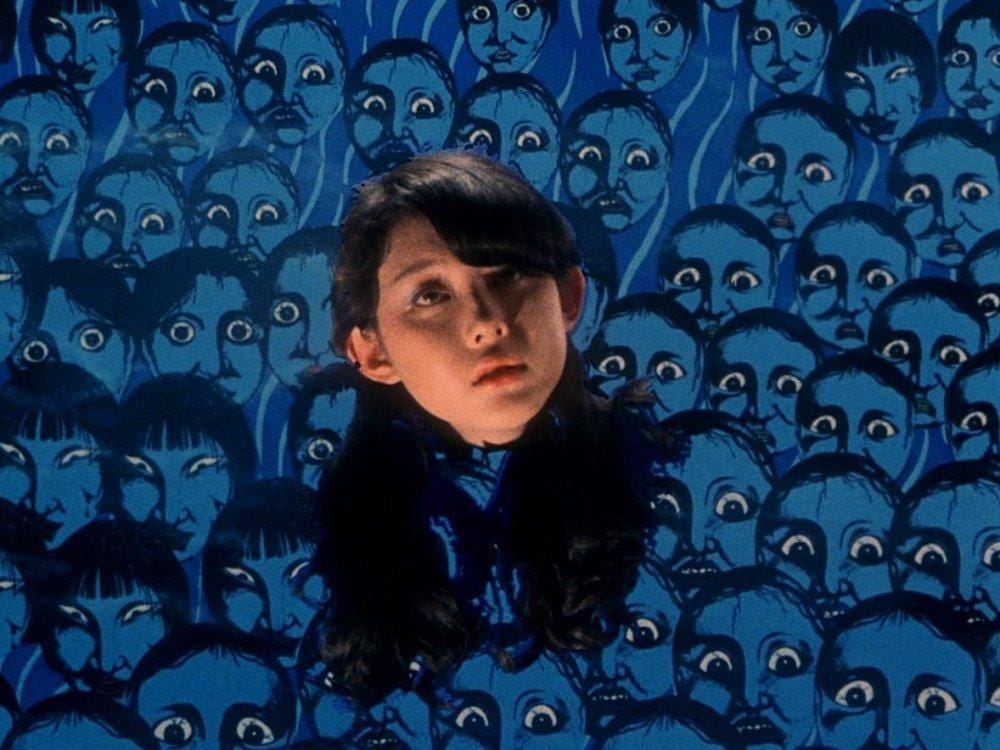
Nobuhiko Obayashi’s House (1977)
‘Delirious, deranged, gonzo or just gone, baby, gone — no single adjective or even a pileup does justice to House, a 1977 Japanese haunted-house freakout. It’s easy to track the plot points in House and rather more difficult to grasp why Mr. Obayashi tells the story the way he does, to gauge the significance of the gaudy colors, the old-fashioned techniques (he periodically irises up and down), the superimpositions and flurries of jump cuts. The exterior backdrops tend to be overtly artificial, the skies so streaked with orange that you half expect to see Scarlett O’Hara shaking her fist at the heavens. A scene with Gorgeous, her father and his new squeeze, meanwhile, is shot through a multipaned window that separates the camera (and us) from the characters, one of several such distancing strategies. There are close-ups, but many are so glossy and stylized that they look like advertisements.’ — NYT
*
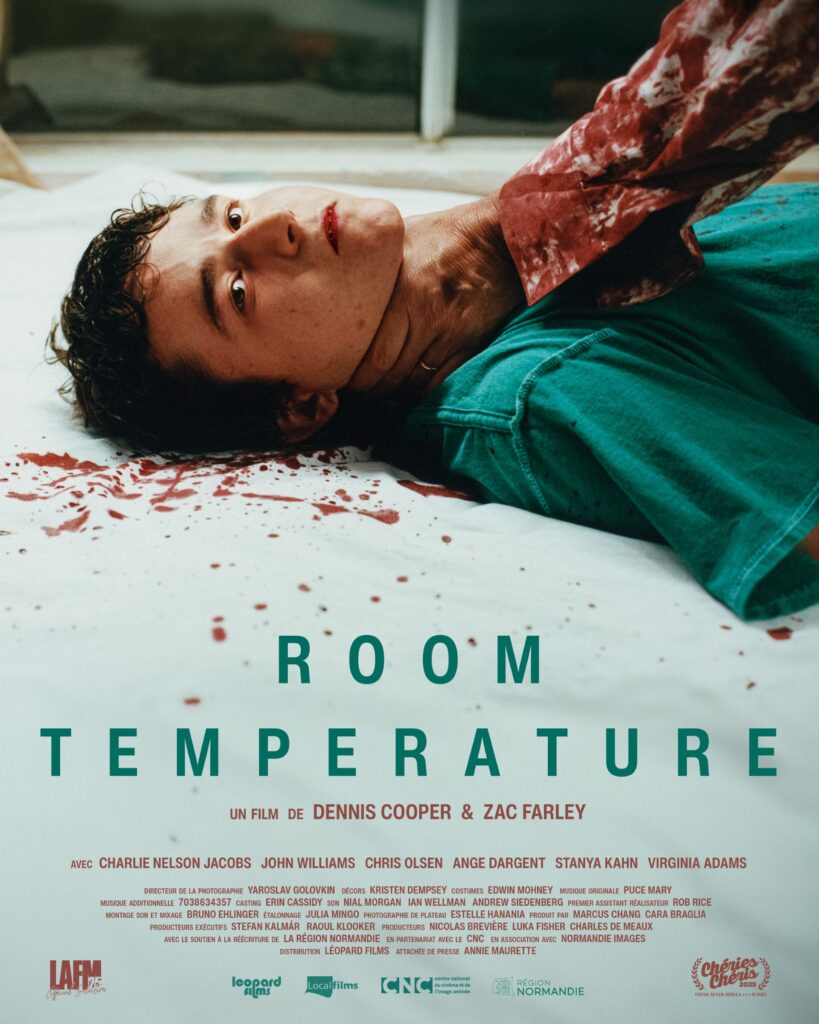
p.s. RIP Richard Lloyd. ** worm, Hi, worm. Oh, wow, thank you so much for the amazing response to ‘RT’. I’m thrilled that you got so much out of it. It was a lot of work to make and get finished, but Zac and I are really happy with it. Yeah, thank you, pal. Cool, sounds like a plan: the screening of our next one with you. It’ll be a while, but remind me when it’s reaching fruition. I hope your weekend was restful and much more than that of course. xoxo. ** Tosh Berman, Hi, Tosh. Song Cave is so solid, I haven’t gotten the Trevor Winkfield yet, and I really need to get that. I should do a Winkfield post, shouldn’t I? I will. Thanks a bunch. I hope you have the best day yet. ** laura w, If memory serves, I think there might have also been an essay about Purdy in that issue. I don’t have a copy here to check. Where we shoot the film depends on tax incentives or something that the area might provide. I don’t fully understand how that works yet. ‘PGL’ was filmed in Cherbourg, a city on the French coast. In France you can get funding from a particular region, and we got funding from Normandie, and Cherbourg was the city there that best met our goals. I just put together a Jonas Mekas Day for the blog, so curious timing there. Steve Erickson had a guess at the film you were thinking of if you didn’t see it. He might be right? I know, so sad about Richard Lloyd. He was so great. And he was also one of my two biggest rock star crushes from afar when I was younger. ** Travis (fka Cal), Hey! How are you? Great to see you! I’m dying to see ‘Godzilla Minus Zero’. In the next few days for sure. I really liked the previous one. Nice: the Lou Harrison diaries. I was thinking the other day I want to listen to his work again. It’s been a long time. I’m good, getting ‘RT’ out and anxious to get to work on the next film mostly. And Paris is chilly and inspiring. What’s the latest with you and yours? ** Steve Erickson, Fucking blog. Weekend was nice. We had an edition of our little local Movie Club meet-up and watched Guy Debord’s ‘We Spin Around the Night Consumed by the Fire’ which I’d never seen before, and which is great. And Halloween at Parc Asterix, big fun. And the usual. And as usual, I spaced on Bandcamp Friday again. Fuck. I’m going to set an alarm. ** Malik, Hi! Yeah, like I said above, it’s about where will give you tax incentives to film apparently, and apparently our producer has connections there. I love the idea of shooting around there. We’ll see. Hope so. I think I’ve heard of Nina Gala. Hm. I’ll go listen up. Thanks, my friend. Best week ahead. ** Carsten, ‘Little Caesar’ was the only Noir film title that had the kind of double or more meanings that I pretty much always require of titles, so I signed off. Yeah, my utopian manifesto for Little Caesar. I did try. I’m not sure how many baseball fans were lured on board. That’s a right attitude to the newness of the form’s requirements, I think. To go by my approach. Good title! ** _Black_Acrylic, Awesome! When I see CDG I think of Charles DeGaulle Airport, but I get the feeling that’s a different CDG. Looks good. What up with your local naysayers? What do you think you should wear instead? Strange. ** Dominik, Hi!!! Parc Asterix was a blast. They had three very good haunted houses. In the US, the ‘monsters’ never touch you because of insurance fears, but here I guess they don’t care about that so the monsters touch you and grab you and fuck with you, and it makes the haunts much scarier. And Asterix has one of the world’s greatest roller coasters, Toutatis, and a very intense wooden coaster, Thunder 2 Zeus, that seems like it’s going to kill you. It was great. Oh, pal, you’re so, so lucky you don’t have to deal with typesetting machines and about lay-out boards and printers and mail orders and … it was like having a white collar job and very hard blue collar job at the same time. Archive of Our Own has died? I hope not, eek. Love wishing elevators were replaced by ladder escalators, G. ** Uday, ‘Hair’? That old warhorse? Huh. At least it wasn’t ‘Godspell’. I’m going to look up those opposing attitudes, but I will. ** Jeff J, Hi, Jeff. Thanks so much doing that post. Tom Cole must have a huge following on Instagram because my post announcement of that post on there got an insane amounts of ❤️s. As I said above, I went to Parc Asterix’s Halloween makeover, which finally made Halloween feel like it happened. Films … I just watched Guy Debord’s ‘We Spin Around the Night Consumed by the Fire’ which is amazing. Otherwise, I really liked the ‘Resident Evil’ movie. I went to a night of Leslie Thornton’s films with her there in person. That was great, I love her films and video works. That Garrel show you have planned sounds lovely, obviously. Exciting. You and yours good in general? ** Chris Kelso, Hi, Chris! Thanks! Oh, yeah, Skelley was a total hot shot in the early 80s, and then he kind of disappeared for, like, thirty years before making his triumphant return. ‘Weird Little Boy’ happened over a long period time. Zorn sent me some music and asked me to write a text to go with it. I did. He decided he didn’t like how the text and music worked together, so he put out that music on its own, and then he built new music around my text. He brought in that incredible array of experimental musicians and they made the music using the text as a guide, and he had Nayland Blake make the CD package. It took about, oh, four years to finally come together and get released. I worked with Stephen O’Malley and Peter Rehberg closely when we were collaborating with Gisele Vienne on her theatre works, but I think that’s all for music collaborations. It’d be fun to do that again if the right situation arose. Sure, I’d like to read that book about your work, of course. Take care, man. ** HaRpEr //, Yeah, really sad and such a loss about Richard Lloyd. Terrible. Me too about the Schyuler diaries and their book of Schuyler’s photographs too. That interview does sound tricky. I mean, you know, I guess just think of it a weird experiment in social engagement or something, whatever happens? ** Thom, ‘Family Tyranny’, that’s it! ‘Cryptograms’, yeah, tough choice. I like the Atlas Sound records too. I watched ‘Begotten’ about 10 or so years ago, and I thought it was kind of artsy-fartsy and irritating, but I need to try it again because everyone seems to making a big case for it. Cool on the new bookstore score. Week of infinite positive surprises to you. ** Okay. I thought this old post would be good and fun to restore, so I did. Simple as that. See you tomorrow.


 Now available in North America

Leave a Reply