* (restored)

‘I came to language only late and only peculiarly. I grew up in a household where the only books were the telephone book and some coloring books. Magazines, though, were called books, but only one magazine ever came into the house, a now-long-gone photographic general-interest weekly commandingly named Look. Words in this household were not often brought into play. There were no discussions that I can remember, no occasions when language was called for at length or in bulk. Words seemed to be intruders, blown into the rooms from otherwhere through the speakers of the television set or the radio, and were easily, tinnily, ignorable as something alien, something not germane to the forlornities of life within the house, and readily shut off or shut out. Under our roof, there was more divulgence and expressiveness to be made out in the closing or opening of doors, in footfalls, in coughs and stomach growlings and other bodily ballyhoo, than in statements exchanged in occasional conversation. Words seemed to be a last resort: you had recourse to speech only if everything else failed. From early on, it seemed to me that the forming and the release of words were the least significant of the mouth’s activities—and more by-products of those activities than the reason for them. When words did come hazarding out of a mouth, they did not lastingly change anything about the mouth they were coming out of or the face that hosted the mouth. They often seemed to have been put in there by some force exterior to the person speaking, and they died out in the air. They were not something I could possess or store up. Words certainly weren’t inside me.
‘A word that I remember coming out of my parents’ mouths a lot was imagine—as in “I imagine we’re going to have rain.” I soon succumbed to the notion that to imagine was to claim to know in advance an entirely forgettable outcome. A calendar was hung in the kitchen as if to say: Expect more of the same.
‘I thus spent about the first thirteen or fourteen years of my life not having much of anything to do with language. I am told that once in a while I spoke up. I am told that I had a friend at some point, and this friend often corrected my pronunciations, which tended to be overliteral, and deviant in their distribution of stresses. Any word I spoke, often as not, sounded like two words of similar length that had crashed into each other. Word after word emerged from my mouth as a mumbled mongrel. I was often asked to repeat things, and the repeated version came forth as a skeptical variant of the first one and was usually offered at a much lower volume. When a preposition was called for in a statement, I often chose an unfitting one. If a classmate asked me, “When is band practice?” I would be likely to answer, “At fifth period.” I did not have many listeners, and I did not listen to myself. Things I spoke came out sounding instantly disowned.
‘Childhood in my generation, an unpivotal generation, wasn’t necessarily a witnessed phenomenon. Large portions of my day went unobserved by anyone else, even in classrooms. Anybody glimpsing me for an instant might have described me as a kid with his nose stuck in a book, but nobody would have noticed that I wasn’t reading. I had started to gravitate toward books only because a book was a kind of steadying accessory, a prop, something to grip, a simple occupation for my hands. (Much later, I was relieved to learn that librarians refer to the books and other printed matter in their collections as “holdings.”) And at some point I started to enjoy having a book open before me and beholding the comfortingly justified lineups and amassments of words. I liked seeing words on parade on the pages, but I never got in step with them, I never entered into the processions. I doubt that it often even occurred to me to read the books, although I know I knew how. Instead, I liked how anything small (a pretzel crumb, perhaps) that fell into the gutter of the book—that troughlike place where facing pages meet—stayed in there and was preserved. A book was, for me, an acquisitive thing, absorbing, accepting, taking into itself whatever was dropped into it. An opened book even seemed to me an invitation to practice hygiene over it—to peel off the rim of a fingernail, say, and let the thing find its way down onto a page. The book became a repository of the body’s off-trickles, extrusions, biological rubbish and remains; it became a reliquary of sorts. I was thuswise now archiving chance fragments, sometimes choice fragments, of my life. I was putting things into the books instead of withdrawing their offered contents. As usual, I had things backward.
‘Worse, the reading we were doing in school was almost always reading done sleepily aloud, our lessons consisting of listening to the chapters of a textbook, my classmates and I taking our compulsory turns at droning through a double-columned page or two; and I, for one, never paid much mind to what was being read. The words on the page seemed to have little utility other than as mere prompts or often misleading cues for the sluggard sounds we were expected to produce. The words on the page did not seem to have solid enough a presence to exist independently of the sounds. I had no sense that a book read in silence and in private could offer me something. I can’t remember reading anything with much comprehension until eighth grade, when, studying for a science test for once, I decided to try making my way quietly through the chapter from start to finish—it was a chapter about magnets—and found myself forced to form the sounds of the words in my head as I read. Many of the words were unfamiliar to me, but the words fizzed and popped and tinkled and bonged. I was reading so slowly that in many a word I heard the scrunch and flump of the consonants and the peal of the vowels. Granted, I wasn’t retaining much of anything, but almost every word now struck me as a provocative hullabaloo. This was my first real lesson about language—this inkling that a word is a solid, something firm and palpable. It was news to me that a word is matter, that it exists in tactual materiality, that it has a cubic bulk. Only on the page is it flat and undensified. In the mouth and in the mind it is three-dimensional, and there are parts that shoot out from it or sink into its syntactic surround. But this discovery was of no help to me in English class, because when we had to write, I could never call up any of the brassy and racketing words I had read, and fell back on the thin, flat, default vocabulary of my life at home, words spoken because no others were known or available. Even when I started reading vocabulary-improvement books, I never seemed capable of importing into my sentences any of the vivid specimens from the lists I had now begun to memorize. My writing was dividered from the arrayed opulences in the vocabulary books. Language remained beyond me. My distance from language continued even through college, even through graduate school. The words I loved were in a different part of me, not accessible to the part of me that was required to make statements on paper.
‘It took me almost another decade after graduate school to figure out what writing really is, or at least what it could be for me; and what prompted this second lesson in language was my discovery of certain remaindered books—mostly of fiction, most notably by Barry Hannah, and all of them, I later learned, edited by Gordon Lish—in which virtually every sentence had the force and feel of a climax, in which almost every sentence was a vivid extremity of language, an abruption, a definitive inquietude. These were books written by writers who recognized the sentence as the one true theater of endeavor, as the place where writing comes to a point and attains its ultimacy. As a reader, I finally knew what I wanted to read, and as someone now yearning to become a writer, I knew exactly what I wanted to try to write: narratives of steep verbal topography, narratives in which the sentence is a complete, portable solitude, a minute immediacy of consummated language—the sort of sentence that, even when liberated from its receiving context, impresses itself upon the eye and the ear as a totality, an omnitude, unto itself. I once later tried to define this kind of sentence as “an outcry combining the acoustical elegance of the aphorism with the force and utility of the load-bearing, tractional sentence of more or less conventional narrative.” The writers of such sentences became the writers I read and reread. I favored books that you could open to any page and find in every paragraph sentences that had been worked and reworked until their forms and contours and their organizations of sound had about them an air of having been foreordained—as if this combination of words could not be improved upon and had finished readying itself for infinity.
‘And as I encountered any such sentence, the question I would ask myself in marvelment was: how did this thing come to be what it now is? This was when I started gazing into sentence after sentence and began to discover that there was nothing arbitrary or unwitting or fluky about the shape any sentence had taken and the sound it was releasing into the world.’ — Garielle Lutz
____
Further
Garielle Lutz @ Wikipedia
‘Eminence’, by Garielle Lutz
‘For Food’, by Garielle Lutz
‘Contractions’, by Garielle Lutz
‘Devotions’, by Garielle Lutz
‘Esprit de l’Elevator’, by Garielle Lutz
‘Street Map of the Continent’, by Garielle Lutz
‘SMTWTFS’, by Garielle Lutz
‘THIS IS NOT A BILL’, by Garielle Lutz
‘Fatal Agreement’
Blake Butler interviews Garielle Lutz @ VICE
‘Garielle Lutz by Derek White’
‘THIS IS NICE OF YOU. Introduction by Ben Segal’
‘newly fraught and alien’
‘KEVIN SAMPSELL IN CONVERSATION WITH GARIELLE LUTZ’
‘YOU HAVE ARMS TO BAR YOURSELF FROM PEOPLE: GARIELLE LUTZ AND I LOOKED ALIVE’
‘Wrapping My Head Around Garielle Lutz’
‘American prose aspiring to be poetry’
Garielle Lutz on ‘Divorcer’
Buy ‘The Gotham Grammarian’
___
Extras
Obscure Clearly: George Salis Interviews Garielle Lutz
Episode 3: Garielle Lutz
60 Writers/60 Places: Garielle Lutz Trailer
Garielle Lutz interview and reading with Meg Tuite
Garielle Lutz reading excerpt from “Pulls”
Notes
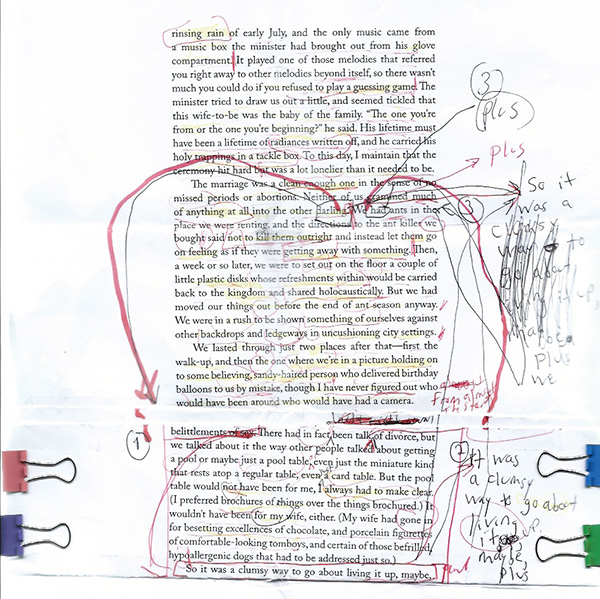
‘We went to Brooklyn for a reading .. Garielle Lutz, John Haskell & some others at Unnameable books. … We met Garielle Lutz after at some Mexican place full of day of the dead kitsch. It seems every time we meet Garielle we eat Mexican food in tacky dives .. & they get tortilla soup. For the most part, we hate readings. But it’s always a pleasure to hear Lutz read. And Haskell is an engaging reader as well. After Lutz read, we stole the pages he used to read from (don’t worry Garielle, we’ll return them!). Here’s one page [below] to give you the idea. The text becomes a sort of script for the performance .. with certain words & phrases marked as cues, reminders. And with Lutz we’re not just getting a straight-up reading of the story, but an ever-morphing medley of sorts .. even though they were reading “The Driving Dress,” the binder-clipped on paragraph is from the story “Middleton” (both pieces of which appear in Divorcer). As they were reading the spliced part, we sort of realized something was funny because «(I preferred brochures of things over the things brochured.)» is one of our favorite lines .. that we remember being in another story.’ — 5cense.com
_____
Interview
by Justin Taylor
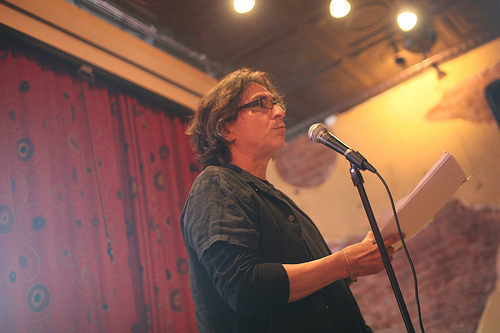
I’m curious about Gordon Lish, who seems to be a figure of great controversy. I’ve met people who hate him with a truly rare vitriol, but I’m never quite sure why, and then of course there are those who love him. I know that you place yourself in this camp. What does he do that inspires such sharp differences of opinion and flares of emotion?
Garielle Lutz: He was a magisterial presence in the classroom. At the core of his teaching was the necessity of achieving an intimacy between words that involves something more than simply a cohabitation based on obeying the laws of syntax and grammar and semantics and a kind of prose prosody. He was the most exacting teacher I have ever encountered, and also the most generous. Some of the students who enrolled in his classes were probably not prepared for the syllable-by-syllable scrutiny of their sentences that Gordon’s teaching entailed. They might have been seeking little more than validation of their talent. But Gordon was never easily pleased. So some went away in bitterness and a few, I guess, in fury.
How did you first find out about him?
GL: When I was nosing about in bookstores in the mid-eighties, I was eventually struck by certain slim books of prose fiction in which the sentences all but protruded from the page and poked out at me. There was Barry Hannah’s Ray, for instance, and also his Captain Maximus, written in a kind of brawling, roughhouse aphoristicity, and there was the lovely neurotic one-liner-ish lyricism of Amy Hempel’s Reasons to Live. The sentences in those books had a discernible topography, an unignorable spectacularity of contour and relief that was entirely unlike the depthlessness or bodilessness of the sentences I was seeing almost everywhere else. I eventually came to learn that all of the books I had been admiring had been edited by Gordon Lish. When I found out who he was, and where he was (ensconced at Knopf, in New York City, but venturing, come summertime, in a freelance professorial capacity to the Midwest and elsewhere), I jumped at the chance to study under him. I took his class for five straight summers in Bloomington, Indiana, and then once in Chicago.
Where were you coming to him from? Actually, this is a good opportunity to ask for the Abbreviated Autobiography of Lutz — other than knowing that you’re from Pennsylvania, and that you still in Pennsylvania, I don’t know really anything about you. Moved a lot? Summer camp? Cartoon featured on cake at 10th birthday? Undergrad? Grad? Origins of lifelong love affair with literature?
GL: I was not a reader as a kid. I usually had my nose stuck in a book, but I wasn’t actually reading. My behavior with books consisted of just staring into the things. I know I eventually turned the page and confronted another sheetful of arranged and settled and stilled language, but I wasn’t absorbing the sense. In eighth grade, there was a mandatory vision test in the office of the school nurse. She shrieked at me that I should have been wearing glasses for years. I’d had no idea. I must have simply assumed that the world was a blurry place. It had never occurred to me that what I was seeing wasn’t the way things actually looked. What I saw when I got my first glasses was different but not necessarily an improvement. I wasn’t sold on the virtue of ordinary clarity. Other than that, I don’t have the makings of an autobiography. I might have been in a Saturday-morning bowling league at some point. I think I got ousted for not showing up to throw the ball. I drummed rather primly in public-school marching units and orchestras, and intemperately in a chummy garage band. It was my parents’ garage. This was toward the end of the age of reel-to-reel tape recorders. We were working on a song cycle called Crap. The summer before I went off to college, I bought an issue of Harper’s magazine. I tried to read it, but too many of the words were unfamiliar to me. So I bought Merriam-Webster’s Collegiate Dictionary and read that instead. Words in isolation, not batched together to form thoughts, began to appeal to me. That is when I began develop a sense of the physicality, the materiality, the dimensionality, the inorganicity of words — words as things, as matter. The objecthood of words impressed itself upon me. But I felt like a latecomer to language.
I assume this feeling has abated since then. Your stories are linguistic marvels, almost word sculptures, but also case-studies in proper usage, a point frequently missed, or ignored, by your critics. I went and looked at the original Publishers Weekly assault on Stories in the Worst Way, and the most striking thing about it is not that they didn’t like it, but that they called it unoriginal. That’s beyond a taste-call; it’s simply incorrect.
GL: Stories in the Worst Way definitely took a beating, but if I had been assigned to review it, I probably would’ve panned it myself. It’s not the kind of book that’s asking for any wide welcome.
What then, if anything, is the book asking for?
GL: Probably nothing. Maybe “ask” isn’t the word. Maybe the book motions vaguely and uningratiatingly toward a certain kind of reader, someone who finds the world amply underintelligible but can’t put much trust, or find much satisfaction, in the explanations and affirmations of the undepressed.
Reading that review, it felt to me like Stories got caught up in the knee-jerk anti-Pomo backlash that was going on, which is funny because I’m not sure that your work falls in line with the trends of that era.
GL: I’ve never seen myself as part of any school or pack or coterie, or any trend, any movement or drift. I’ve never made an effort to understand postmodernism. I remember that in an interview somewhere, Barry Hannah remarked that postmodernism was too much like homework. What interests me is instigated language, language dishabituated from its ordinary doings, language startled by itself. I don’t know where that sort of interest locates me, or leaves me, but a lot of the books I see in the stores seem to lack language entirely.
I’ve read explanations you’ve given elsewhere about how the individual sentences are constructed, and I think your notion of characters “less as figures in case histories than as upcroppings of language, as syntactic commotions coming suddenly to a head” is an intriguing one, but there are recurring concerns in the writing that I’d like you to talk about. I’m thinking especially about gender and sexuality. It’s interesting to me that you’ve never really been identified as a queer writer, since your characters tend to be bisexual, anti-monogamists. If they weren’t so neurotic I’d be tempted to call them sexual revolutionaries.
GL: It would pain me to be labelled a queer writer, because the classification would be missing the point. The people in my stories suffer attraction to other people, and each person is a novel, consuming totality of life and limb, eclipsing whoever it was that came before. To these people, differentiations of gender, of orientation, don’t even register. They’re just looking for somebody to ride out some sadness on, at least for a while.
But there’s something inherently radical in that lack of discrimination, both in the characters who are riding out their sadnesses sans regard for differentiations, and in the writer who writes them that way. People love — perhaps prefer — to talk about the way you construct sentences, but I’m at least as interested in why you choose to tell these stories as I am in how you go about telling them. This non-registration of differentiations is a fundament of your work, it seems to me, and I’m curious if this is a personal/philosophical decision or an aesthetic one.
GL: My characters seem to have involuntarily disimagined the differences between the sexes or between the standard categories of affection, but they cut me in on their hearts only so far before sinking back into the sentences and typography they spirited forward from. They rarely point to anything definite in my life or manage any likeness to people whose passages in life I might have been a party to.
Do you think the degree to which they cut you in has changed? I Looked Alive seems like a denser, more involved book to me than Stories. The pieces seem longer, and more narrative-driven.
GL: I’m not sure why my stories have gotten longer. Maybe it’s because I write only one at a time now, so they’re grabbier, and they swell out more.
I know you do other stuff besides write, too. I read somewhere that you teach.
GL: I teach classes in business writing and compositon at an outlying branch of a huge institution.
David Gates edited this anthology of stories about peoples’ jobs, called Labor Days, and in his introduction he talks quite a bit about the problem of writing “the job,” even though it is where most people spend most of their time. A lot of your work is set in offices, which are figured as terribly abstract spaces, marked by even more terrible moments of specificity that happen within their walls. How do you manage the balance, if it even is balance?
GL: There’s no balance, no poise or proportion. I had my job before I started writing my stories. I can’t speak for myself, but a job does things to a person, deducts a person pretty brutally from life. Desks are terrible places, no matter how many wheels a chair might have. You can’t do much about how drawers fill up.
I noticed that both times I saw you give readings you read stories divided into numbered sections… maybe I’m shooting in the dark here, but it felt like it might indicate more than mere coincidence.
GL: At readings, I’ve taken to numerating the segments of a story so a listener has some sense of where lines had to be drawn on the page, but the numbers aren’t part of what the reader encounters.
What are you working on now and what, if anything, might there be for readers to look forward to in the nearish future?
GL: I’m trying to write a third book of stories.
I remember you mentioning in the Believer interview about consciously avoiding brand-names and other markers of culture and era. I think a writer’s desire to be unfettered by the stuff of his day makes sense to me in an instinctual way, but I’d like to just hear your take on it.
GL: I would hate to know exactly where and when my stories are set, in what suburbial latitudes those dark days keep coming. My characters seem bent on piecing themselves out of any big picture, and I have to honor their wish. I don’t know which is finally sicker — specifics or
engulfing abstractions.
I’m not sure that can be answered, but one effect the abstractions have on me, as your interviewer, is they make me want to hound you for concrete detail. I want minutiae. I want you to name names. What are the albums you’d take to the desert island if they sent you? The books and films? What are your brand allegiances when buying cereal, personal computers, and shirts? Did you ever go to a Grateful Dead show? What kind of car do you drive?
GL: My desert-island playlist would be all songs, not albums, and would have to start with “A Sister’s Social Agony” (Camera Obscura [the one from Scotland]), “New Haven Comet” (Luna), “Over Time” (Lucinda Williams), “Nothing Came Out” (the Moldy Peaches), “So Stark (Like a Skyscraper)” and “Here” (Pavement), “Hello Halo” (Parker and Lily), “Name Etched in Home-Room Chair” (Alsace Lorraine), “An Ocean Apart” (Julie Delpy), “Past, Present, and Future” (the Shangri-Las), “Haligh, Haligh, a Lie, Haligh” (Bright Eyes), “Tears Are in Your Eyes” (Yo La Tengo), “It’s Getting Late” (Galaxie 500), “These Days” (Nico), “By the Cathedral” (Keren Ann), “Marion Barfs” (from the Requiem for a Dream soundtrack), “You You You You You” (the 6ths), “Lie in the Sound” (Trespassers William), “I Can’t Get No Satisfaction, Thank God” (the Softies), “I Wanna Die” (Adam Green), “Bobby, King of Boys Town” (Cass McCombs), “I Was Born” (the Magnetic Fields), “Is It Wicked Not to Care?” (Belle and Sebastian), “I Have Forgiven Jesus” (Morrissey [Live at Earls Court version]), and “I Know It’s Over” (the Smiths [Rank version]). Books? Were I deprived of the contemporaries I admire, I would ask first for Salinger (especially Seymour: An Introduction), F. Scott Fitzgerald’s three adult novels, and all of E. M. Cioran. A few months ago, I was watching lots of movies over and over, and they were mostly Eric Rohmer movies, especially The Aviator’s Wife, Summer, A Summer’s Tale, and A Tale of Winter. I haven’t eaten cereal in a couple of decades, and when I did eat it, I ate it dry and unbowled — Alpha-Bits was one I favored. All of my computers except my current one, a Gateway laptop, were hand-me-downs. (I wrote my first book on an Amstrad word processor, a British contraption, something Sears once sold.) My haberdashery comes largely from the “50% Off” and “75% Off” racks at Target. I saw the Grateful Dead only once, at a grassy amphitheater outside Pittsburgh, in June of 1991 or 1992. They stank that night, and somebody smashed my windshield, but I was a fan. I drive a 1993 Saturn, but only because my previous car suddenly caught fire (people were honking horns, rolling down windows, shouting, “Hey, buddy!”), and when I managed to make it to the closest garage, the guy said, “This car is shot,” so I walked from there to a used-car lot — it wasn’t very far — and committed myself rapidly to a sedan. I remember the salesman saying, “I owe you an apology.”
I’m also curious about your abiding interest in the human arm.
GL: As far as arms go, I think they’re the one part of the body that tends to get short shrift in fiction, even though they’re the place where the trouble between people usually gets it start.
__
Book
 Garielle Lutz The Gotham Grammarian
Calamari Press
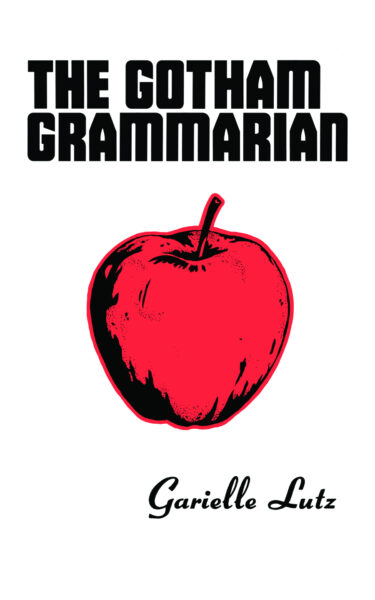
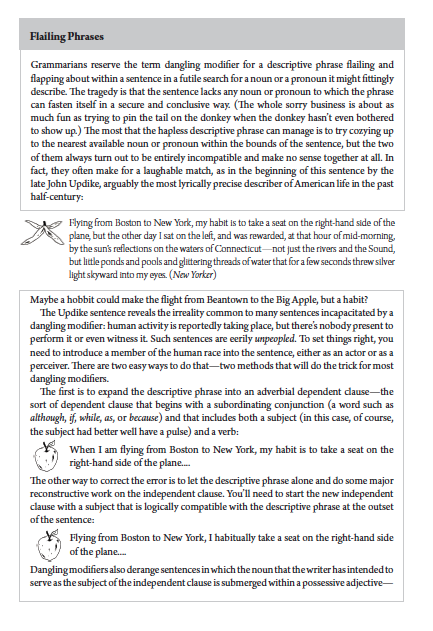
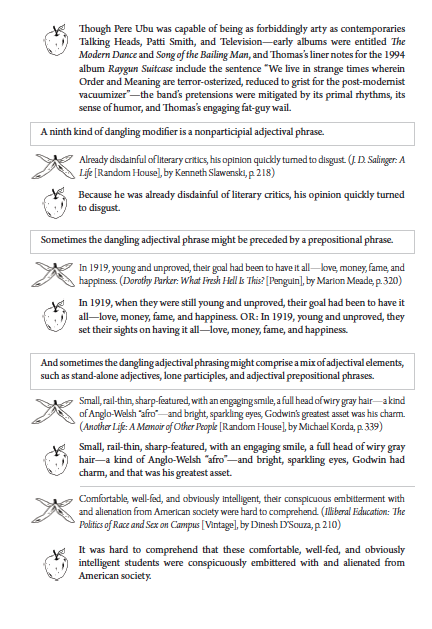
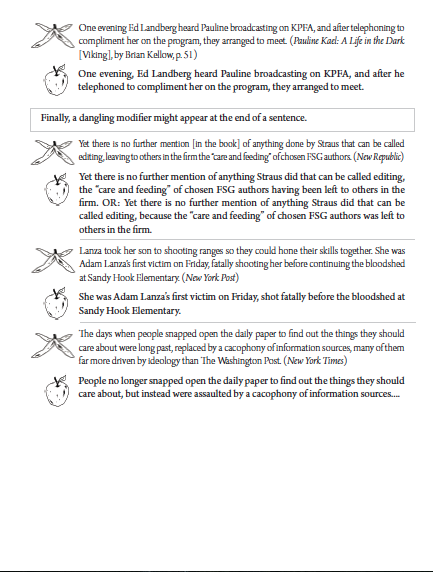
‘The most brilliant writers occasionally stumble with grammar and punctuation, and the rest of us can learn from their missteps. The Gotham Grammarian is a book of rules and guidelines for anyone who believes that correctness and precision still matter. The book discusses the ninety-five errors that most often go undetected by stellar writers, as well as by editors, copy editors, and proofreaders.’ — Calamari Press
____
Excerpt
from Sleeping Fish
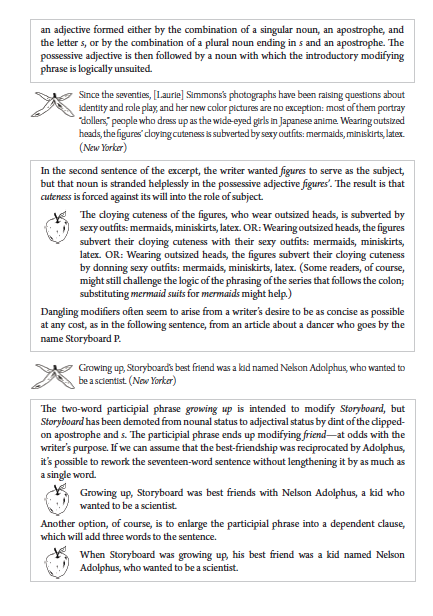
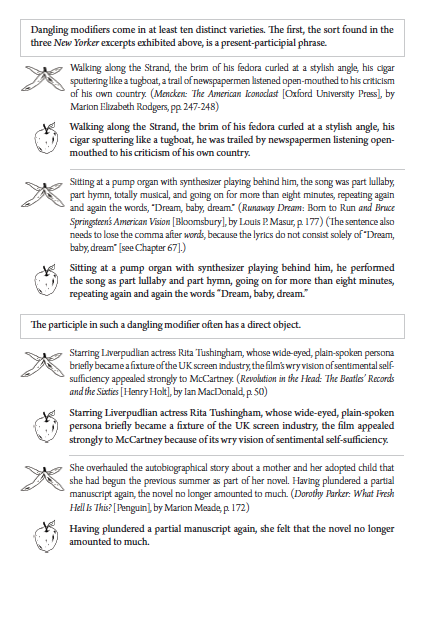
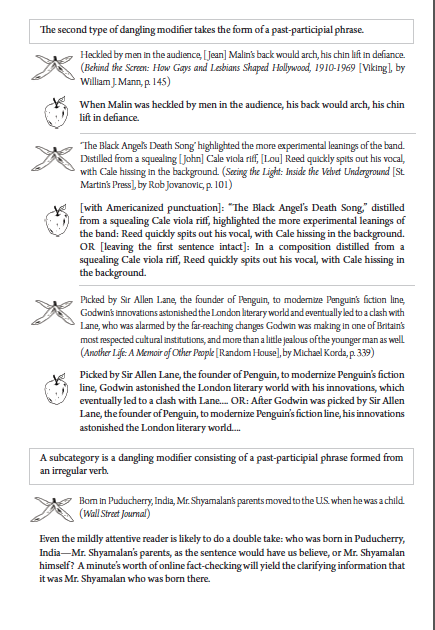

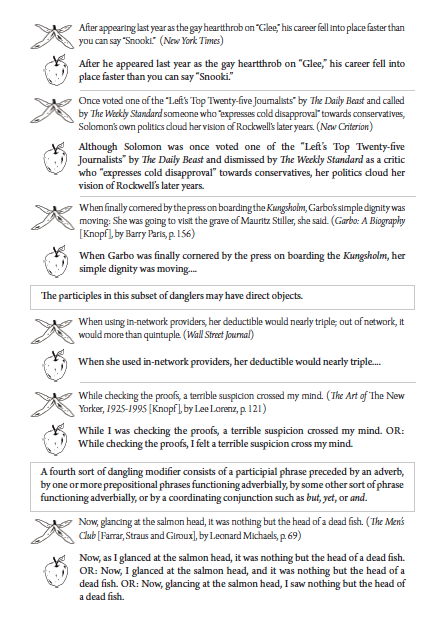



*
p.s. Hey. ** Adem Berbic, Hey. But envy is one of the biggest lies, isn’t it? It’s so illogical, and there’s so much presumption involved. Oh, I don’t know, what do I know? I think I saw your new poster in my feed yesterday, so I guess you’re post-that. It has lots of gravitational pull. That’s why they call them wishes. ** jay, I so love Tobias Bradford’s work. I think Zac and I are going to ask him if we can put one of his works in our next film or else make a documentary about him or something. If I was a visual artist, I think I’d be him. Yeah, I couldn’t bring myself to just be practical and call the title Kinetic. Hm, I guess if the addiction is a physical one like with drugs or something, it might come with shittyness. Maybe addiction was the wrong word. Maybe I meant obsession. Obsession can go all kinds of ways, I think? That guy’s bio would have been a good pull quote to use as the title of my next escorts post. Not bad, indeed. What did the sunshine over you today shine on? ** _Black_Acrylic, Awesome, I’m so happy you like that work so much! ** politekid, I’ve never read a word by Margaret Atwood, well, except for that quote, but it’s a pretty solid quote. As is yours re: imbibing enough shitty art to be able pat yourself on the back. Dude, there is a lot of shitty art out there. I was informed that your book will arrive speedily, and I am mega-excited. The experimental music event was a concert by Stephen O’Malley, Kali Malone, and Lucy Railton performed within an installation of Anthony McCall’s light projections. It was very good. The theater piece tonight is a new piece by Jonathan Capedeville, maybe best known for his performances in Gisele’s work, ‘Jerk’ in particular. It’s called ‘Dainas’, and I don’t know much about it yet. I think I’m too tall for The Sensory Deprivation Skull, but it looks inviting. The blog as grave digger, nice! Have a day that is both highly compressed and infinitely expansive. Come on, you can do it. ** Steve, Oh, boy, ugh, on that heat. They say we’re going back up next week. In person? Let me check … I saw Sun Yuan and Peng Yu’s ‘Old Persons Home’ and Rebecca Horn’s ‘Untitled’ and Hans Haacke’s ‘Blue Sail’ and William Forsythe’s ‘Black Flags’. I’ll go find the Helma Sanders-Brahms’s films, thanks. I don’t think I’ve seen anything by her. ** HaRpEr //, Hi. If the book happens, it will be selected not collected. Yeah, it would be the ‘best’ from my short fiction books ‘Wrong’. ‘Ugly Man’, and ‘Flunker’ with a new thing or two that I’d need to write. I’m not sure if I’ve ever read Elizabeth Bowen. Maybe not. Hm, maybe I’ll do a quick skim of one of her books the next time I’m at the English language bookstore and see if the prose grabs. ** laura w, Hi. Parc Asterix has what seems like hundreds of mascots. But not in an obnoxious way. ‘Gold’ was originally for ‘I Wished’ too, yes, but I very heavily rewrote and reworked and expanded that one to make it stand and function on its own. I’m not against writing a memoir because I want to be mysterious, I don’t think, the idea just doesn’t interest me, and I don’t think non-fiction is a form I’m good at or suited to really. I only like to invent things, or try to. I hope the ocd stint passes really quickly. Does it just sort of rise out of nowhere unexpectedly? My week is more shiny than sparkly so far, which is maybe better. I wish you similar shininess. ** DonW, Hi. I need to watch more Radu. Noted. I’ll see what I can find that’s still new to me. You make Romania sounds so much more tempting than it was before you brought it up. I think the French kind of look down their noses at Romania, or that’s the vibe I get. Not sure why. Oh, that’s Thomas Brinkman’s music in the trailer. Yes, it is supposed to do that. In the scene where we use it, one of the characters tries to dance to it And he does pretty well considering. Take care, you too. ** Uday, Precisely. I haven’t looked at that poem in many decades, so maybe it’s okay. My poetry seems like a construction site or something to me now. No, wait, I want to see that shirt! Pretty please? With sugar or its natural equivalent on top? ** Right. I haven’t featured the great Garielle Lutz on the blog in quite a while, so I switched on the spotlight that once fell and now falls again on one of their more curious books. See you tomorrow.


 Now available in North America
Hey, don’t have long today, sorry. Gold was originally for “I wished?” Whaaa? Also, selected works – including some of your novels, or no? They seem small enough to be put into a big tome.
True point. And of course it’s envy of the version of XYZ that’s been puffed up in my brain, not the real thing. That’s another process whose mechanics I want to unspool in writing, but again, I think there’d be a real fiddly knack to making it work and not just be a statement of the obvious. I find meditation helps, sometimes. And again @ing @Oscar, the Atwood quote helps too, or it helps to be reminded me of what it reminds me of. I don’t engage much with visual art but when I do I enjoy it because I have absolutely no idea what I’m supposed to think of anything, which is what I’d like to be able to bottle up into a potion and take a swig whenever I find some new writing.
Correct, I’m post-poster-posting. My friend Marco did it up. He’s a pretty great contorter of gravity. In posters and music and some other departments besides.
God, every sentence in the extracts above is like an oyster (a good oyster, mind). I’d also like to bottle up that capacity to stare down what I’m doing and really ask, ‘what IS this.’ I mentioned before, but rereading Closer I got such a strong sense of that question having been asked and answered. When the launch is finally out of my hair I want to have a very intention-heavy, craft-focused summer. Someone told me I have to read Artful Sentences by Virginia Tufte. Gotham Grammarian might make a good companion. I think they’d have a ‘good cop, bad cop’ thing going on together. I guess what I’m writing now is coming out as like each sentence has been smothered to death but every few clauses or paragraphs there’s a death rattle for variety. I’ll need to modulate that a little in the edit.
Good to see this day again, Dennis. This is a book that I picked up expecting to give up within 30 pages, but somehow I got sucked in and was fascinated through the end.
You saw “Old Persons Home”! It was in one of the big museums in Hong Kong for months. I took my nephew there to see it, but sadly they had replaced it with something totally innocuous. Good to see some version of it making the rounds.
[First, perhaps]
Bill
Lutz is incredible. I can’t remember how I discovered her short stories, but I came upon them through a recommendation by someone, but I can’t remember who. She takes no prisoners – you are either in or out. I’m in.
Just found the book available (officially!; no pirating!; yay!) online through a series of hyperlinks. Investigating it as we speak and will provide findings later. Emailed the T Shirt.
Do you know about Xing Xing? I had a one-armed monkey visit my balcony the other day so I’m thinking of her again.
Hey Dennis,
Forgot to reply yesterday — I was too exhausted that I almost decided to sleep on the couch, with my contacts in… The film Fairyland was about your friend Steven, although since it was based on his daughter’s memoir it was centered around the girl(s) who played her. Was a weird experiencing watching a biopic when you know someone who knew the “character”. They’re showing Cronos by Del Toro today and I had planned on going, but I’m still too tired. I might watch it later on the tv, but I’m probably just going to rest.
One thing I also wanted to comment but couldn’t remember when I was thinking of commenting was that Doctor Who, whilst not “officially” cancelled, is basically put on hiatus until the BBC can find funding, a showrunner, and an actor to play the titular character. So I have no real hopes it will return by the end of the decade. In some ways it’s for the best as the last two seasons (and few seasons before that) were a mess, and I’m more interested in a documentary on the chaotic mess behind the scenes that caused the haphazard episodes and storylines than seeing another season or two. There’s a lot of novels and audio dramas from the years of 1990 and 2004 from when the show was first on hiatus (The Wilderness Years as they’re called), a lot much more mature and interesting than stuff done by the show itself, so I still have a way to get my Doctor Who fix. But yeah, saw the news at work and it felt like both grief and relief!
Pernicketiness (if that is even a word?) would seem a most valuable trait, with Lutz the perfect teacher.
The World Cup kicks off 8pm tonight, with Mexico v South Africa the 1st game. Cannot be bothered staying up for games on much later but will catch highlights of them the following morning. Hoping to get into this tournament and will give it a chance. Scotland for the win!
Hey there, D, Top Romanian films, imo: Aferim!, The Death of Mr. Lazarescu, 4 Months 3 Weeks 2 Days, Bad Luck Banging or Loony Porn, 12:08 East of Bucharest, Do Not Expect Much from the End of the World, etc. I’m looking forward to watching Fjord, but can’t yet. Romania, yeah, it’s great. I suspect parts up north are quite similar to Ukraine. When I was there we went right up to the Ukrainian border, to Elie Wiesel’s birthplace as well as The Merry Cemetery (google it). In some of those old towns you can really taste lingering Sovietism. It’s a wild mix of past and present with some old Roman architecture, so some towns look like Italy. Indeed, I’m sure the French look down on the country, but don’t the French look down on most anything…not French? Haha. Anyway, you should visit now before the place gets “discovered” or whatever… Take care, Don
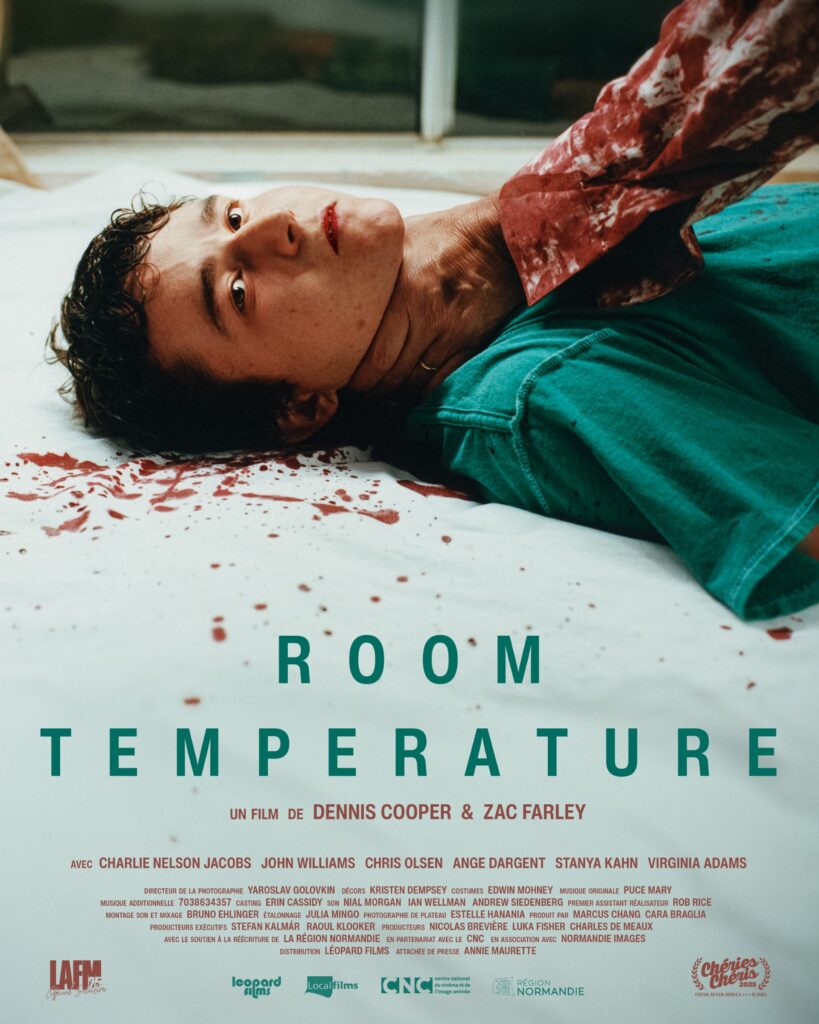
Hi Dennis – it’s Matthew Doyle. Hope you’ve been great! I’ve been so happy to get the updates on Room Temperature screenings.
I was curious to see if ‘Obsession’ was coming up on the blog, which indeed it is. I saw it two days ago and immediately thought of you, and the sections of Closer about a secret word that could make someone fall in love with you / Guide section about wanting to be able to make a replica. As Larst commented a few days ago, Obsession is definitely “be careful what you wish for”, but it’s also pretty cool how legible it is to the audience that the plot hinges on the main character’s inability to articulate his wish, or the consequences of the specific inarticulate words he chooses. I’m joining the chorus of commenters eager to hear what you think once you get a chance to see it.
Hope to catch up with you and Zac soon.
Lots of love,
Matt
hi Dennis!
so i came fucking back 🙂 not really, i’m not cleared for higher cognitive functioning as of yet (as if i had heaps of that going under normal circumstances lol), but i’m probably good for 6-7 lines tonight so i wanted to say hi bc idk how tomorrow will roll ^_^
Lutz goes hard! been wanting to pay a lot of attention to Backwardness for a while now and it’s just never the right time, sigh. we had totally opposite childhoods, she and i, like comically opposite, but you know maybe if i’d grown up in a bookless, artless and near aphasiac household i’d be making smth a bit beautiful by now.
anyway, yikes, before i fall into an ethereally gory sadness over my lack of this and that, i once had an appointment w a father and daughter allergist duo and she looked almost exactly like our Garielle. all similarities ended there and it was deadass one of the weirdest social experiences of my life, like, you couldn’t make up those two ppl nor their clinic which was also their intriguingly piss-stinking home nor their glasses and teeth nor the conversation (‘don’t be smoking, kid, the Queen doesn’t smoke and neither do her daughters’)— they were and I hope still are way beyond the reality vs fiction binary ^_^
oh, before i nope out, now i can read a bit again i started You Are Cursed— taking it slow obvi but she’s got such rizz, and she wrote so fast too? ty for shouting her out, i maybe don’t need to be told i’ve got the eye right about now but her prose makes up for it and is just my sort of thing
hope i’m cleared for a return to ‘class’ soon, if i’ve got anything much to offer that is 🙂 i’m obvi having an existential crisis or whatever on the back of this latest flareup bummer but i totally do miss you, Dennis!
much love
Hello. Do you have any choice over what pieces go in the book? Very exciting about the new pieces!
Garielle Lutz has become very important to me this past year. I re-read at least a page of something she wrote almost every day, and this is the only thing I haven’t read.
There is honestly something of Dorothy Parker or some such caustic wit who could have written for The New Yorker in the 40s in her, but through a funnel which shocks every sentence into an extreme of rigidity with a strange singularity. Everything is fluid but finely tuned in its place and rhythm. All identity is a figment of the sentence. I could read her forever.
Still currently hacking away at this story, though I think I’ve almost got the opening nailed. I think the experiment is panning out which I’m excited about because I haven’t written anything with a form like this before.
I read Paul Curran’s ‘Left Hand’ today by the way and it took a mallet to my brain! I’m already re-reading certain parts. I can’t even start to talk about it, but I will say that the way it engages with how a writer exists in relation to their work really blew me away. I honestly got echoes of Blanchot in how it engages with a terrible event and how to chronicle it and how you’re very aware that they are just words on a page but that, in a way, the reader is somewhere indeterminate and having to find their own way to navigate them.
i’ve been meaning to read lutz for years, this is a good kick in the ass…
shiny is good!! ocd is weird. it’s like my brain just snaps and spirals out of control, i don’t know. and then it crashes and i get depressed. so it goes. been listening to a lot of either/or and five leaves left bc those albums calm me down. i think the tell for gold for me was the second chapter of i wished which i thought was an interesting way to transition from the george of the cycle to the “real” george.
grove press is releasing a bind up of the notebook trilogy and i wish they would have done that for the george miles cycle. it’s interesting how despite that series being one that really should be taken as a whole entity they sort of insist on making it look very disjointed, i don’t know. nonfiction is difficult to innovate, i think. i think the last work of nonfiction that i thought was structurely very exciting was, uh, europeana by patrik ourednik (another wonderful dalkey archive publication!) oh, and autoportrait by edouard leve as well but as much as i love that book it takes a lot of notes from i remember. of course, the exciting thing about nonfiction is the content itself, or should be. and perhaps the gothan grammarian! maybe that’s why i should read lutz now…
i should go on a lutz asterism buying spree, she’s always someone i see mentioned but i’m always scared to take a dive on, these spotlights are always a good kiddie pool to tip my feet into in that sense. though, my wallet is gonna dictate if i’m only picking up pdfs or actual genuine books. (thanks to calamari for putting their books up as pdfs though.)
god i’ve been busy, writing, playing video games for too long, menial tasks for substance, psychosis, etc. i hope today is the time i get to write in more often. my sleep schedule has been incredibly rotten the past month or so becuse they have been redoing / restoring the facade of my apartment, but the problem is the room that faces the facade is my bedroom, and my window unable to be shut. bleh. it’s all over with, so hopefully i should be fine.
nosebleed days has been going well shockingly, typography is something that is still eludes me, the whole tug and pull of my love for narrative strictness and my love for form fuckery is taking me down roads i never expected this book to go. this was just meant to be a simple horror book… so it goes oops.
i think that should be all, yell at tomorrow me to get lutz’ books on asterism just in case i forget.
Really interesting to hear about Lutz’s late awakening to language! Makes me think about how our environments shape our perceptions. The comment on only having a telephone book and coloring books really hits home—so true that inspiration can come from the unlikeliest of sources. By the way, I often refer to a helpful free resource that compiles various reading lists.
Fascinating glimpse into Lutz’s early language environment! The idea that her household only had a telephone book and coloring books really illustrates how unique her journey to being a writer must have been. I love that she describes her relationship with language as late and peculiar – it makes me think about how much personal history influences our writing styles. I’ve been diving into some free online resources for language studies that help unpack these kinds of influences.