
‘There is no living writer so acutely and productively aware of imprecision (or rather, the impossibility of precision) in the use of language as Evenson, no writer as interested in how hazardous a partial or uncertain understanding can be. Indeed, veteran readers will recognize the above quote as a sign of imminent danger. To expect exactitude, in observation or imitation, is to expect too much, and invite terrible risk. …
‘Evenson has become such a consistently celebrated writer of horror and speculative fiction over the last thirty-plus years (the only other name of his generation to approach his level of respect in spite of association with genre literature is Kelly Link) in large part because of his linguistic control. That control, the clear extent of it, helps us to see the separation of prose style and story substance for the contrivance that it is.
‘The term frequently placed on Evenson’s work is “minimalist”. This is fair enough. You can see his appeal on either side of the supposed divide between literary fiction and genre; in the latter case, clipped and direct prose style is a deep tradition in crime fiction especially; in the former case, minimalism evokes the empty spaces, anxiety, and ennui of postwar contemporary life.
‘To a writer like Evenson, minimalism does not necessarily connote the use of few words, but rather the right words. More than terse, Evenson’s language is tight. One gets the sense that very little, if anything, escapes his notice and consideration on the level of the line. Nothing is tossed-off or sketchy, or good enough. Evenson’s restraint implies precision.
‘Thus we might venture that Evenson, due to his control, has few if any tics, or empty repetitions of prose borne of habit, that have escaped his notice. If we entertain this notion, repetition in the text resembles something deliberate. More to the point, the potency of Evenson’s work belies the often stark simplicity of its plot and character. It’s not that nothing happens in these stories, it’s that summaries don’t seem adequate to explain their effect. Through convention’s presumed primacy of plot and character, Evenson’s efficacy seems to come from some unknown, occultic source.’ — John WM Thompson
____
Further
Brian Evenson Website
Podcast: Brian Evenson’s Dark Property
Excerpt from ‘Dark Property’
Brian Evenson on Finding the Language of Horror
Forrest Aguirre on ‘Dark Property’
‘Laureate of Violence’
‘FUGUE STATE: How Brian Evenson upends the conventions of realism’
“Back Alleys and Hidden Corners”
‘5X5: BRIAN EVENSON’
Brian Evenson interviewed @ Bookslut
FUGUE STATE: ART FOR SALE
BRIAN EVENSON: INTERVIEW
‘The short story equivalent of when Jon Stewart says ‘BOOM!’ on The Daily Show’
Night Time Logic with Brian Evenson
‘Interview: Brian Evenson and the Weird’
‘A Sentence from “Helpful” by Brian Evenson’
Buy ‘Dark Property’
____
Extras
Deeply Disturbing Horror: An Interview With Brian Evenson
Brian Evenson Reads from THE GLASSY, BURNING FLOOR OF HELL
&Now; Conference: Brian Evenson, 10/16/09
The Monstrous and the Terrible with Brian Evenson
_______
Interview
from Rain Taxi
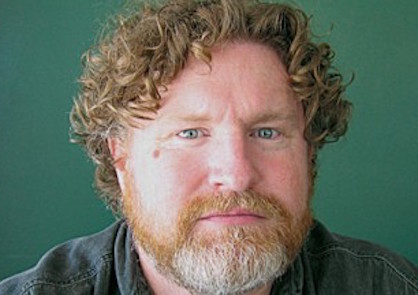
John Madera: The first time I read Fugue State, I was riding on a late night bus to New York City. And once again I learned that it’s unwise to read terrifying stories when all the lights are out save two tiny bulbs above your head. One scary moment hit me while I was reading “Wander.” I had zoned out from fatigue and came to the point where the harried company are in the hall and see “a hole brimmed with water, and through that hole came a bluish light and heat, and looking closer one could see the shape of a blinking eye.” At that moment, I felt—in a kind of faint echo of that episode of The Twilight Zone, “Nightmare at 20,000 Feet”—that if I turned to look outside my window, I would have seen that eye staring at me. This all brings me to my first question: why do you write scary stories?
Brian Evenson: The story you tell reminds me of a semester when I was in college when I was taking seven classes (all of them English courses) and working the night shift at a 24-hour taco place. Six of the seven classes met in the same room, so I’d just sit at the same desk as the classes flowed in and out around me. I was getting more sleep on the two days of the weekend than I was getting during the whole rest of the week and began genuinely to feel like a) I was going crazy (which I probably was), and b) the entire world was a hallucination. There were times, sitting in that classroom, when I felt like the desk itself was opening in front of me like a hole that I was about to fall into. Weirdly enough, all that didn’t scare me (though it’s probably good that my girlfriend at the time talked me into dropping the job). Instead, it fascinated me, and caused me to revise notions I had had about consciousness, about what it was and what it could do, and about what it had to do with me. On one level, many of my stories are attempts to investigate a consciousness that has undergone stress or trauma or collapse, because I really think that consciousness reveals things about itself in that state that it doesn’t when the armor is up and it’s protected. As a reader, I like stories that change me, that open me up in ways that I don’t expect, that worm their way through my armor and keep on working virally on me long after the story is over. I’m trying to reproduce that effect in my own fiction.
JM: Sometimes, when I reflect on how destructive our militarist, consumerist, sexist society is to most of the world, and how diminished the possibility there is for any kind of substantial change, especially when the post-industrial world may be likened to an elevator where, if one person lights up and smokes there, everyone leaves it smelling like an ashtray, I almost yearn for some kind of giant reset button, some terrible cataclysm, where almost everything is wiped away—a clean slate, a new beginning. It’s one reason why I enjoy post-apocalyptic novels, from A Canticle for Leibowitz to Dhalgren to The Road, and why I will watch any film with this theme no matter how schlocky, from Planet of the Apes to I Am Legend. This is most likely a residue of my evangelical upbringing, which was filled with stories of plagues, floods, and the like. What post-apocalyptic fiction teaches us, among other things, is that the idea that paradise ensues after the fallout is a fallacy on many levels. In Fugue State the post-apocalyptic theme serves as a backdrop for several of your stories, sometimes explicitly (“An Accounting,” “Wander,” “The Adjudicator”) and sometimes hinted at (“Desire with Digressions” and “Fugue State”). So what is it that attracts you to writing this kind of story? What stories, novels, and films in this genre have affected you deeply?
BE: It probably has something to do with my own religious background as well (Mormonism), and the way that’s become oddly fused with/complicated by an intense philosophical nihilism. I think there’s a constant struggle in me between a kind of relentless optimism and an exhilaratingly bleak worldview; in life I tend to default to the former, and in my work to the latter, and that somehow creates a very workable, albeit potentially schizophrenic, balance. But I think also it’s because my formative years in the late ’70s were a heyday for post-apocalyptic movies. There was a sense in general then, at least among my peers, that the world was ending, that the ecosystem was collapsing, that things were likely to break down completely. Then people were distracted by things like the introduction of the kiwi fruit and the frozen bagel and swoopy hair, and we stopped being people and started being consumers, and through the ’80s and a good part of the ’90s we seemed just to forget about these fears, to repress them. But those fears have started to surge back up again with a vengeance both in popular and literary culture. I think they were always present for me and have always been at the heart of my work.
Two movies that I watched when I was eleven (in 1977) have always stuck with me, though I’d guess if I went back and watched them again I’d probably think they were awful. One was Day of the Animals and the other was Damnation Alley. Around the same time I was playing Gamma World and watching the gas lines (the latter was a little earlier, when I was seven or eight, but it made a huge impression on me). Philip K. Dick was a big influence on me in terms of post-apocalyptic work as well, as were a lot of other SF writers, and I think that Mervyn Peake’s Gormenghast did a lot to cement a certain worldview for me. Also David Ohle’s Motorman. More recently, I was impressed by The Road, which initially I wasn’t sure about but which worked on me for months after I finished it. But I’ve watched and read a lot of post-apocalyptic stuff over the years. Each of the stories you mention above tries to take on post-apocalyptic themes in a different way, playing with different genres and subgenres.
JM: Many of your protagonists are either trying to break down blocks in their consciousness, or they are struggling to maintain their identity, their sense of self, in the face of its fragmentation. These are psychological portraits without feeling like case studies. How do these kinds of stories evolve for you? When I read that Sindt had failed in his critical examination of Roger Craven’s work, its “concern with dislocation and possession, its insistence on postulating all human relations as a form of torture,” I thought it might have been a winking self-deprecatory jab, as it might also serve as an apt description of many of your stories in Fugue State. There are sisters’ fragmentary relationships with their parents in “Younger” and “Girls in Tents.” The narrator in “The Third Factor” finds himself “alone and adrift.” In “A Pursuit,” the paranoid, perhaps delusional, narrator admits that his own psychology is “a decidedly murky affair.” How much psychology have you studied? And where do your interests and allegiances lie? What schools of thought do you privilege over others, if any?
BE: I think my stories tend to evolve eccentrically; I never know exactly where they’re going to take me until I’m almost done with them—if I figure that out too quickly, I don’t end up finishing them. I’m very interested in the way that consciousness structures itself and also interested in the way that we, as consciousnesses (if that’s what we are), interact with the world, about what it feels like to be embodied in a particular situation. I never took a psychology class in college but have read a lot of psychiatrists and philosophers who deal with similar issues: Freud, Jung, Klein, Kristeva, Bachelard, Foucault, Ferenczi, Merleau-Ponty, Sartre, Deleuze and Guattari, etc. I’m also very skeptical of a lot of generally accepted notions about the structure of the mind—I’m not convinced, for instance, that there is such a thing as a subconscious, at least not in the way that Freud and others discuss it. That model leaves a lot to be desired. I find Deleuze and Guattari provocative and feel they move in a more productive direction, particularly in 1000 Plateaus. More recently I’ve been reading Thomas Metzinger, and find his models very compelling.
JM: What is the short story form for you? Do you find yourself working on them as separate entities in between novels? Do you begin stories without regard for what they are going to be until you’ve made a lot of progress within them—that is, is there a certain point when you realize, “This has the makings of a short story,” and then take it from there to completion? Or do you begin with the idea of a form?
BE: I’m always working on three or four things at once and usually have a few stories I’m working on as I’m trying to write a longer piece—a novel or novella. Some of them never get finished, and some get finished and then put into a drawer to be revised later and some actually work. I’ve got pages of notes of ideas for stories that I’ll probably never get around to writing, and which say things like “man looking for his brother so as to prove that he’s not him.” I once knew what I intended by that but no longer know. With most of these notes I no longer have any idea what I was actually thinking when I wrote them.
Sometimes a story will start from those notes or from a fleeting thought or in response to something I’m reading or listening to. Other times, I’ll simply sit down to a blank page and try a few starts at random until something clicks. Still other times, I’ll have a mood or a character name or something else in mind and I’ll try to tease something out of it. It’s a very random and organic process for me and never works in exactly the same way twice.
__
Book
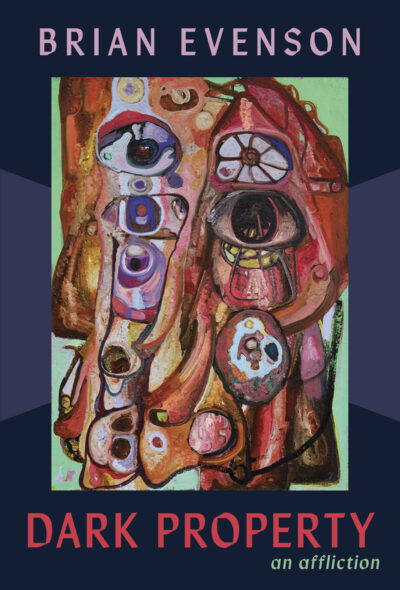 Brian Evenson Dark Property
Black Square Editions
‘A woman carries a dying baby across a desert waste, moving toward a fortress harboring a mysterious resurrection cult. Menaced by scavengers, she nevertheless begins to suspect that the reality within the fortress may be even more unsettling than the blasted environment outside. As she slips unobtrusively towards the city of the dead, she is pursued by a bounty hunter who cuts a bloody swath after her. On one level, Dark Property is an exploration of religious fanaticism. Although Evenson’s characters owe more to the Book of Mormon than the Koran, their frightening intensity will spark recognition in both reviewers and readers. This brooding tale is reminiscent of Cormac McCarthy’s Blood Meridian and J. G. Ballard’s more disturbing works of fiction.’ — BSE
_____
Excerpt
The darkness stripped back, unveiled for her eyes a dim man blocking her passage.
“What is wanted?” asked the gatekeeper.
She gangled the child toward him.
“Yes,” he said. “You carry the dead.”
“A child,” she said.
“A dead child,” he consented.
She stepped to step past. He stretched out his palm, repelled her by main force of his hand.
“What is wanted?” he asked again.
She displayed again the child.
“Yes,” said the gatekeeper. “You carry the dead. This much has been established.”
“Child,” she said.
“Yes,” he said. “We have conceded as much.”
She tried to shoulder past, found the repulsant palm ever before her. She fought past, felt her body lifted, hurled back down the hall-way to strike against the gates.
Clutching her ribs, she agonized to her knees. She took up the child, rose to her feet. The gatekeeper stood serene, arms folded against his chest.
“What is wanted?” he asked.
“Admission,” she said.
“That is correct,” he said. “You may enter.”
He took the child from her, led her through a door into a sparse room. Placing the child upon a desk, he vanished.
A man at the other side of the desk motioned her to come forward. She sat, saw him turn his attention to the child. He upturned the child’s face. He pushed the limbs flat, observed the limbs to curl back. Taking a pen, he made notation upon paper.
He reached into a drawer of the desk, removed a carpet bag, dropped it onto the floor beside.
He straightened the limbs of the child, watched them crumple back.
“Dead a long while?” he asked, not taking his eyes from the child.
She shrugged. “No?” she said.
“No?” he said.
He made notation. He extirpated from the carpet bag a coil of copper wire, followed by a pipe wrench. These he placed upon the desk, cronied them with the corpse.
“No?” he said.
“Yes?” she said.
He took up the pipe wrench, hefted it in a hand. Quickly he screwed the jaws closed. With his free hand he twisted around one of the child’s arms. The upper flesh crackled, the shoulder ball rolling counter the socket. He brought the pipe wrench down to shatter the elbow. He shattered its twin, crushed the caps of both knees.
She murmured from an impulse born no less of incomprehension than of the maternal. He winced at her sounds, spoke sharply. “If you find the task unpleasant, avert your eyes,” he said. “This is no longer your child.”
He unwound the spooled wire, spread it in loops across the desk. Worrying the carpetbag, he at last forced from within a pair of wire cutters.
He severed a length of wire, sectioned it.
“There is blood on your hands?” he asked.
“No,” she said.
“Show them to me,” he said.
She held her hands to him across the desk.
He scrutined the nails, levered the palms skyward. He snorted, pushed her hands away.
“There is blood upon your hands,” he said.
He tightened a strangle of wire around the child’s forearm, ran the wire over the elbow, bound the length around the separated joint of the shoulder. He bent the wire, encouraged the arm to bend. Selecting a second wire, he forced it around the other arm. Carefully he contorted wire around knees, ankles, hips. Bending the wires, he made the corpse to stand.
Bending and unbending wires, he locomoted the child across the desk, talking to it in an odd and soothing singsong. He spread the body flat upon the desk.
She took the child up, felt the cold of the copper braces against her hands.
The deskman reached across his desk, pried her hands off the child. He pressed his ear to the chest, thumped the skull.
“All is not well for the child,” he said.
He reached across the desk, took her by the arm, pulled her up out of her chair. He pressed his ear to her upper breast, pulled her feet othe floor, pulled her hips onto the desk.
“Nor is all well for you.”
He led her down corridors past identic men. He led her through doorway, up stairway, left her alone and dim-roomed without a word. She sat upon the edge of a raised pallet, knees abutted, child cradled upon her lap. Near the pallet squattled a wheeled and metal table. Metal apparati hung forth as shadows from the walls. She dozed to and from sleep, her hands resting lightly upon the wire-bound flesh. She awoke, placed the child upon the table. Spreading her body upon the pallet, she cradled her head in the palm of her hand.
She awoke numb-hipped. She caused her pockets to extrude their last contents. Stones dropped, scattered themselves across the floor. She examined her palms in the dim, and, for all, could see nothing of blood to them. Soon, she slept.
She awoke to a squat face. In place of eyes were round spectacles opaque with light. The face moved toward her own face, a pen-light lodged between its teeth flashing her eye.
She fluttered an eyelid, found it to retain itself open despite her efforts. The blade of light flitted across her face. Gloved hands palpated a path down her flesh.
The face moved back into a man, smocked white. He spat the penlight into a palm. He regarded her askance. He pointed toward the door.
Covering her breasts, she rose to sit at the edge of the palette. She buttoned her shirt, closed her trousers.
The surgeon set a satchel upon the pallet at her side. She slid from the pallet. He tossed his penlight into the satchel.
She took up the child, slung it over an arm.
“What of the child?” she asked.
He folded the jaws of the satchel together, closed the clasp. Removing himself to the sink, he stripped ogloves as if layers of skin, discarded them. He opened the faucet, ran his red hands under the water.
“Take it from here and dump it,” he said.
“Where?” she asked.
His smile was disjointed and twisted. He shook his head. Closing the faucet, he wiped his fingers upon his smock. He approached a bin in the corner, depressed its pedal. The lid gaped, disjointed its jaw.
“Throw it in,” he said.
She shook her head.
Shrugging, he allowed the lid fall. He sprung the clasp of the satchel, broke apart the top.
He approached the table, hands outstretched, fingers splayed. He demanded she reach into his smock, slide out the penlight. He instructed her to its operation, insisted she direct the beam in accord with his desire.
He bent over the child. He probed the holes of the lesser head, lacerated the intact eye. As he scrutined the exterior skeleton of wire, he gave a queer smile.
He muddled within the satchel, removed a pair of wire cutters. He sheared through the wire, cast it onto the floor. He applied a genuclast to the knees, broke apart the joints, beating the lesser joints mobile with a fist.
He removed a cleaver, stropped it across the surface of the table. Centering the child upon the table, he aligned the head. He braced his legs, tightened his hand upon the cronge of the cleaver, split the dry body in two. The halves fell apart, as if unhinged. A storm of insects spewed out of the gut, scattering off all sides of the table, spreading themselves out across the floor. He braced his knees against the table, worked the cleaver loose, wrenched it free.
The woman stepped back, bumped against the pallet. She crawled backwards onto the pallet and over it, crouched on the far side. He regarded what was to be seen of her, birthed a horse-laugh.
He stripped the flesh off the joints, forced thin wires in through the cartilage. He renervated the wires beneath the flesh, connected the bundles from joint to joint, brought them together in a tangle which he left lying between the halves of the corpse. He patched the flesh over the joints. He tugged upon the coil of wires. Limbs moved, fingers flexed. Driving her forth from her refuge, he di-rected her to hold steady the penlight. He prodded the viscerae, evacuated the corpse. He freed the split tongue, sewed in its place a trip of crushed velvet. He pried out the halves of the windpipe, inserted a column of lead. He dug out the heart, insinuated in its cavity an apple, suturing the arteries to the wormy skin. Severing the lobes of the lungs, he blunted them in a line along the table. He inflated two balloons, forced them under the cage of ribs. He sucked the eyes out, filled the sockets with foamy spittle. He scraped out the mushed hemispherics of the brain and positioned the bundle of wires between the barren bowls of the skull. Striking the woman, he commanded her to hold steady the light. The severed genitalia she saw him slip into the pocket of his smock. He tore out the stomach, sewed in a hot water bottle. He unraveled the intestines, coiled in the belly-hole a dirty length of hemp.
He forced the two halves of the body together, stapled the split bones. He stretched the flesh over the gaps, sewed it down.
He clamped an apparatus upon the child’s chest, threw a switch. The limbs contorted, laxened. The eyes frothed. The body began to hum.
The doctor stripped the flesh off his fingers, disposed of it. He gathered his instruments, packed his satchel, left mother and son to their joy.
*
p.s. Hey. ** CS, Hi. Oh shit, I’m so sorry to hear that. You defogging? You okay? Yes, that sentence is in ‘Frisk’. Or I’m about 97% sure. Take very good care of yourself. ** Adem Berbic, Fujiko Nakaya, who did the fog sculpture in ‘TiHYWD’ only uses water, the purest water, so no aroma. She has a big fog sculpture at the Pinault Collection right now. Wonderful timing since it’s going up to 40 insane degrees here in the next few days. As I guess you saw. Okay, maybe I’ll approach that theater. ‘Pickpocket’! ** _Black_Acrylic, I own a fog machine, but it’s in LA, and I think it’s probably dead. You and Rod sitting in a tree … ** jay, I will hop over to read that story, you bet. I wish I had minuscule fog machines in my ears so I could properly express anger. Dude, congratulations on the job longevity and security! That’s big! I kind of wish I’d been there for that rant. But I guess google will have to do. Stay cool. ** Malik, Hi, Malik! Lovely to see you. Back when I made home haunts in my parents’ basement I had big bowls full of dry ice all over the place. It was kind of the only way to make fog way back then. Summer’s been not too shabby, but we’re heading into an historically brutal heatwave tomorrow, so the rest of summer is a little scary. Four screamo bands, cool. I’d love to go see even one. It’s been ages. Awesome thanks for your mid-year lists. I need to hear that underscores album. Everyone seems to be talking about it. ‘I Love Boosters’ is good? Good. I’ve been very curious. That Mackey book is so nice, right? And serious envy about that title. Thanks! I hope your summer keeps giving you tons of everything. xo. ** Sarah, Hi, Sarah! Yes, I love your book! I hope you’re getting major plaudits left and right. So cool to get to see you. All’s good? ** laura w, Thanks. Table top game stores, of course. There’s a great, super nerdy one over where I often am. The kind were they not only sell stuff but have dozens of tables where intense board game kids gather to set up their games and pound the tabletops. I’ll check there. Oh wow, those teeth dice are crazy great. I might have to order them even. What a perfect way to start a collection. Thank you so much for the pass along. Hm, I can’t say that I understand what ‘Rejection’ and ‘The Sluts’ have in common, but maybe you can tell me. Aircon is about to become the most important thing in the world, and Parisians still think it’s decadent, the bastards. ** HaRpEr //, Problem child, you!? Haha. Penises are too blatant or something. They stop things dead. Wallowing is like generalising. It’s hard to catch yourself when you’re doing it, but catching that saves so much wasted time and brain power. ** Caesar, Hi! I’m okay, just dreading our heatwave that starts tomorrow. I’ll check to see if Ramiro Sanchiz’s work is in English. Blake Butler has a newsletter? I need to subscribe or whatever. He’s great. Yes, people were shouting here about the France match last night. I couldn’t tell from the shouts if they won or lost. I’m putting the last touches on the script for Zac’s and my new film and still organising some last screenings of ‘RT’ before it goes to streaming and BluRay. That’s mostly it for me so far. Yes, I’ll answer your Instagram message today. Thank you. I haven’t watched ‘Heated Rivalry’. I don’t watch TV shows pretty much across the board, so I only know it was a very hot topic on social media for a while. You like it? Love and a big hug back! ** Laura, Maybe R2D2 might think those machines are cuter than you? I don’t know how tarot works, but I guess I trust my friend who did the reading. He looked really shocked and scared by that reading, said he’d never seen anything like it before. But I don’t know. I’m fine with the elevation level I’m at. I just need cold air and lots of it. ** Okay. Today I’ve spotlit one of my favorite Brian Evenson novels, and there you go. See you tomorrow.
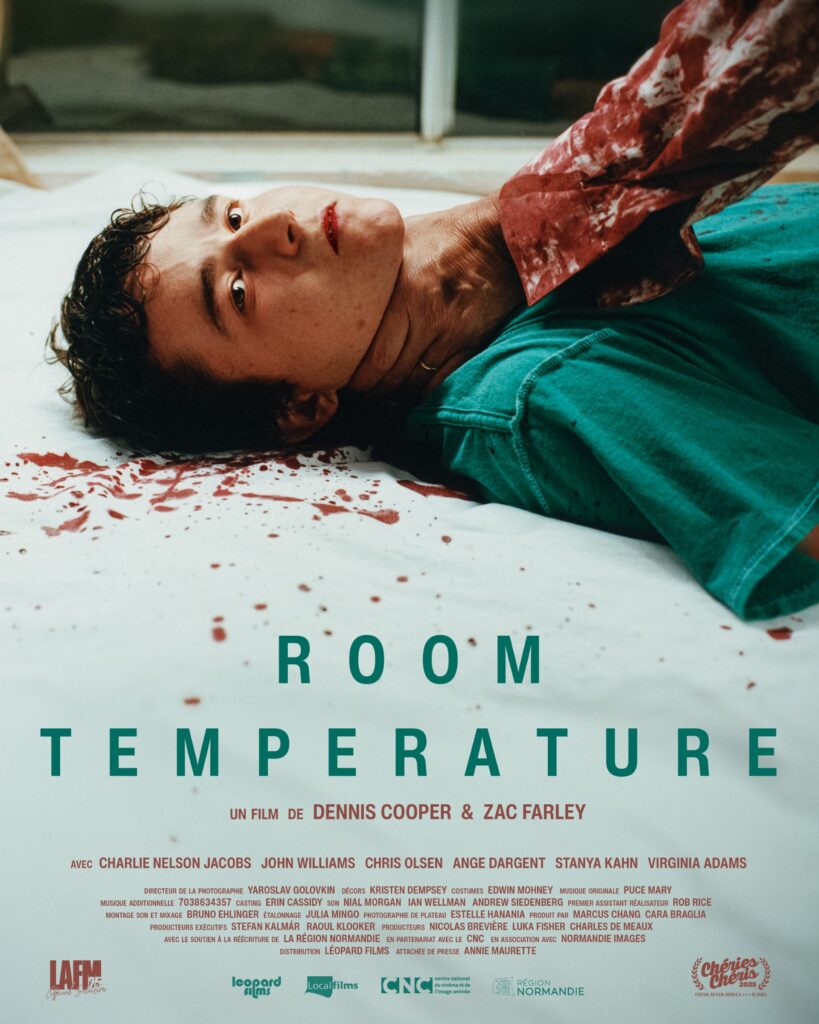


 Now available in North America
Hi Dennis. Wow, that extract from this book was overwhelming. Always appreciate the way you don’t buy into the genre/literary fiction divide. Haha, my flatmate’s rant was about Greek man-boy love, it was fucking crazy. We were getting stares from other people in the pub. It felt like the really weird parts of Pale Fire, where the protagonist starts talking about the teenage boys he’s conquered for no apparent reason. It was a totally amazing evening honestly, it sounds grim but it was hilarious. Fog machine in the ears sounds awesome, although to me fog pouring out of ears is more “short circuiting” than “anger”. Hope you’re well. Lots of love.
p.s., thank you so much, laura w, it’s great to be permanent. I think the “The Sluts”:”Rejection” comments normally come from “Ahegao: The Ballad of Sexual Self-Hatred”, which has a long section describing a guy’s extreme sexual fantasy. It’s played for laughs though, which “The Sluts” certainly isn’t (entirely). It’s a great collection I think, if you haven’t read “Pics” I recommend that one very highly.
How many pockets could a pickpocket pick if a pickpocket could pick pockets? I’d cut off more limbs than I currently or foreseeably possess to have a teenth of Bresson’s lucidity. I’d cut off maybe a quarter of that number of limbs to be able to pull off the high-rise-trousers-loose-suit-shirt combo (the Alain Delon special).
The internet suggests the Pinault will be cloudy until September, so I’ll scope it when I’m back in July. I was sat in the second row for TiHYWD and I do remember feeling like I’d gone swimming by the 40-minute mark. It was quite remarkable. More ways need to be found of playing with the quality of the air. I think about that a lot because London often tends towards weather which makes me feel like I’m underwater and fucks with the sense of distance between things and their presence and gravitational fields. Sometimes I see writing in terms of whether it thickens the texture of experience or thins it.
Brian Evenson is a new name for me and I do have a taste for horror fiction. Loved these extracts so will try to track down any potential UK sellers.
I do fancy getting back into making art again. On my regular meanders around these parts, there are often birds called coots to be seen. A print of these avian neighbours combined with graphic marks is something that I do envisage being possible. Have contacted the Leeds Print Workshop to enquire about their accessibility and I await their response. Always found the DCA print unit to be a really pleasurable experience so I’m hoping these guys can do something similar.
This is quite a spectacular welcome home post, Dennis! I’m a huge Evenson fan, but have not revisited Dark Property in years. Now I’m itching, though the next two weeks are just jam-packed with stuff.
Flight back was not bad, though it felt longer than I expected. (“Longer than expected”, now is that an Evenson-ian sentiment or what?) Did a little reading, the in-flight movie selection was actually not bad, but I wasn’t in the mood for most of the offerings. Saw a pretty mediocre documentary on Bonnie & Clyde. Ended up watching a couple old favorites on my laptop: Oliver Smolders’ marvelous Axolotl, and Scott Treleaven’s Salivation Army.
Bill
Have you heard the Greek Orthodox priest who plays drone metal on fretless guitar and Middle Eastern instruments? (The NY Times recently ran an article on him.) He sounds like a big fan of Sunn O))).
How bad is the heatwave likely to get?
I’ve thought about visiting my friend. His main interests are travel, film and science fiction books, and one reason he chose to move there is that he can easily fly over to the UK and continental Europe. He plans to go to London if there’s an interesting film retrospective going on. Never having been to England, I’ve considered meeting him there and sticking around the city by myself afterwards.
Hi Dennis,
I feel like it’s been ages since I left a comment – I hope you’re doing well! Man, I love Brian Evenson, but I’ve never read Dark Property. After reading that excerpt I’ve added it to my ‘want’ basket. I love that you guys have such mutual respect for one another.
I wanted to send you my ‘Best of’ book (also featuring a collaboration with Brian Evenson) – are you still at the same Paris address as before? We’re hitting Disney Land Paris on 2027, so if you’re out and about I’d love to grab a coffee (if you have the time).
I ordered the reissue of Closer. My ‘Dennis Cooper’ shelf is getting unwieldy!
Stay cool!
Chris
Hello friend, been am minuet I think! Getting settled form my trip
Learning music and piano chords. Was In Richmond and saw the Poe house. I’ll explain that more in the future.
Sorry I left you on a cliffhanger with the amusement park pics, haha.
I understand why you love them so much!
The last time I went to a park was when I was 13-14ish in Atlanta and that was six flags. The lines were LONGGG there.
The lines weren’t to long at Busch Gardens.
Sadly did not get to ride the verbolten or the big bad wolf. We were skipping towards the big bad wolf when the downcast weather turned to somber tears of the sky. The speaker went off and a German voice told us that the rides would be delayed until further notice (aka never cuz it started to thunder and puor)
Wasnt sure if we’d get to see the verbolten considering there was filming or something and I wasnt certain if the date meant that it would end or would last till the night (closing) Luckily it meant that day it opened. But of course, unfortunately it ended up raining anyways. waahhhh.
Well anyways at least I got to ride the Karousel and see the cool buildings. Saw dragon land.
Will come back later but sending this now in case I fall asleep
Hey Dennis.
Haven’t commented in a while, been busy with people coming and going from and to my house. I wish you the best with the coming heat. I feel it up here as well. I have dec(ad)ent air con in my place so I think it’ll be mostly tolerable. Been reading Lyn Heijinan again, and I am also getting through “Magician” because I ordered it as soon as you shouted it out. So its been slow but flowery reading as of late.
Hugs
p.s: thank you Laura for all the helpful feedback on my work.
Hugo! thank you for letting me read! <3
‘Penises stop things dead’, that could be the title of my autobiography.
The name Brian Evenson rings a bell but I can’t place where I heard it. It’s been a long time since I’ve read something from out of horror circles so I’m intrigued.
My dad always called me a problem child when he was angry. I was at times. Mostly it was just my excitement about things that in his eyes, went too far. But overall, my inability to be or act like a boy caused problems and made me a constant source of embarrassment for the entire family. That and all the classes I cut and homework I didn’t do in school.
The Underscores album is amazing. I’m a big big fan. Her album before this, ‘Wallsocket’ is her greatest thus far, and her most ambitious and genre bending, but the new one might be a better entry point considering its brevity.
i am SO excited for your dice journey if it does begin and i will ask for pics over instagram or whatever. i ordered the tooth dice last week when i was crashing out and am eagerly anticipating them. a little disappointed it’s only one die- i demand a full set of teeths.
i didn’t get a chance to read at all today so i unfortunately cannot answer about rejection just yet (though good to know, jay! though i will admit that i am always a bit startled when people don’t find the sluts as funny as i did). i had two presentations at work and then crashed. i have friday off and it is much needed. i purged a bunch of horror novels off my goodreads “want to read” list but brian evenson made the cut so this was an exciting post.
i am being haunted by heated rivalry at work. i haven’t seen the show bc i don’t need a subscription to hbo max to watch two unattractive men fuck, but people seem to enjoy it and the books are constantly being requested. it all could be brilliant and i’m missing out but i wouldn’t know. i did skim an interview with the showrunner who said something amazing about how “a lot of romance authors think two men need to say ‘i love you’ before rimming each other” (paraphrasing) and it made me laugh and think of you for obvious reasons.
on that note, see you tomorrow!
Yeah, those heatwaves in Europe always give some grief. Only going to progress with the hopes that some kind of demand for central air gets running in the near future. In the meantime, definitely stay hydrated and safe.
I quite enjoyed I Love Boosters. Not as complete on a narrative front as Sorry to Bother You, but sometimes it’s rewarding enough to see a film that’s utilizing some insane creativity in the form, much in the same way as Wes Anderson’s most recent era. I was taken by Lakeith Stanfield’s bizarre character as well. A friend of mine described him as a fusion between Pepe le Pew and the G-Man from Half-Life, which is very apt.
It was actually Boots Riley’s tweet about art that’ll get you in the mood for Boosters that made me read it, and I saw the connection three letters in! Such a magnificent piece of work.
Wasn’t too big on underscores until this album. I feel like she really cracked a code with U that’s going to get better as she progresses. I also listened to the two Nyege Nyege Tapes releases on your list. They really are a magnificent label.
Hi Dennis! I hope the heat isn’t too bad (personally, I hate the heat, although I do miss it because it’s winter here, and since this country is so HUMID, the cold is twice as unpleasant—but I still prefer it to summer). I’ve never heard of any of his works being translated abroad… maybe he’s just too obscure? Anyway, if you’re interested in some Uruguayan literature (I think their authors are among the most unusual—but that’s because, for some reason, it’s hard to categorize them; I don’t understand how they do it), you could try Felisberto Hernández, Juan Carlos Onetti, or, for something more contemporary, Fernanda Trias and her novel “Pink Slime” (it’s really good, seriously).
Yes!!! I was looking for something and out of nowhere I found a review he wrote of the Argentine novel “Die, My Love” by Ariana Harwicz (recently adapted into a movie starring Jennifer Lawrence and Robert Pattinson in the lead roles), where he explained that he wasn’t entirely sold on it at first, but in the end, all the protagonist’s emotions really drew him in, so he thought it was incredible! You’d probably like that novel too, so you should check it out (Blake’s newsletter was called “Dividal,” if my memory serves me right).
I think France won, and Argentina won here too (I wonder if they’ll make it to the final together like in the last World Cup? That was kind of chaotic, so maybe it’s better to avoid that).
I’m really surprised you’re already working on a new movie when *Room Temperature* is still pretty recent! But it’s fantastic for fans! Can you give us a sneak peek at the plot, or is it still too early? I’m excited that “RT” is now available on streaming, and I’m keeping my fingers crossed that it makes its way here somehow.
As for your post, I love Brian Evenson. My favorite book of his is “Song for the Unraveling of the World”. All his stories here really unsettled me. He has such a great imagination. I think I like all his short story collections, and the only novel of his I’ve read was “Last Days”, which I thought was really good, so when I have time, I’ll give this one a try.
To wrap up this message (sorry for writing so much—next time I’ll try to be briefer), “Weird World II” arrived at the bookstore today! I was so excited that I already took some photos to send you. The story was translated to something like “Extremely Dark” (I’ll pick it up tomorrow at the bookstore because this time I got “Things Have Gotten Worse Since We Last Spoke” by Eric LaRocca—I don’t know if you’ve read it or if you like him. Sometimes his stories remind me of you, at least in his short stories). Anyway, stay cool. See you next time. Sending you kisses and hugs from the cold here!
P.S.: I watched a couple of episodes of “Heated Rivalry,” and while it was steamy, the story bored me. I just couldn’t get into it… but the actors are really cute—I’ll give it that. I’m also watching “Widow’s Bay,” a series that draws heavily from “Twin Peaks,” “Parks and Recreation,” “Jaws,” and Stephen King, among many other things. It’s a bit of an oddity. The series ends today, so I’m on the hunt for my next obsession (which will probably be the “Cape Fear” series… Yeah, same old story as the movie and the novel all over again, but I just don’t have any judgment. I’m a die-hard Amy Adams fan. Besides I think Patrick Wilson and Javier Bardem are sexy—don’t you think?)
@Caesar oh no no mate my fav show this won’t do! =D there’s no plot in Heated Rivalry, just a circular structure mirroring desire, the revelation of self and other across the limitations and language and then a culmination in semiotic bliss before vortex veering back to etc and the circle starting again. ^_^
(Bardem has always been hotter than Patrick Wilson, right….? tho Wilson once fictionally banged his fist into some piano keys while shouting ‘heeeeeelp’ and it was a minimalist banger)
Yeah, I’m well! How are you? The book’s doing pretty good for what it is, so that’s cool. Onto bigger and better things, hopefully!
hi Dennis!
you’re cuter, like even R2 might droidsigh in your direction ^_^
ugh sick Evenson extract! <3 he’s great. anything apocalypse is at the v least worth my initial attention but he keeps it v consistently… his mormon upbringing is probably a plus too, like duh, on the topic of which wtf BSE — ‘the Koran’ lol. basiK bitch moment, like =/
intrigued re: Evenson’s Freud diss, i mean the guy deals in doppelgängers and indetermination and almost atavistic doubt idk, that’s all a bit subconscious-coded lol.
i def think i was living in mine when i had my v iconic spot of near-fatal hypokalemia lol. things got super Evensonian as soon as potassium levels started catching up again, like i went through most of his themes and maybe even the rhythm. it wasn’t uninteresting btw, that weirdly acceptable, empty and multiplicitous sense of self or whatever. there was a lot of room to move in there, a lot of room for fiction, that’s got to be the subconscious. then again i’m an arab spaniard so like what else would i say =D
since we’re in such mystical territory you know, every now and then i’ll wonder (assuming there’s a possibility for an afterlife we might make any sense of obvi) if people who love us and have died don’t reach out every day all day long bc our separation is such a nothingburger from their vantage point, like "oh that thing, it will end in 3, 2 and then you’ll get it".
idk man, i’ve been asking my old mate Kyle to slam a random door for me or whatever else he wants for a long time now. and so far he never has, which, predictable, but sometimes i’ll feel like… i’ll just feel like. know what i mean? what can unhappen once it’s happened.
in diff news, we finally rolled out the portable airco units for the summer and they’re such an aesthetic downgrade! =) that’s honestly whatever tho. are your windows compatible w the tube thing and the plastic thing…? p sure most windows are.
but for rn if what you need is loads and loads of cool air then no elevation for you Dennis! you need to get way way down
<3
Hey Dennis! OK this novel looks very up my alley, in terms of the minimalism/futility of language etc… not at the library but I’ll find it!
Almost missed list day, but yeah, that Shane Kowalski was great, speaking of minimalism… The kids doing the abe lincoln play was a great one. As much as it can seem corny, I do love “punchline” kinda writing, or stories that are structured as a joke. Obviously it can go wrong, but Shane pulls it off, and thats another one of those tricks I’ve been toying with, so its nice to see other people going for it.
My New Band Believe… wow, what a stunner of a project. Havent related much to the last decade of indie rock (although I admit I love the Cameron Winter solo record), but this is cutting thru big time. And holy shit dude, how did I miss the Lecture 25 song?? What a fun thing to happen! I remember exactly where I was when I first read Lecture 1970… was on tour in Arizona, hot as fuck outside, took Dream Police along and was reading it on a cot in the hotel room. Striking piece…Also that No Wave book sounds good too… I am terrible at keeping up with new art, so the lists especially are a great jumping off point. Usually I obsessively listen to just one band at a time (right now its Black Dice, the great sound-sculptors and pranksters they are!) but I also try to listen to music that my friends put out…
Anyway, hope the week is going good, always a pleasure to pop in! When we start printing Holobiosis issue 1 I’ll just send it your way then, even if we “officially” release later in July… excited to use the “Epiphyte Press” label to also do some solo fiction zines, just experiment etc… I wanna see if I can get people to try lotsa fun stuff with that label. Like abstract art zines with QR codes that lead to abstract music for each piece, stuff like that. Just get people locally (and online) psyched about toying with the form and all…
Anyway, uh… stay curious and all that good stuff!
Evenson’s knack for highlighting imprecision in language is truly something else! It makes you reflect on the complexity of understanding, doesn’t it? I can’t help but think how this applies to our everyday communication and its pitfalls. I often find inspiration in various literary analysis tools to unpack this further!
Evenson’s exploration of the hazards of partial understanding really hits home! It’s fascinating how his writing prompts us to question our own interpretations of language and meaning. Every time I dive into his work, I find new layers to unpack that mirror the complexities we face in daily conversations. It’s a reminder of why I often turn to literary analysis tools when I’m grappling with nuanced texts like his. They really help clarify those tricky concepts!
Evenson really dives deep into the nuances of language! His perspective on the hazards of partial understanding is such a reminder of how miscommunication often shapes our interactions. It’s fascinating to see how this can echo through literature and into our daily lives. I often use discussion forums to get different viewpoints on these themes!