* (restored)
Since the 60s there has been a ton of scholarly research on magic and the history of magic. Pioneered by people like Francis Yates, there have also been in and out of the margins public ‘practitioners’ that despite all efforts continue to profess the reality of certain techniques of ‘action at a distance.’ Some of the names below may be familiar; some less so. The survival of this material in the public consciousness is strange. Part of it has to do with the way books work. And that’s all of course changing radically right now.
The grimoire, or magical textbook, has a long and spurious history that sits in several places, often contradictory in nature: the most immediately relevant is it’s relationship to reality and fantasy. Magic books have lived most of their lives in the imagination – most grimoires were limited in distribution and secreted for various reasons in hand-written manuscript form. Their movements and reality were shrouded in rumor and secrecy. This secrecy became part of the grimoire’s reputation and it’s hidden and rare status contributed to it’s notoriety. This often dramatic reputation was immediately seized on in the advent of mass publication, and the occult book of arcane knowledge became a singular protagonist in most genre fiction and popular cultural forms. For fun I’ve sprinkled this survey with my favorite examples in recent film and television. The smattering of clips is a fraction of the material and could make a post all it’s own.
Giles the Watcher on Books vs. the Internet from Buffy the Vampire Slayer
As the internet absorbs printed text, a universe of books is being redistributed, pulped and fetishized. Nowhere is this more clear than in the bibliophile/scholar/geek culture for occult books. Certain choice used book stores are flooded with vintage books from the 60s and 70s new age, and small-run presses are fueling a renaissance of translation, scholarship and publication of magic texts that have languished for centuries in libraries all over the world. As someone who has been watching and participating in this culture for a while it seems to be a great moment to share a small list of available works and to meditate on the present moment’s import for the book and the book of magic.
Evil Dead II
The specific quality of this list helps underline the triple reality these books present at the moment. First, no matter how you break it down, these books are arcane. It is one thing to read about occult books as narrative devices in thrillers and weird fiction (which is awesome). It is entirely different to read the books themselves and chance the bleed of fantasy into reality. A close reading of any grimoire is Lovecraft x10. Sanity points will leech away from you and chapel perilous, once looming safely in the distance, will be just over the next hill. That’s the cautionary tale in every book/film/story about infernal books… Secondly, although arcane, all of these books are in print, available right now on Amazon. In fairness, to keep to that qualification necessitated some omissions I’m sad about, and in one or two instances I chose versions of the texts that are in fact out of print (this is after all a collector’s fetish realm). But thirdly, all of these texts are available online in one form or another. You won’t get the commentaries and the awesome footnotes detailing library chases for manuscript copies that were compared, and in many instances the online versions available suck, but the texts are all out there.
Enough people over the years have asked me ‘what books to get’ on this subject and while I in no way claim any expertise on the subject beyond blind bibliomanical enthusiasm, I don’t think I’m steering anyone wrong with the list of ten texts below and mentioning the most active presses and scholars I’ve come across in my travels.
***
The Devil Rides Out
Magic texts are as old as the written word (actually older). The form is almost unique in it’s persistence: from the oral tradition, into the time of hand written manuscripts, through early printing, into mass publication and now witnessing the transition to electronic text. Given this lineage it’s not surprising much of it feels like poetry, the only other form to ride all of these waves. It’s also no surprise that some of these texts have extremely bad reputations. The fluid social/political/philosophical space these books inhabit by definition makes them a threat to the status quo.
Magical texts are always in motion and eternally up for grabs. They suggest totalizing systems without ever accomplishing that totality. All I can say is that this seems to be the point. Every text I’ve looked at has and seems to encourage differences and discrepancies. As more and more manuscript research is done, part of the confusion seems to be from transcription errors and other typical forms of errata, but some of these foibles seem willful. The mistruths in these texts, it is often said, are to separate the worthy from the unworthy. It is well known that some works were written with multiple interpretations in mind, but there’s evidence some of them have multiple systemic interpretations or different codes to interpret the symbols by. Many of the societies formed around these texts, secret and otherwise, have graded progressions or levels, and symbol sets get completely different meanings depending on the reader’s grade or level. Where you are as a reader has a place that is rarely given importance in other kinds of text. Many magical texts can feel completely different on subsequent readings and will open up the more you work with them and the topics they cover. In that sense alone these texts have a palpable effect on reality. I can attest to this personally.
In the Mouth of Madness
Looking at these books historically it is also stunning and heartening how truly multi-cultural and inclusive the works are. Magic seems ultimately to be about synthesis, and looking historically, the magical tradition seems to have the most purchase and power where cultures meet and interact. I have been continually shocked to find every continent’s thought structures at play in one place or another. What is termed the ‘western’ esoteric tradition has back-currents from and to Africa, Asia and even the Americas. Several European grimoires have entered into African and Caribbean magic traditions, usually as representations of ultimate taboo. John Dee’s famous black mirror came from America and is rumored to have belonged to an Aztec priest…

The List of Texts
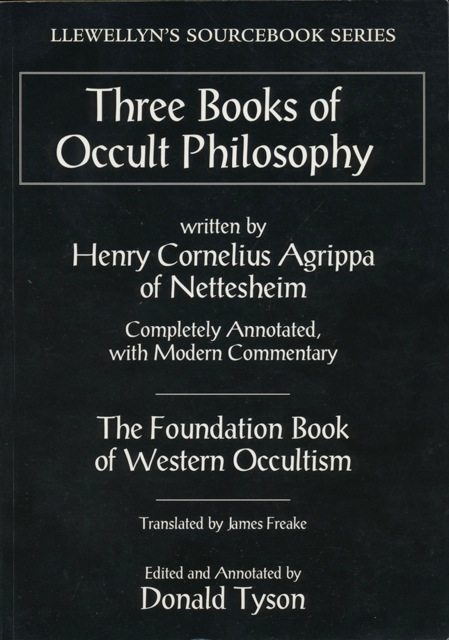
• Three Books of Occult Philosophy, Henry Cornelius Agrippa
Probably the most referred to of all of the grimoires, this book is a true encyclopedia of magical thought as it was beginning to shear away from accepted knowledge in the renaissance. Erudite in the high, Agrippa fluidly quotes between the Bible and the Christian apocrypha, The Jewish and hebraic occult traditions as well as the entire hellenic record. Chaldean and Islamic astrology have a prominent place, as well as most of the european folk remedies and cures. It was this later data that really marked the book for infamy: the perceived threat of witches and Ottoman expansion of the time made these materials ‘infernal’ in the eyes of his peers. Given all of the material covered and quoted, Donald Tyson’s fully annotated edition pictured here adds a value to the text that can’t be under estimated.
Online: http://www.esotericarchives.com/agrippa/
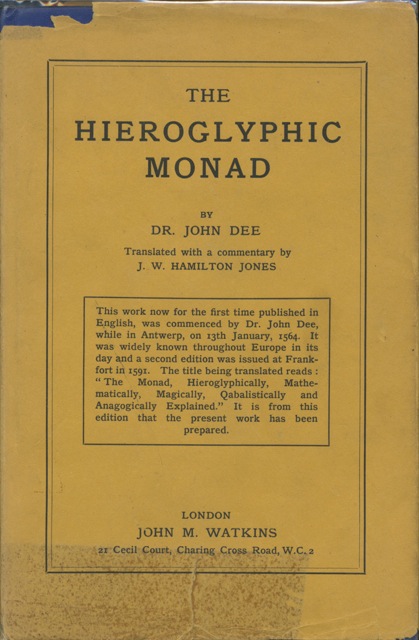
• The Hieroglyphic Monad, John Dee
Second only to Aleister Crowley here in the English speaking world, John Dee is synonymous with magic and witchcraft. He’s gone through a significant makeover, being most recently the subject of an opera written by Blur/Gorillas architect Damon Albarn. The Monad is Dee’s first and most accessible magical text, written in a form mimicking Euclid’s Geometry which Dee had translated into English around the same time. With all the indicators of what was to come in what is now called Enochian magic, this text is shorter, clearer and much simpler than any of the Enochian texts, which are all dazzling in their own right. The Monad is a great introduction to the occult tradition and a great multiple-read text.
Online: http://www.esotericarchives.com/dee/monad.htm
A full documentary on Dee I hesitate to post for it’s length (and slight bombast) but I’ve already posted Evil Dead bits and the soundtrack is all Coil!
• Aleister Crowley, The Book of the Law: Liber Al Vel Legis
If the Hieroglyphic Monad is short and clear, the Book of the Law is short and utterly opaque. Dictated from a revelation/possession experience in 1904 in Egypt, this text is the foundation of the Thelema tradition, the contemporary bridge between the historical traditions and the contemporary traditions that exist today. Firmly rooted in the ideas of the Corpus Hermeticum as well as the east-meets-west confluences and conflations that are really what the occult tradition is all about, the text has everything Crowley has to offer at his most lovable and obnoxious. An automatic poem with a sharp and tangled point, it even ends with the warning that the book should be destroyed after being read. Several annotated versions of the text, all titled The Law is for All are available, each surrounded by controversy. I am partial to the commentaries of Crowley’s secretary Israel Regardie, an accomplished occult philosopher in his own right. The Book of the Law’s importance as a magical text is argued intensely, but no one denies Crowley’s importance in transmitting the fire and enthusiasm for magic that has burned steadily in the popular consciousness ever since.
Book: http://www.amazon.com/Book-Law-Aleister-Crowley/dp/0877283346
Online: http://www.sacred-texts.com/oto/engccxx.htm
Video: 9th Gate (Fargus’s collection)
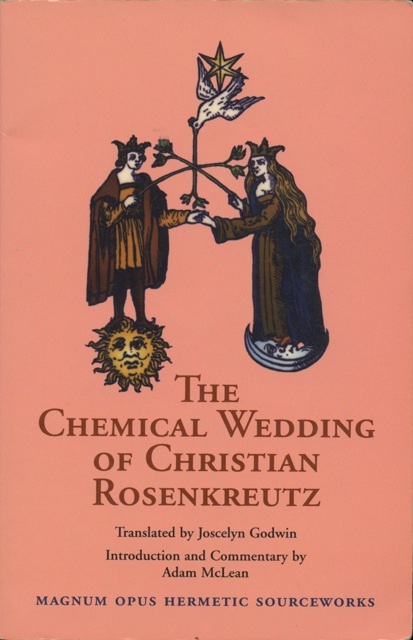
• The Chemical Wedding of Christian Rosenkreutz
While not strictly a magical text, this allegorical story is a great ‘gateway’ into the mindset necessary to process a lot of the thinking found in magical texts. Surrealism as we know it today was heavily influenced by this text and the history that grew out of the alchemical and Rosicrucian traditions, of which The Chemical Wedding is considered the masterpiece. The merging of the symbolic, poetic and descriptive modes of writing makes for a dreamy, delusional and above all magical feeling that se
ems to be suggesting something above and beyond the simple ‘reading’ of the text. Indeed, the symbolism and structure of the text has been studied and interpreted rigorously since the work appearance in 1616.
Online: http://www.levity.com/alchemy/chymwed1.html
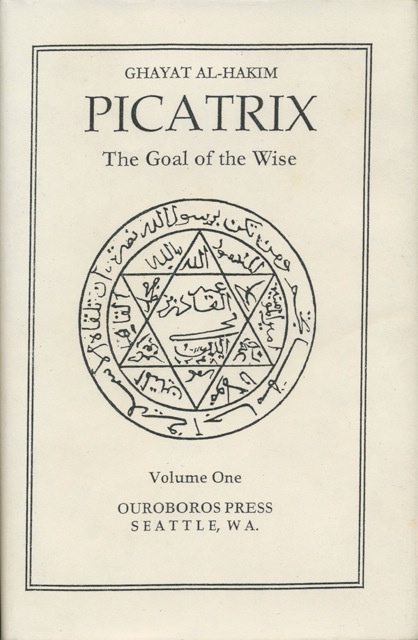
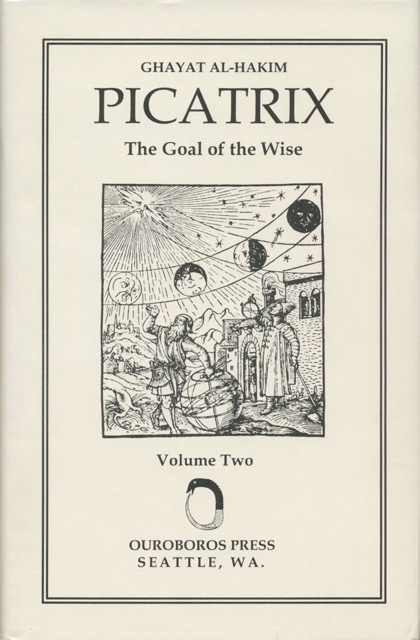
• Picatrix: Ghayat Al-Hakim, Volumes I and II
Of the books coming from the orient to renaissance Italy, this tome seems to be architectonic for many of the magical threads we can find today. An arabic text made up of several smaller works discussing the making of talismans, the lunar calendar and its magical properties, it clearly influenced all of the renaissance magicians and was at that time considered among the most infernal texts. It is also an excellent example of how much cross-cultural influence these traditions have, clearly demonstrating the large part the Islamic world had in preserving the knowledge of antiquity. Only recently translated into English, there are now several versions available.
Book (this is a different translation from the one above but is well rated and contains both volumes): http://www.amazon.com/Complete-Picatrix-Classic-Astrological-Atratus/dp/1257767852/ref=sr_1_1?ie=UTF8&qid;=1328905994&sr;=8-1
Online (this is a summary and not the full text): http://www.esotericarchives.com/picatrix.htm
Video: 9th Gate (book making: the devil is in the details)
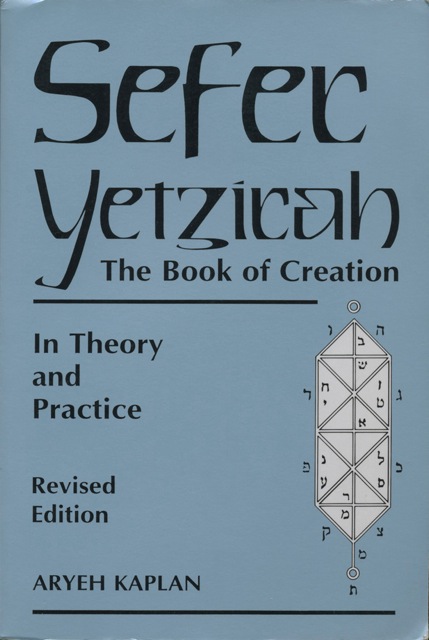
• Sefer Yetzirah: The Book of Creation
The core text of Jewish mysticism, the correlation of alphabetic letter, number and the cosmos is here so elegant and systematic it is no wonder why Hebrew became the de-facto magical alphabet of choice. Most of the so-called angelic scripts are either ciphers of Hebrew or obviously derived from the letter system. Gemmatria, kabbalah, talismanic manipulation and many kinds of evocation and invocation owe their being to this text. Short and clear in it’s presentation, it is said this text existed orally for hundreds of years before it was written down in the early middle ages. Kaplan’s annotated version includes multiple translations and an in depth commentary that gives insight and clarity, whatever your familiarity with hebrew.
Online: http://www.sacred-texts.com/jud/yetzirah.htm
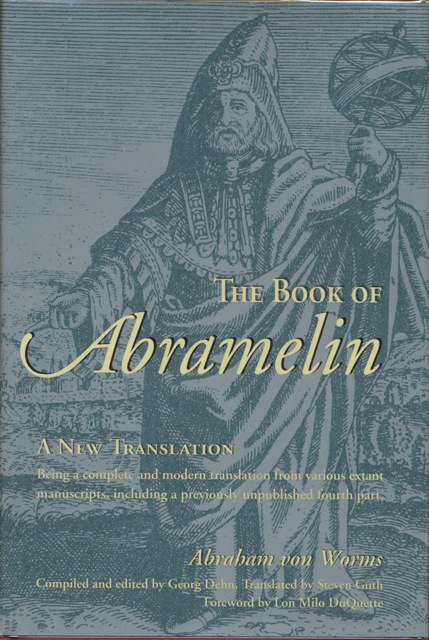
• The Book of Abramelin, Abraham von Worms
A degraded manuscript version of this text was a source document many of the Hermetic Order of the Golden Dawn’s rituals were based on. The current translation is the result of almost 20 years of research and it opens up the text and clarifies many of the operations and procedures. Most importantly, the Book of Abramelin contains the blueprint of the HGA ritual (Holy Guardian Angel), an extremely involved ritual practice that really sets the bar for what kind of dedication a magical practice can require. The links to what we now know of the tantric, yogic and other eastern psycho/physical practices are amazing.
Book: http://www.amazon.com/Book-Abramelin-New-Translation/dp/089254127X/ref=sr_1_1
Online (This is an older translation): http://www.sacred-texts.com/grim/abr/index.htm
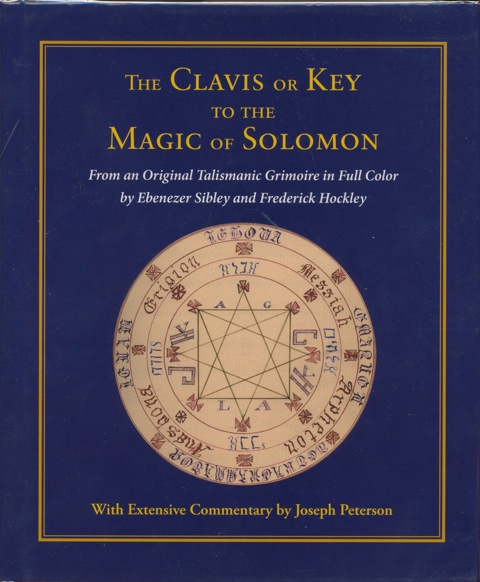
• The Clavis or Key to the Magic of Solomon
A great new trend in contemporary magical publications has been facsimile editions of the more referred to manuscripts. Some of the most famous of these were penned by the victorian occultist Frederick Hockley. Most interested in scrying, Hockley a
lso copied occult manuscripts for his extensive library, a self-admitted bibliophile. The meticulous artistry exhibited in these documents transmits part of the pleasure of books and hand-made books in particular. This is a particularly interesting text to facsimile because of the number of variations of the Clavis or Keys that exist. The recent scholarship on these manuscripts is obsessive, detail oriented and wonderful to follow. Sifting between versions of talisman recipes underlines the personal, esoteric and process-oriented nature of these practices.
Solomonic grimoires show the intricacies and difficulty of dating and locating the origins of most Grimoires. Hundreds of manuscripts claiming the bible’s King Solomon as the author exist. None have proven to be nearly that old. The content of the texts is on one hand remarkably similar and on another intensely culturally specific, and examples of Solomonic grimoires have been found written in almost every language. The works definitely merit their own sub-category, but because of the way many of these texts were grouped together with other works the categories are fairly porous (see 9 and 10). The literature surrounding King Solomon (including the Bible) gives him great power as a controller of spirits (many were said to be marshaled in the construction of the first temple). This relationship between power and control of the spirit realm led to many stories up to the 19th century of powerful lords and their architects using ‘infernal labor‘ in their construction projects, particularly bridges.
Book (expensive, but it is an extensively annotated facsimile edition of a beautiful hand-rendered text): http://www.amazon.com/Clavis-Key-Magic-Solomon-Talismanic/dp/0892541598/ref=sr_1_1?s=books&ie;=UTF8&qid;=1328906684&sr;=1-1
Online (this is a completely different version, based on the same family of manuscripts but producing a very different text, and no pretty handwriting): http://www.sacred-texts.com/grim/kos/index.htm
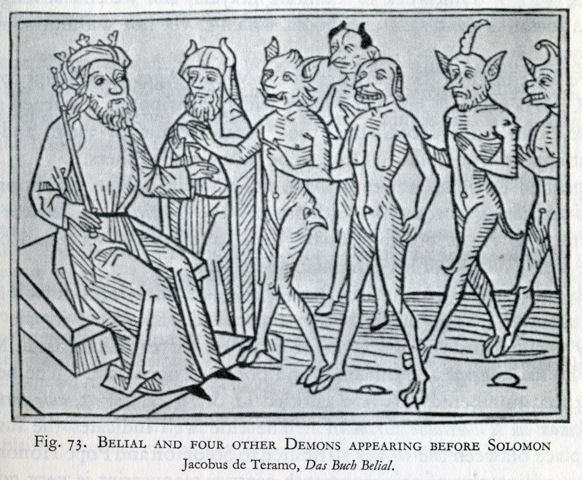
From deGivry’s survey Magic Witchcraft and Alchemy
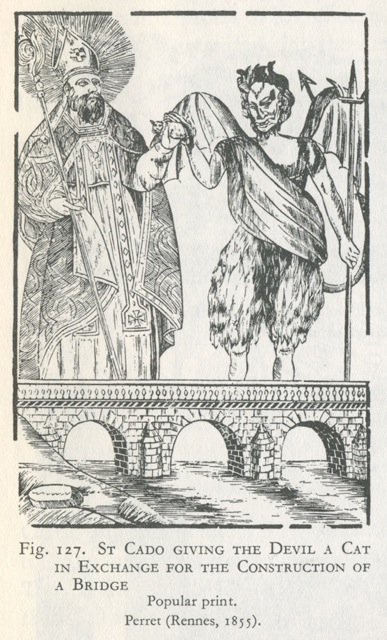
From deGivry’s survey Magic Witchcraft and Alchemy
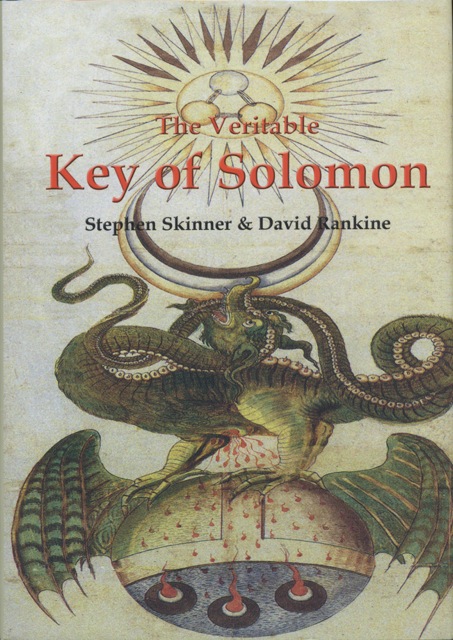
• The Veritable Key of Solomon
In 1889 S. L. MacGregor Mathers, one of the founders of the Hermetic Order of the Golden Dawn, published a text called the Key of Solomon, ostensibly starting the entire field of research/enthusiasm for what are now termed the Solomonic grimoires. There are hundreds of them and the divisions separating them can be minute and immense. While Peterson’s facsimile of Hockley’s manuscript gives a singular focus to the Solomonic tradition, Skinner and Rankine’s compendium of Keys (there are three separate tracts in this text) seeks to orient the reader to the different clusters of documents that have been translated and published over the years and given the Solomonic modifier. The research shows just how inter-penetrating and intermixed these manuscripts had become over several hundred years of clandestine transmission. Clear in the confusion, the reader gets a sense of some of the materials Agrippa, Dee and our other protagonists had access to in their researches. The book comes from the Sourceworks of Ceremonial Magic series, now numbering eight volumes, all of which of the highest quality and detail.
Online (One version from a specific manuscript, different from the ones referred to in the book, but comparable): http://www.esotericarchives.com/solomon/sl3847.htm
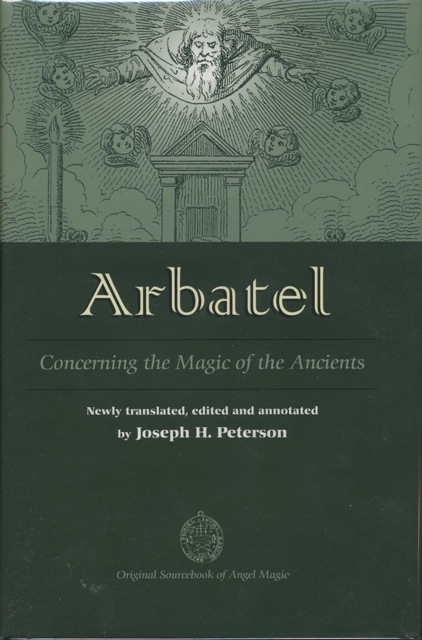
• The Arbatel of Magic
The Arbatel represents a renaissance streamlining of many of the threads of the occult tradition being formed and reevaluated. Insisting on an ‘olympian’ character of the planetary influences, the system described feels both pagan and judaeo-christian in it’s origins and makes for a somewhat unique and syncretic voice in the literature. Also of note is that unlike most texts, which claim an almost always apocryphal antiquity, this text was first printed in 1536 and seems to have been written at that time. Whereas Agrippa’s text is clear in his sources to the point of confusion (without a commentary I think most readers will be lost), the Arbetel is almost simple in it’s presentation. This gives it a somewhat privileged place in the lore, as it is an extremely ‘user friendly’ text. Peterson’s modernized translation makes it more so and the edition available is elegant and erudite. It also smells delicious.
Online: http://www.esotericarchives.com/solomon/arbatel.htm
Notes
The three sections below are gravy for people who want more information. I also wanted to specifically mention these small presses as I think they are quite amazing, some making books that are art quality objects. While I don’t totally agree with Giles’s sentiments stated in the opening clip of this post I do feel that there is an experience in books that is unique, that books should share our thinking space with these new technologies rather than be replaced by them.
Presses
The Golden Hoard Press (Sourceworks of Ceremonial Magic)
Magnum Opus Books/Alchemy Web Bookshop
Scholars/Translators
Additional Reference Texts
* I could list hundreds of books here but have chosen the ones I’ve found myself needing to refer to the most. Tyson’s edition of Agrippa can make up for most of the gaps, but if you find yourself getting comparative in your analyses and want primary data, these books have helped a ton. I’m not including any eastern or hellenic source works, although Ovid and the Upanishads etc… of course are relevant…
777
Aleister Crowley’s collection and correlation of tables. These get a little funky the further you get into the material record and begin comparing the data, but it is a notable and fairly reliable (and precedent setting) collection of the tabulations and correlations of thousands of years of magical data.
The Complete Magician’s Tables
Stephen Skinner’s answer to the missing facts and errata that have surfaced since 777‘s publication. Much more useful and accurate ultimately than 777, it is reverent to and respectful of the document it owes fealty to.
The Torah
Commentated and scrutinized in a completely different manner, the book of course gives insight to many of the specifically Hebraic structures that appear in much of this material.
The Bible
One way or another you will come back here. As something to react for or against (‘I keep the Bible in a pool of blood so that none of it’s lies can affect me’ is a good Slayer quote for the moment), the Bible is there looming in the background of most of this material. Over the years I’ve come to appreciate much of the text, and realize that like all infernal books it’s what you do with it that counts.
The Qur’an
Much more of the occult tradition is built on concepts in this book that most would at first think and it is pretty embarrassing how ignorant we are in (America at least) of what is in this book…
The Nag Hammadi Scriptures
For those leery of the ‘good books’ mentioned above (like me), the Nag Hammadi scriptures can ease some of the frustrations the Torah/Bible/Qur’an as a reference can cause. These texts also open up a universe of religious and mystical thought that was virtually unknown to the modern world prior to their discovery in the 40s. Much more mystical and concerned with the individual than made it into the good books, and you can see a pattern of control that got exercised by excluding many of these thought bombs…
The Corpus Hermeticum
This collection’s influence on magical texts cannot be underestimated. It also links many of the other occult traditions, especially alchemy. Presumed to be of deep Egyptian antiquity for centuries, it is actually 2nd century, close in age to the Nag Hammadi codices and sharing many of their ideas.
—-
*
p.s. Hey. ** Laura, Hi, there you are. Nothing like family drama to create a full body vortex. Sorry. Russia had/has the lion’s share of contemporary cannibals, if my researcher memory serves. Why, I don’t know, other than Russians I know saying the police, etc. there are almost completely corrupt. Ah, you’re adding to rather thin cannibal fiction genre. It’s a genre ripe to be conquered. I supposedly get my visa on May 7. That’s my appointment date. Not counting my veritable chickens. Thanks re: my eyes. One time when I was at university eating in the cafeteria a girl I didn’t know walked up to me and told me I had beautiful eyes. It confused me, and I asked my friends, ‘Do I have beautiful eyes?’, and they looked at me like I was crazy, and said ‘No’. ** _Black_Acrylic, Or maybe the charismatic ones manage to evade the authorities? Probably not, or only in the movies. ** Dominik, Hi!!! Oh, shit, I think it did eat your comment. Maybe the blog was anticipating yesterday’s post. Yes, I swear I didn’t invent Gheorghe Dincă, but it’s uncanny. If love finds that assessment, err, pass it on. Love wondering what a mannequin of himself would look like, G. ** kenley, Hi. Haha, I hope it was because of the alliteration. It’s true, or I agree, about the true crime stuff. Back before the internet there used to be these quite sleazy true crime magazines that you could buy at the corner shop that got into the nitty gritty, and I read them voraciously when I was planning my Cycle books looking for ways into that material, but even they were very superficial. I think the monster killer guys themselves are just not deep guys. There’s a lesson in there somewhere. Oh, no! Dumped? A clearly unworthy dude, but that won’t stop the pain. Onwards and upwards, maestro. I’m so sorry though. xoxo. ** Carsten, I will admit I wondered if your recent absence was health related. So sorry. That sounds miserable. When I had my fairly recent bout of awful illness, whatever it was, the thing that helped as much or more than the antibiotics was the steroids they prescribed. Maybe they’d help? I don’t know. I’m fine with normal eyes again, thanks. I’ve had friends tell me that the book ‘Eaters of the Dead: Myths and Realities of Cannibal Monsters’ is enlightening, but I haven’t read it. ** jay, Hi! Yeah, pretty bleak, I guess. And rare and scattered, yeah. I’m always surprised that there are relatively very few cannibals on the master/slave sites. Speaks to the poverty of their imaginations. No, I don’t know ‘Cruel God Reigns’ or even of it. It does sound very intriguing. I wonder if it’s something that would be in Paris’s rather seemingly good manga stores. There used to be practically a whole little street here lined with nothing but manga and related accoutrement stores. I wonder if that’s still the case. Hm. Thanks. That’s very curiosity making. You good? ** Steve, I’m glad to hear ‘TTofW’ holds up. There have long been, yes, rumors that Fassbinder secretly co-directed it. Haha, hi, Armie! I think you’re right about that horrorcore rapper but the name escapes me. I’ll look. ** julian, Hi. There were probably a lot of reasons why I wanted to tackle cannibalism in that work. There was the fact that I never had, so that challenge interested me. Also there was this genre of bleak, depressing Russian twink porn that was popular at the time that interested me a lot because of how bleak it was — the models were visibly quite poor street guys who didn’t even pretend that they were into the sex they were having — and there was one model that guys who frequented the related message boards kept saying they wished they could eat, and I went back and looked at him again, and I thought, ‘Yeah, I could see eating him’, and that weird realisation probably played into the decision too. Stuff like that. Yeah, Lydia Lunch is cool through and through. I think she has a podcast or vidcast that I keep meaning to listen to/watch. Have you followed that? ** Bill, Oh, wow, I’m going to chase down ‘I Love Cannibal’. That’s wild. You seen it? No, I wasn’t targeting location in my research. Russia just kept popping up. A solo set, excellent! Please video or record it or something. Awesome! Godwaffle Noise Pancakes is a wonderful name, I must say. ** Charalampos, Even among the most hardcore completist Pollard collectors, no one has managed to collect all the ‘Propellor’ editions. That’s the unreachable nirvana. Morning from a Rue in Paris. ** Gustavo, Hi. I’m not big on Aster’s films either. I do think he sometimes takes kind of interesting chances in a formal way. So sometimes I appreciate that he’s trying to experiment a bit. ‘Fat Girl’ is a good one. I liked ‘Resident Evil 7’. Have you played ‘Resident Evil: Village’? That’s my favorite of the recent ones. You’re not jaded, they are kind of funny, but then I’m not a normal person. And neither are you, it seems! This week: my filmmaking collaborator Zac just gave me his final notes on the script for our next film, so I’ll be making the changes and hopefully finishing the script for good this week or early next week. Otherwise, I don’t know. Good question. ** Adem Berbic, I knew it! Well, I didn’t know it, but yay on the cat’s getting bored of freedom and feeling ready to reenter your prison. Nice prison, of course. Mallarmé is probably a better or more pleasurable writer than Hegel though, no? Once you find your bearings, riding a unicycle while juggling becomes a cakewalk, believe it or not. Good morning. ** HaRpEr //, Relaxation of the Asshole’ is a one-timer record if there ever was one. But yeah, Pollard’s between songs inebriated concert blathering are legendary amongst the fold. Right, me neither re: romanticising being sick even though I’m rarely sick. There was a brief time in the early Emo era when I would see Emos in Paris sporting fake crutches and big bandages on their heads and things. It did look awfully cool. John Rechy, ugh. ** Nicholas., Yeah, France is more hilly than mountainous until you get down in the south where there’s the Alps and Pyrenees. I think if I was a house I’d be a loft in some city’s former warehouse district. Movie land … still arranging the last batch of screenings before the thing starts streaming and living on a BluRay. The next film is going to be rather episodic but with no commercials in between them or anything. ** rewritedept, Howdy. I really like ‘Lost Highway’ but I think if Lynch had let me do a final edit on it and removed a few scenes like the annoying Marilyn Manson stuff it would have been a masterpiece. I know about the failed ‘Glamorama’ film, yeah. Never say never though. My fave BEE is ‘Lunar Park’. Thanks about my stuff, pal. ** Right. Today I’ve restored a quite informative old post made for the blog by the visual artist and occult scholar Jesse Bransford. Dig in. See you tomorrow.



 Now available in North America

Hey Dennis! Esoteric alchemical stuff is cool, but I’m always a bit shocked to find out some people still actually live/believe in it. The guy I lived with for a bit last year was totally obsessed with it, to a kind of scary degree, it was all he consumed or talked about. Sadly I don’t think he owned any grimoires.
I sort of doubt Cruel God Reigns is available anywhere, it’s both really old and really long, as well as a bit uncomfortable – the main boy starts a relationship with his adult stepbrother, and the manga’s sort of 50:50 on whether or not it’s a good or bad thing for him to experience, given that the other guy is violent and pretty uninterested in his personhood. This chapter’s probably quite a good representation of the whole thing, the fan translation’s quite good, even if there are some amusingly Kinbotey arguments in the margins about the usage of the word “lover”. Anyway, I’m doing well, I hope you are too. See you!
Hi!!
That could be it, haha! I’m glad yesterday’s comment didn’t get eaten – it didn’t show up on my end when I checked, but when I tried to resend it, the blog informed me that I’d already commented the same thing. So I’m glad everything seems to have worked out in the end.
Love actually did find Austin Harouff’s assessment: https://www.scribd.com/document/403637223/Austin-Harrouff-psychiatric-evaluation
I’d be curious about a mannequin of myself too. I guess it’d be a little creepy but potentially informative? If it’s realistic enough. Love wondering, whenever he sees a pacifier on the ground (which is more often than one would think, since he lives next to a kindergarten), whether the parents didn’t notice that it had fallen or whether they just decided not to pick it up, Od.
I’d like to believe that your (and certain other DC’s-dwellers’) continued faith in the cat’s return bent the universe into submission, because things were getting pretty bleak in my own mind, so thank you for that.
Oh, definitely agreed on Mallarmé vs Hegel, but I think one can draw a very loose analogy between the experience of reading each of them. That Mallarmé thing where each piece is operating on a literal, conceptual and materiality-of-language level, and it becomes more about the relations (or lack thereof) between each of them than their positive content in a vertiginous way – if you take that, and make everything a lot more tedious, you kind of have how it feels to read Hegel.
Mallarmé did apparently have a Hegel phase which crops up in the stuff about negativity and abstraction and the Idea, which is what I used to find most interesting in him but probably less so now. I think I want to spent the weekend rereading Mallarmé and Rimbaud in the sun, ideally with the cat sleeping next to me.
Unfortunately I’m not sure if I can rethink my Faulkner thought. I think something to the effect of seeing a work as a freestanding and self-sufficient thing with form equalling content, versus as expressing or capturing something external to it (or in other words, is the power in the ambiguity of the work’s relationship with the reader or the writer). Which is a pretty facile distinction but that’s how my brain tends to sift things. Anyway, there was more of a point to it at 1am than there is now.
Re: cannibals, that whole arena’s been on my mind off the back of the Fred West book Charlotte suggested I read, which is propulsive enough but not mind-blowing. I think my limited interest in all that stuff starts and ends with (this is so painfully highbrow) how it demonstrates the impossibility of transgression. I.e., here’s what sounds like the most extreme/transgressive action possible, but you’re actually just left fiddling with a jumble of nasty-smelling goop, or compulsively serial killing in roughly the same guilty way that someone else might jerk off too much of something. It always ends up being very small, when it seems like it should be big. So I’ve never fully understood how people like Martin can find a limitless interest in these kinds of subjects. Well, I wish any single thing could interest me as much as Nilsen seems to fascinate Martin.