_______________
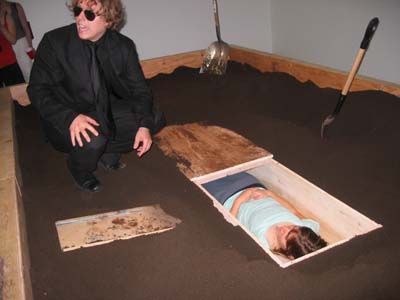
monochrom The Experience Of Being Buried Alive, 2013
‘Buried Alive is an art and lecture performance series by art-tech group monochrom. The basic concept is to offer willing participants the opportunity of being buried alive in a real coffin underground for fifteen to twenty minutes. As a framework program, monochrom offers lectures about the history of the science of determining death and the medical cultural history of premature burial. To date, they have buried over 500 people. The series has created controversy in some places it has been staged.’
______________
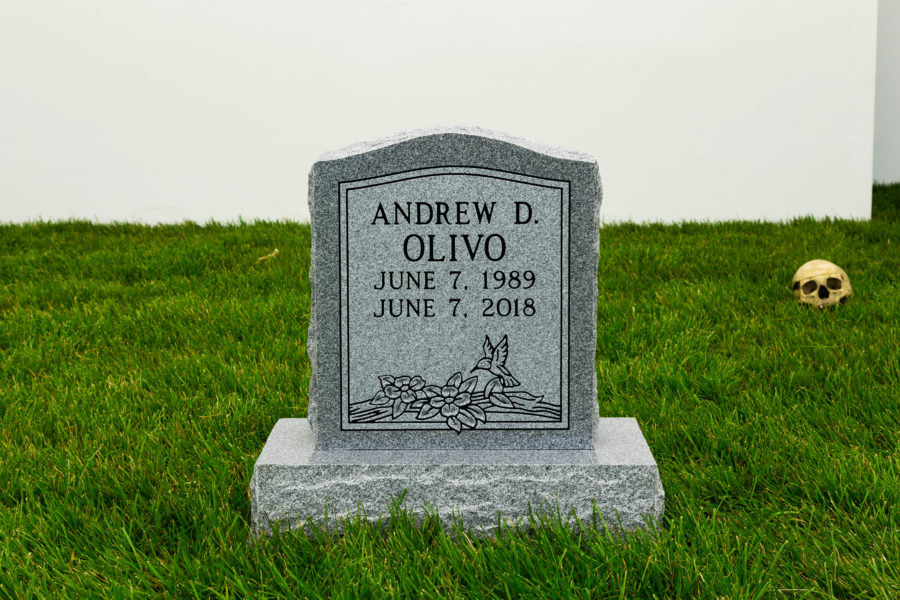
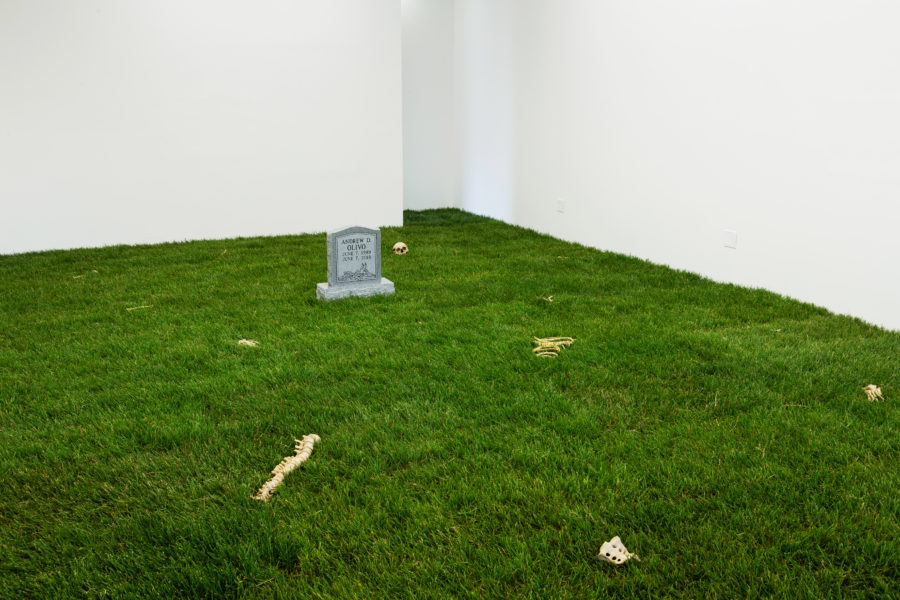
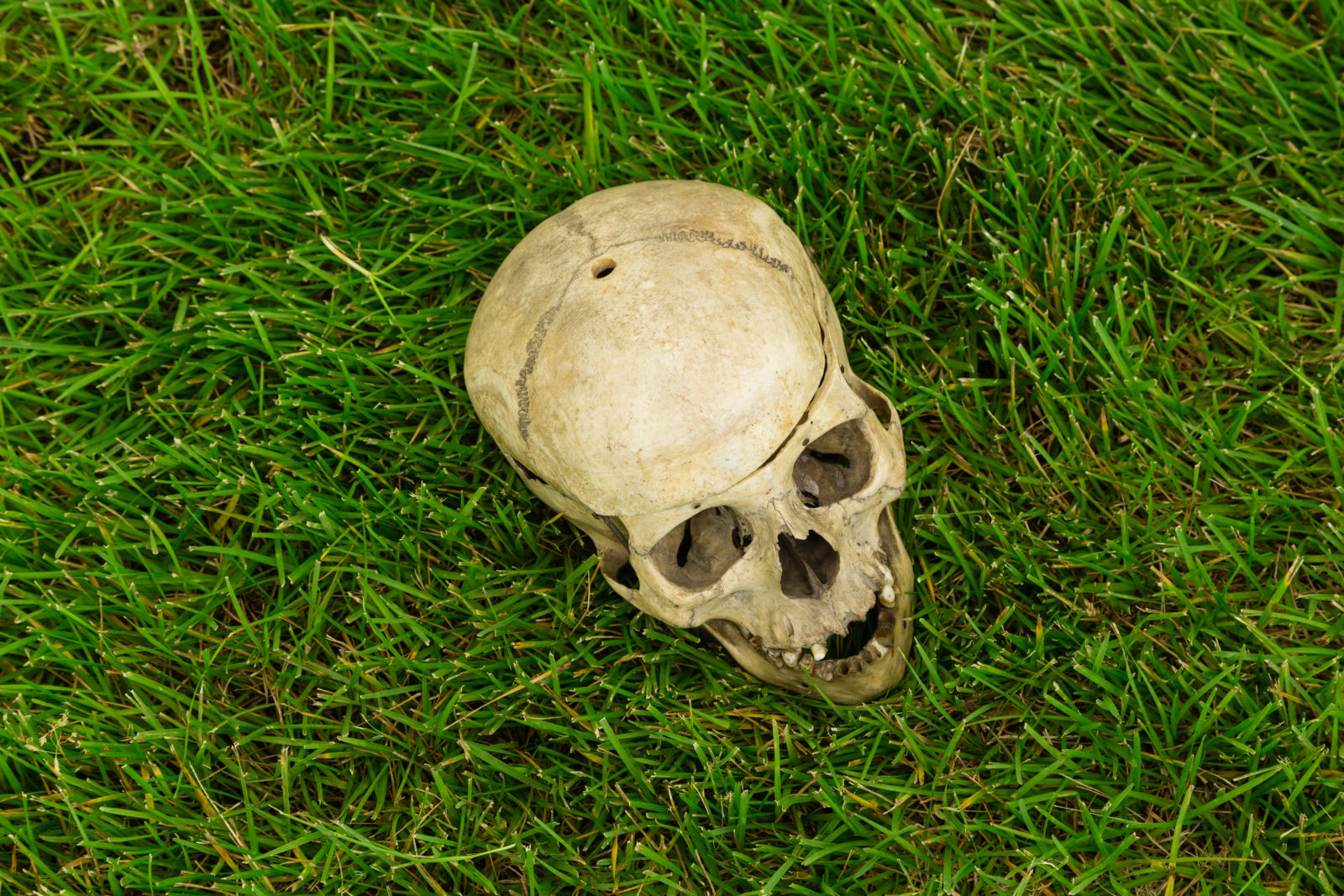
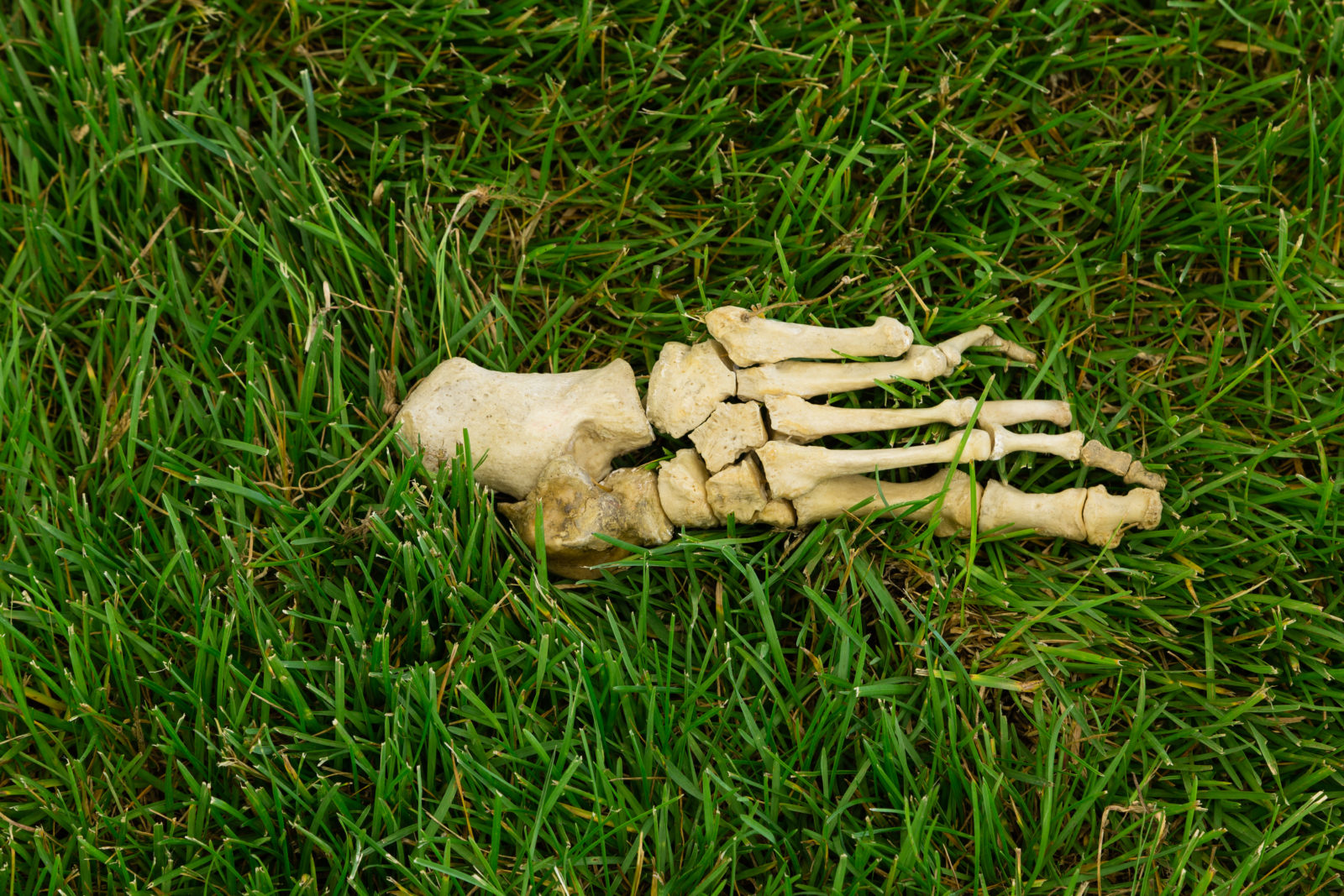
Puppies Puppies Andrew D. Olivo 6.7.1989 – 6.7.2018, 2018
‘I think you’re beautiful. All those people who made you feel like there was nothing beautiful about you they were wrong. All those people who made you feel that femininity in a perceived boy was worthy of hell were wrong
All those people who abused you verbally physically and sexually
they were wrong
all those people who made you feel less than in a moment’s notice
they were wrong
All those people that said racist shit to you and your family growing up
they were wrong
All the times as a child where you blindly trusted people older than you and they let you down or hurt you or tried to brainwash you you weren’t in the wrong
I know at times you’ve prayed for a luckier life. A life filled with less trauma and more relaxing. A life void of having had a brain tumor. An easier life in general.’
______________
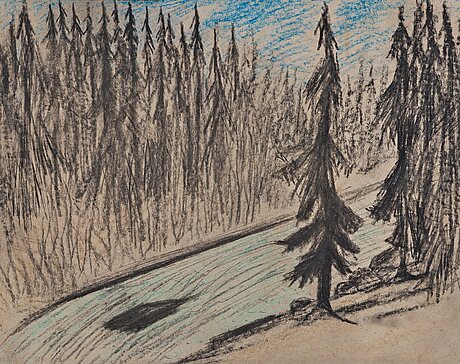
Carl Fredrik Hill The tomb of the artist floating on the river, 1849
Crayon 16.5 x 20.5 cm
______________
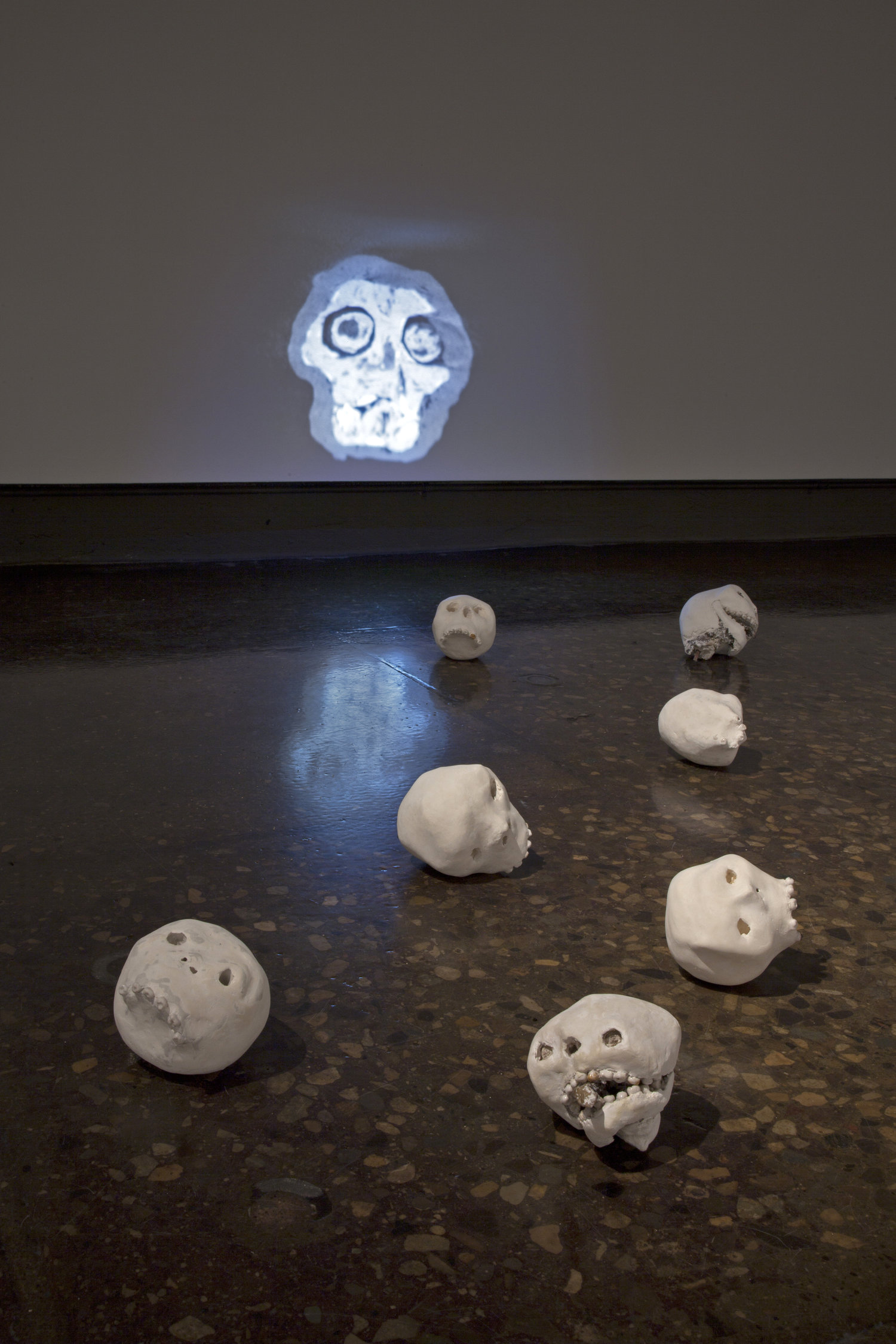
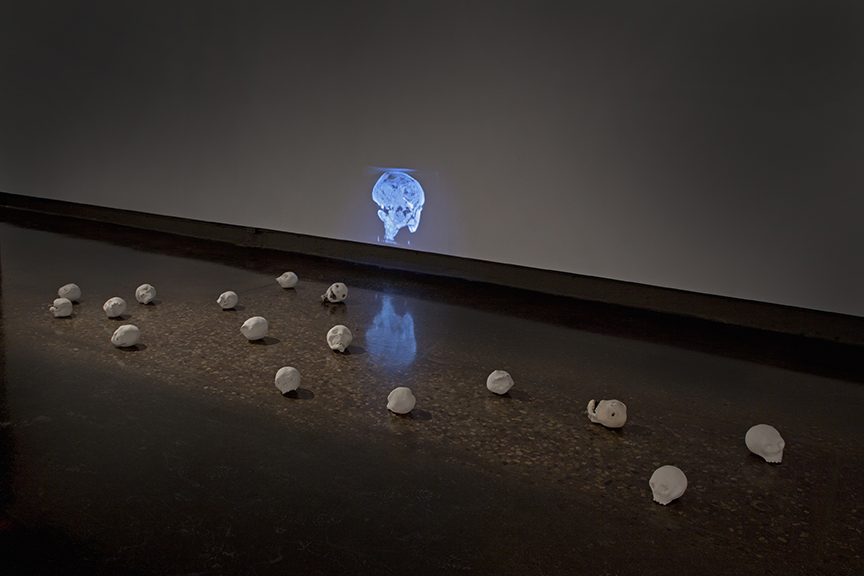
Catherine Heard Grave, 2013
‘In Grave the sculptures are built from the inside out, reversing the normal logic of sculptural form. The concealed interior structures become “visually” more critical than the external appearance of the pieces, when the structures are revealed using digital CT scanning technology.’
_____________
Siah Armajani Three Tombs, 2016
‘Tomb for Heidegger is a bleak shed-like structure that articulates the philosopher’s notions of desolation, while the miniature Tomb for Arthur Rimbaud is an exquisite confection of balsa and aluminum, painted in baby blue and pink, alluding to the poet’s erotic reverie, “A Winter Dream.” Tomb for Frank O’Hara celebrates the free-association style of the American poet and curator whose work poet John Ashbery describes as having “shatter[ed] the congealed surface of contemporary academic poetry.”’

Tomb for Heidegger

Tomb for Arthur Rimbaud
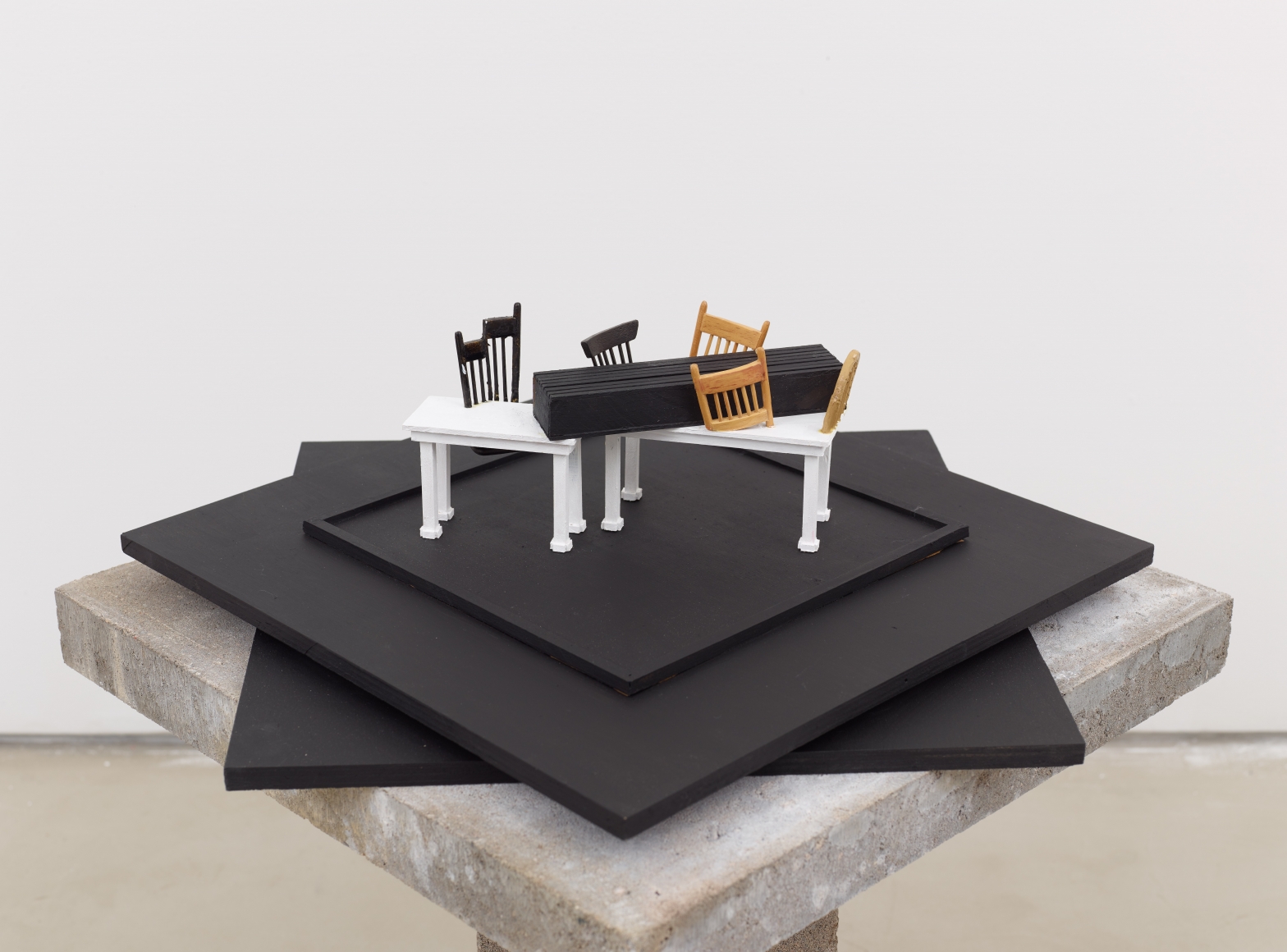
Tomb for Frank O’Hara
_____________
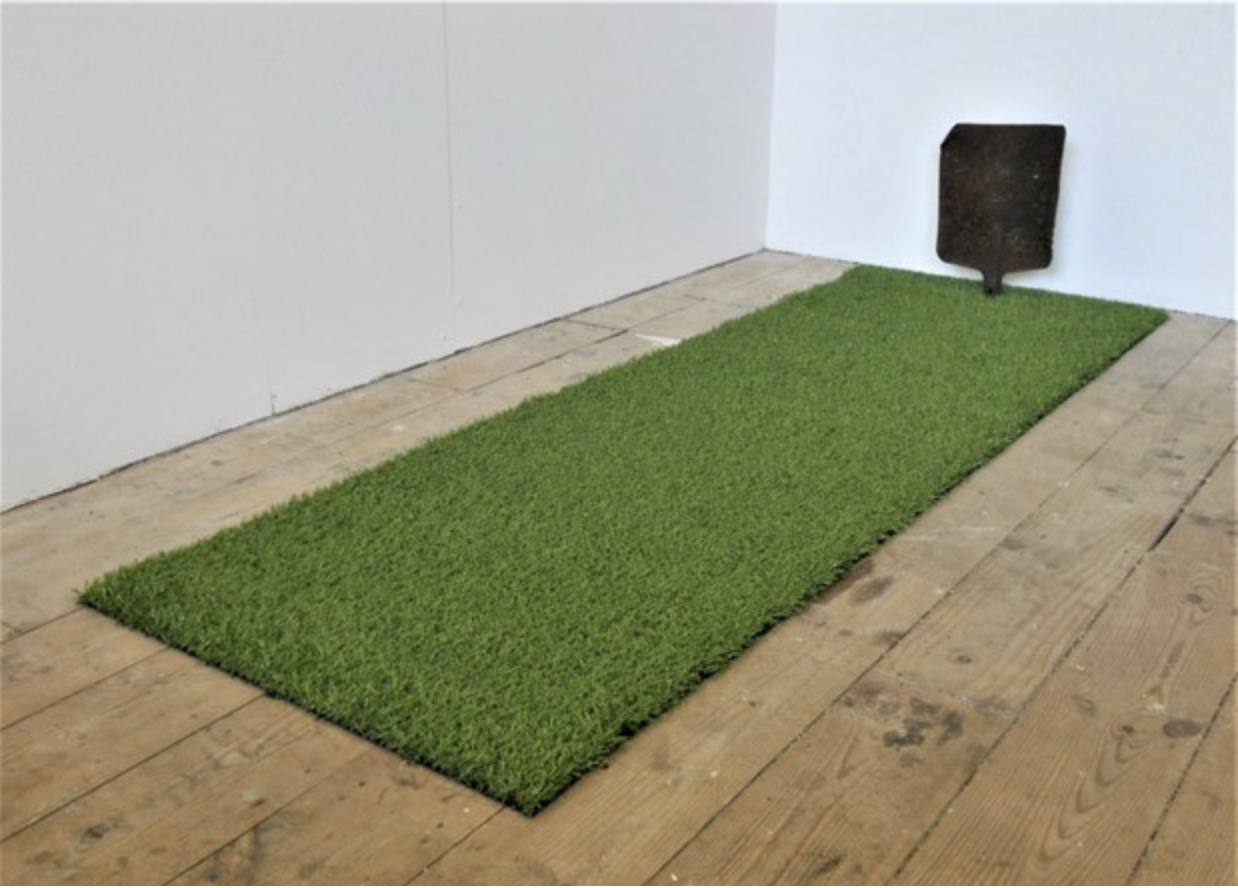
David Foggo Untitled, 2017
floor, sculpture, grass, shovel, rust
______________
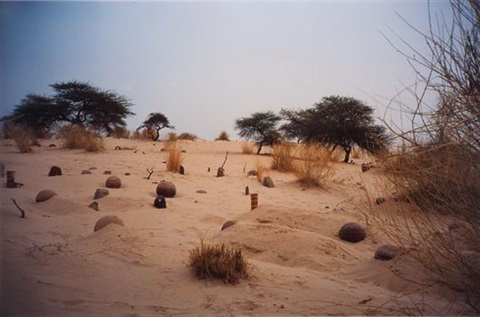
Gabriel Orozco Cemetery, 2002
‘In this new series of photographs taken in July on a trip to Mali, Orozco continues his concerns with sculpture and landscape, presenting the unexpected but mesmerizing side of a cemetery in legendary Timbuktu, the mysterious city on the trans-Saharan caravan route.’


______________
Adam Electric Tomb, 2015
‘Multiple performers are encased in an airtight latex column; Adam creates a vacuum with his own breathing, forming a three-dimensional frieze. The human forms are dehumanised as the latex is sucked tightly around them turning them into living sculptures.’

______________
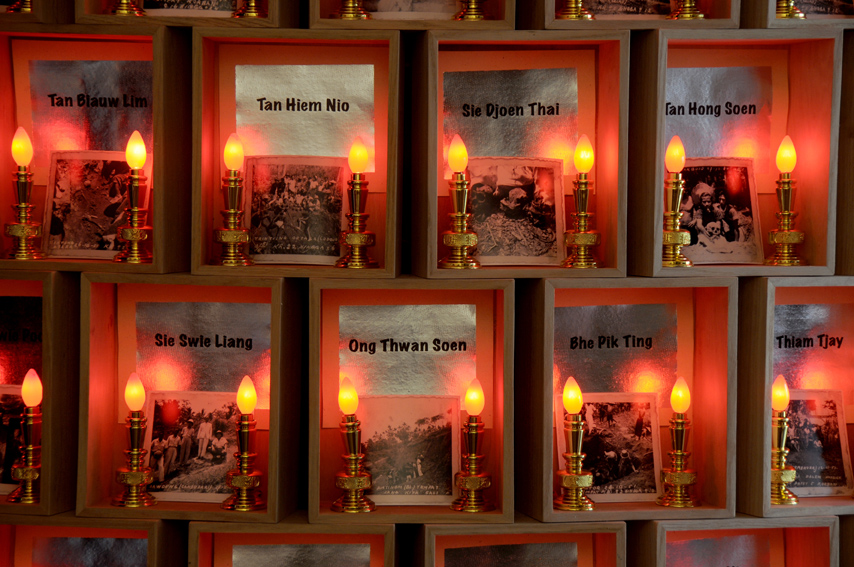
FX Harsono Bone Cemetery Monument, 2011
installation with 202 multiplex wood box, electric light, paper and photograph

______________
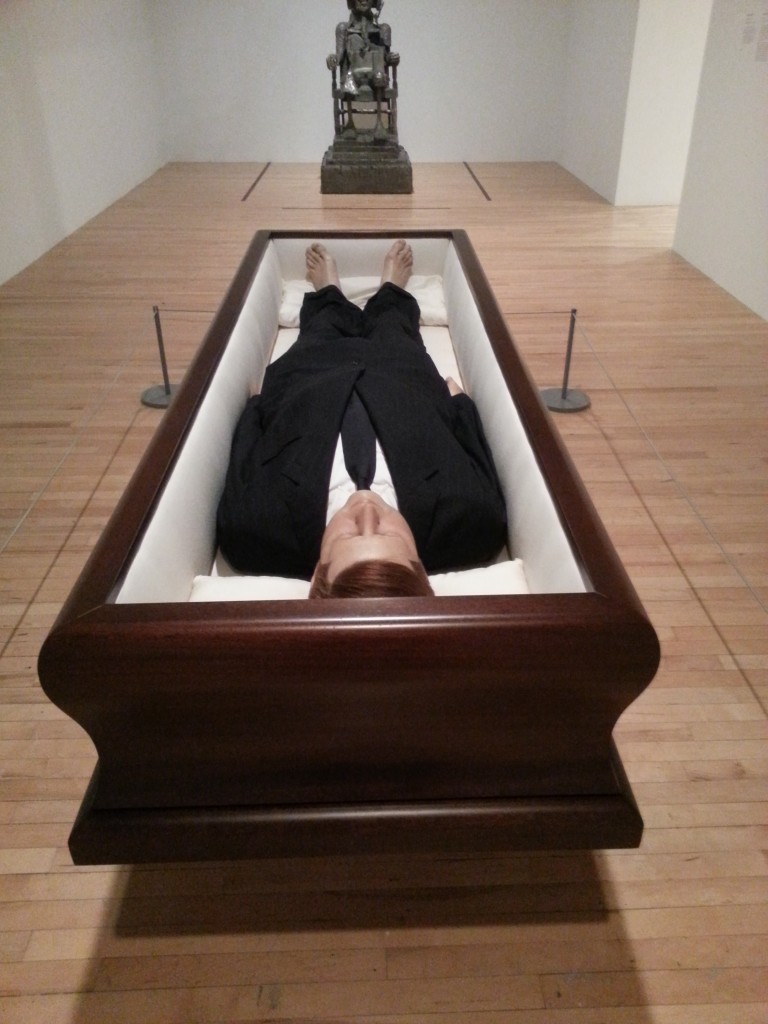
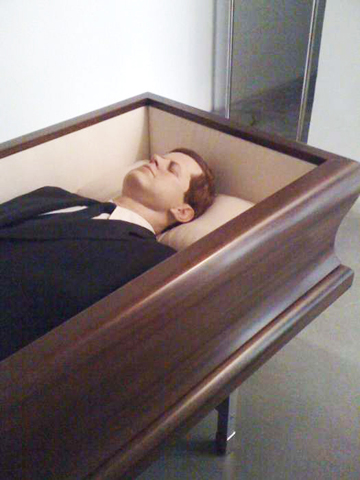
Maurizio Cattelan Now, 2004
‘The sculpture Now (2004) depicts a smartly suited John F. Kennedy, dead in an open coffin.’
______________
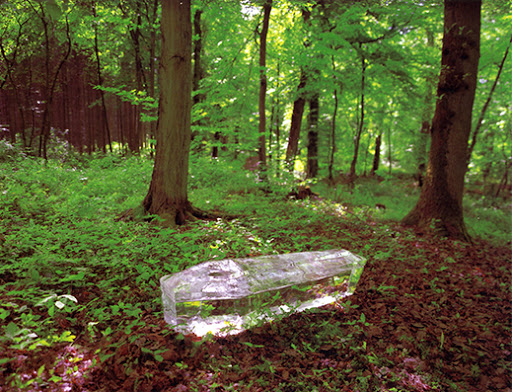
Enzo Umbaca Love is colder than death, 2002
‘A sculptured life size ice coffin is carried into the Luxembourg forest; at the ambient temperature it melts slowly but inexorably. This object, which refers to frozen coffins and crystal cases of fables and myths, also represents the death of a common good like water, which is the support of life.’
______________
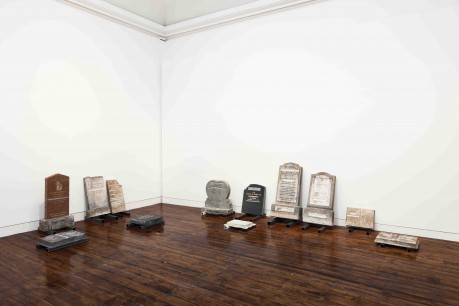
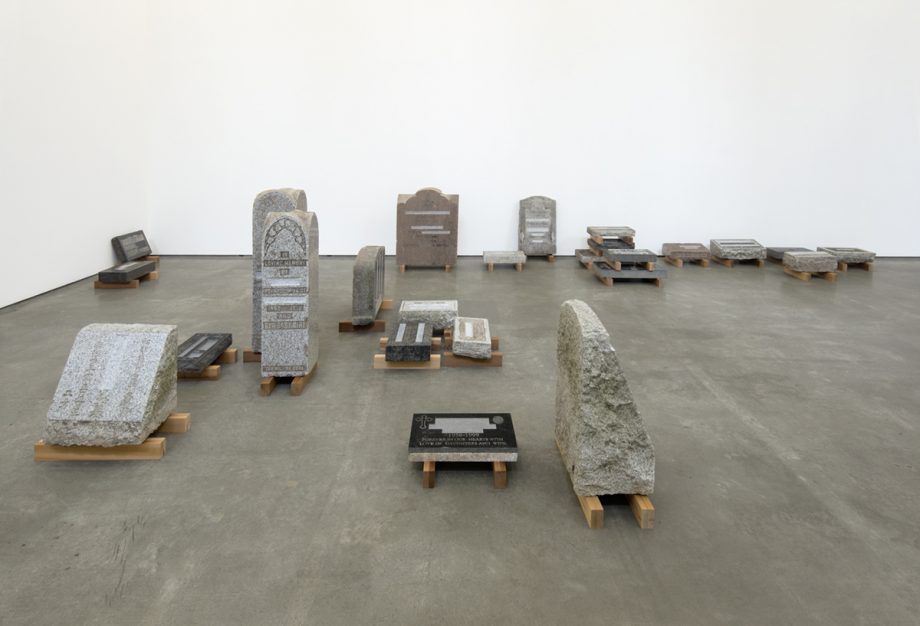
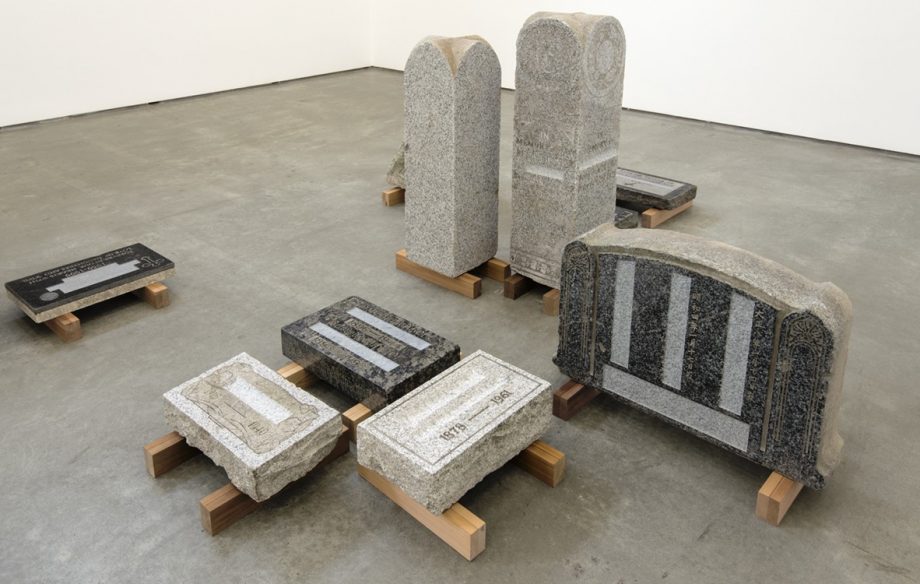
Nathan Coley Unnamed, 2012
‘Unnamed is an installation of 33 altered gravestones, arranged in small, sociable groups. Mounted on bases made of simple cedar two-by-fours, these granite and limestone markers have been gathered from… Well, who knows where and under what conditions? The names of the people whose graves they marked have been carefully excised from the stones. What we’re left with are birth dates and death dates and a few sentimental dedications. Most are written in English but a few are in other languages such as Italian, German, and Chinese. By removing the gravestones from their original settings and obliterating the names of the people they were intended to commemorate, Coley evokes a disturbing condition—not simply of displacement but also of disappearance. (The wooden “batons” on which the stones sit suggest skids or pallets, amplifying the sense of impermanence.) A few social or cultural conditions can be surmised from the dates and occasional names of places and affiliations, but no sense of individual identity can be established.’
_______________
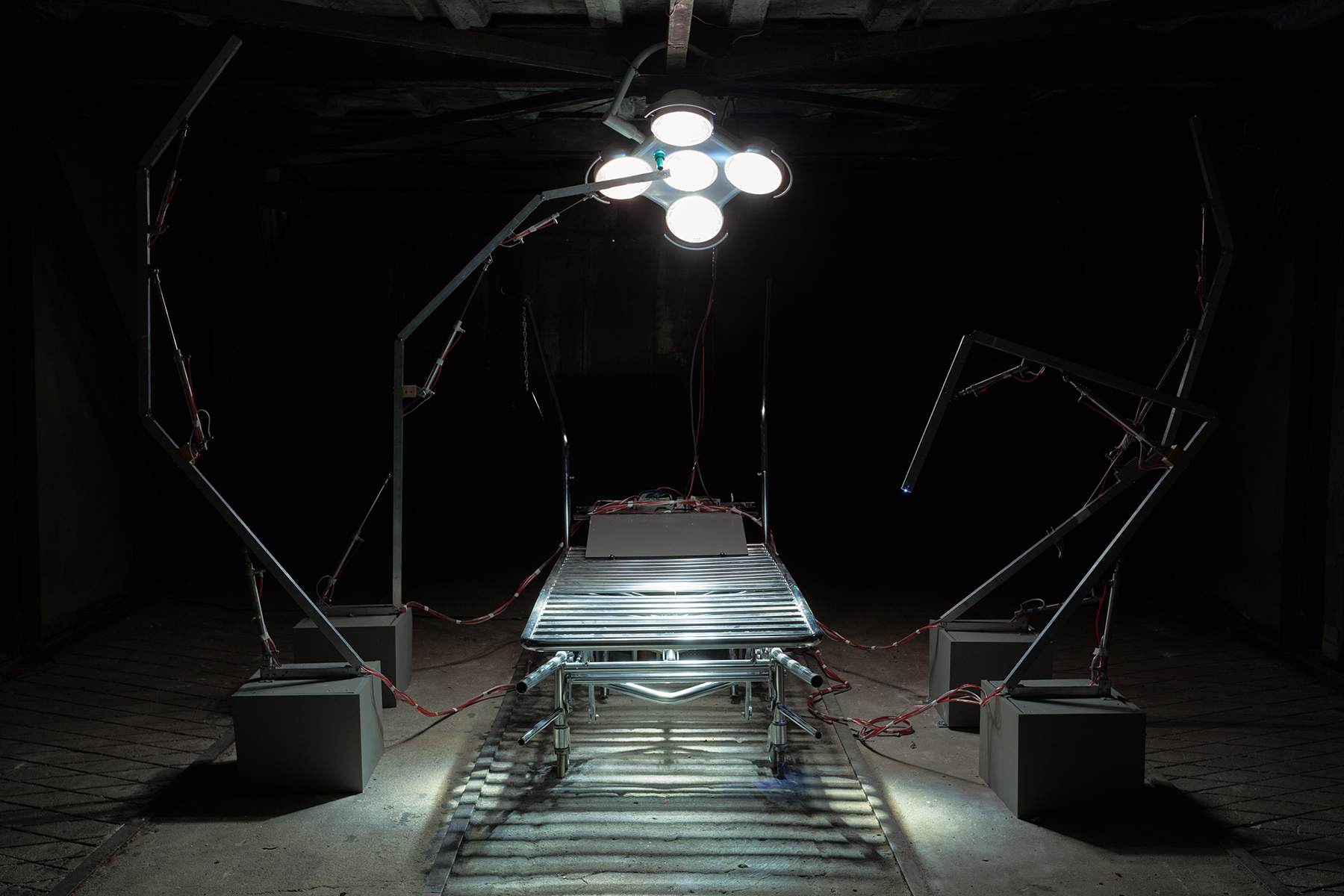
Anu Juurak How Does It Feel Like To Die, 2008
‘Anu Juurak is an Estonian graphic artist and installation artist. Since the 1990s, her work has depicted the undefined unknown and the interpretation of death in our culture.’
_______________
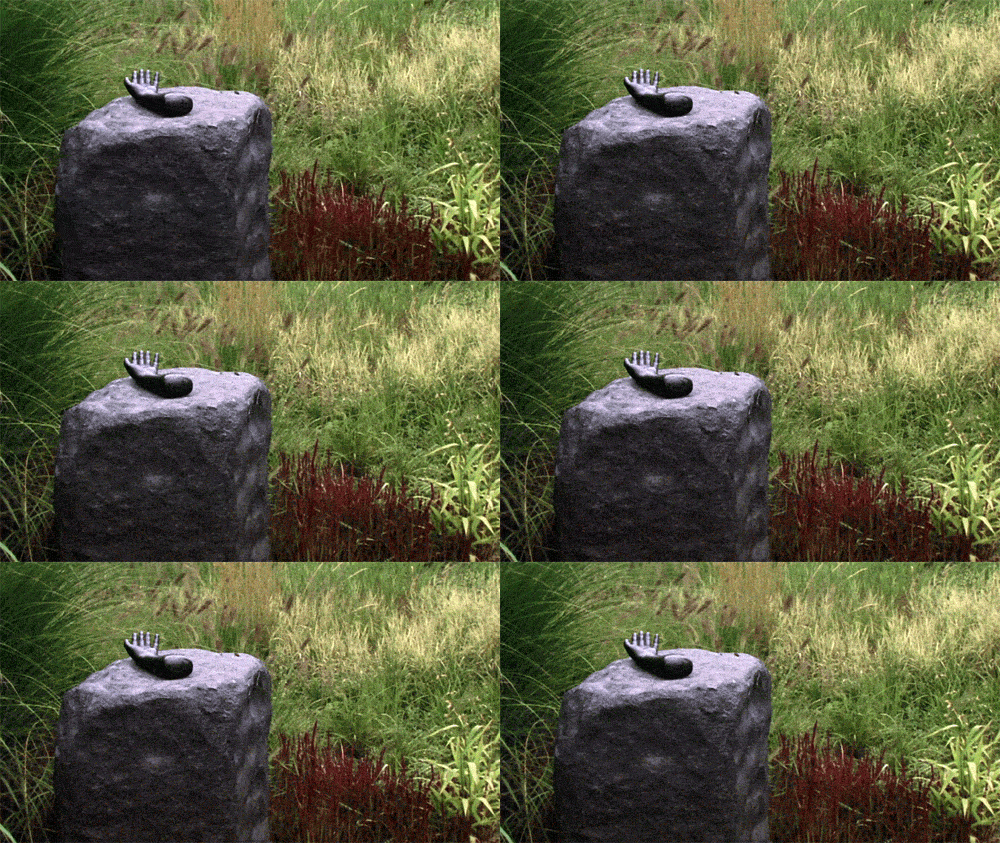
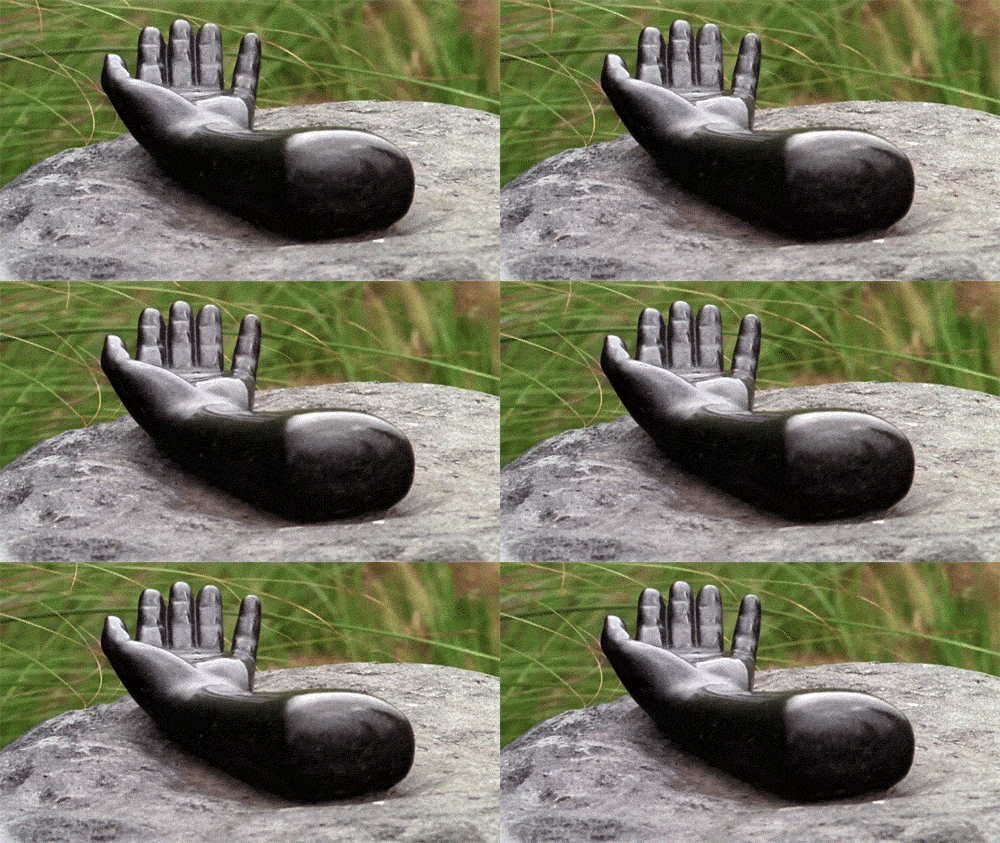
Louise Bourgeois Helping Hands, 1993
‘This is Chicago’s first major artwork to honor an important woman. Helping Hands commemorates Nobel Peace Prize winner and social reformer Jane Addams (1860 – 1935). Jane Addams established Hull House, the nation’s first settlement house in Chicago’s poor immigrant neighborhood on the Near West Side. The sculpture was created by artist Louise Bourgeois, then in her eighties. Rather than depicting Jane Addams with a figurative sculpture, Bourgeois created a series of carved black granite hands.’
_______________
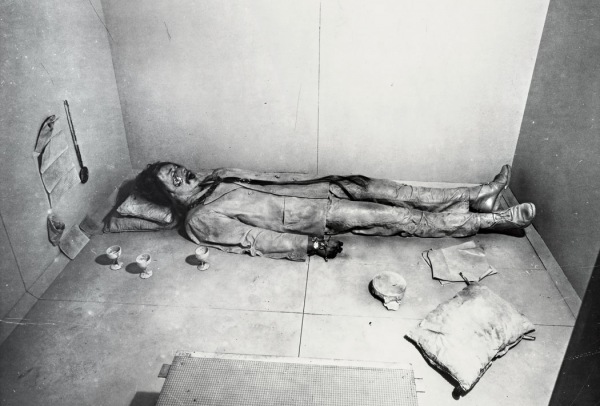
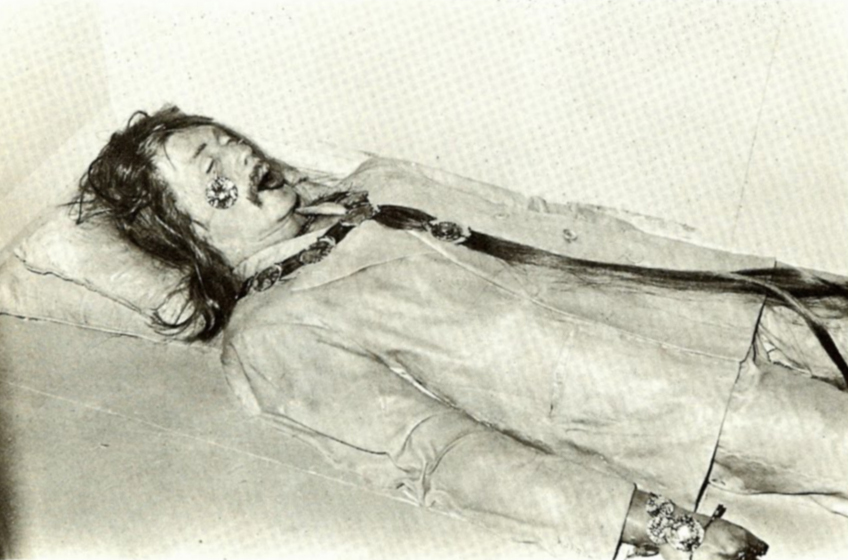
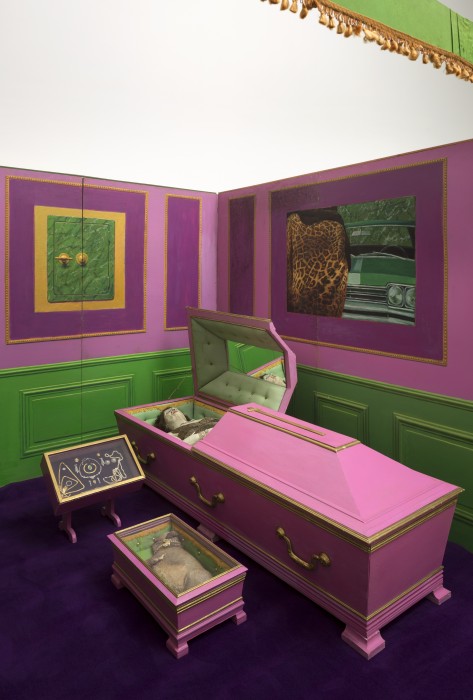
Paul Thek The Tomb, 1967
‘In 1967, Thek culminated his early career by creating a life-sized effigy of himself, dressed in a pink suit and laid to rest in a pink ziggurat tomb. The sculpture, dubbed by critics the “Dead Hippie,” seemed to capture the zeitgeist of the era. The discs on Thek’s cheeks were painted with psychedelic colors, and Thek originally surrounded the figure with paraphernalia that alluded to drug use. When it was shown at the Whitney in 1968, Vietnam War protestors left flowers by the tomb, as if the wax figure were a martyred comrade. Over time, the notoriety of the Hippie exasperated Thek. When a museum in Germany asked to exhibit it in 1981, more than a dozen years after its inception, he wrote to a friend: “I really don’t want to have to do THAT piece again! Oh God no! Not THAT one. Imagine having to bury yourself over and over.” Thek did agree to show the work, but when it was returned from Germany, he never picked it up from the shipper, and the Hippie was destroyed, or disappeared. Why Thek allowed this to happen is unclear. By one account, he simply forgot to retrieve the work from the shipper. But it’s also possible that he abandoned the Hippie out of frustration that it had never been purchased. Whatever the reason, its destruction ensured that he would never have to show the work again.’
________________
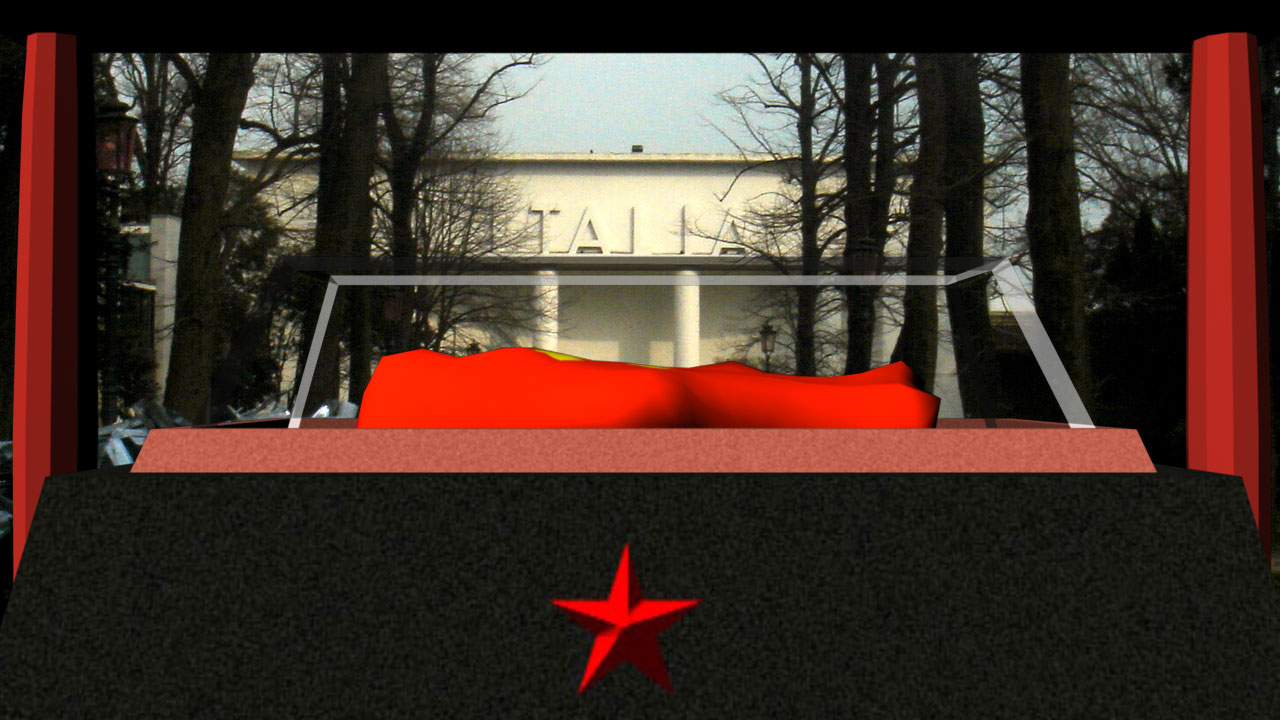
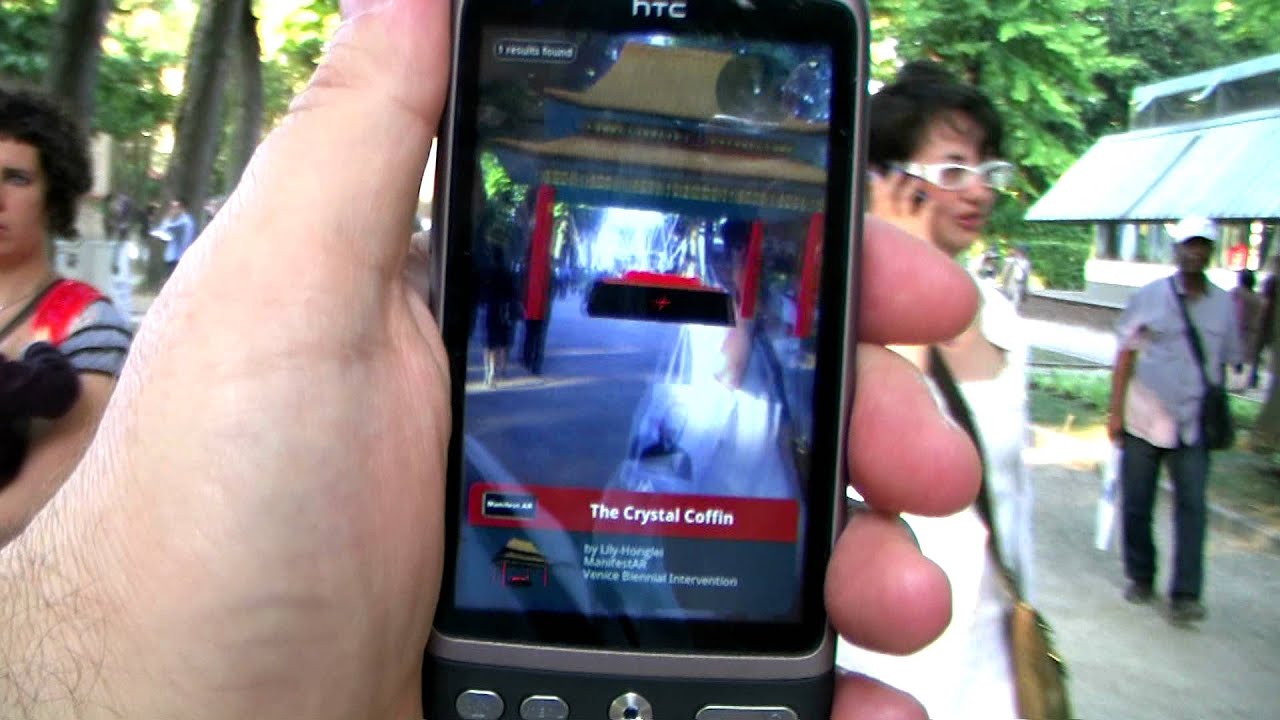
Lily & Honglei The Crystal Coffin of Mao, 2011
‘The augmentation is inspired by the crystal coffin displayed in Mausoleum of Mao Zedong on Tiananmen Square since 1977, a year after Mao’s death. In the twenty first century, while China has been transforming itself into a modern society in many ways and gaining more influences economically and politically around the globe, Mao’s crystal coffin, the immortal-looking shell, remains exist as a symbol of authoritarian ruling system. During spring 2011, a crackdown on dissent – including detaining many intellectuals and members of religious group – followed by distinct signs of revival of Maoist policies, has left people baffled about the future direction of China. We therefore use Crystal Coffin of Mao as main body of the virtual China Pavilion, which is topped with a tower and roof with ancient Chinese looking, as regulated by Ministry of Construction of China: architectural ‘designs must reflect traditional Chinese building styles.’
_______________
Wang Guangle Coffin Paint, 2004
‘The basis for Wang Guangle’s 2004 Coffin Paint is the Fujian tradition of preparing oneself for the afterlife by painting one’s coffin in lacquer and every year you find yourself alive, you apply another coat. Using this as inspiration, Wang applies layers of acrylic paint twice each day to a canvas, each layer a little more removed than the previous one from the edge. The build-up of paint towards the center makes it seem 3-D creating a dramatically illusionistic work.’

________________
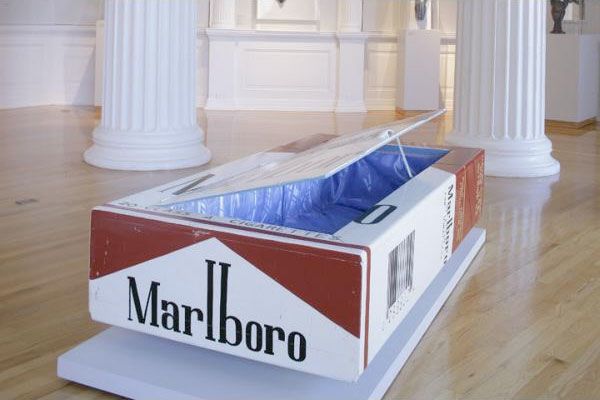
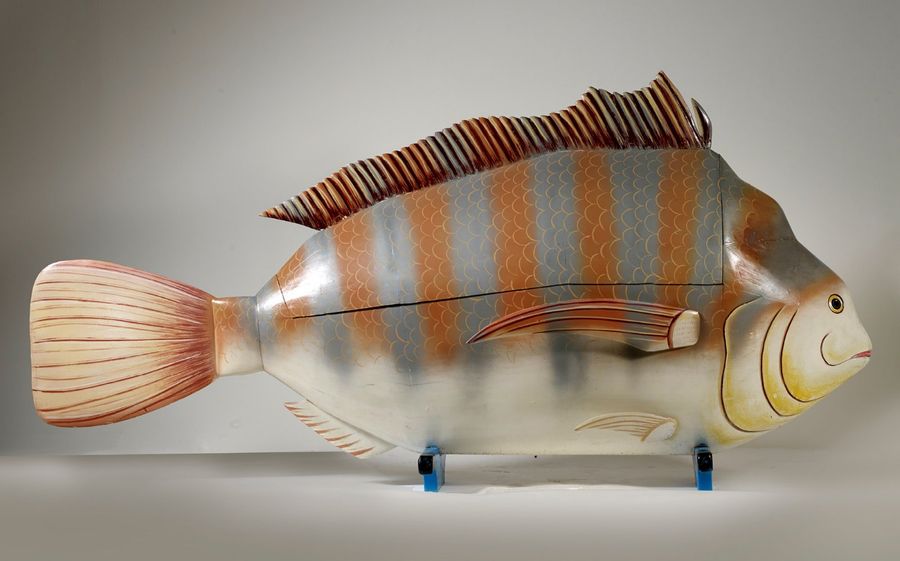
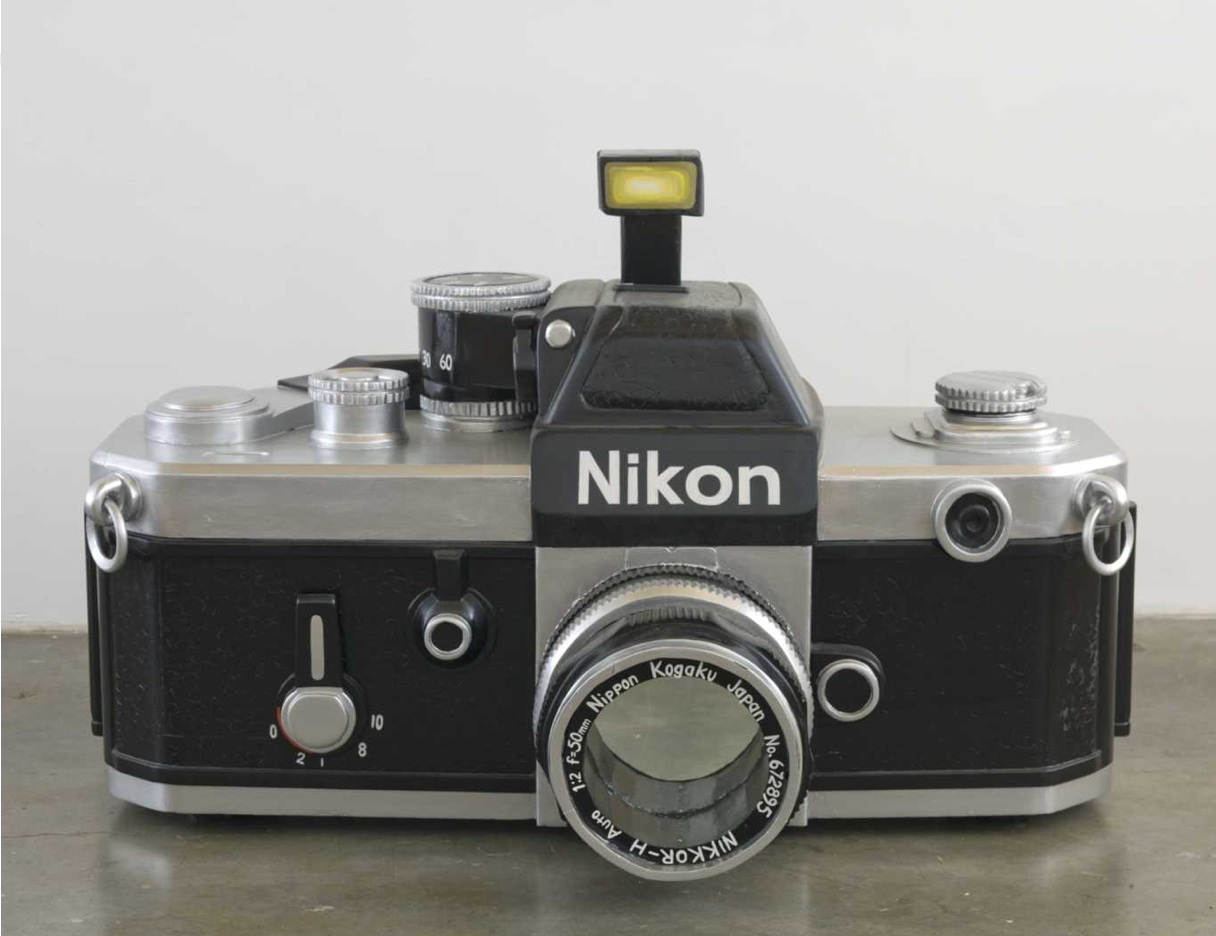
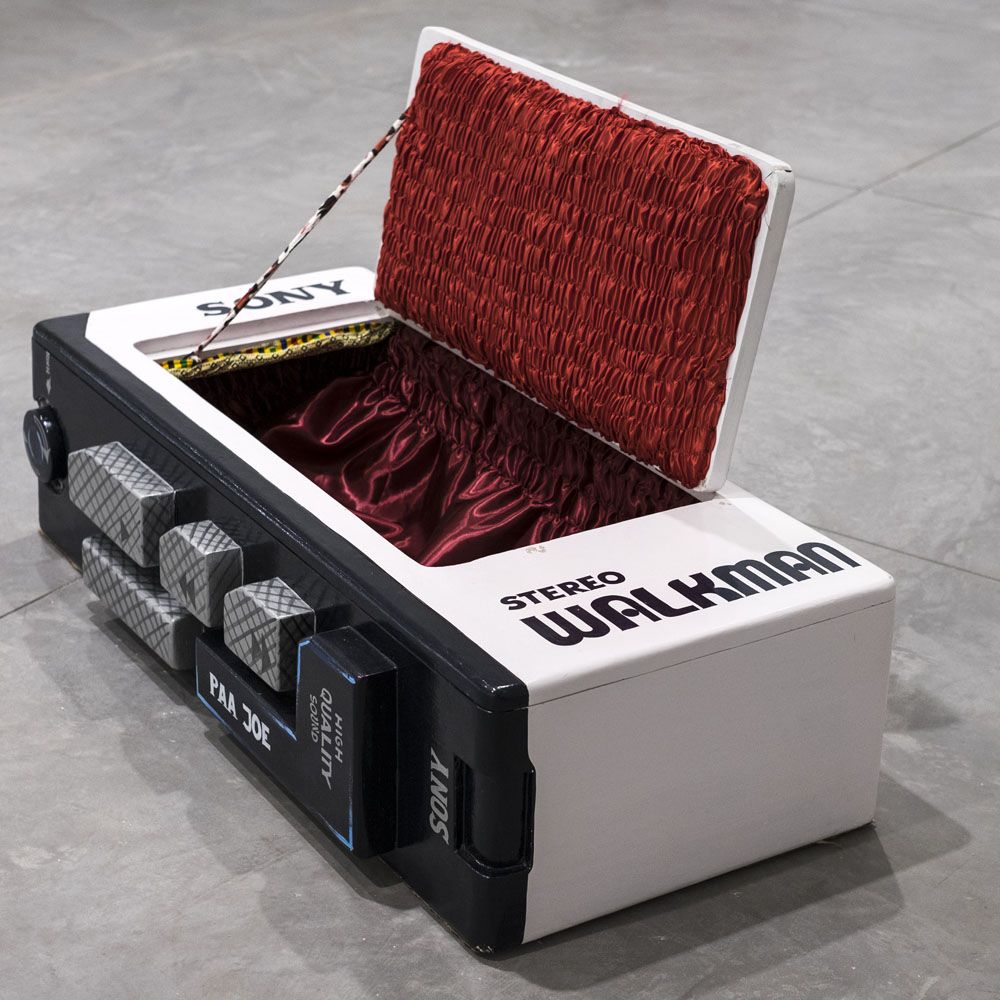
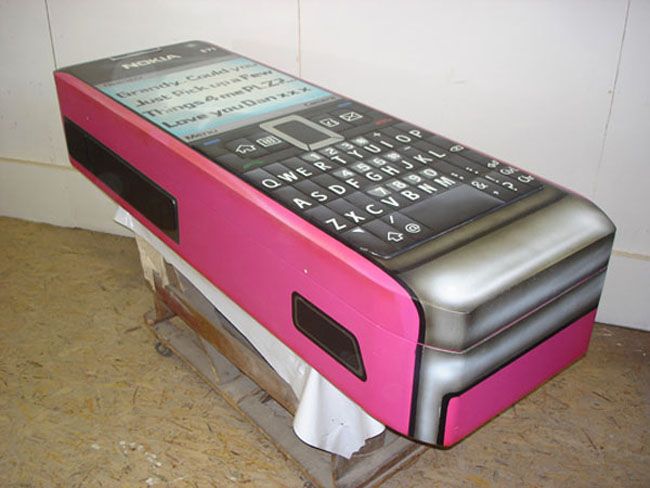
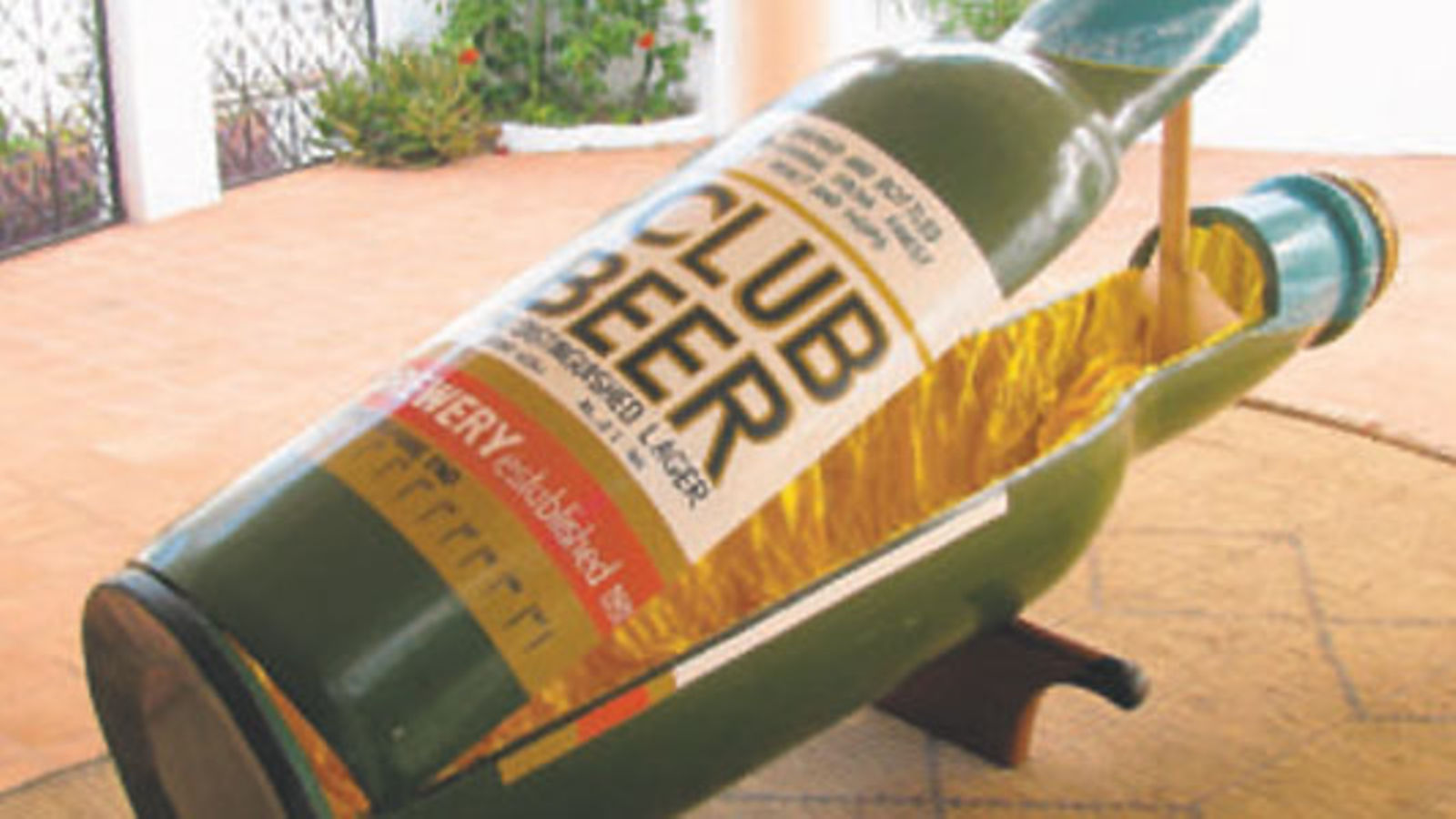
Joseph Ashong (Paa Joe) Coffins, 1998 – 2012
‘PAA JOE (with family name Joseph Ashong) is a Ghanaian figurative palanquin and fantasy coffin artist born 1947 in the region Akwapim belonging to the Ga-Adangbe people, Greater Accra Region in Ghana. Paa Joe is considered one of the most important Ghanaian coffin artist of his generation. He was involved since 1989 in major art exhibitions in Europe, Japan and the USA. His fantasy coffins are in the collections of many art museums worldwide, including the British Museum in London.’





______________
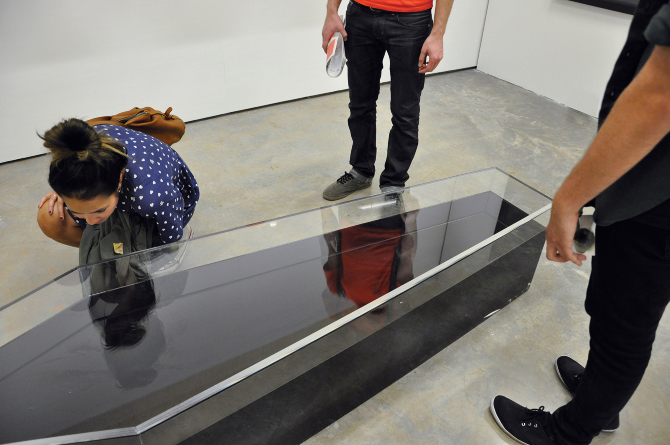
Shih Hsiung Chou Coffin (Long Stay), 2012
‘His artworks consist of clear perspex forms filled with viscous black recycled engine oil. Yet, the apparent simplicity of the artist’s work is deceptive. The oil in Chou’s unconventional paintings does not dry and his artistic gestures are not applied to a canvas. Instead, as the artist suggests, he is ‘practicing painting by other means’. Chou’s innovative Oil Paintings draw out dialectical relationships between material and non-material, being and non being, the known and the unknowable.’

______________
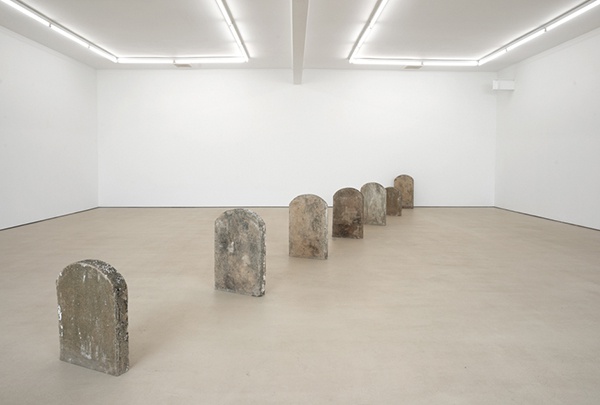
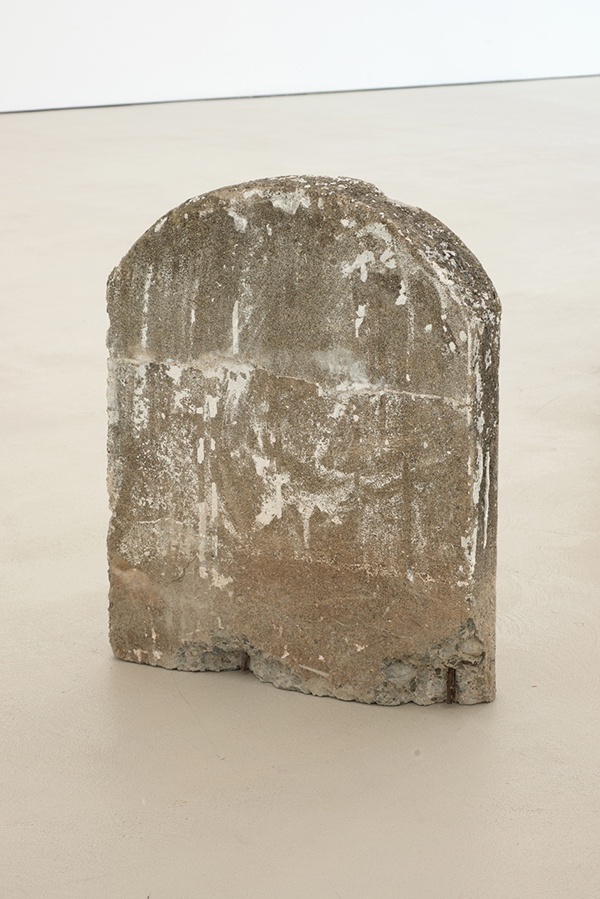
Luke Willis Thompson Sucu Mate – Born Dead, 2016
‘Sucu Mate – Born Dead is the result of an extended investigative process into the Old Balawa Estate Cemetery, a cemetery with a history of slavery in the Pacific island nation of Fiji. Luke Willis Thompson applied for custodial rights to a small selection of gravestones within the racially zoned site. In 2015, official approval was given to the artist from Fiji’s governing institutions to excavate anonymous material from the worker’s section, itself a former sugarcane plantation. The concrete markers were permitted to travel out of Fiji for a period of 24 months to be exhibited as art objects, and are presented here after being shown in Auckland and Brisbane. The work is, in this way, a mobile cemetery, and one that questions how human lives and dead bodies are inscribed in the order of power. The project will continue with the gravemarkers’ repatriation to Fiji and resituated within the same field from which they came. In such a way the project simultaneously prototypes both a historical continutiy and the performance of dislocation; two cultural operations with national relevance as the islands within Fiji face ecological change and the continuing submergence of their lowlands.’
______________
Tale of Tales The Graveyard, 2008
‘The Graveyard is a short art game created by the belgium duo known as Tale of Tales. The group, comprised of married couple Auriea Harvey and Michaël Samyn, is responsible for many indie games that each explore different aspects of the interactive space that is video games. The Graveyard is described by the makers as more like an explorable painting than an actual game. They play with the boundaries of games and the interactions of players as they tell the story of an old lady taking a walk through a cemetery. The game consists of the player walking their avatar of an old lady into a cemetery and up to a bench were a song remembering those who have died plays. After sitting on the bench and listening to the song being sung in Flemish Dutch with translated subtitles the player then can either remain on the bench where the music will soon start again without subtitles or simply get up and walk back out of the cemetery ending the game. The game is available in a free version as well as a payed version, with the only difference being that in the bought version there is a chance of the old lady passing away during gameplay.’
______________
Gerhard Nordström Untitled, 2014

______________
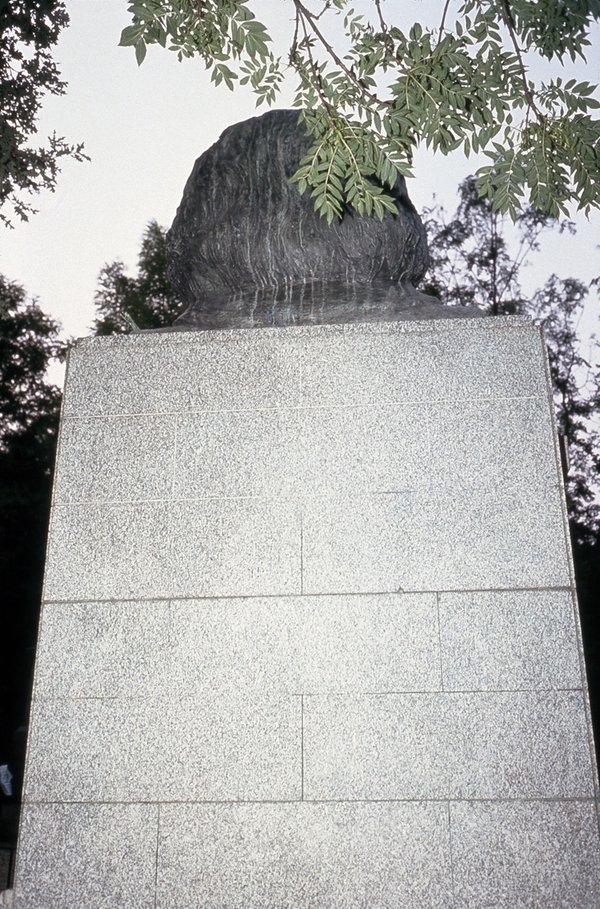
Allan Sekula Grave of Karl Marx and His Family. Highgate Cemetery, London, July 1989, 1992
‘Across four decades the photographic and written practice of Allan Sekula has provided an object lesson in the possibilities for an artistic commitment to labour’s cause and for the exploration of the world of late capitalism from a radical-left perspective. Turning from performance and sculpture to the camera in the early 1970s, Sekula has insisted ever since on the viability of realism and the ‘social referentiality’ of photography. While his photographic work has sought to renew the documentary tradition, Sekula’s practice as a theorist and historian of photography has been equally crucial to his search for a way beyond the habitual lapse of the discourse of documentary into either a scientistic objectivism or a romantic and expressive subjectivism.’
______________
Danielle Krcmar with Lisa Osborn Resting Benches, 2001
Concrete and steel

______________
Grave Extremely Rotten Flesh, 1992
‘Bodies rotting faces dark sent in forever fear all your flesh will rot Rotten corpse, dead in cruelty and pain to end up in this special way Extremely rotten fleshTrapped in a wooden case slaughtered at birth you died the fault of a deformed face you have to dieBodies rotting faces dark sent in forever fear all your flesh will rot Rotten corpse, dead in cruelty and pain to end up in this special way Extremely rotten flesh.’
______________
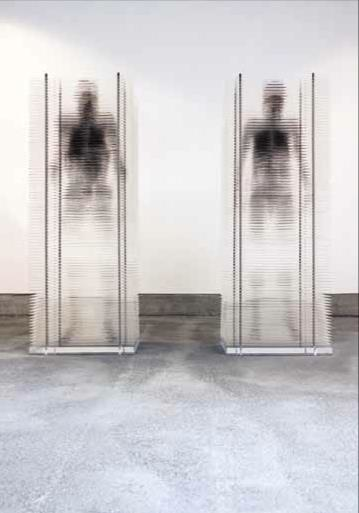
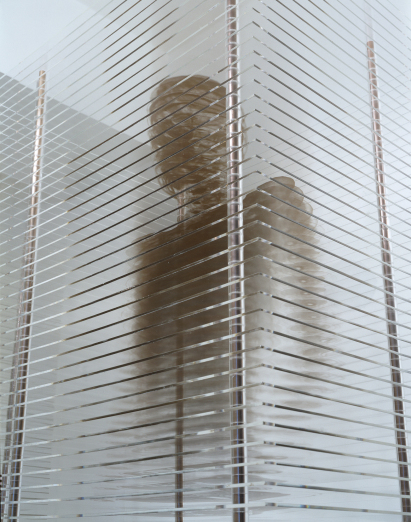
Marilène Oliver I Know You Inside Out, 2001
‘Fascinated by the possibility of downloading a man from the Internet Marilène Oliver created an intriguing installation from multi transverse sections of a body laid onto multiple layers of acrylic. The effect is a life size 3D shadow hovering, trapped and immortalised. Oliver’s installation created a stir when it was announced that the model had given his body for medical research before being executed in the USA.’
______________
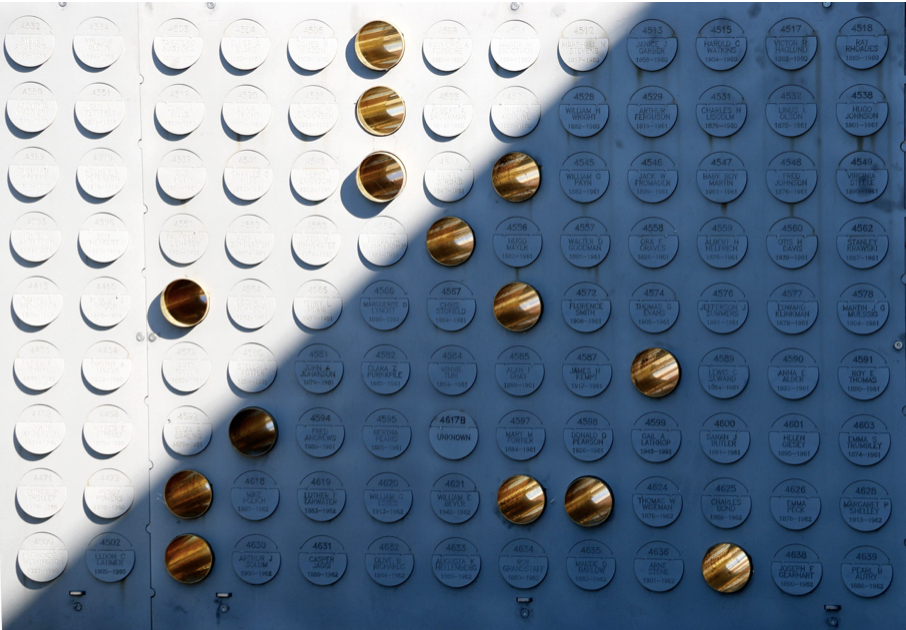
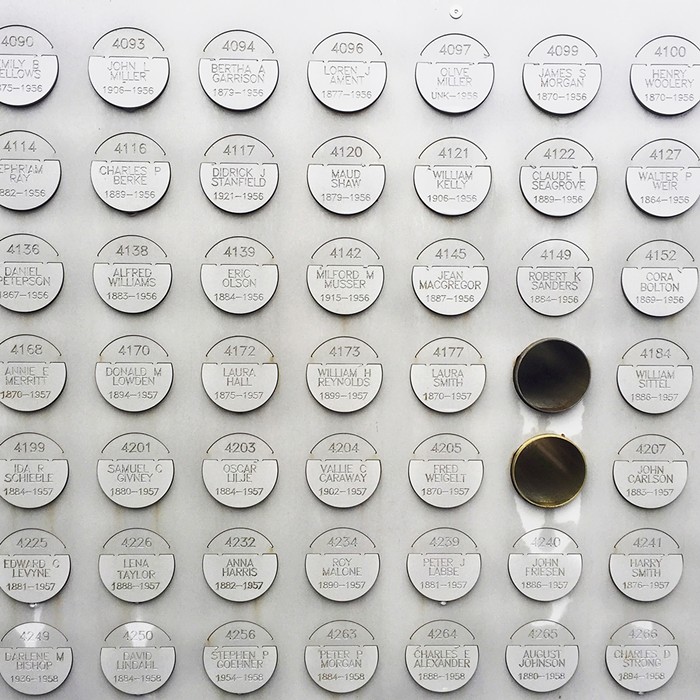
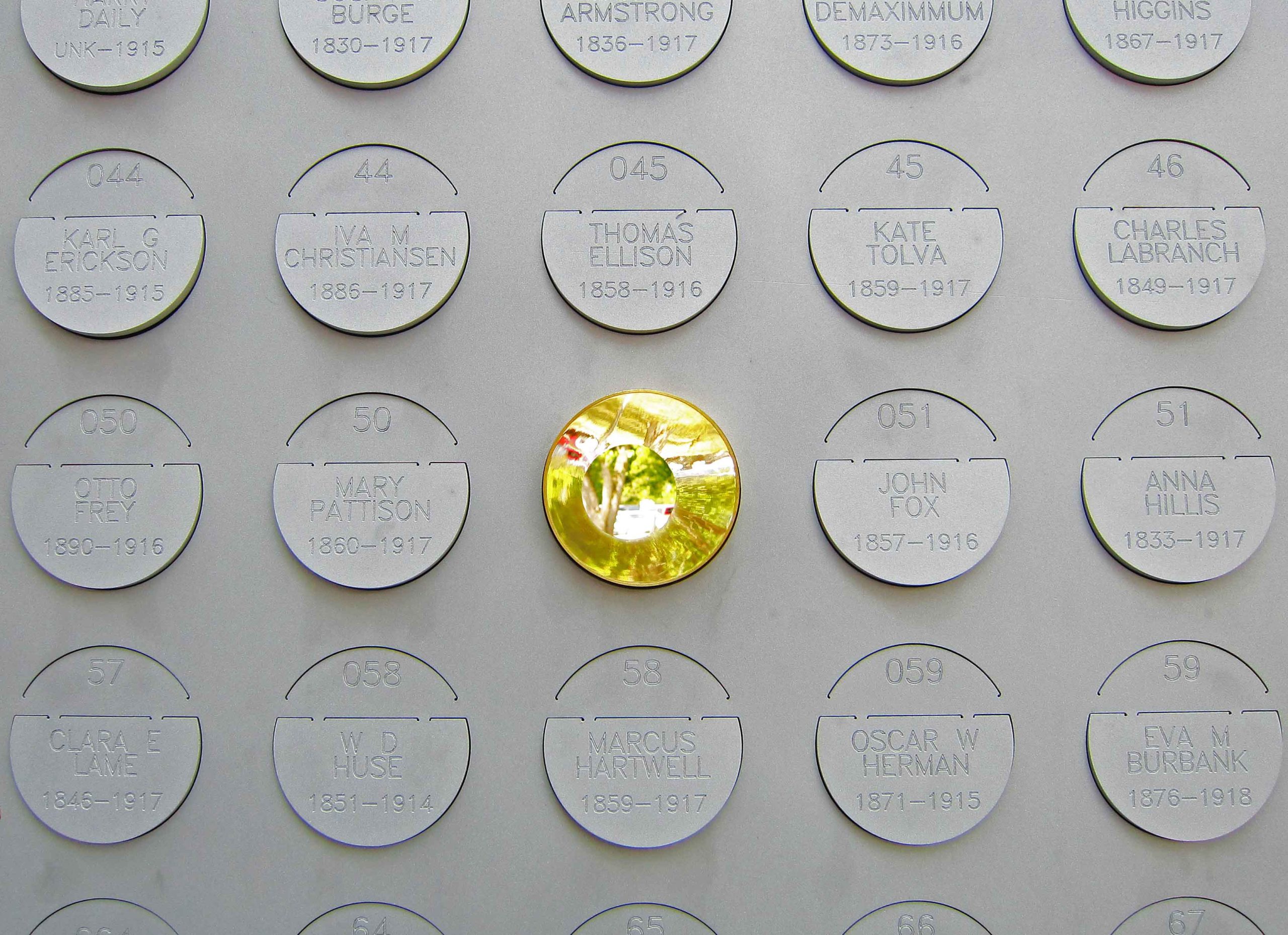
Lead Pencil Studio Oregon State Hospital Cremains Memorial, 2014
‘For most of the 20th century, it turns out, Salem’s Oregon State Hospital (OSH) was used as a dumping ground for unclaimed human remains from at least five area health facilities, in addition to its own crop. A bunch of these people had died at the Oregon Asylum for the Insane and were first buried in the asylum cemetery, until 1913–1914, when the asylum decided it needed the land, exhumed the bodies, and shipped them over to the state hospital for cremation. Most of their headstones were chucked on a nearby hillside. Once the bodies were burned, they were packed in copper canisters and stashed in a basement for about 60 years.
‘In 1976, OSH decided to move the whole inventory—the cremains of more than 5,000 people—to a designated memorial vault. But the vault leaked and the canisters got oxidized and damaged, many of them afflicted by galvanic corrosion—that powdery white/turquoise zinc buildup that you sometimes see on car battery terminals. Each can ended up with a unique corrosive bloom, depending on how much water had come in contact with it and also the distinct chemical composition of the cremains inside. The bodies have since been repackaged and rehomed in the hospital’s “Cremains Room,” and in 2007, the hospital began publishing the names of the deceased (you can look at the list here in hopes of persuading locals to come pick up their ancestors. There are still about 3,500 of them sitting there.’
______________
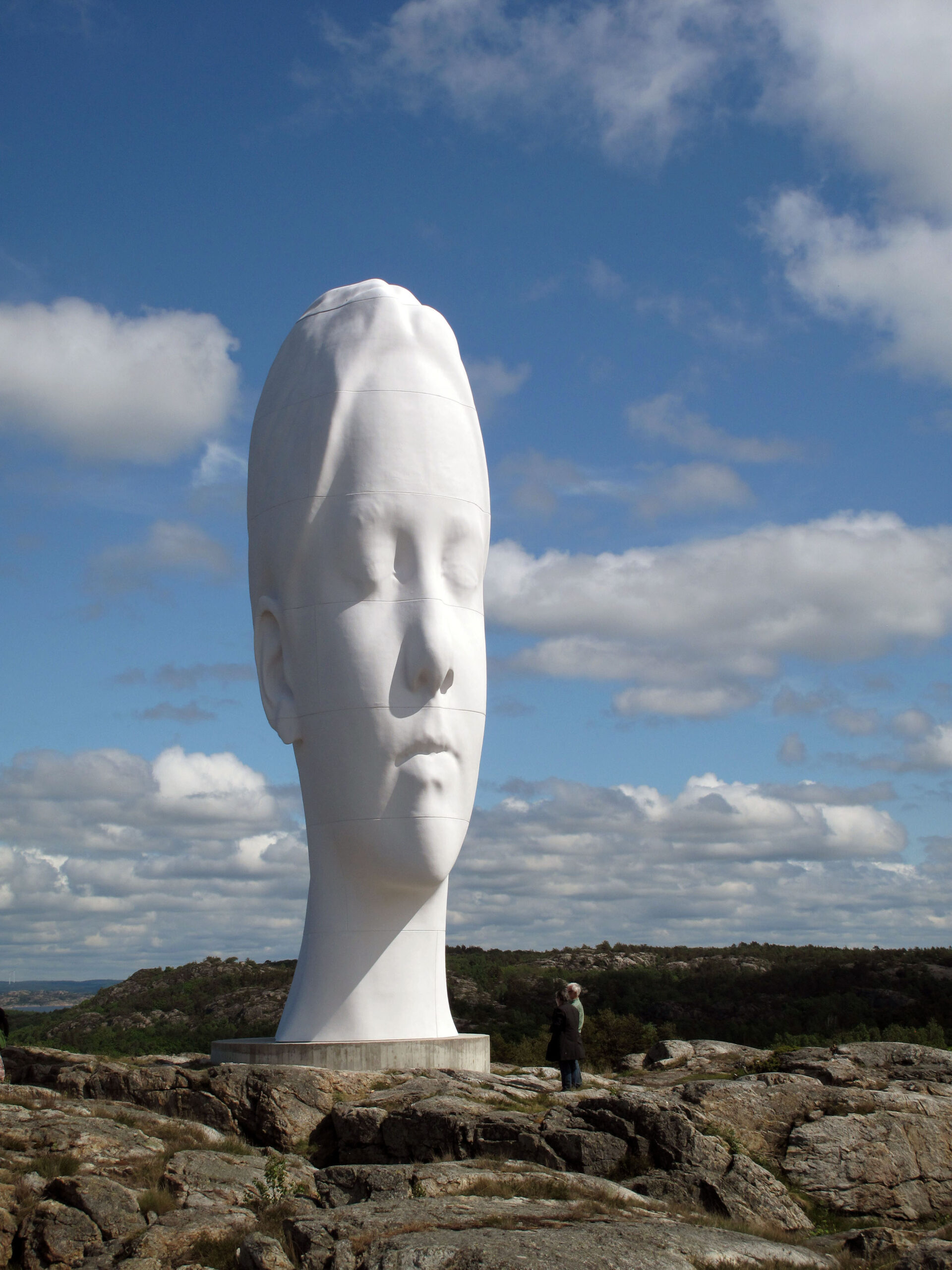
Jaume Plensa Anna, 2019
‘‘Anna’ is the name of a new artwork by Catalan sculptor Jaume Plensa in the restored atrium of the basilica of Montserrat, in the famous abbey on Montserrat mountain. A four-meter high head of a dead girl with closed eyes, ‘Anna’ is made of mesh, making the sculpture transparent, to expose the relationship between the interior and exterior.’
______________
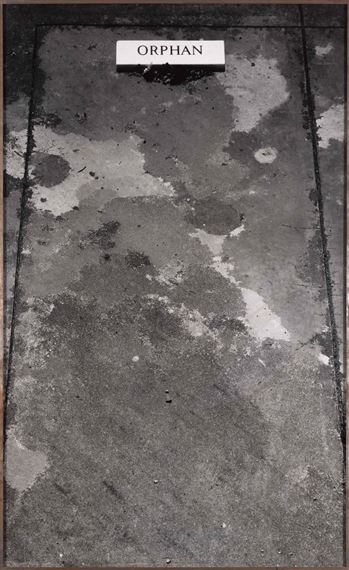
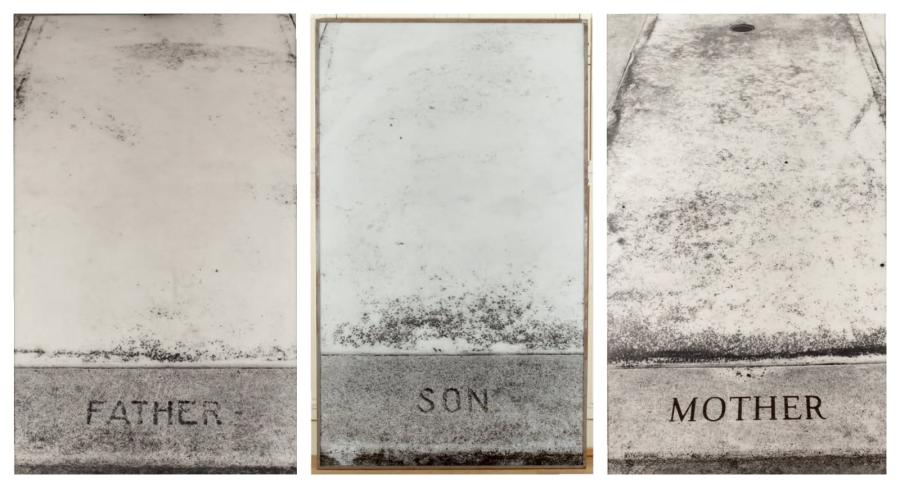
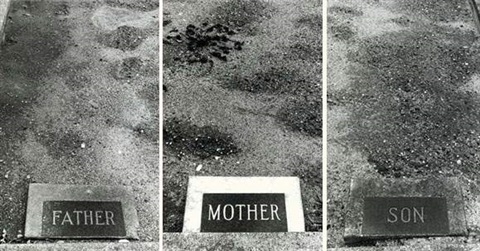
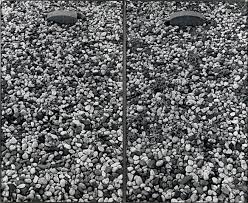
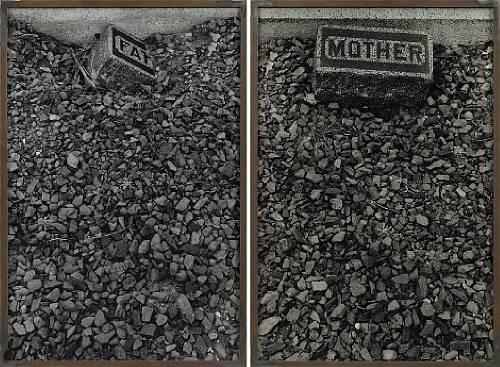
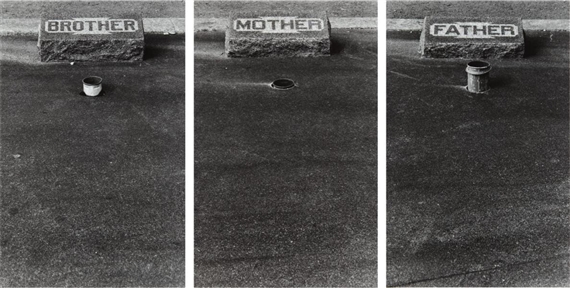
Sophie Calle Untitled (The Graves), 1991
‘In this series, she takes large-scale black and white photographs of graves and their markers, revealing the names and inscriptions. With an extraordinary comfort level, Calle sits in cemeteries for hours at a time (once a year at her own pre-purchased tomb), claiming that they are one of her “personal obsessions.” In a sense resurrecting the dead, Calle’s works speak more about the absence of the figures than their actual presence, creating infinite possibilities for their lives and deaths.’


______________
Tadashi Tonoshiki Opposing Grave Marker, 1991
‘I had the opportunity to meet and listen to the late Tadashi Tonoshiki only once, when I was still in my twenties. I cannot recall exactly when this meeting took place, but it was in Tokyo, and so Tonoshiki had probably come to the capital in connection with an exhibition. However, at the large-scale group exhibition held at Art Tower Mito in April the following year, “Mito Annual ’91: Beyond the Manifesto,” where Tonoshiki presented Opposing Grave Marker, we were prevented from meeting again due to his poor health, and less than a year later, in February 1992, he passed way at the age of just 50. The Tonoshiki in my memory looked the picture of good health and was full of youthful vitality, which makes me think that I was witnessing the final combustion of the life of Tonoshiki, who already knew he was about to die.’
______________
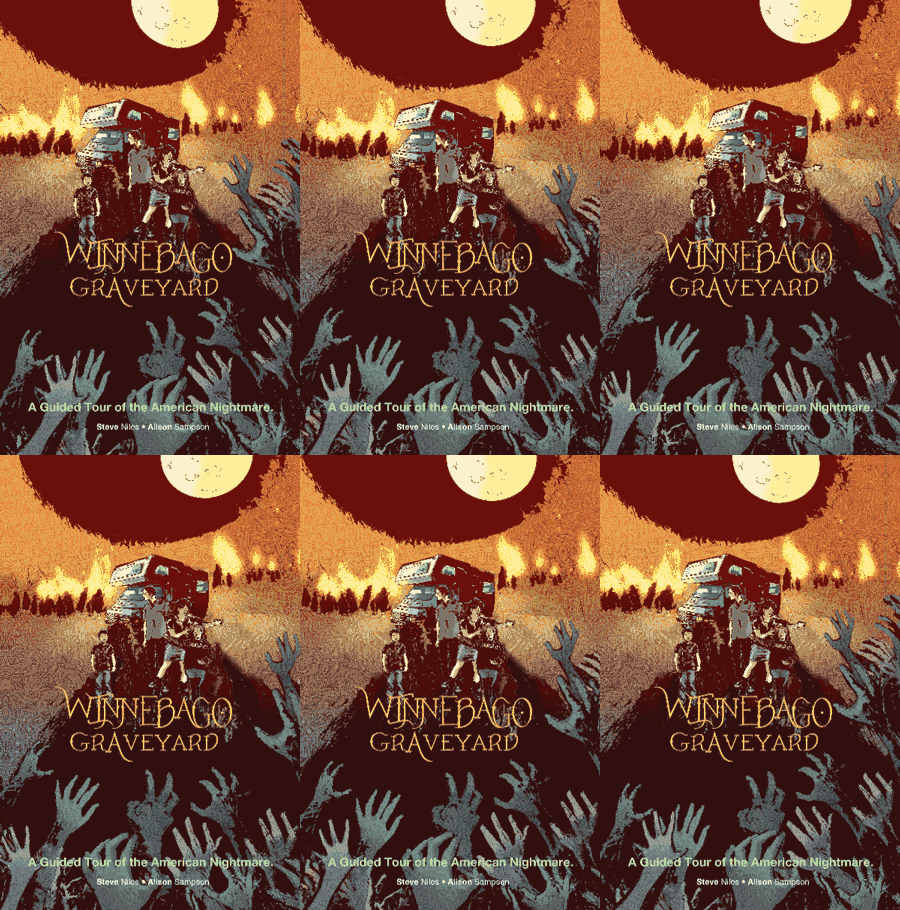
Steve Niles, Alison Sampson Winnebago Graveyard, 2017
‘An American family’s vacation turns into a nightmare when they stop in a small California town. Before they know what’s happening, they’ve become the targets of the town’s citizens who just happen to be Satanists.’
______________
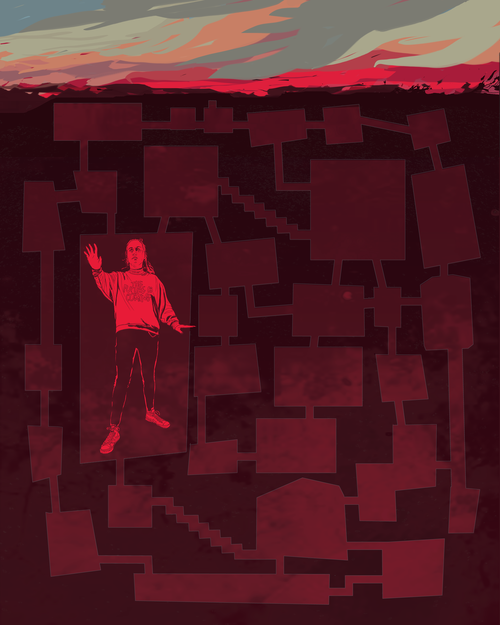
Brace Yourself Games Crypt of the NecroDancer, 2015
‘Crypt of the NecroDancer is an award winning hardcore roguelike rhythm game. Move on the beat to navigate an ever changing dungeon while battling dancing skeletons, zombies, dragons, and more. Groove to the epic Danny Baranowsky soundtrack, or select songs from your own MP3 collection!’



______________
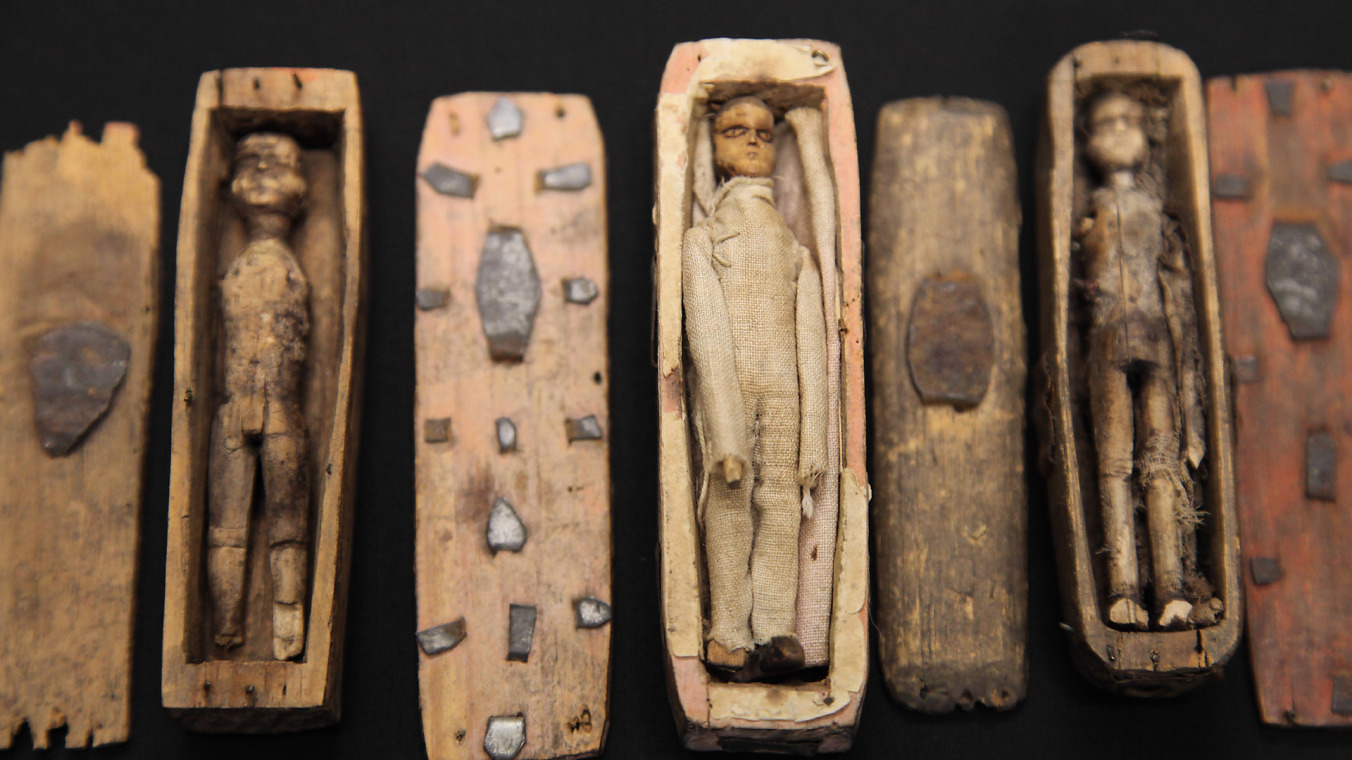
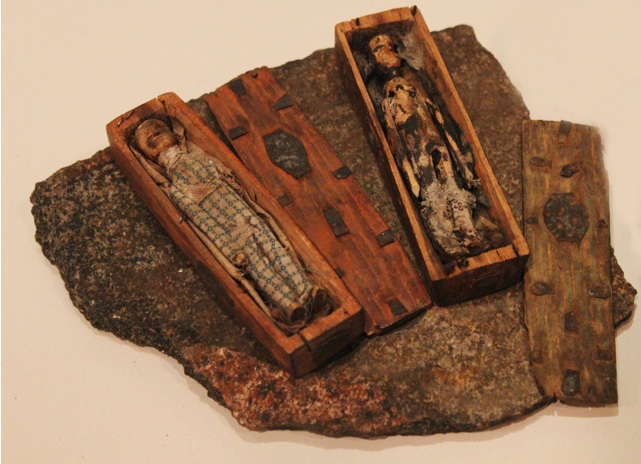
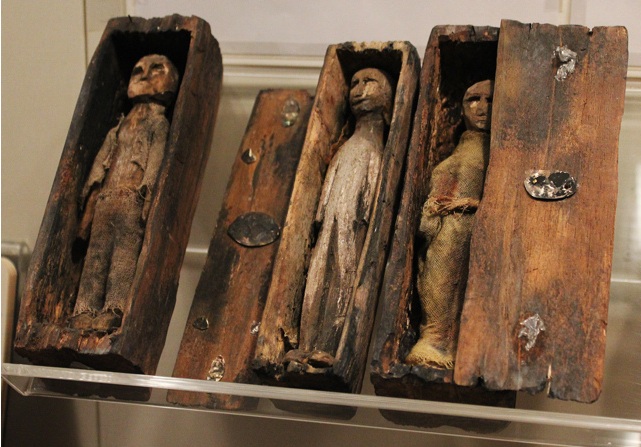
Unknown The mysterious coffins of Arthur’s Seat, ?
‘In 1836, five boys were hunting rabbits on the north-eastern slopes of Arthur’s Seat, the main peak in the group of hills in the center of Edinburgh. In a small cave in the crags of the hill they stumbled across seventeen miniature coffins carved in pine and decorated with tinned iron. Carefully arranged in a three-tiered stack, each coffin contained a small wooden figure with painted black boots and individually crafted clothing. What are these objects? Who made them and who buried them? And why? To this day, no one has any real idea.
‘At the time of their discovery, some speculated that they were implements of witchcraft; others suggested they were charms used by sailors to ward off death or even mimic burials for those lost at sea. There is also a provocative theory that the little figures are tributes to the seventeen victims of famed Edinburgh serial killers Burke and Hare, as the figures were found just seven years after Burke’s execution. However, all of the figures are dressed in male attire, whereas twelve of Burke and Hare’s victims were female.’
______________
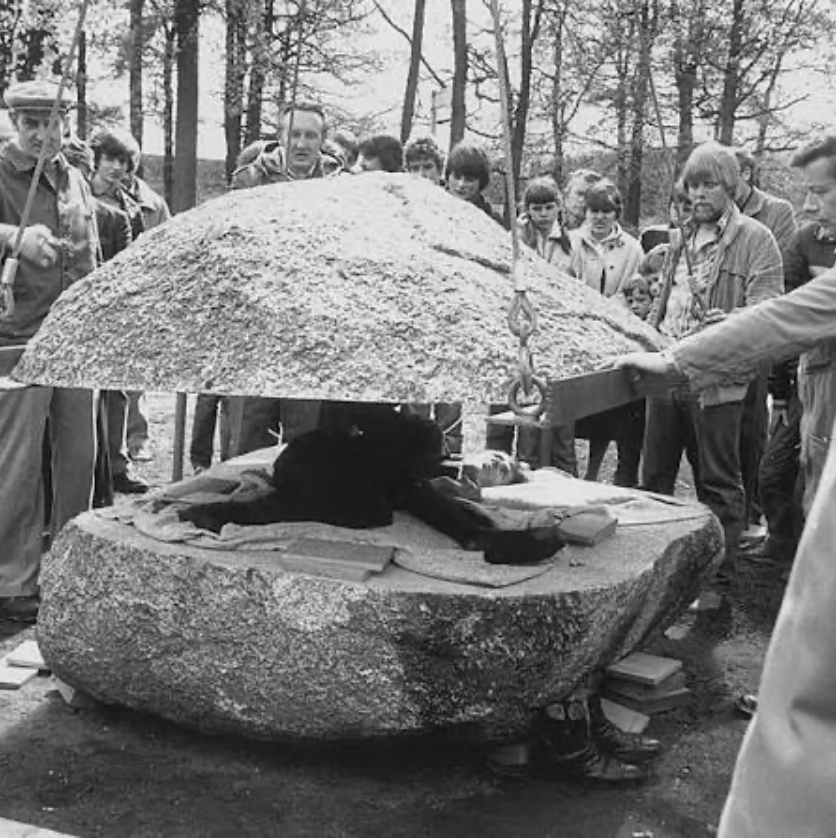
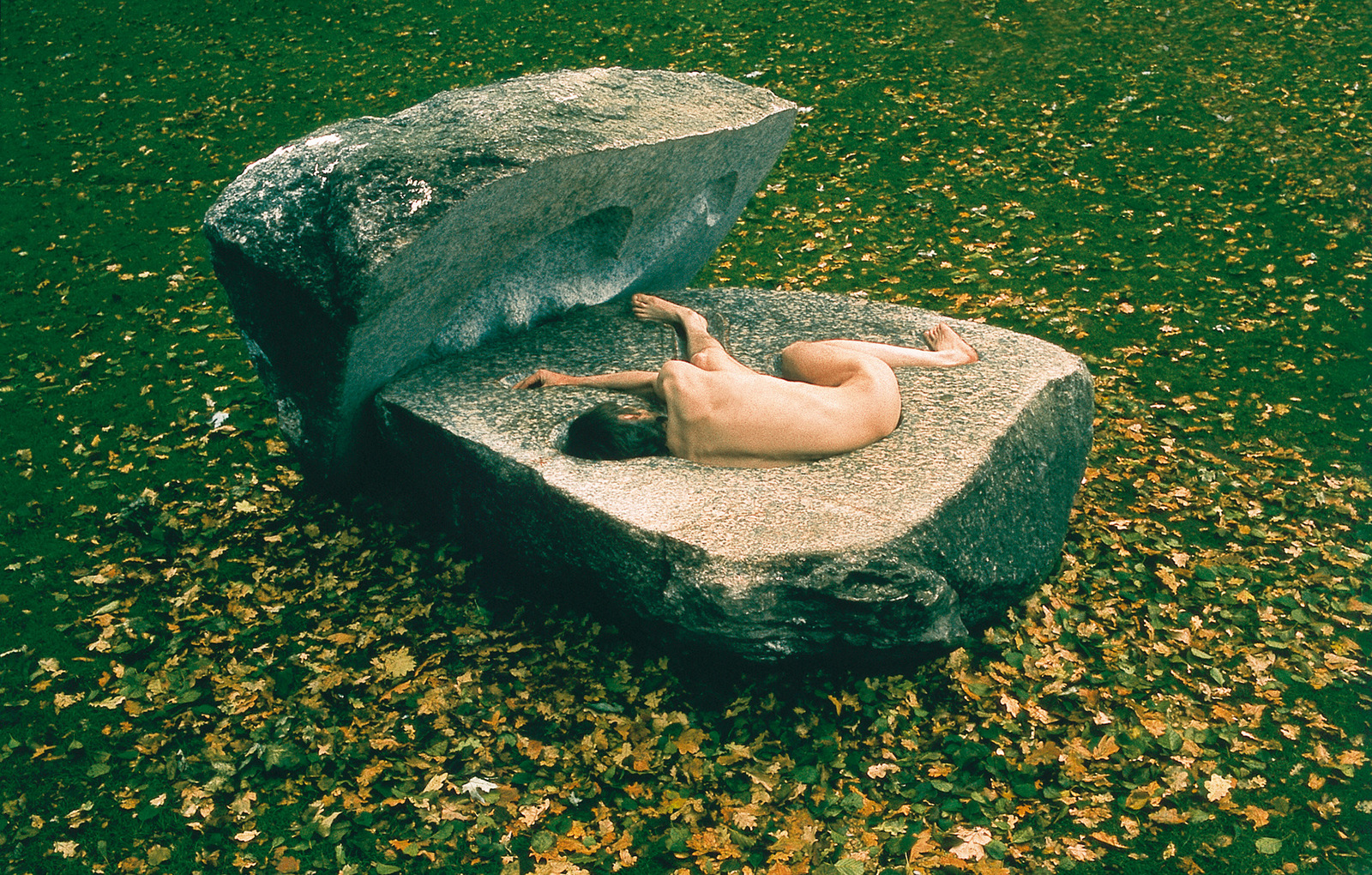
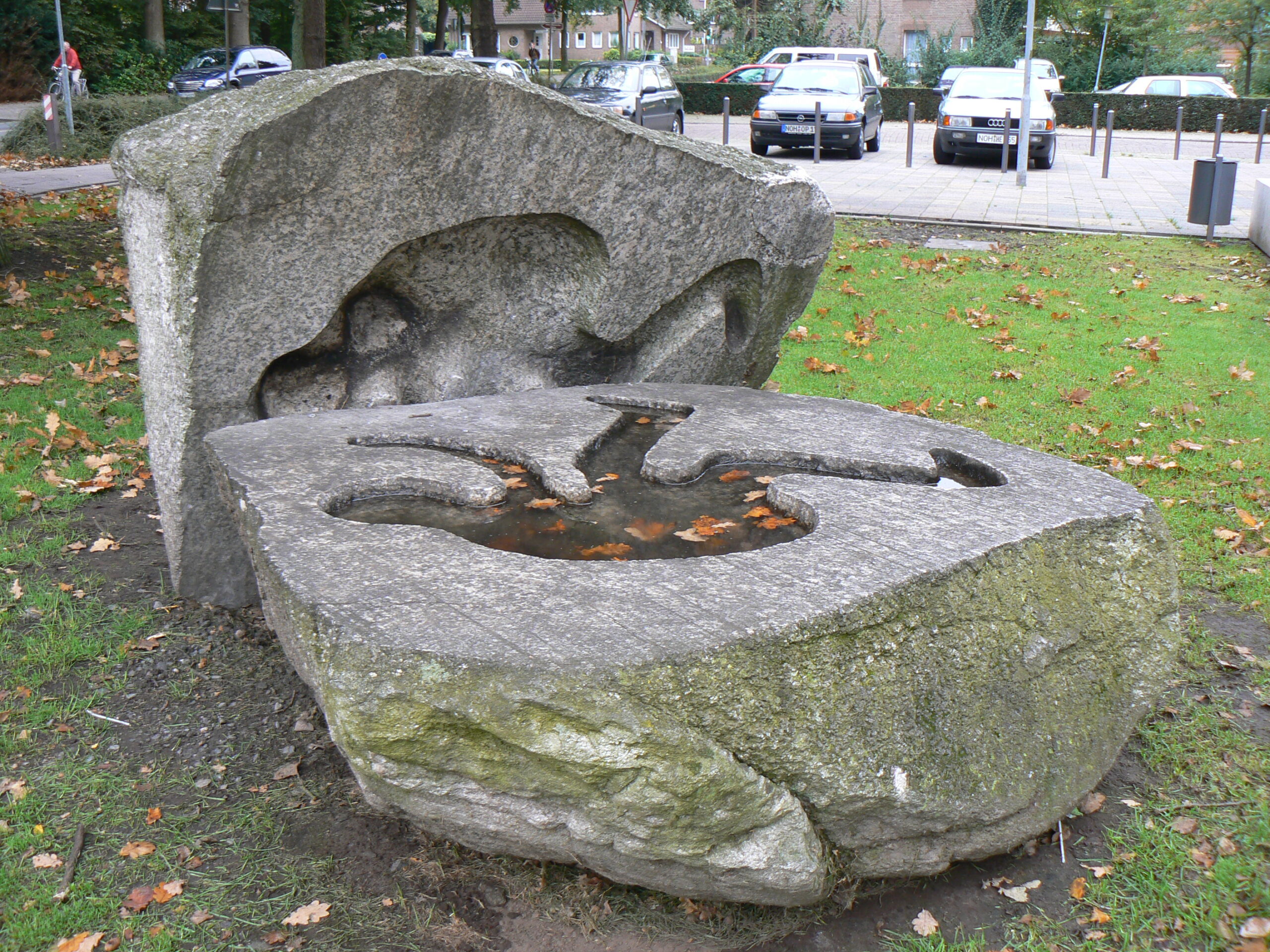
Timm Ulrichs Der Findling, 1978
‘The title means both ‘The Boulder’ and ‘The Foundling’. The pictures are the record of an action performed in 1978, 1980 and 1982, during which Ulrichs stayed inside the stone sarcophagus for up to 10 hours. Ulrichs was a typical ‘action artist’ of 70s, preoccupied with death, film and politics – he had the words The End tattooed on his right eyelid.’
*
p.s. Hey. ** Tosh Berman, Hey. Lindon is a very interesting fella and a helluva writer. I met Harry Smith once. It was very weird. He seemed to take an instant dislike to me and started playing creepy mind games with me to the point where the person who introduced us said, ‘Harry, leave Dennis alone.’ Never have been able to figure out why I set him off. ** Bill, Oh, wow, wild timing. Very interesting about the Thirwell live score. He can be very bombastic for better or worse, for sure. I did a little tour of poets and musicians with Foetus in Holland in the early 80s. He was at the height of his obnoxious, audience-attacking period and coked out of his mind. Did not like him. But I’ve met him since, and he’s a total sweetheart now. You saw Big Black and Rapeman, whoa. That’s extremely cool. ** Steve, Hi. We conferred with our producer and she’s good with our promo texts, so now we just to have finish making the deck. I have ‘CvsA’ cued up. Seems guaranteed fun. New episode! I haven’t had the chance to listen to last one yet. Double header coming up. Everyone, Steve: ‘My latest “Radio Not Radio” show is up. This one features RZA, The Architect, Czarface/Frankie Pulitzer/Method Man, Open Mike Eagle, Century Artists/Lavidaloca/TeeZandos, John Glacier, Myaap, Xyvrl, Sensational, evilgiane/$amaad, Cage, Fyore, Cities Aviv, Six Sex, Anysia Kim, Bby Goyard, pinponpanpon, DJ Exe/Cacau Chuu, Mc Lan, Marcelinho MeteBehla, Joey Beltram, Half Japanese, The Cramps, Koko Taylor, Alabama Shakes, Odyssey Cult, Funkadelic, Catalogue, Dos Santos, Um Jennifer?, The Bizarros, Elvis Costello, Upper Wilds, Ghost Dubs and Gregory Isaacs. You played Um, Jennifer, cool. I really like them. ** Adem Berbic, Great seeing you, bud. Ollier is a bit forgotten even over here these days. Headway > Baywatch always. Sure, send it over. It will characteristically take me a bit to read it, probably, but I covet the opportunity. As someone to whom ideas of spirituality and ‘universal processes’ are pretty foreign, it makes sense, yes. Today’s your T day, I think, yes? ** _Black_Acrylic, Dude did valuable things all over the place, yeah. I switched phone providers recently, but it seems to have been easy, although Yury did most of whatever heavy lifting was involved. ** cmr, Hi there! Wow, your initial paragraph was very sparkly and kind of helped wake me up. And it makes total sense too. Are you going to play that guitar or enshrine it? I suppose both are possible. Enjoy if that’s the word. ** Dominik, I’ve heard that about macho guys. Interesting, no? When I was a kid I had a pet rabbit. Its name was Mr. Bun. Otherwise, just dogs when I was much younger. My mom had a cat, and my brother had a Guinea pig, but they weren’t mine. I burned all my childhood diaries in my teens because my mom was an alcoholic snoop and my diaries laid out my weirdness a little too explicitly, but I regret it big time. Love looking at the tall, precarious skyscraper of books piled on his desk and being very glad that Paris doesn’t have earthquakes, G. ** Steeqhen, I’m sorry, man. That’s rough and a double whammy too. I hope you find a way to crawl out of the ruins if you haven’t already started. I’ve barely ever listened to Lana Del Rey for whatever reason, but I have lots of friends who swear by her. I’m not sure her thing is really up my alley, but I should try, shouldn’t I? ** Uday, Hey, bud. No, I’ve only seen excerpts from ‘Mahagonny’. I remember when Jeff held that screening, and I was so very envious. His films don’t seem to be shown here in Paris, and I wonder why given the built in audience for experimental films. Very odd. Sometimes I long to have no internal life, but then it happens and I start missing the mess inside me. You can’t win. A CD of you reading Self Portrait in a Convex Mirror, or did John record himself reading it? Nice gift, obvs. Travel? At the moment just to London for the ‘RT’ screening in late October, but I can foresee myself getting antsy in the meantime. Love back! ** laura w, I just read yesterday that Fassbinder had planned to make a film of ‘Blue of Noon’, but then he died. Pynchon’s pretty great. Well, not every single minute, but mostly. I like some of the straight American male authors back in the 60s when their work was heavily influenced by psychedelia: early Tom Wolfe, McGuane, Terry Southern, Pynchon, Reed, etc. The LSD influence usually erased their dicks. That America soundtrack is very hard to imagine sitting through. Thanks about ‘PGL’! My weekend was mostly film related work and stuff, I think. That’s all I remember at least. Yeah, I really hope people don’t start asking me about the ‘Frisk’ remaster because I don’t want to give that film any oxygen. ** HaRpEr //, Hi. Yeah, it’s going to be cool, the London screening. Tickets will go on sale towards the end of this month. Interesting: the church structure, yes. I think of my writing as architecture all the time. It’s a good way to give it a 3D quality. ** Thom, Hi, Thom. Well, I think there was a time when filmmakers thought of their films as material that could be reordered and revised. Now when directors do that, it seems to more about ego and money making. Cool that you can see what ‘LotF’ could once have transmitted to a weird, imaginative kid back when. This week has some cool possibilities, and I’ll try not to get in their way. Monday like a checkered flag. ** Carsten, You made it. So nice to be consumed by a work of a favorite filmmaker. I, of course, really like Bob’s blurb, but then I would, wouldn’t I? So, congrats! I think our producer is an actual producer who’ll do the scouting and organising the film’s needs. After our last experience, that’s still a hope, but no smoke on the horizon yet. ** Okay. I made you another art-filled cemetery. See you tomorrow.


 Now available in North America
Hey, thanks for this post! I really like the work of Louise Bourgeois, and Cattelan’s work around the representation of death (he exhibited a suicide victim in the Suspects exhibition in Arles, and has also created his own grave by digging a hole in different museums).
Yes, Nice is part of the Southeast of France — it’s a beautiful area with some great cultural institutions.
La Horde is getting a lot of attention now because of their collaborations with international stars, but their work on representation is extraordinary. It was actually “Age of Content” that got me interested in contemporary dance. I was a little more disappointed by “Après moi, le déluge”, which feels like it loses momentum at certain points… There are some really beautiful tableaux, especially those that reference pogo dancing or the wall of death (with the use of “Chop Suey!” by System of a Down — Preljocaj also used it very effectively in “Requiem”).
It must have been very stimulating to work with Gisèle Vienne! I’ve only been able to see Extra Life and hope to see more of her work soon… Which of her choreographies have stayed with you the most?
This weekend, I had the chance to discover the new exhibition cycle at the Palais de Tokyo, as well as the presentation of photographs from Sir Elton John’s collection (a particularly beautiful presentation of works by Nan Goldin and Mapplethorpe).
I hope you had a great weekend too and made some exciting discoveries!
Looking forward to hearing from you tomorrow.
Hi!!
The Puppies Puppies piece is so, so good. Thank you for today’s collection!
Mr. Bun—a name of many possibilities.
Oh, what a loss! I was lucky in that my family never really snooped around in my room, but I probably would’ve done the same if that’d been the case. Or tried to hide them, although that’s still no guarantee.
Is it a “to-be-read” pile on love’s desk?
Love asking to be buried in Joseph Ashong’s Walkman coffin, Od.
hi again —
thank you – the book as a whole is pretty good if you’re interested in reading it – i originally got it from a former friend of mine who was very knowledgeable about occult matters, and made it a mission of his for a few years to get as many queer or disadvantaged people on that path as he could. he had the belief that it was a large part of why he was able to escape his own poverty in the south – we fell out of touch a little while after that, mostly due to an awkward love confession from him. last time i checked on him i think he’d still been working in cybersecurity, going to OTO lodges, difficult to talk to about anything outside of those things lol
the intent is to play it, yeah. enshrinement is for bodily remains and art objects, much like your post today – in the meantime before that happens, i and that guitar have to live. supposed to pick it up today from the friend who’s fixing it up, so fingers crossed.
(completely aside re: waking up, another friend started reading nietzsche and recommended me the genealogy of morality – that’s a book i wish i’d read when i was younger, instead of almost anything else i ended up reading, especially the notion that aesthetic ideals need to be disowned)
thanks for the lovely tombs, heidegger’s desolation and puppies’ heartbreaking anguish were my favorites
well wishes and luck today
Nathan Coley is an interesting guy and he lectured us up in Dundee back in the day. Always liked that format of the visiting artist lecture, where someone’s practice is condensed into a 1 hour presentation. Sort of a Pop Idol for creative types, it seems well suited to the short-attention-span generation that’s currently growing up.
Likewise, always, and got it, thank you. I feel hopeful I’ll have something to send which does what I’ve spent a while hoping it would, if not as best as it possibly could. So watch that inbox, possibly.
Today has been T day, correct. I introduced him and his partner to my good friend who I’m staying with, and we all got Mexican, which, well, it was Parisian Mexican, but I can assure you that compared to London Mexican it was a revelation. Yesterday was J day, which was also very nice. I passed on your best and have his in return. We talked writing in the Buttes Chaumont. I figure that’s a good place to do that.
Of the above, I think I felt most drawn to the Adam Electric performance, and not just because it made me very self-conscious about my own lung capacity. Personally, I’ve never felt very drawn to latex, either sexually or aesthetically, but that… sold it? As a wise man wrote, ‘Death is so unknowable.’ I think my relationship with that word masquerades as a non-relationship – but I think that might also not be particularly unique? Save travels as you hurtle towards midweek.
@Steve: I watched the trailer for “Black Zombie” & it does seem right up my alley. Thanks a lot for the tip! Have you already seen it?
@DC: Well speaking of dark stuff, haha. The Gabriel Orozco desert cemetery photos from Mali are my favorite. If I don’t get my insane because illegal-in-most-places burial wish, which is to be burned on a beach Quetzalcoatl-style, I’d go for a desert grave like that. Do you have a preference for yourself? My remaining grandma wants to give her body to science.
I dig the Bob Holman blurb too. It’s punchy & alluring. If I saw that quote on a book I’d reach for it immediately. But I’m just honored to be blurbed by him at all.
Yeah I guess I shouldn’t be surprised when folks call my work dark but for some reason I still am. I guess I live so deeply inside my head & am so used to its furnishings that I sometimes forget that my instinctive way of looking at things strikes most people as dark & twisted. I bet you can relate, no?
It’s kind of like what I was saying about Claire Denis not seeing anything particularly unusual about her approach. I remember a lovely moment in a career retro Q&A where she answered with this almost childlike helplessness, as in “it’s just how I experience the world”. And she makes her art accordingly, rather than cater to expected grammar & norms. But yeah, “The Intruder”: have you seen it? She said that making it was the smoothest process imaginable—just coasting on pure instinct. And when the premiere rolled out she suddenly realized how experimental & “difficult” it will seem to others. I can relate to that, both in terms of form & content.
No, I’ve just read about it and seen the trailer. It opens in the U.S. Friday.
I hope that Paul Thek piece will show up someday in a garage in Germany. I like that Timm Ulrichs piece. And Monochrom! You probably know their Arse Elektronica (haha) conference? Apparently it’s still an annual event. Johannes is a hoot. He’s been making odd horror-adjacent films lately. I really liked Masking Threshold.
Other than the Crossroads gig, I also saw Thirlwell at a small solo gig maybe a year or two ago. Crossroads also showed his short Sonder, not terribly memorable, but very nicely put together. He can be so good with the dark synthetic orchestra arrangements.
Bill
i have a massive thing for cemeteries, so this was quite cool. i really liked the deformed catherine heard skulls. the ethics of removing headstones from graves does interest me… the city i work in has a town green that used to be a graveyard, but when they wanted to make it into a public park they just took all the headstones and moved them elsewhere and left the bodies where they were. every so often a tree will come down and uproot a skeleton. spooky stuff.
well, if anyone could direct an adaption of blue of noon, it would have been fassbinder. i also did forget about tom wolfe and terry southern and the early 60s postmodernists (richard brautigan was another one, i think?), none of whom i’ve read but all vaguely interest me, the closest i’ve come being vonnegut in high school. aka “the favorite author of that awful indie guy you had a crush on in high school”.
the destroyer song in pgl was a nice antidote to the america soundtrack, for whatever it’s worth. did you end up finishing that book? what happens when you don’t like a book you’ve been asked to blurb? also very curious to hear your thoughts on coyote vs acme if you do end up watching it.
Highgate cemetery where Marx is buried is great, very beautiful. I’m guessing it doesn’t hold a candle to the Pere Lachaise though, which I’ve always dreamed of going to. There’s actually a famous hidden Victorian pet cemetery in Hyde Park that I’ve never got around to visiting too, and I think I have to now.
There’s a number of books I love that feel very architectural. The 3D effect is spot on. Something like ‘Castle Faggot’ is like that in that it feels like a building plan and some things are like placeholders. ‘The Tunnel’ by William Gass is a very different example, but in that case it’s like the prose is literally digging itself into a hole.
I watched Godard’s ‘King Lear’ this evening. Very very interesting and oddly beautiful. No surprise that it was panned though, but I loved it. I’m really going through a Godard completist arc at the moment. I have my eye on ‘Numero Deux’ but it’s very hard to find.
Didn’t realise you’d met Harry Smith. You continue to amaze 🙂
I could not find a complete recording of Self portrait (although he does some of my favs, including Scheherazade, on PennSound) so it’s me reading it subject to the 80 minute limit of the CD and also my arbitrarily imposed condition that I have to use the first take of each recording, my horrible French pronunciations included. Recovering my inner life bit by bit; screened Teorema for some friends and acquaintances last night, to generally positive reception. I think the trick is to have the inner life as the normative state, with the ability to use some temporary off switches, which most people who think of these things in this way use drugs for, but really there’s no substitute for art. Really enjoy hanging in cemeteries, especially after dark. I’ve found them generally safe because people who are already disturbed tend to stay away from gravestones. Or maybe it’s just my luck. In 2004 (yes, a few months before I was born but multiple profs have confirmed this story), a guy at my undergrad broke up with his girlfriend of 4 years, who thought he was about to propose, by walking her to the cemetery, pointing at one of the graves and saying, ‘Just like the walk to get here, our relationship has been long and beautiful. Just like those people over there, our relationship is now dead.’ Or something along those lines. Trying to get the mailing address of Dan Quayle so that I can write to him.
Those Siah Armajani pieces are gorgeous.
Hi Dennis!
Great exhibition!
I’m hella phobic about being enclosed (especially in the dark), so of course my disaster tourist brain automatically insists on placing me inside Timm Ulrichs’ hollow boulder, hermetically closed stone to skin. And just for a second, before the horror of that imagined reality sets in and I start slightly hyperventilating, I get the same exact euphoric thrill that urban exploration triggers in me.
(I’m gonna meditate on that for a bit, because if my impulsive curiosity might one day get me buried dead or alive, I’d better tweak that urge.)
I also love the ice coffin btw. The world needs ice coffins.
Laura told me to check in on you on her behalf. She’s steadily and consistently improving, and she’s been saying the writing itch has been creeping up more, so that’s good. She’ll get there, man. (See, the thought of that instantly evaporates whatever was lingering of my hyperventilation! <3 )
She's second-guessing the shit out of her novel though. Keeps insisting she has to start all the way from scratch (I always say she shouldn't).
I know what she means though. I've been using little pockets of spare time to work on music, and I keep going back and forth between leaving songs simple and rough ("lofi aesthetic" lawl) and brutally cutting them up and using the parts for new songs.
Anyway, she says hi.
Are you looking forward to pumpkin season etc? Gotta plot this year's Halloween movie all-nighter, better make it good.
Take care! Stay in touch. xx