
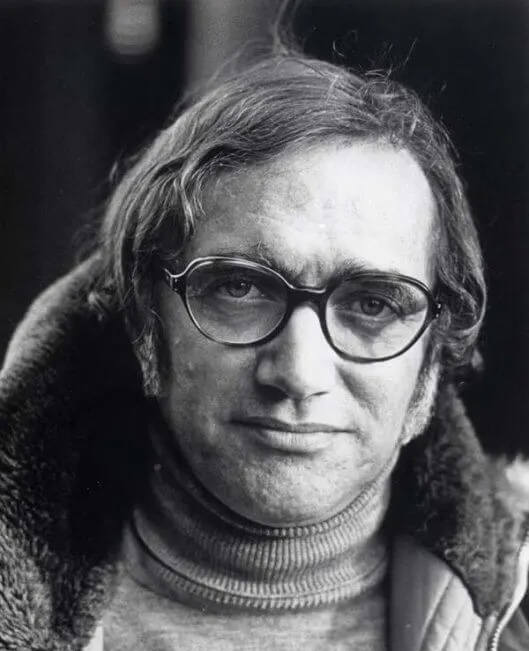
‘In a recent interview, Ben Marcus resisted being called an “experimental writer,” asking rather impatiently, “Does anyone self-identify as experimental? Anyone?” Apparently Marcus is not much aware of his predecessor, John Hawkes, who once told an interviewer, “Of course I think of myself as an experimental writer,” regretting only that “the term ‘experimental’ has been used so often by reviewers as a pejorative label intended to dismiss as eccentric or private or excessively difficult the work in question.” Marcus seemed to be decrying the expectation that he should always be sufficiently experimental, but Hawkes never wavered in his determination to challenge entrenched habits and complacent practices in both the writing and reading of fiction. In the same interview, he asserted that “I began to write fiction on the assumption that the true enemies of the novel were plot, character, setting, and theme, and having once abandoned these familiar ways of thinking about fiction, totality of vision or structure was really all that remained.” Hawkes endeavored throughout his career as a writer to validate this assumption, producing a series of novels that do indeed discard the “familiar ways of thinking” and attempt to substitute for them a “totality of vision or structure.”
‘By both articulating a commitment to “experimental fiction” and putting into practice a coherent conception of what such fiction should do, John Hawkes established himself as perhaps the most important experimental writer in the postwar period, perhaps in all of American literature. Furthermore, his novels remain as thematically provocative and aesthetically fresh as they were when published — Hawkes’s first novel, The Cannibal, was published in 1949, while his final novel, Sweet William, was published in 1993, five years before his death at the age of 72. Unfortunately, these novels have largely faded from literary-cultural consciousness, as has Hawkes himself, perhaps precisely because he did make such an effort to create radically varied works, each novel taking experimental fiction in a somewhat different direction (in some cases even critiquing the previous novel) so that no one work can really be identified as a “typical” Hawkes novel — all of them are typical. While any one of the novels provides its own rich and unique experience, to “get” Hawkes might require reading all of them, and perhaps that is more effort than most readers want to make.
‘However, those readers who are willing to devote some time to Hawkes’s work, and to judge the novels on their own terms — since Hawkes himself devoted much effort to establishing those terms — would sure find it a rewarding, if at times also rather disquieting, experience. And although appreciation of Hawkes’s achievement can’t finally rest in singling out his “best” or most “representative” novel, it is possible to focus first on a particularly dynamic period in Hawkes’s career, a period in which Hawkes produced several novels that both illustrate his inveterate experimentation and stand on their own as satisfying works of literary art. The set of novels beginning with The Lime Twig (1961) and including Second Skin (1964), The Blood Oranges (1971), and Travesty (1976) could serve as the foundation of a revival of interest in Hawkes’s fiction. Each of them succeeds in redeeming the ambitions of experimental fiction, while, together, they are as impressive a group of books as any written by a postwar writer.
‘The Lime Twig calls more on “established” strategies than his earlier novels, although it would still be a mistake to expect that the effect of those strategies is a reassuring return to a familiar aesthetic order. In this novel, Hawkes once again employs genre parody, this time of the crime thriller, but The Lime Twig reinforces few if any of the formal or thematic assumptions of the genre. Instead, it explodes those assumptions, turning them back on the reader. As Donald Greiner, who has perhaps offered the most insightful consideration of Hawkes’s work in his book Comic Terror, puts it, “All of the violence, sadism, and general sordidness which we associate with the world of detective fiction are used and mocked” even as Hawkes further “suggests that while outwardly repelled, we subconsciously long for the thrills of violence and possible death which we normally experience vicariously while reading a detective novel.” The Lime Twig offers the reader enough of the recognizable elements of character and plot associated with crime fiction to sustain the possibility it might resolve itself into a conventional “good read,” but along the way it presents an even more violent and disturbing account of the criminal milieu it portrays than the typical crime novel, and ultimately provokes a kind of disgust with the notion that stories of murder and brutality would be the basis of a “good” read in the first place.
‘Numerous commentators have singled out the notion of “design and debris” as perhaps a name for the aesthetic philosophy at work not just in this novel, and not just in Hawkes’s work as a whole, but in the collective practice of “postmodern” experiment in general: the existing conventions of fiction are smashed but this smashing is itself purposeful and amid the debris a new design can be discerned. This is a compelling enough argument, but in the case of The Lime Twig, Travesty, The Blood Oranges, and Second Skin “design and debris” could be applied even more specifically to the effect of Hawkes’s experiments in point of view. Hawkes so thoroughly hollows out the presumptive authority of the first-person narrative that this mode collapses of its own weight. Yet the novels still reveal an “innate design,” partly to be found in the artful way that collapse is effected, through which the dominating “vision” is expressed. And while the terms of that vision are distinctive to each individual work, it is the kind of dark vision one might expect from a writer who believed that fiction should compel readers to confront the realities of human experience, not through the formulas of “realism” but through a kind of experimental writing that doesn’t allow us our own usual evasions.’ — Daniel Green
____
Further
John Hawkes @ Wikipedia
All That Remains: On the Fiction of John Hawkes
John Hawkes on Writing, Fiction, Nightmare, and More
A Conversation with John Hawkes By Patrick O’Donnell
The Enemies of the Novel: DG Interview With John Hawkes
John Hawkes @ goodreads
Obituary: John Hawkes
John Hawkes Is Dead at 72; An Experimental Novelist
Remembering John Hawkes
An Appreciation of John Hawkes
AN INTERVIEW WITH JOHN HAWKES
Practicing Post-Modernism: The Example of John Hawkes
Pseudo-Intellectual Reviews: John Hawkes
‘The Universal Fears’
Buy ‘The Lime Twig’
____
Extras
George Plimpton interviews John Hawkes
THE LIME TWIG by John Hawkes
_____
Interview
from Dalkey Archive
Interviewer: You’ve spoken in several interviews about the geneses of some of your novels—an article on cannibalism that inspired The Cannibal, a newspaper story on horse racing in England that inspired The Lime Twig, a trip to two islands that served as the source for Second Skin. It seems that your novels are motivated by what Henry James called ‘germs”: seemingly small events or snatches of conversation upon which the imagination works, creating an entire fictional world from a corpuscular beginning. Could you talk about these beginnings, for some of your fictions?
John Hawkes: I haven’t said enough about how important horses were to the inception of The Lime Twig. The first draft of the novel was written in one summer, and I remember going to a newsstand in Cambridge and finding a magazine on horse racing—that was, perhaps, my first moment of research. Also, my father’s best friend was a steward for the New York racetrack system, and I knew this man and his family from a very early age. I associate with them memories of handsome engravings of nineteenth-century racehorses, sometimes with jockeys on them, sometimes not. Though I loved horses and was intrigued by the idea of horse racing, I had never actually seen one when I was working on the first draft of The Lime Twig. Then I was at a party where I met the poet, J. V. Cunningham. We were talking, and I mentioned horse racing. Cunningham said that he went down to the Narragansett racetrack all the time, so he invited me to go down with him and bet. He made a lot of money, but he wouldn’t give me any tips, so I lost my two dollars immediately. But the one thing I got out of the experience was going down to the rail of the track, along a turn. By standing next to the rail as the horses went by, I could hear the jockeys talking to each other and thwacking the riding crops against the rumps of the great beasts—that impression is in The Lime Twig.
I: You mentioned that the parody of marriage in Charivari is a result of attitudes you were projecting toward your parents and your own marriage at the time of its writing. Is there any carry-over of this attitude in The Lime Twig in the parody of the Bankses’ marriage?
JH: In The Lime Twig I took two very young people and made them very old. The only constant I can see in both sets of characters, starting from the man and woman in Charivari to the pair in The Lime Twig, is that innocence is immediately a dominant theme, along with anxiety and dream. As in The Lime Twig dream and illusion are right at the center of Charivari.
I: I think the greatest gap between publications of your work is that which exists between the appearance of The Owl and The Goose on the Grave in 1954, and The Lime Twig in 1961. Is there any particular reason for the gap? Was the conception or drafting of The Lime Twig especially difficult in any way?
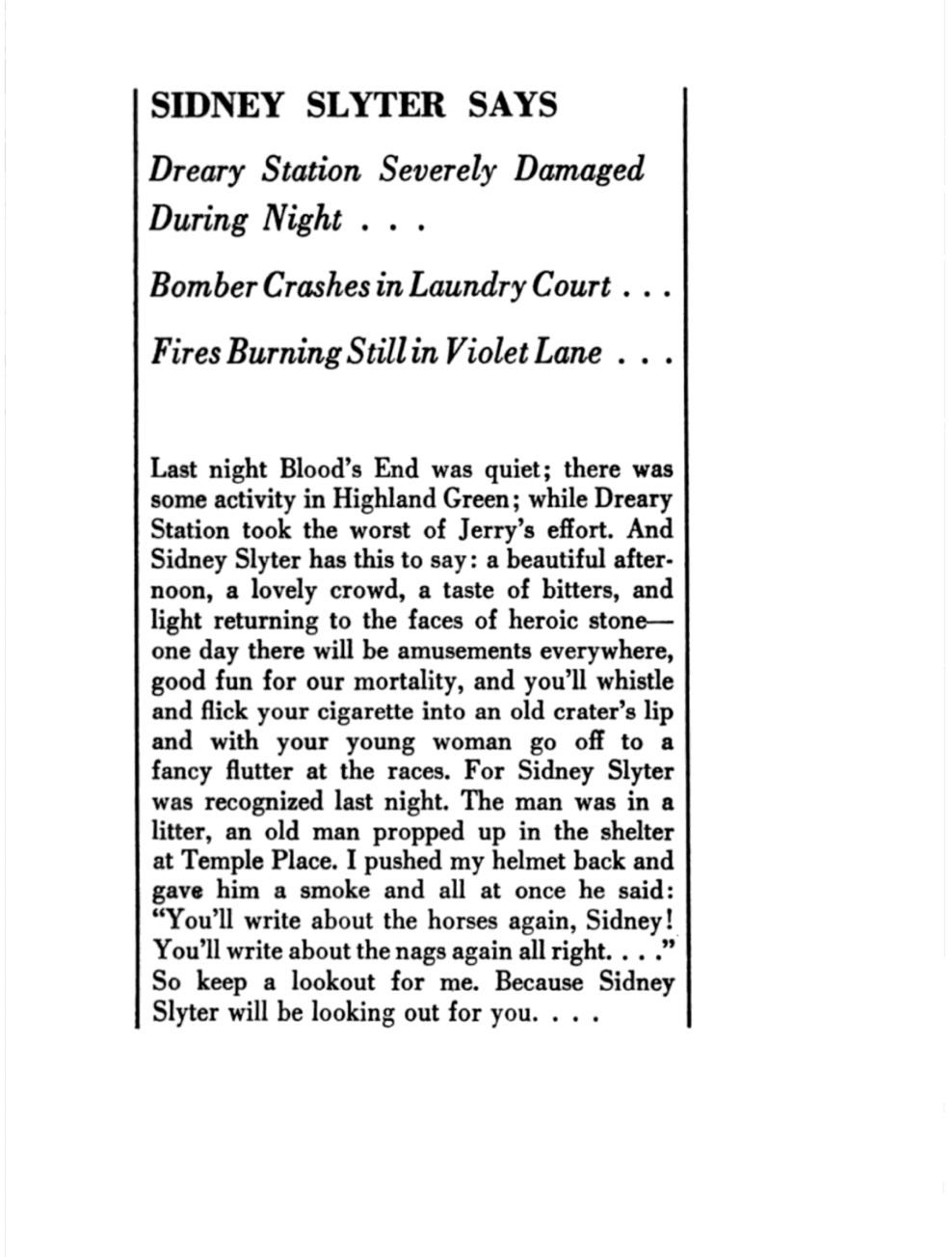
JH: I wrote the first draft of The Lime Twig in 1955, then taught two more years at Harvard, and I was still tinkering with the novel when we came to Brown in 1958. I really can’t explain why it was so difficult to write. As I told you, Guerard did not like the first draft, then Sophie and I worked on it by cutting it apart and making charts, which we had also done with The Beetle Leg. The fact that it took six years before it came out has something to do with very slow revising, going into teaching, being at Harvard and then moving to Brown, which was very disruptive. The reconceiving and revision of The Lime Twig were extensive: I took characters out, I took out scenes, I added Hencher I had to revise it considerably, sentence by sentence. James Laughlin then suggested a gloss for the reader in the novel, which was ironic, because Albert Guerard had thought that The Cannibal needed a gloss, as in “The Rime of the Ancient Mariner.” I abandoned that idea but when Laughlin raised it for The Lime Twig quite independently, I thought it was good because it added an extra perspective to the novel, and I could ridicule the speaker, I could mock that narrator. In a sense, that idea, which resulted in the presence of Slyter in the novel, heightened its ironic qualities considerably. The Hencher section of the novel came next to last, then the Sidney Slyter column was written last. I didn’t feel any urgency in writing, and I didn’t feel anything unusual about this novel. I worked on it as I could, and it simply took a long time.
I: A sense of ritual gets into your work, I think, in that it is often, structurally, cyclical or repetitious.
JH: I do see things as cyclical and ordered. I have a powerful associative imagination. What I really want to do is to create things that haven’t been created before, even though life itself seems sometimes totally cyclical and totally coherent. I find it very difficult to cope with the notion of being alive, being human; I’m not able to accept us very easily. I think we are so unaccountable. Life is also a constantly terrifying mystery as well as a beautiful, unpredictable, exfoliating, marvelous thing.
I: Your well-known statement about fiction as a matrix of recurring images and events seem to have something to do with ritual, as well as with the use of what I would call obsessive images in your fiction. One example might be the image of the lighthouse in Second Skin, foreshadowed by the shape of Stella Snow’s house in The Cannibal, the castle in The Owl, the airplane in The Lime Twig. Do you see the psychic contours of life or fiction as a series of recurrences?
JH: It’s terribly hard to say. I may not understand the question. Earlier than my writing The Lime Twig, between 1955 and 1960, I began to get an image of an ocean liner abandoned far out at sea, except that the water is only mid shin high, so that you can walk out to it; you have to walk in low water a mile or so to an enormous black ship lying on its side, with lifeboats dangling from the davits. Such an image is fetal: it is dead but full of potential. Last night, as I was going to sleep, I saw myself on a dark, black sea, at night, with the prow of an enormous ship coming at me. And I had another fleeting image of being on the water and watching the Lusitania on it, going down, with only its stern above the water; there were lights on it, and I was waiting for it to go down. Both of these visions are, of course, related to all of the house-tower images, crashed airplanes–they’re always life/death constructions. Last night, with these two images, I didn’t have any particular emotional reactions, just slight anxiety as the great prow of the ship approached, which to me is a potentially fear-inspiring image. To be anywhere near an enormous ocean liner when you are just like a fish in the water is frightening. Somebody once told me that he thought all of these images–airplanes, ships, lighthouses–are images of sexual fear, sexual destruction, the lighthouse in particular being a ruined, gutted phallus. It’s hard to tell whether the ship or airplane–they’re all the same, I’m convinced–is male or female; it may shift back and forth. Obviously an air plane is male from the outside as you see it start to move through the air, but female in its interior, like a whale. Hencher entering the airplane is a uterine experience.
___
Book
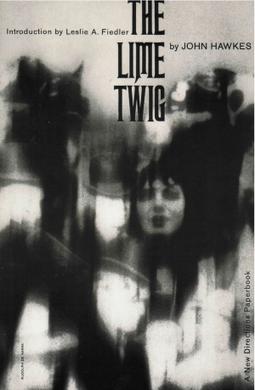 John Hawkes The Lime Twig
New Directions
‘Many twentieth century writers have written books that read like dreams, often bad dreams. Kafka is the obvious but by no means the only example. These books are typified by having no plot or a non-linear plot, strange often frightening characters, unknown to the narrator/hero, vivid images, distorted landscapes, an unconventional sense of time and, all too often, animals that do not behave as we would like or expect. Hawkes is a prime exponent of this style of writing and this book may be his most successful attempt at it. Indeed, the hero of this book, if hero is the right word, has a dream, which he is able to live, but ends up paying the ultimate price for it.
‘Michael and Margaret Banks live in London. The house they own is where Michael Hencher’s mother lived and died. Hencher now lives in a room of the house as a tenant. Michael Banks has a dream of owning a racehorse and, with Hencher’s connections, becomes involved in a plot to steal a retired race horse and run him in a race. Banks is excited at the prospect of owning the horse; indeed, his excitement can be said to be both sexual (he wants to impress Margaret) and based on the need to put some excitement into his dreary life. However, as in all good dreams, he is somewhat fearful. He has reason to be fearful as the stealing of the horse and the running of the race are under the control of a particularly nasty gang of villains. Of course, he – and Margaret – are unable to deal with the violence from Larry (the leader of the gang), Thick (the heavy) and the others. Michael gets his thrills – including a sexual romp – but the horse – a symbol of sexual power – will kill him as Thick has killed Margaret. Dreams have a way of turning nasty in twentieth century literature.’ — The Modern Novel
Excerpt
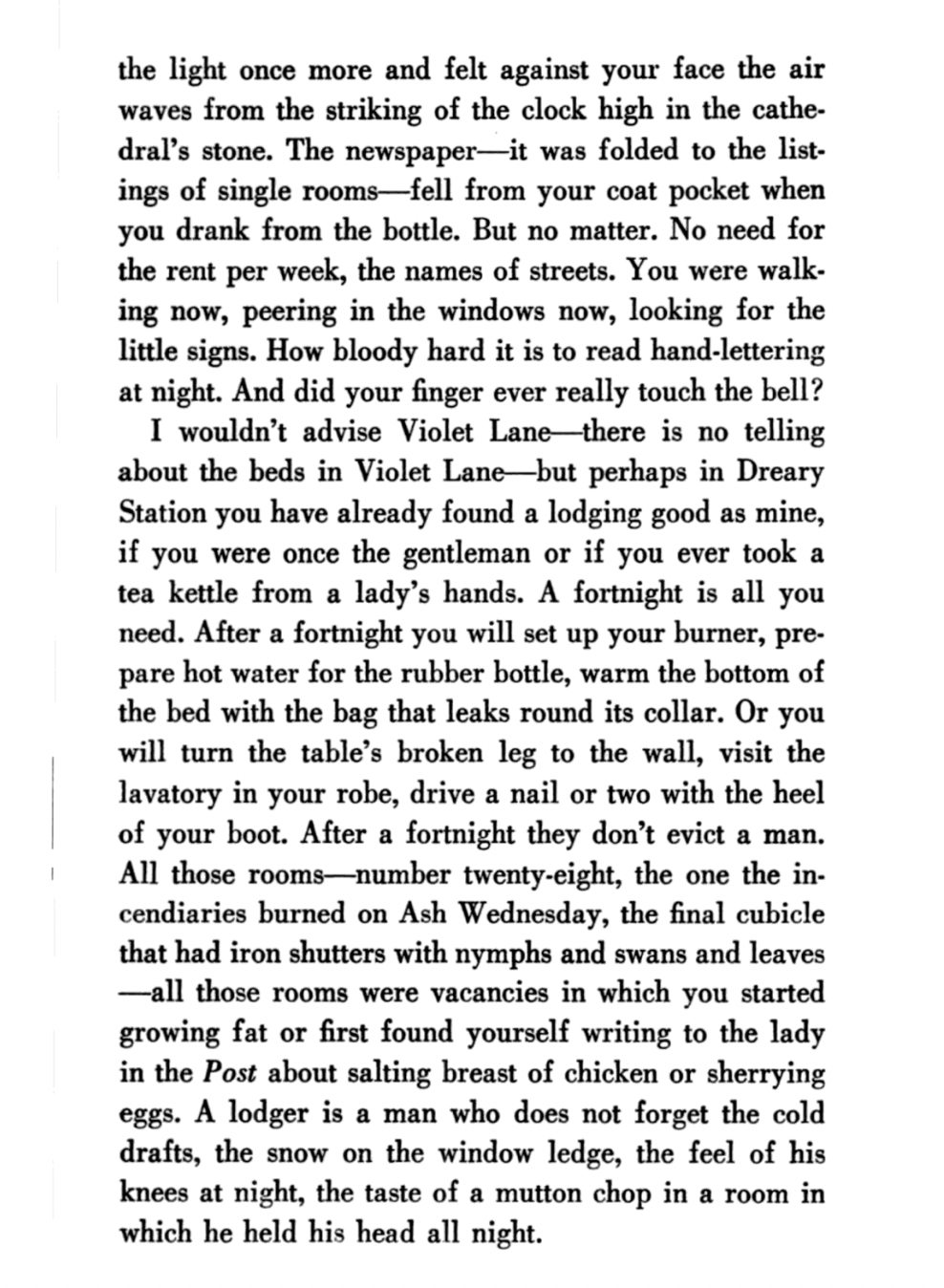
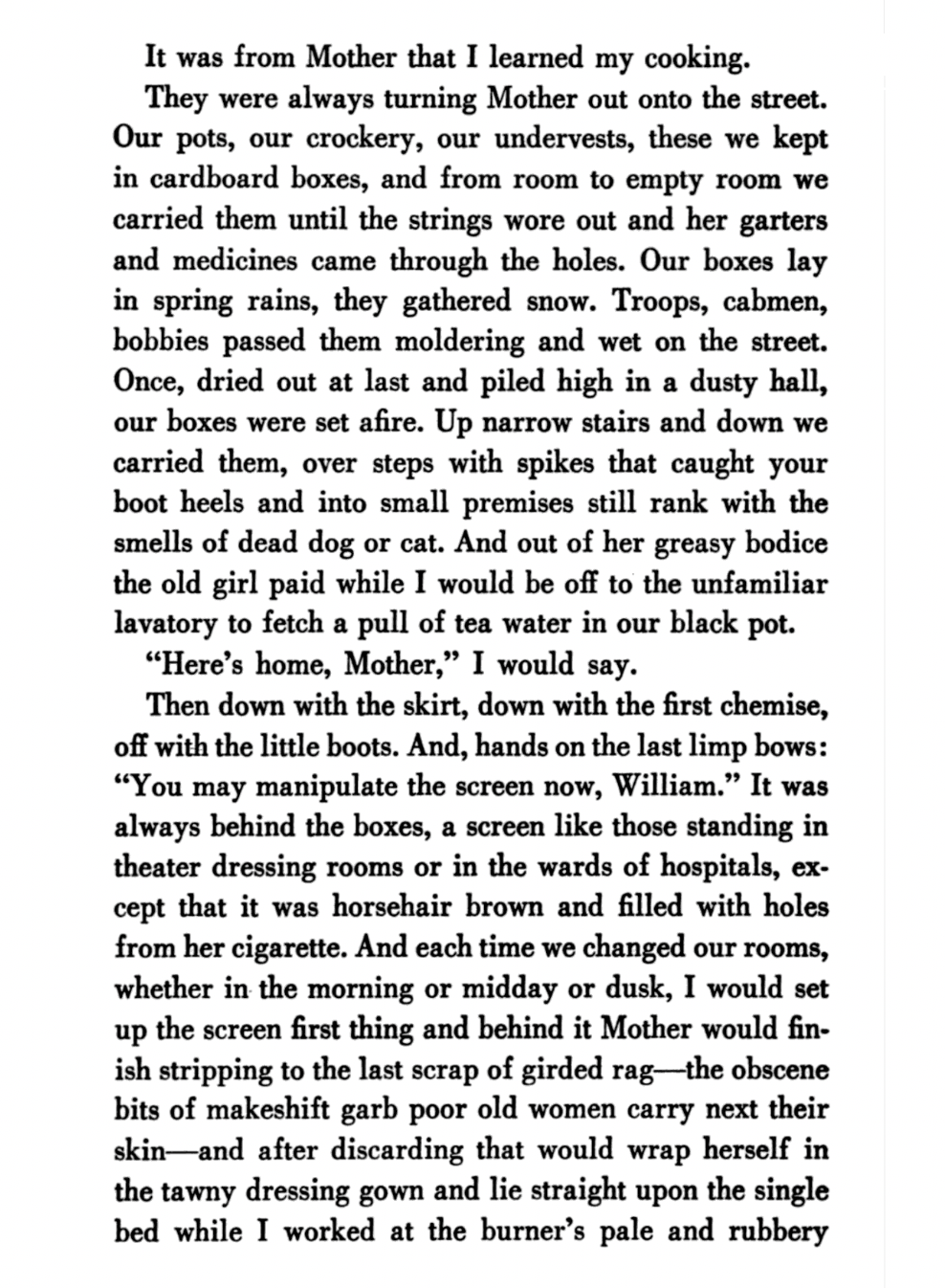
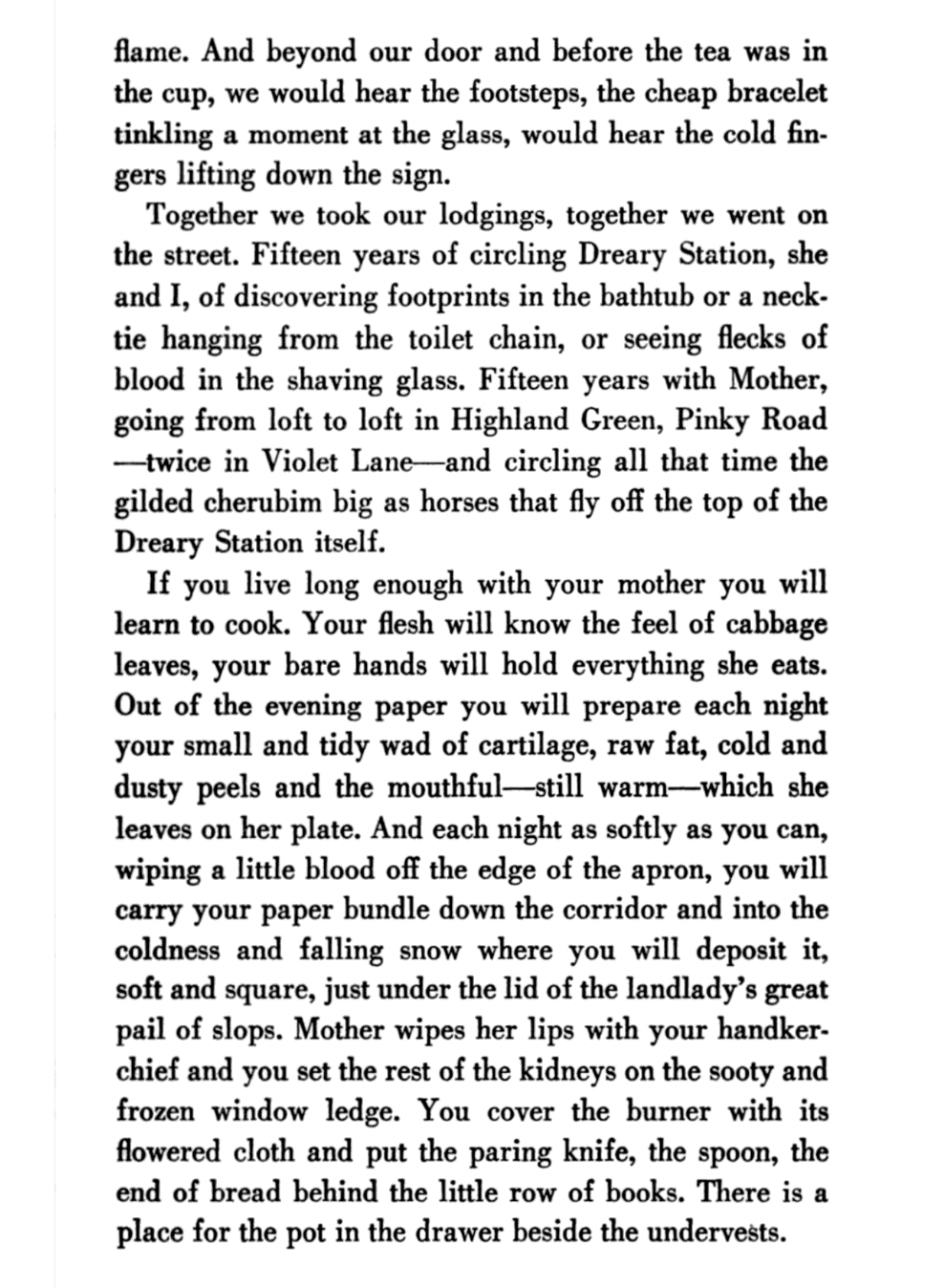
*
p.s. Hey. ** Dominik, Hi!!! The new SCAB is great, impeccable, wilder than ever! Amazing, major kudos. I loved everything. I’m going to read through it again now that I’m resettled and can be more specific then. Thank you, master! Stockholm went really well, and my birth certificate is supposed to arrive today, fingers crossed. Love’s Norwegian portion awarding SCAB the Nobel Anti-Peace Prize, G. ** fish, Hi. All the escort texts and photos are found on escort advertising sites. I don’t write them. I sometimes edit the texts a little and mix and match with the photos, locations, etc. but they’re all real. I hope your mood has upswung since you commented. And obviously you’re powerful even when you’re down, and not every down person can say that. xo. ** kenley, Hi. Right, right. Stockholm was good. I don’t think I had either of those Swedish things, at least under that name, but the greatest ramen place in the world that I know of is there, and I did feast on that. How have you been? ** Uday, How did you do with the thesis deadline, he asked hopefully? ** Bill, Stockholm was a quickie, but it went really well. Oh, right, Basel is everywhere. Here too, although not at the moment. Good in the sense that Basel, the city itself, is not very exciting. Hope you’re finding stuff. ** _Black_Acrylic, Ah, nice. I was just reading about that Danny Dyer guy. Not sure the French will see that film as French friendly enough to release, but who knows. ** LC, Hi, LC. Cool. The Stockholm portion of my week went pretty A-okay. Now I have to make Friday live up to it, I guess. Enjoy the blooming. I guess things are probably blooming here too. I have to go look at the park. ** Steve, Hi. The screening went very well. And the blog’s own Mans hosted and did the Q&A, and he was masterful. Mm, the questions don’t really change based on the location, I don’t think. Other than there being many more queries about what home haunts are outside the US. It’s really just what the inquisitor themself is curious about. Saw some of Stockholm, strolled about, hit the ABBA Museum, and a few other things. We only had one day there. ** jay, Hey! We did go to the ABBA Museum. It’s pretty fun, lots of interactive stuff, but, unsurprisingly, it isn’t exactly deep. My faint hopes that it might get into how ABBA’s work got darker and darker in their later years was utterly ignored. It was ‘fun, fun, fun’ top to bottom. You’re near the end of Proust? Wow. Do you feel the utter transformation of your thinking and perceiving faculties that Proust fanatics claim is the novel readers’ destiny? I’m very long overdue a trip to the little manga store street here in Paris, and I’ll see if those two are on sale. Thanks! Best of the bestest! ** Carsten, Thanks. It was a really good screening, excellent large crowd and much appreciation expressed. When the film was first rolling out we did cover our expenses in some cases because it was important to be there, but that was a struggle, and now we only travel if the expenses are covered. That said, we did cover the Stockhom trip because that’s been in the works for at least half a year. A cultural grant would be most welcome and very helpful, but, other than for the films a couple times, I have never gotten a grant in my life. There’s always someone on every committee who’s, like, ‘Dennis Cooper? No fucking way’. I think the ‘tricky’ part of your post was set up adequately. I’ll write to you about the post’s timing shortly. ** Steeqhen, Hi. Stockholm was good. Hm, I didn’t notice anyone there being especially drunk or drinking, but I don’t know. Everyone was super friendly. Hoping the therapy start will add that last ingredient you want. And luck with the book proposal. I was invited ages ago by the 33 1/3 series to do the book on ‘Bee Thousand’, but I decided it needed someone with much better non-fiction skills. ** Malik, Hi. Oh, nice, I know all of those drummers you mentioned. I’ve had my free jazz wormhole phases. I can’t remember his name, but the guy who drummed in Cecil Taylor’s trio was un-fucking-believable when I used to go see him live. Right, I was so excited to see ‘Escape from Tomorrow’, and was so disappointed other than, like you said, watching and imagining how it was shot. Curious about the follow-up obviously or anyway. Happy almost weekend. ** HaRpEr //, Hi. Stockholm went really well, great response, we were happy. I love your piece in SCAB. It’s really impressive. I’m excited to reread it now that I’m not reading it on an airplane, not that it didn’t work perfectly well there. I hope good health is hugging you like a beast again. When that point hits me when I’m working on something, I always put it away and think about anything but that for a while. That works for me, but I imagine one could also power through the snag. ** Okay. Back in the early 80s, a lot of my smartest friends were really into John Hawkes. I tried and tried with him, but I couldn’t get what the deal was. But I randomly picked up his novel ‘The Lime Twig’ recently, and I was seriously into it and thought it was excellent. So I pass that new opinion onto you, blog people. See you tomorrow.
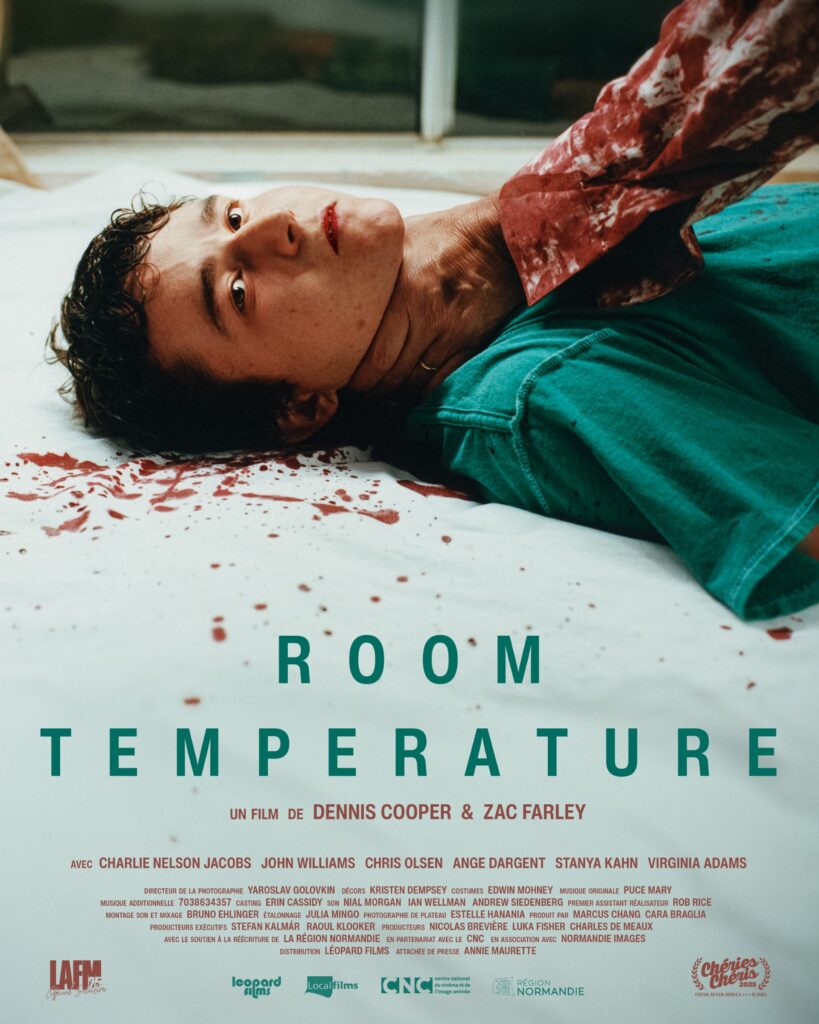


 Now available in North America
hi Dennis!
i def should read Hawkes! i picked up The Lime Twig a long, long time ago and idk why we didn’t click then but it’s bothered me a bit ever since, like in the background lol. so round two soon, probably. in theory he’s someone i should really like and i’m sort of more hopeful now he’s happening to you ^_^
hope Stockholm was super fun, i love it over there. did you have a good audience? watching films w the Swedes is one of my fav things in the world, they get so scared <3 also did you by any chance manage to score half an inch worth of bar space at Bakfickan? which may be a touristy thing to do, but it’s also the right thing to do. ^_^
ty for wishing my migraine would fuck right off! i really want that too! 😀 think it’s on its way out already but still a bit pound-y. def smth hormonal is being rearranged or whatever, hence this whole super rude assault, which might actually be for the better.
oh i asked my husband if i look both terrified and dead and he said no, so there’s that… tbh i’ve got so many open fronts rn i can’t allow my head hurting to totally oneshot me or anything would. and tho hard to enjoy in the thick, migraines are sort of beautiful in and of themselves… like the flashes and haloes and staticky tunnel-vision and the passion of pain or whatever. now you’re heavy, now you’re light, everything is weird… anyway, think i’ve had enough for now lol.
your poor friends tho! sort of want to foreheadkiss them all bc i obvi don’t know them but i know. forehead kisses always help lol, or they help me at least.
anyway it’s Eid so i’m having a chill one but a p good one. i’m just antsy to get writing again! gosh i want to be a muse and not a writer, writing is so much fun it’s like the worst lol.
much love!
Oh, I never knew that ABBA got darker near the end, I think I’m someone who just listened to ABBA Gold and never really felt the urge to excavate further. I’ll research that. That’s really interesting, I guess I’ve never really thought about the late years of ABBA in the same way I have with, like, Elvis or something. Maybe a collective falling-out is a bit less spectacular than a singleton spinning out.
Proust is actually that good, in terms of elevating my consciousness, sadly. It’s the first “life changing” thing I’ve been exposed to that’s actually been as good as people claim. It’s possible that it’s just because I’m reading it while in probably the best period of my life so far, but it’s really made me appreciate lots of things I never would’ve before. There’s a pigeon nest outside my window in a totally dead tree that would’ve normally never crossed my mind as something of note, but the Proust mindset is making me appreciate it as something quite noteworthy. I think it’s mostly just making me a little more self-reliant in terms of finding things pleasing or beautiful, rather than just relying on cultural wisdom, if that makes any sense. It’s hard to explain, but it’s really incredible.
Anyway, apologies for the mega ramble about Proust, but it really is amazing. I wouldn’t recommend it, solely because I think it only becomes transcendental with an immense time commitment, but yeah, it’s as good as people say. Glad to hear Stockholm was nice, adios!
Hey Dennis,
I think what my friend meant about Sweden (or at least college life in Malmo) is that drinking is not a part of the culture, so when people drink it’s a lot different, especially with 20 somethings who have only been drinking for a year or two. Apparently off-licenses (idk if thats just the name used in Ireland or worldwide; i guess liquor stores) close really early, like the afternoon — I’m offended by the 10pm closing times here in Ireland!
Having a quick smoke break at work so I’ll return later with perhaps more commentary, but the book series is in fact 33 1/3! I’m a big fan of those books, and whilst your decline was noble, I would love to hear you talk about Bee Thousand, I adore that album!
John Hawkes is a new name to me but the Lime Twig is defo going on the list. Thank you for these extracts!
Trying my best not to go on about Chucky all the time but seriously, this 3rd series is really the best of his many iterations. There’s a lot to be said for mainstream TV if ever they get everything right and with the writing, casting and even a John Waters cameo they really did in this instance. Just hope that a 4th series might get commissioned from on high.
I hate to ruin your day bit I think that the show was cancelled after s3 🙁
Lime Twig seems up my alley, thanks for the rec!
First Pinget was great, read Between Fantoine and Agapa which was fun, and im psyched to see where he goes with prose… you can just feel the enthusiasm for language itself radiating off the page, WOW!
Funnily enough, I didnt realize you made a post about The Golden Fruits recently, I just had it from the library. This one is blowing me away, its honestly hilarious and still rings true. Immediately witnessed arguments about music online after setting it down, and laughed to myself… what a book, its a shame lots of this stuff seems to not be reprinted…
idk if I have any insightful Steinbeck takes really haha… I just like books about well-meaning fuck ups, and I read his book To A God Unknown in high school on a whim and was struck by its visual power and strange pagan heartbeat… nothing else has been as good as that, but I really like his “hang out” books like Tortilla Flat or Cannery Row. He’s got a fairly lyrical style i guess, idk… East of Eden is great but I do just wanna power thru it haha…
Anyway, did I stick the landing on my ‘Above The Trees’ story? maybe! Having a buddy read the first draft at the moment… I know it needs another pass to tighten some sentences, and I kinda wanna read thru it in different orders to make sure that the two “modes” the prose operates on are consistent with each other… first issue of zine will be done soon, once we get it out i hope to get some excitement going in the local mini-scene that is mostly music-focused, wanna give people a bit of a go-ahead to be as excited about prose/poems/drawings/etc as they are about shows…
Glad the trip was good and people dug everything. Also damn, shoulda done the Bee Thousands book hahaha…
Found this book already, thanks for the introduction. Do you want to read more of his books now that you finally got into him? Second Skin seems to be famous like The Lime Twig
Iceage’s Star has become the song of my days lately I really like it
Very interesting trivia about the book people asking you to do the book about Bee Thousand
I am playing Under the Bushes, Under the Stars all day long yesterday and today I decided to play it to death until I move on to the next one
The song To Remake a Young Flyer is very special to me I see this as some sort of special oasis landscape of the album
But every song on this album is amazing and it has so many. The opener alone is unforgettable Man called Aerodynamics
I know that you love the songs Cut-Out Witch and Redmen and their wives
I love also the songs No Sky and Acorns & Orioles a LOT
Very cool, glad the screening & trip went well. Where’s RT’s next stop for you guys?
Oh I know that the grant thing is wishful thinking, but the righteous part of me doesn’t want to accept that. I don’t know, the world is really pissing me off right now on so many levels so maybe this is a strange new form of venting…
Nice spotlight today. Hawkes’s observation about plot, character, setting, and theme being enemies is one I’ve often paraphrased to the musty-minded. Again, maybe it’s the idealist talking, but imagine the true freedom of expression we’d see if students were encouraged to go after “totality of vision” rather than these artificial constructs.
2nd point: that “we subconsciously long for the thrills of violence and possible death” should by now be seen as a given. Now this is a subject I could go off on for hours, & I think I treated it at length in the duende day, but I don’t think the popular consciousness has wrapped its head around this yet. We’re missing the sacred totality & make up for it in a half-assed way at best, meaning through dumb movies & crime novels where the violence has no heft. That this evasion has emotionally crippled an entire civilization is obvious to me, but so far no one’s taking the fallout seriously enough. Anyway, I better stop before this turns into a rant, haha.
Got anything cool in store for the weekend?
hi dennis!
stockholm? ramen???? where is this place? goddammit. i gotta get my ass over to europe. but glad to hear sweden treated you well! i was fiddling with custom letterboxd posters last night and saw a bunch of new swedish reviews for room temp, lol. what a delightful looking language.
i would kill to read your 33 1/3 on bee thousand! idk if youve ever read john darnielle’s 33 1/3 for master of reality…its basically an epistolary novella that does away with any pretense of knowing anything concrete about the album’s history. i adore it.
im ok, thanks for asking! im helping my friend run a one-day fest tomorrow…had to run all over the city yesterday after work, because apparently there’s some sort of paper wristband shortage in toronto. aiyah. hows you? any big weekend plans now that youre back in l’hexagone (do people actually say that?)
Interesting about a rogue figure still pinned to genre descriptors like ‘noir’. I’m intrigued, especially since he went to Harvard with Ashbery, Frank O’Hara, and Robert Creeley, and Pynchon apparently admired this novel. The extract is great.
Wow, thank you about my SCAB piece! It means a lot. It was very very difficult to write. I kind of just wrote out these sentences and took ages trying to find a way to piece them all together. I worked out how the form worked by trying to make each paragraph indicative of a certain part of the body (head, torso, lower body) and how that relates to the imagination, and after that it became easier. I haven’t really written anything that coarse (perhaps that’s the word) in a while, so it was a very valuable experiment for me. And writing about an ambiguously gendered, furiously confused edgelord on the internet required for me to fall into a certain voice or it just wouldn’t work in the same way. I do hope to make it into a novel some day.
With my current novel, it can feel like my current adjustments are just light cosmetic touches here and there. My hope is that if I just continue tweaking it for a while I’ll eventually stumble on an idea I hadn’t considered before. Form is the major thing I’m trying to work out. The sentences need a few adjustments but they’re close to how I want them to be.
The whole form is currently sort of scattered but I’m struggling to think if it should maintain an overall illusion of orderliness or instead lean more intensely into the scattered thing. As an argument for the illusion of order, I really like the effect of when certain books seem very lucid and precise on the surface, but when you look close enough you see that each sentence is very isolated and apparently unrelated to the one that comes before/after it, but a general uncanny effect is achieved where it has a sort of uniform flow. If that makes sense? Probably not, but you can probably see where my headspace is at anyway.
Oh gosh I forgot you were in Stockholm,ive been very hussling work and stuff been busy. Did you experienced any bad jet lag? Hope not this time!
I am almost done with the Theif’s journal. I need to read more but im a slow reader. It only worries me cuz I dont want to die not reading as much books as I wish _Did you read alot in your earliy twenties? I suppose because I use my freetime to craft and write that doesnt leave much for reading. I’ll make that a goal of mine
Sometimes I just feel hopeless, cuz I can never be who I truly want to be.
This is only confirmed by something that just happened. A fear of mine confirmed. Ive been purposely avoiding this person because of signs and being way too nice. I tell myself “A good person, a good friend, which I felt was true at first. But thats never true with biological men sometimes. Today I invited him over and he reveals he liked me and wated to date. WHy would you say that. People dont use their brains. That time you moved to the couch I was at even though there was one across me. I moved away, and how thoughtless and stupid of them not to notice my discomfort.
Because I know he wouldnt have said what he said if he truly saw me how I see myself, how I identify and stuff. Stupid of him to think I would say yes,ignorance! who took my comfort as a boy near you as the closest you could probably get to a fucking “female”I thought I was being sensitive for distancing myself, because I know thats such a small thing to be worried about, but I feel internally maybe I knew why. I felt crazy. His weirdly close hugs. I got annoyed because they kept wishing me a good dsy st work like so clingy to me. “I said no, I still see you as a close friend, but now I know my suspicions are right and im going to distance myself more from you even though I said I still see you as close. No you cant trust people. And I dont need someone “to fucking help me” I can help myself you clingy obsessive weirdo. Its the people I actually care so much about who I feel dont as much as I do, and now I know why he showed it. Sometimes I want to put a very sharp knife down the center of my face and permantly disfigure myself. Turn myself into a budding flower. I hate attractiveness, I never saw it in myself anyways. The other day I watched Linda Manz in Out of The Blue. I understand what she meant when she said she hates men, and I know I am one but there just is something that feels so broken within me now. I just want to be reborn. Reborn properly and pure.
Like that other night I thought I was dancing with a random guy and they come up to me later and talk and talk and no they just wanted to flirt. No one ever truly sees you. But at the very least, this makes me happy about my other close friend who Ive known since highschool.
Thats why I was talking about sleeping with my friend 7. They see me for what I am, and isnt a friend giving you the purest form of recognition in your body love? This feels like a rarity. My queerness is broken, not expresses in rainbows, but in the sable residual ash of a roughly deflated cigarette.
Sorry if this was very pitiful and whiny. Like always u dont need to say anything if necessary. I am eating some goldfish s’mores so thats cheering me a bit. Oh, this is so funny, a minute ago I accidentally poured water into my egg mix before cooking it, so it kindle tasted like powdered eggs, haha. Actually im not laughing. its not funny. But I’d like to pretend you can see me saying this with a funny careless laugh. please do. I would love to water my new body from the earth with my tears from a skeleton.’s lacrimal bone
Lime Twig sounds up my alley, though I would never have checked it out based on the description on goodreads. Will definitely investigate.
I’ve never been to Basel. It’s kind of on my list because of the Tinguely Museum. Is that worth a sidetrip?
Bill