‘If anyone knows anything about BS Johnson these days, it is that he was – cue polite sniggers – avant-garde. Or, if that is too French for you, experimental. He cut holes into the pages! He put unbound sheets into a box and invited us to read them at random! He thought he had found a way forward for fiction after the seemingly unanswerable formal advances of Joyce and Beckett! He liked Joyce and Beckett!
‘It is, I suppose, just about possible to have some sympathy with such a middlebrow assessment. Joyce and Beckett’s advances weren’t just formal; they were linguistic. Language, not typography, was what they made dance to their command. For their self-proclaimed heir to use visual trickery may seem a cop-out, or a challenge whose rewards do not make it worth accepting.
‘That’s if you’ve only heard about the work, rather than held it in your hands. Just as it is a delight to see the black page and so on in Tristram Shandy (Laurence Sterne, more than anyone else, is Johnson’s true literary ancestor), so it is a delight to come across the page with a hole in it in Albert Angelo. But by that stage you will have noticed other attractions.
‘”If only they realised it was funny,” was Joyce’s complaint about those who complained about Ulysses . This is something that is regularly forgotten about so many of the notionally austere modernist writers: they are a hoot. It is the precise attention to detail and significance, and the profound acknowledgment of absurdity, that makes it so. And as Beckett, in particular, is funniest when writing about death, despair and futility, so is Johnson. Albert Angelo may be a bleak story, for it is about an architect who has to make ends meet as a supply teacher (which is also how he meets his end), but it has moments of comedy as good as anything produced in the past 50 years. The section devoted to the schoolchildren’s thoughts about their teacher (“the Boy’s including me just fuk about in class and take the mike out of him”) is Nigel Molesworth with menaces.
‘Trawl, too, is remarkable – easy on the modernist trickery, but a superb mesh of autobiography and farcical sex. (These two novels, first published in 1964 and 1966, give the lie to the idea of that decade as one full of easy sex. Sex in Johnson is a very frustrating business.) House Mother Normal, about the residents of an old people’s home, does make extraordinary use of blank space, random typography and the like – but that is Johnson’s way of representing minds disintegrating into nothingness.’ — Nicholas Lezard
___
Further
The B. S. Johnson Society
B.S. Johnson @ New Directions
No More Lying: a Primer on the Novels of B.S. Johnson
Modernism’s suicide
B.S. Johnson’s The Unfortunates: Revisiting the Elegy
B. S. Johnson and the Big Stuff
B.S. Johnson Archive
. . . to B.S. Johnson
Book: Re-reading B. S. Johnson
Bloody Stupid Johnson
‘The Mind Has Fuses’: Detonating B. S. Johnson
B.S . Johnson @ The Complete Review
b.s. johnson, brutalist
Gimme Nonfiction
Forgotten authors No.40: BS Johnson
I Fail To Remember: B.S. Johnson Thirty Years On
Buy ‘Trawl’
_____
Extras
B.S. Johnson on Dr. Samuel Johnson (1971)
B.S. Johnson vs. Death
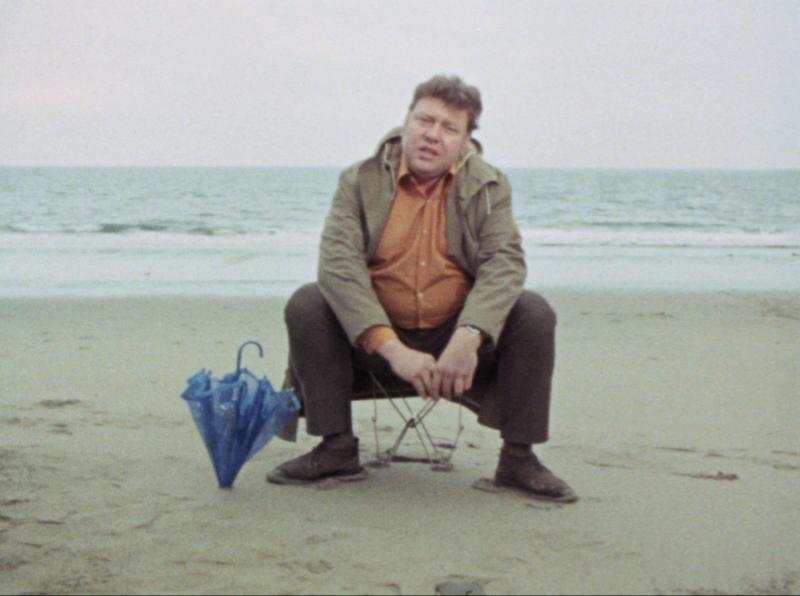
Fat Man on a Beach (1973) film by B.S. Johnson dir. Michael Bakewell
________
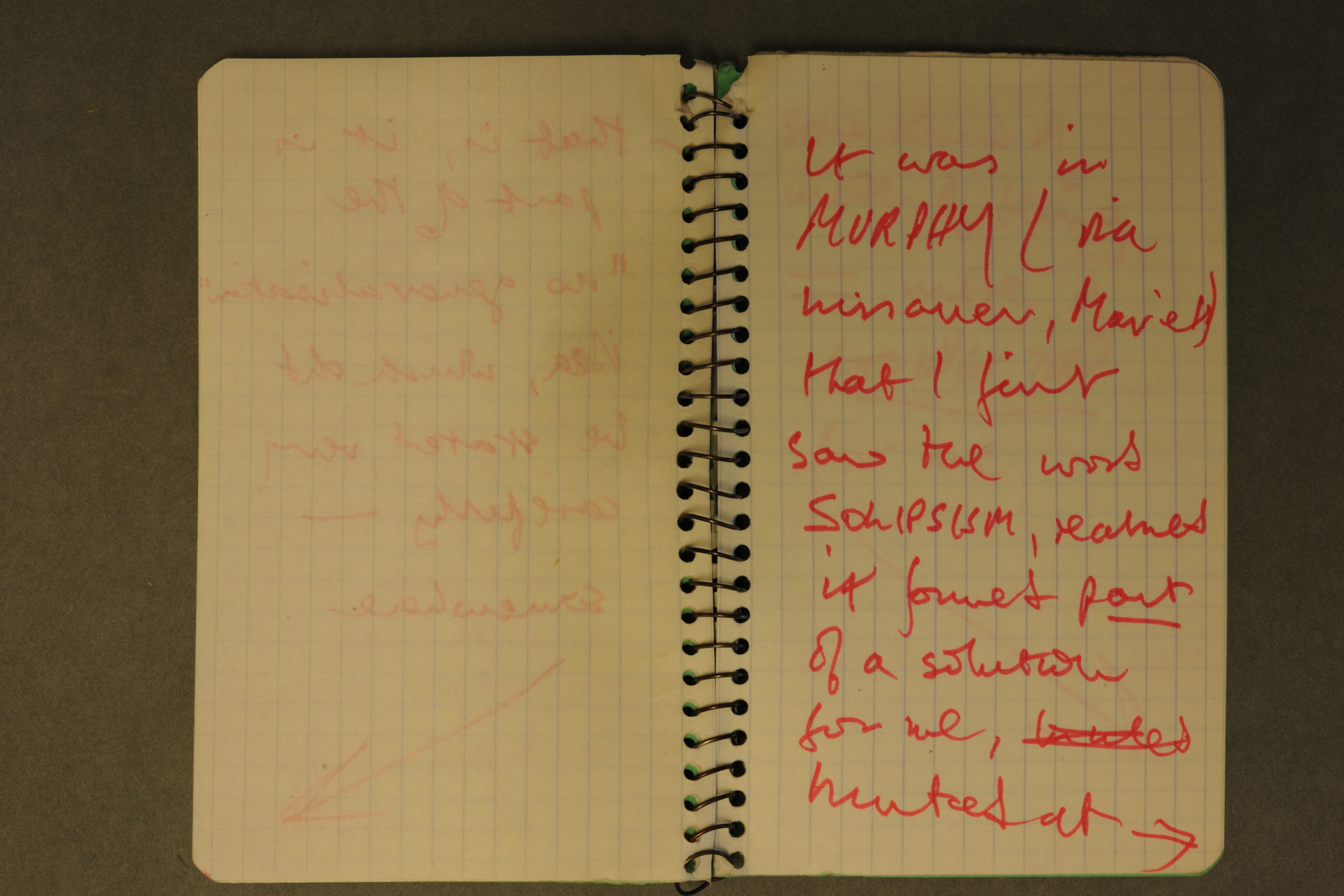
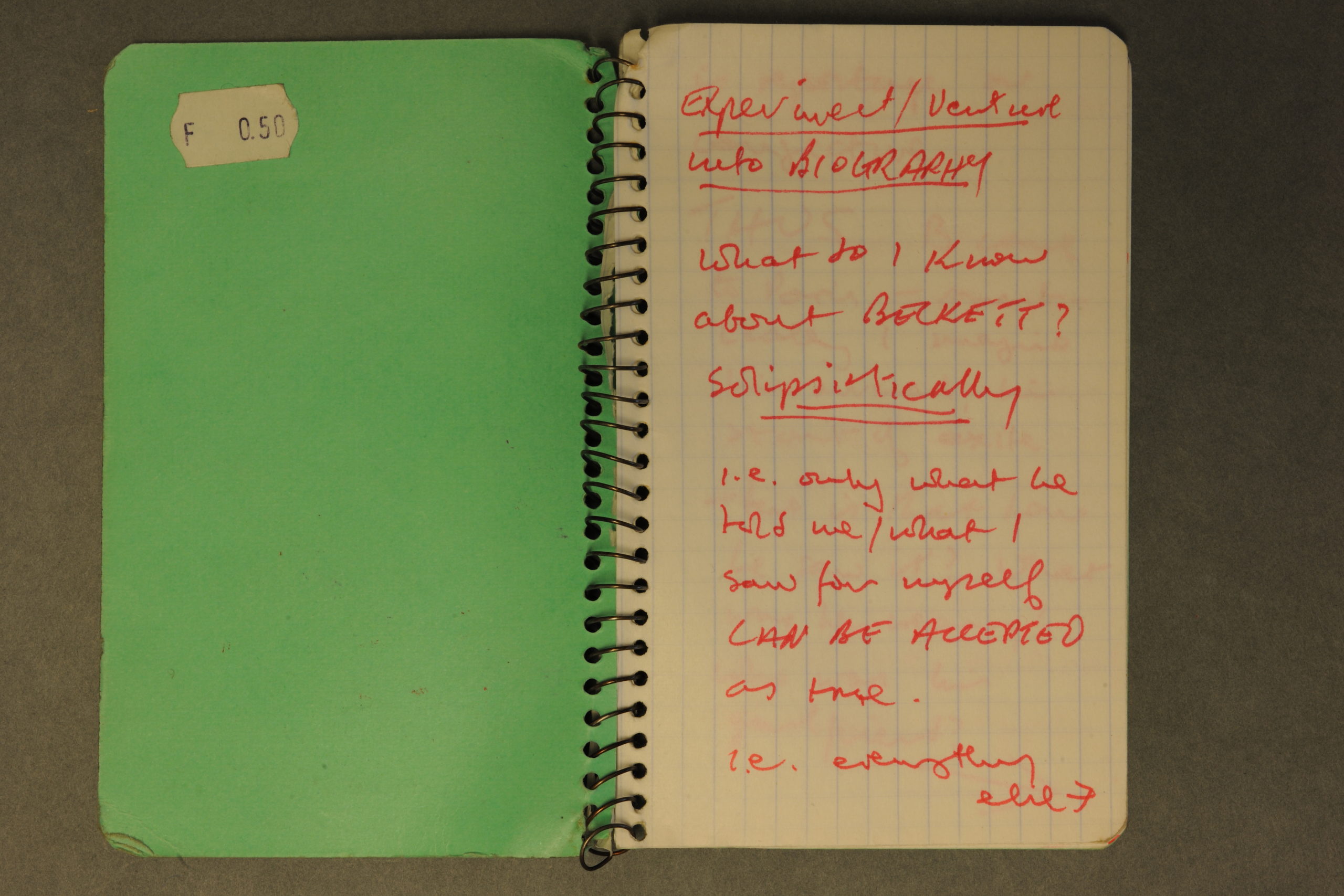
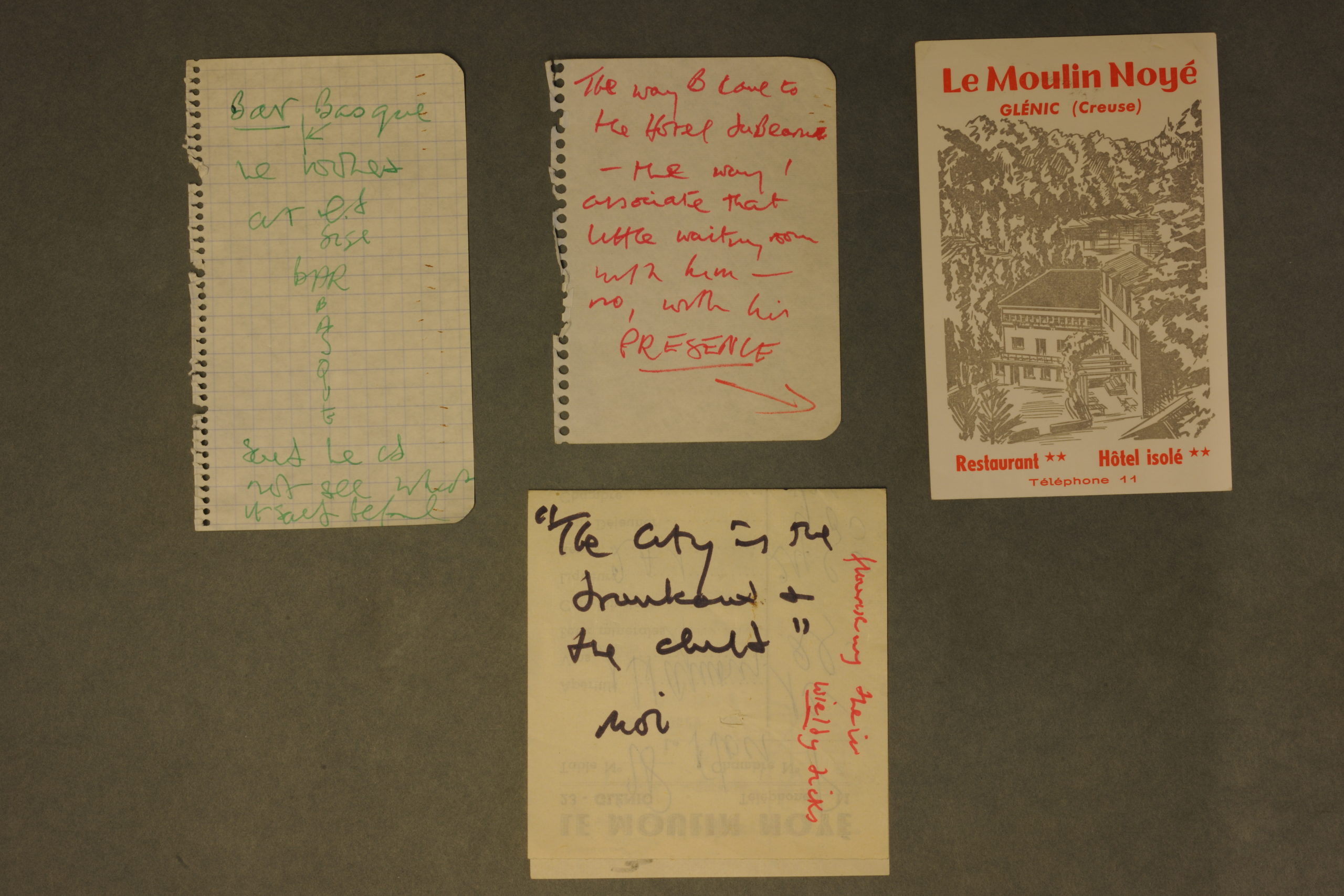
‘What Do I Know About Beckett?’: B.S. Johnson’s Beckett Notebook
‘B.S. Johnson’s Samuel Beckett notebooks perform an act of remembering. Principally, Johnson wonders what it is possible for him to know about Beckett, an epistemological problem he tries to work out through writing. The scraps of paper and notebook entries show Johnson trying to remember all he can about his onetime friend and major influence: when he read his work, who he was with, what it meant to him at the time.’ — E&DB
_____
B S Johnson: ‘Britain’s one-man literary avant-garde’
by Tim Martin
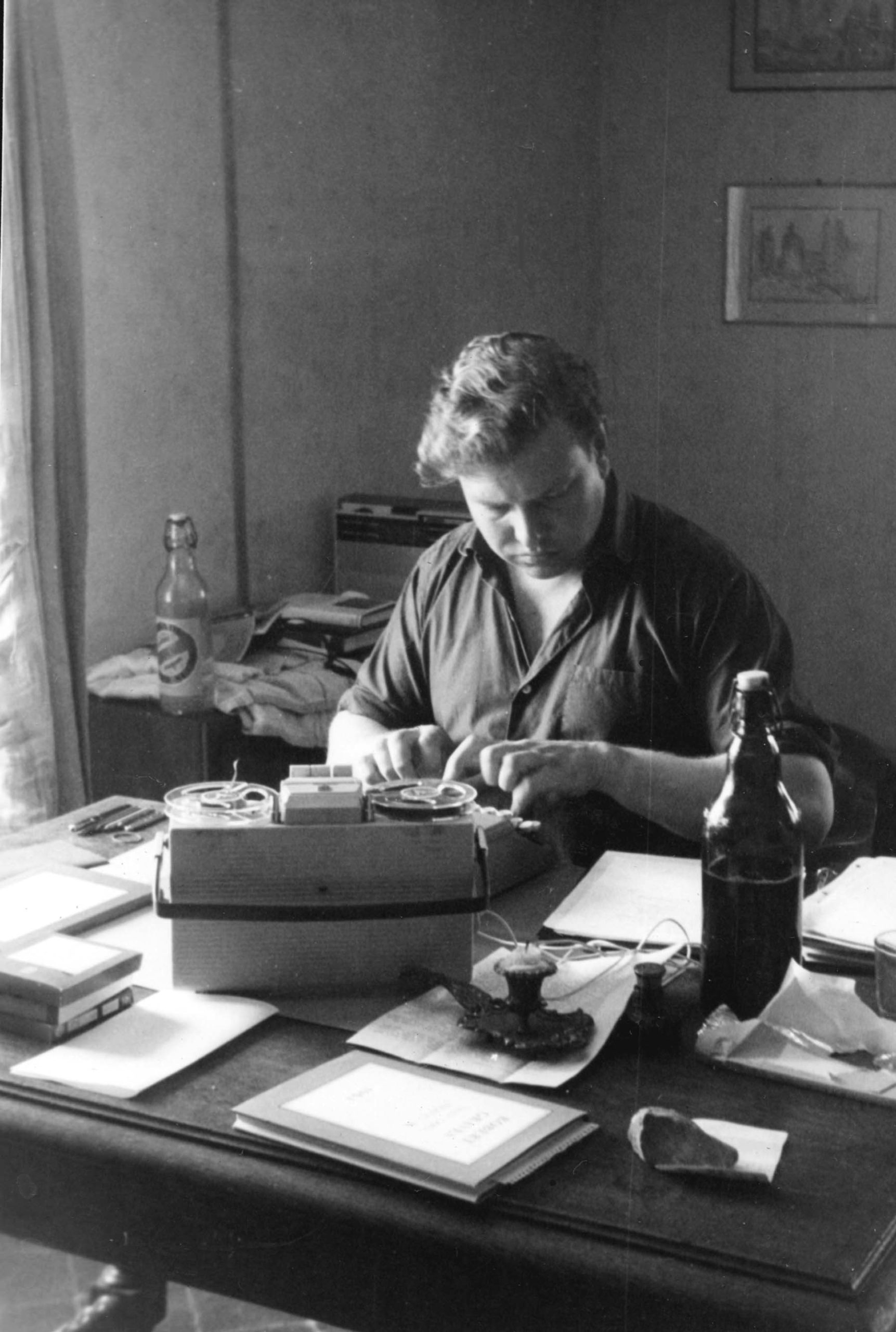
I shall be much more famous when I’m dead,” BS Johnson told his agent the day before he committed suicide in 1973. Four decades on, in a year that marks both the 80th anniversary of his birth and the 40th of his death, it’s still hard to tell whether history has proved him right.
Despite a revival of interest after Jonathan Coe’s superbly perceptive and compassionate biography, Like a Fiery Elephant (2004), Johnson’s work remains overshadowed by its novelty value. Beyond a loyal cult readership and a hover of interested academics, he’s likely to be known, if at all, as the man who cut holes in the pages of his novel Albert Angelo to give the reader a glimpse of a forthcoming chapter, or as the writer of The Unfortunates, a box of unbound signatures (sections of the novel) intended to be shuffled and read in any order.
These and other techniques have led Johnson to be tagged as an “experimental” novelist, one of a group of Sixties authors providing a British riposte to the nouveau roman that Duras and Robbe-Grillet were exploring across the Channel. But though he admired the spirit of the British experimentalists, he considered himself to be from a more exalted tradition: as far as he was concerned, he was carrying the baton of Modernist technique that passed from Joyce, “the Einstein of English fiction”, onwards to Beckett. Critics who called him an experimentalist received stinging replies. “Certainly I make experiments,” he once wrote, “but the unsuccessful ones are quietly hidden away and what I choose to publish is in my terms successful… Where I depart from convention, it is because the convention has failed, is inadequate for conveying what I have to say.”
So what did B S Johnson have to say, and what have we been missing? This month is a good time to find out, as five of Johnson’s seven novels are being reprinted by Picador alongside a collection of journalism, plays and short stories. Meanwhile, the BFI is releasing You’re Human Like the Rest of Them, a disc collecting his several contributions to film and TV.
It adds up to the fullest picture in years of a man who at the peak of his career was, as Coe put it, “Britain’s one-man literary avant-garde”: a vigorously public poet, novelist, film-maker, playwright, sportswriter, editor and critic who turned out formally daring work at a remarkable rate and backed it with fanfares of unselfconscious boasting. It also reveals that the strengths of Johnson’s writing exist beyond – and often quite apart from – the technical gimmickry that has become his legacy.
In principle, at least, Johnson’s declared mission echoed the great Modernist cry to make it new. Politically socialist and from a working-class London background, he cultivated pithy distrust for the complacency of his novelist peers, “neo-Dickensian” writers, as he called them, who were using a 19th-century form to gratify the “primitive, vulgar and idle curiosity of the reader to know ‘what happens next’”. A truly modern novel would seek, in Beckett’s phrase, a form to accommodate the mess, stripping readers of their escapist illusions while remaining ruthlessly true to the writer’s experience.
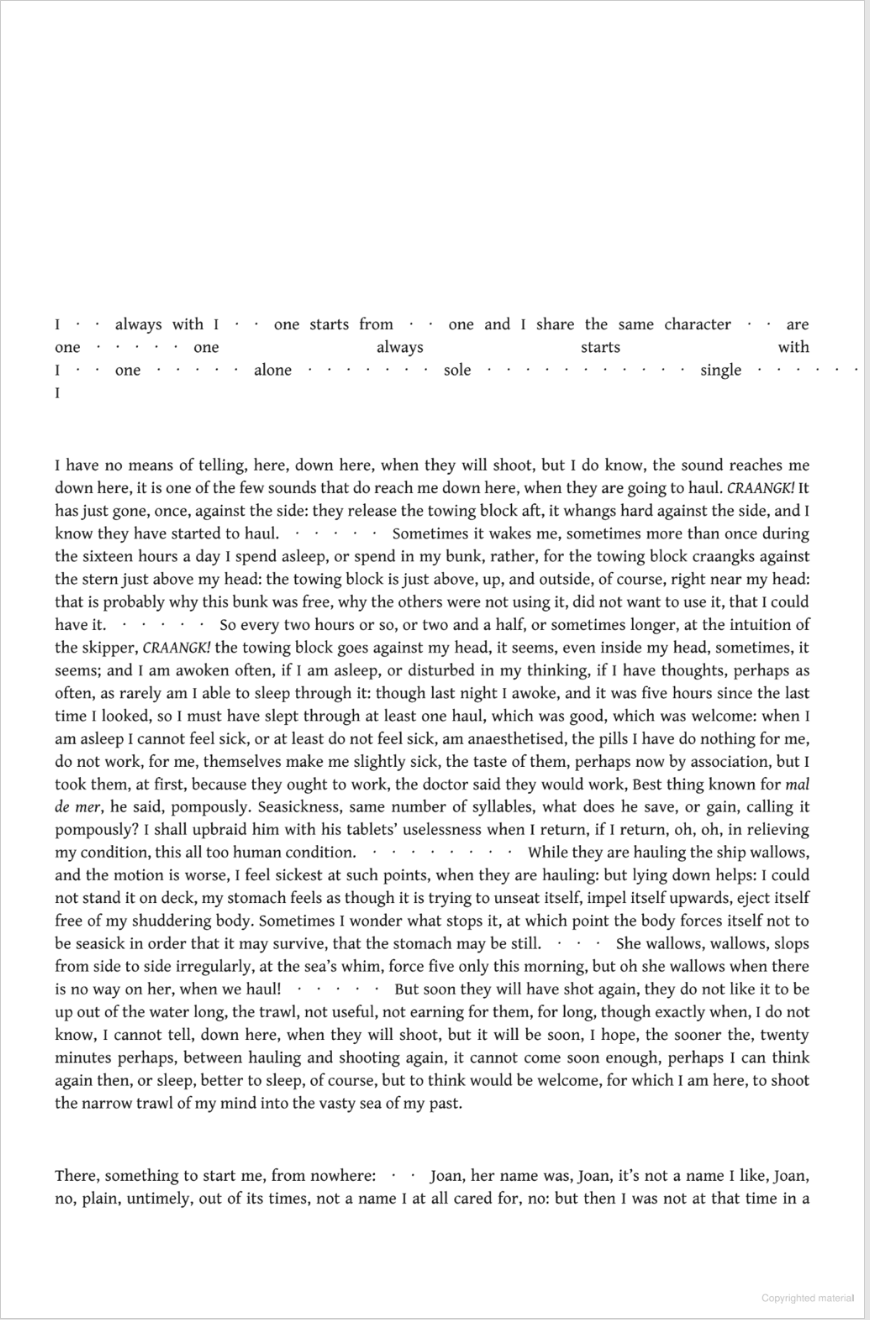
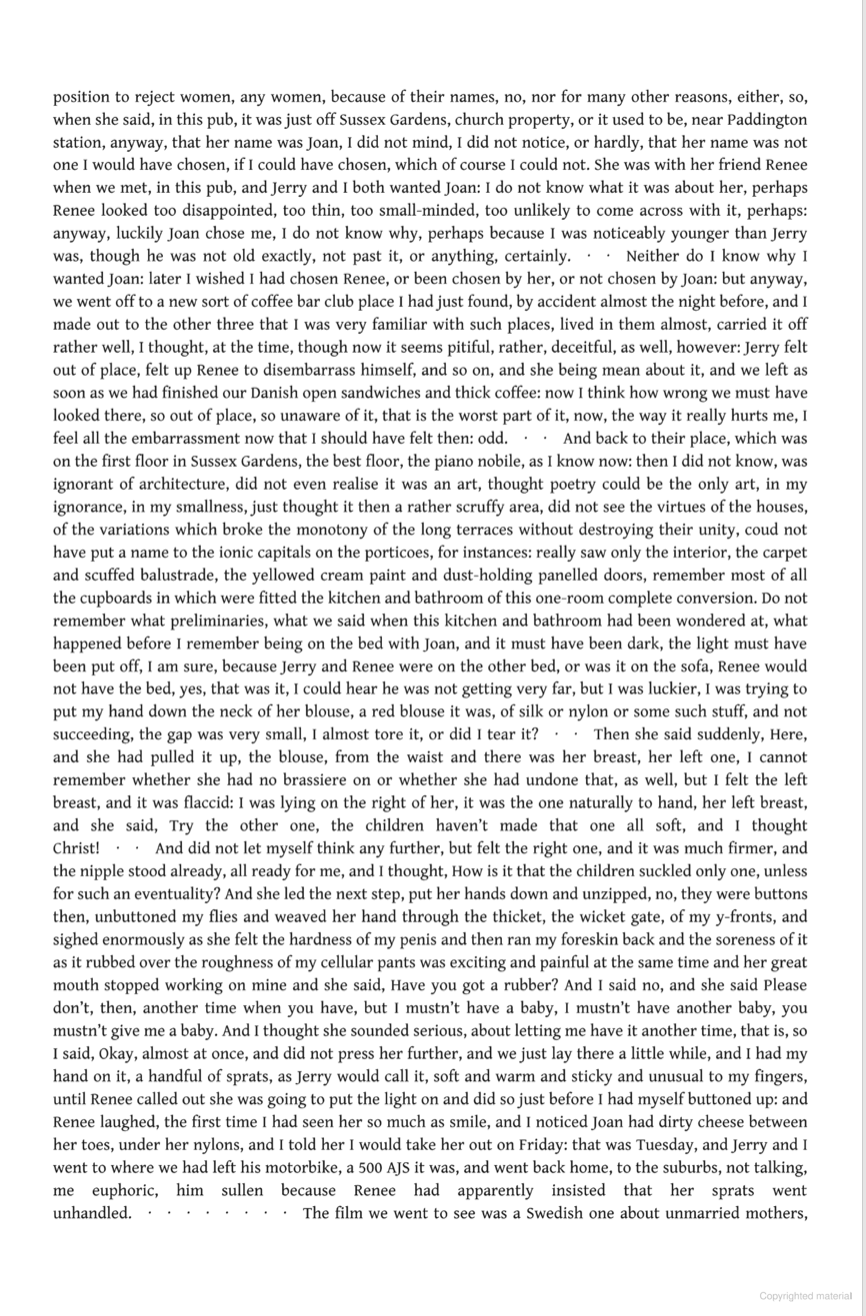
This obsession with so-called narrative truth runs through Johnson’s work, accounting for its most unorthodox experiments as well as its greatest flaws. It fuelled the iconoclastic explosion near the end of his second novel, Albert Angelo, when in the middle of a paragraph Johnson hijacks his own narrative with an all-caps howl of “F— ALL THIS LYING!”, shelving the rest of the book in favour of an extended homily on the idea that “telling stories is telling lies”. It is everywhere in Trawl (1966), the third novel, which represented a quixotically dedicated attempt to “shoot the narrow trawl of my mind into the vasty sea of my past” by booking passage on a fishing boat to work and reflect (and, as it turned out, suffer ghastly seasickness) in elemental peace. This was the book that prompted Johnson’s publisher to ask him: “Aren’t you rather young to be writing your memoirs?” – a title he scathingly adopted for a later collection of stories.
In an age where postmodernism is a buzzword, it may already be hard to feel the full force of this furious conviction that we need our ideas on novelistic truth exploded. What makes it even harder is the suspicion that Johnson’s heart wasn’t always in it. “I hate the partial livers. I’m an allornothinger,” says the narrator in Albert Angelo, and Johnson’s mid-Sixties work can often resemble a man cornered in the blind alley of his own principles. The obsession with so-called literal truth, and the conviction that a text could convey it – “To the extent that a reader can impose his own imagination on my words, then that piece of writing is a failure,” he wrote – stand in stark contrast to the work of Derrida and Barthes, who by 1967 were both well advanced in undermining assumptions behind truth and textuality.
All this, combined with the corrosive line Johnson took against critics, has led to a school of thought that sees him merely as a self-promoting aesthetic conservative: there to wag his dogma and damn the consequences. As Coe showed in his biography, though, this position takes no account of the strange contradictions in Johnson’s nature. He was, after all, a deeply superstitious writer, whose professed belief in the inflexibility of truth was ensnared with the kind of personal peculiarities – a troubled credence for supernatural experience, an obsession with Graves’s The White Goddess, a conviction that he’d die young – that hardly accord with the functional rigour of his propositions. Little of this shows up in the books, and his readers might have been amused to learn that the BS Johnson who so stoutly maintained that “I don’t like writing fiction, I like writing truth” did so at a desk with a candle burning in a special holder and a Byronic cup made from a skull.
Seen against this backdrop, Johnson’s pronouncements on realism acquire an edge of concern, as though a sufficiently austere focus on principle, on nailing truth to the wall, might work as a defence against the unknown. Despite repeated assertions throughout the novels that “all is chaos”, their secret impulse was always towards order: even in The Unfortunates, whose unbound structure clearly aims to reflect some of the violent disorder of Johnson’s grief at the death of a friend, is carefully designed to make sense in any arrangement.
Certainly Johnson’s finest novels sprang from a temporary relaxation in his principles. House Mother Normal (1971) channelled his formal ingenuity into creating a superb textual illusion: it consists of eight 21-page monologues, describing a single evening from the viewpoint of the escalatingly decrepit inhabitants of a nursing home and bracketed by the testimony of their vicious and abusive House Mother. Christie Malry’s Own Double-Entry, meanwhile, is a book-long streak of brilliant comic contempt, following an accounts clerk who develops his own system of moral debit and credit. It’s Johnson’s funniest and most bitterly satirical work, as Christie pays off the vast debts accrued by Society (“general educational trauma”, “Socialism not given a chance”) with a cheery campaign of slaughter and public bombing.
What prompted this fictional interregnum is unclear, but these two novels succeed because of their broad-mindedness, their anarchic willingness to hold conflicting ideas in suspension. Here, satirical pronouncements on the deceptiveness of the text (“It is a diagram of certain aspects of the inside of his skull! What a laugh!” observes House Mother) alternate with an infectious joy in the possibilities of form.
___
Book
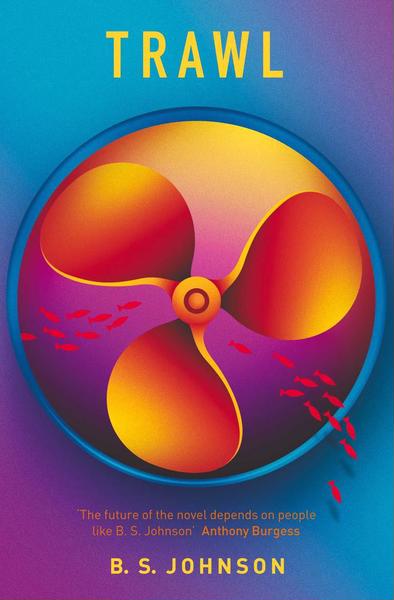 B S Johnson Trawl
Picador
‘The novel describes, in the first-person, a three-week voyage aboard a deep-sea fishing trawler in the Barents Sea, not unlike the one Johnson undertook in preparation to write the book. Isolating himself from the world he knows, as well as from the ship’s crew, the narrator reflects on past events and relationships, hoping for some kind of redemption. This convincingly authentic and harrowing attempt to get to the heart of the human condition is one of Johnson’s finest novels.
‘In his heyday, during the 1960s and early 1970s, B S Johnson was one of the best-known novelists in Britain. A passionate advocate for the avant-garde, he became famous for his forthright views on the future of the novel and for his unique ways of putting them into practice. Convinced that ‘telling stories is telling lies’ and that he should write about ‘nothing else but what happens to me’, Johnson produced Trawl.’ — Picador
____
Excerpt
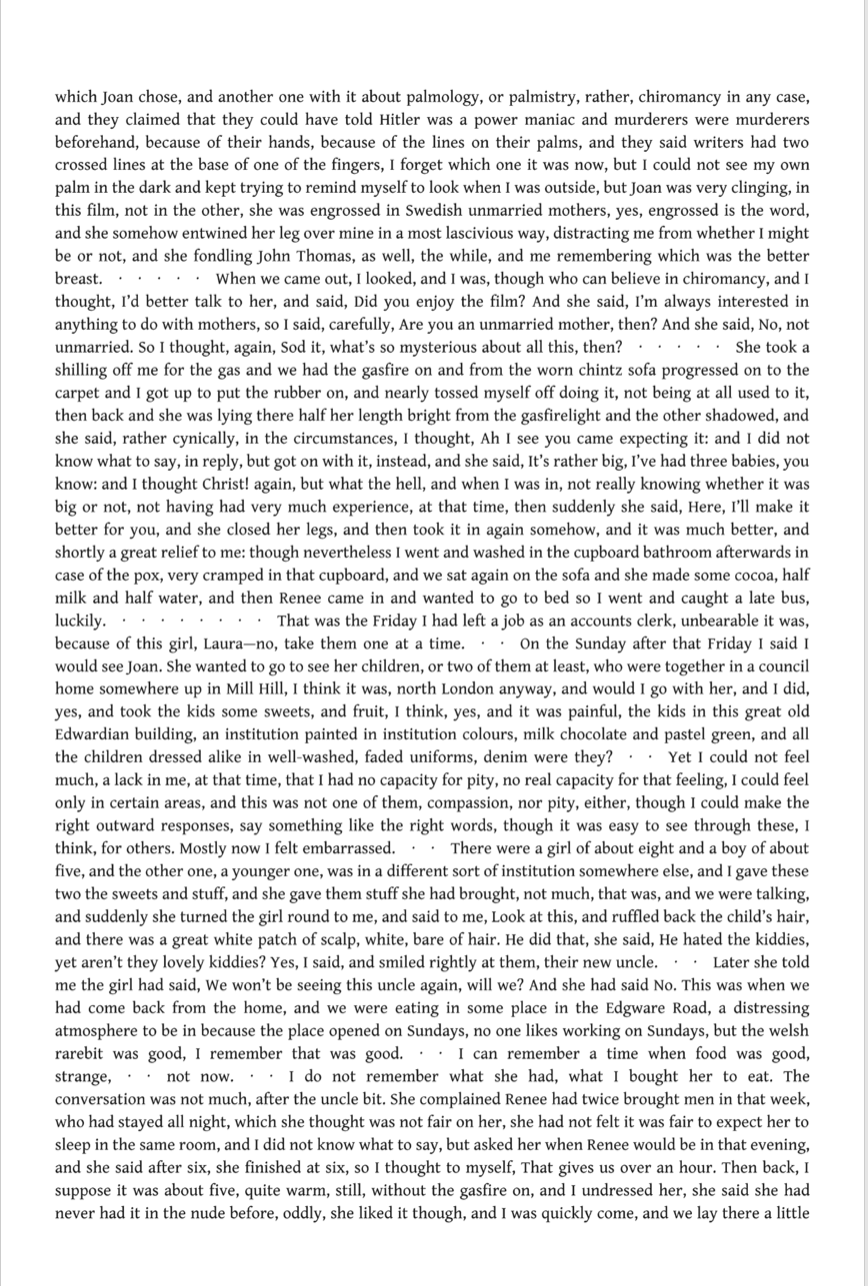
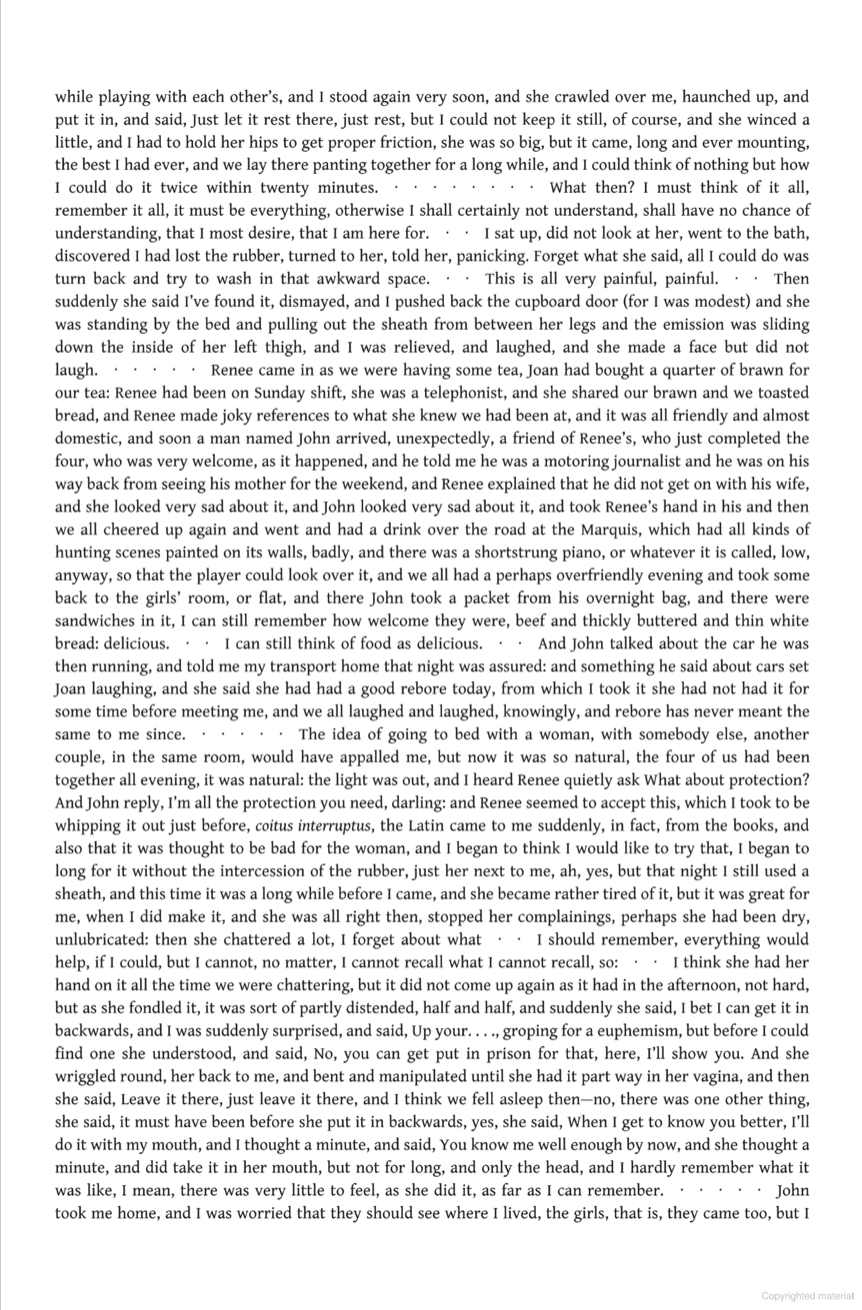
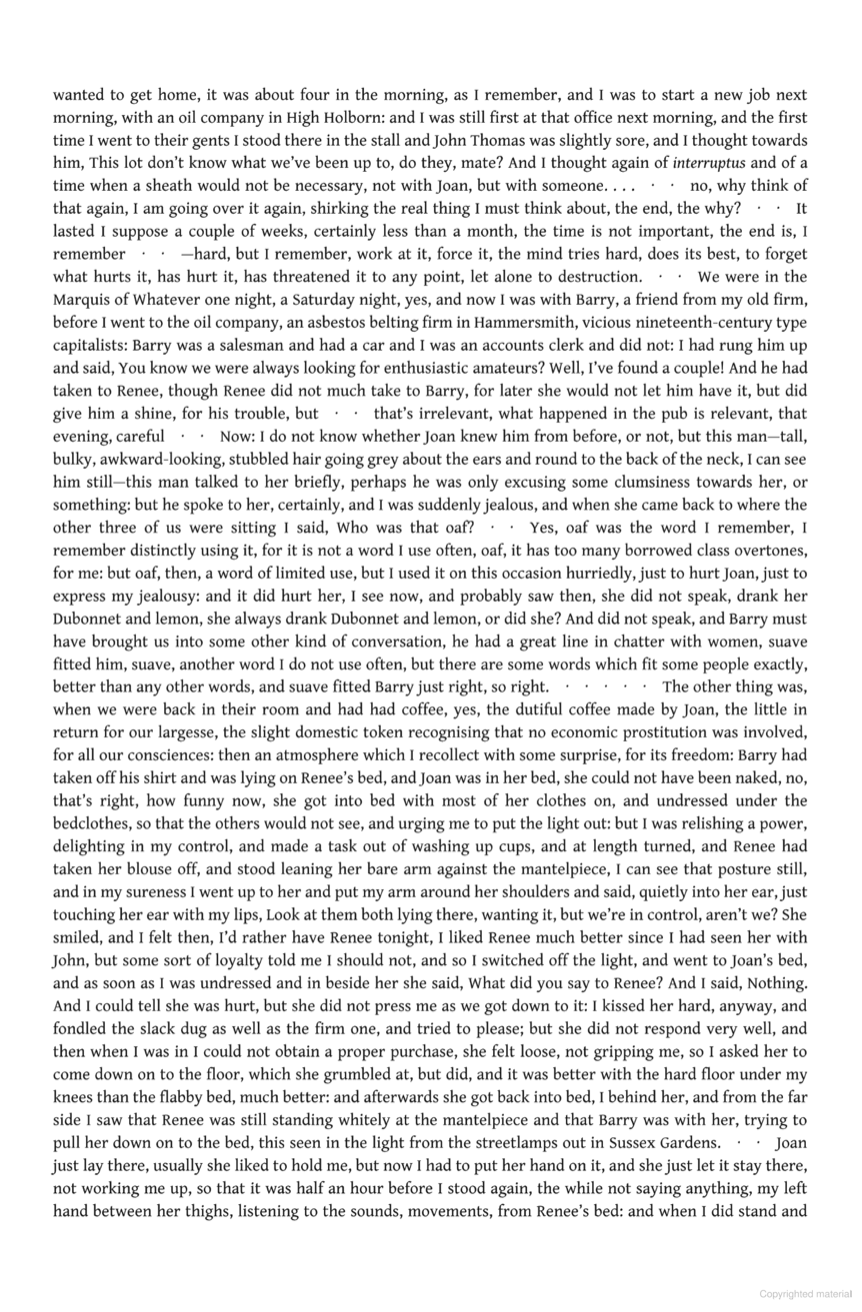
*
p.s. Hey. ** _Black_Acrylic, Hi. Funny, I was just hanging out with someone yesterday who told me about that Argento shop. Dude, those dark glasses! Do you still have them? Chocolate and croissant, nice. I generally think of you as the pizza guy. ** Adem Berbic, There are people who’ve figured out ‘TMS’s total workings, just not so many. To answer your question would take way too many ages for the p.s. In short, it’s both. The novel has many subterranean layers that can be accessed through secret tunnels in the prose that probably can’t be detected until you’ve read the novel through once at least. If you detect the entrance of a secret tunnel, you can decide to enter it and read forward (or backward) in the book and the particular viewpoint created by being inside the secret tunnel reveals things about the novel that are not apparent if you just read it on the surface. In a nutshell. ** Carsten, Hi. I dislike Asia Argento because of her collusion in the JT Leroy scam. I don’t want to get into the nuts and bolts, so let’s leave it at that. Magaluf has an art museum that does very interesting exhibitions, and they asked to show the film, and we were happy to say yes. I know nothing about the place. In the last couple of days there’s been a lot of quite interesting people coming to ‘Digger’s’ defense and praising it pretty passionately. So I am increasingly intrigued. If I can find someone who’ll go see it in the theater with me, which might be difficult, I’ll do that. Otherwise streaming, yeah. ** laura w., Hi. Thanks. Yeah, the current default thing about 1st person is repelling me like default things do or at least should. Agree with you re: 3rd person’s power and value. Originally ‘Guide’ was going to use Blur’s and Silverchair’s real names and lyrics, but Grove Press’s lawyers said I couldn’t, so I changed them to Smear and Tinselstool and distorted their lyrics a little. But that turned out to be much better decision, and just added to the novel’s disorienting through-line. I very rarely use the real names of people who inspired characters, only George and my friend Ziggy for Ziggy in ‘Try’, I think. Oh, and in ‘TMS’ re: Pierre Clementi, etc. I’ve never been very interested in Depeche Mode. I don’t know, I think there are a lot of popular ‘alternative’ bands I’m not interested in. Most of them maybe even. ** Hugo, Hey. Sorry that things are rough for you. Vast, swift improvement on that front. But how cool that you met Ryan! He’s in London, huh. In addition to his genius, he’s very sweet. So cool. ** HaRpEr //, I need to go back and re-listen to those last couple of Deerhunter albums. I was disappointed at the time, but given how blah-ified rock has generally become since then, I would guess they sound pretty strong now. ‘Sophisticated edgelord’, nice. ** Bill, All the luck there is, my friend. Yeah, Frank did good. He’s a pip. ** Uday, I would imagine that Grad School would be pretty intense in the best situation. Cool about Fran Lebowitz. She’s crazy hilarious. Uh, gosh, it’s such an honor to have people like your work and say so, even at length. It’s a gift. I have a little bit of a hard time with praise, at least on the surface, but it means a ton secretly. I’m good, I think. Let me think … Yes, I’m good. Survive and thrive, pal. ** voskat, Hey to you, voskat! 600+ pages! A length I have never and will never remotely achieve. So she’s managing, to say the least. Thank you for the 50 seconds. I’ll listen once I get out of this place. Great. I don’t think it’s bad that you mostly remember the films’ aesthetics or else I’m as bad as you. Plot schmot. Love and its tentacles to you guys! ** Right Today I spotlight a fascinating novel by the generally very interesting writer B.S. Johnson. Have at it, please. See you tomorrow.



 Now available in North America
Leave a Reply