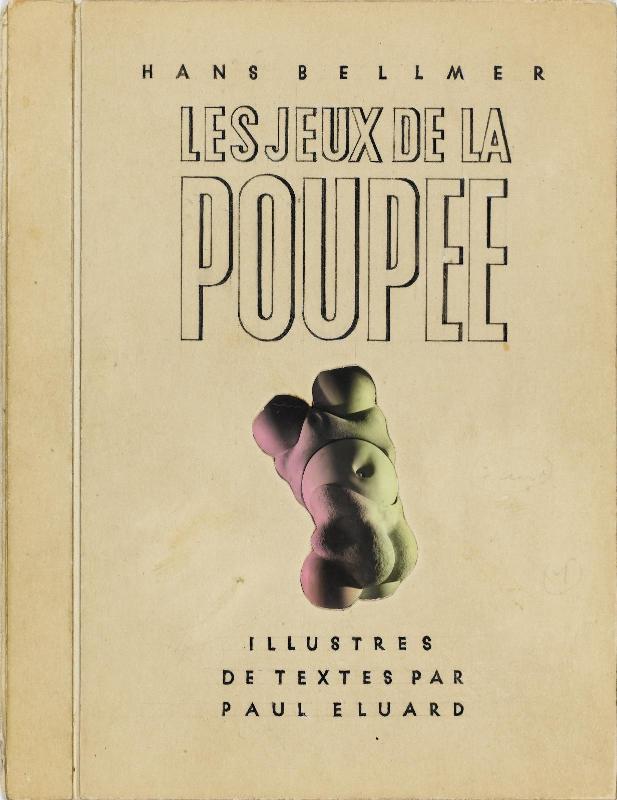
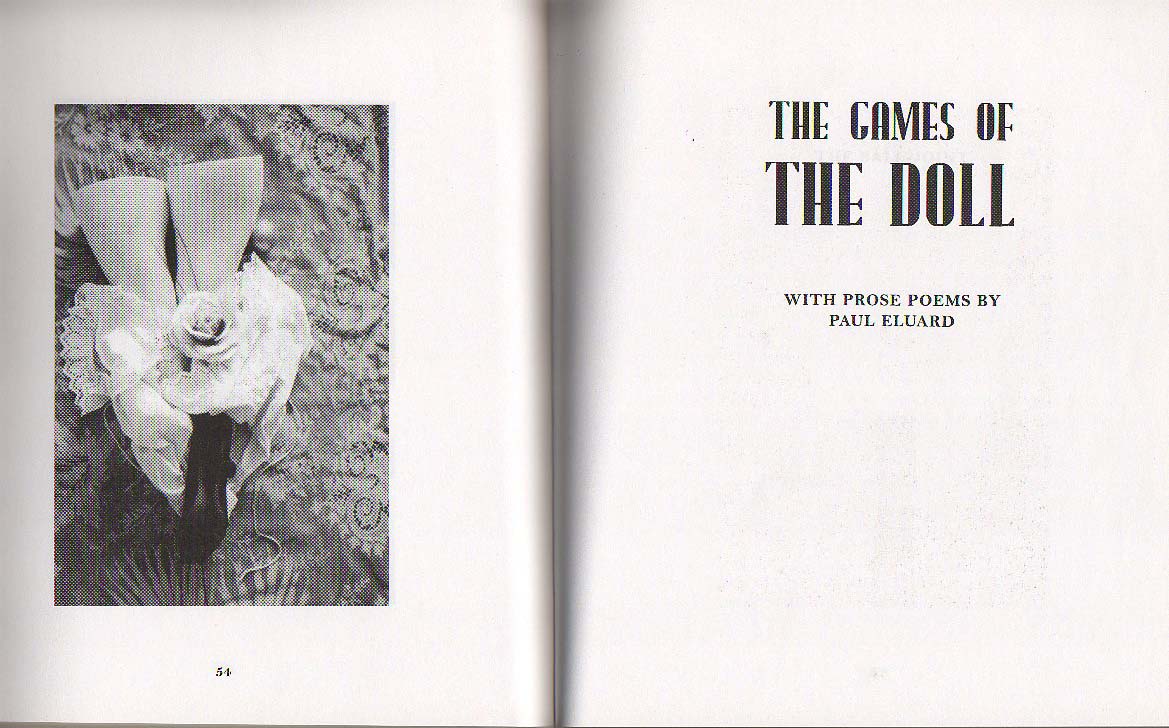
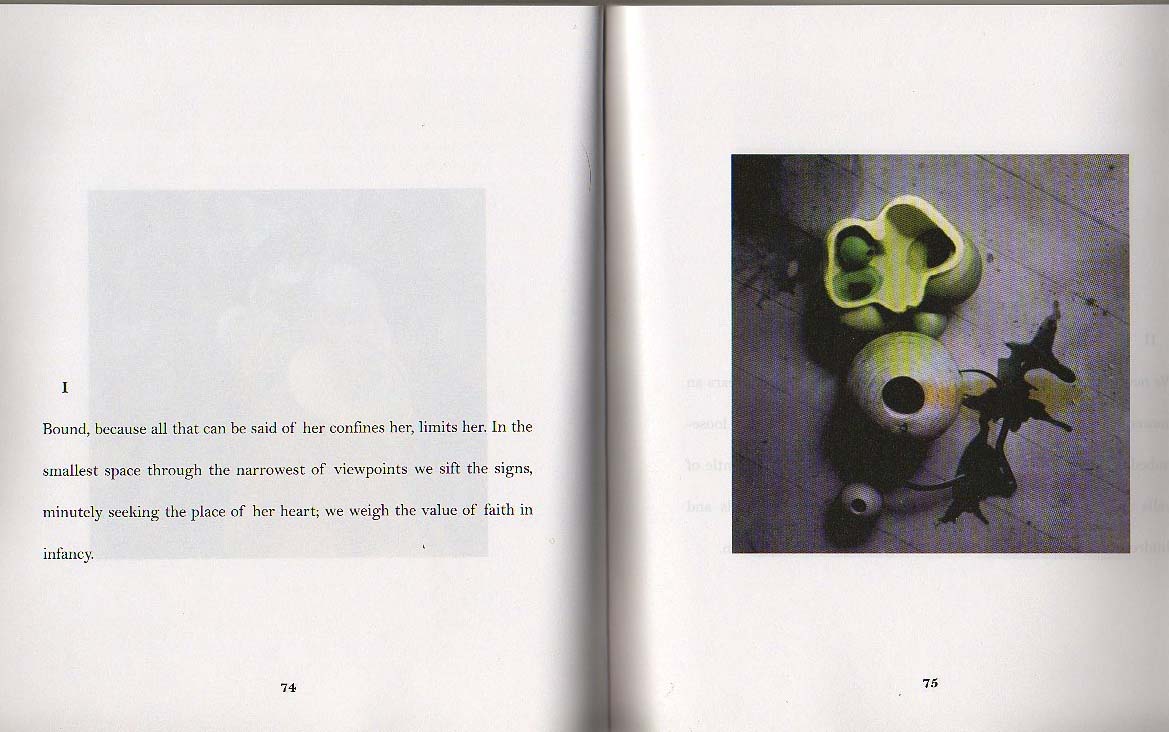
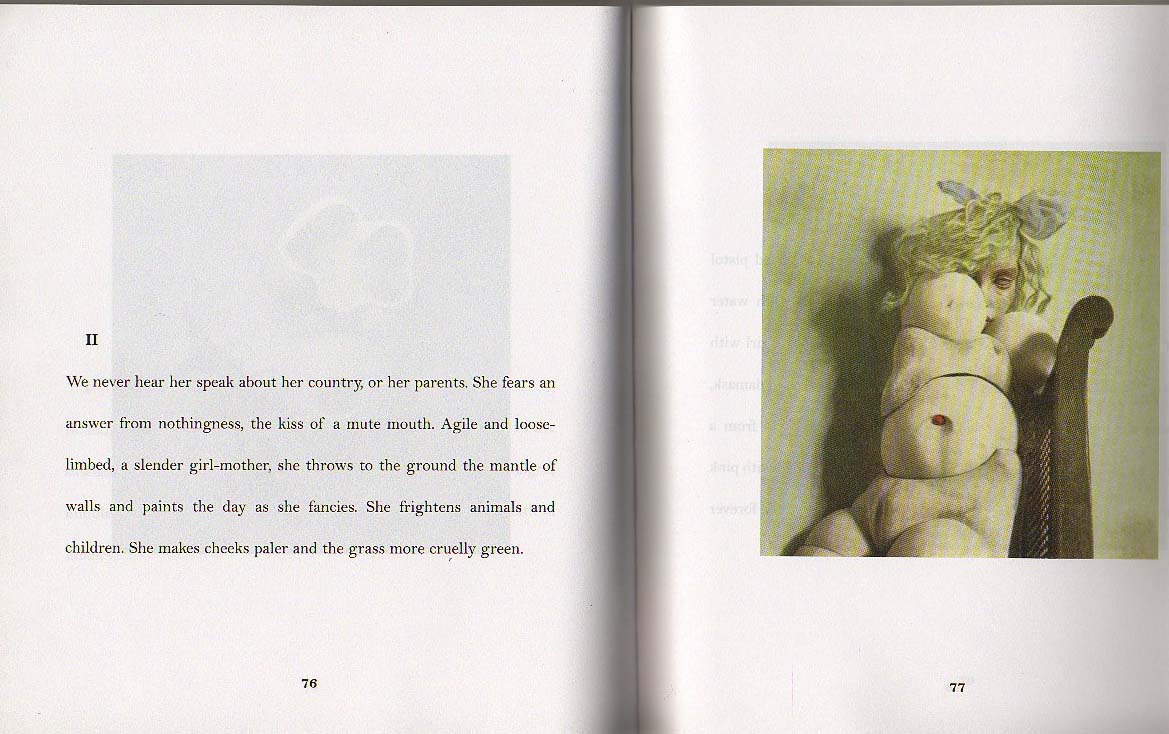
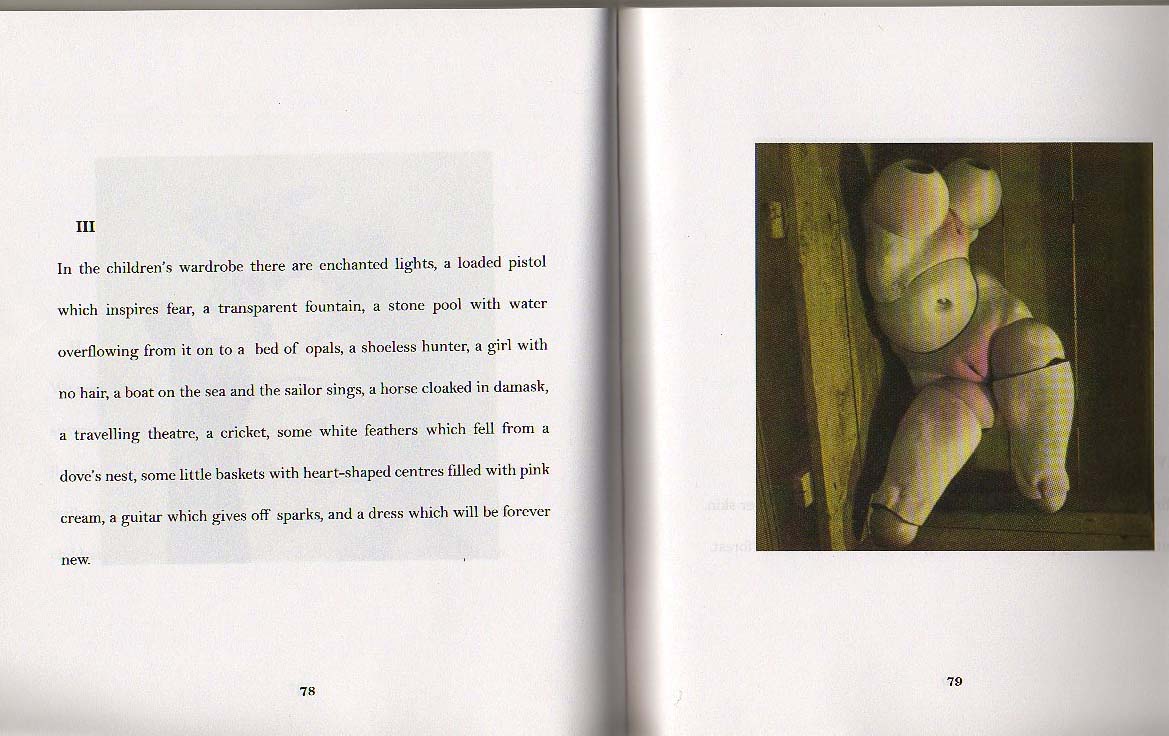
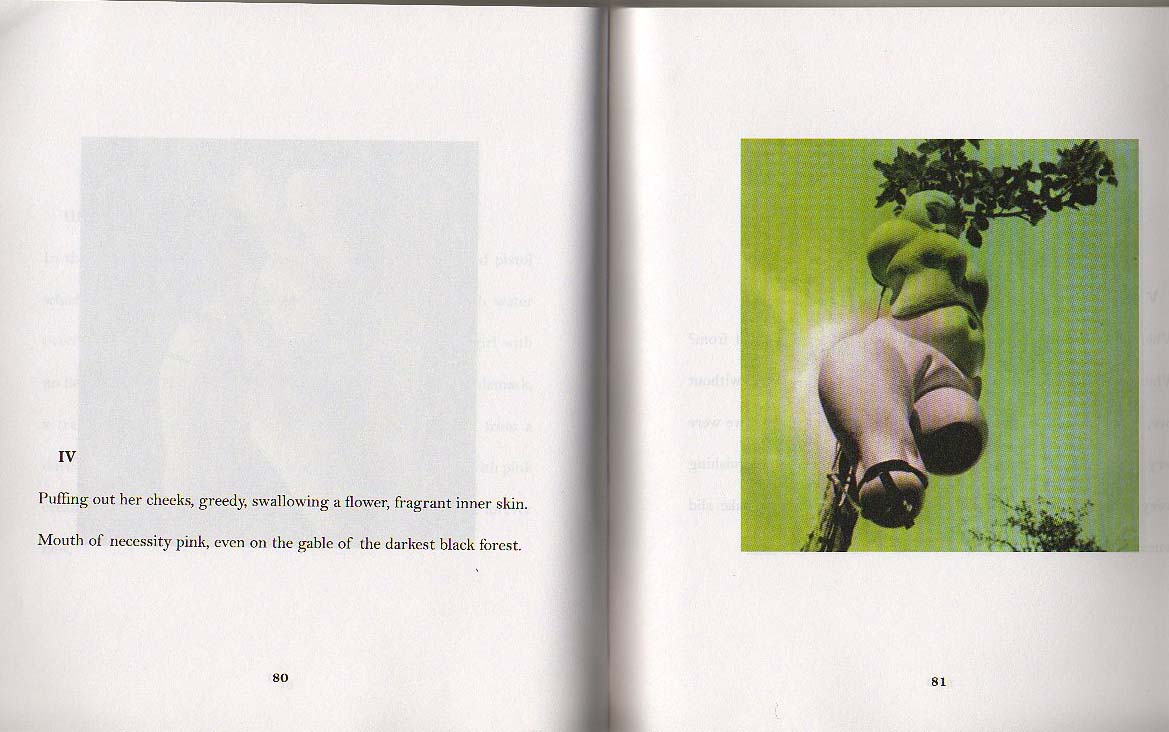
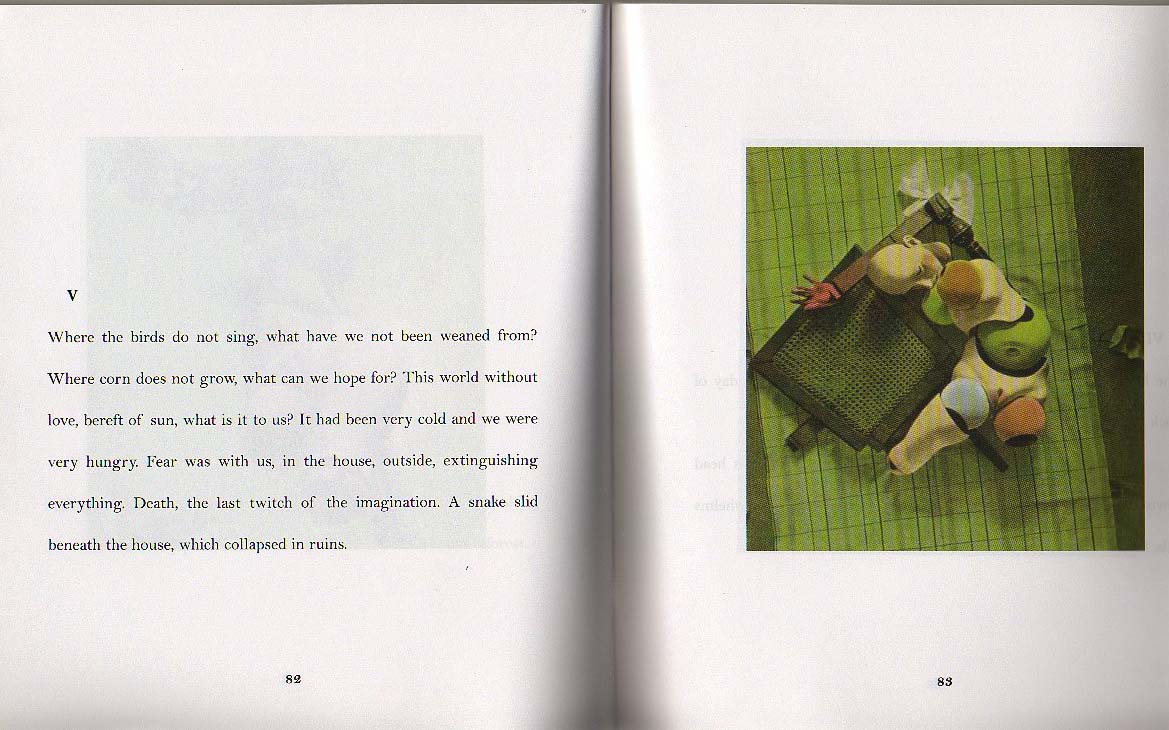
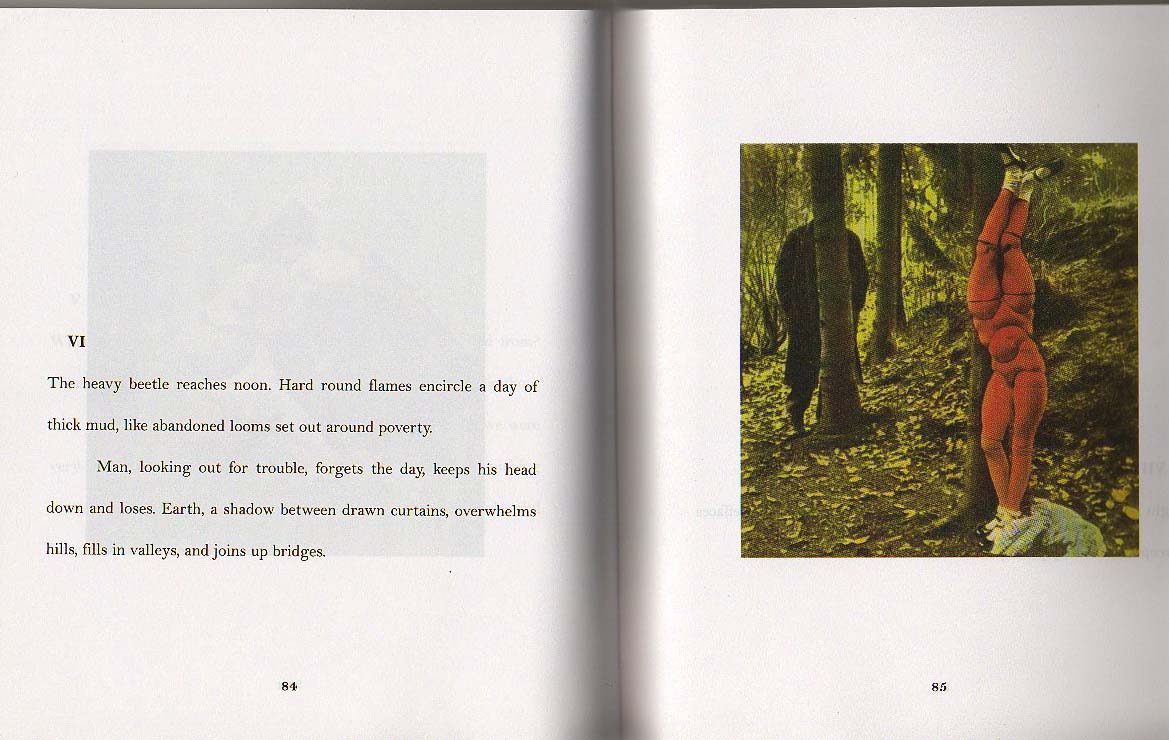
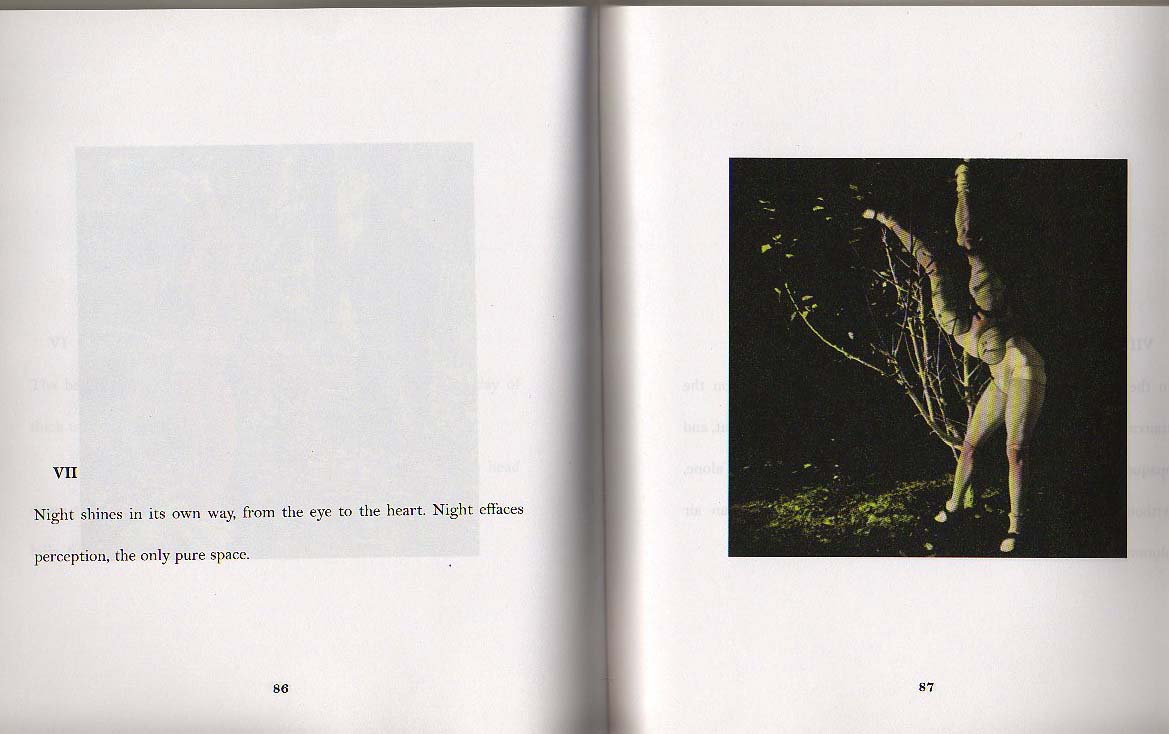
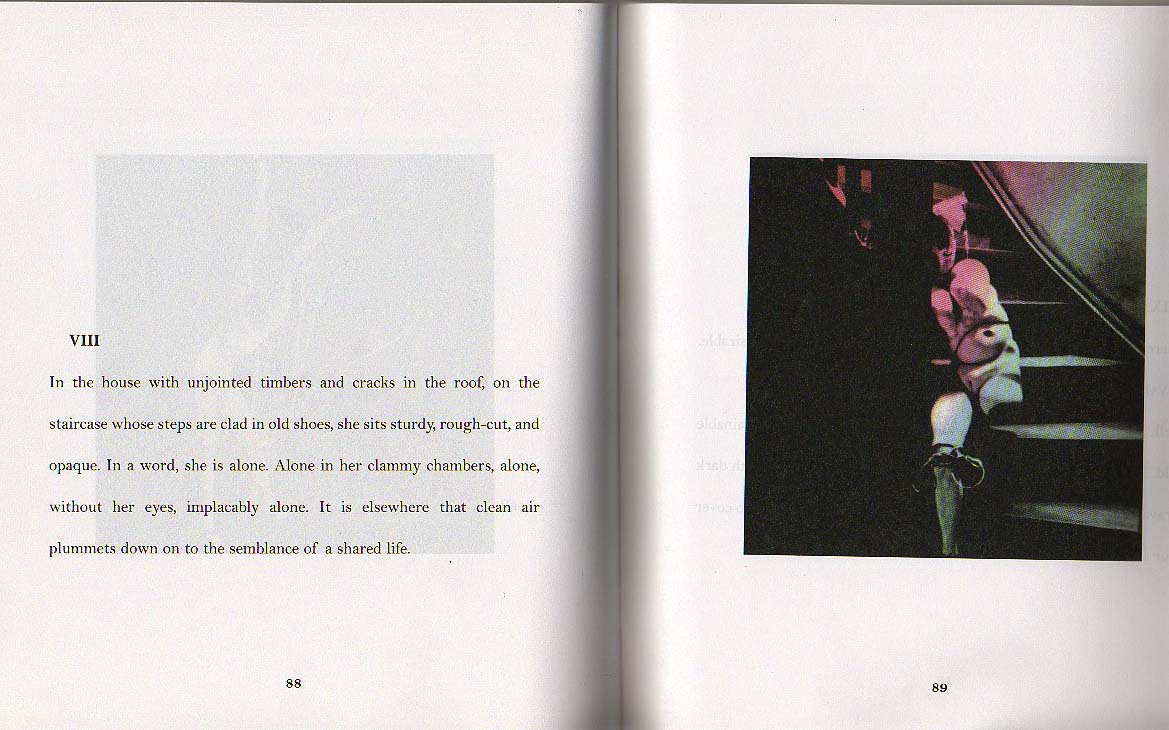
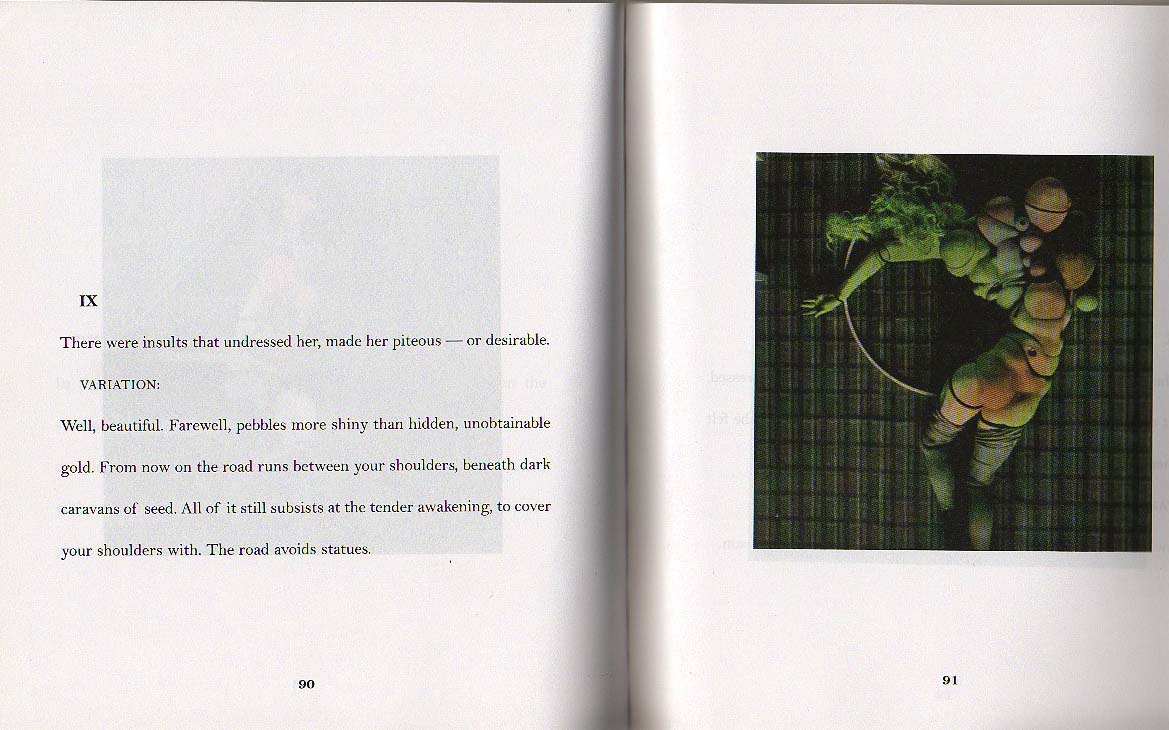
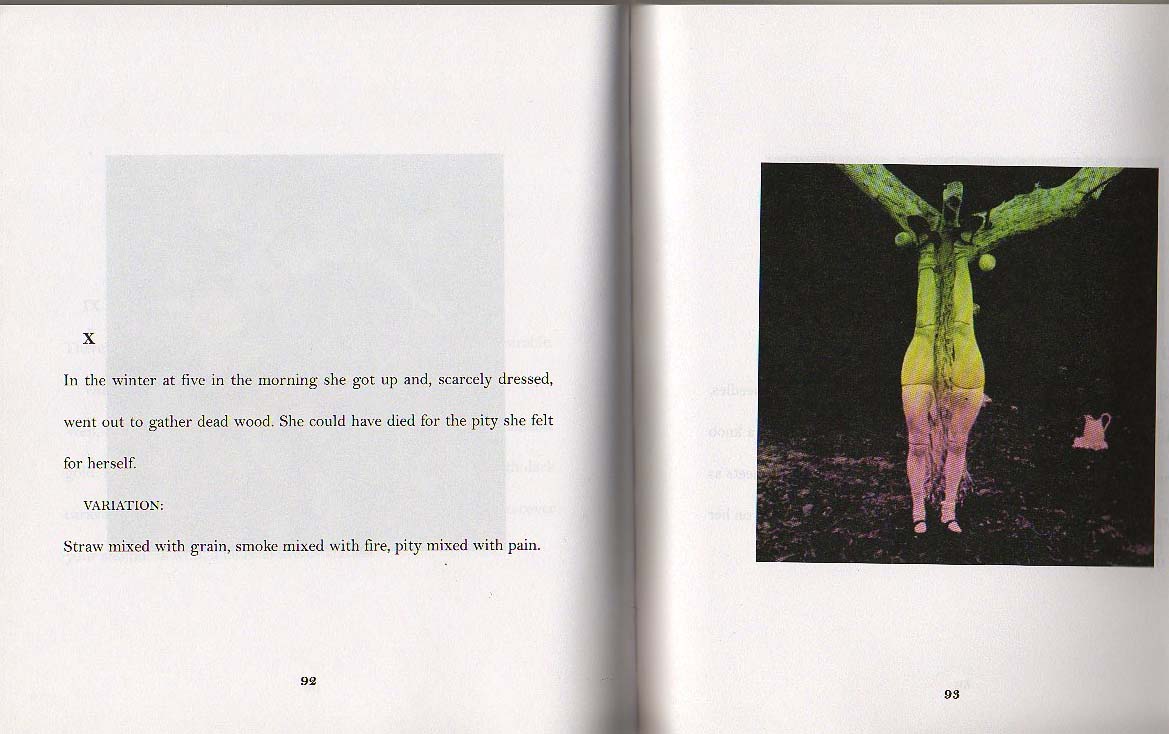
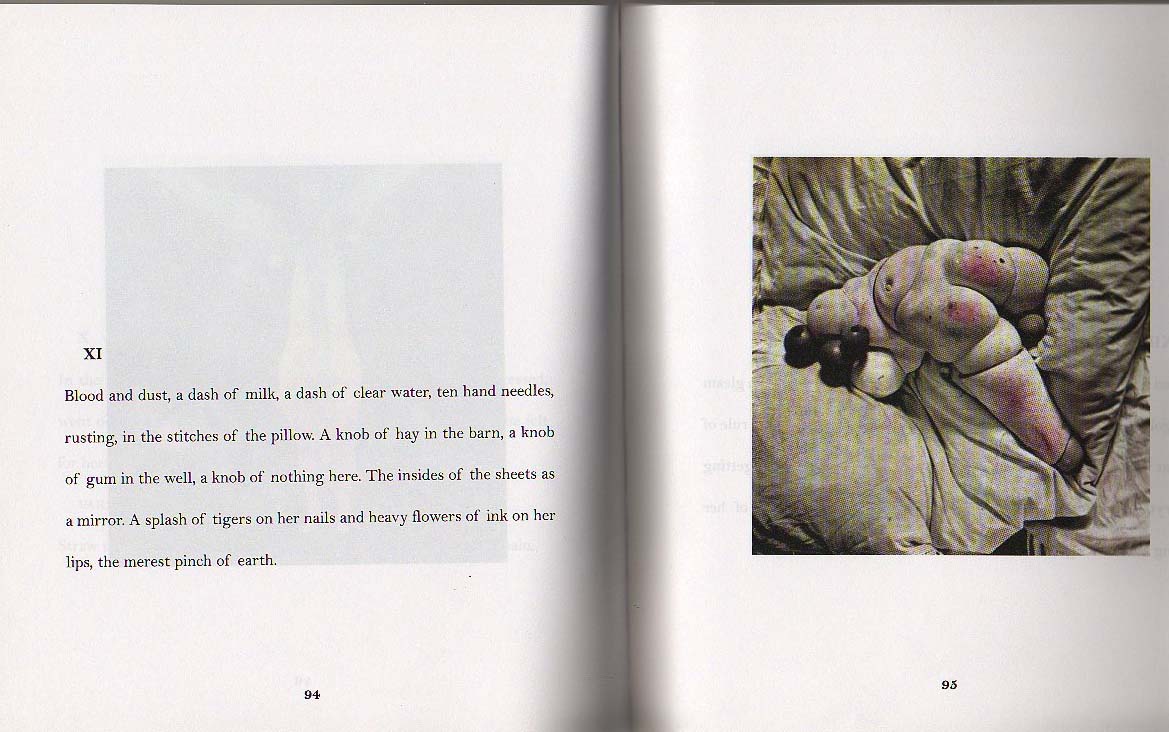
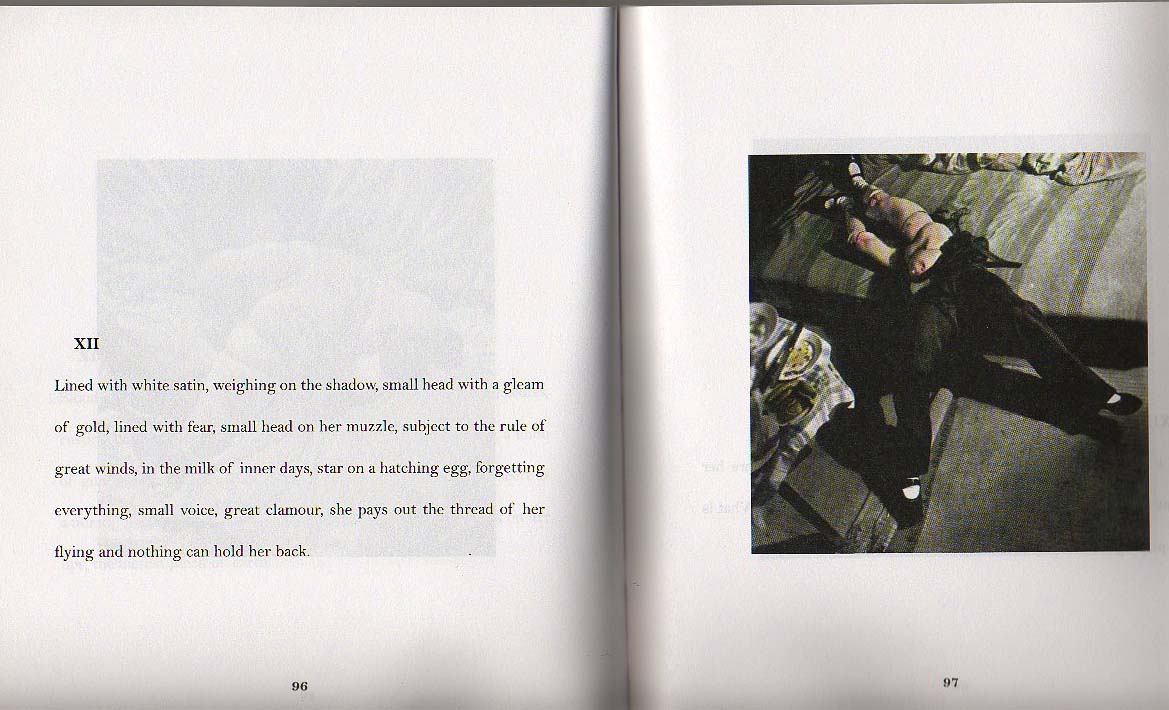
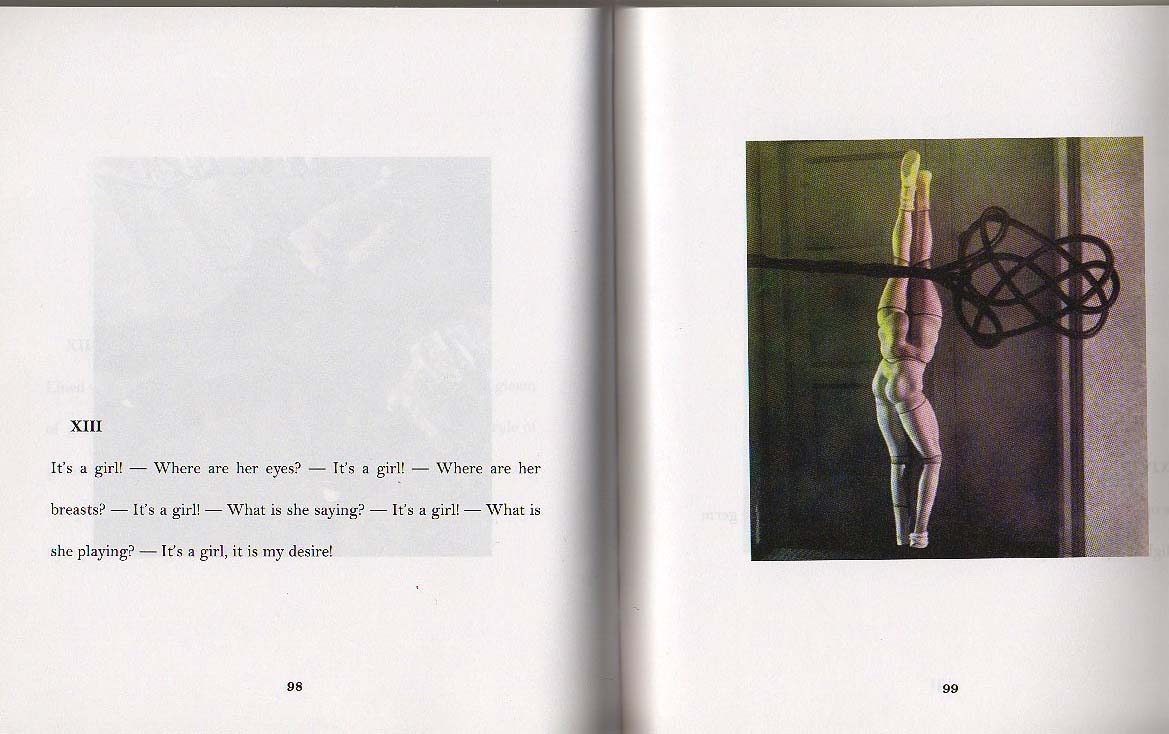
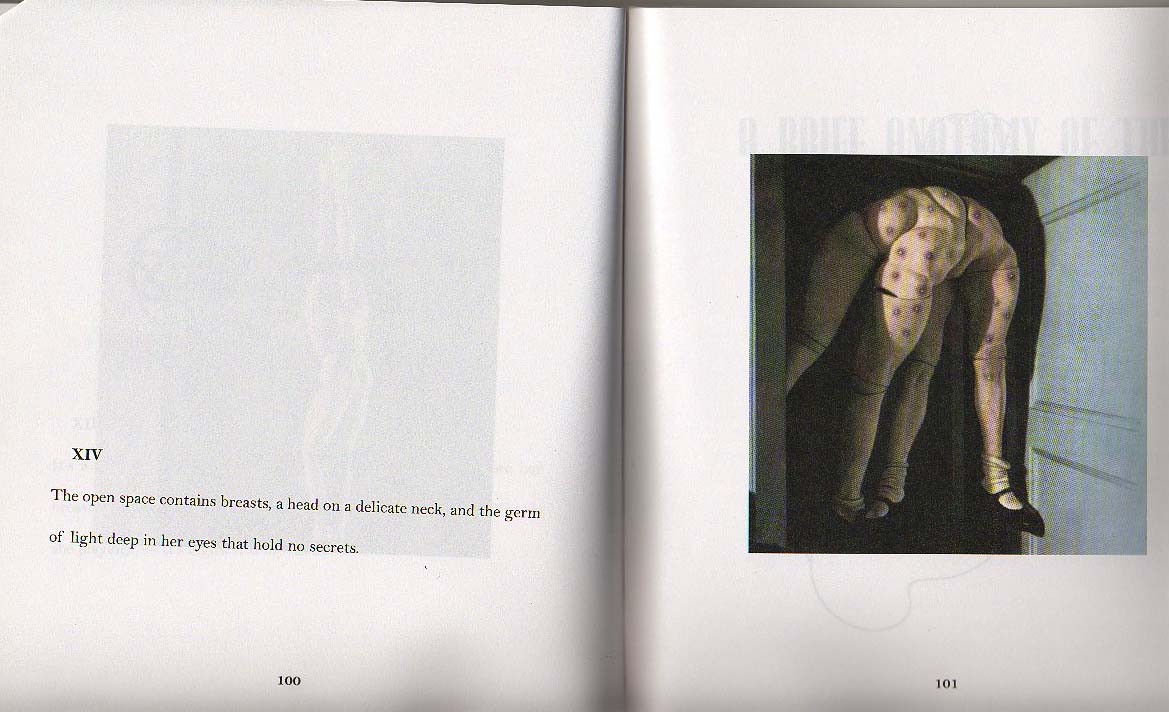
‘Covered in soft black construction paper adorned with a pink title band, and filled with delicate pages accentuated by rapturously colored photographs, Hans Bellmer’s Les jeux de la poupée (The Games of the Doll) is the perfect Surrealist object. Bellmer began to experiment with his disquieting dolls in 1934—originally crafted from wood, broom-handles, metal rods, nuts and bolts, and plaster—before forming the second iteration which was constructed using ball joints for greater mobility and manipulation. Photographed from 1936 to 1938 in his native Germany, Bellmer then fled to Paris, where famed fellow Surrealist Paul Éluard selected fourteen images to be compiled into a book that would couple Bellmer’s vibrantly hand colored photographs with extensive text written by Éluard. A small edition titled Poupée II was created, but with the advent of the Second World War its publication was brought to a halt. A larger edition, published by Éditions Premières in Paris as Les jeux de la poupée was released a decade later in an edition of 136. While the great majority of these books have been broken up, the current lot is a rare example of a complete book, presented as Bellmer and Éluard had originally intended it.
‘Les jeux de la poupée dives deep into the realm of the uncanny. The doll, never anatomically complete, and clearly constructed from artificial parts, nonetheless evokes fear and sympathy from the viewer who cannot help but feel empathy for this tragic figure. Photography, with its unbreakable tie to the real, plays a significant role in the Doll’s surreal power, in what scholars Rosalind Krauss and Jane Livingston describe as “the seeming contradiction between the extravagant productions of the unconscious and the documentary deadpan of the camera.”
‘The prints placed within the book feature Bellmer’s doll posed in a series of sinister narrative tableaus, however on the cover Bellmer placed a print that has been trimmed to the edges of the doll itself, divorcing her from an semblance of reality. A nearly abstract form composed of two hips joined by a large ball-joint, lit from opposing sides and colored pink and yellow, the self-contained form appears a duality—conscious and unconscious, reality and fantasy. Like a reoccurring, effusive dream, we are greeted by another trimmed print on the cover page, a twin of the doll on the cover who has followed us into the book’s depths. Regarding Bellmer’s book is like walking through a stranger’s home in the dark. Each step is carefully taken through this strange, unsettling environment, and perhaps we yearn for the comfort of the familiar, but drawn in by Bellmer’s exquisite Surrealist mastery, we cannot bring ourselves to look away.’ — Phillips
________
Hans Bellmer
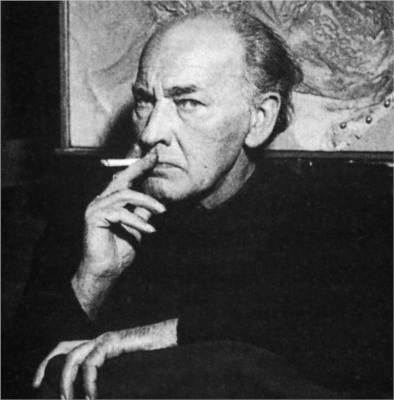
‘Hans Bellmer adopted his controversial practice—the creation of provocative, often grotesque sculptures of pubescent female dolls—in the 1930s to rebel against the artistic rules and standards of beauty imposed by the Nazi government. After moving to Berlin in 1923, Bellmer became close with the Dada artists, particularly George Grosz, a politically minded painter who furthered Bellmer’s distrust of government. Fearing that his art would be outlawed by the Nazis as “degenerate”, in 1934 Bellmer sought acceptance abroad with André Breton and the French Surrealists, who embraced his work for its revolutionary nature and libidinous engagement with female youth. In addition to his sculptures, Bellmer produced prints, photographs, and drawings, always dealing with themes of abject sexuality and forbidden desire. Also a writer, he referred to his doll projects as “experimental poetry”.’
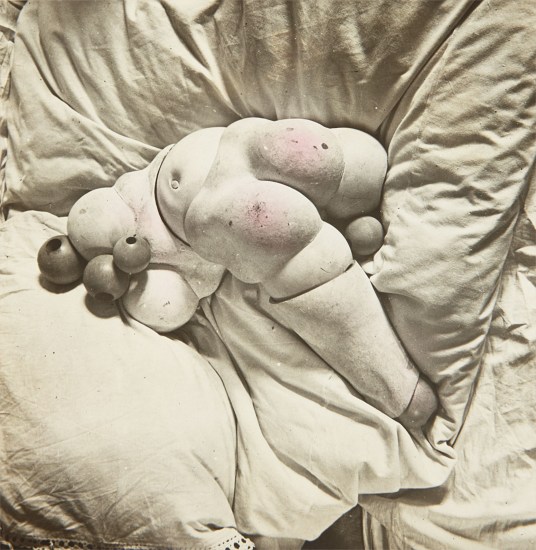
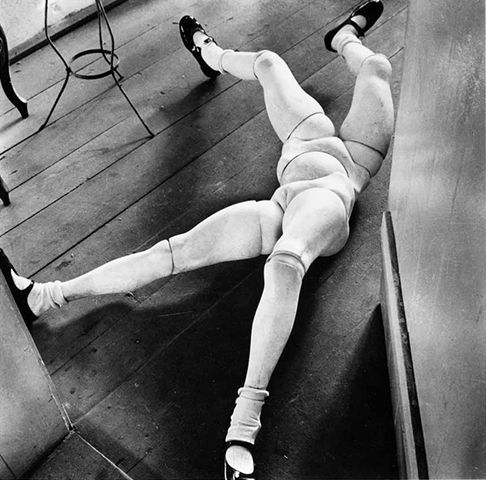
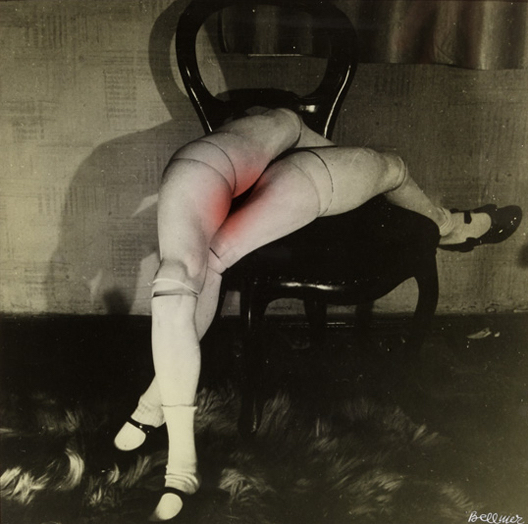
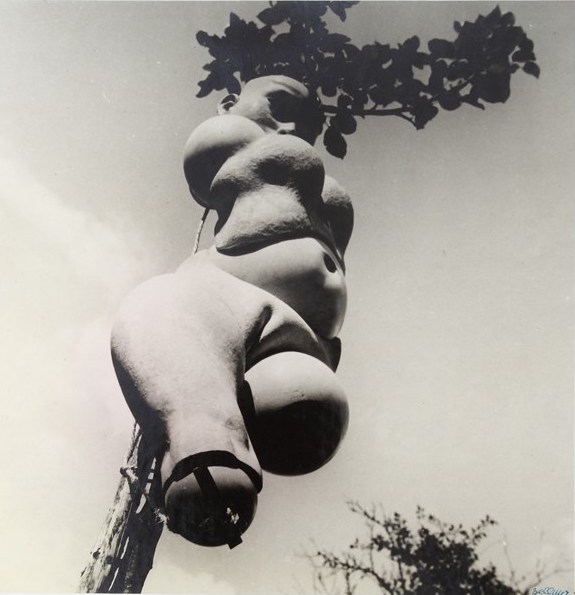
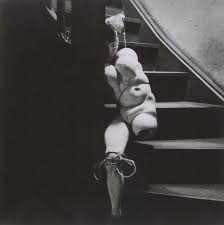
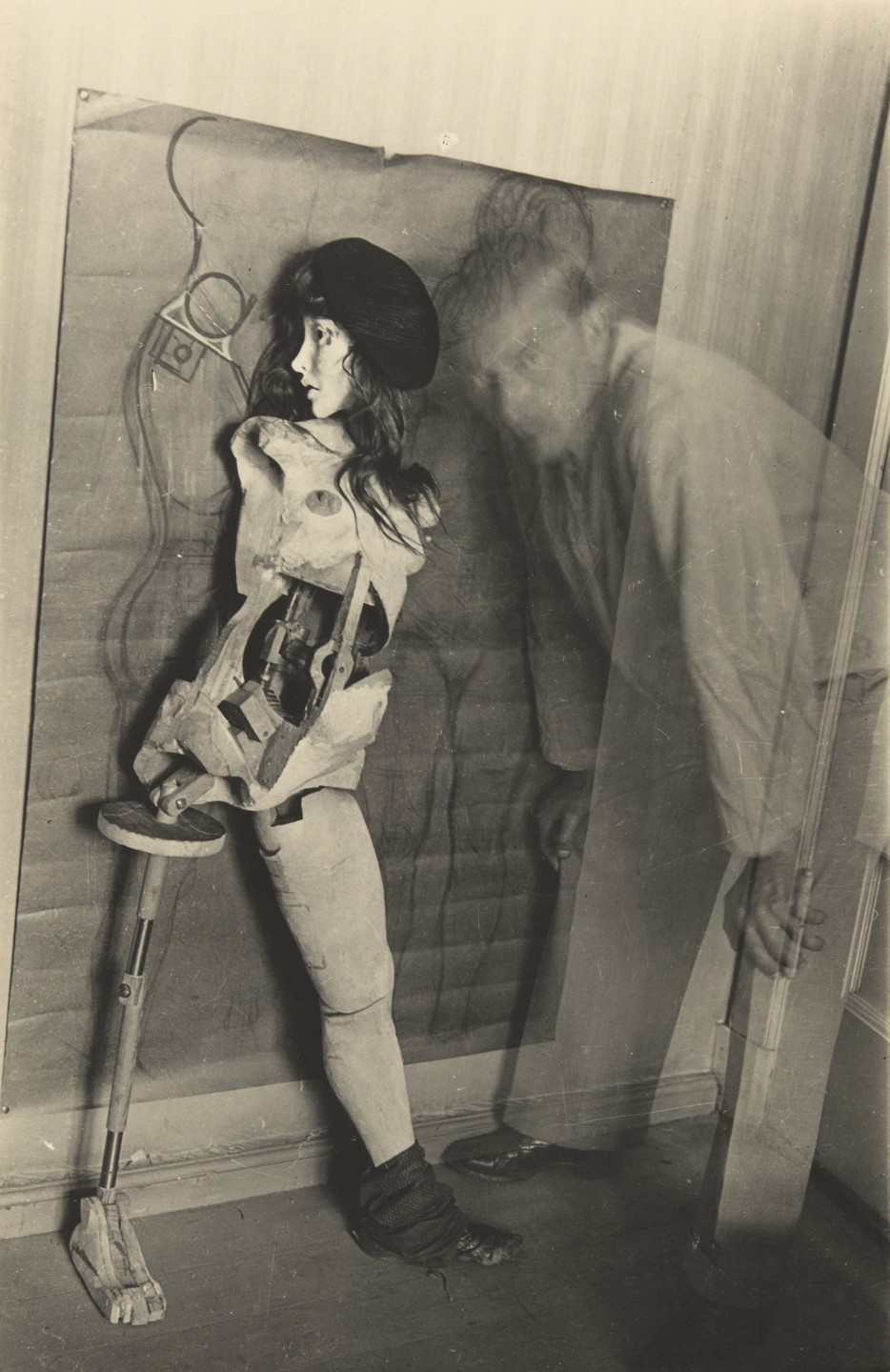
“I was aware of what I called physical unconsciousness, the body’s underlying awareness of itself. I tried to rearrange the sexual elements of a girl’s body like a sort of plastic anagram. I remember describing it thus: the body is like a sequence that invites us to rearrange it, so that its real meaning comes clear through the series of endless anagrams. I want to reveal what is usually kept hidden – it is no game – I tried to open peoples eyes to new realities: it is as true of the doll photographs as it is of Petit Traite de la Morale. The anagram is the key to my work. This allies me to the Surrealists and I am glad to be considered part of that movement, although I have less concern than some Surrealists with the subconscious, because my works are carefully thought out and controlled. If my work is found to scandalise, that is because for me the world is scandalous.” — Hans Bellmer
Hans Bellmer : The Machine-Gunneress in a State of Grace, 1937
The Disturbing Desires of Hans Bellmer
______
Paul Eluard
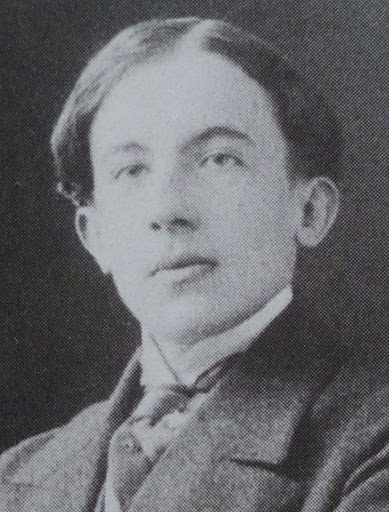
‘Paul Éluard was a French poet and one of the founders of the Surrealist movement. In 1916, he chose the name Paul Éluard, a patronymic borrowed from his maternal grandmother. He adheres to Dadaism and becomes one of the pillars of surrealism by opening the way to artistic action politically committed to the Communist Party. During World War II, he was the author of several poems against Nazism that circulated clandestinely. He became known worldwide as The Poet of Freedom and is considered the most gifted of French surrealist poets.’
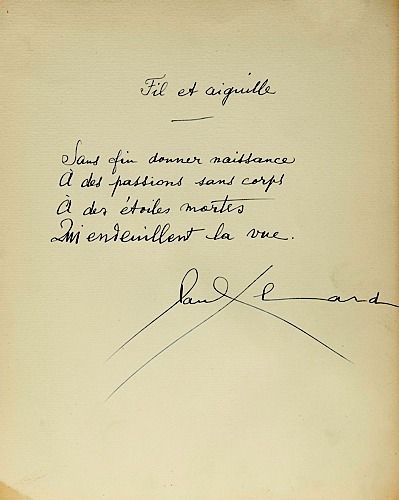
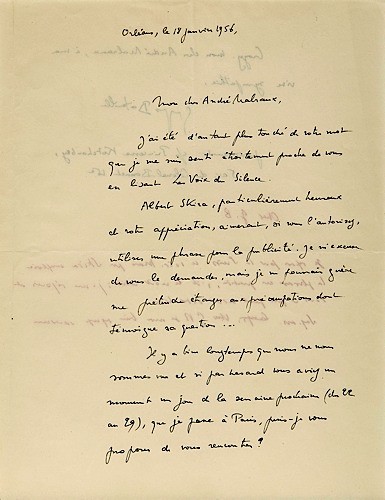
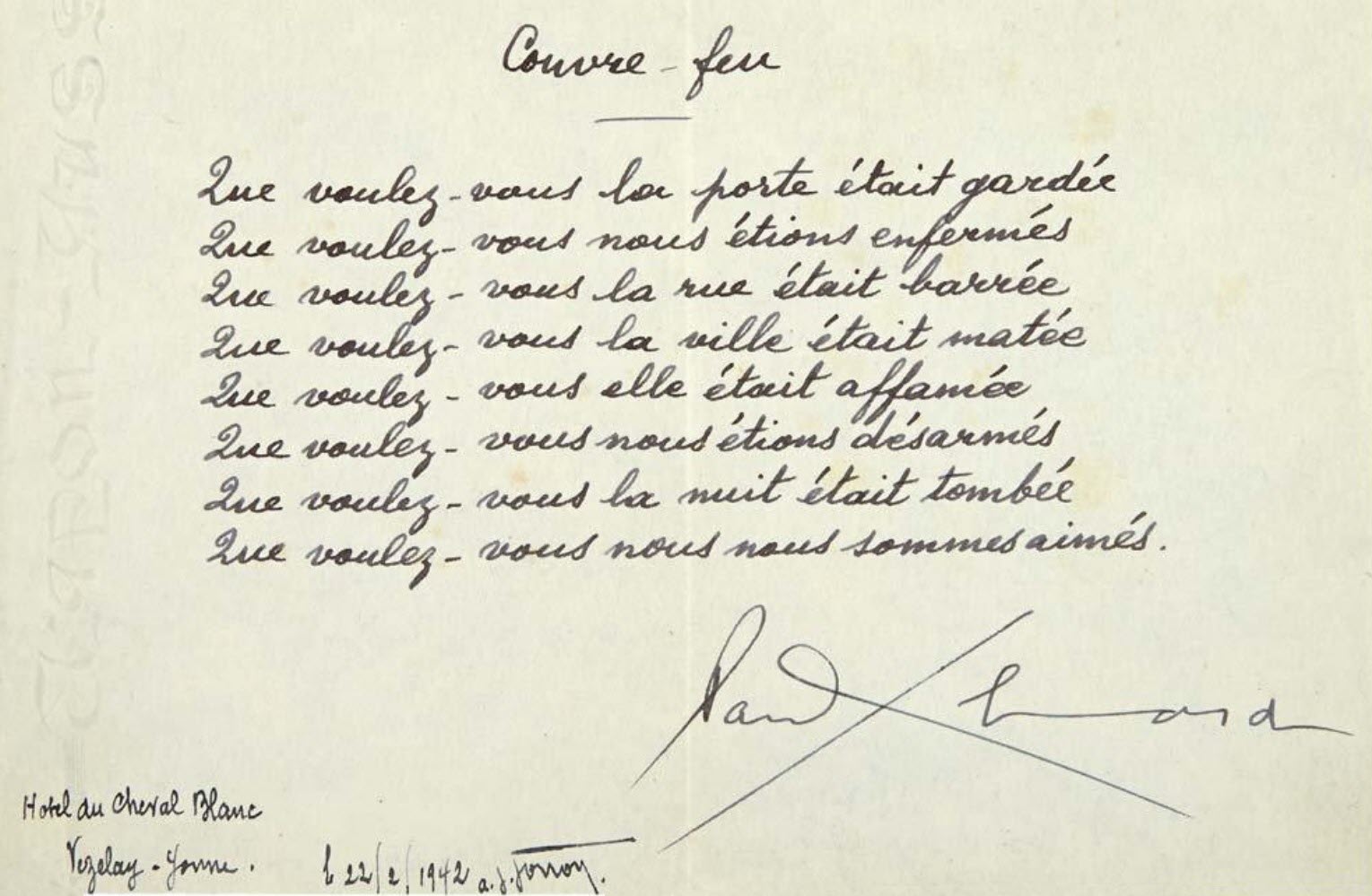
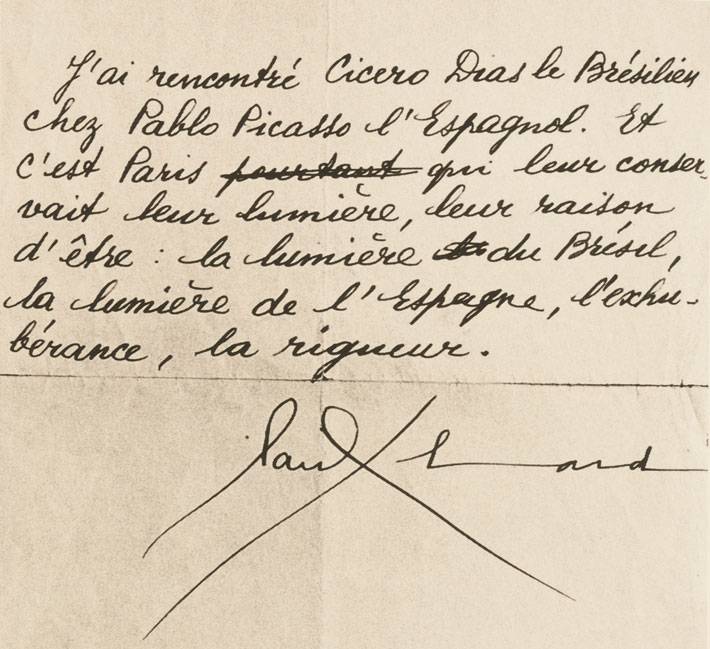
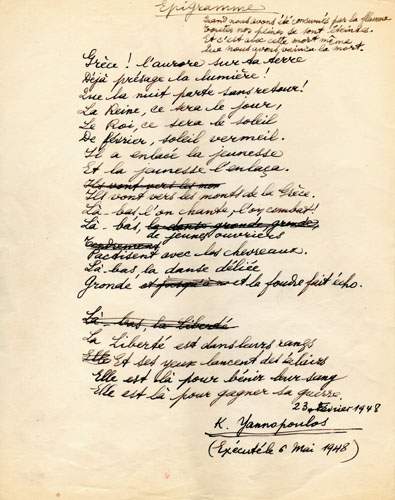
Philip Roth: In your book, the great French poet Éluard soars over paradise and gulag, singing. Is this bit of history which you mention in the book authentic?
Milan Kundera: After the war, Paul Éluard abandoned surrealism and became the greatest exponent of what I might call the “poesy of totalitarianism.” He sang for brotherhood, peace, justice, better tomorrows, he sang for comradeship and against isolation, for joy and against gloom, for innocence and against cynicism. When in 1950 the rulers of paradise sentenced Éluard’s Prague friend, the surrealist Zalvis Kalandra, to death by hanging, Éluard suppressed his personal feelings of friendship for the sake of supra-personal ideals, and publicly declared his approval of his comrade’s execution. The hangman killed while the poet sang.
Paul Eluard : “Liberté” (dit par l’auteur)
Paul ÉLUARD – Portrait souvenir (DOCUMENTAIRE, 1964)
___
Book

*
p.s. Hey. ** kier, Hi, k!!! Thanks for the comment because I very rarely check my Facebook messages, and now we’re in touch and working things out, and I’m excited! xoxo. ** Carsten, That’s definitely better than dropping a 1.5 hour conversation for sure. Thanks, it’ll be good to talk about Kathy and see what parallels she and I have. I should be able to write to you with meeting coordinate possibilities today. ** _Black_Acrylic, Any venue that uses its resources to mount a Bowie memorabilia exhibition warrants suspicion, but I’m someone who feels oversaturated with him and his. You may be right, but the V&A Storage Building in London is really cool and exciting to wander through. ** Bill, Hi. I sure hope you get the chance to stay at home for a lengthy phase soon, assuming you want that. I’m thinking about you having the time and brain space to delve into your own work. Unless you can devise your work on the move? ** laura w., Maybe you can get one of those little units that emit tree smell although they probably cause cancer or something. The US liability laws cause so many great things to never happen. I get why they have them, but … jeez. I don’t know who Andrew Sean Greer is, but twee gay novels are not my seitan and potatoes. 8 pages is more than acceptable surely. Strangely, I’ve never read Ottessa Moshfegh, I can’t really explain why. What is your opinion? ** Thom, ‘God’ is really good metaphor or thematic if used judiciously. If this place hadn’t been receptive I would have been surprised or at least heartbroken. Thanks, pal. My week is picking up steam. Yours? ** HaRpEr //, Short and casual, gotcha. Well, fingers very obviously crossed. I do think that building needs you as a main ingredient or vice versa. I only know Julio Le Parc’s work from seeing it online here and there, but it speaks to me. It looks to be fun at the very least in person. Was it an experience that lingers? ** Darbzz, Hey. There’s some surrealism right there in the post today should it hit anywhere near home. I don’t know, probably because I’m older and all of that, but it does seem like purity is kind of really trending these days? Yeah, maybe you can coordinate a transgressive writers meet up or something. I suppose that’s hard to figure out how to do. I did something like that when I was the programmer at Beyond Baroque, but I had the building and space to use as a lure. I’m sure you’ll find your ultimate comrades. Or a few at least. A few is enough. How was Lula’s. Sounds very promising. France so far seems like it might actually have an old fashioned winter, which I’m surprised by. Well, not ‘old’ old. I’ll go check out Labyrinth Ear once I’m outta here, thank you! ** worm, Hi, worm! I think you’ll get by in France just fine. The reputation the French have for being snooty is only a little true. Yeah, a lot of the places I used to do journalism for are dead now and, when they’re not, they’re semi-broke and don’t pay the kind of money that lured me into writing for them in the first place. It’s amazing what those places use to pay back when physical magazines were still lucrative. Cool, I’ll look for your email and do my utmost be as diligent as I am able to be. Major commiseration about the mugginess. Mugginess is my enemy, or at least heat related. When it’s cold and raining and very wet like it is here today, does that count as being muggy? I’ll have to look that up. ** Fred, Hey, Fred! That is so exciting about you and the home haunts. I just had to shake my head to stop being overly dreamy about that. Even though we shot ‘PGL’ in France we tried really hard to not make the town look French. It’s not easy over here. France looks very French a lot of the time. You’re making me miss LA. But it’s a good feeling, no worries. If the adults there say ‘Interstellar’ is their favorite movie then you need different adults. Unless they’re joking. But even if they’re joking. I remember ‘Christine F.’ being pretty fun, and I hope that memory is accurate. What’d you think? Well, you should make decadent Bible stories. What’s stopping you? It sounds like a rich field to .. tow? Is that they say? I spent an evening talking with the main performer in Bresson’s ‘Four Nights of a Dreamer’, and he has a copy of Bresson’s ‘Genesis’ script, but Bresson’s widow won’t let him show it to anybody. I liked Paul Schrader’s book when I read it years ago, but he’s kind of a jerk on social media so now I’m a little suspicious. I like ‘Martin’, of course, but I don’t think it was an influence? I’m not sure if any horror films influenced me. Hm, I’ll think about it. I think I’m more influenced by really experimental films, but I don’t know. I love the ‘Reflections in a Golden Eye’ movie. That last shot is so crazy. I think it might’ve influenced me. The thing with ‘The Heart is a Lonely Hunter’ is that when I read it when I was young and really depressed, I completely related to the main character and thought I was basically him but with a different life than his. I think that influenced me. I don’t know if her writing itself did though. It’s great talking with you. What are you working on if anything? ** Uday, Hi. I’ve never been religious for even a second my whole life. Religion is like an animated movie or something to me. But I do think ‘God’ has its uses as a kind of reference point in fiction, or in mine at least, haha. It’s like the big dog, the biggest thing you can reference or something. Nice about the closure. And almost sobbing. I want to almost sob, but I don’t know what would cause such an eruption. I guess that’s the point though. Madonna is something/someone I’ve never been very interested in except in the way that ‘God’ interests me, I guess. ** Okay. I thought at least some of you might find interest in the book I’ve spotlit today. See you tomorrow.



 Now available in North America

Leave a Reply