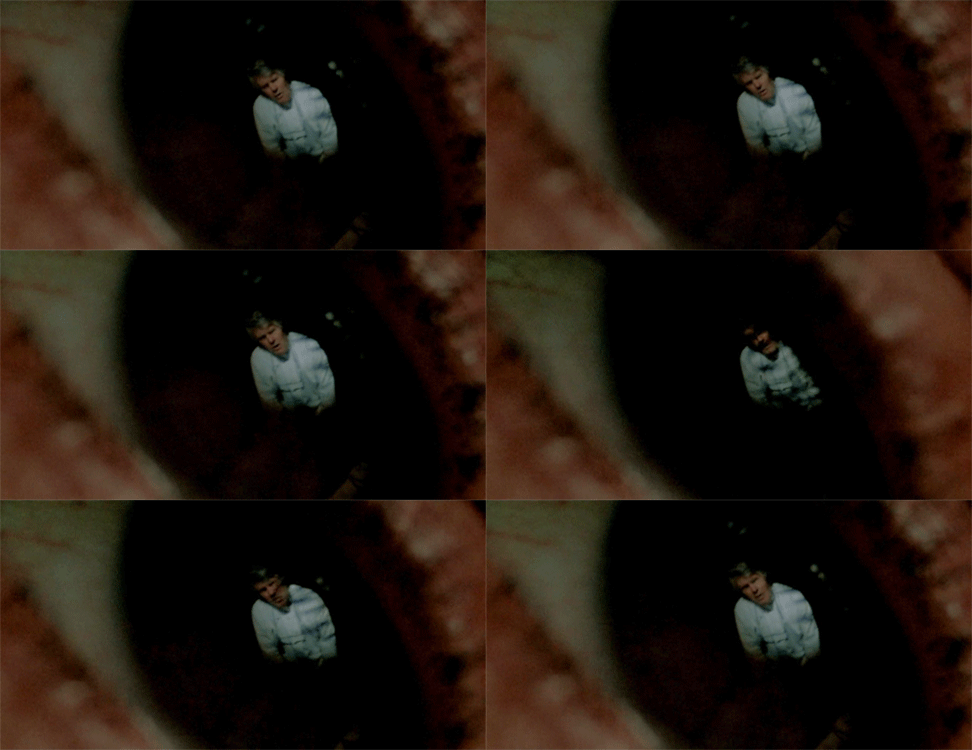
‘It’s perhaps comical to describe a filmmaker revered in some circles as underrated when they’ve been nominated for some of the biggest prizes in cinema — the Palme d’Or, Venice’s Golden Lion, the Academy Awards, Berlin’s Golden Bear. But perhaps because Polish filmmaker Krzysztof Kieslowski never really took many of these major prizes home, and never gained global status until later in his career, we find that the filmmaker is not as revered as we’d like (though he tied for a Golden Lion in 1993). Perhaps this observation is very relative. Perhaps it’s because he didn’t enter the Criterion canon until 2006, perhaps because his career ended too abruptly just as it was truly ascending, or perhaps simply because he’s one of our most adored filmmakers: we routinely never give up an opportunity to celebrate Kieslowski’s work when we can.
‘A Polish director who spent much of his life behind the country’s postwar communist regime (and felt the pains of its control and censorship), Kieslowski started out as a documentarian and then made his first feature-length drama in 1975. While the early narrative films contained many elements of social realism and political dimension within the intangible and mystical conceits Kieslowski is known for, the filmmaker’s work soon discarded many of his overly political ideas and shifted into his unwavering purpose: exploring the metaphysical, random mysteries and paradoxes of the universe via themes of chance, interconnectivity, identity, destiny and more. The films had some high-concepts on paper — movies about doppelgangers, rewriting one’s time and history, second chances, reaching beyond parallel alternative universes and even death — but each one had a spiritual resonance, an emotional weight, a soulful humanism, and a dramatic texture that made them beautifully profound and enigmatically enrapturing.
‘Stanley Kubrick himself once said of Kieslowski and his constant screenwriting companion Krzysztof Piesiewicz — a lawyer and now a prominent politician — “I am always reluctant to single out some particular feature of the work of a major filmmaker because it tends inevitably to simplify and reduce the work… They [dramatize life] with such dazzling skill, you never see the ideas coming and don’t realize until much later how profoundly they have reached your heart.”
‘There’s arguably a before and after period in Kieslowski’s work that is divided by 1985’s “No End.” That film marked the first collaboration with screenwriter Piesiewicz and composer Zbigniew Preisner and both men would work on every subsequent Kieslowski picture. Arguably, Kieslowski’s metaphysical sonnets of intuitive nature from that period forward became masterful symphonies of sound, color, and rich emotional transcendence. Interestingly enough, this new period would center almost exclusively on ravishing female protagonists (though “The Dekalog” was mixed).
‘Frustrated by the medium of cinema and/or his own limitations — a terminally cynical Kieslowski didn’t believe the interior mysteriousness of the human condition could be aptly captured on film, though that hardly ever stopped him — and exhausted by the speed in which he made his final masterwork and triptych Three Colors trilogy (he directed all three in under ten months and at one point he was editing, shooting and writing all three films simultaneously), Kieslowski announced his retirement at the age of 52 during the premiere of “Red” at the Cannes Film Festival. Just under two years later, as word came out that he was considering leaving retirement to form a new trilogy loosely based on the concepts of heaven, hell and purgatory (one of which was later directed by Tom Tykwer), the filmmaker died during open-heart surgery at the all-too early age of 54. Krzysztof Kieslowski passed away 17 years ago today, and so simply we use this opportunity to celebrate the filmmaker who believed that strangers were perhaps not so estranged; who sometimes believed the our existence was a cruel trick with deeper meaning we couldn’t fully comprehend; who believed in contemplating the mysterious elements of the universe that unified us as people beyond nationalities, race religions, political and personal philosophies.’ — Rodrigo Perez
____
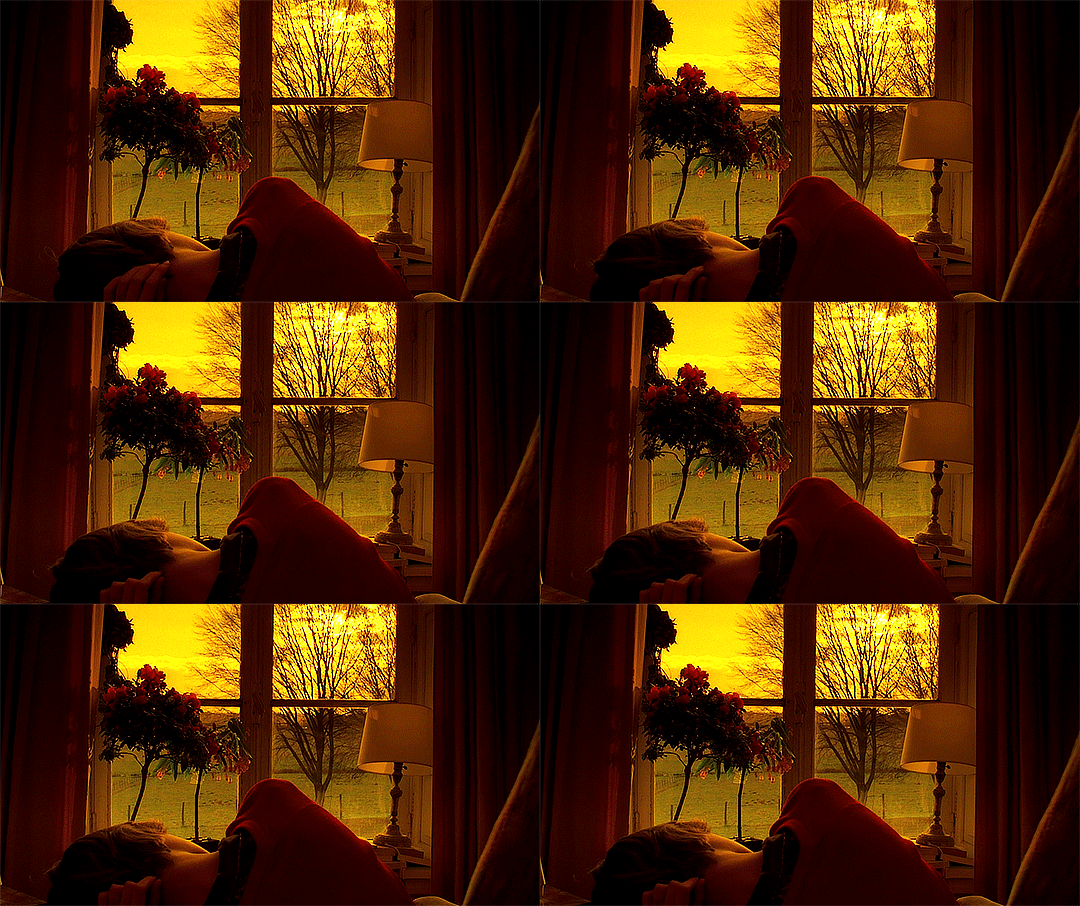
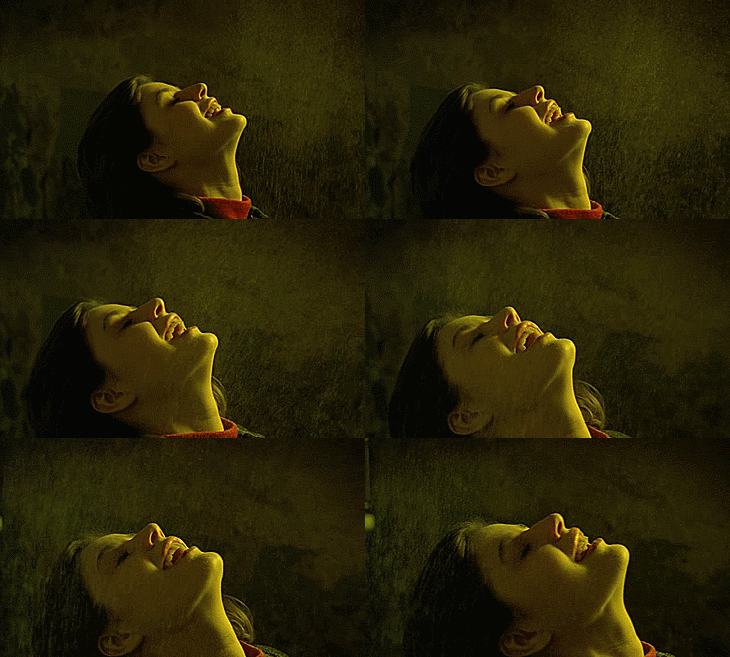
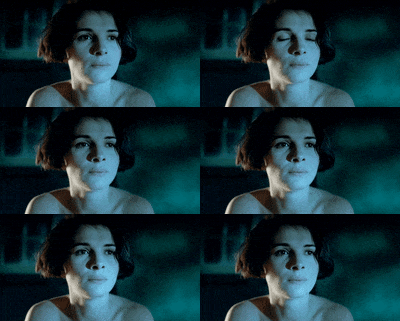
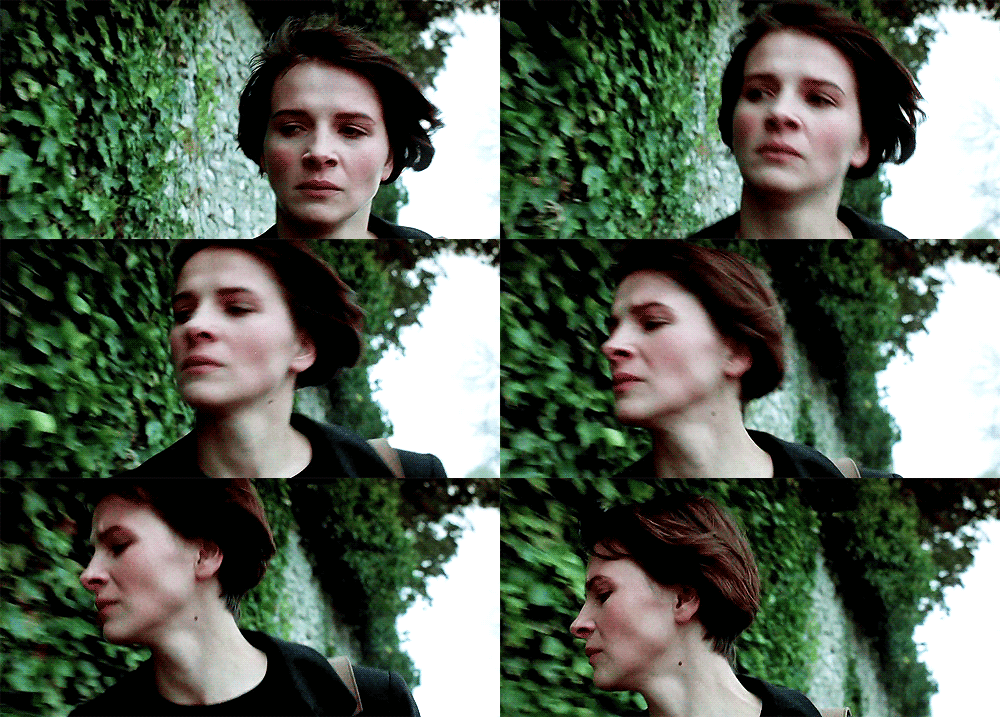
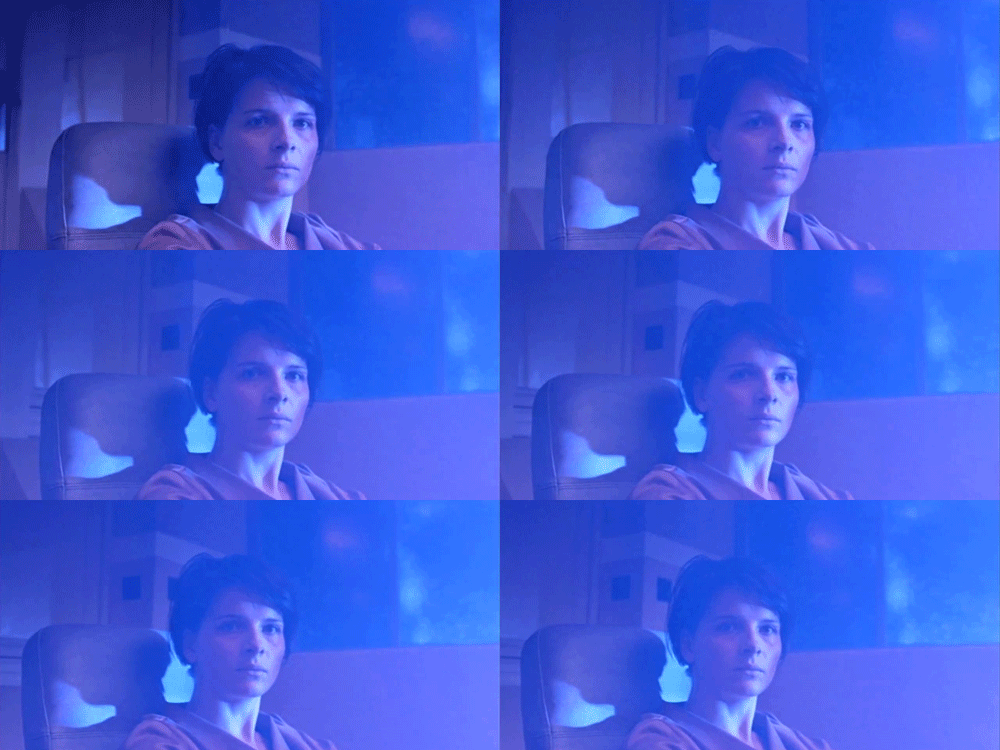
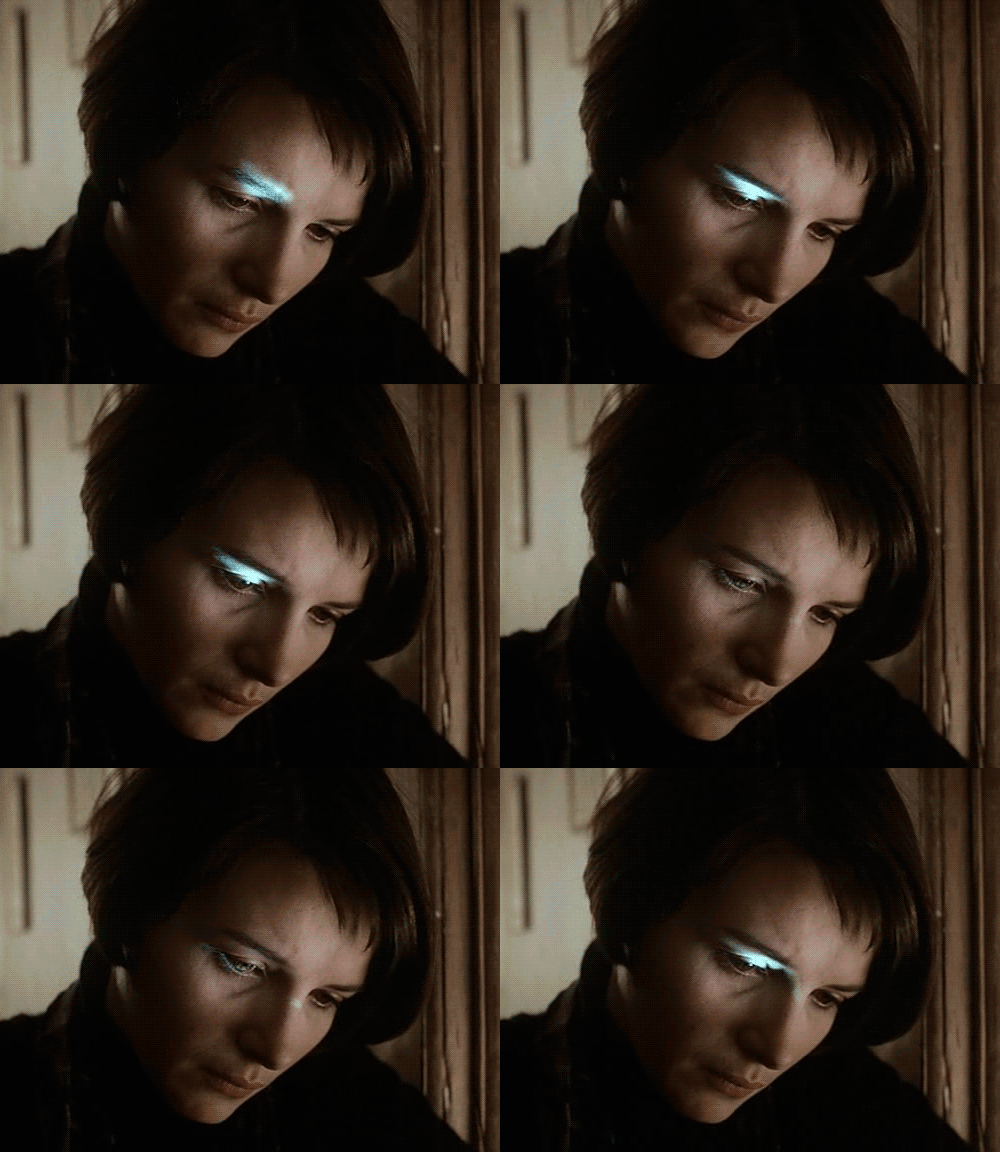
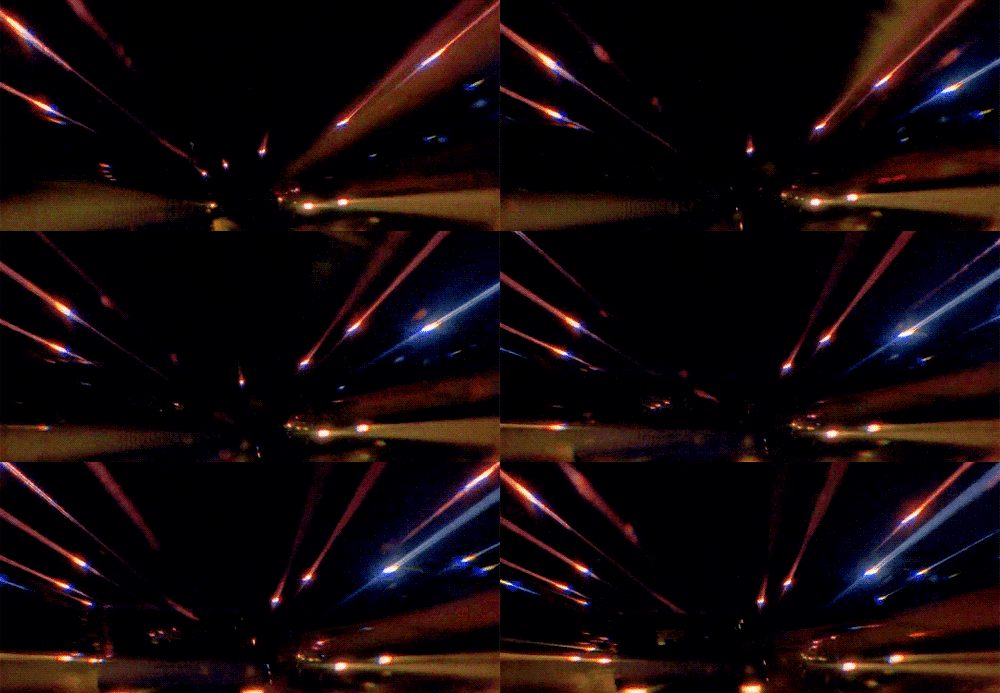
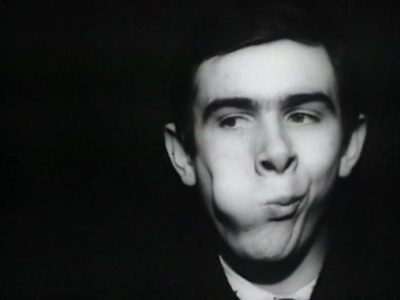
Stills

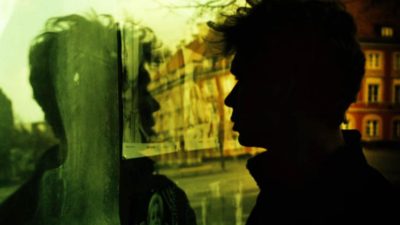

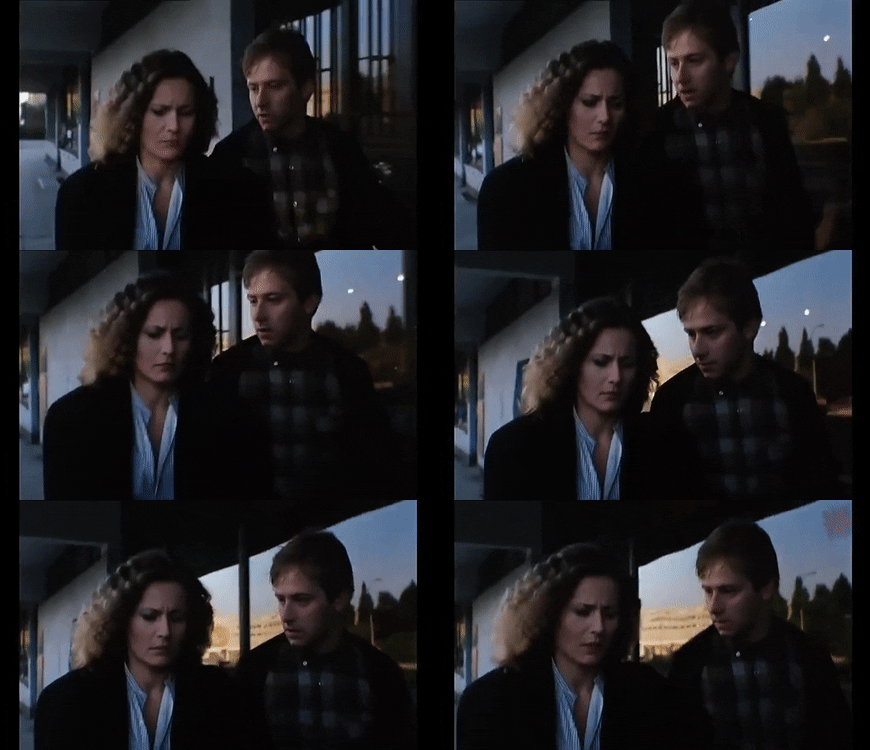
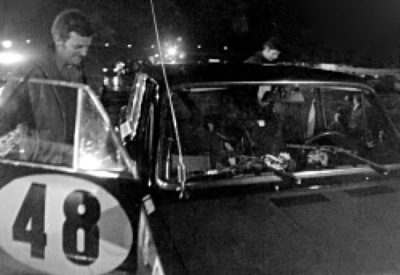
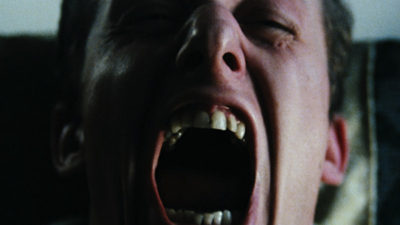
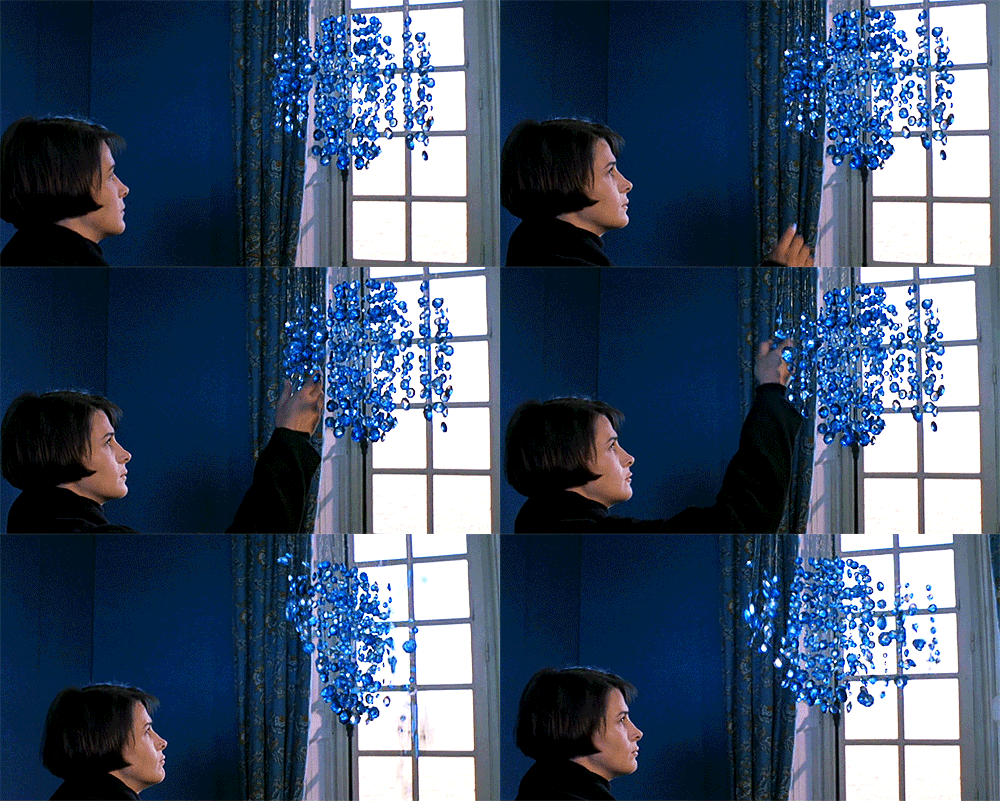
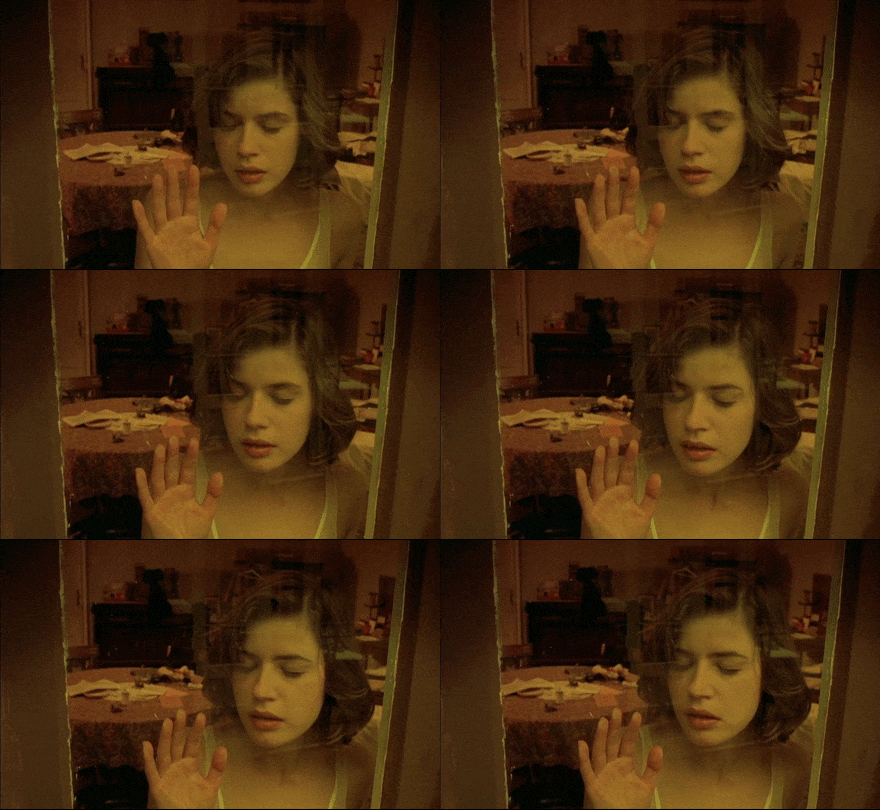
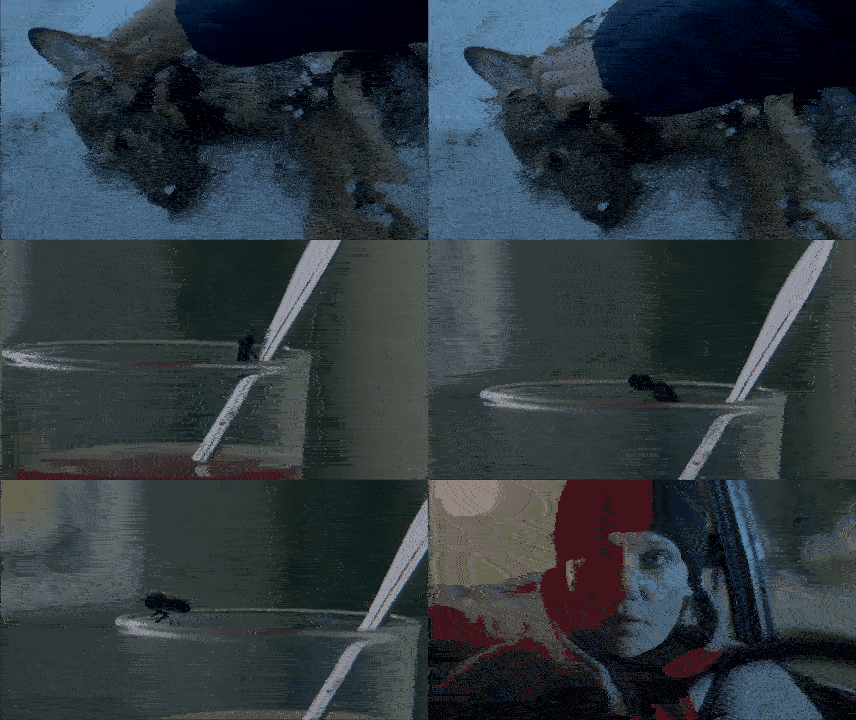
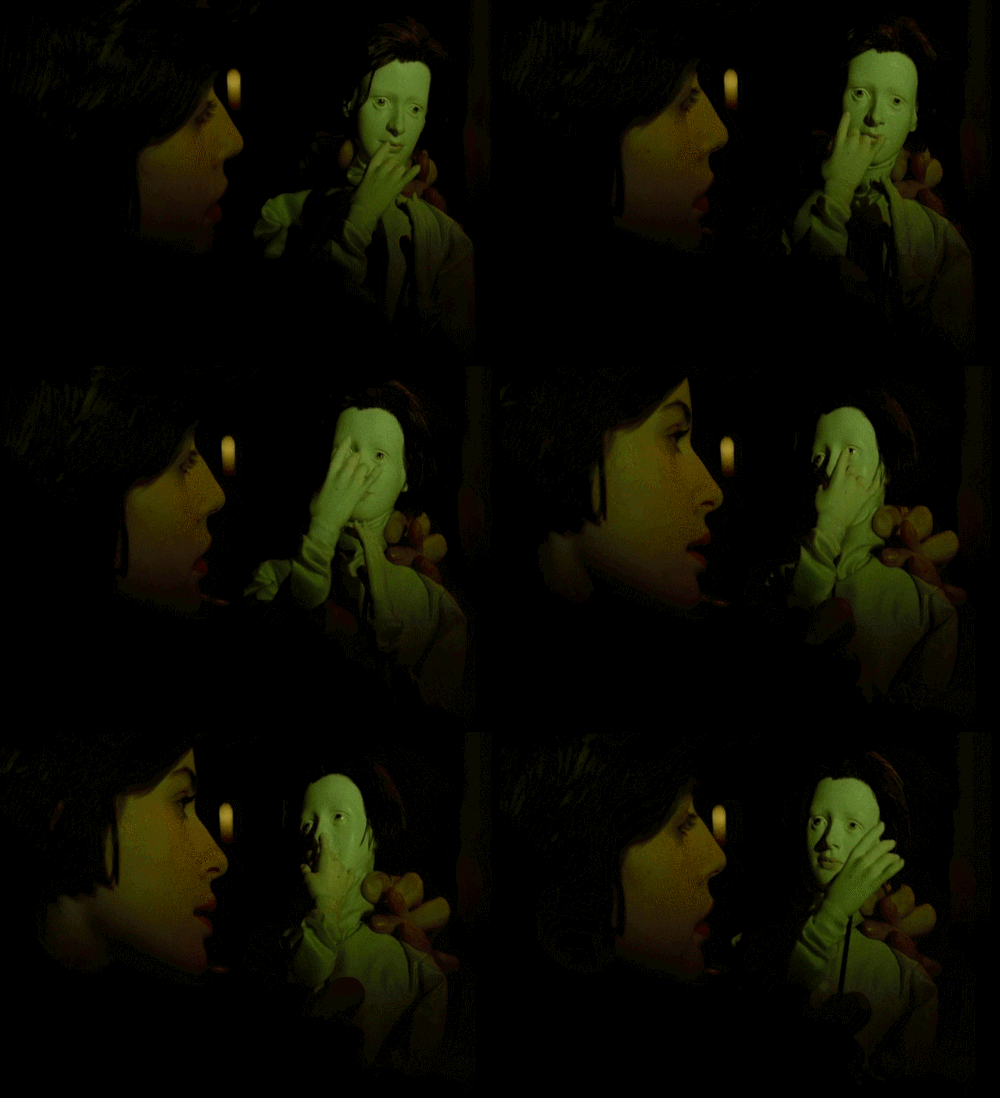
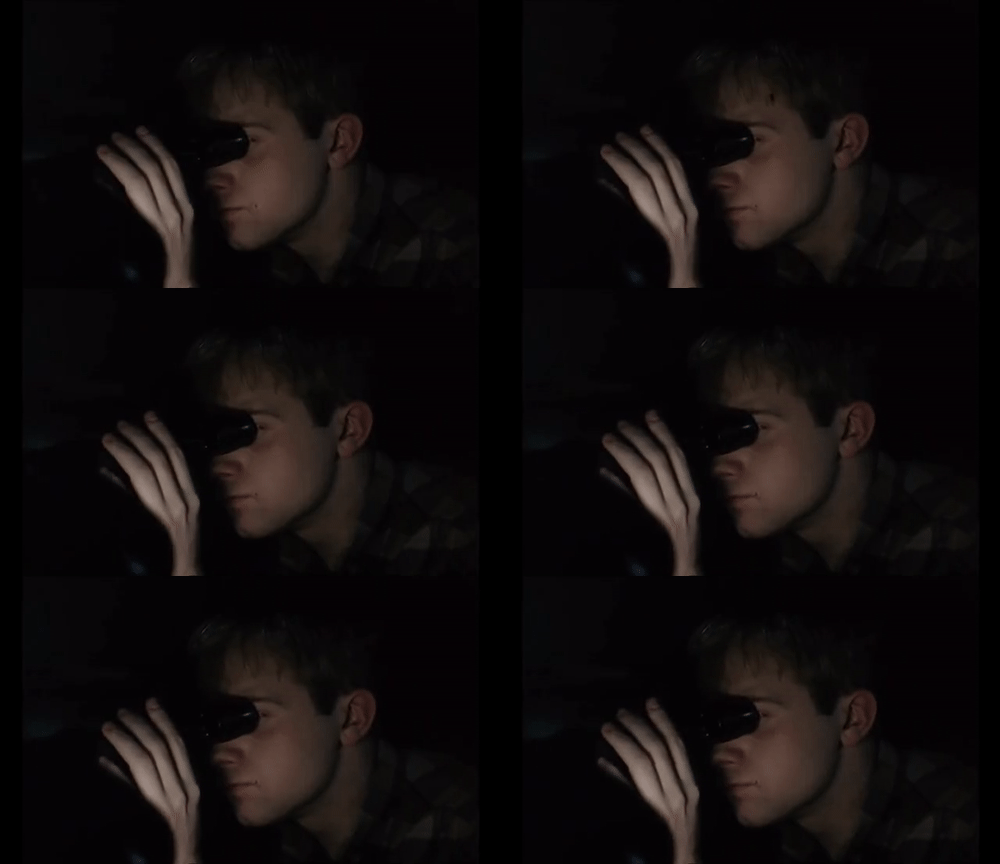
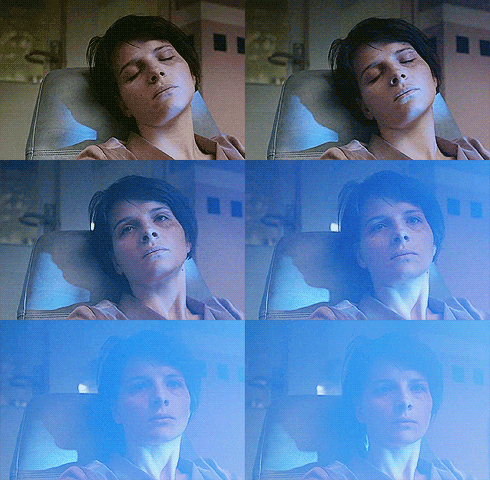

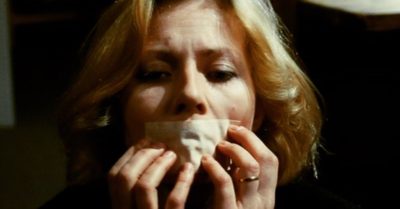
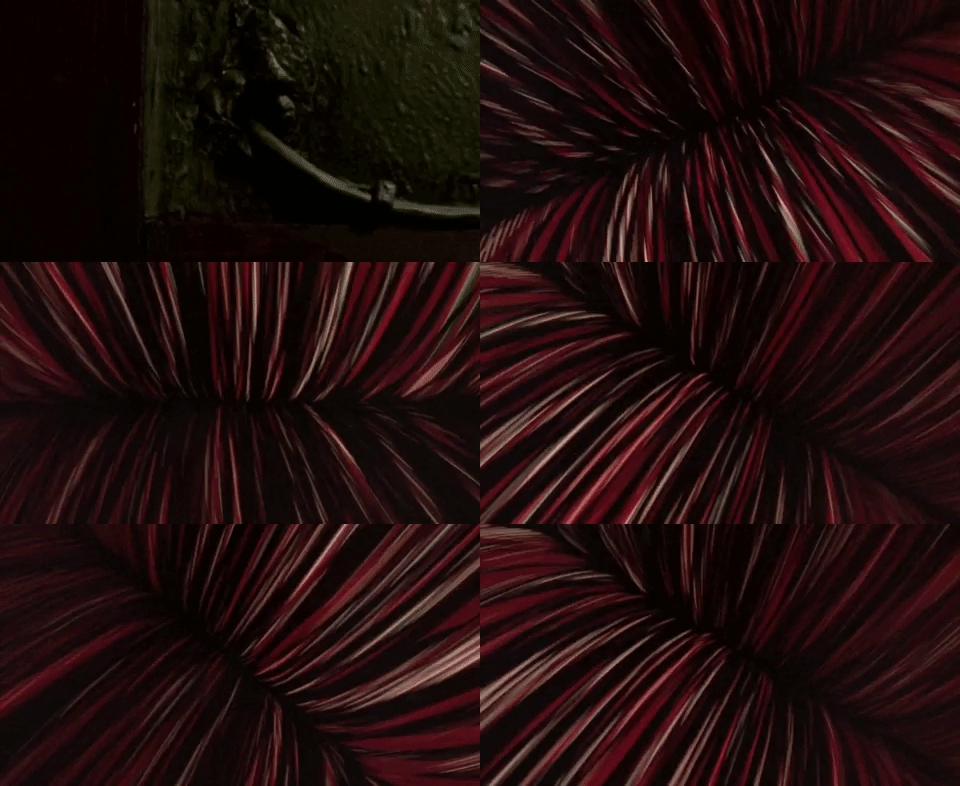
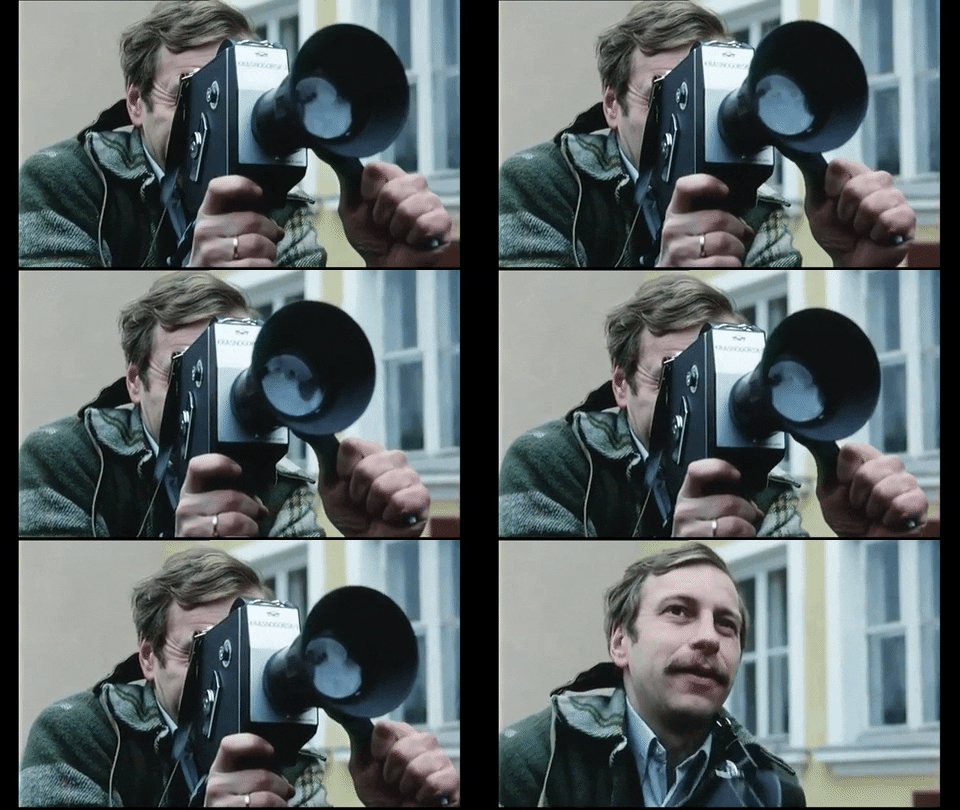


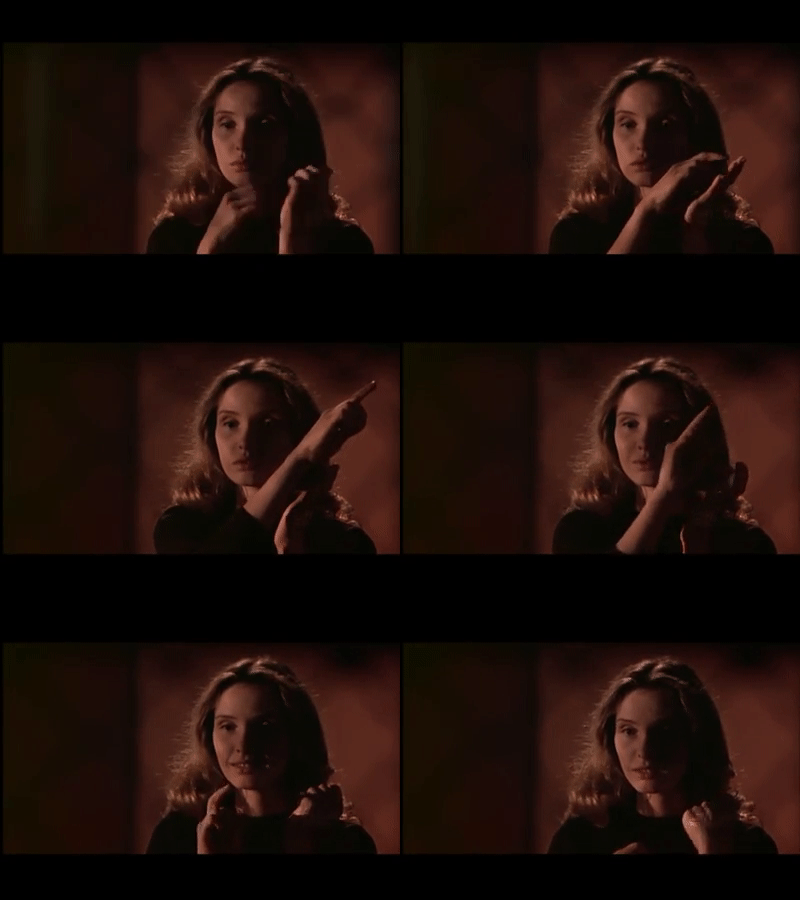
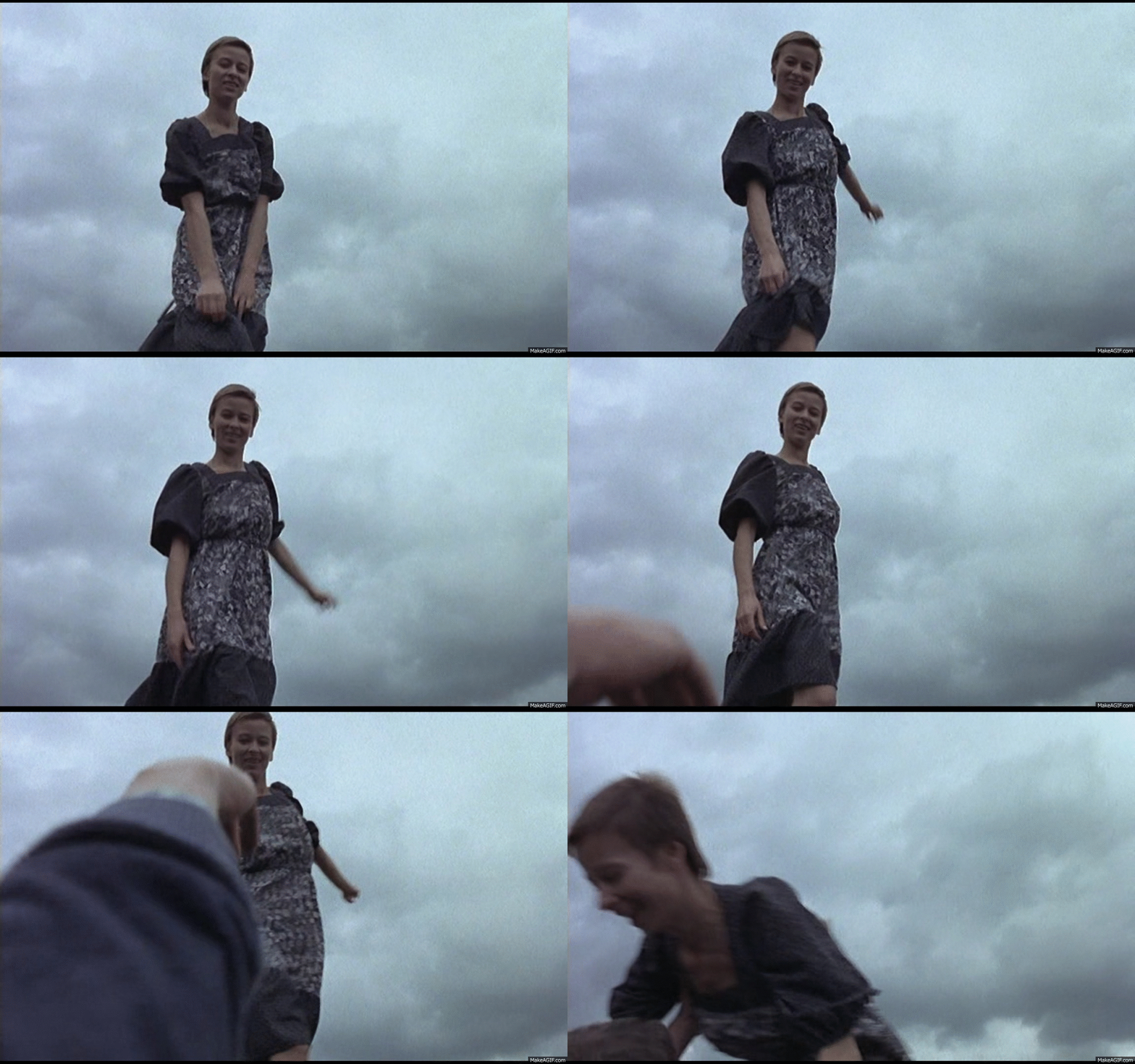
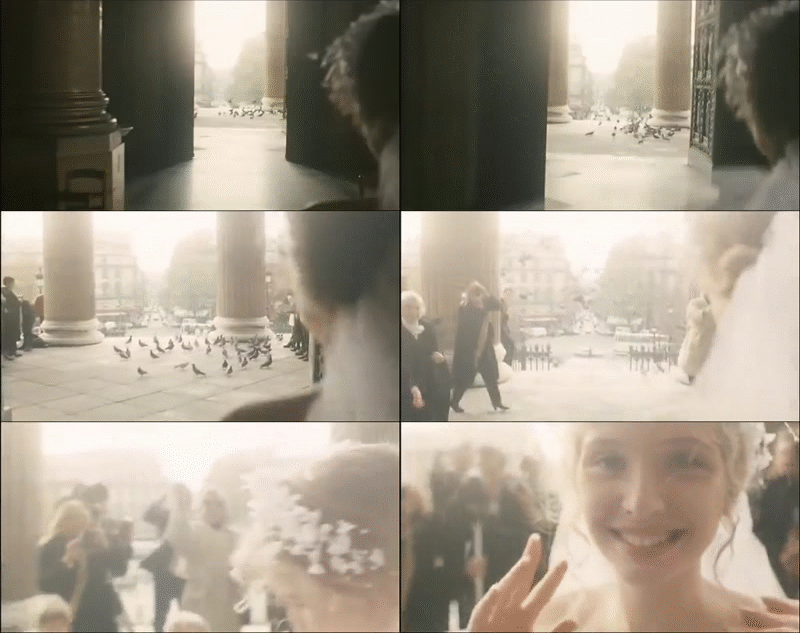
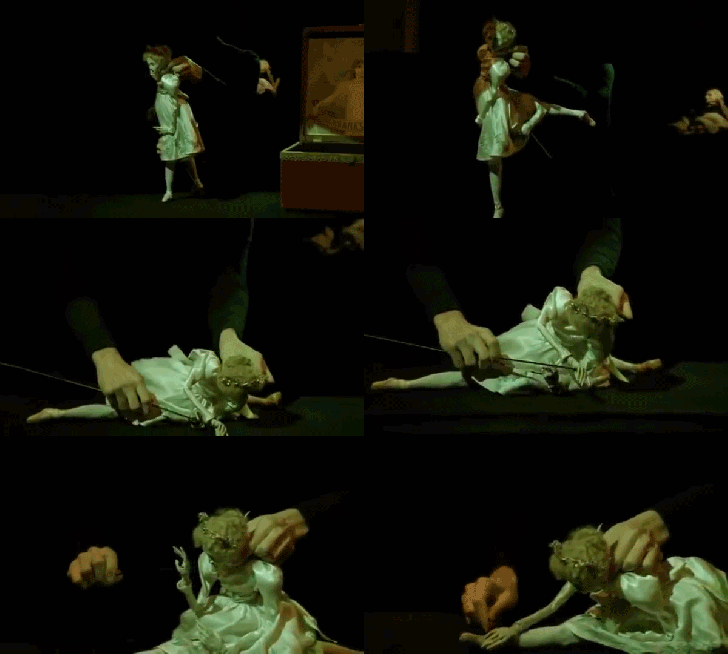
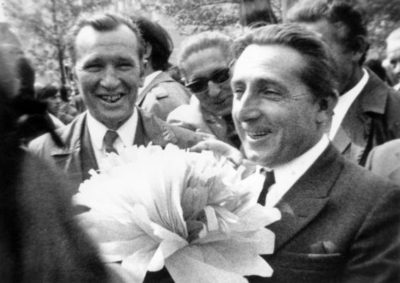
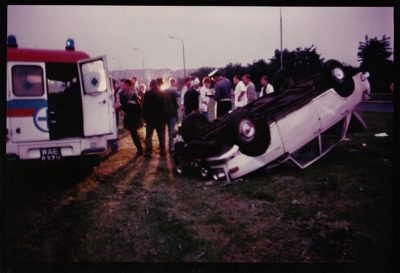
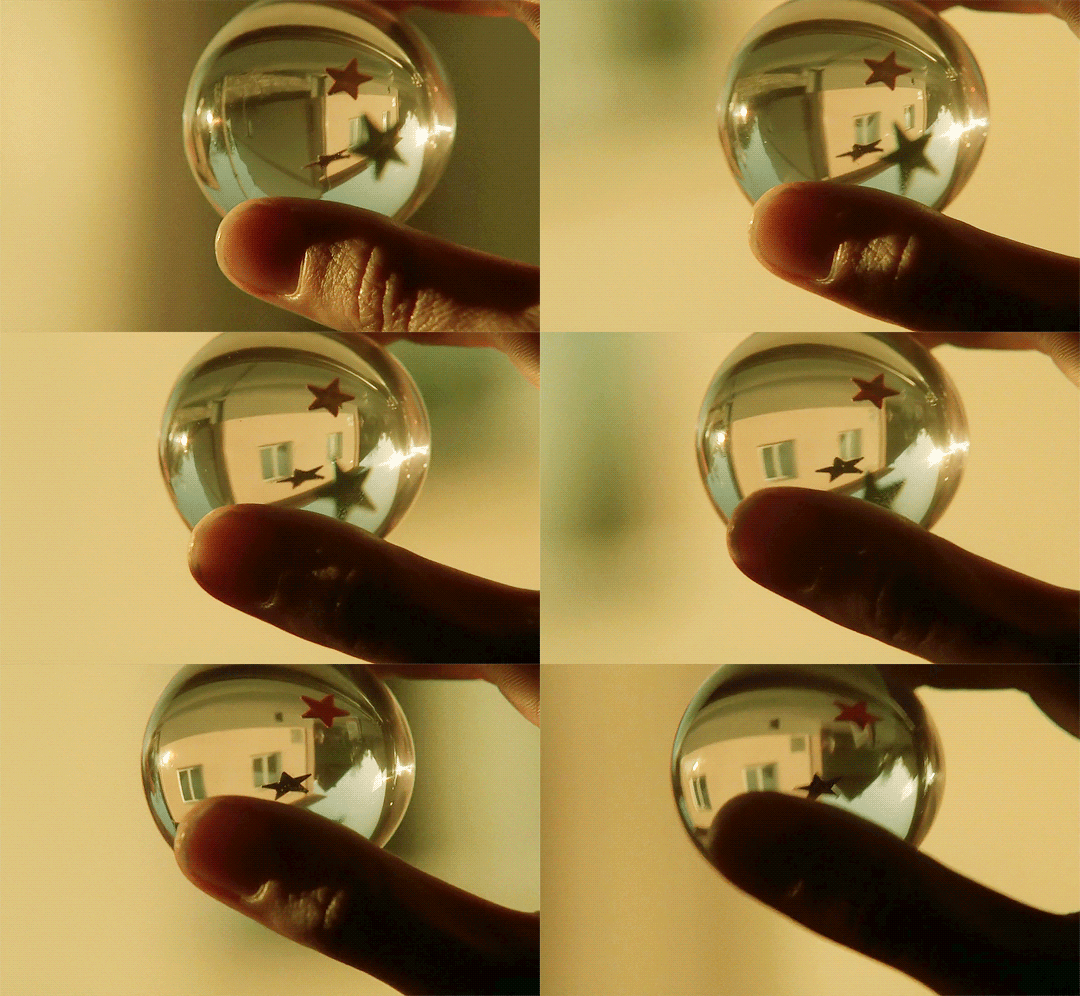
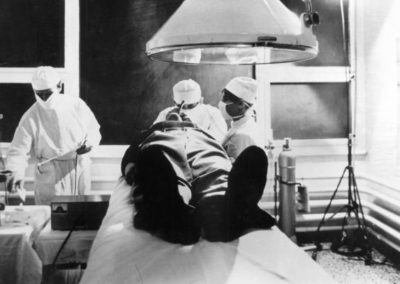

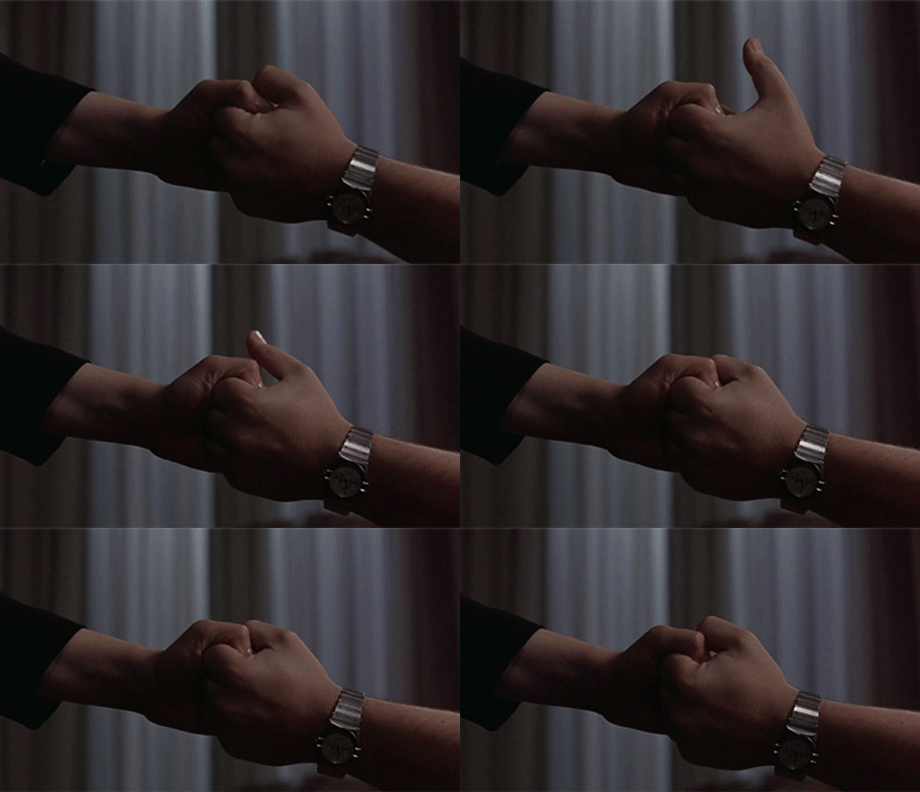
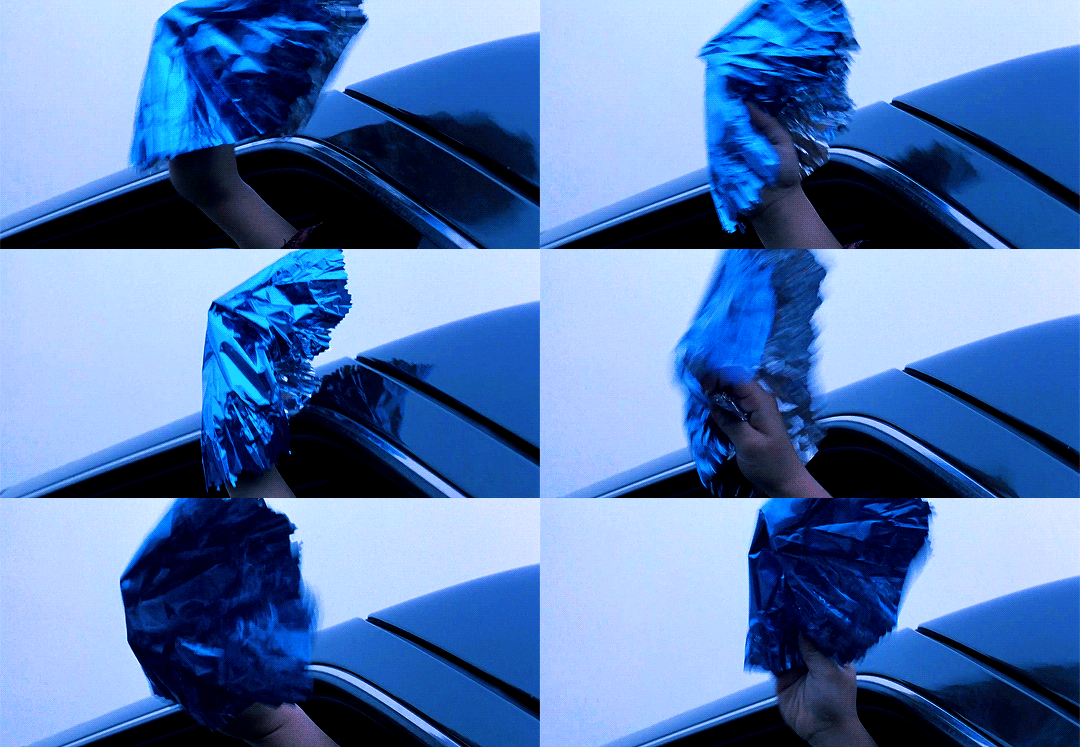
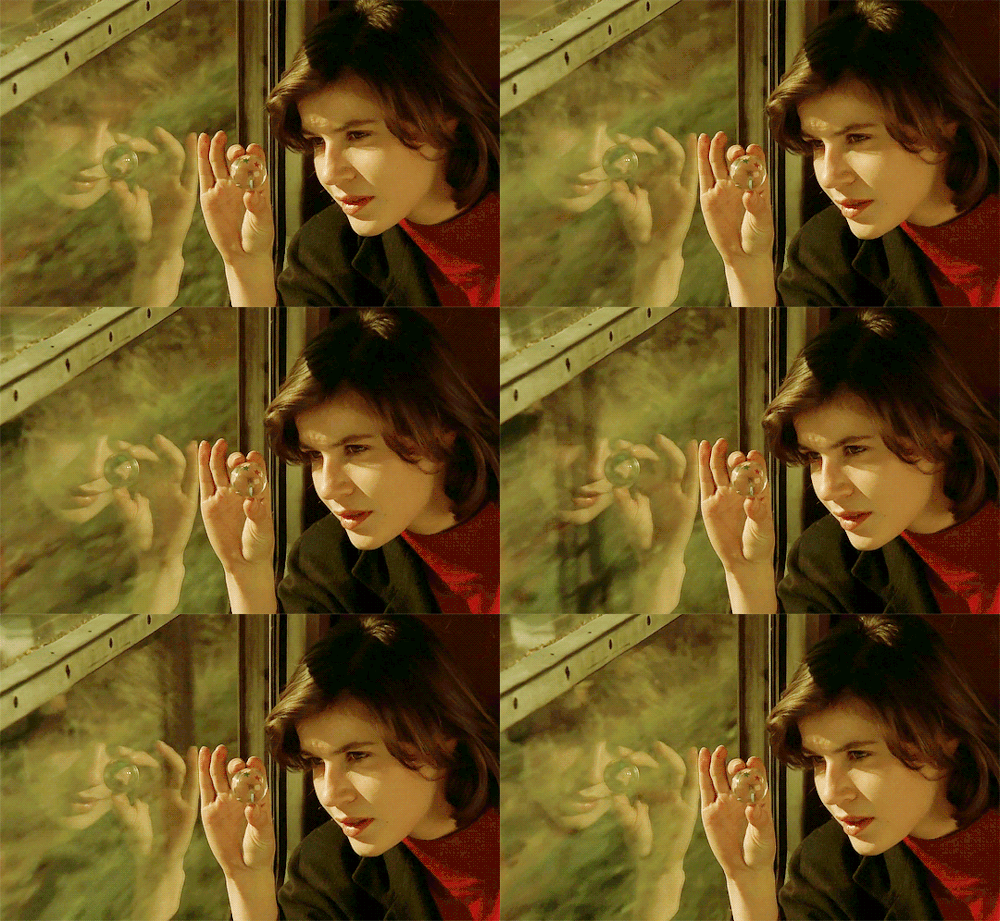
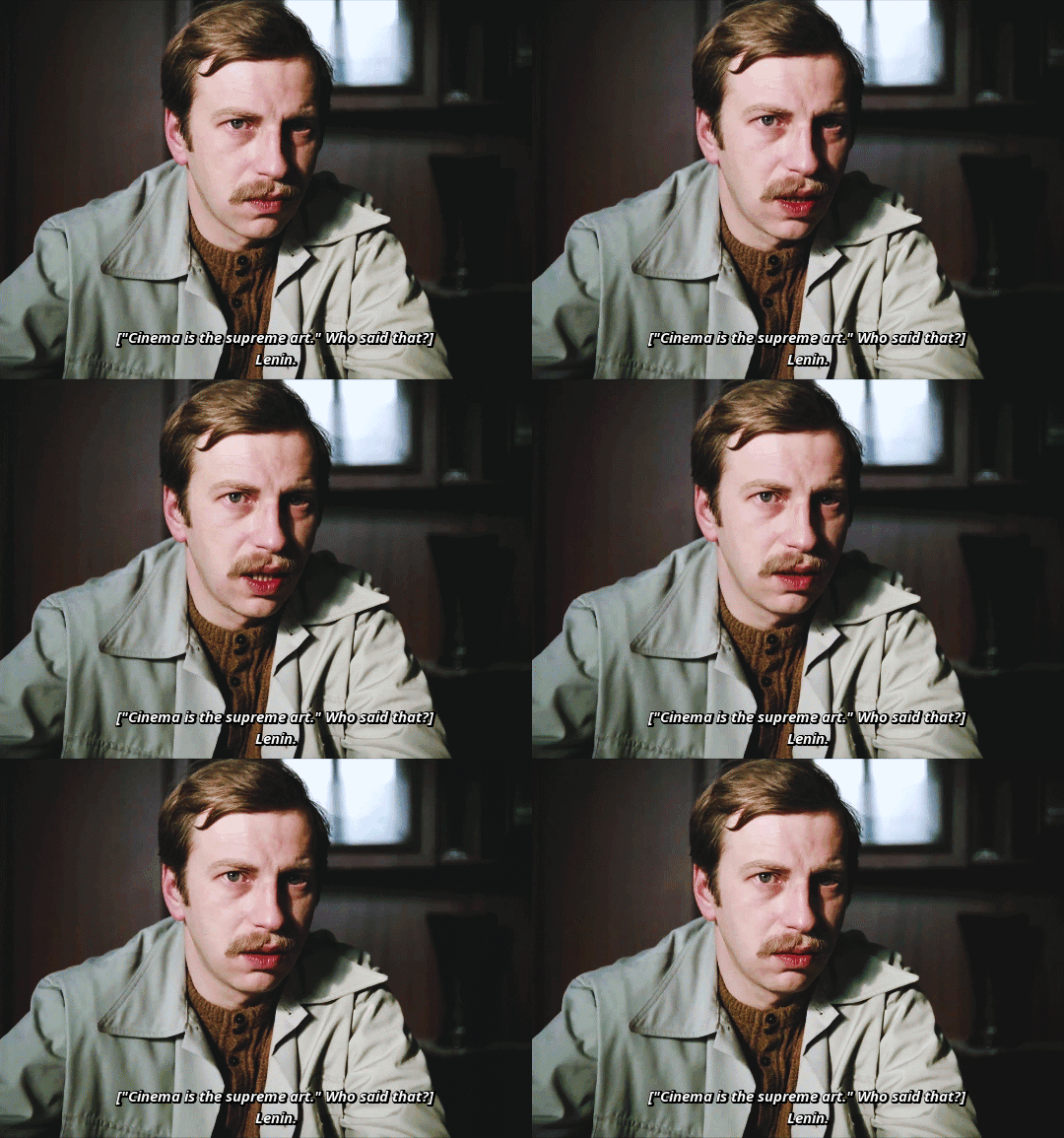


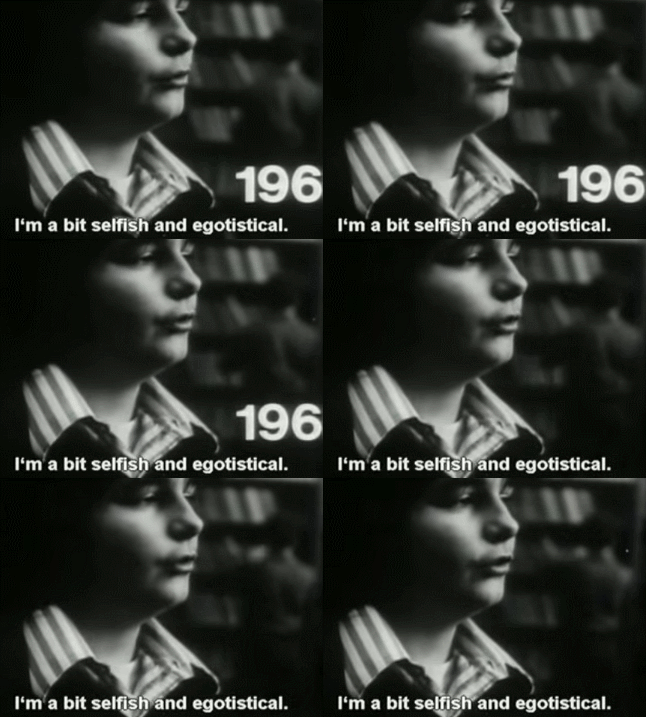
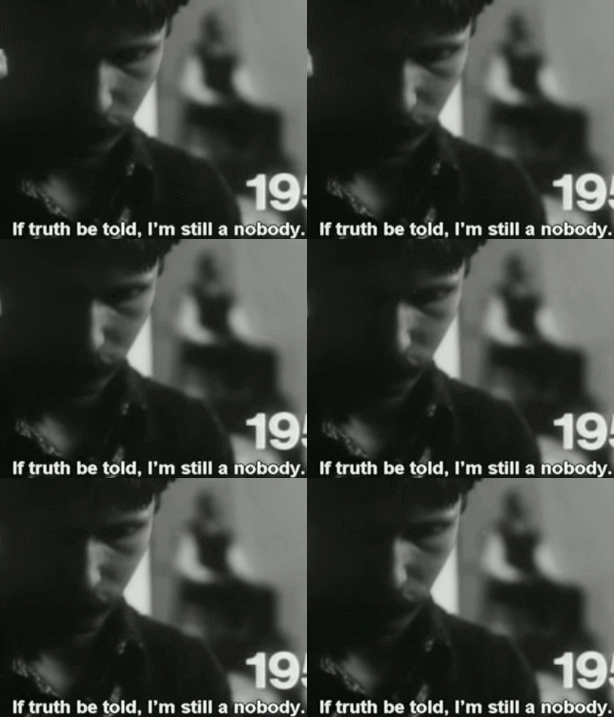
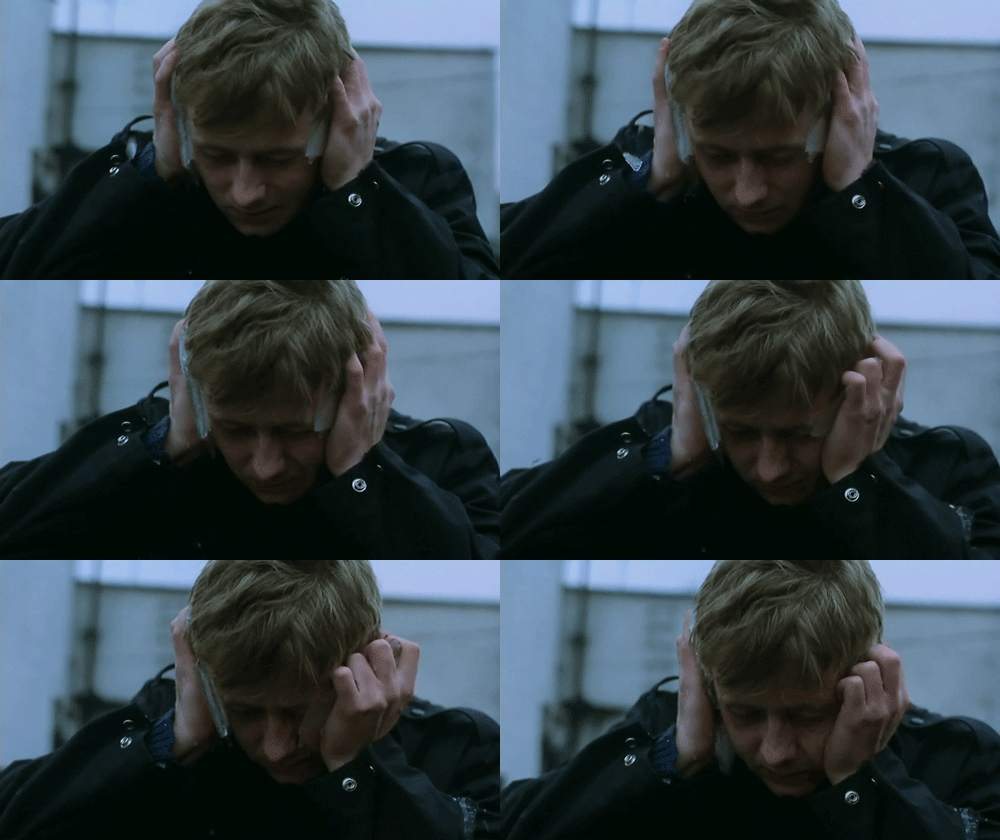
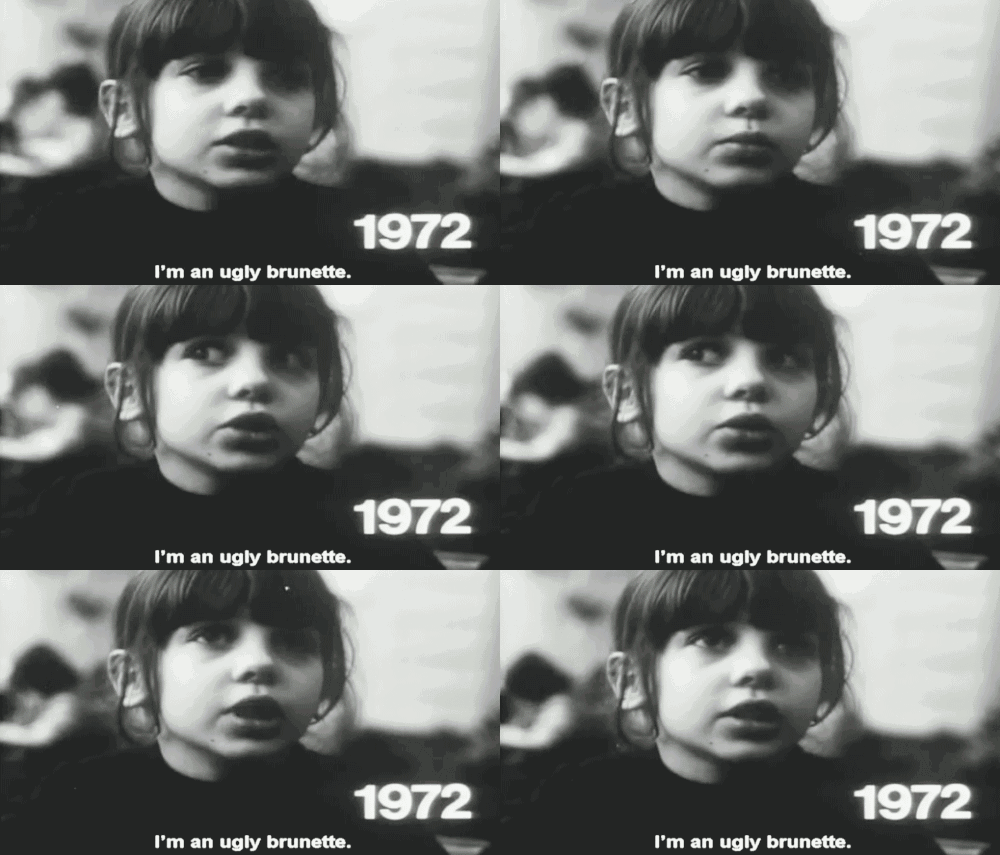
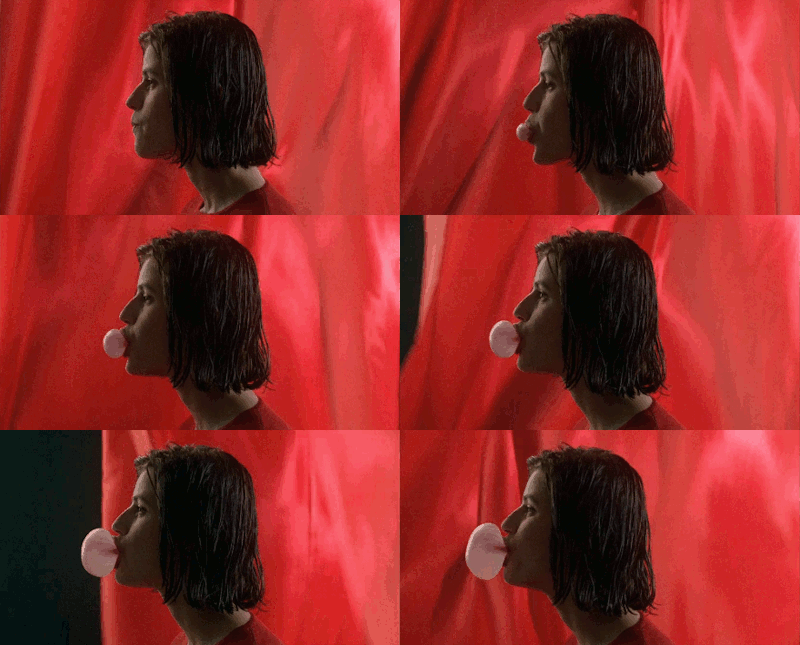
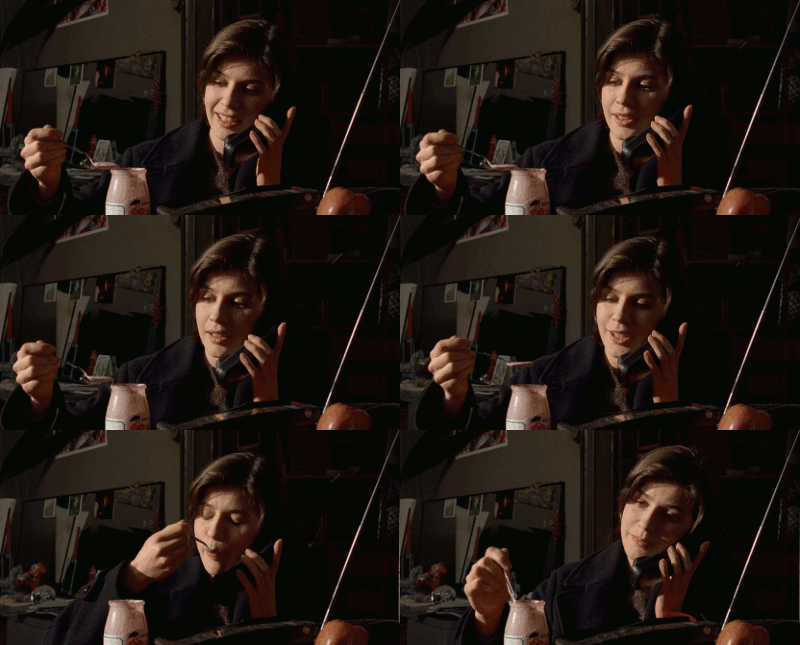
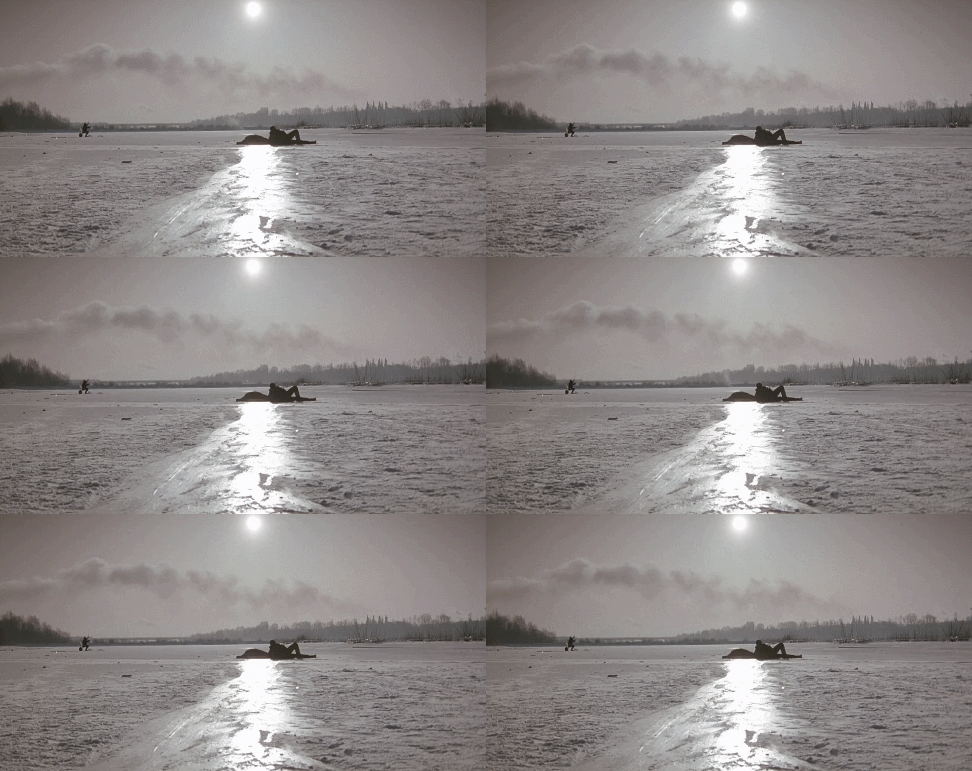
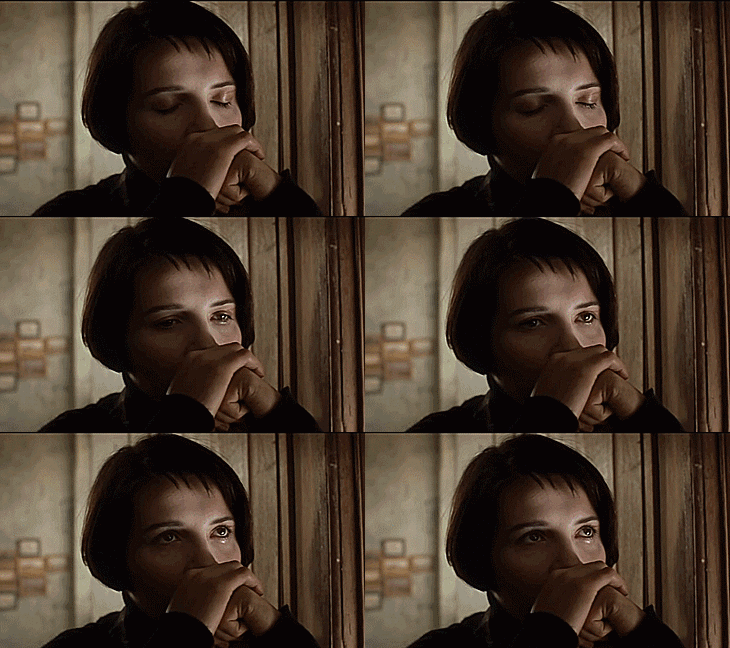
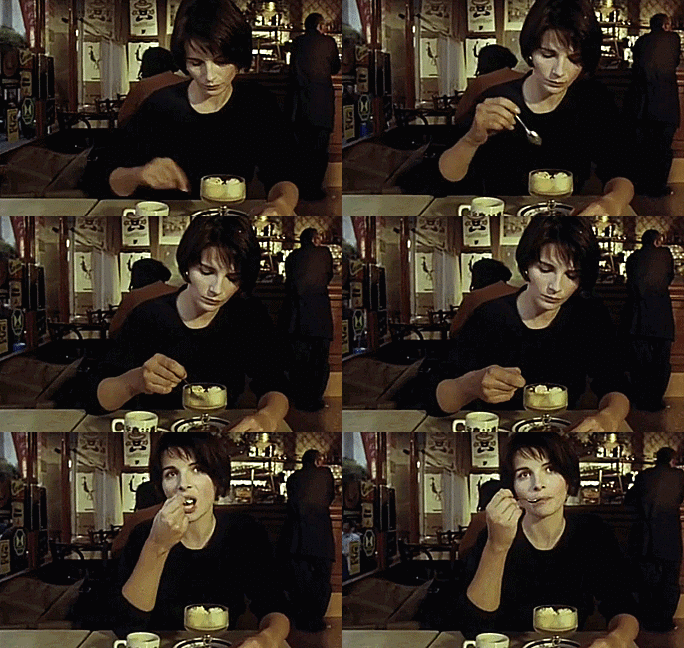

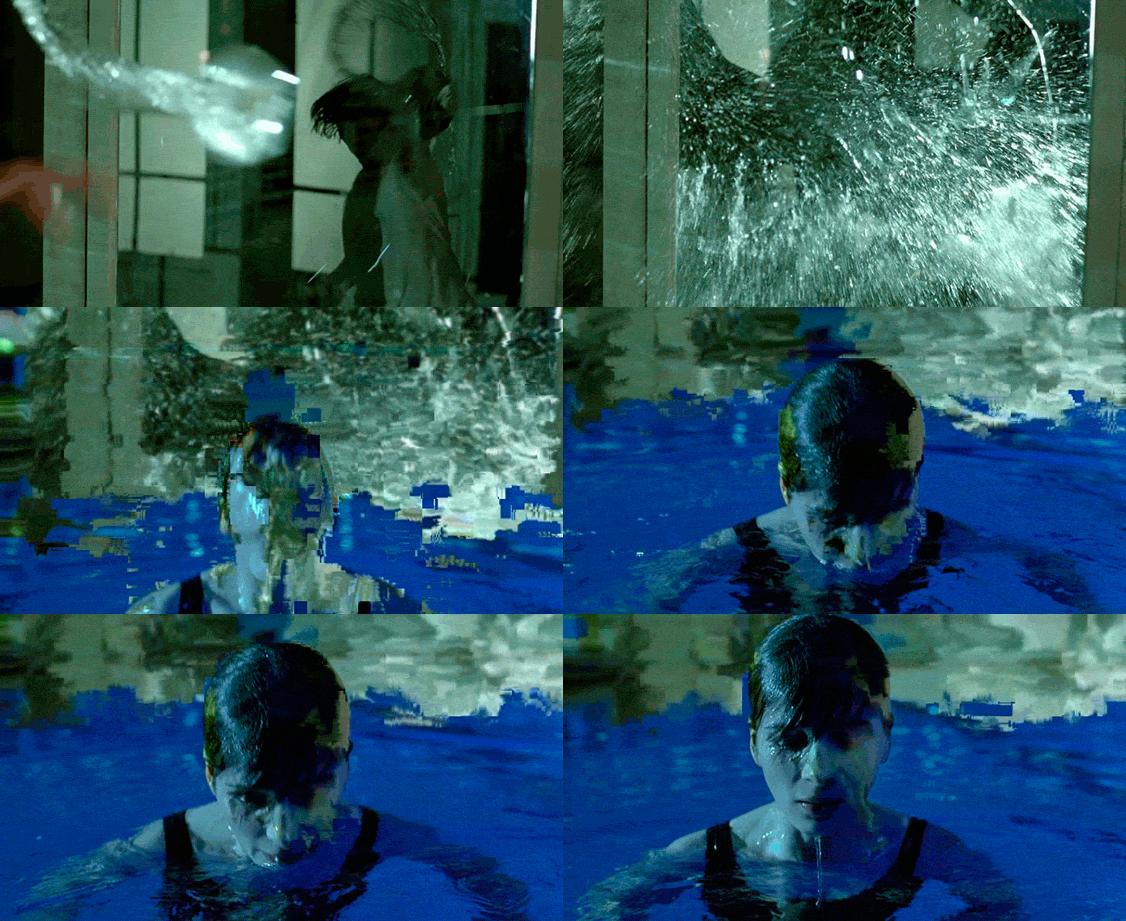
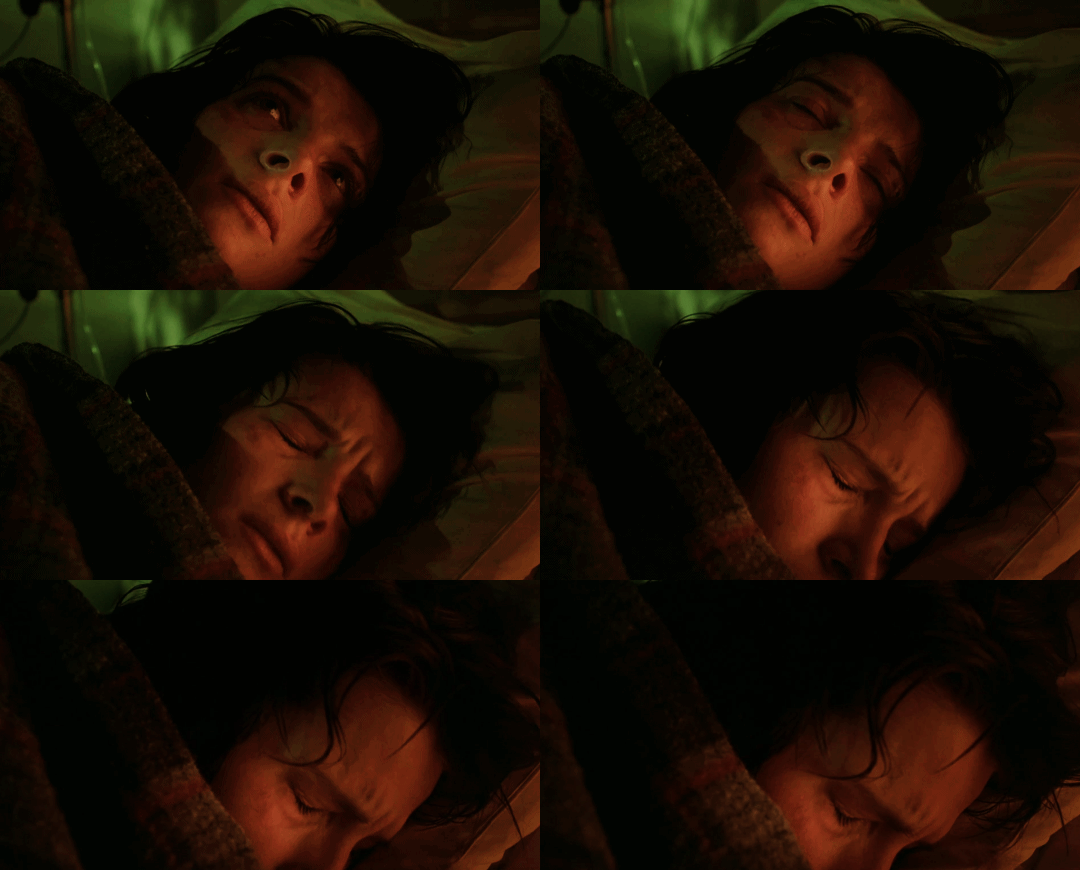
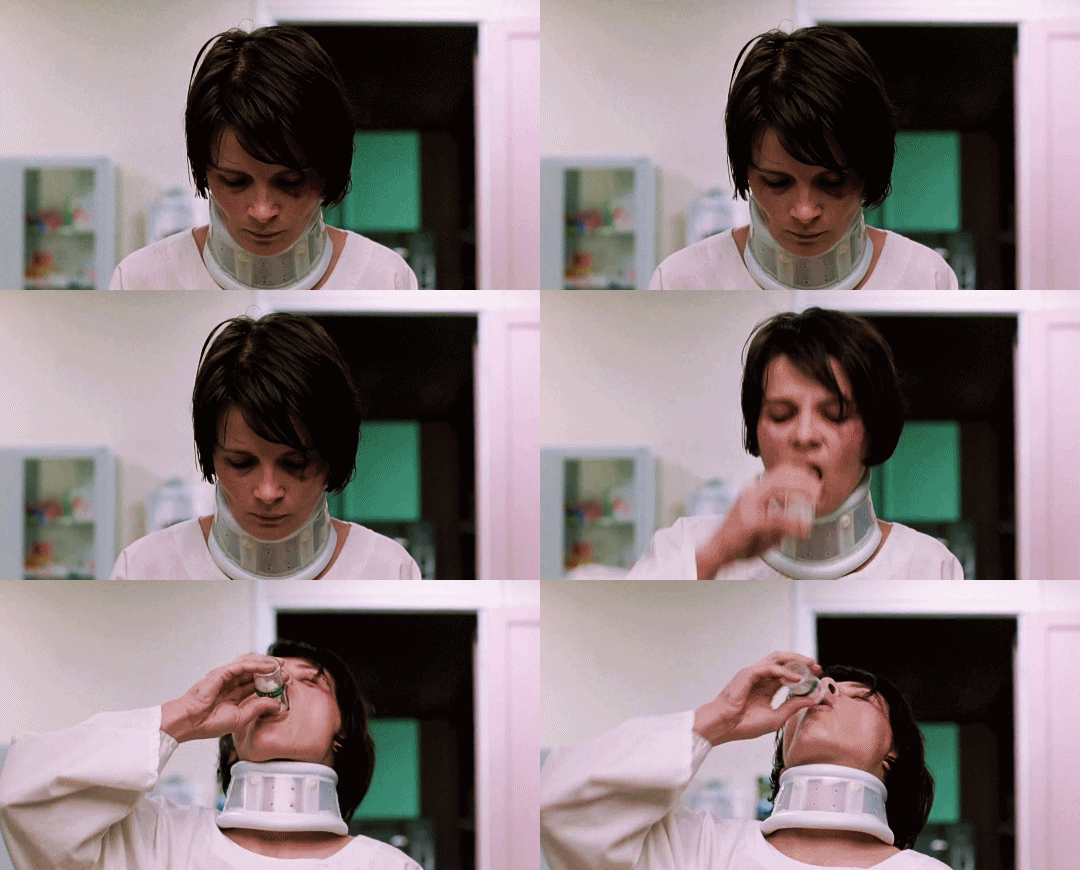
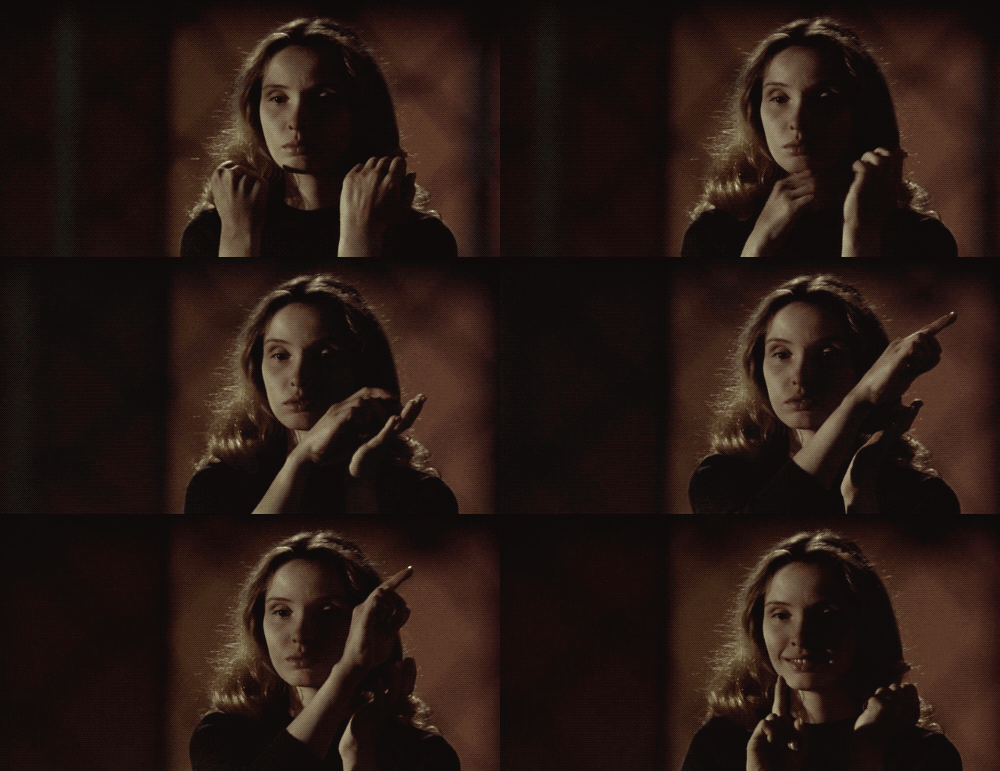
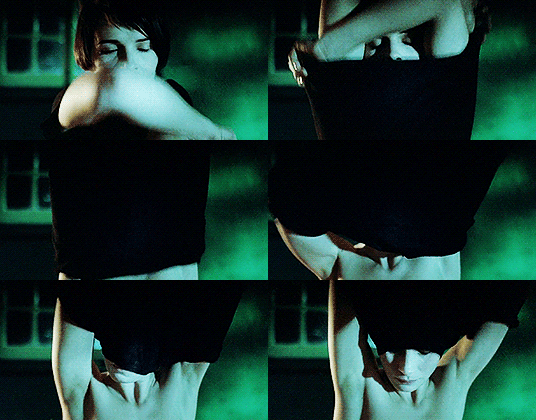
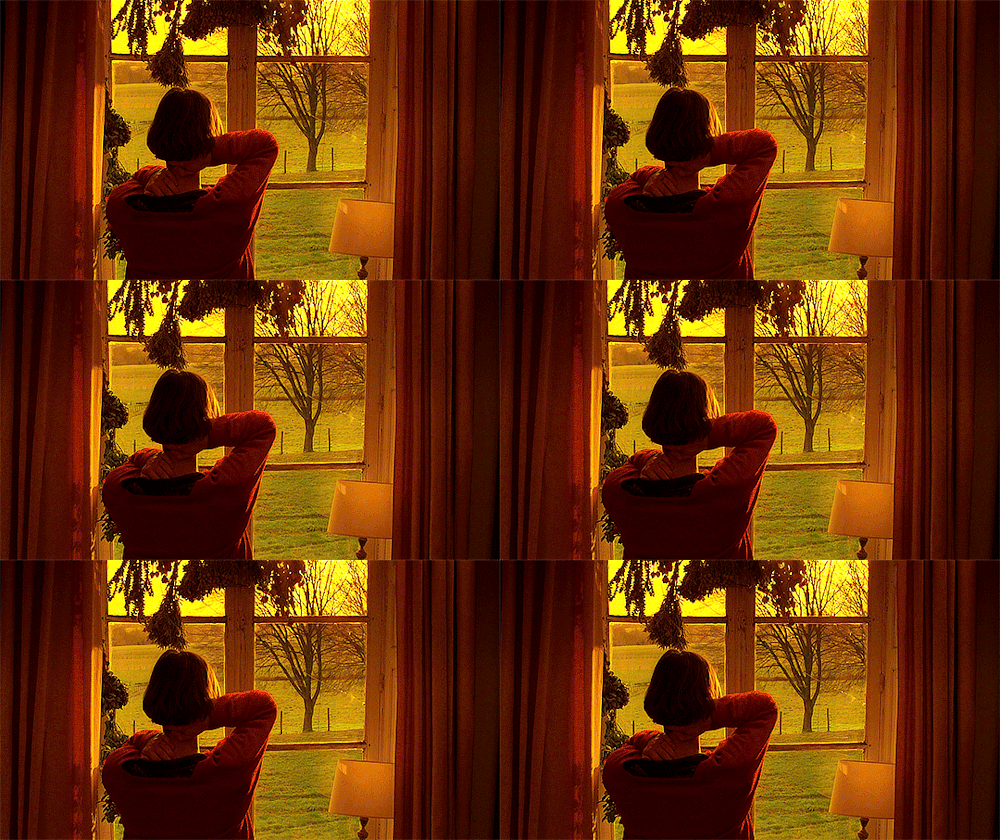
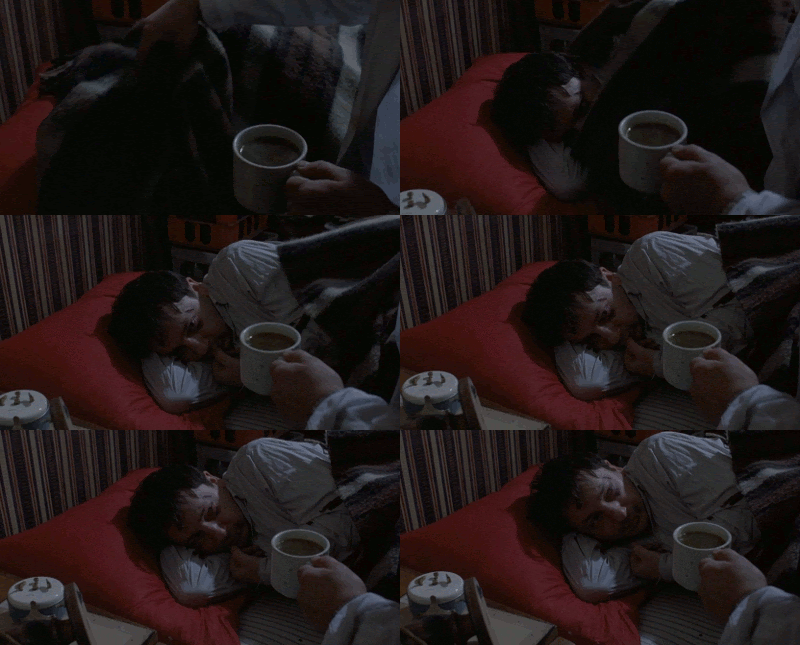
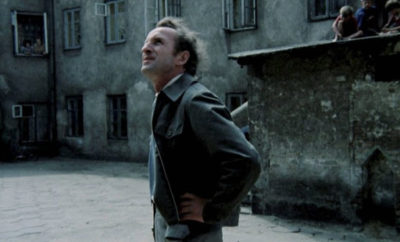
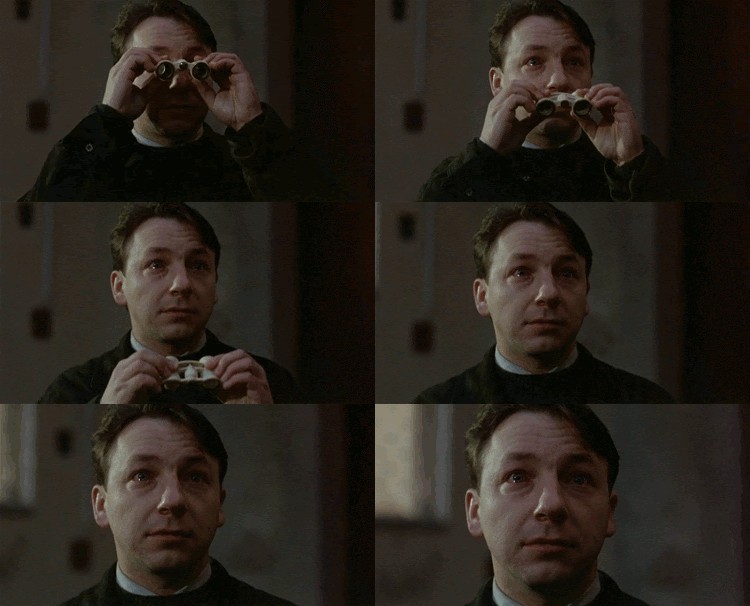
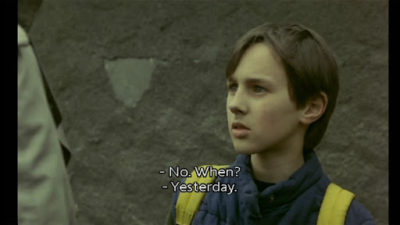
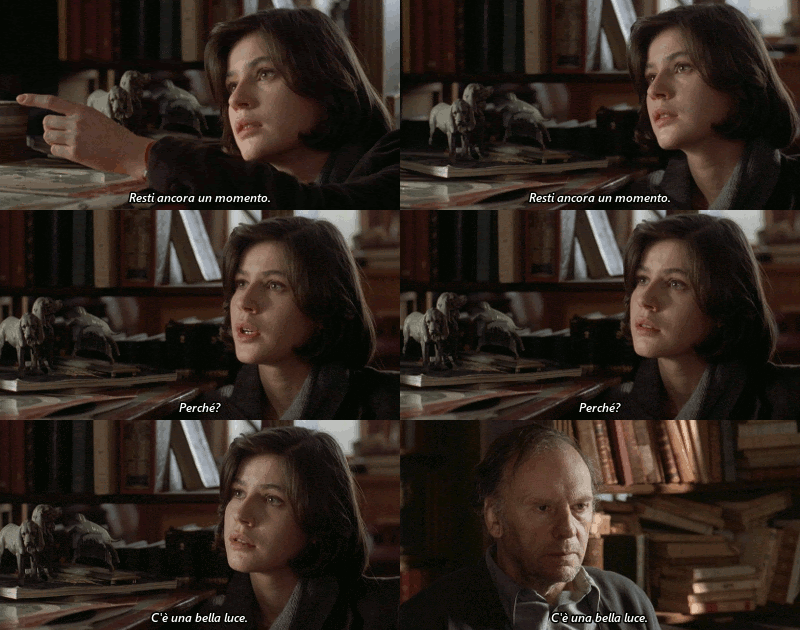
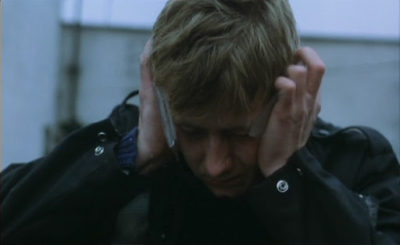
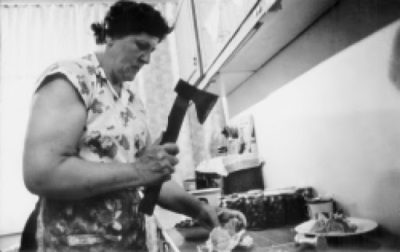
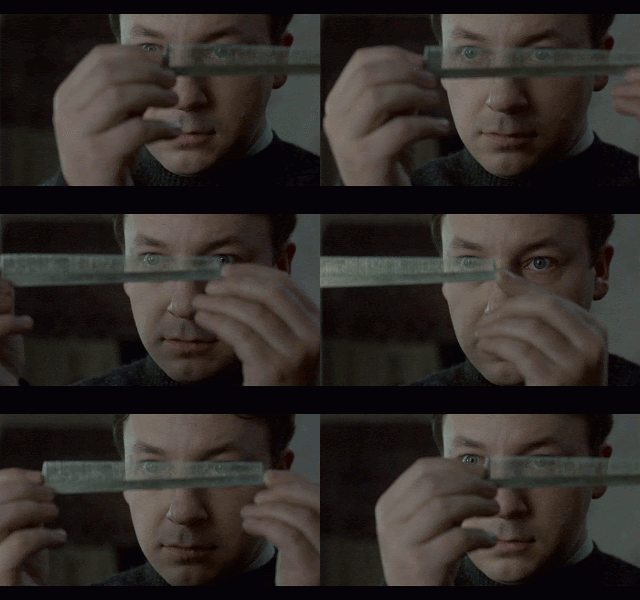
____
Further
Krzysztof Kieslowski @ IMDb
Book: ‘Krzysztof Kieslowski: Interviews’
KK @ letterboxd
The Essentials: Krzysztof Kieslowski
KK @ The Criterion Collection
KK Fan Page @ Facebook
Political movies are hard to pull off. The films of Krzysztof Kieslowski hold the key.
Memory and Survival the French Cinema of Krzysztof Kieslowski
Krzysztof Kieślowski and Ingmar Bergman – Once again about a certain artistic relationship
KK @ Senses of Cinema
No Holes In The Carpet: An Interview with Krzysztof Kieślowski
____
Extras
30-Minute Interview w/ Krzysztof Kieślowski on Filmmaking
Krzysztof Kieślowski: A Prison Made of Light
1-Hour Masterclass / Workshop with Krzysztof Kieślowski from 1994
Slavoj Zizek on Krzysztof Kieslowski
_____
Interview
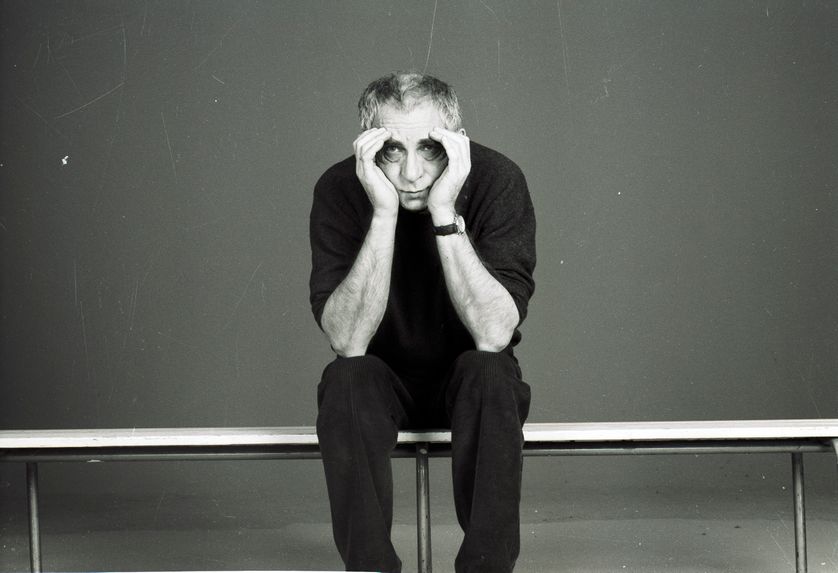
Q: Why were you interested in the French motto: Liberty, equality, fraternity?
Krzysztof Kieślowski: Precisely for the same reason that I was interested in “Decalogue.” In ten phrases,the ten commandments express the essential of life. And these three words — liberty,equality, and fraternity — do just as much. Millions of people have died for those ideals. We decided to see how these ideals are realized practically and what they mean today.
Q: How did you conceive the films in relation to each other?
KK: We looked very closely at the three ideas, how they functioned in everyday life, but from an individual’s point of view. These ideas are contradictory with human nature. When you deal with them practically, you do not know how to live with them. Do people really want liberty, equality, fraternity? Is it not some manner of speaking? We always take the individual, personal point of view.
Q: So you turned to fiction — yet you stick very close to real life.
KK: I think life is more intelligent than literature. And working so long in documentaries became both a blessing and an obstacle in my work. In a documentary, the script is just to point you in a certain direction. One never knows how a story is going to unfold. And during the shoot, the point is to get as much material as possible. It’s in the editing that a documentary takes place. Today, I think I still work in the same way. What I shoot isn’t really the story — the footage just contains the elements that will make up the story. While shooting, details which weren’t in the script are often thrown in. And during the editing process a lot is cut out.
Q: If you took this way of thinking far enough, don’t you think you might end up using scripts merely as pretexts?
KK: No, not at all. Absolutely not. For me the script is key because it’s the means to communicating with the people I work with. It may be the skeleton, but it is the indispensable foundation. Later, many things can be changed: Certain ideas may be eliminated, the end may become the beginning, but what’s between the lines, all the ideas — that stays the same.
Q: You call yourself an artisan, as opposed to an artist. Why?
KK: Real artists find answers. The knowledge of the artisan is within the confines of his skills. For example, I know a lot about lenses, about the editing room. I know what the different buttons on the camera are for. I know more or less how to use a microphone. I know all that, but that’s not real knowledge. Real knowledge is knowing how to live, why we live… things like that.
Q: Did you shoot the films separately, with an interval between them?
KK: We started with “Blue” and shot from September to November 1992. On the last day, we started “White” because in the courtroom scene, you see the characters from both films together. As it is very difficult to shoot in a courtroom in Paris, since we had the permit, we took advantage of it; we immediately shot about 30% of “White” because the first part takes place in Paris. Then we left for Poland to finish it. After ten days of rest, we went to Geneva to start “Red” which was shot in Switzerland from March to May 1993.
Q: Do the names of the characters have a particular meaning?
KK: I tried to think of names which would be both easy for the audience to remember and reflective of the characters’ personalities. In real life, there are names that surprise us because they don’t seem to suit the person at all.
Q: For “The Double Life Of Veronique” — did you have Veronique from the Gospel in mind?
KK: Later on I did, but not when I chose the name, and although it had been unconscious, it seemed like a good association to have made. For “Red,” I asked Irene Jacob what her favorite name was as a little girl. At the time, it was “Valentine.” So, I named her character Valentine. For “White,” I named the hero Karol (Charlie in Polish) as a tribute to Chaplin. This little man, who is both naive and shrewd, has a “chaplinesque” side to him.
Q: “The Decalogue” was full of chance meetings — some of them failures and some successful. And in “Three Colors”, from one film to another, people seem to run into each other.
KK: I like chance meetings – life is full of them. Everyday, without realizing it, I pass people whom I should know. At this moment, in this cafe, we’re sitting next to strangers. Everyone will get up, leave, and go on their own way. And they’ll never meet again. And if they do, they won’t realize that it’s not for the first time. In the trilogy, these encounters have less importance than in “A Short Film About Killing” in which the fact that the future killer and the lawyer fail to meet each other is key. In the trilogy, they’re included mainly for the pleasure of some cinephiles who like to find points of reference from one film to another. It’s like a game for them.
Q: Each film has a scene with an elderly person trying to put the bottle in the trash can. What does this mean?
KK: I merely thought that old age awaits all of us and that one day we won’t have enough strength left to put a bottle in a container. In “Blue,” to avoid having this scene seem moralistic, I over-exposed the image. I figured that this way Julie doesn’t see the woman, and doesn’t realize what lies ahead for herself. She’s too young. She doesn’t know that one day she’s going to need someone’s help. In “White” Karol smiles because he realizes this is the one person worse off than he is. In “Red” we see something about Valentine’s compassion.
Q: Valentine knows the price of fraternity and Julie will learn to love again. The same can be said for Karol and Dominique. Even when you’re talking about liberty and fraternity, love is the final word.
KK: To tell you the truth, in my work, love is always in opposition to the elements. It creates dilemmas. It brings in suffering. We can’t live with it, and we can’t live without it. You’ll rarely find a happy ending in my work.
Q: Yet the screenplay for “Red” seems to say that you believe in fraternity. And the end of “Blue” is optimistic since Julie is able to cry.
KK: You think so? For me optimism is two lovers walking into the sunset arm in arm. Or maybe into the sunrise — whatever appeals to you. But if you find “Blue” optimistic then why not? Paradoxically, I think the real happy ending is in “White” which is, nevertheless, a black comedy.
Q: A man who goes to visit his wife in prison. You call that a happy ending?
KK: But they love each other! Would you rather have the story finish with him in Warsaw and her in Paris – with both of them free but not in love?
Q: The theme of equality is not, at first glance, very obvious in “White.”
KK: It can be found in different areas: between husband and wife, at the level of ambitions and in the realm of finance. “White” is more about inequality than equality. In Poland we say “Everyone wants to be more equal than everyone else.” It’s practically a proverb. And it shows that equality is impossible: it’s contradictory to human nature. Hence, the failure of Communism. But it’s a pretty word and every effort must be made to help bring equality about… keeping in mind that we won’t achieve it — fortunately. Because genuine equality leads to set-ups like concentration camps.
Q: You’ve lived in France for a year now. Has the experience modified your notion of liberty — hence the tenor of “Blue?”
KK: No, because this film, like the other two, has nothing to do with politics. I’m talking about interior liberty. If I had wanted to talk about exterior liberty — liberty of movement — I would have chosen Poland. Since things obviously haven’t changed there. Let’s take some stupid examples. With your passport, you can go to America. I can’t. With a French salary you can buy a plane ticket to Poland, but this would be impossible vice-versa. But interior liberty is universal.
Q: “Blue” seems like a continuation of “The Double Life of Veronique,” which itself picks up on an element from “Decalogue 9” (the cardiac singer). We could go on and on… Each film seems to give you a rough outline for another film.
KK: Of course, because I’m always shooting the same film! There’s nothing original in that though. All filmmakers do the same, and authors are always writing the same book. I’m not talking about “professionals,” I mean authors. Careful, I said authors, not artists.
Q: Each color is shot in a different country. Was this out of duty to the European film industry?
KK: The idea of a European film industry is completely artificial. There are good and bad films: that’s it. Take “Red” — we filmed in Switzerland for economic reasons — Switzerland is co-producing. But it’s not only that. We started thinking… Where would a story like “Red” take place? We thought of England, then Italy. Then we decided that Switzerland was perfect, mainly because it’s a country that wants to stay a bit off-center. The proof is the referendum concerning its connection to Europe. Switzerland leans towards isolation. It’s an island in the middle of Europe. And “Red” is a story of isolation.
Q: Is it difficult to shoot in France without speaking the language?
KK: Of course, but I have no choice. Here I get financing. In other places, I don’t. At the same time, it’s more interesting than working somewhere I know too well. It enriches my perspective. I’m discovering a world that’s so different, a language that’s so complicated and rich! This is shown when I suggest — in Polish of course — a slight change in the dialogue. Everyone comes back at me, in France, with suggestions for twenty ways to change it.
Q: You’ve created a European symphony during your three shoots…
KK: As you may have gathered, we speak French, English, Polish, and German. We’ve created an atmosphere in which everyone is comfortable. I have no problem being with people of different nationalities.
Q: Do you feel European?
KK: No. I feel Polish. More specifically, I feel like I’m from the tiny village in the Northeast of Poland where I have a house and where I love to spend time. But I don’t work there. I cut wood.
_____________
15 of Krzysztof Kieslowski’s 41 films
____________
Tramway (1966)
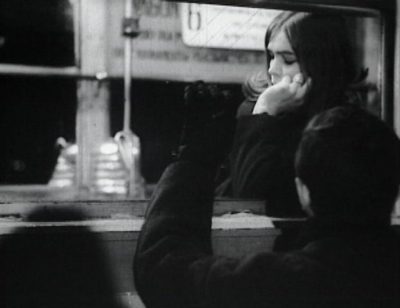
‘While a film student in Łódź, Krzysztof Kieślowski made the 1966 silent short THE TRAM, about a flirtatious boy and a pretty girl. The film is presented here courtesy of the Polish National Film, Television, and Theatre School in Łódź.’ — The Criterion Channel
the entirety
_____________
Before the Rally (1971)
Documentary about international auto rallying.
the entirety
____________
Refrain (1972)
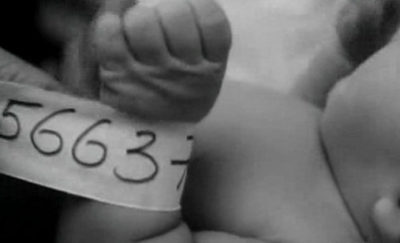
‘Bureaucracy of death. Only shows the clerks coldly responding to people’s inquiries on what to do with their dead loved ones. Interspersed are shots of people on the street and ends with babies being born. People are born and then they die and it simply boils down to certificates and numbers to these people and the government.’ — _kubrick
the entirety
___________
Murarz (1973)
‘A bricklayer and former communist party official looks back at his life, while taking part in a parade of May 1st.’ — IMDb
the entirety
____________
The Scar (1976)
‘Kieslowski’s first theatrical feature is a rather dour slice of social realism. Adapted from a journalist’s report, it’s set in 1970 and examines the ramifications surrounding the construction of a huge chemical plant near a relatively backward rural community. Pieczka’s project director suffers an ongoing crisis of conscience when the locals complain about the disruption. Meanwhile Stuhr’s sinister Party manager tries to keep the lid on negative reporting by a roving film crew. There’s understanding for points of view on all sides, but the absence of dramatic impetus reveals the film-maker’s difficulty in adapting from the documentary work which had comprised the bulk of his previous output. That’s bespectacled Agnieszka Holland as the factory secretary.’ — Time Out (London)
the entirety
______________
Camera Buff (1979)
‘A reflexive meditation on art and documentary and a key film in Krzysztof Kieślowski’s career, CAMERA BUFF follows a factory worker’s growing obsession with filmmaking after he captures the birth of his daughter on his new 8 mm camera.’ — The Criterion Channel
Trailer
___________
No End (1984)
‘The first film that Kieślowski made after the implementation of martial law in December 1981, Bez końca (No End), avoids easy, generic classification. It contains elements of psychological drama, ghost story, romance, courtroom drama, as well as political and metaphysical film. With Agnieszka Holland’s Kobieta samotna (A Woman Alone, 1981, released in 1988), No End is also among the bleakest films ever made in Poland.’ — Marek Haltof
Trailer
_____________
Blind Chance (1981)
‘Before he stunned the cinematic world with the epic series The Decalogue and the Three Colors trilogy, the great Polish filmmaker Krzysztof Kieślowski made his first work of metaphysical genius, Blind Chance, a compelling drama about the difficulty of reconciling political ideals with personal happiness. This unforgettable film follows Witek (the magnetic Bogusław Linda), a medical student with an uncertain future in Communist Poland; Kieślowski dramatizes Witek’s journey as a series of different possibilities, suggesting that chance rules our lives as much as choice does.’ — The Criterion Channel
the entirety
_____________
A Short Film About Killing (1988)
‘The film is not easy to watch, being the story of a lumpen young man who kills a taxi driver and is caught, brought to trial, condemned to death and executed. Both deaths are dreadful; Kieslowski is clearly trying to tell us that both are morally repugnant. The taxi driver is battered with a stone and dies slowly, while the long-winded bureaucratic precision of the hanging was apparently so horrendous to film that Kieslowski’s team had to break off in the middle.
‘It should be emphasised, though, that the two most violent scenes are not lingered over. We see neither too little nor too much. They are there to shock us, but for a good reason. What makes them powerful is the rest of the film. It is shot by Slavomir Idziak with the aid of lowering, ochre-coloured filters that render the young man’s world like a purgatorial nightmare. Never has Warsaw and its environs looked so depressing.’ — Derek Malcolm
the entirety
_______________
A Short Film About Love (1988)
‘Short Film About Love is a feature version of Krzysztof Kieślowski’s The Decalogue – VI from 1988. The film talks about an innocent boy who falls in love with an older, experienced woman who treats love as a noncommittal game.
‘The starting point of the plot is the Seventh Commandment (the Third Commandment is omitted in the series, whereas the Tenth is split into two films): ‘Thou shall not commit adultery’. The famous television cycle was meant by its creators to explore the functioning of Old Testament’s ethical and existential impact in the contemporary world. In terms of film’s structure the co-writer of the script Krzysztof Piesiewicz emphasizes the influence of Hitchock and Bergman. A Short Film About Love is a combination of Rear Window and a subtle psychological drama.’ — Robert Birkholc
the entirety
______________
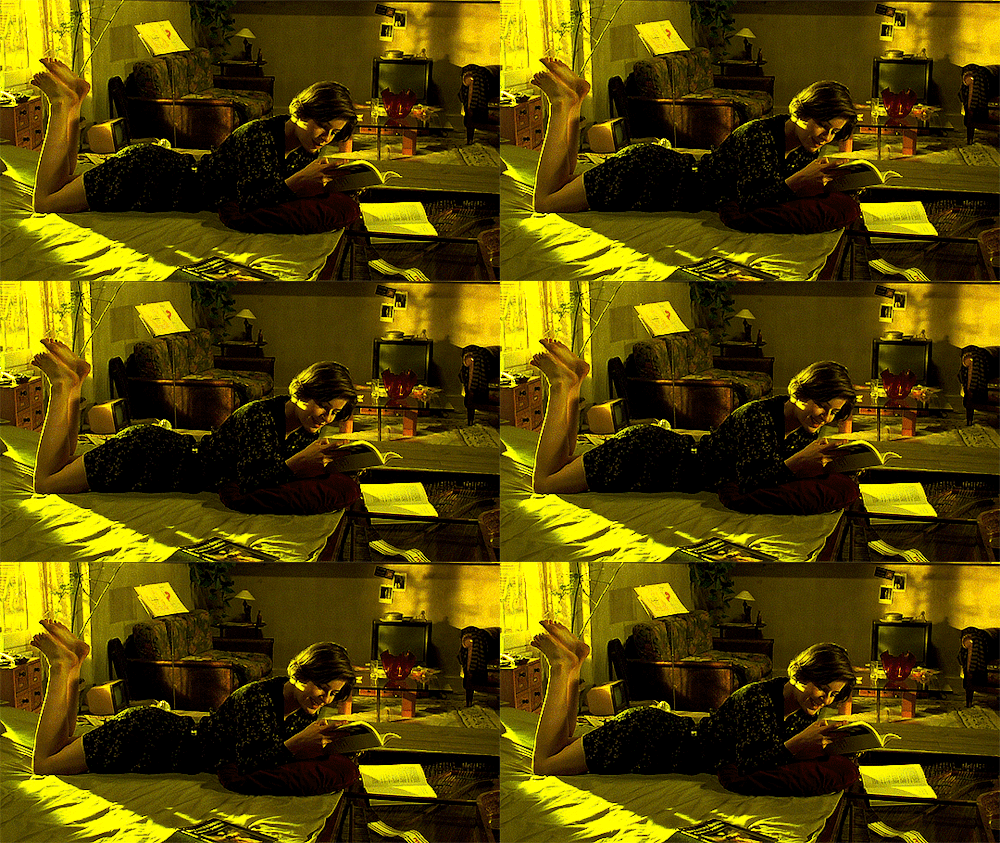
The Double Life of Veronique (1991)
‘Krzysztof Kieślowski’s international breakthrough remains one of his most beloved films, a ravishing, mysterious rumination on identity, love, and human intuition. Irène Jacob is incandescent as both Weronika, a Polish choir soprano, and her double, Véronique, a French music teacher. Though unknown to each other, the two women share an enigmatic, emotional bond, which Kieślowski details in gorgeous reflections, colors, and movements. Aided by Slawomir Idziak’s shimmering cinematography and Zbigniew Preisner’s haunting, operatic score, Kieślowski creates one of cinema’s most purely metaphysical works. The Double Life of Véronique is an unforgettable symphony of feeling.’ — The Criterion Collection
Trailer
Excerpt
______________
Three Colours: Blue (1993)
‘Three Colors: Blue is the first part of the Three Colors triptych, followed by White and Red. The whole cycle – like The Decalogue – was created in opposition to Kieślowski’s previous films, which dealt with the characters’ problems from a political and social angle and contained many realistic background details. In the half of the 1980s, Kieślowski decided to slightly change his tactics and present characters facing existential dilemmas, understood more universally than in his previous, more realist films.
‘All films in the cycle allude to the French Revolution. Their plots loosely refer to the mottos of the revolution: Liberty, Equality and Fraternity, whereas formally, by symbolic use of hues, they hint at the colours of the French flag. In accordance with this assumption, while trying to interpret Three Colors: Blue, one should treat the ideal of liberty as the starting point.’ — culture.pl
Trailer
Excerpt
______________
Three Colors: White (1994)
‘The most playful and also the grittiest of Kieślowski’s Three Colors films follows the adventures of Karol Karol (Zbigniew Zamachowski), a Polish immigrant living in France. The hapless hairdresser opts to leave Paris for his native Warsaw when his wife (Julie Delpy) sues him for divorce (her reason: their marriage was never consummated) and then frames him for arson after setting her own salon ablaze. White, which goes on to chronicle Karol Karol’s elaborate revenge plot, manages to be both a ticklish dark comedy about the economic inequalities of Eastern and Western Europe and a sublime reverie about twisted love.’ — The Criterion Collection
Trailer
Excerpt
______________
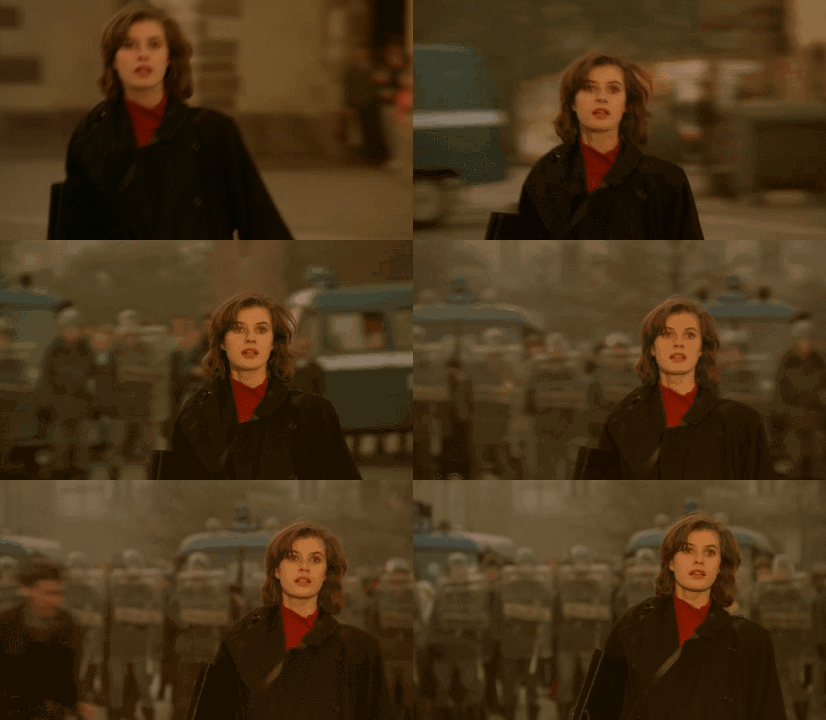
Three Colors: Red (1994)
‘Krzysztof Kieślowski closes his Three Colors trilogy in grand fashion, with an incandescent meditation on fate and chance, starring Irène Jacob as a sweet-souled yet somber runway model in Geneva whose life dramatically intersects with that of a bitter retired judge, played by Jean‑Louis Trintignant. Meanwhile, just down the street, a seemingly unrelated story of jealousy and betrayal unfolds. Red is an intimate look at forged connections and a splendid final statement from a remarkable filmmaker at the height of his powers.’ — The Criterion Collection
Trailer
Excerpt
Camera Movement in THREE COLORS: RED
_____________
The Photograph (1995)
‘After looking at photo taken on celebration day when Warsaw has been freed by Polish and Russian soldiers, showing 2 young boys holding guns, Kieslowski tries to find them to discover how their lives went.’ — IMDb
the entirety
*
p.s. Hey. ** Misanthrope, Hey, G. Sure, gotcha, totally. Yow, about your ear. Your body is such a prankster. Mixed with a brat. Well, high hopes that the antibiotics do what scientists thought they could do when they were considered newfound miracle workers. Huh, maybe all it took to mature David was a car? Hey, why not? I’m still awaiting Derek’s new one in the post. I didn’t see that Woody Allen, but it was a big hit and critical fave over here where he’s not persona non grata. Didn’t Timothee Chalamet disown it or something? Not his finest moment, if so. Right, it’s Thanksgiving. I almost forgot. There’s this American store here in Paris where you can order/buy a whole Thanksgiving classic dinner, the whole shebang, but the people who run it are far right QAnon weirdos, so I avoid the place even though they sell Kraft’s Macaroni and Cheese, which I often crave. ** David Ehrenstein, Thanks for thanking Carlos. He popped me a note and seemed happy with how y’all took it. Yep, watching pretty much all of those movies on late night TV when I was a wee little thing was a big part of my having grown up dark and ironic. I’ll look for that COVID doc, thanks. ** _Black_Acrylic, Yes, RIP the great Maradonna! ** wolf, Wolf, meshuggah! Guest-host Carlos seems to be a pretty thorough follower of the blog because when he sent the post to me, he said — and this is the god’s honest truth — ‘I hope wolf likes it.’ So he’s a fan of your commenting manifestation. Or maybe he actually knows you? Hm. Maybe he’s Esther or Chris Goode or someone in disguise. Honestly, I only really don’t like the Hayward’s insides. But I’ve never seen a show there that I didn’t think was fucked by the architecture. Oh, maybe the Carsten Holler show worked okay there. But the Brigit Riley show was an unmitigated disaster, I thought. Like the Deftones! Ha ha, okay, that’s pretty convincing. Well, okay too, yeah, I wouldn’t say no to that gif show thing. That’s true. And the head curator of the Hayward, Ralph Rugoff, is an old pal of mine, so … who knows? Good, ping me, I’m free as a bird. Would love too. ** Sypha, I was in Providence once as an adolescent on a family vacation, and I do remember it being very nice in this kind of Stephen King setting kind of way. ‘The Crawling Eye’ was the first horror movie I ever saw when I was knee-high to a grasshopper. It’s … terrible. And incredible! ** Steve Erickson, And I’ll look for ’76 Days’. Seems like that would play here once the movie theatres get reopened yet again. Wow, that 80s synth pop duo redo project by your friends sounds really fun. Alert me when their EP hits bandcamp, if you remember. I do know Volur, but I haven’t heard the new one. Cool, I’m on it, thanks! ** Bill, ‘The Crawling Eye’ will turn you into a wide eyed pre-teen giggling stoner, if I’m any indication. I hope the holiday Zoom does what it intends. ** Brian O’Connell, Hi, Brian. Oh, thanks a lot, man. Very happy that you liked the Ozu so much. Yeah, he’s a singular and great artist. For all the reasons you point out. My very favorite of his is ‘Late Spring’, but he’s kind of always wonderful for pretty much always the same reasons, so you can’t really go wrong. Ah, so that’s why there were a strangely large number of pix of Mishima in my Facebook feed yesterday. I like Mishima a lot. I haven’t read him in a long time for no good reason. And I have never seen the Schrader film even though I’ve always wanted to. I think my favorite Mishimas when I was particularly into him were ‘Confessions of a Mask’ and the ‘Sea of Fertility’ trilogy. Oh, and ‘The Temple of the Golden Pavilion.’ What are you favorites? I hope whatever your Thanksgiving consists of is a total treat. We start reopening here on Saturday. Shops and galleries and stuff will reopen then. And, if things don’t nosedive, museums and theatres and stuff on the 15th. And, if things still don’t nosedive, restaurants and cafes and bars on January 20th. Or so they semi-predict. ** Okay. A short time back I was hanging out with someone who said, ‘Have you done a Krzysztof Kieslowski post on your blog?’ ‘No, I haven’t,’ I said, ‘Do you think I should’. He looked at me with horror, like I had just asked him the world’s stupidest question. And that was my cue to make a Krzysztof Kieslowski Day. And there it is right up north. I hope you enjoy it. I hope that if you’re doing Thanksgiving, it rocks. And I will see you tomorrow.











 Now available in North America