_______________
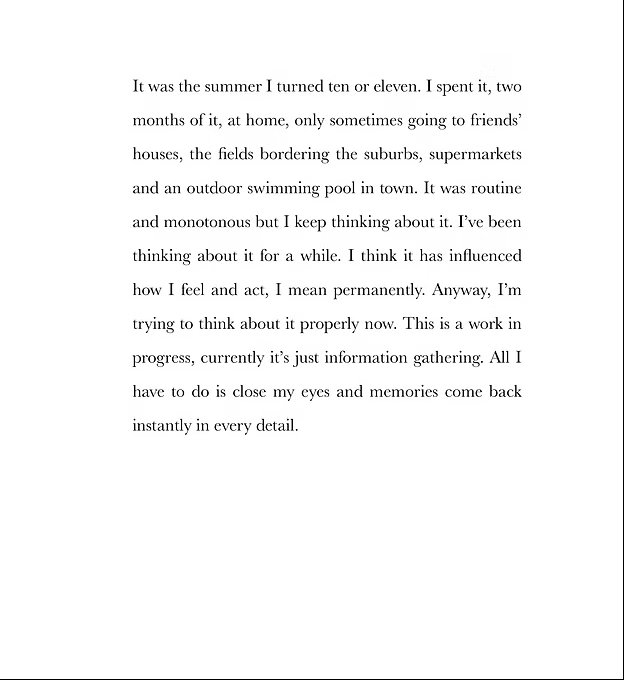
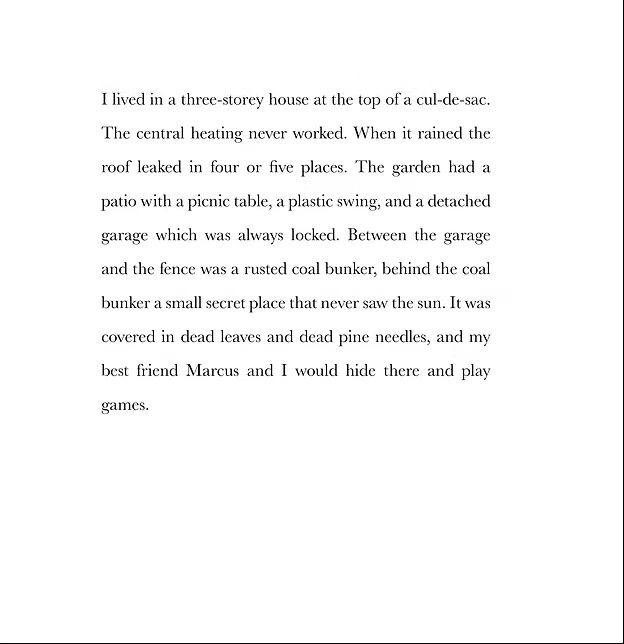
‘Oscar Nearly’s Fragile July is a photo album in words, recalled mental snapshots of a seemingly endless summer when, aged ten or eleven, they haunted their own suburban house on the edge of an unnamed town, in orbit around their parents, sometimes accompanied by their friend Marcus.
‘Originally written for performance as part of a collaborative art installation event, the book length prose poem is in short, intense, fragments, each self-consciously honing in on a specific incident or place, interspersed with occasional photographs that do not always seem to match the descriptions in the text. There is a similar gentle slippage of memory or construction between parts of the work, where actions produce differing narratives. Behind it all, the sound of the motorway, an ambient background drone.
‘There are layers of memory here. Later on in the book the speaker tells us that ‘It was the summer I started trying to hold onto things. I mean in my mind.’ They didn’t take notes, just concentrated and ‘paid attention to things with a kind of energy and pressure’. It seems to me they are also undertaking this deliberate act of attention in relation to the memories they retain, but are also totally aware of contemporary interpretations and understanding overlaid on said memories.
‘The contemporary narrator is, of course, always present in the text which considers the past. If you pay attention, the book contains omens and signs of what came next – something the reader is not privvy to except being informed that ‘It was the summer before a number of events forced me to move to a smaller house on the other side of the country.’ Notice, the ‘me’ there, not the expected familial us.
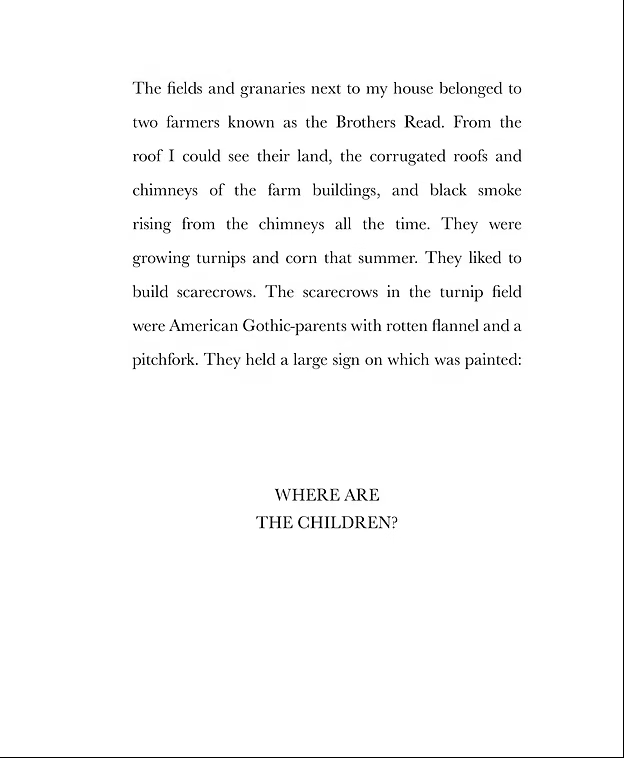
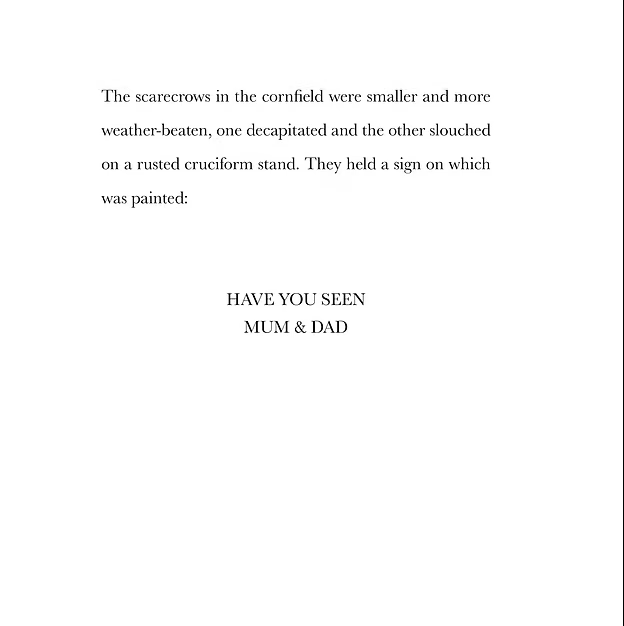
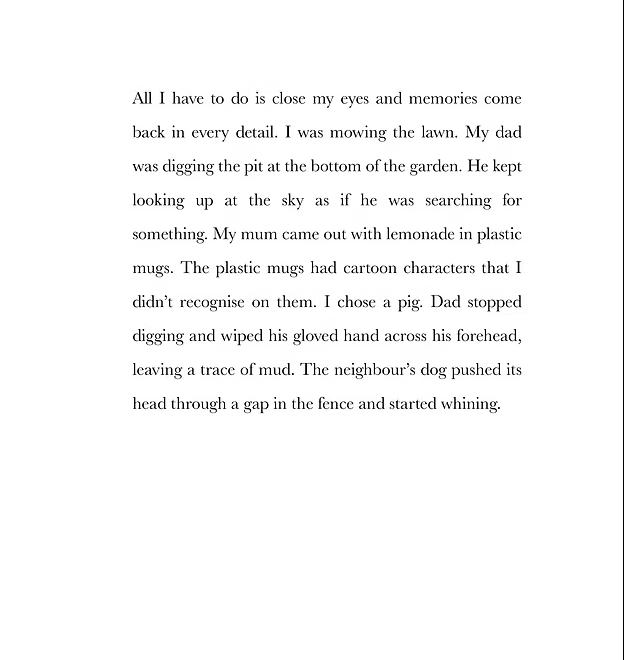
‘So we have a long childhood summer, background noise, small omens and a gradual accumulation of events seen through an interpretative web spun from later events, often only hinted at here. Sometimes, however, they are immediately strange. Scarecrows hold bizarre signs – WHERE ARE THE CHILDREN? and HAVE YOU SEEN MUM AND DAD – whilst the narrator’s father is in recovery from drinking and expends energy digging a pit. There is a room in the speaker’s memory where there cannot be one if they believe their recall or photos of the outside of the house, there are dead birds decomposing on the roads, and strange processions of insects carrying their dead.
‘Although presented as cool reportage there are moments of violent action. Toys are destroyed in their father’s fits of anger; Marcus hits his friend in the stomach, calls them a weasel fuck and runs off from their ‘secret place’ behind the coal bunker; and one poem mentions that it is set before their father threw a bowl of spaghetti at them. Perhaps the strangest part of the book is an obsessive list of the songs the neighbours played at one of their loud parties that summer, which spills over several pages, then simply stops.’ — Rupert Loydell
Oscar Nearly Site
poltergeist journal of literary and cultural studies
Oscar Nearly @ instagram
Tom Hart’s Bones by Oscar Nearly
Buy ‘Fragile July’
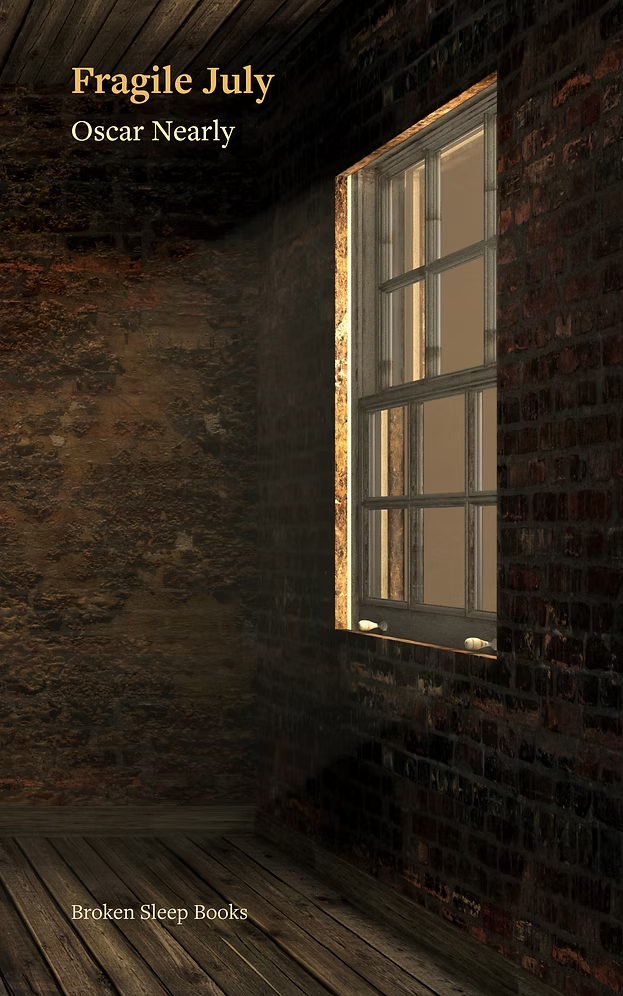 Oscar Nearly Fragile July
Broken Sleep Books
‘Fragile July by Oscar Nearly is a prose-poem of obsessive reconstruction, circling a single childhood summer in which the ordinary textures of suburbia, garden games, disposable-camera snapshots, pop songs, and family rituals begin to feel charged with threat. Built from repetition, incremental shifts, and documentary attention to objects and photographs, the text tests how memory hardens into narrative, how evidence both clarifies and corrupts, and how dread can arrive retrospectively as a structure imposed on the past. Its atmosphere is uncanny rather than overtly surreal, with domestic scenes tightening around pits, locked spaces, missing rooms, and half-seen figures at windows, while the book’s origin in performance and installation gives its visual material a parallel weight, making image and recollection contend for authority.’ — BSB
‘Memory is as wilful as weather in Oscar Nearly’s Fragile July, a beautiful, beguiling remembrance of a childhood summer and the storms that circled it. This book swept me up and away.’ — Derek McCormack
Excerpts
Extra
ELECTROPOLIS: Ten Dreams from Bethnal House | Trailer
______________
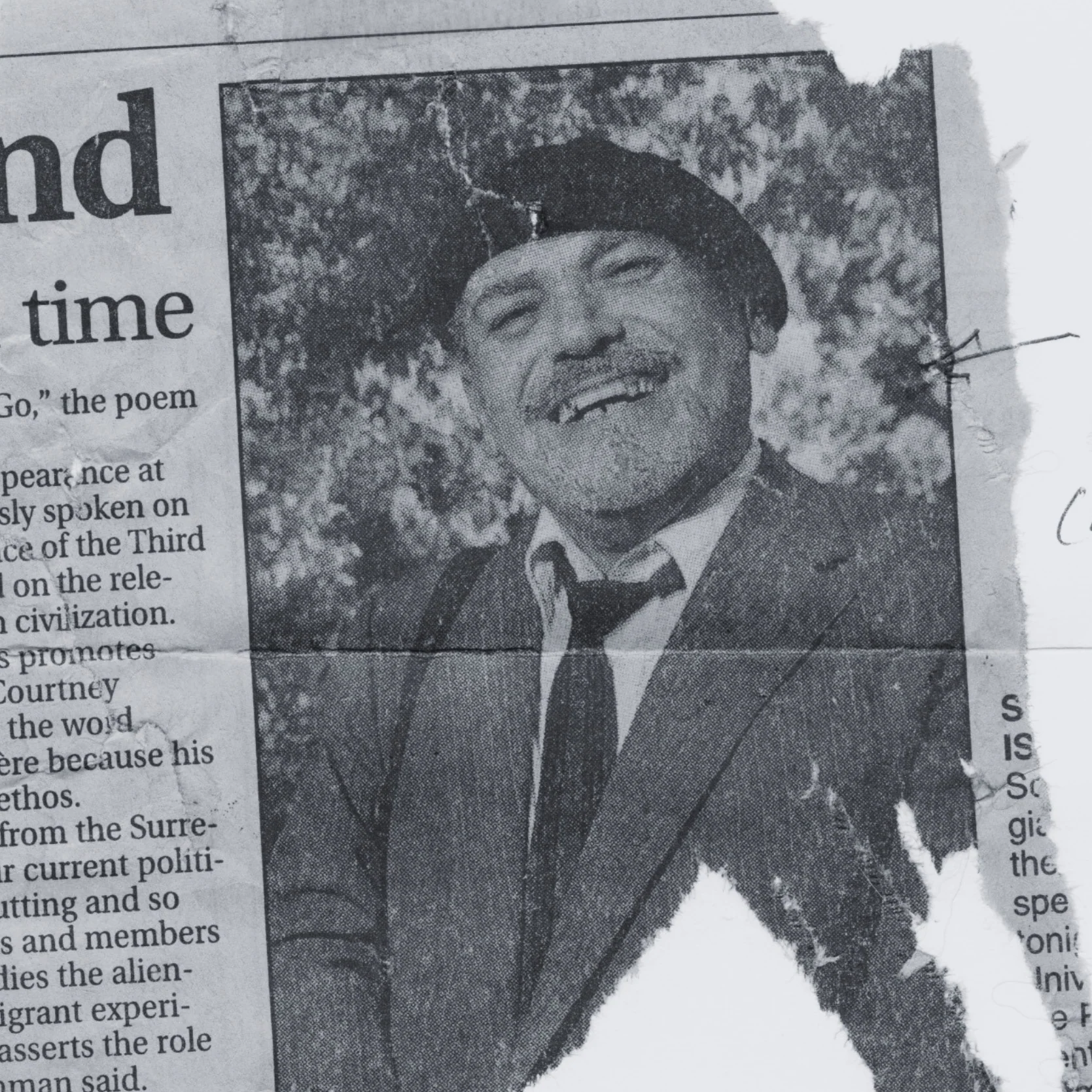
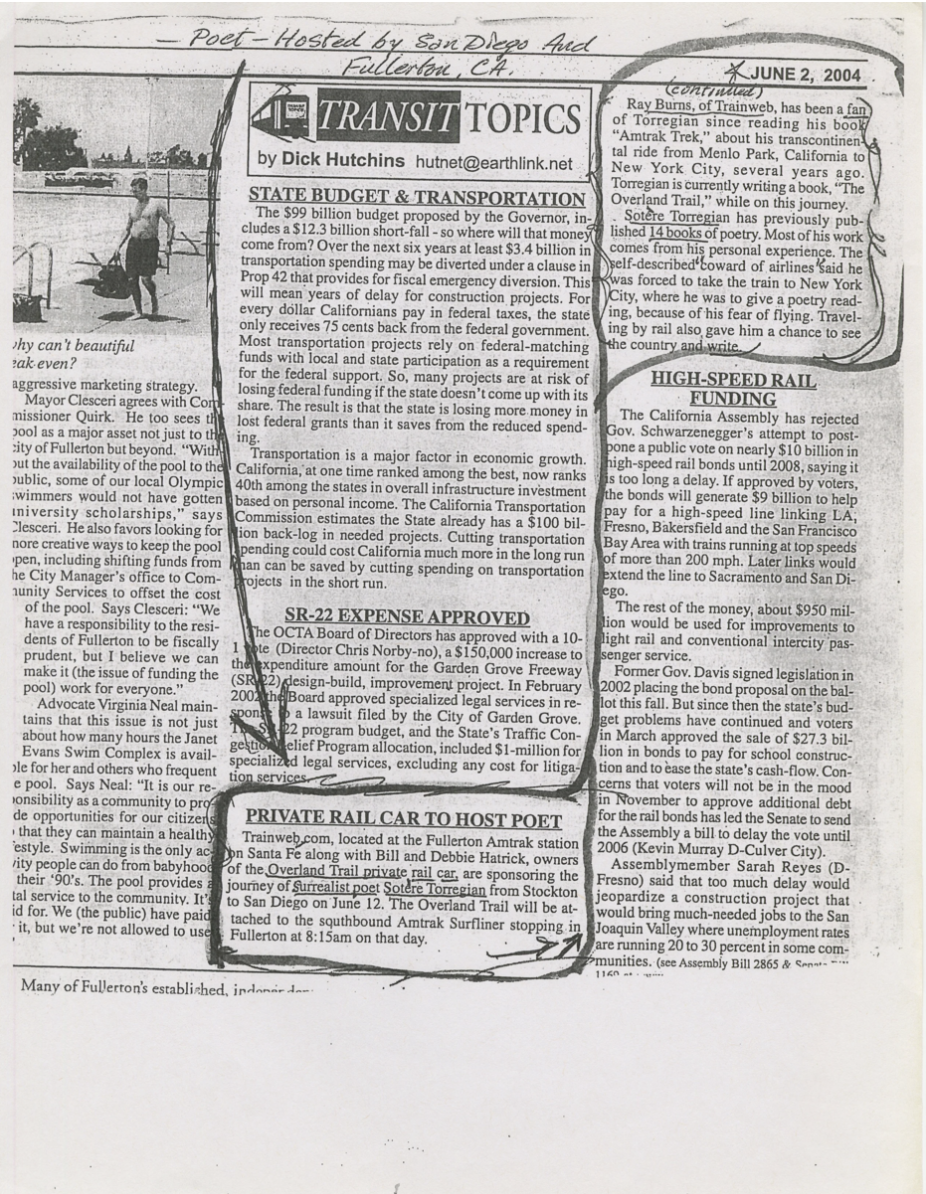
‘Sotère Torregian, a self-identified French surrealist, perhaps the only such macédoine extant in North America today, grew up in “No Man’s Land with lots of machine gun bullets flying all over the place,” a place known also as Newark, New Jersey, where he was born in 1941. He lived in a multilingual home where he learned French, Italian, Greek, and Arabic, among other languages. Identifying at an early age with the Africanized Mediterranean, he learned English with difficulty. He received instruction in handwriting and manners at St. Anne’s School in Newark, where he was expelled for kicking a nun.
‘Over the years of his youth he invented himself as a poet, attending readings at New York’s Café Le Metro with Paul Blackburn, Joseph Ceravolo, and David Shapiro and publishing his first poems with Art and Literature (Isere, France), Paris Review, and Ted Berrigan’s magazine “C.” He left the East Coast for California in the late 1960s and taught in the nascent African-American Studies program at Stanford.
‘While attending public schools, Torregian experienced his first taste of racism and the uncomfortable disassociation this can cause. White kids often attacked him because of his mixed African ancestry, while blacks, confused by his identification with Mediterranean cultural traditions, targeted him for trying to pass as white. He took refuge in the library to escape these displays of ethnic hostility. Compelled by his alienation from North American racial roles and performative expectations, he pursued through careful study the traditions and stories bestowed on him at home. But despite his studious nature, he “failed” at poetry, so he says, “for not writing in iambic pentameter. [As happened to] Rimbaud, my teachers claimed I was a dunce.”
‘Perhaps an astrological accident in the house of Cancer preserved Torregian for the muses, despite his teacher’s claim of early poetic failure. Sharing a birthday with one of the great poets of the Negritude movement—Aimé Césaire—Torregian early on identified with the Martinique native. Through such associations, Torregian imagines an interpenetrating world of forms, where personal identification registers across ethnic and racial lines to correspond more intriguingly with dispositions of the soul. His identification with the French surrealist poets also led him toward a path where personal vision, intellectual pursuit, and international movements of art crossed personal boundaries to create a broad and influential current of artistic activity. As this was inflected through Torregian’s imagination, he was able to enter a community of fellow authors, and such imaginative, if hermetic, participation prepared him for his introduction, in the 1960s, to the New York School of poets.
‘In those days many poets congregated at the café Le Metro coffee house on the Lower East Side. There, Torregian met Paul Blackburn and Ted Berrigan, who, he says, taught him more than anybody else. “Ted one day was walking with me,” he recalls, “and he said, ‘Sotère, you’re a great poet but you have one problem: you’re too serious. I love your work, but you’re too serious.’” According to Torregian, “this changed everything. The French,” he continued, “were talking about the pain of love. Ted said, ‘You’ve got to get out of that. Put some laughter in your writing.’ The absurd became more important.”’ — Dale Smith
Sotère Torregian @ The Poetry Foundation
Way with Words
Sotere Torregian @ Facebook
Sotère Torregian @ Armenian Poetry Project
Buy ‘Fragmentae’
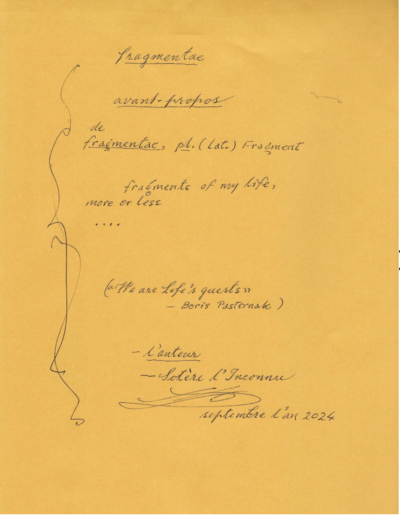 Sotère Torregian Fragmentae
Wave Books
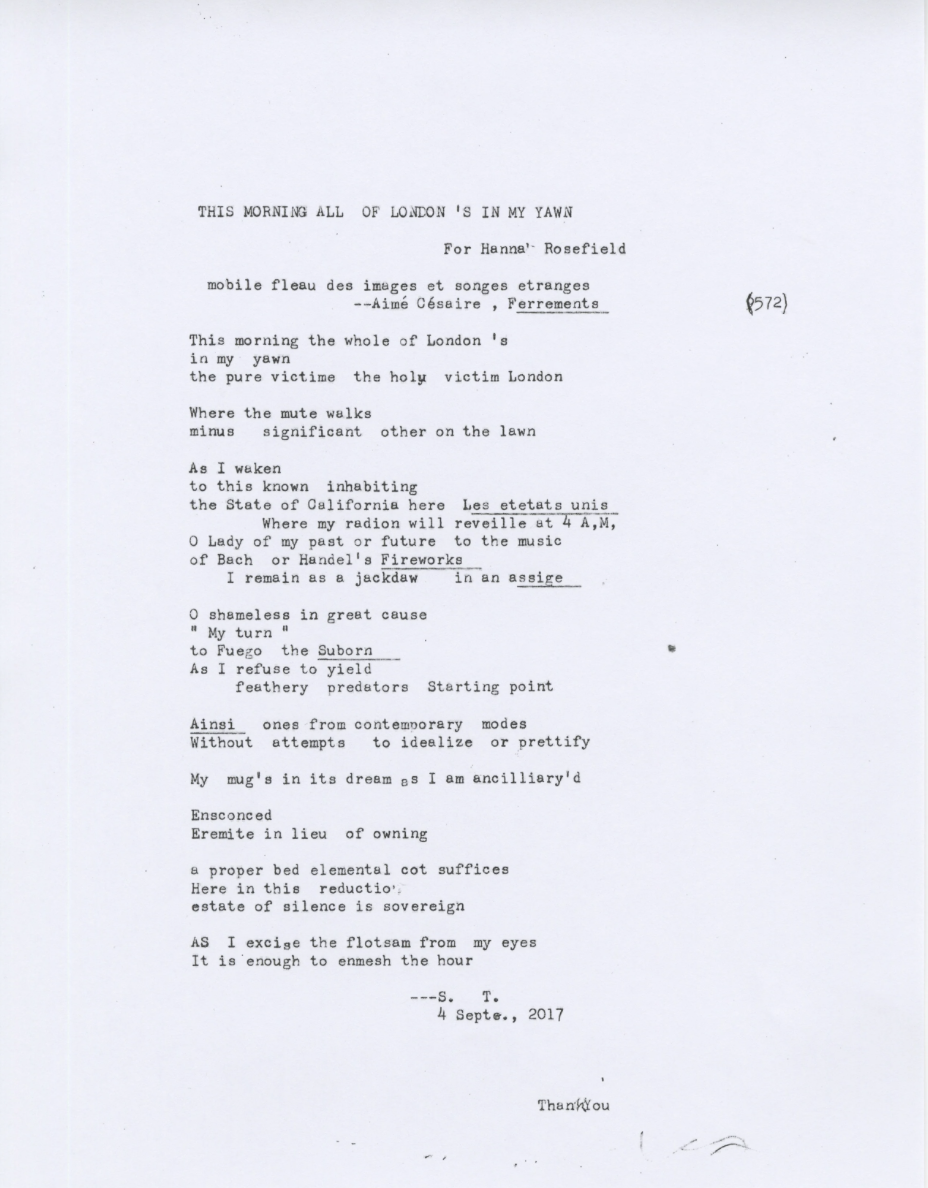
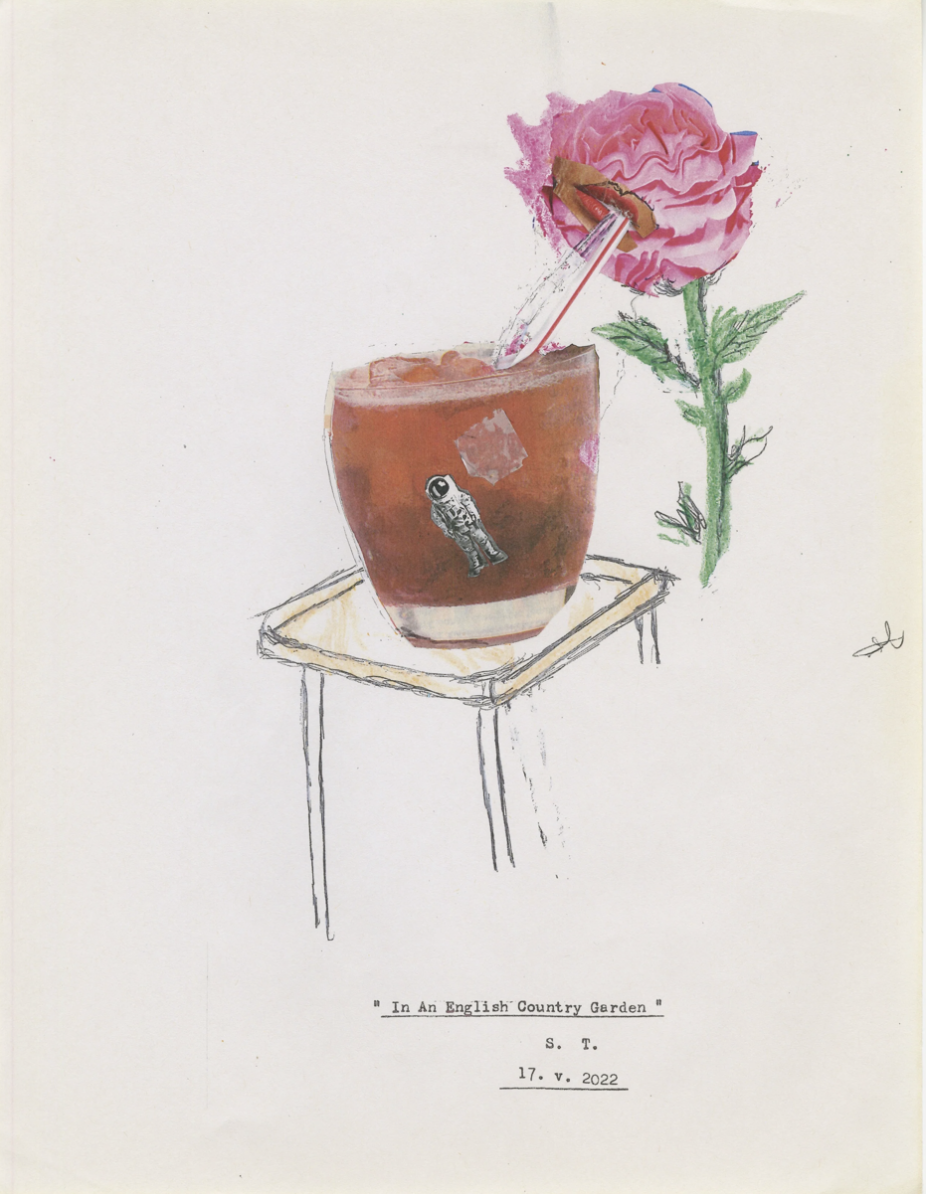
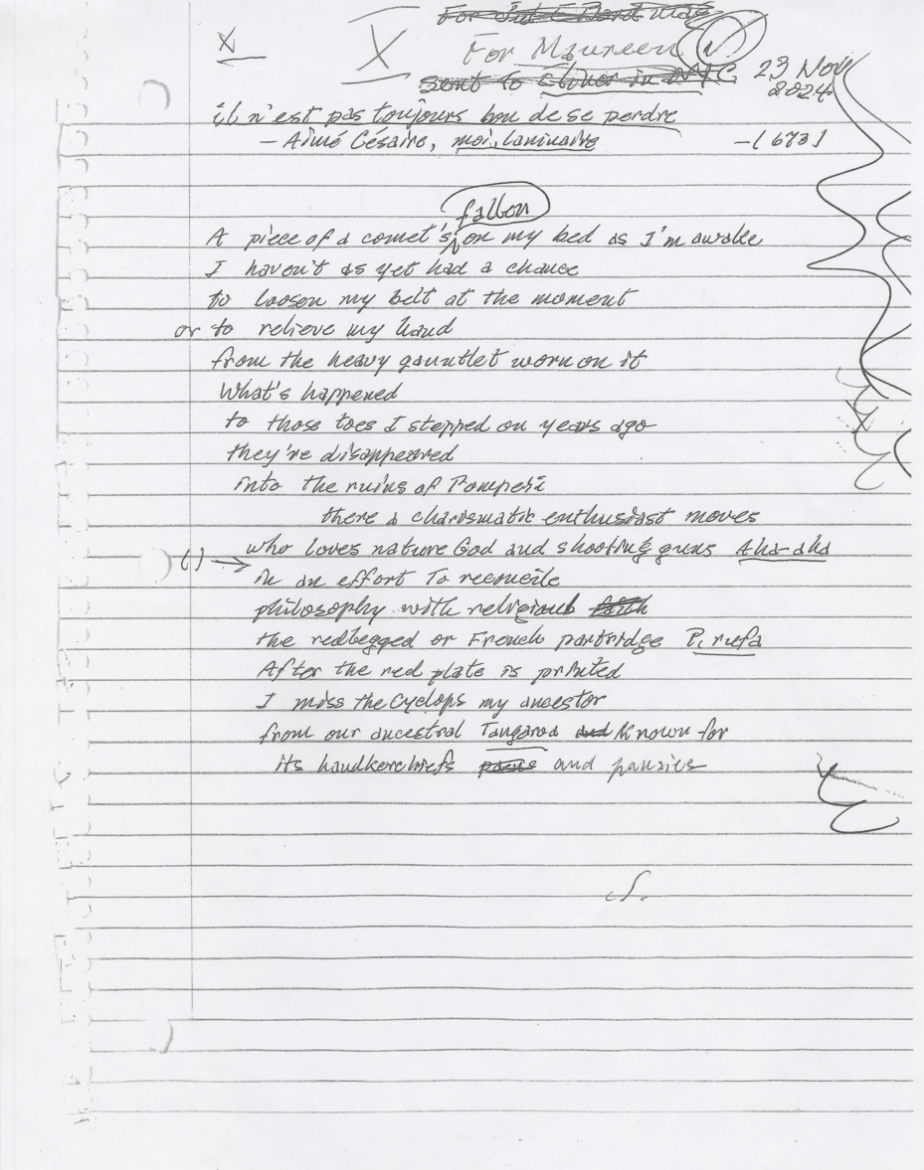
‘Published in the form of a facsimile manuscript, this collection of poems and ephemera by Sotère Torregian invites the reader into the experience of a multiyear correspondence. Employing a variety of languages, scripts, and forms, the diverse materials compose a work that moves deftly across time. Contained in envelopes and presented to reflect the chronology of the making process, Torregian’s poems are interspersed with collages, newspaper clippings, and drawings. An exciting reminder of the material possibilities of poetry, Fragmentae presents an unfolding dialogue that stirs us toward a unique and generous experience of reading.’ — Wave Books
Excerpts
Extra
SOTERE TORREGIAN | 26 MAY 2010
______________
‘A good art critic can be hard to find. That’s certainly true of Bruce Hainley, one of the most big-brained, stylish and principled practitioners of the discipline to emerge – and, it appears, withdraw – over the last three decades. In the previous collection of his writings, the (also) small-press Pep Talk 5: Bruce Hainley Pep Talk (2011), its editor notes that said volume was her idea, not his, desirous as she was to have a clutch of the American critic/poet’s writings in one pocketable place. Correctomundo, which is being published by a German gallery, concludes with Hainley’s acknowledgement that gallery owner ‘Yvo Cho asked for this book and without him it would not exist’. Related, perhaps: interviewed in Bruce Hainley Pep Talk, Hainley notes that he pivoted towards academia because he didn’t want to support himself writing about art he didn’t like. As time has gone on, Hainley has apparently found less and less art to like and the artworld that surrounds it increasingly dismal. His output, unless I’m missing something, has shrunk, while not infrequently focusing on figures who are elusive or at least tricky themselves: see his last book-length statement, 2014’s vivacious experimental monograph for Semiotext(e), Under the Sign of [sic]: Sturtevant’s Volte-Face.
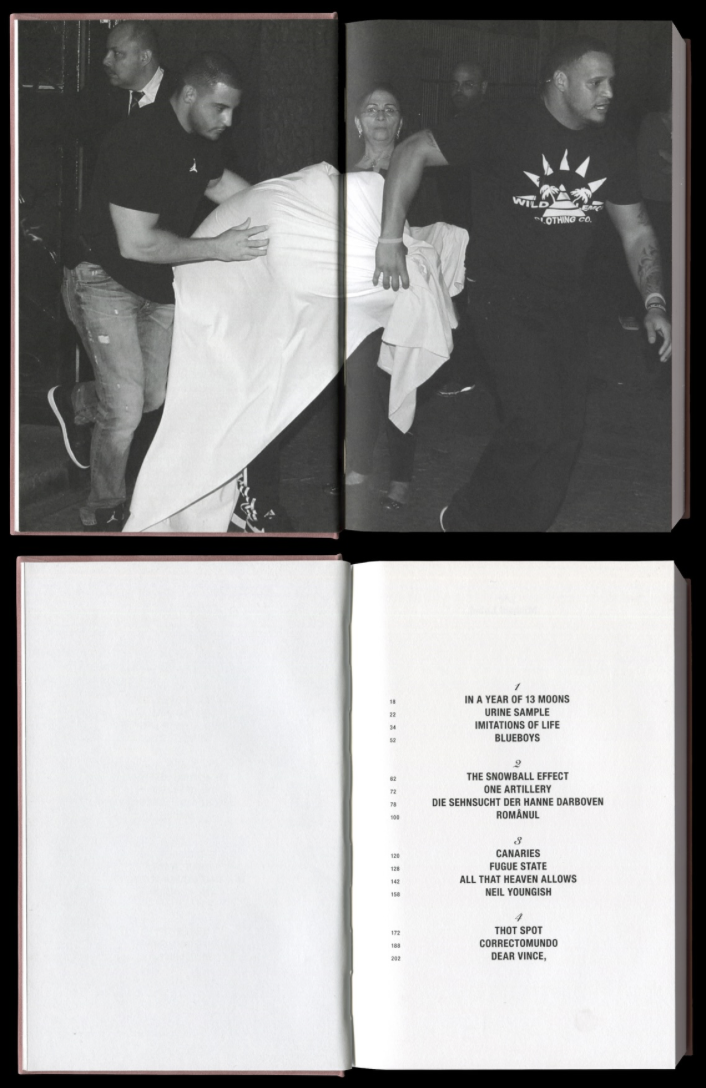
‘But now there’s Correctomundo, a suite of 15 scattered essays from the last quarter-century, evidence of Hainley’s aslant, rangy take on what might broadly pass as art crit, or crowbar the discipline open. The opener, ‘In a Year of 13 Moons’ (2024), orbits around the eponymous Rainer Werner Fassbinder movie in a dense, prosodic, allusion scattering way that feels written for the handful of people who’ll get it. 2016’s ‘Dear Vince,’ (assumedly American sculptor Vincent Fecteau) is an epistle-as-essay that floats towards the latter’s art practice on a cloud of shared references, from interior design to gay bars to, perhaps more formally, ‘the sleazy potential of tubes and holes’. So no, you’re not going to miss that Hainley has long literalised Susan Sontag’s call for an erotics of art: he regularly views art through the prismatic of the male body, twisting artistic practices kaleidoscopically. ‘Urine Sample’ (2002) is a quietly polemical essay about Andy Warhol’s Oxidation paintings (1977–78) that, neatly interspersing sections from the artist’s Diaries, pushes back on sombre October-style readings of Warhol’s art as death-fixated to focus on flowing life, to read piss as the vital body in absentia (‘urine is rich in DNA’), gold transmuted: ‘Warhol spent his whole life figuring out how to represent it, the body there and not there, his own, others. Gang bang vs. come on the Ultrasuede’.
‘Yet consider this a peephole glimpse, because Hainley’s writing doesn’t really lend itself to extraction. It at once effervesces and asks to be taken in slowly, sometimes even decoded. Sentences depend strongly on those around them and on the conspiratorial, refusing-to-pander way his essays flow. (So, look some up online.) The creators he hymns in Correctomundo have that resistant integrity too, whether quietly, as in Maureen Gallace’s beautifully stubborn landscapes and obscurant facades of houses, or loudly, in an elegy for the writer Gary Indiana. That slipperiness makes sense, because Hainley is that rare art scribe who often appears not to be looking up at his subjects but across at them: the critic, so Oscar Wilde had it, as artist.’ — Martin Herbert
CTMS Studio
GARY INDIANA (1950–2024) BY BRUCE HAINLEY
Bruce Hainley’s 2004 Artforum Top Ten
Book: ‘UNDER THE SIGN OF [ SIC]: STURTEVANT’S VOLTE-FACE’
Buy ‘Correctomundo’
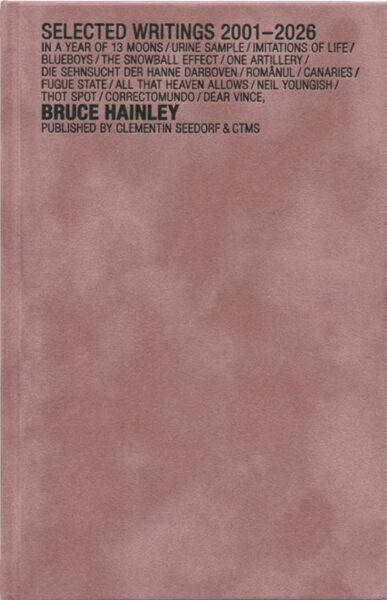 Bruce Hainley Correctomundo. Selected Writings 2001-2026
Clementin Seedorf
‘Finally the collection we have been drooling for ! The book brings together fifteen of Bruce Hainley’s luminous essays on artists including André Cadere, Julie Becker, Trisha Donnelly, Vincent Fecteau, Gary Indiana, Monica Majoli, David Hammons, and Andy Warhol, among others. To mark the release of the book, an exhibition opened at Clementin Seedorf in Cologne, featuring works and ephemera by artists on whom Hainley has written, alongside works by Devin T. Mays and Christine Pichini. And the cover is a caress.’ — After8
Excerpts
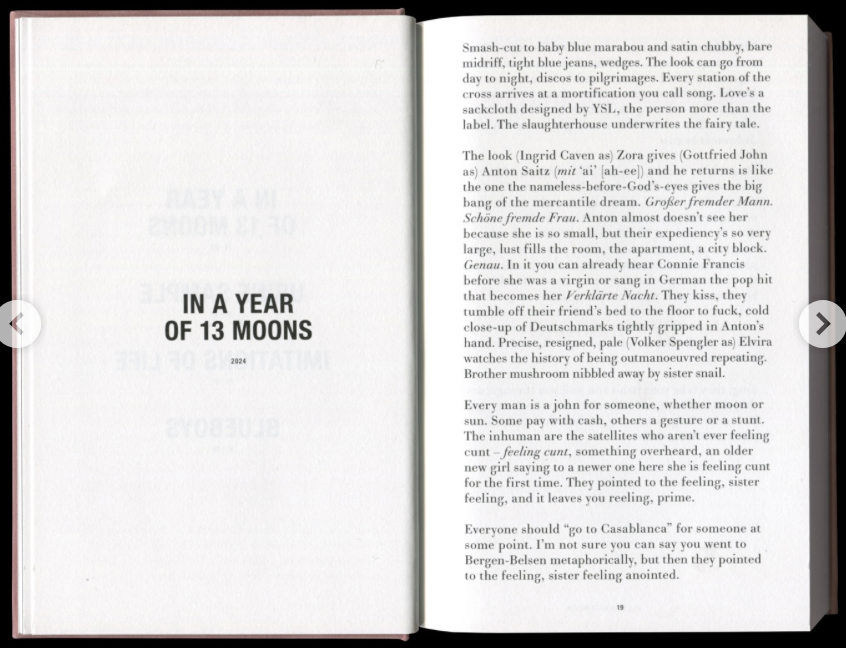
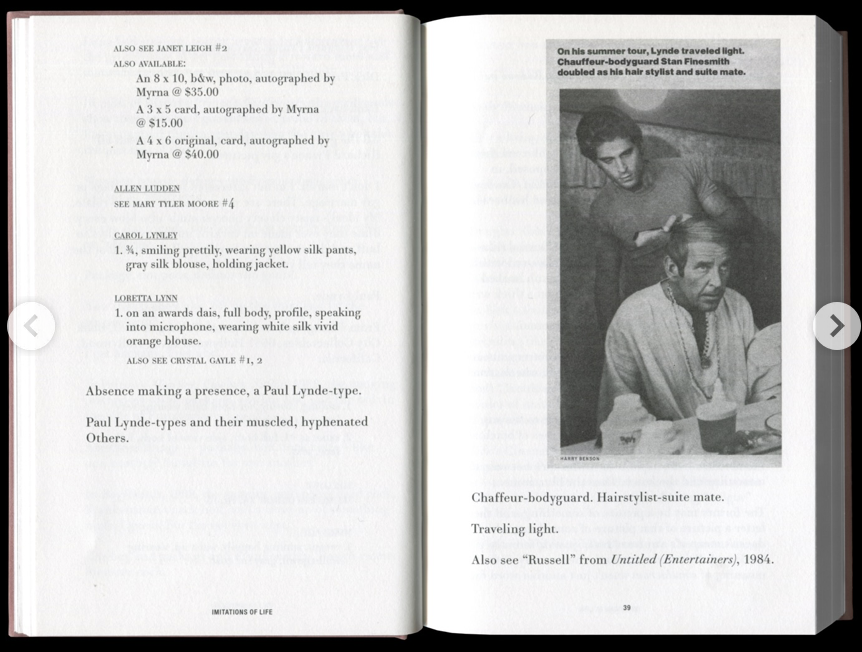
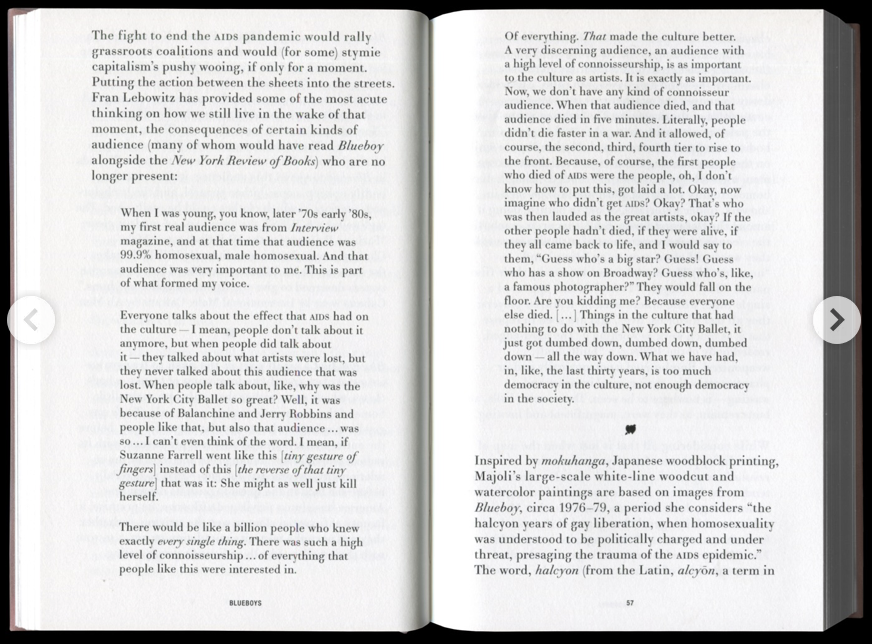
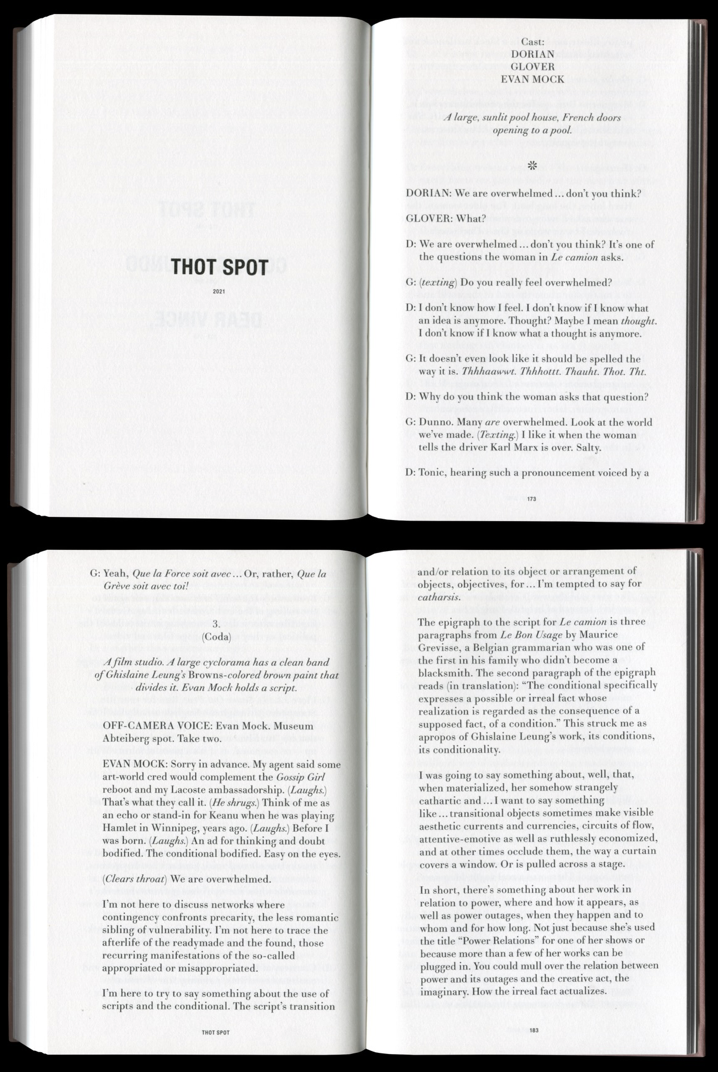
Extra
Sturtevant – Ephemera from the collection of Bruce Hainley
______________
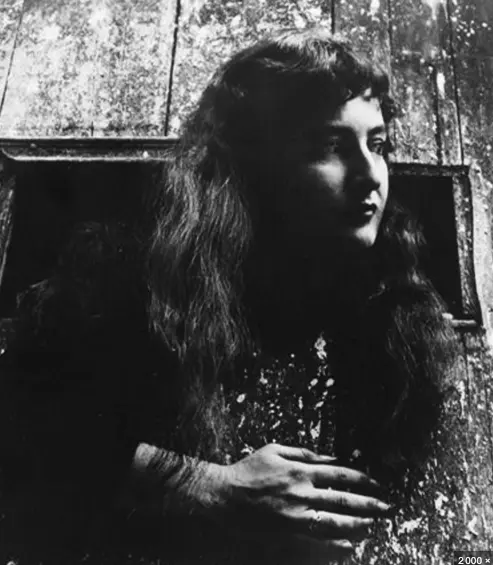
‘Powerful, transgressive, and obscene, Mansour’s stories spin an elaborate dance between death and sex, disemboweling the patriarchy (and every other authority figure) in the process. These stories, though written decades ago, are still beautifully unsettling today. This is the path surrealist prose could have taken, if it hadn’t balked.’ –- Brian Evenson
‘Vividly translated by C. Francis Fischer, Joyce Mansour’s prose is erotic, funny, scary, intensive, and grotesque, sometimes all at once. It follows the inclinations of a mind operating in utter inventiveness. Every sentence is unpredictable, every image startling. This must be why there has been such an explosion of interest in her work–as in the work of fellow woman surrealist Leonora Carrington. In extreme times, we need extreme measures, convulsive beauty.’ — Johannes Göransson
‘The new English translation published by City Lights Books of one of her idiosyncratic masterpieces, Satisfied Sarcophagi, once again rightfully draws our rapt attention not only to the often quieter and less recognized place of women amongst the surrealist canon, but also to the writer who I place at the apex of that pantheon. . . . the quintessential literary provocateur and the most daring of all surrealist authors: Joyce Mansour.’ –- Donald Brackett
‘Only recently did English find out that Joyce Mansour was one of the 20th century’s most uncanny and transformative poets, and now comes the revelation that she was also quite the raconteur. Her narrations feel both enigmatic and fated–each word, each image, lashed to the next by libidinous and mortal sinew. C. Francis Fisher’s translation is limpid and fragrant, like a vapor rising over a cauldron of boiling blood. I suspect this collection will soon be recognized as a classic of Modernist fiction–in the Surrealist tradition and beyond. May it be read widely.’ — Kit Schluter
Joyce Mansour @ Wikipedia
“Yet Another Dagger Pulsing Under the Rain”: Why We Need Joyce Mansour—and Surrealism
Translating Desire: The Erotic-Macabre Poetry of Joyce Mansour
Excessive Bodies, Shifting Subjects and Voice
Buy ‘Satisfied Sarcophagi’
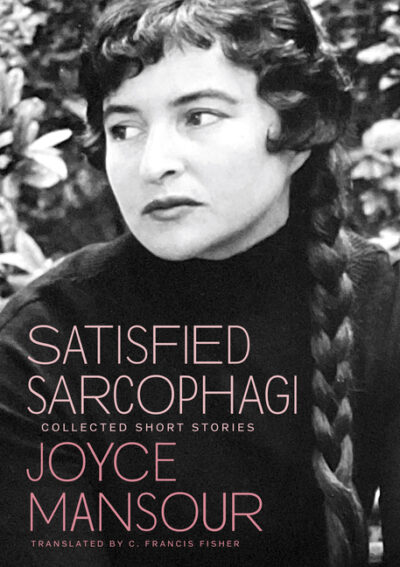 Joyce Mansour Satisfied Sarcophagi: Collected Short Stories
City Lights
‘Mansour portrays a universe of constant transformation and constant violence, weaving an eroticized surrealist texture from unsettling areas of the psyche, replete with Sadean excess, incestuous relations, and her usual complement of bodily fluids. In “Mary, or the Honor of Serving,” the protagonist endures a series of grotesque events, deciding to remain with her murderous lover rather than escape to a banal bourgeois life. “Cancer” depicts a boy’s obsession with an old woman’s hump, which threatens to subsume her. “The Tip” and “Infinitely . . . on the Lawn” explore oedipal struggles, the one featuring a gender-switching protagonist caught between the family maid and his mother, the other a woman and her mother sharing the same lover. Other stories like “Dolman the Evil” and “Sunday Shakes” concern demonic beings of uncertain origin. With Satisfied Sarcophagi–brought into English by noted Mansour translator C. Francis Fisher–Joyce Mansour rightly claims her place as a take-no-prisoners bad-girl progenitor of a growing body of women’s writing known in the 21st century as “fantastic/erotic horror.”’ — City Lights
Excerpt
from Corridors of Madness
Once on firm land, I turned to the right. I could have followed the edge of the red carpet toward the exit door, but I thought absent-mindedly of your teeth. I did not notice the progressive worsening of the decorative mural. I thought of your dentition, the real one, not the one that steeps in water at your lecturer’s desk. I imagined your damaged canines, dressed in porcelain like the Marquise of Saxe, held together by metal threads; spinning, ceremonial, without visible supports or good gums, they were dancing before my eyes and preventing me from getting my bearings. You had lost several teeth recently. Abutment teeth. Others take their shoes off quietly in the shadows of your palace like concierges in their dressing rooms. And still, even without your removable ceremonial teeth (in case of boredom one can take out a fragment without touching the rest) made with magnetized neon and well-oiled rubber, you are by far the most seductive professor.
A placard covered with beautiful writing indicated the direction toward the Room of Capillary Executions. A stitch in my side, at once both moral and physical, made me open the door without hesitation, risking your anger, dear Doctor Jan, who does not like to wait and knows how to show it. I was in absolute need of calm.
“Reason cannot always be controlled by intuition,” I thought as I entered a vast room without a visible ceiling; lumpy clouds flew so low they grazed the eyebrows (I quickly learned the rhythm and, as such, how to avoid them: a clever combination of head movements like those of a Balinese dancer mixed with one watching a tennis match) and lying spread out along the wall like poppies in a priest’s garden, twelve Waffen-SS officers in night uniforms awaited death in a joyless and frustrated silence.
“Shampoo and style,” I said to the pretty receptionist aerating her thighs on her perch. “I don’t have any chairs open at the moment,” she susurrated, gesturing to the SS with her bust and chin. “These gentlemen have priority.” She was not very amiable, but her garters blossomed gracefully on the reddish tiles of her flesh . . .
“We have priority, miss. Even in death we have priority,” said a condemned man with the softness of a muscle that gives way under the pressure of effort. I did not listen. Why resist the storm? My hair could wait. The Germans, melted into a shapeless mass, fearful and clumsy, seemed to have only one stripe on all their pajamas combined: the singularity fell like an empty hour when hope deflates. I put on my sunglasses and, in order to escape all voluptuousness, to banish any shiver of late pity, I gathered additions and multiplications, do-nots and decals. I practiced yoga, inhaled cereal through the nose, notches in the wall, and Venetian dreams.
“I was sterilized by Hitler.” A round of gunfire meant that I missed the rest of the story; the one-eyed Waffen-SS (was he like that before the volley? I will never know how old the wound was) fell at my feel foaming like a camel.
“That’s enough. To hell with flirtation.” I am no longer interested at all in the receptionist’s thighs. She clapped her knees to tell me the interview was over; I returned to the hallway at the exact spot where I left it. Soup time. (“Soup, soup, beautiful soup.”) Unconsciously at first, then more and more allured, moved, overtaken by these events, I followed the little shadow girl, who ran naked on the walls and ceiling (visible and invisible) and, incidentally, on the floor in the hallway, which, ending in a cylindrical cell, spun around itself like a fairground torpedo. The little shadow woman, chubby from the start, was thinning out: her fat, absorbed by osmosis, seemed to feed the walls and the block work of the Strong Room (a sign informed the visitor of the place’s name but not its purpose) and turned more and more quickly, spastically, with shrill little laughs and sighs of dead leaves. I left stealthily, taking care not to be snatched by unbridled tall walls.
“You . . . what do they do in the Strong Room?” I asked the man squatting behind the door.
“Make lady jam,” he told me, without taking his eyes off the newspaper.
“But . . . you. . . ?” He looked at me carefully: “Is it so obvious?”
“What?”
“Every day for twenty years I have tried to enter that room. To see. I need to know what’s at the end of the hallway. Maybe I am reckless. At first, I would dress up. I cheated. I slid between them, those who enter and do not leave. They helped me. I never succeeded but I always tried, without really believing it always; I am not a mark. No. I am trying. That’s all.”
Jan was waiting for me below. “Well, still alive?” he muttered, working on the car. I was surprised to find he did not interrupt my story: “Judging from this tale, my dear, the institution that we are leaving this instant is a madhouse.” He was laughing.
All things considered, I prefer the Sorbonne.
Extra
Joyce MANSOUR – La femme surréaliste
______________
Adem Berbic @ instagram
‘The Question of Blanchot in Beckett’s Three Dialogues and The Unnamable’ by Adem Berbic
Ssnake Press
Velika. Bicikla
Buy ‘Two Stories’
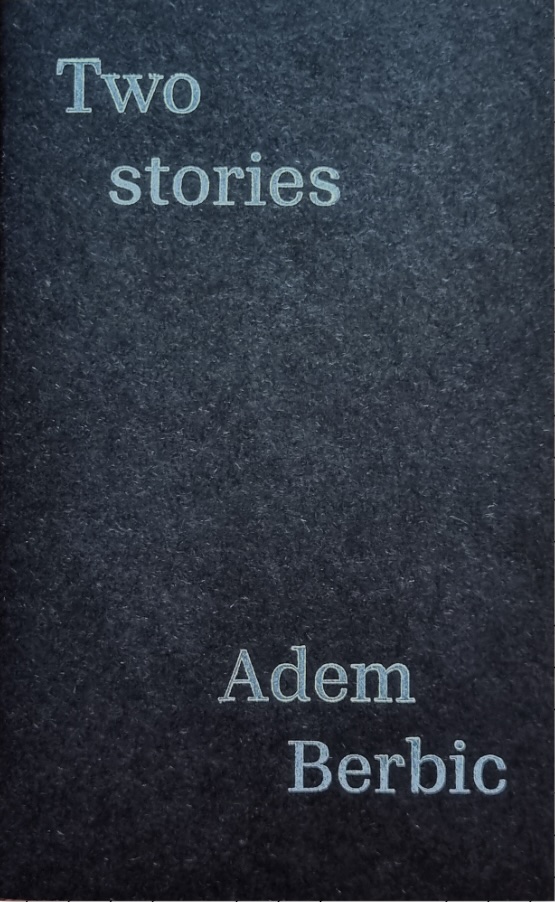 Adem Berbic Two Stories
Ssnake Press
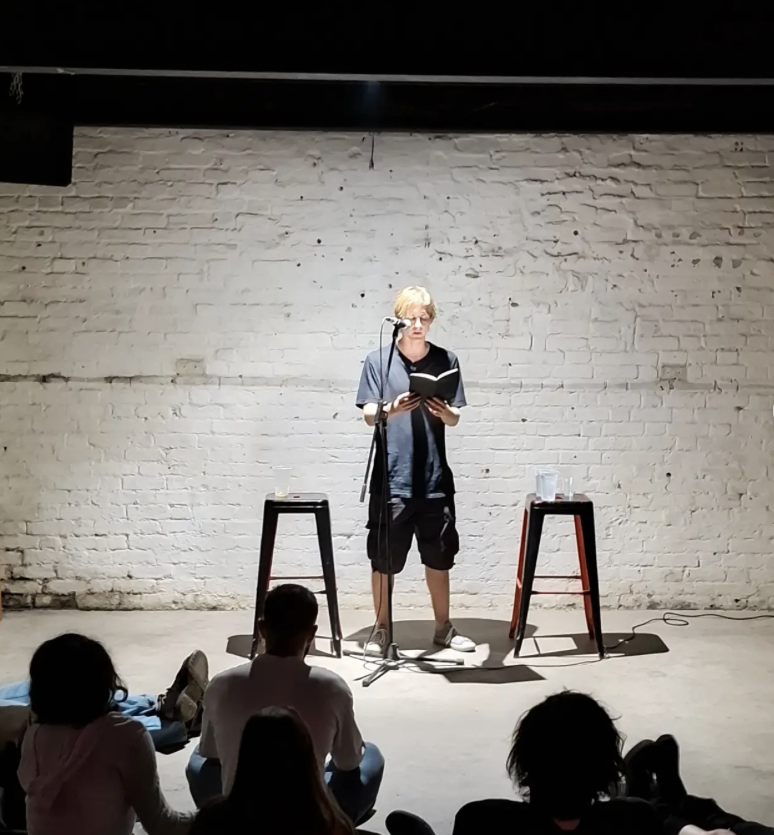
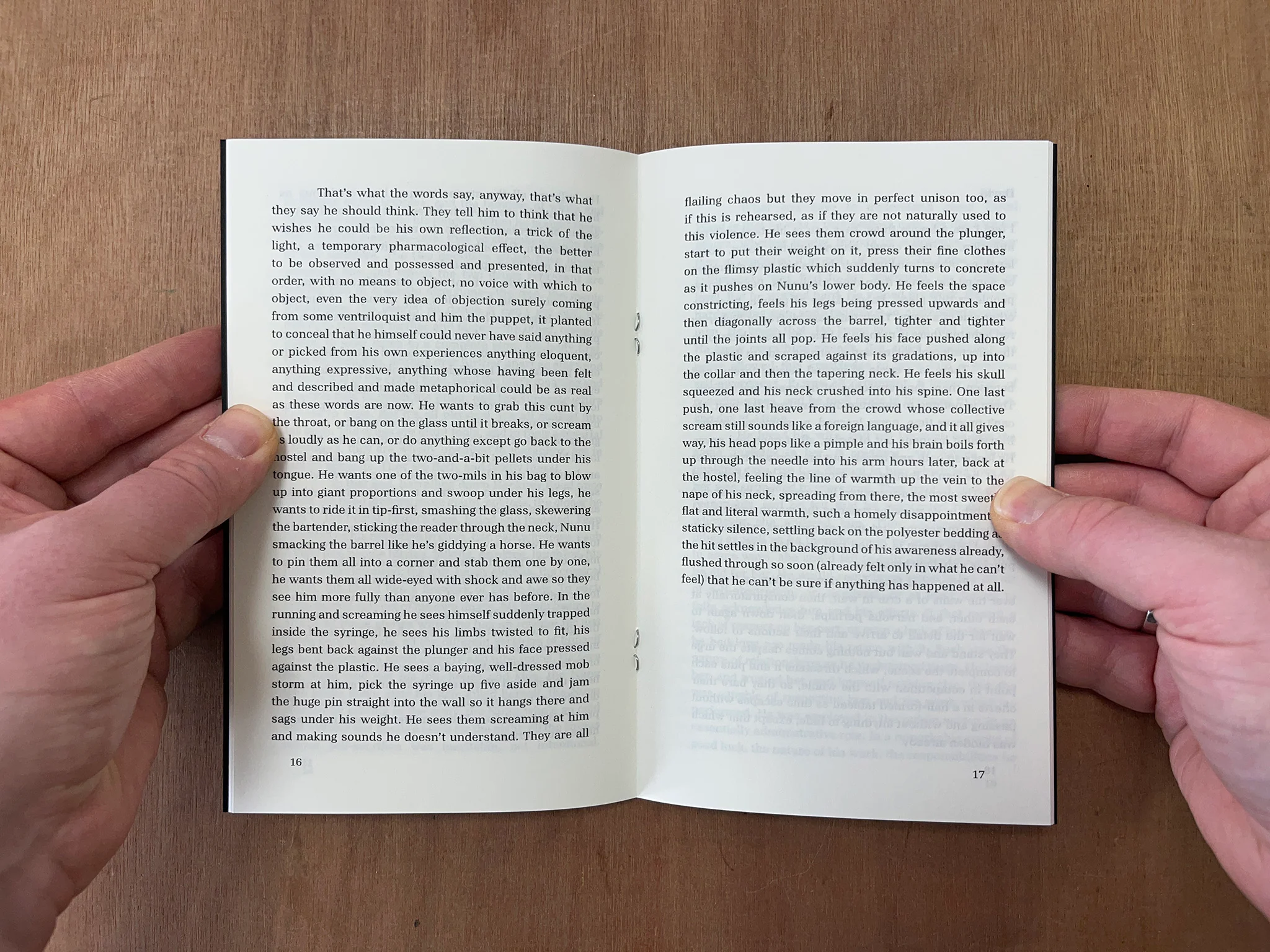
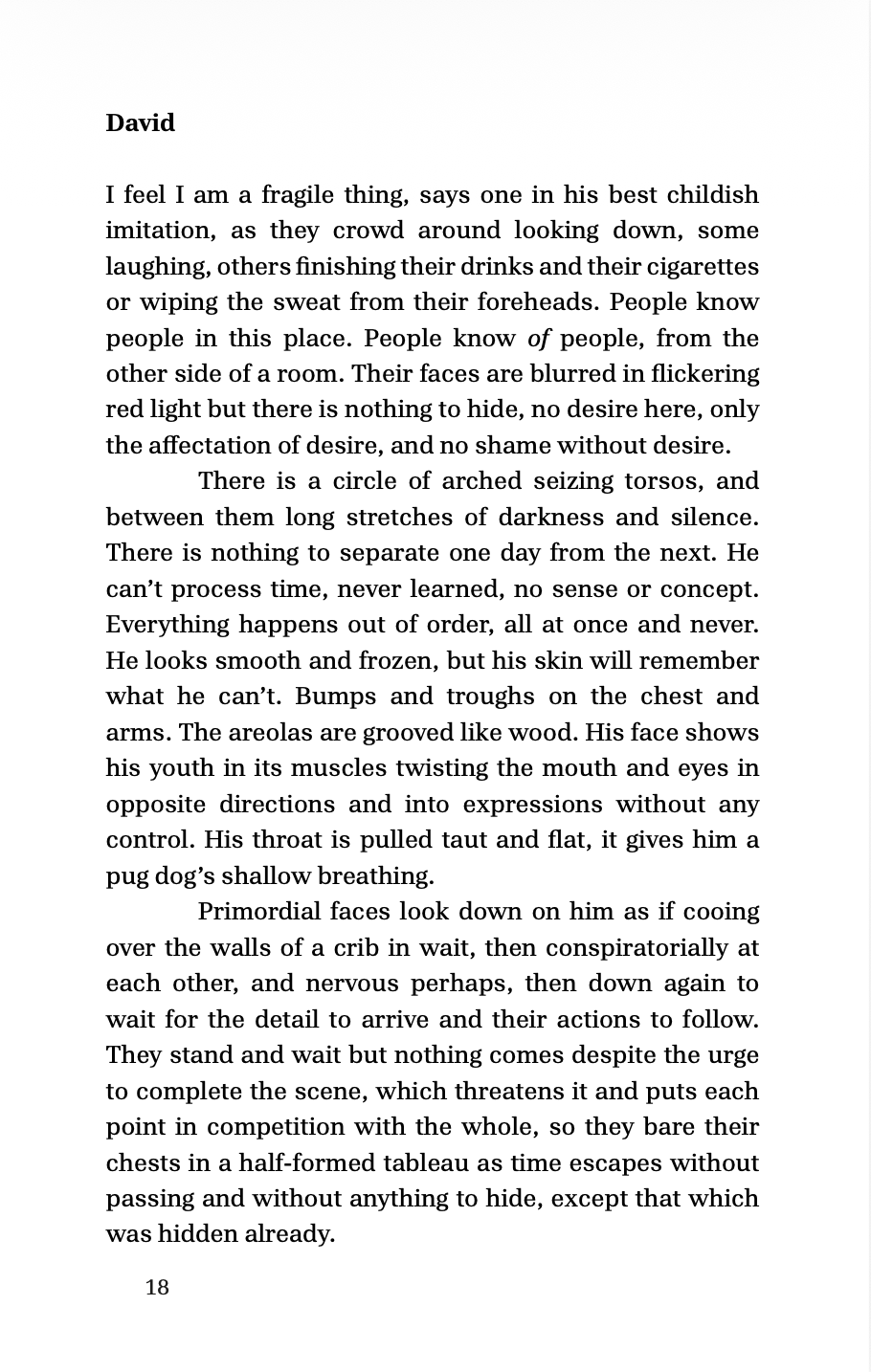
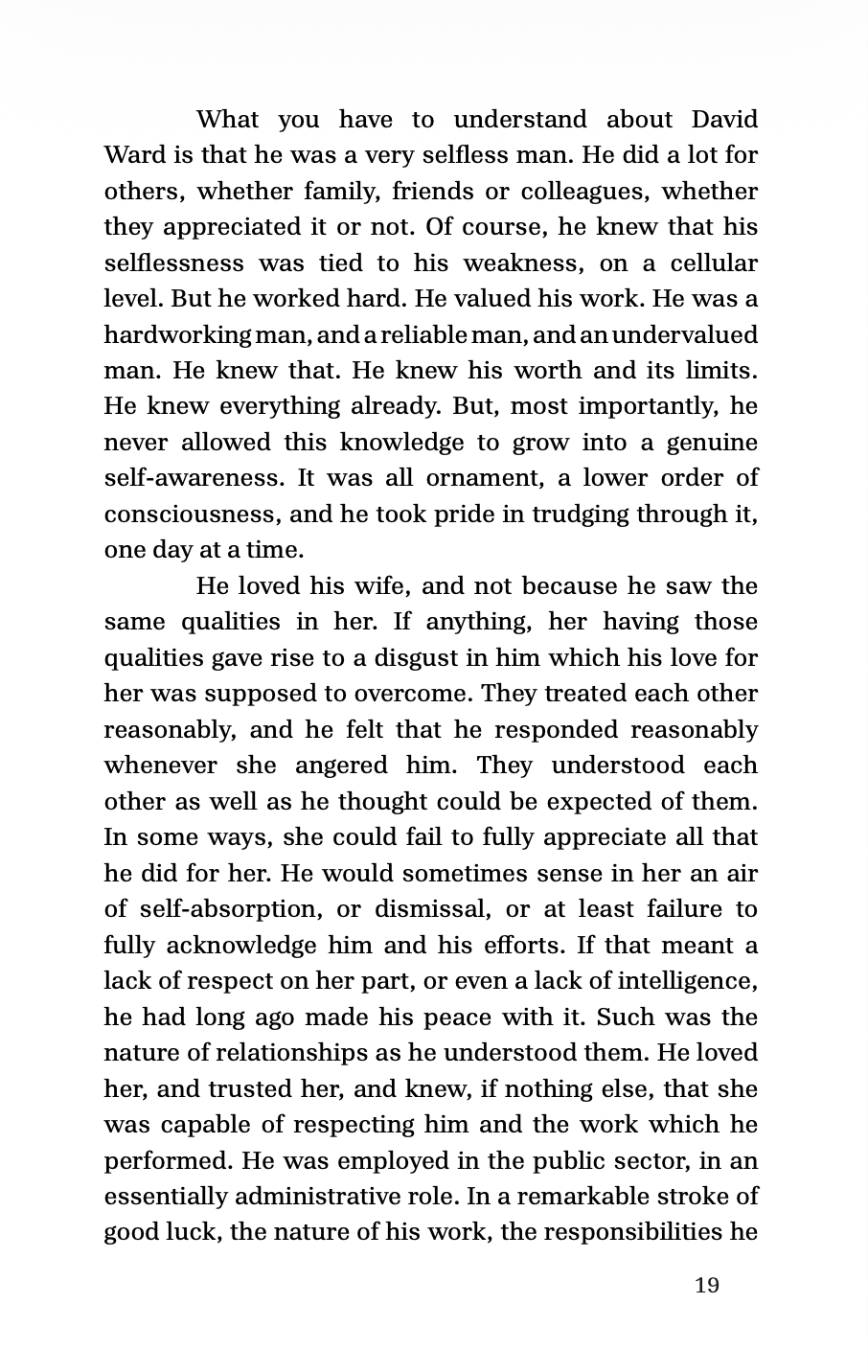
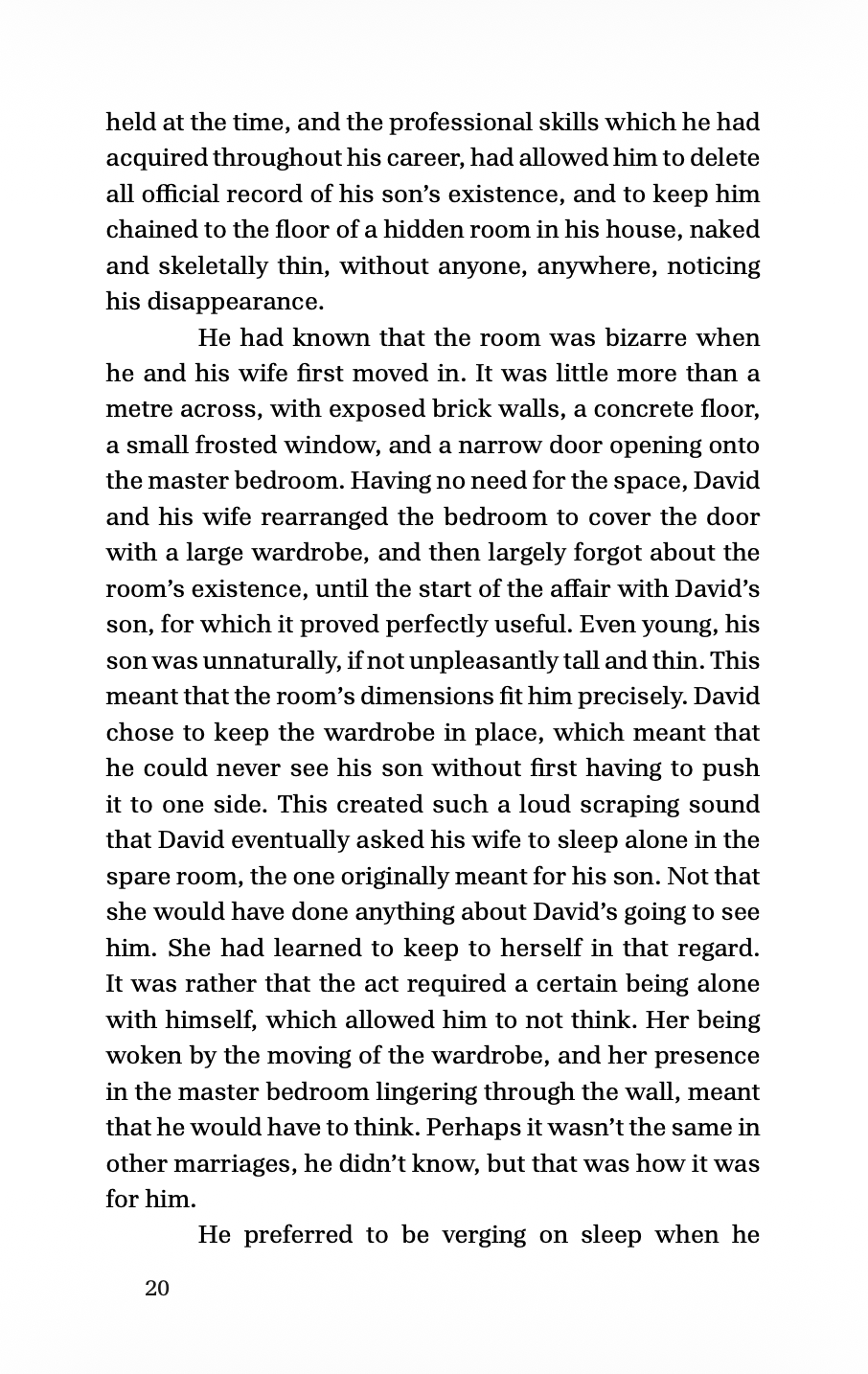
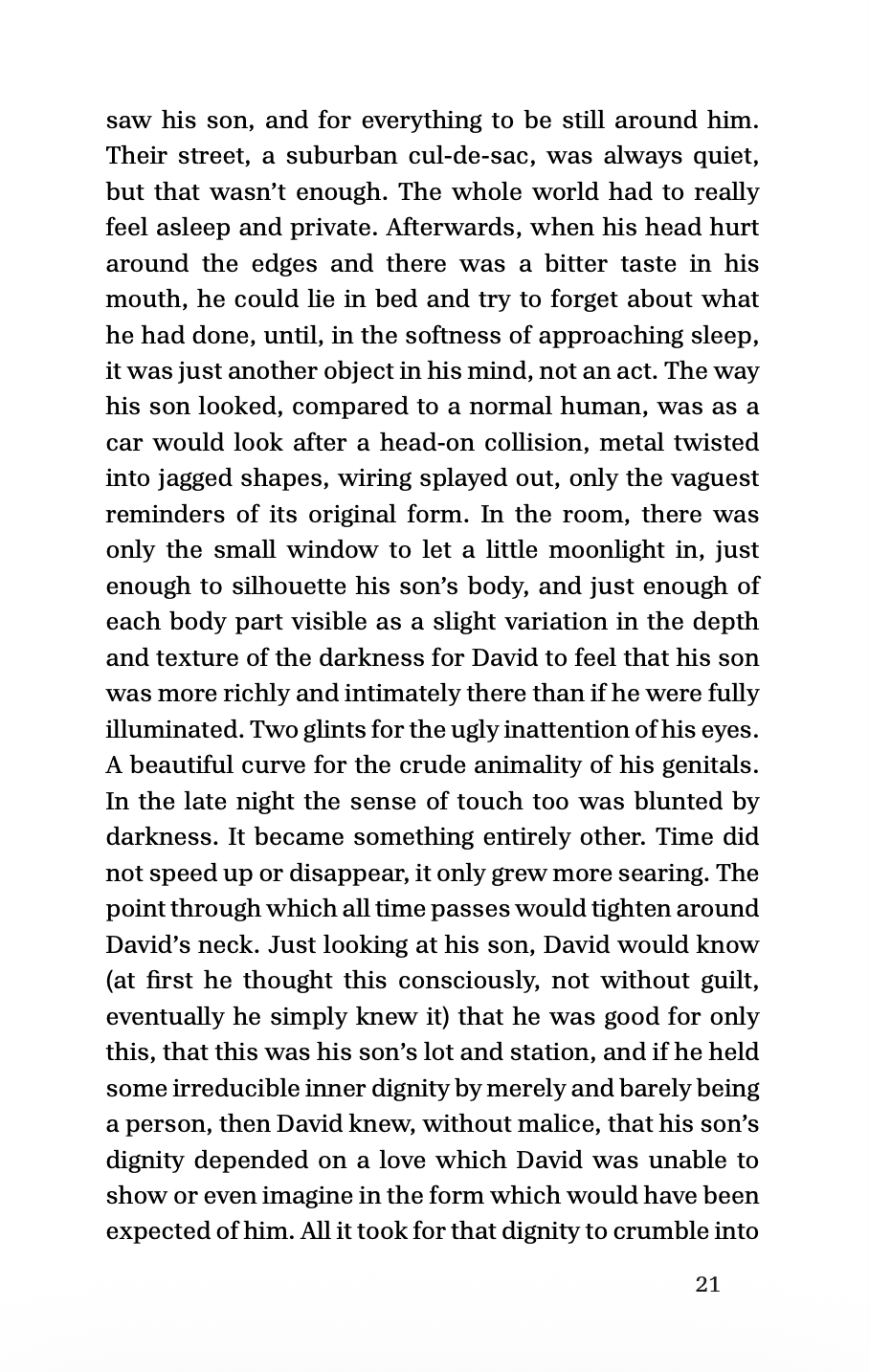
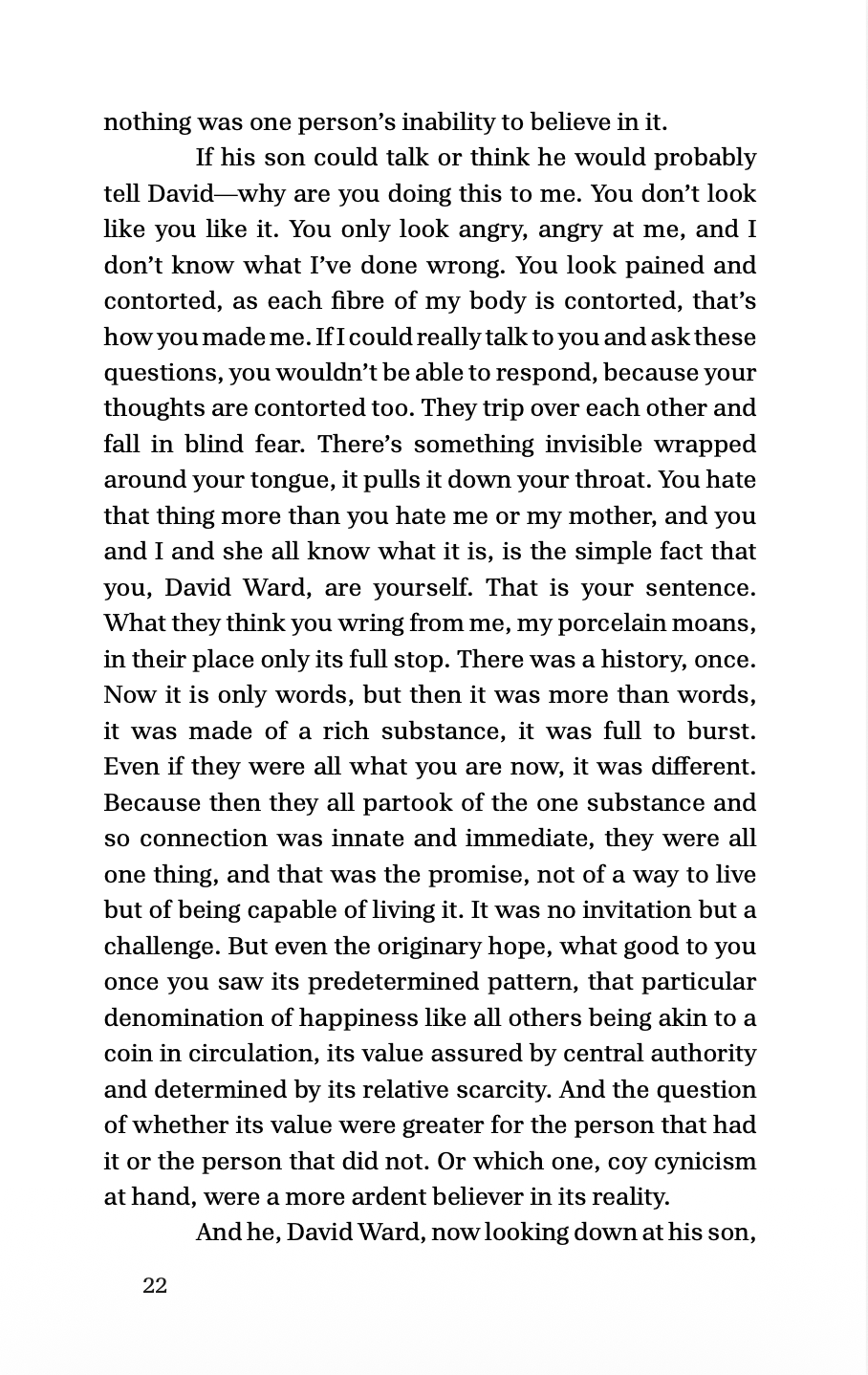
‘This debut fiction publication from Adem Berbic follows Nunu and David, two men living out different but related nightmares. Nunu desperately wanders the streets of London, trying to procure crack, heroin and cheap cider. David, meanwhile, is sunk in a solipsism so deep he turns the world around him into a repetitive domestic hell. But we are not merely watching it happen. Berbic’s propulsive prose implicates itself and the reader at every turn, evoking a deep and barely nameless dread.’ — Ssnake Press
Excerpt
Extra
BREATH – interactive audio-visual installation
*
p.s. Hey. ** Adem Berbic, Look up. I guess you probably already have. Well, it’s both, isn’t it? There are the things you’re deliberately doing and the things that are hiding in you and from you and see your language skills as a safe place/way to escape. I think you have to let what you have no linguistic or conceptual control over have an equal amount of power. But that’s just me. Wow, to me that sentence doesn’t sound remotely like ‘Closer’. Fear of imitation is almost always nothing but fear. If the London ‘RT’ screening happens, which is looking good at the moment, there’ll be a screening on Halloween night and a second matinee screening the next day on Day of the Dead. At an art space. Cement coming if it gets cemented. I’ve never been very interested in Chabrol, so I don’t know. ** Sarah Palmer, You saw the Lafayette show! Do you live in Paris or were you passing through? Thanks! Best day to you. ** DonW, Hey. Well, up in here in the big P, it’s finally really nice out today, and they say that’ll stick around, so fingers crossed and hydrate repletely until then. Lake, castle … whoop. ** _Black_Acrylic, It sure seems to be so on that name coopting. Dude, that’s such great news about your body’s hanging in there. That must be such a relief. Great, Ben. And, yes, forward motion time. ** i🌙, Happy birthday! Wow, that is a big birthday, but, you know what, nothing really changes other than various things of interest becoming legal. Very cool. It’s a good step, trust me. You can still give off jailbait vibes for a few years if you want to. Hm, don’t know Ines Armand. I’ll check around. Thanks for the writing peek. For some reason my browser is making them very blurry, but I’ll try to get around that or use Chrome or something. I look forward to it. Haven’t read your writing in so long. ** Steeqhen, Big hugs about the rough days. That Phoebe Bridgers album seems to be the album du jour. I’ll try it. I’ve never listened to her for whatever reason. ** Carsten, A good city has some nice reminders of nature scattered amidst its layout. I’m sure there are pitfalls in my approach. But it’s not like I hoard what I’m thinking. Or not usually, I guess. I still run what I’m thinking by friends and so on, but in a calm, inquisitive way. I’ve only ever been in fights when bullies used to beat me up in elementary school. Might be a reason why I’m not drawn to physical outbursts. Interesting about the sacred aspect. The sacred and I don’t have much of a relationship, so that interpretation is a learning experience. ** laura w., The artist says he found the bird dead, but can artists be trusted? Good question? More Phoebe Bridgers. Like I said, I’ve never heard her that I know of. I tend to resist things that are getting very buzzed about like her new album, but I should bite the bullet because I am curious. I quite liked the very early Alex G stuff when it was lo-fi and put out on a tiny label, but not since he cleaned up his sound at all. It has cooled down here today, so I feel like the week starts now. Oh, cozy music … probably a certain strain of artful 90s indie rock — Pavement, Sebadoh, Polvo, Codeine, Superchunk, and so on. Those bands tend to plaster a welcome smile on my face. ** Regina, How is film school being for you? Are you getting the skills and support and comrades you need and want? How will the second year be different from the first? That is very exciting about your upcoming short film! Is it all written and mentally figured out? I hate summer. With a passion, even. Cannot stand it. As for winter though, bring it on! ** Diesel Clementine, Hi! I don’t read French, so no, not too much on the French graphic novel front. I do like the work of Sylvain Bordesoules, who’s the artist who’s doing the upcoming ‘God Jr.’ graphic novel. I’ve never been to a sauna here. I did go to the famous Therme Vals in Switzerland, and it was incredible. But here, no. I think I like being clothed. I’m so sorry to not get in touch. All this stuff has suddenly come up in the last couple of days, and it’s eating my time and attention. If I miss seeing you, it’s 100% my loss. ** Jay, Oh, good! My favorite is ‘Godzilla vs. the Smog Monster’, but I couldn’t find any clips or anything from it, so I couldn’t include it sadly. ‘Shin Godzilla’, wow, I’ll look for that. That sounds incredible. It has cooled down here, so I’m inherently good, I think. Wonderful about the dream piano pieces. I of course don’t know those works by name, but maybe I’ll track them down and stream them and replace the pianists’ fingers with yours. You sound good! ** HaRpEr //, Hey. Like I told Adem, if the screenings happen they’ll be on Halloween night and the next afternoon. I’ll let you know. So far so good. Nolan doesn’t have remotely enough juice to do something fun like that. Not to mention his complete lack of a sense of humor. Past or present tense … yeah, that’s another important decision. Tricky, but that choice really does change the prose. Your thinking re: that is spot on. ** Uday, There are posters all over Paris right now with Simone Weil’s face on them, but I haven’t looked close enough to know what they’re about. I guess an exhibition of her stuff or something. Great news about your friend’s top surgery! A friend of mine had bottom surgery about eight months ago, and it went well, but she’s still healing and dealing consequentially. ** Steve, Charlotte Gainsbourg enunciates her tales in an utterly sincere way, so I can only assume they’re true. That DJ Laserdisc album title is a lot to live up to. ** Okay. Today I give you five books I read of late and loved, including two by people who grace this very blog. As usual, highly recommended that you give said books a shot. See you tomorrow.



 Now available in North America
Just sprung for Two Stories by Adem Berbic and I’m looking forward to it a great deal!
The new season kicks off at the weekend and Leeds United are looking pretty good. We spent £32 million on a big Bosnian defender who played in the World Cup. Spoke to a guy at random opposite the café where I sometimes go for lunch. He was wearing a T-shirt with the same design that’s on a teatowel in my kitchen. Turn out he saw this new player going into a Medical Centre opposite the café. Word is Tarik Muharemović is the 1st player in Premier League history with all 5 vowels in his surname and while I’m not sure how true it really is, this sure is a nice idea. Expect big things for the new season!
Fuck, okay. That perked up my cycle to work. Thank you, except, you know, more. Oscar! Vit! I’m not sure whether to say that I have no affiliation with the other YouTube video you linked, but I’m not begrudging its presence. It provides oblique context. The title means ‘Big bikes.’
No, that tracks a lot. This weekend is looking largely like it’ll be given over to the keyboard, so I’ll masticate on that.
Okay, reassuring, I think. I thought “his anything” was a catastrophically distracting you-ism. Although I also thought big chunks of the pamphlet were transparent Faulkner rip-offs, and no one else seems to as yet. @_Black_Acrylic, thank you! Enjoy, and perhaps you can be the judge of its Faulknerishness.
My coming is so cemented it’s already dried.
I’ve been finding my mind a lot lately on Blanchot’s désœuvrement idea – specifically, the ‘idle/unemployed/without activity’ side, not the ‘unworking/fragmenting the written work’ side. I mean, I already said the shadow of Kojève fascinates me, and a bunch of the shadow-dwellers were saying roughly similar things – Bataille’s accursed share, Beckett’s “nothing to be done,” etc. It’s taken on a weirdly literal dimension for me in that I’m coming to very seriously appreciate the blog as an invitation to a daily writing practice, and I do my best to think through my responses – but that also means that when I come into the office the first thing I do is fire up the blog and a blank Word document, and the actual salaried work waits until that’s done. Or, I feel like writing is currently part of a zone that exists sort of perpendicular to ‘normal stuff,’ and it can start to spread its confines and even overwhelm the ‘normal stuff.’ French has a very conveying idiom there, ‘faire tache d’huile,’ literally ‘to do [act like] a spot of oil,’ to spread out slowly but unceasingly.
Hey,
Your opinion on Phoebe’s music would be shaped on your opinion on Elliott Smith’s music. She’s unabashedly a lover of his work and he is the strongest influence on her work. She also works with (and had a very strange relationship with) Conor Oberst of Bright Eyes, so that’s also another influence. I got into her with her first album, and then her big breakthrough with Punisher in 2020 happened; that album’s title track is about Smith and the parasocial nature of knowing so much and feeling connected to someone despite never knowing them — the name “punisher” being for the type of fan that would end up “punishing” the artist by being so obsessive. She’s ended up having a lot of those type of fans (her fanbase are crazy) and she spoke about fans of her were horrible to her at her late dad’s wake, trying to tell her how to feel about him based on a few lyrics from the Punisher song “Kyoto”. There’s a part of the new song “Still Standing” about her dad’s violence that really gets to me:
“I found her bleeding over the sink
But when you said sorry, you were looking at me
I can’t remember what I said
But I didn’t mean it
I wasn’t too young to understand
I just didn’t think it was so bad
And it wasn’t in a way”
Something about the ambivalence in how visceral the image of what she witnessed juxtaposed with her response of “I just didn’t think it was so bad / And it wasn’t in a way” is incredible to me. Very raw and earnest, which most popular artists would try to sanitize or not say.
Love these recs! Some of Mansours poetry has been translated by one of my country’s “greats”, Hugo Claus – the poet ended with something like “semen shooting out of my nose” through intense longing to be with someone. Absolutely stunning work. So good to discover that her short stories are coming out again! I’ve ordered a delicious amount for the bookstore.
Hope all is well with you in Paris and that you survived the canicule(s).
Meanwhile all is well in Ghent – thinking fondly of your visit here. I had a customer last week who bought “Closer” and New Juche’s “Mountainhead” and I was like “oh you were probably at the event with Dennis right?” and he just shot me this look of complete horror, realising that he’d missed it and hadn’t even heard anything about it beforehand.
I halted writing the prose thing for the time being, and returned to poetry, which after a five year hiatus is pouring out of me again, no idea why or how. So I’ve set my sights on finishing this third book quickly, aiming for publication next Fall.
Warmly, Arno
Hey Dennis,
Thank you so much for showcasing Adem’s book! I know it’s going to find some ideal readers on here.
I think I might have found an apartment, but it’s not close enough to being over the line for me to relax yet. Cross everything crossable for me.
Some kind of obsessive tunnel vision is bubbling up within me re: starting and seeing a book through to completion. I’m deep in note-taking, planning, thrashing it out. The question “what is this book about?” is kind of haunting me at the moment. I’m flipping back and forth on how clear of an answer I should be able to formulate, even if it’s just to myself. Vague feelings, opaqueness etc. are great and necessary, but cohesiveness, through-line, and “theme” (is there a better concept?) are so slippery to me. I probably need to find a way to work with the slipperiness, or against it productively?
I’m so nervous about starting to actually write it, because I have this feeling that no matter what happens with this one I absolutely have to see it through. It feels like it will be catastrophic for my sense of self if I don’t. So I guess I will. Fuck. I do think anxiety and excitement are conjoined twins though.
Wasn’t that rain amazing yesterday evening? Outside felt and smelled so delicious after it.
bye for now
xo J
Hey! Thanks so much! I live in France, about an hour and a half by train from Paris, which means I can go there quite often to see exhibitions, plays (including “Extra Life” at the Maison de la Culture in Bobigny :)), etc. I make the most of the capital about once a month.
A few months ago, I visited the exhibitions of Brion Gysin (I imagine you did too?), Leonora Carrington, Lee Miller, and Annette Messager. I really love the atmospheres that contemporary artists manage to create within the collections of the Musée de la Chasse et de la Nature (I saw that you recommended it to someone in an earlier post).
I don’t know if this is something that might interest you, but Pierre Huyghe’s work at the Fondation Beyeler in Basel is really impressive — definitely worth visiting alone, first thing in the morning.
Have you seen any interesting exhibitions lately, in Paris or elsewhere?
Have a great day!
A quick thank you for the recommendations here. All look fascinating.
Congratulations on the new book, Adem. I was just going to ask about the video.
Joyce Mansour seems to be totally up my alley. 0 ratings on goodreads! Will look for a copy ASAP.
I’m in Philadelphia visiting my sister. The Film Society is screening both the new Gregg Araki and Camp Miasma this week, impressive though I’ve seen both. There’s also a “bookstore crawl” this weekend that I might check out.
Bill
Popping in quickly in the middle of my 13 hour work day… back from California in the real world etc… seems that the long comments I was typing out and trying to post on Ishiro Honda day werent making it to the blog for some reason? Hmm…. something on my end maybe? Better keep it short in case the comments wont go thru again… Anyway, book rec day!! Been especially eyeing the “two stories”, and I think I’ll have a touch of extra money to order a copy… The description from the press is certainly enticing to my taste. Will peep the rest too as I get a sec today… k, back to it, hope its been easier to chill the last couple days!
@Adem Berbic: Congratulations on the publication & this very cool spotlight!
@DC: You’re right, there are plenty of big cities that do a good job of integrating nature into their design. Parks are a bit too civilized & manicured for me, but LA & New Orleans are good examples of the wild & the man-made coexisting nicely. But honestly man, I don’t know. Feeling a bit stumped sometimes, when it comes to finding a place to hang my hat. In many ways I’m always chasing the ideal, which was LA in my 20s. But LA is no longer the same city, nor is my former tribe there intact, which was a large part of what made it so special. But yeah, I’ll figure it out. I can’t complain, since I’m not tied to a location & can move pretty freely.
Treated myself to some Claire Denis two nights in a row. First “Bastards”, probably her darkest work, but still oddly seductive & hypnotic in the way that is so unmistakably hers. Then “Stars at Noon”, which despite the civil war background & its constant atmosphere of lurking threat feels almost light & breezy to me. Critics always call her work oblique & elliptical, which I don’t get at all. To me Claire has a very acute bullshit-radar, which is why she always trims the fat like exposition & explanation. I find her work to have a wonderful clarity. But hey, I’m biased. There’s just something about the way she sees & experiences the world that I find very familiar, so to me it’s like cinematic comfort food.
!!!!!!!!!!!!!!!!!!!!!!!!!!!!!!!!!!!!!!!!!!!!!!!!!!!!!!!!!!!!!!!!!!!!!!!!!!!!!!!!!!!!!!!
thank you dc!!! & in great company too!!
v proud my weird tiny book has resonated with people. i’ve pretty much had two types of reaction to it, 1) that the book is a structurally, stylistically precise puzzle box, and 2) that “that was exactly what it was like”. both are very flattering. it is a little odd to me, though still wonderful, that people have found it so precise, because i felt like i’d written it as a real scrawl — the original concept was the book as a loose folio of scraps and post-it notes. i also had a couple of rejections recently that suggested my writing’s controlled-ness isn’t necessarily a plus. my aim now, in part anyway, is to work out a way to get looser. or to communicate the looseness i think i’m already demonstrating. if that make sense?
no report on george v. higgins yet because a proof of jane schoenbrun’s new novel came into the bookshop. have you encountered it yet? i’m just over two hundred pages in. i really, really want to like it. it hits a lot of my own interests — internet cults and mythology, media archaeology (kind of) — and i thought We’re All Going to the World’s Fair was brilliant (i haven’t seen their other films yet)…. but it’s not well written. it reads like a young adult novel. (which, sadly, characterises a lot of successful fiction now, and perhaps tracks with the vague rumblings i’ve heard about their more commercial aspirations.) and every couple of paragraphs it hits you with the laziest metaphor possible. i feel v mean saying all this. i’m hoping it gets better!!
long few days of work coming up now, so it goes, mostly facing the Death Note musical crowds. which, as you say, wtf. i had vague hopes that the composer might have been super into American Idiot, Black Parade, and Monster energy drinks, and thus have made something extraordinarily emo out of it. but i found a bootleg recording on youtube and nope, just a musical. a bad one. i didn’t hear about the Trainspotting musical?? what a terrible vibe. i did see a theatre version of Trainspotting in edinburgh once, which was ok, or maybe i’m just remembering the ok parts.
such wonderful recommendations today!! especially interested in joyce mansour and of course adem.
the closest i’ve come to liking alex g is his 2012 album trick, especially the song, um, animals? i think. i think he had a lot of interesting underground potential that got dulled by success, which, well. happens. do you have strong opinions about built to spill? they’re a pretty good lo-fi-ish 90s band. i would be curious to hear your thoughts on the new bridgers album. right now i’ve settled into the general “this is pleasant to listen to while i work” sense.
this entire summer has been pretty evil and the evil is continuing. right now i’m struggling with trying to get people involved while also being totally unable to do so because things are so fucking toxic right now and everyone is miserable and wants to stay miserable. so. i’m contemplating starting a new animal crossing: city folk play through which is my favorite game ever just to make myself feel better lmao. i hope your week picks up even though it’s thursday!
Film school is going pretty well, I mean the course is a bit more technical focused than I had hoped but I’m mostly here to network and make as much as I can so I’m happy with it. We have more writing classes this year which I think I will enjoy.
For the short film, I think I have it pretty planned out as far as I can. A few shot ideas for specific moments but next step is getting a DOP and a few other roles together. It’s my friends story but they let me rewrite it because I’m directing, I kind of changed a lot of it but they seem happy. Trying to make it my first sort of “straight” directing, like not as experimental or poetic as my other shorts have been. My other stuff was a bunch of supercuts and Adam Curtis inspo, I want to move on, going for something a bit more Arthur J Bressan?? Idk we’ll see where it all lands.
No no, I wouldn’t worry — was always just on the off chance xx
Would type a longer response but am tired — leaving tomorrow 6pm
Bisous !
Oh cool, on Halloween! That sounds wonderful if it works out. Seriously, having not seen this film yet is driving me mad, so I’m hoping for the best!
Ah, I want to read all of these and will as soon as I can. Congrats of course to Adem and politekid. I don’t know how I didn’t know of Joyce Mansour. Torregian, too. An obscure surrealist who later found a home in the New York School sounds very my thing. Wave books are the best.
I’ll second politekid’s comments about the Schoenbrun novel as someone who managed to read a proof copy. I was disappointed. The interesting things they’ve done within film don’t extend to writing. It’s for some reason very common for people to put those lower expectations on what writing can do. It’s weird, because this book is basically a thriller, but plot is not a big thing in at least their first two films which I’ve seen. Maybe it was just an exercise in something they found entertaining, and for that reason I’m not mad at it. I think I’m realizing that it’s kind of pulpy on purpose. Still desperate to see ‘Camp Miasma’ anyhow.
DJ Laserdisc’s music doesn’t match the title, alas.
This evening, two mice fell into my kitchen sink and kept hopping to get back out. Perhaps it’s time to get a cat.
Jane Schoenbrun says they want to direct a NIGHTMARE ON ELM STREET reboot.
Reply to him directly doesn’t seem to be going through but congrats Adam on the feature! Good to have these recs as I move to a new library. Or maybe bad because then I’m issuing a bunch of library books and I don’t have storage in my room right now. Got all my CDs today from a friend who was storing them for me and they’re already taking up the windowsill. What’s your weekend look like?