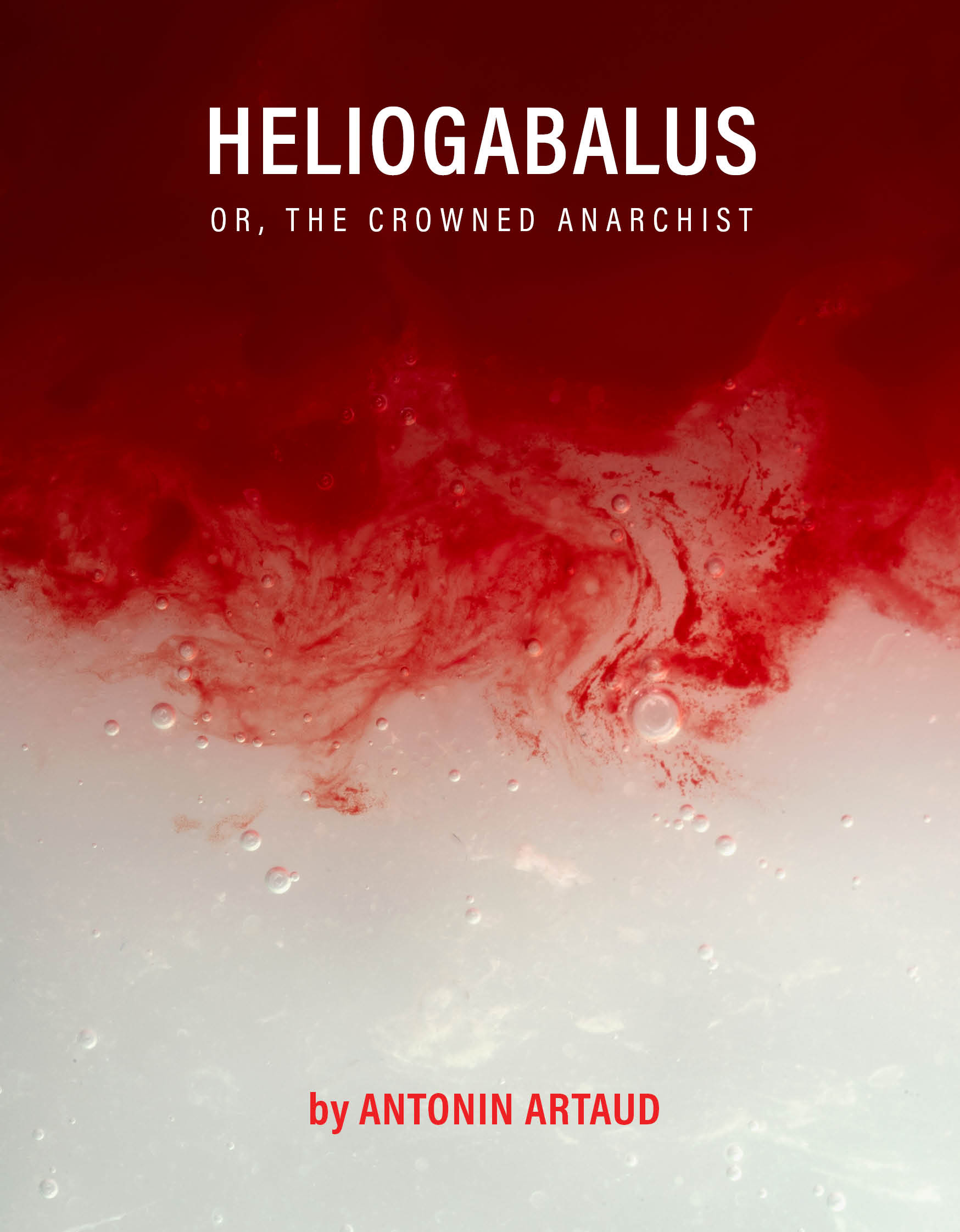
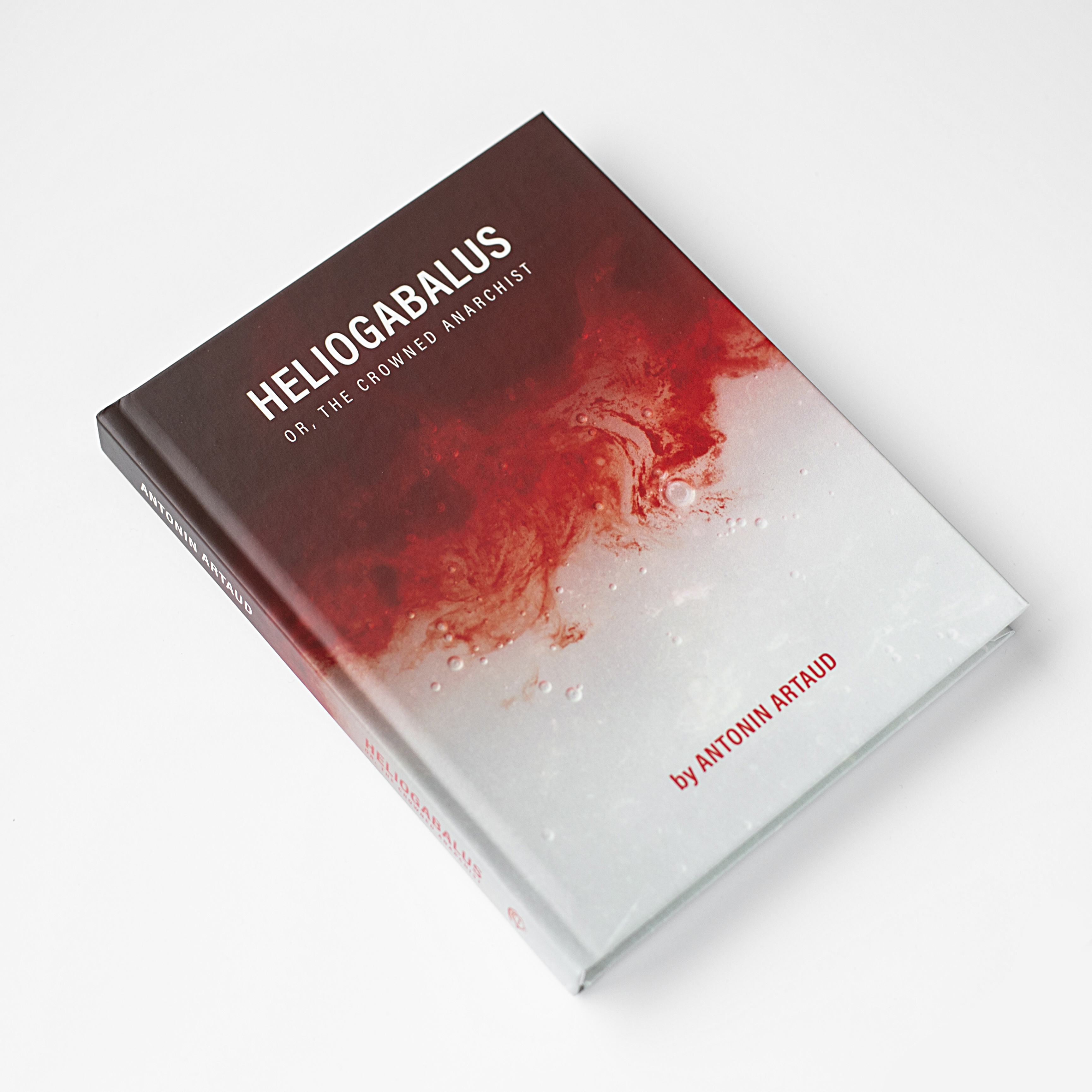
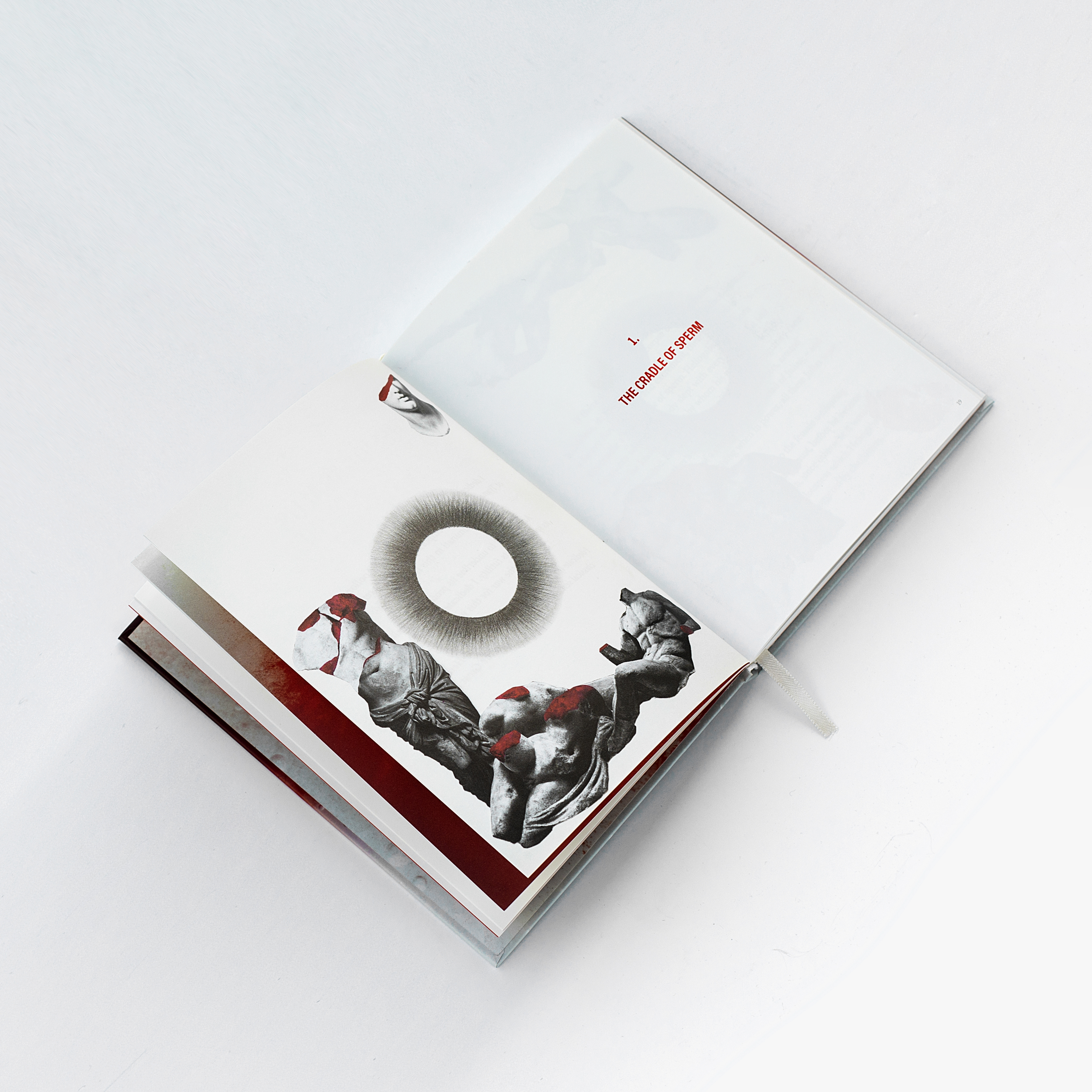
Antonin Artaud’s Heliogabalus is simultaneously his most extreme, revolutionary and deranged book, and likely now also to prove his most influential in the contemporary moment with the publication by Infinity Land Press of this first complete English-language translation, by Alexis Lykiard.
Dating from the period when Artaud was preparing his legendary ‘Theatre of Cruelty’ experiments, Heliogabalus anatomises and recreates the sperm and blood-constellated life of the infamous Roman emperor who was assassinated by his own guards at the age of 18 after four years spent relentlessly deriding and disintegrating the empire’s power. Artaud asserts that ‘The entire life of Heliogabalus is anarchy in action… fire, gesture, blood, cry… Fanatical, a real king, a rebel, a crazed individualist.’
Artaud explicitly wrote his account of Heliogabalus’s acts as an embodiment of himself and of his own insurgency in art. Three years after the book’s publication, he was incarcerated in a lunatic asylum, emerging only shortly before his death in 1948.
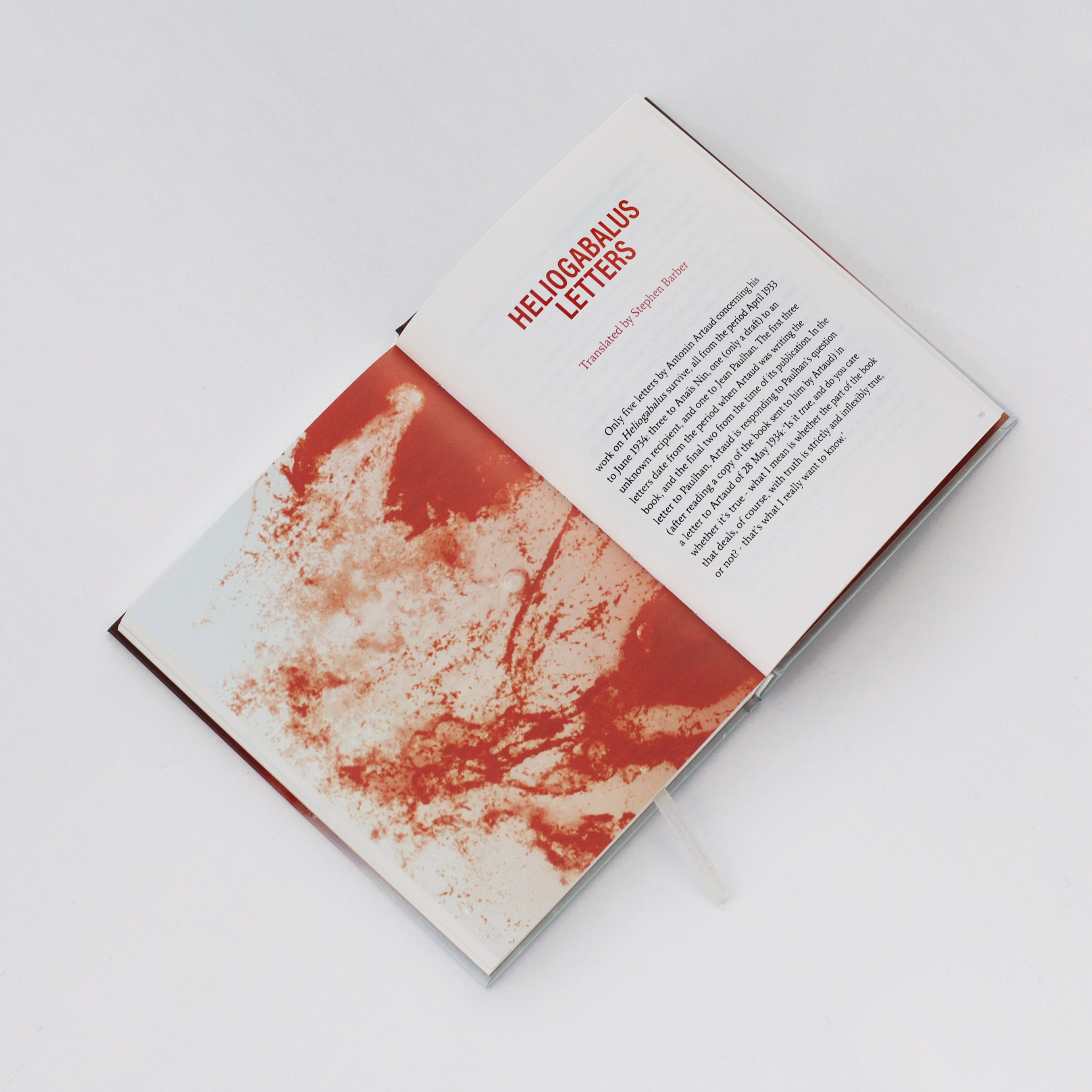
This edition includes an introduction by Stephen Barber and his translations of all of the surviving letters written by Artaud about his work on Heliogabalus.
Translated by Alexis Lykiard
With an introduction by Stephen Barber
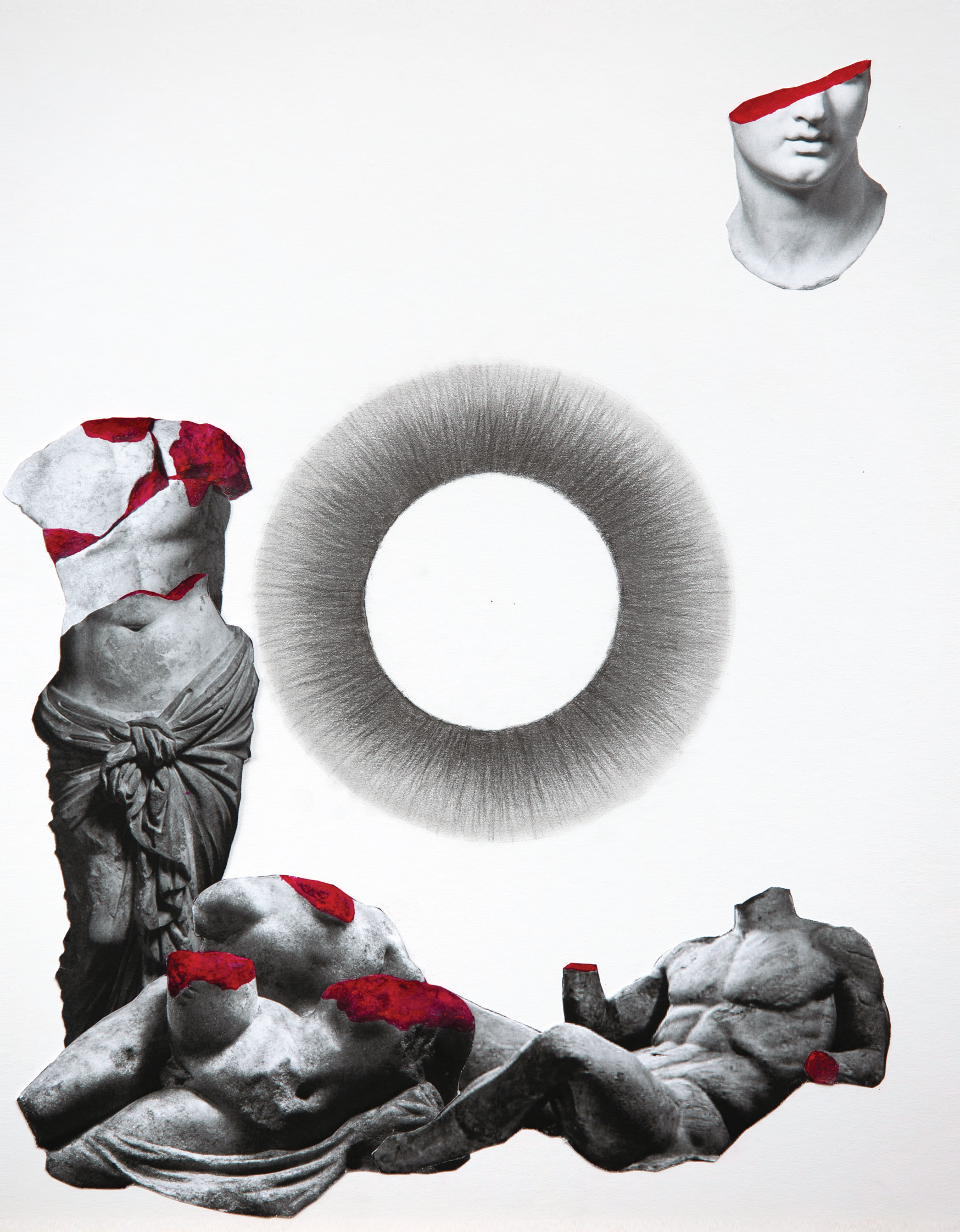
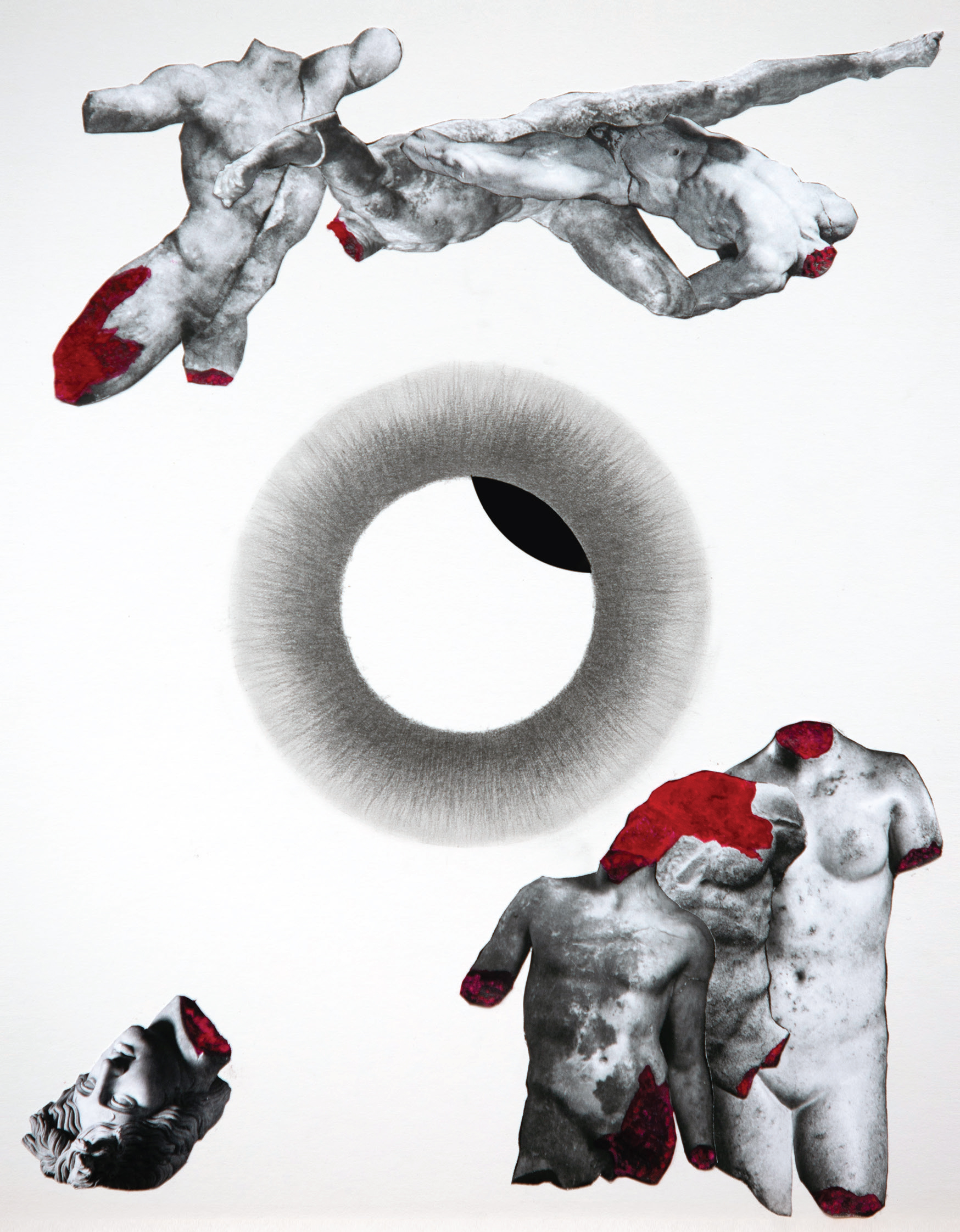
Artworks by Martin Bladh
Photographs by Karolina Urbaniak
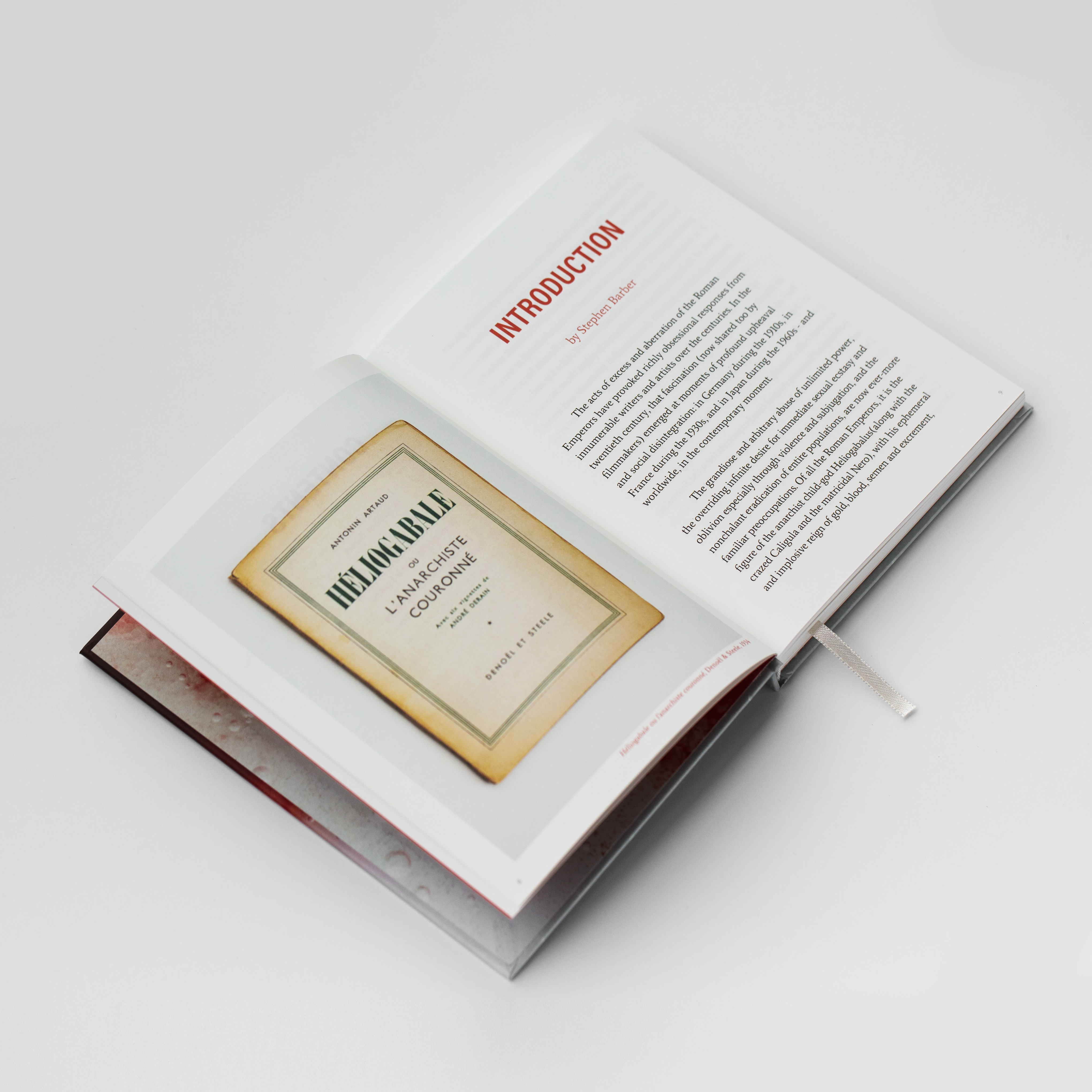
The grandiose and arbitrary abuse of unlimited power, the overriding infinite desire for immediate sexual ecstasy and oblivion especially through violence and subjugation, and the nonchalant eradication of entire populations, are now ever-more familiar preoccupations. Of all the Roman Emperors, it is the figure of the anarchist child-god Heliogabalus (along with the crazed Caligula and the matricidal Nero), with his ephemeral and implosive reign of gold, blood, semen and excrement, which most intimately infiltrates contemporary manias, panics and desires. The four-year reign of Heliogabalus, who was slaughtered by his own guards at the age of eighteen, was characterised by performances and spectacles of incest, sodomy, butchery, debauchery, and an anarchic ridicule for all powers of government. Of all the many responses to the Roman Emperors, it is Antonin Artaud’s extraordinary account of the life and work of Heliogabalus which most exactly aligns those forces of uncontrollable uproar with the seisms that now seize and impel contemporary voided empires, corporealities, audiences and art.
EXTRACTS
If there was around the corpse of Heliogabalus, tombless, its throat cut by his police force in his palace latrines, a heavy flow of blood and excrement, there was around his cradle a heavy flow of sperm. Heliogabalus was born in an era when everybody slept with everybody; and it will never be known when or by whom his mother was actually impregnated. For a Syrian prince like him, consanguinity came from the mother’s side; – and as regards mothers, around this newborn son of a charioteer was a pleiad of Julias; – and whether or not practising when in power, all these Julias were highclass whores.
The father to them all, to the female wellspring of this river of rape and infamy, must, before he became priest, have been a coachman, since otherwise it would be incomprehensible – the zealousness which Heliogabalus, once enthroned, put into being buggered by charioteers.
A mass of gold flung into a pit fed by the Cyclopeans, at the very instant the Grand High Priest frantically ravages a vulture’s throat and drinks its blood, intimates a theory about the alchemical transmutation of feelings into forms and forms to feeling, according to the ancient Egyptians’ sacred ritual.
But to this notion of bloodletting and the material transmutation of forms there corresponds an idea of purification. It has to do with isolating the very essence of any sensual ecstasy experienced momentarily and individually by the priest, so that this explosion and this rapid outburst of frenzy may return, unencumbered by matter, to the first principle from which it’s been born.
Then there are the innumerable rooms consecrated to a single action or even to one simple gesture, with which the underbelly of the temple and its rumbling bowels seem to be crammed. The rite of ablution, the rite of abandon, diversion, renunciation; the rite, in every sense, of absolute nakedness; the rite of the biting power and unforeseen bursting forth of the sun, parallelling the sight of a wild boar; the rite of the savagery of the Alpine wolf and that of the stubbornness of the ram; the rite of the warm zephyrs and that of the great solar conflagration at the time when the first male scored his victory over the serpent; all these rituals, in ten thousand chambers, are observed daily or monthly, biennially, – they link a robe to a gesture, a stride to a spurt of blood.
With hindsight one can pour scorn upon the blood-drenched rites of the Tauroboli, to which – in a sort of mystical line whose course has never been superseded, running from the High Plateaux of Iran to the exclusive precincts of Rome – the adepts of the Mithraic cult devoted themselves; one can hold one’s nose in horror at the mingled emanation of blood, sperm, sweat and menses, combined with that intimate stench of putrefying flesh and unclean sex rising from the human sacrifices; one can exclaim in disgust at the sexual pruritus of the women stimulated to frenzy by the sight of a member freshly torn off; one can deplore the craziness of people entranced, who, from the rooftops of the houses into which the Galli flung their members, tossed them down onto the shoulders of women’s garments, the while invoking their gods; which is not to say that all these rites didn’t contain a certain amount of violent spirituality that went beyond their sanguinary excesses.
If in the religion of Christ heaven is one myth, in the religion of Elagabalus at Emesa heaven is a reality, but a reality that acts like another, and reacts dangerously upon that other. All these rituals unify heaven – heaven or what is separated from heaven, man or woman, under the sacrificial knife.
That is because there are in heaven gods, forces in other words, which are seeking only to swoop down.
The force that builds up tidal waves, that makes the sea lap at the moon, that has lava rising from the depths of volcanoes; the force that shakes buildings and creates deserts; the force red and unpredictable that sends thoughts like so many crimes seething through our heads, and crimes innumerable, like lice; the force that supports and aborts life – these are concrete manifestations of an energy whose heavier aspect is the Sun.
In the sun, there’s war, Mars – the sun is a warrior god; and the ritual of the Gallus is a rite of war: man and woman melted in blood, at the cost of bloodshed.
In the abstract war of Heliogabalus, in his battle of principles, in his war of semblances, there is human blood as in real war, not abstract blood, unreal blood of the imaginary, but real blood that flowed and can flow; and if Heliogabalus shed no blood in defence of territory, he paid with his own for his poetry and ideas.
The entire life of Heliogabalus is anarchy in action, since Elagabalus the unitary god who brings together again man and woman, the hostile poles, the ONE and the TWO, is the end of contradictions, the elimination of war and anarchy, but by way of war, and that’s also – on this earth of contradiction and disorder – the putting into action of anarchy. And anarchy at the point to which Heliogabalus pushes it, is poetry realised.
There is in all poetry an essential contradiction. Poetry is pulverised multiplicity and it produces flames. And poetry, which restores order, first revives disorder, disorder with semblances ablaze; it causes appearances to clash in restoring them to one singular point: fire, gesture, blood, cry.
To restore poetry and order to a world whose very existence is a threat to order, is to bring back war and the permanence of war; it is to bring in a state of enforced cruelty, to arouse a nameless anarchy, anarchy of things and appearances which awaken before sinking anew and melting into unity. But he who arouses this dangerous anarchy is always its first victim. And Heliogabalus is a diligent anarchist who begins by devouring himself, and ends by devouring his excrement.
Whenever Heliogabalus dresses as a prostitute and sells himself for forty pence at the doors of Christian churches, at the temples of Roman gods, he’s not only seeking the satisfaction of a vice, but humiliating the Roman monarch.
When he appoints a dancer to head his praetorian guard, he’s thereby establishing a sort of incontestable yet dangerous anarchy. He exposes to ridicule the cowardice of the monarchs, his predecessors, the Antonines and the Marcus Aureliuses, and finds that a dancer’s perfectly fit to command a bunch of policemen. He calls weakness strength and theatre, reality. He’s overturning the received order, ideas, the everyday notions of things. His is a meticulous and dangerous anarchy, since he reveals himself to all eyes. To tell the truth he’s risking his own skin. And that’s a courageous anarchist.
He continues his enterprise of the debasement of standards, of monstrous moral disorganisation, in choosing his ministers by the enormousness of their members.
“He placed at the head of his night watch”, says Lampridius, “the charioteer Gordius, and made chief steward a certain Claudius, who was censor of morals; all other preferments were dependent upon the outstanding size of member of those recommended. He appointed as collectors of the five per cent inheritance tax a muleteer, an athlete, a cook and a locksmith.”
It didn’t prevent his taking personal advantage of this disorder, this shameless slackening of morals, nor of making a habit of obscenity; and into broad daylight, like a maniac and a man obsessed, he brought what is normally kept hidden.
There’s a strange rhythm to the cruelty of Heliogabalus; this initiate does everything with art and everything is doubled. I mean that he does everything on two levels. Each of his gestures is double-edged.
Order, Disorder,
Unity, Anarchy,
Poetry, Dissonance,
Rhythm, Discordance,
Grandeur, Childishness,
Generosity, Cruelty.
From the top of the newly erected towers of his temple to the Pythian god, he scatters corn and male members.
He feeds a castrated people.
There are certainly no theorbos, no tubas, no orchestras of citharas accompanying the castrations he decrees, but which he decrees each time like so many personal castrations, and as if it were Elagabalus Himself being castrated. Sacks of male sexes are cast from the tops of the towers with the cruellest abundance on the day of the festival of the Pythian god.
I couldn’t swear to it, but an orchestra of citharas or squeaky-stringed, hard-bellied nebels might have been concealed somewhere in the darkest cellars of the spiral towers, so as to drown the shrieks of the parasites being castrated; but these shrieks of martyred men almost simultaneously match the acclamations of a rejoicing populace to whom Heliogabalus distributes the equivalent of several fields’ worth of corn.
Good, evil, blood, sperm, rose-wines, embalming oils, the costliest perfumes, all create, alongside the generosity of Heliogabalus, innumerable irrigations.
Letter to Jean Paulhan 1 June 1934
Dear friend,
With boredom, I notice that you understand me less and less, and from my side of things, I no longer understand your reactions. Supreme Truth: I’m looking only for that – but when someone starts to talk to me about what is true, I always ask myself what kind of ‘true’ they’re talking about, and I ask myself to what extent the idea that you can have some kind of delimited, objective truth hides another truth which obstinately eludes all capture, all limits, all localisation, and finally eludes what is called the Real.
So that’s what I wanted to say to you – and while your letter irritated me and made me say to myself: whether it’s true or not shouldn’t matter to him as long as it’s beautiful and as long as you can find in this book the idea of the true and of the Superior Real, I’ll tell you anyway that the dates are true, all of the historical events are true in their origins and then interpreted, with many invented details; I intended that the Esoteric Truths are true in their spirit, while they are often intentionally FALSIFIED in their form – form is really nothing; the imagining is excessive and exaggerated, with desperate affirmations; but then, an atmosphere of panicstrickenness establishes itself in the book, the rational loses its footing, while the mind advances forward, armed to the teeth. In the end, a kind of desperate sincerity underpins the book even in my apparent deformation of the truth, which happens rarely in really being a deformation. I’m not going to say anything more to you – but I’m simply astonished that when you are confronted with a book written with my heart and the skin of my entrails, you dare – you – to ask me if it’s true. I believe that you can either feel it, or not.
I’m going to have to tell you that for the past three weeks, I’ve been overwhelmed by demonstrations of authentic enthusiasm. Whether he’s ‘true’ or not, the figure of Heliogabalus is alive, right through to his depths, I believe, whether those depths are those of the historical figure Heliogabalus or those of a figure who is myself. You’ve liked books of mine which are less alive, less accomplished, less complete, and I don’t understand why this particular book – in which I think I’ve been able to incorporate myself, even with my deficiencies and my excesses, as well as with the qualities that I may possess – provokes your resistance. By contrast, I liked very much this letter from Daumal – forwarded on by Vera – whom many passages in the book touched deeply.
Yesterday evening I took charge of the lighting design for the dances of Helba Huara at the Salle Pleyel. The dances were a triumph in that immense auditorium which was almost full and my lighting design contributed to that success, despite the poor means at my disposal.
Your friend,
ANTONIN ARTAUD
***
About the Author
Antonin Artaud
Antonin Artaud’s work has a world-renowned status for experimentation across performance, film, sound, poetry and visual art. In the 1920s, he was a member of the Surrealist movement until his expulsion, and formulated theoretical plans across the first half of the 1930s for his ‘Theatre of Cruelty’ and attempted to carry them through. He made a living as a film actor from 1924 to 1935 and made many attempts to direct his own film projects. In 1936, he travelled to Mexico with a plan to take peyote in the Tarahumara lands. In 1937, preoccupied with the imminent apocalypse, he travelled to Ireland but was deported, beginning a nine-year asylum incarceration during which he continued to write and also made many drawings. After his release in 1946, he lived in the grounds of a sanatorium in Ivry-sur-Seine, close to Paris, and worked intensively on drawings, writings and sound-recordings. He died on 4 March 1948. His drawings have been exhibited on several occasions, notably at the Museum of Modern Art in Vienna in 2002 and at the Bibliothèque Nationale in Paris
in 2006.
Biographies
Alexis Lykiard
Alexis Lykiard (born 1940) is a British writer of Greek heritage, who began his prolific career as novelist and poet in the 1960s. His poems about jazz have received particular acclaim, including from Maya Angelou, Hugo Williams, Roy Fisher, Kevin Bailey and others. He is also known as translator of Isidore Ducasse, Comte de Lautréamont, Alfred Jarry, Antonin Artaud and many notable French literary figures. In addition, Lykiard has written two highly praised intimate memoirs of Jean Rhys: Jean Rhys Revisited (2000) and Jean Rhys: Afterwords (2006). http://www.alexislykiard.com
Stephen Barber
Stephen Barber’s books have been acclaimed as ‘brilliant, profound and provocative’ by The Times newspaper in the UK, and he has been called ‘a writer of real distinction’ and ‘the most dangerous man in Europe’ by The Independent newspaper. The Sunday Times newspaper hailed his books as ‘exhilarating and disquieting’.
He is the author of many fiction and non-fiction books, including studies of Antonin Artaud, Pierre Guyotat, Jean Genet and Eadweard Muybridge. Among his recent books are England’s Darkness (SunVision Press) and Berlin Bodies (Reaktion Books). He has also collaborated on books with the poet Jeremy Reed and the photographer Xavier Ribas. His books have been translated into many languages and have won numerous prizes and awards. He is currently a professor of art and film at the Kingston School of Art, Kingston University, London. https://stephenbarber.me/
Martin Bladh
Martin Bladh is a Swedish-born artist of multiple mediums. His work lays bare themes of violence, obsession, fantasy, domination, submission and narcissism. Bladh is a founding member of the post-industrial band IRM, the musical avant-garde unit Skin Area and co-founder of Infinity Land Press. His published work includes To Putrefaction, Qualis Artifex Pereo, DES, The Hurtin’ Club and Darkleaks – The Ripper Genome and Marty Page. He lives and works in London. http://www.martinbladh.com/
Karolina Urbaniak
Karolina Urbaniak is a visual artist and co-founder of Infinity Land Press. Urbaniak’s published work includes To Putrefaction, 2014, Altered Balance – A Tribute to Coil, 2014/15, The Void Ratio, 2015, Artaud 1937 Apocalypse, 2018 and Death Mort Tod – A European Book of the Dead, 2018. Her recent multimedia projects include the soundtrack for Darkleaks – The Ripper Genome and the audio/visual installation On The New Revelations of Being inspired by the work of Antonin Artaud. She lives and works in London. http://karolinaurbaniak.com/
p.s. Hey. The writer Rob Halpern has written an interesting essay about New Narrative pioneer Bruce Boone’s and my books in the new issue of Tripwire, and anyone can read it in pdf form if anyone is interested (starting on p. 224). There’s also a special section on the amazing writer Renee Gladman and work by all kinds of excellent authors like Robert Gluck, Isabel Waidner, Julia Bloch and many others. Here. ** JM, Hey! Thanks a lot, man. ** David Ehrenstein, Here’s hoping LA-ers pony up for your no doubt great booty before it’s too late. ** _Black_Acrylic, Very happy you liked them. I don’t think that’s a facile comparison at all. I think it’s only interesting to think about club environmental transformation and abstract films in cahoots. Have a great weekend! ** Steve Erickson, That was my situation with WWD until just recently too. Everyone, Steve Erickson weighs in on ‘the Quad’s June series of ’70s and ’80s queer German cinema’ in a place that can be accessed through this. Don’t know about ‘Dare to Stop Us’, or rather didn’t until now. It’s a fiction film, I’m guessing? I’ll look into it. ** Jeff J, Hi, Jeff. Obviously very happy that the intro/post on WWD stuck with you. I’m glad Julien Calendar is now officially back on the live circuit. That does sound like a tricky and vexing space. Can’t think of any excuse for the fully lit aspect at the very least. No, I don’t believe I’ve even heard of ‘Red Shift’. Of course I’ll a do a hunt to see what’s what. Very interesting. Thank you for the good thoughts. It’s inescapably dire. I don’t really want to go into it because it requires a complicated explanation that isn’t suited to this situation, but, once it settles, it’ll be easier (or something) to elucidate about. Hope your weekend rules. ** Bill, Hi, Bill. I’m very happy you liked his work. Me too, I mean obviously. Happily packed or unpacked weekend ahead? ** Misanthrope, We get those kinds of rain storms here a lot. Not recently because it’s fucking summer, but in most seasons Paris gets rain bursts most days. We’ve crept up into almost horrible heat here, but it’s supposed to get bored with Paris and go fuck with Germany or somewhere starting tomorrow. The talent to save up money is a real talent that I do not have, so respect to Kayla. That place by Hyde Park does sound like quite a bargain. I’m sure there must be a catch, but it’s hopefully a catch that you/we laissez faire Americans won’t even notice. Ah, LPS is up to his old … I was going to say tricks but it’s more like a lifestyle, I guess. Thanks about the Halpern piece. Curious piece. ** Corey Heiferman, Hi, Corey. My pleasure, and thank you again for giving me an ‘in’ with your video. Any news? Cool you watched ‘The Fall.’ It’s been ages since I saw that one. I think Whitehead considered it his best work. Enjoy your folks. Speech therapist, interesting. I interviewed a few speech therapists ages ago when I was trying to develop my writer ‘voice’ and to get the inexpressible-but-linguistically-present thing finessed. Ha ha, nice old guy exercise. Yours. That’s cool. Oh, man, thank you about that poem. Boy, that’s an ancient one. I think I was 16 or 17 when I wrote it. Amazing that it ended up having anything going for it. The weather is supposed to reenter fairly pleasant territory tomorrow. I don’t know if I know that particular Chris Ware book. I can be bad with titles. I’ll check. He’s pretty amazing. What a completely odd TV ad. So much stuff in it I can’t decode. Huh. Thanks for that. That’s got me weirdly thinking. Have a swell weekend. ** Right. The fine people at Infinity Land Press, whose books are always among the most superbly designed and visually presented out there, are just now putting out the Artaud book you see up there. I believe it’s the first translation of that Artaud text, so it’s a real occasion. Be with the book’s evidence over this weekend and see what that leads you to do. See you on Monday.
‘While we normally talk about cinema in terms of their “narrative structure”, the level of conceptual specificity that Deleuze invokes in these books requires that we make crucial distinctions between the notion of connection of images and “narrative”. As a story-telling species, language naturally forms the basis of how we present or represent experience. But it overshadows what lies beneath, which are “images”. All of life responds first and foremost to signs, from the most basic to the most advanced. And more importantly as relates to Deleuze’s concern for understanding the potentiation of thought, images have a primary relationship with thought, not language. Language works on top of, side-by-side with and through them, for humans. From the pespective of the experience of the brain, the association or connection images and “narratives” are not at all synymous. The brain experiences all sorts of way more complex and multicomponential forms of expression/content, and so do our representations of them. But I only mention this so that the way you understand everything else isn’t reduced to that idea of “narrativization”.
‘Before one can understand what a “crystal” is, lets first situate what is actually being discussed in these books. He’s talking about the advent of moving images and advanced cinematography almost anthropologically. Dissecting objects and signs of experience in general insofar as we represent them to ourselves in forms of human expression (as a form of art that mimicks natural perception). All of this sounds odd and very strange philosophically until we retrace the source of inspiration of the discussion, which comes from Bergson and his connection of ‘mobile section’ and ‘abstract time’ as one sees in this art form, to Zeno, who played a big role in both of Bergson’s theses insofar as he tackled the notions of spatiality/temporality.
‘So the object is not cinema, but human experience (under the very broad distinctions of sensory-motor schema–movement– and time). But why cinema and not simply talk about movement and time in general? For two reasons, 1) because human experience is not general, it’s real, it’s concrete, and it’s how your brain receives and participates in the unfolding of time, so there’s a richness in the exposition of cases that is simply not generalizable in terms of effects and affects vis a vis subjects; and 2) this gap between generalized transcendent conceptualizations and actual experience is precisely what explains the infinite diversity of what brains/bodies experience, the role of thought (and what contributes to the lack of thought) in human expreience, the proliferation of fictions, the manipulation of subjects of experience, the production and manipulation of affects, the production of subjectivity as a whole etc. All of this is involved both implicitly and explicitly in the discussions of movement-images and time-images in a high degree of nuanced categorizations and elaborations that take as their origin philosophical theses on movement and time.
‘While not going into the types of movement-images here, these images in general can be defined as ways of slicing up experience in contractions of mental experience. By movement one should understand a conception of matter that is flowing. Nothing is static in experience. Matters always flows. So a particular flow in experience can be of whatever undefined duration, but something cuts it, makes it distinct, the particular cut that define distinct duration instances are what can be described as the “images” in Cinema I. The three central types of movement image he defines are the perception-image, action-image, affection-image, all crucial because they neatly group any sub-categorizations of the subjects experience in time.
‘There are three basic time images as well, but they are distinguished from movement-images because they are images which are different from themselves, which are virtual to themselves, or which are infused with past/future. One could also say that they are distinguished from the more actual images of Cinema I in that we are always not fully what they are. That is to say that they are virtual, and function as signs (referring to other signs).
‘Lived time, or time that endures, flows (thus implicating the movement-imaging). As distinct from abstract time however (chronos), it is that in which the past and future penetrate into the present in the form of memory and desire. Time stretches when it seems to move more slowly (ie: when bored), and contracts during moments of crisis, or when we inter into moments of dreaming, fantasy, reverie, and more shallowly during moments of action. All three central sub-types of time-images are virtual in origin, ranging from the surface recognition in the virtual of the actual’s passing, to inhabiting images of past as memory, tied to the actual but infusing it with blocks of pure past, and the most extreme which looses formal direct connection with the actual despite depending on it in general as material (the closes example one might “actually” experience being that of dream-states). Any image which functions to helps us recognize, recollect, or dream, is a type of time-image or time-cut/slice infusing into the present something not of itself actual. The key point to them however is that they infuse difference into the present. Whereas with movement images you have beginning, middle, end narratives. Time-images, whereever they appear change the significance of what was beginning, middle and end. It’s not a simple issue of succession anymore, but all sorts of circuits that complicate a development.’ –– ClearMountainWay
Gilles Deleuze on Cinema: What is the Creative Act 1987 (English Subs)
Deleuze no cinema (1973)
Gilles Deleuze – L’espace et la main chez Bresson
_____ Interview by Serge Daney from Cahiers du cinéma 380, February 1986
How did the cinema enter your life, both as a spectator and, of course, as a philosopher? When did you begin to love cinema and when did you begin to consider it a domain worthy of philosophy?
I had a privileged experience because I enjoyed two separate phases of filmgoing. Before the war, as a child, I went to the cinema rather often: I think that there was a familial structure to the cinema because of subscription theaters like the Salle Pleyel. You could send children there by themselves. I didn’t have the choice of program, sometimes it was Harold Lloyd or Buster Keaton, sometimes Les Croix de bois (The Wooden Crosses)—which upset me; they even showed Fantomas, again, which made me very scared. It would be interesting to find out which theaters disappeared after the war in a given neighborhood. New theaters sprang up, but many disappeared. And then, after the war, I returned to the cinema, but in another manner. I was a student of philosophy, and although I wasn’t stupid enough to want to create a philosophy of cinema, one conjunction made an impression on me. I liked those authors who demanded that we introduce movement to thought, “real” movement (they denounced the Hegelian dialectic as abstract movement). How could I not discover the cinema, which introduces “real” movement into the image? I wasn’t trying to apply philosophy to cinema, but I went straight from philosophy to cinema. The reverse was also true, one went right from cinema to philosophy. Something bizarre about the cinema struck me: its unexpected ability to show not only behavior, but spiritual life [la vie spirituelle] as well (at the same time as aberrant behavior). Spiritual life isn’t dream or fantasy—which were always the cinema’s dead ends—but rather the domain of cold decision, of absolute obstinacy, of the choice of existence. How is it that the cinema is so expert at excavating this spiritual life? This can lead to the worst, a cinematic Catholicism or religious kitsch [sulpicisme] specific to the cinema, but also to the greatest: Dreyer, Sternberg, Bresson, Rosselini, and even Rohmer today. It’s interesting how Rohmer assigns to cinema the study of the spheres of existence: aesthetic existence in La Collectionneuse, ethical existence in Le Beau mariage, religious existence in Ma nuit chez Maud. One thinks of Kierkegaard, who, well before cinema, already felt the need to write in odd synopses. Cinema not only puts movement in the image, it also puts movement in the mind. Spiritual life is the movement of the mind. One naturally goes from philosophy to cinema, but also from cinema to philosophy.
The brain is unity. The brain is the screen. I don’t believe that linguistics and psychoanalysis offer a great deal to the cinema. On the contrary, the biology of the brain—molecular biology—does. Thought is molecular. Molecular speeds make up the slow beings that we are. As Michaux said, “Man is a slow being, who is only made possible thanks to fantastic speeds.” The circuits and linkages of the brain don’t preexist the stimuli, corpuscles, and particles [grains] that trace them. Cinema isn’t theater; rather, it makes bodies out of grains. The linkages are often paradoxical and on all sides overflow simple associations of images. Cinema, precisely because it puts the image in motion, or rather endows the image with self-motion [automouvement], never stops tracing the circuits of the brain. This characteristic can be manifested either positively or negatively. The screen, that is to say ourselves, can be the deficient brain of an idiot as easily as a creative brain. Look at music videos: their power was in their novel speed, their new linkages and relinkages. Even before developing their strength, however, music videos had already collapsed in pitiful twitches and grimaces, as well as haphazard cuts. Bad cinema always travels through circuits created by the lower brain: violence and sexuality in what is represented—a mix of gratuitous cruelty and organized ineptitude. Real cinema achieves another violence, another sexuality, molecular rather than localized. The characters in Losey, for example, are like capsules [des comprimes] composed of static violence, all the more violent because they don’t move. These stories of the speed of thought, precipitations or petrifications, are inseparable from the movement-image. Look at speed in Lubitsch, how he puts actual reasoning into the image, lights—the life of the spirit.
The encounter between two disciplines doesn’t take place when one begins to reflect on the other, but when one discipline realizes that it has to resolve, for itself and by its own means, a problem similar to one confronted by the other. One can imagine that similar problems confront the sciences, painting, music, philosophy, literature, and cinema at different moments, on different occasions, and under different circumstances. The same tremors occur on totally different terrains. The only true criticism is comparative (and bad film criticism closes in on the cinema like its own ghetto) because any work in a field is itself imbricated within other fields. Godard confronts painting in Passion and music in Prenom Carmen, making a “serial cinema,” but also a cinema of catastrophe, in the sense corresponding to the mathematical principle of René Thorn. There is no work that doesn’t have its beginning or end in other art forms. I was able to write about cinema, not because of some right of consideration, but because philosophical problems compelled me to look for answers in the cinema, even at the risk that those answers would suggest other problems. All work is inserted in a system of relays.
What strikes us in your two books on cinema is something that one already finds in your other books, but never to this extent, namely, taxonomy—the love of classification. Have you always had this tendency, or did it develop over time? Does classification have a particular connection to cinema?
Yes, there’s nothing more fun than classifications or tables. They’re like the outline of a book, or its vocabulary, its glossary. It’s not the essential thing, which comes next, but it’s an indispensable work of preparation. Nothing is more beautiful than the classifications of natural history. The work of Balzac is based on astonishing classifications. Borges suggested a Chinese classification of animals that thrilled Foucault: belonging to the emperor, embalmed, domesticated, edible [cochons de hit], mermaids, and so on. All classifications belong to this style; they are mobile, modifiable, retroactive, boundless, and their criteria vary from instance to instance. Some instances are full, others empty. A classification always involves bringing together things with very different appearances and separating those that are very similar. That is the beginning of the formation of concepts. We sometimes say that “classic,” “romantic,” or “nouveau roman”—even “neorealism”—are insufficient abstractions. I believe that they are in fact valid categories, provided that we trace them to singular symptoms or signs rather than general forms. A classification is always a symptomology. What we classify are signs in order to formulate a concept that presents itself as an event rather than an abstract essence. In this respect, the different disciplines are really signaletic materials [des matieres signaletiques]. Classifications will vary in relation to the materials considered, but they will also coincide according to the variable affinities among materials. Cinema is at the same time a very uncommon material, because it moves and temporalizes the image, and one that possesses a great affinity with other materials: pictorial, musical, literary…. We must understand cinema not as language, but as signaletic material.
For example, I’m attempting a classification of light in the cinema. There is light as an impassive physical milieu whose composition creates white, a kind of Newtonian light that you find in American cinema and maybe in another way in Antonioni. Then there is the light of Goethe [la lumiere goetheenne], which acts as an indivisible force that clashes with shadows and draws things out of it (one thinks of expressionism, but don’t Ford and Welles belong to this tradition as well?). Yet another light stands out for its encounter with white, rather than with shadows, this time a white of principal opacity (that’s another quality of Goethe that occurs in the films of von Sternberg). There is also a light that doesn’t stand out for its composition or its kind of encounter but because of its alternation, by its production of lunar figures (this is the light of the prewar French school, notably Epstein and Gremillon, perhaps Rivette today; it’s close to the concepts and practices of Delauney). The list shouldn’t stop here because it’s always possible to create new events of light; we see this, for example, in Godard’s Passion. In the same way, one can create an open classification of cinematic space. One can distinguish organic or encompassing spaces (in the western, but also in Kurosawa, who adds immense amplitude to the encompassing space); functional lines of the universe (the neowestern, but Mizoguchi above all); the flat spaces of Losey—banks, bluffs, plateaus that allowed him to discover Japanese space in his last two films; disconnected spaces with undetermined junctions, in the style of Bresson; empty spaces, as in Ozu or Antonioni; stratigraphic spaces that are defined by what they cover up, to the point that we “read” the space, as in the Straubs’ work; the topological spaces of Resnais … and so on. There are as many spaces as there are inventors. Light and spaces combine in very different ways. In all these instances, one sees that these classifications of light or space belong to the cinema yet nonetheless refer to other domains, such as science or art, Newton or Delauney—domains that will take them in another order, in other contexts and relations, and in other divisions.
There is a “crisis” regarding the concept of the cinematic auteur. Current discourse about the cinema might go as follows: “There are no more auteurs, everyone is an auteur, and all of them get on our nerves.”
Right now many forces are trying to deny any distinction between the commercial and the creative. The more that we deny this distinction, the more we consider ourselves clever, understanding, and “in the know.” In fact, we are only betraying one of the demands of capitalism: rapid turnover. When advertisers explain that advertisements are the poetry of the modern world, they shamelessly forget that no real art tries to create or exhibit a product in order to correspond to the public’s expectations. Advertising can shock or try to shock because it responds to an alleged expectation. The opposite of this is art produced from the unexpected, the unrecognized, the unrecognizable. There is no commercial art: that’s nonsense. There are popular arts, of course. There are also art forms that require some amount of financial investment; there is a commerce of art, but no commercial art. What complicates everything is that the same form serves the creative and the commercial. We already see this in book publishing: the same material format is used for both Harlequins and Tolstoy. If you compare a great novel and a best-seller, the bestseller will always win in a market of quick turnover, or worse, the best-seller will aspire to the qualities of the great novel, holding it hostage. This is what happens in television, where aesthetic judgment becomes “that’s tasty,” like a snack, or “that’s too bad,” like a penalty in soccer. It’s a promotion from the bottom, an alignment of all literature with mass consumption. “Auteur” is a function that refers to artwork (and under other circumstances, to crime). There are other just as respectable names for other types of producers, such as editor, programmer, director, producer … Those who say that “there are no more auteurs today” suggest that they would have been able to recognize those of yesterday, at a time when they were still unknown. That’s very arrogant. No art can thrive without the existence of a double sector, without the still relevant distinction between commercial and creative.
Cahiers did a great deal to establish this distinction in the cinema itself and to show what it means to be an auteur of films (even if the field also consists of producers, editors, publicity agents, etc.). Paini recently said some interesting things about all this. Today, people think they are clever by denying the distinction between the commercial and the creative: that’s because they have an interest in doing so. Every [truly creative piece of] work, even a short one, implies a significant undertaking or a long internal duration [une longue duree interne] (it’s no great undertaking, for instance, to recount recollections of one’s family). A work of art always entails the creation of new spaces and times (it’s not a question of recounting a story in a well-determined space and time; rather, it is the rhythms, the lighting, and the space-times themselves that must become the true characters).
A work should bring forth the problems and questions that concern us rather than provide answers. A work of art is a new syntax, one that is much more important than vocabulary and that excavates a foreign language in language. Syntax in cinema amounts to the linkages and relinkages of images, but also the relation between sound and the visual image. If one had to define culture, one could say that it doesn’t consist in conquering a difficult or abstract discipline, but in perceiving that works of art are much more concrete, moving, and funny than commercial products. In creative works there is a multiplication of emotion, a liberation of emotion, and even the invention of new emotions. This distinguishes creative works from the prefabricated emotions of commerce. You see this, oddly, in Bresson and Dreyer, who are masters of a new kind of comedy. Of course, the question of auteur cinema assures the distribution of existing films, films that can’t compete with the commercial cinema, because they require another kind of duration. But auteurism also makes the creation of new films possible. In this sense, maybe cinema isn’t capitalist enough. There are financial circuits of very different lengths; the long term, the medium term, and the short term have to be distinguishable in cinematographic investment. In science, capitalism has been able to acknowledge the importance of fundamental research now and then.
___ Book
Gilles Deleuze Cinema 2: The Time-Image University of Minnesota Press
‘Gilles Deleuze was one of the most influential figures in twentieth-century philosophy, whose master-works, Difference and Repetition and – with Felix Guattari – A Thousand Plateaus and Anti-Oedipus have become one of the most widely-influential bodies of work in contemporary thought.
‘Cinema 2 is Deleuze’s second work on cinema, completing the reassessment of the art form begun in Cinema I. Influenced by the philosophy of Henri Bergson, Deleuze here offers a compelling analysis of the cinematic treatment of time and memory, thought and speech. The work draws on examples from major film makers, including Jean Luc Godard, Robert Bresson, Eric Rohmer, Alain Resnais, Federico Fellini, Alfred Hitchcock and Orson Welles, among many others.’ — University of Minnesota Press
______ Excerpt
‘Give me a brain’ would be the other figure of modern cinema, [the first figure is the body – Ed] This is an intellectual cinema, as distinct from the physical cinema. Experimental cinema is shared between these two areas: the physics of the body, everyday or ceremonial; the formal or informal ‘eidetics’ of the spirit (to use Bertetto’s formulation). But experimental cinema develops the distinction according to two processes, one concretive, the other abstractive. The abstract and the concrete, however, are not the right criteria, in a cinema which creates rather than experiments. We saw that Eisenstein already laid claim to an intellectual or cerebral cinema, which he considered to be more concrete than the physics of bodies in Pudovkin, or physical formalism in Vertov. There is no less of the concrete and abstract on the one side than on the other: there is as much feeling or intensity, passion, in a cinema of the brain as in a cinema of the body. Godard initiates a cinema of the body, Resnais, a cinema of the brain, but one is not more abstract or more concrete than the other. Body or brain is what cinema demands be given to it, what it gives to itself, what it invents itself, to construct its work according to two directions, each one of which is simultaneously abstract and concrete. The distinction is thus not between the concrete and the abstract (except in experimental cases and, even there, it is fairly consistently confused). The intellectual cinema of the brain and the physical cinema of the body will find the source of their distinction elsewhere, a very variable source, whether with authors who are attracted by one of the two poles, or with those who compose with both of them.
Antonioni would be the perfect example of a double composition. The unity of his work has often been sought in the established themes of solitude and incommunicability, as characteristics of the poverty of the modern world. Nevertheless, according to him, we walk at two very different paces, one for the body, one for the brain. In a fine passage, he explains that our knowledge does not hesitate to renew itself, to confront great mutations, whilst our morality and feelings remain prisoners of unadapted values of myths that no one believes any more, and find only poor excuses – cynical, erotic, or neurotic – for freeing themselves. Antonioni does not criticize the modern world, in whose possibilities he profoundly ‘believes’: he criticizes the coexistence in the world of a modern brain and a tired, worn-out, neurotic body. So that his work, in a fundamental sense passes through a dualism which corresponds to the two aspects of the time-image: a cinema of the body, which puts all the weight of the past into the body, all the tiredness of the world and modern neurosis; but also a cinema of the brain, which reveals the creativity of the world, its colours aroused by a new space-time, its powers multiplied by artificial brains. If Antonioni is a great colourist, it is because he has always believed in the colours of the world, in the possibility of creating them, and of renewing all our cerebral knowledge. He is not an author who moans about the impossibility of communicating in the world. It is just that the world is painted in splendid colours, while the bodies which people it are still insipid and colourless. The world awaits its inhabitants, who are still lost in neurosis. But this is one more reason to pay attention to the body, to scrutinize its tiredness and neurosis, to take tints from it. The unity of Antonioni’s work is the confrontation of the body-character with his weariness and his past, and of the brain-colour with all its future potentialities, but the two making up one and the same world, ours, its hopes and its despair.
Antonioni’s formula is valid for him only, it is he who invents it. Bodies are not destined for wearing out, any more than the brain is destined for novelty. But what is important is the possibility of a cinema of the brain which brings together all the powers, as much as the cinema of the body equally brought them together as well: there are, then, two different styles, where the difference itself is constantly varying, cinema of the body in Godard and cinema of the brain in Resnais, cinema of the body in Cassavetes and cinema of the brain in Kubrick. There is as much thought in the body as there is shock and violence in the brain. There is an equal amount of feeling in both of them. The brain gives orders to the body which is just an outgrowth of it, but the body also gives orders to the brain which is just a part of it: in both cases, these will not he the same bodily attitudes nor the same cerebral gest. Hence the specificity of a cinema of the brain, in relation to that of the cinema of bodies. If we look at Kubrick’s work, we see the degree to which it is the brain which is mise-en-scene. Attitudes of body achieve a maximum level of violence, but they depend on the brain. For, in Kubrick, the world itself is a brain, there is identity of brain and world, as in the great circular and luminous table in Doctor Strangelove, the giant computer in 2001 A Space Odyssey, the Overlook hotel in The Shining. The black stone of 2001 presides over both cosmic states and cerebral stages: it is the soul of the three bodies, earth, sun and moon, but also the seed of the three brains, animal, human, machine. Kubrick is renewing the theme of the initiatory journey because every journey in the world is an exploration of the brain. The world-brain is A Clockwork Orange, or again, a spherical game of chess where the general can calculate his chances of promotion on the basis of the relation between soldiers killed and positions captured (Paths of Glory). But if the calculation fails, if the computer breaks down, it is because the brain is no more reasonable a system than the world is a rational one. The identity of world and brain, the automaton, does not form a whole, but rather a limit, a membrane which puts an outside and an inside in contact, makes them present to each other, confronts them or makes them clash. The inside is psychology, the past, involution, a whole psychology of depths which excavate the brain. The outside is the cosmology of galaxies, the future, evolution, a whole supernatural which makes the world explode. The two forces are forces of death which embrace, are ultimately exchanged and become ultimately indiscernible. The insane violence of Alex in Clockwork Orange is the force of the outside before passing into the service of an insane internal order. In Space Odyssey, the robot breaks down from the inside, before being lobotomized by the astronaut who penetrates it from the outside. And, in The Shining, how can we decide what comes from the inside and what comes from the outside, the extra-sensory perceptions or hallucinatory projections? The world-brain is strictly inseparable from the forces of death which pierce the membrane in both directions. Unless a reconciliation is carried out in another dimension, a regeneration of the membrane which would pacify the outside and the inside, and re-create a world-brain as a whole in the harmony of the spheres. At the end of Space Odyssey, it is in consequence of a fourth dimension that the sphere of the foetus and the sphere of the earth have a chance of entering into a new, incommensurable, unknown relation, which would convert death into a new life.
In France, at the same time as the new wave launched a cinema of bodies which mobilized the whole of thought, Resnais was creating a cinema of the brain which empowered bodies. We saw how states of the world and the brain found their common expression in the bio-psychic stages of My American Uncle (the three brains), or in the historical epochs in Life is a Bed of Roses (the three epochs). Landscapes are mental states, just as mental states are cartographies, both crystallized in each other, geometrized, mineralized (the torrent in L’amour a mort). The identity of brain and world is the noosphere of Je t’aime je t’aime, it can be the diabolic organization of the extermination camps, but also the cosmo-spiritual structure of the Bibliotheque Nationale. In Resnais this identity already appears less in a whole than at the level of a polarized membrane which is constantly making relative outsides and insides communicate or exchange, putting them in contact with each other, extending them, and referring them to each other. This is not a whole, but rather like two zones which communicate all the more, or are all the more in contact, because they cease to be symmetrical and synchronous, like the halves of the brain in Stavisky. In Providence, the bombshell is in the state of body of the old, alcoholic novelist, who rattles in every direction, but also in the state of the cosmos in thunder and lightning, and in the social state in machine-gun and rifle bursts. This membrane which makes the outside and the inside present to each other is called memory. If memory is the explicit theme of Resnais’ work, there is no reason to look for a latent content which would be more subtle; it is better to evaluate the transformation that the notion of memory is made to undergo in Resnais (a transformation as important as that carried out by Proust or Bergson). For memory is clearly no longer the faculty of having recollections: it is the membrane which, in the most varied ways (continuity, but also discontinuity, envelopment, etc.), makes sheets of past and layers of reality correspond, the first emanating from an inside which is always already there, the second arriving from an outside always to come, the two gnawing at the present which is now only their encounter. These themes have been analysed earlier; and, if the cinema of bodies referred in particular to one aspect of the direct time-image – series of time according to the before and the after, the cinema of the brain develops the other aspect – the order of time according to the coexistence of its own relations.
But, if memory makes relative insides and outsides communicate like interiors and exteriors, an absolute outside and inside must confront each other and be co-present. René Prédal has shown the extent to which Auschwitz and Hiroshima remained the horizon of all Resnais’ work, how close the hero in Resnais is to the ‘Lazarean hero’ which Cayrol made the soul of the new novel, in a fundamental relation with the extermination camps. The character in Resnais’ cinema is Lazarean precisely because he returns from death, from the land of the dead; he has passed through death and is born from death, whose sensory-motor disturbances he retains. Even if he was not personally in Auschwitz, even if he was not personally in Hiroshima .. . He passed through a clinical death, he was born from an apparent death, he returns from the dead, Auschwitz or Hiroshima, Guernica or the Algerian war. The hero of Je t’aime je t’aime has not simply committed suicide; he speaks of Catrine, the woman he loves, as a marsh, a low tide, night, mud, which means that the dead are always victims of drowning. This is what a character in Stavisky says. It should be understood that, beyond all the sheets of memory, there is this lapping which stirs them, this death from the inside which forms an absolute, and from which he who has been able to escape it is reborn. And he who escapes, he who has been able to be reborn, moves inexorably towards a death from the outside, which comes to him as the other side of the absolute. Je t’aime je t’aime will make the two deaths coincide, the death from the inside from which he returns, the death from the outside which comes to him. L’amour à mort, which seems to us to be one of the most ambitious films in the history of cinema, moves from the clinical death from which the hero comes back to life, to the definitive death into which he goes down, ‘a shallow stream’ separating the two (it is clear that the Doctor had not been mistaken the first time, it was not an illusion, there had been apparent or clinical death, brain-death). Between one death and the other, the absolute inside and the absolute outside enter into contact, an inside deeper than all the sheets of past, an outside more distant than all the layers of external reality. Between the two, in the in-between, it is as if zombies peopled the brain-world for a moment: Resnais ‘insists on preserving the ghostly character of the beings he shows, and on maintaining them in a society of spectres destined to be included for a moment in our mental universe; these shivering heroes . . . like to wear warm, out-of- date clothes’. Resnais’ characters do not just return from Auschwitz or Hiroshima, they are philosophers, thinkers, beings of thought in another way too. For philosophers are beings who have passed through a death, who are born from it, and go towards another death, perhaps the same one. In a very happy story, Pauline Harvey says that she understands nothing about philosophy, but is very fond of philosophers because they give her a double impression: they themselves believe that they are dead, that they have passed through death; and they also believe that, although dead, they continue to live, but in a shivering way, with tiredness and prudence. According to Pauline Harvey, this would be a double mistake, which amuses her. According to us, it is a double truth, although this is cause for amusement as well: the philosopher is someone who believes he has returned from the dead, rightly or wrongly, and who returns to the dead in full consciousness. The philosopher has returned from the dead and goes back there. This has been the living formulation of philosophy since Plato. When we say that Resnais’ characters are philosophers, we are certainly not saying that these characters talk about philosophy, or that Resnais ‘applies’ philosophical ideas to a cinema, but that he invents a cinema of philosophy, a cinema of thought, which is totally new in the history of cinema and totally alive in the history of philosophy, creating, with his unique collaborators, a rare marriage between philosophy and cinema. The great post-war philosophers and writers demonstrated that thought has something to do with Auschwitz, with Hiroshima, but this was also demonstrated by the great cinema authors from Welles to Resnais – this time in the most serious way.
This is the opposite of a cult of death. Between the two sides of the absolute, between the two deaths – death from the inside or past, death from the outside or future – the internal sheets of memory and the external layers of reality will be mixed up, extended, short-circuited and form a whole moving life, which is at once that of the cosmos and of the brain, which sends out flashes from one pole to the other. Hence zombies sing a song, but it is that of life. Resnais’ Van Gogh is a masterpiece because it shows that, between the apparent death from inside, the attack of madness, and the definitive death from outside as suicide, the sheets of internal life and the layers of external world plunge, extend and intersect with increasing speed up to the final black screen. But, between the two, what flashes of lightning there will have been; these were life itself. From one pole to the other a creation will be constructed, which is true creation only because it will be carried out between the two deaths, the apparent and the real, all the more intense because it illuminates this interstice. The sheets of past come down and the layers of reality go up, in mutual embraces which are flashes of life: what Resnais calls ‘feeling’ or ‘love’, as mental function.
Resnais has always said that what interested him was the cerebral mechanism, mental functioning, the process of thought, and that here was the true element of cinema. A cinema which is cerebral or intellectual, but not abstract, because it is clear to what extent feeling, affect, or passion are the principal characters of the brain-world. The question is rather that of knowing what difference there is between the ‘classical’ intellectual cinema, for example, Eisenstein’s, and the modern, for example, Resnais’. For Eisenstein already identified cinema with the process of thought as this necessarily develops in the brain, as it necessarily envelops feeling or passion. Intellectual cinema was already the cerebral whole which brought together pathos and the organic. Resnais’ pronouncements may be close to those of Eisenstein: the cerebral process as object and motor of cinema. Nevertheless, something has changed, which undoubtedly has something to do with scientific knowledge of the brain, but still more with our personal relationship with the brain. So that intellectual cinema has changed, not because it has become more concrete (it was so from the outset), but because there has been a simultaneous change in our conception of the brain and our relationship with the brain. The ‘classical’ conception developed along two axes; on the one hand integration and differentiation, on the other association, through contiguity or similarity. The first axis is the law of the concept: it constitutes movement as continually integrating itself into a whole whose change it expresses, and as continually differentiating itself in accordance with the objects between which it is established. This integration-differentiation thus defines movement as movement of the concept. The second axis is the law of the image: similarity and contiguity determine the way in which we pass from one image to another. The two axes cut across each other, according to a principle of attraction, in order to achieve the identity of image and concept: indeed, the concept as whole does not become differentiated without externalizing itself in a sequence of associated images, and the images do not associate without being internalized in a concept as the whole which integrates them. Hence the ideal of knowledge as harmonious totality, which sustains this classical representation. Even the fundamentally open character of the whole does not compromise this model, on the contrary, because the out-of-field shows an associability which extends and goes beyond the given images, but also expresses the changing whole which integrates the extend- able sequences of images (the two aspects of the out-of-field). We have seen how Eisenstein, like a cinematographic Hegel, presented the grand synthesis of this conception: the open spiral, with its commensurabilities and attractions. Eisenstein himself did not hide the cerebral model which drove the whole synthesis, and which made cinema the cerebral art par excellence, the internal monologue of the brain-world; ‘The form of montage is a restoration of the laws of the process of thought, which in turn restores moving reality in process of unrolling.’ For the brain was both the vertical organization of intergration-differentiation, and the horizontal organization of association. Our relationship with the brain has followed these axes for a long time. Of course, Bergson (who was, with Schopenhauer, one of the rare philosophers to propose a new conception of the brain) introduced a profound element of transformation: the brain was now only an interval [écart] a void, nothing but a void, between a stimulation and a response. But, whatever the importance of the discovery, this interval [écart] remained subject to an integrating whole which was embodied in it, and to associations which traversed it. In yet another area, it could be said that linguistics maintained the classic cerebral model, both from the point of view of metaphor and metonymy (similarity-contiguity) and from the point of view of the syntagm and paradigm (integration-differentiation).
Scientific knowledge of the brain has evolved, and carried out a general rearrangement. The situation is so complicated that we should not speak of a break, but rather of new orientations which only produce an effect of a break with the classical image at the limit. But perhaps our own relationship with the brain changed at the same time, and, on its own account, independently of science, and consummated the break with the old relationship. On the one hand, the organic process of integration and differentiation increasingly pointed to relative levels of interiority and exteriority and, through them, to an absolute outside and inside, in contact topologically: this was the discovery of a topological cerebral space, which passed through relative mediums [milieux] to achieve the co-presence of an inside deeper than any internal medium, and an outside more distant than any external medium. On the other hand, the process of association increasingly came up against cuts in the continuous network of the brain; everywhere there were micro-fissures which were not simply voids to be crossed, but random mechanisms introducing themselves at each moment between the sending and receiving of an association message: this was the discovery of a probabilistic or semi-fortuitous cerebral space, ‘an uncertain system’. It is perhaps through these two aspects that the brain can be defined as an acentred system. It is obviously not through the influence of science that our relationship with the brain changed: perhaps it was the opposite, our relationship with the brain having changed first, obscurely guiding science. Psychology has a good deal to say about a lived relationship with the brain, of a lived body, but it has less to say about a lived brain. Our lived relationship with the brain becomes increasingly fragile, less and less ‘Euclidean’ and goes through little cerebral deaths. The brain becomes our problem or our illness, our passion, rather than our mastery, our solution or decision. We are not copying Artaud, but Artaud lived and said something about the brain that concerns all of us: that ‘its antennae turned towards the invisible’, that it has a capacity to ‘resume a resurrection from death’.
We no longer believe in a whole as interiority of thought – even an open one; we believe in a force from the outside which hollows itself out, grabs us and attracts the inside. We no longer believe in an association of images – even crossing voids; we believe in breaks which take on an absolute value and subordinate all association. This is not abstracting, these two aspects define the new ‘intellectual’ cinema and examples can be found in particular in Téchiné, and Benoit Jacquot. Both are able to take the sensory-motor collapse on which modern cinema is constituted as read. But they distinguish themselves from the cinema of bodies because for them (as for Resnais) it is the brain which initially orders attitudes. The brain cuts or puts to flight all internal associations, it summons an outside beyond any external world. In Téchiné, associated images slide and flee on windows, following currents up which the character must go back to move towards an outside which calls them, but which he will perhaps not be able to meet up with (the boat in Barocco, and then L’hôtel des Ameiriques). In Jacquot, by contrast, it is a function of literalness of the image (flattened, redundancies and tautologies) which will shatter associations, to replace them with an infinity of interpretation whose only limit is an absolute outside (L’assassin musicien, Les enfants du p1acard). In both cases, this is a cinema inspired by neo-psychoanalytical themes: give me a slip [lapsus] an act that is lacking and I will reconstruct the brain. The new cerebral images are defined by a topological structure of the outside and the inside, and a fortuitous character at each stage of the linkages or mediations.
*
p.s. Hey. ** David Ehrenstein, The post covers disappearances that happened in 1972 or earlier. Johnny Goesch disappeared in the 80s, so that’s one reason why. Everyone, There’s still time to score some goodies for a bargain from the collection of Mr. E. To wit, David speaks: ‘My Big Emergency Sale of DVDs, CDs, LPs and books Is still going on. If you live in L.A. write me at cllrdr@ehrensteinland.com.’ ** Steve Erickson, Hi. Yeah, I’m curious. I don’t think ‘Midsommar’ has opened here yet, but I’ll recheck. I don’t know the actual legal issues re: using found you’ve footage. I suppose it’s a different situation, but I’ve never had any issues with using the found gifs in my gif novels. Nor have I ever had any issues resulting from using all the found, borrowed videos and images and gifs and things I use in the blog posts. I guess it depends on the source and its owner? My guess would be that you could get away with it pretty easily, but I guess you should probably find out the exact rights thing in that regard. ** Bill, Hi. Oh, right, it’s July 4th, or, as we call it over here, the biggest Trump campaign rally yet. Hm, I’ll listen to that Fjernsind album. Thank you so much! I think I need that. ** YoucanbemyblackKeatMosstonight, Now that is an experimental name. My heart’s cockles are … I forgot what cockles do. Oh, they get warm I think. I wish you not just Rock glory but Avalanche glory! ** _Black_Acrylic, I’ve always meant to get that book. Everyone, Re: yesterday’s post, here’s _Black_Acrylic with a hot tip: ‘Re missing Keith Bennett, the recent updated edition of Ian Brady’s book The Gates of Janus has a thoughtful afterword by Peter Sotos that goes deep into the lifetime ramifications of the case. Highly recommended for those who can take it.’ Thanks, Ben. ** JM, Hi, pal. Thank you very much, sir. ‘Equus!’ Are you staging that or being part of its restaging? Wild. Bon day! ** Okay. I’m currently reading the book under the spotlight today, and I’m finding it hugely interesting and inspiring re: film-thinking and filmmaking, and I thought I would pass along evidence of its existence to you while the iron is hot. See you tomorrow.
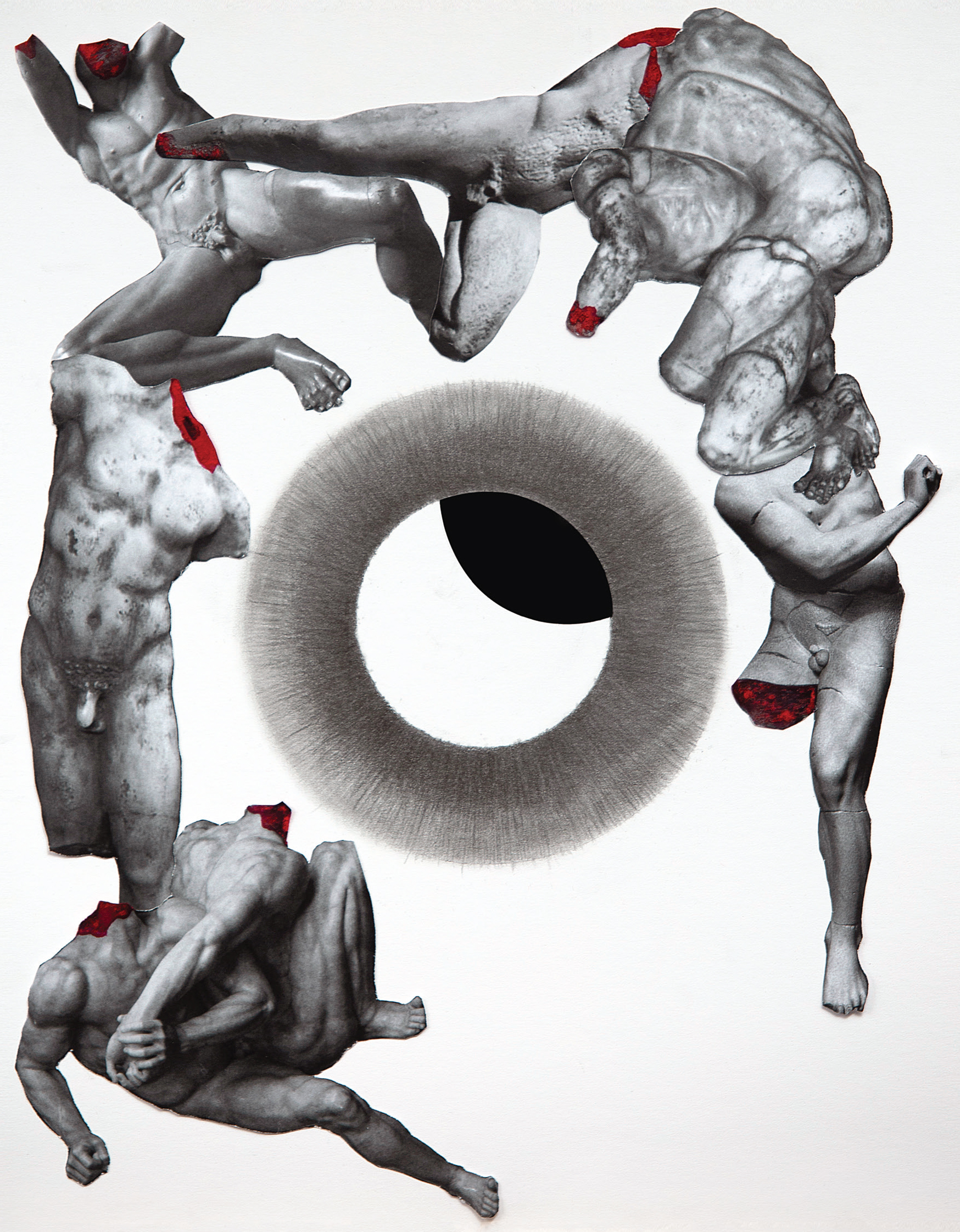
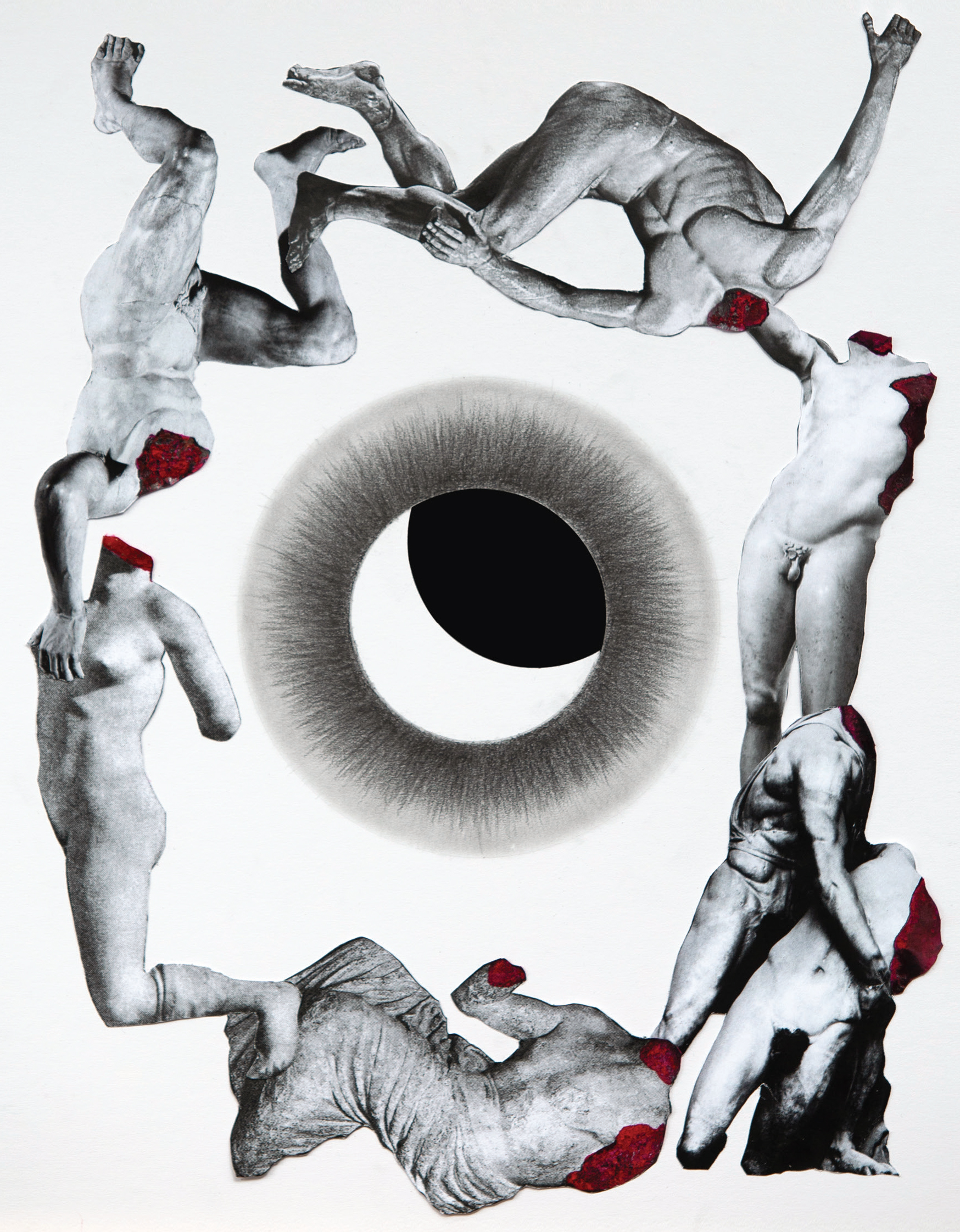
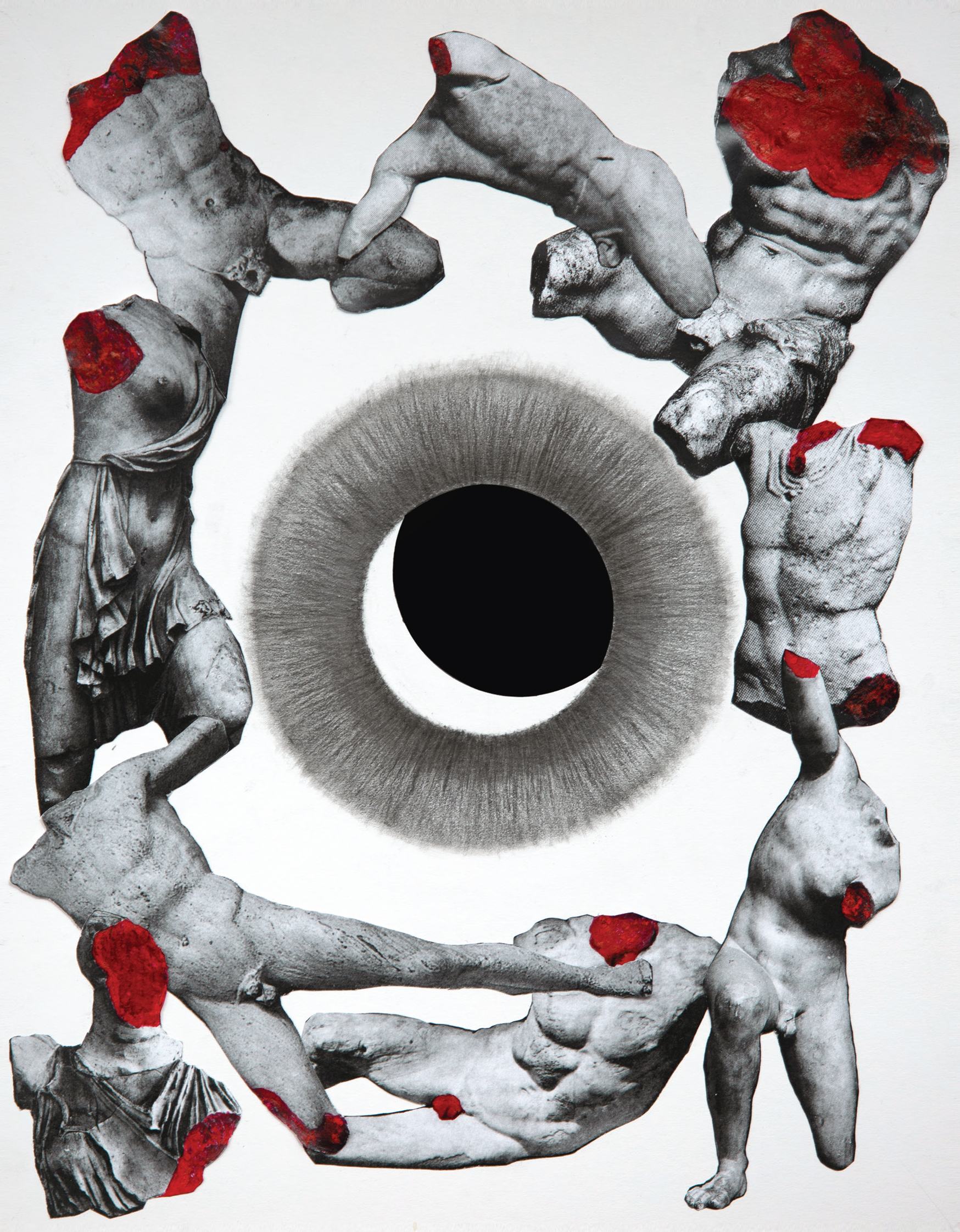
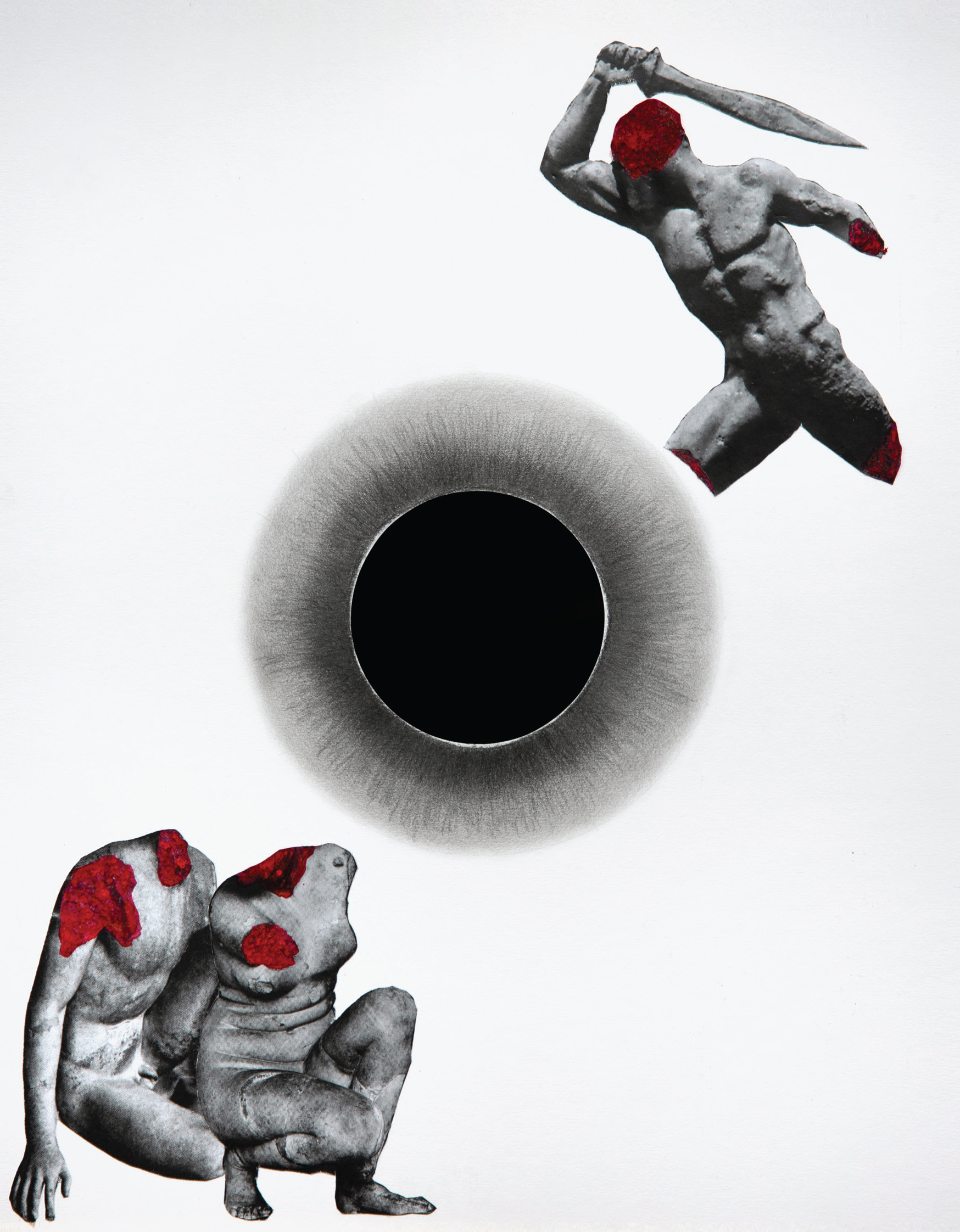

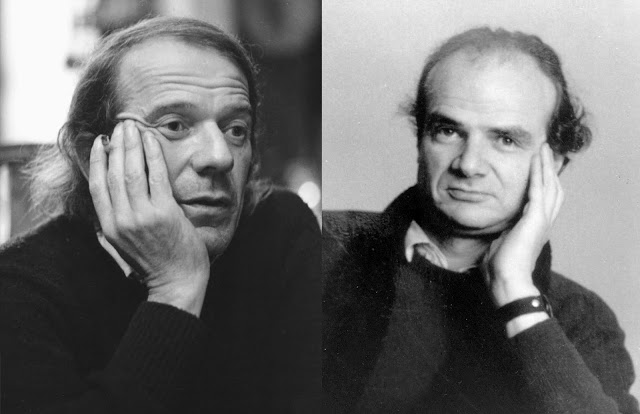
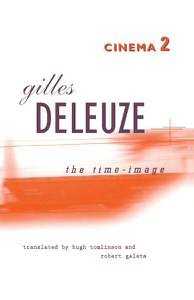 Gilles Deleuze Cinema 2: The Time-Image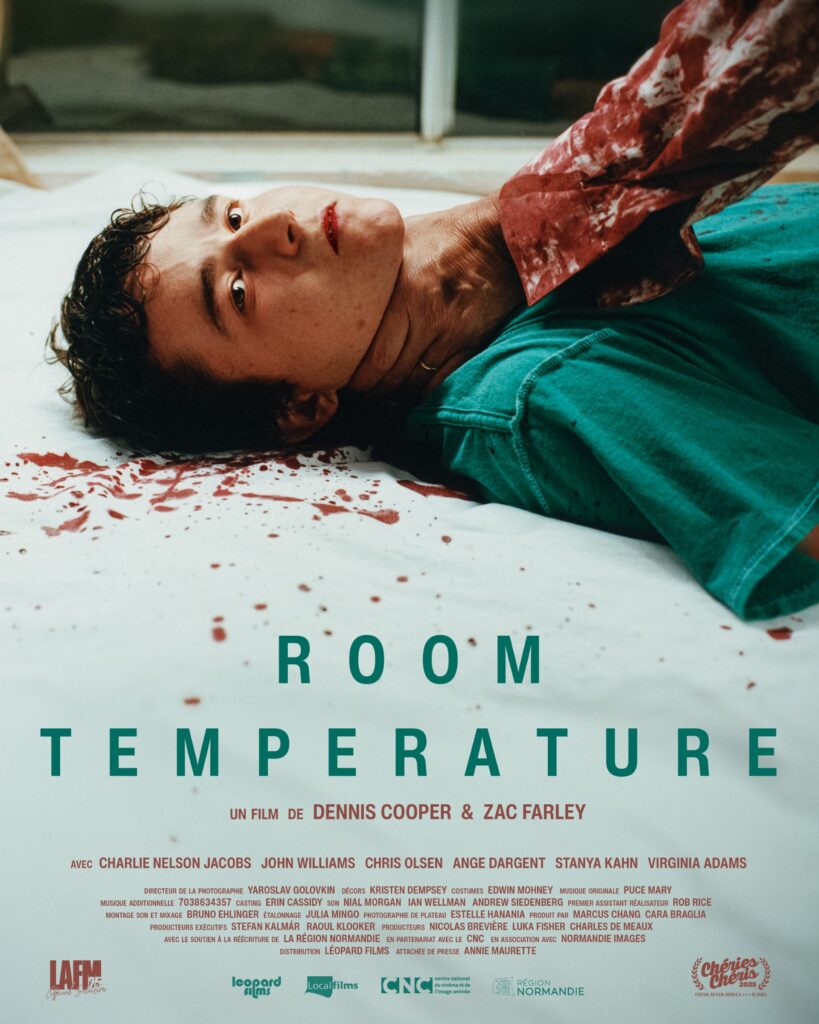


 Now available in North America