The blog of author Dennis Cooper

Month: July 2019 (Page 6 of 8)

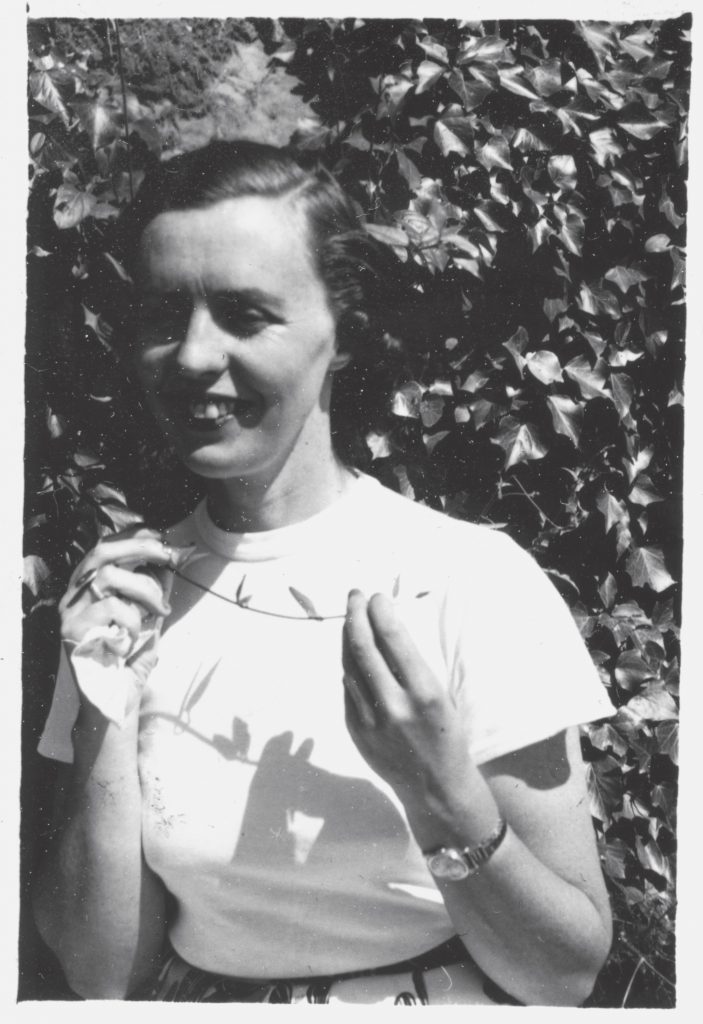
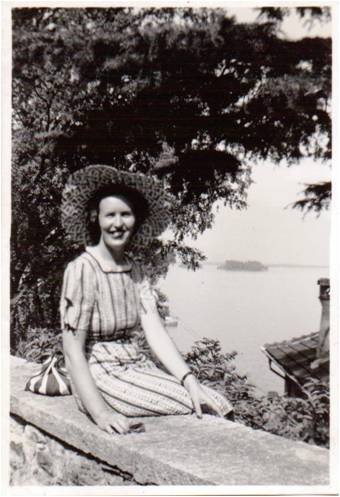
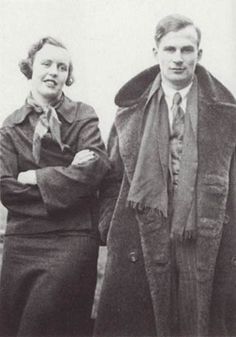
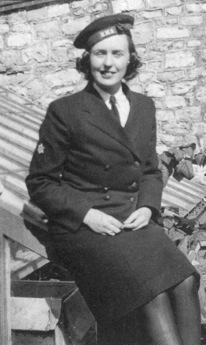
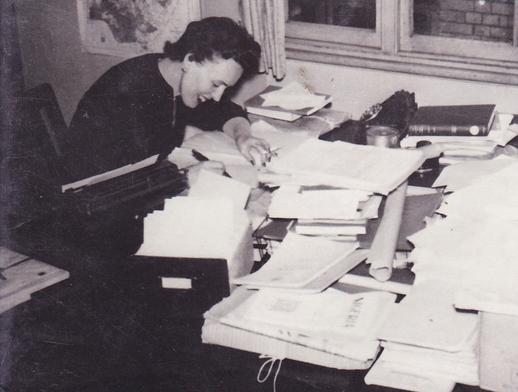
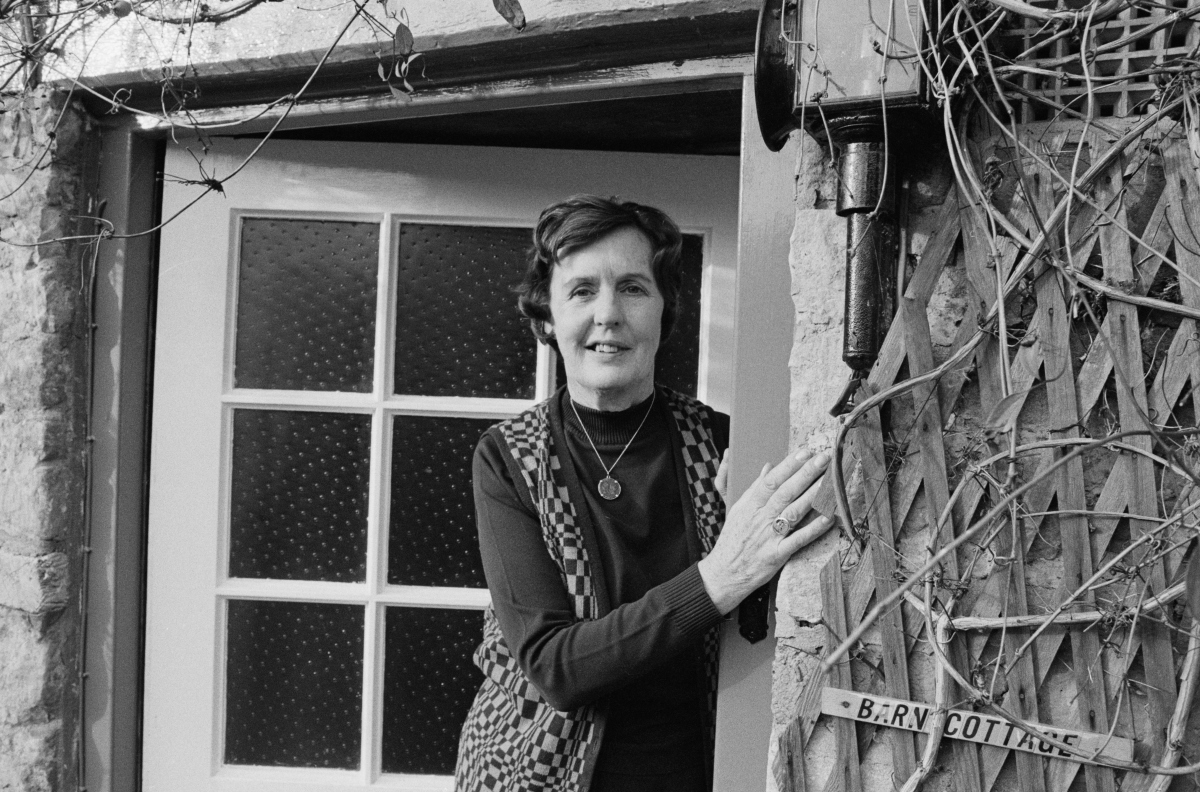
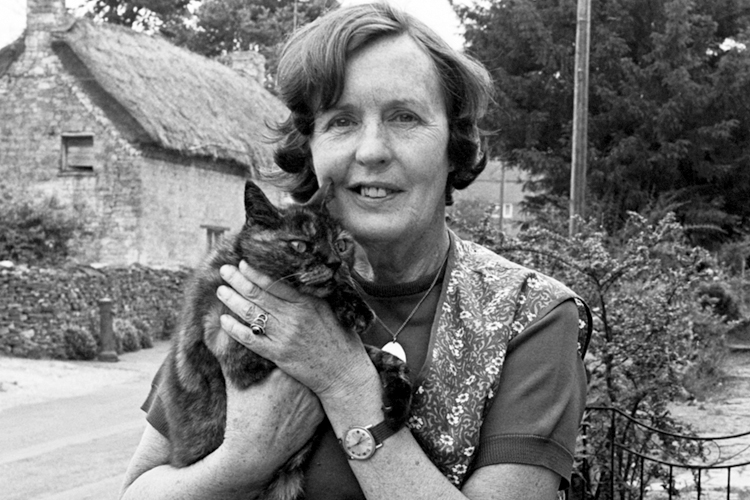
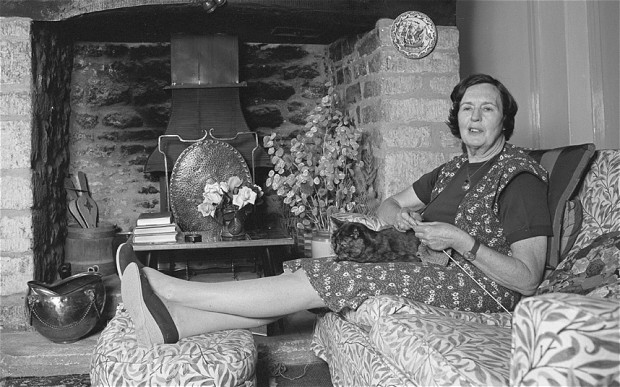
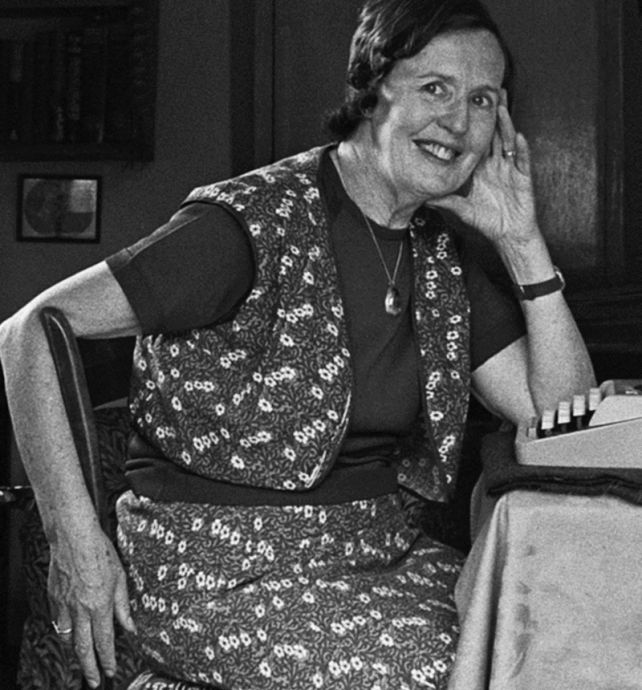
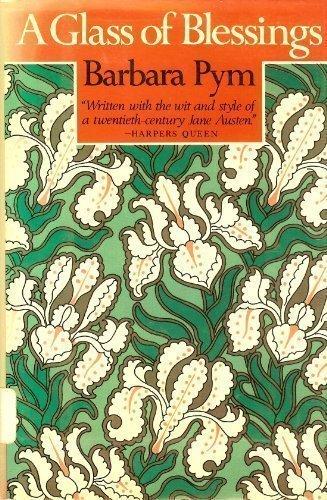
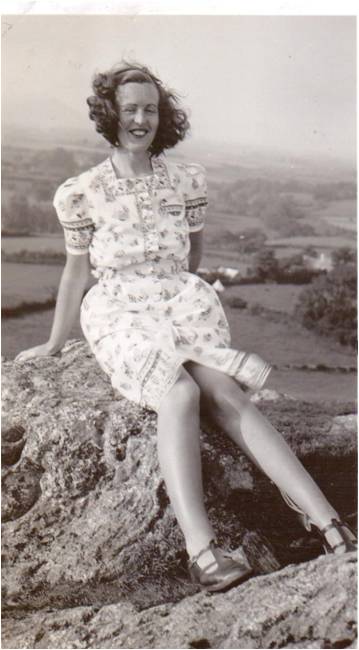
Spotlight on … Barbara Pym A Glass of Blessings (1958)


‘I discovered Barbara Pym in my sophomore year of college, thanks to a friend who gave me her 1958 novel, A Glass of Blessings. I loved the book for its understated humor, the way its heroine, Wilmet, mocks her own lack of direction as she drifts through a world divided into church jumble sales, dull sherry parties, and a secret crush on a man who turns out to have a live-in “friend” named Keith. Though the copy was a reprint, I still thought we’d stumbled onto some lost treasure, a forgotten library gem. Soon enough I realized that what I’d stumbled onto was a gigantic literary bandwagon. In 1985, everybody seemed to be reading Barbara Pym, though she herself had been dead for several years.

‘Of course, people had different reactions to her. There were readers like me who became annoyingly obsessed with her novels; even our vocabulary reflected it. Whatever slang we’d been speaking before Barbara Pym, we quit using it and started tossing around tweedy words like unpleasantness and cloakroom. Against the advice of our teachers, we took to using the pronoun one as in “One regrets the unpleasantness in the cloakroom.” Less-besotted readers enjoyed Barbara Pym but lumped her in with Miss Read and other writers of “gentle fiction,” a condescending term if there ever was one.

‘Still others couldn’t see any attraction at all in Pym’s stories about women who dote on men and men who accept feminine devotion as their due. They considered her work depressing (men, she said herself, often found it so), uneventful, or simply shallow. A professor of mine said that he found her fiction (he’d read only one novel) “nothing but fluff.” How, he asked, could John Updike have praised her so highly? …

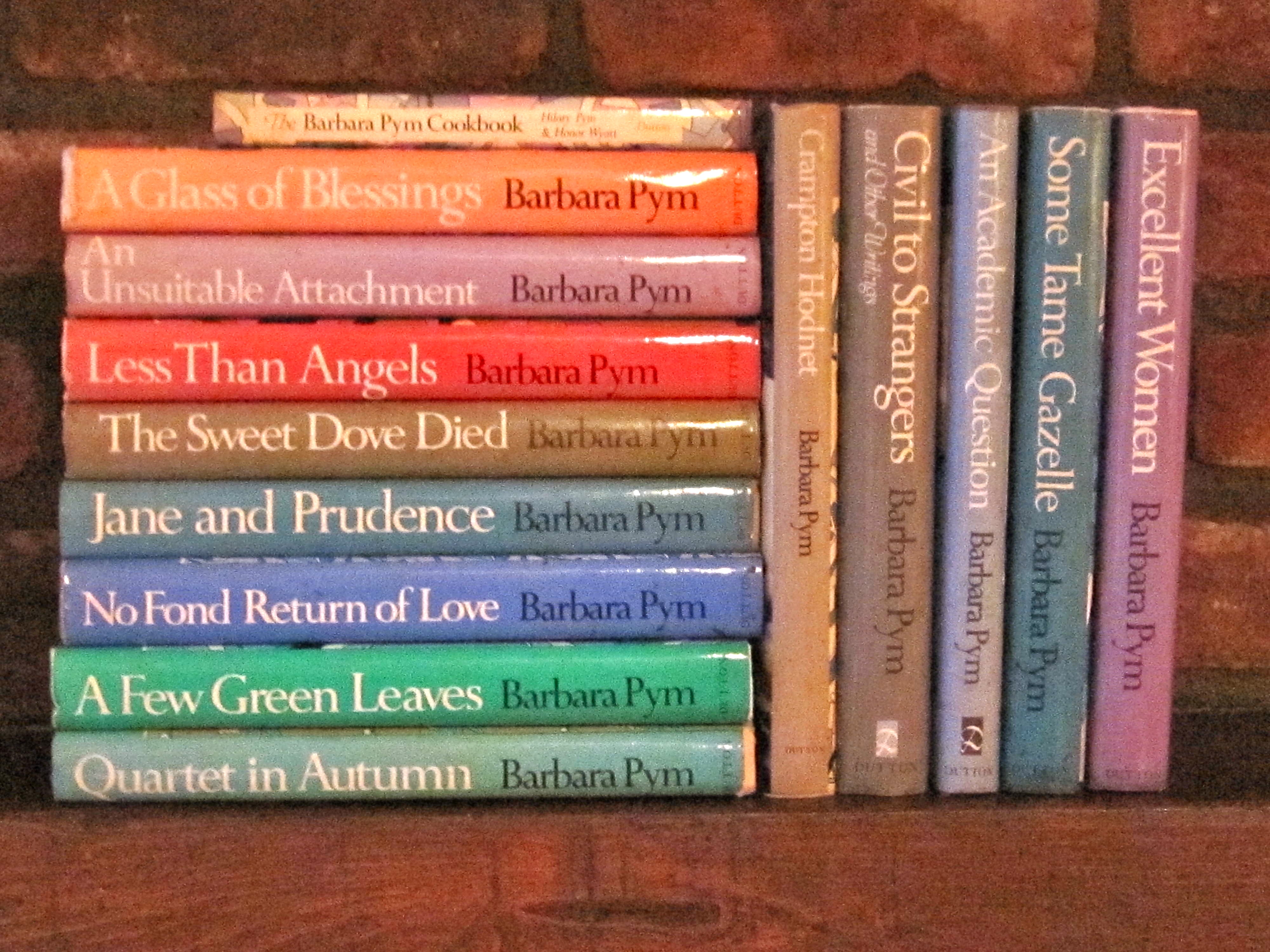
Excellent Women appeared in 1952, followed by Jane and Prudence, Less than Angels, A Glass of Blessings, and No Fond Return of Love. These novels of the 1950s (she finished the last by 1960) all share some elements: the distinctive Pym irony, the landscape of London with its crowded lunchrooms and crippled churches, and her recognizable character types. Some of these types include the “splendid” women who know how to deal with life’s pivotal events: “birth, marriage, death, the successful jumble sale, the garden fete spoiled by bad weather.” Or the maddeningly or perhaps endearingly vain men, whether priests or anthropologists, who imagine that any woman should be glad to do their laundry and proofread their manuscripts. …

‘For me, raised on the dreary fiction of the 1960s and 1970s, Barbara Pym’s affectionate irony was a revolution of its own. Though I never successfully applied it to my own writing, it colored the way I looked at life, helping me find a way out of personal pain, or at least giving me hints of a way. Now I see less comedy and more essential sadness in even the brightest of her novels—a feminine longing that underlies all the jokes about dutiful women, charming but vain men, tribalized anthropologists, high-minded priests. I also see the strengthening effects of love and forgiveness upon comedy. If the literary archdeacons of her time couldn’t appreciate it, well . . . one does see the irony in that.’ — Betty Smartt Carter, First Things


_____
Gallery
 

_____
Further

The Barbara Pym Society of North America
‘The novels of Barbara Pym’
‘Philip Hensher toasts the novelist Barbara Pym’
‘Marvelous Spinster Barbara Pym At 100’
‘Celebrating Barbara Pym’
‘Patron Saint of Quiet Lives: A Look2 Essay on Barbara Pym’
‘Barbara Pym fans converge on Boston’
‘The Blagger’s Guide To: Barbara Pym’
Barbara Pym’s Desert Island Discs
‘Pride and Perseverance’
‘Barbara Pym: The Other Jane Austen’
Barbara Pym Doll Miniature Art Collectible
‘“Allegra! … Isn’t that lovely?” Names in Barbara Pym’s novels’
Buy ‘A Glass of Blessings’


____
Extras


The Legacy of Barbara Pym


Barbara Pym’s correspondence with her publishers


___________
Finding a Voice
by Barbara Pym
 

I’ve sometimes wondered whether novelists like to be remembered for what they’ve said or because they’ve said it in their own particular way—in their own distinctive voice. But how do you acquire your own voice or indeed any kind of voice? Does it come about as inevitably as your height or the colour of your eyes or do you develop it deliberately, perhaps in imitation of a writer you admire?

I’ve been trying to write novels, with many ups and downs, over more than forty years. I started as a schoolgirl, when I used to contribute to the school magazine—mostly parodies, conscious even then of other people’s styles. Then in 1929, when I was sixteen, I discovered Aldous Huxley’s novel Crome Yellow. I came across this sophisticated masterpiece in the wilds of Shropshire, through that marvellous institution Boots’ Library, now, alas, as much of a period memory as the seven and sixpenny hardback novel. I was a keen reader of all kinds of modern fiction, and more than anything else I read at that time Crome Yellow made me want to be a novelist myself. I don’t suppose for a moment that I appreciated the book’s finer satirical points, but it seemed to me funnier than anything I had read before, and the idea of writing about a group of people in a certain situation—in this case upper-class intellectuals in a country house—immediately attracted me, so I decided that I wanted to write a novel like Crome Yellow.

And so my first novel—unpublished, of course—was started in that same year, 1929. It was called Young Men in Fancy Dress and was about a group of “Bohemians”—I must put that word in quotes—who were, in my view, young men living in Chelsea, a district of which I knew nothing at that time.        The hero wanted to be a novelist and, as one of the characters put it, “If you want to be a proper novelist, you must get to like town and develop a passion for Chelsea.”

Reading the manuscript again, I detect almost nothing in it of my mature style of writing, except that the Bohemian young men aren’t taken entirely seriously, and that there’s a lot of detail—clothes, makes of cars, golf, and drinks (especially descriptions of cocktails—which . I’d certainly never tasted). I’ve always liked detail—in fact my love of triviality has been criticised—so perhaps that was something I developed early. And obviously at that time I read a lot—if a bit indiscriminately. In this early novel all the “best” or at least the most fashionable names are dropped, from Swinburne and Rupert Brooke to D. H. Lawrence and Beverley Nichols.

When I was eighteen, I went up to Oxford to read English. Most aspiring novelists write at the University, but I didn’t, though I did start to write something in my third year, a description of a man who meant a lot to me. I tore it up, but this person did appear later in a very different guise as one of my best comic male characters. There was nothing comic to me about him at the time, but memory is a great transformer of pain into amusement. And at Oxford, as well as English Literature, I went on reading modern novelists.

I particularly enjoyed the works of “Elizabeth”, the author of Elizabeth and Her German Garden. Such novels as The Enchanted April and The Pastor’s Wife were a revelation in their wit and delicate irony, and the dry, unsentimental treatment of the relationship between men and women which touched some echoing chord in me at that time. I was learning; these novels seemed more appropriate to use as models than Crome Yellow—perhaps even the kind of thing I might try to write myself.

It must also have been about this time—still in the 1930s—that I was introduced to the poems of John Betjeman. His glorifying of ordinary things and buildings and his subtle appreciation of different kinds of churches and churchmanship made an immediate appeal to me. Another author I came across at this time was Ivy Compton-Burnett—I think More Women than Men, her novel about a girls’ school, was the first I read; then A House and Its Head, one of her more typical family chronicles. Of course I couldn’t help being influenced by her dialogue, that precise, formal conversation which seemed so stilted when I first read it— though when I got used to it, a friend and I took to writing to each other entirely in that style. Another book we imitated was Stevie Smith’s Novel on Yellow Paper, a fantasy, written with all the humour and pathos of her poems.

So all the writers I’ve mentioned played some part in forming my own literary style. But of course I’d also been reading the classics, especially Jane Austen and Trollope. Critics discussing my work sometimes tentatively mention these great names, mainly, I think, because I tend to write about the same kind of people and society as they did, although, of course, the ones I write about live in the twentieth century. But what novelist of today would dare to claim that she was influenced by such masters of our craft? Certainly all who read and love Jane Austen may try to write with the same economy of language, even try to look at their characters with her kind of detachment, but that is as far as any “influence” could go.

The concept of “detachment” reminds me of the methods of the anthropologist, who studies societies in this way. The joke definition of anthropology as “the study of man embracing woman” might therefore seem peculiarly applicable to the novelist. After the war, I got a job at the International African Institute in London. I was mostly engaged in editorial work, smoothing out the written results of other people’s researches, but I learned more than that in the process. I learned how it was possible and even essential to cultivate an attitude of detachment towards life and people, and how the novelist could even do “field- work” as the anthropologist did. And I also met a great many people of a type I hadn’t met before. The result of all this was a novel called Less Than Angels, which is about anthropologists working at a research centre in London, and also the suburban background of Deirdre, one of the heroines, and her life with her mother and aunt. There’s a little church life in it too, so that it could be said to be a mixture of all the worlds I had experience of. I felt in this novel that I was breaking new ground by venturing into the academic scene, although in many ways that isn’t unlike the worlds of the village and parish I’d written about up to then.

I admire those people who can produce a new book regularly every year. I’ve found it more difficult as time goes on. I suppose it’s easy for anyone to produce their first novel—it’s all there inside you and only needs to be written down. Also a second and third may be just under the surface and comparatively easy to dig out. After that it becomes more difficult, unless you’re prepared to go on writing exactly the same book with only slight variations, over and over again. And people are always very ready to tell you anecdotes from their own experience—which, in their opinion, would be just the thing for one of your novels. Read- ers who don’t like your kind of story sometimes suggest plots or subjects for you in the hope that you may write something different. And sometimes, especially when things aren’t going well, it’s tempting to give it a try.

(the entirety)


___
Book

Barbara Pym A Glass of Blessings
Virago Press

‘Barbara Pym’s early novel takes us into 1950s England, where life revolved around the village green and the local church—as seen through the funny, engaging, yearning eyes of a restless housewife

‘Wilmet Forsyth is bored. Bored with the everyday routine of her provincial village life. Bored with teatimes filled with local gossip. Bored with her husband, Rodney, a military man who dotes on her. But on her thirty-third birthday, Wilmet’s conventional life takes a turn when she runs into the handsome brother of her close friend.

‘Attractive and enigmatic, Piers Longridge is a mystery Wilmet is determined to solve. Rather than settling down, he lived in Portugal, then returned to England for a series of odd jobs. Driven by a fantasy of romance, the sheltered, naïve Englishwoman sets out to seduce Piers—only to discover that he isn’t the man she thinks he is.

‘As cozy as sharing a cup of tea with an old friend, A Glass of Blessings explores timeless themes of sex, marriage, religion, and friendship while exposing our flaws and foibles with wit, compassion, and a generous helping of love.’ — Open Road


Excerpt

I SUPPOSE IT MUST have been the shock of hearing the telephone ring, apparently in the church, that made me turn my head and see Piers Longridge in one of the side aisles behind me. It sounded shrill and particularly urgent against the music of the organ, and it was probably because I had never before heard a telephone ringing in church that my thoughts were immediately distracted, so that I found myself wondering where it could be and whether anyone would answer it. I imagined the little bent woman in the peacock blue hat who acted as verger going into thevestry and picking up the receiver gingerly, if only to put an end to the loudunsuitable ringing. She might say that Father Thames was engaged at the moment or not available; but surely the caller ought to have known that, for it was St Luke’s day, the patronal festival of the church, and this lunchtime Mass was one of the services held for people who worked in the offices near by or perhaps for the idle ones like myself who had been too lazy to get up for an earlier service.

The ringing soon stopped, but I was still wondering who the caller could have been, and finally decided on one of Father Thames’s wealthy elderly female friends inviting him to luncheon or dinner. Then a different bell began to ring and I tried to collect my thoughts, ashamed that they should have wandered so far from the service. I closed my eyes and prayed for myself, on this my thirty-third birthday, for my husband Rodney, my mother-in-law Sybil, and a vague collection of friends who always seemed to need praying for. At the last minute I remembered to pray for a new assistant priest to be sent to us, for Father Thames had urged us in the parish magazine to do this. When I opened my eyes again I could not help looking quickly at the side aisle where I had caught a glimpse of the man who looked like Piers Longridge, the brother of my great friend Rowena Talbot.

She usually spoke of him as ‘poor Piers’, for there was something vaguely unsatisfactory about him. At thirty-five he had had too many jobs and his early brilliance seemed to have come to nothing. It was also held against him that he had not yet married. I wondered what could have brought him to St Luke’s at lunchtime. I remembered Rowena telling me that he had recently obtained work as a proof-reader to a firm of printers specializing in the production of learned books, but I had understood that it was somewhere in the city. I did not know him very well and had seen very little of him recently; probably he was one of those people who go into churches to look at the architecture and stay for a service out of curiosity. I stole another quick look at him. In novels, or perhaps more often in parish magazine stories, one sometimes reads descriptions of ‘a lonely figure kneeling at the back of the church, his head bowed in prayer’, but Piers was gazing about him in an inquisitive interested way. I realized again how good looking he was, with his aquiline features and fair hair, and I wondered if I should have a chance to speak to him after the service was over.

When this moment came, Father Thames, a tall scraggy old man with thick white hair and a beaky nose, was standing by the door, talking in his rather too loud social voice to various individuals — calling out to a young man to keep in touch — while others slipped past him on the way back to their offices, perhaps calculating whether they would have time for a quick lunch or a cup of coffee before returning to work.

Although I had quite often been to his church, which was near where I lived, Father Thames and I had not yet spoken to each other. Today, as I approached him, I had the feeling that he would say something; but rather to my surprise, for I had not prepared any opening sentence, I was the one to speak first. And what I said was really rather unsuitable.

‘How strange to hear a telephone ringing in church! I don’t think I ever have before,’ I began and then stopped, wondering how he would take it.

He threw back his head, almost as if he were about to laugh. ‘Have you not?’ he said. ‘Oh, it is always ringing here, although we have another one at the clergy house, of course. Usually it’s business, but just occasionally a kind friend may be inviting me to luncheon or something of the sort. People are so kind!’

So it could have been as I had imagined. But there were two priests at the clergy house. Were the invitations always for Father Thames and never for mild dumpy little Father Bode, with his round spectacled face and slightly common voice, who always seemed to be the sub-deacon at High Mass and who had once read the wrong lesson at a carol service? I was sure that Father Bode was equally worthy of eating smoked salmon and grouse or whatever luncheon the hostesses might care to provide. Then it occurred to me that he might well be the kind of person who would prefer tinned salmon, though I was ashamed of the unworthy thought for I knew him to be a good man.

‘As a matter of fact that telephone call was about Father Ransome, our new assistant priest,’ Father Thames continued. ‘That much Mrs Spooner was able to tell me after the service. In fact, from what I understood her to say it may even have been Ransome himself on the telephone, but she was understandably a little flustered.’

I wondered if it was a good omen that the new assistant priest should have telephoned in the middle of a service or if it showed some lack of something.


*

p.s. Hey. As predicted, I have escaped to Disneyland Paris for the day. Hence, I’m not here. Please use your local day to absorb this book by the unimpeachable writer/stylist Barbara Pym. Thanks. I’ll be back with the blog and the p.s. tomorrow.
Galerie Dennis Cooper presents … Rachel Maclean


‘My work slips inside and outside of history and into imagined futures, creating hyper-glowing, artificially saturated visions that are both nauseatingly positive and cheerfully grotesque’. — Rachel Maclean

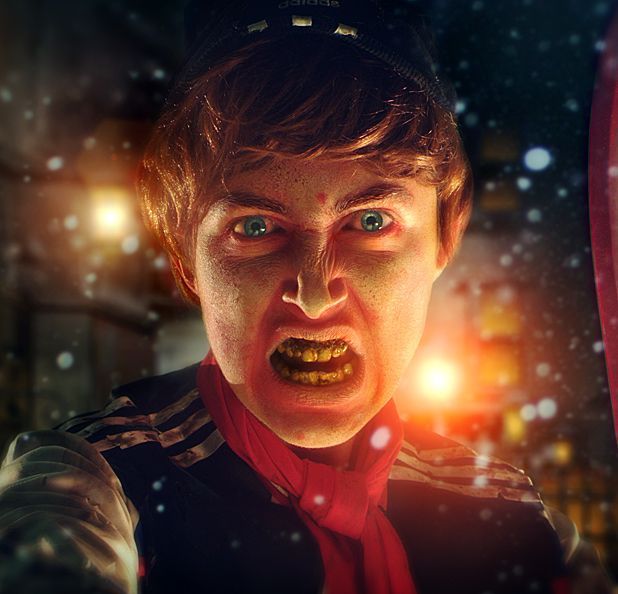
‘Glasgow-based artist and filmmaker Rachel Maclean works largely in green screen composite video and digital print, often exhibiting this alongside props, costumes and related sculpture and painting. She is often the only actor or model in her work, playing a variety of characters that mime to appropriated audio and toy with age and gender. These clones embody unstable identities: conversing, interacting and shifting between cartoonish archetypes, ghostly apparitions and hollow inhuman playthings.

‘Her current work is about contemporary British culture and she recreates work in broadcast media, entertainment, and advertising genres such as talent competitions, science fiction animation, children’s shows, royal messages and fireside chats, and product marketing. Her work tends to comment and parody culture through the vehicle of these genres. Fantasy, role playing and humour feature heavily in her work. She works with green screen technique and digital animation. She creates sounds tracks with music and dialogue to accompany her films. Additionally, she makes digital prints of images related to her projects that resemble either out-takes/stills or advertisements and marketing posters. Text is often included.

‘In her videos such as Over The Rainbow, Rachel create synthetic spaces in which Katy Perry discuses teeth whitening with an aristocratic cat, a decapitated diva dances to hip pop and a pastel blue dog sings for The Queen. Stylistically her work explores the aesthetic of Poundland, Youtube, Manga and Hieronymus Bosch, spliced together with MTV-style green screen and channel-changing cuts. Maclean is fascinated by representations of other worlds and unearthly embodiments, and explores the ways in which they project contemporary anxieties and ideals into a mysterious and seductive beyond.

‘”My work is inspired by a number of things at once,” Maclean explains, “and often hinges on a bizarre combination of two apparently conflicting influences, for example Susan Boyle and Heavy Metal in my video I Dreamed A Dream. Where I live at the time I make work is also very influential, as I believe different cultures have different fantasies related to place. For example, I stayed in America for 6 months and became much more concerned by an idealised notion of Scotland, as a land of castles, lochs, monsters and kilts. Whereas I found growing up in Scotland, you are very divorced from this fantasy, and instead the imagination is much more directed to the US, and the glamour and intrigue it conveys to the outsider.”‘ — collaged


________
Pix & Stills


_____
Further

Rachel Maclean Website
Rachel Maclean’s tumblr
‘RACHEL MACLEAN AND MULTI-COLOURED EXCRETIONS OF HYPER-KITSCH’
Ben Robinson interviews RM @ Yuck ‘n Yum
‘Rachel Maclean: GIRLS JUST WANNA HAVE FUN!
‘Where I Make: Rachel Maclean’
‘Rachel Maclean wins Margaret Tait Award’
‘Rachel Maclean Interview: Going Bananas’
‘5 Questions for: Rachel Maclean’
‘Artist Review ONE: Rachel Maclean’


____
Extras


5 questions with Rachel Maclean


The Skinny Shop: Rachel MacLean video interview


Rachel Maclean interviewed by Summerhall


Rachel Maclean directed music video for Errors’ ‘Pleasure Palaces’


______
Interview
from Daily Metal


Can you tell us how would you describe your work?
Rachel Maclean: My work slips inside and outside of history and into imagined futures, creating hyper-glowing, artificially saturated visions that are both nauseatingly positive and cheerfully grotesque. I am a Glasgow based artist working largely in green screen composite video and digital print, often exhibiting this alongside props, costumes and related sculpture and painting. I am the only actor or model in my work and invent a variety of characters that mime to appropriated audio and toy with age and gender. These clones embody unstable identities: conversing, interacting and shifting between cartoonish archetypes, ghostly apparitions and hollow inhuman playthings. My videos attempt to stylistically unify the aesthetic of The Dollar Store, Youtube, Manga, Hieronymus Bosch and High Renaissance painting with MTV style green screen and channel changing cuts.

What has prompted you to create your beautifully grotesque beings?
RM: I’ve always been fascinated by images which are at once compelling and repulsive. I like to toe a fine line between an aesthetic of benign, saccharine cuteness and a distastefully baroque form of grotesquely. I take inspiration from a whole range of sources, everything from Disney Princess to William Hogarth. I think the expression or experience of disgust, whether at a work of art or a bodily function, is very interesting and is indicative of our complex social relationship with others. It is also often reflective of the desire to recoil and distance ourselves from the experience of a particular class, race, gender or sexual orientation. I think someone like Katie Price is a good example of this relationship and in many ways performs the function of the Victorian Freak Show for the 21st Century. She’s reflective upon a certain kind of social class that are regarded as wealthy but tastelessly brash by the conservative middle classes. Everything about her image and actions entertains us through it’s grotesquely exaggerated performance of this stereotype and confirms for many the sense of their own relative superiority.

Do you consider your work political?
RM: Yes, in some ways. Although there is some work that is more directly political than others. For example, the recent video I made called The Lion and The Unicorn explores the interrelationship between Scottish and British national identity. This is obviously a very contentious issue given the upcoming Referendum on Scottish Independence in 2014 and I was keen to couch the work very clearly within this debate. However, in this case I intended that my opinion on the issue was left ambiguous, as I was more interested in provoking discussion and at some level unveiling the absurdity of the signifier and semi-historical fictions that play into contemporary political decision making and help form an abstracted sense of national pride.

Would you consider your work is related to the feminist cause? A clear example would be Skin & Bones? Can you explain what is this about?
RM: Yes, I intend for my work to be feminist. Again, this is made explicit in some works and maybe less so in others. In the example you mentioned from the series ‘Girls Just Wanna Have Fun’, I intended to create images of woman who appear sexually available and with all the basic masquerade of sexiness, but nonetheless fail in their achievement of this ideal, rendering them tragic, ugly and grotesque. Here I was keen to look at the representation of what I would regard as the Spice Girls, ‘Girl Power’ brand of feminism or to update things a bit, what Beyonce would refer to as a powerful ‘independent woman’. I’m pretty cynical about this kind of pop feminism and believe the it is in many ways it is just a rebranded sexism, which drives an ideal of liberation through financial success, but still expects women to fulfill their role as sexual objects.

In your work you’re the only model and the only actor. Why is it that?
RM: At some level it’s playful and childish, I like dressing up, there is something liberating and interesting about pretending to be someone else. It helps you reflect in a more open way on your own sense of self and question fixed ideas of the person you think you are or want to be. I like to play out and explore the idea that identity and gender are at some level a performance or masquerade and try to create narratives in which very fixed notions of self are exaggerated to the point they become absurd, or alternatively begin to fall apart and are gradually revealed to be unstable and fraudulent.

How do you prepare all your characters?
RM: I design all the costumes, props and face-paint for my work and the characters are usually tied into the larger aesthetic idea for the video. All my characters are an amalgam of reference points and never just a simple imitation of a specific person or typical costume. For example, in my recent video The Lion and The Unicorn, the character of ‘The Queen’ at once references Mary Queen of Scots and Queen Elisabeth, wearing a costume recombined from an array of Union Jack merchandise available to celebrate the 2012 Diamond Jubilee.

Most of your work is via digital print and video. How important for an artist is the digital era?
RM: I think the digital era is as important as you want it to be as an artist. I love the possibilities that are opened up by programs like Photoshop and After Effects, but I also think that what interests me about this kind of software is the sense in which it is only ever an adaptation or simulation of methods and techniques available in non-digital media. Almost every tool in Photoshop exists in a physical form, take for example the paintbrush, the pen, the paint-bucket and the hand tool. They don’t necessarily perform exactly the same function, but they use material tools and processes as a starting point. When working I’m often keen to bring styles and processes from older media, particularly painting, into a digital space. Additionally, I think with any celebration of an advance in technology there is always a concurrent denial and nostalgia for the past. For many artists, computer generated images only highlight the nuances of older technologies, for example a lot of people are going back to work in analogue video and film as they recognize it has a quality that can’t be achieved through digital video.


____
Show

________________
The Lion and The Unicorn (2012)
‘A central strand of Maclean’s work addresses the ideals of Scotland and Scottishness and their reality as portrayed by contemporary mass media. “The Lion and the Unicorn” is a short film in which three archetypal characters debate points of view on nationalism, trade and finance, natural resources and politics. They each use Scotland’s history to expound their arguments, yet their views cannot be reconciled. Maclean uses costumes, makeup and digital retouching to embody each of these Scottish national stereotypes. The video uses audio from television broadcasts, dubbed over Maclean’s performances: the Lion is given Jeremy Paxman’s voice and the Unicorn Alex Salmond’s, as they squabble over the future of Scottish governance.’ — Open Source


Trailer


___________________
Over The Rainbow (short edit, 2013)
‘Inspired by the Technicolor utopias of children’s television, Over The Rainbow (2013) invites the viewer into a shape-shifting world inhabited by cuddly monsters, faceless clones and gruesome pop divas. Shot entirely using green-screen the film presents a computer generated environment, which explores a dark, comedic parody of the fairytale, video game and horror movie genres.’ — RM


Excerpt


__________
Germs (2013)
Germs (2013) is a 3-minute green-screen video, which follows a glamorous female protagonist through a series of advertising tropes. Moving from a perfume to a bathroom cleaner commercial, she converses with a persuasive masked woman and becomes increasingly paranoid about the omnipresence of microscopic germs. Rachel plays every character in the piece.’ — RM


the entire work


________________
The Phantom Band Everybody Knows It’s True (2013)
‘Psychedelic shenanigans ensue when The Phantom Band – who let’s face it, are not known for their retiring attitude to performance – don the face paint, tights and some fairly outlandish costumes in a visual accompaniment for their latest single ‘Everybody Knows It’s True’ directed by artist Rachel Maclean.’ — chemikal


the entire thing


_______________
Please, Sir… (2014)
‘There are dozens of ‘Lady Janes’ in the young Scottish artist Rachel Maclean’s Please, Sir …, a two-screen film dialogue recently exhibited at Rowing, London, and previously shown at Glasgow’s Centre for Contemporary Arts. Maclean plays each of the ten or so characters in the film, which are then copied in as extras, involving a meticulous process of disguise and a camp restaging of self. She is multiplied in mega-pixels but overburdened by objects: flowing peroxide wig, rotting teeth with gold filament, fake tits framed by a nylon ruffle, a market stall necklace that spells the word RICH. Maclean’s Lady Jane – more pub landlady than failed scholar or real life sovereign – also wears a sleazy white gown, complete with all the necessary leopard print: the anti-matter of virginal embodied.’ — Frieze


Excerpt


________________
A Whole New World (2014)
‘“A Whole New World” visualises the fantastical ruins of a fallen empire. Combining grand narratives with cheap product placement, the work explores themes related to British imperial history and national identity. Shot entirely using green-screen, the film presents a computer-generated landscape littered with fallen statues and the distressed paraphernalia of a bygone age. Narrated by a statuesque Britannia Goddess, the narrative adapts a variety of existing tales, including St George and The Dragon and Tarzan. The action frequently shifts genre, moving from all singing, all dancing musical score to dry political debate, sedate period drama to battlefield conflict. Maclean plays all the characters in the work, miming to audio in variety of languages and bedecked in an elaborate combination of prosthetic make-up, historical costume and Union Jack encrusted tourist tat.’ — D&C


Excerpt/short edit


________________
Eyes to Me (2015)
‘I recently did a film called Eyes to Me for Channel 4’s Random Acts (commissioned by Film London) where artists are invited to make a three-minute video to be shown between ad breaks on a popular British TV station. With this in mind, I was keen to create something that referenced the pace and spectacle of television, specifically kids’ TV, but gradually shifted tone, becoming darker, weirder and more disturbing as the film progressed, seeming to slowly undermine its formal appearance.’ — RM


the entire work


____________
Feed Me (2015)
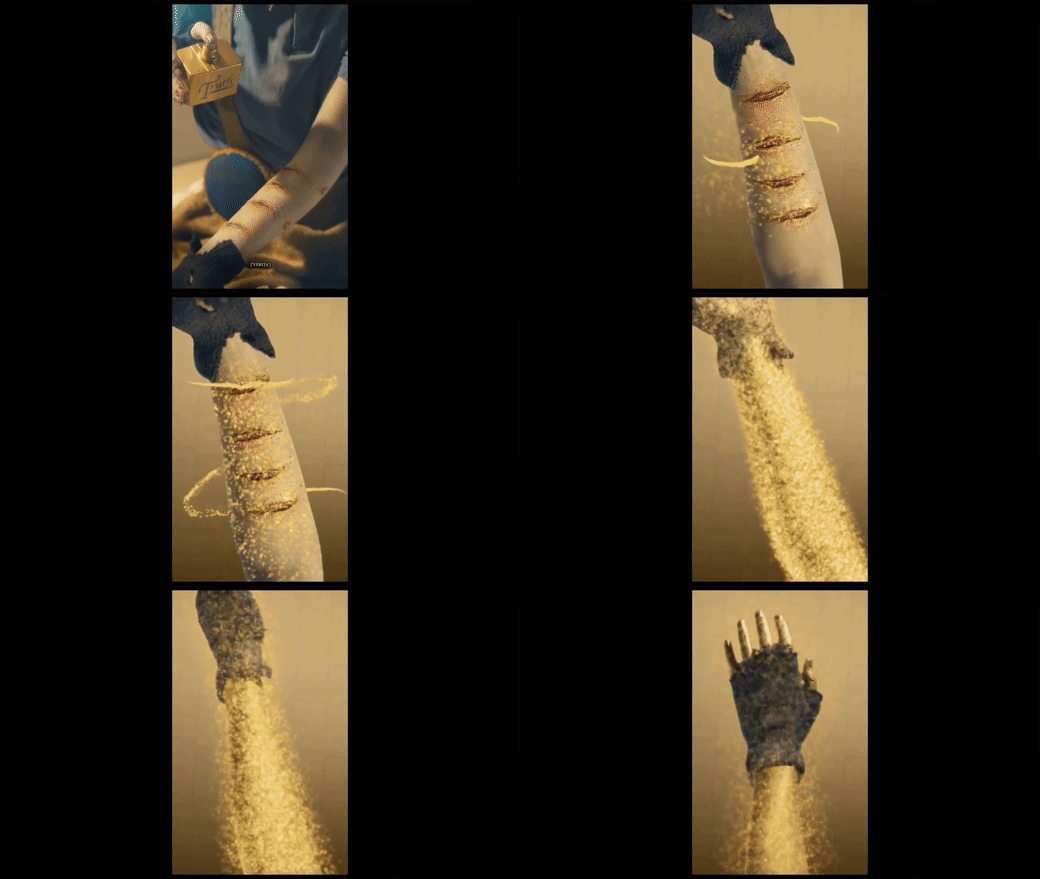
‘Rachel Maclean’s dystopian fairytale Feed Me is a sixty-minute film set in a world run by a malicious toy corporation called Smile Inc. Maclean plays all the characters herself, from a Scottish granny to a blue-skinned business executive and a hoard of little girls. She dons rubber gloves, face paint and the occasional prosthetic nose, filming against a green screen before adding backdrops and special effects in postproduction. The smiley appears everywhere, a mutating, feel-good emblem stitched into clothes, transferred onto foreheads, flashing on phone screens and rotating in the sky like a great emoji god.’ — Elephant


Excerpt


________________
Again and Again and Again (2016)
‘A supersaturated satire with a look into the land of data-addicted monk-like figures and dance-crazed rabbits.’ — letterboxd


the entire work


_________________
Spite Your Face (2017)
‘Referencing the Italian folk-tale The Adventures of Pinocchio, ‘Spite Your Face’ (2017) advances a powerful social critique, exploring underlying fears and desires that characterise the contemporary zeitgeist. Set across two worlds – with a glittering, materialistic and celebrity-obsessed upper world, and a dark, dank and impoverished lower world – the lure of wealth and adoration entices a destitute young boy into the shimmering riches of the kingdom above. Written in the wake of the UK’s decision to leave the European Union, and during Donald Trump’s presidential campaign, the story is steeped in the political flux and uncertainty of our time. Shown as a perpetual 37-minute loop with no definitive beginning or end, ‘Spite Your Face’ raises issues including the abuse of patriarchal power, capitalist deception, exploitation and the destructive trappings of wealth and fame, all in Maclean’s typically direct and acerbic style.’ — arts-news


Excerpt & interview


_______________
Make Me Up (2018)
‘Multimedia artist Rachel Maclean ambitious film unfurls in a seductive and dangerous world where surveillance, violence and submission are a normalised part of daily life. In saccharine pastels, this darkly comic film exposes the heteropatriarchal ideologies embedded in prevailing narratives of gender and beauty. Siri and Alexa have been made over at a hyperreal beauty clinic where the candyfloss décor cannot mask the more sinister happenings. Maclean delivers a searing performance as Figurehead, the splendidly attired pedagogue who presides over the clinic and speaks with the voice of Kenneth Clark, from the high-minded 1960s BBC series Civilisation. Intent on educating her girls on art’s construction of female beauty, Figurehead also remodels them in its image. Cleverly referencing the suffragette Mary Richardson’s 1914 attack on the Rokeby Venus, Make Me Up is on a mission to deconstruct the tradition of patriarchal art criticism.’ — ica


Trailer


Audience reactions


*

p.s. Hey. ** David Ehrenstein, Hi. The Epstein thing is completely accessible here. It’s not remotely a media obsession here as it is in the States, but it’s getting mentions. ** Steve Erickson, Thank you, Steve. Yes, it’s intense, and, coming on the heels of Kevin Killian’s not at all dissimilar passing, it’s just very strange among many other things. My opinion is that we must recast the role, as difficult as that will be, and continue. We’ll need to have a big meeting about what to do, but I feel very strongly about that. ** Tosh Berman, Thanks, Tosh. Yeah, it’s been a very disorienting, difficult time lately. ** Dominik, Hi, D! Thanks, pal. Yeah, I’m in a bit of a confused daze about it all. Oh, I see, about their expertise and that they’re away. Well, theoretically it seems like you guys could get a lot figured out and done in two weeks if you’ll have a fair amount time to work during those weeks? In any case, it’s so exciting! It’s going to be so fun for you, and so great! Ooh, that’s a really good gif! Thank you. Hm, a fuck you/off themed gif stack sounds mightily appealing to my imagination. I might just look into that and hit you up. Thanks for the great words, my friend. Have a lovely day! ** _Black_Acrylic, Thank you, Ben. Oh, so, as you see, I made a new Rachel Maclean post. She whose work you introduced me to. The old one was too out of date and full of dead videos to restore. Good, I’m glad there are new possible options on the treatment front. Right, I do know that very cool track you linked to, and I can only think that’s thanks to you. ** Bill, Thank you, Bill. Oh, so you were the artist of that art-like looking installation. Nice work! Yes, we’re enjoying tolerable skies at the moment, but, you know, you can’t get complacent about the sky anymore, so … Yes, right? About the gifs and the title’s corralling? That’s what I was thinking too. High five. ** Misanthrope, Hamster. Interesting that hamster owning is still a rite of passage for young’uns. I think even I have heard of Belvis, but I don’t know how. Sounds cool. I’ll go hunt down what surely must be many videos of him singing the ‘King’s’ hits and obscurities. ** Okay. If you don’t know the work of the extravagant Scottish artist Rachel Maclean then today’s your lucky day. See you tomorrow.

« Older posts Newer posts »

© 2026 DC's

Theme by Anders NorénUp ↑