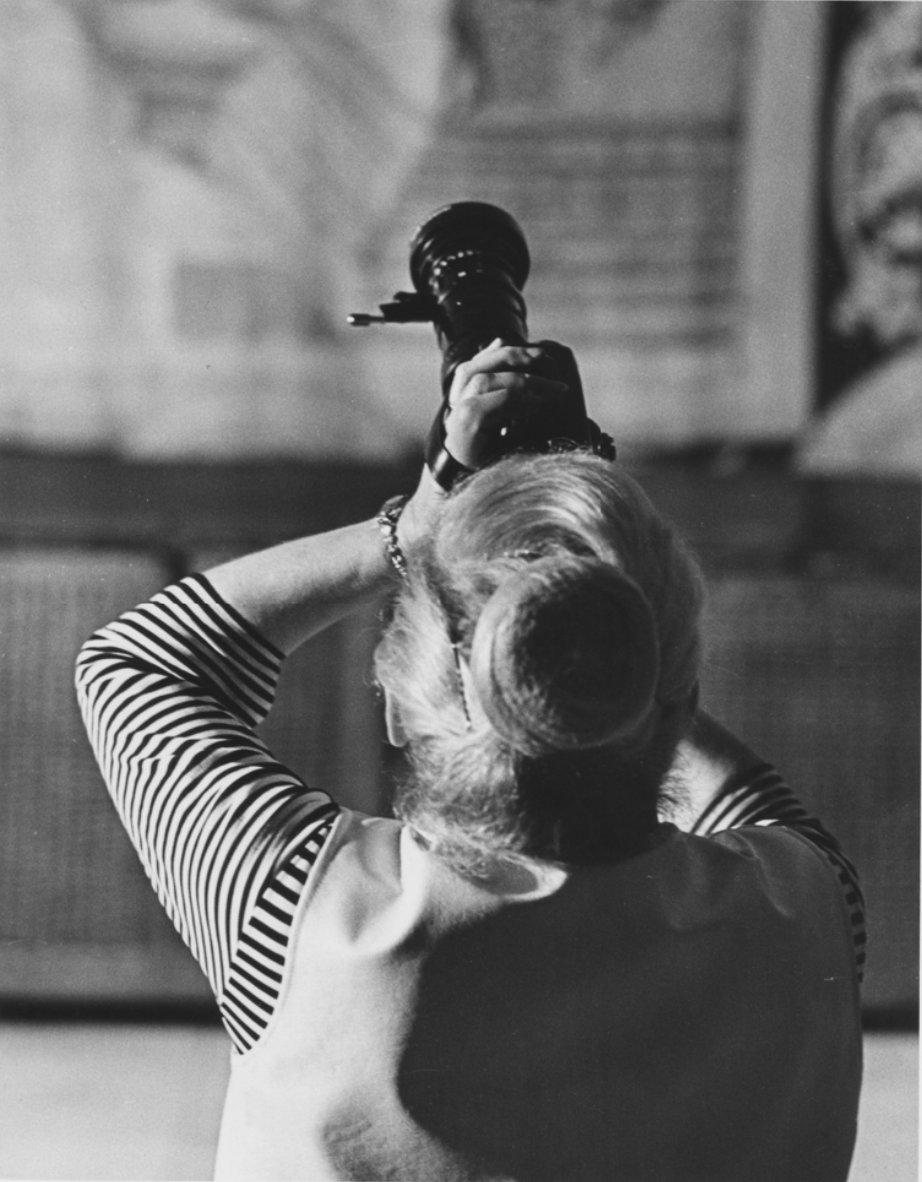
‘Storm De Hirsch made her first motion picture in 1963, two years after the untimely death of Maya Deren, the woman who had virtually masterminded the avant-garde film movement in the United States. Although De Hirsch was born five years earlier than Deren, she was a mature artist — over 40 years old when she began her filmmaking career. Deren was only 25 when she made her first film — the classic Meshes of the Afternoon –and at the age of 44, she died.
‘Though they may never have known each other, they had quite a bit in common. Both women had created new names and personas for themselves; Deren’s were earthy and radical, De Hirsch’s more imposing and regal. Both had backgrounds in poetry and other arts; they were also deeply involved with primitive cultures and the occult. In making their first films, both were supported by their husbands. In Maya Deren’s case, it was an inspired artistic collaboration with Alexander Hammid in a short-lived marriage; Storm De Hirsch’s first professional collaboration with Louis Brigante was disappointing, but the personal relationship endured. Both women made lasting contributions to the American avant-garde film scene, within the limits of their times and talents.
‘The 1960s offered Storm De Hirsch many more options than the 1940s had offered Deren, allowing her to start big, with an ambitious feature-length story about three young women, living in Rome, loosely based on a poem she had written and on her own experiences. Brigante was associate director. Called Goodbye in the Mirror, part scripted, part improvised, it was shot on 16mm and later blown up to 35mm, at a total cost of some $20,000. Variety’s reviewer found it too uneven for a feature, and thought it might have been a sharp, incisive short. Even before its release, De Hirsch already had begun making short films that were much more suited to her painterly and poetic roots.
‘Independent, cheaply made underground films, she later said, were not merely a futile rebellion against Hollywood’s slickness, but were spontaneous efforts to create the equivalent of off-Broadway theater in the medium of film. De Hirsch’s first short film, Journey around a Zero, was made without a camera, simply because she did not have one. Using old black-and-white film stock and some rolls of 16mm sound tape, she painted and etched images of her imagination with a variety of discarded surgical instruments and the sharp edge of a screwdriver. Compared to the $20,000 cost of Goodbye in the Mirror, Journey’s cost was cheap indeed — practically zero. The visuals were pure abstract animation, which De Hirsch described as “a phallic invocation.” In her writing and especially in making her animation abstractions De Hirsch felt she became both man and woman, or either one — not for lack of sexual identification but with an awareness of a cosmic sexuality.
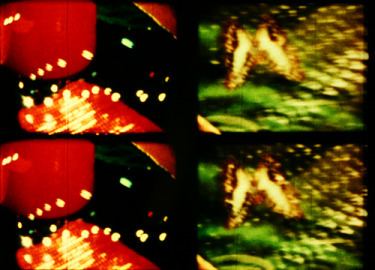
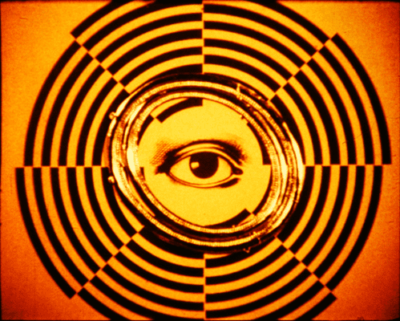
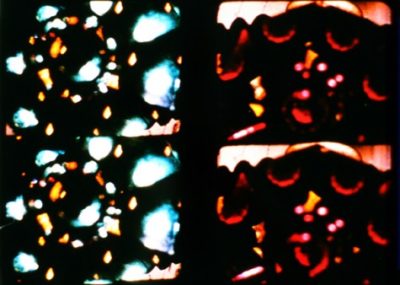
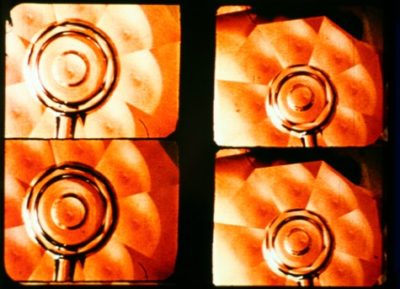
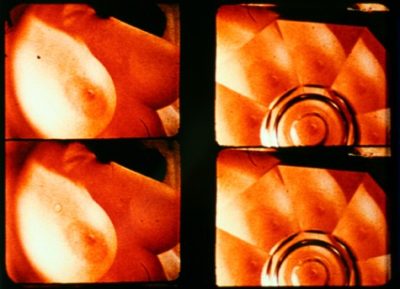
‘De Hirsch’s trilogy entitled The Color of Ritual, The Color of Thought, explored relationships of abstract animated imagery (this time in color) with live photography and what she called “voyages into buried continents of the self.” The very titles indicated her penchant for magic, myth, and ritual: Divinations, Shaman: A Tapestry for Sorcerers, Peyote Queen. In 1968 Storm De Hirsch was awarded $10,000 in the American Film Institute’s first round of grants to independent filmmakers — the only woman among the winners. With the money she made a mini-feature called The Tattooed Man, based on her poem of the same name; it was more episodic than her first film had been, like a “happening” more than a dramatic film, and more representative of her times. For her tenth film, Third Eye Butterfly, De Hirsch used dual screens, side-by-side, creating a 70mm effect. One critic wrote that this encouraged the viewer’s mind to give the two horizontal images a third meaning, as Eisenstein’s montage of two images on a strip of film gave them an implied third meaning.
‘In 1973, for her Hudson River Diary series, De Hirsch used a handheld 16mm camera to create cinematic landscapes and waterscapes shot from a moving train (Cayuga Run) or walking along the frozen water’s edge (Wintergarden). These films began to look more like visual poems than movies based on poems or films for which she had written poetic descriptions. Sometimes for convenience or safety’s sake, she shot on Super-8 which later was blown up to 16mm. When she was given a cartridge loading Super-8 camera to take to the Venice Film Festival, she began her Cine-Sonnets series. Filmed in England?s Heathrow Airport, on the train from Rome to Venice, or in her Venice hotel room, each was three or four minutes long, short and edited in the camera. No random shots of this and that — as her first European film had been — each carefully selected shot was framed by her eye and mind and hand, beautifully lighted by nature or perhaps by God Himself. As the films outwardly became shorter and simpler, inwardly they grew richer and more revealing.
‘With Louis Brigante’s death in 1975, Storm De Hirsch lost not only her much-loved companion of some 25 years, but also the studio where they had worked, much of her creative energy, and ultimately her health. As she succumbed slowly to Alzheimer’s disease, eventually she lost all memory of her achievements in film — the retrospectives at New York’s Whitney Museum and the Museum of Modern Art; her classes in visionary filmmaking at the School of Visual Art; lectures and screenings in Pennsylvania and Ohio, Vancouver, and Brussels, and at many film festivals and women?s programs. At the time of this writing, Storm De Hirsch continued to survive in a Manhattan nursing home with this long and devastating illness. Her fascinating role in independent cinema has yet to be well documented and assessed.
‘Comparison with Maya Deren deserves these further comments. Deren was something of a genius, far ahead of her times in virtually everything she did. Storm De Hirsch was an extremely talented filmmaker of her time, exploring many aspects of film as an artist’s medium. The very title of her film, Peyote Queen, shows her to be an outspoken product of those times — the rebellious sixties, the Beat Generation, the hallucinatory decade. It is a sad footnote to those times that although P. Adams Sitney played a major role in one of her major films (The Tattooed Man, 1968), Sitney’s seminal book on American avant-garde cinema (Visionary Films, 1974) does not even mention her name.’ — CECILE STARR
_____
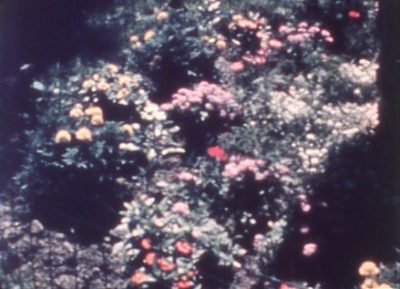
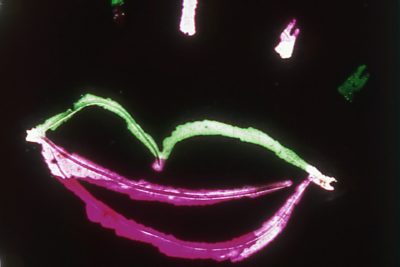
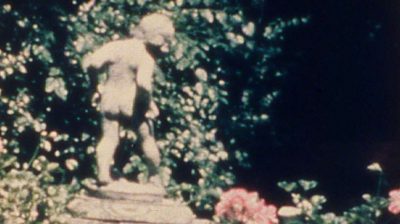
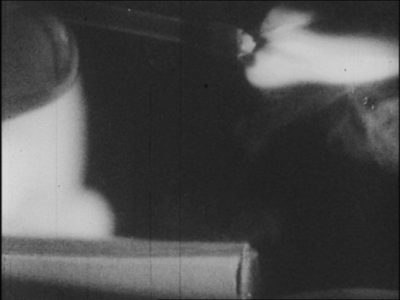
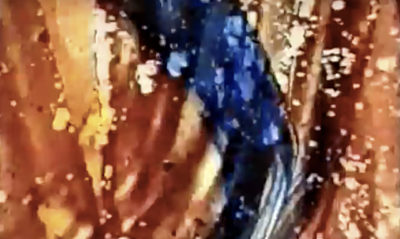
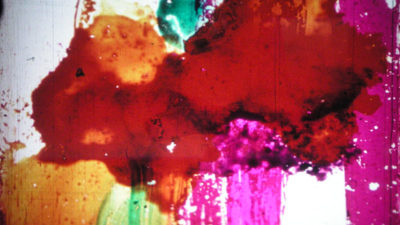
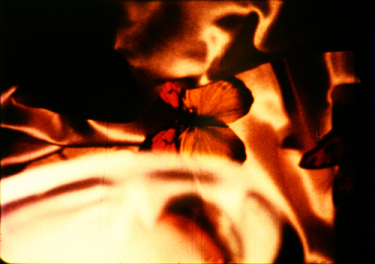
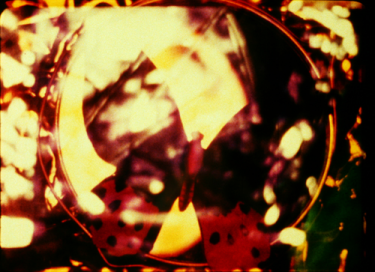
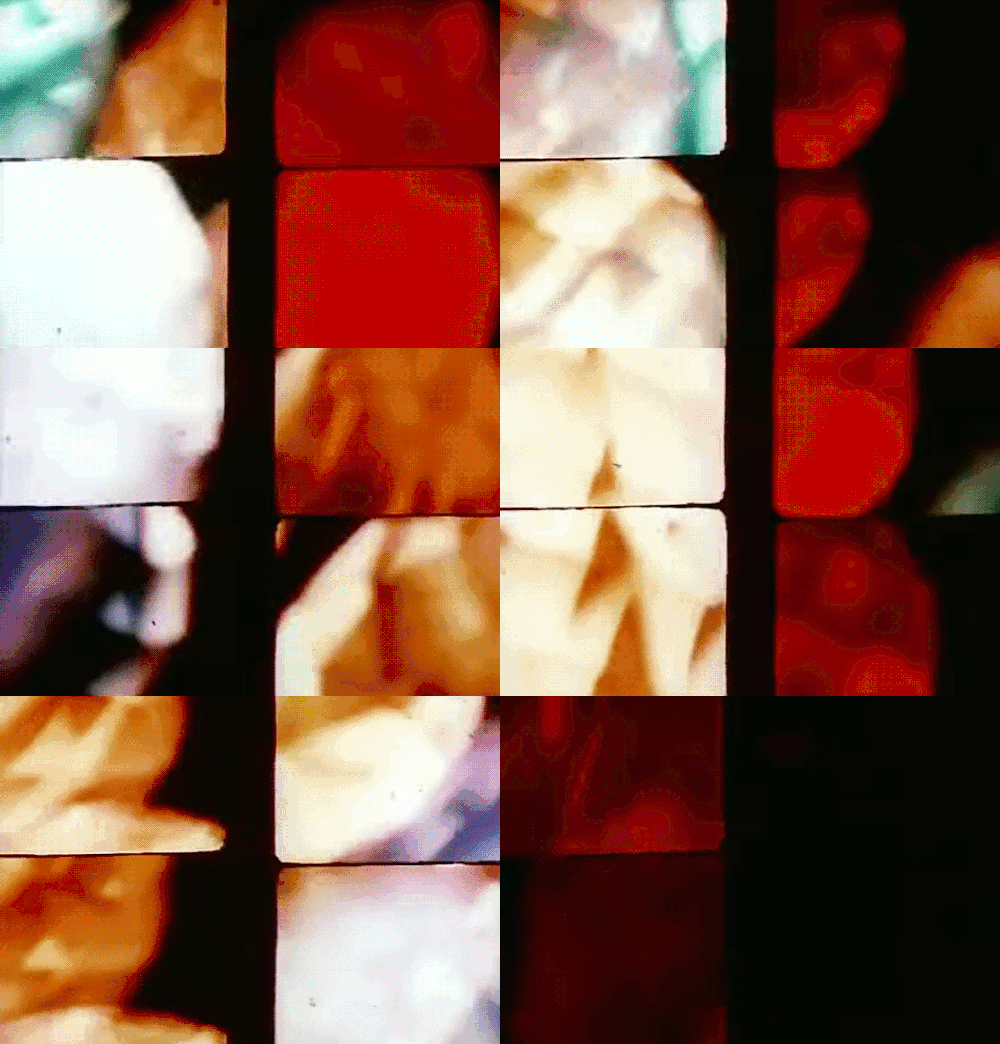
Stills
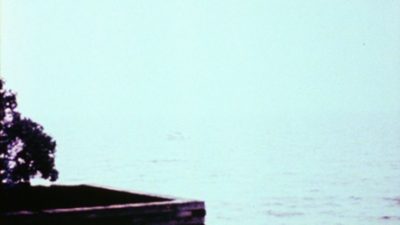
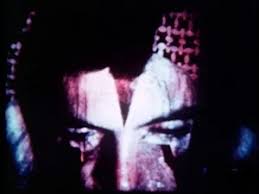
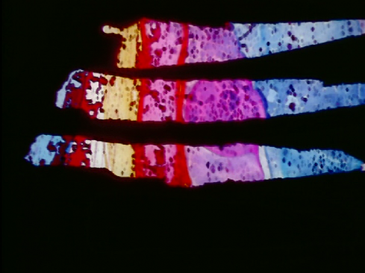
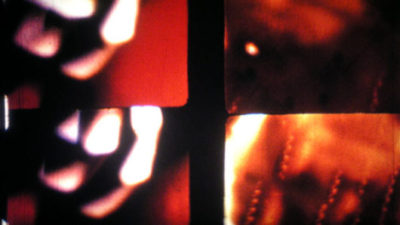
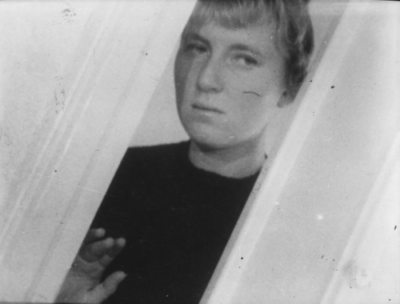
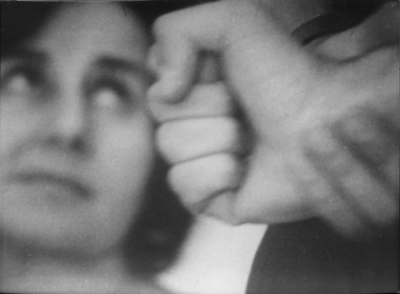
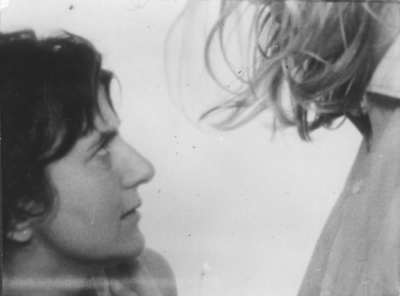

____
Further
Storm de Hirsch @ Film-makers Coop
SdH @ LUX
SdH @ IMDb
Mythology for the Soul: The Collected Poems of Storm De Hirsch
‘PEYOTE QUEEN’: STORM DE HIRSCH, THE WOMAN WHO MADE MOVIES WITHOUT A CAMERA
Book: Twilight Massacre and Other Poems, by Storm De Hirsch
Storm de Hirsch and Shirley Clarke’s conversation (full length)
SdH @ letterboxd
SHIRLEY/STORM
Independent Filmmaker, Storm de Hirsch, Press Conference
_____
____
Extras
Excerpt: Jonas Mekas Walden (1969), featuring Storm de Hirsch
Storm De Hirsch – Mythology for the Soul (trailer)
Velvet Underground @ Village Gate, NYC, June 7, 1966, raw footage featuring Andy Warhol, Gerard Malanga, Barbara Rubin, Allen Ginsberg, Peter Orlovsky,Tuli Kupferberg, Ed Sanders, Storm De Hirsch & more …
___________
Conversation: Shirley Clarke and Storm De Hirsch
from Underground Film Journal
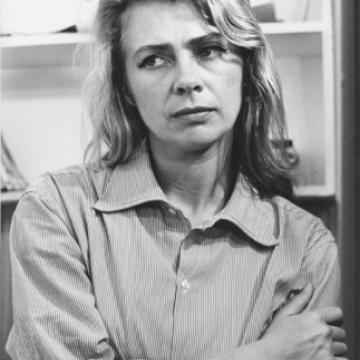
SHIRLEY: Do you think that lady film-makers are mechanically equipped to handle their field?
STORM: Well, if they’re not, they have other compensations […] The film has to be done in a certain way with Hollywood as the symbol and women were certainly never approached as directors.
[…]
SHIRLEY: Now there’s no doubt that as an industry, [Hollywood’s] reaction to women would be very similar, let’s say, to the advertising industry or the automobile industry or anything where a woman sits and has a certain slot. It’s a preconceived idea and they fulfill it and they allow them to be editors, which has always struck me as very strange, because anyone who knows anything about film knows that the very thing a film is going to say can be changed in the editing. […] And they will give that responsibility to a woman and yet would not allow her, supposedly, what they would consider the highest responsibility as producer-director.
[…]
SHIRLEY: Would you make a difference here in terms of, let’s say women film-makers: that they would be better off doing the kind of film that they can do entirely by themselves, where they got their own eight or sixteen millimeter camera and went out — or where they were in a position like you just described, where they are the director and therefore have people working with them and for them? […]
STORM: No. I don’t favor this whole business in the first place, of making a distinction between women film-makers and male film-makers. I think that when it becomes a creative process there is no distinction. It’s an imposed distinction which is imposed by people in the…
SHIRLEY: Well, historical precedents. In other words…
STORM: It’s a young field where not too many in terms of women enter that field, like they have the other arts, but still I don’t see any reason why it couldn’t have happened sooner except that there were these taboos.
[…]
STORM: I think that society was involved also in the act of film-making. It was very unseemly for a woman to enter into a field of this kind.
SHIRLEY: But why, because it never seemed unseemly to be a poetess or a painter and yet it was unseemly.
STORM: These are the definitions that are laid down by society.
[…]
SHIRLEY: It never occurred to me that I worked in a masculine field because of how I got in, in that I was a dancer and started making dance films on a very personal basis. It never occurred to me that masculinity and femininity and being in a field called film-making was not what I thought I was doing. […] In your case it’s true also.
[…]
STORM: To me, making poems and making films are one, and neither activity excludes the other.
[…]
SHIRLEY: Unfortunately, the cost of making films even now is still too high in reference to the immediate return on the investment; which means that you must have enough money to wait five years — you can make a film and then sit around for five years waiting to get your money back to make the next […] An artist can’t grow that way.
[…]
SHIRLEY: One of the things that people have said to me is how come — how did you ever get to make films? I said, you know, there are several possibilities. One, you could be independently wealthy. Secondly, you could be married to someone who is wealthy. Thirdly, you could find a way to scrounge. And then beg, borrow, and steal. […] How does anybody function in a field that really isn’t going to be lucrative and where your motivation – the thing that starts you — isn’t to make money but merely to maintain it.
STORM: Here we are, two “quote-unquote” lady film-makers. We’re talking, I assume, objectively — like any film-maker. I mean, what is the distinction here? We both operate differently. We have a different approach to our work. We have different concepts or goals, what we want to attain visually.
[…]
STORM: I think both The Connection and The Cool World are very powerful films and they have a sense of violence and they have a large sense of strength which, if one didn’t know, they would unquestionably be identified by most people as the work of a man.
SHIRLEY: And yet to me, it’s an endless give-away in both those films and in the one I’m just doing, that is, what I would consider a feminine way of looking at something […] violence personally, to me, is extremely repugnant. It’s something I’m terribly afraid of. And yet, I’m obviously very attracted to it.
SHIRLEY: Up to this point the only person so far who’s done a real woman’s film has been your Goodbye in the Mirror. In other words, for some reason, even so far, women film-makers have yet to deal with the subject of women. […] I’m jealous that you have been able to do it because I wish I had been able to do it.
[…]
SHIRLEY: Are you saying that you don’t think that there is any particular difference between a man’s film and a woman’s film?
STORM: No, I don’t. I consider both to be artists and that they primarily are artists first and male or female afterwards.
SHIRLEY: Because my own feeling is that there is a difference that hasn’t yet been revealed.
[…]
STORM: You do feel that the time will come when there will not be the labeling?
SHIRLEY: Yes. I don’t think there will be labeling. I don’t think anybody’s going to be concerned.
[…]
SHIRLEY: I’ve no idea what most men film-makers look like from reading reviews. […] Yet I can tell you what every woman who’s making films looks like — size, shape, her coloring. They are described that way.
____________
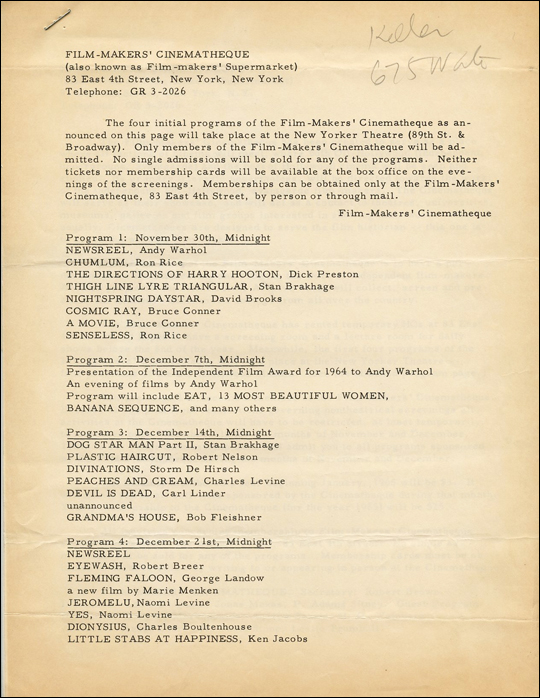
11 of Storm de Hirsch’s 27 films
____________
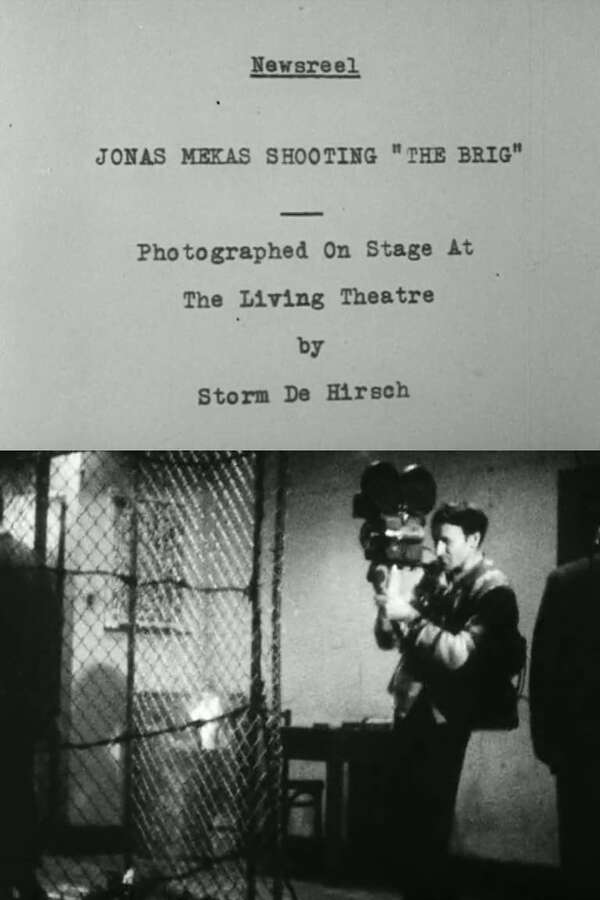
Newsreel: Jonas in the Brig (1964)
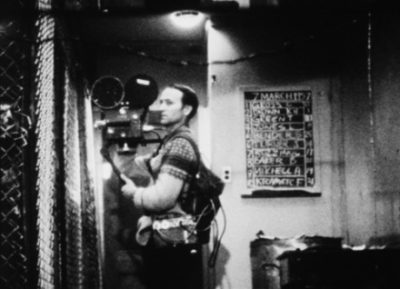
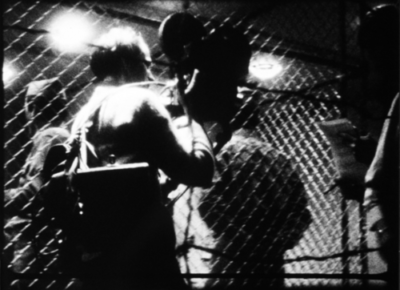
‘Anyone who remembers the historic contribution that the living theatre made to the New York scene couldn’t possibly forget their production of The Brig which was running when the government seized the theatre for non-payment of taxes. Jonas Mekas decided to make a film of the production to preserve its brilliance and in-depth dynamism. Actors, stage hands, and camera crew broke into the seized locked theatre with its impounded properties during the middle of the night. They recorded the play from start to finish in one night. Storm De Hirsch was there and she made a short newsreel called Jonas In The Brig. Not only was she able to capture a study of Mekas while he was filming, but also in the newsreel there is a tension and apprehension of the moment and even the panic of the possibility of not being able to finish the film.’ — Bob Lehmann
_____________
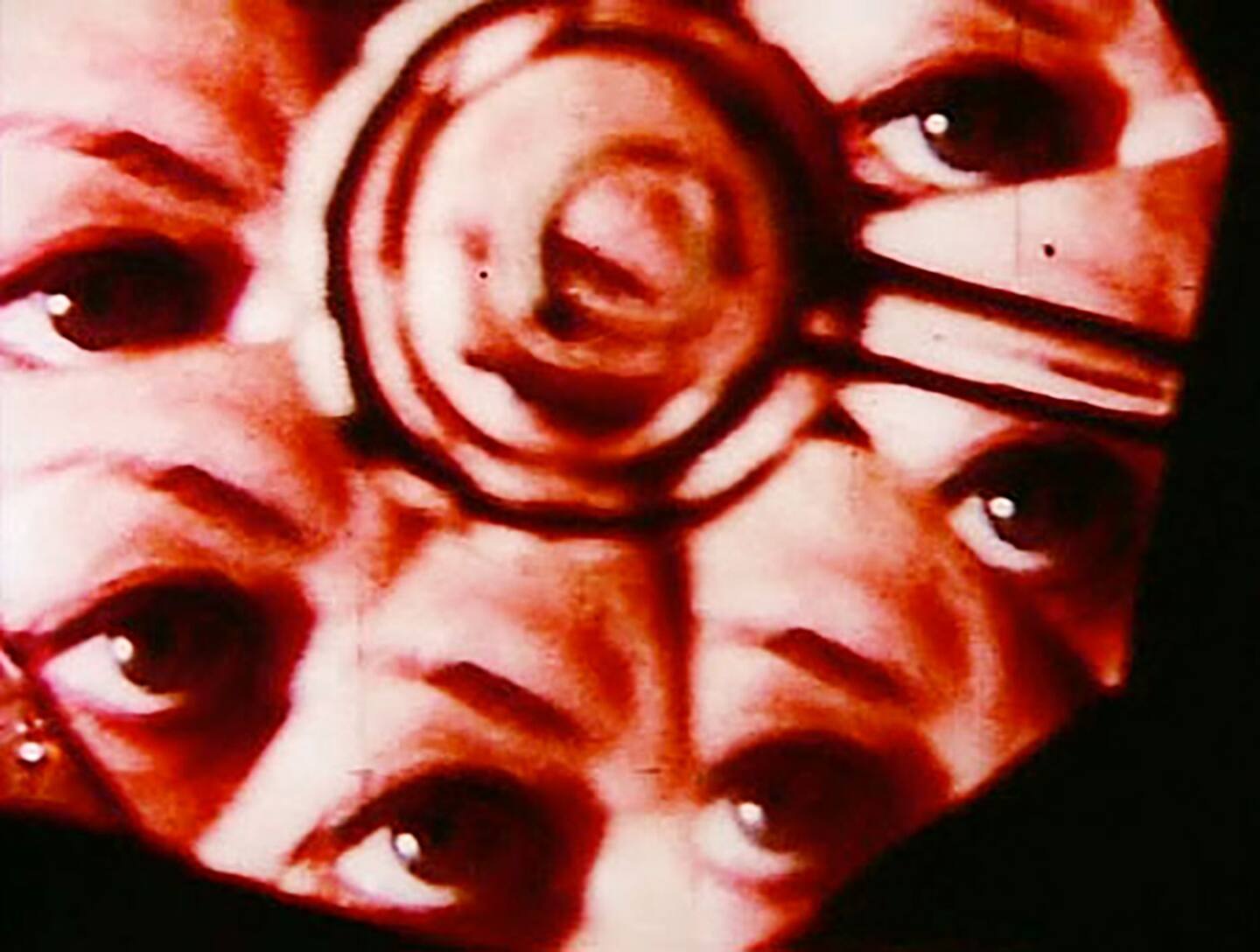
Peyote Queen (1964)
‘Storm De Hirsch is one of those avant-garde goddesses without much name-recognition outside of underground film circles, but her influence and dynamism has always been lauded by peers. Jonas Mekas, for example (often referred to as the “godfather of American avant-garde cinema”), called her psychedelic classic, Peyote Queen, “among my favorites … beauty and excitement.”
‘De Hirsch was actually a published poet before transitioning to film, and as such didn’t have ready access to a camera early on. Her first improvisational techniques were innovative manipulations of whatever film was just lying around at the time, making her as much a “sculptor” of celluloid as a filmmaker. The results of her experiments are now recognized as foundational films in avant-garde cinema. In an interview with Mekas, she spoke of her early work, like Peyote Queen, saying:
‘”I wanted badly to make an animated short, but I had no camera available. I did have some old, unused film stock and several rolls of 16mm sound tape. So I used that—plus a variety of discarded surgical instruments and the sharp edge of a screwdriver — by cutting, etching, and painting directly on both film and [sound] tape.”‘ — Dangerous Minds
____________
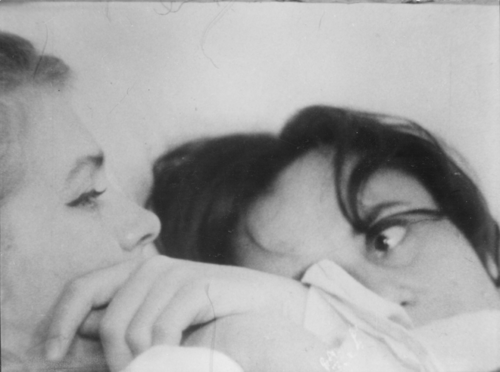
Goodbye In The Mirror (1964)
‘A dramatic feature shot on location in Rome. Centered around the adventures and illusions of three girls living abroad, the film explores their restlessness and personal involvments in assuming the role of woman as hunter.’ — S. D. H.
‘I, myself, belonging to the Spies for Beauty, Inc., and the humble monk of the Order of Fools, was allowed to peek at this film, and I couldn’t believe what beauty struck my eyes, what sensuousness.’ — Jonas Mekas
_____________
Divinations (1964)
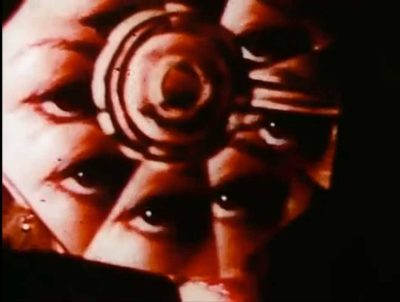
‘Divinations was completed in 1964 at the same time Storm De Hirsch was finishing her only feature film, Goodbye in the Mirror. According to the Film-makers’ Cooperative Catalogue No. 4, published in 1967, the music making up the film’s soundtrack is a ritual chant of a Maori medicine man and a Sicilian tarantella performed on a jew’s harp.
‘Also in the Catalogue, De Hirsch described the film as: “A film poem that records a psychic event in color, shape and sound. The inner eye reveals its visionary powers through a series of mystical signs and symbols, a collage of negative and positive images, incantations and sorcery.” P. Adams Sitney and Ken Kelman both called Divinations “Among the best films of 1964.”’ — Underground Film Journal

_____________
The Tattooed Man (1967)
‘A major work in terms of style, structure, graphic invention, image manipulation and symbolic ritual. Short, abbreviated dream-like moments, fused together like a tension and the dynamics of motion picture time… groping around for new myths. Symbolic invention and theatricalisation of dreams, and making them literal, is the whole function and purpose of movie making… her concept of the problem is sweeping and very large.’ — Stan Vanderbeek

Watch the film here (w/ audio commentary by Stephen Broomer)
_____________
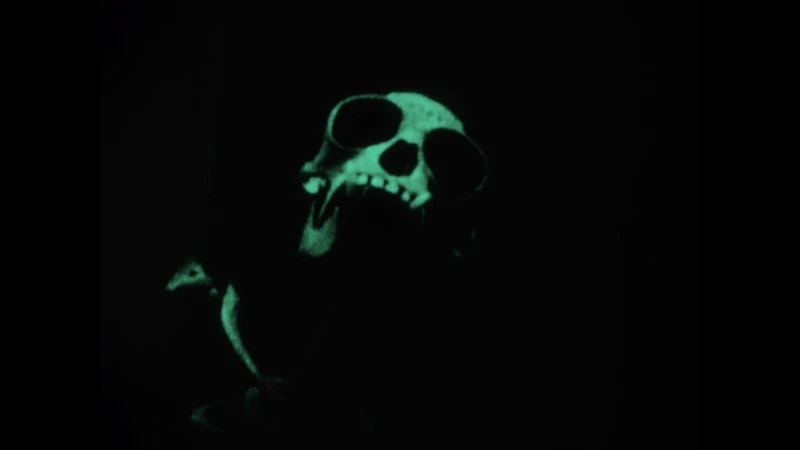
Shaman, A Tapestry For Sorcerers (1967)
‘Dedicated to all the magic makers of the world who weave a talisman for man’s rebirth in his house of breath.’ — SdH
Excerpt
_____________
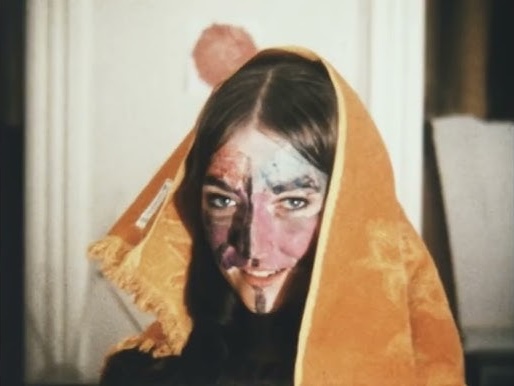
w/ Shirley Clarke, Lawrence Jordan, Lee Savage, Stan Brakhage, Ken Jacobs, Michael Snow, Joyce Wieland, Peggy Lawson, Manfred Kirchheimer, Peter Gessner, Jonas Mekas, Robert Breer, a.o. For Life, Against the War (1967)
‘A political activism compilation film made by splicing together a series of clips centered around the Vietnam War by a number of different filmmakers.’ — Mark Renton
_____________
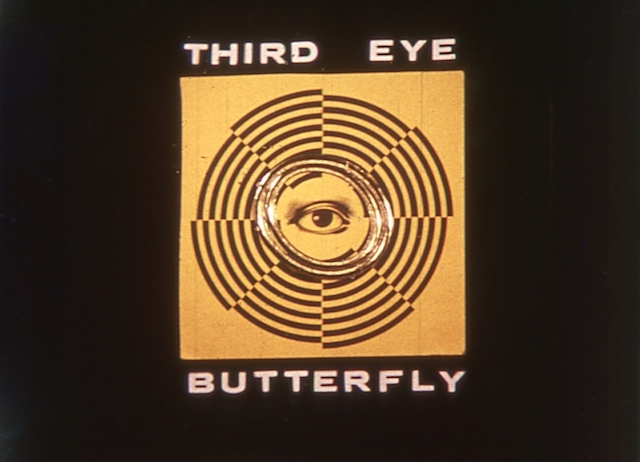
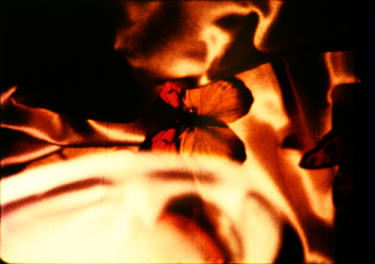
Third Eye Butterfly (1968)
‘THIRD EYE BUTTERFLY requires DOUBLE SCREEN projection, i.e., Reel #1 and Reel #2 are to be projected simultaneously on two separate projectors with one screen area directly adjacent to the other. Reel #1 is to be projected on the LEFT screen; Reel #2 on the RIGHT. Synchronized start marks are indicated by a punch hole on the leader of each reel. BE SURE TO OBSERVE THIS SYNCHRONIZATION! Sound must be open on one projector only during projection (Reel #1).’ — Filmmakers Coop
‘Where is the light coming from? The flavor of the colors are succulent to the long vision in the soul. How can dust cover the arrows of light? How can darkness favor oblivion in the face of light? The variations of soul-touch exist in the auras of illumination. The Great Eye dominates.’ — S. D. H.
‘The 70mm-like effect of THIRDE EYE BUTTERFLY encourages the mind to work as a third eye by fusing the two side-by-side screens into a third meaning, just as Eisenstein caused the meanings of two juxtaposed shots to result in a third implied meaning.’ — Casey Charness, Columbia University
______________
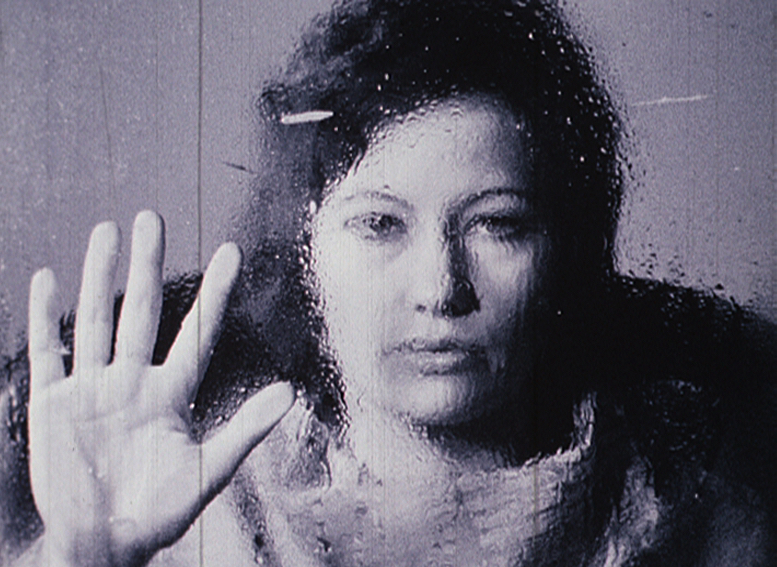
An Experiment In Meditation (1971)
‘The shape of change, the shape of memory has walked many miles in the mind to recreate a landscape, a manner of subterranean speech which may never reach its destination to the surface but roolls in the bloodstream swollen with speech invisible to the ear but palpable to the feelings that travel inside the network of the body/brain. The vision and the visitation occur simultaneously.’ — S.D.H
_____________
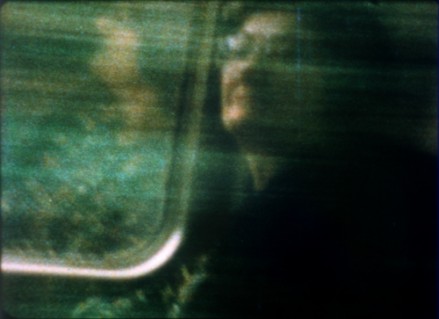
September Express (1973)
‘A study of time in motion. An accelerated montage of reflections and landscapes framed in the window of an express train running from Rome to Venice. Dedicated to the writings of J.W. Dunne, the collage of Kurt Schwitters and the cubistic paintings of Braque …’ — MUBI
This film is sometimes available on MUBI
_____________
Geometrics of the Kabbalah (1975)
‘5 is water, 5 is the letter X. 5 is distance. 5 says no. 5 laughs when divided into 2. 5 swims backwards, and space is five. The cherry tree is one. The hurt is 1 plus 1, the wish is two. The wonder three. The absence four, and the five is the Universe. The Universe in the head, the universe in the eye, the sky and the waterdrop.
‘5 is the unicorn in the circle, 5 can multiply, subtract, and dismiss. Divided and dismiss. 5 is the smoke of heaven, 7 unholy and 12 unmentionable. The privacy of Alpha and Omega is 12, the world is 12. The first and the last of the hunt is 12. 12 is the cry, the secret, the Great Mistake. 12 is the falling steeple. 12 stands high like the meeting of the gods because 12 are lurching altitudes beyond man whose life and death lie only in the 3. Stand 1 to 5, divide and topple. The points beyond the gate of 5 are sharp, walk carefully. 5 is the enclosure, 5 is the pointed start of the planet.’ — from Brook 16, “Source Books of Storm De Hirsch,” 9/24/66

*
p.s. Hey. ** Dr. Kosten Koper, Hi, Dr. Oh, that print behind your desk was in the post. Huh. I haven’t talked to Raymond in quite a while, but I’m all but certain he gave up drinking and drugs since that video, i.e. 13 years ago, because his health is pretty rocky now. Yes, I interviewed him for a book on his work for Phaidon years ago, and he was not an easy interview subject, that’s for sure. Hope all’s very good, sir. ** Bill, I’ve read so little Chinese literature, so I hope you find something good enough to translate one of these years. I think if ‘Let’s Dance’ had been a one-off experiment — Bowie meets Nile Rodgers — and not the top of the slide, a case could be made for it maybe. And how was the gig? Pray tell. ** Bernard Welt, Well, hi there, B! Nice about the mural and on the ongoing collaboration with Colby. Oh, yes, great, thanks! Everyone, the masterful Bernard Welt wrote story/essay for the catalog “Raymond Pettibon: A Reader” (1998) and you can and really should read it at his Substack here.. All the love and best! ** Adem Berbic, I don’t why I would have ever said that about The Simpsons, but I’ll take your word. I guess my excitement incorporates your feeling. My excitement is kind of a world. People in ‘horror’ forums often seem to talk about ‘The Sluts’, so yeah, although I think ‘The Marbled Swarm’ would be a better match. You have my luck. Any luck? ** Malik, Hi, Malik. Cool. I’ve actually been getting into the recent work by Jim Dine lately. Amazing that he’s still firing on all cylinders at his age. Nice August there. Ours over here was crushed by waves of heat waves. I can barely remember being outside. Things are good. Starting work on Zac’s and my new film mostly. Loving Halloween’s gradual entrance into the atmosphere. So good to see you. ** Carsten, Hey. I always took drugs largely as investigation into how I could take my brain to unforeseen places and try to write from those places. So I never got overly controlled by them, other maybe a little bit by cocaine at one point. So I never just partied, or I guess if I did the night wasn’t the timeframe I was angling to party in. Drugs and daylight are a lovely combo. The script of ‘The Wild One’ is truly awful. The ‘welcome’ posts can be pretty much anything. You just want to try to make sure it’s ultimately a lure to hit the appointed link to buy the book. The deck is now with our producer, and we’ll see if she wants us to make changes. Everyone, If I’m understanding Carsten correctly, the new episode of Radio Panik’s L’étranger includes an audio of his “Skull Music”, and that’s here. ** _Black_Acrylic, Hi. Raymond is a never ending supply of genius, that’s for sure. ** laura w, The subtitles are the original script, even when they clash a little with the French speaking parts. In that film, the language is too important to fuck with, but, yeah, I like the idea of the multiple xeroxing. Understood about the vacation anxiety. Maybe once you’re stuck in the vacation you’ll just kind of surrender and get the best out of it because you have no choice? That’s my practicality coming out. Hope so anyway. Interesting to see if Clive still has enough hardcore fans to make that Kickstarter thing pay off. I suppose he probably does. I hope Zac and I don’t have to crowdfund for our new film. Ugh. ** Uday, He’s crazy great, and, yeah, impossible to imitate well, from everything I’ve seen. Interesting that Charli is still having to milk the ‘Brat’ album. I would have thought she could take some chances by now. We’re showing ‘Room Temperature’ in London on Halloween, so that’s Halloween. We’ll go to the actually quite good Halloween makeover of Parc Asterix. Hopefully they’ll be some spooky surprises too. You and yours? ** HaRpEr //, I deify artists privately in my head, but the mass deification is too generalising and anti-analysis for me, I guess. Patti Smith is definitely another good/bad example. And don’t get me started about Derek Jarman or Keith Haring or David Wojnarowicz, etc. David was a friend of mine and being deified would have infuriated him. ** Sam F, Me too! That obsessive drawing of a single haunting thing isn’t uninteresting at all. It sounds lucky or something. Will Eisner, sure, he’s terrific. I might even try to find that ‘How to …’ book. I’m a process fetishist. Great about the launch! I was just Zooming with David Trinidad last night. I’ll pass along your love. That Le Roi Jones/Amiri Baraka book is great. And ‘The Naomi Poems’ too. You’re set with riches right there. Well, I hope your week is the week of months, which is supposed to sound even better! ** Right. Today the blog provides you with the work of Storm de Hirsch whose films, as usual around here, are far too under-celebrated and hard to see. See you tomorrow.


 Now available in North America
Hey Dennis,
Cool post, thank you! “Goodbye in the Mirror” in particular grabbed my attention. It has lots of things I like: Rome, young people living in threadbare situations… to name a few.
My film viewing has fallen off a cliff since I moved here. I guess I’ve just been busy and reading a lot. Yesterday I was daydreaming about trying to rig up some kind of projector situation when I finally get an apartment (no luck yet, but I do have one semi-promising lead and a renewed energy for the struggle). I feel like hanging a sheet up doesn’t really work. I don’t want to watch wrinkly films. Maybe you just need a very white wall? I remember I once hooked up with a guy and when I went into his room he was projecting porn onto an entire wall. If it was supposed to usher me into the mood, it did the opposite.
Last night I went to the cinema for the first time in months to see John Carpenter’s “They Live”, which I thought was fun. There’s a certain kind of slick but bombastic 80s thriller that cinephiles seem to be going crazy over these days. Like Carpenter and early Kathryn Bigelow.
Congrats on turning in the deck to your producer. What does this week have in store? If you’ve seen any good rentrée art shows, drop a hint over here.
Ciao
Xo J
Hey James, as the founder of a micro-cinelz I say sheet and/or wall with a decent inexpensive projector is damn good enough, way better than any TV. Go for it! Invite friend sand strangers.
Thanks Corey! I will experiment and see what I can come up with
Very cool! De Hirsch is a name I’ve known forever but up until now I never had a chance to see her work. With her interest in myth, magic, ritual & shamanism she seems right up my alley. Will dive in later tonight.
Sorry if I wasn’t clear but yeah you understood me correctly, my poem was played on the latest L’étranger show. I love that show, they create such rich soundscapes. And it’s an honor be a part of it again. By the way, the host told me he found the link to my poem here on DC’s, so thanks again brother for being a springboard into the wider world.
Got ya on the “welcome to the world” post. I’ll assemble it bit by bit while the book’s in the final stages of prep.
Congratulations on the deck send-off! I’m curious about your relationship to your scripts: do you view them as literature, in the sense of being part of your literary oeuvre, or are they “just” roadmaps or blueprints for the film?
Hi!
I’ve really enjoyed reading your latest posts, as I spent a long weekend in Nancy for Le Livre sur la Place (la rentrée littéraire “book fair”). Even though it’s quite difficult to actually chat with the authors directly (since everything takes place under a huge tent that looks a bit like a livestock show!), it’s really stimulating to attend the different talks and conferences. Thank you for this post about Storm de Hirsch; I didn’t know her work at all and I’m really looking forward to discovering it!
Oh! Such a shame about the Centre Pompidou… I’m keeping my fingers crossed that these projects will eventually come to fruition! Exhibiting sculpture is always logistically complicated (especially in terms of financial costs…). It would be so wonderful to see an exhibition curated by you!
A purely fictional exhibition project that I would love to see — even though perhaps its material dimension might end up being disappointing — would be to create exhibition rooms based on books (their interiors, atmospheres, etc.). It could lead to a stimulating intellectual and visual gymnastics between lots of different people and perspectives.
During my university research, I came across this thesis (available online) that explores the connections between women Surrealist artists and sexuality / various Freudian theories:
https://etheses.bham.ac.uk/id/eprint/3718/
It’s a rich piece of research that might perhaps interest you (?)
Yes, I listened to your interview with Bester: it was really wonderful! Whenever I read authors, I always enjoy listening to interviews with them as well; there used to be a fairly popular French programme that did exactly that: Apostrophes, hosted by Bernard Pivot (including an episode with Bukowski that’s quite funny).
Thank you for these daily shares; it’s incredibly generous and really stimulating! It makes you want to try the same exercise yourself: connecting lots of different references, discovering concepts that we’re not necessarily very familiar with, etc. In any case, I find the approach really inspiring, and I don’t think I’m the only one! Thank you so much.
Aha, I didn’t know that expression — I love it! I think we can probably extend the concept from a punk day to a whole punk week. So, have a punk week!
Hi Dennis!
It’s been a minute since I’ve said hello but I hope you are well. I am still in sober living but have been augmenting all the AA/recovery doings with going to a lot of open mics reading poems. We have quite a few of them here in San Diego.
I like this blog post. Short films have always like magical invocations to me. Maybe because Kenneth Anger was my introduction to short film and he’s adamant that films are akin to spells. I could say the same for poems.
I saw on Instagram that you visited with our friend Thomas Moore when he tripped over to Paris. How wonderful. It is my hope that I may meet either of you in the flesh one day!
Be well.
Douglas
Hi dennis! Thank you, these stills are really lovely, I’ll look at these films when I get a chance later. I’m currently just trying to navigate the irritating UK postal service, trying to send some books (including yours) to an ami in America, and it’s just unbelievably irritating. I wish kafkaesque wasn’t an overused term, because this would be a perfect opportunity to coin it.
Btw, do you like Raul Ruiz as a filmmaker? I watched one of his films recently, and was really amazed… it was really unique, to a layman. No prizes for guessing which film of his I watched, haha… I hope you’re well. Lots of love from here. Bye!
Storm De Hirsch’s work really holds up. Rather than kitsch, these underground films using symbol and ritual do end up being timeless by my reckoning. I do have a soft spot for this particular time and place.
Hi Dennis,
I haven’t been reading or commenting as much se I’d like yet you’ve been in my thoughts. I started the micro cinema half a year ago and we haven’t missed a week. Screenings on my roof and in a studio space. Almost total freedom to pick films with zero financial risk. Sometimes a handful of people show up and sometimes a few dozen.
I’m reading Mekas’s diary. It’s been a surprisingly inspirational book. Storm comes up pretty often there. I’ve seen only “Tatooed Man “ so far, in a late night binge. I’ll screen some of her work soon. I wonder what she and Shirley Clarke thought of Chantal Akerman’s work. I guess they were on the same scene for a time.
I’ve been productive enough writing (mostly in Hebrew) and filming lately but hit a backlog when it came to editing and publishing. Things have been moving better lately, somehow thanks to running the cinema. I’m still on the editorial board of the Hebrew literary magazine but am mostly just focused on dance criticism (writing it and recruiting new writers) — the young recent humanities grads on the magazine board don’t want to print cheaply, would rather stay web-only until the blessed day we get funded.
There’s something intense going on in my Butoh group but I don’t know how to describe it.
I’m planning to spend a month in France mostly Paris mid-April to kid-May of next year. I’m learning French, have a good teacher who believes in me. I still despite it all expect to fall flat on my face but less than last time, maybe can fight my way through a 16mm filmmaking course in. French.
How have you been? I’ve been meaning to get your take, as far as is possible here, on things staying just as interesting, perhaps more interesting, as one ages, yet less exciting. I think at 36 I’m basically motivated by the same things as at 26 or 16, and do a much better job aligning myself to those motivations. Yet I also feel that achieving whatever would be pleasant but not sublime. I used to see a lot more transcendent potential in life. Now I’m more into doing my thing and stay in decent health. My prospects are better than ever yet none of them feel at all Sublime or Redemptive.
I’ve come across de Hirsch’s name quite a bit, but never checked out her work. Some really nice stills, will definitely spend more time here later.
I’ve sampled some of the big-name Chinese lit writers, but had trouble with what I’ve tried. A few of the younger writers (some queer) are quite interesting. You may know Zi’en Cui from his films; his fiction is similarly messy and outrageous. He has one collection translated into English, very uneven, but interesting. Ka Hung is a much more obscure Hong Kong writer, no translations, but see review.
There’s also Zhenlong Yang, who writes in English and has been winning prizes recently. He has quite a backstory: was a successful Chinese TV co-host for years, decided he wanted to write queer fiction, and it was only possible to have a career writing in English. So he learned English (!), enrolled in an MFA program in the US, and a few years later is producing interesting work. I first read him in an issue of Ep;phany this year. I see more work available online. See: https://www.instagram.com/zhenglong_yangg/
Bill
The gig went well, thanks for checking, Dennis. It wasn’t one of my better performances, but the percussion duo especially was riveting. We had a reasonable crowd, considering how insane the new music calendar has been. You’d think it’s Berlin or something, haha. A recording was made; I’ll see if we like it enough to share.
Bill
i feel like i could read your blog for years and continuously stumble upon more new york underground filmmakers i’ve never heard of. always enlightening.
i wonder that about clive barker too. he’s one of those horror novelists that i think is too emblematic of the “splatterpunk” era of horror that a lot of newer horror readers either have never heard of him, know him only for hellraiser, or don’t like him. there’s this weird 80s nostalgia influenced puritanism in horror lit lately that has increasingly turned me off the genre in recent years- the two big horror guys, paul tremblay and grady hendrix, are pretty unbearable, i think at least. and then on the opposite end there’s no end to shitty self published extreme horror that’s riddled with typos and edgy trigger warnings and probably mostly ai generated at this point. at least we still have soft skull and clash press!
crowdfunding always seems so stressful, so i also hope you won’t have to! that’s how i’m probably going to approach my upcoming trip, also my attempts to not burrow into agoraphobia which i don’t have but can easily envision myself falling into. i also got a text this weekend that my great aunt died and so now part of that trip will be devoted to me doing wake or funeral stuff, so (she lived in the area, i actually thought i would drop in to visit her one of the days, lmao). i hope your weekend was much more sparkly than mine!
I guess whatever I feel could be called world-y, but if there’s a world, it’s obscured by/enmeshed with the thick gauze that is my brain. Like, there’s always an oppressive dimension I have to trudge against. I start with my Lacanian tomorrow (fully paid by my health insurance, can you believe) — I have a hope she might help lighten the oppression, but we’ll see.
No luck yet, unfortunately. I think it’s gonna be a slow burn. The catalyst was the relevant adjective phrase going from ‘possibly emotionally’ to ‘probably physically.’ So, I might need to keep tapping your luck.
I had a very nice coffee with Charlotte earlier. She’s got a case of the mid-novel-redraft blues, but to my biased ears what she described of it (i.e. the novel) sounded ingenious. She might be minded to propose you a coffee date when she’s in Paris next, but I don’t think she has any immediate plans.
As regards Storm de Hirsch, I have to confess it took me about ten minutes to make it past the greatness of her name.
What’s the skinny on your unfurling week?
It’s easier to turn artists into icons when they’re no longer alive to revolt against it. The new Ian Charleson biopic ELSINORE, which sounds like horrible Oscar bait slop, turns Derek Jarman into a fictional character. I can just imagine how much Jarman would’ve hated this film.
That said, Bowie’s ’90s and 2000s albums are better than they got credit for at the time. I went back and listened to them following his death, and most of them are pretty solid, just not great or groundbreaking.
I just watched ‘Shaman’ and thought it was brilliant. Its removal of full wide-shot subjects has a really interesting distancing effect, like you’re as close as can be but still so far away. I’ll have to seek out the rest of her ‘Colour of Ritual…’ trilogy tomorrow along with ‘The Tattooed Man’. Thank you for another great introduction!
Yeah, Wojnarowicz has been reduced to an activist and tragic victim in his legacy. If you take that approach, there’s a lot of great work he made that ends up being ignored because it doesn’t fit with the created narrative. In fact, the work itself gets ignored, or at least the things that make it interesting. It’s a funny day to mention him actually, because my instagram feed has told me it would have been his birthday today.
Re-appraisals for artists constantly ebb and flow from cult hero to oblivion, anyway. Hopefully the future will carry nuance. Look at Dylan Thomas, he was a sixties cultural icon who became a cliche from over-exposure and now he’s rarely read by young people.
I got ‘Devour Me, Again’, the collected poems of Bambi Lake in the mail today. It’s been a very anticipated title for me. Did you ever see The Cockettes or The Angels of Light (not Michael Gira’s band obv)?
In the same boat as the venerable Bill Hsu; came across the name a bunch for film but the blog forced me to pay closer attention to her poetry. The latter didn’t click for me today but that’s probably a function of my mood. There’s a computing class I’m taking right now that’s kicking my ass thrice over and it’s a shame because the professor is lovely and knowledgeable and it’s really just my ineptitude. I think Charli used her Brat set to further disavow the public image of it, which was interesting to sit through and especially apparent when she sung Apple differently to preclude the possibility of people doing the dance. The concert itself was a masterclass in performing; it’s just that I’ve been a fan for a decade and was of course hoping for more. Had to look up the Parc Asterix, much to my shame. My friend and I might do a waterpark at some point; are you into those as well? I’m unsure of what to do for Halloween now that I’m not going to a college party but I’m sure I’ll find something. I always enjoy dressing up with stuff I have in my wardrobe/have made to augment my wardrobe. Recently: Bowie, Freddie Mercury (relatively easy resemblance), Olivia Newton-John Waters (a mashup that worked better in my head), Montgomery from Araki’s Nowhere and finally Antoine Monnier. Not sure what this October holds for me but excited by the range of possibilities. See you on here day after tomorrow!
Yeah, really great last few posts. Always new people to me, and people like Raymond who’s work I knew but didnt know his name! Todays was someone I’ve never heard of, yet again, so yay! shining a light on sooo many experimental filmmakers is def one of the blog’s strongest suits I think! Tattooed Man makes me think of Coil… an influence? Never know…
Anway I’ve been looking for non-pop-songwriting ways to construct music, and I think I’m gonna stick with the dark ride concept for now, as in using ride thru footage as a “score” for instrumental pieces… I think I’ll start with ones I rode as a kid at Lagoon in Utah as well as stuff from the last dark ride post you did! Onviously will share when a release is done, but maybe I can use this concept for a live show too? Project the footage behind me etc. haha, could be fun…. But yeah I’ve been kicking a few compositional concepts around the past month as I’ve finished up other projects, and I’d rather do more scultpural stuff again before dipping back into a batch of “song” songs…
Finally feeling like fall around here, so cool night walks plus old neofolk albums have been the winning move for me lately. Hope the weather is treating you right , and the projects in motion are showing the promise you desire… bye!!