
‘”Hello freaks, film friends and perverts! I was one of the first in the world to make a gay rights film after World War II, and I can say in all modesty that I’m probably the most productive gay filmmaker on Earth,” Rosa von Praunheim confidently writes on his website.
‘He is definitely the most hard-working one. Von Praunheim has directed about 80 feature and documentary films to date, as well as countless short videos for television. He initially didn’t even want to become a filmmaker, as he preferred painting. But he quickly noticed that he could reach a larger audience with his movies.
‘Rosa von Praunheim was born Holger Radtke on November 25, 1942, in a prison in Riga, during the German occupation of Latvia. Shortly after his birth, he was adopted by the Mischwitzky family, who brought him to East Berlin. The family lived in East Germany until they escaped to Frankfurt in 1953.
‘The young Holger developed an early interest for the arts. The first play he directed in high school was in Latin. He then studied at an art school in Offenbach and later at the Berlin University of the Arts. It was around that period that he assumed his stage name, “Rosa von Praunheim.” Rosa — German for “pink” — was a reference to the pink triangle homosexual prisoners had to wear in concentration camps, while Praunheim was the name of the district in Frankfurt where he lived as a teenager.
‘He directed his first short film in 1967. A year later, he received an award for “Rosa Arbeiter auf Goldene Straße” (Pink Workers on Golden Street). He became “famous and notorious,” as he likes to say, with his 1971 film, “It Is Not the Homosexual Who Is Perverse, But the Society in Which He Lives.” The title alone was already an unheard-of message in West Germany at the time. Even though the law criminalizing homosexual acts had just been reformed in 1969, homosexuality was still taboo for most Germans and the word “schwul” (gay) was used as an insult.
The filmmaker’s parents discovered that their son was attracted to men through this movie as well. This coming-out was a personal liberation for the artist, which he transformed into a wake-up call for all homosexual men. “I didn’t like gays who were completely apolitical and remained in the closet, who would find escape in parties instead of supporting the movement,” said von Praunheim. “I was angry at all the coward gays who would run away when chased by homophobes, instead of resisting as a group.”
‘With the film, Rosa von Praunheim became an instant icon of the gay and lesbian movement in Germany. He called homosexuals to “Get out of the restrooms and onto the streets!” and that encouraged countless people to reveal their sexual preference publicly. Within a short period, 50 gay rights groups were formed in West Germany. Von Praunheim became a star — in the art world as well. In 1972, his film was shown at the Documenta in Kassel.
‘The filmmaker pursued an unparalleled career and has won numerous awards. His films are campy and controversial, but often surprisingly peaceful and poetic. Many of them have gained cult status. That was already the case with his first feature film from 1970, “Die Bettwurst” (The Bolsters), a parody of bourgeois marriage. He also explored realities beyond his home country, directing, for instance, the documentary “Survival in New York” (1989) and its sequel, “New York Memories” (2010).
‘In 1985, he directed “A Virus Knows No Morals.” Instead of dealing with the issue of AIDS with what he called “a pity film,” he chose to do so with a black comedy. With the work, he aimed to entertain while raising awareness. “Many people criticize safe sex, because they believe the virus was created by the CIA and Germany isn’t threatened by it — as long as you avoid unprotected sex with Americans,” the filmmaker reported at the time of the release of this movie.
Von Praunheim organized Germany’s first large AIDS charity event in Berlin’s Tempodrom, featuring a series of major German artists such as Herbert Grönemeyer, André Heller and Wolf Biermann. He continued addressing the issue afterwards, creating an AIDS trilogy in 1990. While denouncing discrimination against people with AIDS, he outed two popular TV public figures, comedian Hape Kerkeling and TV host Alfred Biolek, on a TV talk show watched by some four million viewers. It become one of the greatest scandals of German TV history. “It was a cry of despair at the peak of the AIDS crisis,” explained Rosa von Praunheim later. He wanted to incite closeted people to move and show more solidarity with the gay community, which was strongly affected by AIDS and HIV.
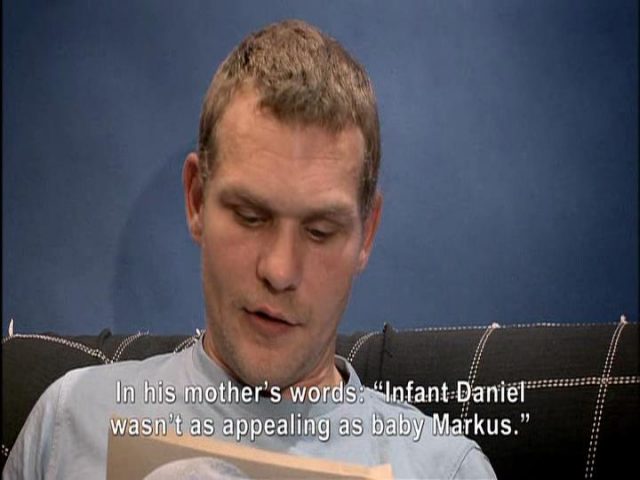
‘Along with films dealing with homosexuality, the director has also centered many of his works on older women. Cabaret artiste Lotti Huber starred in von Praunheim’s film “Unsere Leichen leben noch” (Our Corpses Still Live) in 1981. In “Two Mothers” (2007), von Praunheim documented his journey to Latvia’s capital, Riga, searching for clues on his biological mother. His adoptive mother had only before told him that he had been adopted. He was nearly 60 when he found out that he was born in a prison and that his biological mother had been murdered in a psychiatric hospital. The artist further explored his own past in “Praunheim Memories” (2014), revisiting the streets of his youth.’
‘Much has changed within the 40 years of Rosa von Praunheim’s activist career. Since October 1, 2017, gay and lesbian couples can also get married. Isn’t that a wonderful birthday present? “No, not at all,” reacts von Praunheim. “We wanted something else. It’s now moving towards conformance and ‘let’s do like the heteros,’ but that wasn’t the plan.” Another fact disturbs him even more: “Many countries on Earth still criminalize gays. The situation is horrible for homosexuals in eastern Europe, in Africa and Asia. Churches vehemently fight against gays and lesbians. There’s therefore so much to do for us and for me, in the short time I still have to live.”‘ — DW
___
Stills


____
Further
Rosa von Praunheim Site
RvP @ iMDb
“I made a lot of difference and I was controversial”
ROSA VON PRAUNHEIM Le provocateur
RvP @ MUBI
«il faut révéler l’homosexualité des prêtres»
IT’S A WOUND-ERFUL LIFE
“IN TERMS OF OPENNESS, A LOT HAS CHANGED”
RvP @ letterboxd
RvP @ instagram
The work of Rosa von Praunheim: tackling AIDS in Germany through film
Interview With Rosa Von Praunheim
Perversion of Society
Gender expression in Rosa von Praunheim’s City of Lost Souls
“Quise educar sexualmente a la gente”
Reconceiving Trans Womanhood And Sexual Pluralism In ‘City Of Lost Souls’
____
Extras
SPECIAL TEDDY AWARD 2014 – ROSA von PRAUNHEIM
My scene in the Rosa Von Praunheim film “Uberleben in Neukölln”
A restaging of NICHT DER HOMOSEXUELLE IST PERVERS’s legendary final scene.
Rosas Welt: 70 Filme von Rosa von Praunheim – Trailer Presse
____
Interview
from Goethe institute

Mr. von Praunheim, a certain pleasure in provocation and breaking taboos runs through your whole career. You triggered considerable controversy in the early 1990s by outing celebrities such as Hape Kerkeling and Alfred Biolek on a TV show. Would you do such things again?
Outing was then a big thing. You can’t do something like that alone, but only with others, and that’s very difficult because I’m a loner really. But I certainly enjoyed it. I’ve made a film about David Berger, a gay religion teacher who was kicked out of his job, and tell how many gay Catholic priests there are. It would make sense to out gays in the Church. But that’s not for me to do. It’s a job for others.
How do you see outings today?
I think it changed journalism in a very positive way. Back then the media reported about gays only in connection with AIDS deaths, crime and what not. Suddenly, gays were presented quite normally in the press, without making a problem of them. That was a big improvement.
In “It Is Not the Homosexual Who Is Perverse, But the Society in Which He Lives” from 1971, your criticism was also aimed at the gay scene, from which you called for more commitment and struggle. What has changed since then?
One of the demands was that you should out yourself, be open about your homosexuality and talk about it in your circle of friends, with your parents, at the job. In terms of openness, a lot has changed. I think that many people now grow up more naturally with their gayness – supported by the internet, by gay groups and so on. This of course doesn’t apply to everyone. But because the social climate has changed, a large percentage can now live in their relationships more freely and openly.
On the occasion of your 70th birthday, you’ve launched a mammoth project – “Rosa’s World”, with 70 new short films. Many revolve around queer themes, but you also devote some to strong woman. Why is it that in the course of your career you’re films have repeatedly concerned themselves with older women, ranging from Lotti Huber to Evelyn Künecke?
It began with my Aunt Lucie, who played in Die Bettwurst (i.e., The Bed Potato) and became famous because, with her wonderful naivety, directness and honesty, she embodied a very different type of woman from that which had been previously known in film. I’m interested in older woman particularly because with them you have an erotic, but not a sexual, relation, and because between them and gay men there is often a wonderful solidarity. Perhaps also because we mutually esteem each other and both belong to minorities that are discriminated against by hetero men.
You haven’t yet had a big commercial hit. What does success mean to you?
Success is everything. But success also means when someone takes up your work. Or when someone tells me that he likes one of the poems I write everyday. Or when a couple of viewers go to the movie theater to watch one of my films. Naturally, it would be great if a thousand or ten thousand people would go to see one of my films, or if hundreds of thousands saw one on TV. But you grow humbler with time, because you know how difficult it is to prevail in this media circus. You’ve been very lucky if you managed to do anything at all.
The cartoonist Ralf König, to whom you recently devoted a documentary portrait “König des Comics” (i.e., King of the Comics), is also very successful with a heterosexual public. How do you account for that?
I think it’s the humor that makes it easier for straights to love gay life. Moreover, his comics and my films aren’t moralistic, but rather about everyday observations that could just as well apply to heterosexuals.
In the past your films and your commitment have initiated a good deal. Is there anything about which you’re particularly proud?
I don’t really know what to think about being “proud”. I’m happy that in my old age it’s been given me to continue working. My consciousness is focused more on the present and the future. The past and what I’ve done doesn’t really belong to me.
If you compare the Rosa of the early years with the Rosa of today, how much has he changed and how much has stayed the same?
I can’t say. I feel more like a seven year old. I notice this in the drawings I do. In them there’s something that was in me very early on and which I didn’t develop. So in this sense I’ve stayed the same. Very infantile. And that’s a wonderful feeling.
_____________
19 of Rosa von Praunheim’s 161 films
_____________
Samuel Beckett, 1969
‘Someone who is obviously supposed to be Beckett is walking down a Berlin street with a briefcase under his arm. He is accompanied on the soundtrack by an Italian text taken from Dante’s Divine Comedy. While the big words are being spoken, the camera, in an accurate documentary manner, moves a door sign into the picture (“Lunch from Monday-Friday 12-3pm”), but above all the Schillertheater. Beckett sits in front of the lofty building and reads the BZ.’ — Dietrich Kuhlbrodt
the entirety
_____________
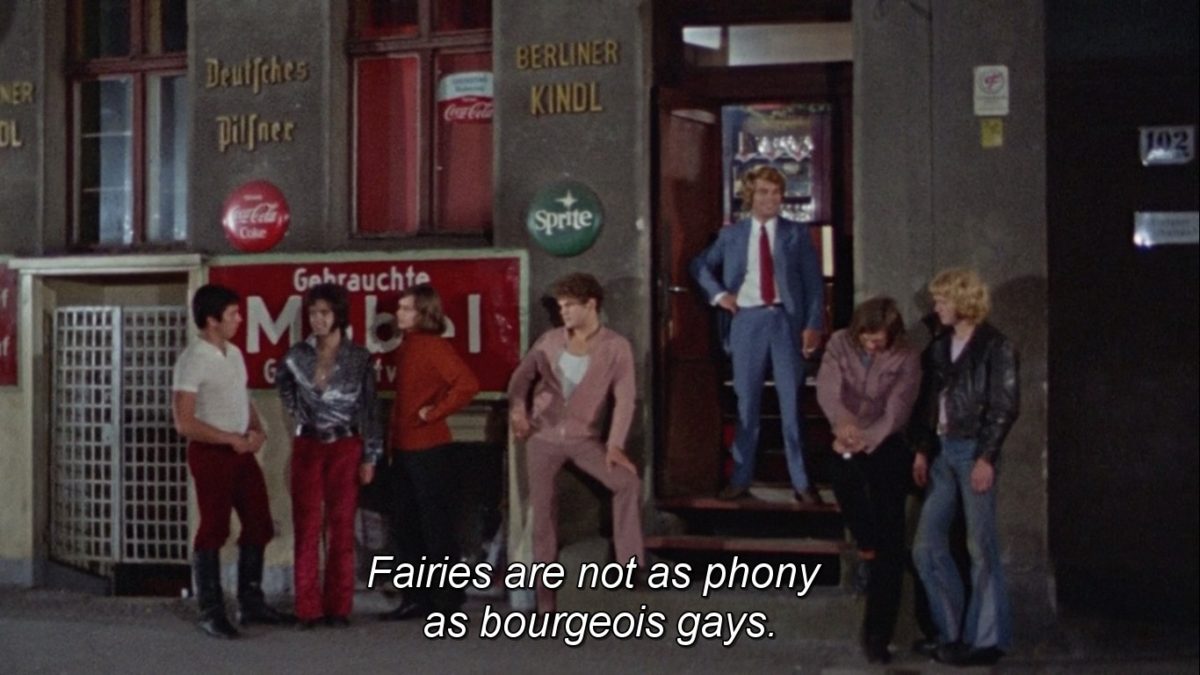
It Is Not the Homosexual Who Is Perverse, But the Society in Which He Lives, 1971
‘Perhaps the best Praunheim film and if its visual side has acquired a value of a historical record of a time – almost archaeological -, its ideological side is a performance of a timeless ideology – since the past always crave to return. The film gained an unusual perspective for the present as a document of contemporary action – the political art seek a discourse that in 71 had already found its formulation.’ — josé neves
______________
Die Bettwurst, 1971
‘It’s love at first sight: elderly secretary Luzi and young, unemployed Dietmar find each other by accident in Rosa von Praunheim’s outrageous genre, social satire.’ — IMDb
Excerpt

______________
Berliner Bettwurst, 1973
‘The story of the lovers Luzi and Dietmar from Praunheim’s earlier cult favourite film “The Bettwurst” finds its continuation: A marriage and device loan attracts two to Berlin, there will be married in the Memorial Church.’ — IMDb
Excerpt
Excerpts
_____________
Porträt Marianne Rosenberg, 1976
‘The equipment of the 12-minute film, which was shot by a television team for the “Treffpunkt” series, has been brazenly increased to the kitschy. Marianne Rosenberg found nothing in it. Says Rosa von Praunheim. “She trimmed .” In the draperies of the interview apartment (it is Ulrike Ottinger’s) and in the dance movements of a third party (Tabea Blumenschein) a sub-image level develops that contains all kinds of lesbian signals. However, these are primarily not suitable for decryption. Marianne Rosenberg’s mother, who was there while the film was being shot, only intervened when asked about racial persecution. “That affects the image .” Interruption of the recording. And then came the simple “no”.’ — Dietrich Kuhlbrodt
Excerpt
______________
Army of Lovers or Revolt of the Perverts, 1979
‘This is a really fascinating snapshot of the gay community in America at a crucial point in time — right in the middle of the Anita Bryant firestorm and just before the failure of the Briggs Initiative, the death of Harvey Milk, and the AIDS crisis. This was made right around the same time as Word is Out and Gay USA, but its tone couldn’t be any more different than those mostly self-affirming documentaries. Here, von Praunheim both dredges up and seems to revel in the contradictions of the gay rights movement — both celebrating the open sexuality (and having unsimulated sex on camera) while chastising urban, ghettoized gays for their complacency with the small gains that they had made; showing a Grace Jones performance at New York Pride and interviewing a lesbian activist who found that performance to be sexist and degrading; and interviewing not just figures like John Rechy, Harry Hay, Del Martin, Phyllis Lyon and Fred Halsted, but also the founder of the American gay nazi party and one of the founders of NAMBLA. The result is a document that feels as messy, sprawling, angry — and occasionally sexually charged — as its subject matter. Can Criterion, Strand, or some other distributor finally pick up distribution rights for these Rosa von Praunheim films?? Crazy that they’re all so hard to find.’ — Evan
the entirety
_____________
Tally Brown, New York, 1979
‘Tally Brown tells tales, sings songs, and commands the screen for documentary filmmaker von Praunheim (whose Survival in New York is also showing in this series). The classically trained Brown’s musical repertoire encompassed opera, rock, and much more. Her film collaborations with Andy Warhol and Taylor Mead are discussed, and friends Holly Woodlawn and Divine weigh in on a thrilling performer equally at home on Broadway and at gay bathhouses.’ — Quad Cinemas
Excerpt
the entirety
_____________
City of Lost Souls, 1983
‘A group of American rock singers, dancers and acrobats live in Berlin. They are blacks, gays, transsexuals and Jews. What New York was for the 1960s, Berlin was for the ’80s. Ein groteskes Musical. Pollyfilla is a performer who defies traditional categorisation. As ScotsGay put it “they will engage in any act and transcend shame.” Adam Castle’s feral queer creature alter-ego stomps indelicately, the line between cabaret, drag and performance art. Behind the lurid façade of Praunheim’s film, lies a powerful dialogue about the queer and trans struggle for representation, which remains highly pertinent over 30 years later.’ — Another Gaze: A Feminist Film Journal
Excerpt
the entirety
_______________
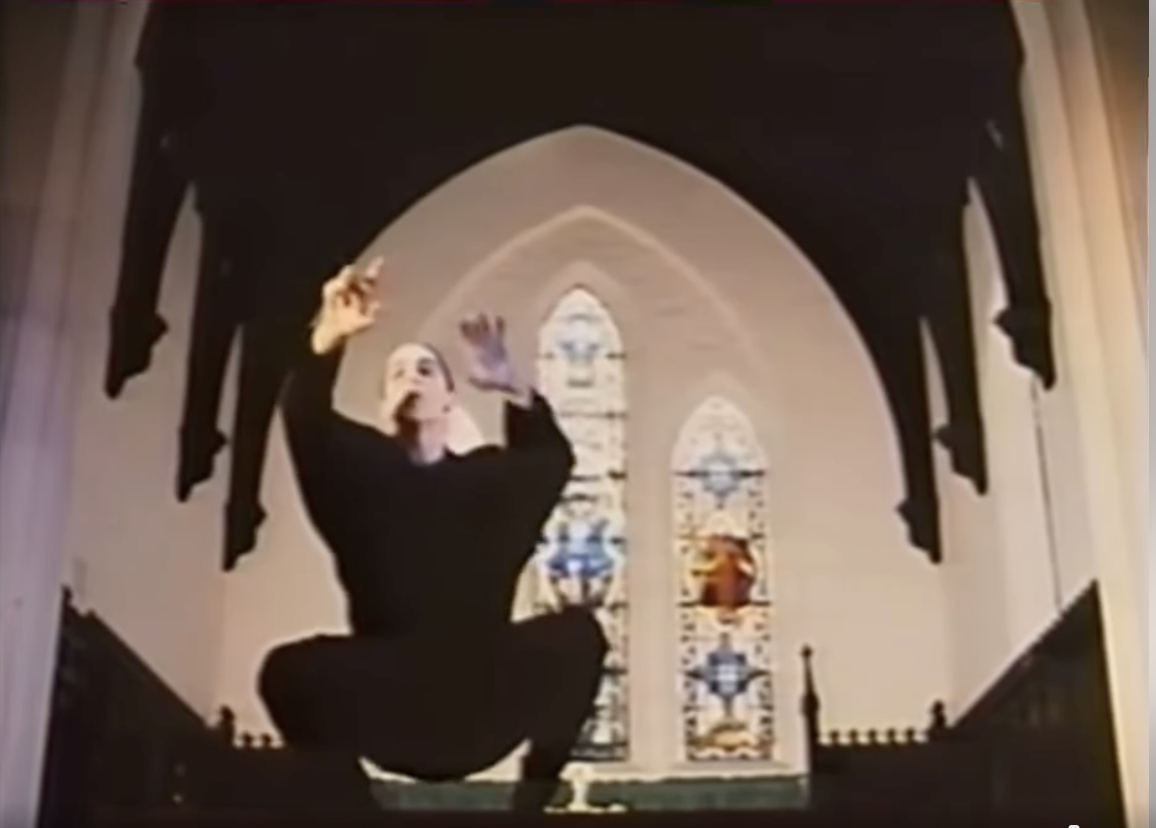
Positive, 1990
‘This film documents New York City’s gay community’s response to the AIDS crisis during the 1980s as they were forced to organize themselves after the government’s slow response to stem the epidemic. Activist who are interviewed include New York filmmaker and journalist Phil Zwickler, playwright and gay activist Larry Kramer and musician Michael Callen who co-founded people with AIDS Coalition. Framing the individual stories of these three men is a chronicle of the creation of the Gay Men’s Health Crisis, ACT- UP and Queer Nation as the gay community confronted the AIDS epidemic.’ — collaged
Excerpt
______________
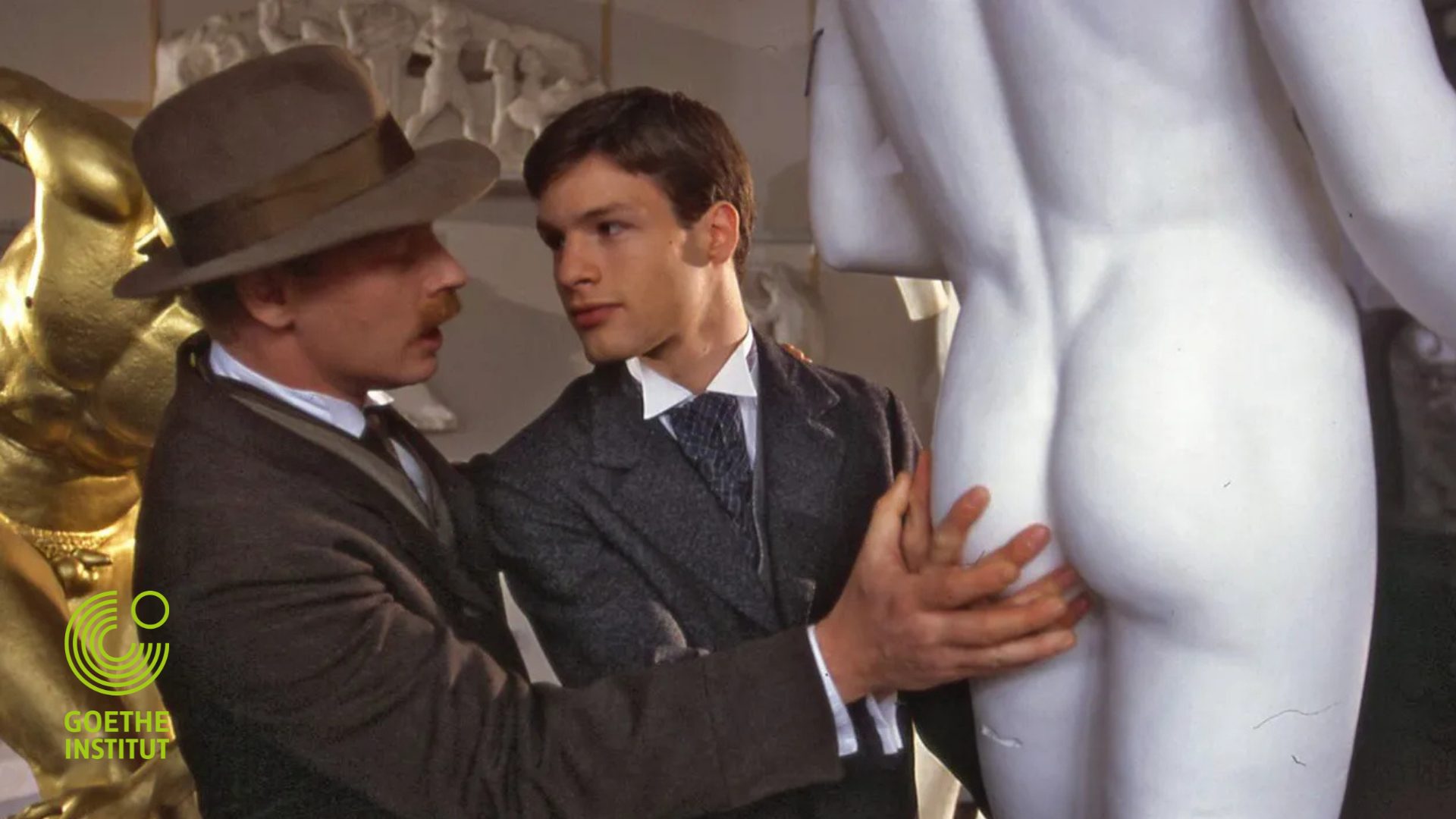
The Einstein of Sex, 1999
‘Magnus Hirschfeld (1868-1935) was a sexologist whose scientific investigation had an enormous impact on twentieth- century attitudes to homosexuality. Confronted with the conservatism of his era and driven by a determined humanism, in 1897 he founded the first political gay movement. Then in 1920 he founded an institute for sexology in Berlin. As a socialist homosexual of Jewish extraction, he was forced to flee his country in the thirties. During his stay in Los Angeles, Hirschfeld was called ‘The Einstein of sex’ by American journalists. He died in exile in Nice in 1935. Three years later, his colleague and friend Karl Giese comitted suicide, after a fruitless attempt to prevent the destruction of the Institute by the Nazis. Rosa von Praunheim wanted to found a monument to an important pioneer in the battle against homophobia in Der Einstein des Sex, which he considers to be his most conventional film. The film concentrates on the sensitive, tormented personality of Hirschfeld, on his emotional life and his political struggle. It also looks at the course of his love affair with Baron von Teschenberg, the happy years with Giese, his debates with the conservative anti-Semitic writer Adolf Brand and his relationship with his friend and guardian angel, the transvestite Dorchen.’ — IFFR
______________
Cows Knocked Up by Fog, 2002
‘Catchy mix of farce and documentary. Portrait of a Berlin theatre company made up entirely of the homeless, alcoholics and junkies. They call themselves ‘rats’ and take the film over to have a party.’ — ogado
the entirety
_____________
Men, Heroes and Gay Nazis, 2005
‘Given the often personal, sometimes lurid and typically gay-related nature of his films (and his ubiquity as a German public personality), it’s perhaps easy to overlook the fact von Praunheim has, over the course of more than 35 years, created one of the most fascinating sociopolitical-docu oeuvres in the world. “Men” is well up to par, making something coherent (if not conclusive) out of several overlapping themes, archival footage and interviews with current or former radical nationalists. Anti-immigrant sentiments, uber-masculinity fixations and obliviousness toward the movement’s general homophobia are noted. Pic also finds room to consider “new Fuhrer” Michael Kuhnen, a closeted neo-Nazi leader who died of AIDS, and the tolerated (to a point) homosexuality of Hitler’s SA commander Ernst Rohm.’ — Variety
Excerpt
the entirety
_____________
New York Memories, 2010
’20 years after his successful documentary “Survival in New York”, Rosa von Praunheim returns to the city, in which he had the most exciting time of his life. Remembering his own experiences in the wild seventies, when New York City was characterized by sexual liberation and eccentric individuals, and recollecting the big changes in the eighties when AIDS started to take its toll, Rosa meets his former protagonists and goes on a personal journey to discover what has become of “his” New York.’ — MappealTv
Trailer
______________
Rent Boys, 2011
‘Despised, stigmatised and suppressed to the fringe of society — this is the reality young, male prostitutes face in Berlin. Most of the hustlers are immigrants, a lot of them act out of necessity. Rosa von Praunheim accompanies the young adults at their work in bars, porn movie theatres and on the street. He shows their reasons, their stories and above all, their strong will to survive.’ — mAppeal
Trailer
______________
Praunheim Memoires, 2014
‘The filmmaker Rosa von Praunheim remembers his humble origins from the unglamorous district of Frankfurt Praunheim.’ — letterboxd
Trailer
_________
Härte 2015
‘A staple of the Berlin festival, Rosa von Praunheim’s stylised brand of filmmaking has never held him back when it comes to difficult subjects. His latest feature, Tough Love, is no different, capturing the challenging and often distressing life of Andreas Marquardt in a campy dramatisation intercut with interviews from Marquardt himself. Prostitution, molestation and karate are the defining acts of Marquardt’s life, although the harrowing experiences of his formative years and his natural talent for martial arts soon take a back seat to his career as a pimp. Informed by his awful experiences with his mentally ill mother, a career in the sex trade suits the lowly opinion of the fairer sex to a T. It’s tempting to not view Tough Love with a critical eye. It’s very nature as a retelling of true events compounded by low budget production values makes it more reconstruction than cinema. But Prauheim’s stylistic approach is distinctly melodramatic and as a result the film ultimately fails to unite form and function.’ — The Up Coming
Trailer
____________
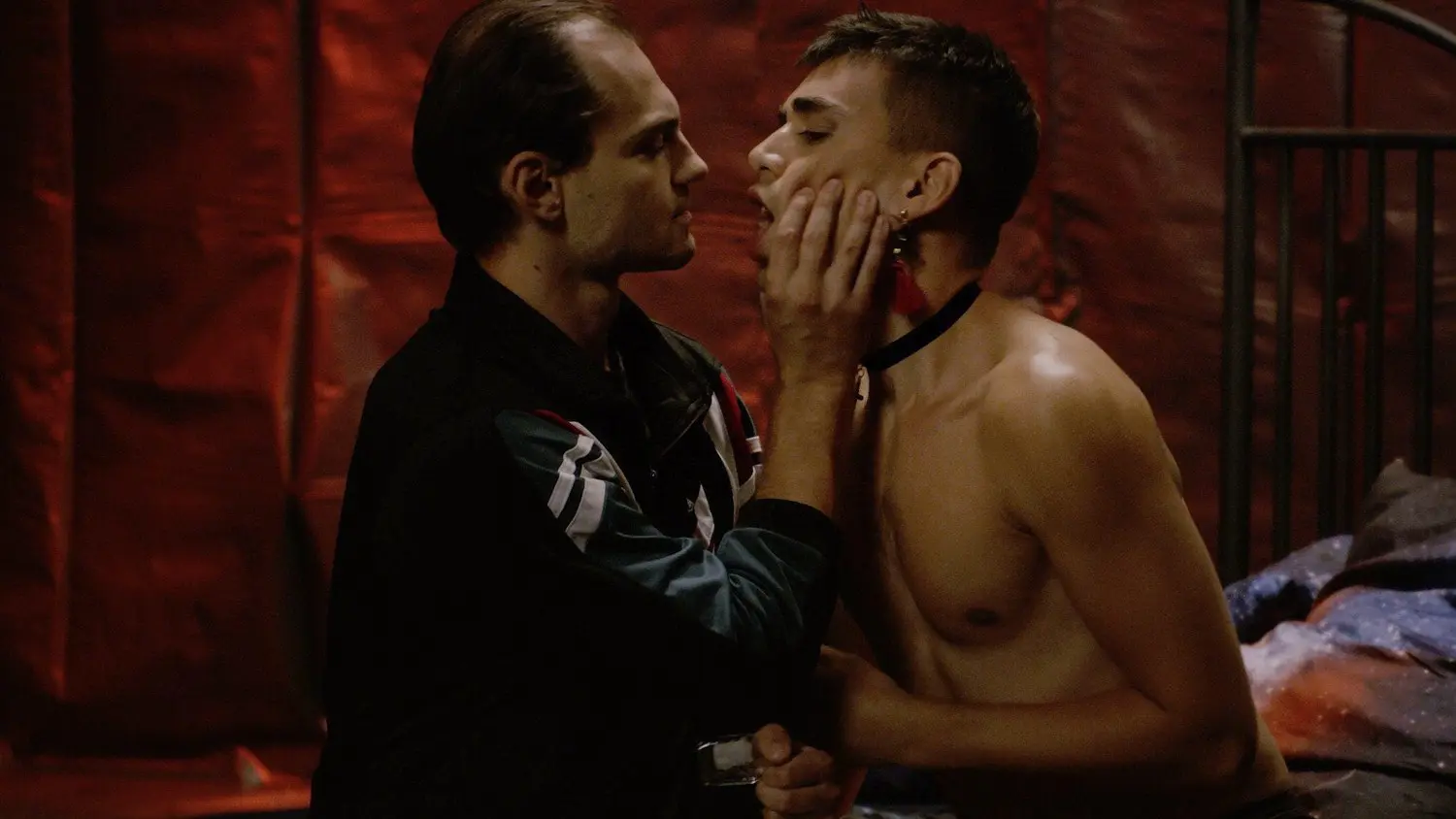
Darkroom, 2019
‘In Darkroom, cult director Rosa von Praunheim focuses on a true crime story that occurred in Germany recently, and the result is one of his most thrilling films. Lars, a male nurse from Saarbrücken, moves to Berlin with his lover, Roland. They begin to renovate an apartment and their happiness seems.’ — MUBI
Trailer
______________
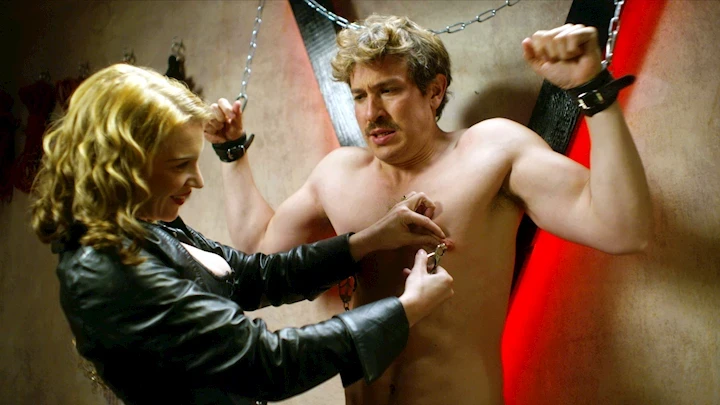
Thirty Years with the Whip (2024)
‘It’s a mix of interview and biopic. Von Praunheim filmed the life of his neighbor and acquaintance, the dominatrix Tina (aka Lady MacLaine). Interspersed throughout the film are glimpses of Tina, now around 65-70 years old, recounting her life. What’s unusual about her story is that she herself has no emotional connection to sadomasochism, but rather had a partner who demanded that she inflict pain on him. He set up a kind of studio for her in her apartment. Since she was a gambling addict, she needed money, and she quite pragmatically turned her private hobby into a profession.’ — Eudora Fletcher
Watch the film (with French subtitles) here
_____________
Satanic Sow (2025)
‘Rosa von Praunheim is the satanic sow, incarnated by the wanton actor Armin Dallapiccola. A poetic compendium of life and death with pushy fans, the Good Lord, lovers and Rosa’s horrified mother.’ — Letterboxd
Trailer
Interview with Rosa von Praunheim about ‘Satanic Sow’
*
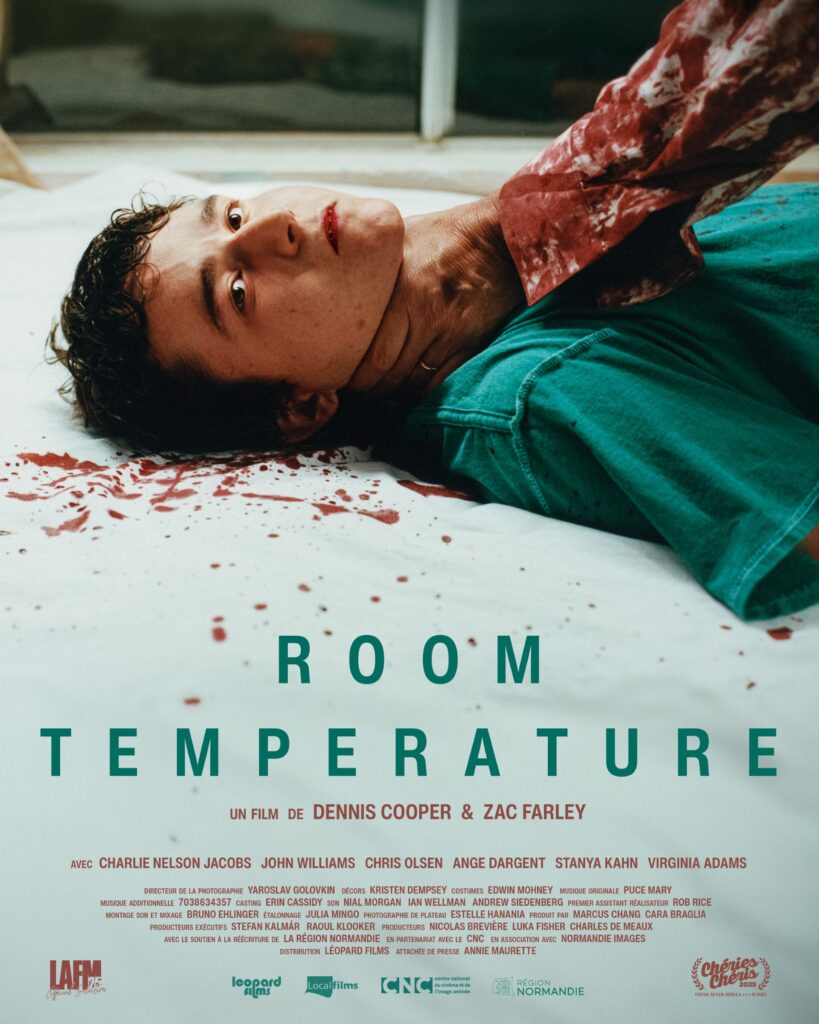
p.s. Hey. ** Dominik, Hi!!! Hm, that is maddening. Obviously you’ve used the WayBack Machine search function or whatever it’s called these days. Ah, I forgot about that firetruck one. That was a find indeed. Love successfully resisting taking part in the ‘9 favorite albums’ list fad thing that is currently sweeping through and clogging up his social media feeds, G. ** _Black_Acrylic, What’s the worst that could happen, right? I don’t know that Richard Metzger book. Huh, where was I? The occult has never appealed to me very much for some reason. Although as a horror movie thematic, it has its place. That does sound like a confusing time. And yet here you are! ** Carsten, That would be a more interesting world, for damn sure. Our scripts don’t lend themselves to standard page-to-film timing thing. Their pace doesn’t get determined until the film editing phase. Something can look like it’ll take 2 seconds in the script and then end up taking 2 minutes in the final film. For instance, our new script is quite short — 8966 words — but it will likely be another roughly 90 minute film. Very true, editing a poem is very different than editing a novel or script. It doesn’t work the same way, or not for me. Probably one of the reasons I quit writing poetry. My weekend? Have to finished some stuff for the ‘RT’ BluRay/DVD packaging ‘cos it goes to print on Monday. Chris Olsen, who plays ‘Paul’ in ‘RT’, is briefly in Paris, and I hope to see him. My biweekly text/film Zoom club is tomorrow, and the assignments are to watch Eric Rohmer’s ‘A Tale of Springtime’ and read poems by someone named Ralph Dickey, so I’ll be doing that. And the big student protests restart today, so we’ll see how that manifests. ** laura w, I thought so re: Connecticut’s location, but I didn’t want to presume. Ooh, The Warren House sounds fun. France doesn’t seem to have that kind of haunted house thing. I get the impression that the French are not very into the idea of existent ghosts. Happy about the turn around! Yay! Yes, I’ll write to you somewhere or other. Relieving weekend! ** Dev, Gotcha. Some friends here have a 9 year old son, and they’re bailing on a trip to the Halloween made-over Parc Asterix because they don’t think he’s ready for fake scary stuff, although, between you and me, I think he’d totally love it. But a parent I am most certainly not. I know of Esoterica by name, but I’ve never indulged in it. It is Halloween, and I am hungry, so maybe I’ll go dig in. Thanks a lot, pal! ** Steve, Interesting. Okay, I guess I really do need to check out Esoterica. It’s time indeed! Have fun. I’m jealous. Ah, just wait until you’re my age and mortality is the spice on everything. I’ll stay beady-eyed for the new ‘RNR’. ** Right. This weekend, should you choose to spend time over the next couple of days in this abode, will take place in the presence of Rosa von Praunheim of all people! See you on Monday.


 Now available in North America

Great to see the icon’s own day, Dennis. Von Praunheim movies like A Virus Knows No Morals, Silence = Death, Positive, etc, despite their flaws, were formative experiences for me in the late 80s/early 90s. I’ve also come to enjoy later projects like City of Lost Souls and Rent Boys. I always forget he made so many movies, I’ve only checked out a fraction.
Now I’m curious about that Magnus Hirschfeld doc. I just came across some stories about Hirschfeld having a boyfriend from Hong Kong:
https://en.wikipedia.org/wiki/Li_Shiu_Tong
There’s of course very little about him here, in the current climate.
[First, maybe]
Bill
Hey. Re: before, I’d also not used ChatGPT before, but it’s a good-enough lawyer. In any case, it’s looking likelier that we might be able to squeak out of this mess unscathed. Whenever people talk about AI killing human creativity, my first thought is always that human creativity is overrated anyway.
I was gonna see a Breillat movie yesterday but the screening was cancelled, maybe because three people got tickets. There’s another one next Friday, hopefully that sticks.
I didn’t know Rosa von Praunheim existed. From the buffet, ‘Army of Lovers…’ and ‘Rent Boys’ catch my eye. I ponder sometimes about the stuff up top where he bemoans social acceptance equalling conformity. I feel like I’m in a weird generational position where the hard work has been done, things essentially are and have always been safe for me so long as I don’t move to Russia or Iran or something, but then, do I really like what’s on offer in that hard-won world? Not really, for the most case.
For me right now, spooky season is in competition with shoegaze season. Do you have any ideas for how one might combine them?
Just seen the news that once again, it’s all kicking off on the streets of Paris. Cannot help but feel a bit exhilarated whenever I see such news. Hope things are ok in your own neck of the woods, though.
What’s kicking off in Paris?
I’ve dropped both laptops off at the Apple Store. I’ll pick them up, with all my data transferred to the new one, Monday.
I’m waiting for two ’80s von Praunheim films, RED LOVE and HORROR VACUI, to be subtitled in English. I had no idea he was still working in 2024 and 2025.
My latest “Radio Not Radio” episode is out now. I can’t pull up the complete tracklist because it’s on my other laptop, but it begins with a metal set, followed by art pop (more or less), then a mix of R&B, ambient and jazz. Here’s the link: https://www.mixcloud.com/callinamagician/10172026-radio-not-radio/
Hi!!
Thank you for including entire movies in this post! What a treasure trove!
I’ve finally finished Wellness. I think it could’ve been slightly reduced in some places, but it’s ultimately a monumental effort—a great book. I really enjoyed it.
Ah, yes, I never take part in any “# favorite things” trends because I have the feeling that it’d turn my entire feed, on any platform, into an endless barrage of such prompts.
Love not being able to tell real boys apart from AI boys on Pinterest, Od.
Well holy shit, the protests certainly spiraled, didn’t they? Not out of control, more into the inevitable vortex of people who’ve had enough. How was it in your hood?
That your & Zac’s films don’t play by the usual page-to-screen ratios is one of the key reasons I was interested in those word & page counts. Very interesting, your process. My project certainly isn’t conventional, so this is useful to compare. Right now I’m at 30 pages. This thing revolves around two main characters, who interact a bit but go off on their own for the most part. For a second I was worried that I was giving one all the meat on the page (as in lots of dialogue & “action”) while the other one got less “to do”, but then I realized that it’s actually what the dynamic calls for, & that the visual treatment will expand upon what’s on the page. So for instance, character 1 gets a big dialogue scene on the beach that goes on for pages, whereas character 2’s next scene could be summed up in one sentence (he walks around a ruined building). But on screen the latter scene is supposed to play out significantly longer than that one line.
When you say your pace isn’t determined until editing: so you don’t write certain scenes out that may look short on paper but you know ahead of time will play a lot longer or slower?
How was your club’s poetry & film lineup? I, who don’t normally watch series, got sucked into another one over the weekend: “The Lowdown”, by the Seminole Native filmmaker Sterlin Harjo, who I like a lot. His previous show “Reservation Dogs” was a pretty cool portrait of Native teenagers. This one stars Ethan Hawke as a Tulsa “truthstorian”. It’s a lot of fun, with a really good soundtrack that’s now got me listening to JJ Cale a lot, especially this tune: https://youtu.be/JKbcXFvXn3E?is=2NcQT3_GQGUQaprb
Hi Dennis, yeah to follow up from other day. Yeah I’m not really a pokemon person but people around me are so it sneaks into life in disturbing ways but this is very much like animal crossing with slightly more puzzles/challenges but otherwise similar approach. Yes I have a secret soft spot for animal crossing and similar low stakes games haha. I’ve been playing it since the gamecube days. Hope you had a good weekend? Oh I think that guy sent back some answers for interview so I’ll have a look and probably send some questions again his way but seems interesting so far at least. Talk soon.
i should check out this person, as i’ve been enjoying documentaries lately.
just got back from a little weekend jaunt to upstate new york, to a sheep and wool festival to go look at sheeps and sheep-like creatures. i was mostly excited to see the goats and the bunnies. it was obscenely crowded, but the fall landscape is spectacular. we got an air bnb that i didn’t like because it reminded me and my overactive imagination of a murder cabin. had an interesting interaction with a woman who told me about discovering her cat had a tooth infection while on mushrooms (her, not the cat, i’m assuming) and then asked me if i was gay (i’m not) because i said i was single. she had been drinking since 2pm, naturally.
you’d think france would have better haunted houses or at least ghost stories, but i have noticed a general lack of famous horror novels or films coming from france. i wonder why…
i saw the director behind i saw the tv glow is publishing a novel. i’ve never seen i saw the tv glow but i like the idea of creepy public access tv horror- universal harvester by john darnielle was sort of like that and i thought that was quite good. good weekend?
Never heard of this filmmaker before but I need to check him out! Seems up my alley.
Currently sitting at LAX ready to head home. I enjoyed LA. Didn’t get to go as many places as I’d hoped because I underestimated the size of the city and the inefficiency of the public transport system lol. But the city is beautiful. Lovely architecture everywhere. I went to the Getty and the Hammer museum (since I was in the UCLA area), and had some excellent Persian food. I made it to Poquito Mas and emailed you a pic (hope that’s all right with you). I am definitely more of an east coast person at heart – like if I wanted to spend crazy money on rent, I’d move to NYC – but it was cool being out west. By the way, what motivated you to move to Paris?
Hey. I’ve been meaning to fully explore Praunheim for a while. The only I’ve seen is ‘Transexual Menace’ which I caught a screening of about a year ago, and is a bit of a cult film in certain circles, although to me it did seem like a fairly straight forward doc about a subject which was publicly seen as a novelty then. ‘City of Lost Souls’ and ‘I Am My Own Woman’ are high on my list to see next. And ‘Tally Brown, New York’.
I’m feeling a bit less crazy since I was last here. It’s easy for me to get into one of these moods where I think that every single force on the earth is working against me. The only way to really solve that is to spend a lot of time in public and remember the possibilities and everything that’s happening. I’m still in a rut, but I’ll leave it at that, because it’s all too pathetic for words and I feel that I’m giving the moment too much credit by speaking on it. Maybe once it’s all blown over.
I keep meaning to put on It is not the Homosexual… on film nights but it feels a little too on the nose. Had a good weekend, hung out with a new/old friend who’s a city over and I think this friendship might stick this time. He’s started making music but it is surprisingly and unusually good. Otherwise things are largely the same, and my attention tonight is consumed by joining dataframes. Or trying to. Unsuccessfully.