* (restored/expanded)
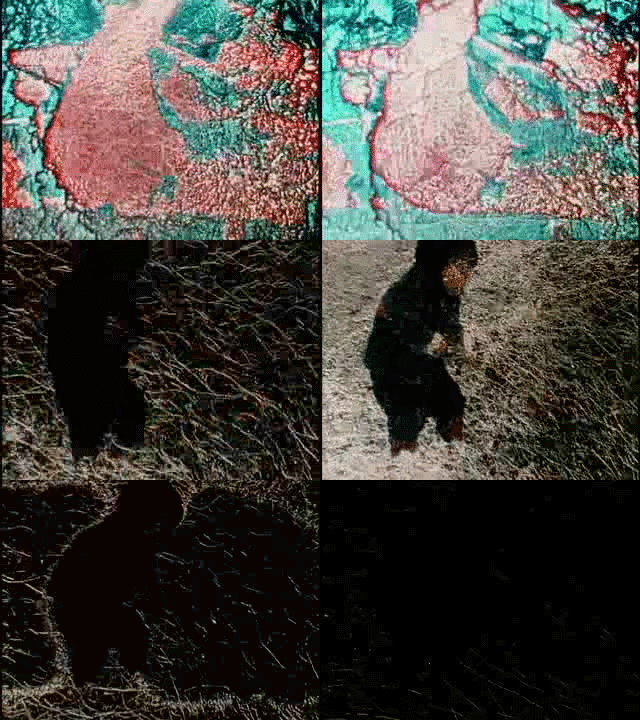
‘Since the family of the great artist and experimental filmmaker Phil Solomon posted news of his passing on Facebook this past weekend, hundreds of condolences and notes of appreciation have followed. Some come from former students—Solomon was a popular professor at the University of Colorado Boulder—while others are from virtual friends Solomon met on the platform where, as Kyle Harris notes in Westword, he enjoyed discussing “underground creative luminaries in music, film, art and literature.” Many comments, of course, are from those who have seen his films and video pieces, either at one of the two Whitney Biennials that have included his work or in any number of the permanent collections at the Museum of Modern Art, the Chicago Art Institute, the Oberhausen Film Collection, and several other prestigious institutions. “Although part of a long avant-garde tradition, Mr. Solomon makes films that look like no others I’ve seen,” wrote Manohla Dargis in the New York Times in 2005. “The conceit of the filmmaker as auteur has rarely been more appropriate or defensible.”
‘Solomon freely admitted in countless interviews that it initially took some time to develop an appreciation for that long avant-garde tradition. When he decided to study cinema at SUNY Binghamton in the early 1970s, he expected to be watching the great works of the new waves from Europe and the then-burgeoning New Hollywood. But the very first film that filmmaker Ken Jacobs screened on the very first day of class was Tony Conrad’s stroboscopic The Flicker (1966), and Solomon didn’t know how to even begin processing it. Where was the story, the narrative pull of the movies he’d grown up watching? “I didn’t know how to consider the screen as a formal rectangle with two-dimensional spatial tensions, rather than as a window to a daydream,” Solomon told Mike Plante in a 2006 interview. But Solomon eventually came around. While he also studied under Conrad himself, Ernie Gehr, Larry Gottheim, Dan Barnett, Saul Levine, and Peter Kubelka, Jacobs, he told Plante, “will always be my teacher, the source of all of it, the big bang for me.” The crucial turning point was a shot-by-shot breakdown of Stan Brakhage’s Anticipation of the Night (1958). As he told Federico Rossin in 2007, that was when “I began to grasp the concepts of visual metaphor and graphic analogies in the frame and on the cut.”
‘Another of Solomon’s oft-repeated admissions: His first films were outright imitations of Brakhage’s work. Solomon and Brakhage would eventually become close friends. They both taught in Boulder, and they collaborated on films such as Elementary Phrases (1994), Concrescence (1996), and Seasons . . . (2002). When Film Comment conducted a poll of critics, programmers, and teachers to come up with a list of the greatest avant-garde filmmakers of this century’s first decade, Solomon and Brakhage tied in fifth place.
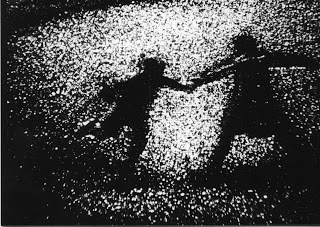
‘But in the ’70s, Solomon was still forging his own style. The breakthrough was a 1980 black-and-white silent short called Nocturne. It “begins with a quavering line that slices across the frame like a searchlight, underscoring the two-dimensionality of the image,” wrote Manohla Dargis. “Like the first stroke of a painter’s brush, this line is merely a beginning, however, and soon gives way to swirling grain, dancing lights and the human figures that crowd Mr. Solomon’s work like fugitives.”
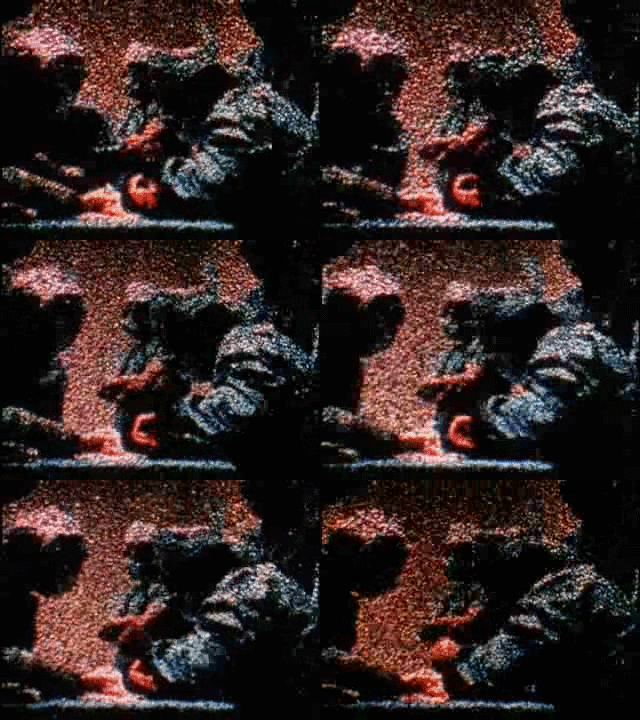
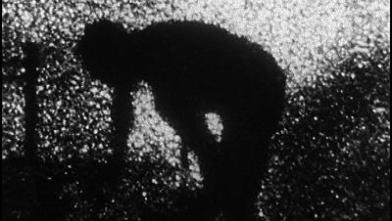
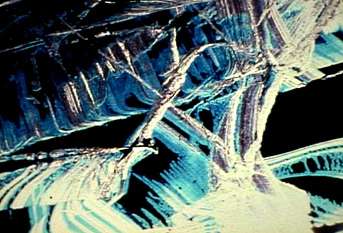
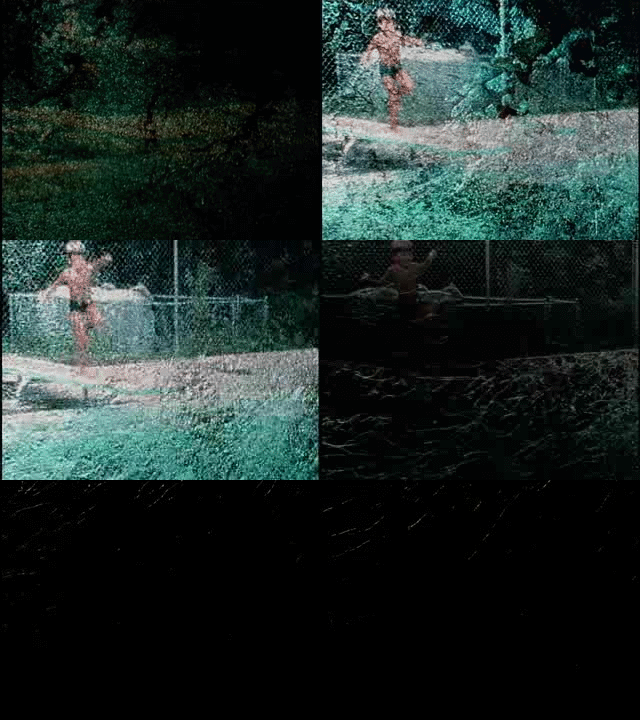
‘Films such as the Twilight Psalms (1999–2003) and The Snowman (1995) “are composed of photographic imagery in varying states of aggravated decay, with recognizable figures and objects emerging and resubmerging into bubbling cauldrons of film grain, thick chemical impasto, and an almost sculptural build-up and breakdown of emulsions,” wrote Michael Sicinski in Cinema Scope. Talking to Doug Cummings in 2013, Solomon described his process during this period. “I use several techniques, but all of them are aspects of optical printing, which is rephotography on a machine. Sometimes, I’m stressing the surface of the film with post-processing. Other times I’m exploiting something that’s already happened, which is to say the footage was molded or in a flood or something like that; it’s footage I found that was ruined and I amplify the textures.” He was open to serendipitous discoveries—but only to a certain degree. As he told Rossin, he liked “being surprised by what Stan called the ‘angels of film’ when they visit, but I am, alas, a bit of a control-freak and would love to be able to really work with emulsion with the precision of Vermeer.”
‘When Chris Kennedy programmed a Solomon retrospective in 2015, he noted that scholar Tom Gunning had grouped the filmmaker “with some of his contemporaries (including Lewis Klahr, Peggy Ahwesh, and Mark LaPore) in an essay titled ‘Towards a Minor Cinema,’ which acknowledged these artists’ turn away from the romantic ego of psychodrama (à la Stan Brakhage), the conceptualism of structural film (à la Michael Snow), and the political theory of New Narrative (à la Yvonne Rainer) to a more expressive lyricism of image and montage.” In 2012, David Bordwell noted that “Solomon agrees that he joined this deliberately ‘minor’ filmmaking tradition, exploring the fine grain of imagery and what Gunning calls ‘submerged narratives.’”
‘But that doesn’t make his work thematically minor. The word “alchemy” often appears in association with Solomon’s films—see Tony Pipolo, writing for Artforum in 2010, for example—and in an interview with Solomon for Issue magazine, David Grillo began by declaring, “I’ve often called you an alchemist of cinema.” Solomon responded by pointing out that the “metaphysical inklings to be found in my work are not so much about any kind of personified god or any specific kind of religion, but more along the lines of, say, the New England Transcendentalists.” In terms of influence—besides Brakhage, of course—Solomon told Plante that his films “seem much closer in their temperament, ideas, and tendencies to the form and content of certain—somewhat hermetic—poets like Emily Dickinson, John Ashbery, Wallace Stevens, and Jorie Graham. Or textural narrative painters like Albert Pinkham Ryder, Francis Bacon, and Anselm Kiefer. Or the polyphonic re-imagined, and re-remembered aural American narratives of Charles Ives. Or the ambiguous, lush, and mysterious ambient landscapes in the organic electronic music of Brian Eno.”
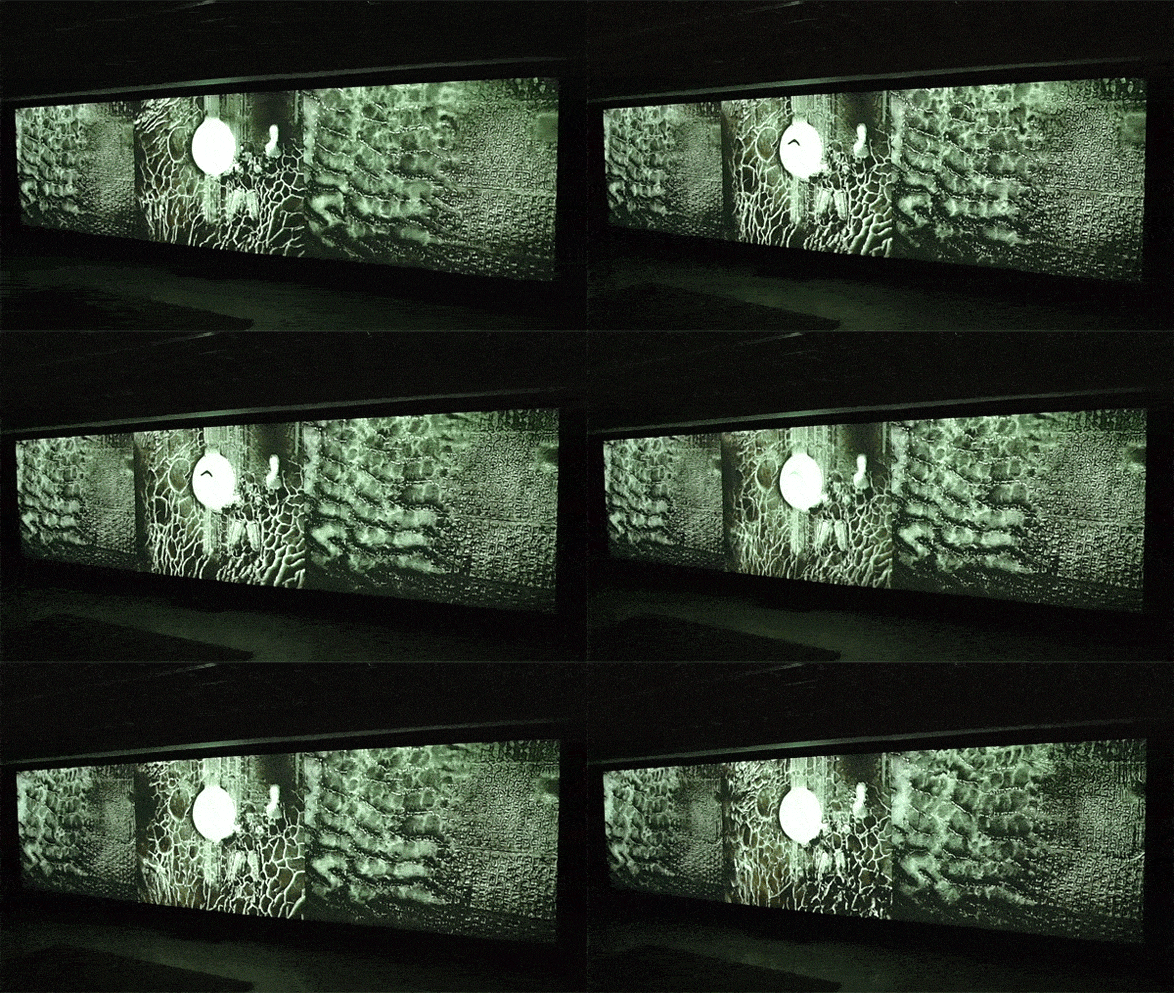
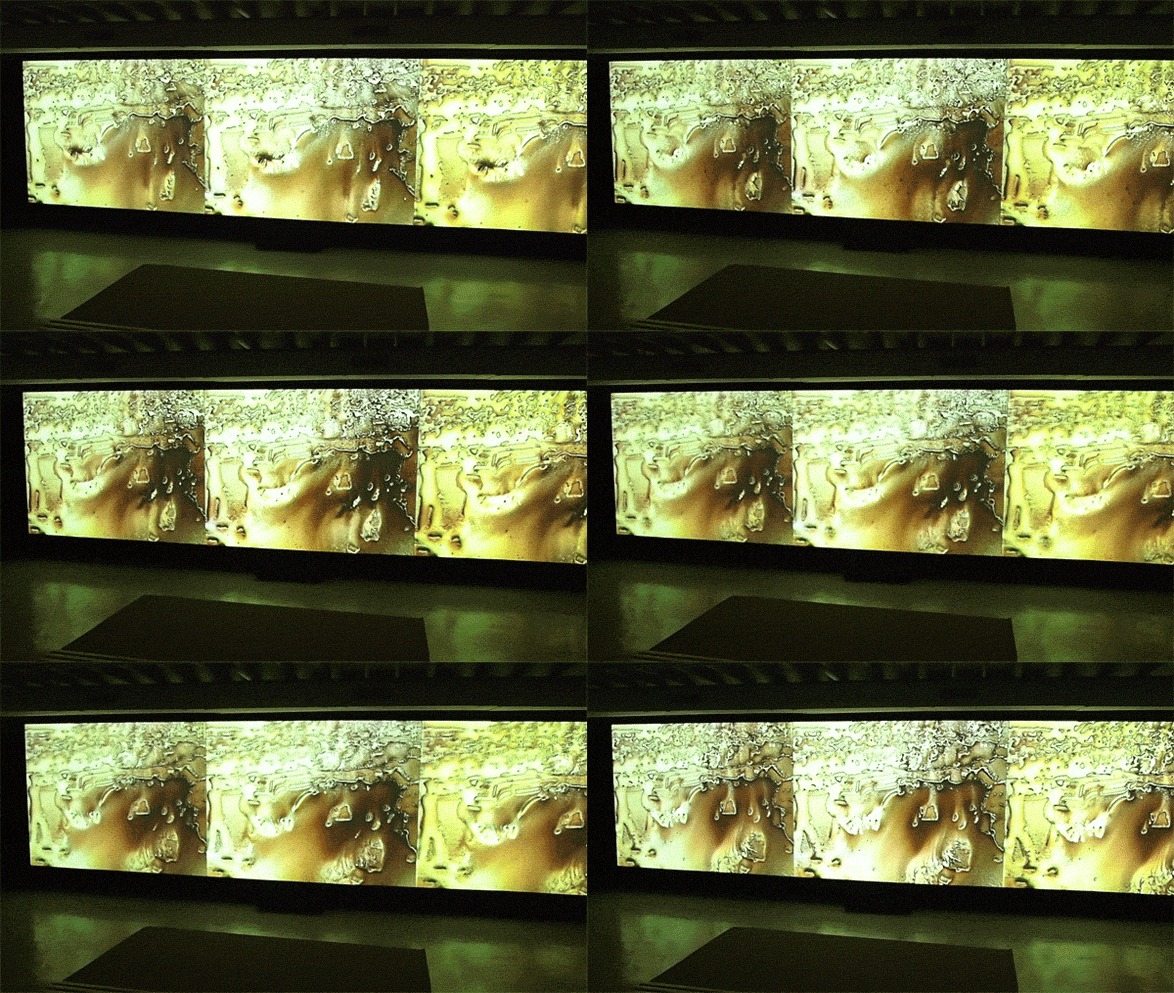
‘Solomon has referred to one of Ives’s major compositions, The Unanswered Question, as “the national anthem” of a piece originally commissioned as a multi-channel installation for the Corcoran Gallery of Art in Washington. American Falls (2000–2012), which has since traveled as a triptych, “offers a richly allegorical account of America’s rise and fall through a torrent of intricately distressed celluloid sourced from a disparate array of films and newsreels, and featuring everyone from Amelia Earhart to King Kong to Robert Oppenheimer to Charlie Chaplin,” wrote Leo Goldsmith at the top of his interview with Solomon for the Brooklyn Rail in 2012. “Through these distorted icons of the past, and amid waves of exquisitely mixed found sounds, Solomon locates a critical meta-history of the American mythos at the intersection of film’s decay and digital media’s ascendancy.”
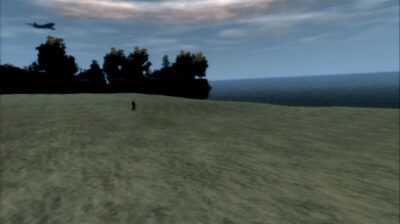
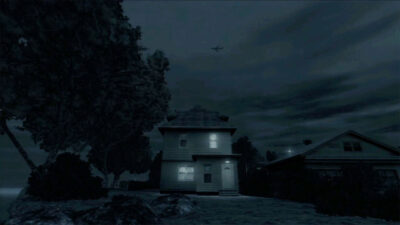
‘Within a few years, Solomon was exploring the pixelated textures of digital media in a series of works that began one night as he and his close friend and fellow filmmaker Mark LaPore were wandering the virtual world of Grand Theft Auto. Together, they made Untitled (for David Gatten) in 2005, and when LaPore died shortly thereafter, Solomon created a series of works, In Memoriam (Mark LaPore), that includes Rehearsals for Retirement (2007) and EMPIRE (2008/2012), a nod to Andy Warhol’s landmark of structural cinema, Empire (1964). For Michael Sicinski, Solomon’s earlier works on film “are not nearly as disturbing as Untitled and Rehearsals. Yes, they thrust our eyes into fragility and dissipation, but there is a brute materiality at work. The celluloid, the shadows of a photographed world, even the thick, pulsing seas of decay that threaten to overtake them—these are all elements of the tangible universe. The new works, in part, replace chemistry with code, and in the process they seem to slip further away from us.”
‘Over the past few days, all across social media, Solomon’s name has rarely been uttered without some mention of the generosity of his spirit. “Phil Solomon changed my life the night of my first film course with him,” filmmaker Elisabeth Subrin tells Kyle Harris. “At the beginning of the class, he told all of us, ‘If you want to get famous, have great recognition as a filmmaker, make a good living or even just be understood as an artist, you should probably drop this class.’ Then he showed Maya Deren’s Meshes of the Afternoon and talked about cinema as only Phil could: precise, detailed, informed by art history, film history, poetry, cultural politics, and music. None of us dropped the class. He was a mesmerizing teacher.”
‘He was also one of cinema’s great eulogists. Alongside his memorial to LaPore, he reflected on the loss of his mother in Remains to Be Seen (1989/1994) and wrote eloquently about the passing of friends, colleagues, and artists he admired. See, for example, Lullaby (for Peter Hutton), a remembrance of the late filmmaker in verse. Naturally, one of the most moving of his eulogies was delivered at Brakhage’s funeral in 2003. “Impossible,” he said. “The headline in the local paper read: ‘Stan Brakhage Dead at 70’ but the mind simply cannot comprehend this combination and sequence of words. So perhaps they got it wrong, as they always do. Stan, I think I know the headline you might have written for yourself—something like: ‘It’s a (goddamned) Miracle that I’ve survived for seventy years!!’” Phil Solomon was only sixty-five.’ — David Hudson, The Criterion Collection
____
Stills

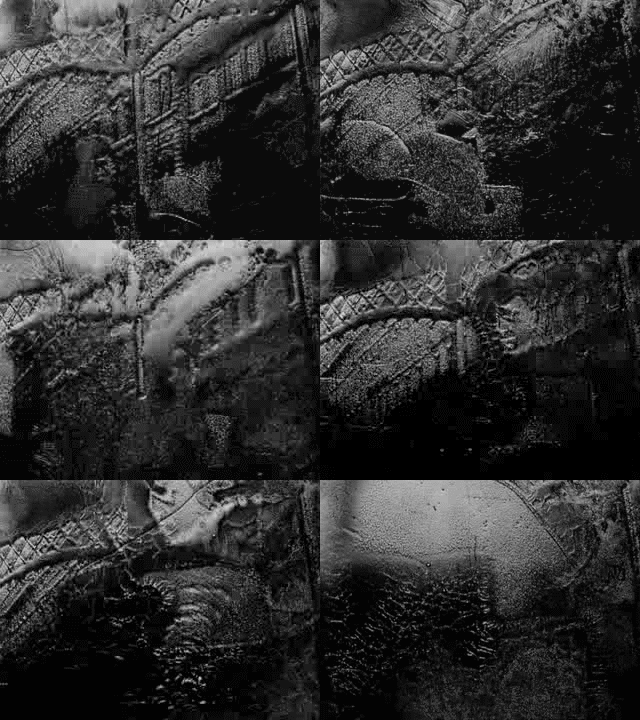


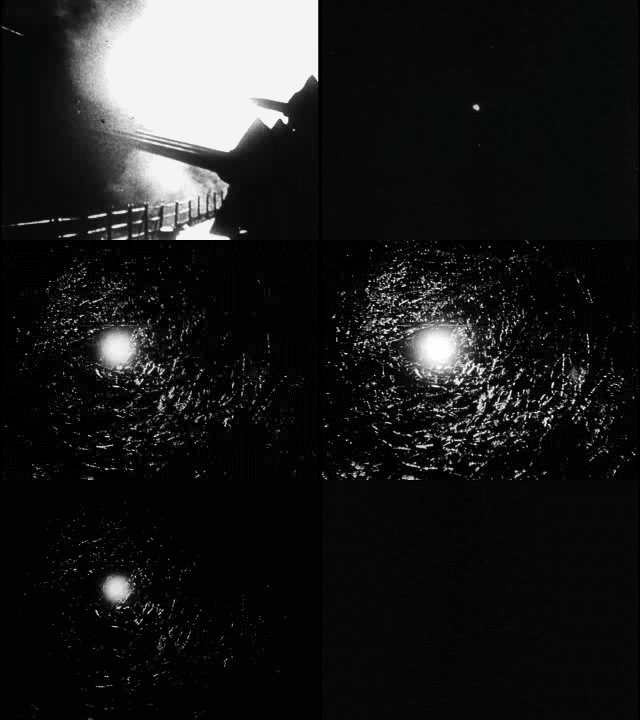
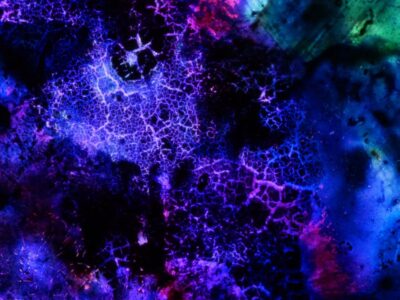
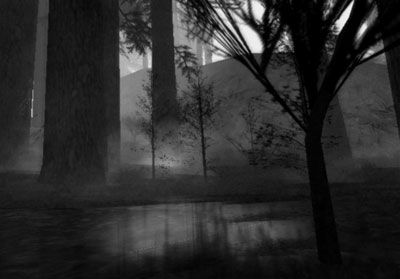

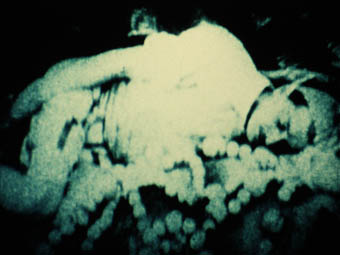
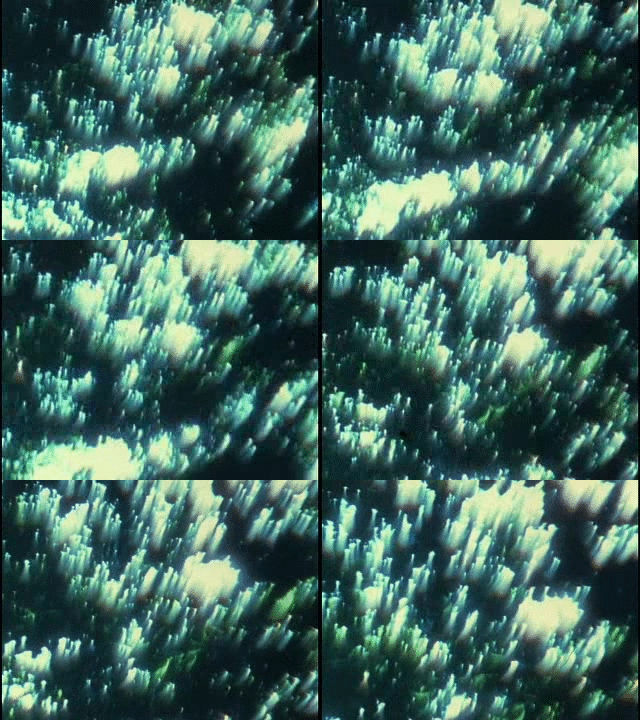
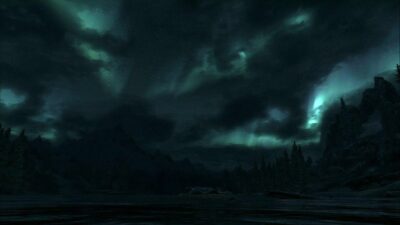
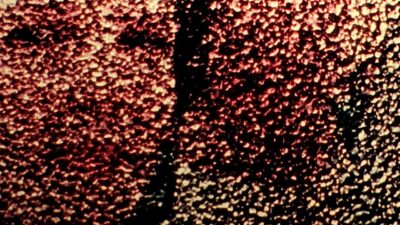

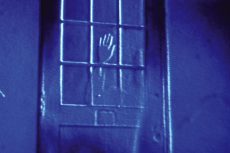


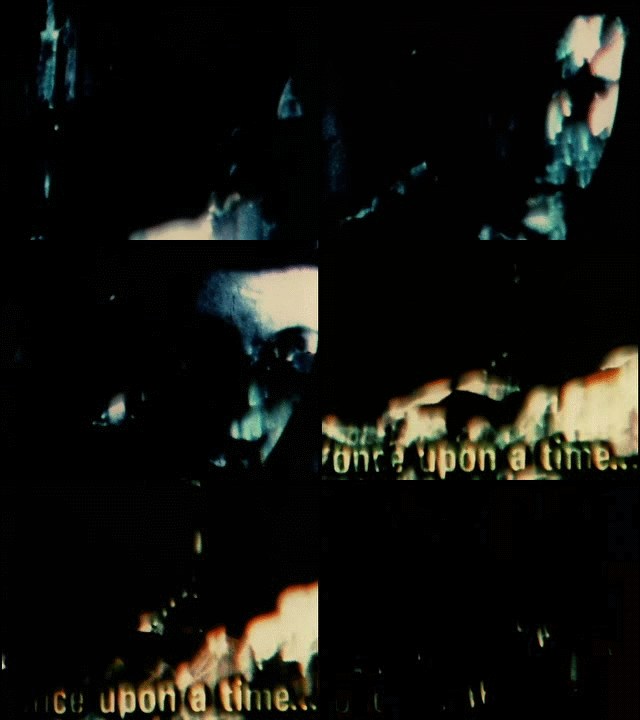

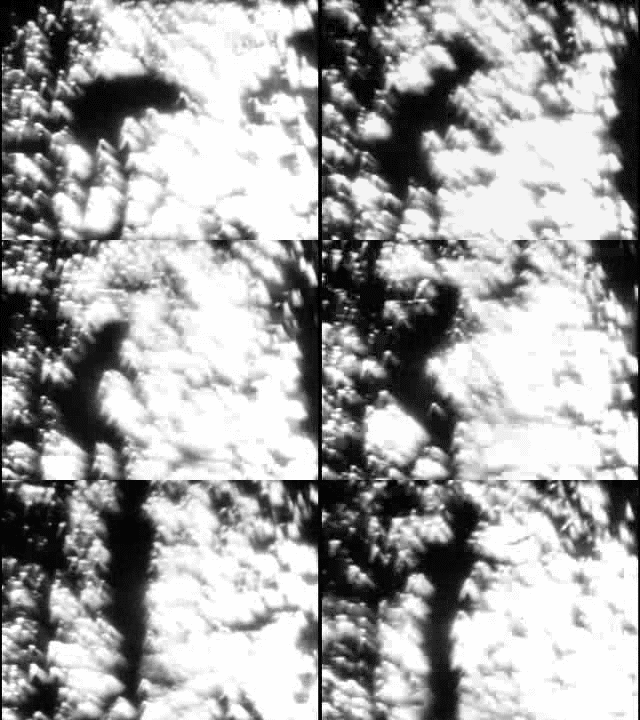
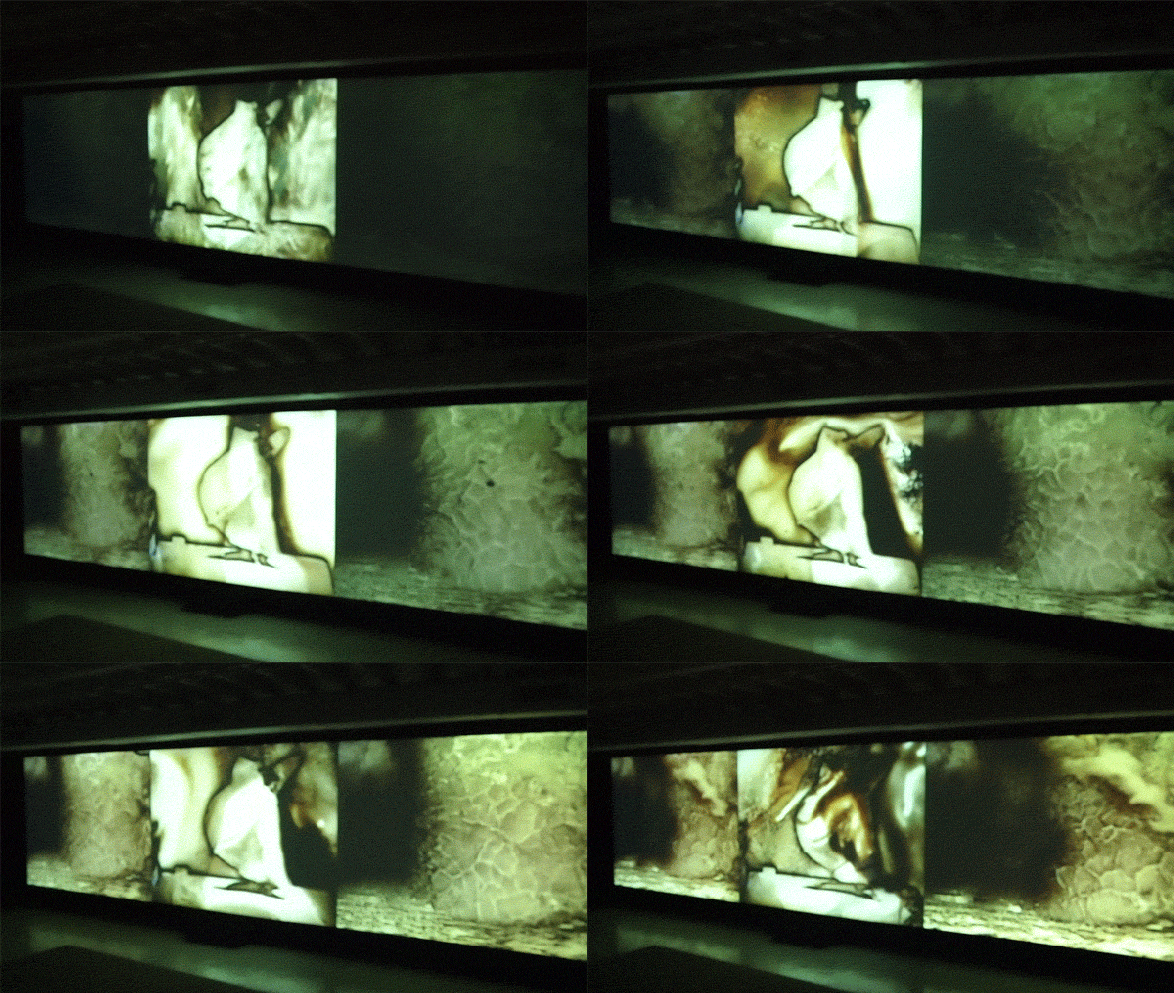




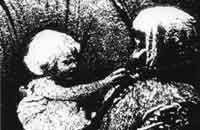


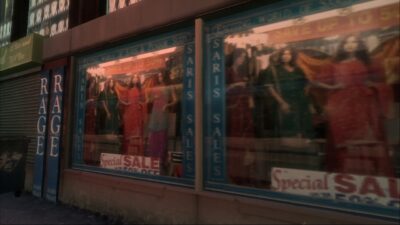
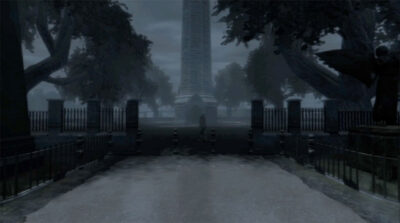
____
Further
Phil Solomon @ Vimeo
Phil Solomon @ Light Cone
RIP: Phil Solomon, Experimental Filmmaker
PHIL SOLOMON interviewed by David Grillo
What remains to be seen – interview with Phil Solomon
Account of Brakhage’s Funeral, by Phil Solomon
Cinema Immemorial: “EMPIRE” and the Experimental Machinima of Phil Solomon
“Twilight Made Manifest: The Films of Phil Solomon.”
Phil Solomon @ MUBI
CINEMAD interviews Phil Solomon
The Dream Machine: A Living Room Screening with Phil Solomon!
phil solomon: this long century
Darkness on the Edge of Town: Film Meets Digital in Phil Solomon’s “In Memoriam”
Phil Solomon (1954-2019)
THE FRAME, by Phil Solomon
Phil Solomon Visits San Andreas and Escapes, Not Unscathed
Letter to Phil Solomon, by Ken Jacobs
AMERICAN FALLS: An interview with Phil Solomon
Phil Solomon’s Historic Film Experiments, From U.S. Presidents to Grand Theft Auto
Towards a Minor-Key Cinema: Phil Solomon at Melwood
____
Extras
Phil Solomon at Young Projects
STAN PAINTING “VERY” AND “NIGHT MULCH”, by Phil Solomon
______
Interview
from Experimental Cinema
Where are you from? What’s the path that lead you to become one of the most interesting filmmakers of your generation?
I was born on January 3, 1954 to Sam and Ruth Solomon. We lived in Astoria, Queens, N.Y. until 1959, when we moved to Monsey, N.Y., which is about 30 minutes north of NYC, in what was then the emerging “baby boom” suburbs in that area. There were lakes and woods and dirt roads – it was just at the very beginning of the middle class trek out the cities. My entire block seemed to be middle class and jewish, so one wonders how these things get planned. But the point is I believe that my Jewish-American background and cultural identity does play out somehow in the hermetic/mystical/alchemical aspects of my some of my work.
I felt very safe, protected, and finally had my own room in the new house. I can see from my Dad’s slides and home movies that I was a kind of thoughtful and introverted child, and I remember often retreating to my room to create my worlds of fantasy with models, comic books, and watching television. Then came rock and roll and owning my own stereo, with headphones. Stayed in my room a lot during those days…
Did very well in high school, but we couldn’t afford a private school, so I went to Harpur College (SUNY Binghamton) exactly at the right moment in time in history, at the end of the Rockefeller endowment years when there was a lot of money around for hiring new professors and bringing in visiting artists. So I studied with, at one time or another, Ken Jacobs, Ernie Gehr, Larry Gottheim, Dan Barnett, Saul Levine, Tony Conrad, and Peter Kubelka.
I didn’t know anything about avant-garde cinema before day one (thinking that ‘art film’ was European new wave and the first American film school generation films of the late 60s/early 70s). I knew little about art or classical music. I was raised and suffused with American pop culture. First day of class, Ken showed Tony Conrad’s THE FLICKER, and my world was turned upside down. It took me a long time to see the map of where to and how to look at this kind of cinema, but it was a shot-by-shot breakdown of Brakhage’s Anticipation of the Night (where I began to grasp the concepts of visual metaphor and graphic analogies in the frame and on the cut) and seeing Ken Jacobs’ pedagogical masterpiece Tom, Tom, the Piper’s Son that opened up my eyes and mind and really offered “the path”, as you put it. Finding the optical printer (it arrived after I left Binghamton) was the next step…
Your work seems to be at the intersection of Ken Jacobs’ and Stan Brakhage’s works: but you pass over both the cool intellectualism of structural cinema and the self-indulgence of home movie aesthetics. How could you call your kind of filmmaking?
That is a very perceptive observation and one that I agree with. What I loved about Ken’s work was its rigor, its pursuit passed the initial flush of excitement into something deeply thorough, and his sense of the marvelous, uncanny image (I can always hear him saying, “look at this – fantastic!). He taught me to see all of film history with a different mind-set. The gesture of using found materials for him was one of rich context and deep respect for the original material, not the glib ironies of what I might call the “historical chauvinism” of many found footage pieces. Ken worked with what he considered revealing, beautiful or somehow getting to a deeper, submerged truth with use of historical materials and their illuminated trasnformations. Tom, Tom inspired the act of re-looking at and reconsidering the ostensible, the “evident”…Ken’s Nervous System and the performance pieces are about the ecstatic sublime, something that I longed for in my cinema as well – to be able to see, as Ken would have it, “the impossible”. To be hopelessly engaged in pre-language sensations of the wonderful…
I knew that I had to find a way around Stan. I was very drawn to the private and the personal, but I often have a deep sense of self-consciousness and embarrassment when shooting in the world. My films are deeply rooted in personal biography and iconography, but look toward a more allegorical (and symbolic) approach to the referent. The innermost rings of my films have references and meanings that are, in some ways, secret and unattainable; but I am banking on creating oneiric visions that tap into our subconscious storehouse of symbolic thinking. I am in search of the uncanny and the inevitable.The local and the universal. Images that are charged with wonder and seem to tap into some kind of truth – at least for me.
So, to answer your question, visionary cinema (from P. Adams Sitney) works just fine for what I am trying to achieve. That is more or less why there are no head or tail titles on the films. I want the visions to come on and recede, oceanic, vaporous, organic…
My films tell stories of a strange sort, with dream logic editing and poetic reverberations with each image and treatment.
Is the found footage in your hands the main propeller of the work? or do you use it only as material between the others?
Depends on the film. With Nocturne, the photographed material was primary, and the found material only came much later in the editing process, when I saw affinities between my time exposed night footage and night bombing sequences from WWII – that made the film have a much larger scope than I had originally intended. Again, with What’s Out Tonight is Lost, the found material served as emblematic images of childhood that reverberated against my fogged, elegiac footage of areas around my parent’s home. With The Secret Garden, you now have a change to where the found footage (The Wizard of Oz and a subtitled version of The Secret Garden) completely inspired the work, and my photographed material (mostly of water) acted as intermediate Edenic imaginings. Remains to be Seen and The Exquisite Hour are really the most balanced and integrated films in terms of the use of found and original materials, but both films depended upon finding the right materials at some point in their making to “bring them home” (the surgery materials in Remains, the16mm home movies in Exquisite).
The Twilight Psalms have a different approach entirely – instead of waiting for the found materials to find me, I went out hunting for specific images with a priori ideas.
How do you work out the found footage with optical printer and with chemical treatments?
Not sure what you mean exactly. If you mean technically, I treat the positive, processed images with chemical and organic treatments and then photograph it on the printer. Sometimes I dissolve between processed strips, other times I am treated a montage with built-in dissolves (that I already re-photographed). There are usually several stages to the process , with re-photography happening two or sometimes three times…
How often do you discover new things during the optical and chemical manipulation of the film? And how much do you want to control this process?
This is why they call it experimental film – I do indeed experiment a great deal, but I only use the results that best express the imaged moment. I usually discover a great many things in the beginning of a film or an untried particular process (like Psalm II: “Walking Distance”), but then begin to master the technique to the point where I can induce or predict certain results and then begin to take that further, using variations or just simply trying things. The quivering, tearful end of Psalm III: “Night of the Meek” came to me just at the end of the shooting phase – I tried something (with the printer), saw the result in “real time”, then guessed what it might look like at 24 fps. Once I saw the results, I did more, and got better at it.
I suppose I would have to answer that I would love to be able to completely control the process, but have the option to ask for serendipity to step in when I needed her…I like being surprised by what Stan called the “angels of film” when they visit, but I am, alas, a bit of a control-freak and would love to be able to really work with emulsion with the precision of Vermeer…
How much do you usually penetrate in the frame? How do you consider this work: is it an investigation or a material excavation?
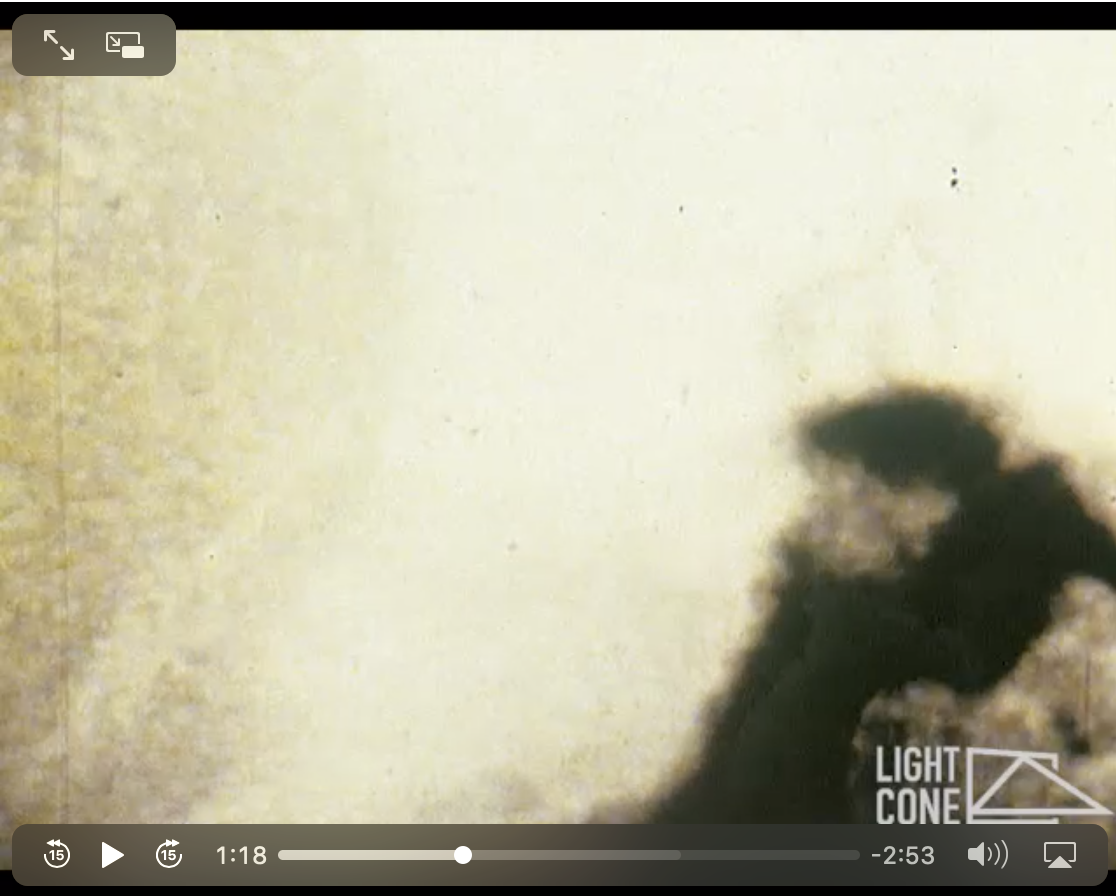
Interesting question. Again, depends on the film. With The Passage of the Bride, I am often zoomed in (on the printer) as close as I can get. Same with parts of Seasons… (made with Stan Brakhage) and the subtitled sections of The Secret Garden. With Remains to be Seen and The Exquisite Hour, I only (substantially) move in for certain shots for isolation and emphasis. In Remains, I focus in on the bicycle rider during that sequence, and I also move in on the reflections of people walking by (Thoreau’s) Walden Pond and then turn it upside down for what I call the “walking angels” sequence. In Exquisite, I isolate the silhouette of the man in the nursing home from original super-8, so it becomes very grainy. Night of the Meek is mostly close to full frame throughout.
It is an investigation first (I pay attention to what the materials tell me), then an excavation (I need to dig deeper than the original materials by treating it somehow, adding layers of ambiguity to get to the truth – so it’s a kind of excavation in reverse), and finally a formal semblance of feeling.
Do you write a script before filming or do you always find out new things during the work?
Not a script as such, but I do keep notebooks and write down ideas and inklings as I daydream and percolate on the work. I am currently doing substantial research for American Falls, the 6-channel installation I’m doing in Washington, D.C. in 2009. But the reason I love this kind of filmmaking is because it is not contrived and then merely executed, but has a feeling of archeology, discovering ancient, hidden truths about “the world as I found it”. I love the adventure of putting together things that have never been placed together before to uncover what I call “inevitable ineffable”…
The first elements that impress the viewer of your films are the rhythm, the texture of the images, and a particular poetical resonance: music, painting and poetry are the all-bearing elements of inspiration for your works, cinema seems to be less important for you…
Hmmm. Yes and no. In terms of rhythm and texture and metaphor, yes, I look to music, painting, and poetry as the fount for ongoing inspirations. I keep those books open in my library all the time, to keep me company and to reaffirm my vision – and my vocation. But there is a narrative element in all of my work that comes directly from my initial love for the shared collective unconscious dream of the movies from my early years – the marvelous! magic! the miraculous! And mostly a sense of the illusory romance, of longing, of eternal wanting but not having…and many of my references are from the movies as well, particularly in my latest work (Last Days In A Lonely Place). I always wanted to find in poetic cinema the emotional depths that welled up, in profound recognition, from the depths of my soul in the very best of prosaic, narrative cinema, but without the shame of being falsely manipulated and hypnotized. One of the ways that I define art is that you remain you, and it remains it…a meditation on form. With most narrative cinema, you are no longer you…and that is the great pleasure of identification cues and fantasies, but it is not aesthetics as I understand it.
All your films have a strong poetic structure with metaphorical and allegorical echoes, themes and variations: a poetry of the dark, of the hidden, of the removed… and, at the same time, they are open to the viewer’s interpretation: how do you work on the borders?
Beautifully put. The truth is, I really don’t know what others actually see in my work. Very few people (except for yourself and few others) have taken the time to really go deep with them. They are mostly seen once or twice, but not more than that, where as I, being a teacher for 30 years, have seen many (most?) avant-garde films at least 20 or 30 times. So I try very hard not to think about “the others”, as I simply cannot speak for them. After being on this planet for some 53 years, I have still encountered so few people who care as deeply for the things that I do. The point is that the exhibition and reception of the work is a vital, but secondary part of my process. It is mostly social for me, with varying degrees of excitement at “being seen” and “having the floor”, or alienation from people only getting onto the most superficial aspects of what I do (when I get questions like “how did you do that?” or “what chemicals are you using”?).
My job, as I see it, is to try and pay attention to work at hand – to see and hear what the work demands, what it needs, and what is actually there, and what needs to be done to give it life, form, balance, and a “just right-ness”. Stan called this “the muse” – I call it an exquisitely sensitive concentration and a state of utter empathy with the…temper…of a given image, a given sound, a given structure. I then go out of my studio, on the road, as we say, and “host” the work, and quietly search the night skies of audiences in the dark for the “others who are like me”….do you see what I see? Am I alone? Does anyone else see the aching beauty of this cut or the uncanny “such-ness” of this image? Does anyone here love this as much as much as I do? The answers, however kind, are often fleeting and dependent of what everyone else needs at that moment. But when the films have the entire room, it is a tender mercy, a holy thing, a rarified air…
_______________
12 of Phil Solomon’s 21 films
____________
The Secret Garden (1988)
‘No filmmaker of the 1980s knew as much as Phil Solomon of affirming the importance of multiple layers in the visual production of images. Solomon perpetuates the Brakhagian tradition of creating a succession of images whose logic comes from a large number of rhythmic sources, formal, associative, and whose coherence passes from one source to another. Here, as with Brakhage, one must be spoiled in the trance offered by Solomon, and be sufficiently assured to follow a structure that is based as well on the melody, the harmonics and the flashes of metaphors as on a narrative plot. The Secret Garden is one of Solomon’s best films. Like Thornton and Klahr, there is the shadow of a story here, which has to do with the passage from innocence and experience to terror and ecstasy.’ — T. Gunning.
the entire film
____________
CLEPSYDRA (1992)
‘Clepsydra is an ancient Greek water clock (literally, “to steal water”). This film envisions the strip of celluloid going vertically through a projector as a sprocketed waterfall (random events measured in discreet units of time), through which the silent dreams of a young girl can barely be heard under the din of an irresistable torrent, an irreversible torment.
‘Solomon has evolved his technique so that in his latest work (‘Clepsydra’ – ‘waterclock’) the textures are constantly changing and are often appropriate to each figure in metaphoric interplay with each figure’s gestural (symbolic) movement. He has, thus, created consonance with thought as destroyer/creator – a Kali-like aesthetic ‘There is a light at the end of the tunnel’ (Romantic); and it is a train coming straight at us: … (and, to balance such, perhaps, with a touch of Zen) … it is beautiful!’ — Stan Brakhage
the entire film
Excerpt
STAN BRAKHAGE PHONE CALL re: “CLEPSYDRA”
______________
The Exquisite Hour (1989, 1984)
‘Solomon revisits familiar motifs of carousels and clocks, seen also in Clepsydra (1992) and American Falls (2000-2012). Another motif, other people’s home movies, finds resonance here as we gain insight into our own lives through Solomon’s perspective of other people’s familial memories. Much like the two halves of the film held in conversation, the audience is held at a distance from these images. The prolonged pause nestled in between them serves as an gap; a separation of these two distinctive cycles, both contained within the same film but never directly touching one another. Most notably, Solomon’s alteration of the footage centers largely around the blending of light and color, fading tones of sepia and black, as opposed to the more tactile experiments in his other works like Remains to be Seen (1989) or The Snowman (1995). This subtle harmony of light conveys a transient cinema, interactive not through the sense of touch but in the emotional awareness of the wide berth between ones eyes and the images they perceive.’ — arkheia
the entire film
________________
Remains to Be Seen (1989)
‘Using chemical and optical treatments to coat the film with a limpid membrane of swimming crystals, coagulating into silver recall, then dissolving.’ — letterboxd
the entire film
Excerpt
______________
The Snowman (1995)
‘In Phil Solomon’s The Snowman, water-logged home movies culled from an unknown archive are rephotographed to enhance their craquelure. The film evokes Wallace Steven’s eponymous poem and serves as a kaddish (a prayer of mourning) for the artist’s father. This would mark the second time that Solomon would memorialise a loved one through his work, with the first being Remains to be Seen (1998), which featured images of his mother on her deathbed. However there are almost no references to Solomon’s father in The Snowman; he is buried in the emulsion of the film strip, under layers of corrugated memories.’ — Rushnan Jaleel
the entire film
______________
w/Stan Brakhage Seasons… (2002)
‘Brakhage’s frame-by-frame hand carvings and etchings directly into the film emulsion, sometimes photographically combined with paint, are illuminated by Solomon’s optical printing; this footage was then edited by Solomon into a four part ‘seasonal cycle’. This film can be considered to be part of a larger, ‘umbrella’ work by Brakhage entitled «…» . Seasons… is inspired by the colors and textures found in the woodcuts of Hokusai and Hiroshige, and the playful sense of forms dancing in space from the film works of Robert Breer and Len Lye.’ — Light Cone
the entire film
Excerpt
_______________
Rehearsals for Retirement (2007)
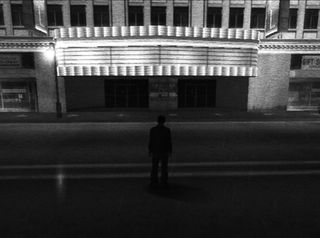
‘Part of “In Memoriam, [a] body of work comprising several videos[,] shot entirely within the virtual world of the Grand Theft Auto video game. Solomon transformed Liberty City, the ersatz metropolis based on New York City in which the game is set, into a reflective space of stillness: devoid of players, full of melancholy, nostalgia, loss, grief, and instances of compelling poetic beauty. This work was created in response to the passing of Solomon’s lifelong friend, Mark LaPore, at the age of 53, on September 11, 2005.’ — letterboxd
the entire film
Excerpt
________________
Last Days in a Lonely Place (2007)
‘Solomon strips Grand Theft Auto of its (artificial) inhabitants to repurpose its scenic environments into a pre-apocalyptic landscape with its mise-en-scène reminiscent of a horror game like Silent Hill. The film explores solipsism befittingly using the medium of the video game, a medium which exists more through emulation of life rather than through capturing it through an aperture. Destruction of its environment is portrayed as brief, inconsequential occurrences that quickly come and go, a direction which is ironic to its source material. The anticipation of the end of the world is existent throughout the film, although apocalypse never occurs. Instead, the film presents its world as a purgatory of figures trapped in an empty existence of solitude.’ — φ
the entire film
Excerpt
________________
Still Raining, Still Dreaming (2009)
‘Still Raining, Still Dreaming repurposes the virtual world of the controversial “Grand Theft Auto” video game series, with its imperatives to random violence and crime, transforming Liberty City, the fictitious metropolis based on New York City in which the game is set, into a reflective space of stillness: depopulated of players, full of melancholy, longing, and moments of compelling poetic beauty.
‘The Grand Theft Auto works mark an interesting departure for Solomon, a filmmaker best known for his large body of optically printed, densely textured films. However, the works in this series of machinima (a term used to designate videos which are created using real-time computer graphics engines, most commonly video games) achieve similarly haunting effects. Using “cheat codes” and exploiting the “open world” environment of Grand Theft Auto’s game design, Solomon’s lens, often dappled with virtual rain, lingers on the surreal shop fronts, vacant parks, and abandoned basements of Liberty City. In this simulacrum, Solomon’s work suggests, the “ghost in the machine” is our own.’ — Light Work
Excerpt
Excerpt (screened)
_______________
American Falls (2000–2012)
‘Phil Solomon’s immersive triptych film installation American Falls (2000–2012), which was originally commissioned by the Corcoran Gallery of Art in Washington D.C., transforms the Museum’s 4,000-sq. ft. third floor gallery into a panoramic and artistic journey through the catacylsms of American history, and an elegy to the film medium that welcomes a new era of mixed medias. Combining chemically degraded film images with computer editing precision, Solomon’s piece recasts the Niagara Falls as both a metaphoric landscape and audiovisual backdrop to American history.
‘Archival footage of moments in the nation’s history—the fall of presidents, the Great Depression, Amelia Earhart’s flight, the civil rights struggle among them—opens with crackling images of Annie Edson Taylor, the first person to survive going over Niagara Falls in a barrel. These are interlaced with clips from American cinema, including scenes with Buster Keaton, Charlie Chaplin, Busby Berkeley dance numbers, and Daniel Day-Lewis in There Will be Blood, all accompanied by an intricate soundtrack of historical addresss, popular music, and sound effects (designed and mixed in 5.1 surround by Wrick Wolff).’ — Museum of the Moving Image
Excerpt
Excerpt
________________
The Emblazoned Apparitions (2014)
‘An alchemically treated lullaby to the end of cinema, featuring Charlie Chaplin and Buster Keaton.’ — letterboxd
Excerpt
Excerpt (installation)
_______________
Psalm IV: ‘Valley of the Shadow’ (2013)
‘Psalm IV: Valley of the Shadow pairs moody landscape imagery culled from a video game with John Huston’s reading of James Joyce’s “The Dead”.’ — letterboxd
the entire film
Excerpt
*
p.s. Hey. ** _Black_Acrylic, Luck to Leeds today. Italo Disco vermouth: that’s a mouthful. Did you indulge? ** Connie, I like your tripping as Covid cure premise. I mean, why not? I still want Xmas to be like the kid version where your dreams are modest and magically come true. Since that’s a dead duck, I don’t expect anything. I did get John Waters’s Xmas card, which is a pop-up (!) and very funny this year. I miss snow. It used to blizzard here when I first moved here. Come to Paris! I’ll show you the reasons to fall in love with it. Thank you! I trust you’re not hung over today? ** Minet, Hi. Thanks, I’m improving. And, yes, alert me when your Paris trip starts its reality phase. I think self-preservation is an excellent resolution. I’ll resolve to be less like the guys who comment on those ads. HYN! ** Carsten, Yury and I are roommates and kind of like family, but we’re not together in the sense I think you mean. I was dead to the world long before midnight, so fuck knows how Paris dealt with it. May the year ahead not defeat us. ** Bill, Very good question on the Belgian thing. And good guess too. The Kid ran out of gas, and now he just seems to be fulfilling expectations with minimal inspiration. Yes, sad about Rosa von Praunheim. I should restore his Day, I think. I hope the year is sparkling already re: you. ** Chris Kelso, HNY to you, Chris. 2025 definitely had its very good points, almost all to do with our film, but I’ll take that. Eek and, you know, wow about the new kid. I guess you know how to get your ducks in a row this time? Cool, I’ll look forward to ‘Shadowspheres’, thank you! I think I have your monograph here. I’ve been on the move and so busy this year that the books have piled up wall-sized on my desk. I’ll pry through them. Well, first thing for me is to finish the new film script, ideally in the next few weeks. Once that’s set and it becomes all about how to get the film made, I’d like to figure out some new fiction thing, we’ll see. Knausgaard … okay. I’ve been kind of put off him because all these alt-right lit bro writer types are promoting him, but I should find out for myself. I’ll become cool again and try to stay that way. Best of everything with the new offspring and everything else. ** Steve, Let’s hope it doesn’t take until November for the world to start ceasing being so horrible. Every once in a while I come across a slave ad and think maybe it’s somehow geared to get the slave in question on my blog, but it’s pretty rare. ** darbz (⊙ _ ⊙ ), Hi. Better late than not. And I’m still recovering, so it’s still contempo. Thank you for your kindness, my pal. Everyone, Remember the great post that darbz did about Louis Wain? Well, darbz has uploaded the vibrant collage they made for the post and even tweaked it a little, and you should pop over to darbz’s art space and take a(nother) peek, I think. Voila!. I did see the the cake, thank you. I’ve just been really out of it and not being so responsive. But thank you, and I’m nothing but chuffed whenever you share stuff there with me. How great about the hand drawn birthday picture from the crush-worthy one! It did seem masterpiece-like to me too. What a coincidence! xo. ** Laura, HNY to you too! Uh, no, I’m pretty certain that all those spoofs are lost in the sands of time. Slaves who can’t spell are always among my favorites. I wish I couldn’t spell sometimes. The New Year is absolutely nothing so far. So, so far so good. I hope yours is decreasingly weird. ** Dev, Hi, Dev! HNY! I got your email, and the post is incredible, and I’ll write to you today or tomorrow. Thank you so much! I think I’m so extremely oversaturated with Mr. Chalamet and his aggressive promoting right now that I’m going to need to wait many months before I can think about stomaching that film. But I’m glad it seemed to be worthy of your hours. I hope today marks a great official beginning of whatever you wish. ** Nicholas., HNY right back to you! Nothing new here either. Mutual updating forthcoming. ** Okay. I’m starting the new year by restoring and expanding my blog’s old post about one of the great poet/directors of contemporary cinema, Mr. Phil Solomon. Please settle in, and peace out. See you tomorrow.


 Now available in North America
Hey, Dennis!
Happy death of the previous year and birth of the new one!
It’s been such a long time! By the time you got back to Paris from the US, I’d already gone back to Hungary for the holidays. Work had been crazy lately (and I expect it’ll pick up again starting tomorrow), but Christmas wasn’t as peaceful as I’d hoped either – my 90-year-old grandma had to be rushed to the hospital on Christmas Eve, so there wasn’t much of a festive spirit. Fortunately, she was released while I was still there, and we ended up having a sort of “alternative Christmas” a few days before we came back to Vienna, which was lovely.
I’m still catching up on the posts and PS sections I missed, but I’d like to say a heartfelt thank-you for including SCAB in your year-end favorites!
How have you been? How are you? What are your plans for this year?
I’ll try my best to check in at least once a week going forward. I really, really missed talking to you!
Love looking for his knight in shining armour but is also happy with a knight in cardboard, Od.
Thansk, Dennis. God, I hope you’re right. I’m sure it’ll be great, and my first kid is a really kind, lovely wee girl. Hope baby 2 doesn’t turn out to be the evil one!
I agree about Knausgaard, and I had my own reservations. Those alt-right morons will weapons anything that has a put-upon straight white guy as the protagonist (I suppose calling his memoirs Mein Kamfp doesn’t help). My friend David Leo Rice actually encouraged me to try out his new Morning Star series and it really is fantastic – like Proust meets Lovecraft by way of Murukami. I think we can reclaim Knausgaard. I’d be curious to hear your thoughts on The School if Night, which is oart of the Morning Star series but also acts as a standalone, so might be a good jumping off point.
The Metympsychosis film is due out in March as well. It was cool to see the project take life and the people involved were amazing, but the extra stress of post-production has put me off doing another film, I reckon. I don’t think I’m made of tough enough stuff.
Hope you get more fiction out this year. Good luck on the new script, D!
Have a wonderful 2026!
Chris
hi Dennis!
ha, so you soooort of want to be Peter Orlovsky. did you ever meet him? Ginsberg looked Verlainesque next to him for the longest time, didn’t he?
gosh, Solomon, love him, duh. some of his texture stuff freaks me out but the poetry… idk man. so beautiful even when it’s gross lol. obvi what i think goes hardest is he’s got this huge Kristeva thing, right, but he’s so weirdly straddling the, like, super impossible limit between the semiotic and the symbolic that what comes out is… quasi-language? and smth v liminal in between self and not. idk i’m just into it a lot. figure he both wanted and didn’t want to give away his secrets, maybe.
i pouted a bit reading the interview bc i get him re: making smth to express yourself and also in hopes of feeling less alone bc others may see it like you see it or whatever. now i know he wanted that it bums me out there’s no way for me to tell him anymore.
i saw you mention your found family member to our friend Carsten! and i wonder, might you be able to pass on a thing for which i’d be grateful? what in his opinion is the worst thing you can call a guy in Russian lol. i’m writing along those lines rn but the character breaks into mat so often it’s sort of a drag trying to find an insult which is worse than the others, especially since i myself have the fluency of a swearing toddler =) if he’s got a take, it would totally help me.
what are you up to on this random fresh start of a day? me i’m feeling less weird, which good, but protracted illness doesn’t give the shadow of a fuck what day it is, so there’s that. Hope you’re well on the mend by now? ^_^
<3
Hey Dennis,
I’m really tired but wanted to pop in and wish you a very happy 2026. Last night went on so late that we had to take the first morning train back instead, and I finally got to sleep well after 6. It’s odd because I like wishing people well, and a new year offers a convenient excuse to do so, but something about New Years as a holiday feels particularly insincere in its happiness. I enjoyed going out because the music was worth it, but I was taken aback by the misery. The guy who flirted with me a bit was very sad. His French-American friend was very glamorous, and very sad. The racist Australian tourists throwing failed gang signs at me on the dance floor were very sad. It’s my first ‘regular’ NYE experience in years because that’s the birthday of two of my best friends, except we’re not on the same continent right now and so a lot of this is probably old hat, and I’d already guessed at most of it, but this was my first time seeing it up close.
oh man i really feel this post, you spoke my truth lol minus the Australian knobheads etc
I’m glad you didn’t have those guys at the very least. I have to say that my exception to the New Years grinchiness is the phenomenon of ins and outs lists. Do you have one?
thanks bruv and nah, i just hope my long covid might go away, that should be out fr. and otherwise i just want to finish the book and see if it’s not total shit =) how about you?
Ha, I am also a little annoyed by the cultural overexposure of Chalamet, but for what it’s worth his performance was good. Happy you like the post!
Your blog always introduces me to interesting filmmakers whose work I will probably never get around to exploring, but I appreciate it anyway lol.
Oops, accidentally posted this comment as a reply, my bad.
Has there ever been a post that’s been restored multiple times?
Dennno — Hope youre feeling gobs better. Predicting 26 is even more superlativisimo for the project that is DC! As Roky Erikson sez, the Kingdom of Heaven is Within You. Seeest thou soooon <3 Jakkkkk Attackkkkkk.
Hey Dennis, cool profile today! I didn’t have a lot of time to read, but the gifs were super striking. The game that’s getting upgraded is a technically complicated Korean action game, but I mainly play for the story – it’s a sort of weird conglomeration of a lot of classical novels, and this new upcoming stretch is all Akutagawa short stories. Agreed about having your own place. Glad that you seem to still be getting healthier, and Happy New Year!
Hey Dennis,
Glad to hear the meds are doing their job. Antibiotics are a serious candidate for the best invention ever.
I’ve just landed back in London after a week in Ireland. Excited to crack on with the Paris job and house hunt. And also the Bob Gluck launch next week, which a couple of commenters from here are travelling to attend. Thanks a lot for including “Purple Men 2000” on your 2025 list.
I re-read “I Wished” just before Christmas (loved it again) and toyed with the idea of following that by re-reading the Cycle backwards. Retracing my steps or something. On reflection I’m not sure though.. I think a re-read in the original start-to-finish direction might actually be more rewarding. I was wondering if that idea would spark any observations in you?
Also, while bored over Christmas I discovered and delved into the archive of the Bookworm radio show on Spotify. I listened to some of your episodes as well as ones with the Jameses Ashbery and McCourt. They were all great, and the host Michael seems like such a smart, sensitive and generous reader.
I was very excited to see you mention a potential new fiction piece in the PS. And of course good luck with finishing the new script.
A hug, me xo
Hope you’re continuing to feel better and had a decent New Year’s Eve, Dennis. It was cold and wet, so I stayed home, listened to Michael Finnissy’s odd solo organ music, and drank plum wine.
I don’t know Phil Solomon’s work. A lot of lovely stuff, I do love those roiling textures. A good way to start 2026.
Bill
Oh my bad, for some reason I thought Yury was your boyfriend.
The stills & gifs on these types of posts are really a treat. Nice showcase of Solomon.
“May the year ahead not defeat us”: cheers to that. I did stick around until midnight, but my neighborhood was pretty restrained. A few fireworks here & there, but nothing maniacal. Just right for my taste. To me people are never more unattractive than on NYE; ironic given that getting laid is the primary motivation for many of them that night. There’s a forced desperation to the festivities & excesses that I always found depressing.
How’s your recovery going? Mine’s alright, though after two weeks of varying degrees of feeling like shit I’m beginning to forget what normal feels like.
Hi Dennis,
Not hung over at all. I had another cat flea panic and got deliriously high instead. I also made a little cyclops out of old socks, I don’t know why. I started trying to make a sock monkey and then failed so I just kept attaching fabric until it became something. I’ve decided it’s magical and can kill fleas for me and deciding that made me stop thinking about the fleas. My trip will happen soon though! My brain needs repaired.
It is a shame that adults don’t get kid Christmas, I agree. I understand not getting your hopes up. Getting John Water’s Christmas card is a win though. It sucks you’re not getting snow anymore either. I hope it’ll be there again soon. Global warming is supposed to freeze Europe so fingers crossed. And I will absolutely visit someday! It’s in my like 1-3 year plan for sure. I was debating visiting a friend in a squat in Utrecht sometime this summer so if that pans out I’ll let you know.
Hope you have a wonderful first day of the new year!
Hey Dennis,
Forgot to comment on NYE’s post; was out for the day. Steroids are truly magic — I was put on them when I was horribly sick around Christmas a few years back and it felt like I was immediately 50% better. I was able to go out, eat a bit of food, whereas before that all I could do was lie in bed, nap, and listen to music.
Had an eventful New Years which was the first time that my group of friends —who despite none of them being in my classes in college (and some not even being in my college), are basically my ‘college friends’ — hung out without missing someone for the first time since the latest 2023, since half of us don’t live here anymore. It was sweet, and made me have nostalgia for my early college days, which is a crazy thing to feel as it only feels like yesterday.
I’m 90% sure that I was exposed to some of Solomon’s work in GIF-form back in my
teen years on Tumblr, as a lot of the GIFs you posted evoke a lot of what my feed looked like back then!
Just booked my flights to London for James Bennett’s event w/ Gluck, which will be cool – might try and get my friend’s copy of About Ed signed as a late Xmas present. Speaking of flights, I didn’t realize how much cheaper it is to fly to Paris from London (well obviously it would be, but price wise it’s similar to the prices from Cork to London, with the added benefit of flying to Orly instead of Beauvais). Makes me hopeful that I’ll get to continue doing trips over there even whilst living in London, even simple day trips! There’s a Doctor Who shop about 10 mins from where my friend lives in London, and I’m imagining a future where I interview there and get a job off my encyclopedic knowledge of the show alone. Wouldn’t be too bad of a job!
Hey Dennis. Happy new year!
‘Rehearsals for Retirement’ is so beautiful. I weirdly find myself easily moved by works which re-appropriate pieces of pop culture etc. I remember being close to sobbing looking at Mike Kelley’s Superman series up close.
I’m caught up in an indeterminate headspace, somewhere between feelings, not sure where I’ll end up emotionally. I guess I am finally going to the doctor in a couple of days to see if I can get medicated or therapy and if that’ll do something for me. Worth trying at least.
I applied for this job as a nude life model which I should be hearing back from soon which I’m pretty hopeful about because I’ve done paid modeling for artists in the past which means that it’s just about the only job that I am qualified in. I’m really excited by the opportunity.
My editing has been going well. I think I’ve found out that my innate voice is sort of baroque and effete and if I try to re-write by trying to reduce sentences to their essentials I’m still both of those things but manage to find the ambiguous line in the middle between cutting and verbose which I’m sort of aiming for. I like those difficult to pin down middle spaces between things, and I’m also thinking a lot about how some language feels masculine and some feminine and some neither. I guess a lot of my favourite books are somewhat androgynously written.
Happy New Year Mr. Cooper, glad to see you back. ‘Rehearsals for Retirement’ – a nod to Phil Ochs there? Another one to add to the ‘shuffled off the mortal coil in December’ list (like Mr. Ochs) was Ken Downie from The Black Dog who died two weeks ago. Used to interact with him on BBS / Usenets – yes I’m that old – and “kendo” (his handle) was a super cool guy. Remember cringing when I saw some of my archived posts as I unconciously copped a bit of his posting style, like he used a lot and abbreviated your as yr. Which I still do. Hehe. The Black Dog track ‘Virtual’ has to be the only record beside ‘Damaged’ by Black Flag that actually stunned me (like I can’t believe something this good exists) when I first heard it. Youngsters out there bear in mind this Allen Ginberg sampling (“world world world I sit in my room and imagine the future”) monster came out in 1989 – https://youtu.be/xXVBRHYgNfk?si=X8hrCK_TvkqkPJNQ