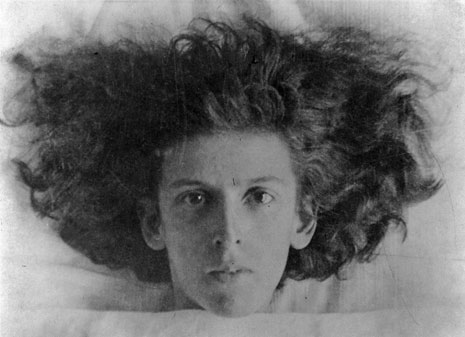
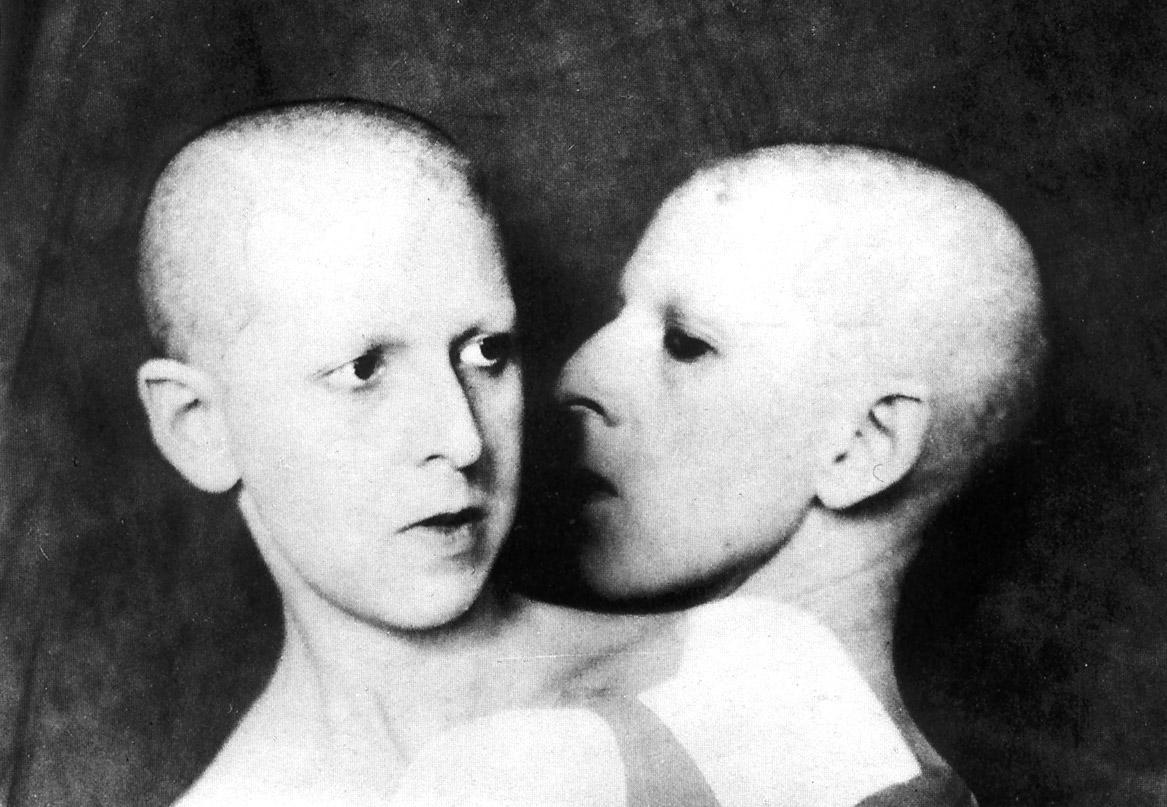
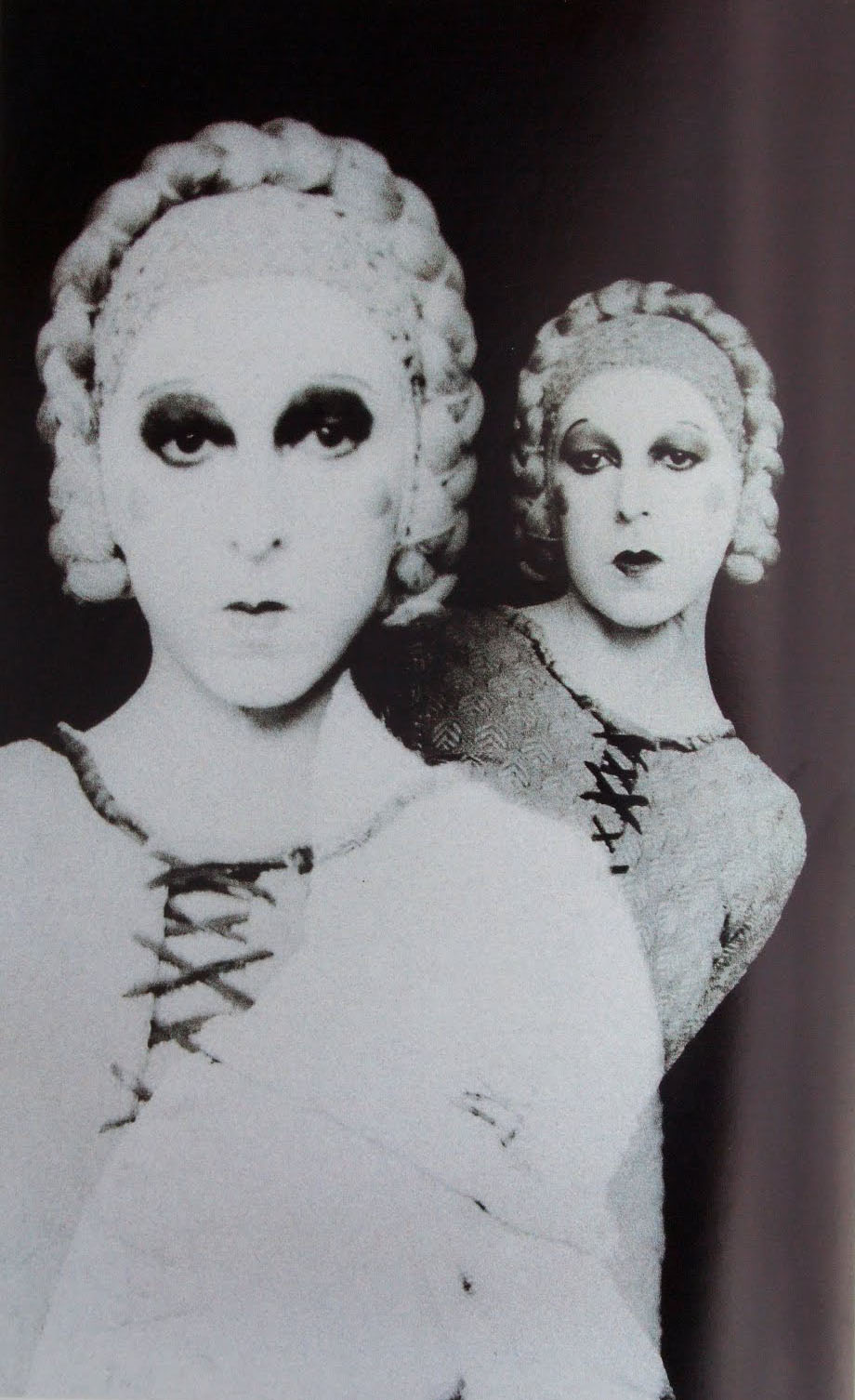
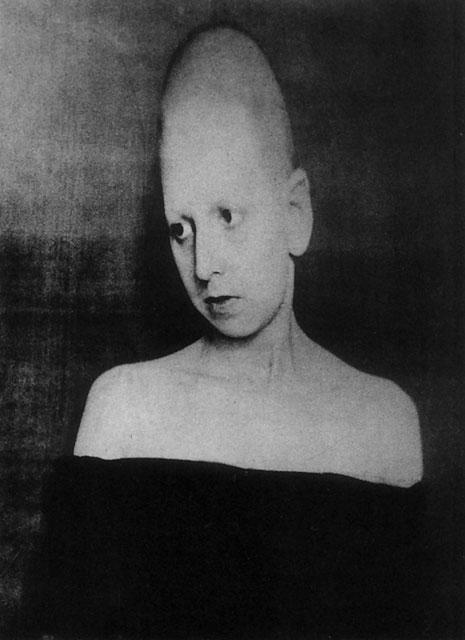
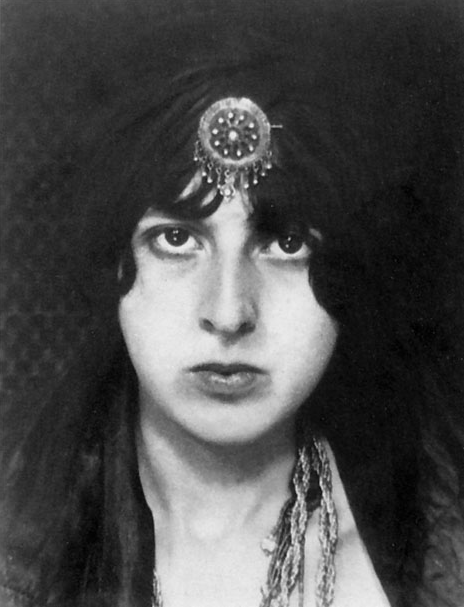
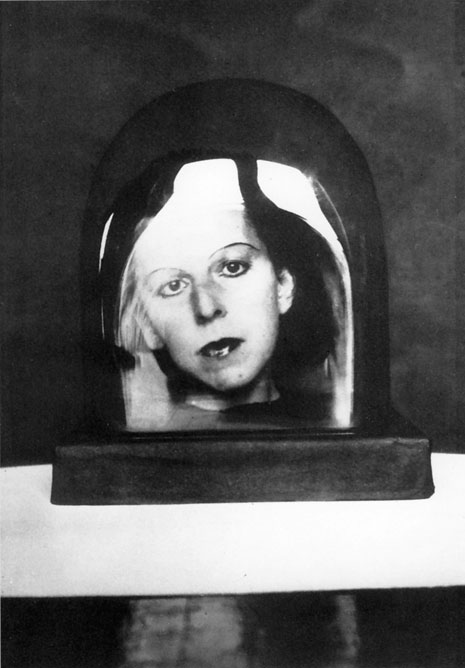
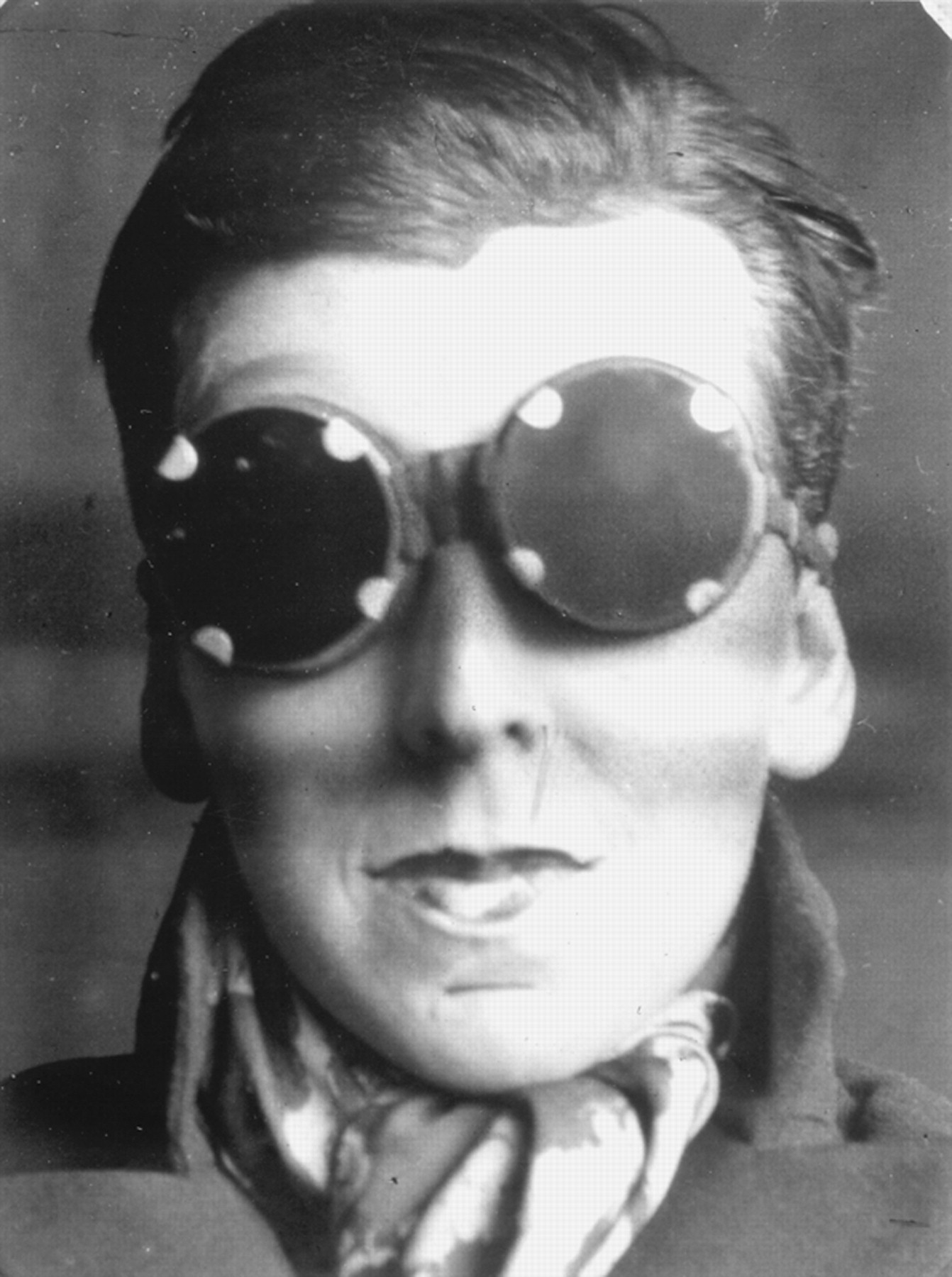
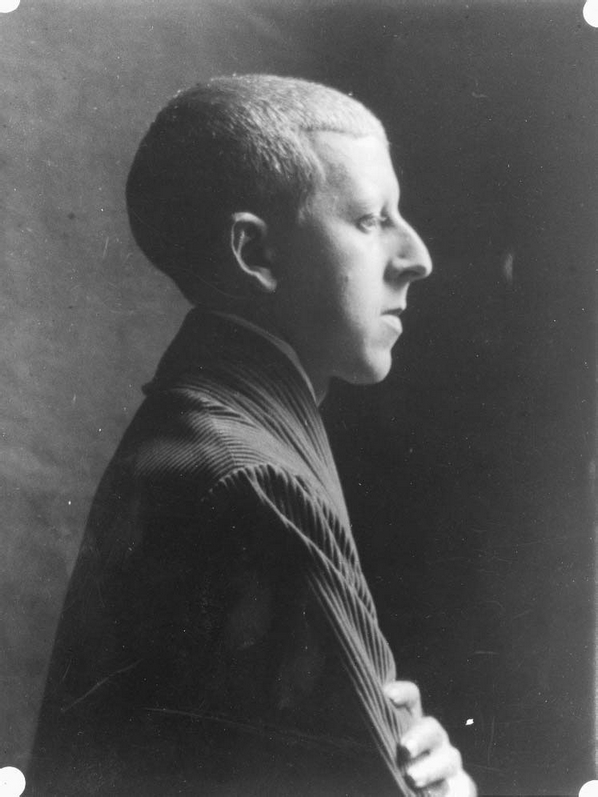
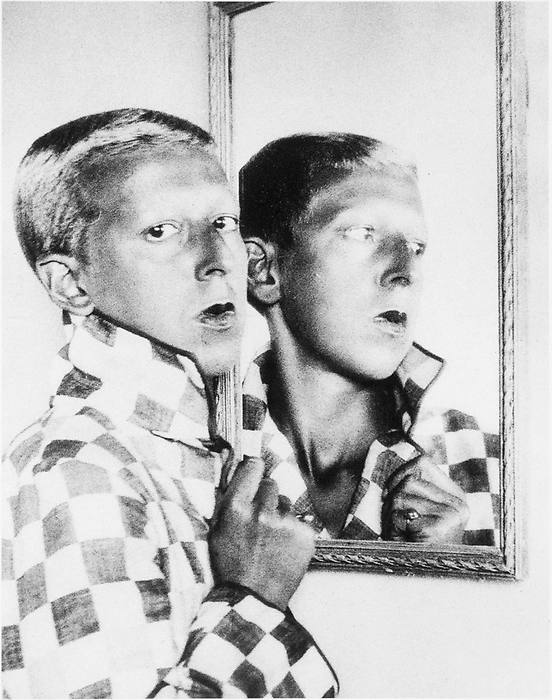
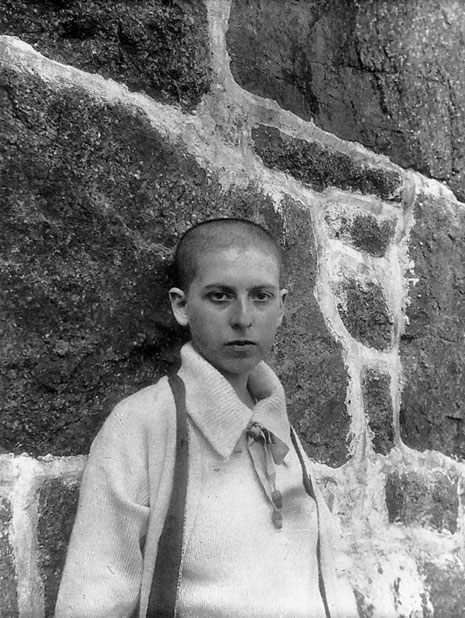
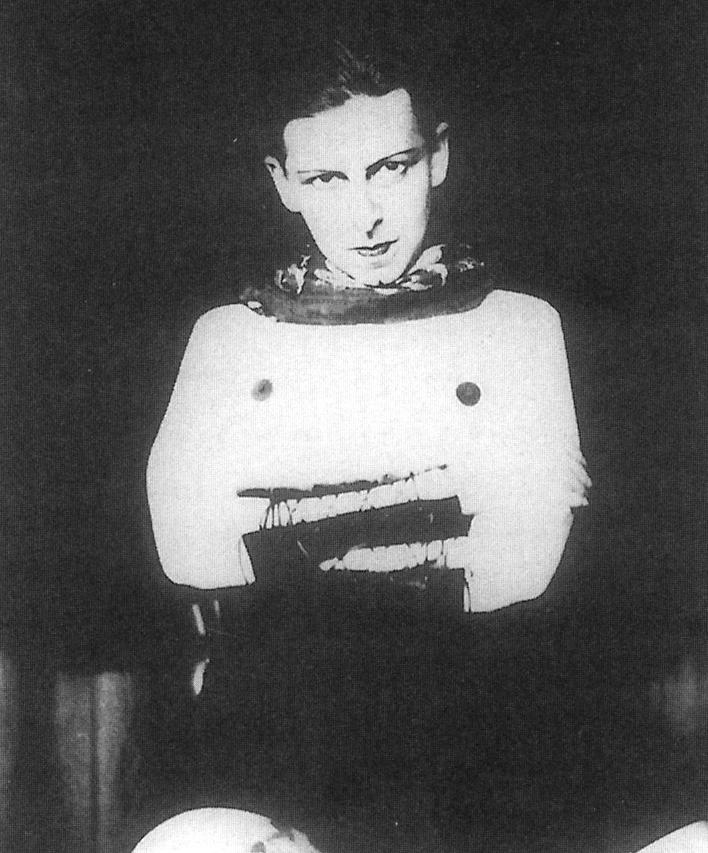
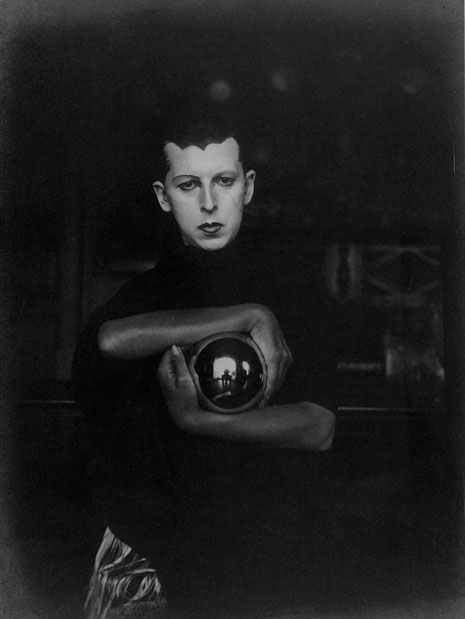
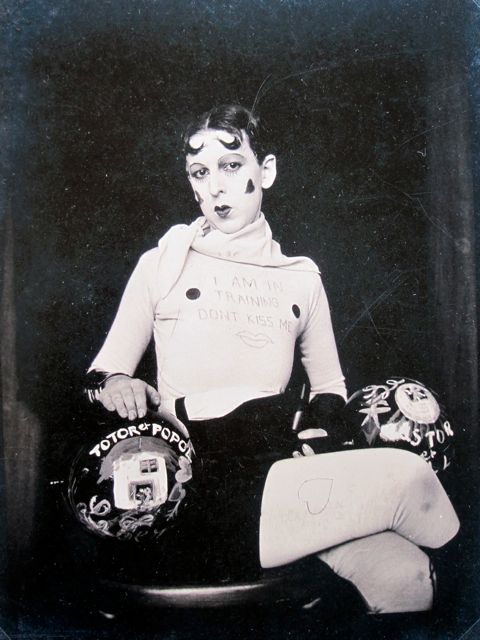
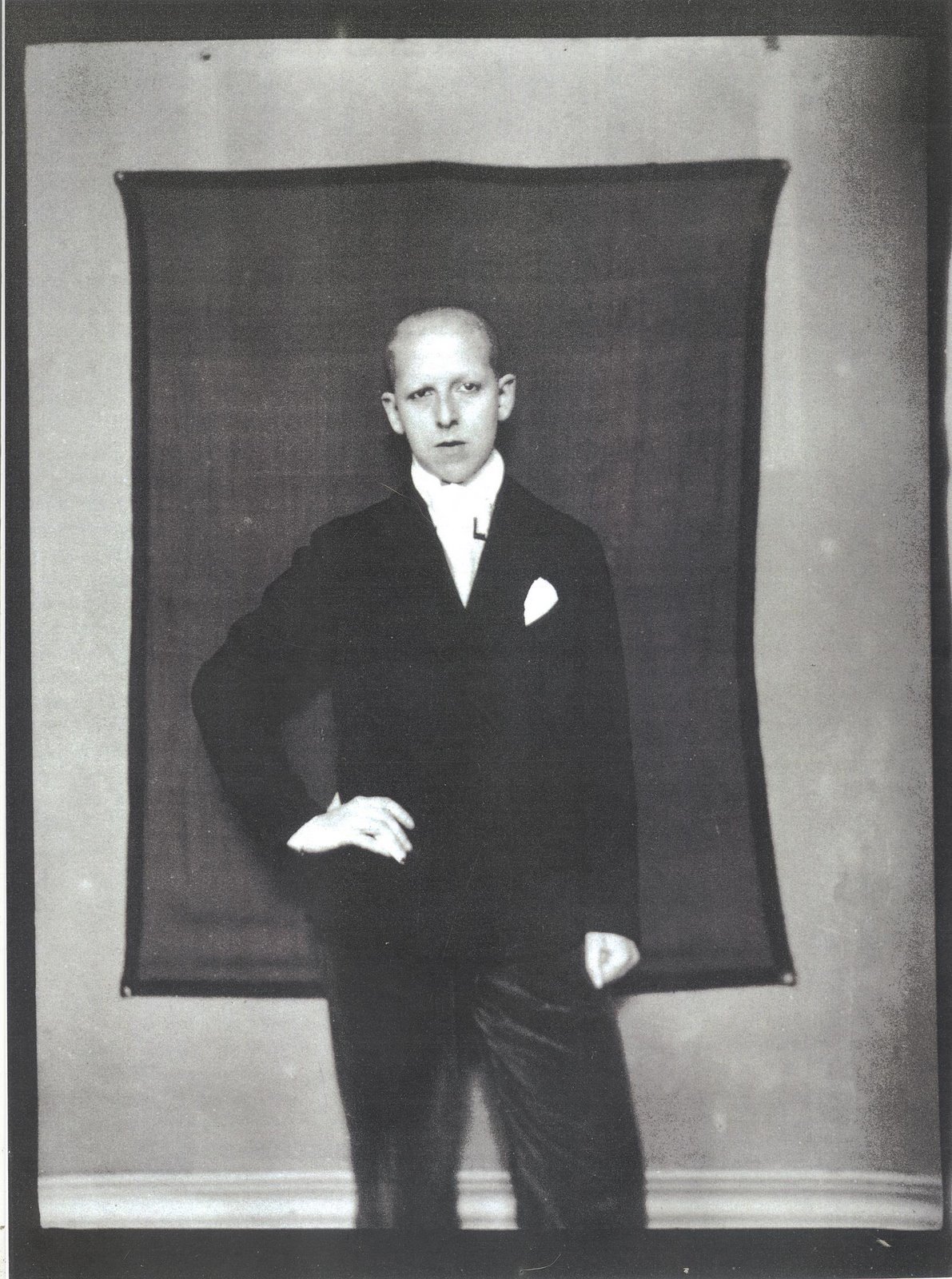
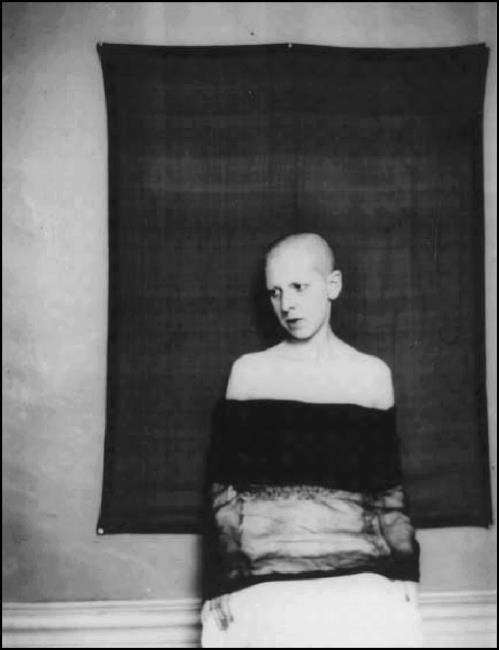
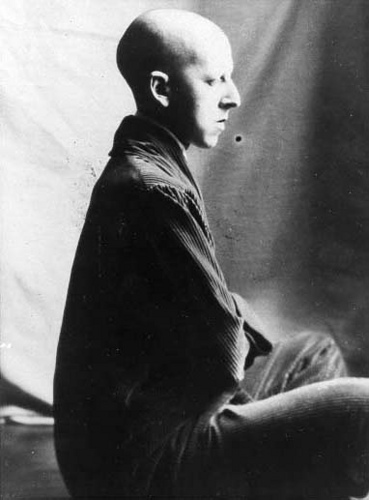
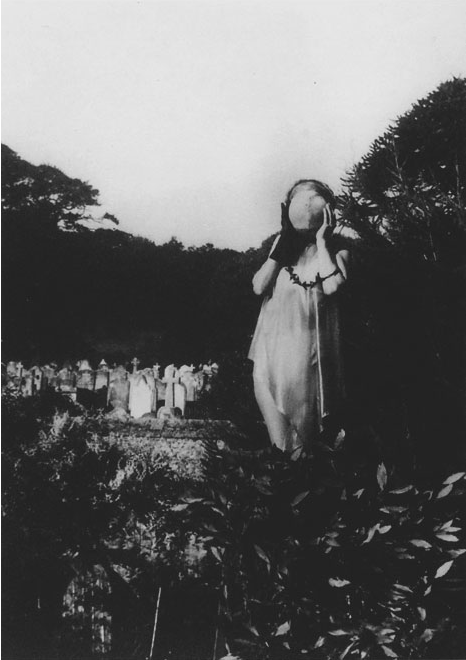
In a discomfiting series of self-portraits rediscovered in the 1980s – most of them apparently produced in the 1920s and 1930s with the assistance of Marcel Moore, the lesbian companion with whom she lived as a recluse on the island of Jersey between 1937 and 1954 – the wildly androgynous artist can be seen vamping it up in a boggling array of cross-sex get-ups.
In one photo the mercurial Cahun impersonates a bald semi-human creature with a conical skull; in another, a crew-cut blond Narcissus floating naked in a Jersey rock pool. Elsewhere she’s a Jazz Age aviator in cravat and huge round goggles; a hairless albino with two heads; a dapper Baron de Charlus-style boulevardier; a shiny and querulous-looking Buddha. Cahun never breaks role or smiles; the effect is at once fey, deadpan and disturbing.
At the time of their rediscovery the Cahun photographs – so droll yet so peculiar – seemed to have come out of nowhere and even now they retain a dateless, uncanny, hermetic quality. Many appear to have been taken inside La Rocquaise – the large and dilapidated Jersey house Cahun and Moore shared – or else on a nearby rock-strewn beach.
Why – or how – Cahun and her companion made these images remains mysterious.
p.s. Hey. ** h (now j), Hi. Well, my pleasure, of course. And thank you, and take good care. ** Misanthrope, I can definitely see you liking Purdy’s work. I should try that Zinc thing. I’ve meant to. I so rarely gets colds or flus or sick at all, so I forget, but … Really, my guess was right? Cool, strange, logical though. ** David Ehrenstein, Yep. I think ‘Eustace Chisholm …’ is my favorite of his novels. I didn’t know Albee had adapted Purdy. Theater in the old fashioned sense is a weakness of mine. Huh. ** Sypha, Hey. Oh, yeah, what I think I meant was I didn’t remember you talking about the actual novels as opposed to this or that sequence/detail in them. ** chris dankland, Hi, Chris. Cool, happy to hit one of your zeitgeists. Yes, Don Weise ran the publishing house Carroll & Graf that published ‘The Sluts’, and he’s who made that happen. Really nice guy. I didn’t realise he’s an agent now. If you remember, and if Jennifer wants to, please tell Don I say hi. I think I remember him telling me about his deliveries to Purdy. I did meet Purdy a few times, but my interactions were pretty limited. He seemed nice, interesting, intense. A lot of my writer friends back in the 80s knew him fairly well, and he had a rep through their reports and I think in general of being pretty prickly and bitter, but I didn’t find he had that vibe in my short encounters with him. Why Purdy isn’t more read and considered a more central writer has been a big question for, gosh, decades. Beats me. I lived in Holland for a few years, as I think you know, and he was considered a really major writer there. He was written and talked about a lot. I’m not sure how he’s regarded here in France. I should ask people. I would imagine he’s held in higher regard here than back home. It seems strange if the ongoing neglect is due to him having been a difficult guy. Surely there are some total assholes among the writers who are considered to be top dogs. Yeah, I don’t understand it. There is a prejudice against work that overly dark. But then … Cormac McCarthy. And maybe his gayness is some kind of strike against him in the US? But yes, being canonised by the lit. establishment is hardly an indicator of a writer’s greatness or lasting value/influence, that’s for sure. Is there no Purdy biography? That is very strange. I’m very surprised by that. Anyway, I’m so happy the post was inspiring and a soul mate for you. Have a lovely one, man. ** Steve Erickson, Ah, so it begins! There’s been COVID visual art showing up for weeks now. Great about the interview! I didn’t know that Trouser Press has returned. Wow. Are the same people/person in charge, and or is it more tangential and they’re just kind using the brand name? ** Nik, Hi. I hope people get in touch re: that project too. Super great opportunity. I know Dennis Lim is going to be somehow in charge of the NYFF, but I don’t know if he already is for this edition. Well, I will say diminishing the experimental film section by mushing it in with shorts is not a good sign at all. Really, they should give experimental film a wider berth with multiple sections given the current experimental film renaissance. But oh well. I’m not really worried about the coherency falling apart here. It’s more the doomy if guess-work-like threat of the now legendary Second Wave that’s daunting, what with some scientists saying it’s inevitable and others saying not necessarily at all. But, no, I was out all day yesterday looking at art, and the city is full of life and people, and other than a few packed cafes I passed, everyone is sticking to the rules. It’s gotten so you just distance/mask/wash without even thinking much about it. Fingers crossed. And extremely crossed for you guys over there. It just feels so apocalyptic over there from over here. Thanks for asking about the GIF work. Well, it’s in process, but, at the moment, it’s 10 sequences, each on its own small computer screen, individually framed, matted, hung on the wall in a row. So no hands-on viewer interaction. They would just cycle through their things forever. It’s not a narrative work, more associative, more like a poem, in a way, I guess. And more kind of abstract, although it involves almost nothing but figurative gifs. Not sure. Definitely a bit different. Like I think I said, I want to see what the potentially interested gallerist has to say about them. I hope you got the essay finished to your satisfaction, and, obviously, enjoy the beach! xo ** Right. Today I’ve restored a quite old, beautiful, simple but subterraneous post made for the blog by the writer and former blog regular Alan Horn. I hope you will eyeball it and enjoy. See you tomorrow.
‘On 6 August 2015, the American author and playwright James Purdy left New York for the last time. Bound for Denmark, he travelled in a small flip-top leather case with a combination lock. This was inside the rucksack of Maria Cecilia Holt, Harvard doctor of theology, who was asked to produce the necessary papers while going through security at Boston Logan airport.
‘“I’d collected James’s ashes from his literary executor,” she explains. “It had been quite traumatic. So I presented security with the papers and the ashes and they said, ‘Ma’am, we’re sorry for your loss.’ I began to cry. I wanted to say, ‘It’s not my loss, it’s yours. America is losing a great writer. He’s leaving the US for ever – and no one even cares.’”
‘Holt gave the ashes to Charles Lock, professor of English literature at Copenhagen University, who put them on his bookshelf – and that’s where they have been for three-and-a-half years. However, on 13 March, exactly 10 years after Purdy’s death at the age of 94, Lock will travel with the remains to the graveyard of St Mary’s Church in Weedon Lois, Northamptonshire, where they will be interred next to the grave of the English poet Edith Sitwell, in accord with Purdy’s final request.
‘“The idea was appealing in its sheer oddness,” says Lock, who was asked to help by Purdy’s literary executor. “I don’t think there’s another American writer of such importance buried in Britain. TS Eliot, of course, but he’d long been a British subject.”
‘When Purdy died, obituaries eulogised him as a unique, fearless voice of American fiction. They praised his bizarre, savage wit, his dreamlike vernacular prose and its ability to conjure up gothic midwestern landscapes of beguiled innocence, grotesque violence and gender-fluid racial and sexual obsession. But they also pointed out that this white, midwestern writer who wrote about outsiders – women, African Americans, gay people, Native Americans – was himself cast out by the US literary establishment.
‘Despite praise in his lifetime from Langston Hughes, Susan Sontag, Edward Albee, Gore Vidal, as well as – in later years – John Waters and Jonathan Franzen, Purdy felt more loved in Britain. He talked often of how the critic and poet John Cowper Powys called him “the best kind of original genius” – and of how Sitwell helped him publish 63: Dream Palace, his first novella, in 1957. He eventually notched up a total of 18 novels and 20 plays, as well as numerous poems and short stories.
‘“English critics saw something unique in Purdy,” says Professor Richard Canning, a Purdy scholar at the University of Northampton, who has organised a symposium on the writer’s work to follow the burial ceremony this week. “Purdy met his American critical neglect with incomprehension, suspicion and anger. Yet from the start, he could write no other way.”
‘The writer was born poor in Hicksville, Ohio, in 1914. His parents divorced when he was young, so Purdy moved between his mother and father, and his grandparents, who would tell him strange gothic tales that he’d transform into short stories and plays, utilising the language of the King James Bible and Shakespeare’s dramas, works he was made to read cover-to-cover by his Calvinist family. “I think it taught me the English language,” said Purdy. “I grew up in a family of matriarchs. They were all inveterate storytellers.”
‘Purdy studied English at the University of Chicago where, in 1935, broke and without friends, he befriended Gertrude Abercrombie, painter and “queen of the bohemian artists”, whose ruined mansion was a popular stopover for jazz artists including Sonny Rollins, Dizzy Gillespie, Charlie Parker, Miles Davis, and Billie Holiday. Inspired by the improvised jam sessions at Abercrombie’s salon, and by the writers of the Harlem renaissance, Purdy developed his unique writing style, incorporating a small-town midwest vernacular and African American slang.
‘“Jazz is a good description of Purdy’s writing,” says his biographer, Michael Snyder. “He incorporates different tonalities and voices within a single story, employing this archaic, almost biblical American language.”
‘Purdy began sending out his stories to magazines. But, as he wrote in An Autobiographical Sketch in 1984, they “were always returned with angry, peevish, rejections … They said that I wrote in a peculiar manner … too vivid. [They] were insistent I’d never be published.”
‘If it wasn’t for Sitwell, that might have been true. But in the period following Gollancz’s publication of 63: Dream Palace, with Purdy ensconced in a small apartment in Brooklyn Heights, his work was briefly in vogue. His first novel Malcolm, an absurdist Candide-like journey through an American metropolis, was described by Dorothy Parker as “the most prodigiously funny book [of] these heavy-hanging times”, while 1961’s follow-up, The Nephew, was hailed by Angus Wilson as “a reverberating work [of] magnificent simplicity”.
‘Feted by the establishment, Purdy received a Guggenheim Fellowship, and an award from the National Institute of Arts and Letters. But just a few years later, he bit the hand that fed him (clean off, you could say) with Cabot Wright Begins. A scabrous satire about three of New York’s sacred cows – publishing, politics and psychiatry – the novel concerns the battle for the biographical rights of the titular Wright, a handsome, Yale-educated stockbroker and serial rapist. New York Times book critic Orville Prescott called it “the sick outpouring of a confused, adolescent, distraught mind”. A counter-attack from Susan Sontag hailed it as “a bravura work of satire”, but the damage was done.
‘“If my life up to then had been a series of pitched battles,” wrote Purdy, “the future was to be a kind of endless open warfare.” Cabot Wright Begins, he added, “was condescendingly reviewed by the pew-warmers of the local think tanks. [It] was not about a rapist but about people that try to write a book about a rapist. It’s about writing. Nearly everybody missed that.”
‘However, it was Purdy’s next novel, Eustace Chisholm and the Works, that especially outraged the “pew-warmers”. A violent hallucinatory work set in Depression-era Chicago, it told the story of a Native American who can’t accept he’s in love with another man. The book, said Purdy, was about how “we rip out the beautiful things in us so we’ll be acceptable to society”. Dismissed by the New York Times as “a homosexual novel”, the book was also denounced by the writer Nelson Algren as a “fifth-rate avant-garde soap opera [about] prayer and faggotry”.
‘Despite it being his bestselling book, with a review in the Sunday Times by George Steiner praising its “power to make nerve and bone speak”, Purdy was effectively marginalised for the rest of his life. “My books are all underground,” Purdy told Interview magazine in 1972. “They’re about something people don’t want to hear expressed. Critics would like to carry them off to the shit-yard, [but] they can’t, because they haunt people.”
‘“He was tapping into something deep within us,” says biographer Snyder. “He was writing about same-sex love and desire, saying it could happen to anyone. Plus, he was combining that with issues of race and power. New York critics just shut him down and diminished his name.”
‘The label “homosexual writer” stuck for the rest of his career, with Purdy confined to what Gore Vidal called “the large cemetery of gay literature … where unalike writers are thrown together in a lot, well off the beaten track of family values”. In later years, Purdy moved further off the beaten track, as much by intention as circumstance. “I’m not a gay writer,” he would tell interviewers. “I’m a monster. Gay writers are too conservative.”
‘Speaking to Penthouse magazine in 1978, Purdy said being published was like “throwing a party for friends and all these coarse wicked people come instead, and break the furniture and vomit all over the house”. He added that, in order to protect oneself, “a writer needs to be completely unavailable”.’ — Andrew Male
TLIO Episode 21: Eustace Chisholm and the Works — James Purdy
SHE WAS A GIRL. Poem: James Purdy. Music: Joost Kleppe.
_______ Interview from Conjunctions
BRADFORD MORROW: When you began writing, what authors did you read and who had an influence on you?
JAMES PURDY: Unamuno had some influence: only putting into the work what is absolutely essential. Also Hemingway, at least technically, again because he leaves out so much. Sherwood Anderson. I always felt a close affinity with Whitman and Melville, though people tell me it’s not possible. Especially Melville, the tensions between men in isolation and the megalomania, the megalomania in Pierre and Moby Dick, Billy Buddand The Confidence Man. It is something I immediately recognized as significant. And even James Fenimore Cooper. I knew it was a world which I belonged to.
MORROW: What was Sherwood Anderson’s influence?
PURDY: The isolation in his work, the small-town vernacular. When Marianne Moore said I was a master of the American vernacular it was very nice because even then I was working in the dark, I didn’t know what I was. Anderson wrote a wonderful story called “The Man Who Became a Woman”: one of the most amazing stories ever written. I don’t know whether he knew how startling it is. It’s about a young boy who is a groom in the stables, he takes care of horses. The story is really a problem of crisis of sexual identification, to use a pretentious psychological phrase. Suddenly, working around these awful, rough men, and being just a young boy who simply loved to curry the horses, suddenly one night he wanders into a saloon and he looks into the mirror and instead of seeing himself he sees a young woman. Horrified, he runs back to the stables. There these Negro laborers try to rape him and he runs away. He becomes a man again, but there is no real closing to the story: Anderson shows such deep insight into the terror of adolescence in this story.
MORROW: It sounds to me like a James Purdy story.
PURDY: Yes, it does! It’s the only story by Anderson where I think he really plumbed the depths.
MORROW: Did you read that when you were a youngster, or later?
PURDY: Oh, I didn’t understand it when I read it, but I knew it was great.
MORROW: When did you start reading fiction?
PURDY: When I was about ten. Another book that influenced me when I was young was Gogol’s Dead Souls, which is a great book. I think he is so much greater than Tolstoy or Dostoevsky. Cervantes’s Exemplary Stories, in Spanish Las Novelas Ejemplares. These also have the outcasts, the young derelicts. “Rinconete and Cortadillo” is one of the greatest stories ever written. “The Dialogue of the Dogs” is also a great story—much greater than Don Quixote, which is great. But these stories are the distilled liquor of his genius.
MORROW: You just naturally gravitated toward the “outcast” figure since you were a child? Are you an only child?
PURDY: No, I have two brothers. I’m the middle child. Lots of uncles, cousins, aunts, a whole clan.
MORROW: Where did you put your hands on the books as a child?
PURDY: My father left a big library. He read.
MORROW: Any writers in the Purdy ancestry?
PURDY: They’re all farmers!
MORROW: The question I am circling is: How and when did you know you wanted to become a writer, a novelist?
PURDY: I began writing anonymous anomalous letters when I was eight and nine. These anonymous anomalous letters, as I call them, and which I still write today, are purportedly unsigned letters which defame the recipient by telling him the truth about himself. You know, a truth can never be told in public. Anyway, I remember my mother had this terrible landlady where we rented a house and she pestered my mother about little things, do this, do that, about the yard. And so I wrote her this letter … I wrote it about her, I didn’t send it to her. My mother was horrified by it, because there was so much anger in it.
MORROW: Why do you write the anonymous anomalous letters? Is it a kind of recreation?
PURDY: It’s a blowing off of steam. But the novels sort of come out of it, I think.
MORROW: When you write an anonymous anomalous letter it seems ultimately that you are the outcast figure rather than any character.
PURDY: Yes, I guess so, yes. Because there is so much anger in them.
MORROW: Could it be that you write these anonymous letters, in which you yourself are the outcast figure, and then you work toward decentralizing that outcast figure by creating a fictional ball around it?
PURDY: Yes, I suppose so. I’ve known a lot of outcasts. And so I would write these letters and my older brother loved them, because he was wicked!
MORROW: I notice you’ve left Henry James out of your list of early influences.
PURDY: I was once quite fascinated by him and now I can’t read him. He annoys me no end. I don’t think he knew anything about people. He reminds me of that old story about the three men who were asked to describe an elephant and each one had a completely different and erroneous description—one thought it looked like a snake, the others thought it was something else. I think the reason he remains so fascinating is because he was so confused by life. He is the only “great” writer who doesn’t seem to have had any real, direct life experience. It’s all what he heard, or what someone told him. It’s amazing the energy, and the number of books he wrote, an amazing body of work. And yet I almost always come away from his work bitterly disappointed. It’s a matter of temperament: I don’t really care about his people, and I don’t really care therefore about him.
MORROW: One very obvious difference between your work and James’s is that in his dialogues, especially in the late novels, all of the characters seem to speak in James’s voice, whereas I can never hear your own voice in your characters’ mouths.
PURDY: Oh, really. That’s interesting. Proust is a little that way, like James, everything is Proust’s voice.
MORROW: What about Thomas Hardy?
PURDY: I love him. I adore his poetry, he is a great poet. Much better than someone like T. S. Eliot: I can’t stand him.
MORROW: I believe I see a pattern emerging here: You don’t like the exiled American who becomes super-Anglophile.
PURDY: I can’t bear them. It’s one thing I find unattractive in Hemingway, the fact that he was an expatriate. I don’t think he got into America enough.
MORROW: The Nick Adams stories would contradict that.
PURDY: “The Killers” is a great story. But I don’t think he ever did much after those.
MORROW: Is there any over pattern that you are trying to develop, novel by novel, into a “body” of work?
PURDY: No. I think my style’s changing but I don’t pay much attention to it. I know it’s different but I’m too busy writing the next book. I’m not consciously trying to develop a body of work: I’m so lucky if I can make another book, get through another book. They are hard to make. No matter how many times you dive from an eighty-five-foot height I think you’re scared each time.
MORROW: You’re afraid when you start a book?
PURDY: I’m scared all the time. This book, On Glory’s Course, I thought I’d never finish. It is about as long as Mourners Below. It’s like being put on a different animal to ride each time. Part of the difficulty in it all is that everything is dictated by the characters: They sort of appear, they come to visit you, they say, “Here I am.”
MORROW: Do you consider your work comic or tragic?
PURDY: In the middle.
MORROW: Do you dream about your characters?
PURDY: Well, I’m ashamed to say I don’t remember any of my dreams. I probably do, but don’t remember them. Maybe because I’m dreaming all day.
MORROW: What is your best book?
PURDY: I sometimes think it is The House of the Solitary Maggot. I sort of wrote that asleep: It all just came out of me: I don’t know where it came from. William Carlos Williams admired the stories in Color of Darkness and he was a great admirer of The Nephew. That was his world he said, The Nephew. But you know he was very ill at that time, he died shortly after The Nephew was written. He and Marianne Moore were friends of mine, she was a little bothered by my subject matter but she loved those stories.
MORROW: I’ve always been amazed that Edith Sitwell managed to see through the subject matter and get to the form.
PURDY: Absolutely. It sounds boastful but it showed real insight in her as a critic. You know she defended the use of the word “motherfucker” in print, she said it had to be in there. All these little sissy men were crying and carrying on.
MORROW: How did you get in touch with Sitwell?
PURDY: I simply sent a copy of Don’t Call Me by my Right Name to her at the Castello Montilgafani, and I thought, “She’ll never get it, and if she gets it she’ll never read it.” But she really went wild over them, and when I sent her 63: Dream Palace she said that it had to be properly published.
MORROW: She was the person who put it into Victor Gollancz’s hands?
PURDY: Yes. Then he infuriated her by taking those words out. It’s bowdlerized, that edition. She was indignant about it.
MORROW: How does a Purdy novel develop? You begin by writing anonymous anomalous letters, then ideas begin forming themselves into larger schemes, then characters begin making visitations, etc.?
PURDY: I don’t know when I’ve started a book. For example, On Glory’s Course. I knew the heroine of the book largely through my mother. I only remember her because she was always talking about her. I was thinking this would make a wonderful story but it was too far away from me, too removed from my actual memory. But it just started and I couldn’t stop: I resisted it all the way through, the last fifty pages I thought I’d never see through. There were these young veterans from World War I who were horribly disfigured, and they had plates in their legs and plates in their heads. These veterans appear in the story.
MORROW: These disfigured vets have appeared before!
PURDY: Yes! I used to see them in my hometown, I’d see them on my way to school. They were in their early thirties, and they’ve stayed with me.
MORROW: How much do you write at a sitting?
PURDY: This may sound a little pretentious, but the books are so intense that if I write three or four pages it’s just like I’ve been running for an hour in the blazing sun. I’m just a wreck. I have to either take a walk, or lie down. Sometimes I’ll write at two sittings in a day. But I can always write anonymous letters, even if I’m fagged. Those are like taking dope. I used to write terrible letters to publishers and send them but I’ve learned not to do that: I write them, but I don’t send them now! I write three or four pages in a day. I’ve written as many as twenty pages in a day, but at that intensity twenty pages kills you, something bursts inside of you. Usually I revise at a later date; when I get up I usually keep going rather than revise what I’ve already written. It’s like mountain climbing: You had better keep going. Sometimes I reread, sometimes not. Sometimes I’m afraid to reread it for fear I’ll look down and fall. You see, you’ve got to maintain a speed, you’ve got to keep telling what you know. There’s part of you that says, “This is so much shit, stop, it’s no good, who cares about it.” But you can’t believe that. You have to be crazy and believe.
MORROW: Lack of a certain kind of apperception is an important element in creating a novel?
PURDY: Yes, you’re too dumb to know better. You have to keep going. Malcolm Cowley once wrote me that it is true I am a genius, but I’m a primitive genius. I was astonished anyone called me a genius in the first place, whatever that is. But he said I don’t know how to write.
MORROW: I noticed in your room in Brooklyn that your library has no contemporary fiction in it.
PURDY: Yes, just Loeb Library. All Greeks, dead Greeks! I get the sap for my work out of those books. I was reading Diodorus Siculus the other day and he said, “It’s very hard to travel beyond the north wind, but if you do go beyond the north wind you can pick up an arrow and it will fly back to where you started.” Like a witch on a broomstick, say. And I thought, Isn’t that horrible, to go back to beyond where the north wind blows. Those people are called the Hyperboreans.
MORROW: Sounds like Einsteinian curved space.
PURDY: That stayed with me for a week.
MORROW: What was the last book of contemporary fiction that you read and admired?
PURDY: William Gaddis’s The Recognitions. I can see how William Gaddis is said to like my work, because we both come from that sort of puritanic small town in America. I like some of Paul Bowles’s work, and some of Tennessee Williams’s stories. Also, Alejo Carpentier’s El reino de este mundo and Peter Feibleman’s A Place Without Twilight.
MORROW: What is your opinion, in retrospect, of your novel Malcolm?
PURDY: I think in a way it’s my best book, one of my best. It’s like a big firecracker that keeps going off. It’s quite outrageous and I’m sorry to say that some academics now say, well, that’s just his first book, he ought to just forget it: I think that’s a mistake, because they’re not reading it correctly.
MORROW: What about Cabot Wright Begins?
PURDY: That used to be my least favorite book. I think it’s somewhat like Malcolm in that it is an outrageous work. I based it on real characters, except Cabot himself. This crazy ex-convict I knew was always going to write a book about a rapist and all he talked about was this man, this rapist. I got so sick of hearing about it, and I knew he’d never write it because he’s not a writer, so I wrote it for him!
MORROW: Which of your stories would you include in a selected stories of James Purdy?
PURDY: “Some of These Days,” “Eventide,” “You Reach for Your Hat,” “Cutting Edge,” “Man and Wife,” “Sleep Tight.”
MORROW: “Daddy Wolf”?
PURDY: Yes. And “Goodnight, Sweetheart.” “Summer Tidings” too.
MORROW: We’ve talked before about how America tends to exile its greatest writers. You’re essentially in a state of self-exile, exile, at least, from the so-called establishment.
PURDY: Yes. Because they want Longfellow. They want lies. The publishers do.
MORROW: The country is conservative?
PURDY: I don’t think the country is conservative. I think it’s wild. I’m talking about business. I’m talking about business. You see, very ordinary people can read my books, but they’re never told to read them, they’re told not to read them. Anybody could read Mourners Below. Public relations men need labels to sell things, but they could never label me because every one of my books is different.
MORROW: Tell me about your new novel, On Glory’s Course.
PURDY: It takes place almost eighty years ago, some of it a hundred years ago. It’s about a woman who in 1897 had an illegitimate child, and she came of a wealthy family. Her life was ruined by it. They took the baby away from her. The book begins when she is forty-eight years old, and this young boy who is sort of her adopted errand boy gets this girl in trouble. And suddenly his baby, and this similar predicament, digs up her past life, which she thought she had kept a secret. Actually everybody knew about it all along. It’s based on a true story. I’ve always wanted to write it but I thought it was too difficult. Finally I just started it. Everything about it is difficult.
MORROW: How did you research it?
PURDY: I read a lot of books about the period, a lot of novels, too, like Poor White and Heaven’s My Destination. But in the end they didn’t help much. The story was told to me by my grandmother.
MORROW: In your dialogues in the novel do you use period terminologies?
PURDY: Well, sort of. But it’s not a “period” book, it could happen now.
MORROW: When did you write your first story? Not the anonymous anomalous letters, but an actual story?
PURDY: I wrote a lot of stories when I was very young. They’re all lost. I used to publish this little magazine on a duplicator. It had my stories in it.The Niocene. I got out five or six issues! They’re all lost now, I imagine. I was eleven or twelve. I wrote everything in it, but it was mostly imaginary. I printed it on a duplicator, an old one that you used with jelly. It was very messy. I ran off several copies and bound them myself with fasteners. I guess those were my first published stories. I’d run off ten and give them to my family and friends. I sold some, too!
MORROW: Instead of lemonade.
PURDY: Yes! I forget how much I charged.
MORROW: There is a deep compulsion to write, in order to be read.
PURDY: Yes, but I don’t think it’s so much to be read as to be heard, to communicate. My idea now is that there is really no communication in the media at all. That you’re not reaching your audience. People are listening, but nothing is being communicated. Their attention is simply being taken up. But nothing is being told them. It’s noncommunication on a mass scale. It’s like the music in this restaurant. It’s noise: it’s not communicating, musically. It’s not saying anything to the psyche. That is what the television is all about. Nothing is being said. There are these words. And there are these people speaking these words. But they’re not actually reaching their audience. It’s noncommunication communication.
MORROW: This ties into the earlier statement about the desire to hear lies, perhaps. Tell me more about your childhood.
PURDY: I grew up in the country. My family is Scotch-Irish. The family were mostly farmers, but my father didn’t like being a farmer. He became a businessman, so he got to work in the bank, in real estate, things like that. But they all remained sort of rural. I had two brothers, actually I had three brothers, but one died before I was born.
MORROW: Besides publishing your stories in The Niocene, did you ever publish in school magazines as you were growing up?
PURDY: No. I don’t think they liked what I wrote in school. It was a preview of what the critics were going to say. The stories bothered my teachers, until I got into high school, where I had a good teacher. She read my writing and thought it was remarkable. The only advice she gave me was to keep writing. She said I would be a writer.
MORROW: What did you do after you finished high school?
PURDY: I went to Chicago. Then I got into the army. I was a most unlikely soldier. I was going to be drafted, so I just joined up. That was in 1941. But there were a lot of people that didn’t belong in the army. I didn’t have to go into combat, for some reason. I was based at Scott Field, which is in Belleville, Illinois.
MORROW: Did you manage to write still, while you were in the army?
PURDY: No, that stopped it all. I suppose I wrote a few little things, but I was frustrated. But I was learning a lot.
MORROW: What did you do after you got out of the army?
PURDY: I did interpreting for a while, and then I got a job in Cuba. I learned Spanish in the army. I taught school in Havana for a year, and that was quite interesting. The government got me that job, it was sort of a teachers’ agency, except it was the U.S. government. It was a school for Cubans and Americans, and I taught English literature more or less. We had trouble getting books, so they had to read a lot of books that weren’t first-rate. I could have stayed on longer, but I didn’t want to.
MORROW: Did you start writing again when you were in Cuba?
PURDY: Yes. I had one story published then, in The Prairie Schooner. That was a big event. They took my story “You Reach for Your Hat.” That was my first published story. After I left Cuba, I came back to Wisconsin, where I taught for several years at Lawrence College. I taught English and Spanish. Then I just gave it all up. I had jobs all around the country. Those were terrible years. I want to tell you, I wouldn’t want the name of the magazine used, though it ought to be, I think it was between 1948 and 1951, I sent “Eventide” to a magazine. Now “Eventide” has since become a classic. This magazine accepted the story for publication and after three years returned it to me stating that they decided not to publish it. I don’t think editors know what that does to a young writer. It is so devastating. Then when I was made rather famous when Color of Darkness was praised by all these critics and writers, the editor of that magazine had the nerve to write me a letter of congratulations. I never replied, of course. What was I to do? But anyway, I wrote a lot in Wisconsin, I finished Color of Darkness there. But it was impossible to get those stories published. I would send them out and they were rejected one by one by one. I got vicious comments. Editors said to me, “These stories are sick.” You know, when you’re that young you are just starving for encouragement. I was destroyed by it, but I didn’t seem to be able to stop. I don’t trust evaluations. I don’t care who it is. It’s hard to forgive people: To tell a writer he has no talent is a form of murder. Why don’t you go out and shoot yourself? That’s what it means.
MORROW: What magazines began accepting your stories?
PURDY: Black Mountain Review, which Robert Creeley edited. He took a story, and it was a godsend, because I couldn’t get anything published. And when he took “Sound of Talking” that was a big moment for me. Then there was nothing. Then there was a man in Chicago, Osborn Andreas, who felt that the stories had to be published, so he privately published Don’t Call Me by my Right Name. And those stories were kind of a bombshell, they shocked everyone.
MORROW: What did your family think?
PURDY: Well, they didn’t shock them. 63: Dream Palace shocked them, but not as much as it shocked the critics. Had this man never published those two books I would have been unheard of forever. I couldn’t have gone on because of all the rejections. I probably would have written, but it all would have been left in bureau drawers.
MORROW: All these novels would be in drawers?
PURDY: I probably would have died. I think the New York literary establishment is totally closed to anything new. When you think of the slick magazines and what they publish, and when you think of the editors and what they want! What they want is recycled cellophane. They want recycled recycled. Sawdust. Those are formula stories they take. They’re utterly dead. They don’t even have water in them. They’re utterly recycled sawdust. The stories are meant to go along with the ads for Tiffany’s, the Plaza Hotel, Cartier’s, Alfred Dunhill. There should be nothing really human about the stories. It’s all about clothes and fashion.
MORROW: Most New York-based slick magazines are simply vehicles for advertisements and are meant to generate capital. They mask this behind the guise of self-help, fashion, cuisine. But it’s all a showcase for the ads.
PURDY: It’s all for the money. Everything in the United States is money.
MORROW: Perhaps this is part of the reason some of your best writers are exiles, in Brooklyn, or Tangier, or whatever. So you would have stopped writing and sending material out?
PURDY: I would have died. What else could I have done? I hate teaching. I like being with the students, and talking with them. But I hate teaching, I don’t communicate that way. It’s not my form of communication.
___ Book
James Purdy The Complete Short Stories of James Purdy (2014) Liveright
‘The publication of The Complete Short Stories of James Purdy is a literary event that marks the first time all of James Purdy’s short stories―fifty-six in number, including seven drawn from his unpublished archives―have been collected in a single volume. As prolific as he was unclassifiable, James Purdy was considered one of the greatest―and most underappreciated―writers in America in the latter half of the twentieth century. Championed by writers as diverse as Dame Edith Sitwell, Gore Vidal, Paul Bowles, Tennessee Williams, Carl Van Vechten, John Cowper Powys, and Dorothy Parker, Purdy’s vast body of work has heretofore been relegated to the avant-garde fringes of the American literary mainstream.
‘His unique form and variety of style made the Ohio-born Purdy impossible to categorize in standard terms, though his unique, mercurial talent garnered him a following of loyal readers and made him―in the words of Susan Sontag―“one of the half dozen or so living American writers worth taking seriously.” Purdy’s journey to recognition came with as much outrage and condemnation as it did lavish praise and lasting admiration. Some early assessments even dismissed his work as that of a disturbed mind, while others acclaimed the very same work as healing and transformative. Purdy’s fiction was considered so uniquely unsettling that his first book, Don’t Call Me by My Right Name, a collection of short stories all reprinted in this edition, had to be printed privately in the United States in 1956, after first being published in England.
‘Best known for his novels Malcolm, Cabot Wright Begins, Jeremy’s Version, and Eustace Chisholm and the Works, Purdy captured an America that was at once highly realistic and deeply symbolic, a landscape filled with social outcasts living in crisis and longing for love, characterized by his dark sense of humor and unflinching eye. Love, disillusionment, the collapse of the family, ecstatic longing, sharp inner pain, and shocking eruptions of violence pervade the lives of his characters in stories that anticipate both “David Lynch and Desperate Housewives” (Guardian). In “Color of Darkness,” for example, a lonely child attempts to swallow his father’s wedding ring; in “Eventide,” the anguish of two sisters over the loss of their sons is deeply felt in the summer heat; and in the gothic horror of “Mr. Evening,” a young man is hypnotized and imprisoned by a predatory old woman. These stories and many others, both haunting and hilarious, form a canvas of deep desperation and immanent sympathy, as Purdy narrates “the inexorable progress toward disaster in such a way that it’s as satisfying and somehow life-affirming as progress toward a happy ending” (Jonathan Franzen).
‘It may have taken over fifty years, but American culture is finally in sync with James Purdy. As John Waters writes in his introduction, Purdy, far from the fringe, has “been dead center in the black little hearts of provocateur-hungry readers like myself right from the beginning.”‘ — Liveright
Excerpt
Short Papa
When I caught a glimpse of Short Papa coming through the back yard that cold sleety February afternoon I had straight away a funny feeling it might be the last time he would visit me. He looked about the same, tall and lean and wind-burned, but despite the way he kept his shoulders back and his head up he spoke and shook hands like a man who didn’t expect you to believe a word he said.
Neither Mama nor Sister Ruth budged an inch when I told them who was out on the back porch, but after a struggle with herself, Ma finally said, “You can give Short Papa this plate of hot Brunswick stew, and let him get his strength back from wherever he has been this time. And then you tell him, Lester, he has got to light out again soon as possible.”
“But, Ma,” I began, “can’t he stay just the night?”
“Father or not father,” she began, “after what that man has done to us, no … I’ll feed him but I won’t take him in, and you give him my message, hear? Eat and get!”
But I seen that my remark about how after all it was my own dad who had come to see me had moved Ma more than a little, for her breast rose and fell like it always does when she is wrought up.
“He’ll only get in more trouble if he stays, Lester, and he’ll get you in trouble too. I do regret to talk against your papa, but he is a no-account, low-down—”
She stopped, though, when she saw the expression on my face.
Short Papa sat, hands folded, on a little green wicker upright chair before the round green wicker table as I brought him his hot plate of Brunswick stew to the back porch.
“Thank you, Les.” He eyed the plate and then took it from me, I can still see the way he ate the fricassee chicken and little bits of lima beans and potatoes. He was most famished.
“You can assure your Ma I’ll be on my way right after sunset,” he replied to the message I bore from her. “Tell her I don’t want folks to see me in town … by daylight.”
I nodded. looking at his empty plate.
“Your Ma has taken awful good care of you, Les. I observed that right away. I’m grateful to her for that, you can tell her. The day I get back on my feet, son, I will see to it that a lot of the thingsowin’ to you will be yours. … Count on me.”
I didn’t quite know what he meant then, but I was pleased he felt I deserved something. Ma didn’t often make me feel deserving.
Short Papa got up from the table, loosened his suspenders under his suit coat, felt in his breast pocket as he kept clearing his throat, and then sat down again as he said, “Matter of fact, Les, I have brought you a little something. But first you best take this plate back to the kitchen, for you know how fussy your Ma is about dirty dishes standing around.”
I rushed with the plate back to the kitchen and on the double back to Short Papa, and sat down beside him on a little taboret which we use for sitting on.
“I want you to promise me, though, you won’t lose it after I give it to you,” Short Papa said solemnly.
I promised.
“Cross your heart and all that.” Short Papa sort of grinned, but I knew he was dead serious and wanted me to be.
“Cross my heart, Papa.”
“All right, Lester, Then here it is.”
He handed me a great, really heavy gold watch with a massive chain a-hanging from it.
“Don’t you worry now, Les. It is not stolen. It is your great-grandpa’s watch. All during my most recent trouble I kept it in a safety deposit vault over at Moortown. I got behind on the annual rent payments when I was in jail, but the bank trusted me, Les, and they kept it. I have paid up for the arrears and this watch is yours. It has been in the family for well over a hundred years, you can count on that.”
I was not really glad to get the watch, and yet I wanted it too. I wanted also to show Short Papa I was grateful, and so I hugged and kissed him. His eyes watered a little and he turned away from me, and then he laughed and slapped my shoulder several times.
“Keep it in a safe place, Les, for beyond what it’s worth, which ain’t inconsiderable, it’s your old pa and his pa, and his pa before him that owned it. Understand? ‘Course you do—”
After Short Papa left, I sat for a long time on the back porch listening to my watch tick. It had a powerful beat to it. From behind me I could hear Ma talking with Sister Ruth about the dress they were making for her wedding. Ruth was going to be married in June.
I considered how Short Papa’s sudden arrival and departure had made no impression on them. He might as well have been the man who comes to collect the old papers and tin cans. Yet he was Ruth‘s father too.
“You take my word for it, Les, things are going to be hunky-dory one day for all of us again.”
That was what Pa had said to me as he slipped out the back way in the gathering darkness, and like the ticking of my watch those words kept pounding in my ears.
Ma had made me ashamed of Papa, always reminding me of the many times he had been sent to jail for a short stretch (hence his nickname), and once out, he would only be sent back again, and so on and so forth, but there was now something about the way this watch ticking away in my possession made me feel not only different about Papa and his pa and his pa before him, I felt for the first time I was connected with somebody, or with something. I felt I had a basis, you see. But I didn’t want anybody to know I had the watch, and I also felt that I would never see Short Papa again, that he had come back, so to speak his piece and be gone for good.
As a result I felt awful crushed that Short Papa had been entertained so miserly by Ma, being fed on the back porch like a tramp, and then dismissed. But then Ma’s attitude towards Pa was hard to fathom, for though she never wanted any more to do with him she never said anything about getting a divorce. She just didn’t want any more men around, for one thing, and then, as she said, why go to the bother of divorcing somebody when you was already divorced from him for good and all….
I kept the watch under my pillow at night, and I wound it cautiously and slow twice a day, like he had instructed me, and I never let it out of my sight whilst I was awake, keeping it with me at all times. I could not imagine being without it ever now.
After a couple to three months of this great care with his watch, and to tell the truth getting a little weary sometimes with the worry and guardianship bestowed on it, the polishing and keeping it when unused in its own little cotton case, and also seeing it was hid from Ma, for I feared she might claim it away from me for what Pa owed her, I remember the time it happened: It was an unsteady spring afternoon, when it couldn’t make up its mind whether it was still winter or shirt-sleeves weather, and I had gone to the Regal Pool Parlors to watch the fellows shoot pool, for at this time their hard-fast rule there was that nobody under sixteen was allowed to play, but you could be a spectator provided you kept your mouth shut.
Absorbed in the games and the talk of the older fellows, before I was aware of it all the shadows had lengthened outside and the first street lights had begun to pop on, and so then almost automatically I began to lift the chain to my watch, and as I did so I was all at once reminded of another time further back when Short Papa had been teaching me to fish and he had said nervously: “Pull up your rod, Les, you’ve got a bite there!” And I had pulled of course and felt the rod heavy at first and weighted but then pulling harder I got this terrible lightness, and yanking the pole to shore there was nothing on the hook at all, including no bait neither. And pulling now on the watch chain I drew up nothing from my pocket. My watch was gone. I got faint-sick all over. I was too shaky in fact to get up and start looking. I was pretty sure, nonplussed though I was, that I had not lost it here in the Regal Pool Parlors, but I went over to BudHughes the manager, who knew me and my family. and told him.
Bud studied my face a long time, and then finally I saw he believed me, but he kept asking a few more questions, like where I had got the watch in the first place, and when. I lied to him then because if he had knowed it come direct from Short Papa he would have thought it was stolen. So I told him the far side of the truth, that it was from my great-grandfather, passed on to me, and this seemed to satisfy him, and he said he would be on the lookout.
Almost every day thereafter on the way home from school I stopped in at the Regal to see if they had any news about my watch. and it got to be a kind of joke there with the customers and with Bud especially. I think they were almost half-glad to see me show up so regular, and inquire.
“No news, though, yet about your great-grandfather’s watch, “Bud Hughes would generally manage to quip at some time during my visit, and he would wink at me.
Then the joke about the missing watch having run its course, no mention was finally ever made of it again, and then after a while I quit going to the Regal entirely.
I held on to the chain, though, like for dear life, and never left it out of my grasp if I could help it.
During this period of what must have been a year or two, Ma would often study me more carefully than usual as if she had decided there was something wrong somewhere, but then finally decided she didn’t want to know maybe what it was, for she had enough other worries nagging away at her.
About this time, school being out, and the long summer vacation getting under way, I got me a job in a concession at Auglaize Amusement Park selling Crackerjack and candy bars in the arcade that faces the river. They give me a nice white uniform and cap, and for the first time the girls began making eyes at me … I realized that summer I was growing up, and I also realized I would soon be able to leave Ma for good and fend for myself.
On the way to work I would pass this fortune teller’s booth early each P.M. and the lady who told the fortunes was usually seated in a silk upholstered armchair outside, and got to know me by sight. She wasn’t exactly young or old, and went under the name MadameAmelia. She was also very pleasant to me partly because she knowed I worked in the concession. One time right out of the blue she told me she would be happy to give a nice young boy starting out a free reading but not to wait too long tocome in and take advantage of it, now business was still a bit slack.
I had sort of a crush on a young girl who come in now with her soldier boyfriend and bought popcorn from me, and I wanted like everything to find out her name and if she was going to be married to her boyfriend. So I decided finally to take advantage of MadameAmelia‘s invitation and offer…. The fortune telling booth with the smell of incense and jingle of little wind chimes and the perfume of red jasmine which she wore on her own person, the thought of the girl I loved and her soldier friend sort of went right out of my head and vanished into thin air.
I felt an old hurt begin to throb inside me.
Madame Amelia at first sort of flailed around asking me a few leading questions, such as where I had grown up, if I was the only boy in the family and if I had worked in the concession before, and so on—all just to get her warmed up, as I later found out was the practice with “readers.” But then just before she began the actual fortune in earnest, she held her breast, her eyes closed tight, and she looked so tortured and distressed I thought she was about to have a heart attack, but it was all part also of her getting in touch with the “hidden forces” which was to direct her sorting out your fortune.
Then she got very calm and quiet, and looked me straight in the eye.
I stirred under her searching scowl.
“Before I begin, Lester,” she said, shading her brow, “I must ask you something, for you are a good subject, my dear—I can tell—and unusually receptive for a young boy. What I would get for you, therefore, would come from deeper down than just any ordinary fortune. Is that clear?”
She looked at me very narrowly. “In other words, Lester, do you want to hear the truth or do you just want the usual amusement park rigmarole?”
“The truth, Madame Amelia,” I said as resolutely as I could.
She nodded, and touched my hand.
“You have had two losses, Lester,” she began now at once in a booming voice. “But you know only about one of them, I see.”
The words the truth seemed to form again and again on my tongue like the first wave of severe nausea.
“As I say,” she was going on, “you have lost two things precious to you. A gift, and a man who loves you very deeply.
“The hand that gave you the gift which you have not been able to locate, that hand has been cold a long time, and will soon turn to dust. You will never see him again in this life.”
I gave out a short cry, but Madame Amelia pointed an outstretched finger at me which would have silenced a whole auditorium.
“Long since turned to dust,” she went on pitilessly. “But the gift which he bestowed on you is not lost.” Her voice was now soft and less scary. “I see a bed, Lester, on which you sleep…. The gift so precious to both the giver and the receiver you will find within the mattress … in a small opening.”
I do not even remember leaving Madame Amelia‘s, or recall working the rest of the afternoon in the popcorn concession…. I do know I ran most of the way home.
Mama was giving a big party for her bridge club, and for once she was in a good humor, so she said very little to me as I rushed past upstairs to my bedroom.
Mama always made my bed so good, I hated to take off the handsewn coverlet and the immaculate just-changed and ironed sheet, but I had to know if Madame Amelia was telling me the truth…. I hoped and prayed she was wrong, that she had lied, and that I would not find the watch, for if that part of the fortune was not true, neither would be the other part about the hand of the bestower.
I searched and searched but could find no little aperture where my watch would have slipped down in the mattress, until when about to give up, all at once I see under one of the button-like doohickeys a sort of small opening…. My hand delved down, my heart came into my mouth, I felt the cold metal, I pulled it out, it was my gold watch.
But instead of the joy at having it back, I felt as bad as if I had killed somebody. Sitting there with the timepiece which I now wound carefully. I lost all track of my surroundings. I sat there on the unmade bed for I don’t know how long, hardly looking at my long-lost friend, which ticked on and on uncomfortingly.
“Lester?” I heard Mama’s troubled voice, “Why, where on earth did you ever get that beautiful watch?”
I looked up at her, and then I told it all to her….
She looked at the tousled condition of sheets, coverlet, and mattress, but there come from her no criticism or scolding.
She held the watch now in her own palm and gazed at it carefully but sort of absentmindedly.
“You should have told me, Lester, and not kept it locked in your own heart all this time. You should confide in Mama more. Just look at you, too, you’re growing into a handsome young man right in front of my eyes.”
A queer kind of sob escaped from her….
“Where is Short Papa, do you suppose?” I got out at last as she took my hand.
Mama smoothed my hair briefly, then she went on:
“I have wondered and wondered how I was to tell you all these months, Lester, and I see that as usual I must have did the wrong thing where you and Short Papa are concerned. But you realize I learned of his death weeks after the event. … And then weeks and weeks after that I heard he had been buried in accord with his firm instructions that there was to be no funeral and nobody was to be notified back here of his passing….”
I nodded, meaning I did not blame her, but kept looking hard at the watch, and thinking there could be no place safe enough now for it, and that it must never part from me again.
“I’ve always wanted to do what was best, Lester,” Mama went on, “but parents too are only after all flesh and blood as someday you will find out for yourself.”
She dried her eyes on her tea apron and then touched me softly on the cheek and started to make up the bed, and at the very last to make a final touch she got out her old-fashioned bedspread from the cedar chest and put that over the rayon coverlet.
*
p.s. Hey. ** David Ehrenstein, Well, that’s probably because they’re not escorts, they’re slaves. Masters and slaves want more than to just get laid, which I guess is why they call themselves masters and slaves. Everyone, There’s a new FaBlog entry for you, this one called The Manchurian Candidate From Mar-A-Lago. ** Corey Heiferman, Indeed. My pleasure on the books rec. If you need more, let me know, and I’ll wrack my memory. Oh, gosh, honestly, I can’t even imagine not being interested in the people in Bresson’s films, and ‘Lancelot’ is my second favorite, so I’m probably not the right person to ask. But his work is famously not everybody’s thing. I’ll read that thing you linked to, thanks. ** Misanthrope, I do think the pandemic has sent the slaves’ and masters’ imaginations skyrocketing. Thursday … that’s tomorrow. Fingers firmly crossed. The pollen seems to be heavier here too. Maybe the missing pollution was protecting us. I think all of my novels have taken a year or slightly more from the acceptance date to come out. This new one will take a bit longer, but, yeah, I think the lockdown stuff clogged up the pipeline. It’s good in the sense that by the time the novel gets released, I’m usually working on a new one, so the reviews and stuff feel a little less life-or-death. I’m glad you liked the GIF novel. Cool. The one per page thing makes it seem longer, but, on the actual GIF sequence count, it’s maybe slightly even shorter than most of the other GIF books. ** Sypha, Yeah, I think you’re probably a little too young and way too nice for that guy. Happy you enjoyed the GIF novel. I don’t remember you having given your opinion of the GIF books before, but I could be spacing. Yeah, it’s just like turning a book’s pages. The narrative is not necessary to glean in order to get the work. It’s there, but it’s more of a structuring device for me to build the novel. Anyway, thank you! ** KK, Hi, Kyle. Thanks. I’ve never read comic books, weirdly enough. Maybe 1 or 2 in my entire life. So I don’t know if there’s a resemblance there. The earlier GIF novels were mean to be gotten by a combination of attention to each sequence and the direct inter-relation between them, which is why the scrolling format was the right one, but the newer sequences require more attention, like I said, so turning rather than scrolling is the right way, I think. Well, I obviously would have ‘shit my britches’ to know what Derrida would have thought of them. The plot — although I think of it more as a narrative trajectory than a plot — is there, but it’s more of a source of the work than a surface guideline, which is one of the things that really excites about making GIF fiction, that I can kind of reverse what written fiction does, turn it inside out or something. I don’t know. When I start one, I have a developed but loose narrative in mind, but the gifs, or at least found gifs, which I use except for a small group of text gifs that I made for the new one, can’t be bent to one’s will, so the narrative is rebuilt and shifted quite a bit while constructing the work. I think it would be impossible to have a narrative in mind and then illustrate it with gifs, and also not interesting at all to make. So I do have the idea first, but then the gifs and my ideas are pretty meshed and on equal footing as I build the things. Anyway, thank you a lot for the great and really thoughtful response to the gif novel. I really appreciate it, and it really helps me think about it. Cool you’re watching Costa. Yeah, ‘Ossos’ is amazing, I agree. And I’m thrilled you’re liking ‘Death Sentence’! That is my all-time favorite novel. Cool, man. I’m good, just working on stuff and enjoying our relatively free life. What’s the latest with you and your plans, work, etc.? ** Nik, Thank you so much, Nik! That’s so great to hear. Yeah, what you’re saying was my hope with the new formatting. I think it’s real upward step for the gif work. I’m pretty excited about it as a new template. I think ‘ZDB’ probably is the most visibly narrative of the three. I’m sure it is. It was built to let the narrative have a little more presence. And I do suspect that the book-like format helps that happen. Thank you, man! That’s so, so heartening and great to hear. Big congrats on the promotion at Fence! Your ‘Screen Shot’ series sounds really fantastic! Whoa, yeah, amazing idea. Let me pass the news along. Everyone, Nik works/curates for the great site/press Fence, and he has started a new series there that sounds really wonderful, and which might be something some you might be interested in contributing to as well as reading. Here’s Nik to explain: ‘“Screen Shot is a space for writers to investigate the relationship between language and film, from narrative viewing experiences to Zoom meetings and Instagram stories. We are committed to discovering writers who use words as a tool for exploring the event of cinema, video, and the spectacle of our lives. To submit, email screenshotfence@gmail.com”. Also, here’s the first post if you or anyone else is interested. I can seriously imagine people bringing some truly incredible stuff from this blog, so @anyone who sees this, please get in touch if it’s interesting to you!’ Very golden opportunity, people, if you’re interested. Prescreening for the NYFF is no fun, if I understand you? I can imagine. Well, I’m interested to hear more when/if you want to share. I’m happy that Dennis Lim is running the festival now. He was so great and generous about ‘Permanent Green Light’ at Lincoln Center. My impression is that it’s really like a different world here than what you guys are going through in the States. Because the pandemic has been handled so coherently, you don’t feel big stress here. People follow the rules, and, doing so, you feel pretty safe, I must say. Fuck knows how long that will last. Right now I’m mainly working on a new gif thing. A gallery wants to show something, and I’m trying to make a gif work specifically for a gallery space, that would hang on the wall and so on and work, but without pretending to be visual art because I don’t think the gif work is visual art. So I’m trying something, and I think it might be working. I’m going to show it to the gallery soon and see if they like it. So mostly that. And you? Really good to see you and hear about the great stuff happening on your end. ** _Black_Acrylic, I too was fond of him/it. And, yes, the commenters have been out of control assholes lately. ** Bill, Hi. Oh, yeah, my namecheck in ‘Totally Fucked Up’. That was funny. I’m not a giant Araki fan, but I do quite like that film. I agree: October might be a dodgy thing, although, Christ, that’s months from now, so … But, yes, chaos. Even here where everything is flying colors, the possible dreaded ‘second wave’ is hanging over everything. Urgh. ** Okay. Someone wrote to me the other day talking about James Purdy, and I realised I had never done a post about his work before, so I did, and I just decided to go whole hog with his collected stories book. Do you like/know Purdy? Have a look. See you tomorrow.
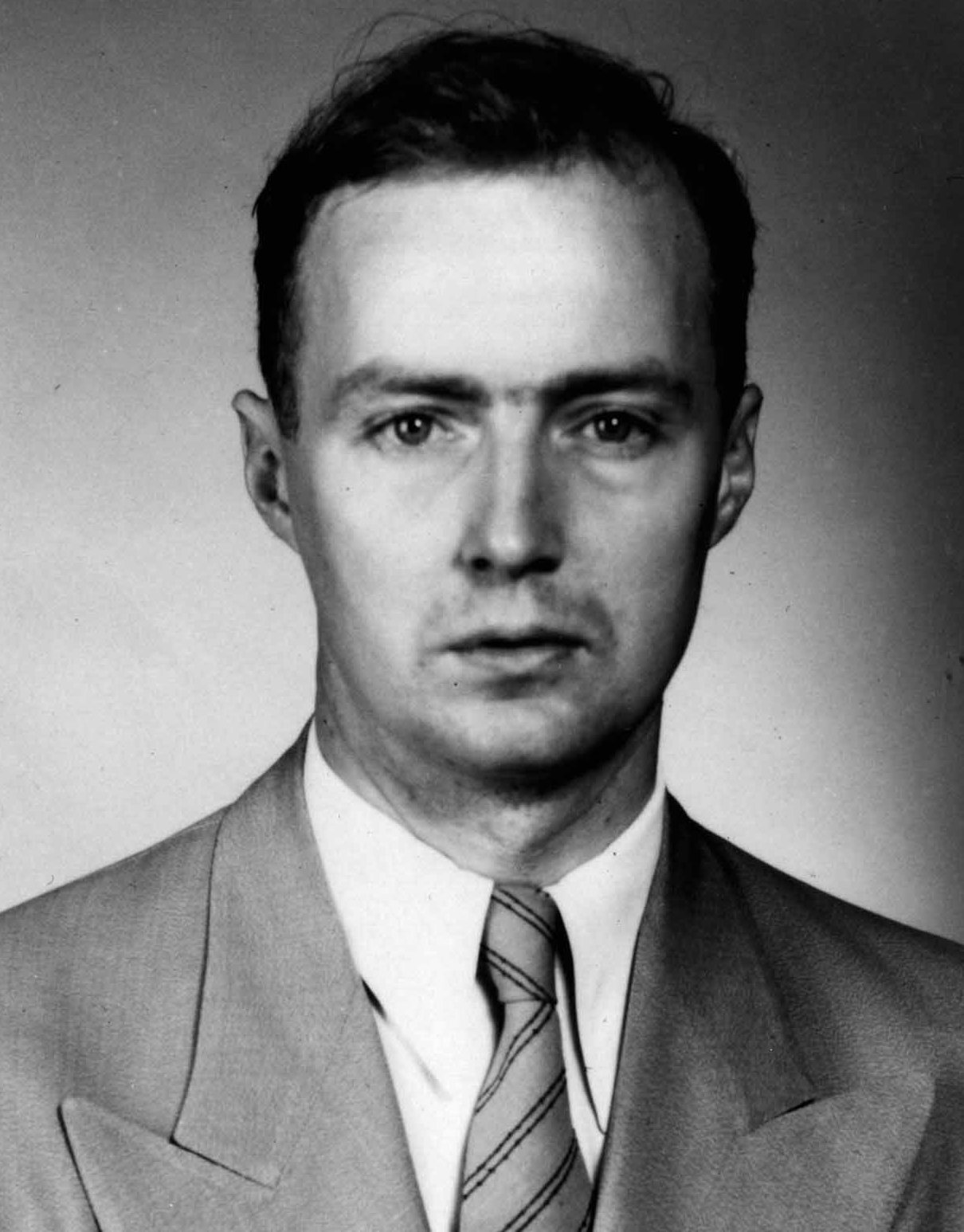
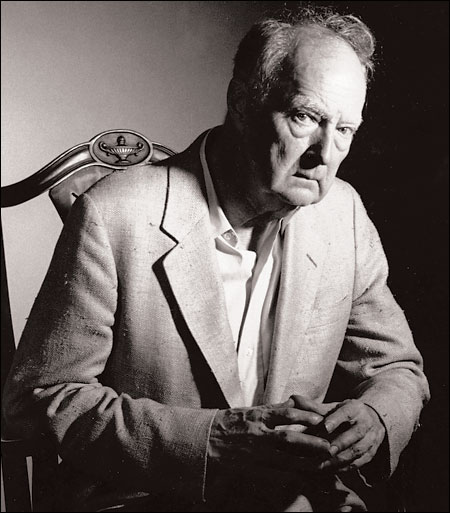
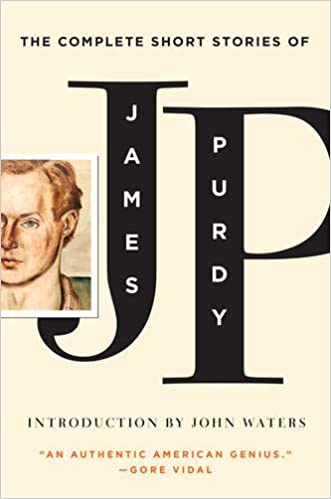 James Purdy The Complete Short Stories of James Purdy (2014)


 Now available in North America