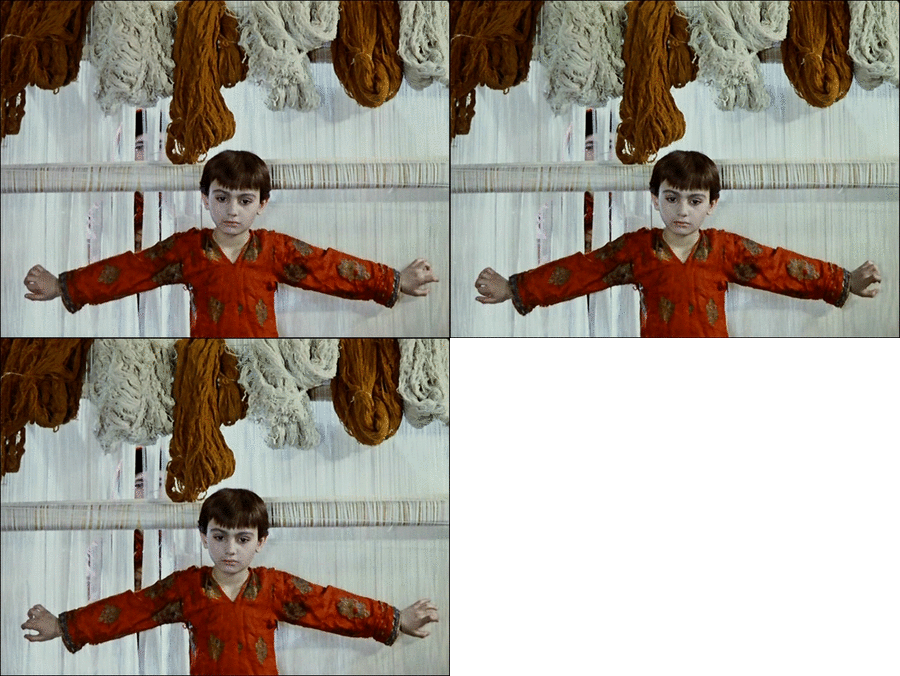
“In the temple of cinema there are images, light and reality. Sergei Parajanov was the master of that temple.” — Jean Luc Godard
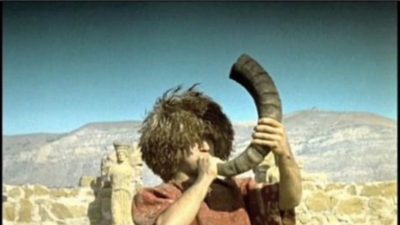
‘One of the greatest masters of cinema, Sergei Parajanov created two masterpieces in a row, Shadows of Forgotten Ancestors (1964) and The Color of Pomegranates (1969), had such legendary fans as Fellini, Godard, and Tarkovsky, and was imprisoned three times. His artworks, and particularly his Mona Lisa collages, put him in the company of Picasso and Warhol. At least four countries – Armenia, Georgia, Ukraine and Russia – claim him as their own, and major directors from Hollywood to Iran, fashion designers from New York to Brazil, Pulitzer Prize winning scientists and superstar musicians like Madonna have all created work influenced and inspired by this genius.
‘Sergei Parajanov’s unmistakable films are rarely watched, often admired, and usually regarded as some of the most important movies of the 20th century. While equally important, Sergei Parajanov is significantly less known than his peers: Fellini, Tarkovsky, Antonioni, Godard, though, at various times, these great filmmakers have called Parajanov a “genius,” a “master” and a “magician.”
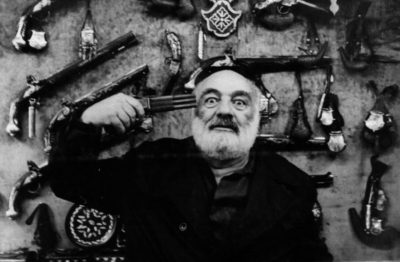
‘Sergei Iosifovich Paradjanov (Сергей Иосифович Параджанов) was an Armenian (Սարգիս Հովսեփի Փարաջանյան) who was born on the 9th of January 1924, and raised in Tbilisi, Republic of Georgia, Soviet Union, by his Armenian parents, the merchant Iosif Parajanian and Siranush Bejanov. Paradjanov (სერგო ფარაჯანოვი) studied violin,voice and ballet, and then, in 1951, graduated from the world’s oldest film school, the Institute of Cinema (V.G.I.K) in Moscow, where he was taught by the likes of Dovzhenko.
‘In Dovzhenko’s homeland, Parajanov created his first masterpiece, Shadows of Forgotten Ancestors (1964), which brought him worldwide fame. The Soviet authorities blacklisted him for his support of the Ukrainian dissidents and nationalists and all his projects in the Ukraine were jeopardized, notably the unfinished “Kiev Frescos” (1966).
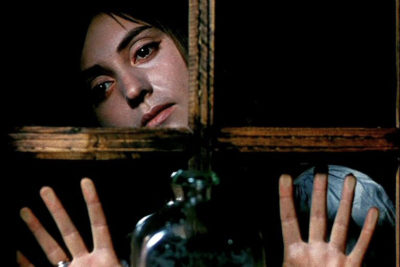
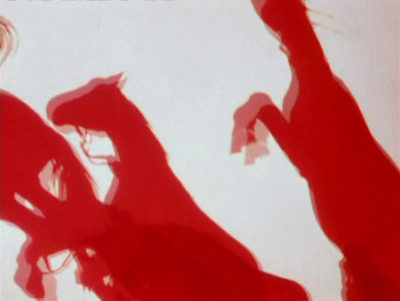
‘Paradjanov next came to his ancestral homeland Armenia to direct Sayat Nova and met the noted recent V.G.I.K. graduate Mikhail Vartanov, a classmate of Aleksandr Antipenko who had lensed “Kiev Frescoes”. Impressed with Vartanov’s comments about the screenplay and style of Sayat Nova, Parajanov became close friends with him and considered his candidacy as the film’s cinematographer. Armenfilm Studio assigned Vartanov to save several failing projects at its documentary department, however, and Parajanov brought from Ukraine the great cinematographer Suren Shakhbazian, also a close friend (who had lensed his first feature Andriesh). Even though Sayat Nova (1969), better known as The Color of Pomegranates, turned out to be Parajanov’s second masterpiece in a row, it was recut by the Soviet censors, but not merely because it was misunderstood.
‘Parajanov paid a heavy price for his outspoken criticism of Soviet cinema and the authorities: Soviet movie studios rejected all his projects after The Color of Pomegranates, and he was arrested in 1973 and sentenced to 5 years in a Ukrainian prison in 1974. A wave of international protests by the likes of Truffaut, Bunuel, Pasolini and Antonioni followed — in Europe and the United States, but also in the Soviet Union itself, where it was actually dangerous. Notably, his close friend Mikhail Vartanov, who had been blacklisted for portraying Paradjanov in the documentary “The Color of Armenian Land” (1969), was fired from Armenia’s only film studio (four months after Parajanov’s imprisonment) because he petitioned the Prosecutor General of Ukraine to release Parajanov, as evidenced by the recently declassified documents obtained by Parajanov’s wife Svetlana. Finally, at the initiative of poet Mayakovsky’s lover Lilya Brik, the French communist poet Louis Aragon personally petitioned the Soviet leader Brezhnev who released Parajanov in 1977.
‘Paradjanov returned to his hometown of Tbilisi, Replublic of Georgia, but remained unemployed. During this time he created a large number of artworks, notably his extraordinary Mona Lisa collages. At last, 15 years after The Color of Pomegranates, thanks to the efforts of the Georgian intelligentsia, Parajanov was permitted to direct. He created his Georgian masterpiece The Legend of Suram Fortress (1984), but had to share the credit with the renowned actor Dodo Abashidze (who starred in but didn’t direct the picture). Not coincidentally, in 1983, Paradjanov’s friend Mikhail Vartanov was also assigned his first film as a director in nearly 10 years (which was one of the reasons he couldn’t accept Parajanov’s renewed offer to be his cinematographer).
‘Gorbachev’s reforms allowed Parajanov to leave the Iron Curtain for the first time and he attended the prestigious Rotterdam International Film Festival where The Legend of Suram Fortress won the Best Innovative Film Award. The next feature Paradjanov directed was his Azeri masterpiece Ashik Kerib (1988), which he dedicated to his friend Andrei Tarkovsky (who died in 1986, and whose Ivan’s Childhood had inspired Paradjanov to break free of the sanctioned Socialist Realism style in 1964). Ashik Kerib was also selected by prestigious festivals, Venice and New York, and won the European Film Academy Award.
‘In 1989 Parajanov began the shooting of The Confession, an autobiographical picture, but it remained unfinished due to his hospitalization. That same year, Parajanov assigned his sceenplay of The Treasures at Mount Ararat to an Eastern-European producer and instructed him to hire Mikhail Vartanov to direct the film, but, after preparatory work, the producer failed to meet his contractual obligations, and that project also remained unfinished. Vartanov independently produced Parajanov: The Last Spring that included the original camera negative of The Confession. Shortly after receiving the honorary titles of the People’s Artist of Ukraine and the People’s Artist of Armenia, Parajanov passed away on July 20, 1990. “Cinema lost one of its magicians,” wrote Fellini, Tonino Guerra, Moravia, Rosi, Masina, Mastroianni and Bertollucci, who, with the rest of the world, mourned Parajanov’s untimely death at 66.’ — parajanov.com
___
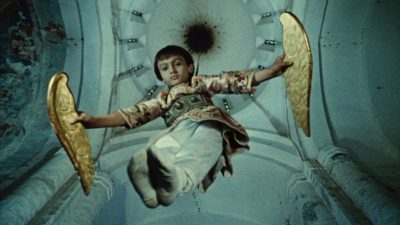
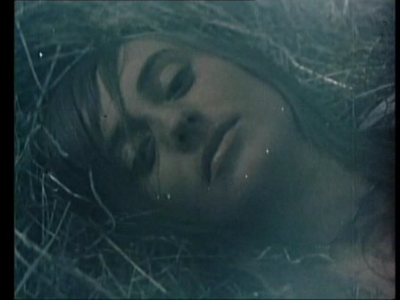
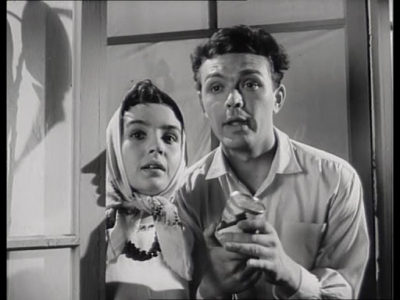
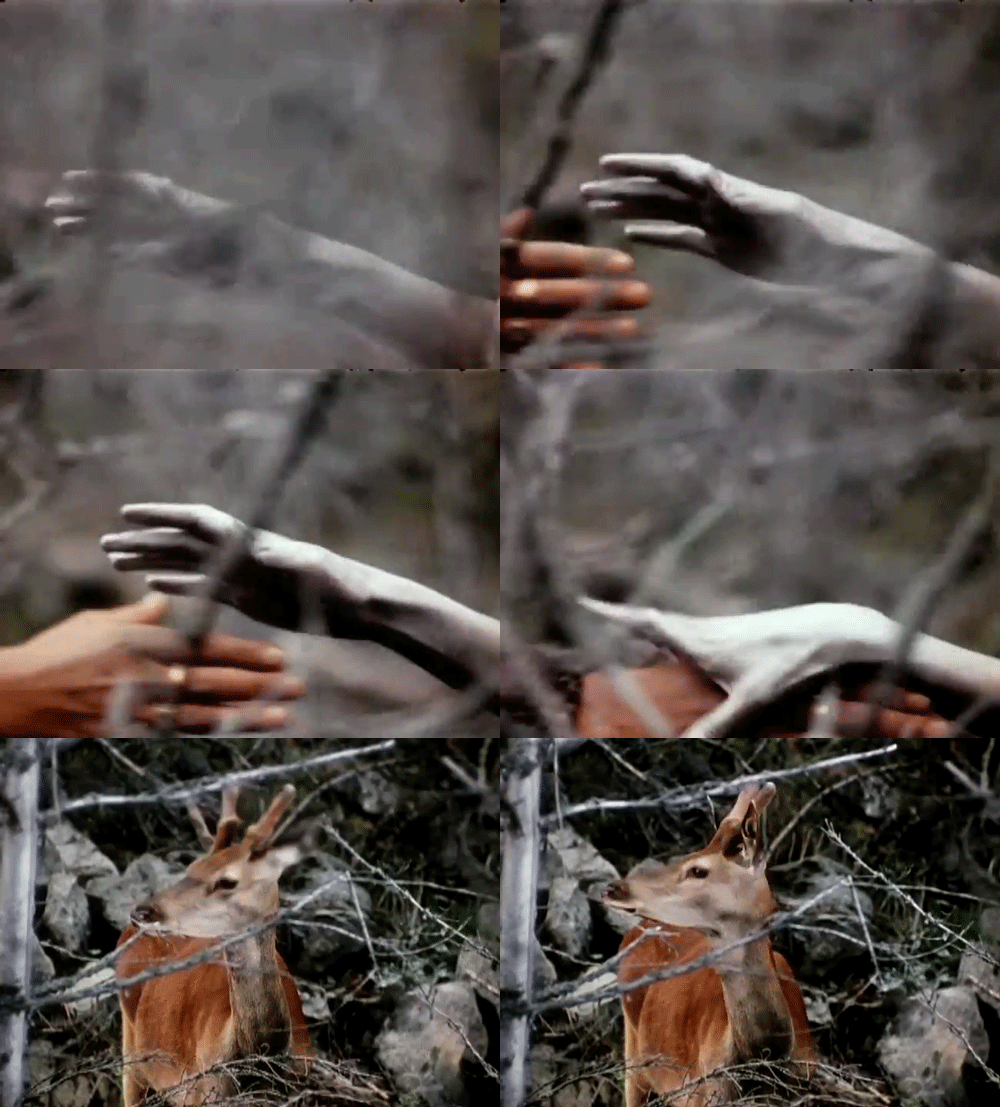
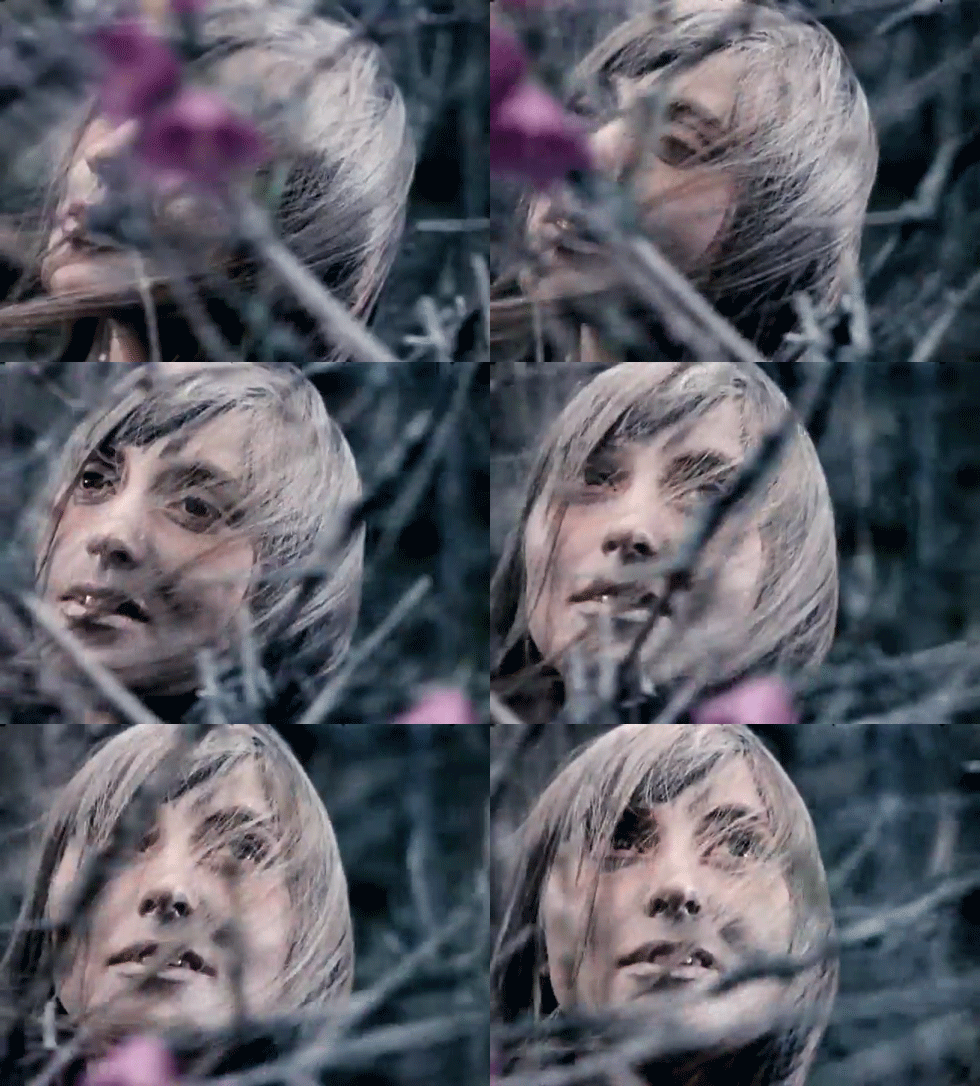
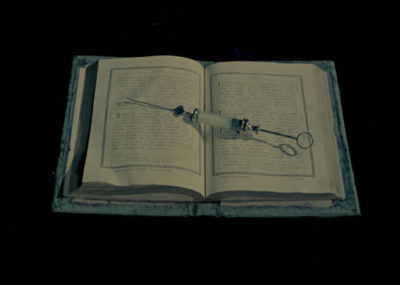
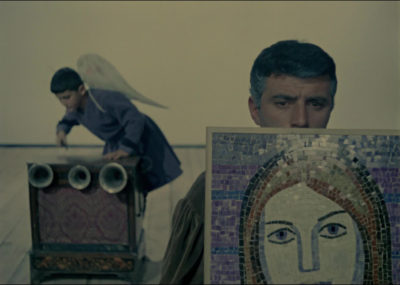
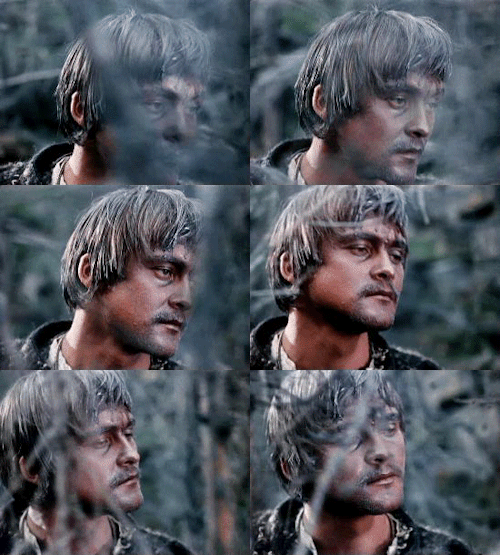
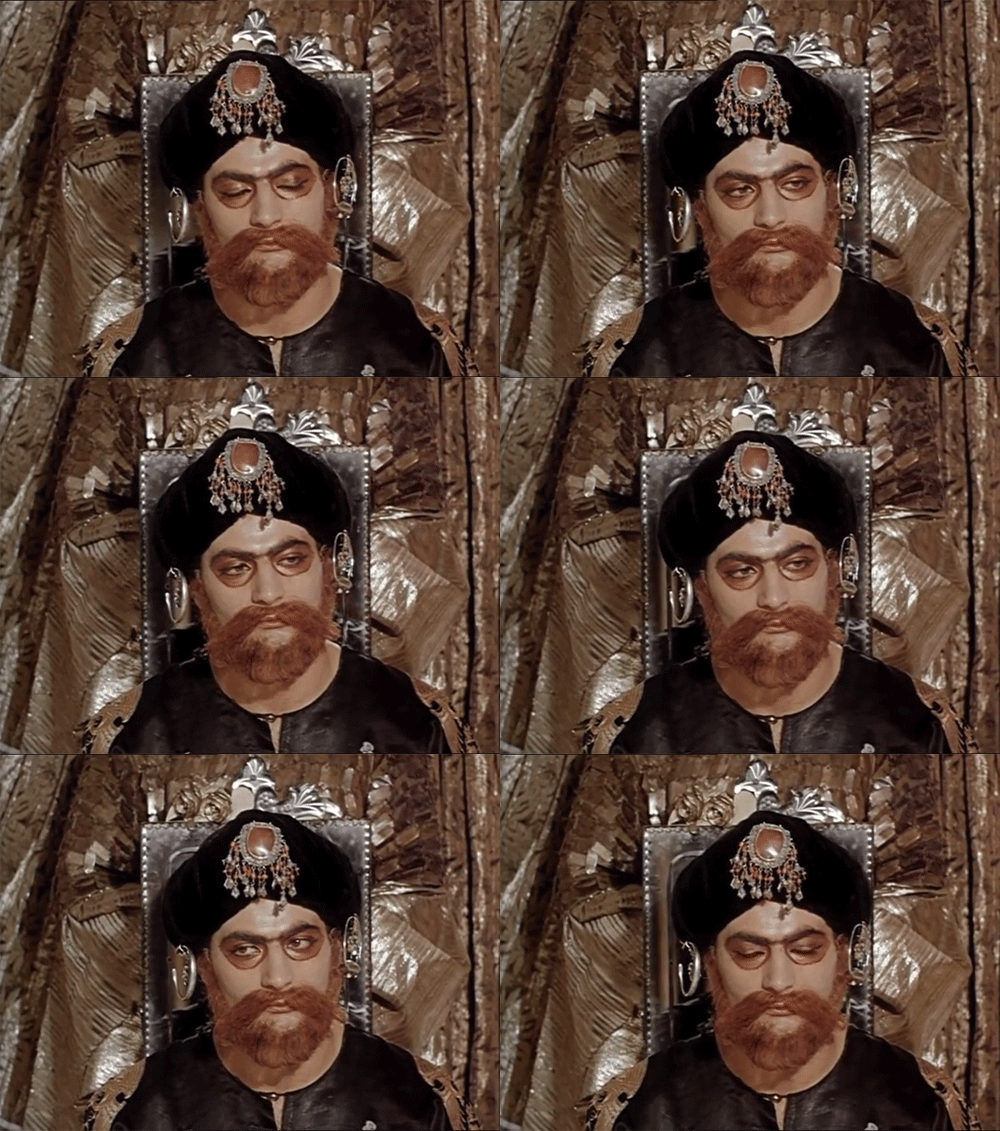
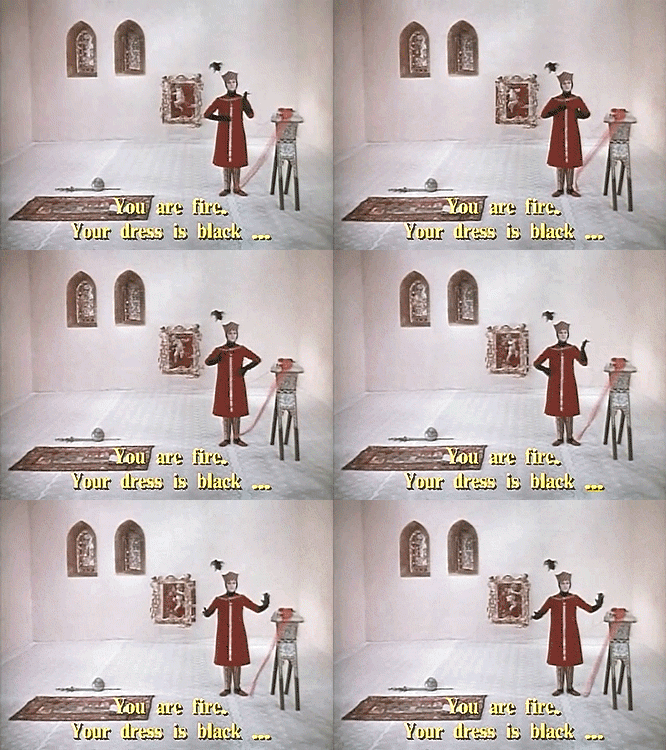
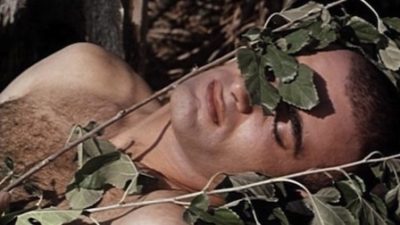
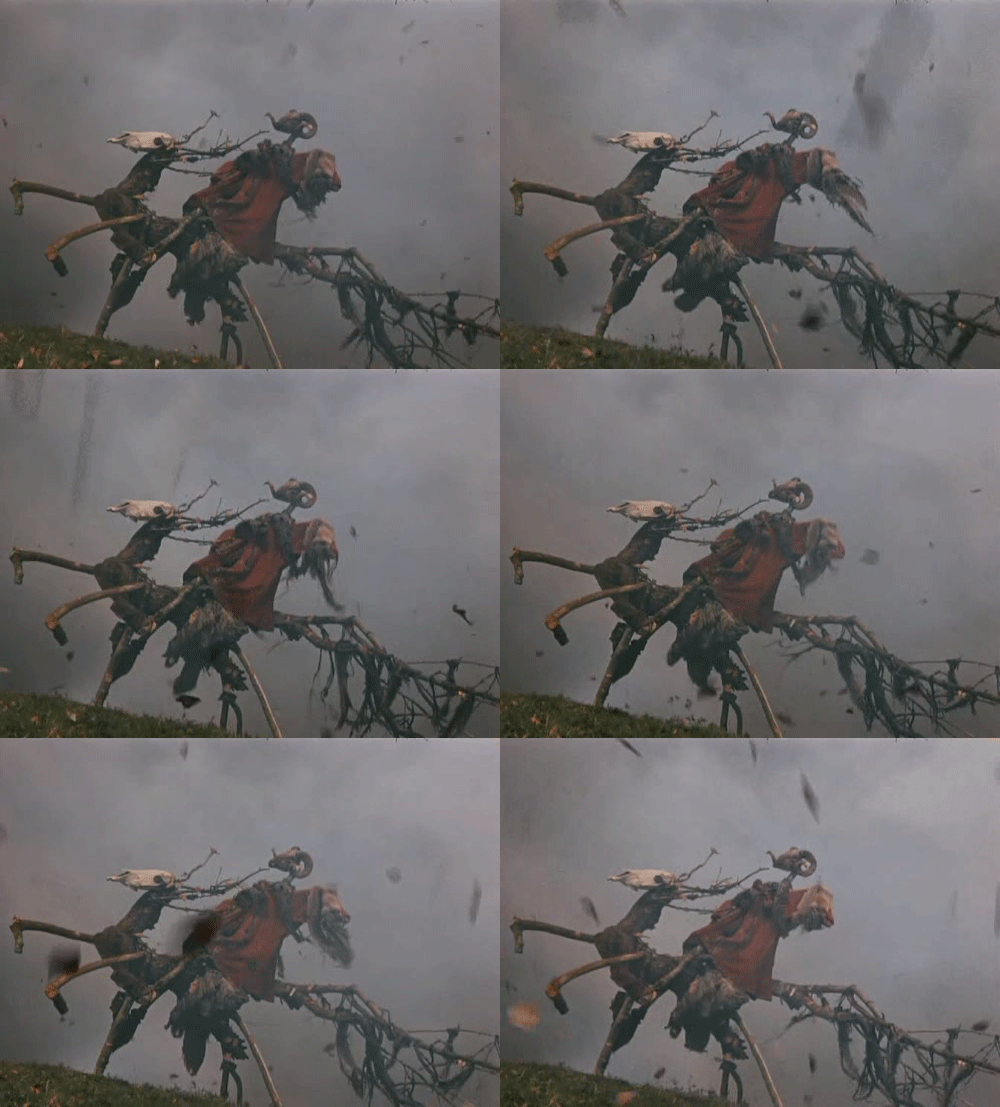
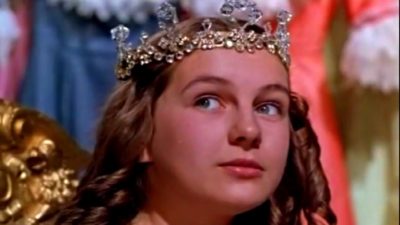
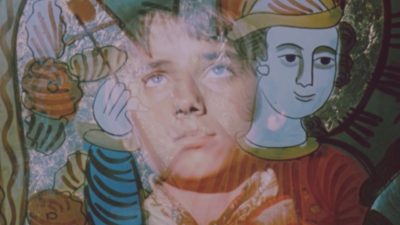
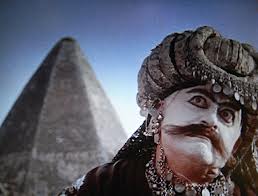
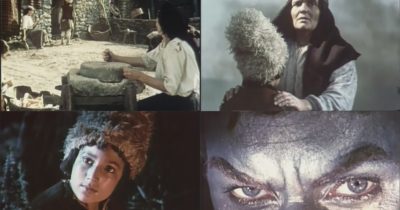
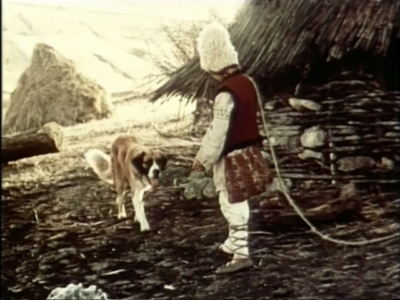
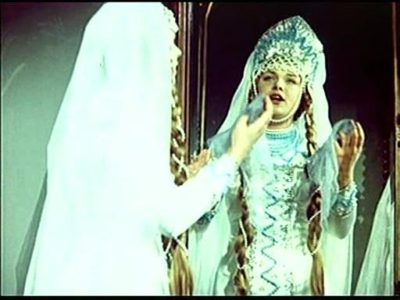
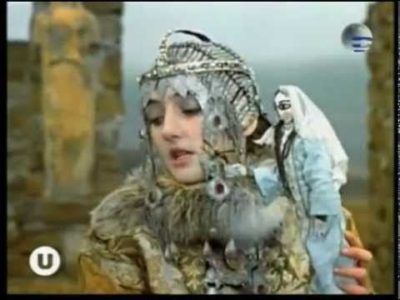
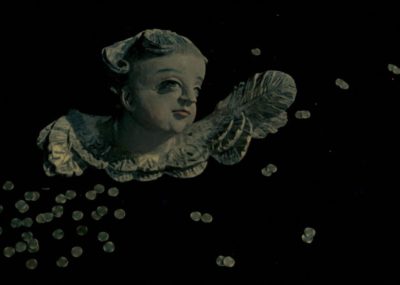
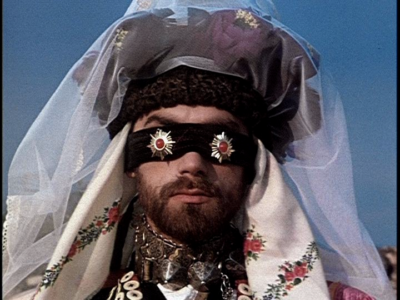
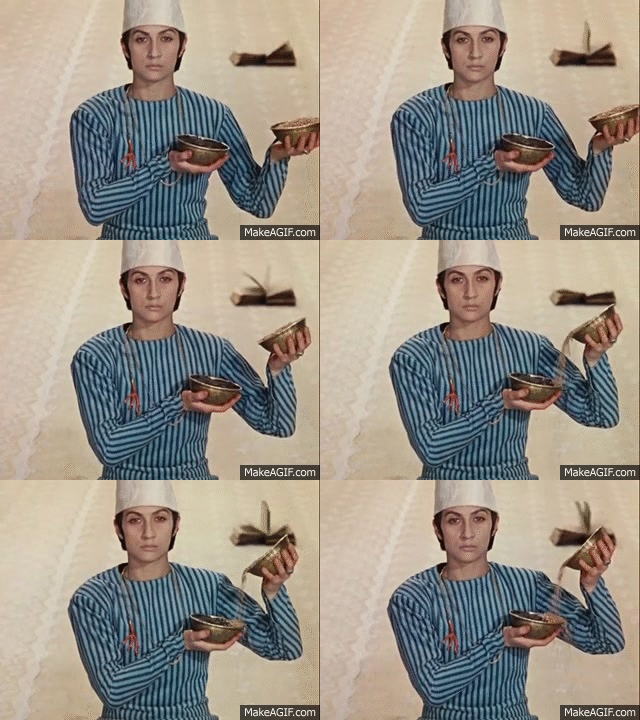
Stills
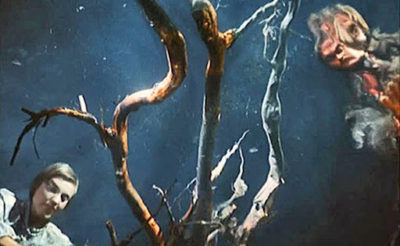
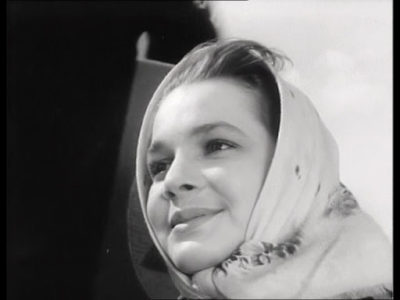

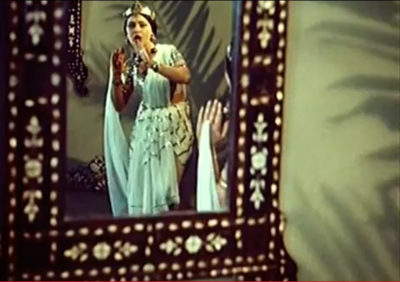
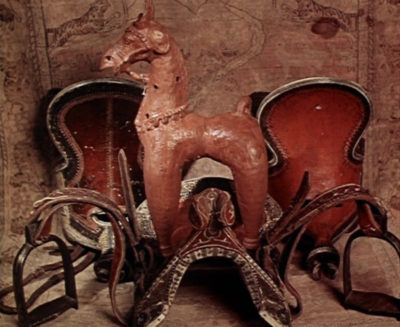
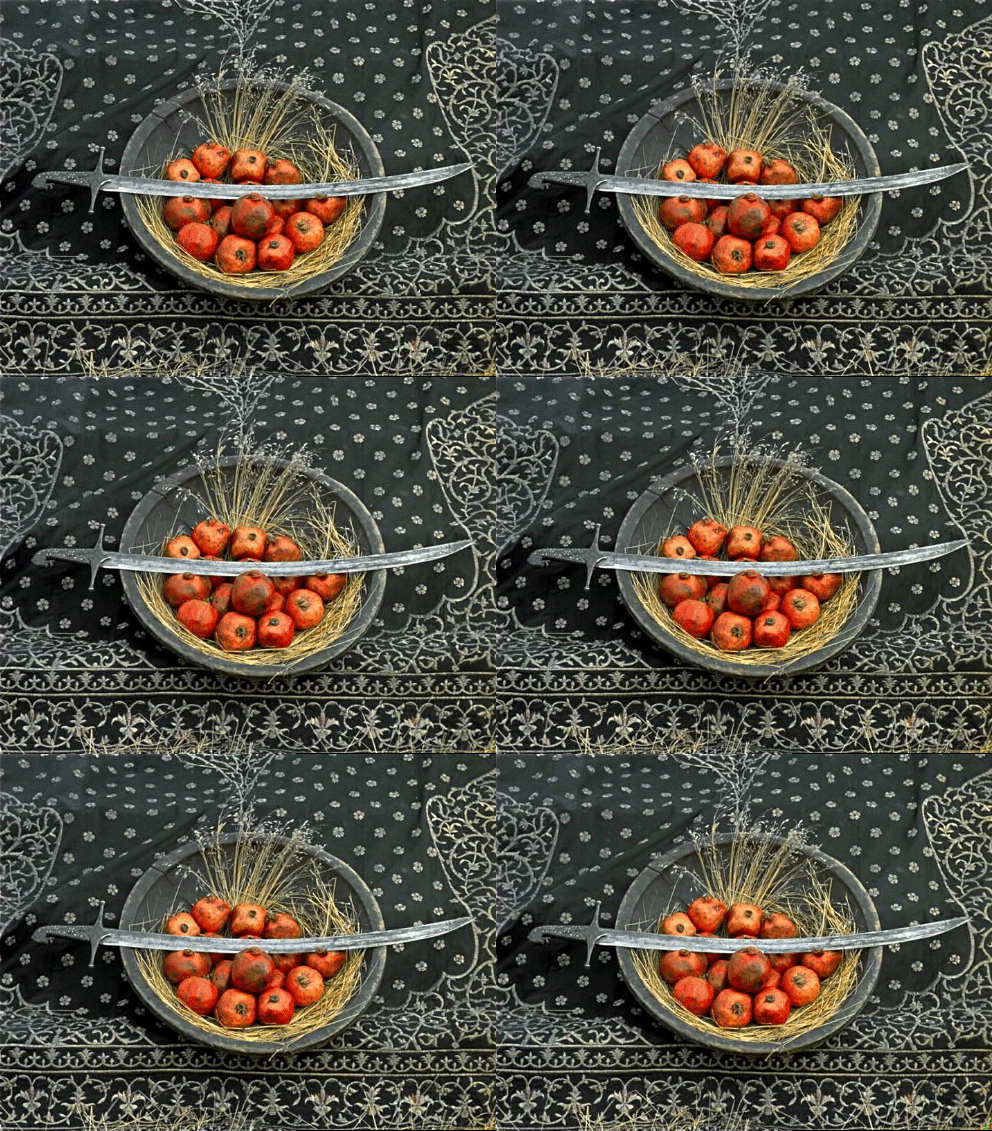
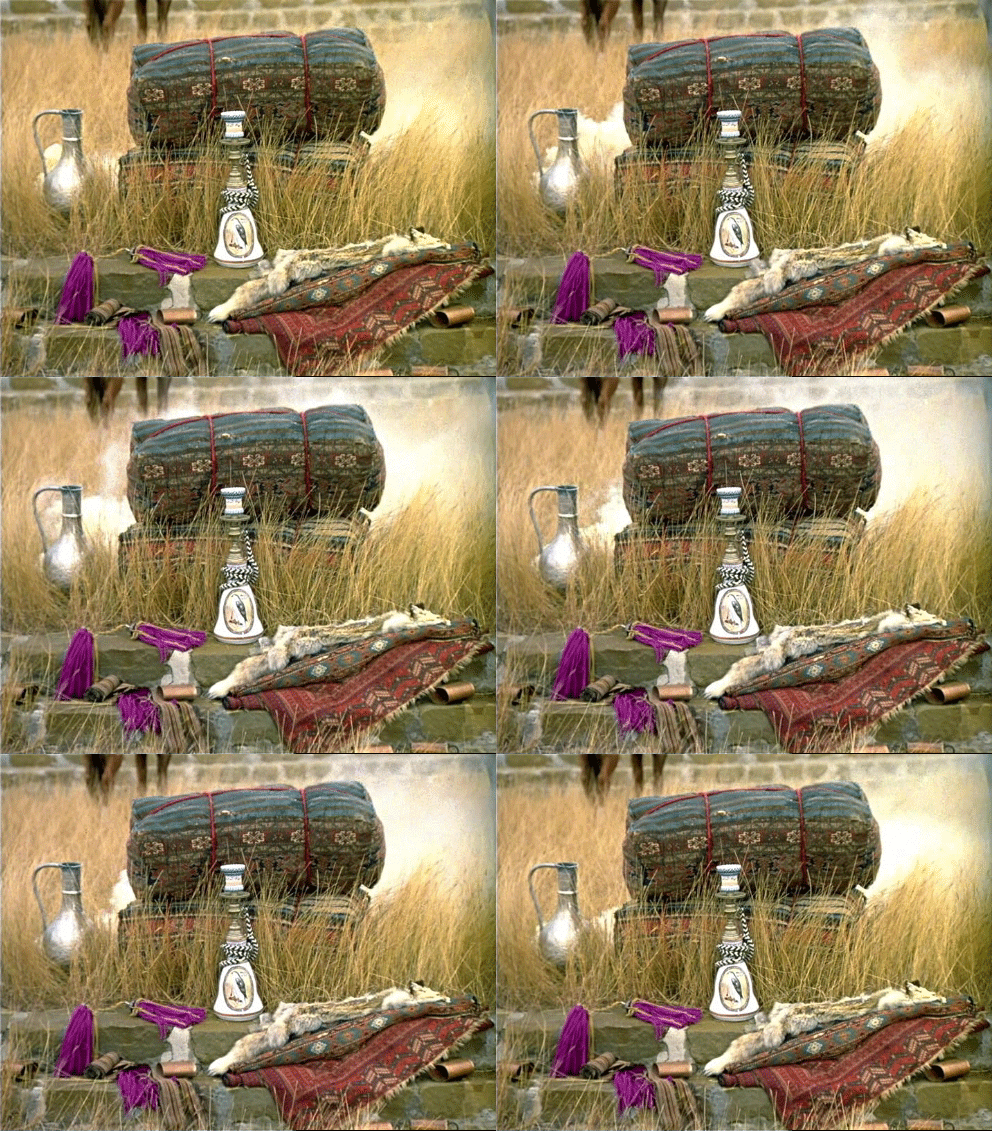
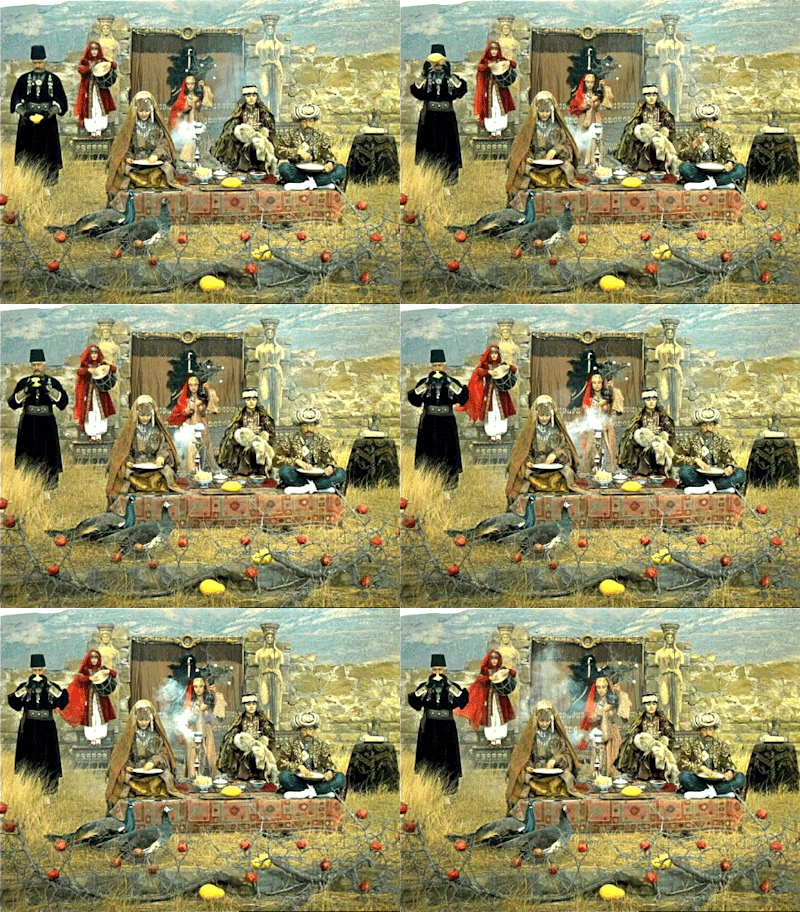
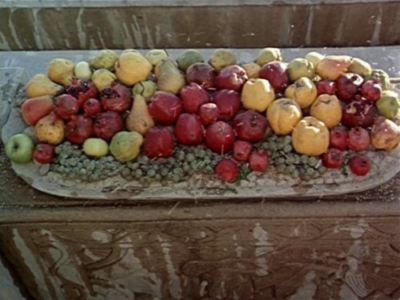
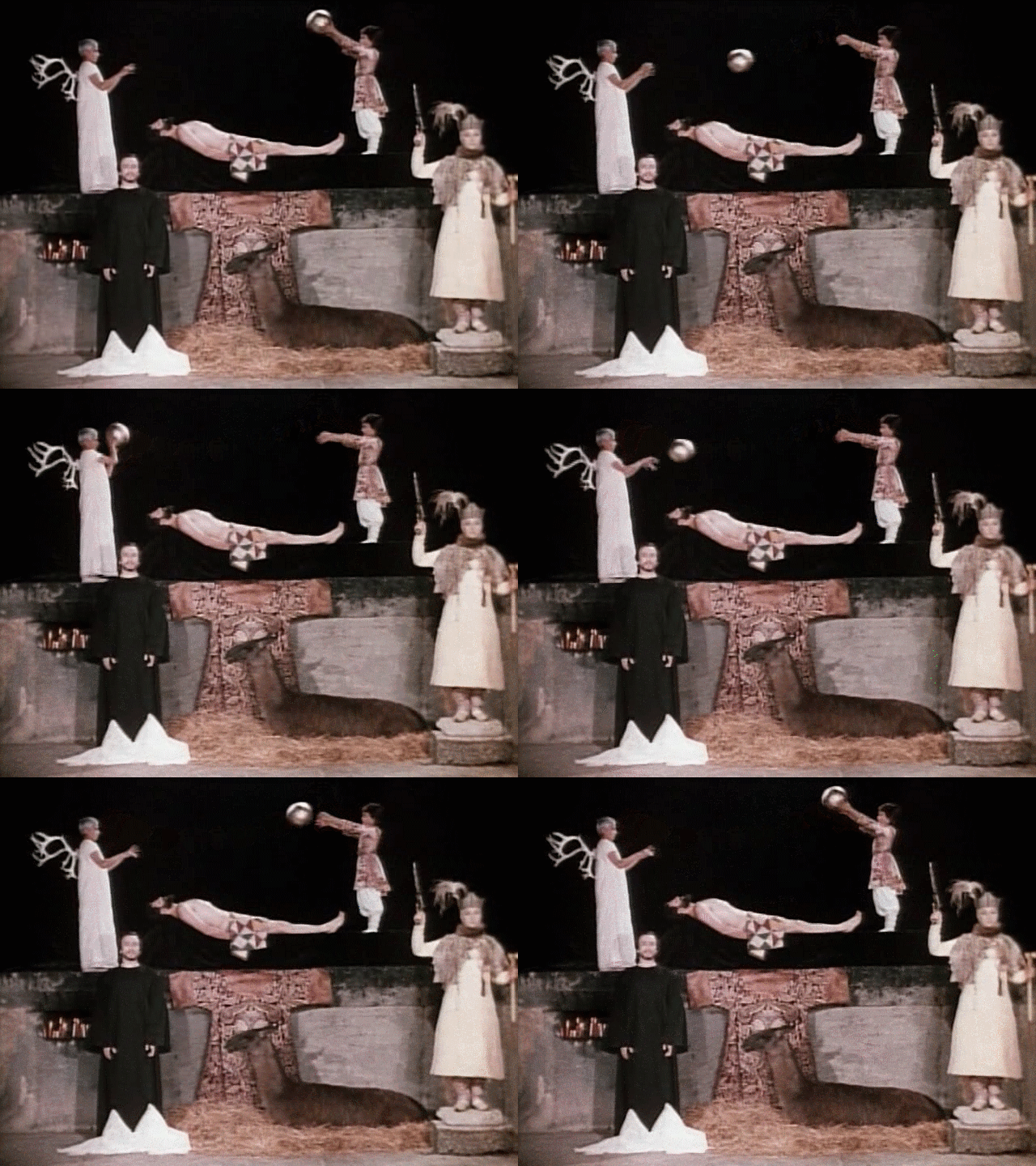
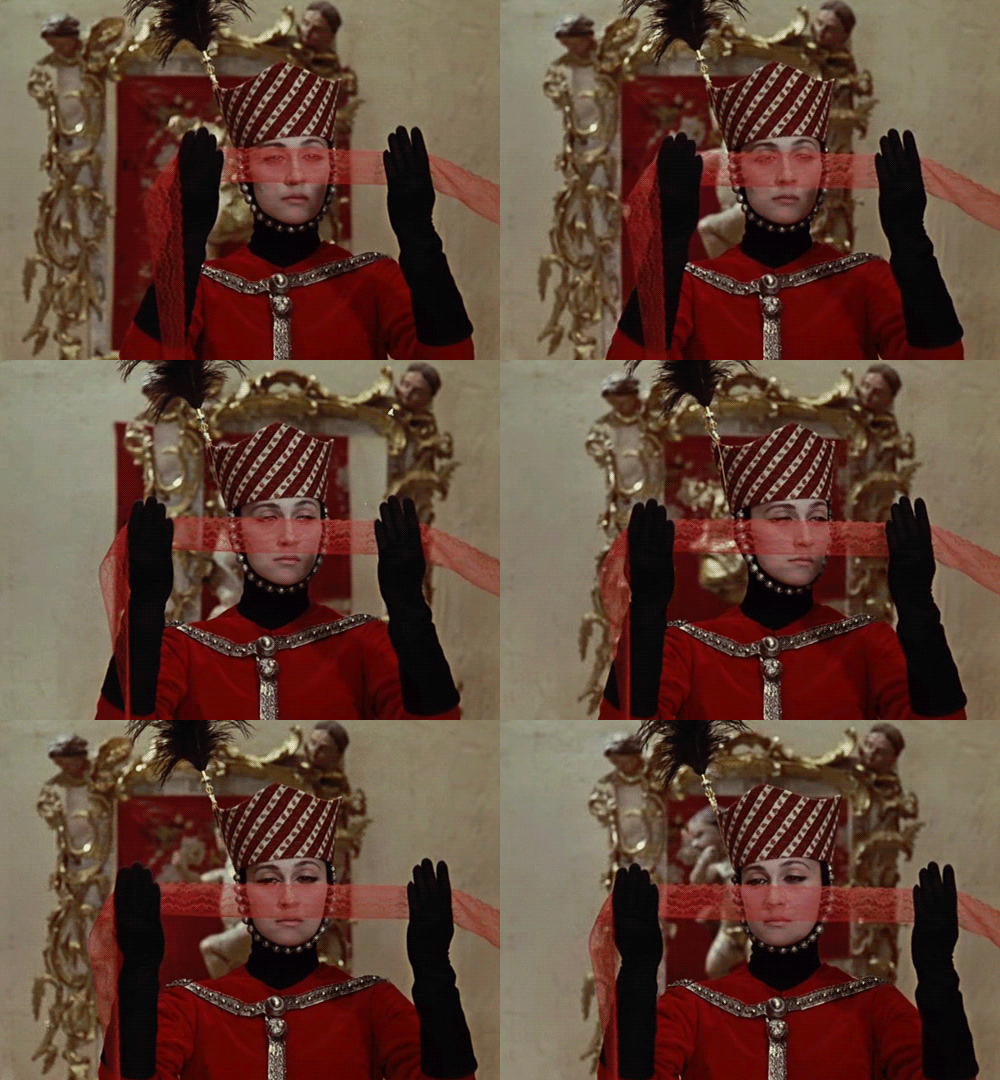
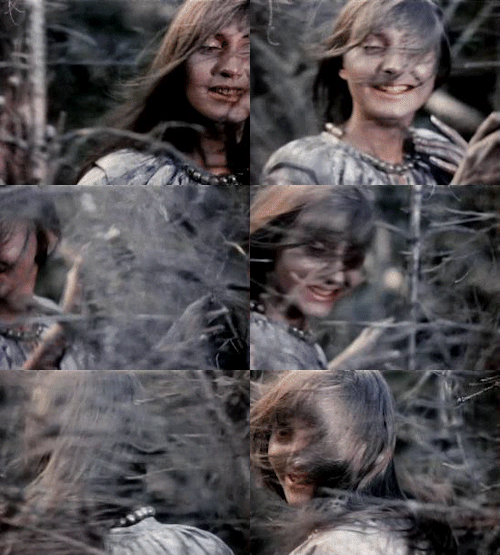
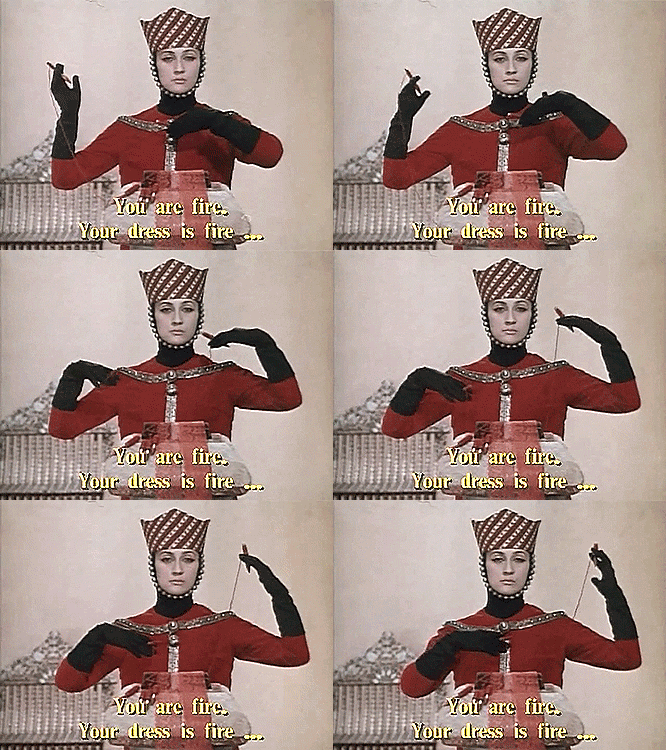
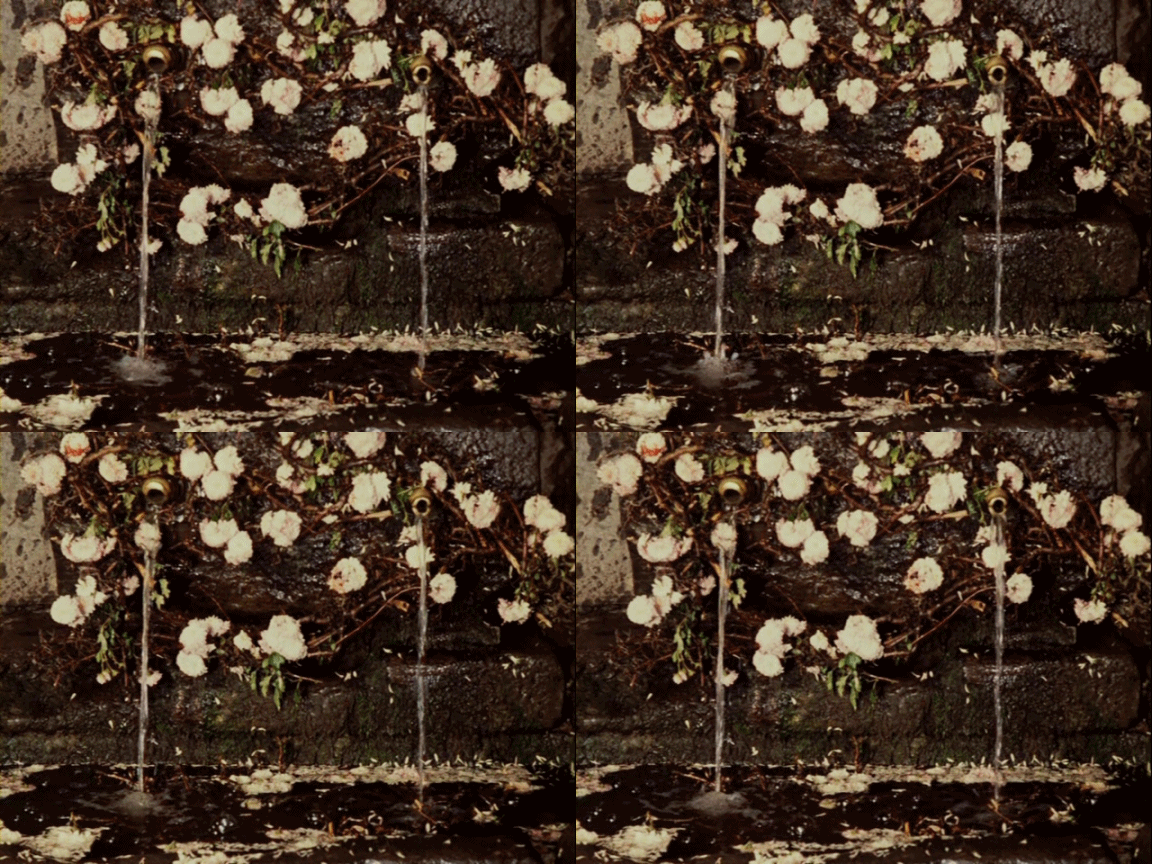
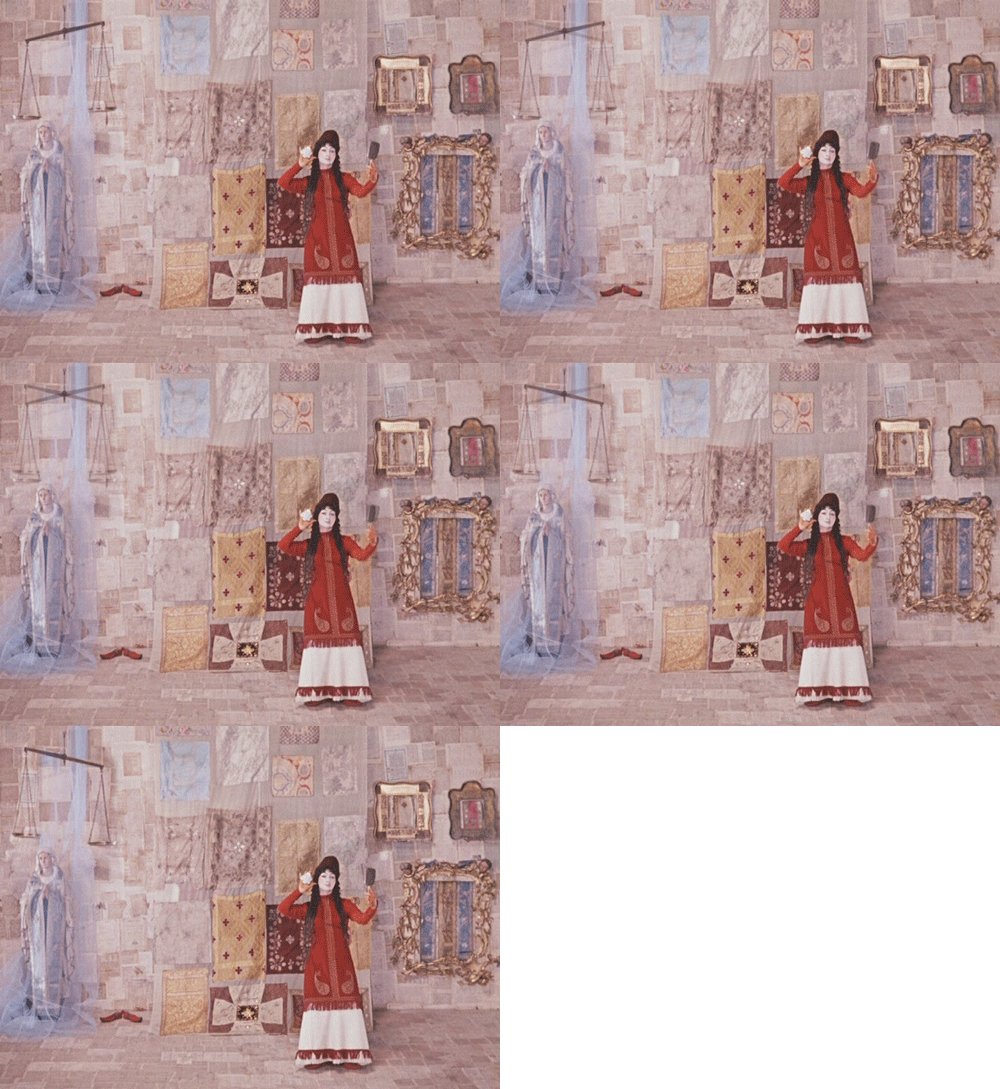
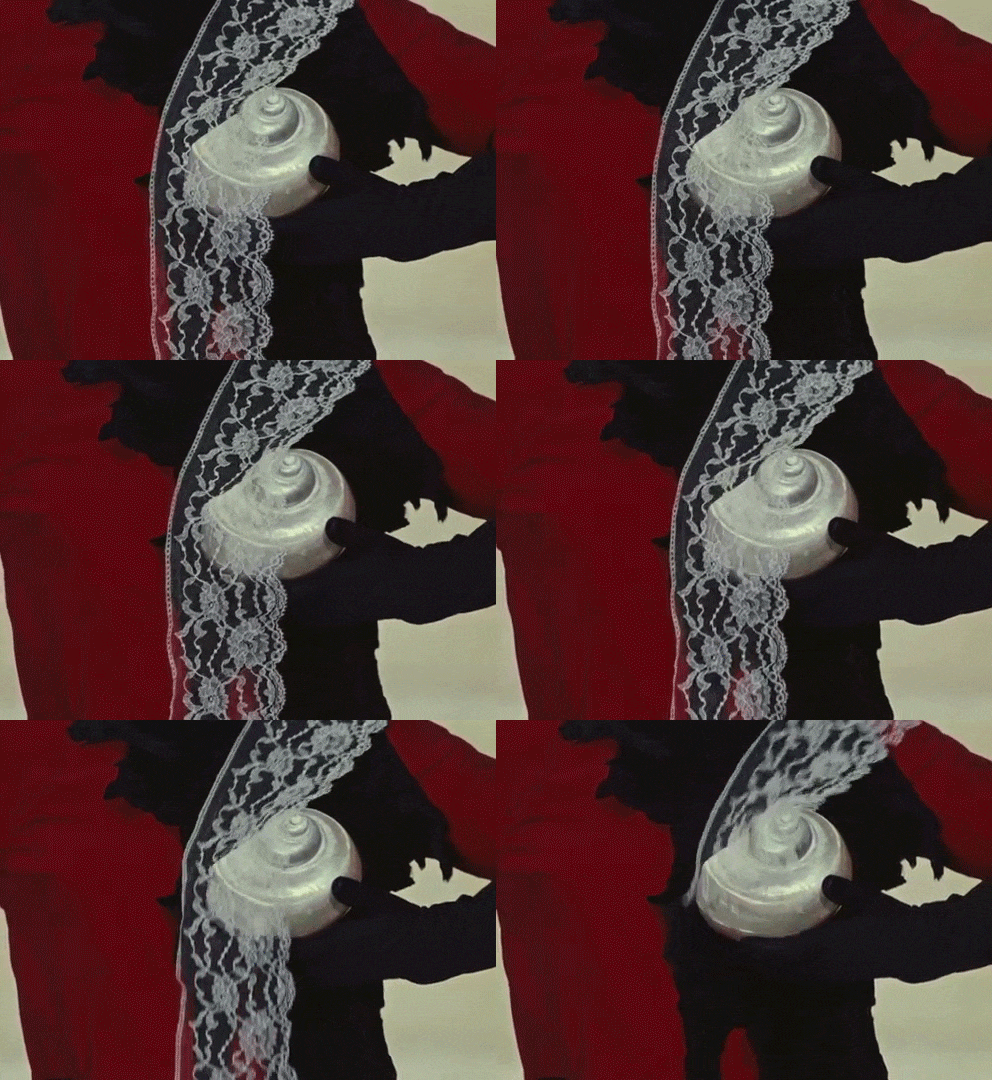


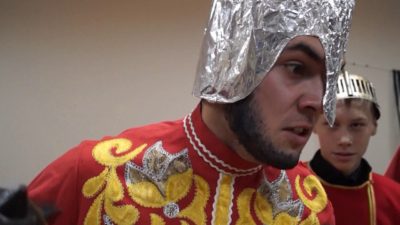
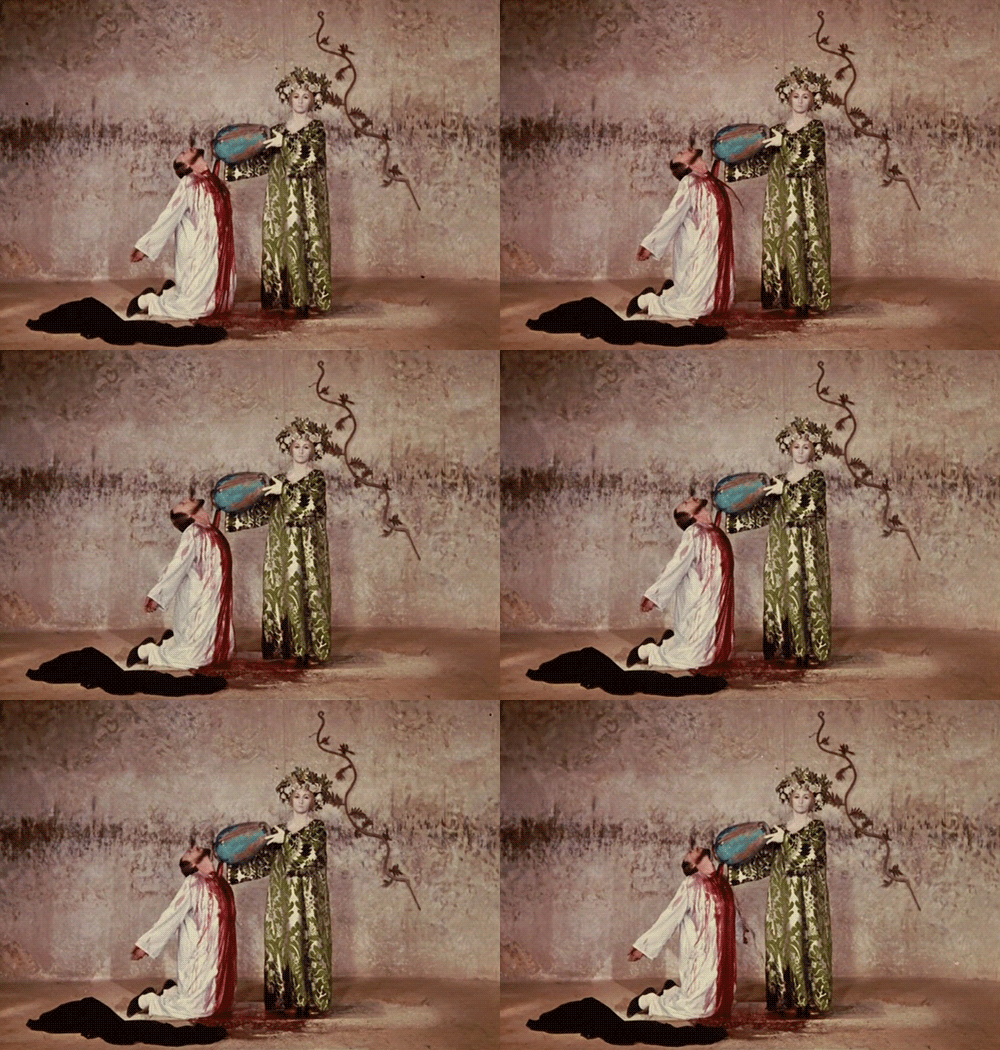
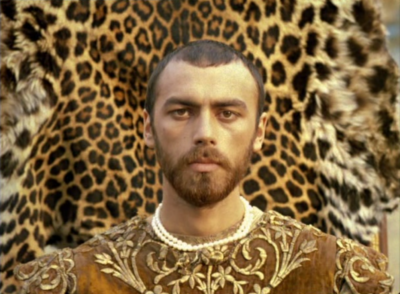
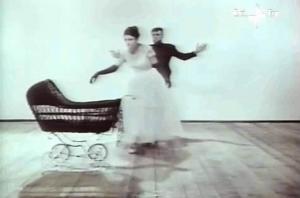
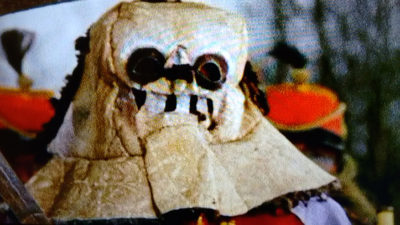
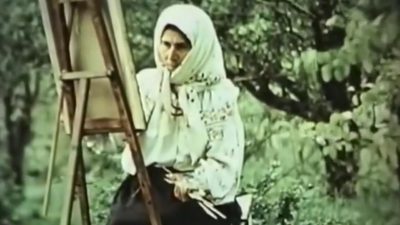
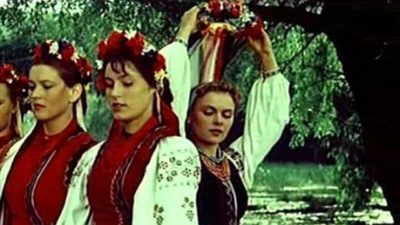
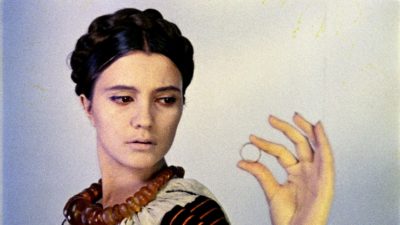


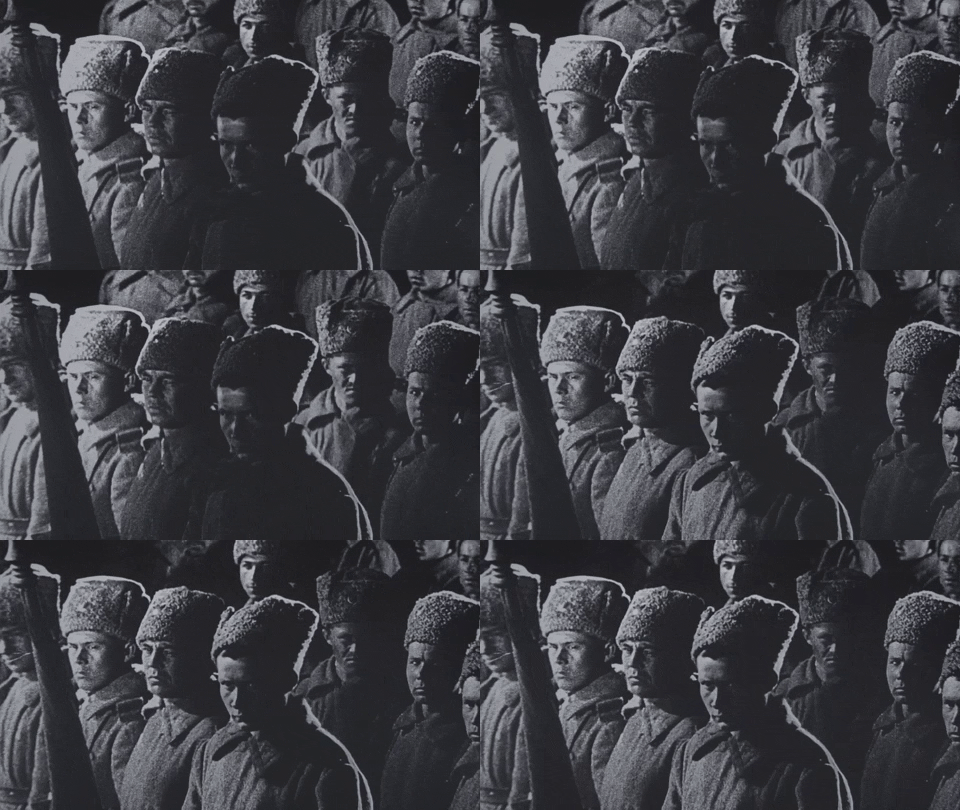
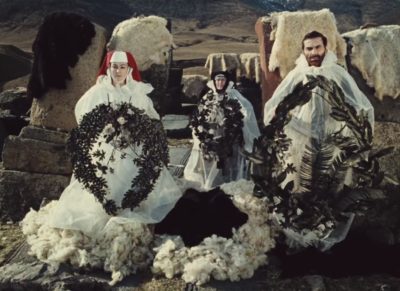
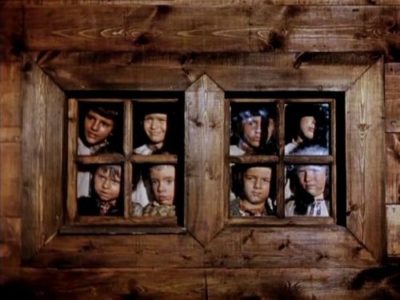
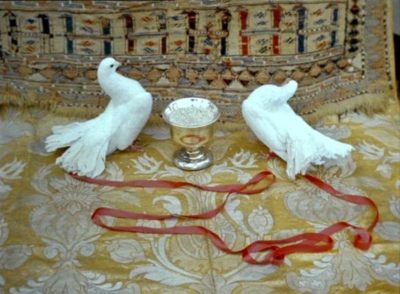
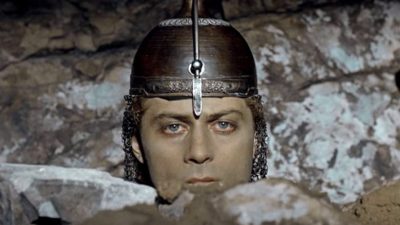
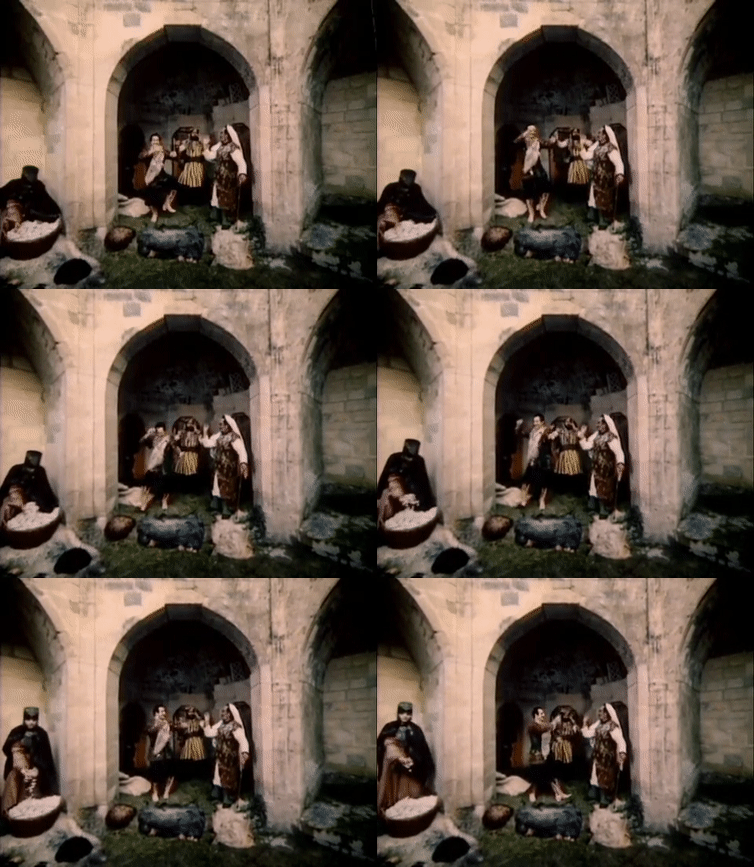
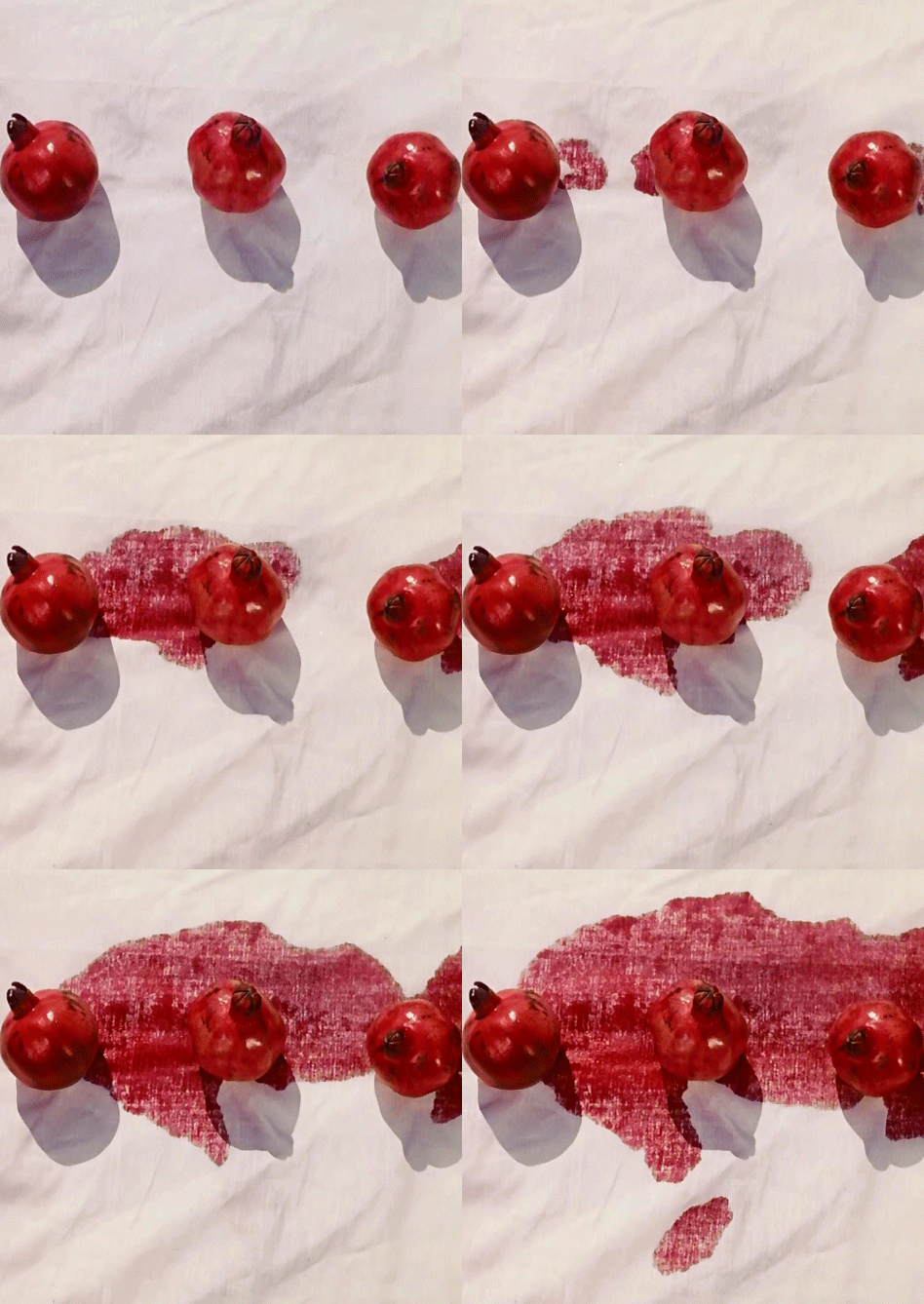
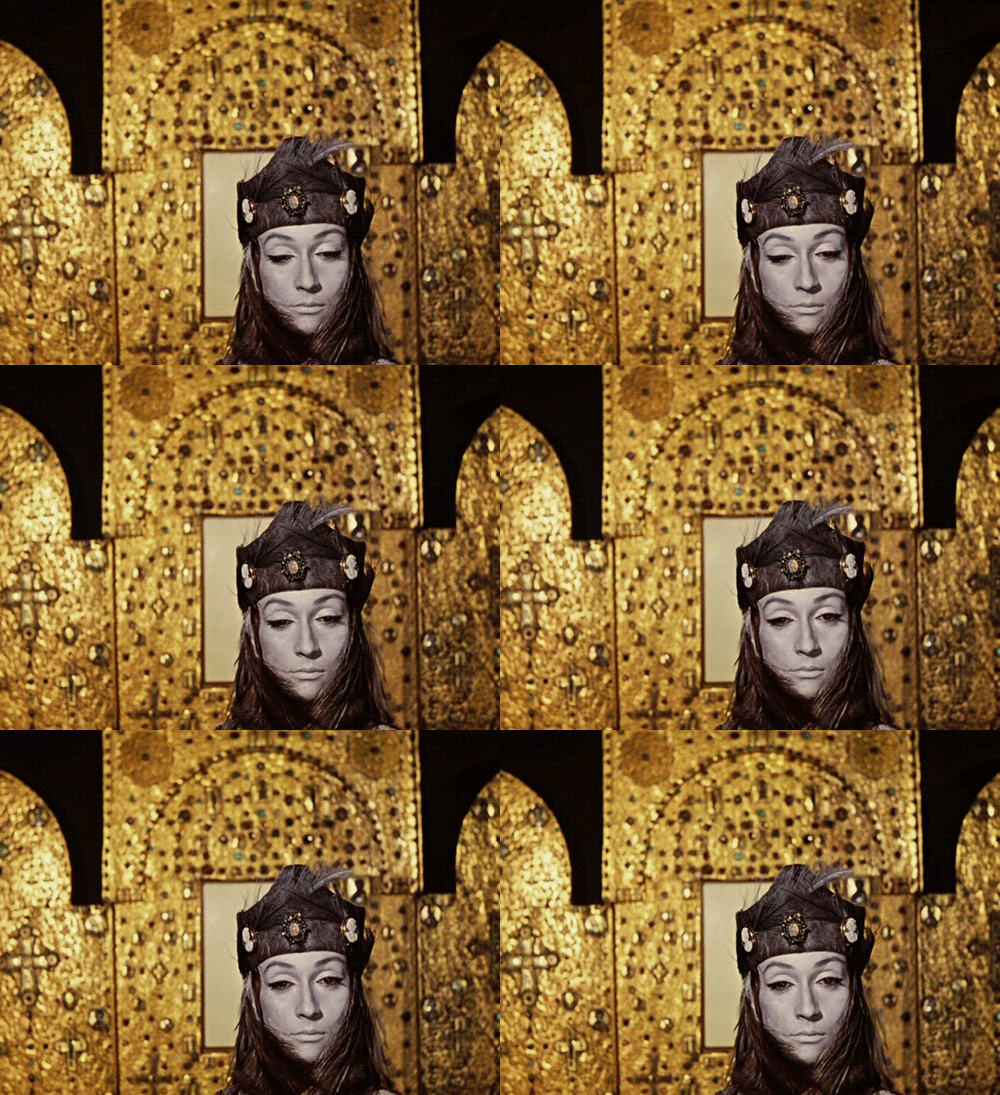
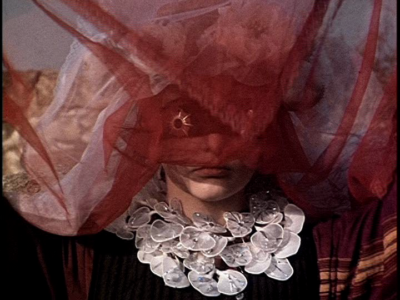
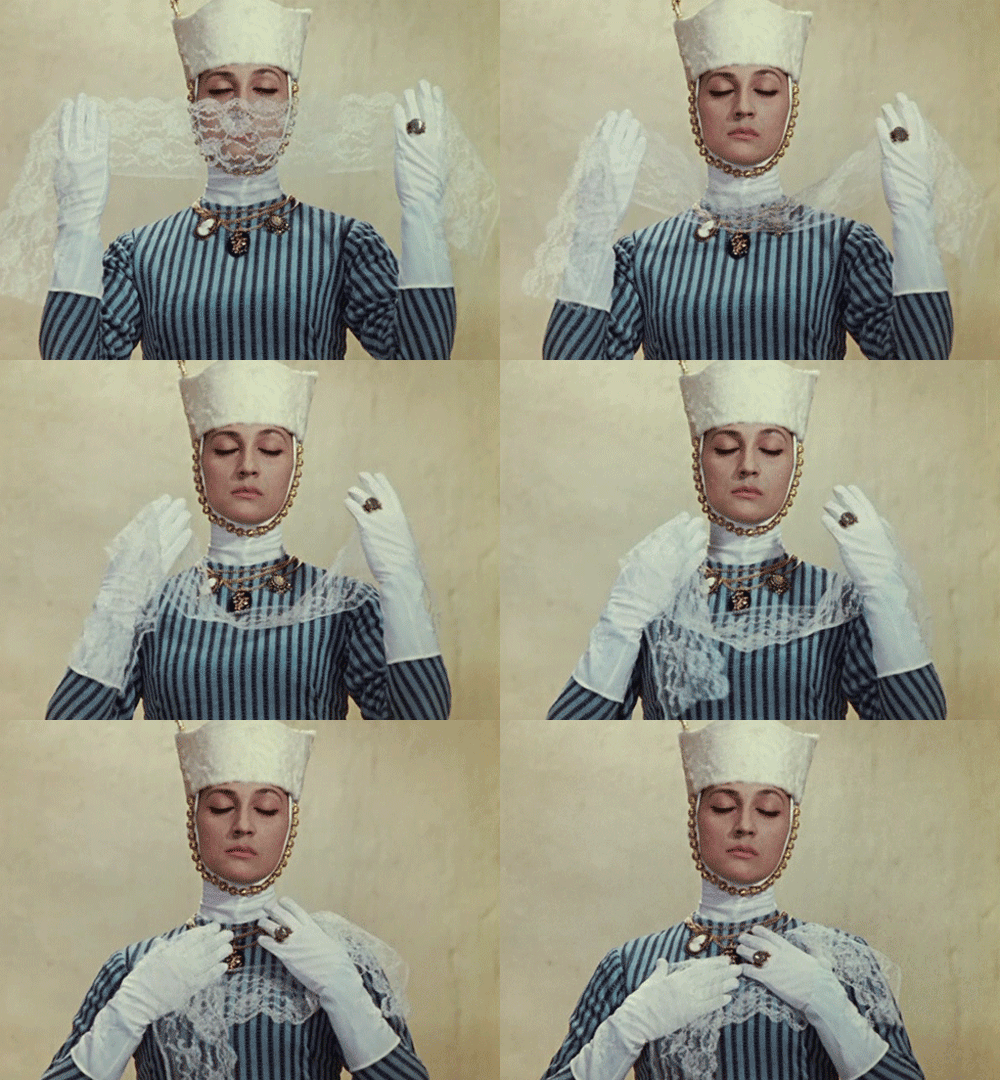
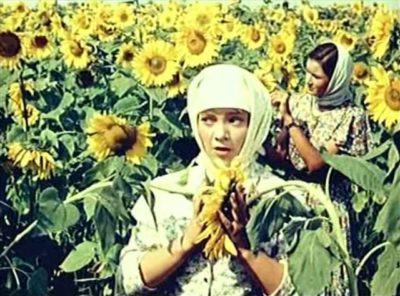
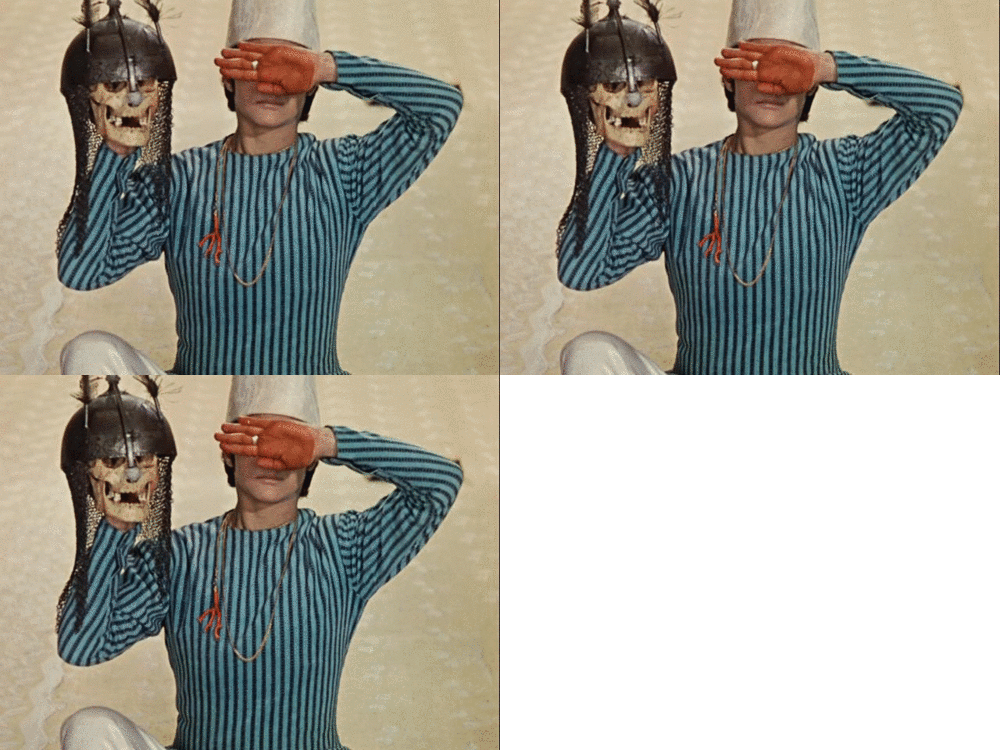

____
Further
PARAJANOV-VARTANOV INSTITUTE
Sergei Parajanov @ IMDb
Notes on Shadows of Our Forgotten Ancestors, by Sergei Parajanov
Where to begin with Sergei Parajanov
Three Short Films by Sergei Parajanov
The Other Sergei Parajanov: The Collages of the Magician of Cinema
Book: ‘ The Cinema of Sergei Parajanov’
Sergei Parajanov Speaks Up
Sergei Parajanov Museum
My dear Parajanov: what Armenia’s greatest auteur taught me about creativity during quarantine
Parajanov @ MUBI
Sergei Parajanov’s Differential Cinema
Parajanov @ Letterboxd
A Tribute to Sergei Parajanov
SERGEI PARAJANOV: TEMPORARY REJECTED, CONTEMPORARY ALIVE
Sergei Paradjanov: film-maker of outrageous imagination
Today marks renowned filmmaker Sergei Parajanov’s 96th birthday
Meet Sergei Parajanov
He Made the Most Beautiful Films of All Time and They Put Him in Prison For It
Sergei Parajanov: You want a spark? I`ll give you a spark!
Death Of A Poet
____
Extras
Parajanov – A Requiem (1994)
The Films of Sergei Parajanov
The Isle Parajanov
SERGEI PARAJANOV MUSEUM YEREVAN ARMENIA
________
Interview
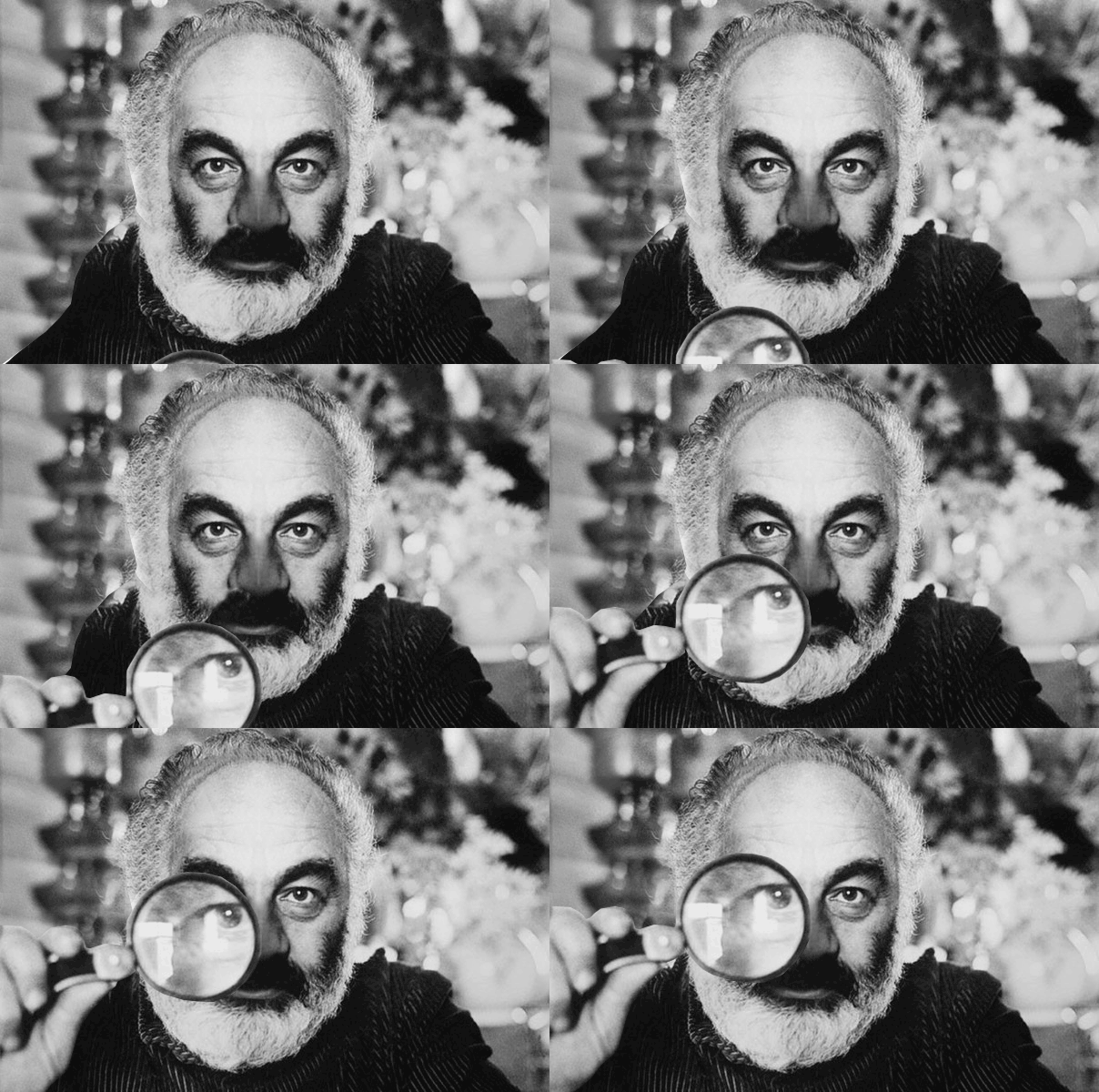
Ron Holloway: Sergei, how did you become a film director?
Parajanov: I believe you have to be born a director. It’s like a child’s adventure: you take the initiative among other children and become a director, creating a mystery. You mould things into shape and create. You torment people with your “artistismus” – scaring mother and grandmother in the middle of the night. You dress yourself up like Charlie’s Aunt, or as (Hans Christian) Andersen’s heroes. Using feathers from a trunk, you transform yourself into a rooster or a firebird. This has always preoccupied me, and that is what directing is.
A director can’t be trained, not even in a film school like VGIK (Soviet All-Union State School for Film Art and Cinematography). You can’t learn it. You have to be born with it. You have to possess it in your mother’s womb. Your mother must be an actress, so you can inherit it. Both my mother and father were artistically gifted.
What was your diploma film at VGIK about?
It was a short children’s film: Moldavian Fairy Tale (1951). After (Alexander) Dovzhenko saw it, he said: “Let’s see it again.” For the first time in the history of VGIK, the examination board decided to watch a diploma film twice. (Rostoslav) Yurenev, now a successful film and art critic, said: “Parajanov has copied Dovzhenko. It is monumental and epic. Parajanov has seen Zvenigora (1928).”
Dovzhenko said: “You loudmouth! Sit down and listen to me. He hasn’t seen Zvenigora.” Then he said: “Where are you, young man?” I stood up, and he asked: “To tell the truth, have you seen Zvenigora?” I said: “No.” “See, that’s just nonsense!” Yurenev wasn’t very well known at that time. He was a slim, slightly built young man, who ran from director to director.
Probably, my diploma film was pretty close to what I was prepared to bring to expression as a film director.
But your diploma film is lost…
No. It’s at home.
Then why it isn’t shown here in the retrospective?
I simply forgot It. Only Andriesh, the longer version was shown here — not to children, unfortunately, but to an adult audience.
What was it like in the courses conducted by Alexander Dovzhenko and Igor Savchenko?
Dovzhenko and Savchenko were enemies. They were always fighting, didn’t get along. Both were talented, prominent, exceptional. One worked in the style of the Polish painter (Jan) Matejko, experimenting with Renaissance styles. The other depicted an apple, an old man death, a stork that comes and flies away — his art drew upon his epic childhood. And the clash of this aesthete with that archaic god-of-the-prophets provoked conflicts in Dovzhenko’s studio.
Savchenko died young: he was only 43 years old. And lying in his coffin he looked like an old man. We have now survived him by 20 years. His students are older than their teacher was: (Vladimir) Naumow is 60 and I am 64. We’ve outlived him by 20 years. The loss of Savchenko grieved Dovzhenko to the depth of his soul. He took charge of our examinations and signed our diplomas. He was very generous. He was particularly enthusiastic about (Alexander) Alov and Naumov and the late (Felix) Mironer.
It appears that VGIK was packed with talent at that time.
There were several interesting people among us — including, of course, Dovzhenko. I grieve for the dead, my fellow students. Four are no longer with us. We recently gathered together, set four empty plates on the table, like four candles, and thought of our friends who have left us: Alov, who spent his life filming with Naumov; Mironer, who made with (Marlen) Khutsiev Spring on Zarechnaya Street (1956); Grisha (Grigori) Aronov; and Seva (Vsevolod) Voronin. Four friends have left us, and who knows who will be next.
We were chosen by Savchenko, a gifted man. He loved and idolized us. And he inspired us. He waited for the day when we would perform a miracle. He was very happy when Khutsiev and Mironer signed a contract with GLKVK (Soviet All-State Film Distribution agency) for their first screenplay, Spring on Zarechnaya Street (1956). He drove with them in his “Mercedes” down Gorky Prospekt with the top down. They bought new socks, Khutsiev said. Savchenko made them take off their ragged socks, right there in the car. They threw them out of the car and put on new ones. Not only were they students, but filmmakers with money too.
Alov and Naumov co-directed Restless Youth (1958) and Pavel Korchagin (1957), also The Wind (1958). They pioneered the Avant-Garde.
What is film direction for you? Real life? A dream? A mystery?
Directing is fundamentally the truth as it’s transformed into images: sorrow, hope, love, beauty. Sometimes I tell others the stories in my screenplays, and I ask: “Did I make it up, or is it the truth?” Everyone says: “It’s made up.” No, it’s simply the truth as I perceive it.
Your first films were made in a realistic vein. What made you change your style?
I could work pretty much to my own satisfaction in those days. The times were realistic: the generation, the background, the canvas on which I worked.
I worked and suffered, under three despots. The despots were in the Kremlin. And today perestroika is seeking to become the cardiogram of the times. Perhaps, one day, a book will appear dealing with all those years, something like a cardiogram. As Stalin was on his way up, he lowered the price of socks. And people were content; socks were two kopeks cheaper. Every six months he would drop the price of socks and undershirts. But the price of bread didn’t change. A cardiogram…
The Soviet films of that era — and not just mine — are like a cardiogram of terror. They are cardiograms of fear. The fear of losing your film, the fear of starving. You feared for your work
Are you a filmmaker? Or a graphic artist?
I’m a graphic artist and a director who seeks to shape images. Savchenko, our mentor, encouraged us to sketch our thoughts — and give them plastic form. We all had to draw our thoughts at the film school. For the entrance examination we were brought to a room and told: “Draw whatever you like…”
Are you pleased with the reception your graphic work received here at the Filmfest München?
I’m very happy they are showing some of my work here in a workshop exhibition: my style of wall-exhibition, some wall-plates. I brought along about 20 works — not very many, but enough to form an opinion. Among these is one with a bouquet of flowers, a collage dedicated to the mothers of Munich who lost their sons in the war. It’s a bouquet of flowers placed upon a mirror — a rather uncommon motif. For mothers who, like Soviet mothers, suffered terribly in the last war.
I’m taking some pictures, some really remarkable pictures, back home with me. I was invited to the Greek Orthodox (Ukrainian Uniate) church here in Munich. I attended the service and talked to the priest — and on the wall of the clubroom they had a small exhibition of drawings by children. They had drawn the royal couple Prince Vladimir and Princess Olga. All the drawings dealt with this theme: wonderful, primitive drawings. They break the rules of Socialist Realism. Even Prince Vladimir is shown the way he was: lame and short-legged. They are delightful drawings. They are my best souvenirs from Germany, these children’s drawings.
What do you mean by “artistismus?”
I can’t help it: I idolize Lenin. As a director, I have to admire his artistismus: his artistic impulses, his abilities as a speaker. His brain was magnificent, gigantic like that of a prophet. The world wasn’t large enough for him. His artistismus once compelled him to climb onto an armoured car, as if it were a stage. He stood there like a monolith; he was a born actor. I appreciate artistismus, artistic talent. Politicians, friends, anyone can have talent.
I don’t like sleepy people. Brezhnev tried to act on my behalf, he tried to set me free, but he was asleep. We need gifted speakers. We like artistismus. We like politicians who speak without using notes. We like it when their wives stand by their sides. But certain circles dislike it if a woman stands at a politician’s side. An intelligent and gifted woman. Our leaders were not used to that, they used to hide their wives away. These women were monsters, pathological monsters. I know what I am talking about.
Look how lovely and attractive the foreign minister’s (Eduard Shevardnadze) wife is, although she’s only present and never says a word. She comes from the Caucasus. This woman knows how to wear a hat. As a director I pay close attention to things like that. A hat is a sign of quality, of artistismus, an indication of artistic leanings. Above all, it’s a sign of etiquette.
What does Socialist Realism mean to you?
Socialist Realism can’t really be defined. It’s not an encyclopedic concept. It exists only in our books. How can Socialist Realism be used as a label for films such as (Sergei and Georgi Vasiliev’s) Chapayev (1934), for (Grigori Kozintsev and Leonid Trauberg’s) The Youth of Maxim (1935) or The Vyborg Side (1939), for (Mark) Donskoy’s Rainbow (1944) or She Defended Her Country (1945)? What about our stirring documentaries? Was that Socialist Realism? That was our film renaissance to shake the world!
But the Personality Cult put a halt to it. We had to extol to the heavens the imperium, the regime of the evil despots. Talented directors sold their souls making such films: (Mikhail Chiaureli’s) The Vow (1946) and The Fall of Berlin (1949), were submissive works by court artists. The time has come to condemn them outright.
Why did Mikhail Chiaureli, who was recognized as an exceptional Georgian filmmaker, become Stalin’s screen bard?
Some artists could sell themselves, as Chiaureli and (Vladimir) Petrov did. Others were in official positions. They were the “brain-power” people who filled offices, like (Mikhail) Bleiman and (Grigori) Zheldovich did. Although talented, they nonetheless ran our cinematography into the ground — and our leading film personalities along with it.
So the great (Sergei) Eisenstein died with only an iota of his potential fulfilled. The great (Mikhail) Romm died, intimidated and shattered. Even Donskoy, the founder of the school of Soviet neorealism, who made Rainbow and The Unvanquished, could not develop his potential. That’s a terrible tragedy.
Socialist Realism as a term is well known, but Soviet Neorealism? There are no books or journals or conferences dealing with those times. Everyone is silent. And it may all be forgotten by the next generation. Or an enthusiast will write about it, drawing upon this period in the archives. Should I ever open my own archive, you will find there three prison sentences stripping me of my freedom. And a court condemnation of me as a surrealist who sees the social structure as a chimera. As if I were a chimera perched on top of Notre Dame, with a huge snout and massive hooves, who looks out over the city of Paris. I was such a chimera, who looked out and envied the coming of a new day.
How many films did you make in the Ukraine?
I had made eight films in the Ukraine. My ninth film was Shadows of Our Forgotten Ancestors (1964). That’s when I found my theme, my field of interest: the problems faced by the people. I focused on ethnography, on God, on love and tragedy. That’s what literature and film are to me. After I made this film, tragedy struck.
What happened at the office of the Soviet film ministry when they saw Shadows of Our Forgotten Ancestors?
When officials saw the film, they understood it broke the principles of Socialist Realism and the social rubbish that ruled our cinematography at that time. But they could do nothing because it was too late: two days later, (Mikhail) Kotsyubinsky had his jubilee. It was his centenary. So they said: “Let him go ahead and show his film.” The film was released. They could ban it later on. And then they would somehow be finished with the whole affair.
But when the intelligentsia saw it, they were moved. The film caused a chain reaction of unrest. The ministry asked me to make a Russian version. The film was not only shot in the Ukrainian language, but it was also in the Hutsul dialect. They asked me to dub the film in Russian. But I turned then down categorically.
Then you left the Ukraine to make Sayat Nova in Armenia…
I like that film very much. I am proud of It. In the first place, I am proud that it didn’t win a Golden Lion or a Silver Peacock.
That’s one thing. The other is that I had to make the film under the most difficult conditions. I had no technical pre-requisites, no Kodak material, no processing of the film stock in Moscow. I had absolutely nothing. I had neither enough lighting, nor a wind-machine, nor any possibility for special effects. Nevertheless, the quality of the film is indisputable.
The results were the appearance of a primitive realistic milieu, like in a typical village or the average steppe. Little turkeys made to look like little turkeys… a fairy tale moulded from a real situation… different ways to give the impression of “hyper-realism.” If I needed a tiger, then I would make a tiger out of a toy — and it would have more effect than a real tiger would have. A rag tiger to frighten the hero would be more interesting.
Would you agree that Sayat Nova (1966) is a “film of the Caucasus?”
I think Sayat Nova is like a Persian jewelry case. On the outside its beauty fills the eyes; you see the fine miniatures. Then you open it, and inside you see still more Persian accessories.
It’s like this: My hero’s mother made 15 Kurdish skirts for us. She’s a Kurd who works, who clears the streets, who works as a housekeeper. These frilled skirts are first drawn over the head and then draped over the arms. The effect is like a Pasolini film. I don’t want to hide that, I want to underscore it.
Your Sayat Nova does appear to have been influenced by Pasolini.
Many like to imitate whatever is fashionable. But as soon as they begin to imitate something, it turns out that they are poor and miserable creatures reduced to beggary.
However, one does follow in another’s footsteps. If someone said: “Your films resemble those of Pasolini,” then I’d feel larger than life. I could breathe easier. For Pasolini is like a god to me, a god of the aesthetic, master of style, one who created the pathology of an epoch. He surpassed himself in costumes; he surpassed himself in gestures. Look at his Oedipus Rex (1967). I believe it’s an absolutely ingenious work. His actors, his feeling for femininity, for masculinity..
Pasolini is not just a god. He is closer to God. He’s also closer to the pathology of our existence on earth, to our generation. I have just seen his 1001 Nights (1974). For me, this is a powerful interpretation of the bible. It’s struck from the same composition, moulded from the same plastic form, as found in the bible.
Do you admire Fellini’s films?
The magic in Fellini’s films surprises. His incredible gift for fantasy is astonishing. But it only goes in one direction — towards mystification. He possesses a headstrong passion to make his characters larger than life. Look at his E la nave va (And the Ship Sails On, 1984), a great film about the tragedy of time… about an opera singer (Edmea Tetua)… about war (World War One). Everything happens on the deck of a ship: this dispersing of the ashes of a famous singer from La Scala — ingenious! How can people say he’s burnt himself out? On the contrary, it’s one of Fellini’s best films. Look at his Casanova (1976)!
Is the national, ethnographic character of your films after Shadows of Our Forgotten Ancestors what got you in trouble with the authorities?
Nature delivers us, and she takes us back to her bosom. You have to worship nature: her truth, her ideal, her motherhood, her homeland. Nature crates both patriotism and fanaticism, in order to defend the principles of its government, to love a country with tenderness.
I was an Armenian in the Ukraine, dealing with Ukrainian issues. I was awarded 23 gold medals for Shadows of Our Forgotten Ancestors — the first in Mar del Plata, the last in Cádiz. I was known and recognized in the Ukraine. The Ukrainians loved me. My wife was Ukrainian, my son was Ukrainian. But this was not liked in certain circles. I was arrested and imprisoned for five years. A harsh sentence.
What happened in prison? How did you manage to survive?
The isolation in the prison camps of the Soviet Union was hard to bear. But the real tragedy was that I could have gone to pieces and lost my profession. I could have become a criminal in this milieu. There were prisoners with long criminal records, backsliders, dangerous people. I fell into this milieu, and then my art saved me. I began to draw. After four years and eleven days, I was released. Thanks to Louis Aragon and Elsa Triolet, to my good friend Herbert Marshall, to John Updike, I gained my freedom. I was pardoned eleven months and 18 days before serving the full sentence.
Besides that, the prisoners liked me, I took up the mission of hearing their confessions. Each criminal’s confession, the tragedies and crimes whispered in my ear, was like a great screenplay or a great novella. They are presents given to me. I received a hundred novellas and six screenplays — four of which will be filmed in the near future. The rest remains my secret. They may be published someday, they may appear upon the screen, or they may be buried with me forever.
The time in prison was hard. But instead of falling apart, I left the prison richer as the author of four screenplays. One of these is going into production. The director (Yuri) Ilyenko will film Swan Lake — The Zone (1990), my screenplay about the backsliders’ milieu. It’s about the criminal milieu and its pathology, the isolation that makes people pathological. They lock you up for ten days, and you become pathological, mentally and sexually, just to survive. Because isolation is gruesome. If you put 2,000 people in isolation in a prison camp, in a “zone,” tragic things happen. Tragic situations and pathologies.
So what did you do?
I began to draw. I turned to graphic art. I created and brought back with me some interesting material, drawings which I created in this isolation. And my friends believe that in the midst of all that filth I achieved an amazing purity in my work, and in my spirituality.
When I fell into the worst possible prison conditions, I understood I had a choice: either I would go under, or I would become an artist. So I began to draw. I brought with me out of prison 800 works. Much of my prison work was recently exhibited in Yerevan. The exhibition ran for three months. On May 15, when the exhibition closed, there was a queue a kilometre long.
Your last film, Ashik Kerib, is a children’s film — like your first, Andriesh.
Yes, Andriesh stands very close to Ashik Kerib. But they’re different. It’s a question of know-how, of experience, of the times. Back then, there was the innocence and the flame of youth. I had to make Andriesh in a hurry.
How did Ashik Kerib come about?
When I was seven years old, I was sick with angina and my mother read to me Ashik Kerib, a fairy tale by (Mikhail) Lermontov. It’s not very well known; they don’t treat it at school any more. A Turkish woman in the Caucasus told this fairy tale to Lermontov, who was as great a poet as (Alexander) Pushkin. Lermontov moved me deeply when I was a child. I remember I cried. I cried because Magul Migeri was waiting for her beloved. She had to marry another man and wanted to kill herself. She exposed herself to sword and poison not to betray her love. But then Ashik returned. It ends like an American movie: it has a Happy End.
I began looking for my Ashik Kerib, this Muslim minstrel who wanders around the world to earn enough money to buy Magul Migeri’s freedom. I found just such a young man, a Kurd, my neighbour. At 22, he was a ruffian: he beat up a policeman. He thrashed a caretaker because of a leaky roof. He stole cars and got into brawls, then I met him, I asked: “Can you quit being a ruffian for a year?” He said; I can quit forever, it all depends on what you offer.” Kurds are not Muslims. He’s a Christian, but he plays a Muslim on the screen.
The music is remarkable in Ashik Kerib…
It’s Muslim music. It’s not music from the Trans-Caucasus. It’s the Muslim muram, an ancient rhapsody song. A Muslim minstrel tramps around the world, singing rhapsodies. The Muslim comes to the Christian world, to Georgia, in the episode called “The Ruined Cloister.” Here’s the idea of a “God Is One” — there’s only one God. That’s the meaning of the Georgian leitmotif: the Georgian choir, the Georgian children who rescue him from his own kind when he’s being beaten by Muslims to prove that “in the land of the enemy you’re the enemy.” Perhaps you’re our brother who’s trespassing the land of the enemy, but that makes you our enemy. Essentially that’s what the music conveys.
I hired a talented Azeri composer. His name is (Lavanchir) Kuliyev. He understood what I wanted. The wok was very challenging. I presented him with a number of difficulties but he mastered them all. We even used European music: an “Ave Maria,” Schubert, Gluck, motifs from the “Passion.” The music flowed beautifully, giving it a modern touch. We wanted European audiences to link the “Ave Maria” with the Muslim world.
But I thought I also heard church music in the film score…
Yes, organ music, Christian church music. It’s in the episode “God Is One” — in Georgia, where multi-chord a cappella church music is heard. The rest is Muslim muram. Whether the public will understand the film is something else again. Children from an orphanage sing in the film. Children come to a school from the provinces, from the mountains, from the steppes, just to learn how to sing the muram. Singing children can add emotional depth to a film.
Only a few films stride the border between two worlds, and only a few directors. Yilmaz Güney was one of them. It is astonishing how he, someone from the East, could make films for Europe. This culture straddles the border between the Orient and the Western World.
Do your last three films — Sayat Nova, The Legend of Suram Fortress, and Ashik Kerib — form a trilogy, thematically or stylistically?
You tie together films into a trilogy in order to win a Lenin Prize — and enjoy public acclaim! This happened to (Tengiz) Abuladze and his three films: his outstanding Prayer (1969), The Wishing Tree (1977), and Repentance (1986) — but they are not really connected at all. They have nothing in common. They were linked together as an excuse to award him the Lenin Prize. They tied them together because of their similar styles, because of their graphic strength of expression.
I don’t need that kind of superficial tribute. My films have only one thing in common: a similarity in style. My life is testimony enough. I didn’t want to found a school or teach anyone anything. Whoever tries to imitate me is lost.
We have an army of talentless young directors, young parvenu types, who come to the cinema and wait to become directors. Rather, they should consider how they can become a director for a lifetime.
You’ve been planning your new film, Confession, for a long time.
I owe Armenia a cinematographic confession, a sort of personal bible. It’s about my mother, my father, my childhood, my isolation in prison, my vision of dreams. And the tragedy of a cemetery being torn up to allow for a cultural park in honour of (Sergei) Kirov. The cemetery must give way to honour the Communist Kirov. The Soviet patriot arrives, and the ghosts are cast out. They don’t know where to go, so they seek shelter with me, their living heir. But I can’t take them in. I’m obliged to report to the local police that they are spending the night with me. I, who have no electricity, who is not an insurance agent. They know no evil. Their generation, back then, was kinder. They only want to stay with me. And I must die before their eyes to prove I love them.
It’s my duty to my people. I am an Armenian from Georgia. I’ve made films in the Ukraine. I’ve suffered behind bars in Georgia and the Ukraine. Sometimes I wake up at night, and I imagine I am being attacked by lice. You may enter prison clean, but they swarm all over you. Within two hours you are covered with lice.
What are you planning to make next? A film on Faust?
Yes, but before I make a film on Faust, I would like to go to America to make a film on Longfellow’s The Song of Hiawatha.
It’s a great work. It is still widely known in Russia to our generation. But it’s hard to find a translation of the book; unfortunately, no one takes the trouble to reprint it, I want to shoot it in America, against the landscape found in Longfellow. I need nature, Indians, feathers, horses, brown-skinned maidens, handsome heroes. In America it can be filmed quickly and for very little money. A clever producer would know where the possibilities lie, how to make good contacts, Nature takes care of the rest. Nature has already created a lovely set, and Hiawatha costumes already exist. I have only to determine the number of feathers for the chief’s costume. My film would be a kind of biblical tale, The Song of Hiawatha is a variation on the biblical theme. Ashik Kerib is also a Muslim biblical variation with regard to the hero’s attitude towards nature, humour, women, evil, and beauty.
And Faust?
Faust is the issue for Germany, for the governments in East and West Germany, in the GDR and the FRG. I believe the Germans are a great people. Despite the wall separating them, they share the same history, and a common future. I hope the film will be well thought out. It shouldn’t be viewed as a commercial project. The film should be made for its artistic value.
Faust is important for the coming generation. The current generation can’t be re-educated. TV rules their lives; they like to chew gum; they wear certain clothes. But the next generation will do without all this. We artists, directors, politicians, must ensure the upbringing of the coming generation. And the Germans of tomorrow are still in the womb. They, the “little Germans,” need Faust if they are to grow up to become “great Germans.”
_____________
11 of Sergei Parajanov’s 18 films
_____________
Andriesh (1954)
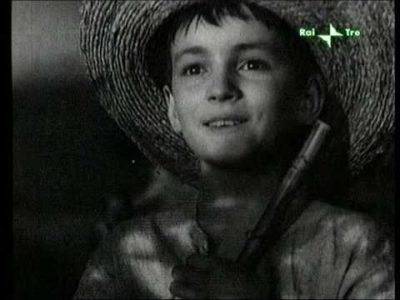
‘The first movie of Parajanov, “Andriesh” is the long version of his “A Moldova Tale,” which he shot when he was a student and was lost afterwards. Adapted from a book by Yemelian Bukov, the movie’s hero is Andriesh, who is a shepherd and who goes on a journey to the castle of the evil wizard he has to tackle with a magical flute he was given.’ — daily sabah
the entirety
Compression
_____________
Golden Hands (1957)
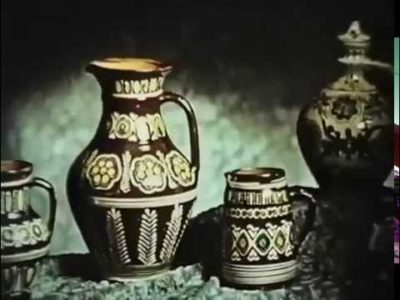
‘A traditionally presented short form documentary on the rise of Ukrainian folk art in the mid 1950s. A sort of who’s who of artists in the scene at the time and a beautiful look at a myriad of different works and styles such as clay sculpting, embroidery, blown glass, textile weaving, and so on. It’s very much a product of its time in both content and execution, but there are moments of visual surprise through unique cuts and rhythm editing to seeming as if some of the creature like sculptures have come to life and are on the prowl as a spooky folktale is being told in reflection of a certain artist’s childhood memory.’ — Joshua Parmer
the entirety
___________
Dumka (1957)
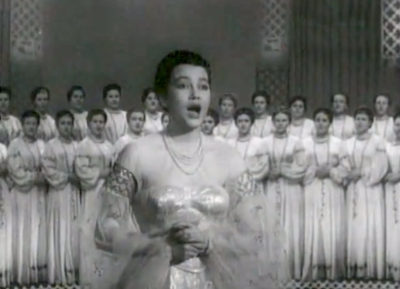
‘Documentary showcasing popular and folk songs performed by the Ukrainian State Choir.’ — letterboxd
the entirety
_______________
Little Flower on a Stone (1962)
‘Sergei Parajanov actually directed only a portion of the 1962 film The Flower on the Stone. Anatoly Slesarenko, began shooting the film under a different title, but the lead actress Inna Burduchenko-Kiriliuk (who played the character Christina) was killed in August 1960 while shooting a scene involving a burning building. Slesarenko went to prison and the project was shelved. When the Dovzhenko Film Studio decided to finish the film, Parajanov agreed to take on the challenge, shooting new footage and editing everything together into a “coherent” story.’ — Dreams and Pomp
the entirety
_______________
Ukrainian Rhapsody (1961)
‘Though it’s often dismissed as apprentice work, it’s anything but – though it definitely has one foot in Soviet filmmaking practices in a way that Parajanov’s subsequent films are able to better disguise. Ukrainian Rhapsody is basically a flimsy melodrama telling the story of two music-loving villagers, Oksana and Anton, whose romance is forestalled by World War 2. But in Parajanov’s hands this typical plot is a pretext for some stunning images: Anton thrums out some Beethoven to a crowd of dejected soldiers in a bombed-out theatre, Oksana sings to inspire morale in the troops as aircraft zoom by overhead, the sails of a windmill turn in the foreground as soldiers advance on a village. On the strength of its imagery alone, Ukrainian Rhapsody is a hypnotic and beguiling film.’ — Sax Von Stroheim
the entirety
_______________
Shadows of Forgotten Ancestors (1965)
‘Shadows of Forgotten Ancestors is a boldly conceived and astonishingly photographed blend of enchanting mythology, hypnotic religious iconography, and pagan magic. And although its unsentimental depiction of the harsh realities of Russian regional history forced visionary director Sergei Pararadjanov (The Color of Pomegranates) into direct conflict with bureaucrats then controlling the Soviet film industry, the film became an international sensation when it was released in 1964. “There is no devil in church, only among men.” Deep in the Carpathian Mountains of 19th-century Ukraine, love, hate, life, and death among the Hutsul people are as they’ve been since time began. While young Ivan’s mother mourns her husband’s brutal murder, Ivan is drawn to Marichka, the beautiful young daughter of the man who killed his father. But fate tragically decrees that the two lovers will remain apart. Unhappily married to another woman and cursed by a sorcerer in this life, Ivan’s obsession with his lost love lures him ever closer to a reunion with Marichka in death.’ — kinolorber
the entirety
______________
Kivski Freski (1966)
‘A collage of fragments from Parajanov’s other films that were demanded to be destroyed by the Soviet Government. Despite its fragmentary appearance, it is ripe full of rich cinematography and striking poetic imagery, definitely things that are great about Sergei Parajanov (i.e. at the time I’ve written this, he is my second favourite director behind Tarkovsky). This seems to be an experimentation of his style, a transition from Shadows of Forgotten Ancestors to much more tableaux orientated films The Colour of Pomegranates, The Legend of Surami Fortress and Ashik Kerib. Whilst this maybe for strictly fans of his style, viewers could be rewarded with the imagery presented in this, despite being nowhere near as good as his other films. This is a sad reminder that Parajanov’s career (at least when he started delving into his unique filmmaking and rebelling against Soviet Social Realism which ended him being penalised) is perhaps too short.’ — Luke Whittle
the entirety
______________
Hakob Hovnatanyan (1967)
‘With a playful associative montage, Parajanov offers an overview of portrait paintings by Hakob Hovnatanyan, the ‘Raphael of Tiflis’. Combining sights and sounds from both Hovnatanyan’s paintings and 19th century Tbilisi, Parajanov’s short documentary can be seen as a direct precursor to The Colour of Pomegranates (1969), his masterpiece.’ — IFFR
the entirety
______________
The Color of Pomegranates (1969)
‘A breathtaking fusion of poetry, ethnography, and cinema, Sergei Parajanov’s masterwork overflows with unforgettable images and sounds. In a series of tableaux that blend the tactile with the abstract, The Color of Pomegranates revives the splendors of Armenian culture through the story of the eighteenth-century troubadour Sayat-Nova, charting his intellectual, artistic, and spiritual growth through iconographic compositions rather than traditional narrative. The film’s tapestry of folklore and metaphor departed from the realism that dominated the Soviet cinema of its era, leading authorities to block its distribution, with rare underground screenings presenting it in a restructured form. This edition features the cut closest to Parajanov’s original vision, in a restoration that brings new life to one of cinema’s most enigmatic meditations on art and beauty.’ — The Criterion Collection
the entirety
_______________
The Legend of the Suram Fortress (1985)
‘The Legend of Suram Fortress is a film made after fifteen years of silence, during which Parajanov was imprisoned and kept from filmmaking due to political and aesthetic disagreements with state authorities. The audacious experimentation with cinematic conventions and national themes (as well as the filmmaker’s idiosyncratic and transgressive behavior), which were not tolerated fifteen years earlier, 4 were now generously accepted. This change was possible thanks to both the loosened censorship during the Perestroika period, more generally, and the favorable conditions at the Georgia Film studio, in particular. 5 To protect a controversial director like Parajanov and the studio that hired him from potential criticism by the centre, a prominent Georgian actor, David “Dodo” Abashidze, was assigned as a co-director of this film. Abashidze, who played Osman Agha and Simon the Piper in this film, again appeared as a co-director and actor in Parajanov’s next and last film Ashik Kerib (1987).’ — Senses of Cinema
the entirety
_____________
Aşıq Qərib (1988)
‘Ashik Kerib (1988) is Sergei Parajanov‘s last completed film. It is based on an Azeri love story, a fairy tale by Paradjanov’s favorite Russian poet Mikhail Lermontov. Ashik Kerib was selected by Venice Film Festival, New York Film Festival, and won the European Film Academy Award (Felix). Ashik Kerib is dedicated to Andrei Tarkovsky.’ — The Boy With the Camera
the entirety
*
p.s. Hey. ** _Black_Acrylic, Wild. Oh, thanks for the link to his set, I’m very curious. But more importantly by far … Everyone, _Black_Acrylic aka Ben ‘Jack Your Body’ Robinson has this great radio show, as you may well know, and … Ben: ‘… the new episode of my show Play Therapy is online here via Tak Tent Radio. This one’s a tech-infused selection of Hi NRG, Rave, Acid House, avant garde stuff and all points in between.’ The last episode was killer if you didn’t catch it, so lock some time in this weekend for Ep. 2 if you know what’s good for you. Awesome, can’t wait, man! ** JM, Hey, Josiah! Whoa, the slaves collaborated with your muse. I’m sure they’d be thrilled to know that, or one or two of them at least. It’s a beauty of a piece to boot. Thank you for clueing us in. Everyone, If you go back to yesterday’s comments, there’s a poem by the mighty author Josiah Morgan that was inspired by the month’s slave contingent that’s in there near the top and well worth the treasure hunting. ** David Ehrenstein, Hi. I woke up to a big batch emails from you and B that look as though they’ll do the trick. I’ll get the post set up and write to you. Thanks very much to you and Mr. Bill! ** Misanthrope, There is definitely a taste for self-styled ‘brat’ slaves. Oh, hurricane derived rain is the best rain. Well, for the rainy parts. Shame about the walloped parts. Our heat has dropped a bit today, thank fucking god. Yesterday was literally like death from the skies. May your wisdom sink into that wide young head. ** JoeM, Hi. Well, Shane may say the Nilsen thing means nothing, but it’s not like he hasn’t worked it in his writing and performances and stuff, so … Here’s hoping re: May 21. Long time away. Fuck knows what tomorrow will be these days. It’s the strangest time ever. Have a swell weekend, sir. ** James, Hi, bud. I’ve been pretty good considering everything. I’m sorry you’ve been down in the mouth and, I guess, in the soul too. You’re not the only one right now, as little comfort as that is. A new project is a potential mood disruptor, obviously. Luck supreme thereby. Reading? I just put together a ‘books I read recently’ post. Don’t want to spoil the surprise or whatever. I will say that one of the books has a section by you in it. You’ll see. You? Any recommends? Feel much, much better, and love back to you. ** Bill, I do sometimes wonder if certain slaves know my stuff, or ‘The Sluts’ at least, but then I think, ‘Nah’, and I probably should drop the likely candidates a little note and say, ‘Hi, I’m so-and-so’, but I don’t because that can of worms seems very wormy. I’m almost finished with the new Blake Butler. I like it a lot. Youtube is definitely much easier. Cool, thanks, a bit of my weekend is called for. What are you up to over the next couple? Yes, as you discovered, you were 7th. Close but no cigar. ** Steve Erickson, I too was very impressed with that slave’s verbal outlay. No, not Dock Ellis. Damn, I’m blanking. I’ll try to remember his name for next time. He had a goofy nickname, hm, … A few NY School poets wrote homage poems to him back in the 70s. Anyway, … Yet more of my weekend is now squared away. Everyone, Mr. Erickson, and I quote, ‘just made an 131-minute end-of-the-month playlist for July on Spotify’. Here. ** Okay. This weekend the blog devotes itself to the great filmmaker Sergei Parjanov. At the very least, if you haven’t yet seen ‘The Color of Pomegranates’, it’s one of all time sublime films in my opinion. See you on Monday.














































 Now available in North America