DC's

The blog of author Dennis Cooper

Page 792 of 1131

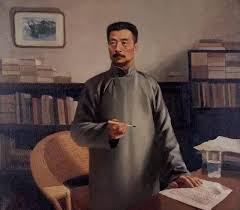
Oliver presents … Lu Xun *

* (restored)
—-


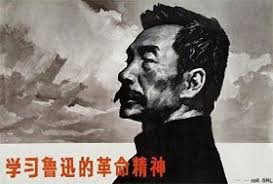
Zhou Shuren was born in 1881 to a wealthy family in Zhejiang province. By 1918 he had seen his grandfather disgraced and nearly beheaded for bribery, watched his father slowly die due to the ineptitude of traditional Chinese medicine, and, while studying medicine in Japan, saw a series of photographs showing a group of Chinese passively watching the beheading of one of their countrymen by a Japanese soldier. This latter event changed his life, and Zhou gave up on his ambition to become a doctor and instead took up writing.

“I no longer believed in the overwhelming importance of medical science. However rude a nation was in physical health, if its people were intellectually feeble, they would never become anything other than cannon fodder or gawping spectators, their loss to the world through illness no cause for regret. The first task was to change their spirit; and literature and the arts, I decided at the time, were the best means to this end. And so I reinvented myself as a crusader for cultural reform.”

Under the pen name Lu Xun, he wrote ambiguously ironic short stories and incisive political articles. He never wrote a novel, but worked tirelessly in almost every other literary form including translation, poetry, criticism and essays. Mao was one of his greatest admirers and after his death he became an icon of the Chinese Communist Party, although Lu had never joined the CCP and might be better understood politically as a liberal. Despite his canonisation, the ironic subtlety of his writing was unwelcome in Communist China. Mao wrote that “…the style of the essay should not simply be like Lu Xun’s. [In a Communist society] we can shout at the top of our voices and have no need for veiled and round-about expressions, which are hard for the people to understand”. However, his work has been part of the school syllabus for many years and most Chinese will be familiar enough with Lu’s stories to casually describe someone as being an Ah-Q or a Kong Yiji.

Lu Xun marks the beginning of modernism in Chinese literature. His work straddles two worlds; the dying Qing dynasty that would be swept away by revolution and the unsteady Republic that replaced it. As Jeffrey Wasserstrom wrote, “Lu Xun is critically regarded as the most accomplished modern writer of the most populous nation on earth, and a grasp of his work is thus extremely useful in forming an understanding of much of humanity.”


Short stories

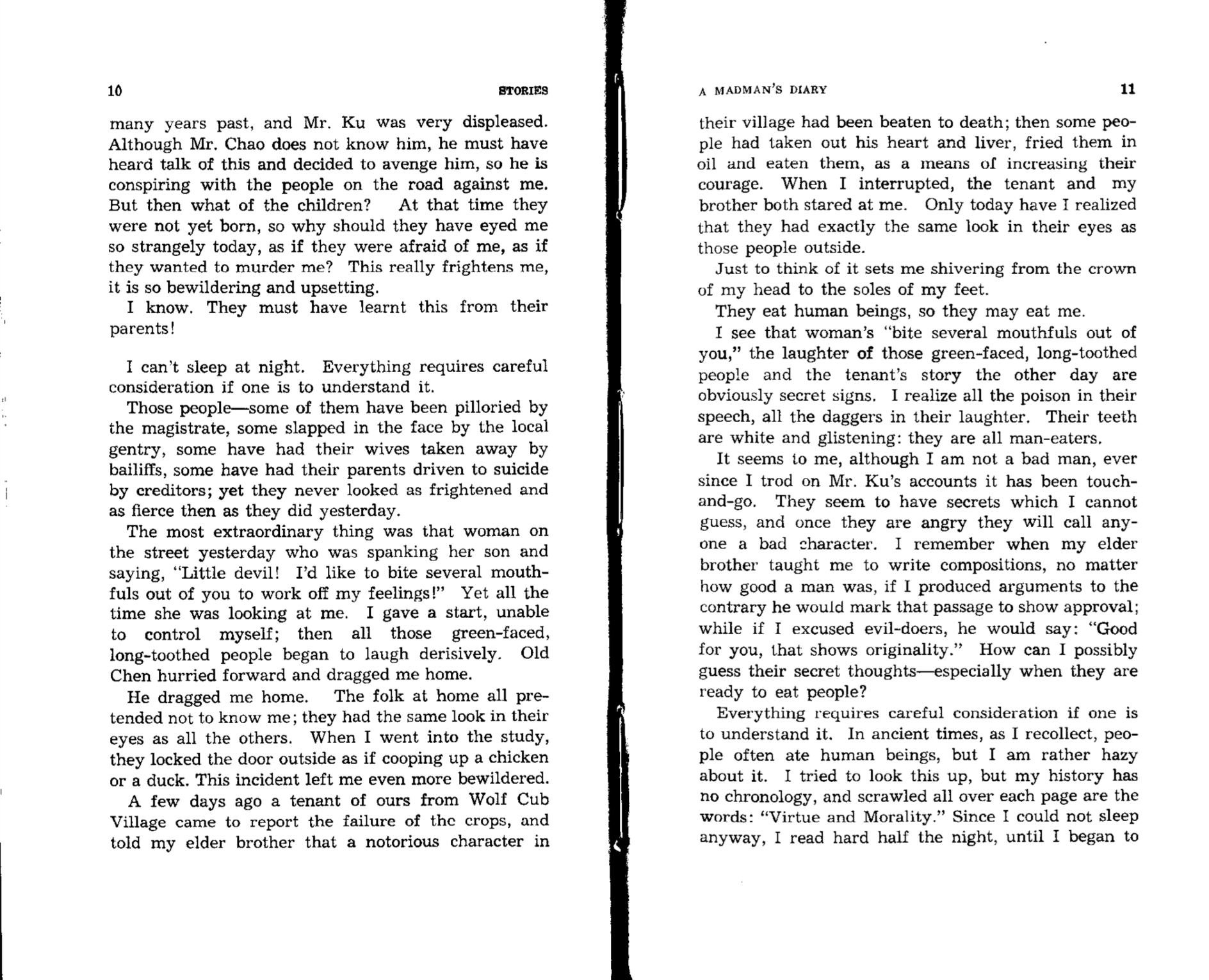
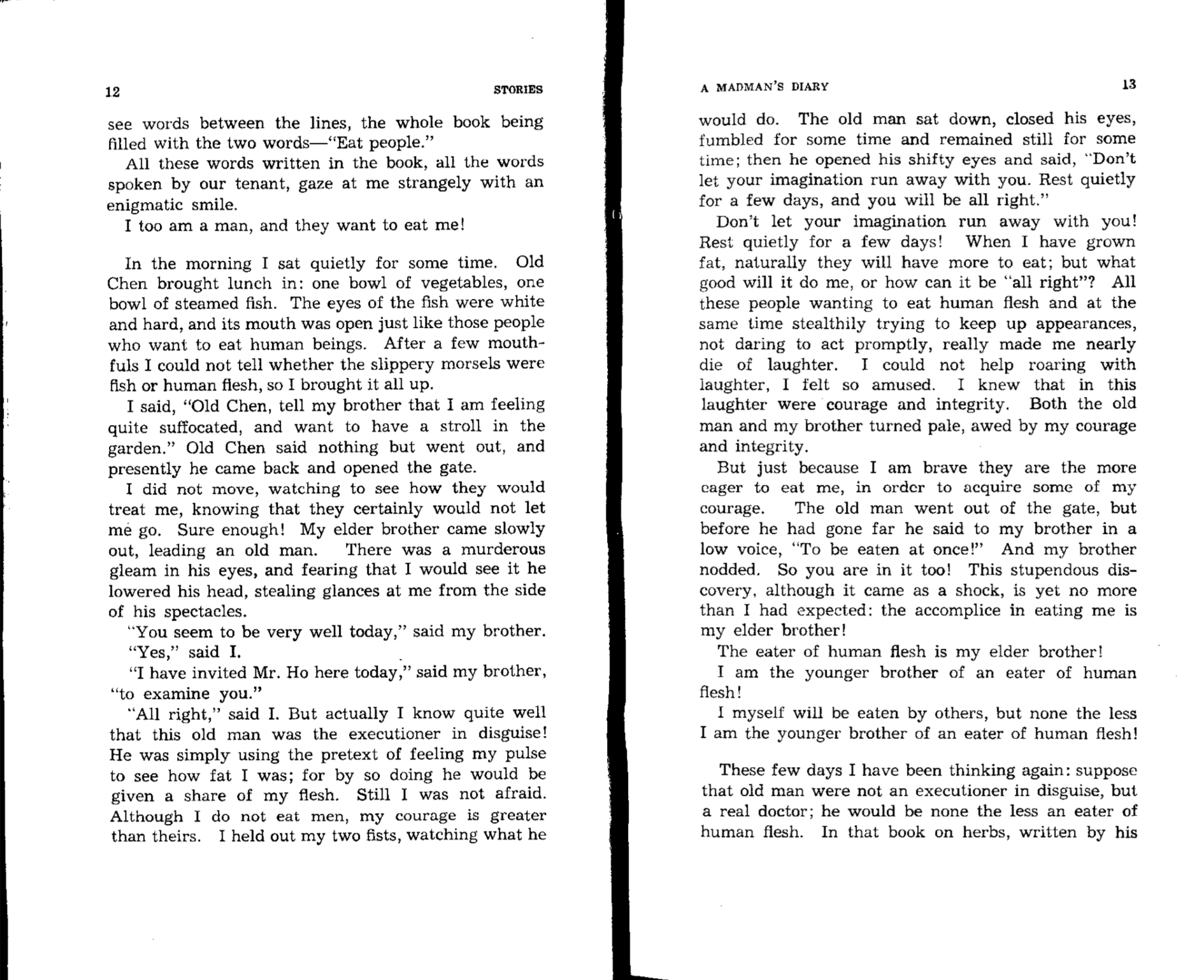
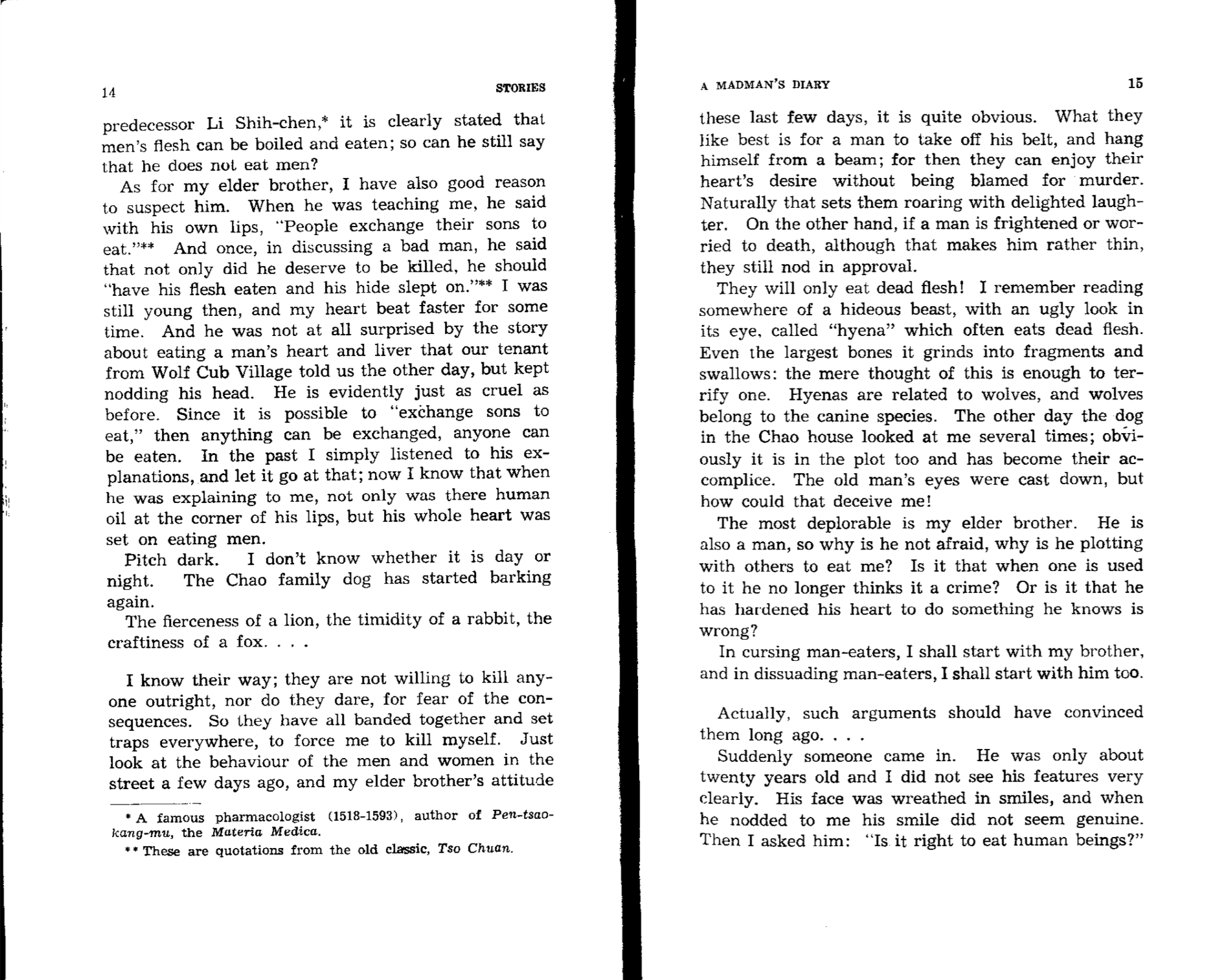
Diary of a Madman

Lu Xun’s first work written in Chinese vernacular (aka simplified Mandarin), Diary of a Madman shows both his affinity for foreign fiction – Diary is of course influenced by Gogol’s short story – and his ability for weaving criticisms of Chinese society within compelling narratives. Lu was infatuated was fiction from other countries. His advice to China’s youth was to “read no Chinese books. Or as few as you can. But read more foreign books.”

The Diary itself is a false document, presented as a medical curiosity in Lu’s preface (written in traditional Chinese). The protagonist slowly begins to see the whole of Chinese history as being secretly cannibalistic, his writing twisting within a paranoid fever.

“I will offer, as something like the supreme example of this process of allegorization, the first masterwork of China’s greatest writer, Lu Xun, whose neglect in western cultural studies is a matter of shame which no excuses based on ignorance can rectify. […] What is reconstructed [in Diary of a Madman] is a grisly and terrifying objective real world beneath the appearances of our own world: an unveiling or deconcealment of the nightmarish reality of things, a stripping away of our conventional illusions or rationalizations about daily life and existence.” – Frederic Jameson

Excerpt
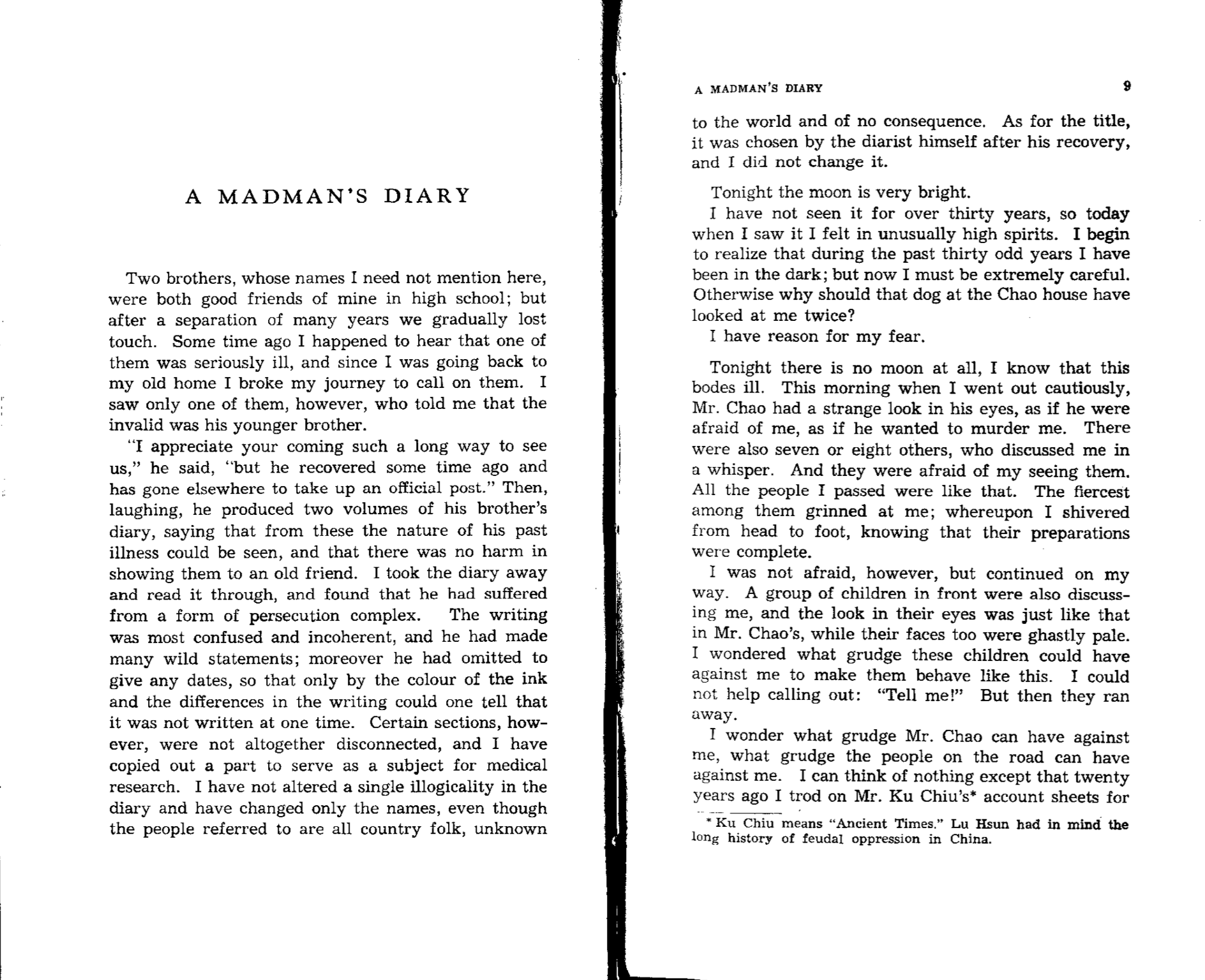


(cont.)


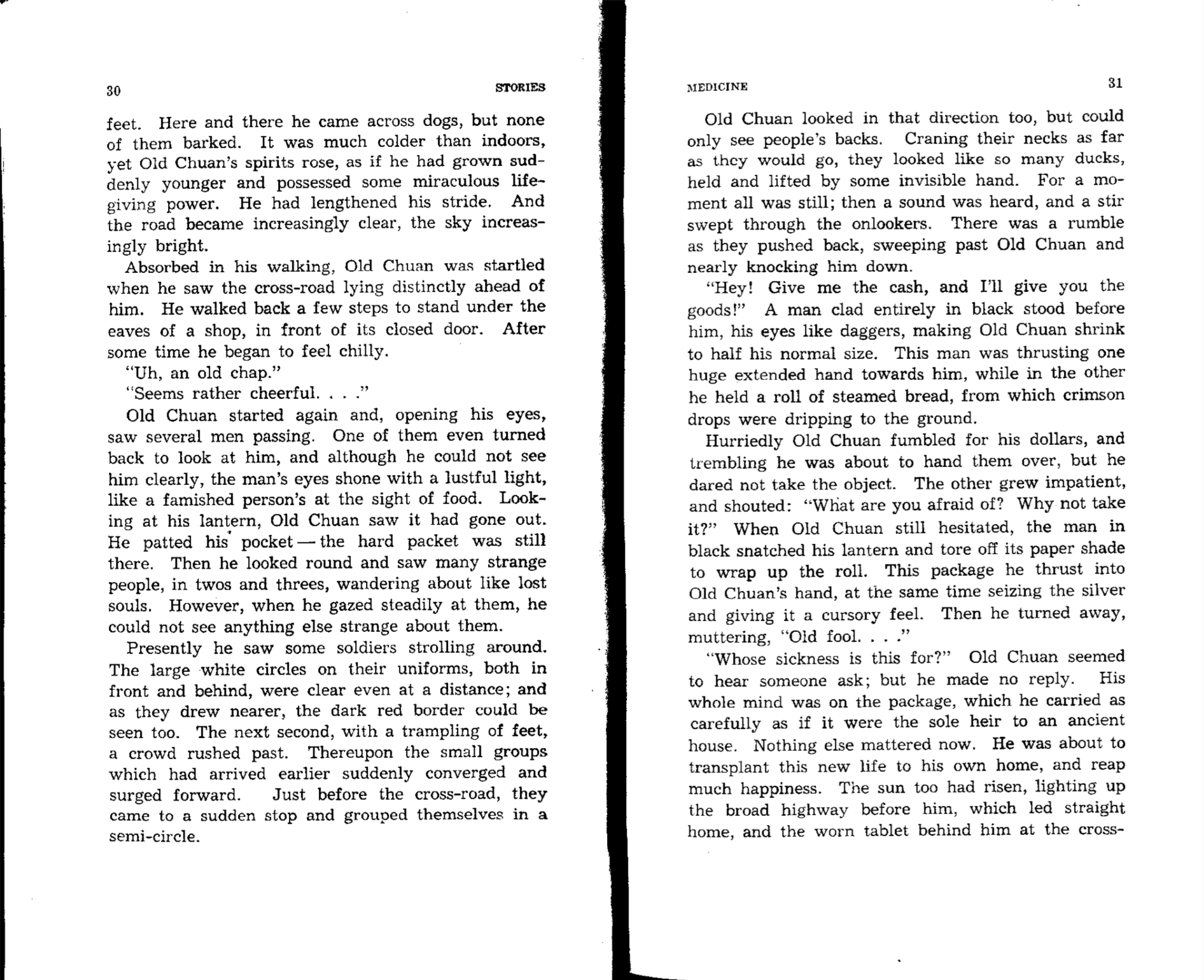
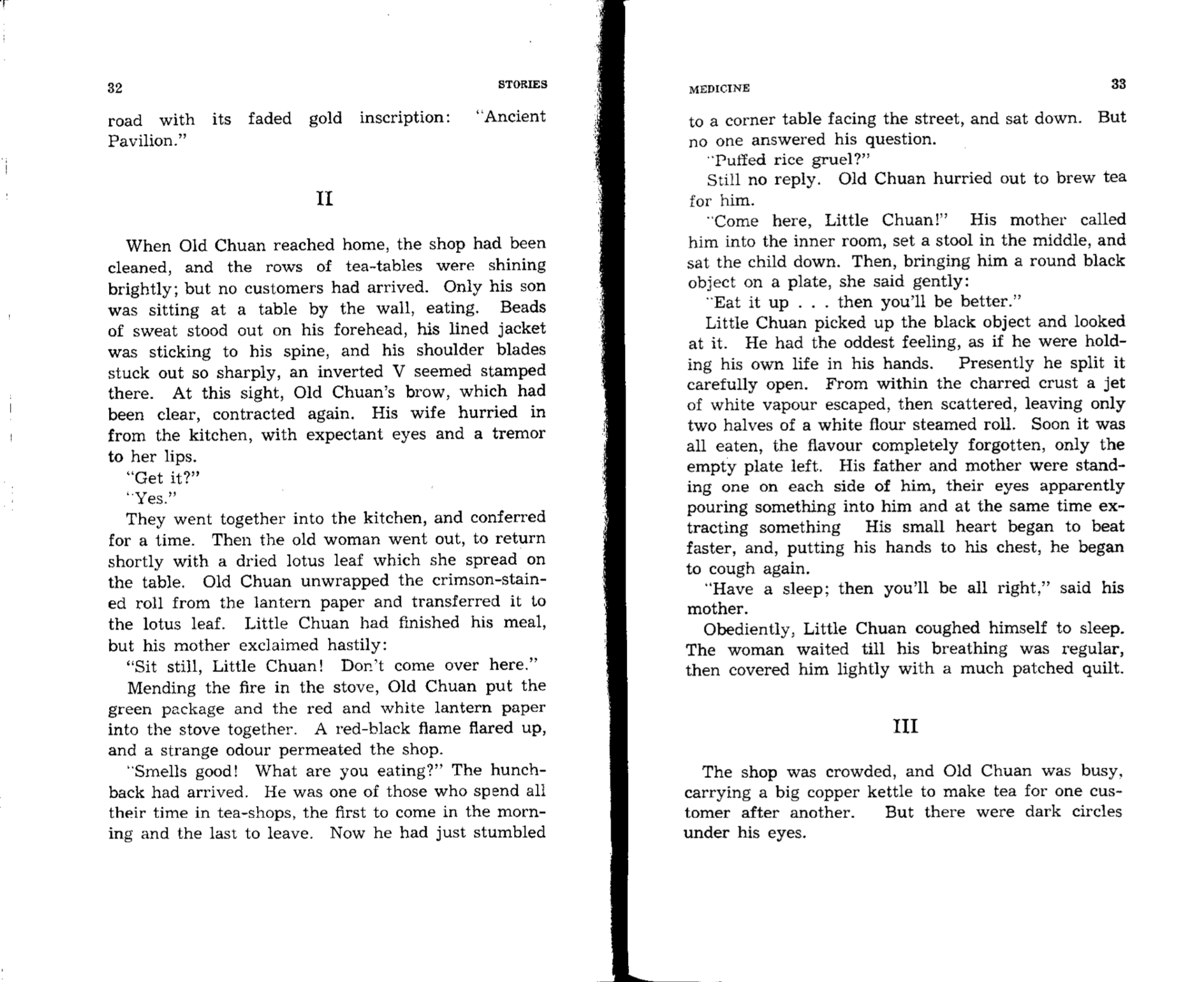
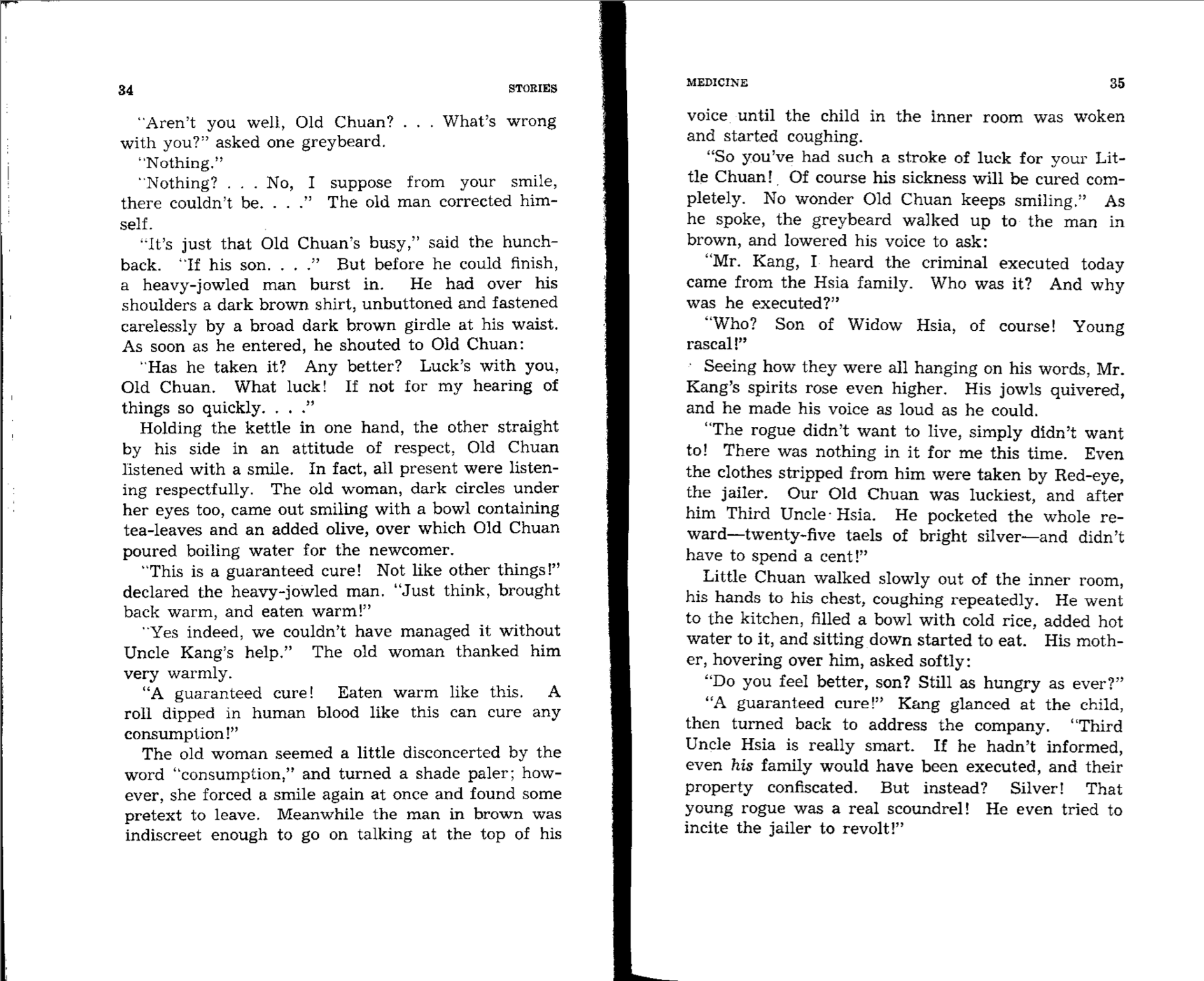
Medicine

One of Lu’s tales of the woes of Chinese medicine. A couple with a consumptive son stake their last hopes on a blood-soaked bun bought from a practitioner of that ancient art. The quest to get hold of the cure is told in a dream-like mystical manner, and the possibility of the spirit world is tantalisingly held – up until the last, cruel moment.

“[H]e rarely depicts problems with the accustomed logic of the real world, but does so rather with methods such as prophesy in reverse, reductio ad absurdum, falsification, pointed mockery and curse, to tear up the given logic of this world and to show it to people in laughter.” – Wang Hui

Excerpt
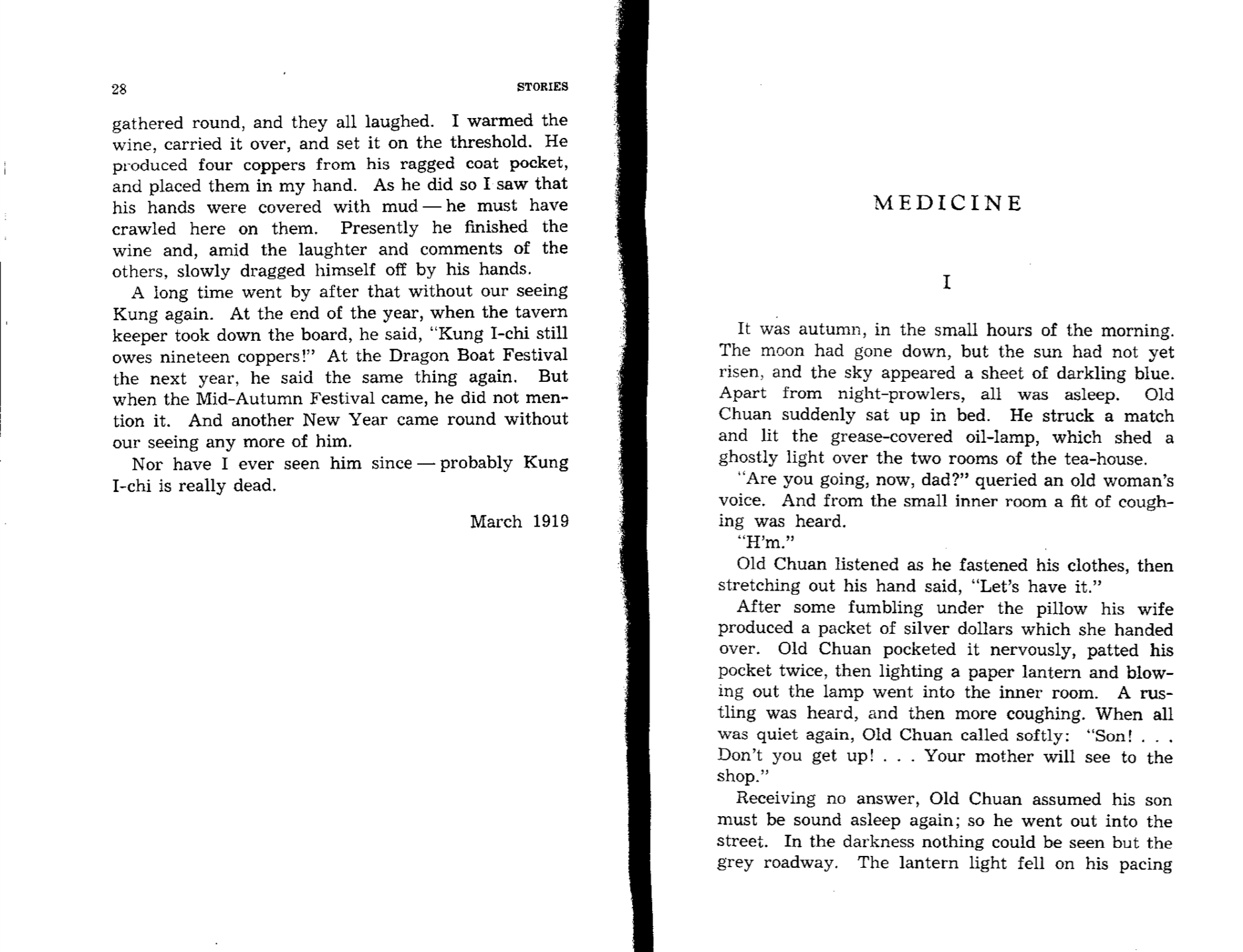


(cont.)


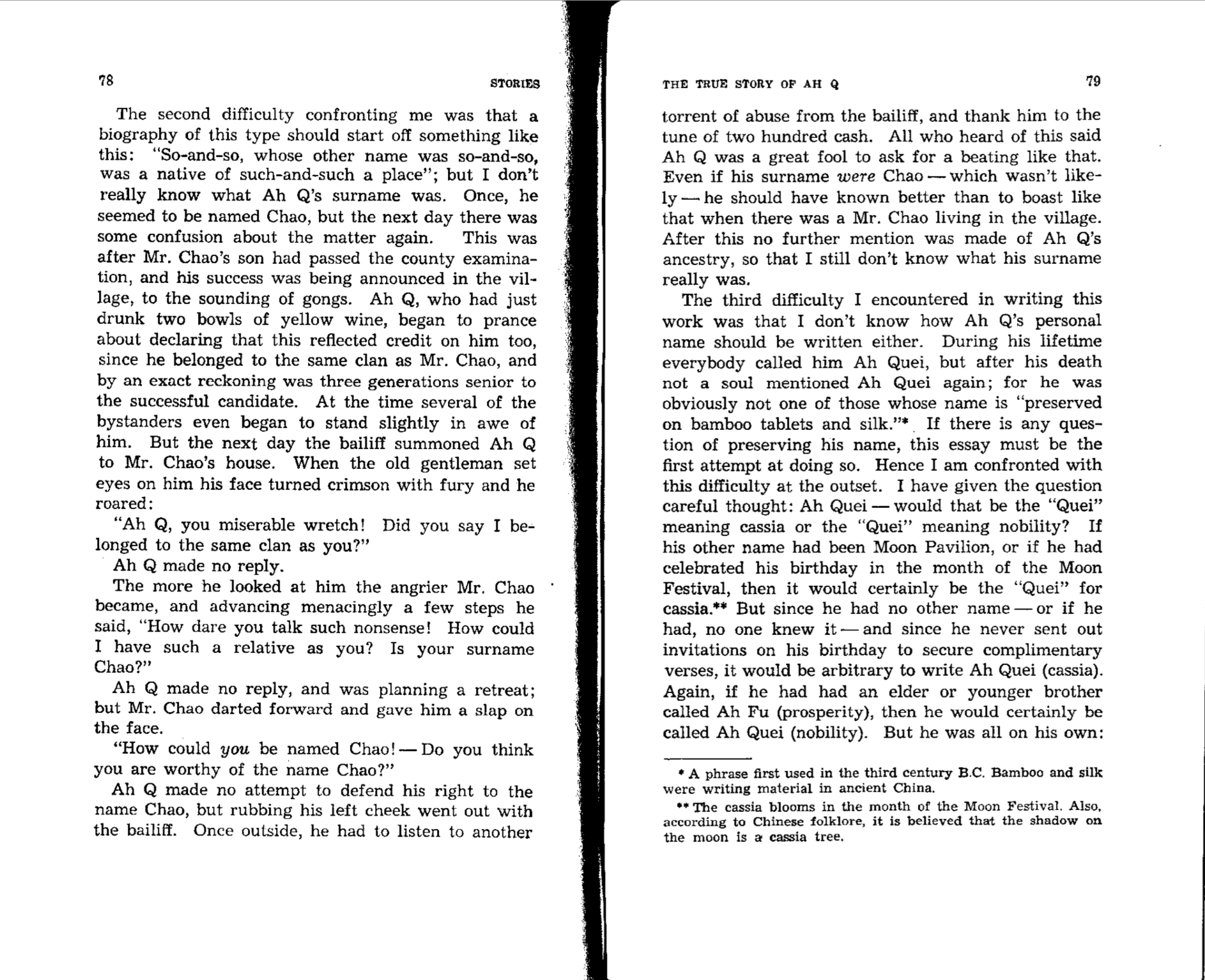
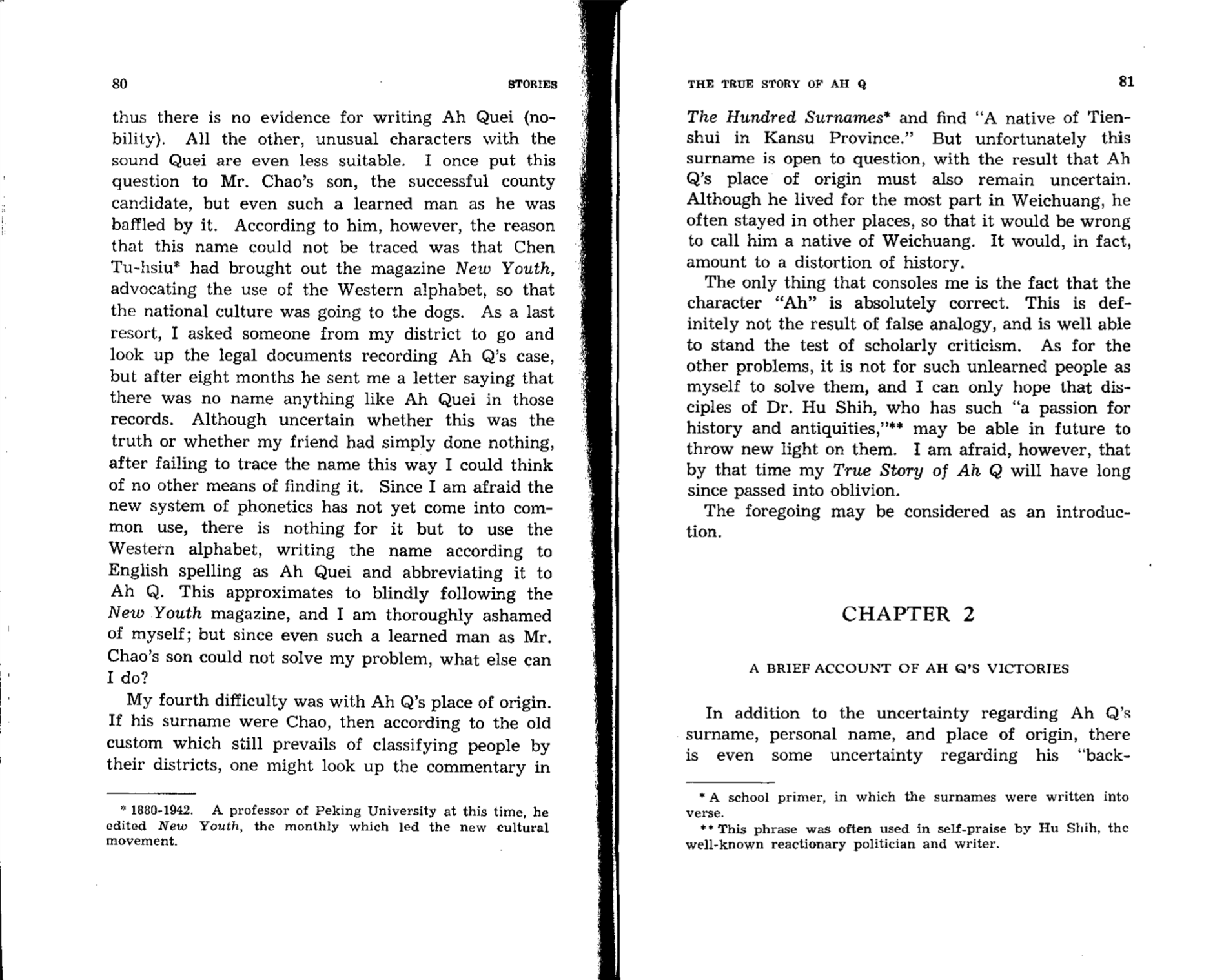
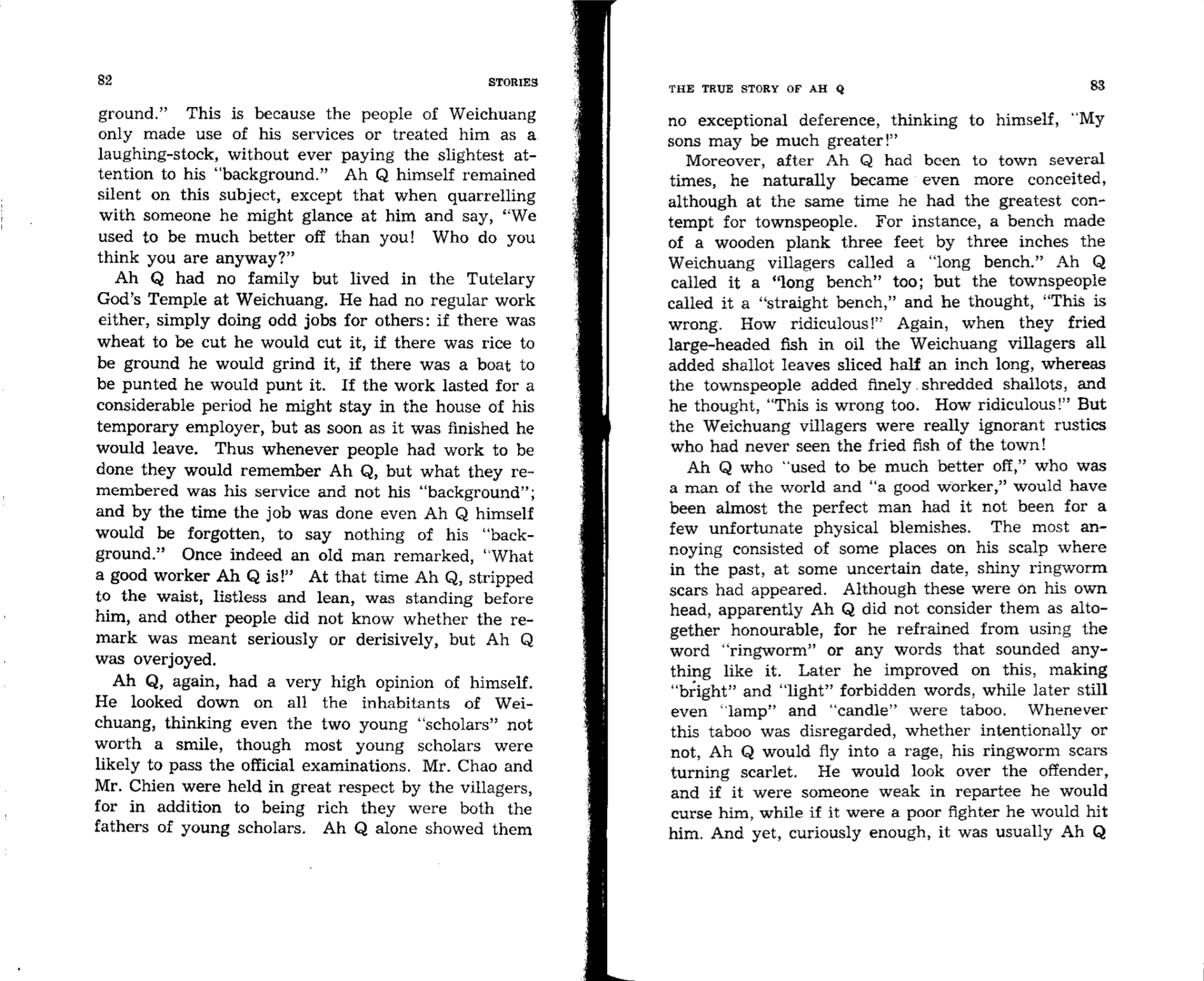
The Real Story of Ah-Q

Have you ever known anyone who manages to convince themselves that they have won, even when they have lost? Then you’ve met an Ah-Q. Pompously optimistic, cowardly, self-satisfied and stupid, Ah-Q is Lu Xun’s most searing satire on Chinese society. His blankness above all reflects that which Lu saw in the faces watching the execution in the photograph. Ah-Q’s name itself is one of blankness; ‘Ah’ (阿) being potentially both a respectful and disrespectful diminutive, and ‘Q’ not only stands for a character the author can’t remember, but also possibly for the queue worn by males under Manchu rule. The letter Q itself perhaps represents the blank face and long pigtail of the hero.

Ah-Q’s character traits, from his prudish misogyny to his meek acceptance of his fate, are all backed up by a half-remembered Confucianism, and told in a deeply ironic mock-heroic style by Lu Xun.

“[The Real Story of Ah-Q] shows the capacity of allegory to generate a range of distinct meanings or messages, simultaneously, as the allegorical tenor and vehicle change places: Ah Q is China humiliated by the foreigners, a China so well versed in the spiritual techniques of self-justification that such humiliations are not even registered, let alone recalled. But the persecutors are also China, in a different sense, the terrible self-cannibalistic China of the ‘Diary of a Madman,’ whose response to powerlessness is the senseless persecution of the weaker and more inferior members of the hierarchy.” – Frederic Jameson

Excerpt
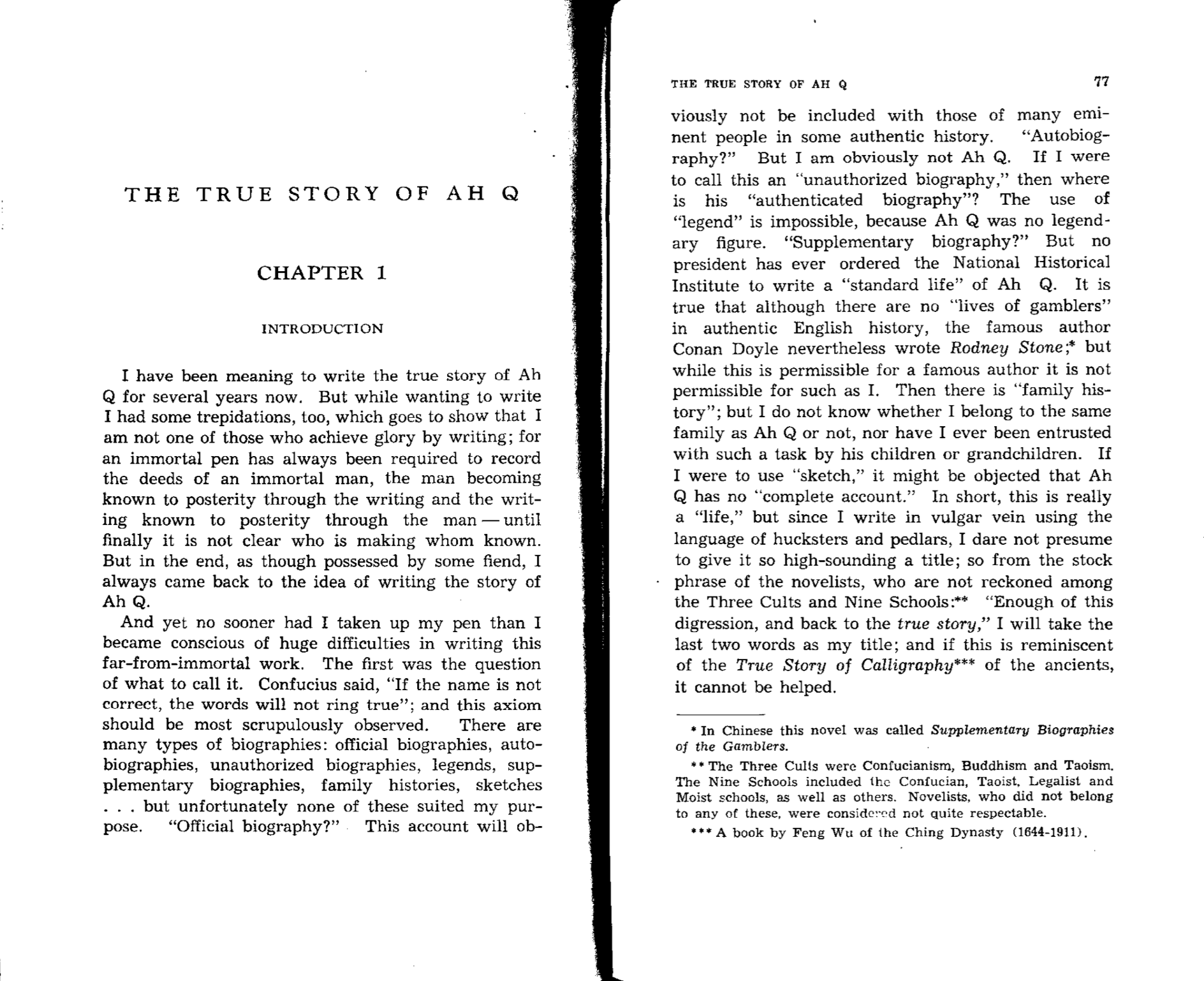


(cont.)


Essays

Lu Xun wanted to “be a mirror for the present, a record for the future” and in this regard his essays are as important as his short stories. He saw his mission in life as being devoted to saving the Chinese people, but he was not a romantic. A severe critic who did not believe in forgiveness or ‘fair play’, Lu had the unsentimental air of a contemptuous doctor diagnosing the maladies of the people while begrudging their foolishness for not following the cure. In contrast to the latter Maoist era that he would not live to see, he criticised the left and the right when he saw their failings.

His love of foreign literature did not blunt his abilities as a critic. Ibsen’s The Doll House was at that time seen as being about ‘female liberation’, due to Nora’s climactic flight from her poisonous family. Lu simply asked, “What happens after Nora leaves home?” He recognised that it took more than grand individual gestures to change societal injustices.

“Revolution is a bitter thing, mixed with filth and blood, not as lovely or perfect as poets think.”

“In an increasingly specialized state of knowledge, in a cultural condition that has become increasingly controlled by the rules of the market and consumerist culture, Lu Xun’s acute sensitivity to social injustice, his profound criticism of the relations between knowledge and society, his continual concern with the relationship between culture and the public, his flexible cultural practice – all re-create in these new historical conditions the possibility for the intellectual’s ‘organicity’. This is the tradition of the great Chinese intellectual” – Wang Hui
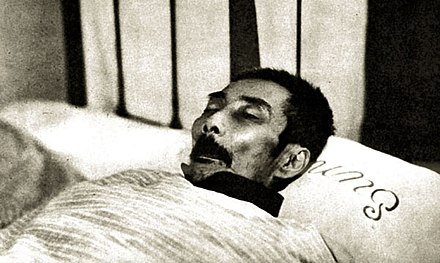


Lu Xun’s Final Testament

If I were a great nobleman with a huge fortune, my sons, sons-in-law, and others would have forced me to write a will long ago, whereas nobody has mentioned it to me. Still, I may as well leave one. I seem to have thought out quite a few items for my family, among which are:


1. Don’t accept a cent from anyone for the funeral. This does not apply to old friends.
2. Get the whole thing over quickly. Have me buried and be done with it.
3. Do nothing in the way of commemoration.
4. Forget me and look after your own affairs–if you don’t, you are just too silly.
5. When the child grows up, if he has no gifts let him take some small job to make a living. On no account let him become a writer or artist in name alone.
6. Don’t take other people’s promises seriously.
7. Never mix with people who injure others but who oppose revenge and advocate tolerance.

There were other items, too, but I have forgotten them.

I remember also that during a fever I recalled that when a European is dying these is usually some sort of ceremony in which he asks pardon of others and pardons them. Now, I have a great many enemies, and what should my answer be if some modernized person asked me my views on this? After some thought I decided: Let them go on hating me. I shall not forgive a single one of them, either.

No such ceremony took place, however, and I did not draw up a will. I simply lay there in silence, struck sometimes by a more pressing thought: If this is dying, it isn’t really painful. It may not be quite like this at the end, of course; but still, since this happens only once in a lifetime, I can take it.


Links

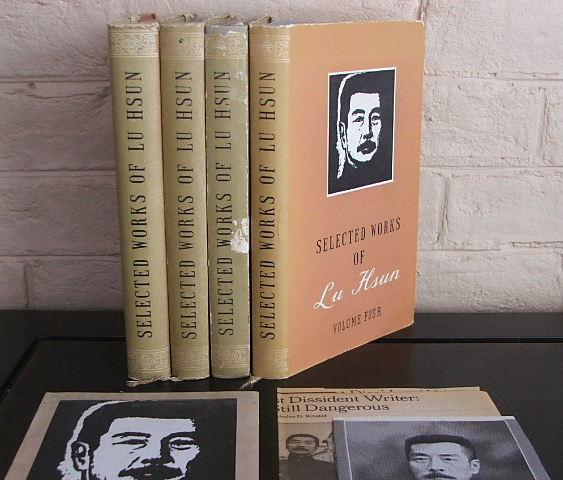
China’s Greatest Dissident Writer: Dead but Still Dangerous
Selected essays (in English)
Sunday in the Park with Lu Xun
Lu Xun, An Outsider’s Chats about Written Language
Follow the Footsteps of Lu Xun
Lu Xun: Father of Modern Chinese Literature


Movement


Pictures
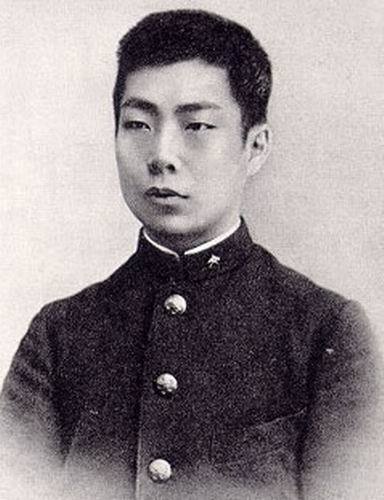

Lu Xun in his youth
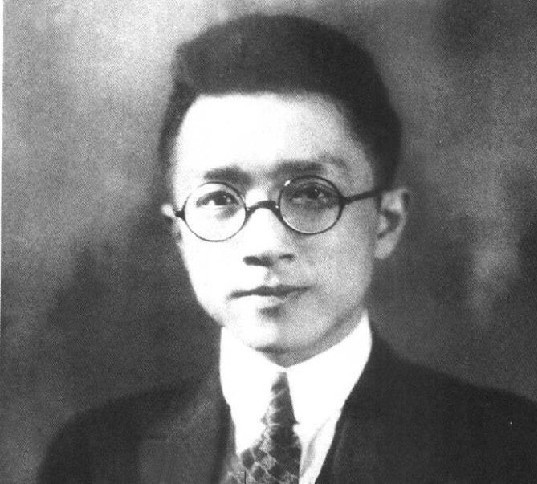


Lu Xun as a graduate student at Columbia University in the U.S.
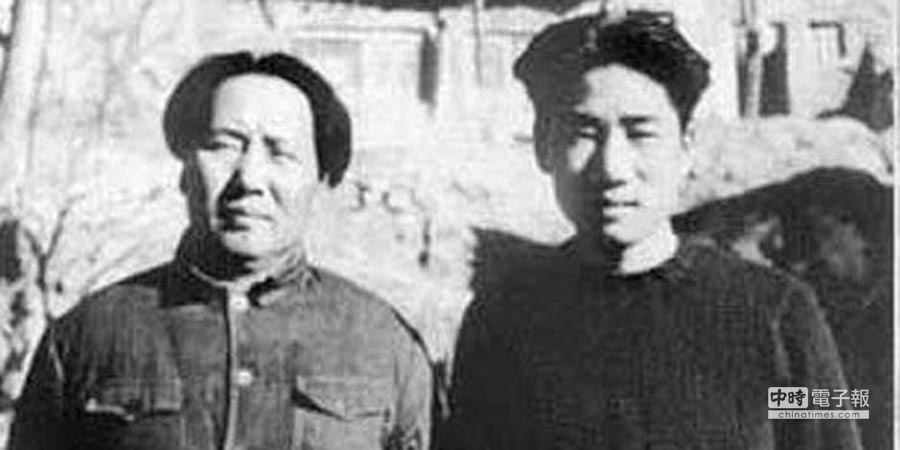


Lu Xun and Maozedong
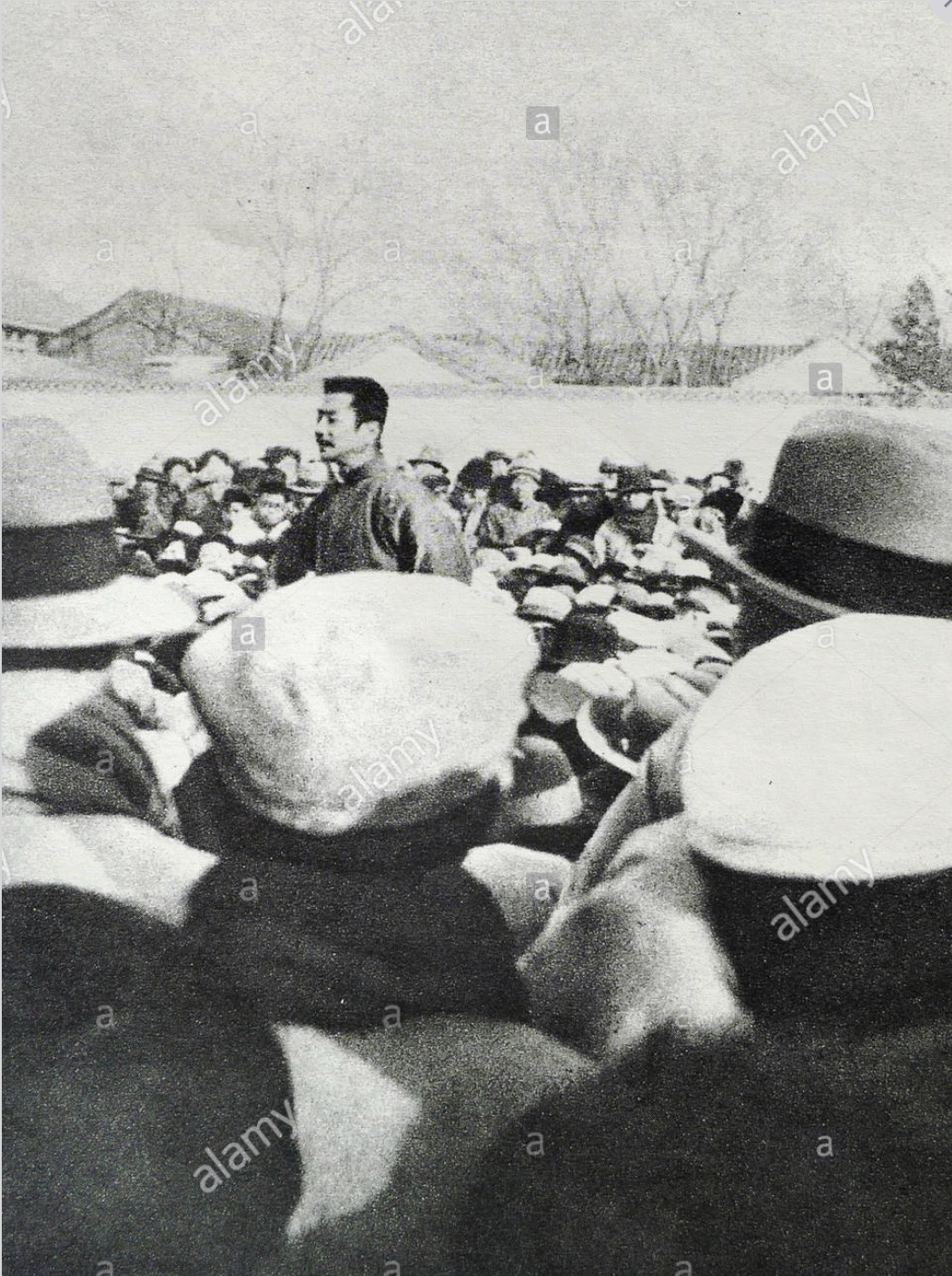


Lu Xun addressing the masses in Beijing
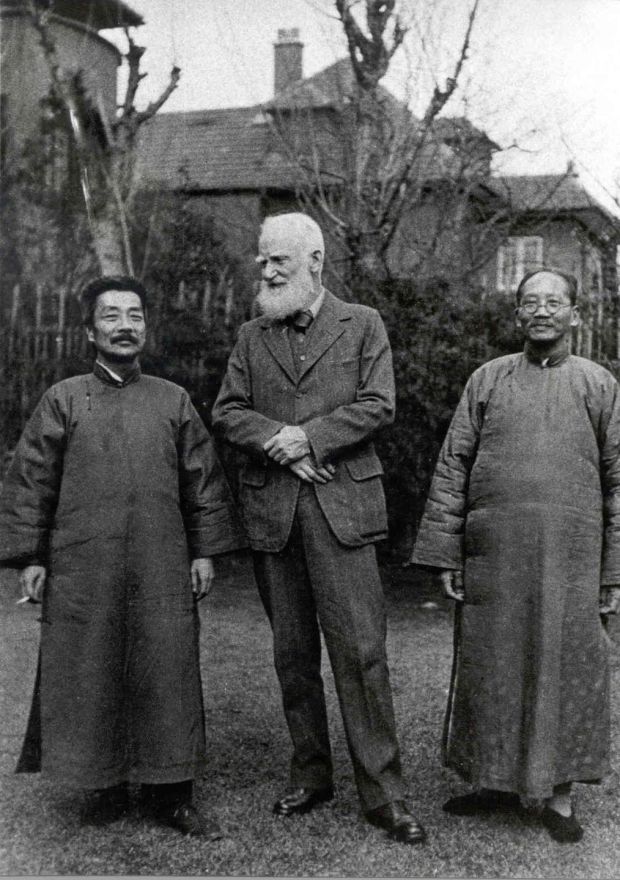


Lu Xun with G.B. Shaw. “As we stood side by side, I was conscious of my shortness. And I thought: thirty years ago, I should have done exercises to increase my height.”
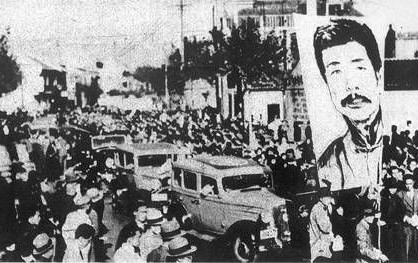
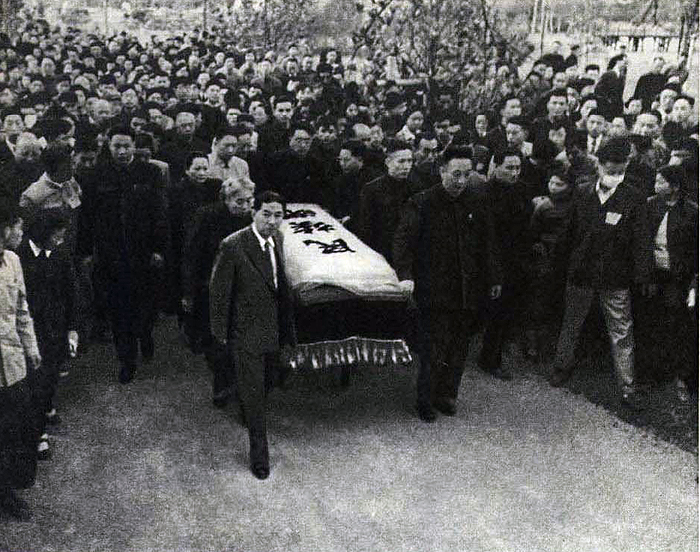


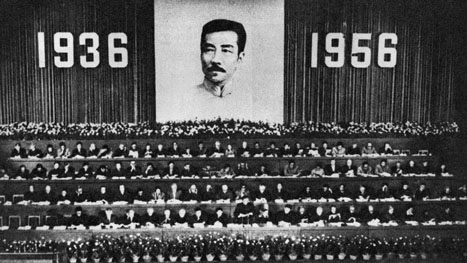
Lu Xun’s funeral
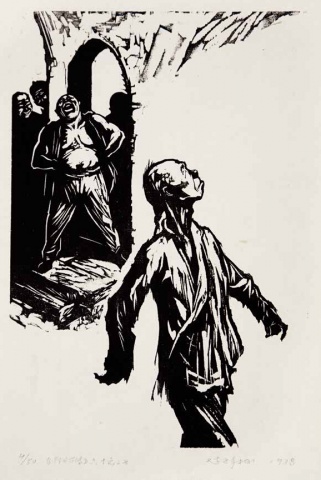


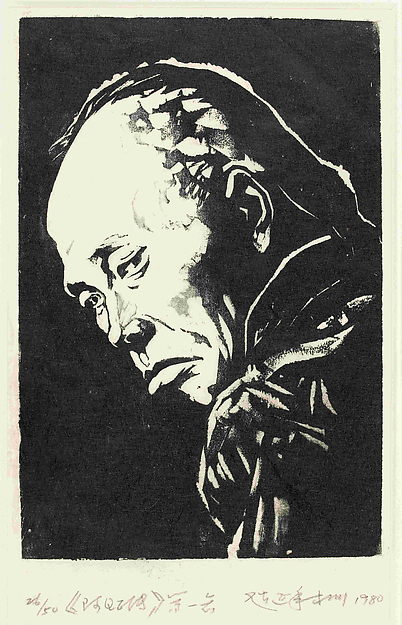
Woodcuts of Ah-Q by Zhao Yannian (1980)
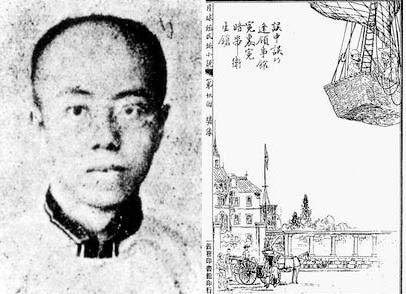


A young Lu Xun translated Jules Verne’s From the Earth to the Moon, and wrote an unforgettable slogan in his preface, “Leading the Chinese people forward begins with science fiction!
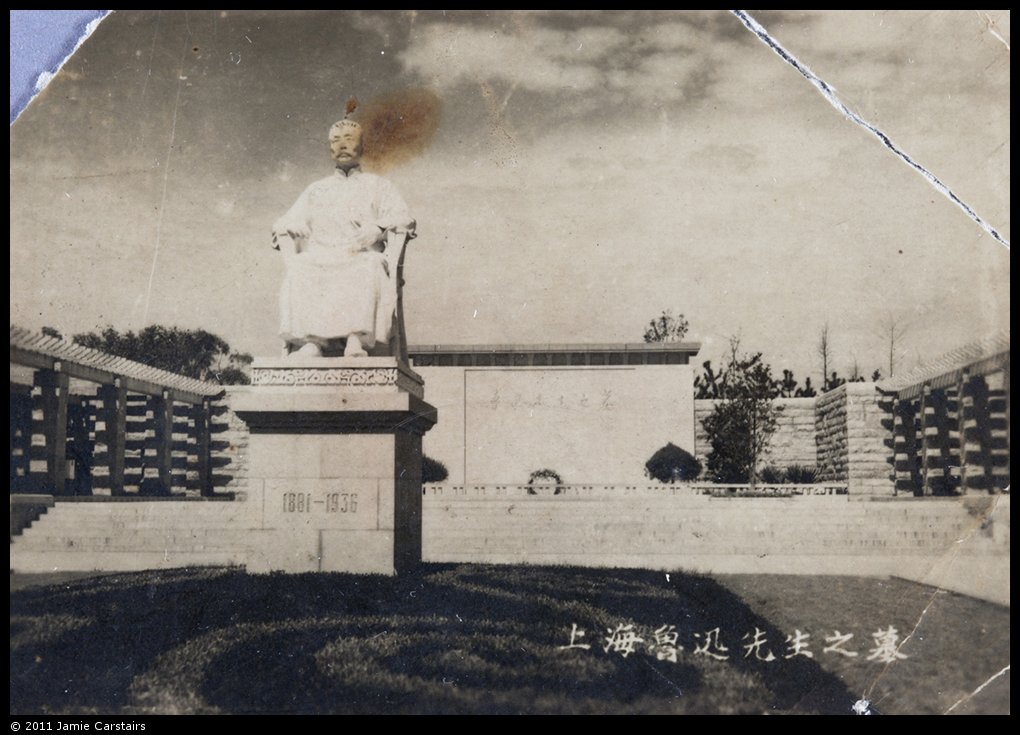


Tomb of Lu Xun


This post was culled from various sources, especially Julia Lovell’s translation of The Real Story of Ah-Q and Other Stories (which I highly recommend – it’s cheap!). See also the Lu Xun wiki and this biographical site.
—-


*

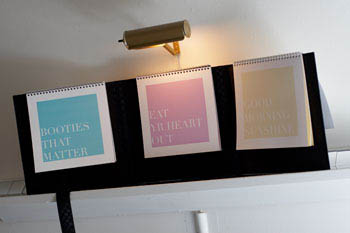
p.s. Hey. ** David Ehrenstein, Ha, if you say so. Has there ever been a moment when Ben Affleck was interesting when he was doing anything? ** Golnoosh, Hi, Golnoosh! Thank you so much again for the honor of being on your show. It was great fun and much more. I’m glad the asses in my post raised your appreciation of the ass. My favorite? Hm, I hadn’t thought about it. I do like those little Japanese kids getting ‘flushed’ down the giant toilet for some reason. I hope your weekend was a good one. Ours here was pretty much ruined by our psychotic, ongoing heatwave, but I got some writing done somehow. Awesome beginning to your week! ** Misanthrope, Did you? Huh. Oh, wait, happy birthday! G(e)orge on that quite delicious sounding cake for one thing. Get any good presents? My weekend was just trying to survive in what amounted to a giant bbq disguised as a city scape. But I survived. ** Daniel, Daniel! Always, always a total and great boon to have you here! What’s up, maestro? Thank you for the adds! Especially the one to your much missed blog. Everyone, Daniel Portland, occasional blog visitor and full time genius artist, has given us a few ass adds. They are: Yoko Ono. Film No. 4. 1966–67, a pic of a few books including his own ‘Booties That Matter’ here, and a trip to a great little ass-y post on his long dormant but still stellar blog. Here. Thank you so much! ** chris dankland, Hi, Chris! Yeah, discovering the ass lasers is what made me decide to make a post to house them basically. I know, I admit I am still proud of my adolescent cleverness in coming up with ‘Flunker’. Maybe I should use that as a novel title or something. You saw that old Dutch doc. I wonder if that still exists anywhere. That school, Flintridge Preparatory School for Boys, went from 5th grade to 12th grade. I went there from 8th grade to 11th grade when I got expelled. That’s a very interesting background story re: your life at that age. That must have been strange: the big switch. God about your schooling’s first week. Hoping that luck hangs around. You know, stupidly and for no good reason, I still haven’t seen ‘Mandy’. I’m gonna find it. Thanks! I hope your morning is a revelatory whirlwind of a thing. ** JoeM, Hi. During the months where Google had killed my blog and I was fighting to get it back, I made a pretty wide plea asking if anyone had archived the blog, and no one had. So I think the bulk of it that I haven’t yet restored exists only in a jumble on my hard drive. Like I said, I will try to restore an SPD. But, seriously, it will be a huge headache amount of work to find and gather and reconstitute everything. Even just restoring normal dead posts is very time consuming. I will definitely never ask you about Israel and Palestine, that’s for sure, ha ha. I love Ivor Cutler. I’ll go find ‘I’m Happy’. Thanks. ** _Black_Acrylic, I’m pretty sure you are exactly on the money there. ** Steve Erickson, Hi. Yes, one wonders. I’ve seen even more outrageous things posted on Facebook that don’t get removed and far, far less outrageous things that get their uploaders ‘jailed’ for a week. As I’m sure you have too. I vaguely remember the existence of the Lake Goose Music Festival back then. Didn’t know there was a doc. I’ll probably watch that. I like that new Shirley Collins. It’s pretty. Yes, I’m following the scariness in Poland. Being in the EU with them, the goings-on there are big, regular news in the French media. It’s truly awful. I hope that uprising helps. Hard to hope though from what I understand. ** Bill, Ha, yes. As I told Chris up above, finding that Young Boys Dancing Group thing basically caused me to make the post so I would have an excuse to include it. Our miserable heatwave is scheduled to continue its attempted murder of us Parisians through Wednesday. Damn, I always miss that Bandcamp day. Fuck. The name John Frame rings a bell. I’m not sure if I know this stuff. I’ll go watch that vid in about 1 minute and a half from now. Happy Monday. ** Okay. Today I restore this very old, formerly dead, and pretty great post made by a long MIA blog d.l. and excellent fella/artist named Oliver. Enjoy. See you tomorrow.
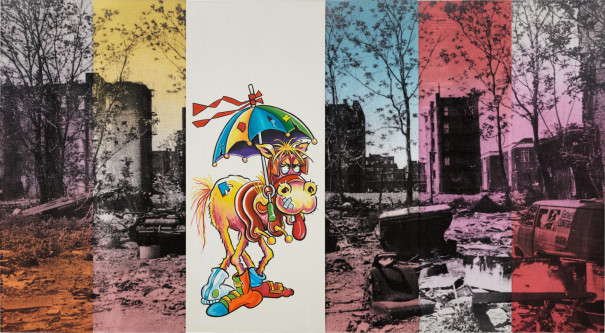
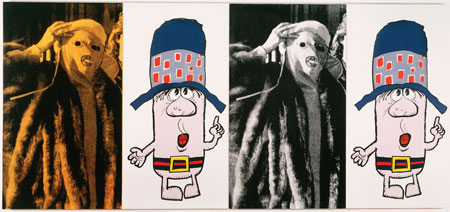
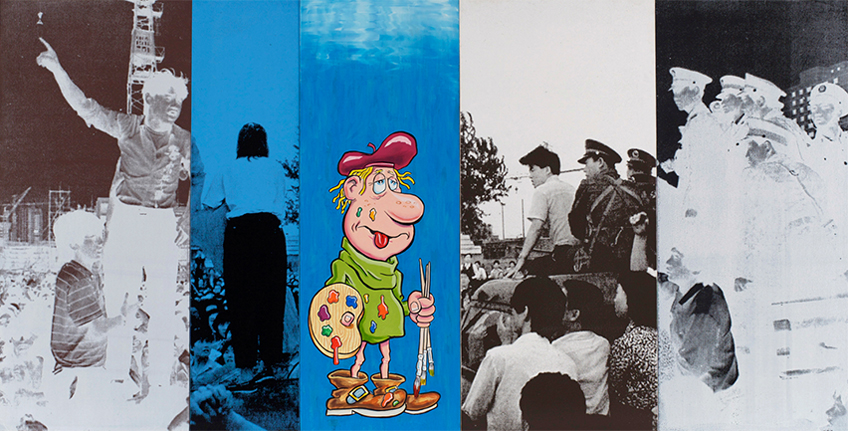
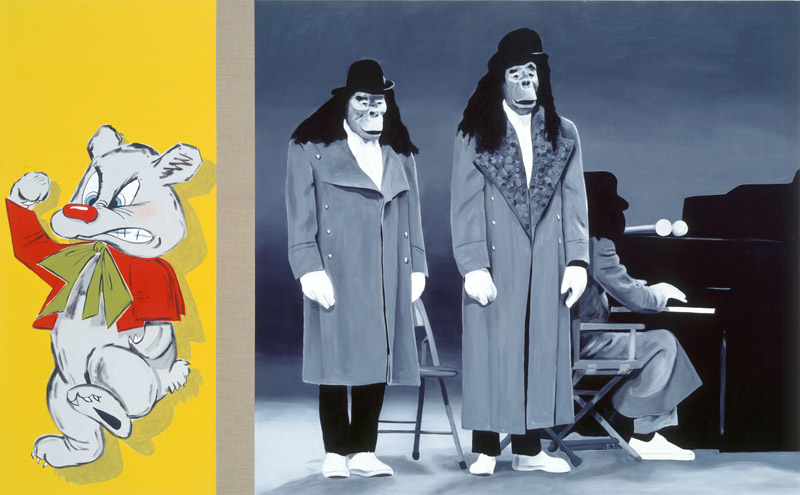
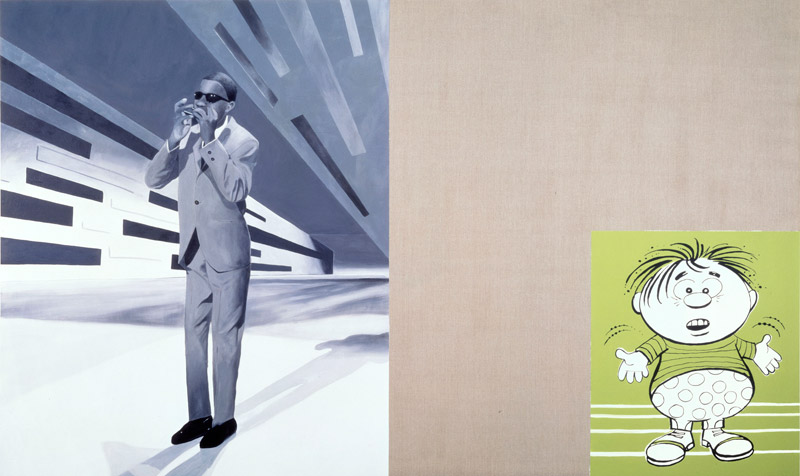
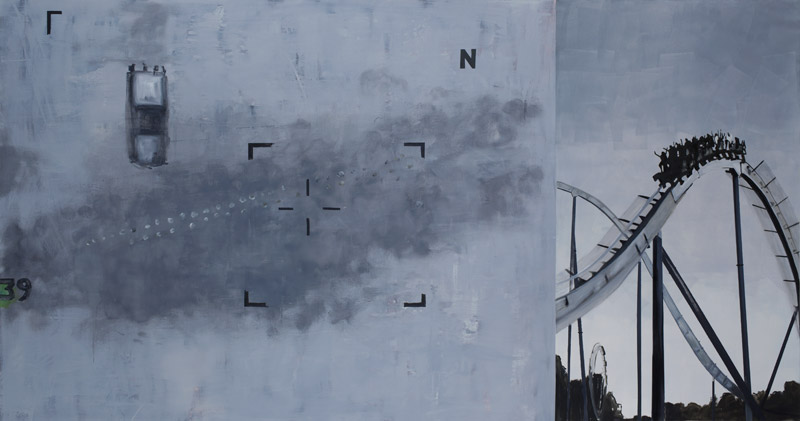
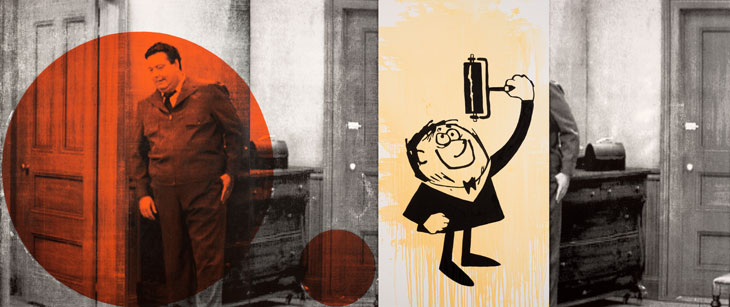
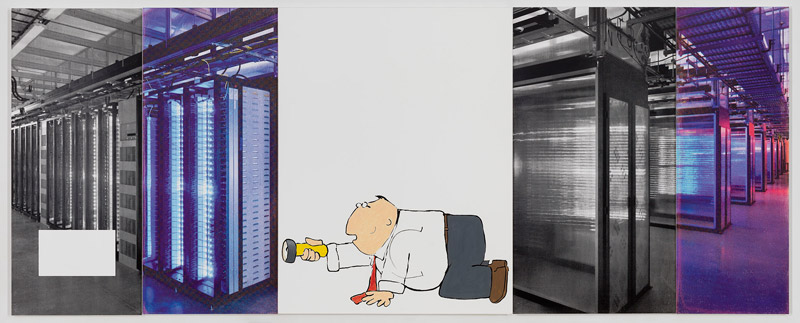
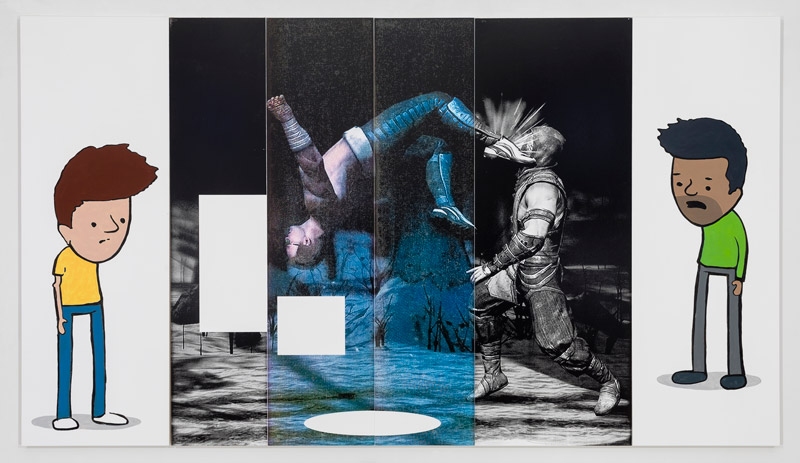
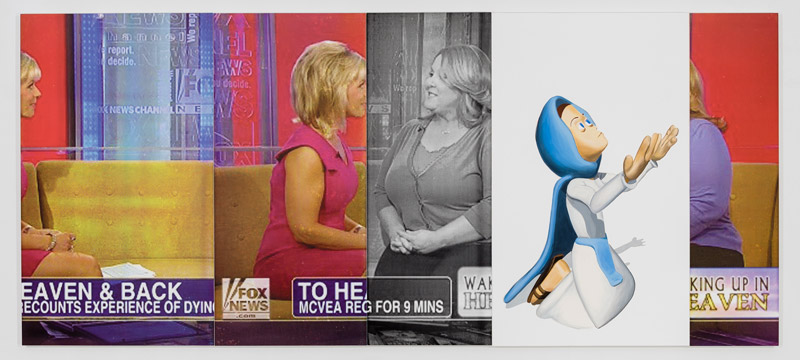
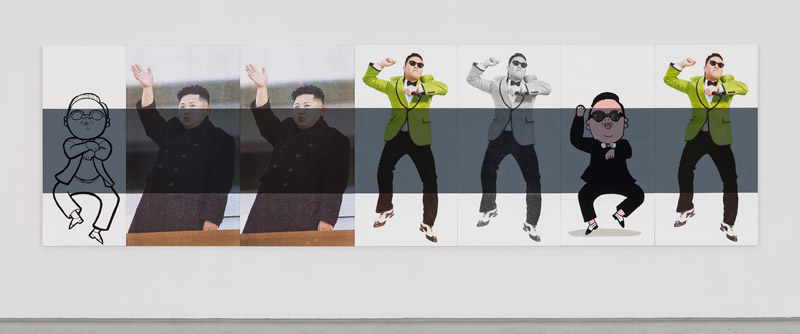
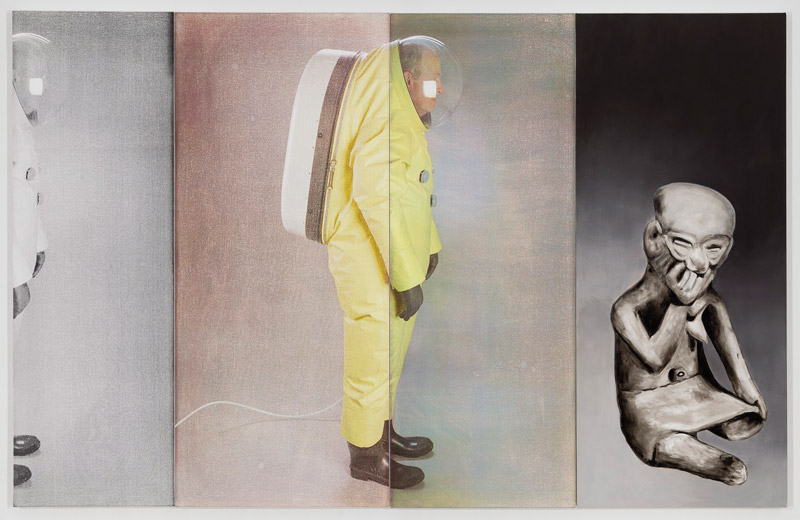
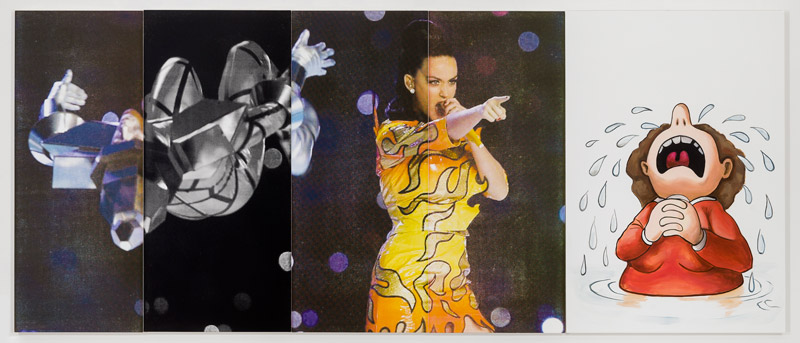
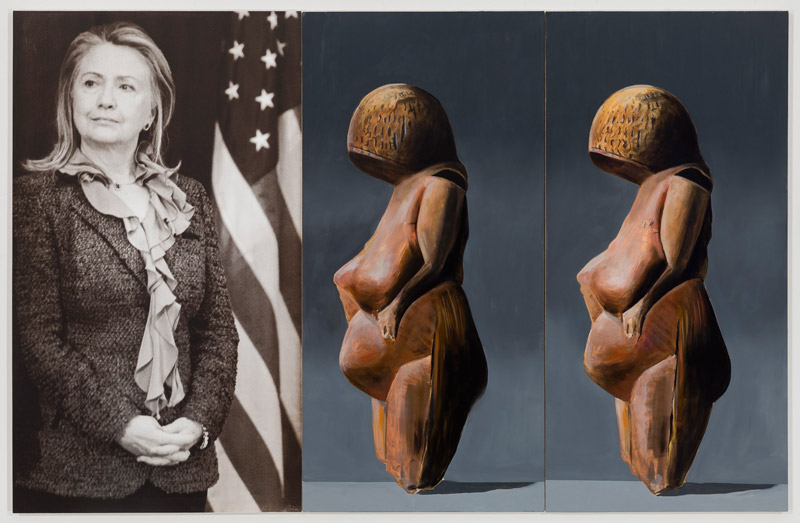
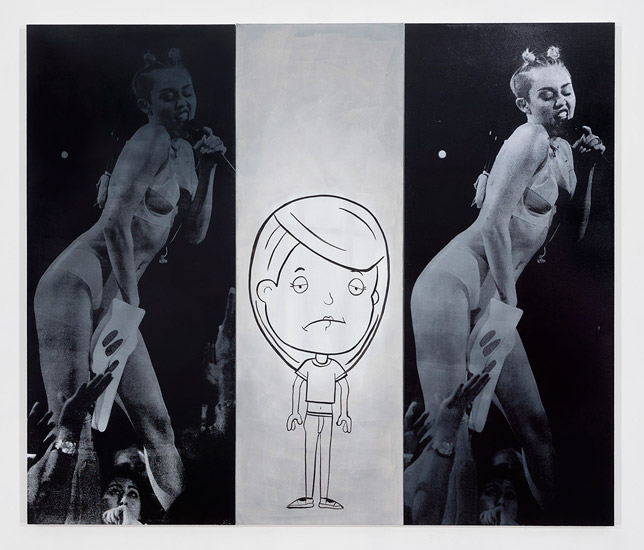
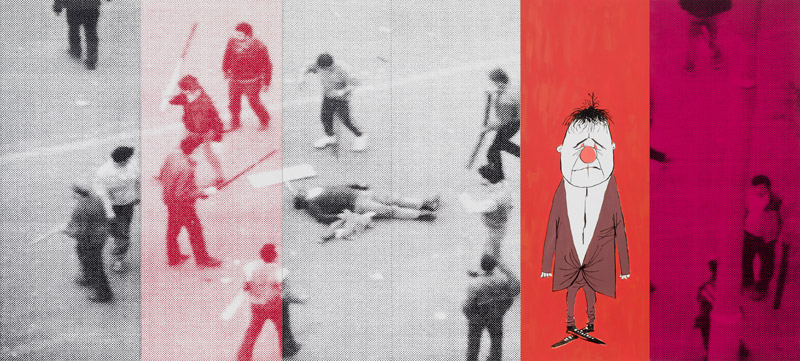
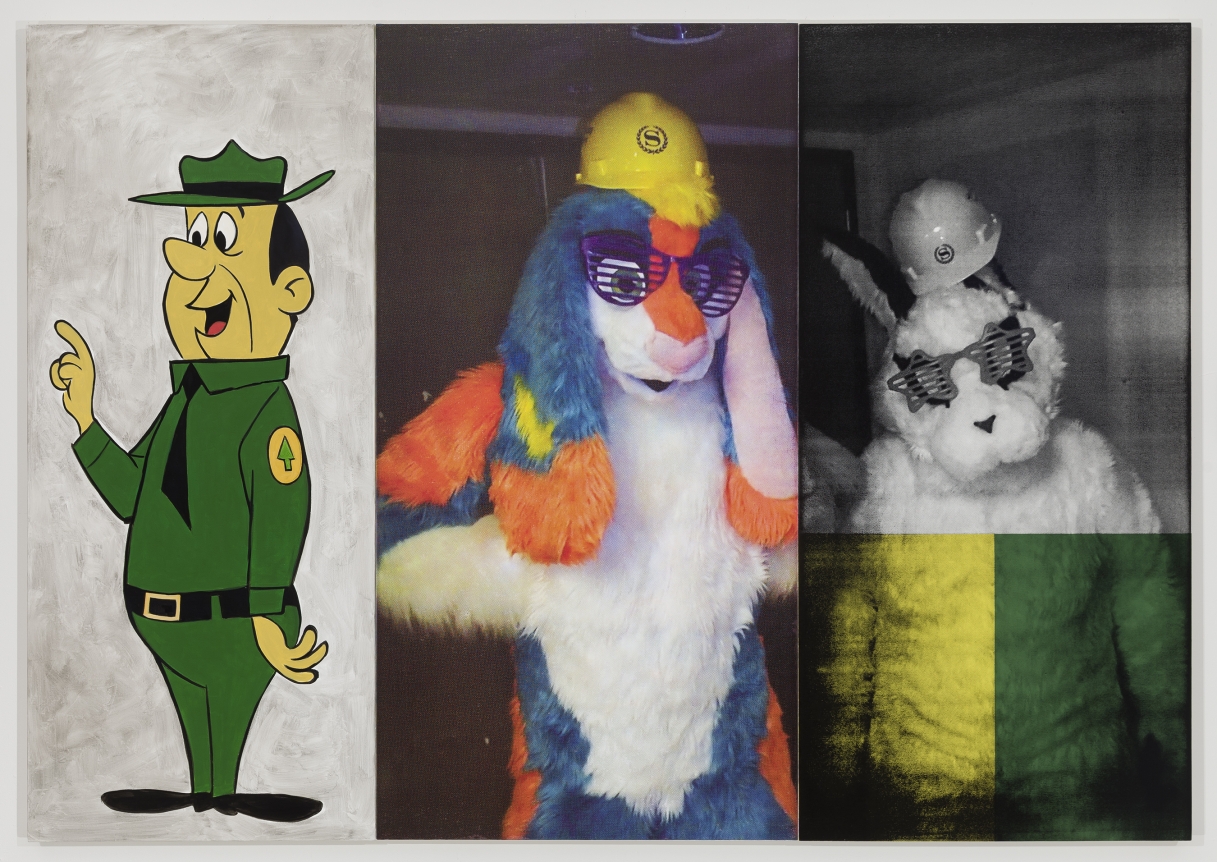
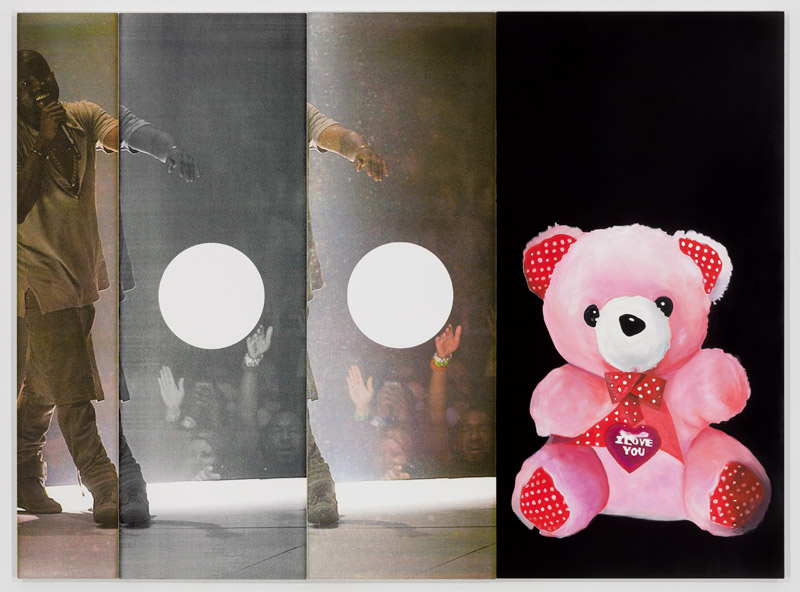
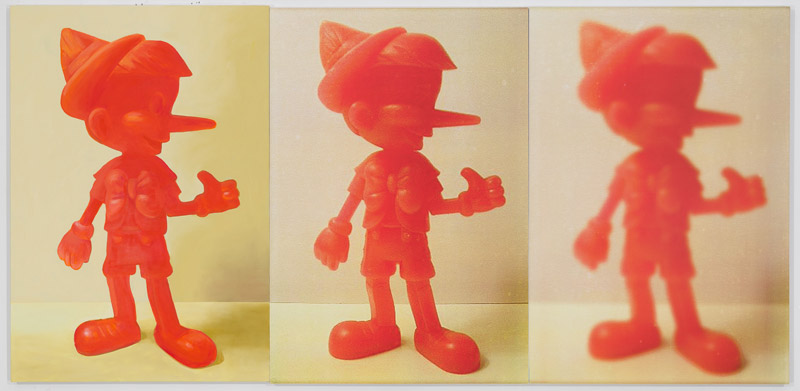
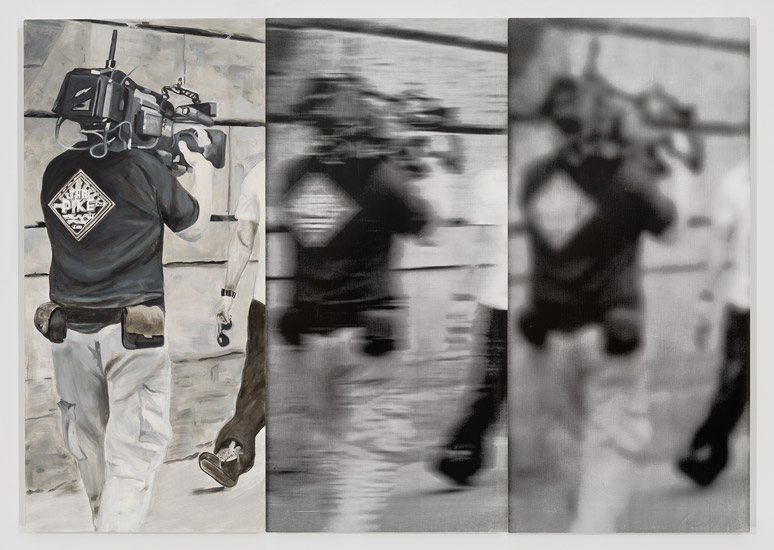
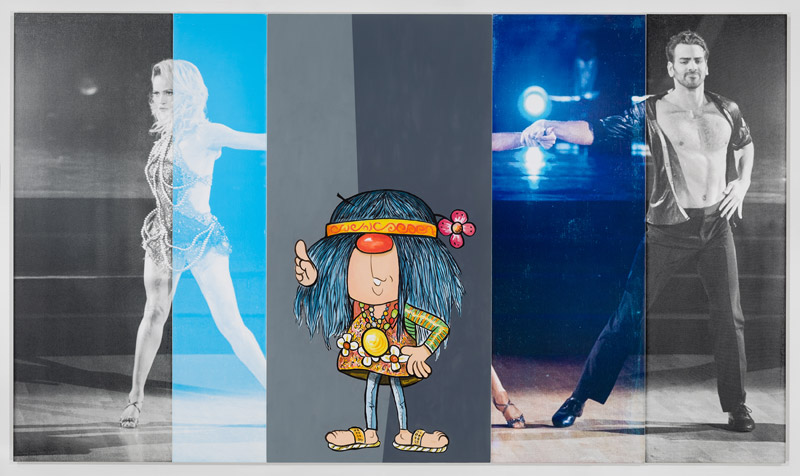
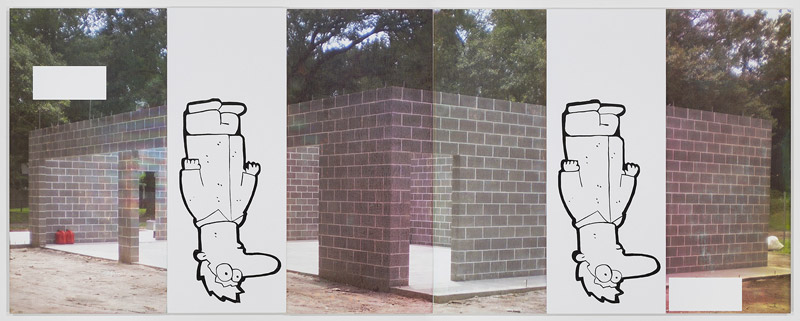
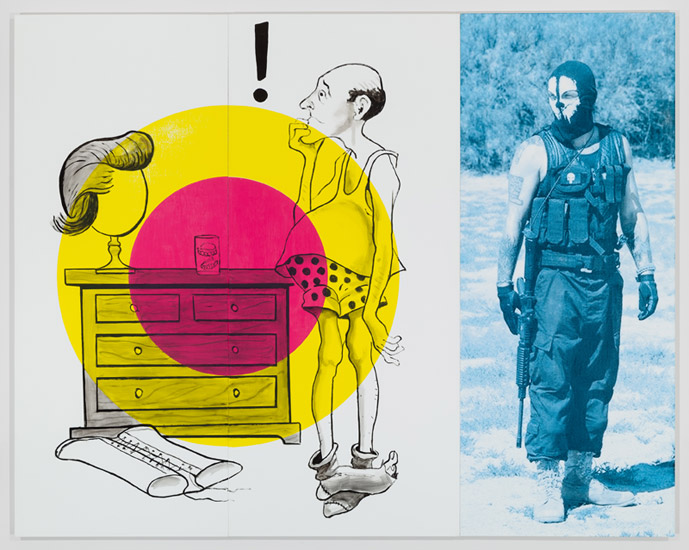
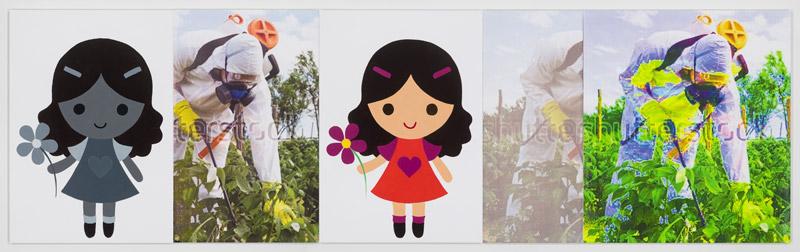
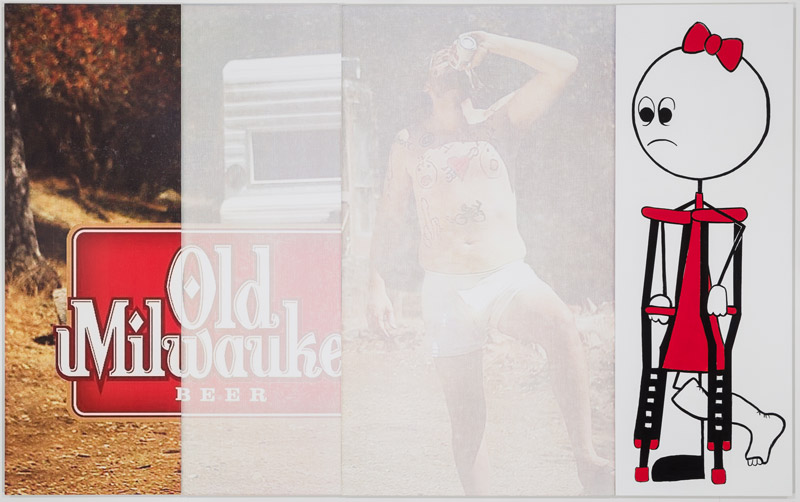
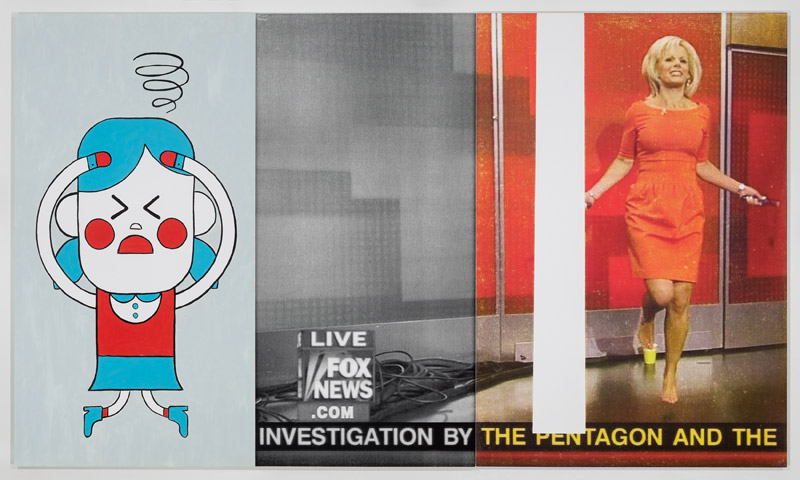
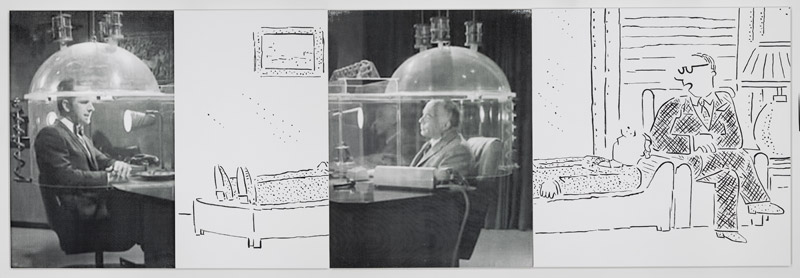
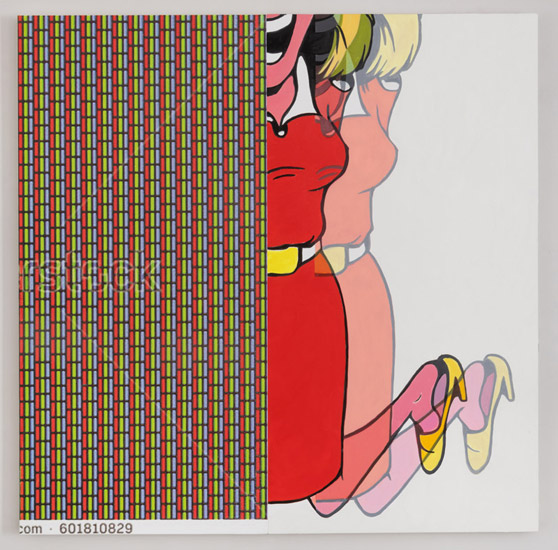
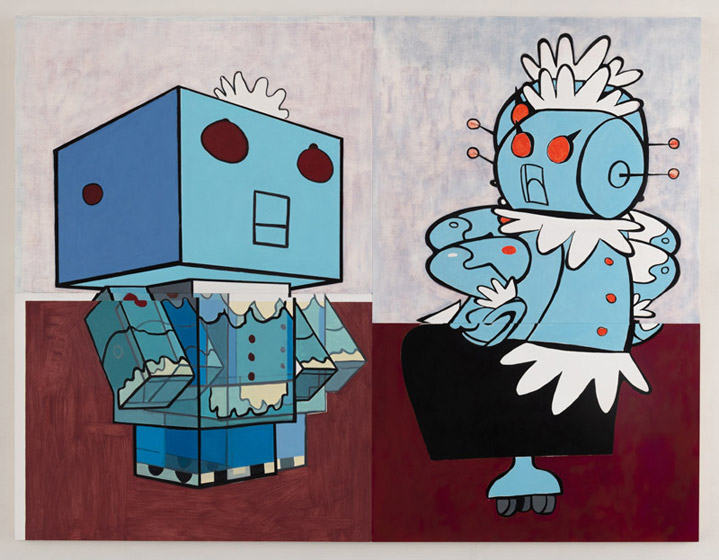
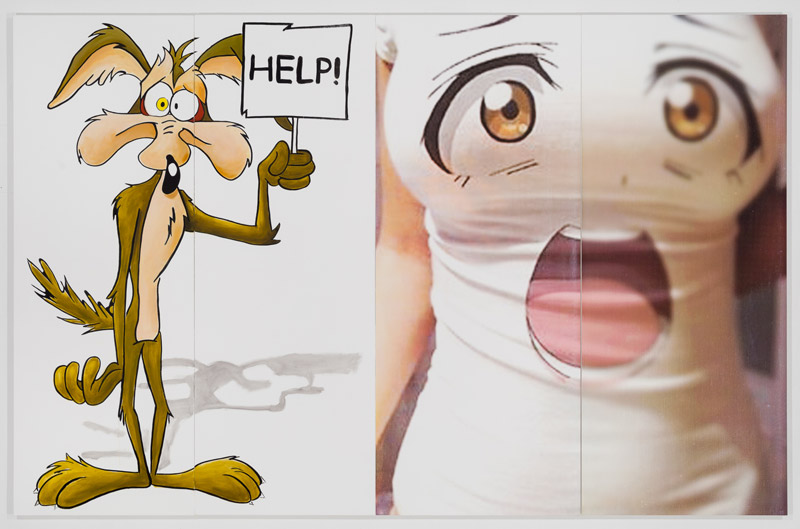
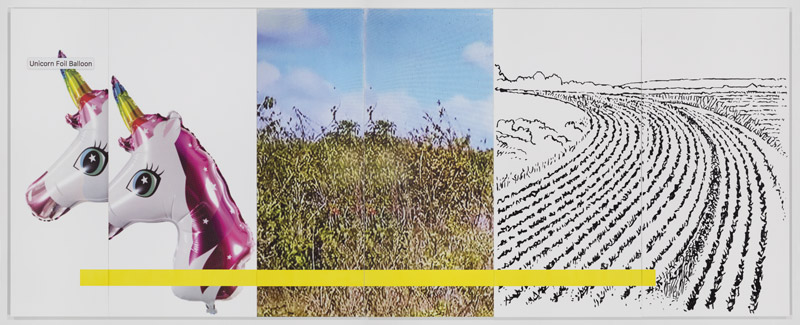
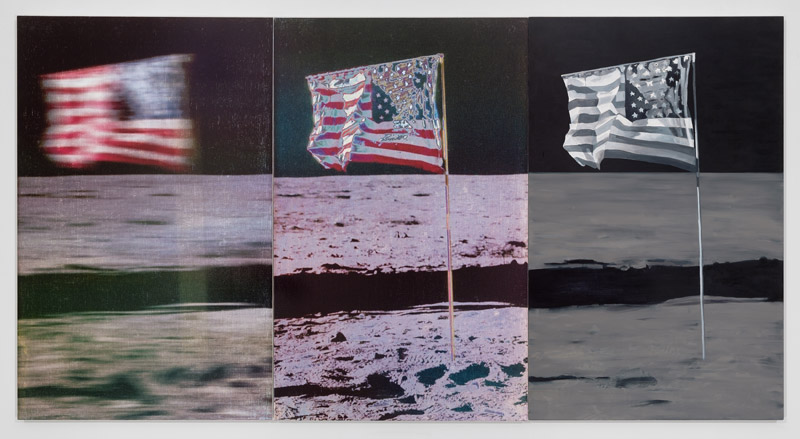
Galerie Dennis Cooper presents … Julia Wachtel


‘In the 1980s, Julia Wachtel sought to examine pre-linguistic thinking and forms of non-narrative communication to great admiration of her peers with whom she often collaborated. Using larger culture contexts, she has continued to politically challenge status quo assumptions of our cultural symbolic order for over three decades. Her paintings and silkscreens weave disparate images from popular culture into a subversive brand of social commentary. Her work is particularly notable for its jarring juxtaposition of low brow illustration and dramatic photojournalism.

‘Wachtel’s paintings emerged in overlapping American generations of artists active in New York and Los Angeles in the 1980s whose contributions have increasingly become admired by new generations of artists and curators. The conversation in the American art world of the 1980s was demarcated by venue associations, schools and generations, informing a new popular culture beyond the formerly quotidian school of thought. This was the decade that yielded the first wave of the newly professionalized gallery system and a commercial market, limited to few artists who were symbols of the various representative trends. Politically independent, directly critical or experimental activity by artists, (often by women) were arguably of even greater historical significance. Wachtel’s concepts continue to be referenced in a number of artist’s work of successive generations. Pertinent now, as we investigate another round of market dominance that is potentially more interconnected but equally blind to the integrity of creative influences, it is interesting to refer to works of the period that are extraordinarily relevant in today’s context.

‘Julia Wachtel’s work remains prescient to political and social media evolutions that began forming in the 1980s and continue now, embracing the conflict that these digital forms often represent. Wachtel has actively pioneered works that address the impact of “society of the spectacle” in the complicit media saturated age of the 1980s. Incorporating political images and discomforting cartoon figures, she pre-figured “reality” and celebrity culture’s impact on representation as a potential form of critical and emotional dissent. Wachtel’s work has often been credited as a notable precursor to similar artistic strategies by Jeff Koons and Richard Prince. Her work early on incorporated collaborations with artists and agitprop groups. A notable early public installation with Haim Steinbach and several projects with Group Material were fundamental to Wachtel’s development in this decade.’ — Elizabeth Dee


____
Further

Julia Wachtel Site
Julia  Wachtel @ Elizabeth Dee Gallery
Julia Wachtel @ Mary Boone Gallery
Alternative Art, New York, 1965-1985
Mapping the Art World
Gallery Nature Morte
JW @ Hallmark Art Collection
Move Bombing In Philly, Eric Mitchell, Julie Wachtel
Tellus #5/#6
Neo-Geo – The Art Story
Absolut Wachtel
TRENDIEST IS, ER, WHATCHAMACALLIT


_____
Extras


James Kalm visits Julia Wachtel’s “Helpp” at MARY BOONE GALLERY


10.02.2018 Julia Wachtel @ Art Center


_________
Group Material & the 1980s


This Will Have Been: Art, Love & Politics in the 1980s


Watch here: JULIE AULT Show & Tell: A Chronicle of Group Material


I, YOU, WE: Art & AIDS


_________
Interview
from BOMB

EMILY MCDERMOTT: I know you originally were only painting, and then adopted screen printing. What initiated that change?

JULIA WACHTEL: I actually started screen printing like a month after Warhol died in 1987. The work was always about pop culture, but I never really thought to make screen prints. It didn’t even occur to me. Warhol was probably the most important influence on me, but as I said, I wasn’t thinking, “That’s a process I want to use.” Then, after he died, I thought, “Oh, this process is available to me.” I don’t think I would’ve ever made silkscreen prints while he was making work, because you would just be in the shadow of him. Once he died, it was like, “This is a tool I can use,” and it seemed very adaptable to what I was doing. The first image I did was actually Janis Joplin, a very pop image.

MCDERMOTT: Growing up, what was the first piece of art you saw that made you realize you could take pop culture imagery and turn it into something else?

WACHTEL: I remember it very clearly. It was Roy Lichtenstein. I was in high school, and I had always made art—as a kid I always liked to paint and draw—but my senior project was an art project. I didn’t live in a [bubble]—I traveled around with my parents, had been to Europe, lived in the suburbs of New York—but I had never been to MoMA. So [I finally went in high school] and saw the Roy Lichtenstein painting Girl with a Beach Ball. It was a revelation. It was like separation at birth, a kindred spirit. I just couldn’t believe the painting. Seeing it…it’s so painterly. That was the first painting I saw that made me think, “I can be an artist.”

MCDERMOTT: Where did you go from there?

WACHTEL: I started making, in my first year of college at Middlebury, Rauschenberg-y assemblage things and then I became aware of minimalism. I was looking at Donald Judd and making minimalist, cube structures that were built and wrapped in black plastic. Then I went to SVA and studied with Joseph Kosuth, Vito Acconci, and Joan Jonas. I became much more conceptual-minded, but it was always connected to a pop vernacular. That’s been consistent from when I was 10 until now. Not much has changed.

MCDERMOTT: I like what you’ve said in interviews before, that you consider your work to act like a speed bump.

WACHTEL: I could make photographs, but I very purposefully make paintings because paintings, ideally, should slow you down. I put benches in the gallery to encourage people to sit down and spend more time. Everyone’s always in a rush and speeding around, but a painting should be an object of contemplation, something you can sit with. You should keep looking at it over time and things will reveal themselves.

When I started making appropriation work and entered into the gallery system, no one was painting appropriations. There was painting going on, like Julian Schnabel and neo-abstract painting and graffiti art, but no one was doing critical theory and appropriation paintings. It was considered a bad thing to do, because painting was associated with the market and institutional authority and other ideas that critically minded people were trying to deconstruct. It was a real act of perversity on my part to decide that painting was going to be the platform I would engage in these ideas.

MCDERMOTT: So did you receive a lot of criticism when you first emerged?

WACHTEL: The work was well received, but it wasn’t really well received in the market. It was a little rough for collectors to want to have these really goofy, pathetic, cartoon characters. They were the kind of images people wanted to disassociate, not associate, themselves with. I intentionally used them because I was trying to undercut the un-critical identification with glamour. You can be Richard Prince and take reproduced serial images and deconstruct the power of those images, but if you do it with the same glossiness, you retain the patina and the aura of the glamour. I was trying to say, “I’m not going that route. I’m not going to reinvest in the thing you guys are trying to criticize.” I think that made it hard for collectors to get behind.

MCDERMOTT: How do you feel personally about popular culture and its proliferation?

WACHTEL: You know, if you’re a fireman, I think you love fire, even if you’re trying to put the fire out. That would be a very good analogy to my relationship with pop culture. I love it, but it’s obviously extremely powerful, in a lot of negative ways, in terms of identity and self, particularly for women. Not exclusively women, but young girls, with the internet—YouTube and videos about image and concerns, there’s pro-bulimia websites. It’s not just pop culture now; it’s social media. A lot of it is user-generated, but it’s reproducing like a virus. The term viral is apt. But I love pop culture, too. I love the Gangnam video.

MCDERMOTT: With the increased number and relative importance of fairs, what’s it like knowing that you have to create work, rather than making it from your own will?

WACHTEL: It’s not good. I mean, thank god it’s an opportunity to sell my work, so I can’t complain, but it’s like, I hate having to buy a dress because I’m going to a wedding. Do I like buying dresses? Yes, but under the right circumstances.

MCDERMOTT: You also worked at Vanity Fair as the production manager for the U.K. edition and on the U.S. side of things as well. How did that impact your personal work or vice versa?

WACHTEL: The funny thing about working at Vanity Fair is that I have some kind of facial dyslexia. I can’t distinguish one white actress from another. [laughs] Kate Hudson could be on the cover and I would have no idea who it was. It’s hilarious that I’m working with celebrities, I’m working with images, and I can’t even tell one from the other. But I have to say, I miss the camaraderie of an office environment. It’s nice to work with other people in a collaborative way.


____
Video

‘At the beginning of this quarantine with Covid19 I was approached to participate in an online website project, “Passing Time”, organized by Alex Perweiler and Neville Wakefield, asking artists to submit short videos. Thinking to my “research” videos I thought to expand upon this, this time taking it another step further and actually editing footage and including sound. I started editing in iMovie but quickly realized Premier, part of the Adobe Suite, was a more powerful program. I guess I fell into the rabbit hole of learning how to edit, and capturing footage from live t.v. and the internet.’ (more)


___
Static


what, what, what, 1988


Landscape No. 3 (history), 1989


The History of Animals, 1997


Platform, 1997


Thrill, 2011


Circles and Door, 2014


The Execution of Abstraction, 2015


Position, 2015


Proof, 2015


Stripe, 2014


Time and Again, 2015


The Deconstruction of the Spectacle, 2015


Spirit, 2015


Girl, 2014


Witness, 2014


Endangered Species, 2014


Glare, 2015


UNTITLED, 2016


Soul No. 1 (Pinochio), 2016


Soul No. 3 (Subject), 2016


Picnic, 2017


Making History, 2017


Ascending and Descending, 2017


Target, 2017


Mapping, 2017


The Disappearance of the Sign, 2017


Investigation, 2017


Communication, 2017


Depth of Field, 2018


Iteration, 2018


Helpp, 2018


Modern Landscape, 2019


*

p.s. Hey. ** JoeM, Eek. Moving right along … Being entrusted to read someone’s novel while it’s in process is a pretty big compliment, I think. I’ve never done that, but George is tougher skinned than I am. Well, in certain ways. Agree about ‘HS’. ** David Ehrenstein, Thanks. I was honestly surprised there was enough online to make it. I only very vaguely knew his name until a few months ago. So his work or rather the fact that there was such a thing as his work was Greek to me. Ah, I remember Arthur Js, of course. I was more of a Gold Cup (Hlwd Blvd @ Las Palmas) kinda kid. I’m pretty sure the Gold Cup predated your LA move. ** _Black_Acrylic, Hi, Ben. Glad the DCA has a reopening plan. I hope it sticks. ** Jeff J, Hi. Well, I’m sure happy you liked it since were definitely its impetus. I think ‘Do Everything in the Dark’ is easily one of Gary’s best novels. Okay, interesting. I’m happy to have your ‘ZC’ report/review because I feel like I know how to approach it when I inevitably see it. Bonello is such an uneven director. It’s curious. Huh, I don’t think I’ve seen any of Chris Petit and Iain Sinclair’s films. I’ll rectify that as best I can. And I’ll find ‘London Orbital’ as soon as today. It sounds amazing. Thanks for the share, man. If you see this before you split for Georgia, break every leg or I guess every fingertip, and if the internet comes calling, check in. ** h (now j), Hi. Thanks. I’m actually quite new to Schmid’s work, and I haven’t seen very much yet, but I think so far ‘Violanta’ is my favorite. It’s nice that ‘Memory’ is having a such moment. I’ve been reading/seeing a lot about it. Pretty seminal work. I love Ray Johnson, so the new book is great news. Uh, yes, I believe I wrote about a few artist books back when I was a regular at Artforum. I hope your day was as nice as predicted. It did sound lovely. We’re blasted with high heat here. I’m going to try to escape into some cold museum, I think. ** Steve Erickson, Yes, you seem fully yourself here again. Excellent. I Zoom with LA friends pretty regularly, and everyone just seems emotionally and psychologically decimated, even the normally brightest and bushiest tailed of them. Jeff Jackson got ‘Beeswax’ somewhere, so I guess it’s possible. Yes, I too am looking forward to those two releases, of course. ** cal, Cool, glad it fed you. Listening to? Hm, … still some of the things in the gig post I did here last week, the new KTL, talking here with Jeff J about XTC got me listening to their early albums again, the two new Aki Onda albums, … Blanking. I like the Arrival by Fire! I’ll hunt down the Mamaleek. And the others. Contemporary folk bands … not off the top of my head, but it’s a billion degrees here, so my head is sludgy. I do really like that GIF post! I’m going to dwell within it once I exit here. Awesome! Everyone, cal, who works wonders with GIFs in combination, has a new piece/stack up on his joint/site The Uvular Trill, and I highly recommend that you indulge in it post haste. Here. Very impressive work, man. Kudos! Thanks! And thanks especially for those cold winds. And from every citizen of Paris, it is safe to say. ** Misanthrope, Yeah, my hosting site (GoDaddy) has been having timeout/firewall issues every fucking day lately, and I’ve just about had it with them. Looking into switching homes. I’m glad Rigby is up and almost running. Yes, Amy always was the first to read my novels, but, even there, never before I thought they were completely finished. Showing anyone things before I feel like they’re set completes fucks my brain up. 15 years, whoa, I think you’re right. Nuts. This place in its present and past incarnations has been quite the boon on the payback front, I must say. I’m down for that post-COVID party assuming I’m still sentient at that infinite seeming point. It’s almost your birthday! Cakes galore starting … now! ** Okay. Today my little galerie houses a kind of informal survey show by the iconic 80s and beyond artist Julia Wachtel. Fun, etc. should ensue should you choose to wander about. So do. See you tomorrow.
« Older posts Newer posts »

© 2026 DC's

Theme by Anders Norén — Up ↑