—-
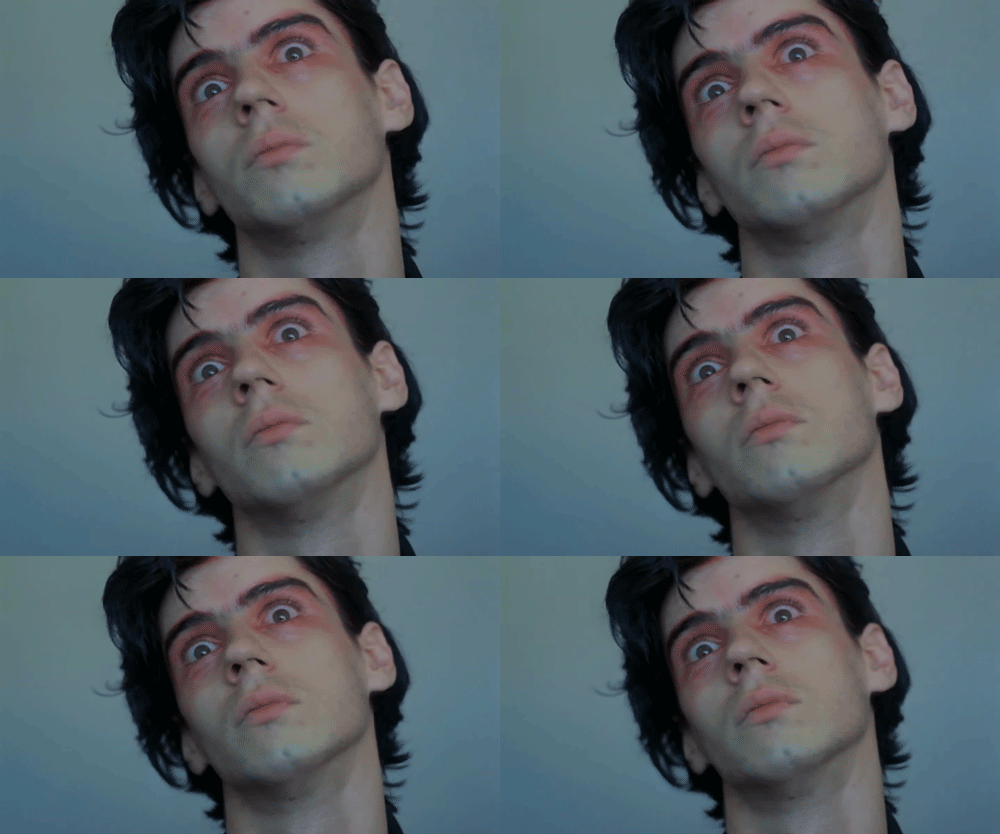
‘Ivan Zulueta was born Juan Ricardo Miguel due to the Russian origin of that name, which was not allowed by anti-communist Franco dictatorship, in San Sebastián, Basque Country, Spain. Zulueta moved to Madrid in 1960 and enrolled in decoration courses. At the end of 1963, he was offered the opportunity of traveling in a merchant vessel to New York. There, he discovered pop art, Nouvelle Vague, the New American Cinema and artists such as Jonas Mekas and John Cassavetes. Coming back to Madrid in 1964, Zulueta enrolled in the Spanish Cinema School. He directed a couple of shorts in 35 mm. The first one, called Agata, based on a short story by Edgar Allan Poe. And the second one, called Ida y Vuelta (Round Trip), based on a short story by William Jenkins. However, he did not get his degree and the School was closed by the dictatorship. Zulueta would not be allowed to sign his works until Franco died because of this.
‘In 1968, Jose Luis Borau, his teacher in the Film School, produced a TV show called Ultimo Grito (Latest Trends). The anchormen were Jose Maria Inigo and Judy Stephen. Ivan Zulueta directed the show. The production means and budget were low and therefor among the methodologies employed for this production was to have friends take on the different positions and creative capcities required for its realization. In 1969, Un, Dos, Tres, Al Escondite Inglés (Hide and Seek) was produced. It was Jose Luis Borau’s first work as a producer of a full-length movie. The production was carried the same way as in the TV show Ultimo Grito. The film was a musical which made fun of Eurovision contest with a Richard Lester style. It was first released in Cannes Film Festival.
‘Jose Luis Borau provided Zulueta with unused film from his newly-created production company. Zulueta used it for experimenting mainly with tempo and editing. He also used other underground formats like 16mm or 8mm. Most of the time, the experimentation was related to re-fiming preexisting material in other formats and rhythms. At same time, Zulueta started a prolific career as poster designer. Ivan met Pedro Almodóvar and helped him in his first underground short movies. Zulueta also worked as assistant director for other directors such as Jaime Chavarri or Antonio Drove. Ivan Zulueta proposed to hit other non-underground segments of the public by directing a short movie and releasing it. The result: Leo Es Pardo (Leo is Dark); a short movie recorded with a 16mm camera. It was released in the Berlin Film Festival.
‘A Spanish architect interested in movies decided to help Zulueta financially. The planning was a 15-day filming. However, it was shot in real interiors owned by Zulueta and other friends, like Jaime Chavarri; and most of collaborators used drugs like heroin, that drove the planning and the budget to be highly increased. Pedro Almodóvar dubbed one of the female characters, but he was not credited. The relationship between the director and the producer was poorly damaged. Moreover, the film had a lot of problems to be commercially released due to its experimental and underground style; even though the dictatorship had fallen through. It was finally released in 1980. Ivan Zulueta was labeled as a problematic auteur and Arrebato became a cult movie.
‘Finally, his heroin addiction forced him to retire temporarily. Living in San Sebastián, he declined offers for new projects in filming industry. On the other hand, Zulueta continued with his career as poster designer. It is in these years when he produced his best known works for Pedro Almodovar, among others. He also started experimenting with photography. At the end of the 80s and the beginning of the 90s, Zulueta directed a couple of episodes for two different TV serials. The first one, called Parpados (“Eyelids”), was a love story between a couple of twins. The second one, called Ritesti, was a horror story. Both were traced by Zulueta’s style, visual obsessions, circular screenplay, format mixing (film and video) and a fragmented editing which reminded some of David Lynch movies.
‘By mid-90s, Zulueta came back to the silence. He continued his work designing posters. However, at the beginning of the 2000s, some personalities in the Spanish film industry rediscovered Zulueta’s early work: different expositions (paintings, posters and photography) were organized in different Spanish cities such as Madrid or Barcelona; his films were broadcast on TV and cinema again; his short movies were shown on film festivals and Arrebato was first launched on DVD. Un, Dos, Tres, al Escondite Inglés was released on VHS and some of his experimental shorts were launched on a limited DVD release. His death was reported on 30 December 2009.’ — collaged
____
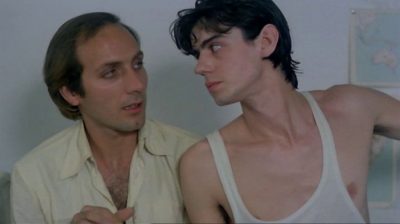
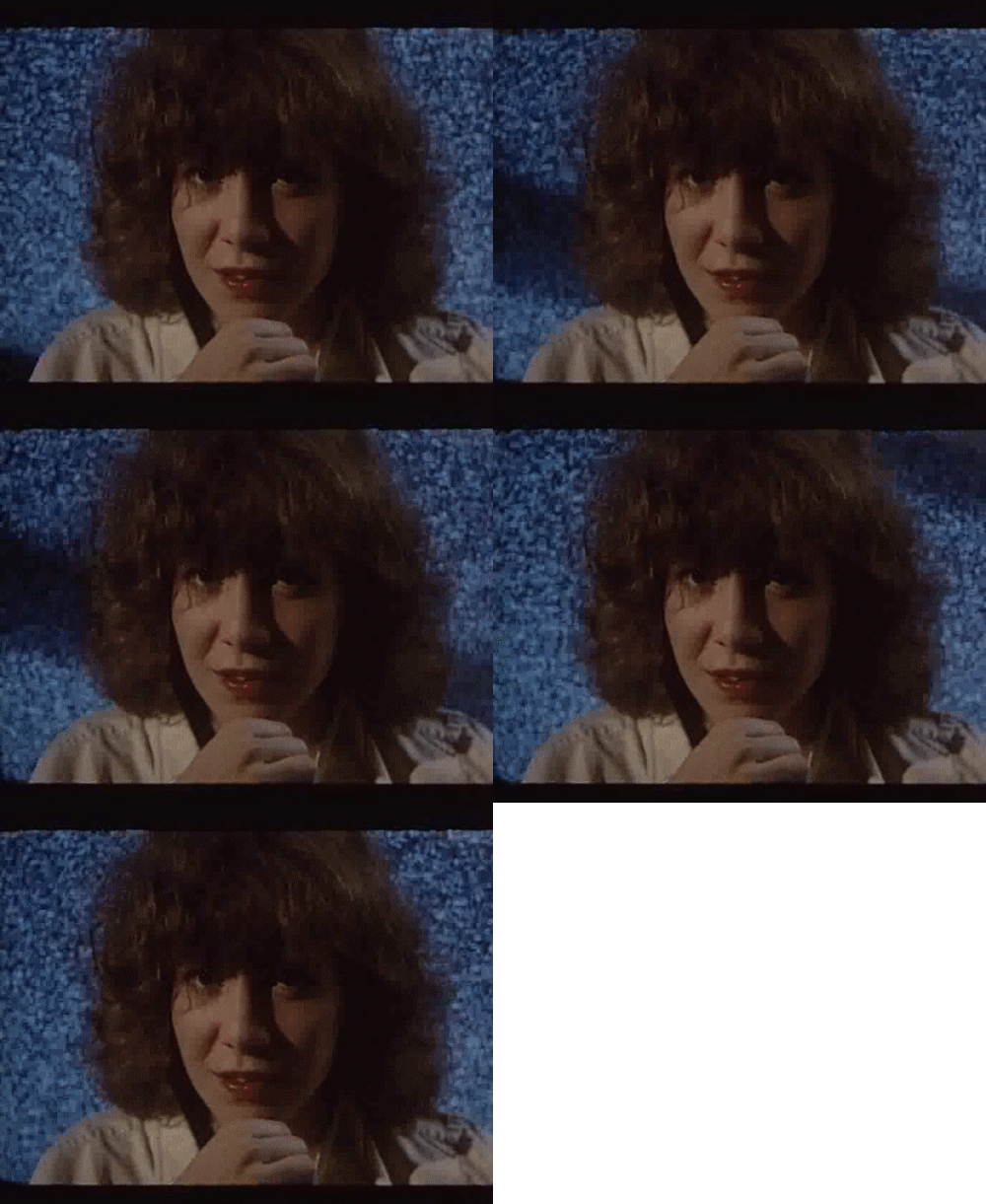
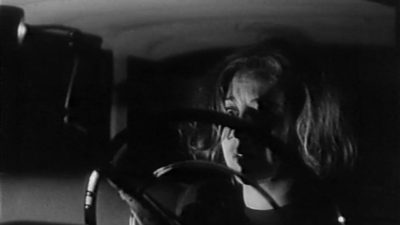
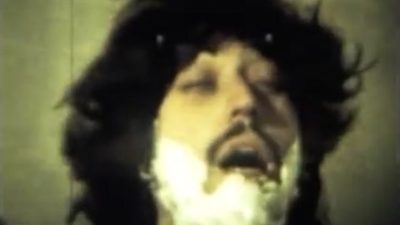
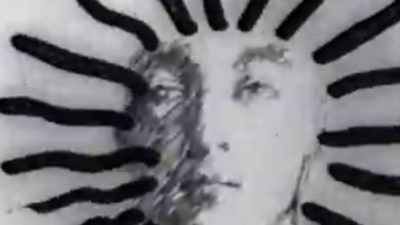
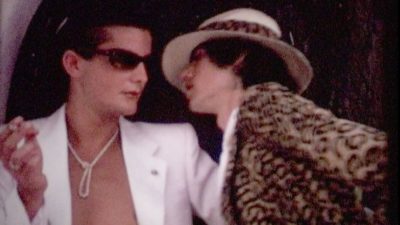
Stills
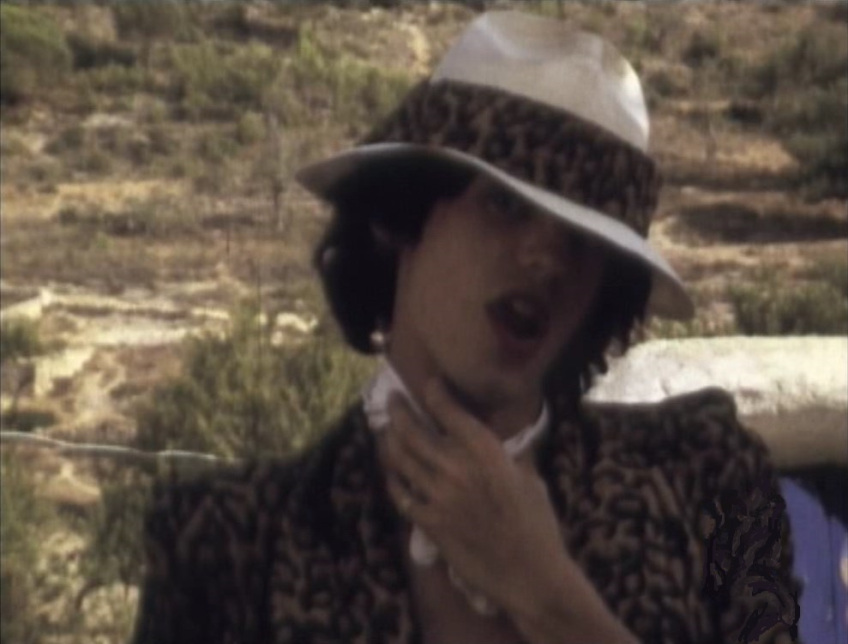
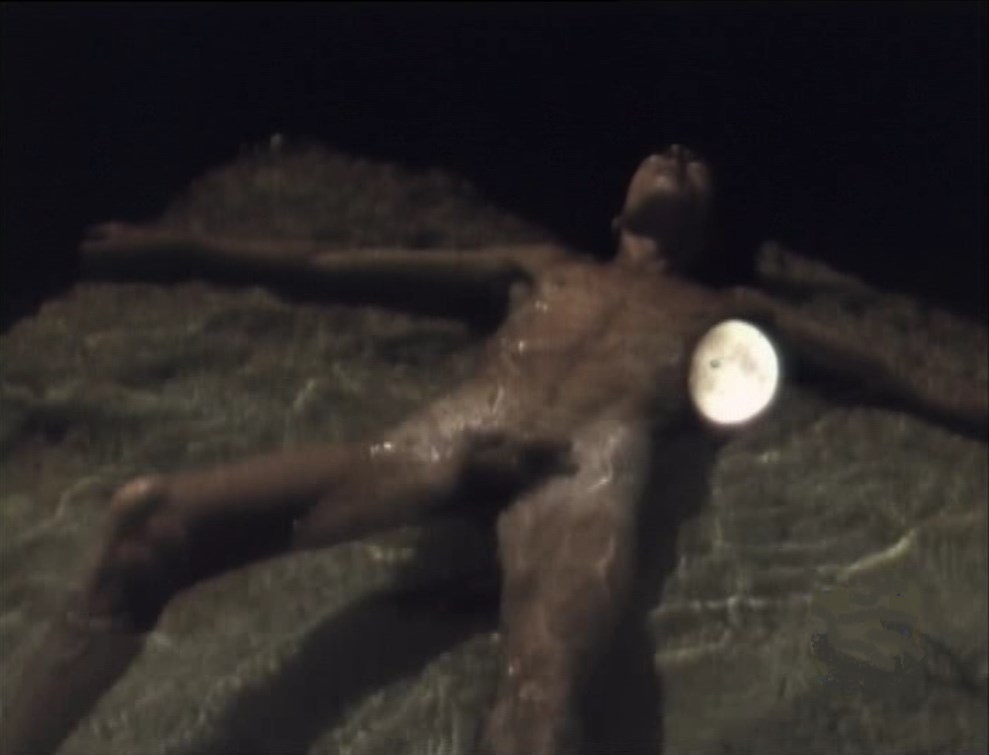
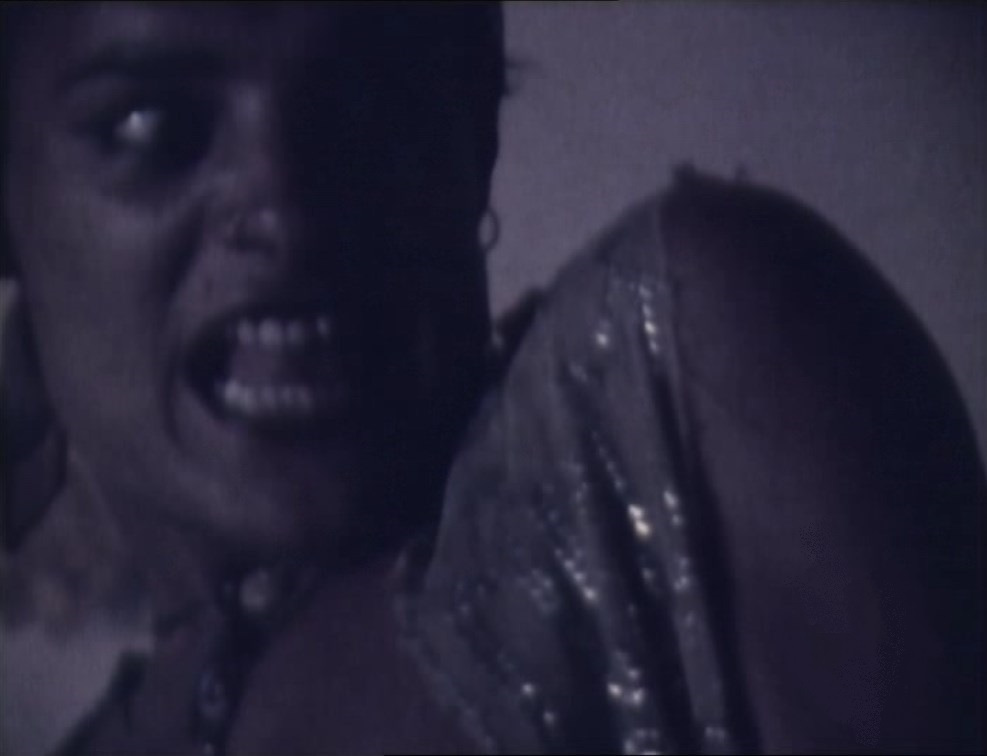
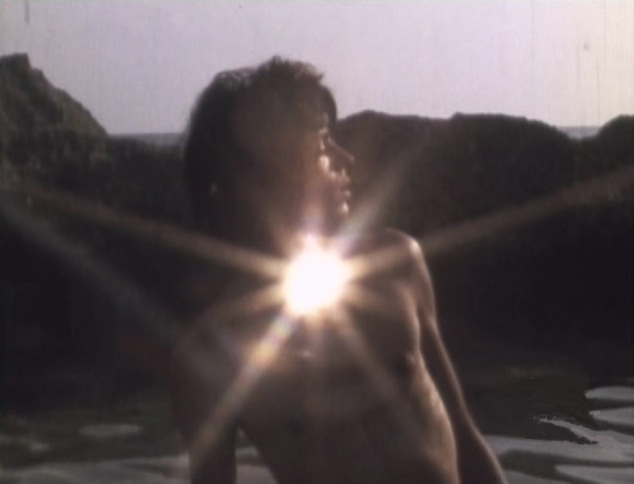
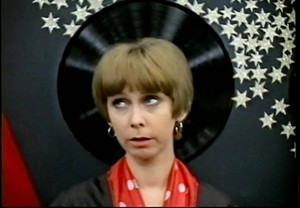
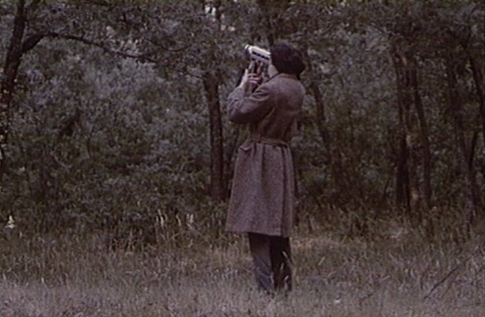
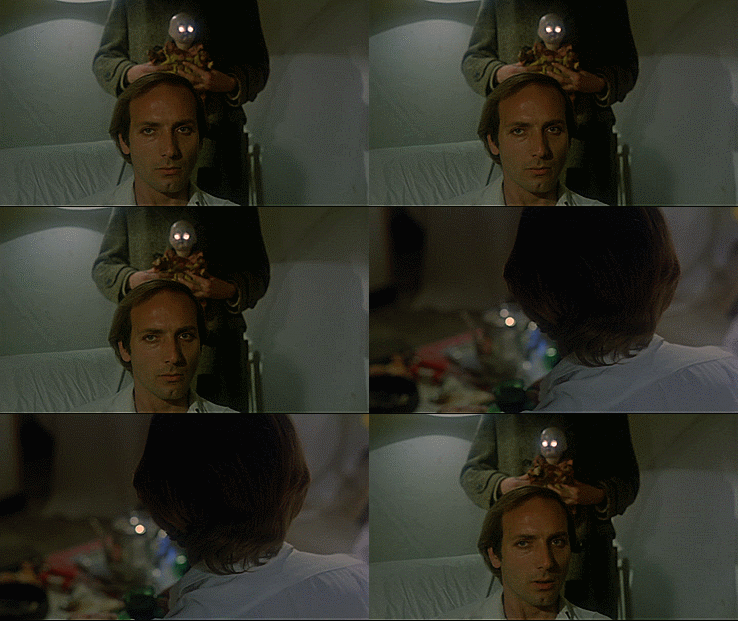
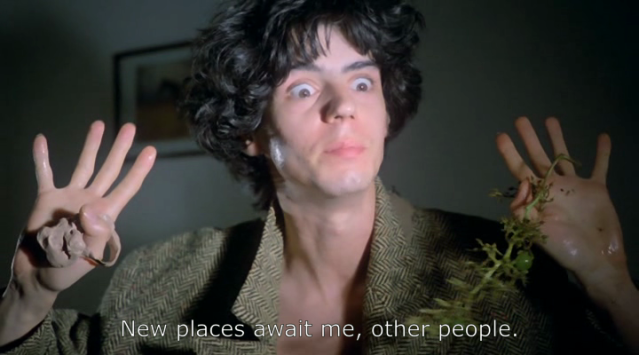
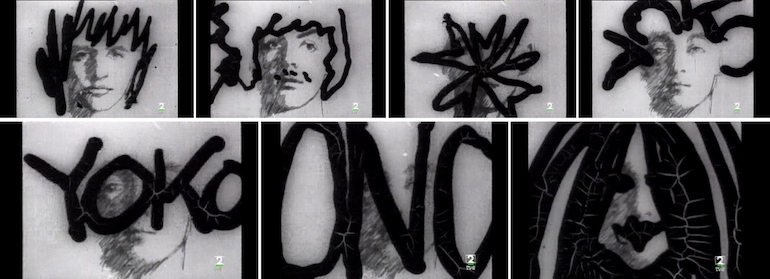
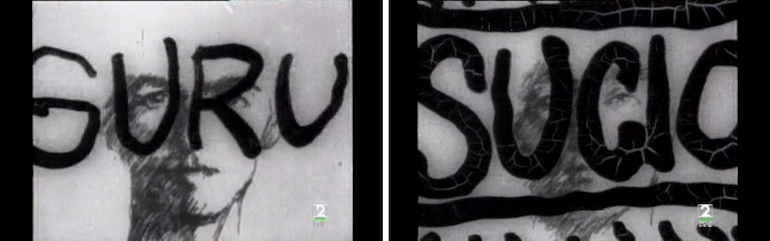
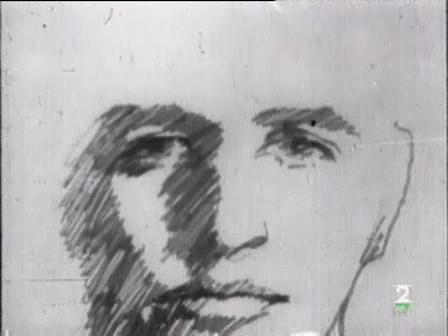
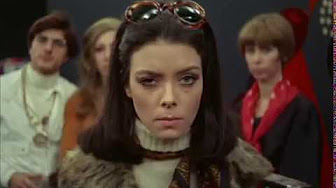

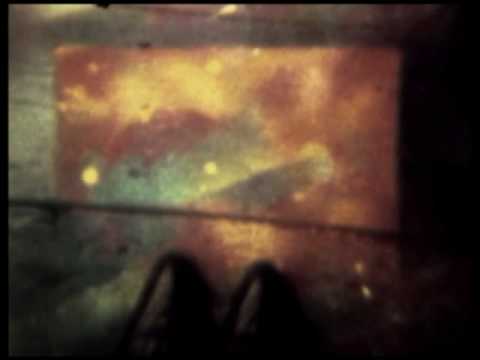
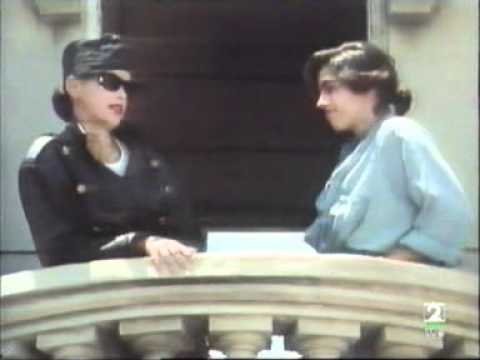
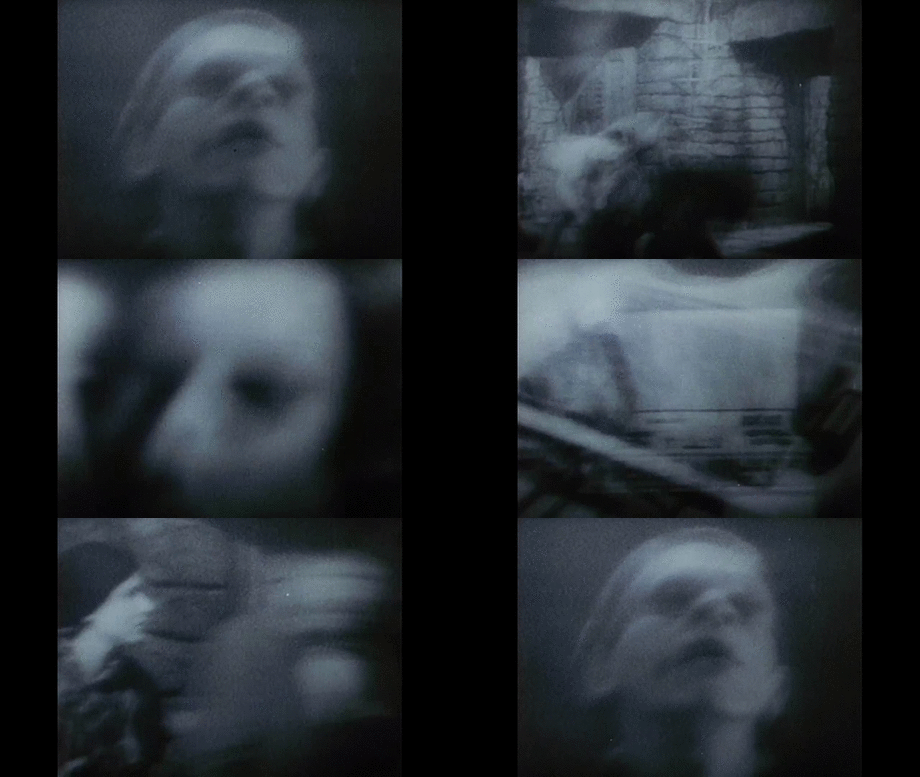
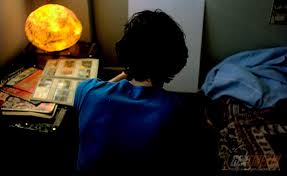
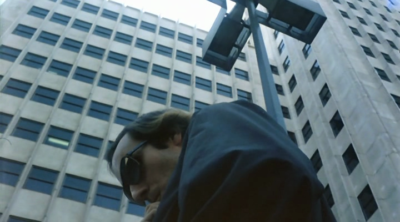
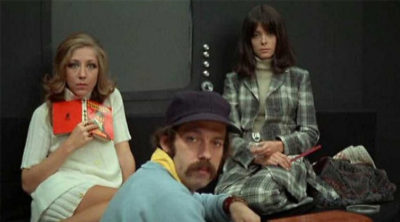
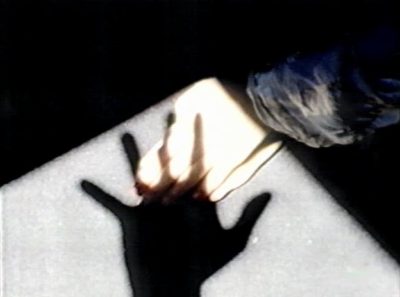
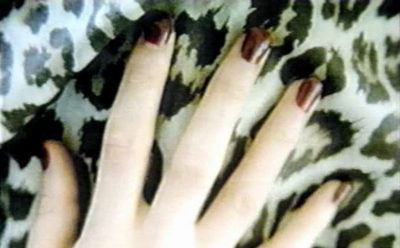
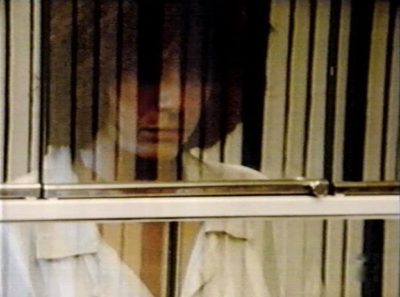
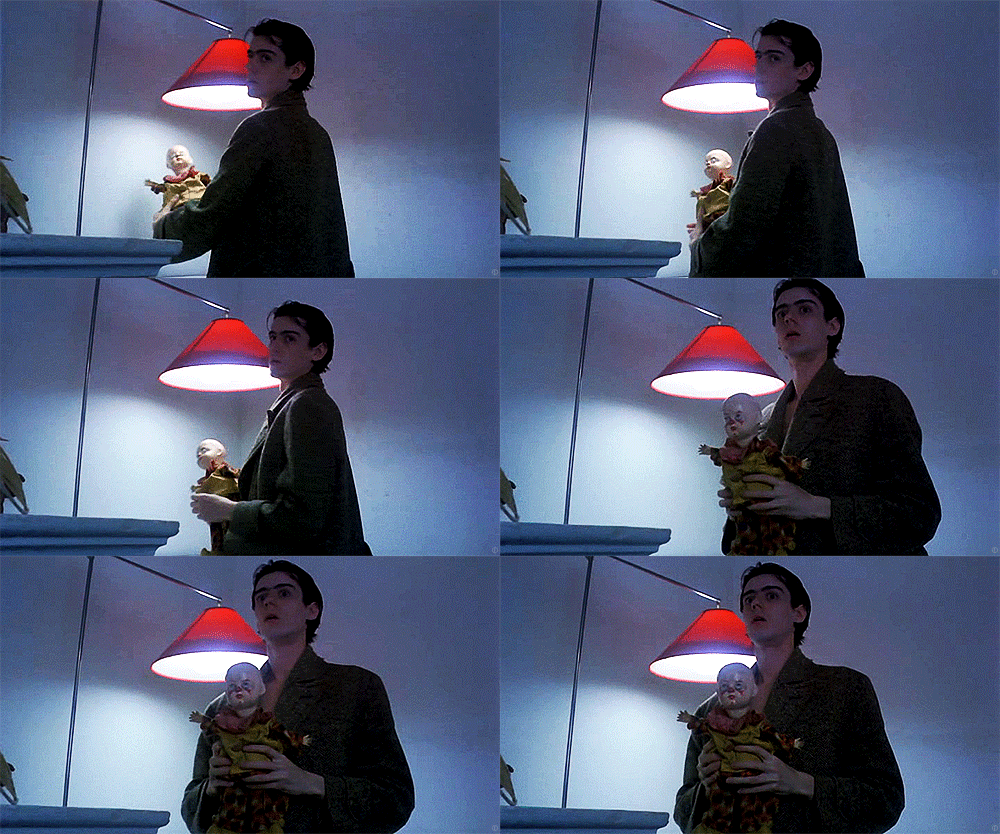
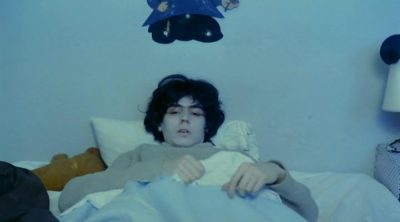
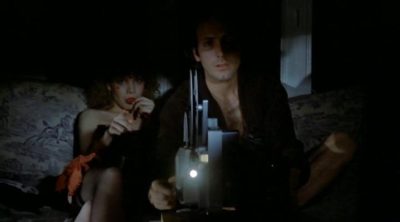
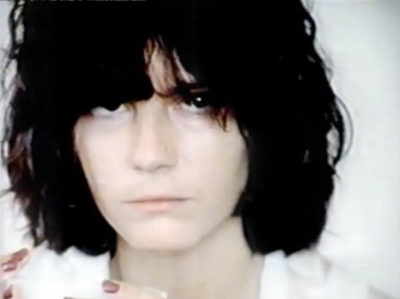
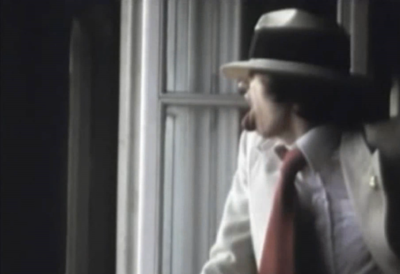
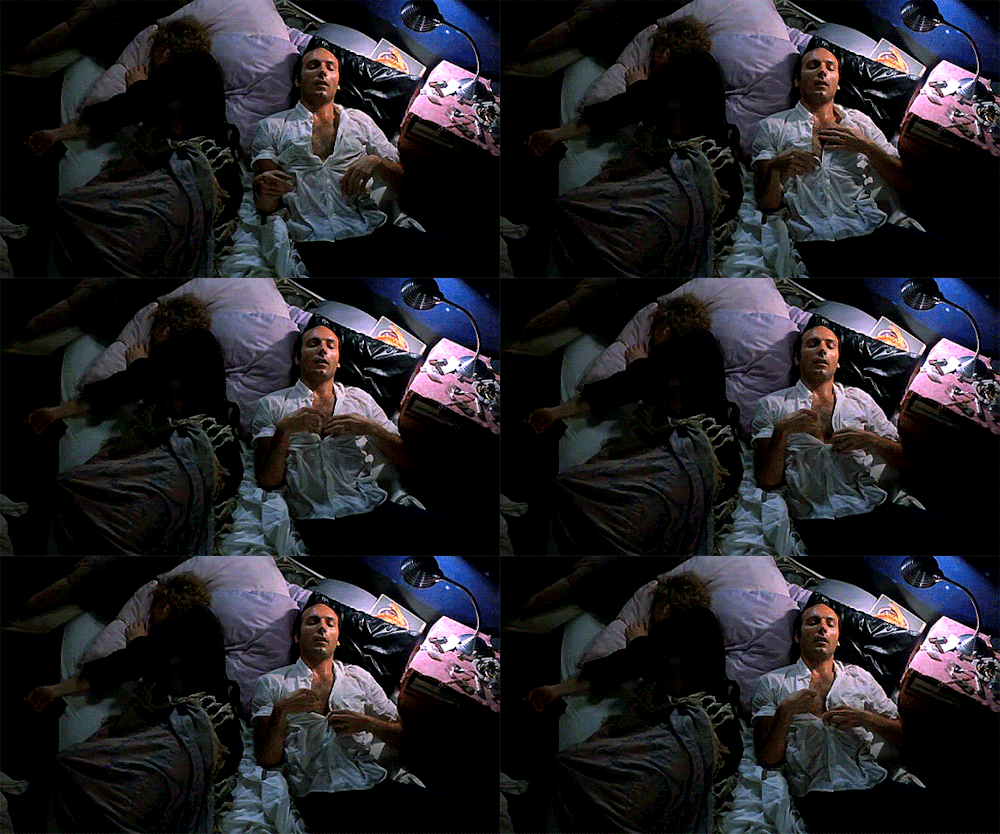
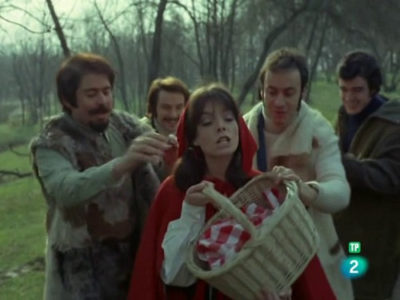
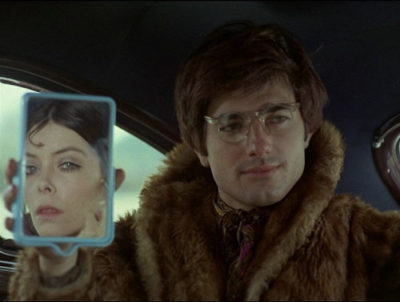
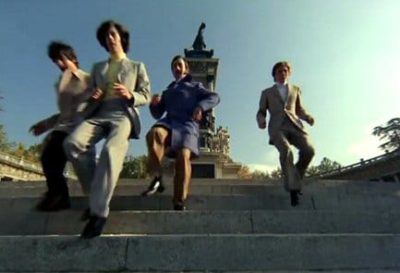
______
Further
Ivan Zulueta Website
Iván Zulueta’s Cinephilia of Ecstasy and Experiment
Mike Kitchell on Zulueta’s ‘Arrebato’
Mike Kitchell on ‘Leo Es Pardo’
Ivan Zulueta @ IMDb
‘The Act of Seeing with One’s Own Eyes: A Look at Ivan Zulueta’s ‘Lost’ Cult Film
Ivan Zulueta @ mubi
‘Arrebato. Ivan Zulueta’s cinematic rhythm
Frankenstein: Boris Karloff and Iván Zulueta
From Ecstasy To Rapture: Ivan Zulueta
Ivan Zulueta @ pobladores.com
The televisual practices of Iván Zulueta
How to Get High: Ivan Zulueta’s Arrebato
The Dark Heart of the Movida: Vampire Fantasies in Iván Zulueta’s “Arrebato”
Punctures and Molecular Politics: Topographies of the Body in Iván Zulueta’s Arrebato
The creative constants and authorship of Ivan Zulueta
Ivan Zulueta’s Spanish posters for Pedro Almodóvar
____
Extras
IVAN ZULUETA – En memoria de…
IVAN Z (fragmento inedito)
InFocusExtra Ivan Zulueta ABNewsTV
Screen Tests (1978)
_________________________
Pedro Almodovar on Ivan Zulueta
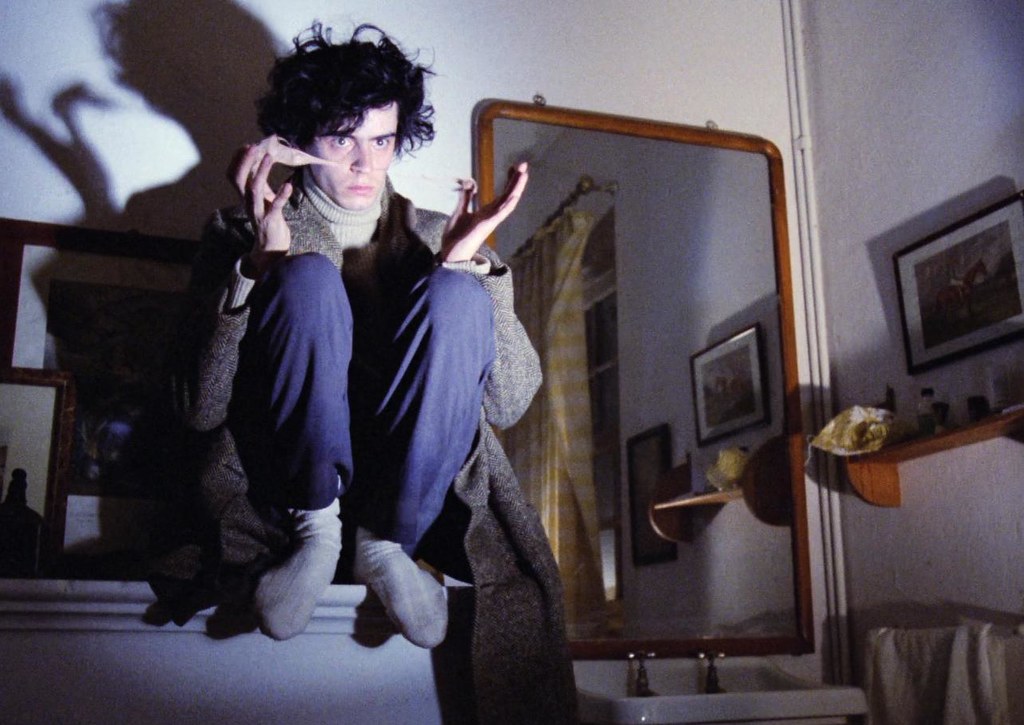
How to begin? I met Iván in Madrid when I had been living there for almost ten years. He was already known and admired for his work in television – that mythical series Último grito (The Latest Craze) – as well as Un dos tres al escondite inglés (One Two Three What’s The Time Mr Wolf) – a feature film credited to its producer José Luis Borau because Iván did not have the director’s union card – and one of the few examples of pop cinema made in our country at the end of the 1960s that was not shabby, that could stand comparison with any product of English psychedelia in terms of quality, albeit outdoing their irony, of course. Fans of Arrebato may not know this, but Iván Zulueta was a person with a great sense of humour.
We hit if off immediately; we were bound together by psychedelia, the American undergrounds, the earliest English pop, some friends in common, some enemies in common too, the new wave music being made in Madrid, Glam, comics, Cecilia Roth, an absolute hunger for cinema, and the fact that we were both shooting small films in Super 8. He was much better than me. I was a beginner with the camera when Iván was already an absolute virtuoso in his use of this instrument.
Arrebato (1979), his second work, a filmic testament right from the beginning of the shoot, wouldn’t be anything without the thousands of metres that Iván filmed in Super 8 throughout the previous years. Not for nothing was it the Super 8 camera (like the 16mm camera of Michael Powell’s Peeping Tom, although with a different meaning) that enraptures the prostrate and expectant bodies of the protagonists Will More and Eusebio Poncela, that ushers them to a better, or non-world. The only information the film gives us is that this non-world is a sort of void of reddish colour.
It is difficult to speak about Iván Zulueta and death.
It is very difficult to speak about his latter years, those immediately after Arrebato, when he was retired in San Sebastián, like Norma Desmond, but with all of his senses intact, and without having relinquished one iota of his exquisite sensitivity. Spanish cinema has just lost one of its most original filmmakers, and together with Erice, the one that managed to give his images the greatest aesthetic meaning. He never filmed a single banal image. The element in which he felt most comfortable was abstraction. The pure image, brimful of meanings but freed from the burden of fiction, always cushioned on a rich variety of soundscapes. David Lynch, but less shadowy and more pop. Psychedelia was his school, and he made genuine masterpieces in this style.
His work as a graphic designer and draftsman was inextricably linked to his cinematographic work. From the end of the 70s to the mid 80s he designed many wonderful film posters. I remember how impressed I was with the one for Furtivos (Poachers, 1975) and how much fun we had whilst he was designing the one for Entre Tinieblas (Dark Habits, 1983) or Laberinto de pasiones (Labyrinth of Passions, 1982). Even if he seems an ephemeral figure (I hope he doesn’t), Iván Zulueta bequeaths an incredibly rich and essential legacy to the history of Spanish cinema, in minor formats but possessed of extraordinary greatness. Arrebato reverberates with the same force as it did 30 years ago, the year it opened.
Spanish cinema loses a unique individual, and José Luis Borau his best disciple. I remember those days in his flat in Plaza de España in Madrid so clearly. Everything was charged with life, and we used to laugh so much!
______________
11 of Ivan Zulueta’s 15 films
_________
Ida y vuelta (1968)
‘Zulueta’s second film, Ida y Vuelta (Round Trip), is based on a short story by William Jenkins.’ — IMDb
the entirety
__________
Un, dos, tres… al escondite inglés (1970)
‘A group of Spanish fans of the best British pop music from the late sixties owned an odd record store, which only sold what they like. They decide to boycott the song “Lie, lie” that will represent Spain in a contest called ‘Mundocanal’ (parody of the music festivals of the time, as Eurovision). In order to accomplish the aforesaid, they will put in practice several stratagems to avoid that the selected bands would participate in the festival, whose performances will be happening throughout the film.’ — jsanchez
Excerpt
the entirety
__________
Kinkón (1971)
‘Zulueta began to draw the album covers and film posters for which he would become famous in the movida madrileña—the Madrid underground scene of the years of the transition to democracy—and beyond. He was also making experimental films, mostly in Super 8. Freed from audience and producer demands, he began to explore the sense-making and sense-destroying possibilities of montage and the immersive and perception-altering power of the manipulation of image velocity in a trio of short found-footage variations. The first of these is Kinkón (1971), a silent adaptation of Merian C. Cooper and Ernest B. Schoedsack’s 1933 classic, King Kong. Zulueta re-filmed a television broadcast of the original, and through creative subtraction and manipulation of camera speed, condensed the original’s feature length to an intensified seven minutes. The cathode-ray flicker and flattening that results from the re-filming defamiliarises the original, but its classical continuity mode of address continues to operate on the viewer, and the increase in velocity makes mesmerisingly urgent the dramatic plot of the original.’ — Senses of Cinema
the entirety
__________
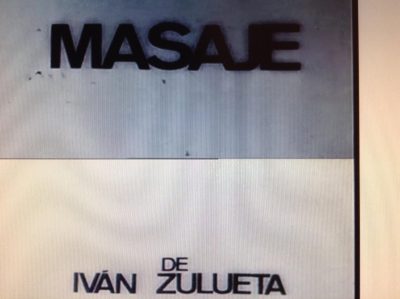
Masaje (1972)
‘Using the technique of direct photography off the TV screen, he composes three minutes ‘in which we see, speeded up, the complete television programming on a day of union and military parades. There was a subliminal Franco, and we didn’t even submit it to the censors…’. The soundtrack of Masaje alternates effects, noises and sounds of all kinds. The result is a really frenetic visual ‘massage’ that exposes the viewer’s eye to fleeting movie images, ads and news reports in rapid-fire succession.’’ — Carlos F. Heredero
the entirety
___________
Frank Stein (1972)
‘Filmed before Arrebato, Zulueta’s Frank Stein is a very personal reading of horror cult classic Frankenstein (1931), filmed directly from its television broadcast and reducing Whale’s original to only three packed and dizzying minutes, during which the intimate monster evolves at an unusual rate.’ — Impakt.nl
the entirety
___________
Te Veo (1973)
‘The title of Te Veo, is a joke with T.V. (television). Consists of a collage of shots in super 8 of images of the TV. The collage is extremely quick, mixing average people with famous paintings, landscapes and churches, etc. The images become more and more abstract, the referential pre-existing images are transformed by means of extreme close-ups of the screen, which ultimately become completely abstract with texture of the TV like a television pointillism.’ — filmaffinity
the entirety
___________
Roma-Brecia-Cannes (1974)
‘Roma-Brescia-Cannes, made in 1974, could be called a lyrical home movie. P. Adams Sitney defines the lyrical film as one that “postulates the film-maker behind the camera as the first-person protagonist of the film. The images of the film are what he sees filmed in such a way that we never forget his presence and we know how he is reacting to his vision”.’ — Senses of Cinema
the entirety
___________
Aquarium (1975)
‘The 1975 Super-8 short Aquarium is Zulueta’s first available incursion into the psychodrama—in which the filmmaker dramatises a disturbed state of consciousness—in which appear lyrical passages of the kind that will be made by the fictional experimental filmmaker played by Will More in Zulueta’s 1980 feature Arrebato. Aquarium features the use of a timer to film vertiginous fast-motion shots of clouds passing over the cityscape, which alters the perception of the change-movement relationship: instead of seeing stably-shaped clouds that apparently move across the sky, the clouds’ shape can be seen to change as their position remains the same. After several of these exercises in perceptual alteration, the film settles in to focus on its protagonist, also played by Will More. By way of eye-line matches the distorted images are made to express the agitated interiority of More’s character. He is alone in his room in the Aquarium hotel (really Zulueta’s Madrid apartment overlooking the Plaza de España), making explicit the theme of agoraphobic isolation and anguish that one could imagine to be the conditions of production of most of Zulueta’s short films. More’s character is apparently overwhelmed by ennui and seeking escape through sources of stimulation. He eventually plugs into the television by placing his hand on the screen, which transports him into a rapturous state as he watches what looks a lot like Zulueta’s own Frank Stein. He later finds stimulation at the window of his room, discovering to his surprise that the city’s inhabitants are also speeding by in fast motion, before his agitation is further reflected in a fast montage of repeated zooms and views of the urban landscape from above. The penultimate sequence is a remake of part of Un chien andalou (1929), as a woman appears and the two characters act out the street sequence from Buñuel’s film. This apparently throws causality out the metaphoric window, and for the last minute of the film we see what looks like re-filmed footage of the final section of Roma-Brescia-Cannes.’ — Senses of Cinema
the entirety
__________
Leo es pardo (1976)
‘This short film of Ivan Zulueta is a masterpiece realized before “Arrebato” and one of the most disturbing short films that I’ve ever seen. Without a screenplay, the film experiments with the montage of still images and sound. Is indescribable. Heavily addicted to heroin at the time, he created a world on his own where pop art, the wild side of nature, and the obsession with the still unrevealed power of moving pictures get together.’ — collaged
the entirety
__________
A MAL GAM A (1976)
‘With the thirty-three minute A MAL GAM A he made in 1976, Zulueta brings the lyrical film into the territory of mystico-psychedelia. The cinema as drug, as vehicle for rapture—as will later be seen in Arrebato—is a theme of this most autobiographical of Zulueta’s experimental films (which could also be seen as a documentary of an agoraphobic mode of artistic production), the protagonist is played by the filmmaker himself (“Jim Self” is the trans-linguistic homophone that appears in the credits) and shot mostly in the family villa in San Sebastián.’ — letterboxd
the entirety
___________
Arrebato (1979)
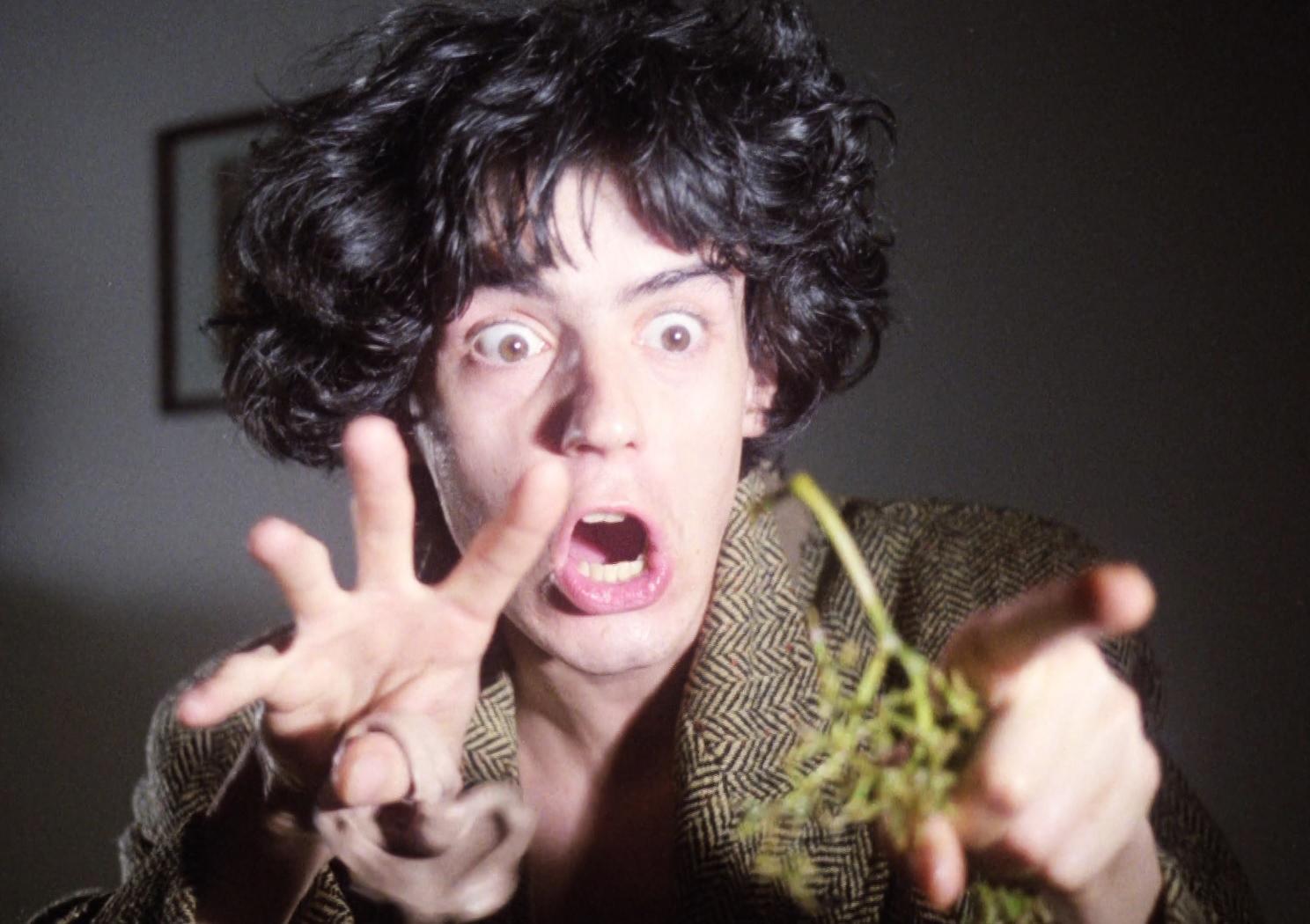
‘Much could be said about Ivan Zulueta’s cult classic Arrebato (Rapture, 1980). As a philosophical manifesto for the cinema, it is complex, sensitive, and humorous in its treatment of the question ‘What is cinema, what does it do?’ The film is the story of a struggling horror director José Sirgado (Eusebio Poncela), who is haunted by a strange film sent to him by his ex-lover’s cousin, Pedro (Will More). Pedro sends the film to José in an attempt to uncover its mystery: a frame of Pedro sleeping has disappeared and been replaced with a blood red mark on the reel. The psychological disturbance of Pedro and José playfully manifests itself in the materiality of the film. Voice-overs of Pedro confuse the dialogue and his image pops up like a ghost in the everyday world of José. In addition, the film slips in and out of its narrative, and psychedelic sequences scramble the continuous montage. Like the transient and hallucinatory filmic layering of Cabin in the Woods (Joss Whedon, 2011), or Brian de Palma’s Blow Out (1980), Arrebato is a self-reflexive investigation of the cinematic and its affective nature. It explores the construction of the horror genre, the questions that cinema raises as to the difference between reality and fiction, and the problem of Hollywood and spectacle. At times, the film is so doubled over it seems that it is scared of itself! However, this review will not take these points any further. Much needs to be said about this rich film; indeed, it would make a fine subject for a dissertation. But the question that it also raises, which would be clouded by any heavy-handed theoretical or intellectual musings, is: how to have a good trip. Arrebato, in this context, is not just a love-letter to the cinema but is a love-letter to its hallucinatory powers and to the dark desires of the human mind and body. It is a love-letter to a state of amour fou. The film mimics the intoxication, confusion and self-destructiveness inherent to a passionate relationship and is an experiment for states of maximum intensity, as they exist between the ecstatic and joyful, and the horrific and nauseating.’ — Lauren Bliss
Trailer
Excerpt
*
p.s. Hey. ** Carsten, Hi. Well, Schnabel is a terrible blowhard painter, IMO, so it might be by default. Basketball’s a good one. The culture that gets tons of money thrown at it is the real problem. At least in sports the money is going to something people seem to really enjoy. ** Steeqhen, What do I know but it seems like there must be a good percentage of gays, albeit maybe tight lipped about that in some cases, amongst the therapist set? Oh, yeah, ‘High Risk’, that was a cool book. Kind of era defining in a way. Sad about your soup. I am, seriously. ** _Black_Acrylic, When my nephew was a kid he was really excited about a secret track on a Blink 182 album called ‘I Want to Fuck a Dog in the Ass’. Cities have more than one club? I didn’t realise that. Paris only has PSG, I think? Maybe I’m wrong. ** Steve, It’s true re: Bieber. And now he’s … well, I wouldn’t say beloved, but one can prop him and remain a hipster. Haha, now that is a dream. Almost worth filming. Ah, if you see any stellar new French films, pray tell. I might actually be able to see those. An arts organisation here is organising a screening of ‘Iron Lung’ so hopefully I can finally figure what that is. ** Laura, That post made me feel 10 years old again. I’m definitely not at my most focused when I’m doing the p.s., so the fault is surely mine. I think you have to think that what you’re writing is a disaster at certain, hopefully brief points. I’m still a ‘side’ with the script, but it’s consuming and proceeding apace. No place to go dancing there? I don’t dance, but that’s grim. ** kenley, I did. I even want to go back somehow sometime. It’s your birthday!!! Happiest one! Jump onstage and grab the mic and get wrestled to the ground by the band you love’s roadies. Or something. Why did you do? ** HaRpEr //, Me too, obvs. I grew up in a mansion kind of house, and I spent years studying its blueprint and running my fingertips over the walls feeling for secret buttons and things. No luck. Well, you know how into secret interior areas in fiction I am, i.e. ‘The Marbled Swarm’. It’s possible to do, I found out, not that many if any readers have the interest or patience to find them. You on Roussel! Nice! I’m so sorry about the thing with your dad. I can relate from my young days of facing how impossible it was that my dad would even begin to understand that me writing wasn’t just me being lazy and doodling. I so love early Cat Power. I loved going to see her live when she was extremely shy and weird and had nervous breakdowns onstage. For me, something got lost in her work after ‘You Are Free’. I feel bad that the decrease coincided with her gaining confidence, but there you go. ** DonW, Well, hey, Don! Great to see you, bud. I still have a bunch of those tear-out floppy discs. So cool, but, boy, did they sound terrible. Hm, no, on the favorite album covers thing. Huh, that would take some serious thinking and culling. Maybe, yeah. Could be good. Envy on the Pavement show. I don’t think they’re coming over here. They’re kind of the only reunion band I would love to go see. You’ll be in Paris? Look me up, man. Let’s coffee, etc. I don’t know Manchette, I don’t think. I’ll investigate. Thanks! All the ultra-best to you. ** Uday, Thanks. Cool, just let me know re: the possible screening. Excited about it. I’m always really careful who I watch Bresson films with because I too get very silent and internal afterwards, and if anyone talks, even to say how great the film was, I get very irritated. Obviously congrats on the NYC trip. And obviously I hope your intended person feels whatever you wish he will feel. Sounds like there’s a chance. ** Okay. Today you’re being asked to explore the work of the very originality-inclined Spanish filmmaker Ivan Zulueta. And see you tomorrow.


 Now available in North America
morning Dennis!
Zulueta! massive guy <3 i’ve got his Laberinto de Pasiones poster (p richly) framed on my living room wall and it’s just such a beautiful piece of kitsch. ^_^ Arrebato is so much of what Spain is about imo, Leo Es Pardo is gorgeous… p miraculous too that it’s out there and can actually be watched, there are so many near-mythical short films i’ve yet to lay eyes on but they’re all totally unfindable. p much all of Almodóvar’s for starters. like… what’s the point in making short films if they never get distributed/bootlegged/whatever… only shown at festivals and immediately rated a 4/10 by what i suspect is always, always the same arsehole lol.
what don’t you like about dancing? i love dancing and there are def local places, lol, but my long covid situation barely lets me walk, let alone pull any of the loftier stuff. soon tho, hopefully. tho tbh i’ve got this fuckton of anxiety it may be a while yet and i’ll be totally chopped by the time i can do stuff again lmao. i clearly love this for me.
do i feel bad or good that i made you feel 10…? was 10 a good age for you? when i think of 10 i think loads of chinese rope, always up to smth fucked up w this friend or that cousin, reading Maria Gripe and playing piano and doing rhythm gymnastics. i weirdly remember next to no nuclear family life, that part’s been like erased from memory or smth. summers were gorgeous around that age tho, and i always felt like smth important was about to happen lol.
the epics of your script situation are v exciting to follow! you won’t be a side for much longer, i totally know this so like gear up =)
rn i’m trying to decide if i feel cringe about this and that chapter of mine bc they’re cringe or bc they succeeded at making me uncomfy. i can enjoy discomfort for a good cause, but is this it… hopefully you’re right and it’s the stage the thing is at, otherwise there will be rewrites, which ughhh i wanna move ahead alreadyyy (but then i should probably whine less and write betterer)
what’s interesting on your end today?
<3
Hi
Arrebato is so good!!
Cat Power I agree You are Free is my favourite album of hers I think or equally favourite as the previous ones and I love the album cover. I have fetish with album covers with fields and greenery and made a list of them recently
I have to say I agree with you about losing something after You Are Free but that being said I love the song The Greatest so much!! I own the album but always played this song over and over and to death
Hi from Chania 💞
Did you know that I Don’t Blame You is about Kurt Cobain? It is ingeniously made that way that is clearly about him but also about her and everyone who listens
What are your top Cat Power songs?
I’m always a sucker for film posters so this guy is alright with me.
Over where you are, there’s a choice of clubs for the footballing connoisseur. Paris FC might be worth a look for any PSG refusenicks? They are very much the poor relation, so much more cool.
Arrebato is so much fun. I’ve also seen a couple of Zulueta’s shorts. Probably on your recommendation? I thought you’d made an earlier post with Arrebato in it. Will check out more.
Just finished Joy Williams’ The Pelican Child. Definitely my favorite of her recent books. It’s quite sad about the state of things, but so funny.
Bill
Hey, Dennis. Indeed, favorite album covers would be a great post, but for now I’ll enjoy reading about Ivan Zulueta. Seems up my alley. I did enjoy the Manchette novel. You might too? He has some terrific crime/noir novels published by City Lights and NYRB. His dialogue’s so good. Apparently he also wrote for film. I don’t know. Yes, yes, I am *stoked* to see Pavement. I’ll be meeting my pal from L.A. for their pre-show at the Mosswood Meltdown, which is literally around the corner from where I once lived in Oakland. And of course, I’ll def. let you know when I’ll be in Paris and would love to grab un cafe. Take care, man, Don
Hey. ‘Rapture’ seems like my thing indeed. How did I not know about Zulueta?
Well, I think you’ve got to hope that there’s an ideal reader somewhere, right? To be honest, I never expect most people to pick up on those kinds of hidden things when I write. I do also think that when people pick up on hidden details they think it must be a metaphor for something rather than just exactly what it is, which I think is one way the public school system has shaped how people look at art.
I do that stuff because it has something to do with my philosophy of writing as well as my process. The New York School poets’ Roussel-inspired in-jokes and private references were of course very influential, as is that general approach to writing which is very playful and sort of of the moment, to make a gross overstatement.
I kind of like approaching writing as playing with smoke and mirrors, and hold out hope that I’ll convince someone that there’s real magic in there.
‘Iron Lung’ is very interesting to me because it’s made by Markiplier who’s this YouTuber that some of my friends watched when I was a kid and was always easy to make fun of because he’s very inoffensive and had a very obsessive fanbase. A lot of YouTubers reaching late thirties-ish are starting to make feature length films with theatrical releases. It’s of course interesting that he’s a rich guy and has the wealth to fully invest in his own project. I’m sort of sceptical and have conflicted feelings about the possibility of him doing something interesting. I still want to see it though. That’s the interesting thing about a lot of youtubers that got popular. They all wanted to be filmmakers or musicians but most of them got the bag and gave up on doing anything else. So good on him, but as of this moment, youtubers have a bad track record with making films. Not to generalise of course, but from what I know of Markiplier’s mind, I have doubts about his creative tendencies.
Until a few days before IRON LUNG opened, I had no idea what it was. I’ve heard Markiplier’s name, but I don’t even know what kind of YT videos he makes.
I saw another film from “Rendez-vous,” which was OK but rather staid. Claire Simon’s documentary about students reading Annie Ernaux might be the festival’s high point.
Do you know if it’s common to have more vivid and intense dreams in the wake of grief? Before my parents died, I very rarely remembered mine.
I remember seeing Almodóvar talk about him. With this double endorsement I will have to check him out. It’s funny because he really looks like my friend’s brother, who is himself not particularly ordinary-looking and we already know somebody (her coworker) who also looks like him. I wish I could make like I have recently and watch a movie before commenting so that I have something intelligent to say, but that is so much harder than just reading a book, especially since I have disawoved watching movies except with projectors as of late.
Re Bresson and silence: my roommate at least didn’t say a word till this morning or possibly even this afternoon, and I suspect that the same is true of two other friends. I did get a little irritated with one’s response today, but I’m really working on my grandfather’s well-given advice to be more patient with difference. I’m sure that about a year ago I would’ve had a response I think is deficient today and, not saying that my response today isn’t still deficient (albeit a little less so), if people had been impatient with me I would never have made that effort. In general I’ve had very patient teachers in and out of the academy, which is nice but not something I am given to replicating by temperament.
Love actually asking the guy but, for the second consecutive year, saying the day of the week instead of V-Day. But he said yes, so I’ll clarify on the day and report back. This might be the first place I’m saying all this, and will probably be the first place I update. I like the idea of keeping it private, at least for a while. I intermittently find the most devastating line from Brat to be ‘When you’re surrounded by friends/And I’m just wondering what they know’.
Wishing you some reprieve from your neighbour, the Ukrainian woman who makes a living as a Michael Jackson impersonator. She is always on my mind and often on the mind of the many friends I’ve talked to about her.
Oooooh
Hey friend. I just finished watching Pixote, I made that shot where Pixote hugs against Lilica near the beach as she sings, my new instagram profile, havent changed since I made my pfp Pinocchio 964, inspired by the day you had mentioned it on your blog. Wow.
Do u know the song petite by Xiu Xiu? its a good one, ive been thinking of it lately considering what its about and recent news.
Oh haha, I noticed you saw the meme I sent u on insta. I try not to send things since your very busy but I swear it was so spot on for a french avant garde film breakup.
I started Flunker and aim to finish it since it seems breezy + I have so many very elaborate books to get through. I told you my friend gave me two Jean Genet books+ I got all these library books. Th
Oh I got all my dreads/locs in so I am cool looking. I can send student id pic one day. it cool.
Oh on that crush I suppose I can be a little newsy as you said last week, although I wont say too much until it is 100%
I will say though, that they said something to me that may possibly defiantly confirm they like me too.
Im finishing up this art for an exhibit submission. Would you like to see when im done?
Oh btw on the topic of Flunker I feel so embarrassed of the first story narrator, oh gosh, it sounds just like me at times haha, or at least when I was that age.
https://www.youtube.com/watch?v=taQ4JKe0LaI&list=RDtaQ4JKe0LaI&start_radio=1
haha didnt comment in time . Heres yesterdays comment
Oooooh
Hey friend. I just finished watching Pixote, I made that shot where Pixote hugs against Lilica near the beach as she sings, my new instagram profile, havent changed since I made my pfp Pinocchio 964, inspired by the day you had mentioned it on your blog. Wow.
Do u know the song petite by Xiu Xiu? its a good one, ive been thinking of it lately considering what its about and recent news.
Oh haha, I noticed you saw the meme I sent u on insta. I try not to send things since your very busy but I swear it was so spot on for a french avant garde film breakup.
I started Flunker and aim to finish it since it seems breezy + I have so many very elaborate books to get through. I told you my friend gave me two Jean Genet books+ I got all these library books. Th
Oh I got all my dreads/locs in so I am cool looking. I can send student id pic one day. it cool.
Oh on that crush I suppose I can be a little newsy as you said last week, although I wont say too much until it is 100%
I will say though, that they said something to me that may possibly definitely confirm they like me too.
Im finishing up this art for an exhibit submission. Would you like to see when im done?
Oh btw on the topic of Flunker I feel so embarrassed of the first story narrator, oh gosh, it sounds just like me at times haha, or at least when I was that age.