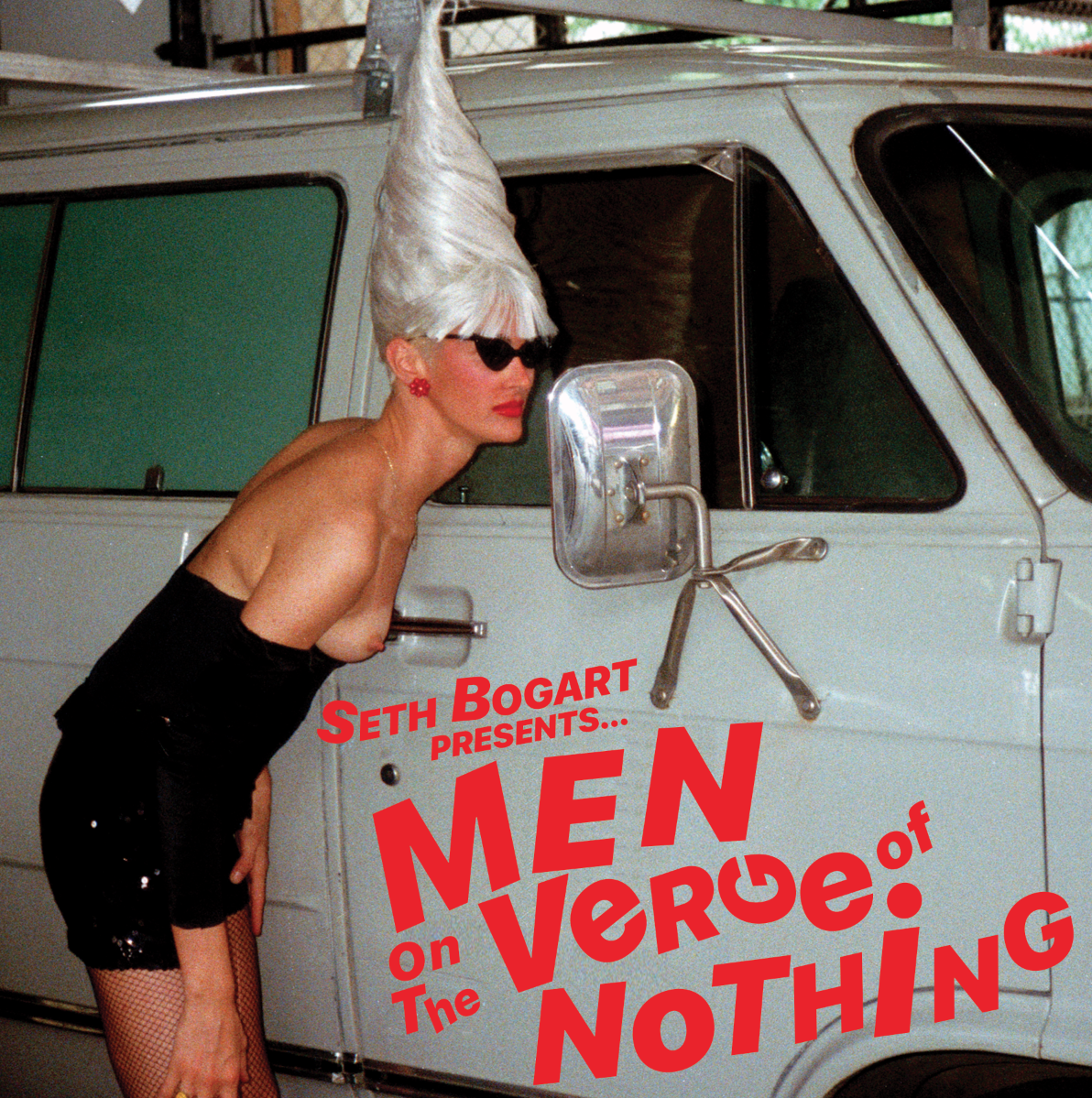
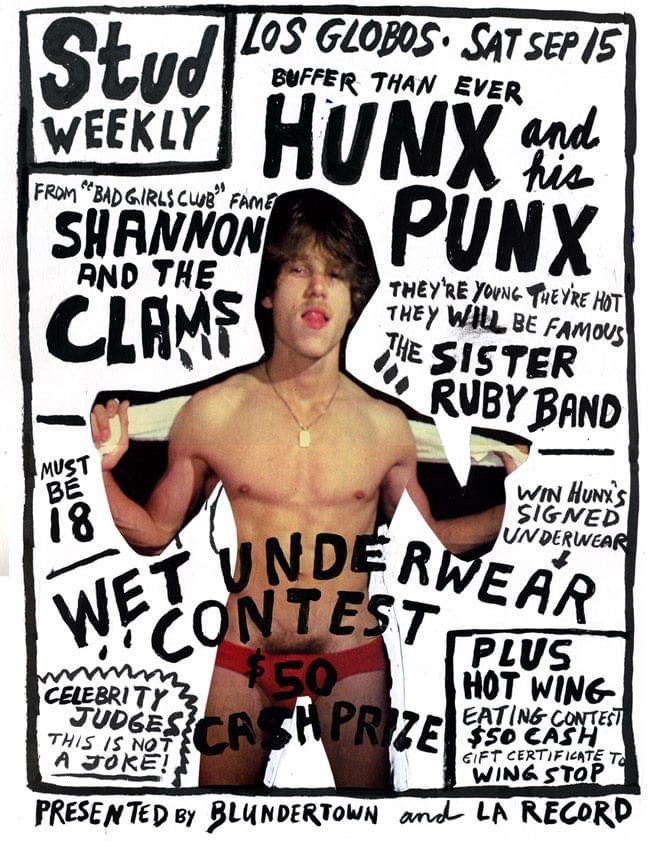
You’ve probably came across Seth Bogart, the multi-disciplinary artist, in one form or another: whether that be with his zany punk pop ceramics or as the big Bogart personality with the heavy gelled black painted hair and shiny red suit or as the front man for Hunx and his punx or as the other more stripped down perpetually shirtless speedo wearing guitar wielding rockstar who just released the new album “Men on the verge of nothing.”
In his musical career he has toured and collaborated with Kathleen Hannah and had Shannon from Shannon and the clams as band mate in Hunx and his punkettes. Besides being a fixture in the L.A music and art scene, Seth Bogart also has a succesfull streetwear label Wacky Wacko with a fabric print collaboration with Saint Laurent for a mens shirt. In 2012 Seth Bogart launched a web series called “Hollywood nailz” likened to a bizzarro 80’s public access style variety show.
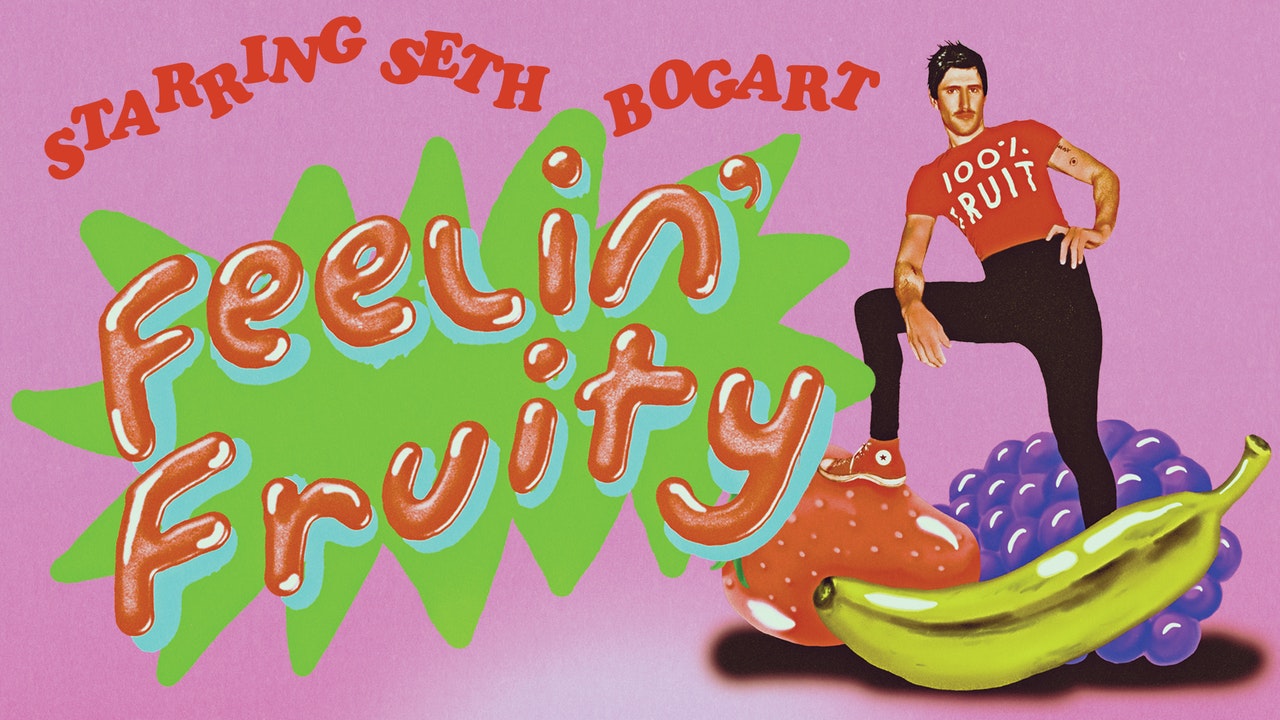
In 2018 the production company World of Wonder, who are the creators behind Rupaul’s drag race, created the web series Feeling fruity by incorporating Bogart and his handmade installations (a la Peevy Herman playhouse) into a variety show.
Trailer sampler for “Men on the verge of nothing”
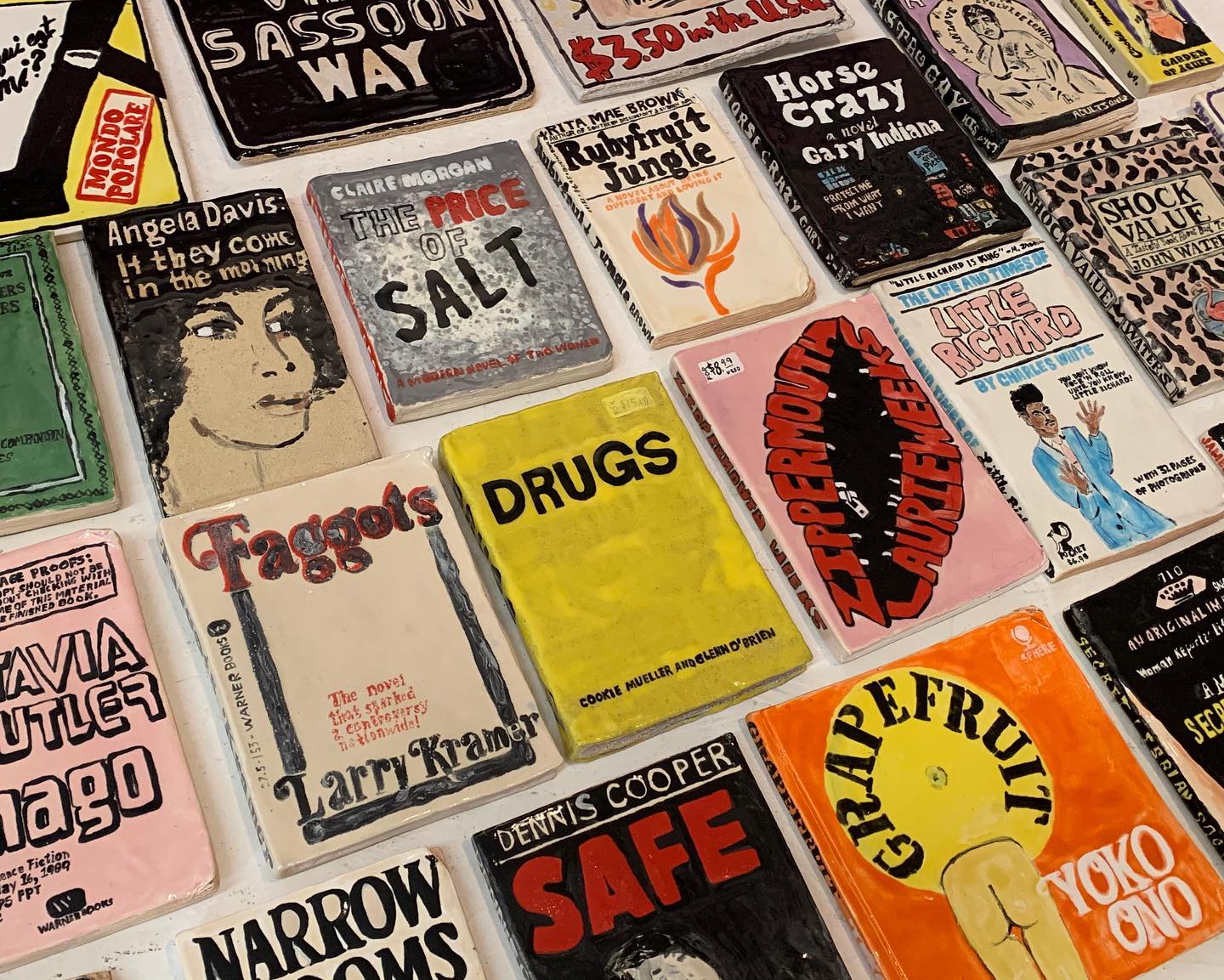
“Library Fantasy Vol 1” currently on show at Fierman gallery in N.Y which compromises of ceramic replicas of books, true to size and displayed on shelves as in a bookstore. It’s a imaginary library of a septuagenarian pioneer of the queer community.
Don’t ever call Seth Bogart an influencer. by Bridgette Read. Vogue, Feb 2019
What’s it like being a lifelong punk in a city as matcha-soaked and millennial-pink-hued as L.A.? If you ask Seth Bogart, it’s not as hard as you might think. “It’s my favorite punk scene,” the Tucson-born Bogart says of his home for the last seven years or so, where he performs as the frontman of Hunx and His Punx. “When punk started in the late seventies, in L.A. especially it was the most diverse here. It was lots of people of color, and women, and queers and stuff. Every punk scene’s just a bunch of white dudes for the most part, with some women sprinkled in. Here you have, like, Alice Bag, and the Go-Go’s, and Darby Crash.”
Bogart’s prodigious creative output—ceramics, painting, music, clothing design—feels like an oasis of DIY in a sea of unrelenting digital non-labor. A longtime West Coast fixture in the queer and punk art scenes, he takes up material culture from the fringe, and distorts Hollywood glamour into a freewheeling free-sex utopia. And even as it’s become harder and harder to stay autonomous as an artist, he remains staunchly, exhilaratingly fuck-you-oriented, even if the rent in L.A. is too damn high. “It’s sort of sad and hard, yes,” in terms of sticking it out, he said on the phone with Vogue in January. “But I still think that there’s so much going on here and it’s such a great city. I always want to move somewhere else, but I don’t really know where to go.”
Bogart started out as a hairdresser in beauty school and as a performer in the Oakland punk scene, and the marriage of two worlds—pop and punk—comes together in his career, which is now primarily focused on three things: recording a new album, prepping for an upcoming exhibition of his Beetlejuice-meets-Warhol ceramic objects in Chicago, and making new items for Wacky Wacko, his clothing line and curio shop. Last year, he hosted a zany Pee Wee Herman–style show called Feelin’ Fruity for World of Wonder in which he and comedians Kate Berlant and John Early make and model garbage-bag couture, in front of a set he made totally by hand with collaborator Christine Stormberg (a.k.a. Hardcore Tina). This was preceded by his initial foray into video with 2012’s minimall fever dream Hollywood Nails, described by Bogart and cocreator Brande Bytheway as “a nail-biting extravaganza of mostly useless products and pansexual hijinks!!!”
This has meant that he’s had a few confrontations with mainstream outfits that were looking to cash in on queer culture. When I ask about an aborted 2017 meeting with a nationally prominent news organization aimed at hip millennials, he says, “I didn’t walk out, but I was just like, ugh. They approached me with weird ulterior intentions. They wanted me to host some makeover show, but they didn’t just tell me that, so I shared all these ideas with them and then it just turned into them wanting me to do this other thing and that’s when I kind of was like, I’m not interested, bye! Because I’m not really trying to do someone else’s idea, you know? I mean, I like collaborating, but it was clear that they already had something in mind, and honestly I don’t really like that company or like a lot of what they’ve done and stand for.” Instead, Bogart looks to others who were successful without compromising their strangeness, like John Waters, Divine, and Kathleen Hanna: “I’m pretty grateful for my upbringing, and being punk, and growing up listening to Riot Grrl music, because I feel like it gave me a backbone.”
So how do you translate the Seth Bogart experience for the Instagram generation? He doesn’t, really (although he isn’t above posting the occasional studly selfie). “I generally hate it and wish I didn’t have to,” he says, of the ubiquitous drive to post. “I feel like it’s like selling myself in a tiny box.” And he hates the censorship most of all: “I can’t post a lot of art I make on there because it’s explicit, or there’s stuff I made it about, like hating men, that’s not even violent and it will get erased.” It’s ironic that what he does share, especially ingenious, irreverent ceramic objects like a Maybelline mascara wand that doubles as a bong and a toothbrush out of which crawls a stiletto, plays masterfully with the clean neutrality of the platform. “The reason I make all these products and stuff, I think, is because of brain damage from beauty school,” says Bogart. “I hate the fucking fashion world, it sucks, but it’s nowhere near as bad as the art world or Hollywood. I did like a Saint Laurent collaboration, where his doodled “Hunx Notebook” print was used on button-down shirts, backpacks, and lace-up sneakers for the Fall 2014 men’s collection, “which was cute . . . And then I was like, I don’t really want to follow these rules.” He favors other arty L.A. brands like Online Ceramics, Surprising Health Benefits, and No Sesso.
A second season of Feelin’ Fruity could be coming down the pike, but regardless, Bogart’s influence can very much be felt in the evolution of the weirder corners of Instagram and YouTube, or in Dis Magazine’s recent pivot to video. Just don’t use that word: ”Someone called me an influencer the other day and I was like, What? Fuck you.” As of now, for Bogart, the goal is to keep living and working, follower count be damned: “Every artist that I really like is someone who always did what they wanted to do, and didn’t try to do what would get them a lot of attention at the time, or do what everyone else was doing. And they just stuck with it and eventually people realized that and appreciated it. When I’m down or whatever, like, What the fuck am I doing?—which is all the time—I just need to trust myself and keep going, because it’s too late to turn back.”
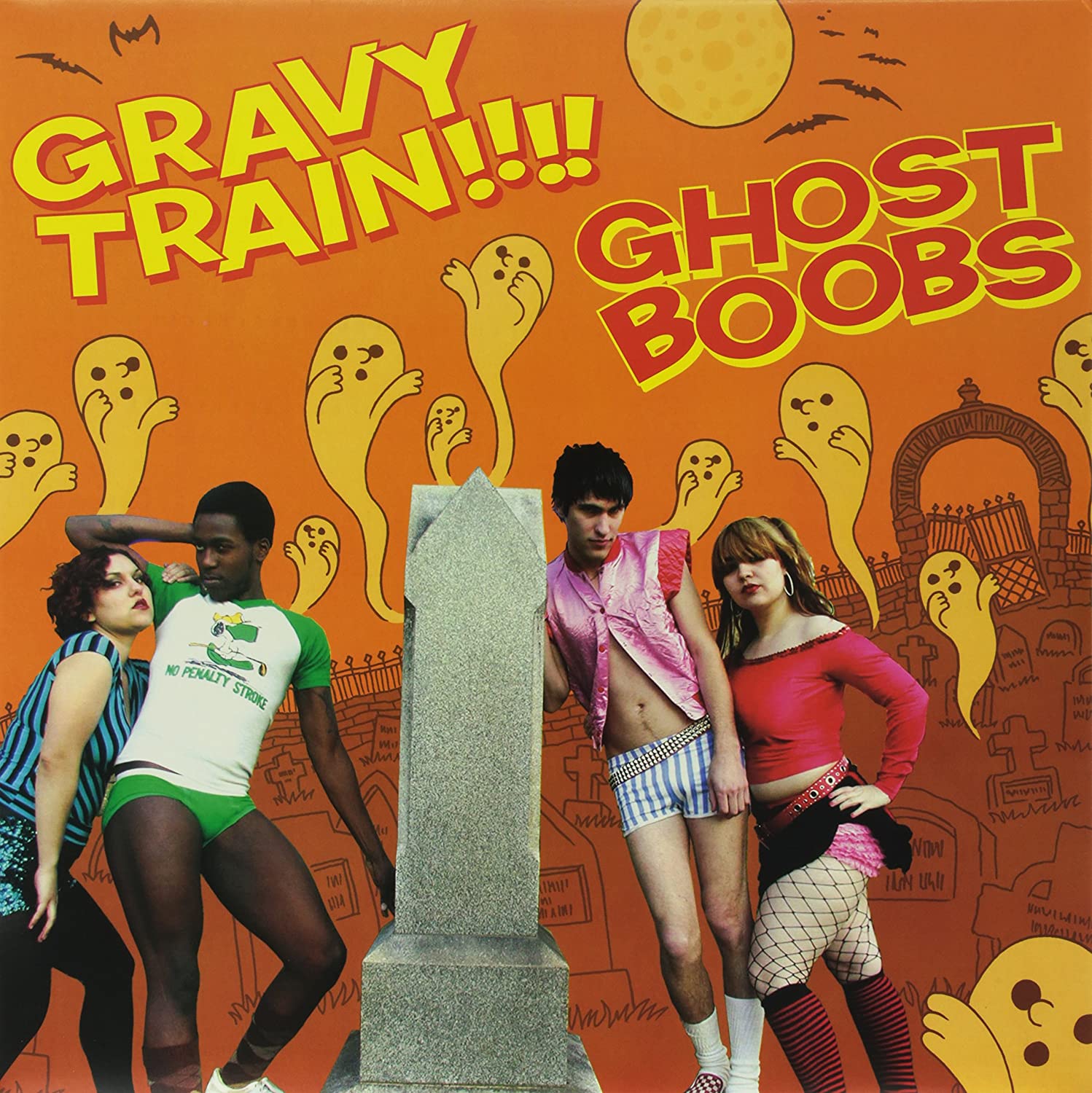
Seth Bogart cut his teeth in the band Gravy train!!!! SF Weekly compared them to The Cramps if they were a sexed-up riot grrrl band.
It’s certainly not great music,” Pitchfork critic Julianne Escobedo Shepherd wrote of the 2003 Gravy Train!!!! album Hello Doctor, which she gave a score of 2.9 out of 10. “Its terribleness is trumped by its incredible disregard for human decency.”
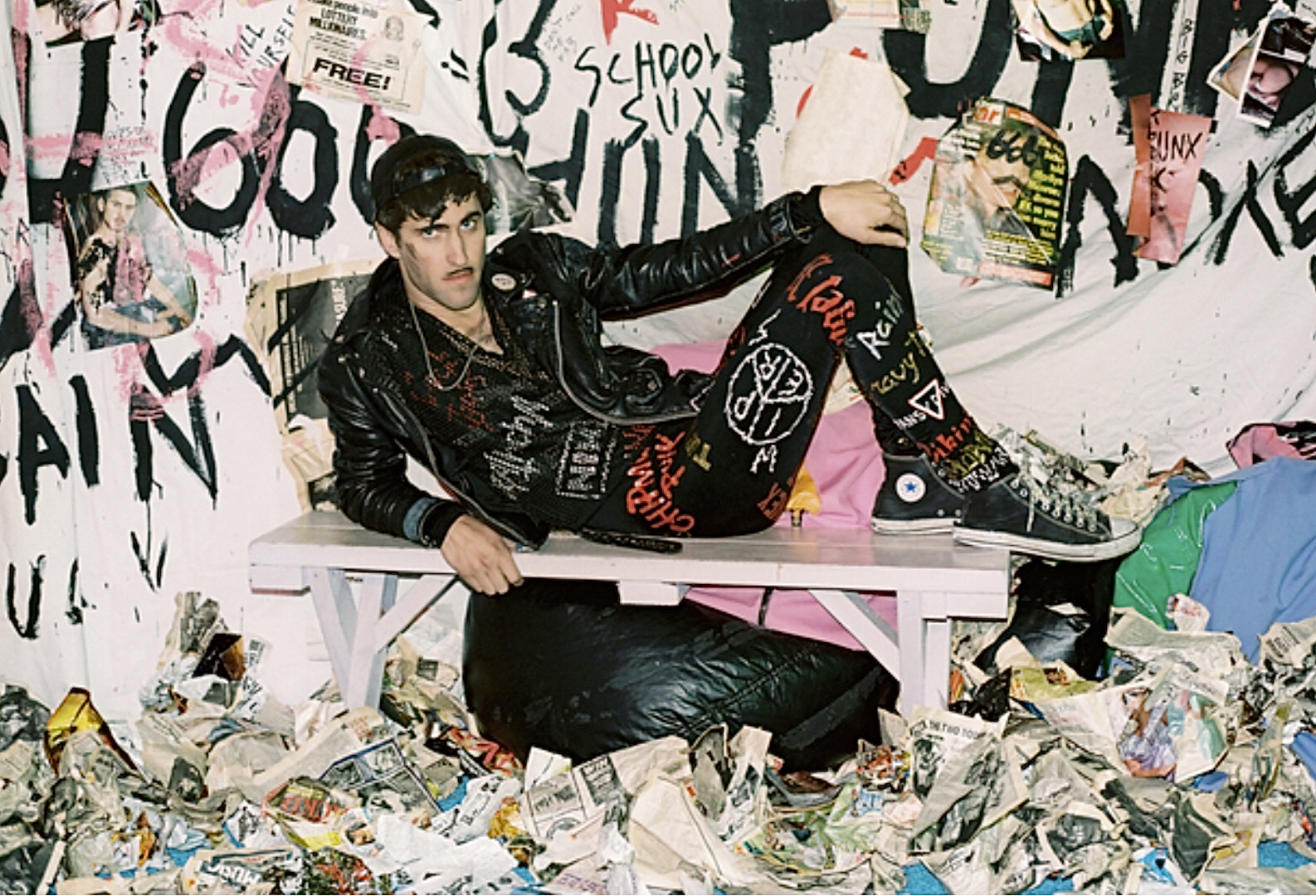
Hunx and his punx was formed in 2008. They have a boneheaded garage punk sound along with the catchiness of a 60’s girl band.
In 2009 Seth Bogart appeared in an X rated version of the Girls music video for Lust for life.
*
p.s. Hey. ** Today the blog gets the big treat of this guest post from d.l. Ferdinand about the multidisciplinary wild guy artist of endless stripes Seth Bogart. If you don’t know his work, you will now or already do depending on whether you view this place from top to bottom or vice versa. Enjoy the shebang and give a verbal shout out to Ferdinand to express your interest and/or thanks. And thank you, F., from the bottomest part of the blog’s heart. ** David Ehrenstein, Very glad you found his work of interest. ** Dominik, Hi, D!!! It’s true I’m not wildly surprised that you like his work, but what a bonus. Okay, I’ll do a hunt for his new film with moderate expectations, thank you. It was a very good pizza. Best pizza in Paris possibly. When you finally visit the big P, we’ll munch there together. I can imagine that proof-reading would have a giant instructional booklet that one can take with grains of salt sometimes? Ha ha. Finally yesterday after years of scouring slave profiles I found one whose slave is looking for a master who knows my work and whose slave name is Frisk love, Dennis. ** Jeff J, Hi, Jeff. Yes, indeed, that Altmejd piece was on the cover of Derek’s ‘The Show That Smells’. Derek chose it and Joel Westendorf, the official LHotB cover designer, did the layout. I’m doing my new Julien Calendar exploring today as yesterday got away from me. I like so many of Sarraute’s books. If I had to choose very favorites, maybe, in addition to the aforementioned and ‘TGF’, ‘The Planetarium’, ‘Martereau’, and ‘The Use of Speech’. And, obviously, ‘Tropisms’ is insanely great. We’re squared away re: Skype, and I look forward to it! ** _Black_Acrylic, Hi. No, stupidly and temporarily tragically, I still haven’t watch ‘Twin Peaks 3’. Absurd, I know. ** Bill, It’s possible, about ‘Le Samourai’. It might have been on my top 50 films list, I can’t remember. I don’t know ‘Slow Machine’. Wow, I can’t remember the last time I saw a film characterised as ‘mumblecore’. That takes me back and also intrigues. Thanks. Toe continues to incrementally cease calling attention to itself. ** Misanthrope, You know I agree. Two weeks sounds sane. I don’t remember ever celebrating Columbus Day, but then I’ve never had a 9-5 job, and it seems like one of those dates celebrated only via maybe getting off work. Celebrating that dude is gross, if you ask me, but there are much worse problems. Internet/email has made everything to do with submitting work or manuscripts many infinite times better, yes. ** john christopher, Hi, jc. I totally and obviously agree about Altmejd’s stuff. Big indeed to you about that jingle. Still, to this day, when I remember it, it gets stuck in my head and tortures me for days. Whenever humanly possible, I do Halloween in Southern California. It’s the kingdom, the Mt. Olympus of Halloween with hundreds of home haunts and haunted house attractions, which are my soul’s oxygen. One would think London would have figured out how to bear hug Halloween and its incomparable possibilities by this point in time. Paris too, actually, but it’s a wasteland here as well. Oh, wow, thank you, I would love to get that Halloween pamphlet! I don’t give my address here, but send me a quick email at denniscooper72@outlook.com, and I’ll jet it back to you. Thanks a ton. I’m excited to read that. It’s cold here too. I might even have to pull out my scarf today for goodness sake. ** Scunnard, Hey JP! Great to see you, man, and thanks a bunch. You good? You seem to be doing good from the mid-distance that social media’s information providing talents allows. ** Steve Erickson, Ah, well, may your eyes show you impeccable patience. ** Nick Toti, Hi, Nick. Oh, cool. Will do. Thanks for targeting this bunch for feedback. Everyone, Superlative magnetising filmmaker Nick Toti has a request/gift for you. Here he is to explain: ‘I have a new cut of a short film that I’m hoping to get some feedback on. Would you mind sharing with the locals? If anyone watches and wants to let me know how it’s landing (good or bad), they can email me at diediemaomao @gmail.com. I’ll give them a “special thanks” in the credits for their trouble. Here’s the link. Password: wendy. Take care, man. ** Brian O’Connell, Hey, B. My true pleasure, of course, on the galerie show. I think our easy new restrictions will be very short-lived. Like you, but differently since the powers-that-be here are relatively sane and cogent, we’re in for a quite rough next set of months. Bertolucci’s ‘The Conformist’ is a great film. I definitely second the recommendation. Bertolucci pretty much totally lost it in my opinion at a certain point, but all of his films up through ‘Luna’ are varying degrees of great. ‘The Conformist’ is one of his very best. So, yes, go for it, and I’d be interested to hear what you think, if you watch it and feel like sharing its impact. ** Gus, Hi, Gus! Very good to meet you, and thank you for stepping inside here, and consider the door eternally open. No, I haven’t read Kier-La Janisse’s ‘House of Psychotic Women: An Autobiographical Topography of Female Neurosis in Horror and Exploitation Films’. What a title. I had never even heard of it until now. Thank you a lot, I’ll go chase it down. I haven’t seen ‘The Moor’s Head’, and wow, it must be out there and viewable somewhere. Thanks a ton for that tip too. Ha ha, good old Cubby Branch. Back in 2000, there were a series of events at NYU celebrating my ‘George Miles Cycle’ books, and one of the events involved artists and writers and so on reading from my work, and Thurston read those liner notes, which was one of the most amazing and funniest things I’ve ever seen. It’s on tape, but it’s not public for whatever reason. Anyway, thanks. That’s my favorite SY album. Yeah, so stick around if you feel like it. What are you up to? What’s going on with you? Take care. ** Right. Please rejoin the Seth Bogart fest in progress. See you tomorrow.
‘At first glance, Jean-Pierre Melville’s body of work might seem to display a schizophrenic split between two currents or tendencies. The first is in total symbiosis with the history of France and is rooted in the filmmaker’s own life, notably in his involvement in the Resistance from the beginning of the Occupation, his participation in Gaullist networks, and his clandestine work under various pseudonyms (Cartier, Nono). He reached England after a punishing odyssey: in the Pyrenees, he lost his brother, who was abandoned by his guide and died in the snow, only to be imprisoned in Spain before managing to board a ship. He joined the army and fought in the Italian and French campaigns. During the years I knew him, he always said that “the army and the war were the best period in my life,” overlooking his ordeals and suffering and the death of his brother. He would jokingly tell me that he crossed over to England to see Michael Powell and Emeric Pressburger’s The Life and Death of Colonel Blimp, repeatedly describing the film’s initial scenes and dwelling on that first flashback in the Turkish bath: “one of the most beautiful flashbacks in the history of cinema, dear boy, along with the one in Henry King’s Twelve O’Clock High.”
‘Melville’s life in the Resistance inspired three of his masterpieces: Le silence de la mer; Léon Morin, Priest; and Army of Shadows, which in the United States are often unfairly eclipsed by his series of gangster films. Despite its imperfections and the deplorable casting of Edouard Dermithe, one could also add Les enfants terribles, adapted from Cocteau, who speaks the film’s magnificent voice-over and whom Melville described as “a French ambassador to France.” It should be added that Melville admired Clouzot and Becker. He wrote a superb article on Le trou shortly after Becker’s death.
‘The second current appears to be the exact opposite of the first and is shaped by a fascination with the United States and American culture. Let’s not forget that Jean-Pierre Grumbach chose the pseudonym Melville after reading Herman Melville’s Pierre: or, The Ambiguities, paying homage to the author of Moby Dick, a novel whose sublime first sentence he loved to quote: “Call me Ishmael.” I could as easily have referred to his love of Anglo-Saxon culture, for Melville also venerated Aldous Huxley, Oscar Wilde, Graham Greene, David Lean, and Carol Reed’s The Third Man. But the United States and American cinema played a defining role. This was a cinema he had learned to love not in school but by discovering the films in a movie theater with the public, in his youth, notably thanks to the double programs (most often of Warner productions) at the Apollo theater at 20, rue de Clichy, which had a retractable roof and was inaugurated in 1932 with a run of James Whale’s Frankenstein. On the day the program changed over, one could see the two new films added to the bill at the last screening—four films in one evening! Lino Ventura, the star of Melville’s Le deuxième souffle and Army of Shadows, also nostalgically told me about the Apollo theater eventually shuttered by the Germans for screening Litvak’s Confession of a Nazi Spy. It was in pre- and postwar movie theaters that Melville developed his passionate love for Huston, Stevens, Robert Wise, Ford, Capra, and especially William Wyler, filmmakers who were sometimes disdained by the very critics who championed his own films (it’s fair to say time often proved Melville right). Melville could be extremely violent in his rejection of certain films; he never forgave me for taking him to see Lang’s Moonfleet and especially Nicholas Ray’s Johnny Guitar. On the other hand, he loved Kazan’s A Face in the Crowd and its near total absence of camera movements.
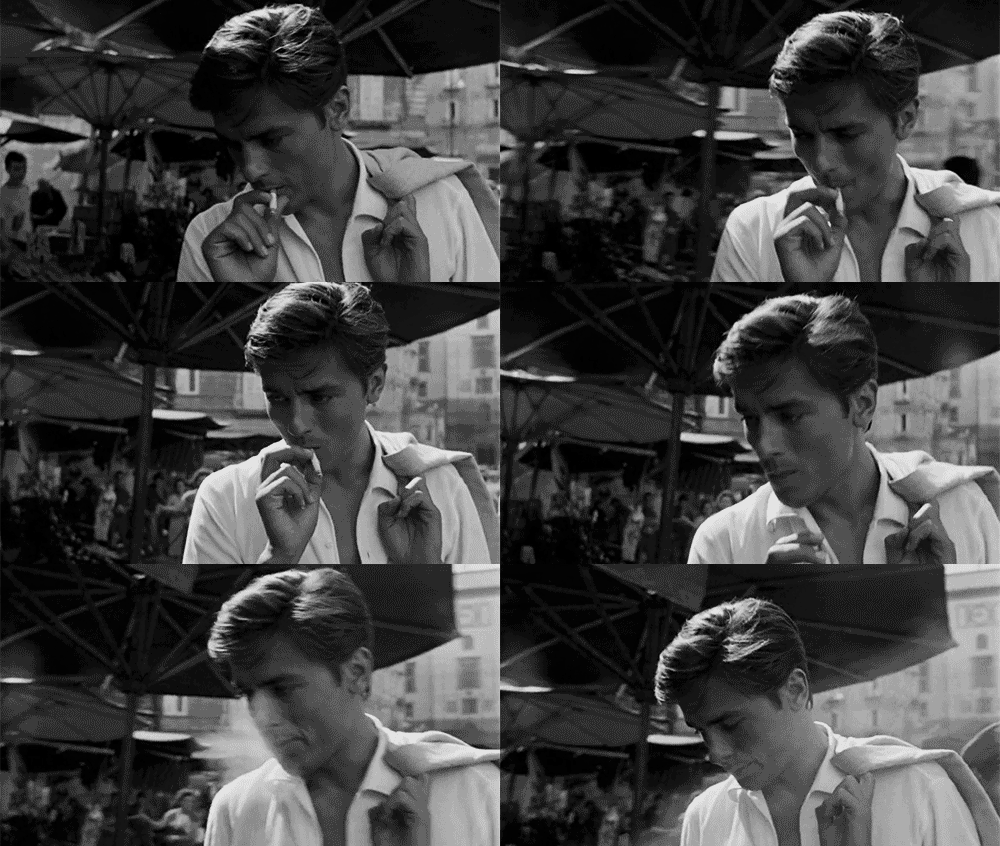
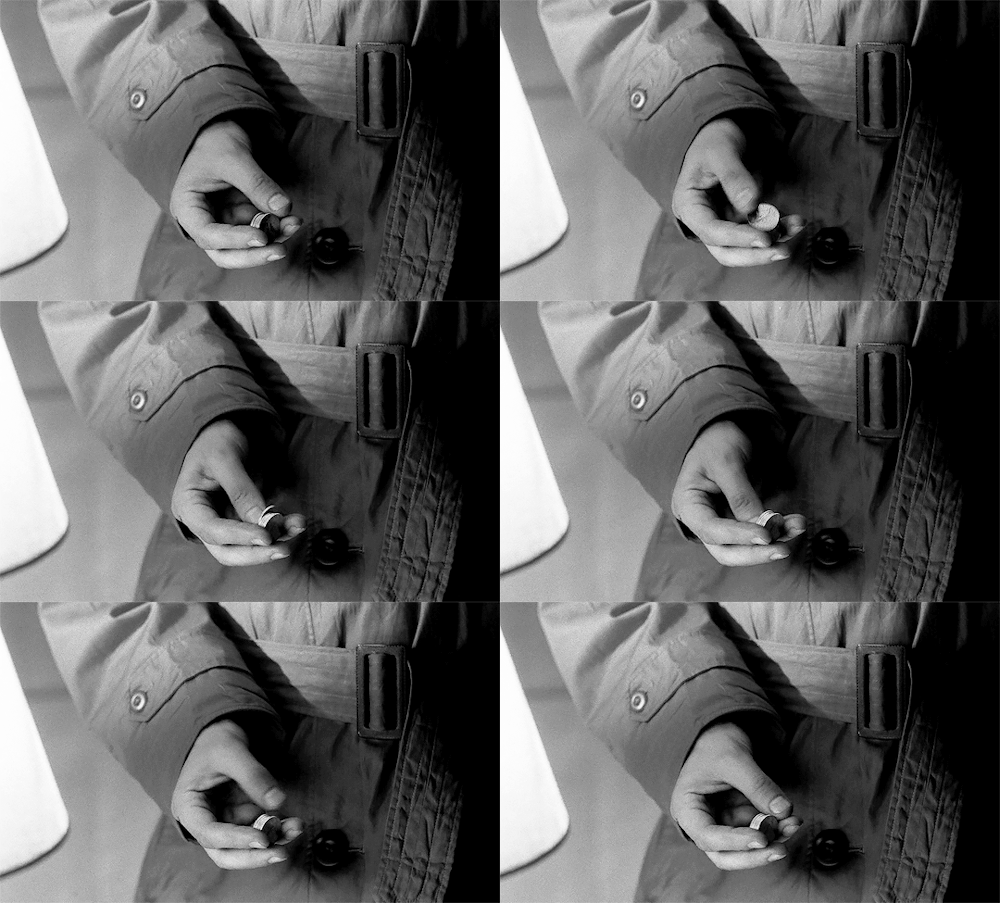
‘One finds traces of this American cinema in Melville’s films: Bob le flambeur is a friendly, relaxed homage to The Asphalt Jungle, without the moral tragedy, while the plot of Le samouraï is inspired by that of This Gun for Hire (the cat is replaced by the canary). Melville also loved Odds Against Tomorrow, which was constantly being screened at his film studio (I saw it with him eleven times). He had the wallpaper of its hotel rooms reproduced both in Léon Morin and Le doulos, and closely imitated the series of shots and camera movements in the waiting sequence that precedes the film’s holdup. I was with Melville at the Triomphe theater when he discovered André de Toth’s The City Is Dark (a.k.a Crime Wave), which we saw twice. He would twice pay tribute to this remarkable film noir, with the toothpick chewed on by the detective in Le doulos and the broken cigarette Paul Meurisse pulls out of his pocket at the end of Le deuxième souffle.
‘While the political gravity of his life in the Resistance and the thrills of American genre filmmaking may seem like contradictory influences, they are peripheral if not superficial, and they in no way compromise a body of work striking in its coherence, consistency, and unity of tone and style. It is as if Melville managed to unify his sources of inspiration, to rid them of any superfluous elements, through visual rigor, dramaturgical sobriety, and narrative economy. No patriotic tirades, no ostentatious declarations here, but a restrained, stripped-down plot, which benefitted from the economy of Melville’s means of production. He produced his first films on a shoestring: Le silence de la mer is basically a single-set film, shot in the Studio Jenner, which he had just founded in 1947, and in real outdoor locations, with a bare-bones crew that outraged contemporary unions (in this respect, he was anticipating Steven Soderbergh). In subsequent projects, I saw him manage to create a beautiful set with two flats, a few props, and an inventive use of light. In my documentary My Personal Journey Through the French Cinema—in which I describe my first encounter with Melville for the interview that would lead to our friendship and, several months later, my appointment as his third assistant director on Léon Morin—I show how each of Melville’s films finds him reusing the door to his studios, whether as the entrance to nightclubs in Le samouraï and Le deuxième souffle or to a New York building in Two Men in Manhattan. You can also spot the staircase at the back of the big soundstage at Studio Jenner in nearly all the films he directed.
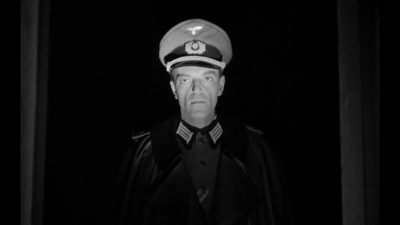
‘He started off with an utterly crazy gamble. Unable to obtain the rights for the novel Le silence de la mer by Vercors (a pseudonym for Jean Bruller), which had been written in 1942 while the author was in the underground, he managed to move forward with production by committing to show the completed film to a jury of leading members of the Resistance and to burn the negative if they did not agree with it. I can only admire this wild audacity, which also reflects Melville’s extreme confidence in his own artistic abilities. An audacity that breathes life into this magnificent and demanding film, allowing Melville to shoot it as a long monologue spoken by a German officer who never succeeds in getting a reaction out of the old man and young girl he addresses. The listeners’ silence becomes a form of resistance, a refusal to compromise with an enemy, no matter how seductive. A magnificent theme, for an unbelievably ambitious film. Along with Guitry’s The Story of a Cheat, it is one of the only films in the history of cinema to dare to attempt this style of narrative. One finds the same originality in Léon Morin, Priest, another masterpiece, which deals with the Occupation through the character of a communist woman (not bad for a Gaullist director!). Women are rare in Melville’s world, but Léon Morin’s Barny is strong and independent. And she falls in love with a priest who is in the Resistance. A meditation on the meaning of the practice of one’s faith, Léon Morin is also a subtle chronicle of a dark period, with its yellow stars and denunciations, one of the only films to show various forgotten episodes such as the replacement by German soldiers of the Italian troops who had occupied certain parts of France. Army of Shadows, another Resistance film, includes a few autobiographical details that are not found in Kessel’s novel, such as the nocturnal boarding of a ship. In a certain way, it merges and reconciles the two tendencies. This reflection on commitment and courage (a courage one also finds in the protagonists of Léon Morin and the grandfather and granddaughter in Le silence) is filmed like a thriller; the masterful photography by the late Pierre Lhomme is no less remarkable than that of Decaë in Bob le flambeur and Nicolas Hayer in Le doulos.
‘Melville’s style diverged from the American movies he loved in crucial ways. Of the American influence, Melville keeps neither the enthusiasm and momentum one feels in Walsh’s films nor the warmth dear to Ford and Capra. Here, too, he privileges the clean, minimal style Wyler favored and the pared-down approach Wellman adopted in The Ox-Bow Incident. He focuses his dramatic structures on a few obsessions such as betrayal (in the Resistance films), apparent commitment to promises made, and solitude. Like the filmmaker himself, the Melville hero lives in a room without windows (or with a cramped view, like Delon’s in Le samouraï). Melville often goes against Hollywood principles, as with the drawn-out length of his shots, the importance of silences, and especially his rejection of omnipresent music. He often had problems with his composers, rightfully rejecting Michel Legrand’s score for Le cercle rouge (Eric Demarsan’s score is a better fit) and John Lewis’s for Le deuxième souffle. Someone should try to find Lewis’s score: what I’ve heard of it shows that he refused to imitate what he had done for Odds Against Tomorrow. But in all the films, one remains struck by the intelligent parsimony with which Melville uses music.
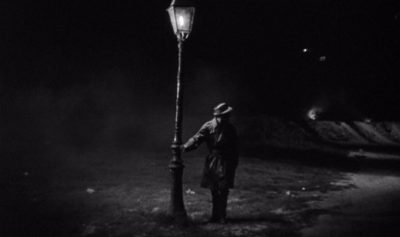
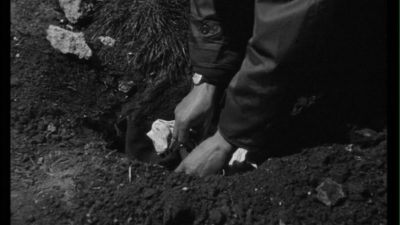
‘Another violation of a Hollywood code: the refusal to use certain explanatory reverse shots. In Le doulos, Serge Reggiani is burying something near a streetlight. He hears footsteps and stops. The steps fade into the distance. In any American film, the studio would have forced the filmmaker to show this passerby. But Melville stays on Reggiani and creates an incredible tension by explaining nothing. From a vigorous, tumultuous cinema full of sound and fury, he invented dark, morose worlds, with characters who seem on their last legs, imposing a tone close to that of Robert Bresson. Le doulos, Le deuxième souffle, and Le samouraï are undeniable successes. While I admire the acutely intelligent way in which he adapted the novels he selected, I find his original screenplays—Two Men in Manhattan, Le cercle rouge, Un flic—more conventional, perhaps even simplistic. There is one out-and-out failure among the adaptations, Magnet of Doom, in which Melville tones down and betrays Simenon’s novel and bungles the entire American part. Perhaps it was better to dream America than to film it.
‘Melville was also a real tyrant on the set, terrifying me throughout the shoot of Léon Morin, Priest before convincing his producer to take me on as a publicist. In life, though, he was a warm raconteur who dragged you around Paris recalling a thousand memories.’ — Bertrand Tavernier
You have said that all your films to date were merely rough drafts. Is this also true of Le Samourai?
Certainly. I’m incapable of doing anything but rough drafts. Each time I see one of my films again, then and only then can I see what I should have done. But I only see things this clearly once the finished print is being shown on the screen everywhere and it’s too late to do anything about it. I have never been satisfied by my films, never.
You have often been described as ‘an American director’, sometimes with implied criticism. How do you feel about this?
I have been tidied away once and for all in a drawer in a sort of filing cabinet under the label ‘American’. This is quite wrong. I’ve put up with it for five years, but now I’ve had enough: I am absolutely not an American director. If by this people mean that I make my films with enormous care leaving nothing to chance, my answer is that the great Japanese directors work the same way. Anyway, I feel much more Japanese than American. Le Samourai is a Japanese film, as the title suggests.
The most important quality needed by a film director – or as I prefer to say, a film creator [un createur de cinema] – is the ability not to work through his intellect, otherwise he ceases to create a spectacle. He must also have a feeling for observation, memory, psychology, and a fantastically acute sense of sight and sound. He must have the instinct of a showman. A film is a spectacle, just like the circus or the music-hall; when it’s well done, it becomes a work of art. But the cinema as a whole is not an art yet – it’s going to become one. It is no accident that every writer I meet envies me my profession. Today, the cinema is the ideal form of literary creation, and young people no longer have a literary culture but a filmic one. This is something that would have seemed impossible 15 years ago.
All your heroes wear a sort of uniform: hat, raincoat, etc.
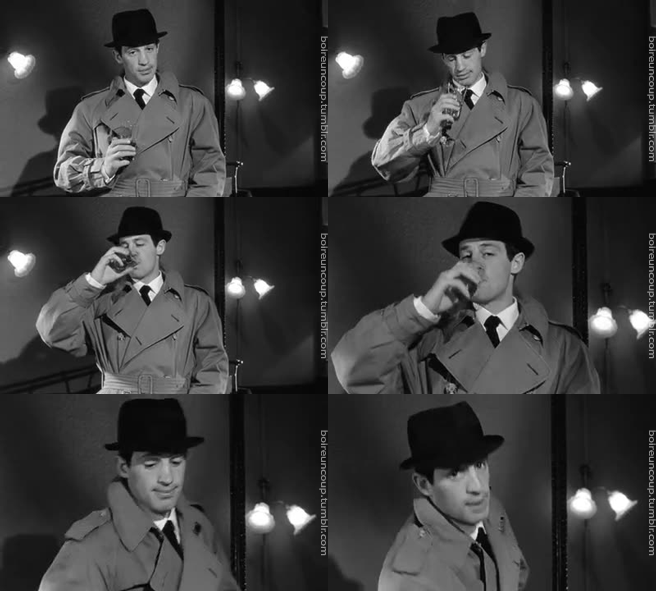
I think the virile hero needs a horse, boots and saddle. As you’ve probably noticed, they’re not exactly common on the streets of Paris, but at least you can give him a hat, a raincoat with a belt and a collar that can be turned up, and a button to do up when it rains. It’s a man’s get-up, an echo both of the Western and of military uniform. And there are the guns too, it all springs from the barrack-room. Men are soldiers, women may be by accident… Between the ages of 12 and 14 I was both formed and deformed to a great extent by the first American gangster novels. So I’d be quite happy to have you say I make gangster films, inspired by the gangster novels, but I don’t make American films, even though I like the American films noirs better than anything.
L’Aine des Ferchaux is a dream of America rather than America itself?
Of course. Starting from one of Simenon’s novels I presented a particular aspect of America that I’m rather fond of. The Americans, I might point out, decided I was very anti-American, certainly a Communist. Not that that matters. I’m very fond of America. What would be really great would be if there was no one living in it, nothing there. Because of course no one could possibly replace the Americans. The country would be like a vast museum where you could just wander around. When I made Deux Hommes a Manhattan I was writing a love letter to New York, and my story takes place at night because that is the time for writing love letters. Any story set in a big city should start at about six in the evening and end with the dawn.
Your heroes never grow old. Even when adult, they remain essentially adolescent.
That’s my own particular hang-up. I think I’m still 18 years old. Outwardly, of course, I behave like a sensible gentleman of 50, but inside I’m still 18, I haven’t changed. I think that is man’s special prerogative. Moreover my studios on the rue Jenner (which I’m going to have rebuilt) are an adolescent dream.
You are often reproached for the improbability of your heroes, who are very easy to recognise.
It’s because I don’t want to situate my heroes in time I don’t want the action of a film to be recognisable as something that happens in 1968. That’s why in Le Samourai, for example, the women aren’t wearing mini-skirts while the men are wearing hats – something, unfortunately, that no one does any more.
I’m not interested in realism. All my films hinge on the fantastic. I’m not a documentarist: a film is first and foremost a dream, and it’s absurd to copy life in an attempt to produce an exact re-creation of it. Transposition is more or less a reflex with me; I move from realism to fantasy without the spectator even noticing.
Le Samourai describes several parallel worlds which never overlap but merely brush against each other from time to time – the Delon and Perier characters in particular. Perier is a logical character, very Cartesian, very French; Delon is a mystery, a complete enigma. We don’t know who Delon is, what he used to do, where he came from, how and why he has become a hired killer.
This was deliberate on my part, because I can’t stand the sort of film which tries to place a character by having him announce “I was with the army in Indochina and later in Algeria, I used to kill for the Government’s profit and now I’m killing for myself,” etc.
From Les Enfants Terribles right up to Le Samourai, there’s a certain affinity between your work and Cocteau’s.
Jean Cocteau was one of the greatest writers France has produced in the last 50 years. You have only to read or re-read his plays, poems, novels and essays to be convinced of that.
He unquestionably had a formative influence on several generations and on mine in particular, because in 1931, when Les Enfants Terribles was first published I was a pupil at the Lycee Condorcet and I used to pass ‘the ‘cite Montier’ four times a day. That was how I discovered Cocteau’s universe.
My films are different from his but there is undeniably a certain intellectual affinity between us. That’s probably why he asked me to make Les Enfants Terribles. We had a lot of tastes in common.
I adore the beginning of Orphée, it’s wonderful, quite fantastic. The second part isn’t good, for reasons that I’d rather not go into, although it does have some very fine things in it: the tribunal, the passage from life to death through the mirror, and so on. Casares had the best role of her career in it and Perier was brilliant. As soon as I saw him in Orphée, I was determined to have him in one of my films.
You’ve made three films with Belmondo (Leon Morin, Pretre, Le Doulos and L’aine Des Ferchaux) and, up till now, only one with Delon. What do you think of these two?
They’re the only two jeunes premiers in the French cinema. So I’m forced to make comparisons, but what I say in favour of one doesn’t imply any criticism of the other. Belmondo can play parts that Delon would be incapable of playing, and vice versa. They complement one another quite admirably.
I wrote Le Samourai for Delon, with him in mind and inspired by him. Of course, if I were to write an original screenplay for Belmondo, Delon could not possibly play it. Belmondo is remarkable in Leon Morin, Pretre, and Delon in Le Samourai. Neither of them could possibly replace the other. The two films are about the same character played by very different actors. Delon is a remarkable actor, and remarkably professional.
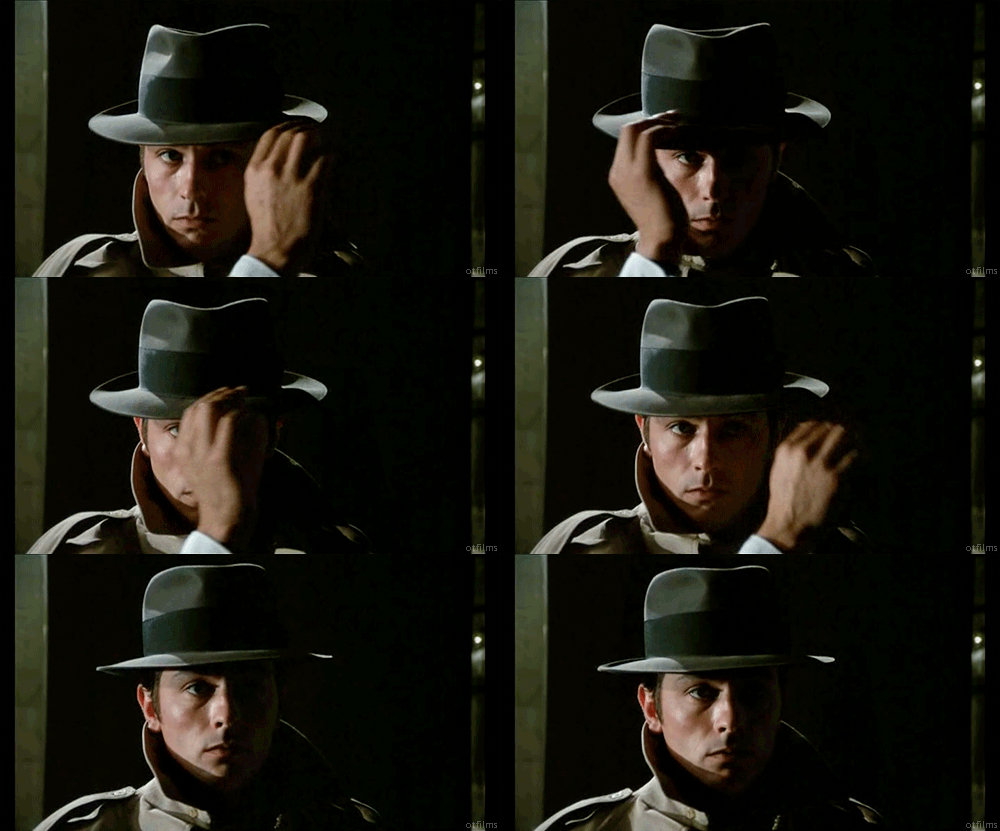
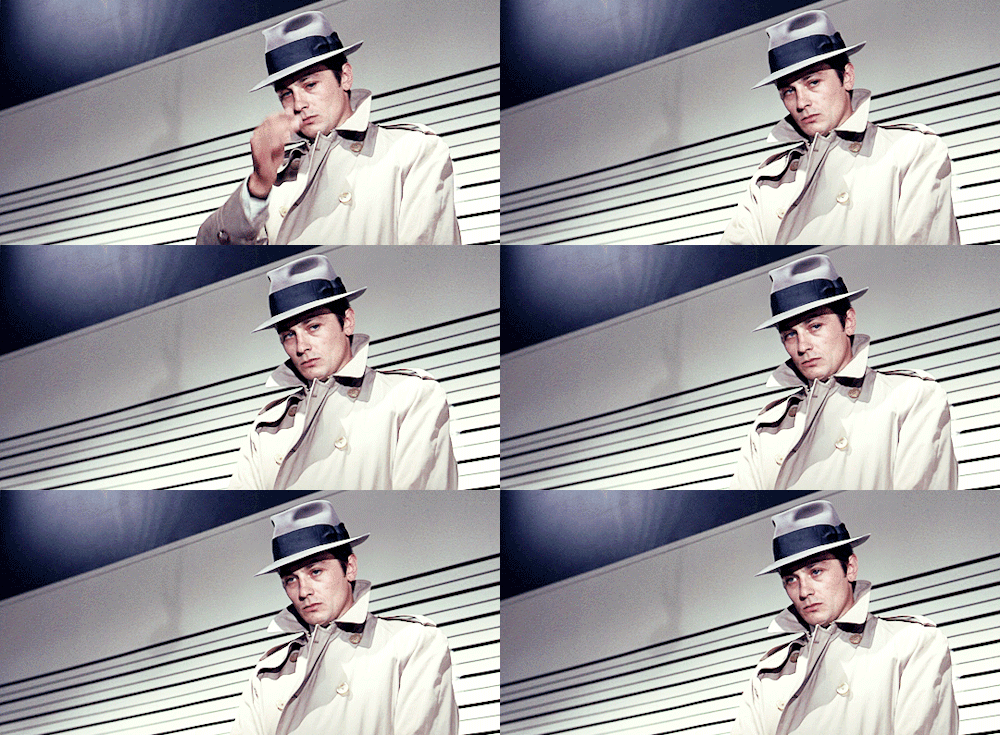
I don’t like characters to be explained through a few ‘tics’, although Delon copied two of mine for Le Samourai – the gesture of running two fingers over the brim of his hat, and the way of wearing his watch on his right wrist with the dial turned in.
Similarly, I didn’t want to be explicit about the relationship between Delon and Nathalie. It’s of no interest to know whether they are lovers or not. Their relationship has the same ambiguity as the one between Lino Ventura and Christine Fabrega in Le Deuxieme Souffle. They could be brother and sister; it’s the ‘enfants terribles’ side of Cocteau.
Nathalie Delon is so like Elizabeth and Alain so much like Paul, it’s extraordinary how alike they look.
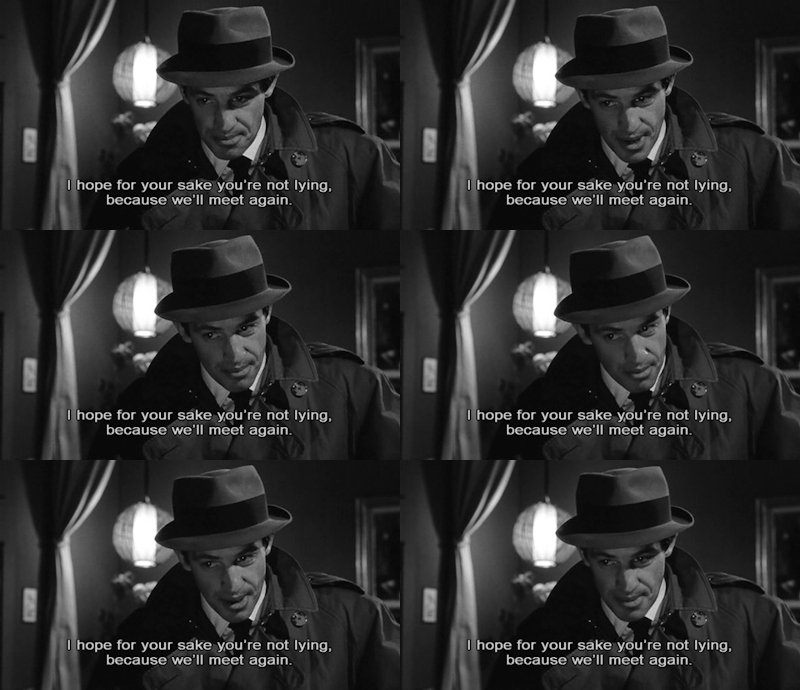
In Le Doulos, Le Deuxieme Souffle and Le Samourai one finds the same recurring relationship between gangster and police chief: Belmondo, Ventura and Delon as the gangsters, Desailly, Meurisse and Perier as the policemen.
For me, the police chief is Destiny. That’s how the character has to be, for he represents inescapable destiny: he doesn’t personally execute the gangster, but he does set the machinery in motion.
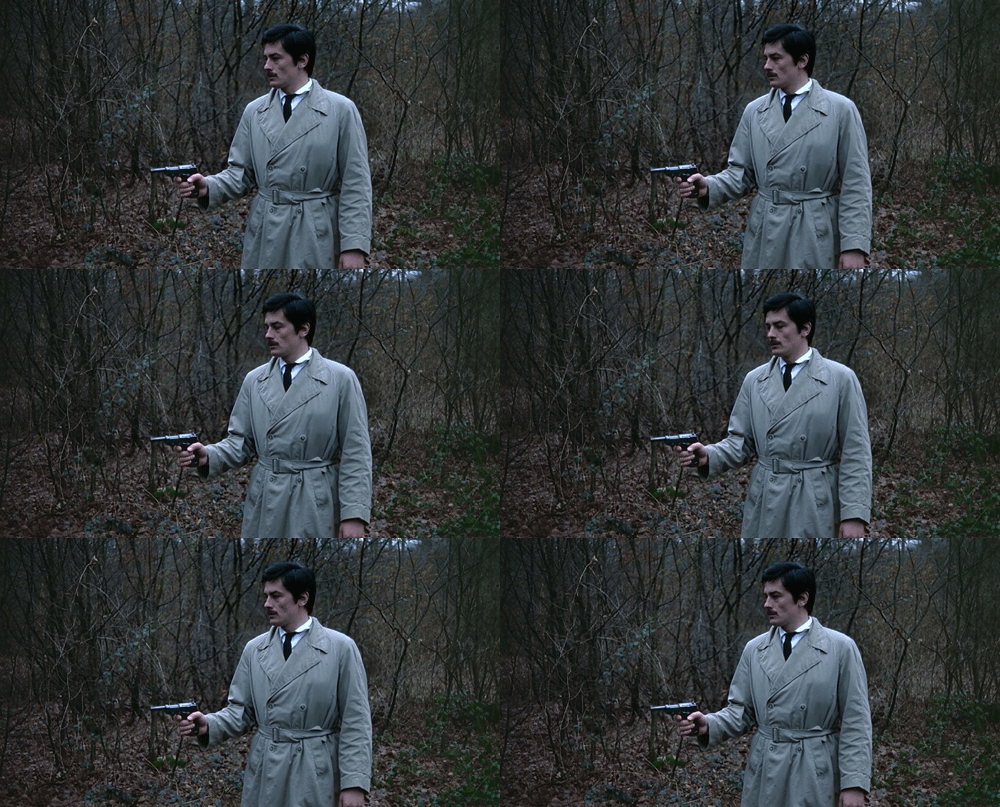
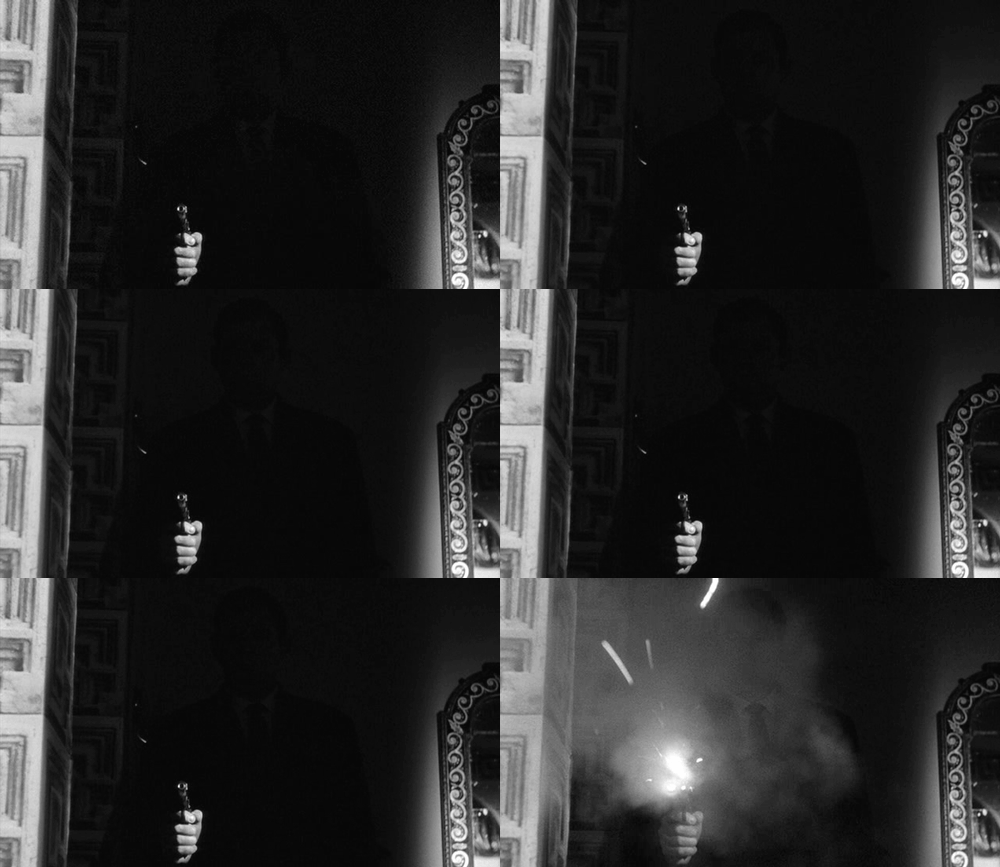
In the last scene of Le Samourai, Delon does not want to kill. He removes the bullets from his gun, then he goes back into the bar, into the trap which has been set for him, and he kills himself, he commits hara-kiri.
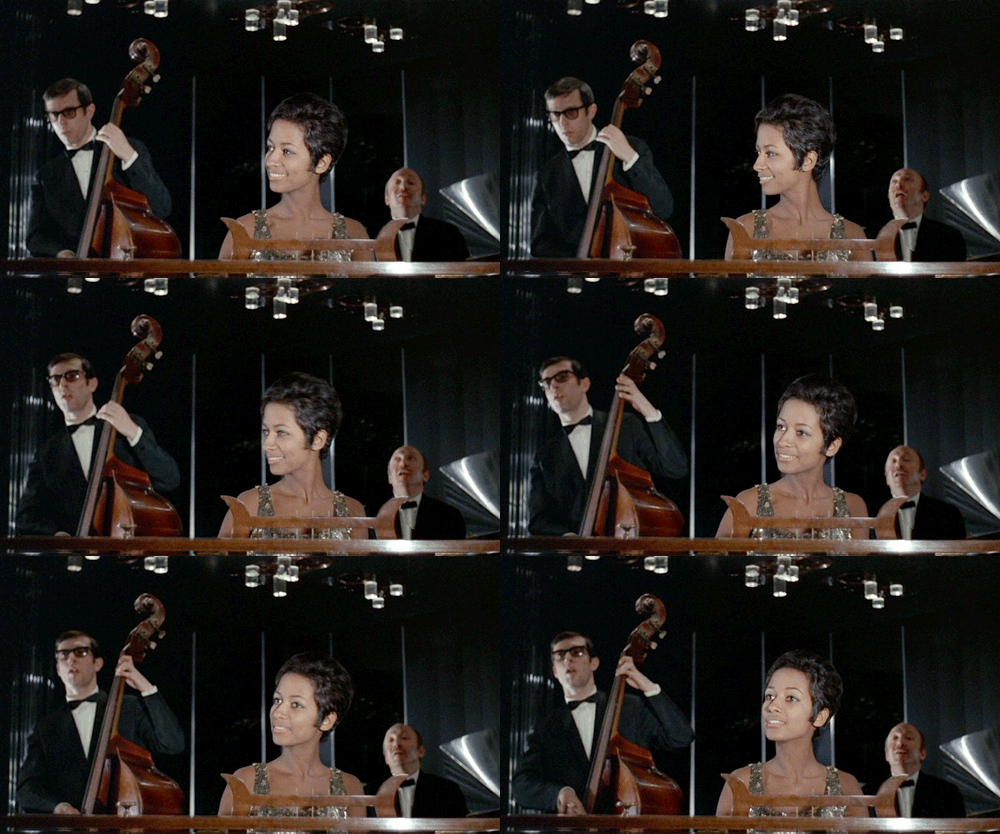
From the outset, the black woman in white is the incarnation of Death, with all the charm that death can have.
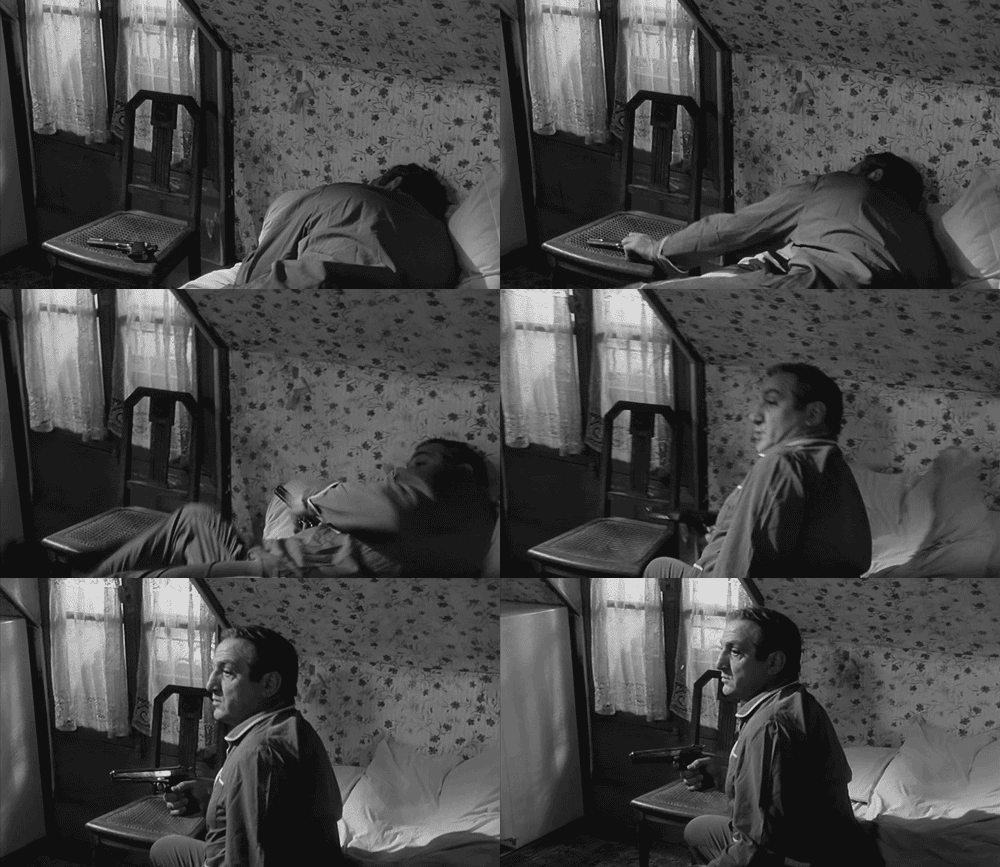
At one point in Cocteau’s Orphée, Maria Casares said “I should not mind being changed into a pillar of salt,” and her black dress became white – and, for Cocteau, Casares represented Death. The character of Jeff Costello (Alain Delon) in Le Samourai is in love with his own Death. In the first shot he’s stretched out on his bed, already ‘laid out’, already dead at that moment, and everything follows.
After the success of Le Samourai, you have several projects lined up, and right now you’re preparing La Chienne, a remake of Jean Renoir’s 1931 film and of Fritz Lang’s Scarlet Street (1945).
It will not be a remake. There’s an idea in the original book that interests me, and that’s all.
The film I shall probably make from La Chienne will be nothing like the novel and still less like the films by Renoir and Lang.
Both these films were made from an adaptation written by Mouezy-Eon, and not from the original book by La Fourchardiere. (As you may know, because Mouezy-Eon acted as an intermediary in the sale of the rights to Braunberger and Richebe in 1931, his name has to appear on the credits of any film based on La Chienne by La Fourchardiere.)
I should very much like to do it with Lino Ventura. What interests me is the principle behind the original book which, in its introductory note, describes the characters as “He, she and the other, the eternal triangle.” But my characters will be nothing like those in the novel. ‘He’ is an extremely timid person who opens the first chapter with the words “Tonight, something happened to me … ” I shall keep this sentence in my film, but instead of continuing, “It’s the first time in my life that anything has happened to me,” he will say “Although God knows enough has happened to me already…”
You see, I’m turning someone who’s essentially a victim – like Professor Rath in The Blue Angel, for instance – into a man who’s tough, who has been through it all, possibly an ex-gangster or a nightclub owner, I’m not sure. In any case, he will be the kind of man you can’t easily imagine falling in love at first sight, or with an average sort of girl.
What interests me is that ‘he’ narrates the first sequence, ‘she’ narrates the second sequence, ‘the other’ the third, and then the cycle starts all over again. Each character describes things from his own point of view – describing not the same scene, but the next one in sequence.
That’s how I envisage my version of La Chienne. If I don’t start it right away, I may make a spy film from a novel called The Packard Case. If it comes off the way I hope, it will be the kind of film that should have been made from John Le Carre’s excellent book The Spy Who Came In From the Cold. That’s one remake I’d be happy to do, for I found Martin Ritt’s film really very bad and rather grotesque.
______________ Jean-Pierre Melville’s 14 films
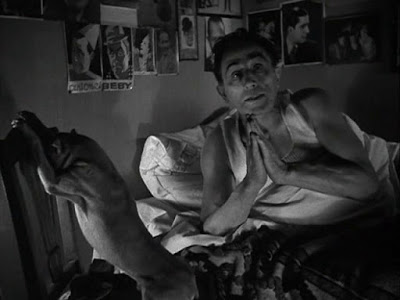
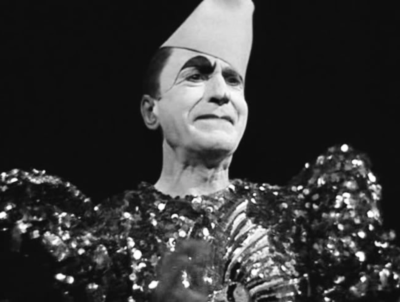
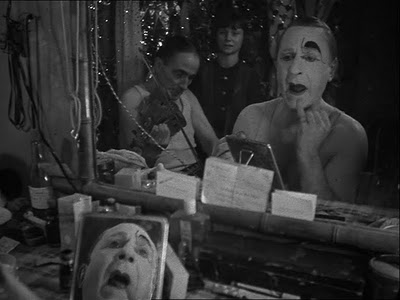
______________ 24 Hours in the Life of a Clown (1946) ‘The movie follows the clock round as music hall clown Beby takes off his make up, goes home for a meal, looks at photos and goes to bed to rise, spend a day in the village and perform with his new partner. The directorial debut of a legend and you get exactly what is billed. It’s very charming and light hearted.’— James Betsalel
the entirety
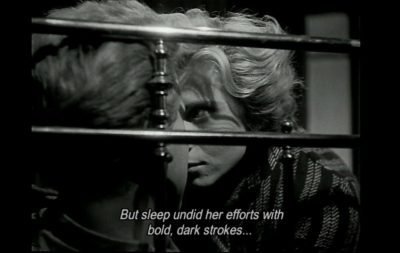
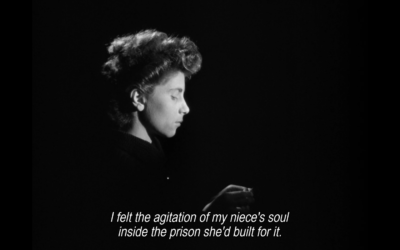
______________ Le Silence de la mer (1949) ‘Jean-Pierre Melville began his superb feature filmmaking career with this powerful adaptation of an influential underground novel written during the Nazi occupation of France. A cultured, naively idealistic German officer is billeted in the home of a middle-aged man and his grown niece; their response to his presence—their only form of resistance—is complete silence. Constructed with elegant minimalism and shot, by the legendary Henri Decaë, with hushed eloquence, Le silence de la mer points the way toward Melville’s later films about resistance and the occupation (Leon Morin, Priest; Army of Shadows) yet remains a singularly eerie masterwork in its own right.’ — The Criterion Collection
Trailer
Excerpt
Ginette Vincendeau on Le Silence de la mer
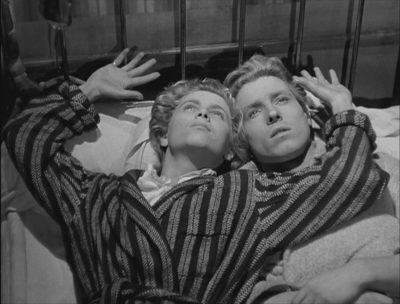
_____________ Les Enfants Terribles (1950) ‘Writer Jean Cocteau and director Jean-Pierre Melville joined forces for this elegant adaptation of Cocteau’s immensely popular, wicked novel about the wholly unholy relationship between a brother and sister. Elisabeth (a remarkable Nicole Stéphane) and Paul (Edouard Dermithe) close themselves off from the world by playing an increasingly intense series of mind games with the people who dare enter their lair—until romance and jealousy intrude. Melville’s operatic camera movements and Cocteau’s perverse, poetic approach to character merge in Les enfants terribles to create one of French cinema’s greatest, and most surprising, meetings of the minds.’ — The Criterion Collection
Trailer
_____________ When You Read This Letter (1953) ‘Quand tu liras cette lettre (When You Read This Letter) possesses an unfavorable reputation with even his most ardent admirers. The film was not only, by the director’s own admission, an impersonal project that enabled him to fund his own studio in Paris, but was also produced within the often-disparaged commercial industry of the period: an international co-production between Jad Films and Société Générale de Cinématographie in Paris and Titanus-Dauria in Rome. In his book-length interview with Rui Nogueira in 1971, Melville dismisses his involvement with this Jacques Deval-scripted melodrama as an attempt to be taken seriously within France’s commercial industry, which viewed him suspiciously as an “amateur, even a dilettante”, with the artistic pretensions of an “intellectual.”’— Senses of Cinema
Trailer
______________ Bob le flambeur (1956) ‘Jean-Pierre Melville’s “Bob le Flambeur” (1955) has a good claim to be the first film of the French New Wave. Daniel Cauchy, who stars in it as Paolo, Bob’s callow young friend, remembered that Melville would shoot scenes on location using a handheld camera on a delivery bike, “which Godard did in ‘Breathless,’ but this was years before Godard.” Melville worked on poverty row, and told his actors there was no money to pay them, but that they would have to stand by to shoot on a moment’s notice. “Right now I have money for three or four days,” he told Cauchy, “and after that we’ll shoot when we can.”
‘This film was legendary but unseen for years, and Melville’s career is only now coming into focus. He shot gangster movies, he worked in genres, but he had such a precise, elegant simplicity of style that his films play like the chamber music of crime. He was cool in the 1950s sense of that word. His characters in “Bob” glide through gambling dens and nightclubs “in those moments,” Melville tells us in the narration, “between night and day … between heaven and hell.”‘— Roger Ebert
Trailer
Excerpt
Excerpt
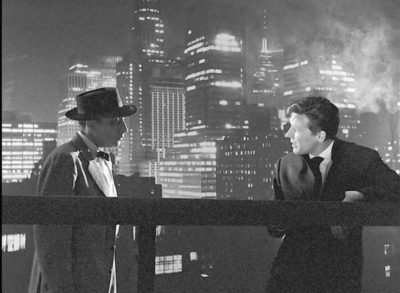
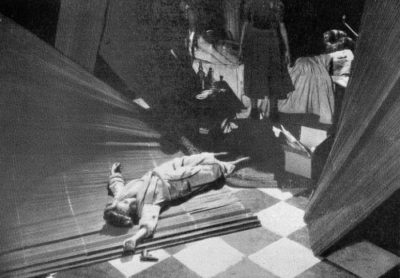
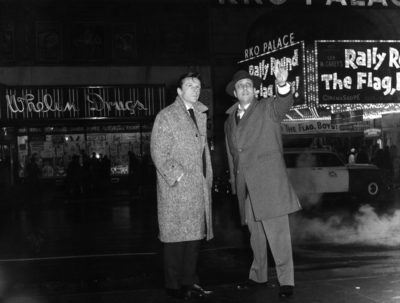
_____________ Two Men in Manhattan (1958) ‘A French UN delegate has disappeared into thin air, sending reporter Moreau (Jean-Pierre Melville) and hard drinking photographer Delmas (Pierre Grasset) on an assignment to find him. Their only lead is a picture of three women. Set against a smoky jazz score and featuring stunning black and white cinematography that beautifully captures the gritty streets at night, this is director Melville’s love letter to New York City and homage to American Film Noir.’— eOne
Trailer
Excerpt
Jonathan Rosenbaum analyzes TWO MEN IN MANHATTAN
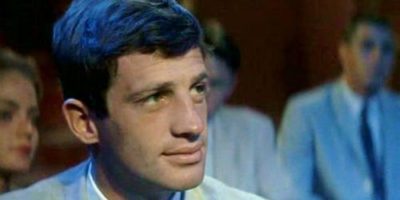
______________ Léon Morin, Priest (1961) ‘In 1961, reeling from the failure of his U.S.-set thriller Two Men in Manhattan and resolved to break with his image as a cult director “known only to a handful of crazy film buffs,” Jean-Pierre Melville signed to adapt and direct this film version of Béatrix Beck’s acclaimed roman à clef about her life in a French provincial village during and just after the Occupation. He chose the ravishing Emmanuelle Riva (fresh off Hiroshima Mon Amour) to play Beck’s surrogate, an atheistic widow who saunters into the local church with the goal of making a mockery of the place. But Melville himself, who knew the real Beck, would later say he most closely identified with the eponymous man of the cloth (Jean-Paul Belmondo), who rather than taking offense at Riva’s outré claims, offers her compassionate counsel and attempted conversion–a personal attention she is not alone in receiving among the village’s single, man-hungry women.’ — Film at Lincoln Center
Trailer
Excerpt
Excerpt
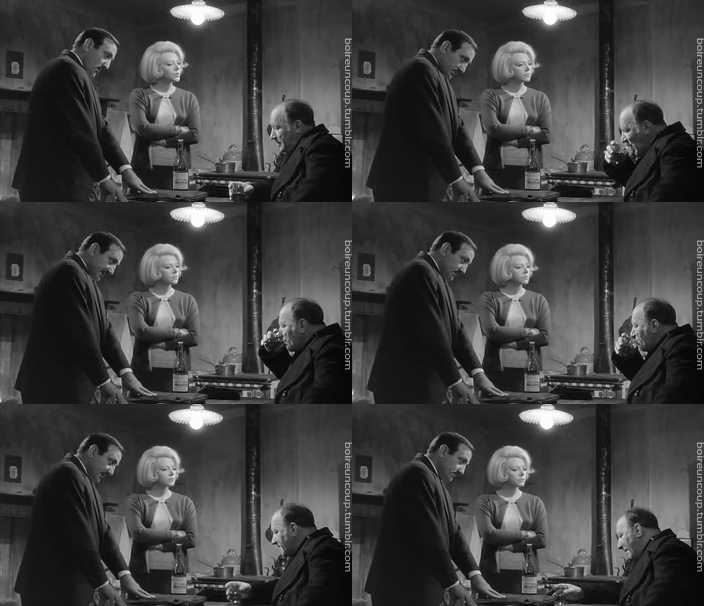
_______________ Le Doulos (1962) ‘The backstabbing criminals in the shadowy underworld of Jean-Pierre Melville’s Le doulos have only one guiding principle: “Lie or die.” A stone-faced Jean-Paul Belmondo stars as enigmatic gangster Silien, who may or may not be responsible for squealing on Faugel (Serge Reggiani), just released from the slammer and already involved in what should have been a simple heist. By the end of this brutal, twisting, and multilayered policier, who will be left to trust? Shot and edited with Melville’s trademark cool and featuring masterfully stylized dialogue and performances, Le doulos (slang for “informant”) is one of the filmmaker’s most gripping crime dramas.’ — The Criterion Collection
Trailer
Excerpt
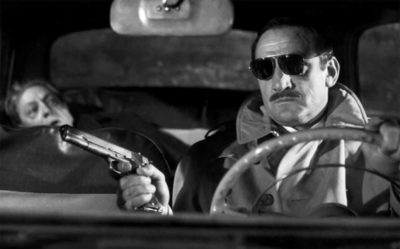
_______________ Magnet of Doom (1963) ‘Two bouts, one in a Gallic boxing ring and the other in a Louisiana swamp, and the road between them. The failed prizefighter is a former paratrooper (Jean-Paul Belmondo), he answers a newspaper ad and finds himself in an airplane to America next to the corrupt banker (Charles Vanel), “an old oak tree who wanted to be called godfather.” Secretary, bodyguard, surrogate son, the roles multiply as they reach New York and head south, though not before a solemn visit to Frank Sinatra’s birthplace in Hoboken. “Fate had decided. I could only watch in the rear-view mirror.” Simenon according to Jean-Pierre Melville, or Deux hommes dans Manhattan expanded in Decaë color and Francoscope, a reverie of the New World. A predatory philosophy (“Sheep, leopards and jackals”) is the same on either side of the ocean, the pearly Oldsmobile Cutlass is posed next to roadside diners and crimson gas pumps in acute Ruscha compositions. Drive by the George Washington National Forest and who but Stefania Sandrelli turns up as a hitchhiker in a Shirley MacLaine ‘do—the camera cranes over the trees by the peebly riverbank and suddenly it’s a Delmer Daves western, complete with a harmonica theme by Georges Delerue. (A valiseful of dollar bills is dumped off the side of a cliff to curtail the interlude.) Feds with extradition papers, rockabilly GIs by the jukebox, nods to The Set-Up and Citizen Kane and Some Came Running, toothpaste commercials on the motel telly. New Orleans is the final stop, with a Cinecittà starlet in blue plumes at the nightclub and a fateful scuffle in a bayou shack. “California champagne,” Belmondo shrugs. The joke is that this excursion into Yankee territory is envisioned largely inside a Parisian studio, with location glimpses only adding to the hallucinatory effect of wide open spaces as inescapably entrapping as Melville’s noir labyrinths. A key transitional work, overlooked even by the director’s buffs yet understood at once by Easy Rider, Five Easy Pieces, Kings of the Road…’— FernandoFCroce
Opening credits
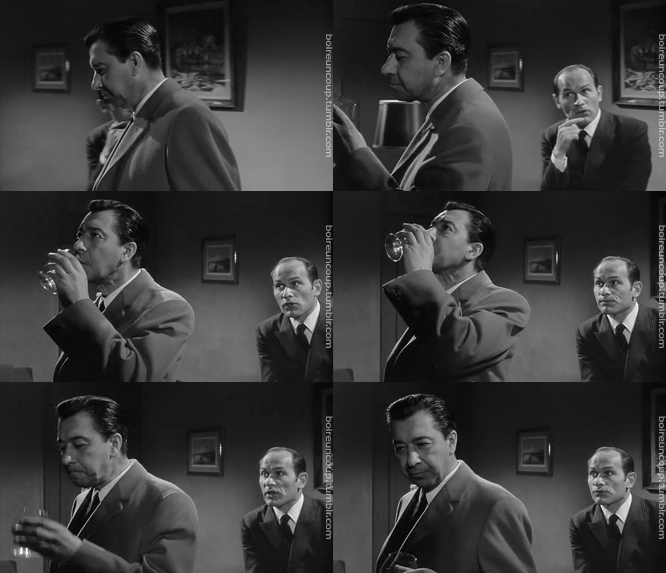
_______________ Le Deuxieme Souffle (1966) ‘With his customary restraint and ruthless attention to detail, director Jean-Pierre Melville follows the parallel tracks of French underworld criminal Gu (the inimitable Lino Ventura), escaped from prison and roped into one last robbery, and the suave inspector, Blot (Paul Meurisse), relentlessly seeking him. The implosive Le deuxième souffle captures the pathos, loneliness, and excitement of a life in the shadows with methodical suspense and harrowing authenticity, and contains one of the most thrilling heist sequences Melville ever shot.’— The Criterion Collection
Trailer
the entirety (no subtitles)
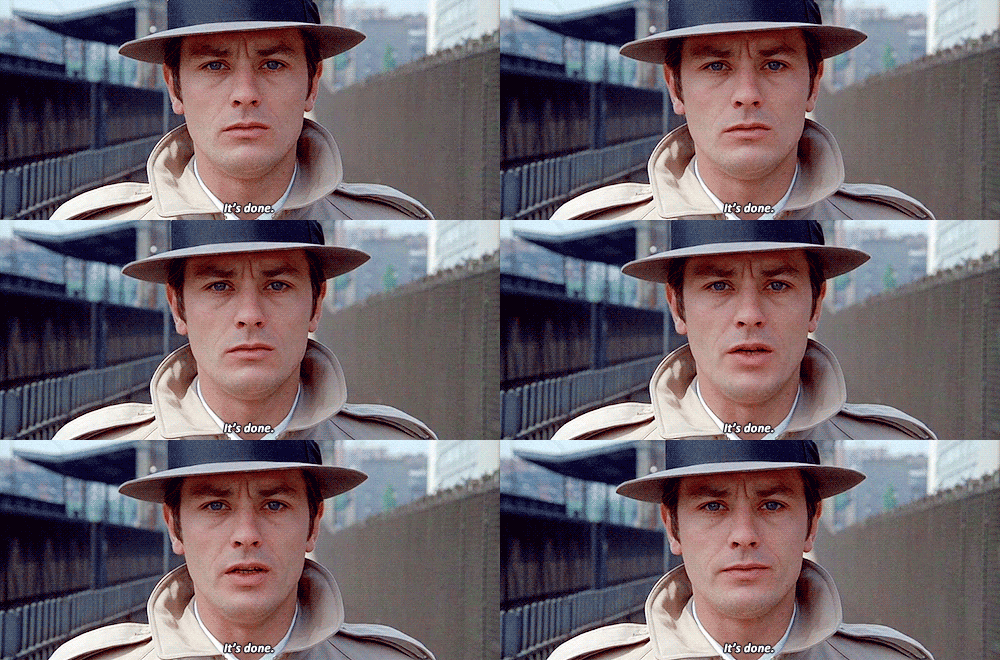
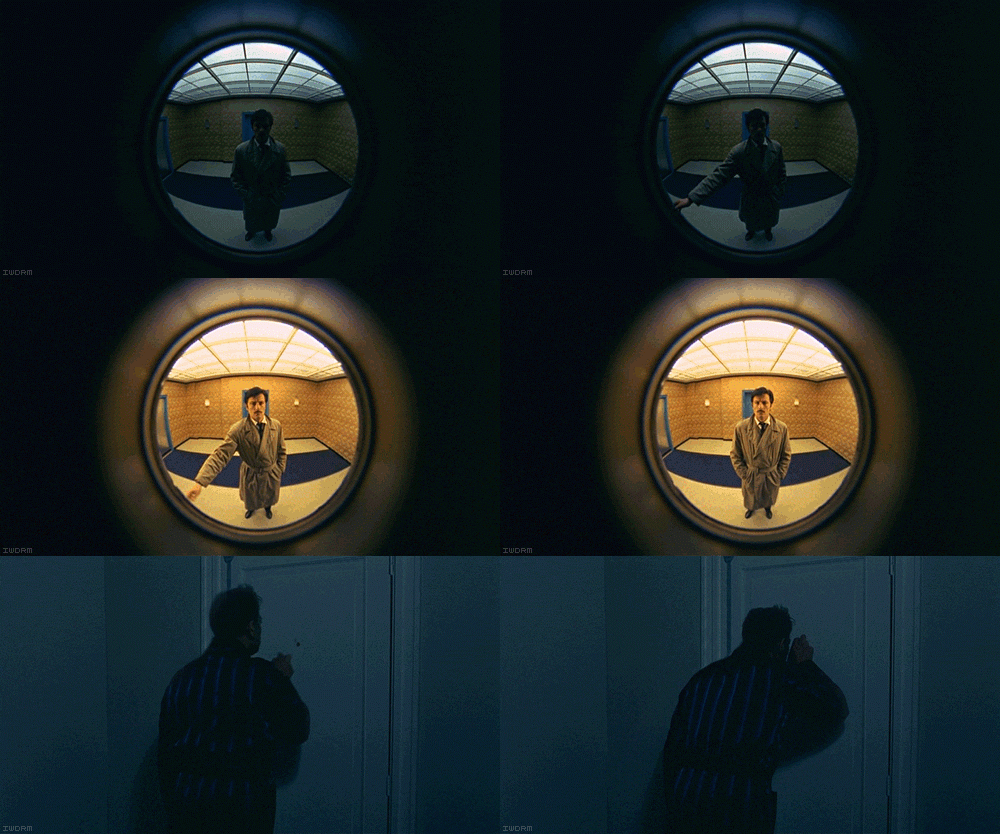
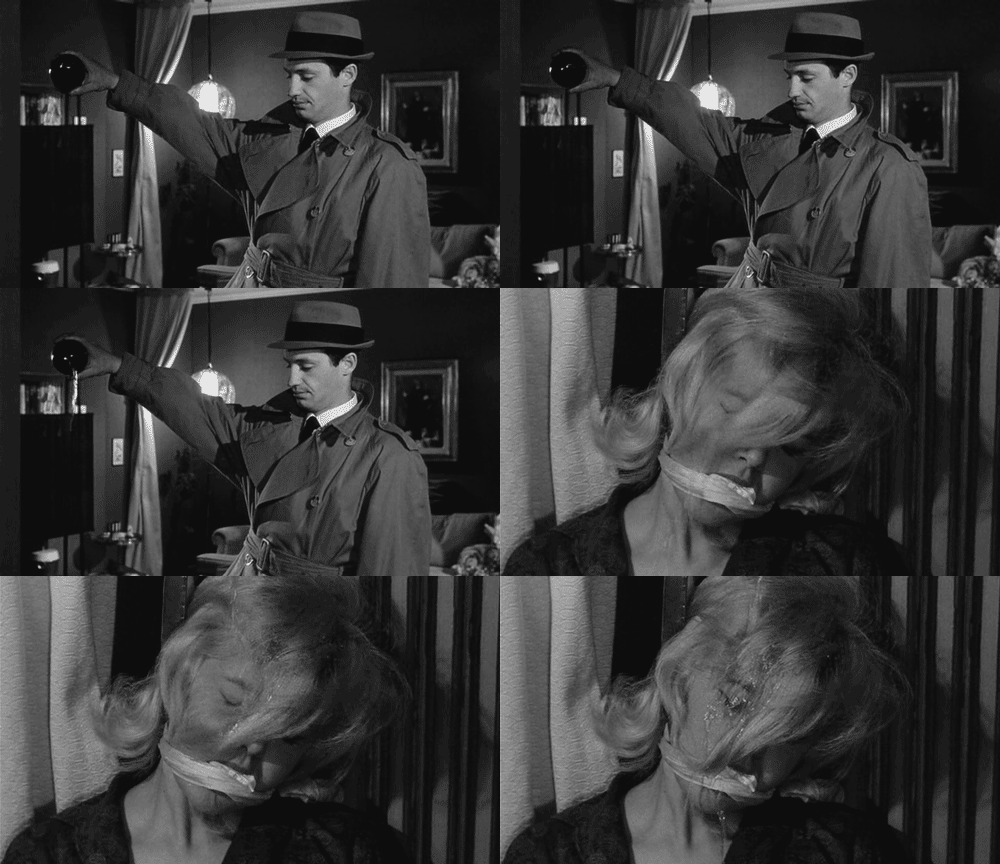
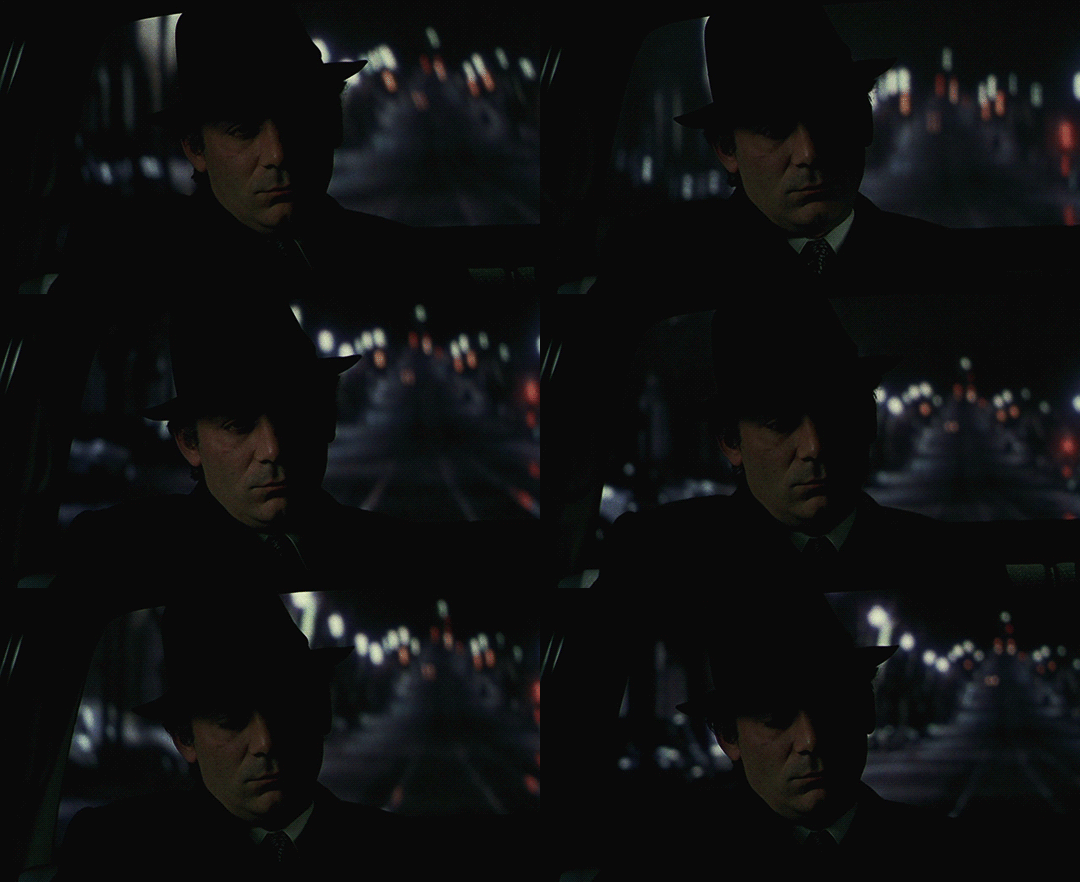
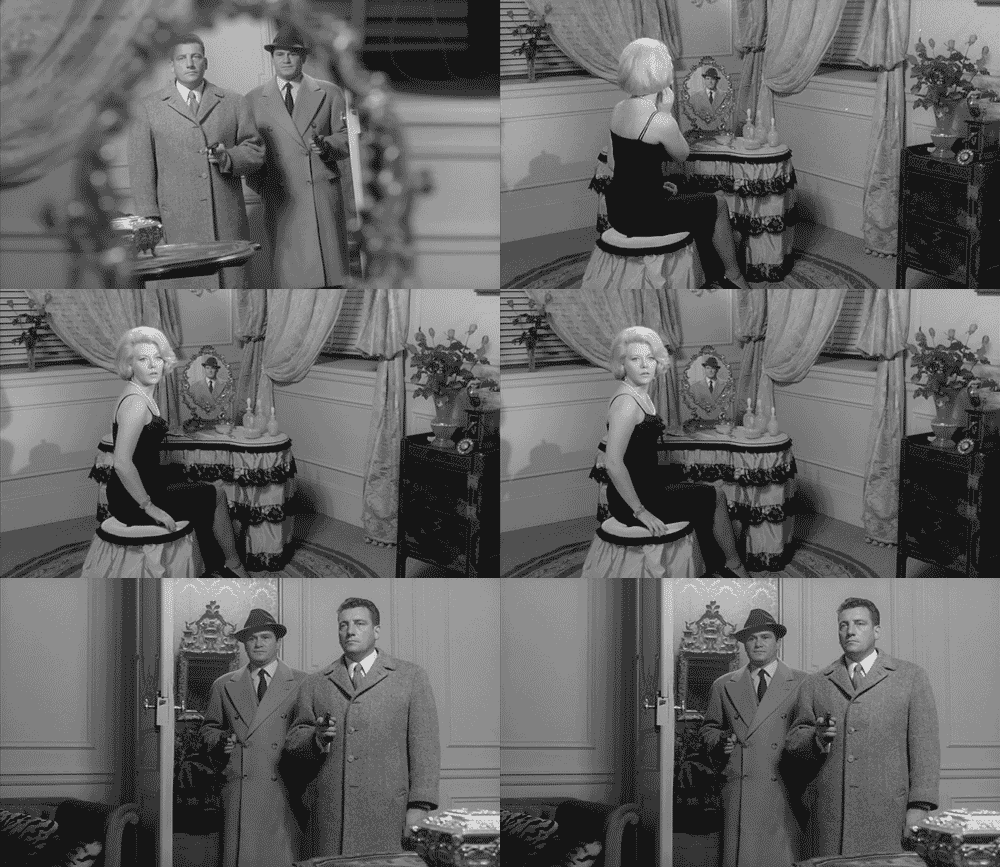
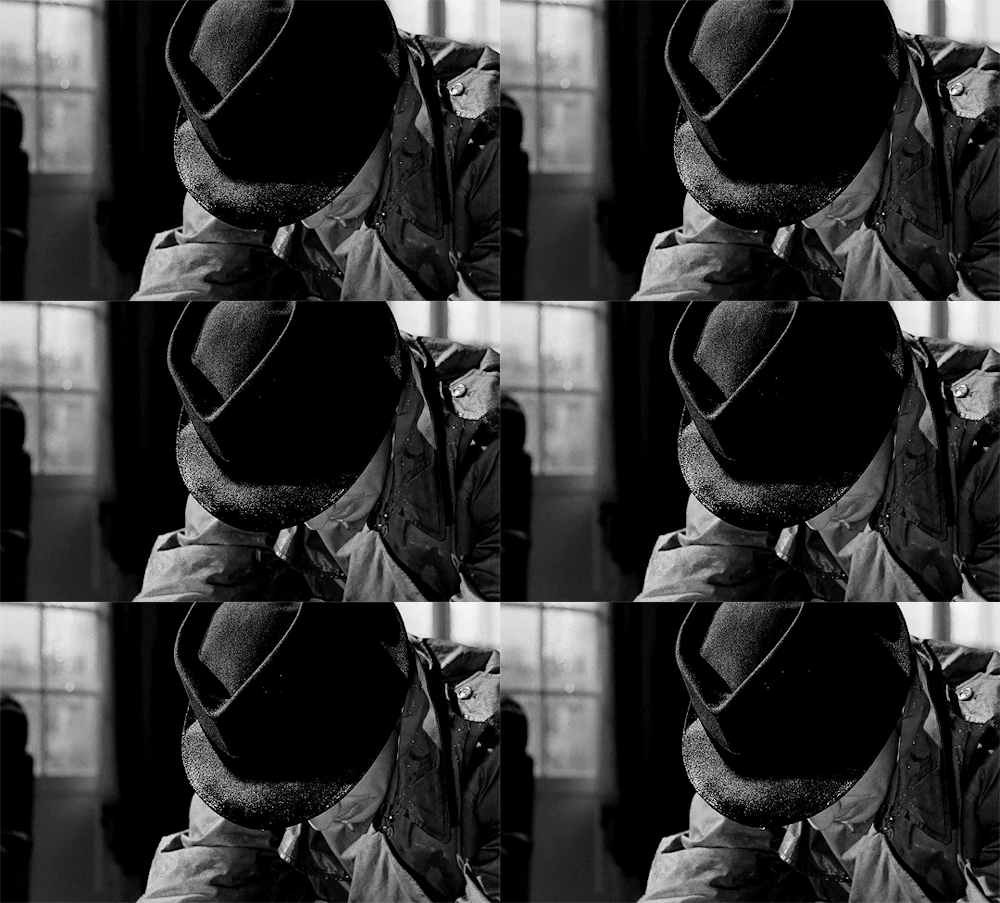
______________ Le Samouraï (1967) ‘In a career-defining performance, Alain Delon plays Jef Costello, a contract killer with samurai instincts. After carrying out a flawlessly planned hit, Jef finds himself caught between a persistent police investigator and a ruthless employer, and not even his armor of fedora and trench coat can protect him. An elegantly stylized masterpiece of cool by maverick director Jean‑Pierre Melville, Le samouraï is a razor-sharp cocktail of 1940s American gangster cinema and 1960s French pop culture—with a liberal dose of Japanese lone-warrior mythology.’— The Criterion Collection
Excerpt
Excerpt
Excerpt
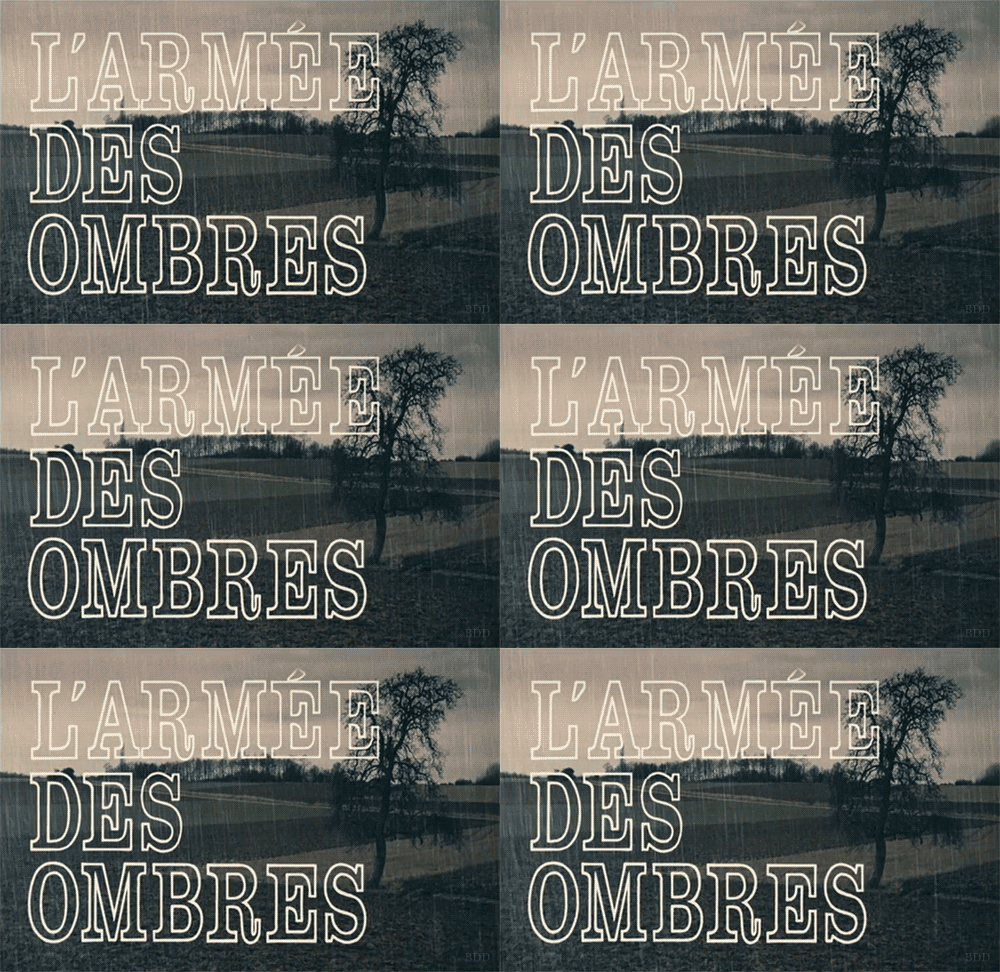
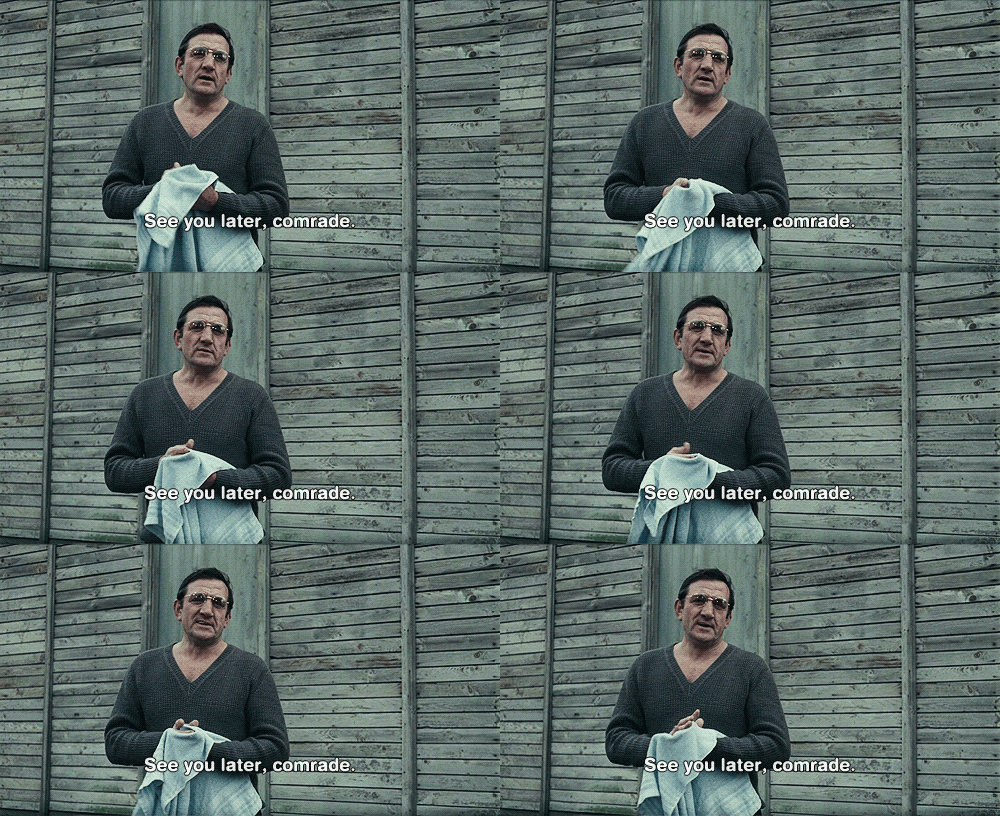
_____________ Army of Shadows (1969) ‘Never trust the critics. When it was first released a year after the convulsions of May 1968, Jean-Pierre Melville’s inky wartime masterwork Army of Shadows was widely dismissed by French cinephiles, damned as suspiciously Gaullist. At half a century’s distance, you wonder if writers were wrongfooted too by the raw gravity of what they had seen.
‘Then, as now, thoughts of Melville led to images of trenchcoats and smoking revolvers, the fun stuff of the low-life crime dramas that made his name. Here instead was a cold, mournful study of the Resistance, occupied France heavy with the taint of Vichy. Watch it a hundred times and the dread, bad-dream opening sequence of Nazi troops swarming through the Arc de Triomphe might still leave you reeling, one of cinema’s greatest horror choreographies. It could hardly be a better introduction to what follows, the scattered campaigns of a handful of guerrilla fighters led by the relentless Philippe Gerbier (Lino Ventura).
‘While Melville had a distaste for films that drew from their makers’ own lives, here it was unavoidable — much of his own war was spent in the Resistance. The filter was the dramatised memoir of another fighter, Joseph Kessel, giving the script a just-the-facts bristle. But the director’s noir history was not wholly abandoned. What was the Resistance, after all, if not a noble underworld, thick with subterfuge, dotted with safe houses?
‘The novelty — it still has few equals in this — was the atmosphere of radical uncertainty, characters moving from scene to scene with death only ever half a step behind. Melville’s other glorious films (several currently available in the UK on the streaming service Mubi) would be more of a morale booster, but Army of Shadows speaks most clearly to the nature of 2020 — no end yet in sight and fate unknowable.’— Danny Leigh
Trailer
Excerpt
Cinematographer Pierre Lhomme on “Army of Shadows”
______________ Le Cercle Rouge (1970) ‘In this film, working with his cinematographer, Henri Decae, Melville takes us along for a ride through the streets of Paris that shows the vibrant city mainly at night and the bleak winter in France. The score is by Eric Demarsan that emphasizes a jazzy music that accompanies most of the action.
‘Although the film shows Alain Delon, as Corey, at the center of the action, it is however, the smart inspector Mattei who is the real hero of the movie. As played by the great Bourvil, he is a man that shows a lot of patience because he has figured from the beginning how to catch Vogel, and in the process he gets involved in the investigation of the jewel heist in which he knows the escaped man he is tailing looms large behind it. Bourvil gives an enormously satisfying performance as Mattei showing equal parts of determination and tenderness, as it’s the case with the three cats he adores.
‘Alain Delon always responded with interesting performances his appearances in Mellville’s pictures. In here he is Corey, the man who is first seen leaving prison and promising himself he won’t go back, but he cannot pass a good thing when he decides to go ahead and participate in the robbery. His association with Vogel and Jansen, pays off in the way they get the job done, but it will also prove a mistake in the way they will not be able to dispose of the loot as the fence they have relied on has a change of heart.’— jotix100
Trailer
Excerpt
Jean-Pierre Melville tourne “Le Cercle Rouge”
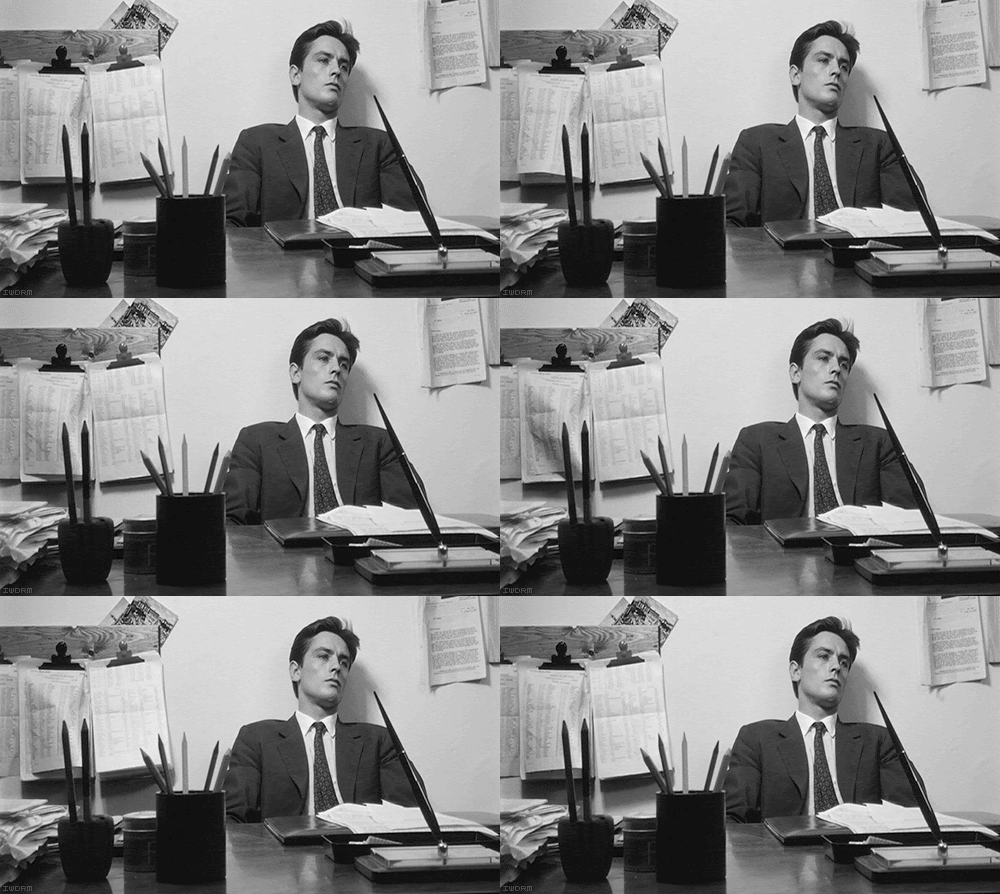
___________ Un Flic (1972) ‘Haunted by death-obsessed men of action, Un Flic (A Cop) is a fitting final act for noir master Jean-Pierre Melville, who died in 1973, a year after this production. The title suggests that film is about Edouard Coleman, Alain Delon’s weary policeman, but the true subject is Coleman’s age. These characters are all worn down by time, and while that doesn’t make them sentimental or sloppy, they are always aware that any screw-up could get them killed. The balletic opening bank heist, a precise, dialogue-free set piece where deferred stares speak louder than the roaring of waves rolling in at a nearby beach, happens at twilight, but the metallic sky looming overhead makes it impossible to be sure of the time of day. After this robbery, a group of thieves led by Simon (Richard Crenna) plan their next job, and Edouard follows them. Meanwhile, a love triangle between Edouard, his mistress, Cathy (Catherine Deneuve), Simon, her lover, takes center stage. Their uneasy relationship is at an impasse: At the bars, they sip Scotch, and warily exchange sidelong glances. Feelings are a liability in Un Flic, so Delon’s heartsick detective always looks vaguely distracted, his eyes betraying the character’s sadness. At the end, his partner fidgets while Edouard, trapped in his own head, drives down the Champs-Élysées. The other cop knows he can’t do anything for Edouard, except maybe offer a stick of gum. Un Flic‘s Paris is purgatory; the city’s silvery-blue, halogen-lit miasma is a fact of life.’— Simon Abrams
Trailer
*
p.s. Hey. ** _Black_Acrylic, Hi, Ben. I can’t remember owning any masks, although I surely did, but I love mask shopping. There are few things more exciting to me than seeing a whole wall covered with dozens and dozens of Halloween masks. New Play Therapy! You’re on fire! Everyone, Delight incarnate at the arrival of the new episode of _Black_Acrylic’s sonically pumping Play Therapy radio show/podcast packed with ‘Italo Disco, Electro, Dancehall and much more besides’. Jump to your feet or check the sturdiness of the legs on your chair then click this and then click again where indicated. ** David Ehrenstein, Those are some very nice masks indeed. And those some awfully mature looking school girls. ** Sypha, Ah, cool. Memory tells me that ‘The Tenant’ is one of Polanski’s best films. ** Bill, That really is just classic, stereotypic British snobbishness on full display right there. Yes, the film of ‘The Caretaker’ is excellent! Everyone, Psst, d.l. Bill passes along the news that Clive Donner’s great film of Harold Pinter’s play ‘The Caretaker’ is viewable in full complete with excellent visual quality on youtube right here. Happy about your anti-surge and ‘prayers’ that it holds. All signs over here are that we’ll need as much luck getting our numbers down as possible. Thanks. ** Steve Erickson, That’s, of course, strange and unsettling about your eyes. Hopes/assumption that it’s just part of the process or resulting from that side effect you mention. Hadn’t heard of ‘Synchronic’ before. Well, the premise is an enticement, for sure, but that doesn’t sound very must-see. Hm. ** Okay. The blog puts its limited resources at the behest of Jean Pierre-Melville’s body of film work this weekend, and I hope your boats are floated. See you on Monday.


























 Now available in North America