The blog of author Dennis Cooper

Category: Uncategorized (Page 768 of 1130)

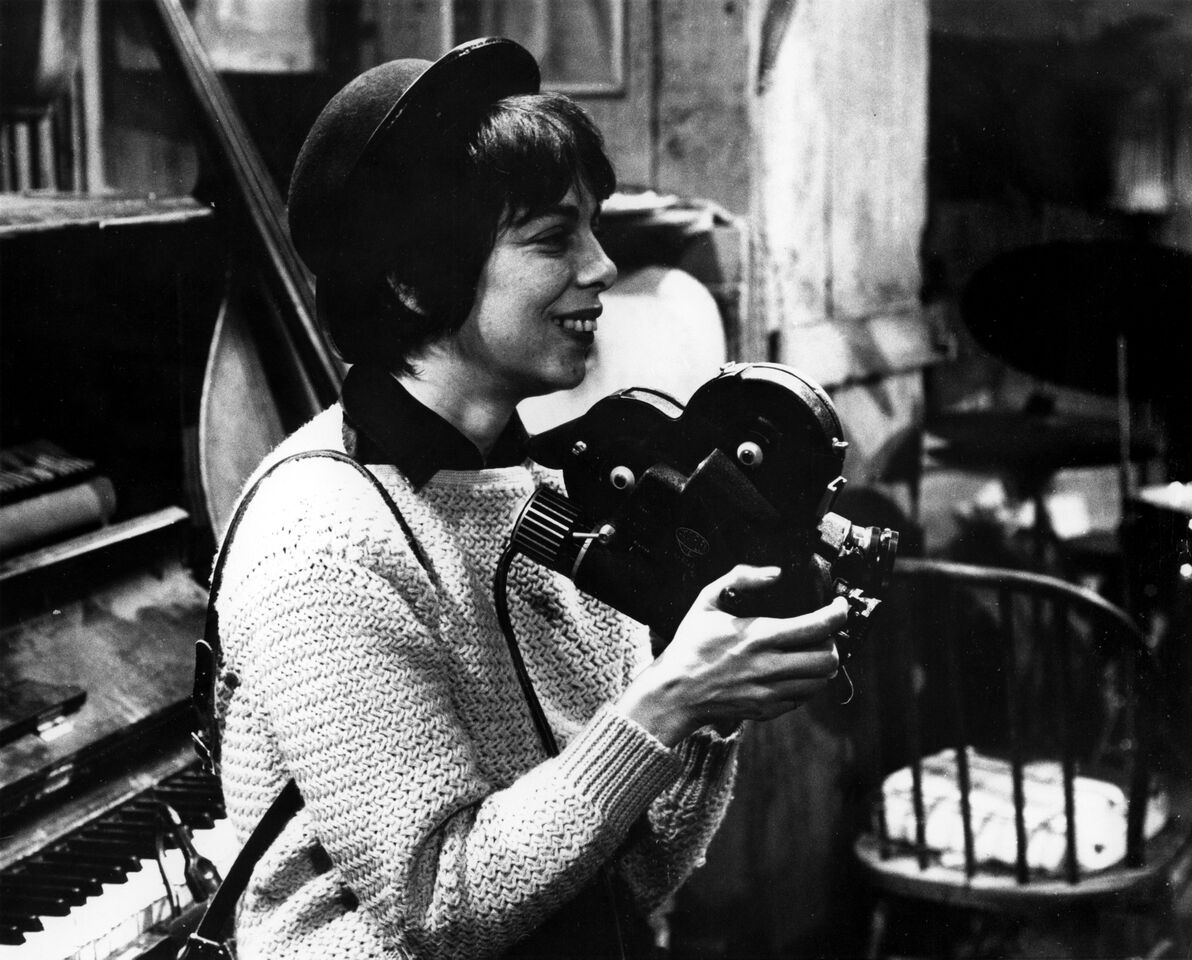
Shirley Clarke Day


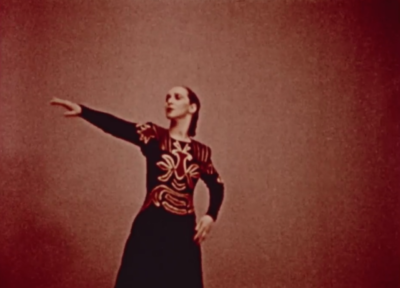
‘Born October 2, 1919 in New York, Shirley Brimberg Clarke danced into the world of art in her teens, studying with such innovative choreographers as Martha Graham, Hanya Holm and Doris Humphrey.

‘After marrying and having a daughter, Clarke turned her talents to cinema, becoming an esteemed filmmaker at a time when few women worked in the field. Her early shorts reflected her lifelong love of dance along with a growing mastery of the new medium. In her award-winning A Dance in the Sun (1953), In Paris Parks (1954), Bullfight (1955) and A Moment in Love (1957), Clarke captured movement on film in a new way, eschewing close-ups in favor of long takes and innovative editing. An active member and advocate of New York’s independent film community, Clarke later turned her attention to social-issue filmmaking.

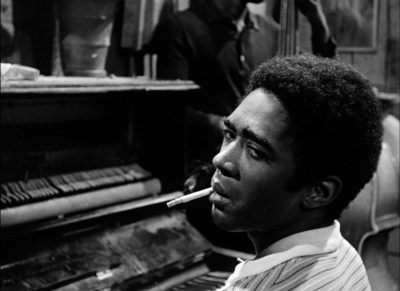
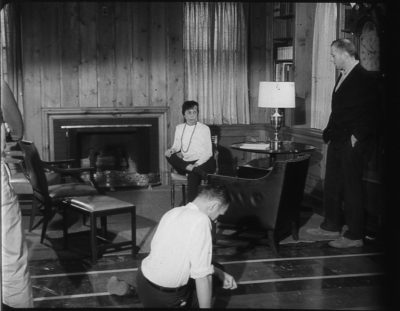
‘For her first feature, Clarke took on an acclaimed and controversial stage play by Jack Gelber. Her adaptation of The Connection (1961) won praise for its graphic, unglamorous depiction of drug use, but embroiled Clarke in a two-year censorship battle, which she ultimately won. Her next film, The Cool World (1964), was a further collaboration with Carl Lee, the African American star of The Connection and Clarke’s long-time romantic partner (until his death in 1986).

‘In 1963, Clarke directed Robert Frost: A Lover’s Quarrel with the World. Filmed months before the poet’s death, the documentary revealed Frost’s warmth and charm in speaking engagements and at home. Clarke was reportedly unhappy with the final cut, but the film went on to win the Oscar for Best Documentary. Her daughter Wendy writes, “Shirley did consider (it an honor] that she won an Academy Award for this film and even went to Los Angeles to the Awards. She sat just behind Danny Kaye.”

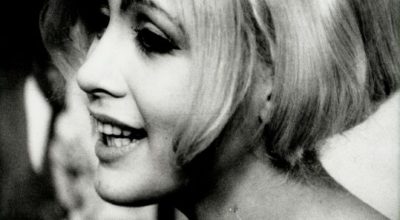
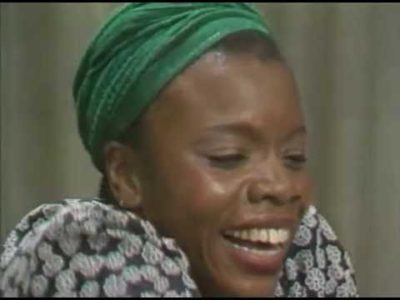
‘Clarke’s fourth feature, Portrait of Jason (1967), was a completely different kind of project. A pure documentary without adornment, Portrait was created from a single, 12-hour-long interview with Jason Holliday, a gay African American hustler and aspiring nightclub performer. Holliday’s stories of racism, homophobia, parental abuse, drugs, sex and prostitution would have been shocking if not for his candor, humor and acerbic charm. The film was a revelation and remains one of the most respected LGBT films.

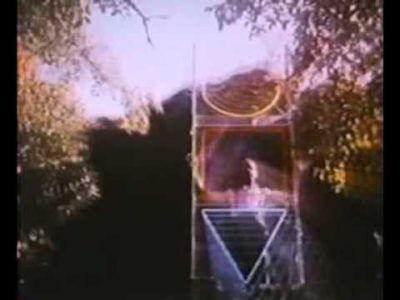
‘Despite the success of Portrait of Jason, Clarke found it increasingly difficult to get financing for her films. From 1975 to 1985 she redirected her talents to teaching film and video production at UCLA. Clarke’s fifth and final feature, Ornette: Made in America was well-received portrait of the eccentric musical genius and a cinematic comeback for Clarke. Once again, she was on the cutting edge of film style, weaving documentary footage, video art, music videos and architecture into a vibrant collage that mirrored Coleman’s groundbreaking jazz. It was her groovy swan song, as Clarke then retired. She died of a stroke in Boston in 1997.

‘For a director whose films were designed to unsettle audiences, perhaps the most shocking aspect of Clarke’s career is her lack of recognition today. Although acknowledged as a major influence by many current filmmakers, there is not one single book devoted to her work, nor has there been a significant re-release of her films.’ — Project Shirley


____
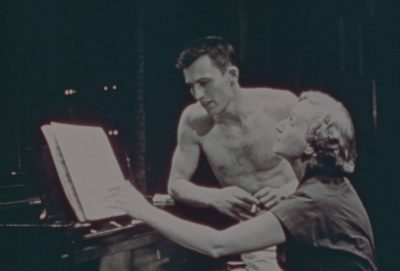
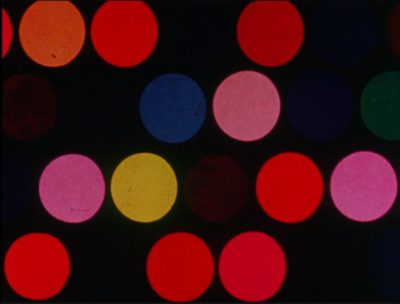
Stills


_____
Further

Shirley Clarke Site
Shirley Clarke @ IMDb
A profile of Shirley Clarke
Shirley Clarke Saw the Future of Cinema
The Magic Box: The Films of Shirley Clarke, 1929–1987
Shirley Clarke @ MUBI
Shirley Clarke @ Milestone Films
The Complicated Camera of Filmmaker Shirley Clarke
Celebrating Shirley Clarke
choreography of cinema : an interview with shirley clarke
Interview with Shirley Clarke
Shirley Clarke @ letterboxd
PORTRAIT OF SHIRLEY: a film in progress about Shirley Clarke
Shirley Clarke, l’anti-Hollywoodienne
Shirley Clarke’s ‘Connection’: Will It Click At Last?
Thoughts on Shirley Clarke and The TP Videospace Troupe
SHIRLEY CLARKE MAKES THE CONNECTION
Shirley Clarke @ UNDERGROUND FILM JOURNAL
Shirley Clarke @ senses of cinema
Experimental director Shirley Clarke on her film about drug addiction – archive, 1961
6 Filmmaking Tips from Shirley Clarke
Shirley Clarke: The godmother of indie cinema
Shirley Clarke – Is this reality?
When Shirley Clarke Met Roger Corman
Shirley Clarke and the Obscuring of Reality
TO THE BEAT OF SHIRLEY CLARKE


____
Extras


Portrait of Shirley Clarke (1968)


Shirley Clarke: A Retrospective


Shirley Clarke on women in film and men in money


______
Interview (1964)
by Harriet Polt/Film Comment


How did you get your start in filmmaking?

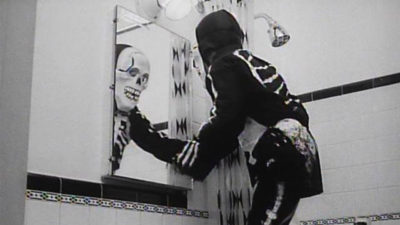
My first film was a short dance film called Dance in the Sun. When I saw the first rushes I was horrified: it was just terrible. I debated on whether to finish it or not, but I finally decided to go ahead, because if I didn’t I would never learn anything. Still, most dance films are so terrible that mine was among the best, and it won a prize. This made me an authority on dance films. I then made two more dance films and a number of other short features: seven all together before I made The Connection. One of the shorts, Skyscraper, won a prize in Venice and also in the U.S. and gave me a name, making it possible for me to go into features. The first film I really felt strongly about, though, was Scary Time, a film I made for UNICEF. It is a kind of stream-of-consciousness film juxtaposing shots of kids dressed for Halloween as skeletons, and other kids who really are skeletons. The film ends with a long, long shot of a Moroccan baby whose face is all covered with flies; all through the shot, the baby never moves to brush the flies away, as if to say, isn’t everybody covered with flies? UNICEF hated this and wanted me to cut it from the picture, but I refused. The film is hardly ever shown. It was made to be used in Western countries, to influence people to get their governments to give money to UNICEF. But so far as I know, it has never played in the U.S. and probably not in any of the Eastern countries either.

How did you come to make The Connection?

It was easy. I went to see the play and decided I wanted to make a film of it. The author, Jack Gelber, sold me the rights to it. He had refused a number of other filmmakers before me.

Do you intend to go on making features or do you plan more shorts?

Economically, it’s impossible to stay with shorts. You have to find a sponsor, and then you might as well be working for Hollywood.

How do you feel about Hollywood? Do you have any intention of making a film there?

Never. Hollywood has preconceived ideas about what audiences want. The Hollywood idea is that films about Negroes or films about young boys don’t make money. I would never have got money in Hollywood to make The Cool World.

Where did you get the money to make your films?

I raised it from many people, like the people who give money to put on plays and are interested in the glamor of being an “angel.” Of course, you have to keep costs down and only plan films that can be made on a low budget. The Cool World cost $250,000, which is about a fourth of what it would have cost to make in Hollywood. But the ease with which one can get money for a film depends very much on the success of the last film.

There is much talk of a “New York School.” Do you consider yourself a part of this?

I’m not sure there is such a thing. Both in New York and on the Coast there is a renaissance of films being made by individuals. These individuals come in two varieties: the young men who are trying to get to Hollywood, and the kind who want to remain personal and keep costs down. This is the only common ground.

Mrs. Clarke, how does it feel to be a woman film director?

It’s fun. I find it an advantage being a woman, but perhaps that’s because I am used to being one. I find that I can get away with things that a man wouldn’t. At first I was worried about having problems with male crews, but then I found that those who don’t like working with a woman simply don’t join up. Pretty soon we begin functioning as people, not as members of different sexes. I do have some trouble working with actresses. I didn’t get along at all with Yolanda Rodriguez, the girl who played Luanne in The Cool World.

How did you become interested in the Negro problem?

For the past four or five years I have felt that this is America’s key problem. Without a solution to it, we will never have a free country. After all, we whites are in the minority—two thirds of the world is colored.

Can you tell us something of how The Cool World was made?

The exteriors were all shot on location in Harlem. For the interiors, the New York Housing Authority gave us the use of a whole tenement building which was about to be demolished. For each set, we used a different floor of the building. We didn’t have to buy a stick of furniture—we just used what was there. Our interiors were all pre-lit, so we could move the camera freely. Throughout the film, the camera was hand-held. For sound, we used radiomicrophones, so we didn’t need a boom. The film took almost a year to make, plus four months of casting.

How did you do your casting?

Carl Lee (who plays the part of “Priest” in the film) did most of the casting. He went around to all sorts of youth organizations—settlement houses, social clubs, and so forth. Everywhere he went, the directors would bring out their star pupils. But these kids were completely unable to act. Then Carl would see some kid slinking around the school yard and would ask for him. “You don ‘t want him!” the director would say. But we took these kids to a big loft that we had, and we began improvising from the story. This got them acting, and also made the whole thing possible, because, although they are very bright, many of these kids can’t read. We used this technique throughout the film—a mixture of memorizing lines and improvising. You can’t get quiet, tender moments by improvising, so those we had to write out. But many of the others we improvised, using a straight Stanislavsky technique either before or during the shooting. We never did a scene without checking with the kids first to see if the action seemed believable to them.

How do you like working with non-professional actors?

Well, I worked with a combination of professionals and non-professionals which is confusing. You have to try to make the non-professionals be what they are, and at the same time you have to break the professionals of their bad habits. The kids had no bad acting habits or preconceptions. They were just wonderful to work with—working 18 hours a day, seven days a week, for 12 weeks without a complaint. And shooting a film can sometimes become pretty dull for the actors.

What has become of these kids since The Cool World?

These were all kids who had police records. The life they played in the film was pretty much the life they had lived. Now they’ve changed. Hampton Clanton, who plays the lead, is finishing his last year of high school and goes to a neighborhood playhouse. The boy who plays the leader of the enemy gang is working as a messenger for a playhouse. Some of the boys are acting in an off-Broadway play that our set-builder has written. I don’t know what Yolanda Rodriguez is doing—she didn’t want to be an actress at all. We had to beg her to come all the time. She was working after school for a bra manufacturer, which interested her much more than the film.

How do you explain the change in the lives of these boys?

Their main problem is a lack of self-identity, of dignity. The film gave them a sense of pride: the idea that they are important enough to make a film about what we’re curious about is how these kinds of kids will react when they see the film. We would like them to come out a little straighter and prouder than when they went in.

What are your plans for future productions?

Right now I feel I am still working on The Cool World. The film was barely finished when we brought it to Venice, and it still needs some cutting. After that, I want to take a couple of months to plan for the next two productions. I would like to keep the same producer and the same technical people. Eventually, I would like to form a co-op with other directors and produce for each other. We have various enough backgrounds in film that we have an overall knowledge of how to make a film. That wary, too, we could covet each other’s losses. So, if one director’s film loses money, another will gain, and the co-op will still break even. I’m not the only person who wants to do this sort of films I’m doing, or the only person with talent. But talent isn’t enough for a modern artist. He has to be a salesman too. And he has to be willing to plunge in, as I did with that awful dance film. Other people are too cautious. As for me, I don’t care. If the film doesn’t succeed, it’s only money, or a few years of your life.

Do you expect to have any trouble with censorship, as you did with The Connection?

We won the court case in New York with The Connection so we shouldn’t have any trouble. Some cities, for example Chicago, still won’t play The Connection. Burt most cities that have a censorship board will follow New York’s lead. Of course, it did take a year to get that case through the court.

If it’s not being too personal, how did you eat during that year, or at other slack times?

Most filmmakers have to accept commissions or films, or do other little jobs. I’m lucky—I have a husband who has a regular job.


________________
15 of Shirley Clarke’s 32 films

________________
Dance in the Sun (1953)
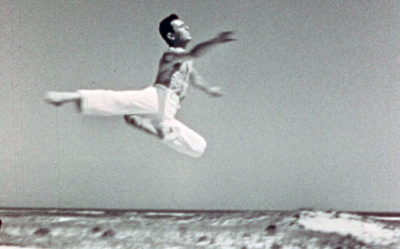
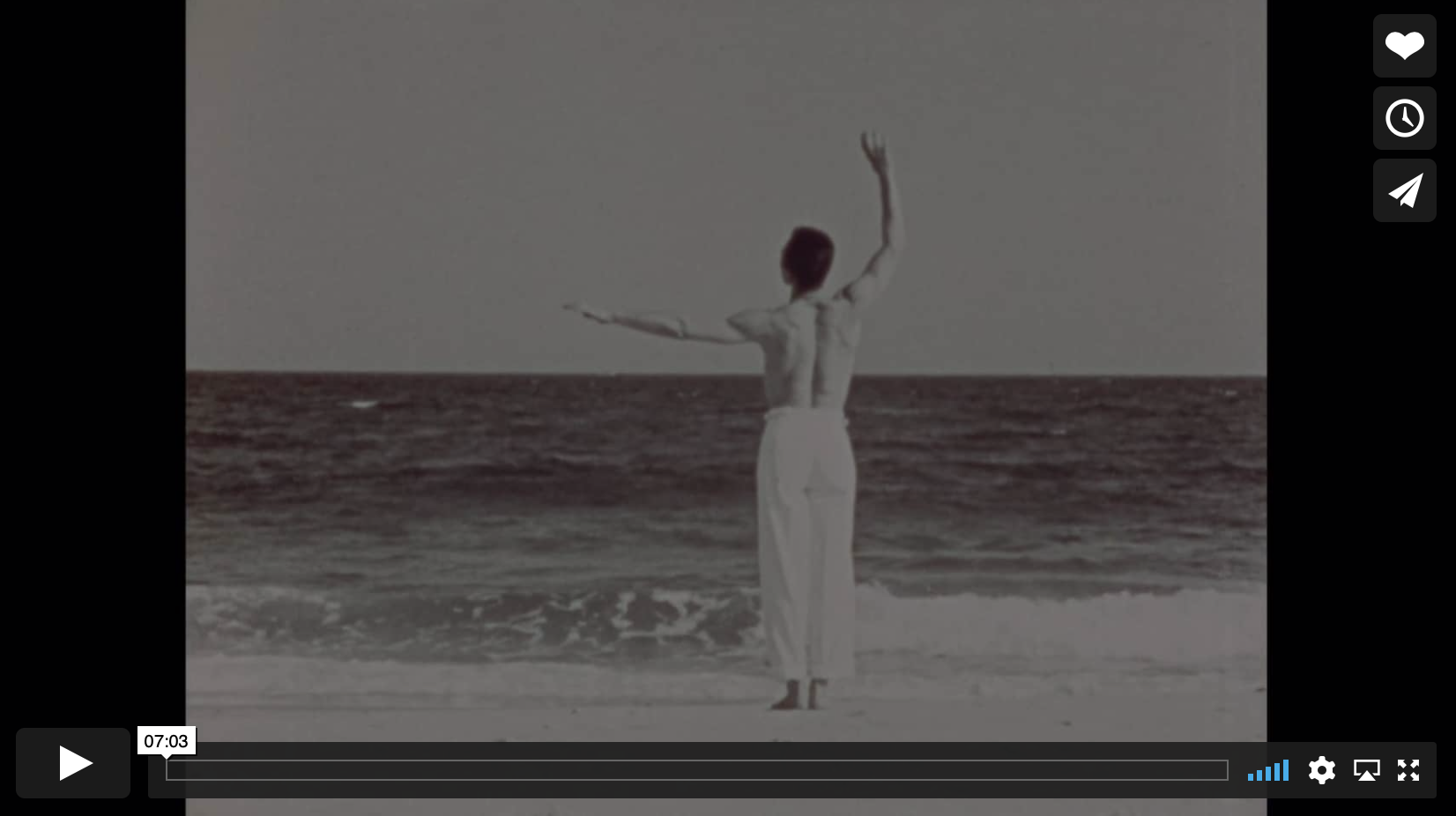
‘Drawing on her dance background for her first film, Shirley Clarke’s Dance in the Sun is a simple, straightforward work of filmed dance–but just because it’s simple doesn’t mean it’s not effective. The music (Right up to the closing cigarette break!) is engaging and dancer Daniel Nagrin’s movements are energetic enough that the film-essentially in two halves-indoor and outdoor–shifts from claustrophobic, nervous energy to expressive joy at being out in the world. Short enough that you could watch it on the go in the morning before work, and it just might have you bouncing out into the world as well.’ — Jay D ‘s Watching

Watch the entirety here


________________
Bullfight (1955)
‘Clarke parallels the sense of spectacle and the real violence of an actual bullfight with a dance interpretation of the emotional experience, using a distillation of the ritual gestures in the Spanish bull ring. In her intense interpretation, Sokolow embodies both matador and bull, both executioner and the sacrifice.’ — DANCE ON CAMERA


the entirety


_______________
A Moment in Love (1956)
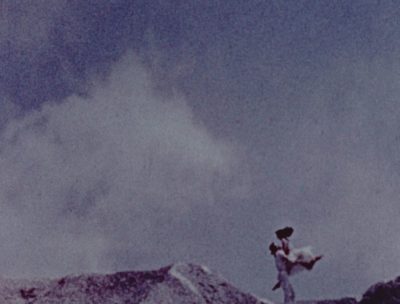
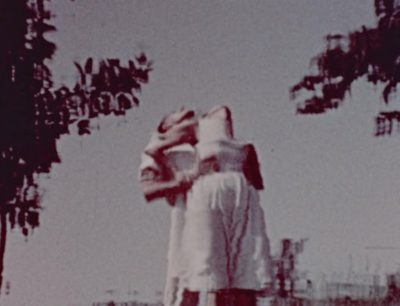
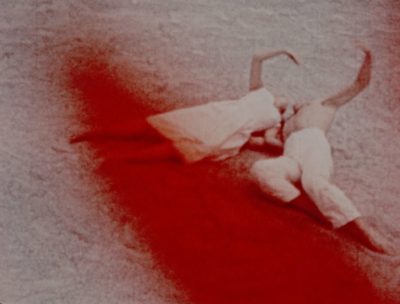
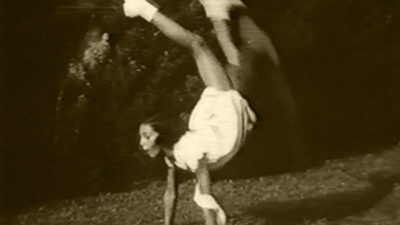
‘A balletic meeting between two lovers progresses from a woodland tryst up to the mountain tops. There are some interesting camera effects with multiple exposures or a vanishing figure. Unlike Clarke’s early Dance in the Sun, or her later dance-based films (Four Journeys into Mystic Time), A Moment in Love places cinema uppermost and the dancing second. As the dancers move, so does the camera, becoming almost like a dancer itself. Says Clarke, “I started choreographing the camera as well as the dancers in the frame”. At one point, the dancers appear to be suspended in the clouds.’ — Chris Docker


Excerpt


A Moment in Love Before and After Restoration Comparison


________________
Brussels Loops (1957)
‘A collection of twenty short films, averaging 2-3 minutes, by various filmmakers depicting American life, intended to be shown in a continuous loop at the American Pavilion of the 1958 Brussels World’s Fair.’ — IMDb


Excerpt: Shirley Clarke BRUSSELS LOOPS [1958] ► LIVE SCORE by MTS


_________________
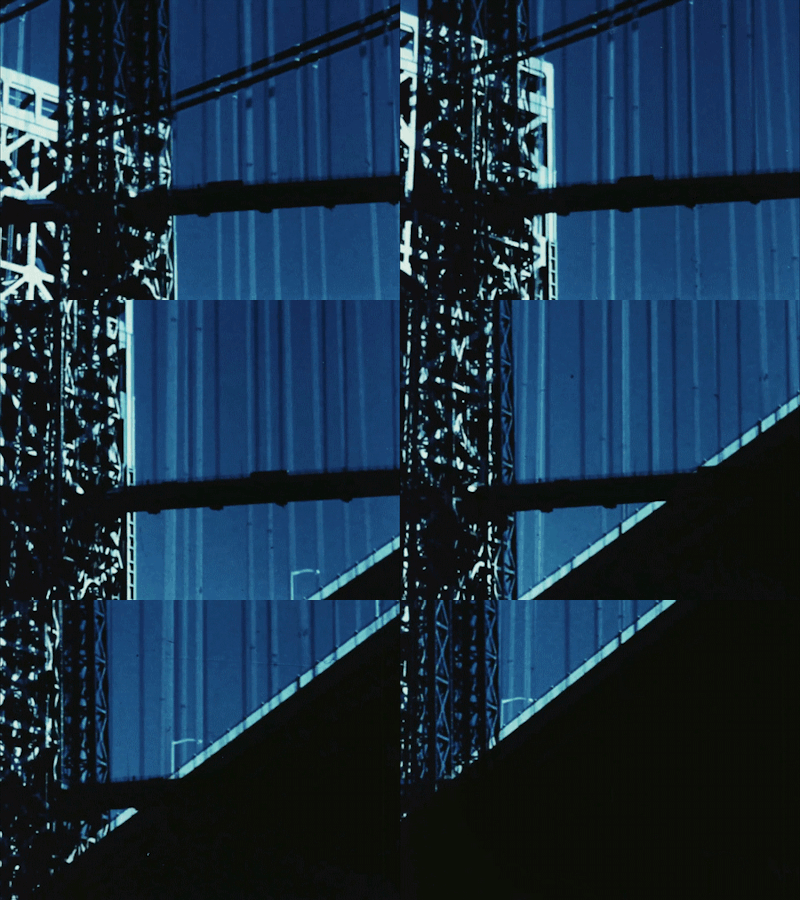
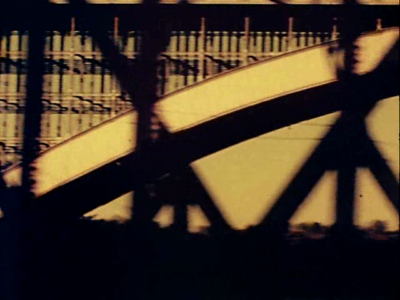
Bridges-Go-Round (1958)
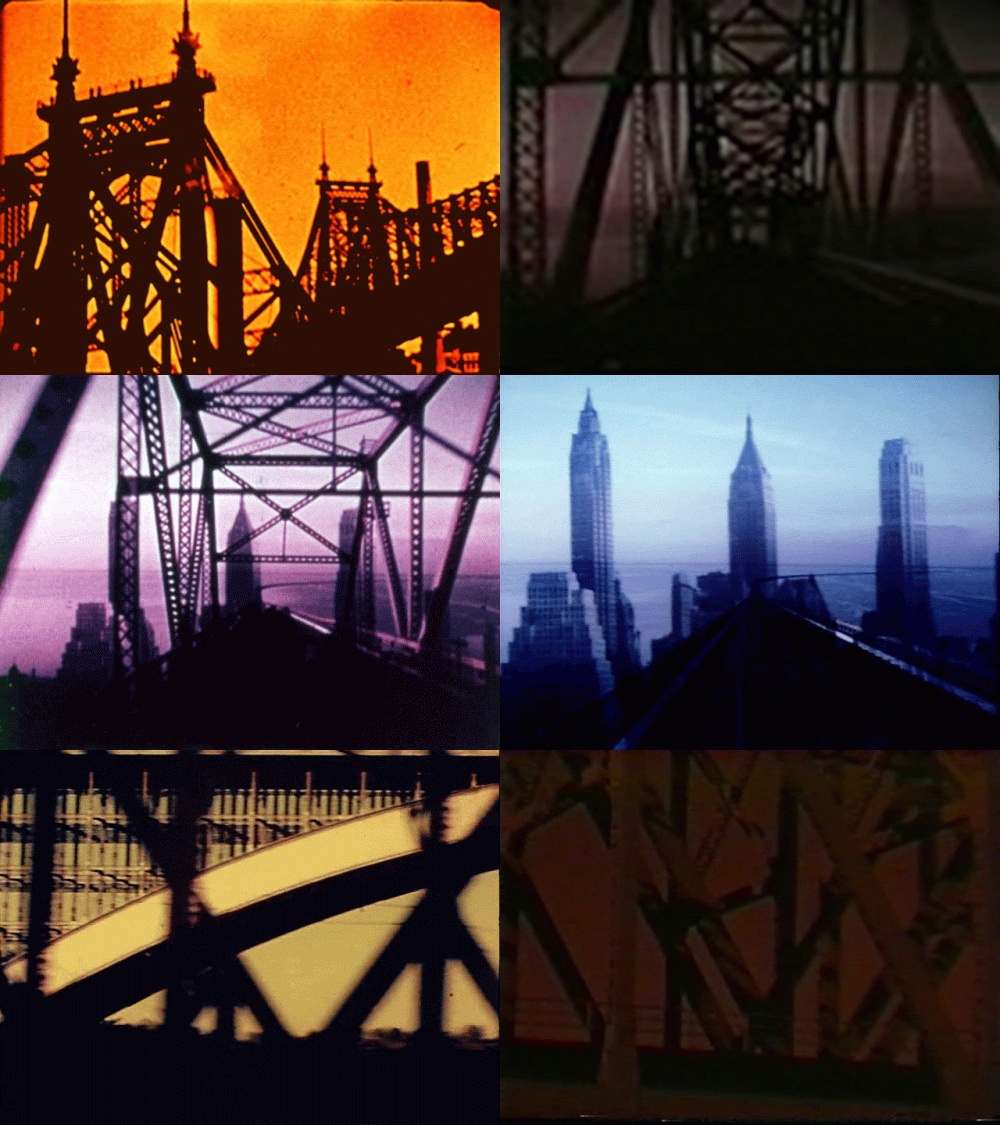
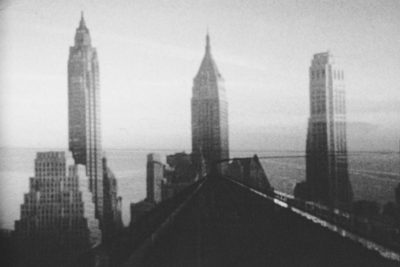
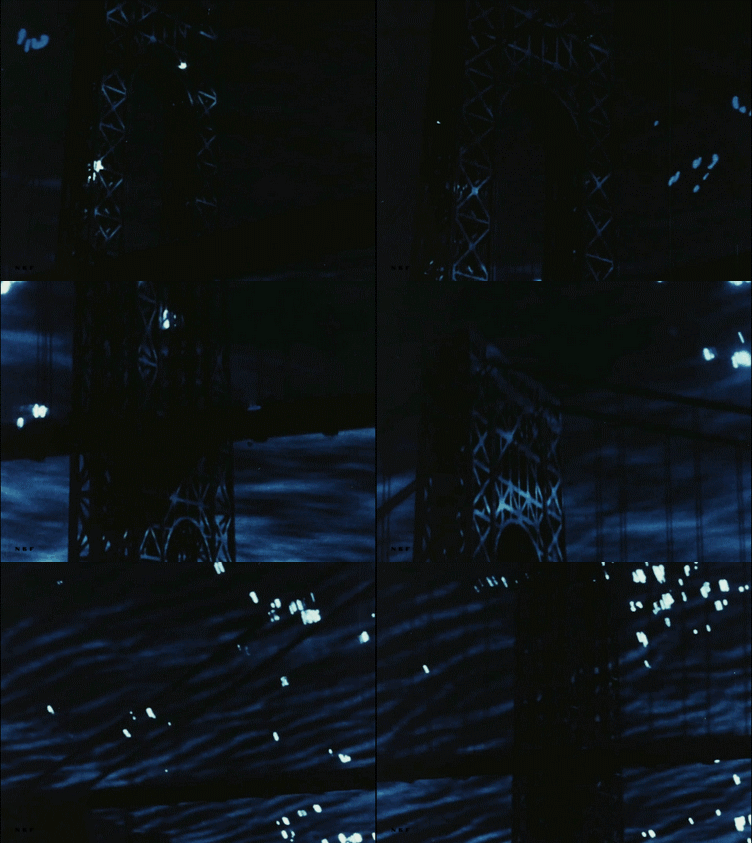
‘Made out of footage rejected by the U.S. State Department for its commissioned “Brussels loops” project, in this film Clarke makes New York City bridges dance using fast editing and superimposition. Clarke made two versions of this film using different soundtracks over an identical picture. One version uses an electronic music score written by Louis and Bebe Barron; the other version uses a jazz score written by Teo Macero. The film is currently released with both versions spliced onto one reel, creating an eight-minute film.’ — lib.berkeley.edu


the entirety


_______________
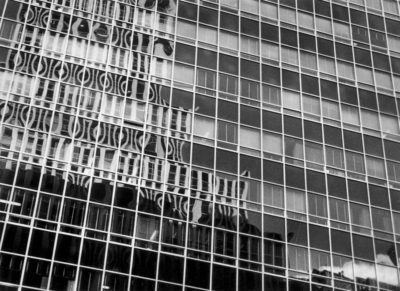
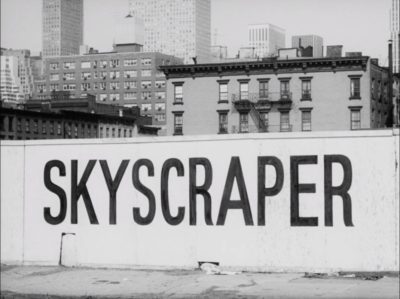
Skyscraper (1959)
‘In Clarke’s 1959 short film Skyscraper, it’s the construction of a building that becomes a dynamic performance, one in which bodies, surfaces, space and light interact. Through directing In Paris Parks (1954), Clarke had found that “you can make dance films without using dancers,” and she unexpectedly stresses the choreographic aspects even in this all-male environment. Skyscraper is also the first film in which Clarke addressed the medium’s ability to question social hierarchy. Here, site workers become the narrators and so are framed as individuals instead of merely a workforce. Clarke said: “It was really important to me to try to solve the problem of the disembodied God-like voice that was the narration style in the 1950s.”’ — bfi


Teaser


_________________
Scary Time (1960)
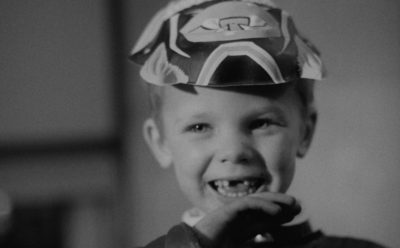
‘Clarke started her narrative career with this little-seen short produced by UNICEF to promote their Halloween charity drive. Clarke deviates from the expected by comparing the closeups of the “scary” children in Halloween costumes to troubling images of sick and emaciated children in third-world countries. It was so effective, that the film was banned for many years.’ — Close Up Film Centre


the entirety


________________
The Connection (1961)
‘THE CONNECTION is one of the most vital, fascinating films of the American independent world. Created by a woman director, Shirley Clarke, at a time when they were in very short supply, the film shattered stereotypes in just about every conceivable way. And yet, the film remained unseen for many years. For her first feature film, she decided to take on a controversial play by Jack Gelber that was running off-Broadway. The Connection was a play within a play within a jazz concert. It portrayed a group of drug addicts, some of them jazz musicians, waiting in a New York loft apartment for their drug connection. A producer and a writer, meanwhile, have entered their lives to study them and write a play about them. The brilliantly written Beat dialogue was blended with jazz music written by the great pianist Freddie Redd.’ — Milestone Films


Teaser


_________________
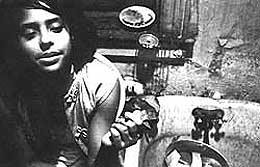
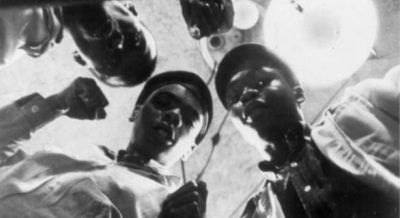
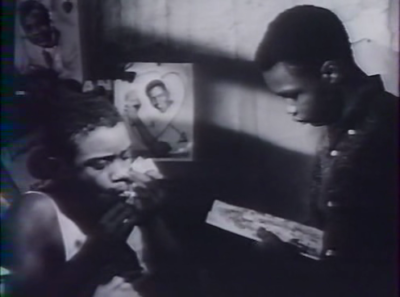
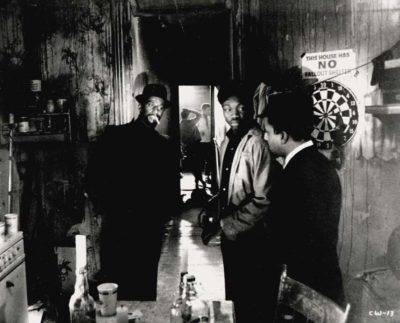
The Cool World (1963)
‘Based on the novel by Warren Miller about a teenager navigating the violent turf wars and internal hierarchies of Harlem gangs, and set to an unforgettable jazz score composed by Mal Waldron and performed by Dizzy Gillespie, Shirley Clarke’s The Cool World is a landmark of early American independent cinema. The film was produced by a young Frederick Wiseman, and it possesses something of a documentary quality as a result of its uptown location shooting, cast of local non-actors, and partially improvised performances. “Everything I’ve done,” Clarke declared late in her career, “is based on the duality of fantasy and reality.”‘ — filmlinc


Excerpt


Excerpt


________________
Robert Frost: A Lover’s Quarrel with the World (1963)
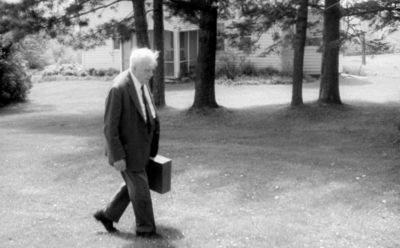
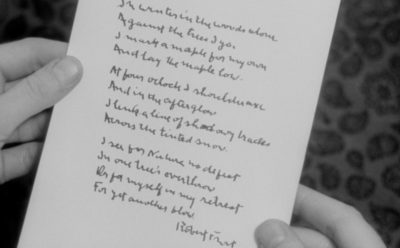
‘Bewildered by “the sideshow” of cameraman and crew members flanking him, Frost comments at the Sarah Lawrence College podium, “This is a documentary film going on … and [the shots] have all been about me with a hoe digging potatoes or walking in the woods, reciting my own poems.” The crowd laughs, as does he, clarifying, “I don’t farm very much — for many years, I have had a little garden — but it is a false picture that presents me as always digging potatoes or saying my own poems.” Crowd erupting once more, Frost concedes that the format Clarke uses at the moment is far preferable: “This time we are going to have it right, we are going to have it taped like this, with my crowd. [The crew was] with me today … on a carrier, you know, and I was with the commander. The old subject came up … peace and war, and I had to have another think at it.”’ — Project Shirley


Trailer


_______________
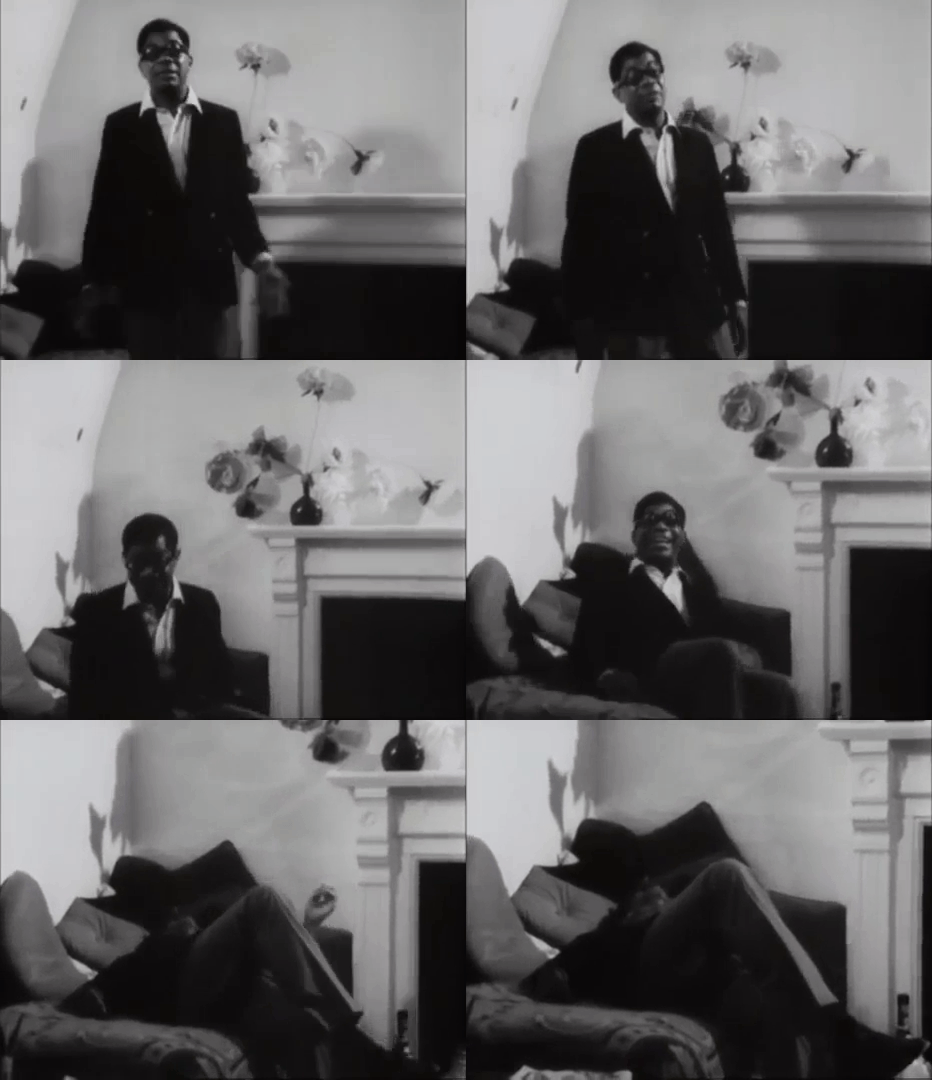
Portrait of Jason (1967)
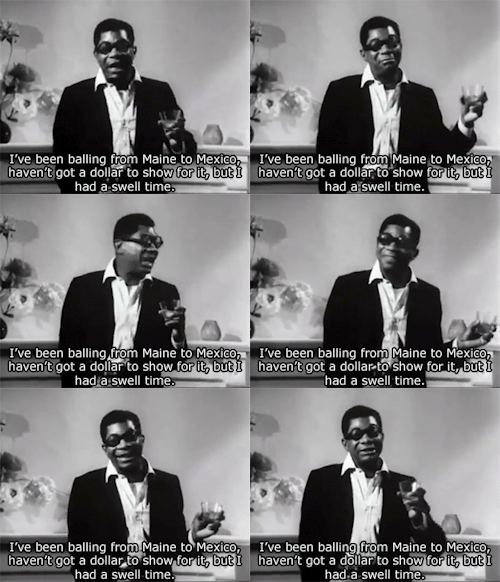
‘9pm Saturday, December 3rd 1966: shooting begins on Portrait of Jason. 9am Sunday, December 4th 1966: shooting concludes. Over twelve straight hours in Shirley Clarke’s penthouse suite at the Chelsea Hotel in New York City, Clarke and her small crew trained a camera on Jason Holliday and waited for him to detonate.

‘At the time of its release in 1967, Clarke’s experimental documentary Portrait of Jason screened for almost three months straight at the New Cinema Playhouse in Manhattan, and later played the festival circuit. The film reached legendary status in some film circles, not least because of its backing by filmmakers like John Cassavetes and Ingmar Bergman, the latter who dubbed it “The most extraordinary film I’ve seen in my life”. Largely unavailable for many years, a new restoration of Portrait of Jason led to a second world premiere at the Berlin Film Festival in 2013 and the film has subsequently enjoyed a mini-revival.

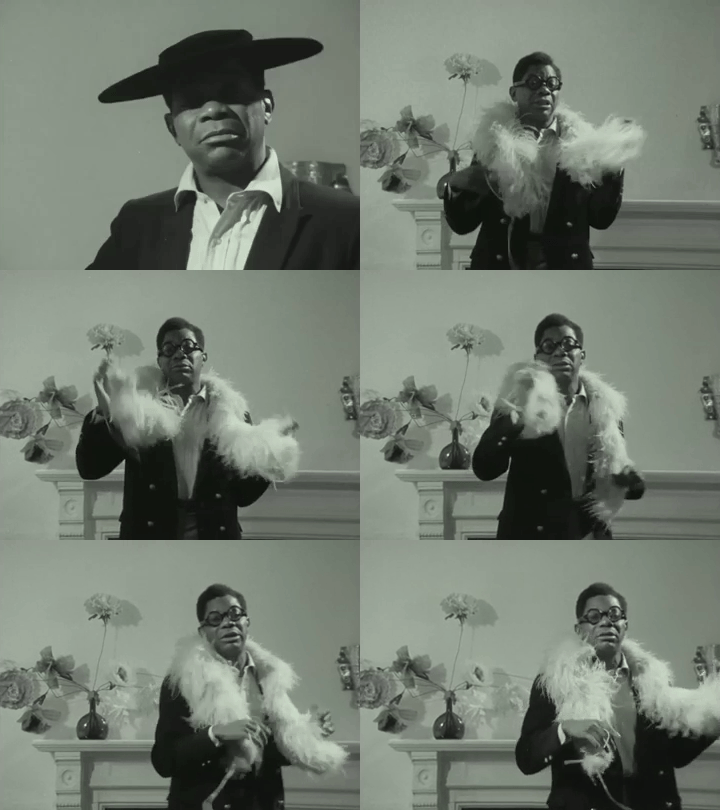
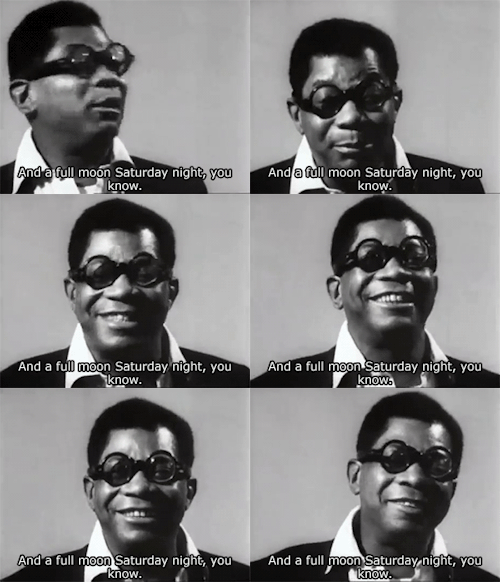
‘The film’s subject, Jason Holliday (né Aaron Payne), was a gay prostitute, raconteur, houseboy and bon vivant. Holliday is the only person to appear onscreen for the film’s entirety. Dressed in a tailored jacked and coke-bottle glasses, he laughs, drinks, smokes and masterfully narrates anecdotes from his life. The setting is simple: Jason is penned into a small area of Clarke’s apartment consisting of a day bed, fireplace and bookcase. Clarke’s filming style appears simple, too. Filmed in black and white, Jason speaks directly to the camera, prompted by questions off-screen. There are fewer than fifty shots, with scarcely noticeable editing to knit the film together, and a few out-of-focus or entirely black passages accompanied by Holliday’s audio. However, the film’s simplicity is a deception. Although Clarke’s method may seem ‘artless’, David Bordwell notes the transitions only mimic casual shooting. The film appears to unfold chronologically, but the out-of-focus passages conceal edits and obscure the progress of the shoot. The missing time is left unaccounted for, and we will probably never know in what order the events unfolded.’ — Rachel Brown


Teaser


_______________
24 Frames Per Second (1977)
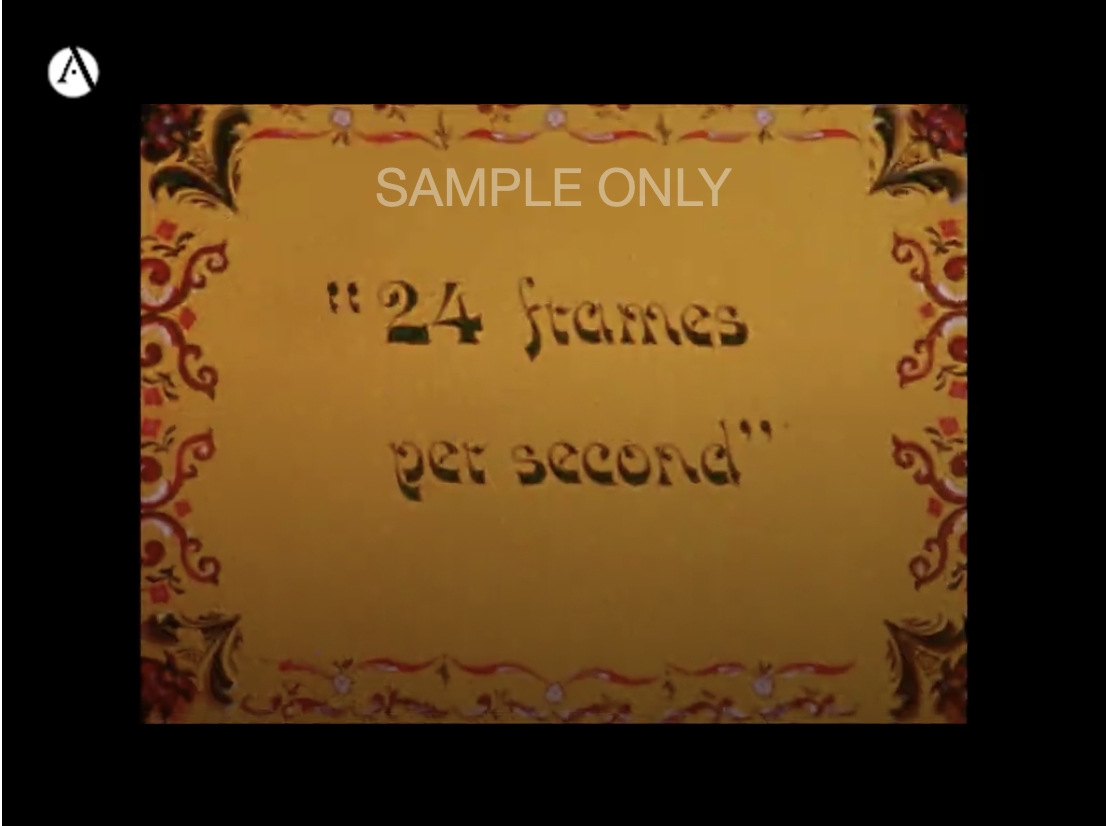
‘A vibrant–borderline epileptic–work of pure visual stimuli, 24 Frames Per Second was commissioned by the Los Angeles Museum of Art as a companion piece for a showcase of Persian art, with Clarke taking dozens of images from the exhibit and having them rapidly flicker by as her voice–heavily distorted–counts to 24.’ — letterboxd

Watch an excerpt here


_______________
A Visual Diary (1980)
‘A Visual Diary is a look at a private moment in one’s life. A narrative form without utilizing a story line. The collaboration incorporates naturalistic non-verbal theater and dance techniques with photographs providing the environment.’ — letterboxd


the entirety


______________
Tongues (1982)
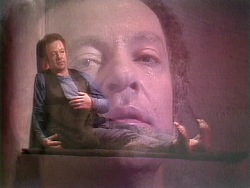
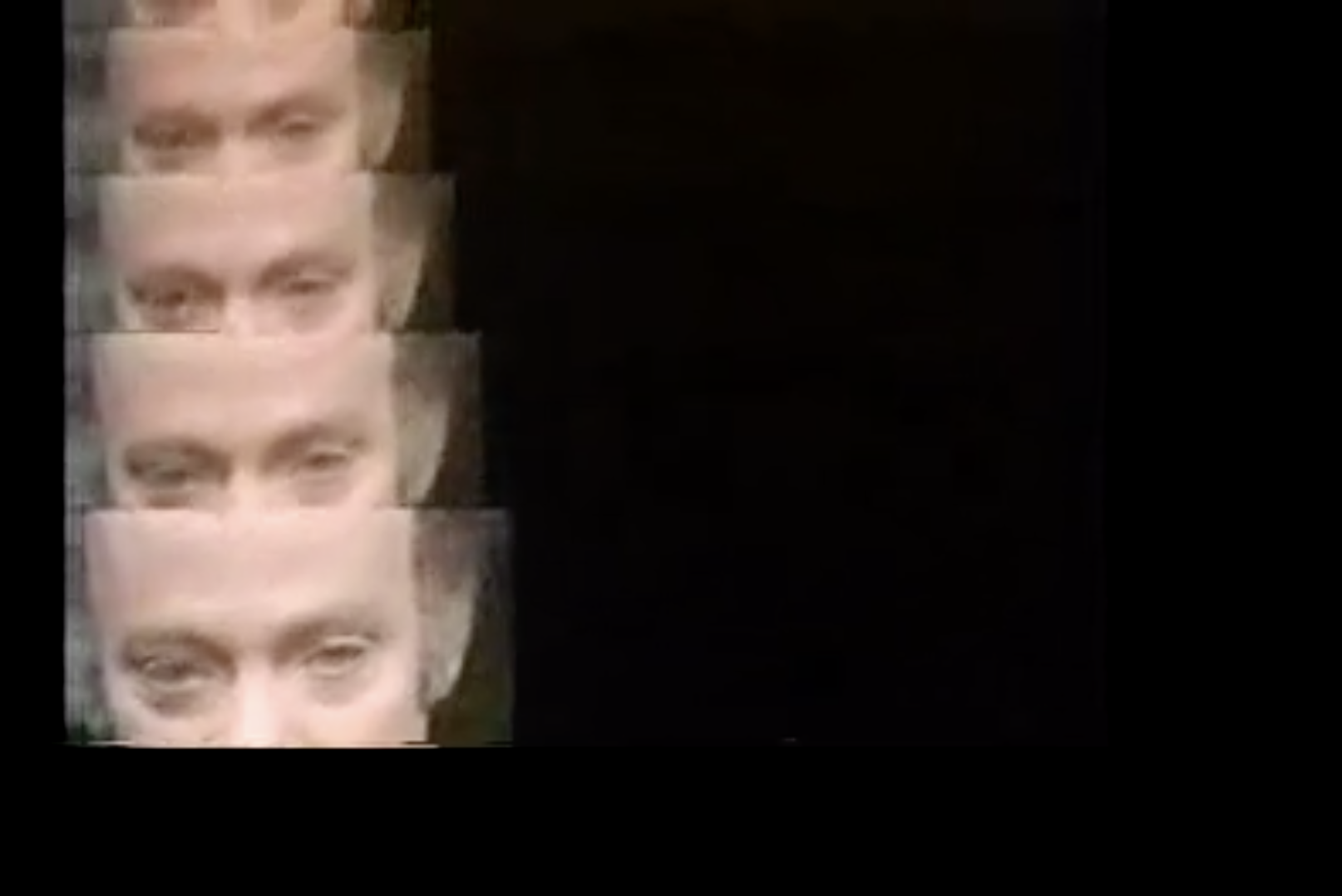
‘A tour-de-force synthesis of theater and video, Tongues is the collective title of a two-part collaboration by Shirley Clarke, distinguished actor/director Joseph Chaikin, and Pulitzer Prize-winning playwright Sam Shepard. Both one-act monologues integrate the distinctive styles of these three artists: Shepard’s innovative, stream-of-consciousness language; Chaikin’s kinetic and exacting performance, which unifies the pieces; and Clarke’s dynamic, expressive choreography of image, sound and text. The cadences and inflections of Shepard’s jazz-related narrative voice and Chaikin’s dramatic expression of a multitude of personalities are heightened by Clarke’s syncopated use of digital effects, slow motion, and editing techniques to distort and manipulate the image.’ — eai

Watch two excerpts here


_______________
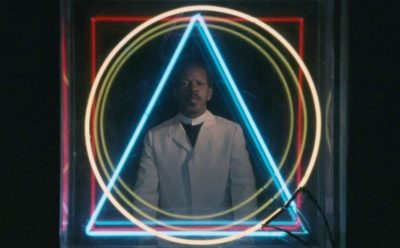
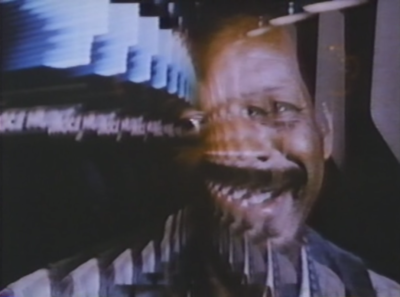
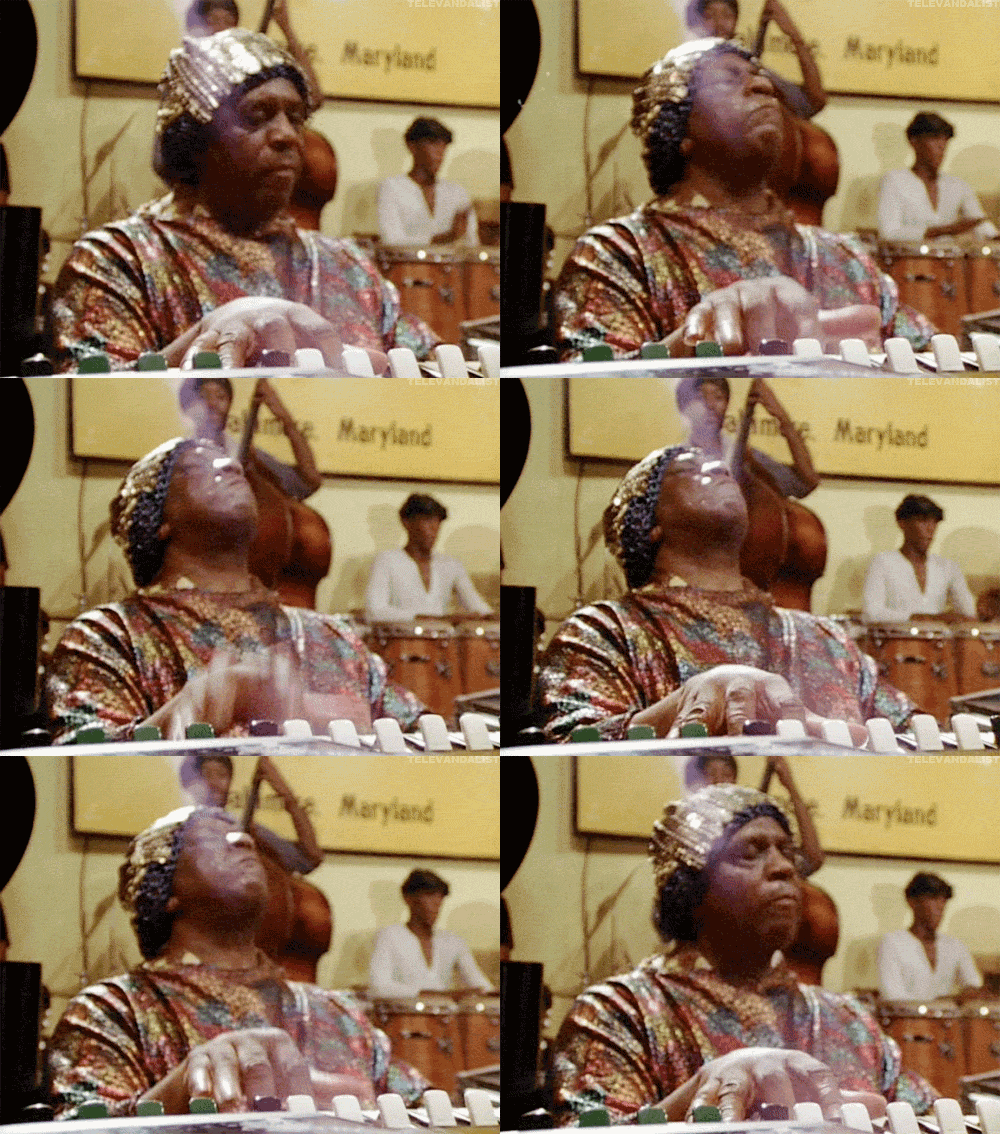
Ornette: Made in America (1985)
‘Ornette: Made In America captures Ornette’s evolution over three decades. Returning home to Fort Worth, Texas in 1983 as a famed performer and composer, documentary footage, dramatic scenes, and some of the first music video-style segments ever made, chronicle his boyhood in segregated Texas and his subsequent emergence as an American cultural pioneer and world-class icon. Among those who contribute to the film include William Burroughs, Brion Gysin, Buckminster Fuller, Don Cherry, Yoko Ono, Charlie Haden, Robert Palmer, Jayne Cortez and John Rockwell.’ — Milestone Films


Trailer


Excerpt


*

p.s. Hey. ** David Ehrenstein, Hi. For me it’s all about the disempowerment, and now we’ll see. Everyone, FaBlog’s newbie is called ‘The BIGGEST LOSER and his LAWN JOCKEY TWINS’ and you can access it here. ** Bill, Hey, B. Word on ‘Possessor’ when you see it as I haven’t found it over here yet. Happy to hear that ‘Velocities’ is hitting the mark. Good weekend? ** Dominik, Hi, D!!! Yes, under the circumstances, an online life is pretty necessary. I hear you about avoiding possible plague leakers. I have a longish two-way train day trip in store for me tomorrow, and apparently trains are packed to the gills right now, and I’m sweating the stuffy compartments. I figured your government would be a Trumpster. Well, cool, fuck them. Happy you liked the video. That boy rules, and his musical taste is of course impeccable. (Airport 5 was a GbV side-project). I love your love, especially the lipstick on its teeth. I’m going to send you love like a packet of vanilla wafer cookies because I’m strangely dying to eat a million of them this morning for unknown reasons. ** _Black_Acrylic, As a near-lifelong Nintendo head, I encourage you. Oh, I loved the new Play Therapy episode. It went perfectly with the relief/exhilaration general mood of the weekend too. A serious corker, DJ sir. Temple Newsam is one beautiful place. What’s that name about? ** Steve Erickson, Hi. Yes, as I may have mentioned yesterday, when Biden won all the church bells in Paris rang simultaneously in celebration. Everyone, New song from Mr. Erickson. He will explain and point: ‘I planned to write a song yesterday based around those sirens and drums, but it didn’t come out the way I intended. But “Victoria” is practically the only one I’ve done almost entirely written by looping samples, at least at this length, although I did the drum programming and created an occasional chord and very simple melodies by layering samples of the same instrument playing different notes.’ ** JM, Hi, Josiah! You’re a pretty wonderfulness-exuding person yourself, so thank you. I love video games. I think they are, or maybe can be, a great art form. I’ve learned a ton as a writer from playing/studying how they use space and narrative and rhythm and so on. I’m good. France is struggling with the big C, yes. And it’s getting worse and worse. And I seriously fear how long and more restrictive our lockdown is going to get and last. But at least the US made a great move. That’s big. Man, I hope the troublesome production rights itself. What do you see as being wrong with it? That might be too complicated an answer, I guess? I’ll google Waitangi. I envy your upcoming weekend. It sounds utterly blissful. Sometimes ‘near-unpublishable’ = great and very publishable. Evan’s plan is to wait a bit until the postal situation becomes more dependable and then resend the package. He said if he can make pdfs of the books, he’ll email them to me. So, no, sadly ‘Circles’ seems to still be a ways off. Exciting that you’re working on a novel, not to mention that it feels new to you. Kind of the best feeling. Obviously, stick to it. I haven’t read the Brontes in years, but that makes total sense, and maybe I’ll try to pull them out. ‘The Devils’ is great. I haven’t read the Finbow yet. Nice reading list. Personally, and what do I know, but I would read a different Rhys. ‘Good Morning, Midnight’ and/or ‘Good Morning, Mr, McKenzie’, for instance. I like ‘WSS’, but I think it’s her weakest. Blah blah. Enjoy! ** Brian O’Connell, Hey there, Brian. ‘Breath of the Wild’ is incredible. I add that two-cents. Yes, such palpable relief re: the election. And mainly and primarily relief, yes. Biden’s basic decency is a good step, and Harris seems kind of potentially exciting, but there’ll be two+ horrid months ahead, no two ways about that. Oh, that’s why his name looked familiar. He did the Dahmer graphic novel, which I heard great things about but never read, or, I mean haven’t yet. Okay, very interesting. No, comics and graphic novels are a giant hole in my reading. I never read comic books when I was a kid. I was obsessed with edgy satirical magazines of that era like ‘Mad’, ‘Cracked’, ‘Sick’, ‘National Lampoon’, many of which had comics within them, but I was never drawn to comic books themselves, and I think that’s why I haven’t seemed to make the leap as an adult. When I do read them on rare occasions, I like the form a lot. Sounds like a nice weekend on your end, cool. I snuck off to hang out with a friend at an illegal distance from my abode for an illegal few hours, and Zoomed with an old friend, and followed the post-election stuff mostly. It was all right. I hope your tricky work days hold unexpected benefits. ** Armando, And good morning to you. Happy that my writers block thoughts helped. Mm, I don’t think ‘The Unnamable’ influenced my stuff in particular, certainly his stuff in general did. I don’t know ‘Victoria’, but I’ll hunt it. Today … Zoom with my oldest friend who I’ve known since 9th grade, get ready for a day train trip tomorrow to the city of Rennes to advise Gisele on her new theater piece, … The concierge is never here on the weekends, but I’m going to try to catch him today. My Halloween was pretty much a big fat zero, at least by my Halloween standards. I don’t even remember what I did. A luck filled day to you too. ** Okay. Today the blog concentrates on the films of the great Shirley Clarke, and I hope you will come away from it feeling like its beneficiaries. See you tomorrow.
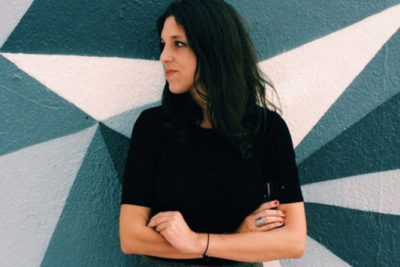
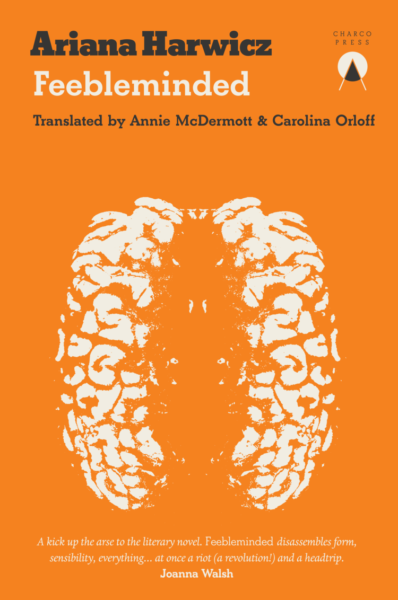
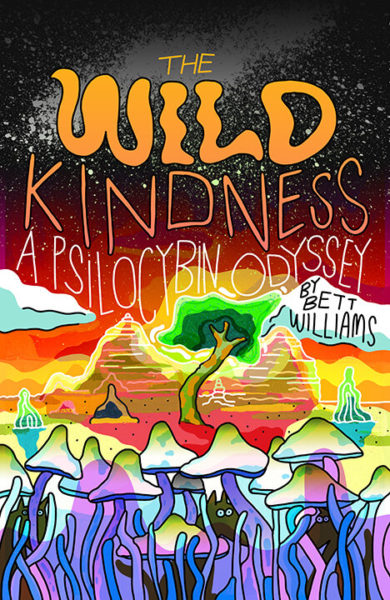
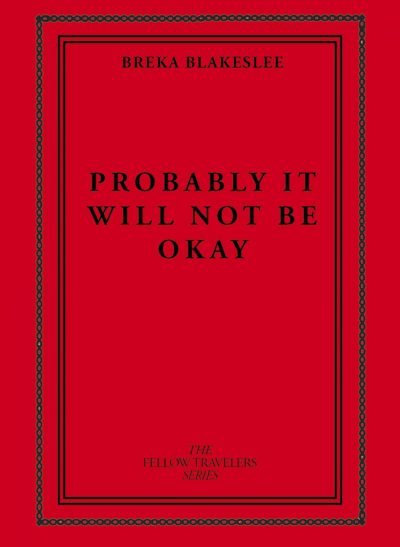
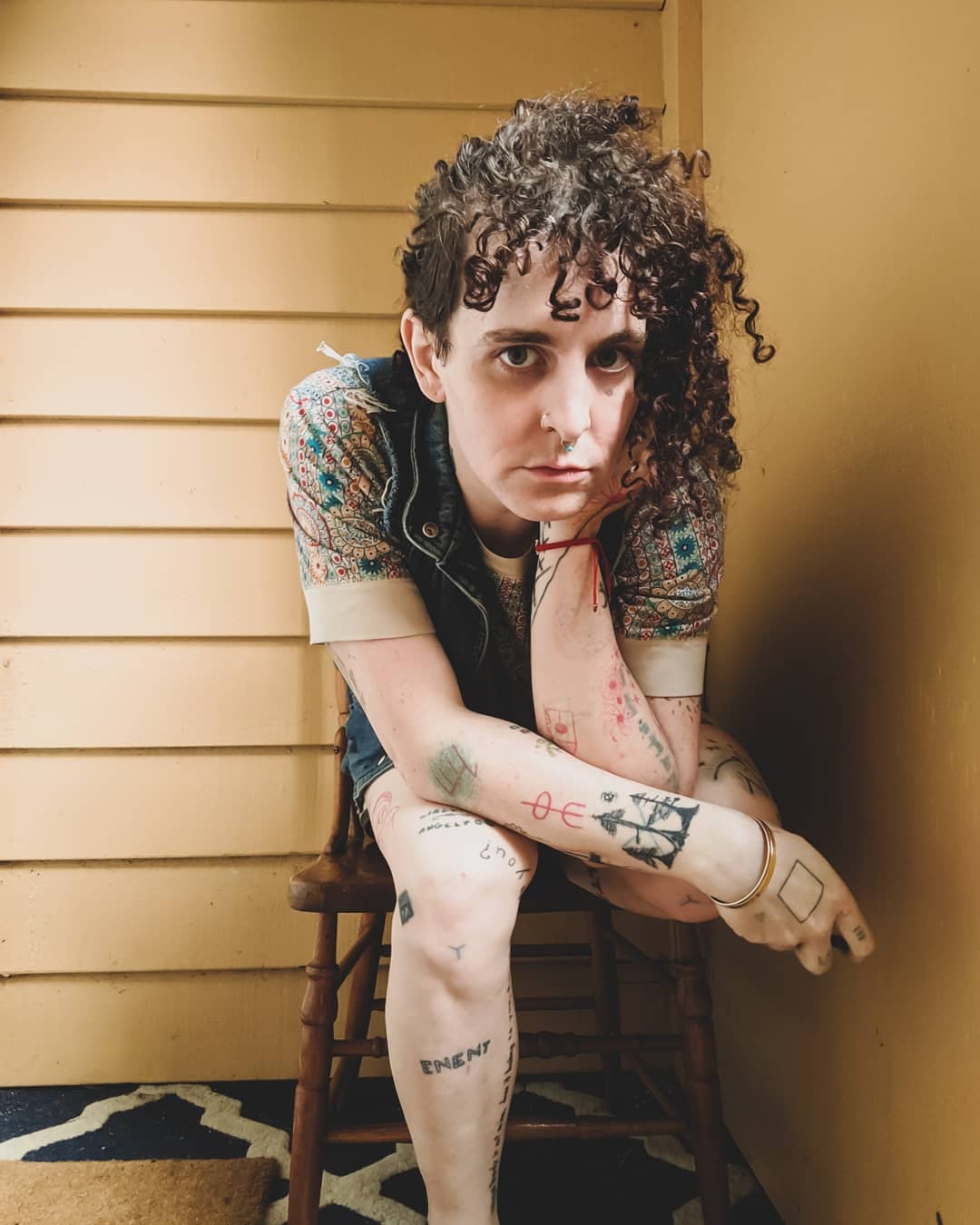
4 books I read recently & loved: Ariana Harwicz Feebleminded, Bett Williams The Wild Kindness: A Psilocybin Odyssey, Never Angeline Nørth Sea-Witch, Breka Blakeslee Probably It Will Not Be Okay
‘“This is a slightly stressful book, a strange piece of writing”, as an opening remark to a book reading, would maybe rub up some authors the wrong way. Not so Ariana Harwicz, who simply nods in response to Daniel Hahn’s remark. She knows Feebleminded is strange, and that’s pretty much the point, given that her motivation to write it comes from a desire to break with norms and conventions. At the launch of her most recent novel to be translated into English, she discussed the book, living in a different language, the necessity of writing, and the feeling of being translated.

‘Harwicz is considered to be at the forefront of new Argentinian fiction, her style characterised by its violence, eroticism, irony, and the questioning of conventional family relationships. Feebleminded follows the Man Booker International long-listed Die, My Love (2018), her first book to be translated into English (by Orloff and Sarah Moses), as the second part of an “involuntary trilogy”: the protagonists, a mother-daughter team, is at the centre of the novel, a portrayal of their feelings and excesses, and their reactions to the way in which the men (currently and formerly) in their lives affect their personalities, self-esteem and relationship with each other. What is much more telling about the book, rather than its plot, is its urgent style, the underlying threat of violence and its speed: I usually make notes on the pages of books I read for review, though it felt like Feebleminded was pushing me to read on, not to stop, but to give into the delirious fever-dream of the text.

I come from nowhere. The world is a cave, a stone heart crushing you, a horizontal vertigo. The world is a moon slashed by black whips, by arrows and gunfire. How far must I dig before striking disdain, before my days burn. I could have been born with white eyes like this forest of stark pines, and yet I’m woken by volcanic ash on the garden clover. And yet my mother’s pulling out clumps of hair and throwing them on the fire. The day begins, I’m a baby and my mother’s in her armchair with her back to me, crying. I wake up as a girl. Outside, the lavender; inside, mother, her black hair in the embers. Cuttings of cloud everywhere, low and pasty, high and fleeting, dark and nondescript.

‘What connects the books in the trilogy (the third one is yet to be published in English) is not so much their content but their aesthetic aim: “After I wrote the third novel, I realised that it was a political act of subverting language. I wanted to interrogate my Spanish from Buenos Aires. But many things had to happen in between, many things that had to do with being a foreigner.” Harwicz, who speaks enough English to understand the questions, though prefers to reply in Spanish, interpreted by Orloff, has been living in France for the past 12 years, so she is used to speaking a foreign language, and to being a foreigner. Writing for her, she explains, is not separate from life. So experiencing the world abroad, and noticing one’s own language change through the self-imposed exile, necessarily becomes part of her fiction. Living abroad, she is becoming more estranged from her own mother tongue, as she has developed an accent, a form of “betrayal to the language.” This estrangement is all the more felt through the publication of her fourth novel, edited by Spanish publishing house Anagrama. The original manuscript, she explains, contains many “gallicisms”, loan words and calques from French; the syntax, much like with Feebleminded, freely sways between French and (Argentine) Spanish. The Spanish editor, however, corrected everything so the text would be in “pure” Spanish. But “many writers are now writing in languages that are corrupted in amazing ways”, Hahn interjects, and Harwicz’s chimes in with the term “corrupted”, citing second-language writers Conrad and Nabokov as stellar examples of writing on the “frontier of language”.’ — Rebecca DeWald


Ariana Harwicz @ instagram
Ariana Harwicz @ Facebook
Feebleminded by Ariana Harwicz review – dangerously addictive
Ariana Harwicz @ goodreads
Buy ‘Feebleminded’


Ariana Harwicz Feebleminded
Charco Press

‘In Feebleminded, Harwicz drags us to the border between fascination and discomfort as she explores aspects of desire, need and dependency through the dynamics between a mother and her daughter, searching through their respective lives to find meaning and define their own relationship.

‘Written in a wild stream of consciousness narration in the best tradition of Virginia Woolf and Nathalie Sarraute, and embedded in a current trend of elusive violence so ingrained in contemporary Latin American fiction, Feebleminded follows the pair on a roller coaster of extreme emotions and examinations into the biographies of their own bodies where everything – from a childhood without answers to a desolate, loveless present – has been buried.

‘Told through brief but extremely powerful chapters, this short lyrical novel follows Die, My Love as the second part in what Harwicz has termed an ‘involuntary trilogy’. An incredibly insightful interrogation on the human condition, desire and the burden of deep-rooted family mandates.’ — Charco Press

Excerpt

Whisky with Mother as the electric blue fades into the small hours and now, a long way from home, my hands are covered in excrement. I didn’t know my own smell, the layer of smell that forms on the body as the hours without water go by. My tongue gets distracted by eating grass. Sucking on an animal’s hard udders, sucking on the fur, the teeth all dolled up, or imagining the death of your parents. It’s all the same. From the moment he entered my head, this saltwater hell. Zealous hammering on my veins. The trouble with my brain is I can’t hold it back, it rolls on and on through the spiky undergrowth like a bulldozer. Where am I. I don’t recognise these big houses. I’ve never rounded this bend in the road. Degenerate desire. Damaging desire. Demented desire. I don’t know how to get back. My mother will be blind drunk, sprawled on the sloping grass, her feet carved up by the blades. The clouds are tree trunks at this time of night. My hangover’s fierce and I collapse any old how to masturbate, my hair electrified, my skin hot, my eyelids stiff. My hand works away then falls still as an insect, so that nothing is enough. Me and him in a convertible. Me and him on a muddy road. Bodies shouldn’t have breasts after a certain age; when my breasts turn to thick heavy flesh I’ll have them removed. Women should stop opening their sex, too. I look for a word to replace the word. I look for a word that shows my devotion. The word that marks the spot, the distance, the exact centre of my delirium. We should be like tiny snakes till the end, and be buried that way, in long holes like gutters. I get up feeling anxious, my head thick with blood. I walk round the house and open the windows. The wind sweeps over the insect corpses trapped in the mosquito net. He keeps jars back there full of rusty water and all kinds of fossils. He looks like he’s never slept, always needing a wash, a new haircut, a piss-free pair of trousers. And after all, what is that scant pleasure we get from our fingers when we’re young. What is that scant golden liquid dripping, diluting, if afterwards, later on, when at last I find her holding the thick-bottomed glass, knocking the ice cube around and asking the waiter for the same again, my mum and I are sitting at the garden table with a pot of thin broth and two spoons. What is that leftover desire, that sunken desire, while we eat our soup and the steam hits us in the face and nothing, nothing is left.

No more whisky ever again, I say. No more whisky ever again, she says. Ever again, huh. And we make crosses with our fingers and toast ourselves with water and throw the empty bottles in the incinerator. What did I say. I want to say there’s a halo of death in the air. No. That death is all too present between my mother’s mouth and mine, and in the bottom of the sunken glass. And the hours can’t fix that. Starting a new day, like unplugging the refrigeration unit and plugging it in again once the storm’s died down and the power’s back on, and the rush to gobble up the food before it rots. But the maggot-infested cheese and the meat in its own entrails make us nauseous. Or mending, a whole week spent with a needle and thread, mending the holes in the mosquito nets on the window frames and painting the flower urns green. Or setting wire traps to stop the owls shitting everywhere, or firing shots at their nests. The bright yellow jelly of the yolk between your pinkies. Or buying a turtle and forgetting to feed it and clean out its water. Wake up, mum, before the day’s over, stop dropping your head on the scissors. She’s trimmed the ends and the fringe, like every time she gets drunk. Let’s go for a walk down the muddy path. Her body hunts for liquid in her organs, in the tissue around her brain. She scrubs herself with lilac-scented soap and I watch her in the oval mirror, knowing that this pot of painkillers and coffee isn’t the only way night can fall.

On the road, we dewater. First onto the velour seat, then onto the steering wheel. Mother onto her blue blouse with small white buttons, me onto my long legs. Covered in my own waste, I know my outfit looks amazing and it feels good. We strip in the lay-by, our shorts tangling in our high-heels. Our bras on the back seat, our guts on the tarmac, we drive off with open windows and our hair tied up. We stink as we cross the white lines, no headscarves, no lip gloss, but we’re laughing for the first time in years. We never used to do that, it’s not our style to drive at a hundred miles an hour and laugh. To want to live and laugh again. We run inside, two teenagers, and our skin is sticky when we finally shower.

The phone, Mum. That’s enough now. We’ve fallen back down, back to tidying the cupboards and sweeping, the sizzling eggs laughing at us in the pan. Where is it. How do you want them? Don’t make me look at you again. You’re not getting it back, I won’t give in. I look at the hanging baskets we put up with all that effort. I look at the tiles stuck side by side. I look at the walls and the foundations, the pieces of bread. Give it to me, now. Why do you want to leave again, we’re moving on together and no thanks to old Mr Knife, the two of us alone in the old dodderers’ midst. We’re doing it and the day turns beautiful just like that. How about a picnic? I’ll let you go on the swing. Give it to me before I overcook the eggs and you’re crying yet again in front of your clean cold plate. I should fry that pissing telephone. Give it to me right now. I should stick it in the oven. Fine, as you wish, but on your head be it, and she flounces out the kitchen, her hands sopping wet. She enters the darkness of the corridor and returns to the light of the living room, which is dark now, in spite of everything, and she throws it straight at me.

Extras


Ariana Harwicz on Die, My Love


l’écrivaine Ariana Harwicz : Les rencontres de Philippe lefait


________________

‘”I’m not a master of anything,” Bett Williams tells a psychedelic disciple who has traveled to her home in Northern New Mexico to take magic mushrooms and hallucinogenic Syrian rue with her. “I learned this on the internet.”

‘Like many of the nuggets of hard-won wisdom in Madrid resident Williams’ new memoir, The Wild Kindness: A Psilocybin Odyssey, the statement is accurate—but also not. It’s a grain of truth that contains a Russian doll of contradictions and countless other truths, kind of like the internet itself. Or life, even.

‘You don’t need to be interested in doing psychedelic drugs to find yourself in deep with Williams’ chronicle of finding meaning and healing through mycelium. You might start by merely appreciating the book’s colorfully shroomy cover and compact, ride-along size before you dip a toe into the pleasant warmth of the free-flowing narrative. …

‘At the outset of Williams’ mostly solo forays into mushroomland, she’s blocked—spiritually, creatively, romantically. She was drawn to the desert after a childhood in Santa Barbara, California, and as she drifts around New Mexico “looking for land” in the early ’90s, she meets a Scottish seer in Ojo Caliente. He helps her cut a savvy swath through the New Age crowd and their “force fields of fraudulence, mental illness, cultural appropriation and psychic theft.”

‘But it still takes years for Williams to set herself on a path to enlightenment through mushrooms, and she goes on several trips before she experiences “the God Trip,” those elusive, epiphanic hours that help make sense of every cell of existence. Even then, she writes, “I was just a beginner. I still am.”

‘This refreshing guilelessness is what makes The Wild Kindness so immersive. I read it on a long night’s journey into day and greeted the dawn with unclouded eyes, having absorbed Williams’ roving intellectual curiosity and lust for life. I was delighted to follow her down multiple rabbit holes; one involves the litigation of picaresque lesbian relationship drama, while another is a taxonomy of the dogs who live with her.

‘”She’s capable of killing a dog out of sheer confusion as to whether love lasts forever,” she writes of a brown brindle cattle dog named Rosie. A Chihuahua, Littledeer, “makes me feel bad about myself because she brings to mind Yolanda Saldívar, Selena’s manager, which I know is a wrong thing to think.” As Williams’ store of knowledge grows and she starts to make panel appearances at conferences on psychedelics, it’s easy to see why strangers seek her out in Madrid: In addition to her mushroom mastery, she’s the dynamite host of a wild, lyrical imagination.’ — Molly Boyle


Bett Williams Site
Bett Williams @ Twitter
Living Rogue: Bett Williams + The Psychedelic Life
Bett Williams @ instagram
Buy ‘The Wild KIndness’


Bett Williams The Wild Kindness: A Psilocybin Odyssey
Dottir Press

‘Set against the simmering haze of the New Mexican desert, Bett Williams’s memoir The Wild Kindness: A Psilocybin Odyssey is a dreamlike foray into a time when she sought the curative powers of magic mushrooms. When word quickly gets out about her mushroom farm, Bett’s solitary ceremonies by the fire are disrupted by people in search of similar healing.

‘Not long after, things spiral south. The police read her her Miranda Rights, her relationships fall out of whack, and she’s convinced that her dog Rosie just might be CIA.

‘On a quest to find help through the psychedelic community, Bett is led to Cleveland to meet Kai Wingo, an African American leader within a high-dose psilocybin community, and to Huautla de Jiménez, where the legendary curandera María Sabina spent her life. Back home, Bett begins a solid ritual practice with the help of her partner and friends, bearing in mind the medicine’s indigenous roots and power to transform one’s life.

‘By turns hilarious and moving, The Wild Kindness: A Psilocybin Odyssey is the tale of one woman’s hypnotic, psilocybin-fueled journey toward understanding the world around her and, in turn, herself.’ — Dottir Press

Excerpts

There’s nothing I can compare to the span of time between when a mushroom is ingested and when it starts to take effect. This is when we are the most vulnerable. It always feels like this part of the trip might be hugely important, like our attitude could make or break the entire night, but trying too hard can cause incredible anxiety. To fill this space with any sort of grandiose intent is just asking for the mushrooms to bitch-slap you.

Just sit back and wait.

This.

All your tender hearts who have ever sat like this, sacred and excited, waiting for the entity to arrive. This is real courage.

*

I personally had no shame in being allied with the tribe of stoners that crowd the Erowid experience vaults with tales of jumping into swimming pools with boots on, making bras out of luncheon meat, or reaching an epiphany while watching Broad City.

*

Psychonauts constantly emphasize the urgency of integrating the psychedelic experience. To not to so can be very dangerous, they warn. Up until this point, I thought they were talking about other, perhaps less mentally stable people. I had been eating mushrooms for over six years and I didn’t think I had a problem with integration. What did that word even mean, anyway?

“Integrating is the process of just being alive, right?” Beth said. “You think, you talk to people, you make connections, what else is there to do? Who doesn’t do those things?”

What if: We obsess over integration because we can’t deal with the fact we are taking Schedule 1 illegal drugs? Framing our drug use in the context of crisis and healing centers psychedelics as a medicine, rather than the crime that it also is.

What if: Psychedelic integration is an excuse to wallow in our trip-traps, rather than put them away for a while, in order to get down to the business of living.

What if: Psychedelic integration circles are the only way we know how to make friends with other people who do psychedelics.

What if: Spending money on therapy and other healing modalities under the guise of psychedelic integration is how we make our realizations feel legitimate in a capitalist society?

Extras


Horizons 2018: BETT WILLIAMS “The Wild Kindness”


Mushroom Journeys with Author Bett Williams


_________________

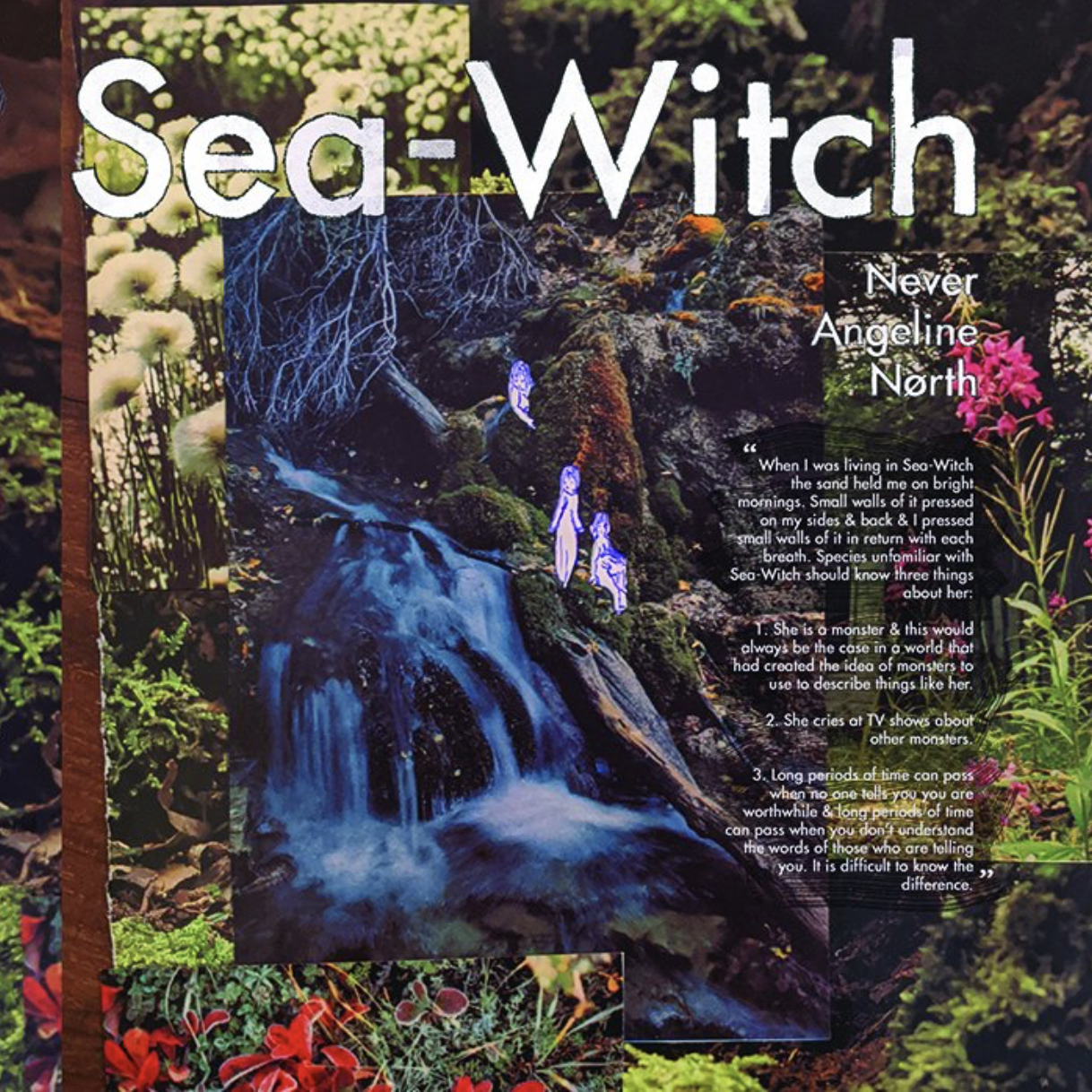
‘Sea-Witch is a hybrid-genre text that is part transgender memoir, part anticapitalist manifesto, part religious text, part fantasy novel, and part contemporary queer mythology. It is the story of a monster named Sara who has taken refuge alongside other monsters living inside the body of a witch-god called Sea-Witch. The monsters who live in Sea-Witch are all part of a cult that prays to a meteor to come destroy everything, thus ending the terrible reign of The 78 Men Who Cause Pain. The book explores the world of Sea-Witch in fragments that take the shape of poems, prose, short plays and comics, which are accompanied by photos, drawings, nudes and scribbles. Narratives come from many perspectives and jump backward and forward in time. Sea-Witch deals with trauma, mental illness, sexuality, spirituality, and transness through a lens of surrealism and absurd humor.’ — Undying Club

‘Sea-Witch rides against a world packed with constraint, hauling fire to burn the bounds of flesh and feeling; boldly as to kindle the origin story of a world, a hagiography of self. In this sharp and self-assured volume, Never Angeline Nørth seeks the limits of form and returns with a text as inventive and flexing as its subject.’ — Amelia Gray

‘Sea-Witch is a mystical atlas of pain and self-revelation intoned so assuredly it feels like finally finding a spellbook buried in your yard, reminding you that magic happens every day, is realer than reality. Few texts could manage to carry a DNA so free, so willing to go to any length to share its immeasurable gifts. If Never Angeline Nørth is a witch, she’s a witch the world needs.’ — Blake Butler

‘Never Angeline Nørth is a writer of a different feather. Her work is special and strange and defiant–open yourself up to Sea-Witch, it’s some otherworldly poignant shit you didn’t know you needed.’ — Sung Yim


Never Angeline Nørth @ Twitter
never.angeline.north @ instagram
Never Angeline Nørth @ HTMLGIANT
Never Angeline Nørth @ Patreon
Buy ‘Sea-Witch’


Never Angeline Nørth Sea-Witch
Inside the Castle

‘Sea-Witch is a fantasy novel told in scribbes & nudes, bits & parts. Monsters are under ambient attack by the 78 men who cause pain. Reality is fake, time is an illusion. Come get lost. The compendium of all Sea-Witch materials by Never Angeline Nørth. 394 pages, 8.5″x8.5″, full color!’ — Inside the Castle

Excerpt

BONE DEATH 1

Sea-Witch is one of a series. People speak of other Sea-Witches & there are ways in which different parts of Sea-Witch are their own separate beings & are referred to as such, but apart from this there is some knowledge of her companions in series, which is held in the Book of Meteor. The Book of Meteor tells us before Sea-Witch was formed there existed Dog-Witch & hir sisters. At this point there was no land & so no word for “sea”, which only exists in contrast with land. “Water” existed & meant “everything-except-air”. Things under the water were referred to as “airless faces”. Dog-Witch & hir sisters are named variously throughout The Book of Meteor as Air-Witch, Water-Witch, Dirt-Witch, & Milk-Witch, Deeps-Witch, Old Seagull-Witch, Strawberry-Witch, Leg-Witch, Candle-Witch, Less-Held-Witch, Moss-Witch, Dead-Jellyfish-Witch, Stone-Witch, Wood-Witch, Glass-Witch, Airless-Face-Witch & her twin God-Witch, Death-Witch & some texts speak of a nineteenth sister whose name is written “ha-ha-ha” or “ah-ah-ah”, pronounced as three brief puffs of air, with or without accompanying glottal stops.

Dog-Witch, of course, initiated the formation of hir sisters & their deaths. Ze gave us meteor (may she lay us waste) & her book. What Sea-Witcheans have learned about Dog-Witch is that ze caused the formation of the nineteen after ze stole lava from an airless face that most Sea-Witcheans refer to as a bear. A thing I have discovered while reading the Book of Meteor & other Sea-Witchean lore is that there have always been bears. Even before land there were bears in the water, though they had longer faces & thick, flat hands & feet like beaver tails. Lava, before it was taken by Dog-Witch, was a piece of ancient bear technology that the bears used to control other airless faces & the water around them. The bears have mourned its loss ever since the theft. Sea-Witcheans who study this history do so to try to find a time before this sort of controlling of other beings existed, so that we might know its source & overthrow the seventy-eight men. It has not yet been discovered, though we have determined this source is deeper than lava.

Dog-Witch has always seemed untouchable in my mind. On one of the long nights in the hardest months, Sea-Witch & I were up late sharing a cigarette & she told me how much she misses hir. I asked what Dog-Witch looked like & she smiled sadly & described to me a sensation I would later come to call bone death. She told me about Dog-Witch’s long, furry ears & hir face like a dry, cavernous world of old stone & gas. She made a series of gestures in the air & drew in the sand. After this she took my head in her lap & stroked my hair & said to me “No one must be alone.”

BONE DEATH 2-4

Like everything, all of Sea-Witch contains her history. Every part of her has bits of what has come before. For example, Sea-Witch’s left leg is the same as that of Dog-Witch. That leg was out of reach to Sea-Witcheans for a great number of years. Sea-Witch has allowed us her body for living in, but there was a time in which she wasn’t sure about the her-ness of that leg, & for that reason alone kept it free of residents. Not for reasons of property, which is a concept that, like many other concepts, can’t hold together within Sea-Witch, but for reasons of body & consent. Dog-Witch, being maybe-dead after the fall of the nineteen, could not consent to her leg being occupied, even while it was a part of Sea-Witch’s person. On the day that Sea-Witch finally set fire to a dead fir tree as a ritual of mourning, she accepted that leg as her own & Sea-Witcheans came to the leg & created in it there as a sanctuary for the oldest & most desperate among us to live & rest on the beaches that could be found there. The skies there are full of stars that are visible at all hours & form constellations of welcome & refuge.

The Book of Meteor tells us Dog-Witch is a sense of purpose. It tells us of how ze came from the sky as fire & evaporated a great deal of water, creating land. It tells us of hir cooling & descent again into the water to struggle against the violent reign of the lava-wielding bears in the world of airless faces. It tells us how ze brought lava to new uses, the foremost of which is formation, including the formation of hir nineteen sisters, who were the first to be formed in lava, as I would later be. The first of hir sisters to be formed was called Deeps-Witch & shortly after came Dirt-Witch & Bread-Witch. Less-Held-Witch stood from the sand next, & pulled with her the twins God-Witch & Airless-Face-Witch. A passage missing from some later translations of the Book tells us Dog-Witch came to these sisters then on the land, hir tail & ears raised, excited to no longer be alone. Ze lay hir chin on them one by one, naming each as hir love, hir sibling, hir comrade & hir companion. The other sisters formed soon after, the order is not fully documented. It is written that angry bears soon came & lined the coast, watching Dog-Witch & hir glorious creation take shape from the ruins of their fallen empire. Bear-parents stroked the shoulders & heads of their furry children saying to them, The time will come when we can build ourselves up again.

BONE DEATH 5

A beautiful space opened up in the earth in which many events took place. A necessary part of formation, besides lava, is noticing. Less-Held-Witch began her noticing here in this space, where she was attending a class on the ghosts who animate fire. It was in this beautiful space where she first noticed the curve of Glass-Witch’s neck as she sat against the wall, ignoring the lecture to draw round sigils on the white spaces of her purple tennis shoes. It was in this space that the Book of Meteor tells us Less-Held-Witch hid herself in the hood of her sweatshirt, looking down at her own shoes (brown, soft) to avoid Glass-Witch’s gaze.

I know from my own formation that noticing has a heaviness to it that follows you. It sits in your chest & shoulders. The object of your noticing becomes transformed entirely in your mind, becomes a thing to worship. You become transformed as well. The wholeness of who you were forms into a halfness of what you could become.

Extras


Flipping through Sea-Witch v.3: Mare Piss Superkill


Moss something Angel something reading two excerpts from Sea-Witch v.4


_________________

How to Read YOUR HISTORY IN PHOTOCOPIES:

‘Print out the 21 pages of your history in photocopies. Perhaps you should print them two per page and cut them in half.

‘Put them in a file folder. Don’t worry about the order.

‘In fact, shuffle them maybe. Or toss them on your desk in a pile, or in a corner of your room, and in a couple of days pick them up and put them in a file folder.

‘Shove the file folder with the 21 sheets of paper into a drawer or a bag or a shelf or wherever you keep your old financial records etc.

‘Forget about the file folder for a few hours, days, or years.

‘Have a glass of wine or scotch or whatever you feel like.

‘Turn on your favorite band from when you were emo. Or goth. Or punk. Or whatever it was you were.

‘Page through the photocopies and read your history in the order it comes to you.

‘Close the file folder.

‘Do whatever it is you need to do. — Breka Blakeslee


Breka Blakeslee Site
Audio: BB @ Poems for a street corner
Breka Blakeslee @ instagram
Letter [r] Press
Buy ‘Probably It Will Not Be Okay’


Breka Blakeslee Probably It Will Not Be Okay
Publication Studio

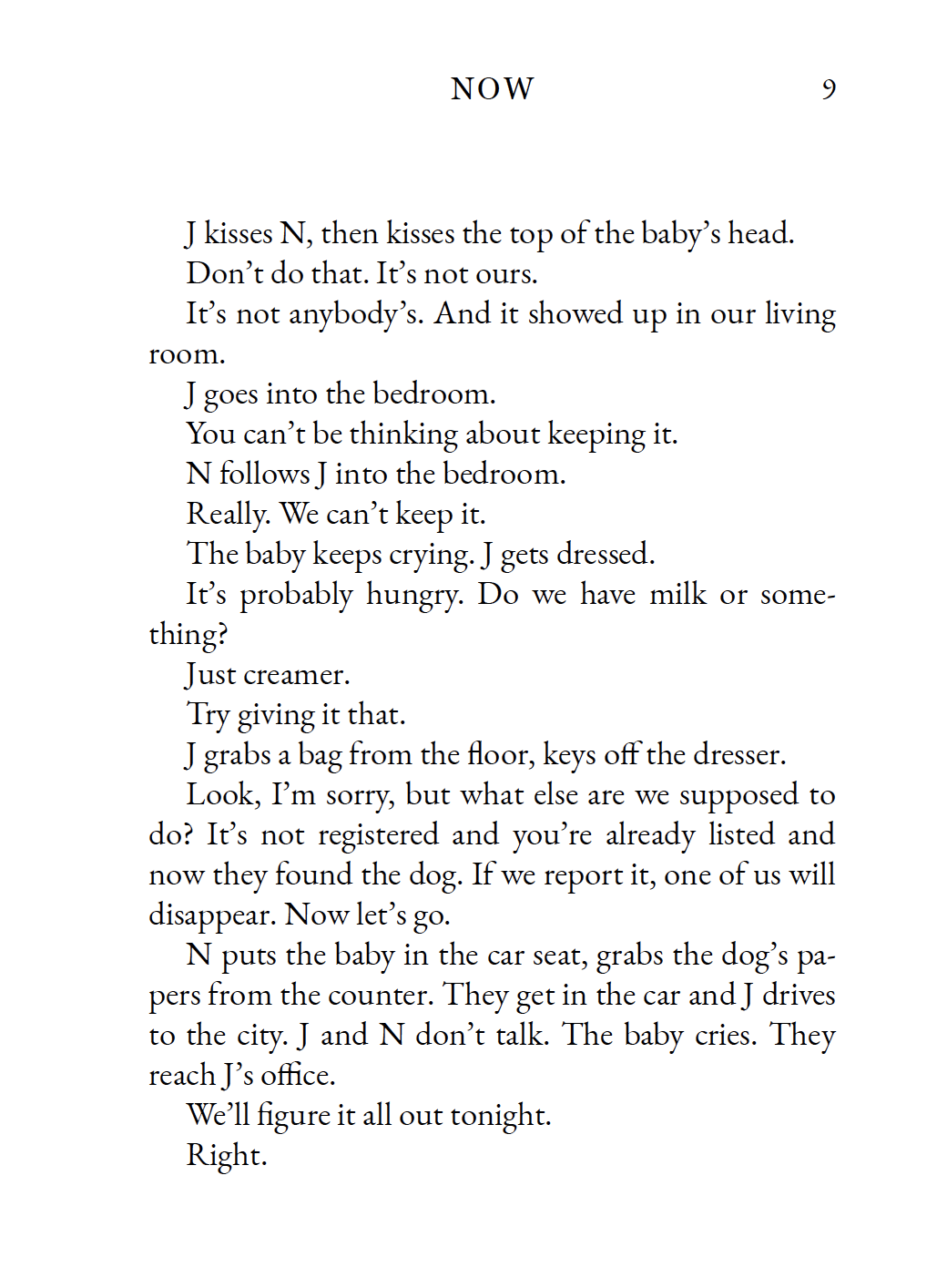
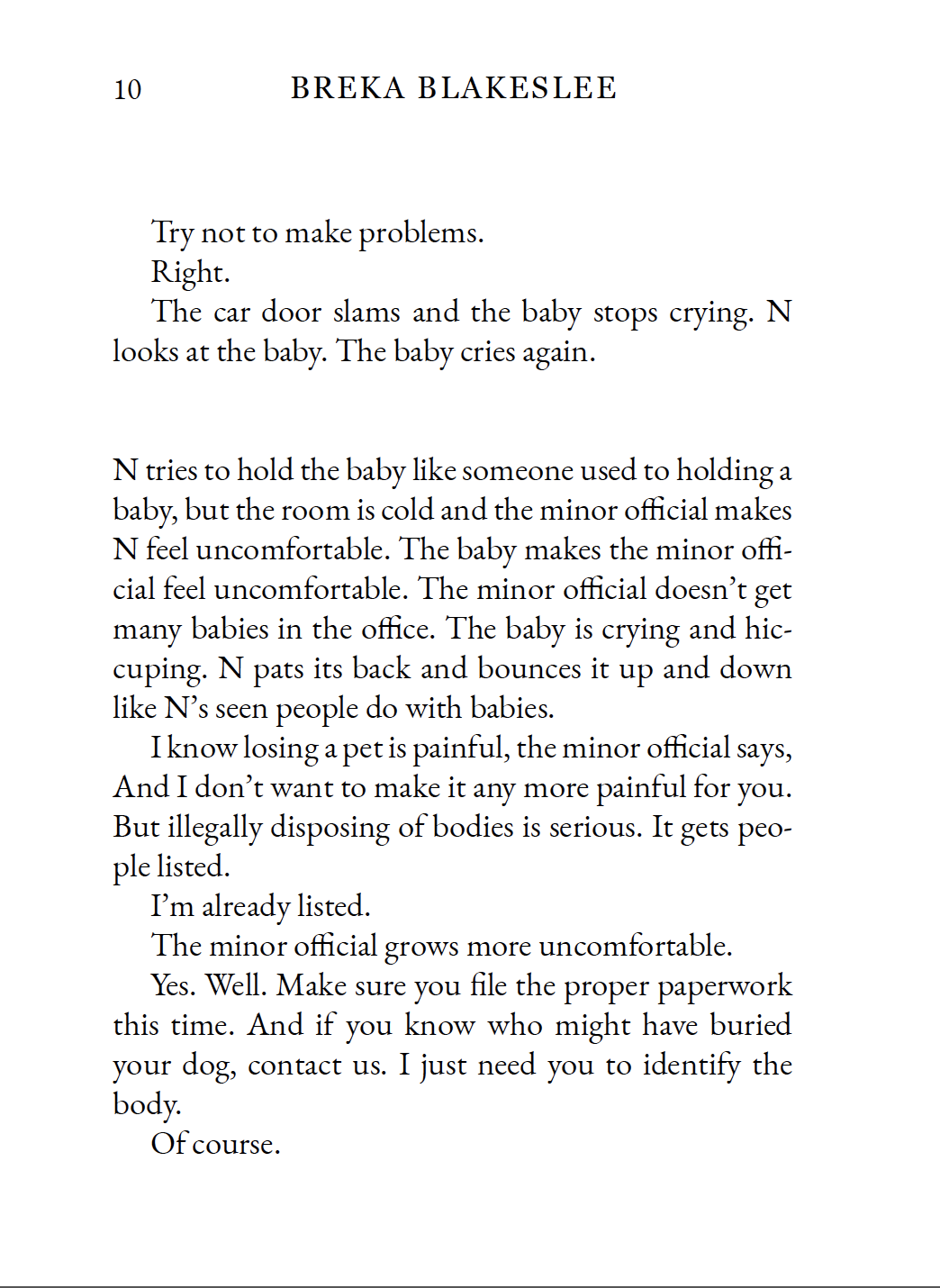
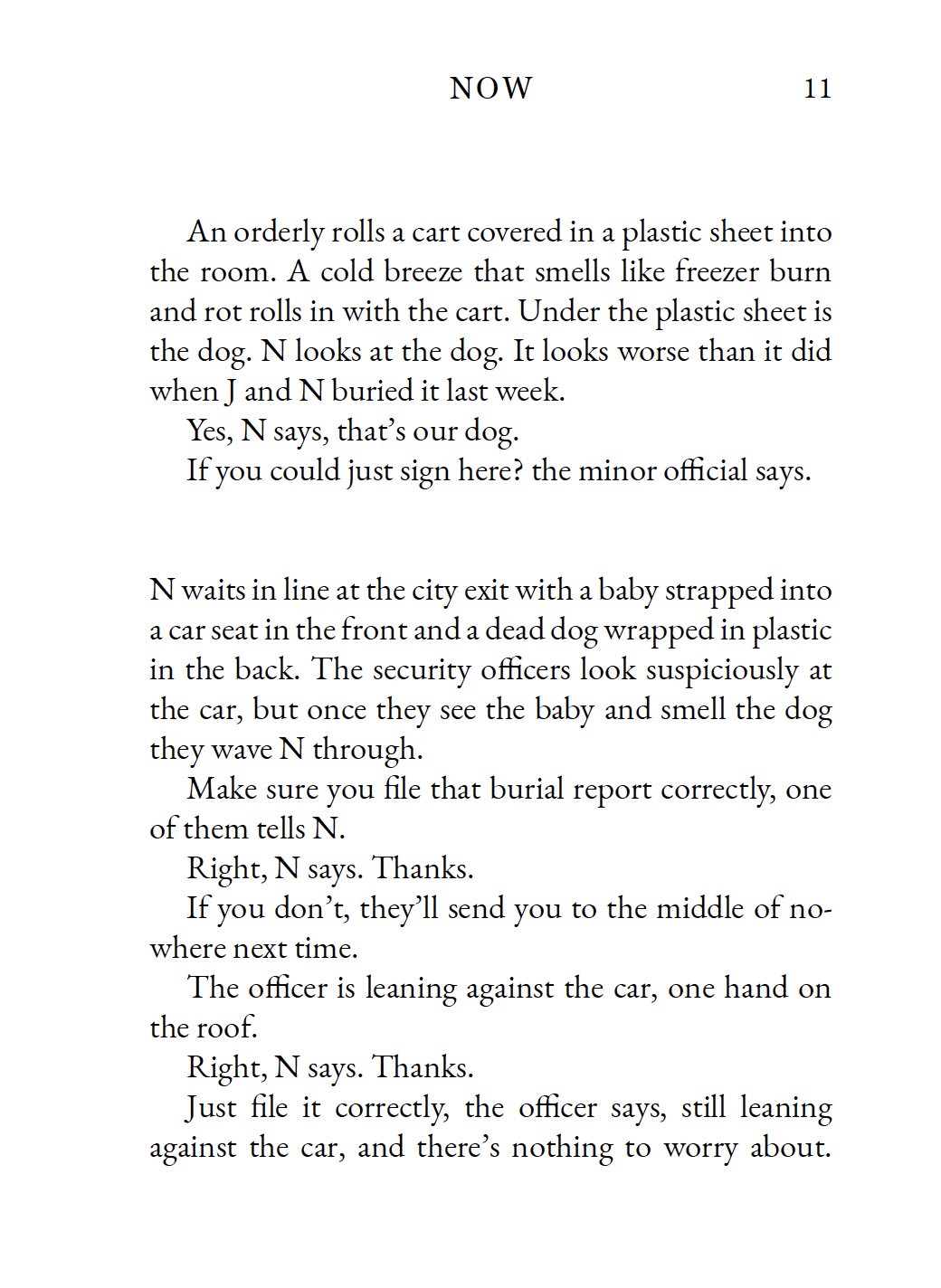
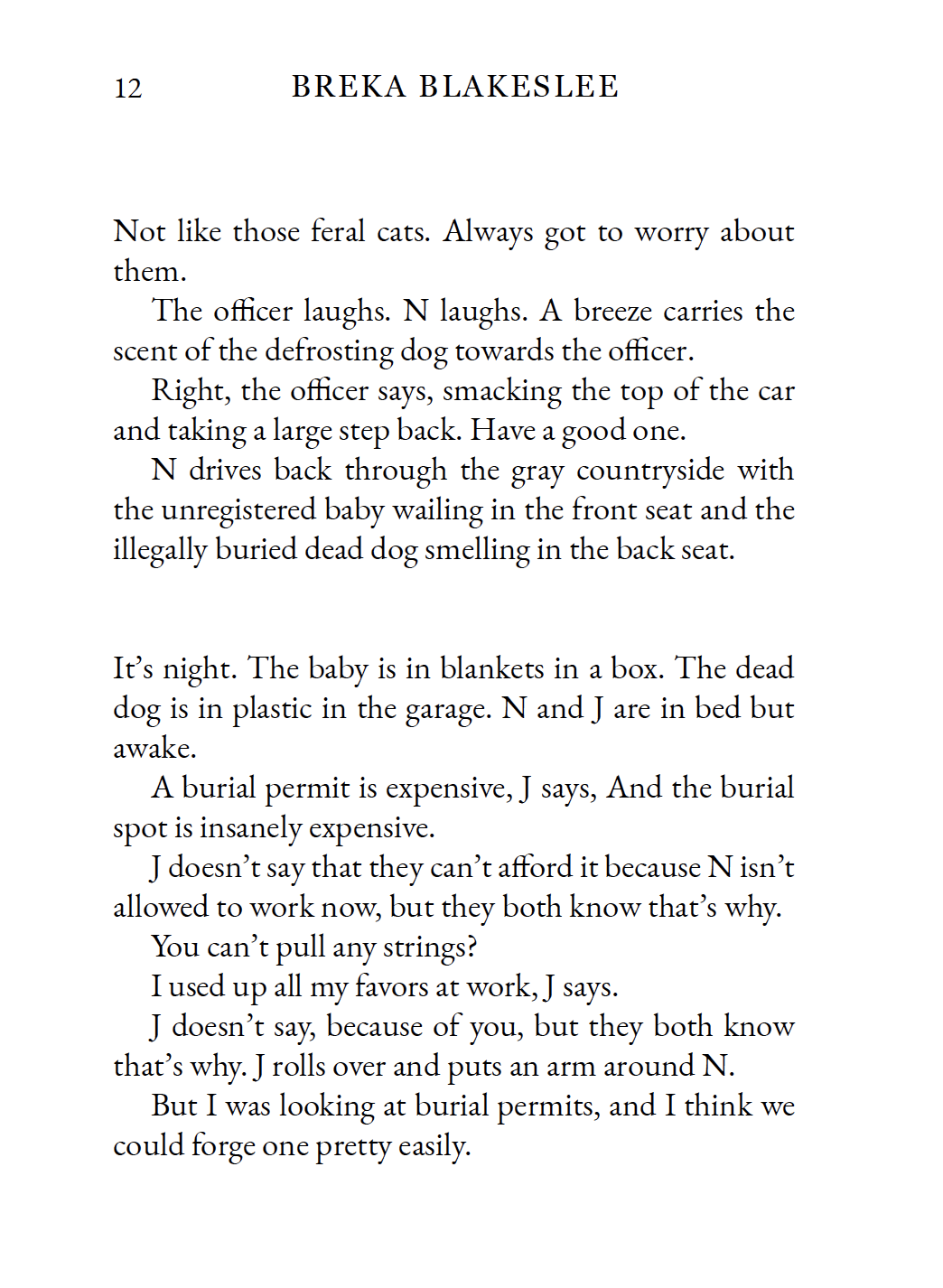
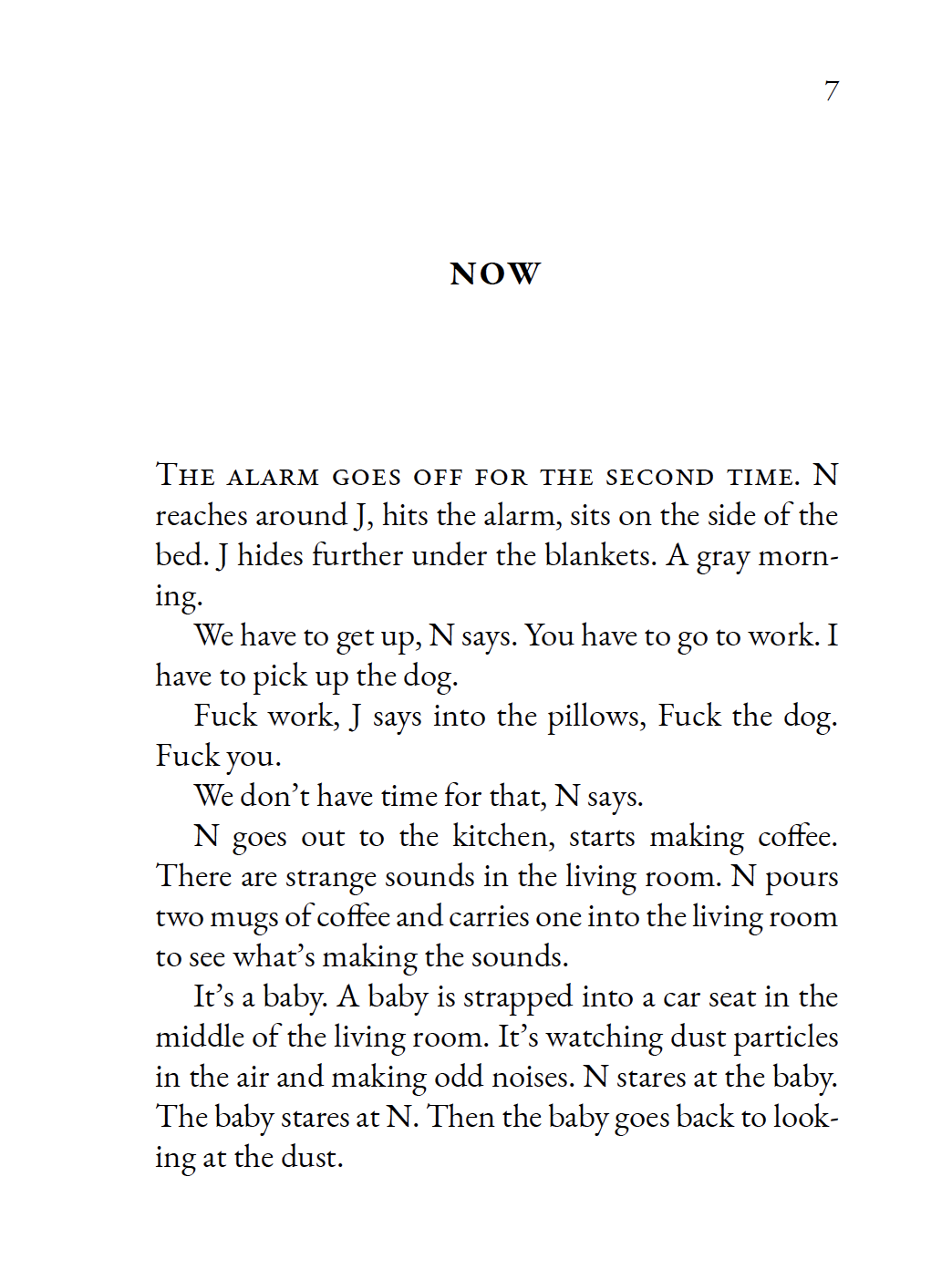
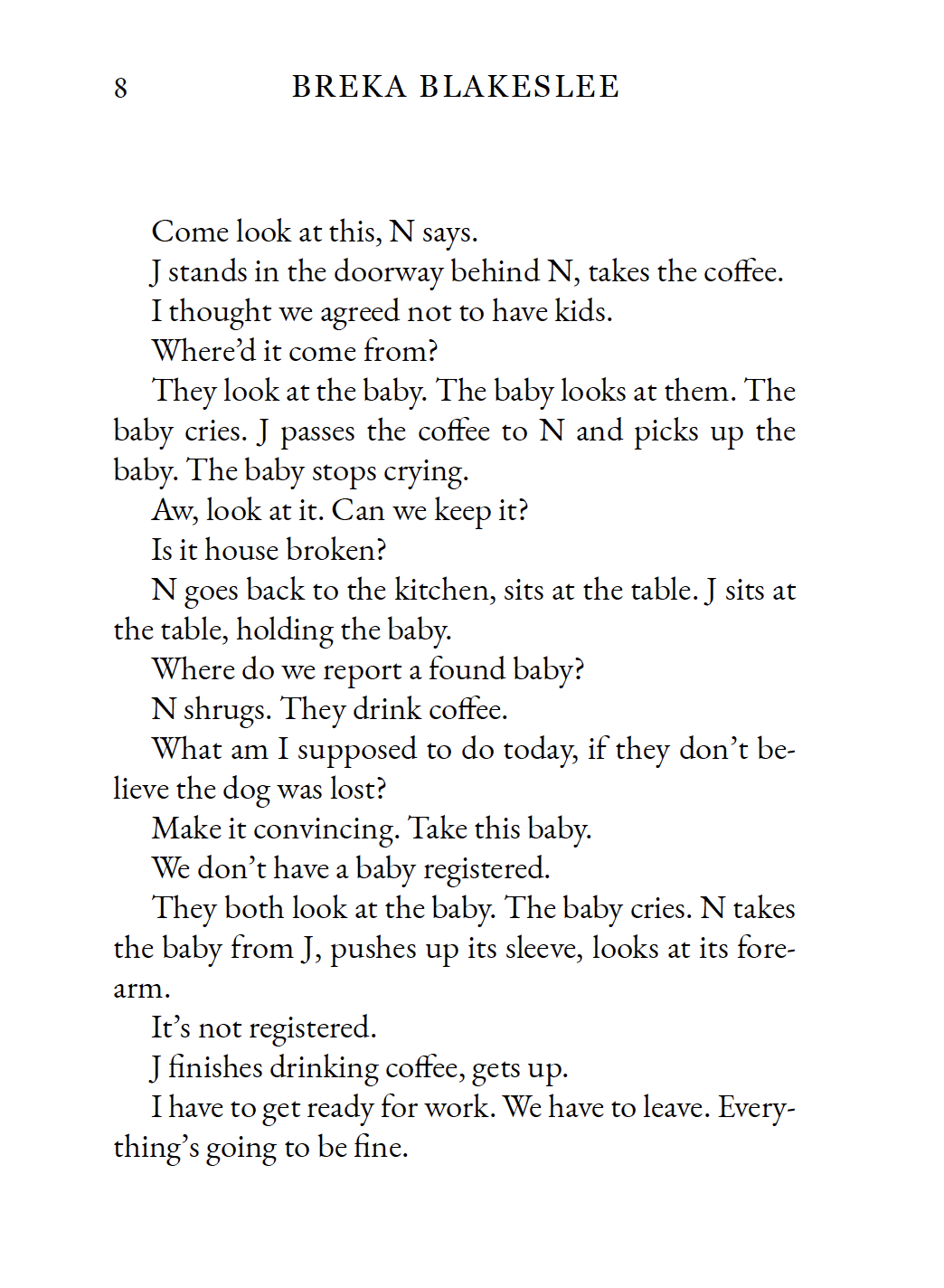
‘The tenth book in the Fellow Travelers Series, Probably It Will Not Be Okay takes place at the end of the anthropocene. People and animals, what’s left of them, share the ruins of a human city, a benign surveillance democracy that celebrates protest and domesticity. N & J, a couple fond of whiskey, cigarettes, and breaking into abandoned buildings, must bury their dead dog and raise a baby that appears in their house. Fleeing hazy fears, N & J drive away from the city as far as a car can take them, bringing the baby and the decaying dog through a series of misadventures that ends by a fence at the edge of surveillance. They and the baby crawl under the fence — and then the book reverses itself, like a movie run backward, to tell the story of Dog, a young person who, some time later, climbs back under the fence with a talking sloth, tracing a route back to “the first home” and the sloth’s destiny.

‘
Probably It Will Not Be Okay (the first novel of a young Seattle writer, Breka Blakeslee) is a strange, beguiling palindrome of a book with an ending unlike any other in fiction, an ending that is also the beginning of hope and optimism.’ — Publication Studio

Excerpt

Extras


Breka Blakeslee: Probably It Will Not Be Okay


Body


*

p.s. Hey. ** Quinn R, Hi, Quinn. Thanks. My weekend was … very cozy and uneventful by default, sequestered as I am. I’ve seen social media talk about anti-quarantine protests, but nothing has come of it yet, and, having ventured outside for my allotted hour yesterday for the first time, I have to say this quarantine seems pretty loose. There were lots of people out, a number of stores and cafes, etc, mysteriously open. There’s actually just as much if not more people complaining that the quarantine is too soft. So I don’t know. Wow, 5 am wake up. I almost always get up between 6:30 – 7 am, and I thought I was morning person extremist. Quackery is underrated as a virtue. Mm, I think usually in romances I was attracted to opposites but would eventually or even quickly discover that in fact they and I were very like-minded deep down but manifested our cogency differently on the surface, if that makes sense. Yeah, using a quarantine to make yourself concentrate is the idea, but it does seem to be a matter of having to settle in and ward off a natural rebelliousness about being forced to concentrate first. I think I’m still rebelling a little. Well, we don’t have that holiday here, so no plans, and there’s really no way to plan anything more than sneakily seeing a friend briefly at the moment. But oh well. I so sincerely hope that by tomorrow our anxiety levels will be significantly lowered. Eek. Bon day, man. ** Dominik, Hi, D!! I see a lot of people talking about ‘The Haunting of Bly Manor’, and, yeah, the talk is split between ‘wow, amazing’ and ‘bleah, weak’. We’re fully locked down again, requiring govt., permission to leave our abodes, although people seem to be going outside a fair amount, so it doesn’t have the intense post-apocalyptic thing it did last time. Continued stranglingly crossed fingers about the meeting, not that it sounds like you even need external luck. Ha ha, what awesome love. I honestly can think of anything I’d rather see more than a 25 year old dressed up like 15 year old Bill Kaulitz. That would be symphonic. The only love I can seem to imagine today that seems big enough to be worthy is love like a landslide anti-Trump/Republicans victory tonight, so, as unpoetic as that love may be, it’s big and it’s yours. ** David Ehrenstein, Indeed. The amount of the ‘Mahagonny’ project he did manage to make is quite good. I spent part of an evening with Harry Smith once in the early 80s, and he was easily one of the most manipulative, creepiest people I have ever met in my life. But quite an artist. Everyone, David Ehrenstein: ‘Please contact me about the CDs, DVDs, Books and posters I have for sale STAT! If you live in Los Angeles, please know I’ve taken every health precaution in dealing with other people (masks, social distancing, hand sanitizer). I await your call.’ Also, his FaBlog is updated with a thing featuring Keith Olbermann and, ugh (sorry), Randy Rainbow. Here if you dare. ** Misanthrope, Hi, G. To restate my FB messenger squib, you created a magnificent zombie out of yourself. Flawless, in my opinion. Even if it had its own pee all over its legs. Not to mention that it almost got you laid, however unpleasantly. You’ve still got it, stud. I don’t know what ‘Deep Blue Sea 3’ is, but that ‘3’ tells me everything I probably need to know. ** Damien Ark, ‘Sullen and corpse-like’ seems like a great response to my recent posts. I never watch TV other than some news stuff. I know I’m missing out on having a knowledgeable grasp of thousands of future conversational touchstones, but you can’t have everything. I’ll be patient for your book. Time isn’t money, thank goodness. And, yes, do hook me/us up with that Zoom thing when it’s time, thanks. That clip makes ‘Birdemic’ seem like heaven on earth, it’s true. Wow. Some people have mentioned Haneke in relation to ‘PGL’, but we weren’t thinking about him at all for whatever that’s worth. I’ll watch ‘Rukus’, thank you. I didn’t know you’re a furry, but cool. Yes, guro had quite a presence in my last novel to say the very least. Staying safe as best I can, and you too. xo. ** Count Reeshard, Hi, Count! How nice to see you! Oh, how great that you’re big fan of Harry Smith. Fascinating transition — Anger -> Smith, obviously. I’ll look for those books and see if I get lucky. Thanks a bunch. I hope you’re holding extremely well through all the worldly horrors. ** _Black_Acrylic, Hi. Probably needless to say, an attic is the primo place to watch his stuff. ** Steve Erickson, ‘His House’, huh, cool, I’ll try to find it. Thank you. Yes, equal parts terrified and hopeful about tomorrow. Luckily, I’ll be asleep when the media starts its count, and I’m ‘praying’ I wake up in the morning to hopeful signs. ** Jeff J, Hi, Jeff. Thanks about the post. The man bankrolling the ‘Wizard of Oz’ film died partway through the making, and there was then no funding left for Smith to continue. Very sadly, as, yeah, it looked phenomenal. Unless I’m blanking I have not seen Terrence Nance’s films. But you can bet I’ll see how I can rectify that, although we don’t have Criterion Channel over here frustratingly. I’m so sorry about your cousin. Oh, man, that’s so hard. Hugs, buddy. Yes, we’re locked down tight, although it’s not as depleting as last time so far. Take care. ** Brian O’Connell, Hi, Brian. I’m glad you won the endless battle with autocorrect, which is the bane of my p.s.’s existence, I must say. ‘Less cynically made’ is a big virtue, really big, whatever the outcome. Most of the movies I tried to watch were sub-Blumhouse, free-floating things that I didn’t even think got made anymore. I’m going to try to relax today too, but I can already tell I’ll be following the coverage like crazy. It’s awful: that seeming need. That Pasolini contemplation seems pretty eventful in theory. As I mentioned above, my yesterday’s main ‘highlight’ was going outside for the first time and being rather shocked by how peopled the streets were and how almost un-quarantine-like it felt out there. Which is a relief, but it also was kind of depressing because I don’t see how this quarantine in name only is going to fix anything. That and election stress and a few texts and phone calls were my 24. Happiest possible today! ** Bill, Hi, Bill. I don’ know ‘La nuit des rois’ at all, how strange. Yeah, I’ll seek. Theaters are kaput here now, but the internet is still up and running. Ativan. I still have a bunch of my pain pills from my broken toe that I will try not to pop. I hope to see you in a brighter tomorrow. ** Gus, Him, Gus! Great to see you! I’m still spinning ‘Beat Boy’. Killer. Are there any youtubes or whatever of any of your live gigs? I’ll check for such myself too. I’m too American to be able to tell how American it feels there. I guess I do think that, like, where I come from, i.e. Los Angeles, is probably a lot less American with a capital ‘A’ than most other places there. Wow, first, great that you’re applying for that masters. Seems like a smart, productive move. And, yeah, I think the p.s. isn’t a good place to try to answer such a giant question, especially with the mind-eating US election going on, but I’m happy to talk with you about it. Maybe by email? Or even Skype/Zoom? My email is: denniscooper72@outlook.com if you want to reach me there. And I’d love to get the novel. I can be very slow at getting to reading things sometimes, just know that. But yes, please, great. Excellent to see you, excellent to converse with you, look forward to much more. ** Okay. I highly recommend the four books up there to you. Otherwise, I send out the most fierce hope to my fellow US folks, and, well, to everyone else too, that when I see you tomorrow there will be clear signs that the monster and his minions have been disempowered.

« Older posts Newer posts »

© 2026 DC's

Theme by Anders Norén — Up ↑