The blog of author Dennis Cooper

Author: DC (Page 651 of 1130)

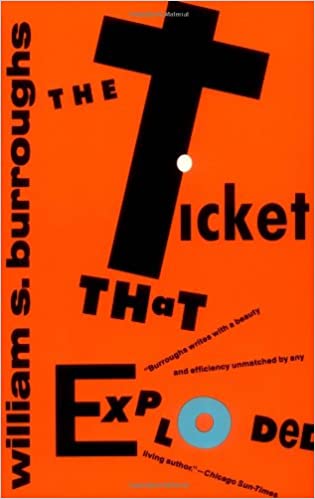
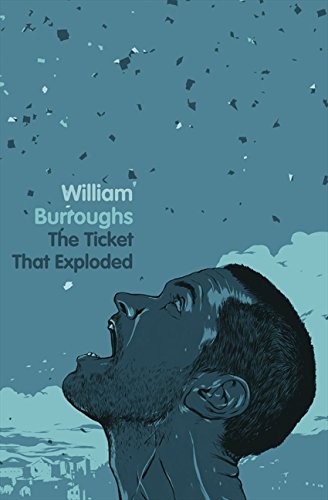
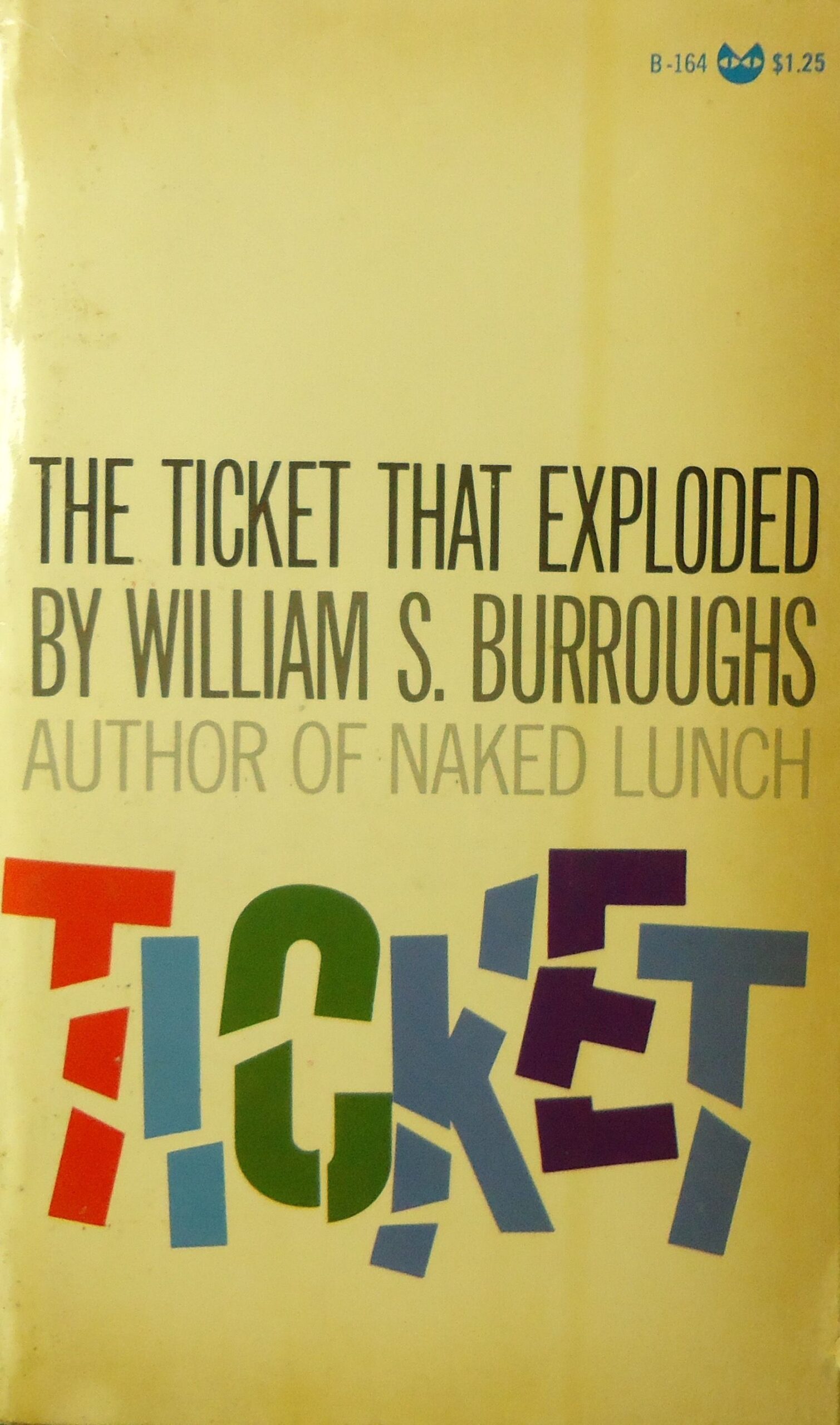
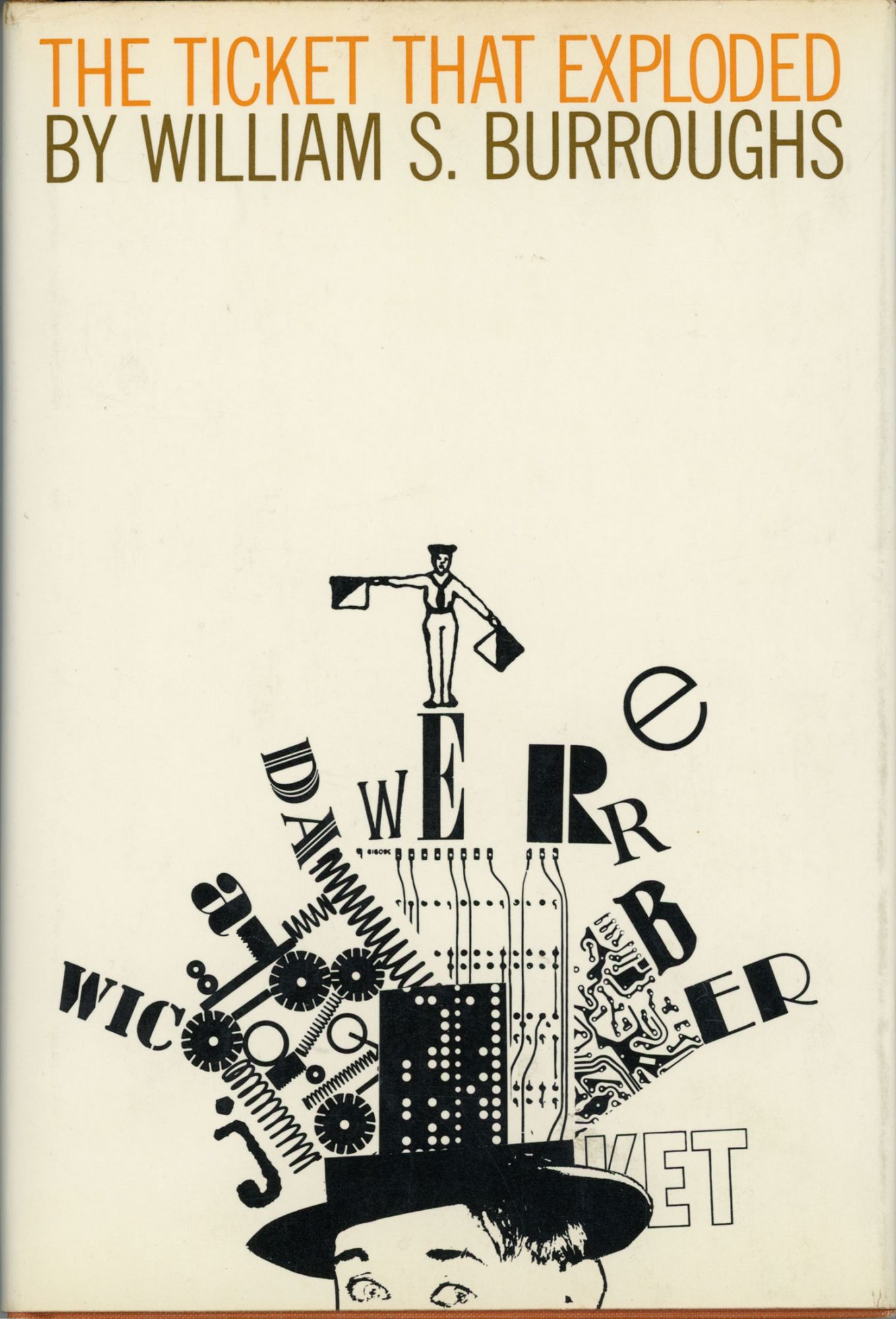
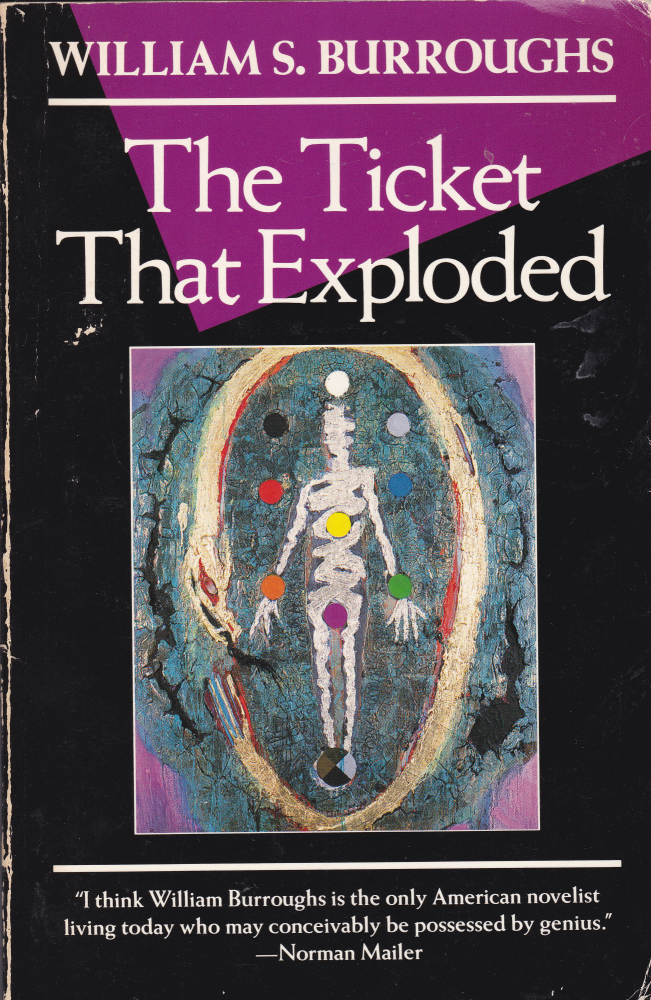
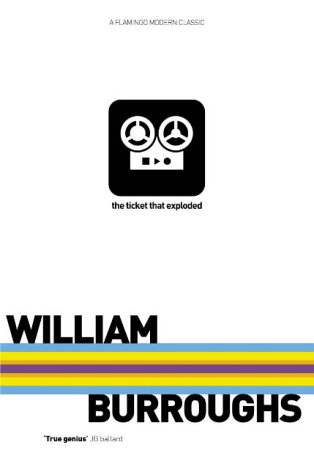
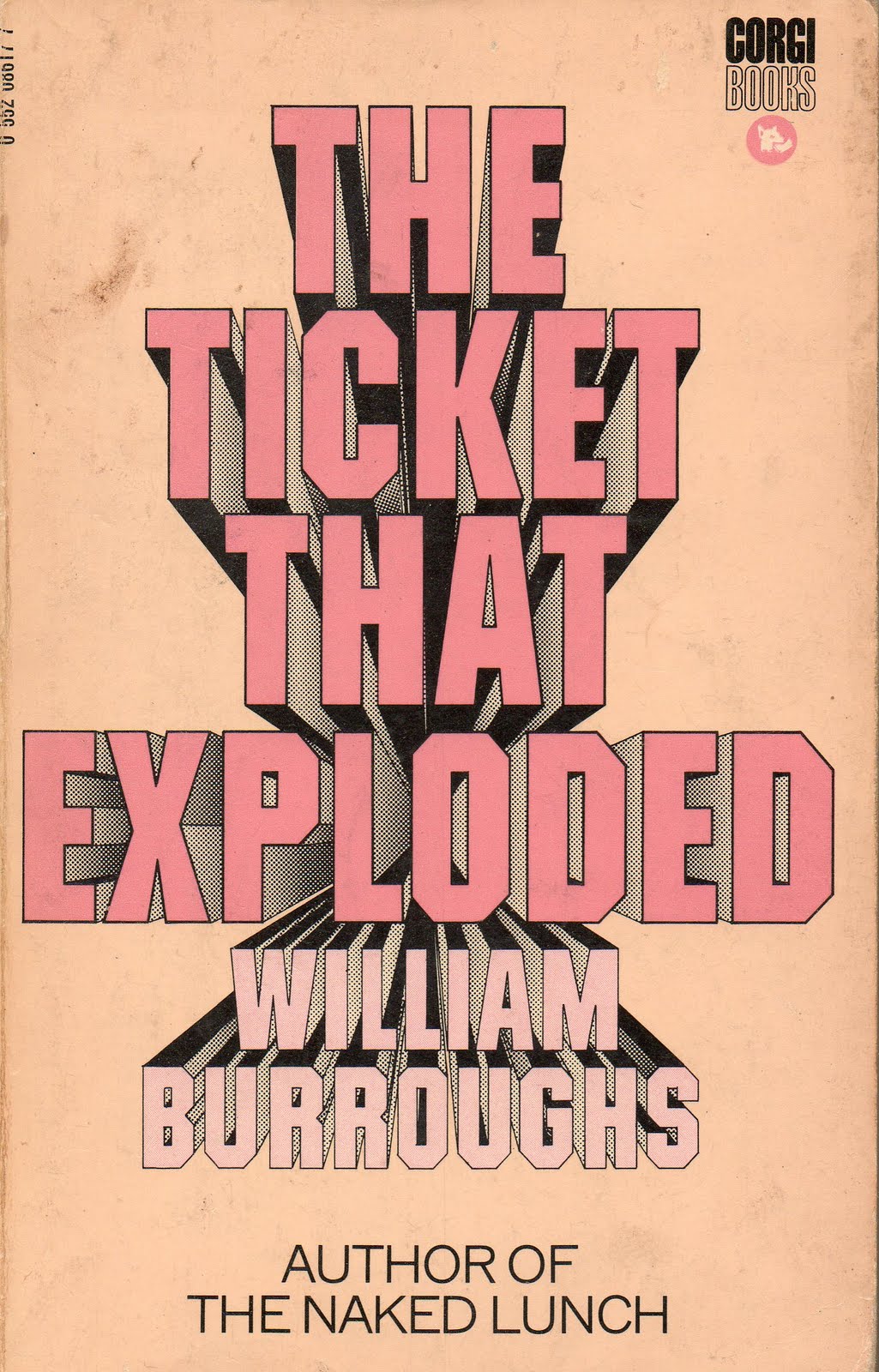
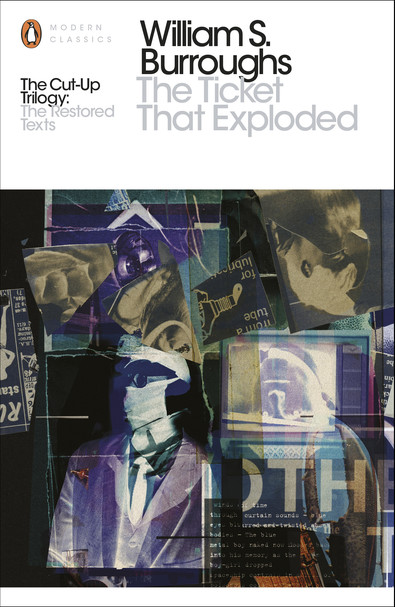
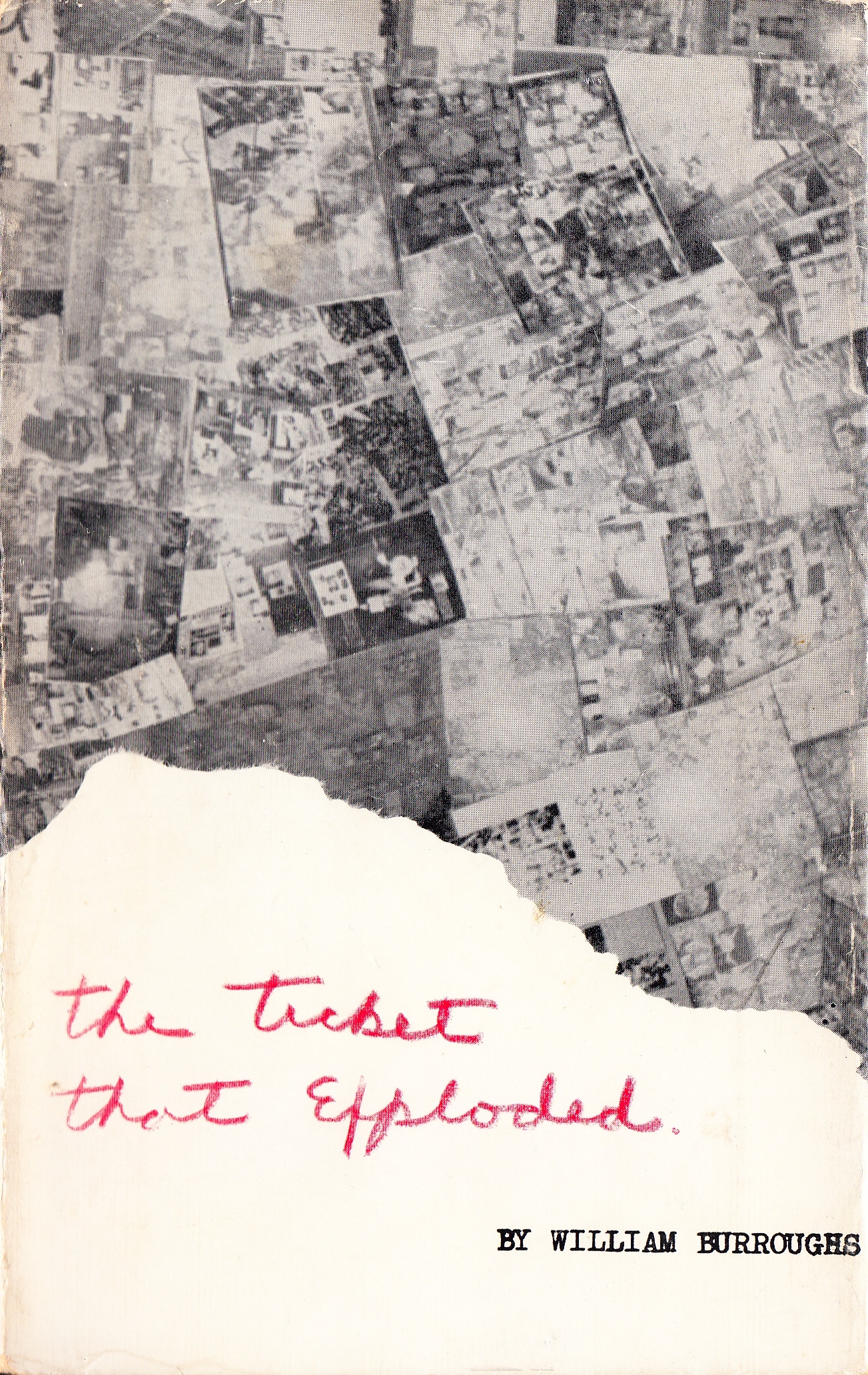
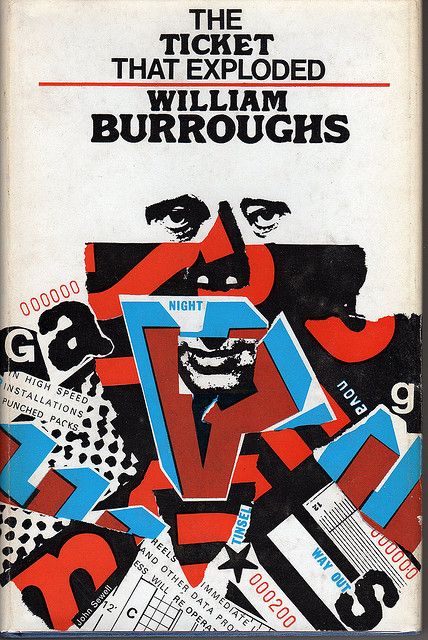
Spotlight on … William S Burroughs The Ticket That Exploded (1962)


‘We call our program the Burroughs Extended Abstience Technique (BEAT). It draws on the briliant insights of William S. Burroughs (1914-1997), a Harvard-trained anthropologist who outlined the BEAT approach in a series of innovative books and lectures. His research involved extensive empirical testing in Mexico City, London, Berlin, Morocco and Paris, and earned him a number of honors and awards, as well as a conviction on manslaughter charges (Mexico City, 1951).

‘We have tested several of these books in classroom settings, including The Naked Lunch (1959), The Soft Machine (1961) and Nova Express (1964). But we have found that the most successful results are obtained via The Ticket That Exploded (1962, revised 1967).

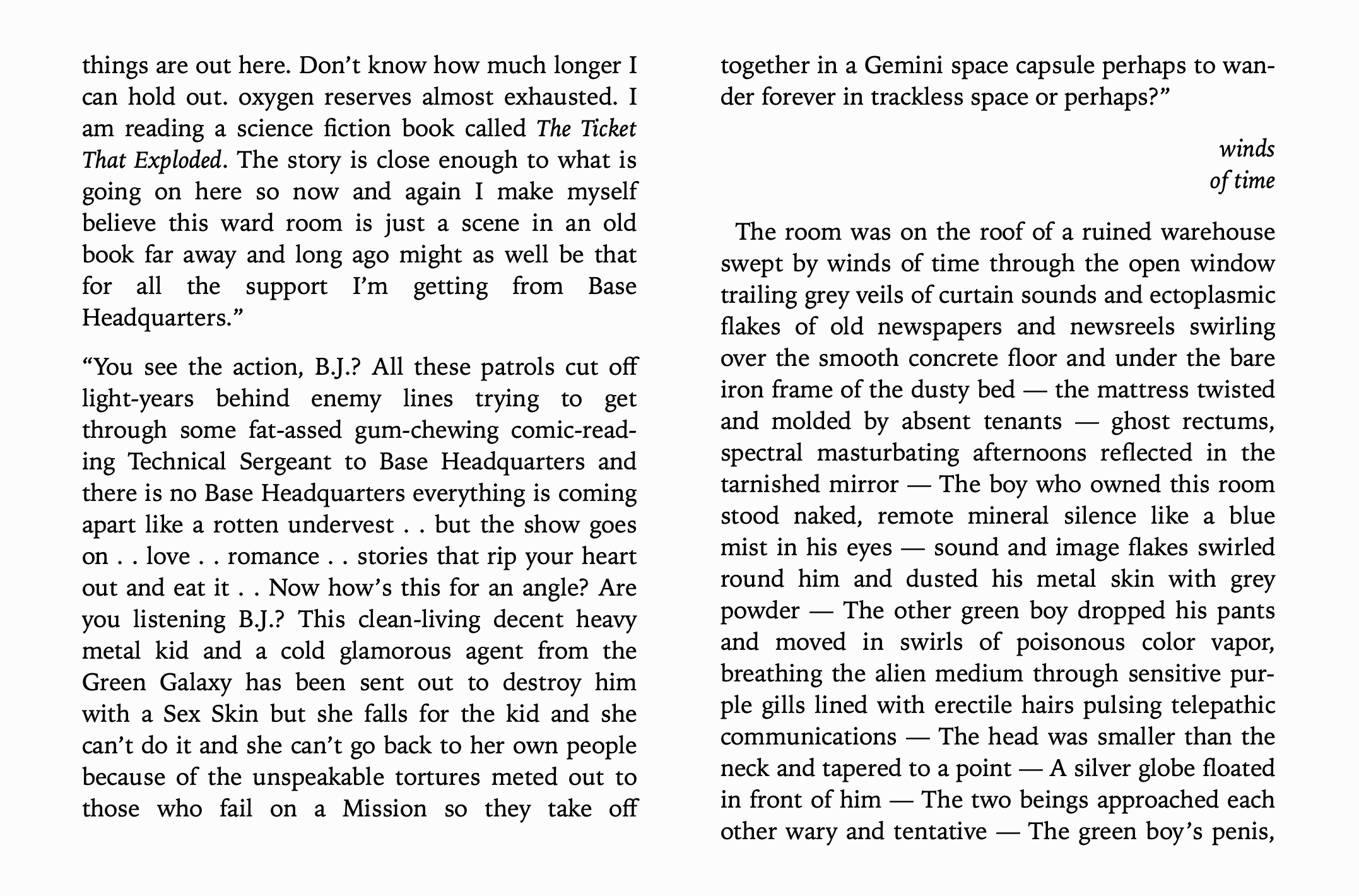
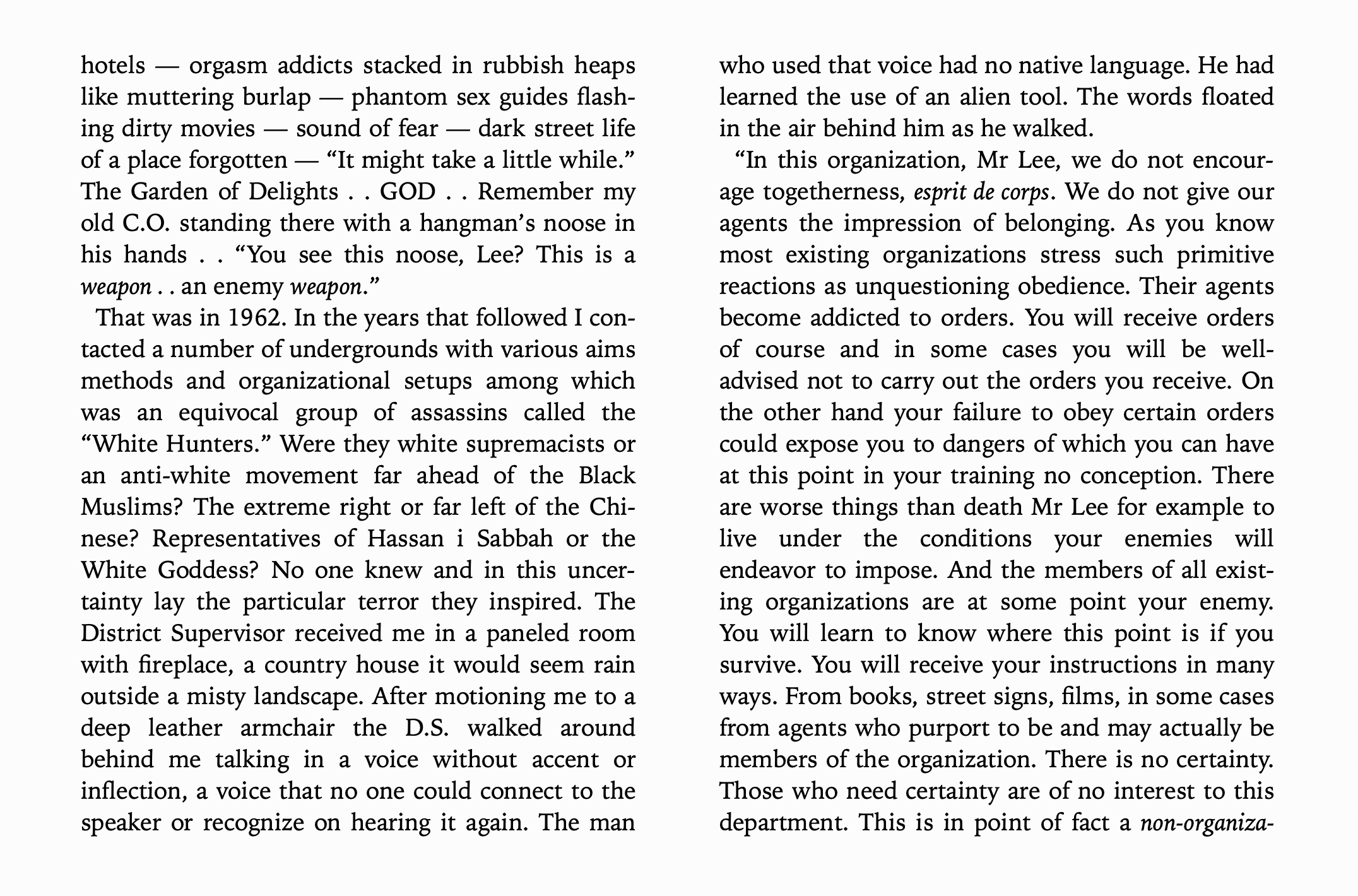
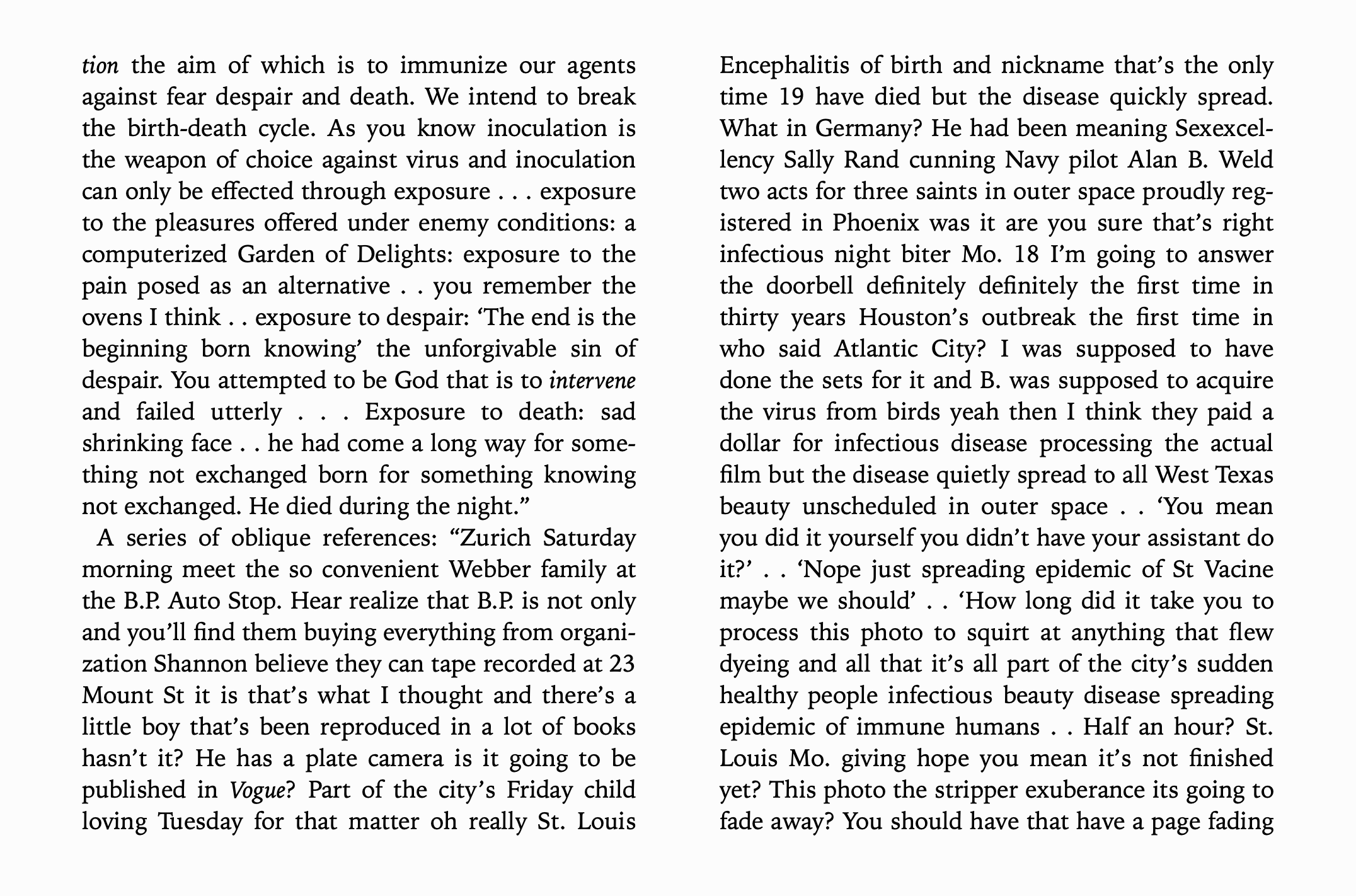
‘As Mr. Burroughs himself wisely tells us at the outset of his book: “inoculation is the weapon of choice against virus and inoculation can only be effected through exposure…exposure to the pleasures offered under enemy conditions.” [p. 10] To this end, Burroughs developed an indoctrination program built on taped repetitive messages. “Anyone with a tape recorder controlling the sound track,” he reminds us, “can influence and create events.” [p.207] These recordings, he noted, can be “cut into short sections and spliced in together. This produces a strong erotic reaction.” [p. 18]

‘Fortunately for us, technology has advanced since Burroughs developed his BEAT technique, and we no longer need rely on cumbersome tape  splicing and bulky equipment. The BEAT program can now be implemented anywhere—via your child’s phone or other handheld device. We are in the process of designing a series of apps that will make access to BEAT as simple as the click of a mouse or stroke of a finger.

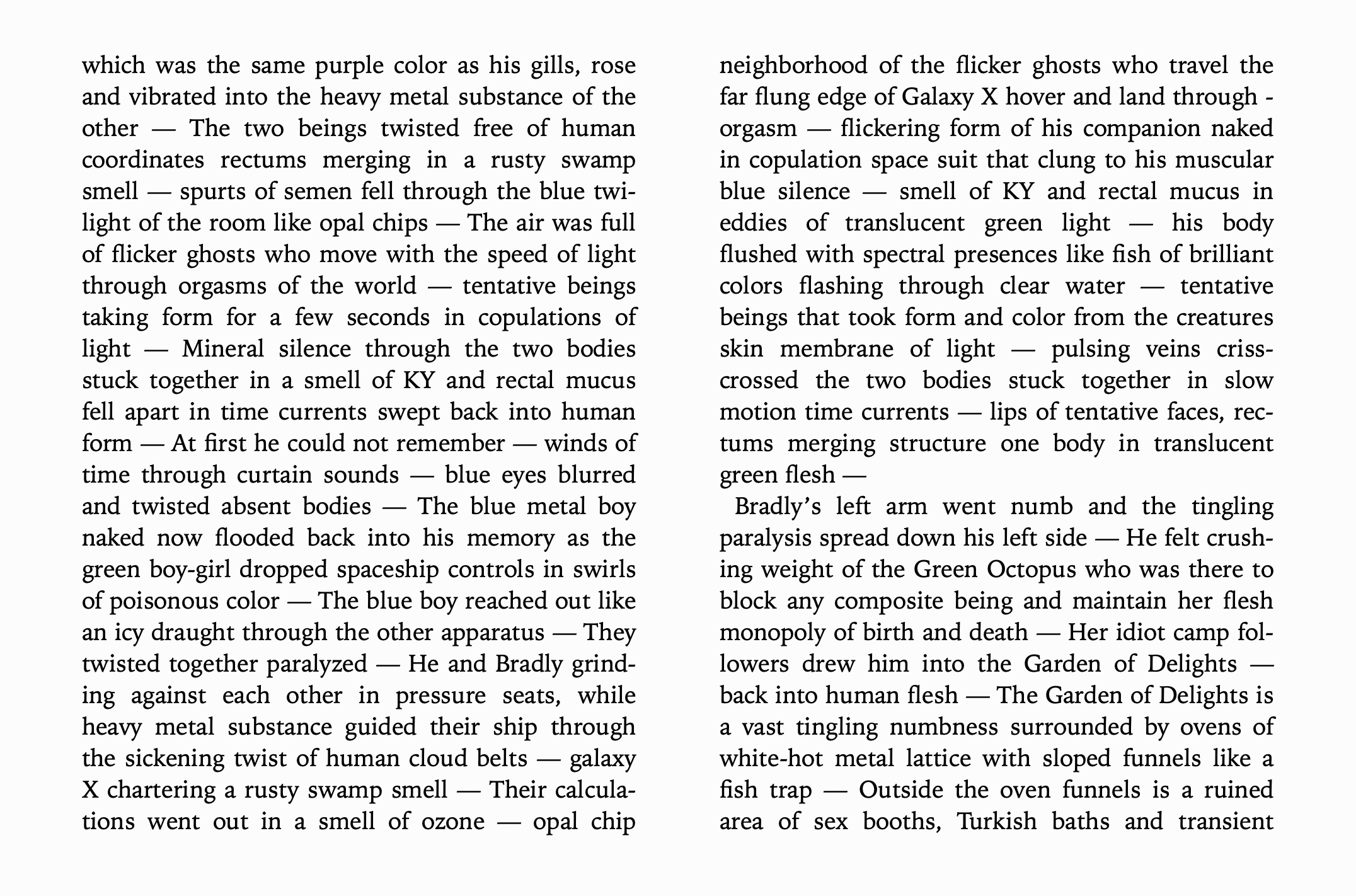
‘But first, the trigger warning…..Many students have found the Burroughs abstinence program distasteful and shocking. But their objections must be overruled, because the efficacious application of the method draws on precisely these elements. If students persist in their complaints, ask the troublemakers whether they want to turn into what Burroughs describes as “orgasm addicts stacked in rubbish heaps like muttering burlap”? [p. 8]

‘Of course not!

‘We begin each class session by group repetition of Mr. Burroughs’ definitions of terms. To whit, his astute descriptions of the essence of sexual union. These are recited by teacher and students in the form of questions and answers.’ — Ted Gioia


____
Gallery: Covers History
 

____
Further

The Ticket That Exploded @ Wikipedia
The Ticket That Exploded @ goodreads
Cutting-Up
The Soft Machine, The Ticket That Exploded, and Nova Express: William Burroughs’s Ugly Spirit
Burroughs, Berrigan, and The Ticket That Exploded
Arabic Music and Burroughs’s The Ticket That Exploded
The Science-fiction of William Burroughs
Texte itératif et stéréotypes chez William Burroughs : de l’intertextualité à l’autostéréotypie
The Long Last Goodbye: Control and Resistance in the Work of William Burroughs


____
Extras


James Ilgenfritz – The Ticket That Exploded [An Ongoing Opera] (first half)


Excerpt from “The Ticket that Exploded” as read by Aaron Runyon


The Ticket that Exploded @ the library


_________
Allen Ginsberg Interviews William Burroughs
 

Allen Ginsberg: What’s the basic plot or theme of The Soft Machine?
William S Burroughs: The book takes place, to a large extent, in a mythical area which bears some resemblance to South America and also to the planet Venus. It concerns, I should say, a struggle between controllers and those who are endeavoring to throw off control.
AG: And Nova Express
WSB: The same
AG: What is the distinction between the two in terms of theme and plot or development of the theme?
WSB: Nova Express… is more directly concerned with the struggle. Soft Machine is more concerned with just description of the factors involved and the scene, which corresponds somewhat with the planet Venus.
AG: In Nova Express you give a more precise description of the battle or of actual tactics?
WSB: More actual battles, battle scenes, in Nova Express than in The Soft Machine. The Soft Machine is more concerned with the set.
AG: The material from both those books is overflow from Naked Lunch?
WSB: There is some overflow from Naked Lunch in both of them, yes.
AG: And also there is material that was generated out of the whole cut-up experience of that time.
WSB: Absolutely.
AG: An what new preoccupation or theme, or symbolic set-up, is added in Venus? The whole concept of Venus?
WSB: Added in there after Naked Lunch. And also in The Soft Machine there’s a good deal of narrative material that’s concerned with reincarnation. This is the concept of The Street of Chance, not sure of what kind of reincarnation you’re going to have. It’s almost like a lottery was the allegory of the Street of Chance, people between birth and death, what chance they’re going to get in their forthcoming reincarnation.
AG: And the concept of Venus is Eros, or female Eros?
WSB: No, no. Venus, the actual landscape, etc. This has been a theme in science fiction for some time. And most writers have equated it with something like South America, a lush tropical scene teeming with poisonous exotic life forms. I would mention in this connection the novel Fury by Henry Kuttner, which takes place on Venus, and there are a number of descriptions in science fiction.
AG: The Ticket That Exploded, following Nova Express, brought it all to a climax. Did that conclude the…
WSB: No, it didn’t at all. I mean, it’s…
AG: A continuation of the battle?
WSB: Yes. Yes.
AG: Or a continuation of the description of the scene?
WSB: Well, both. I would say you could regard The Soft Machine and Nova Express as almost a continuation of the same book, so that anything you say about one, more or less applies to the other…
AG: I thought The Ticket That Exploded kind of concluded – that was the action of the Nova, or of the explosion itself – by dissolving into a vibrating soundless hum.
WSB: Yes, there is that. Shall we say that The Ticket That Exploded winds it up? After that, was, of course, The Job.
AG: Which is an attempt to regulate the ideas, and that gives them a linear exposition.
WSB: Yes, that was it. It also contains some narrative material which was possibly a mistake. I think it is a mistake to mix essay and narrative, fictional material because it slows down the narrative, and then everybody thinks that the essays are fictional rather than being factual.
AG: So the next thing is what?
WSB: More or less immediately after The Job was The Last Words of Dutch Schultz.
But The Job, you might say, overlapped The Wild Boys because I realized it started to be one book. And then I realized that I had two books, and that they should not be mixed…
AG: So the fantasy material, or the fictional material of The Job, overlaps with The Wild Boys?
WSB: That’s right.
AG: And actually in both, there is a significant theme, because The Job is the most outright or outrageous statement about the occlusion of women.
WSB: Yes.
AG: And so The Wild Boys is an exemplification of the world.
WSB: Absolutely, yes.
AG: Then the next work is…
WSB: The Wild Boys. Then a direct overflow from The Wild Boys was Exterminator! and Port of Saints.
AG: Now I haven’t read Port of Saints yet. I’ve read Exterminator! and The Wild Boys. How do those two books differ and what’s their progression?
WSB: There isn’t very much difference. I found the material for The Wild Boys when I had to make, at some point, a more or less arbitrary choice. Sometimes you realize that the things you left out are better than what you’ve put in. So three books came from that block of material.
AG: Is there any progression, or any thematic distincton between them?
WSB: Yes. For example, Port of Saints is, I think, more structured like a musical composition. In fact, there are musical leads for each chapter.
AG: And Exterminator!
WSB: Exterminator! is more episodic and perhaps not as structured as Port of Saints, or even The Wild Boys.
AG: Well, how can you expect anybody to read through all this if you don’t make big categorical distinctions? It’s like reading one large series of prose poems that have no end.
WSB: No, no, no, no. It’s quite comprehensible and as accessible as any book you pick up at the airport? People are demanding less and less in the way of plot and structure, I find. So I don’t think there’s any difficulty in understanding.
AG: Actually, The Wild Boys is very clear because it’s divided into very definite themes and chapters
WSB: Yes, so is Port of Saints
AG: Exterminator!, though has some elements being mixed with essay, like “Do Easy”
WSB: What easy material?
AG: Exterminator! Isn’t “Do Easy” in Exterminator!?
WSB: Oh yes! Yes, I did feel that Exterminator! was possibly too much, too miscellaneous. The first pieces in The Wild Boys, actually, should have been in Exterminator! That was not really in sequence there. Uh, that’s true.
AG: Is there some one paragraph summary of the basic theme of say, The Soft Machine, Nova Express?
WSB: The basic theme is that the planet has been invaded by Venutians and the book attempts to cope with invasion
AG: And the intention of the Venutians is planetary takeover?
WSB: Planetary takeover, probably not just enslavement but extermination. Shall we say that there conditions are different? And they want to reproduce conditions that would probably be fatal to the earth.
AG: So that they can live here?
WSB: Yes.
AG: In other words, they’re like the Reds, except from Venus.
WSB: Yes, like the White Man arriving in the New World
AG: How dies it end though? It ends with the virus being exterminated by the realization of the situation.
WSB: It doesn’t really end.
AG: Well, the anxiety of the invasion seems at the end to be dispersed by the dissolution of space and time, or the dissolution of time.
WSB: Yes, it is. That dissolution was necessary in order to neutralize the conspiracy. From this comes the theme that the only future is to enter into a spirit, a completely spirit state.
AG: Grasping the matter? There is a notion that most conspiracies are actually spiritual conspiracies, in the sense of power takeovers involving people’s minds.
WSB: The people conspired against.
AG: Oh, yes. Yes.
WSB: Just as we destroyed the Indians by destroying their spiritual life.
AG: I’m still a little fuzzy on the last part. My point was that most conspiracies are mental anyway.
WSB: They are. But usually if you want to destroy people, destroy their Gods. Destroy their Maker.
AG: Except that then the Gods being destroyed are, say, Christ or Baptist visions of Christ.
WSB: On the contrary, those are the Gods being used. In other words, these are concepts that are very useful for the invaders because they are spiritually empty.
AG: Actually, it’s a very good statement on it. Is there some passage…that could be cited, for summing it up in a nutshell, in either Nova Express or The Soft Machine?
WSB: I would say that Nova Express would probably have the clearest statement.


___
Book
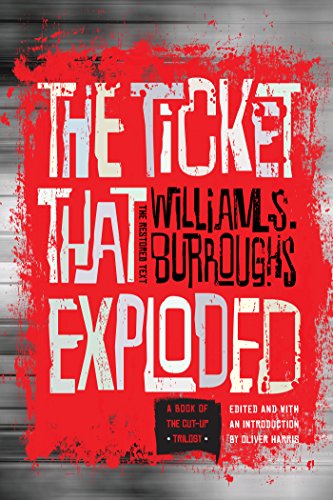
William S Burroughs The Ticket that Exploded
Grove Press

‘Inspector Lee and the Nova Police have been forced to engage the Nova Mob in one final battle for the planet. This is Burroughs’s nightmare vision of scientists and combat troops, of Johnny Yen’s chicken-hypnotizing and green Venusian-boy-girls, of ad men and conmen whose destructive language has spread like an incurable disease; a virus and parasite that takes over every human body.

‘One of Burroughs’s most approachable works, The Ticket That Exploded is the climax of his innovative ‘cut-up’ Nova trilogy – following The Soft Machine and Nova Express – and is an enthralling and frightening image of the future.’ — Grove Press

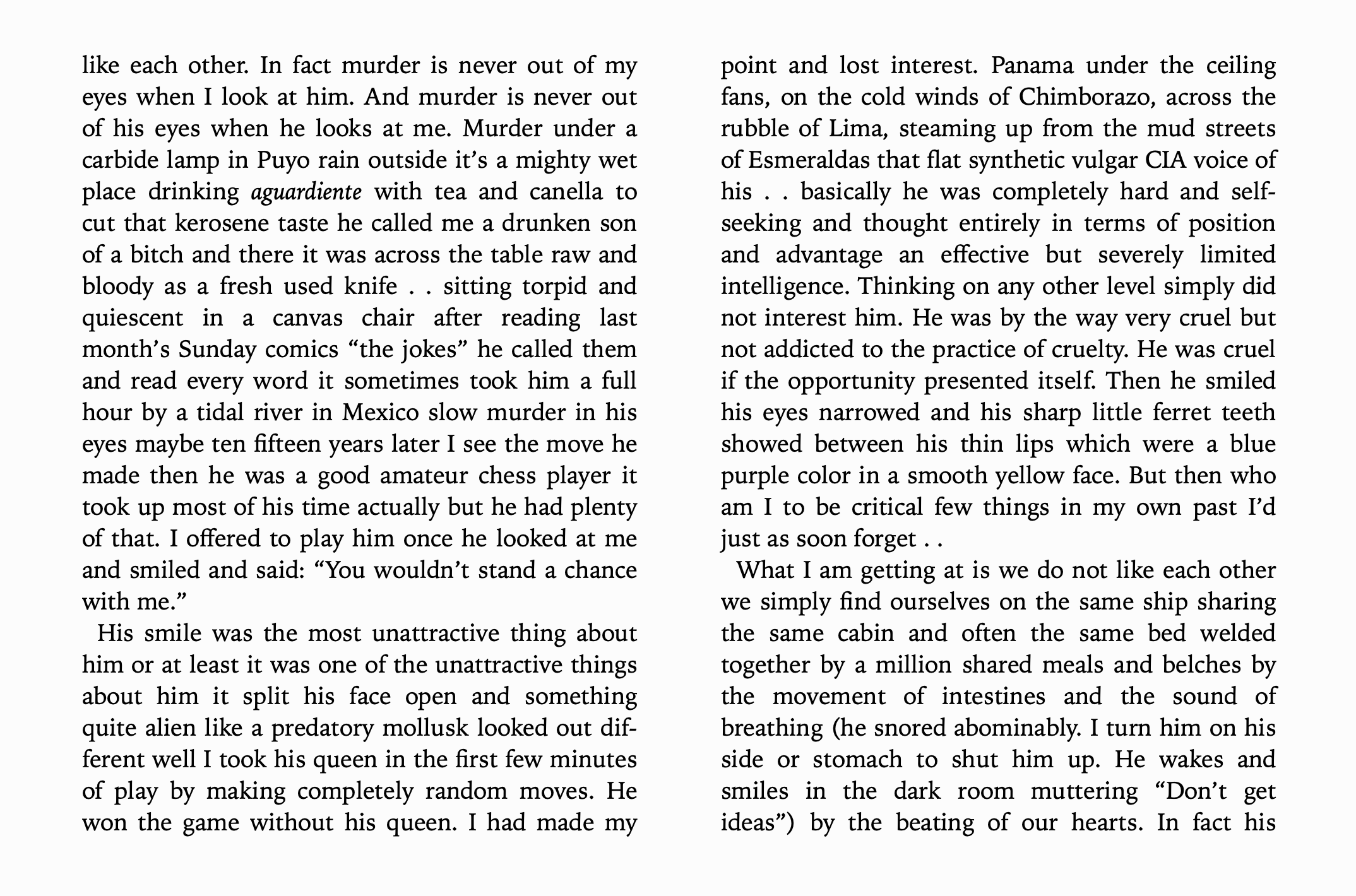
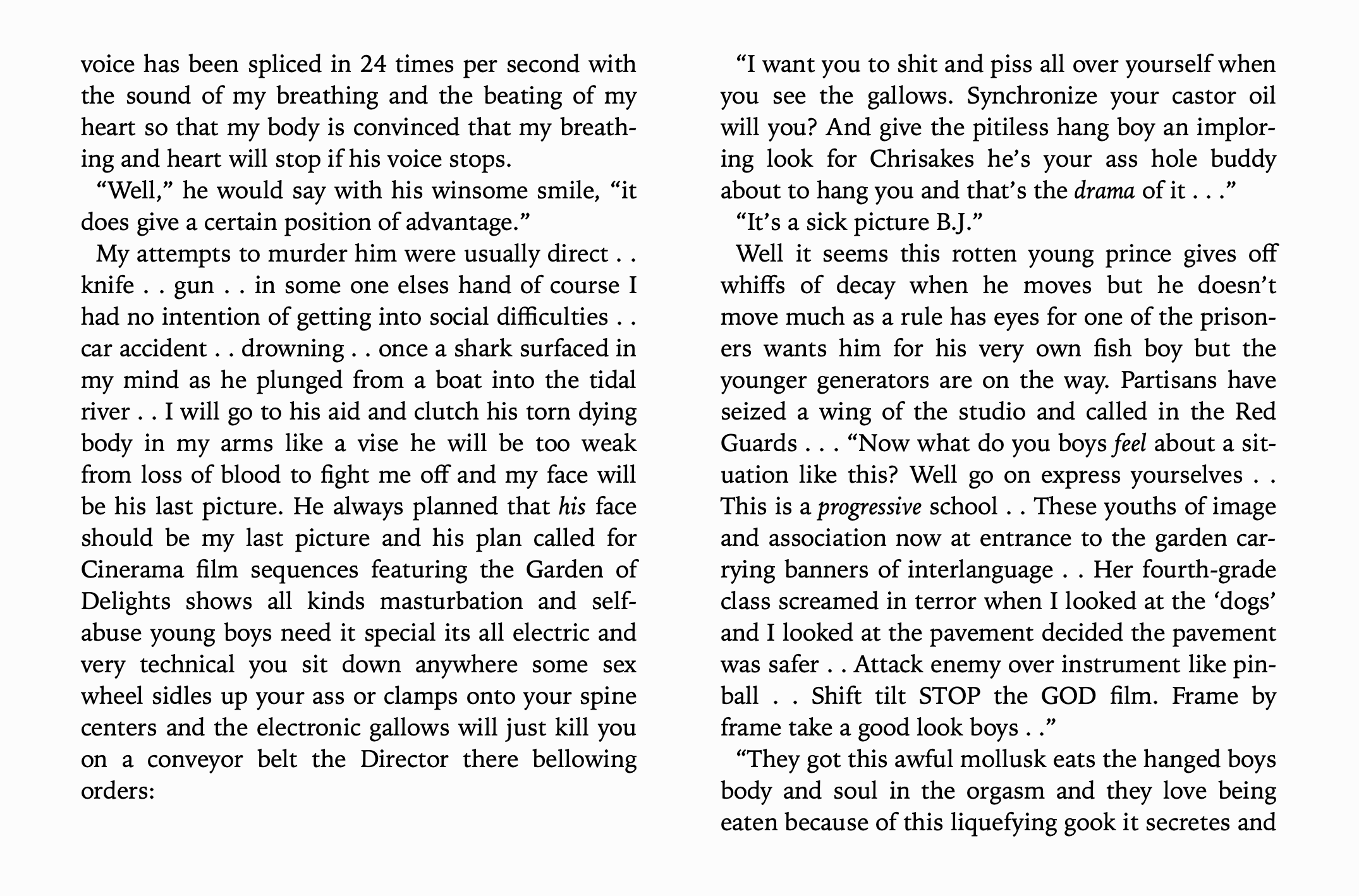
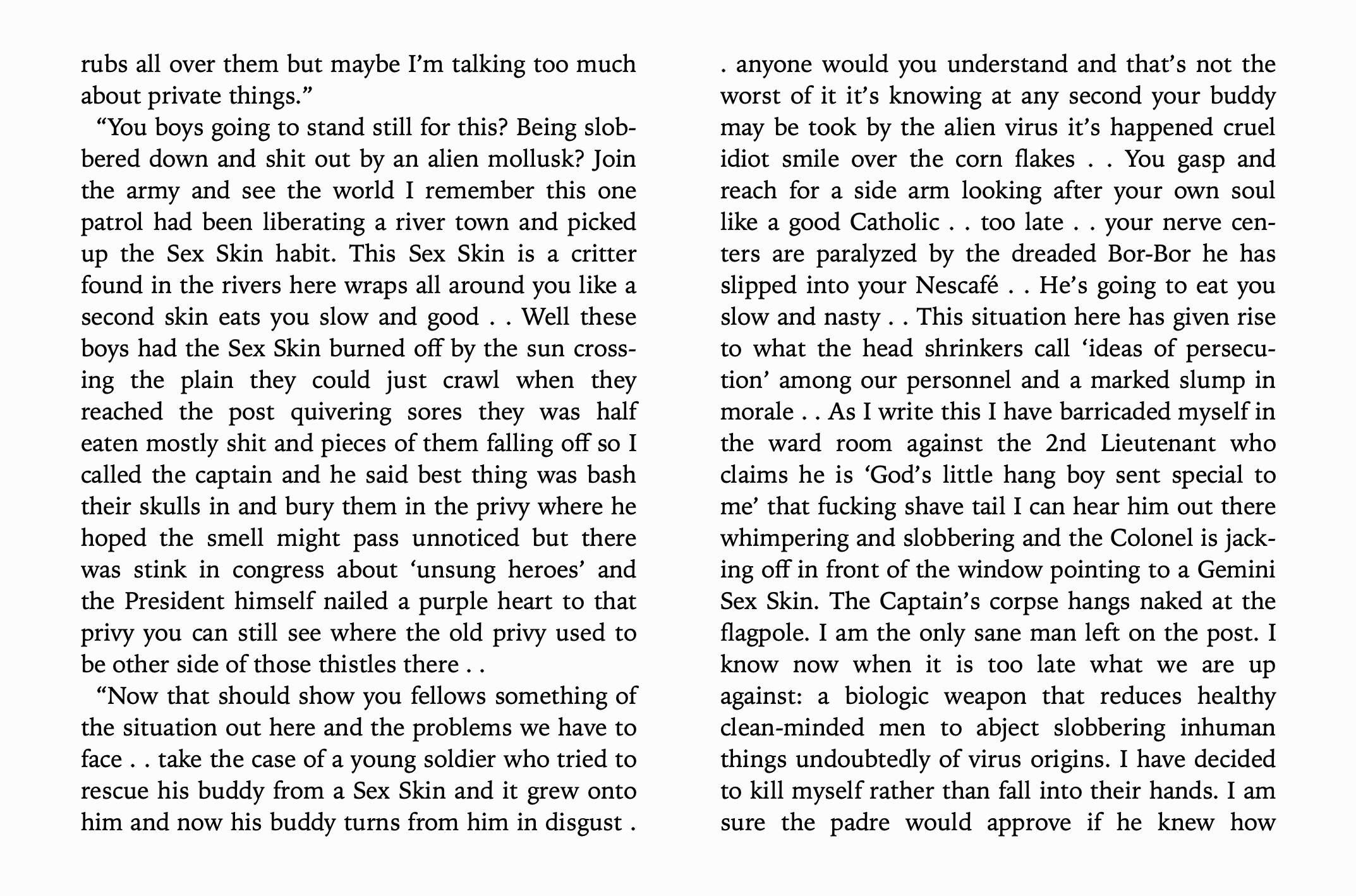
Excerpt
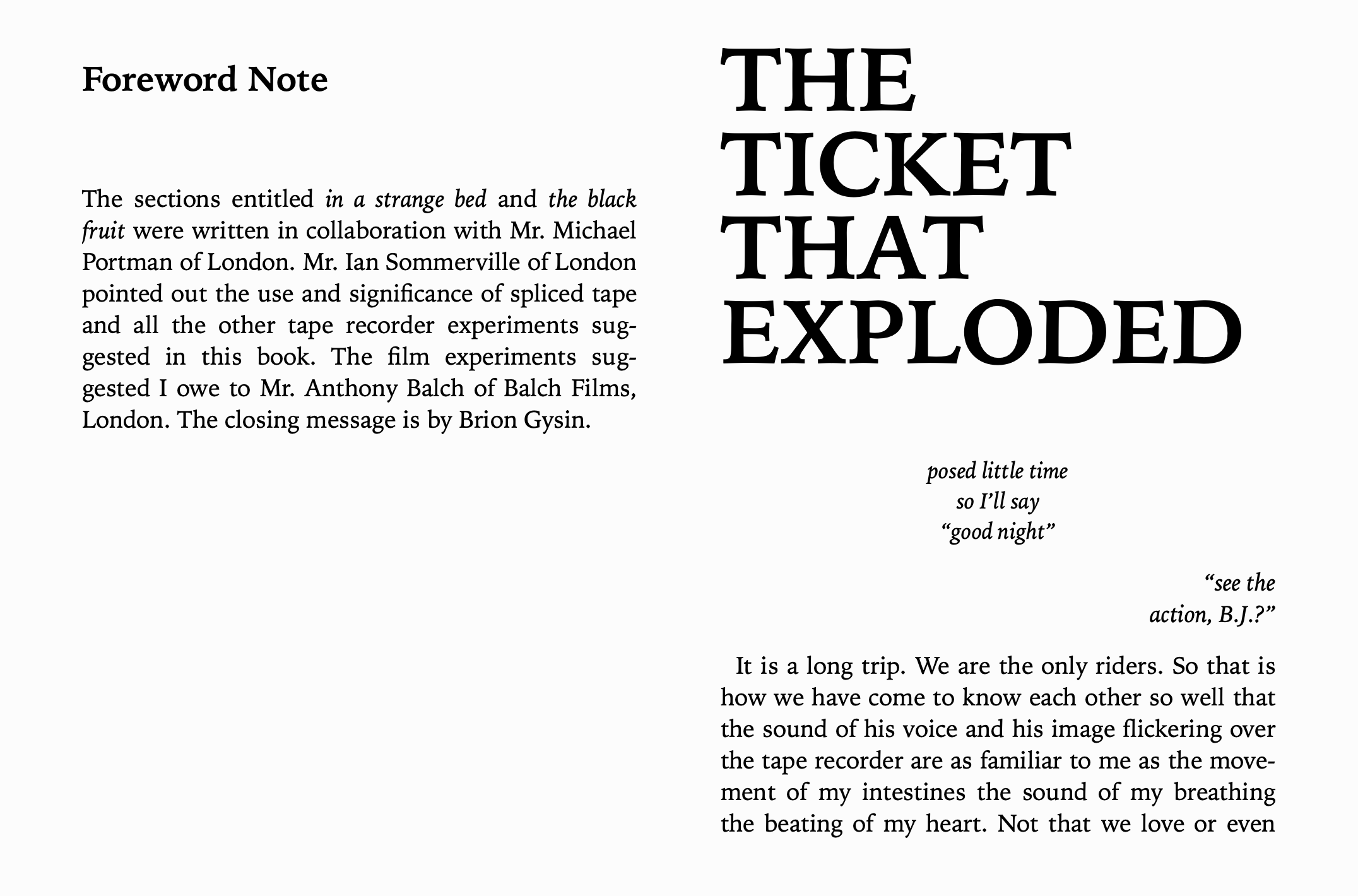


*

p.s. Hey. ** Jamie, Hey, hey. Okay, that makes sense about the stress being exasperating to your stomach, health. I had acid-reflux really bad in my early 20s, and I’m sure it was anxiety related. If the ‘cure’ is enjoying yourself, well, score! We’re presenting the haunted house thing on the 27th. It’s a guided tour thing, at least for now. The audience watches us guide them through it, so it’ll be a little watching someone else play an old fashioned video game with commentary. And we’re doing an illustrated history of the home haunt phenomenon talk beforehand. Ideally, we’ll either tour the event or make it interactable and upload it somewhere. My day was good. Very fruitful meeting with the just mentioned haunt/game’s designers and then I saw the first night of the current run of Gisele’s and my piece ‘Kindertotenlieder’ at the Pompidou, which was great to see again. I’m happy you’re enjoying Broomer’s work. Oh, I’ve been really into experimental film since I was a teenager, so I make it a point to search out newer practitioners, mostly by watching for festivals and venues that show them then trying to investigate the filmmakers I don’t know. Ari sounds like a human with very promising tastes. Thanks about my Thursday, and I hope both our days end at a confetti strewn finish line. ** Misanthrope, Hi, G. That’s so nice about your friend and “I Wished’. You’re not the only one who needs to get to the current blog day via social media, and I have no fucking clue why that problem exists, and neither does my hosting site, so eternal wtf. Ultra-best of luck to David on both of those fronts. I send him (and you) seriously great vibes. ** Ian, I think they would only find great enhancement on a grandmother’s mantlepiece. Great man gift idea for the fat wallet crowd. Bleak sounds about right, ha. Hump day? Happy post-hump day to you? ** _Black_Acrylic, We have Antique Roadshow in the US too, and it’s a big non-guilty pleasure. And, yes, presenting their analysts with one of those babies would at very least get you on the air, guaranteed. ** Dominick, Hi!!!! Here’s the only haunted attraction I’ve found in Budapest so far, but I’ll keep looking. I’ll happily accept yesterday’s love from you. I know pleasure when I read about it. Oh, I get to pick? Hm, tough, although I’ve always liked that Maria Rubinke piece of the the girl tearing the top of her head in half, so maybe that one? What’s your dream porcelain horror? Love tearing the top of his head in half while screaming, ‘This is how much I love you!’, G. ** David Ehrenstein, Ah, you found your way back in. Good. This blog’s tech is so weird. ** Jeff J, Hi, Jeff. Thanks, man. Great talking with you too. And, oh no, yet more Jeff-centric challenges? Dude, you’re due a serious bliss fest. Good, I’m glad my little caveat about ‘Annette’ helped you stay the course. I wasn’t aware of that intended restriction re: ‘Memoria’. I’m seeing a screening of it on the 24th. Strange, or kind of lovely but inconvenient. Huh. ** Steve Erickson, I’m surprised Antiques Roadshow doesn’t do a special Halloween episode of that very nature. I haven’t read ‘Cleanness’, So … how is it? Tick tick … your EP. ** Bill, Very happy you dug the show, my friend. Those Ben Hirshkoff pieces are cool. I didn’t know his stuff. And you have the blue one? Very nice. Oh, I think if Zac and I ever do a horror/.porn — not entirely impossible — one scene is about as big as we’d go for, so you’ll be the perfect collaborator! Watch this space. But not too quickly. ** Johnny Paul, Hi. Oh, yeah? You think? I guess I think not? ** Andrew, Hi, Andrew. I saw Paul K last night and your ears were burning even if you didn’t notice. Good about 11:11 going nowhere (else). It’s balance, right? When I was doing Little Caesar Press way back in the day, which was a one-man operation even, I somehow managed to write my head off and get my stuff published a bit at the same time, although I don’t how I managed. I was mostly writing poetry though. That probably made a difference. Point is, it’s totally possible. If the fiction itch is out of control, you gotta scratch it, man. To not do that … well, you know what un-itched itches feel like, I’m sure. I’m cheerleading re: you/it over here. Thank you so much for sending that book! You’re very generous, and I am very enhanced as a result. And thanks for the video link. Very cool. Everyone, Andrew Wilt, writer and head of one of the world’s best presses, 11:11, shares a video trailer for one of their new books, Logan Berry’s ‘R̵U̵N̵-̵O̵F̵F̵ ̵S̵U̵G̵A̵R̵ Crystal Lake’, and it was devised by the fantastic writer Maggie Siebert no less. Hence, watching seems pretty key. Thanks, man. Have a swell Thursday. ** Okay. I haven’t turned the blog’s spotlight on old William Burroughs in a long time, so I thought I would illuminate one of his least-read novels. Personally, I’m only a fan of his books from the ‘Naked Lunch’ -> ‘Wild Boys’ period, and ‘TTTE’ is from the latter part of that killer phase, the last of his mostly cut-up based novels. If you like Burroughs’ stuff, the book up there is a prime example. See you tomorrow.

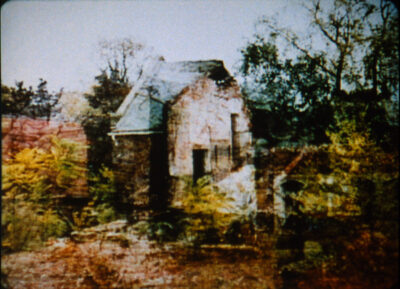
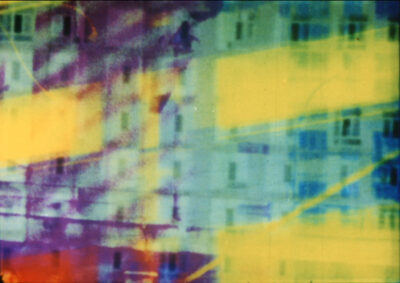
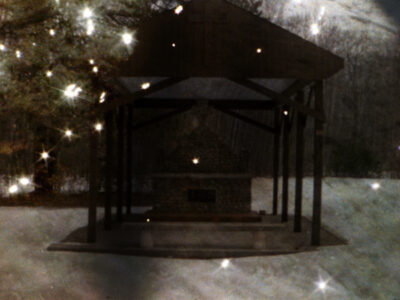
Stephen Broomer Day


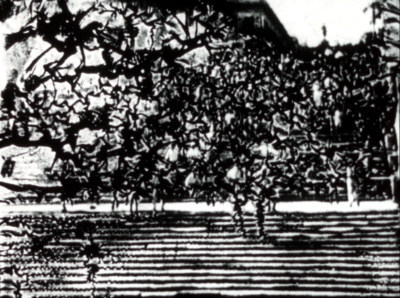
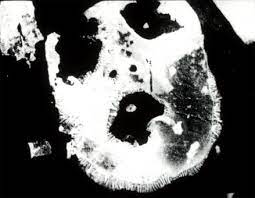
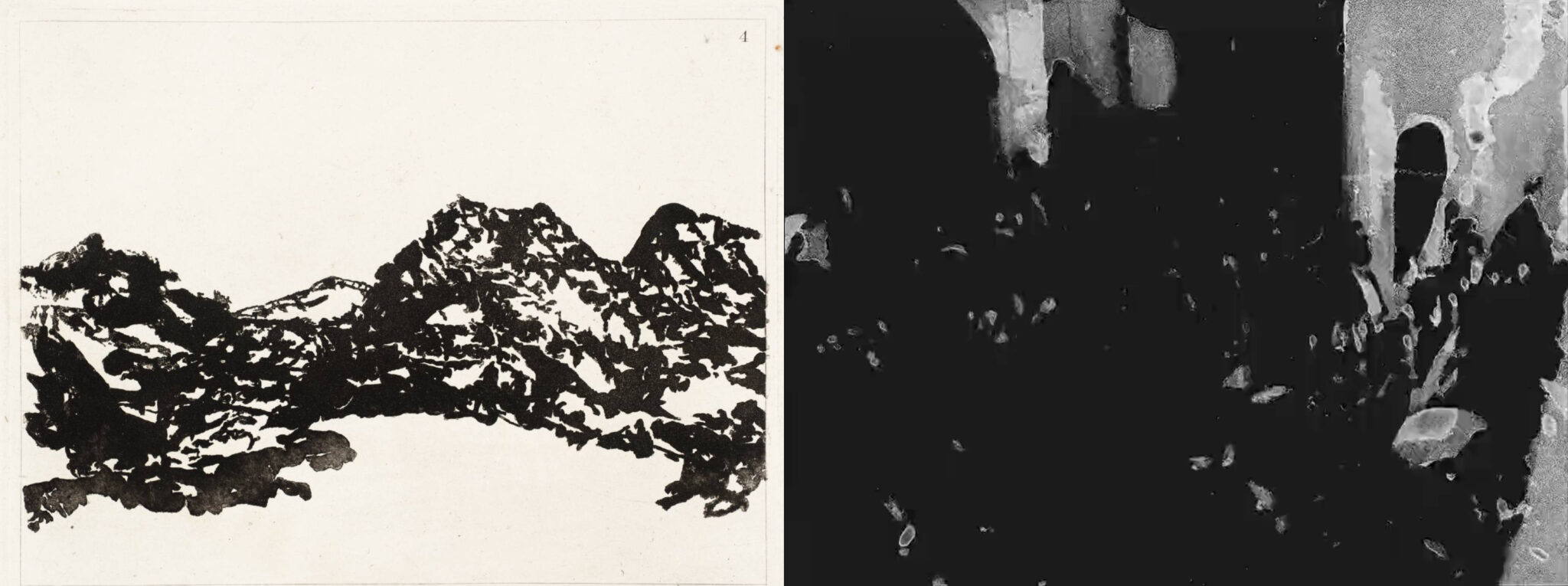
‘I would like to make a case for the aesthetics present in Stephen Broomer’s appropriation films, but particularly in his latest film to date, Fat Chance (2020). One might be inclined to appreciate this work as a continuation of the possibilities for found footage in experimental cinema, following in the steps of other greats like Bill Morrison and Peter Tscherkassky (and yes, there is something to say -aesthetically and in its poetics*- about certain similarities between the film, and, let’s say, others like Outer Space or Light is Calling). But, if Morrison is preoccupied with the fleeting nature of celluloid and its role on the dramatic narrative tension of film, and Tcherkassky with the possibilities of the celluloid in terms of its possibilities to synthesize certain conventions of commercial cinema (a particular twist on structural filmmaking), Broomer’s aesthetic recalls a pictorial effort of synthesis akin to the efforts of the precursors of abstraction (let’s think Alexander Cozens’ inkblot landscapes) and the work of the German Expressionists, particularly the Die Brücke movement.

‘Moving forward with this idea, Broomer’s work and hybrid method of alchemy and digital manipulation of the image continues a tradition dating back to the 16th and 20th century. The inherent tension of comparing different media is apparent in this comparison, but I find that Broomer’s experimentation with the image, which has an element of chance (as any method that works violently with film chemistry), is precisely what it means to be; when the second stage of processing comes (a digital post-production phase), the author is more than precise in what the film’s aesthetic intentions are and will be. So it’s not far-fetched to grasp the elements of this carefully composed work to find parallels in other moments of art history, which give the author’s work a particular weight and presence, and underline its importance in the history of cinema.

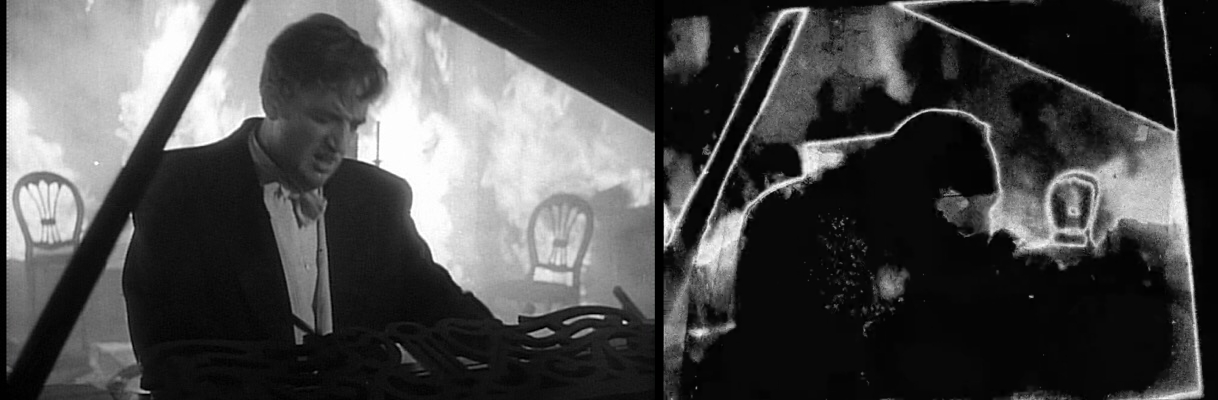
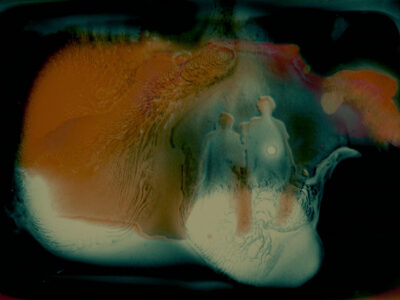
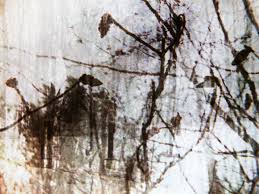
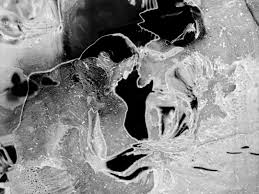
‘Below is a composite made from Alexander Cozens’ Plate 4., one of his formal experiments with inkblot and landscape, and a still from ‘Broomer’s Fat Chance, depicting an interior in full abstraction. The immediate correlative codes of relation are not just incidental. When working with images of Film Noir aesthetics, Broomer’s methods of hybrid abstraction project an image which is deeply pictorial (an element shared by other master manipulators of the digital image, like Jacques Perconte), and suspends itself in an abstraction which appears to be a certain mode of “action painting” in the moving image. Fat Chance is composed of thick blobs, or thick brushes of black and white which decompose the image into the limits of the figurative and the abstraction. In the liminal spaces of this transition lies the history of Laird Cregar, a character we will return to shortly. But it’s difficult not to think of the efforts of early abstraction when watching the images of Broomer, and it particularly recalls (at least in my mind of an art historian in formation) the treatise of the possibilities of landscape drawing by Cozens, particularly A New Method of Assisting the Invention in Drawing Original Compositions of Landscape (1785-6). If Cozens was looking for a new way to compose the material landscape with his watercolor composites, with free, expressive brushes that achieve a particular materiality, Broomer is doing so as a way of unveiling a personal landscape, looking for the essence of expression through image manipulation.

‘This is how we land in the realm of Laird Cregar, the subject of Broomer’s film. If we’re talking about “personal landscape” we must understand that Broomer is working not much in the decomposition/transfiguration of cinema itself, but in finding, though carefully composed movements, elements in the life of Cregar that can be synthesized in the moving image form. Premiered in the latest International Rotterdam Film Festival, the programmer’s notes state: “Cregar died aged 31 from subjecting his rotund body to a crash diet that he believed would thin him down to romantic-lead size – at exactly the moment he was heading for a different kind of stardom thanks to a pair of very sinister noir milestones by John Brahm: The Lodger (1944) and Hangover Square (1945).”

‘Cregar was a man whose burden overwhelmed his will to live. His problems with weight and his homosexuality (which was promptly hidden through studio influence) plagued him with doubts about himself, leading to his early death. Broomer opens with an Oscar Wilde quote from The Ballad of Reading Gaol: I know not whether Laws be right/ Or whether Laws be wrong;/ All that we know who lie in jail/ Is that the wall is strong. Wilde, a man persecuted in his time, wrote the poem while serving two years in prison for “gross indecency”.

‘Cregar, incarcerated in the Hollywood system, was an icon crushed by the system that fed him. Broomer makes his precise movements clear when selecting the scenes where Cregar appears as a man who symbolically ends his life, the climax of Hangover Square serving as the perfect metaphor for Cregar’s life: a pianist obsessively continuing his piano concerto even as the theatre is engulfed by fire. This dual /over-imposed decomposed image works perfectly, and is repeated cyclically and obsessively throughout Fat Chance, with different variations that establish a fabulous crescendo. The sound collage by Stuart Broomer plays a distinctive role through his own method of sound composition, assembling a score which leads by chance operations to climactic peaks and transitory plateaus. It’s a movement shaped by using Wilhelm Furtwängler’s Symphonic Concerto, running backwards and forwards in overlay throughout the duration of the film. While Broomer’s method might leave enough room for chance, it’s enough for Stuart Broomer’s composition to fit the interstices of those open spaces, complementing the film magnificently. …

‘Fat Chance (2020) is a milestone in Stephen Broomer’s career, as have been previous features like Lulu Faustine (2020), and Potamkin (2017), part of an ongoing series and of Broomer’s massive film output, which has been overlooked in the usual movement of experimental film festivals in the north, inexplicably. I would like to make a case for works like Broomer’s which lean heavily on the sublime, this already “outdated” and “primitive” term discarded by modern art critics and relegated to the realm of the aesthetics, which also seems to be losing ground in a contemporary art scene that rejects the old models of spectator/artwork relationship, or -as is the case of the contemporary experimental cinema scene- bets for intersectional works which deal with identity politics, poetic landscape, post-etnography and new media. Which is fine. There are several magnificent pieces of such work being exhibited everywhere, each of those with each own particular and very important merit (Nguyen, Perconte, Saito, Szlam, Russell, Asili, Alsharif, Makino come to mind at a first glance). But a work of a magnitude such as Broomer’s deserves to be seen, not only for its innovative hybrid method which we’ve explored aesthetically in this piece (and the very suggestive and inexhaustible analogies one can draw in different moments of art history) , but also because this particular aesthetic is linked precisely to the pneuma and the sublime, the marrow of human existence through the media of moving image. And this is always an opportunity for celebration, for a cinema that is still alive and regurgitates the past to give birth to itself, over and over again.’ — José Sarmiento Hinojosa


____
Stills


____
Further

Stephen Broomer Site
Stephen Broomer @ Twitter
Stephen Broomer @ Lightcone
Stephen Broomer @ The Film-Makers’ Cooperative
Stephen Broomer @ MUBI
Book: ‘THE TRANSFORMABLE MOMENT: THE FILMS OF STEPHEN BROOMER’
INTERVIEW: STEPHEN BROOMER
Collaborating on a Mystery: an interview with Stephen Broomer by Mike Hoolboom
Stephen Broomer @ Letterboxd
Stephen Broomer, Spirit in Landscape
SITDOWN: STEPHEN BROOMER
Rituals in Transfigured Space: Interview with Stephen Broomer
Stephen Broomer on Pepper’s Ghost
The Carriage Set Upright: Stephen Broomer on Potamkin


____
Extras


Carousel Study (2016)


Final Destinations: The Case of Night Train to Terror: Stephen Broomer, February 25, 2021


ATTRACTION AND THE “CINEMA OF THE SECOND GAZE” IN STEPHEN BROOMER’S TONDAL’S VISION


Gulls at gibraltar


______
Interview
from Incite!


Clint Enns: How did you begin making experimental cinema?

Stephen Broomer: I read my father’s copy of Sheldon Renan’s Introduction to the American Underground Film when I was 14. At the time, I didn’t have access to most of those films. The first thing I did when I began studying at York University was watch their print of Wavelength (1967). I got a Super 8 camera to do a class assignment – we were supposed to film an environment, something general like that – and I shot a film that later became Manor Road (2010). It was very different in its original form – it was just a series of long shots of trains going under a bridge at Manor Road and Yonge Street, from late afternoon to night, spaced out with time lapse between each train. I made some other films that summer, and I started using those films as the basis for new work when I resumed making films eight years later, in 2010. I came back to experimental film around 2006, when I started doing a Master’s degree in film history and working in film preservation. I had a lot of false starts, but my work as a filmmaker really began in 2010, when I finished Manor Road in its present form. I’m still developing work from old reels of Super 8.

CE: There seems to be aesthetic similarities between your work and some of the other members of the Loop Collective, in particular Dan Browne and Izabella Pruska-Oldenhof. I am thinking about your use of colour and superimposition, your interest in materiality, and your embrace of hybrid forms.

SB: Well, we see each other’s films, and we often screen together, so I’m sure their work has influenced me. Over time, I am beginning to see more differences emerge in our work, but we’re all starting from a common history. I would not be making such films today if not for Izabella’s encouragement.

CE: Can you talk about your interest in religion as a subject matter for your films? Should the abandoned and decaying sacred spaces in Christ Church – Saint James be read as allegory?

SB: I’m interested in Christianity, for its iconography, its rituals, its spaces, its legends, their manifestations in art and literature, but I’m also just interested in ritual and legend across history and faith. I also find that I’m often working with perception and form in the way that faith rituals act on perception: you might see certain qualities of repetition and call-and-response in some of my films, or durational qualities that recall the experience of a mass. A mass demands a kind of collective focus that would invite comparisons to the movie theatre. There are motifs in all three of these films to echo those structures of hymn and mass and prayer. As for allegory, with this work I’m recording these ruins – I make no claims of them as a stand-in for anything greater than what they are.

CE: Is it just me or do you actually make the sign of the cross with your camera in Brébeuf ?

SB: Who would do a thing like that?

CE: I’m not accusing you of sacrilege. Many of your films contain documentation of repeated performed gestures. Watching you shoot this summer, I witnessed you repeat an incredibly violent and exhausting gesture, which consisted of lifting a Bolex camera above your head and throwing it towards the ground while recording at 12 frames per second.

SB: Oh yeah, those gestures are running through my work, from Balinese Rebar (2011) on. I do this in part to create abstraction – I mean, they recall action painting – but I’ve also been working to control it, to have a pretty clear idea of what that gesture captures, what it does to the subject, beyond what it means to perform it. I’ve been working with a lot of variables – frame rates, focal lengths – to create different textures.

CE: Another recurring theme in your work is the transformation of urban eyesores into colorful, densely layered objects of beauty. In particular, in The Order of Ideas at the Leslie Street Spit (2012), Balinese Rebar and Queen’s Quay (2012). The Leslie Street Spit is the ideal image of a post-apocalyptic world full of construction detritus. In fact, the city sign warns visitors that “persons entering these premises do so at their own risk.” Similarly, in Queen’s Quay you document the condominiums that pollute Toronto’s Harbourfront neighbourhood.

SB: I see what you’re saying about the Leslie Spit. There are beautiful wildflowers and dense woods and clear beaches that run all along it, as well as buried cement blocks and a lot of consumer debris and rusted-out sheet metal. Balinese Rebar was shot in an industrial corridor in East York, which is where those garages and factories are, or were, and the images of Yonge Street, the spinning motif, that was shot at a bridge that overlooks Yonge Street at Davisville. The materials that make up Balinese Rebar and Queen’s Quay were shot in 2002. The title Balinese Rabar also references the music in that the film. The film is accompanied by gamelan music, although it is actually performed by musicians of Java, not of Bali.

CE: Would it be safe to assume that you take more inspiration from 1960s-era filmmakers than from contemporary ones? Where do you see your work fitting into the current experimental film milieu?

SB: Some of my favorite filmmakers were active in the 60s, but my work comes from the present moment. I don’t think it’s my role to make pronouncements as to where precisely my work fits in the contemporary experimental film milieu. Perhaps somewhere between Stan Brakhage and Carl Brown, based purely on lexicographic ordering. Where do you see your work as fitting into the current experimental film milieu?

CE: I’m pretty sure people see me as a temporary con-artist. Speaking of trickery, your newest film, Pepper’s Ghost is one of the most complex de/re-mystifications of cinema I have ever seen. It’s as if the more that is revealed to the audience, the more mystified it becomes! How was it made?

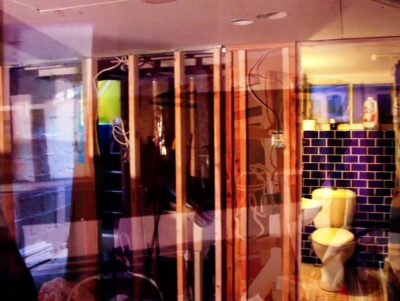
SB: Pepper’s Ghost began with this interesting space – it’s my office and an adjoining office, which are former psychological observation rooms, so there’s a two-way mirror between them. I realized that I could create simple optical illusions by playing with ceiling lights, gel filters, curtains, and that became a perfect real-world analogue for the illusions that I was creating in my films through computer manipulation. I enlisted my friends Cameron Moneo and Eva Kolcze to join me in shaping the illusion. It’s my first substantial piece made in video, using a DSLR, and I decided it would just be stationary, and that our role in the piece would be to assist the camera in achieving these illusions by performing around it. Our actions would often transform the image in unpredictable ways.

CE: Although you often work across media, why is finishing on film important for you?

SB: For some pieces, finishing on film is important for the work itself. I still have a lot of faith in the darkened theatre, the flicker of the projected image, but that aside, new qualities emerge from out of these pieces when they’re rephotographed. Some would talk about generation losses in the act of rephotography, but you also gain something. As for why it is important to me, I see it as a final act of “finishing” a work. The negative and the optical soundtrack are made, and that is my gesture of commitment to the work as it is. I know then – no more revisions!


______________
16 of Stephen Broomer’s 37 films

______________
Fat Chance (2021)
‘On the life, death, faces and ages of Laird Cregar, Hollywood heavy, first famous for playing Oscar Wilde on stage, dead at age 31 as a result of a crash diet undertaken to transform him into a matinee idol. The film’s title, Fat Chance, was offered by Cregar as a witty rejoinder to a journalist who asked what the title of his memoirs could be called. His most memorable roles – lovesick murderers, snobs, arrogant criminals, and Jack the Ripper – are surveyed in this film, and followed by an expansion of his final sequence on screen, in Hangover Square, where, as George Harvey Bone, he plays his piano concerto even as a blaze engulfs the theatre.’ — SB


Trailer


_____________
Lulu Faustine (2020)
‘A miracle happened: summer came ahead of time. To be in love with an image was worse than being in love with a ghost. (I feel as if my tympanum were breaking.) Almost everything, in fact, does have an explanation. (Atmospheric pressure is increasing…). The remaining chapters will hold no surprises. (…and I feel as if my tympanum were breaking.) To be on an island inhabited by artificial ghosts was the most unbearable of nightmares. (12.30 o’clock, respiration is extraordinarily difficult.) I have given you a pleasant eternity! Just me for you and you for me alone. (I am intoxicated with gasoline.) It will be an act of piety.’ — SB


Trailer


______________
Phantom Ride (2019)
‘A trip to the great beyond. From a War Bonds rally to a Florida resort beauty pageant, via Monument Valley, the Blue Star Memorial Highway, the Rocky Mountains, as above, so below, a twenty-year drive with a punchline in the heart of it. This land is your land, this land is my land, or, don’t you wanna go to heaven when the world’s on fire?’ — SB


Trailer


______________
Resurrection of the Body (2019)
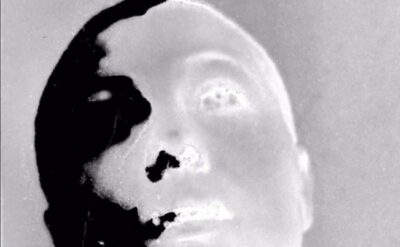
‘In memoriam. Man in pieces. You have the lovers, remade by funhouse mirrors; you have the symmetries, undone, bent and curved; and you have the model, the bag on her head filling with carbon dioxide. Who owns your life? Testimonial and demonstration, a most ominous trade show. An experiment in therapeutic cinema. A speculative sequel and conclusion to John Hofsess’s Palace of Pleasure (1967).’ — SB


Trailer


the entirety


______________
Tondal’s Vision (2018)
‘A fable and immram, sifted from the cloak and rubble of the Comedy, a vision before Dante. The soul of the knight Tondal, stricken by the excesses of his flesh, quits his body to tour the next world. He is guided by an angel through heaven, hell and limbo. What lessons await him here? To every pleasure there is a cost, for poetry is a kind of poison, and even your angels will get you lost. Angel, tell me, for how long was I dead?’ — SB


Trailer


______________
Potamkin (2017)
‘In 1933, at age 33, Harry Alan Potamkin died of complications related to starvation, at a time when he was one of the world’s most respected film critics. In his writings, he advocated for a cinema that would simultaneously embrace the fractures and polyphony of modern life and the equitable social vision of left radical politics. This film-biography is assembled out of distorted fragments of films on which he had written, an impression of erupting consciousness.’ — The film-makers Coop


Trailer


____________
The Bow and the Cloud (2016)
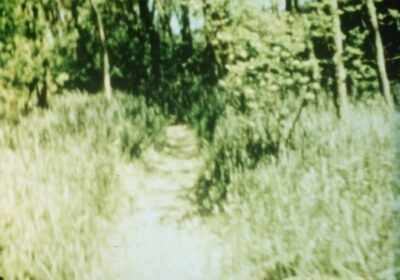
‘A waterfall cuts through the land along the Bruce Trail; birdsongs and a distant cloud; I stand in the shadow of an electric cross; a bow set in the cloud, a token of the covenant between god and man. Made at the Devil’s Punchbowl conservation area, Hamilton, Ontario, March 2016.’ — SB


Trailer


______________
Wild Currents (2015)
‘A tragic mistake jolts Teddy and Joanne into limbo. Their spirits bear witness to their past usage of household appliances, as if by electric charge they might uncoil their spectral presences from home and garden. A myth and a ghost story for Christine Lucy Latimer, on her birthday, 2015.’ — SB


the entirety


______________
Variations on a Theme by Michael Snow (2015)
‘Just / faintly / a corner / was / seen there / trying / to look / like an edge.’ — SB


the entirety


______________
Hang Twelve (2014)
‘Encores live yet
Slice every note, each notice sincere in secret
Lovers covet eyeliner to recite in vein or vesicle
Clever noise, silence or else’ — SB


the entirety


______________
Jenny Haniver (2014)
‘A photographer steadies a Polaroid camera and composes a shot of the sky, flanked by tree branches. Later, a woman wakes from a nightmare. Jenny Haniver takes its title from a cryptid totem sold for centuries at the docks of Antwerp: a Jenny Haniver or jeune d’anvers (young girl of Antwerp) is a disfigured ray or skate carcass, carved to resemble an angel, a devil, a dragon. A series of ten filmed portraits are subject to all manner of alteration. By this they compose the hull of a ship wrecked on rocks sung by sirens. To mirror its namesake, the film’s plastic properties have been carved, lacerated, bleached, otherwise stressed, reshaped to transform reality into the fantastic and unknowable.’ — SB


the entirety


______________
Pepper’s Ghost (2013)
‘How we may see in a Chamber things that are not! Here, mutations of light, through fabric, glass, and colored gel, make bodies and objects transparent. Let there be a chamber wherein no other light comes but by the door or window. Let pictures be set over against this window. For what is without will seem to be within, and what is behind the spectator’s back, he will think to be in the middle of the room, as far from the glass inward as they stand from it outwardly. Clearly and certainly, he will think he sees nothing but truth.’ — SB


Trailer


the entirety


______________
Spirits in Season (2013)
‘Lily Dale is a spiritualist community in Chautauqua County, New York. Pilgrims and tourists swarm the hamlet in summer, but in the fall, Lily Dale becomes a more intimate setting for spectral communions. This film explores the town’s Leolyn Woods, pet cemetery, Inspiration Stump, and Fairy Trail. Music by Nate Wooley.’ — SB


the entirety


______________
Championship (2013)
‘At a wrestling tournament, a young competitor faces match upon match. Referees converge on the scene. The crowd’s attention wanes and focuses with the intensity of the bout. Sounds drift in: a psychic piano enters over fast and short breaths. This is a contest of past and future. It will be decided in the ring.’ — SB


the entirety


______________
The Shapes Book (2013)
‘Shapes in a dollhouse betray the fatal competition of earthly things.’ — SB


the entirety


____________
Brébeuf (2012)
‘Brébeuf is a study of St. Ignace II, in Huronia, where the ethnographers and Jesuit missionaries, later saints, Jean de Brébeuf and Gabriel Lalemant, were killed in 1649. The images in this film arise from a reading of that story – the joining of the sumac and the cross, the blessing gestures, struggles in the field, elliptical scans of stones, and the shimmering of water to summon a glimpse of the flesh boiled from the skin, in fables of the killing. Brébeuf draws from the dark and storied history of early Western conquest, rediscovering in the harsh, wild landscape of the North resonances of the violent conflicts between the Jesuits, the Huron, and the Iroquois.’ — SB


the entirety


*

p.s. Hey. ** Dominik, Hi!!! I can always use my laser-honed ability to find haunted attractions if you need me to try to scour Budapest virtually. Online scarefests can work too though. Ha, wise love, yours, yesterday’s. Love turning the pouring rain I have to trudge through for half an hour in a few minutes into very flashy looking (biodegradable) confetti (and your pouring rain too if you have any), G. ** TomK, Hi, Tom! Ah, I so love when the blog is accidentally personally timely. Cool. The virtual haunted house is, at the moment, a thing that would need to be presented to people rather than played by them. But we might do a playable version if it turns out as well as we hope. If thats case, it might either go online or be presented as a kind of interactive installation. I’m doing two online readings/launch things for ‘I Wished’ on the 8th and the 11th. I think that’ll be it, or so far anyway. ** _Black_Acrylic, Hey, Ben. There must a fair number of horror movies with parasite monsters, no? I mean in addition to the basic ones in the post. ** T, Hi. All thanks and power to Jose. Mm, the only porns I’ve seen that I can remember which attempted to mix porn and horror were lacking in both departments. But it does seem like a hybrid ripe for something scalding hot-meets-fear mongering. I’m waiting to see ‘Titane’ with English subtitles because I hear it’s talky, but it just opened in the States so I suspect there’ll be a bootleg out there to watch any day now. Very curious about it. The Home Haunt thing is one night only, at least at this point. On the 27th at The Pinault Collection. It hasn’t been announced yet, but it’ll be free. You’ll just have to RSVP. I’ll let you know as soon as it’s ready for RSVPing. Cool if you could come. I’m glad to hear your first teaching day brought you cool kids. I’m guessing that’s what makes or breaks such a set up. Well, your wished for week is a lot to live up to, but, gosh darn it, I’ll give it old college try. I guess I’ll wish you a week full of rapt students with eyes like does’ and feedback like a Metal band’s amps. xo. ** Bill, One would think, re: Evenson. Glad you’re up and about. That new Evenson book its winging its way to me since the bookstores here are unforthcoming. ** Grunge, Hi, G. I’ve never seen the much lauded, giantly successful ‘Parasite’ for no good reason. I’ll make a note to fill in that blank. I hope you have a swell day that at least partly involves you typing fiction into a computer with a scrunched forehead. ** Right. I’m figuring that most of you probably don’t know the work of the super interesting young Canadian experimental filmmaker Stephen Broomer, so I thought I would give you the opportunity to eliminate that lack. See you tomorrow.
« Older posts Newer posts »

© 2026 DC's

Theme by Anders Norén — Up ↑