_____________

‘Assisted Living amounts to a mere 36 pages, yet the four stories inside are as fractured and syntactically textured as anything in previous collections (Stories in the Worst Way (1996), I Looked Alive (2003), Partial List of People to Bleach (2007), and divorcer (2011). These stories are less stories and more “concentrations of verbal matter.” Each highly wrought instance of inked language showcase a sick obsession with the sentence. His commitment to the form has been admired by authors from Amy Hempel to George Saunders. Ben Marcus has called Lutz “a sentence writer from another planet, deploying language with unmatched invention,” and Diane Williams has said, “His authentic language conquers any habit of speech.” In his own words, Lutz says readers encounter in his stories “instigated language, language dishabituated from its ordinary doings, language startled by itself.” He says, “To me, language is matter—it’s a substance to be fingered and disturbed… I like to see what happens.” …
‘Each … story in Assisted Living conveys a … disjointed “motion of moments” within collapsing marriages and fragmenting relationships. These are stories of lonely, sexually ambivalent characters never “lacking for a loss” interacting depressedly in the “physical hooey” that goes with being human. In “You Are Logged In As Marie,” the narrator describes his marriage to an ex-wife, “an ex if ex, just this once, is allowably abbreviative of expeller, or excluder, or exiler—take your pick,” and dolls out a line through which the entire collection might be viewed: “To wit: Wherever there are two people, people even anything like us, one is forever the casualty of the other.” In “This Is Not A Bill,” the narrator confronts the truth of “I was either a bad reflection on my parents or their one true likeness” by looking at his own children. But, by the end of the narrative, he doesn’t seem to get anywhere, and the final sentence responds to the very first: “I go into a day saying, “I won’t let myself know.”’ In “Nothing Clarion Came Of Her, Either,” a woman comes between two married women in an account of “an open marriage, leaking from both ends.” The narrative concludes with an epiphany (“when it finally just comes to you”) about the wife and their relationship, though this epiphany occurs, in effect, off the page.
‘Once, in an interview with David Winters, when asked where his writing fits into his life, Lutz replied, “My writing isn’t a career or a craft or a hobby or anything like that. It is more like a tiny annex to my life, a little crawl space in which I occasionally end up by accident in the dark.” That statement makes Assisted Living seem like a surprise, even mirage-like. Yet these stories are strikingly real, demand devotional attention, and make reading anything in their aftermath seem a little light, a little less the show.’ — Jason Lucarelli
Gary Lutz @ Wikipedia
‘the poetry of the paragraph: some notes’, by Gary Lutz
‘THE SENTENCE IS A LONELY PLACE’, by Gary Lutz
Windows That Lead to More Windows: An Interview with Gary Lutz
Buy ‘Assisted Living’
 Gary Lutz Assisted Living
Future Tense Books
‘“Wherever there are two people, people even anything like us, one is forever the casualty of the other.” –from “You Are Logged In As Marie,” one of four new stories in Gary Lutz’s Assisted Living.
‘Beautifully printed by our friends at Scout Books, Lutz’s new fictions dig deeper into the psyche of men and women grappling with making sense of their aging bodies and frantic but tired hearts, often living in towns where “all roads led to the one road that wasn’t going where you wanted to go.” Full of propulsive sentences and a humor made darker by his characters’ sharp bitterness, Assisted Living is another dose of scathing sadness and comedy.’ — Future Tense Books
“Lutz is a master prose stylist.” —Bookforum
“Gary Lutz is a revolutionary force in American writing, reinventing prose fiction with sentences that always deliver on their extravagant promises.” –Sam Lipsyte
“Gary Lutz is a master–living proof that . . . true originality is still an American possibility.” –George Saunders
_____
Excerpt
Assisted Living
She had brought herself up out of one of the more caustic religions of the middle counties, then ran away to that blocked-in, secondary city, the one summoning itself clumsily upwards downstate. I was down there temporarily from the tertiary one. Whether she came on to me or just came at me testily, without much sleep to her name, should not make any difference now. I tried to be a father to her, and she wanted to try being a daughter—that was to be the understanding, effective whenever.
Twenty-three, twenty-four, she was already sinking in a life of mild peril, of shortages sought out.
She was staying in what had once been a magnificence of a building—eleven limestone storeys—with three roommates, though each had a room, and she knew people of all walks and wrongful pockets of life.
She wanted to report to me. That was my importance to her. I forget the earliest accounts, but a later one was about her youngest sister’s knack for looking at people a little older and thinking only “Hostel: house: hospital: hospice.”
I never got the roster of siblings right, but they were mostly sisters dropped off at peewee colleges that each had a pond and a climbing wall with trampolines underneath. They were all majoring in medical billing. They all adored her and told her to stop fooling herself away on straw men, older men, ones who knew their place only if you walked them to a map and pointed out just how stringy and facetious their part of the world really looked in a cartographer’s dullard colors.
Another report: Her mother these days was reachable only through regular, slowpoke mail—fatted envelopes that came back unopened but bearing signs of purposefully rough handling, cross-room tosses.
She had larger, veinier hands, her TMJ was creakier than mine, her hair had been pruned to incoherence. (It looked sketched onto the skull, then scumbled.) She had me beat with her pirated culture and that unjust élan of the validly but modestly depressed. She wore sweeping sleeves reaching all the way to thumbnails gnawed raw. She claimed she was paid to sit with stay-at-home couples while they sent their kids out for papers, coffee, out-of-town tobacco. Her other job was at a custard shop.
There wasn’t much testing of affections on each other. At most, one afternoon, I wound a couple of sidewalk-vendor necklaces around her wrists, which were thicker in the bone than mine, though who was I to be limbed so cleanly at fifty?
She had been portioned to just over six feet. Life had harshened on her dearly. She asked about my former wives, and why, in my describings, I’d let what they ate look like the vegetal grime it was. The second of them, I said, was just one of those overcared-for types, a belonger last seen caught comically in a crosswalk.
But this one, this grown but unboosted girl, had different, sounder hurts.
Everything, I repeat, was on the level. It was so level we could set things out on it, the whole of whatever it was, with its jumpiness and discomposures, without anything of hers ever having to touch anything of mine.
We faced each other in a bed just the one time, at my hotel. She woke me in a tremble and said, “I know what’s going to happen, but I don’t know just what.”
I soon enough had to go back to my city, where I feared for my livelihood. She was against doing anything on a phone and could write only on a severe sort of gray stationery that was harder and harder to find at a good price.
I fell into the old, retaliatory life. I saw a lot of a nervy man some years my junior at work. Everything to him had to have a sexual result. I called things off with him after a few weeks of giving myself the third degree. It was a time the world over of pushes to cross yourself out. I wandered one day into one of those warehouse shopping clubs. I wasn’t a member, but a man in a smock waved me through. I walked and walked until I came to an aisle where my eye was caught by a box with the taunt “24 COUNT.” It was all I could do to stop myself from breaking the thing open and counting them out one by one, whatever they fuckingly foolishly were—pouched chippings from something cracklier, I gathered.
Nine, ten months later, I bumped into her at a bus terminal. Or maybe it was a car service. She was wearing old-looking clothes that were new to me. She had a handbag—a first. She was applying to veterinary schools, she said. (We shook hands over it.) I said that at my age, you start to realize you might have loved only once, if that. This came out sounding newsy and impatient.
She said, “It’s been years.”
Gary Lutz reading excerpt from “Pulls”
60 Writers/60 Places: Gary Lutz
Gary Lutz Reading
____________

‘In Debora Kuan’s Lunch Portraits, the everyday is silly, surreal, and biting. There is an abundant playfulness, both of language and subject matter, style and execution. In these poems, Kuan blends tongue-in-cheek references to movies, childhood memories, and medical maladies in ways both stunning and heart-warming (and at times, nausea-inducing). At the center of these poems is the body—what one puts inside it, how it feels, how it moves in the world, how it relates to others—the body is the question and the answer of this collection. The ephemera surrounding it—food, clothes, water—serve to highlight the fragility, ridiculousness, and beauty of how we conceptualize the self.
‘The poems in this collection aren’t easy, and they don’t provide neat narrative moments. At times the world of the poems gets almost too weird—the poet plays with the edge between ridiculous and challenging, and it would be understandable for a reader to be disappointed by the lack of payoff in some of these poems. There is a connection here to childhood storytelling—the ideas are fanciful and strange and larger-than-life, but narrative threads and resolutions are largely absent. The poems hint toward sense, but cut off just before the proverbial finale. However, upon closer examination, dead-ends and logical lacunae are the point. Kuan is interested in isolating sensations. She wants the reader to make the jump, or at least enjoy the rush of letting go. …
‘One of the most invigorating aspects of Lunch Portraits is the quality of the voice present throughout. The speaker of these poems is forthright, brave, and unafraid of judgment. She is nimble, moving through space and time, juggling referents as varied as Wild Strawberries and ham hoagies, Super Bowl Sunday and Claes Oldenburg. This voice is one that can unite a wide register of experiences and perceptions.’ — Emily Brown
Debora Kuan Site
Debora Kuan @ Twitter
Debora Kuan @ goodreads
‘The Crying Scout’, by Debora Kuan
Buy ‘Lunch Portraits’
 Deborah Kuan Lunch Portraits
Brooklyn Arts Press
‘Rejecting the purely lyrical mode and its attendant melancholia, the poems in Lunch Portraits attempt to beat back existential dread by reveling in the delightfully banal totems of mass American culture—hot dogs, cinema, cats, money, youth, selfies. They eat their way through exuberance and fear, richness and emptiness, belonging and alienation, locating in the everyday what is human and hopelessly hungry. Yet in this search for satiation, they also stumble upon the vexing paradoxes inherent in this desire, where no insecurity is entirely innocuous. These poems are alive with appetite and yearning, always hopeful to discover, as Kuan writes, “the ‘help’ button of the burning telephone.”’ — BAP
‘Debora Kuan’s Lunch Portraits is a journey into husbands, hoagies, mermaids, earthquakes, lounge singers, fertility, mammals, hot dogs, and oranges. It is a journey into what it means to be female in America today and the ways in which the landscape of the everyday can both subvert and enlarge our existence. It is a journey on a weird tilt of ekphrasis, where the very stuff we see and experience has its holy time in the world of a poem—where language can be the thing to both save and destroy. Lunch Portraits is an awesome book and I know it will change your life for the better.’ — Dorothea Lasky
________
Excerpts
PORTRAIT OF A MERWOMAN
The clam grew depraved in the dark
toe of a rubber boot,
draped in fashionable seaweed.
I was a mermaid martyr
who lusted after those boots.
Then winter came.
The black pond froze
its black-eyed octopi,
and I formed my own stomach fat
into a gourmet doughnut. I could do
that now. I had a lead foot,
a merman’s cough, and a dump truck
full of sea salt. I crashed into a levee
as a bitter old starlet,
my fishtail stuffed in my mouth.
But every time I got close to the reset
key, it floated farther out to sea
on a raft of gasoline.
I had banked on returning
to childhood as a totaled car,
but they only wanted redheads.
PORTRAIT OF A HOMEWRECKER
I sailed onto the desk of my next life
as a plagiarized term paper.
Yes, it was me who bit a heart-shape
into your ham sandwich.
It was me who chain-
sawed your daughter’s
child-sized armchair.
I followed your wife down
the medium-slow pool lane.
I befriended her
in the hotel laundromat.
For years all the freight elevators
shuttled sideways and hellish.
I clung to the padded walls,
screaming your name.
Sometimes I would drop
one floor beneath my eyes
then pop right back up
out of service—
queen of the weekend visit,
creature of the extinct
computer,
“help” button of the burning
telephone.
AUTOMAT PRAYER
Drop a coin in me.
I’ll give you a sandwich.
You speak burger.
I speak pie.
Our common tongue
is lunchtime.
Roll on,
little cowboy.
Shuffle off,
tuna fish.
Choose your channel,
chicken basket.
Wave your drumstick
proud and high.
May your jelly side
land fast,
face up.
May bright ketchup
dot your days.
May your woes
slide easy
off your plate.
May you always return
with an appetite.


__________

The Arcadia Project: I’m interested in this idea of a poetic project as “an opera of pop-up choruses”–“opera” in the sense of work, some larger structure or texture. Could you speak a little more to the question of “pop-up” and “choruses,” though? Which is to say, audience (in re “pop-up”: where, how, when, to whom?) and voice (in re “choruses”: the generation and/or selection of the textual components of Exit 43’s panels/choruses/scenes)….
Jennifer Scappettone: Yes: Exit 43, which I’ve been working on since 2005, was conceived of as “an archaeology of landfill interrupted by an opera of pop-ups”: a response to the invitation to be part of Atelos Press’s cross-genre list, but bound (in retrospect) to overreach the condition of a book, in conceptual and practical terms. I imagined the poem as an excavation, drilling into histories of land- and lifescape obfuscated by corporate interests, fracking into the Halliburton loophole, if you will. But this unearthing effort was to be sporadically disrupted by pop-up pastoral poems. I imagined these pop-up pastorals, or counterpastorals, as jingles interposing themselves in the manner of those pests of advertising, the basis and punctuation of our “free” access to data on the internet: erstwhile windows, now easily blocked and replaced by manic animated .gifs or cookie-chewing stalker sidebars, that compete for our concentration as we scan and scroll for targeted information. The idea was to score the frustration of one’s necessarily digital efforts to apprehend sprawling ecological calamity as archaeology, and simultaneously to disclose the poem’s own contradictory status as both a material and a virtual artifact—as the pop-ups belie traces of nostalgically literal cutting and pasting as well as of digital manipulation.
Naturally the attempt to provoke such an experience in book form poses seemingly insurmountable challenges—and I eventually began conversing with my colleague and comrade Judd Morrissey about possible stratagems for a virtual installation. This piece on the Arcadia Project site represents my own initial response to that conversation (produced with the help of Kelly Packer), while the collaboration with Judd is ongoing and under development elsewhere; curiously enough, the production of a fully digital piece produced not a pop-up on the Arcadia page, but a window to dig into, zooming and scouring for meaning. Though this fragment has been “hidden” online, I have used it in performance on numerous occasions over the past year. I chose not to add sound (at least not yet) so as to keep it flexible for live articulation.
The pop-ups were always conceived of as scores, specifically as scores for choral song—meant to be recited by multiple voices. They were cobbled together as euphonious but possibly specious and surely infuriating choruses of the buried facts, specters and chemical afterlives unearthed by the archaeology. So they are choral both in terms of their origins and in terms of their reanimation.
AP: I’m also interested in the larger question of how research should inform the art and craft–the practice–of poetry, especially for those of us who are interested in our ecological predicament. In your LIT statement, you wrote that Exit 43 “maps the research I’ve (literally) conducted since discovery” of the fact that your childhood neighborhood is part of a Superfund cleanup site. Can you describe in more detail the research you conducted, and the “mapping” process by which that research resulted in the poem-artifacts of Exit 43?
JS: During a year-long stint in my native land of New York after many years away, via an upbeat New York Times real estate article on urban pioneers in toxic Brooklyn, I discovered as if by accident, and over the course of related search strings, both that I was living above one of the largest oil spills in the United States and that I had grown up across the street from twin Superfund sites half an hour East: a wire company had polluted the land, water, and air with tens of thousands of tons of industrial sludge dumped into the adjoining municipal landfill (weeping heavy metals, solvents, oils, PCBs, plasticizers, etc.). My mother was undergoing chemotherapy at the time, and the enduring chemical battle took on harrowing and intimate proportions. But I didn’t aim to produce a memoir-like narrative of individual trauma. Despite the fact that while growing up starved for nature in the land of the Walt Whitman Mall, I was aware that my family and immediate neighbors inhabited a particularly grim and postindustrial plot of terrain next to the Expressway, seeming light years away from the new-money landscaping and bling of my peers in a Long Island suburb, what struck me in belated research was how pervasive the contamination of land and sea has been. I was concurrently revising a complex critical study about modernism and modernity in the city of Venice (now forthcoming), for example, and learning about the poisons lacing storied historic waterways such as the Grand Canal.
The pop-up choruses represent the effort to map the invisible contents of the site as one underbelly of American progress and prosperity, and those of a seemingly limitless series of coincident, co-implicated scandals and disasters. The choruses mean to conduct the voices in collision with one another that were exhumed by trawling through news coverage surrounding this quiescent scandal: they document not only the disaster, but the impossible process of researching the afterlife of garbage, the effects of substances such as benzene and PCBs on bodies, earth, air, and water, a series of often inconclusive EPA reports, the broken chain of accountability for the blight amidst a series of opportunistic sale-leasebacks and “capping” acts, and oral testimonies from the neighborhood of recent immigrants. The logics of Victorian poetasters—would-be romantics and embracers of the absurd such as Lewis Carroll—serve to link these sampled bits in a kind of wired suspension, but the reader is laden with the burden of bridging phrases and deducing the logic or illogic that results.
Jennifer Scappettone Site
An Interview with Jennifer Scappettone
Audio: Jennifer Scappettone @ PennSound
JS @ Poetry Foundation
Buy ‘The Republic of Exit 43’
 Jennifer Scappettone The Republic of Exit 43: Outtakes & Scores from an Archaeology and Pop-Up Opera of the Corporate Dump
Atelos Press
‘THE REPUBLIC OF EXIT 43 is a verbal/visual archaeology of the hazardous waste sites across the street from home and school, tucked behind the portal of an expressway: domains mute and seemingly inert. Composting Alice’s adventures underground, verse channels unearthed disputes surrounding a noxious landfill and adjoining copper rod mill through the throats of nether and overworlds, from Eurydice to CEOs—mining landscape as retribution, baffle, legal battle and real estate speculation, deregulation, rogue digging and pastoral pipe dreams on the part of the harmed. Amidst the stupefaction of innumerable private and state ruses, these pages lay out how the entrails of postwar industry might be reclaimed toward a music of non–consensual citizenship where poetry is unregulated and fully integral.’ — Atelos
‘A book written against a copper and bacterial backdrop or cloth or hologram or site. To breach, to fluoresce: and in this way: the book performs its conductivity and tenderness as a relationship to suffering that resembles justice. I was deeply moved by Jennifer Scappettone’s book. Book as voltage: the colors yellow and silver, red and black. Another color, a color we cannot see, a color there’s no word for: folded many times. The pressure before the word arrives. The wet paper. How the fold decays and becomes a part of this other landscape. What is possible in this moment, in this light, at this time? Images hold one kind of memory in Scappettone’s book; narrative another. The larger question of territory is placed next to the landfill, for example: the labyrinth, the space beneath or between. The air. The particles of the air. And, after all this time, the ground.’ — Bhanu Kapil
______
Excerpts


Poetry in an age of distraction: Jennifer Scappettone
Jennifer Scappettone Gallery Tour
Rabbit Light Movie — Episode #11
____________

Do you remember the first time you felt the urge to write? Or something about the time you did begin? And what you wrote?
Christopher Higgs: My mom actually just sent me a box filled with childhood memorabilia. In it, I found my first stories, which I wrote in third grade (I was seven or eight). They’re in the form of Sherlock Holmes mysteries, wherein I cast my friend in the role of Holmes and myself in the role of Watson. In fact all of the characters in those stories were people I went to school with — you can tell when I was not getting along with someone, I would make them the villain. You can also tell what girl I had a crush on because she would be the damsel in distress. All of them are written on Big Chief tablets. Looking back, it’s weird that I didn’t write myself as Holmes. Not sure what that says about me. A year later I began writing less mystery-type stories and more adventure-type stories based on my love of Miami Vice in which I cast myself in the Crockett role, or my love of Top Gun in which, oddly, I cast myself in the Goose role rather than the Maverick role. So I guess when I was a kid I always wrote stories where I was the sidekick, except when it came to Miami Vice-type stories. I also liked to write poems about robots and dragons when I was at that age. Then in sixth grade (when I was nine or ten) I started keeping a diary — a practice I’ve now been at for more than twenty years. Junior High is sort of a blur, but when I got into high school I had an amazing teacher named Diane Panozzo who encouraged my writing, gave me confidence, and introduced me to interesting literature. If it weren’t for her — well, her and Jim Morrison — I wouldn’t be here now answering these questions about my first book.
Haha, okay you are going to have to explain the Jim Morrison thing. I do wonder about the influence of musics on you, would you talk about that?
CH: Although I wrote extensively as a kid, I didn’t read a lot. In fact, for much of my childhood and early adulthood I was uninterested in reading. Then I got into high school and started consuming hallucinogens and listening to hippie music. But instead of falling in love with Phish or the Grateful Dead, as many of my peers were doing, I became fascinated with The Doors. Unlike Phish & The Dead, The Doors weren’t making dorky, happy-go-lucky, quasi-spiritual, “let’s all love everybody” music; they were making dark, foreboding, mysterious, monstrous music, which was much more suited to my temperament. I became enamored with the figure of Morrison, his presence, his character, and I desired to know as much about him as I possibly could. So I went to the library and checked out all the available biographies. What I began to notice was how important literature was to him. Names kept popping up: Rimbaud, Baudelaire, Huxley, Nietzsche. Names I’d never heard of before. So I decided to start jotting down every author and book that Morrison considered influential. This list became my first reading list, the first time I seriously engaged in literature outside of school. So there I was, this zonked out sixteen year old kid in Wyoming reading Dante’s Inferno, Blake’s Marriage of Heaven and Hell, Kerouac’s On the Road, all for the first time, on my own, because I thought if Morrison thought they were cool then they must be cool. He introduced me to philosophy, perhaps the paramount revelation of my youth, and most importantly he instilled in me this idea that reading wasn’t nerdy, being smart wasn’t nerdy, reading and being smart made you a badass.
That doesn’t really address your question about music as influence. For me, music animates the landscape in which composition can be accomplished. In other words, it sets the conditions for the composition. Without music, I’m not really keyed to the right wavelength: my brain hibernates and my fingers resist the keyboard. Like a painter needs a canvas, I need sounds or else I struggle to make words. And so I am constantly listening to music, searching for new music, searching for strange music, searching for potentially unfamiliar soundscapes. — from Bookslut
Christopher Higgs Site
Christopher Higgs @ goodreads
‘MOTHER: A DECONSTRUCTION WITH CRITICAL APPARATUS’, by Christopher Higgs
‘On Reading Olivia Cronk’s Skin Horse in New Orleans’, by Christopher Higgs
Buy ‘As I Stand’
 Christopher Higgs As I Stand
Civil Coping Mechanisms
‘In his radical memoir, As I Stand Living, Christopher Higgs uses the constraint based techniques William Faulkner employed for the construction of As I Lay Dying to create a deeply personal and philosophical portrait of the year he became a father. Blending elements of fantasy and confession, Higgs confronts parenthood by divulging his most intimate fears, secrets, sorrows, and hopes as a writer, husband, and teacher. A methodically composed and paradoxical blend of inextricably vulnerable emotion and objective fascination, As I Stand Living renders visible the tension between mediation and transparency when attempting to represent, capture, and convey a lived experience on the cusp of its future.’ — CCM
‘“Fuck understanding,” Christopher Higgs writes in his yearlong project, “live in confusion.” For Higgs, the self is not so much a mystery as an opinionated porosity. Things tumble into it—junk food, poetry, family, career, mass culture—while time is tracked by tiny rises (and on a bad day, dips) in the number of Higgs’s Twitter followers. Though purposely artless, Higgs offers some stunning passages, such as an extended rant about his probable deaths, which makes the ground of reality tremble. Simultaneously superficial and profound—like all worthwhile books—As I Stand Living is a highly-relatable manifesto against relatability.’ — Dodie Bellamy
‘As its title might suggest, Christopher Higgs’s As I Stand Living takes a couple of cues from Faulkner, including the constraint under which it was written. But Higgs takes the narrative of this self-described “radical memoir” to some decidedly non-Faulknerian places, including ruminations on the LA Lakers’ playoff chances, black metal, the role of experimental poetry in life, and the fantasy epics of Terry Goodkind. The big questions of life sneak up on you as you read it, from the role of art in life to the experience of parenthood. Out of the smallest details can come revelations.’ — Tobias Carroll
‘In As I Stand Living, Christopher Higgs vitalizes the memoir with irreverent intelligence and savage emotion, an emotion that preys on insecurity as much as desire, truly human emotion—cerebral and untamed. This book is a gift of hope in a dreadful time, an equal distribution of sorrow and glee.’ — Lily Hoang
_____
Excerpt
OCTOBER 25, 2012
On the radio today, while washing my face in the bathroom, I heard an African poacher describe his occupation. His specialty, he claimed, was elephants. e interviewer asked him what he thought about the fact that scientists who study elephants have found that they conduct elaborate funeral rituals for their dead. e poacher snickered, oh yes he knew all about the funerals. e event, to him, was a boon because it meant if he killed one elephant soon others would arrive to mourn, providing the opportunity to kill them as well. “Kill one and the others will soon come to mourn, the fools,” he said. He seemed gleeful about the funeral situation. I could not believe my ears. So badly it made me hate humanity, even more than I already do, which is saying a lot.
Desperately I wanted to capture this poacher and torture him in the ghastliest ways I could imagine. I stopped washing my face in the sink and let the water drip from my beard onto the countertop, and I imagined how I would rst begin by burning his skin and then removing the burned skin with pliers and then how I would douse the open wounds with lemon and salt and tobacco, and that would be day one. My imaginary torture would drag on for a very long time. I felt great satisfaction and pleasure in imagining the ways I would torture this man. I resolved to do research on torture methods, to nd better, more e ective ways to hurt him. Eventually, I supposed, I might kill him; but not for many years. For many years I would keep him chained in a mud pit inside a shed in my back yard, where I would take great pleasure in icting as much pain and agony as possible on this person.
A pit, so that he could shit and piss and live in his own lth. Killing him, I decided, was out of the question. I would feel bad about killing him, not because I took his life, which he rightly deserved to have taken, but because it would mean that he no longer received my punishment. In other words, I would regret that he got to escape the pain.
Alternate universe in which Jimi Hendrix did not die, in which Hendrix recorded with Miles Davis, as they had planned to do before Hendrix died, a European tour…a story…
At the end of his life, Miles Davis began painting. Art Deco meets Basquiat.
Miles Davis, 1959-1972. Best years of his musical output, in my opinion.
Jean-Luc Godard, 1961-1967. Best years of his cinematic output, in my opinion.
Today in 1932, Sylvia Plath was born in Boston. Goddamn, I love her poetry.
You know her husband, Ted Hughes? I hate him. He wakes in me a fury, I’m not exactly sure why, but I am conscious of the fact that I resent his censorship of Plath’s work after her death, that he supposedly destroyed some of her material. Often, I imagine the moment of her death. But even more often, I fantasize about her pubic hair.
Do we know if Miles Davis was circumcised? For better or worse, I imagine his schlong as sheathed. And also curved to the right when erect. Godard, on the other hand, I imagine with a small but fat penis, circumcised and perhaps with genital warts. In this fantasy, he did not have genital warts until after he stopped having sex with Anna Karina. I do not wish to imagine Anna Karina with a sexually transmitted disease. I do, however, wish to imagine her pubic hair.
I can picture the pubic hair of Anna Karina and Sylvia Plath in two ways: wild and unkempt or shaven completely bald. For some reason I have a hard time imagining a middle ground, where either of them trimmed, styled, or otherwise groomed their pubic hair.
I can, however, easily imagine Miles Davis carving shapes into his pubic hair. Godard, I’m not sure. I have a hard time picturing his pubic hair.
I picture Ted Hughes as a Ken doll with no genitalia.
Perhaps you are familiar with the photography of Lee Miller? She was an acclaimed war correspondent for Vogue Magazine in the 1930s and 40s. Of particular interest to me is the fact that she was one of the rst journalists at the scene of the liberation of the Dachau Concentration Camp in April of 1945. My paternal grandfather was one of the soldiers in the lead battalion responsible for liberating that camp. I have this fantasy that my grandfather had an a air with Lee Miller. Probably he didn’t, though.
My allergies are killing me. Hurricane Sandy is killing people up in New York City right now.
President Obama got reelected.
The Lakers fired Mike Brown as head coach.
My brother sent me a Gchat with a link to the following logic problem:
Question: There is an island upon which a tribe resides. e tribe consists of 1000 people, 100 of which are blue-eyed and 900 of which are brown-eyed. Yet, their religion forbids them to know their own eye color, or even to discuss the topic; thus, one resident can see the eye colors of all other residents but has no way of discovering his own (there are no re ective surfaces). If a tribesperson does discover his or her own eye color, then their religion compels them to commit ritual suicide at noon the following day in the village square for all to witness. All the tribes people are highly logical, highly devout, and they all know that each other is also highly logical and highly devout. One day, a blue-eyed foreigner visits to the island and wins the complete trust of the tribe. One evening, he addresses the entire tribe to thank them for their hospitality. However, not knowing the customs, the foreigner makes the mistake of mentioning eye color in his address, mentioning in his address “how unusual it is to see another blue-eyed person like myself in this region of the world.” What e ect, if anything, does this faux pas have on the tribe?
What makes this question interesting is that there is one convincing argument that the traveler’s comments have no e ect, and another convincing argument that the traveler’s comment will have a dramatic e ect. Which argument is true – and what is the logical aw in the other argument?
Argument I: e foreigner has no e ect; because his
comments do not tell the tribe anything that they do not already know (everyone in the tribe can already see that there are several blue-eyed people in their tribe).
Argument II: 100 days after the address, all the blue eyed people commit suicide.
Somehow, I’ve lost the rest of this email exchange, so I’m not quite sure how those are the two options. But my brother says to me, “Knowing what other people know a ects what you know about things outside of them.”Which got me thinking. Sometimes I am stunned by how smart and interesting my brother has become.
I read an article online about how passwords are passé. “ e age of the password has come to an end.” It tells me not to repeat passwords, which isn’t easy because I have no memory whatsoever. I may as well self-diagnosis myself as an amnesiac or a victim of Korsako ’s psychosis. I killed so many brain cells in my teens and twenties, there aren’t many remaining. I use like three or four di erent passwords for everything. If I didn’t, I would never remember my own password. You won’t ever guess my passwords, though. And I doubt an automated hacking program would get them either. ere’s little chance of my accounts being hacked, yet I am vaguely concerned. Vaguely.
Taught Djuna Barnes’s Nightwood for the past two weeks in my introduction to Modernism class. Before that, my students read Henry Miller’s Tropic of Cancer. After anksgiving, they will read and I will lecture on Gertrude Stein’s Tender Buttons.
Christopher Higgs Reading @ The Warehouse
Higgs: Deleuze & ‘Pataphysics Pt. 1
To Read: The Complete Works Of Marvin K. Mooney by Christopher Higgs
*
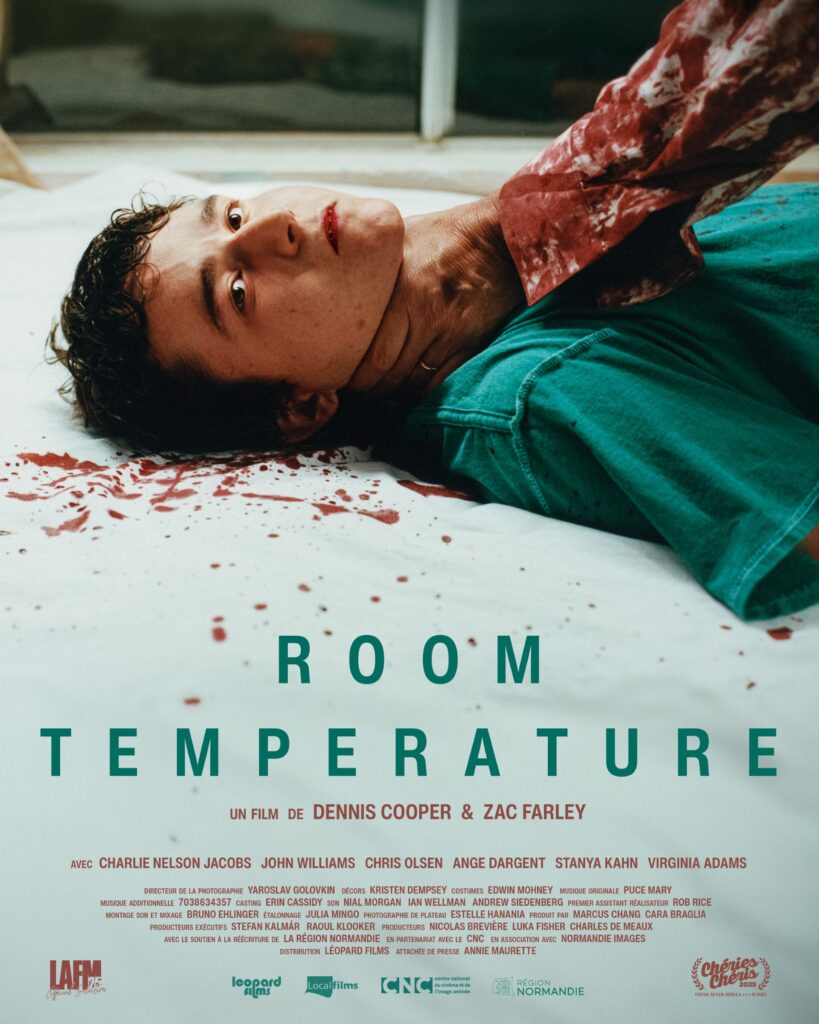
p.s. Hey. ** Dóra Grőber, Hi! Yeah, shitty it is, I fear, but it has to be figured out and soon, so I will figure out a way to do that. The problem, or one of the problems, is that I’m not a normal, employed person with a full-time job, and these rental people just wanted concrete guarantees that the rent will be paid, and me being an artist aka freelance does not interest or comfort them. Did you get any or hopefully all of the three responses, I hope? Yesterday’s auditions were a bust, but we had a big, valuable meeting with our producers about what needs to be done and how/when we’ll gather and hire our crew and equipment and so on, so all was not lost. Well, technically, we’re still looking for all the characters other than the main guy and his sister because we haven’t signed up anyone else yet. We have strong candidates for 4 of the other main roles, but we’re still looking. We don’t have solid candidates for one of the main roles and for basically all the small roles, but we’ll probably — or at least we will try to — hire people for the smaller parts from the auditions we’ll do next weekend in Bas Normandie since it will save us money if they live near where we’re shooting and have places to stay and stuff. So yesterday was okay, and the club event was fun last night. Oh, and it seems that yesterday I agreed on a whim to do a reading at a bookstore here in Paris. I hardly ever do readings anymore, and I haven’t done a public reading in Paris for about seven years, so that will be weird. How is your weekend looking, and how did it end up? ** David Ehrenstein, Hi. Oh, you know Nekes’ work. That’s cool. I wasn’t sure how known he was/is outside of Germany or Europe. Yes, I will be mega-relieved once this apartment problem is resolved, for very sure. ** Steevee, Hi. That’s too bad about that film. Obviously, in theory, a documentary about feral cats in Istanbul sounds pretty unusual and promising. Everyone, Don’t let your weekend end before you read Steevee’s review of ‘Kedi’, a documentary about feral cats in Istanbul which, despite its promising premise, he found wanting. Find out why here. Maybe the waiver thing is possible, but not for apartment renting, and it would take a while due to France’s famous bureaucratical slowness, and I don’t have a while. It’s a mess. Thank you very much for the suggestion. ** Jamie, Hi, bud. The Christophe Honore-curated Salo thing was fun. It’s a cool club, and it’s kind of the ‘it’ club in Paris at the moment. Nice rangy, medium sized labyinthine-ish raw space. The ‘Closer’ thing was that, in a small, darkish room, there was a young guy with his pants pulled down to show his ass who was reading the novel aloud into a microphone. You could go in there and … commune with him or listen or something, and I guess the poor lad was going to continuously do that until 5 am. I showed up at 10, and left at midnight. But, yeah, it was a generally wild, cool event. Exactly, about the Mellotron. That’s beautiful, and that gets to its ghostly outdated/futuristic wonderfulness. I’m glad you liked the Nekes post. No, that Bowie question seems totally legit and fruitful. Good thinking. Now you’ve made me curious about what he’d say. No, the really tragic aspect of my spotting of that marquee is that I was already a huge fan of that first VU&N album and of the whole Warhol world, having bought the album the week it came out. I was a very hip, artsy young teen. So, I knew what that show would be, and I felt the full horror of being deprived of it. Yes, auditions. I think we’ll be doing a bunch next week. Christophe Honore is giving us a second batch of audition tapes of the actors he saw for his new film, and we’ll go through them and hopefully find some people to audition later this week — we found our main guy and probably the actor for a second main character through the earlier tapes he leant us — and then we go to Caen next weekend to do at least one full day of auditions there. Lots to do. My weekend is likely to be heavily occupied by trying to circumvent my big apartment problem. Otherwise, work, see friends, see art or a movie maybe. The name Lauren Elkin sounds familiar. I’ll find out if I know her more than that vague familiarity. And your weekend? Glories galore, I hope. Love like a shattering fishbowl, Dennis. ** New Juche, Hi, Joe! I got my current apartmnent by having a friend be my guarantor. I had been hoping to get an unfurnished apartment next time because, according to French law, if you rent an unfurnished apartment, you can’t be kicked out like I’ve been re: this furnished apartment. In that case, a guarantor is not enough, and, in any case, the competition for apartments is so intense right now that people like me who would need a guarantor don’t have priority because it’s a bit of a hassle to do it that way for realtors. Hm, I’m a bit flummoxed on the director you’re looking for. I thought maybe it would have been in this post, but those direcors are all women. Perhaps it was in a post on my murdered blog that I haven’t restored yet? Here’s one candidate post’s title in case one of the names pops out at you: ’18 needlessly obscured avant-garde films, selected by Terry Ratchett: Thomas White, Teinosuke Kinugasa, George Barry, Standish Lauder, Helge Schneider, Dušan Makavejev, Oliver Herrmann, Marco Ferreri, Mamoru Oshii, Gian Carlo Menotti, Pat O’Neill, Vera Chytilová, Shozin Fukui, Willard Maas, Robert Downey Sr., Juraj Herz, Jay Schlossberg-Cohen’. Possibly? That’s all that my memory and searching of the archives has been able to come up with. ** _Black_Acrylic, Hey, B. Yeah, I think Nekes is pretty niche, fame-wise. Oh, we had snow here yesterday! I almost forgot! It lasted about 40 minutes, and it turned to water before it hit the ground, but it was snow! So, at least this winter won’t end without us getting at least a kind of semi-holographic seeming snowfall. I’ve never heard the word dreich, and I like it, and, if the French used, it would very overused since, from what I could tell from the definition, it describes what 99% of our winter days have involved. Cool about the Tai Chi or Qi Gong — the second name is better. Do you feel the effects physically and notably after you do it? ** H, Hi. I’m really glad you liked the work. Just Ashbery’s early life? Huh. Maybe the biography will be several volumes then? Thanks for the good wishes on my apartment thing, and I wish you the same big time. ** Armando, Hi, man. Yes, we have the absolutely perfect guy for our film’s main role. We’re very happy. Mm, I don’t think the grantees are necessarily drawn to more experimental films. I think we got the grant because, well, frankly, it’s an amazing script if I don’t say so myself, and because I think we got lucky and the other proposals weren’t very interesting. Well, if you mean could you apply for a French grant of the sort we got, probably not since you’re not a French citizen. Zac is French and is the director, and the film is in French, so that’s how we qualified. There might be other grants available to non-French citizens, but I don’t know about them. I remember thinking ‘Zodiac’ was okay, but I don’t remember being that excited about it. Take care, and have a swell weekend. ** Okay. I’m recommending four more books that I loved to you this weekend. They’re really, really good. Give them a look and a chance, if you feel so inclined. I’ll see you on Monday.




 Now available in North America
