The blog of author Dennis Cooper

Author: DC (Page 1045 of 1133)

Gig #109: Some 90s American indie rock songs that especially got to me: The Breeders, Sebadoh, Codeine, Jawbreaker, Superchunk, Babes in Toyland, Thinking Fellers Union Local 282, The Lemonheads, Trumans Water, Fugazi, Sugar, The Flaming Lips, Melvins, Dinosaur Jr., Polvo, Drive Like Jehu, Lilys, Sonic Youth, Sentridoh, Shudder to Think, Portastatic, Weezer, Pavement, Archers of Loaf, Unwound, Guided by Voices, Cat Power, Red House Painters, Swirlies, Tobin Sprout, Girls Against Boys, Chavez, Yo La Tengo, Robert Pollard, Pinback, Low, The Microphones, Mercury Rev


___________
The Breeders Iris (1990)
‘Pod is the debut album by the American alternative rock band the Breeders, released on 4AD in May 1990. Steve Albini has stated that it is the one album on which he felt he got both the best sound for a band, and the best performance from a band. Nirvana’s Kurt Cobain called it one of the most influential albums of his life.’ — collaged


____________
Sebadoh As the World Dies, the Eyes of God Grow Bigger (1991)
‘Sebadoh III is imbued with that sense of urgency and the compulsive urge to prove yourself by going in at least five different musical directions at once. The perfect backbone for Barlow’s nervous intensity was Gaffney’s fiendish appetite for “fucking with people” which was also, says Barlow, what made Sebadoh III so different from more well-adjusted contemporaries like Pavement. Speaking of Gaffney’s lyrical brilliance, Barlow says, “I found it legitimately poetic and disturbing. When Eric would start messing around with words, you were like ‘Oh my God, he’s going to come through the speakers and fucking kill me.’ It’s the perfect description of the sheer trauma that is Gaffney’s “As the World Dies the Eyes of God Grow Bigger” and a counterpoint to Barlow’s own musical mission statement, where it’s more about the emotions, than the warping thereof.’ — Gigwise


__________
Codeine jr (1992)
‘In contemporary reviews, Peter Paphides wrote in Melody Maker that Codeine’s Barely Real EP was “25 minutes of snowblind glory waiting here if you want them. Each of them is a towering monument to nothingness”. The Alternative Press opined that the EP was not “a progression from the gorgeously devastated Frigid Stars and I couldn’t be happier. Codeine have hit upon a formula so pure and righteous it would be tragic for them to deviate from it.”‘ — collaged


_________
Jawbreaker Bivouac (1992)
‘Unfortunately, it’s not 1991 anymore. Kids no longer pledge undying allegiance to full-length albums. Steve Jobs has made it so they can create their own compilations. This allows them to sensationalize the thought that a jumbled group of songs can merge together to deliver one blank slate of relevance. They customize their angst by selecting any particular slew of artists they want to remind them why they’re confused, enraged, or heartbroken. Jawbreaker made records that meant something to them, not their fans’ dwindling attention span.’ — Consequence of Sound


__________
Superchunk Mower (1992)
‘After pushing the buzzsaw abandon of their earliest records to its logical extreme on the masterful No Pocky for Kitty, Superchunk begins reinventing itself with their third full-length, On the Mouth, a record as invigorating as it is frustrating. Without sacrificing any of the energy or conviction of past efforts, many of the disc’s 13 songs harness Mac McCaughan’s breathless pop-punk melodies into tighter, more demanding contexts — highlights, like the singles “Mower” and “The Question Is How Fast,” introduce a new arsenal of shifting rhythms and explosively tense dynamics which reveal unexpectedly limitless possibilities within the classic Superchunk approach.’ — Jason Ankeny


___________
Babes In Toyland Bruise Violet (1992)
‘”Bruise Violet” is the second single by Babes in Toyland from their album, Fontanelle. In an interview, Bjelland was asked if the song “Bruise Violet” was written about Courtney Love, since one of Hole’s hits was entitled “Violet”. Her response was no, firstly because “Violet” was released two years later (though Hole had been playing the song regularly since 1991), and secondly that Violet was a muse that both she and Love wrote about. It was released on purple 7″ vinyl and features early or not produced versions of the song.’ — collaged


____________
Thinking Fellers Union Local 282 Wide Forehead (1992)
‘The band achieved their greatest critical and commercial success in the mid-nineties when they signed with the influential indie rock label Matador Records. It was during this time that Thinking Fellers produced their most prominent albums, Lovelyville, and the critically lauded college radio hit Strangers from the Universe. Despite its relatively poor production values, Mother of All Saints is considered by many fans the group’s masterpiece.’ — last.fm


_________
The Lemonheads Rudderless (1993)
‘Obviously the aimless “ship without a rudder” is figurative. I think it’s probably like “Evan Dando without his drug buddy is like a ship without a rudder”. That’s just my thought.’ — this is that song


___________
Trumans Water Fuller Piston Vinegar (1993)
‘There are plenty of reasons why rock has never been as fertile an improvisational canvas for musicians as jazz — chief among them, the hold of the 4/4 beat, the transience of attention spans (on the part of musicians and audience alike) and the fact that most aspiring bands would rather build a beer-can wall than a vertically soaring head. Despite a receding indie-rock orthodoxy, this San Diego quartet manages to successfully navigate the waters of improv with minimal listing toward the shores of pomp or shambling into silly lo-fi wankery.’ — Trouser Press


__________
Fugazi Rend It (1993)
‘As i mentioned this song is sung by Gui and more than likely written by him. his lyrics are often introspective, poetic and open to interpretation.. Embrace (his original claim to fame) was one of the original outspoken EMO bands im the early 80’s, very progressive… Many people speculate of his enhanced and progressive mindset and possible use of “drugs”. Rend it – end it.. Of off of Fugazi – in on the kill taker… Open up the the case and remove the cd and you will see “i will not lie” hand written (supposedly from a dumpsterdived journal of a mentally unstable person) .. did they write it, or did they find it? Why did they include it… For a band with such content i cant turn a blind eye to it.’ — PDU


__________
Sugar Tilted (1993)
‘Rarely has a band rocked out with such bleak intensity and utter conviction. A vast cathedral of noise and despair, erected and demolished in half an hour flat, this is an song which has to be heard to be believed.’ — The Times


__________
The Flaming Lips Pilot at the Queer of God (1993)
‘When he [a former coworker of Wayne’s from Long John Silver’s who joined the army and served as the inspiration for the song] would come back from his duties, I felt like he was changed for the better. He went away and he was a hick, a chauvinist, but he came back and he’d surprise me with the things he would say about this woman, a lesbian pilot who flew Blackhawk helicopters and shot missiles and stuff. He was really impressed with her.’ — Wayne Coyne


_________
Melvins Joan of Arc (1993)
‘Houdini is a great gateway to this clan of weirdos. If you like heavy shit you will probably enjoy anything these guys did up until around the turn of the century, IMO. If you like weird shit and/or the “noise” genre then I highly recommend this band.’ — Encyclopaedia Metallum


__________
Dinosaur Jr. Not the Same (1993)
‘somehow his axe and his voice sing the same tune, momentarily transmuting his self-pity into simple sadness’. — Robert Christigau


___________
Polvo Tragic Carpet Ride (1994)
‘More experimental than indie rock’s “accessible” success stories, Polvo could never establish a broad listenership — even after their later, more song-driven releases that stand up to the class of their genre.’ — allmusic


__________
Drive Like Jehu Here Come The Rome Plows (1994)
‘Opening an album with a song as bracingly great as ‘Here Come the Rome Plows’ would be a shot in the foot for almost any other band, with its snakepit verses and a chorus that goes from balled-up fists to open arms and back again before you can take a breath.’ — Brendan Reid


__________
Lilys High Writer At Home (1994)
‘Eccsame the Photon Band marks Kurt Heasley’s Lilys shift to a slower, moodier, and more spaced-out sound. “I went closest to what my 23 year-old brain could stand with Eccsame— to the edge of my own mortality and sanity”, Heasley says. “as far as the period, the energy, the zeitgeist of what we were intending, that was the only time we ever did it.”’ — collaged


__________
Sonic Youth Tokyo Eye (1994)
‘Recorded by a likely baffled Butch Vig (the production sounds more Alien Lanes than Siamese Dream), the album is full of short, jarring songs with atmosphere to spare. Bonus: to save money, Experimental Jet Set, Trash And No Star was recorded over the band’s previously used master tapes (a common practice), so if you turn the album up real loud, you can hear Sister leak through during quiet parts!’ — Consequence of Sound


__________
Sentridoh Chokechain (1994)
‘As Sebadoh grew in popularity and critical acclaim, Barlow continued work on the Sentridoh side project, which featured mostly home-recorded material similar to his output on the first three Sebadoh albums, but often recorded solo and with a less consistent sound quality.’ — collaged


__________
Shudder To Think X-French Tee Shirt (1994)
‘This zeitgeist shift was in full swing in 1994, even if the pendulum seemed to have gone as far as it could with Nirvana’s 1993 swansong, In Utero, a clawed hand to the eardrums that puzzled or repulsed more people than it charmed. And pop music, no matter its coating, is supposed to be about charm. Which makes “X-French Tee Shirt,” a 1994 single by the Washington, D.C.-based band Shudder To Think, that much more bizarre. It was released on Epic, a major label, with the ostensible intent of being sold and making money.’ — AV Club


___________
Portastatic Polaroid (1994)
‘Mac McCaughan manages to be extremely prolific yet maintain a high level of quality, and on I Hope Your Heart Is Not Brittle he created an idiosyncratic masterpiece. The guitar twangs out pretty but dissonant melodies while McCaughan sings oblique lyrics deep in the mix.’ — allmusic


___________
Weezer Holiday (1994)
‘”Holiday” belies strong influences from the things Weezer front man Rivers Cuomo was interested in at the time of 1993. Cuomo expressed in a fan interview in 2006 that the famed beat poet Jack Kerouac was one of his favorite philosophers at the time. In the notable breakdown of the song (the band often refers to these as “Beach Boys Breakdowns”), Cuomo sings the line, “On the road with Kerouac”, a reference to Kerouac’s seminal work On The Road. The opening line, “Let’s go away for a while,” is also likely inspired by the Beach Boys track “Let’s Go Away For a While” from the Pet Sounds album, which Cuomo was also hugely influenced by.’ — Weezerpedia


___________
Pavement Grounded (1995)
‘Wowee Zowee is the third studio album by Pavement. The album showcased a more experimental and spontaneous side of the group, returning them to the clatter and unpredictability of their early recordings after the more traditional rock sound of 1994’s Crooked Rain, Crooked Rain. Rolling Stone speculated that the relative success of their previous album (having sold 169,000 copies by this time[citation needed]) was a reason for this album’s eclectic nature; the magazine’s review claimed Pavement were afraid of success. Stephen Malkmus refuted this, attributing the stylistic shift to excessive marijuana consumption.’ — collaged


___________
Archers of Loaf Floating Friends (1995)
‘Vee Vee is very much a product of its time. The idea of the rock band acting as the rock critic doesn’t exist as it did back then.’ — Drowned in Sound


___________
Unwound Swan (1995)
‘Seattle’s Unwound, the vehicle for Justin Trosper’s epileptic sermons, learned the lessons of Sonic Youth, Fugazi and Jesus Lizard and applied them to the brutal, harrowing vision of Fake Train (1993), broadening the lexicon of hardcore with techniques that borrowed from the blues as well as from the avantgarde, while maximizing the emotional impact.’ — Piero Scaruffi


____________
Guided By Voices Redmen and Their Wives (1996)
‘Fans of Guided By Voices put their support behind various albums when concerning the greatest GBV album of all time. Vampire On Titus, Propeller, Alien Lanes, Bee Thousand, and sometimes even Mag Earwhig! all have their supporters. I am not alone when I throw my support behind the perfect Under The Bushes Under The Stars.’ — The Rock Robot


___________
Cat Power Nude as the News (1996)
‘The song is autobiographical and tells the story about an abortion that Chan Marshall had when she was twenty.’ — RS


____________
Red House Painters Mistress (piano version) (1996)
‘If you haven’t listened to Red House Painters before then be warned its some of the saddest music.’ — ISO50


____________
Swirlies Sunn (1996)
‘From their full-length masterwork, 1996’s They Spent Their Wild Youthful Days in the Glittering World of the Salons.’ — kd


_____________
Tobin Sprout To My Beloved Martha (1996)
‘A self-taught musician, Sprout played with and was a major collaborator to the Dayton, Ohio band Guided By Voices. Employing a four-track recorder and a home studio he contributed to the unique lo-fi sound of Guided by Voices and he was a member of the band from 1987 through 1997.’ — collaged


____________
Girls Against Boys Crash 17 (X-Rated Car) (1996)
‘My favorite song is “Crash 17 (X-Rated Car)” because it sounds like danceable Joy Division.’ — starling


______________
Chavez Unreal Is Here (1997)
‘Chavez’s music is intellectual guitar rock — riffs are fractured and self-consciously asymmetrical, winding in on themselves and then turning inside out.’ — allmusic


__________
Yo La Tengo Sugarcube (1997)
‘We hole up in a room and work for a really long time. Then we come out and blink our eyes because it’s sunny out.’ — Ira Kaplan


___________
Robert Pollard Subspace Biographies (1998)
‘Not only one of Pollard’s great songs, but inspired (holy shit!) by my novel ‘Guide”. — DC


_________
Pinback Rousseau (1999)
‘The band’s moniker is a reference to a character in the 1974 film Dark Star (played by Dan O’Bannon, who also co-wrote the film), directed by John Carpenter. Audio samples from this film are used frequently in the band’s early works.’ — collaged


_______
Low Starfire (1999)
‘I think I can safely say that this is the best song ever written about two best friends who want to start their own ambulance service. Broken bodies all the time. Let’s take a ride.’ –– Crave


_____________
The Microphones What Happened to You? (1999)
‘The Microphones is the name of a project that Anacortes, WA’s Phil Elvrum has headed since the late 90s. Its sound is best described as lo-fi “fuzz folk,” ranging from drum-crashing, bass-thrashing sonic freakouts, strummy classical guitar love songs, angelic vocal choirs, and almost-whispered vocals over harmoniums and bell kits.’ — last.fm


__________
Mercury Rev You’re My Queen (1999)
‘An unfashionably self-indulgent and earnest song, not for everyone, and maybe not even for some Mercury Rev fans, but in its own personal, insular way, it’s another triumph.’ — all music


*

p.s. Hey. I hope it goes without saying that I would love to know what 90s US indie rock songs especially got — or get if you weren’t around or paying attention then — to any of you, if you feel like it. ** _Black_Acrylic, Hi, Ben. Thanks, man. It’s a relatively minor but ultra-annoying/itchy malady that I hope is peaking and will very soon be on its way back into wherever it hibernates in my body. ** David Ehrenstein, Hi, cool, thanks! Oops, the Conner film has already been removed since you found it yesterday. Grr. I think a case could be made for ‘Rubber Soul’ being their first ‘serious’ album, not that I’m making it. ** Bernard, Hi, B. Yeah, that one turned out really nicely, didn’t it? One of those ‘I wonder if …’ ideas that lived up to my fantasy. Thank you. Let me pass along your alert just in case. Hold on. Everyone, Listen to and heed Bernard Welt’s words, if they apply to you, please. His words: ‘On my way to Asheville Monday to work on this online arts thing. BENEFIT / LAUNCH PARTY, Wednesday Feb 8, if there’s anyone here in the Asheville area: “REVOLVE, in the River Arts District’s Cotton Mill Studios, is quickly becoming known as the reigning spot in town for bringing the Asheville art world into conversations happening in the global art and academic world.” Will be hosting musicians and performances; I’ll be contributing reviews, essays.’ Up until around the mid-80s, there were a couple of great rep houses in LA that showed experimental films like Lipsett’s consistently, thank god. If it weren’t for them, I’d probably think Nicolas Refn was an experimental filmmaker. Well, probably not, but you catch my drift. I feel terrible for jumping the gun about Tom Raworth. Strange, I read a long obituary about him on the Small Press Distribution site that … Hold on, let me check … Yeah, it has been deleted. I’m very happy that course has been reversed. I totally relate to the singing thing about writing, although I get pretty obsessive about the tune afterwards. I’m pretty sure I’ll be here in June, or for the bulk of it at least, barring a shortish work- or fun-related jaunt elsewhere. Hooray! I’ll help you with that stuff in any way I can, of course. Generally in the past I’ve just used calamine lotion on the impetigo, but calamine lotion is strangely very hard to find over here, so I’m using some kind of ointment that’s meant for herpes, to which impetigo is kind of related. Usually it just fades out after taking its unsweet time. I really don’t want to go the doctor/antibiotics route, but we’ll see. Supplements? Uh, hold on, I have to go in the kitchen and check the titles. At the current time: Vitamins B, C, D; Ginger, Turmeric & Bromelan; Chromium Piconate; MSM. Have a super swell weekend, B-ster. ** Dóra Grőber, Hi! Oh, the interviewing sounds great and, yeah, really pleasurable. It reminds me a little of what auditioning actors is like since Zac and I are mostly just interested to watch them talk and see how they look/ react/ behave when talking about things, whether it’s something very personal or something they like or don’t like, so you end up learning a fair amount about the auditioners. Thanks about my arm. Like I said, it’s mostly annoyingly itchy, but it does impact my immune system so it does make me feel a little bleah too. Anyway, hope spring eternal that it’ll be better by Monday. Yes, the guy loved the script and totally got it and said yes to playing the main role in our film! We’re extremely happy, and he’s really sweet and cool, and it’ll be fantastic to work with him. So, great news for us! Now onwards and upwards re: the rest of the cast. Gosh, I hope your weekend goes really, really well. Tell me what happened, and take good care between now and Monday! ** James Nulick, Hi, James. Really good to see you, man, and I’m really glad you’re doing okay and hanging in there. The guy accepted our offer to play the part, yes, and we’re excited. He’s perfect, and it’s going to be so great. Much love back. ** Tosh Berman, Hi, Tosh. I think you said you’re going to uploiad some or all of your old ‘Tea With Tosh’ shows, right? I would so love to see your interview with Conner. And the rest. The gif stack was kind of meditative, right? It made me feel peaceful, which is not an easy state to be in these days, Thank you! ** Raymond, Hi. Ha, I didn’t think about people seeing the post on their phones, but I only use my phone for calling and texting and shooting photos/videos. I do think it probably needs a laptop or a tablet at least to work properly. Yes, you are certainly correct in thinking I am ultra-intrigued by that thing you saw on TV. Wow. I’m going to see if I can locate something about it with ‘trusty’ google. Very sorry to have RIP-ed Tom Raworth when he is apparently still very much alive. Have a lovely weekend, sir! What are you up to? ** Steevee, Hi. Just ointments at the moment. Like I told someone up above, it usually just comes suddenly, lasts a while, gets worse, gets better, and recedes, and I don’t have to get too warlike with it. But, like I also said, I haven’t had it in decades, and I guess I’m older now, so I don’t know if that will make it tougher to get rid of. I got what you were saying about Linklater, yeah. It just seems like there are people who have latched so severely onto the very legitimate issue of white privilege that they get incredibly hair-trigger in their accusations and don’t evaluate, contextualize, explore, etc. their targets before they launch their accusations, so they end up sometimes just seeming like the self-appointed art police force. I haven’t heard Nadine Khouri. Her thing doesn’t sound like mine — I don’t even like Erykah Badu — but I will try her work out with wide eyes. Best of luck to both of us re: our itchiness. ** Jeff J, Thanks, Jeff. Yeah, that GIF stack was one of those ideas whose almost overly simple conception ended up being its gift or something. Mm, I don’t remember that story about Bruce Conner wanting to destroy his films, but I could be blanking. Yes, we scored the lead performer we so hoped we would. Super happy. Yes, there are, in addition to the lead guy, three main characters who appear throughout the film. Two of them are ideally in their early-ish 20s, and the third is in late 20s or early 30s. Then there’s a fourth character who appears about halfway through the film and is prominent from that point on. That character is ideally in mid-teens. Then there are a number of minor characters, some with signicant parts and some quickies. They range from adult age to one maybe 10 year-old. And, of course, a bunch of extras. Right now we’re hunting for all of the roles, but especially for the four lead-ish characters. Now that we have our lead guy, it’s good because we can test them with him and see if the chemistry and the look of them together is interesting enough. I’ve only heard recorded Parquet Courts, and it didn’t overly excite me, but, if they come through Paris, I’ll try to see them. Thanks, man. ** Kier, Hey! Ha ha, that video is great. Another one of those ‘so simple it shouldn’t work, but it does’ things. Awesome. Everyone, your lips will move in an upward direction if you click this and watch a short video that Kier recommends. Dude, we got the lead guy we dreamed of getting! So it’s on! And you’ll get some video and pix and stuff of him from us before too long! Excited! Oh, way cool that the Sebadoh song did the writer trick. Another hopefully inspiring thing? Hm. What to do? Okay, this might not work at all, but how about this video. It’s of this model/writer John Tuite who has recently become a good friend of mine. There’s something about the video that seems wrong or secretive or something to me. I hope that works, I’m not sure. Itching sucks. And it’s ugly. But, luckily, small and not in anyone else’s face. I don’t remember impetigo lasting more than maybe a week at most. Best weekend, buddy. ** Jamie, Hi, Jamie! Cool. Yeah, that gif stack worked kind of mysteriously well, right? I was surprised. You have impetigo too? Weird, hugs. On your face? Oh, man, that’s unlucky. Mine has stuck discretely to near my elbow since it dawned when I was, like, eight years old or something. Yeah, it has a weird general effect in addition to the itching that I can’t quite put my finger on, but I don’t like whatever it is one little bit. Yes, we got the lead guy for our film! Thrilling! And the other person we tried yesterday — a very cool 15 year-old girl — could very easily have her role too, although that’s not absolutely for sure yet. So, not bad. Concentrating on Robbe-Grillet and Sarraute is a glorious concentration. That’s really exciting. Really, 30th of August? If that becomes firm, I’ll make sure to be here. Well, we just have to fit Euro Disney in. I can easily find a way if you guys can. Wow! I hope and trust entirely that your Saturday Writing gang meet up today is going to be blast. It was, right? I was right, right? Oh, fuck, I now have two days to think up three worthy questions for you, and I guarantee you will be saddled with them come Monday. Scout’s honor. (I was a Boy Scout when young, and, ‘once a Scout, forever a Scout’, so that means something.) Hurtling love, Dennis. ** H, Hi. Thank you about the post. Yes I do know and like Jess’s work. I met him once or twice in the early 80s, I think, with Robert Duncan. A very interesting artist for sure. I’m curious to read what you write about him, when and should that opportunity arise. ** Okay. A bunch 90s indie rock that I liked, and, in some cases, still do like, for you to fish through, and, should you be so inclined, to respond to with fave past indie rock nuggets of your own. Sound fun? See you on Monday.
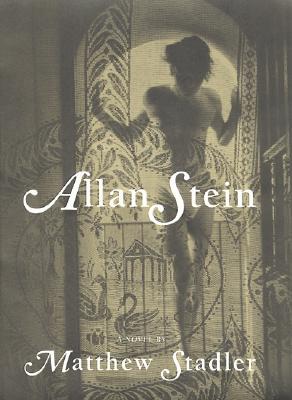
Spotlight on … Matthew Stadler Allan Stein (2000)


‘At the age of 40 novelist Matthew Stadler has seen all of his previous novels go out of print. Positive reviews, prestigious Merrill Foundation and Whiting Writers awards, and a Guggenheim fellowship haven’t been enough to keep his books on the restless shelves of your local market-driven superstore. Granted, his subjects are not quite fodder for Oprah book chat: in The Dissolution of Nicholas Dee, the narrator’s control of the story, and his own life, is slowly wrested away by a midget, and The Sex Offender is a black comedy about the state’s efforts to rehabilitate a man who desires teen boys. Allan Stein, his latest and most accessible novel yet, has many of the earmarks of commercial literary success. It’s a mystery of sorts, a beautifully written and at times incantatory narration of a man who travels to Paris under an assumed identity to track down lost Picasso drawings of Gertrude Stein’s nephew Allan. But for all the suspense, rich characterization, and dazzling prose, there’s a vital plot thread on which his popularization will probably snag: the taboo subject of man-boy love.

‘Allan Stein was a beautiful child who caught the eye of Picasso and Matisse, both of whom painted him. Etta Cone, Alice Toklas, and Gertrude herself all left stories about this charming boy. Stadler recalls, “I saw this boy on the margins of photographs of Gertrude Stein and became fascinated with him.” But the more Stadler looked, the more he found that Allan existed only as a character in someone else’s history. He was romanticized by the adults around him, but never allowed to be himself. “Every time I tried to write intelligently about my relationship to Gertrude Stein’s work— which I love— it sounded stupid and resisted my critical embrace,” says Stadler. In Allan he saw both an entry to Gertrude’s mythologized life and an opportunity to explore his ongoing interest in children, particularly as a site of projection for adults. In the process, Stadler says, “I tried to rescue any residue of his life.”

‘Stadler blends his research into the fictional plot of Allan Stein, peppering the enchanting first-person narration with actual letters between Gertrude and her family and diary entries of Allan’s girlfriend. The narrator, a schoolteacher named Matthew, has been suspended from his job in the midst of accusations that he molested one of his students. Matthew’s friend Herbert, a curator at the local museum, is on the trail of some missing Picasso drawings of Allan. With Herbert’s permission, Matthew goes to Paris in his stead, taking on his friend’s identity to gain entry to the Parisian art world and the vestiges of Allan Stein’s boyhood. As Matthew searches for the drawings, he becomes enamored with Stephane, an adolescent member of his host family. By the narrator’s account, it becomes, for the most part, a mutually satisfying relationship. But in his own way Matthew does with Stephane what Gertrude and Picasso did to Allan— his understanding of the French teenager is overwhelmed by his own fantasies.

‘The romance plot played more than a small part in Allan Stein getting bumped from its original publisher HarperCollins during a well-publicized manuscript purge in 1997. When Stadler submitted his final draft, the publisher claimed to be “surprised that the book dealt primarily with issues of sexuality” and broke the contract. Stadler asks, “Surprised? And this after they’d just published The Sex Offender? I’m sorry that my books get reduced to their subject matter.” He argues that “we live in a culture that thoroughly eroticizes kids and then projects our revulsion onto ‘monstrous’ strangers.” He believes this revulsion comes from our own complicity in that eroticization. Stadler says, “I have an interest in helping us articulate and make nimble this frozen hysterical reaction.”

‘Stadler has already tackled this subject matter in his journalism, taking positions rarely seen in the mainstream. Last year he wrote an article for Spin sympathetically exploring the complexities of the relationship between Mary Kay Tourneau, the Seattle teacher convicted of statutory rape, and her teenage lover. In an article he wrote for Seattle’s weekly newspaper The Stranger, he glimpsed into the North American Man Boy Love Association, portraying it for the most part as a bunch of soft-spoken men who find near-innocent pleasure in the eroticized images of children available in mainstream advertising.

‘Stadler says his own experience of childhood might have led to his interest in the subject. He was raised in the commune-like setting of an antiwar group his parents and their friends founded, which Stadler describes as “a swirling chaos of drunken adults and responsible kids” in which his autonomy was respected. On the one hand he believes this fed his attitude that children should have access to power that the family and culture tend to deprive them of, and that assumptions about adolescents’ inability to make decisions regarding their actions, sexual and otherwise, aren’t so pat. But at the same time he says, “As much as I meet and experience real boys, I’m threatened by the boy as a site of divinity and spiritual deliverance.” Striking a balance between the two is the hard part, and Allan Stein seems to be part of this process. He says, “Where I grew up and how I grew up created my sensitivity to the mythology of the boy. It’s a mythology I’d like to dismantle. I hope by the end of Stein I have.”

‘While in Allan Stein sections detailing the sexual relations between Matthew and the boy would make Nabokov blush, they’re hardly gratuitous. Though explicit, they underscore Matthew’s complete freedom from societal mores. “I wanted to make it clear the narrator has no moral issues in his relations with other people. He’s satisfied implicating them in his fantasies, even though where his fantasies begin and end is quite fucked up.”

‘The man in a foreign land enchanted with a youngster smacks of a gay Lolita. Stadler admits as much, saying he wanted Stephane to be the prism that refracts the narrator’s vision of Europe, as Lolita was the embodiment of Americanness for Humbert Humbert. He wanted to convey a mythologized experience of Europe, and as such has come up with an inversion of Humbert’s wide-eyed cataloguing of America. But Stadler says he wrote the book more “drunk on the fumes of Nabokov’s Ada and its fecundity and abundance of language. With this in mind, I allowed the narrative to billow and overreach itself.” The narrator says of Paris: “Everything was interesting, even the trash on the street was exotic to me. . . . I drifted into one-way traffic past an old slaughterhouse . . . which smelled like almond pastry, and then cigars and diesel fumes. . . . A silvery bus discharged tourists, pasty and dazed, white-haired, and they shuffled through the gates into the garden.”

‘Matthew’s dangerously romanticized view of the relationship, Europe, and the elusive Allan Stein gives the novel its uneasy charm. Allan Stein’s inconclusiveness may not be comforting, but that’s the point. “Of all my books this one is the most focused on lying. My narrators lie and sometimes they keep their secrets, and that corrodes any revelations they offer.” But for Stadler, these lying narrators betray deeper truths about desire than straightforwardness ever could.’ — Hugh Garvey, The Village Voice


____
Further

Matthew Stadler @ Wikipedia
The end
Audio: Matthew Stadler interviewed on Bookworm
The personal becomes historical in Matthew Stadler’s “Allan Stein”
TALKING WITH MATTHEW STADLER / Boy Leading a Man
Fillip / Don’t Take Any Jobs (Matthew Stadler)
‘Deventer’ by Matthew Stadler
Matthew Stadler – InClaritas
A Very Long—and Very Interesting—Interview with Matthew Stadler
REVOLUTION: A READER compiled and annotated by Lisa Robertson and Matthew Stadler
Young Homos in Love, by Matthew Stadler
Audio: Epsiode 386: Matthew Stadler : Bad at Sports
matthew stadler – PUB800
Reading at Risk to Ourselves: The Novels of Matthew Stadler
NOTES ON A PICTURE, by MATTHEW STADLER
On Coincidence, Constraints, and Matthew Stadler’s Cover Novel
Remote viewing: Matthew Stadler on the Time-Based Art Festival.
Buy ‘Allan Stein’


____
Extras


What is Publication? A talk by Matthew Stadler


The 9th Benno Premsela lecture, by Matthew Stadler: Interior decorating in war time


Big Ideas in Art and Culture: Matthew Stadler


Artist Talk: Matthew Stadler


____
Interview
from 01 Magazine


‘Publication Studio is a publisher founded in Portland, Oregon in 2009 by Matthew Stadler and Patricia No, that “marries the common view of DIY practice with global reach” by using cheap, widely available print on demand technologies. Books are published as ordered via the company’s website or in person or they can be bought in bookstores across North America, Europe, and Japan. Located in a dedicated storefront in downtown Portland Publication Studio now has twelve “sibling studios” producing original books in Berkeley, CA, Guelph, ON, Canada, Vancouver, BC, Canada, Toronto, ON, Canada, Minneapolis, MN, Los Angeles, CA, Philadelphia, PA, Portland, ME, Hudson, NY, Malmö, SE, London, UK, and Rotterdam, NL. Publication Studio has published over 300 books (April 2016) by authors including Aaron Peck, Thomas Sieverts, Matthew Stadler, Kevin Killian, Dodie Bellamy, Lawrence Rinder, Paul G. Maziar and Walter Benjamin.’ — collaged

Aaron Peck: Your novel Chloe Jarren’s La Cucarracha is a “cover,” and I want to ask you a little about what that means. But before that I want to ask you about the publishing history of the novel because it’s already had a life of its own, in a way, and now after more than two years you’re finally launching it.

Matthew Stadler: While I was living in Guanajuato, Mexico, the local culture center had a box of paperbacks that travelers had left. Among them was A Murder of Quality by John Le Carré, which I had read probably fifteen or twenty years before. I picked it out, read it in a day, and realized that I really loved it.

At the end of the day, I figured that I would be miserable if I sat there trying to write the book I was working on, something I found so hard to do, and I decided instead that I’d rather just write John Le Carré’s book. Not that it was much easier to do, but it was pure pleasure. And so I sketched out the structure of the book and put as much exact detail of what he’d done in his book and then wrote it again, setting it in Guanajuato, with characters that I made up, but every aspect was simply to play his novel again by writing it. I was not writing an homage, nor cleverly answering the plot of an earlier book. I approached it more like a piece of music, as when you play a score, the very same score that that other author played, but you’re playing it with your own instrument.

By the time I finished writing the book five months later, I was psyched, because I thought it was really good. I had also written something that I thought would finally make my agent some money. I’ve had an agent for twenty-whatever years, and she works like a dog to get my literary books published, and she see very little money from all the work she puts in, and I thought, ‘awesome I’ve got this thing, I’ll send it to her, she’ll turn it around and make a paycheck off me, finally,’ and I sent it to her, and she was not very moved. She talked to me on the phone and told she thought that the cover method, which I was so excited by, made it not really ‘my book’, in a sense. Her skepticism undermined my own sense of whose book it was, who had authored it.

AP: But there’s this thing you’re doing, and I want you to talk about it a little more if you can. You’ve gotten rid of authorship in a traditional sense and yet when I read the book I thought ‘these read like Matthew Stadler’s sentences, like the ones I enjoyed so much in Allan Stein.’

MS: I think in the culture, the literary culture, we are often invited to think the author is inventing a world and is creating things from nothing. Anyone working knows that’s not true. I’ve never felt comfortable with the loneliness of that scenario in any part, in either getting praise for being creative, or in feeling isolated by the notion that what I do I do alone. I love music. When I’ve played in bands, playing covers was my super favorite thing to do because you know the song is great already and when you play it, you connect to all these things that shape you and make you want to do this work, but you also add your voice. So I think the device of covering a novel allowed me to directly, and literally, inhabit the work as the player of an instrument, and that instrument is my sentences. I think you are right to locate it at the level of the sentence. I think that’s where I do my composition—at the level of the sentence.

AP: Publication Studio is a radical rethinking of the way not only books are produced, with a new kind of technology, but also the role a book has in a person’s life. Could you elaborate on what led you to develop something like Publication Studio?

MS: If you are producing books one at a time, and “on demand,” that is, for a person who wants to read and own the book, it means that the only pressure shaping this work and the distribution of it is the conversation around the book. It’s radical because it actually returns to the root of literary culture, which is the relation of reader and writer. And if it’s successful as an economy, it is because it can displace the poorly functioning economy in which people have to sell books regardless of interest. You know how that goes: you’ve made a certain number, and they need to sell. The fact is, the majority of book sales come from selling books to people who don’t read them. And great—I’m all for the subsidy—but ultimately a healthier relationship might come from paying attention to people who read and then trying to provide books for them. And that’s what you can do, if you’re making books one at a time. I started Publication Studio to physically make one book that I could hold up and say, ‘you have got to read this book’. And that was Larry [Rinder]’s, in the first instance, but then it became a number of other books.

AP: And now your own. I was wondering if you could return to the bibliography, to use the correct term, of Chloe Jarren’s La Cucarracha and relate it to the development of Publication Studio.

MS: So given my editor and agent’s enthusiastic reply that they would be looking forward to ‘a Matthew Stadler novel,’ I felt confused about the authorship of my book that was then called La Cucarracha. And I decided I thought it was a good book, but I wasn’t sure it was a ‘Matthew Stadler book.’ So I published it under a pseudonym, Chloe Jarren, and the pseudonym is an anagram, of course, of somebody else’s pseudonym. I used lulu.com because I knew how. I don’t think I’d done a book on lulu before, but I’d certainly used their infrastructure and knew how it worked. That allowed me to then tell a hundred friends, ‘Hey, I wrote this book, it’s on lulu under a pseudonym. If you like it, tell other people about it’. By doing that, around three hundred, less than four hundred, books sold. And I had some nice conversations with friends who read it and liked it or didn’t like it. About a year passed, I’d say, maybe less than a year, before Dennis Cooper sent me an email saying that it was a good book and essentially calling me on my bullshit by saying ‘it’s obviously your writing, why don’t you publish it under your name?’ This came at a time when I was ready to hear him.

I then wrote a new afterword, explaining the method and the origin of this pseudonym, some of the narrative I just told you, and when Publication Studio began, I put that book in the catalog, that is, the old La Cucarracha with the new afterword, and titled it Chloe Jarren’s La Cucarracha. My mother bought some copies. A year or so after we first put it in the catalog, I formulated a set of strategies to use Publication Studio’s method of production as a way to feed more conventional markets for novels. And so, the 2011 “launch.”

AP: And the launch is rather unique: they’re all ticketed events at which local chefs will produce a meal for the attendees, with limited seating; there will be drinks; the book is included in the ticket price; and I’m assuming you’ll give a reading. I like the idea of creating a public space that is bound by a book, being the thing that brings people together, for conviviality, whatever. You’re doing a tour but you’re not going to be reading in Barnes and Noble or something like that. This approach announces its confidence that your work, or any other Publication Studio title by extension, should be taken as seriously as, say, a Jonathan Franzen novel, and yet it understands the kinds of relationships it’s making on a more micro level.

MS: First let me say, that books suck as a commodity, but that books are superb and unrivaled as a public literary space, as a space of literary culture that is social and shared. Printing one at a time, or in small numbers, we’re able to let the book function as a public space in almost any setting. In my case, I find that forty or fifty people at a table can actually enter into a single relationship if you arrange the table right, get them facing each other, and get the right book in the middle. The events we’re hosting in twelve cities this summer will each put La Cucarracha in the middle of the table and one copy in the hands of each person there. I think that such a setting is the social life of the book. People think of bibliophiles as solitary. ‘Bookish’ is even a term for an anti-sociability. But, in fact, for people who read and are excited by literature this is exactly the setting in which public life transpires: loud and drunk and impassioned, facing one another. The other settings, which are designed to move commodities, do not capitalize on the strengths of literary culture. They position people as consumers and audience. Nobody who reads really reads that way. We’re simply taking these aspects of literary culture and these potentials with a book and putting them centre-stage, because we can.


___
Book

Matthew Stadler Allan Stein
Grove Press

‘Comic, erotic, and richly imagined, Allan Stein follows the journey of a compromised young teacher to Paris to uncover the sad history of Gertrude Stein’s troubled nephew Allan. Having been fired from his job because of a sex scandal involving a student, the young teacher decides that a change of scenery is in order. He enlists his best friend, a museum curator by the name of Herbert Widener, to help him get out of Seattle. It so happens that Herbert had been planning a business trip to Paris to find Picasso’s missing 1906 drawings of Allan Stein, the only child in the charmed circle of Gertrude Stein’s Paris.

‘After some convincing, Herbert allows his troubled friend to go in his place, using his own name and passport. In Paris “Herbert” discovers an unusual family that welcomes him, and he becomes enchanted by one particular family member, a fifteen-year-old boy named Stéphane. As he unravels the gilded but sad childhood of Allan Stein, “Herbert” is haunted by memories of his own boyhood, particularly his odd, flamboyant mother. Moving through the glitter and pomp of the Parisian art world, he becomes more and more entangled in his masquerade and finds himself increasingly bedeviled by his feelings for Stéphane, with whom he ultimately absconds to the south of France. Moving from the late twentieth century back to the 1900s, effortlessly blending fact and fiction, Allan Stein is a charged exploration of eroticism, obsession, and identity.’ — Grove Press

‘What makes Allan Stein unusual is the lyric suppleness and restraint of the writing. . . . Stadler demonstrates that is among the handful of first-rate young American novelists, one with a wide reach and quirky, elegant pen. The writing and the composition of this evocation of the Paris cityscape and its seductive denizens are remarkable.’ — Edmund White

‘Erotic and sensuous at the same time, lovingly attentive to detail and permeated with Nabokovian grace and intelligence . . . A pleasure from start to finish.’ — Lydia Davis

‘Allan Stein is a stunning book, ruthlessly honest, astonishingly bleak but life-enhancing, essentially a comic novel, yet substantial and expansive. . . . [Matthew Stadler’s] writing is itself so richly imaginative, every page being festooned with sumptuous but never fanciful imagery, but more than this, there is a refreshingly shocking and uncompromising frankness about Allan Stein which marks it out as truly original. This is major writing.’ — The Spectator


______
Excerpts

My story began properly in the perpetual darkness of last winter (almost spring, it was March) in the city where I used to live. Typically I woke up in the dark, 6 A.M. on most days, delivered from sleep by the icy stream of air spilling in my open window. The lighted clock of the railroad tower said six exactly. This round clock of black iron and creamy glass was the first thing I saw in the mornings. No one was ever on the way to work yet, nor had the lumbering buses and trucks started with their tentative, practice engine roars. (Later, in clouds suffused with the bright yellow and opium-poppy-orange of the risen sun, they would billow in every district of the city like grim flowers and release their belched gray emissions, which gave a pleasant taste to the winter air.) I am a teacher, or had been, which explains the early hour.

Opening the window from bed, only my head and one arm untucked, was my first habit of the morning. It was independent of me, like shifting the buried, cool pillows to the top in the deep middle of the night, neither conscious nor strictly unconscious–something between a dream and the address of a friend, which I had scribbled while dragging the phone as near to the table as it would go before absently tossing the newspaper on which I had written it into the garbage, along with the bones of a fish, so that it was lost both there and in my mind until, when the brisk air of morning rushed in the open window, the whole address, neatly printed, leapt to view, bright and clear as the pinpoint stars, noisy as a child, and my mind’s eye, conscious, grasped it again, though only for a moment. Minutes later, in the chaos of morning, it was gone, but so was any memory of having lost it.

All my thoughts were thin and brittle when I woke. My expansive dreams, ideas that multiplied like the crystalline spread of urine released into space (which I have heard is a beautiful sight, witnessed only by astronauts, the discharge turning golden and immense in the black void), became whole great cities of geometrical fantasy, complex and beautiful as hoarfrost, before shattering suddenly into unreadable shards at the slightest touch of fact or feeling (a crease in the pillow bothering my cheek, for example, or the sour taste scraped from my teeth by a dull, swollen tongue). The scrim of night outside was fragile. Its thin black mask could not hide the sheer abundance of the day ahead, nor the fact that it was morning already elsewhere, evening again elsewhere still, and a bright summer afternoon somewhere so distant one passed through two accelerated days in the metal shell of a jet airplane just to get there. My mother, Louise, once asked me what separates one place from another. I was only a child, and of course I had no idea. Other places, I guessed, which begged the question.

The oatmeal I ate before bed and left too close to the coiled heater was covered by a film of dry skin, which burst under the slightest pressure, my thumb for example, if it strayed too deeply gripping the bowl. I always licked this thumb, after its plunge, and the cold sweet paste it unearthed from beneath the film was enjoyable. I could hear my friend Herbert, in the adjacent apartment, bellowing fragments of popular songs, which he only ever partly remembered. Herbert and I were always awake early, even while the rest of the city slept. He is the curator at the city’s art museum, and they let him keep whatever hours he likes. I had no reason to be awake. The school where I taught resolved some misgivings that arose over Christmas by granting me a paid leave of absence.

I was accused of having sex with a tenth-grader in late December. This student, Dogan, was Turkish, lithe and very beautiful. I have a picture of him here on my wall. I tutored him on Saturdays at his apartment after his soccer practice, but I had never imagined molesting him until the principal suggested it by notifying me of the charges. Amidst the dust and gadgetry of the principal’s meticulous office, his chair overburdened by the abundance he had squeezed onto its cupped seat, “had sex with the boy” floating in the well-lit air between us.

*


Herbert was the only friend I discussed this with. Others, especially my colleagues from school, were so moved by the weight of the “tragic accusations” that I could feel myself becoming tragic simply with the approach of their cloying, caring glances. Their eyes had the gleam and submerged instability of glaciers, vast sheets of luminous ice beneath which chasms creaked and yawned. One of them would appear uninvited before my table at a cafe, fat Mr. Stack the math teacher, for example, and shuffle toward me as if compelled by this hollowness behind his eyes, as slow and devouring as the ice that once crawled down the face of the continent. (My mother described a boyfriend of hers this way, one evening while she and I sat in a diner eating turkey sandwiches with gravy, a special treat she gave me far more often than I deserved. I was eleven years old. It wasn’t five minutes before this very boyfriend appeared at the window with his face pressed to the glass, miming hello and making a fool of himself. She winked at me, then looked right past him, blowing smoke from her cigarette, saying nothing. Finally he went away.) I have none of my mother’s cool reserve, so I avoided my colleagues when I could or, if forced by good manners to accept a repeated invitation to lunch, tried to speak cheerfully about my “new career” at Herbert’s museum, a fiction I had devised, which, like most lies, eventually became true. I learned a great deal about art from Herbert during the few weeks that he helped me perpetrate this lie.

It first occurred to me one cold March afternoon while we sat at a cafe drinking. Herbert likes to drink and so do I. We are compatible in many ways, and being neighbors a great deal of our lives became shared; watering plants, checking the mail, and chitchat soon became socializing, shared travel, and a natural intimacy that has made me more comfortable with him than with anyone. This particular cafe (that cold March afternoon) was called Shackles, under which name it masqueraded as a pre-Victorian public house. Nothing in our city is pre-Victorian, except perhaps the famous lakes and the view out.

Dark wood, patterned velvet, newsprint advertisements for nineteenth-century ales (enlarged, scarred, and varnished for display), wall sconces fashioned from gas fixtures, and poor lighting made up Shackles’s costume. Windows, curtained on brass rods at eye level, let us watch the street while easily hiding ourselves, if need be, by a simple crouch or slouch nearer the table. The unfortunate waiters were disguised as croupiers from Gold Rush-era Nevada (preposterous puffy sleeves, frilly red armbands frayed to the elastic, tidy vests with fake watch pockets and chains, plus anomalous cummerbunds), none of which kept the young students who took these jobs from supplementing the costume with beautiful earrings of silver or brass, chrome-pierced nostrils, ersatz-Maori cheek tattoos, braids and bangles twined about their elegant thin wrists or tied in colorful cloth cascading from their heads–the result being much more like science fiction than the vague nostalgia the owners must have been aiming for. One of the waiters was a lanky blond angel named Tristan, and Herbert adored him. Tristan was also a student at the university, and Herbert kept offering him an “internship” at the museum, to which the boy always replied, “It sounds completely fascinating,” before shuffling off with our drink orders, and then nothing would come of it. We drank there whenever Tristan was working. When he wasn’t working, Shackles became, to Herbert, “that hideous dive” and we went to a much nicer cafe near to our apartment house.

Our city is a virtual monument to indiscriminate nostalgia, sometimes (particularly when I look out my window at the nighttime buildings smartly lit by floods and spots) appearing like a grand, jumbled stage set for all the dramas of Western history. Muscular towers of concrete and glass, paid for by young stock wizards and software geniuses, offer a heady compote of modern forms and ornaments, collapsing three hundred years of the Enlightenment–vaulting skylights, vast glass cathedrals, forests of tall columns appended by apses (in which vendors sell coffee, magazines, and snacks), death-defying elevated wings of stone, granite monstrances balanced on steel pins, and sprawling webs of metal and tinted glass suffused with natural light (for the enjoyment of employees taking their sack lunch in the firm’s “winter garden”)–into singular monuments, so that one can review an entire history without straying out-of-doors. Lighted in the manner of Rome’s Campidoglio, these generous knickknacks dominate the city at night.

Their grand theatricality is sadly compromised, for me, by the awkward, insistent fact that I grew up here. My childhood lurks behind these bright scrims and screens, unruly and constant, threatening to overturn the whole facade and reveal the actual place to me. Once, for example, about a year ago, on a date with a young friend named Herman, keeper of the computers at our school, the trashy glamour of the Downtown Fun House with its strung lights and carnival noise (a fabulous room of tilting pinball machines delivering their trilled ringing scores and piles of loose change which Herman, drunk, said was like Tivoli Gardens, which he described to me in German or Danish, making elegant gestures with his beer and singing God knows what song, so that for a moment I was far away in Denmark or Germany with my beer and this grandly sophisticated friend singing on the verge of some world war or depression) all dissolved when I spun (some would say reeled), and saw a dull canvas mural of two leering clowns painted in a hideous all too familiar greenish-pink. It had hung beside the Skee-Ball lanes covering a hole for the last thirty years, in a sad, dirty corner of this house of marvels, an eddy of quiet amidst the swirling noise. I had only ever seen it once before, when I was ten, and I had pissed there because my mother insisted it was all right to do so. You had better just do it, she said, and I unzipped my pants and did. A policeman came over, put his hand on my shoulder, and told me to stop. I could only stare at the clowns, which I’ve never really forgotten, and comply. Mama was kind enough to pretend it hadn’t happened. “Look what some boy has done,” she whispered, taking my hand and pulling me away from the corner.

Typically, the memory had ambushed me, replacing Denmark and the World War with my own messy life, and recasting my glamorous European date, Herman, as a loud, tasteless drunk. I knew all along it was there, waiting, but it sneaked up on me, rather like the smell of lavender, suppressed by the evening cold, that kept creeping out of the broad canyon of the Verdon River and stirring Stephane from his sleep, rousing the boy enough to make me panic that he might get up and leave, might return to the world and abandon me in the shell of our last ruin, that he would walk out of his scripted fever into life, into a world we had shut out, at least for a few days. Isn’t it strange how distant the boy is, was, and those last days near the edge of the sea in France where we left pages ago, ages ago, to meet Herbert, who’s still waiting, too sober and impatient at Shackles, for our conversation to resume? And all the time the boy was here, hidden by a thought, behind a thin distraction, the noise of a conversation, in that gap between words when silence extends one beat too long.

I enjoy the noise of a good conversation, particularly with Herbert, who has opinions and a stylish way of talking, so that even when he is silent my mind is occupied by him, his nervous hands smoothing the table’s edge, his fish-dart glances, and the way his face rearranges itself around the twin-ridged frenum of his upper lip when he wants something. Adrift in my chameleon instabilities–I could become as easily a society matron as a loud sports guy in the next second, should the right acquaintance walk through the door–I never knew from which blurry edge the next bright color would bleed; Herbert was a swath of singular hue (the dusty pink of Travertine marble in the languid heat of Rome, late summer, late afternoon, for example, so antiquated and pleasing was his effect on me), a familiar resting place that imbued me with a clear, if slightly dated, identity.


*

p.s. Hey.  ** David Ehrenstein, And he can serenade you on his bagpipes. I know about Adama Traoré’s terrible death, of course. It was big news over here. I do think the writer of that article is pumping the situation up a lot in order to make a story by saying Traoré’s death has become a huge rallying cry in France. I honestly haven’t heard or read anything about it for quite a while. ** Dóra Grőber, Hi, Dóra! My pleasure, as always. I’m fine and, yes, my bad mood dissipated. It was just one of those mornings/days. You’re still under the weather? Yes, whatever this bug is that’s going around, it seems like a lasting one. Zac has been varying degrees of sick for weeks, but improving too. Great that you’re managing to write and work on the interviews at least a little. Sleet is like snow’s sort of obnoxious brother, but I still kind of envy you given that Paris is continuing to be the opposite of a snow magnet. Yesterday … I worked. Some construction worker guys came by yesterday to look at my apartment and discuss how they’re going to tear the place apart and remodel it after I’m kicked out. That was kind of depressing. Zac and I looked at some video actor auditions that our liaison in Caen did for us. There were two possibilities. We met with our Paris casting guy to tell him which guys of his that we liked from the first round of auditions and what types we’re looking for re: our upcoming next round. Stuff like that. Mostly film stuff, which is going to be the case for the next months, I guess. How was your day? I hope you felt better than yesterday, and that you had some kind of fun or progress irregardless. Tell me please. ** Bill, Hi, Bill. Very sorry to hear about your work’s current grimness. Ha, now you’re even going after the non-minimalist commenters. You’re a hard ass! ** Steevee, Hi Yes, strangely enough, I do know who a few of the other bands are and, in fact, back in LA, I have two of the albums he’s seeking due to a long-ago stint in college wherein a friend of mine and I obsessively haunted record- and thrift stores looking for rare vinyl, mostly in the garage-psychedelic realm that the ‘slave’ is into, to resell at inflated prices at swap meets to make money. If I were in LA, I’d send them to him, no strings attached. I don’t think I know Amat Escalante’s films, unless I’m blanking. I’ll investigate. Thanks a lot for the tip and thoughts. ** Sypha, That’s a not a surprise, ha ha. And I assume you liked the cat. ** Suzy v, Hi, Suzy. Oh, yeah, wow, sure, I really liked that ebook. And still do, of course. It’s really nice of you to come in here so we can have a proper meet and greet outside of Facebook peeks. How are you? What are you doing and working on? You had or have a band, right? Yeah, thank you, and do come back and hang out as much as you like. It would be a total pleasure. ** _Black_Acrylic, Hi, Ben. Ah, come on, that Zombies record is a stone cold masterpiece if nothing else on his list might be. Well, I’m happy to be back, and I’m happy to have you back after Germany stole you for a bit. Yes, I sure hope you get a pass on this sickness thing. I’ve been lucky so far too. It seems to be a rather unpleasant bug. Have a fine day, sir. ** Kyler, Hi, K. Oh, interesting, you too? Huh. It’s somehow comforting to think that culprit is in outer space rather than in my soul. It’s your birthday? Happy birthday! Everyone, It’s Kyler’s birthday today! Wish him a good one, or raise your glass when you hold a glass today, or do something else and dedicate a thought to him while doing it. So, how are you marking your big day this year? ** Jamie, Goeie dag, Jamie! Oh, yeah, I seem to be irritation-free, so I guess whatever I did worked. Not surprised about the mostly sucky VR. Nor surprised that there were some sweet AR things. That’s where I’d place my chips were I a betting man. Wow, an office. That sounds serious. I don’t think I’ve ever worked in an office either, and I’m, like, old, so that’s kind of weird to realize. Maybe I should put working in an office on my bucket list. I’ll wait to hear your review of office work before I do. It would be interesting adapt the escort and/or slave posts into a play. Huh. Well, the slave posts, at least. Huh. I’m going to think about how that could work. I’m not kidding. Yesterday was all right. I laid it out to Dora. Today I think I’m going to hang out with a friend, the filmmaker Joshua Sanchez, who’s in Paris from NYC on a short visit to do research on his next film. And I have to do some apartment thinking/ hunting/ scheming. And prep for some more ‘actor’ auditions that Zac and I are holding tomorrow. That sort of thing. What did you do and eat and buy and watch and listen to today? (You don’t have answer all of those). Lots of love right back! ** Statictick, Well, ideally the slaves inspire a complicated and confusing effect. I think if they do that, they’ve done their jobs. Sorry about the Odd Hours splinter. If Natasha Beste has been on my blog, and I don’t remember, it definitely wasn’t a full post. Nice about the nice and narrative-y Trevor situation. Funny that you call him a youngster. I want to see evidence of the resulting mural, natch. ** Misanthrope, Hi. ‘More than welcome’ is a funny phrase. I say it too. But if you think about it, what does it mean? What is ‘more’? What would ‘more’ be, even the person who used that phrase had something ‘more’ in mind, which they never do? Sorry, just nerding out on strange common phrases. I do that sometimes. You did suggest doing an older escorts post, and if you ever want to, you are ‘more than welcome’. Yes, definitely true about catching your irritabilty before it lashes out. I’m almost never irritable, strangely, so I was immediately, like, ‘What the hell is this curious hostility that I am unusually feeling?’ Whew. ** Bernard, Well, to be fair to him, he’s moving on from his bagpipes thing, or said he is. Me, I didn’t believe him. ** H, Hi. Oh, no problem on not lookng at the boys. They would have no idea that you looked at them anyway. How nice that the Ashbery collage show was so good, and that you were able to go. I feel pretty confident that at some point his collages will be gathered together and made into a book. It would be really weird if that didn’t happen. Have the best day you can. ** Okay. I’m focusing on a wondrous Mathew Stadler novel today due to someone here, I think TonioK, having mentioned that he was reading it. I feel like Matthew’s work isn’t talked about nearly enough, so I guess I thought I would do my little part to try to correct that. See you tomorrow.

« Older posts Newer posts »

© 2026 DC's

Theme by Anders Norén — Up ↑