I think I first became aware of Joe through a friend on instagram, clicking on the occasional story he’d post about music. Slightly throwaway, personal-account quality. Someone talking about something they were listening to or thinking. Often music I loved or had grown up with, sometimes things I had no particular feelings for or couldn’t really care less, but always something intriguing in the approach that kept me watching.
For a while he seemed to be doing a sort of countdown, a bit like DC’s mine for yours. Favourite artists, records, composers, projects, or whatever. Ostensibly a top 100, though I’m not entirely clear whether that meant all time, that week, or just that particular moment. Stories turning up intermittently, one a week or several at once. Little 30-second or two-minute fragments. In my memory, the ranking always hovering around 81st or 82nd. A list always expanding, new entries subtly slotted in, everything else shuffling to make room. Never seeming to reach a top ten, but always accruing. Maybe discreet 81.4th or 82.3rd favourite slots opening up somewhere unexpectedly. More my recollection than anything Joe was actually doing, but I liked the idea.
Then a little more digging into what Joe had been making and writing. Following it a bit further than I’d intended, and eventually finding an opening to reach out and have a conversation with him. I think I initially got in touch through Pup & Tiger, interested in the idea of doing some group close-listening record events in an exhibition space he’d talked about. So I reached out to Dennis about putting together a day around this, mostly as an excuse to take a closer look at Music For Backrooms and PRIMERS, perhaps share them with people who might not have come across them yet.
There’s something enigmatic about the way Joe follows an idea. Starting somewhere familiar, ending up somewhere else, without quite being able to account for how you got there, keys still in the ignition.
“PRIMERS: Air (French Band) video still”
Joe Donahue is a writer and poet whose thinking about music takes some wonderfully unexpected routes. Under the name Lost And Safe, he’s been developing a series of video projects that move through music by way of moods, memories, obsessions, and unlikely connections, building outwards until a record or an artist opens onto a whole world. This showcase brings together two 45-minute deep dives: Music For Backrooms, a journey through the eerie, familiar-unfamiliar sound worlds of the Caretaker, Boards of Canada, Jan Jelinek, Aphex Twin, and others, and PRIMERS: Air (French Band), an introduction to the French duo that takes in everything from lounge pop and the Carpenters to Stereolab, 2001: A Space Odyssey, and The Virgin Suicides. Both are invitations to listen differently, and to follow an idea wherever it happens to lead.
(There are also more PRIMERS in the works apparently, with forthcoming editions exploring Arthur Russell, David Bowie, and The Magnetic Fields.)
“Music For Backrooms”
This video explores albums that evoke the eerie liminal spaces, analogue entropy and “isolationist” aesthetics of “the Backrooms” and its accompanying 2026 movie.
Albums recommended in this video:
* The Caretaker – An Empty Bliss Beyond This World; Everywhere At The End Of Time
* Boards Of Canada – Music Has The Right To Children; In A Beautiful Place Out In The Country; Geogaddi; The Campfire Headphase; Tomorrow’s Harvest; Inferno
* Jan Jelinek – Loop-Finding-Jazz-Records
* Aphex Twin – Selected Ambient Works Volume II
* Rangers – Suburban Tours
“PRIMERS: Air (French Band)”
This is PRIMERS, a show about Greatest Hits albums that exist, and ones that DESERVE to exist.
Today, we’re creating a beginner’s guide to the French kings of downtempo electronica.
ADDENDUM: I accidentally wrote “Twigger warning” instead of “Trigger warning” and now it’s too late to change it. This is a typo, NOT some kind of baby-talk mocking of people with trauma. That would be the height of hypocrisy as well as bloody rude.
“PRIMERS: Arthur Russell”
This is PRIMERS, a show about Greatest Hits albums that exist, and ones that DESERVE to exist. Today, we’re creating a beginner’s guide to the Vincent Van Gogh of 20th Century music. Arthur Russell made disco, folk, modern classical, and a ton of music that is yet to be labelled with a genre. One of the most diverse and brilliant musicians to ever live. If you don’t know him already, do yourself a favour. Join me here.
Portrait of Listening: A conversation between Joe Donahue and Jared Pappas-Kelley
There’s a peculiar lateral movement to Joe’s thinking, where a record opens onto a memory, a strange atmosphere becomes a way of talking about the world, and unlikely connections suddenly feel completely obvious. I wanted to talk to Joe about the thinking behind these recent videos, but also about the other projects taking shape around them. We get into the modern horror of office buildings, the Caretaker haunting old ballrooms, Eccojams as the stolen souls of sad commuters, and how a mixtape can be a way of reaching someone without getting too close. Elsewhere, Joe talks about music prompts inspired by Brian Eno and Peter Schmidt’s Oblique Strategies, and plans to develop them into an app, physical cards, and eventually a podcast or show built around the conversations they spark. Through Lost And Safe, he’s building something less like a recommendation engine than an invitation to follow an idea wherever it leads, whether that means a 45-minute journey through the sound of Backrooms or Air’s back catalogue as a cuneiform-like set of instructions for dismantling something between us. Obsessive, oddly tender, dreamily voiced, occasionally unhinged expeditions into the hidden circuitry of things, these videos suggest that the right song might be the only instrument capable of deciphering the world’s secret hieroglyphics. This conversation follows a few of those threads, and sees how far down they go.
***
Jared Pappas-Kelley: In your Backrooms video, you move between artists like the Caretaker, Boards of Canada, Jan Jelinek, and Aphex Twin, alongside work like the Rangers’ Suburban Tours and the pop fragments of Eccojams, where vaporwave seems to shred and boil familiar sounds into something else. There’s also something quite remarkable about how far Backrooms have travelled as an idea. Shira Chess was writing about them recently for MIT Press, using the term “Institutional Gothic”, which seems pretty apt. https://thereader.mitpress.mit.edu/backrooms-and-the-rise-of-the-institutional-gothic/ In your exploration, there’s a sense of something known becoming strange, or of a place being gradually revealed through its sounds. How did you approach building that journey, and what were you listening for that might not be immediately obvious if you encountered these records individually?
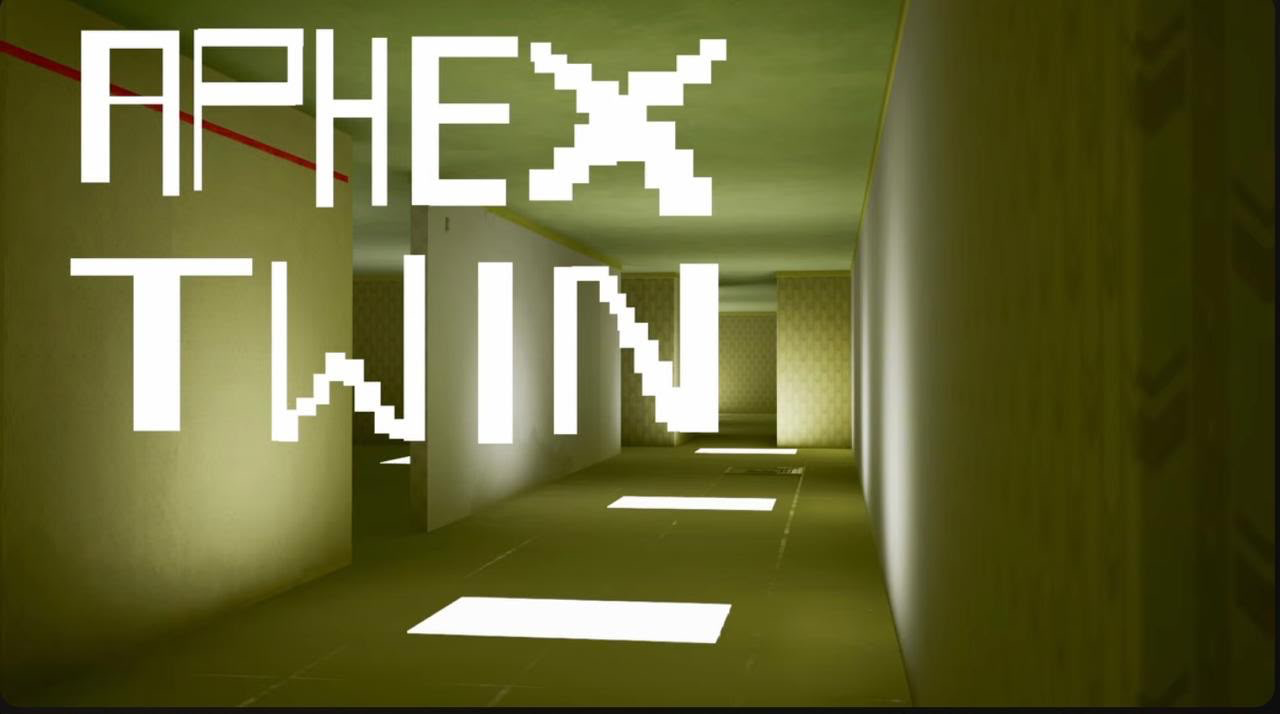
“Music For Backrooms (video still)”
Joe Donahue: When I saw Backrooms I was so happy and excited because an aesthetic that I’d loved for so long in music had transitioned to film and become popular. It’s the “isolationism” feeling, the threatening calm, the feeling of arriving after (or before) something bad or weird has happened. I love spaces that you can stand in and say “Where is everybody?” A lot of primal nightmares are about being chased by something in the forest, but I feel very at peace in the forest; the danger zone looks different now and it has Wi-fi and coffee machines. I was friends with a horror movie director for a while, and I asked him what space he found the most threatening or uneasy and he said “Offices”, and I totally get it. Offices encapsulate really modern stressors – animals with big claws and teeth have been replaced by emails with big consequences and deadlines. Sometimes it’s not even about any kind of fear or threat, but some vague powerful significance that you feel when you’re alone – like the space you’re in is trying to tell you something or even trying to hide something from you.
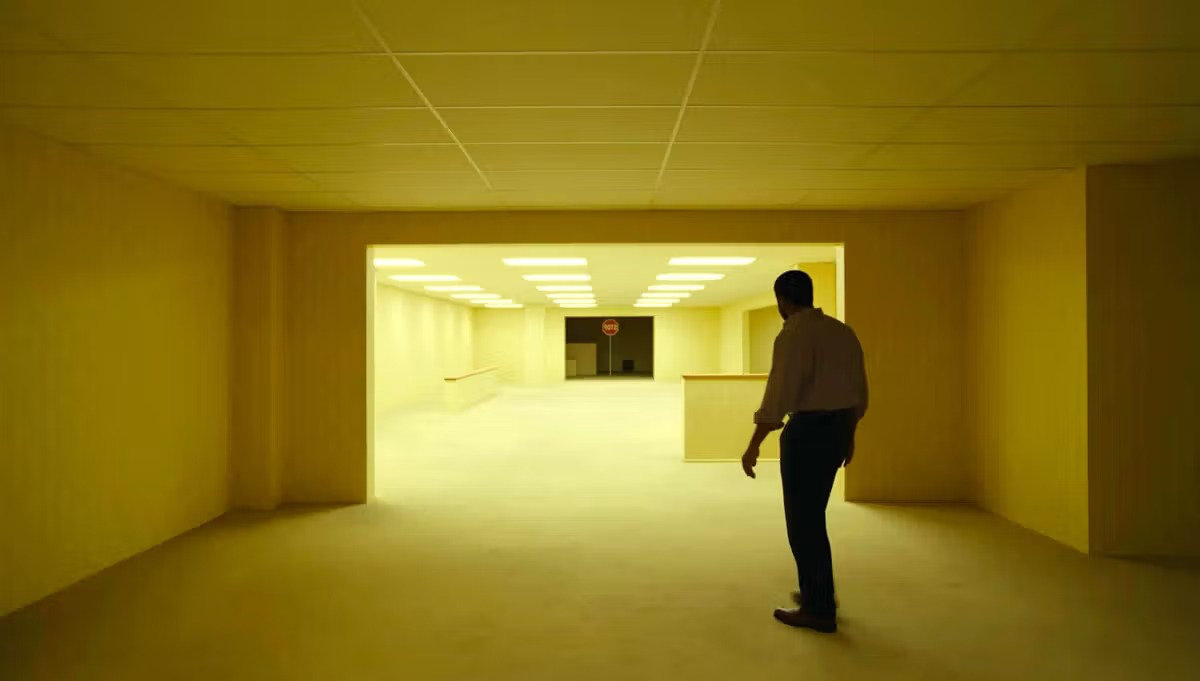
“Backrooms”
Records like Rangers’ Suburban Tours and Chuck Person’s Eccojams seem to play with the actual music you’re likely to find in these places. Joe Knight from Rangers is a seasoned office worker like me and I definitely recognised the strange compressed easy listening aesthetics of telephone hold music, but it’s like he managed to trap a human soul inside it. It’s the kind of thing that almost blends into the background, but then you start noticing more and more interesting or counterintuitive qualities in it, until you’re narrowing your eyes at the speakers and thinking “Wait, what is this?”
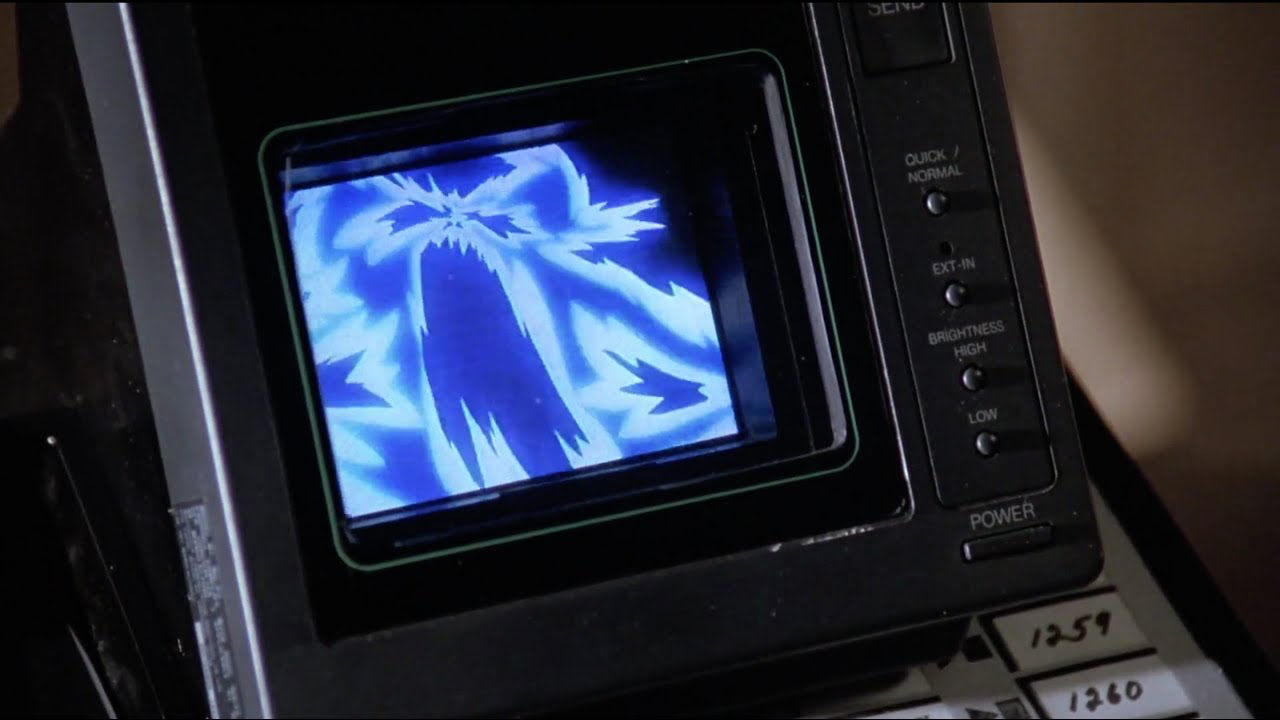
“Gremlin trapped on hold in Gremlins 2 (for Rangers)”
With Chuck Person’s Eccojams it’s more like drivetime radio or piped songs for doctor’s waiting rooms, but mangled and distressed. I think something that all of these have in common is that they feel like modern ghosts. I don’t believe in ghosts but I love ghost stories, since they rise out of a lot of these inexplicable feelings that we have. Most of us don’t walk past graveyards or gothic castles in our day to day, so why shouldn’t prefab office buildings and Premier Inns have ghost stories too. The Caretaker haunts an old ballroom where ghosts still dance to 78rpm gramophone records; Boards Of Canada haunt video tapes of Sesame Street and educational programs; Jan Jelinek haunts photocopiers and libraries; Rangers haunt busy telephone signals and Chuck Person’s Eccojams is Heart FM moaning with the stolen souls of a thousand sad commuters. Meanwhile Backrooms is the modern purgatory, the Otherworld, the Black Lodge, the Wood Between the Worlds. The familiar and the inexplicable. I feel anxious and weird all the time, especially in artificial spaces, and it’s such a tremendous comfort to have that reflected back at you in these great works of art.
JPK: Your Air primer takes a different route, connecting lounge pop, the Carpenters, Stereolab, the soundtrack to 2001: A Space Odyssey and The Virgin Suicides. I’m interested in how these connections allow an artist to open out into a whole world. When you make a Primer, are you trying to explain what makes an artist significant, or to give someone a way into the particular atmosphere and sensibility of their music?
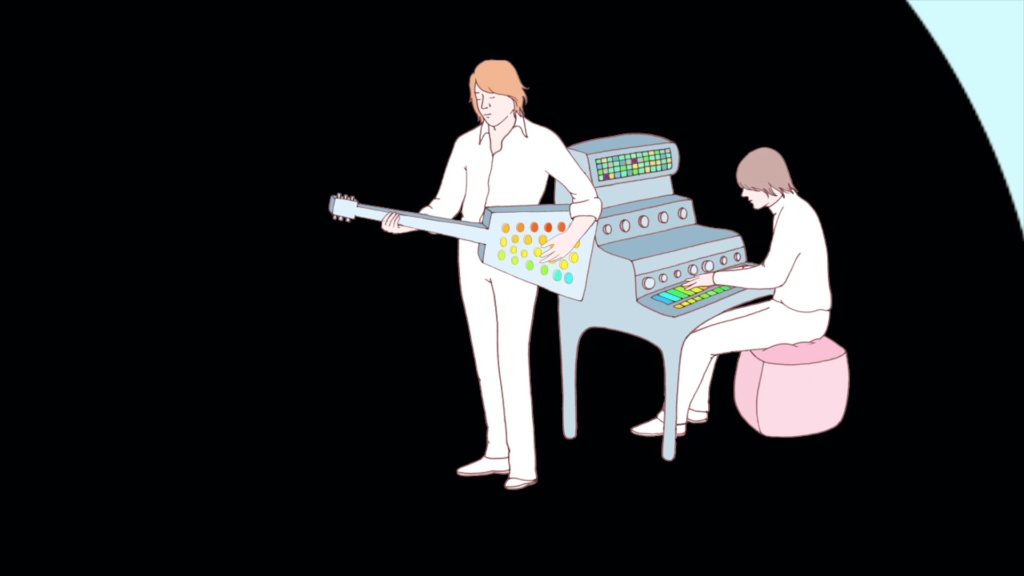
“Air”
JD: You can connect a piece of art to someone’s existing tastes or sensibilities and make it more appealing/less intimidating. If I’m trying to sell Air to my dad then I’ll talk up how they embrace the shameless reflective softness of Burt Bacharach and merge it with a warm futurism. If I wanted to sell Air to my friend Alex I’d emphasise their love for European experimental weirdness and their androgynous sexiness. Neither of those sales pitches are untrue. I like the idea of a primer that shows off an artist’s essence and versatility without having to get “all the hits” in. Air can be sexy, funny, childlike and sober – that’s four different angles.
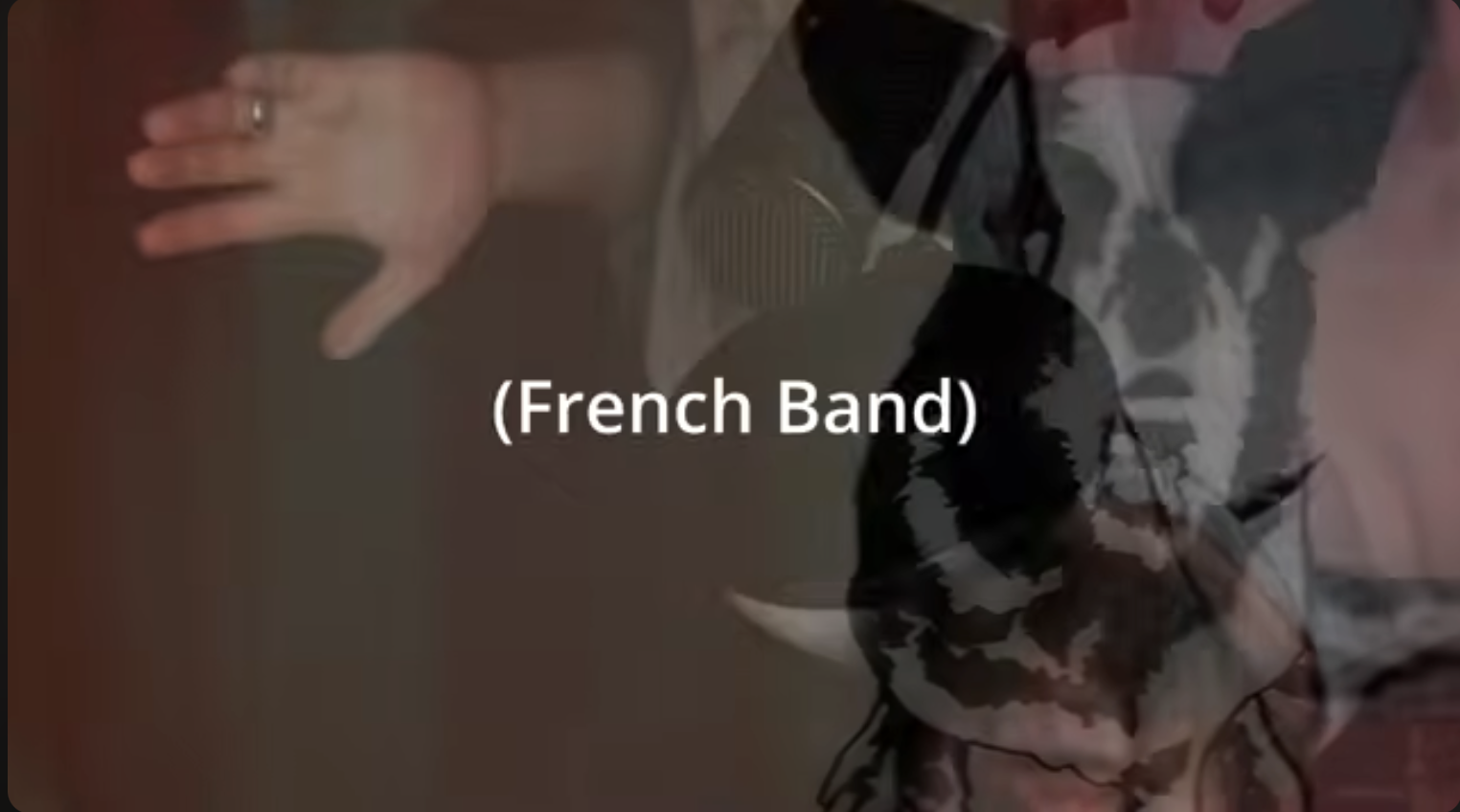
“PRIMERS: Air (French Band) video still”
We live in an overwhelming digital world where everything is competing for your attention, trying to tell you that “THIS” is the best thing ever and you need it in your life. I wanted to take a more friendly and human approach. A lot of my favourite music I discovered by going to my local record store. I used to drink to self-medicate, but I gave it up for a couple of years to reset myself. Instead I went to this record store all the time and they made me a coffee as soon as I walked in the door. I spent as much time as possible there drinking coffee, talking to the guys who ran the place and just absorbing heaps and heaps of amazing music past and present. They gave me and my friends “the Joe discount”. They closed down very sadly and I’ve never been able to find another space like it. It was like my pub where everybody knew my name.
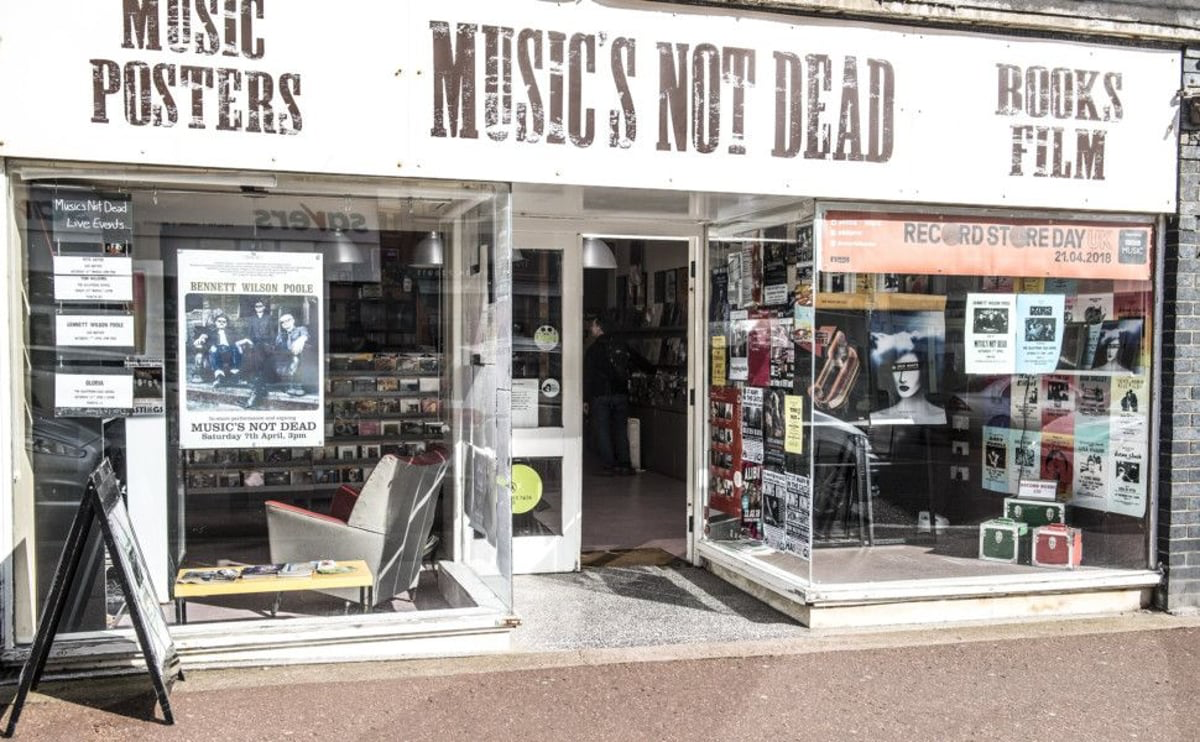
“(my) record store (RIP)”
With my videos – and the compilations that come out of them – I want it to feel personal, engaging and safe, the way I felt in that record store. A lot of us feel desperate to make life go slower, but we don’t want to give slow things a chance. We want instant gratification, but you end up feeling numb if you keep chasing that. When you slow down, you allow more feelings in, especially good ones. Our brains tend to trust fear immediately no matter how realistic the fear is. It takes time and patience to trust joy and safety, which is why albums are such a gift. Slowness, patience, and allowing room for imagination without fear or the urgency to be somewhere else. I think I basically want to be Mr Rogers’ Neighbourhood for “This band you might like”.
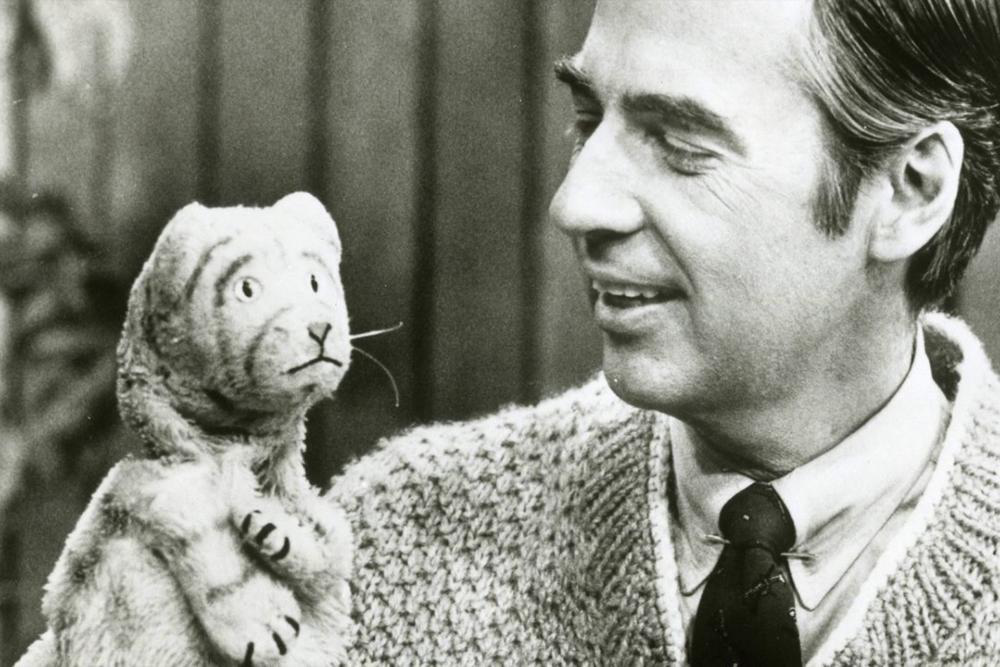
“Mr. Rogers with Daniel Striped Tiger”
JPK: You’ve talked about music introducing you to yourself as much as connecting you to other people. I’m interested in that distinction, because music can give us a sense of who we are before we necessarily have the language for it, or before we’ve found people who understand us. Are there moments that felt like discoveries of a self you already were, rather than something new you were becoming?
JD: I was a very depressed kid. My family was always at war with each other, I was the youngest by a wide margin and my mum made me responsible for all of her emotions. She saw a psychic before I was born who told her that I would be the “peacemaker of the family” and subsequently tried to turn me into her personal saviour. As a result, I’ve grown up with a very unstable sense of self because my personality and purpose had been dictated to me, but no one could stop me from feeling the way I felt when I was exposed to music.
It was real and it completely possessed me. It still does. I couldn’t be stopped. My mum didn’t want me to listen to anything that she didn’t like and she hated Daft Punk, but she underestimated how driven I was. I found out that one of her friend’s daughters had a copy of Discovery, so I found out her number from my mum’s address book. The daughter was very confused but she let me borrow it and make a copy of it. I gave it back, then the copy didn’t work properly, so I had to ask to borrow it again. My mum eventually bought the album for me just to stop me from being an embarrassment. It’s still my favourite album ever. I listen to it and I think “This is what being alive is supposed to feel like.” It’s always felt like that. Plus, I fought for it and won. True, raw authentic feeling that came from within but was activated by an external force.
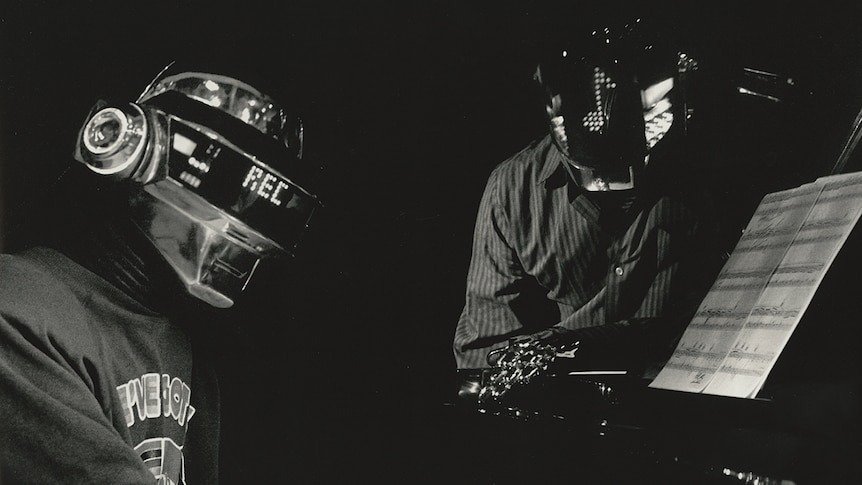
“Daft Punk”
My dad taught me how to pirate music at age 10 and after that my mum couldn’t control that part of me at all anymore. She could dictate an awful lot about my life, but I could listen to whatever I wanted, and no one had to know. True, not everyone who has similar taste in music to you is a good person or is compatible with you – both me and Vladimir Putin are big Beatles fans. Nonetheless, this was a passion that drove me and it allowed me to find the right people. School teaches you very few of the lessons you learn. The Velvet Underground taught me that being queer was actually cooler than not being queer; Arthur Russell taught me how to feel gratitude and trust in a loving relationship; Gas taught me that stillness is fizzling with molecular activity. I’m very mentally ill and I’ve had to fight very hard to maintain my sanity. Music is the hand I hold when no other hands are around. Like Arthur said, music isn’t just something we go out and dance to, it can really heal. I really want to connect with people but I’m dead scared of them.
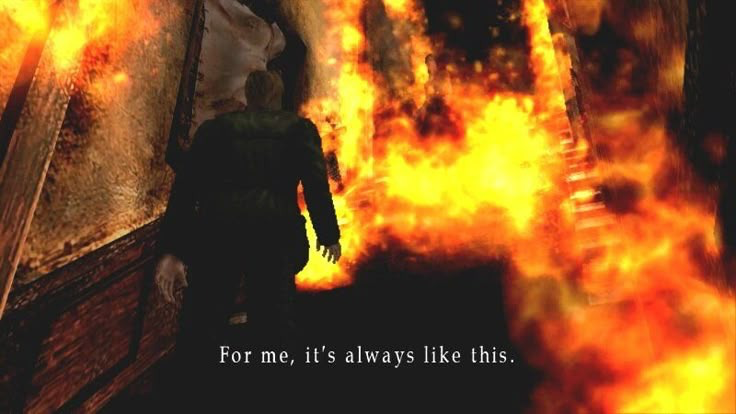
“Silent Hill 2/mental illness”
I’ve made a lot of mixtapes for people throughout my life as a way of trying to connect without getting too close or invasive. It’s sparked a lot of the best friendships I’ve had. It’s never just based on what music they already like. I try and think about what feels good to them in the real world, what scares them, what makes them feel more alone or less alone, how they like to slow down their evening or jump-start their night. Algorithms can’t predict how broad our tastes can be because music speaks to so much more than “stuff we already know”. Making someone a tape, in whatever form that takes in this digital world – it’s saying “Hey, I see you. I’m thinking of you. You’re a person too, isn’t that something.”
“PRIMERS: Air (French Band) video still”
JPK: We were talking about mixtapes before and you’ve described them as mood journeys, where a song changes depending on what comes before and after it. Mixtapes are something that has gone away and aren’t really the same as like a playlist. I remember hearing you talk about the Magnetic Fields seeming to open up a kind of seductiveness and receptiveness that you hadn’t encountered before that. What can sequencing, juxtaposition, and the shape of a listening experience do that an individual song or a playlist of favourites can’t? And is that something you’re trying to bring into the PRIMERS?
JD: Did I say that about The Magnetic Fields? They definitely opened up something in my head, specifically how many forms “love” and “the love song” can take. It’s not my favourite album by them but 69 Love Songs is such an undeniable monument. I really really hate Love Actually because it sells itself as this big all-encompassing “love of every kind” smorgasbord, but it makes love feel exclusive rather than inclusive. There are gay jokes but no gays, and most of the women are either punished or the subject of severe creepiness and expected to be ok with it. That would be fine if it didn’t have such high self-regard, and instead it’s a party I’m not invited to. 69 Love Songs goes all in on diversity whether it’s gender or genre, time period, romance, platonic family affection, mentally ill people, stalkers, cruisers, sad husbands, bored wives, furries, murderers, victims and destined forever couples. 69 Love Songs treats every style and every character with an equal level of ironic detachment, leaving the listener to paste their own feelings onto the story.
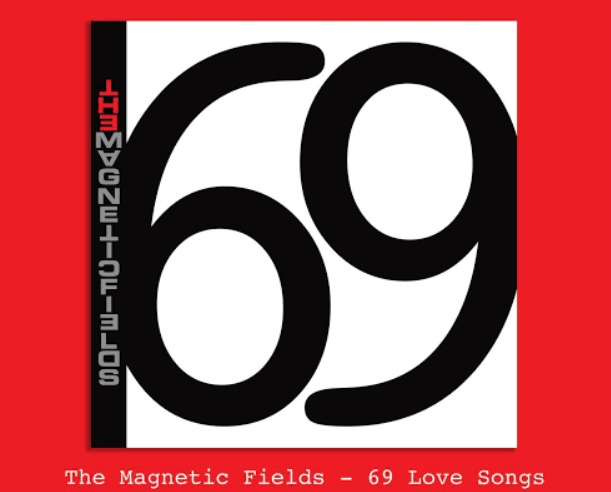
“Magnetic Fields”
That’s what you can do with a mixtape too. Like Rob says in High Fidelity, you’re using someone else’s poetry to show how you feel. Making a playlist is the easiest thing in the world these days because of streaming services, but that also makes them more disposable. It’s effort, forethought and sincerity that makes it mean something. I make a lot of playlists on streaming services, but I also like making things harder for myself, like making a continuous mix for someone on audio software so it’s just one hour-long track that takes you on a journey. This means you can pad it out with things like field recordings and spoken word sections and thread the songs together in unusual ways that make sense when you listen to them. Plus, you can be more illustrative in what you want to say to them, even when that feeling you want to convey isn’t being expressed with just words.
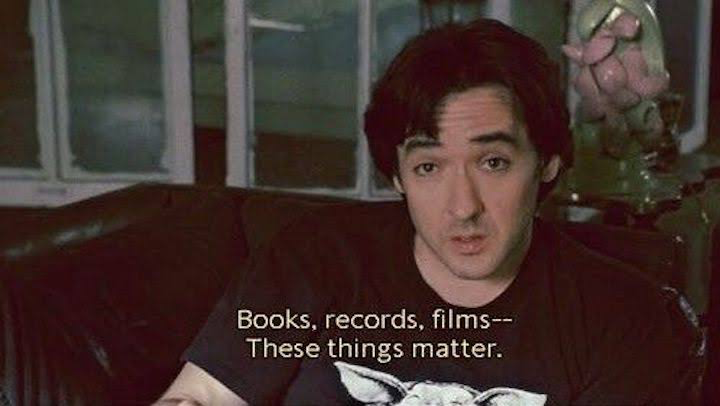
“High Fidelity”
Sometimes I want the experience to be closer to watching a movie or playing a video game. I love it when art dares to have space because it makes you sink deeper into that environment. That’s what David Lynch and Mr Rogers have in common – lots of space, but no wasted space. It makes you naturally more willing to accept unfamiliar ideas. In the video game Silent Hill 2 you have to walk a really long way down through misty forests and deserted cliffside roads even though nothing happens for about 15-20 minutes, but the whole time it’s building atmosphere and emphasising “You can’t go back, you’ve come this far, let’s go further”.
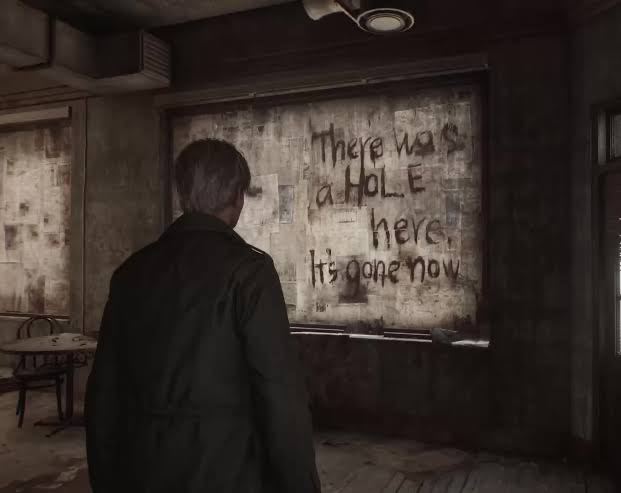
“Silent Hill 2”
As for sequencing, you can tell a story with how a mixtape flows. Let’s say you have a really debaucherous, sexual or violent song like I Wanna Be Your Dog by The Stooges or Smack My Bitch Up by The Prodigy, then the song that comes afterwards is shattered with regret like Tonight I Will Retire by Damien Jurado or Left Alone by Fiona Apple. Those two songs might not have anything in common with each other, but could they logically follow each other? What if you bridge them with the sound of an alarm clock and bin-collectors outside disturbing the peace? Then it can be the night before and the morning after. What if you had an angry/troubled song followed by a tender love song followed by a soft glowing instrumental? Distress into care into recovery.
You don’t just tell those stories through music, you bring the listener along and you can make them feel that warmth. Playlists made by AI or algorithms can’t create a varied narrative because they’re all about what’s similar, and life isn’t like that. I’m absolutely trying to create that listener engagement with the PRIMERS. I want people to fall in love with the things I’ve fallen in love with, because it’s done me a lot of good and I want to pass that on.
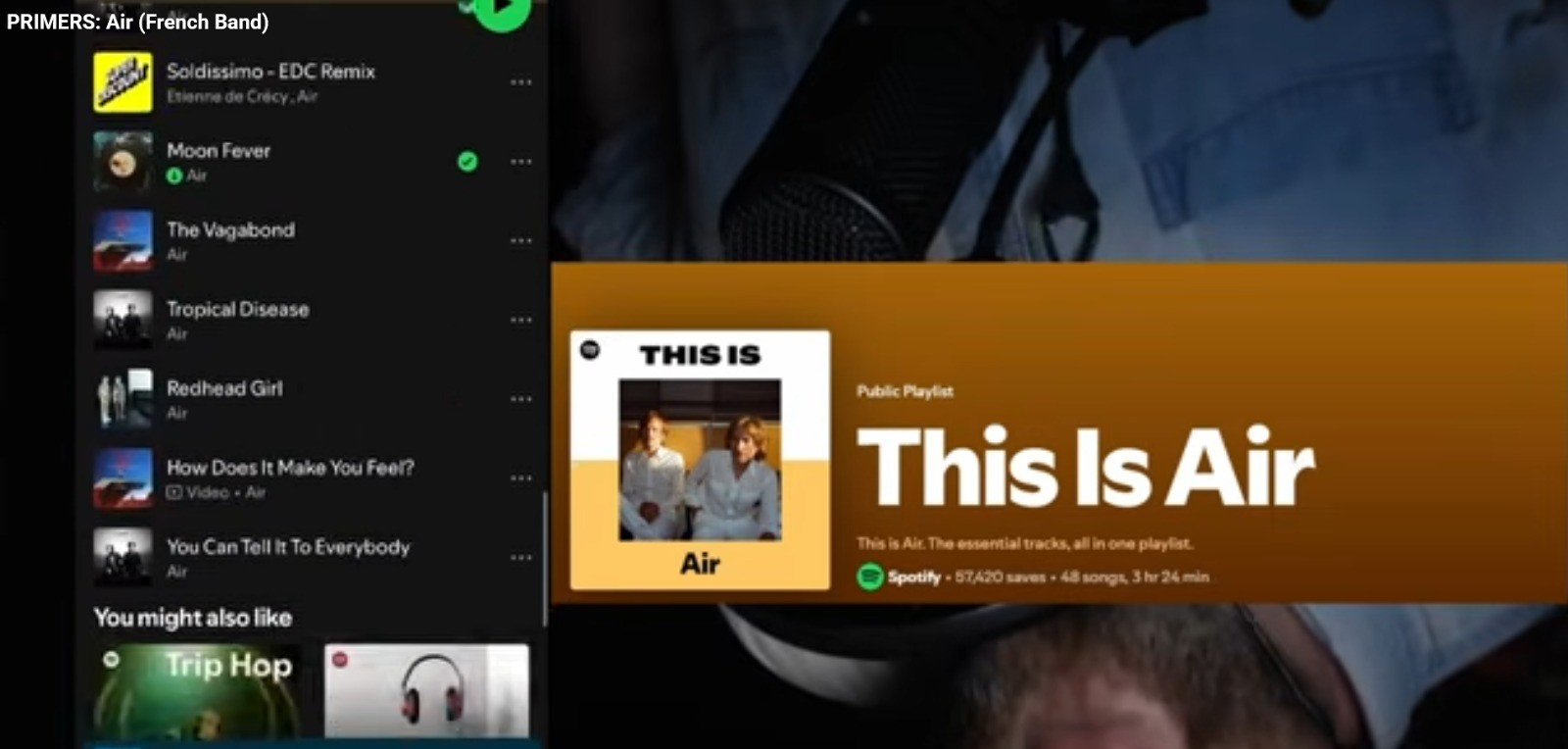
“PRIMERS: Air (French Band) video still”
JPK: You’ve mentioned wanting to develop a Queer Survival Library of films, records, and artists that might help queer people find their threads and understand themselves and one another. I like the idea of a library built around what things can do, rather than simply what they are or how they’re categorised. What would belong in your version of this library? Are there particular works you think of as resources for living, even if they were never intended that way?
JD: I think the best advice I’ve ever been given with regards to being queer is this: Watch as little porn as possible and watch as many queer movies as possible. It’s mind-blowing how easy pornography is to access, but porn doesn’t care about people, it mainly just cares about bodies. We are so much more than flesh and fluids.
There’s also so much pressure around sex and it’s terrifying. We’re expected to be great at it, but it’s shameful if we’ve had a lot of practice; we’re expected to get our buttholes involved as if that’s the “complete” version of sex while everything else is just foreplay or incomplete. I’ve mentioned Arthur Russell before and I think he has the best song about gay sex ever, Get Around to It. The first line is “Show me what the girl does to the boy if you can get around to it”. No one in this scenario is pretending to be an expert – they’re asking questions and admitting they’re new, but letting the experience fill up their senses. It’s such a loving, grounded but erotically charged song, and it’s about experiencing sex as equals.
Of course, there’s a place for animalistic fucking with bragging and bravado, but there’s loads of songs about that. It’s a lot to live up to when you feel like having sex needs to feel as intense and nasty as Nine Inch Nails or romantic and heart-exploding like Marvin Gaye. As for movies, there are so many kinds of relationships and we should see as many depictions of them as possible so we know what we want and know how to avoid mistakes.
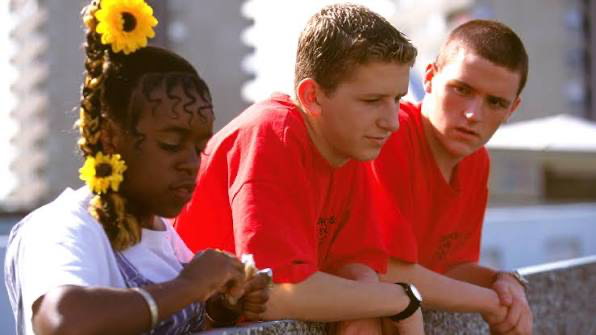
“Beautiful Thing”
Again, pirating saved my life on this one. I downloaded a 650MB copy of Beautiful Thing, a British movie from 1996 about two kids falling in love on the Thamesmead council estate. I remember watching that on an overheating laptop under my duvet when I was supposed to be asleep and knowing this was exactly what I wanted. These weren’t gay boys, they were just boys. They had similarities to me and differences from me but they felt real. So well written, so well-acted and so well directed. Hettie Macdonald directed it by the way, she later did that Doctor Who episode with the weeping angels. Boss.
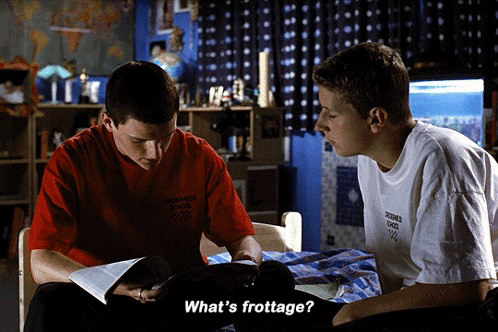
“Beautiful Thing”
The cliche is that the queer people die at the end of the movie. I remember being a kid and seeing James Gandolfini in The Mexican. He plays a gay hitman who develops platonic Stockholm syndrome with Julia Roberts. He dies at the end of the movie and I was furious. Not only was he easily the best and most interesting character in the movie, but James Gandolfini, King of the bears, was my kind of attractive, and I had to watch him die so Brad Pitt and Julia bloody Roberts could resume their boring relationship? Pah.
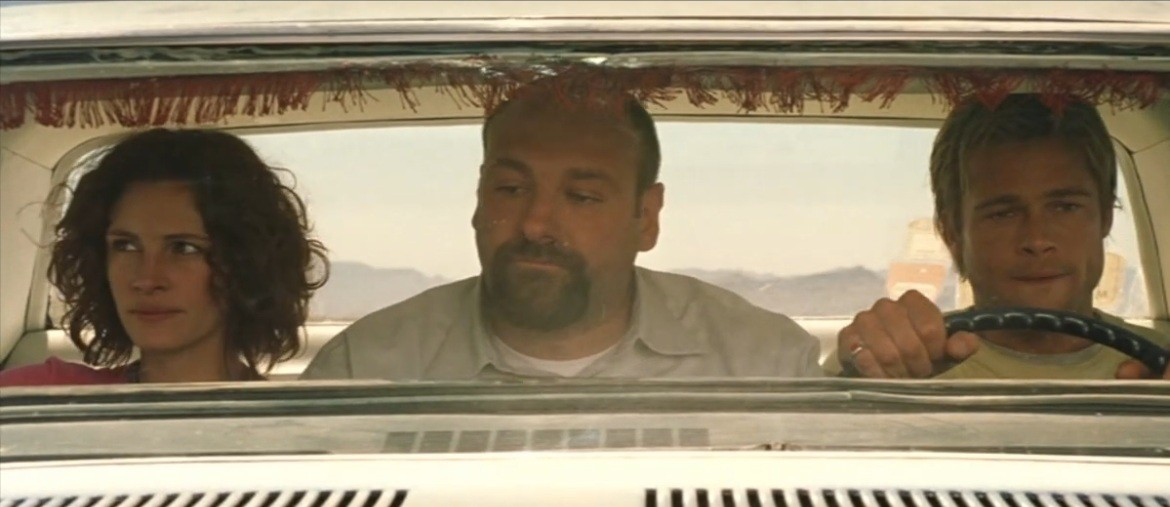
“The Mexican”
Tragedy is a part of everyone’s life and there’s definitely a place for that – Brokeback Mountain, My Own Private Idaho, Supernova, all great gay tragedies – but there’s so many other stories to tell. It’s become a bit of a joke among me and my partners that if I’m talking to someone for more than 5 minutes I’ll soon be asking them “Have you watched Bound???” A lesbian mafia heist movie directed by two trans women (the Wachowskis), with some of the most impossibly charismatic characters you will ever see. I’ve never looked at a woman twice in that way, but that movie is one of the sexiest things I’ve ever seen. They even had a lesbian sex consultant on staff and she’s on the blu-ray commentary.
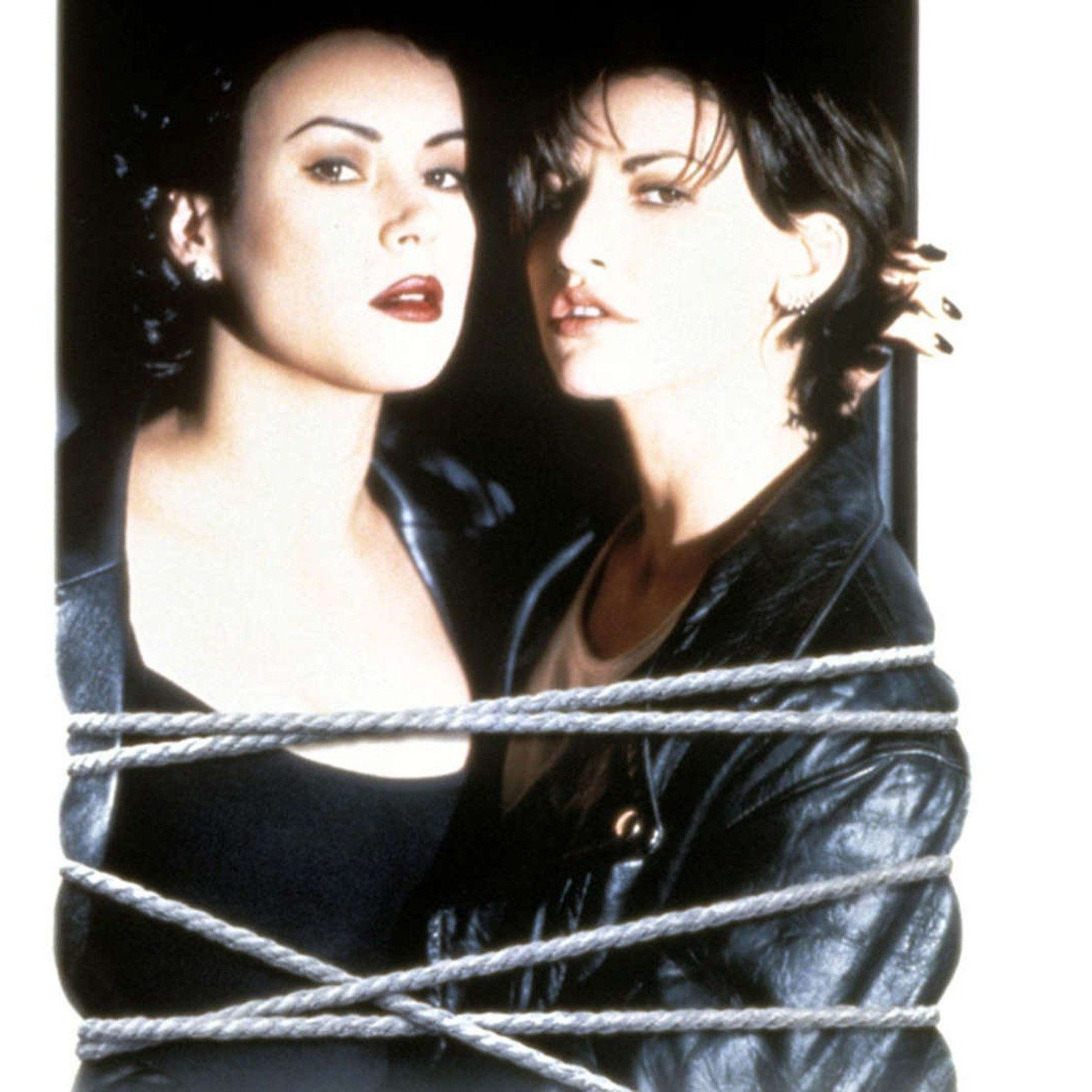
“Bound”
I’ve found some of the best movies I’ve ever seen because they were gay. There’s an Indian one that came out last year called Cactus Pears and I was so moved I just sat still and did nothing for two hours afterwards. No experience of being queer is the same around the world, or even around the corner. I think the single sexiest movie I’ve ever seen is called Hawaii, and the most explicit act that happens in it is a kiss on the lips. It’s a quiet Argentinian film with very little dialogue, and so much of the narrative comes from stolen glances and private unexplained guilt; two people trying to hide from something that’s entirely mutual and beautiful. It’s the kind of film that makes two hands brushing against each other feel electric.
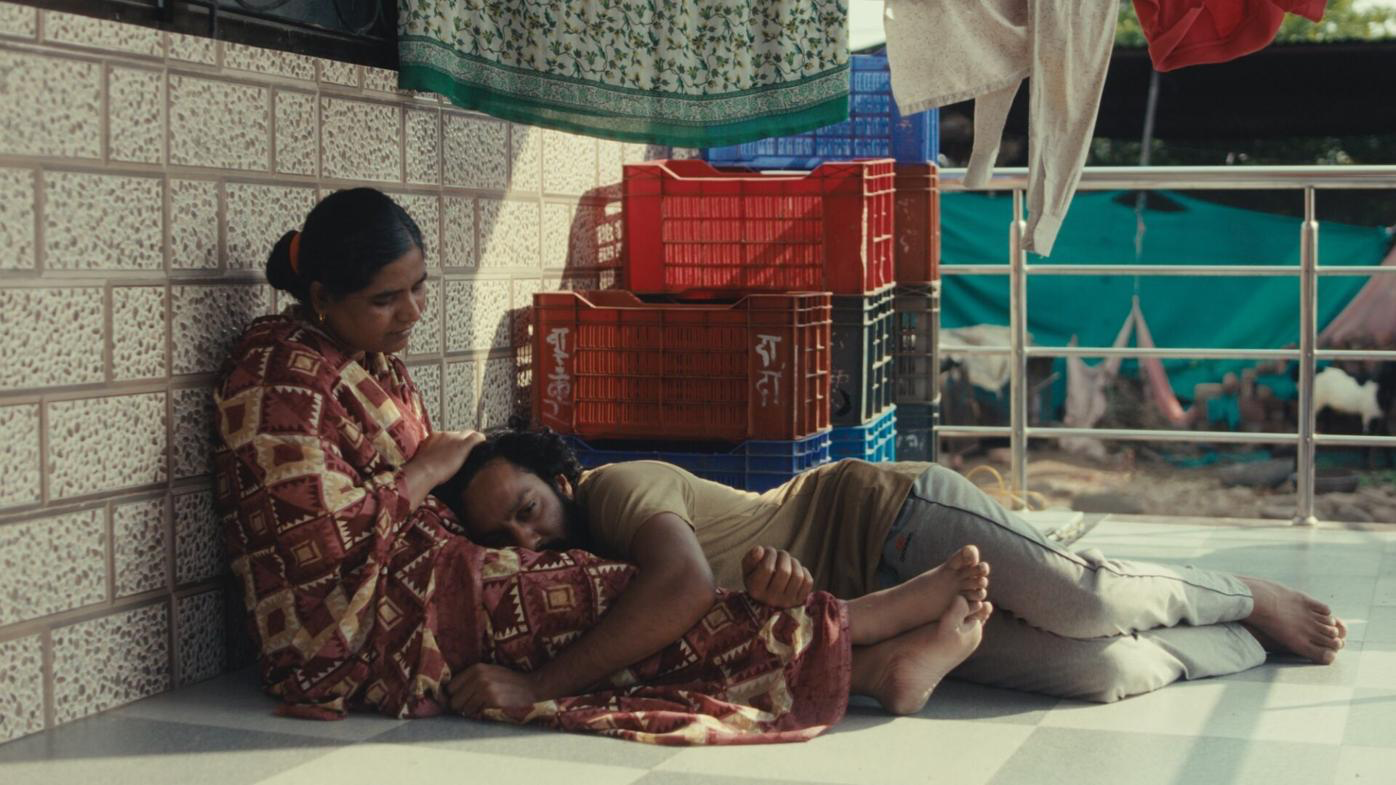
“Cactus Pears”
Even certain non-queer films would definitely be in the queer survival library for me, case in point: Harold & Maude. I’d sell it as the best romantic comedy ever made, tracking the romance between a death-obsessed young man and a life-obsessed 79 year-old woman. Their relationship is so unconventional that we hear from three separate authority figures who say that their relationship is immoral or sick, but they have an attitude to life and love that’s downright punk rock in the most wholesome way. I’d recommend that film to absolutely everyone, especially for people who are worried that they might be wasting their lives. That’s part of what being openly unapologetically queer is. To quote Orson Welles in the movie Ed Wood (also in this library), why spend your life making someone else’s dreams. People who think it’s just about what you do or don’t do with your genitals are missing the point. Being queer is as part of you more than most things are part of you. It’s one of the lenses through which we observe and experience the world. It shouldn’t be reduced to sex, which is why stories and art, rather than pornography, are lifesavers.
JPK: Something else you mentioned was developing prompts for group listening: things like “high school movie end credits song,” “sexy (but not about sex),” “first musical memory,” or “1000 years ago.” There’s something intriguing about these as ways of getting people to share music without necessarily having to explain themselves directly and I feel like this impulse is kind of behind a lot or your other work as well. What interests you about the things people choose in response to a prompt, and what can listening together reveal that talking about music sometimes can’t?
“PRIMERS: Air (French Band) video still”
JD: I’m really inspired by the Oblique Strategy Cards developed by Brian Eno and Peter Schmidt. These are cards with words on them designed to break through creative block. You can get them as an app these days which is what I want to do for these cards we’re developing. They can be quite direct or quite abstract. Some of them are “Start again”, “Exaggerate the most embarrassing part”, “Not so much as building a wall as making a brick” or “Tidy up”. Eno used them when making the Berlin albums with Bowie and I’ve used them too.
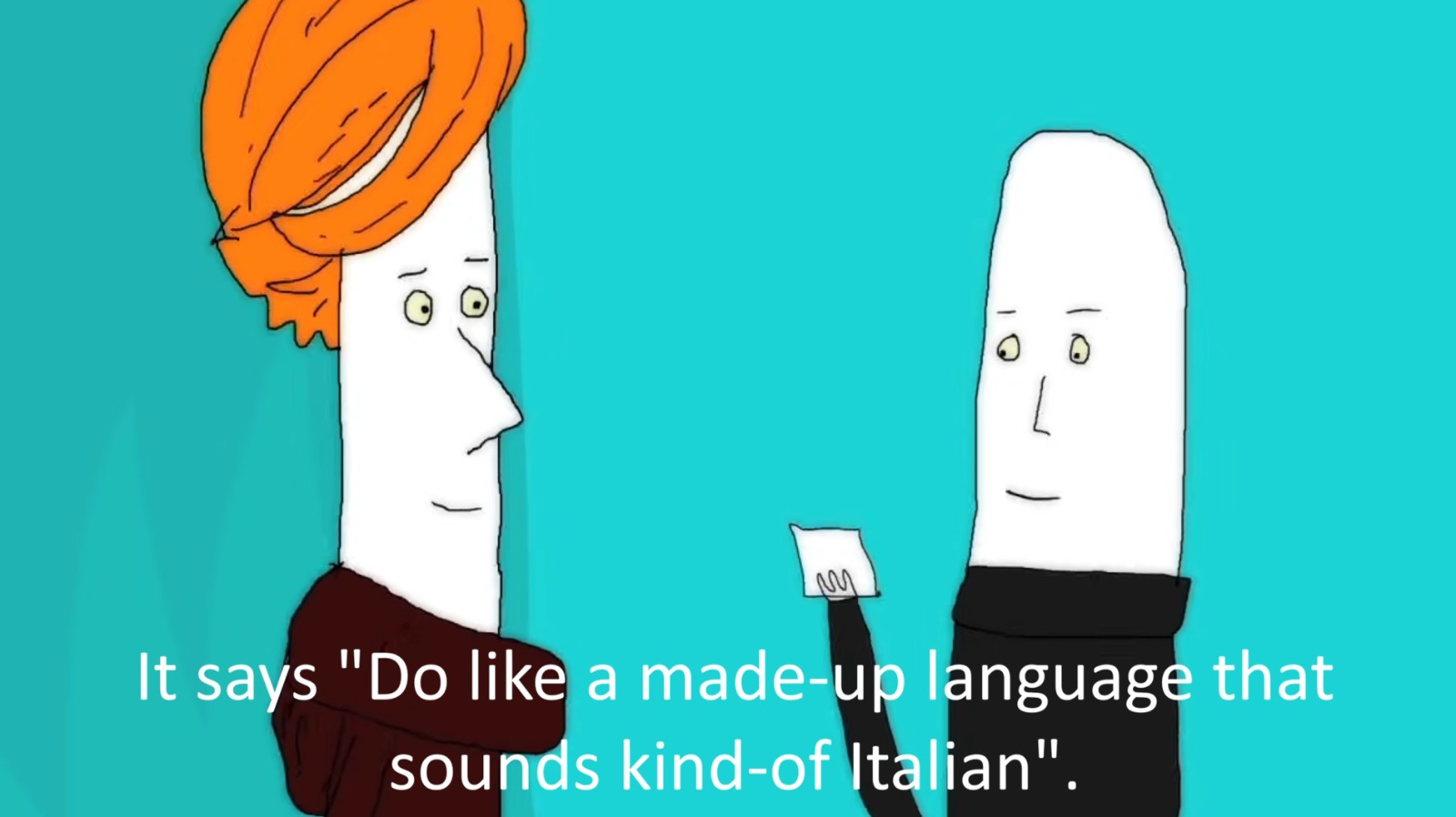
“Oblique Strategies”
One of my favourite ways of bonding with someone or a group is to show each other music. It feels like choosing music according to prompts fired out to the group is a way that’s egalitarian and guides the conversation and sense of perspective without too much interference. You can learn so much about people in a way that words can’t express. Plus, it gets people to think about music in a more creative and lateral way, which only increases your appreciation of it. I’m trying to think of a song that’s sexy but not about sex… oh, Blue Horizon by Sidney Bechet. It’s this gorgeous instrumental New Orleans jazz piece, recorded in <googles, reads> 1944 and it hasn’t aged a day. It’s still so potent and transporting. I think he’s playing a bass clarinet in it or something? It just has such a deep belly of a sound, a real sensual masculinity. I can pick that, and someone else can pick Careless Whisper by George Michael or Steve Reich’s Electric Counterpoint or Safe From Harm by Massive Attack or 360 by Charli XCX – I don’t know, there are so many forms of sexiness that could be heard in sound. When someone answers this question, you learn something about them. If they choose a Rammstein song, well I’ve sure learned something there too. They can be as loose or as strict an interpretation as you want but it’s all about sharing and learning and having fun.
With the prompt of “1000 years ago” you could pick some folk song that sounds like it’s been around for centuries, you could pick something that just sounds eerie and old in another way, or you could pick the fucking Time Warp from Rocky Horror. It’s all up for interpretation or (if you’re feeling playful) debate. “First musical memory” feels more factual and it can lead into someone telling a story. I’m always adding to the list of prompts, we have hundreds at this point. I want to turn it into an app – maybe some packs of physical flash-cards, but certainly an app. Then I want to have a podcast or some form of show where the format revolves around these cards and the conversations/recommendations that spring out of them. I’m getting things ready to bring this to fruition and I couldn’t be more excited.
“PRIMERS: Air (French Band) video still”
JPK: Across these projects, I keep coming back to the idea of music as a way of making an internal experience communicable: finding a way to share something that might otherwise be difficult to explain, or helping people feel less alone in what they’re experiencing. You’ve talked about how music can carry quite serious things, from personal crises to wider political realities, while still being funny, pleasurable, or unexpectedly ordinary. Do you think of what you’re making as a form of care, in some sense? And what would you hope someone takes away from spending time with it?
JD: I always want to help but I’m more in the position of needing help, which I find quite humiliating. I take this stuff extremely seriously. When I was seventeen I completely lost my mind, largely because of the covert abuse that my mum subjected me to and would continue to subject me to until I broke off all contact with her. Basically, after I came out to her, she tried to relentlessly gaslight me into being straight and “reassure” me that I didn’t know myself, coming home from her friend’s house glowing with delight saying “Great news! Trish/Gayle/Tina doesn’t think you’re gay!”. This would continue for six years, but after just one year I cracked. I started to think “Well, I don’t feel any of the relief or progression I thought I would after telling my big secret… what if I have a much bigger, much worse secret?” I had such a radical lack of self-trust that I started to think “What if I’m some kind of Jeffrey Dahmer or Ted Bundy character? What if I’m some sick twisted Mr Hyde demon? What if I’m actually in love with my dad? What if I want to have sex with dogs?” If there were any gaps in my memory, I’d actually have to try and convince myself that I hadn’t kidnapped a mother and child and tortured them in a garage during some kind of fugue state.
This was a time when I’d frequently scream myself to sleep and scream myself awake. I was so convinced of my own imagined evil that I would be violently beating myself in the middle of college lessons while people tried to work out how to react. I remember one really nice girl laughed and then covered her mouth; she apologised to me afterwards saying “I’m sorry it just came out of me”, but she didn’t need to explain herself. I got it. How are you supposed to react to someone assaulting themselves in a classroom while everyone else tries to pretend it’s not happening?
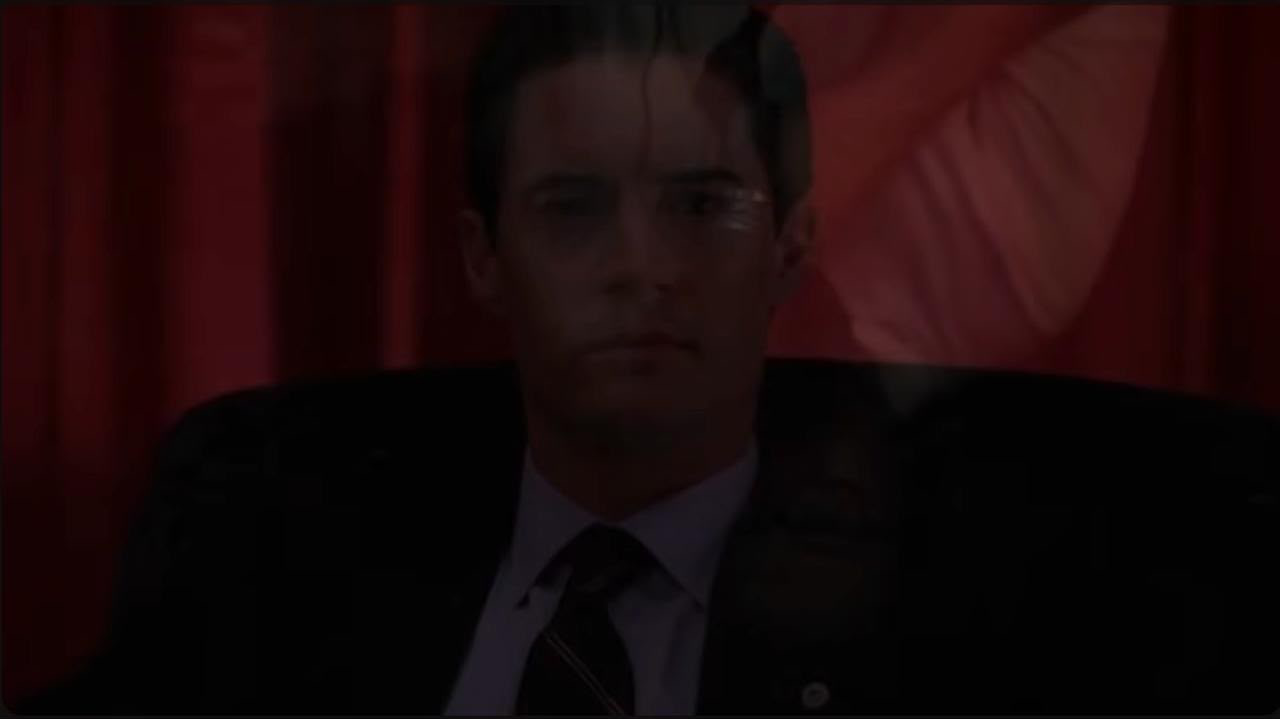
“Music For Backrooms (video still)”
It’s experiences like that that really make me chime with David Lynch’s projects – Twin Peaks, Eraserhead, Inland Empire, they’re all full of those kinds of impossible moments where there’s no preset reaction in the rule book. But that’s what life is like. Life is chaotic, there’s humour and tragedy, damnation and redemption everywhere, and (in the words of the patron saint of mentally ill musicians, Brian Wilson) you need a mess of help to stand alone. Friends are a mess of help, music is a mess of help; movies, video games and stories are a mess of help, and they’re not luxuries. They’re sustenance, and you need to find the right ones.

“David Lynch with cow”
I had a great teacher who kept me after class and asked me what the hell was going on. I said I was fine and he gave me this look as if to say “I have eyes, Joe”. He was a lifesaver. Later on he saw me while getting into his car at the end of the day, and he stopped me and gave me a copy of Rattlesnakes by Lloyd Cole & the Commotions. That record is so awesome and when I listened to it I felt so authentically cared-about. Total classic on its own merits of course, but gestures like that can last a lifetime.
My collective name for all my projects, my imprint if you like, is Lost And Safe. I’m Lost And Safe on Youtube, I own the domain of lostandsafe dot com. It’s the name of an album I love by The Books, but it really sums up what I’m trying to put out there. I’m always lost, and a lot of us feel lost a lot of the time, but the feeling of safety can come from anywhere. We have to embrace feeling lost because otherwise we don’t grow and we don’t find solutions or progress. We also have to develop our own way of feeling safe as we move forwards through life. Being as mentally ill as I am (I hate admitting that but the prescription pads and the disability assessments don’t lie) I have to work very hard to be stable. If I find tools that help me I want to share them, because I wouldn’t want anyone to go through what I’ve been through, least of all alone.
“Lost And Safe: https://www.youtube.com/@lostandsafe “
The plans I have and the projects I’m putting together are potentially for everyone though. Everyone’s very different but everyone is connected. People have much much broader tastes than marketing departments can possibly predict. Can you imagine David Bowie or Alanis Morissette getting past the first round of The X Factor? I know all of these answers are very long-winded so, in an attempt to be more direct, yes, everything I do with these projects has an element of care – or at least aspires to be an act of care. I don’t want to be “relevant” or “up to date” or necessarily “cool”. I want to be warm, authentic and helpful, and I want to show that there’s so so so much light in the world. I never thought I’d make it to 19 or 24 or 29 and now I’m 34. I still have doubts that I’ll make it to 35 but I’ve only been wrong before and it turns out there are ways through the trials that don’t involve suicide.
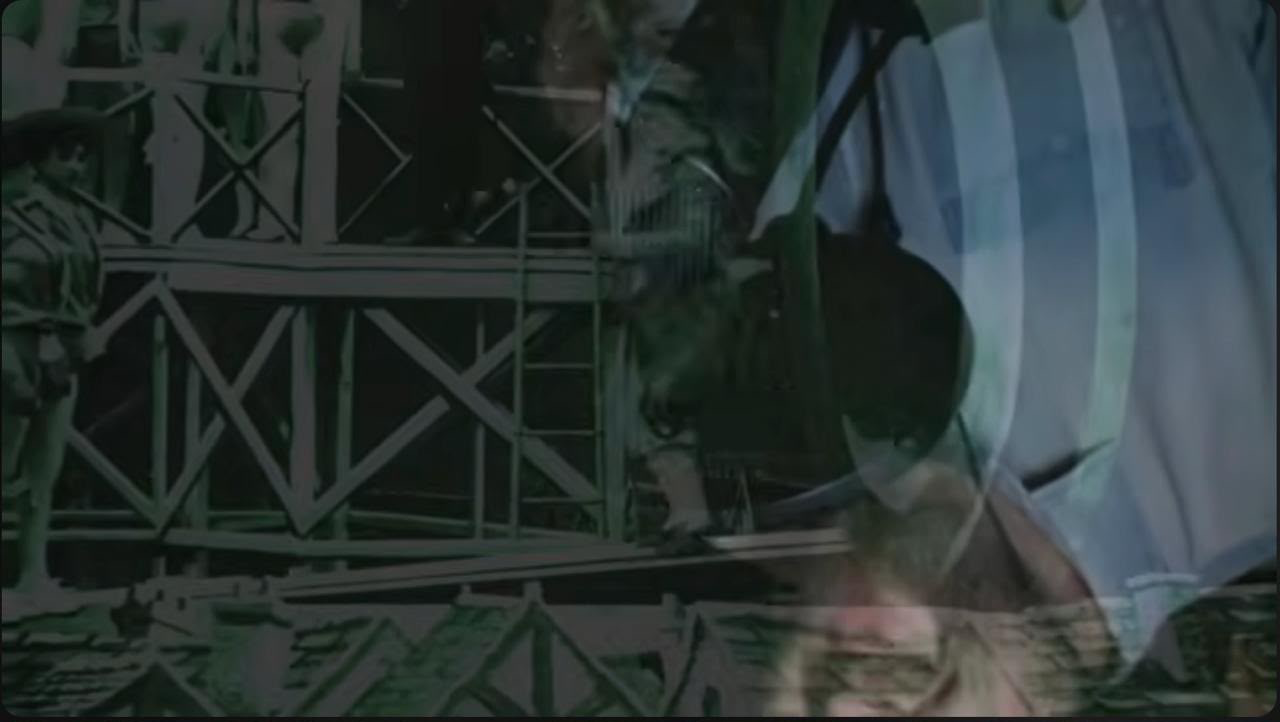
“PRIMERS: Air (French Band) video still”
We’re trained to look for darkness, especially in the current era when our anxiety is so astonishingly profitable. Art is the opposite of propaganda or advertising; it doesn’t instruct you how to feel, it allows you to feel. You can listen to music but music listens back sometimes – good music does, anyway. When I’ve been at the worst points in my life, the thing I wanted more than anything was to be authentically seen and authentically listened to. That’s what I want to propagate. It’s a good thing, and I didn’t make it this far to stop trying now.
https://www.youtube.com/@lostandsafe
*
p.s. Hey. This weekend the brainy, singular Jared Pappas-Kelley, writer and multi-other-talent, brings our attention to a super interesting, strange and beautiful project by Joe Donahue that will unfold very favorably if you focus your eyes, fingers, and ears on the evidence at hand. Please do that until further notice, thank you. And thank you kindly for choosing DC’s, Jared. ** worm, Hi. Or I pushed unthinkingly without refreshing the comments more likely. The Eraserhead baby was probably an automaton, or I don’t know? If I missed the tobacconist, any kind of partying would be out of the question. My internet is currently fucked — I’m using my phone’s shitty signal to try to do the p.s. — but your show/episode is first up once the technicians restore my very existence. Neurotic why? I semi-live in art galleries, and other such places, it sometimes seems like. They could use more couches. ** Carsten, Like I always say, I’ve given up on second guessing the blog’s impetuses and refusals. I’m super wary of the idea that past life is better than the present version. I’m more interesting in paying attention and trying to understand the nuances that don’t jibe with my earlier experiences. Well, an LA filmmaker friend could maybe raise enough bucks to travel to Spain to shoot it? Or, as you say, the iPhone approach is totally legit. This weekend, assuming the current internet outage in my abode doesn’t reroute my plans, involves seeing a couple of films at a film festival this evening, doing a Zoom conversation with my friend the artist Kier Sandvik, and my biweekly Zoom text/film club with mostly LA friends tomorrow, and gosh knows what else. Your weekend sounds rich enough. ** Darby still on school laptop, Hi! Yes RIP Richard Lloyd. I’m still sad about that. I met him once, but he was withdrawing from heroin at the time and was pretty messed up. Oh, eek and ugh and so on about that texter guy. Wtf is going on people’s heads, I’m sorry, Gross. I never liked alcohol either, and I’m very grateful about that. Very nice jazz jam writing. It had jazz in its bloodstream or something. I was appropriately transported. Take care, and bonus weekend, you. ** _Black_Acrylic, Hi, B. I need to see ‘You Can See Everything’. It’s such a thing. And I can’t figure out what it’s going to be, which is a big plus obviously. ** Travis (fka Cal), Hey, hey! I want to read any book by someone named Valkyrie Loughcrewe and that one you mention in particular. Thanks! It sounds like a serious find. And Zac’s and my new film is partly about a puppet, so it might have ripples. Take it easy and more! ** laura w., Uh, I would guess from what my eyes tell me that there was taxidermy going on in some cases there, yes. The university film series sounds pretty good, if those are typical examples. Yeah, I mean, seems like taking advantage of that would up things? I would. My week kind of semi-zoomed and semi-drifted, a curious combo. Same for this weekend, I’m guessing from its outset. How did yours sit with you? ** Barkley, Barkley! So lovely to see you! ‘The Devils’ still hasn’t opened here, it’s kind of weird. I saw the truncated version back when, and it still has memory space. Ingeborg Bachmann, yes, I’m actually reading her right now: a new ‘Collected Stories’ book. She is so killer on the writing front, whoa. My Halloween was a paltry affair too. France really needs to get their shit together around October time. Xmas should be okay. The streets are already festooned and blinking. New projects: a new film that Zac and I are impatiently waiting to get funded so we can jump in. I hope you like ‘RT’, of course. You take really good care, my pal. More sooner than later, I hope. ** HaRpEr//, Howdy. Ace on the improvement and enjoy the grogginess. It’s possible. Mum’s the word then on your Xmas post, but I am privately chomping at the bit. Obviously totally cool about the Xmas card by you. Not too dystopian, haha. I have a little pill bottle full of dirt I took from Rimbaud’s grave in the mid-70s, and I also don’t know where it is other than somewhere ‘in LA’. ** Uday, My bedroom has almost nothing in it — a bed, an unplugged fan, and an ashtray on the window sill. On the one hand, it utterly lacks character, but, on the other hand, it’s easy to spot lurking mosquitoes, and that’s preferable. Jatakas: I don’t know what that is, so I assume I haven’t been through it. When my internet comes back in fully usable form, I’ll see if I have. Well, there is that New Decadence Writers movement but I haven’t heard or seen much of them in a while. Thanks about the ‘Sozaboy’ fill in. Same deal: I’ll seek it when technology allows. Awesome about the Kylie piece! Thank you! ** Thom, Hi. I haven’t heard the new Atlas Sound, but that’s a little worrying to hear. But I’ll give it the old college try and apply appropriate hopes. Dude, if I hadn’t spent my life making stuff 90% of the time I would have no life whatsoever, or no life to speak of. Yeah, hard to be patient about the funding thing that I can’t really control. I need to make something else in the meantime. I haven’t figured out what yet. I’ll soundly weekend trying to start figuring that out ideally. You keep working and being my role model. ** Okay. Please fill the local portion of your weekend with Joe Donahue’s work, and I will see you again on Monday.
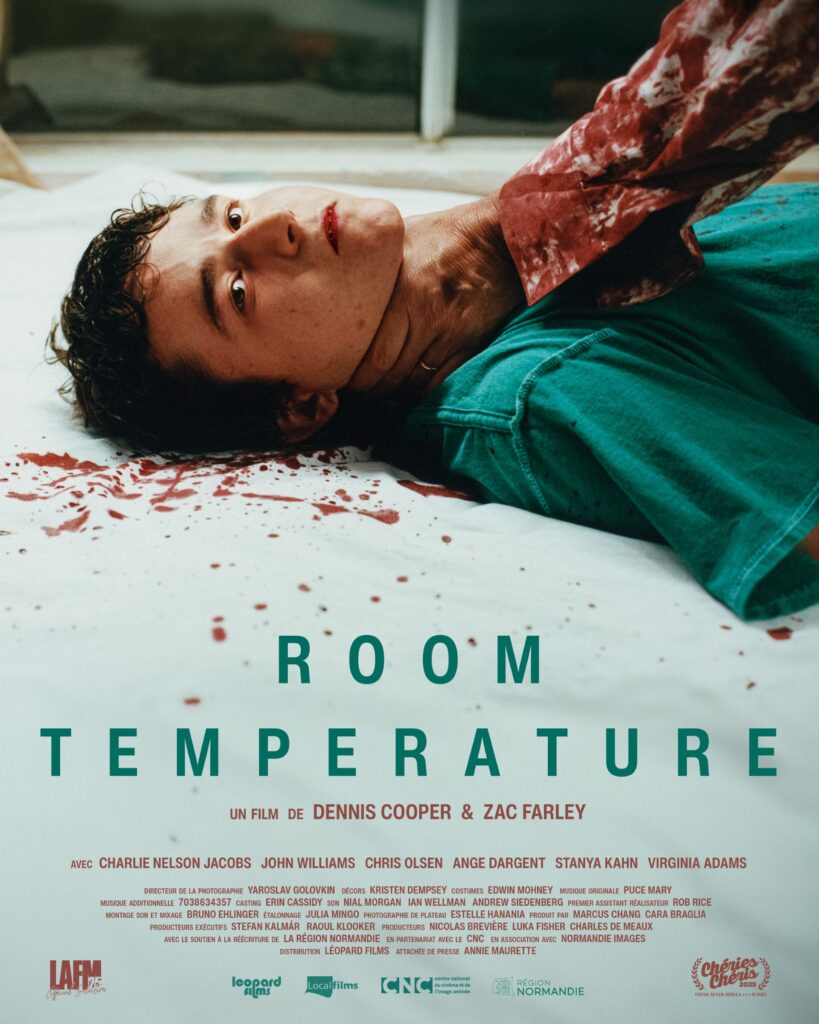


 Now available in North America

Leave a Reply