
‘Around the time I realized that Jonas Mekas wouldn’t live forever—perhaps fifteen years ago, after he had passed eighty—I began to think about how he would be remembered. At the time, I was still at the Village Voice, and I pondered the possibility of persuading the editors there to devote the entire feature well to tributes and memoirs and a dozen or more of his columns of film criticism, some of which I knew nearly by heart. (“It is not my business to tell you what it’s about. My business is to get excited about it, to bring it to your attention. I am a raving maniac of the cinema.”) After all, when I was a teen-ager, out in Queens, eager for knowledge of underground movies, Jonas Mekas was the Village Voice. And, later, for well over thirty years, the Village Voice was my life. After I left the paper, I wondered how the Times would cover Mekas’s passing. Would his obit jump from page 1 to a full page back in the paper? (Alas, it did not.) How would it characterize his significance? How could anyone?
‘Jonas, who died on Wednesday, at ninety-six, has no analogues that I can see in American or European culture—he was a tireless, visionary promoter, an organizer and entrepreneur, a filmmaker, a poet, a diarist, a blogger decades before the invention of the Internet, a man more concerned with documenting his life than anyone before Karl Ove Knausgaard. Born in rural Lithuania, in 1922, Jonas arrived in New York by way of a displaced-persons camp, along with his younger brother Adolfas, in the late nineteen-forties, and needed only a decade to make himself a crucial figure in what was then called “experimental film.” (After Maya Deren died, in 1961, and for years thereafter, he became the crucial figure.)
‘By 1955, Jonas had co-founded and begun editing the magazine Film Culture, the most free-wheeling and radical publication its kind. Three years later, he joined the Voice as its first film critic and almost immediately began campaigning for what was called a New American Cinema. Two years after that, he began shooting his first independent feature, “Guns of the Trees,” while organizing open screenings at the Charles Theatre, on Avenue B, and a half-dozen venues, mainly downtown, after that, and co-founding two key organizations, the Film-Makers’ Distribution Center and the Film-Makers’ Cooperative.
‘By the mid-sixties, when I first became aware of him, Jonas was in full flower. He was writing a weekly column, editing a journal, making his own increasingly celebrated movie diaries, proselytizing and raising money for other people’s films, turning Jack Smith’s “Flaming Creatures” into an international cause célèbre, and creating the Film-Makers’ Cinematheque (another peripatetic venue). Almost incidentally, he was instrumental in the transformation of the forbidding zone known as the Cast Iron District, or Hell’s Hundred Acres, into the neighborhood now called SoHo. When Jonas opened the world’s first museum devoted to avant-garde film, Anthology Film Archives, in 1970, it turned the underground quasi-respectable.
‘Every avant-garde, independent experimental-film artist in America is in some way in Jonas’s debt—as are some writers, like me. In early 1972, I sent a piece on “Flaming Creatures” over the transom to the Voice, and, to my amazement, some weeks later it appeared, as written, in the paper. (I think I even received fifty dollars!) My friends regarded me as a sellout, and I was more shaken than proud to find my personal name on sale at newsstands for a week. About a year later, I sent another piece, this one on Stan Brakhage, another artist whom Jonas championed, using a pseudonym—Clinton Delancey—derived from cross streets in my neighborhood. Shockingly, Jonas published that one, too. We had never really met, but, although I didn’t fully appreciate it for several years, he gave me a career.
‘Once I started writing regularly for the Voice, in 1977, Jonas was long gone—he wrote briefly for the SoHo Weekly News but was more involved in his filmmaking and book-writing, as well as running Anthology. (Jonas’s ability as a fund-raiser is another part of his genius. It was one thing for him to pal around with fellow-artists like Andy Warhol and Yoko Ono—and, through her, John Lennon—but how did he find his way into the circle around Jackie O.?) Jonas and I knew each other by then. We weren’t exactly friends, although we were neighbors and, I guess, colleagues. Out of the blue, he invited me to program a season of 8-mm. films at Anthology, when it was back on Wooster Street, and probably recommended me for other things that I knew nothing about. When I found myself a custodian of Jack Smith’s estate, Jonas was enormously helpful in providing space and personnel toward the preservation of Smith’s films—despite the fact that Jack had spent the last fifteen years of his life railing against the man he called Uncle Fishhook.
‘To tell the truth, I found Jonas hard to read. It wasn’t his Lithuanian accent and halting delivery so much as his enigmatic affect—puckish yet steely. Was he a sly peasant, a sophisticated cosmopolitan, a wise fool, an international man of mystery? (One summer afternoon in the nineteen-nineties, I unexpectedly found myself sitting next to him and his family, on the beach of an obscure backwoods pond, in outer Cape Cod. Was it cosmic coincidence? Even more amazing, the next family down—unknown to Jonas or myself—also lived on the same SoHo block.) A few years ago, I got to travel to Buenos Aires to do a public interview with him. He easily eluded all of my questions and played directly to his appreciative audience, despite the fact that he had been up until all hours the night before, documenting an avant-garde Butoh dancer, with an exceedingly long act, moving alongside her while schlepping a heavy video rig.
‘Like lots of people, I had my issues with Jonas—it was impossible not to, given his enormous authority and his eccentric right-wing politics. But they were relatively minor. Then, last June, a young Lithuanian-speaking scholar, Michael Casper, published a bombshell article in the New York Review of Books, based on his research and several long interviews, revealing that Jonas’s years in Nazi-occupied Lithuania were a good deal more complicated than he let on, and that, among other things, he’d written for and edited a virulently anti-Semitic newspaper—although, Casper stressed, Jonas’s own writings in the paper were apolitical.
‘The article seemed to me to have exposed something hiding in plain sight. It stirred up conflicted feelings in me, which I discussed at length on my Web site (something I have rarely ever done and in no way regret). One of Jonas’s close friends told me that Casper’s article was ruining Jonas’s health, and that my response wasn’t helping. When I saw Jonas at the Museum of the Moving Image, late last year—we were together on a panel of former Village Voice film critics—he didn’t look well. I felt terrible. We barely spoke to each other, but I was glad to be able to make a public acknowledgment of my debt to him.
‘The New York Review article clearly upset Jonas (he called it “fake news”), but it stimulated his last major work, a monumental interview he recorded with the U.S. Holocaust Museum, in which he shared his own recollections of his life in wartime Lithuania. The interview, which runs more than six hours, is hard to get through. (It reminds me a bit of “Lithuania and the Collapse of the USSR,” the five-hour video that Jonas made from tapes of television news segments.) It is also hard to parse. (Perhaps only Michael Casper could begin to do so.) But it brought Jonas’s project full circle, giving him the last word on the long life that he spent documenting and also, I should say, living.’ — J. Hoberman
___
Stills


___
Further
Jonas Mekas Site
‘I was very angry’ – the last interview with Jonas Mekas, godfather of avant garde film
Jonas Mekas @ IMDb
Jonas Mekas 2 Light Cone
DVD: Jonas Mekas – The Major Works Boxset – Re:voir
Jonas Mekas @ The Film-Makers’ Cooperative
Jonas Mekas and the Weight of Memory
Jonas Mekas: I am not a filmmaker
Jonas Mekas @ instagram
Douglas Gordon on Jonas Mekas
Amy Taubin on Jonas Mekas
Book: Jonas Mekas – I Seem to Live (The New York Diaries. vol. 1, 1950-1969)
JONAS MEKAS: POETRY OF THE EVERYDAY
Why This 96-Year-Old Legend Was Our Most Important Cinephile
In Pictures: Jonas Mekas’ New York Diaries
In Conversation with Jonas Mekas
Jonas Mekas’s Diary Reveals His Uncertain Sense of Self
Jonas Mekas “All These Images, These Sounds”
Anti-100 Years of Cinema Manifesto, by Jonas Mekas
Jonas Mekas: ‘I have a need to film small, almost invisible daily moments’
A Conversation Between Film Legend Jonas Mekas and Director Jim Jarmusch
Rest in Paradise, Jonas Mekas
Jonas Mekas and the “New American Cinema”
Why avant-garde filmmaker Jonas Mekas was the unlikely pioneer of digital storytelling
REMEMBERING JONAS MEKAS
Why Generosity Was Integral to How Jonas Mekas Made His Art and Films
Jonas Mekas’ Home Movie Art and the Beauty in Mundanity
Jonas Mekas Skypes with Hans Ulrich Obrist about the rise of the .net generation
Jonas Mekas @ Senses of Cinema
On Jonas Mekas: An Exchange
Jonas Mekas on documenting your life
____
Extras
The Story of Jonas Mekas
Jonas Mekas – Always Beginning

Jonas Mekas : 365 Day Project — Watch them here
____
Interview
from Rouge

You did a series of short video films recently: one a day, for the whole year of 2007 – that’s 365 films which you made publicly available on your homepage (www.jonasmekas.com). What is it that intrigued you about this format?
You can do with those films whatever you want. You can carry them on your iPod, literally in your pocket. You can download them and screen them wherever you want. You can use any existing technology on them.
Your friend Peter Kubelka is much more fundamentalist about film than you. In his opinion, digital film and cinema, as he defines it, are very different material.
To me, the art of moving images is something else: you can include anything there, any technology that produces moving images is part of the moving image art. Same as in painting: you can get passionately attached to watercolours – and there have been artists who use only watercolours, because they master it and love it. When you work in film, if there is a screen and a projector, it has to be film! You cannot mix film and video on the same machine. While editing you can use images from all kinds of sources and technologies, but the final product is either film or digital because any technology can only do one thing. But this is of course an open question: for Peter it seems right to make films that you cannot transfer to video. It will not be the same. That’s true. So, in his own way, he’s right.
In your diary films, your celebrations of the moment, you have always accentuated the very fleeting quality of film.
But that’s not up to me! I do not accentuate that – it is part of the material. Film is not eternal. Everything is fleeting. How much is left of 12th century art? And film is even more fragile. What’s left of cinema produced one hundred years ago? Not much!
But it seems to me that you actually endorse that fragility, the melancholy of the transitory image.
I do not even think about it. Everything is fragile. I film what I feel I have to film, so I film! When you paint or compose it’s the same thing: you don’t tell yourself that what you create should last one thousand years.
Amy Taubin has written about your 365 films, that the experience of walking with them – loaded on her iPod – in the streets of New York was almost uncanny. She saw what you saw, on the road, in motion; the films to her seemed to possess a sort of ‘ghostly presence’.
I do not understand what she means by that. Why is that ghostly? It’s presence, very simply. Those films are present.
Do you like the fact that cinema can become portable?
Yes. Like books. One of the recurring dreams of my childhood was just that: holding certain images, clinging to them, carrying them with me. This has become reality.
Your net-films were used much?
Oh, yes. People from all over the world downloaded the films – mostly on the first day, when it was free to do so. There were hundreds of thousands of downloads. This new technology permits me to immediately share what I treasure. It doesn’t make money, but it’s shared. Avant-garde and independent films don’t have to make money.
As an artist you are strikingly open to new technologies and ideas. You do installations, you work digitally, you run a film theatre …
Sure, why not? Why restrict yourself?
Other people tend to get stuck at some point with ideas they had in their youth.
No, no. I keep moving.
And that still doesn’t feel exhausting?
No, it’s fun! It provides me with new adventures; new possibilities constantly open up in front of you. Why not use them?
You coined the phrase ‘Baudelairean Cinema’ long ago …
That was not mine, no. That term came from Ken Jacobs. No, wait: I did coin it, but he had made a film called Baud’larian Capers in 1963 – and I grouped it with a few other films under the label ‘Baudelairean Cinema’.
Where is cinema as you love it today?
I love all of cinema. I love today’s cinema, yesterday’s cinema and tomorrow’s cinema.
So there are a lot of films around that interest you.
Yes. I can watch anything, good or bad. As you know I’ve been connected with Anthology Film Archives. We have a lot of junk in our vaults. We have thousands and thousands and thousands of films. And that’s not only classics. When technology kept changing and video took over, the film labs ran out of work. They began closing down and giving away their film collections; many of those ended up with Anthology. That included documentaries, musical and television films: just a lot of junk. Nothing important, no classics, no masterpieces, no nothing. But as time went by and attitudes changed as to what the art of moving images is, we discovered that much of that material could be re-used; they are like little cells of knowledge. You could make moving image dictionaries with that material. You could make installations or use it for completely different purposes. So it’s all very valuable, very important material that suddenly becomes available – to make art with it. But the material comes literally from the street, like trash.
When I last talked to you years ago in Berlin, where you were showing As I Was Moving Ahead Occasionally I Saw Brief Glimpses of Beauty (2000), you told me that there were some thirty-thousand films in the Archives.
It’s more, actually. Now it’s closer to a hundred-thousand films. There are people still at work indexing the films.
It’s not even close to being complete?
No, we don’t know. Every day there are new discoveries.
Today, every time American film critics have to handle a serious, formally challenging piece of cinema, they keep wondering: is there an audience?
Art is not created with the expectation of a huge audience. Whoever does art, be it music or poetry, does so because he or she wants to do it. The audience could only be one’s friends, it could be a few hundred, it could be thousands or millions. That either comes – or it doesn’t come. But it does not determine why one writes a book or creates a painting. No museum survives from attendances or sales alone. It is usually sponsored by some crazy individual. Or a few crazy people run it for no salaries, like at Anthology: our people practically work for free.
As a writer, you renewed film criticism in the ‘60s. Do you feel your legacy is maintained? Do you see people writing as passionately about films as you did? Or would you claim film criticism is in crisis?
It was always in crisis. Sometimes, for brief periods, some individual appears who is more obsessed and writes with more passion. Some magazines gain intensity for six or seven years – and then quickly become routine outlets: Cahiers du cinéma or Sight and Sound are just routine film magazines today. But they had their golden ages. I do not know any film publication today that has any intensity, anger, passion, obsession. It’s all very practical. Criticism has become just descriptive. You never know if a film is supposed to be good or bad. You have to see it for yourself – and make your own judgment.
Do you miss radicalism in film culture?
I don’t know, really. But then I have been very, very busy during the last ten years. So I see very little and should not pass any judgment. I do not read the film books that come out, not even the latest reviews. Still, I am passing a judgment – because I think one does not have to read and see everything to realise how bad it is. I only see glimpses – but I can see that there is no fire, no passion, no obsession. But something may come up, you know, any moment. You cannot plan art movements. They come when and where they like. For a time, Paris was the centre of the art world, then it was New York. Now I do not see any centre so far. It seems equally divided: it can be in Tokyo, in Beijing or in Buenos Aires.
A few months ago you opened an Arts Centre in Vilnius (in Lithuania), right?
I did not open that – the city of Vilnius did.
But they named it in your honour. Content-wise, you have nothing to do with it?
Well, I am helping with ideas and materials: for instance, my Fluxus collection went there. The Arts Centre opened with that. But that was their initiative, their idea – and they have to run it, I do not have time for that. I do my work, I’m a maker, not somebody who runs an Arts Centre. But it’s great that the Fluxus collection is in Lithuania now, because my great friend George Maciunas was not represented there; they don’t even like him there. The old guard of the artists and the academicians think the whole Fluxus movement was a joke. They never realised that we need some jokes in art, too!
How do you discipline yourself to do all this work?
I try not to discipline myself.
You simply work when you feel like it?
Yeah, well, my 365 films needed a lot of discipline. That was very challenging, because I had to do it every day. I had decided not to miss a single day. So I did not miss. Without a certain kind of discipline, there cannot be any art.
You once said: ‘It’s in my nature to do one hundred things at the same time and work on one hundred levels’. Is that still true?
Yes.
You’re a multi-tasking personality?
Yes, and that is sometimes not so good. I miss out on many things.
Your style and themes have always been highly personal. Do you see yourself as an artist of privacy?
I’m not really much more open than others. There are some areas which I have never opened, really. I deal with a camera and a specific lens – so I can only deal with things that this machine can record. You see, Anaïs Nin and Henry Miller were writing – and you can write about anything. In cinema, you can only catch what a camera can see and record. It cannot record what I think or feel. That could only be written down. Then the question is: what and how am I filming? Anyone can read Miller’s words, but it needs a lot of experience to read images. So I say: I’m there, you know? By the way I film you can tell everything about me, if you know how to read those images. There is an old argument about Tolstoy and Dostoevsky. It was claimed that Dostoevsky’s work was so psychological, insightful and sensitive; Tolstoy’s writings, however, were seen as detached or epical. Others claimed Tolstoy was as sensitive and fragile as Dostoevsky, only more transcendent. And it’s true, it was there, hidden somewhere: you have to know how to read it.
You make a film and on screen there’s presence. But what you show is also past, isn’t it?
Yes, and then I edit material sometimes only many years later. What you see is past. I am already somewhere else. So I am presenting my films from where I am now. Therefore, I am making fiction out of it.
There’s always a certain amount of fiction involved, right?
Yes, and then it becomes more complicated: when presence and past merge. There is very little distance. It’s very immediate.
What does realism mean to you? Is there any meaning to the – highly problematic – term cinematic realism?
I would cross out the word cinematic! That thing does not exist. One films. That’s it. There is reality: a thing that I can film, an event, whatever it is, a human being, a flower, a street. Whatever exists – and to what I react. I live twenty-four hours every day. Every hour has sixty minutes, every minute has sixty seconds. But on one given day, I might film only twenty seconds. So, of course, that doesn’t represent my life – but it presents something that was important to me. A moment. Why did I film that moment? For some reason, I felt I should film it, without knowing, without rationalising. I just had to do it, and that’s all. Therefore, in essence, maybe those twenty seconds define me, you see – not the other twenty-three hours, fifty-nine minutes and forty seconds. Maybe that little moment is essentially me. Who knows?
The element of chance is a definite artistic category in your work.
Again, you can go back to Dostoevsky in that respect. It is all about the moment when two people meet, that one second when they really click and understand. So seconds can be very important.
I’d like to pose a strange question: is there truth to cinema?
Everything is true. Everything. Is. True. Every object, every situation is. What is, is. And what is, is true. Truly there.
So there’s never anything untrue in films? Lies do exist, right?
Oh, lies are true also! They are true lies. A lie is a real thing. To some people it may not be a lie, to others it will be. But it is true. There is nothing, absolutely nothing that’s not true.
But what about all the works of art that ring so untrue?
That’s something else. In a movie that is badly acted there seems to be something wrong with it. It doesn’t look true. But that’s a question of acting. Or let’s put it that way: One of George Maciunas’ favorite films was Roberto Rossellini’s The Rise to Power of Louis XIV (1966). He loved it because Rossellini had recreated every dish, every costume of the period – and George really knew about that. He wanted to see the film again and again because of that realism. Everything in that film had been created the way it should be. One can measure the truth that way. Then there are other films on the same period, where the director brings in his own fantasies about what people of that era ate, how they dressed, how they behaved – without studying really carefully. You can talk about truth that way: about forms of period representation in paintings or films. Then you can talk about the truth of an actor representing. In those terms, you can debate true or not true. But otherwise, even the mistakes or the bad acting in bad melodramas still reveal a lot about people, periods or art production.
As a director you can also make clever use of wooden, unnaturalistic acting.
Sometimes bad acting is actually very good. Peter Kubelka, for instance, liked this theatre group in Vienna very much; they performed the same folkish theatre over and over again. He loved that because it was so amateurish. Through this amateurism, something much better was revealed than people like Laurence Olivier or Jean-Louis Barrault could ever have hoped to achieve. That was a different truth, straight from the people. Truth in art is a very complicated subject.
In an essay, David E. James called your work – from writing to preserving, from exhibiting to filming – a ‘heroic cultural activity’. Do you feel heroic at all?
No. I just did what I wanted to do, what I felt I should be doing. What I was obsessed and possessed to do. Maybe I did not even know why I was doing it.
You were brought up in Lithuania. Do you feel you were initiated by nature, by animals, by village life?
I was not initiated by nature – I grew in nature.
How much did that prepare you for the urban subculture that you encountered in New York City from 1949 on?
I don’t think it prepared me at all. Even now, I do not really fit into the city and its culture and civilisation.
You still see yourself as a misfit in New York?
Well, misfit … I’m an outsider. I’m a monk. I’m somewhere else, I have my own life, my own small set of friends. I moved around, lived at various places, but I practically never went beyond 14th street, never further up. I was totally downtown. Now I habe managed to escape even downtown, I live in Brooklyn these days. So I have my own village, my own small town. New York consists of one hundred villages, you know?
But that’s an aspect of New York that you like: the feeling of a small town – as opposed to the aura of the Megalopolis?
But that’s what cities are. I do accept cities as they are. I have five favorite cities – five or six, anyway: Cairo. Naples. Maybe Barcelona. Paris. Marseille. Tokyo. Not Vienna, I’m afraid. I like the city because maybe half of my best friends live here. But as a city – no.
In spite of the fact that your relation to Vienna goes back a long time – and that the city turns up lovingly in films like Reminiscences of a Journey to Lithuania (1972).
It’s true, my good friends Peter Kubelka, Hermann Nitsch and Raimund Abraham were born here. I think I organised Nitsch’s first three performances in the United States, then of course the premiere of Peter’s Unsere Afrikareise (1966) in New York.
What is it that you love especially about the cities you mentioned?
You can get lost in them. I like this feeling, not knowing where the hell I am. But I could not get lost in Vienna, I think.
To work for Anthology, you said once, was a ‘constant, endless struggle’. Is it still that way?
Well, yeah. There is no money. You witness films falling to dust and you want to preserve them, so you go and make telephone calls, asking for money, money, money. That’s my struggle, my work.
______________
29 of Jonas Mekas’s 51 films
______________
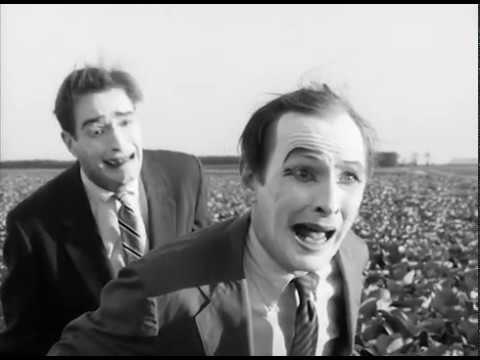
Guns of the Trees, 1962
‘“Four young people are trying to understand why their friend, a young woman, committed suicide. A film made up of disconnected scenes weaving between past and present. The title of the film comes from a poem by Stuart Perkoff which tells that some young people felt (around 1960) that everything is against them, so much that even the trees in the parks and streets seemed to them like guns pointing at their very existence.” Jonas Mekas (in Film Culture n°24, 1970)
‘This is the first feature Jonas Mekas made and the only scripted, acted film besides “The Brig” (1966) which was filmed theatre.’ — Re:Voir
Trailer
____________
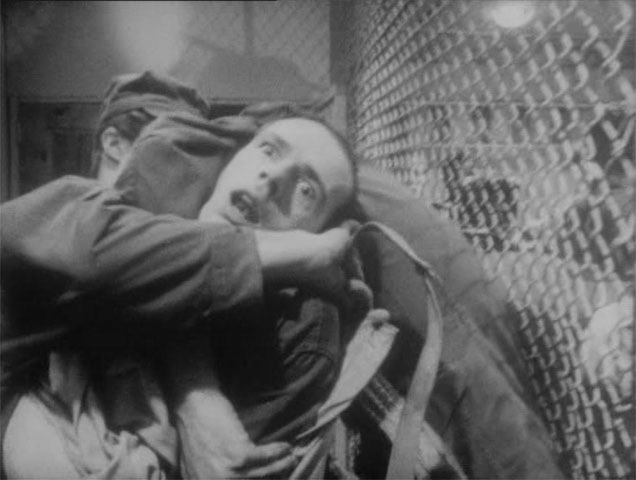
The Brig, 1964
‘The Brig is a raw slice of new American cinema filmed in an off-Broadway stage with such brutish authenticity that it won a Venice festival grand prize as best documentary. Part drama, part polemic, with shock-wave sound and a nightmare air that suggests Kafka with a Kodak, the movie does exactly what it sets out to do – seizes an audience by the shirtfront and slams it around from wall to wall for one grueling day in a Marine Corps lockup.’ — Time Magazine 1964
______________
Salvador Dali at Work, 1964
‘Dalí got interested in underground cinema (this was the term we used at the time) and in what we were doing, so I showed him some films. He was especially interested in Stan VanDerBeek. At the same time he decided he wanted to do some happenings/performances himself. He had met Peter Beard, who became a sort of manager of these semi-happenings, and I was asked to film a good number of them. Mostly they involved spraying young beautiful women with shaving foam – a key ingredient for Dalí – in the studios, and sometimes in open spaces. I also participated in some improvised meal sessions, which were slightly grotesque, and in performances such as wrapping a woman with ropes and then unwrapping her. Dalí had a sincere interest in doing these semi-happenings. They were a little bit staged, a little artificial and not too original, I have to say, but he felt he had to do them.’ — J.M.
the entirety
______________
Award Presentation to Andy Warhol, 1964
‘I can recall seeing only one Warhol film which was wholly pastoral and unneurotic in feeling, which contained or provoked none of these or other disturbing implications; and that turned out not to be a Warhol film at all, as I thought at the time, but a kind of homage, by Jonas Mekas, to Warhol – really a work of Mekas’ own sensibility though seemingly in the official Warhol style. When I saw AWARD PRESENTATION I was hung for days on the kind of imagination revolutionary enough at once to conceive of a film as something so simple and to make that simplicity so pleasurable.’ -– James Stoller
the entirety
______________
Song of Central Park, 1966
‘During the course of a single winter’s day, January 16, 1966, Jonas Mekas captured impressionistic glimpses of people playing and working in Central Park and around the city on 16mm film. The kaleidoscope of skaters, strollers, vendors, and animals creates a multitude of patterns, while on the soundtrack Mekas comments candidly on the nature of cinema.’ — The Film-Makers’ Cooperative
Trailer
______________
Report From Millbrook, 1965
‘Report From Millbrook was filmed in 1965, on a weekend visit to Tim Leary’s place. It was a light summer outing. No LSD. Tim took me for a walk, though, and we talked about LSD. I told him that the chemicals that motivate and drive artists are more powerful and mysterious than LSD or any drug. On that note we turned back and ended our walk. There was nothing more to say. In 1966, Tim’s place was raided by the local sheriff. The East Village Other taped an interview with the sheriff about the raid. I used the interview as the soundtrack for the film. The footage can also be seen in a different form in Diaries, Notes & Sketches.’ — J.M.
the entirety
_______________
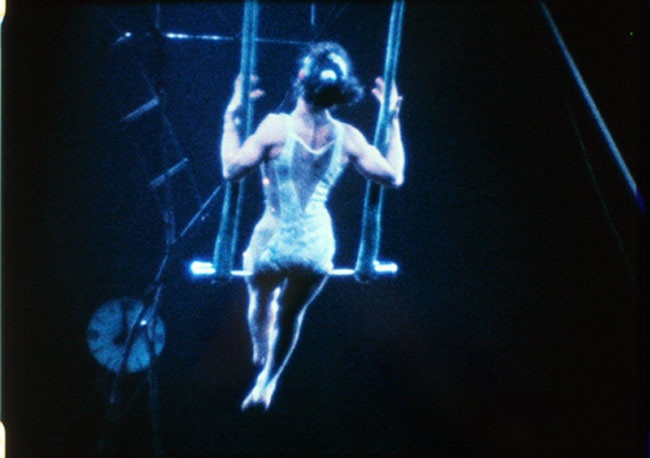
Notes on the Circus, 1966
‘Ringling Bros., filmed in three sessions (three-ring circus), with no post-editing of opticals, five rolls strung together as they came out of a camera. Jim Kweskin’s Jug Band prepared the soundtrack. Film can also be watched with soundtrack turned off (if you’re a “purist” which I’m not).’ — J.M.
______________
Hare Krishna, 1966
‘In New York City in 1966, the time and place where the modern Hare Krishna Movement was born, Jonas Mekas made a short film about those humble beginnings. The soundtrack consists of Allen Ginsberg chanting the Hare Krishna Mantra.’ — HKitM
the entirety
_____________
The Song of Avila, 1967
‘I decided to visit Avila where I had an enlightening experience. This is a filmed record of my visit to Avila, with my voice telling how I felt there and what happened (especially with the little dogs).’ — J.M.
the entirety
____________
For Life Against the War, 1967
‘Among the film-makers whose work appears in this film are Ken Jacobs, Jonas Mekas and USCO. Was first screened in NYC on January 30th, 1967. This was part of the Week of the Angry Arts in opposition to the Vietnam War.’ — The Film-Makers’ Cooperative
Trailer
____________
Time and Fortune Vietnam Newsreel, 1969
‘An interview with War Minister of Lapland concerning War in Vietnam. A few practical suggestions are given, among them a suggestion to turn the conduction of war over to mafia. (The Minister played by Adolfas Mekas.)’ –- J.M.
the entirety
__________
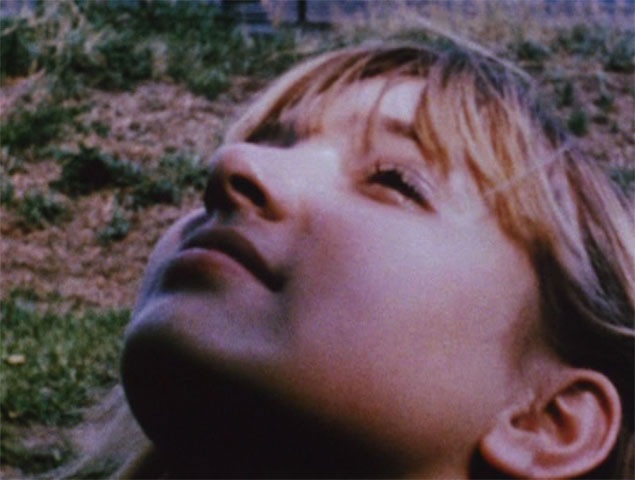
Walden, 1969
‘Since 1950 I have been keeping a film diary. I have been walking around with my Bolex and reacting to the immediate reality: situations, friends, New York, seasons of the year. On some days I shoot ten frames, on others ten seconds, still on others ten minutes. Or I shoot nothing…. Walden contains material from the years 1964-1968 strung together in chronological order.’ — J.M.
Excerpt
_____________
Lost Lost Lost, 1976
‘Personal and societal crossroads collide in Jonas Mekas’s narration while shaping footage from 1949 to 1963 into the diary-film opus Lost Lost Lost. At first a somber, arresting chronicle of his arrival as a political refugee, it gives way to an energetic document of the New York cultural scene Mekas all but single-handedly defined. Spanning Lithuanian street life in Williamsburg, anti-nuclear protests, *Film Culture*’s Lafayette Street offices, and the Living Theatre, Lost Lost Lost turns on a shift from Brooklyn to Manhattan, in the spirit of Alfred Kazin’s wonderment departing Brownsville on the elevated train in the 1930s. Melding social realism, intricately layered collage, and even trick film segments reminiscent of Georges Méliès—the result of Mekas and his brother Adolfas experimenting with their newly acquired Bolex camera—Lost Lost Lost foreshadows vital diary works to come. Mekas notes, “The sixth reel is a transitional reel where we begin to see some relaxation, where I begin to find moments of happiness. New life begins….”’ — MoMA
Excerpts
____________
He Stands in the Desert Counting the Seconds of His Life, 1986
‘The film consists of 124 brief sketches, each half-a-minute to about two minutes long. Portraits of people I have spent time with, places, seasons of the year, weather (storms, snow blizzards, etc.), many of my film-maker friends such as Hans Richter, Rossellini, Marcel Hanoun, Adolfo Arrieta, Henri Langlois, Cavalcanti, Kubelka, Ken Jacobs, Kenneth Anger, Kuchars, Breer, Willard Van Dyke, Frampton, etc., or just friends, such as John Lennon, Jackie Onassis, Lee Radzwill, John Kennedy Jr. & Caroline, Tina and Anthony Radziwill, Peter Beard, Andy Warhol, Richard Foreman, P. Adams Sitney, Yoko Ono, Raimund Abraham, Hermann Nitsch, Allen Ginsberg, George Maciunas, and countless others – streets and parks of New York – brief escapes into nature, out of town – nothing spectacular, all very insignificant, unimportant – misc. celebrations of life that has gone, by now, and remains only as recorded in these personal, brief sketches. ‘You keep a diary & the diary will keep you.’ – Mae West, to Peter Beard (from the film).’ –- J.M.
Excerpt
_____________
SELF PORTRAIT, 1980
‘One twenty-minute take, a soliloquy, myself talking about myself. Tape in collaboration with Robert Schoenbaum, at the house / porch of Sally Dixon, St. Paul.’ — J.M.
the entirety
____________
Scenes From The Life Of Andy Warhol: Friendships And Intersections, 1990
‘This intimate portrait of Andy Warhol pulls together a unique library of material shot by New York film legend Jonas Mekas. Spanning from 1963 to 1990, the film features a cast of counterculture icons including Allen Ginsberg, George Maciunas, John Lennon, and Yoko Ono, as well as John and Caroline Kennedy, and Lee Radziwill (Jackie Kennedy Onassis’s sister and Warhol muse)—to whom Mekas dedicates the film. The film features footage from the Velvet Underground’s first public performance. A portrait of the remarkable life of arguable the twentieth century’s most famous artist and leading iconographer.’ — letterboxd
the entirety
______________
Imperfect Three Image Films, 1995
‘In 1995 Julius ZIZ came up with an idea of films made up of only three images. He asked me to contribute some three-image films of my own to a Three-Image Film Festival he organized at Anthology. This film is my contribution to that genre of cinema. Since my filming style depends a lot on shooting frame by frame, these are imperfect 3-image films.’ –- J.M.
the entirety
_____________
Scenes from Allen’s Last Three Days on Earth as a Spirit, 1997
‘This is a video record of the Buddhist Wake ceremony at Allen Ginsberg’s apartment. You see Allen, now asleep forever, in his bed; some of his close friends; and the wrapping up and removal of Allen’s body from the apartment. You hear Jonas’ description of his last conversation with Allen, three days earlier. You see the final farewell at the Buddhist temple, 118 West 22nd Street, New York City, and some of his close friends: Patti Smith, Gregory Corso, LeRoy Jones-Baraka, Hiro Yamagata, Anne Waldman, and many others.’ — Re:Voir
Excerpt
_____________
This Side of Paradise, 1999
‘Unpredictably, as most of my life’s key events have been, for a period of several years of late sixties and early seventies, I had the fortune to spend some time, mostly during the summers, with Jackie Kennedy’s and her sister Lee Radziwill’s families and children. Cinema was an integral, inseparable, as a matter of fact, a key part of our friendship. The time was still very close to the untimely, tragic death of John F. Kennedy. Jackie wanted to give something to her children to do, to help to ease the transition, life without a father. One of her thoughts was that a movie camera would be fun for children. Peter Beard, who was at that time tutoring John Jr. and Caroline in art history, suggested to Jackie that I was the man to introduce the children to cinema. Jackie said yes. And that’s how it all began.’ — J.M.
Excerpt
_____________
As I Was Moving Ahead Occasionally I Saw Brief Glimpses of Beauty, 2000
‘As I Was Moving Ahead... is a record of subtle feelings, emotions, daily joys of people as recorded in the voices, faces and small everyday activities of people I have met, or lived with, or observed — something that I have been recording for many years. This, as opposed to the spectacular, entertaining, sensational, dramatic activities which dominate much of contemporary filmmaking.
‘The film is not conceived as a documentary film, however. It follows a tradition established by modern film poets. I am interested in intensifying the fleeting moments of reality by a personal way of filming and structuring my material. A lot of importance is being given to color, movement, rhythm and structure — all very essential to the subject matter I am pursuing.’ — J.M.
Excerpt
______________
A Letter From Greenpoint, 2004
‘In February 2004, after 30 years of my life in SoHo, I made a decision to leave SoHo and move to Greenpoint, Brooklyn. This video is about what it feels like to leave a place in which one has spent more time than any other place, and which was also the place of my family life. I am somewhere else now. It’s about beginning of growing roots in a new place, new home, with new friends, new thoughts, experiences. This video is also about video. When in 1949 I began filming with my Bolex, it took me fifteen years to really master it so that my Bolex would do for me what I wanted. When in 1987 I got my first Sony camera I thought it would be different. But no. Only today, after working with the video camera for fifteen years, I feel like it had become an extension of my eye, my body, “A Letter from Greenpoint” being my first real video work.’ — J.M.
Trailer
_____________
Notes on an American Film Director at Work, 2008
‘Filmmaker Jonas Mekas follows his friend Martin Scorsese and his cast and crew through various locations during the shooting of his film The Departed, released in 2006.’ — IMDb
_____________
WTC Haikus, 2010
‘Looking through my finished and unfinished films, I was surprised how many glimpses of the World Trade Center I caught during my life in SoHo. I had a feeling I was Hokusai glimpsing Mount Fuji. Only that it was the World Trade Center. The WTC was an inseparable part of my and my family’s life during my SoHo period from 1975-1995. This installation is my love poem to it. My method in constructing this piece was simply to pull out images of the WTC from my original footage, while including some of the surrounding scenes. The result I felt came close, albeit indirectly, to what in poetry is known as the Haiku.’ — J.M.
the entirety
_______________
Sleepless Nights Stories, 2011
‘This film originated from my readings of the One Thousand and One Nights. But unlike the Arabian tales, my stories are all from real life, though at times they too wander into somewhere else, beyond the everyday routine reality. There are some twenty-five different stories in my movie. Their protagonists are all my good friends and I myself am an inseparable part of the stories. The storyteller of the Arabian Nights was also part of his or her tales.
‘Some of the people in the movie you’ll recognize, some not. The fact that some of them you’ll recognize has no bearing on the stories: after all, we all recognize John Wayne or Annette Bening, but in their stories they are no longer the people we know. The subjects of the stories cover a wide range of emotions, geographies, personal anxieties, anecdotes. These are not very big stories, not for the Big Screen: these are all personal big stories… And yes, you’ll also find some provocations… But that’s me, one ‘me’ of many. The very question “What is a story?” is a provocative question.’ — J.M.
Trailer
_____________
Correspondencia Jonas Mekas – J.L. Guerin, 2011
‘José Luis Guerín takes an idea coming from Jonas Mekas: film is a response to life. With this concept in mind, they start exchanging a series of letters and develop a personal relationship which reveals the impressions and similarities of two filmmakers linked by their wish to share opinions and concerns. They establish a unique relationship through a correspondence displayed in the eyes of the viewer and in search of his sympathy, thus creating a new intimate space for thought. Correspondences: José Luis Guerín–Jonas Mekas shows the experimentation with the expressive language and the visual reflections of two artists who have found a new form of creation and use of images.’ — Viennale
Excerpt
Excerpt
____________
My Mars Bar Movie, 2011
‘For some twenty years Mars Bar, on the corner of First Street and Second Avenue, Manhattan, has been my bar. That’s where we went for beer and tequila whenever we had to take a break from our work at Anthology Film Archives, and it was also a bar where most of those who came to see movies at Anthology ended up after the shows. We always had a great time at Mars Bar. It was always open, there was always the juke box, and very often there was no electricity, and it was old and messy and it didn’t want to be any other way — it was the last escape place left in downtown New York. So this is my love letter to it, to my Mars Bar. Mars Bar as I knew it.’ — J.M.
Excerpt
_____________
Outtakes from the Life of a Happy Man, 2012
‘A motion picture composed of brief diaristic scenes not used in completed films from the years 1960-2000; and self-referential video footage taped during the editing. Brief glimpses of family, friends, girl-friends, the City, seasons of the year, travels. Occasionally I talk, reminisce, or play music I taped during those earlier years, plus more recent piano improvisations by Auguste Varkalis. It’s a kind of autobiographical, diaristic poem, celebration of happiness and life. I consider myself a happy man.’ –- J.M.
Excerpt
the entirety
____________
Reminiszenzen aus Deustschland, 2012
‘An attempt to provide an introduction to the Germany period of my life, from 1944 to October 1949. Using original photos from the period, taken by myself and my brother Adolfas, and film/video footage from 1971 and 1993, I revisit Elmshorm, Flensburg, Wiesbaden, Mainz and Kassel where I spent five years of my life – first as a Forced Laborer in a war prisoners camp, and later as a Discplaced Person in displaced persons camps. The soundtrack consists of brief excerpts from my written diaries of that period, current reflections and passages from the writings of Wolfgang Borchert.’ — J.M.
Excerpt
____________
Requiem, 2019
‘Jonas Mekas was the first film critic for the Village Voice and a tireless advocate for and creator of experimental film. He died in January, just as he was finishing a cinematic interpretation of Verdi’s Requiem, a colossal work that seems to shake the very earth. As an homage to the filmmaker, the Shed screens his piece accompanied by a recording of the Mass by the conductor Teodor Currentzis and the orchestra and chorus of musicAeterna. Later in the month, the film returns as originally intended: screened alongside live concerts of Verdi’s opus.’ — Oussama Zahr
Introduction
*
p.s. Hey. ** Carsten, I can’t say I’m surprised that you enjoyed the interview, and, yeah, it sounds like you landed a good interlocutor. I was interviewed with Zac yesterday too, but much less lengthily. Nice buzz. Now the interesting task of trying to edit your own thoughts/speech. That’s a skill. Congrats. ** Dominik, Hi!!! Have a great time in the new and improved Hungary. I really have to travel there someday and get an actual picture in my head. I will let you know about the package. Yeah, enjoy everything, and I’ll see you right about the time the Xmas decorations start going up. Should be fun. Love assigning Hungary the task of bending to your will while retaining its natural charisma, G. xo. ** worm, Hey. ‘those who die old are made of the past’: that seems interestingly very true. I guess the trick would be finding a dog who can give a complicated, nuanced performance. Zac and I have a dog in our upcoming film, but all it has to do is sniff someone. I thoroughly enjoyed ‘GMZ’. It’s fun, and it’s an actual fresh-feeling blockbuster, which doesn’t happen every day or every year even. Death by bulldozer … hm, could be worse. Still, I think I’ll try to outrun any bulldozers that cross my path today. Am I correct in thinking it’s summer where you are? I hate the summer, so I hope your day is very wintery somehow. ** scunnard, I’ve long ceased to understand my blog’s errant behavioural patterns. As I tend to be rather stand-offish with dogs out of shyness rather than disrespect, I think any dog that loved me might have some psychological problems. Let’s talk or I guess I mean chat/write about the project when the time seems to arriveve on your end. ** Adem Berbic, Thanks, I’ll hit up YouTube strategically. GbV can definitely lead you back to good health if you’re willing to accept their version. Leve is someone you should read if you haven’t, I think it’s safe to say. Here? Uh, chilly, cloudy, kind of wet. In other words, tip top. I assume you’re in the same boat. ** hitchmk, Hi there! Cool if I helped lead you to Leve. And, yeah, ‘Works’ has a particular pull that I too can’t precisely nail down. Anyway, my pleasure. How are you? What’s going on? ** _Black_Acrylic, He’s not really Oulipo, I don’t think. Well, inspired by certainly. But he was known to say that Joe Brainard was his biggest influence. Philip Best used to send me the AS books, but I guess he’s stopped doing that, so I have to go get ‘The Trenches’ on my lonesome, it seems. ** Steve Erickson, Fish-related, good. Although I guess if it had been ‘fin’ (as in French end), it might have been okay too. I liked ‘GMZ’, see what you think. It has a very nice quality, like the first one but probably better? ** laura w., I feel pretty confident that Leve’s work doesn’t need his autobiography to be great. Although with ‘Suicide’ they are a bit hard to separate. I always liked having friends, of course, but I have started to really get into how great friendship is. So much better than ‘boyfriend’, if you’re me at least. I haven’t looked at that Pitchfork list yet. ‘Bee Thousand’ should be #1, but okay. Well, I’ll go look at the list. Hold on. I’m good with Pavement being #1, but it should be ‘Slanted and Enchanted’. ** lotuseatermachine, Hey, nice to see you. Few books by Leve but hard to find copies as I think only ‘Autoportrait’ is in print? I might be wrong. I knew Edouard, we were kind of friends, and it’s true that when he was alive he was much more known for his photography, whereas now he’s hugely lionised as a writer whereas his photography is barely noticed. He was a much greater writer than photographer if you ask me. And he primarily thought of himself as a writer even if few others did at the time. Thanks a lot for pre-ordering ‘RT’. Hm, I don’t think I know Giuseppe Andrews’ films, do I? They sound very interesting indeed. I’ll go find what there is on YouTube. Nice about the Yellow Veil connection. They’re excellent. Thanks a lot for bringing him up. His work sounds like a real score. Melbourne … there’s another commenter/d.l. here in Melbourne, worm. I suppose you probably don’t know each other? Good to get to talk with you. I hope to get to do so again soon. ** HaRpEr //, When people talk to their pets, it always makes me feel like I’m getting some deep insight into the pet owners, but I can never figure out what the insight is. ‘Oeuvres’ aka ‘Works’ is very, very worth tracking down. Marie Redonnet! I should restore my old spotlight post on her work. I’ll do that. ** Thom, You won’t be sorry re: Leve, or I think not. Did I see ‘An Elephant Sitting Still’ … hm, maybe not? I feel like I would have. I’ll go look at the trailer or something and try to remember. Nice about the drone piece. Good old drone. And that you’re into prose mode, obviously. And, hey, you’re going to rule this roost tomorrow, man. Get ready. This week is sort of drifting and flying by at the same time. Yours? ** Uday, You were pre-wire Well, obviously. I’ve been okay, nothing too dramatic. Halloween is officially dead, and I’m dealing with that in a mature fashion, I believe. I have no idea where you could get the Little Caesar books. They’re so extremely out of print. I think you’d probably have to collect them at significant cost, I fear. Howdy! ** Fred, Hey, welcome back! Awesome that you want to write and direct films. I wanted to do that for a million years, but I only got to start not so long ago thanks my more visually-gifted collaborator Zac. Decadent/symbolist influences are super rich. That sounds beautiful. Anaheim, home of the big D and excellent haunted house attractions come Halloween time. Thank you so much about my books. Your fave books and films list are pretty impeccable imo. Cool that you love ‘The Magnificent Ambersons’, that’s one of my maybe top five all-time films. Tom Rapp as in the Pearls Before Swine guy? Wow. I loved them/him when I was younger and trippier. And probably still would. I hope you don’t me saying that I’m happy you escaped from that upbringing and in excellent form, obviously. Good material for your present and future work, no doubt. Yes, I’m a fan of JK Huysmans, of course. What’s the documentary you’re making like? How are you approaching it or how is it going? Great to talk. I hope your Thursday rules. ** Right. Today’s blog fodder is dedicated to the great Jonas Mekas, often referred to as the godfather of American experimental film. Unusual wonders galore up there if you so choose. See you tomorrow.


 Now available in North America

Leave a Reply