* (restored)
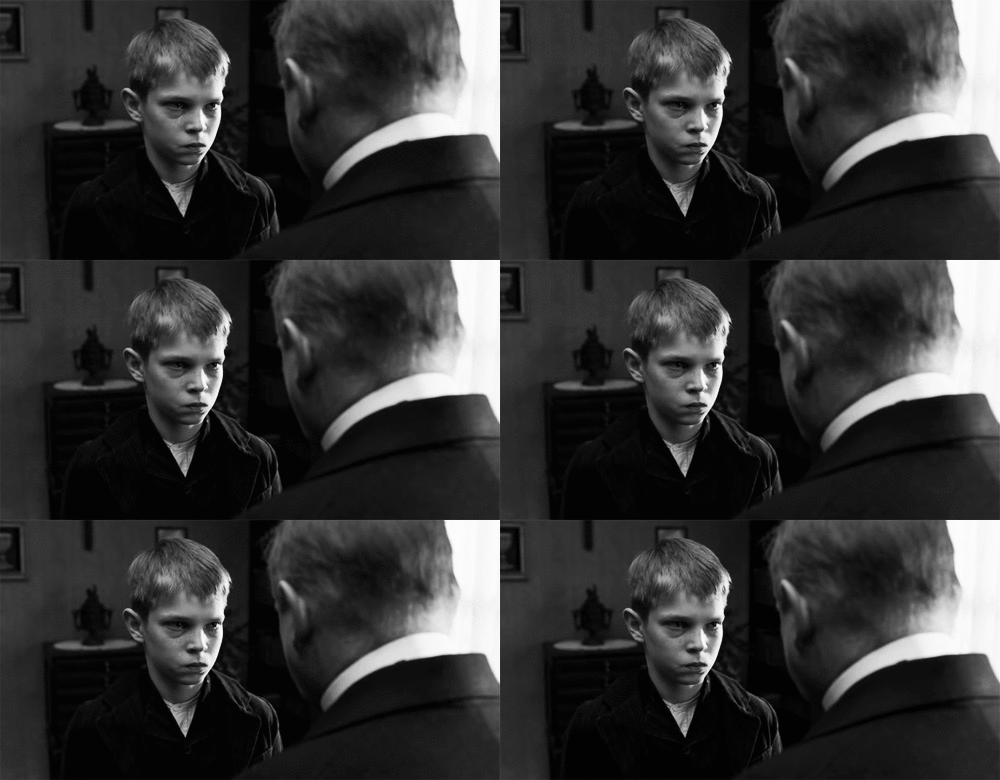
My films are intended as polemical statements against the American ‘barrel down’ cinema and its dis-empowerment of the spectator. They are an appeal for a cinema of insistent questions instead of false (because too quick) answers, for clarifying distance in place of violating closeness, for provocation and dialogue instead of consumption and consensus. -– Michael Haneke, “Film as Catharsis”
‘Michael Haneke is arguably Europe’s most esteemed and most controversial filmmaker. After twenty years of directing for the cinema, he has earned a place in the pantheon of the most acclaimed active auteurs. His feature Benny’s Video (1992) shocked crowds with its restrained, antipsychological portrait of a teenager who kills a young girl “to see how it is”. Funny Games (1997) inspired a fierce debate on how one can interrogate violence in film. On the whole, Haneke’s polemical programme attempts to lay bare the coldness of Western society and challenge Hollywood’s blithe treatment of violence. With acknowledged influences including Andrei Tarkovsky, Jean-Marie Straub, Michelangelo Antonioni, Jon Jost, Abbas Kiarostami and above all Robert Bresson, his recent work has garnered a host of accolades and arthouse success. Caché (Hidden, 2005) won the Palme d’or and was voted by The Times as the “film of the decade”. Das weiße Band (The White Ribbon, 2009) earned Academy Award nominations for Best Cinematography and Best Foreign-Language Film.
‘Born in 1942 in Munich, Michael Haneke grew up in the Lower Austrian city of Wiener Neustadt. He studied psychology, philosophy and theatre at the University of Vienna and wrote film and literature reviews on the side. From 1967 to 1970 he worked as editor and dramaturge at the southern German television station Südwestfunk. It was in 1970 that Haneke began writing and directing films and (similar to most Austrian directors of his generation) his initial experiences behind the camera were projects for television. Haneke has also directed a number of stage productions (including Strindberg, Goethe, Bruckner, and Kleist) in Berlin, Munich, Vienna and Paris. His first film intended for cinematic release, Der siebente Kontinent (The Seventh Continent), premiered in 1989.
‘Writers retrospectively plot a director’s career as a teleological historical narrative with a familiar literary pattern, in this way circumscribing his or her works for the sake of a neat (if contrived) principle of organisation. Examining a living, very much active filmmaker is problematic and, I would argue, assessing Haneke is particularly challenging. No sooner has a commentator made a “definitive” pronouncement on what does or does not characterise Haneke’s oeuvre, than the director defies all expectations. After being initially positioned in the context of Austria’s television and film (cottage) industries and cultural politics, for example, he moved his operations to Paris and began making French-language “European” films with high-profile arthouse stars and multinational funding. Over the years, Haneke has regularly issued devastating squibs denouncing the manipulative American cinema (see the epigraph to this essay)—and then proceeded to make a picture with Hollywood money. After years of nostalgic recuperations of celluloid materiality and cinematic spectatorship, he began to make films that depend on digital technology and demand DVD viewing.
‘In spite of my own admonition against trying to pin down a moving target, I will attempt to work out a few characteristics of Haneke’s cinema and the experience of watching it. Although these principles do not apply equally to each individual film, they provide a framework to begin to approach the director.
‘Stories chronicle the failings of emotionally cold individuals and the implosion of bourgeois social structures when placed under a complicating duress.
‘Culturally, these narratives concern and comment on the identity politics of European class systems, gender roles and ethnic hierarchies, as well as the individual and collective guilt that these structures engineer.
‘Narrative forms tend toward the episodic and elliptical. Befitting art cinema practices, characters’ motivations remain obscure and their goals ambiguous; clear narrative resolutions are foreclosed or made impossible to determine. Haneke’s cinema provokes, demands but ultimately frustrates interpretation.
‘Stylistically, Haneke’s work favours the long take over montage and static shots over camera movement. Specific patterns of editing, framing, sound design and performance produce an uncomfortable viewing experience that, at best, invites a critical attitude towards media, images and the representation of violence and, at worst, uses these elements as titillation or authorial signature.
‘More so than the works of other filmmakers, watching Haneke is coloured by his media performances, theoretical observations and self-analyses. On the festival circuit and in provocative interviews, an ensemble of Hanekean provocations and buzzwords (e.g., “Every film rapes”; “I want to rape the viewer into independence”) competes with the viewer’s experience and invites critical attacks.’ — Mattias Frey
___
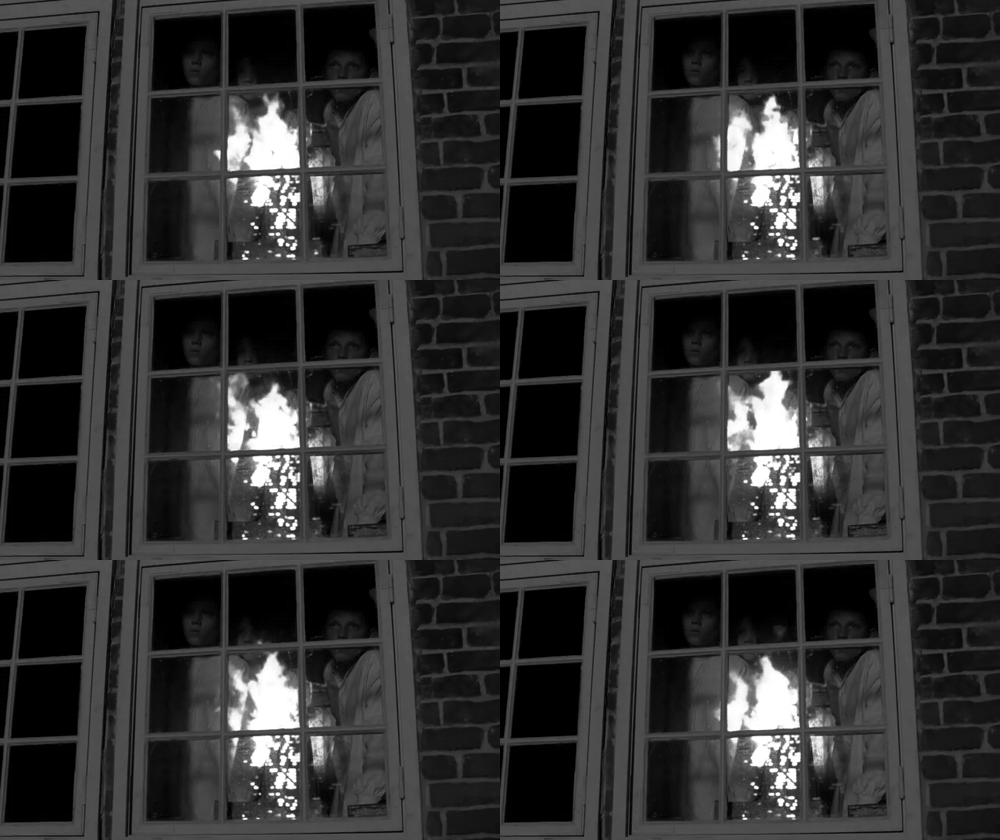
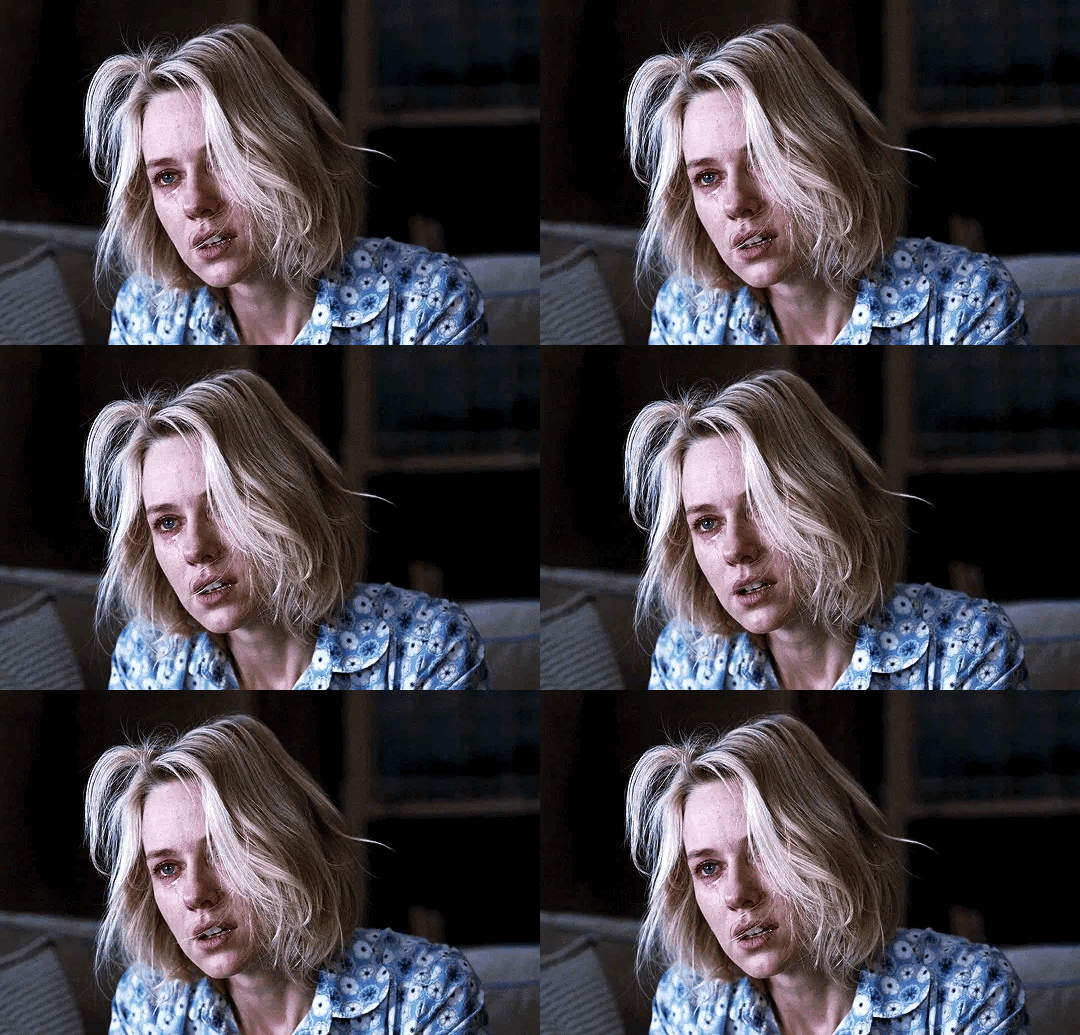
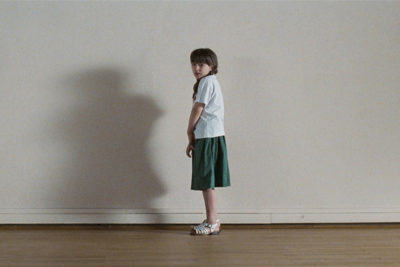
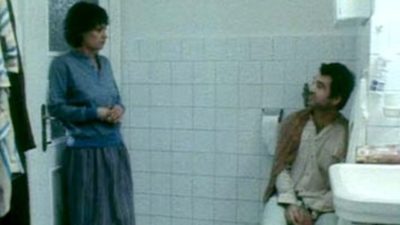
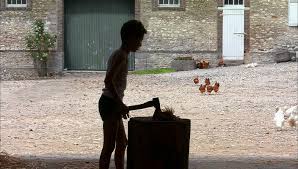
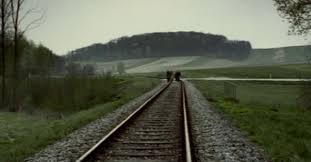
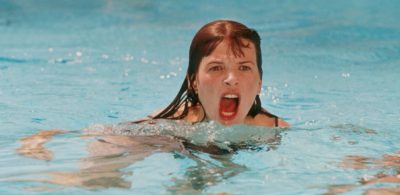
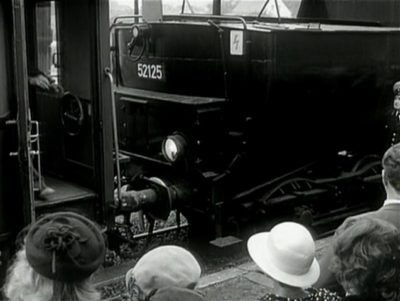
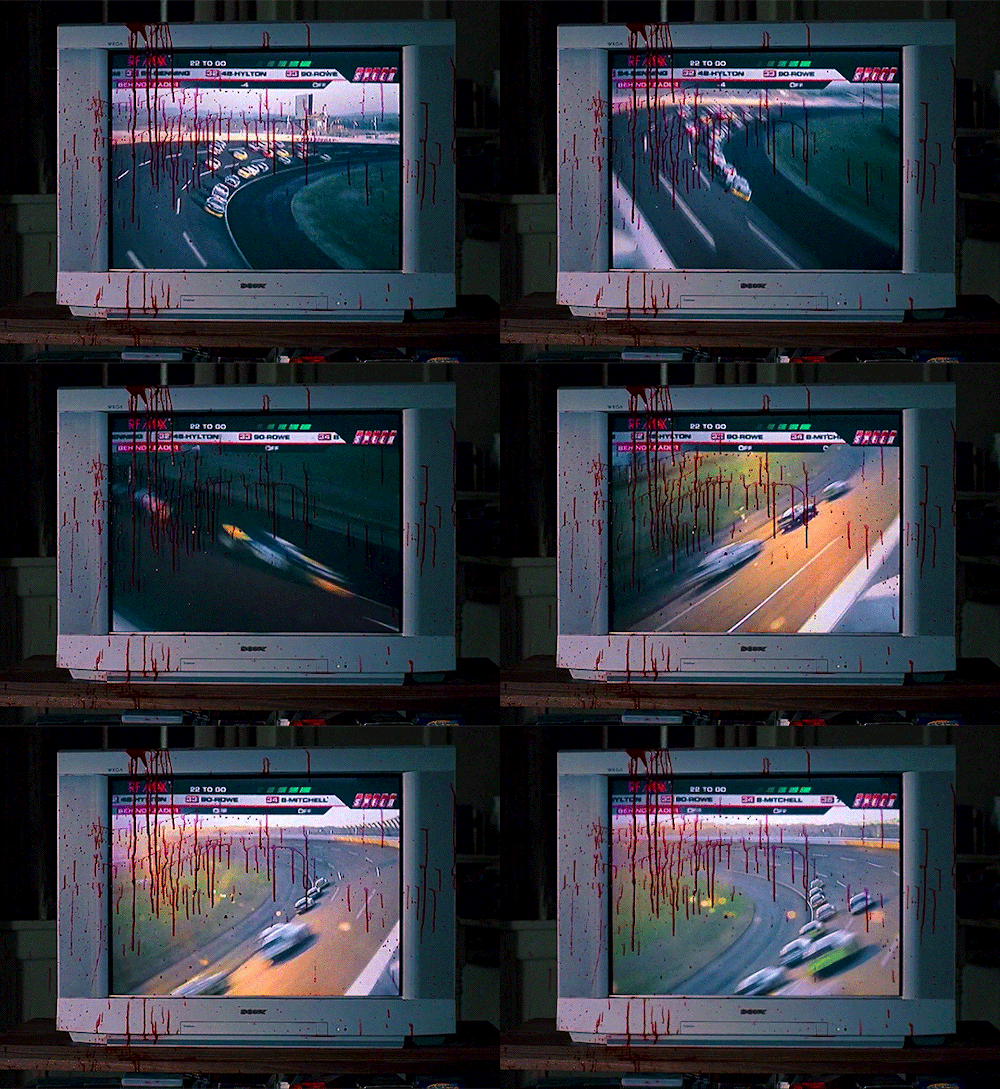
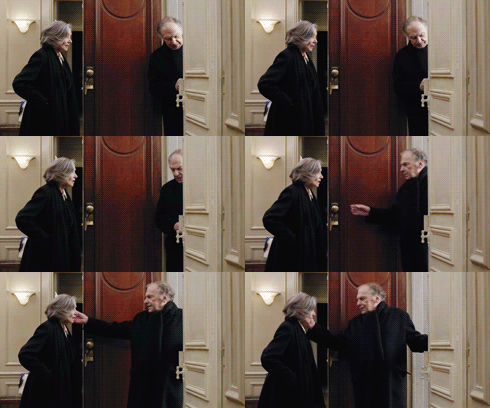
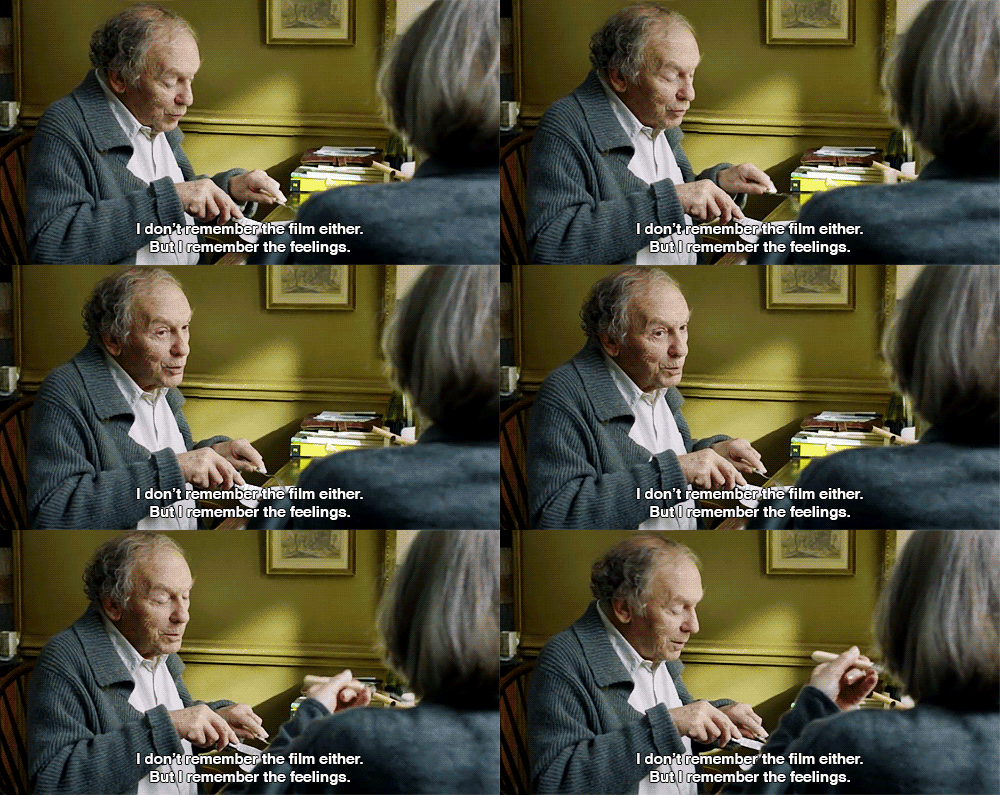
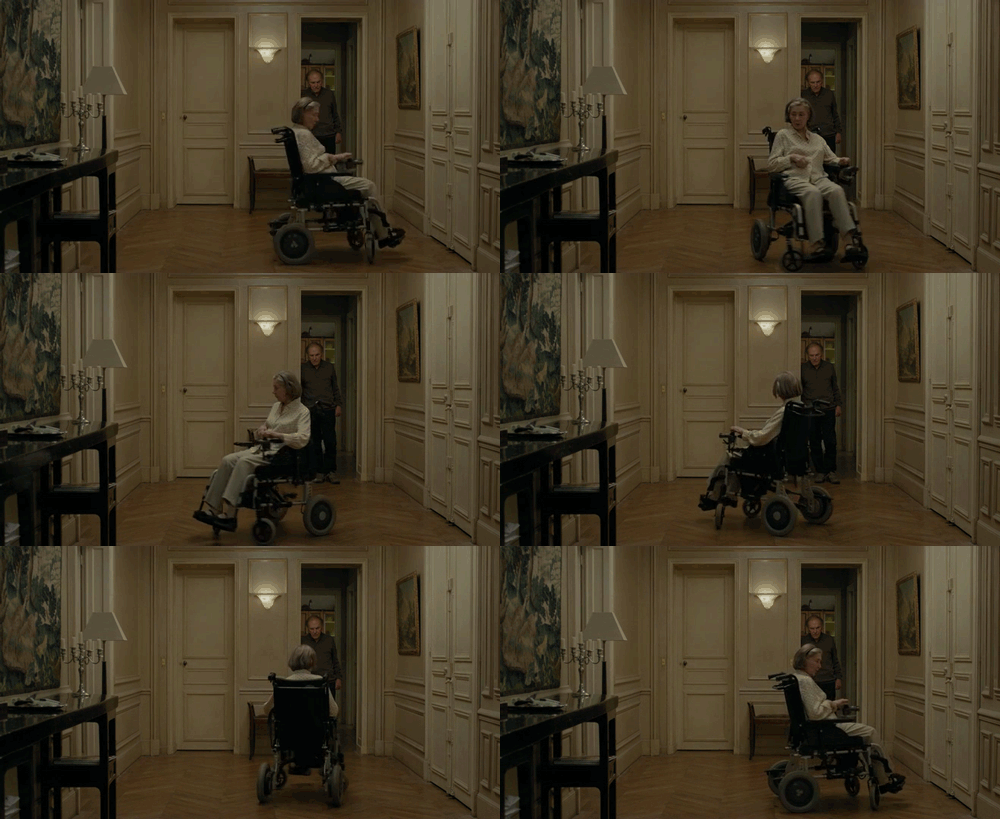
Stills
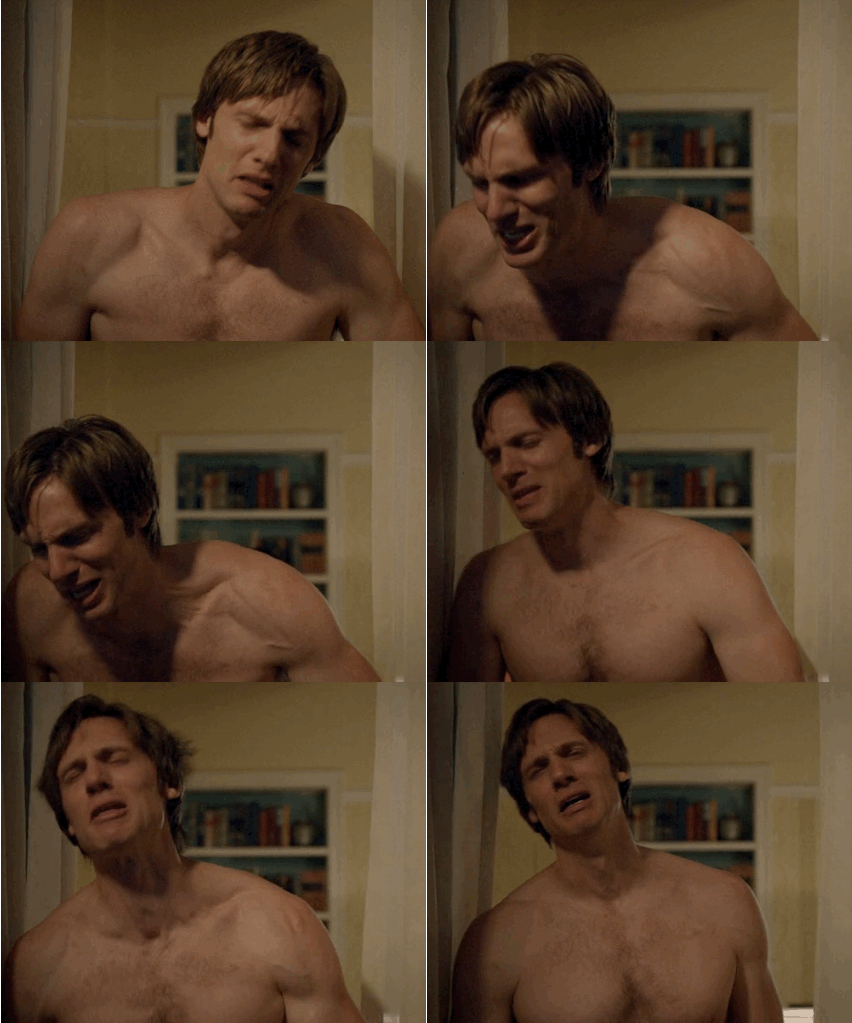
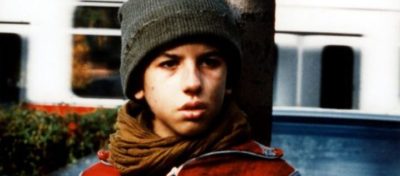
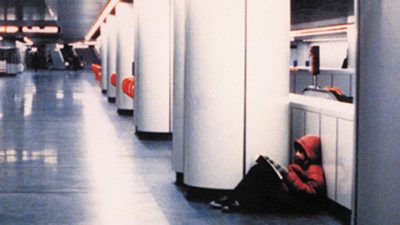
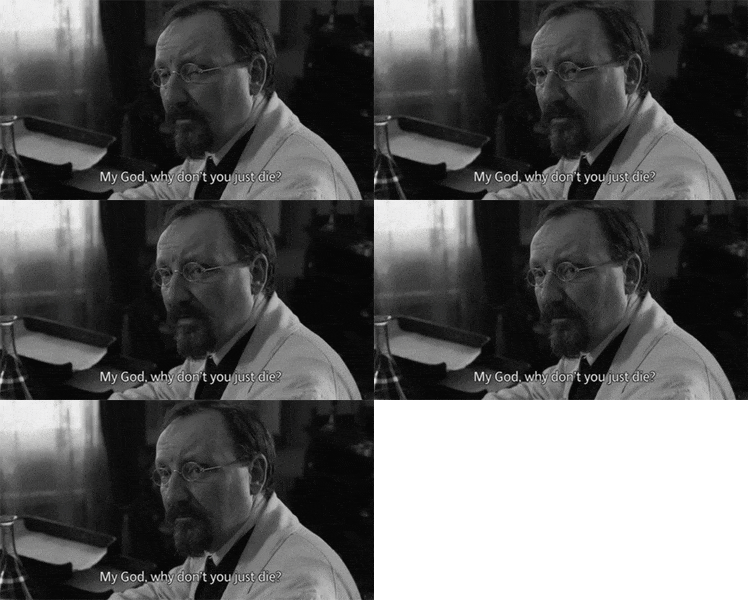

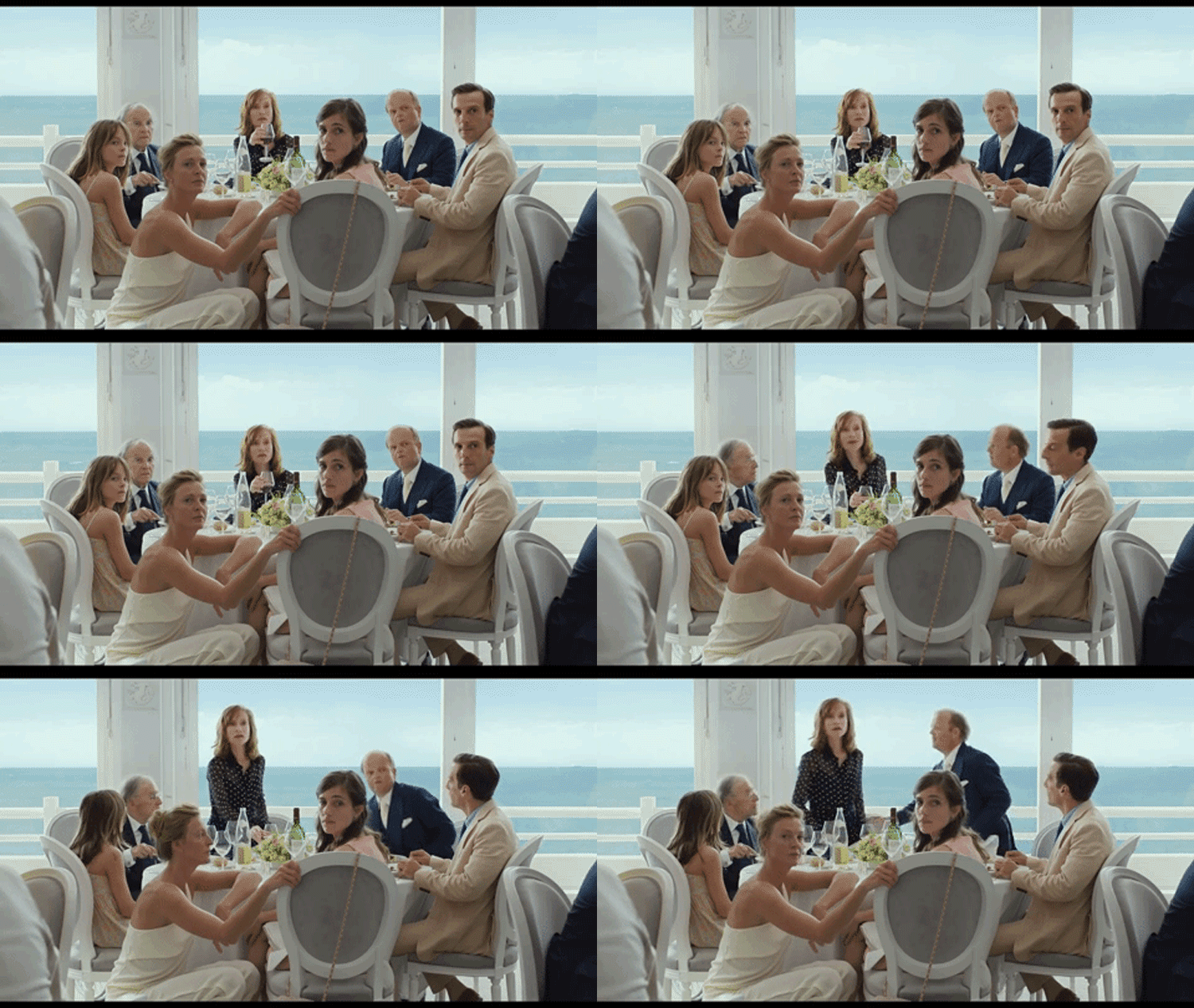
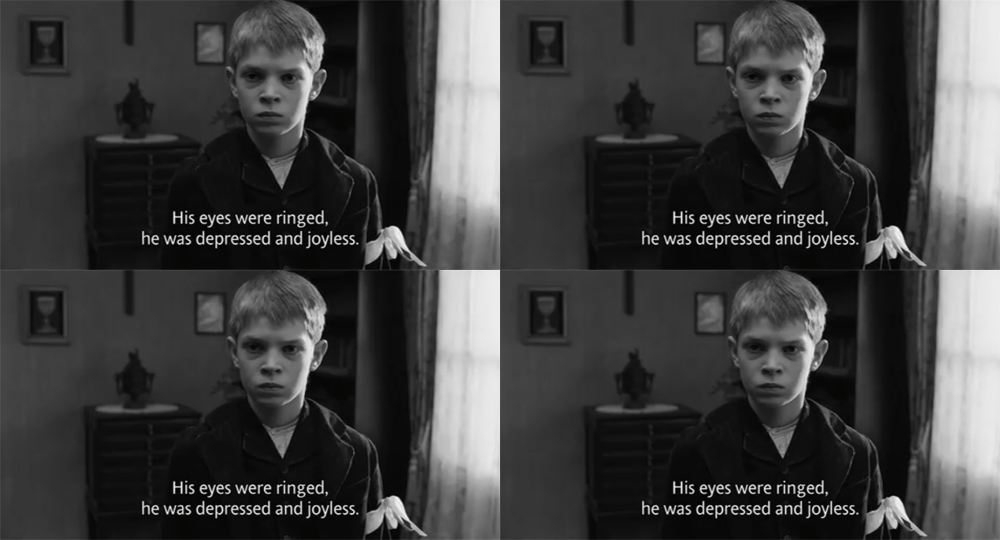
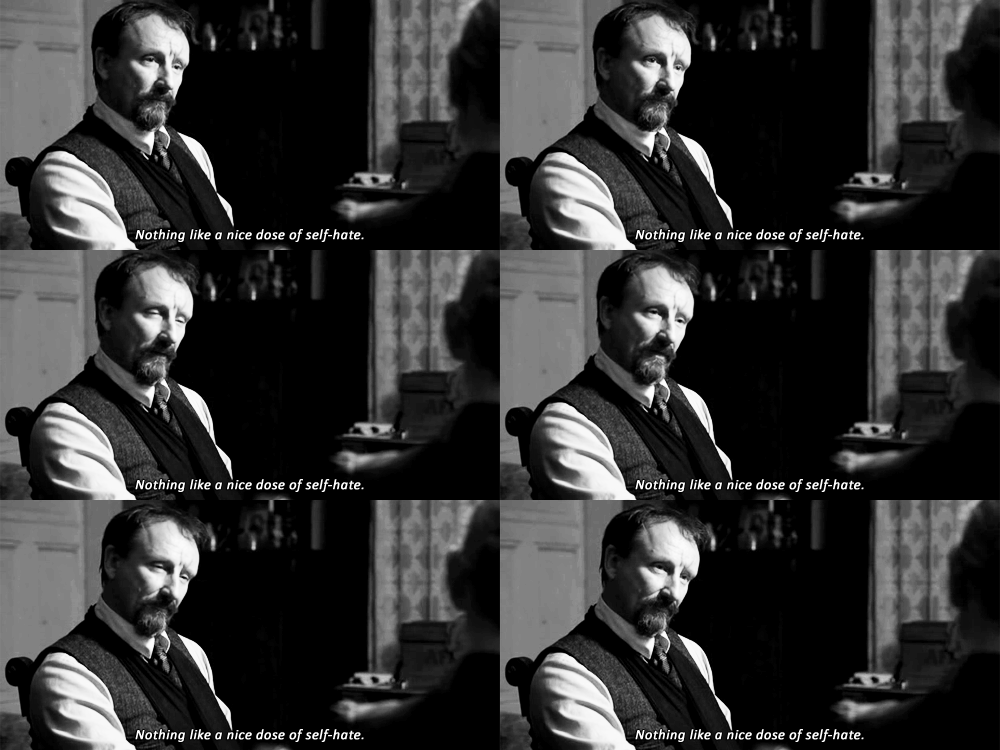
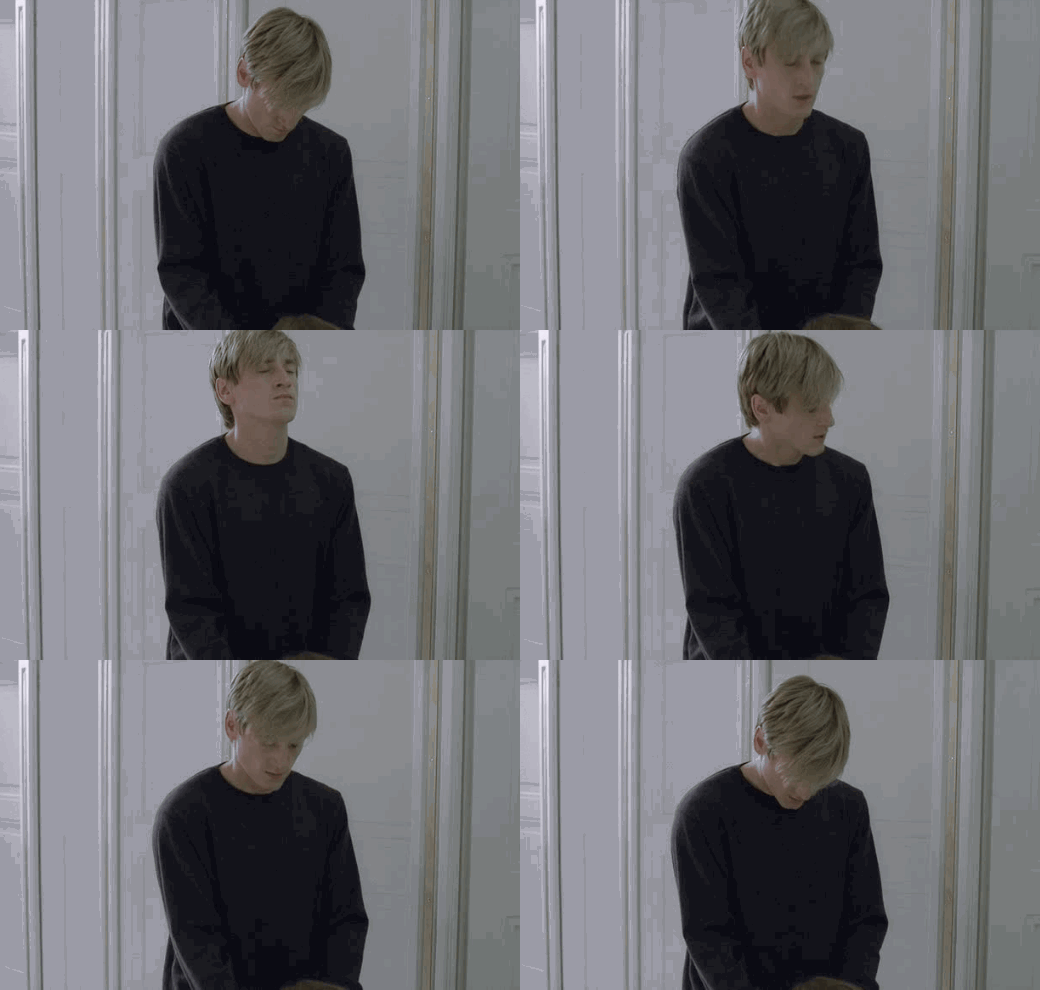
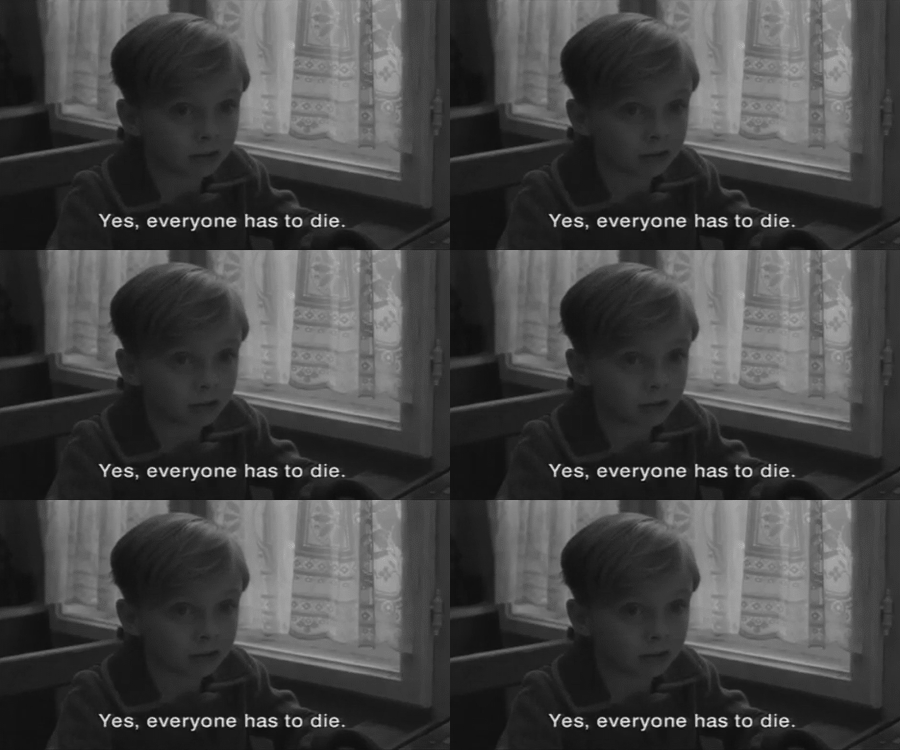
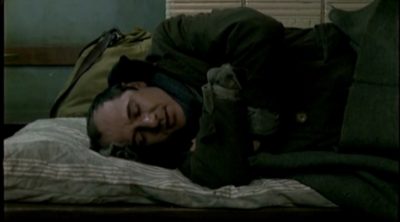
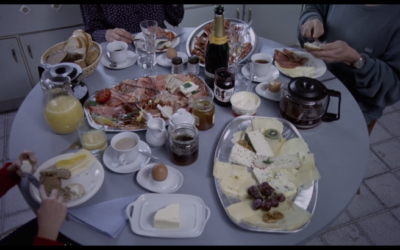
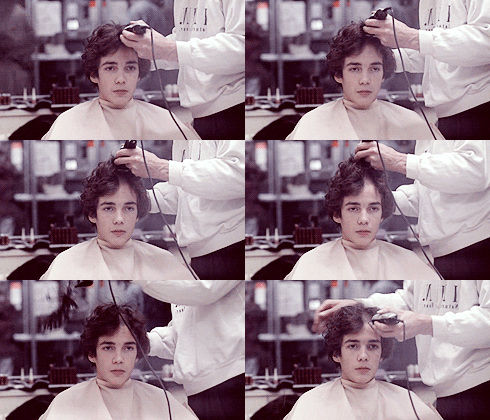
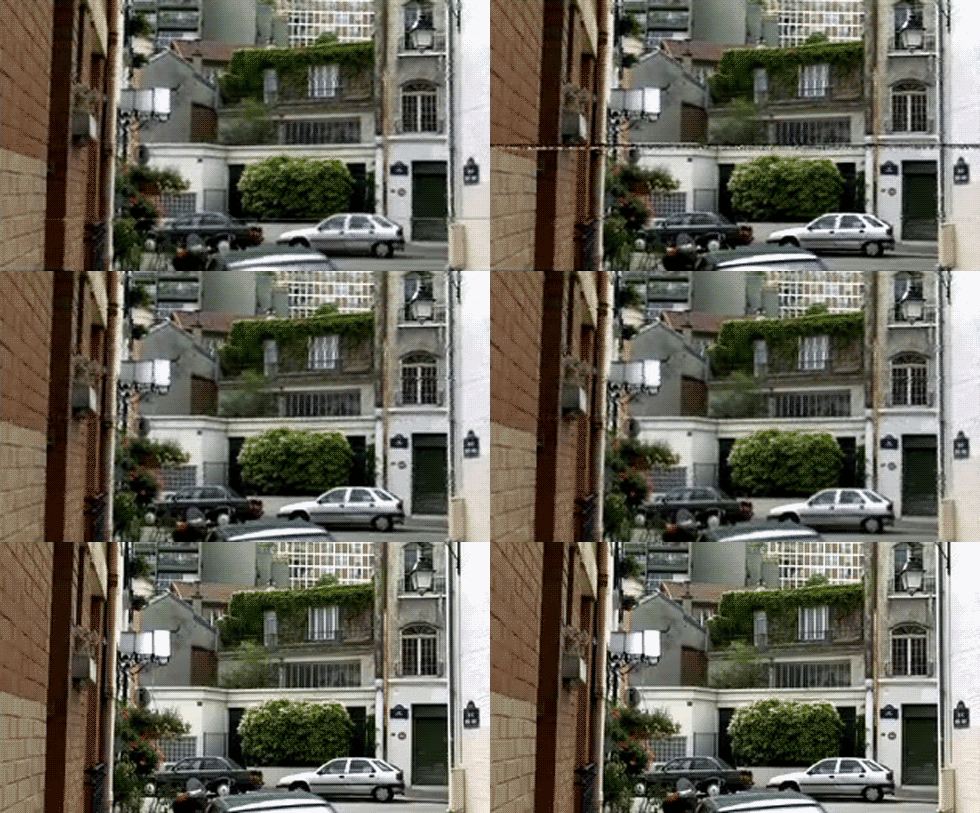

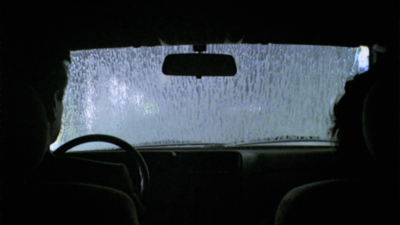
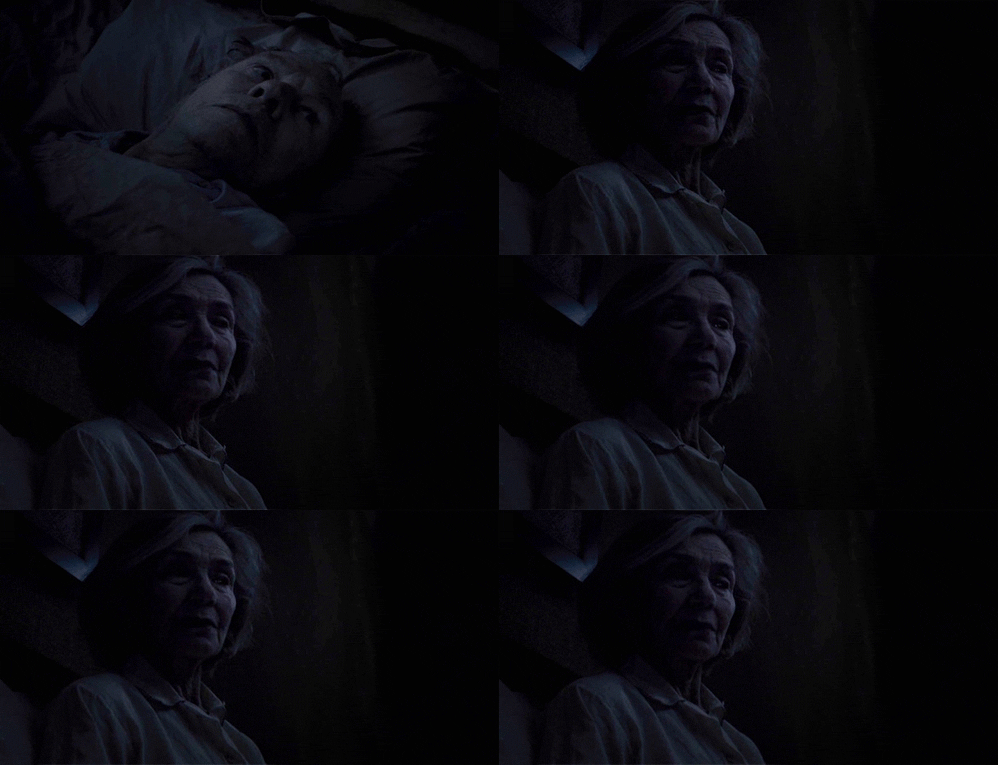
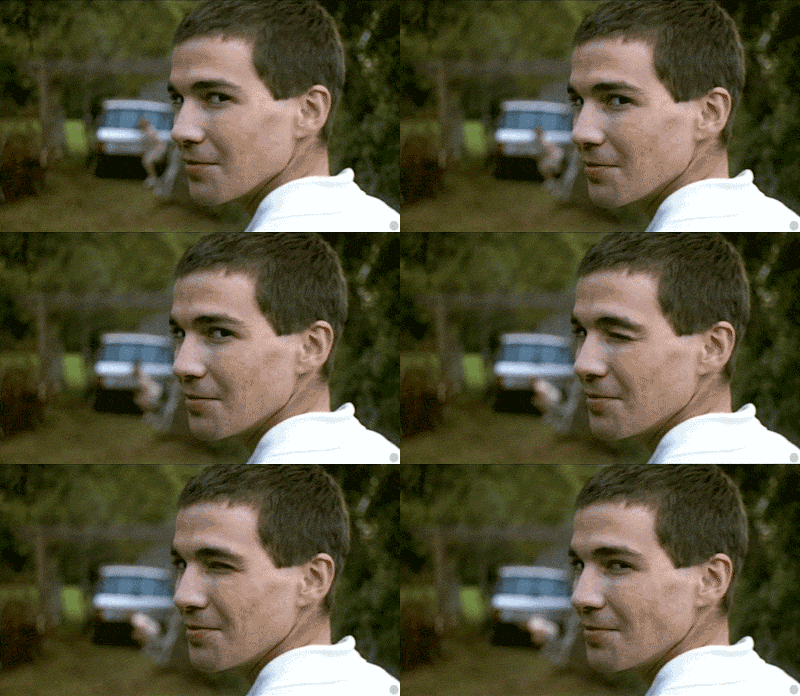
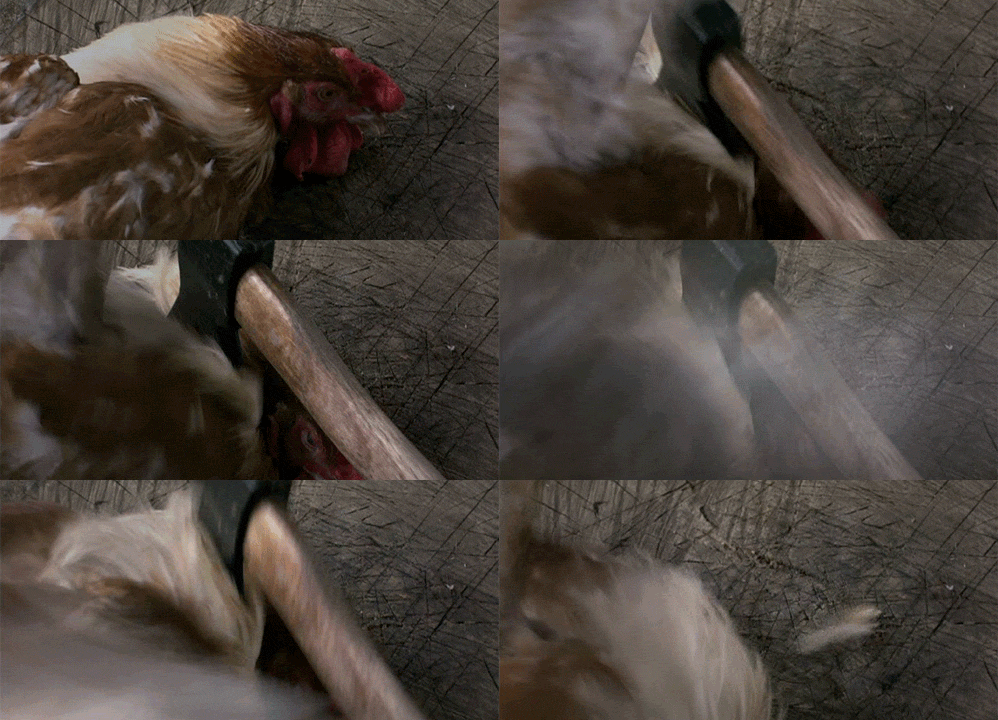
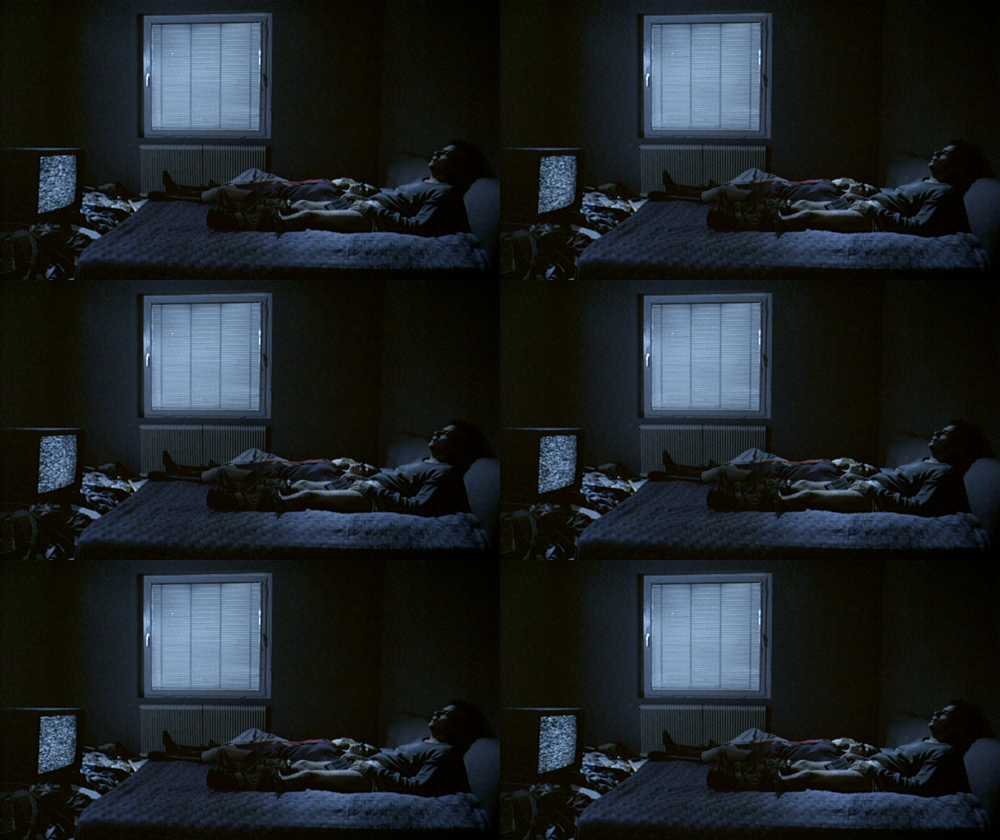
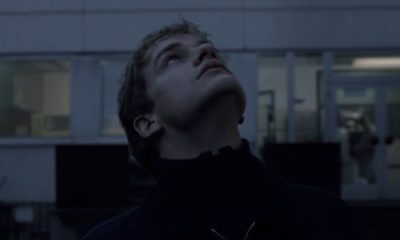
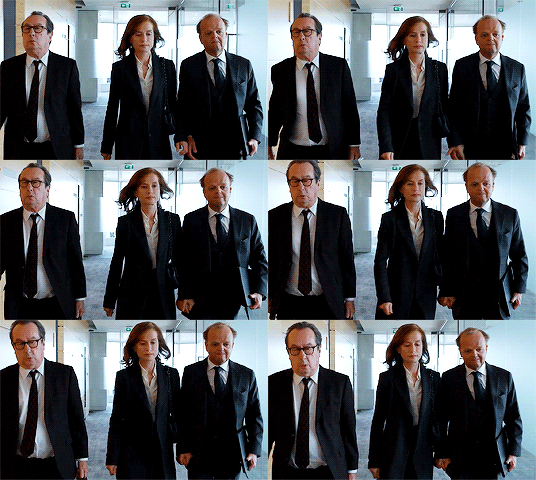
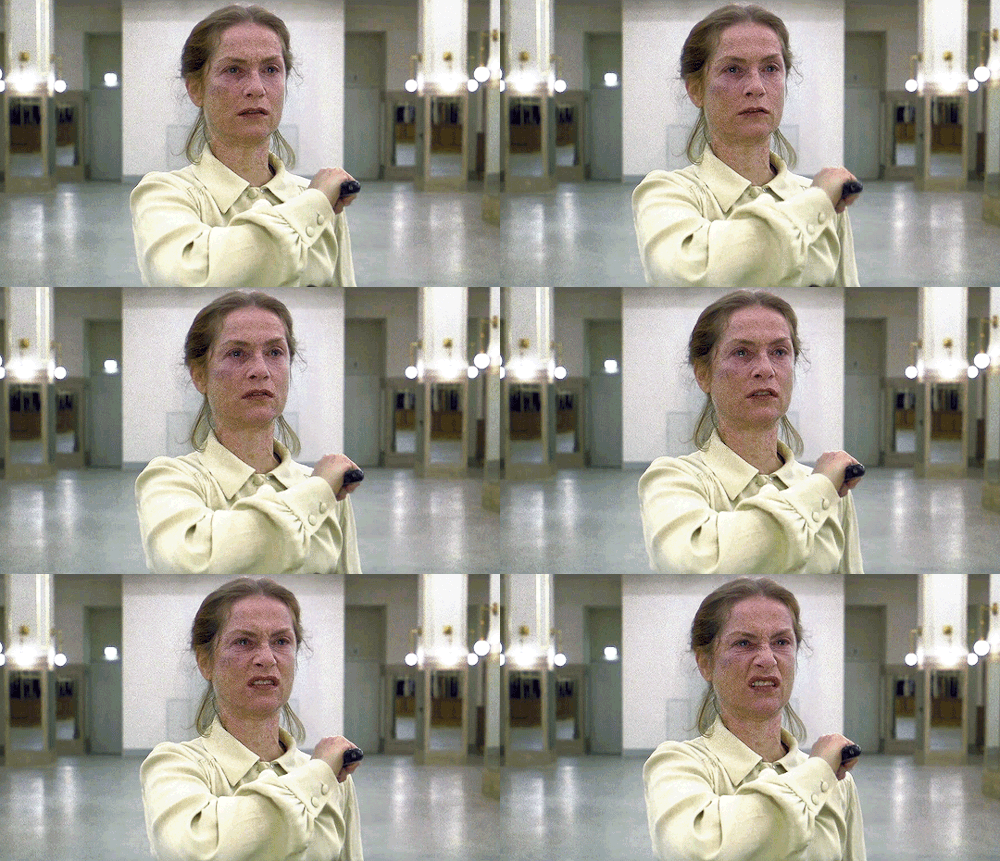
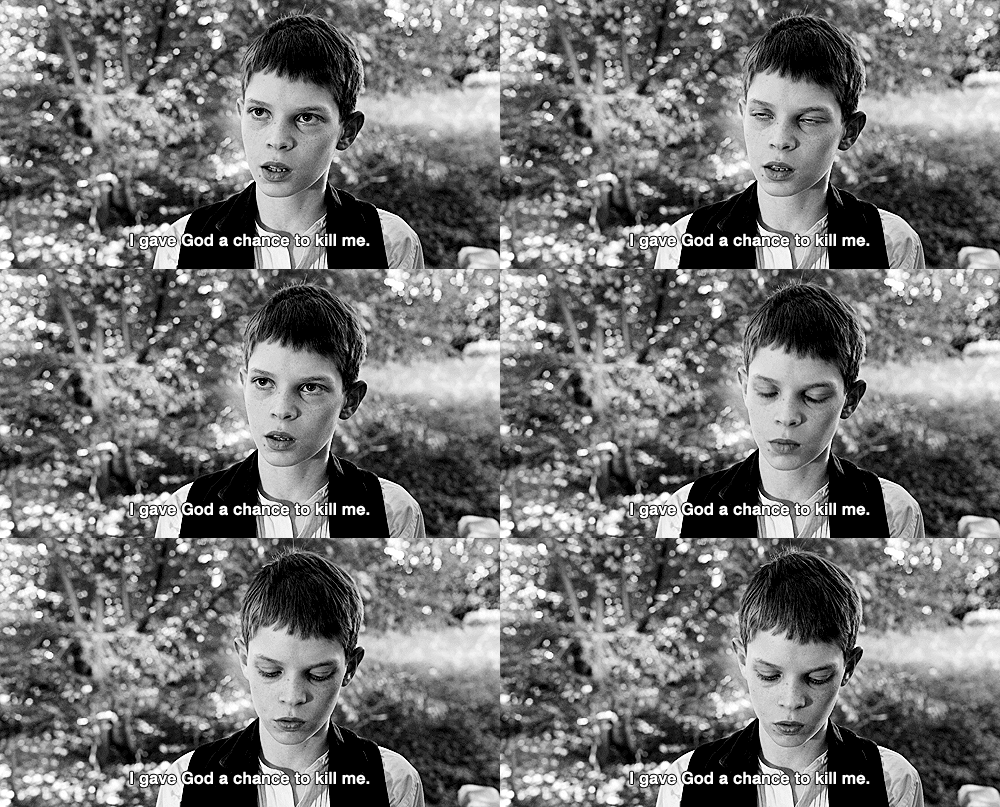
___
Further
Michael Haneke @ IMDb
Where to begin with Michael Haneke
Michael Haneke, The Art of Screenwriting
Michael Haneke @ MUBI
Michael Haneke @ Twitter
Michael Haneke’s Harrowing Excavations Of Modern Society
Michael Haneke @ letterboxd
Book: The Cinema of Michael Haneke
Michael Haneke @ No Film School
Michael Haneke Interview: Uncut
Book: A Companion to Michael Haneke
A View to a Kill: Michael Haneke’s “Cache”
Michael Haneke: ‘I use the internet, but I don’t have time to waste on social media’
Michael Haneke • Great Director profile
Michael Haneke assesses his oeuvre
Michael Haneke Talks ‘Happy End,’ Dangers Of Social Media, Immortality & More
Michael Haneke interview: the master of misery cinema on selfies, Snapchat, and ‘the despair that comes after the tears’
A Minute With: Michael Haneke
Michael Haneke: The Intermedial Void
Michael Haneke: ‘I hope all my films are obscene’
Michael Haneke Goes Cruelty-Free With Amour
Michael Haneke by Lawrence Chua
The Conversations: Michael Haneke
_____
Extras
MasterClass with Michael Haneke 2017
Les Génériques de Michael Haneke – Blow Up – ARTE
Michael Haneke with Monika Schärer at the ZFF Masters
Haneke on How to End a Film
____
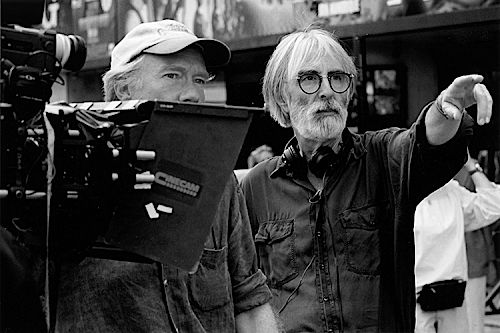
Interview
In our first interview 20 years ago, when The Seventh Continent came out, the question of religion took up quite some space. You talked a lot about Jansenism, Pascal, and Bresson, for instance. And in later years, theologians have engaged with your work in books and conferences. Nowadays, you rarely talk about such issues, but The White Ribbon is a film that directly tackles religion—in its less transcendent aspects, of course.
I don’t mind this approach to my work, but I am not a religious filmmaker. Not at all. The Seventh Continent is a much more existential film than The White Ribbon, which deals more with the surface of religion, its negative political side; the question of God is not raised at all. No religion automatically spawns terror, it’s always the churches and people who use the basic religious needs of others for their own ideological ends, in conjunction with education and politics. Faith per se is something positive; it generates meaning. I for one have no religious faith anymore. Tough luck! Because if you do, you have a different, more contented view of life. For the Jansenists, the existence of God survives in his remoteness or unavailability. You can say that this is only wordplay, but it’s closer to one’s sensations than a purely rational explanation. You can rationalize and explain away the feeling of being overwhelmed by nature, for instance, but the feeling remains.
You already mentioned that you were baptized as a Protestant, but you’ve also told me that you grew up without seeing much of your father and that you were educated by three “mothers” in cozy Catholic surroundings—which you disliked. Your upbringing must have been quite the opposite from the pastor’s kids in The White Ribbon.
Since puberty, I‘ve always defined myself by taking a certain distance. I see it even in everyday conversations. That’s also why I’m not good at accepting accolades. How should I say . . . As soon as a majority takes shape, I’m against it on principle. It’s instinctive. Whenever people agree on everything, I get aggressive. At school, I didn’t go to Catholic religious instruction—we had Protestant instruction once a month, and I enjoyed being different from all the others in my class. I never liked being slapped on the back, and I don’t want to do the back-slapping myself, either. I was a loner as a kid and I’ve remained that way. I’m not especially proud of it, of course, it’s just a fact.
In the reception of your films, violence and its media depiction are often discussed as your major theme. But there may be a larger term that defines your interest better and that includes violence, namely the notion of lovelessness. It’s also at the center of the new film.
Doesn’t all dramatic work deal with this? Chekhov at least, who is the greatest dramatic writer next to Shakespeare. He is so heartbreaking in Uncle Vanya, the way he presents carelessness and the desperate longing for a love that, in the end, one is unable to muster anyway. And it’s also what’s prevalent in daily life, the feeling of a lack of love that everyone is afflicted by.
But since the fetish of love in all its variations has been such a core element of middle-class ideology for two centuries, it’s not surprising that the great artworks of this same era regularly uncover the actual lack of love in bourgeois relations. It’s an important type of social critique, and I see your films as part of this tradition—even though you don’t tend to view them as explicit social critique.
Well, I’m certainly a part of bourgeois culture, and I do view the society I live in as pretty loveless. In The White Ribbon the theme probably presents itself more pointedly, almost in model form, because of the historical distance between the story and ourselves. But it’s not limited to works from the past two centuries. I think that poems or artworks from earlier times appear to us through our own framework. You read or hear something that was made in the 17th century or in antiquity and you draw it toward you. Otherwise we wouldn’t be moved by so many creations from the distant past. There is a continuity of certain themes that can’t be dismissed, even if the forms of social life and artistic expression undergo massive changes.
I’m interested in the topic of education and its representative in The White Ribbon, the teacher and narrator of the film. In many ways he departs from the rigidity, cynicism, or brutality that the other figures of authority often show—the pastor, the doctor, the steward. The teacher is the only male character who really asks questions, almost like a detective, and he’s also the only one who is allowed a genuinely sweet love story. But we never really see him in his job, teaching things to the pupils or bringing some enlightenment. It’s almost as if he becomes part of the repressive system by default, his potential as an alternative figure not fully realized.
Yes, of course. On the one hand he is a bit of an outsider from the start. He’s a counterweight in the whole construction, someone who takes a distance and has his doubts. Teachers often play this role. Look at how Wittgenstein practiced his job as a schoolteacher—he was in direct conflict with the small community where he worked. I also remember one or two teachers from my own childhood who were real idealists. On the other hand, he’s a bit of an opportunist sometimes, for instance when he echoes the pastor’s authoritarian stance toward the pupils. He’s not fully up to snuff in terms of acting as an alternative. To me there are no completely positive or negative characters in the film. The pastor is not evil either, he’s really convinced of what he does. He really loves his children. That’s the horror of it. It was normal to beat one’s kids. When he tells them, “I won’t sleep tonight, because tomorrow I will have to hurt you,” it sounds cynical to our ears, but I think it’s better to believe him. It’s not very interesting to see him as a sadist or as a grotesque mental case. If these people had just been perverts, this kind of behavior wouldn’t have had such broad effects. And I’m not sure if any other system of education is inherently better. It’s always about the individual pedagogical impulse: do you do something just to exert your authority, or to help the other person find his or her way in society—as shitty as society may be. Each educational system is only as good as the person who acts in it.
As a professor at the Vienna Film Academy, you are also a teacher. Do you feel an obligation beyond the professional side, beyond teaching filmmaking, to educate the students in a more general sense?
I guess I’m a relatively demanding teacher because I think it’s no use treating students with kid gloves. At the Academy, they are working with a net anyway, so I try to quickly raise the requirements to prepare them for the professional life. I also try and give them internships on my shoots, but it can’t be more than two per film. And usually I don’t mix with the students on a personal level. I mean, I give advice whenever they call me, but I don’t go out for a beer with them. I don’t believe the role of “best buddy” is something that a teacher or parent should aspire to. I think kids hate that, they find their buddies at school, but in a father or teacher they look for a role model.
After the Cannes premiere, several critic friends asked me which literary work The White Ribbon is based on. But it’s an original script, of course. Can you describe the tone that you were aiming at? What kind of writing were you thinking of when working on the dialogues and the narration?
In terms of the formal mode, I decided on two things early on: to do the film in black and white and to have a narrator. Both are means to create distance and avoid any false naturalism. It’s the memory of someone from that era, so I wanted to find a language adequate to this period. I wanted to write from the feeling of how I had experienced this era through literature. Theodor Fontane is probably the closest I can think of. His writing seems representative. I like this measured language—it gives a kind of dignity to the subject and to the reader, it doesn’t jump at you. It’s gentle and discreet.
It’s pretty daring, I think, to introduce such a strong narrator. Ten or 15 years ago, this might have been deemed old-fashioned, but in today’s film landscape it feels like a radical gesture.
That’s why I felt it was legitimate to do it, and why it was fun. It’s like a slap in the face of what is seen as up-to-date and necessary in storytelling today. And it’s an attempt to provoke a certain attentiveness or thoughtfulness in the viewer that the current narrative models in film no longer provoke, even if they are very refined or complicated. There are also people in music and literature who create highly advanced works and at some point return to a “classicist” mode.
Apart from the creation of distance, are there other reasons for the choice of black and white?
There’s a very important practical reason, too. You need to bluff when making a historical film, because you never find original settings that have remained unchanged. You always have to add to the locations and structures that you find, which is much easier if the end result is in black and white and not in color. If you drive through the former GDR, for instance, you see that the houses have very different colors than ours, made by a different industry that produced different chemicals. Each era and each region have their own color that dies with the specific companies that produced it. I rarely see historical films that seem to get it right in color.
What are the positive exceptions?
Patrice Chéreau’s Queen Margot I find terrific—he manages to create a historical climate for which we have no photographic sources, of course, but which I find fully credible. At the same time, it becomes operatic. Visconti managed to do that too, even better.
So far, the technical side of filmmaking has not been a major topic of discussion about your work. But the look of your films seems to become more important, with Time of the Wolf, for instance, and especially with the new film.
For me, it’s always important, but the more experience you have, the closer you can follow what the cinematographer does. For instance, I always fight for less light when we shoot! In this case we shot on color film, because if you work with candles and oil lamps a lot, you need extremely light-sensitive material, which is unavailable in black and white. It became a black-and-white film only in postproduction. I had a fantastic crew—Christoph Kanter, my art director who I’ve been working with for ages, Moidele Bickel, the costume designer, whom I hired because she had done the costumes for Queen Margot—the best I’ve seen in cinema. She’s a master in creating the necessary patina, clothes that look truly worn. I don’t think a director needs to be proficient in all these crafts, cinematography, set design, etc., but he needs the ability to quickly perceive all details and proportions and see if something is wrong.
Today, digital postproduction also allows you to “fix” things that weren’t physically possible or went wrong on the set.
The only thing that counts is the result, in its effect on the viewer. And if the viewer is being respected in the work, then all kinds of artistic or technical intervention are not only legitimate, but should be required.
Would it be conceivable for you to make a computer-generated film in the manner of Pixar, provided it were possible to render fully realistic, lifelike images of humans?
Absolutely. It could be total cinéma d’auteur. But the pleasure and the value of collaborating with others, primarily with the actors, would be gone. The kind of tension that you always look for, between a written part and a real person who inhabits that part with all the additional qualities that are unique to this actor—that element would be gone.
_____________
14 of Michael Haneke’s 24 films
_____________
The Seventh Continent (1989)
‘The Seventh Continent is the work of a developing artist (keeping in mind, of course, Haneke’s years in theatre and television), but the film dates extraordinarily well. Its major themes find more focused exposition in the extraordinary La Pianiste, a work adapted from another source but unmistakably Haneke’s in its major concerns. Like the devastating news account from which the film is drawn, The Seventh Continent is a horrendous announcement of the demise of a civilisation.’ — Christopher Sharrett
Trailer
the entirety
Michael Haneke discusses The Seventh Continent
_____________
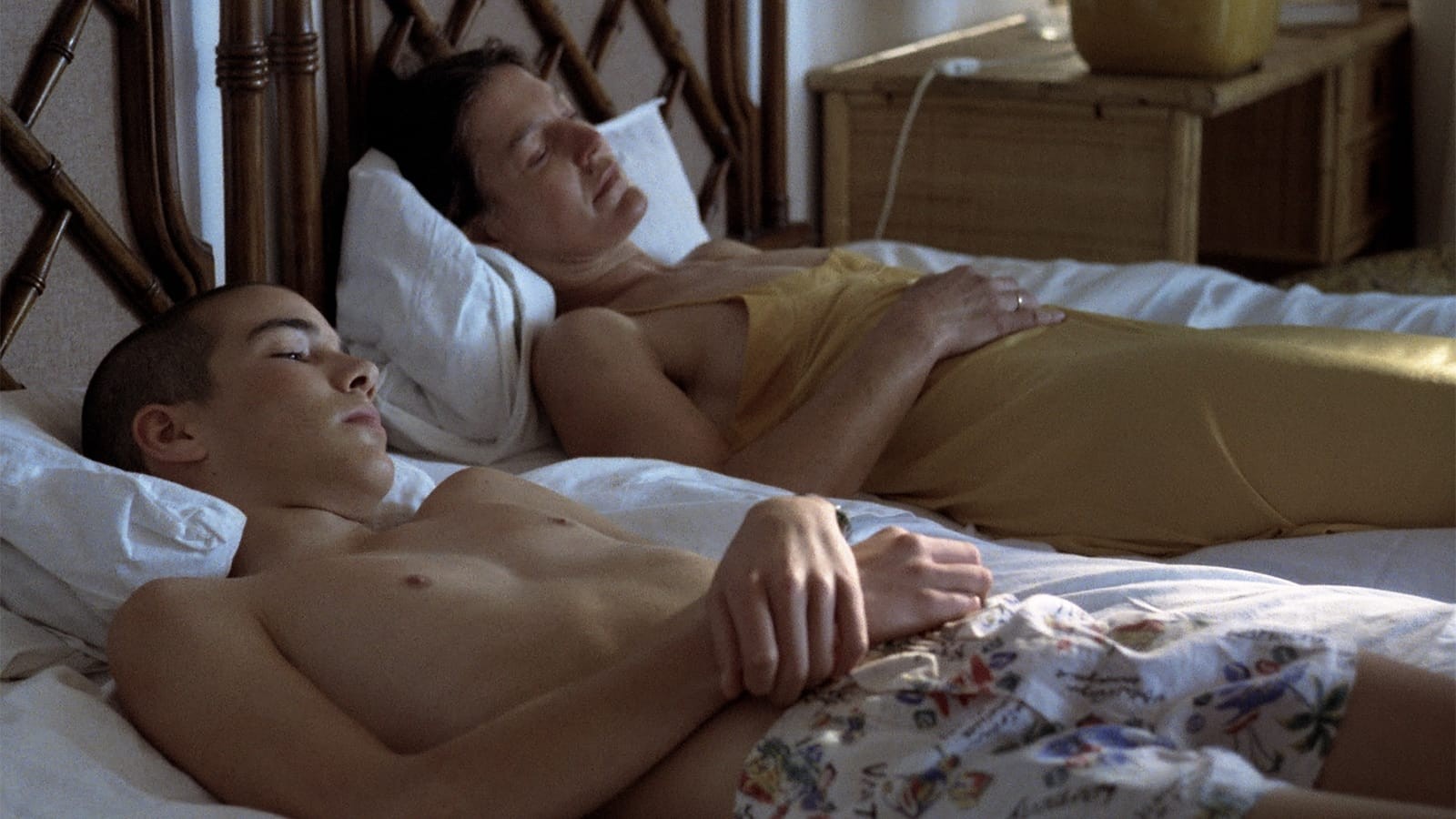
Benny’s Video (1992)
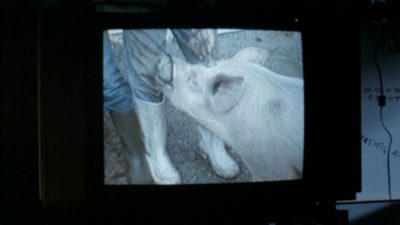
‘From its startling opening, featuring video footage of a pig being slaughtered with a bolt gun, it’s clear that Michael Haneke’s second feature is unlikely to pull its punches. After all, in his previous film, The Seventh Continent (1989), Haneke featured a family locking themselves in their own house, destroying it out of sight of the prying eyes of the world and, when there is nothing left, finally despatching themselves. If that film satirised aspects of Western middle-class life, Benny’s Video had its sights aimed at the way we consume media and what we regard as entertainment.’ — CURZON
Trailer
Excerpt
______________
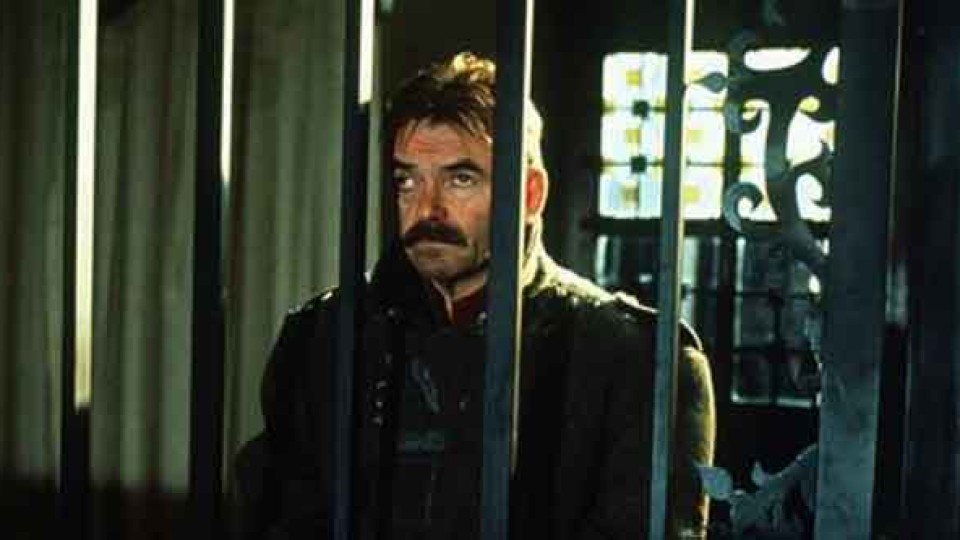
Die Rebellion (1993)
‘Andreas Pum lost a leg and won a medal in the war. Even after the general breakdown he still maintains a firm belief in the legitimacy of order and the authority of the state. When he himself gets caught up in the wheels of the state apparatus, he begins to reconsider his values. Too late. Dying he renounces his god.’ — AFC
______________
71 Fragments of a Chronology of Chance (1994)
‘This cerebral Austrian mystery, by avant-garde director Michael Haneke, will disturb those viewers with the patience to wade through it. The film begins with a grisly mass killing. It was Christmas eve 1993 and a 19-year old student inexplicably murders several people and then kills himself. The fragmented film flashes back to October 12 and then progresses toward the fateful night. Throughout the film many characters appear and suddenly reappear. A homeless teenaged Romanian exile roaming Vienna’s streets and begging provides continuity. Each fragment begins with a newscast that functions as a surreal Greek Chorus One shows footage of the war in Sarajevo, and the other is a story about Michael Jackson.’ — Sandra Brennan
Excerpt
the entirety
_____________
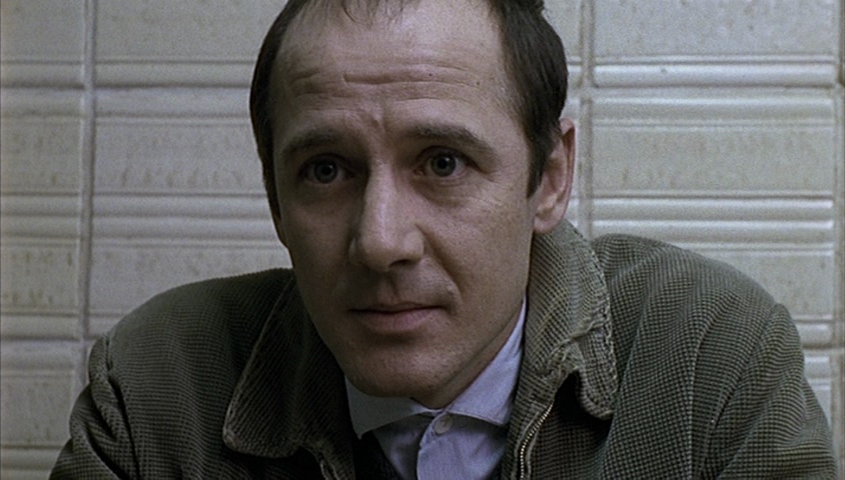
Das Schloß (1997)
‘Existential drama directed by Michael Haneke and adapted from the novel by Franz Kafka. Land surveyor, K. (Ulrich Mühe), arrives at a small village that houses a castle. Though he was invited to the castle by officials, authorities refuse to allow him to enter and befuddle him with increasingly bizarre bureaucratic obstacles. K. grows perplexed by this and ultimately feels alienated from the society he has entered into.’ — Blackwell’s
Excerpt
_____________
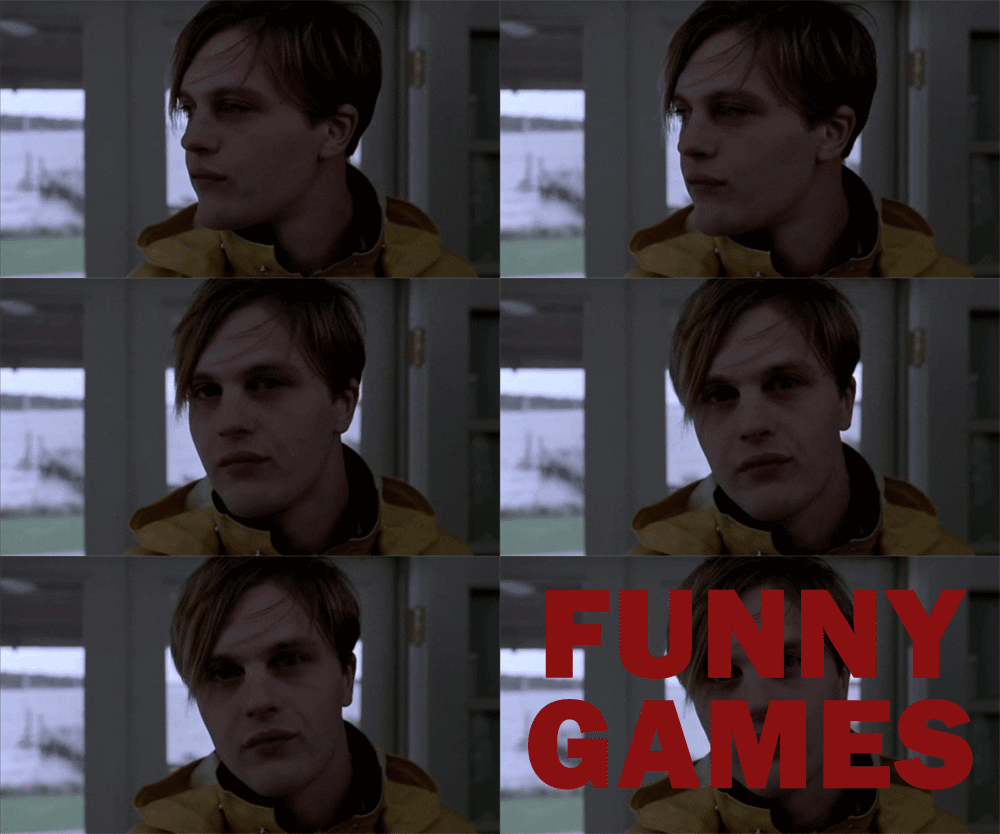
Funny Games (1997)
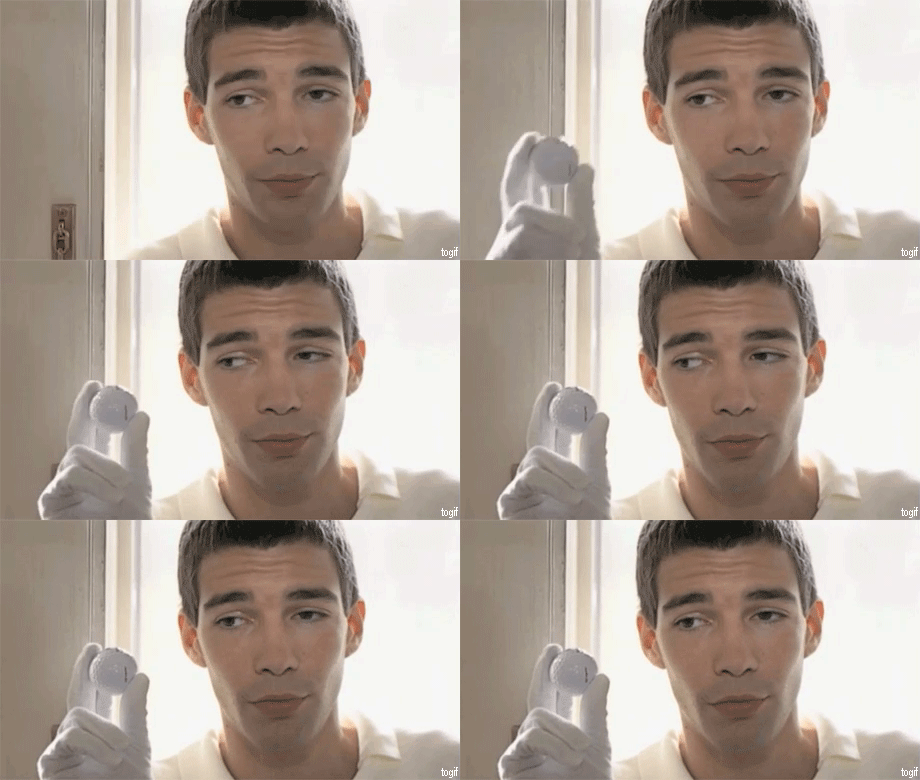
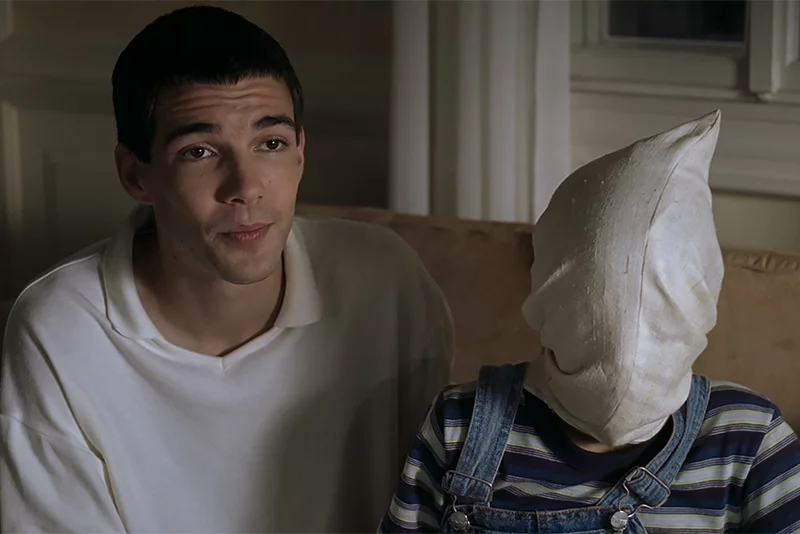
‘Michael Haneke’s most notorious provocation, Funny Games spares no detail in its depiction of the agony of a bourgeois family held captive at their vacation home by a pair of white-gloved young men. In a series of escalating “games,” the sadistic duo subject their victims to unspeakable physical and psychological torture over the course of a night. A home-invasion thriller in which the genre’s threat of bloodshed is made stomach-churningly real, the film ratchets up shocks even as its executioners interrupt the action to address the audience, drawing queasy attention to the way that cinema milks pleasure from pain and stokes our appetite for atrocity. With this controversial treatise on violence and entertainment, Haneke issued a summation of his cinematic philosophy, implicating his audience in a spectacle of unbearable cruelty.’ — The Criterion Collection
Trailer
Excerpt
______________
Code Unknown (2000)
‘This isn’t necessarily Haneke’s best film (though it’s certainly in the running), but it’s definitely his least hectoring and (befitting its title) his most mysterious. Indeed, it takes a long time just to determine what Code Unknown is about, as its multiple narratives appear largely unrelated. Characters from one story occasionally encounter those from another, but not in the usual way that suggests everything is connected—it seems more like a means of imposing some small degree of structure on what’s basically a series of non-comedic blackout sketches organized around a common theme. Eventually, it becomes clear that Haneke is interrogating the idea of intervention, as it plays out between lovers, between strangers, and between nations. That may sound tediously academic, but Haneke’s skill at orchestrating almost unbearably visceral confrontations makes it anything but.’ — AV Club
Trailer
Excerpt
Michael Haneke on Storyboarding CODE UNKNOWN
______________
The Piano Teacher (2001)
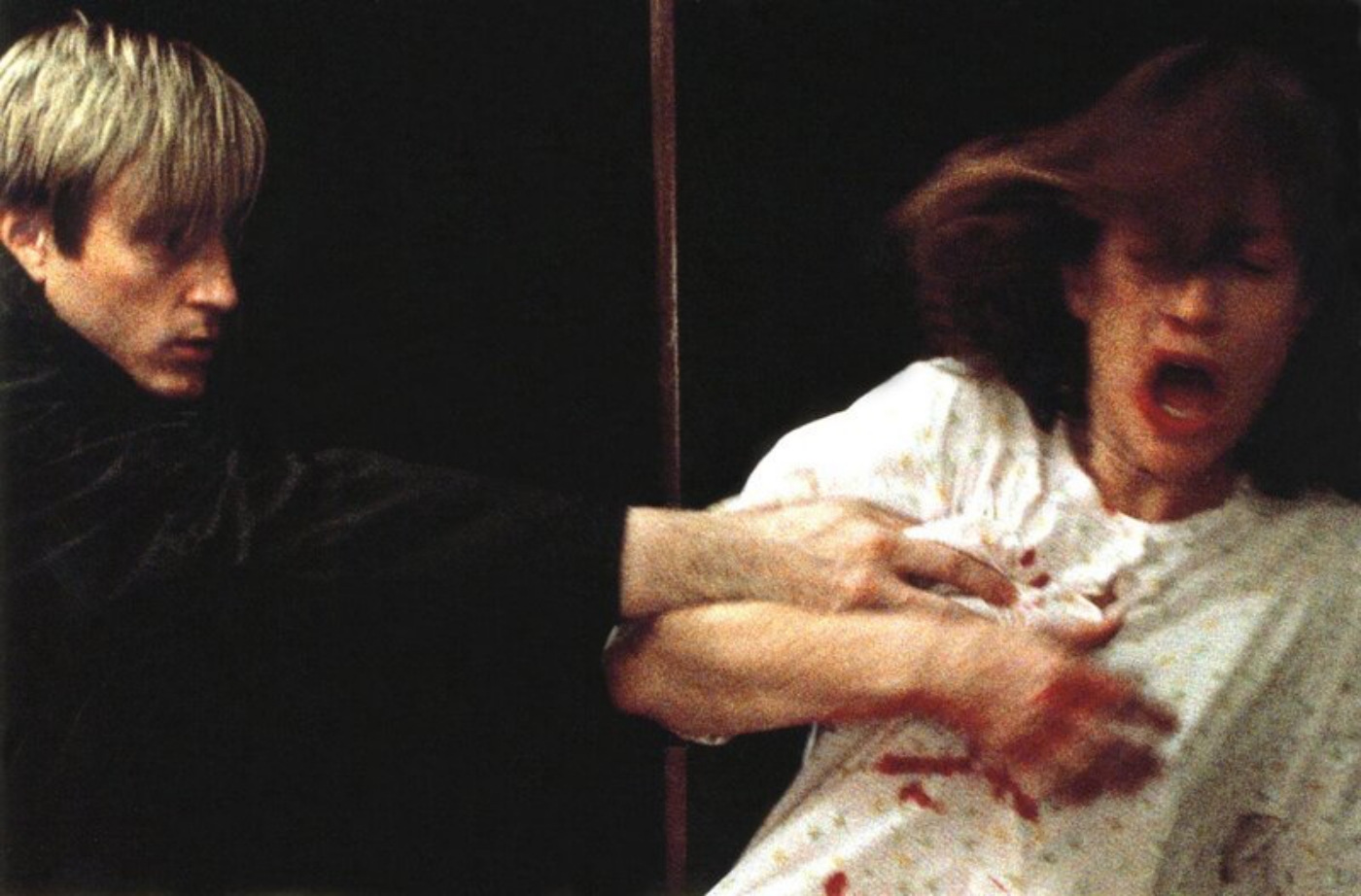
‘The films that have followed The Piano Teacher have referred more and less directly to problems of postcolonialism and migration. In some, like Time of the Wolf (2003) and Caché (2005), these are the explicit focus. In others, like Amour (2012) and Happy End (2017), the fragility of the European Union stands in the background—in immigrant workers waiting to be paid; in refugees flooding the city of Calais. Using the same actors and even variations on the same characters again and again, Haneke inscribes these problems within the family, giving his corpus a quality that critics have called taxonomic: he examines the possibilities of contemporary (haute) bourgeois life in an increasingly volatile political reality. And the disaster is ongoing.
‘Yet The Piano Teacher mostly eschews historical and sociological questions. Instead, it stakes its claim on the continued vitality of an endangered European tradition—not classical music but the art cinema itself. Positing a masochistic spectator who wants to suffer through a film like this one, it makes a bid to turn us into teachers—or its transmitters. The paradox is that it works, and that this may mean accepting, as Erika muses in the novel, that “art is no consolation.”‘ — Moira Weigel
Trailer
Isabelle Huppert Discusses “The Piano Teacher”
______________
Time of the Wolf (2003)
‘I originally wrote it as a science-fiction film, and now it’s set in the present. The audience no longer has to be prepared for the possibility of catastrophes happening. I was working on the screenplay for a different film when I was bowled over by 9/11, and I thought, “Something which has a lot in common with Time of the Wolf is happening here.” It was originally supposed to be my first project with Isabelle Huppert. Despite her support and that of the now-deceased Toscan du Plantier, financing the project wasn’t possible: too expensive, too complex, not a lot of fun, in other words difficult to sell. Thanks to the success of The Piano Teacher, backers were prepared to invest more money, and because of the material’s unfortunate currency due to 9/11, it suddenly became possible.’ — MH
Trailer
Excerpt
THE MAKING OF
_________
Caché (2005)
‘The crux of the problem in Hidden, as it often is in the work of Haneke’s artistic soul mates, revolves around questions of control, of power and emotional manipulation—more precisely, who is behind the surveillance tapes and what was their motive in making and sending them. Imagine the scenario of Rear Window re-presented from the perspective of wife-murderer Thorwald rather than voyeur-sleuth L.B. Jeffries (minus the resolution, of course). Except in this case the plaintive cry delivered by Thorwald when he enters the lair of his eager tormentor—“What do you want of me?”—is delivered by guilt-ridden investigator Georges to a hapless victim, when it should be directed inward at the deceptions propping up his fatuous sense of self. Once again, this is typical film noir turf implanted with the fleurs du mal of contemporary crisis. We feel insecure, stressed, threatened by elusive forces whose connection to us as individuals is obscure. Yet we can’t quite shake rumbles of complicity, of having acceded to something for which we will ultimately be held accountable and from which our unprecedented standard of living cannot protect us. It is this heart of darkness that beats beneath the icy surface of Haneke’s films. An unwelcoming site, we avoid it at our peril.’ — Paul Arthur
Trailer
Excerpt
Excerpt
________________
Funny Games (2007)
‘Regardless of what version you are watching, Funny Games is a painful watch, acting as a rather soulless one hour and fifty-minute essay in violence on screen and how we need to change our ways. It is one of the few films I have watched in my lifetime that actively positions itself against the viewer and takes every conceivable opportunity it can to anger you. Then again, maybe it was not supposed to be enjoyed in any conventional way, especially when taken for what it is: a filmic experiment into our enjoyment of violence and nothing more.’ — David Monaghan
the entirety
_______________
The White Ribbon (2009)
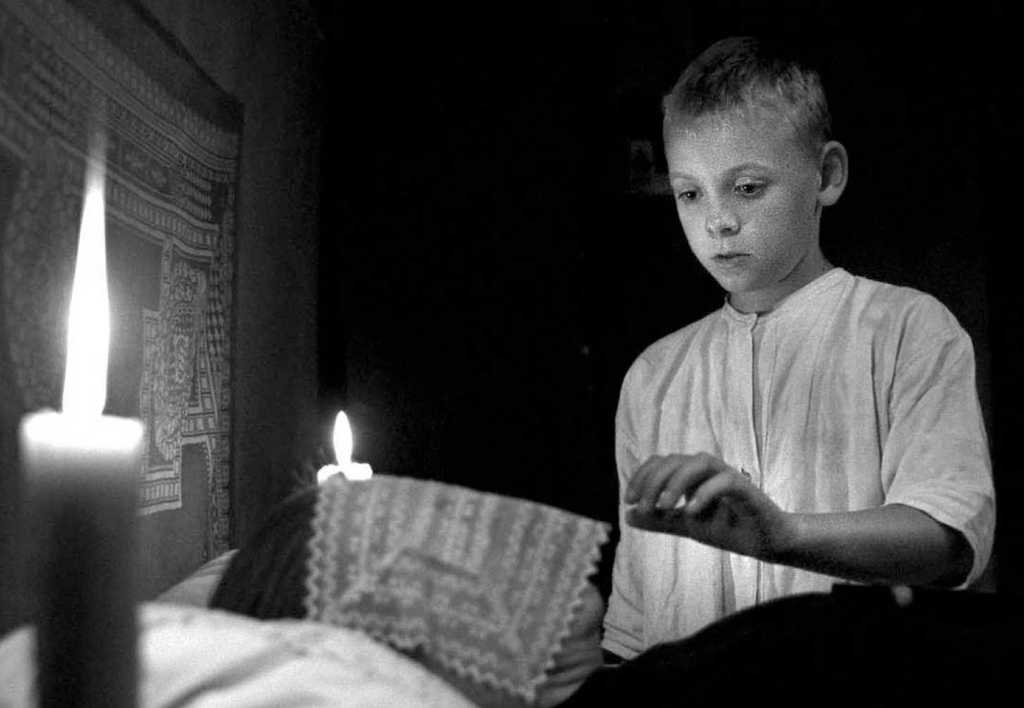
‘I always like to feed the viewer’s distrust of what they’re shown in film. That’s expressed in The White Ribbon solely when the narrator says, “I don’t know if all the details of the story I’m going to tell you are true, a lot of it’s hearsay, etc.” The film’s story is told in a contradictory way – it’s not that we see only what the narrator was actually able to see. There are also scenes where he wasn’t there. That’s my wink at the beginning, to make it clear that we’re not dealing with a factual account, but someone’s construct made in an attempt to reconstruct the truth. The film never claims that “This is how it was.”’ — MH
Trailer
Excerpt
_________
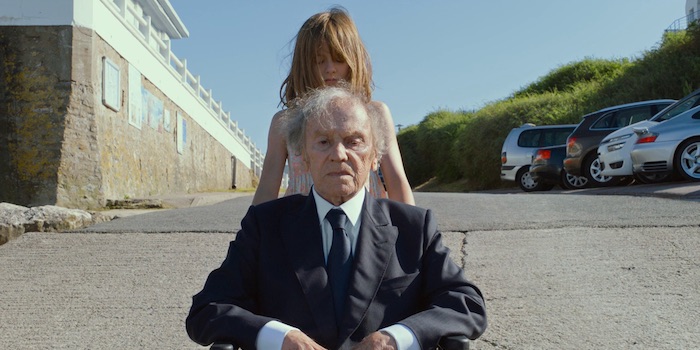
Amour (2012)
‘Amour will, I believe, take its place alongside the greatest films about the confrontation of ageing and death, among them Ozu’s Tokyo Story, Kurosawa’s Living, Bergman’s Wild Strawberries, Rosi’s Three Brothers and, dare I say it, Don Siegel’s The Shootist. It’s worthy of being discussed in the same breath as the novels and plays of Samuel Beckett, of which Christopher Ricks wrote in his bitingly perceptive Beckett’s Dying Words: “We know about our wish to go on being, we human beings, our wish not to die. Samuel Beckett, who rigged nothing, fashioned for himself and for us a voice, Malone’s, at once wistful and wiry: ‘Yes, there is no good pretending, it is hard to leave everything.’ These are the accents of a consciousness, imagining and imagined, which braves the immortal commonplace of mortality.”‘ — Philip French
Trailer
Excerpt
Excerpt
______________
Happy End (2017)
‘Happy End unfolds in short, oblique scenes, including a number of video recordings whose authorship is either mysterious (à la Hidden and its unlabelled videotapes) or purposefully disembodied (as in security footage of an industrial accident). Context is absent; exposition is non-existent. This return to form(alism) is self-conscious, and one way to read – and quickly dismiss – Happy End is to characterise it as a greatest hits album of sorts, with all the old Haneke classics, from sociopathic teens and monstrously self-involved bourgeois parents to class warfare, racism and assisted suicide in one handy tracklist. Such a characterisation, while not inaccurate, ignores the subtle but significant shift in the material towards a lighter, though hardly benign, seriocomic tone.’ — Adam Nayman
Trailer
Excerpt
*
p.s. Hey. ** jay, Hi, jay. Happy that you liked Hudinilson Jr. archive, and yes. Other than the heat outside — well, and inside too — I think I’m okay. You’re in the hospital? Shit, I hope you’re doing okay and seriously not too hobbled. At least they have AC, presumably? Salinger is such an impeccable prose dude. No pedal usage? Uh, maybe ragtime? But, no, I wouldn’t wish that on you. Swiftest recovery, pal. xo. ** Carsten, Haha, I have straight porn here every once in a while. You just have to keep your eyes peeled. There was some place in Spain where it went almost totally dark for 59 seconds or something. I saw it on the news. I don’t remember where though. We didn’t even get eerie here as far as I could tell. But then my idea of eerie might not be everyone’s. Paris isn’t empty, it’s just that its makeup is different. Tourists prevail. They’re nice though. They’re mostly wide-eyed and full of wonder. Although maybe not yesterday and today because the heat is giving Paris an uncharacteristic forbiddingness. I did see that skater eclipse vid. Very nice. Skaters always improve everything. ** Adem Berbic, Excuse me? No, I don’t think my oeuvre could be called that, sir. I prefer ‘dick’. I was going to say that all the crystal fuelled writing I did went straight into the trash can. Nothing salvageable. Politekid put a bit of a damper on the ‘Cleansed’ production, but maybe you shouldn’t read it if you haven’t. ** politekid, Hi, O. Your book is so beautiful. It’s going to be on the blog soon, heads up. Thanks for the report. I have to say that ‘people reaching their arms out behind them in slow motion’, etc. is pretty much the epitome of bad performance across the board for me, so that’s enough to make me glad I’m not over there. And that teaser you shared makes it look absolutely horrifying. I wouldn’t last ten minutes. Directors who compel their performers to do things like that are condemning their productions to death IMO. I’ve never seen a Kane IRL production. I feel like any production of her stuff would seem stagey and unnecessary, but I don’t know. But the Wes Anderson show sounds fun. I think we had maybe the same one here, but I missed it. I’m going to think about your thought that Kane’s romantic side is “cloying”. There’s sense in that, I think. Buddy, so nice to see you! ** _Black_Acrylic, Thanks. Everyone, if you still have some fucks to give or rather intake, _Black_Acrylic adds this one. ** laura w., Hi. Can you believe I’ve never listened to Sufjan Stevens? Isn’t that weird? Should I start with the one you pointed out? My feed has a lot of Araki in it too right now. Maybe because I’m friends with the guy who wrote ‘Mysterious Skin’? Well, when I announced yesterday’s post on Insta I called it ‘F*cks’ instead of ‘Fucks’ to be safe. I don’t think Insta has censored any of my posts yet. I’m on Facebook too, and they remove my posts all the time. No one and nothing in the word needs to fuck off more right now than the heat. Well, except for Trump and Netanyahu and that lot. ** Steve, I was inside for the eclipse, so I don’t know. I did see pix of crowds in the Paris parks wearing protective glasses, so I guess so. Okay, need to test the Charli album clearly. Don’t think I’ll get to LA until October. They usually don’t announce the year’s array of haunts until around mid-September, so I’m just counting the days. ** HaRpEr //, It was horrid here yesterday. And last night especially. And today it’s going to be worse. Oh my god. I’ve read a couple of Kathe’s books, but I don’t remember their names at the moment. Options there are, yeah. No need to go there until the time comes if it ever does, for sure. But if it goes that way, it’s not a sign of failure in any way is what I mean. ** ⋆˚꩜。darbbzz⋆˚꩜。, Hey! I can’t remember Sunday, I’m sure it was a lot better than yesterday, which was like being cooked alive. It sounds like things with your crush go well and confusingly and excitingly which is how crushes go no matter what. Yes, about confronting your friend, I’m glad it worked. I kind of figured it would. I have a really good memory, and I’m always surprised when people don’t. So I don’t know. ‘Bleeders’ sounds very cool. I like the still. I’ve seen and do really like ‘Castration Movie’, yes. French Extremist film recommendations … let me think. I really like ‘Enter the Void’, for one. I’ll go get bombed in the brain pan by Brain Bombs, thank you! ** Diesel Clementine, I’ve been feeling stale and muggy too over here, but I’m pretty positive it’s just the awful heat. No, I’ve never seen ‘Skins’. I, like, never watch TV, or just very barely. Well, thank you for reading and thinking so thoroughly about ‘MLT’. Oh, gosh, if you’re arriving in Paris today, I’m so sorry for the nightmarish atmosphere. But, yes, hope to see you in many case. ** Right. For whatever reason I have restored an old post regarding the excellent and divisive filmmaker Mr. Michael Haneke for you today. If I don’t die of heatstroke in the meantime, I’ll see you tomorrow.


 Now available in North America
Hey Dennis! Haneke must be the best living director, haha. I think “White Ribbon” is his best, the narrator is very compelling. I think unreliable narrators normally don’t work on film, because you have to lie on levels beyond omission (in the way that you can’t purposefully omit the emotions or events of a scene that don’t match the narrator’s perspective), but I think that film works really well, maybe because all of the emotions the characters feel are so supressed. Hidden is incredible too. Both of my parents are Haneke obsessives actually, so I watched a ton of his films as a kid, although the only one I really “got” was Funny Games.
Yeah, nothing serious about my hospital visit haha, just a sort of irritating aftershock of me not really taking my health seriously growing up. It has been great, though. Lots of time to read and lie around, which is very rare for me – was given the week completely off, which is lovely of my work. Agreed about Salinger. Whoa, I hadn’t considered ragtime… that’s actually a really great idea haha, thank you! Hope things are cooling down on your end, adios!
I was being facetious. Well, your description of it had some sort of value to me. I skipped Oscar’s spoilers, so I’ll go in and see. Haneke the Jansenist makes sense. Enough sense that I don’t know why I never joined the dots.
Don’t like him. Sorry. I don’t accept real animals being killed for art and he does it damn near every film. When it’s a filmmaker recording something that was gonna happen anyway, a la Wake in Fright or Apocalypse Now that’s one thing. But for the film, no. And then to make all these films condescending to the audience and their supposed complicitness.
My 2 cents = I really disliked the moralising of Funny Games but loved the Piano Teacher. Maybe I’m just falling into MH’s trap? Have to give the guy credit if that is the case,
Got a message from my brother last night: “Really enjoying the Shards!” So it seems my 1-person campaign to push the show is finally getting somewhere. Episodes 3 and 4 this weekend and I’m expecting big things.
“Funny Games” the English version is the most scary film experience for me. I saw it alone in a Saint-Germaine-des-Pres theater. I was terrified throughout the viewing. The only saving grace is walking out of the theater once the film is over, onto a Paris street full of life. To this day i’m scared of Michael Pitt, and i like him as an actor. But if I see him walking down the street, I would run the opposite direction, or go across the street. And his partner-in-crime is equally scary as well. He’s such a major filmmaker now, that the first thing I think of when I see his name is pure fear. Thinking of which, I wonder if Scott Walker liked “Funny Games?”
I’ve only seen Funny Games, Piano Teacher, and Benny’s Video but there is so much there that I don’t feel deprived and only excited that there is more Haneke out there. I will have to cross my fingers and hope it comes up in the shuffle (all of them were added in the pool).
Benny’s Video in particular is terrifying and real to me. The question I ask myself throughout my consumption of culture is: what makes it so addictive and why do I obsess? What makes something “interesting” besides it being completely bizarre on some level?
In terms of animal cruelty (in response to Khaled) I remember a clip of John Waters asking “Do you know how many chickens you eat in a year?” And he just happened to film one. Not trying to argue just your comment made me think of that RE: Pink Flamingoes.
All the best everyone like Pangloss,
Sam
Yeah parts of northern Spain were in the path of totality, so they went near dark during the eclipse.
I remember liking “Time of the Wolf” & “Hidden” well enough, but wasn’t particularly interested in seeing what came after—which I know are his two Palme d’Or-winning critical darlings. Then I caught “Happy End” on a whim, & again, liked it, but also quickly forgot it. Based on his statements I’m sure this would piss Haneke off, haha. I never thought his films were bad or anything, just not anywhere near as heavy & lingering as he clearly intends them to be. Where do you stand?
The recent European summers are no joke. It’s wearing even me out for most of the day. My pad has AC which is a life-saver but the only place I can smoke is on this ground-level mini-terrace out front, which is west-facing & turns into a furnace between 2 & 8 pm. After every cigarette I come back in drenched. But this zombie state has made me watch more films than usual, so a few words on those:
– The Horse Thief: this was a rewatch, & man, to me it’s one of the few truly great films. Tian Zhuangzhuang’s Chinese-Tibetan film from 1986, it’s about a traditional family out in the wild. People throw the term “poetic” around very carelessly, but this is one of those rare films that invents its own language, one that owes more to poetry & ritual than any cinematic tradition. It features very little dialogue & if you submit to its rhythm, feels like life at its most elemental as experienced in trance.
– You the Living: my first Roy Andersson. One of those instances where I appreciate the style & structure, but fail to connect on a personal level. I think his sensibility & sense of humor just feel very alien to me, & not in a way that pulls me in. I get why you & many other smart folks dig his work, but I couldn’t find a way in.
– Sexy Beast: another rewatch. My idea of sheer fun: Ray Winstone as an ex-gangster frying under the Spanish sun, & Ben Kingsley verbally abusing him out of retirement for the mythical “one last job”. I think this is to me what Tarantino films are to most people. Kingsley’s fascinating in this. He goes completely insane with the dialogue in a way that could tip over into Gary Oldman or Nic Cage excess, but somehow he keeps it tightly coiled & completely controlled. Which is scarier than unpredictable psycho outbursts: this is actually how this guy’s brain works & he doesn’t see anything wrong with it. Some of his monologues are damn near abuse poems.
Hey Dennis, Haneke is a favorite. Cache, Amour, Piano Teacher are all mindblowing. (I think I’ve told my little Amour story here!) Still haven’t seen Happy End, after some mixed reviews.
Rene Ricard could be in one of those Fucks pieces, haha.
I’m following the Esports World Cup chess events. I hear Paris is covered with their posters.
Bill
Hey Dennis, Love this filmmaker! I’ve seen and recommended so many of these films, especially ‘The Piano Teacher.’ I wonder if I’ve seen ‘Benny’s Video’…? Can’t remember. I do remember watching the original ‘Funny Games’ and that film freaked me out for a while. But loved or at least liked ‘Cache,’ ‘Time of the Wolf’….Much of the time what I watched depended on how cool the video store clerks and their tastes. Anyway. Might need to revisit. The heat can definitely fuck off! Take care, Don
Hey Dennis,
Thanks for the post, love Haneke despite only seeing about 3 of his films. Might watch Benny’s Video finally tonight in honour.
My little dog was peacefully, and with sedation and ketamine, put to rest today. We gave her a lovely final few days, and the procedure went down at home, so she wasn’t in a scary environment. Throughout it all, I never left her side, rubbed her back and let her know just how much we all loved her and that she could go to bed and sleep. Haven’t cried yet; bottled it up so I could be strong for her, then strong for my family and deal with the aftermath, and now I think it’s too far deep to come out. Or that if I start crying I won’t be able to stop. It feels so strange having food without her pestering us, or sat up next to me. I think I was looking in her eyes the moment she passed, and I hope she felt loved.
The Criterion Channel added several of Haneke’s made-for-TV films a few months ago. I’ve been meaning to watch LEMMINGS (generally regarded as his best work from this period) and THE REBELLION. I’ve also been waiting years for someone to subtitle his only documentary, OBITUARY FOR A MURDERER. If it hasn’t traveled internationally at this point, that must be his deliberate choice.
I agree with the criticism about Haneke’s use of real animal slaughter, and his films (especially FUNNY GAMES & BENNY’S VIDEO) give off a rather self-righteous attitude, but CODE UNKNOWN, THE SEVENTH CONTINENT and CACHE are masterpieces. Interviewing him was a strange experience because he refused to answer many of my questions. It’s ironic that FUNNY GAMES wound up influencing home invasion and extreme horror films he must despise.
Do you have any plans for the weekend? The air quality is dismal here, although the temperature and humidity are decent. I hope that improves tomorrow and Sunday. I want to catch up with THE SAMURAI AND THE PRISONER.
first of all: steeqhen i’m very sorry to hear about your little doggie 🙁
it would be kind of funny if the current state of my araki-infused feed is actually your fault. also a little more comforting than the idea that meta is listening in on my discord conversations. or alternatively, it really is just the 4k being released. the thing i like the most about the film is that it compressed the story, but i also find the witchcraft of how it was made fascinating, mostly the lengths he went to to protect the child actors from the plot. joseph gordon-leavitt reminds me of keanu reeves in private idaho, except he’s a better actor but with less charisma.
i did notice the asterisk! i feel like instagram moderation is a little more lackidaiscal, but iunno.
ooo, the best place to start with sufjan stevens… i think you might like either illinois or the age of adz? carrie and lowell is my favorite and is i think his actual best album but i like melancholy folk music, obviously. his whole oeuvre is crazy though, you’ll pretty much find everything from like indie rock to indie folk to pop to like crazy experimental shit. the piano teacher having a movie is very relevant to me rn and perhaps when i finish it i will watch it. it’s still going very well. there’s something about mid-late 20th century german writers and auteurs that i find very compelling, this like darkness very inherent in their work that probably all goes back to the war. was this inspired by his recentish confirmation of his retirement?
Thankfully we’re getting in to Paris sunday night and forecasts say it’s getting cooler from Monday (though those optimisms dampen each day with each new (hotter) forecast)
Got some latex gloves, met with an old dancer friend, ate shawarma small plates, got annoyed at London tap water being worse than Glasgow’s, got annoyed at London’s council homes being better than Glasgow’s, did exercises in the hotel room then went out drinking. I have yet to eat any nice fruit in London; I hope Paris is better.
Watched funny games when I was younger and loved it’s engagement with genre. Didn’t know it was the same guy as piano teacher (which I haven’t seen yet). He’s very cute in his wiki picture.
Steeqhen: sending all my love to you. losing a pet is just devastating.
dc: !!!!!!! I’m so glad you enjoyed the book!! to be on the blog and everything, I’m blushing, thank you.
I agree re: directors condemning their plays to death. I genuinely don’t understand why so many keep doing this. it’s been cliche for, what, decades now? you’d have thought someone might pull them to one side during rehearsals and beg them to stop. i’ve turned violently against most theatre over the last five or six years for such reasons.
amazing to see a reference to Skins skimming the ps btw. that was real teenage uk culture for me growing up.
today’s highlights: working the gift shop for the sold-out Death Note musical (which — I’m told — is unfortunately boring), and everyone’s phone went off at the same time with a national alert about the danger of wildfires. a very eerie sound: hundreds of simultaneous phone warnings in a cavernous foyer. we thought it was a fire alarm for ages and that we’d have to evacuate. oh and I found a George V. Higgins omnibus for £1 including The Friends of Eddie Coyle. I’ve heard he’s a genius in his way so excited to check him out. wbu? have you got anything good coming your way this weekend?
ps: Haneke — shockingly, I’ve not watched any. (not that I’d ever admit this in casual conversation.) maybe this weekend I’ll fix that
Today wasn’t quite as bad but still miserable. It’s supposed to cool down a little tomorrow. My brain is too fried to focus properly on getting any sentences out of them. I mostly just took notes, though I am thinking about incorporating some of the notes into the novel verbatim. I’m referring to this word doc of notes as my ‘shadow novel’ because it includes all the stuff I won’t say in the book, only gesture towards, and I guess they’re not overly literal either.
I love Haneke. Interesting all the strong feelings he’s stirred up. I think that’s definitely to his credit. ‘Benny’s Video’ was one of the main influences behind the book I just wrote (the main character is a kid who makes films alone). That’s the Haneke film that disturbs me the most I think. ‘The White Ribbon’ is probably my favourite though, and the letter reading scene in ‘The Piano Teacher’ is one of my favourite scenes from any film ever. I should finally see ‘Amour’ now I think of it.
Listen to ‘Illinois’ dude! If you like baroque pop you’ll love it. It sounds like a high school orchestra band practice being undertaken by young visionaries. ‘Michigan’ too, but that one is more mellow. Based on what I know of you I’d doubt you’d gel with ‘Carrie and Lowell’.
Hey Dennis, busy packin for a lil Calofornia trip, but I HAD to pop in on Haneke day… Seventh Continent especially was a huge deal for me, and there’s plenty for me to watch still! I really appreciate having a sorta stern highly moral and disciplined guy like Haneke doing his thing, even if I dont usually prefer moralising in my art… its just comforting knowing how seriously he takes it all, in a strange way… but also in purely stylistic and formal terms, well, I eat that shit up!
I am very curious to how it would hit you if I said that Frisk sorta reminds me of Haneke? (or maybe the imagined version of what a Frisk movie could have been?) Just curious to how that grabs you, cuz I can explain… if you like hehe…
Right, hope its gearing up to cool down for the weekend at least?? Really just seems like its been miserable, so I hope you can at least chill out etc… k bye!
I totally get what you mean about Haneke’s aim for a cinema that provokes thought rather than just delivering quick fixes. His approach feels refreshing, especially in contrast to so much contemporary cinema. It’s fascinating to consider how his films challenge our expectations as viewers. I wish more filmmakers would embrace that kind of questioning! useful tool
Haneke’s critique of mainstream cinema really resonates with me. His approach to questioning rather than simply providing answers seems to challenge viewers in a way that few filmmakers achieve today. I love that he advocates for a cinema that invites thought rather than just passive consumption. It’s refreshing to see someone so committed to pushing the medium forward. I often find inspiration from studying film analysis resources to deepen my understanding of these themes.
I appreciate Haneke’s insistence on questioning instead of providing easy answers—it’s a refreshing approach in the sea of typical cinema narratives. His films linger in the mind, forcing us to confront our discomforts rather than sidestepping them. I still think about the themes in Cache and how they challenge audience perception. I sometimes browse analyses on film theory websites that help unpack these layers. They really enhance my understanding of his work.
It’s intriguing how Haneke criticizes the dis-empowerment of the spectator in mainstream cinema. His insistence on questions over quick answers really resonates, especially in a time where everything feels so fast-paced. I find myself reflecting on how important it is for filmmakers to challenge audiences rather than spoon-feed them narratives. For deeper insights into this, I often rely on discussions found in various film theory forums.