—-
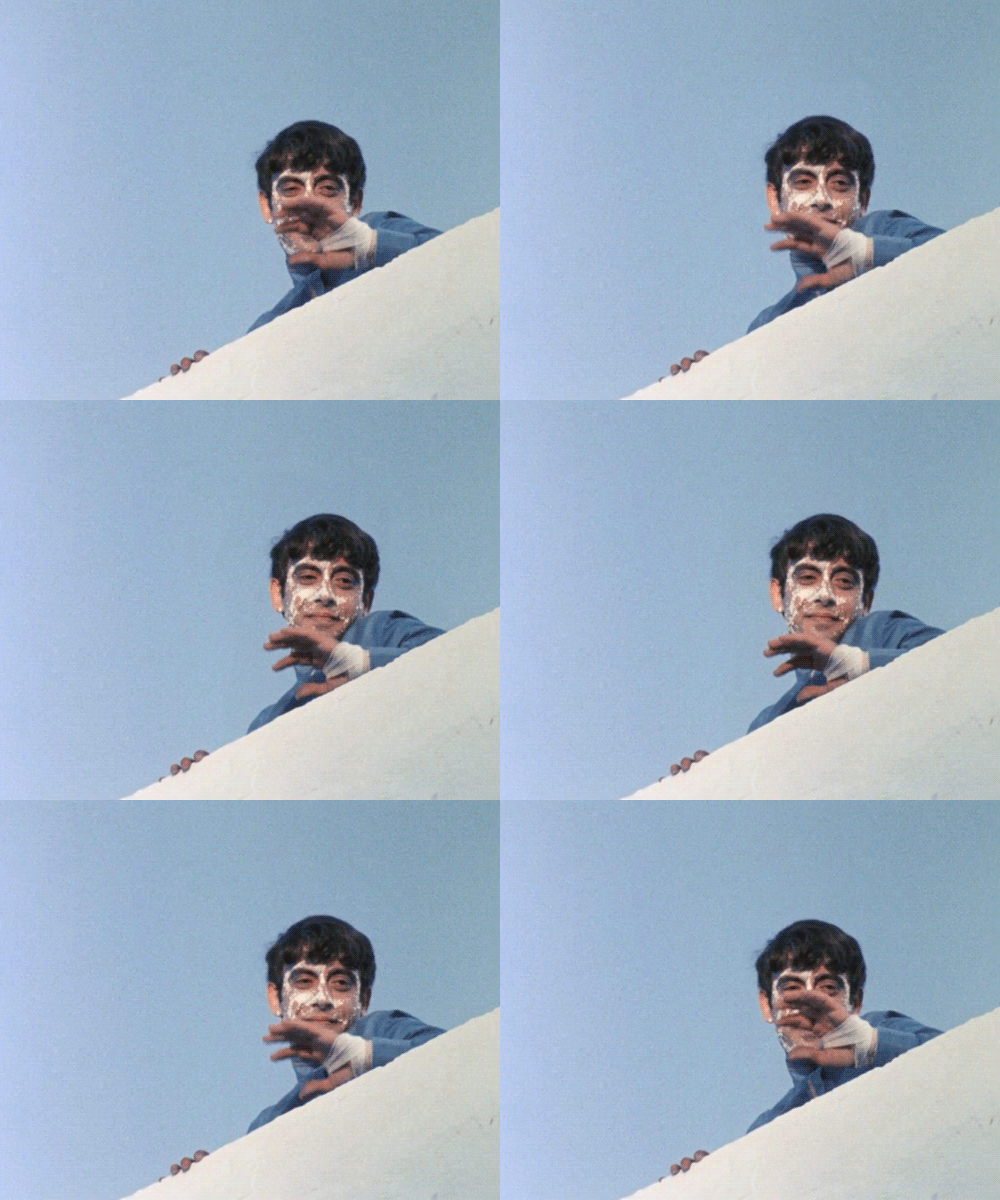
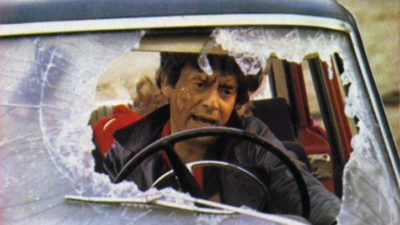
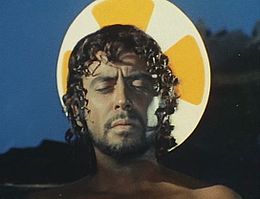
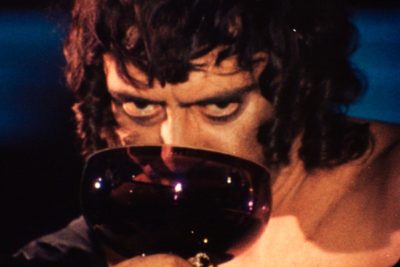
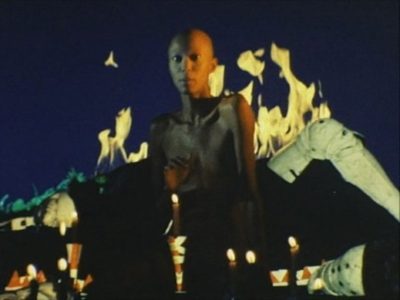
‘The filmmaking career of Carmelo Bene (1937 – 2002) lasted from 1968 to 1973, six years out of a lengthy time spent in the theater that made Bene one of the most celebrated figures of the Italian avant-garde in the second half of the 20th century. He first made a name for himself with a controversial production of Camus’ Caligula in Rome in 1959. Subsequent productions retained this sense of notoriety, and Bene (like Pasolini) quickly acquired a police record. Bene, however, would come to bemoan the controversy his work created, because it attracted an audience looking for shocks and titillation, while he himself was more concerned with reinventing the vocabulary of the theater: sets, gestures, texts.
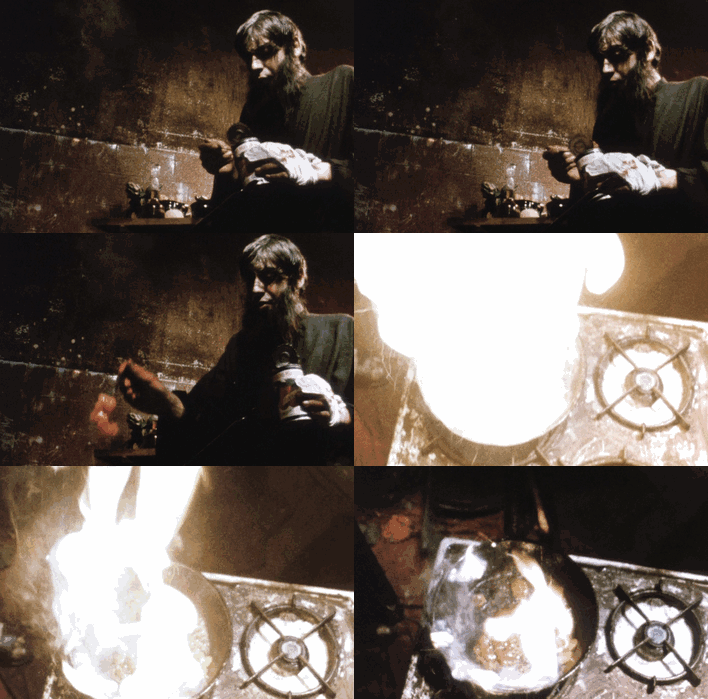
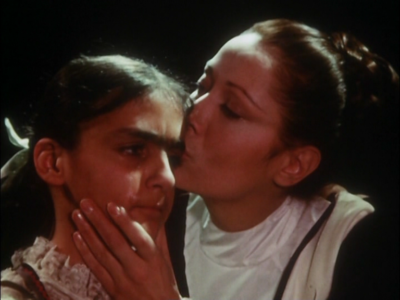
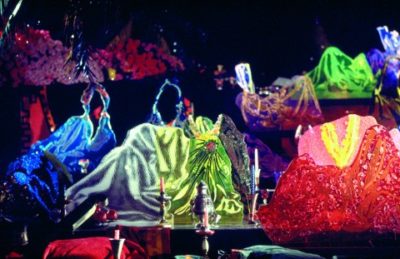
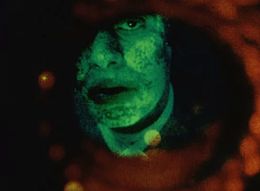
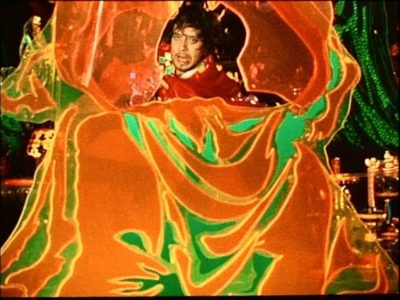
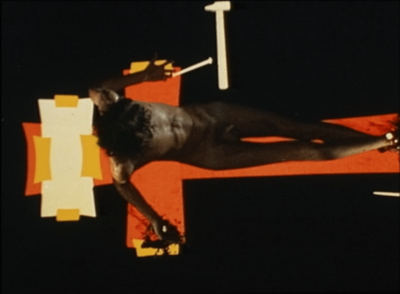
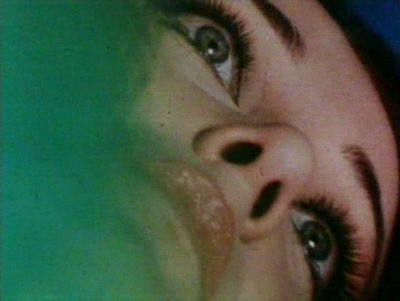
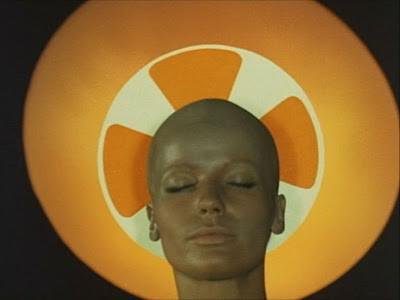
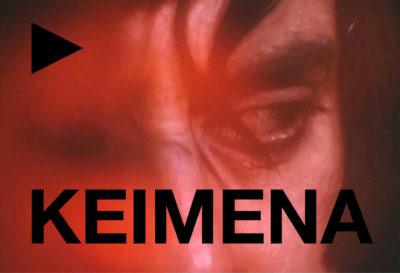
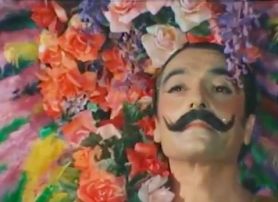
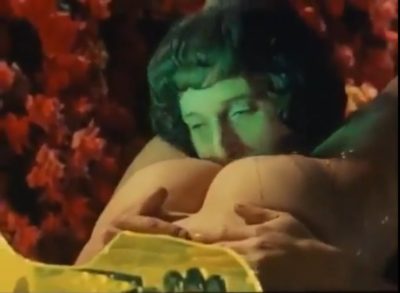
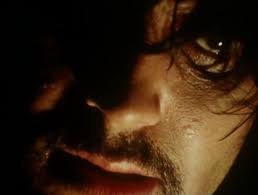
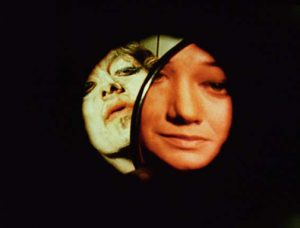
‘Bene’s turn to cinema expanded that quest to reinvent. His films resist synopsis because, although they are often derived from narrative sources, Bene uses these sources against themselves and as a springboard for his critique of the stultifying traps of representation and interpretation. The films are wildly inventive and visually arresting on several levels: the performance styles of his actors, including eccentric movements, gestures and grimaces; the sets, costumes and makeup; the editing; and the use of the camera, with stable shots regularly punctuated by handheld camera work, extreme close ups and the occasional baroque use of zooms, dollies, cranes, elaborate pans and exaggerated camera angles. They resemble something like the work of Jack Smith crossed with the experimental Pasolini of Teorema and Pigsty.
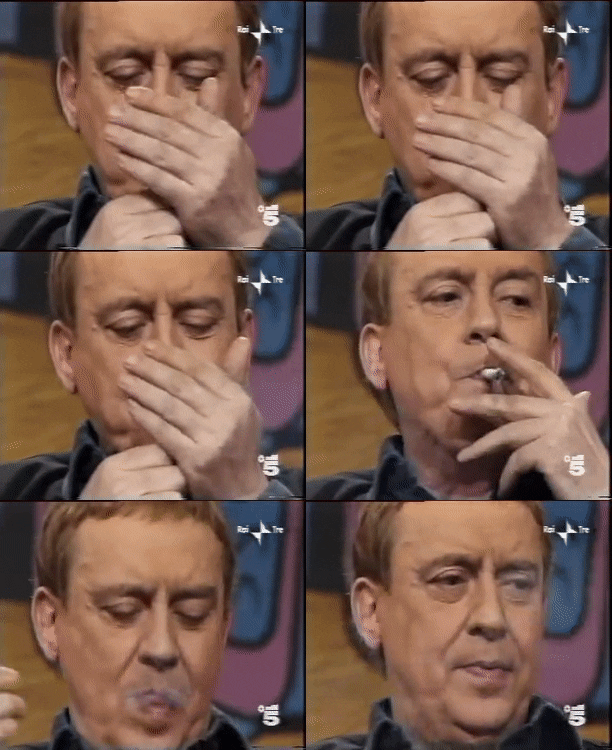
‘At some point Bene worked closely with Gilles Deleuze and was interested in the complete annihilation of the “self”, intended as a conscious entity. He refused to “exist” and became a rather popular figure in Italy because he was controversial and every time he appeared on TV he aroused all kinds of outrage and scandal. In particular he was accused of speaking in riddles, of nothing and being just a clever trickster who kept fooling the audience with his nonsensical, artificially shocking performances, just to draw the attention. Most of everyone was against him, he was deliberately an antagonist, and had a very troubled and animated relationships with his critics, who were continuously trying to frame him, diminish him or celebrate him, depending on their credo.
‘One constant feature of Bene’s work is its satire of heterosexuality. The two sexes keep trying to communicate with each other, but always fail to do so. Bene’s work constantly deflates masculinist pretenses at mastery: his male characters tend to be hapless and often hysterical, while his female characters are alternately predatory and remote, and unknowable in either case. But this satire is merely the most visible form of Bene’s revolt against convention and communication. Over and over again in the films, everyday actions become hopelessly complicated or endlessly interrupted. His characters often end up staring quizzically offscreen or even into mirrors, as if they were no more sure than we are of the meaning of what they see. Indeed, identity and by extension agency seem to get suspended, along with meaning. What is left is glorious spectacle and enigmas for the eyes and ears: endless music; babbling, stuttering text; excessive and exciting images.’ –– Harvard Film Archive
____
Stills

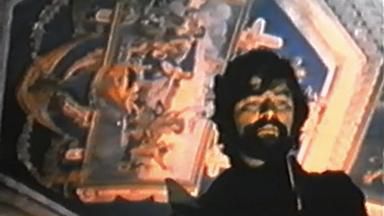
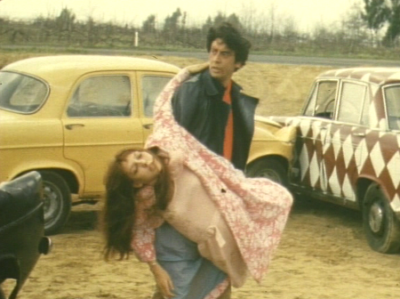
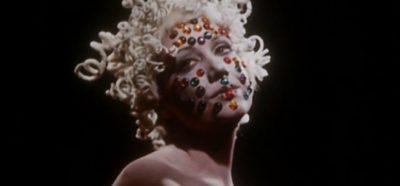
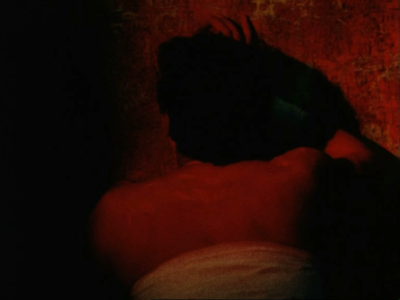
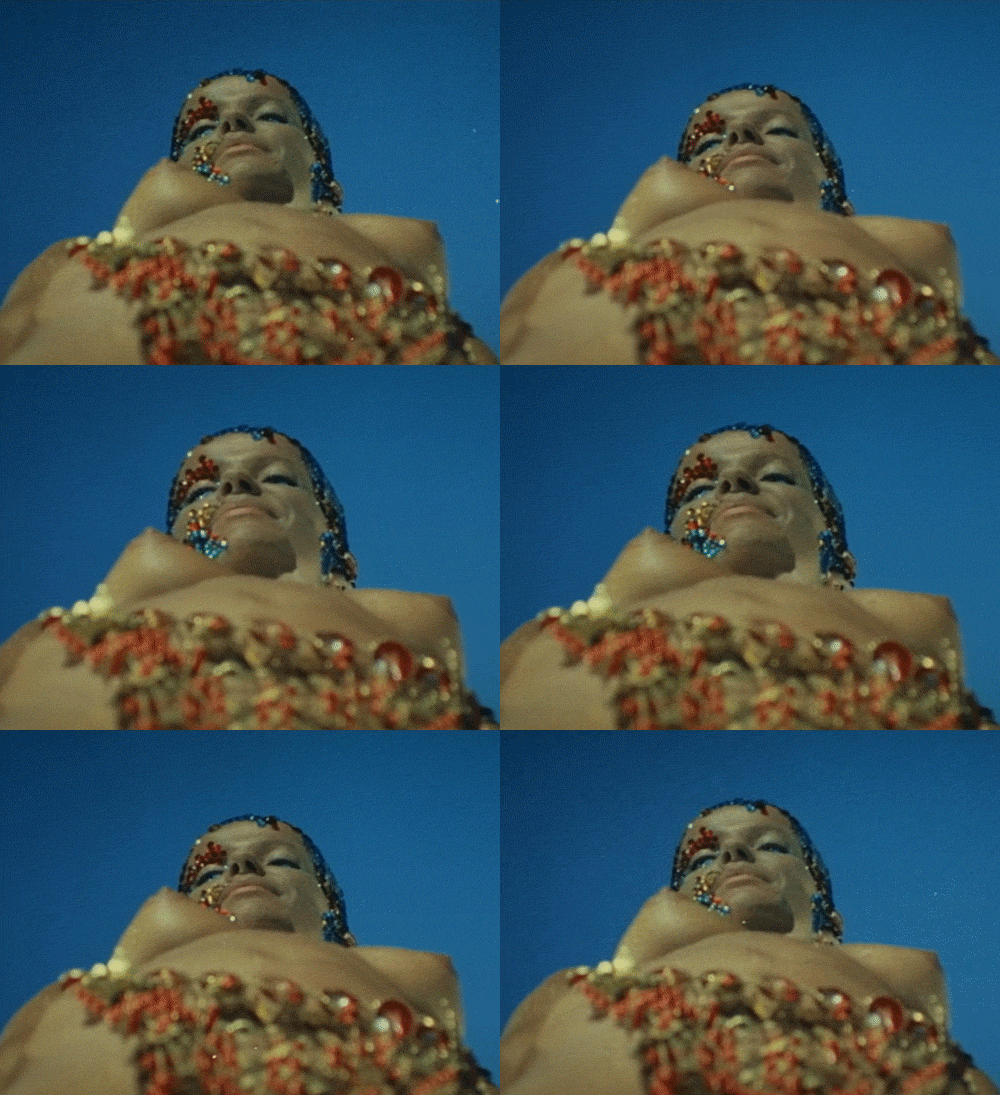
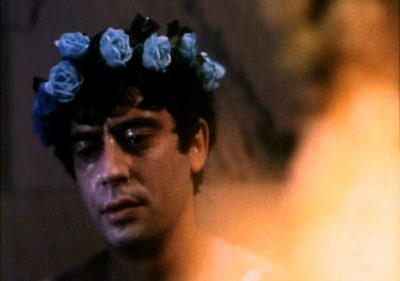
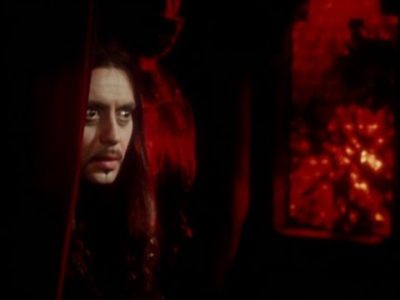

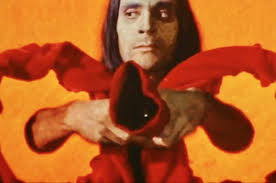
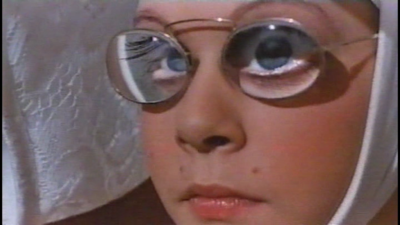
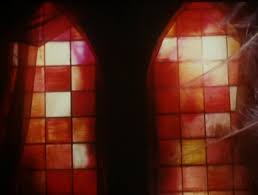
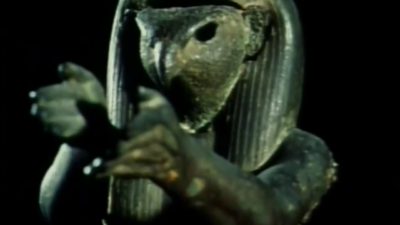
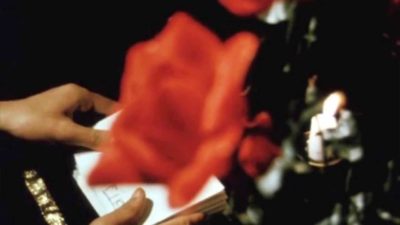

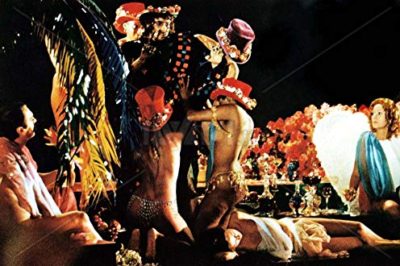
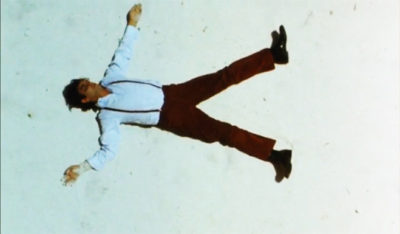

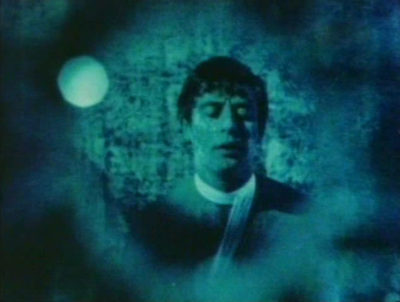
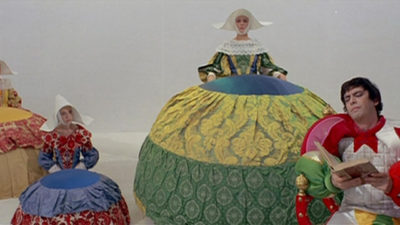
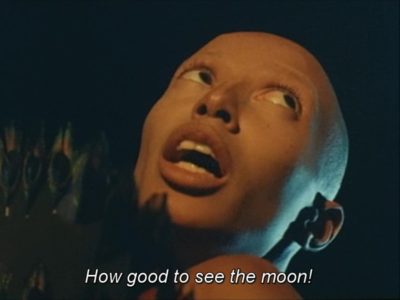
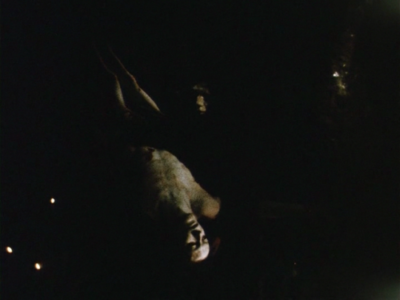
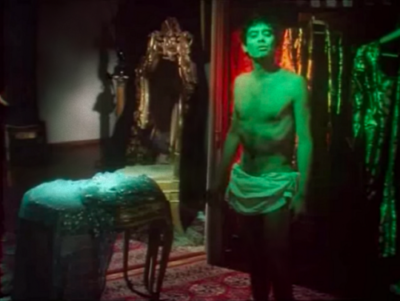
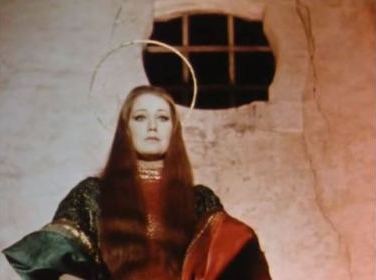
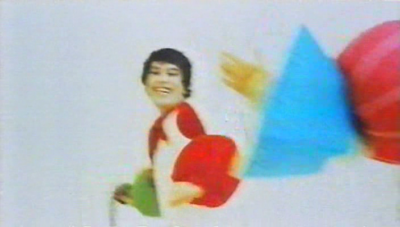
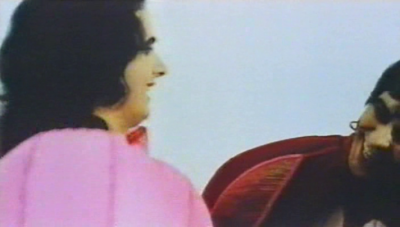
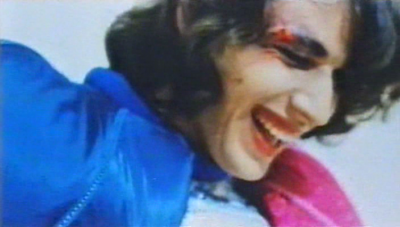
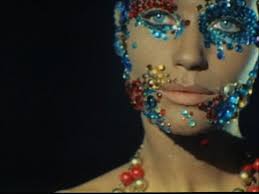
______
Further
Carmelo Bene obituary @ the Guardian
Carmelo Bene @ IMDb
Carmelo Bene @ Anthology Film Archives
Carmelo Bene @ mubi
‘Retro: Carmelo Bene’
Carmelo Bene oriented Blog
‘Cosmic wonderful magic Carmelo Bene’
‘Carmelo Bene, genius’
‘Eccentric and Visionary, the Films of Carmelo Bene’
‘Surgically Imprecise Notes on the Great Carmelo Bene’
‘Carmelo Bene, Lectura Dantis’
_____
Extras
Carmelo Bene – Macbeth Horror Suite (finale)
Carmelo Bene’s home
Carmelo Bene – Four Moments on All Nothingness
Carmelo Bene as Pinocchio
_____
Quotes
from Looping Wor(l)d
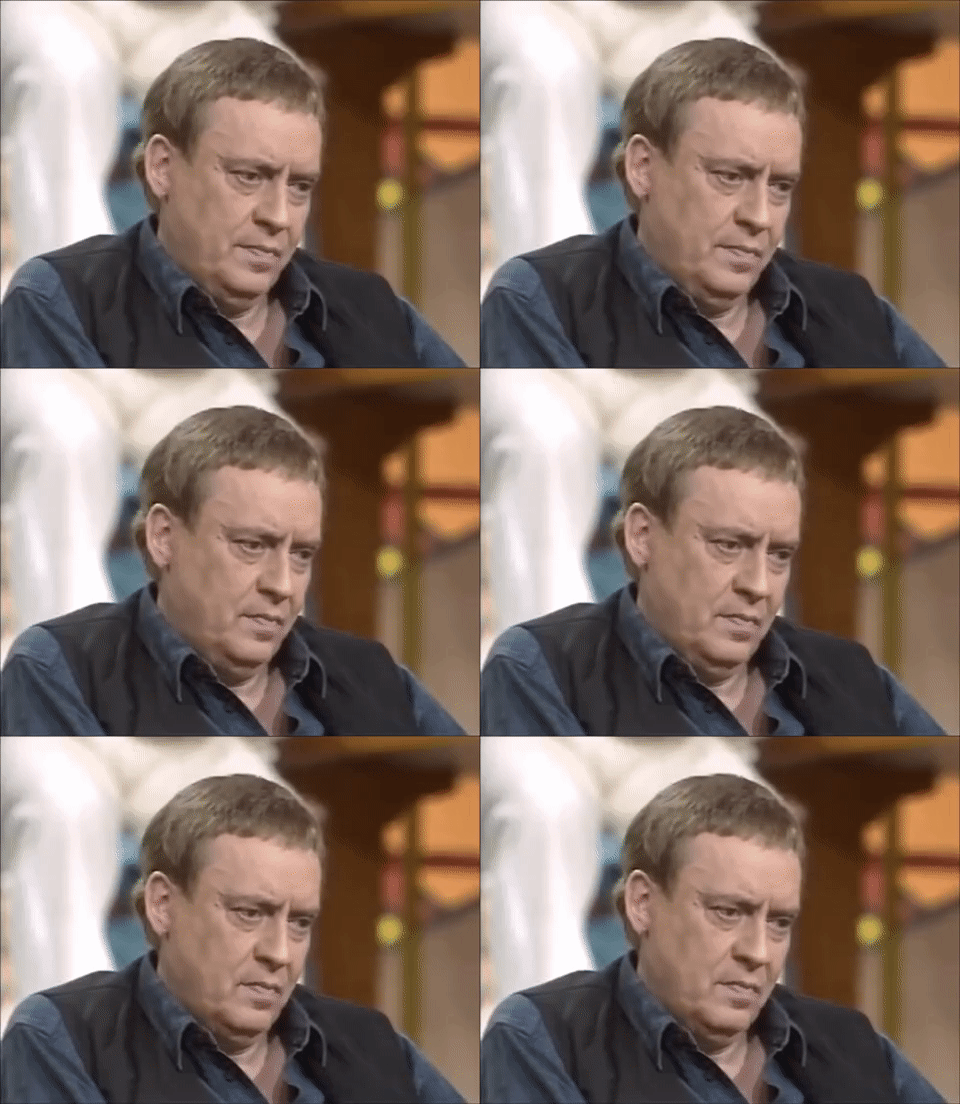
If someone has defined the “phonè” as a dialectic of thought, then I deny being part of it. I’m looking for the emptiness, which is the end of every art, of every story, of every world. The language of the Great Theater, incomprehensible by definition, becomes completely comprehensible on a different level of understanding, being all about the signifier, and not the signified, or sense.
*
Language creates failures, it is only made of black holes and failures: (quoting Montale/ Nietzsche) “Only this we can now say: what we are not, what we do not want.” Who says “I say I exist, I say this” is two times a stupid. First because he believes in his self, secondly because he’s convinced of saying, and even a third time because he’s convinced of saying what he’s thinking. Because he believes that what he thinks is not signifier, but signified, a sense. That happens under his authority. It’s all noise. I think conscious intelligence is misery. I refuse to consider the ontology.
*
I do not speak, I am being spoken.
*
“The gods, plural is the noun, played yourself. The gods returned you to the mythical dawn of times. They carved you empty of simulation. Freed you of codes.”
*
“We are but ghost lights, representation and model. You and I, in the illusion of being. Sincerity in the lie, truth in contradiction. As truth does not exist, given only in the delirium of language.”
*
“Voice and language, delirium of omnipotence. Delirium because it’s not there. It does not exist.”
*
(talking of amplification through a microphone, in theater) The actorial machine is the consequence of the Great Actor, stripped of expressive corporeal human capabilities (vocal, facial expression, gestures, etc..) to wear an amplified attire, both visual and voiced. The voice of the actorial machine is not just a simple amplification, but an extension of the tonal range, becoming a whole. The autorial machine is a fusion between actor and machine; amplification is not a prosthesis, but a further organic extension where the voice is defined by the process. In the same way one doesn’t “have a body” but one “IS a body”, so one is or becomes amplification, equalization, etc…
This amplification is not a mere enlargement of the sound. As an example, it’s as if I’m reading this page at this distance. So I see and understand. But if I bring this page very close, the outlines begin to blur. Closer and closer till they vanish, and I see nothing. At this point, “everyone has his own visions”. What is infinitely large, as discovered in physics, corresponds to what is infinitely small. A step beyond the threshold. That’s why I make myself smaller, “so that he can augment, I have to wane”. It’s the conscious “self” that needs to get smaller. The emptying of the “I”, the abrogation of subject, and so of history. I refuse to be in history. I stepped out of thought.
*
Art has always been bourgeois, consolatory, idiotic, stupid, it has been especially blathering, whorish and pandering. Art has to be incommunicable. Art has only to overcome itself. That’s why it’s up to us, once we get outside ourselves, to become masterworks. Exit modality to reach the place where modality ceases to be. I can only try to explain my discomfort. I can’t engage with what’s real, what’s obvious, what’s rational. The darkness. Turning off the lights. I even hate symbolism as an artistic language. Poetry is shit. We’re still within words, trying to find a way and unable to come out. I have found in myself a desert, and I speak to the desert who’s the other, and not to someone else’s desert. I possess absence. That’s all. I am being honest because I am not myself.
*
Universe is one, one only. The pluriverse… is. One can’t say the pluriverse is “what’s left”. The universe is just a tiny, tiny sliver of pluriverse.
________________
6 of Carmelo Bene’s 8 films
__________________
Nostra signora dei turchi (Our Lady of the Turks) (1968)
‘Our Lady of the Turks is a film that is hard to categorize. Then again Carmelo Bene’s films are hard to define. Often beautiful, The film starts off as a sort of mocumentary about Ontranto, Italy. This is where the Turks tried to invade 100 years before; killing the Saracens. Then we are treated to Bene in front of the camera in a series of bizarre, surreal images and comical mishaps. Bene’s character is taunted by the Madonna. Wherever he goes this beautiful virgin Mary is sure to follow, making his life a real headache. She is symbolic of man’s desire and dreams. This is a film where visuals overpower story. It is quite a journey with it’s bizarre experimental style, but altogether it’s breathtaking.’ — IMDb
Excerpt
Excerpt
the entirety
______
Capricci (1969)
‘Bene’s second film, is, like its predecessor NOSTRA SIGNORELLA DEI TURCHI, a hallucinatory, non-linear, and ultimately apocalyptic look at life in “modern” Italy. CAPRICCI has no “story” to speak of, just a series of surreal vignettes. It begins with a dissatisfied Communist (played by Bene himself) getting into a dual with a superior; they fight with, appropriately enough, a hammer and a sickle. An old man lies in bed beside an alluring naked women; making noisy rasping sounds, he tries to have sex with her (and has about as much success as Bene did in NOSTRA SIGNORELLA DIE TURCHI, where he tried to screw wearing a suit of armor!). Bene and a lady companion make out furiously in the back of a smashed-up car. Bene’s pictorial sense is so striking he gets away with an approach that most Hollywood directors would love to fall back on (but can’t). Add to that a preference (evident in all his films) for sentimental arias and you’ve got one bizarrely impressionistic film, one that must simply be experienced rather than “understood.”’ — fright.com
Excerpt
Excerpt
the entirety
__________
Don Giovanni (1970)
‘The third Bene film, Don Giovanni (1971), is taken from a story by 19th century author and dandy Jules Barbey D’Aurevilly, Le plus bel amour de Don Juan. Bene’s films are critical explorations of the texts they are based on. He operates by returning these stories to a sort of primordial dramatic and intellectual state of chaos where ideas, narratives and characters struggle to come into being. As Deleuze pointed out, Bene is concerned not with beginnings or endings, but with the middle, an engagement with a perpetual becoming, a world of constantly shifting potentiality. He achieves this by questioning and throwing off balance every aspect of his films. The frequently hysterical performances of his actors – or ‘actorial machines’ – are caricatures amplified to the level of the grotesque. Rather than playing characters, the actors become stylised embodiments of some of their defining characteristics, shrieking, slobbering, whispering and drooling their way through a series of events that resemble variations on certain themes or gestures rather than a developing narrative.’ — Senses of Cinema
Excerpt
Excerpt
the entirety
_____
Salomè (1972)
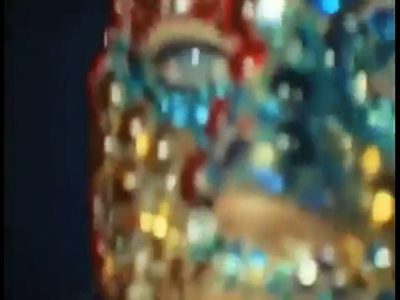
‘The opening scenes of Bene’s claustrophobic and dreamlike 1972 Italian adaptation warn the viewer that this is going to be a strange ride. Immediately after the film starts a number of strange images appear including an animated camel passing through a needle and a bejewelled and glittering woman swimming in pitch black water. The whole film is a contrast of colours with the majority of the actors – those who are wearing clothes anyway – entirely clad in spiky neon robes and jewels and all of what constitutes the action (except the final scene) taking place on what appears to be an island floating in some kind of black lake illuminated by a mysterious light source that refuses to stay in one place. These violent colours assault the eyes as super-fast cuts jump the camera from one person to another and the disorientation is increased by the rapid overlapping conversations in stage whispers that accompany this movement.’ — Suite 101
Excerpt
Excerpt

______________
Un Amleto di meno (One Hamlet Less) (1973)
‘Bene described his films as “music for the eyes” put together with a “surgical indiscipline of montage”. He constantly strives for a glorious visual excessiveness, with unusual camera angles, shifts between black and white and colour, interesting superimpositions and either overtly theatrical – as in One Hamlet Less – or otherwise expressionistically employed settings. This anti-naturalistic approach is further heightened by the asynchronous use of sound, which incorporates heavily amplified sounds such as breathing and coughing, shouted or stammered dialogue and sudden bursts of mainly classical music, most commonly opera. If Bene’s cinema is one of constant becoming, of repetition and incompletion, perhaps the most common recurring theme in his scenes is frustration. Yet the films that comprise his self described “cinematic parenthesis” are seldom screened or written about, especially in the English-speaking world. For a director whose work matches the visual power and representational complexity of Kenneth Anger or Derek Jarman’s best work, this a particularly unfortunate oversight.’ — Senses of Cinema
Excerpt
Excerpt
the entirety
—-
_____________
In-vulnerabilità d’Achille (1997)
‘Why did Carmelo Bene specifically choose Achilles as the last personality with which to confront himself? Is it possible to identify in the «progetto-ricerca Achilleide»? – a project that encompasses more than a decade of Bene’s opus – his testament? These are the questions that animate and direct the hereby study that attempts to carry out a global reconnaissance of the project, confronted by its intermedial nature. The primary subject of interest is Pentesilea. Ovvero della Vulnerabile invunerabilità e necrofilia in Achille, a text that represents Bene’s poetry debut. The object of analysis is not merely this specific literary work, but also the “pre-texts” which constitute its skeleton: Homer, Statius, Kleist. A rereading of these classics in the light of later Bene’s work, in an attempt to specify the reasons behind a choice. Therefore a reconstruction of the voicing of the text – that is already “aural poetry” by itself – is proposed, passing through various “moments” of the «progetto-ricerca», inspecting all the available reviews, critical texts, and testimonies. There is particular attention given to the «spettacolo-sconcerto» from the year 2000, last of Bene’s opus, a conclusive desertion from the scene in an encounter with the absolute musicality of silence.’ — Niccolò Buttigliero
Excerpt
the entirety
*
p.s. Hey. ** jay, Hi. Cool, I’m happy you like his work. I find it really irresistible. Your wifi managed to eek it through. Well, obviously. My uneducated guess is that home wifi issues would get old very quickly. But I love the spirit behind your daydream. Amazing about that box of childhood goodies. I have literally zero memory of my childhood bedroom and what was in it. My teenaged bedroom with its posters and disguised drug paraphernalia and piles of French novels, no problem. But earlier? Nothing. Strange. I must have been a minimalist as a kid. ** _Black_Acrylic, Wonderful about your friend Morgan! She must be awfully cool. Thank you so much for alerting her! ** Malik, Yes, that’s the book! I do highly recommend ‘Negrophobia’ if you’re in a fiction reading mood. It’s brilliant. True, such a tireless and visionary artist, that Bakshi. ‘Wizards’! I haven’t watched that since forever. I’m going to cue that up. Thanks, pal, and very bon day to you. ** Bill, That splattered construction paper piece is so great. If I could have one of Tom’s pieces, I think would be it. How great about the Yasunao Tone piece. He’s so incredible, and his very late work is as incredible as his earlier work if not even more so, I think. There’s a mind-blowing video out there somewhere of him performing at Cafe Ono very late in his life, and it’s astounding. ** kenley, Hi. Mutual fans is the best! Ok, the guitarist. My guess was totally wild. I’m sure the bespectacled guitarist is the kingpin. Do your bands ever play together. I’m imagining you guys with all lights on juxtaposed with his band’s heavy atmospherics could be quite exciting and flattering to you both. It was very cool to be able to clearly see your audience members exploding. Oh, as a writer, you don’t really get any say in the presentation. You just show up, and they show you the set-up — usually just a spotlit lectern, and then you do your thing. Simple is okay for me. The only thing I won’t do is read with music playing. Big no on that, but projections or whatever are fine. Do let me know if any Searing gigs in my general hood get cemented. Even a tourist visa gives you Schengen travel. Unless you mean some kind of special travel. It’s really easy. They rarely even look at your passport. ** Hugo, Such a beautiful description of Alice’s work. Alice is lucky to have you as an insider/intoner. Mm, yeah, in a way I guess the blog is like keeping a journal, although I’m pretty discrete about my actual life. But, yeah, no, that makes a lot of sense. ** Eric C., Here’s hoping the film shows near you. We’re working on midwest screenings right now. It’s going to show in Iowa, but I doubt that’s near you. And maybe Cleveland. So far. The ICE stuff going on around is just so nightmarish. Great that you’re doing what you can to fight it with your presence. The only good thing about all of that is what you said — people actually uniting for a cause that’s bigger than the personal. I have to think the unifying will have to help kill off the monsters, but I guess we’ll see. I will search Drone Not Drones on bandcamp. How totally interesting. Wow, thanks. If you get in the area of Paris on your trip, do let me know so we can meet up, if you like. ** Lucas, I saw your email. I’ll open it in a bit and get back to you. Thank you so much, pal! Like I said, I got so sick recently, and I never get sick, so that shit is happening out there. I hope the doctor starts fixing it. ** Måns BT, Oh, cool, happy you like his work. It does have a scariness, sure, that makes sense. Shit, Moodysson is pro-Israel? God, that does throw a wrench into the works. But I should make the post anyway and let what happens happen, so I will. But that’s a really boring, gross provocation on his part. Ok, I’ll use those release clues to help find ‘Thriller’ if possible. Awesome that you and your friend are making those works. Excited to hopefully see the results. Getting stuff out there? Hm, well, with short films you’re kind of stuck trying to get them into festivals and screening them probably with other shorts. Photos … social media and TikTok and all of that, and gallery showings if you want to get ambitious enough because that can be a toughy. Just make them and believe in them and dedicate yourself to people seeing them and the paths will appear. That’s my policy, I guess. xo. ** Jeff J, Welcome back, and thanks. TF used to show at Hudson’s great Feature gallery, and I saw most of his early works there. And they appear in museums and stuff. And I did a long interview with him for a big book on his work that Phaeton put out, and I saw a bunch of his work around that. I think this weekend could work for a Zoom if that suits. ** Steeqhen, The Granary Theater, yes, that rings the bell. Luck with the Library/CV of course. I don’t know where Logan is off the top of my head, but southern Utah is one of the most beautiful areas on the face of the earth, so you might have had a helluva of a view and playground if nothing else. ** HaRpEr //, The thing with editing is to not make snap judgements and give yourself time to try rejecting and embracing the possible decisions before you decide. I love editing, but you have to fight off the personal stuff. I think John is right as long as you think the decision through and don’t just lop things off on a whim. ** Laura, Yeah, making his things on tightrope, it feels that way. I thought ‘Adolescence’ was quite impressive. The single shot thing is kind of incredible just on a technical level. And it’s gotten boring to say so, but that young actor is really good in it. I think assuming the new script works out and there would then be three narrative film scripts, publishing them together could be a possibility. Happy Wednesday to you (too)! ** Right. Carmelo Bene was kind of a big deal in Italy, as far as I can tell, but his work seems to be barely known outside of Italy, and it’s curious work, so I thought I would give you guys a look at it. See you tomorrow.


 Now available in North America
Hi Mr. Cooper,
Was discussing with a friend the reasons for my complete avoidance of Italian cinema and by association the country as a whole (it’s the only one in Europe I have not been to – hehe). It all comes down to an allergic reaction to the first Italian films I saw which were subject to the practice of dubbing *everything* in post production; therefore I know next to nothing about Italian cinema. It’s really a bias I should tackle but it’s always there like an automatic barrier that won’t accept your ticket to get on Eurostar. However this guy I need to check. On a tangent re film lists – did you ever see The Flesh Eaters / Divine Horseman “back in the day”? I bought singer Chris D.’s collected writings recently; includes the lyrics to all their songs – which you need as he gargles, mumbles and chews the words big time. Interesting dude, he was also was a film prof & programmer at the LA American Cinematheque, and there is a cool 12 page list of ‘Essential Film Viewing’ at the end. Love and rockets from Brussels – KK
I’m no authority on Italian cinema, and Carmelo Bene is a new name to me. Quite into the supercharged reality of his vision.
Just sprang for Derek Raymond – A State of Denmark where the erstwhile gangster novelist imagines the future Britain as a fascist state. Quite into escaping into fiction as a way of blocking out our current situation.
All of Anna’s Archive’s European servers have been taken down. The only remaining ones are in countries outside the EU. When they scraped the entire contents of Spotify, I feared this would quickly happen.
I’m thinking of going to the Locarno film festival this summer. I just bookmarked the page which will become their press application form.
A nice find at the library: a CD compilation of psychedelic rock from Singapore and Malaysia. (When The Wire published a list of CDs one of the readers had found at the London public library, I was jealous – NYC doesn’t have Keiji Haino!)
never heard of bene before! excited to dive in, the stills look really striking. and i took some screenshots of those quotes 🙂
haha, well i guess he’s my kingpin. we haven’t played together yet! we were meant to, at a show him and his roomie put on in his basement over the fall, but someone else in his band was sick or something so it didn’t pan out. but it would be fun! and i imagine reading to a crowd with music playing would be a sensory nightmare. or maybe it’s something else for you? also curious as to if people have projected any crazy visuals onto you during readings.
fun anecdote – i had a laser appointment today, and i was talking with the tech about books and movies and the like and your name came up! as did derek mccormack’s and other cool people’s, and now i fear i must become best friends with this girl asap
More RT showings in the midwest…..I like the sound of that. I’ll definitely keep my eyes peeled. And yes, if a Paris vacation happens for me I’ll totally keep you posted.
This Carmelo Bene post is really engrossing, I really need to try and find some time to watch at least a few of them.
Hey ! How have you and the blog’s denizens been ? Any big news or stand-out posts I should check out ?
Wrote a review of a public glasgow ball-booting performance piece the other day; a cherubic xerox saint has made a wee run of copies (bless him, I do adore him). I was helping a friend move out a [ ] living situation today. Did a grand wee trial shift in the fry-cook arse of a cafe yesterday; it was a delight; I think- I’m sure that -I hope, yes- I got the job –maybe!
Have been finding a lot of luck on typewriters recently. Got an old German named Erika (same model, I found, that someone else had once saved from a skip (I had met him at an after-party (to a very delightful Jewish Techno night (where I had experienced something close to theophany !)) where one was to covid-test in fear to the death of a cat with feline AIDs)). Do you give much ritualistic value to writing tools ? I’m developing a relationship with Erika and a safe prescription amphetamine.
Hope you’re doing fabulously, as always !
((Posted by accident, tonight, to yesterday’s post))
hiii!!
feeling a bit better physically today but still rly exhausted. my doctor unfortunately just kind of brushed my sickness off :/ but i guess since im feeling somewhat better it cant be anything too serious. in general just kind of had a really bad day so i made this moody scary collage to match my mood https://imgur.com/a/vwT29nJ
(these https://imgur.com/a/2AHuYIo are the ones ive made recently for comparison re: my point trying not to fixate on everything bad and horrible)
feeling bad is normal enough for me but purposefully avoiding making those feelings my friends is the tough part
but i always end up feeling better anyhow, somehow
today i downloaded the book im reading rn on my laptop to also read it when moving at all seems too daunting for me. its a cool fix for me i think.
i think i remember you saying you dont like reading digitally maybe? am i remembering wrong do u still feel that way?
for me its a question of the mood im in most of all. reading on my laptop feels more reassuring sometimes. but if its complex theoretical texts im completely out, i think. then i really need to have a pencil in hand to mark stuff and point stuff out.
but i have been reading more theory than that kind of stuff recently. a few months ago i had the very ambitious approach of reading a nonfiction/theory book and novel at the same time. kinda want to go back to that, actually. need to be more disciplined about my reading habits again bc i always forget how much fun it is. xoxo.
hi Dennis!
i’m v fascinated by Carmelo Bene, like, i’ve got so much to say i almost don’t want to say anything lol. i don’t have a firm take on him yet, must put in more effort first, like, i’m not even sure if he thinks he’s giving us the signifier (perspective w/o meaning, a symbol for nothing, whatever) or the signified (reality w/o perspective, which would be basically the truth lol). but i def think if you want to be nothing you can either die and hope there’s nothing after, dissociate hardcore and try to be cool about it, or become a huge Buddhist and be all perception minus the phenomenology which comes with being a person. idk he’s doing any of that, really. he’s maybe getting semiotic and blurring the lines between self and other, which he seems to think can’t be done in general, but maybe like that? but then is that achieving some nothingness state? idts.
for the sake of argument tho, let’s say he’s nothing and i’m nothing, our nothings are not the same, they behave in ways which are unique to each of us and now i’m getting a bit Durkheim-ish, but in this context it’s a comfort i think, like difference, the great equaliser lol. seems like we’re a whole lot of things after all. the actual nothings and no-ones and unworlds he wouldn’t be able to speak of or visualise at all, and no art about them is possible, like there’s no concept and no word and no imagining which could possibly take anyone there.
his language stuff is v interesting to me, but i think i’m way less pessimistic than him, like, i love language, what it can do and what it can’t do and what it can do precisely bc it can’t. but say words were really just signifiers minus the signified and communication is dead in the water, i think then it’s like at least twice as important to speak lol, uh, ‘isn’t it better, abort than be barren’ and all that, but mostly i just believe it’s a deontological thing or whatever, we’ve got to try and try to find beautiful ways to fail, and by failing, succeed maybe, some amongst us at least.
idk. he also went on about his perspective a lot for someone who thinks of himself as an empty ‘desert’ and stuff. like man, i totally think you can get at stuff that is true from wherever you are, i’m maybe a modernist at heart lol, so say the truth is like a diamond lmao, many sides but ultimately one? he’s got a shot at it, from whatever phenomenological vantage point his v specific self allows. he may not get to see all of it, but he may see enough. whether or not he can talk about it is smth else.
so idk i feel like his world of impressions was way less unmediated by his hated ontological gaze than he thought, and at the dame time more objective than seemed possible to him? that’s sort of a contradiction but he was into those so he shouldn’t altogether hate it.
so many more tentative thoughts lol, again, i’ve got to watch him more and read more about him.
anyway. here’s hoping your script is all polished up within a week and ready to like be born into the world of live action lol, you should put your scripts together fr!
think i’m done w my footnotes for rn, i literally don’t know how i feel about the whole thing, like, i’ve got no frame of reference for what i’m doing at all so i’m just alone w it in a void and can’t predict a thing about it. i just know it’s what i’m doing. good luck to me lol.
hope you’re less confused than me unless the state is desired in which case i hope you’re more confused than me lol
srsly i could have kept going on about today’s topic forever, thanks for bringing him up! now i’ll have to, like, study him lol.
many hugs!
<3
Hey Dennis,
Listening to some Xiu Xiu cause I saw they had dropped a cover of Robyn’s Dancing on my Own on Bandcamp; haven’t listened to them in forever, as I haven’t been lucky enough to find any albums in person, though I may just invest on Bandcamp.
Logan is actually in the North West, above Salt Lake City and Park City, and actually borders the Rocky Mountains so at least that could have been an interesting view (though I’d probably end up dying and/or being murdered up there).
Both of the places I sent emails to responded, and I’ve contacted both with hope that it may lead somewhere; who knew that offering free labour is what it takes to get hired!!
A Dennis cooper fan from Utah? HMU
Hey Dennis! Italian cinema is super cool, basically everything I like movie-wise has some basis in that tradition. I maybe agree about wi-fi issues getting annoyingly quickly, but I find that if I put myself in a position deliberately, it becomes much less difficult or unpleasant. I think that your teenage bedroom sounds cool. If there’s one period of your life to get into Sade etc, it’s definitely then. Any later and it starts to become a bit bizarre, but maybe that’s just me.
R.I.P. Anna’s Archive, of course. Such a loss, it’s still accessible-ish by VPN, but still… terrible, it’s where I’ve found almost every out-of-print book I’ve read.
Try annas-archive.in. Without a VPN, I was able to download from them using that link, although it’s very buggy.
‘Fighting off the personal stuff’ is sort of one of the constraints that I’m working with. The entire book is a practice in killing my ego. Well, all writing involves the ego, but I just mean that I’m very careful with my emotions and try to remove the sanctity of things I hold dear.
Everything I’m doing here is purposely the antithesis of what I was doing in the book before this, which was a trial run or introduction to the things I’m doing now. With that book the task I set myself was to ‘eat my rhetoric until there’s nothing’, and so with this book there’s not a trace of any of that left. I was sort of inspired by Sarraute starting off with ‘Tropisms’ and then setting out after that with what she had learned. Though it’s not like that book contains my poetics or anything.
I got around to finally exploring the work of Kali Malone this week, specifically ‘The Sacrificial Code’. Strange that something can feel so simple and so original at the same time, and I’ve been listening to a lot of drone adjacent things recently. I got really into Eliane Radigue last year and have been exploring the history of things in that sphere. I like the kind of repetitive music where the sound is so constant that your mind gets confused and still doesn’t know what will happen next.
I also read ‘Baby Bruise’ by Danielle Chelosky today which was brilliant. I think it handled love in a really interesting way that I found very effective.
Hey Dennis – Thanks for this Carmelo Bene day. Not familiar with his work, which looks fascinating. How did you first run across him?
Glad the weekend works for connecting. I’ll email you some options.
Hey Denny,
Read (nearly) all your published works. Great stuff. Italian cinema nice. Weird. Ur cool. I wish I could speak to you over coffee sometime. Hang loose
I actually have read Negrophobia years ago, and revisited it last year! I commented about it when you covered it on the blog, and that’s what made me go back to it. Definitely an insane, smart novel and makes total sense why he’d love Coonskin.
Also first time learning about Carmelo Bene. Some of the visuals and framing in the clips I’ve watched so far are definitely intriguing, especially Salome. Like some weird mix of Pasolini and Kenneth Anger. I’ll tap into that for sure. And glad I could get you to rewatch Wizards too!
hey hey, nine am where i am so lets see if i get in time, (usually i do. since you post around 10 am my time). but i will keep this short becuse i don’t have that much to say.
it’s always interesting to see avant garde artists who are only reknowned in their country, usually that type seemingly has a worldwide reputation. so i’ll happily enjoy bene’s work this past week.
still not entirely sure what to feel about schattenfroh, which is funny saying about a book i’m 2/3s in, and i mostly don’t feel like i got a grasp on. it’s a really good book though,
finished tokyo xtreme racer accidentally, after getting stuck at one boss — steel heart, which has the “very fun” quirk of having two other racers appear in mid battle, and race you as well. in a very tight part of the map. yippie. — and going “well shit, this is the part where i have to actually be good at racing games”, and then i beat em, by specifically pushing the most annoying racer behind a pole and making em crash. genius racing move i think, more nascar / f1 racers should do that.
and i told myself, might as well see how far i get now. a whole week later passes by and i beat it. lol. fun game! i dunno if it is on switch.
also of note is that one of the racers you can race / meet (heretic canopus) is a crossdresser, and everyone (in the side quest zones) for some reason keeps mentioning how hot he is lmao, even the short dialogue with him, and i mean short ( https://postimg.cc/gallery/9Wj3dwH ) has the player character implied to hit on him. so in short, uh… great game.
i might need to move out this year becuse my roommate is getting their own place, and i can’t pay for rent on my end which is stupid. but also just how pristine i have to keep this place in case this week means we start to list it for sale. frustrating, so it goes.
that’s all!