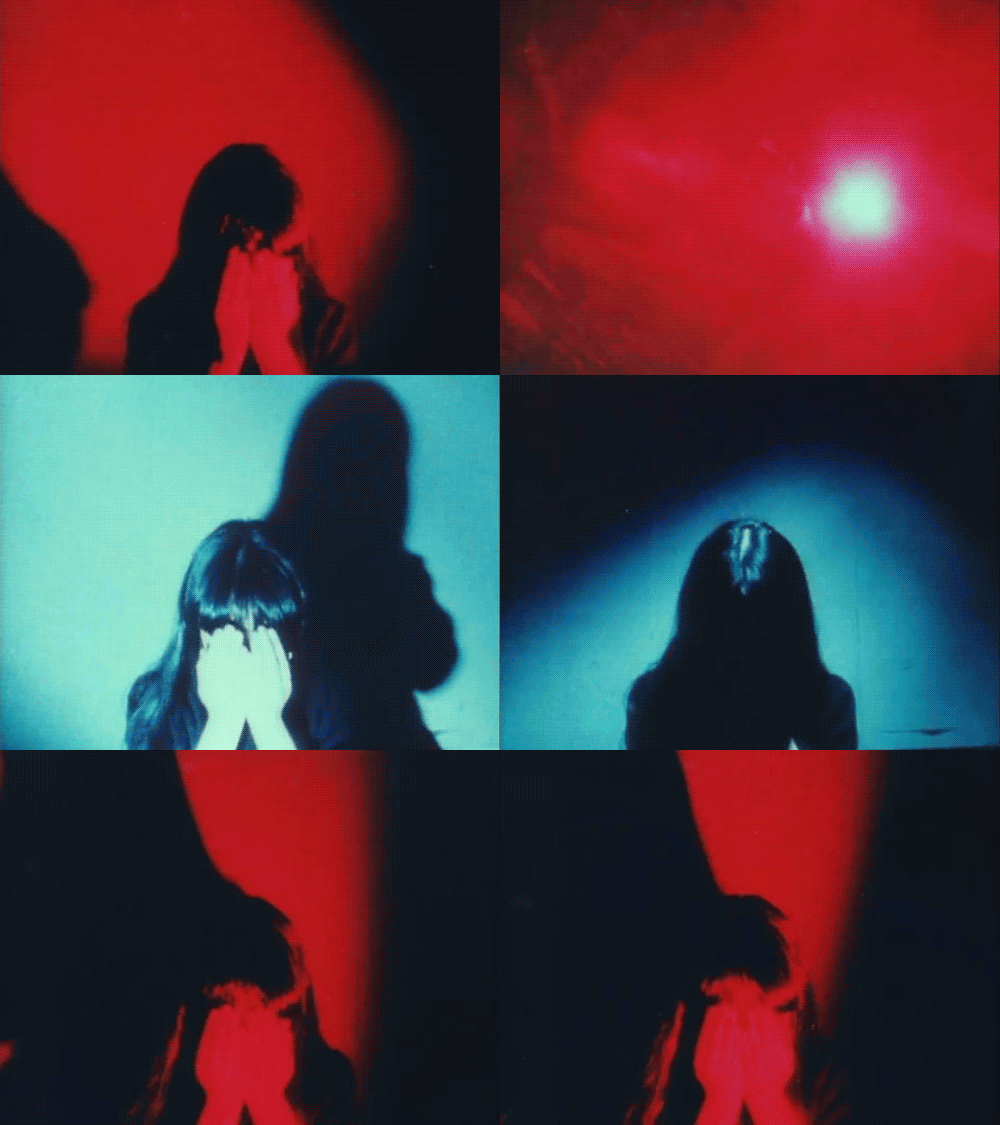
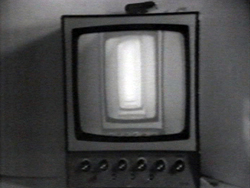
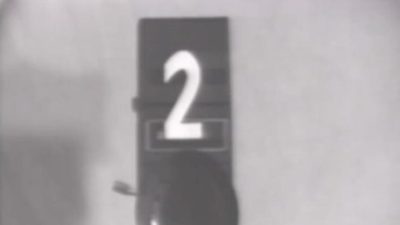
‘Takahiko Iimura was a pioneering film and video artist based in Tokyo and New York. In the 1960s, he was a crucial conduit between the Japanese and American avant-gardes. His work ranges from poetic fluxus-influenced pieces to rigorous formal and conceptual investigations. In the 1970s and 1980s, Iimura’s videos exposed and analysed screen spectatorship. He pared down video to its essential structural elements and revelled in the absurd feedback loops and infinite regresses—optical and semantic—that resulted. Foregrounding costruction alongside content, and pressuring language, Iimura’s video semiology paralleled the semiologies of Roland Barthes and Jacques Derrida.
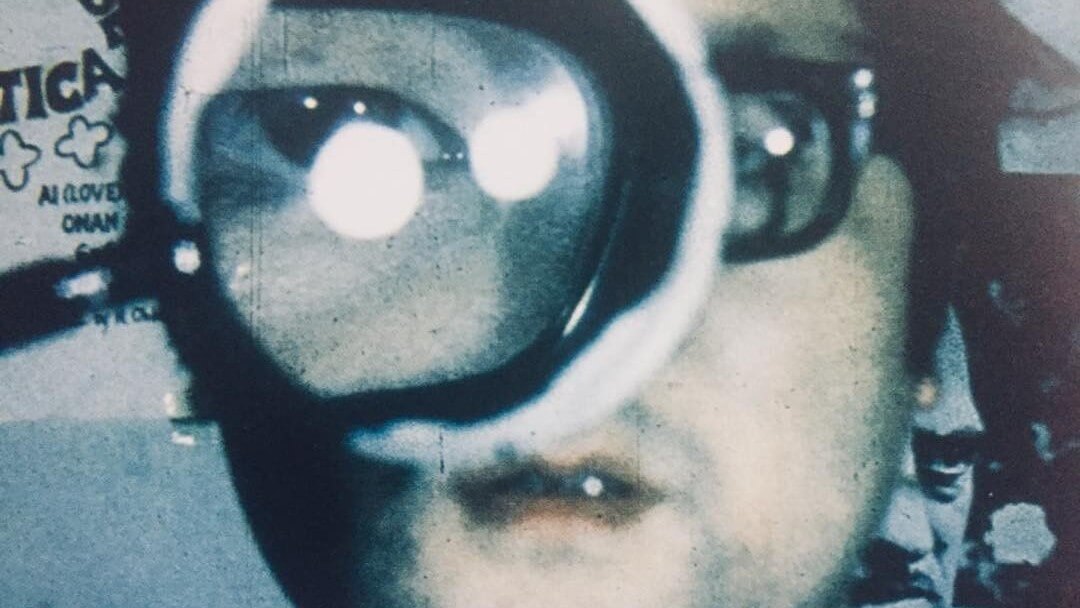
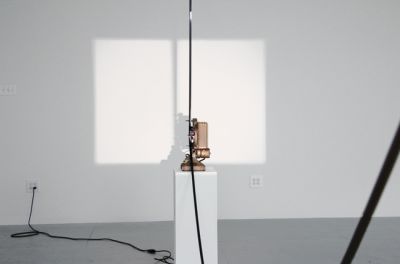
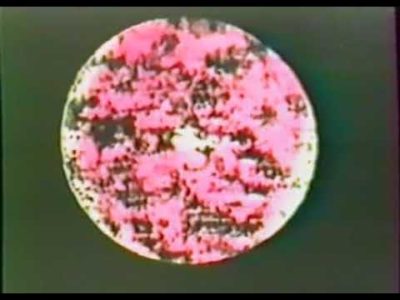
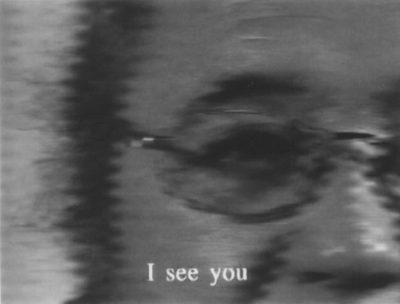
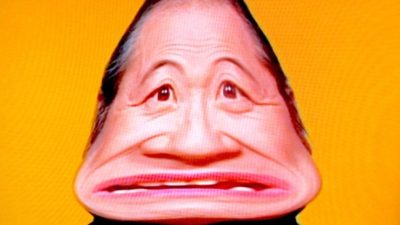
‘Absurdly analytical, Iimura’s videos are also funny. In AIUEONN (1994), we see and hear him speak each Japanese vowel in turn. Then image and sound part company, as we see him pronounce one vowel but hear another, working through every possible permutation. The images of his face are also distorted, echoing the disjunction of sound and image. For OtherFilm Festival 2012, Iimura will perform AIUEONN with a live soundtrack. He will also reprise his 1963 expanded-cinema performance Screen Play, projecting his film Colours—a study of chemical reactions resulting from dropping paint into oil—onto a friend’s back.
‘Armed with a forensic scalpel, Takahiko Iimura dissects video, removing organs one by one, systematically probing until he locates the vital twitching organ. There, he’s got it now, held between gloved fingers, unlatched from the secure lining of the onto-sphere, decoupled and placed on the tray for our inspection. The signifier-signified dyad. Coldly, methodically, he begins to rearrange the units. This way, that way. This and this, this but not that. A genetic recomposition of codes; accumulating permutations in search of the différance between word and image; space and movement; you, I, and me. Video language is semiological . . . semi-illogical.’ — Other Film
___
Stills
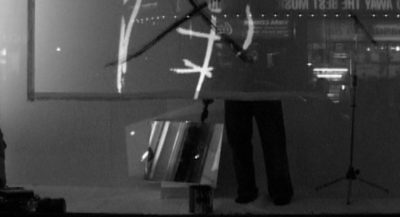

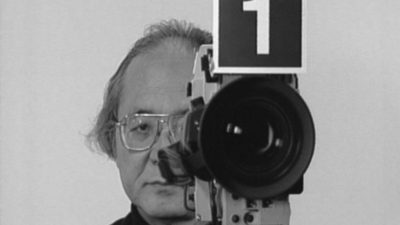
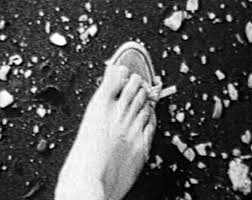
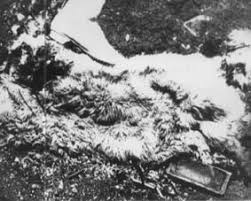
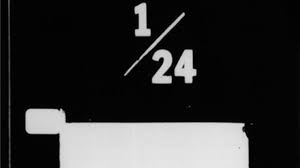
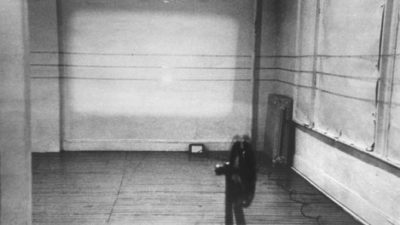
____
Further
Takahiko iimura @ Video Data Bank
TI @ Lightcone
TI @ The Film-makers Coop
TI @ IMDb
TI @ Re:Voir
Observer/Observed: An Interview with Takahiko Iimura
Book: ‘The Collected Writings of Takahiko iimura’
Book: ‘PAPER FILM LOVE’
John Cage Performs James Joyce by Takahiko Iimura
INTERVIEW: TAKAHIKO IIMURA
Takahiko Iimura – Seeing / Hearing / Speaking
THE BLINDING CINEMA OF TAKAHIKO IIMURA
An Interview with Takahiko Iimura: Sept-Oct 2010
Takahiko Iimura – Midnight Eye interview
TI @ MUBI
DIY: Takahiko Iimura
_____
Extras
Takahiko Iimura: Presentation Of Multimedia Works And Discussion
Trailer: Takahiko iimura ‘Talking My DVDs With the Excerpts’
Los Angeles Filmforum: Takahiko Iimura Q&A
____
Interview
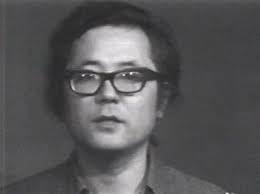
Damien Sanville: To start off, I would like to ask you what the atmosphere of the 60s avant-garde scenes were like in both Japan and America?
Takahiko Iimura: I started my experiments in filmmaking in the early-60s in Tokyo. At the time I was very interested in Dadaist and Surrealist films, which became really important in Japan much later then when these movements actually took place in Europe. It was only from the 50s onwards that we had more information about what was going on in America and Europe; the first impact was for us – and especially for me – the Neo Dadaism.
My first experiments were in poetry, when I was in high school. I used to write Dadaist poems. I was also influenced by the visual arts. At the time Junk Art, Action Painting and Happenings were flourishing.
DS: So your films were less a reaction against the conventional and established cinema than in the lineage of fine arts?
TI: That’s right. Most of my friends were artists not filmmakers…
DS: What are the differences between nowadays and the 60s?
TI: Now there are more venues, more people involved and more schools than in the 60s. Yet there are less debates and problematics are less obvious.
DS: How was Junk received in Tokyo? Did you show it in film festivals at the time?
TI: There were no film festivals at the time. I showed it in a gallery – where they used to show a lot of what you call “anti-art” – together with my friend Yasunao Tone, composer of avant-garde music, who wrote the score for this film. We called the piece a “Film Concert” for there wasn’t such a word as “Performance” yet.
DS: What made you come to New York?
TI: Yoko Ono and John Cage came to Tokyo to do a tour. So I asked Ono to come and see my film Ai (Love) which consists of close-ups of body movements. I asked her to make the sound for it and she did by recording the noise outside her window. Then she brought the film to New York and showed it to Jonas Mekas who wrote a very nice review about it – no one in Japan appreciated it in such way at the time (Laughs). So I wanted to come to New York. I also met Donald Richie in Tokyo who was an experimental filmmaker and wrote a lot about Japanese cinema. Together we created a group called Japan Film Independent as well as organised the first experimental film festival.
DS: That was in Tokyo?
TI: Yes, in ‘64. I moved to NY in ‘66.
DS: How has New York influenced your approach to filmmaking?
TI: Quite a lot. I went to the [Filmmakers’] Cinematheque almost every day and watched lots of 60s American experimental films, by filmmakers like Stan Vanderbeek, Stan Brakhage, Jack Smith, etc, whom I later on made film portraits of.
DS: Your films have been shown in both galleries and cinemas. Do you have any preferences regarding the context in which they are shown?
TI: I like both of them. Even though I don’t make 16mm films anymore – I make videos – I still use film as material for installation and performance. Later in the 70s, I focused on the theme of Time, the temporality in film and I used both galleries and cinemas. 24 Frames Per Second, for instance, works the best on screen; whereas a film-installation such as One Second and Infinity, which is on a loop, works better in galleries.
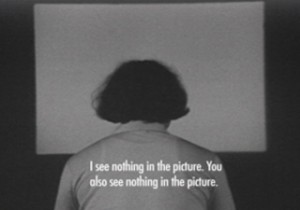
DS: You have mentioned a relation between Observer/Observed with films such as Battleship Potemkin and Man with a Movie Camera. Can you tell us how these films relate to yours?
TI: There are parallels between Observer/Observed and Dziga Vertov’s Man With a Movie Camera. We not only see what he shot but also himself with a camera, somehow combining the process of filmmaking and the production of it. I do feel closer to Vertov than Eisenstein, although Eisenstein’s idea of the montage refers to Chinese characters, which combine two elements to create another meaning.
DS: Can you tell us a bit more about your “Video Semiology?”
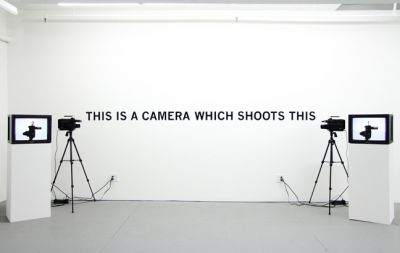
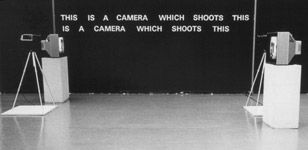
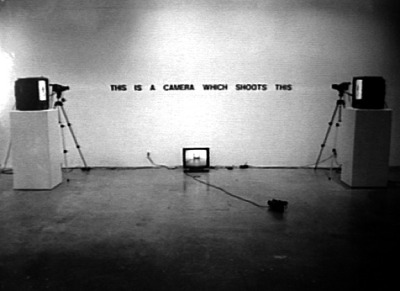
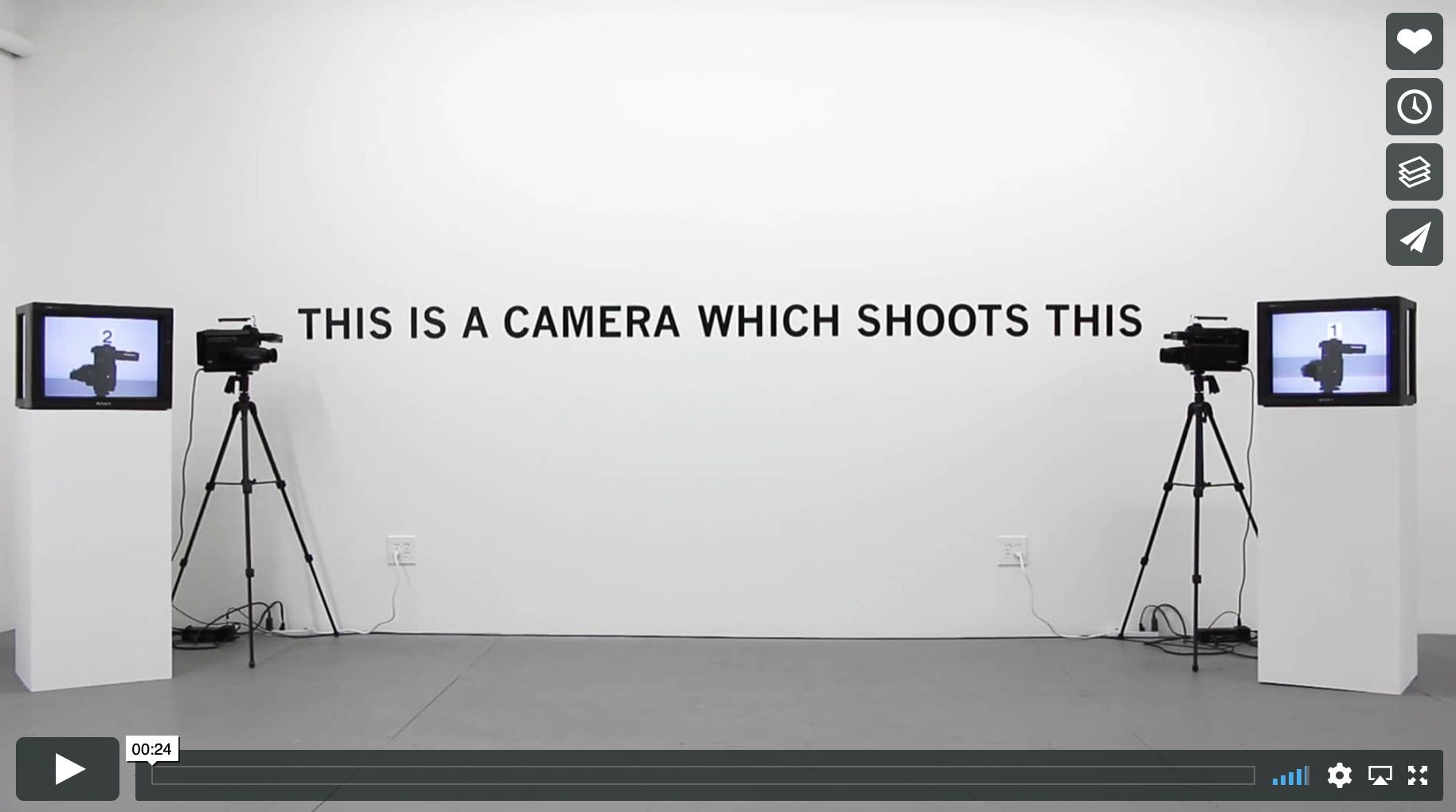
TI: Video Semiology is related to a video trilogy Observer/Observed and more specifically to a video installation This Is a Camera Which Shoots This. In this piece there is an exchange between the two cameras facing each other, one shooting the other one, creating a feedback that is also in the sentence: “This is a camera which shoot this … is a camera which shoot this …”: an endless sentence in which the subject and the object become one another.
DS: Do you see parallels between your researches in Video Semiology and the work of Bruce Nauman, for instance Lip Sync?
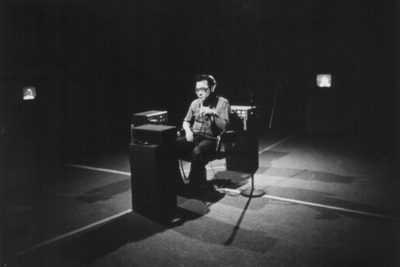
TI: The sync/out of sync is a very important element in video. I once did this performance: I am sitting next to a video of me speaking and at the same time I dub it, so the two voices are superimposed. The live voice and the voice from the tape are mixed together and it becomes difficult to tell which one comes from which source.
DS: There are occurrences of the space in-between, or the interval, in most of your video pieces: the space in-between the self in a way.
TI: This is what I am dealing with in Seeing/Hearing using Jacques Derrida’s quote: “I hear myself at the same time that I speak.” When you read the sentence you can identify the “I” who speaks with the “I” who hears. But in reality the “I” who speaks and the “I” who hears are split. So when I say: “I hear myself at the same time that I speak to myself at the same time that I hear” there are two “I’s.” So when I hear, “I” is not the same as the one who is heard by “I” when I speak. Although the quote is “at the same time,” it is not exactly at the same time.
DS: Could you explain what the concept of “MA” is?
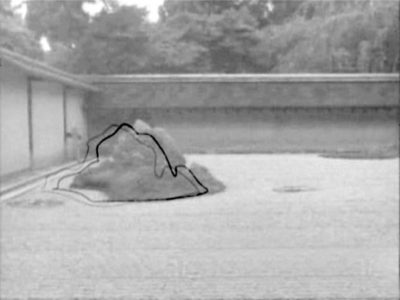
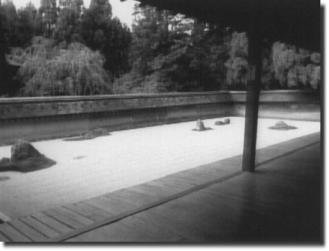
TI: It is a very common term in Japanese. MA means something “in-between”, not only in space but also in time. Time and space come together, they are inseparable, and in film you always have to deal with both of them. I have approached MA in different ways. I did shoot this garden in Ryoan-ji, the Zen-Buddhist rock garden in Kyoto, where you see a lot of the space in-between the stones. People walk or sit around it for meditation. There are only fifteen stones, big and small, and yet you cannot see them all at once. You have to move from one end to the other in order to count them all. The design of the garden invites you to walk around it, to have a space in time. In my film 24 Frames Per Second, the concept is like the Chinese Yin and Yang. It combines positive within negative, and negative within positive in a double structure: a white dot in black and a black dot in white. 24 Frames is made in this way, we see one black frame within one second of white, and one white frame within a second of black. The black frame moves every second, starting from the first frame and then reaching the 24th frame. And this is the same for a white frame until white becomes black and black becomes white. That is the way the ancient Chinese looked at the universe. It is this dialectic that I try to present in these works.
DS: Part of this series is a film called MA (Intervals). What was the material used for this one?
TI: I used black space and white space. Then a line crosses in the middle – a white line on black and black line on white so there are four kinds of images each of which lasts one second. I made the sound by scratching the soundtrack. Every second or 24 frames you hear two short beeps or a continuous beep, both sounds being one second long. But the duration of the two beeps sounds shorter than the continuous one.
DS: What about silence in traditional Japanese music?
TI: We use silence a lot, in the spoken language, Haiku, the Noh theatre… There is always silence, which sometimes dominates, and is sometimes hidden. Both silence and the empty space are important factors, for instance in landscape drawings, there is always a lot of white space.
DS: Time, space, the space in-between, rhythm: There are many echoes between the formal minimalism of your later videos and John Cage’s music.
TI: I once asked him how he made his famous “silent piece.” In this concert the pianist just opened the lid of the piano, then closed it and timed the performance with a stopwatch. He is my predecessor, as he said: “Time is the most important factor in music,” and in response I would like to say that time is also the most important factor in film.
_____________
15 of Takahiko Iimura’s 33 films
_____________
On Eye Rape (1962)
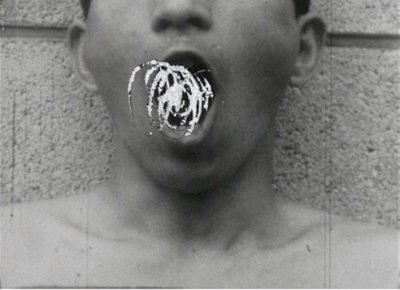
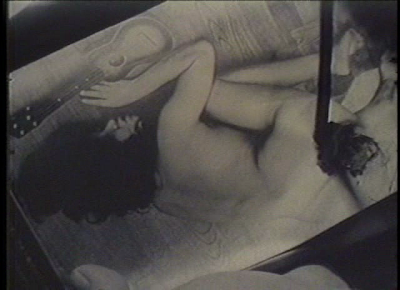
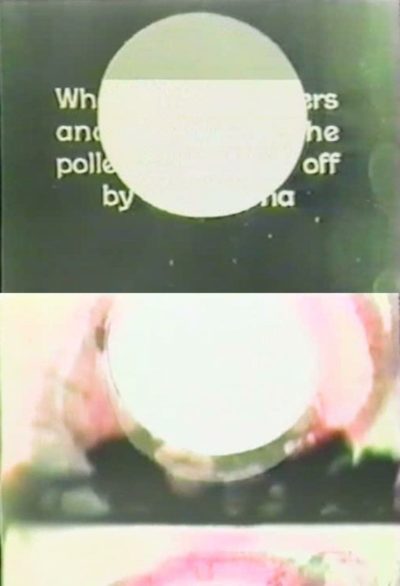
‘A found educational film about the sex of plants and animals was punched with big holes in almost every frame throughout the film by myself and an artist friend Natsuyuki Nakanishi who found the film in a garbage. At several points there are inserts of a few frames of a pornographic photo (which would work on a subliminal sense) in which the sex part was covered by black. The film is an irony and at the same time a protest against sex censorship in Japan at the time in which pornographic scenes had to be covered by black. At the end we even punched holes in these subliminal pictures, thereby “censoring” the censored image. A superior work. Considering the whole situation of film/image works at the time, one could say that this is an exceptional film. The film was picked up from garbage by Nakanishi and then Iimura punched with holes throughout the film. The work, which directly attacks both the film physically and the eyes of the audience, was Iimura’s first film (according to the filmography) as well as the first master piece which relates to his later film works of conceptual-art.’ — Masaaki Hirakata
the entirety
_______
Kuzu (1962)
”Kuzu’ a.k.a ‘Junk’, as it is directly translated to from Japanese, is the third work of Takahiko Iimura that I have watched, all from 1962, and is perhaps my favorite so far. We see various quick shots of a trashed beach, with garbage and dead animals washed ashore, maybe the water is contaminated nearby, but regardless the visuals are haunting and very impacting, feeling almost apocalyptic. Amongst the chaos, a group of boys appear, playing with the strewn about garbage and even the dead animals, veering into a disturbing moment that may upset some before busting into a fight. It isn’t very much spoiling anything as it is by no ways driven by narrative. A very nihilistic piece that I completely admire despite its darkness. Also… that distorted electric guitar noise is aces.’ — Josh Parmer
the entirety
_______
Ai [LOVE] (1962)
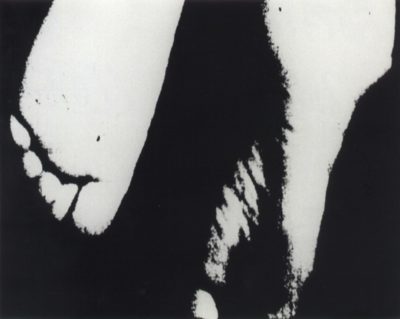
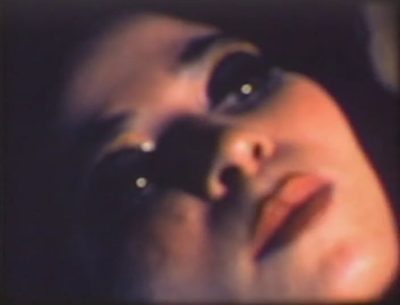
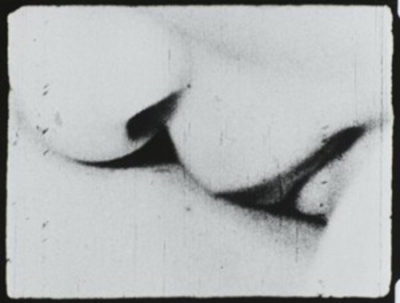
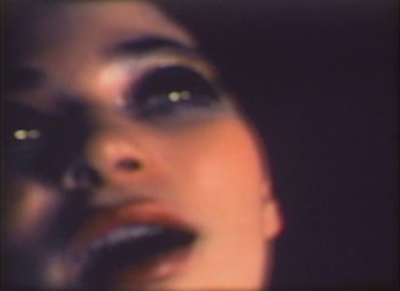
‘.. in Ai[LOVE] we become strongly aware of the separation between the physical and the semiotic – the perception and the recognition. We understand from this work how creating meaning, at even the most basic level – in the process of recognising a lip, a breast, a wisp of hair – there is a more primitive stage of pre-differentiated sensation. The film, through its form, becomes an arena where we relive that visual learning process, the transitions from raw perception of light and dark, its structuring into coherent pattern, to the projection onto the pattern of a set of associations which make these abstract images stand for a body or a face. This is sexuality embedded deeply in the perceptual and semiotic process.’ — Malcolm Le Grice
the entirety
______________
Cine Dance: The Butoh of Tatsumi Hijikata / Anma (The Masseur) (1963)
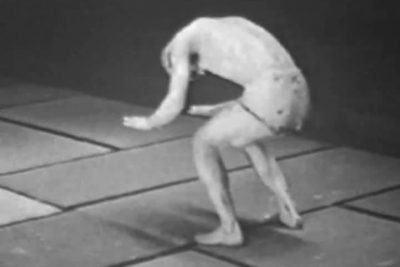
‘Anma (The Masseurs) is a representative and historical work by the creator of Butoh dance, Tatsumi Hijikata in his early period in the 1960s. The film is realized not only as a dance document but also as a Cine-Dance, a term made by Iimura, that is meant to be a choreography of film. The filmmaker “performed” with a camera on the stage in front of the audience. With the main performers: Tatsumi Hijikata and Kazuo Ohno, the film has the highlights such as Butohs of a soldier by Hijikata & a mad woman by Ohno. There is a story of the mad woman, first outcast and ignored, at the end joins to the community through her dance. Inserted descriptions of Anma (The Masseurs) are made for the film by the filmmaker, but were not in the original Butoh. The film, the only document taken of the performance, must be seen for the understanding of Hijikata Butoh and the foundation of Butoh.’ — Letterboxd
the entirety
______________
A Dance Party in the Kingdom of Lilliput (1964)
‘A surper-real comedy with Sho Kazakura. The film is divided into a number of very short scenes or chapters, each with a title at random. we see him lame in a crowd, see him running up stairs, see him absolutely naked, watch him urinate, etc. An anthology of discontinuous happenings and events. “(The film) is related more to ‘structuralist’ films, the image of a naked man being presented as chapters; the sequence is like moving stills, or short statements conveyed by mean of gestures. Each sequence is preceded by a title. Just as a concrete poem consists of words grouped together according to sound, and not necessarily according to meaning, so in this film the image are grouped together according to how to look and not necessarily according to what they mean. Perhaps it would be more accurate to call what are generally known as ‘structural’ films ‘concrete’.” – Stephen Dowskin’ — TFMC
the entirety
_______________
Eye For Eye, Ear For Ear (1966)
‘A positive/negative Structural Film shot the hippie in the 1960s.’ — T.I.
Excerpt
_______________
White Calligraphy (1967)
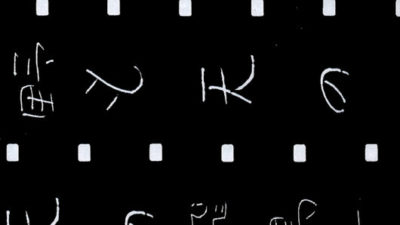
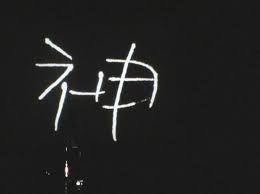
‘In my view the most interesting of Iimura’s early films – at least those I’ve had a chance to see – is the one least characteristic of this period: WHITE CALLIGRAPHY. To make this abstract film, Iimura drew the Japanese characters for the Kojiki, ‘the oldest story in Japan,’ directly onto dark leader. Since each frame contains a different character, the finished film creates a continually changing retinal collage, which is interrupted intermittently during the final minutes of the film by movements of dark leader. All in all, WHITE CALLIGRAPHY is a sort of filmic concrete poem ….’ — Scott MacDonald
the entirety
_______________
Dead Movie (1964)
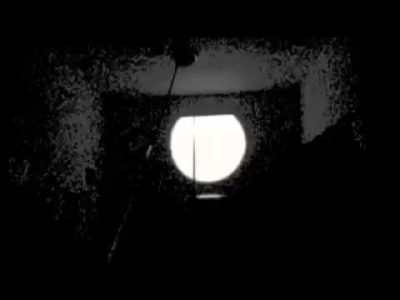
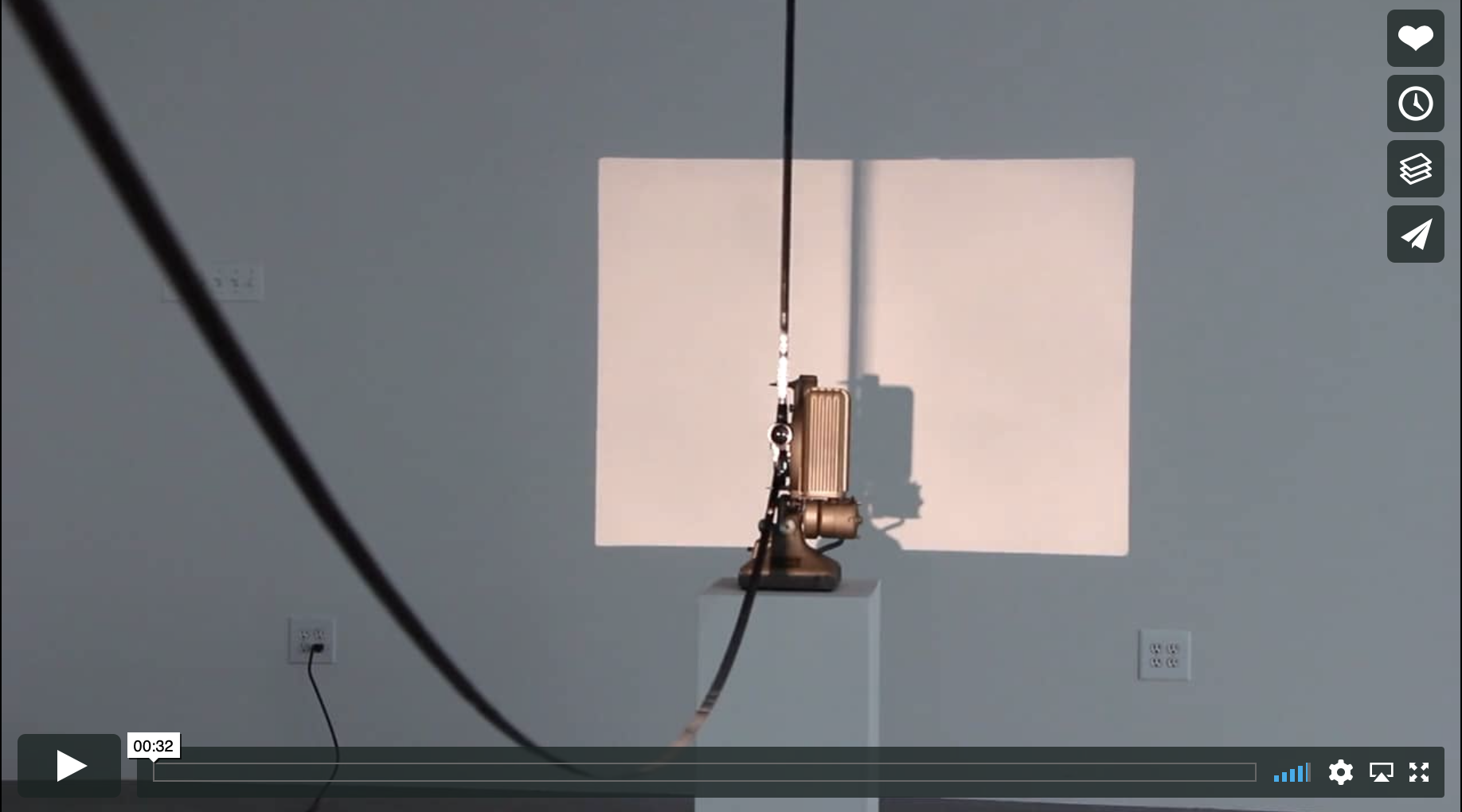
‘Iimura began to hole punch performatively in his first film installation, Dead Movie, 1964, in which two 16mm projectors, one with a black film leader hung and looped from the ceiling and another operating with no film, were placed against opposite walls and facing each other. The hole punch, a destruction of material for the creation of light, was what Iimura called a “peep window” that invites our eyes through the film and onto the screen, or in the case of this installation, onto the projector positioned on the other side.’ — MoMA
____________
Shutter (1971)
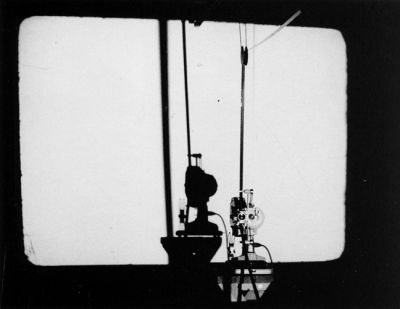
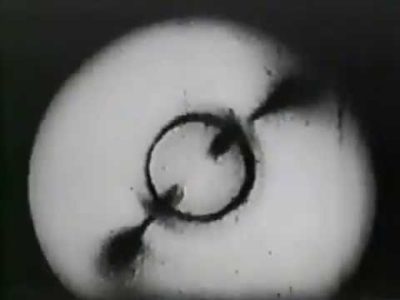
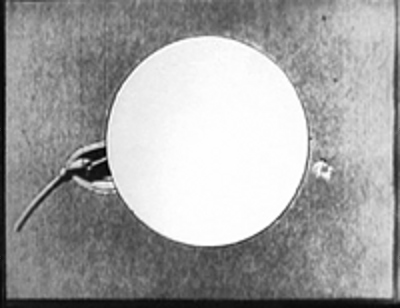
‘What I am concerned with in this film is not only the flicker effect, but also the coming and going of an eye-like shape on screen which was created by a fade-in-out device while shooting the light/the bulb of the projector. The viewer literally looks into the light which acts like an eye.’ — T.I.
Excerpt
_____________
Blinking (1971)
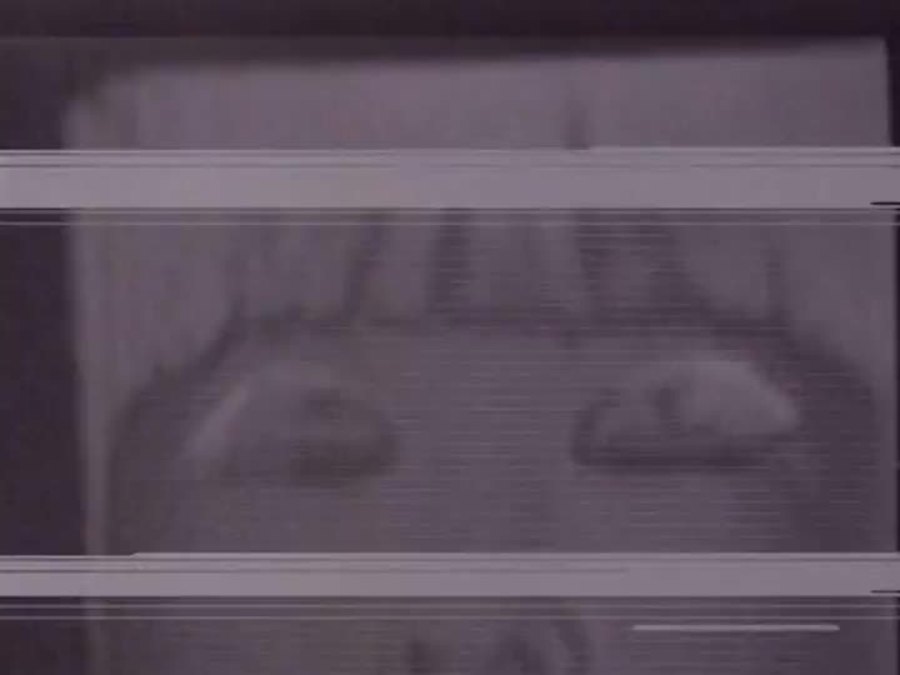
‘One of the earliest minimalist video with flicker effects was produced in Tokyo in early 1970s. A flickering video with eyes, which super-impose the positive over the negative, open and close rapidly. At the same time the “blind” effects of video fast-forwarding accelerates/decelerates the picture synchronized with the sound.’ — Fandor
_______________
Yoko Ono: This is not here (1972)
‘With guest artist, John Lennon, and Yoko Ono, a document of YOKO ONO solo exhibition THIS IS NOT HERE at Eberson Museum, New York, 1971. A document of the Yoko Ono retrospective art show with John Lennon as guest artist, “This is not here” held at Everson Museum, New York, 1971. The film begins with Yoko’s speech at the press conference that continues throughout the film as she talks about “radical art”, a non-violent one, and advocates “total communication”. Many important art objects and installations of Yoko’s are seen as the camera goes along with Yoko and John through the installations. Allen Ginsberg and George Maciunas were among two of many guest artists who participated in the exhibition. At the end a “piano piece” by Yoko in which people including John and Yoko are just hitting continuously the surface of a closed piano is overwhelming.’ — T.I.
Excerpt
_______________
Self-Identity (1974)
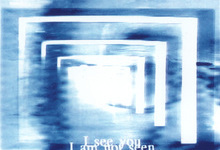
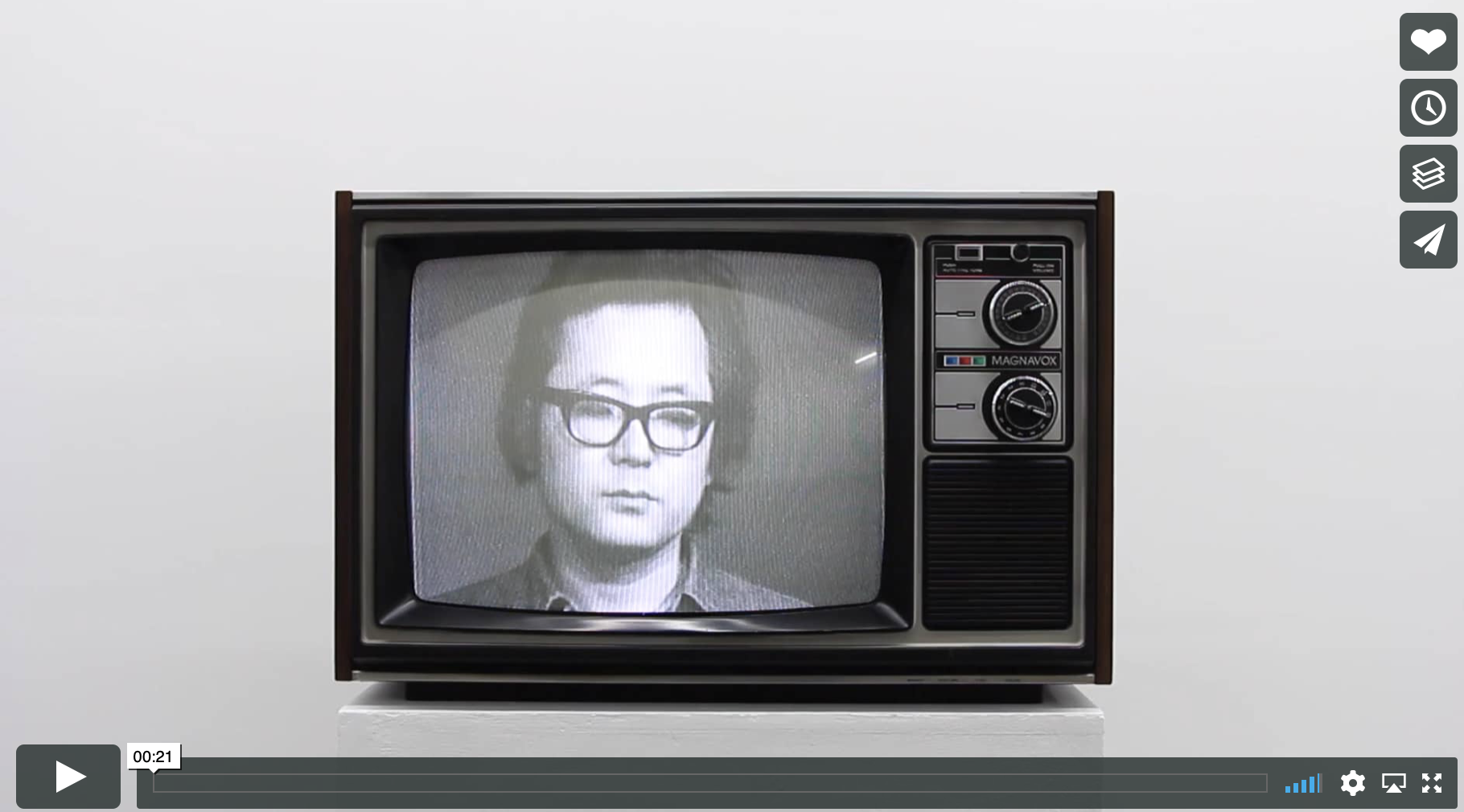
‘In “Self Identity,” I said in front of the camera, “I am Takahiko iimura,” and “I am not Takahiko iimura,” alternately. Does it sound like a ZEN-MONDO, a question and answer session of Zen monks? Yes, and no. The key of the piece is the former announced with the voice synchronized with the picture and the latter without synchronization, the voice only.’ — T.I.
_____________
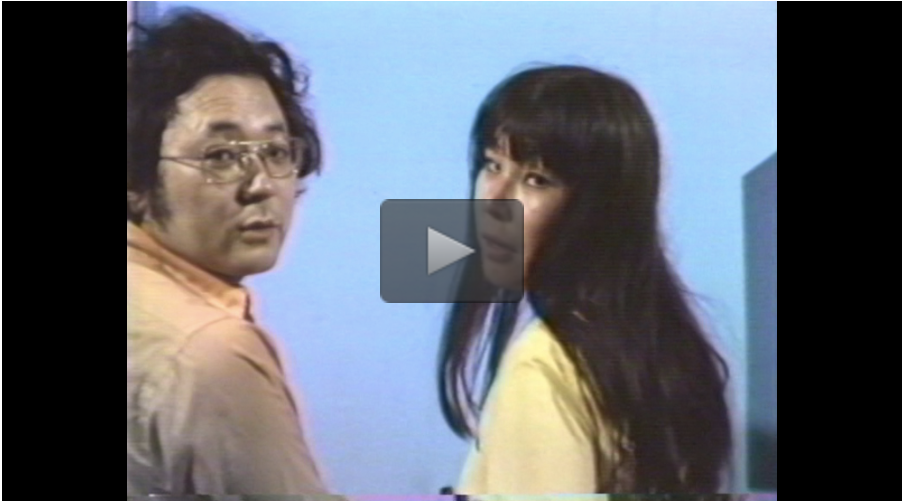
I Love You (1973-1987)
‘“I Love You” is not a style of confession, but the words, and a linguistic practice using a sentence and shifting the pronouns.’ — letterboxd
______________
John Cage Performs James Joyce (1985)
‘A private performance by John Cage realizing his “Writing For The Fifth Time Through Finnegans Wake” in three ways: reading, singing, and whispering using I-Ching chance-operation: Chinese fortune-telling.’ — bardofold
the entirety
______________
A U I E O NN Six Features (1993)
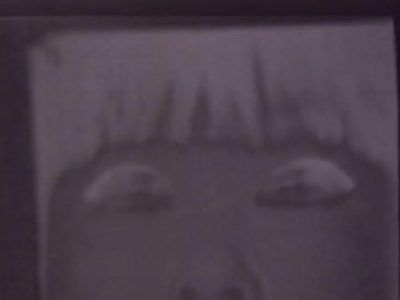
‘Combining the comical and the absurd, Iimura uses six funny faces to animate the visual images of six Japanese vowels in the Japanese and Roman alphabets. For the animation, the video images of the face were manipulated by System G, a real-time 3D texture mapping developed by Sony.’ — LUX
the entirety
______________
This is a camera which shoots this (1995)
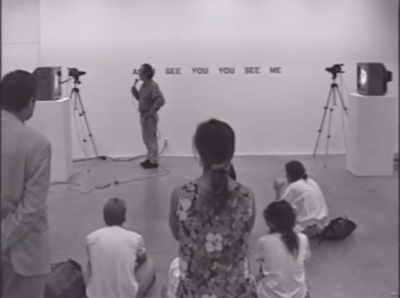
‘Two cameras and two monitors are placed facing each other a certain distance apart. There is a sentence on the wall between them: ‘THIS IS A CAMERA WHICH SHOOTS THIS’. On the monitors the identical images of the camera are seen showing the real thing and the image side by side. The endless sentence is the textual equivalent of the endless video structure, a camera shooting another camera which shoots back at the first camera. In this virtual feedback process, the existing subject-object relationship prescribed by elementary logic becomes relativised. In Imura¹s words: an endless structure as the ‘object’ turns into the subject of the next sentence.’ — Experimental Intermedia
*
p.s. Hey. ** Dominik, Hi!!! Yes, and dry today too, they say. Tomorrow the deluge returns, they say. Okay, if I can find that show I’ll go straight to Season 2, Episode 5 to be safe. I would give love some advice, but I’m the same. Love receiving my belated thanks for apparently having solved my visa problem, G. ** Charalampos, I would do ‘Candy Mountain’ if you can find it. I would avoid ‘Little Buddha’. If it’s an Ozon film, chances are it won’t be very good, but I’m not a fan. I, of course, know of the new GbV single, and I’ll be hearing it today. ** Alice, Hi! Things have been up and down but mostly up or at least up-ish. I don’t think I know Girls Ritual, but I’ll discover them. I remember ‘Cracks in the Image’ existing, but I don’t think I ever looked at it. Gay Men’s Press was a pretty active queer press back when. Back when using the moniker ‘Gay Men’s Press’ wasn’t considered cringey. DJ, cool. I’ve only DJed on the radio, but I so loved doing that. Do you have any dream DJ gigs in mind? Lately? The usual arranging ‘RT’ screenings a lot, finished (maybe) the new film script, enjoying Paris before Zac and I start traveling for screenings again, renewing my visa (hassle, expensive). Obviously I love that new idea for your novel! Take care. You sound good. Talk with you again soon, I hope. ** jay, Hi, Jay! Thank you, pal. Occult stuff is interesting, at least to observe, but I’m always wary of believing in something that I didn’t invent myself. Who was the occult dandy, if you remember.? Vaguely curious. If you’re weird, you’re weird in an admirable way. I’ve been mostly good. I hope it’s entirely good in your case. ** Thom, I like acid westerns too. In fact I think I did a whole post about them. Let me check. I did! Here The potential zine sounds amazing. That Amy Grant story, whoa. Super excited to see the eventuality. Yeah, I worked especially hard on ‘Guide’s’ structure, so thank you. It and ‘The Marbled Swarm’ were super intensive builds. Much niceness vis-a-vis your day too without any of the banality that word can bring to mind. ** Bill, Great, I’ll look for that Wurlitzer doc. For goodness sake, yes, a stinky shirt is worth barreling headlong into your work, Bill. I’m sure your bypassers will understand, and, if not, they’re clearly not worthy of brushing shoulders with you. ** _Black_Acrylic, It’s always so sad when you exhaust a movie franchise that you like. I hope the TV extension gets it right. ‘Wasteman’, I’ll look for it. It’s new? Guess so? ** Carsten, Yes, that’s the full Wurlitzer/’Dead Man’ saga story. I wasn’t remembering well. Happy you like Wurlitzer too. He’s great. A number of my LA friends are acquaintances with him, but I sadly never crossed his path. ‘Candy Mountain’ is quite odd, and, yes, very good. Very hard to see, I don’t know why. Lay that land like a motherfucker, man. ** l@rst, Ace on the Wurlitzer fandom. And my pleasure on the word spreading. ** Uday, That does sound like a hard thing to imagine without just resorting to mimicry. Joy Williams! *deep bow*. I’ve known Sontag Heads, as some of them call themselves. So you’re one. Michael Silverblatt was one. I met her once. She was very cheerful and funny, but she was a little drunk. ** HaRpEr //, Yes, I saw ‘Cocksucker Blues’ back when it couldn’t be shown if Frank wasn’t there in person to host the screening. It’s the best of the Rolling Stones films, for sure. Although ‘Gimme Shelter’ is quite good. You see Keith Richards shooting up a lot, and there’s the infamous scene where roadies rape or seems like they’re raping a woman on a plane while the Stones stand around singing and banging on things as an accompaniment. That scene is obviously why the Stones won’t let it be shown. I’ve heard of ‘Actors’. I’ll look for it. The visa problem finally got solved yesterday, so I’m in the clear, or at least until the visa gets approved very hopefully. ** darbz (⊙ 0⊙ ), My blog appears to find your comments delicious. The visa problem is fixed. Whew. But now I’m worrying that it’ll get approved by the government. Probably. I’m harmless enough (as far as they know). Oh, gosh, I have an eternal great fear of not having any money or a money source, so I would probably go to the job that day reluctantly, but that’s just me and my issues possibly. I trust your judgement. It does sound very promising with you-know-who. I think your test worked. ** Right. I hope you will enjoy exploring the work of Takahiko Iimura today. See you tomorrow.


 Now available in North America
https://greenlindenpress.submittable.com/submit?fbclid=Iwb21leAQNE3VjbGNrBA0TZ2V4dG4DYWVtAjExAHNydGMGYXBwX2lkDDM1MDY4NTUzMTcyOAABHihdSZz99dxT3VuEvrWM6rgSU_Nmk75Q-aJV9dobQd7DQTfXYYPAm5q-qR3Z_aem_kzfNVGs6-HdAW93Wg8EU_g
The above just popped up on my FB feed & I thought I’d share it here. It’s a poetry chapbook submission opportunity with Green Linden Press. Deadline March 21.
Saw someone here the other day (I think Harper?) talking about possibly wanting to do a chapbook, which I’m all for obviously. It’s a beautiful format I think. One we should strive to keep alive. It invites an almost meditative, intimate focus on the words, which is tough with bulkier tomes.
cheers mate! idt i understand chapbooks enough, educate me? ^_^
A chapbook is basically a slender booklet of no more than 60-or-so pages. It’s basically one of the oldest forms of printed street lit, as poets were able to get their work printed & then hand it out on the street. Quite often they’re also illustrated. With my upcoming chapbook I like the focus on a specific set of 20 poems with no extraneous shit standing between you & the words.
Also, I think you missed my reply the other day. I said I’m sure we’ll manage to meet up one day as I’m not leaving Spain any time soon.
yay! i didn’t know how slender a proper chapbook had to be, like the etiquette of it lol. no illustrations for you then? that’s a whole other job tbh, and clicking w an artist assuming you’re outsourcing the thing, and then there’s trusting them not to rip you off w some AI shit, unless it’s not shit i suppose. the thing you’re releasing, what’s it about? xo
And I’m back in my hotel after another day of sightseeing & two pad viewings. Smoking is prohibited “on the entire hotel grounds” even though there’s a huge balcony. Shit like that really bothers me. I mean I still smoke there & haven’t been caught yet, but just on principle outdoor smoking prohibitions really piss me off. They only make me smoke more…
Does Wurlitzer live in LA? Yeah I’d love to meet the man too. Seems like my kinda guy.
Just checked & “Candy Mountain” is actually on m.vkvideo. That site is amazing.
The visa trouble got sorted out? Good, glad to hear it. When & where do you start traveling again for film-stuff?
I do look back quite fondly on those Fluxus days of the 60s. I will also explore this Takahiko Iimura Day so thank you!
Going to the Odeon yesterday really brought home how much cinema is in such a state right now. Wasteman is hardly mainstream fare but still, there was only a couple of other people in the screening with me. No posters for any of the other films anywhere! I asked a member of staff if there was any image that I could take a pic of just for my Instagram. His reply was no, they’ve got nothing. I have a liking film posters and always found them to be exciting, but it seems to be a dying art. Or maybe it’s just the Odeon chain that needs to get its act together?
The meds helped. Trying to not depend too much on them for anxiety relief as I should also try and work through it sans benzos, but it’s nice to know i have them if needs be. Im starting to feel a bit more ‘normal’, and somewhat accepting as what caused this emotional state was something from years ago, but that obsessive compulsive behaviour had me ruminating for hours until I worked myself into a mess. I’m just using this week to get back to being able to work next week, as I really do love that job and called my boss today to apologize for being away.
well, Dennis!
so i attended the prose thing, bc i love ya or smth. it was so fucked up! i went down badly as usual but there were many funny moments. remember we were encouraged to share some of our wip’s fav bits like:
“Well, Fabian, i did it bc i can’t imagine a world without you in it”
***
“Stop gazing at me!” I groaned
“Gazing at you? How?” He grinned.
“Like you want to sin twice!”
***
“Magic and wisdom, two things which should have never parted. For what is magic without a plan and what is wisdom without fun?”
***
“Dayton is going to try his normal bs to try and get me back again.”
***
“Life outside went on with its usual passivity, but inside a tiny human had come.”
***
“You should enjoy this, you’re getting the attention of one of the wealthiest men on earth.”
***
“She couldn’t understand how the world was still moving when someone she loved wasn’t in it anymore.”
***
me, not a specific fav, but secret handshake and longer bc i’ve got it in front of me obvi:
“… and blood, and spunk… Theo, he was bored, I revolved around him, he was as still as… fuck back, are you having a seizure?” Slap, slap. “… he sank like a water lily when it dies back,”
“Oh,” Suzi went, wow, and how, made a lot of noise over deflating air-filled tissue and unbolted arsehole and tears, shedding leaves and fucked back, pit stop at tunnel-visioned, nose to the wall or whatever. “Thank you,” she said, totally at peace.
***
lol hope you’re cringing and chuckling alright =D
actually someone at the thing was reading Blood Meridian and i was like oh i’m reading Hogg which i think is a sort of explicit sex relative what w the Americana and the excess, he was like i’ll read it next. and that was my achievement of the evening. ^_^
cool post today! totally confess i was *sure* his name was Limura for like the longest time smh. anyway, his signifier-signified thing and his observer-observed thing are p sick, like… he blends by excising? and he pulls all of these super blank, time-space non-concepts which i like a lot. again wish i’d have a bunch of chances to watch his stuff the way he meant it to be watched!
i don’t feel like prose today so i’m doing basically nothing but i did write a couple of poems last night, which are weirdly compatible w yr theme of the day, meaning semiotics and spacetime and stuff. all of my poems are 5 minute affairs so not a big deal or anything, but here lol
https://i.postimg.cc/BnQbqvYK/wheniwassmall.jpg (is this even worth naming?)
https://i.postimg.cc/wjTM6BfL/thewallwonttellme.jpg (this is prolly just The Wall)
hope they don’t rip you off too badly what w the visa situation! one might think they’d want to keep you. i sometimes think of divesting from the UK considering the shitshow it’s turned into plus the hassle that i never considered dual nationality bc it seemed daft pre-Brexit and then i got poorly. but London is sort of home too so i probably don’t really want to cut that cord. still i find myself wanting to be in LA aaaall the time lately. ugh just let me uncovid myself or whatever, alhamdulillah anyway.
this is super interesting to you, but i got a new dress in the post today and it’s unexpectedly all sheer, which, cheeky fuckers at that price. still trying to decide how i feel about it, like at home it’s some water nymph shit, outside it’s just fuckwear. ofc i’m mostly at home now so fuckwear is quite a bit more realistic than supermarketwear, there’s that.
anyway! when do we know more about your script, now it’s done? are you v v happy?
hugs!!
I found Candy Mountain and watching it it’s fun so far
I saw Bulle Ogier’s name in the opening credits and wait for her to appear haha
I like the lead guy
GbV’s Crawlspace of the Pantheon new album has nice title and album cover
I listened to my very favourite of their albums yesterday night and my night was made
I’m glad the visa situation is getting resolved. How many more steps do you need to go through?
Did you know Fakir Musafar or anyone in the Black Leather Wings group? During the interview, Angelo Madsen spoke about how creative the ’80s performance art scene was. (He learned about Musafar from MODERN PRIMITIVES.) Anyway, I’ve transcribed the entire thing, which will be published next week.
The snow has melted so much that you no longer need to wear boots here.
hello dennis!
im sorry ive missed you the last few days!!!! i had a week from hell at work…but i got my entire workplace’s 2025 payroll slips filed!!!!! AHHHHH
i hope visa stuff is going ok? i have been praying for you!
and very cool post abt iimura! hmm…i vaguely remember seeing this is a camera…somewhere in asia. probably when i was in japan.
i love seeing how different artists play with ma/void/negative space/whateva you wanna call it. idk, i feel it a lot with your work…like a focus on the unspoken, the un-truth, the unknown. idk, do you see your stuff within that framework?
Hey Dennis. Wicked wicked post today. I felt like it was reading me right back. Will probably screen something of his next movie night, if I manage to get through enough to find what I like. Held auditions today, and they were so unutterably dull that I caught myself daydreaming. Speaking of dreaming, had an odd one last night where everybody was dying of orgasmic dehydration. Strange day, and one that’s lending itself to brevity.