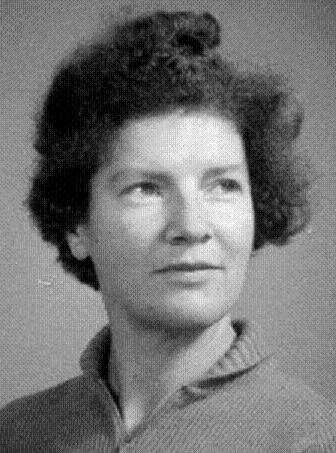
‘Janet Frame was New Zealand’s best known but least public author. The originality and power of her fiction ensured that she was frequently spoken of as a candidate for the Nobel prize for literature, most recently last year, when a journalistic leak from Stockholm revealed that she was once again on the shortlist.
‘The author of 12 novels, four story collections, one book of poetry and three volumes of autobiography, Frame was born in Dunedin, on the South Island. Her early life, spent in small towns in Otago and Southland, where her father worked for the railways, was blighted by a sense of alienation and the deaths by drowning of two of her sisters. While she was working as a trainee teacher in Dunedin in 1945, the combined effects of her feelings of inadequacy and the family bereavements brought on an emotional breakdown, which doctors mistook for schizophrenia – a misdiagnosis that kept her in mental hospitals for the better part of a decade.
‘In reference to this period, Frame would later write: “I inhabited a territory of loneliness which … resembles the place where the dying spend their time before death, and from where those who do return, living, to the world bring, inevitably, a unique point of view that is a nightmare, a treasure, and a lifelong possession … [It is] equal in its rapture and chilling exposure [to] the neighbourhood of the ancient gods and goddesses.”
‘Critics would eventually suggest that it was Frame’s familiarity with the extremities of experience in mental hospitals, combined with her precocious facility for language, that enabled her to burrow so far, and so convincingly, into the human psyche in her fiction. Her first book, The Lagoon And Other Stories, was published while she was still a patient at Seacliff hospital in 1952. It won New Zealand’s only literary award, which led the hospital superintendent to cancel a scheduled leucotomy on Frame, an operation that might have left her in a vegetative state.
‘In 1955, after her release from Seacliff, Frame moved to Takapuna, Auckland, to stay with Frank Sargeson, the doyen of New Zealand writers. There, she wrote her first novel, Owls Do Cry, making extensive use of both her family tragedies and her time in hospitals. When it was published, first in New Zealand and then in the United States and Britain, it was widely praised for its originality and its insights into the world of the insane. But the correspondence of parts of the narrative to the author’s own experience led to a widespread belief among readers and critics that Frame was a mad genius, whose creativity had its origin in mental disorder.
‘To the frustration of her publishers and agents, Frame shunned publicity, which had the effect of making readers and journalists even more intrusively interested in her life than they might otherwise have been. It was in a vain attempt to quell this interest and accompanying speculation, and to have “my say” about the circumstances of her commital to mental hospitals, that led her to write autobiographically in the early 1980s.
‘Frame herself was untouched by the notion that she was a genius and a world-renowned author. People could say it; that didn’t make it so. To her, her reputation was but one of many features of an existence she found surreal, even preposterous – like the very fact of being alive, or of daring to use language to capture and to convey human experience. The publication of her authorised biography, Wrestling With The Angel, in 2000 was an experience she endured rather than enjoyed.’ — Michael King
____
Further
The Janet Frame Literary Trust
Janet Frame: The Self as Other/Othering the Self
janet frame & the tempest
Janet Frame @ goodreads
JANET FRAME REFRAMED
Janet Frame page @ Facebook
In search of Janet Frame
The Janet Frame Collection
Is there a Story in Janet Frame’s The Lagoon and Other Stories?
Closure and Happy Endings in Janet Frame’s The Lagoon and Other Stories
Janet Frame Obituary
Janet Frame’s private life
Book: ‘Janet Frame’s World of Books’
“We Liked Janet Frame Til We Read Her”
Janet Frame, by Alan Tinkler
And: a complex little word at the heart of Janet Frame’s language
Janet Frame in Focus: Women Analyze the Works of the New Zealand Writer
Janet Frame: Semiotics and Biosemiotics in Her Early Fiction
JANET FRAME ET LE DISCOURS DE LA NORMALITÉ ENTRE INTÉGRATION ET DÉSINTÉGRATION
Fiction Podcast: Miranda July Reads Janet Frame
A literary pilgrimage: In search of Janet Frame’s New Zealand
A song of survival: Neil Hegarty on Janet Frame and Owls Do Cry
Unravelling the riddle of Janet Frame
Melancholia in Janet Frame’s Faces in the Water
____
Extras
Janet Frame: Master of Words
The Lagoon by Janet Frame
Janet Frame
_____
Interview

Elizabeth Alley: In the autobiography you seem more willing than in the fiction to open some of the doors about yourself and your life – to correct some of the myths that surround you.
Janet Frame: I wanted to write my story, and you’re right of course, it is possible to correct some things which have been taken as fact and are not fact. My fiction is genuinely fiction. And I do invent things. Even in The Lagoon which has many childhood stories, the children are invented and the episodes are invented but they are mixed up so much with part of my early childhood. But they’re not quite, they’re not the true, stories. To the Is-Land was the first time I’d written the true story. For instance, Faces in the Water was autobiographical in the sense that everything happened, but the central character was invented. But with the autobiography it was the desire really to make myself a first person. For many years I was a third person – as children are. ‘They’, ‘she’… and as probably the oppressed minority has become, ‘they’. I mean children are forever ‘they’ until they grow up.
EA: For a long time you really were quite reluctant to discuss anything that had to do with the genesis or meaning of your work.
JF: Well I write, you see. I don’t tell about my life. I just write and that is my telling, but in order to set down a few facts and tell my story, this is my say.
EA: When did you first discover you could make words work for you?
JF: Oh I’ve never discovered that… I’m still working at that.
EA: But it was a conscious search in your life, wasn’t it, to make the power of words into…
JF: Well yes, as I was writing the autobiography, much was revealed to me about my growth that I hadn’t realised. You’ve referred to my description of words in our family as ‘instruments of magic’. Spoken words, in childhood, arrive from ‘on high’ — as high as the sky — you can’t reach out to grasp them and play with them, they travel from room to room and in a magical way come in from outside the ouse. They can be anything — bombshells, globules of honey or small utilitarian hinges, hooks… You can see how words might become a most desirable property. Also in our family the spoken words were far from ordinary — my father’s recitation of the places he passed on his daily train-journeys; and my mother’s reciting of poetry.
EA: Did you perceive this as something missing?
JF: Yes, simply again, no one had told me I had imagination. I think I probably did have. I wasn’t even aware of it, but in a way like a material possession because I saw that anyone who did have imagination — I wasn’t looking outside into the world of New Zealand and its writers because I didn’t know about them — but I perceived that anyone who did have imagination was revered. It was something to be treasured, and anyone at school who had imagination was always spoken of with awe.
EA: I wonder how much the material deprivation that you were exposed to in your childhood caused this search for the imagination. Did you feel that there was something extra that you wanted to look for?
JF: I don’t think so. If so, very slightly. I think it was the excitement and importance of the poetry, reading and words, and when I began to write poetry I enjoyed it very much.
EA: Somebody once wrote of you that your art was — I think he called it ‘born from a predicament.’ Do you think that a different kind of writer would have emerged from a different kind of environment, or is it something that was going to be there regardless of the kind of circumstances in which you lived?
JF: I don’t for one thing know what kind of a writer I’m supposed to be. For myself, I think it was inevitable, whether I was materially deprived or not, that I should try to write. Simply because it was part of my background.
EA: Thinking about this aspect of imagination still, do you think the fact that you’ve chosen to lead a fairly solitary life — that you need that to be able to continue with your writing — means that you need to draw on a more heightened sense of imagination than if you were leading a life full of experiences and activity and crowded with people all the time?
JF: Well, I think a writer needs to lead a solitary life. When I saw that, you have to be in isolation to do your work. After you’ve done your work, well that’s another matter. The work is the response.
EA: In some of your earlier novels I suppose what the critics call the dark side, the pain prevails. But in To the Is-Land it’s the joy and humour and the fun that is prevalent. And really, humour and satire have always been very important to you, haven’t they?
JF: In To the Is-Land I wrote the story of my life. My story, and this is me which comes out. There is pain, things happen, but whatever comes out is ordinary me without fiction or characters.
EA: How do you react to the critics who so often talk about that dark vision, that’s too narrow to share:
JF: Well, a novelist is subjected in reviews to the blurring of the fine distinction between the writer’s work and the writer’s life. Extreme views based on the content of a book might even pass judgement on what is assumed to be the outlook of the writer herself. In a sense this is agreeable, proving the successful reality of the book. For example, reviewers of The Adaptable Man referred to my desire to live in another age, the age of St Cuthbert. And also spoke of my interest in gardening and my knowledge of plants.
EA: Which is not true, is it?
JF: Well, I’m interested – I’m not passionately interested in gardening. I’m interested in everything, but I’m not a gardener. And there was a character who was a gardener, an intense gardener. When I visited the United States, someone in California took me round Santa Barbara Botanical Gardens and pointed out every plant.
Others talk of my pessimistic outlook on life, and my habit of bringing disaster to the characters. This was in The Adaptable Man, referring to the close of The Adaptable Man where one character is left almost totally paralysed, able to view life only through a mirror. The critical references to me and my supposed personal views, I think they’re simply a failure of the art of literary criticism. Well, they’re an impurity of response which I suppose is natural, but who said literary criticism should be natural? The critic reminds me of the film The Fly, where the scientist, immersed in his experiment, doesn’t realise that a fly has accompanied him to the cabinet. When he emerges, his work finished, he’s part-man, part-housefly. I mean the critic has the sort of little impurity, but the writer works within the limitations or framework of her personality, although the outlook and the view over the territory of time and space and human endeavour is endless. But writing also is a kind of job. You ask about the dark side. Well, if I’m a plumber and I find there is a certain amount of work to be done in a certain street, exclusively with, say, the pressure of the household water supply, then you can’t assume that I’m not qualified also to fix your sewer or install a shower, or a swimming pool. If, as a writer I happen to work in a street where a few disasters occur, this is no foundation for the belief that I’m interested only in disasters. Similarly, if I write of a dark side, it doesn’t mean that I’m not interested also in the whole view. You must be.
EA: What about those critics who say that ‘the range of emotional experience of your characters is limited’. Is the full emotional range of experience something that you’re not really all that interested in expressing amongst your characters, or do you feel in fact that it is expressed adequately?
JF: Well I wouldn’t say that I have successfully expressed many things. I’m still trying, but I wouldn’t exclude any experience, any human experience from a book. Sometimes I think what is called the dark vision isn’t necessarily so. I’m an optimist. For instance, this man who is totally paralysed in The Adaptable Man and views life through a mirror, I think that’s a triumph. It sounds a bit twisted perhaps, but it is a triumph. There are people who survive. It’s a triumph of survival.
___
Book
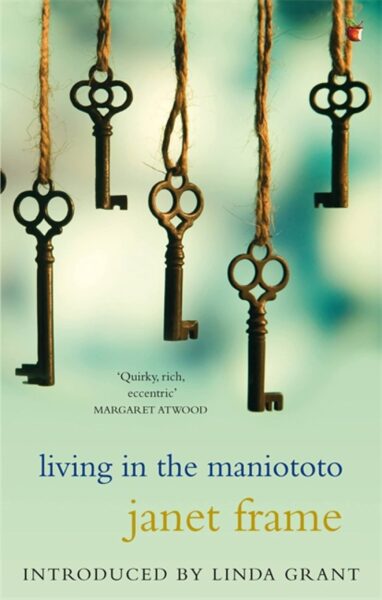 Janet Frame Living in the Maniototo
Penguin
‘Through the eyes of a woman of myriad personalities – ventriloquist, gossip and writer – Janet Frame playfully explores the process of writing fiction: the avoidances, interruptions and irrelevancies, as well as a teasing blurring between fact and fiction.
‘The landscape of the Maniototo becomes ‘the bloody plain’ of the imagination, as the narrator tells us about her marriages and children, her friends (real and imagined), her travels (between New Zealand and the United States) and her stay in the house left in her care by friends travelling in Italy. She must face the reality of death as well as probe the authenticity of the modern world.’ — Penguin
___
Excerpt
Here, I thought, if one were a spirit or dead, is a sanctuary. With a sudden rush of wind, dead leaves, twigs and a scrap of paper blew inside. The air of desolation and neglect increased: the chill, of the wind, and of the spirit, intensified and there was a kind of peace that one feels walking among the dead and listening, as the dead may, at a great distance from the world and its movement and noise.
I went to explore the small garden and found a green garden seat which I cleared, brushing away the bruised ripe loquats fallen everywhere from the huge loquat tree; and I lay down, half in sun, half in shadow, looking up at the lemon tree in the neighbouring garden of the Villa Florita. I closed my eyes. The sun came out again, moving quickly, and was on my face, burning. I changed my position on the seat. The sun was once again hidden behind cloud, the air was chill again, the flax rustled with a brittle snapping sound and the secretive small birds once again began their whispering and chittering. I fell alseep. And when I woke I shivered with cold. The mountains were harsh and grey with fallen used daylight, softened in the crevices with the blue of distance and evening.
So that was the Rose Hurndell Room! I dreamed of it, and of my own home in Bannockburn Road, Blenheim, and the two lives I had known there, and the daily use which marriage makes, one of the other, as the light makes of the twin slopes of the mountain, and I was glad that the colour of distance was beginning to touch my view of my life in Bannockburn Road. I dreamed of Brian’s house in Baltimore, and of the front window massed with plants. And of my home in Stratford, once again near the railway line and the bracken, with the hay-fever trees, white blossoming, growing everywhere, and the light green pine mysteriously transplanted from some Spanish island, growing in the front garden. Finally, in that disturbed night, when I was partly awake and partly alseep, I thought of the blankets.
Unlike the deal tables of fiction and the drain-layer and French master, the debt collector, the inhabitants of Blenheim, of Baltimore, of Berkeley, and I as other than Violet Pansy Proudlock, ventriloquist or gossiping Alice Thumb, a secret-sharer of limited imagining, the blankets were real, with real history and real power of warming. I thought of those in my home in New Zealand, gathered from many places, from our old home in the south, from my parents’ bed – coarse blankets matted with being washed and almost threadbare in places, faded from white to yellow with age and sun and hanging year after year on the clothesline, strung between two appletrees, tautened and lifted into the arms of the wind by the manuka clothes-prop, returning to sag and swing close to the earth with the weight of the wetness. Their brand names were marked in the corners. Some were English – Wilton – a name I had heard spoken with the reverence obviously due to it; others, with names that caused a shiver of homesickness, a memory of school days when places became their products – Onehunga, Mosgiel, Kaiapoi: the places with the woollen mills and therefore the blankets. I remember my mother looking out at the fluffy-clouded sky with its patches of pale blue, saying, ‘It’s blanket weather.’ That meant washing. The washing was a remembered ritual and risk. The women’s magazines printed regularly long serious articles with such titles as , ‘Dare I Wash My Woollen Blankets?’ and ‘The Risk of Washing Woollen Blankets’, sometimes pages of “Hints on Washing Woollen Blankets.’
Blankets in their washing and drying were part of the poetry of the outside world and its weather. ‘The white sheet bleaching on the hedge, With Heigh, the sweet birds how they sing.’
It seemed that, among all the products of the earth, wool was the most important, especially when our early education dealt largely with products, with the implication that living depended less upon the heartbeat and import and export of breath than upon the import and export of products: wool, butter, mutton. In recent years there was even a prime minister who came from the home of blankets – Kaiapoi, and brought, naturally, a new share of warmth and compassion to the nation. How could he help it, coming from Kaiapoi?
But the price of wool! The cost of the warmth has always been too great. I know, who live outside fiction where the cold wind blows across the waste spaces from heart to heart.
Finally, I dreamed of the Garrett’s golden blanket which everyone had wanted, I knew. I knew just as surely that it was mine, that it would take it’s place among the other treasured blankets in my home – that grey pair which I bought one week in a silverfish- and ant-infested seaside bach in the north, the relic of a cold wet summer, when Lewis was alive, and the children were small, and we all lay shivering in our dripping hammocky beds, and the manuka and the sea outside were full of misty rain. And there was the purple blanket that was returned to me when the writer that I met on my first visit to New York died suddenly. I gave it to her after I had stayed in her apartment, but after she moved from there, something happened, she couldn’t find enough warmth, though the world was crying out for warmth and wool, and so, they told me, she stayed all day in her new apartment with the curtains drawn, the radio playing the Black Power station (in the days when black Americans, flying to San Francisco, could still be paged, unthinkingly, to ‘come to the white courtesy telephone’), and with bottles of tranquilisers and fuming low-calorie sodas ranged along the windowsills. Beatrice, married at sixteen, divorced, a daughter at college. Beatrice, writing her novel, playing her music, perpetually depressed. They found her body in the East River. The purple blanket might have warmed her, but in the end there was no room left in her hibernating, winter heart for further cold seasons. Yes, her purple blanket is now safe at my home in Taranaki, with the other relics of warmth. And soon the gold blanket will be there too, I thought. I’m sure I smiled in my sleep realising that I had won the gold blanket from the guests; unfairly, perhaps, but the price of warmth is often too high for too close a scrutiny of the means of getting it.
*
p.s. Hey. ** Carsten, Hey. Yes, I’m fond of Xmas. I don’t really associate it with my family. I really like the transformational aspect – a house, street, city, store, etc. being turned into a platform for a fantasy makeover. I like the decorations, the blinking lights, the trees, the sound, kind of the whole shebang. Paris is never prettier than when they dress it up for Xmas. So, yeah, I do quite like it. No Thanksgiving over here obviously. That’s always been my least favorite holiday. That I only associate with family and the obligation and the murdered turkeys and all of that. Good riddance for me. ** Eric C., 8 inches, very nice, but daunting. I don’t even have a pair of boots. The Xmas makeover of Paris is in full swing. I really like it. I’m good, and you too, I’m hoping. ** Derek McCormack, Haha, thank you, Derek! Love, me. ** James Bennett, Hey, buddy. I trust you’re back in your waning home town by now. Thanks so much about the film. I’m really happy you liked it. Good seeing you too! I’m recording that radio interview today and trying to tamp down my nerves. Best of the best to you. ** _Black_Acrylic, You guys are so easy on the gift buying front. I’ve never heard of John Lewis, but that clip is pretty sweet. ** Laura, Ah ha, Laura! The only thing I like about my name is Dennis is sinned backwards. I know people who enjoy current psychedelics but they don’t have the old version to compare it to. The two acid freak outs were quite awful, but I found my way back and maybe even improved by them in some way. Um, I just really like things that are complex and confuse me in a way that makes me want to de-confuse myself by surrendering myself to them, I guess. And I like making those things too with my writing. I don’t really understand why everyone doesn’t like those things. May happiness be your night’s nickname as well. ** Connie, Hey! Thank you, I will, or I’ll try to blogify Xmas as I can. That’s so amazing about your grandparents. That’s so beautiful to imagine being the young blood relative of. Awesome, yes, I’ll watch the video as soon as I get out of here. Thank you! Everyone, Go watch a video made/directed by Connie that is a documentary following the Archbold, Ohio Parade of Lights and which most importantly features their interview with Santa Claus! Go here. It was Xmas-y here yesterday. They’re installing the overhanging street Xmas garland things outside my building’s front door, so … ** darbbzz⋆。°o, Hey, hey. So sorry about the imposing mind state. You were super cogent in your message. You know, those spurts of inability to make things are part of the deal, for me at least. I’ve just learned that they always come and go and that the back of your mind is still making things even if your concentration doesn’t let them coagulate. Try not to worry. Your great talent will burst out and overcome its obstacles before you even know, it will. That’s just how it works for artists who really care about what they do. Let yourself gaze at things and rebuild. Oh, the one NYC screening got rescheduled because some corporation wants to use the theater for some big event on the original night and the income was too good for the theater to say no. Hm, I think I’d probably make some kind of lo-fi noise music, I think, maybe. And you? No, I don’t like flavored coffee for some reason. It has to be black and unadorned. Is that punk of me? Let yourself have a dreamy day, my pal. ** Steeqhen, Hi. Sometimes you just get tired, but, yeah, I guess there are deficiencies. I’m tired but there’s a ton going on, so I have an explanation. I do like Xmas, yes. It’s no Halloween, but then what is? I’ll never get used to Santa supposedly arriving on Xmas Eve and people doing their related event that night. I grew up on the myth that he arrives in the wee early hours of Xmas day, and the other myth, which is the one practiced here in France, just seems like a weird jumping of the gun or something. ** Uday, The relative quick getting over it thing is comforting even if it seems tragic in the moment sometimes. Antoine Monnier jeans! Wow, you win everything. ** HaRpEr //, I would say my worst drug experiences have been with weed too. The complete, terrifying derangement on LSD a couple times were at least major events as opposed to just boring, evil paranoia. High five on your particular pleasure at Xmas. I would absolutely love to have that post you’re proposing. The blog and I are going away for just over two weeks starting on Sunday, but it and I will be in back mid-December, so there will be plenty of time to showcase your post before Xmas is history. That would be great, Thank you! ** Bill, Ha, I believe you. I think maybe I’ll be able to find that book and maybe other Hollow Press books when I’m in the States starting next week. I think looking over here would be fruitless. Well, maybe not, I guess. Thanks about the screenings. So far so good. ** Hugo, Hi, Hugo. I see. The Lish writers had a moment where they were especially spotlit and taken seriously straight out of the gate because of their Lish lineage, but I don’t remember their prominence coming at the expense of other types of writers. And the writers he either taught or promoted were pretty varying and quite great in quite a number of instances: Carver, Joy Williams, DeLillo, Barry Hannah, Lutz, Lipsyte, Ben Marcus, Brian Evenson, … That’s a pretty strong list. The proof is in the pudding or whatever they say? That’s my relatively coffeed-up thought at least. ** Okay. Today I spotlight a terrific, odd novel by yet another greatly under-read and wonderful writer, the strange New Zealander Janet Frame. See what you think, if you like. See you tomorrow.



 Now available in North America
ok well damny my bad for sending you over a hazenut coffee not knowing your too punk for flavored whimsical coffee. Hahaha
no wait Dude. your like, no offense, missing out. I dont mean like, creamer flavored hazelnut, regardless creamer is too sweet, I mean like hazenut BREWED coffeee, which taste so good without creamer. Your missing out. try it! Well, I use a keurig machine, which is actually a very enviromentally unsustainable product but someone gave it to me and well…. I have these hazelnut coffee pods and its so delicious. Dont need creamer, trust me. Although I will say peppermint creamer sounds very much yummy rn. I MIGHT GO WALK TO THE STORE. Oops caps.
Have you ever tried a horchata?
yes I had to very much force cohesion and stifle the background static last night.
Its like clinging onto tightly to the stone of a very deep well, desperatly trying to hold your grasp so you dont fall into complete befwilderment. y
but then you lose your grasps and slip and when you let your grasp slip you fall and fall and everything around you no longer has any association and you dont know how long it will be/time passes before you land on somewhat stable grounds all the way at the bottom.
I might comment later today, giving updates on the peppermint creamer coffee I seek.
⋆❅*𖢔𐂂☃︎꙳
oh if I were to make music…? I already kinda semi make music, I think I might actually aim for music making over art making which is not really my favored creative outlet. Music is just so good. I would like to do a noise genre project….and then more of a trip-hop low tempo jazz track…I think it would be cool to dabble in break core….but overall I really like the sounds of square pusher, Boards of Candada and Xiu Xiu so maybe ill make some infusion of those.
Pretty sure I have a copy of Living in the Maniototo here on this very bookshelf! Will have to take this Spotlight as a spur to dig it out.
Ah yes, the weight & damage of association… seems family ruins everything, doesn’t it? haha… But yeah, it’s the reverse with me. Xmas meant being strapped to the dinner table with family for days on end. For Polish Catholics it’s all about church & displays of piety (plus gluttony), & my dad combined that part of his upbringing with the gaudy materialism of pop cultural Xmas. So you get the worst of both worlds. I get that you like the transformational aspect—I dig that about Halloween. But where Halloween brings out genuine creativity in folks, Xmas just always strikes me as sappy, twinkly kitsch. I think it’s the relentless positivity that pisses me off.
Thanksgiving’s the opposite. Now disregarding the whole colonial bullshit behind it, I obviously only experienced it in the States, far from family & obligation. So as I said, no different than July 4th, just an excuse to cook & hang with friends. I think you would’ve liked my LA Thanksgivings. Nothing but weirdo artists, good music & at least one vegetarian who’d contribute tofurkey.
So you’re about to hit the States again? For how long? And are you combining LA & NY in one trip? Just checked out Brain Dead Studios online. Looks pretty good. That place is fairly new, no?
Are shrooms weaker now? Since they’re a natural plant, why would that be the case?
Do stores in Paris play Christmas music constantly? That’s my least favorite aspect of the holiday in the U.S.
Hey Dennis.
I actually forgot that Williams is a Lish cohort funnily enough, but yes, the writers you name are quite strong, and more importantly, quite varied in output. I guess my main contention isn’t the talent but (once again) what I feel to be a cult of personality. I remember feeling the same way about the beats when I was into them, which is funny cuz I am still quite enamored by many of Burroughs’ works. I wonder if I have an element of patricide in me that makes it so whenever I detect the idea of being grouped together, I kinda start getting defensive or getting on the offensive. I dunno, am I too much of a contrarian? Or am I just a tool? Anyway, thank you for your thoughts. I really appreciate them, and they make my day.
Also, my granny is a Janet Frame fan, funnily enough, she has a bunch of her books in her library, so I suppose I never thought of her as “under-read.” – but that’s probably a generational thing, I remember reading that Compton Burnett and Firbank were quite popular in their own lifetime and are only cult authors now.
(Also, I will agree with Lish that Franzen isn’t worth the attention at all, but I think that opinion is quaint now, since I know no Franzen fans.)
Have a good one, it’s probably raining in Paris the same as here.
Hey Dennis!
Todays is somewhat of an eventful occassion. As I write this message I’m waiting for My Bloody Valentine to start their set. I’m quite excited. The staff members gave everyone earplugs, so no one has an excuse to avoid that haha. The opening set was from J Mascis and I quite liked it!
In general it is nice to be back in London. Tomorrow I will be meeting with a close friend and showing her some book stores. I have some places like Gays the Word and London Review on my mind. What are some of your favourite book areas in the city?
I’ve been keeping along well. Just finished my plethora of study readings. Now I have the space to read what I wish. Just started Nightwood today and I’m captivated by it. Already it has made me reflect on the formal presentation of ‘the other’ within my works. I’m intrigued by its interest in identities that co-exist but hold separate experiences with agency.
Side note but I had a strange short dream on the bus ride to here today. I read T.S Eliot’s introduction and then fell asleep. I dreamt that his words were shouting at me. It was odd because I’m not even sure if I was asleep, but I was definitely disconnected from my general conscious. It has stuck with me lol
Wishing you well!
You got to see MBV??? I don’t think I ever truly understood envy until today….
Good for you, though 😉
come back and tell us how the show went! all the tea. i saw them years ago and they were super slay, so chuffed they’re back. ^_^
Wow, Janet Frame in general and the exerpt from Maniototo in particular is a revelation, thanks for posting! I’ll have to put it on my reading list for 2026. Awhile back you posted something from Destroy, She Said by Marguerite Duras, and I really need to check out both the book and the film. Previously, I just thought it was a Death In June song title, haha. Good discoveries, definitely.
Hey Dennis,
Still sick, and perhaps even more lethargic. Had to take two big naps during the day, which only ended because my throat was so irritated and I needed to get a drink and then a cup of tea.
I’ve also always been under the impression that Mr Clause arrived during the witching hours of Christmas day, which would obviously be less witching but just as magic on Christmas, though that because of the time differences, he was beginning his journey in what would be considered Christmas Eve in Europe; they’re tracking his flights over Australia and Asia normally on those news reports…
The one good thing about being sick is that the line between reality and my delusions and dreams becoming increasingly blurred. Music tends to act as a good transition between my headached reality and whatever fever dream world I’ll enter. I was listening to a lot of music and it really just felt so much more powerful in this mind. On the dream side: a few days ago I dreamt that my parents got rid of my bed, and my house was a construction site. Today, I dreamt that I was in Glasgow, although at some points it was Philadelphia — basically I was picked up into some wormhole, and I entered some Earthbound-esque version of the world, sometimes in that SNES flat 3d look, and sometimes in this empty, concrete highways and overpass landscape. Eventually I was in this shop and any food that I wanted to buy was either sold out or half eaten, and I go to a ‘friends’ house, which had a layout that is still so eerily familiar yet I can’t place from where. In the kitchen was some band, made up of random acquaintances in my city, and I was just trapped in the house waiting for them to finish and for this other person to arrive… not very Earthboundy by the end, but at the start it was a real adventure. Maybe that’s a reflection of my own view of my life? Or maybe I’m just thinking about Earthbound and houses?
Hey Dennis,
I was just wondering if you listen to The Residents. If so, what is your favorite album by them? (Mine is Not Available, though I also like their 00s work like The Bunny Boy.) Was just curious as their work is very multi media and so is yours.
Hi. Janet Frame is a name I’m trying to recall but can’t place. I think a lot of my favourite writers are these kind of neglected oddballs who in their head are writing completely ‘normally’ but don’t see why they might be offputting to some people. The Denton Welch’s and Robert Walser’s of the world.
Wonderful, thanks so much for the green light! I’m needing to take a break from my novel due to finishing a first draft of a big scene near the end that just totally wiped me out emotionally and brought all of these things back to me which were bleeding into my daily life intensely so having this to work on will be a real pleasure.
It was as if I glimpsed a little at some of the reasons why I’m even writing this book and suddenly it seemed so massive that I had to take a step back for a moment and make sure I’m in good shape to wrestle with it again.
The thing you said about the transformational part of Christmas hits the nail on the head of why I love it. It’s the commitment to the artifice which is rare but beautiful when it happens.
Hey D, the Antoine Monnier jeans are the same ones I sent to you on the Halloween costume email, but they’re not super clearly visible there. A friend of mine said they make my already sort of flat ass look even more non-existent but my retort was that leg-lengthening is the point. Had heard praise for Janet Frame before but usually from suspicious sources and never from one I trust like this so I shall change her over from the can-do-without to should-check-out list. Had a great day, just absolutely through the roof. I feel like I’m recovering fast from all the craziness of the past few months 🙂
hey Dennis!
it does spell sinned, now i’m picturing some abstract version of your parents deciding what to call you like “why Mr. Cooper, let’s lean into the last name, go pagan,” and “totes Mrs Cooper, we shall push him into hedonism to all fuck.” ^_^
i’m not hugely attached to my name, like, i was named after Laure de Noves, which is fine, but the surname is basically the one every other arab and arab jew in Spain reached for when those christian fundies told us we needed to either get romance names or join the choir eternal post-so-called reconquista. i don’t even know what my family’s actual surnames are, tho we somehow stayed almost ethnically intact this whole time. weird. an effort not to be cleansed was def made, but so much had to be forgotten in order not to disappear.
honestly i think ppl who don’t like intertexting are probably just chasing their own glory which i get, i just don’t give much of a fuck about my own glory in isolation. i want to ask you a question re. maybe intertexting with me! it’s a bit pointless until you’ve actually read my whatever it is i’m doing, tho, so hopefully you’ll have stuff by idk monday i think. until i know whether you like it enough or totally loathe it, i do have two pages set aside w a question mark on each like ‘in case he says yes’ lol.
Janet Frame, love her. she was done v wrong. she was actually this huge comfort to me when i was having a bit of a shit time at 18. not long ago i read that some random was theorising she was autistic? idk i don’t get that from her. and if she reminds me of someone as a writer it’s probably you… it was a lot of fun reading her interview, she sounded young and, like, now. i tried to picture her kiwi accent and the weirdness of that what with all of the switched vowels etc plus the intense relatability of how she expressed herself was fab.
today has been straight up fucked symptoms-wise, i’m like this is when you’re supposed to be strong, in media res and w/o the benefit of hindsight, find your inner Beckett and stuff, but man, scary. i’m just trying not to freak myself out and make things worse. tell me smth nice/fun/interesting, can be anything, so i may feel a bit less idk ontologically decimated or whatever?
the highlight today is i maybe didn’t write very badly, idk how that works but really poorly days don’t seem to affect output. also i ended up learning to play Heroin by The Velvets bc i needed to be sure about that super buoyant chord progression right after ‘when i’m closing in on death’ so i could mention it in the chapter in question, then i ended up doing the whole song. sigh hope i can sing again.
anyway.
high hopes that you’re doing better than me rn! i’m having a bit of trouble w Edmund White today bc my head is still a bit too full of Try. seriously best re-read. ruining me for other ppl, wtf Dennis…
<3