links
https://celebratingphilochs.com/
http://sonnyochs.com/
https://philochsthing.wordpress.com/
‘For those not fortunate enough to recall, Phil Ochs was one of our nation’s most profound singer/songwriters in the period that bridged the Civil Rights, antiwar and feminist movements. He was born on December 19, 1940: Today he would have been a “that’s the spirit” 76 years old.
‘His topical songs called for peace and an equitable society. They called for equal rights and celebrated an egalitarian philosophy. His songs damned the establishment that accepted the murder of leaders such as Medgar Evers and allowed organized labor to abandon its true cause.
‘Ochs’ songs unashamedly pointed out our faults and tried to demonstrate the means to repair them. They were brash appeals to youthful protesters. Ochs was a presence — in song and in person — at historic events such as the 1968 Chicago Democratic Convention, where he was arrested, and which in his own words turned him into an “early revolutionary.” His music was heard at campuses and rallies as commonly as those of his contemporaries, Bob Dylan and Joan Baez.
‘Many of Ochs’ songs remain in the common vocabulary and repertoire of today’s folk singers. Yet this vital, powerful, gifted songwriter of sonorous voice and darkly handsome features is now but a fading image to the general society.
‘Ochs’s major musical influences included Woody Guthrie, Pete Seeger, Buddy Holly, Elvis Presley, Bob Gibson and Merle Haggard. His best-known songs include “I Ain’t Marching Anymore,” “Changes,” “Draft Dodger Rag,” “Love Me, I’m a Liberal,” “Outside of a Small Circle of Friends,” “Power and the Glory,” “There but for Fortune,” “The War Is Over,” and “When I’m Gone.” His song “Crucifixion” compared the deaths of Jesus Christ and assassinated President John F. Kennedy.
‘From the New York Greenwich Village folk scene to the national stage, Ochs sang his protests. Albums such as All the News That’s Fit to Sing and I Ain’t Marching Anymore spoke volumes. Though the songs kept coming, he seemed unmarketable. Somehow the corporate media kept missing – or trying to dismantle – the point. Ochs’ move to California allowed him more breathing space but little solace. He signaled his progressing mental depression by titling a 1969 album Rehearsals for Retirement, a reaction to the events of 1968 — the assassinations of Martin Luther King, Jr. and Robert F. Kennedy, the police riot in Chicago, and the election of Richard Nixon. The cover pictured his own gravestone: BORN: EL PASO, TEXAS, 1940, DIED: CHICAGO, ILLINOIS, 1968. In all, he produced eight albums during his lifetime.
‘Continually plagued by demons, inner and outer, Ochs’ performances often became arguments with the audience, best documented by the concert album, Gunfight at Carnegie Hall, in which he can be heard berating a taunting audience with statements like, “Don’t be like Spiro Agnew.” By then he had turned to his musical roots in country music and early rock and roll, deciding on a persona “part Elvis Presley and part Che Guevara,” and performed in a commissioned gold lamé suit.
‘Through all of the much documented pain, Ochs maintained contact with the issues that mattered most. For a while at least, he fought back against the power elite’s offensive. Into the early 1970s he organized large-scale benefit concerts that would serve as the model for the later No Nukes and Live Aid events. He traveled to South America in August 1971 and met with Chilean songwriter-activist Victor Jara, whose horrific murder in 1973 at the behest of the right-wing dictator Pinochet was a crushing blow to the already faltering Ochs. By the mid-seventies, unable to prevail in the battle on every front and by then diagnosed with bipolar disorder, he would die on April 9, 1976, by his own hand.’
-People’s World
https://www.peoplesworld.org/article/this-week-in-history-remembering-protest-singer-phil-ochs/
‘This lovely song was not on any of the original albums, though it was released later. He sang it on the air at WBAI radio in 1965, where he explained that this song was heavily influenced by his reading of the poetry of Yeats.’
Interview with Phil Ochs by Doc Stanley from May 8, 1966
‘It has been a good season recently at Ed Pearl’s Ash Grove: last week it was Doc Watson and now it is Phil Ochs, songwriter, poet, revolutionary, and all-around good egg. Phil Ochs, who has been held over this weekend to co-star with Guy Carawan, writes his own songs, thinks up his own comedy lines on the spot, and plays his old-style Gibson Jumbo guitar in a most entertaining fashion. I talked with Phil Ochs between sets and he told me:
“I played Boston on the same bill with Barry Sadler. It was frightening. I found out Barry Sadler smokes a new kind of cigarette, Green Berets. He just rolls up his hat and smokes it. It makes you want to kill.
“My ideas come from my subconscious. What I read, movies I see, whatever all goes into the mill and then—flash—there are the words and music, they come together and there’s another song.
“I’ve been playing the guitar for six years. My first guitar was an old Kay which I won for an election bet. I bet on Kennedy and he won which proves I’d be right into politics from then on.
“My first topical or political song was ‘The Ballad of the Cuban Invasion.’ People liked it. I had written a few rock and roll songs before that but they didn’t work and I’d best forget about them.
“I played sax and clarinet in high school in Columbus, Ohio and I loved popular music ever since Elvis Presley. I learned all the songs on the top forty for about ten years. That’s hundreds of melodies, and they merge, and that’s where I get my tunes. As near as I can figure out I’ve got the muscles in my mind trained to make melodies.
“I can still sing songs which were popular in 1956. The great influences were I’d guess, Elvis Presley, Buddy Holly, the Everly brothers and lots of rhythm and blues groups like the Platters.
“Poetry is concentrated language and amplified thought.
“I have only one complaint about TV—they won’t let me on except on the news programs. One night I was on Walter Cronkite’s CBS news show while Huntley-Brinkley was blacked out by a football game. I sang ‘Draft-dodger Rag’ and I don’t know how many people saw me but I’d guess it was my largest audience.
“I quit smoking and drinking on will power alone. I had to. The pace of singing for an hour-and-a-half a night tears up your throat if you complicate it with smoking or drinking.
“I spent some time in England last year. England is fine except I almost got in trouble with the Labour Party—they must have thought I was a Socialist or something.
“I have a new record out which should be in the stores this week, ‘Phil Ochs in Concert.’ It is a real political first. The liner notes are poetry by Mao TseTung in translation. We sent Mao $50 and a record and a thank you note telling him we had used his poems. Is this the enemy?
“I don’t want a revolution, just lots of record sales. Peace through copyright, that’s my motto.
“There is a revolution in song writing, however—a major revolution. The new songs say more than they used to. There is a poetry of depth and power, an expansion of scope, an approach to the problems of today with social realism unknown in the past. The old-style songs, the Rogers and Hammerstein type are nice, but they don’t say enough.
“The greatest sin is to deny the esthetic in yourself or in other people in a given situation.
“A Liberal is a guy who hangs out on the corner by the New Republic office waiting for some poverty-stricken fellow to come along so he can lay a little bread on him and find out where the action is.
“Did you ever wonder if LBJ smokes marijuana? Did you ever wonder if the whole security council turns on to incredible drugs?
“I wonder if those guys view the world as a beautiful naked woman standing before them? What would you do with a beautiful naked woman if you’re high? Did you ever wonder? I did and I wrote ‘We’re the Cops of the World’ when I wondered about that. Oh, this psychodrama we call the twentieth century.”
‘Phil Ochs is a serious young poet. He has a lot to say about the scene in which we live and he says it well. Go see him; he is something else again.’
-fifthestate.org
https://www.fifthestate.org/archive/8-may-1966/interview-with-phil-ochs/
The California Christmas sun (unpublished poem)
The California Christmas sun
burned summer warm
the white tinsel trees
gloved seasonless cold
The bay lapped the shores
of the freeway
the speeding reindeer cars
weren’t going our way
as we stood there freezing
in the frigid space
and cursed the holiday
“For Christ sakes
it’s Xmas”
The naked swordsman
leaped outside his door
and looked all ways before
he crossed
he borrowed nothing from
the passers-by
but the curious + discounted
looks of the lost
The cops came with
their drugs + chains
+ saying “shoot” before we halt,
+ Santa lay there naked
in the snowless street
with his silver gift
bleeding from his hand,
+ he spoke his last
through the salt + pepper mike
for Christ sakes
it’s Xmas
The bar was empty with
the coarse crowd
plunging up + down in their
seasaw celebration
kissing their corners
begging stimulation
from the draining shroud.
+ she went behind
the gas station
to piss + primp
she swallows the petrol
from the hanging pump
+ humped
+ stumbled back
Encores (The War Is Over songbook), 1968
Centuries took holidays
before these days
became desperately clear
that chariots full of Christmas cheer
could never draw the child near
but this year
one of the last remaining years
Santa Claus is a sniper
on the roof of Macy’s
picking off customers
splattering packages
and miscellaneous toes
everywhere.
missionaries built millenniums
and caravans of cucumbers were exchanged
before the sin of sharing was uncovered
and the chocolate bayonets were deranged
but this year
one of the last remaining years
the soul brother reindeer
having nothing but nothing to fear
have destroyed all possessions
as the holiest of gifts.
hymns have swallowed histories
and faded into love
before a winter full of autumns
had covered up their harmonies
but this year
though one of the last remaining years
the fading matinee idol
clutching the memories
of his almost unforgettable performance
turns sadly away
from the diminishing applause
of his most terrified believers.
AN INTERVIEW BY FANS IN THE UNDERGROUND OF GREENWICH VILLAGE
Unpublished
Q. How would you describe yourself?
A. Eich bien un Berliner.
Q. How did you become a protest singer?
A. It was either that or reform school.
Q. We understand that you were invited to the White House for dinner.
A. Yes. I walked up to Lyndon and said, “I’m much better than you are.” Somewhat taken aback he replied, “No, I’m much better than you are.” “See, I’ve already got you down to my level,” I said.
Q. You know Bob Dylan used to be our hero until he sold out and went commercial. Now you’re our hero. We admire your convictions and certainly hope you don’t sell out, too.
A. Why it’s the farthest thing from my mind folks. But you shouldn’t let me be your hero anyway.
Q. Why not?
A. Well, as I was gazing at a statue of myself the other day, I realized that people take themselves far too seriously.
Q. Do you have any plans for the future?
A. Well, by middle age I tentatively plan to become an alcoholic to avoid serious interviews.
Q. What is your real name.
A. Robespierre.
Q. Why did you quit school before getting your diploma?
A. I had decided that education was really the process of apology between generations. Besides, they were starting to integrate.
Q. Would you recommend that everybody quit school?
A. Only if they’re an egomaniac.
Q. Do you have any other advice for the youth of America?
A. Get it while you’re young.
Q. Doesn’t this attitude conflict with the meaning of your songs?
A. Of course.
Q. How do you spend your days?
A. Three times a week I take a course in how to be a Negro.
Q. How do you spend your nights?
A. As often as possible.
Q. What would you like to be if you weren’t a topical singer?
A. The Presidential News Secretary.
Q. Why?
A. So I could utilize a short news brief I composed once in my awake, “President Johnson passed away quietly in his sleep last night. He was giving a speech at the time.”
Q. Who is the greatest threat to America?
A. All the astronauts and Robert Goulet.
Q. Don’t you even like the astronauts?
A. You gotta make a living.
Q. Do you have any ambitions?
A. Just one, not to be a success.
Q. What are you working on now?
A. I’ve just finished my first book entitled My Seven Minutes with John F. Kennedy, His Wit, His Courage etc. and I’m halfway in to my second, Is Patriotism Camp?
Q. What’s the best thing you have ever written?
A. An apologetic fan letter to John Wayne.
Q. Did you have an unhappy childhood?
A. No, I spent it all in the movies.
Q. Do you belong to any organizations?
A. Only one, an artistic terrorist squad.
Q. Are you doing any television?
A. Yes, I’m doing a series called Protest Man where I attack essential problems by writing songs and making lots of money off them.
Q. What’s the most difficult thing you ever attempted?
A. Trying to get Elvis Presley to record “Here’s to the State of Mississippi.”
Q. What’s the most significant thing you ever did?
A. Racing into a Chamber of Commerce meeting in Wichita, Kansas, screaming, “The Chinese are coming. The yellow bastards are here. Millions of them swarming down Main Street trying to kill your mothers.”
Q. How did you get away with it?
A. I left town in a police uniform disguised as the Mafia.
Q. Do you want to be a leader of the New Left?
A. I would, but I admire William Buckley too much.
Q. Something is happening, but I don’t know what it is?
A. Well, my term for what is happening is the hip aesthetic left.
Q. What does that mean?
A. The life force of the sixties. Hip because it’s aware of reality, aesthetic because of the increased appreciation of beauty, and left because it’s the most effective and humane way of running things.
Q. Watch it, you’re getting serious.
A. Sorry.
Q. Are there any practical suggestions from this philosophy?
A. Yes, we could have a hip aesthetic left week where all opposing troops in Vietnam could meet peacefully on the battlefield, smoke the finest imported Lebanese hashish, and watch Charlie Chaplin movies projected against the sky.
Q. You have some rather strange ideas.
A. You know, I’d come out for the legalization of marijuana, but I wouldn’t want to get in to trouble.
Q. What do you do between writing songs?
A. Bite my nails.
Q. Would you burn your draft card?
A. No. But if I could find them, I’d burn my social security card and my birth certificate.
Q. Who are your favorite show business personalities?
A. Hubert Humphrey and Billy Graham.
Q. Do you ever dream?
A. Oh yes . . . the other night I dreamt America took over the entire world, officially, and turned it into a television series. On top of that, they gave it a low rating because nobody wanted to watch.
Q. Why do you go to demonstrations?
A. Because I feel guilty about being white and rich.
Q. Why have you come out against American foreign policy?
A. I think America has an ungrounded fear of progress. But in the event the U.S. mainland is attacked by Russia or China, I’m only kidding folks.
Q. What is the mood of young America?
A. Essentially anti-Protestant. You might describe these times as the revenge of the war babies.
Q. There is a theory that history is the process of compromised revolutions. Can you give us a Bartlett’s Quotation quotation on this generation?
A. On the white steed of aesthetic rebellion I will attack the decadence of my future with all the arrogance of youth.
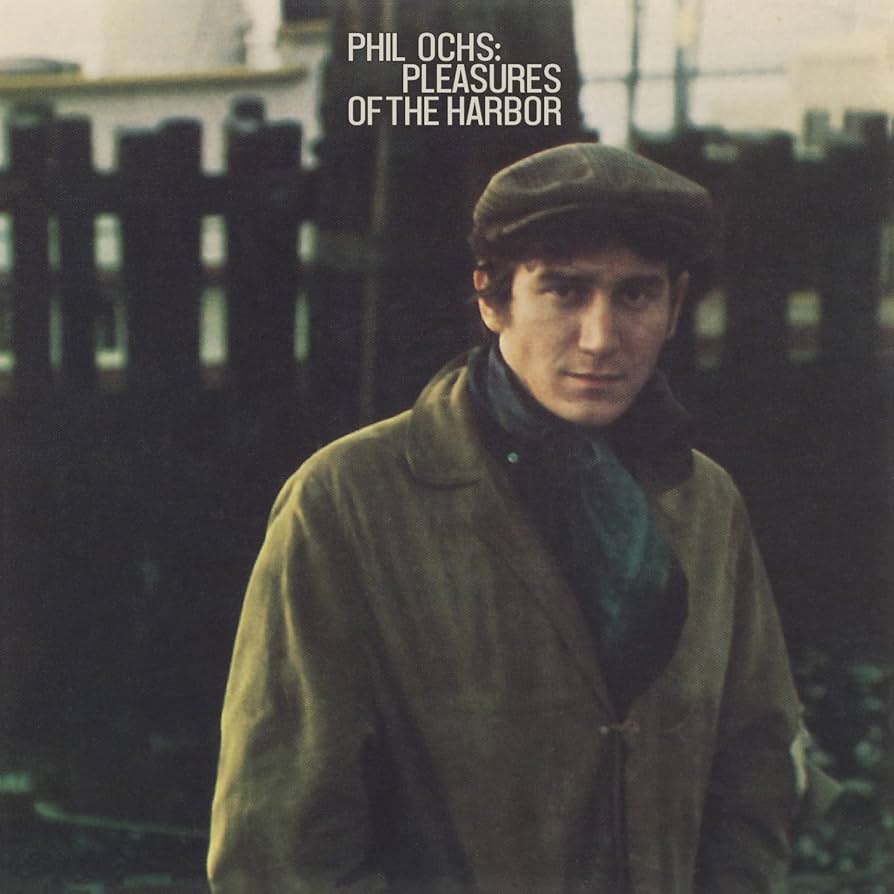
‘Larry Marks told Andrew Sandoval a great story about Phil wearing Lenny Bruce’s jacket on the cover of Pleasures and never wanting to leave it off.’
‘Around the same time as A Toast came out this boy was lucky enough to discover Pleasures of the Harbor, by pure chance. A slightly battered secondhand copy for seven pounds? Irresistible with that cover photo of Phil in his suede coat and flat cap: such a totally cool bohemian mod look. It really was a revelation, and for a 1967 record it was so wonderfully un-rock ’n’ roll. Funnily enough this is a genuine Phil Ochs quote, from 1974, which could so easily be Subway Sect speaking to Steve Walsh a few years later: “I consider rock music basically dead, uninteresting, boring, repetitious, too loud, ego-maniacal, ludicrous and totally beside the point.”
‘There really is not anything else like Pleasures is there? Ahead of recording the LP Phil apparently was inspired by The Beatles’ lyricism and sound, particularly ‘Yesterday’, and one imagines an affinity with ‘Eleanor Rigby’, ‘She’s Leaving Home’, the baroque ballads, and definitely the Beach Boys’ Pet Sounds. Phil was giving serious thought to the idea of an LP as a work of art, not just as a convenient collection of songs, and was able to do so due to his growth as an artist. But was this really the dramatic change some make out? It always seems his social realism was infused with lyricism, and even Che sat in the forests of the night reading poetry by the light of a campfire.
‘Pre-empting detractors Phil wrote: “Ah but in such an ugly time the true protest is beauty”. And this song-cycle is a work of extraordinary beauty. Importantly, as the years have slipped-by, we have gained a better understanding of the key players on this and Phil’s two subsequent A&M LPs, Tape From California and Rehearsals for Retirement, three records which form a formidable triptych, but oh what a mess in terms of what’s available where and how in the present tense. It has been a gradual process of identifying who and what the essential personnel link to, and the connections prove these records were not flukes.’
-yrheartout.blogspot.com
https://yrheartout.blogspot.com/2020/09/bless-day-13-there-but-for-fortune.html
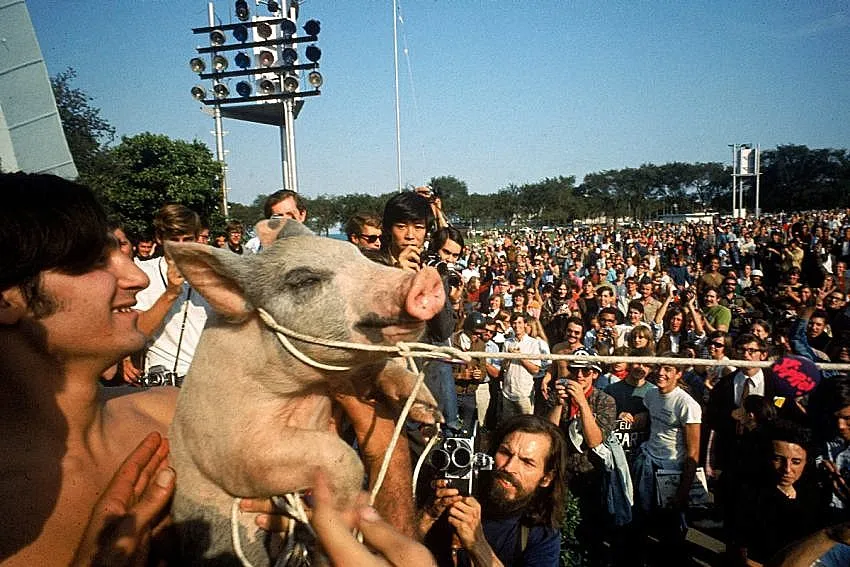
‘[On] Wednesday, August 28, the day that most people think about when they think about that convention in Chicago, protesters agitated along the east side of Michigan Avenue across from the Conrad Hilton Hotel where the Democratic delegates were staying. That included Ochs, who wore a flag pin on his suit jacket.
“Phil was born in El Paso, Texas, and really loves America,” Gumbo later said. “Even when he’s being gassed along with the rest of us.”
”He also tried to engage with the young National Guardsmen pointing their bayoneted rifles toward the sky, Gumbo recalled:
‘As we walk, Phil introduces himself to the impressed guardsmen and asks if they’ve ever heard his songs. Like “I Ain’t Marching Anymore.” Many nod.
“I once spent $10 to go to one of your concerts” one complains. “I’ll never do that again.”
‘In 1968, $10 was a lot of money. Phil stops and talks directly to the guy, explaining why he is opposed to the war. The Guardsman starts to smile, and even lowers his rifle a little bit, very appreciative that a celebrity like Phil is speaking to him like a real person.
‘But the smiles soon disappeared as about 3,000 protesters tried to march and the police didn’t let them and some of them started throwing rocks, sticks, sometimes feces. What ensued was a 17-minute melee in front of the hotel between the marchers and a force that included some of the 12,000 Chicago police in addition to 6,000 army troops and 5,000 National Guardsmen that had been called to protect Chicago on the orders of Mayor Daley. Officers beat activists bloody in the streets of Chicago with nightsticks—live on national TV. It was called the Battle of Michigan Avenue, a nickname used to describe a one-sided affair that a government commission later declared to be a “police riot.” In all, 100 protesters and 119 cops were treated for injuries and about 600 protesters were arrested.’
-Chicago Reader
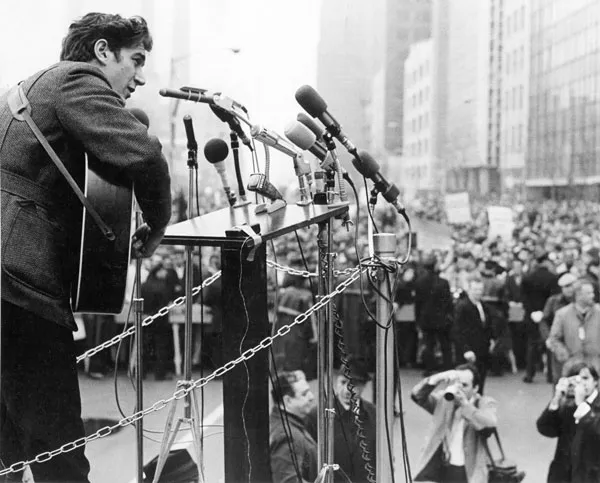
Interview on the Chicago Convention by Izzy Young, September 4, 1968
IZZY: About how many people were on the march altogether, would you say? The papers said about 15,000.
PHIL: It’s hard to gauge. But that’s a good count. A lot of the bravest people showed up. I mean they were people from around the country who really went through a major personal dilemma. Daley’s pre-convention terror tactics were a success in keeping out large numbers of people. For instance, his threats to set up large scale concentration camps. Daley issued many statements like that, very threatening statements, and these and come succeeded in keeping a lot of people away. But the people who did show up were the toughest, really, and the most dedicated. And a lot of great things happened in the middle of the terror of the police attacks. There was a definite spirit, a good spirit, unleashed in the streets. There was more coming together with Blacks, more than on any other march I’ve seen. A joining of Blacks and whites to resist mutual oppression. Especially in Lincoln Park.
IZZY: On television they kept calling these people – – they kept calling these people outsiders. You know, they’re Americans. How can you call somebody an outsider in his own country?
PHIL: Yeah, well, the Chicagoans were unable to recognize that this was a national convention. They literally, psychologically couldn’t. They kept thinking, “This is our city, our convention. “ When it’s a national election they’re talking about. I’m really beginning to question the basic sanity of the American public. I think the public itself is just — I think more and more politicians are really becoming pathological liars, and I think many members of the public are. I think the Daily News, Tribune poisoning that comes out is literally creating – and television, all the media are creating a really mentally ill, unbalanced public. And it’s significant. I think what happened in Chicago was the final death of democracy in America as we know it: the total, final takeover of the fascist military state – in one city, at least.
IZZY: Most people have no contact with the politicians who are selecting the nominees.
PHIL: Well, in that sense, it was a major victory for the street people in terms of unmasking the facts. But still, basically, there’s been opportunities to deal with the convention system and come up with decent candidates; you know, the conventions did produce Adlai Stevenson and John Kennedy. But now, I can’t accept this election. I can’t see myself being loyal to a Nixon or a Humphrey administration. I don’t think there’s any choice. I think the final corruption has come home, the final – the ugliness and corruption of a South Vietnamese election which is a non-election has come to America, and now Americans are faced with a South Vietnamese election. (…) I might go back to Scotland.
IZZY: How can that help things in America?
PHIL: At a certain point you start losing interest in helping things in America.
IZZY: I’m also faced with the choice of leaving. I just got a letter from Africa and the writer says, “Gee, Izzy, I’m always thinking about what you’re saying, that the people who go to Canada aren’t helping people in America.” Phil, if you leave America, you’re making it harder for thousands of people that believe in you. You’re already more than an individual. You stand for an idea already, and you can’t just leave your followers behind.
PHIL: It’s not fair. (Laughs)
IZZY: Dylan doesn’t care. Judy Collins doesn’t care. Or they’d speak out openly. But you do care. And you do speak out openly.
PHIL: You can’t presume to say that Dylan and Collins don’t care. I’m sure they care.
IZZY: Well, I feel that when a person has access to mass media and they keep quiet that means they don’t give a damn what’s happening to the people. In other words, getting Judy Collins on a TV spectacular doesn’t help the cause of freedom or peace or anything.
PHIL: It’s just that at this point America is an uncontrolled death machine. And since she failed in electoral politics to check that, it has to be checked in other ways. And one way would be a mass denial of manpower to its corporations. The extension of draft resistance: keep your body out of the Army; keep your body out of the college and out of the university. That is just preparing you for the corrupt corporation. Keep pulling people away from the establishment until it collapses.
IZZY: I don’t think it would collapse. If the intelligent people pull out the corporations would be happy.
PHIL: I’m not talking about intellectuals only. I’m talking about all the people who work for corporations.
IZZY: Well, they’re not leaving.
PHIL: No. I’m only looking for a way to get them to quit.
IZZY: I don’t think there is a way. These guys are getting their $15,000, their $20,000; they’ve got a taste of the honey and they want more.
PHIL: All right, then America is the rule of the devil. The devil has won.
https://www.marxists.org/archive/ochs/1968/chicago-convention.htm
‘In Gunfight at Carnegie Hall, a concert album recorded at Carnegie Hall in New York on March 27, 1970, Ochs dressed in an Elvis-style flashy gold-lamé suits and sang medleys of covers of the King and Buddy Holly. He laid out his new philosophy bare in a monologue to the audience:
“As you know, I died in Chicago. I lost my life and I went to heaven because I was very good and sang very lyrical songs. And I got to talk to God and he said, ‘Well, what do you want to do? You can go back and be anyone you want.’ So I thought who do I want to be? And I thought, I wanted to be the guy who was the King of Pop, the king of show business, Elvis Presley.
“If there’s any hope for America, it lies in a revolution. If there’s any hope for a revolution in America, it lies in getting Elvis Presley into becoming Che Guevara. If you don’t do that, you’re just beating your head against the wall, or the cop down the street will beat your head against the wall. We have to discover where he is, he’s the ultimate American artist.”
-Chicago Reader
‘This recording took place Christmas Eve 1975 at my apartment in Soho that I shared with Larry “Ratso” Sloman and Phil when he felt like it. Phil picked up a guitar and started to sing and I decided to record it. For the time being it seemed that Phil’s psychotic episodes during the dog days of the summer of ’75 had reached a zenith at Gerde’s in October and with Che, and Phil had now moved to a different and calmer place on the bipolar spectrum. He had not been drinking and had been writing obsessively. He was planning an album that would be an unflinching narrative of his psychosis over the past year and had at least ten songs in various states. Five of those songs are represented here. The working title for the album was Duel In The Sun. Soon after the New Year Phil started to come around less until he eventually moved in with his sister Sonny in Far Rockaway. We would talk on the phone but I would never see him again. This is dedicated to Abbie Hoffman, Jerry Rubin and Mike Porco; three of the best friends Phil ever had and to Sonny Ochs for keeping Phil’s music alive all these years.’
Phil and Me
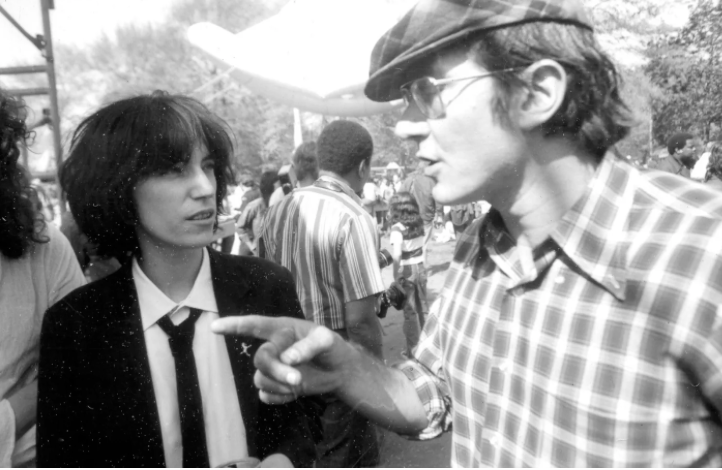
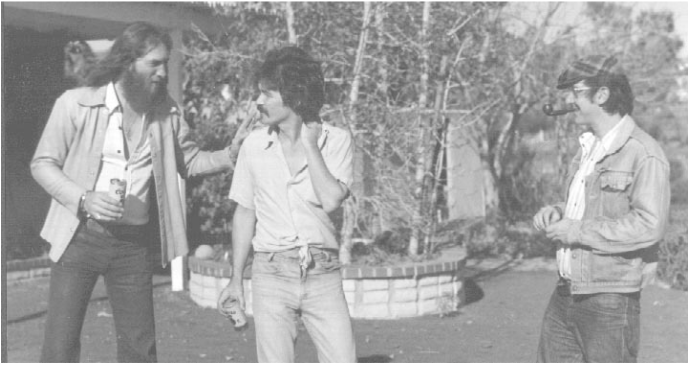
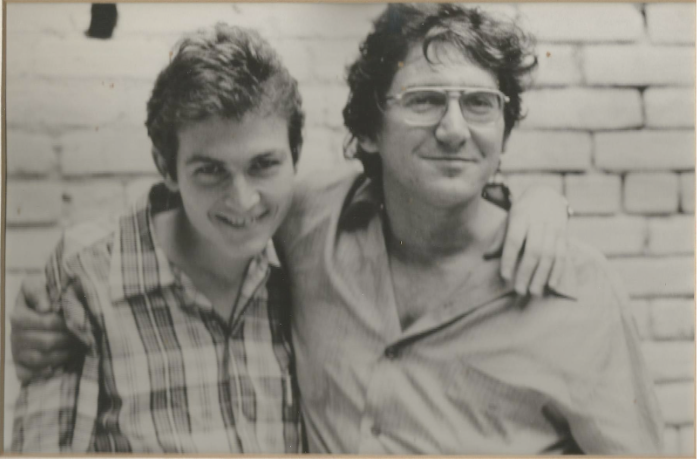
‘This is a page where people share their stories about meeting Phil or spending special times with him. Everyone is welcome to submit a story. Please send yours to celebratingphilochs @gmail.com or use the form at the bottom of the page.’
‘………as I stepped on the loose tarp in the Orillia arena I went ass over tea kettle in a clump at the foot of center stage. Phil actually stopped playing one his songs and asked if I was OK, I waved and said alright and that was my first meeting with Mr. Ochs.’ — Kristian Bostlund
“Hi, I’m Phil Ochs.” I can still see that shy, goofy grin. We were both journalism students at Ohio State University when we met in about 1960 while working on the campus newspaper, the Lantern.
‘I never knew Phil real well, but we were friends. I remember that he was very sensitive and very funny. Phil’s Lantern career hit a roadblock after he wrote some liberal political columns about Cuba and other issues in his dormitory newspaper that drew the scorn of OSU’s very conservative Board of Trustees. So he took his talent and wit to the campus humor magazine, The Sundial, where he became managing editor. One of the writers there was R. L. “Bob” Stine, later the author of the wildly best-selling “Goosebumps” books. Another of our classmates was a young golfer named Jack Nicklaus.
‘I didn’t know that Phil was into music until one day when a bunch of us were having breakfast, and he told us that he had gone to Cleveland over the weekend to do some folk singing. In his senior year in 1962, he left OSU and went to New York City. Before long he put out his first record album called “All the News That’s Fit to Sing” and began running around with Bob Dylan.
‘The last time I saw Phil was in Detroit in about 1965. I was a reporter at the Wall Street Journal, and Phil was appearing at a local club. After his act, we sat down for a few drinks. I recall him worrying about what he would do if he got drafted, since he strongly opposed the Vietnam War. He might have to go to Canada. I don’t know if he ever got a draft notice, but I do know he later wrote his great “Draft Dodger Rag.”
‘I wound up with the Journal in Washington D.C., where Phil became the troubadour of the anti-War demonstrations with his protest anthem “I Ain’t Marching Anymore.” I only saw him on TV by this time. Then, sadly, on a trip to Africa some robbers cut his throat, damaging his vocal cords. According to the biography of him, “There But For Fortune,” Phil also was manic depressive. The upshot was his tragic suicide in 1976.
‘One can only imagine what more contributions Phil would have made had he lived longer. At least on his 75th birthday later this year we can celebrate the music that he did leave. And when that happens, somewhere Phil will be grinning from ear to ear.’ — Ron Shafer in Williamsburg, Va.
‘The summer of 1975 I worked as a lab assistant at a video learning center in Soho. This happened to be across the street from Phil’s tavern of choice at the time called “Soho Darts”. His guitar was kept behind the bar until his tab was paid off. At his suggestion the bar was renamed “Che”. A couple of times he tried to hit me up for beer money when I didn’t have any to spare. That didn’t stop him from being friendly and engaging. I did tell him I knew his records since my brothers had them and gave him a tour of the video center.’ — Don Leich
Tributes
Legends – Sammy Walker
I dreamed I saw Phil Ochs last night – Billy Bragg
He Was A Friend Of Mine (Live at the Phil Ochs Memorial Concert) – Dave Van Ronk
Phil – Tom Paxton
*
p.s. Hey. This weekend the mighty Lucas has put together a comprehensive post about the singer/songwriter Phil Ochs. For those who aren’t familiar with him, he had a fascinating trajectory from initially being one of the main 60s anti-war folk singers to becoming a poetic, visionary kind of songwriter and recording artist before transitioning into an idiosyncratic, confrontational figure with shades of what Andy Kaufman would later make his stamp and finally meeting a complicated, tragic end. Please spend your local weekend exploring his story and work. Thank you so, so much, Lucas. ** Laura, Hi. Oh, Carsten had a question for you yesterday if you didn’t see it. Really interesting: the parallels you saw re: Meinhof’s work. I’ll dwell on your insights. That smutty audiobook thing does sound ripe for fictionalisation. A cuppa with you in Paris, well, of course! Love back. ** Charalampos, Hi. I haven’t found your email, but I haven’t scoured my box yet. Will do. Ursule Molinaro is an interesting writer, yeah. I don’t know that book. Sounds most curious. Hi from Paris and me sitting here doing what is easy to imagine. ** _Black_Acrylic, I think I read ‘Steps’ back in the day. The book of his I best remember for some reason is ‘Cockpit’. He was quite read by cool people until he got hit with plagiarism accusations, which I think were proven, and then he became kind of pariah. Interesting figure, in other words. ** Carsten, Welcome back from your busy week. Paris has been a bit colder than the winter usual, but I still haven’t had to dress in layers. I’m such a city guy. I think if I didn’t live in a big city with constant cultural possibilities, I’d be a depressed wreck. ** Bill, Hi. Yeah, I wish ILP books were more available in stores. I’ve seen a couple of their titles at After8, but that’s pretty much it. ‘OBEX’: I’ll try to find it. I don’t know Albert Birney’s work at all. Nice. I’m going to see a Jack Smith film I’ve never seen before this afternoon. ‘Mr. President’. Should be good, duh. ** Lucas, Giant thank to you ‘in person’. ‘Justine’ is the shortest of Sade’s biggies, which is alluring. Even I, for whom ‘120 Days’ changed my life, etc., have never read it without rather heavy skimming, because, yes, it gets sloggy a lot. Congrats/fingers crossed on the test. Weekend … I’m going to see a Jack Smith film today that I don’t know then Zooming with a friend. We’re in the middle of trying to set up a few RT screenings, so I have to work on that. Not sure what else yet. Red hair, that is news. I can see that. ** kenley, Hi, k. Oh, I definitely think my writing is funny. Or I mean I intend it to be funny. It does seem like there’s a fair amount of people who don’t realise that until I read it aloud, and then they’re kind of shocked that they’re laughing or at least grinning. I think Khruangbin would count. If I find any contempo psych that isn’t just retro workouts, I’ll let you know. Where’s the new Spacemen 3? I’m down with your fave music picks, or the ones I know. I don’t know Drive Your Plow oOver the Bones of the Dead, but I’ll find out. Nice name, obviously. I’m doing one of my gig posts here next week where I post vids of stuff I’ve been listening to. Nothing has blown my mind lately. I’m just kind skimming around and listening to random tracks. ** Steeqhen. Hi. I want to see ‘Fire Walk with Me’ again because I haven’t seen it since its release, and I remember thinking the opening part with David Bowie, etc. was weak, but I think I might not feel that way now. ** Dustin, I found 9MOTHER9HORSE9EYES9 — the representation on Reddit is it, right? — but it’s a lot to investigate, and I’ve just cracked it. Looks very odd (in obviously a good way). I’m quite interested in eroguro and keep up with it on the couple of sites where the artists mostly post their stuff. I have a near lifelong interest in how the extreme and unseeable, and the intersection of gore and sex in particular, can be represented in such a way that the viewer can take it in without freaking out, and guro is very studyable in that regard. To me, I mean. ** Steve, People seem so enthusiastic about the new ’28 Years Later’. Normally I wouldn’t be interested but now I am. It seems to be exciting people sort of a la ‘Mad Max: Fury Road’? Seeing a Jack Smith film I don’t know today, ‘RT’ work, maybe seeing ‘Lady from Shanghai’ projected tomorrow, stuff like that. How was our weekend? ** darbz (⊙ _ ⊙ ), Hi. I was going to ask what the association was between Lynch and Depeche Mode, but you explained. Huh. No, I don’t think I’ve ever sewn anything. Not even a button that fell off my shirt or anything. How strange. As much as I used to like and do cocaine, I always found stopping was really easy. I’m fine, doing my usual. Oh, I’m talking with someone today partially to see if we could set up an ‘RT’ screening in your general area. Not sure if it’ll happen, but I’ll let you know if so. It sounds like you’re doing really well. Trust in the stabilising and strengthening aspect, pal. You have so much to do and give. xoxo. ** Okay. Please be with Phil Ochs via Lucas until I see you next on Monday.


 Now available in North America
Hi Dennis! Don’t have much to comment on today, “Love Me I’m a Liberal” is a favorite of mine from Phil Ochs, as for 9MOTHER9HORSE9EYES9, u/GabbiKat on Reddit has compiled most of it into two separate posts, along with hyperlinks to the things referenced vaguely and directly in the prose.
https://www.reddit.com/r/9M9H9E9/wiki/narrative/
https://www.reddit.com/r/9M9H9E9/wiki/narrative2/
Hey Dennis,
Yeah i remember the first time watching FWWM I found that first third to be a bit of a weird slog, though I have definitely grown to appreciate and even love it; this time felt like the first time I had truly ‘seen’ it, especially Bowie’s monologue about the room above the convenience store, and the layered shots of Black Lodge characters, blue static, and Bowie screaming. I forgot just how surreal it was, which sounds silly to say about Twin Peaks and Lynch in general, but I’ve spent so much time dissecting and thinking and reading and talking about it, that I forgot that it isn’t so objective or understandable…
Went to a record/CD fair today, which I arrived to late and assumed most of the good finds were gone. That was until I found this one section with a lot of my own interests, and a bunch of loose cds for €1; I found a Guided by Voices album amongst them, “August by Cake”. All in all I got about 25 albums. I’m trying to put them onto my laptop now, but it’s now apparent that my laptop is on its last legs, and the battery is swollen and fucked. I’ll need to get that fixed, but maybe I should just get a new one altogether? This one has been abused by college, so perhaps a change of battery and a factory reset will be enough? Idk, it depends all on prices.
@Laura: (reposting yesterday’s comment) As I told Dennis above, I’ve been having a hard time finding a contemporary art scene here in Malaga & environs. I know you’re in Valencia but maybe you have some suggestions or nudges up your sleeve. I mean, all I see is museums & theaters that operate as closed-off spaces (meaning nothing beyond the established, repertory fare) & various fiestas celebrating local culture. Is there an area where some kind of contemporary art is happening or do you have to move further east for that?
Just on a musical level Ochs ain’t my cup of tea, but man did some of those old protest singers have revolutionary spirit & zeal: “a mass denial of manpower to its corporations. […] Keep pulling people away from the establishment until it collapses.” I wish more artists today had such convictions & the balls to espouse them.
I get the appeal, but I’m not a big city guy myself. Too cramped, too busy & not enough nature. I guess my ideal is living in a town (or its outskirts) with some sprawl, a kind of cultural hub & plenty of nature around it. I don’t need much: give me a few small music & literary venues, some art galleries/studios & I’m happy. I’ve passed through hippieish turf like that in California, New Mexico & Louisiana. Never been to Oregon, but I hear it’s similar there. New Orleans always seemed perfect to me—it’s still my favorite city I’ve ever been to. After I finished LACC I actually planned to move there, but then the ugly divorce derailed all that.
It’s a thing I’m gonna have to figure out: where to find my tribe out here. I’m also well aware that if there is an art scene here somewhere, chances are it’s Spanish-only. But we’ll see. The plan was to try it out for a year. If it doesn’t work out I’ll move on in June. I’m used to being a nomad.
Let me know what you thought of the Jack Smith. That one’s been downright impossible to see for ages.
Wow, I had no idea Ochs was still recording in 1975! Thanks for posting that tape. His late ’60s period, circa PLEASURES OF THE HARBOR, TAPE FROM CALIFORNIA and REHEARSALS FOR RETIREMENT, is my favorite – he was still doing explicitly political music, but more subtly and with more stylistic ambition.
Due to the weather, this weekend’s a bit of a washout. It snowed today, and we’re supposed to get several inches Sunday. I went out for dinner this evening, but that was it. I also watched PILLION and wrote a review. It’s pretty sweet. For all you Scissor Sisters fans, Jake Shears gets his ass eaten by a biker.
Which Jack Smith film did it turn out to be?
Ahh, uh.. is the “biker” in question played by Alexander Skarsgard? Asking for a friend.
No, a different guy, but if you want sex scenes with Skarsgard, you will have a good time.
@ Lucas, thank you for this Phil Ochs showcase! Anyone who happens to end their career in a Kaufman-esque series of audience-baffling japes is alright by me.
One for whom the phrase ‘tragic trajectory’ could not be more apt. Read he teetered on the fearless / reckless brink with (what others considered) an almost suicidal regard for personal safety. This may have contributed to the attack where he was strangled and robbed him of the high part of his vocal range. Henry Cow covered ‘No More Songs’ not along after he died, live version : https://youtu.be/OaBptCea3yA?si=mCPLEUR13NZnneat
hiiii. thank u so much for letting me host this post! ive been thinking back on it a lot this weekend, and how much phil ochs means to me in general. i do really owe a huge debt to him and his music, i discovered him when i was 13 so like 5 years ago now, eek, and listening to his music and reading about his life in general is one of the things that i think that marked a really important jumping point in my politicisation which in turn made me who i am today.
this weekend matched my expectations except that i didnt re-dye my hair. yours? unexpectedly i did have my first ride on an e-scooter today, i was behind my best friend clinging on to her for dear life, it was definitely an adrenaline rush. it was really scary i thought we were going to crash any moment. but we didnt so it was fun at the same time.
do you know abt anatoly moskvin? hes this russian historian and linguist that was arrested 15 years ago bc he stole several bodies of little girls and kept them mummified like as dolls in his apartment. theres even a video of his place which inadvertently shows some of the dolls. i found out about this like a month ago or so but i thought back about it today. its so incredibly disturbing but like in the way that is very difficult to stop thinking about for me at least. i mean to me its just fascinating in this vv dark way to think about how alienated you would have to be from the rest of the world to do that. reading more from his perspective like diary entries or if theres any interviews would be insane to me.
he was apparently released from the hospital he was in a few months ago or hes about to. crazy.
@Lucas – Thanks so much for putting this wonderful post together! I hadn’t thought about Phil Ochs in ages and this was great refresher with lots of new info. Loved the songs you picked and tributes.
Dennis – Great talking with you. Got your email with the info, which I’ll put into action shortly. There’s an unexpected snafu on date for visiting the classes, which I emailed you about. Let me know what might be possible there.
If you have a chance to listen to ‘Softer than Bombs’ ep, love to know if those few electronic songs hit you differently than the LP.
Hey. I never got around to listening to Phil Ochs but used this weekend as an opportunity. I was tempted to start with ‘Greatest Hits’ because I love Van Dyke Parks but I listened to ‘Rehearsals for Retirement’ first and I really liked his sensibility. The description of the Kaufmanesque behaviour later on is particularly intriguing to me. I’m going to have to find a documentary or something to watch. Maybe I’ll add him to the list of dead music guys I’m obsessed with.
Anyway, an excellent post. Lucas, if you see this, well done!
I started writing something here the other day but it was so overtly depressive that I couldn’t send it. I don’t know what, if anything, the anti-depressants are doing to me. It’s been two weeks now and I don’t know if they’ll help, but I’ll keep with them. What might be an effect of the meds but I don’t know, is that I’ve been having this compulsive feeling of needing to ‘get somewhere’. I’m so paranoid that I’m going to miss the boat at some point, and I have this urge to branch out and explore things that I wouldn’t normally have considered, which is good of course, but the pressure can become a mania. I think I’m on the verge of something but I don’t yet know if it’s good or bad. Some days I think I’m going insane.
hi dennis! cool post about phil! stoked to get a peek into what youve been watching, or what your algorithm looks like. mine is mostly chinese cooking stuff and hate5six videos, lol. do you listen to music while you write? if so, what gets you in the mood?
and good to know re: humour! tbh, drive your plow (the book) is another thing that made me cackle throughout my entire read, esp at parts i wasnt entirely sure were intentionally funny. and i just finished independent people by laxness (do you have thoughts on him?) and was loling throughout.
oops…misattributed. cool post, lucas!
@Lucas ty so much for this post!! time to listen to Phil Ochs again. <3 what a loss fr. i don’t vibe w his Che thing but i do vibe w him… Rehearsals for Retirement went hard. and he also had this sort of proto-Gen-X thing about him, it’s hard to explain, but he was such a great double-speaker. wish he could have stuck around. ty again for bringing him back to mind! ^_^
@Carsten: man, sorry i missed your comment! afraid i’m not gonna be much help. imo Spanish grassroots cultural stuff is tied to universities, feminist groups, queer groups, far-left political parties and like cafés culturales. i have an old friend who used to run one and absolutely everyone local seemed to converge there, but imo there aren’t *loads* of exciting things happening. i know Málaga a bit, not as well ofc, but it’s probably a similar situation. ime younger poets can be p hung up on La Generación del '98 and La Generación del '27, both of which are great obvi but their derivative lovechild maybe not so much. there are still remnants of Poesía de la Experiencia, which can get p stale. and more recently there’s the obvious identitarian stuff, but that’s a bit queasy esp since Spanish identity can be such a minefield. i’ve got yet another old friend (he’s writing lately and i’m hyper curious lol) who is tight w this published author who made pretty huge waves over the past couple of years, and they def have a bit of a scene going on in Madrid, which is interesting, but if you ask me about the published author in question i was megablown away by their novel’s first couple of chapters and that’s about it. English-speaking literature can be weirdly frowned upon as elitist, like, not so much reading it as writing it. in Málaga there’s fuckloads of good, flamenco-related activity but you might need to know the private handshake or whatever before you’re in. if i were you i’d probably just get in touch with La Térmica, which if memory serves is run by La Diputación, and ask about local opportunities, but i wouldn’t get my hopes up super high. and i mean this nation-wide. Spain is great for living but it’s sort of going through a literary dork age and networking is a thing but there’s a relatively low ceiling. like if you ask me Félix Francisco Casanova was our last objectively slay poet/writer, and alas he left us way too soon. Blanca Andreu is v good but idk that she does anything socially. A bunch of years ago we had Carmen Jodra who was great but we stopped hearing about her a long time ago and then she died of cancer 🙁
right now some of the most exciting stuff happening is Agustín Gómez Arcos finally getting to be a prophet in his own land or whatever, belatedly obvi.
idk, i might be totally missing out on cool stuff but if so i’m sadly not the person to ask for advice 🙁 def let me know if you do come across smth interesting tho! meanwhile i’ll have you know i was totally kicked out of my uni’s poetry lab way back when lol, the professor was like ‘nobody knows what you’re saying bc you’re saying nothing’, which ok, i can’t critique myself, but she loved this dude who once wrote ‘whores are all princesses to me, because my verse makes them so’, and another dude who went ‘bury me with a little bouquet of violets, until then it’s my decision whether i’ll marry life or just fuck her hard’ like bruh you don’t fuck life, life fucks us all lol. anyway. the vibes =)
@Dennis: hi! ty for pointing out Carsten’s question! if only i could have helped more or whatever. i decided to re-read Guide since i’ve been reading Try so much, and now i’ve got my new fav poet Tim Dlugos under my wing i’m like your opening paragraph! he would have loved it.
in other news i re-ordered Ivo Andrić’s Gospidica, which some massive twat decided to rename The Woman from Sarajevo in English and i’m like whyyyy it literally means 'Miss' to the best of my knowledge, just 'Miss' omg. i’m v used to Spanish translations going from like A Boring Spring Afternoon to Gang-Raped In The Underground but this one’s cringe like ‘world literature’. i’m not super into Andrić anyway but here’s this passage where the main character visits her father’s grave and is v inarticulate so when she wants to communicate she just says 'you' in a multiplicity of tones, and i wanted to re-read that. 'you' is my second fav word i think, probably after 'oh' and followed by idk, 'uh', maybe. have you got any favs? and is your script all polished up and ready to go? i’m brushing up on my Durak-playing skills bc it features in the book and it’s either way harder than i remembered or i’ve become a bit of a moron. ^_^
<3 you!
Hey Lucas! Great post. Sometimes I’ll say ‘Love Me, I’m a Liberal’ as a joke and nobody ever gets it. I’ve seen people think through his suicide as proof of his radicalism, and I don’t know if I buy that. I’m curious as to whether you (or Dennis) have thoughts on the matter.
Hey Dennis; back at college and severely jet lagged. Have slept maybe 7 hours total since Thursday and looking to change that fast. Some tentatively good news on the whole having-something-after-you-graduate front, but let’s see where the next few weeks take us. In other news, I’m trying to take to heart your proscription against ruining friendships for the purpose of a date. Is is cold in Paris right now? What’s your preferred method of warming up?
hm, id never heard of someone saying that about phils death thats interesting. although i dont think i agree, in my opinion i think it was that being harassed by the fbi for years on end exacerbated his mental illness + a bunch of other factors but mainly that which led him to kill himsef.
oh wow thats so cool about the possibility of your movie being screened in NC ahhh I hope that comes into fruition + its a very film oriented place here there are a couple good local small theaters like one called “jengo’s playhouse” and the cucalorus festival although im sure its the same for the city areas too.
Hmm nothing much, else crossing my fingers. I have court soon to regain my independence, so [preparing for that in 2 days.
**nothing else comes to mind, but im crossing my fingers