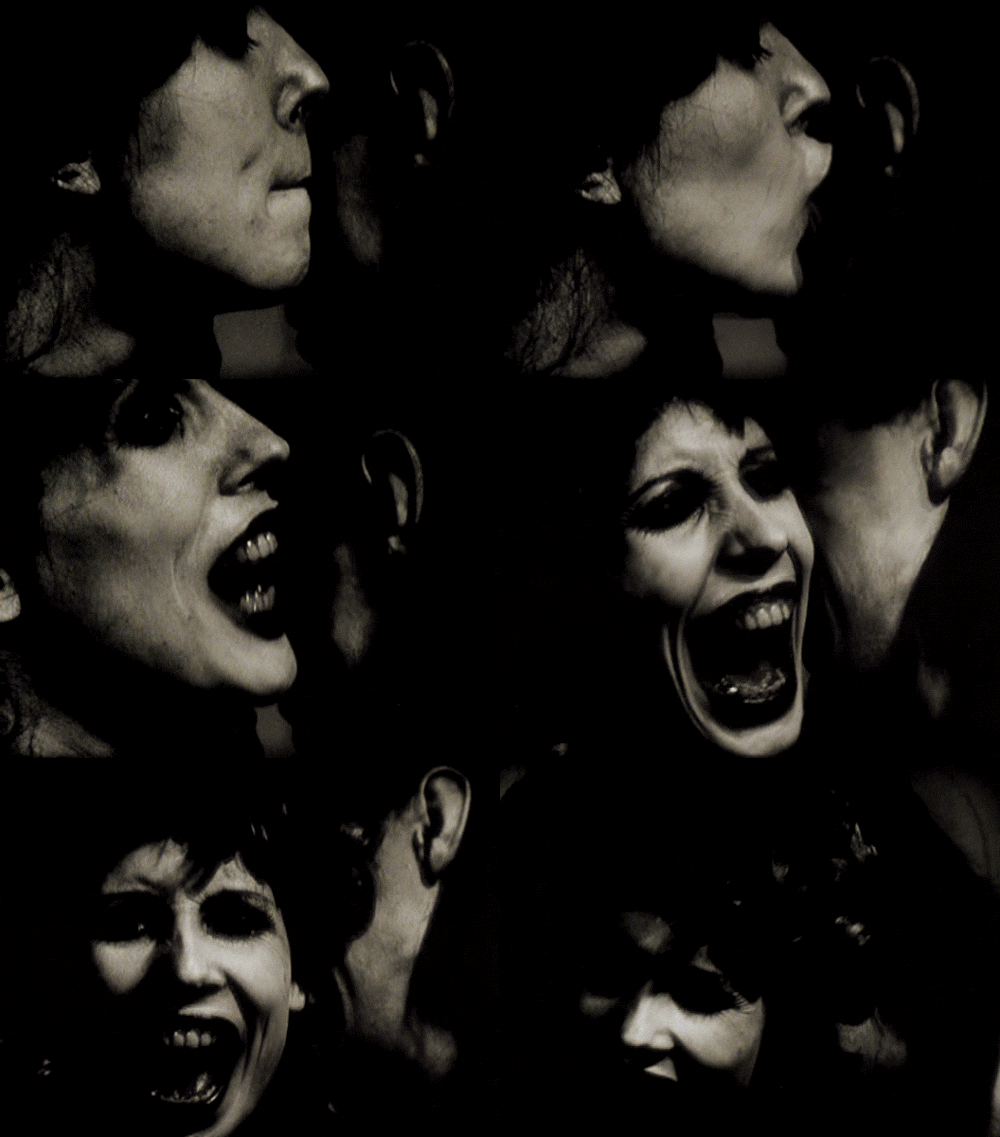
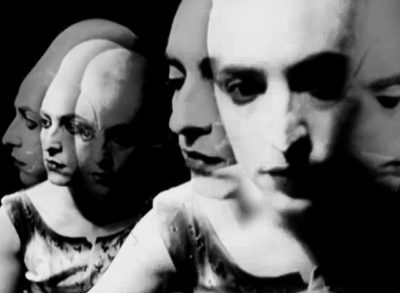
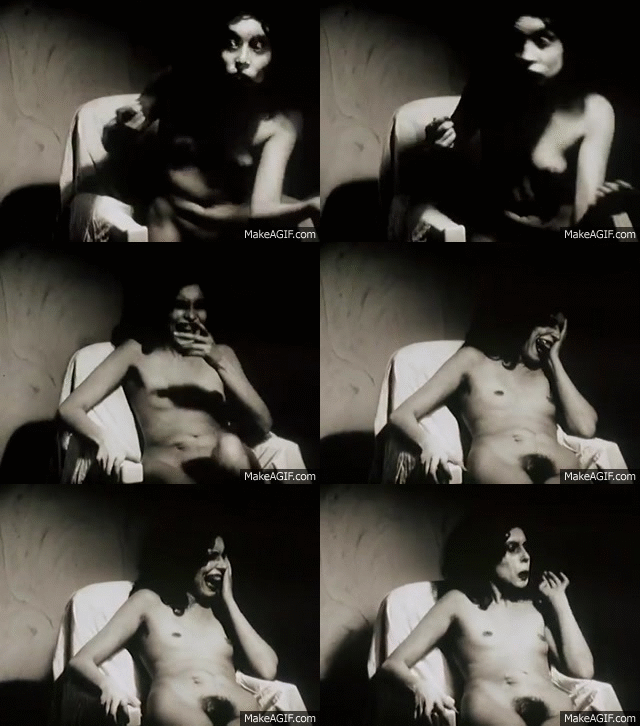
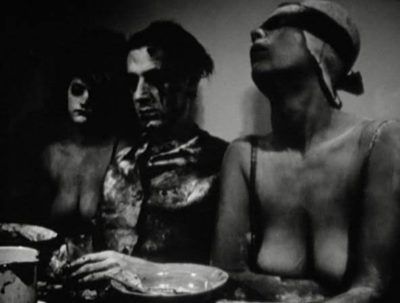
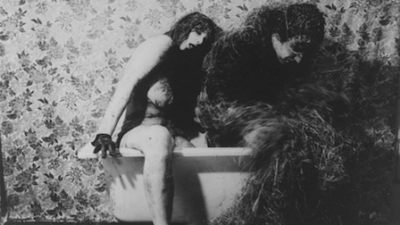
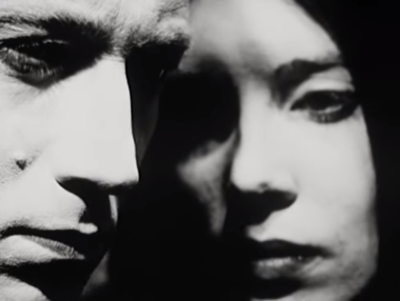
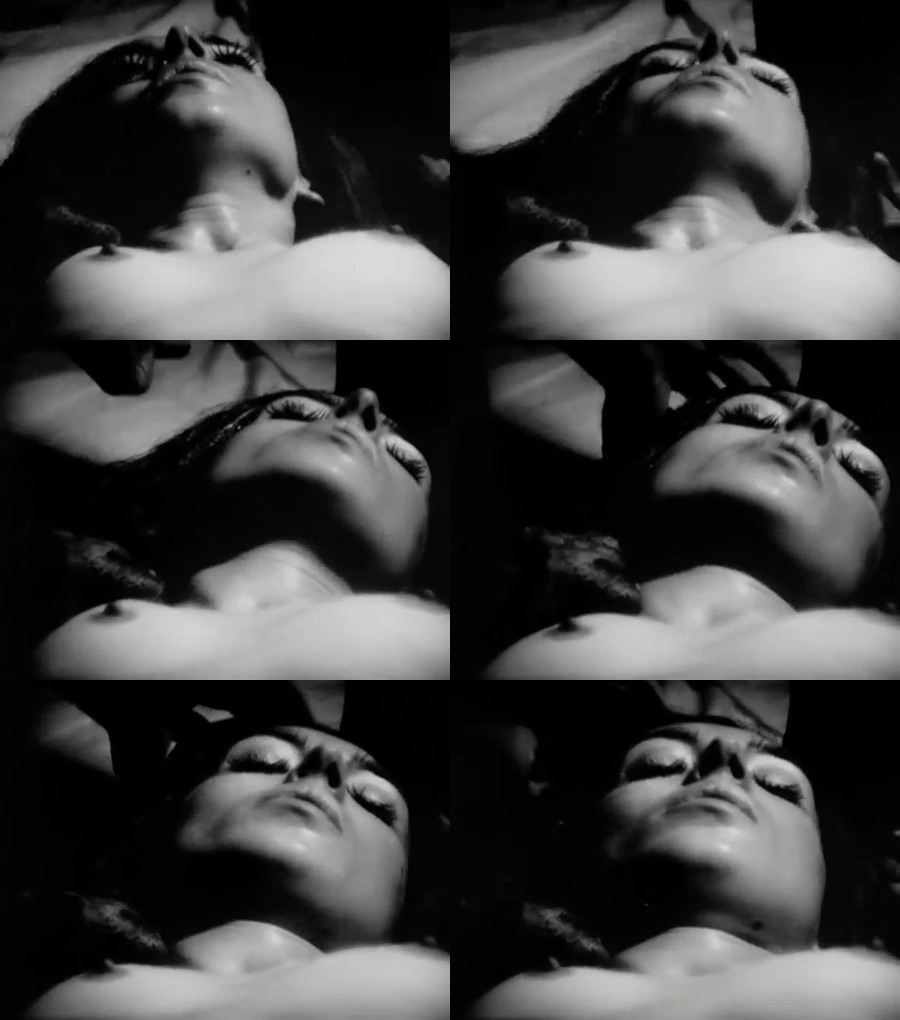
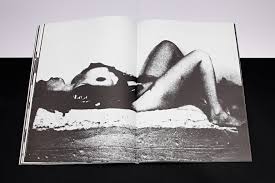
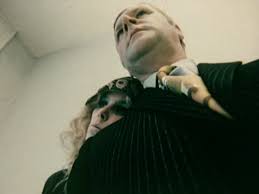
‘Frans Zwartjes is arguably Holland’s pre-eminent experimental filmmaker. His highly stylised, poetically claustrophobic films achieve a unique level of sensual intimacy in their renditions of sexual and domestic tension, and voyeurism. Most famous for a prolific series of short films created in the 1960s and ’70s including Spectator (1970) and Living (1971), Zwartjes conjured up oppressively private worlds defined by the compulsions of his heavily made-up, fastidiously dressed (or undressed) performers. These wordless works draw on performance art but are equally distinguished by their oneiric visuals, disconcerting editing rhythms and hypnotically minimal sound design. Their expressively grainy visual textures emerge from uncomfortable close-ups and distorted angles, a transcendentally voyeuristic camera that prowls and clings to the figures it films. Yet this vision seems more engaged with the external projection of inner turmoil than the objectification of bodies and, as such, is imbued with its own unnerving compassion.
‘Although his films are widely available in digital formats, this celebration of Zwartjes’s art is a rare opportunity to see them in their original 16mm format. These films are essentially handmade, homemade objects. He devised and mastered a filmmaking technique every bit as personal as the scenes he filmed. He frequently cast the same performers including his wife Trix, Moniek Toebosch, and even himself. He did the camerawork himself, and his complex, astonishingly assured visual rhythms are the result of cutting in-camera, essentially turning the camera on and off during shooting instead of editing afterwards. He even went as far as to process the films himself to obtain the look he was seeking. Only 16mm projection can do this vision full justice.
‘Zwartjes’s background as a musician is one of his many talents (he is also a painter, sculptor, teacher and violin maker) that is perhaps not mentioned enough. The striking sound design of his films, hypnotically accentuating the prevalent mood of mounting psychosis, is one of their most accomplished features.’ — Maximilian Le Cain
____
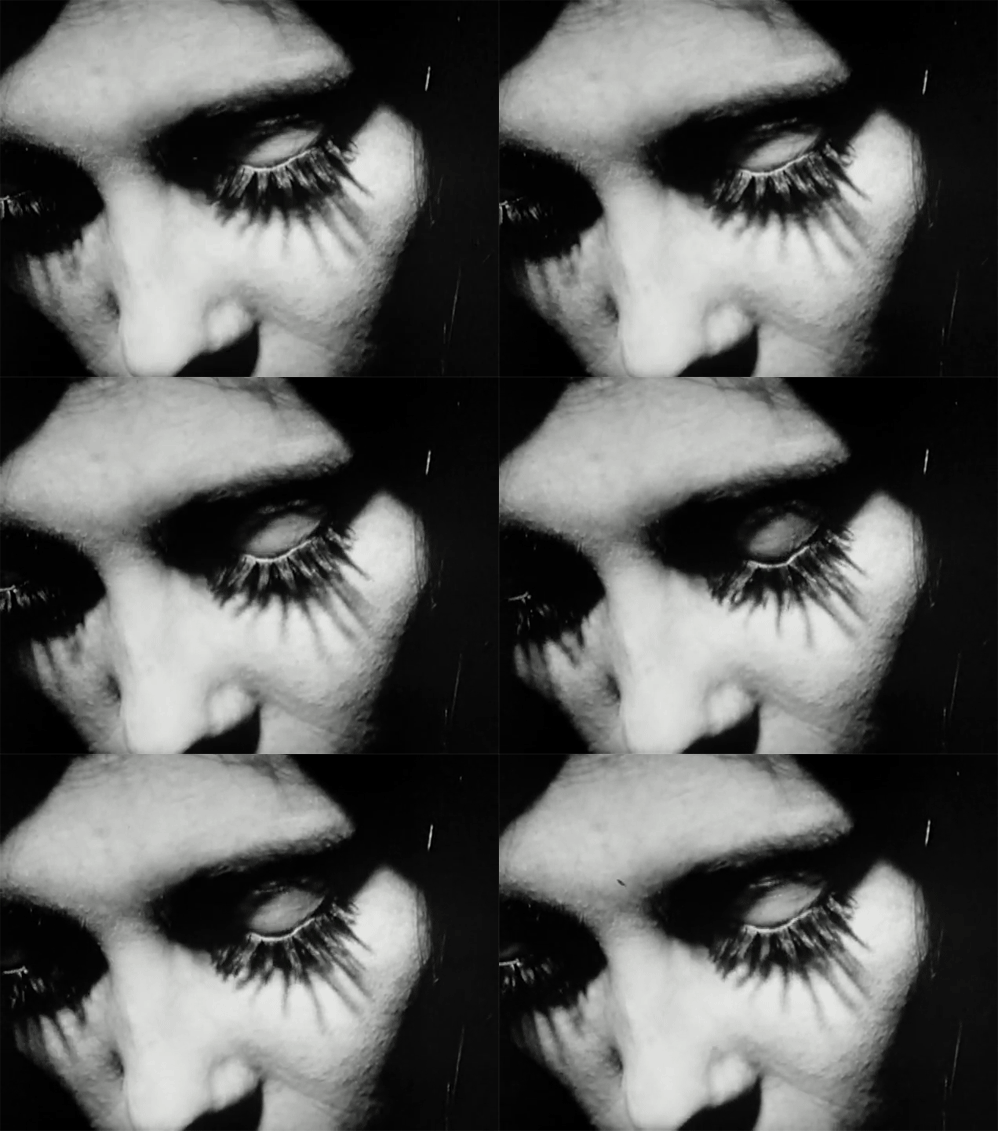
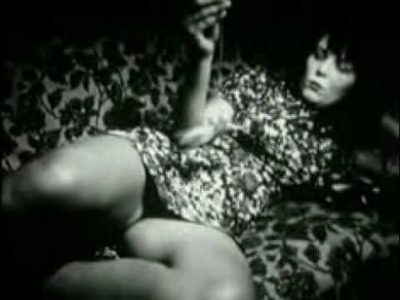
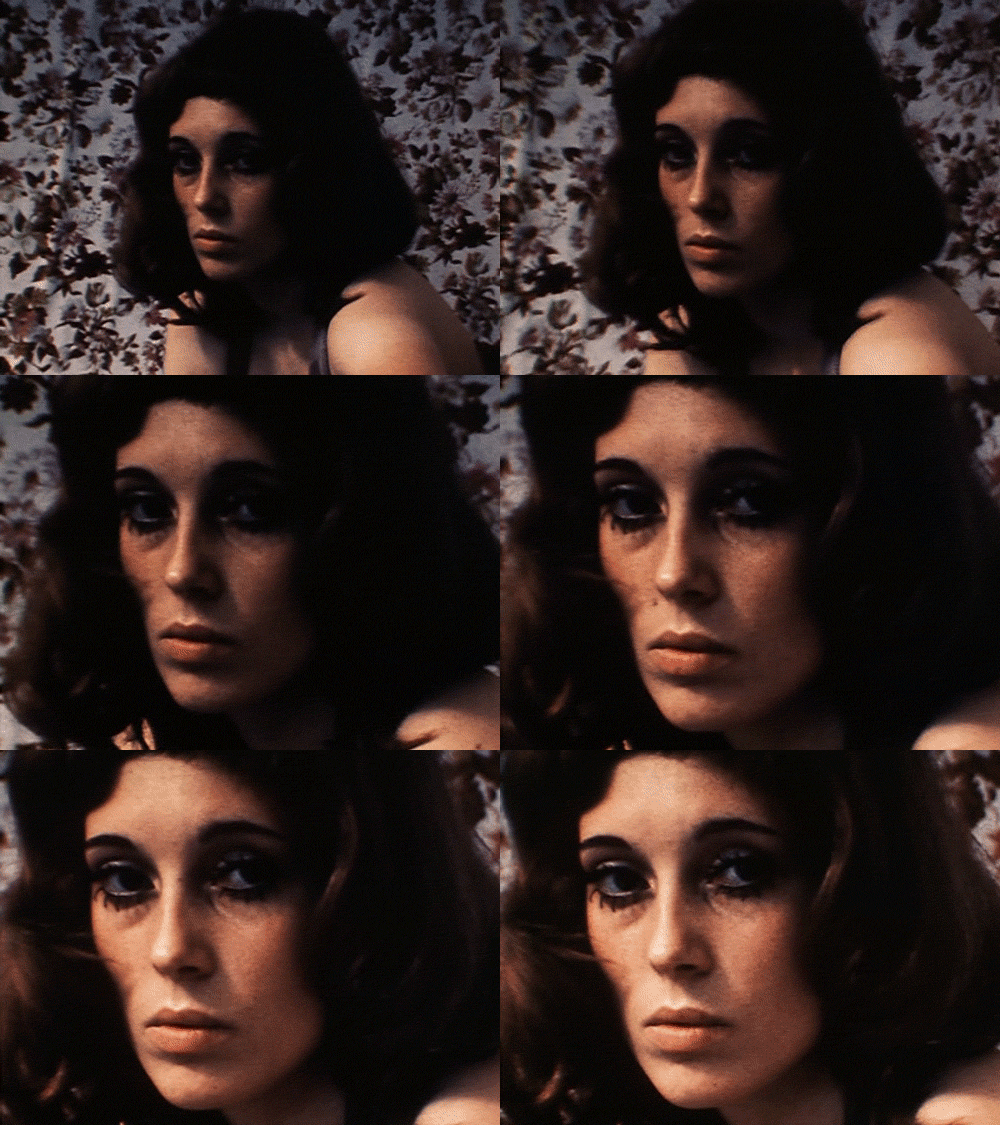
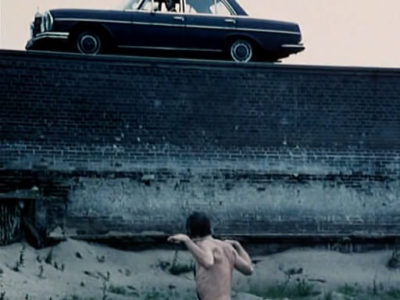
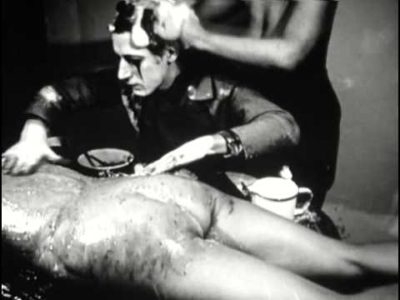
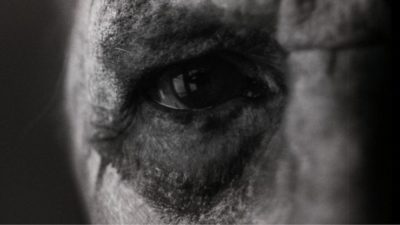
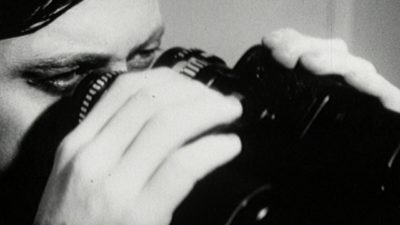
Stills
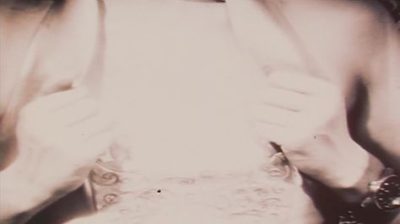
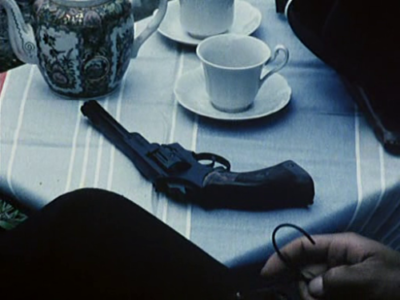
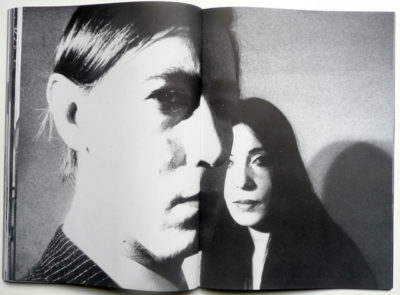
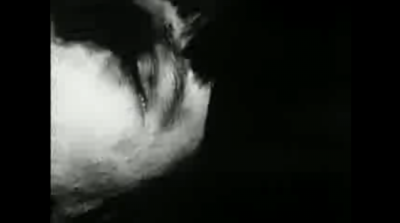
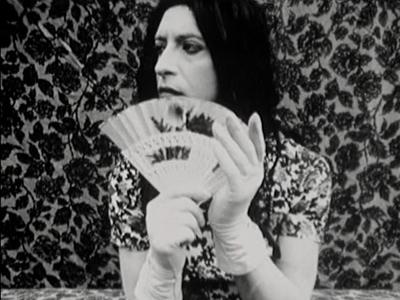
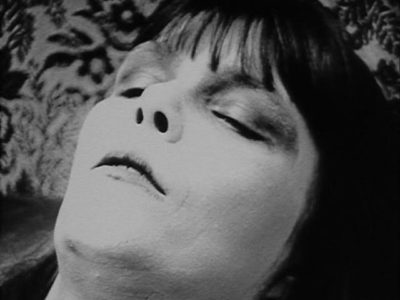

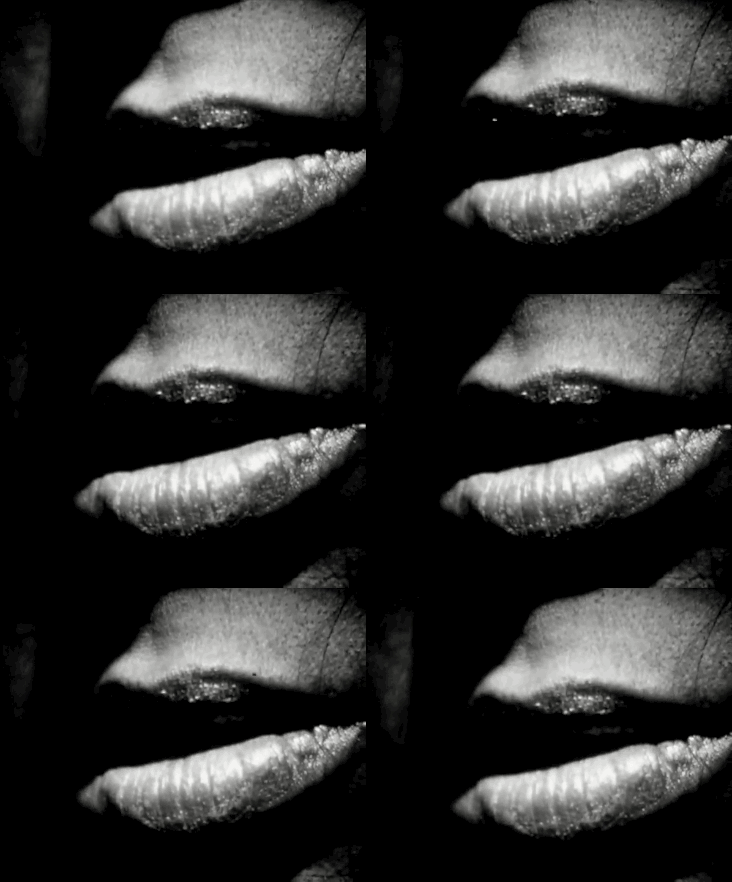

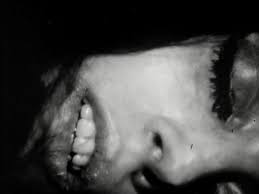
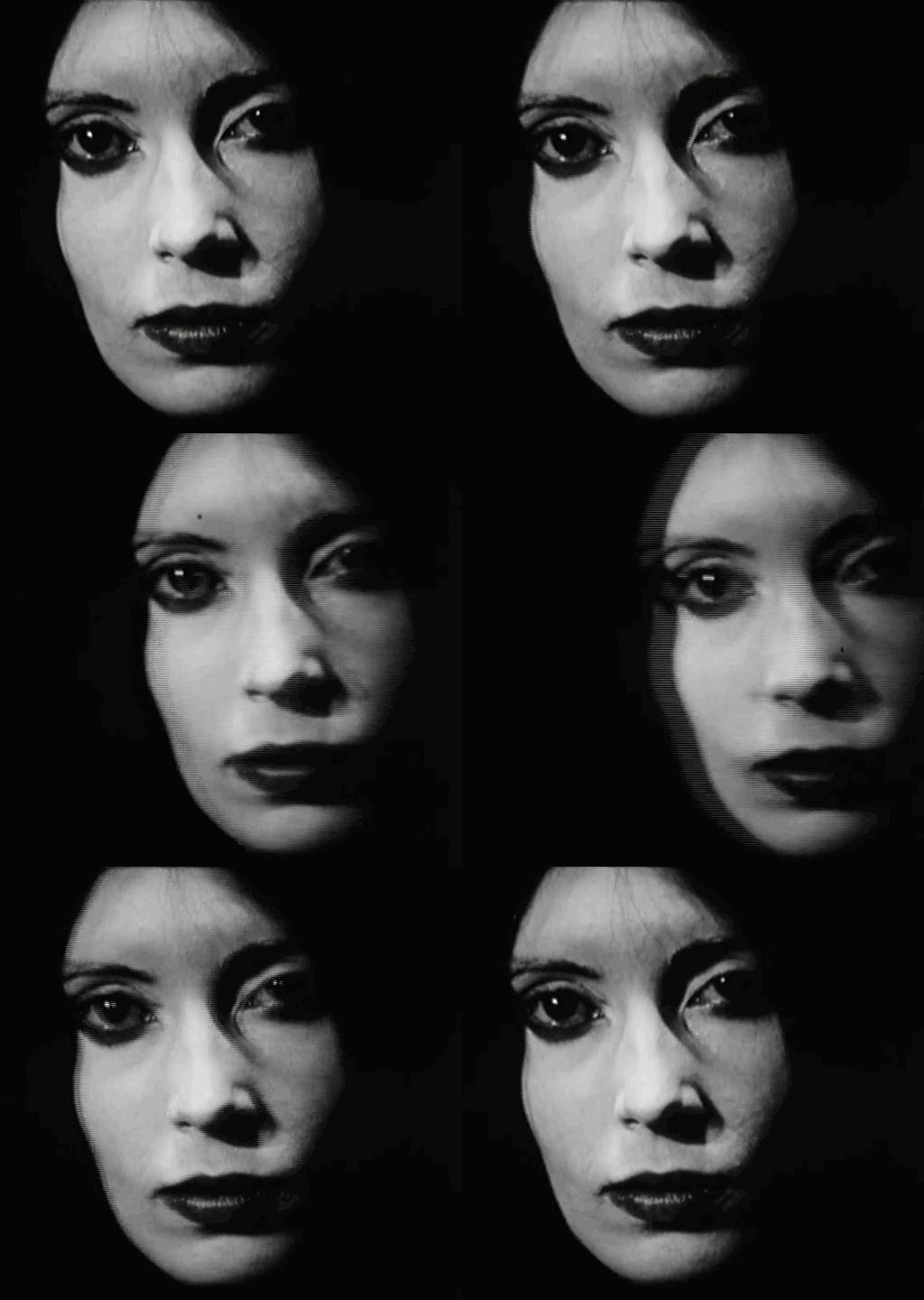
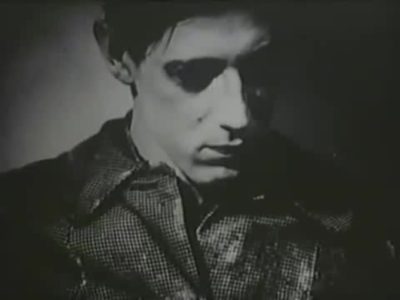
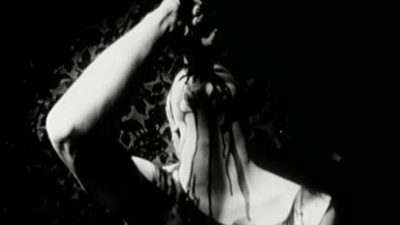

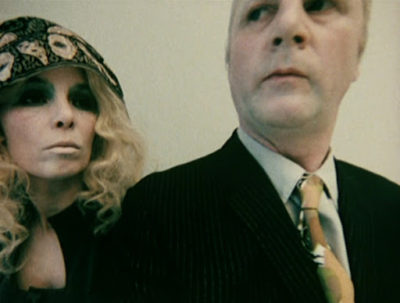
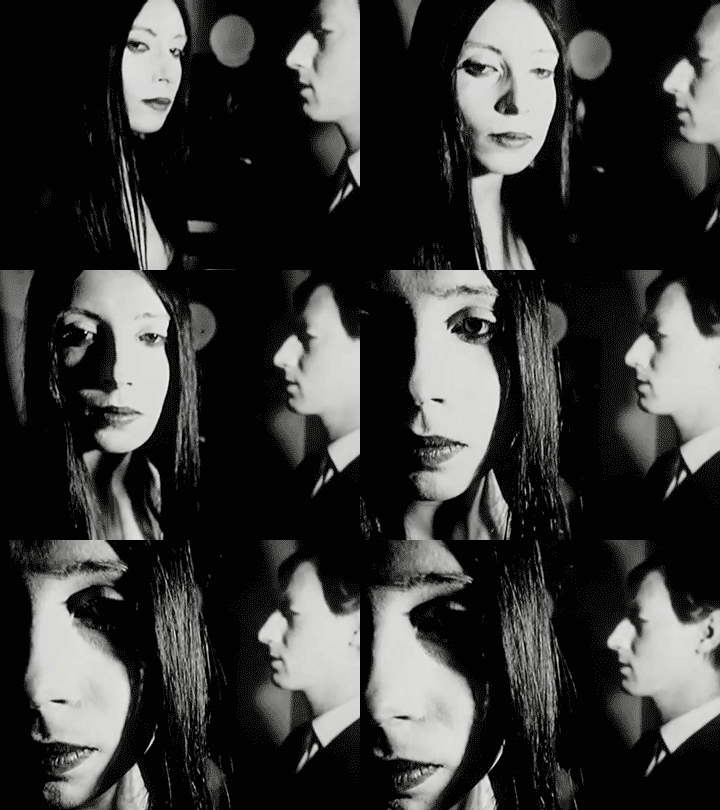
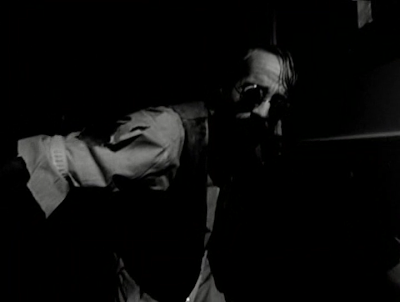
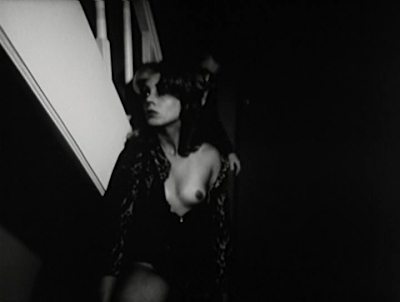
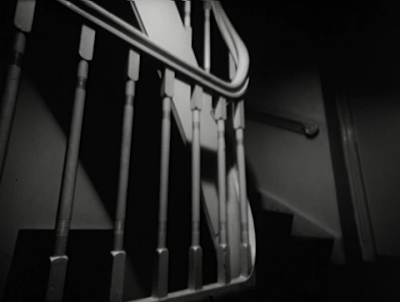
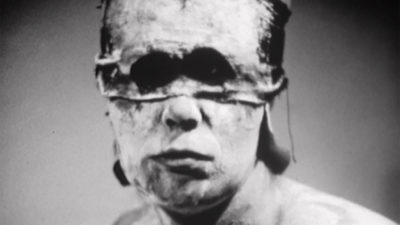
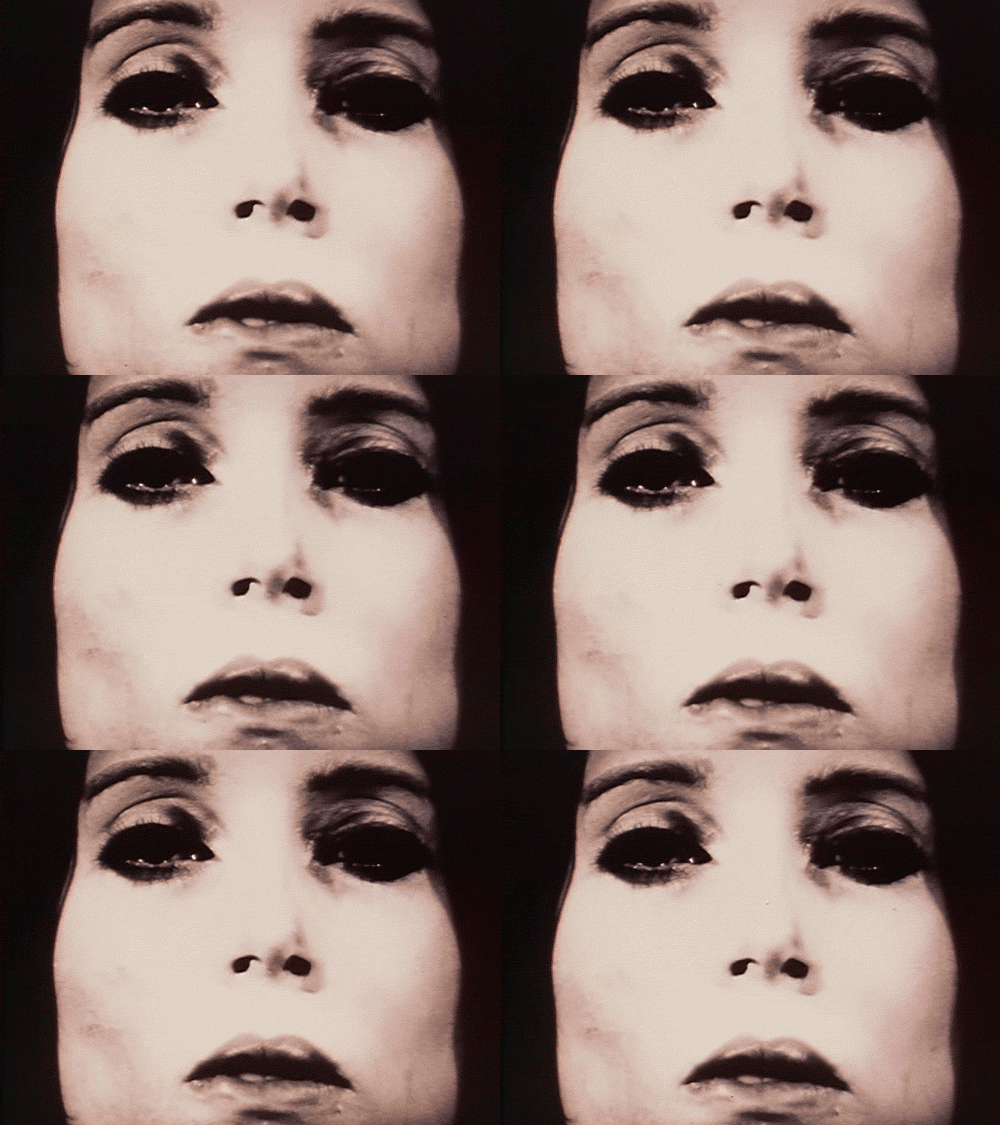
_____
Further
FRANS ZWARTJES – THE GREAT CINEMA MAGICIAN
Frans Zwartjes @ IMDb
PORTRAIT OF FRANS ZWARTJES
FZ @ MUBI
Frans Zwartjes ‘Masterpiece / Spectator’ (LP)
In Memoriam: Frans Zwartjes
FZ @ letterboxd
FZ @ Cinema of the World
Susan Sontag zag het al: Frans Zwartjes (1927 – 2017) was ‘belangrijkste experimentele filmmaker van zijn tijd’
____
Extras
FRANS ZWARTJES, FILMMAKER
HM2015 Frans Zwartjes
PORTRAIT OF FRANS ZWARTJES
_____
Interview
by Mike Hoolboom
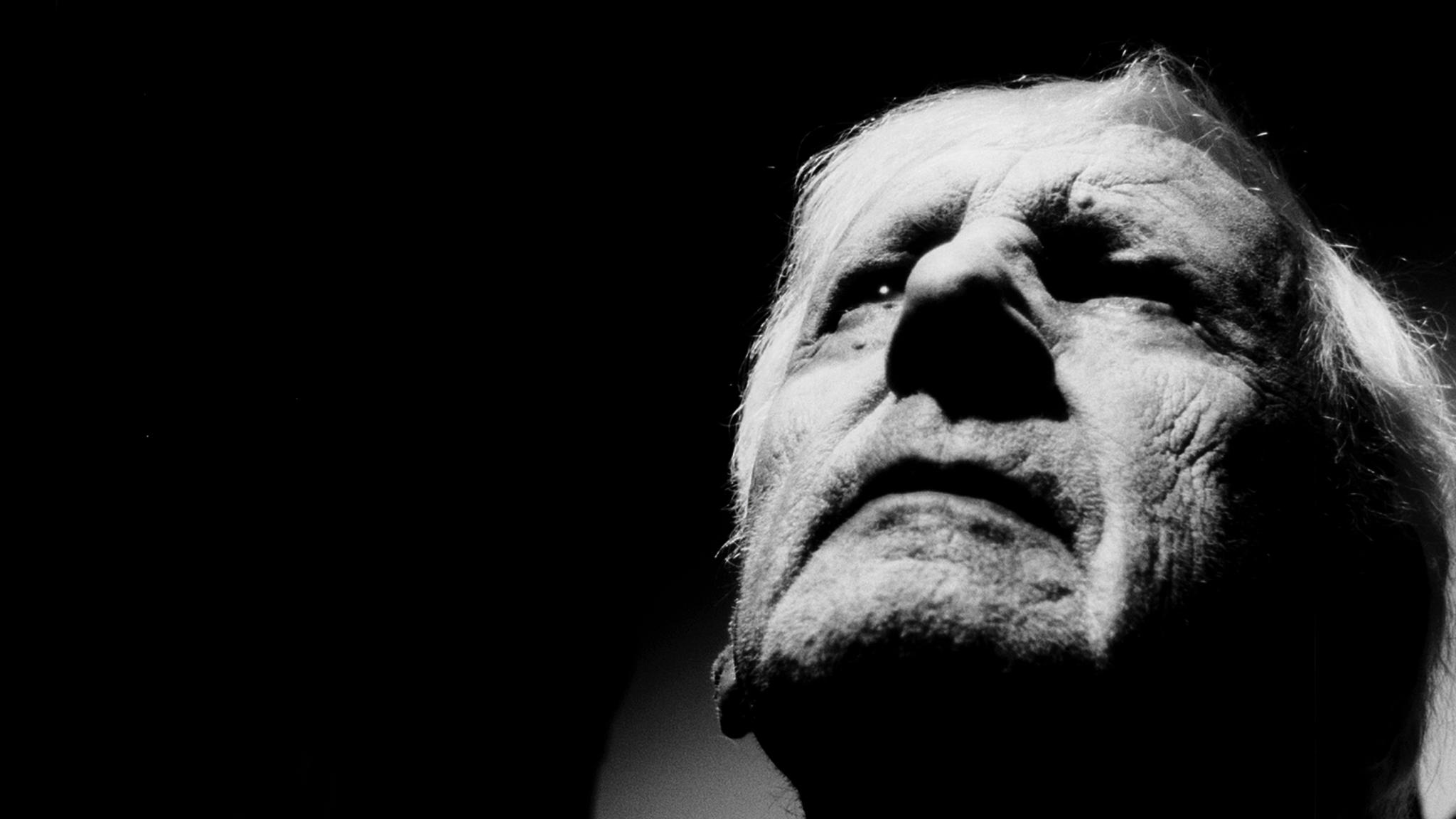
Q: The person making ordinary films in the Netherlands works within a context: you can see a certain filmmaker as an inspiring model or you can dismiss him to try to do it your own way. Did you have a context like that?
FZ: What made a huge impression on me was the New American Cinema. The municipal theatre in Eindhoven presented a new American film program in the early 1960s. For the first time I was able to see films by Bruce Connor, by Markopolous, by that fatso… Peter Kubelka and by Andy Warhol. I thought: Jeesus Christ, what’s going on! In The Shopper by Warhol, the camera is first pointed at the ceiling and then sinks downwards, but you can feel that it was not done by hand. The bolt at the top of the tripod wasn’t screwed tight. The camera sinks down by itself, splendidly. While the camera keeps on shooting, you can meanwhile hear someone talking. The protagonist just keeps on going. The crazy thing is that I started to be irritated by the film after a little while and I went out to get a drink. I must have gone back and forth ten times and each time that I opened the door to have another look, I thought, damn it all, it’s awfully good! Those screenings had a big influence on me.
Q: You developed your films by yourself in your home laboratory.
FZ: Yeah although… actually it was a cupboard. When I got my first little film back from the laboratory, I thought it looked like garbage. I went back to the lab, that was the NLF back then and said: “I want to develop my own material.” The man opened a drawer and handed me a sheet. I looked at it: R36, Agfa. It had instructions for reversal development. He immediately took hold of one more sheet, one which the address was written of Brocades in Amsterdam. You could buy chemicals there.
He also told me which was the cheapest material: Agfa’s 5-61. That was what they made their prints on. An incredibly straight curve and very, very slow: six ASA. You had to make your shots in the sun in order to be able to see something later on. It came in rolls of three hundred meters. In my darkroom, I cut them up into rolls of 30 meters that would fit in my camera. You get really strange things: perforations on the wrong side, or losing hold of the roll and everything falling apart. Then you’re up shit creek. But I always managed. After a while, I became very skilled at developing. I could develop 300 meters a day. Film on Saturday, watch on Sunday. I had students who asked me how I developed that black-and-white. I explained everything, but they still gave up. Because even if you’ve got instructions you’re not there yet. What’s important is how the material is exposed and how warm it is and how long you leave it in the developer. It’s something you’ve got to twig to. You only learn by doing it, really.
Q: Who did you show your own work to?
FZ: I didn’t know anyone!
Q: Did you not have any contacts with other Dutch filmmakers?
FZ: Of the “regular” filmmakers, only Pim de la Parra came to me and said, “You’ve got to apply for some government money. You shouldn’t be paying for those films yourself, are you out of your mind? I’ll help you.” That didn’t really happen, but still… And Johan van der Keuken. They aced normally. All the rest thought my films were strange, very unprofessional tomfoolery. But they couldn’t escape the fact that Living (1971) was something to reckon with. I heard that later from Bert Haanstra. When I was working at the violin maker, Marree’s studio, he came around. He had been given equipment by The Hague. Given! Lenses and a body and some other things: 35mm equipment. He asked if we would make a case for them. That’s how I came into contact with him. And when later on I started to make a film with a friend about the war wounded in Guinea-Bissau, I looked upper Bert. He immediately said, “Wonderful! A documentary, there’s something we understand at least.” He told me they had wanted to give me the National Prize for Living, but they went and gave it to Ed van der Elsken because he needed money. Ed sold me the Cook lens around that time, the wide-angle that I used so much. Money problems, I guess. It was a 5.7, high quality. I wanted the widest possible angle without it being a fisheye.
Q: There is a great deal of eroticism and there are many distorted power relationships in your films. Do you learn anything about yourself by watching your own films?
FZ: According to Trix, I’ve have never been as clear about myself as I am in my films. But I didn’t not see that at all when I was making them. I didn’t interpret those films. Others did, but what they said was often beside the point. I can still remember a screening – Trix and Monique Toeboesch were sitting on a bench in the film – and you know what someone said to me? “Say, I didn’t know that you wife was a lesbian. How terrible for you!” An adult man said that, a family doctor. I explained: “We’re just making a film, you know.” He acted a bit angry, “Look, you can see it too… Take a look!” I said, “I don’t see anything. I certainly don’t see that.”
I can remember Pentimento (1978) being screened in Rotterdam. The theatre was full of feminists saying I should be done away with. “It should be against the law that ever receive another cent!” And wherever that film was shown, they stormed the projection room in groups of ten, grabbed the projector and pitched it into the street, film and all. That happened a couple of times.
Q: Did that upset you?
FZ: No, something I like a lot less is when, for instance, I expect a really strong effect from a scene an right at that moment I see people leaving the movie theatre… If you don’t see anything at all, and you stand up… that’s… Well, that’s not really irritating but it leave me feeling awfully helpless. It’s just like when someone says, “Well, you know you that Bach’s compositions are just repeating fractions.”
Q: What is your own favourite film?
FZ: In my opinion Spare Bedroom (1970) and Living (1971) have a peculiar indefinable atmosphere. That quirky fidgeting and then the whimpering of the music… When I last saw the film I thought: how did I ever come up with that? I would never be able to do it again now.
_________________
15 of Frans Zwartjes’ 45 films
_________________
Sorbet III (1968)
‘A man in drag reaches for some sorbet and then eats it.’ — letterboxd
the entirety
_________
Birds (1968)
‘Hypnotic, repetitive film featuring Trix, Zwartjes’ regular partner in crime – and in life. The second ‘turtle dove’ is a piece of a toy between her fingers. Even before Structuralist film had really found its mojo, Zwartjes made this ironic deconstruction of the watch-the-birdie principle.’ — IFFR
the entirety
__________
A Fan (1968)
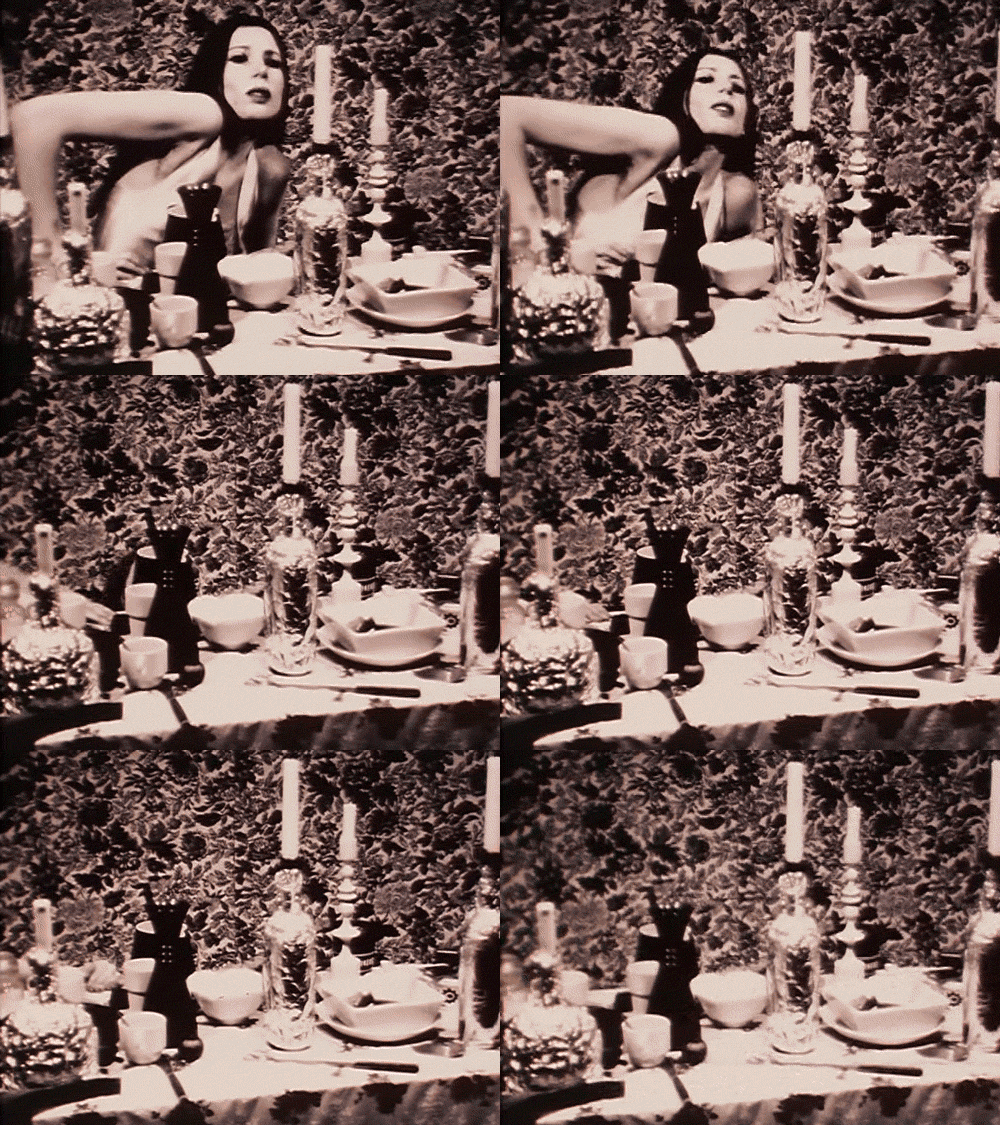
‘A man in drag sits on a couch holding a fan. The wallpaper behind him is floral patterned. Although the man does little more than looking around and waving his fan, Zwartjes created enormous tension.’ — letterboxd
the entirety
______________
Visual Training (1969)
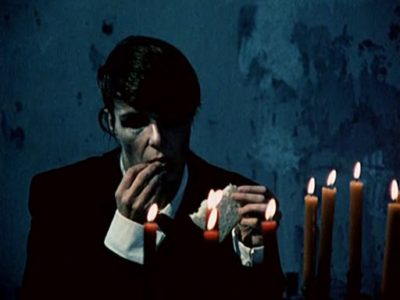
‘Oppressive black-and-white study of a man in pale makeup surrendering as apathetically as a zombie from a German Expressionist film to primitive, childlike playing with food. Possibly inspired by Viennese Actionism and the mythopoetic American underground, Zwartjes more than once ventured into orgiastic territory.’ — iffr
the entirety
_______________
Spare Bedroom (1969)
‘Two sombre personages who are engaged in a claustrophobic game of attraction and repulsion.’ — MUBI
the entirety
______________
Anamnesis (1969)
‘Film in three parts in which a man and a woman, Zwartjes’ regular actors Trix and Lodewijk de Boer, circle around each other, both in the house and outside beside the water, repelling and attracting each other.’ — LUX
the entirety
______________
Spectator (1970)
‘This 1970 film from the experimental filmmaker tackled the concept of the image as an object of the ultimate expression of desire.’ — Nowness
the entirety
______________
Behind Your Walls (1970)
‘As he does more often, Zwartjes creates an intoxicating, surreal microcosm – this time through a bizarre pantomime featuring extras in heavy make-up. A great example of how the experimental filmmaker was able to unorthodoxly forge colour and black-and-white, silence and an eclectic audio mix into a lyrical poem.’ — iffr

___________
Living (1971)
‘Frans Zwartjes and his wife explore their new home, and the sexual tension they’ve brought with them to it.’ — letterboxd
the entirety
____________
Audition (1973)
‘Because many of Zwartjes’ films are actually silent films, without any dialogue or direct sound, the music always plays the key role. Zwartjes made that music himself, often with his brother Rudolf and Lodewijk de Boer. Audition is a fine example of a film with a good musical soundtrack. The film is a visual improvisation between the camera and the actors, with virtually no storyline – a man watches and listens to a woman singing, while another woman looks on, mainly in exciting black and white images.’ — Eye
the entirety
____________
Bedsitters (1974)
‘Bedsitters takes place on the landing and the stairs of Zwartjes’ still-new, empty house in The Hague. The filmmaker evokes a mysterious and complex space by using a ‘floating’ camera to film some creeping and mysterious characters. Even when Zwartjes himself appears in the frame, the camera continues to float. The fluid movements and a substantial wide-angle lens turn the house into a building that defies logic.’ — Eye

_____________
Pentimento (1979)
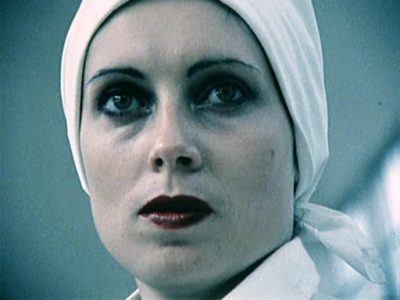
‘This film is dominated by an icy blue. In a monumental building a group of scientists submit women to obscure and inhuman experiments, in which sexuality and cruelty constantly merge into one another. When the film was released, this horrifying game of power and powerlessness was condemned severely by a militant group of feminists. The criticism was undeserved. After all, ‘Pentimento’ is an art-historical term for a hidden image underneath the actual image giving an indication of how the latter evolved to its current state. The film does not endorse the lopsided power relations in our world but actually challenges them.’ — The Uncomfort Zone

___________
In Extremo (1981)
‘The central element in this film is formed by the preparation for and execution of a performance. The performance, a parachute jump, is carried out by an artist (Perrenet) and his girlfriend during the opening of an exhibition. As spectators to the performance, which takes place in the artist’s studio, an art dealer and several friends have been invited. The art dealer enters first, followed by Armand, who looks at some paintings made by Zwartjes; they spout the usual ‘gallery nonsense’. The art dealer appears most interested in the girlfriend. ‘My latest creation’ is how Amand introduces her. The guests who arrive thereafter are introduced in short, independent sections.’ — Letterboxd

________
Medea (1982)
‘Frans Zwartjes’ adaptation of Euripides’ tragedy, originally produced for stage by the actresses Josée Ruiter and Çanci Geraerdts. Two theatre actresses recite the classical Greek tragedy backstage while applying makeup, smoking, wrapping each other in cellophane, etc. Medea is very stripped down in its presentation. Darkness permeates the entire movie, with only a minimal amount of blue light shining on the performers.’ — Letterboxd

*
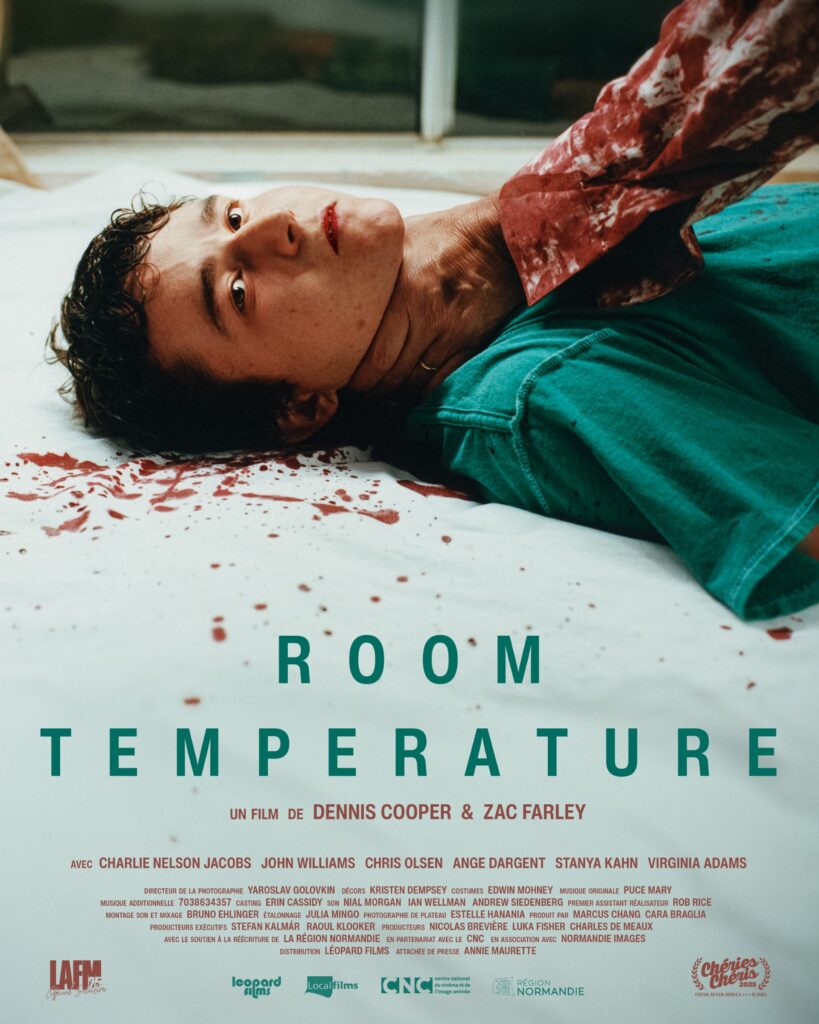
p.s. Hey. ** Adem Berbic, Well, hello. The Close-Up thing seems a little iffy at the moment, so we’ll see. If it happens, we’ll ask for more than one screening, I think. After-parties are my idea of hell, but thank you anyway, haha. I would think anyone you know who isn’t a fatalist or sadist would choose the productive angle. Zac and I go to Berlin to show ‘RT’ in late-mid May, but we should be here otherwise. I think I’m going to see James soon, so I’ll ask him what’s the what on your event. I’m not very big on pre-‘Naked Lunch’ Burroughs. I haven’t seen the ‘Queer’ movie, but someone whose opinion I trust said it’s like a 90 minute homoerotic perfume commercial. ** Dominik, Hi!!! Yes, that’s precisely my/our fear about the upcoming US midterm election. I never heard back from the Viennese programmer, so I assume that’s a no, very unfortunately. Thanks to love, but it looks like the visa problem is fatal and I will have to reapply. Expensive stressful headache, but that’s how the cookie crumbled. Love giving a very un-warm Paris ‘welcome’ to the return of the cold and rain, G. ** Charalampos, I still like Iceage, but I don’t love them like I did during their first three albums period. I still love Elias’s voice, and I’m relieved that he’s past the phase where he was trying to sing Nick Cave. I have too many ‘Bee Thousand’ favorite songs to list them. Almost all of them. Hi from this place. ** _Black_Acrylic, I just read something about ‘The Great Hip Hop Hoax’ not two days ago. I don’t have Netflix, but I’ll look elsewhere and maybe get lucky. ** Carsten, Well, Kier sort paraded and flounced around whenever I saw him. And I saw him throw any number of hissy fits when he thought people weren’t treating him like a living legend. Well, at least your friends are freed, whew. Wow, that’s some poem. It’s very ‘you’ but the tone feels new and exciting. Thanks, pal. ** Thom, If I were a bookstore, short, fragmented novels would be what my bookstore was known for. Right, about the boxsets. I don’t currently have a turntable or even a CD player so I don’t have to battle with my pragmatic side over whether to spring for them. I would say thank goodness, but it’s also sad. I hope your jams are being very, very soupy. You satisfied? ** HaRpEr //, Oh, cool, yeah, Sharits is wonderful. I hope you get to see his films projected sometime. It makes the obvious big difference. You know Tony Conrad’s legendary film ‘The Flicker’ I’m guessing? In the documentary, to me at least, Coppola came off pretty well, but I admire obsessive self-styled visionaries and what it takes. LeBeouf, on the other hand, comes off completely insufferable. And his recent homophobic bullshit just dots that i. ** Malcolm Cooper, Hi, Malcom. Good to meet you. We could be related as I know virtually nothing about the extent of my extended family. Nice that Richard Siken was your mentor. He’s great, not that I’ve met him. His new book is terrific. Sure, I’ll talk with you about that. I’ll send you a quick hello email so you have my address. I feel confident somehow that you’re one of those fairly rare writers who used your MFA to your work’s advantage rather than as drill sergeant. And thank you. Happy to have helped dissuade you from being the new Michael Chabon, although you might have gotten rich. And probably talk with you soon. ** ⋆˚꩜。darbbzz⋆˚꩜。, Hi. I did try your mix, and, yes, it didn’t work. I’ll just daydream about it. Little Caesars sounds very promising. Yay! I make coffee by boiling water and pouring it through a filter/cone full of grounds that is sitting on top of my cup. And I’ve been doing it that way for years, except when I’m in LA and use a coffee maker machine, so I assume nothing’s changed. ** Laura, Chopped? What does that mean? No, you’re obviously attractive, and it seemed superfluous to say so. I co-translated a book of German short stories by this obscure Austrian writer Franz Boni in the early 80s with a co-translator who only spoke German as a second language, and, boy, was that a headache and failure. ** kenley, I know nature has a good reason why mosquitos need to exist, but I still wish they’d go extinct, those tiny monsters. Wonton is better. And I have a fetish for grocery store cakes. Yum/yuck. So congratulations to you all! ** Right. Today the blog chooses to direct your attention to arguably the premiere Dutch experimental filmmaker, and the rest is up to you obviously. See you tomorrow.


 Now available in North America
hi Dennis!
when i moved to the Netherlands i was thinking along the lines of ‘Zwartjes land, Rutger Hauer, medieval mystics, interpersonal anarchy, cool’ man was i in for smth else lol
i actually rewatched Audition not v long ago and i’m more smitten this time. the soundtrack alone is such a flex and such a labour of love, right? also who needs a plot when you can just watch people watch one another <3
being chopped is being, like, super ugly! =D but we’re sort of past that now, problem quite solved. ‘superfluous’ tho, pfff, it’s not that when i call you hot! granted, i occasionally call you other things when i make notes on your books but you’ve seen those and you still come up on top.
sort of want to hear the story of your ill-fated translation collab… like, how did it come to be? and how on earth did you guys go about it…? i’ve translated in tandem more than once, and written copy in tandem too and other stuff of the sort— it’s almost always been bloody awful bc keeping to an unified style while you and the other person don’t agree on anything is basically gross. how did you guys even understand each other? man, wish i spoke german.
anyway, looks like your visa application process starts all over again after all…? ugh =( are you v stressed? i probably would be, unless i went into depersonalised problem-solving mode i suppose, which, blah. hope they don’t rip you off too bad or keep you hanging v long! (hug)
i had a really sad, flopped immigration thing a few years ago so hopefully my bad luck will dispel yours this time around (it’s all v floaty, but sometimes there’s nothing to lose other than common sense, which, whatever)
more happily, i’m listening to the new GBV and it’s p great. also, again, a lot like Placebo when Placebo was super good and Sebadoh-esque. interesting. do you hear what i hear…?
i’m obvi still thinking of my birthday line, btw. things out of context can be v good. <3
sending love and as much migratory zen as might be accomplished your way! (zen in hardship, what an art or smth, def break smth if the mood strikes)
hi dennis!
another long absence from me commenting again. seems like that will unfortunately be the case for the foreseeable future. i’m just so exhausted and tired all the time and have so little energy. i haven’t been able to keep up with the blog as a result. i can’t even remember when i last commented on the blog (i think it was october?).
some recent things of note from me are that i have another piece coming out in the new issue of ‘scab magazine’. i hope you and everyone else enjoys it! i also recently bought a copy of ‘closer’ which i’m excited to read and finally start the george miles cycle (i was gonna wait for the upcoming reprint but i found copies of the previous grove press edition and i would feel irked having mismatched editions for the five of them). i also recently sold a bunch of DVDs, blu-rays, 4Ks, and CDs that i didn’t want anymore to this great store in melbourne called ‘play music and dvds’ [https://www.playmusicdvds.com.au/] and i amazingly got $850 AUD for them all. i was expecting maybe $300 AUD tops so that was a nice surprise. i’ve also been reading ‘valencia’ (my first james nulick book) and love it.
i have a question for you (as well as anyone else in the comments who could help). ‘far west press’ is open for submissions from june 1st – august 31st [https://www.farwestpress.com/submissions]. i’ve been working on a potential book for a little bit now and i figured i’d try submitting. the problem is i’ve never written or submitted a manuscript before and i’m afraid to email them to ask in case it would make me look ‘unprofessional’ etc. does anyone have any good advice/resources on how to write/format a manuscript? also am i just getting worried about nothing in regards to asking ‘far west press’ for clarification on their submission requirements or about manuscripts in general? any help would be appreciated.
Since I entered the submission fray last year for the very first time & found success quite quickly I thought I’d chime in. In my experience publishers aren’t too finicky about the formatting of manuscripts on a first encounter. I think that work starts in earnest once you’re accepted. What I did with my manuscript was simply a PDF with title page (which included my email), dedications, table of contents & then the text with page numbers. No one complained & one accepted it for publication, so I assume I broke no formatting etiquette.
But yeah alternatively, if their guidelines are vague or minimal I see nothing wrong with sending them a polite question. Every place has different criteria, so asking doesn’t make you unprofessional in my book.
thanks very much for the reply! i’ll look into that!
Hi!!
Let’s hope we’ll both be wrong about our respective elections…
I never understood that – when venues, journals, etc., don’t make the effort to send at least a short and general “thanks but no thanks” to people who submitted their work to them. It’s so disrespectful. Sending an email, which could even be an automated one, takes no time, really. Maybe the Viennese venue is just very, very slow to respond…? Anyway, crap. I’m really sorry it’s not happening, for the very obvious reasons.
And shit – I’m so sorry about your visa situation! I hope it gets resolved as quickly and cost-effectively as possible!
Oh no… It’s still spring-like here, but they say the cold and rain will catch up with us soon. I’m very much not looking forward to it.
Love feeling sorry for his dream self because he spent the night wandering around at an agricultural market/festival, which interested him about as much as it would while awake, Od.
Enjoyed In Extremo and could find a lot of humour in that. Self-absorbed artist types are always good for a giggle.
Must admit I do watch Netflix a bit. Pretty much boycotted the BBC since the 2014 Scottish Independence referendum, save for the occasional bit of football of course. Tonight Netflix will be showing Louis Theroux: Inside The Manosphere and I’m expecting the cultural equivalent of the Cookie Pie Man but hey, maybe it will pass an hour or 2. That social group seems the equivalent of an alien race and I’m happy to play the disinterested observer.
I remember catching “Living” in my teens & quite digging it, so this is quite a throwback.
Sorry to hear that Kier was such a bitch, haha. For some reason I expected him to be cooler. What is it with actors & their egos…
Thanks about the abuse poem. Yeah it’s an odd one. Who it’s about is what made me withhold it, as if it would contaminate my other work if it brushed up against it. Posted it on FB, mostly for my American friends who have to live under that regime. But I really gotta see this one turned into a song, it practically cries out for that.
Totally random query but what the hell: You wouldn’t happen to know anyone in Raoul Peck’s orbit, would you? He’s most famous for the Baldwin doc “I Am Not Your Negro”, but for me the standout is his extraordinary mini-series “Exterminate All the Brutes”. I know this might be foolhardy, but I’d love to pitch him a project based on the Duende Day I did here. And I always figure, long shot or not, couldn’t hurt to try, could it?
Best of luck with the latest visa snag. You need iron nerves for state bureaucracy.
Wow, another person who’s work ive seen in passing, conveniently laid out for me to explore… you are too good to us!
Thought you might get a kick out of me finding Benjamin Weissman’s Dear Dead Person for 2 bucks at this consignment shop in Portland. Their book section is small but extremely cheap, not even the same place I found The Consumer for under 5 dollars… the city has absolutely blessed me with odd finds like this, and I’ve been meaning to check out Weissman for awhile here!
Day 1 of jams was interesting, doing a kinda haunting rendition of an old british folk tune, got a bit off strange ambient jams too… tonite we’re gonna record something for my friends album and get a bit more soupy raw materials for me to fashion into some kinda EP along with the folk tune. Love when highly traditional music is sorta floating amongst more out there sounds…
Been thinking of you a bit as ive been listening to Bee Thousand on my night walks, hope yr well!
Hi Dennis. How do? What a great post, had to jump in and tip my hat to Zwartjes. His films tickle my brain, particularly Pentimento, which is this utterly singular thing. One of my favourite films for sure. It has the texture of a nightmare. He does so many interesting things with the soundscape there. Lots of birds chirping and water dripping. So good. Have you heard much about the new Grandrieux feature? His wikipedia says it’s in preparation with a script co-written with Jonathan Littell, yet I can find no source for it. Curious. Hope you’re good!
Sorry to hear about visa woes and others, hope they’re resolved quickly.
Recently I’ve been thinking about what makes for good writing about the internet and I’m curious if you have any thoughts on it. Your book Sluts did a good job of it, I think. One of the distinctions that’s come to my mind is of using the internet as medium vs subject, but still, it feels like we should have more great stuff about the internet given how big it’s been, and we don’t. Do you spend a lot of time online outside of this blog, and if so how do you spend it?
Good luck resolving the visa situation. Dealing with that kind of bureaucracy would drive anyone nuts.
I saw Udo Kier do a Q&A session after one of his films. He was very drunk. At first, he was quite funny, but he didn’t know when to say when and he eventually became “flamboyant” in a bad way.
I’m watching a documentary on John C. Lilly this afternoon for a review. Do dolphins enjoy LSD and ketamine? I guess I’ll find out. I’m also intrigued by the Louis Theroux manosphere film.
Hey Dennis, cool, gotcha, fingers crossed for James planning and Berlin sidestepping.
My favourite chunk of W.B. is ‘Naked Lunch’ and what comes just before, which feels to me like him finding suddenly very potent ways of expressing what he tap-danced around before, but still with the sort of hesitation and roughness of an only-newly-self-confident-ish writer. (One bit of the ‘Nunu’ story in the pamphlet is stolen straight from that period, see if you can guess which.)
I’m honestly not exhaustively read, though. I think my initial contact with him made such an intense, formative impression that I’m afraid to go back, out of a desire to preserve the hazy afterglow of whatever my thirteen-year-old (?) brain made of his writing. Same story with Faulkner. There’s a Faulkner-shaped kernel deep in my brain like a coin that’s been lost to a sofa.
Yeah, I’ve seen and love ‘The Flicker’ and pieced that together as Noe’s particular point of inspiration, but there was one particular effect in ‘T,O,U,C,H,I,N,G’ which I’m sure Noe must have seen. I kind of wonder when I watch some of that stuff whether I’m missing out by not watching them on psychedelics haha. Was there a psychedelic component when you watched that stuff back in the day? Well I’m kidding actually. When I think about what happened to my senses when watching them and how I had a headache afterwards, the films are like drugs themselves. I think I might die if I watched ‘T,O,U,C,H,I,N,G’ on acid.
Yeah, I figured that seeing Sharits and Conrad projected is really part of the sensory immersion integral to experiencing them, but once I hear about a film and get interested I have to watch it immediately through the means I have at my disposal, and I like re-watching films anyway.
I read ‘Godlike’ by Richard Hell and really really liked it. I didn’t really know what to expect, and as a Rimbaud obsessive I worried but I was rewarded and relieved.
Situating Rimbaud within different contexts is interesting to think about due to what Deleuze called his work’s ‘schizophrenic’ temperament: his unwillingness to situate his body or identity within one container. The narrators of the poems identify as different races, genders, classes, countries, and so on, and I think Hell did a pretty good job making him an anti-hippy, proto-punk kid refusing to categorise himself. But even if I separate it from Rimbaud completely it’s really brilliantly written and beautifully scattered in how it goes back and forth between first and third person. And the inclusion of poems from the NY school was a wonderful touch.
Hey friend,
How have you been? I’ve been meaning to update you on some life and work stuff and my Paris trip is coming up so… Does April 8 sound good to you? Could be 8 or 9. Maybe 7 or 10 but ideally 8 or 9.
It’s kinda early still, I know. I was gonna wait a few more weeks but I had to ask you another question so might as well bring it up and maybe…. Confirm?
Oh yeah the question. Bureaucratic but very important question. Who’s your agent? The one who deals with translations specifically? Some people might want to know. Exciting stuff might be happening.
Love
Minet
Hey Dennis; weird couple days. Had a dream last night that you’d come to my college to direct a Marbled Swarm-esque theatrical adaptation of The Pied Piper, the ABBA song, and done the whole thing in Farsi. Afterwards, I shyly introduced myself to you and you took me to the library to show me how you taught yourself the language in a week. I wonder if there are any strict Freudians on here, and what they would make of that. Zwartjess feels like he captures disquiet well, which should be good given that’s mostly what I’m feeling these days when I’m not happy (I’m happy for the most part).