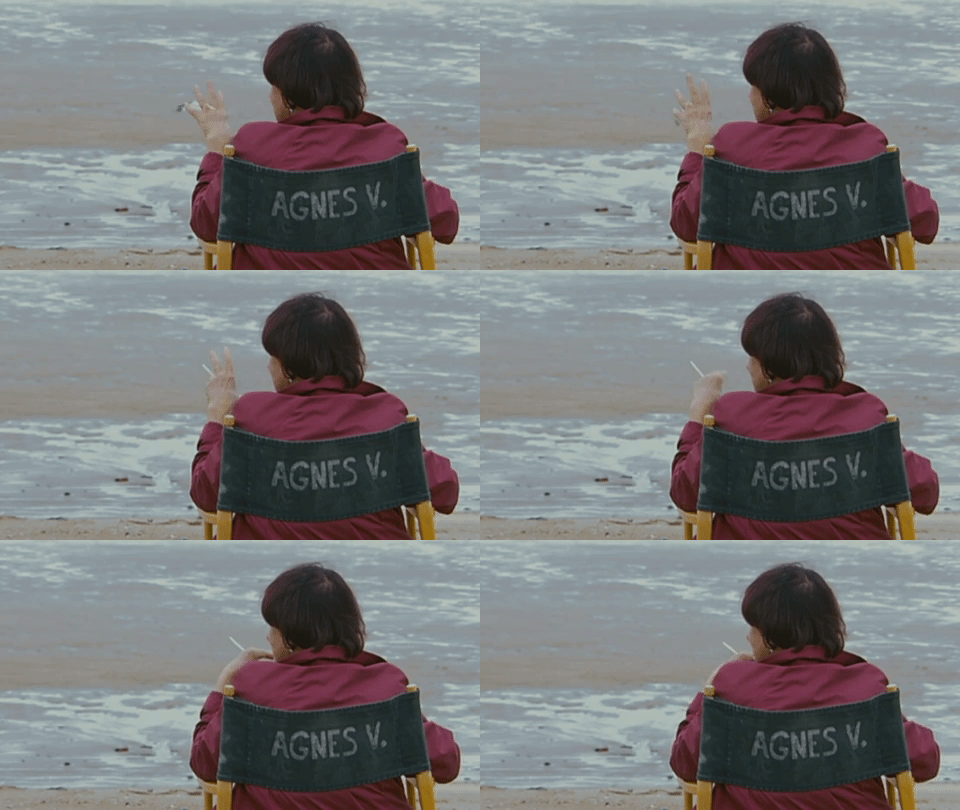
‘Over the last decade, Agnès Varda has reinvented herself spectacularly, most recently as a flamboyant installation artist with her exhibition ‘L’Ile et elle’ filling the ample space of Paris’s Fondation Cartier in 2006. Earlier she found a new lease of life as a digital film-maker, eagerly seizing on the first-person possibilities of the camcorder in her 2000 documentary The Gleaners and I – an essay on the economic and artistic activity of foraging and recycling, of which ‘L’Ile et elle’ itself proved a triumphant example. Among that exhibition’s acts of gleaning is the object in which Varda stands at the end of her newest film The Beaches of Agnès – a hut constructed from a discarded print of one of her films. Thus Varda can mean it both literally and figuratively when she concludes that she inhabits cinema.
‘Agnès Varda’s work is often connected to the French New Wave, and her early films were clear precedents for the stylistic tendencies which the New Wave directors delineated. However, her work remains particular to her own unique perspective on the world, resisting the paradigms of movements in art and film. The themes and issues in her films focus on eroticism and age, death and time, the collective unconscious, and the presentability of social taboos. Her work is distinct from the French New Wave also for its crossing of genres, as she is known as much for her documentaries and shorts as for her feature-length dramas. Not limiting herself to the borders of France, her films have been shot in a variety of locations, including the United States, Cuba, and Iran.
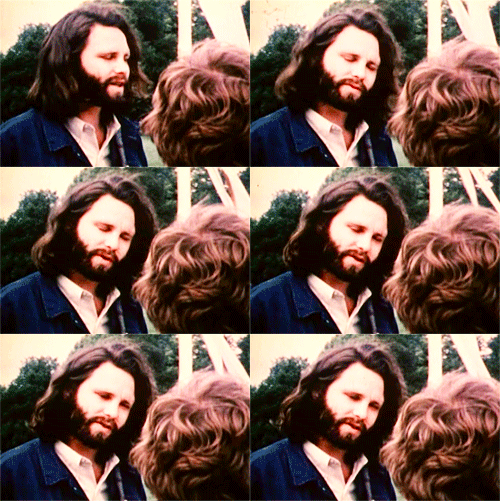
‘Between 1968 and 1970 she lived in Los Angeles and made a Hollywood hippy movie called Lions Love. She is the first director to become interested in Harrison Ford. It is during that time also that she met Jim Morrison, singer of the band The Doors. In fact, she ended up being one of the five people to have been at Morrison’s funeral in Paris’ cemetery Père-Lachaise in 1971. Once back in France she directed an optimist feminist movie: L’une chante, l’autre pas. In 1971 she is one of the 343 women to have signed the “Manifesto of the 343” thereby admitting to have had an abortion and making themselves vulnerable to possible prosecution. Varda went back to live in Los Angeles from 1979 to 1981 and during that time made two documentaries: Murs, murs and Documenteur.
‘Varda’s career itself represents a crammed micro-history of modern French bohemianism: from post-student flânerie in Corsica, through the advent of the nouvelle vague, through the political activism of the 1960s and 70s… She may have missed May 1968 in Paris, but she was chronicling radicalism elsewhere: immersing herself in Californian hippie culture and photographing the ascendant Black Panther movement. Varda’s role as feminist film-maker, and as feminist being, is reasserted with pride: One Sings, the Other Doesn’t (1976) might have been her ‘official’ feminist film, but using images of Sandrine Bonnaire to counterpoint memories of her own militancy, Varda also highlights the ferocious engagement of her 1985 film Vagabonde (Sans toit ni loi).
‘Agnès Varda has always been ahead of her time – in filmmaking technique and style and also in political commentary. Just as The Gleaners and I is a contemporary look at capitalism and urban life and utilises the latest in digital cinematography, Kung-Fu Master sits comfortably alongside other dramas of the ’80s including those of Loach, Bergman and Greenaway. Uncle Yanco reflects the bohemian, drug-taking, moral ambivalence of the late ’60s and Cléo de 5 à 7 displays a French obsession with cars, fashion and identity. Agnès Varda is grandmother to the world community of filmmakers. At 74 she has a good perspective on a life which has given her breadth of filmmaking experience, it is hardly surprising she keeps going. “I think communication is difficult but essential and not just in love, but in work, in the relationship with one’s children, in one’s general attitude” There is some accepted wisdom which says, people only ever write the same book or film script over, but Varda has produced at least one unique gem for each of her five decades as writer, director and cinematographer. Her body of work cannot be described by genre, let alone fiction or reality. One imagines The Gleaners and I may well be her last film offering but as she has shown herself to be still so full of curiosity and zest for life, she may well have more to say.’ — collaged
____
Stills




























_____
Further
Agnès Varda @ IMDb
Agnes Varda Page @ Senses of Cinema
DVD: ‘4 by Agnes Varda’ @ The Criterion Collection
Agnes Varda’s films on mubi
‘Women in Film: That Object Named “Desire”‘
Agnes Varda interviewed @ Interview
Agnes Varda interviewed @ BFI
Tim Sternberg on Agnes Varda’s ‘Ulysses’
Emmanuel Levy on Agnes Varda
‘Multiculturalism In The Films Of Agnes Varda’
500 Words: Agnes Varda @ Artforum
‘The Grandmother of the New Wave’
‘Agnes Varda’s Open Harbour’
‘A Girl and a Gun: Agnes Varda and the Origins of Godard’s Breathless’
___
Her
Agnes Varda interviewed & profiled in 1956
Agnes Varda & Susan Sontag in discussion in 1969
Agnès Varda ‘The Things We Leave Behind’ (2004, part 1 of 6)
Agnes Varda on poetry and film (2010)
_______
Interview
from The Believer

AGNÈS VARDA: I should say nothing! I’m through with it! I hate to repeat myself all the time. I cannot invent totally. I cannot say something different to one person and then another. I cannot make it totally different each time, you know. I say so much in the film and so much even in the press kit! I quoted Montaigne. So I would say, can we have subsidiary questions, or side questions? Can we speak about the weather? Or the tennis that I watch in my room?
THE BELIEVER: It’s so nice to see that you have had the same haircut always, because I’ve had the same haircut all my life, and I always try to change it but it’ll never change.
AV: I remember when I tried it. I was nineteen and I put a bowl on and I said, Cut around! Because it was not the fashion at the time when I did that hairdo—and I kept it all my life! At the time of Cléo I grew it a little more, and when Jacques died I grew a bit here. [She pulls out a strand.] I made a braid because Chinese old people, they say that the God will take you by the hair to join you with—but God didn’t take me, so I cut the braid. Now it’s the same hairdo but it has two colors—come on! It’s different! It’s like an ice cream of chocolate and vanilla! I tried a wig. I hated myself totally white. So now I cheat. It’s my white hair, and I put color there. My grandson says I’m punk. I tell you—better they laugh about their grandmother than think she’s a bore. Some grandmothers are really boring! They ask, Ah ha ha—did you do this?—be careful—put your sweater on! C’est ça. So, in a way, we try to please them somehow.
BLVR: You had a remarkable career in an age when women didn’t have careers—
AV: I had a world. I don’t think I had a career. I made films.
BLVR: Yes, it would be odd, thinking of cinema as an extension of life as you do, and at the same time thinking of it as a career or trying to make a place in history.
AV: I don’t try to make a place in history at all! People put me in the history of cinema because my first film, La pointe-courte, was so ahead of some other filmmakers. Many filmmakers have made resurgent work, and I was just a little ahead of the time. It happened because of La pointe-courte, which is a very strange film, but very daring for ’54.
BLVR: How did you get started?
AV: I was a photographer first. I went alone to China—not alone, I was in a group, but I worked alone. I did it my way as much as I could. I have been sort of courageous about doing things, because I didn’t think I should do less than my brothers. But I wouldn’t be courageous in terms of a physical thing. I never fought, I never learned kung fu or boxing, I never went into these sportif competitions. I wouldn’t cross the ocean. I think it’s ridiculous to take such risk. But look, people love to do that. But I was not afraid of doing things I wished to do. I did not think that woman would be restrained. I never saw that, especially not in filmmaking, where you don’t have to be strong. You have to be strong to be a carpenter, maybe, but the director of a film doesn’t need to have muscles. This is why I didn’t know why I couldn’t do it.
When I started my first film, there were three women directors in France. Their films were OK, but I was different. It’s like when you start to jump and you put the pole very high—you have to jump very high. I thought, I have to use cinema as a language.
When I saw what painting had done in the last thirty years, what literature had done—people like Joyce and Virginia Woolf, Faulkner and Hemingway—in France we have Nathalie Sarraute—and paintings became so strongly contemporary while cinema was just following the path of theater. Theater! I mean, psychology and drama and dialogue and making sense! At that time, when I started, in the ’50s, cinema was very classical in its aims, and I thought, I have to do something which relat
es with my time, and in my time, we make things differently.
____________________
21 of Agnes Varda’s 56 films
_____________
La Pointe Courte (1955)
‘The great Agnès Varda’s film career began with this graceful, penetrating study of a marriage on the rocks, set against the backdrop of a small Mediterranean fishing village. Both a stylized depiction of the complicated relationship between a married couple (played by Silvia Monfort and Philippe Noiret) and a documentary-like look at the daily struggles of the locals, Varda’s discursive, gorgeously filmed debut was radical enough to later be considered one of the progenitors of the coming French New Wave.’ — Film Struck
Excerpt
_____________
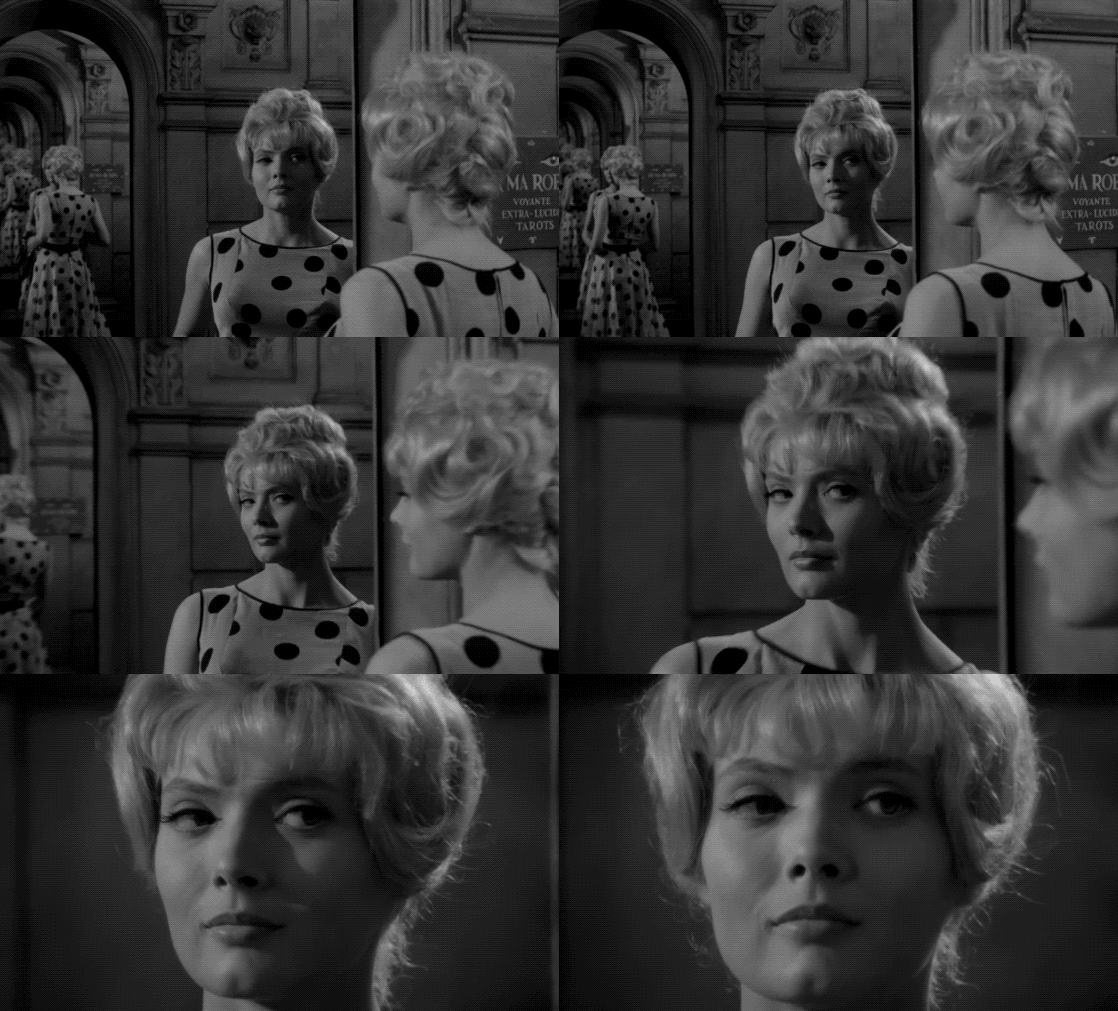
Cléo from 5 to 7 (1962)
‘Varda’s international breakthrough film, Cléo shows, in real time, an hour and a half in the life of a singer traveling across Paris while waiting for the results of a biopsy. Vain, childish and selfish at the start, Cléo’s journey through Paris becomes a journey of self-discovery –she transforms in the course of the film from a passive woman, on whom others project their expectations, into an active participant in her own life. Cléo’s movements through the city embody this metamorphosis—while the film’s first half is dominated by a shopping excursion through glittering, mirrored surfaces that reflect and refract her, in the second half, Cléo literally sheds her false image in order to actively observe the city, culminating in her spontaneous friendship with a soldier on leave.’ — MoMA
Trailer
Excerpt
Agnès Varda discusses Cléo from 5 to 7 in 2004
____________________
Happiness (Le Bonheur) (1965)
‘Unlike the bulk of Varda’s work, Happiness, with its highly stylized form and refusal to explore the psychology of its characters, is completely removed from reality, rejecting any of Varda’s usual documentary or self-reflexive elements. It is also Varda’s most controversial work, revolving around a blissfully happy family man (Jean-Claude Drouot, appearing with his real-life wife and children) who decides, with uncomplicated ease, to expand upon his happiness by taking a mistress. Set in an idyllic landscape of leisurely country picnics and shot in cheerfully vibrant colors, there is nonetheless a distinct chill detectable underneath the film’s relentlessly sunny exterior. Although Varda resists any simple moralizing, she has said of Happiness, “I imagined a summer peach with its perfect colors, and inside, there is a worm.”’ — Harvard Film Archive
Trailer
Excerpt
Excerpt
_____________
The Creatures (1966)
‘“Les Créatures” (The Creatures) is yet another reminder that film history is subject to the vagaries of availability and that work by great women filmmakers is all too often written out of it. In the early nineteen-sixties, when François Truffaut was planning to make his adaptation of Ray Bradbury’s novel “Fahrenheit 451,” he worried that French filmmakers didn’t do science fiction well. Varda’s film, which came out in France two weeks before Truffaut’s, proved his hesitations wrong exactly as his own film did. Above all, no less than Truffaut, Varda transformed science fiction into a subject in her own image—she did so even more radically and more personally, and the extremes of her ideas may be exactly why “Les Créatures” has wrongly fallen by the wayside of film history.’ — Richard Brody
Trailer
_____________
Uncle Yanko (1967)
‘In her effervescent first California film, Agnès Varda delves into her own family history. The short documentary Uncle Yanco features Varda tracking down a Greek emigrant relative she’s never met, discovering an artist and kindred soul leading a bohemian life in Sausalito.’ — The Criterion Collection
the entirety
_____________
Black Panthers (1968)
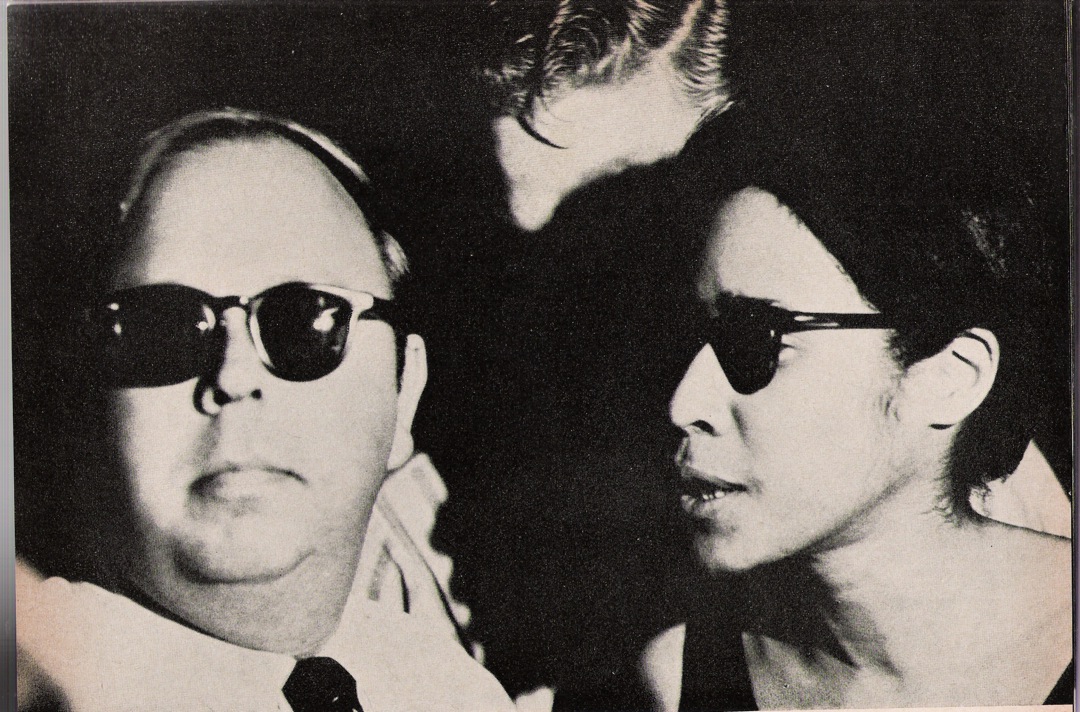
‘Varda’s half hour documentary on the Black Panther Party centers on a “Free Huey” rally held in Oakland. The film combines footage of the rally and Black Panther training exercises with interviews with Panther leaders such as Huey Newton (speaking from his jail cell about solitary confinement) and Kathleen Cleaver, who passionately defends the group’s militancy. Varda is clearly sympathetic to the Black Panthers’ politics, but she restrains her efforts as a director in order to let the Panthers speak for themselves. If anything identifies this as a Varda film, it is its attentiveness to the role women and feminine rhetoric (the camera repeatedly zooms in on the hands of women as they talk) played in the organization and vitality of the often excessively-masculine Panther party.’ — Retentional Finitude
Excerpt
Excerpt
_________
Lions Love (1969)
‘Andy Warhol discovery Viva, filmmaker Shirley Clarke and Jerome Ragni and James Rado, the creators of Hair, play themselves in Varda’s vision of Hollywood and the sexual revolution. Structured as a playful film within a film, Varda repeatedly punctures the cinematic illusion by discussing scenes with the actors from behind the camera and at one point appearing briefly, to show Clarke how to act out a suicide attempt. Combined with footage of Bobby Kennedy’s assassination and the shooting of Andy Warhol, Lions Love is a time capsule of free love and its consequences. Look for cameo appearances by Peter Bogdanovich and Jim Morrison, among others.’ — Cinematheque Francaise
Trailer
Excerpt
__________________
Daguerréotypes (1975)
‘One of the great modern documentaries, Agnès Varda’s 1976 portrait of shopkeepers on the street where she lives—Rue Daguerre, in Paris—established a new genre, affectionate anthropology. Starting with the quirky pharmacy where her teen-age daughter, Rosalie, buys homemade perfumes, Varda peeps in on the rounds of commerce that keep the street vital. In the process, she exalts the sights and sounds, the very savor of daily life—the crust of fresh-baked baguettes, the alkaline allure of fresh-cut steaks, the sumptuousness of hand-stitched fabrics. She also sees what makes the street run: money (five francs for a cutlet, ninety centimes for evaporated milk) and the migration from the countryside to the city in pursuit of it. Observing traditional crafts and trades with loving fascination, Varda empathetically evokes their paradoxes—the depth of practical knowledge, the lack of variety in experience. These small-business owners (mainly long-married couples) may have no bosses, but they’re tethered like serfs to their shops; even their dreams are colonized by the crush of daily details. Meanwhile, scenes of a local magician at work in a café hint at the origins of Varda’s own enticing craft.’ — Richard Brody
Trailer
__________________
One Sings, the Other Doesn’t (1977)
‘Varda’s most overtly feminist film, One Sings, the Other Doesn’t follows the lives of two very different women over the course of two decades: Pomme, a middle-class rebel whose singing career coincides with her radicalization and Suzanne, a young working-class mother whose financial hardships bring about her activism. Out of their friendship, Varda crafts a buoyant portrait of French feminism in the 1970s, capturing the optimism and energy of the moment. While the utopian period captured by the film has surely passed, the delicacy of Varda’s approach renders the film a timeless and poignant reminder of an age past.’ — Sight & Sound
Opening credits
Excerpt
____________
Mur Murs (1981)
‘After returning to Los Angeles from France in 1979, Agnès Varda created this kaleidoscopic documentary about the striking murals that decorate the city. Bursting with color and vitality, Mur Murs is as much an invigorating study of community and diversity as it is an essential catalog of unusual public art.’ — The Criterion Collection
Excerpt
Excerpt
_________
Le Documenteur (1981)
‘This small-scale fiction about a divorced mother and her child (played by Agnès Varda’s own son) leading a quiet existence on L.A.’s margins was made directly after Mur Murs, and though Documenteur is different in form and tone from that film, the two are complexly interwoven, with overlapping images and ideas. This meditative portrait of urban isolation overflows with subtle visual poetry.’ — The Criterion Collection
Trailer
________
Vagabond (1985)
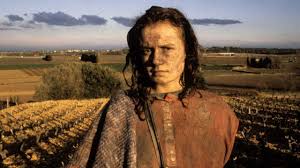
‘Anchored by Sandrine Bonnaire’s remarkable performance as a woman whose refusal to be known or understood pushes her into total detachment from society, Vagabond was Varda’s biggest success since Cléo and, like the earlier film, uses the trajectory of its itinerant female protagonist as a structuring device. Shot in a semi-documentary style, the film opens abruptly on the body of Mona, frozen to death in a ditch on the side of the road. Interspersed with flashbacks of Mona’s life as a drifter are reminiscences by the people she met along the way. In spite of Varda’s attention, Mona ultimately remains unknowable, even to herself. She is a cipher, misunderstood by those she has encountered even as they recall their impressions and interactions with her for the camera.’ — Criterion
Trailer
Excerpt
Excerpt
________________
Jane B. by Agnes V. (1987)
‘Jane B. is London-born actress and recording star Jane Birkin. Agnes V. is Belgian filmmaker and “grandmother of the New Wave” Agnes Varda. Jane B. Par Agnes V is a cinematic recounting of Birkin’s career, from her breakthrough appearance as one of the nude models in Blow-Up to her pinnacle as star of such films as La Femme de Ma Vie (1986). It is also the story of Birkin and Varda’s close relationship, made stronger by their mutual admiration and their lifelong fascination with feminist themes. Viewers who prefer straightforward, objective documentaries rather than radicalized film techniques, may not appreciate Jane B. par Agnes V.‘ — Hal Erickson, Rovi
Excerpt
Excerpt
_____________
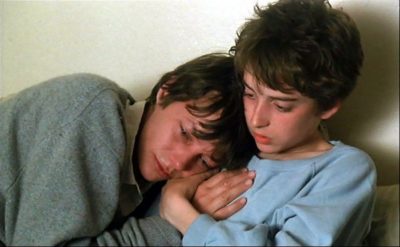
Kung-Fu Master (1987)
‘Developed from an idea Jane Birkin shared with Varda while making Jane B. par Agnes V., Kung Fu Master stars Birkin as a forty-year old divorced woman who falls in love with her teenage daughter’s video game obsessed friend. By presenting Birkin’s desire without passing judgment, Varda evenhandedly explores a potentially explosive subject with a seriousness not usually granted to female fantasies. Although told as a straightforward narrative, the onscreen relationships are complicated by their offscreen associations: Birkin’s object of affection is played by Varda’s son, Mathieu, and Birkin’s daughters, Charlotte Gainsbourg and Lou Doillon, play her daughters in the film.’ — Harvard Film Archive
Trailer
______________________
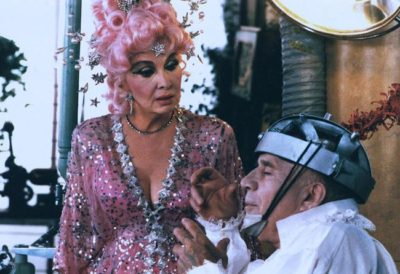
A Hundred and One Nights (1994)
‘This homage to the cinema by venerated movie-maker Agnes Varda, a 40-year veteran of the French film industry, features an all-star international cast. The story is based upon the memories and insights of the 100-year-old Mr. Simon Cinema. He is in a wheelchair and lives in a magnificent house filled with movie memorabilia. To help him remember the important details of his career he hires Camille, a film student, to write down his remembrances and experiences which have involved all areas of movie-making. Camille comes once a day for 101 days. Film clips, photographs and actual visitors highlight his stories. As he continues to spin his yarns, the imagery in the film smoothly morphs into other images. Camille, when not recording, is involved in other exploits including a romance with a production assistant, Mica, who aspires to become a director. She also begins plotting a way to get to Mr. Cinema’s fortune by having a friend pose as his long lost heir. Many other characters are peripherally involved including Death, an Italian seeking the rights to his film catalogue, and a memory specialist.’ — LDiC
Trailer
Compression
________________
The Gleaners and I (2000)
‘The Gleaners and I takes its title, and some of its inspiration, from an 1867 painting by Jean-Francois Millet that shows three women in a wheat field, stooping to pick up sheaves and kernels left behind after the harvest. The image is well known; it appears in the Larousse Dictionary of the French Language alongside the definition of the verb ”glaner” (to glean). The painting itself, which hangs in the Musee d’Orsay in Paris, shows up early in Agnes Varda’s wonderful documentary, thronged by camera-wielding tourists. The painting — or, more accurately, the activity it depicts — sent Ms. Varda, a warm, intrepid woman in her early 70’s and one of the bravest, most idiosyncratic of French filmmakers, on a tour of her own. From September 1999 until May of this year, she crisscrossed the French countryside with a hand-held digital video camera and a small production crew, in search of people who scavenge in potato fields, apple orchards and vineyards, as well as in urban markets and curbside trash depositories. Some are motivated by desperate need, others by disgust at the wastefulness all around them and others by an almost mystical desire to make works of art out of things — castoff dolls, old refrigerators, windshield wipers — that have been thrown away without a second thought.’ — NYTimes
Excerpt
Clips
_________________
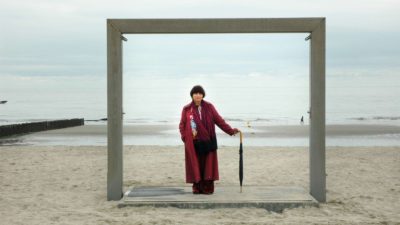
The Beaches of Agnès (2008)
‘If you have not seen a single film by Agnes Varda, perhaps it is best if you start with The Beaches of Agnes. You don’t need to know anything about her work. She has a way of never explaining very much, and yet somehow making it all clear. She does this by not treating her life as a lesson in biography, but as the treasured memories of friends. This is not an autobiography, although it is about her lifetime. She closes it by saying, “I am alive, and I remember.” The film is her memories, evoked by footage from her films, and visits to the places and people she filmed. But that makes it sound too straightforward. The film is a poem, a song, a celebration. Although she is in robust good health, she accepts, as she must, that she is approaching the end, and je ne regrette rein.‘ — Roger Ebert
Trailer
Excerpt
_______________
The Little Story of Gwen from French Brittany (2008)
‘The biographical short “The little story of Gwen from French Brittany” is a film about friendship and Gwen Deglise and the Director’s first meeting in France many years prior, Gwen’s journey to Los Angeles, and her eventual discovery of the American Cinematheque in LA, where the women reunite many times over the years to celebrate film.’ — AC
the entirety
______________
Un salut à Henri Langlois (2014)
‘À l’occasion du Centenaire Henri Langlois, Agnès Varda raconte un souvenir.’ — CF
the entirety
_______________
Les 3 Boutons (2015)
‘“Miss Jasmine! I have a package for you!” The 14-year-old girl with braces takes a break from milking the goat. Her local postman has delivered a surprise. She opens it up. Out floats a magical magenta ball dress ten times her teenage size. “I am curious,” she says, and enters the folds of the dress. From here, Jasmine⎯headstrong, a dreamer, a realist⎯takes us on a modern anti-fairy tale through caves and stalagmites, streets and shop windows, obsessions and everyday empowerment. Les 3 Boutons is directed by the legendary 87-year-old Agnès Varda.’ — Miu Miu
the entirety
_______________
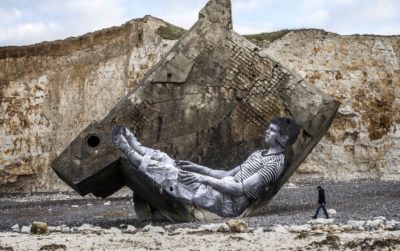
w/ JR Faces Places (2017)
‘Agnès Varda, whose unique cinematic vision since the 1950s has earned her a loyal following of enthusiastic cinephiles around the world, and the iconic photographer/ muralist JR, boasting over a million followers on Instagram, have more in common than one might imagine. Both share a lifelong passion for images and how they are created, displayed, and shared. Agnès chose to explore her passion through cinema and documentary, JR through his emotionally arresting open-air photo installations. When JR, a long-time fan, went to meet Agnès at her home on Rue Daguerre, they both knew immediately they wanted to work together. FACES PLACES documents their heart-warming journey through rural France and the unlikely, tender friendship they formed along the way.’ — Madman Films
Trailer
Excerpt
Excerpt
*
p.s. Hey. ** Armando, Hi. Cool, and thank you. A favorite spot in Paris? Hm, I can’t think of a particular spot. I love the 10th arr., and I love being there in general. Cafe … I seem to always end up at this cafe called La Favorite near the St. Paul metro station, so I must like it particularly. Today’s plans … mm, buy food and cigarettes for the weekend. Maybe see Gisele. Go see if any art galleries have reopened. Work on a GIF thing I’m in the midst of. Not sure what else. You? ** Jonathan, Hey, Mr. M! Awesome to see you! Damn, that’s your photo! I found it doing a google search and swiped it without checking out its source, oops. I heard about the MUBI windfall, and I intend to see what kind of booty France has been allowed today. The last time I saw Zac he had just started to read Harry Dodge’s book. I haven’t read it yet although it’s on my list to buy on a planned bookshop outing this weekend. I flipped through Zac’s copy, and it looks to be really great. Are you reading it? ** David Ehrenstein, Hi. ‘Centurions of Rome’ is nuts. Yeah, boy, they don’t make them like that anymore. There were some crazy, ambitious ones back in the 70s. I remember one called, I think, ‘Ghost of a Chance’ that was about some hunk who died and came back as a ghost to fuck all the guys he’d wanted to when he was alive, and the porn was mostly boys bouncing around solo on beds trying to simulate that they were have sex with an invisible partner. And so many weird other films. ** Tosh Berman, Hi, Tosh. Thank you so much for saying that, man. I don’t think I even have a full run of Little Caesar Magazine anymore. I think I gave my only copies of a couple of issues to Fales Library for my archive. Big honor if LC had any help in inspiring you to do TamTam. ** Niko, Hi, Niko! I’m good. Things in Paris are upswinging at the moment *knock on wood*. Cool you found a copy of ‘Coming Attractions’. Tim Dlugos and I were very close friends. And he turned me on to a lot of the young poets in NYC who ended up being close friends and whose work I published. Mm, he was sensitive and warm but also very witty. Great personality. He was kind of the center of the poetry/fiction/art scene in NYC for a while, introducing everyone to everyone else. I’ve often said that an oral biography of him would be key to understanding NYC downtown culture in the 80s, but it has never happened, and so many of our mutual colleagues are dead now. Amazing guy. Hugely missed. My new novel is definitely very personal and emotional. I think it might feel more raw than my others, but it’s just as heavily schemed out and structured. I hope you’ll like it. Thanks a bunch for coming in here. I hope you’re doing really well. Are you? ** Jeff J, I’m glad it worked, and thanks for being its impetus. It was good to do. Yeah, I’m a pretty busy worker/creator even now, but it’s hard to imagine how I could have done Little Caesar, which was an entirely one-person operation, and run the Beyond Baroque events, and also write my own work at the same time. Weird. Sure, I’m happy to do fact checking or talk or anything. I’m around. Just let me know when is good on your end. Brad Gooch’s book was eventually published by SeaHorse Press at the same time they put out my novella ‘Safe’. Otherwise, yeah, most if not all of the work in the Dlugos, Britton, Lally, and Brainard books are in their respective selected/collected poems. I think Ron Koertge is one of the greatest American poets, and he is criminally overlooked, and most of his books are out of print, so I would definitely say reprinting his Little Caesar books, maybe in one volume, would be a great idea. The Rimbaud text is very cut and dried, an article he wrote for a geographical magazine very late. A very few tiny Rimbaudian turns of phrase, but it’s pretty rote really. I don’t know why Peter Schjeldahl hasn’t had a Collected Poems published, It’s very strange. He was/is an amazing poet. ‘The Brute’ was his last book before he basically swore off writing poetry. Even in its strange current state, Paris still pretty dreamy. ** _Black_Acrylic, Thanks, Ben! Sweet about the Deller print! ** Bill, Hi. Well, Ron was totally posing to the nines in that photo. I’d be pretty shocked if you find any Little Caesar books in bookstores. Those books have been out of print for 40 years. Copies of some of them do pop up on eBay and Amazon and Abebooks and places like that sometimes. My mother, who was bankrolling Little Caesar, which was a deliberately money losing project as you can tell by the tiny prices I sold the books for, pulled the plug one day, so the books I had planned and partly typeset and the 13th issue of Little Caesar Magazine, got killed. Still breaks my heart. Little Caesar 13 was the best ever issue of the magazine. Sucks. ‘V/H/S: Viral’ … mm, you’ve kind of won me over to taking a look with that description. Great weekend! ** Julia Gloria, Hi, Julia! Very nice to meet you. Thank you so much for coming in here. Well, when I started Little Caesar it was a combination of writing to poets and artists I really liked to beg them for work and publishing young poet/writer peers of mine whose work I wanted to get out into the world. The magazine/press became kind of known and considered a cool thing at one point, and then I started getting submissions from all kinds of incredible, famous writers and artists and even rock musicians. My original plan was to make a magazine/press that tapped into the energy and rebelliousness of the punk music scene, which started up at the same time in the late 70s, and to make poetry seem cool and exciting by bringing in other things like art and music and films and stuff. I later edited a publishing imprint for a while in the late 90s/early 00’s called Little House on the Bowery, and I published a couple of dozen books of mostly fiction. I stopped it when I moved to Paris because I couldn’t give it enough focus from over here. Mm, I don’t think I knew of any of those cannibals when I wrote ‘The Marbled Swarm’, no, if I’m remembering right. I wish I had. Maybe for my next cannibal novel if I ever write one. Thank you again so much! Please feel more than free to come back anytime. Take care. ** Derek McCormack, Thank you, thank you, dear and great Derek! ** Dave Barton, Hi, Dave. Welcome! Good to meet you. Yeah, the idea of doing a Collected Little Caesar Magazine book in facsimile has been discussed for a while now. And, yeah, the potentially giant problem is getting the permissions since so many people who contributed are either super famous now or dead or have disappeared into obscurity. My agent was going to look into what rights actually need to be acquired, but I don’t know what happened there. There is/was some thought that if such a book was a ltd. ed., getting the rights might not be necessary. But it would a herculean job to track down all the permissions, and there’s no money to pay anyone to do it. Worst comes to worst, yeah, I’ll try to find a way to do a facsimile pdf and just upload it and have it be free for anyone to download. Thanks! I’m well, and I hope you are too. ** Steve Erickson, Hi. That’s true. Also, since porn was shot on film and generally at feature length, it attracted daring filmmakers who saw it as a form to work in. A number of the more interesting gay porn makers in the 70s were graduates of film programs at universities like UCLA, USC, and so on. Big up on your AC. I hope our works when it comes time to turn it on. Yes, I explained the Little Caesar Collected book thing to Dave just up above. ** Misanthrope, Ha ha, ‘I Was Made for Dancing’ is such a horrible, horrible record. I had all of Leif’s records back in the day and played them for all the wrong reasons, and that song was nails on a chalkboard even back then. I had to google Juan Epstein since I never watched ‘Kotter’, but, yeah, I remember his face from the commercials for that show. Hair. ** Corey Heiferman, Hi. If that Collected Little Caesar book ever happens, I’ll probably write an intro explaining all that stuff. It was an insane amount of work. I don’t know what I was thinking. It’s so, so, so, so much easier now thanks to tech. I had to type everything into a typesetting machine, print out the pages, which then had to be put in chemical solution for an hour to set them, then they had be dried and then cut with scissors then pasted down on these graphed page layout things, and, if there were typos or mistakes, I had to go back and type the corrections into the typesetting machine, develop, dry, cut, and paste the corrections down in the proper spots, etc, etc. It was nuts. I think editing is definitely a big help. Journalism really helped me in terms of learning how structure an article to work properly. There is standard format, but you can play with it within limits. I never liked or was helped by the deadlines though. That part blew. Nothing huge ahead for my weekend that won’t be unexpected so far. Cold sesame noodle … grrr. ** Right. Here’s another post where I went, ‘Have I really never done an Agnes Varda Day before?! Is that possible?’ And it was. So enjoy Agnes Varda Day until I see you next (Monday).


 Now available in North America
