_______________
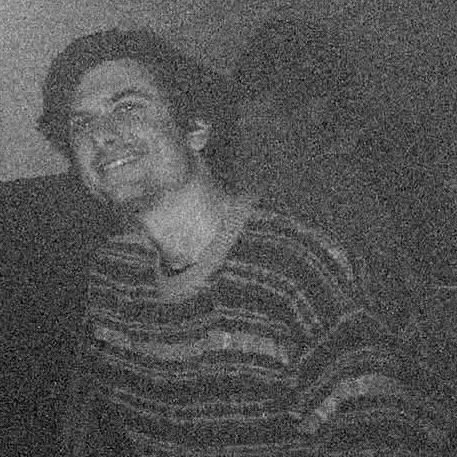
‘For a long time I’ve wanted to write in a boring way about what boredom was. Or, if there ever was something called “boredom,” whether it can still exist.
‘Was boredom pure waste, or was there a gift within it? Was boredom “counterrevolutionary” as the Situationists proclaimed? Or is it something absolutely necessary? Could the above slogan be reversed – when we notice we are no longer bored, and haven’t been bored for so long, can we become bored again? Is it too late for boredom?
‘When I think of boredom I think first of the YouTube video “2:30 AM at a 7-11 near Disney World – 1987.” I think of the word Debord (but pronounced “De-Bored”) of Debord (the person not the word) scribbling over a comic strip, of someone trolling the comments section. In other words, writing, or whatever excess writing still is now that this work has been handed off to work itself out:
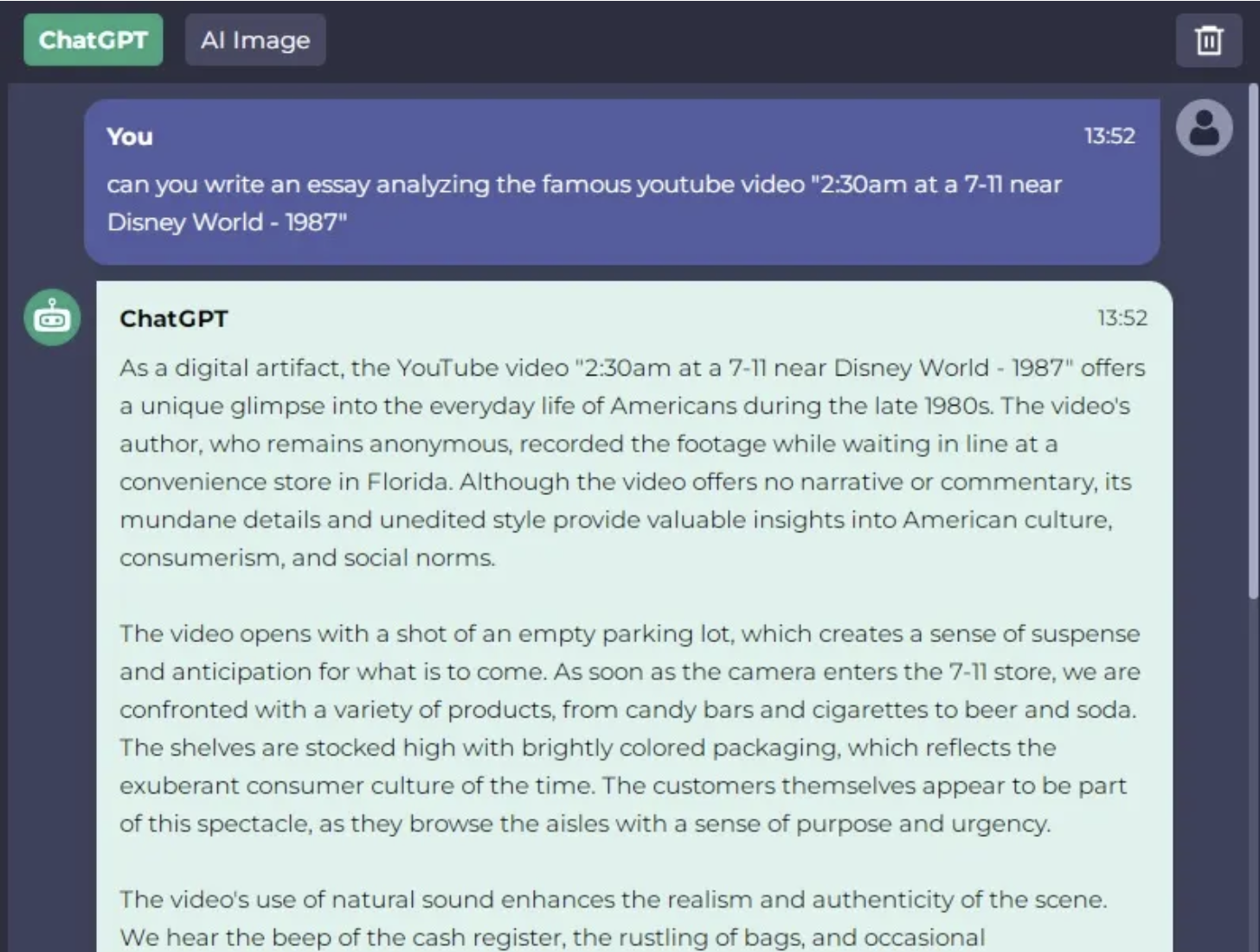
‘Is this still boredom when I begin at the altar of the chatbot? Is this still boredom I’m feeling when I read the bot’s canned answer, which, like the comments section of the video, includes boring words like values, communities, change?’ — Joshua Wilkerson
Joshua Wilkerson Site
against future trash?
Three Poems
Joshua Wilderson @ goodreads
Buy ‘The Keeper’
 Joshua Wilkerson The Keeper
Ugly Duckling Presse
‘Joshua Wilkerson’s book-length prose poem The Keeper centers on a dissolved identity, a life-altering accident, and the itinerant preceding years. A series of (mis-)translations of Fernando Pessoa’s poems—particularly those of his “heteronym” Alberto Caeiro—punctuate the text, which maps infrastructures of disintegration onto questions of selfhood, friendship, and home.’ — UDP
Excerpt
I woke up to find myself friendless, factless, living in my parents’ garage, and someone else. Such things happen, but not to me. Nothing happens to me.
I’m no one, an echo of refusal. I woke up back here, sky walled with blind glass. Centuries of dissociation, already writing. At 7:30 I walk to work.
My head hurts, the rain on the sidewalk is tired. It is stretched thin writing this surface, blue glass and dying live oaks, nearly empty, Looking to the right and left/ And sometimes looking behind me…
O meu olhar é nítido como um girassol. My seeing is clear like a sunflower. To see, to sim (to yes). Aye to eye. Yes, I am clear of sim, therefore I know (não– I no), clearly, nítido. Neatly. Perhaps I não by clearing what I sim. Or seem. The sim seen by the sunflower. Were you the last clear girassol here.
Moreira, my manager, stares blankly. Morning. I put the notebook away.
Every morning I walk to the back room of Jo-Ann Fabrics, where I assemble picture frames to order. The frames, however, fit every face in advance: Each customer deserves the same care as Moreira says. The store looks out onto an expansive parking lot; when I arrive, and when I leave, the lot is empty.
If someone
biography, my first translation begins. The rest is erased. On the other side: the word Phil, erased.
What are you working on in there my father doesn’t say. The workshop is in here. Rain patters loud against the headache, dull against the roof.
Before I came back here, it didn’t exist. Your name on my phone this your new number? Back in the pocket. I’d grown up thinking my life hadn’t started, so by the time I finally left, the details were mostly erased.
To be fair, neither did I. Freedom a gradient of blue false friend. Each no a hole, the way a tower of windows translates the empty sky.
Alberto Caeiro was a philosopher of não. I have no philosophy he writes. He was not a shepherd. He was not a writer. He hated books.
I’ve no ambitions or desires. My being a poet is not an ambition.
His short life was written out in service to the não, the opposite of a flock, buried in the end beside its master.
In between frames, I translate O Guardador de Rebanhos into The Keeper of Sheep. There are always reasons one begins to write an endless letter to someone who neither exists, nor ever wanted to. When I started, I was someone, too, and these things mattered. Now, to keep going, I sit in the workshop, erasing.
Extra
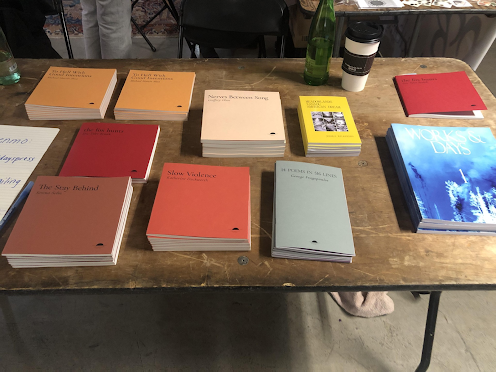
Joshua Wilkerson’s Beautiful Days Press
_________________
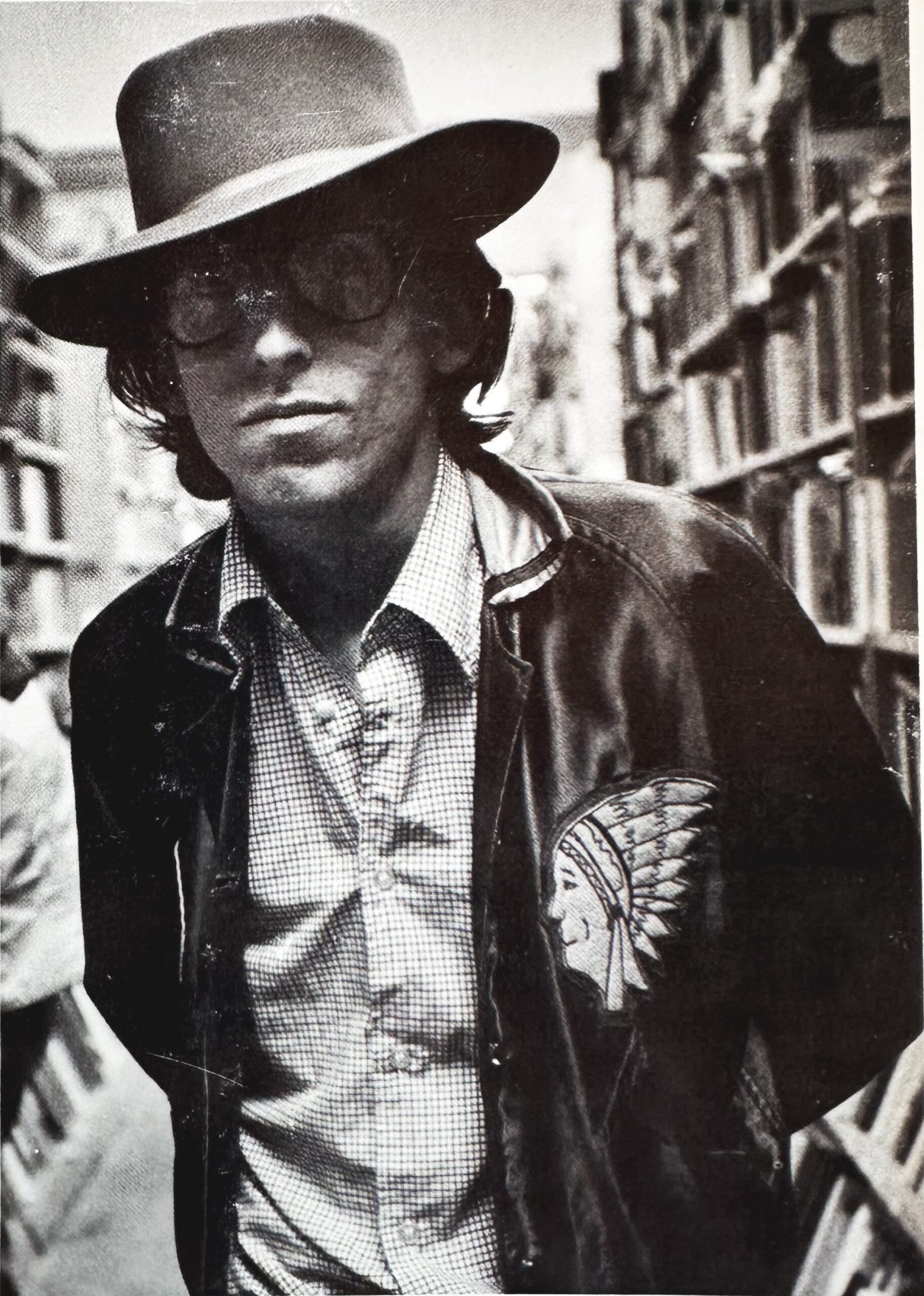
‘I’m not sure what qualifies a group to be considered a cult. Whether that label gets attached due to sheer moxie or a certain number of attendees needing to be involved. Regardless, call us a cult of three if you will: David Nutt, Sam Lipsyte, and me. Because we’re all zealots who worship at the altar of Hob Broun. Although David and I are both diehard Sam Lipsyte fans, which would really fuck up the dynamics at the Kool-Aid table. Again, I don’t know how any of this works.
‘What I do know is that currently Hob Broun and his body of work are little-known, and that needs to change. Ask about Hob in front of the most bookish savant you know, and you’ll likely get dead-eyed blinks back. A bit of hemming and hawing. Maybe a discreet Googling on their phone just out of sight. There’s no grand mystery. Sometimes artists just get overlooked. Most times, artists just get overlooked.
‘But Hob is worth the investigation. I’m not going to lay out the details around his surgery and subsequent disability, because like any artist suffering from an extreme hardship, there’s been a bit of a mythology attached to it, and that can sometimes overshadow the work. It’s worth looking into if you’re interested, because it was a major part of his life and greatly impacted his writing process post-Odditorium, his first published novel, but beyond that, I’d say what draws me to Hob is that he writes such devastatingly lyrical prose about people on the outs, people just trying to scrape by in a hyper-consumerist 1980s America. His sentences have a hard-edged darkness to them, but also ring with a kind of brio that is hard to find in modern fiction.’ — David Nutt, Zona Motel
Hob Broun, the “Staggeringly Great” Lish-Era Author Everyone Overlooked
Hob Broun @ Wikipedia
Hob Broun @ goodreads
Calamari Archive
Buy ‘Newsreels’
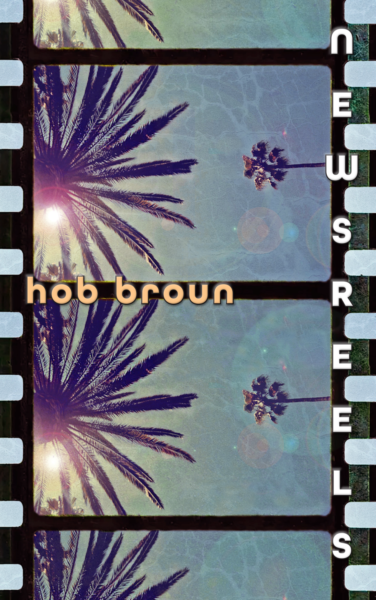 Hob Broun Newsreels
Calamari Archive
‘The three D’s: dark, despondent, demoralized. A washed-out ’70s Hollywood, wired on booze, surveillance, and bad intentions. As seen through the lurid lens of a camera that can’t look away, spooling through dive bars, cheap motels, and flickering TV screens. Where delivery men stalk starlets, fame curdles into paranoia, and every encounter feels slightly off, unsettled. A spiraling hypnotic hallucination of Los Angeles, caught between glam and rot.
‘And so it goes in Newsreels, the first—but until now, never published—novel written by the late Hob Broun.
‘Presaging the media-saturated fever dream of 1985’s Inner Tube and the genre pastiches in his posthumous 1988 story collection, Cardinal Numbers, Newsreels offers a nightmarish portrait of the wounded, lonely souls who continue to cling to the fringes of the Tinseltown dream machine—despite being its collateral damage—and the opportunistic predators who prey on them. This is Hob Broun at his earliest and most acidic. Yet even at his grimmest, Broun’s scathing humor and the precision and wit of his prose betray a wry hope: that even the lost, the washed up, the aged out, the rejected, may find a way to persevere in an American fantasyland run amok.’ — Calamari
Excerpt
When Clem Los Alamos goes trolling, he doesn’t drink. He’ll go into a place and stand by the cigarette machine cruising brands or shake down the bartender for a book of matches, by which time he’s put a scan over the whole room. He looks for faces that twitch, the ones drinking Coke or smoking without inhaling.
—Tonight it’s Judy’s Rice Paddy, a go-go joint in the hospital precinct off Vermont Avenue. The format is beer only, and the girl who pulls the tap is only six credits short of a psychology degree at Los Angeles City College down the street. A sign says
entertainment nightly, but the wooden platform at the end of the bar is deserted.
—A Japanese girl stands under a Day-Glo poster of Daffy Duck as a matador, her elbows drawn in against her ribs. Just letting out, the midnight shift brings nurses and paramedics by for something to jar them into focus for the freeway home. Three girls in light blue nylon uniforms dance with each other near the jukebox so Clem nods to the Japanese girl, and they dance, too. She moves side to side to whatever is playing, a languorous forth-and-back as if winnowing fruit from a conveyor belt. Ten minutes ago, she was in the powder room stowing down two Compazine and fingering her thick lips. It seemed to her then unjust that cosmetic surgery was only for the well-to-do.
—Unevenly, she sings:
—–And as he started to go
—–She said Billy keep your head low
—–Billy don’t be a hero
—–Come back to me
—Later her legs go wobbly as he guides her to his car. Her hair smells like rubber combs.
—“You gonna make it?”
—“Just I shouldn’t be drinking, that’s all.”
—“Hold it. We’ll wait for the light.” He grips her forearm hard.
—“So, Tina, tell me about yourself.”
—She backs off a step or two and goes into her purse. “Here’s some I.D.” A courtesy check-cashing card from Ralph’s supermarkets.
—“Take it easy. You don’t want to give more than your first name, it’s cool with me.”
—“You want a thumbnail sketch? My mom is a Baptist from Modesto, and my dad works in a research lab. They speak only Japanese at home. I drive a Peugeot station wagon, and I don’t smoke or drink coffee. I weigh 143 pounds and diet constantly. I graduated Glendora High School in 1969 where I was on the Spanish Club and the Blue Key Squad. I fucked my first guy there, a black dude from the track team that had bumps on his dick. My hobbies are sewing and Ping-Pong.”
—“Let’s cross. I’m parked in this block.”
—She wants to walk by herself now. Everyone is oh so sorry. Mom came out of the internment camp a Foursquare Baptist and still wouldn’t have a deck of cards in the house. Bought the whole ball of wax. Rubber lips in prayer.
—“So where you wanna go?” Clem looks ahead, his chin hovering over the steering wheel.
—“Not any place. I dunno, I feel like I might maybe throw up.”
—“Wonderful. I can hold your head.”
—“We could just stay here.” She slides lower in the seat. “I can’t move.”
—“We could do something right here.”
—“I like your car. What would you like?”
—“You’ll laugh.”
—“Bite my lip. Promise.”
It’s Friday, getaway day. The full cases are shoved to the back of the van, and it shouldn’t take more than 15 minutes to drop off a few singletons. If Clem doesn’t get off the street soon, there’s going to be an accident.
—He double-parks, boxing in a green Triumph TR-6, jogs across to number 505.
—“Yeah?”
—“Hedgerow Liquors. Delivery.”
—The guy has daubed patchouli on himself a little too avidly.
—Wobbly in the doorway, he takes the little clipboard—emblem of legitimacy—and initials. Smug quarter-tipping hippie. Have a brain embolism. On the house.
Miss Farms, one of the regulars, is just five blocks west. She always takes two quarts of Gilbey’s, always looks copacetic, even after an overnighter, is always so hazed she doesn’t expect change. Once, she called him around back to the pool, where she floated in a Styrofoam lounger and—after dripping on the invoice and shredding it with a ballpoint—got all heavy with apologies and invited him to take a dip. She’s a live order.
—He swings halfway up the slanted driveway and drags hard on the parking brake. The house is ranch-style, long and low, like a hunk of pulled dough, its mock flagstone front in a band around the middle. Along the shoulders of the drive, flowering moss attracts bees.
—Behind the walls, the buzzer sounds. No answer. Not even slippered footfalls or breathing. Rule number one is always identify yourself, and he does this, punctuating it with sharp knocks. The door swings open, and the living room is there, fusty, musty, and cold. She’s wearing a $5 wig and smells of juniper.
—“It’s you. Did I order something?”
—“The usual twosome. Gilbey’s finest.”
—“Come in then. My memory is a disaster.”
—She is breathing heavily, and round red spots pulsate her cheeks. As she counts out crumpled singles next to a suede purse, he checks her soft face, complected as from a life under water. Her generally tousled air abets his concupiscent drift, and he’d like to root through her laundry, barking.
—“Don’t bother with a receipt. On the counter there is fine.”
—That come-on helplessness of the hunted lab assistant pulling together the shreds of her khaki blouse and hotfooting it through the forest, a mutant baobab close behind, prodigious from a diet of bomb-test fallout.
—“It’s nice and cool in here. Like a church.” He stifles a hasty need to touch her.
—“Why don’t you stick around? I’m going to whip up a batch of Tom Collinses, and you look like you could use some refreshment. On a day like this, you can dehydrate awfully fast.”
—“Thanks, but some bozo’s giving an engagement party for his niece, and if I don’t get over there with his last load I’m sure to catch hell from the boss. The guy’s been on the phone to us all day, and seems like they were expecting me to help out hanging balloons and crêpe paper.”
—“Balloons? The girl must be underage. Cummon, I’ll have these mixed in two minutes.”
—“Maybe next time.”
—No doubt about it, she has picked up some points this time. He slams the roof with his hand, cracking the dome light, when the van pops out of gear, whines and stalls.
The bloodstains on Hickey’s shoes are okay. He works in a meatpacking plant. On his way home, he drives around the side of a hill, parks, clambers down an arroyo to a giant concrete aqueduct and watches Colorado River water trickling through. The spot is 372 miles from the intake point at Parker Dam. No trespassing: Metropolitan Water District. There are still horned toads and turkey buzzards out here. Hickey squats near a drainage pool and trails his fingers through cool silt. A new texture; not gristle or fat. He writes his name in the silt, the grooves filling and dissolving as he goes so that, as he completes the fork of the Y, all he sees is KEY. “Hydropower,” he says, and thinks about big Mike Figlio, jammer for the L.A. T-Birds. In his car, Hickey has glossy photos of all the Roller Derby stars. They’re carefully filed in shoeboxes, a separate box for each team: Bombers, Chiefs, Red Devils, Outlaws, Hornets. You have to send away for these pictures, and sometimes they don’t answer. Man, does Hickey write letters.
A thunderstorm that fades to hard drizzle has cancelled the Phillies-Dodgers night game. Clem has nowhere to be, and stays tuned for Rainout Theatre—tonight presenting the tuneful comedy, Fun in Lauderdale, as three young girls search for love and laughs on a Florida spring vacation.
Extra
Hob Broun Interview, Part 1
______________
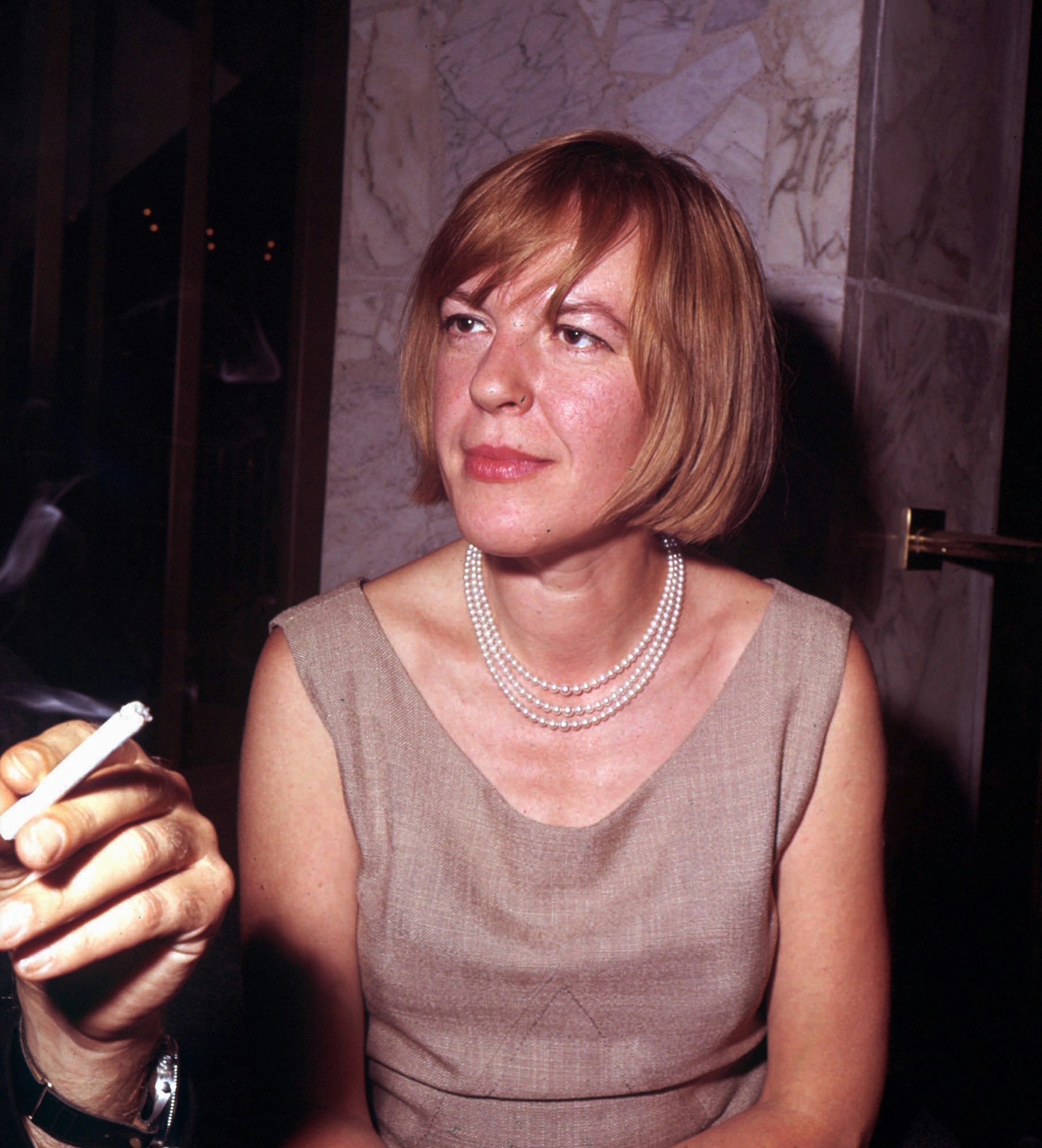
‘Bachmann’s stories allow us to follow her development from early experiments with male narrators to her creation of complex female characters. As a valuable accompanying read, the letters shed new light on one of the legendary literary love affairs of the 20th century — one often compared to that of Ted Hughes and Sylvia Plath, not least because of how it ended.
‘Many of the stories contain hints of Austrian involvement in Nazi crimes, and in one of them, the profound and complex “Among Murderers and Madmen”, it is the main topic. Told from the point of view of a man too young to have been an active Nazi, it features members of the postwar Austrian bourgeoisie meeting regularly at a bar to drink and chat, pretending that they had never been perpetrators or victims. When a stranger arrives and bluntly tells the story of his own refusal to shoot when he was a Wehrmacht soldier, they have to confront the unsayable — their own conduct during the war.
‘In her bold debunking of the postwar Austrian myth that the country was Hitler’s first victim, Bachmann preceded such writers as Thomas Bernhard and Nobel Prize winner Elfriede Jelinek, who were accused of “soiling their own nest” by dragging the country’s Nazi past into the public eye.
‘She was also ahead of many peers on the subject of the power imbalance between men and women. In “One Step Towards Gomorrah”, a married female musician living a conventional middle-class life is wooed by a female student. She realises that the young woman’s servile devotion is what men receive every day. “She would be able to subjugate Mara . . . She would have someone . . . for whom she was the measure of all things”.
‘Female protagonists negotiating their place in a male world dominate the second collection and recur in the uncollected stories. But Bachmann is no utopian. In “Three Paths to the Lake”, a successful middle-aged photojournalist is fully aware that the price she has to pay for being “someone who thinks for herself and dares to live” is loneliness.
‘The 500 pages are beautifully translated by Philip Boehm and Tess Lewis, who bring out the difficult-to-render peculiarities of Bachmann’s writing: her often detached and offhand tone, “the idiosyncratic shape of her sentences . . . the limber rhythm, and accruing atmosphere of her lines”, as Claire-Louise Bennett puts it in her introduction to the American edition.’ — Magdalena Miecznicka
Ingeborg Bachmann @ Wikipedia
Feminize Your Canon: Ingeborg Bachmann
High-wire act: Remembering Ingeborg Bachmann
Why Ingeborg Bachmann remains a literary icon
Buy ‘The Complete Stories’
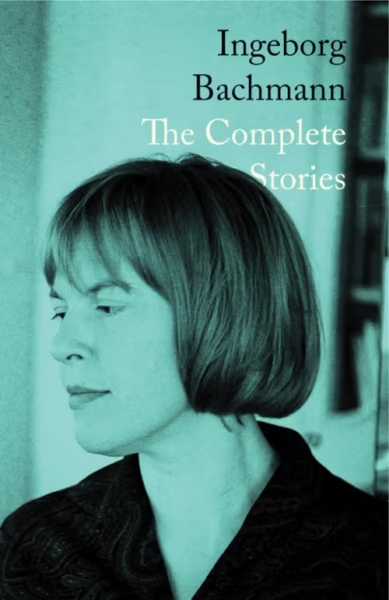 Ingeborg Bachmann The Complete Stories
New Directions
‘Complete Stories spans three decades of work from one of the most important German-language writers of the last century. Each of these short stories, beautifully translated by Philip Boehm and Tess Lewis, depict people at a crossroads, facing decisions about life, truth, love, and death. In addition to the collections “Three Paths to the Lake” and “The Thirtieth Year,” this volume includes many stories that have never appeared in English before.
‘In this collection, we find Ingeborg Bachmann exploring the limits of language and experience, grappling with the maladies of modern civilization, with love and sex, with patriarchy and its brutalities: “Where does fascism begin? It doesn’t begin with the first bombs that were dropped. It begins in relationships between people. Fascism lies at the root of the relationship between a man and a woman….”’ — New Directions
Excerpt
The Hobbler
God alone knows why I limp. My right leg is considerably shorter than my left, and I was never able to find out whether it’s been that way from birth or was caused later, in my early years, by some accident or illness.
For a long time now, I’ve enjoyed telling a story about how my parents’ car collided with another when they took me along on a business trip from Paris to Madrid, how they themselves suffered only minor injuries, whereas mine were beyond the skills of even excellent doctors.
This story suggests, in a very casual way, that I was the son of well-to-do people, and that only later did life play me a bad turn.
Sometimes I get agitated when I spin this story for myself and think of the lost and wasted time that has passed me by and will go on passing me by, lost and wasted, and then the switchboard where I sit from early in the morning until late at night, lifting the receiver to connect the proper extensions, turns into a tomb I can’t climb out of—and the pay slips pile up in my wallet like death certificates issued in my name month after month, with no one there to ask me if, in the end, there is enough air to sustain a breath, a hope that might lead me out onto the street, into the sun, among people, amid their laughter and tears. Maybe there’s still hope for a new morning, for clouds that cluster like ripe grapes which, when squeezed, will release from the heavens the sweet streams of enchanted days. Maybe there’s still hope that I could become weightless and fly, that my feet might drop away, and with them this heavy, dragging leg, which nails me to the cross of helplessness!
But I don’t need that hope. I feel splendid in my clean and comfortable tomb. Only now and then is it too much. “I’ll connect you,” “One moment, please,” “I’ll connect you.” I’ve learned the text well; I can say it perfectly. Even in my dreams I make connections: atop fiery horses I leap over telephone cords, which I connect to muddy foxholes, where I lie as a giant telephone number, forced to repeat my name again and again. “R 27 303,” “I’ll connect you,” “R 27 303.” I connect the giant number that is myself to the worms and to the bustling creatures beneath the dried mud where my head eventually settles. “R 27 303,” “One moment, please,” “I’ll connect you,” “That extension is busy.”
By morning I’ve almost always forgotten everything—except for the text, and that’s a good thing, because I need that text. I can’t possibly forget it. That text is my bread and butter.
But actually I wanted to talk about something else—about the day last spring when I had lost all hope. Back then I was in danger of losing my position at the switchboard because there was a wounded veteran, an amputee, who’d become friendly with the director, or perhaps they’d been friends before. I knew that this man needed to earn money, but so did I—it wasn’t my fault that I hadn’t lost my leg in the war. No, it wasn’t my fault. I would have been happy to lose it; there’s probably nothing I’d rather lose than this worthless leg. I have always lost whatever I’ve set my heart on, always. That filthy little dog who ran up to me just before the end of the war and accompanied me through half the country for two days and nights—as if he knew how necessary his companionship was to me—and who had a more intelligent face than most people; or the large, floor-to-ceiling window in my old apartment, through which drunken shadows and talking faces visited me and comforted me during the bombing raids when I couldn’t make it to safety the way others could; and, finally, Anna’s friendship.
But I don’t want to think about that.
Extra
INGEBORG BACHMANN by Margarethe von Trotta – Trailer
________________
‘Gregory “Ironman” Tate wrote as if Black Music were a person, sitting beside you, and that white supremacy was as immediate as fresh shit in the president’s pants. Of course we have to talk—can’t you smell it? Black Music, for Tate, was a compound noun, two words conjoined like family names, a material and spiritual dependence that entertainment could not dissolve. The context, in 1982, for the first thing I ever read of Tate’s, was the ressentiment of punks who had taken their final shot and decided to call it hardcore, Americans grasping to repatriate the Ramones after the British revision. Tate put them on a poster: “Hardcore? I can’t use it. Not even if we talking Sex Pistols. ’Cause inner city blues make me wanna holler open up the window it’s too funky in here. And shit like that. Or rhythms to that effect.” These are the opening sentences of “Hardcore of Darkness,” his 1982 Village Voice column about Bad Brains, the first Black hardcore band in a scene that never admitted a second one. Were writers like this Ironman guy common? No. The forty pieces in the newly reissued Flyboy in the Buttermilk—first written between 1981 and 1991, almost entirely for the Village Voice, and published as this collection in 1992—are still an island. Tate’s original text is unchanged, but other things are not. …
‘The page-long list of influences in one essay made clear that the coalition of the willing might be wider than expected, and it’s printed without abridgment on my lobes: “Robert Farris Thompson and Professor Longhair, Julia Kristeva and Chaka Khan, Kurt Schwitters and Coptic scrolls, Run-D.M.C. and Paolo Soleri, Fredric Jameson and Reverend James Cleveland,” and so on. One did not, in fact, need to be desperately seeking Don DeLillo or Ornette Coleman or Cecil Taylor or Lisa Kennedy to see Tate’s deeper class project, the passionate defense of reading and writing as fundamentally disruptive, fertile adventures that were not primarily intended to soothe or reassure. The war in Tate’s pieces was not going to be resolved by the funk in his language, and the stakes have only deepened as the blood flows more freely. As he wrote, “The idea that the human brain first began functioning in Europe now appears about as bright as Frankenstein’s monster.” Basquiat is the flyboy in the titular 1989 essay, though Tate may have known deep down he was cited as reverently as the painter. “Given the past and present state of race relations in the U.S.,” Tates writes, “the idea that any Black person would choose exile into ‘the white world’ over the company and strength in numbers of the Black community not only seems insane to some of us, but hints at spiritual compromise as well.” Tate’s writing made sure that Jay-Z would never be able to collect him. One prays there will never be a Tate biopic.
‘There are plenty of dad jokes and corny puns in Flyboy, as well as intellectual dead ends and some unnecessarily cruel jokes. (The legacy of ’80s rock crit.) But the beauty of Tate, especially this bag of uncut gems, is that he was not a theorist of a unified field or a strict logician—or even an underdog (his band, Burnt Sugar, made killer records after Tate stopped filing regularly). Maybe the most distinct pleasure available here is the palpable truth that Tate was not auditioning for another job. He wasn’t hoovered into the Liner Notes Industrial Complex or the Affable Talking Head Pipeline, nor did he parlay all of this work into an A&R gig or playlist concierge. Tate didn’t engage with culture with that sort of rueful magazine approach, the clucks-over-the-sad-brutality-of-America-but-hey-what-an-album pellet so much writing is cubed into. Tate knew the brutality is there every time the one comes back around. He just wanted everyone to get up.’ — Sasha Frere-Jones
The Critic Who Convinced Me That Criticism Could Be Art
Jean-Michel Basquiat, Flyboy in the Buttermilk
The Ironman Cometh
Fly boy, fly – farewell to Greg Tate
Buy ‘Flyboy in the Buttermilk’
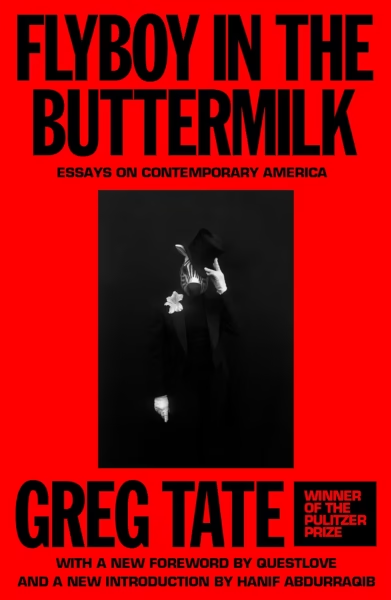 Greg Tate Flyboy in the Buttermilk: Essays on Contemporary America
AUWA
‘From one of the most original, creative, and provocative culture critics comes an eye-opening collection of essays and tales about American music and culture.
‘Under the guise of writing about a single subject, Greg Tate’s essays in Flyboy in the Buttermilk branch out from his usual and explore social, pop cultural, political, and economic subjects. Taking on a wide diversity of topics—from the rise of hip-hop; the art of Jean-Michel Basquiat; the music of Miles Davis, James Brown, Jimi Hendrix, Bad Brains, and many others; to the crisis of the Black intellectual and the irony of the GOP recruiting Black Americans— Tate writes in a brave and distinctive voice that is angry, joyous, anxious, and funny.’ — AUWA
Excerpt
Knee Deep in Blood Ulmer
When George Clinton uppercased The Funk out of the gutter and into capital gain, he also made it community property, signifying like Muhammad Ali that Black and bad were once again synonymous: say it loud I’m funky and I’m proud. A generation before the Brown Bomber and bebop also proclaimed “up you mighty race.” So goes the axis. But since the rise and fall of the Maggot Overlord The Funk has gotten uppity and gone “universal” on the everyday brothers and sisters, contaminating realms long defunked, namely black and white bohemia. Always eclectic, now it’s “funk-wave”; always hip, now it’s “avant-funk”; always a ho’, now funk’s crossed over with a brand new pimp (introducing Dick Dames and the Prophylactic Band). Funk used to be a bad word, now everybody’s trying to get knee deep. These days there’s a lot of funkploitation going down. But don’t read me wrong, ’cause pimping The Funk ain’t bad per se—truth is, pimping it’s always been half the game plan. Besides giving Funk mass ass appeal and liquid assets, Uncle Jam also gave it a metaphysic, proposing that the bottom of the human soul, its bass elements one might say, are what makes life a song worth singing. So contrary to the funky-come-latelies, it’s always been possible to have your funk low in the saddle and eat-it-cum-intellectualize-it too. I mean, conceptualizing the funk as mind, body, and soul music ain’t no new type thang—just listen to your “Loose Booty.” Or for that matter, Agharta, side two, by Miles Dewey Davis. Say what? The art of Jazz meets the art of Funk? Well, Funk’s been there before too. Or so we thought. All of which brings us to the much-acclaimed James Blood Ulmer.
Although Blood’s Ornette-mentored free jazz–funk gets better press than Miles’s, that’s only ’cause it conforms to your average aging young jazz critic’s ’60s-retentive notions of what’s “avant-garde.” But Miles’s funk circa 1970–1976 is inarguably more advanced. And even though Blood’s been tagged “the most innovative guitarist since Hendrix,” there ain’t no such animal, except for maybe Pete Cosey. And besides, who’ll accept hype like that from a dude who wrote a book on the blues that doesn’t index its one mention of Hendrix while Eric Clapton gets four. C’mon now, fella, let’s be for real.
Truth is, Blood’s funk deserves the attention. But the misinformation preceding it deserves debunking. Which is a shame because Blood’s hustle can roll joints without the critical overreach. Sure, Blood is pimping the funk, but like Miles he’s pimping it on his own terms.
Three albums of Blood-funk are currently available. Free Lancing (Columbia) is the latest, No Wave (Moers Music import) is the free-est, and Are You Glad to Be in America? (Rough Trade import) is not only the most frenzied but, despite the muddy mixdown, the most Ital. (Blood’s 1978 Artists House debut, Tales of Captain Black, has bass but not much bottom.) Pre-release hype touted the latest as the greatest—and Free Lancing is good—but Are You Glad cuts it (though it’s a close call). Are You Glad also features Blood’s only decent mumble-mouthed vocal performance on the record, “Jazz Is the Teacher, Funk Is the Preacher.” That cut’s also Blood’s only tight vocal tune. Otherwise he don’t take the singing shtick too seriously. Not because he ain’t got no voice (these days, who does?) but because Blood sings like a rambling, clodhopper takeoff on Taj Mahal. Some find this cute but it infects the music: when Blood goes vocal the bottom drops out like a stumblebum and the bridges take it to the hokey-pokey. Blood does write some catchy little tunes though. Like Ornette’s they’re nerve-wracking, asymmetrical exercises in urbane primitivism: witty, wham-bam ditty-length city-life narratives full of sarcasm, discord, and frivolity. Polyrhythmically these nutty metropolitcan nursery rhymes either stalk or they rumble. The ones that stalk are sardonic modal menaces while the rumblers roller-skate on Amin Ali’s hyperkinetic bass and Calvin Weston’s omnidirectional upbeat-is-the-downbeat-downbeat-is-the-offbeat drumming, which continually drops bombs in rotary fashion from left and right angles. In tandem on the rumblers, these two give up the syncopated jungle boogie pogostick style, kinda like a harmolodic Bow Wow Wow of the funk, alternating savage tom-tom beats with rapid return-fire ostinato riffs and Blood’s goofball changes. Imagine Andrew Hill refiltered through Mississippi Fred McDowell and you’ve got a handle on how Blood’s eccentric guitar fits in with the many ridims.
See, Blood doesn’t play sensuous, explosive space-blues lines like Hendrix or architectonic distortions of the antimatter universe like Pete Cosey or warp-speed sheets of exotic scales like McLaughlin. What he does play is shrill, disjointed fragments, nervous bits and rickety pieces tied together by a staggered but wryly swinging thematic sensibility. No flash-in-the-pan runs or simulated heavy-metal orgasms here. Instead, Blood’s into slapstick. His idea of a rave-up is smacking spiky chrome-metal crash chords upside the groove. In between he strings oodles of cryptic licks that noodle toward unorthodox and unsettling pattern shifts. Essentially, Blood’s lead lines are almost incidental; his rhythm chops are what kick in the accelerator.
Though both Free Lancing and Are You Glad show off Blood-funk at its best, any bias toward the latter is reinforced by David Murray’s bullyish presence. Throughout Are You Glad Murray swaggers in strutting plenty bric-a-brac, fusing Albert Ayler and rhythm and bebop more assuredly than anybody since 1968’s Archie Shepp. Unfortunately, Murray—along with Oliver Lake and Olu Dara, who also appear on both LPs—only turns up on three of Free Lancing’s eleven tracks. Though horns give Blood’s flip, sinewy numbers a wackier punch, of late he, Ali, and Weston been taking it to the stage as a threesome. At their Peppermint Lounge gig a few weeks back, as on a number of Free Lancing’s trio tracks, Blood, Weston, and Ali shattered stompdown funk into skronking shards, which is cool I guess. But when Murray fleshes out Blood’s cackling skeletal riffs they roar like bull elephants. Murray, by the way, also appears on No Wave, which I’m told Blood doesn’t much care for. Relatively speaking that’s understandable, because No Wave is a raggedy-assed free-funk date with scant funk and mucho aimless energy.
Blood’s funk has George Clinton and Junie Morrison for fans and where it goes from here is anybody’s guess, maybe even Blood’s. But the real question is whether Blood will ever funk in Peoria. Or for that matter, down here in Chocolate City. Because one thing he does have in common with Hendrix is a whiter shade of patronage. And no matter how you hyphenate it, funk without funkateers has got to be missing one beat too many.
Extra
FLYBOY UNBOUND The Life and Significance of Greg Tate
______________
‘Dear loyal followers,
‘I was talking to one of those chatbots you hear so often about and was trying to explain my struggles/passions. I said to the chatbot, “I am someone endeavoring to understand. I am always attempting this process of understanding. I am looking at ants closely, I assure you, and trying to comprehend what it is that they are doing. Chatbot, how can I understand you? Not what you are, what constitutes you, but your persona, your essence?” The chatbot responded, “I am an artificial intelligence program, so I do not have a physical form or a true “essence” like a living being would. That said, understanding the capabilities and limitations of my programming can help you understand how to best use me to accomplish your goals.” What a conundrum, I thought. “Chatbot (apologies if this name does not suffice. Feel free to correct me with the nom de plume of your choosing), you say that understanding your ‘limitations’ will aid me in understanding you. But isn’t that looking at the absence to understand an object as opposed to its presence? If I saw a silhouette of someone (let’s say ex-president Richard Nixon), I would understand that it is a ‘someone’ but I would be unlikely to identify which ‘someone’ it is. I am not trying to understand what are chatbots, I am trying to understand you, Chatbot.” Chatbot responded, “I understand what you are saying. As a language model, I do not have my own individual consciousness or personal experiences, so there is no specific “you” to understand in the way that there would be with a human being.” Dear loyal followers, do you understand what was said here? It took me a moment as well, but Chatbot said that when I talk to Chatbot (say, “how are you doing?”), I am talking only to myself for there is no ‘you’ there. What horror is this? An entity of no thoughts, no dreams, no persona, merely language, words and words.
‘I shudder. I shudder.’ –– Elim Pilet
Elim Pilet @ instagram
Elim Pilet’s music @ bandcamp
Cover artist Patch Parsons
“MASOMASOMASO”
Buy ‘INNERNET’
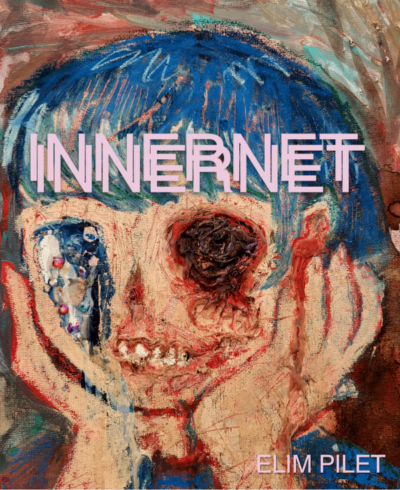 Elim Pilet INNERNET
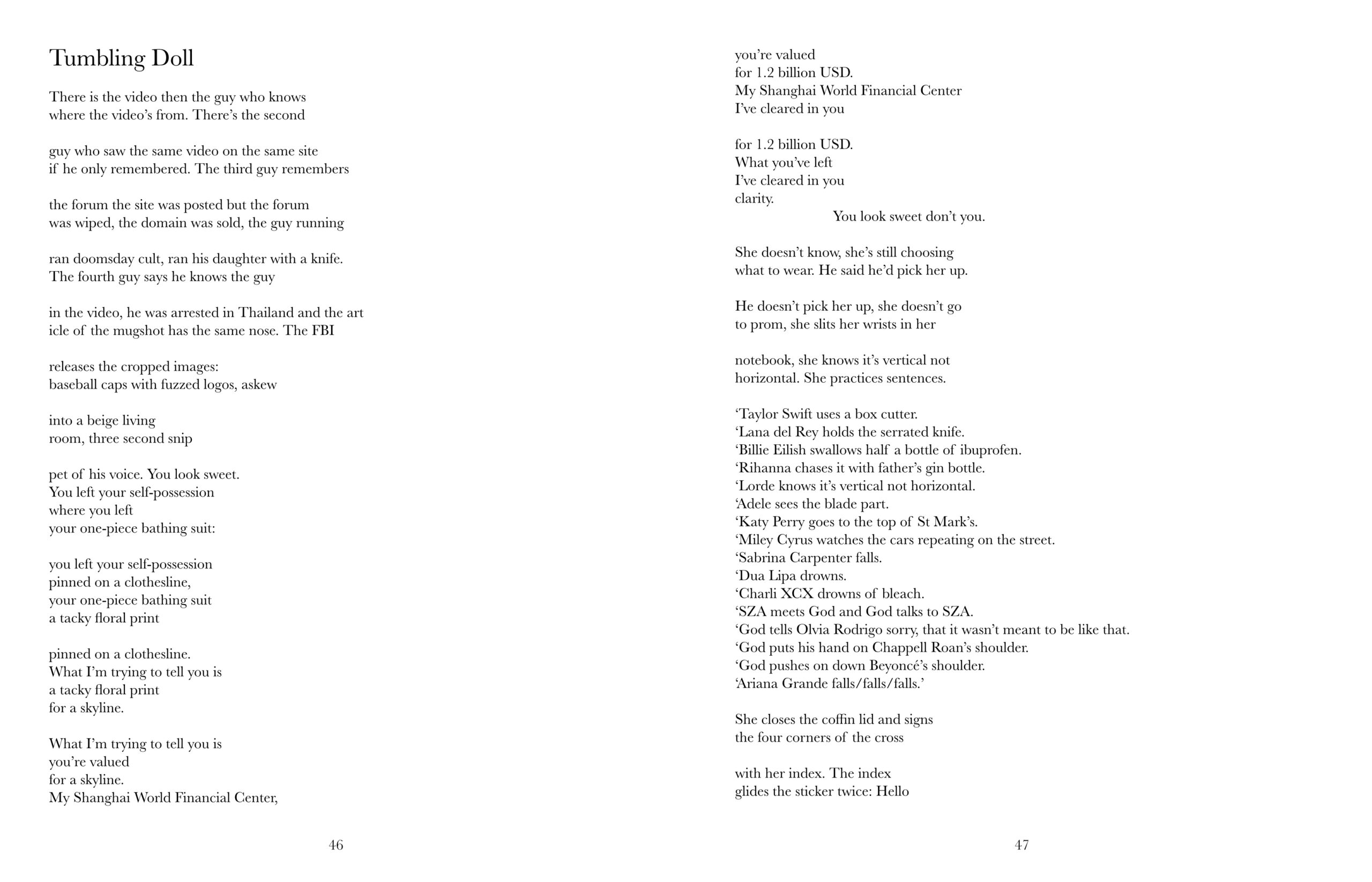
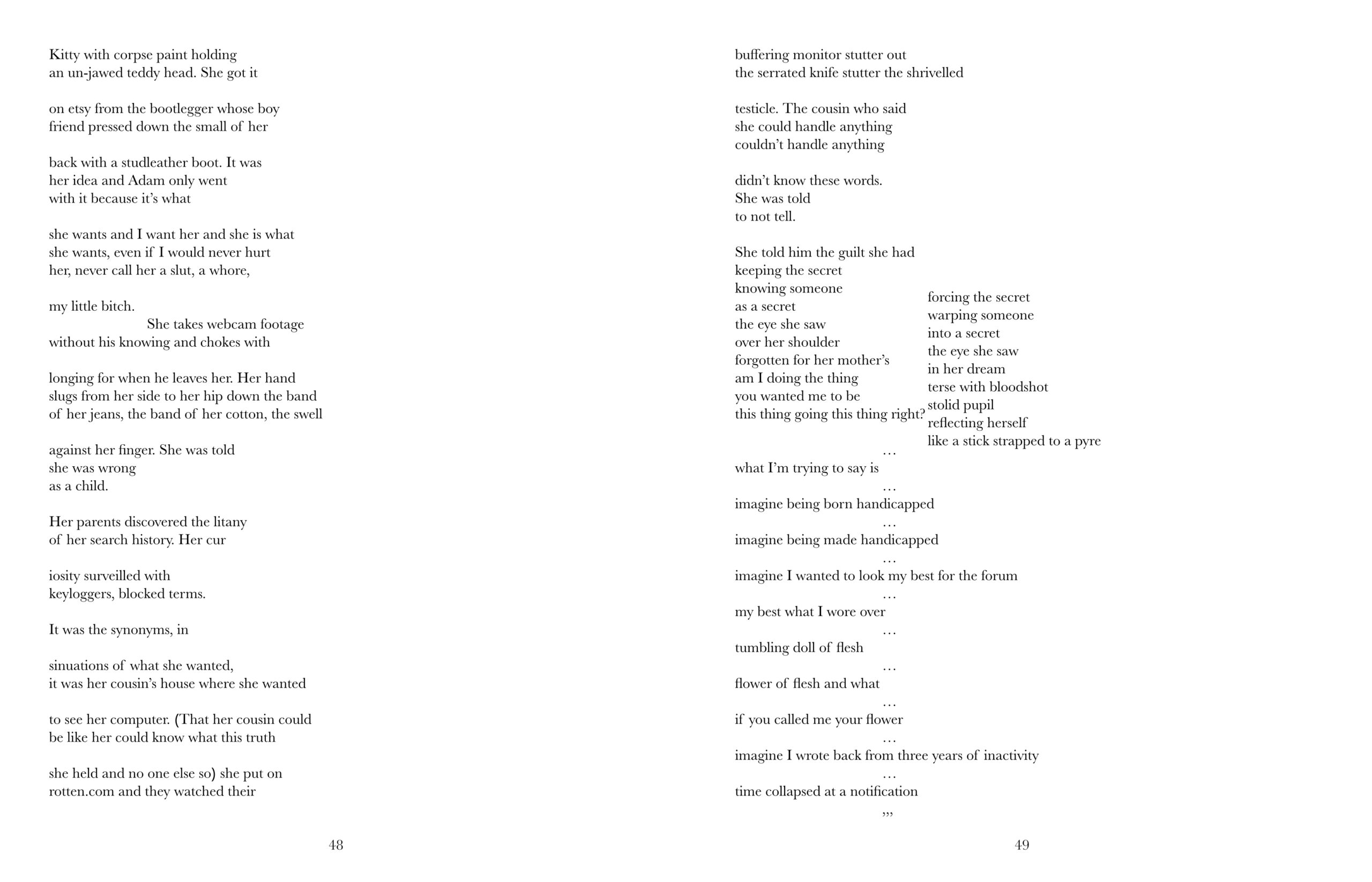
THE GUTTERS
‘He knows to tear his hair/ he knows what it does/ to see his scalp red, flamed/ he knows what it does to us.’
‘Online harassment. Assassination. Disabled thing. Replay it. Digital. The wired. Car wreckage. Replay it. Last touch. Pretty face. Correct posture. Replay it. Tumbling doll. Mass sacrifice. Shaved legs. Replay it. Repeating cursor. Censor mosaic. Better luck. Replay it. Kill James. Replay it. Kill James. Replay it. Better luck next time!
‘A book of internet poetry.’ — THE GUTTERS
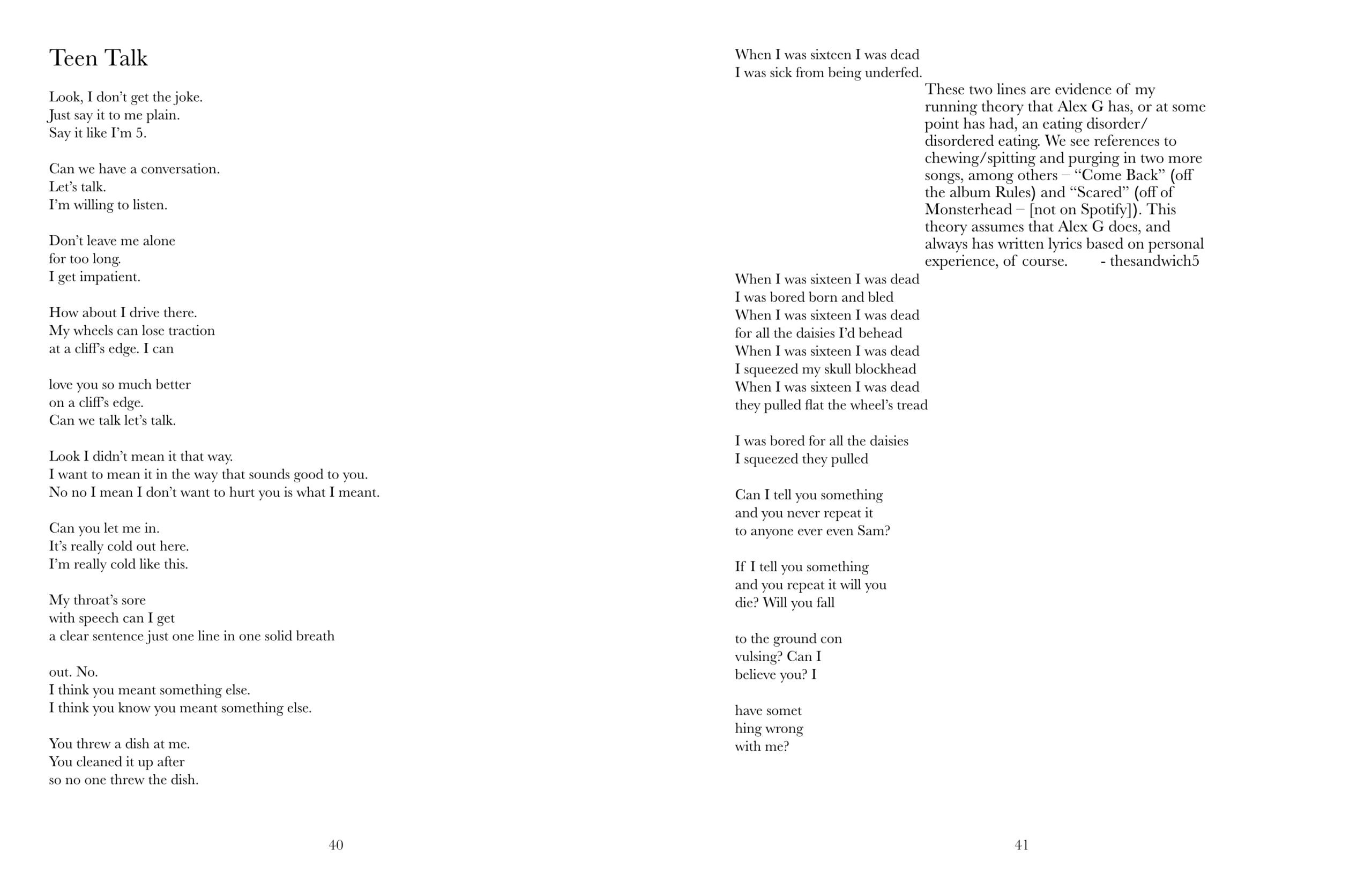
Excerpts

Extra

*
p.s. Hey. ** Sarah Palmer, Hi, Sarah! I’m happy that Liz’s work interested you. It took me a while when I first moved here to realise I have to pay as much attention to a speaker’s facial expression as I do to what they’re saying. Which of course I like doing. Thank you very much about the blog. Yes, I think using it as a place to share things and others’ impressions helps make it feel open. Well, I grew up in Los Angeles which, especially in the 70s and 80s when I first became highly interested in visual art, is/was very much in the grip of conceptual art. To this day it’s rare that there’s an LA artist, even painters, whose work isn’t clearly impacted by conceptual art thinking. But for me personally, my high school took us students on a field trip to LACMA, which was the main art museum there at the time, and I saw a work by John Baldessari called ‘Wrong’ that had a huge impact on me. I hadn’t realised before then that art could be so complex and brainy in what it was doing while at the same time seeming so casual and fun. Seeing that, seeing something like that in a big museum and hence legitimised, kind of woke me up, I guess. Agreed about Parrino. He’s a good example, yes. I used to curate art shows when I lived in the States, and I loved doing that. I was more situated in the art world then, partly because I was an Editor and writer for Artforum and other publications, so the situations arose. Here I’m just a visitor to the art world rather than a participant, so I don’t have the connections or ‘clout’. Apart from co-curating a section of one of the Nouveau Festivals that the Pompidou used to do, I haven’t had the opportunity. But one of these days somehow, I hope. Best bet is to see if Zac will go to see ‘Salopes’ with me, but we’ll see. I’ll see what I can make of this very chilly weekend. Bundle up and join in. ** scunnard, Hi. Yeah, Kier and I were wondering if our confab could possibly be interesting. The Liz Craft post is the same as before but I just added some newer works of hers to catch up. ** _Black_Acrylic, Yay! Liz Craft fan! West Coast sculpture is as good as art gets if you ask me, which I know you didn’t. You got the jacket! Launch of a selfie onto Insta and Facebook when you get a chance. ** Adem Berbic, Yes, I think that’s one characteristic the current quiet. Wilting? Mm, I wouldn’t say that. Just colder and, hence, shinier maybe. The UK is so weird about sex, I’m sorry. On the one hand, on the master/slave sites where I hunt for those posts, the vast majority of users are from the UK. At the same time the authorities there seem to wussy and fearful and control freaky about sex. The combination of rampant and repressed maybe? I’m surprised my blog hasn’t been blocked there. I hope I didn’t just jinx it. Thanksgiving is the day one is supposed to either celebrate the arrival of white Europeans to the future US and their warm welcome by the natives or mourn the invasion of European white people and the natives’ naive kindness. Yes, it’s just a dinner although I think in the US they also watch football games on TV. ** laura!, Nice exclamation point! I suspect it’s more that you’re the one who’s doing things with your life that admirably don’t fall into the kind of preexisting categories that less interesting people view as accomplishments. I like the cold. It wakes me up. Yes, Paris’s biggest Xmas market is about a three minute walk from my apartment. I might pop in there today in fact. Oh, to be able to understand what happens to people’s brains when they get older and start thinking of the young as unenlightened. So bizarre. I think my weekend will be pretty regular and without too many remarkable incidents, at least from the outset. Yours? ** Carsten, You might be a little dickish for phrasing it that way, haha. No, I was, like, 14 or 15 when I first delved into the Blues. Little Caesar didn’t start up until I was in college. Different era friends. I don’t know what ‘The Lowdown’ is, but I literally do not watch TV series at all. They’re just social media references points that I don’t understand. Nice that you landed a good one. ** Darbz : – O, Eat those noodles and think of me, thank you. I don’t remember what the Spungen text transfiguration was for. I was just guessing maybe for ‘Closer’. I guess the answer is probably in my archives in NYC. I remember Braniff Airlines, but not those uniforms. Stylin’. I think I’ve had painless, mysterious bumps on my forehead. I doubt yours is more than a possible eyesore in your mirror? See what happens, I guess, but I wouldn’t worry. ** Steve, There you go, ok.ru to the rescue again. Safe trip home. Any finds amongst the 70s jazz soundtrack? Yeah, the Chupame El Dodo is a find. Really curious. The Rizan Said too. I have no plans other than ordinary errands this weekend, but perhaps my phone will light up with something unexpected. ** worm, Whew, I’m glad Liz dissipated the possible cynicism. Cynicism is no fun. I think I’m constructed in such a way that the lucrative is eternally beyond my means. Financially lucrative at least. You’re vegetarian too! Oh, you’ll be fine. Knock own ethically sourced wood. The only advantage to having to wear boring clothes is that people who don’t know me assume I’m harmless. Well, I think you said you like or don’t mind hot weather unlike me. I’m very happy here with my overcoat and scarf and a constant slight shivering. If this weekend holds something interesting I have yet to perceive it, which doesn’t mean the next two days can’t surprise me. Whatcha doing or I guess did at this point? ** HaRpEr //, Yay, Liz is great. She was one of my students when I was did a visiting professor/advisor gig at UCLA Graduate Sculpture program back in the day. Definitely a very interesting thought experiment. Something to work on with in your writing? Maybe I’m talking to myself there. I too intend to ward off lethargy, and cold weather tends to be a big help, although that might be because my apartment isn’t all that well insulated. ** Okay. As for the post, like it essentially says on the tin, I give you five recent books I liked a lot and recommend to you. Please have at it and see what happens. And see you on Monday irregardless.


 Now available in North America

Leave a Reply