—-
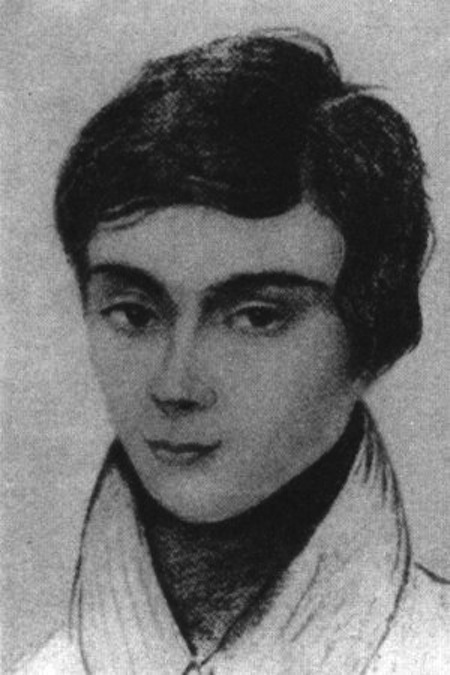
‘Max Blecher’s meteoric life was one prolonged surreal adventure. He was a Jewish Romanian writer and poet of unusual talent and vision, whose literary legacy remains invaluable. His life and creativity time was very short, less then a decade. He had correspondence, among many others, with André Breton, André Gide and Martin Heidegger. He was praised by Eugene Ionesco, Mihail Sebastian, Geo Bogza and Sasha Pana, many of them comparing his prose to Franz Kafka, Bruno Schultz, Robert Walser or Thomas Mann, but his work fell into bleak obscurity during Romania’s communist regime.
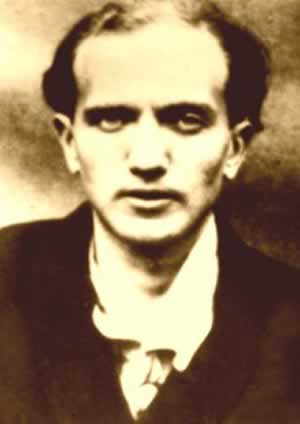
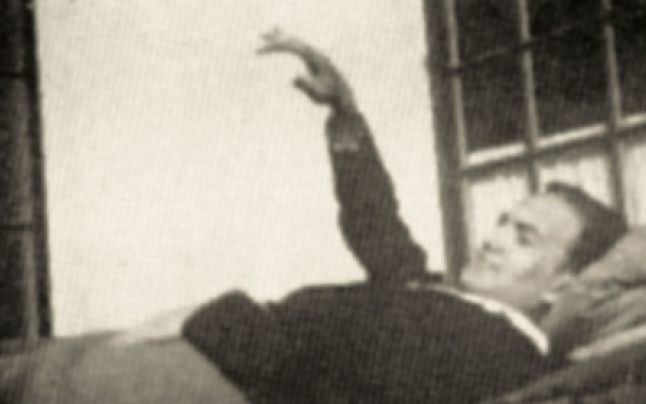
‘Blecher was diagnosed with spinal tuberculosis at the age of nineteen and spent the remaining ten years of his life mostly bedridden and practically immobile in a sanatorium in France, in a mummy like sarcophagus of plaster. But actually his imagination ran wild and Blecher often fantasized having sex, even if incased in plaster casts as if doing something impossible and forbidden. His narratives usually verge on romantic-memorialism but transcend into surrealism, almost accidentally.
‘In spite of his illness, Blecher continued to write, and during his lifetime published a volume of poetry and two novels, along with a number of short prose pieces, articles and translations. He published only three books: Transparent Body (poetry, 1934), and two novels, Scarred Hearts (1936) and Occurrence in the Immediate Unreality (1937). His writings received much critical acclaim when they were first published in Andre Breton’s literary review Le Surréalisme au service de la revolution.
‘His death at the age of 29, (31 May 1938) in Roman, Romania was a “non-event”, unworthy of an obit or a short notice in a local paper. Since the fall of the communism in 1989, Blecher’s stature and renown as an author have grown steadily with the publication of new editions and collections of his writings, in new critical studies in Romania and outside Romania, such as translations in German, English, and Spanish.’ — Valery Oisteanu, Big City Lit
______
Further
Max Blecher @ Wikipedia
Max Blecher Website (in Romanian)
‘Reading Max Blecher’ @ Some Blind Alleys
‘Max Blecher: The Harlequin versus the Nothingness’
Max Blecher @ Goodreads
Clive Sinclair on MB’s ‘Scarred Hearts’
‘Tribute to Max Blecher’ @ VETIVER
Buy ‘OinIU’
_____
Media
The house of Max Blecher
Miriam Rasch bespreekt Avonturen in de alledaagse onwerkelijkheid van Max Blecher
Translator’s Day – Max Blecher’s “Collected Works”
___________________
The Immediate Unreality
by Alistair Ian Blyth
In childhood, Max Blecher suffered “crises” or “attacks” of unreality, in which he experienced rupture both from the outer world of objects, and from the inner world of the self. These crises, narrated in Occurrences in the Immediate Unreality, might also be likened to the haunting moments of Stimmung evoked by Giorgio de Chirico in his pittura metafisica, as well as in his oneiric novel Hebdomeros (1929), moments during which inward disquietude is experienced as outward atmosphere, submerging the world in ineffable strangeness and enigma. In psychopathology, this is the eerie atmosphere of heightened but empty significance also experienced by sufferers of dementia praecox during the so-called ‘aura’ that precedes complete rupture with reality. Psychiatrist and neurologist Klaus Conrad referred to such states of exalted dread as the “Trema”, employing a piece of German theatrical slang for stage fright. In this respect it is notable that many of de Chirico’s paintings depict the vertiginously tilted boards of theatre stages. Likewise, as we shall see below, Blecher’s occurrences in the immediate unreality are also pervaded by a menacing sense of theatricality.
During the state of Stimmung, external phenomena are thus imbued with a sense of intense but ineffable significance, which hovers tantalisingly beyond reach. Like de Chirico, who saw the world as a “vast museum of strangeness”, Blecher too locates his crises out there in the world; they are intrinsic to various places, “sickly spaces”, which thereby become menacing “invisible traps”. These crises, which Blecher defines as the “profound sentiment of the world’s pointlessness”, are thus precisely the anti-epiphany or empty transcendence of Modernism: an anxious, heightened sense of meaningfulness, but one devoid of cognisable content, like the “Anwandlungen eines Fast-Nichts” (fits or attacks of an Almost-Nothing) described by Hugo von Hofmannsthal in Die Briefe des Zurückgekehrten (Letters of Those Who Returned) (1901). Like the cast of the inner ear whose image obsesses Blecher, people and things are nothing more than the negative image of an immanent emptiness.
Although in time Blecher’s crises as such abate, they leave behind them the same “crepuscular state” that used to presage them. As in de Chirico’s cluttered paintings of his later metaphysical period, Blecher then discovers in heteroclite, seemingly insignificant objects an “essential nostalgia for the world’s pointlessness”. Such states, which oscillate between melancholy and exaltation, are also closely intertwined with the ambiguous, confusing, even dream-like, experiences of his sexual awakening as an adolescent. He experiences occurrences as disturbingly artificial and theatrical, while other people are like automatons or mannequins, oblivious that “the certitude in which we live is separated by a very fine pellicle from the world of uncertainties”. The world itself becomes an eerie stage set, and many episodes in the novel occur in settings of inherent theatrical artificiality, such as the cinema, a waxworks exhibition, or the prop-cluttered basement beneath the stage of a theatre, where Blecher finds refuge and which thus becomes a symbol of the tiers of conscious and unconscious mind. Blecher himself dreams of being an inanimate waxwork, or else he is haunted by his own photograph, which he chances to see mysteriously displayed in the booth of a travelling fairground photographer and which then takes on a life of its own, threatening to subsume his own existence. In one of the most remarkable episodes in the book, Blecher attempts to escape from the agony of his exacerbated awareness (the “Bewußstseinswelt”, as it is called by Gottfried Benn, who similarly yearns to escape the pain of consciousness by regressing to the condition of mindless protoplasm) by descending to the ontological level of amorphous, primal mud.
____
Book
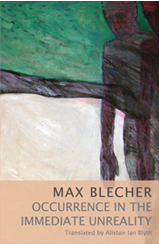 Max Blecher Occurrence in the Immediate Unreality
New Directions
‘This autobiographical fiction offers an intimate and unsettling account of Blecher’s ideas of self-identity and the body. He explores the ‘crisis of unreality’ in relation to the human condition and shares his adolescent experiences of physical infirmity, social isolation and sexual awakening.
‘A poet and prose-writer, Blecher offers a harrowing account of the ‘bizarre adventure of being a man’ drawing upon his experience of being diagnosed with tuberculosis of the spine in 1928. He was treated in various sanatoria in France, Switzerland and Romania where he spent much of his time corresponding with Geo Bogza, Mihail Sebastian, André Breton, André Gide, Martin Heidegger and Ilarie Voronca, and sporadically collaborated with Le Surréalisme au service de la révolution and Les Feuillets inutiles.
‘What makes Max Blecher akin to Kafka, Bruno Schulz or Robert Walser is above all the faculty of inhabiting misfortune… Things emerge from their neutrality and besiege him, seeking to fascinate or terrorise him. ‘ — ND
______
Excerpt
“I pant, I sink, I tremble, I expire.” — P. B. Shelley
When I glance for a long time at a precise point on the wall, I sometimes forget who and where I am. At that particular moment my identity vanishes, and I feel, for a second, no more, like a totally different person. This abstract character and my real self are fighting for my awareness with equal forces.
But very soon after my identity recomposes itself, like in those stereoscopic views in which sometimes the two images are being separated by mistake and the operator reunites them, offering, all of a sudden, to the viewer’s eye, an illusive relief. My room appears in those instants of a freshness never before existent. It regains its precedent consistency and the objects flow wisely into their places, just like a clod of soil thrown into a glass of water lays to its bottom in layers of different elements, well defined and of various colors. The room’s elements stratify in their own contour and in the coloring of the old memory I have of them.
This feeling of remoteness and loneliness during the instants when my daily being is dissolved into inconsistency is tremendously different from any other physical sensation. When it lasts longer, it converts into the pure terror that I might never again regain myself, and an insecure silhouette lingers in my brain, surrounded by a strong and profound, almost tactile light, as certain distant objects seen in the fog.
The terrible question “Who am I?” lives by its own in me, like a totally new entity, a mere excrescence from my body, made out of new and totally unknown skin and bones andorgans. Its solution is being asked for by a sort of clearness, more profound and more essential than that of the brain’s. Everything capable of motion in me begins to stir, to move, to struggle, to revolt, more strongly and elementary than in my daily life. Everything begs for a rapid solution. I sometimes rediscover the chamber as it usually is and as I know it, just as if I simply closed and opened my eyes; and every time the space is clearer, just like a certain landscape appears through the field glass, better and better organized, while, setting the distances, one’s eye sails through all the veils of intermediary images.
I finally recognize myself and my room, and I feel a slight feeling of drunkenness. The chamber is unexpectedly condensed in its inner matter, and I’m implacably back to the tactile surface of things: the deepest the wave of obscure misunderstanding, the highest its peak; now I have the clear certitude that every object must occupy its inherent place in the universe and that I must be the one I truly am.
Thus my awkward struggle in the midst of uncertainty has lost all its denominations, it becomes just an untainted regret that I had found nothing in the depths of my efforts. I am only surprised by the fact that such a complete lack of meaning could ever have been attached so profoundly to my intimate matter. Now that I found myself and I try to express my feelings, these appear to me like totally impersonal, simple exaggerations of my identity, grown up like a cancer from their own substance. Like a jelly fish’s tentacle, stretched immeasurably, having desperately explored the waves’ entrails before returning safely under the gelatinous sucker, I traversed all the certainties and uncertainties of my existence, in order to come back, irrevocably and painfully, under the opaque shell of my solitude, which all of a sudden becomes infinitely pure and pathetic …
The feeling of remoteness of the world is clear, and more intimate: a lucid and tender melancholy, like a dream which comes back into one’s mind in the midst of the dark night.
Only this melancholy reminds me something of the mystery and the slightly distressing charm of my childhood crises.
Only in this sudden vanishing of my identity can I revive the past fallings into cursed spaces, and only in the seconds of immediate lucidity that follow the return to the surface does the world appear to me in the light of its unusual inutility and desuetude, which grew around me when my hallucinatory trances had overthrown me.
My crises were always provoked in the very same places, a street, the house, some garden. Every time I was overrunning their borders, I was overwhelmed by a state of swoon and dizziness. Invisible traps placed at random through the town, differing in nothing from the surrounding atmosphere, they were ferociously waiting for me to fall a prey to their special substance. A step, one single step was enough to enter deep in one of these cursed spaces, and the crisis was inevitable.
One such place was in the town’s central park, in a small clearing at the end of an alley, where nobody was ever walking. The ring of bushes and wild roses and dwarfish acacias surrounding it opened tightly towards the desolating landscape of an empty field. In the whole world there was definitely no other place so sad and so deserted. Silence was setting down, opaque and condensed, on the dusty leaves, in the summer’s musty heat. From time to time one could hear the echoes of the trumpets from distant regiments. Infinitely poignant were those long callings from the desert… Far away, the air heated by the sun was trembling, vaporous like the transparent steam flowing above the boiling water.
The place was wild and isolated, of an endless loneliness. There, the day’s heat wasinfinitely more tiresome, and the air heavier by a long way. The yellowish dusty bushes were burning in the sun, in a scenery of an absolute seclusion. A bizarre feeling of uselessness was flowing above the clearing, which was living its own outlandish existence somewhere in the world, where I had come without any purpose or reason, in a certain summer afternoon, useless as well, an afternoon chaotically lost in the warmth, anchored through the bushes in the tangential space. At that particular moment I was feeling, profoundly and painfully, that I didn’t belong to this world, that I had nothing to do in it but wander through lost parks, through their dusty, heated clearings, deserted and wild, wild and deserted. And this wandering was finally breaking my heart to pieces.
Another cursed place was at the other side of the town, between the high and hollow shores of the river in which I was bathing with my playmates.
The shore was sunken on a side. Up on the bank there was a sunflower-oil factory. The seeds’ hulls were thrown between the edges of the sunken shore, and in time the pile raised gradually, until it became a long slope of dry hulls, uniting the bottom of the coast to the bank of the water. My playmates were descending towards the water on this slope, carefully, holing their hands, stepping deep into the carpet of rotten vegetable fabric.
The walls of the high shore, on the two sides of the slope, were abrupt and fantastically irregular. The rain had sculptured long stripes of delicate fissures and intricate arabesques, but hideous like the badly scared wounds, true rags into the mud’s wet flesh, horrible and unwrapped cuts.
I had to descend as well amidst these walls which impressed me tremendously, towards the river. When I was still far away, long before getting to the shore, my nostrils were filled by the smell of the rotten hulls, which was preparing me for the crisis, as a short period of incubation: this smell was unpleasant, and, at the same time, sophisticatedly suave.
Yes, my crises were all like this …
—-
*
p.s. Hey. ** Ilán Valdés, Hi. Thanks. The state you’re in sounds good to me. Scattered is maybe the ideal beginning? ** darbz on school laptop still, Hi! Cool, glad it struck home. I’m a roughly 6 am waker upper too. Mornings rule. Watching things light up is more exciting than watching them grow dark or something. As someone who works a lot, I’m way okay with solitude. Outsider folk music … I’d have to think. I love the folkier early Sebadoh and Sentridoh stuff. I’m sure there’s lots. I do like Judee Sill. Nick Drake was George Miles’s godhead as you probably know. Fiona Apple and Jeff Buckley have never gotten to me. No, I’m stuck in Paris and London for Halloween. It’s very sad. Hit a home haunt! Hit many! I guess I don’t need to tell you that you’ll be ruling this place tomorrow. ** Bill, Thanks, and, yeah, kind of memorable. Oops, I should’ve rechecked those links. Still tied down there? It’s been a while. Man, I hope you can ease off or back or whatever soon. So sorry and lots of luck and strength. ** HaRpEr //, Thanks, pal. Cronenberg is very hit and miss for me too. Mostly miss, if I think about it. My tops are all early or early-ish ones: ‘Videodrome’, ‘Dead Ringers’ most of the first horror ones, maybe ‘The Fly’, I can’t remember. His ‘Naked Lunch’ is totally dreadful. When Oliver Reed is explosive, he’s lots of fun. speaking of, I hope the new, long ‘The Devils’ opens here. Surely. ** _Black_Acrylic, Haha, that clip is very funny. I don’t think it’s real though, is it? It has AI presence. But still. ** Carsten, Hi. I like Christmas. I’ve developed a cherry picking relationship to it. The decorations, the Buches, the giddy gift-opening kiddos, etc. Instagram is definitely the best platform to promote stuff, it seems to me after having been there a while. Also the best place to discover interesting people and art stuff. I don’t think one needs constant engagement there, no. I do only because I announce the blog posts there every day, but lots of people there are sporadic. I say join and just see where that leads you. New film: Everything looks good. We’re Zooming with our producer to see where things stand and start moving forward just after Halloween. ** Adem Berbic, Writing seems less like a tightrope the more you do it and the more it becomes second nature. I was always certain about ‘God Jr.’. It just took me a while to negotiate the realisation that people had presumptions about what I do and don’t do. It took a while for that to become instructive. I was writing ‘The Sluts’ at the same time, so I just worked on that solely for about a year while I figured things out. The new After8 is on Rue du Faubourg St. Martin. Pretty close by. Very close to Re:Voir, if you know that. It’s somewhat larger though still not large, and it seems like nothing but a big plus. ** laura w, Even less days out now. Yikes. I hope ‘Rocky Horror’ is fun of some variety. Yes, the NFL is here. I have a lifelong ugh about American football. My parents took me to a game once as a kid, and the boredom I felt has lingered ever after. I love that the French have had zero interest American football, and I hope that doesn’t change. For their sake and mine. Sorry, not my thing. Yes, I saw that about Catapult, that’s terrible news. Especially re: Soft Skull who publish a lot of writers I like: Lynne Tillman, Richard Cheim, Juliet Escoria and many others. They published a book by me in their early days. I hope it finds a way to survive. Terrible. Swans conquer yet another innocent soul. Victoire! ** Okay. Today I’ve spotlight a brilliant novel that I don’t think is as known and read as it certainly should be, so I thought I would do my little part. See you tomorrow.



 Now available in North America

Leave a Reply