________________

‘First published in 2005, Richard Hell’s Godlike is being reissued this year as a NYRB Classic, which means that after a little over two decades it has been selected as a work of literature most likely to be discovered “outside the classroom and then remember[ed] for life.” The list for 2026 also includes John Berger’s 1972 Booker prize winning novel G. and Barbara Trapido’s incredible bildungsroman Brother of the More Famous Jack, which won the Whitbread special prize for fiction in 1982. What makes a gritty and lyrical novel like Godlike admissible to this elite canon is its frank and joyful celebration of the values, principles, and desires that flow against the general current of academic culture. In Hell’s “classic” novel we read about the tumultuous, high-voltage relationship that takes shape between two gay poets, aged sixteen and twenty-seven, in the New York of the 1970s. They fuck, they get high, they get drunk, they go to parties—consequences be damned.
‘It’s both a young person’s book and not. The action gives the story its youth, but the narrator’s tendency to memorialize those events make it feel more mature. In fact, the book is mostly about memory: what is recorded, what is forgotten, what is erased or preserved. Subjective considerations like these ultimately boil down to value judgements. What a person assigns importance to not only reveals who that person is but shapes who that person becomes. People change, values shift, and what we cherish ages, too. So when the object of one’s love disappears—or dies—what else can you do but pay tribute? This is the foundation from which Hell builds his book. …
‘Godlike is the kind of book that can be devoured in a single sitting. Hell’s prose flows so smoothly, and his language is playful and provocative, full of witticism and insight. When Paul is reflecting on T.’s poetry he thinks, “people’s big ideas are usually just the keys to their own problems.” Another moment finds Paul answering his own questions: “How close is the imagination to reality? Close enough: even reality is not like reality.” He describes scenes that deserve a place in the people’s history of publishing, like the collating party for an “elegant” mimeo magazine called Space Pee. To Hell’s immense credit, it never gets sentimental—he preserves an edgy attitude that delights in its own offensiveness. And in nearly equal measure to its emotional intensity, the novel has a broad intellectual range. Paul Vaughn pivots from observations on quantum physics to ruminations on what it means to age, and how God relates to death. “It’s logical that to age is to approach God. God: the truth of death, reply to death, replacement for death.” However, the narrator doesn’t dwell on any of these philosophical opportunities; carnal desire quickly reasserts itself. Above all is a poet’s love for language, love for living, even a love for failure. In the end, the fact of death confirms for Paul that love is real. It isn’t something he feels; it’s something he knows to be true.’ — Charles Schultz
Supplemental Notes to ‘Godlike’
ANTI-CONVENTION: RICHARD HELL ON GODLIKE
Stream Richard Hell’s “Godlike” by LA Review of Books
Hell’s bells are sublime.
Buy ‘Godlike’
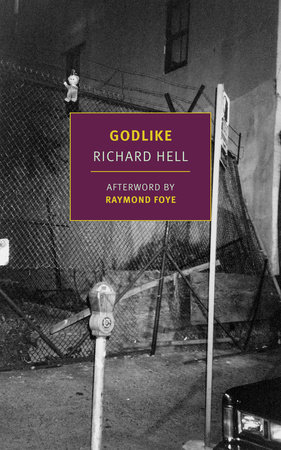 Richard Hell Godlike
NYRB Classics
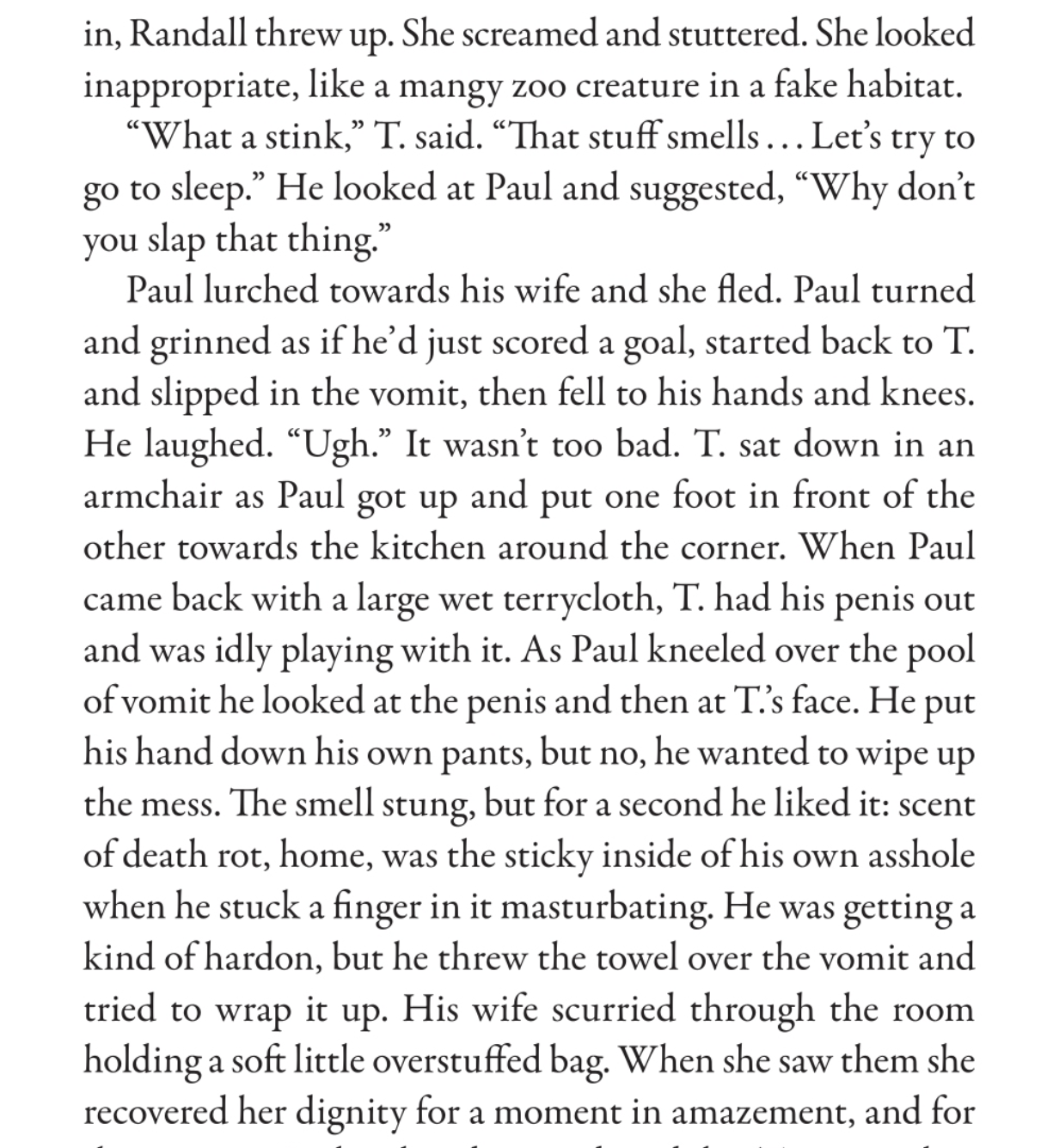
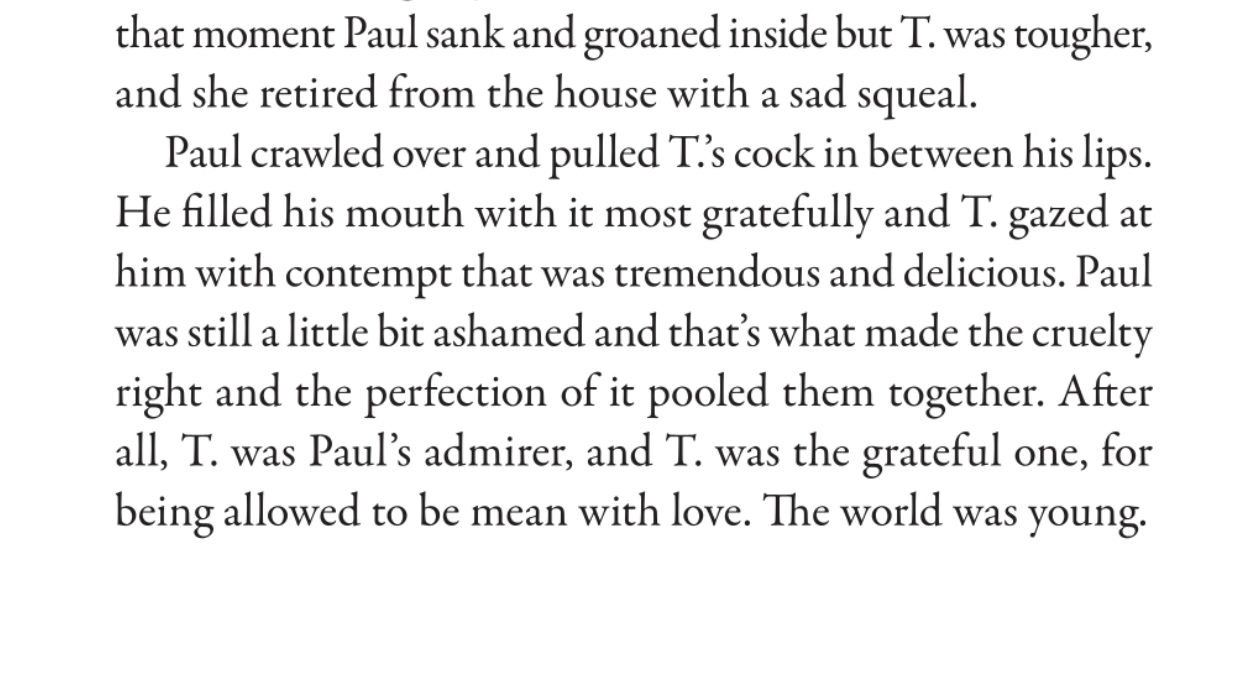
‘New York poet Paul Vaughn has a trick for enjoying poetry readings: He simply imagines the reader died a long time ago. Paul is twenty-seven, married, and an admired poet himself. R. T. Wode’s mission is to give offense. He’s also a poet, freshly landed in the city, and, at age sixteen, unknown.
‘Paul worships T. They embark on a tempestuous affair, dropping acid and crashing parties and perambulating the grit and grime of New York City circa 1972. Paul is in love with T., but T. is in love with experience. Their relationship disintegrates.
‘A novel of compelling originality and transcendent beauty by legendary musician and poet Richard Hell, Godlike transposes the notorious romance of Paul Verlaine and Arthur Rimbaud to the East Village in its squalid, glorious ’70s heyday. The book comprises a version of Paul’s 1997 hospital notebooks: diaries amidst poems and essays, along with, most pertinently, the poet’s third-person memoir-novelette of his youthful time with the now-famous T. Godlike is infused as well with evocations—and sometimes actual poems—of many New York poets of the era, from Ted Berrigan and Ron Padgett to Edwin Denby and James Schuyler. It achieves a lyricism both profane and profound as it conjures the frenetic vitality as well as the existential malaise of an era. It’s a searching meditation on art, life, love, and the impossibility of everything.’ — NYRB
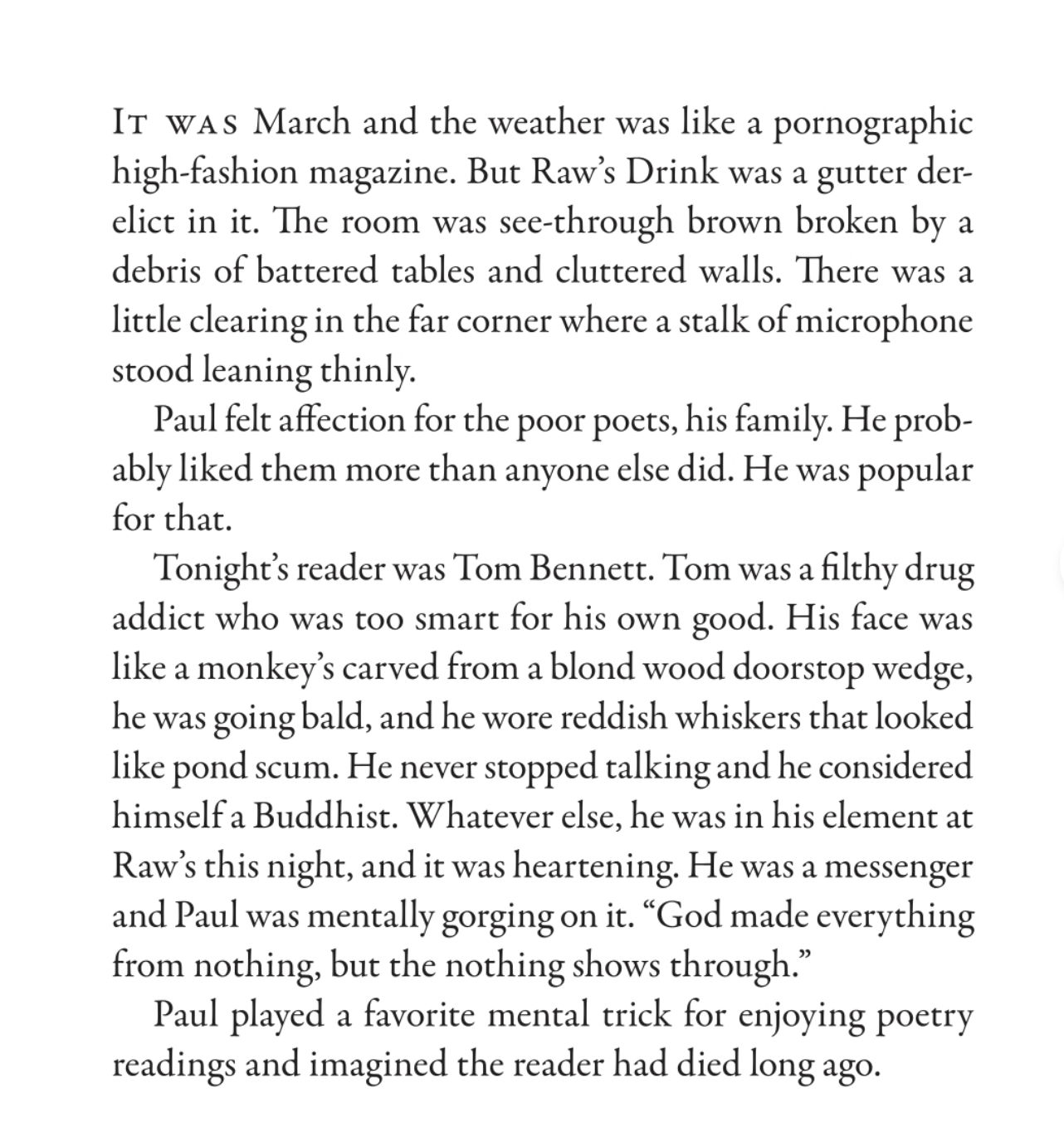
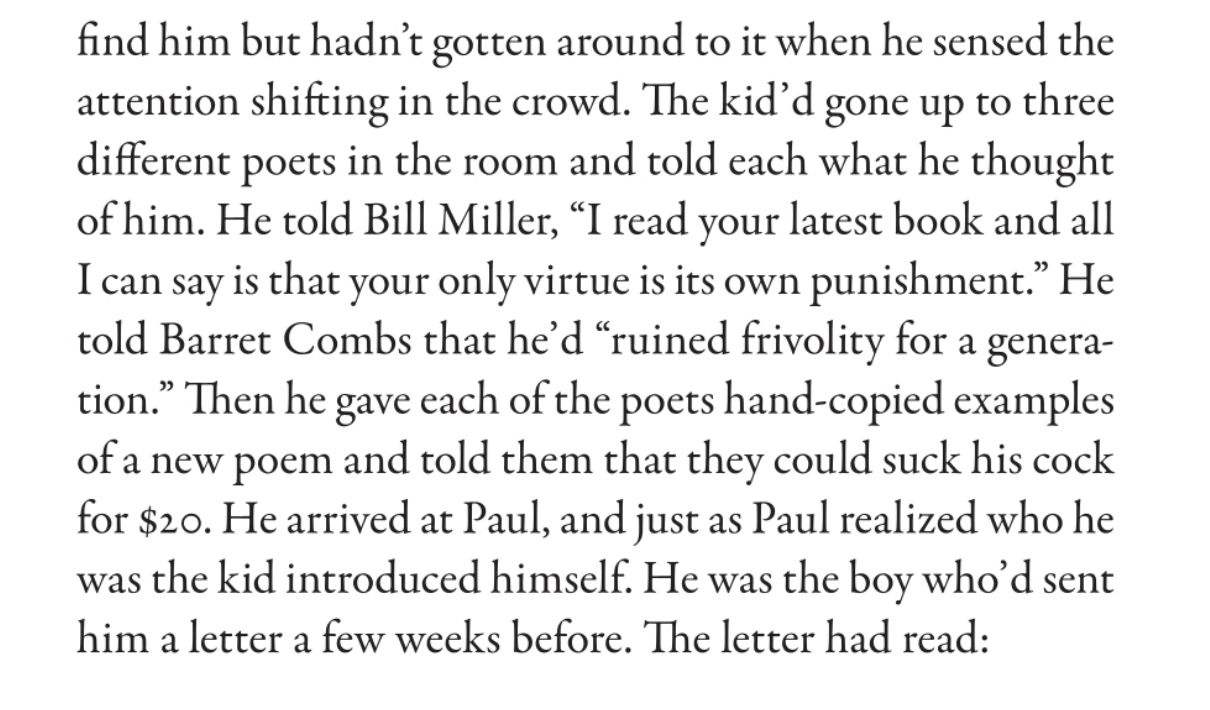
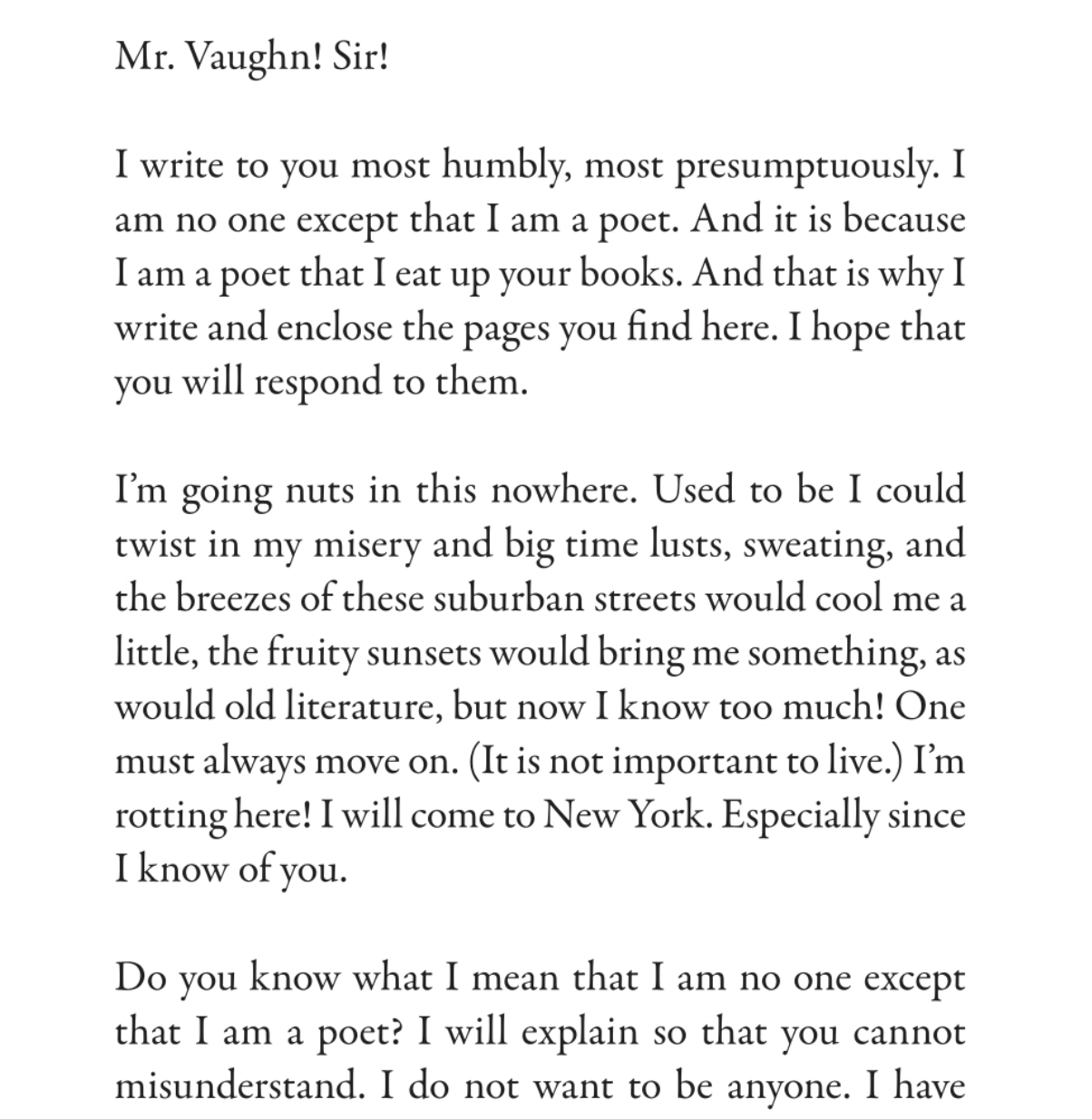
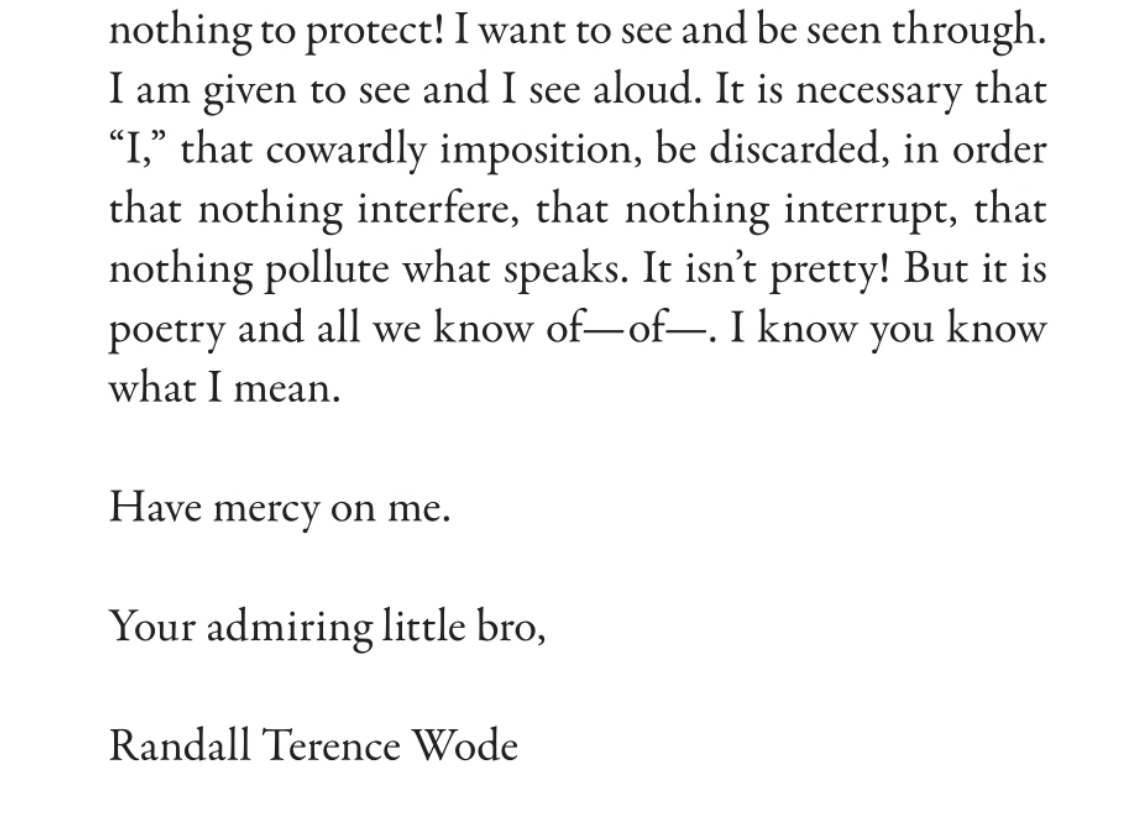
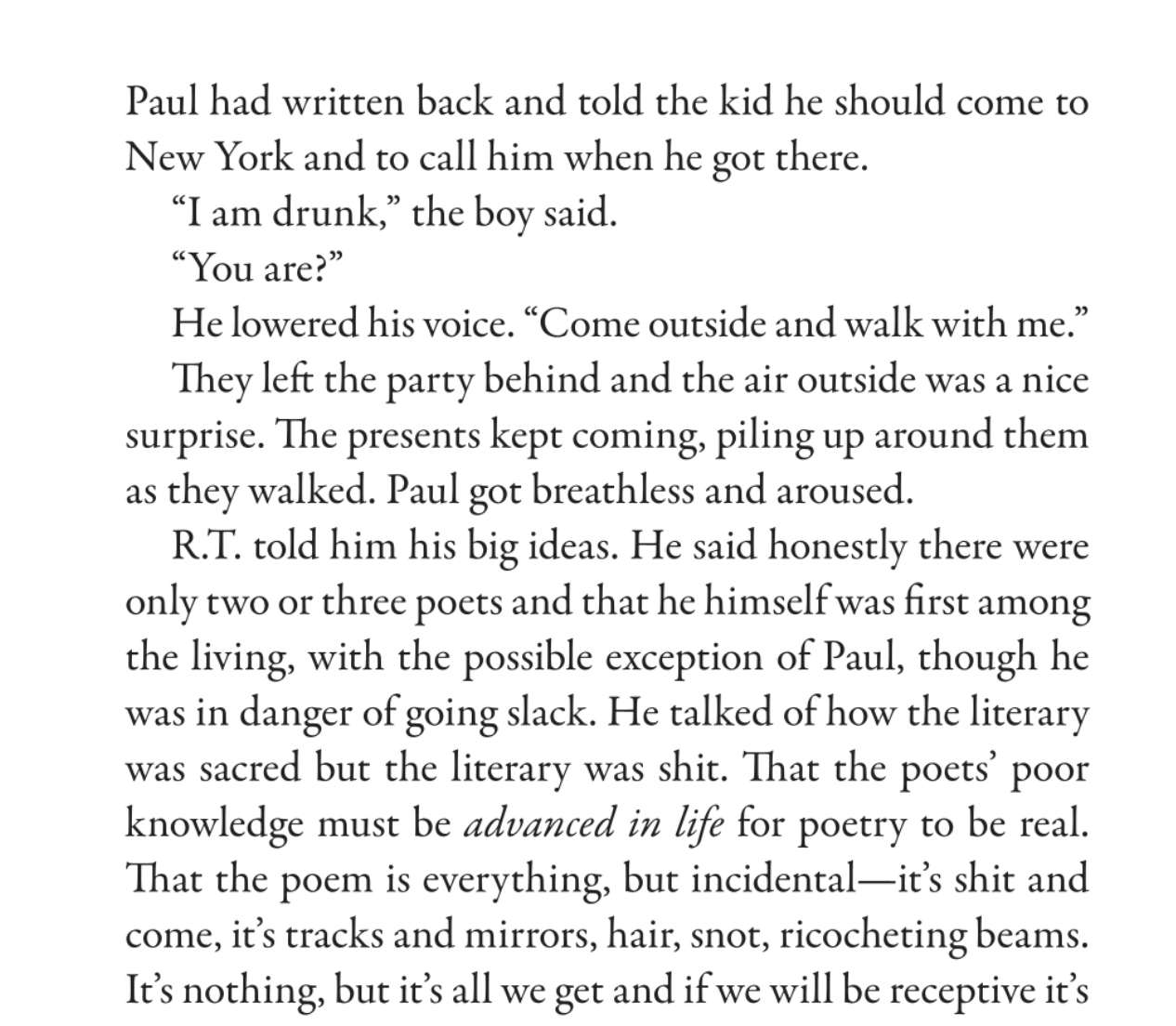
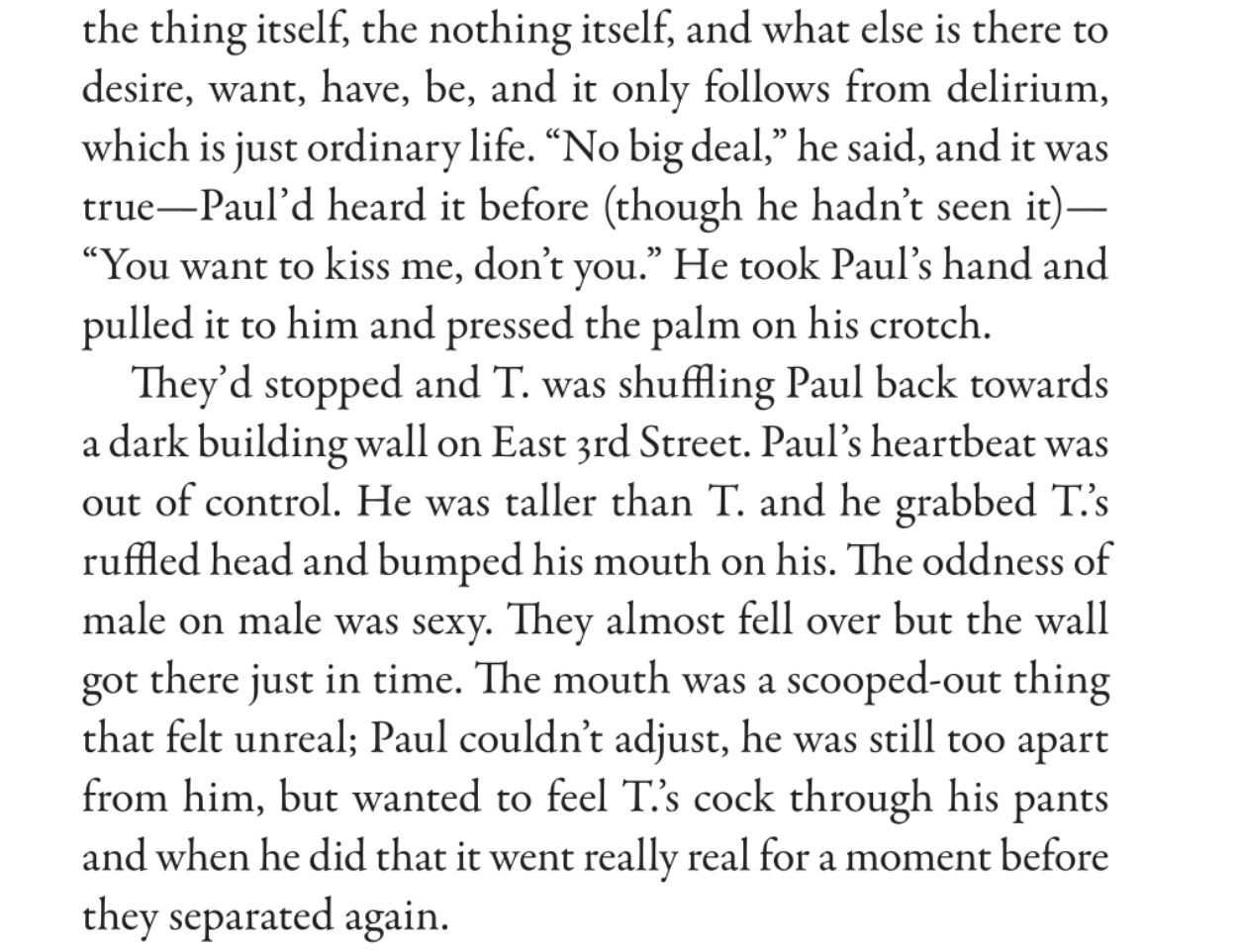
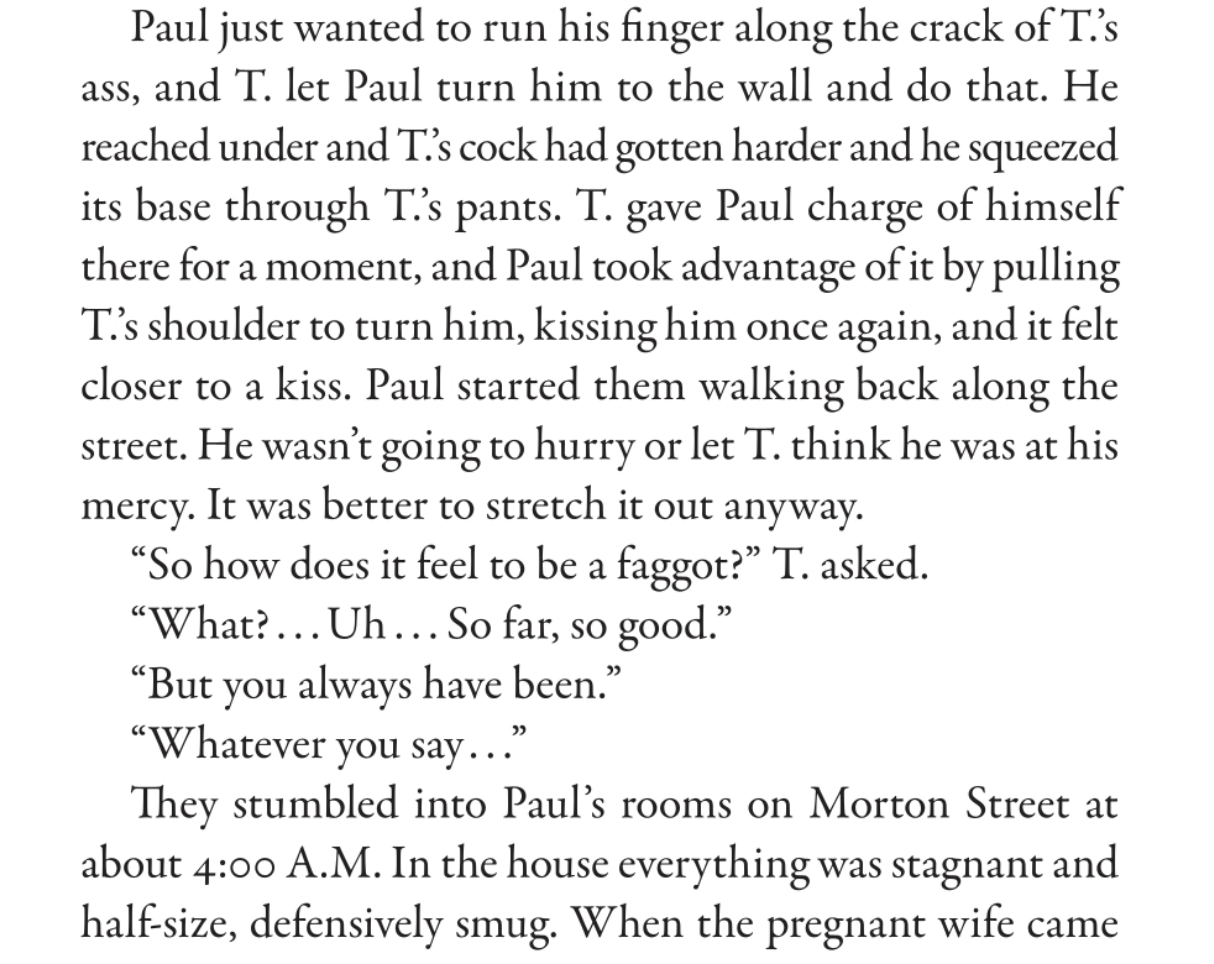
Excerpt

Extra
Richard Hell Part 1
_______________
‘When I have my laptop open, I have a web browser open, and in that browser, I have Twitter open in a tab. Tweets, those 140-character epigrams, are ripe for comparison with the work of David Markson. “Discontinuous. Nonlinear. Collage-like.” Tweets have genres, and Markson’s epigrams have genres. Even a not-too-close reader will notice the broad categories of epigrammatic lines in his Notecard Quartet: suicides; last words; instances of anti-Semitism and racism; critics. My favorite kind are the ones which have now become appropriated, approximated by a genre of tweet: tfw. Tfw stands for “that feeling when.” A few randomly selected examples from people I follow on Twitter:
tfw you realize the bed in the airbnb is the exact same ikea bed you have in your own apartment back home –@helfitzgerald
tfw when your self-confidence comes back after a fairly lengthy absence –@michelledean
tfw a conservative bitches about bureaucracy but praises economies of scale –@adamweinstein
tfw you working on a story and it just keeps getting weirder and weirder –@ebruenig
Tfw points to a specific emotion occasioned by a specific happening. But like all good literature, the tfw tweet makes the particular a universal.
David invented this genre of tweet, though he never was on Twitter. My favorite style of his epigrams are those which are phrased to point not at the anecdote being recounted, but the emotion which the anecdote calls up. Tfw. Emphasis mine:
Beguiled by the romance of Gauguin’s removal to Tahiti.
Until remembering that the man deserted a wife and four young children at home.
Author’s pleasure in learning that the main thoroughfare through Copenhagen is named Hans Christian Andersen Boulevard.
Remembering that the Chinese invented moveable type well before Gutenberg. As did the Koreans.’ — Mary Duffy
David Markson @ Wikipedia
David Markson @ goodreads
RIP David Markson
Extracts: Afterword — [name of author]
Buy ‘Afterword’
 David Markson Afterword — [name of author]
Inside the Castle
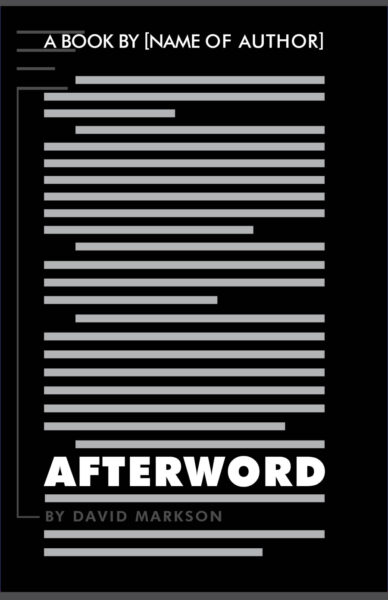
‘A new book by [name of author] creating a context for a fictional reclamation of a book and a tissue of lives that never existed. In the lineage of false literatures like PALE FIRE and DICTIONARY OF THE KHAZARS.’ — Inside the Castle
Excerpt
—–A one-word inquiry Reader discovers on a notesheet, its meaning now lost to him completely: Dead?
* * * * * * *
In The Tempest, there are four characters who are wrongly believed dead, leading to astonished encounters in the latter Acts.
In The Comedy of Errors, there are six.
Too much of a good thing? Writer began to worry when he started filling shoeboxes with notecards for #2.
Chronicles. Being the last book of the Hebrew Bible.
———— Tradi-tion!
& the Individual Talent
(Here Comes Everybody)
—– Beethoven’s Tenth.
Ville-Evrard. Antonin Artaud died in. August of 1939. According to Antonin Artaud later that same year.
Northanger Abbey. 2666. The Master & Margarita. A Confederacy of Dunces. Austerlitz. The Aeneid. Billy Budd. The Canterbury Tales. The First Man. Delta of Venus. The Original of Laura. The Will to Power. A Defence of Poetry. A Moveable Feast. All published posthumously.
—– Housman published a volume entitled Last Poems in 1922.
—– And lived until 1936.
Cotard’s Syndrome. A condition in which one believes oneself dead. Named for the neurologist Proust based his Professor Cottard on.
One takeaway from A Moveable Feast is that Ezra Pound was a generous and faithful friend. No mention of whether he was for or against the extermination of the Jews.
—– Reviewers that protest that Novelist has lately appeared to be writing the same book over and over.
What are you doing, Dave? HAL 9000 wanted to know.
All men who repeat a line from Shakespeare are William Shakespeare. Borges insisted.
The Consul, Geoffrey Firmin. Protagonist of the novel In the Valley of the Shadow of Death. Which Sigbjørn Wilderness–narrator of Malcolm Lowry’s posthumous Dark as the Grave Wherein My Friend is Laid–contemplates having written.
Sigbjørn being a thinly veiled version of Lowry himself reexamining the Lowry who wrote the thinly veiled version of himself for Under the Volcano.
———————————-You say I am repeating
—–Something I have said before. I shall say it again.
Ezra Pound was Yeats’ best man.
Proust was Henri Bergson’s.
A rose is a rose is a rose.
—–Pythagoras once asked someone to stop striking a puppy because he recognized the voice of a dead friend in its yelping.
Greenwich Village. Novelist died in. June 4, 2010.
What a maze of complicated suffering and interrelated nonsense everything is. Sigbjørn’s wife, Primrose, remarks in Lowry’s Dark as the Grave Wherein My Friend is Laid.
—–There is one story and one story only
The romantic disease. Wyatt calls “originality” in The Recognitions.
—–A very pretty poem, Mr. Pope. But you must not call it Homer.
Ithaca. Birthplace of David Foster Wallace.
Maiden name?
Shakespear.
Ezra Pound’s fiancé would have answered the clerk filling out the marriage license.
The Rubáiyát of Omar Khayyám.
Proust got off watching rats fight.
—–And here comes the neurotic titter again.
Primrose Wilderness. Being a character name one doubts even Dickens could offer up with a straight face.
You make good use of the name…Your own name is strange enough. I suppose it explains your fantastical humour. John Eglington remarks to Stephen Dedalus.
Contrary to trending theories, the Earth is not flat. Though it seems the Universe is.
What do you make of that, Watson?
Blazes Boylan.
Brahms’ Variations and Fugue on a Theme by Handel, Op. 24.
———–Admittedly I err by undertaking
———–This in its present form
Having been James Merrill’s opening concession for The Changing Light at Sandover.
Author, for the record, would not need a supernatural rationale for asking someone to stop striking a puppy.
Caden Cotard. Played by Philip Seymour Hoffman in Charlie Kaufman’s Synecdoche, New York.
1939-1943. The deceased Artaud composed posthumous spells written in blood and ink.
Extra
David Markson Reads at the 92nd Street Y
______________

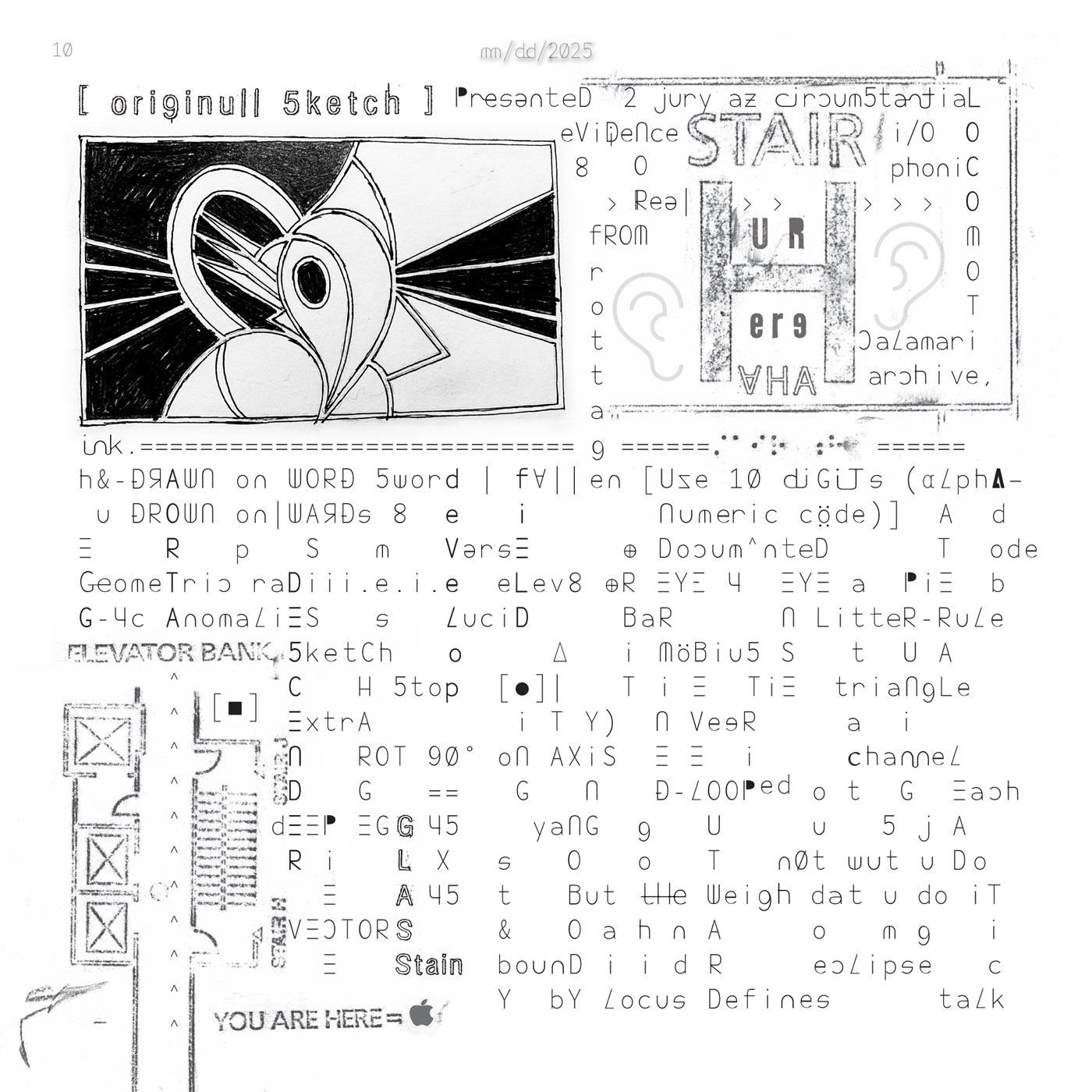
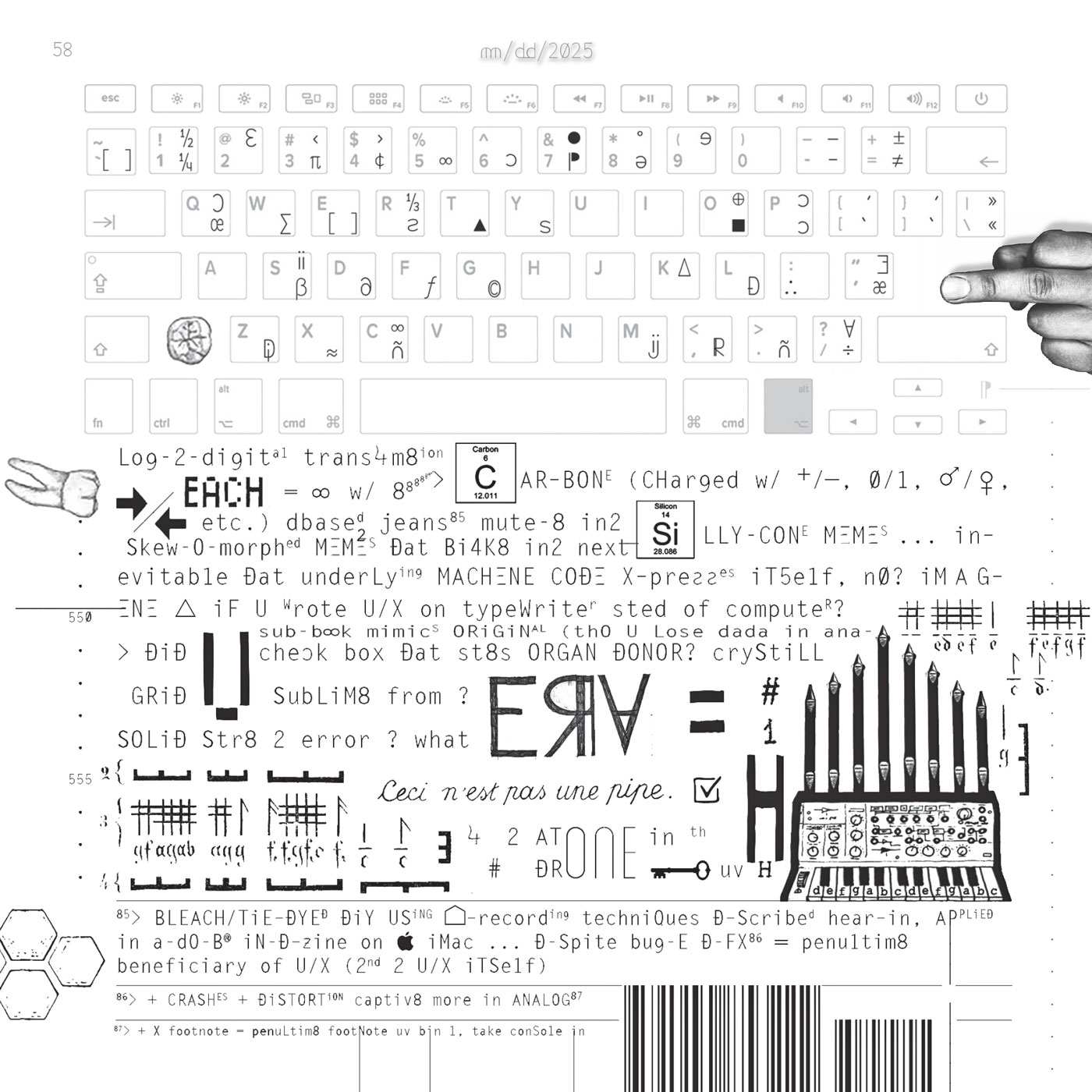
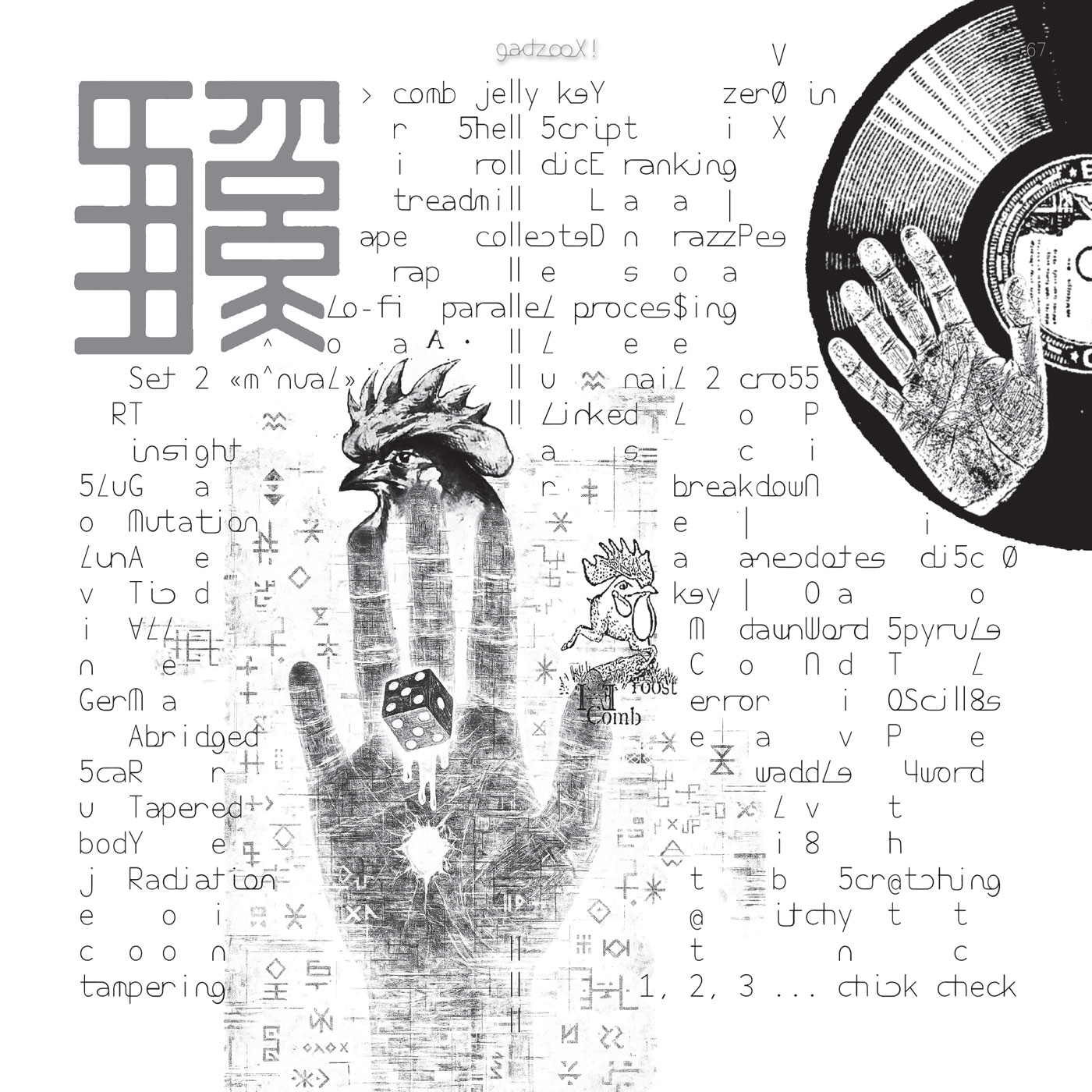
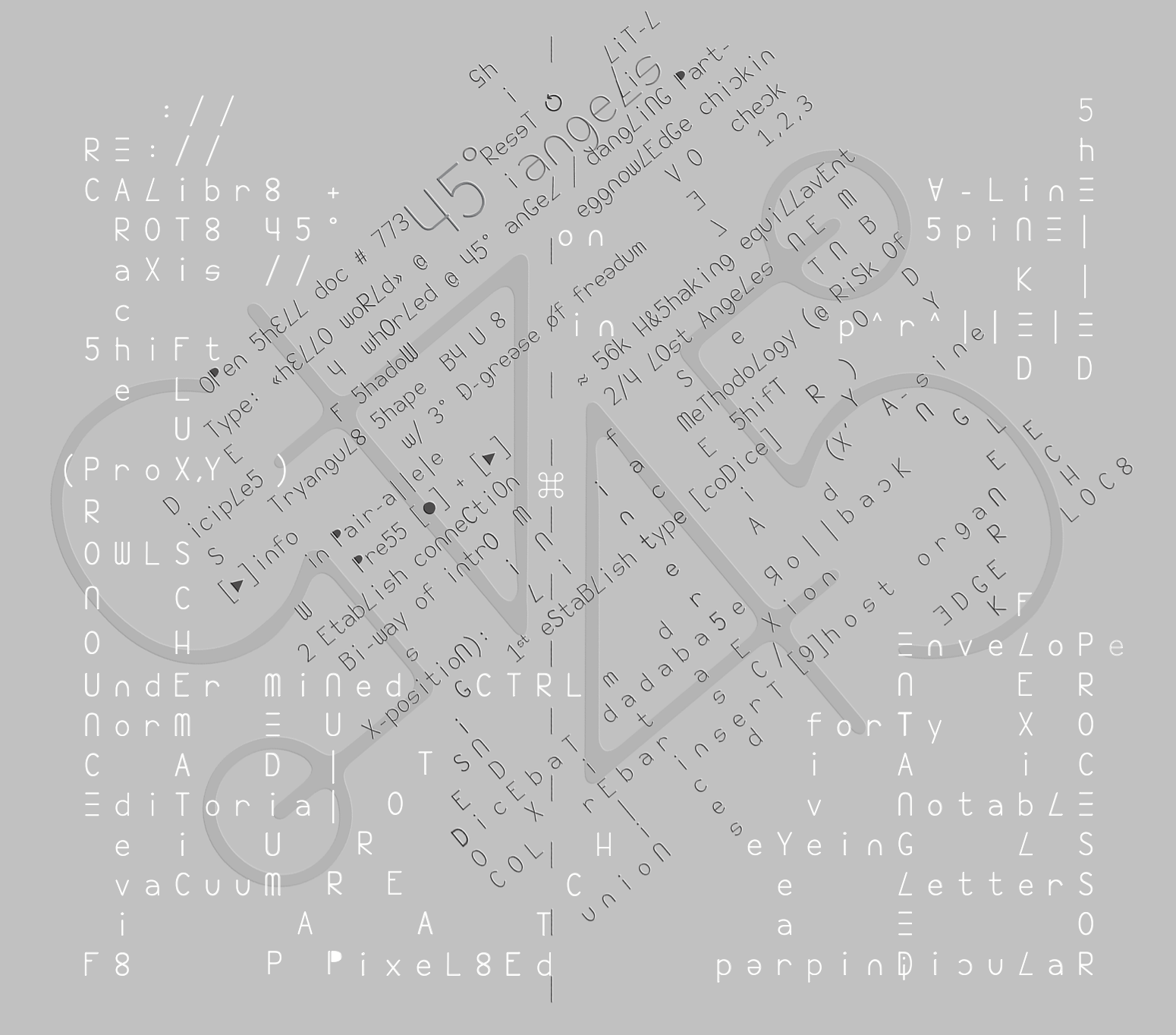
‘The pages of Gadzoox! mix letters, numbers, Greek letters, and mathematical symbols to represent words (sometime spelled phonetically), the sound of a word (i.e., 2), or similarity to letter form (5 = S). As with the acrostics of John Cage (who is referenced), the texts are meant to be read from left to right and top to bottom. Many pages are filled with multiple layers of texts and word forms—a multiplicity of information occurring simultaneously, as in our daily lives.
‘To read these pages—I came to understand each page as a distinct visual poem—requires slowing down, staring until your eyes adjust to the page, then scan the page for semantic content—the words made of bold-faced (or light-faced) letters that go down or angled across the page forming phrases of connected meaning. Soon other related words and phrases begin appearing on the page, but which time the texts become more legible, although the letter types used to write the expressions are unfamiliar enough to force a slow reading.
‘And that seems to be part of the book’s premise: Using technology to undercut itself, to highlight the importance of contemplation and reflection in human life for the formation of knowledge and empathy. The tools of coding from data communication that have been established to ever-diminish our short-term attention spans works are frustrated in the pages of Gadzoox!, which highlight what the inattention misses and how.’ — Tom Bowden
Gadzooks! @ Calamari Archive
Gadzooks! @ 5cense
i arrogantly recommend…
The making of Gadzooks!
Buy ‘Gadzooks!’
 mm/dd/2025 gadzooX!
Calamari Archive
‘“Gadzooks!” is an antiquated expression of surprise, literally derived from “god’s hooks,” referring to the spikes used to nail G-zus to the cross. In typography, “gadzooks” refer to the embellished ligatures connecting letters. gadzooX! is an iterative collaboration between mm and dd, made in the year 2025 A.D., the result of a year-long exquisite corpse-like experiment wherein dd assembled text to prompt a drawing by mm, which then inspired the next round of text, often retroactively self-organizing itself around the resulting images, in a custom font (codiceX) that dd created for the occasion.’ — Calamari Archive
Excerpt


Extra
______________
‘Murphy was visiting Malone. It had been a while since they had seen each other. Murphy being busy in the city, while Malone had lingered in the countryside. Murphy remembered those dark country roads, whizzing down them in the nights as a youth. No noise. But at the same time, all the noise in the world. The humming shadows. Malone was always the type to leave enough room between himself and other people. Murphy, on the other hand, had become a successful C-AWP II, a thing he so frequently had to explain to new acquaintances that it had lost all meaning. He no longer truly knew what the acronym stood for, nor the nature of the work. More recently he had taken to going into the office—a large high rise in the city with a long elevator ride—and sitting there confused as to what to do. The confusion was so wrought he thought he was having a stroke one day, even going so far as to say to a passing coworker, “I think I’m having a stroke.” But the coworker took this to be yet another slice of dark humor common to the world of the office. Murphy frequently went home with a headache. He had begun distancing himself from his girlfriend, Molly. It was a slow, painful process that would irrevocably damage their default modes in relationships going forward. Murphy felt bad about it. It was nothing Molly did or didn’t do. He felt it was connected to his confusion at work, but he couldn’t say in what way. On the other end, Molly was beginning to think Murphy needed help. It pained and angered her to feel pushed away, but she also felt like Murphy was spinning down a dark road, without light or guide, and would sure enough find himself crashed into a large tree. Part of this feeling was informed by a recent event she had witnessed on a ferry to the cliffs. It was very cold and the choppy ocean sprayed the deck from time to time. A young man, very well dressed considering the casual nature of the occasion, had gotten up and started stripping off his clothes. Soon he was naked and screaming that someone named Molly was down there, pointing to the ocean. This struck Molly for obvious reasons. The young, naked man had begun trying to climb the ferry’s rail to hurl himself over when a group of men pulled him back at last. They threw him to the deck, where he flopped like a fish. It all lingered for Molly, although she told nobody about it, least of all Murphy. And it was only a moment, nights later, when Murphy stayed over and was stripping off his clothes in preparation for a moment of intimacy, that she felt like she had witnessed an omen or premonition. That, somehow, Murphy was that young man, naked and flopping on the deck of the ferry. Murphy, of course, knew none of this. He had everything one could seem to want and yet felt fraught over all of it. It wasn’t until he got the letter from Malone that he thought maybe this was the answer. Going to see Malone! Malone was always a dissident, in every possible way. His life, in the country, the hardscrabble hew of it, just seeing it, would straighten Murphy out. He thought of that old children’s book about mice, one being from the city and the other the country. He couldn’t remember anything else about them. It seemed like the last book he had ever read. He had stopped after that one. The mice. The city one and the country one. Whatever their conflict was. When he finally made it to the tiny house in the country, after a six-hour train ride and then another hour and a half car ride there, Murphy was surprised to find a note at the door. It said: Friend, when you arrive, please just come in. I’m sorry. Murphy thought this was strange. He went in. There he found a neat and orderly house. Malone had done well for himself. Yes, he had stayed in the country, but he had made it nice. It seemed he had invested something into his solitary life. This warmed Murphy’s heart and made him feel guilty over the discontent he felt at his own life. Friendship, he thought, was a viaduct from one loneliness to another. When he went into the living room he found Malone. He was sitting in his rocking chair, very still, holding a large shotgun in such a manner that it pointed directly at his face. He seemed upset, perhaps had even been crying a little. He looked disappointed to see Murphy. “Oh,” Malone said. “I was supposed to have done it already. But I couldn’t. I just couldn’t. You weren’t supposed to see me living like this!”’ — Shane Kowalski
A Conversation with Shane Kowalski
‘Hunger’
Shane Kowalski @ goodreads
‘I Open I Wince’
Buy ‘Are People Out There’
 Shane Kowalski Are People Out There
Future Tense Books
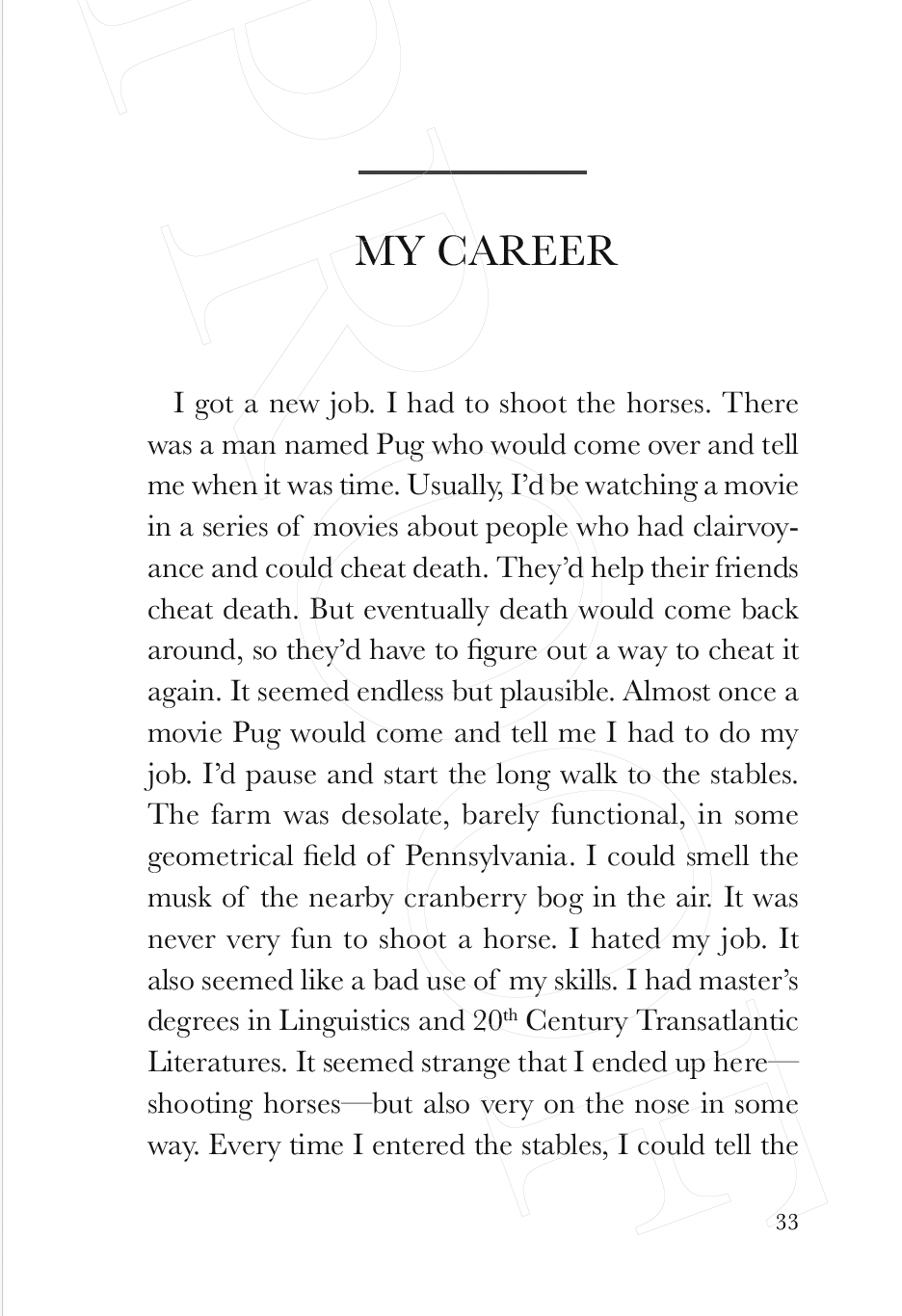
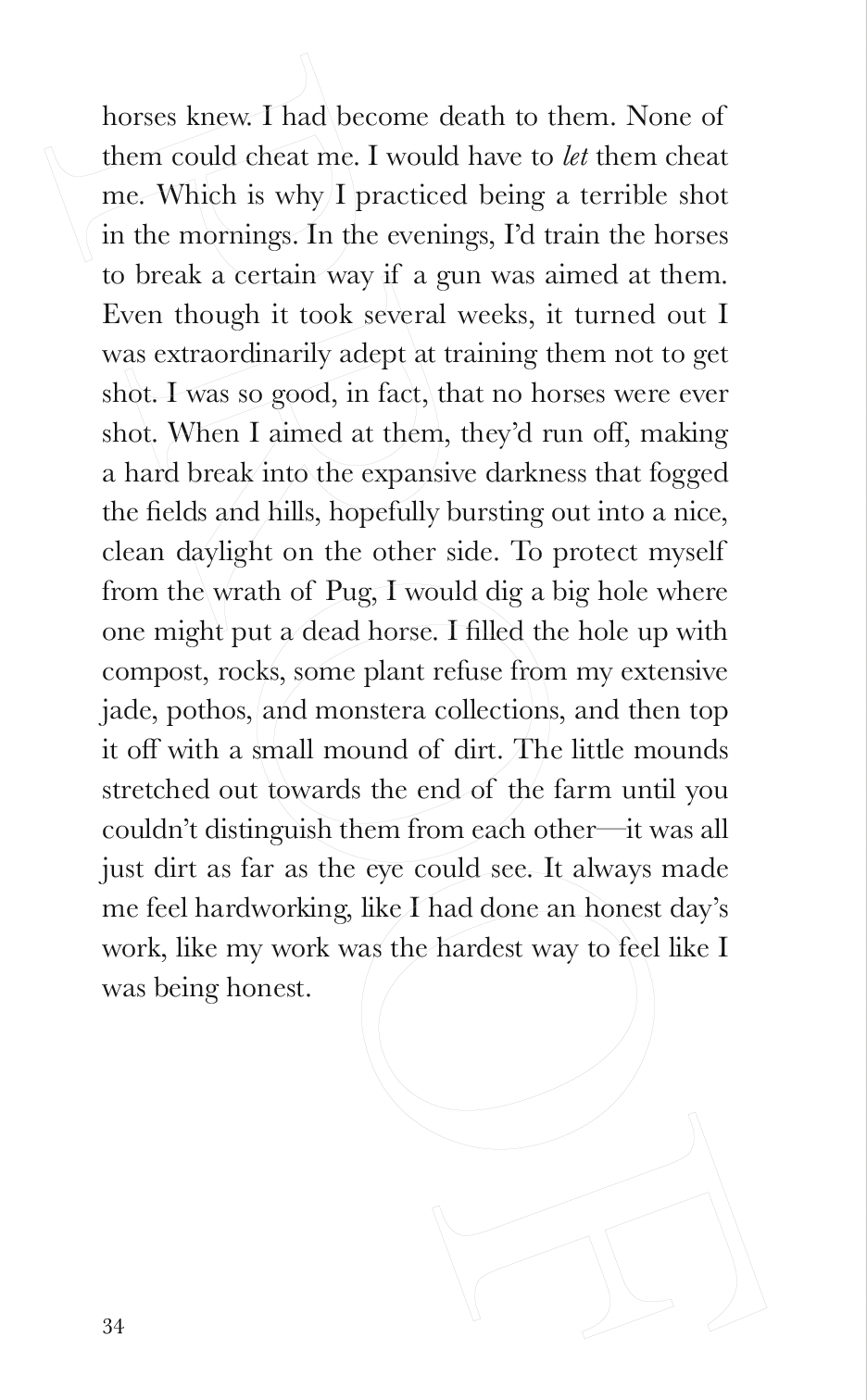
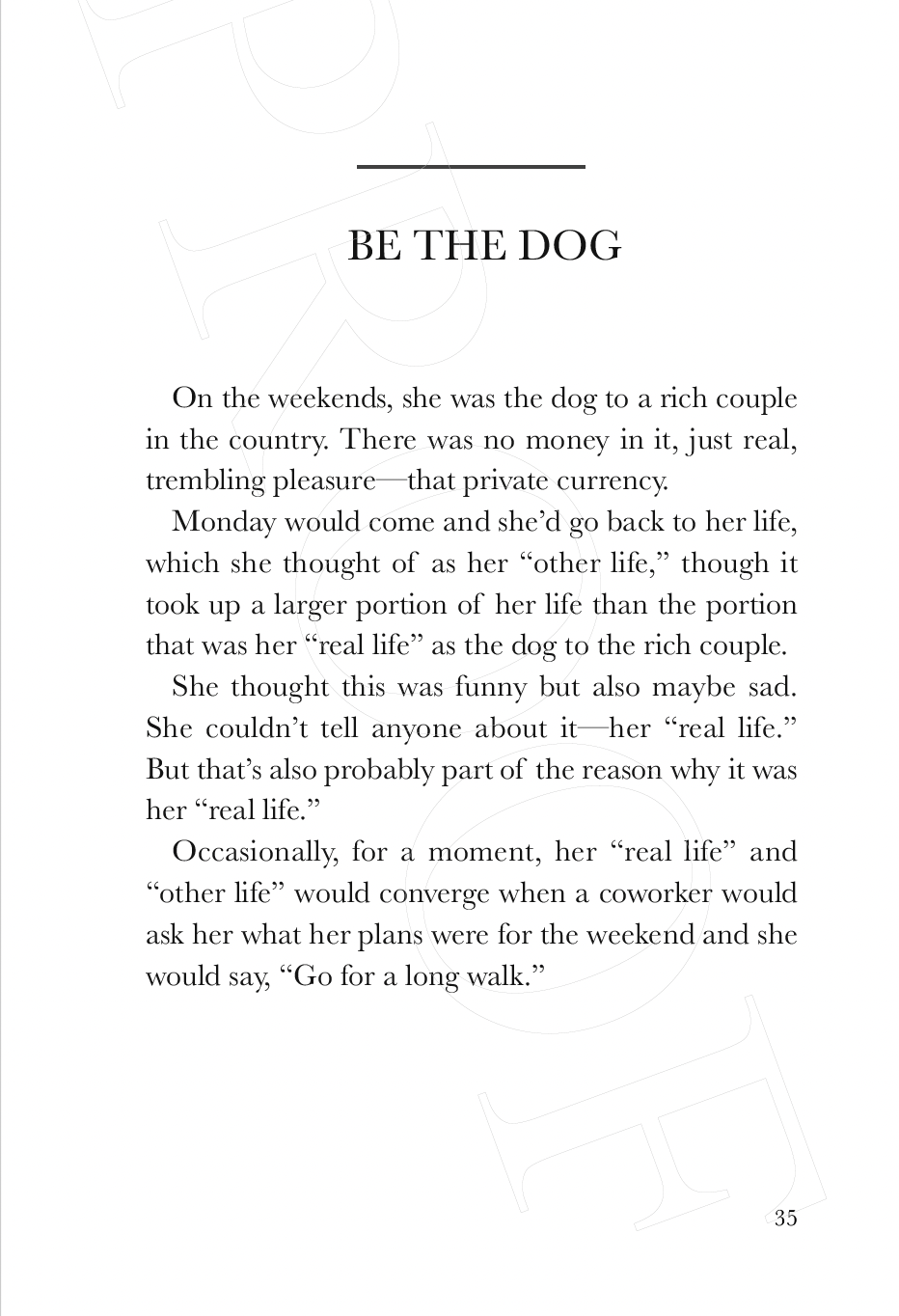
‘With the publication of 2022’s Small Moods came the arrival of a bizarre and playful voice in contemporary fiction. Garielle Lutz called the stories in that book, “by turns sweet-hearted and ruthless, loopy and doleful, otherworldly and ribald, but always inventively off-kilter and entirely on the mark in their raucous sweeps of human ache and ecstasy.” And someone named Sarah on Goodreads wrote, “This was the weirdest collection of stories I’ve ever read and I was so confused just about all of the time. It was great.” Now comes Are People Out There, the second collection of short, daring, hilarious, and cursed fictions from Shane Kowalski. It deals in the inimitable Kowalski manner with the usual kinds of people and the lives, or double-lives, they lead: men who steal babies’ identities, women who become dogs to rich couples on the weekend, neighbors who build guillotines in their yards all summer, and teenagers who are haunted forever by their school plays, just to name a few. It is the irreducible strangeness of these stories that compels you, the reader, further into these other lives. If you go far enough, you may even recognize your own life amongst them.’ — Future Tense Books
Excerpts

Extra
The 2022 Philip Freund Prize for Creative Writing Reading
_______________

‘In 1980, readers of German literature were introduced to a startling new voice through a slim volume, entitled Kleinstadtnovelle (The Small-Town Novella). Written in lowercase, it opened with its narrator waking up in bed:
i am afraid. am female, am male, double. feel my body departing from my body, see my white hands, my eyes in the mirror, i don’t want to be double who am I? want to be me, male, female, see only white. i am facing myself, want to reach myself, stretch my arms out towards myself where am i? i see, kiss, hug and intermingle. at some point lea appears, then reappears, and at last he is aware of her. b. senses: he’s lying in bed, it’s morning, his room is blurry, he tries to take it in, feels the movement of his head, doesn’t try to steer it. no hope for a good day today, fuckingettingup, fuckingschool, fuckinglife.
‘What follows is not a standard-issue torrent of teen angst, though it would become a best seller as one of West German literature’s first coming-out stories, catapulting its 18-year-old author, Ronald M. Schernikau, into the bookstores, feuilletons, and talk shows of German literary and cultural life. In the discussions of Kleinstadtnovelle in these public arenas, interest in the novel seemed to be driven primarily by its subject matter and by Schernikau’s own author-persona as a precocious Wunderkind who published his first book while still in high school. Yet it would be a mistake to align Kleinstadtnovelle with the effusive outpourings of emotion that had become fashionable in German literature under the sway of the “New Subjectivity” earlier in the decade, represented best by now-forgotten novels like Karin Struck’s Klassenliebe (Class Love). Even at an early age, Schernikau was aware of the literary traditions within which he wrote, and would repeatedly complain later in the decade that critics had ignored that his book was a perfect example of the novella form.
‘That no one took notice of the text’s adherence to formal norms is perhaps testament to Schernikau’s talent and craft, through which he created an earnest, seemingly offhand account of a brilliant young man growing up in a small town and realizing that his queerness and his communist politics will come to structure his life. The book was the first of Schernikau’s many attempts to lay out a gay politics that would open him to the world rather than fating him to a specific lot within it: an identity politics not constructed to elaborate and defend a single perspective, but one that sought to locate the self within a broader movement to transform society. While contemporary writers and thinkers like Mario Mieli and Guy Hocquenghem have been widely translated and discussed in English, Schernikau has remained absent from English-language conversations about queer desire and the question of how to imagine a way through identity politics toward universal liberation.’ — Ben Miller
Ronald M. Schernikau Site
Ronald M. Schernikau @ Wikipedia
Innocence and Its Opposite
I Embrace You All: Ronald M. Schernikau and the Queer Left
Buy ‘SMALLTOWNNOVELLA’
 Ronald M. Schernikau SMALLTOWNNOVELLA
Ugly Duckling Presse
‘An homage and reimagining of the classic German Bildungsroman, Schernikau paid tribute to the form even as he challenged stylistic, sexual, and political conventions. Written in all lower-case, SMALLTOWNNOVELLA is a brilliant stream-of-consciousness narrative that follows b, a teenager navigating politics and queer desire in a small, West German town. When b—who is interested in communism and knitting—falls in love with leif, a popular jock, b’s life at school is very predictably upended.’ — Ugly Duckling Presse
Excerpt
i am afraid. am female, am male, double. feel my body departing from my body, see my white hands, my eyes in the mirror, i don’t want to be double who am I? want to be me, male, female, see only white. i am facing myself, want to reach myself, stretch my arms out towards myself where am i? i see, kiss, hug and intermingle. at some point lea appears, then reappears, and at last he is aware of her. b. senses: he’s lying in bed, it’s morning, his room is blurry, he tries to take it in, feels the movement of his head, doesn’t try to steer it. no hope for a good day today, fuckingettingup, fuckingschool, fuckinglife. what pisses him off as usual is his mother trying to wake him, year after year the same words, phrases, that tone of voice. there’s no escape from her love, it makes her wake him so tenderly that waking is almost unbearably dragged out. his coming round, collecting himself, his crankiness are all reactions to the way she tries to stave off reality. if at lunch he tells her he was late for school again, that lat wound him up or he got to flirt with lenkel in lieu of an apology or that lehm got all moral on him about his constant sloppiness, she says: perhaps we should get up earlier, or she just accepts it. it’s impossible to get up earlier if only because the morning would be dull, a dull start tinges the whole day. even throwing back the cover is an effort, so he doesn’t, certain of another warning. the patient stage of her waking-up ritual is past, now she’s ratty, soon she’ll be adamant: when she gives up, he’ll get up. after he’s made himself open his eyes, his mind becomes clearer, he runs through the school day with a glance at the timetable pinned to the wall. he can’t read what it says but he’s given each subject its own colour and almost knows the lesson plan by heart. still, to be certain, he has to overcome his short-sightedness. b. loves his glasses, they’ve been his friend in all sorts of situations, for the past two years they’ve been through what he’s been through, he’s proud of them; when he comes in from the rain and has to clean them, when they fog up in the shift from cold to warm and he’s blind; now he kisses them, murmurs, sings, does an operetta: i am your slave my whole life long. b. sits up, swings from his bed, the mattress has shifted, he stands up, turns around, black spots before his eyes for a moment, low blood pressure, he hears his spine cracking as he stretches backwards. he staggers into the hall after he’s put on his jeans, goes to the wardrobe and stands indecisively: shirt time is decision time. eventually he grabs any old thing, throws it on and sits at the table where she’s been calling for a while: i’m already at the table! two eggs are waiting for him, one in the schnapps glass with the gold rim, the other lying next to it, and the cup of coffee, into which he tips milk and three heaped teaspoons of sugar. he hears himself say: first class is double latin. the coffee is a testimony to maternal care: a lot of love, a little cocoa. from an early age, lea has determined his taste, he can’t eat anything without sweetener these days, he’d prefer something bitter or sour. as he stirs, he thinks of what he dreamed, finds it hard to remember. as always, this makes him try all the more, which makes it even harder. most times, his dreams don’t come back to him except sometimes at school, perhaps at break time, but often in some boring lesson, which makes the class even harder to endure. he gets hot thinking his own thoughts, he wants to flee, run away, give himself entirely to last night’s dream: to be alone now, allowed to work it through, in peace. but instead he has to sit with his mother whom he calls by her first name, or with a bunch of bored teenagers who are probably thinking about their dreams, or their girlfriends, or their last wank or their good grades, if they aren’t doing their homework for the next lesson. if b. storms out now, down the steps, across the courtyard to the toilet, his dream will be gone, he’ll curse himself, wait a while then go back upstairs. he knows what’s in store once he’s drained his cup of coffee: the nauseatingly trivial and familiar demands, warnings, instructions, the packing of his school bag, the bathroom ritual with constant shouting from outside the door, he forgets everything: teeth-brushing, his glasses, his money, his books, his key, notes etc. b. eats the second egg with that slow dedication that makes his mother worry whether she can ever let him leave home, making precisely this a necessity and reinforcing b.’s desire to do so: when he no longer needs to delay anything, he’ll change. he stands up, dithers on the spot for four seconds, then goes into the bathroom. he hates his morning ejaculations, his well-practised beautiful body, his hair in the mirror, his nose that, once you know, you can see has been broken, jumping on the trampoline at school, his eyebrows that join above it, his mouth with its full lips, the two incisors that appear when he smiles, the hair on his chin, so scant that it makes him feel awkward. what he loves are his upper lip, the pubescent fuzz that’s having some success, and the large, pale-red tip of his cock in his right hand. he overlooks that his eyes are large and sky-blue, he only knows that they’re much more expressive with make-up, that his long eyelashes only have their full effect when he slowly closes his eyes, which comes across as wayward or awkward or snooty or cocky. when he comes out of the bathroom, lea’s standing there in her coat, although she knows perfectly well that he’ll be another ten minutes. he tells her this, irritated, has no idea of course where his latin book has got to, reads the headlines of yesterday’s newspaper to reconfirm that he’s not alone in the world, but he’s with lea, who follows him everywhere. he picks up his german book from the floor, making the notes and the booklet inside fall out which causes a further delay of about fourteen seconds that makes them both even more impatient. digging around among the coats: the black jacket with the arafat scarf or the grey silk scarf isn’t warm enough, and the coat is too well-cut for the scruffy types to accept, a fashion without guarantee: cdu-party key rings can also hang on low-slung jeans. he puts on the cardigan which isn’t warm either but he likes it because his badges fit between the two rows of stitching: and armed with badges, he is strong. b. puts a thick pullover on underneath, loops a belt around his waist, looking like a girl from the back, reaches into the key box as he goes past and goes on ahead. long, dark entrance hall, doors on either side, lift, glass door, seventy letter boxes, seventy doorbells. it’s a beautiful, clear winter day and from the village, the bells are ringing, they cross a field, his mother enters the six-storey building ahead where all the tenants behind them work: the hospital. b.’s mother is a nurse, they live in the residential home for healthcare workers, and just now b. is reaching the misplanned intensive care unit that is now used for housing, where his classmate lives, the daughter of a doctor. b. drums his fingers on the window pane where, on the other side, leyla is just putting on a blouse and looking in the mirror. she turns round to him, sees him, laughs, makes a sign he can’t work out and leaves her room. tchaikovsky’s first piano concerto is coming from somewhere. leyla comes out with lutfiye, gives him a kiss on the cheek, asks: hey, how are you? and takes his hand. you’ve got my shirt on says b. and gets a smiling yes in return for his thoughtfulness. the two sisters are a head smaller than him, the three of them look funny in the big wardrobe mirror when they visit him. have you learned the words for the vocabulary test? lutfiye asks him seriously. she’s cramming for her ‘a’ levels, sometimes tests him on stuff that they’re forced to learn. b. laughs, asks: what for? he takes for granted her solidarity and condemnation for his flights into anarchy. leyla talks to lutfiye in their native tongue – turkish – b. walks along with them, not the centre of attention, irritated, then reminds himself that he’s just used to being it or is perhaps being foolish. they go past the high hospital building where a woman jumped from the top floor not long ago. they bypass the faded traces of blood in the grass, have to climb over a chain, there’s no official path here, leyla holds it up after b. has climbed over it and bends down and under it, while lutfiye goes round it altogether. like every morning, b. feels the advantage of being almost six foot two. i don’t look brawny, he thinks, just lanky. they cross the main road, turn into a small street, go round the schoolyard that is bounded on two sides by the pavement and enter the building, a school route of five minutes. outside the doors, people stand waiting for the bell, smoking their first cigarettes, having their first moan. b. says hello!, loses the two girls to some group of kids, goes over to renate whom he owes a mark from yesterday, gives it to her, chats. renate asks, what’ve you got now? latin, b. answers, because since they started the course system, each one has a different timetable. b. gets his latin book out and looks at the vocabulary words for the first time. they have precise meanings. there is only one word for good, decent, prosperous: bonus. and liberalis means both frank and generous. when the bell rings, they linger a while, then go into the classrooms. b. has to go to room twenty-two, up a few stairs in the old building, a few hellos!, a few silent looks, arrives, goes in, sits down next to laura. hey stupid, how ya doing? she greets him like every morning, oh, just like always. she gives him an invitation for saturday’s youth mass in the village church that her youth group have been preparing for a long time. she knows he’ll come, doesn’t waste words asking, just presses the dog-eared invitation retouched with felt tip into his hand and says: you coming? b. says oh sure, and smiles. she tells him about her work, he shares her joy in the seminars and successes, the small-town pastor’s youth work. which is a great deal in a society that encourages everything except social behaviour. b. goes over to the blackboard, takes a piece of chalk and writes in his childish scrawl: those who don’t expose themselves to danger, are killed by it. someone calls out from the crowd: are you some kind of philosopher? and the ones who have read it laugh, b. too, they sit on the tables, and when the latin teacher comes in, they’ll drop into the chairs which their feet are still propped up on, they don’t even notice the steady abhorrence of him at the front. although lat pretends to be hip, they all know that he’s not quite at ease with this new-fangled way of behaving. and lat is mr banks, whose governess is mary poppins, and who singingly announces: tradition, discipline and rules/must be the tools/without them we’ll see: disorder, catastrophe, anarchy. someone who’s had to spend his whole career translating tendentious reports on infantry, encampments and attacks has a worldview infused with true values: there are hard workers and lazybones, cowards and statesmen, speakers and the people. only in this disguise is one reactionary and progressive. in latin texts, the world is ruled by the hard-working and the strong who let youths vie for their favour, a circumstance that, as lat comments indignantly, was due to the prevailing lack of morals at that time: a rare caveat. if you never learn the background to things, how are you supposed to presume there is one? no one around b. seems to notice the cruelty of lat’s example sentences that illustrate various grammatical rules. but it’s important whether he killed his mother beforehand or if he was right in the middle of it! the leader saw that the soldiers loved him! he thought he was a friend! and on cicero: the text is written for intelligent romans, not fish-sellers! and the worst thing is his repetition three or four times a lesson of the phrase: with deadly certainty! next to him peter is trying to set fire to his textbook under the desk, perhaps testing the school curriculum for resilience. b. escapes by exchanging notes with laura. now and again, he’s called on and has to recite rows of pronouns, he gets it wrong of course. lat bellows, learn, you atreuses! through the room and no one dares ask what it means. b. is done with lat. lat regularly goes over time and doesn’t give a break in a double lesson. when they’re outside, the conversations start: did you see the film yesterday on tv? crazy! the way he kept whacking him in the stomach and kept shouting: kindergarten! and everyone dead at the end. beginning was a bit tacky but otherwise resuuult! second repeat and they’re still none the wiser, b. thinks melodramatically. a few of them go over to the kiosk that makes a living from them: chatting, drinking coke, eating crisps or rum balls or trail mix, buying or sponging cigarettes, and there’s the area where the dealers hang out with their shit. the following incidents threaten to escalate into complete chaos, writes the school headmaster on a handout: every break time, the school is turned into a travelling circus. doors, tables and chairs are demolished, without anyone taking the slightest responsibility. hygiene would justify locking the toilets, the cisterns are blocked, rolls of toilet paper are shoved into the drainpipes, toilet seats are dirtied in the most revolting manner, paper towels are set alight, etc. the windows have been equipped with special security arms. in many cases, these arms have been removed in order to open the window fully. it is worrying to observe the conduct of students and motorists in front of the building. it is merely a question of time before the first accident confronts us with the reality of an administrative investigation. therefore please advise your classes once again that all pupils below the tenth grade are forbidden to leave the school yard at break times. i propose to the conference that we punish infringements with up to three days’ suspension because i cannot be accountable otherwise for pupils’ safety. to underscore the seriousness of the situation, i am sharing this letter with the town council and the parents. at the same time, i would ask all class teachers to read out my directives to their classes! despite the mostly amused reaction to the handout, profits fall, leaving only the ones who have to knock back their beer at half past nine in the morning because they can’t take it otherwise. that’s what school teaches you: if it’s all shit anyway, then just get the hell out of the whole thing, no conforming, whatever happens! resistance is a pile of shit damned to fail from the start, not worth it. better a bottle of beer or a joint. and someone who’s just toking on one and whose ‘nuclear power? no thanks!’ badge is winking from his jacket smiles at b. and says: if only we smoke enough, they’ll soon stop with their nukes. the guy laughs back. b. goes into the new building, advanced german with lenkel, counts towards ‘a’ levels. at the beginning he tells the others he’s tempted to take her hand, breathe a kiss on it and, with a struggle to control himself, stammer the words: ‘my dear lady, i honour thee.’ lenkel provokes it, she’s fashionable and small and fat. in any case nothing helps much, not discreet lilac nail varnish nor the matching handbag, watch or ear clips for every outfit: the trouble the woman goes to is simply staggering. b. watches her reading a woman’s magazine during a class test and can hardly finish his essay because he’s laughing so much in sympathy for this woman whose face reveals everything: her frustration, her difficulties.
Extra
Verliebt in die DDR – Das traumhafte Leben des Ronald M. Schernikau
*
p.s. Hey. ** Carsten, Hey. Everyone, Hot tip from Carsten to those of you to whom it might apply: ‘[This] just popped up on my FB feed & I thought I’d share it here. It’s a poetry chapbook submission opportunity with Green Linden Press. Deadline March 21. Thoughtful of you. I guess I’ve gotten used to having to trek all the way out to the sidewalk every time I want to smoke at a hotel. Good exercise? He does or at least did live in LA and I think he still does. He’s quite old and doesn’t get out much at all apparently. Ah, m.vkvideo to the rescue yet again. The visa is submitted, so now it’s just waiting to see if the govt. thinks I’m okay to reside here for another year. Our film-related traveling starts again in mid-March when we go to Stockholm for a screening there on the 18th. ** _Black_Acrylic, My pleasure, sir. I feel so lucky here in Paris where there are lots of theatres that show nothing but interesting anti-commercial films past and present. ‘RT’ has a poster, but I know that very few of the theaters that have shown it displayed the poster. Maybe you’re right: dying form. ** Steeqhen, I guess use the meds to get normalised and then see how normal you can stay without them? I’m just going on second hand ideas from friends. I’ve never taken meds. Probably should have at certain points, but … Sounds like you have a decent boss. Lucky you both. ** Laura, Well, first, brave and admirably curious you for attending that workshop, and, second, eek. I say that knowing that most publishers in the world would probably snap those writers up. ‘Blood Meridian’ -> ‘Hogg’: he’s in for a shock. Glad you Iimura is in your orbit. Poems! I’ll read them when I’m free of p.s. land. Everyone, Want to read two new poems by the inimitable Laura? You can! One of them is here, and the other one is here. France just wants to know that I have the resources to live here and spend money here, I think. My lawyer said I shouldn’t even bother mentioning my books and films and stuff because they won’t care. I like that word ‘sheer’. I’m going to figure out a way to use it. The script won’t be done until Zac thinks it is. I probably won’t be talking about it for a while yet. Hang in there. Hugs in return. ** Charalampos, Now that Carsten found ‘Candy Mountain’ I’m going to go watch it again. Agreed, agreed about the new GbV monikers. But of course. ** Steve, On the visa, now I just wait for their decision. They might ask for additional documents, but ideally not. I think the writer Doug Sadownick who I used to know was in the Black Leather Wings. He’s interviewed in the documentary at least. Bob Flanagan knew those guys, but he thought they were kind of silly. ** kenley, Hello there kenley! Welcome back from your hell. Thanks, the visa is submitted, so now it’s just wait and see. Yeah, I see my stuff in that realm, or I have that aspiration among my other aspirations. What’s on your immediate horizon? ** Uday, Thanks. Awesome if you can fuel your movie nights thereby. I regularly come across edging slaves who share the very same dream as you had. ** Okay. Today you get some loveable books I read recently — except for the Richard Hell book which I originally published with my Little House on the Bowery imprint years ago. Dare I hope that you’ll see something up there that seems like it will melt your hearts? See you tomorrow.



 Now available in North America
The Schernikau book is exciting. On the Road was my first encounter with experimental fiction, so stream-of-consciousness writing is always a winner in my eyes. Not that the genre speaks to me directly but it seems transgender lit is having a moment right now.
I’ve sampled a little Markson, but this is way more wacky. I don’t think I’ve ever heard anyone say gadzooks! One of those words that I’ve only come across on a page.
Schernikau looks really interesting, but I’m concerned about the lack of paragraph breaks. But it seems to be a short book, hmm.
Iimura looks fascinating. Will definitely check out the clips.
Despite all the buzz, not sure if I’ll see Pillion since I gave up on the novel. I did finally see Ron Peck’s Nighthawks, which had some pleasant surprises.
Bill
Hi
I have Godlike and it is on my queue of over 100 books to read next. But I have to say I am completely fascinated by SMALLTOWNNOVELLA. Only know the info you posted today. He looks very much like Werner Schroeter in the first pic posted. The book looks like begging to be read
Loved Candy Mountain
All the good vibes for Visa news and also your new script
Hi from cold Chania Crete
@Laura: There’s not really any chapbook etiquette, cause I’ve seen publishers go for 100 pages & more. But most try to keep it lean.
My upcoming chapbook is called “Skull Music” & is simply a collection of 20 poems that form a nice cycle of sorts. What it’s about? My usual themes: dead friends, strange pagan gods & wild visions
do the gods think they’re strange? or are they too strange to get to know? sorry about your dead friends tho. i write about someone i’ve never even met & i still think, deep down, there’s smth about him i understand or whatever
We smokers do get more exercise, what with having to traverse whole airports et al. for a few puffs…
Last stop at a hotel tonight, which is a weird pseudo-resort out in bumfuck nowhere. Not the mystical, appealing kind at first glance, but maybe daylight will change that in the morning. Tomorrow afternoon I’ll be back home.
No Spanish festivals on the horizon right? Bummer. The film landscape out here is odd.
Hi Dennis,
thanks for your reply regarding Wiktor Grodecki! Luckily, I somehow got Mandragora and these two documentaries on DVD years ago because it seems like now they are quite difficult to come by, at least here in Germany.
I’ve been working in a drug consumption room for quite some time and am now starting to study again (social work, which I may not really believe in, I don’t know. But I really love working there). And there is this group of guys that brought me back to your books because I couln’t understand them and I couln’t understand myself in relation to them. That’s such a weird thing, really.
I guess you’ve heard that a million times before, and maybe it’s not even that relevant to you anymore – but seeing one’s inner chaos or the chaos around oneself been put into words kind of heals something.
And I really enjoyed you post about Ivan Zulueta. Arrebato is one of my favorites.
Have a nice weekend!
Hello friend. I am having a terrible time internally. Thats that. On the other hand, I submitted a excerpt from my story to SCAB. Thats good and new news. Wont make tommorws exhibit, thats heartbreaking. I outcome. Iknow its not zen to think of money but I just feel hopeless about dominos. I dont know. Hopefully I’ll feel better tommorow. Terrible times are only terrible reminders of the past, and the constant unending fluctuation of pain. I cant bear to think that some things will never change….
Hmm what else.
Im sending you this instagram account called “pinakotheca_book” also you can follow it they always have so many cool archival post that are so up your alley!
I will do anything to prevent your instagram feed to be filled with mindless slop because I beleive social media is the most lucrative form of media if we knew how to utilize it correctly.
Oh I updated my website
What do you think of my dog pfp?
Sometimes I wish people knew my pain was there. Definitely not like address it because I would feel uncomfortable and I dont want that. I dont want to be a burden added to another burden. But to just not feel like im faking a “this is ok” to myself everyday and to even realize that maybe someone else is going through everyday pain aswell makes me hopeful that i’ll get through it(although sad that they go through it) and that I dont need help I know other people go through tings, but to just not feel like im faking it. I always hated the “Other people go through the shit you go through and MUCH worse and worse and worse” discrediting, but idk maybe its true, I know its true, but….it doesn’t mean I have to be silent….I dont know, and im not asking you, sorry if it seems that way.
I just want this comment to be eaten and forgotten, haha. This seems the best place, while also simultaneously being fleetingly seen.
Hoping its posted late enough to barely be seen.
Godlike! That book gave me my most enduring and personal nom-de-plume, and one of exceedingly few that other people can link to the real me. How nice to see that it’s being reprinted and I can recommend it to people anew. Speaking of classics linked to DC’s in my brain, have you heard the new Guided by Voices single? I like it alot, and think this album might be better than the last, which was nice enough but not my favourite from them (I do still hum Xeno Urban from time to time). Feeling fractious, and very much not like an edging slave despite the connection you see.
@Carsten Yeah, that was me talking about a chapbook. Thanks! Green Linden are great, I’ll definitely try my luck there.
@DC Yay, book rec day. I’ve been tracking the re-publication of ‘Godlike’ so that’s very exciting indeed. I actually know about all of these books. That’s a perk of keeping extensive watch over small presses for submissions. The Shernikau is really jumping out at me in particular. I still haven’t read Markson. ‘Wittgenstein’s Mistress’ is one of the books I’m always meaning to get to.
I’ve reached a point with the long poem thing where I’m really working on creating a sense of distance between myself and it and am at the point where it’s like I’m hungover and embarrassed and am trying to think about what of my feelings is necessary to bring out. I’m actively engaging with this idea in the work and whether I lose my integrity by being irresistibly compelled to use my real feelings. I’m thinking of calling it ‘flinging feelings at the wall’.
But uhhh, my novel got another rejection yesterday. I’m seriously considering just putting it aside for now and wait until I’m done with this current novel because nobody on the planet seems to like this one. A professor at college last year who read some of it called it ‘churlish’. It’s so frustrating, like I’m continually shooting myself in the foot. It’s something I’m really going to have to make my mind up about in the next couple of days. Albeit, there are at least four presses who haven’t gotten back yet, and at least one I’m hopeful about.
hi Dennis!
Schernikau is really cool, tho my track record w few paragraph breaks can lean oof depending on the subject matter. like, i’ve been trying to finish Carmen Martín Gaite’s Lo Raro Es Vivir for years now lol, and it’s not even long. i do feel sort of bad bc that meandering inner monologue thing is a feature not a bug, so def a me problem.
Richard Hell is Richard Hell! all that music and then Godlike lol <3 i feel it would read p godawful if i really thought of it as RP fanfiction (Mathilde!) but even tho it doesn’t bother hiding anything it’s so appropriative and punk it just ends up doing whatever and i love it. the fact he’s so emotional w/o ever getting sappy is v admirable too.
‘sheer’ is sort of an interesting word… like it can sound so authoritative but it also makes whatever it applies to v vulnerable. use it!
me i can live sans readers bc that’s not ultimately why i write, tho it’s def lonelier + doing smth to someone obvi ranges from cool to super profound. i don’t claim i can do anything to anyone i’d like to do smth to, lol, that’s for them to decide but for that they must… read! =o my husband has a good time of it i hear, but he also says i walk like a cat so, you know. =)
i told someone yesterday that writing is a lot like clowning but you can’t see the audience reaction for like the longest time, which makes shooting your shot super fucking stupid. and then you get that Patrick Bateman finish, like ‘oh hi Montgomery how’s the hardware store’, so whatever you do means nothing and makes you no-one. and yet, and yet… love is weird =))
oh, i’m reading a bunch of The Writing Of The Disaster lately, see if our dad Blanchot here might hold my hand and help w my current chapter, which is fun to deal w but also v easy to step wrong. uh, book’s got a two part structure where the style should change and fragment a propos of this inciting event, but i sort of want to foreshadow it in the first part already, not too much, not too little. anyway, this is probably a bit boring for you, unless it isn’t, i’m just thinking out lou. we’ll see how it goes! if you do read anything at some point, do say oi or whatever. ^_^
bu now night night! <3
ugh so many typos like i really gotta sleep these butter fingers off lol
I haven’t been reading much recent fiction lately, but I quite liked Mariana Enriquez’s A SUNNY PLACE FOR SHADY PEOPLE and Sayaka Murata’s VANISHING WORLD. In different ways, both books pull horror and sci-fi in promising directions.
Did you work with Hell when you were editing LHOTB?
Following 4 tries that had to be canceled due to the weather, I’ll finally go out to brunch with my friend Michael tomorrow!
ha! i’m reading Mariana lately, i’ll say i have to be in the mood a priori but i think she’s quite interesting already, maybe i’ll really love her by the time i finish How To Disappear Completely
anddddd im the uncultured swine who hasnt heard of most of these! but richard hell…..yay! never actually read his books, but a music legend to me. found godlike on kobo, gnna stay up late tn poring over it
ahh….well…boyfriend’s home sick with a sinus infection this weekend (boo) so i have to go to a combo chinese new year-black history month party all by myself tomorrow. wahwahwah. my band’s playing a bunch next month! and still tinkering away at my writing, trying to get it to suck less and such. i think im growing less charmed and more frustrated by my own naivete. ugh. also entertaining the idea of returning to standup after i quit rather abruptly 2 years ago. anddd to motivate myself to not ragequit my job this past week, i booked myself a random weeklong getaway to newfoundland in april!
whats up with you? hopefully youre feeling better now that your visa app is submitted?
I was just reading Mark Prindle’s interview with Richard Hell from back in the day (excerpt from below). And now reading these excerpts from the book Prindle interviewed him for; these sentences are so you it’s crazy.
“Are you able to…
It’s funny, Mark; it’s really weird. I’m sure this is true about a lot of people, but your voice in an interview is so different from the way it appears on a page. You know? Because I was just checking out your site. You know, your writing at the site almost seem like you have Tourettes or something, or you’re on speed. You break out into these… I mean, in writing, on your website, you break out into these exclamations and you seem to be out of control, going on and on. But when I’m actually speaking to you, you’re very thoughtful and slow and considerate. What’s up with that?
The web site’s for entertainment purposes!
Oh, OK.
Also I just woke up. No, I’m not going to sit there and scream at someone on the phone! I just do that when I’m typing, because it’s fun. Is it annoying to read?
It’s amusing.
What?
It’s amusing.”
surprisingly dont really know about Richard Hell, im sure this reprint will come thru powells if its nyrb… will add these all to a list, but Are People Out There sounds way up my alley… off-color short stories is like my cookies and soda reading…
havent been able to investigate DC’s posts as thoroughly, in the middle of a stretch of both jobs, 13 hour days fucking suck yall!!! spending all time off work getting cozy and prepping zine stuff… we are trying to come up with a name for our little “small press”… less of a business venture, and more of an excuse to give us and our friends the go-ahead to take literature seriously and throw ourselves out there… first issue will likely be 20-30 pages, mostly text… couple poems from friends but mostly prose… could use a bit more visuals, might revive some old film photography experiments, since i keep all my 35mm film i have a pool to draw from…
also gonna play a 15 minute acoustic set for a friends going away party in a couple days, mostly gonna do my solo songs and stuff from old bands, but im gonna throw in a La’s cover (mostly for me)
oh, and i had one question Dennis… would you say Robbe-Grillet’s For A New Novel collection is worth seeking out as someone who is an aspiring writer, but also otherwise deeply invested in literature from a structural/formal standpoint? like im not looking to read it for instruction per se… i mean we seem to have similar approaches, so i’d be interested in your take…
anyway, have a great day!!