* (restored/expanded)
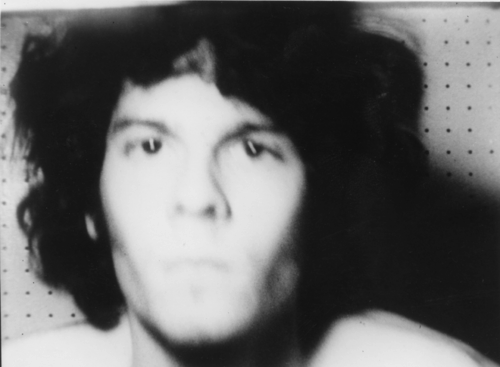
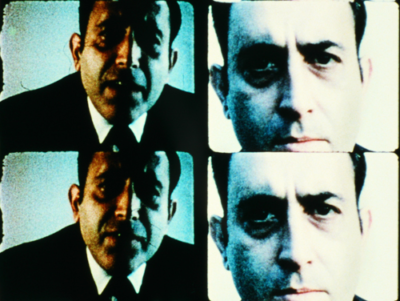
‘Owen Land, formerly known as George Landow, was a really really great filmmaker. His films are like no others. I first saw Landow’s early standard-8mm films (which may be no longer extant — is that right?) such as Are Era and Not a Case of Lateral Displacement at an open screening in New York in the summer of 1964 or 1965. Open screenings, even back then, tended to have many films that weren’t so interesting. Landow’s not only engaged me, but seemed both great, and unlike anything I had seen before. One seemed to be long takes of a wound. Are Era was shot off TV, very rapidly cut (in camera I assume), showing a TV head both right side up and upside down. Still in my teens, I had only recently discovered cinema, and had never heard of Landow before that screening. “Structural film” had not yet been so named, so the statement from the gallery that Land’s “debut” was a “critique of structural film” is not right, as a “genre” that has not yet been named is not exactly ready for its “critique.”
‘It’s true that Land was not the most sociably adept of people. But one would not expect that from his films. If you understand his films, you understand that communication in them is always paradoxical. His fascination with palindromes (and he and I exchanged a few ordinal palindromes at times) was only a bare surface indication of his films’ profound inwardness, an inwardness that was not one of psychological interiority, as in Brakhage, but of irreconcilable paradox. Land was fascinated with cinema’s artificiality, and his use of film imagery was profoundly hermetic; it always feels as if his film images are spiraling inward, collapsing in on themselves.
‘He was not necessarily the friendliest instructor for young filmmakers interested in “self-expression.” He wasn’t very patient with long, self-indulgent, emotionally-laden “personal” films. I once saw him advise a student, correctly in my view, that the student did not have the distance needed to deal with the family footage he was trying to fashion into a film. But those who so easily make personal voiceover pieces today (in which a voiceover narrates autobiographical details on the sound track which the images illustrate) might have something to learn from really studying Landow’s deeply hermetic art, an art I find true in some deep way to the truths of images either on film or seen with the eye: Do we really know what any image might mean, or how it might “feel”?
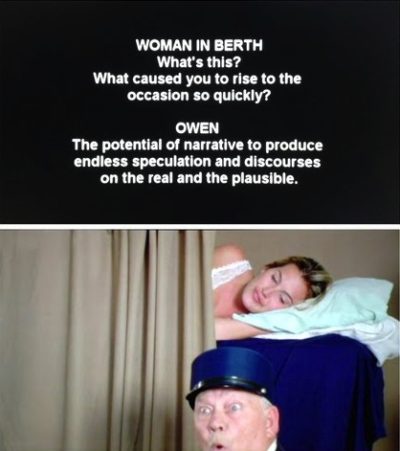
‘There is much humor in Land’s work, and one genuine belly-laugh for those who had had their fill of the academic use of Hollis Frampton’s (admittedly wonderful) (nostalgia) to illustrate “structural” film: The film within Land’s Wide Angle Saxon titled Regrettable Redding Condescension, credited to someone named “Al Rutcurts” (remember Land’s love of palindromes), which was indeed a “critique” of “structural film.”
‘I wish “experimental” cinema had more true originals such as Land, filmmakers who find a new and original use for cinema, a new type of film grammar, which, of course, can also lead to a new type of thinking. In my view, the “project” of “experimental” film at its best has always been that of forging new types of consciousness, new was of conceiving of the world, new ways of being in the world.’ — Fred Camper
___
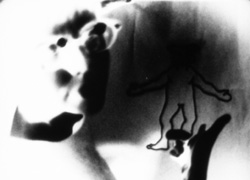
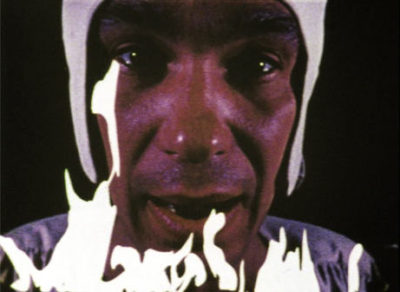
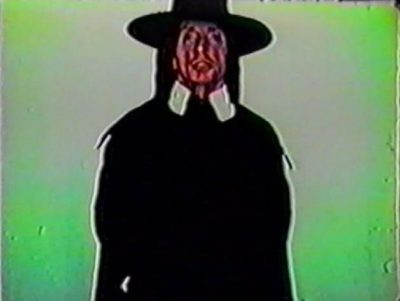
Stills



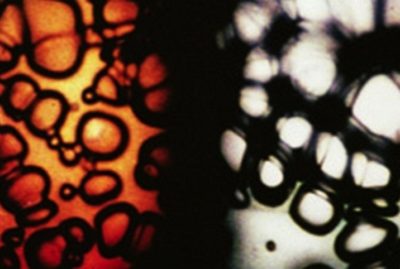
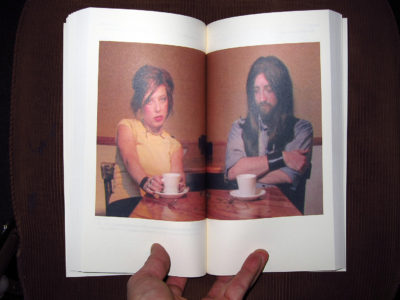
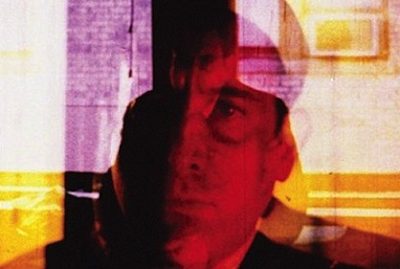
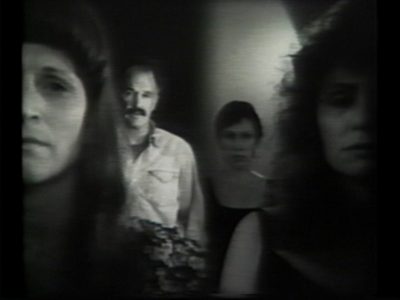



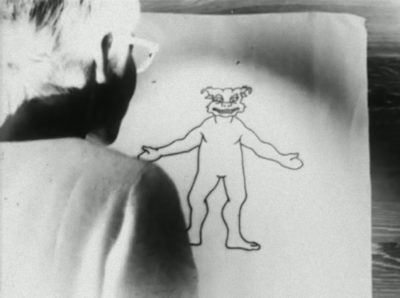
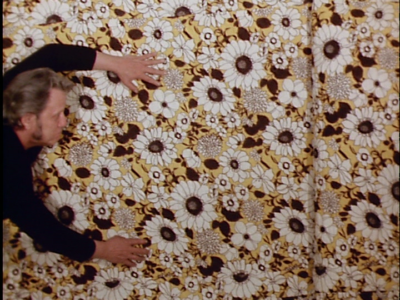
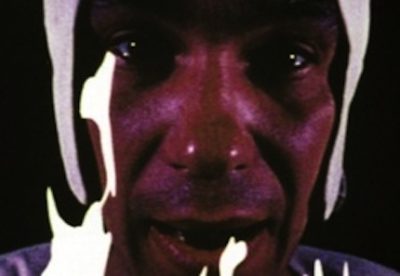
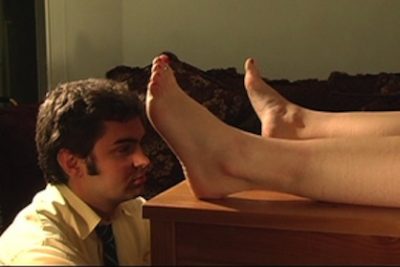
_____
Further
Owen Land @ IMDb
‘Owen Land (1944-2011)’ @ LUX
The Films of Owen Land @ Harvard Film Archive
Owen Land @ Office Baroque Gallery
Book: Mark Webber ‘Two Films by Owen Land’
Owen Land @ mubi
‘Avant-gardist Owen Land Comes Out of the Shadows’
________
Documentary
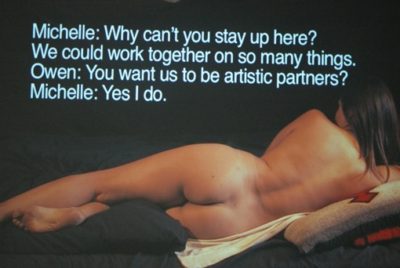
‘“So, how’s that avant-garde film you’re working on going?” Hopefully, that question will be met with a fun, answer like “Oh great, it’s a really interesting project.” However, director Ben Lazarus has documented the resentful feelings of the disgruntled crew who worked on Owen Land‘s Dialogues, which was filmed in Los Angeles. In the Land of Owen, which features footage not in the original film, is a documentary of the aftermath of a film production gone haywire. Word of warning: This video is NSFW as it contains lots of nudity.
‘There is no actual footage of Land directing in In the Land of Owen. There are a couple of still pictures of him where he doesn’t look very well and some of the interviewees talk about him being ill and having had a stroke. But without actual footage of him directing and no direct interview with him, it’s tough to determine exactly how the production of Dialogues descended into complete chaos.
‘Many of the crew members and actors refer to Land as if he was a tyrannical crank on set, including being verbally abusive, but details of the abuse are not given. Some crew members are still incredibly hostile and bitter, while others kind of laugh off the flakier aspects of Land’s personality and behavior. One shocking revelation is that the first director of photography on the film has withheld over half of the footage shot of Dialogues due to non-payment.
‘One recurring topic of the documentary is that everyone on the crew was not only completely baffled by what Land was shooting, but that was a source of frustration. I don’t know if that’s because this was an L.A. crew or if the crew just generally wasn’t into avant-garde and underground filmmaking. The clips that were withheld from Dialogues and that appear in this documentary make it look like a fun film. And I totally don’t agree with the one actor’s assessment that making a film “irritating” is a goal of a lot of experimental filmmakers. That sounds like the reaction of somebody who just expects all films to have clear narratives.
‘There aren’t many “making of” documentaries about avant-garde films. Hearing about the tribulations of making Dialogues in In the Land of Owen is really pretty fascinating; and it’s a very well put together and entertaining documentary by Lazarus.’ — Underground Film Journal
____________
Interview 2009
_______
Obituary
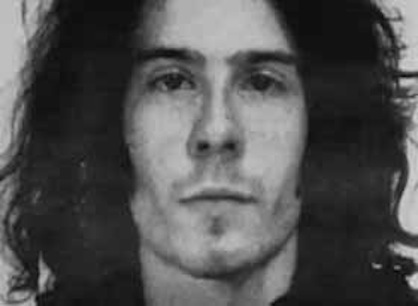
‘A question that one should never ask an experimental film-maker is: “What is your film about?” George Landow, who has died unexpectedly aged 67, would probably have responded: “It’s about eight minutes.” Along with many other “structural” American film directors in the 1960s and 1970s, Landow – who changed his name to the semi-anagram Owen Land in 1977 – rejected linear narrative, giving primacy to the shape and essence of film. “I didn’t want to make films that were narrative. I found the whole traditional narrative approach was really non-visual,” he commented.
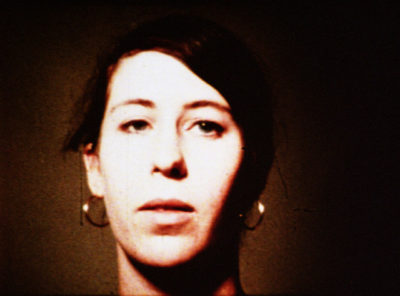
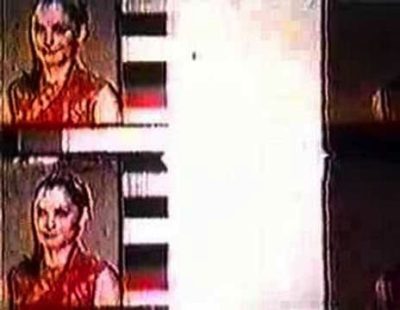
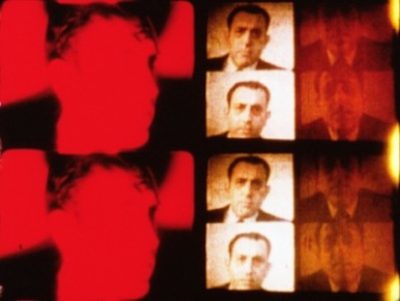
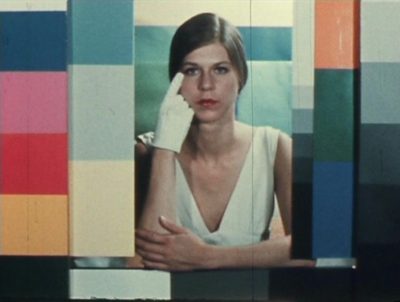
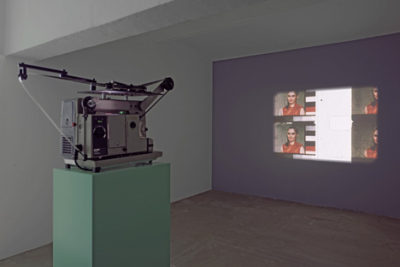
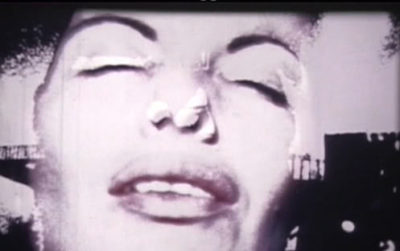
‘Landow trained to be a painter. This is demonstrated in the self-explanatory title of Landow’s Film in Which There Appear Edge Lettering, Sprocket Holes, Dirt Particles, Etc (1966). What he called “the dirtiest film ever made” consists of four identical images of a blinking woman, off-centre, made to appear as a loop without a beginning and end, giving prominence to the sprocket holes and edge lettering on the 16mm film, components that audiences do not normally see. Landow used “found footage”, in this case a Kodak colour test, throughout his oeuvre, where film itself is the subject matter.
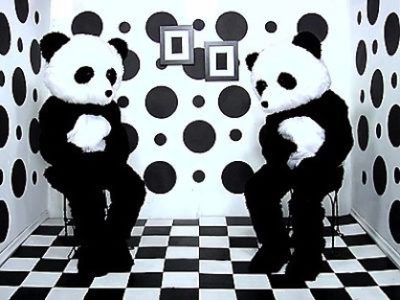
‘Landow later parodied his early experimental films and those of his mentors, Stan Brakhage and Gregory Markopoulos, with jokey titles such as On the Marriage Broker Joke As Cited By Sigmund Freud in Wit and Its Relation to the Unconscious Or Can the Avant-Garde Artist Be Wholed? (1977–79). This features two actors dressed as pandas who discuss film in a false-perspective room patterned with checks and polka dots. “What is a ‘structural film’?” asks one. “That’s easy, everybody knows what a structural film is,” comes the reply. “It’s when engineers design an aeroplane, or a bridge, and they build a model to find out if it will soon fall apart. The film shows where all the stresses are.” The pandas then suggest strategies for marketing Japanese salted plums illustrated by a Japanese publicity film created to look like found footage.
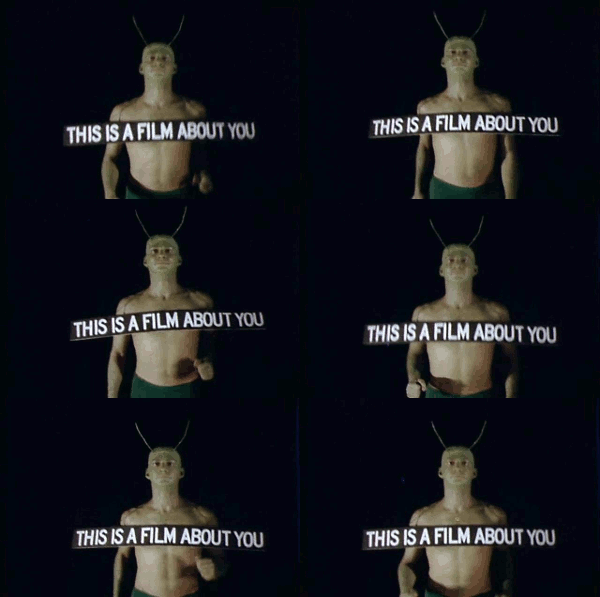
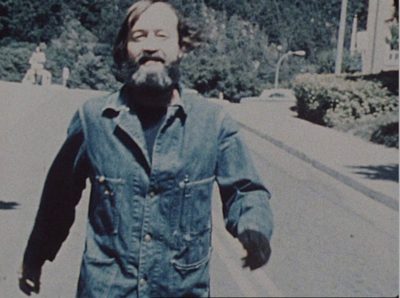
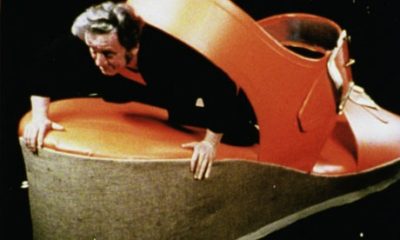
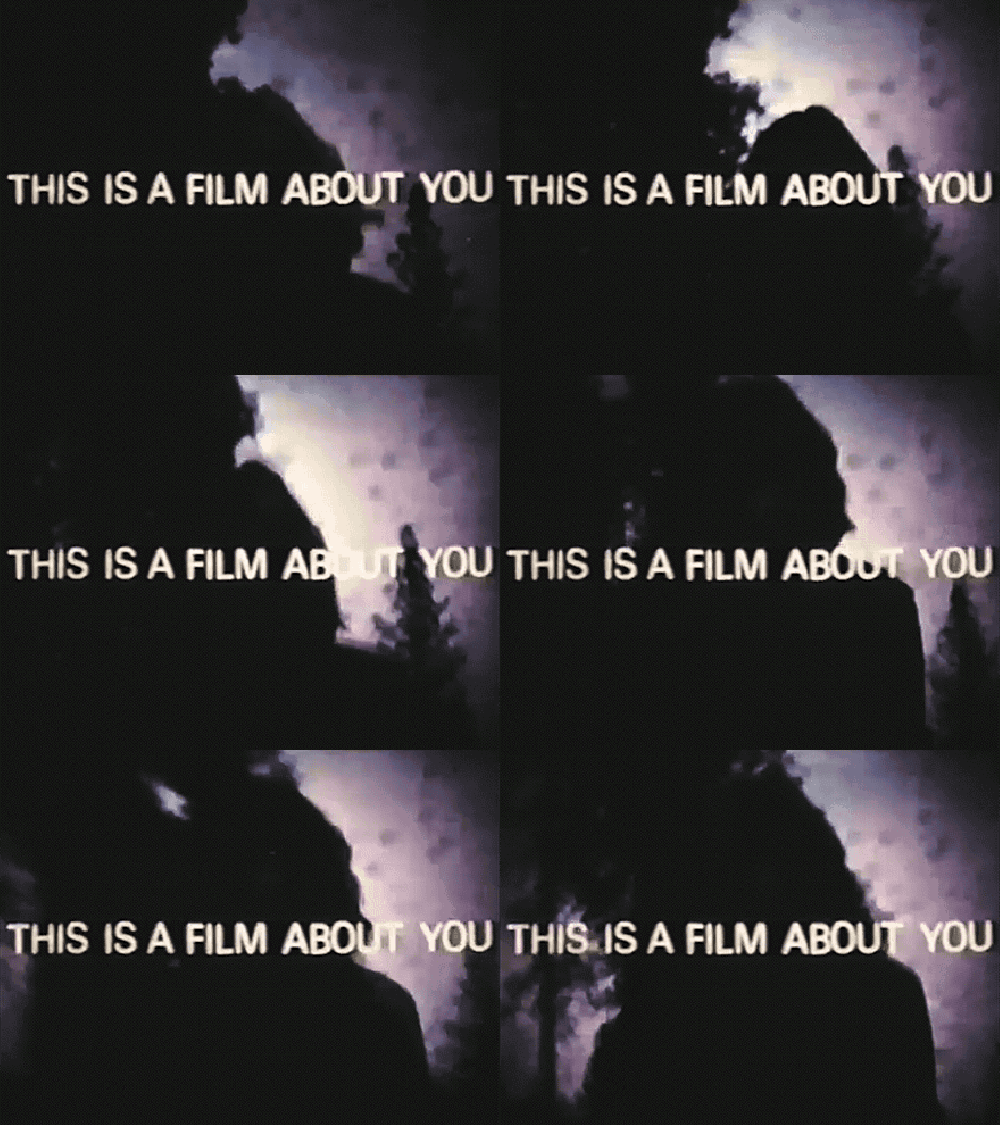
‘Remedial Reading Comprehension (1970), in the form of an educational film that is part of a woman’s dreams, uses colour footage of an auditorium of people who are about to watch a film, a mock television commercial about rice, text from a speed-reading manual, and the director himself running, with the superimposed words, “This is a film about you … not about its maker.” In New Improved Institutional Quality: In the Environment of Liquids and Nasals a Parasitic Vowel Sometimes Develops (1976), a middle-aged man attempts to carry out a test full of seemingly meaningless instructions before entering transcendence through a woman’s shoe.
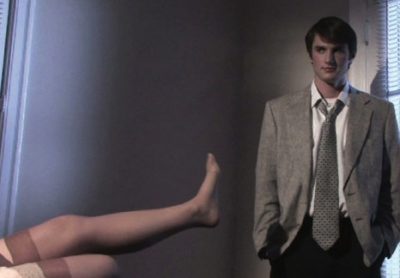
‘Dialogues, his valedictory film, was based on his own bizarre and comic sexual encounters with women and his relationship with his contemporaries, including a mocking portrait of Maya Deren, the avant-garde film-maker. He was given a retrospective at the Rotterdam film festival in 2005. This programme then moved to the Tate Modern in London, the Whitney Museum of American Art in New York and the Pompidou Centre in Paris. In 2009, his work was presented at the Kunsthalle in Bern and the Kunst-Werke, Berlin.
‘This was the last film Landow made before becoming Owen Land and leaving the underground film scene for more than three decades. He reappeared with his last film, Dialogues (2009). Little is known of his movements in between. He spent a year in Japan and taught film at US universities throughout the 1970s, and settled in Los Angeles in 2006. Landow died as mysteriously as he had lived. His death was announced a month after his body was found in his Los Angeles apartment.’ — Ronald Bergan, The Guardian
_____
9 of Owen Land’s 17 films
_______________
Film In Which There Appear Edge Lettering, Sprocket Holes, Dirt Particles, Etc (1965-66)
‘This film takes the view that certain defining characteristics of the medium, such as those mentioned in the title, are visually “worthy”. For this reason it is especially recommended.’ — Lux
‘The richest frame I have seen in any film when you take into consideration all movements lines the beautiful whites, and reds and blacks… The kinetic and visual experienced produced by Landow’s film is even more difficult to describe… There is humour in it (the blink); there is clear Mozart -(Mondrian)- like sense of form … ‘ — Jonas Mekas
______________
The Evil Faerie (1966)
‘The Evil Faerie is a movie starring Steven M. Zinc. It is directed by Owen Land. It is one minute in length.’ — mrr
_______________
Diploteratology: Bardo Follies (1967)
‘His remarkable faculty is as maker of images … the images he photographs are among the most radical, super-real and haunting images the cinema has ever given us.’ — P. Adams Sitney

_______________
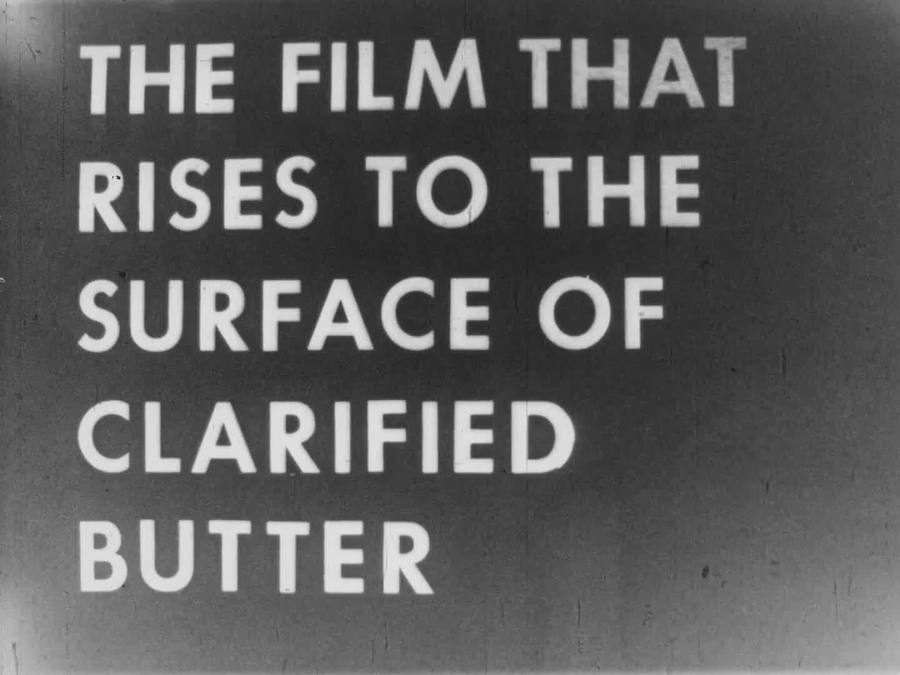
Film That Rises to the Surface of Clarified Butter (1968)
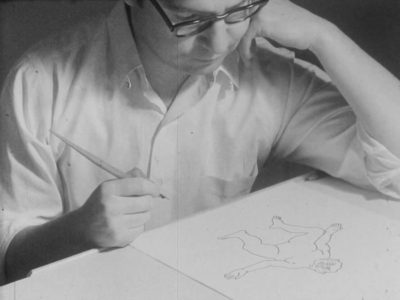
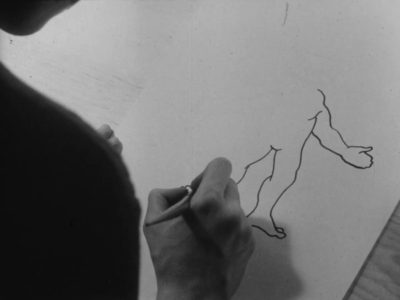
‘This film had already been in my mind for a very long time, this type of film. I wanted to do a film which dealt with drawings which somehow had a life of their own, which existed in the same space as real objects and yet still had their own two-dimensional space. I wanted a kind of imagery that didn’t refer to anything in our visual vocabulary, and also was so non-objective that it didn’t refer to anything.’ — George Landow (aka Owen Land)
_______________
Remedial Reading Comprehension (1970)
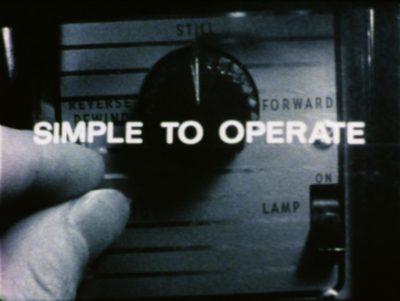
‘Two kinds of material are used: 1) Material in the tradition of the “psycho-drama” or “personal film”; 2) Material of the sort used in industrial, educational, or advertising film. Questions are raised about the necessity of using acceptably “artistic” material to make a work of art, as well as about the relationships between “personal” and “impersonal” works. “One of the ways that REMEDIAL READING COMPREHENSION works is in the degree of filmic distance which each image has in the film. Distance here refers to the degree of awareness on the part of the viewer that the image he is watching is a film image, rather than ‘reality.’ [Land’s] film does not try to build up an illusion of reality, to combine the images together with the kind of spatial or rhythmic continuity that would suggest that one is watching ‘real’ people or objects. It works rather toward the opposite end, to make one aware of the unreality, the created and mechanical nature, of film.’ — Fred Camper
_______________
Thank You Jesus for the Eternal Present (1973)
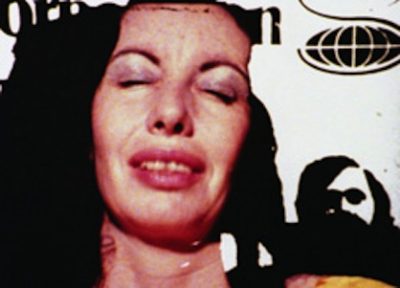
‘A rapturous audiovisual mix that `deliberately seeks a hidden order in randomness.’ The film combines the face of a woman in ecstatic, contemplative prayer with shots of an animal rights activist, and a scantily clad model advertising Russian cars at the International Auto Show in New York.’ — IFFR
_______________
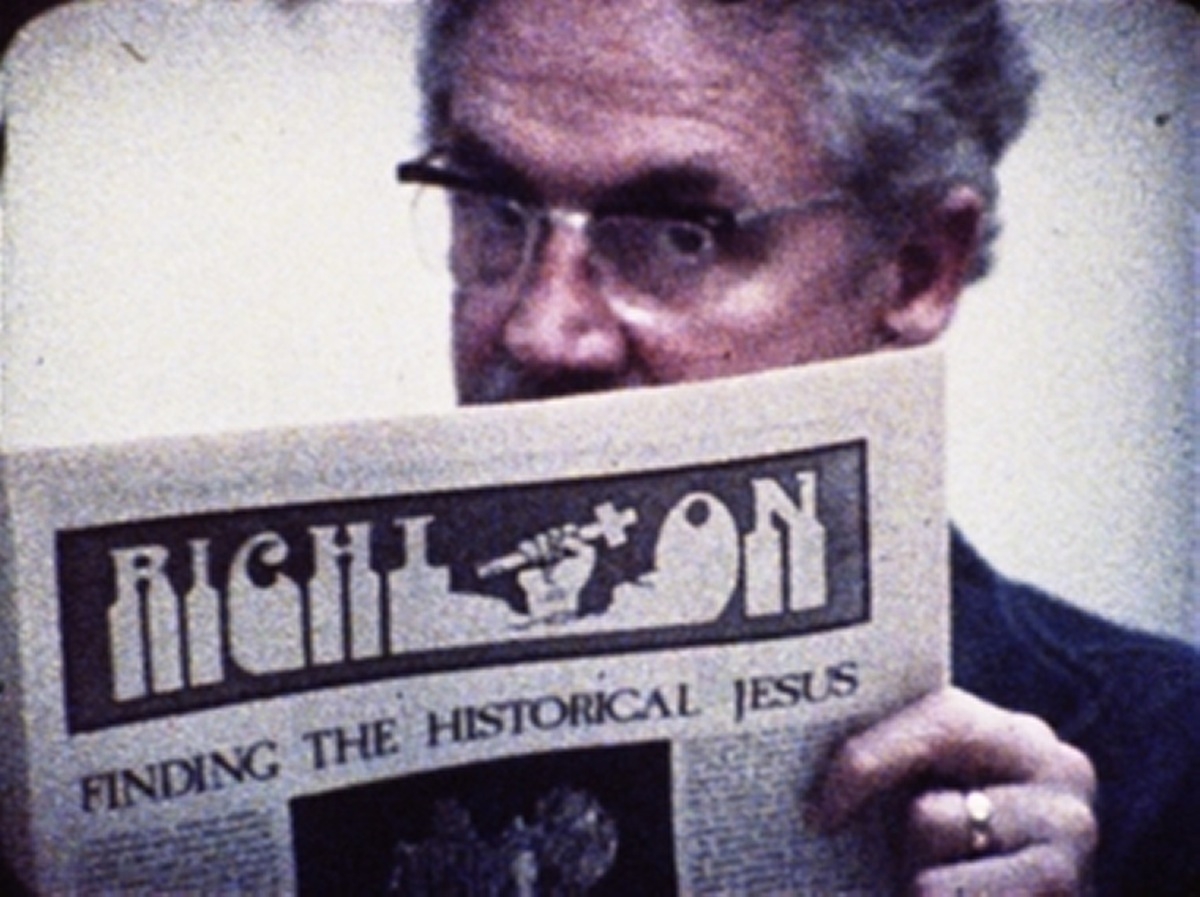
A Film of Their 1973 Spring Tour Commissioned by Christian World Liberation Front of Berkeley, California (1974)
‘”As an experience, it’s mind-boggling.” –Roger Ebert, Chicago Sun-Times. “Because all footage is sound sync, this screening process hones our responses, until we see more in (Land’s) 3-frame sequences than we would in hour-long doses of ‘normal’ time. Like the study of signs, this study of seconds yields a knowledge of people and truth inaccessible to more common observation.” — B. Ruby Rich
_______________
New Improved Institutional Quality: In the Environment of Liquids and Nasals a Parasitic Vowel Sometimes Develops (1976)
‘A reworking of an earlier film, Institutional Quality, in which the same test was given. In the earlier film the person taking the test was not seen, and the film viewer in effect became the test taker. The newer version concerns itself with the effects of the test on the test taker. An attempt is made to escape from the oppressive environment of the test – a test containing meaningless, contradictory, and impossible-to-follow directions – by entering into the imagination. In this case it is specifically the imagination of the filmmaker, in which the test taker encounters images from previous Land films …. The test taker is “initiated” into this world by passing through a shoe (the shoe of “the woman who has dropped something”) which has lost its normal spatial proportions, just as taking the test has caused the test taker to lose his sense of proportion. As he moves through the images in the filmmaker’s mind, the test taker is in a trance-like state, and is carried along by some unseen force …. At the end of the film the test taker is back at his desk, still following directions. His “escape” was only temporary, and thus not a true escape at all.’ — Canyon Cinema
______________
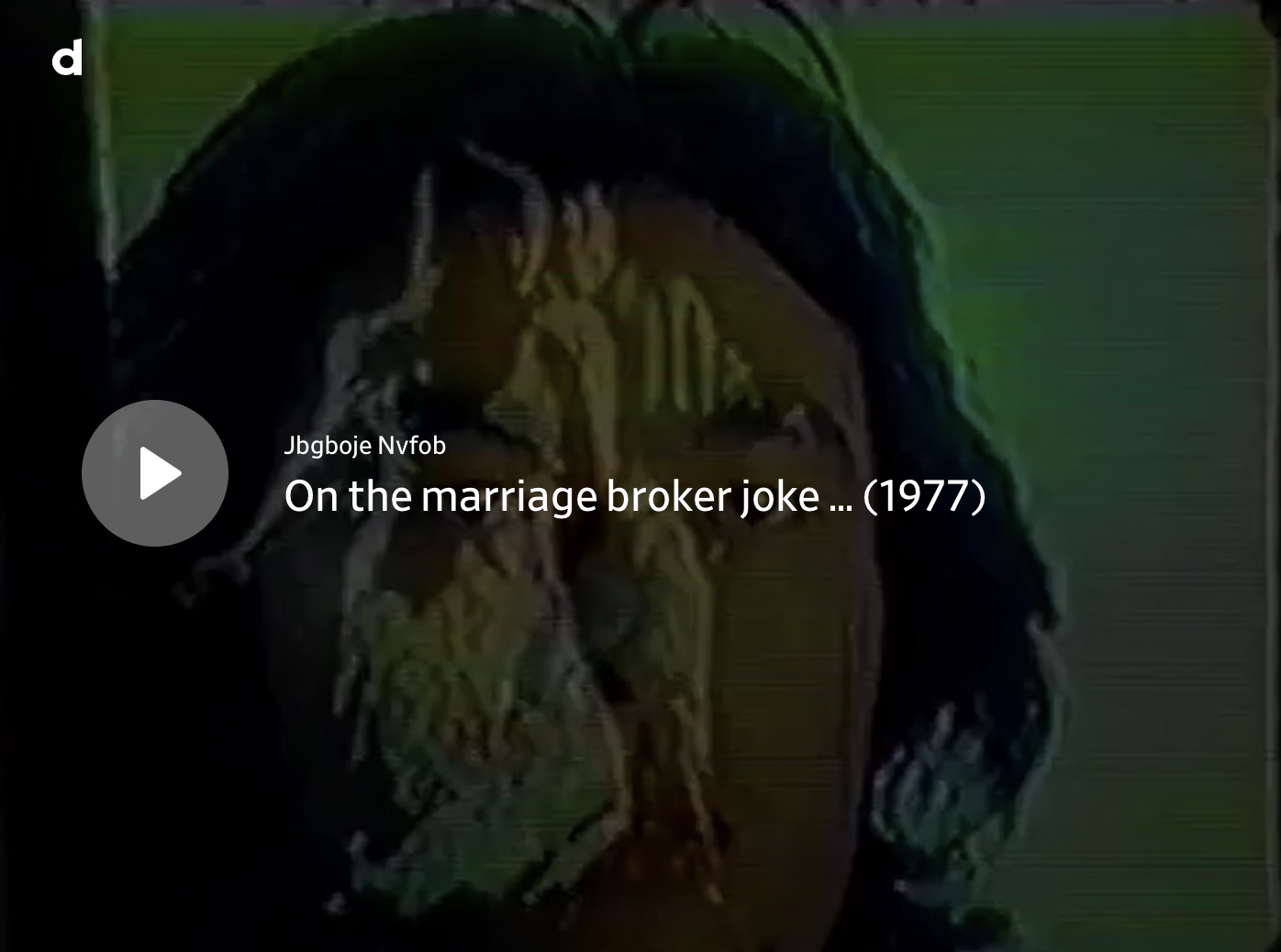
On the Marriage Broker Joke as Cited by Sigmund Freud in Wit and Its Relation to the Unconscious or Can the Avant-Garde Artist Be Wholed? (1977)
‘ON THE MARRIAGE BROKER JOKE … turns upon an opposition of Freudian analysis and Christian hermeneutics …. Two pandas, who exist only because of a textual error, run a shell game for the viewer in an environment with false perspectives. They posit the existence of various films and characters, one of which is interpreted by an academic as containing religious symbolism. Sigmund Freud’s own explanation is given by a sleeper awakened by an alarm clock.’ — P. Adams Sitney
*
p.s. Hey. ** jay, Hi. One thing I especially like about that loose generation of women UK writers like Murdoch is how they make you realise how rich a stuffy tone and style can be. There was a point where I learned a lot from that for my own writing, from Compton-Burnett especially. I don’t know, but my friends who love Proust say his work is some kind of lifelong commitment, so your staggering methodology makes sense. Big up, and have a rich day. ** gregoryedwin, Whoa! Hi, man! How amazing to find you here. How are you? What are up to? No pressure to say, but just to say I’m wondering. Yes, it’s a real blow about Michael. He’s left a large hole in the world both as a friend and as the Bookworm. And yes, about the constellating. Let’s try. Anyway, wow, really lovely to see you, my friend! ** Dominik, Hi!!! I guess even speedy people need their pit stops. Oh, interesting. Anything you’ve found in your research that’s especially instructive? Nothing I’ve read or seen about ‘Heated Rivalry’ has made me even remotely interested. Love never thought he would ever say this but he is really over winter, G. ** Carsten, Yes, I’m ‘friends’ with Jost on FB. I’m a great admirer of his films and of how he makes his art and lives. I too am quite concerned about his recent health scare and really hoping he’s going to be okay. I don’t think death deserves him yet. ** _Black_Acrylic, I wouldn’t let the Language tag intimidate you. The writers who were tagged in that way are really all over the place in their writing and at least over time have fully transcended that initial locked description. And, yes, ‘My Life’ is an excellent entry in any case. ** Steeqhen, Cigarettes and coffee for me. And maybe Melatonin. Sorry about your need to withdraw from that person, but I feel pretty sure your instincts must be correct. No Pancake Day here, or in the US, I don’t think. I wish I’d known. But I guess I can declare today Pancake Day, what’s stopping me. Thanks ever so much for your ministrations on behalf of the film. ** Thom, I would say it’s pretty killer, yes. What exciting thoughts you’re having about your short story. And the premise is beautiful. I love hearing about writers’ mental machinations whilst trying to ace a tricky formal or stylistic move. Big process junkie here. I’d ask you how you’re thinking you’ll do that, but I know as someone who has that kind of ambition for my writing, that it’s hard if not impossible to describe. But feel free to try, if you like. Two jobs and writing, that’s … well, it’s great that you can think so fully about your writing with those brackets. Thank you a lot for letting me in on that. ** kenley, I’ll even eat horrid frozen microwave mozzarella sticks with a satisfied smile. Stephen’s great. He lives in Paris. New Sunn0))) album coming any minute now. I have to say that theater or conventional theater/plays is really not a genre I enjoy very much at all. Performance art and avant-garde theater stuff I’m totally down for. But plays with all that acting and need to suspend belief via sets and light and stuff, nah. Or rarely. I can’t really think of a play I really like. Well, Beckett is great. ‘Three Penny Opera’ is incredible. Let me know if it ends up exciting you or something. ** HaRpEr //, ‘My Life’ is really, really good. Worth the read. I used to use poetry to explore my emotions, not my fiction very much. Except for ‘I Wished’ obviously. I wonder if the reason I stopped writing poetry is because my heart is dead or something. The publishing world is vast and contains venues and editorial tastes of all kinds. I wouldn’t let yourself lock that arena down as an impossibility if you can. It can just be complicated and time consuming to negotiate. ** Laura, Hey, Laura. Even if you never end up getting the lil award, you’ll still get it before I do. Curious pseudonym. Very hopeful, nice. I haven’t said yes to the reading. I don’t like doing readings very much so I might decline. Still thinking. As I sort of said to Ben up above, I personally think at this point in time it’s more valuable to think of the writers who were lumped together under the Language title as just writers because their work has dispersed to the degree that I don’t think that seeing them as examples of that tag’s definition is useful or fair to their work. I mean from Hejinian to Bernstein to Howe to Armantrout to … on and on, there are all kinds of things going on there. But I have a hard time with generalisations in general. Well, script happiness is reserved for, first, if Zac is okay with it, and, two, if a producer is okay wth it. The happiness is incremental. ** Okay. I’ve brought back an old Day about the exciting and enigmatic experiential filmmaker Owen Land, and I hope you will give it a shot. See you tomorrow.


 Now available in North America
I enjoyed Land’s 2009 Q&A here. The guy’s an engaging the speaker, difficult to pin down but that suits his work rather well.
Sprung for a copy of Lyn Hejinian – My Life today, so that ought to be with me later this week. Really looking forward to it!
hi dennis
owen land!!! what a fun screwball filmmaker
i await the new sunn o))) with glee! i think they play toronto right after the album drops…and ill be out of town. wahwahwah.
brecht! beckett! ahh…i have all of beckett’s not i permanently etched into my frontal lobe. theatre school trauma. but my love for him and sarah kane (are you into her?) prevails!
the play was…a mixed bag. a lot of punchy lines about “Being A Woman” and vaguely critical references to “capitalism”. i think the play almost made compelling points…but just almost, which was frustrating. idk, at least it was sincere and not completely didactic. but i enjoyed the performances, and there was a cool sequence where a guy ate his dead wife’s ashes.
my friend liked it a lot more than me. we debriefed at a bar after and it made me very grateful that i have friends who find disagreeing about art interesting!
hmm…any fave avant garde performance stuff youve seen recently?
Hi Dennis.
O hey o hey I know what I’m gonna watch tonight! This place is great for just finding things. BTW, I finally got my hands on a physical copy of “God JR” today, rereading it, and I have to say it’s really one of my favourites of yr work, the last section especially means a whole lot to me since I read it on archive.org. I notice that the novel seems to have come out around the same time as “The Sluts” and I was wondering, were both those works written around the same time as each other? I know you said previously that “The Sluts” took around ten or so years to make. When “the sluts” was done, did you just immediately jump into “God JR”?
I’m in a bit of a weird positive funk lately. I’ve scrapped around 20 pages of the novel I’m working on, and I’m crushing really hard on someone in my life who I like very much, though I don’t think it’ll work out for both of us if we did get together. Either way, I feel a weird bolt of some kind of energy. Dunno…we will be in confusion for a while.
ok lots of love to you man, bye.
“A question that one should never ask an experimental film-maker is: “What is your film about?'”
Can we extend that beyond just experimental filmmakers please? The most tiresome art-related question in the world.
I really love the look of old school visual noise in film, sprocket holes, reel changes, mismatches etc. All that soothes me.
Agreed about Jost. I hope he stays with us for a good while longer.
Been listening to “Zombie Birdhouse” a lot lately, Iggy Pop’s either maligned or forgotten 1982 album. It’s not perfect by any means but immensely enjoyable. And then I saw Eugene Hutz of Gogol Bordello on Amoeba’s “What’s in my bag” picking that record & talking about how big of a deal it is in his scene. Always nice to see when something I think is underrated proves to have a solid fan base in some other corner of the world.
Also RIP Tom Noonan. Watching “Mystery Train” again a couple of months ago reminded me of what a scene-stealer he was.
Hey Dennis,
Haha either something in the pancakes I have some digestive issue with, or else I upset my stomach from gorging them, but I had to leave work early today, which was something I have been avoiding trying to do. I have an issue where once I open the floodgates of calling sick or leaving early, it becomes too easy to repeat. But I do think my enthusiasm with this job hasn’t faltered and was just a genuine early leave as I was pretty nauseated and could not focus on spreadsheets or sorting…
Pancake Tuesday is something in the UK too, I found out, and it’s linked to the start of Lent, where you would use up all that’s left in the pantry (or so goes what I heard). Now it’s just a nice treat to have before the commitment of Lent for kids, and just a nice excuse to eat pancakes for all of us grown up and/or not religious. I can’t remember if I mentioned this yesterday.
Speaking of Lent, I should try cut back smoking, though I think I just enjoy it too much as an activity to do whilst outside and chatting. Frustrating that something pretty unhealthy is just too enjoyable and frankly cool. Ugh.
God Jr was mentioned above and my friend had ordered a copy a month ago, which was coming from Germany. It didn’t cross his mind (or mine for that matter) that the copy could possibly be in German, which it was. Haha
Hello. I’m not swearing off of publishing ever. That’s part of my mental illness, my inability to ever give up on anything. Nothing can make me give up. In fact, rejection affirms that I might be doing something which others aren’t and that there just isn’t a place at my immediate disposal to put my work.
Also, um, don’t want to break any boundaries but I found out some good news regarding a story I wrote.
Those stuffy female UK writers are some of my biggest influences, as you may remember. Jay has sold me on Iris Murdoch.
My grandparents on my dad’s side talk like Ivy Compton-Burnett characters. Very morbid and stiff but unintentionally funny sometimes. And I was influenced by those writers to tap into that, certainly with the book I’m currently writing. I’m actually desperate for a re-read of ‘Good Morning, Midnight’ which I’ll probably do in a couple of days. I’m always re-reading Rhys books over and over again. They’re like cigarettes.
I watched this film directed by Peter Vack called ‘www.RachelOrmont.com’ which I thought was amazing. Very divisive. I watched his film ‘PVT Chat’ years ago and remember really liking it. I think when something can effectively find its own way of using the internet as a backdrop then I’m sold. ‘Rachel Ormont’ is so chronically online that I felt my brain throbbing, and everytime it annoyed me a little I realised that it’s trying to play with the viewer’s biases.
When you’ve visited New York, have you ever eaten at Red Bamboo? It’s a vegan Chinese/Filipino/soul food restaurant in the West Village. I meet a friend for lunch there once a month. Sadly, when we ate there today, I learned they’re shutting down at the end of the month. They’re not getting much traffic, and the landlord raised their rent to an unaffordable level.
I’ve thought of playing an unreleased song of mine during my next radio show, but it feels like a degree of vulgar self-promotion.
If only more Christians had imaginations as strange as Land’s!
Is O’Malley still involved with Southern Lord? Doesn’t he own another indie label now? After all these years, Sunn O))) signing to Sub Pop seemed to come out of nowhere.
Owen Land…something about the name is making my brain perk up but all my thoughts today have been like passing water through a sieve, or maybe sesame because occasionally one of those seeds sticks to the frame. But it was nice reading the post as if I were encountering him for the first time. Love being asked to read a piece when I’m going to New York but hate looking under the hood of the event and finding out that Ann Coulter was a speaker at a previous iteration and hate wondering what the hell is wrong with me that anybody would think we belonged in the same space, even if oppositionally and love pulling out of the event immediately. Especially hate subsequently having a nightmare about AC trying to circumcise me on stage while I dodge her like a matador. Love her being unsuccessful both in the dream and more obviously in real life and love having a schedule of doing serious work and hanging with friends.
as much as i love traditional cinema, its really nice that an experimental filmmaker like Land isnt trying to distract from the fact that it is indeed film. like its using the medium in a way that draws attention to itself if that makes sense.
RE: process: thank god the two jobs are pretty mindless, lots of time to turn ideas over in my head (of course its the actual chiseling that is the hardest). ive mostly done music, but the last solo album (droney psych folk ambient, blah blah…) i did was so formal and structure focused… not pop or rock or folk songwriting like usual… it’s entirely symmetrical, so the second half mirrors the first half, straddling the middle song. lyrical themes, individual song build-up/comedown, and even instrument choice on a given song all were restricted to this model. the raw materials were kinda just christian apocalyptic texts and bosch kinda stuff… like projector slides of bible verses laid over each other with paint, blood, etc splattered over them… or something like that. anyway something clicked finishing that and reading guys like calvino who kinda operate these prose playgrounds/toyboxes and i decided that the short story is a super promising form for me to explore, so its still pretty new! my idea is to at least get some zines printed of the better stories and distribute them around portland. theres a bit of a scene around here with workshops and open mics for readings i hear too. would love to get a short story collection printed somewhat properly tho.
I think with that story i was talking about (working title “above the trees”) i need to keep the perspective limited to what a creative young person might imagine after witnessing (or thinking he witnesses) something terrible. the hardest part will be what kind of clues i leave in the text. like using phrases like “perhaps” to describe something that he cant actually overhear from his vantage point on the deck. the boy and the deck itself will only be in passing in the actual text , so i have to nail the brief mentions (he wasnt even in the original version at all). or like, how strictly will my actual prose represent what the kid would write in his notebook. in a way its good that i started with an omniscient perspective before even i discovered what the limitations of the prose will be, but as i go back over stuff i will have to find the balance of being a “story” you read and being like, a found object…
just a few thoughts on proccess etc. enjoy your day!
morning Dennis!
Owennnn! gosh i do adore him. pure structuralism as per linguistics doesn’t work as well for me (just remembered i wrote a poem like a million years ago which took the piss out of the thing but ended up sort of affirming it, which confused me) but visually it’s so v beautiful. and Land was so funny, like actually funny, and sexy… i’ve only ever watched his stuff on YouTube, which is a bit of a shame. i want the extra experience.
pls say yes to the poetry reading lol, i’ve only known you to read the one thing before ( Flunker?) and you were good at it. like if i remember correctly, ppl were laughing at the right times then falling silent at the right times, finally laughing again like is this ok now.
hope Zac is p happy! the producer can feel whatever as long as he’s game. like, for my happiness lol.
def agree that the Language people are best enjoyed w a bit less context… i actually read Against Hope on a whim last night and was irritated bc like don’t tell me what i think i want, guy. if he’d said ‘I’ instead of ‘you’ i’d love that poem a lot.
imagine the award folks having the balls! oh man =D
just dreamt i was watching an upcoming Almodóvar film but not his actual upcoming one and i remember everything, eeeeverything. like, it was properly storyboarded lol. should probably write it since it actually came from my brain and stuff. also think the thing took place in my current neighbourhood but v dilapidated as it used to be when i was a kid, and the architecture had gone super nuts, i probably spent half the dream mentally soyfacing that everything looked amazibg like AI dreaming and city hall had somehow let it go to shit anyway… otherwise there were a lot of close-ups of this girl’s arse as she walked about, a really voyeristic look at someone else’s flat above his sugar daddy’s pharmacy and this weird emphasis on said pharmacy’s even weirder velvet curtain behind which all the meds were hidden bc we were in some brokeass near future where stuff couldn’t be legally displayed as it incited drug-seeking behaviour. no real plot other than maybe these three ppl constantly walking about and getting lost and trying to have a relationship while the pharmacist and a super chopped shoeshop owner and a gaggle of horny tourists constantly got in their way. i was so sad to wake up!
now i’ll irritatingly insist show!Heated Rivalry is v good =) just the way one of the main characters is obsessively lit up like his chest is bound, his forehead is mystical, then finally his eyes are seeing smth indescribable, and he totally brings it too, is worth 5436776543 other shows lol.
oh! i forgot to say the other day, i got this sudden urge to read the last paragraph of God Jr and it still makes me cry. like, almost no-one is allowed to watch me cry but you’ve earnt the right to at least imagine it. it’s gorgeous (that bit of writing, not my cry face lol)
<3
(oh God i accidentally created another phone number, i’ll give this one it a ring too— last time no-one picked up)