p.s. RIP Daniel Johnston ** David Ehrenstein, Happy to have made the introduction. ** Bill, Hi. Me too, busy, still in the saddle, barely, but in it. I thought ‘High Life’ was truly awful, for the reasons you mention and more. I think it was my worst film experience of last year. Well, that and that massively overrated Safie brothers film. Which also starred the never-not boring Robert Pattinson. Yeah, what in the world was Denis thinking? ** Brendan, Indeed about Robert Frank. Wonderful filmmaker too. Oh, yes, when Google killed my blog they killed my email address too. My new email is: denniscooper72@outlook.com. Can’t wait to see the works! ** _Black_Acrylic, I’m very glad you found her films interesting. Thank you. Yeah, obviously, it sounds like a great idea for you to do a tete-a-tete with her. I hope it happens. ** Armando, Hi, man. Yes, very sad news about Daniel Johnston. So great. ** KeatonGoesFishing, If you catch a manatee, throw it back. So, I really, like your songs. All of them. They’re like ‘Suitcase’ GbV but evil. Love the sonics. Really like the lyrics, maybe especially in ‘Boy Song’. And in ‘Drag Song’. But, yeah, I like them all. Perfect lengths, obviously. Thanks a lot for letting me imbibe, man. I sometimes wish Halloween scared me rather than just turned me into a wide-eyed super nerd. Even when I was so young that getting scared by stuff was de rigeur, I was all about the merch. Realist can be okay. More than okay even. With, yes, the right sauce, I guess. May I suggest Alfredo? I have a feeling that even one bite of a Candy Korn Oreo will be three bites too many but I want to know. If you bite one first, report please. ** Misanthrope, My pleasure. Hope the sack let you hit it the moment you struck. ** Steve Erickson, Hi. That’s for damned sure. I did see that you bailed on Twitter, and I’m not on there and barely ever look at it, but when I do, and whenever I hear anything about it, it just sounds like ugliness incarnate. Whoa, great about the Bressons. Is that official and sanctioned? Doubt it. They keep saying that there’s a new struck print of ‘FNoaD’, but I saw the supposed new print at the Cinematheque last year, and it was definitely not new, just less fucked up than the usual ones. ** Corey Heiferman, Glad you were interested in her films. Oh, very nice about that new theater. Very nice indeed. The editing supervision: We are, by necessity, having to the edit the test footage we shot of the TV series to give to ARTE even though the actress was dying of cancer at the time and gave an understandably very wrong, dark performance of something that’s supposed to be a weird comedy. But they need to see what the show is going to be like, and that’s all we have to show, so it’s a tough situation because what was shot was not at all like the show is going to be. So that’s what’s being done. Gisele its doing that with an editor. She has called Zac and me in twice to give our opinions. We keep trying to get Gisele to do her best to edit in such a way that it will at least remotely resemble the kind of, I don’t know, ‘I Love Lucy’ on acid thing that it will be, and she keeps wanting to make it look like a lost episode of ‘Twin Peaks’, which is not what the show will be. So we again urged her to try to make it resemble what the show will be like, since that’s the ‘trailer’s’ entire purpose in existing, and she keeps wanting to do what she wants to do and not what’s required, and it’s her call ultimately, but I fear she’s asking for trouble since ARTE has yet to give us the official green light to go ahead and shoot the series. So there’s an overly long explanation of what’s going on. This TV show project will be great, but it’s just been one hell upon another to create. Okay, I’ll check next time I’m near that deli in the Marais, and if they miraculously offer that treat, I’ll let you know. I’ll even take a photo. ** Right. Today is … well, you can tell. See you tomorrow.
‘A telephone call structures Gariné Torossian’s 1993 film Girl From Moush: a diasporan woman speaks to an operator in a fictive homeland. She asks to be connected to Armenia, but doesn’t specify to whom. Presumably, to anyone in a place which is not this one.
‘She addresses the operator first in her native language, then in English. “Ur vor etam, yes Hye em … I’d like to be connected to Armenia.” Like telephony, diasporic memory tries to travel impossible distances, to arrive at a place that no longer exists at the time of arrival.
‘This is what historian James Clifford would call an attempt to “(maintain, revive, invent) a connection with a prior home” — to make a connection that could resist the forces of cultural erasure and effects of involuntary migration. Hamid Naficy explains that the telephone figures prominently in movies made by diasporic and displaced directors — what he calls “accented cinema” — because a phone call offers the illusion of being there, of finding place amid displacement. The caller in Torossian’s film rejects her absence from the place she is dialing.
‘I watched Girl From Moush at a retrospective of Torossian’s work hosted by the Los Angeles Filmforum at the Egyptian Theatre in July. It was the first retrospective program of her films in Los Angeles — a staggering fact given her monumental contributions to feminist diasporic cinema over the past quarter-century. Roughly 25 years on, Girl From Moush has much to teach viewers about the experience of dwelling in displacement.
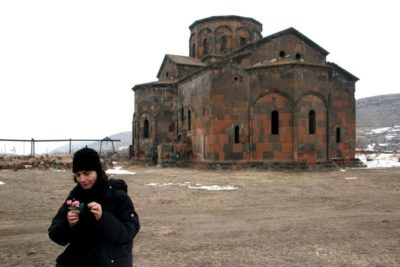
‘Torossian’s own trajectory unfolds along a migratory route. Born in Beirut of Armenian descent, she spent her childhood in Bourj Hammoud before her family fled the Lebanese Civil War in 1978 — first to a camp in Cyprus, then to Toronto. They spoke no English when they arrived in Canada. At 17 years old, she met the filmmaker Atom Egoyan at the Armenian Community Center. He would later supply images for Girl From Moush, culled from his 1993 film about a diasporan photographer who travels to Armenia to document churches for a commercial calendar. Its plainspoken title, Calendar, suggests what queer theorist Elizabeth Freeman calls a “chrononormative” regulation of time — time dictated by the clock and forward march of capitalist productivity. At the same time, the title also refers to a printed document where the then and there is separated from the here and now only by the width of a single sheet of paper.
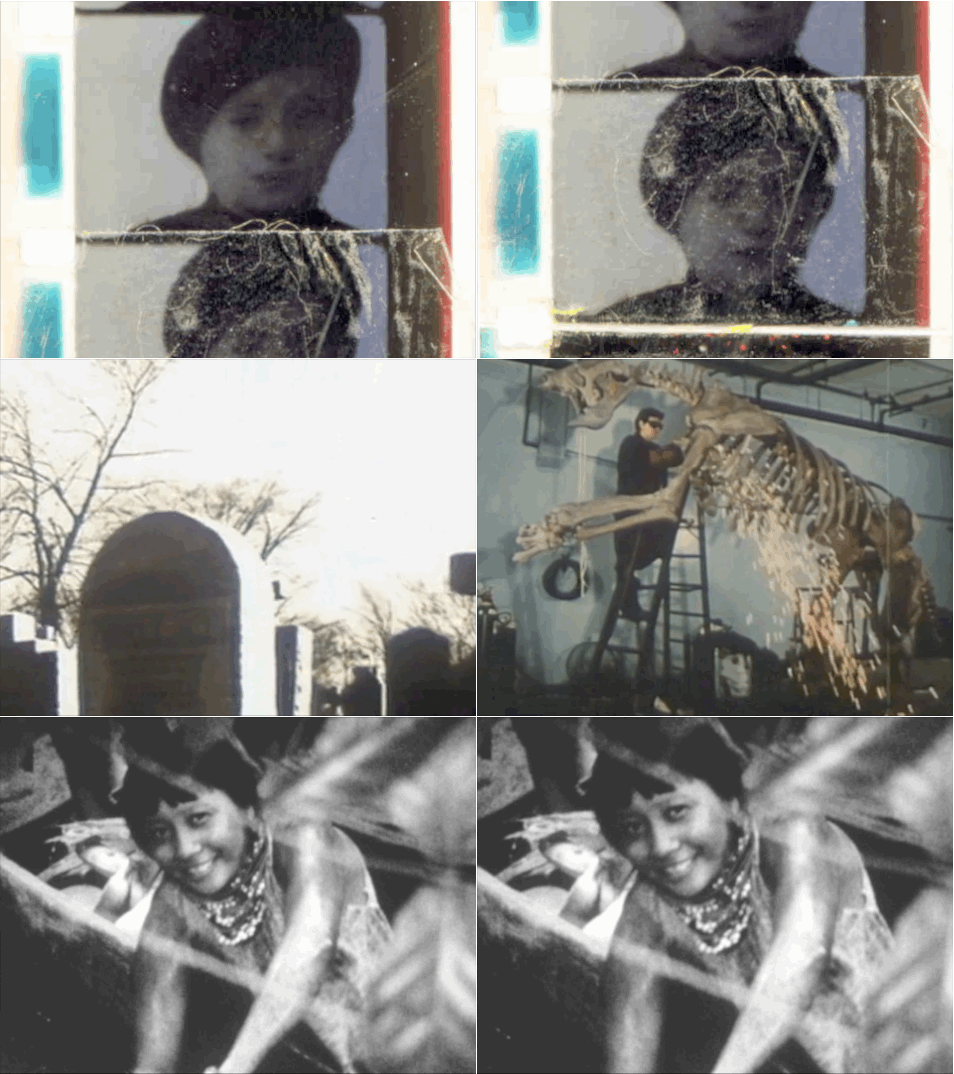
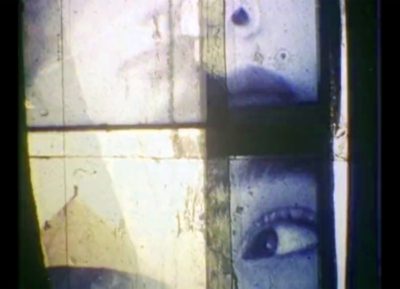
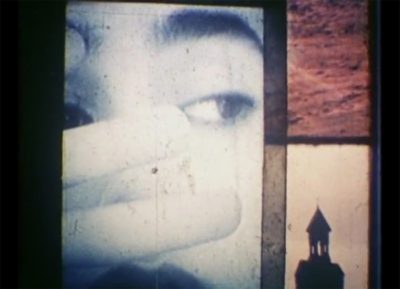
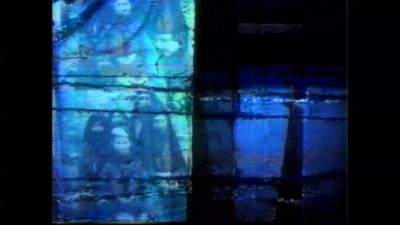
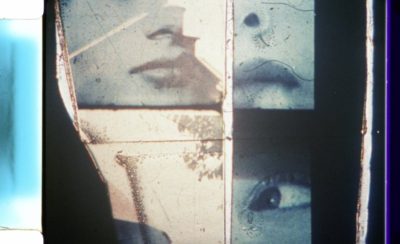
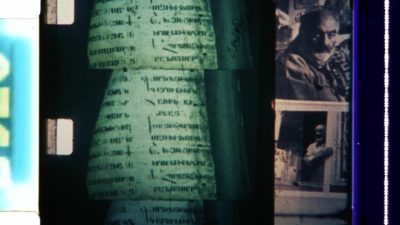
‘Girl From Moush reformats an archive of photographs into the flicker of moving images. Its title cites an eponymous folk song set in the ancient Armenian city of Moush — located in Turkish territory in the present day — where Indigenous Armenian communities were eradicated by the Ottoman government during the 1915 Genocide. Torossian hypnotically animates Egoyan’s visuals of churches in the Kotayk province, adding mountain vistas, family mementos, and illuminated manuscripts. The artist takes a pair of scissors to these traces of memory, cutting them up and layering them in unlikely arrangements that mirror the fragmentary transmission of collective memory across global networks of migration. Speeding along a vertical scroll of celluloid in nonlinear and nonnarrative arrangements, the images don’t linger. They never rest in place, but scatter across multiple spatial and temporal coordinates.
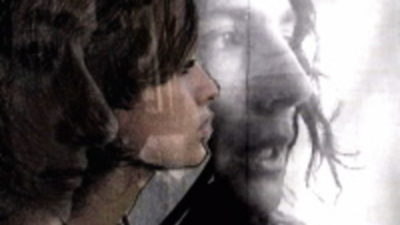
‘Girl From Moush stages an experience hauntingly familiar to many diasporans: discovering a still photograph from the past, embalmed in time, and recognizing that it’s lodged in a thereness that can’t be accessed. For me, these are always images of my mother in Yerevan in the 1980s, smiling and radiant. A photograph like this conjures a response that’s something like amateur telekinesis. You will the picture’s constituent parts into motion, enlarged to life-size proportions, lifelike enough to inhabit. You will the photograph to expand, to become a place that would accommodate your body. In Girl From Moush, Torossian superimposes her face over the accelerated images via transparencies. She inserts herself into the film’s geographies as though into the “terrain of belonging” denied to the dispossessed.
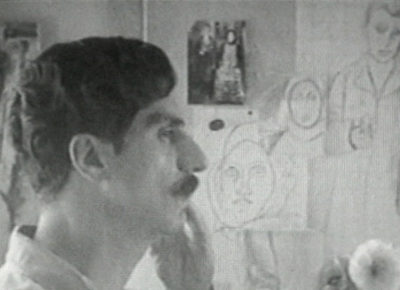
‘Portraits of Sergei Parajanov also appear — the Georgian-Armenian filmmaker responsible for the iconic and dreamlike Color of Pomegranates. Torossian describes Girl From Moush as an homage to him: “The only filmmaker who represents the Armenia I long to see … He photographed the real Armenia, the Armenia in my mind.” In lieu of imagining a stable place of origin or site of return, Torossian offers up diasporic memory untethered from fixed territories and nation states: “After making the film I realized this is just a dream, a fantasy about a country I could never visit. No one could.”
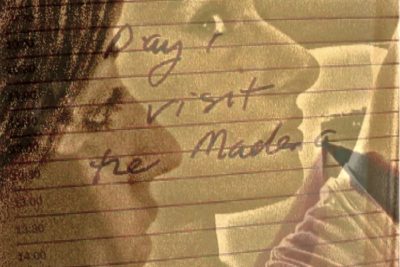
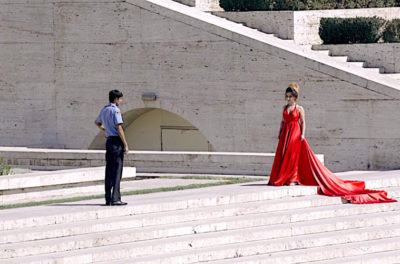
‘The penultimate piece in the Los Angeles Filmforum showcase was a digital video created roughly 25 years after Girl From Moush, after the artist’s repatriation to Armenia, An Inventory of Some Strictly Visible Things (2017). An Inventory also begins with a telephone: a shot of a smartphone with the weather app loaded, indicating that it’s 20 degrees Celsius and sunny in Yerevan. The artist writes the date in her notebook: September 21, 2017. She catalogues all the objects within her line of sight, from quotidian rocks, lamps, and Armenian alphabet blocks to a woman in a floor-length red ballgown making a surreal daytime appearance on the stairway of the Yerevan Cascade.
‘Some seven months after An Inventory was shot, the streets depicted in the video would swell with over 100,000 demonstrators gathered to protest the economic violence of an autocratic state. The success of their Velvet Revolution would secure the possibility of Armenian self-determination for the first time in a century. Which is to say, the Yerevan brilliantly indexed in An Inventory bears little resemblance to the hallucinatory Armenia of Girl From Moush. An Inventory’s crisply shot and starkly lit digital renderings belong to the here and now rather than there and then. Watching the two works in succession presents an object lesson in displacement and return: the geographies conjured in diasporic memory are irrecoverable even after repatriation. Torossian’s films call up places that were never bound to fixed cartographic territories — they dial sites that remain beyond reach.’ — Mashinka Firunts Hakopian, HYPERALLERGIC
Hidden Cameras live in Munich 2007. Documented by Gariné Torossian.
____ Interview from Asbarez
KAREN JALLATUAN: What were some of the circumstances behind making “Stone Time Touch”?
GARINÉ TOROSSIAN: It was important for me to discover Armenia as a traveler and filmmaker, and to explore the relationship between the real Armenia and my imagined one. It was my first sojourn to Armenia and Georgia, where I stayed for a considerable time. The film is many things, including an exploration of my relationship with the country from different perspectives. One of the characters is a first-time visitor to Armenia. Another knows and depicts the country under a less-than-optimistic light. Yet another is the filmmaker documenting the different layers of reality and perspectives through a series of interviews, mostly with the women of Armenia. All of these perspectives are ones I’m interested in, and so I found a way of interweaving them into my film, which is, in a nutshell, a search for a country, and there are many different perspectives one can excavate, depending on your point of view—who you choose to interview or not, and where you look or not, as well as how you look at a place and its people. Reality and its discovery is a complicated, multi-layered process, so this film was my search for how to approach reality in an authentic way.
K.J.: In an important piece entitled “Diaspora Studies: Past, Present and Promise” (2012), Khachig Tölölyan distinguishes the subjective (individual) and objective (collective, social and material) realities in diasporas by relying on Marianne Hirsch’s concept of “postmemory.” Postmemory is what is transmitted from often collective gripping traumatic events to the second generation. To what extent were you aware that your subjective perspective in making “Stone Time Touch” would address the broader objective realities pertaining to the Armenian diaspora and its “postmemory”? What did you learn in the course of making this film about the Armenian diasporic “postmemory” as it encountered the “actual” Armenia through you and through the lens of your camera?
G.T.: Well, for an Armenian, there is no way really to leave history. That’s probably true of all people and nationalities. Even if as a diasporic person it’s in fact really easy to leave your country, and I’ve done that many times now, what is more challenging is leaving its collective past. It preoccupies my thoughts and work as an artist, and that’s also true of the Lebanese civil war. That kind of past is different than your individual history, which we’re capable of shaping through our actions and will, but it’s different with collective history—the memories are sort of bequeathed or hoisted upon you independent of your will. For me, as an artist, these are two sources I draw from, and I go back and forth between the individual as well as transnational memories and the larger national memories we’ve inherited as Armenians, and I move between these categories in my films too. I don’t think one has a larger place in my work than the other. I don’t prioritize that way. They are all sources of inspiration, apprehension and exploration. As far as postmemory is concerned and how collective trauma has been transmitted to our generation, it’s not so much the exploration of that idea that is interwoven into “Stone Time Touch,” as much as the search of what constitutes reality. One of the things I learned is that my actual Armenia is not only different than, say, to someone who was born and grew up there, but that what constitutes Armenia in its totality may be very different and unique to a lot of different people based on their experience and biography.
K.J.: The narrative of encounter, cast at its face value as a “return to homeland,” that you stage in “Stone Time Touch” between a diasporic Armenian identity and the actuality of Armenia, is represented in a style that reminds me of your earlier short film “Girl From Moush” and suggests a certain “diaspora aesthetic.” I borrow the phrase “diaspora aesthetics” from Stuart Hall, who theorizes identity as the practice of positioning ourselves within processes of identification, while acknowledging that difference undercuts all claims to identity. How would you describe your “diaspora aesthetics”? Do such “diaspora aesthetics” also inform your understanding of Armenia as a country, nowadays especially after your visits to Armenia?
G.T.: I appreciate the distinction, but I don’t see my work as falling into one paradigm or the other. If there is such a thing as a diasporan aesthetics, I see it as very broad. My tastes are quite catholic, kind of wide, and I don’t mean this in the religious sense. I also think that the aesthetic choices between diaspora and homeland will inevitably become more blurred or borrow more from each other—much more so than in the past. Post-Soviet Armenian filmmakers will have more interaction with diasporan filmmakers and the same will be true the other way around. Since “Stone Time Touch,” I lived in Armenia for two consecutive years, and while there are clearly differences, say in architecture, between Soviet modern and the West’s International School, you have more of a cross-pollination of cultures and sensibilities between homeland and the outside, so these categories will become less relevant. Having said that, yes there are differences, real ones, there clearly are. Very likely the Russian sensibility or aesthetics has a much smaller place in my creative representation than it does for post-Soviet Armenian filmmakers. But I try to remain open to all influences and try to watch widely and critically. That’s inevitable because as a diasporan my aesthetic sensibility is very much informed by my movement, my actual movement across frontiers, cities and homes, from Beirut to Toronto, Berlin, Paris, Yerevan, and Montreal, not as a visitor but a resident.
K.J.: Hudson Moura from the University of Toronto has written extensively about your films. He sees your work as simultaneously positioned between cultures and media, one liminal positioning nourishing the other. To what extent did you feel yourself as an artist-in-exile when you started your artistic projects? In what ways did you experience, if ever, a transition from being in exile to living in the diaspora? And finally, was there a moment when you felt that you had decidedly overcome any sense of melancholic longing for a homeland, especially after the making of “Stone Time Touch”?
G.T.: Yes, I have overcome that melancholic longing, and that happened after I lived in Yerevan for two consecutive years. My second son was born there, the first one in Paris. Those were personal choices we made as a family—professional choices, artistic choices; so the multiple migrations from city to city that we’ve made in recent years had little to do with that exilic condition. Exile presupposes some kind of forced expulsion from one’s homeland. So I’ve never felt that exilic experience in the larger existential sense. Melancholy and memory, yes, the search for a multifarious identity shaped by my residencies in different places, yes, but that’s quite different than exile. Even before my hyper movement across borders since 2007, when my feature came out, I was more focused on identity as a theme in my work, but perhaps that’s not so peculiar to my case. The search for identity has a particular place in Canada and among Canadians, so maybe their preoccupation with it only fed my curiosity with the issue.
K.J.: “Stone Time Touch,” in contrast to “Girl From Moush,” has pockets of stories and an overarching narrative. What are the ways in which you think about telling stories in your films as opposed to reframing iconic images to shift the way we see them? What are the forces of storytelling that you strive to harness in “Stone Time Touch” and in your current work?
G.T.: I’ve moved more toward narrative with my current feature, which I’m still editing. It’s not script-based in the traditional sense. I don’t think I’d ever want to do that, at least not in the commercial sense, but there are scripted parts to it, and there are several overarching stories and acting in it, so “Noise of Time” will be different than what I’ve done in the past. My earlier short films were a flood of poetic and iconic imagery, and there will always be that in my work, but I’ve become more interested in telling the stories of others than working my obsessions and inner world onto actual film stock. I also think that it’s a pity that industry pundits throw films into categories or buckets like experimental or narrative. It’s more important to make good films, ones that move us, with unique characters that stay with us. So to get back to your question, one of the forces behind my storytelling is to try and build the narrative around remarkable and strong characters. The story has to be character-driven.
K.J.: The moving images in “Stone Time Touch” throb with the intricate rhythms of Zulal a cappella trio’s renditions of Armenian folk tunes. Why did you decide to use the music of this diaspora Armenian group? Is this just a rhythmic frame, or did you also want to draw attention to the cultural production of the diaspora, in an attempt to reflect upon it?
G.T.: I loved their music. It resonated with me, and it fit perfectly with the images. I wasn’t thinking of the diaspora when I decided to use their music in the film, just how beautiful their voices are. The closing scene is actually very moving and features a young girl from Armenia singing. It’s in there because it’s beautiful, not because she was born in historic Armenia.
K.J.: “Stone Time Touch” is rare among films representing Armenia and the Armenian diaspora because it is from women’s perspectives and draws attention to the reality of women in so many ways. Despite the oblique presence of powerful patriarchal institutions in the film, “Stone Time Touch” creates a space in which women represent and are represented. The three protagonists are women: Kamee Abrahamian, Arsinée Khanjian, and yourself, Gariné Torossian. The voices of the Zulal trio are all female. The poor and the artists represented are, by and large, women. Of course, there are men in the film, but they do not monopolize the space of representation. Did you pay careful attention to the role of women in conceiving of “Stone Time Touch”?
G.T.: Yes, very much so. Women, except in a few countries, generally do not occupy positions of authority in the world. In more patriarchal countries like Armenia, this reality is even more appalling. I thought it was important to give voice to the women of Armenia, as theirs is very much an under-represented one. Yet, in so many households, they’re the ones who are the mothers, the breadwinners, the cooks, and full-time workers. I’ve never seen such strong-willed and confident women. Armenia needs its own version of Germany’s Angela Merkel. It would be a great premise for a movie too.
____________ 8 of Gariné Torossian’s 11 films
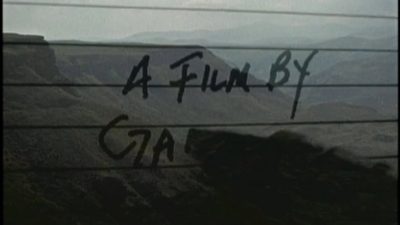
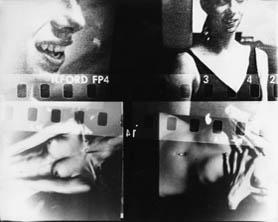
_____________ Girl from Moush (1993) ‘Girl From Moush is a poetic montage of the artist’s journey through her subconscious Armenia. It is not an Armenia based in a reality but one, which appears, like the mythical city of Shangri-La, when ones eyes are closed. A mesh of traditional images ‘engraved’ in film, with haunting voice-over, and rich colors, music and rhythms that continues long after the film is over. The viewers are engaged and forced through unchartered landscapes of uncertainty and fascination.’— GT
the entirety
______________ Sparklehorse (1999)
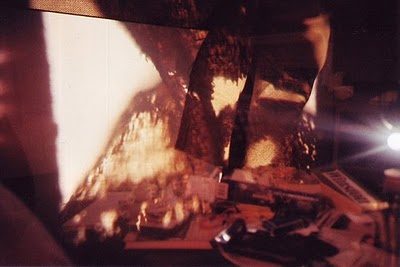
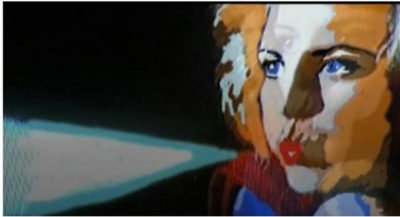
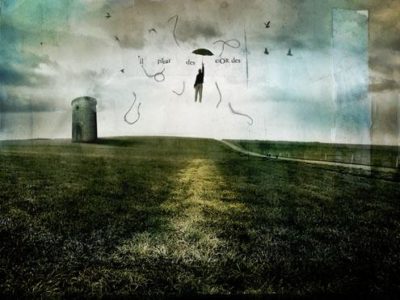
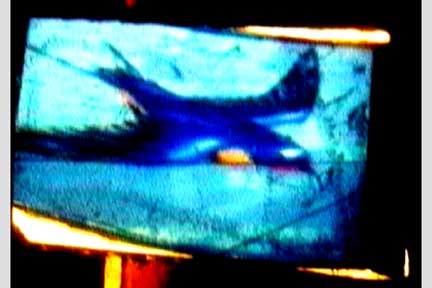
‘With SPARKLEHORSE, Gariné Torossian returns to the collage style of filmmaking she explored in earlier films such as VISIONS, GIRL FROM MOUSH and DROWNING IN FLAMES. The film is divided into three distinct sections: «Happy Man,» Good Morning Spider» and Hundreds of Sparrow.» «Happy Man» suggests a friendship conducted always at a distance – none of the images is presented without formal distancing through color, collage and printing techniques while the soundtrack combines a «repressed» musical track with the poignant sound of telephone messages: «Call me back when you want to.» The brief second section, «Good Morning Spider,» acts as an interlude, providing variations on a primitive scratched image of a spider, with a quiet, eerie musical accompaniment. The final section, «Hundreds of Sparrows,» returns to the theme of a (intimate?) relationship. Its images of birds echo the words of the poem/song that is spoken/sung on the soundtrack: «You are worth hundreds of sparrows.» Sound and image together invoke the idea of a surreal form of exchange value, in which one living thing may be taken in exchange for others. SPARKLEHORSE is a film that conveys subtly and with characteristic poetry the way people communicate with and value each other in a world of spiraling mediation.’ — Light Cone
______________
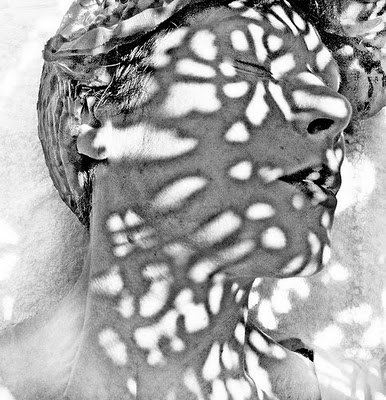
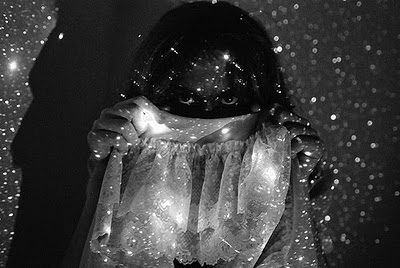
Sparklehorse Babies On The Sun (2001) ‘”Babies on the Sun” offers nostalgic, weathered images of “childhood” inspired by the song of the same name by the band Sparklehorse. The textured and layered style of the film gives the impression of blurred memories floating in the subconscious mind. The images, half visible, are abstracted through a process of visual degradation, suggesting the effect of time on memory, and mystified through collage, revealing the non-linear configurations of memory where images dwell in interesting and emotionally cumulative juxtapositions.’— Los Angeles Film Forum
the entirety
______________ Shadowy Encounters (2002) ‘The film “Shadowy Encounters” is an homage to the work of the Quay Brothers. The film is a synthesis of collaged moving and still images taken directly from the Quay Brothers’ 35mm films and recontextualized in order to metaphorically and responsively capture and reframe the Quay’s films’ qualities. The resultant richly textured and layered imagery delves the labyrinthine and secret realms of the Quay Brothers’ world.’— Los Angeles Film Forum
_____________ Stone Time Touch (2007) ‘This experimental documentary essay by Gariné Torossian brings an unconventional picture of Armenia, its turbulent history and colourful present. An intriguing element of the film is introduced in the form of one of Armenia’s best known actresses, Arsinée Khanjian, who sets off for the country of her ancestors in order to discover the true essence of the “Armenian soul”. The entries in her travel diary loosely tie in with the individual chapters of the film, in which, among other things, we visit the town of Gyumri 18 years after the terrible earthquake, the ancient church of Hrispine and an ethnographic museum in Sardarabat. This isn’t a traditional travelogue, but more an emotive and freely assembled mosaic depicting the diverse face of Armenia. Using a dynamic editing style, the director presents an original, analytical view via all manner of formal filmmaking approaches, including black-and-white archive footage, fragments from family albums, coloured filters, out-of-focus shots and also captivating compositions of the Armenian landscape.’— KVIFF
the entirety
_____________ Come Around (2008) ‘Directed by Garine Torossian. Poem by Louise Bak. Music by Peter Scherer.’
the entirety
_____________ AN INVENTORY OF SOME STRICTLY VISIBLE THINGS (2017) ‘”AN INVENTORY OF SOME STRICTLY VISIBLE THINGS” is part of an exhibition curated by Hrag Vartanian. Titled Fixed Point Perspective, the exhibit is an investigation into the afterlife of Ottoman photography.’— GT
the entirety
_____________ The Structure is Rotten, Comrade (2017) ‘Who is Frunz? Some would say he’s the son of Marianne and Sergei, an unassuming boy discovering Paris from inside his stroller along the Seine. As his parents separate, little Frunz turns inward, then to his Lego blocs for sustenance. He may look harmless and lacking in courage, but don’t be fooled, Little Frunz is a disaster waiting to happen. As he overcomes his family travails, Frunz grows up to become an architect and decides to leave Paris. He heads to Yerevan, the capital of Armenia, where as a university professor, he lectures his students about the principles of good design – and his unremitting love of cement. Meanwhile, Yerevan is in the middle of a building boom. Wrecking balls swing through the city; cranes punctuate its skyline and cement trucks race through its narrow streets. Its denizens live in slums, outraged at the destruction of the historic city. Most of them have lost their homes to an ominous plan to reinvent the Soviet city. Yerevan is also a city on the verge of revolution as residents are flushed out of their homes with tragic results. Yet Frunz’s father forges ahead with his urban plan to rebuild the city anew – a city without memory or history. ‘Hilariously funny and violent,’ as described by Le Monde.’— GT
the entirety
*
p.s. RIP Robert Frank. ** David Ehrenstein, Hi. Ah, so Everett is still making films, but no one, or, presumably, few people know about them. I wonder if he’s making such heavily gay films because he wants to or if that’s the only way he can get what funding he can get. That next Chris Munch seems like something that could get out there. We’ll see. Everyone, Mr. E. pays tribute to the newly late, very great Robert Frank on his FaBlog. The person to ask about City Lights is Tosh, who publishes with them. I don’t anyone there or really anything about that press. I hung out with Walter Moseley a bit back in the 90s when we shared a publisher (Serpents Tail). Very cool guy. ** Dominik, Hi! I actually tried doing that smoke trick when I first made the post years ago, but I couldn’t make it work. Klutz. Cool, now I really want to go to Amsterdam and visit that shop. It really was so formative for me. I owe it tons. Ha ha, yes, exactly, I’m fiddling and fiddling with the novel’s tiny details while I wait. Hopefully my trusted reader will be free to read it by the weekend, fingers painfully crossed. The first time I saw Iceage the pit was intense too. One of the best shows I’ve ever seen, that one. SCAB comes out this weekend, whoa! I can’t wait! Wow! So great! I hope that volunteering + course opportunity happens, of course. I would guess that job could very emotionally intense or very involving at least, but I know you’ve facilitated support groups, so it sounds like a good fit. Thank you about the TV thing. I actually made good headway yesterday. This week? TV editing supervision this afternoon. A reading by the great young US writer Renee Gladman tonight that I’m hoping the editing thing won’t prevent me from getting to. A friend, and occasional blog dl, Natty is in Paris, and I’ll see him. More TV meetings. Performance by the great artist Dominque Gonzalez-Foerster at the Pompidou on Friday. Maybe just maybe finally finishing the new film script. Stuff like that. And work. I hope your week goes well, and, if it’s involved in SCAB finishing, it’ll certainly be a great week of yours for me and us! Love to you! ** Bill, It’s hard. I tried. But I’m a klutz. Cool, thanks, about the festival reportage. How’s your week going so far? ** _Black_Acrylic, Hi. Intense. Ugh, heroin, the world’s most evil and hateful drug, if you ask me. So sad. ** Steve Erickson, Hi. Yeah, most of the rave reviews of the LDR album do nothing but dissuade me, and Ann’s was the one review that made me the most curious to listen. Oh, sure, I could have been talking about site/periodical editors as well. I don’t miss the days when I was pitching articles and cursing editors’ neglectfulness one little bit. Mostly the only thing I’ve heard people say about ‘Joker’ here is how depressing it is that Venice has so long been in the habit of giving their prize to ‘artful’ Hollywood films. I agree with you about the misreading of my work by many critics, and thank you for saying that. ** Peaton, Halloween’s approach is my saviour, it’s true. I saw David Copperfield live once. You know, as obnoxious as he is, he’s pulls off some pretty crazy shit. I am going to take a sip of this massively hyped pumpkin spice thing when I’m in the States. But not before I take a bite of a Candy Korn Oreo. Your music is still in the queue, just to say that. It needs a brain with space in it. Maybe today I’ll get some. That’s the plan. Damn. ** Misanthrope, Oh, right, of course. Don’t know what was wrong with my cognitive abilities yesterday. And the answer is, I don’t know. Historically, since the 60s, rock/pop/what-have-you has always had a radical area with a healthy listening base, from the Velvets/ psychedelia/ Stooges/ etc. onwards through early Roxy/ Eno through punk and on and on. So I guess there’s a basic openness and interest among music fans towards that kind of work, or a basic understanding that that kind of work is legitimate and often ends being very influential. I don’t know. It just seems like music listeners in general are a ton more to experimentation than the followers of other forms. Visual art is the only other medium I can think of that has prominent radicals working within it who are well known and respected. Off the top of my head. ** Corey Heiferman, When I was a little kid, I was completely obsessed with magic tricks. At one point I subscribed to two separate ‘magic trick of the month’ clubs that sent you a new trick every 30 days. I lived for those things. And yet I never used to perform for my family or friend or ever wanted to be a magician, which is strange, I guess. Fantastic news that you got into the school! Huge congrats! Yay! Oh, that Israeli sandwich looks delish! Huh, I wonder if the famous old Jewish deli in the Marais has that on the menu. Mm. Thanks for the mouthwatering prompt. Good day, man! ** Okay. Do you know the films of Gariné Torossian? Well, quite clearly I think knowing them is an excellent idea, and here’s your chance. See you tomorrow.















































































































 Now available in North America