“It’s a book that used to be a movie, instead of the other way around.”
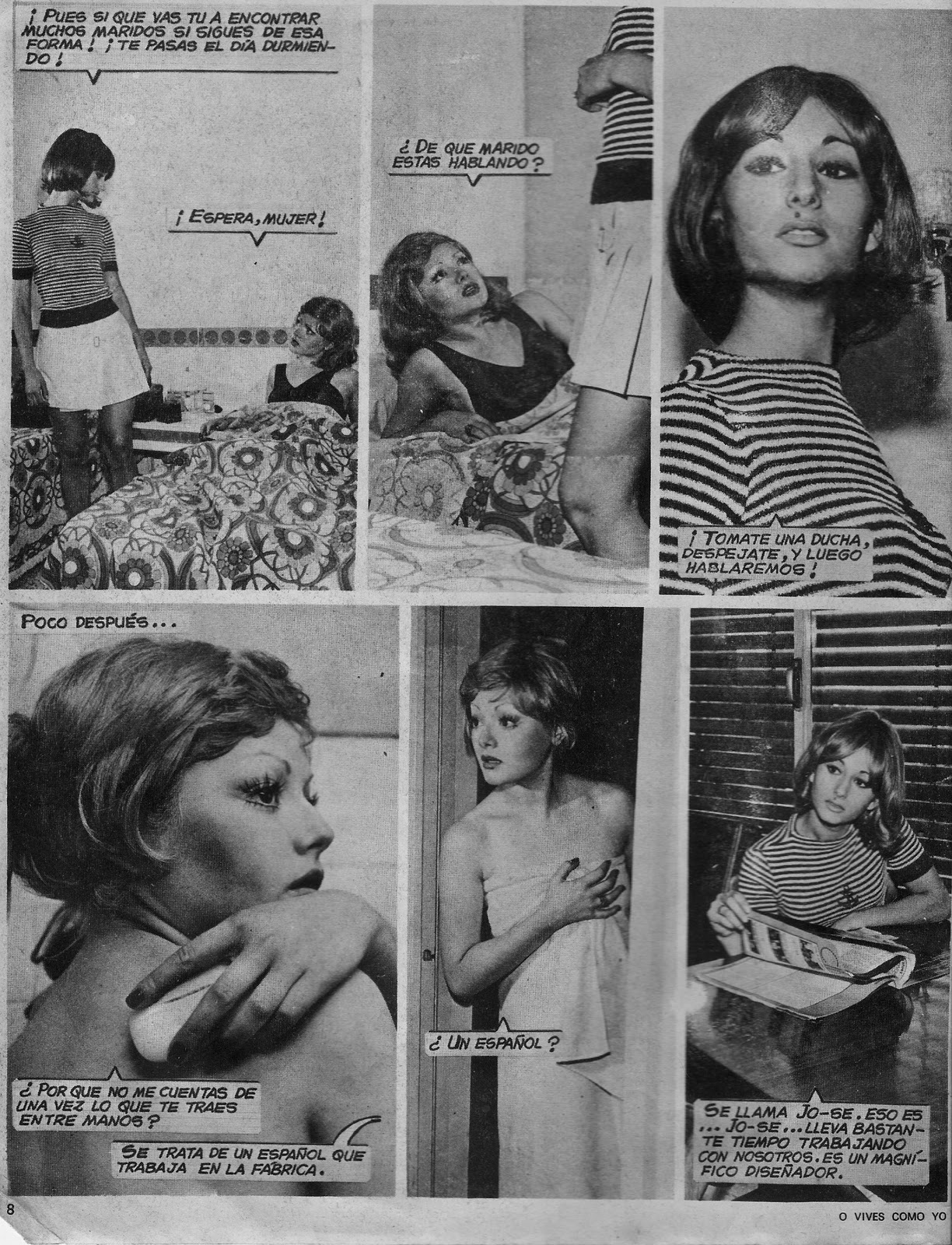
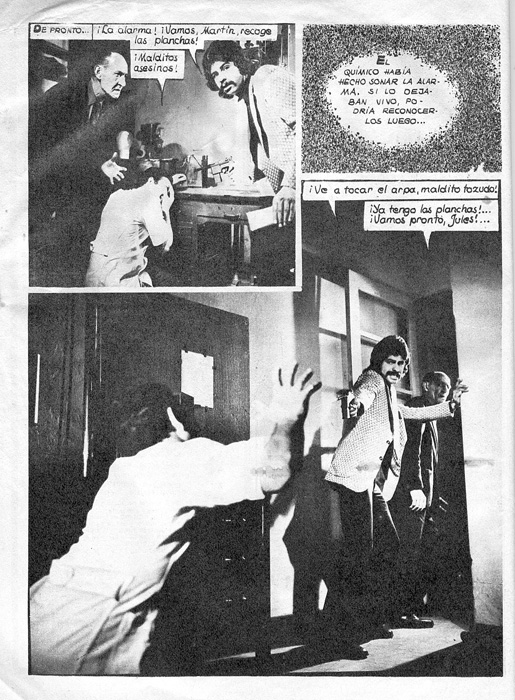
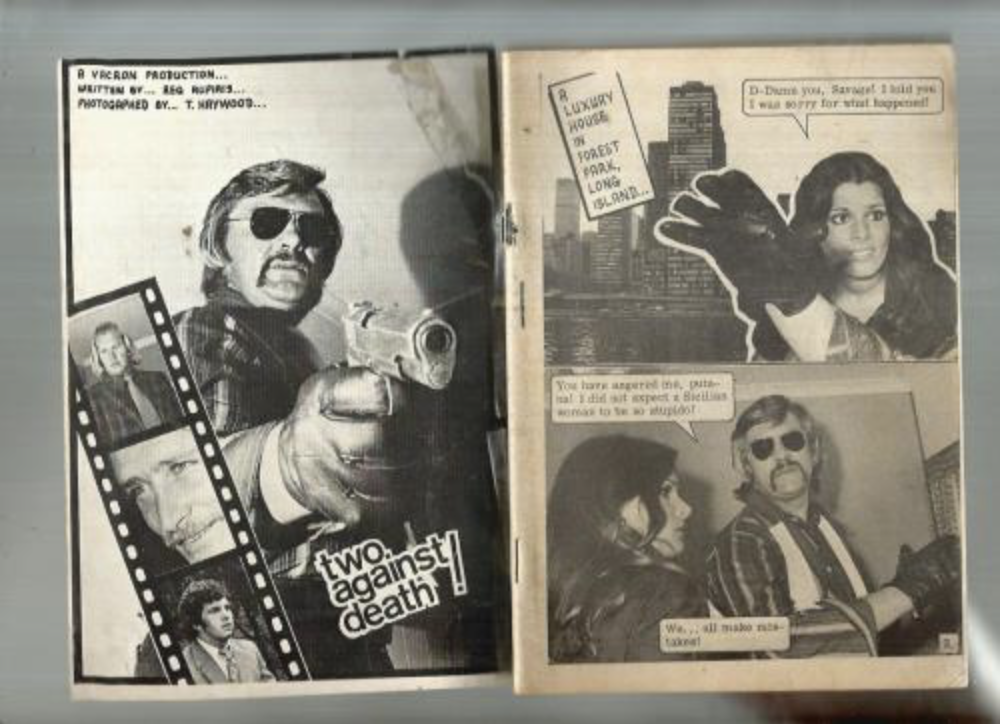
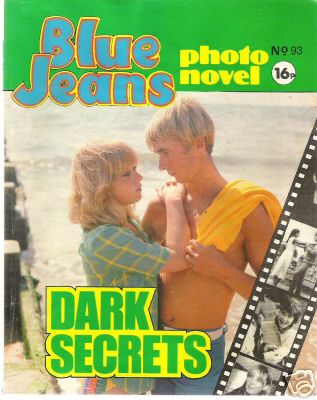
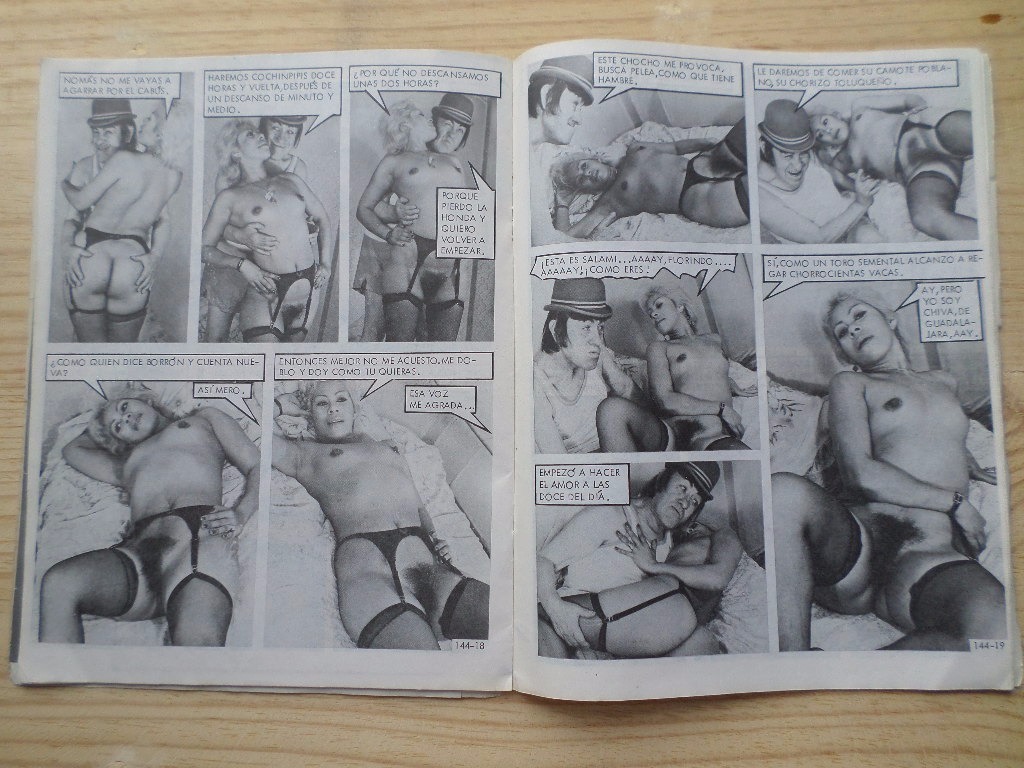
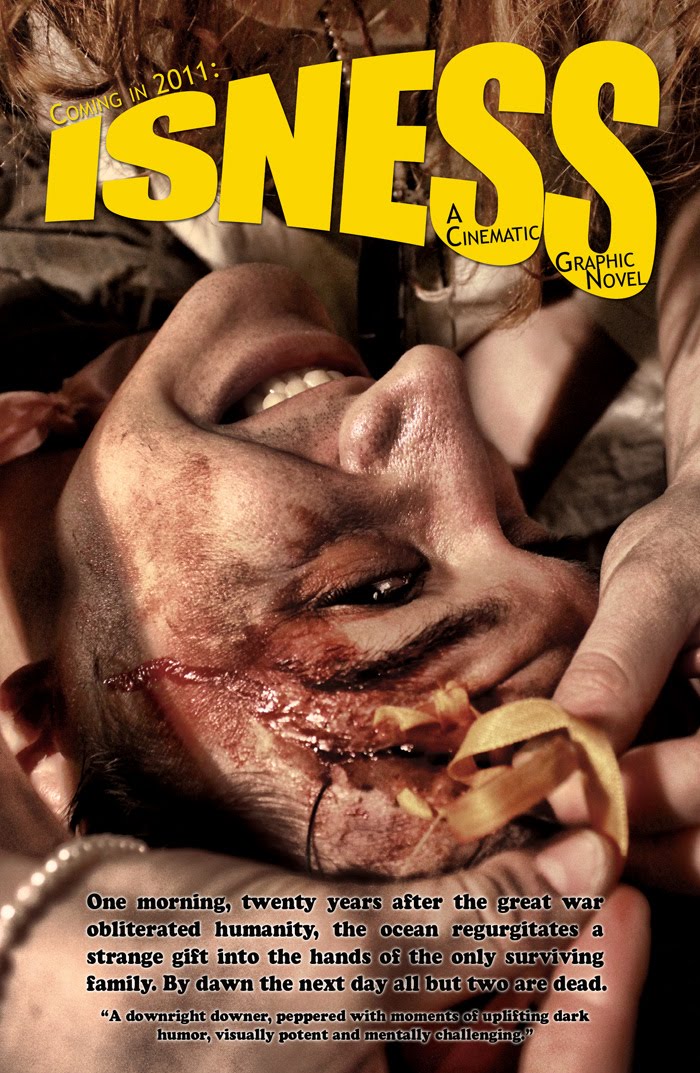
I have this slight but persistent interest in the genre of the photo novel. Maybe it’s because a childhood friend of mine had a stack of garish, violent old Mexican photo novels back in the early 90s that I used to pore over whenever he and I hung out. I just think it’s curious form, at once really logical and equally peculiar. So I asked Dennis if I could create a post here to lay out the history of this minor genre, only to find after searching very hard for the details, there basically is no thorough, definitive, or even semi-half assed information on photo novels or fotonovels out there in cyberspace. I found exactly one sketchy, uncredited personal account of the genre on one offbeat webpage. I reprint pieces of it below along with some of the not many samples I managed to gather in my search. So this is not in any way the paean and informational scouring I’d hoped to put together here. It’s just a little nod in the photo novel’s direction in search of any thoughts, opinions, or memories you guys out there might be harboring. — Timothy T
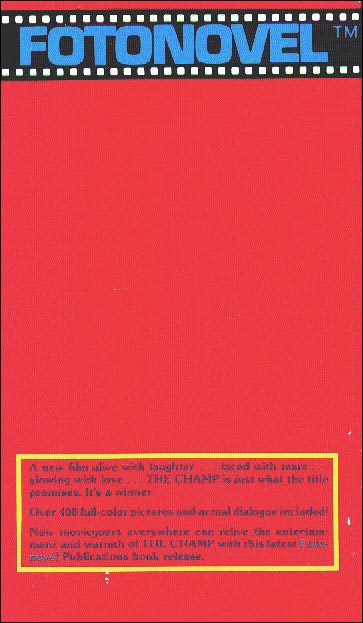
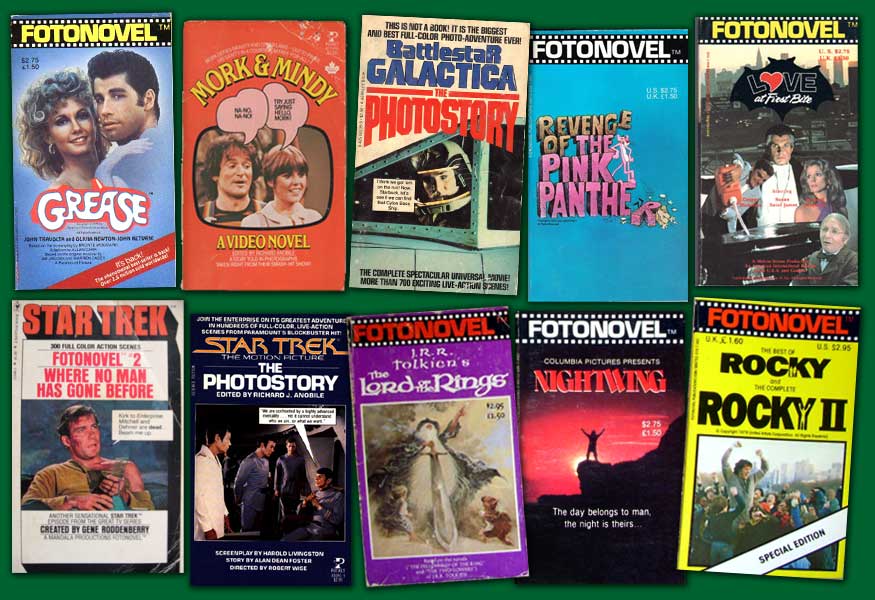
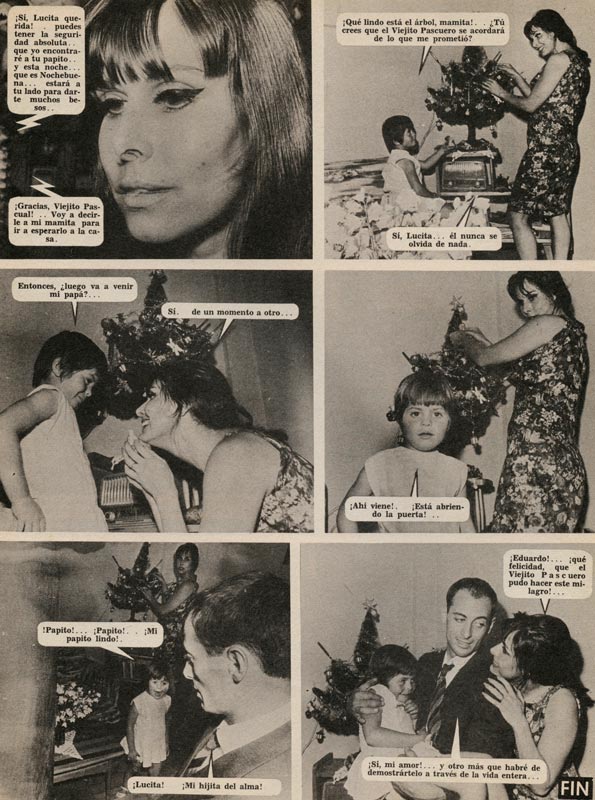
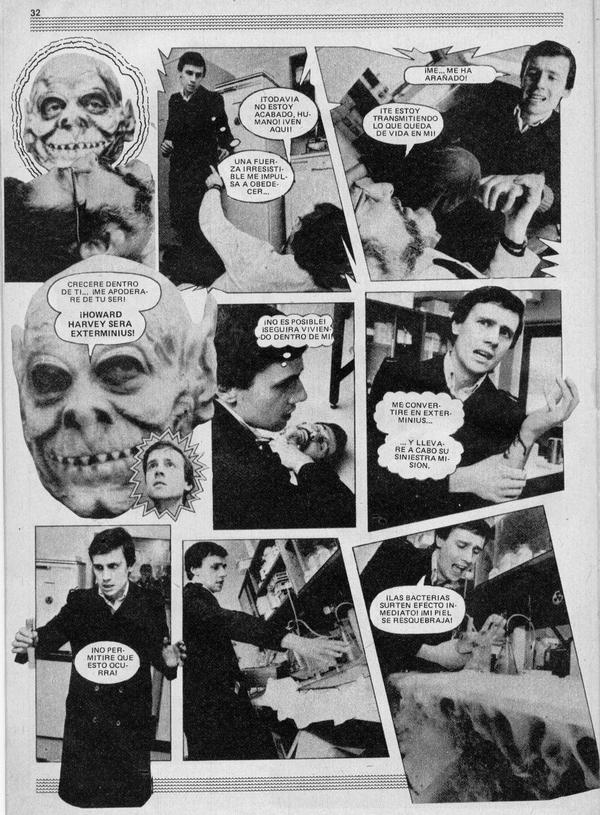
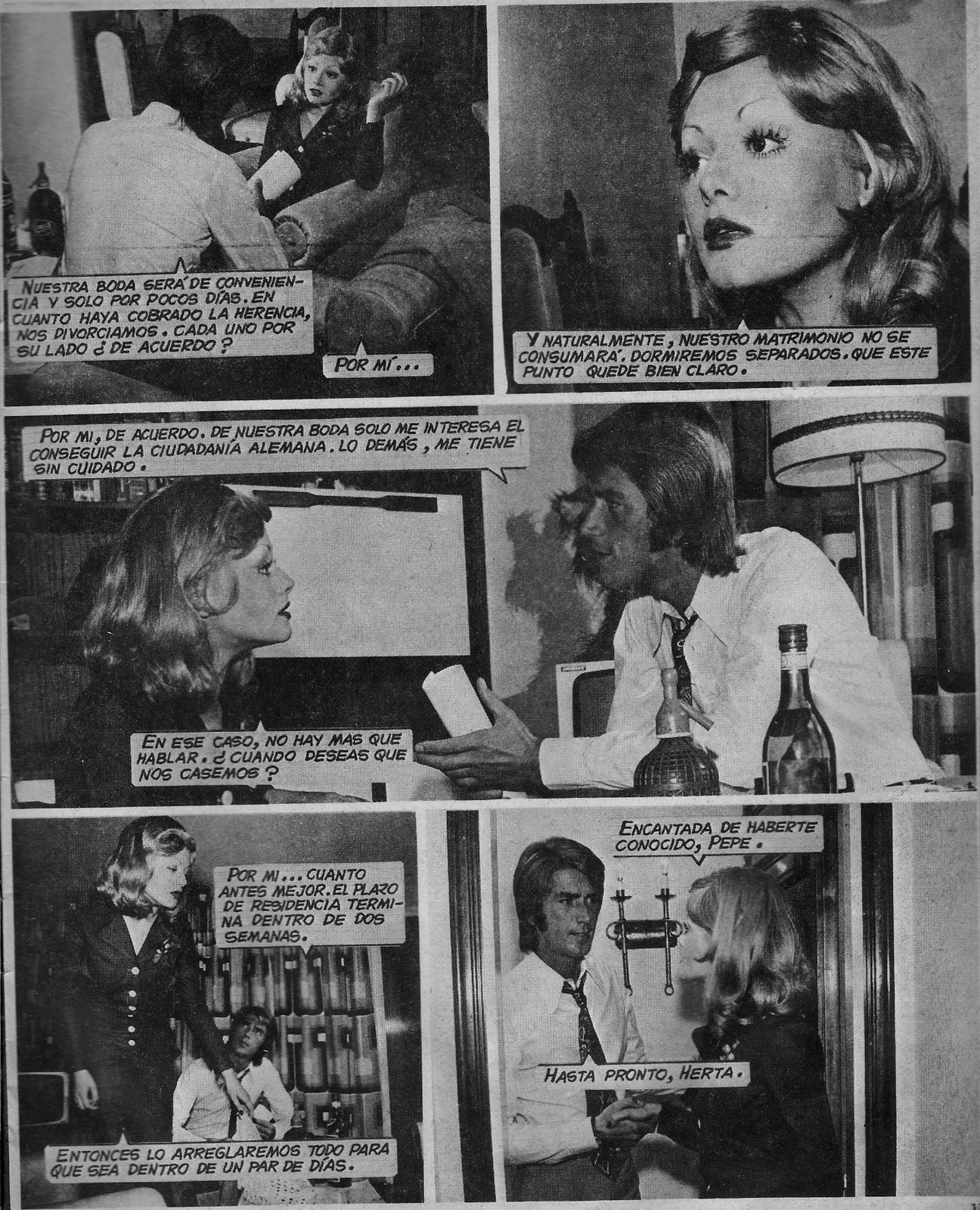
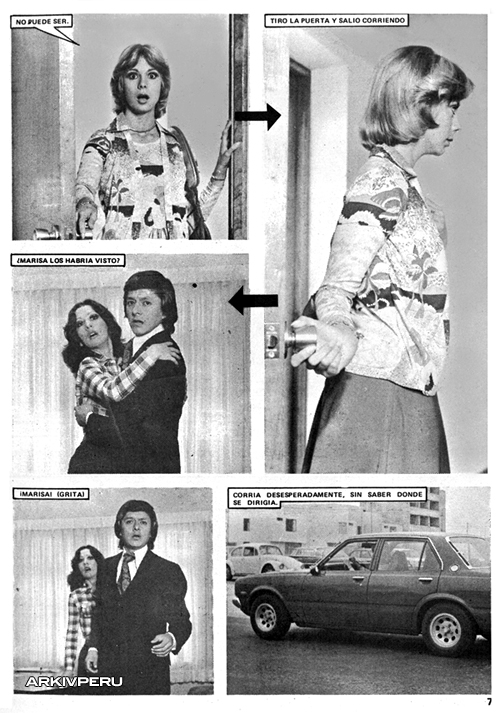
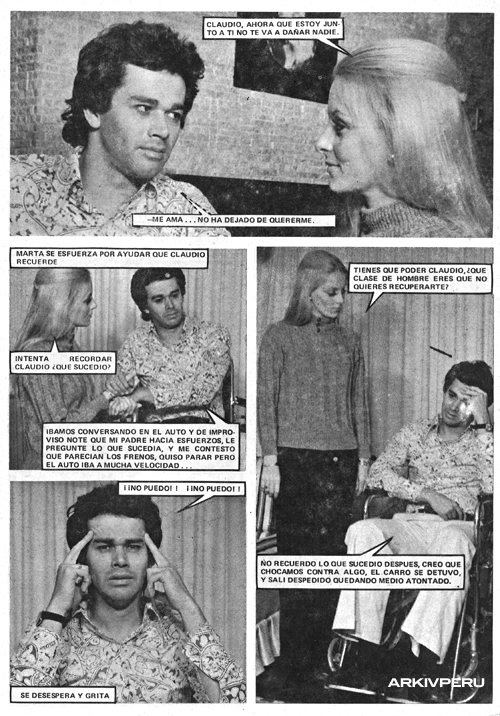
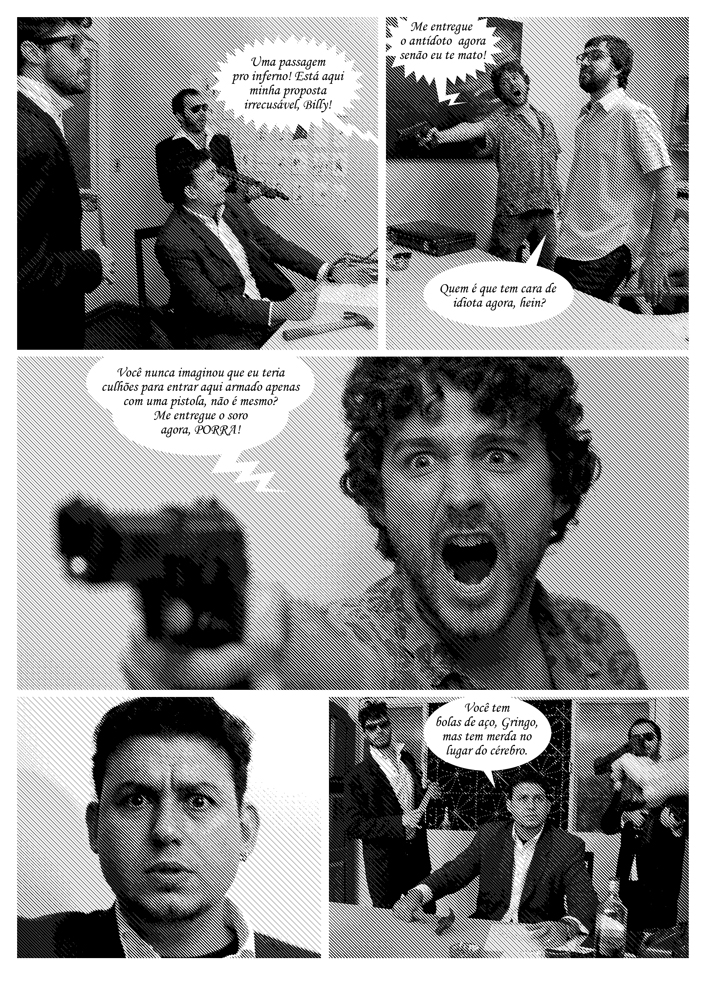
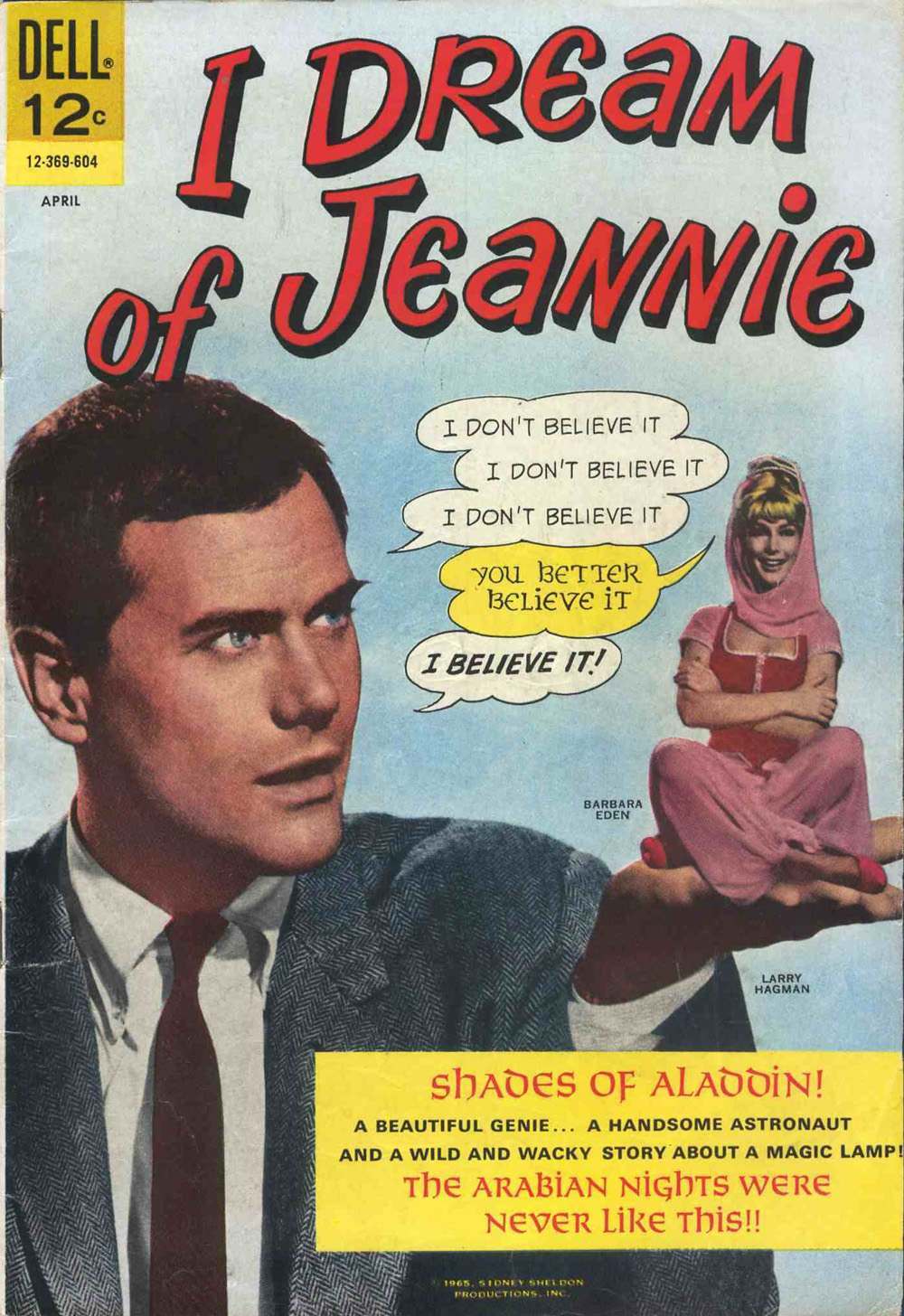
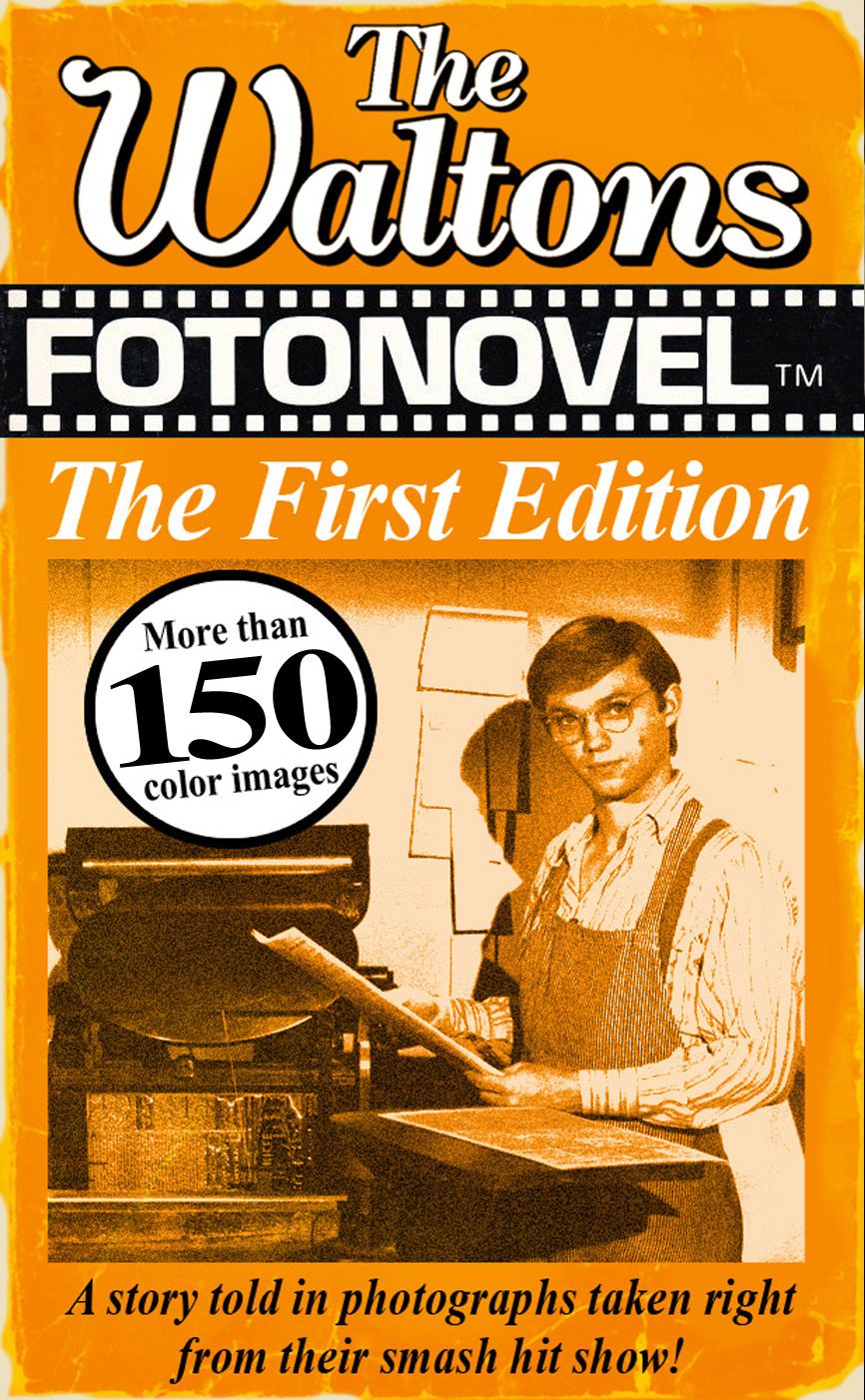
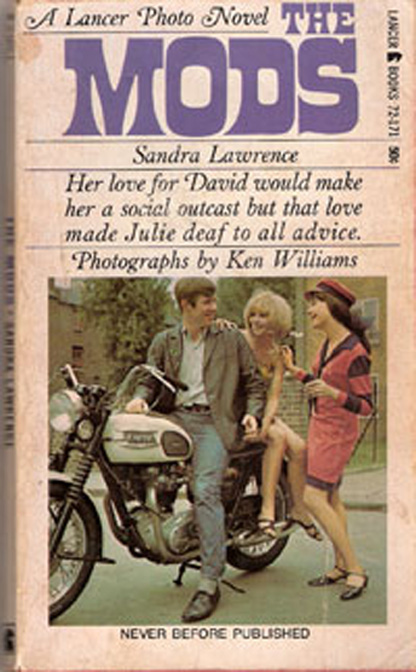
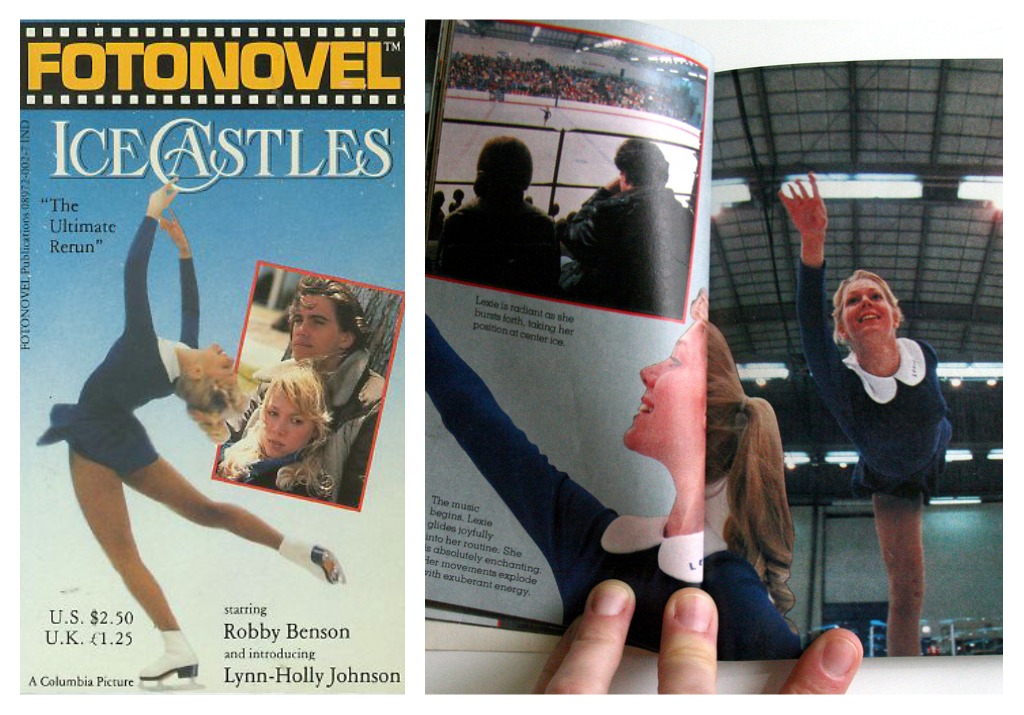
‘Am I the only one who remembers Fotonovels? They were a uniquely ’70s creation, and they seemed to come and go within about two years. Two movie-loving friends of mine who’d also lived through the ’70s had only a dim recollection of Fotonovels, if that. Maybe they came and went so fast they didn’t even have time to leave a footprint in the collective cultural memory. The fotonovel was an attempt to bring back and modernize the original photo novels, which flourished internationally in the early 60s. But compared to photo novels, which were lurid, violent, seamy affairs often based on original stories, fotonovels were usually G-rated, cut and dried, faithful renditions of blockbuster movies, or, on occasion, narrative picture books tied to the romance novel genre. …
The 60s
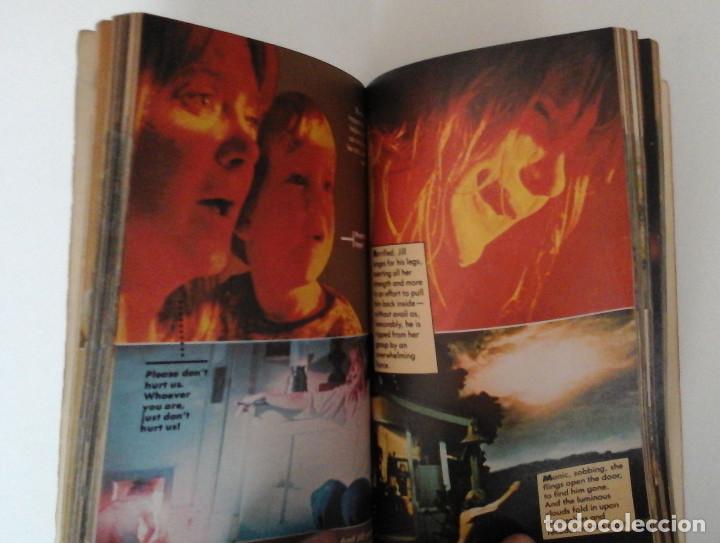
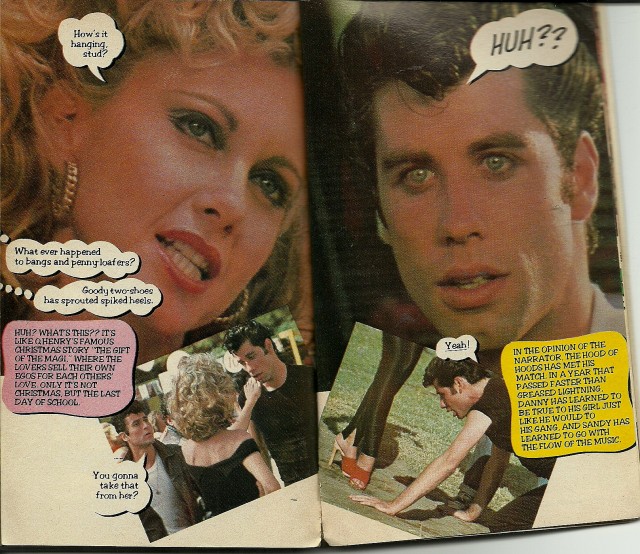
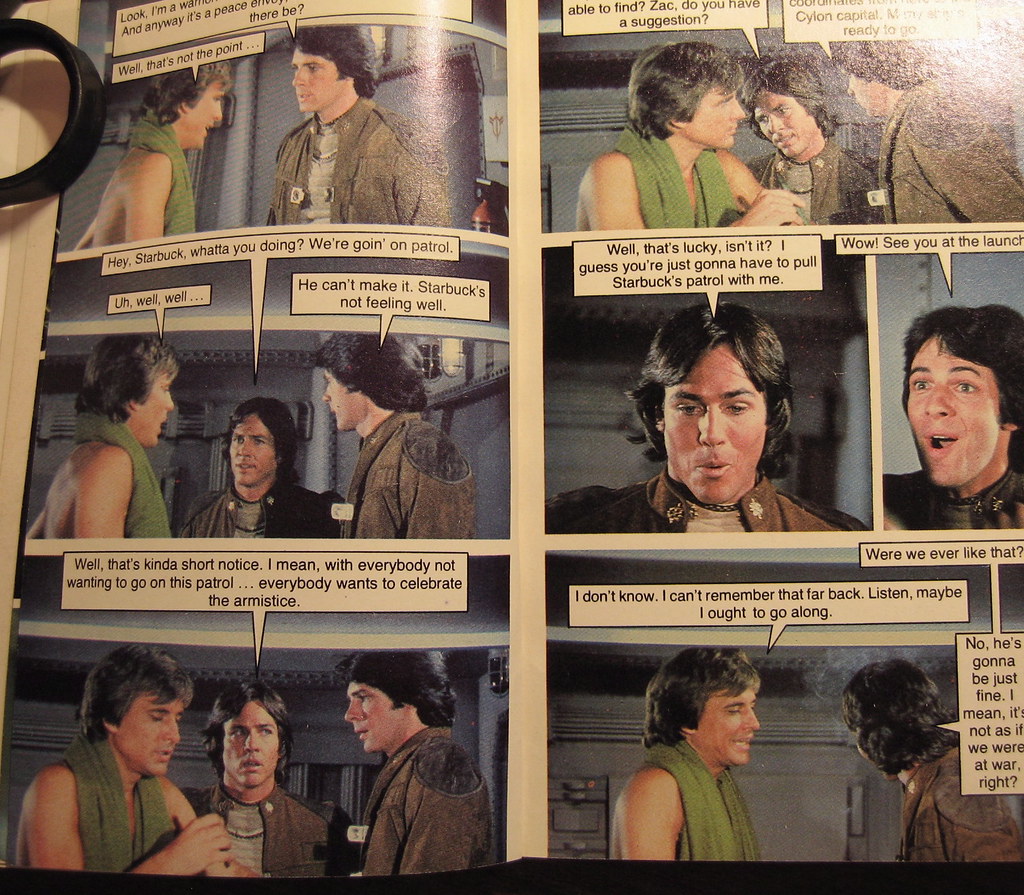
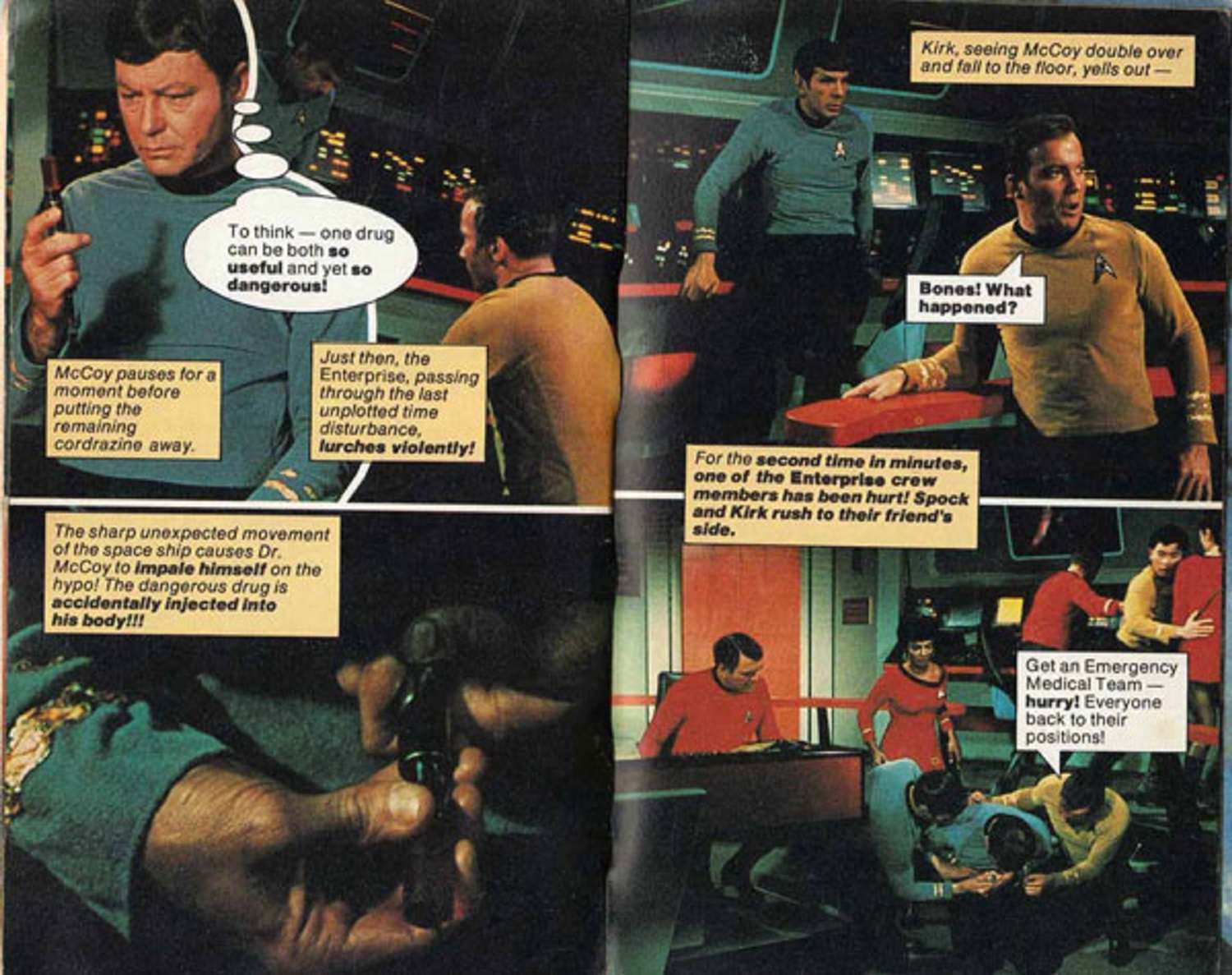
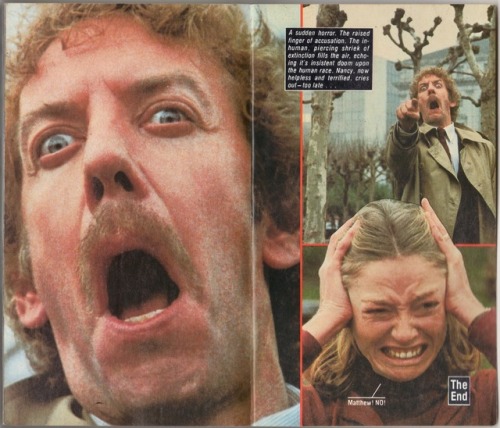
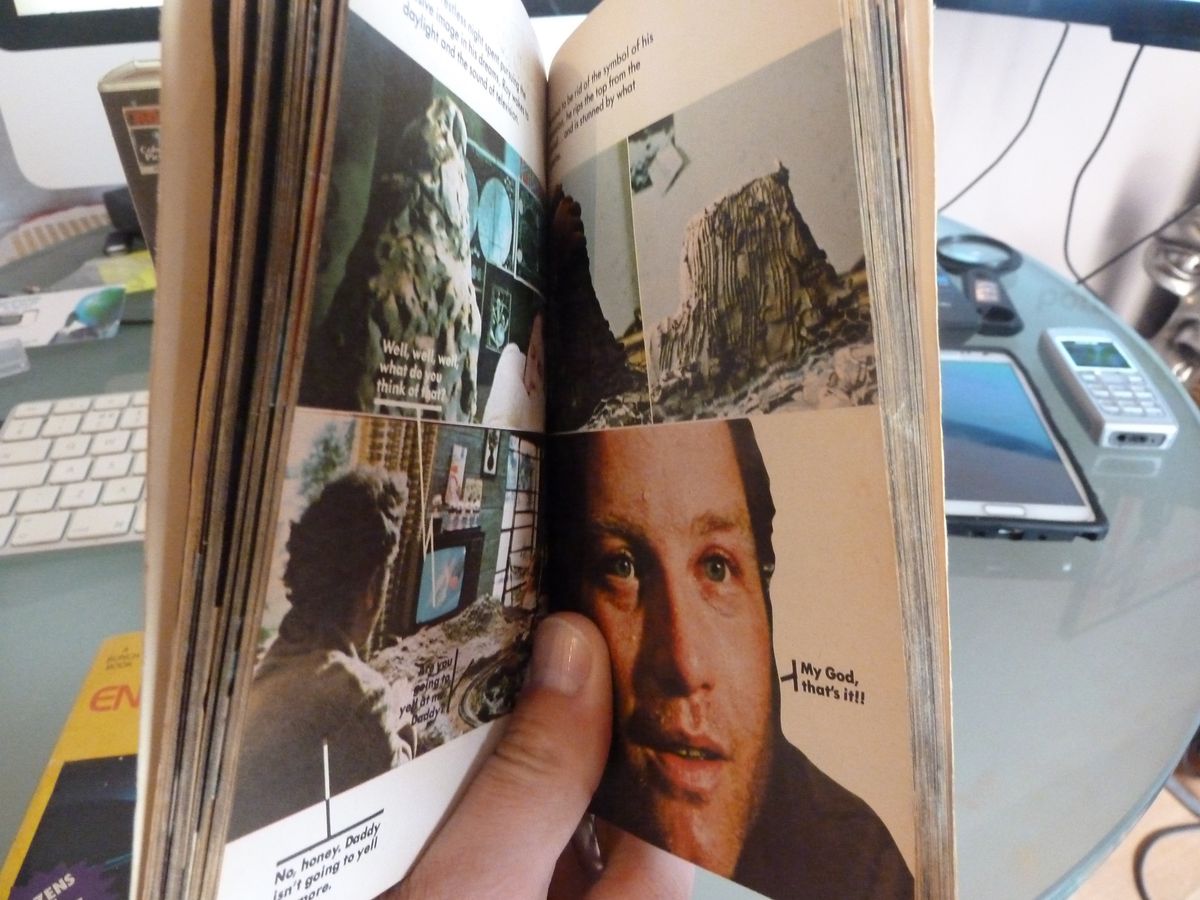
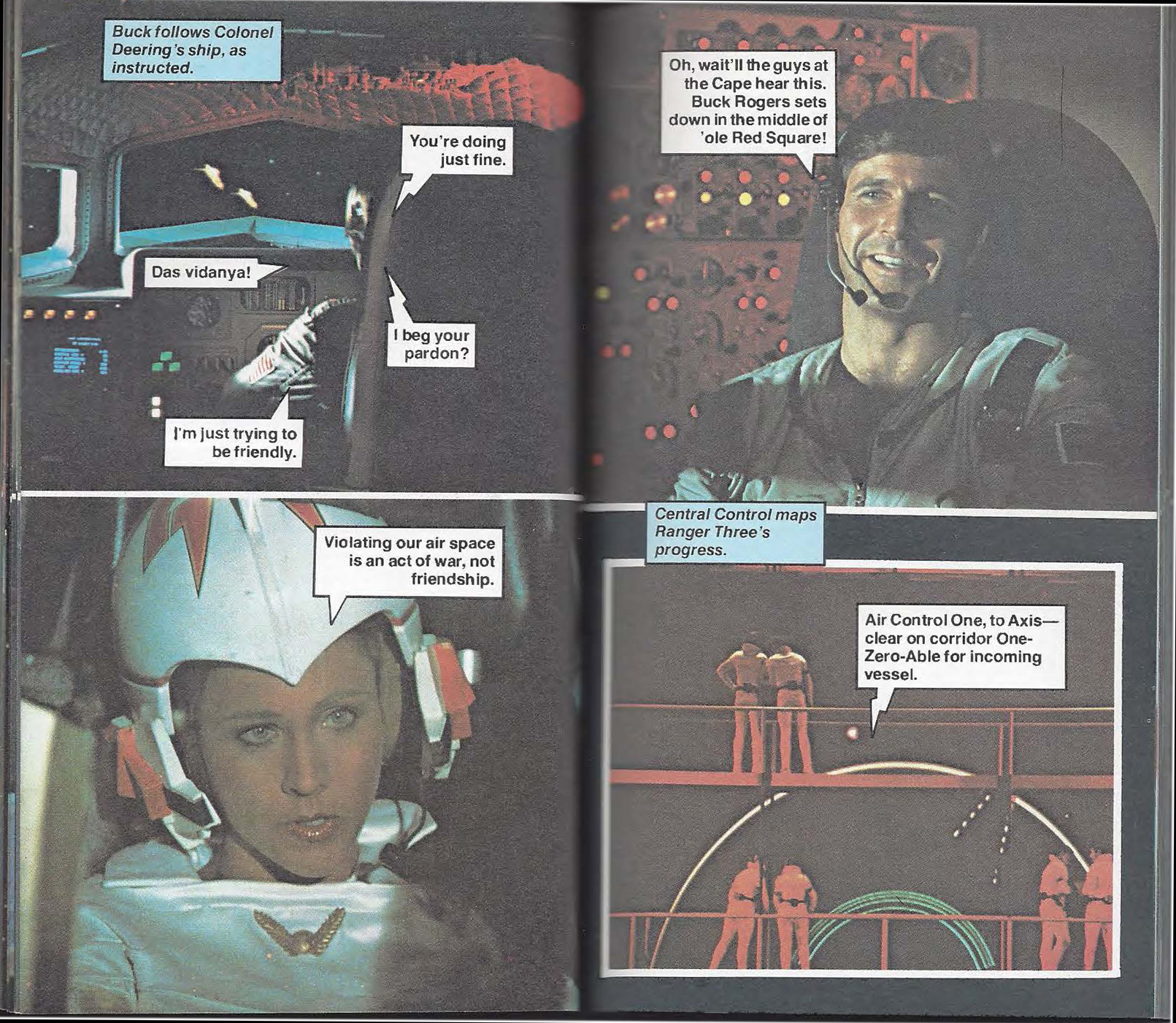
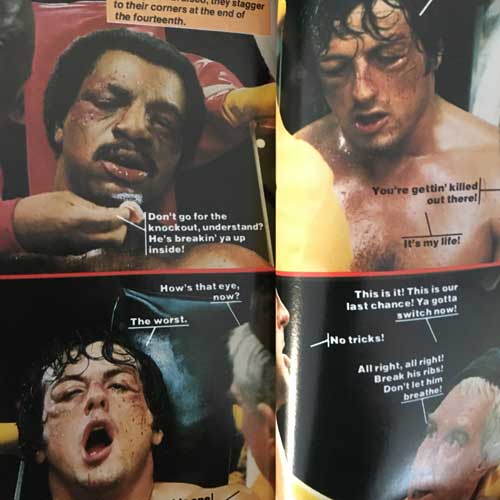
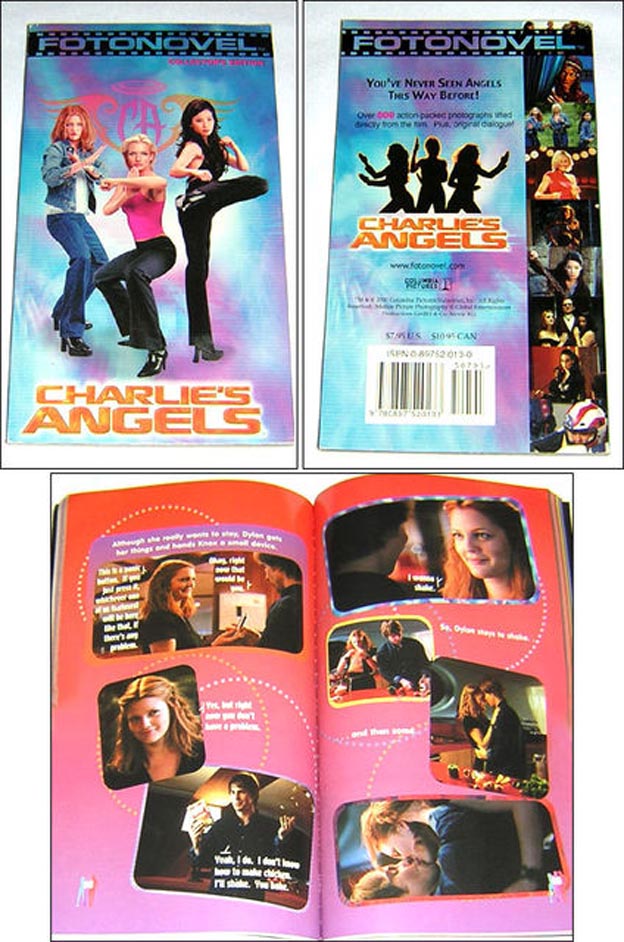
‘For the uninitiated, Fotonovels were quickie paperbacks that most often told the story of a movie (generally a movie with youth appeal), although original creations without movie souces were not infrequent. Fotonovels’s stories were told through full-color photos or stills; the dialogue was rendered as printed text, with open speech balloons (as in, say, DOONESBURY) pointing to whoever was delivering the dialogue. Fotonovels were apparently never welcomed with open arms. They were fair game for ridicule. Stephen King, writing about INVASION OF THE BODY SNATCHERS (whose 1978 remake was Fotonovelized), went off on a tangent in his DANSE MACABRE: “If there is a lower, slimier, more anti-book concept than the Fotonovel, I don’t know what it would be. I think I’d rather see my kids reading a stack of Beeline Books [porn paperbacks] than one of those photo comics.” …
The 70s
‘Informally, I’d place the original Fotonovel US life span from 1977-1979. There may have been more after that, but I sure wasn’t spotting them in drugstores. I was around 8 or 9 during the “peak” of Fotonovels, so I’d collected quite a few of them, most of which I eventually sold at yard sales for a quarter each. I remember having SATURDAY NIGHT FEVER, ROCKY & ROCKY II (these were combined into one Fotonovel), the aforementioned INVASION OF THE BODY SNATCHERS, BUCK ROGERS IN THE 25th CENTURY, and perhaps several others I’m forgetting.’ …
The comeback: first wave, 90s
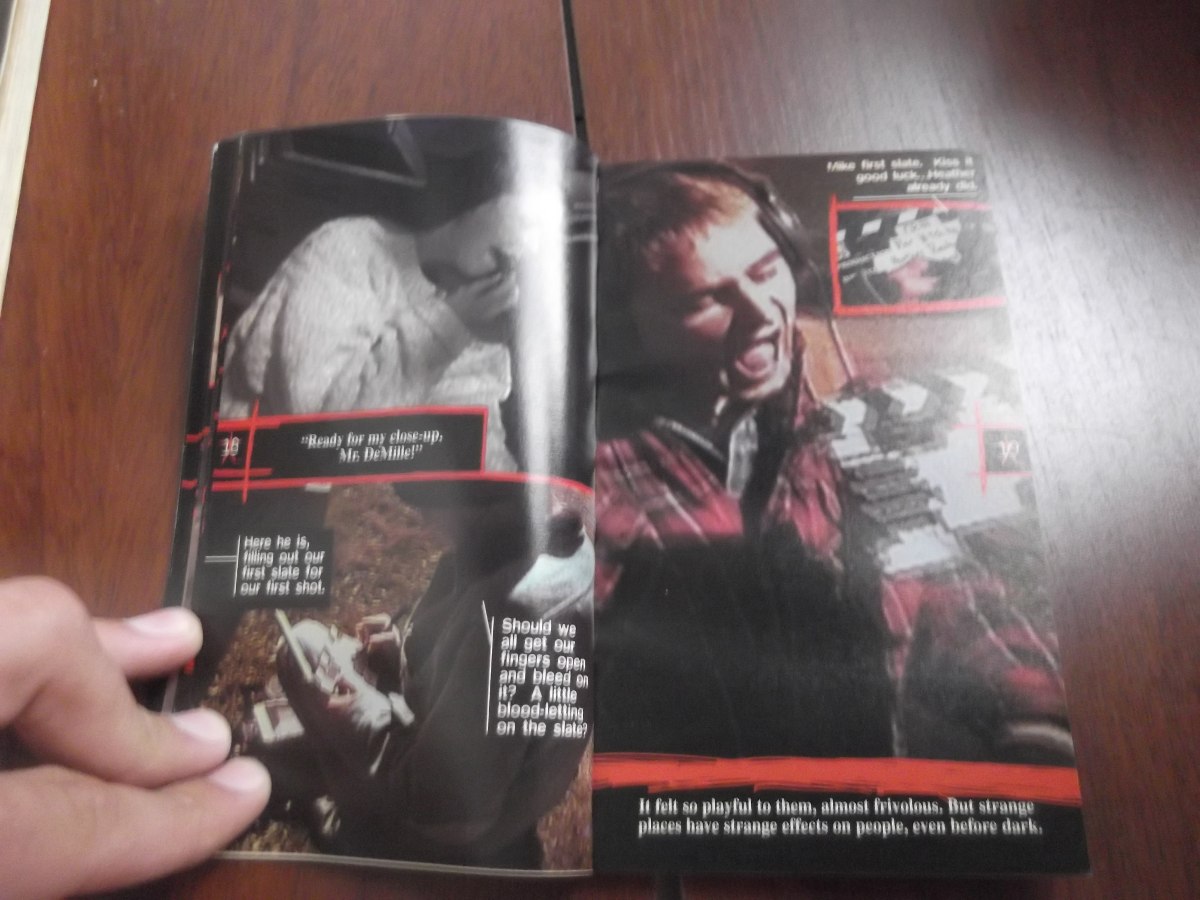
‘Why is the Fotonovel making a comeback now? Perhaps someone noticed that the marriage of text and image on the Internet has been slightly successful. And for movies that don’t lend themselves to straight text novelizations, like THE BLAIR WITCH PROJECT, the format seems a good match. Though on the other hand, BLAIR WITCH depends almost entirely on its cinema-verite camera jiggling for its impact; as a Fotonovel, it looks like a collection of grainy photos, with text. It’s the shittiest-looking $9 paperback I’ve ever seen. $9 may seem pretty steep, but the cover price on my old copy of the LOVE AT FIRST BITE fotonovel is $2.75 — a fairly high cost for a quarter-inch-thick paperback in 1979. That was probably one reason Fotonovels went under before: A book composed entirely of full-color photos is expensive to produce. …
The comeback, second wave, early 00s
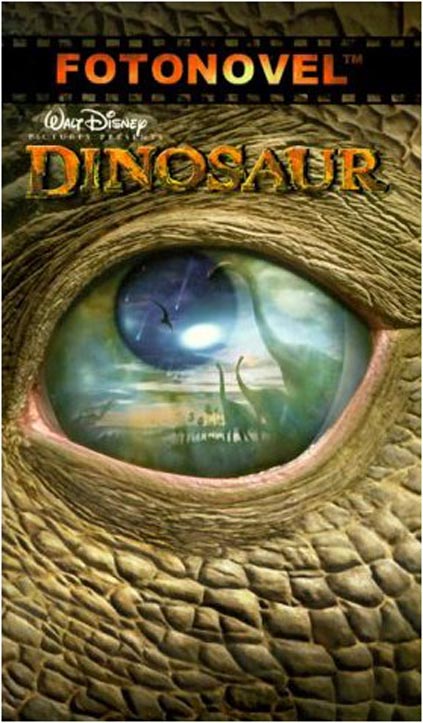
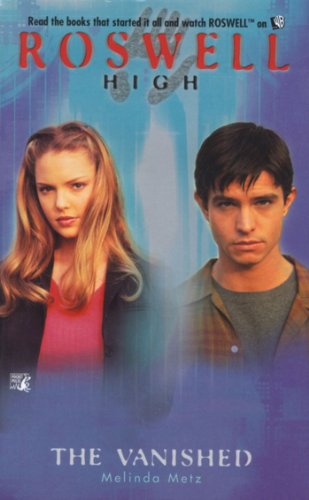
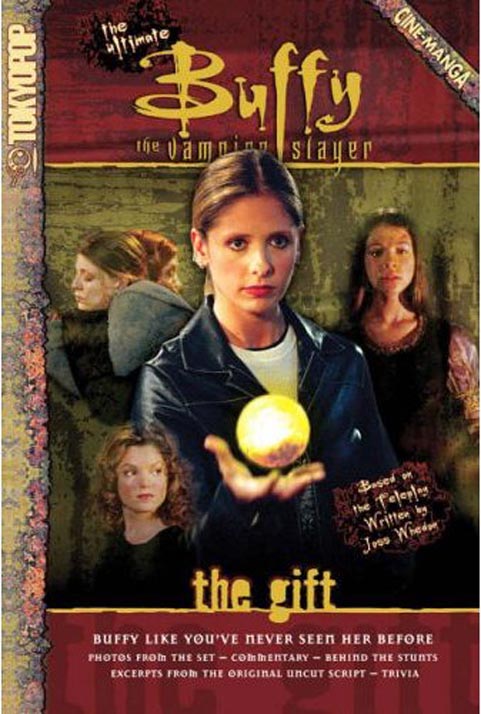
‘Personally, I think they’re blowing it all over again. If they set their aim a little higher, both demographically and artistically, they’d clean up with uncensored Fotonovels of beloved Gen-X classics like CLERKS and RESERVOIR DOGS. (PULP FICTION would probably be too long to fit into a standard Fotonovel.) I would also go with primarily verbal movies — they’re making their old mistake (with BATTLEFIELD EARTH and DINOSAUR) of trying to convey a big-budget, big-screen experience within photos the size of a baseball card. A talky movie like CLERKS, which kinda looks shitty anyway, wouldn’t lose much by being Fotonovelized. You could even do a flip-page cartoon of Silent Bob dancing to “Violent Mood Swings,” the way they had Travolta doing flip-page disco in SATURDAY NIGHT FEVER. …’ — collaged
Some offshoots
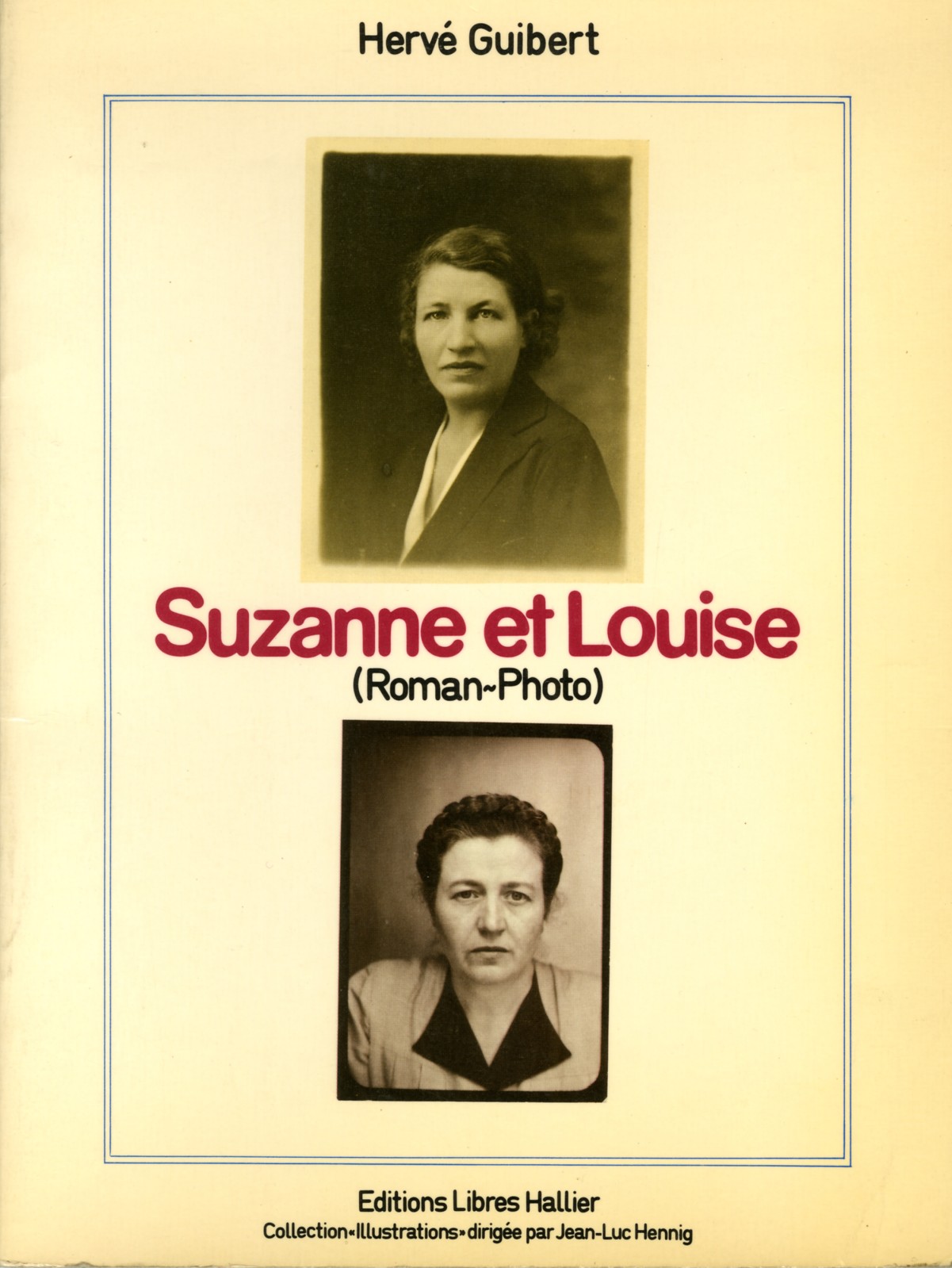
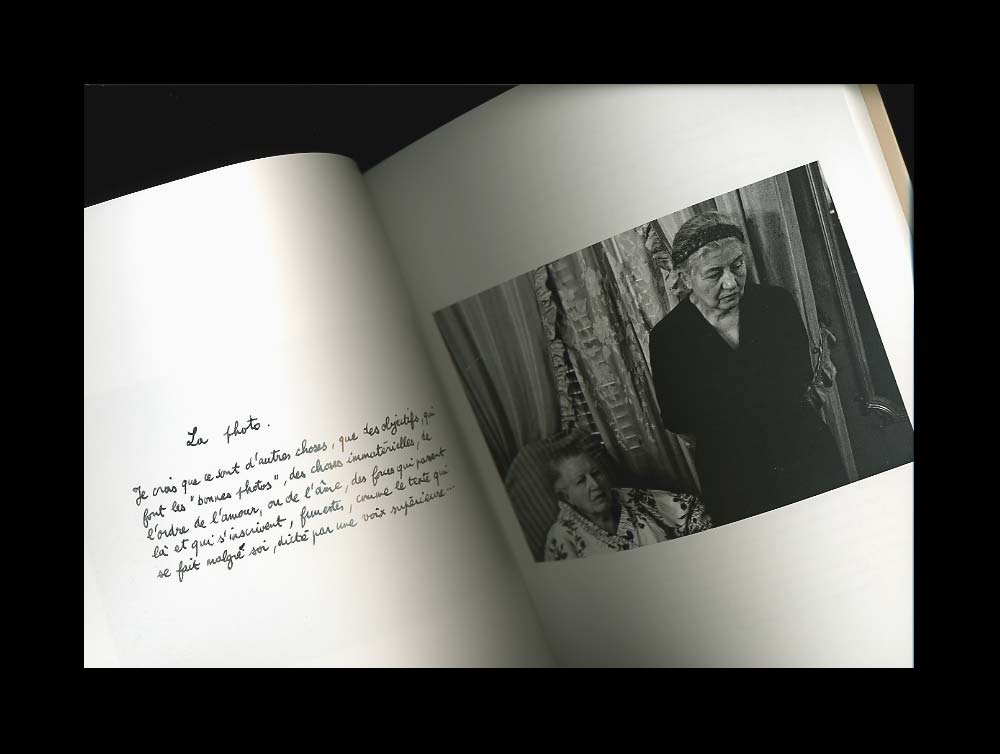
from Herve Guibert’s ‘photo novel,’ early 90s
Chad Michael Ward’s ‘Black Rust,’ 2003
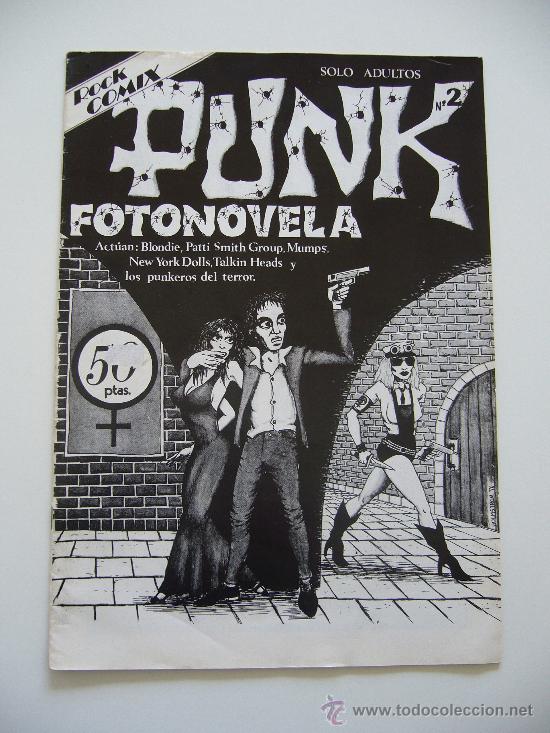
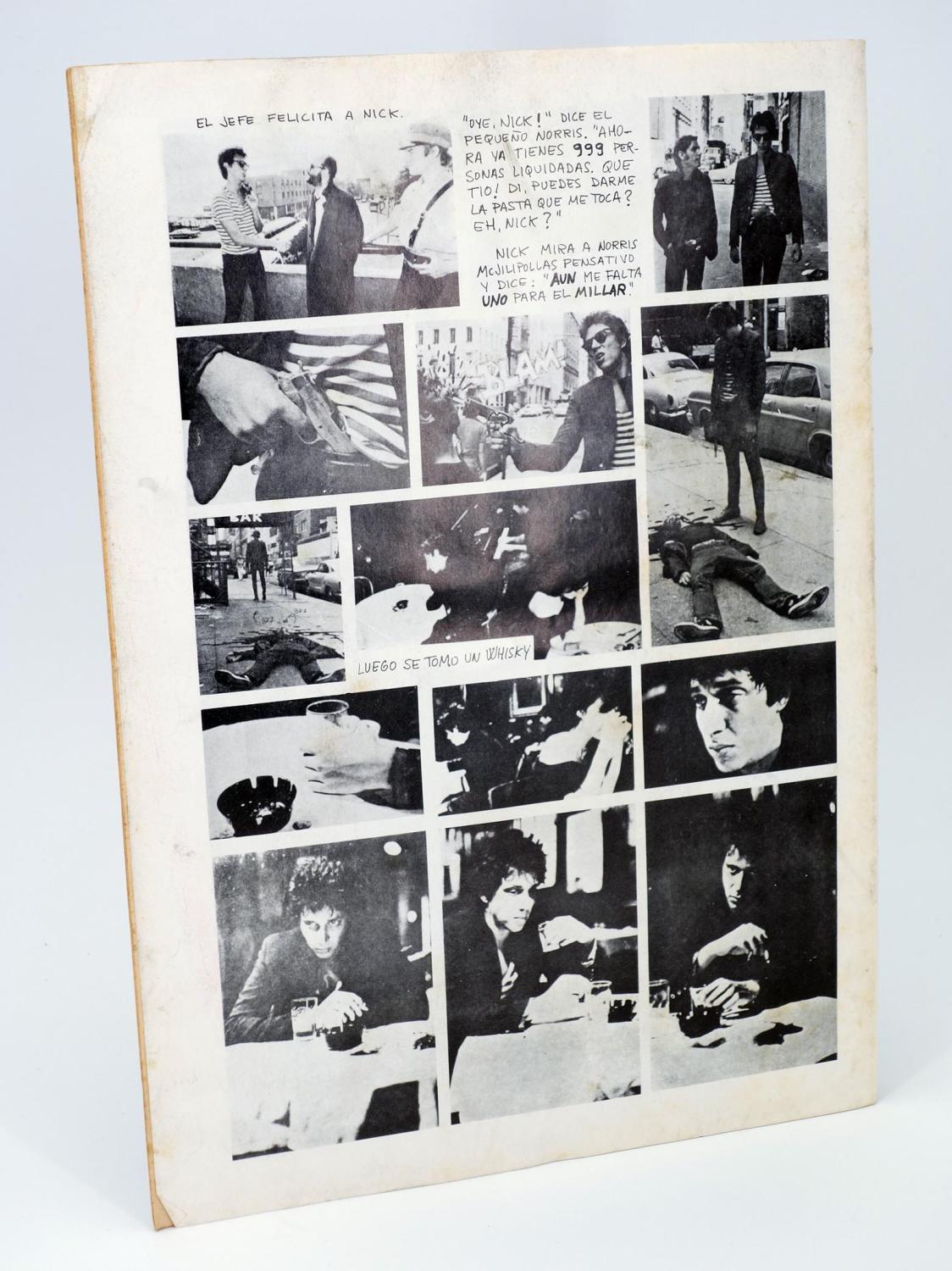
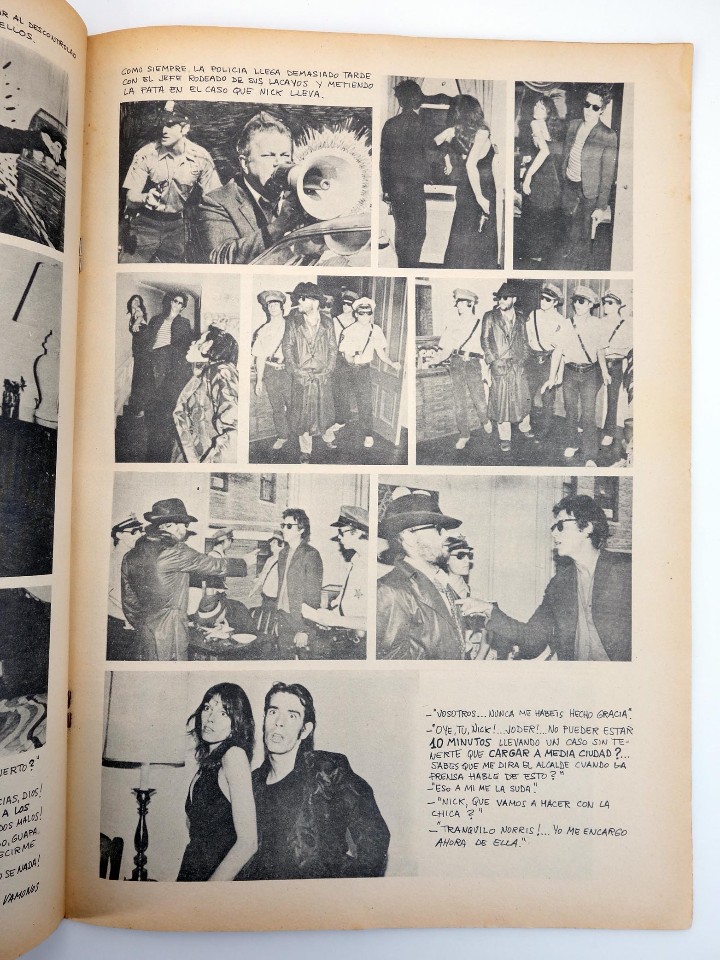
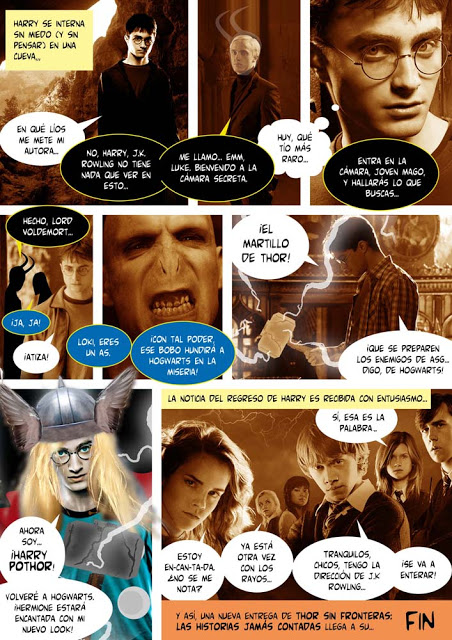
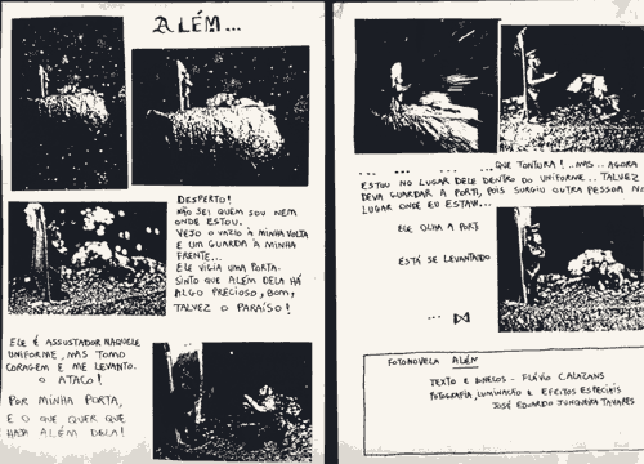
Photo novel zine, undated
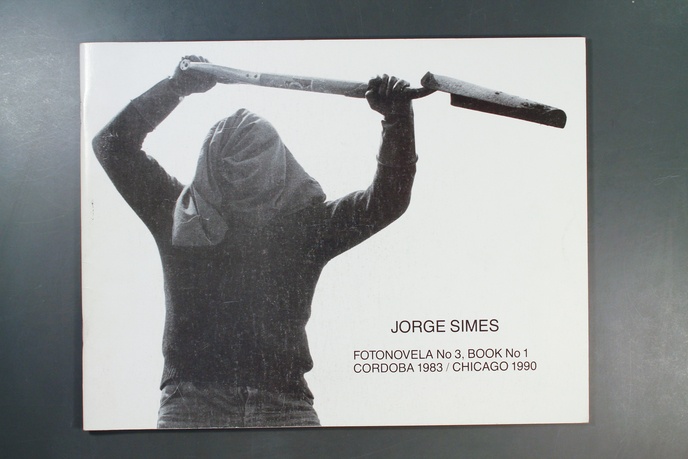
Jorge Simes Fotonovela No 3 Book No 1 (2000)
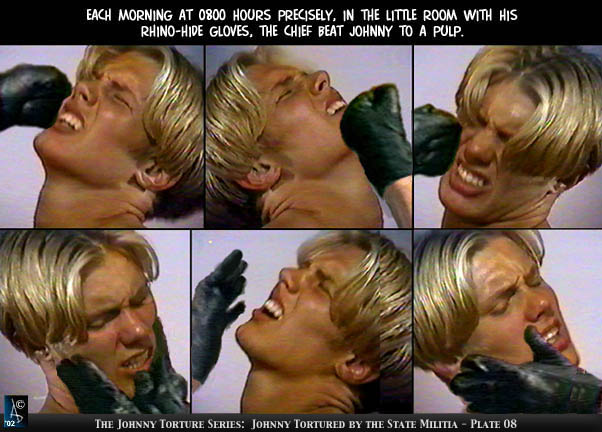
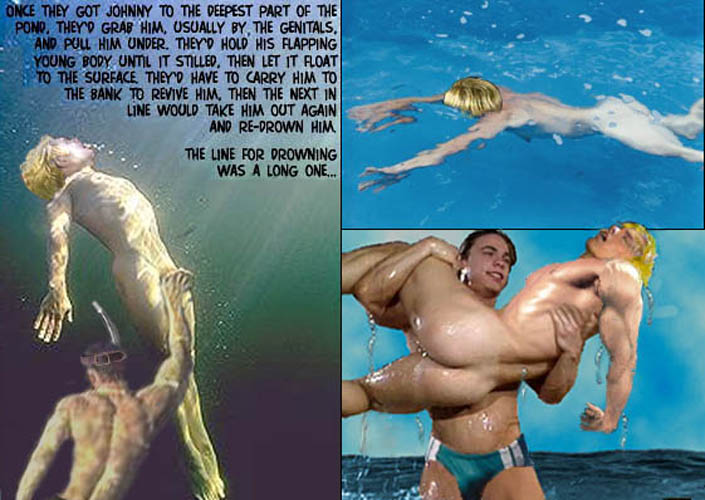
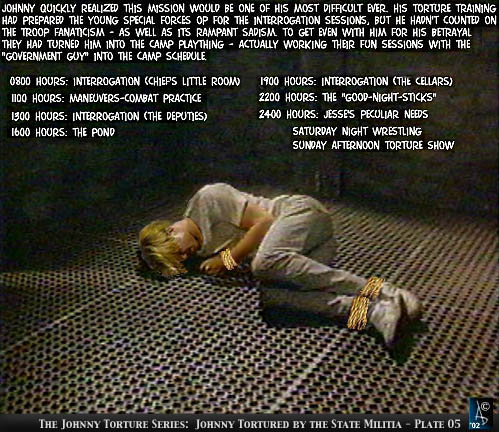
from ‘The Johnny Torture Series’
‘You don’t know what it was like to be a geek in the 1970s. There was no VCR and what we liked wasn’t taken seriously by those who produced things. It was rare to come across professionally-published things outside of a few cheap magazines (Famous Monsters of Filmland). Some fanzines managed to get good quality still photos, like Cinefantastique. But on the whole, photos were rare and scripts were even rarer.
Then Richard J. Anobile came along and made every geek go WOW! He pioneered a new kind of mass-market paperback that came to be known as a Photonovel or, trademarked, Fotonovel. Orgasmic cries could be heard throughout fandom when that book appeared. Those kinds of books have gone away because, really, who needs them now that we’ve had VCRs, DVD players, and, today, streaming video?
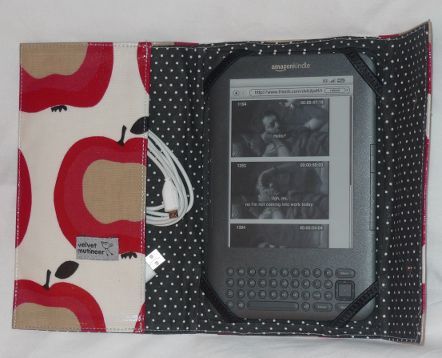
‘However, technology now makes it possible to create our own. That’s a Kindle displaying a PDF with screensnaps made from an episode of Eastenders. The directions for doing that are here: iPlayer for Kindle
‘I’m not up on the kind of software that’s available to do it with American broadcast TV or even DVDs. However, when Rubicon was on the air, there was a LiveJournal site that offered HD screensnaps from episodes — that I now see could be compiled into a DIY photonovel. All that was missing from them were the captions. So I have to think this is possible outside of using the UK setup from that post.
‘Maybe someone out there will attempt this. It’d be interesting to see the size of a digital photonovel with two snaps per screen (portrait mode) or four snaps per screen (landscape).’ — Mike Cane —-
*
p.s. RIP John Baldessari, a very great artist whose work was central and important to my development as a writer and artist. Also the nicest, most generous guy there could be. A very big, very sad loss. ** David Ehrenstein, Hi. Yeah, she’s super great, I agree. And I agree those three films of hers are her most towering achievements. Happy birthday to Van Dyke Parks. ** Misanthrope, Hi. Codeine? Oh, great. He needs some kind of boot camp or something. Drop him off in the middle of a forest with just a book of matches and a paper map or something. Half-kidding. ** Wolf, Waahoolf! I’d recommend ‘Daises’ and ‘Fruits of Paradise’ if you can score them. I did my ‘mine for yours’ favourites of 2019 post a while back as far as suggestions go. Here. Yeah, but is it denial, really? I wonder. There’s this idea that full attentiveness to the politics of the era and world around you accompanied by appropriate outrage and action is the right way to be, but I think it can easily be argued that living richly and trying to share whatever is good about yourself and what you know and learn with those who are realistically within your reach and field of personal power is just as much a life fully lived and cultivated. Anarchism-Central. Yay that IC-B got her work’s fingernails under your skin. Her writing’s like crack to me. Interesting day ahead? Our strike/protests are supposed ratchet back up into something disruptive to behold today, so my day, other than working, is a question mark. Love, me. ** Joseph, Hi, Joseph! Holy moly, it’s very good to see you, sir! That’s a lot of jobs. Ugh, man, sorry. I hope you got some poem writing in yesterday as per your plans. Congrats on your marriage! And to a gamer, nice. And to gamer who loves Banjo-Kazooie! Holy shit. She is already my friend for life. And I’m not surprised if she picked up on all the B-K in ‘God Jr’. Wow, that’s cool. Great, have a good one, man, and I hope to get to see you again soon. ** Bill, I think you’ll like ‘Daisies’. That gig sounds nice as hell, obviously. As does that crepe. How much longer are you there? ** Steve Erickson, Her films, especially the big three, are a natural for Criterion. Huh. Oh my God, I’m so sorry to hear about your friend’s wife. That’s horrifying. Our friend/performer Kerstin, who was supposed to star in our TV series, died of that this summer. I count my blessings, as my mom used to say, that I’m not living in the US right now pretty much every second these days. ** scunnard, Hi, J. I saw there was an email from you this morning. I’ll get to it today. Thanks! ** _Black_Acrylic, ‘Fruits of Paradise’ is amazing too. Welcome home! May 2020 be your personal red carpet. ** Right. Today you get a restored, very old, quite odd post made by TimothyT, who, if memory serves, was a silent reader of my blog who gave it this gift one day. See you tomorrow.
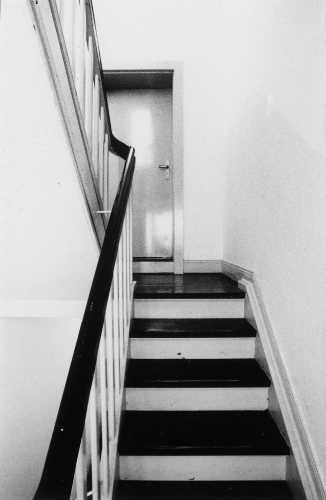
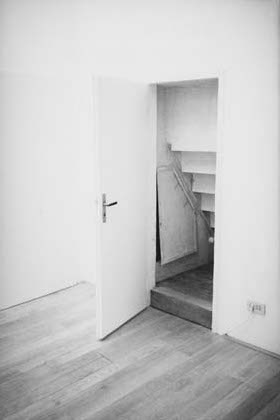
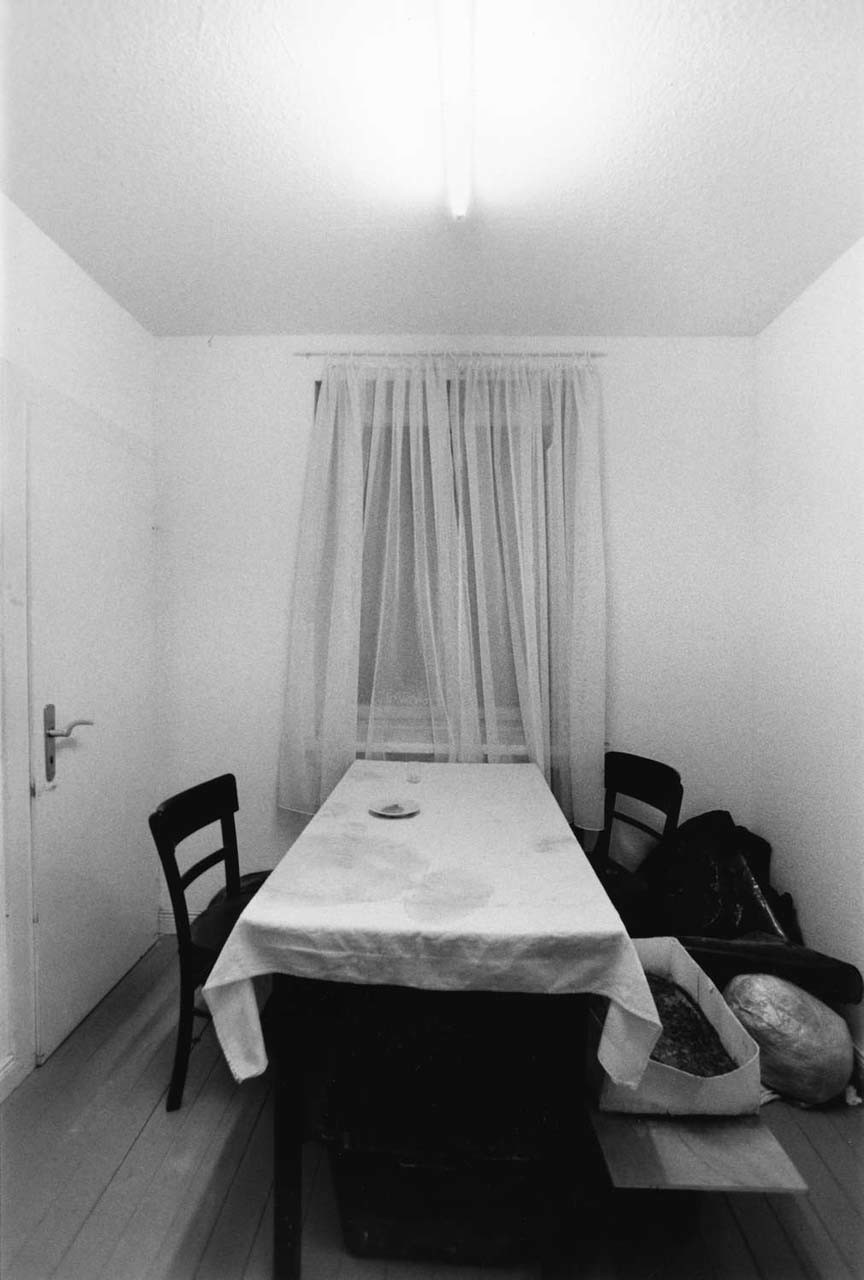
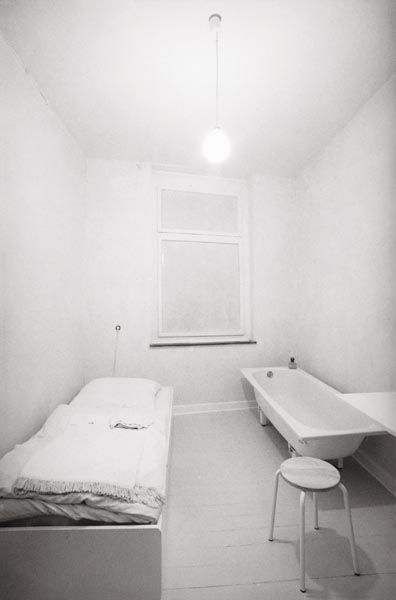
‘Few things intrigued me more as a kid than the hidden closets and secret passageways found in old houses. The very thought of clandestine nooks and crannies offering a path to who knows where filled me with excitement. When I recently paid a visit to Gregor Schneider’s Dead House ur in the small German town of Rheydt, an hour away from Cologne, that distant sensation — part curiosity, part fear of being trapped in a claustrophobic space — came back in full force. But this place is a bit too much: The building is more labyrinth than house, and the prospect of getting stuck in a particularly narrow passage is truly frightening. The artist’s remarks (e.g., “What is within the house must stay there”; “I’d love to stop someone from getting away some time”) don’t exactly put me at ease. Nor does the sinister atmosphere: Unheimlich comes to mind.
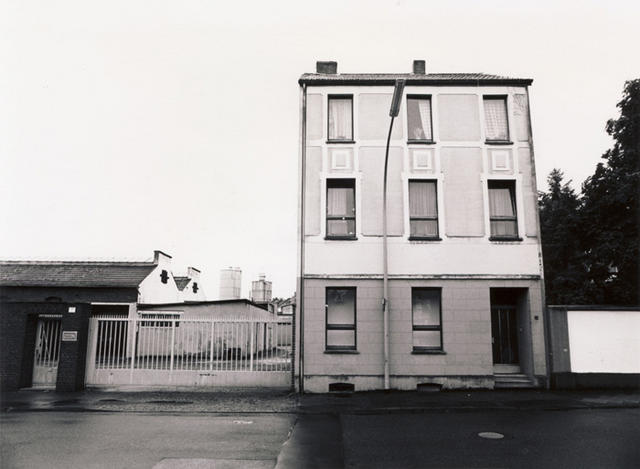
‘The facade–it looks like any anonymous building in any German town–doesn’t give away the house’s secrets. I arrive by car with my friend Udo. We find Unterheydener Strasse and ring at the door of No. 12. Gregor Schneider, an amiable artist in his early thirties, answers and lets us in, serves us coffee in his rather messy office/breakfast room, and shows us a few works on video. It’s all business as usual–just another studio visit. Then the tour begins, and nothing else is normal. We leave the room not through the door but through a secret aperture that is revealed by pushing back part of the wall behind me. On the other side, we get a surprising view of the room we’ve just left: It is a motor-driven contraption set on wheels and may very well have been circulating slowly, like a high-rise cocktail lounge, while we were having coffee. Standing in the larger space, you can see the external walls of the building. Or rather, that is what you are made to believe, but when you open a window, you get no view of the street or the garden. Behind the window is a second window. There seems to be no outside. Everything leads back into the house.
‘”For our house is our corner of the world,” Bachelard writes. “As has often been said, it is our first universe, a real cosmos in every sense of the word.” What is Schneider’s Dead House ur? Nothing the artist tells us about the place seems completely unequivocal. Who owns it? Does he actually live here? Is Hannelore Reuen, whose name is on the entrance, a real person? We ask, but we get no straight answers, though a few things do appear certain: More than fifteen years ago, Schneider, a teenager at the time, began taking the building on Unterheydener Strasse apart from within. (The structure, apparently owned by his family, was once thought to be uninhabitable because of its proximity to an industrial complex.) By now, the original dimensions and configuration of the various rooms are all but impossible to reconstruct. The list of “improvements” the artist has made over the last decade and a half reads like a strange form of experimental literature, working through every conceivable repetition and duplication of basic architectural units: “wall in front of wall, ceiling under ceiling, section of wall in front of wall, room in room, lead in floor, light around room, light around room, wall in front of wall, wall in front of wall…” At this point, not even the artist can recount all the steps involved.
‘”I come from the Expressionist corner,” Schneider tells us over coffee. Precociously drawn to the arts, he had already gravitated in his early teens to painting, creating images of young, undernourished girls and screaming faces. He also dabbled in body art, covering his torso with flour or burying himself in the soil. Extreme practices of automutilation and self-inflicted pain fascinated him; he was especially taken with the story of Toronto practitioner John Fare, who in the late ’60s hacked off parts of his body one by one and finally beheaded himself in an amputation machine. “I saw the human scream as the ultimate in expression,” Schneider told Ulrich Loock in an extensive interview produced in conjunction with the artist’s 1997 exhibition at the Bern Kunsthalle. “Then [I] flipped into the opposite mode.” He began to build soundproof cells, rooms of total isolation, covered with layer upon layer of insulating materials. One of them — the ultimate in claustrophobic nightmares — has a door with no handle on the inside and a merely decorative, nonfunctional knob on the outside. Once the door is shut, the person inside is gone forever.
‘Esse est percipi, said Bishop Berkeley, but Schneider would beg to differ. He is interested above all in forms of existence that escape perception–substances, spaces, objects, and qualities that remain hidden. When one wall is built in front of another, a space is created between the two. Schneider fills such gaps with red or black bricks. Disappearing between the walls, these solid materials can’t be seen, but they’re there. The invisible works are just as significant as the visible ones to Schneider, and the very distinction between the two might be of minor importance to him. Listening to the artist talk about his interventions and constructions–workman-like descriptions of dimensions, materials, and tools–one glimpses a vision of the world that doesn’t translate well into common sense. By no means mystical, it nonetheless involves a profound experience of space. “I was registered as having a perceptual disorder and being mentally ill, but I only told them what I was doing at the time. I didn’t lie. I told them that I build rooms,” Schneider said.’ — Keehnan Konya, 2THEWALLS JOURNAL
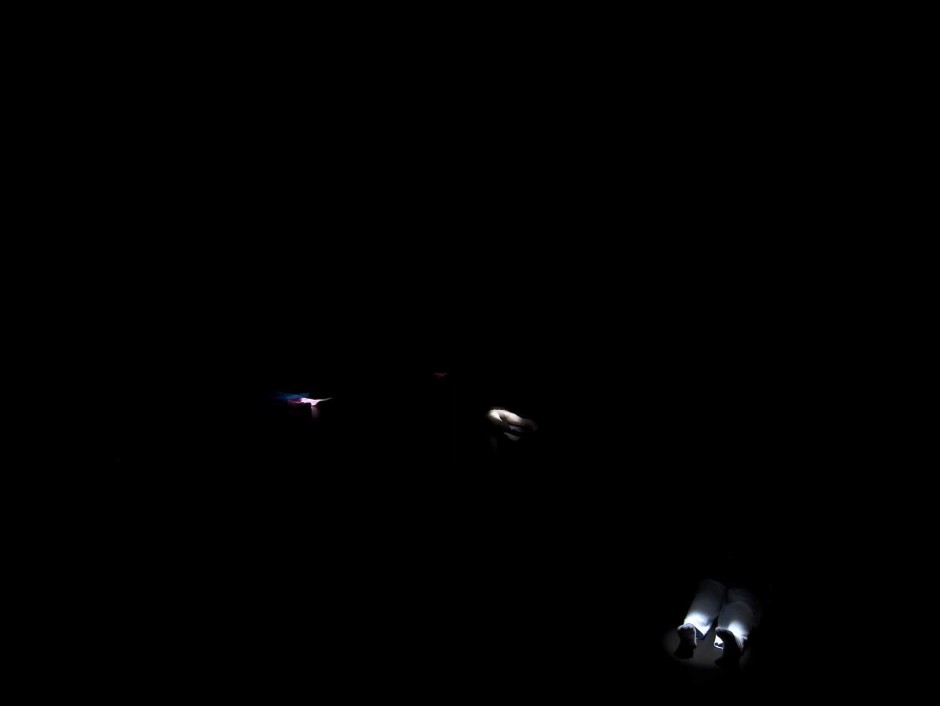
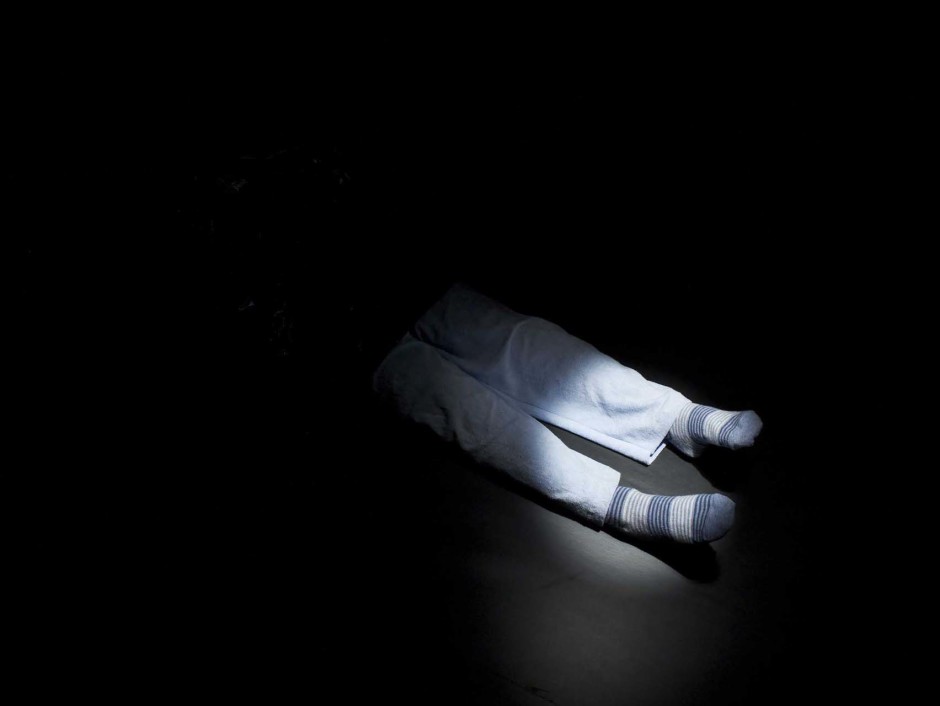
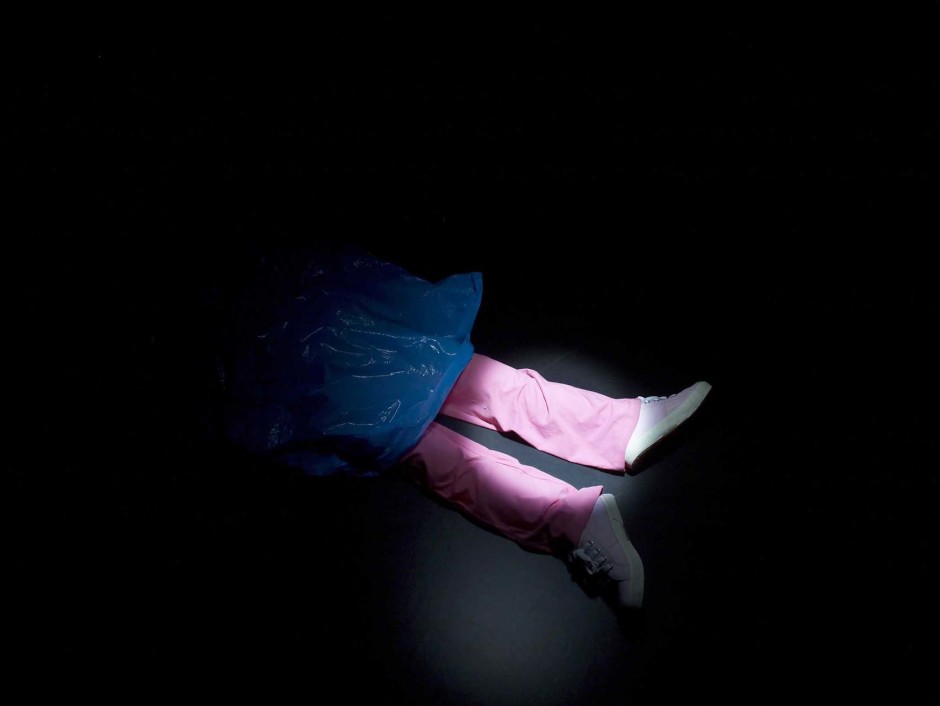
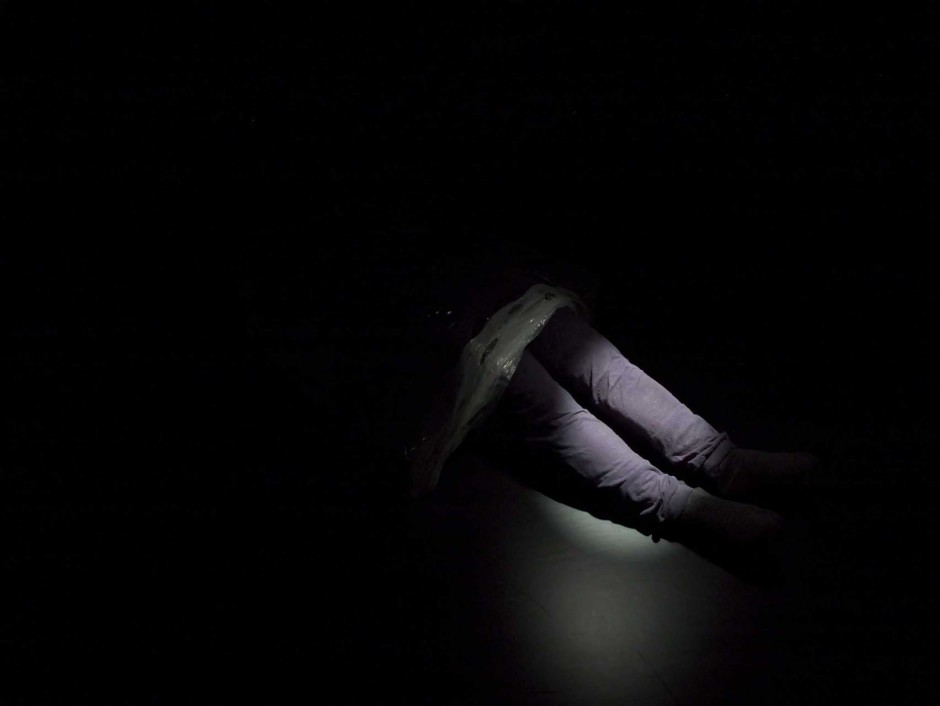
‘In a blacked-out room downstairs, visitors encounter a tableau of spot-lit sculptures of human bodies. These half-concealed, supine figures form an enigmatic group of „family members – Hannelore Reuen, N.Schmidt, “the son” – and suggest the aftermath of some violent crime, as well as calling to mind Duchamp’s celebrated installation Etant Donnés (1946-66). At first glance, it is unclear whether we have been presented with models or real human bodies, an ambiguity that pervades much of Schneider’s work. The darkness arrests our sense of space and volume, working both to disorientate and to induce a sense of isolation. As the critic Anita Shah has revealingly observed of the experience evoked by Schneider‟s exhibitions: “our shadow is part of our own personal unconscious and is made up of repressed emotional processes which are felt to be negative and dark as soon as they penetrate their way into consciousness. Encountering oneself thus means, in the first instance, the inescapable, painful encounter with our own shadow.”’— Sadie Coles
_____
Defense by Gregor Schneider
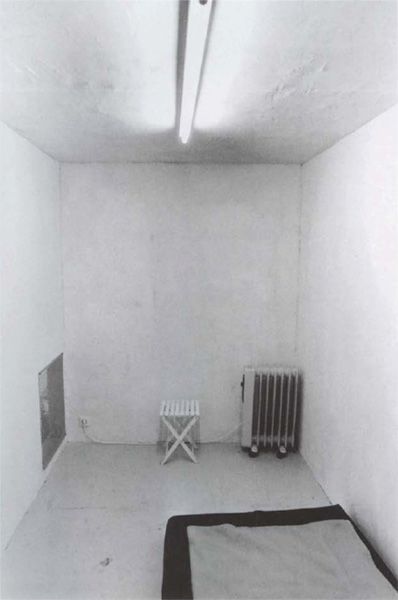
For years, I have a dreamed of a room in which people can die in peace. It’s a simple room: flooded with light, with a wooden floor. It is a copy of a room I once saw at the Museum Haus Lange-Haus Esters in Krefeld, Germany; a marvellous piece of classically modern architecture that concentrates on the basics. I have recreated this room – as an artist, that is what I do – and at the moment, it is standing right here in my studio. Any minute it could be dismantled, put on a plane and reinstalled anywhere in the world, for someone nearing the end of their days and who wants to die in a humane and harmonious environment.
I’m not a naive person, but I don’t think there is anything wrong or perverse about this dream. I think it’s quite innocent. So it has been rather a shock to me that for the last week I have been receiving death threats by phone and email.
It started at the beginning of the week, when I mentioned my project about death and dying in an interview with a reporter from the Art Newspaper. I didn’t think much of it, as I have talked to curators about this at length since 1996, and there have been several mentions in exhibition catalogues.
The reporter was very interested and wrote an article about it. Two sentences from this article have been quoted repeatedly: “I want to display a person dying naturally in the piece or somebody who has just died. My aim is to show the beauty of death.”
I did say those things, and I still mean them. Of course I expected reactions. But I didn’t expect that quite so many publications would quote me without putting the statements into context. Within a few days, thousands of articles appeared across the world relying only on these two soundbites. In a way, I am not surprised that they have triggered some absolutely horrific images in the heads of journalists and readers. And yet I am still astonished by the nature of the comments I received, and disturbed by their vulgarity and violence. I received threats in multiple languages, some of them absurd, some of them seriously threatening.
‘At the very least, the artistic shaping of Gregor Schneider’s rooms, and his “double garage” in this case, is influenced by literary or cinematic models. It is evident that his system emerged in relation to room elements through which he knows how to convey his intentions with the artistic details of a sculptor, even if this involves virtually ready-made rooms. This distinguishes Schneider from Mike Nelson and Christoph Büchel, the two other room- installation artists who draw from literary and cinematic sources. Nelson is influenced, for example, by Jorge Luis Borges and the science fiction writer J.G. Ballard, while Büchel’s rooms are often politically motivated and, with his stacks of flea market goods and waste, frequently resemble pop-assemblage.
‘Gregor Schneider is a visionary in the minimalist and post-minimalist tradition in a completely different sense. Although he is associated with the museum world and the white cube of the exhibition hall, the “beauty” of his cold room organisms is independent of their aesthetics, something more reminiscent of Bataille’s The Tears of Eros. Schneider works different figures into his concept of beauty, such as the ghost of John Fare, who was said to have amputated parts of his body during performances, followed closely by Kafka’s tattoo machine and the Comte de Lautréamont’s demonic creature mentioned in Maldoror. Therefore, it is also evident that Gregor Schneider not only organises rooms, but also wants to make death beautiful again.’— Zoe McCloskey
__________________
White Torture (2007)
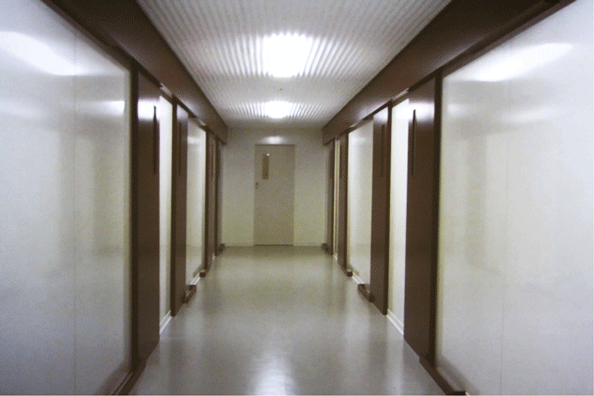
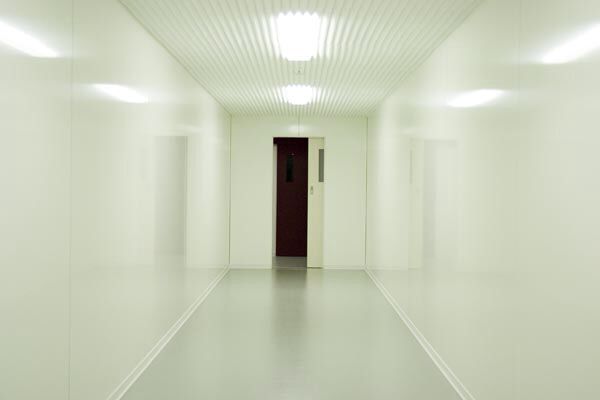
‘One has hardly entered the complex of passages and rooms and already one has lost one’s bearings. One of the doors opens up onto a second passage with sliding doors once again to the left and right. This time one comes upon a dark room, sound-proofed and light-proofed with black foam plastic elements. When the door closes behind the visitor, it gets so dark that one can no longer see one’s hand before one’s eyes. There isn’t even an emergency light. One cannot enter this room without an immediate feeling of anxiety. One feels one’s way along the wall like an insect, in the hope of finding an exit. At the same time one struggles against panic attacks in the hope of regaining some orientation. There are two exits, but these again only lead to further passage-ways. More rooms containing more horrors align them.
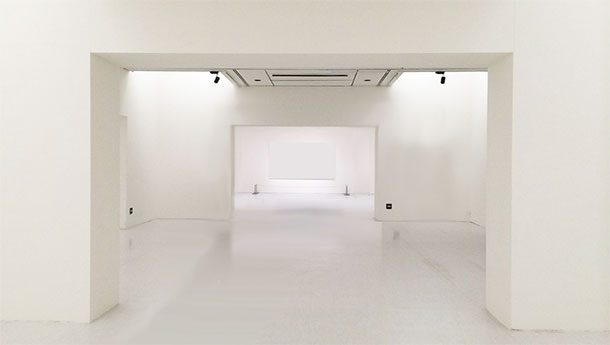
‘What is so jarring about Schneider’s installations is that the museum and prison building are indistinguishable from each other. Of course, this is only a mock-up of a prison, a mini-prison with perhaps twenty cells and four passages, but it is quite enough to give one an idea of how hells can be made. One does not have the feeling of entering a model, but rather of being shunted through a real prison, although one in fact knows better and is holding one’s entry ticket in one’s hand, after all. It is more than a mere model situation and less than a genuine prison. It is an artificially created terror that shows that hell can be made and that a couple of clinically white rooms are enough to break a human being. Weiße Folter (i. e. White Torture) is what Gregor Schneider has termed his exhibition. He is alluding here to torture techniques that aim at breaking a person without causing him or her external harm.’— Goethe Institut
__________________
Totes Haus ur (2001)
‘Like the psyche as multiple dwellings imagined by the great Russian theatre theorist Constantin Stanislavski, the Totes Haus ur is actually several houses. It is made from parts of the Haus ur (begun in 1985) — which is both Schneider’s home in Rheydt, Germany, and his major piece as an artist—and is also an autonomous work. It contains multiple houses within itself that register Schneider’s ongoing project of reconstructing the interior of the house; his own description of the project reads, in part: “wall in front of wall, wall in front of wall, wall behind wall, passage in room, room in room.” Unlike the orderly psyche described by Stanislavski, in which everything is easy to find until the last crucial moment, this labyrinthine environment felt like a particularly difficult place in which to locate the elusive bead, as if it were an architectural representation of a psyche so turned in on itself that the journey into it leads to dead ends, hazards, and conundrums like windows that open only onto other windows and rooms bathed in light that appears natural but is actually artificial. Or perhaps the Totes Haus ur is not so much the site of a quest as the product of a restless search that involves ripping out, moving, and rebuilding walls, doors, and whole rooms in the hope of finding or creating the place into which the invaluable bead disappeared.’— PAJ: A Journal of Performance and Art
____________________
517 West 24th (2003)
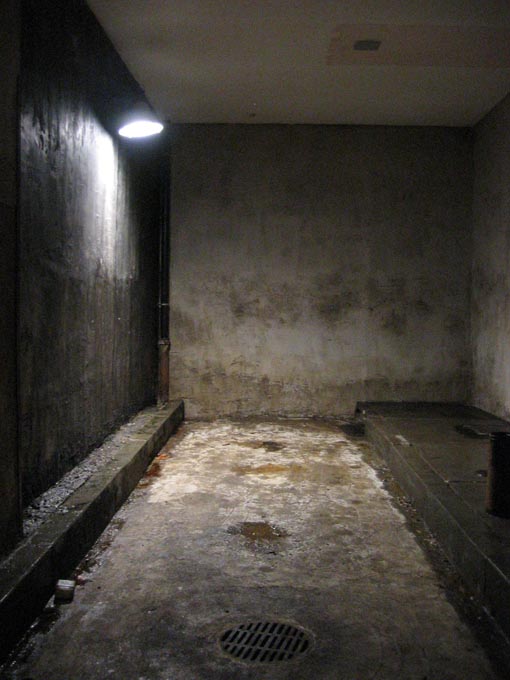
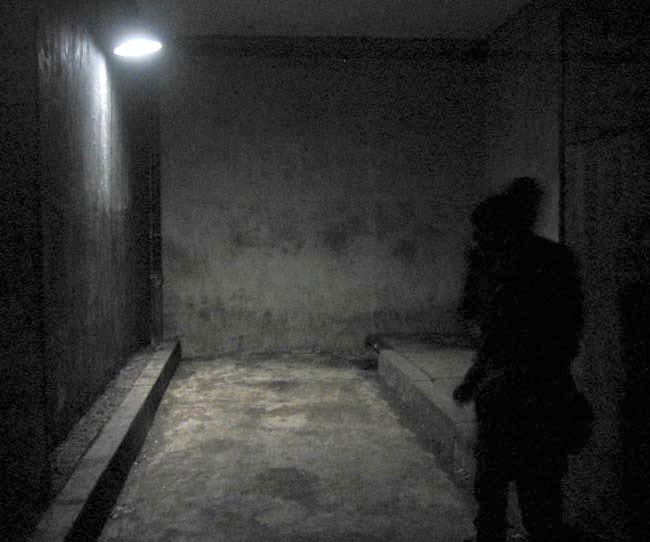
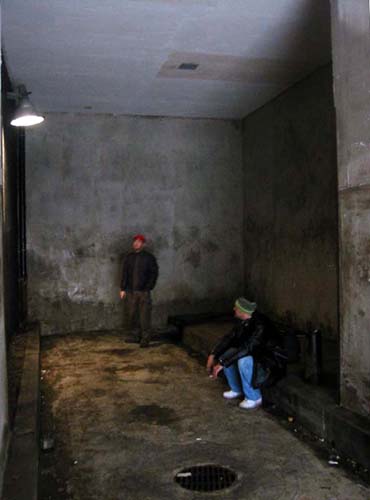
‘517 West 24th, as it’s titled, cuts a 15-foot-wide and 45-foot-long blunted L-shaped channel from the sidewalk into the Barbara Gladstone Gallery space in NYC. It is accessible 24 hours a day under a partially pulled-down metal gate (at night, a guard is on duty nearby). From the outside, this hole-in-the-wall, which used to be the inside of the gallery and technically still is, resembles a moldy loading dock. A sidewalk and a craggy floor have been fashioned out of cement. The walls have been shellacked in scum and covered in grimy blotches. There are oil stains, air ducts, drainpipes, a post, open sewer, industrial light and chunks of crumbling debris.
‘Kafka wrote, “Everyone carries a room about inside him”; Guston made note of “a forgotten place of beings and things.” It’s wonderful and unexpected to see one of these rooms and some of these things out in the open. Schneider’s schizy love and fear of space prevent 517 West 24th from being merely trompe l’oeil and allow it to touch on issues of history, economics, philosophy and sex. This, combined with his own hyper-sensitive, almost drugged-out ability to invest material with anxiety, suggests that for Schneider, space is a living thing to be handled, inhabited and annihilated.’— artnet.com
_______________
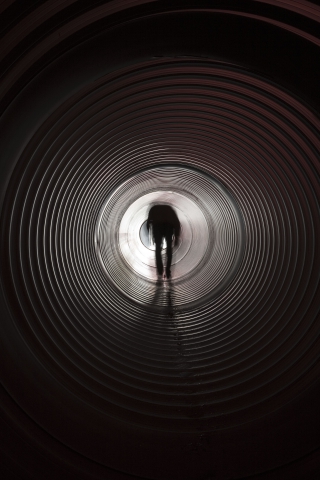
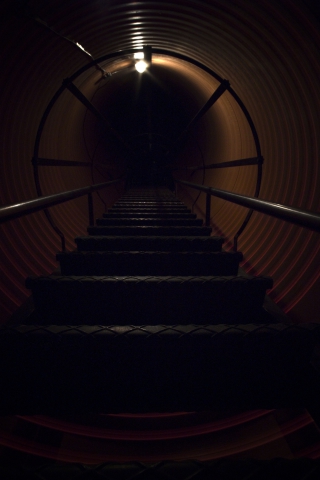
Dead End (2012)
‘Dead End gives the impression of being an endless intestinal system, a system that follows its own inexorable logic and laws that lie at the margin of traditional museum architecture. Its critical strength lies in its dynamics, which flow out of the impulsion to move ceaselessly forward. Literature abounds with examples of systems of interminable tunnels and caves such as the tale of the caverns in Jules Verne’s A Journey to the Centre of the Earth and the short story The Tree on the Hill by H. P. Lovecraft. The cinema provides a catalogue of works that express the same tension, some best examples being Alien (Ridley Scott, 1979) and The Descent (Neil Marshall, 2005). However, whereas a film is mere fiction, art plays a role in our reality through its presence in physical space.
‘We find ourselves in a tubular passage whose true function has been subverted, trapped one might say, in the abstraction of its form. The form that Gregor Schneider gives to his spaces and passageways owes little to the influence of literature or cinema. As we have seen, Schneider’s modus operandi arises from the union of real elements in space through which he knowingly transmits his artistic intentions in sculptural form, although these works can be considered to verge on ready-made spaces.’— Centre de Arte Dos de Mayo
_________________
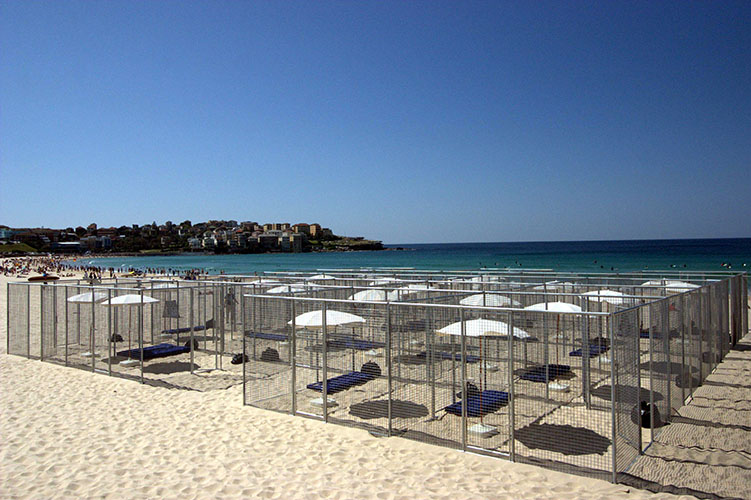
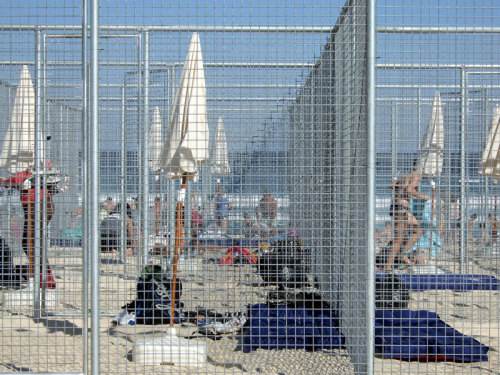
21 beach cells (2007)
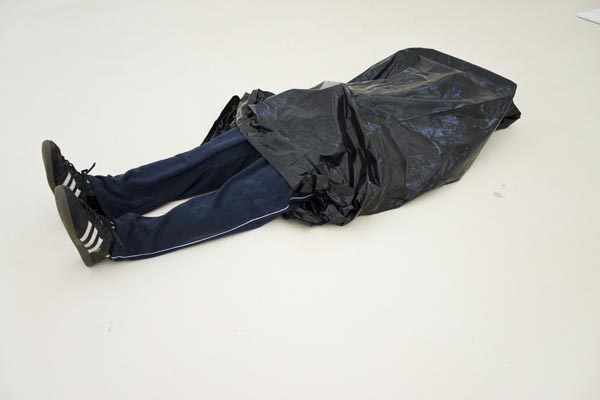
‘Gregor Schneider transformed Sydney’s iconic Bondi Beach in 2007 with a giant cage titled 21 beach cells. The 4 x 4 metre cells contained amenities for visitors – an air mattress, beach umbrella and black plastic garbage bag – and were soon inhabited by beachgoers looking for a site to rest and find shelter from the sun. The shadow image of Guantánamo Bay’s Camp X-Ray – and Australia’s own immigration detention centres – became a site for relaxation. 21 beach cells captured the atmosphere of the time, an environment of global terrorism, detention of illegal immigrants and the recent Cronulla race riots, questioning Australia’s egalitarian self-image.
‘The indeterminate purpose and function of the 21 beach cells positioned them between comfort and isolation, safety and imprisonment. The work’s labyrinthine structure became apparent once people were inside. The transparent walls gave a false impression of expanded vision and orientation. Some doors were locked and required visitors to retrace their steps to the exit; others led into open cells, creating confusing paths and passageways. Schneider stated that the influence for the work was the Cronulla race riots, which occurred on 11 December 2005 when a crowd of around 5000 young Anglo-Australians descended on the Sydney suburb to ‘reclaim the beach’, leading to violent attacks on people of Middle Eastern appearance. A backlash from the Lebanese community resulted in a pervasive environment of fear and segregation, including a police ‘lock-down’ of the local area.’— Kaldor Public Art Projects
_________________
END (2008)
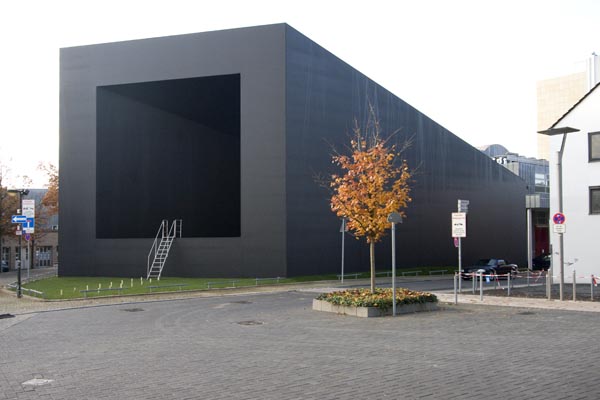
‘With his project for Germany’s Museum Abteiberg, artist Gregor Scheider literalizes the harrowing experience of seeking enlightenment. Schneider’s known for exposing the shifting psychological (and often disturbing) undercurrents that run through our personal spaces (Haus Ur and Die Familie, I’m talking about you). With END, Schneider takes on a public institution we look to to learn about ourselves. The 2008 piece was a new entrance to the museum: a huge, black, Suprematist square of an opening, followed by 70-meters of absolute darkness, the tunnel tapering to a 1×1 metre opening of light.’ — Museum Design Lab
—-
*
p.s. Hey. ** David Ehrenstein, Hi. It was the actual link that didn’t work, i.e. the pressure point wasn’t functioning. Thanks for the replacement. And thank for setting me up with the Randy Newman interview! Everyone, Mr. Ehrenstein’s big, big sale is still extant. David: ‘Dear Friends, Xmas is over but my humungous emergency sale of DVDs, CDs, LPs and books at bargain prices has goes on. The sale also includes a beautiful gold-plate framed mirror (a steal at $100.00. I can be met in person at the address below 24/7. Please call come on over and shop til you drop, or you can do it all by mail (except for the mirror). I need to sell at least $100 worth of stuff by Monday’. The aforementioned address didn’t make it into his comment, but you can get in touch with him by email at cllrdr@ehrensteinland.com. ** Tosh Berman, My great pleasure, Tosh! Is TamTam still ongoing? It’s been a while since a TamTam book was published, or am I spacing out? ** Steve Erickson, I hate the NYC subway system, but I’d more than settle were it temporarily transplanted in Paris at the moment. I need to see ’63 Up’. I’ve seen all the forerunners. Everyone, Steve has reviewed the latest instalment in Michael Apted’s legendarily infinite film project ‘ … Up’, this time ’63 Up’. Read what he thinks here. Interesting to read your and David’s back and forth about Varda/Demy. ** _Black_Acrylic, If you’re an SG fan, I’m positive you’ll be rolling around in clover when you read the bio. I agree with you about that 33 1/3 book, yes. ** Okay. My galerie has a Gregor Schneider show today. If you don’t know his stuff, you’re in for some eerie, intelligent fun. Check things out. See you tomorrow.










 Now available in North America