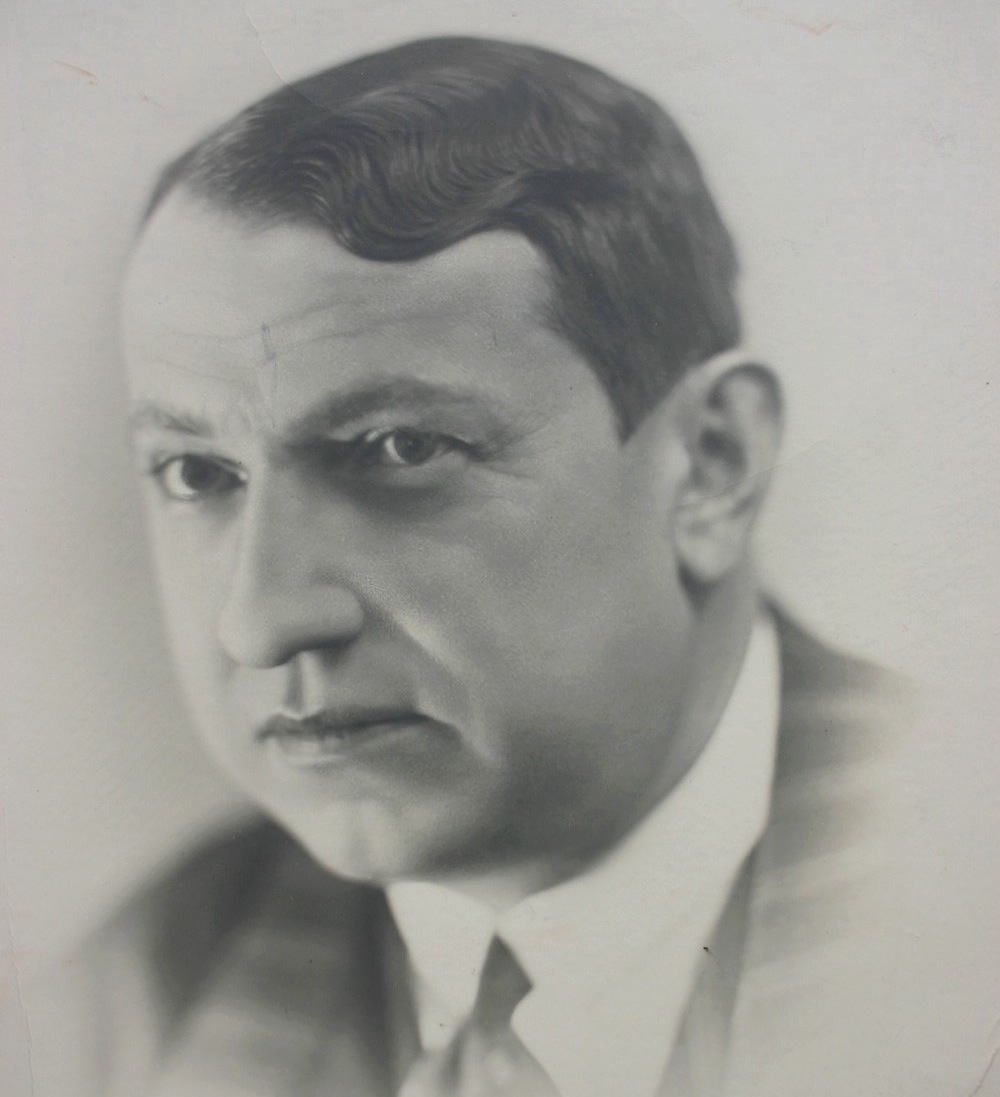
‘Francis Carco embodied the spirit of his age; he was the Paris of the teens, twenties, and thirties. He will always be remembered as the underworld dilettante and latter-day boulevardier who sang of murky thoroughfares and drizzle-dappled pavements, and who solemnized for an entire generation the studied irreverence of the professional outsider, and the velvet crush of the demi-mondial “Life.” Carco was at his best in the role of “gutter poet.” But he was not merely a celebrant of lowlife, nor was he a moralist, for he did not judge his subjects, but presented them without preachification or prescription. He was simply a gifted poet who etched with words the vicissitudes of the damned and not-so-beautiful inhabitants of society’s darkest corners.’ — Gilbert Alter-Gilbert
‘It must have been glorious. Fresh memories of the fin-de-siècle, Lautrec, the Moulin Rouge, Bruant’s Le Mirliton. The belle époque confronted by modernity, industrialism, speed, the war machine. A period occupied by Proust and Apollinaire, Cezanne and Picasso. The latter years of l’affaire Dreyfus which produced, among other things, the concept of a vanguard role for intellectual and cultural workers in the socio-political arena.
‘And it was still a time when an artist could actually afford to starve in a garret just a step or two from the Seine — the particular vie-de-Bohème centered around the dilapidated bateau lavoir houses on the butte de Montparnasse and the tavern-cabaret known as the Lapin Agile, the latter painted by Picasso in 1905 . The old “laundry boat” building was housed, at one time or another during this period, Picasso and Apollinaire, Max Jacob, Utrillo and Modigliani, Bracque, Mac Orlan.
‘The writer Pierre Mac Orlan (born Pierre Dumarchey, he was known by this near-Scottish nom de guerre and loved to wear tam o’shanters) was a fixture at the tables of the Lapin Agile, where he entertained with his accordion and whimsical songs of women and seaports. Here he was joined by his young friend François Carcopino- soon known as Francis Carco – an aspiring lyric poet from the provinces, who was already working on his first verse collection, La Bohème et Mon Cœur.
‘In their early twenties – only a few years younger than Picasso and Apollinaire – Mac Orlan and Carco, near-destitute and as yet unknown, were among the junior members of this circle – but they were both in Bohemia for the long run.
‘Carco, in fact – and this is how I came across the name – became the unofficial historian of this circle, as well as the Bohemian milieu of the Latin Quarter. His numerous novels are for the most part set in the criminal underworld which surrounded, and often impinged on, his aesthetic enclave. His 1920s memoir, The Last Bohemia: From Montmartre To The Quartier Latin, offers detailed portraits of members of the circle, from Mac Orlan, Utrillo and Jacob to forgotten figures like the strange dandy-poet Claudien.
‘The tone of Carco’s reminiscences is reflected in the writing of a more recent French Bohemian figure. In a recent biography, Andy Merrifield emphasized the enduring attraction of Mac Orlan’s oeuvre for the political philosopher and activist Guy Debord; but nowhere have I seen any reference to the echoes of Carco in Debord’s books and films.
‘”What a lot of water has run under the bridge since our youth! How many faded dawns, how many days, weeks, seasons…I stir only ashes with my recollections – very fragile ashes which are lifted on the night wind and shaped like disembodied spirits, ghosts..”
‘”We derived nothing better; it seems so simple to live, to have friends and to work…The amiable ladies who shared our destinies at that time were not hard to please.”
‘Apart from the reference to work, this could be Debord recalling the nights of the Lettrists who haunted the Rue de Buci thirty or forty years after Carco. Of that street, Carco comments on its “exceptional atmosphere and setting.” He was a pioneer of psychogeography.’ — Wilfrid, Sign of the Pink Pig
“Le Doux Caboulot” (1931): Francis Carco – par Georges Brassens
Francis Carco ” chanson tendre ” 1952
Valérie Ambroise – Il pleut (Carco)
Pierre Mac Orlan & Francis Carco 6 chansons de soldats (1950)
______ Gallery
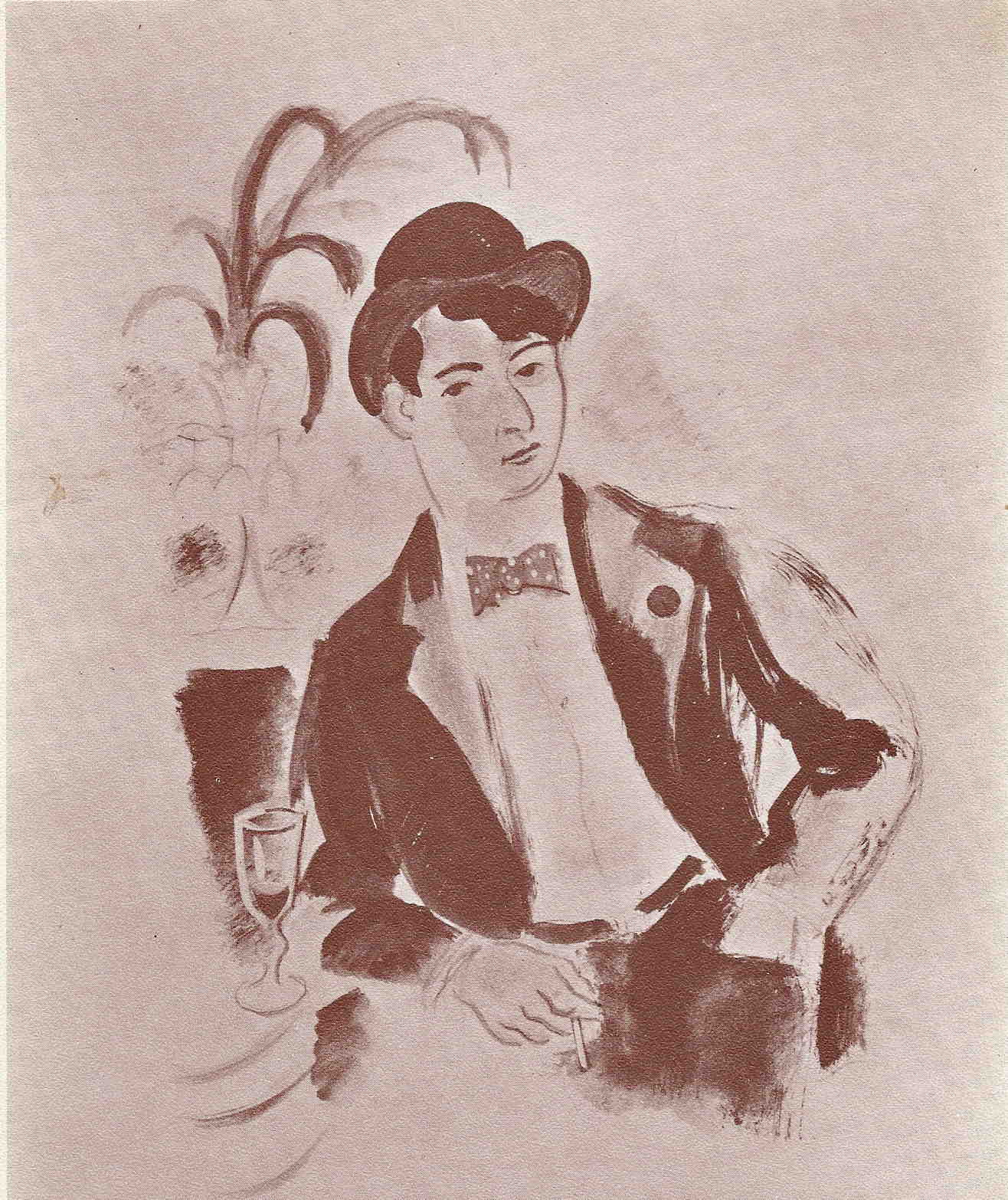
portrait of Francis Carco by Maurice Utrillo
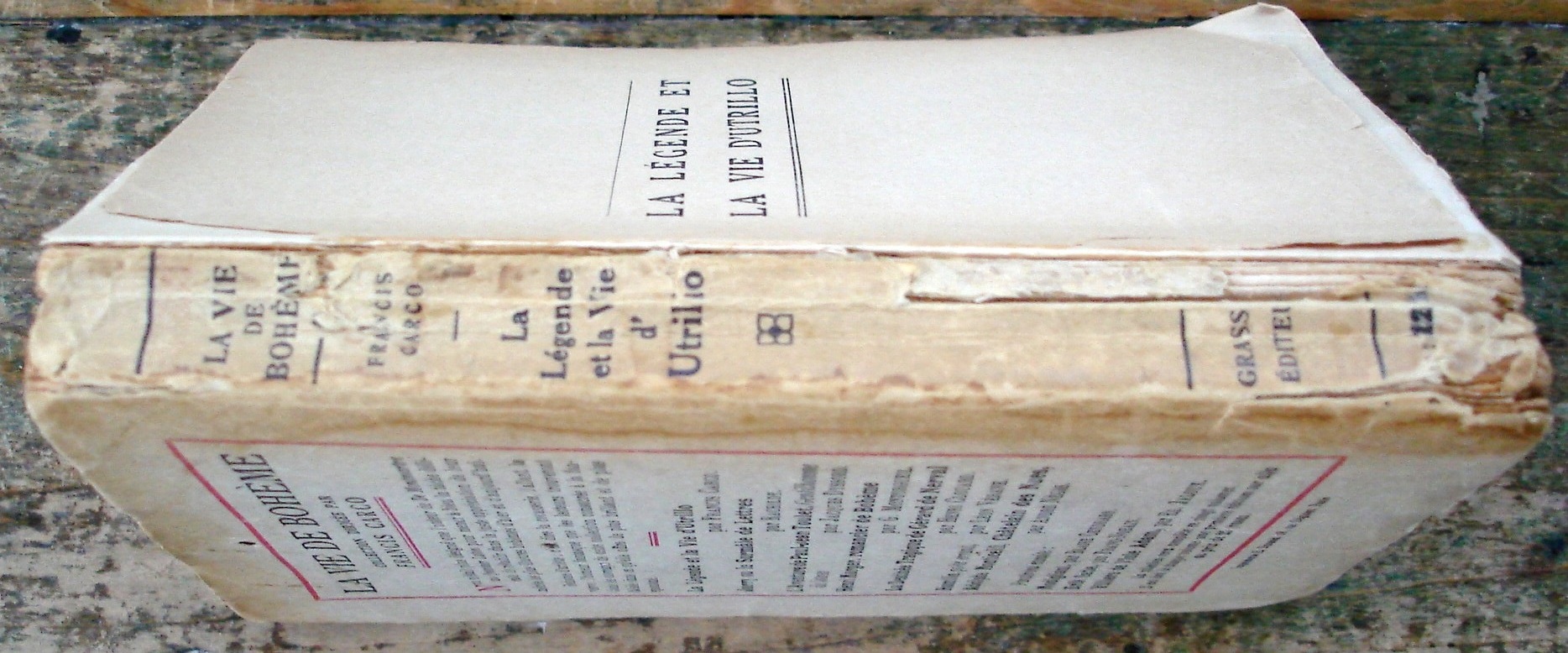
Francis Carco first edition
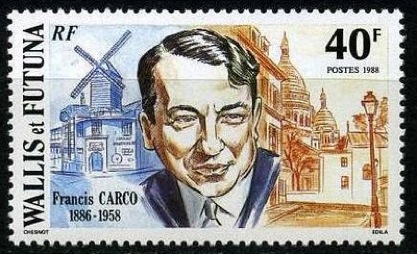
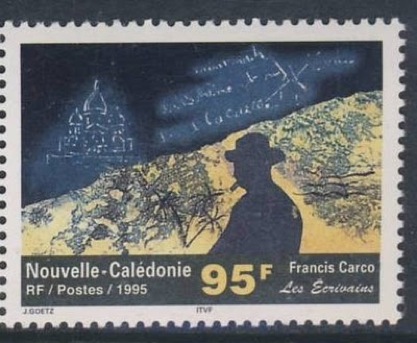
Francis Carco postage stamps
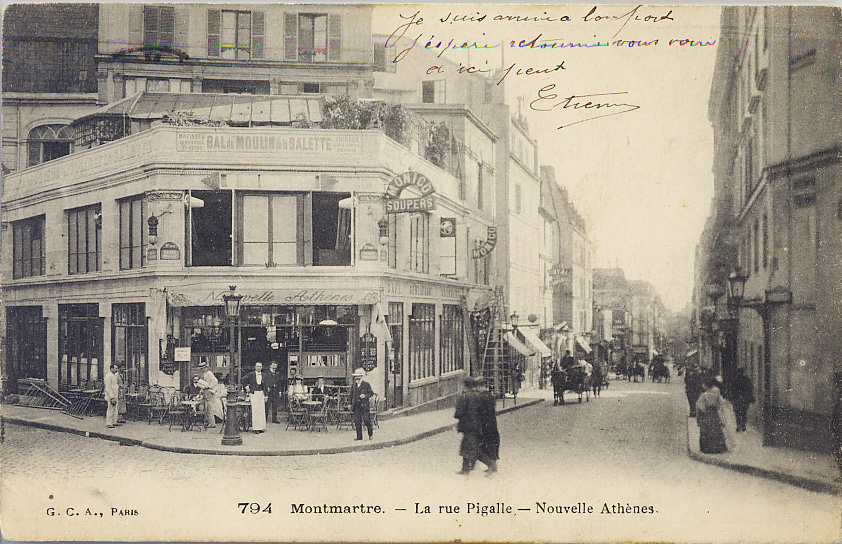
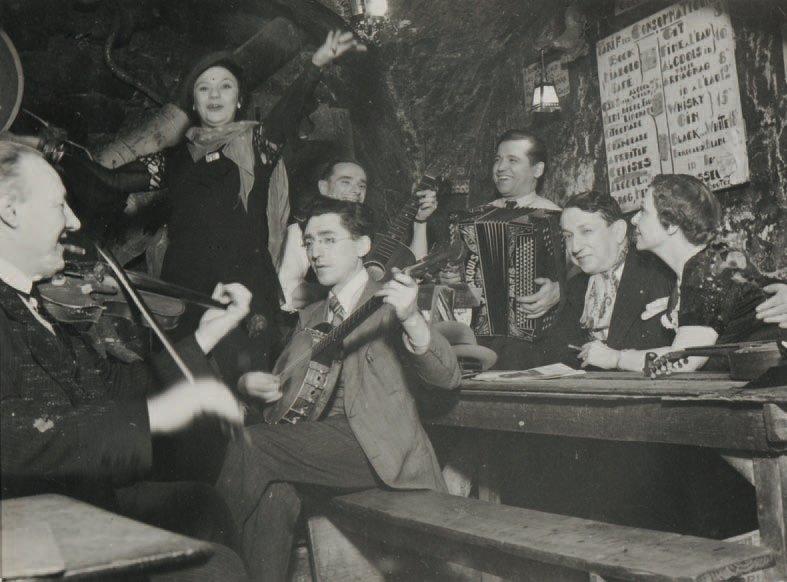
Montmartre during Francis Carco’s heyday
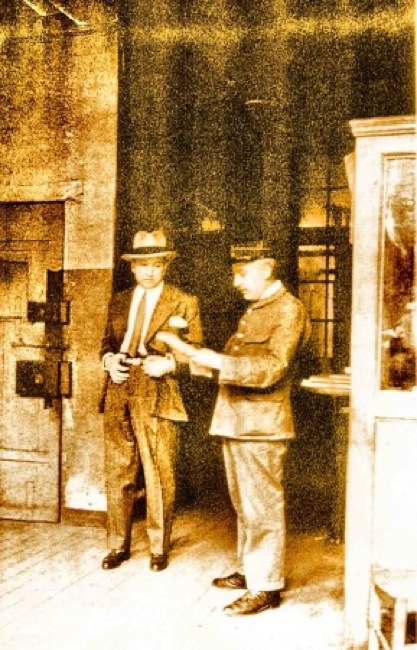
Francis Carco visits Prison Saint Lazare
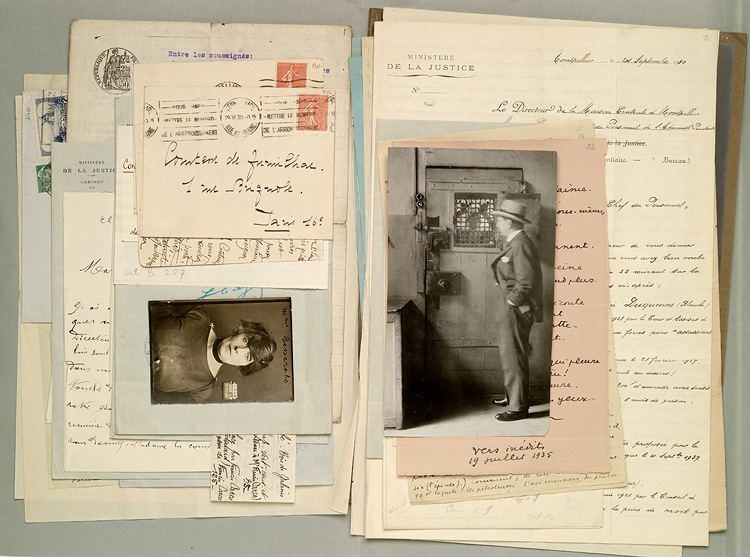
Francis Carco’s ‘prison’ research file
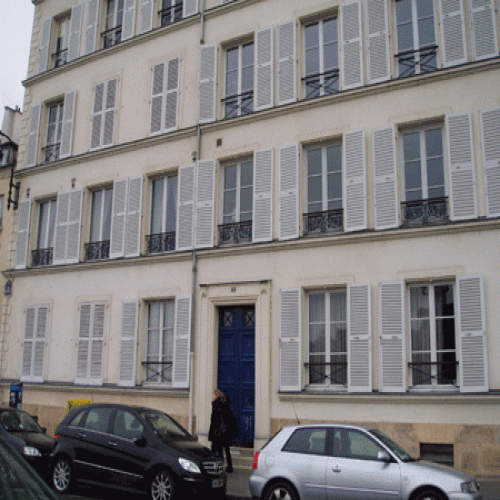
Francis Carco’s flat
Francis CARCO dit “L’appache mélancolique”
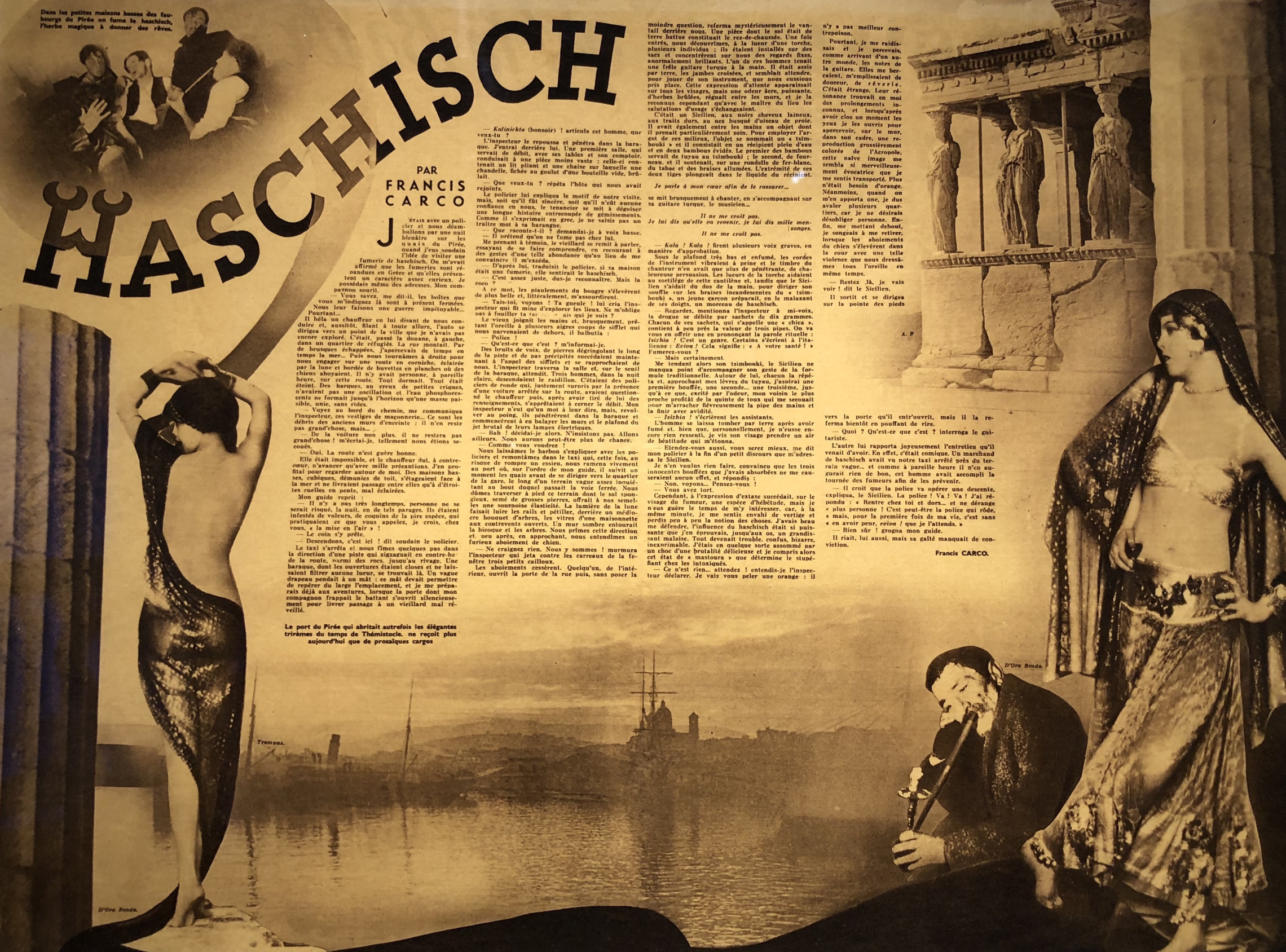
Hashish in Piraeus – by Francis Carco (1935)
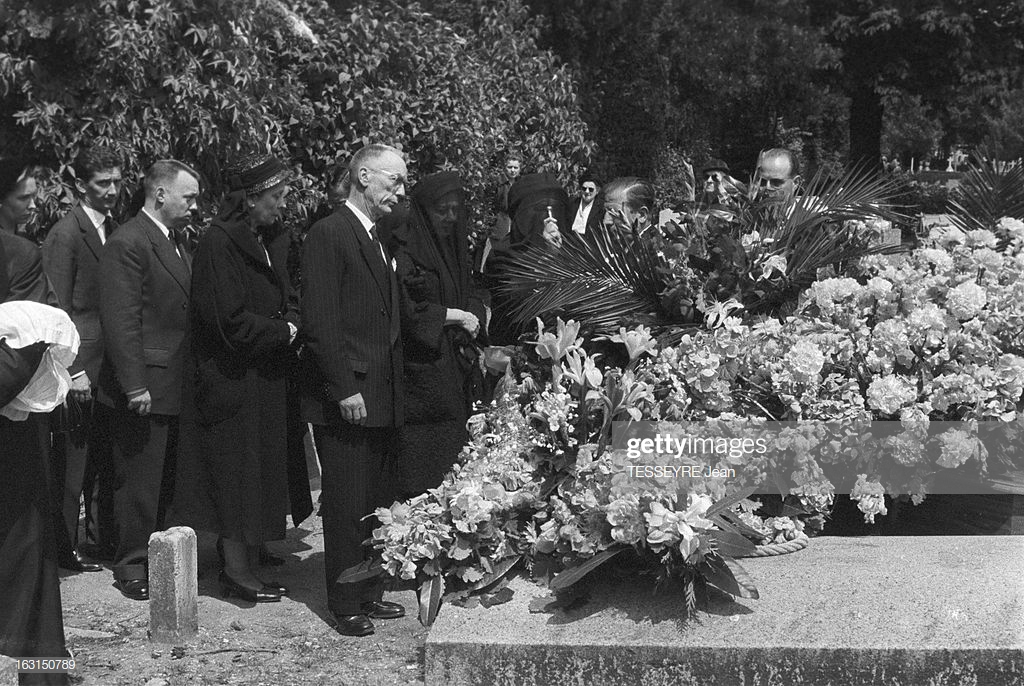
Funeral Of Francis Carco
______ The books
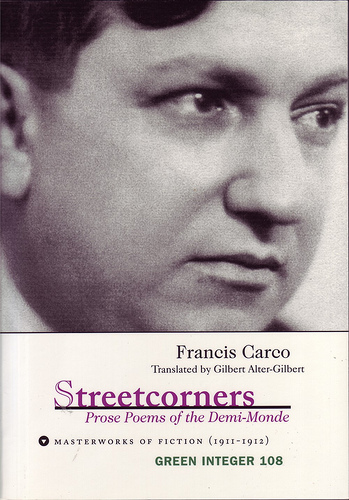
Francis Carco Streetcorners Green Integer
‘Streetcorners collects, for the first time in English, a number of Francis Carco’s renowned prose poems, works which defined the Paris scenes of Montmartre and Montparnasse for decades. The translator has brought together sixty pieces that reflect everything from rainy nights in Paris, to the world of music halls, seedy bars, the hairdresser’s, and houses of prostitution.’ — Green Integer
‘I just finished reading Streetcorners and it’s a very straight forward prose poems on a particular (meaning Paris) location and a slightly sad or regretful mood. It also captures the bar life/cafe scene with the girls and fellow drinkers. It’s very beautiful in that it excepts a mood swing that is thoughtful and kind of bluesy. It sort of reminds me of a Bryan Ferry song where the observer is sort of in a so-so mood and is observing the citizens of a neighborhood doing what they do best – having sex, drinking, smoking, and basically walking in the rain. He writes a lot about the essence of rain and how it affects the city visually. ‘ — Tosh Berman
Excerpt
The Mime
It’s intermission and everyone steps outside for air. Two bars are lit, active. A throng has spilled onto the street. Nothing can be heard but the sparking and sputtering of striking matches punctuating a haze of cigarette smoke. All of a sudden, this noise subsides. A buzzer goes off and rustling sounds supersede: the audience shuffles back inside. Everyone sits. It’s curtain time.
I watch as a heavy-set man appears, wearing a black jacket, black vest, and black cravat. Sinister-looking, he cuts across the stage and through the crowded house, wading among the seats, waving a revolver. Slowly, he loads it in front of us, cocks it, and begins the atrocious pantomime. He has been cleaned out in a card game. Oblivious as a lunatic, he collapses on a chair, crying. But an odious force makes him get to his feet. My eyes are glued to the puffy flesh of his swollen face, his two stubby hands. Some cruel and tragic strength enables him to draw himself up blearily before us, the living embodiment of rank despair, anguished but redoubtable. He spares us nothing, not even the blood which dribbles from his lips when he fires the pistol point blank.
***
It was in a transient hotel, recently, that I saw myself again, shut up in a room, immobilized, not daring to go out at all. Where else would I have hidden myself except in one of these hotels of the basest order, among other anonymous clients of the night? There, passing many nights and days, lying in wait, watching, fully clothed, from behind a door or, at the slightest noise, taking flight over the rooftops, I had been terribly afraid, and I couldn’t shake the impression that I stayed there for centuries, perhaps, or that I had successively exhausted several existences which had yielded nothing but poisons to glut a trough already sloshing with disgust, shame, and desolation.
____________
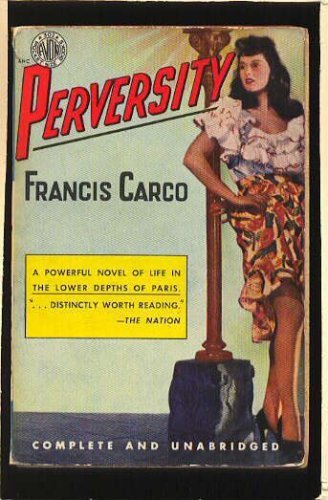
Francis Carco Perversity Black Mask
‘If Céline had a kid brother … he would have been a lot like Francis Carco (1886-1958). Carco was regarded as a serious writer in mid-twentieth century France: a winner of the Grand Prix du Roman of The Académie Française, a member of the Académie Goncourt, he was an intimate of Colette, Modigliani, Utrillo, and Cocteau, an integral part of the last Bohemia of Paris and an unflinching portrayer of the street life of Montmartre, often writing in the argot of the Parisian demi-monde. In the U.S. he was published by Berkley Books (35 cents a copy), and marketed as a kind of Gallicized—and hence depraved—Mickey Spillane. Apparently Carco, in his capacity as Katherine Mansfield’s lover, gave her syphilis and perhaps the tuberculosis that killed her. His best work is generally regarded to be his novel Perversité, first published in 1928 and translated into English by Jean Rhys (her lover Ford Madox Ford was wrongfully identified as the translator in the first English edition). No less a luminary than Ford himself described Perversity as “a second Madame Bovary.”’ — Peter McLachlin, The Evening Redness in the West
Excerpt
He thought that he was in a place where, notwithstanding Irma’s comings and goings, his comfort would be the first consideration. Then one night, towards midnight, he was awakened by an unusual noise. Emile listened. In La Rouque’s room a man was talking without troubling to lower his voice, and the girl—far from silencing the speaker—answered with animation. Once or twice Emile heard a laugh, and protested by a grunt.
“He chut! chut!” then said Irma, but too late. Emile was awake. He sat up in bed and asked weakly: “Is this noise going on for long?”
Someone answered at once: “No, no, all right.”
“Annoying people!” grumbled Emile. “Keeping people from sleeping!”
He waited, leaning on his elbow, then plunged into the bedclothes and shut his eyes. But he could not sleep. He tossed and turned, and perhaps for the first time began to picture his sister with a stranger—laughing and talking. He had never till the present moment dwelt on the thought of Irma in her room accomplishing her nightly task. But because he had been disturbed in his sleep, Emile confusedly began to imagine the scene which was taking place on the other side of the partition. He was not shocked. He was irritated, filled with ill temper and discontent. Certainly what Irma did was not his business, but why was she making such a noise? It was intolerable. At this time of night Emile did not admit this loud talking. Were they laughing at him? Did they mean to be personally disagreeable to him?
He grumbled: “If it begins again I’ll—”
The idea that they were doing it on purpose was provoking, and he was on the point of telling his sister that she must keep quiet, when a moaning sound, at first almost inaudible, but which grew louder, came from the next room, and Emile knew no more what to think. It was Irma moaning, and to her complaint the creaking of the bed added a cynical and degrading confession.
Then all that had gone before became precise to Emile’s eyes, assailed him with such force that he dared ask himself nothing more. “Ah well,” he thought, “well… well… Surely.” His wrath cooled down, and gave place to a feeling of stupor which increased as Irma’s sighs became more numerous and hoarser. The sounds reached him through the partition, as in a hospital the panting breath of a sick man dreaming can be heard by the helpless person in the next bed. Emile found himself in an exactly similar situation. He was unable to do anything, and could only wait for La Rouque to stop crying out from the next room her detestable and painful pleasure. Then she sometimes found pleasure? Emile felt humiliated at the idea. And with whom? He was curious about the unknown man. What could he be like? It was extraordinary. Emile could not picture him. The more he thought about it the more complex became his imaginings, his brain accumulating a hundred preposterous, grotesque and unlikely details.
Sometimes he told himself that there could be nothing very special about the individual. Sometimes on the contrary, Emile imagined him with striking features and an air which would force every one to notice him. And this idea was a very painful one. It was tormenting, for in order to react he was unconsciously comparing himself and opposing himself to the unknown. Alas! Emile had never given pleasure to a woman. He had done his best. But no! Never! Never to a single one. He had married two indolent and vulgar creatures: one had frankly disliked “the business,” the other had betrayed him the day after his marriage, and in his own house. Women were a detestable lot. Evidently he could have consoled himself with somebody else, but this he did not dream of doing. He thought far too highly of his own modest person to risk another adventure. The girls of the street did not tempt him. As for the women who awaited his choice in the different brothels of the quarter, the thought of them disgusted instead of pleasing him.
p.s. Hey. ** Ian, Hi, Ian. “The Loved One’ is excellent. I need to rewatch it. Note scribbled. Ha ha, I know that ‘South Park’ episode. I’m way behind on TV, it’s true, but I’ll always make room for ‘South Park’. Love back from festively lit Paris. ** David Ehrenstein,. I don’t know that movie, and nor did I know that Romain Gary directed a movie. Huh. ** Damien Ark, That would get rid of the obtrusive charm in that post. ** James, Hi. I have no idea if they’re real, actually. Thanks for the link. I read the interview yesterday. Cool, interesting guy. I’m well, you too I certainly hope. ** _Black_Acrylic, Hi. Well, I know that John did have a Gacy painting at least years ago because I saw it hanging on his wall. But he might’ve purged. That is a very nice cover. And I look forward to discovering what’s inside it courtesy of you and yours. ** Bill, Thank you, kind sir. I don’t know Al Columbia at all. Comics are probably my blindest spot. I’ll scan that. Gracias. ** Corey Heiferman, Well, hi there, Corey. I’ve been wondering how and where you are. I probably would have gravitated to you as a little kid when I was a little kid. I’m so sorry about your dad. Yeah, hugs galore. That’s a very hard one. Here’s hoping the outstanding company proves it’s worth that adjective by doing the right thing by you. Jesus, that’s a lot words. Back when I was doing crystal meth I used to fill up notebooks by the hundreds. And toss them in the garage can once I came down. Anyway, sounds fun. And I would love that guest-post, certainly needless to say. The Pinault Foundation is an incredible space. I hope you can get here and eyeball it and Paris’s giant other assortment. Take care, man. ** Danielle, Well, well Daniele! Howdy, pal. I’ve been hearing about some already legendary letters that you and M. have been hurling at each other. I so love that you have an anarchism class. Art killing revolution … big question, yeah. Hm, off the top of my head, and speaking as someone whose art diet is hugely in the experimental realm, I would say art can be revolution’s hint or map or LSD or something of that order. I guess it depends on what revolutionary action means? I guess if one sees art in the way I just described, art inspiring artists to max art out in order to try to transcend art’s conventional strictures is a kind of revolutionary act, although, yeah, possibly happening within a closed circle. But I guess I see making forward pushing art in the hopes it triggers some kind of expansiveness in the reader/viewer as the only effective revolutionary act of which I am personally capable. Or something? But I’m more into the internal, I guess. Trying to rework readers/viewer’s thinking and letting the chips fall where they may. And social justice is one possible outcome, although probably not with my own work. I don’t know, big question, or at least for a not fully coffee-up yet me. Ha ha, what an interesting Gacy story. Worth doing something with. Hey, Derek McCormack, If you see this, go back to yesterday and read Daneille’s comment directed at you. Wow, great comment. My head is spinning fruitfully. Thank you a lot, Meijer! ** Okay. Francis Carco was a very famous writer in France at one time. Now he is rarely ever referenced and probably not read very much if at all. Interesting how that happens. Or interesting enough to make me make a post about him. And his stuff’s good, need I say. And a couple of things even made it into English. See you tomorrow.
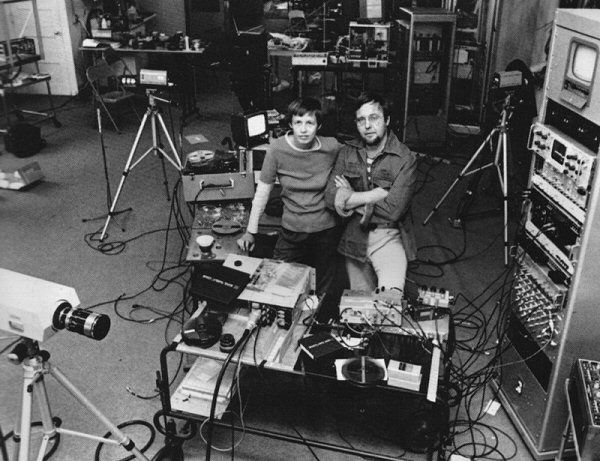
‘Woody Vasulka (born Bohuslav Vašulka, 1937, Brno, Czechoslovakia) studied metallurgy and mechanics at the School of Industrial Engineering in Brno (1952-1956) and in 1960 he settled in Prague to study television and film production at the Academy of Performing Arts, also writing poetry and producing short films.
‘Steina (born Steinunn Briem Bjarnadóttir, 1940, Reykjavík, Iceland) studied languages, and violin and music theory at the conservatory in Prague.
‘They met in the early 1960s, married in 1964, and 1965 emigrated to New York where Steina worked as a freelance musician, and Woody edited industrial films at Harvey Lloyd Productions. In 1966, at the request of architects Woods and Ramirez, Woody collaborated on developing films designed for a multi-screen environment to be shown in the American Pavilion at Expo 67 in Montreal. Contact with the cinema enabled Woody to experiment with electronic sound and the stroboscopic projection of moving images. Using a 16 mm Pathe camera, he captured images at 360º, projecting them onto different screens to create three-dimensional sound and light environments. He first came into contact with the electronic video work through the exhibition TV as a Creative Medium, which took place in New York in 1969. The same year he started to experiment with electronic media and produce a pioneering body of tapes, investigating the narrative, syntactical and metaphorical potential of electronic imaging. Using a sound synthesiser and video recorder, Steina began to work on the project Violin Power (1970-1978).
‘Encouraged by Eric Siegel, who collaborated on their first works, Woody and Steina formed a research group which culminated in the establishment of The Kitchen (Live Audience Test Laboratory) in New York in 1971. The Electronic Kitchen was a laboratory where artists could experiment with the technology of the moment and present their projects in public. By the end of the 1970s, The Kitchen had become an important reference point, though more for the promotion of video art than for technological experimentation.
‘Woody’s numeral experiments began with his construction of the Digital Image Articulator, resulting in his 1973 and 1974 works created using sound and video synthesisers: Vocabulary, The Matter, C-Trend and Explanation. In 1975, he published “Didactic Video: Organizational Models of the Electronic Image”, in collaboration with Scott Nygren in issue 3 of the magazine Afterimage, whilst in 1978 “Syntax of Binary Images” came out in issue 6 of the same publication.
‘In 1974 they moved to Buffalo, New York with its Experimental TV Studio. With the idea of dissociating the camera from the human point of view and treating it as an autonomous imaging instrument, Steina began to work on a series of installations and videos entitled Machine Vision. In 1976 she received a grant from the John Simon Guggenheim which enabled her to complete her the research.
‘In 1976, Woody received a grant from the National Endowment for the Arts to produce the series Recoded Images as part of the Video IX project, presented at the Museum of Modern Art of New York.
‘In 1980 they moved to Santa Fe, New Mexico and continued their work in video, media performance, and video installation. Steina used the Digital Image Articulator to record the images for her videos, exploring real landscapes: Selected Treecuts (1980), Search of the Castle (1981), Summer Salt (1982). In 1982, she was given grant by the National Endowment for the Arts and the Rockefeller Foundation to produce her latest version of Earthworks, entitled The West. Steina then worked with the singer and composer Joan La Barbara on the project Event in the Elsewhere, based on experimentation with voice and image.
‘Woody built different machines from waste material with the aim of creating an articulated control system for recording sound and image. His work Artifacts goes back to this period. He then began practical and theoretical research into what he called “The Epistemic Space”. In this research, which spanned several years, he examined forms of interactivity between participant and machine through the voice, language and music. He used multi-channel projection systems, his work becoming ever more three-dimensional. Also, his literary and poetic interests led him to produce a series of single-channel videos (The Commission, 1983, and Art of Memory, 1987) which are considered his most emblematic works.
‘In 1989, Steina made The Elevator Girls, collaborating with the American Film Institute to produce The Other Asia. In 1990, she completed the installation Ptolemy. In the interactive performance Violin Power, Steina went back to early projects, using the a five-stringed Zeta Midi violin and manipulating her videodisks according to the sound of the musical instrument.
‘Woody’s development of an expressive image-language began as a rigorous deconstruction of the materiality of the electronic signal, and has evolved to the application of imaging codes and digital manipulation to narrative strategies and a series of interactive installations in the 1990s, such as Theater of Hybrid Automata (1990) and The Brotherhood: A Series of Six Interactive Constructions (1990-1996).
‘In 2014, the Vasulka Chamber, a center of electronic and digital art in Iceland, was established at the National Gallery of Iceland. The Vasulka Chamber is a collaboration with Steina and Woody Vasulka, and includes a part of the Vasulkas’ archive. Later in 2015 the Vasulka Kitchen, a center for new media art in in Brno, Woody’s hometown was founded, dedicated to preserving the legacy of the artist, who passed in December 2019.’ — monoskop
Binary Lives *Steina and Woody Vasulka – Peter Kirby / 1996
Paul Sharits / Entretien avec Steina et Woody Vasulka
____ Interview
Chris Meigh-Andrews: Woody, you have said that “video negates film”- what did you mean by that?”
Woody Vasulka: The idea that you can take a picture and put it through a wire and send it to another place- you can broadcast from one place to another- this idea of an ultimate transcendence- magic- a signal that is organised to contain an image. This was no great decision, it was clear to me that there was a utopian notion to this, it was a radical system and so there was no question of deciding that this was it. Also I was not very successful in making films- I had nothing to say with film. This new medium was open and available and just let you work without a subject.
C.M-A: So taking up video freed you from the ‘subject’.
W.V: Exactly. I didn’t have to follow what was the strength of the movie- that intimate voyeur narrative system that was very successful. I like movies of that period, as you know, but I also knew well the avant-garde, the left Avant-Garde, and as I grew up in a socialist system that was something the regime couldn’t forbid. So we were fed very much by these products of the avant garde. Later, when I came here and saw what the Americans called avant-garde, I was very sceptical about it because we had this in Europe and that was the true avant-garde. But then I gained a great respect for the American avant-garde because they did it from the belly of the beast-
Steina Vasulka: Because in America it wasn’t a priori art. In Europe it was “Art”. It isn’t any more, but in especially in Czechoslovakia, it was art.
W.V: Maybe it wasn’t, but you could deny that it wasn’t art.
S.V: It wasn’t all art, but we thought of it that way. It was in the academy- the same academy as music and painting.
W.V: Also in that milieu of Prague this elitist art was so much the only art.
S.V; That was why the American avant-garde was so much more interesting, because it lived in this hostile environment where the movie wasn’t considered art to begin with.
W.V: But they had an ethical explanation for it. P. Adams Sitney, for example.
C.M-A: I have the impression that the so-called ‘structural’ film-makers didn’t like Sitney’s formulation. Hollis Frampton for example felt very constrained by it.
S.V: Yes, but they were also flattered.
W.V: He never understood them I think, that was the problem. But nobody could understand Frampton, he was too complicated. But Jonas Mekas did most of the footwork. He was the man that gave this movement total legitimacy by a simple ethical statement such as “this film is beautiful, just because it wasn’t made in Hollywood”. So he transcended the aesthetics through ethics. This gave a complete self assurance to a whole generation, because they made their films as individuals outside of the industry- in fact, in protest to the industry. They had the same strength, in fact a greater strength- a moral right, than the film industry. This was a very much cultivated opinion which I was very interested in, because coming from the other side, where film was the government- even if there were radical movements in film. At that time, even if there was any significant film made, it had the same ideology- forget the medium, forget the scratches, and simply deliver the ideology- fulfil the narrative system or whatever. Hollywood had the same interest.
S.V: That’s why when we conceived of video as being the signal- the energy and time and all of that, we though we were right there, smack in the middle of it. These were the radical times in experimental film and there were all these people starting up in video. We were all discovering this together. We erroneously thought that everybody conceived of video this way; this ‘time/energy construction’. Now I realise we were very much alone. We were never lonely because we thought we were in the middle of it, but we were. We never had any followers who practised this time-energy organisation.
W.V: The schism- the problem was between what Paik was doing, and what this new generation of Americans was doing. Paik- and Vostell in particular, were never comfortable with this internal organisation of the image. Paik successfully used magnets to distort the existing artefact, this was his strongest period. He took external forces such as magnetism and produced images, but they were very traditional in the sense of their residual context.
The whole American movement was trying to figure out what makes the picture. How is it scanned? How do you encode this image on this new canvas which is constructed in time and drawing on lines, and soon after, in the same decade- the 70’s, how to define the digital in which the horizontal and vertical territory of the screen is then divided into binary numbers- the coincidence of time produces an image. This was the most radical thought which is never mentioned. Paik never entered this; the peak of his of effort was colourising, keying and mixing with his synthesiser, and altering the magnetic state of the cathode ray tube. But we were interested in this new icon- the signal which was initially analogue and later digital- the organising principle of the image.
C.M-A: But this had nothing to do with ‘television’. Paik was coming in from a reaction to television as an object. Drawing on ideas of Cage’s about the piano as a cultural object. All of Paik’s images seem to be in reaction to broadcast television- even the things he processed. Your work on the other hand seems to have nothing to do with television at all- or does it?
W.V: Its like this. Paik’s pictorial world was the world of known symbols-not primary symbols- but secondary. For example, he would always take famous people if he could- the more famous, the more desirable. He was the shadow of everybody: McLuhun or Cage, or Nixon. You actually could see the effort of taking the established codes, putting them on television, destroying or altering them by the prescription of, lets say, Fluxus. So there was this anti-bourgeois effort. But Vostel was much more explicit about it. Vostell’s use of the object of television was much clearer-putting television sets and turkeys in the same pan. It was interesting and I really liked his work because he was demeaning.
Paik was caught in the middle of this transition because as he says openly: as music became electronic, and then ‘art’ and eventually ‘high art’- in the same way television- the electronic image, will eventually become material for high art. This was his struggle- to achieve high art at any price. This meant that he would violate any of the rules- the rejection of the popular, of the bourgeois, of the successful . But I think he had no strategy for this. As a man coming from the Orient, success is a condition for the definition of your significance. He fought it at times, but eventually settled to this notion that if he was not famous, or at least a famous Korean or Asian, then he had failed. So he carried this huge baggage of playing this specific role- and he became the first internationalist.
There is a nice essay on the subject- that in half a year he made six international projects- satellites, etc. But since defining himself in this way he left our interests which was to seek common images or common codes- we were trying to build another set of codes, which is in a way in the tradition of the European avant-garde. You have to invent everything, There’s no way you can incorporate, or appropriate cultural symbols. Then of course Worhol broke it completely because he’s the guy that just put it right there completely- he said: “this is it, this is what is allowed”.
C.M-A; Warhol was very influential on the ‘structural’ film-makers too, in the sense that he was the one who broke with the earlier important American avant-garde tradition- abstract expressionism, and especially Brakhage’s romantic ‘personal’ mythopoeic films. Worhol’s approach of switching on the camera and leaving it running- the ‘stare’ of the camera becoming a significant thing. I’m wondering whether all of that fed into your work, because there’s another perhaps more important strand which is the sound. What’s interesting about all of your early work is that the sound signal and the picture signal are compatible, and most importantly interrelated. There’s a whole musical language which is the other possible way of making abstract art which has nothing to do with any kind of narrative- there’s no narrative expectation, even though there’s a time-base. I would have thought this was an important strand feeding into the work you were doing.
S.V: Very much. It was the signal, and the signal was unified. The audio could be video and the video could be audio. The signal could be somewhere ‘outside’ and then interpreted as an audio stream or a video stream. It was very consuming for us, and we have stuck to it.
I remember that Jonas Mekas didn’t like video very much, and he said “why don’t those video makers just make silent video? We all started with silent films.” This was the biggest misunderstanding of the medium I’ve ever seen. Video always came with an audio track, and you had to explicitly ignore it not to have it. It seems that even in this respect there was no one else who did that.
W.V: Our first synthetic visual tool was the audio synthesiser- the “Putney” (EMS) How do you interact with the television screen? Its a ‘time construct’. Normally it constructs a frame- the illusion or representation of a frame, and its normally organised so precisely that you are not supposed to see that its actually organised line by line using some kind of oscillators inside and if you turn the television on when there is no broadcast signal, there are free-running oscillators- two horizontal and vertical oscillators. As soon as there is a broadcast signal it locks onto it, it becomes a slave to a master which is the broadcast signal. The signal itself governs. So we would put into the input a sound oscillator- or oscillators, and we saw for the first time that we could get an image from a source other than the camera. So our discussion was about departing from the camera, which television insisted upon having, and still does. The second principle was to get the tools to organise time and energy in order to produce a visual or other artefact. So we started with interference patterns. Interfering with that time structure, anytime you interfered with that it would organise itself and that was our entrance into the synthetic world from the audio tools. Since then we understood the affinity between the sound and image. Also we inherited an important thing from the sound instrument which was the architecture of the sound synthesiser. The signal itself is only one component, which is the timbre, or pitch. Also there is an overlaid structure called the voltage control principle in which at times you could exchange the voltage that you could control to became the source of the image, and then the material itself became the control. So you could work with this architecture and eventually present some form of a development or sort of a control which could be almost like a composition. We understood that this was too primitive to claim that, but there are some people that spent years composing. But when we look at each other soberly we recognise that it was a struggle of immense problematic dimensions. But these bright Americans like Steve Beck and Eric Siegal really fought, piece by piece, inch by inch, point by point to define that event in that particular part of the screen.
S.V: It was the cameraless image. They were interested in a principle that could no be obtained from the camera obscura. (Richard) Monkhouse did the same. And then what did they do, they introduced the camera! If not as feedback, then images of the face, or something. Woody was also obsessed. I was never that obsessed though I was also interested in this cameraless way of constructing images from energy.
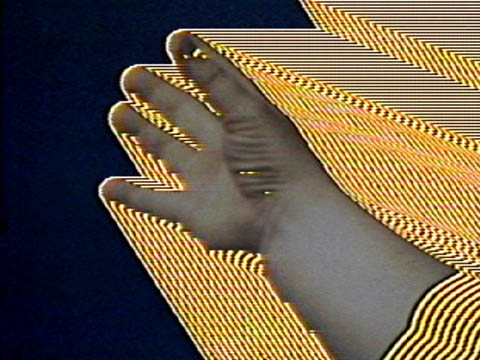
W.V: We all eventually used the face as a reference. I also used a hand as a reference. You cannot really make abstract video. This was never really an interest of any of our generation- not a single member. There were some people that tried to do a genre of abstract sound and music, but it had no genre definition generically, it was arbitrary and had no analytic quality whatsoever, and it disappeared anyway, as we said about Larry Cuba, it became a one-man computer-generated film. But he was actually analytic- I would put him into this idea of trying to represent a genre.
Most of the problem was not really to mix the images, but to deconstruct them, and we went through a long charade of building these machines that would deconstruct the images- meaning they would show the elements- including the codes, because that was the mystery. What you compose with it was usually the banality. If you look at the work of the last thirty years in video its a pathetic movement. It tries to present a synthetic or synergistic possibility, but only as an environment it succeeded, but not as a genre. All my narrative work- I had to do it, but I call them total failures because they are supposed to speak about something else, but they always address this interest in the audience to see a dramatic form, the proscenium, the dramatic form . So that’s where it became very problematic because we did not want to make abstract images, we wanted to make concrete images, but how do you build generic images that belong to themselves only? That is the dilemma. We tried to do it through tools- the ‘dialoguing with tools’ – which was sort of true- simply trying to find the least or the most generic images to describe the medium itself, including the behaviour. Later the computer made clear that there was no new language- just some additions to it such as the power of transformation, or endless variations which we already had in video. Film was a very difficult medium to do endless variations, it had limited variations.
C.M-A: This ‘dialoguing with machines’ that you have engaged with, and also Steina’s Machine Vision, are they both the same thing?
W.V: The dialoguing lead towards the Machine Vision, because I constructed the first one, but I never had a use for it.
S.V: Yeah, you walked away from it. See that’s the thing. Woody could work technically. He could take motorcycles apart or sewing machines, and then put them back together.
W.V: Aeroplanes actually. During the war I was living across from an airfield.
S.V: It was so natural to him. I have never done that. Woody would construct something and then say..”Oh well”, and I would say “No! This is good.” I would come in and want to use it. That’s actually how a lot of things were with us. I would also construct something; get something going and then I would walk away and Woody would see that there was a whole piece in there. That was kind of our collaboration.
C.M-A: Thats the other strand that we haven’t yet touched on. This collaborative interaction between the two of you which is quite unique as well. Not only were you involved with thinking about the video medium from the inside, making tools which were specifically intended to uncover or deconstruct video, but there was the interaction between two people who had come from very different but compatible backgrounds and specialisms.
W.V: We’ve always been united by an interest in the signal. That was something that we could never think outside of any machine or an installation. We’ve really struggled together, and we still do. She does something and there’s a signal involved, and that unites us, looking or appreciating. But I was never interested in the object- I was interested in the screen only until about ten years ago. In Steina’s case she was always interested in the instrument ,probably because of the violin, and she adopted these instruments as instruments of play. But I always denied that because instruments came too easy to me. I knew that life had to much more miserable. So I thought to try to find the secrets of the metaphysical content of the time-energy and the code. This were the highest calls. But I couldn’t do these machines. You will see on these tapes, I’ve even built them and eventually I have given up. But it is something that comes so naturally that I denied it. I would never discuss anything about a machine with anybody. It is something forbidden in me because I know if I follow that I would probably discover the atom bomb.
S.V: But Woody was good, because my idea was that he could build them for me- he could make it. But he would say: “Do it yourself woman!” Collaboration or not, I had to drill the holes , and they were always wrong and always kind of off-centre.
There’s another thing about all this machine stuff. First of all, we have always wanted to be inspired by the machines, we always wanted to have an equal partnership where the machines will suggest to us what we do; or the machine shows us. You put a camera on a machine and you see what it does. It’s not imposing your ‘superior’ view on the camera. Especially for me it led to this whole thinking about what is the hegemony of the human eye, and why are we showing everything from this point of view , and who is the cameraman to tell the rest of the world what they can see, wasn’t it just out of the view of the camera that all of the action was? All the things that I had never thought about before because I was a musician. This whole idea of the tools as hardware, and then the tools as the signal and signal processing was very important, and there was the dialogue in between. In the middle of this we come into the computers. We came into them very early; we bought our first computer in 1976.
W.V: Yes, we built this first complicated machine in the 70’s.
S.V: That was the thing. We first bought it because we could never control anything, if you tried next day to repeat what you had done the day before it was impossible, so we thought we would get a computer. In that sense the computer was completely boring because it did exactly what you wanted.
W.V: Fortunately again our systems were always open systems, they were not really ‘black box’. So we could actually take a whole ‘bus’ such as an addressing bus and take it away from the pins and put it elsewhere. So you could start really screwing around with the machine. We could even do some feedback, because we had a machine that was ‘real time’ at not too many points in the image but when the top was shown, the bottom was being prepared in the buffer, we could achieve a feedback and we plugged it all back and we could see how the machine resonated inside. All the bits we could hear, you could wander around and pin yourself into various portions of the machine. So if we had built a black box we would never have known what was inside. So we had our strategies and we understood what we wanted to explore. Some of the things came totally by surprise, some we could predict. So we made it as an adventure.
C.M-A: Where does the notion of ‘art’ come into this. There seems to be an assumption that it was art, where does that come from-does it come from the culture?
W.V: Yes, it is a societal overlay. It is not you who decides where it belongs, because in fact, this has always been problematic. The whole area in fact. When you look at Malcom (Le Grice); I read what he said. He only knows about Nam June Paik. He always puts him as the reference. He forgets about the huge society of Americans smoking pot, thinking daily about how to make these images. How to communicate without wires and be totally utopian in political and other senses. And then Malcom tells us that in fact Europeans were much more systematic, and he gives me these three names I have never heard. And so I am very entertained. I can use it to start a little discussion in my own mind and see if there is any need to write about it. This idea of defining this as an art form came from the sixties in which ‘experimental art’ as a funding code was coined. It also appeared via England as well. (“Cybernetic Serendipity”) Also in the mid-west in the small universities. Video was at first closed-circuit remember. Each university got a camera and maybe a recorder.
(Tape ran out here…)
____ Works
1969–71
Participation, 60 min.
Participation
Adagio, 10 min. Calligrams, 12 min.
Calligrams
Decays #1 & #2, 7 min.
Decays, 1970
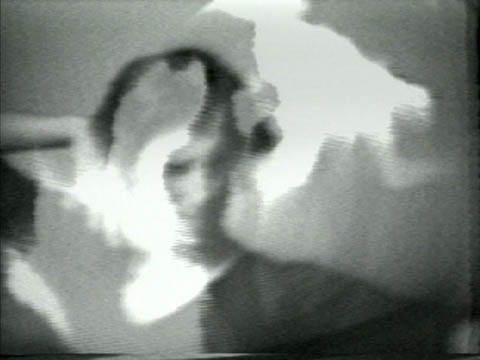
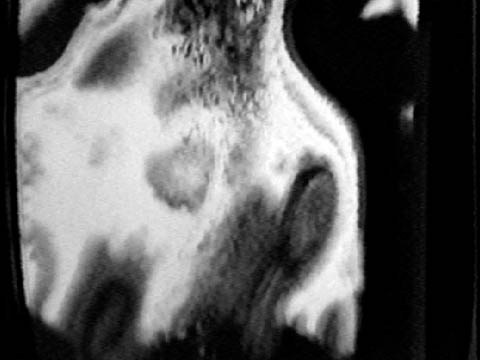
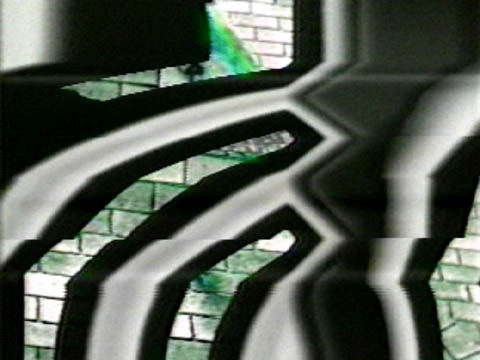
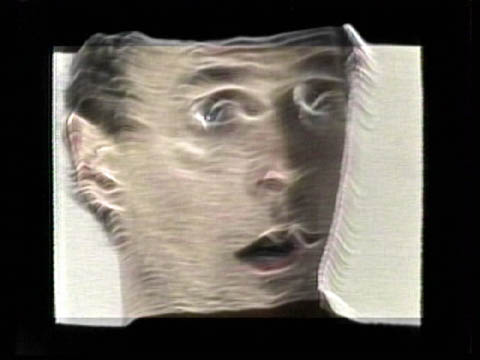
00:00 This tape begins with static. 00:27 Title screen. The video quality is quite poor. 00:33 An image of a man’s face is manipulated through video image processing with music. 07:25 A different, more abstract image appears and is processed with music. 11:47 Tape ends.
Don Cherry, 12 min. (in collaboration with Elaine Milosh)
Don Cherry
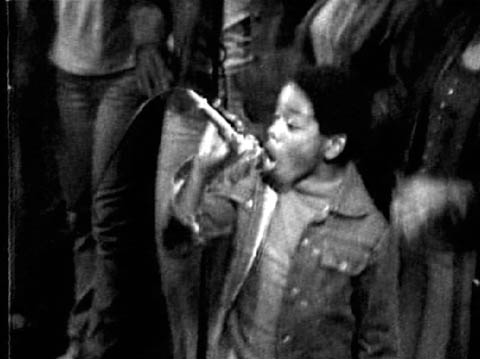
Evolution, 16 min Interface, 3:30 min.
Interface
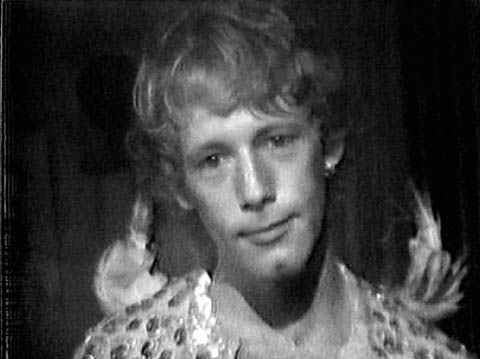
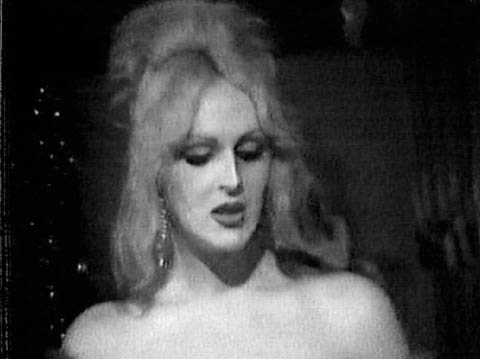
Jackie Curtis’ First Television Special, 45 min. Sexmachine, 6 min.
Sexmachine
Sketches, 27 min.
Sketches
Tissues, 6min.
Tissues
1970-78
Violin Power, 10:04 min.
Violin Power
‘In 1991, after having experimentally interfaced my acoustic violin with a variable speed video cassette player, I bought a MIDI violin and a Pioneer Disk Player. Interfacing these instruments with a computer gave me an instant access to any frame of video on the disk as well as access to fast/slow and forward/backward movements. The initial software was written by Russ Gritzo and further developed and improved by Bill Heckel. Violin Power is a ongoing continuous project with an ever increasing ‘repertoire.’ So far I have made five videodisks and I change the program for every performance.’ –– Steina Vasulka
Black Sunrise, 21 min. Contrapoint, 3 min. Discs, 6 min.
Discs
Elements, 9 min. Keysnow, 12 min. Shapes, 13 min. Swan Lake, 7 min.
Swan Lake
1972
Distant Activities, 6 min.
Distant Activities
Soundprints, endless loops Spaces 1, 15 min. Spaces 2, 15 min.
Spaces 2
1973
Golden Voyage, 28 min.
Golden Voyage
Home, 16 min.
Home
Vocabulary, 5 min.
Vocabulary
1974
Strange Music for Nam June Paik, 37:27 min
Strange Music for Nam June Paik
‘A performance of Nam June Paik’s film and music, selected by musicians and composers who knew him well.’
1-2-3-4, 8 min. Heraldic View, 5 min.
Heraldic View
Light Revisited, 3:49 min.
Light Revisited/excerpt
‘The work is a single channel video projection and audio installation with screens and mirror.’
Noisefields, 13 min.
Noisefields
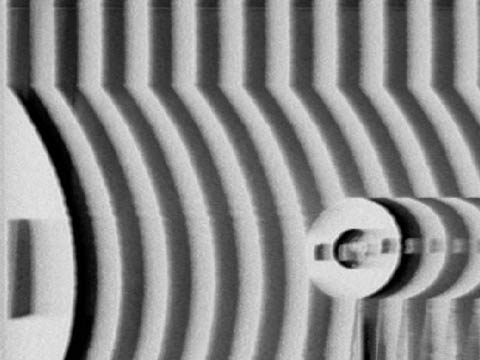
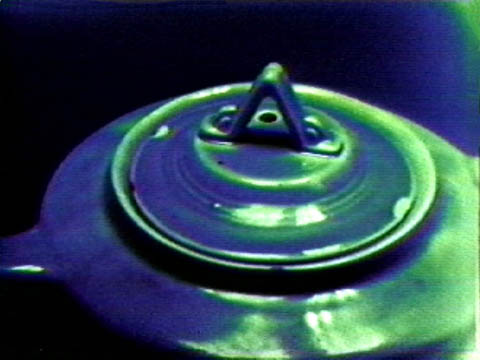
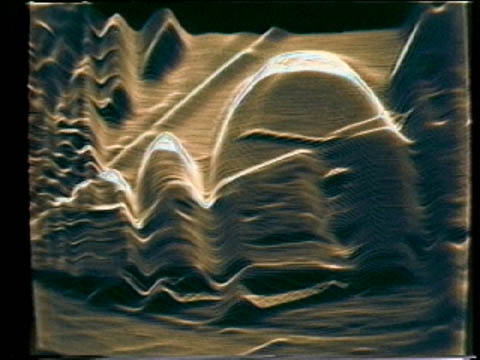
‘Noisefields is comparable to Orbital Obsessions because here as well the Video Sequencer is used to switch between two video sources to create similar flickering effects. However, differently from the interplay of self-reflexive visual input that in Orbital Obsessions arises from recording the scene of the location, Noisefields reveals the source of every electronic input. The imagery presented refers to its detecting of electronic signals and does not carry any other information, except that the Colorizer is used for variation. The circular form introduces a simple division into an inner and an outer field of interrelated pulsation, so that on the whole, the “content” of this work is an audiovisual modulation of “video noise.”‘— Yvonne Spielmann
Solo For 3, 5 min.
Solo for 3
Soundgated Images, 10 min. Soundsize, 5 min. Telc, 5 min.
Telc
1979
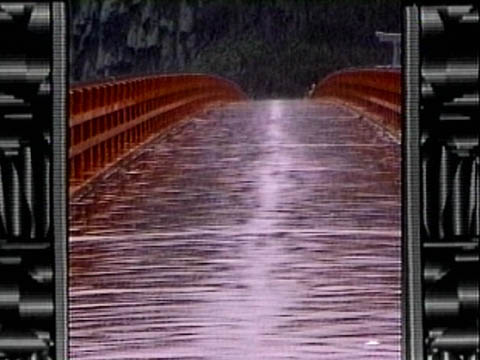
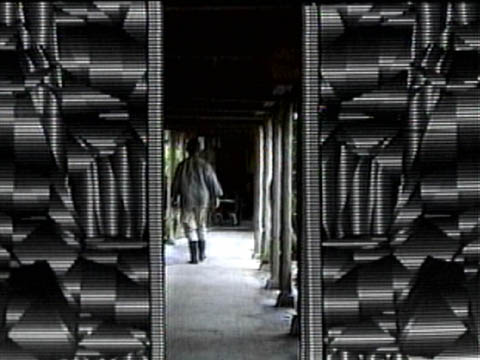
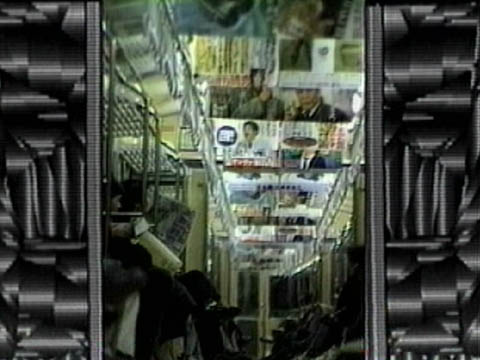
Six Programs for Television: Matrix, Vocabulary, Transformations, Object, Steina, Digital Images, 174 min., total (29 min. each)
Transformations
‘After we got the computer, the concerns became totally different. Before we could even perfect the control of analog tools, we plunged into digital ones where, in fact, everything is a product of control. It is in ‘interactive real time’ that I feel video becomes a category apart from the others (film on one side and computer graphics on the other).’— Steina Vasulka
In Search of the Castle, 12 min.
In Search of the Castle
Progeny, 19 min. (In collaboration with Bradford Smith)
p.s. Hey. ** Ian, Hi, Ian. My up is up enough. Excellent news about finishing your story draft, man! Enjoy everything possible. ** Bzzt, Hi, Q. I’m very happy to hear that you’re feeling better. I like Houellebecq okay. He’s a good writer. I’m not huge on him. But it’s hard over here because he such a self-promoting media hound and is always doing everything provocative he can to be in the French press/TV. France literature is a vast sea of so many great things. Hard to know where to even start, suggestion-wise. Really depends on what kind of lit you want to read. I’m heavily inclined towards the experimental side. Balzac is an interesting choice. Sure, why not? He’s a biggie. Yeah, really good to try to ward off grudges. They tend to be largely self-destructive and barely effective re: their targets. I’m a big ‘confusion is the truth’ and nothing is as it seems because everyone is unsolvable, etc. guy. Not that it always works, mind you. Apparently the Derek ban was an algorithm thing, and Amazon has restored it to their products. So you’ll probably get it. I hope your week is just one upbeat thing after another. ** David Ehrenstein, Morning. ** Damien Ark, Hi, Damien. It went really well. Tons of traffic, even so far. Lookin’ good. Enjoy all the great things you hear. ** Misanthrope, Hi, G. I kind of remember you recounting some your mom’s wacky sayings and doings. I like the cut of her jib, or whatever that old saying is. Hoping that ENT says, ‘Sure, come on over, weirdo!’ The streets here are jammed with shoppers too, but on foot (and bike). And are likely to be more packed still today because the govt. just announced that our COVID rates are going up again and that our reopening is about to be either be stopped or reversed, urgh. ** Milk, Hi, Milk. Ha ha, I get that. How are you? ** Nick Toti, Yes, the film we hope/plan to shoot in SoCal is the one about the family turning their house into a home haunt. Absolutely bring that tradition to your new coordinates! Spread that great shit. ** _Black_Acrylic, Hey, Ben. Yes, whatever it takes to get your fired up and typing (or using a pen?) again. ** Maryse, Hi, Maryse! Yes, I saw you have a blurb on Damian’s book, and that was cool and unexpected. If you remember to alert me about that Zoom thing, I’ll make sure the link gets headliner status here on ye olde. See you in the other place! ** Bill, Ah, so cool of you to get ‘Fucked Up’ on goodreads. As I told Misa, it looks like we’re about to re-tighten here, fuck, because the Covid cases are going back up again. So I need to get the Buche ASAP. Good luck with your equivalent. ** James, Hi, James. You share a home with Damien, don’t you? Or I mean your books live under the same imprint’s roof. Being busy is something of a godsend at the moment, you bet. I’ve been good. Bunch of interesting project stuff is welling up. Paris is giving itself its beautiful Xmas light-based makeover as usual, yes. It never looks better. I’ll find your email. Take care sir. xo, me. ** Brian O’Connell, Hi, Brian. Glad you were/are excited by Damien’s book. ‘Academic’ is a good word for what I find uninteresting about his films, yeah. ‘Velvet Goldmine’ is more loosey-goosey and fun loving while still smart. There are films of Von Trier (especially ‘Dancer in the Dark’, ‘Dogville’, ‘Manderlay’, … ) that literally made me want to rip the movie screen down or do an Elvis Presley on the monitor. I haven’t seen the last few. Intense dislike is just too guaranteed for me. Oh, man, I’m so sorry to hear that about your granddad. I sure hope they’ve stanched the bleeding and that he can get back to life ASAP. Really stressful. Worst year ever, 2020, goes without saying. Did Tuesday present you with a marked, general improvement? ** Okay. Today the blog concentrates on the works of the great video art pioneers Steina and Woody Vasulka who were also fundamental to the establishment of NYC’s seminal art/performance venue The Kitchen. Know their work at all? Now you can. See you tomorrow.
 Francis Carco Streetcorners
 Francis Carco Perversity




 Now available in North America