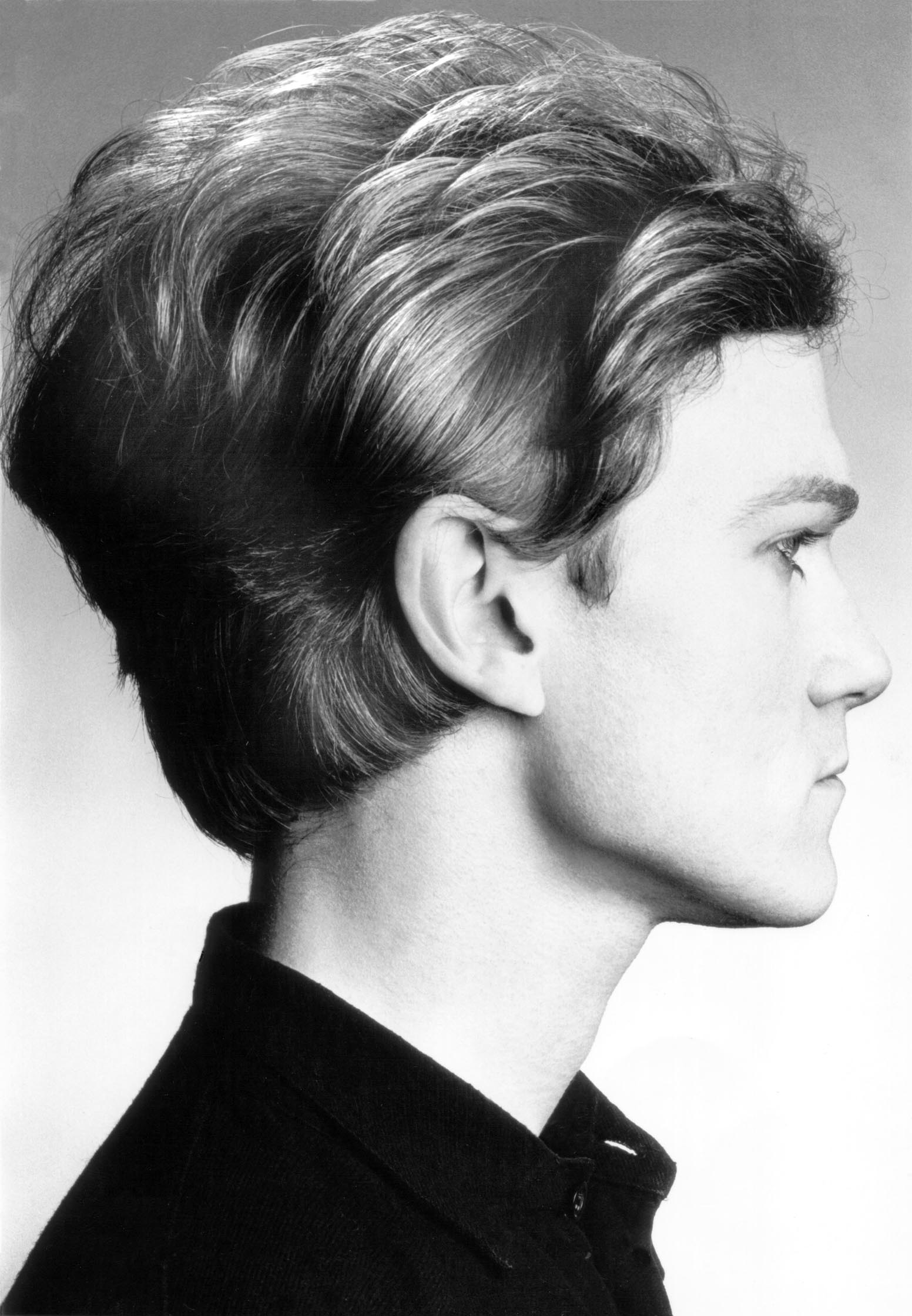
How much were those early Ultravox! records conceptual, and how much getting wires and boxes to fit together and seeing what you could produce with them?
John Foxx: Both, really. The point was to find out what these strange new instruments could do that hadn’t been done before – I figured that new instruments had always radically altered music in the past – for instance the electric guitar. Here was the next major shift – the synthesizer. It could make violent extremes of sound, from subsonics to bat calls. At that time we wanted a total experience. It was a sort of sonic terror allied to the most extreme guitar feedback possible plus a battery of megawatt strobe lights. No-one walked away unchanged from those mid-period concerts. On the other hand, we were equally into romantic lyrical beauty. The synths could do both.
Daniel Miller at Mute Records often talks about the inevitability that younger musicians would start to buy synths rather than guitars as soon as the technology became affordable in the late 70s. Is that how you saw it?
JF: Yes, Dan is quite right. All the bands wanted sonic mayhem by all and any means. Synths supplied that in a new way.
Were you similarly disenchanted with ‘trad rock’ formats?
JF: There was no underground at all at that time. London was dead. All the existing formats seemed exhausted. We were all floating around London forming and reforming bands and trying new things out. Then The New York Dolls arrived and galvanised the entire scene. Real glam trash. Beautiful. They proved it was possible to be trashy and good at the same time. Kicked everyone into action at a desperate moment. They saved us all. At that moment, I was drawing lines into New York and the Velvets, European avant garde and electronic music, previous generation’s Brit Psychedelia plus a ragged sort of insulting glam. I guess this was the start of the New Wave. By the way, whoever coined that New Wave byline is my hero. Because a New Wave is precisely what it was – and precisely what was needed at that moment.
Was it the case that your songwriting ‘needed’ the development of synthesizer technology, or that you could have adapted it in a previous musical generation?
JF: I think I could have written and recorded in any period, but of course there’s no way to be sure. I started off singing and playing a 12-string guitar in the Bolton Octagon in 1973, then in a room over a Salford Pub, supporting a Manchester band called Stackwaddy. At first the room was empty. Eventually it became full. But there was nothing happening in Manchester then, No scene at all, so I had to leave for London and got the band started. The idea was to be London’s Velvets. We even had a base in a factory at King’s Cross. The members of what were going to be The Human League came down there, totally by accident. The synths allowed more possibilities. I was becoming really interested in what could be made in a recording studio that couldn’t be rehearsed or developed in any other way. After [hearing] ‘Tomorrow Never Knows’ I realised that the studio was really the most important instrument of the future. That’s why we got Eno to work with us. It was either him or Lee Perry.
How is that a very forward looking artist like yourself has ‘fallen through the cracks’, to an extent.
JF: I don’t think there are any cracks to fall through – either people like you or they don’t.
Lack of careerist ambition?
JF: To some extent. I’m actually wildly ambitious, but reconciled to the fact that my ambitions don’t fit with many people’s expectations.
Interests in things outside the silly pop merry-go-round?
JF: I don’t think pop is silly. I think it’s an accurate snapshot of certain current concerns and desires. If you want to be even a peripheral part of it (as seems to be my role) you have to select carefully where you attempt to interject yourself, if at all. Mostly not at all. That’s not humble – its absolutely realistic.
________________
Ultravox! The Wild, The Beautiful And The Damned (1977)
‘Depeche Mode claimed to be punks with synthesizers, but it was Ultravox! who first showed the kind of dangerous rhythms that keyboards could create. The quintet certainly had their antecedents — Hawkwind, Roxy Music, and Kraftwerk to name but a few, but still it was the group’s 1977 eponymous debut’s grandeur (courtesy of producer Eno), wrapped in the ravaged moods and lyrical themes of collapse and decay that transported ’70s rock from the bloated pastures of the past to the futuristic dystopias predicted by punk. Epic tales of alienation, disillusion, and disintegration reflected the contemporary holocaust of Britain’s collapse, while accurately prophesying the dance through society’s cemetery and the graveyards of empires that were to be the Thatcher/Reagan years.’ — collaged
_____________
Ultravox ROckwrok (1977)
‘Whilst the group’s first album had been a product of the David Bowie/Roxy Music-esque side of glam rock, their second was considerably more informed by the burgeoning punk movement, although it also marked the group’s first widespread adoption of synthesisers and electronic production techniques. Money from the first album was used to improve the band’s equipment, and funded the purchase of an ARP Odyssey and, most notably, a Roland TR-77 drum machine. “ROckwrok”, the lead single, was an unusually sensual paean to unrestrained sexuality, the song featured a chorus which began “come on, let’s tangle in the dark / fuck like a dog, bite like a shark” and lyrics such as “the whole wide world fits hip to hip” – despite which, it apparently achieved airplay on BBC Radio 1 on account of Foxx’s garbled vocal delivery.’ — collaged
_______________
Ultravox Slow Motion (Live At Reading 1978)
‘Co-produced by Conny Plank and Dave Hutchins, Systems of Romance featured the band’s heaviest use of electronics to date. More New Wave orientated than the glam- and punk-influenced tunes that characterised their first two albums, Ultravox! and Ha!-Ha!-Ha!, its style was partly inspired by German band Kraftwerk, whose first four albums were produced by Plank. The opening song, “Slow Motion”, was indicative of the band’s direction on the new album. Though based around conventional rock guitar, bass and percussion instrumentation, it featured a number of rich synthesizer parts throughout the piece rather than simply a discreet solo or special effect. For drummer Warren Cann, “it perfectly represented our amalgamation of rock and synthesizer, many of the ideas and aspirations we had for our music gelled in that song”.’ — collaged
_________________
Ultravox Quiet Men (Live At Reading 1978)
‘With 1978’s Systems of Romance, Ultravox! left punk behind and single-handedly blue-printed the entire New Romantic movement to come. Gone was the brittleness of Ha!-Ha!-Ha!, replaced by a rich lushness of sound that would define the forthcoming genre. Shifting from the political to the inter-personal, gone too was the overwhelming sense of looming Armageddon, replaced by more generalized (and mundane) feelings of alienation, “Dislocation,” and unease. “Quiet Men” is a Lowry painting brought to life.’ — collaged
__________________
John Foxx No One Driving (1980)
‘Foxx’s solo debut after leaving Ultravox!, Metamatic, achieves the same emotional transcendence as his previous group’s early highlight, Systems of Romance, despite a new reliance not just on synthesizers, but on a musical framework dependent on them. On Metamatic, Foxx cultivates a curious air of disinterest that never seems truly bored, but is much more extreme than even his unarguably distant vocal style for Ultravox!. It holds up as one of the peaks of the early-’80s fascination with emotionless, Kraftwerk-inspired synth pop.’ — collaged
___________________
John Foxx Underpass (Live on ToTP 1980)
‘Recorded in what the composer described as “an eight-track cupboard in Islington”, Metamatic was engineered by then-unknown Gareth Jones. Foxx’s electronic equipment included ARP Odyssey, an Elka ‘String Machine’ and a Roland CR-78 drum machine. His keyboard skills were rudimentary at the time. Regarding the album’s air of clinical artiness, Foxx later confessed to “reading too much J.G. Ballard” and “imagining I was the Marcel Duchamp of electropop”. Half a dozen tracks referenced automobiles or motorways, most obviously “Underpass” and “No-One Driving”.’ — collaged
_______________
John Foxx Europe After The Rain (1981)
‘The opening track, “Europe After the Rain”, encapsulated the style of the album as a whole, featuring discreet synthesizer work in concert with piano, acoustic guitar and a digital drum machine; its title came from a Max Ernst painting. The tune of “Night Suit” betrayed a funk influence, whilst its lyrics were among many on the album that alluded to ‘The Quiet Man’, an alternate persona Foxx had developed prior to Ultravox’s Systems of Romance and which inspired one of its key songs, “Quiet Men”. Foxx saw The Quiet Man as the epitome of detachment and observation, and claimed to often write from his perspective.’ — collaged
___________________
John Foxx The Hidden Man (1983)
‘The Golden Section is a 1983 album by English musician John Foxx. A progression from the sound of The Garden (1981), Foxx called The Golden Section “a roots check: Beatles, Church music, Psychedelia, The Shadows, The Floyd, The Velvets, Roy Orbison, Kraftwerk, and cheap pre-electro Europop”. The album was Foxx’s first work with a producer since his final Ultravox album, Systems of Romance, in 1978; The Golden Section was co-produced by Zeus B. Held, well known in the Krautrock scene of the 1970s. In addition to Foxx’s wide array of synthesizers, the production made extensive use of vocoder effects and sampling, along with traditional rock guitar.’ — collaged
__________________
John Foxx & Louis Gordon Shifting City (1997)
‘When John Foxx returned to music in 1997, he released two CDs within a very short space of time. Shifting City was closer to the “classic” Foxx sound of his earlier albums than Cathedral Oceans. With the assistance of Louis Gordon, Foxx created a CD of frightening experimental electronic sounds. To try to categorize this CD is very difficult. But one common trait runs throughout the music: strong melodies. Foxx has always been able to write very clever, beautiful tunes, and Shifting City is no exception. The songs are layered with exciting sounds, but the base of the music, the melody, is there throughout.’ — collaged
_____________________
John Foxx Cathedral Oceans (1997)
‘Cathedral Oceans is a long ongoing project by Foxx, the first recordings that appear on this album were made as early 1983. In 1987 Cathedral Oceans material was played live by Foxx in various buildings, gardens and cathedrals in England and Rome. As a result of the long genesis of the album it does sound somewhat fragmented in places, but the overall effect is soothing, almost pastoral ambience created by extensive usage of reverb and echo coupled with gregorian chanting. The sound of this album is far removed from the steely detached cityscapes Foxx is best known for.’ — collaged
__________________
John Foxx & Harold Budd You Again (2003)
‘Harold Budd met John Foxx when he attended one of Foxx’s performances of his “Cathedral Oceans” ambient work. Out of that grew this collaboration. A very easy-on-the-ear offering, packaged in stunning artwork, the first disc (“Translucence”) is largely given over to Budd, with his piano phrasing as limpid and dreamy as ever. The second disc (“Drift music”) shows more of Foxx’s influence and has a more electronic sound. In fact, Foxx seems to be shaping up as one of the best interpreters of ambient music. The music changes gradually and slowly as in many of Brian Eno’s best works (unlike, say, Jean Michel Jarre’s “Cousteau” album where the time changes were far too rapid). Lets hope another collaboration will be on the cards soon.’ — collaged
________________
John Foxx & Louis Gordon Crash and Burn (2003)
‘Having gone his own way, the less-than-prolific (Crash And Burn is his 7th studio album in just over 20 years) Foxx has always contrived to re-invent himself with every passing phase, and with his second album The Garden, possibly invented the ethereal goth sound that made the likes of The Cocteau Twins and Lush rich a decade later. As comebacks go, Crash And Burn is not so much a return to form, but an astonishing (and sometimes brutal) introduction to someone whose genius has gone largely unrecognised by today’s youthful record buying public, although with any justice this album will change all that.’ — collaged
_____________________
John Foxx & Louis Gordon Ray 1 Ray 2 (2003)
‘Teaming with producer/synthesist Louis Gordon, Foxx returned to the sounds and themes of Ultravox’s Systems of Romance and Metamatic on Shifting City. Foxx is still obsessed with the dislocations created by the modern world — at heart he’s a 19th-century romantic trapped in the computer age. Foxx and Gordon look backwards and forwards at the same time — while exploring retro sounds, they don’t ignore the advances of electronic dance music over the previous decade, and at times their music resembles techno artists like Underworld. A welcome return to form.’ — collaged
____________________
John Foxx & Louis Gordon From Trash (2006)
‘From Trash may have its dark side – the title is an indication of that – but it’s a far more accomplished and varied record, taking a measured approach that achieves more control without compromising on any emotion. Foxx’s deadpan vocals are still a feature but there’s more melody to be found. While tracks like “Freeze Frame” sound more formulaic and could easily be plucked from previous records, the moving “Never Let Me Go” finds a slow, subdued grandeur, with an electronic pulse supporting Foxx?s vocal and a slow travelling harmony. It’s strongly reminiscent of an early Peter Gabriel solo effort, and subtly moving.’ — collaged
__________________
John Foxx & Robin Guthrie My Life as an Echo (2009)
‘Mirrorball is a melodically affecting exercise in ethereal ambience — precisely what you might expect from two artists whose CVs list collaborations with Harold Budd. That’s not to set Budd up as an overarching influence, though: Foxx and Guthrie come to this album with their own long-established and distinctive pedigrees, the former as an electronic pioneer and the latter as chief architect of the Cocteau Twins’ unique dream pop lullabies. Mirrorball bears the musical fingerprints of both, combining Guthrie’s trademark hypnotic, echo-laden melodies with the kind of otherworldly, cavernous spaces that Foxx mapped on Cathedral Oceans. Like David Bowie on “Warsawa” (and Guthrie’s former bandmate Elizabeth Fraser), Foxx sings lyrics that aren’t recognizable as English; he favors improvised vocals that suggest a hybrid of Latin and glossolalia.’ — collaged
___________________
John Foxx & The Maths Destination (2011)
‘When artists return to the fray after a long break, they are immediately forced to play their trump card. Devoted fans will pine for new material from a retired musician for an almost indefinite period of absence. But returning stars are only guaranteed treatment like the prodigal son for a finite amount of time. In short, comebacks can often unwittingly remind the public of why said artist was forced to leave the spotlight in the first place. But John Foxx is different. After a lengthy hiatus from recording and playing live (between 1985 and 1997), Foxx has gone from creative strength to strength.’ — collaged
___________________
John Foxx & The Maths Running Man (2011)
‘For someone who seemed to drop off the radar completely between, say, 1983 and 2010, John Foxx has been pleasingly prolific of late. Evidence is his third album in as many years in collaboration with The Maths (aka Benge), and a cursory glance at the Foxx discography reveals over twenty albums released, in various guises and collaborations, since 1997 – disproving any notion that this Foxx has only recently broken cover (though he did in fact retire from music in the late eighties, working as an illustrator and art lecturer under his given name of Dennis Leigh). It’s obvious by now that this is no revival act, so perhaps it’s time that we stopped comparing Foxx’s new output to that of his perceived heyday – as frontman of Ultravox mk.1 and solo hitmaker with cult classics like ‘Underpass’ and ‘No-One Driving’ – and started judging it on its own merits, and by contemporary standards. For at age 65, Foxx the arch-futurist still more than measures up.’ — collaged
______________________
The Soft Moon vs. John Foxx & The Maths Evidence (2012)
‘Dennis Leigh is 63. His alter-ego John Foxx is, however, ageless. As alien-handsome as he was 35 years ago while inventing synth-pop with the first line-up of Ultravox(!), this Lancashire-born cult hero of electronica has, at various points, been a photographer, video director, graphic artist and designer of book jackets. But something always pulls Foxx back to his singular and hugely influential music, and his marking out of a territory involving analogue synths, discreet metallic rhythms, pop-meets-classical tunes, urban dystopia, and a feel of European existential angst and detached alienation from a world of humans he doesn’t understand – or perhaps understands only too well. Like many an 80s synth maestro and 70s post-punk, Foxx has stuck to his sonic guns, and seen the world inevitably come back around to his way of thinking. He has never seemed so relevant, nor sounded so modern, as he does in 2012.’ — collaged
*
p.s. Hey. ** Misanthrope, Hi, G. What does the badge look like? Probably too much to hope that it’s star-shaped and made of tin. Well, I hope you’re there that long too, quite obviously. I think waiting for last minute discounts is usually a workable idea. Spring makes Europe more desirable, but not as covetable as summer does. I like pro basketball okay, but I never watch it until the finals, if I ever do. I feel like I’ve got too much routine in my life as it is. ** David Ehrenstein, Yeah, saw that VK’s getting married, and to a woman, no surprise there at all. May bliss overcome them both. ** Cobaltfram, Hi, John. I still like books better too, but digital has its thing. As Sypha said, ‘IJ” might be easier to read in book form, but, I don’t know, maybe not? Sure, I read the classics, or I mean some of them. Uh, mostly in school, I think, but it depends on what ‘classic’ means. I read guys like Flaubert and H. James and so on and so forth on my own, but, like, Tolstoy and Dostoyevsky and stuff like that were class assignments. I mostly only wanted to read French lit when I had a choice. Never wanted to read, say, pre-50s American classics. Like I’ve said, the big stories and big characters and sweeping insights about humanity and stuff just never held much interest for me. I was against their status as ‘the great fiction role models’ since I was a young teen. I always read avant-garde lit when I had a choice since I was about 14 years-old. But, yeah, I had some kind of phase where I checked ‘the classics’ out to be sure, but I usually only read about a quarter of them maybe and got bored and stopped, I think. Reading them makes sense though. Well, I have no doubt whatsoever that it’ll work out well for your book. Just curious as to how your route as a published author will begin. ** Wolf, Hey, Wolf! It was so awesome to see you! I only started feeling pretty okay and normal yesterday. Bad timing there. I think I’ll maybe go see the Linder show, I don’t know. Probably will pop in when I go to the Palais de Tokyo or something. Will definitely for absolutely sure see the Dark Romanticism show at the d’Orsay, though. Assuming it’ll still be up when I get back from my work trip thing. I’ll tell G&S; too. You betcha. Cool. I’m so glad your trip ended on that high note. Me? I’m … what am I doing … uh, finishing the ‘Pyre’ translation fix-up. Helping Zac build a 6 foot Kinex Ferris Wheel that we will be using as part of a film project on our Scandinavian theme park tour trip. Pre-trip errands. Blah blah. I’m good. You thinking of Days for the blog is so kind, and that will so, so really help me out. I don’t think I know who Barron Storey is, which is exactly why I really, really want you to do it! Big old, or, rather, forever young love to you! ** Empty Frame, Hi, Frame! I’m good. Yury’s fashion line hasn’t launched yet. He’s still getting everything ready. He’s not going to launch with a runway show/ presentation. He’s launching in some other way, which has bought him a little needed time to complete the collection and website and all that stuff. The George novel is a semi-disaster, and I’m not sure what’s going on with it. I’m trying to turn it into something else, if I can. Not sure. Tough times on that front. But I’m taking a weeklong ‘get away and work’ trip on Monday with my artist friend Zac wherein we will ideally hold up in the semi-middle of nowhere and make a lot of progress on our respective projects, so we’ll see. Japan, yes. Nope, no Gisele connection there. I’m going with the aforementioned Zac purely just to explore, have fun, etc. There are a million things we want to check out there, and we’re in the early stages of compiling a list and mapping out the trip. Sorry you didn’t like Linder on wARC’s behalf, but c’est la vie, and she’s new to me, and my opinion on what she does is vague and in process. Oh, gosh, thanks about the ‘Them’ thing. We had to cancel the upcoming performances of ‘Them’ in Poitiers ‘cos Ishmael just had to have emergency quintuple heart bypass surgery! But he’s okay. Much love back. ** Bollo, Hi, J. Oh, oh, oh, how was the studio visit? Tell me! ** Sypha, Hi. Not a very accurate account of Wire’s music and the different historical phases of it, but that’s okay. I don’t remember that ‘Broom’ character, but, like I said, I’m sure any ‘homophobia’ in the novel was meant to be uncomfortable making. Yikes, on your schedule! Thank god for the upcoming days off. Yeah, the classics, I don’t know. I mean, obviously, there must be super great work amongst the classics, and I’ve read some super great classics, but that whole ‘you have to read the classics’ thing is just bullshit, I think. It just seems to derive from some nonsensical protectionist attitude about the past. I know I didn’t get anything that I know of as a writer from reading them. Of course I’m a weird writer. ** Pilgarlic, Hi, man! Nice to see you! It’s interesting that you mention Lady Gaga because it’s kind of a well known thing that Gaga ‘stole’ her idea for the ‘meat dress’ from Linder, who did that same thing back in the 80s. Very cool thoughts on DRP too. You good? ** White tiger, Hi, Math! Hey, buddy! Oh, I’m so sorry about the boredom with the bay and about the break-up with your muse. That sounds very painful. I’m so sorry, pal. But it is exciting that you’re finally getting your name changed! I wish I could sit under that tree with you afterwards and watch you smoke pot. Very cool about Kyte visiting. Kyte’s awesome. You guys’ll have a blast, I think. Great! Wow, that ‘pacific ephemeris’ thing looks really cool. I’m going to go try to decode it or something. Everyone, the great artist and d.l. White tiger aka Math tinder has started this thing called ‘pacific ephemeris’, and you will be so glad you click this and go see what it is. Guaranteed. Whole bunches of love to you, my pal! ** Steevee, You would think so, wouldn’t you. Strange. I don’t have much hope for the Soderbergh/ Liberace either, and I’m not even sure why not. At Cannes? Interesting. I guess the schedule is imminent. ** Statictick, Hi, N! Man, yeah, ongoing love and support and ratcheted up great vibes from me, my friend. I stopped listening to the Bowie. I’ll try it again one of these days. Ah, happy to hear you came around on MBV. Now that’s a comeback record. The new Wire is really gorgeous, I think. I think I’m in love. ** _Black_Acrylic, Oh, cool, great! So glad the Linder post hit the spot. I always liked Ludus. It was really nice to revisit them. Oh, wow, that text of yours and the page it’s on look great! I’ll read it just in a little while. Everyone, the mightiest of mightys aka _B_A has a new text up on this place called ‘The Annotated Palace Collection’, which is a weekly blog inviting writers to respond to one of the fifteen horror films that make up the Palace Collection. I know it sounds complicated, but it’s not, so just click this and forget my intro. ** S., Dude, if it works for you, go for it, which you are, so, yeah. Why do you have trouble making friends? You’re so friendly and cool. I blame wherever you are. Listening to The Cult, ha ha, hey, maybe, right? Their tastes are your oyster. ** Alistair McCartney, Hi, A! I’m feeling better and better finally, thank you. You too, I hope. I know, is that not so weird when you suddenly can’t wake up and work on your book? So weird. What happened to the second book? Wasn’t there a possible second book that you were writing at the same time, or was it that they consolidated into one book, I can’t remember? Aw, gosh, thanks, man, re: ‘Try’. Yeah, so excited to hear how it goes with the agent, and, jeez, to get read your new book! Holy shit! ** Grant maierhofer, Hi! Saul Bellow, wow, I haven’t even thought about in him, like, a zillion years. He was such a big dog lit guy back when I was forging ahead as a writer as best I could. I think I read one of his things and just thought it was okay or something, but I think what he does isn’t my thing. Anyway, just to say how weird it is when a writer’s name is practically ubiquitous and then you realize it has become a faint memory. But maybe people are reading him again? The Pollock piece/interview was great, man. I like Egon Schiele, sure. What’s not to like, I think? Later, pal. ** MANCY, Hi! You saw Iceage last night? Dude, is Elias not so the mega-riveting stage presence? Whoa. I’m going to hang out with him and them when I go to Scandinavia. Really curious about them. ** Un Cœur Blanc, Hi! Which Blanchot are you focusing on? I’m glad the Day was close to gorgeousness. Sweet. Lovely day, my friend. ** Okay. John Foxx, pioneer electronic guy and kind of awesome in general, I think, but now the gig is yours, not mine, so see what’s what. See you tomorrow.




 Now available in North America