* (restored)
—-

David Ohle is a natural born terrorist — inso-far as Naked Lunch is the definitive English translation of the Koran. And if — as was provocatively asserted in Don DeLillo’s Mao II — the terrorist has hijacked the novelist’s role within our culture, is it then somehow supercilious of me to report that Ohle has written a novel that will behead his readers? Said novel is The Age of Sinatra, in which, it should be noted, “elective deformation” of one’s body is the predominant fashion trend. Readers, in this case, can attire themselves however they see fit (the orange jumpsuit is optional). And I’d like to propose that getting your head lopped off by Ohle’s fiction is a strange and unforgettable experience.
Some essential backstory: The Age of Sinatra is billed as a sequel to Motorman, published in 1972 by Knopf, and just reissued by 3rd Bed. Here we first encountered Moldenke, the stonepick-smoking, compulsive letter-writing, Beckettian hero (“At best I can say that I am here, although I don’t know where. I am at large and about”) as he journeys to and through a place dubbed the bottoms. Moldenke, suffering from a heart condition, consults his physician, Dr. Burnheart, who installs four sheep hearts in Moldenke’s chest, and removes one of his lungs. Moldenke is also a veteran of the “mock War” in which citizens enlist for an injury of their own devising. He, in a moment of guilt-induced heroism, volunteered to give up “a list of feelings” and to receive a “minor fracture,” whereupon a nurse promptly smashed his kneecap.
Motorman’s landscape is chockablock with multiple suns and moons (Ohle effortlessly strafes the traditional tropes of science fiction, the epistolary novel, and the picaresque), and is populated with a nefarious breed of faux humans called jellyheads. Here is a scenish bit of prose in which an otherwise listless Moldenke combats two hitchhiking jellyheads he unwittingly picked up in his k-rambler: “Moldenke exposed his letter opener. ‘You first.’ The man came forward. ‘Bend over.’ The man bowed. With the letter opener, Moldenke opened a small hole in the back of the neck, enough for two fingers. He put a thumb and forefinger in and widened the hole, a clear jelly spilling out, down his trenchpants. He did the woman, her jelly more clouded, her rubber skull a little thicker than the professor’s had been. In the morning, with two suns behind him like stray moons, he examined his vehicle.” This is a textual torture so pleasurable that Motorman generated an ominous subplot while out of print—that of readers’ reverent anti-chatter about the novel’s spiritual effects. Forget cult status: Motorman birthed its own sleeper cell.
– from ‘Invitation to a Beheading’ by Gabe Hudson. Read the rest here
Motorman
 For a long time I was scared to read Motorman. It had come recommended to me in such hushed tones that it sounded disruptively incendiary and illegal. Not only would the reader of this crazed novel burn to ashes, apparently, but he might be posthumously imprisoned for reading the book — a jar of cinder resting in a jail cell. Books were not often spoken of so potently to me, as contraband, as narcotic, as ordnance. There was the whispered promise that my mind would be blown after reading Motorman. There was the assurance that once I read it I would drool with awe, writerly awe, the awe of watching a madman master at work, David Ohle, awesomely carving deep, black holes into the edifice of the English language.
— from the introduction to the Calamari Press edition of Motorman by Ben Marcus
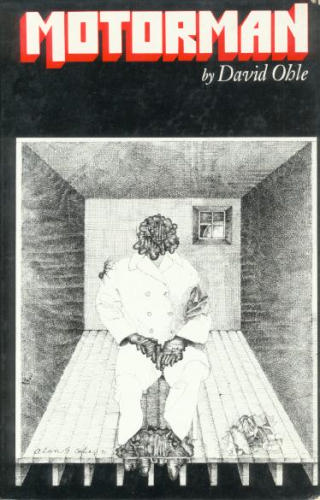 Motorman is the only book ever given to me photocopied in full. That’s how hard to get it was, and how badly I wanted it.
David Ohle’s legendary first novel was published some three decades ago, in 1972, and it has since been out of print. Ohle himself, while continuing to write and intermittently publish, has remained almost completely unknown. So this earlier book, reprinted to coincide with the release of his new novel, The Age of Sinatra, enters the world as something fresh that is also the secret ancestor of the most daring speculative fiction of our time.
Motorman tells the story of a hapless everyman named Moldenke, who gets by in the gray areas of a world that’s almost all gray areas—a science fiction-tinged world with two suns, a number of “government moons,” man-made humanoids called jellyheads, and mock wars where soldiers volunteer for injury. Moldenke receives some menacing phone calls from a man named Bunce, who claims to have tapes of everything everyone’s ever said about him. To escape from Bunce, he sets out to find his old mentor, Dr. Burnheart.
Motorman is a quest narrative, of a sort. But you won’t read this book for the plot. It does have a narrative thread, but one composed of snippets whose ends barely meet. The language, too, is not quite English as we know it. Attributes and effects coagulate into strange new objects — “a building with structural moans” — while familiar objects are defamiliarized. Here’s Moldenke taking notes on some birds: “Rapid pecking followed by pauses.” Got it. “Long, agile tongue coated with a jellylike substance.” OK . . . “When the tongue is retracted it apparently wraps around the brain.” What? That “apparently” is the kicker here. This is a world that does facts —we’re not in the realm of pure poesy — but the rules have all been changed. Don’t expect Ohle to spell them out for you, either. Like very few other writers — the Joseph McElroy of Plus, the Burroughs of Nova Express — Ohle maintains a high level of indeterminacy in both his fictional world and the language he uses to tell us about it. The result is disorienting, vertiginous, thrilling: “Roquette pierced the water with his stick. ‘Good,’ he said. ‘It’s thick enough to walk on.'”
It helps to be light on your feet. Like one of the novel’s geographic oddities, the River Jelly, this book is only semi-solid. The tiny chapters (sometimes no more than a few lines long) appear adrift in white space, which starts to feel like a positive substance, something Ohle himself might invent in his fiction: a sort of viscous fog from which unrecognizable objects emerge. “He felt something without form, something edgeless, rushing at him from the direction of eastern light.” But before you float away on this nebulous fare, Ohle gives you something solid: a name. “Is that you, Bunce? Mr. Bunce?”
Bunce. A goofy name, a bounce with just a little of the air let out of it. There is something clownish about Bunce and his threats. But clowns are scary, and all is not right in this world of incessant, pointless surveillance, petty bureaucratic meanness, decay and graft and moral inertia. All is not right inside Moldenke, either, and that’s obvious not just from the arrhythmia in his four sheep hearts but from the arrhythmia in the narrative, its stutter and lurch. By the end of the book, we have lost track of time (easy to do in a world where six “technical months” can pass in a single day), and neither we nor Moldenke knows exactly what has been going on. Moldenke thinks he might have let the goo out of a pair of jellyheads with a letter opener. Or was it a screwdriver? It’s dizzying but exhilarating for a reader to be given so much room to play. A typical mobile might seem too pretty an image to serve as a descriptive metaphor for a book by Ohle, but I have a different image in mind. A friend from high school once called me in tears: He was trying to make a mobile out of dead bugs but was having trouble bringing them into balance. If he had succeeded, that mobile might resemble this book: delicate and grotesque, tragic and hilarious, precarious but perfectly balanced.
– from ‘Gross Anatomy’ by Shelley Jackson. Read the rest here
Read an excerpt from Motormanhere
Buy Motorman from Calamari Press here
The Age of Sinatra
 After the most recent Forgetting, Ohle’s luckless protagonist Moldenke is in possession of only his name and the bare facts of his former life. He finds himself cruising on the Titanic through a bizarre alternate reality where elective deformation is a fashion trend, neuts and human settlers do their best to live together in relative harmony, and the only available sustenance is stomach-churning fare. Everyone agrees the Stinkers are troublesome and something must be done. President Ratt not only fails to control the Stinker problem, but he also has a penchant for decreeing absurd laws and issuing random vouchers of innocence. Violators with valid vouchers defer their punishments to guiltless bystanders — regulations that land Moldenke and his fellows in prison more than once.
Rumours are circulating that another Forgetting is imminent, and that the Forgettings are induced by Ratt’s radio broadcasts. The prison guard Montfaucon emerges as Ratt’s political rival, and Moldenke, ever the yes-man, finds himself inadvertently involved in a plot to assassinate the president. The rebels hope to return to the Age of Sinatra, “when happiness was not only considered achievable, but hailed as the ideal state of being.”
– from ‘About the book’ at Soft Skull Press
The legendary author of Motorman is back. In The Age of Sinatra, David Ohle is so attuned to reality that he has invented a brand new world to reflect it. Whereas what is generally called realistic fiction is busy cataloging what we wear and buy, Ohle is documenting our last secrets, and he’s doing it with droll hilarity, brilliance, and a genuinely original vision.
— Ben Marcus
Ohle’s visceral world splices together such diversities as Rabelasian humor, schizophrenia, science fiction, a twisted version of the Kennedy assassination, necronauts, conspiracy theory, aphasia, genetic manipulation, surrealism, the Titanic, cyperpunk, the French sewers, gland eating, hair smoking, pig hearts, and a constantly shifting system of law to create a hilarious yet compelling dystopia. A beatifully strange novel, imbued with nervous laughter and serious social critique, The Age of Sinatra is a startling book, excessive in all the right ways.
— Brian Evenson
Read an excerpt from The Age of Sinatra here
Buy The Age of Sinatra from Soft Skull Press here
The Pisstown Chaos
 The Pisstown Chaos tells the story of one family’s journey in the midst of environmental and political crisis, disease and forced relocation. Power is concentrated in the hands of the Reverend Herman Hooker, an “American Divine,” who revels in the sufferings of others as he spouts platitudes to the masses.
When the Reverend attempts to overcome a rampant parasite infestation by decreeing population “shifts,” the members of Balls family find themselves subject to relocation at a moment’s notice. The family persists through unfair imprisonment, persecution, and forced labor, subsisting on urpmeal and getting stoned on willywhack to occupy the time. Mildred Balls is imprisoned in a parasite control facility; her grandson Roe is ordered to mate with a parasite victim; and his sister Ophelia is sent to one of the Reverend’s Templexes, where she will serve as an acolyte in absolute silence. Meanwhile, an evermore confused and enfeebled Reverend struggles to maintain his grip on the country as the chaos rages on.
This is David Ohle’s foreboding, strange and comedic follow-up to Motorman and The Age of Sinatra, the story of one brave family’s struggle against an absolute, corrupt, and increasingly irrational centralized power, and their quest to be reunited.
– from ‘About the Book’ at Soft Skull Press
Read The Pisstown Chaos online free at WOWIO here
And/or buy it from Soft Skull Press here
Boons & The Camp
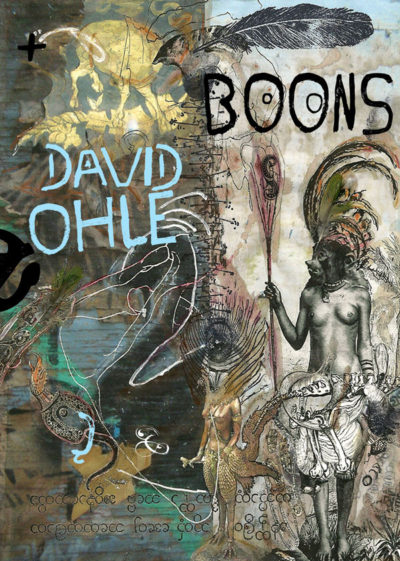 David Ohle knows how to evoke the unsettling. Whether describing a subtly altered twentieth century or reviewing his childhood in New Orleans, his talent for quietly jarring imagery never flags.This volume collects two novellas, one that suggests the gender and geopolitics of the last century interwoven with Cronenbergian body horror, the other evoking economic exploitation with abundant, and bleak, comedy.
Start with Boons, about a disgraced South American professor with an obsession with the bird-people of the title. It is, literally, a visceral read: infections are described in grotesque detail, and worms and intestines make prominent appearances. (There’s also the professor’s own medical condition, in which his body occasionally produces bone “relics.”) It’s set in a world that strongly resembles our own in certain respects, though the fact that Pol Pot is among the historical figures to make an appearance indicates that we’re in a place, morally speaking, where atrocities are all too common. The boons of the title occupy a strange place somewhere between mythology and allegory. The Professor’s fixation on boons is both scientific and sexual, and is every bit as unsettling as one might expect. His tendencies in other matters, including the forging of false religious artifacts and the aforementioned encounter with Pol Pot, are no less comforting. And yet both the Professor and Ruthie, the boon with whom he becomes obsessed, are compelling and distinctive, their interactions tragic and horrific.
The Camp is set in a world that, at least on the surface, appears more recognizable, closer to our own. Its characters are, relative to Boons, much more stylized — almost figures from an archetypal melodrama. At one end are the Chungs, a comfortably married couple working in the kind of factory that leads to anti-capitalist protests. The fundamental decency of the Chungs is sharply contrasted with the rapaciousness of Mr. Ganzfeld, the owner of their workplace. Ganzfeld is a villain from an earlier era: Snidely Whiplash with a fake nose. (More precisely: a series of fake noses, each more horrific than its predecessor.) And while Ohle sets this story in a nebulous time and space, his characters seem taken from a masochist’s morality play: the virtuous remain exploited and abused, while the rich go to their graves with bloated wallets and heady satisfaction.
One quality shared by these novellas is Ohle’s ability to evoke unknown landscapes: the harsh industrial topography of The Camp feels every bit as vivid as the deconstructed exoticism of Boons, and each world feels fully inhabited. These are places where atrocities happen on nearly every level, but it’s hard to look away. Ohle’s craft is precise, and his funhouse reflections of our own anxieties, oppressions, and obsessions make for a grimly compelling read — it dwells in the place after the sense of wonder has been debased, spiked liberally with horror.
– Jason Diamond, Vol. 1 Brooklyn
Read an excerpt here
Read another excerpt here
Buy the book here
The Blast
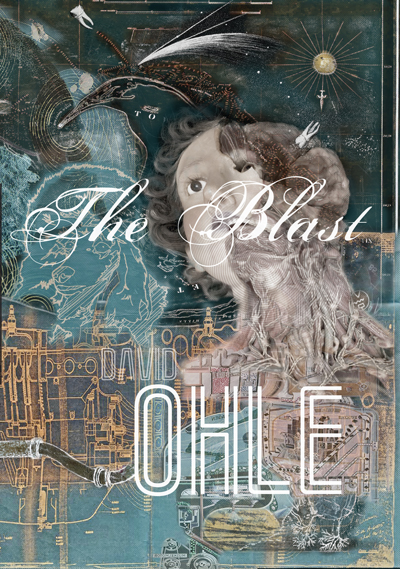 One of the most frightening and brilliant aspects of David Ohle’s futuristic novels is how eerily they parallel our own landscape. Motorman (1972), The Age of Sinatra (2004), The Pisstown Chaos (2008), and Boons and The Camp (2009) all share the same backdrop, a realm not explicitly said to be post-apocalyptic, but certainly one where the workings of the world have been inhumanely redefined and most of its inhabitants struggle for life and scrap for sustenance—physically, emotionally, and psychologically.
Ohle’s latest foray into this world is The Blast (Calamari Press, 2014), which centers on Wencel, a teenager at St. Cuthbert’s Boys Academy, a school unafraid to torture and maim students for their grooming habits; and Wencel’s mother, whose daily combat is to make what little they have count, braving the “souk” market and the threat of wild and vicious poodles, all the while attempting to instill her own slim virtues on her son as best she can. Wencel’s father reappears mid-novel too, having been arrested for stealing a radio, then released from his sentence as another victim of an awful and rampant illness—one that turns people into husks of their former selves, with bodies that no longer require food or sleep, but tooth pullings and odor shellac instead.
As far-reaching and distant as all of this may seem, in The Blast, as in his previous novels, Ohle masterfully shows us how his world is so very sadly and frighteningly like our own. Parents battle to teach their children what they believe is right and good, the top tier of wealth and power dominate the rest, the government is degenerate at best, and there is an unchecked spread of disease. Wencel is really just like our teenagers, even if his studies include “Pop History” and “Emoticonics”. His young brawl to make a life in Ohle’s brutal setting is more like a mirror than we might want to admit, and more rewarding than we might expect, too.
– JA Tyler, BOMB
DO interviewed about The Blast here
The Blast reviewed here
Buy the book here
David Ohle as editor
Cursed from Birth: The Short, Unhappy Life of William S. Burroughs, Jr
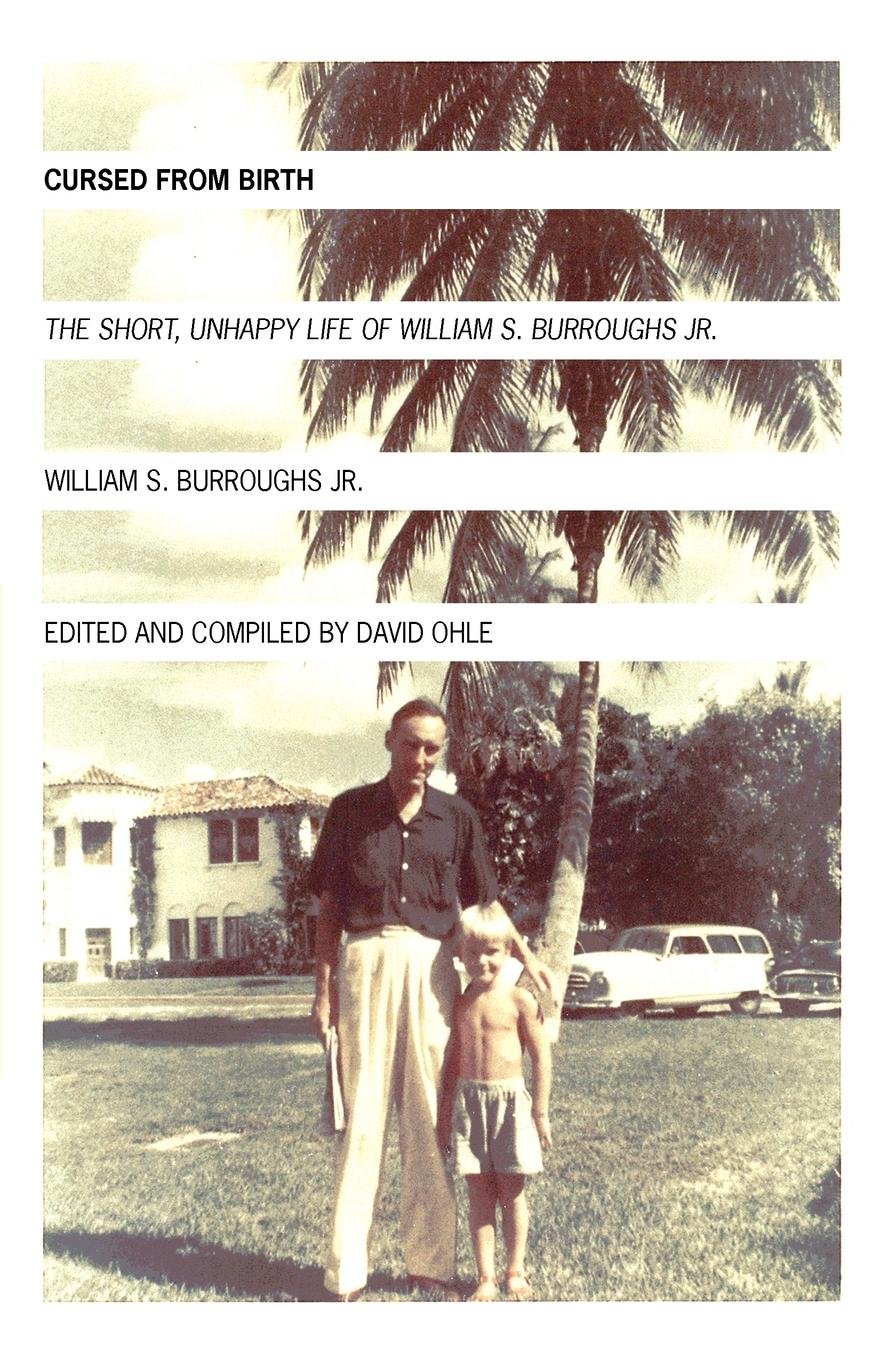 Born in 1947 to the writer William S. Burroughs and his common-law wife Joan Vollmer, William S. Burroughs, Jr. (known as Billy Jr.), would later describe himself as “your cursed-from-birth son.” Cursed From Birth is a testimony to the difficulty of living in the turbulent wake of a famous father his famous and troubled friends, and a lucid, shattering depiction of a life going down the tubes.
Raised by his paternal grandparents in Palm Beach after his mother was killed by his father in a shooting accident, Billy saw his father become suddenly famous for Naked Lunch just as he became a teenager. Billy Jr.’s short life was defined by creating trouble to catch the attention of his father, mourning the death of his mother, descending into alcoholism and drug addiction, and reckoning with it all by beginning his own literary endeavors.
Compiled by writer David Ohle from Burroughs Jr.’s third and unfinished novel Prakriti Junction, his last journals and poems, and correspondence and conversations with those who knew Billy, Cursed from Birth is faithful to Billy’s own intentions for a last artistic effort. With the sufferings — but not the patience — of Job, Billy Burroughs’s life illustrates the fall of one “whom the gods would destroy”. Cursed from Birth is the funny, tragic, angry, and stunning final statement from William S. Burroughs, Jr. — a casualty of the Beat generation.
– from ‘About the book’ at Soft Skull Press
Buy Cursed from Birth here
Cows Are Freaky When They Look at You: An Oral History of the Kaw Valley Hemp Pickers
 The Kaw Valley Hemp Pickers were marijuana harvesters around Lawrence, Kansas during the 1960s and 1970s. A variety of the weed known locally as K-pot grew plentifully, nurturing a counterculture celebrated here in a foreword by William S. Burroughs and a series of oral history excerpts by Lawrence’s former hippies. Their recollections focus mainly upon drugs, sex, and violence, tales and tall tales lovingly preserved to the final raunchy detail.
– Robert F. Nardini
Buy Cows Are Freaky here
David Ohle as Interviewee

Interviewer: What are some of your favorite Burroughs stories?
David Ohle: I took him out shooting one time. He and I were the only ones on this particular shooting trip. … William was just first beginning to get the idea to do shotgun art—to take something and shoot it and make art out of it. So he had brought out, I believe it was a piece of plywood that day, and he asked me to hang an ink bottle, like from a rubber band, on the plywood. He was gonna shoot the ink bottle and that was gonna splatter onto the wood and make some kind of art.
He had one of his fairly large-caliber pistols, and he had on his ear protectors. I didn’t have any ear protectors so I went in the cabin so I didn’t have to listen to this while he popped off his shot. But I could see him through the glass door. I couldn’t see the target, but I could see him standing there with his gun.
He fired, and when he did all this ink came back and splashed him in the face and he thought he had been hit. He thought it had ricocheted and hit him in the head — the bullet. He thought it was blood. He started screeching and panicking, “Oh my God!” And he started wiping it like this and looking at it and going, “Wait a minute … that’s not blood.” But the expression on his face I’ll never forget. He was absolutely terrified that he had been shot by a ricochet.
Read the rest here
More David Ohle:
Interview with Hobart
Interview with LJWorld
The Mind of Moldenke
Nerve Screening Room interview
Mother and Son
David Ohle: Neutrodyne-Settler Sex Scene
Motorman Fragments
The Camp (to Butthole Surfers live)
—-
*
p.s. Hey. ** David Ehrenstein, Thanks for the contributions. ** Robert, Hi, Robert. Welcome! I’m so happy it hit home and was in your area of interest and expertise. Is it possible to see your work somewhere? I’d be very interested. Thanks very much! Take care. ** Bill, Thanks. It’s really nice being back in/on Artforum. Been ages. Oh, shit, and, whew, good. About the iCloud scare. I’m scared of the iCloud. I don’t think I use it unless I’m being used by it without my knowing. Nice that you have a store that’s open that you can go down to to buy a backup drive. We are at supermarkets, pharmacies, and the odd tobacco shops only. ** Nick Toti, Hi. Thanks, pal. I had a friend who was an anarchist who was also a clown. Huh. Anarchists make good clowns. Anarchists and artists and serial killers kind of rule that roost. Oh, cool, I’ll go watch the pranks! Interesting that you did clown-centric work. And that LA stopped you. Is it online anywhere? ** _Black_Acrylic, Thanks, Ben. Day #4 coming up this afternoon our time. I … don’t remember finding any clown stuff by the Chapmans in my related material searching. But it would make a lot of sense. Ha ha, your dad will be gorging on Troma films before you know it. If you’re still looking for Netflix recommendations, Dominick recommends something called ‘Unorthodox’. ** Misanthrope, Thanks re: Artforum. Yeah, I think if you get into the clown thing their de-indivualising of the people inside is one of the hooks. I think about half of my writer friends have agents. It does really help your mss. not immediately end up in a press’s slush pile, but it’s not a necessity for sure. The smaller indie presses are the best presses these days. By far. By way far. ** sleepyj, Cool. Happy Monday morning to you! ** Scunnard, Hi, J. Oops, or a possible procrastination burster? Probably not. I’m pretty sure I’m not a sadist. I gave it the old college try when I was younger, but I just didn’t have it in me at all. May your sequestered day be a pressure cooker in the good sense. ** Dominik, Hi, D!!!! Yeah, very cool name, right? Yeah, if you’re into Guro, there’s a lot of really crazy stuff there to be sure. The big, central site is Gurochan. If you do a search you’ll find it. It’s huge and very active. It’s free to look at and download from. It was your birthday? Happy b’day a day late, or, wait, you’re semi-ignoring it, so happy voyage onto the next one. I like to pretend mine don’t happen too. I can’t think of a single positive thing about having my birthday. At ‘my age’, it just means I have one less year to go, you know? Phooey. Oh, I’ll go alert Ben to your recommendation. Hold on. Done. Uh, hm, what did I do this weekend? I went for a couple of long walks over in this area near me where I strangely had never been before. Very swank area in the 8th arr. The Presidential Palace is there and stuff. Embassies and luxury stores and hotels. Lots of police, but they were very friendly. I finally looked at that controversial Jeff Koons sculpture of the arm holding a bouquet of balloons, and it is even stupider and uglier than I’d imagined. When I was home, I … hm, read, listened to a bunch of music (gorging on GbV these days since Pollard/they always automatically thrill and inspire me). Answered a question about when/if I’ve ever been disillusioned by reading for an article whose author is asking writers that question. Signed off on an interview I did about ‘Permanent Green Light’ for a Danish magazine and sent them stills. So I mostly just kind of uninteresting things like that. The weekend just kind of drifted by. How has your week started? Is your brother doing okay? Did you write? Etc.? Fourth floor, door on the right as you exit the elevator love, me. ** Steve Erickson, Nope. I turned all Juggalos away at the door. I think their ‘Gremlins’ haunt was their Xmas haunt? Unfortunately I’m never in LA at Xmas, but friends went to it and filled me in, and I saw that video you mentioned. Both Circus of Books stores were haunts in my youth and semi-youth. I thought the doc was pretty standard fare but okay. They totally left out the more nefarious stuff, but then that kind of film would. I haven’t seen that new Straub film. Wow! Thank you for the link! I recommend trying to appreciate the very strange beauty/disorientation/eerieness of empty NYC when you’re out. It’s a time/memory that will be very potent and resonant once all of this is over and the streets are refilled. Or imagine it’s 4 am and the sun is inexplicably out. I’m trying to get into and concentrate on the amazing singularity of this situation, to be able to see and experience your city in a form that it hasn’t been before and will likely never be again. Things like that. ** Right. I believe, but not with absolute certainty, that the ‘Jeff’ who’s hosting this old, revived post is Jeff Coleman who was a regular d.l. back in the day. In any case, today offers you a fine if slightly dated chance to get to know the work of David Ohle if you’re not already a familiar. See you tomorrow.



 Alain Robbe-Grillet The Voyeur


 Now available in North America