The blog of author Dennis Cooper

Author: DC (Page 884 of 1131)

Paradigm presents … Sub-urban: urban exploration *

* (restored)

“It still amazes me how many millions goes to discovering another star in the galaxies when, for all we know, we are still sitting on top of another undiscovered world beneath out feet.”
– Martin Dansky


I have a complex relationship with cities. Growing up in a small rural town in Victoria, Australia the city, in this case Melbourne, was something big full of adventure in the distance horizon. On the other hand living in a city I find the noise, the volume of people overwhelming at times. Place me in the bush, surrounded by nothing but trees and the sounds/silence of it and I’ll feel at ease; place me on a busy street of a city and I feel myself shrinking into myself, retreating.

As a young man in my early 20’s, now living in Melbourne, I discovered urban exploration. In those drains, under those bridges, in those abandoned carparks, I found that silence. Lately,-partly out of inspiration for an idea brewing in my mind, partly out of reflection on graduating on a teacher and the responsibility that working in that field brings with it- I’ve been reflecting back on this period.

The following is a compilation of that reflection and research, starting with the local and moving to the global.


Cave Clan

The Cave Clan is an Australian urban exploration group that begun in 1986. The major branches are in Melbourne and Sydney although there is exploration in most major cities of Australia. It was through the Cave Clan that I got into urban exploration. A friend and myself met them outside the

Although the major exploration group exploration has been going on for longer then the Cave Clan has existed. On a number of occasions whilst exploring I have spotted graffiti dating from the 1960’s. So its fair to say that whilst Cave Clan has been around since the mid 80’s urban exploration in the drains of Melbourne has been around longer.


Personal Experiences (words)

Melbourne Underground
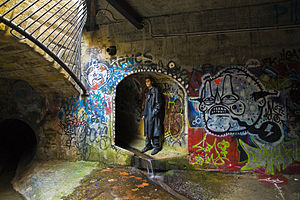
On the surface Melbourne is a lively metropolis, but you have to wonder what lurks beneath this city. When typical tourists enter the city of Melbourne, known for its culture, art and spectacular gardens, they are unaware of the fact that like most other large urban cities, there is a vast network of underground tunnels, drains and cavities, twisting and turning in all directions under the busy streets. A different world exists beneath the feet of those who walk the streets of the city and, like the tourists, most Melbournians who live on the surface on the streets are also completely oblivious to this underground drainage system and unused old spaces. What is not seen is often ignored. But this extensive network of stormwater drains and cavities capture the essence of cramped, dark and damp interiors that can be explored and discovered by anyone who dares to enter this underground world. read the rest here.


Ghost Platforms
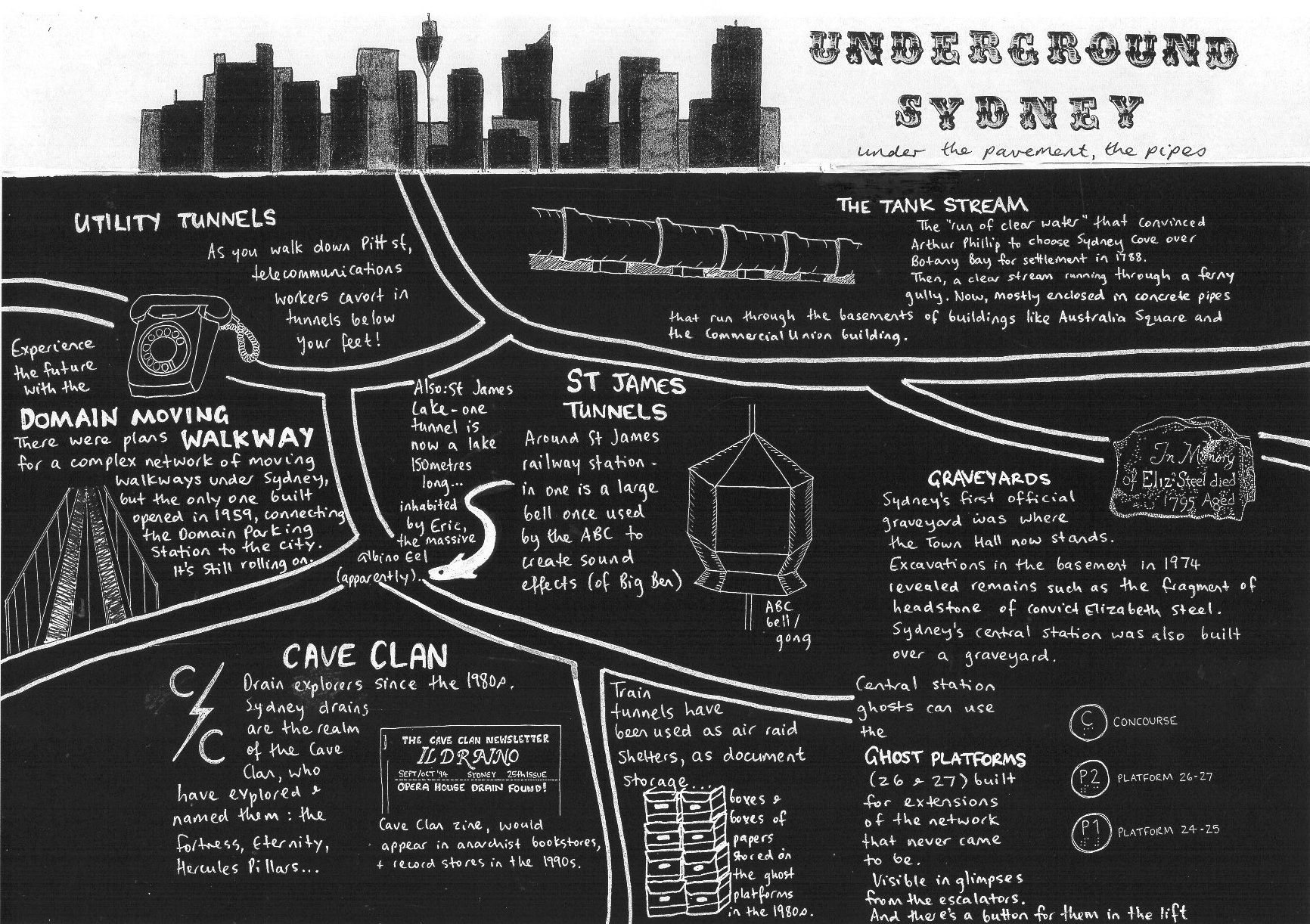
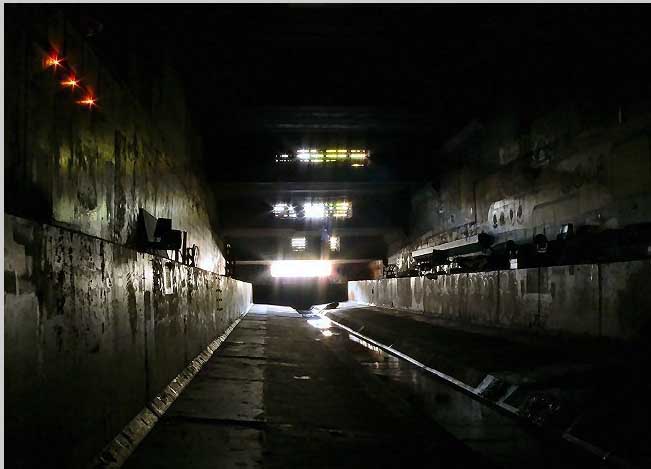
Travelling on the escalators that lead down to platforms 24 and 25 at Central station, I always look out for the ghost platforms. They are visible in glimpses through the gaps in the striped panels that enclosed the escalators, but only for a moment, as the escalators keeps moving onwards, down to the Bondi Junction line, or up to the ticket gates.

While thousands of people pass by them every day, the majority without knowledge of their existence, the ghost platforms remain still and undisturbed. What is mostly visible from the gaps in the panels are the station’s lights, which continue to shine even though the platforms are unused read the rest here.


How do I find explorable drains?

To find drains you can use a number of methods, all of which are suited to different areas.

1) Get a topological map. 
Likely drains are where there are gullies but no evidence of a river per se; deduction: it has been buried (turned into a drain tunnel) or its headwaters have been `pirated'(diverted) to another river or into a drain further upstream. Melb Clan found Gobledox this way.

2) Obtain old street directories and compare them to their newer editions. 
Generally you find that when a creek shown in an old directory is no longer shown in a new edition, chances are that it has been entunneled. Also if you see a creek going along and suddenly disappearing, then reappearing somewhere else, you know pretty well what happened to it in between. I found the entrance to a whopping drain in Brisbane by looking in the Gregory’s for wide creeks which disappeared adjacent to roads.

3) Check boundaries on cadastral maps.
Back in the good ol’ daze, postcode boundaries were often delineated by prominent geographic features, like cliffs, rivers and the like. Thus you can look in street directories or maps of who-owns-what (cadastral maps) and occasionally see non-linear, erratic-looking postcode boundaries. Odds on it is where there once was a river. This is how The Loaf was located. read the rest here.)


Into the warren (photo gallery)

Melbourne
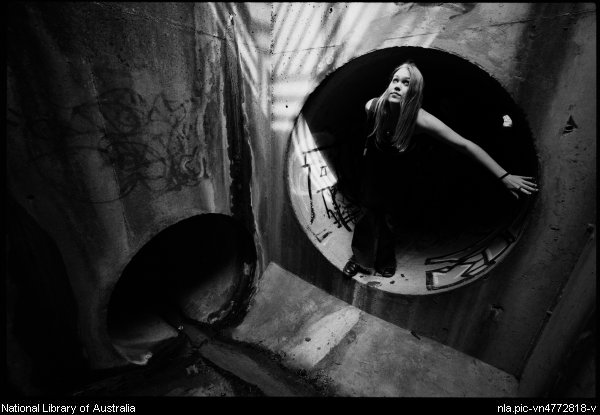
 

Hobart

 

Fremantle
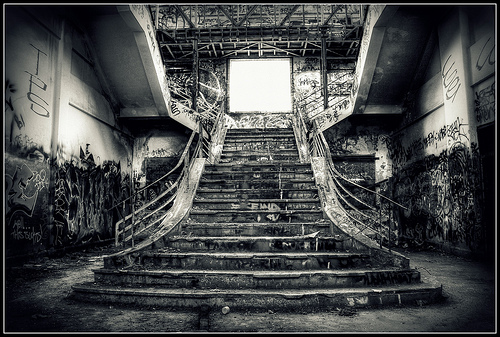
 

She Becons: Brisbane
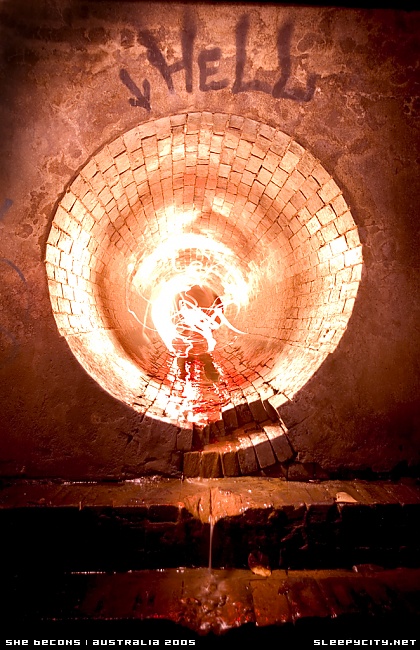
 

Sydney

 

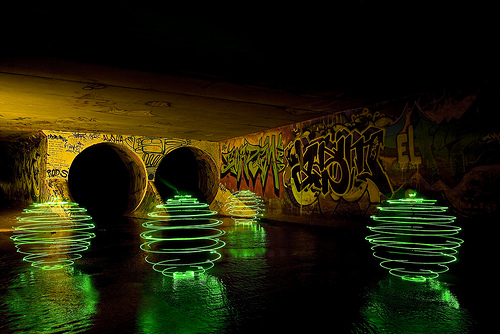
Light Painted Tunnels
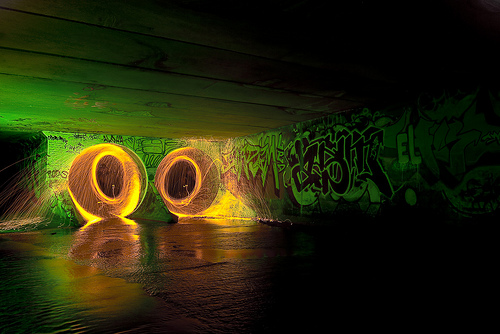
 

Around the World

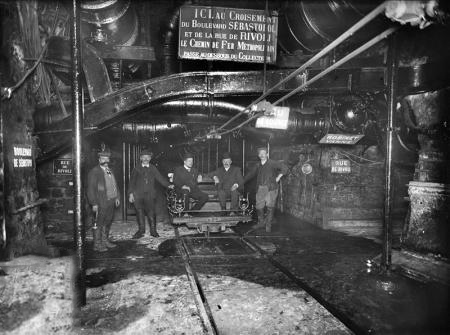
Sleepycity: demolition of paris metro
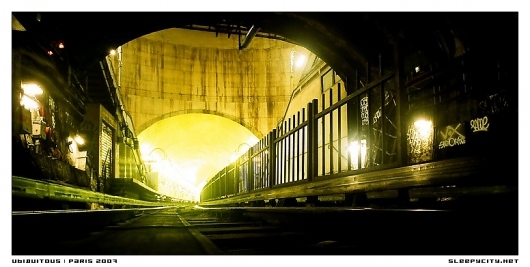
Over the next few years we were enslaved like only those who grew up in a city deprived of metro could be. Week in week our we hit the tunnels, scouring our maps and coming up in the early hours smeared from head to toe in that thick black dust which never fully washes from your clothes. I would wake the morning after with that distinctive smell still hovering in my nostrils, for imbued was it into the fabric of all my clothes, my sheets and my hair. The thick slabs of scunge under our fingernails was like a badge of honour, the black tinge in the folds between thumb and index finger which never faded a symbol of dedication. The symptoms pervaded our appearance, our speech and our dreams. To us the system was an open slate ripe with possibilities. We could only oblige by beginning to dismantle it piece by piece….


Arsenal, Champ de Mars

The stations Arsenal and Champ de Mars are the easiest to visit as they can be reached from the topside so they’re as good a place to begin as any. While situated at opposite sides of the city these two stations share a similar story. They were closed on the same day, 2nd September 1939, when the metro employees were recruited to join the war effort. Read the rest here.


Vanishing Point: Canadian exploration
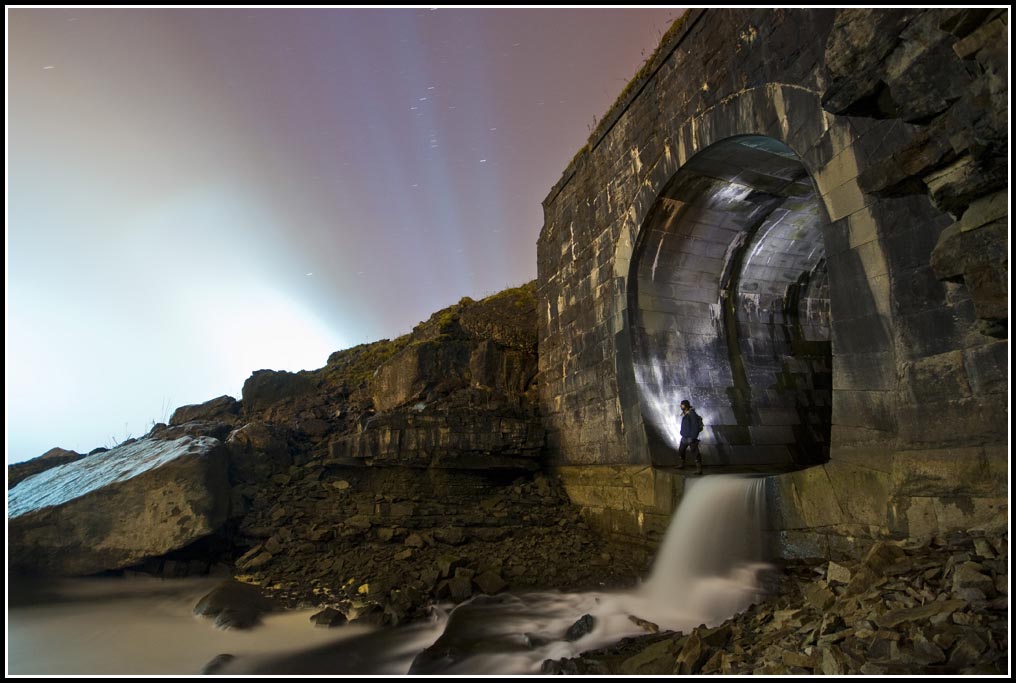
At their root, most drains are just an abstract version of the watershed that existed before the city. It’s sort of this alternate dimension that you pass into, when you step from the aboveground creek, through the inlet, into the drain – especially once you walk out of the reach of daylight.

Even sanitary sewers often follow the paths of existing or former watersheds, because the grade of the land is already ideal for water flow – fast enough, but not so fast that it erodes the pipe prematurely – and because the floodplains are often unsuitable for other uses.

BLDGBLOG: How does that affect your attitude toward this, though? Do you find yourself wishing that all these drains could be dismantled, letting the natural landscape return – or, because these sites are so interesting to explore, do you actually wish that there were more of them?

Michael Cook: It’s an awful toll that we’ve taken on the landscape – I’m not one to celebrate all this concrete. If it were conceivable to set it all right, I’d be the first one in line to support that. And the marginal progress being made in terms of environmental engineering – building storm water management alternatives to burial and to large, expensive pipes – is a great step forward; unfortunately, its success so far has been limited.

Ultimately, you just can’t change the fact that we’ve urbanized, and we continue to do so. That comes with a cost that can be managed – but it can’t be eliminated completely.

Read the rest of the interview here or visit the vanishing point website


Under city: Steve Duncan new york explorations
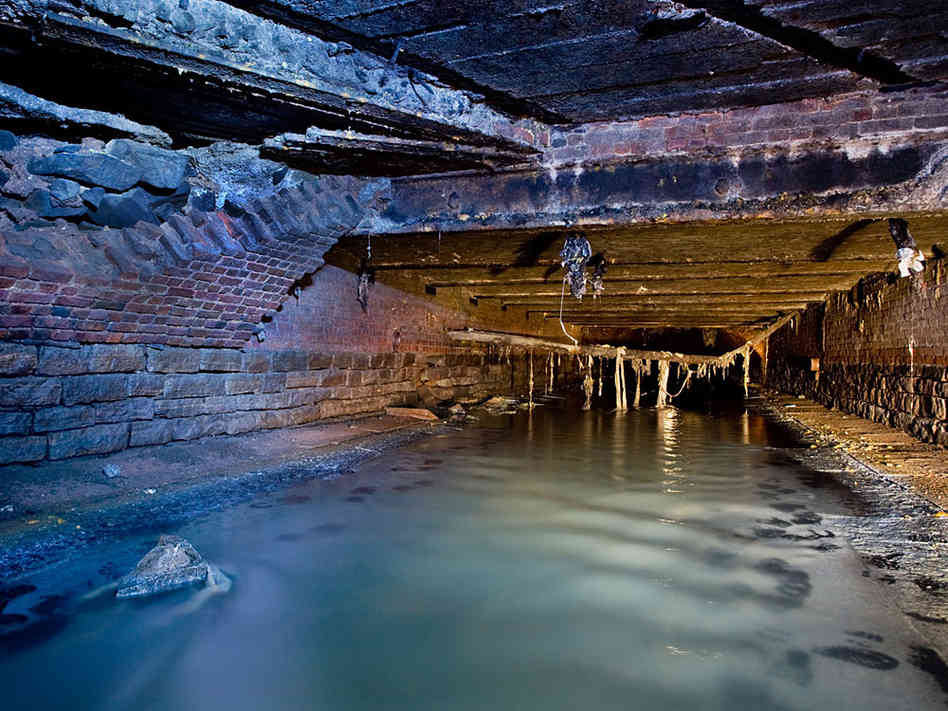
The hole I was digging was about three feet deep and halfway under the wall when I ran into a tarpaulin imbedded in the dirt. It caught at my shovel strangely, and I couldn’t tell what I’d run into in the nighttime darkness until I took out my flashlight. I knelt down next to the hole to see.
The beam of my flashlight showed the dirty blue plastic and then, as I prodded it with the shovel, I saw a half-rotten shoe sticking out of the worm-infested folds. A dead body. The idea filled my mind with a sudden wave of revulsion and horror. For a moment I couldn’t move. Then I reached out and slowly pulled on a corner of the tarp. The shoe tumbled out, attached to nothing, and behind it there was only dirt.
I let out a breath… read more here and check out some photos here.


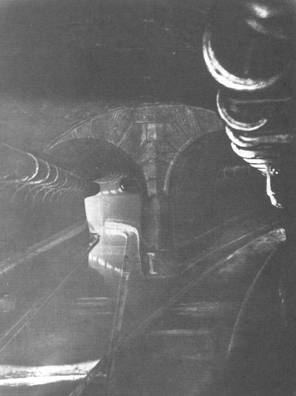
The Post Office Railway
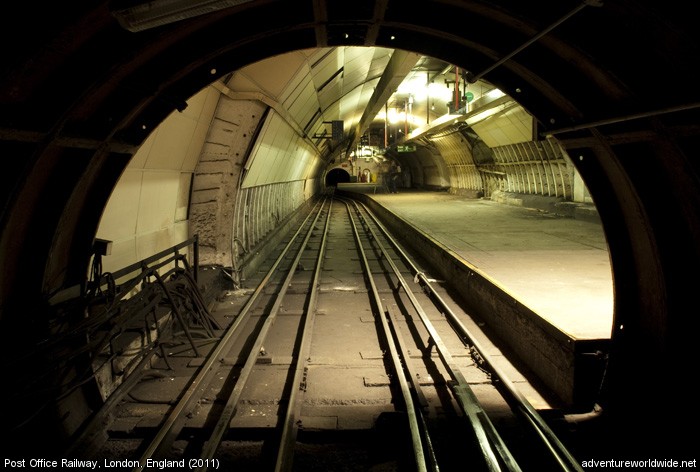
I had the same experience with the exploration of sewers. Back in 2005 I would crawl on my hands and knees squeezing my way up a 3ft, never-ending concrete pipes only to find a dead end or smaller tunnel, but I enjoyed it, going back for more week after week. Yet after discovering some of the Victorian lost rivers and storm drains, this once enjoyable activity instantly lost its appeal, in fact it became frustrating. I could do this now anyway because I’m fatter then I was six years ago and no longer fit in said 3ft pipes, but now I don’t even consider them an option or viable route. I guess I became a ”Sewer Snob”, if there is such a term, spoilt by bigger and better things. In fact it’s been the same across the entire board of exploration. Asylums, mills, bunkers, forts, all things I once enjoyed with equal passion, now nothing more then a space to kill some time. But then there was always Mail Rail, lurking in the background. Read the rest here.


Felix Nadar and the Paris Sewers

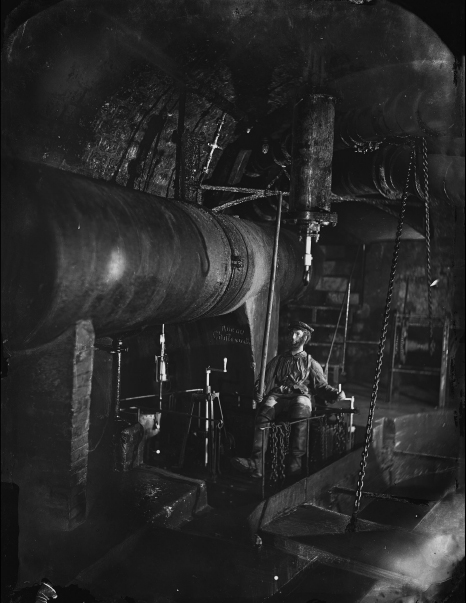
It’s not often that our explorations are more connected to people than places. However, on a recent trip into the Paris sewer system, we were chasing the ghost of the Parisian eccentric and urban photographer Félix Nadar. For urban explorers in London and Paris, the period between 1850 and 1870, when Nadar was doing his work, is a crucial one. During that time, both of the drain networks were built to the rough configuration in which they remain. This period was pwned by urban planners and engineers like Bazalgette and Haussmann; it was a time of radical urban reconfiguration. Nadar was fascinated by the changes and spent a great deal of time photographing the Paris catacombs and sewers (and taking aerial and erotic photos, but that’s another story), leading many urban explorers to think of Nadar, and his contemporary John Hollingshead in London, as the first drainers. The name Félix Nadar was even a pseudonym – clearly Nadar was part of our crew! Read more on Felix Nadar and the history of paris sewers here and here.

And some of his photos:
 

A short world gallery

Canada
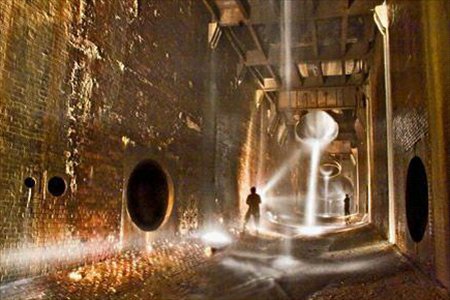
 

France
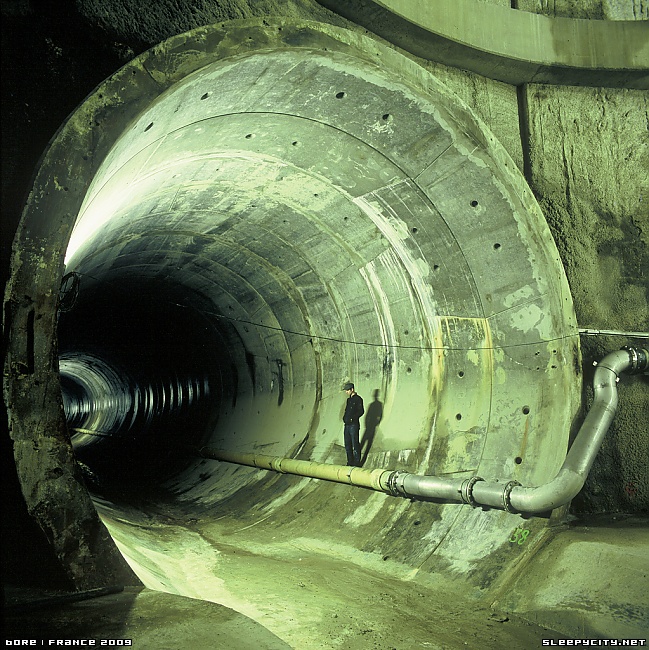
Bore


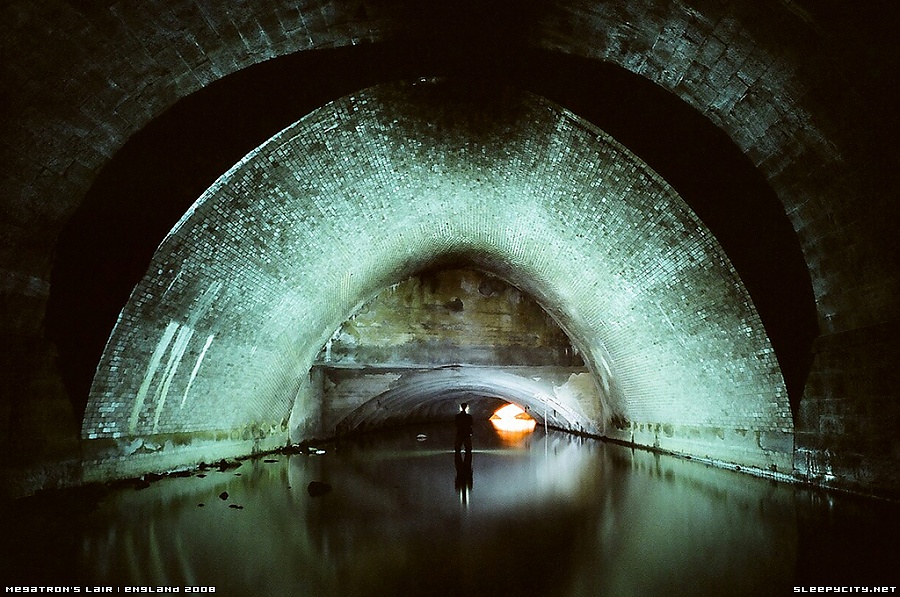
England
 

Balkans

 

Videos


*

p.s. RIP David Berman. ** Bill, Hi, Bill. Yeah, death death. Now David Berman. Were you ever into Silver Jews? Zac and I checked out that same big gallery complex when we were there. Must not have been much excitement art-wise since I only remember the building. David Zwirner is opening a Paris gallery next month. Another incursion from the giants. But at least he’s opening with a Pettibon show. ** Quinn R, Hi, Quinn! Really good to see you! Coincidentally, I just read an older piece of yours the other day on Fanzine, ‘Drop Out of Life’. Really liked it! My summer was kind of weird. Kevin’s death and then the death of another close friend around the same time under almost the same circumstances. Otherwise, it was okay, productive enough. Jeez, your summer sounds weird like mine. Assuming the ER got you right again pretty quickly, that’s a scary moment and a lucky break (non-break?). I’m glad you’re feeling better, and dating is obviously a plus thing to be doing. I have read ‘The Babysitter at Rest’, yes. I liked it very much. The press that published the book, Dorothy, is probably my favorite extant press right now. Just one terrific book after another. LA! I love the place. It’s really hard to know. Some people fall in love with it, and some just can’t deal with it at all. Have you visited there? It’s super particular. As someone who doesn’t need or want to socialise a ton, it was/is fine for me because you get a lot of work done due to how home-based life can be there. Not that it’s not possible to heavily social too. Without a car, it is harder to live there in some sense. Although I know a lot of people who live there with a car. The bus system functions but is not amazing. Uber would likely be a very go-to transportation method if you don’t drive. As a writer, it’s great for the reasons I said. It’s easy to isolate and dig into your writing and avoid distraction. I was and am always quite productive there. And there’s a nice writing scene there with some cool venues, meet-up places, etc. I’m happy to tell you more if you want to hear more. Are you working on anything at the moment, writing- or art-wise or anything? Hope to see you again soon. ** David Ehrenstein, Got the post restored. It’ll be up in a couple of weeks. ** Steve Erickson, Yeah I read that about the Morris doc. Good, about fucking time. I … don’t think I’ve done a sleep paralysis post, no. You want to make one? ** _Black_Acrylic, I would assume the classic fan letter is pretty much a dead duck sadly. But maybe not. Maybe it’s just become a niche thing like cassettes or something. ** Misanthrope, I did used to get some pretty interesting and even controversial fan letters back in the analogue days. I like your attitude and drive re: your new novel. I don’t think you even need external pressure. I just restarted my novel at long last the other day. You’ll definitely beat me to the finish line though. ** Right. I’ve restored this old and really fantastic, I think, post by Paradigm who used to be a omnipresent d.l. back in the day. Heads up, Paradigm, if you’re looking in. Enjoy the post, everyone. See you tomorrow.


Gig #138: Prog Rock Cull (1968 – 1975): Soft Machine, Van Der Graff Generator, The Jimi Hendrix Experience, Touch, Popera Cosmic, The Mothers of Invention, Family, Quatermass, Gracious!, Pink Floyd, Principal Edwards Magic Theatre, Amon Düül II, Matching Mole, Premiata Forneria Marconi, King Crimson, Fantasy, Magma, Todd Rundgren, Gentle Giant, Henry Cow, Magical Power Mako

* curated with the advice of composer/musician/sound designer Lee Ray


Soft Machine
Van Der Graff Generator
The Jimi Hendrix Experience
Touch
Popera Cosmic
The Mothers of Invention
Family
Quatermass
Gracious!
Pink Floyd
Principal Edwards Magic Theatre
Amon Düül II
Matching Mole
Premiata Forneria Marconi
King Crimson
Fantasy
Magma
Todd Rundgren
Gentle Giant
Henry Cow
Magical Power Mako


____________
Soft Machine Why Are We Sleeping? (1968)
‘”Why Are We Sleeping” is my favorite 3 and a half minutes from the Soft Machine LP, as Ayers distorted bass (and baritone vocals) fights playfully for space with Mike Ratledge’s organ swells, all the while drummer Robert Wyatt swings like a mofo (there’s no guitar on this track), capped off by those haunting female harmonies. Forty five years later and the song is STILL relevant, perhaps even more so- so much happens all around us but so many folks walk through life filled with apathy.’ — collaged


____________
Van Der Graaf Generator Necromancer (1968)
‘When punk hit, only a few ‘progressive’ bands were deemed acceptable; King Crimson, perhaps, but most definitely Van Der Graaf Generator. Formed by the crazed, roaring ‘Hendrix of the voice’, Peter Hammill, in late-’60s Manchester, they were more adventurous, difficult and kaleidosopic than any of their peers; small wonder, then, that John Lydon, Mark E Smith and Julian Cope are fans. “From the outside we must have looked completely mad,” says Hammill today, “because there weren’t then that many bands with saxes or organs or bass pedals, let alone ones without any guitar.”’ — Uncut


____________
The Jimi Hendrix Experience 1983 (A Merman I Should Turn To Be) (1968)
‘Some of his most radio-friendly hits appear on Electric Ladyland (“All Along the Watchtower,” “Voodoo Chile (Slight Return),” “Crosstown Traffic”). But buried in the middle, on side 3, is the album’s jewel and centerpiece, “1983…(A Merman I Should Turn To Be),” a proto-prog epic on the art of walking away from the nonsense humanity inflicts upon itself, “not to die but to be reborn, away from the land so battered and torn.” The music is a wild, left-field, Bolero-paced march where Hendrix overlaps his guitars and basses like a string section, affecting oceanic waves and surf, with sympathetic playing by steadfast Experience drummer Mitch Mitchell and flautist Chris Wood (on loan from Traffic).’ — Progarchy


____________
Touch Down At Circe’s Place (1969)
‘An American outfit, Touch were led by keyboardist Don Gallucci, who was inspired by The Beatles’ Sgt. Pepper’s Lonely Hearts Club Band. Complete with a prescient Roger Dean-style landscape on the cover, their only record is nothing less than the missing link between psychedelia and prog rock, with discursive arrangements, expansive solos and adventurous time signatures. Hendrix was said to be a fan. Recorded in 1968, by the time it was released in 1969, the band had already split and any potential recognition was swamped by the deluge of progressive rock proper that year, although the fact that they formed in the mid-60s suggests they may even pre-date King Crimson in terms of progressive musical ideas.’ — Louder Sound


____________
Popera Cosmic Etreinte Métronomique (1969)
‘For the few people lucky enough to have heard the entire album in the five decades since its release, the mythical Popera Cosmic LP is now considered to be France’s first dedicated progressive rock album and the shrouded blueprint for the hugely influential Gallic concept album phenomenon that followed – including Serge Gainsbourg’s Histoire De Melody Nelson and Gérard Manset’s La Mort D’Orion.’ — Keepers


____________
The Mothers of Invention The Uncle Meat Variations (1969)
‘By the time the Mothers of Invention’s fifth album Uncle Meat arrived on April 21, 1969, it was evident that Frank Zappa was a creative, prolific and adventurous force. Uncle Meat was the second double album of the Mothers’ brief recording career. Its songs were originally slated for integration into a multimedia project involving a movie by that same name (eventually shelved before evolving into 200 Motels) and a compilation record tentatively titled No Commercial Potential. As a result, Zappa’s latest mad-scientist invention took the increasingly put-upon, ever-recycling Mothers across broader musical terrain than most artists cover in entire careers. They visited disparate realms like jazz, blues, classical, musique concrete and rock. But unlike previous efforts, these directions were combined almost indiscriminately into Uncle Meat.’ — UCR


_____________
Family Strange Band (1970)
‘Family is an English rock band, active from late 1966 to October 1973, and again since 2013 for a series of live shows. Their style has been characterised as progressive rock, as their sound often explored other genres, incorporating elements of styles such as folk, psychedelia, acid rock, jazz fusion, and rock and roll. The band achieved recognition in the United Kingdom through their albums, club and concert tours, and appearances at festivals. Family were particularly known for their live performances; one reviewer describing the band as “one of the wildest, most innovative groups of the underground rock scene”, noting that they produced “some of the rawest, most intense performances on stage in rock history” and “that the Jimi Hendrix Experience were afraid to follow them at festivals”.’ — collaged


____________
Quatermass Laughin’ Tackle (1970)
‘Power trio of keyboard, bass and drums. Straddling the line between hard rock and prog, there’s a little something here to appease fans of both styles. Keyboards apparently just piano and organ, with the latter being especially hot-wired to make the keyboardist’s style resemble FRUMPY keyboardist Jean-Jacques KRAVETZ, or perhaps Dave STEWART at his most maniacal (see “Dreams Wide Awake” for an example). He can lash out at his organ with a recklessness that puts EMERSON to shame, listen to the solo on “Post War, Saturday Echo” if you don’t believe me. Bass player John GUSTAFSON (pre-ROXY MUSIC) sings in a uncontrolled, manic voice that can often sound gut-wrenching. A couple of tracks (the ballad “Good Lord Knows” and the lengthy jam-orientated “Laughin’ Tackle” include massed strings.’ — Prog Archives


_____________
Gracious! Super Nova (1970)
‘Gracious began as a schoolboy lark in 1964, when guitarist Alan Cowderoy and vocalist/drummer Paul Davis banded together to cover pop songs at school concerts. To arouse maximum ire at their Catholic school, the adopted the band name “Satan’s Disciples.” Renamed Gracious (or Gracious!), the band toured Germany in 1968. After playing on a double bill with the newly formed King Crimson, an awestruck Kitcat immediately adopted the Mellotron as a lead instrument for the band. Kitcat and Davis were the band’s composers, and Kitcat in particular lent the group its distinctive sound. He played the Mellotron as a lead instrument, much like a blues organ — that is, with percussive single notes, rather than the grandiose chords favored by bands that used it as a faux-orchestral backdrop.’ — Plain and Fancy


_____________
Pink Floyd One Of These Days (1971)
‘”When we started on Meddle, we went into it with a very different working basis to any previous album in so much that we went into the studios with nothing prepared, and did a month of – well, we just called them nothings,” Nick Mason told Ted Alvy of KPPC-FM in 1971. “I mean, they were ideas that were put down extremely roughly. They might have been just a few chords, or they might have been a rhythm idea, or something else – and this was just put down, and then we took a month and examined what we got.” They got there together, swapping musical ideas and – in the case of the album-opening “One of These Days” – even swapping places. David Gilmour took up the bass as the song opens, before being joined by Waters. (You’ll notice the second double-tracked instrument has a flatter sound. “We didn’t have a spare set of strings for the spare bass guitar, so the second bass is very dull sounding,” Gilmour told Guitar World in 1993. “We sent a roadie out to buy some strings, but he wandered off to see his girlfriend instead.”) And Mason takes a rare vocal turn on “One of These Days.”‘ — UCR


_____________
Principal Edwards Magic Theatre McAlpine Versus The Asmoto (1971)
‘John Peel saw Principal Edwards Magic Theatre play their debut gig at Portsmouth Guildhall and was so taken by their strongly narrative song suites, accompanied by choreographed dance and mime, that he signed the 14-person collective (including sound engineers and lighting designers) to his nascent Dandelion label, on which Soundtrack was one of the first releases in 1969. The follow-up was The Asmoto Running Band, produced by Nick Mason in 1971, and the band left Dandelion shortly before the label went under. But even without the benefit of the stage show, Soundtrack more than holds its own as a musical statement from this most singular of progressive rock groups.’ –– Louder Sound


_____________
Amon Düül II Between The Eyes (1972)
‘Although it was the French who first took to Amon Düül 2, the British were not far behind and in 1972, Amon Düül came to the UK. A gig they played in Croydon, featuring material from their first two albums, was used as the basis for a live album. Live In London was released at a budget price as a means of introducing the public to the group, and, while well-received didn’t quite do enough to shake the stoner, complacent Britprog assumption that Anglo-American rock was where it was all at. Only with the first generation of punk would that happen. Meanwhile, however, John Weinzierl was gratified that a longhair like himself could walk the streets without raising the suspicion of the authorities that he was a terrorist. “When we came to England we couldn’t believe it. We were allowed in hotels. You couldn’t stay in hotels in Germany. It was ‘hello, love!’ and ‘Come in, love!’ We thought, what’s going on here?” They would support Roxy Music while in London, one of the first UK groups whose sound was affected by the German influence.’ — The Quietus


_____________
Matching Mole Marchides (1972)
‘Matching Mole was the first band formed by Robert Wyatt after the seminal Soft Machine experience. An incredibly tight unit featuring Phil Miller (Hatfield and the North) on guitar, Dave McRae (Nucleus) on keyboards, Bill McCormick (Quiet Sun, 801) on bass and Wyatt himself on drums and vocals. Released in 1971 Little Red Record was Mole’s second album. It was produced by Robert Fripp and it features a cameo appearance by Brian Eno. Compared to their previous work, Red Record goes way far beyond the limits of Rock and Jazz. Even if mostly instrumental the album includes “Gloria Gloom” a magnificent song and one of the very first Wyatt’s critical reflections on Music and Socialism.’ — Rough Trade


_____________
Premiata Forneria Marconi The Mountain (1972)
‘Italy’s leading progressive rock outfit of the early ’70s, PFM would have remained a purely Italian phenomenon had they not been signed to Emerson, Lake & Palmer’s Manticore label. Their sound was more distinctly rooted in the pre-classical era than that of their Germanic counterparts. In addition to electric keyboards (synthesizers, etc.), they also relied on violin and flute (recorder, actually) as major components of their music. Their name, by the way, was short for Premiata Forneria Marconi, the name of the bakery that originally sponsored them.’ — Bruce Eder


_____________
King Crimson Larks’ Tongues in Aspic (1973)
‘Larks’ Tongues in Aspic is a key album in the band’s evolution, because it boldly steps away from a formula that was working well and took a risk by incorporating free jazz improvisations, Eastern European classical influence, and proto-metal harshness. Fripp asked Sinfield (lyrics, lighting, and synthesizers) to leave after Islands, who conceded as Fripp’s harsh and dramatic approach was not congruent with Sinfield’s brand of textural jazz-folk. The rest of the band took Sinfield’s side and left Fripp to pull an all-new lineup together. The effort would prove fateful, and Fripp gathered a group of musicians who were uniquely capable of delivering on the mysterious and experimental inclinations he had for the project.’ — Jessie Browne


_____________
Fantasy Circus (1973)
‘Fantasy’s “Paint a Picture” is an example of prototypical progressive rock that appears to be as influenced by The Moody Blues as by King Crimson. In this way, Fantasy compares to Spring, Gracious and Cressida. The band’s original guitarist had died accidentally before this was made and subsequently the lyrics reflect issues of loss, madness and an overall questioning of existence.’ — Fantasy Blog


_____________
Magma Mëkanïk Dëstruktïẁ Kömmandöh (1973)
‘Mekanik Destruktiw Kommandoh introduces an unrealized song cycle of epic proportions titled “Theusz Hamtaahk” (trans: Time of Hatred) which would have explained the eons between initial contact and universal enlightenment over the course of nine albums. Mekanik Destruktiw Kommandoh is the final movement of the “Theusz Hamtaahk” and depicts the humanities’ liberation from the mortal coil through commune with the supreme entity Kreuhn Kohrman. After the first four albums the story of Kobaïa becomes nebulous, veering away from the fictitious timeline and into conceptual parables that vary in theme. Of course, none of this can be garnered from the lyrics, which explode from the chorus in the Wagnerian violence of Kobaïan. One must pick through the French liner notes for clues as to the album’s explication, but clearly the intent of Magma front man Christian Vander was to avoid concrete artifice and nourish the cosmic mysteries of the ’70s.’ — Tiny Mix Tapes


_______________
Todd Rundgren In and Out the Chakras We Go (1974)
‘Having aborted the ill-fated Utopia Mark I at the beginning of May 1973, Todd Rundgren had reverted to his increasingly lucrative alternative career as a record producer. By July, he was back in New York City, continuing his research with psychedelics and imagining his next solo album. Working well into August, Rundgren padded around Secret Sound, laying down the initial tracks that would become the Todd album. While his earlier psychedelic prog explorations had taken him all over the map on A Wizard, A True Star (1973), he had by now developed something approaching a personal cosmology. For Rundgren, hallucinogenics were not about mere escapism; he needed his trips to be taking him somewhere.’ — Paul Myers


_______________
Gentle Giant So Sincere (1974)
‘Gentle Giant was a progressive rock band that was active for about a decade (1970 to 1980). The band’s signature was complex and sophisticated musical compositions that blended elements of rock, folk, soul, jazz and classical music. Somewhat closer in spirit to Yes and King Crimson than to Emerson, Lake & Palmer or the Nice, their unique sound melded hard rock and classical music, with an almost medieval approach to singing. The band was not commercially successful and achieved most of their success through a cult following by their fans.’ — allmusic


_______________
Henry Cow Ruins (1974)
‘British progressive pioneers Henry Cow (who actually didn’t take their name from early Twentieth-Century American composer Henry Cowell) gave birth to a whole school of bands whose uncompromisingly anti-commercial musical stance had less to do with punk’s DIY ethic than with Theodore Adorno’s argument that radical ideas require radical forms of expression. Like Robert Wyatt, the members of Henry Cow were openly communist, but they partook of a somewhat academic, insular communism, whereby mainstream bourgeois culture – perceived as an essential foundation for unfair economic practices – comes under attack despite the potential such a strategy has for alienating those in the lower and middle classes who enjoy this same culture being rejected. As so often occurs with self-conscious experimentalists, Henry Cow’s version of radical music-making placed them in the vanguard not of the culture at large but of a vibrant artistic sub-culture.’ — Matthew Martens


______________
Magical Power Mako Silk Road (1975)
‘From what little I can gather from my own research, Magical Power Mako is a trio with a reputation as something like the Yo-Yo Ma of experimental Japanese rock, and this album is a legendary touchstone of the scene, released during the ’70s. The sound starts from a template of basic Japanese folk, and then proceeds to wildly pilfer from every Asian influence one can imagine — there are Indian sitars, Turkish mandolins, and a distinctly Silk Road-ish sound (showcased most prominently on the song “Silk Road”). Add danceable rock rhythms, layer on a heavy dose of swirling psychedelic effects, and Super Record produces a lush, dense, relentlessly creative sound.’ — Pop Matters


*

p.s. RIP D.A. Pennebaker. ** David Ehrenstein, Hi. Everyone, Mr. Ehrenstein announces to anyone interested in buying stuff from his ongoing ‘yard’ sale that, and I quote, ‘I have some Godard on sale including “Sauve Qui Pet (la vie)”. ** Misanthrope, That isn’t surprising but I don’t know if it’s sad. Nothing’s assigned, you know? Sounds like you had a nice, chill weekend in mind. Hope it followed suit. I always think things are going to be all right. And so far, one way or another, that’s always been true. Not that I don’t stress heavily that I’m wrong, of course. Awfully good news that your cloud has dissipated. ** NLK, Hey, man, good to see you! Yeah, he’s beyond. You know, my favorite of his is actually the 3D film ‘Goodbye to Language’. When I saw that it just blew my head off and made a ton of new ideas sprout up in a way that hadn’t happened with me re: a film in a very long time. Thanks a lot for sharing the excitement. Me too. ** Steve Erickson, Agree totally with you re: Godard. The Quietus! Fantastic! That’s a site I look at all the time. Wow, cool, hoping that happens easily. Let me/us know. Hm. Everyone, If the person who mentioned here a while back that they were writing a novel set in late ’70s New York sees this, go back to yesterday’s comments and check Steve Erickson’s slot. I wish I’d thought of Art Zoyd when I was making the gig today. ** Bill, Hi. ‘Lear’s’ a wild one. I can’t remember if I made it all the way through or not. Wow, that was eventful. Very cool. How did the gig and talk go? Lucky them. Yeah, are the protests hugely affecting your stay? From the news, it seems like they must be, but then based on the international news coverage of the Yellow Vest protests, outsiders might have thought I was living in a total war zone rather than a relatively normal seeming Paris with a hampered metro system. ** _Black_Acrylic, I also really hope on your behalf that this coming season is the dream one. ** Jeff J, Hi, Jeff. Thanks a bunch. Fave 80s/90s Godard? Hm, ‘Passion’, ‘Hail Mary’, ‘Germany Year 90 Nine Zero’, and, of course, ‘Histoire(s) du cinéma’ off the top of my head. I know of ‘Temple of Mirrors’, but I have never seen it, never met anyone who’s read or owns it, and even Gisele, who’s a giant R-G collector, says she’s never laid eyes on it. Curious, no? It’s so often the script that’s the fatal flaw. The crappiness of scripts in even otherwise really interesting films is a total bee in my bonnet. Hm, I’ll try to check out ‘The Mountain’ or taste it at least. Thanks, buddy. ** Corey Heiferman, Hi. I remember when I first started writing seriously, a teacher said not to ever compare whatever I did to Shakespeare because she thought that kind of thinking killed more aspiring writers than any other factor. Kind of the same with Godard. If I let myself think too much about Godard’s insane genius, it would be very hard to make films with the necessary ambition and hope. So, yeah. Prototype Press does look interesting. I know of it. And they do publish some quite fine writers in my opinion: Anselm Berrigan, Crispin Best, Gabby Bess, Anne Carson, Don Lee Choi, Guyotat, Rosemary Waldrop, … I could go on and on. Good company. Definitely seems very worth approaching. ** Okay. I decided to go back and comb through prog and proto-prog, a genre I used to dig when I quite young but haven’t had much of any use for since, and see what I thought was interesting and might stand up at this point. All with the advice of my friend Lee Ray. And that up there is what landed here. See you tomorrow.

« Older posts Newer posts »

© 2026 DC's

Theme by Anders Norén — Up ↑