—-
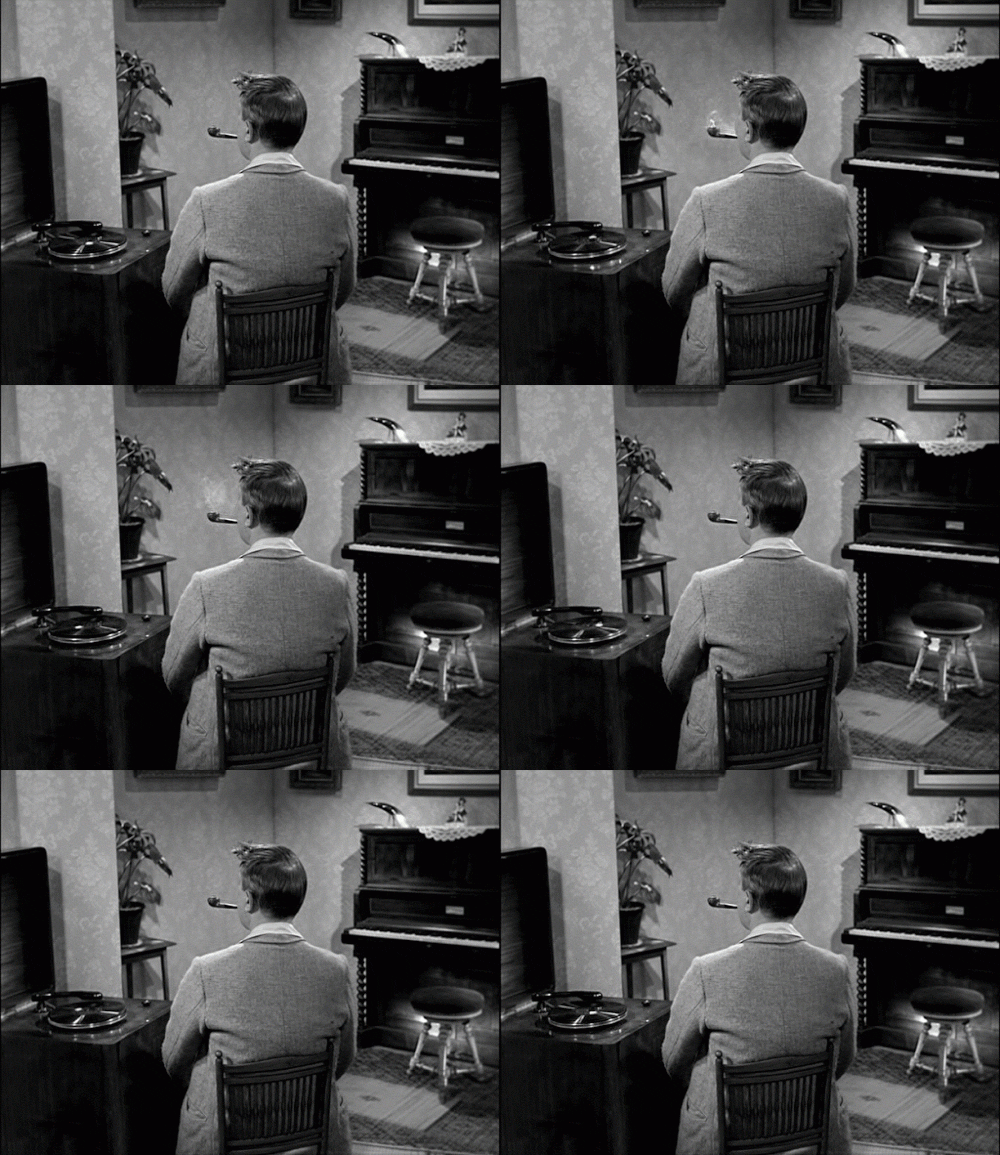
‘My first encounter with Jacques Tati’s films, like my first encounter with Chris Marker’s, happened relatively recently, and like with that other great French filmmaker, the shock and joyful surprise of the discovery was so strong as to make me wonder how it could have been that I’d remained ignorant of him for so long. I’ve had similar, wonderful discoveries in the past, the recounting of which I’m sure would be far too tedious to warrant a digression, but if I could have just one of those shocks per year – that is, if I could look forward to an amazing treat like Playtime (1967) (or, let’s say, something just a fraction as brilliant) as an unscheduled, annual event – then I could tell myself, as I lay on my deathbed at the ripe old age of 80 or 90, “I have known richness.”
‘This sounds like an exaggeration, even as I read it again. Roll your eyes if you must, but I don’t think it’s an exaggeration to say that the hope I’m talking about, not simply the surprise part, in and of itself, but that nameless thing that made my first viewing of Playtime, Parade (1974) and Les Vacances de M. Hulot (1953), so special, that “movie magic” that we hear so much about, without quite knowing what it means, is what keeps me going to the movies. To go any further would be to state the obvious for those readers who already know how I feel, and what I’m talking about, and for those who don’t, I doubt that I have enough skill to provide an adequate explanation.
‘In most cases – in fact, all but one – the real joy of seeing Tati’s films is still unknown to me. This is because, out of the six features and three short films he made between 1932 and 1974, I’ve only seen one of them in what could even loosely be called its proper format: Parade, which was originally broadcast for Swedish television. It is presently available on video in three forms: the Criterion Collection laserdisc, a number of videotape editions, and a DVD from the French company DVDY, of adequate quality. For the remaining eight – Trafic, Playtime, Mon Oncle (1958), Les Vacances de M. Hulot (known alternately as M. Hulot’s Holiday), Jour de fête (1948), L’École des facteurs (1947), Gai Dimanche (1935), and Oscar, champion de tennis (1932) (which is believed to be lost) – I confess with great remorse that my acquaintance has only been through DVD, laserdisc, and videotape. The issue of format matters most in the case of Playtime, the only movie Tati shot in 70-millimeter, because although I advocate seeing all of his (or any artist’s) work in the proper format, Playtime on video is the same as 2001: A Space Odyssey (Stanley Kubrick, 1968) or Lawrence of Arabia (David Lean, 1962) on video: the television monitor cannot possibly suffice. Details from Tati’s mise en scène are muted. The spectrum of colour becomes limited. The reduction of a 70mm. presentation to the scale of a television set is similar to reducing the performance of a symphony orchestra to a badly done audiocassette.
‘You may understandably doubt, given these facts, whether I’m the right person to provide any sort of introduction to Tati’s life and work. After having read some of the better examples of what I wish to attempt, such as two definitive essays by Jonathan Rosenbaum, “The Death of Hulot” and “Tati’s Democracy,” the David Bellos biography, Jacques Tati, as well as Michel Chion’s wonderful book, The Films of Jacques Tati, I’m inclined to doubt the idea myself. My only qualification, I suppose, is that I love his movies dearly, that I would probably love the man himself if I’d been alive during his time, and, given the relative scarcity of awareness of his work, even among self-proclaimed cinephiles, along with the misguided perception in some circles that he was a talented comedy director who simply got too big for his britches and was “destroyed” as a result of his “hubris,” I’m willing to risk making a fool of myself for the sake of getting just one more person acquainted with Tati, someone who would not have otherwise given his work more than a passing glance.
‘Another reason is the fact that, barring some miracle, one’s chances of seeing Tati on the big screen are quite slim, and they decrease as you move farther away from New York, London, Cannes, and a few other places. With the stock of the once-glorious 16mm rental market now banished to academic institutions, private collectors and dustbins, while the prints of most old movies, 35mm. or 16mm., that haven’t been well cared for or recently restored, are gathering a wealth of scars and scratches, and losing a frame at a time due to careless splicing, the state of film from a moviegoer’s perspective is pretty sorry. And although I make no claims for video being even a remotely adequate proxy for the film experience, well, let’s cut the bullshit: you take it where you can get it. And while I haven’t “properly” experienced any of his films, aside from perhaps Parade, I feel I can say that I’ve seen them under sufficient circumstances to know how wonderful they are, and what richness is in store for my future encounters.
* * *
‘Trying to find links between an artist’s work and the events of his or her life can be a tricky proposition, mostly because it makes it easy to cut corners in researching a biography and carrying out an aesthetic investigation – if you can kill both birds, as they say, with one stone of deterministic analysis, not only can you save loads of time and energy, but you can make yourself look pretty smart, too. Unfortunately for anyone studying the life of Jacques Tati, for whom the absurdity of life, the leisure of the upper and middle classes, and the wonderful eccentricity of every kind of person, remained his chief source of inspiration throughout his career as a filmmaker, such links cannot be avoided. You’d be hard-pressed to find out who his Oncle was, or exactly where Monsieur Hulot came from, but his life – especially his youth – is peppered with sly references to future achievements.
‘The earliest memory he mentioned in interviews and in his memoirs, was of a holiday by the sea (Bellos, 9) – and no other filmmaker has been able to “do” a holiday by the sea nearly as well as Tati did for Les Vacances de M. Hulot. His sister, Nathalie, would sometimes catch the little Jacques playing make-believe in front of the mirror, playing different characters based on which hat he put on (Bellos, 10-11) – you can see this same sort of thing in Parade, in which he impersonates traffic cops from around the world. His knack for improvised “gag” routines has its precedent in the time he spent playing rugby and coming up with comic performances to amuse his teammates (Bellos, 28-41). The unfailingly polite and formal Hulot, bumbling as he may be (the real Tati was never ungraceful), doesn’t reflect a social upbringing that’s too far afield from Tati’s own – in fact, Hulot, like Tati, as we learn from watching Playtime, was in the army for a stretch. There are other such examples, and it’s even more interesting to think of Tati’s films in the broader sense of where they fit into our lives, and in what ways they may draw from them, for they have a sense of the universal to them, of language-less worlds. Or, perhaps, it’s the other way around, as Michel Chion declared: “Life is full of homages to Tati. With films that are still difficult to see, with Tati dead, life must now pay tribute to his comic genius” (Chion, 17).
‘Biographical data on Tati mostly came from the man himself, from the stories he told, from his tape-recorded memoirs, and from the memories of those who’d met him and worked with him. He was born a descendent of Russian aristocracy, and there is a wonderfully extravagant tale (that may even be true, or at least partly true) of how his grandmother had infiltrated Moscow to rescue Tati’s father, then only a small boy, from the Tatischeffs who’d abducted him and previously brought about the death of Tati’s grandfather, Count Dmitri Tatischeff, who’d been serving as a Russian military attaché in Paris, where he’d met Tati’s grandmother, Rose-Anathalie Alinquant (Bellos, 3-4). That sort of international intrigue, sweeping romance, tragedy, and sheer convoluted storytelling, is by and large missing from the years Jacques Tati spent on the planet, and from his art: as magnificent and beautiful as his films are, they maintain a modest, gentlemanly tone. There is almost no drama at all in Tati’s films – even when Hulot’s brother-in-law in Mon Oncle, Monsieur Arpel (Jean-Pierre Zola), raises his voice in anger, the film’s vital signs don’t fluctuate for a moment.
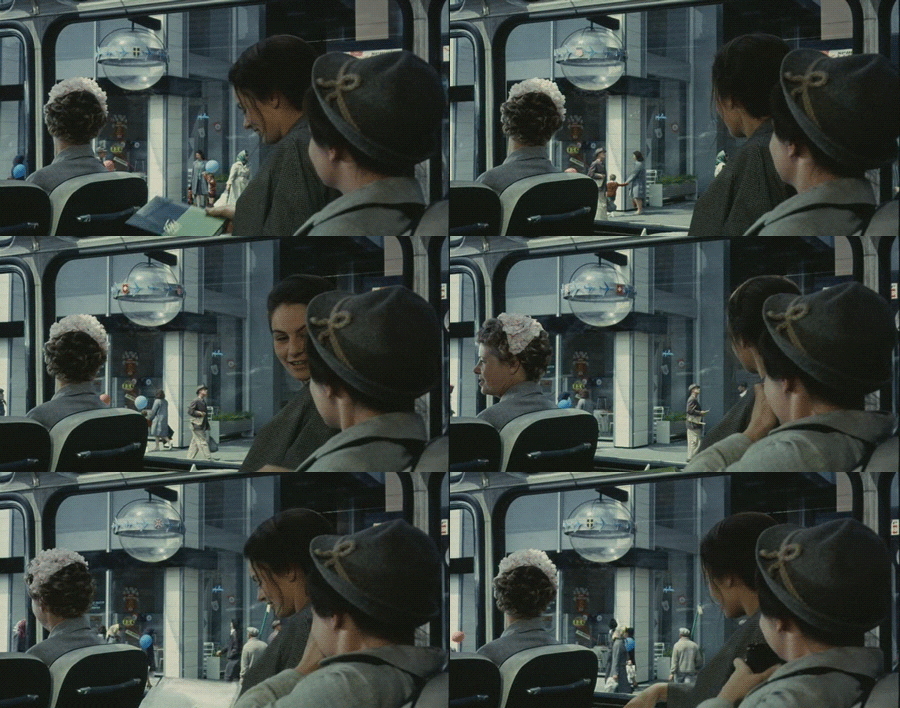
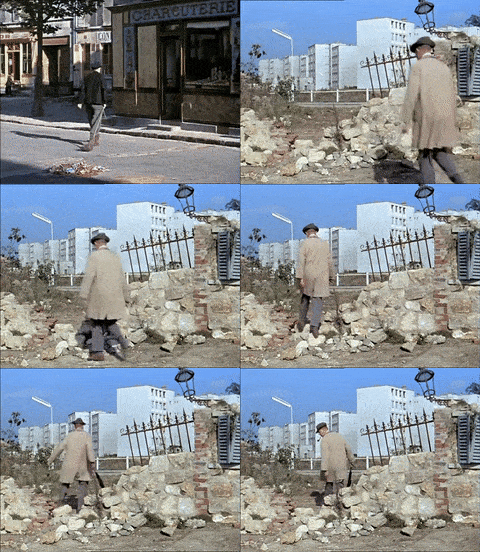
‘As an actor, Tati is remembered as one of the great screen comedians – perhaps the greatest – of the sound era. What is remarked upon less is his tendency as a director and writer to give opportunities for the rest of his often quite large casts to be equally funny, if not more so, and that Hulot, or François the postman in Jour de fête, would often withdraw for long stretches in order to give his co-comedians some space. This is a noteworthy difference when compared to the work of other actor-auteurs, such as Orson Welles, Laurence Olivier and Warren Beatty, all of whom, if they appeared on the screen at all, tended to take the role that made them the centre of attention. But not Tati: his ultimate goal, and he came the closest in achieving it with Playtime, was to make Hulot something like an extra, or a ghost. The sharing of his comedy among his players was a very literal spreading of wealth, and it informed his visual aesthetic: in his greatest films, Les Vacances de M. Hulot, Playtime and Parade, Tati packed the mise en scène with overwhelming detail, and often had two or more “bits of business” overlapping each other, or happening simultaneously (Rosenbaum, “Tati’s Democracy,” 37-40). An excellent example is from the party sequence at the Arpel residence in Mon Oncle – until we are signalled by a flying shovelful of dirt, we don’t notice that, goodness gracious, that man who was going to dig the hole, he’s standing all the way in it! There are countless moments like this in Playtime, about one every five to ten seconds, where Tati will use the deep, detailed field of his long shots to toy with our attention spans, and the ways in which we privilege one part of the screen over another, left and right, near and far, margin and centre. I’ve neglected to mention how funny his films are – for they are all comedies – because it’s possible that you may not laugh at Tati’s jokes, but still be able to appreciate his brilliant manipulation of film form, and the beauty of, say, the scene in Mon Oncle in which Hulot makes a bird sing by using his window to shine the sunlight onto it.
‘As a producer, the arc of Tati’s career during and after Playtime resembled Welles’, during and after It’s All True (shot 1942, completed 1993) and The Magnificent Ambersons (1942). Playtime, which Tati worked on for nearly the whole span of time since Mon Oncle, which netted him the Academy Award as well as the Cannes Film Festival’s Prix spécial du Jury, was extremely costly, with journalists estimating the budget as being anywhere between five and twelve million francs. The project was beset by disaster: in August of 1964, when Tativille – the miniature city that had to be built to accommodate the director’s vision – was almost finished, gusts of wind knocked down many of the structures, causing over one million in damages. The cost of the movie skyrocketed as shooting continued. Tati soon began to use his own money to keep the project afloat. He borrowed on his inheritance from his mother, and he accumulated countless debts with friends and relatives.
‘Many filmmakers have a project that Pauline Kael would describe as a “folly,” which she describes as being the case when “great movie directors go mad on the potentialities of movies. They leap over their previous work into a dimension beyond the well-crafted narrative; they make a huge visionary epic in which they alter the perceptions of people around the world” (Kael, 743). D.W. Griffith had Intolerance (1916), Abel Gance had Napoléon (1927), Erich von Stroheim had Greed (1923), and Orson Welles, perhaps, had more than a few. With a few modifications to Kael’s definition, Tati had Playtime. And despite everything, despite all the love and genius Tati put into the project, despite heavy coverage by Cahiers du cinéma, and despite his celebrity status and international renown, Playtime was a costly failure. Its release in overseas markets was delayed by as much as years. Reviewers were kind, even awed, despite some resentment in the press for his having isolated the Tativille set from reporters and for being a rather terse and thorny interviewee. But not even positive notices could get enough tickets sold to make back the cost of the project. For there was also the matter of the enormous budget, which even today is not something many critics are able to avoid referring to when they do their write-ups on Titanic (James Cameron, 1997) and The Lord of the Rings: The Fellowship of the Ring (Peter Jackson, 2001).
‘Burned out but not yet washed out, Tati made two more features before his death in 1982, Trafic and Parade, and he worked with Jonathan Rosenbaum on another, called Confusion, tentatively a satire of American television. In order to secure financing for Trafic, Tati had to agree not only to play Hulot again, but also to make him the attraction of the movie, not a supporting player, as he was in Playtime. Compromise did not run over Tati’s back in a water-like fashion, and, when seen today, Trafic remains a charming, clever, but curiously flat and drawn-out piece of sketch-style comedy; it has all of the notes of a Hulot film but none of the music. His swan song, Parade, sorely underrated by the small number of critics who’ve actually seen it, was a clean break from Hulot, and as such, feels more free than anything else Tati ever made – it’s a difficult film for people who may be expecting another lighthearted, whimsical comedy, instead of an experimental film that uses a circus performance as its foundation, but in its own way, it’s the ultimate Tati, an undiluted expression of what he loved to do and to see, and what hats to put on. It’s a hugely entertaining experience, complete with pantomime, subtle tricks of mise en scène, joyful music, a feeling of warmth and community, and a love of children.
‘As a filmmaker, Tati has recurring themes (the leisure class, modernisation, children at play, mass entertainment), and his compositions seem as mathematically calculated yet spontaneous and vibrant as Welles’. His movies beg for purveyors of theory to figure them all out for us. Nothing against the theoreticians, but given a filmography that includes titles like Playtime and Parade, and films that make constant references to having fun, anything short of complete submission to the Tati audio-visual experience carries the risk of revealing oneself to be one of the square, too-serious types that Tati constantly teased: the angry young Socialist in Les Vacances, the ultra-precise American in Playtime, and nearly everybody except Hulot and his little nephew in Mon Oncle.’ — Jaime N. Christley
____
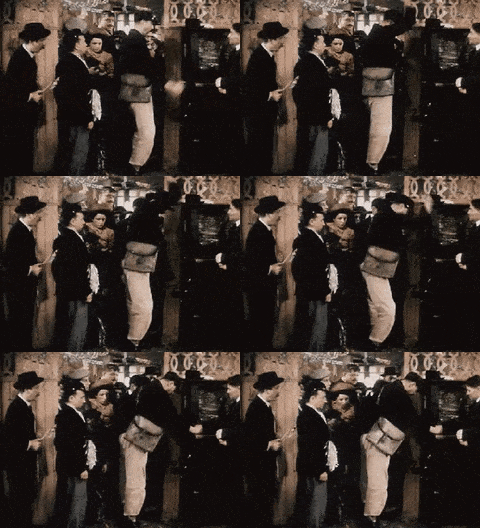
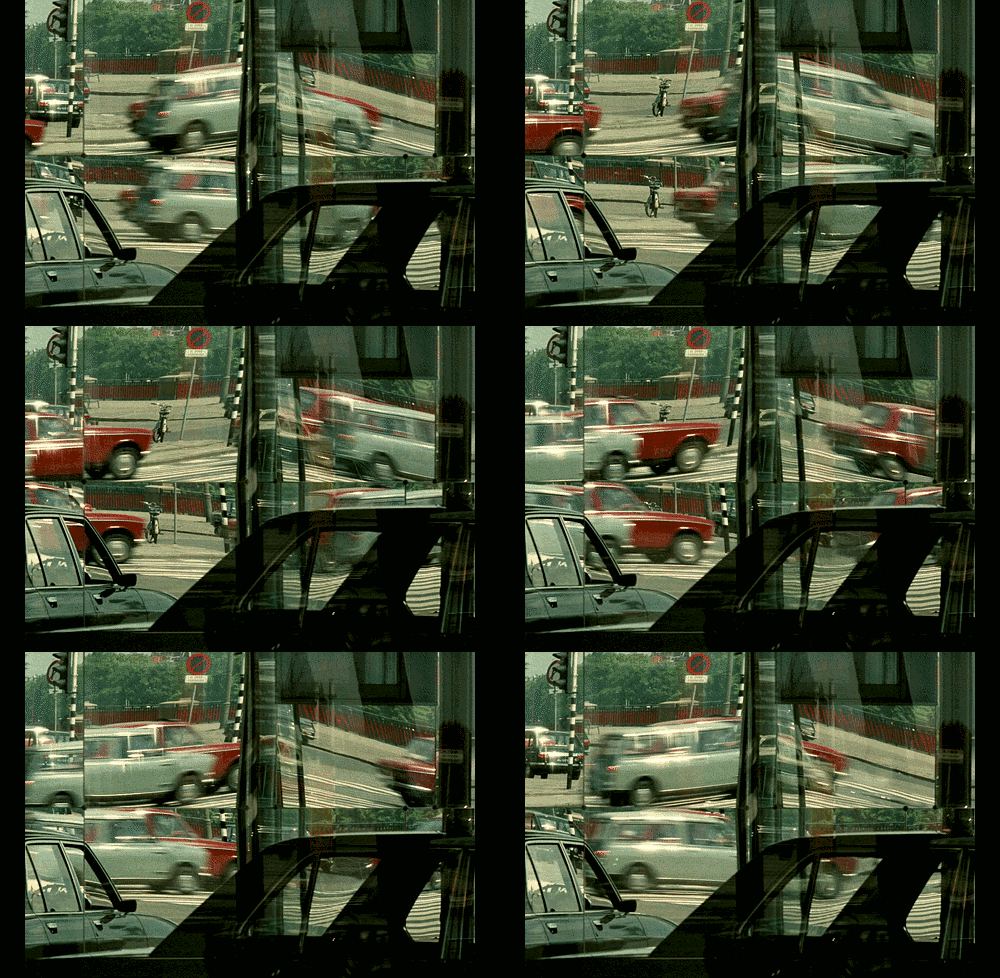
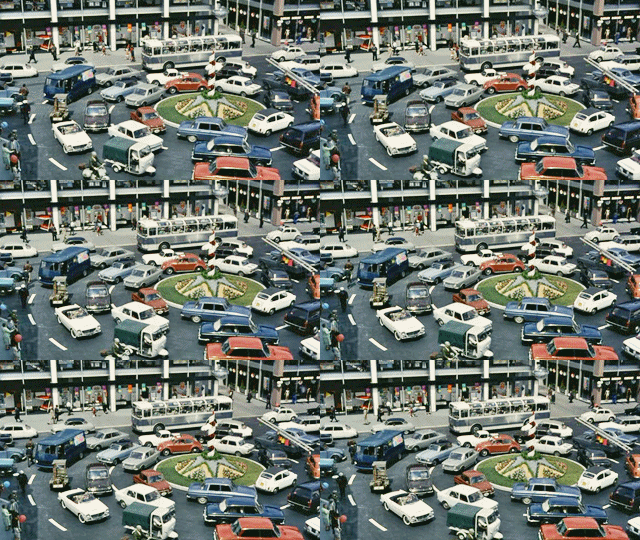
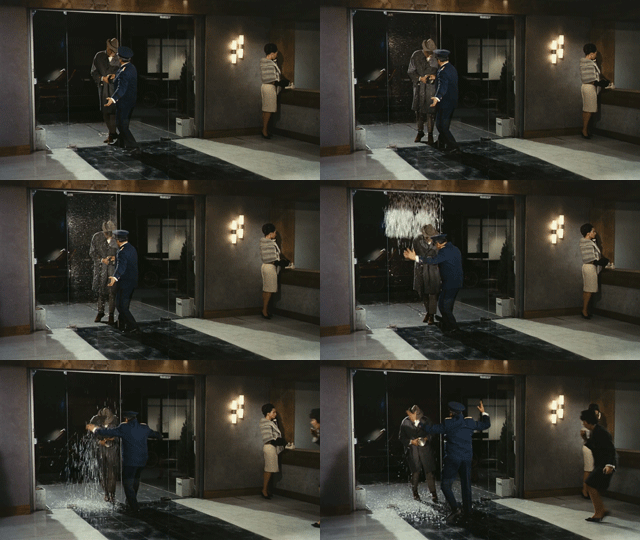
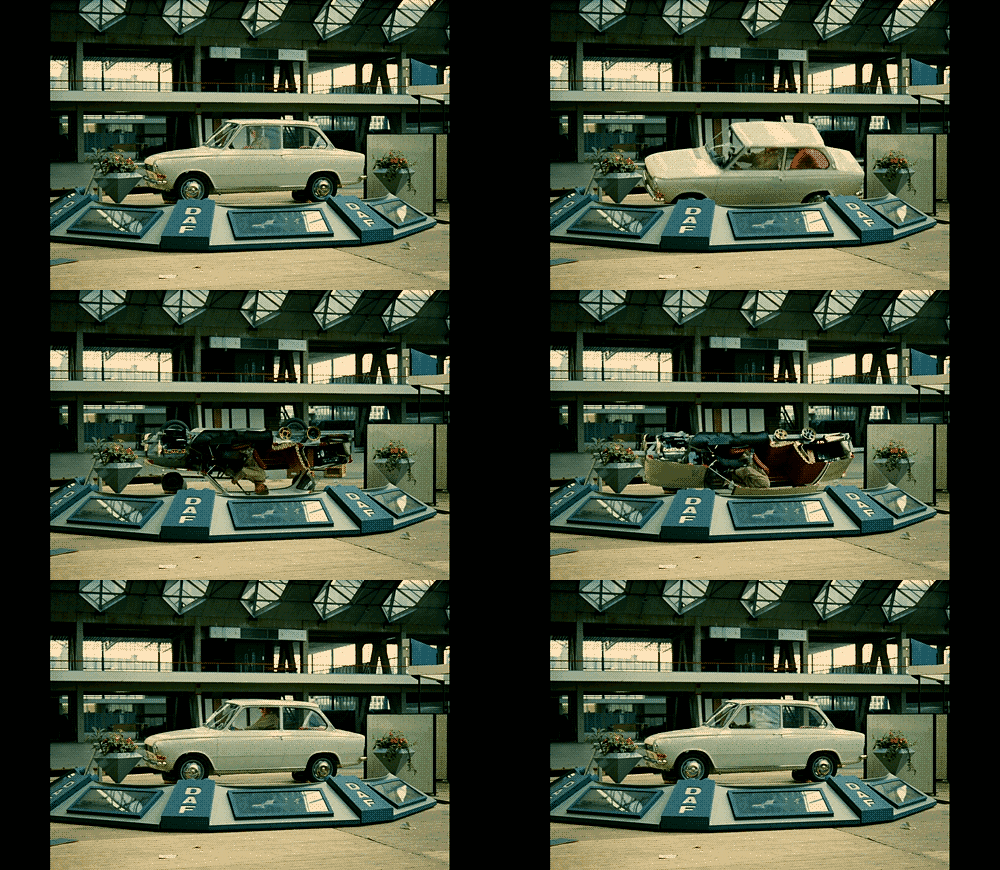
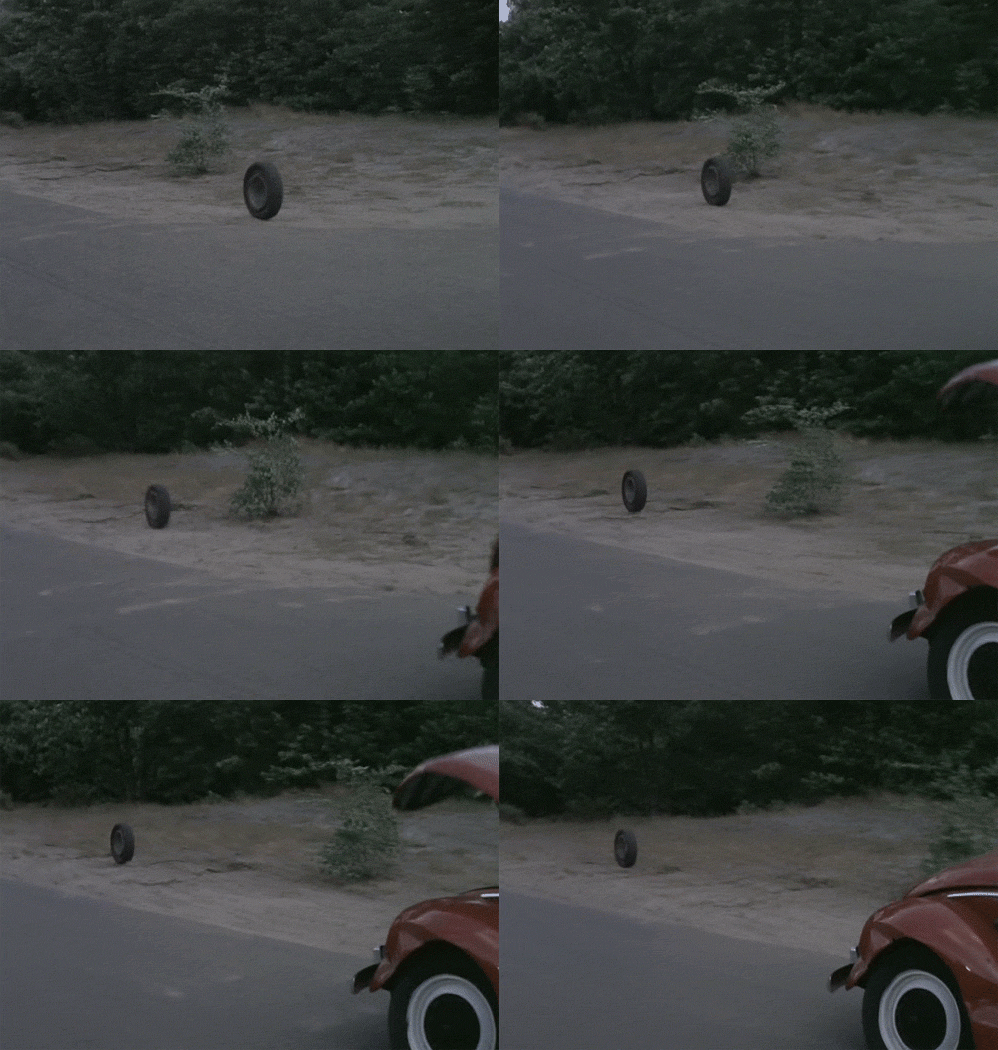
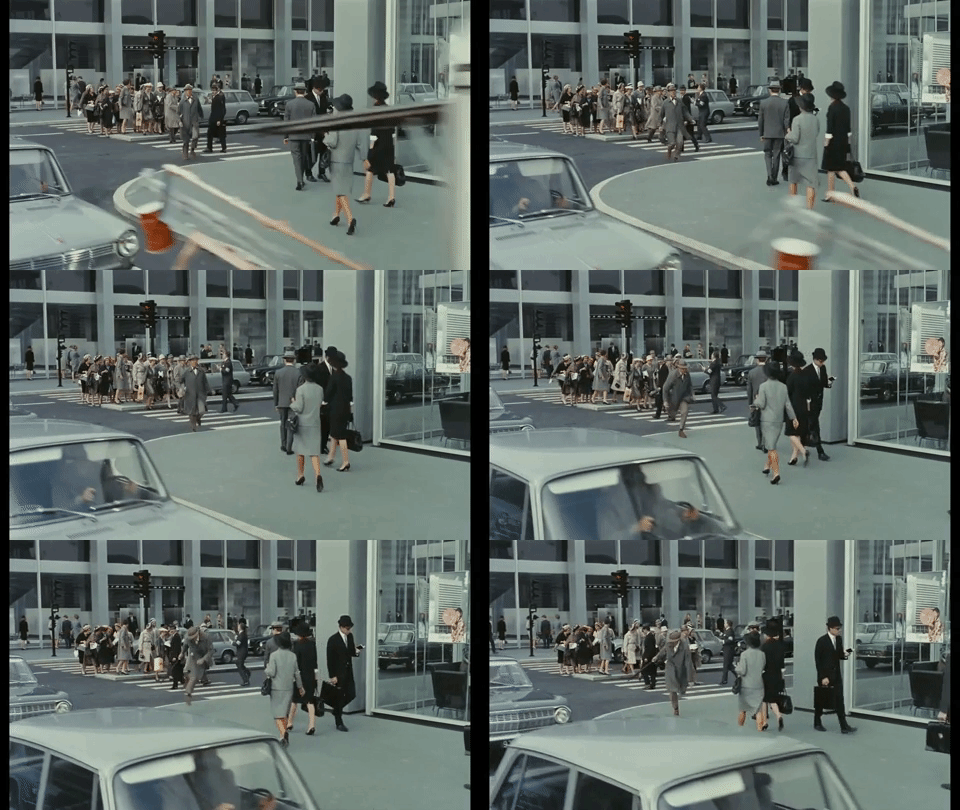
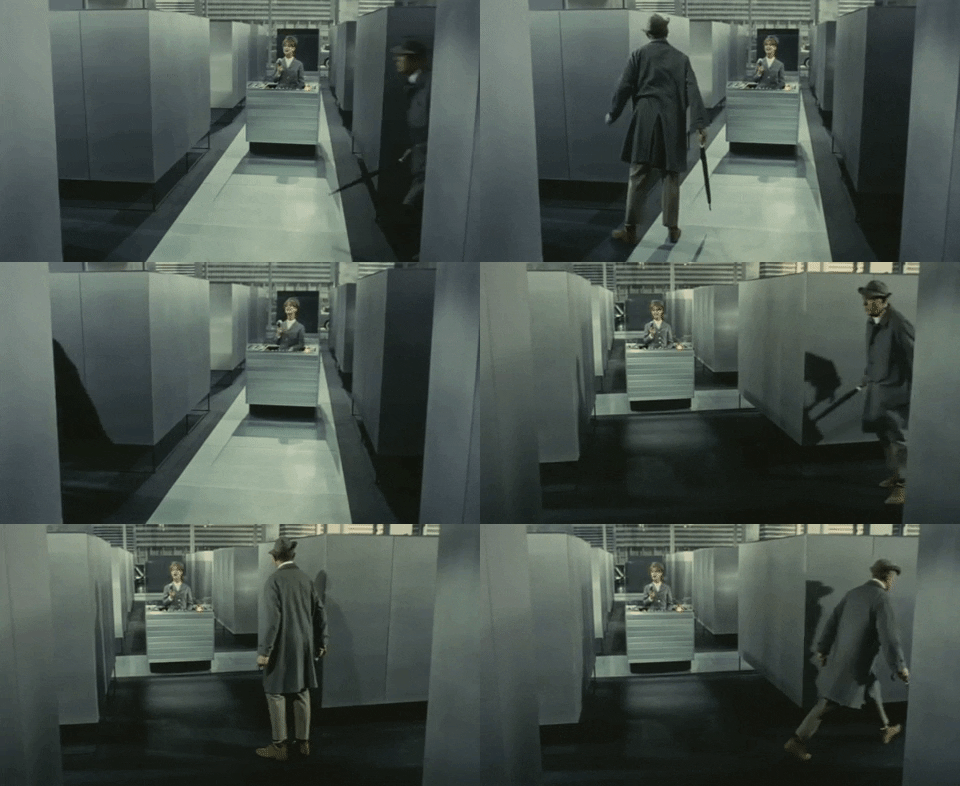
Stills
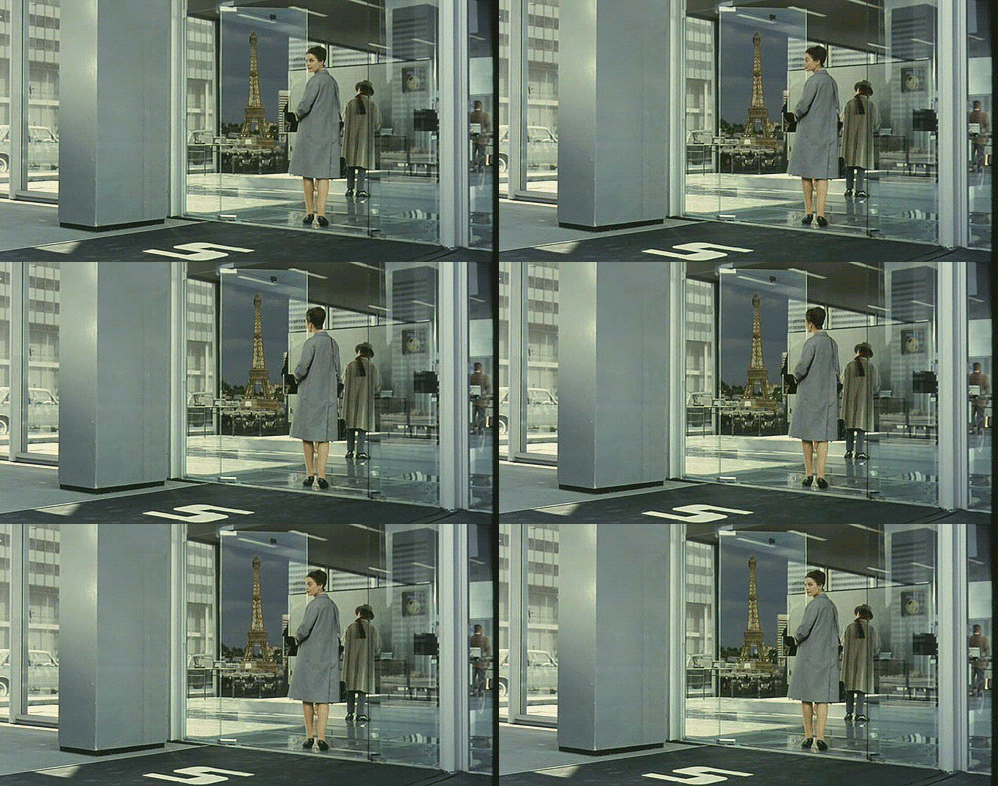
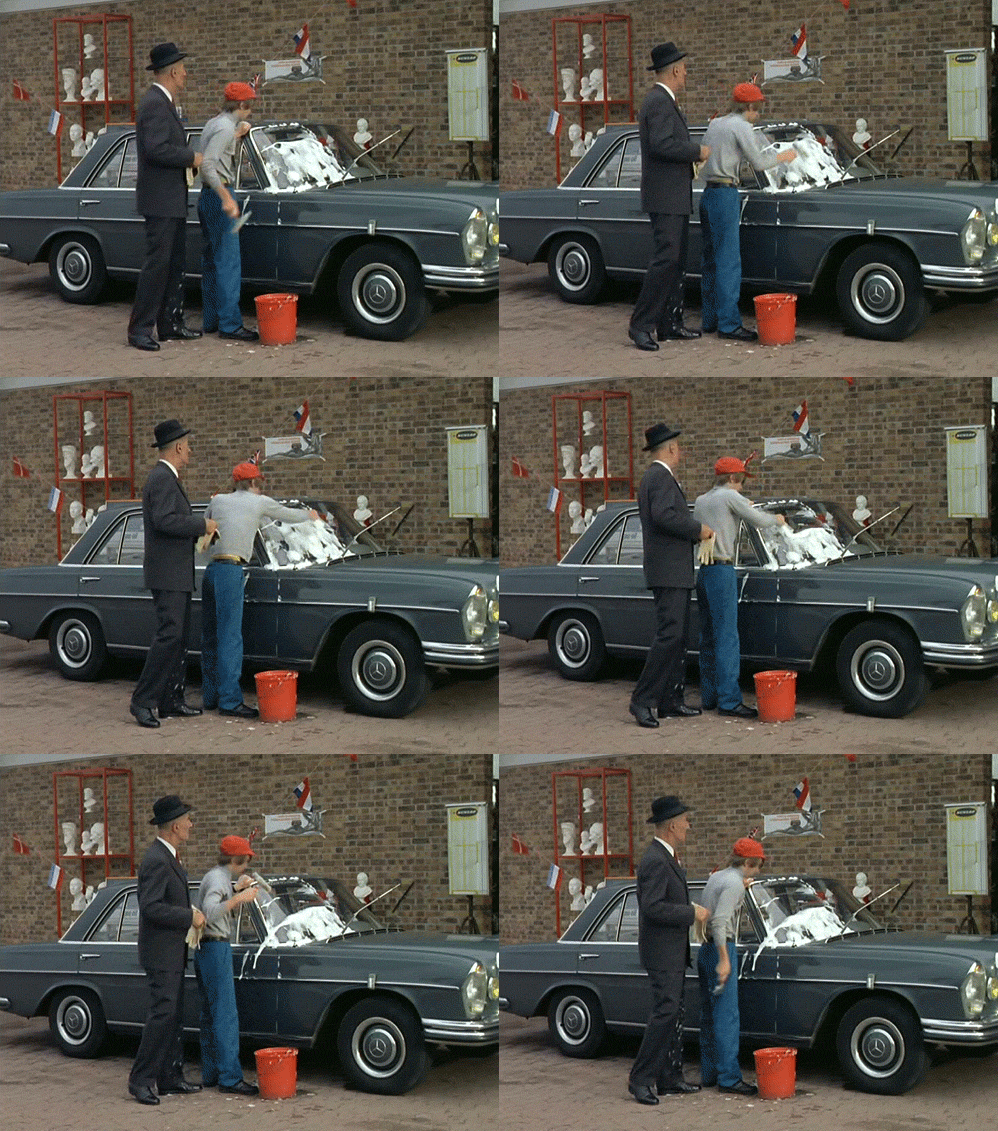
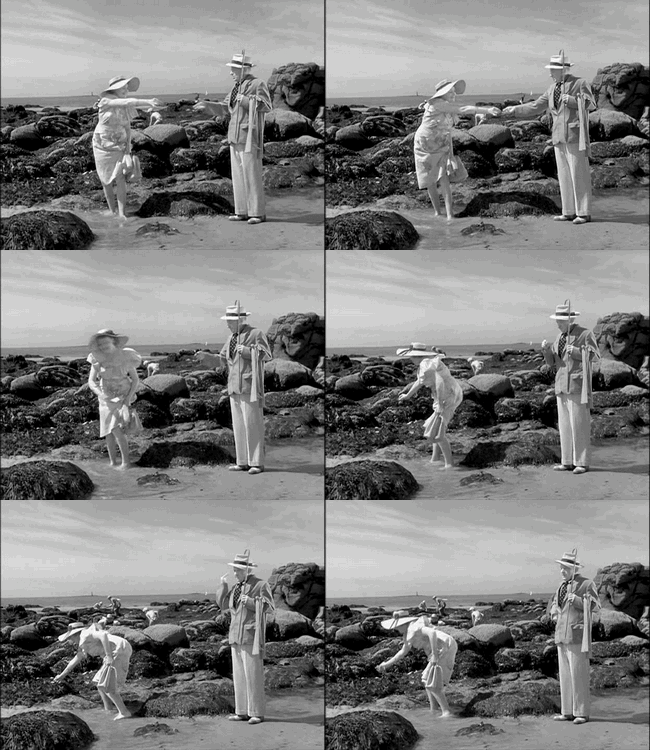
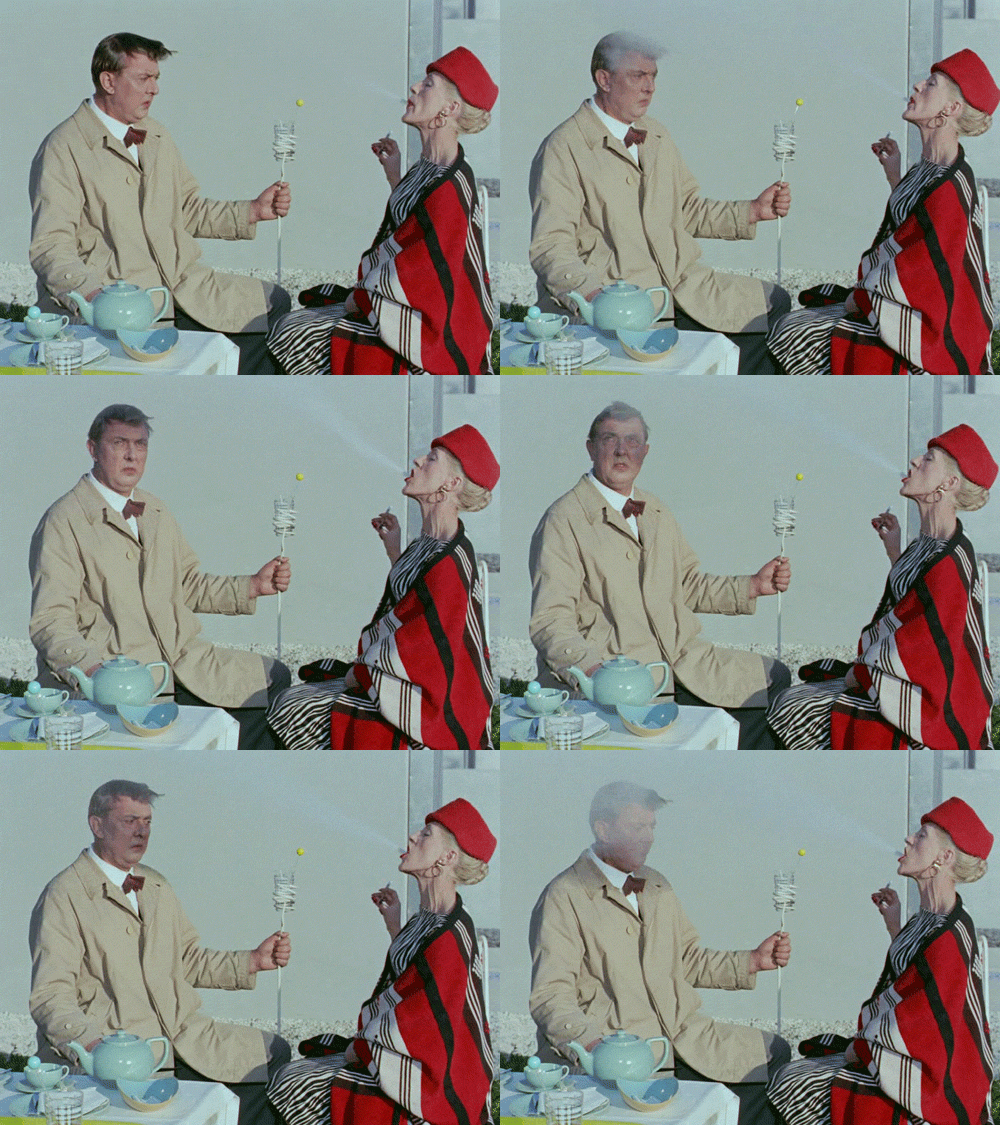
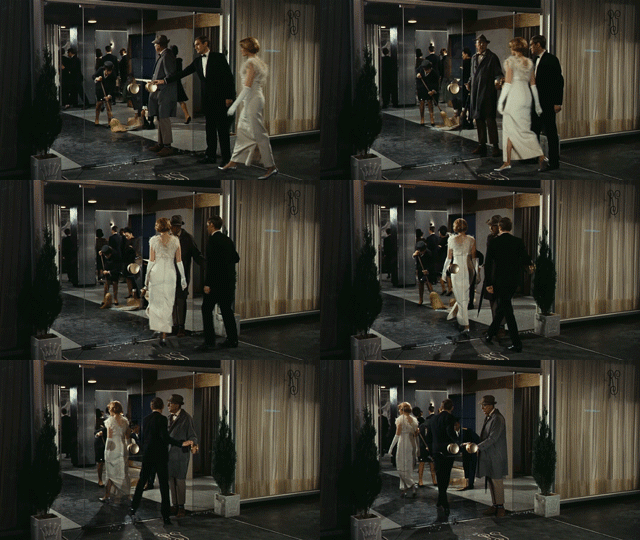
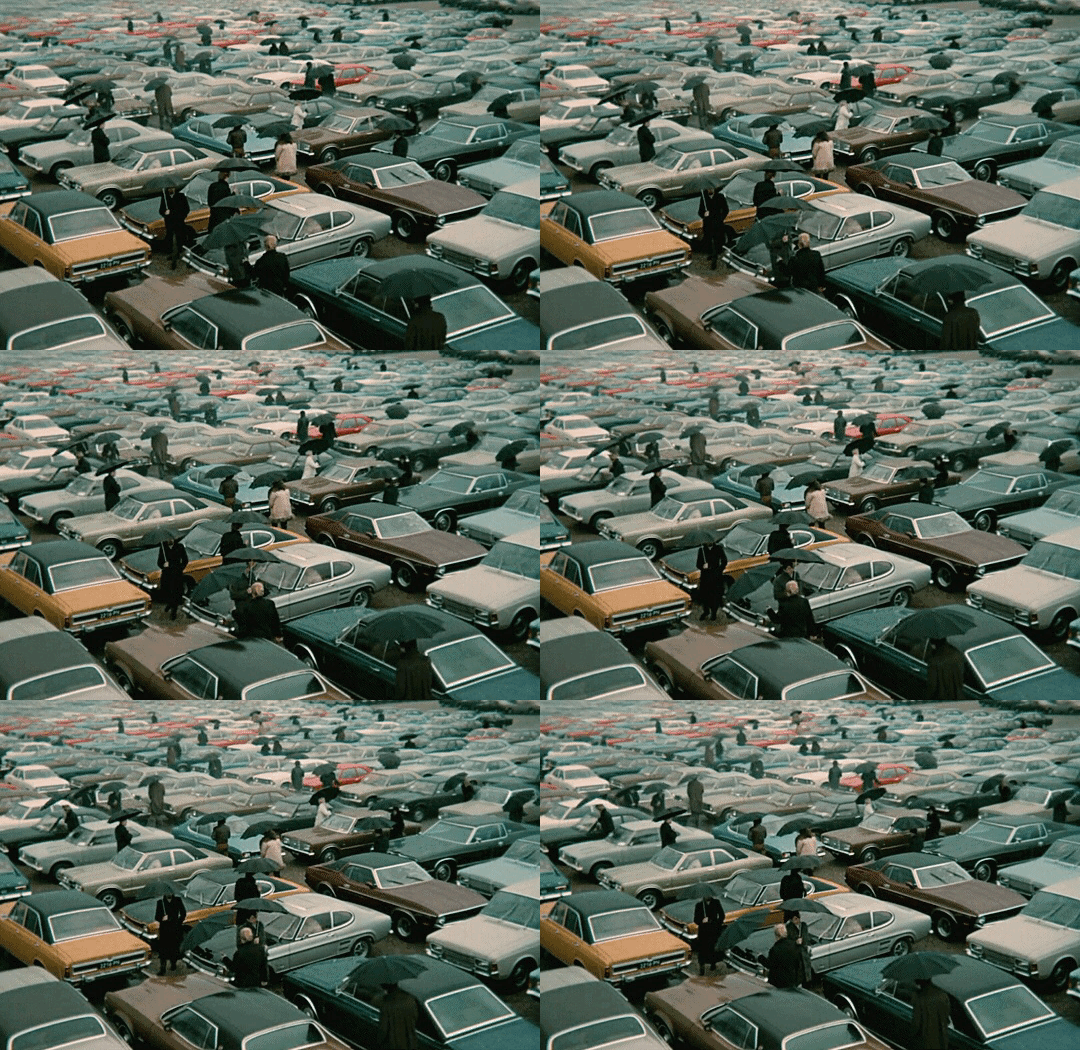
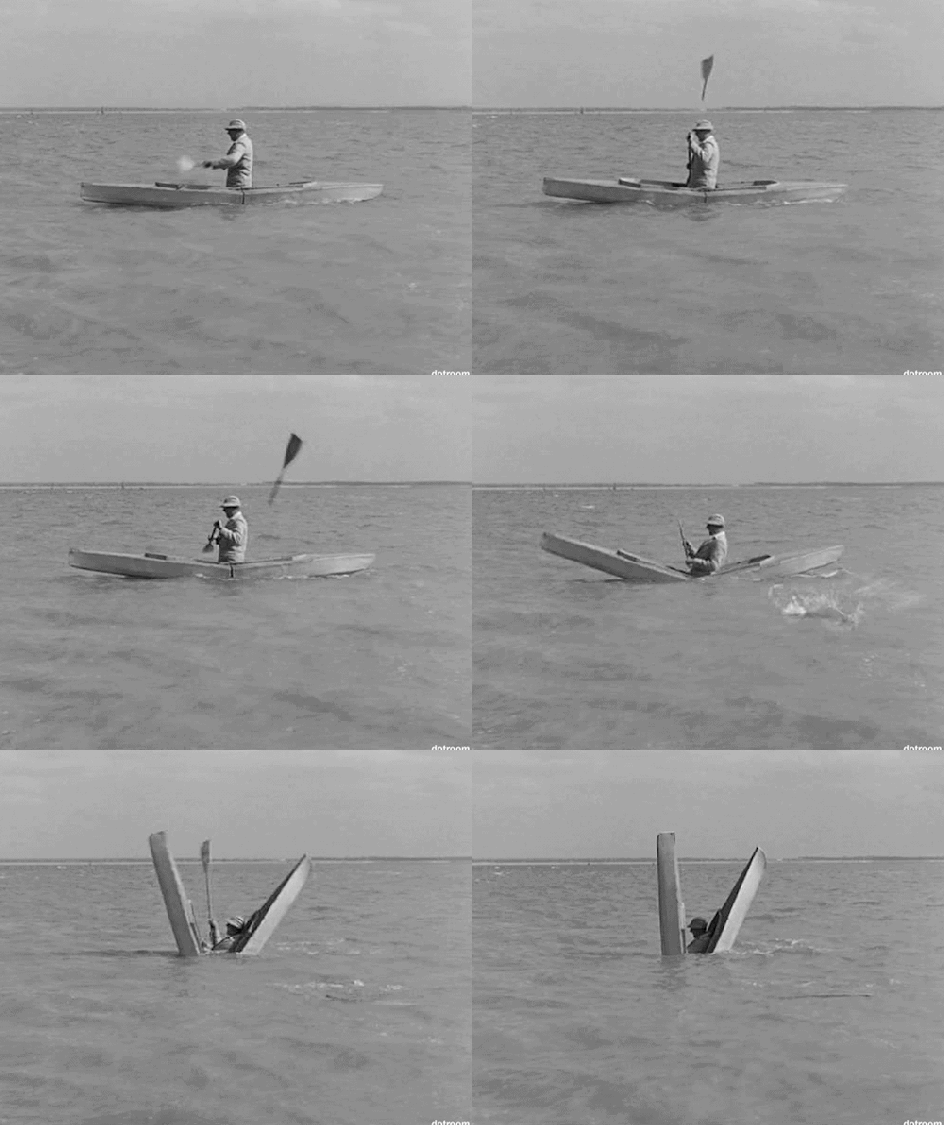
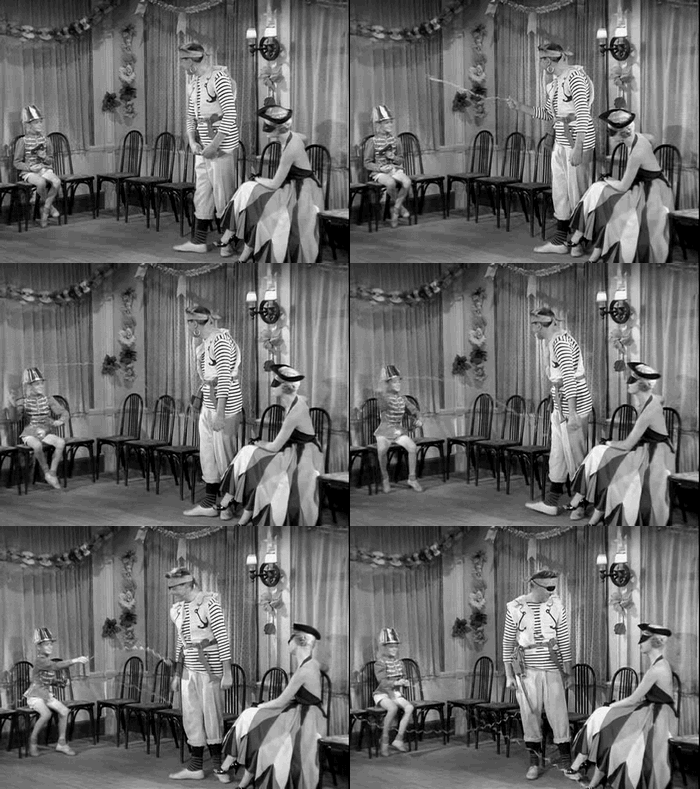
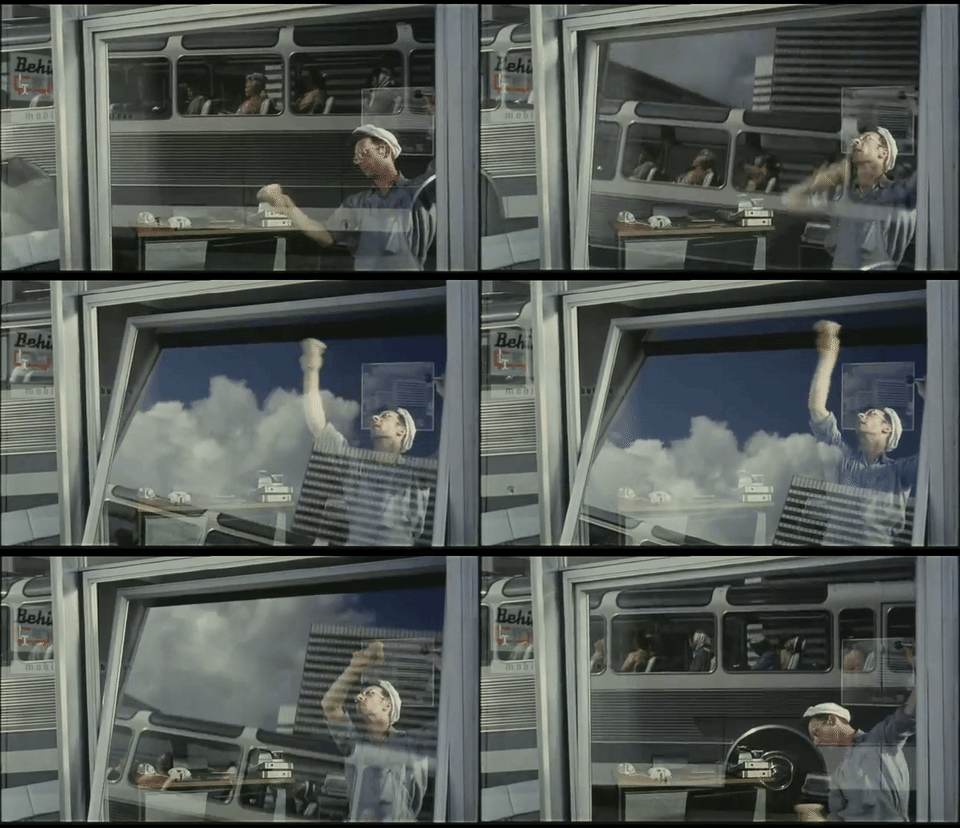
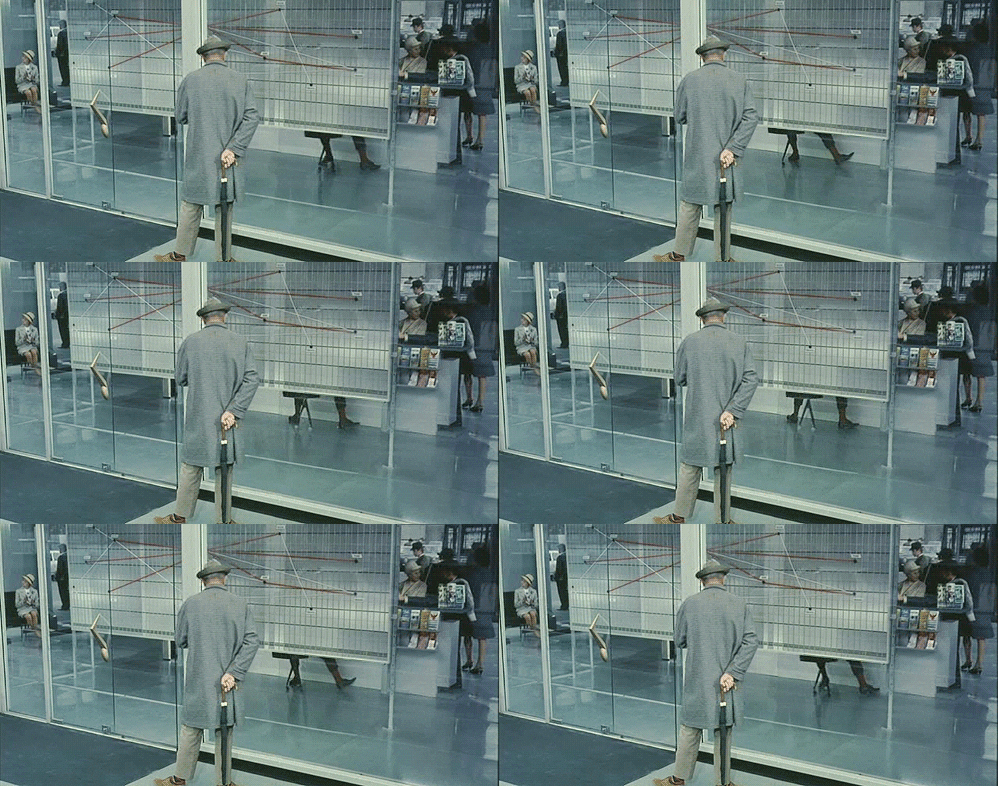

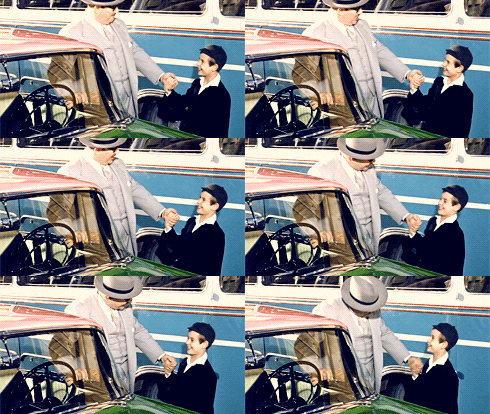
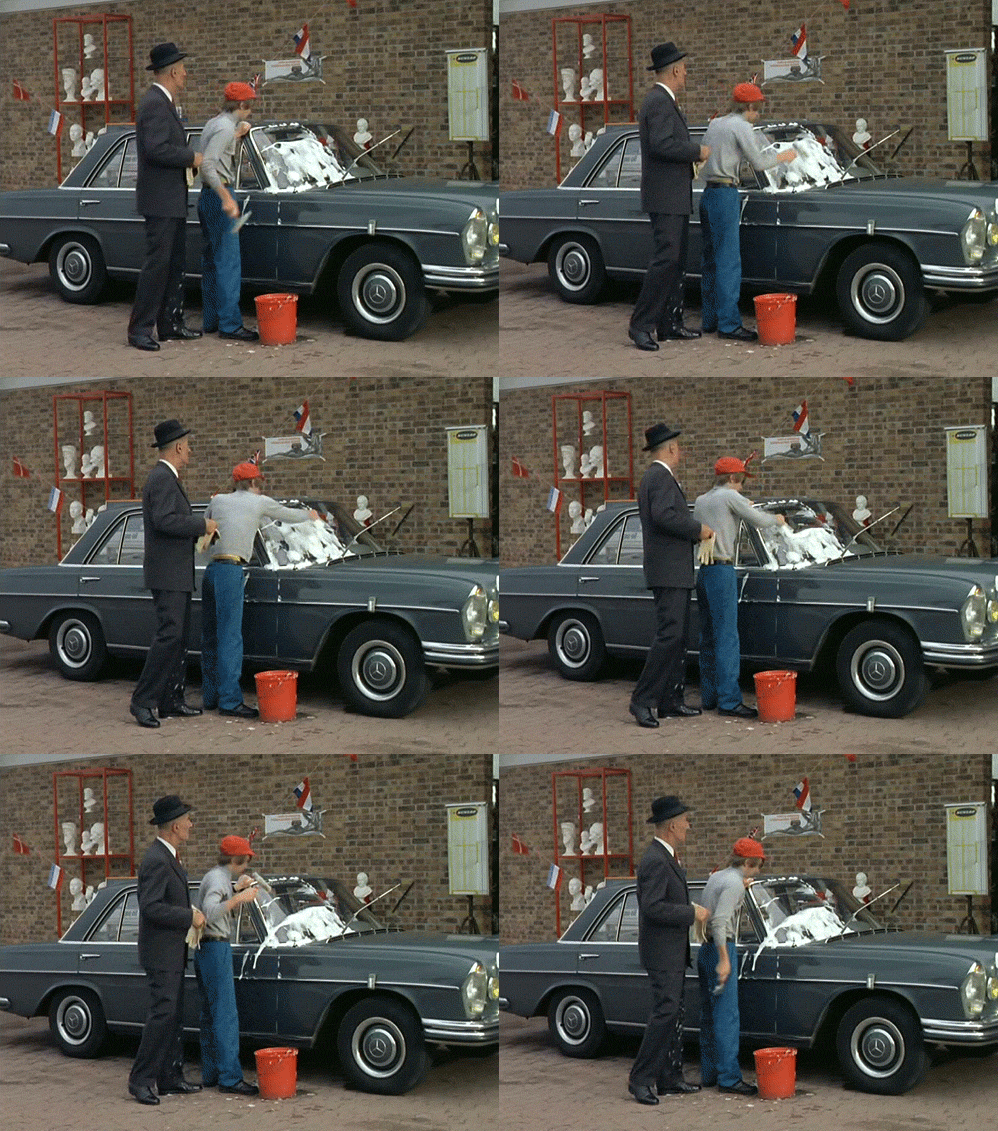
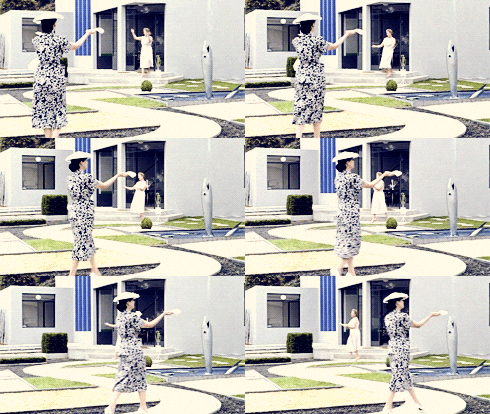
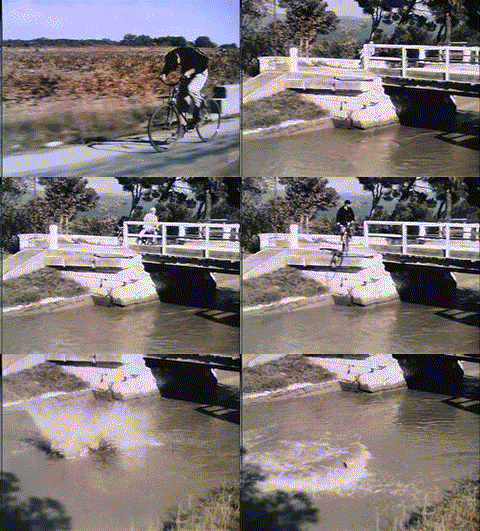
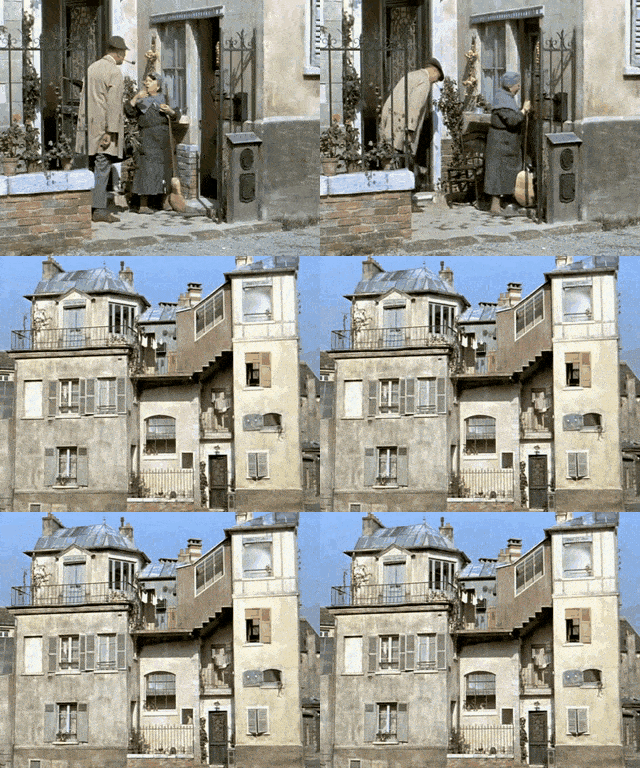
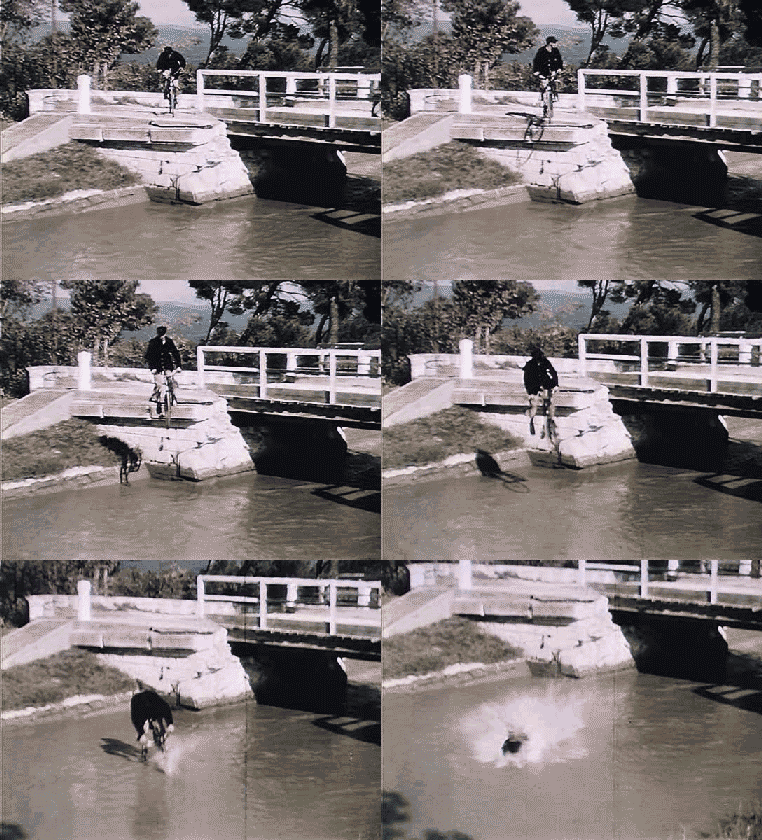
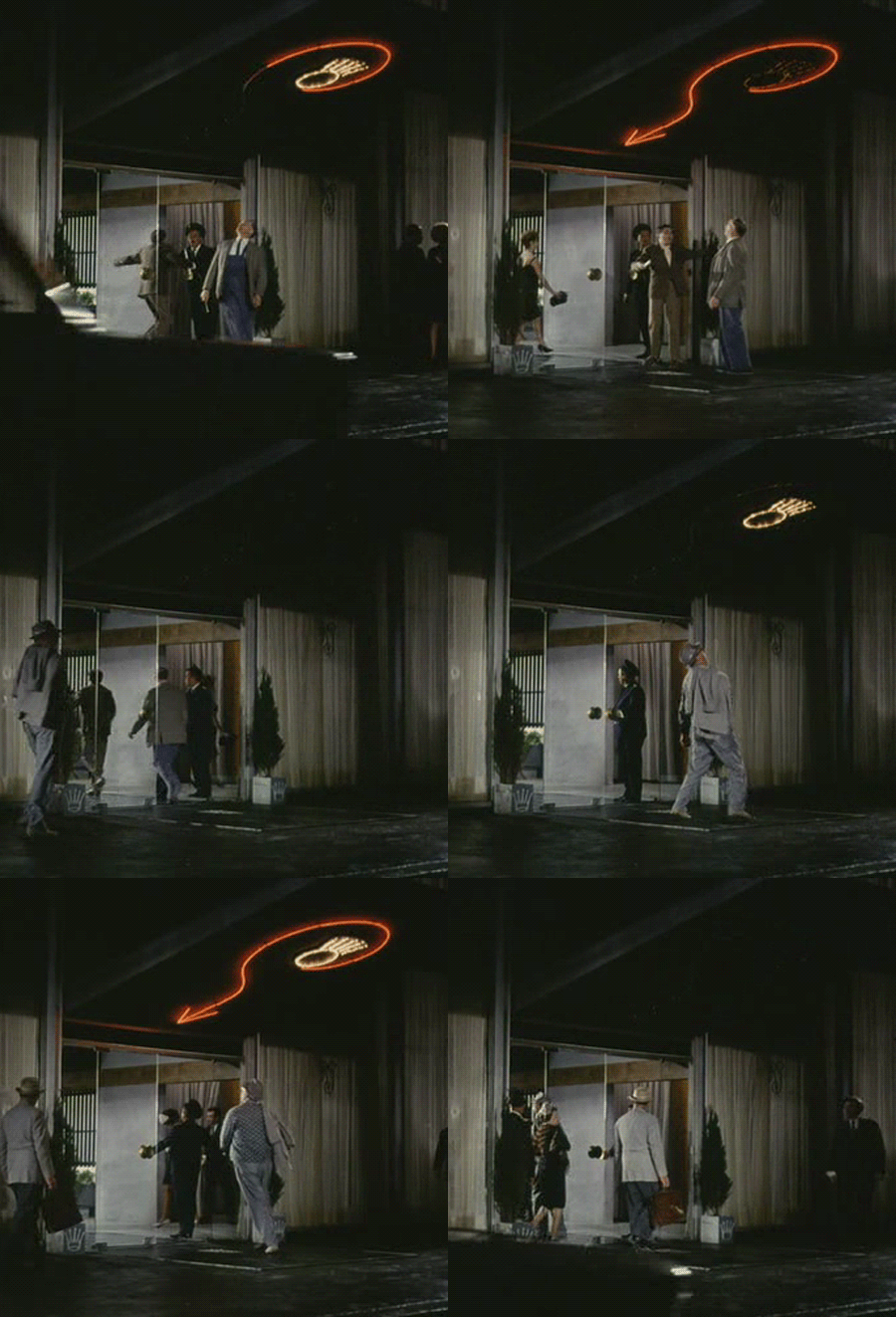
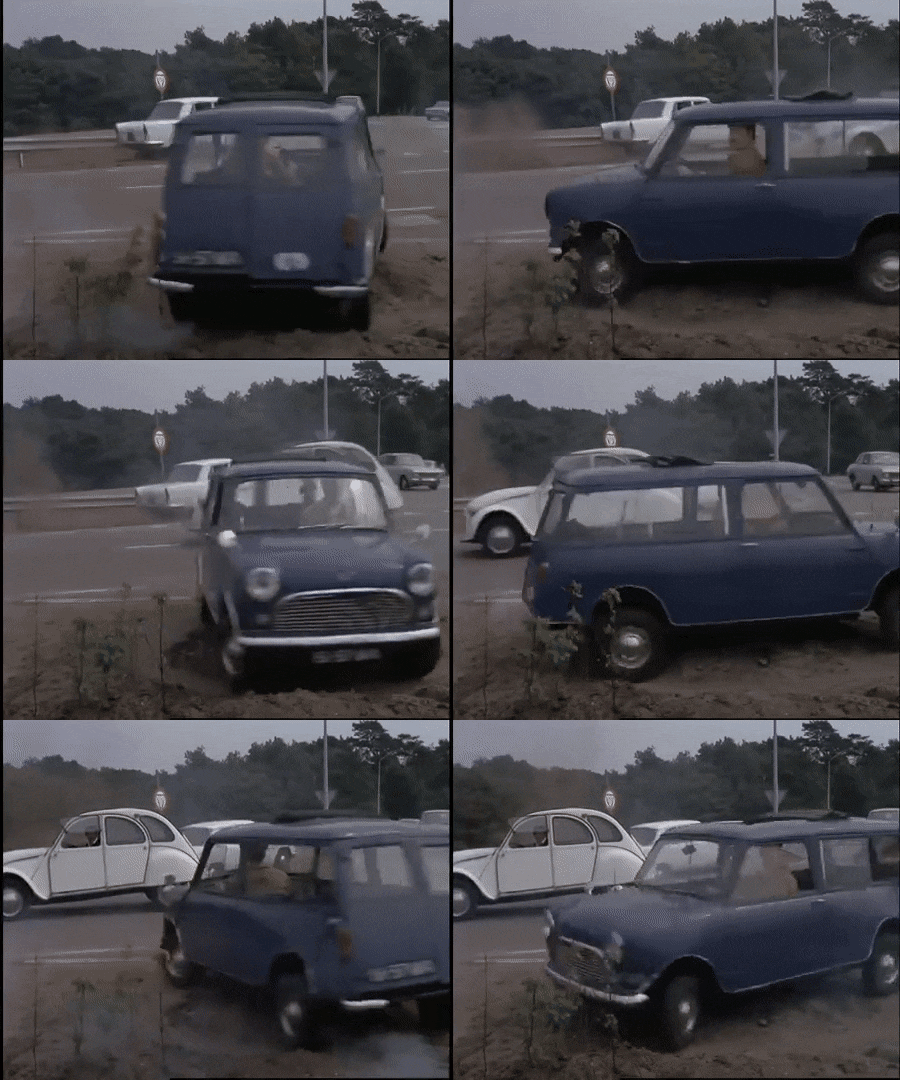
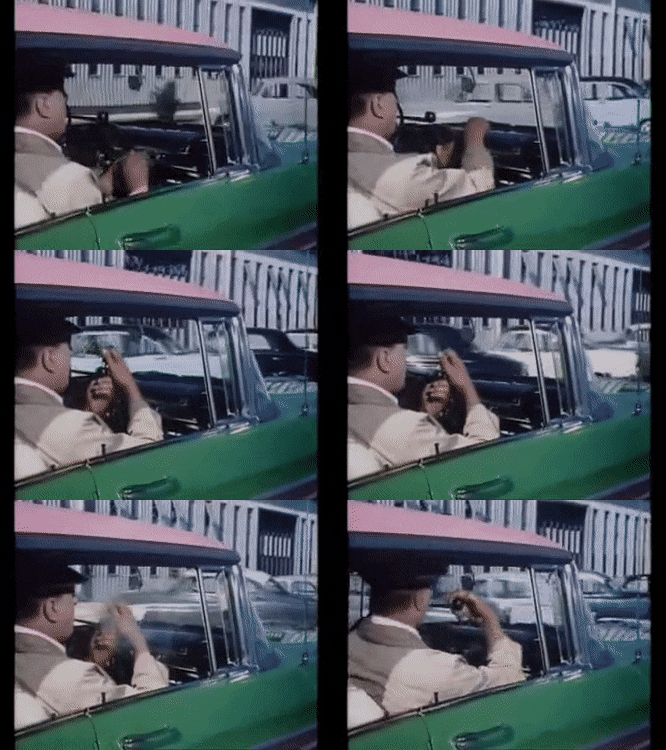
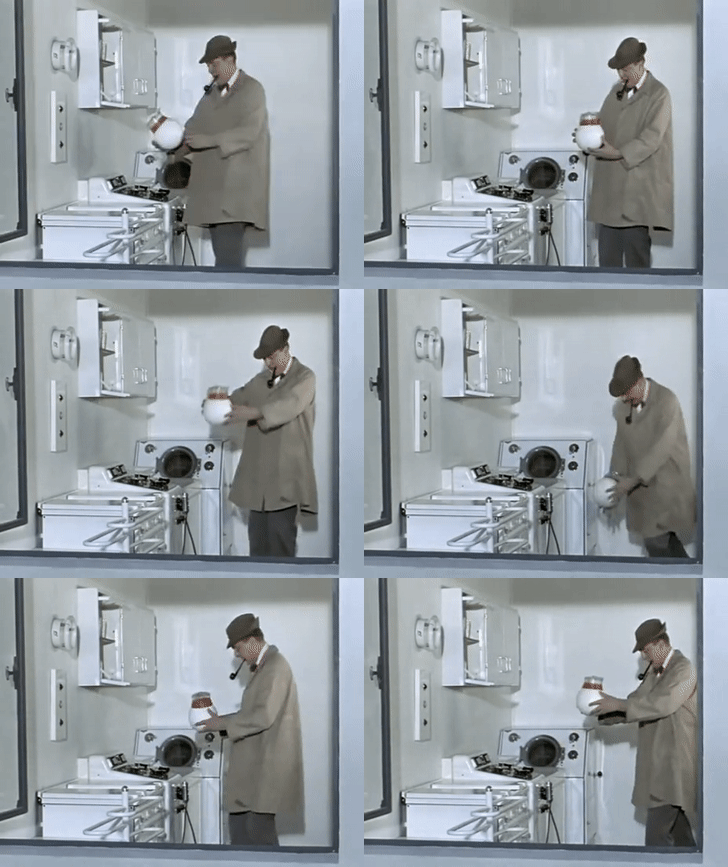
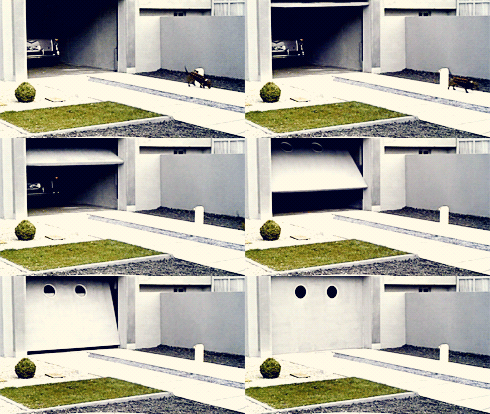
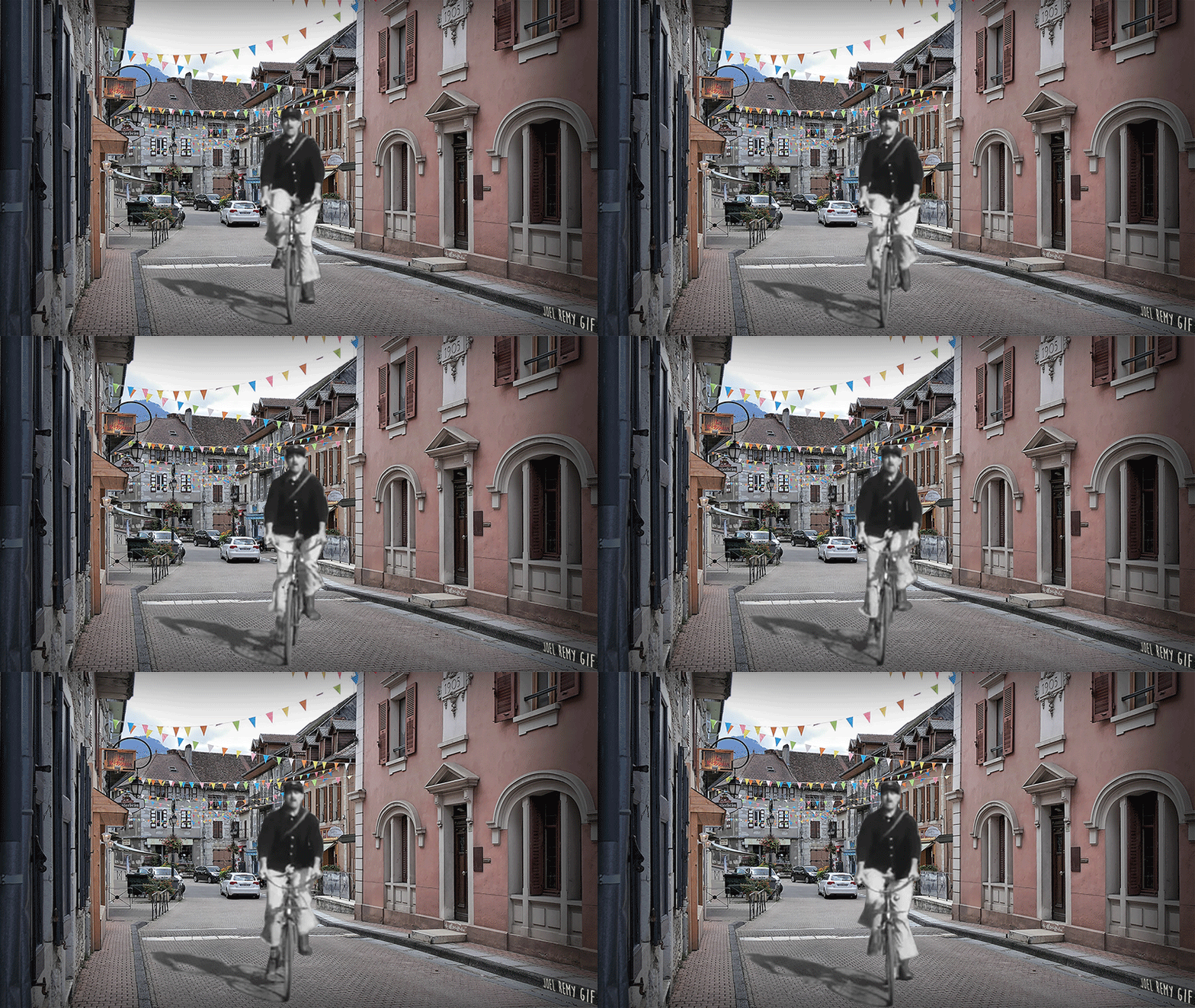
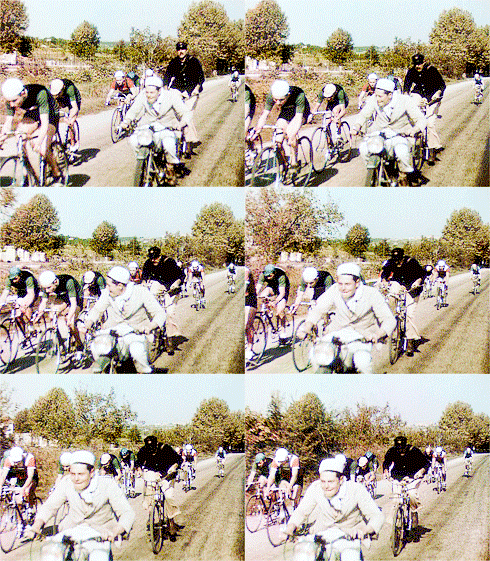
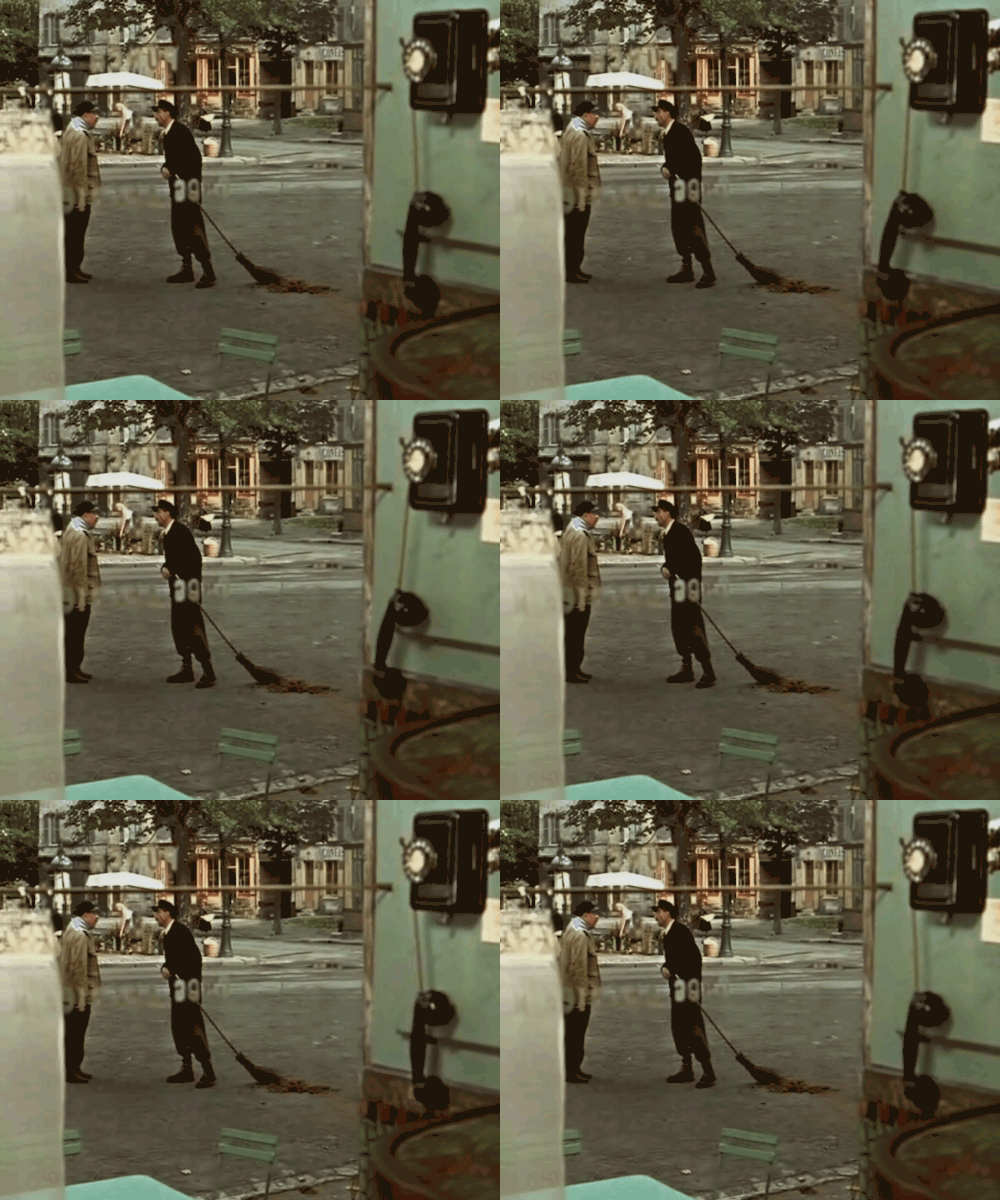
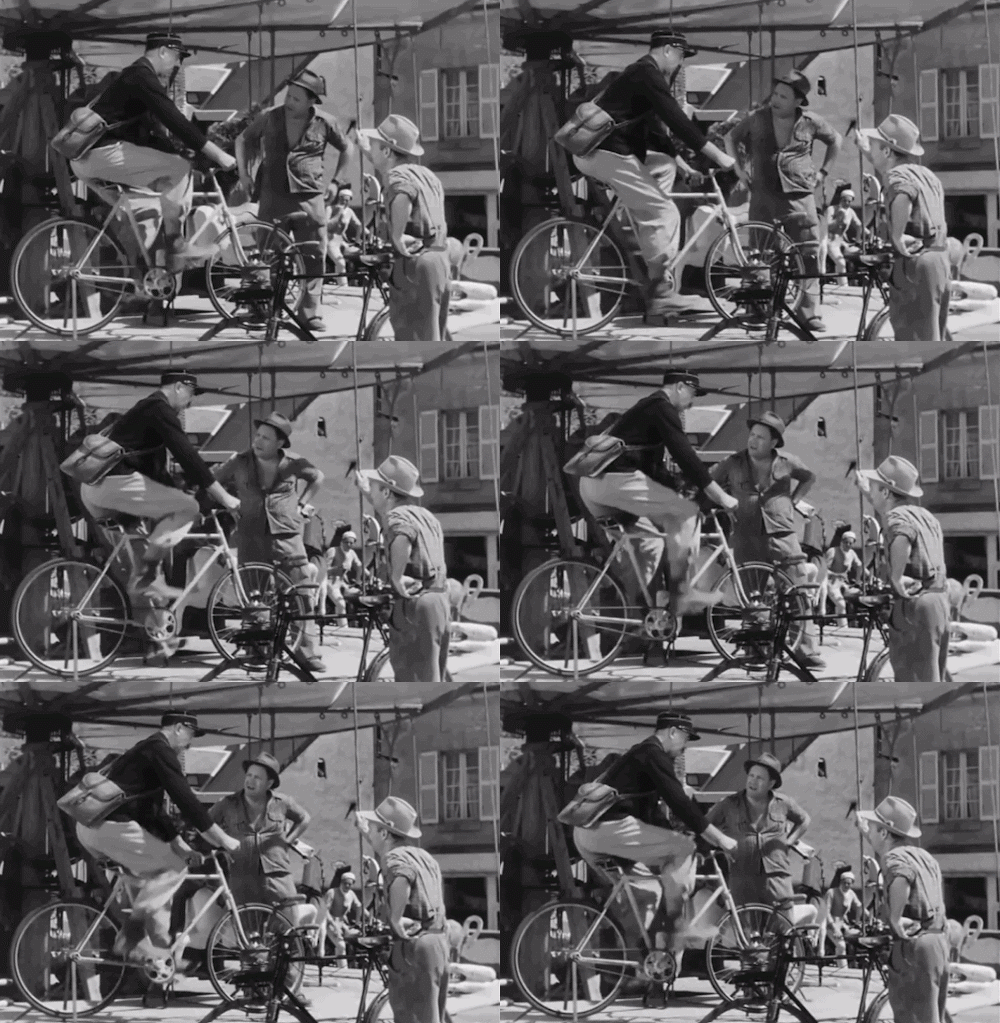
__________________________
Jacques Tati’s Anarchist Aesthetics
Diamuid Hester
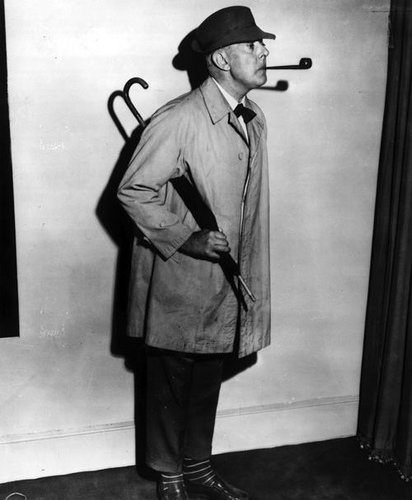
“I am not a Communist. I could have been if Communist history were not so sad. It makes me sound old-fashioned but I think I am an anarchist. Great things were done historically by anarchists.” — Jacques Tati
Often misunderstood as a byword for chaos, social disorder and the violent destruction of civilisation, perhaps the least bad description of anarchism might rather be an insistent demand for the liberation of the individual from artificially-imposed forms of authority. Critiques advanced by William Godwin, Pierre-Joseph Prudhon, Mikael Bakunin and other leading lights of the anarchist movement, while no doubt disparate in nuance, are all erected upon the fundamental sovereignty of individual will: anarchism thus traditionally perceives systems of authority (the most pernicious of which is the state) as just so many regimes of control, hampering at every turn the expression of this will. Though this vision of anarchy has often surfaced in various art forms (Leo Tolstoy’s work, for instance, emphatically endorses the brand of anarchism espoused by Peter Kropotkin), few artists have proceeded beyond the mere thematic representation of anarchism and sought to introduce these principal currents of anarchistic thought into the very fundaments of the art work itself. Few anarchist artists use the formal composition of their work to proffer a critique of contemporary systems of control and the condition of human life under such systems. It is our contention here, however, that French auteur and comedian Jacques Tati (1907 – 1982) is one such artist. (i) In what follows we will elucidate his anarchist’s vision of the fate of man under authority.
Mon Oncle cet anarchiste
A descendant of Russian émigré aristocrats and a bored picture-framer by profession, Tati (born Jacques Tatischeff) would have seemed an unlikely candidate to become a lauded and much-loved director of France’s septième art, much less one who, as we shall see, used his work to articulate a belief in the sovereign will of the individual. However, his gift for physical comedy quickly propelled him from performing mimes for his rugby team after matches to the Paris music-halls and finally to filmmaking, with the production of Jour de Fête in 1949. Following its success and that of the subsequent Les Vacances de M. Hulot (1953), Tati embarked upon the production of his third feature, Mon Oncle [My Uncle], which observes the daily life of a young boy (Gérard), his mother and father (the Arpels) and his uncle, M. Hulot (a character Tati had played to great acclaim in his previous film). Set in a curiously bifurcated French town which on one side houses the languid, provincial France of cafés and communal living, and on the other the cold Le Corbusier chic of suburban and industrial modernity, Mon Oncle is simultaneously a bittersweet tale of a boy’s friendship with his eccentric uncle and an entertaining depiction of a modern family’s hilarious attempts to get along at home and at work.
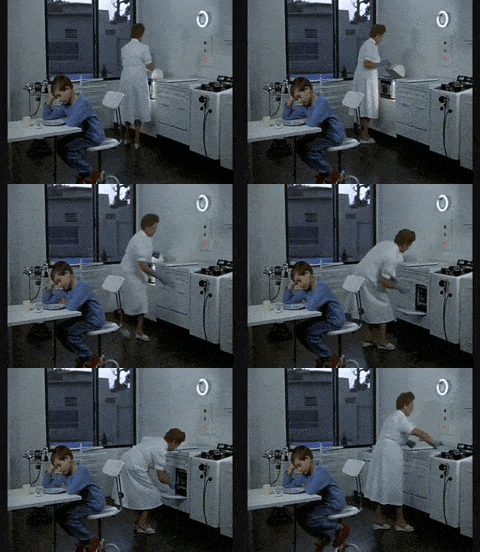
Yet the film also sketches a virulent anarchist critique of modernity’s accelerated subtraction of personal agency and an emphatic indictment of the role played by increased technologisation in aggravating this subtraction. This critique manifests itself in the persistent organisation, circumscription and conduction of movement in suburban and industrial zones: in Tati’s vision of the modern town, agency withdraws behind a veil of conscription and free individual movement is confined to prescribed routes, pathways and lanes. Consequently, when the camera lingers over the modernised district, the film of Mon Oncle appears cross-hatched with the outlines of these channels. In one of the film’s extended opening scenes, for instance, an orderly procession of cars diligently follows, with conveyor-belt consistency, the signs and road-markings which direct them to the school and then to the factory and then back home again. The grounds of M. Arpel’s “Plastac” factory and its corridors are likewise replete with lines and arrows demanding uniform movement and delimiting all deviation.
_____
Extras
David Lynch on Jacques Tati
‘Playtime — Behind the Scenes’
The rebuilding of Villa Arpel from ‘Mon Oncle’
Jacques Tati imitating a London officer then a French officer
Jacques Tati’s lessons from dogs
________
Confusion
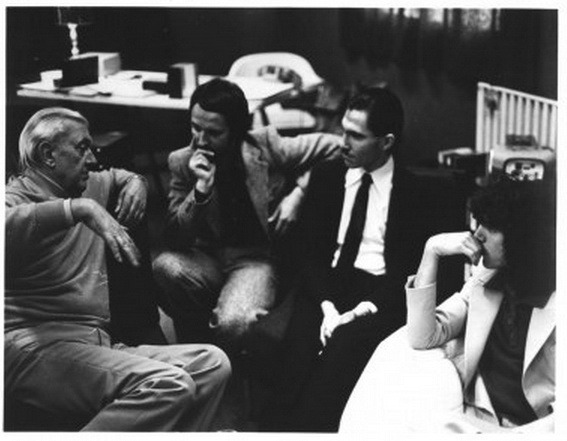
Jacques Tati w/Ron & Russell Mael
‘One of the greatest film collaborations that never happened : Sparks were supposed to be in famous French director Jacques Tati’s unfinished film, Confusion. Jacques Tati planned in 1974 to make the movie with Ron Mael & Russell Mael as the main actors.
‘Russell Mael: “We were discussing with a guy from Island Records in Europe fun things to do that weren’t involved with being in a rock band and how to just kind of expand the whole thing… JacquesTati’s name was brought up and we just kind of laughed it off. Anyway, he approached Jacques Tati and somehow got him to come meet us. Jacques Tati didn’t know anything about Sparks because he was 67 years old and doesn’t listen to rock music.”
‘Concerning with Confusion we get that Jacques Tati toyed with the idea of Mr Hulot being killed, by accident, in the opening reel – a prop gun at a TV station is replaced with a real one – as an opening gag. Jacques Tati wanted to describe in Confusion the same world as in Playtime, a futuristic city where activity is centered around pictures and communication, advertising and television. Monsieur Hulot is gone, and a young man is starting his job at “La Com” working on ads and TV programs to modify them, enhance their message.
‘Ron Mael: “We were to be in Tati’s film Confusion, a story of two American TV studio employees brought to a rural French TV company to help them out with some American technical expertise and input into how TV really is done. Unfortunately due to Tati’s declining health and ultimate death, the film didn’t get met.”
‘The movie was a visionary project : Jacques Tati’s goal was not to make us laugh like in his early works, but to make us think about our obsessions with (moving) pictures, office work, television, communication and political messages. This could have been his greatest movie, but already, in the script form it was an amazingly creative and fascinating project. It is a shame that the film never got made. Sparks miss Jacques Tati’s vision. The project mainly failed because of Jacques Tati’s bankruptcy and Sparks instead appeared in performance in the 1977 blockbuster motion picture Rollercoaster.’ — graphikdesigns.free.fr
‘Confusion’ live in 2010
__________
The Illusionist
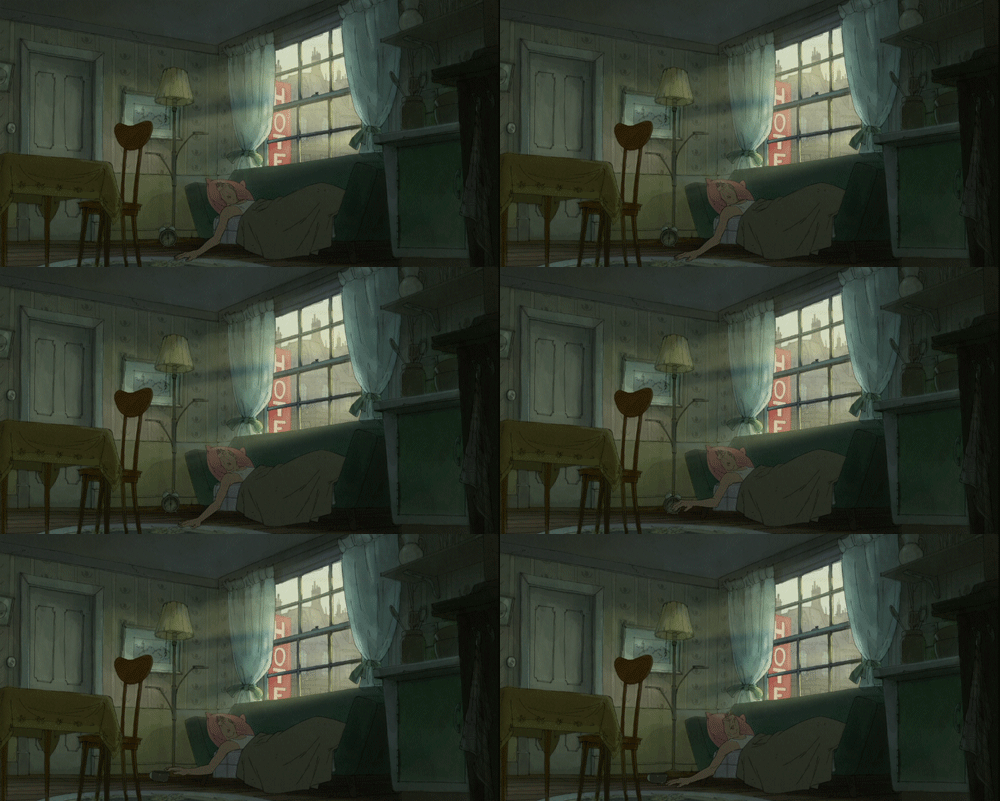
‘The Illusionist is a 2010 British-French animated comedy-drama film directed by Sylvain Chomet. The film is based on an unproduced script written by the great French director and actor Jacques Tati in 1956. Controversy surrounds Tati’s motivation for the script, which was written as a personal letter to his estranged eldest daughter, Helga Marie-Jeanne Schiel in collaboration with his long-term writing partner Henri Marquet, between writing for the films Mon Oncle and Play Time.
‘Catalogued in the Centre National de la Cinématographie archives under the impersonal moniker “Film Tati Nº 4”, the script was passed to Chomet by the caretakers of Tati’s oeuvre, Jérôme Deschamps and Macha Makeïeff after Chomet’s previous film The Triplets of Belleville was premiered at the 2003 Cannes Film Festival. Chomet has said that Tati’s youngest daughter, Sophie Tatischeff, had suggested an animated film when Chomet was seeking permission to use a clip from Tati’s 1949 film Jour de fête as she did not want an actor to play her father. Sophie Tatischeff died on 27 October 2001, almost two years before the 11 June 2003 French release of The Triplets of Belleville.
‘Having corresponded with Tati’s grandson, former Tati colleague and film reviewer Jonathan Rosenbaum published an article entitled “Why I can’t write about The Illusionist” in which he wrote, “Even after acknowledging that Chomet does have a poetic flair for composing in long shot that’s somewhat Tatiesque, I remain skeptical about the sentimental watering-down of his art that Chomet is clearly involved with, which invariably gives short shrift to the more radical aspects of his vision”. With McDonald being quoted saying “My grandmother and all his stage acquaintances during the 1930’s/40’s always maintained that [Tati] was a great colleague as a friend and artist; he unfortunately just made a massive mistake that because of the time and circumstances he was never able to correctly address. I am sure his remorse hung heavy within him and it is for this reason that I believe Chomet’s adaptation of l’Illusionniste does a great discredit to the artist that was Tati.’ — collaged
Excerpt
Sylvain Chomet on animating Jacques Tati
_______
Interview
by Jonathan Rosenbaum
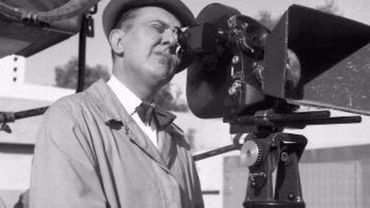
Jonathan Rosenbaum: Could you describe some of the methods you use in composing your soundtracks?
Jacques Tati: Well, first, I can do it because my dialogue isn’t important; the visual situation is for me number one. The dialogue is background sound as you hear it when you’re in the street, in Paris or New York — a brouhaha of voices. [Tati demonstrates by appearing to mumble several things at once.] People say, “Where are we going?” and you don’t exactly know where they’re going. I also like to push my visual effect a little on the sound track. In MR. HULOT’S HOLIDAY, the sound of the car is as important as the shape of the car, because even when the car isn’t visible, the sound of the motor shows that it’s coming—it’s the personality of that car by sound effect. In PLAYTIME, when Hulot sits in the modern chair, it is a visual effect, but the sound’s as interesting as the shape of the chair: whoooosh. . . . The time will come when a young director will use sound creatively; you’ll have a very simple image with very little movement, and the sound will add a new dimension, like putting sound in a painting — whoooosh.
JR: Your films are always shot silently, and the sound composed separately?
JT: Yes, I’m obliged to do that, because when you’re composing something visually, you have to talk all the time. If you have a professional actor, that’s different, because you give him a line and he has to say it as well as he can. Now in my case, I play very much with objects — chairs, dogs — you’re obliged to talk to a dog: “Come here — sit.” Now you can’t keep that sound (“Attention! Restez-là. Don’t move. Please: stop!”), and I talk very often with my actors to make them feel more at home. It’s more like life if you play with them and joke with them.
JR: How did the décor of PLAYTIME — the city set constructed on the outskirts of Paris — come to be built?
JT: For my construction, we couldn’t go to the Drugstore and Orly and stop work there, it would’ve been impossible. And I wanted this uniformity: all the chairs, for instance, in the restaurant, in the bank — they’re all the same. The floor’s the same, the paint’s the same. It cost a lot of money, of course, but it’s there — and it’s not more expensive than Sophia Loren.
JR: How do you feel about the buildings in the film? You make a lot of jokes about them, yet in the night sequences they often look quite beautiful.
JT: It depends. In New York sometimes, when you’re very high up and look out the window, you have a marvelous vista of lights — it’s very impressive. But if you go down the elevator at say, six in the morning, what you see isn’t so impressive. It looks like you’re not allowed to laugh or whistle or be yourself: you have to push the button where it says “push,” there’s not much way of expressing yourself. But when you see all those lights at night, you want to create music, paint, express yourself, because it’s another dimension on the reality, it’s like a dream. You don’t see who’s living in the buildings or what’s happening there. When you arrive on the plane at night in New York, and see all those marvelous lights and shapes, you think that it must be a dream to live there: you’re sure that the food must be wonderful, the girls must be lovely. But then when you arrive there, the food isn’t all that good, and the girls aren’t as nice-looking as you expected. It’s all that way. The lights always change the dimension on reality at night.
JR: The behavior that you show in your films is always public behavior — you nearly always show/people in crowds, rarely in a private situation. Have you ever thought of making a psychological film?
JT: Maybe I’m not strong enough to do it. Maybe, if I could help, if somebody will. . . . Chaplin didn’t do anything in making THE GREAT DICTATOR: he had a joke on Hitler, so what? To educate the people — I don’t educate them, I try to place them in a situation where they laugh for a reason. I always have to respect the public; I figure if it makes me laugh, maybe it will also make you laugh. But to go on and do something more — of course we could, but it’s not just one man who must do it, it’s a group. We have to talk to other generations — people from my generation, those behind me, and even the generation behind you: then maybe we could create something.
______
Further
Jacques Tati Official Website
Jacques Tati Unofficial Website
Centre Culturel Jacques Tati
‘Le Quizz Jacques Tati’
‘Jacques Tati: Les Vacances’
Jacques Tati @ The Criterion Collection
Jacques Tati @ mubi
‘Jacques Tati and Friends’
Roger Ebert’s ‘The Secret of Jacques Tati’
‘Fun and games with Monsieur Hulot’
‘In and Out of Sync: The Films of Jacques Tati’
Jacques Tati: an appreciation
Video: Jacques Tati interviewed (in French)
Book: ‘The Films of Jacques Tati’
Book: ‘Jacques Tati: His Life and Art’
_______
The films
Texts by Hannah Kimani
__________
Parade (1974)
For his final film, Jacques Tati takes his camera to the circus, where the director himself serves as master of ceremonies. Though it features many spectacles, including clowns, jugglers, acrobats, contortionists, and more, Parade also focuses on the spectators, making this stripped-down work a testament to the communion between audience and entertainment. Created for Swedish television (with Ingmar Bergman’s legendary director of photography Gunnar Fischer serving as one of its cinematographers), Parade is a touching career send-off that recalls its maker’s origins as a mime and theater performer.
Trailer
Excerpt
Excerpt
_____
Trafic (1971)
In Tati’s films the acting technique conveying human life and its absurdities could be discussed, as well as questioned for its own authenticity. Diderot claims that “actors impress the public not when they are furious but when they play fury well,” which allows film to be a simulated reality. Tati’s acts of imitations are based on what is perceived to be ‘real’ human life, yet these are ultimately simulated interpretations. Arguably when we imitate something— be it what we consider as the real or not—here is always an element of authenticity and the absurd. What is questioned is the authenticity and the sensibility of the actor, who through successful simulated performances, makes his audience feel real emotion. It could be argued that the spectacles of modernism and mimicry are functions of the discourse of absurdity within a logical system. This system serves much wider interests. In particular it is being fuelled by more diverse concepts such as artificiality and hyper-realism.
Trailer
Excerpt
the entirety
_______
Playtime (1967)
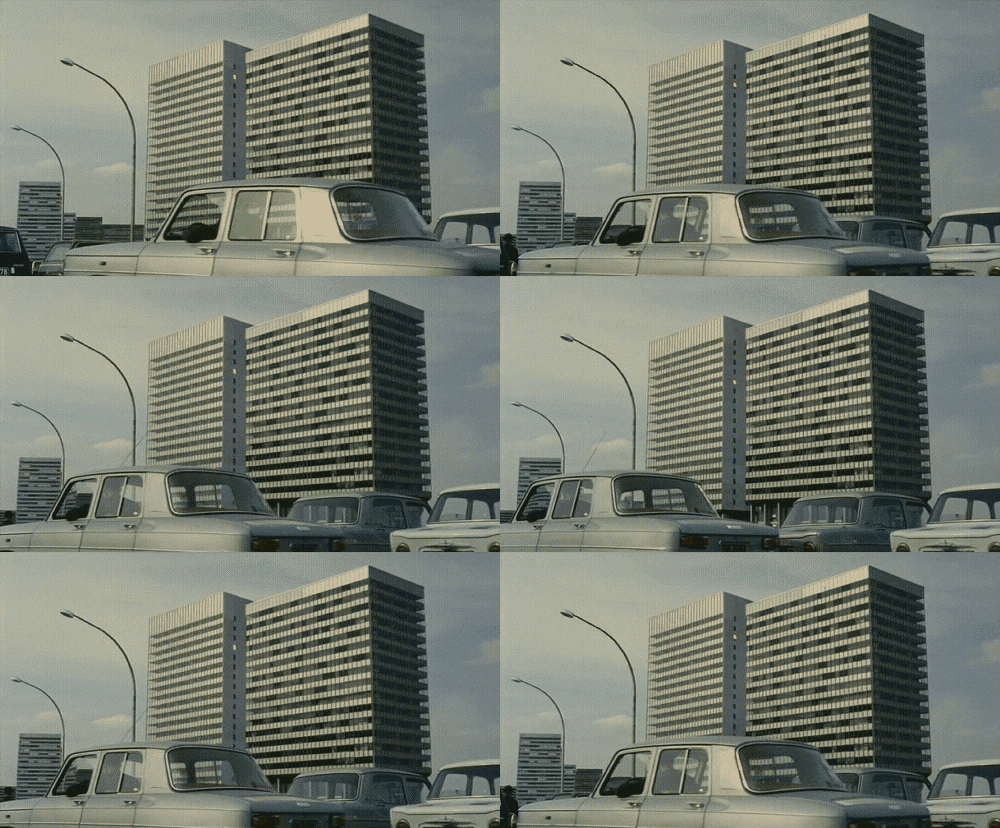
Tativille was an entirely imitated city where Playtime (1967) was set. Unless you look closely you would not see that the background buildings nearer the horizon were card-board cut outs. Unlike the Arpel’s premises in Mon Oncle which is a heightened image of a rather old-fashioned idea of modernism, Tativille is not just a satire of high-rise architecture. It is a celebration of the beauty of large edifices and a stylised expression of wonderment at humankind’s ability to create. It is of course a representation of the real, forming a parallel world laced with spectacles. Much of Tati’s film work is focused on the accessories of modern life, some of which we have already touched upon. The French borrowed an English word to describe as: le gadget. Le gadget is as Debord states “supposed to offer a dramatic shortcut to the long-awaited promised land of total consumption. As such it is ceremoniously presented as the unique and ultimate product.” Tati, though, seems to be exaggerating its importance transforming it into its nemesis. The gadgets of Playtime include articulated spectacles of self-lighting brooms, eye-spectacles and silent doors. These could be seen to express a certain celebration of the future of the city, as well as mocking these ideals.
Trailer
Excerpt
Excerpt
Excerpt
________
Mon Oncle (1958)
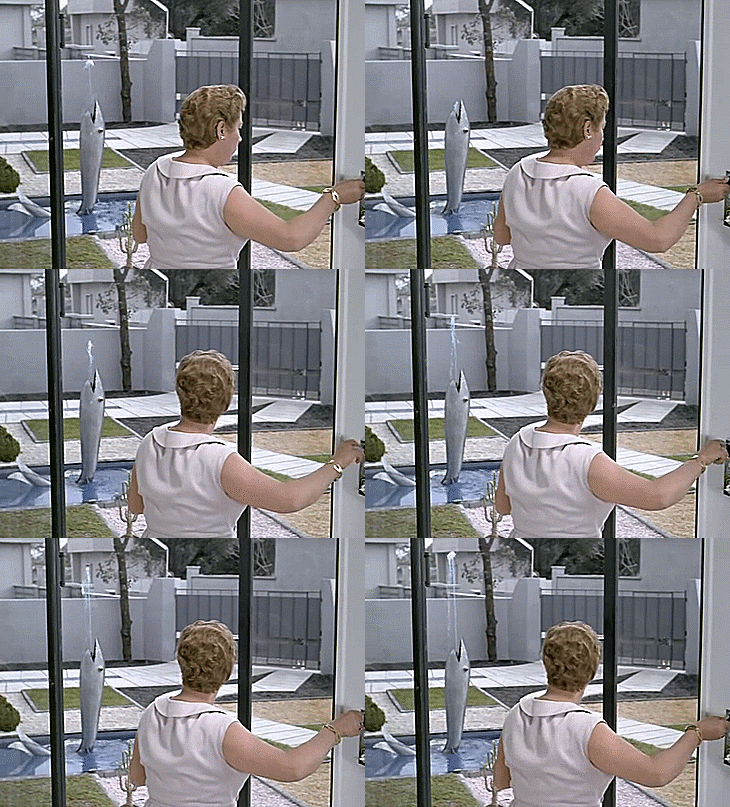
‘In Mon Oncle, the spectacle of the fish fountain in the Arpel’s premises is an example of stylised decoration whose pretentiousness exceeds any aesthetic dimension. The formal garden seems only a slight amplification of French garden traditions but the fish fountain is wonderfully absurd, a self-designating and idiotic central decoration of the garden. In addition, water in colour films can barely be seen, as it is transparent. So to make its gurgitations of the fish-fountain visible, the water was coloured a dark blue. However to make the fountain gurgle at all, absurdly a whole complicated system of pipes and pumps had to be constructed. Tati’s practice of observation and laborious mechanisms calls into question the real and tries to question and recreate it. The real in question here is aspiring to the stylised depiction of modern life of 21st century society. In this stylised realism it ironically presents itself as an absurd walk of life in itself, allowing us the space to contemplate within a larger discourse of logical reasoning as to what real life is. Hence, observations and the use of mime in an attempt to recreate the real, and the irony this carries, fuses these elements together as a mutual unit where one cannot exist without the other.
Opening
Excerpt
Excerpt
the entirety
_____________
M. Hulot’s Holiday (1953)
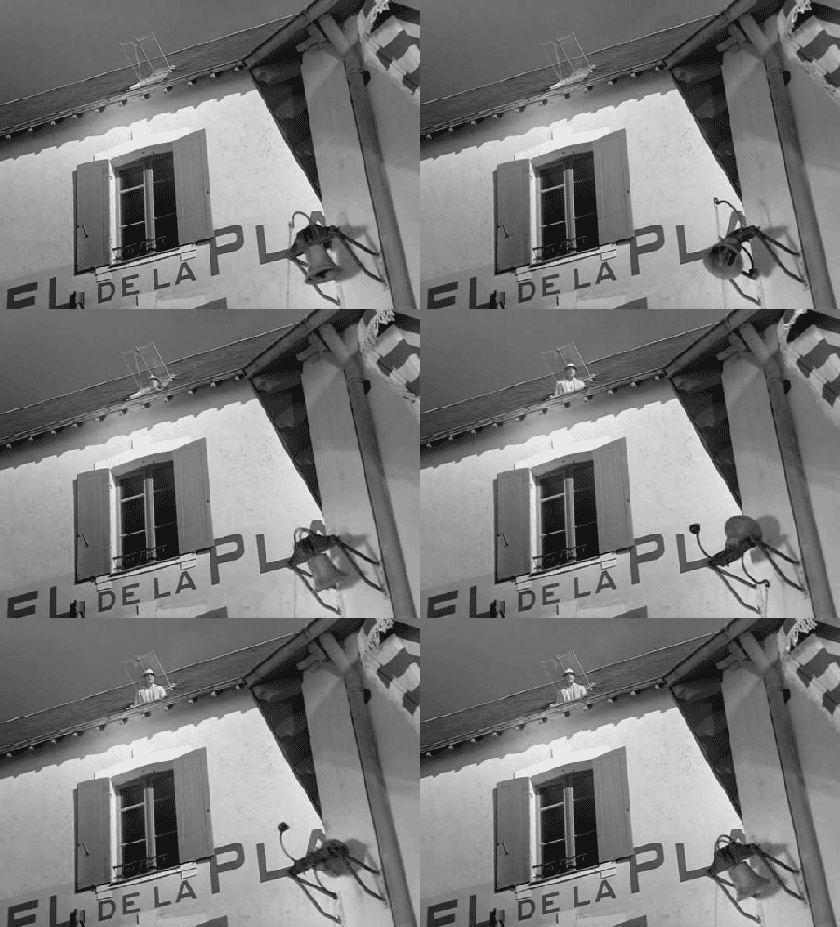
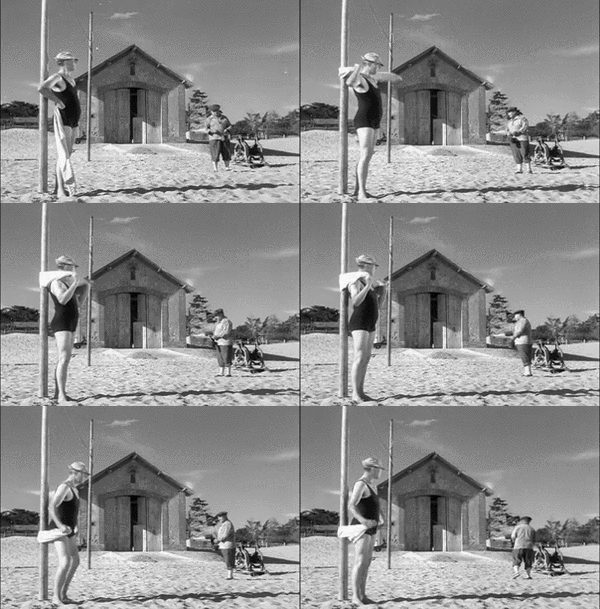
In Les Vacances de Monsieur Hulot (1953) Tati introduces us to the concept of the act of imitation. The act of reprise, the re-enactment, in comic or tragic mode, is the common sense source of circus clowning and serious acting, and perhaps all arts of imitation. The people at the Hotel de la Plage in Les Vacances de Monsieur Hulot, all move in peculiar ways reminiscent of the large gestures of a grand opera. For instance, many of their movements are slowed down and larger than life. The Commander points to the off-road route to picnic site from the open top car with his arm outstretched horizontally for such a length of time that it is clearly a caricature of a military manner. These and many other artificial body movements, which Tati tutored in situ on the beach, bring to the camera a trend of exaggerated mime. At the same time they are corporeal caricatures based on the way people actually do move. We are all concerned with logic and systems. Thus, logical systems allow us to make subtle distinctions. The physical caricatures he created allow us to see better what we really do see when we look around. The act of mime by the actor provides a critical space whereby its generated humour by effect allows reflection.
Excerpts
Excerpt
Excerpt
________
Jour de fête (1949)
With this description of the notion of artificiality and imitation as the vital ingredients of the authentic, we enter into the discussion of non-realist effects applied by the artists subject to my discussion. Tati’s use of sound is manipulated in paradoxical circumstance. He uses the sound in newsreel commentary to cover up stock shots. Moreover sentences spoken are not exactly the same as what is heard by the character or spectator. What is heard instead is an overall impression or imitation: hype and false praise. For instance, the noises of clucking and crowing in Jour de Fête (1949) are more of the general background noises which give the impression that human life is irremediably drowned in the animal world. Although these sounds are not what we want to hear, or more importantly what we imagine we hear when we recall the already interpreted scenes of our lives, they are actually relatively close to what we really do hear: broken sentences, phatic utterances disconnected from part of their natural context, stock phrases. Essentially it is a wordless film.
Trailer 1
Trailer 2
Excerpt
_______________
L’École des facteurs (1947)
The authentic always has a certain degree of absurdity to it as it’s slightly different from what we expect it to be. Like potted plants in an office lobby which at first glance seem blossoming but on touch are actually made from plastic, yet still resemble potted plants. So it could be argued that when you imitate something it can still be authentic and absurd. The act of imitation is absurd within its own reasoning even if we use it for a logical reason. For instance, in the context of Catholic churches, where there are often wax models of Saints. Their appearance is strange as they are dressed in costume and have painted faces and expressions. Yet these wax works serve a logical purpose for people to pray to in replacement of the deceased Saint. Logic is a vital tool and constructs studies of argument and the form they take. It functions systematically for us attaining the truth. The absurd is therefore inconsistent with sense or logic.
Excerpt
the entirety
—-
*
p.s. RIP Michael J. Pollard. Here’s the blog’s MJP Day from earlier this year. ** sleepyj, Hi, welcome! I missed your comment yesterday as it must have arrived as I was launching the post, but I saw it after the fact. Thanks a lot for the good words about the blog. You’re in the desert? Which one? A desert with a store called ‘Insanity’ in it sounds like a curious desert. Recommended fiction… uh, well, there are tons I could recommend. I guess the best thing is to look through the past posts for books I’ve ‘loved’ posts or book spotlight posts, and I can think more in the future. PGL played in LA twice, and I doubt it’ll show there again for now, but you can watch it online at Kanopy or Amazon Prime or Vimeo, and there’s a Blu Ray/DVD if that helps. So, what do you do? What are you up to? Very nice to meet you. ** David Ehrenstein, Thanks. Me too, re: loving dioramas, obviously. Gisele does as well. One of our works, ‘This Is How You Will Disappear’ is basically a diorama on stage. Everyone, a coupla goodies from Mr. Ehrenstein. (1) Tribute to the newly late and wonderful Michael J. Pollard on his FaBlog, and (2) his review of Todd Haynes’s new film ‘Dark Waters’. ** Bill, Thanks, man. Really glad you liked it/them. It’s enormously possible that I’ve had Jonah Samson’s stuff here before. Plus, there are easily a handful of artists making miniature sex/violence diorama-like works out there. It is fun, right? The Carl Stone. And kind of a surprise from him, no? ** YouallKeatonmeout, Jokester? Me? Could be. Weird/good how projects will start and then just drag you along after them like your foot’s caught in their bumpers. Awesome thinking and words about dioramas. Lucky you re: paranoia-free pot. I haven’t tried in decades, but I suspect it would still make me want to hide in a corner. ** Jeff J, Hi, Jeff! Thanks a lot for the posts love. And I’m awfully happy to hear your shoulder is finally allowing you to type and live with at least a smidgen of normalcy again. Yes, thank you for the Sebald essay very much! I haven’t had the chance to read it, but I’m jonesing to and will pronto. Honestly, the TV project is in such a state of hellishness and uncertainty and overwork and stressfulness right now that I don’t even want to talk about it at the moment. It would take pages to explain, and I’m trying to just soldier through and not think too much about how messed up everything is. But thank you for inquiring. ** _Black_Acrylic, And, as you know, I saw ‘Apocalypse’ too, and yes! ** Florian-Ayala Fauna, Hi, Florian! How very nice to see you! I’m glad you enjoyed the dioramas, obvs. I’m basically good, just excessively busy, busier than even usual, with projects both positive and negative, and that kind of stuff. Yes, I checked out your site the other day. It looks fantastic! Everyone, the superb artist and music maker and more Florian-Ayala Fauna has a beautiful website full of great work in various mediums that you should seriously check out. Here. I’m one of the world’s worst at correspondence, as I think you’re probably well aware, other than here on the blog, but, yeah, otherwise, email, and I’ll try my best to be diligent. Take care, my friend. ** Steve Erickson, Hi. Glad to hear you found a good, useable take of his voice. Well, we work primarily with non-actors, so we don’t have that issue so much, although one of the performers in PGL is a professional actor, and it’s true that with him the instructions were almost always to pull back and take it down. Making a top 10 as a critic for the public is a different thing. I used to do them for magazines, and, at least in my experience, you end up choosing based on a kind of playing and pushing of consensus, i.e. edgier or more quality records that had at least minimal popular or critical success, rewarding veterans who pulled out a good one, throwing in a wild card or two, etc. Me, I get to just list the stuff that excited me the most irregardless of how much it was in or fiddled with the fringes of the mainstream. I guess. ** Okay. This weekend the blog devotes itself to the sublime and thoroughly great film director Jacques Tati, genius and cinema titan. Enjoy the trip. See you on Monday.



 Now available in North America