The blog of author Dennis Cooper

Author: DC (Page 2 of 1111)

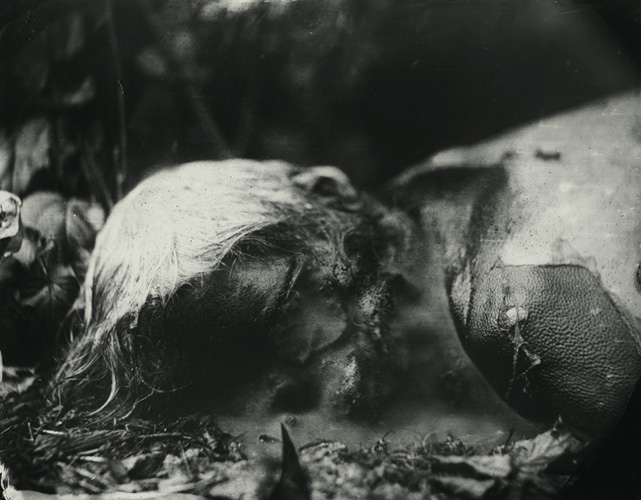
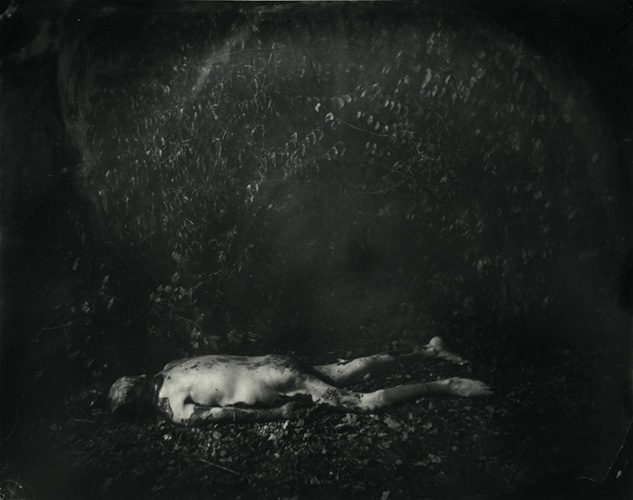
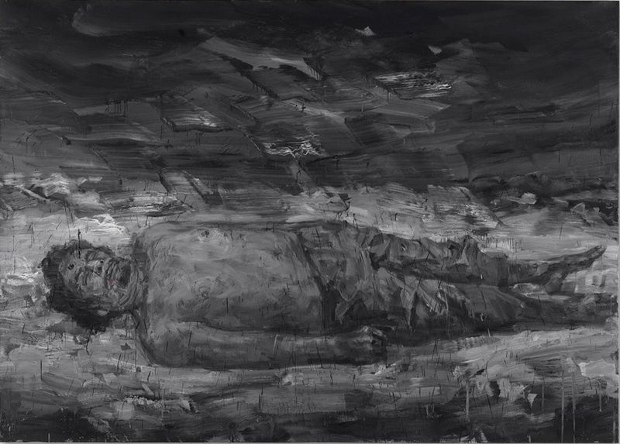
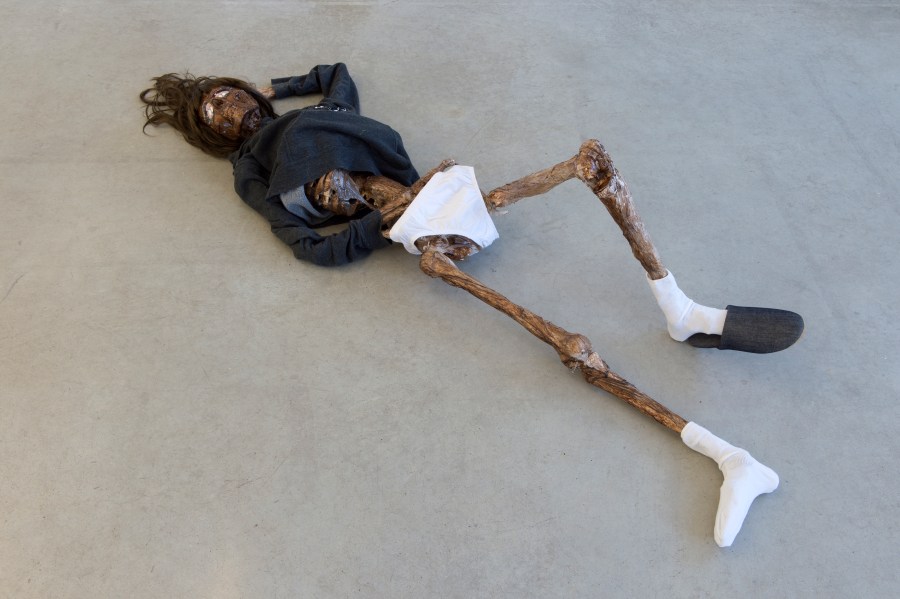
Long Gone


Everett Ruess
Missing Since November 1, 1934
Distinguishing Marks/Features: Unknown

Everett Ruess was an artist who spent time alone in the wilderness. In November of 1934 (the exact day is unknown), he was seen in Escalante Canyons, Utah, as he traveled towards Arizona for the winter. Later, his two burros were found corralled with gear in Davis Gulch. Ruess’s probable last camp was found in Cottonwood Canyon, and footprints were followed to the base of Kaiparowits Plateau. “Nemo, 1934” was found scratched into the wall of a nearby cave.


Richard David Marlow
Missing since July 18, 1944 from Etobicke, Ontario, Canada
Marks, Scars: Scar at edge of hair on one temple.

On the evening of July 18th, 1944, Richard Marlow went missing and has never been found, nor his body recovered. The small, shy boy was riding his bicycle in front of his house on Beta Street, Etobicoke, with his brother inside the house. The bike was found at the house when Richard’s mother returned home that evening but Richard had vanished. Etobicoke Police conducted a search, as did the army militia, with no results. Richard was a good child at home and in school, with no reason to run away.


Kenneth Warren Hager
Missing since April 9, 1947 from Baltimore, Maryland
Marks, Scars: Hager has a scar on his head and has epilepsy.

Kenneth Hager walked out the door at 1637 Lansing Avenue, Baltimore, Maryland after taking a piece of ice from his mother. Hager had disappeared once before about 2 years prior to this disappearance. At that time he had made his way back to his old home located at 2100 block East Chase Street. He was found talking to a neighbor and had suffered what appeared to be cigarette burns from a person he described as a “bad boy”. He enjoyed cars and would, therefore, get into any car, if he was asked to. He was spotted on a few occasions just after his disappearance. A neighbor of the Hagers’, recognized him at the corner of Dundalk and Eastern Avenues that afternoon. Also, a family friend of the Hagers’, told Mrs. Hager that in 1962 a young man about 26 or 27 was seen in a grocery store in Dundalk. He was unable to speak, but had handed her a grocery order to fill, and she did so. He never returned to the store and no one has seen or heard from him since.


Paul Gordon Love
Missing since October 2, 1947 from Galesburg, Illinois
Distinguishing Characteristics: White male.

Paul Love disappeared from the University of Illinois Galesburg branch on October 2, 1947. Paul Love of Hinsdale registered at the U of I branch campus on the grounds of the former Mayo Hospital in Galesburg following his release from the Army during World War II. He was last seen in downtown Galesburg where he attempted to cash a check at a music store for the purchase of a record. The request to cash the check was declined and Love said he would be back later. The state police mobile laboratory carrying grappling and diving equipment was brought in to help search both Lake Storey and Lake Bracken. When the search of the countryside failed to produce any results, local, state and federal authorities continued the search with no results. Six years after the disappearance of Paul Love, human bones were discovered on a farm three miles east of Wataga. Naturally speculation was that the remains might be those of the missing student. Another report linking the bones to the missing student was the examination of a .22-caliber Marlin rifle that was discovered near the scene of the bones. Finally in early March 1953 it was concluded the remains were not those of Love. The conclusion was arrived at by comparison of dental records.


Ronald Henry Tammen, Jr.
Missing since April 19, 1953 from Oxford, Ohio
Distinguishing Characteristics: White male. Brown hair, brown eyes and muscular build.

Tammen was last seen in old Fisher Hall, at Miami University, in Oxford, Ohio on April 19, 1953. Ronald Tammen was a hardworking Miami University student until the night on April 19, 1953, when he walked out of Room 225. About 20:30 he entered his room after returning from a road engagement with the Campus Owls, a dance band for which he played string bass. Outside sat his 1938 Chevrolet sedan. It was reported that he heard something that disturbed him, and he went into the hall to investigate. He left his wallet, car keys and personal items on his desk. He also left the lights on, a book open, the radio playing and his clothes in the closet. His bank account, with about $200, remained active. Authorities checked all bus, rail and air terminals. The Air Force ROTC sent 400 men to help students search the countryside. Friends and family, from Maple Heights, near Cleveland, said Mr. Tammen wouldn’t leave without telling them. At first, police developed an amnesia theory, but later they did consider that he might have deliberately disappeared. Later that night Mrs. Carl Spivey in Seven Mile, about 15 miles east of Oxford, heard a knock on her door. She saw a young man — who fit Tammen’s description — standing outside. When she opened the door, he asked her how to get to the bus station. As there was no bus station in Seven Mile, she told him to go to Hamilton. She noticed he had a smudge of dirt on a cheek and his eyes were vacuous. Snow was on the ground that night, but he wore no coat or hat. She shut the door and expected to hear his car start, but it didn’t. Then she realized the young man was walking. There’s every belief he was Ronald Tammen. The supposition is that he had an attack of amnesia.


Clifford Edward Sherwood
Missing since October 21, 1954 from Verdun, Quebec Canada
Marks, Scars: Sherwood has a scar on the back of his left hand.

Sherwood disappeared on his way to school with his friend, Georges Gumbley. At the time, Clifford was living alone with his mother in Verdun. His father had the custody of Clifford’s four sisters and they were all living in the Vancouver area. He is thought to have been abducted by his now-deceased non-custodial father. He was estranged from Clifford’s mother and lived in B.C. when Clifford vanished. Clifford had a distinct stutter and made a puzzling phone call to his aunt the next day. “He said: ‘Auntie, Auntie Hilda!’ Then the line went dead.


Howard Newell
Missing since January 22, 1955 from Yarmouth, Nova Scotia, Canada
Classification: Endangered Missing

On January 22, 1955, Howard Newell vanished while walking home from a woodlot where members of his family were cutting firewood. In the days and weeks that followed, the largest search in Yarmouth County history unfolded in the woods and marsh areas of Little River Harbour. More than 1,000 searchers scoured the area searching for the little boy, but there was never any trace of him. The police concluded that the boy had likely drowned and his body had been washed out to sea.


Luciano Cobianchi
Missing since July 10, 1956 from Domegge Di Cadore, Belluno, Italy
Distinguishing Characteristics: White male. Straight blond hair; light-colored eyes.

Cobianchi was last seen while on a holiday in Domegge Di Cadore, Italy on July 10, 1956. In the autumn of 1955 Cobianchi entered the seminary of Casier di Treviso On July 10, 1956 the group of young seminarians left Casier di Treviso to go to Domegge di Cadore, Belluno, Italy for a short holiday. The following day, while the lunch was being prepared, the boys went to visit the church of Domegge. They were accompanied by a superior of the seminar. They went further to the Piage by the Val di toro road to reach the refuge of Padova. After a hundred of meters they were called back as the lunch was ready. They all came back except Cobianchi, who told his friends he was going to go to the top of the last summit and then would come back. But instead he disappeared.


Thomas Eldon Bowman
Missing since March 23, 1957 from Upper Arroyo Seco Canyon, Pasadena, Los Angeles County, California
Dentals: Available. Gold bands on back of his teeth, several silver fillings.

On March 23, 1957, Bowman, along with his family was hiking in the Arroyo Seco Canyon area. When the family arrived back at the car, Bowman was no where to be found. Law enforcement was notified and numerous searches were done, to no avail. In March 1970, Mack Ray Edwards surrendered to police and confessed to murdering 6 children between 1953 and 1970. He once claimed to have killed 18 but in 1971 while on death row he committed suicide. Edwards confessed and was convicted of the murder of Gary Rochet, Donald Allen Todd, and Stella Darlene Nolan. He also confessed to killing Brenda Jo Howell, Donald Lee Baker, and Roger Dale Madison. He was never charged with the murder of these children because their bodies haven’t been found. He is suspected in the disappearances of Bruce Kremen, Karen Lynn Tompkins, and Thomas Eldon Bowman.


Jesse Work
Missing since February 6, 1959 from Hemet, Riverside County, California
Distinguishing Characteristics: White male. Sandy blond hair; green eyes.

Jesse and his 15 year old female friend, Joyce Ramsey went missing together. They were last seen late in the night of February 6, 1959, when they dropped off a friend after attending a party. Work’s convertible was found abandoned on a dirt road near Hemet the next day. Jesse Work was an apprentice lather at the time. Frank Phillip Kretz confessed to the murder of both victims and the body of Joyce Ramsey was found north of Indio in 1971, but Jesse’s body was never found.


Bruce Kremen
Missing since July 13, 1960 from the Angeles National Forest, Los Angeles County, California
Clothing: Blue jeans and a white t-shirt with the words “Summer Fun Club” printed on the front.

Bruce was last seen on July 13, 1960 near Buckhorn Flat in the Angeles National Forest. A group of 80 Los Angeles YMCA camp children were led on a supervised hike near Buckhorn Flat in Angeles National Forest. Bruce was missed only minutes by his buddies. They thought he had turned back. In March 1970, Mack Ray Edwards surrendered to police and confessed to murdering 6 children between 1953 and 1970. He once claimed to have killed 18 but in 1971 while on death row he committed suicide. Edwards confessed and was convicted of the murder of Gary Rochet, Donald Allen Todd, and Stella Darlene Nolan. He also confessed to killing Brenda Jo Howell, Donald Lee Baker, and Roger Dale Madison. He was never charged with the murder of these children because their bodies haven’t been found. He is suspected in the disappearances of Bruce Kremen, Karen Lynn Tompkins, and Thomas Eldon Bowman.


Lyndal B. Ashby
Missing since October 23, 1960 from Hartford, Ohio County, Kentucky
Marks, Scars: Scar above right eye; 3″ scar on left forearm; 3″ scar on right forearm; 1″ scar on left hand; 5″ scar on right thigh; and 1″ scar on left knee. Broken jaw, fractured ribs.

Lyndal Ashby was last seen in Hartford, KY on October 23, 1960. He may have been headed to California.


Scott Andreas Douglass Sims
Missing since December 9, 1961 from Wichita Falls, Texas
Clothing: A black coat over a black turtleneck sweater, blue jeans and a black knit cap. Andy wore glasses.

On December 9, 1961, Andy Sims vanished. Andy was home between 12.00 and 12:30 when his mother called the house and talked to Donald. Donald reported Andy left the house between 12:45 and 13.00 to go out to play. Ellen Sims returned home about 14:30. Members of Andy’s family were the first to search for him. The boys’ mother sent Donald out to look for his brother, and other family members joined in the unsuccessful search. One person reported seeing someone who matched Andy’s description at the Boy Scout Hut near Lake Wichita about 15.00, December 9, just a few hours after Andy left his house. Lake Wichita was searched several times, and it was dragged. Nothing turned up any trace of Andy despite searches by land and by air. Some of Andy’s friends told police he liked to play in some caves near Fairway Boulevard, but checks there turned up nothing.


Keith Bennett
Missing since June 1964 from Longsight, England, United Kingdom
Distinguishing Characteristics: White male. Blond hair. He wears glasses.

In 1964 the infamous Moors Murderers approached a young boy at a fair. His name was Keith Bennett. Myra Hindley dropped some boxes she was pretending were Christmas presents and asked Bennett to pick them up. Pretenending she needed help to unload them at her home, she asked Keith to go with her and Ian Brady. Thinking he was helping, Keith got in the car. The car was driven to Saddleworth Moor. Hindley claimed she had lost a glove and asked Keith to help look for it. Brady then brought Keith with him to a remote area. Half an hour later Brady returned, alone. He had sexually assaulted Keith and strangled him with a piece of string before burying him. When Hindley and Brady were arrested they denied murder. They went to prison. Years later they confessed and attempted to help locate the bodies. They found four of their five victims. Hindley is now deceased. Neither of them could remember where they buried Keith Bennett. All that is known is that his body is buried somewhere on Saddleworth Moor near a stream.


Terry Lee Westerfield
Missing since September 12, 1964 from Fayetteville, Cumberland County, North Carolina
Scars: Appendix scar

According to police reports, the boys’ stepfather dropped Terry and his younger brother, Alan, off at Fayetteville’s Broadway Theater, on Hay Street, at 17:30. The stepfather stated he returned to the theater about 20.00, and the boys were gone. When the boys vanished, authorities were not sure if the brothers ever made it to the theater. Neither child was ever heard from again and police think the boys were killed the day they disappeared. Heavy rains from hurricane Dora late that night and the next morning hampered the search.


James A. McQueary
Missing since October 15, 1964 from Fairfax, Ohio
Clothing: Blue & yellow horizontal striped polo shirt, brown trousers. Tan high topped shoes.

October 15th, 1964, people saw Jimmy McQueary and best friend Johnny Hundley around the village. They were at the Frisch’s Mainliner Restaurant located at 5770 Wooster Pike, Cincinnati on their way to John’s house. The boys never came home and were reported missing at 8:30pm. The boys were best friends and it would be uncommon to find either boy without the other. Three years after the disappearance a 17 year old said he could lead police to the crime scene. He was stationed in San Diego when he told a minister he murdered the boys. The young man lived in this home in Fairfax when the boys disappeared. He says he stabbed them to death buried them across the street. Police never found them. The AWOL Marine then said he made up the story to get out of the service.


Ronald Joe Cole
Missing since May 1, 1965 from Fillmore, Ventura County, California
Marks, Scars: Scar on left cheek.

Cole was last seen on May 1, 1965 at his home in Fillmore CA. Cole reportedly came up from San Diego in 1965 to stay with his half-brother, David LaFever, in Fillmore while he looked for a job and that was the last time he was seen alive. Foul play is suspected.


Archie Joseph Laroque
Missing since November 22, 1965 from Laroque Lake, Saskatchewan, Canada
Clothing: Winter clothing, winter boots, and white coveralls.

On the 22nd of November, 1965, Archie Laroque was hunting with six other persons near Laroque Lake, 25 miles east of Carrot River, SK. The hunting parties split up and Archie was last seen walking in an area alone. Extensive ground and air searches were conducted, however, Laroque was never located.


Anthony Peter Tumolo
Missing since October 15, 1966 from Philadelphia, Philadelphia County, Pennsylvania
Scars: Scar on right cheek.

Anthony was last seen on October 15, 1966 leaving his house on his bike, to go to a friend’s house. The boys had spent the morning delivering “Inquirer” papers. Afterward, they hung out with friends on the steps of nearby Lady of Consolation School, where they were eighth-graders. They parted just before 15.00 to head to their respective homes for supper, planning to meet up again afterward. Anthony never arrived at his friend’s house and has not been seen or heard from since. As his parents thought he spent the night at his friends house, they didn’t discover he was missing until Anthony failed to return home to deliver his newspapers the next morning. At first detectives figured the teen had a motive to run away. Just before he vanished, Anthony had argued with his parents about his paper route, which they wanted him to quit to focus on his school grades. Anthony had left an uncashed paycheck, some money and all his belongings in his bedroom. Anthony is described as stubborn and independent, and naive. He was very family oriented.


William Leslie Arnold
Missing since July 15, 1967 from Lincoln, Lancaster County, Nebraska
Marks, Scars: A small scar in the center of his forehead, a vaccination scar on his upper right arm, and moles/scar on his right cheek.

William Arnold was last seen in Lincoln on July 15, 1967.


Mark Wendell Wilson
Missing since November 4, 1967 from Quincy, Plumas County, California
Marks, Scars: He has a slight dimple on one of his ear lobes.

Wilson was last seen on November 4, 1967 in Quincy, California. He left his home to go to the movies and has not been seen since.


John Wade Wagner
Missing since February 17, 1968 from Monroe City, Marion County, Missouri
Marks, Scars: Has “tic tac toe” shaped scar on stomach.

John Wagner was last seen dropping off his brother at a school dance at approx 20.00 on February 17, 1968 in Monroe City, MO. John failed to pick up his brother after the dance. The truck that John was driving was found in an alley off of Main Street in Monroe City, MO. John Wagner has not been seen or heard from since.


David William Adams
Missing since May 3, 1968 from Issaquah, King County, Washington
Distinguishing Characteristics: Dimple in left cheek.

David Adams went missing May 3, 1968, while returning alone from a friend’s house to his home on the 14000 block of 240 Avenue S.E. More than 1,000 searchers, with the aid of dogs, combed Tiger Mountain in the days following his disappearance, but he was never found. David was a third-grader at Clark Elementary School at the time.


Robert James Brown
Missing since August 3, 1968 from Pefferlaw, Nazarene Camp, Ontario, Canada
Clothing: Plaid, red and black shirt; blue jeans and black work boots.

On August 3, 1968, at approximately 16:30, Robert James Brown was last seen walking to his residence in the Village of Wilfred, Ontario, from the Nazarene Camp. The Nazarene Camp was a Christian camp where Robert’s mother worked as a volunteer. He failed to arrive home and was reported missing to the Georgina Township Police Service. The investigation revealed that a person matching Robert James Brown’s description was observed in the vicinity of Georgina Beach at the approximate time that Robert was last seen. Numerous land and water searches failed to locate him.


Sammy Lloyd Jackson
Missing since December 14, 1968 from Monterey, Monterey County, California
Distinguishing Characteristics: White male. Brown hair; brown eyes.

Jackson was last seen fishing with Alfred Grimes on December 14, 1968 in Monterey, California.


Roger Dale Madison
Missing since December 16, 1968 from Sylmar, Los Angeles County, California
Marks, Scars: None

Roger Dale Madison was last seen on December 16, 1968 in Sylmar, CA. He was a friend and classmate of the son of serial killer Mack Ray Edwards. Edwards told police he stabbed Madison repeatedly while they were in an orange grove and that he buried him under the 23 Freeway in Thousand Oaks which was under construction. Edwards was working on the project and said he used a bulldozer to bury the youth. In March 1970, Mack Ray Edwards surrendered to police and confessed to murdering 6 children between 1953 and 1970. He once claimed to have killed 18 but in 1971 while on death row he committed suicide. Edwards confessed and was convicted of the murder of Gary Rochet, Donald Allen Todd, and Stella Darlene Nolan. He also confessed to killing Brenda Jo Howell, Donald Lee Baker, and Roger Dale Madison. He was never charged with the murder of these children because their bodies haven’t been found.


Bob Louis Richard Boyes
Missing since December 26, 1968 from Port Republic, Calvert County, Maryland
Marks, Scars: He has a scar on his upper lip.

Boyle was last seen in Port Republic, Maryland on December 26, 1968. He has never been seen or heard from again.


James Richard Howell
Missing since May 28, 1969 from Sterling, Whiteside County, Illinois
Clothing: Blue jeans and a white T-shirt. White tennis shoes.

Howell and his sister, Debra, were playing in the front yard of their home on West 13th Street in Sterling, Illinois on May 28, 1969. Jim was going to build a cage for his birds. Deb went into the house to get some nails and a hammer. When she returned about a minute later, the boards Jim had with him to build the cage were scattered along the street in front of the residence and Jim was gone. Newspaper reports from days, months and a year after Howell’s disappearance reveal several supposed sightings of the boy. A newspaper account states Howell’s stepfather saw him a short time after he apparently left home looking for wood to build a birdcage, across the alley with another boy from the neighborhood, and a neighbor reported seeing him walk across a nearby field with the pigeon under his arm. Police were notified the following day, after the boy’s mother and stepfather apparently had spent the night searching for him. A neighbor called at 22:35 on May 28, 1969, to report Howell’s disappearance.


Dennis Lloyd Martin
Missing since June 14, 1969 from Spence Field, Blount County, Tennessee
Dentals: At the time of disappearance he was missing one front tooth.

Dennis Martin disappeared on June 14, 1969 from the Spence Field area of the Smoky Mountains National Park. Martin was last seen between 14.00 and 16.00 that day as he played a game of “Hide and Seek” in the park, near the Appalachian Trail. He disappeared behind a bush in the area and has never been seen again. He lived in Knoxville, Tennessee with his parents. He was a special education student at the time of his disappearance. At the time of the disappearance, his father described Dennis as a husky, healthy boy who was not particularly afraid of anything. He had some experience camping and hiking in the mountains with his family.


Steven Paul Newing
Missing since September 2, 1969 from Fakenham, Norfolk, England, United Kingdom
Distinguishing Characteristics: Freckles.

Newing was playing near his home in Lee Warner Avenue, Fakenham, just days before his 11th birthday when he vanished. One theory was that he had fallen down a disused well shaft of an old sawmill nearby, but it is widely believed that he was abducted. A hostel was named after him in May 2003 in Fakenham and dedicated by his mother Jean. It is for young homeless people between the ages of 16 and 25.


Patrick Paddon
Missing since November 1969 from Dartmouth, Nova Scotia, Canada
Items: He had flares and a rifle, matches and food in his knapsack.

In November of 1969, Patrick Paddon was hunting with his father and uncle in woods near the Upper Stewiacke and Riversdale areas of Colchester County. Patrick told his uncle he was going to cross a road in the woods and his uncle said they’d meet him there. He just went across the road but that was the last time anyone saw him. A Grade 11 student at Prince Andrew High School, Patrick was the subject of an extensive search in a 72.5-square-kilometre search area that continued for two weeks. Not a trace of him was ever found.


Peter Joseph Bonick
Missing since February 22, 1970 from San Mateo, San Mateo County, California
Distinguishing Characteristics: One shoulder blade is larger and/or higher than the other shoulder blade due to Idiopathic Scoliosis.

Bonick was last seen in in the morning hours at his residence in the vicinity of the 2000 block of Ginnever Street in San Mateo, California on February 22, 1970. He was later seen hitchhiking on SR-92 to Half Moon Bay, California. He has never been heard from again.


Jimmy Allen Williams
Missing since November 20, 1970 from Sayre, Beckham County, Oklahoma
Clothing: Denim jeans; boots; possibly a denim jacket.

On the night of November 20, 1970, Jimmy Allen Williams, Thomas Michael Rios, and Leah Gail Johnson were riding around Sayre, Oklahoma in Jimmy’s 1969 blue Chevrolet Camaro with white top and tag number BK 3610. (VIN 124379L517123). Although, when Jimmy left home for the evening he was supposed to be going to a football game in Elk City, Oklahoma, the possibility exist that he was going to go hunting on Turkey Creek road with Thomas Michael Rios and Leah Johnson. The road referred to as Turkey Creek road is E1230 although the they could have been on E1220. (between N1810 and N1850) The three kids never came home that night, and have not been located since. Also the 1969 Camaro has never been located. Jimmy’s Social Security number has never been used since that time and the vehicle identification number has never turned up.


Michael Duane Burnett
Missing since March 17, 1971 from Oroville, Butte County, California
Marks, Scars: Missing part of left lung. He has a scar on the left side of his chest. A small scar by his right eye. He is left handed.

Michael was last seen on March 17, 1971, in Oroville. Michael left his house on Claremont Drive to walk to school. He apparently never arrived. There were no problems in his home life that would have caused him to run away. It is believed, however, he was attacked by boys from another school a few days before his disappearance. Foul play is suspected.


Douglas J. Legg
Missing since July 10, 1971 from Oswego County, New York
Clothing: Shorts and a short-sleeve shirt

Douglas Legg was visiting his uncle at the family estate on the Santonini Preserve in Newcomb. On July 10 Douglas headed out on a family hike into the nearby Adirondack wilderness. His uncle sent him back to the estate to change into long pants to protect himself from poison ivy. A clear trail led from where he left his family members to the house, which could be seen in the distance. But somewhere between those two points, Douglas disappeared and was never seen again. When he didn’t return, the family postponed the hike and began to look for him. It was about 15.30 when they last saw him.


Thomas Allen Meuse
Missing since August 9, 1971 from Schenectady, Schenectady County, New York
Marks, Scars: Scar on his left eyebrow from a dog bite.

Thomas was last seen in Schenectady, New York on August 9, 1971.


Johnnie Joe Herrera
Missing Since August 27, 1971
Distinguishing Marks/Features: Scar on the bridge of his nose. Burn mark on the elbow area (unknown which elbow) caused by the grill of a floor heater. Black mole or beauty mark on the top of one of his feet between the big toe and the next toe.

Herrera was last seen at a bachelor party in Oxnard, California, on August 27, 1971. He never returned home. His light blue VW Volkswagon, license ZWM775, was never recovered. There is no DMV history on the license plate.


John Ashley, Jr.
Missing since December 14, 1971 from Wilmington, New Castle County, Delaware
Marks, Scars: Right hip congenital defect. Previous transverse (1-17-67) fracture of second metatarsal involving proximal portion.

John J. Ashley, Jr. was last seen walking home after attending school and basketball practice. Another 17 year old Wilmington boy disappeared the same night and was later found drowned, February 1972 in Wilmington.


Richard William Griener
Missing since January 17, 1972 from Pekin, Tazewell County, Illinois.
Clothing: Griener was wearing a gold colored nylon jacket with attached hood, a long brown ski mask, blue jeans, green rubber insulated boots and carrying a blue plastic roll up toboggan.

According to his mother, Richard Griener left home, which was located at Brentwood Court, at about 16.00 walking four blocks to a local snow sledding hill in the city park. He had to cross a large railroad switch yard to get there. He was seen by friends on the hill at about 17:30 and was never seen again.


Alewijn Sterk
Missing since April 24, 1972 from Amsterdam, Netherlands.
Medical: Suffered from bouts of depression.

Sterk was last seen in Amsterdam on April 24, 1972. He was moving in the alternative circuit. Sterk was active in the “anti-violence” movement.


Adrian McNaughton
Missing since June 12, 1972 from Lake, Brougham Township, Ontario, Canada
Marks, Scars: Scar – 2 inches long on forehead – over which eye is unknown.

Adrian McNaughton who lived in Arnprior, was last seen wandering into a wooded area near Calabogie where he had been fishing with his father and three siblings on Holmes Lake — around 100 kilometres west of Ottawa, on June 12, 1972.


James Colin Egan
Missing since August 6, 1972 from Mequon, Ozaukee Co, Wisconsin
Distinguishing Marks: Left hand is slightly deformed from an accident.

James was last seen on August 6, 1972. He was last known to be traveling from California to Wisconsin. James called family from San Francisco, California on August 6, 1972 to inform them he was traveling back to Denver, Colorado to get a flight home to Wisconsin within the next week. Egan was hitchhiking. His family never heard from James again.


René Bessette
Missing since December 20, 1972 from Laval, Quebec, Canada.
Distinguishing Marks: Unknown

Bessette was abducted by his non-custodial father from Laval, Canada on December 20, 1972, leaving behind his mother, sisters and a brother. A few hours after the kidnapping, the father’s vehicle was found abandoned on the Victoria bridge in Montreal.


*

p.s. Hey. ** Dominik, Hi!!! Cool, long time no see! Your time away sounds busy and intense. Mine too, but I was mostly lying in bed in misery, so you win. I’ve been sick, but I’m fighting my way to post-sickness with relative success. This year? Gosh, tons of unknowable things, I hope. So good to see you. I missed you a lot too. Love lengthily missing in action but happy to be, G. ** Chris Kelso, No, I think you’re like me — capable of producing evil on the page but only pussycats IRL. Well, David Leo Rice is a good second recommendation, so maybe I’ll tiptoe into the first few pages at least. Excellent about the impending film. It’s true: post-production is a real trial by fire. It can be largely fun in ideal circumstances, but how often does that happen. Have a transcendent ’26. ** Laura, I can 100% assure you that I do not want to be Peter Orlovsky. I met him a couple of times and did a reading with him once. I knew Allen, and he was really not Verlaine-like in reality. Nice that you know Solomon’s films. The film world’s conservatism makes him hard to get to know. Yury’s asleep at the moment, but I’ll ask him once he has roused himself. Today? Seeing a chiropractor, I think, because my lower back is fucked up. It likes to fuck up on me a few times a year, and its timing always sucks. Otherwise, the usual catching up. ** Uday, And happy New Year to you! I’ve never bought the NYE hype. I guess everyone aligning their days so that they all party at the same time once a year is kind of interesting. Yes, there’ve been at least a handful of posts that have been restored more than once. Usually when I particularly like it and time/internet changes has destroyed it. ** Dev, I believe you. Although everyone thought he was good in the Dylan film, and I certainly did not. I’ll test it at some point. Good to know these things. Thanks, pal. ** Jack Skelley, I’m feeling better from the waist up, but my back went out, so I’m shit from the waist down. Temporarily. Fucking life, man, what the hell is next?! ’26 should be a corker though. For you and me both. No? Sunday’s your big day, get ready, xo, me. ** jay, His films are gorgeous. Have I already asked you if you’ve played ‘Clair Obscur: Expedition 33’? Seems like everybody’s going crazy for it. And it’s French, so I’m curious. I’m chasing health like a wildcat, and it will relent or my name is not my name. Enjoy today’s chilly but bright whatevers! ** James Bennett, No argument at the moment on the antibiotics lionizing. Obviously luck with the Gluck shebang, and wish I could be there, duh. I think if you already know the Cycle, reading it backwards is totally fine. If you didn’t know it, I do think starting at the front is highly recommended if poss. Michael Silverblatt is the best reader, as they always say, and which is true. His show is so missed. Hug in return from me. ** Bill, I am doing better, but my lower back did its rebellious number on me, so now I have to fix that. Solomon’s stuff is wonderful. ** Carsten, Well, Yury was my boyfriend for a long time but not anymore. So that’s probably why. The illness recovery is good. My back went out, and it’s painful as fuck, so now I have to fix that, but that should be easy, I hope. Normal does seem like a pipe dream. ** Connie, Cool. The socks thing. One of the main characters in Zac’s and my next film is a little boy who makes hand puppets out of his dad’s old socks. Not getting Xmas gifts anymore is compensated by not having to give others Xmas presents. So now Xmas is all atmosphere, which is kind of nice. They claim it’s going to snow here all next week, but they’ve said that before and then 5 minutes of scattered flakes is what ensues. Utrecht is a nice city. And it’s a quick hour or less from Amsterdam. That sounds promising. ** Steeqhen, I did three days of steroids, and, yeah, they certainly helped. Orly is so convenient now that the 14 line goes there. Beavais, on the other hand, is hell. I would assume encyclopedic knowledge is the top priory for the Dr. Who store. It must be Who Geek central, no?  ** HaRpEr //, HNY! Yeah, I think that might be my favorite Solomon. Worth trying for sure, it sounds like. When I was in LA last, my roommate was obsessed with some British TV program where celebrities pose as life models for amateur painters and you watch the celebrity pose and the painters paint. It was strangely interesting. They weren’t nude though, being celebrities and everything. Your thinking about the state of your current writing is exciting. ** Dr. Kosten Koper, HNY to you! I don’t know, but it wouldn’t surprise me in the slightest if that title is an Ochs reference. Yes, RIP Ken Downie. That was sad news. I really liked The Black Dog. I think they’re referenced in my novel ‘Guide’ even. Let me … Everyone, Dr. Kosten Koper suggests you take a listen to The Black Dog’s great track ‘Virtual’, and I concur. He says. ‘Youngsters out there bear in mind this Allen Ginberg sampling (“world world world I sit in my room and imagine the future”) monster came out in 1989’. Here. ** Okay. Today I give you another one of these melancholy posts of a certain sort that I seem to like to make. See you tomorrow.
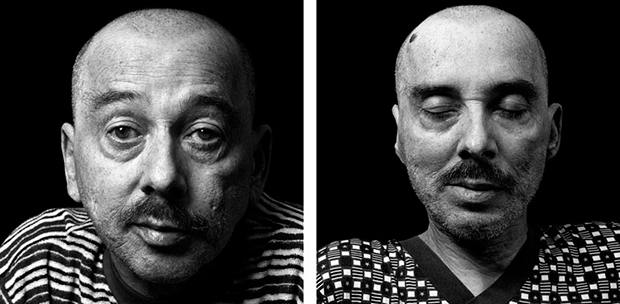
Phil Solomon Day *

* (restored/expanded)


‘Since the family of the great artist and experimental filmmaker Phil Solomon posted news of his passing on Facebook this past weekend, hundreds of condolences and notes of appreciation have followed. Some come from former students—Solomon was a popular professor at the University of Colorado Boulder—while others are from virtual friends Solomon met on the platform where, as Kyle Harris notes in Westword, he enjoyed discussing “underground creative luminaries in music, film, art and literature.” Many comments, of course, are from those who have seen his films and video pieces, either at one of the two Whitney Biennials that have included his work or in any number of the permanent collections at the Museum of Modern Art, the Chicago Art Institute, the Oberhausen Film Collection, and several other prestigious institutions. “Although part of a long avant-garde tradition, Mr. Solomon makes films that look like no others I’ve seen,” wrote Manohla Dargis in the New York Times in 2005. “The conceit of the filmmaker as auteur has rarely been more appropriate or defensible.”

‘Solomon freely admitted in countless interviews that it initially took some time to develop an appreciation for that long avant-garde tradition. When he decided to study cinema at SUNY Binghamton in the early 1970s, he expected to be watching the great works of the new waves from Europe and the then-burgeoning New Hollywood. But the very first film that filmmaker Ken Jacobs screened on the very first day of class was Tony Conrad’s stroboscopic The Flicker (1966), and Solomon didn’t know how to even begin processing it. Where was the story, the narrative pull of the movies he’d grown up watching? “I didn’t know how to consider the screen as a formal rectangle with two-dimensional spatial tensions, rather than as a window to a daydream,” Solomon told Mike Plante in a 2006 interview. But Solomon eventually came around. While he also studied under Conrad himself, Ernie Gehr, Larry Gottheim, Dan Barnett, Saul Levine, and Peter Kubelka, Jacobs, he told Plante, “will always be my teacher, the source of all of it, the big bang for me.” The crucial turning point was a shot-by-shot breakdown of Stan Brakhage’s Anticipation of the Night (1958). As he told Federico Rossin in 2007, that was when “I began to grasp the concepts of visual metaphor and graphic analogies in the frame and on the cut.”

‘Another of Solomon’s oft-repeated admissions: His first films were outright imitations of Brakhage’s work. Solomon and Brakhage would eventually become close friends. They both taught in Boulder, and they collaborated on films such as Elementary Phrases (1994), Concrescence (1996), and Seasons . . . (2002). When Film Comment conducted a poll of critics, programmers, and teachers to come up with a list of the greatest avant-garde filmmakers of this century’s first decade, Solomon and Brakhage tied in fifth place.

‘But in the ’70s, Solomon was still forging his own style. The breakthrough was a 1980 black-and-white silent short called Nocturne. It “begins with a quavering line that slices across the frame like a searchlight, underscoring the two-dimensionality of the image,” wrote Manohla Dargis. “Like the first stroke of a painter’s brush, this line is merely a beginning, however, and soon gives way to swirling grain, dancing lights and the human figures that crowd Mr. Solomon’s work like fugitives.”

‘Films such as the Twilight Psalms (1999–2003) and The Snowman (1995) “are composed of photographic imagery in varying states of aggravated decay, with recognizable figures and objects emerging and resubmerging into bubbling cauldrons of film grain, thick chemical impasto, and an almost sculptural build-up and breakdown of emulsions,” wrote Michael Sicinski in Cinema Scope. Talking to Doug Cummings in 2013, Solomon described his process during this period. “I use several techniques, but all of them are aspects of optical printing, which is rephotography on a machine. Sometimes, I’m stressing the surface of the film with post-processing. Other times I’m exploiting something that’s already happened, which is to say the footage was molded or in a flood or something like that; it’s footage I found that was ruined and I amplify the textures.” He was open to serendipitous discoveries—but only to a certain degree. As he told Rossin, he liked “being surprised by what Stan called the ‘angels of film’ when they visit, but I am, alas, a bit of a control-freak and would love to be able to really work with emulsion with the precision of Vermeer.”

‘When Chris Kennedy programmed a Solomon retrospective in 2015, he noted that scholar Tom Gunning had grouped the filmmaker “with some of his contemporaries (including Lewis Klahr, Peggy Ahwesh, and Mark LaPore) in an essay titled ‘Towards a Minor Cinema,’ which acknowledged these artists’ turn away from the romantic ego of psychodrama (à la Stan Brakhage), the conceptualism of structural film (à la Michael Snow), and the political theory of New Narrative (à la Yvonne Rainer) to a more expressive lyricism of image and montage.” In 2012, David Bordwell noted that “Solomon agrees that he joined this deliberately ‘minor’ filmmaking tradition, exploring the fine grain of imagery and what Gunning calls ‘submerged narratives.’”

‘But that doesn’t make his work thematically minor. The word “alchemy” often appears in association with Solomon’s films—see Tony Pipolo, writing for Artforum in 2010, for example—and in an interview with Solomon for Issue magazine, David Grillo began by declaring, “I’ve often called you an alchemist of cinema.” Solomon responded by pointing out that the “metaphysical inklings to be found in my work are not so much about any kind of personified god or any specific kind of religion, but more along the lines of, say, the New England Transcendentalists.” In terms of influence—besides Brakhage, of course—Solomon told Plante that his films “seem much closer in their temperament, ideas, and tendencies to the form and content of certain—somewhat hermetic—poets like Emily Dickinson, John Ashbery, Wallace Stevens, and Jorie Graham. Or textural narrative painters like Albert Pinkham Ryder, Francis Bacon, and Anselm Kiefer. Or the polyphonic re-imagined, and re-remembered aural American narratives of Charles Ives. Or the ambiguous, lush, and mysterious ambient landscapes in the organic electronic music of Brian Eno.”

‘Solomon has referred to one of Ives’s major compositions, The Unanswered Question, as “the national anthem” of a piece originally commissioned as a multi-channel installation for the Corcoran Gallery of Art in Washington. American Falls (2000–2012), which has since traveled as a triptych, “offers a richly allegorical account of America’s rise and fall through a torrent of intricately distressed celluloid sourced from a disparate array of films and newsreels, and featuring everyone from Amelia Earhart to King Kong to Robert Oppenheimer to Charlie Chaplin,” wrote Leo Goldsmith at the top of his interview with Solomon for the Brooklyn Rail in 2012. “Through these distorted icons of the past, and amid waves of exquisitely mixed found sounds, Solomon locates a critical meta-history of the American mythos at the intersection of film’s decay and digital media’s ascendancy.”

‘Within a few years, Solomon was exploring the pixelated textures of digital media in a series of works that began one night as he and his close friend and fellow filmmaker Mark LaPore were wandering the virtual world of Grand Theft Auto. Together, they made Untitled (for David Gatten) in 2005, and when LaPore died shortly thereafter, Solomon created a series of works, In Memoriam (Mark LaPore), that includes Rehearsals for Retirement (2007) and EMPIRE (2008/2012), a nod to Andy Warhol’s landmark of structural cinema, Empire (1964). For Michael Sicinski, Solomon’s earlier works on film “are not nearly as disturbing as Untitled and Rehearsals. Yes, they thrust our eyes into fragility and dissipation, but there is a brute materiality at work. The celluloid, the shadows of a photographed world, even the thick, pulsing seas of decay that threaten to overtake them—these are all elements of the tangible universe. The new works, in part, replace chemistry with code, and in the process they seem to slip further away from us.”

‘Over the past few days, all across social media, Solomon’s name has rarely been uttered without some mention of the generosity of his spirit. “Phil Solomon changed my life the night of my first film course with him,” filmmaker Elisabeth Subrin tells Kyle Harris. “At the beginning of the class, he told all of us, ‘If you want to get famous, have great recognition as a filmmaker, make a good living or even just be understood as an artist, you should probably drop this class.’ Then he showed Maya Deren’s Meshes of the Afternoon and talked about cinema as only Phil could: precise, detailed, informed by art history, film history, poetry, cultural politics, and music. None of us dropped the class. He was a mesmerizing teacher.”

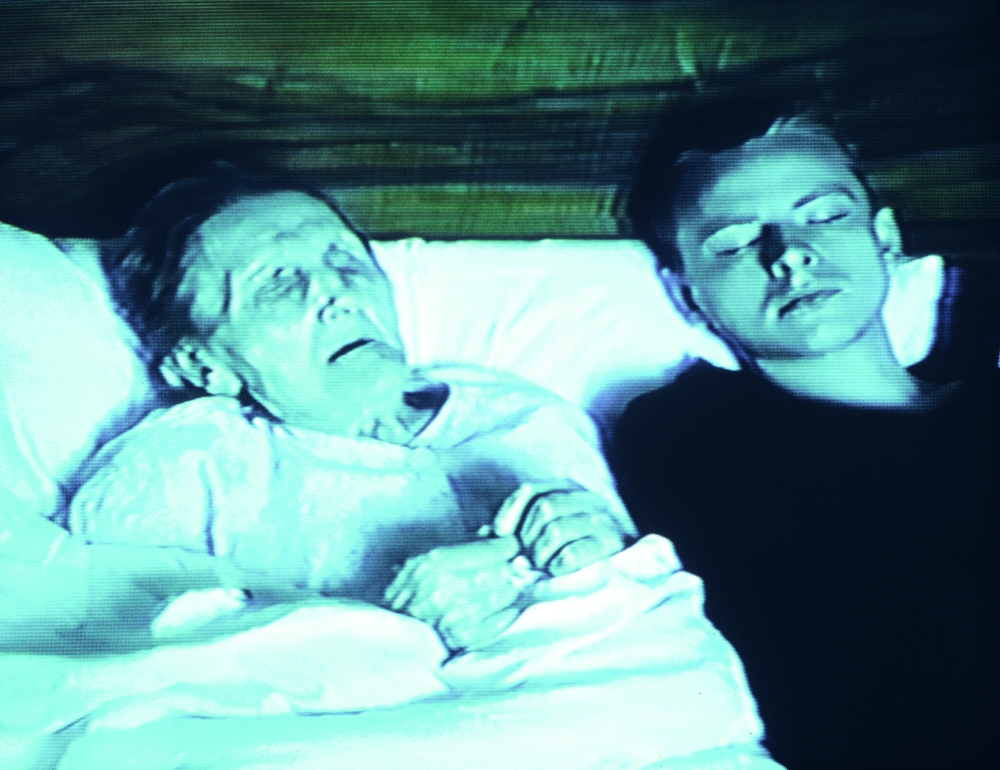
‘He was also one of cinema’s great eulogists. Alongside his memorial to LaPore, he reflected on the loss of his mother in Remains to Be Seen (1989/1994) and wrote eloquently about the passing of friends, colleagues, and artists he admired. See, for example, Lullaby (for Peter Hutton), a remembrance of the late filmmaker in verse. Naturally, one of the most moving of his eulogies was delivered at Brakhage’s funeral in 2003. “Impossible,” he said. “The headline in the local paper read: ‘Stan Brakhage Dead at 70’ but the mind simply cannot comprehend this combination and sequence of words. So perhaps they got it wrong, as they always do. Stan, I think I know the headline you might have written for yourself—something like: ‘It’s a (goddamned) Miracle that I’ve survived for seventy years!!’” Phil Solomon was only sixty-five.’ — David Hudson, The Criterion Collection


____
Stills


____
Further

Phil Solomon @ Vimeo
Phil Solomon @ Light Cone
RIP: Phil Solomon, Experimental Filmmaker
PHIL SOLOMON interviewed by David Grillo
What remains to be seen – interview with Phil Solomon
Account of Brakhage’s Funeral, by Phil Solomon
Cinema Immemorial: “EMPIRE” and the Experimental Machinima of Phil Solomon
“Twilight Made Manifest: The Films of Phil Solomon.”
Phil Solomon @ MUBI
CINEMAD interviews Phil Solomon
The Dream Machine: A Living Room Screening with Phil Solomon!
phil solomon: this long century
Darkness on the Edge of Town: Film Meets Digital in Phil Solomon’s “In Memoriam”
Phil Solomon (1954-2019)
THE FRAME, by Phil Solomon
Phil Solomon Visits San Andreas and Escapes, Not Unscathed
Letter to Phil Solomon, by Ken Jacobs
AMERICAN FALLS: An interview with Phil Solomon
Phil Solomon’s Historic Film Experiments, From U.S. Presidents to Grand Theft Auto
Towards a Minor-Key Cinema: Phil Solomon at Melwood


____
Extras


Phil Solomon at Young Projects


STAN PAINTING “VERY” AND “NIGHT MULCH”, by Phil Solomon


______
Interview
from Experimental Cinema


Where are you from? What’s the path that lead you to become one of the most interesting filmmakers of your generation?

I was born on January 3, 1954 to Sam and Ruth Solomon. We lived in Astoria, Queens, N.Y. until 1959, when we moved to Monsey, N.Y., which is about 30 minutes north of NYC, in what was then the emerging “baby boom” suburbs in that area. There were lakes and woods and dirt roads – it was just at the very beginning of the middle class trek out the cities. My entire block seemed to be middle class and jewish, so one wonders how these things get planned. But the point is I believe that my Jewish-American background and cultural identity does play out somehow in the hermetic/mystical/alchemical aspects of my some of my work.

I felt very safe, protected, and finally had my own room in the new house. I can see from my Dad’s slides and home movies that I was a kind of thoughtful and introverted child, and I remember often retreating to my room to create my worlds of fantasy with models, comic books, and watching television. Then came rock and roll and owning my own stereo, with headphones. Stayed in my room a lot during those days…

Did very well in high school, but we couldn’t afford a private school, so I went to Harpur College (SUNY Binghamton) exactly at the right moment in time in history, at the end of the Rockefeller endowment years when there was a lot of money around for hiring new professors and bringing in visiting artists. So I studied with, at one time or another, Ken Jacobs, Ernie Gehr, Larry Gottheim, Dan Barnett, Saul Levine, Tony Conrad, and Peter Kubelka.

I didn’t know anything about avant-garde cinema before day one (thinking that ‘art film’ was European new wave and the first American film school generation films of the late 60s/early 70s). I knew little about art or classical music. I was raised and suffused with American pop culture. First day of class, Ken showed Tony Conrad’s THE FLICKER, and my world was turned upside down. It took me a long time to see the map of where to and how to look at this kind of cinema, but it was a shot-by-shot breakdown of Brakhage’s Anticipation of the Night (where I began to grasp the concepts of visual metaphor and graphic analogies in the frame and on the cut) and seeing Ken Jacobs’ pedagogical masterpiece Tom, Tom, the Piper’s Son that opened up my eyes and mind and really offered “the path”, as you put it. Finding the optical printer (it arrived after I left Binghamton) was the next step…

Your work seems to be at the intersection of Ken Jacobs’ and Stan Brakhage’s works: but you pass over both the cool intellectualism of structural cinema and the self-indulgence of home movie aesthetics. How could you call your kind of filmmaking?

That is a very perceptive observation and one that I agree with. What I loved about Ken’s work was its rigor, its pursuit passed the initial flush of excitement into something deeply thorough, and his sense of the marvelous, uncanny image (I can always hear him saying, “look at this – fantastic!). He taught me to see all of film history with a different mind-set. The gesture of using found materials for him was one of rich context and deep respect for the original material, not the glib ironies of what I might call the “historical chauvinism” of many found footage pieces. Ken worked with what he considered revealing, beautiful or somehow getting to a deeper, submerged truth with use of historical materials and their illuminated trasnformations. Tom, Tom inspired the act of re-looking at and reconsidering the ostensible, the “evident”…Ken’s Nervous System and the performance pieces are about the ecstatic sublime, something that I longed for in my cinema as well – to be able to see, as Ken would have it, “the impossible”. To be hopelessly engaged in pre-language sensations of the wonderful…

I knew that I had to find a way around Stan. I was very drawn to the private and the personal, but I often have a deep sense of self-consciousness and embarrassment when shooting in the world. My films are deeply rooted in personal biography and iconography, but look toward a more allegorical (and symbolic) approach to the referent. The innermost rings of my films have references and meanings that are, in some ways, secret and unattainable; but I am banking on creating oneiric visions that tap into our subconscious storehouse of symbolic thinking. I am in search of the uncanny and the inevitable.The local and the universal. Images that are charged with wonder and seem to tap into some kind of truth – at least for me.

So, to answer your question, visionary cinema (from P. Adams Sitney) works just fine for what I am trying to achieve. That is more or less why there are no head or tail titles on the films. I want the visions to come on and recede, oceanic, vaporous, organic…

My films tell stories of a strange sort, with dream logic editing and poetic reverberations with each image and treatment.

Is the found footage in your hands the main propeller of the work? or do you use it only as material between the others?

Depends on the film. With Nocturne, the photographed material was primary, and the found material only came much later in the editing process, when I saw affinities between my time exposed night footage and night bombing sequences from WWII – that made the film have a much larger scope than I had originally intended. Again, with What’s Out Tonight is Lost, the found material served as emblematic images of childhood that reverberated against my fogged, elegiac footage of areas around my parent’s home. With The Secret Garden, you now have a change to where the found footage (The Wizard of Oz and a subtitled version of The Secret Garden) completely inspired the work, and my photographed material (mostly of water) acted as intermediate Edenic imaginings. Remains to be Seen and The Exquisite Hour are really the most balanced and integrated films in terms of the use of found and original materials, but both films depended upon finding the right materials at some point in their making to “bring them home” (the surgery materials in Remains, the16mm home movies in Exquisite).

The Twilight Psalms have a different approach entirely – instead of waiting for the found materials to find me, I went out hunting for specific images with a priori ideas.

How do you work out the found footage with optical printer and with chemical treatments?

Not sure what you mean exactly. If you mean technically, I treat the positive, processed images with chemical and organic treatments and then photograph it on the printer. Sometimes I dissolve between processed strips, other times I am treated a montage with built-in dissolves (that I already re-photographed). There are usually several stages to the process , with re-photography happening two or sometimes three times…

How often do you discover new things during the optical and chemical manipulation of the film? And how much do you want to control this process?

This is why they call it experimental film – I do indeed experiment a great deal, but I only use the results that best express the imaged moment. I usually discover a great many things in the beginning of a film or an untried particular process (like Psalm II: “Walking Distance”), but then begin to master the technique to the point where I can induce or predict certain results and then begin to take that further, using variations or just simply trying things. The quivering, tearful end of Psalm III: “Night of the Meek” came to me just at the end of the shooting phase – I tried something (with the printer), saw the result in “real time”, then guessed what it might look like at 24 fps. Once I saw the results, I did more, and got better at it.

I suppose I would have to answer that I would love to be able to completely control the process, but have the option to ask for serendipity to step in when I needed her…I like being surprised by what Stan called the “angels of film” when they visit, but I am, alas, a bit of a control-freak and would love to be able to really work with emulsion with the precision of Vermeer…

How much do you usually penetrate in the frame? How do you consider this work: is it an investigation or a material excavation?

Interesting question. Again, depends on the film. With The Passage of the Bride, I am often zoomed in (on the printer) as close as I can get. Same with parts of Seasons… (made with Stan Brakhage) and the subtitled sections of The Secret Garden. With Remains to be Seen and The Exquisite Hour, I only (substantially) move in for certain shots for isolation and emphasis. In Remains, I focus in on the bicycle rider during that sequence, and I also move in on the reflections of people walking by (Thoreau’s) Walden Pond and then turn it upside down for what I call the “walking angels” sequence. In Exquisite, I isolate the silhouette of the man in the nursing home from original super-8, so it becomes very grainy. Night of the Meek is mostly close to full frame throughout.

It is an investigation first (I pay attention to what the materials tell me), then an excavation (I need to dig deeper than the original materials by treating it somehow, adding layers of ambiguity to get to the truth – so it’s a kind of excavation in reverse), and finally a formal semblance of feeling.

Do you write a script before filming or do you always find out new things during the work?

Not a script as such, but I do keep notebooks and write down ideas and inklings as I daydream and percolate on the work. I am currently doing substantial research for American Falls, the 6-channel installation I’m doing in Washington, D.C. in 2009. But the reason I love this kind of filmmaking is because it is not contrived and then merely executed, but has a feeling of archeology, discovering ancient, hidden truths about “the world as I found it”. I love the adventure of putting together things that have never been placed together before to uncover what I call “inevitable ineffable”…

The first elements that impress the viewer of your films are the rhythm, the texture of the images, and a particular poetical resonance: music, painting and poetry are the all-bearing elements of inspiration for your works, cinema seems to be less important for you…

Hmmm. Yes and no. In terms of rhythm and texture and metaphor, yes, I look to music, painting, and poetry as the fount for ongoing inspirations. I keep those books open in my library all the time, to keep me company and to reaffirm my vision – and my vocation. But there is a narrative element in all of my work that comes directly from my initial love for the shared collective unconscious dream of the movies from my early years – the marvelous! magic! the miraculous! And mostly a sense of the illusory romance, of longing, of eternal wanting but not having…and many of my references are from the movies as well, particularly in my latest work (Last Days In A Lonely Place). I always wanted to find in poetic cinema the emotional depths that welled up, in profound recognition, from the depths of my soul in the very best of prosaic, narrative cinema, but without the shame of being falsely manipulated and hypnotized. One of the ways that I define art is that you remain you, and it remains it…a meditation on form. With most narrative cinema, you are no longer you…and that is the great pleasure of identification cues and fantasies, but it is not aesthetics as I understand it.

All your films have a strong poetic structure with metaphorical and allegorical echoes, themes and variations: a poetry of the dark, of the hidden, of the removed… and, at the same time, they are open to the viewer’s interpretation: how do you work on the borders?

Beautifully put. The truth is, I really don’t know what others actually see in my work. Very few people (except for yourself and few others) have taken the time to really go deep with them. They are mostly seen once or twice, but not more than that, where as I, being a teacher for 30 years, have seen many (most?) avant-garde films at least 20 or 30 times. So I try very hard not to think about “the others”, as I simply cannot speak for them. After being on this planet for some 53 years, I have still encountered so few people who care as deeply for the things that I do. The point is that the exhibition and reception of the work is a vital, but secondary part of my process. It is mostly social for me, with varying degrees of excitement at “being seen” and “having the floor”, or alienation from people only getting onto the most superficial aspects of what I do (when I get questions like “how did you do that?” or “what chemicals are you using”?).

My job, as I see it, is to try and pay attention to work at hand – to see and hear what the work demands, what it needs, and what is actually there, and what needs to be done to give it life, form, balance, and a “just right-ness”. Stan called this “the muse” – I call it an exquisitely sensitive concentration and a state of utter empathy with the…temper…of a given image, a given sound, a given structure. I then go out of my studio, on the road, as we say, and “host” the work, and quietly search the night skies of audiences in the dark for the “others who are like me”….do you see what I see? Am I alone? Does anyone else see the aching beauty of this cut or the uncanny “such-ness” of this image? Does anyone here love this as much as much as I do? The answers, however kind, are often fleeting and dependent of what everyone else needs at that moment. But when the films have the entire room, it is a tender mercy, a holy thing, a rarified air…


_______________
12 of Phil Solomon’s 21 films

____________
The Secret Garden (1988)
‘No filmmaker of the 1980s knew as much as Phil Solomon of affirming the importance of multiple layers in the visual production of images. Solomon perpetuates the Brakhagian tradition of creating a succession of images whose logic comes from a large number of rhythmic sources, formal, associative, and whose coherence passes from one source to another. Here, as with Brakhage, one must be spoiled in the trance offered by Solomon, and be sufficiently assured to follow a structure that is based as well on the melody, the harmonics and the flashes of metaphors as on a narrative plot. The Secret Garden is one of Solomon’s best films. Like Thornton and Klahr, there is the shadow of a story here, which has to do with the passage from innocence and experience to terror and ecstasy.’ — T. Gunning.


the entire film


____________
CLEPSYDRA (1992)
‘Clepsydra is an ancient Greek water clock (literally, “to steal water”). This film envisions the strip of celluloid going vertically through a projector as a sprocketed waterfall (random events measured in discreet units of time), through which the silent dreams of a young girl can barely be heard under the din of an irresistable torrent, an irreversible torment.

‘Solomon has evolved his technique so that in his latest work (‘Clepsydra’ – ‘waterclock’) the textures are constantly changing and are often appropriate to each figure in metaphoric interplay with each figure’s gestural (symbolic) movement. He has, thus, created consonance with thought as destroyer/creator – a Kali-like aesthetic ‘There is a light at the end of the tunnel’ (Romantic); and it is a train coming straight at us: … (and, to balance such, perhaps, with a touch of Zen) … it is beautiful!’ — Stan Brakhage


the entire film


Excerpt


STAN BRAKHAGE PHONE CALL re: “CLEPSYDRA”


______________
The Exquisite Hour (1989, 1984)
‘Solomon revisits familiar motifs of carousels and clocks, seen also in Clepsydra (1992) and American Falls (2000-2012). Another motif, other people’s home movies, finds resonance here as we gain insight into our own lives through Solomon’s perspective of other people’s familial memories. Much like the two halves of the film held in conversation, the audience is held at a distance from these images. The prolonged pause nestled in between them serves as an gap; a separation of these two distinctive cycles, both contained within the same film but never directly touching one another. Most notably, Solomon’s alteration of the footage centers largely around the blending of light and color, fading tones of sepia and black, as opposed to the more tactile experiments in his other works like Remains to be Seen (1989) or The Snowman (1995). This subtle harmony of light conveys a transient cinema, interactive not through the sense of touch but in the emotional awareness of the wide berth between ones eyes and the images they perceive.’ — arkheia


the entire film

See an excerpt here


________________
Remains to Be Seen (1989)
‘Using chemical and optical treatments to coat the film with a limpid membrane of swimming crystals, coagulating into silver recall, then dissolving.’ — letterboxd


the entire film


Excerpt


______________
The Snowman (1995)
‘In Phil Solomon’s The Snowman, water-logged home movies culled from an unknown archive are rephotographed to enhance their craquelure. The film evokes Wallace Steven’s eponymous poem and serves as a kaddish (a prayer of mourning) for the artist’s father. This would mark the second time that Solomon would memorialise a loved one through his work, with the first being Remains to be Seen (1998), which featured images of his mother on her deathbed. However there are almost no references to Solomon’s father in The Snowman; he is buried in the emulsion of the film strip, under layers of corrugated memories.’ — Rushnan Jaleel


the entire film


______________
w/Stan Brakhage Seasons… (2002)
‘Brakhage’s frame-by-frame hand carvings and etchings directly into the film emulsion, sometimes photographically combined with paint, are illuminated by Solomon’s optical printing; this footage was then edited by Solomon into a four part ‘seasonal cycle’. This film can be considered to be part of a larger, ‘umbrella’ work by Brakhage entitled «…» . Seasons… is inspired by the colors and textures found in the woodcuts of Hokusai and Hiroshige, and the playful sense of forms dancing in space from the film works of Robert Breer and Len Lye.’ — Light Cone


the entire film


Excerpt


_______________
Rehearsals for Retirement (2007)
‘Part of “In Memoriam, [a] body of work comprising several videos[,] shot entirely within the virtual world of the Grand Theft Auto video game. Solomon transformed Liberty City, the ersatz metropolis based on New York City in which the game is set, into a reflective space of stillness: devoid of players, full of melancholy, nostalgia, loss, grief, and instances of compelling poetic beauty. This work was created in response to the passing of Solomon’s lifelong friend, Mark LaPore, at the age of 53, on September 11, 2005.’ — letterboxd


the entire film


Excerpt


________________
Last Days in a Lonely Place (2007)
‘Solomon strips Grand Theft Auto of its (artificial) inhabitants to repurpose its scenic environments into a pre-apocalyptic landscape with its mise-en-scène reminiscent of a horror game like Silent Hill. The film explores solipsism befittingly using the medium of the video game, a medium which exists more through emulation of life rather than through capturing it through an aperture. Destruction of its environment is portrayed as brief, inconsequential occurrences that quickly come and go, a direction which is ironic to its source material. The anticipation of the end of the world is existent throughout the film, although apocalypse never occurs. Instead, the film presents its world as a purgatory of figures trapped in an empty existence of solitude.’ — φ


the entire film


Excerpt


________________
Still Raining, Still Dreaming (2009)
Still Raining, Still Dreaming repurposes the virtual world of the controversial “Grand Theft Auto” video game series, with its imperatives to random violence and crime, transforming Liberty City, the fictitious metropolis based on New York City in which the game is set, into a reflective space of stillness: depopulated of players, full of melancholy, longing, and moments of compelling poetic beauty.

‘The Grand Theft Auto works mark an interesting departure for Solomon, a filmmaker best known for his large body of optically printed, densely textured films. However, the works in this series of machinima (a term used to designate videos which are created using real-time computer graphics engines, most commonly video games) achieve similarly haunting effects. Using “cheat codes” and exploiting the “open world” environment of Grand Theft Auto’s game design, Solomon’s lens, often dappled with virtual rain, lingers on the surreal shop fronts, vacant parks, and abandoned basements of Liberty City. In this simulacrum, Solomon’s work suggests, the “ghost in the machine” is our own.’ — Light Work


Excerpt


Excerpt (screened)


_______________
American Falls (2000–2012)
‘Phil Solomon’s immersive triptych film installation American Falls (2000–2012), which was originally commissioned by the Corcoran Gallery of Art in Washington D.C., transforms the Museum’s 4,000-sq. ft. third floor gallery into a panoramic and artistic journey through the catacylsms of American history, and an elegy to the film medium that welcomes a new era of mixed medias. Combining chemically degraded film images with computer editing precision, Solomon’s piece recasts the Niagara Falls as both a metaphoric landscape and audiovisual backdrop to American history.

‘Archival footage of moments in the nation’s history—the fall of presidents, the Great Depression, Amelia Earhart’s flight, the civil rights struggle among them—opens with crackling images of Annie Edson Taylor, the first person to survive going over Niagara Falls in a barrel. These are interlaced with clips from American cinema, including scenes with Buster Keaton, Charlie Chaplin, Busby Berkeley dance numbers, and Daniel Day-Lewis in There Will be Blood, all accompanied by an intricate soundtrack of historical addresss, popular music, and sound effects (designed and mixed in 5.1 surround by Wrick Wolff).’ — Museum of the Moving Image


Excerpt


Excerpt


________________
The Emblazoned Apparitions (2014)
‘An alchemically treated lullaby to the end of cinema, featuring Charlie Chaplin and Buster Keaton.’ — letterboxd


Excerpt


Excerpt (installation)


_______________
Psalm IV: ‘Valley of the Shadow’ (2013)
Psalm IV: Valley of the Shadow pairs moody landscape imagery culled from a video game with John Huston’s reading of James Joyce’s “The Dead”.’ — letterboxd


the entire film


Excerpt


*

p.s. Hey. ** _Black_Acrylic, Luck to Leeds today. Italo Disco vermouth: that’s a mouthful. Did you indulge? ** Connie, I like your tripping as Covid cure premise. I mean, why not? I still want Xmas to be like the kid version where your dreams are modest and magically come true. Since that’s a dead duck, I don’t expect anything. I did get John Waters’s Xmas card, which is a pop-up (!) and very funny this year. I miss snow. It used to blizzard here when I first moved here. Come to Paris! I’ll show you the reasons to fall in love with it. Thank you! I trust you’re not hung over today? ** Minet, Hi. Thanks, I’m improving. And, yes, alert me when your Paris trip starts its reality phase. I think self-preservation is an excellent resolution. I’ll resolve to be less like the guys who comment on those ads. HYN! ** Carsten, Yury and I are roommates and kind of like family, but we’re not together in the sense I think you mean. I was dead to the world long before midnight, so fuck knows how Paris dealt with it. May the year ahead not defeat us. ** Bill, Very good question on the Belgian thing. And good guess too. The Kid ran out of gas, and now he just seems to be fulfilling expectations with minimal inspiration. Yes, sad about Rosa von Praunheim. I should restore his Day, I think. I hope the year is sparkling already re: you. ** Chris Kelso, HNY to you, Chris. 2025 definitely had its very good points, almost all to do with our film, but I’ll take that. Eek and, you know, wow about the new kid. I guess you know how to get your ducks in a row this time? Cool, I’ll look forward to ‘Shadowspheres’, thank you! I think I have your monograph here. I’ve been on the move and so busy this year that the books have piled up wall-sized on my desk. I’ll pry through them. Well, first thing for me is to finish the new film script, ideally in the next few weeks. Once that’s set and it becomes all about how to get the film made, I’d like to figure out some new fiction thing, we’ll see. Knausgaard … okay. I’ve been kind of put off him because all these alt-right lit bro writer types are promoting him, but I should find out for myself. I’ll become cool again and try to stay that way. Best of everything with the new offspring and everything else. ** Steve, Let’s hope it doesn’t take until November for the world to start ceasing being so horrible. Every once in a while I come across a slave ad and think maybe it’s somehow geared to get the slave in question on my blog, but it’s pretty rare. ** darbz (⊙ _ ⊙ ), Hi. Better late than not. And I’m still recovering, so it’s still contempo. Thank you for your kindness, my pal. Everyone, Remember the great post that darbz did about Louis Wain? Well, darbz has uploaded the vibrant collage they made for the post and even tweaked it a little, and you should pop over to darbz’s art space and take a(nother) peek, I think. Voila!. I did see the the cake, thank you. I’ve just been really out of it and not being so responsive. But thank you, and I’m nothing but chuffed whenever you share stuff there with me. How great about the hand drawn birthday picture from the crush-worthy one! It did seem masterpiece-like to me too. What a coincidence! xo. ** Laura, HNY to you too! Uh, no, I’m pretty certain that all those spoofs are lost in the sands of time. Slaves who can’t spell are always among my favorites. I wish I couldn’t spell sometimes. The New Year is absolutely nothing so far. So, so far so good. I hope yours is decreasingly weird. ** Dev, Hi, Dev! HNY! I got your email, and the post is incredible, and I’ll write to you today or tomorrow. Thank you so much! I think I’m so extremely oversaturated with Mr. Chalamet and his aggressive promoting right now that I’m going to need to wait many months before I can think about stomaching that film. But I’m glad it seemed to be worthy of your hours. I hope today marks a great official beginning of whatever you wish. ** Nicholas., HNY right back to you! Nothing new here either. Mutual updating forthcoming. ** Okay. I’m starting the new year by restoring and expanding my blog’s old post about one of the great poet/directors of contemporary cinema, Mr. Phil Solomon. Please settle in, and peace out. See you tomorrow.
« Older posts Newer posts »

© 2026 DC's

Theme by Anders NorénUp ↑